Jackson Hole FOREST
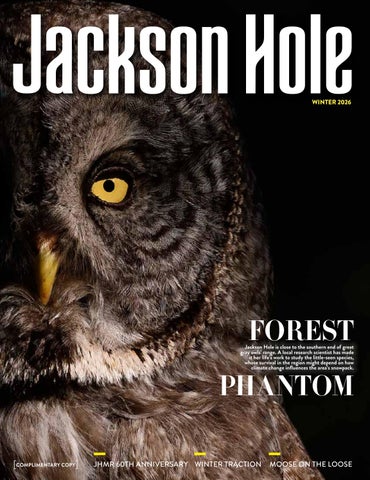
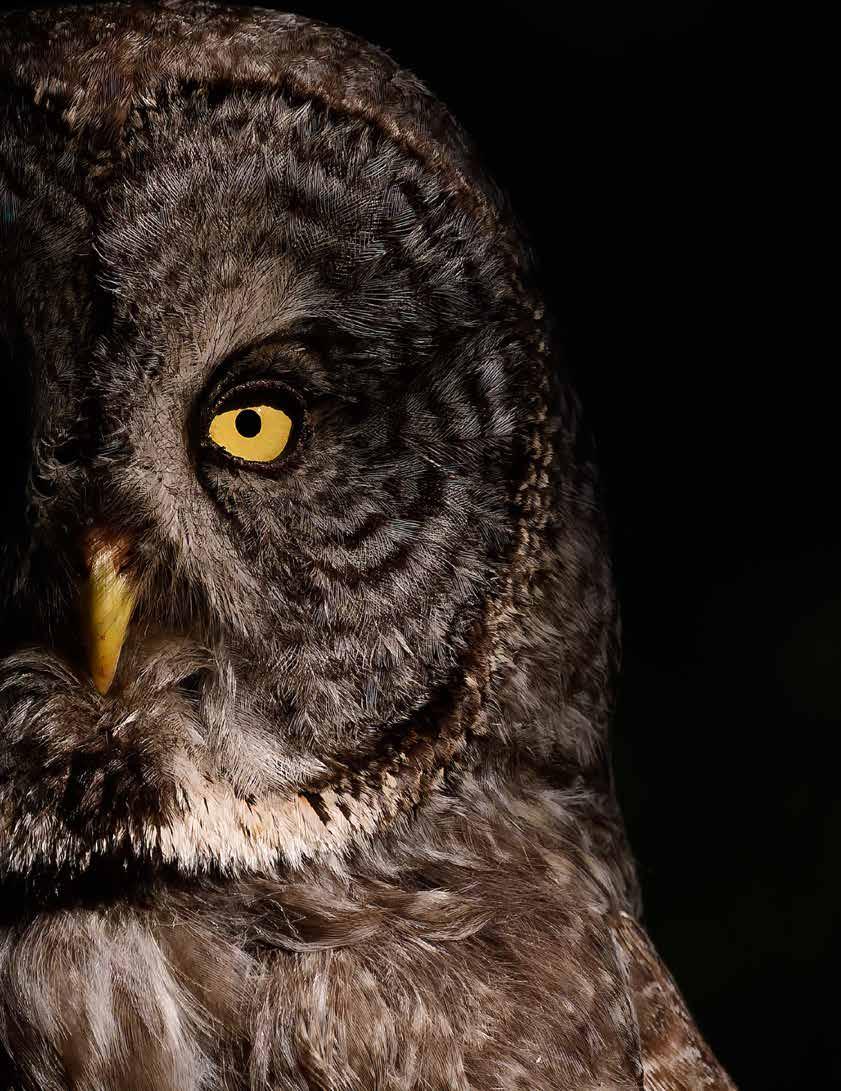
Jackson Hole is close to the southern end of great gray owls’ range. A local research scientist has made it her life’s work to study the little-seen species, whose survival in the region might depend on how climate change influences the area’s snowpack.

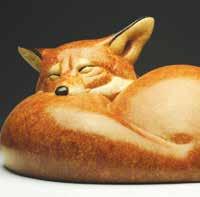
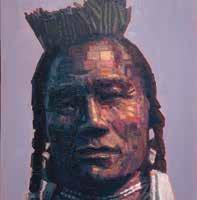
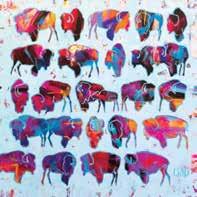
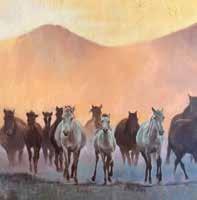
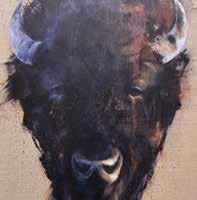
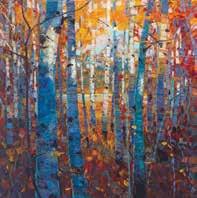
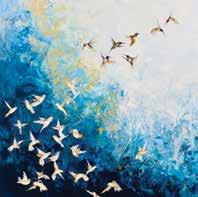
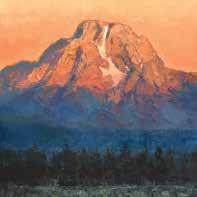
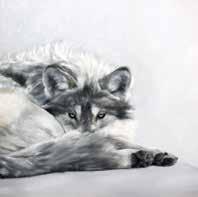
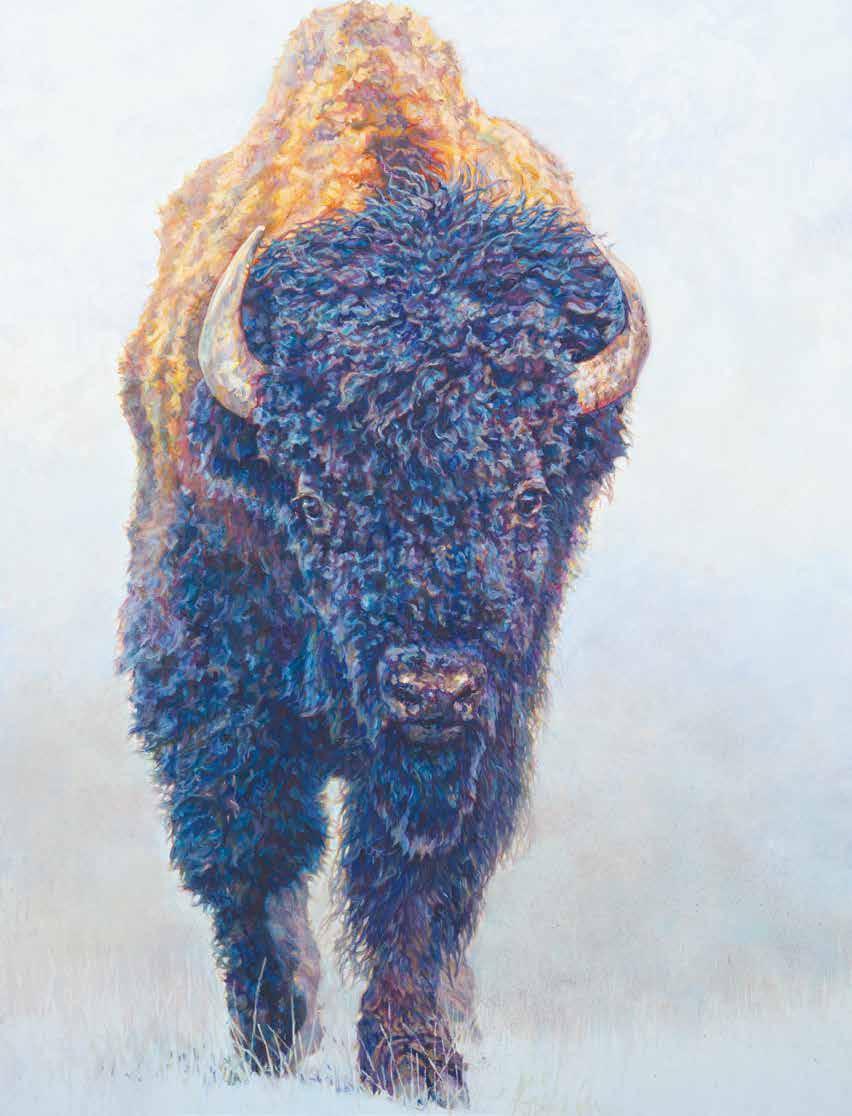
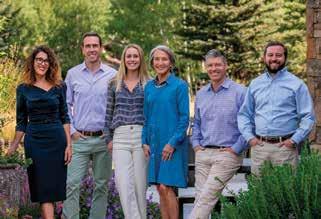
L to R : Jeremy Bradshaw, Aaron Hazel, Carrie Wild, Nealy Riley, Amber Blazina, Silas Thompson, Jenna Von Benedikt, Caleb Meyer, Doyle Hostetler
Oscar by Patricia A. Griffin

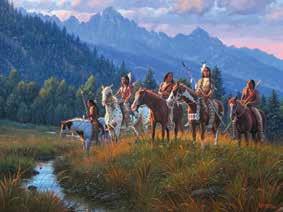
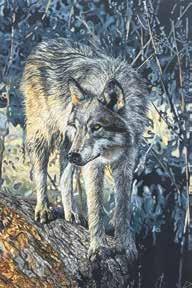
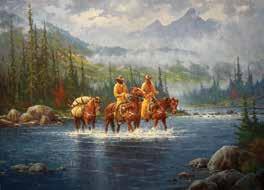
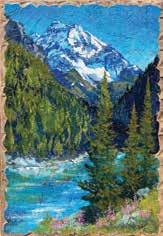
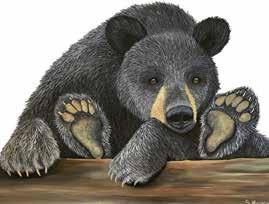
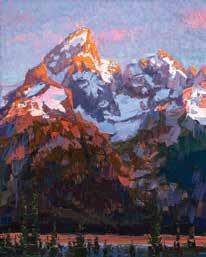

Tyler Saunders
Out of the Shadows
48x32
Oil
Mark Keathley
Grand Life
Oil
Gary Lynn Roberts
Making Memories
36x50 • Oil
Rolinda
Mountain View Real Estate
48x33
Oil
Trey McCarley
Grandeur
60X48
Oil
Shannon Marie
Griffin
30x40
Acrylic




















As an artist owned and operated gallery, Sonia is known for her magnificent Sun collection and one of a kind fine jewelry designs. The gallery complements Sonia's beautiful designs with an array of well curated Arts, Minerals, Crystals and one of a kind finds.
Come on in! You will surely find ''what tickles your heart''

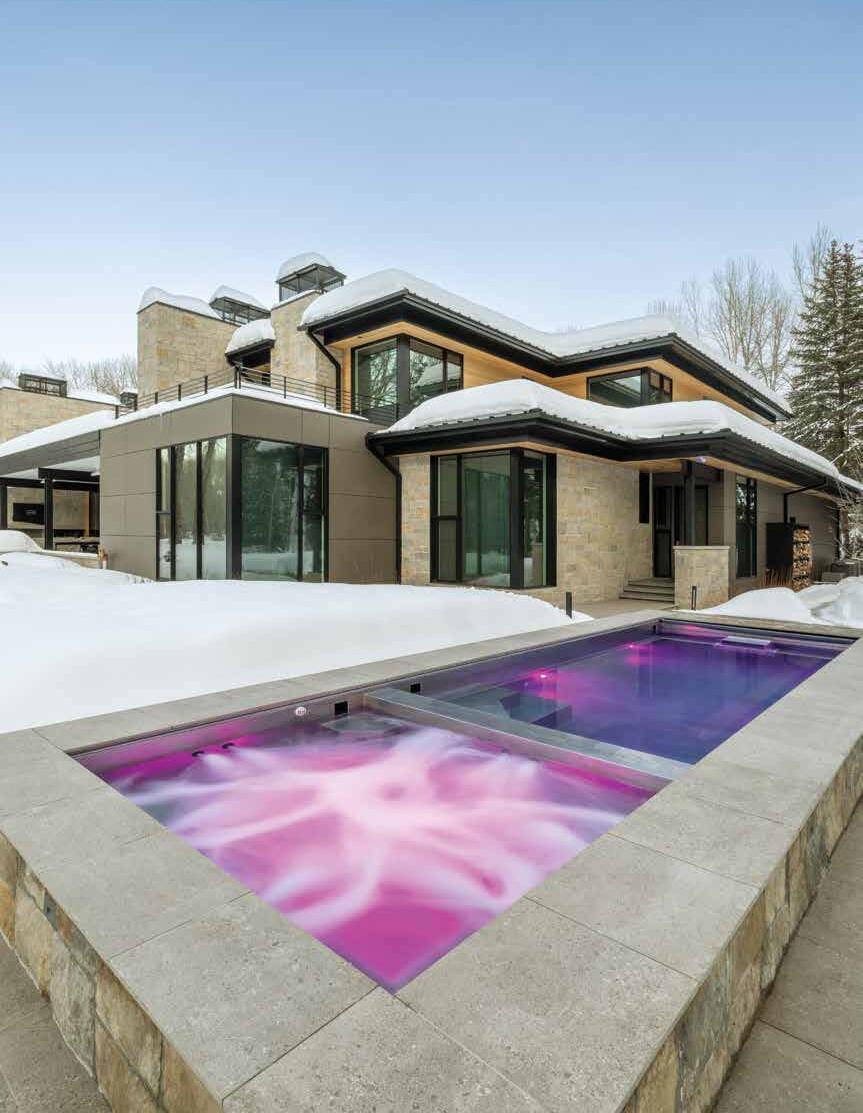

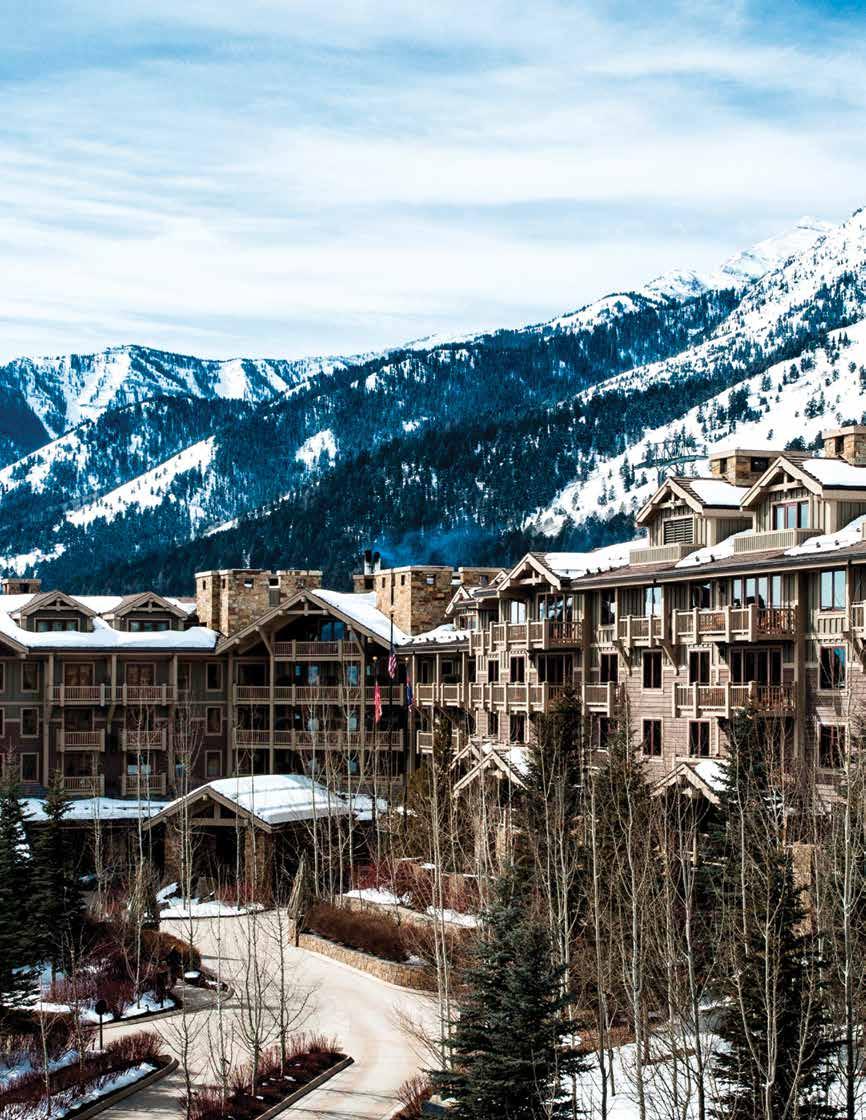
WINTER STATE OF MIND
Unwind slopeside with a soothing spa treatment after a day of winter adventures, or savor regionally inspired cuisine that celebrates the vibrant flavors of the American West.
Book now by calling (307) 732-5000
Improving lives through



FEATURES
JACKSON HOLE
WINTER 2026
ON THE COVER: This photo was taken a few days after a pair of great gray owls' two owlets had fledged. “The male, hidden in the shadows of a large spruce, patiently watched the owlets exploring their new territory. As the sun set, a shaft of light lit up the male’s face, providing dramatic lighting,” says Jackson Holebased photographer Steve Mattheis.
102
BONDS THAT ENDURE
Being a ski or snowboard instructor at JHMR is more than a job, and many do it for decades.
BY DINA MISHEV
114
THE FOREST PHANTOM OF THE GREATER YELLOWSTONE ECOSYSTEM
Jackson Hole is close to the southern end of great gray owls' range. A local research scientist has made it her life's work to study the little-seen species.
BY MIKE KOSHMRL
124
PHOTO GALLERY: DIAMOND ANNIVERSARY
A look back at Jackson Hole Mountain Resort’s inaugural season 60 years ago.
BY KATHERINE WONSON
130
ENVIRONMENTAL ENGINE
Outdoor recreation contibutes more than $2 billion to Wyoming's economy and provides 15,000-plus jobs. State and local governments think it can be bigger.
BY MIKE KOSHMRL


Bank Locally, Explore Freely
Since 1982, Bank of Jackson Hole has helped guide your financial decisions. Whether saving for an adventure or investing in your future, we are here for your success.
HOWDY
EDITOR'S LETTER
Writing this letter is always weird. For the summer issue of Jackson Hole magazine, the production schedule requires that, at the latest, I have it edited and to the copy editor by the end of February, when the valley is still smothered in snow, lakes are frozen, and wildflowers, backpacking, and biking are the furthest things from my mind.
For the winter issue—well, I’m writing this letter on a Friday afternoon in mid-September. This morning I SUP’ed around Jenny Lake in Grand Teton National Park, came back to town and met a friend to hike up Snow King, and then slipped on flip-flops before settling into one of the metal tables in front of Pearl Street Bagels with a Wild Tribe and my daily NYTimes games. As soon as I finish this letter, it’s time to start packing for tomorrow’s SUP/hiking/hammocking adventure in GTNP.
Jackson Hole is amazing for many reasons, not the least of which is how wholly different it is between winter and summer. Backpacking along the Teton Crest Trail in August, when the Death Canyon Shelf and Alaska Basin are abloom with dozens of species of wildflowers, it’s impossible to imagine your campsite buried by more than 10 feet of snow. And then, come
January, skiing down the Headwall or Cirque at Jackson Hole Mountain Resort, it’s inconceivable all that snow will ever melt. Winter and summer in Jackson Hole aren’t different seasons so much as different planets.
And, whatever the season, it’s likely that for visitors, Jackson Hole feels wholly different than home. For example—there’s the weather. It’s not unusual to get several weeks each winter during which the daily high doesn’t crest zero and nighttime lows can be -30 degrees Fahrenheit. And the valley gets an average of about five feet of snow, while the surrounding mountains get upwards of 30 feet. Thankfully, in this issue, writer Bevin Wallace shares tips for how to take care of yourself in the cold, “Cold, Hard Facts,” p. 90.
What do you know about winter wildlife closures? In Jackson Hole, seasonal closures to help our native wildlife survive the harsh winters are a part of life. Journalist Molly Absolon explains—and shares where some are so you don’t inadvertently go skiing, snowshoeing, or snowmobiling in one—in the Anatomy Of department, p. 28.
How about moose? The largest members of the deer family can weigh up to 1,500 pounds and are known for their immense size, distinctive antlers (on males), and large, flat ears. They are excellent swimmers, proficient at foraging underwater, and can run at speeds up to 35 mph. They are also often at the top of visitors’ lists of wildlife they want to see while here. Winter is one of the best times to spot them. Emily Cohen’s story “Moose on the Loose,” p. 152, offers tips on where and how to spot them.
This issue also has articles about great gray owls (p. 114), the 60th anniversary of the Jackson Hole Mountain Resort (p. 122), how to spend a day exploring Teton Valley, Idaho (p. 154), and a couple of intimate concert venues in the valley that draw top talent (p. 74).
As always, I, along with and the rest of the team behind Jackson Hole magazine, hope you enjoy this issue as much as we enjoyed putting it together.
— DINA MISHEV @JACKSONHOLEMAG


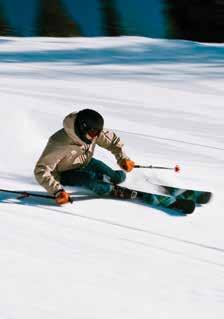
RETAIL, RENTAL &
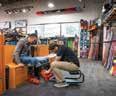
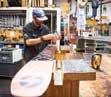
SKIING, RIDING & BIKING
Hoback Sports is your onestop shop for in-town rentals, legendary bootfitting expertise and hand-finished tunes. Let the friendly and knowledgeable staff at Hoback Sports help get the gear you need for skiing and snowboarding in-bounds or in the backcountry. Shop top brands like Blizzard, Salomon, Atomic, Tecnica, Dalbello, Burton, Jones, Spark R&D, Smith, Hestra, Smartwool, Flylow and Norrona. Hoback Sports is your local gear headquarters – stop in before heading out!
Jackson Hole
What’s your favorite winter comfort food?
Wings at The Bird! I always order them naked (without sauce) because the crispy skin is the best.
The scone skillet at Persephone Bakery Café’s Jackson location is a little different every season—my fav ever was the version with a cheddar scallion biscuit, red-eye sausage gravy, a fried egg, and pine nut crumble—but it’s always delicious.
Hot chocolate! The store brand is fine, Ghiradelli if I’m feeling indulgent. Always whipped
Anything from Teton Thai!
PUBLISHER
Adam Meyer
EDITOR
Dina Mishev
ART DIRECTOR
Elise Mahaffie
PHOTO EDITOR
Bradly J. Boner
COPY EDITOR
Bevin Wallace
CONTRIBUTING WRITERS
Soups, stews, chowders—homemade, so the house is steeped in the aromas, and more than enough to share.
Cutty’s steak and cheese sub hits the spot and feels just right on Sunday NFL game days.
Molly Absolon Richard Anderson Emily Cohen Lila Edythe
Mike Koshmrl Jim Mahaffie
Sofia McGulick Tilli Rossetti
Whitney Royster Samantha Simma
Maggie Theodora Bevin Wallace Katherine Wonson
CONTRIBUTING PHOTOGRAPHERS
Natalie Behring Erin Burk
Price Chambers Sophie Danison
Ryan Dorgan Toni Frissell
Amy Jimmerson Rugile Kaladyte
Steve Mattheis Meg Potter
Pearl Spurlock Garrett Swan
Morgan Timms Kathryn Ziesig
ADVERTISING SALES
Alyson Klaczkiewicz
DIGITAL CAMPAIGN MANAGER
Tatum Mentzer
AD DESIGN & PRODUCTION
Sarah Wilson Luis F. Ortiz
Heather Haseltine Lydia Redzich
Chelsea Robinson
DISTRIBUTION
Jayann Carlisle
Oscar Garcia Perez
Kevin B. Olson, CEO P.O. Box 7445, Jackson, WY 83002 | 307/732-5900
My mother’s pasta fagioli. The combination of tomato base, cannellini beans, ditalini noodles, and a little drizzle of olive oil on top makes your stomach feel warm and cozy on cold nights.
The beef noodle soup at Teton Thai has the power to warm winter-weary bones. I enjoy getting this one to-go so that I can drink the broth from the bowl in private.
I’m married to a hunter, and my elk chili is hearty and spicy, a little wild, and pretty much the best thing I can think of on a cold winter night.
©2026 Jackson Hole magazine. All rights reserved. No part of this production may be reproduced in any form without written permission from the publisher. No responsibility will be assumed for unsolicited editorial contributions. Manuscripts or other material to be returned must be accompanied by a self-addressed, stamped envelope adequate to return the material. Jackson Hole magazine is published semiannually. Send subscription requests to: Jackson Hole magazine, P.O. Box 7445, Jackson, Wyoming 83002. 307/732-5900. Email: dina@jhmagazine.com. Visit jacksonholemagazine.com.


CONTRIBUTORS
EMILY COHEN (“A Fine Balance,” p. 56) is an awardwinning journalist and the executive director of KHOL (89.1 FM), Jackson Hole’s public radio station and Wyoming’s only community radio station. While she wears many hats in her role, she most enjoys the craft of impactful storytelling. Her reporting has aired on stations across the West, including Wyoming Public Radio, KUER, KUNC, and Aspen Public Radio. She loves playing the fiddle and playing in the snow.

KATHERINE
WONSON (“Diamond Anniversary,” p. 124) spent 17 years as a historic preservationist for the National Park Service, eventually becoming the director of the Western Center for Historic Preservation in Grand Teton National Park before starting her own heritage consulting business. She is a diehard DIY home remodeler, a mother of two, and a local historian who first discovered Jackson on a post-college road trip in 2003, when she took jobs as a telemark ski instructor and a waitress.
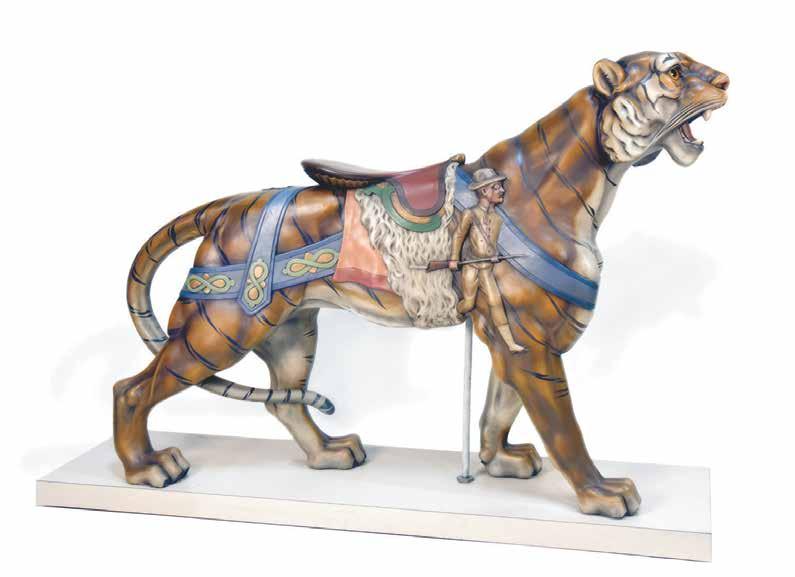


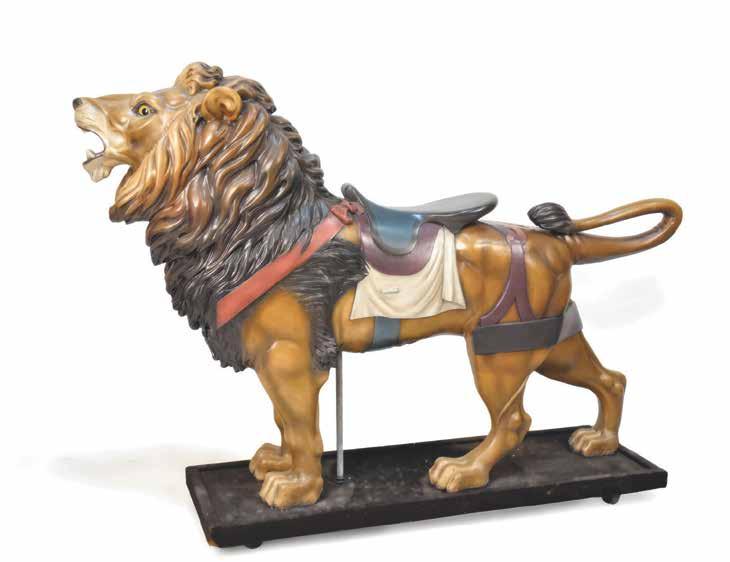
Gustav Dentzel (Germany, 1844–1909), Outside Row Standing Lion, (54 x 18 x 78 inches) and Outside Row Tiger (52 x 12 x 71 inches), c. 1907. Carved basswood and oil based paints. Gift of Larry & Gail Freels, National Museum of Wildlife Art.
CONTRIBUTORS
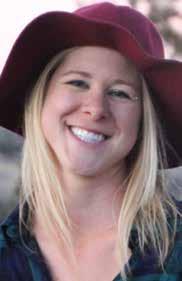
Since moving from Wisconsin in 2012, SAMANTHA SIMMA (“Coziness on a Plate,” p. 64) has immersed herself in Jackson Hole’s mountains and community. She is the digital media manager at Snowday Agency and founder of Corroborated Content. Blending her love of food, storytelling, and adventure, Samantha spends her free time exploring the Jackson restaurant scene and enjoying all that the outdoors has to offer. She shares her home—and outdoor adventures—with her two rescue dogs, Timber and Buck, from the local Animal Adoption Center.
STEVE MATTHEIS
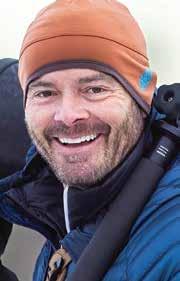
(“Forest Phantoms of the Greater Yellowstone Ecosystem,” p. 114), a Jackson native, is a nature photographer with a deep connection to the great gray owl, his favorite subject and the focus of his published book Phantom of the North His work captures rare, intimate moments in the wild, blending artistry and authenticity to instill viewers with a deeper sense of wonder for nature.
NEW EXPERIENCES FOR CENTER

JEN RITCHIE
LOCAL LIFE
PEOPLE AND PLACES THAT ARE JACKSON HOLE
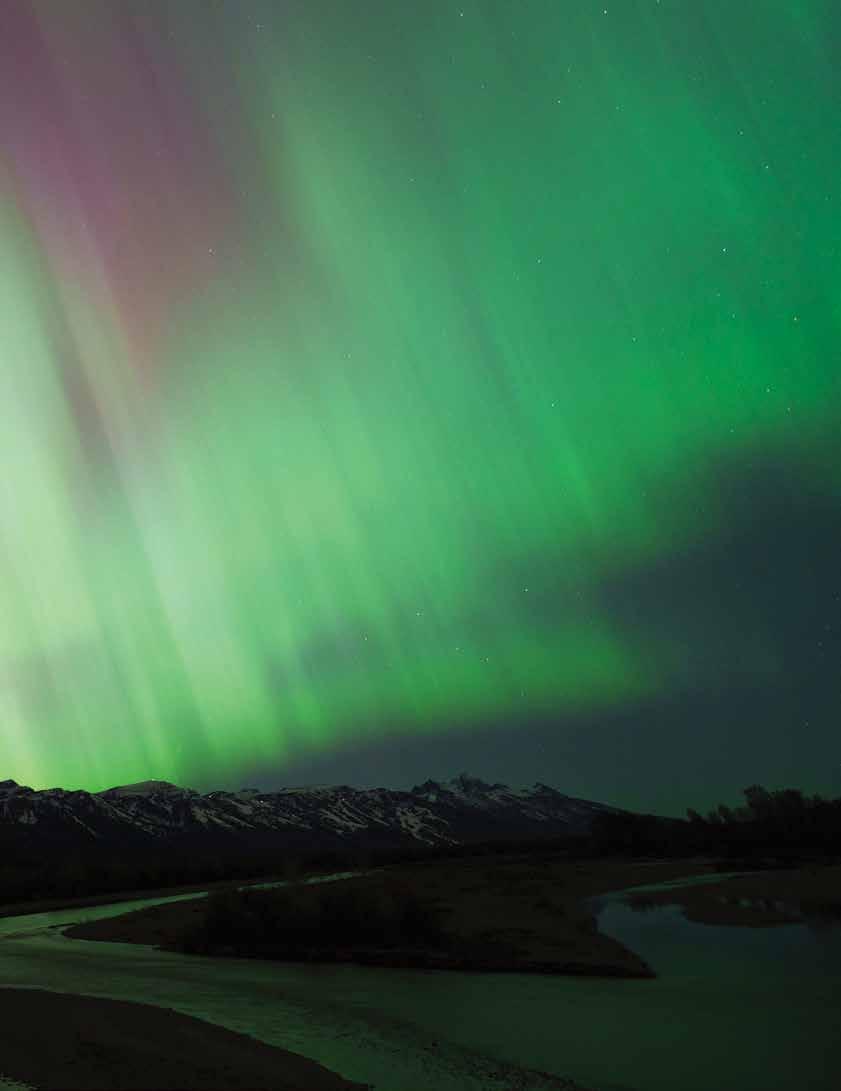
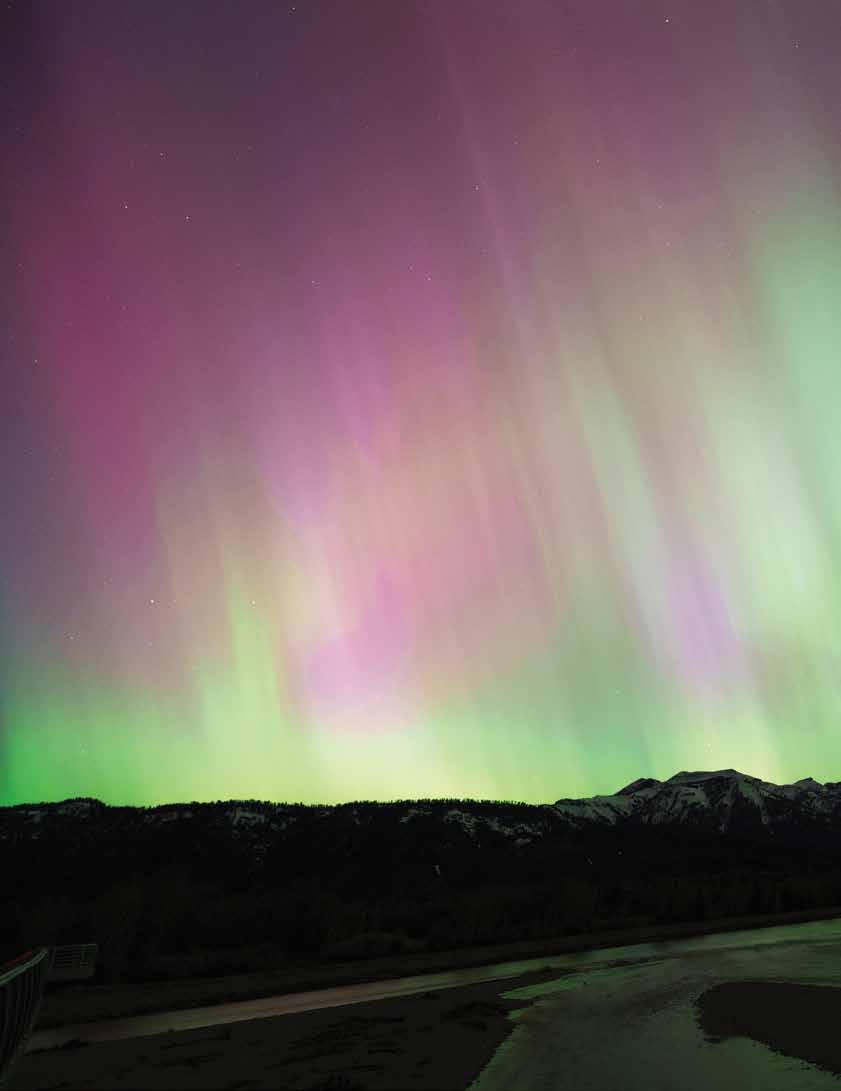
THE AURORA BOREALIS dance over the Teton Range and the Snake River. The phenoman, which is caused by charged particles from the Sun colliding with gases in Earth's upper atmosphere, are typically seen in places like Canada and Alaska but can reach as far south as Jackson Hole and beyond when the Sun emits particularly large solar flares.
LOCAL
Trail Creek Ranch
This historic parcel of land is a serene, authentic, and conservation-minded monument to the strong women of Jackson Hole.
// BY TILLI ROSSETTI
Ninety years ago, in 1936, Elizabeth “Betty” Woolsey made her debut as the captain of the first women’s Olympic ski team. That very same year, she caught her first glimpse of the Tetons. As the Tetons tend to do to those with a heart fated to the mountains, Jackson Hole drew Woolsey back time and time again for powder skiing and climbing over the course of the next eight years. In 1942, she skied down Teton Pass and happened upon “[her] piece of land.”
Woolsey purchased the parcel of land—originally the Louis E. Lockwood homestead, which was the gateway accommodation to travelers heading in or out of the valley via Teton Pass— from Nate Davis in 1942, and in the subsequent years, she purchased adjacent land. By 1946, she had amassed 270 acres. She named the property Trail Creek Ranch and began welcoming dudes (in summer) and skiers (in winter). Celebrating its 80th birthday this year, Trail Creek Ranch is no longer run by Woolsey—she died in 1997— but strong, independent women are still in charge. These include Margaret “Muggs” Shultz, who is 96 years-old,
has been at the ranch since 1948, and resides in a 1960s-built cabin on the ranch; Alexandra Menolascino, who came out to Wilson from the East Coast in 1989 to work as the ranch’s head waitress; and Jules Buchenroth, a native Canadian who started at Trail Creek Ranch as chef the same year Menolascino started as a server. While Muggs is no longer involved in day-to-day operations of the ranch, she remains “very much in charge,” Menolascino says.
About their jobs today—Menolascino is now head caretaker and Buchenroth head chore girl. Menolascino says, “There are so many different aspects. It’s different every day, and that’s the beauty of it.” Buchenroth adds, “We get to wear a lot of different hats. You build skills— it’s actually pretty amazing what you learn when you’re forced to. We can’t do it all on our own, but we tackle a lot of stuff on our own. And it’s really how the [original] ladies operated, too. They had a lot of friends in the valley who helped. There was a community.”
Woolsey, Muggs, and Sis [Marian “Sis” McKean Wigglesworth was a teammate of Woolsey’s on the U.S. Alpine Ski Team] might have had a
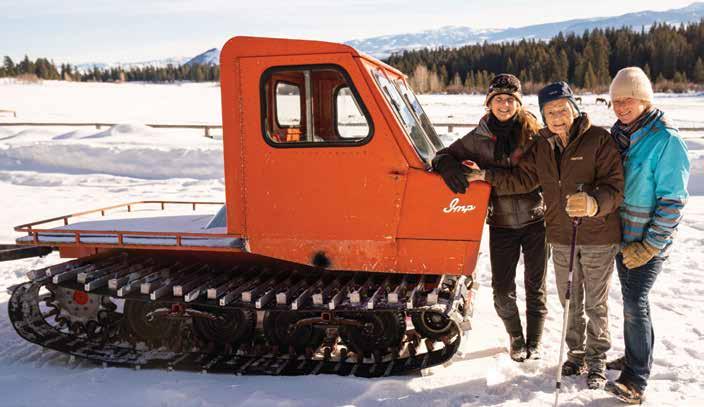
Alex Menolascino, Muggs Shultz, and Jules Buchenroth with the Imp 1400 snowcat Schultz bought in 1972. It is still used today for feeding Trail Creek Ranch's horses in the winter.
helping community, but they ruled the ranch, doing everything from haying to operating the farm machinery, maintaining the cabins, and greeting guests.
While Trail Creek’s caretakers have changed, today’s guests still stay in the original cabins that Woolsey purchased from around the valley or had built as the ranch expanded. During its heyday in the 1950s and 1960s, Trail Creek hosted up to 30 guests during the summer. They’d stay for up to a month at a time to go on pack trips, fish the Snake River, and soak up summer under the Tetons. During the winter, Woolsey hosted up to 10 guests—most of them ski friends of hers—and guided them on backcountry ski trips on Teton Pass.
“It’s the place where people would stay overnight when they were going over the pass, when they couldn’t go over in an hour,” Buchenroth says. “And that’s just white people. There were generations of families and native people crossing the mountains. It feels like a powerful place, and we want to preserve this magical place.”
Following Woolsey’s vision—she placed the ranch under a conservation easement with the Jackson Hole Land Trust before her death—Trail Creek’s mission today is one of preservation; the 270 acres of land remain the same as they’ve always been. “We work hard being stewards of the land,” Buchenroth says. Menalascino adds, “We try to manage the land in a way that’s good for wildlife.” The conservation easement protects the ranch from development of any kind, and its cabins and barns (built between the 1930s and the 1960s) can only be changed by 10 percent.
Nowadays, the cozy, rustic guest cabins accommodate up to 20 guests a night during the summer (there’s a threenight minimum stay). In winter, three cabins host six to eight guests per night. The main barn was built in the 1930s by the Bircher Brothers, who also built the EDW cabin, which was moved from nearby Fish Creek Road to the ranch during the 1950s to be Woolsey’s home. The oldest cabin, which staff call “Upper Upper,” was part of a roadhouse located on the parcel of land Woolsey purchased from Davis.
Buchenroth says maintaining Trail Creek has been a lifestyle choice. She, Muggs, and Menolascino work to maintain a mission of preservation and stewardship of the ranch’s land, historic structures, wildlife, surrounding nature, and the beauty of Western hospitality. “We want to continue to share the ranch and valley with guests the way Betty did for so many years,” Menolascino says. JH
ReadsGood
// BY JIM MAHAFFIE

THINK ABOUT IT
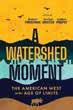
A Watershed Moment: The American West in the Age of Limits
Robert Frodeman, Evelyn Brister, Luther Propst
A compilation of essays from different author perspectives, this book discusses the many issues of sustainability and development across the West. Contributors are policymakers, legislators, land and water experts, urban planners, biologists, Tribal members, writers, and academics.
ANIMAL LOVER
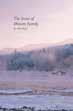
The Scent of Distant Family
Sid Sibo
Onetime USDA Forest Service ranger and founder of an animal shelter in western Wyoming Sid Sibo’s debut novel is about a wildlife biologist who returns home, cares for her aging father and nephew, and copes with a disintegrating marriage. Then her foster dog, Zolo, runs away. Her search for the dog is a quirky, joyful, and adventure-filled journey through recognizable people, places, and animals in our region.

FOR YOUR YOUNG ENGINEER
Mazie’s Amazing Machines
Sheryl Haft (Author), Jeremy Holmes (Illustrator)
Mazie McGear, kid engineer, solves problems that reflect Jackson Hole living. The author was inspired by her STEAM classes (Science, Technology, Engineering, Art & Math) for kindergarten through third-grade kids at the Jackson Hole Children’s Museum. For any problem, Mazie turns on her imagination and starts drawing and building—a snowball catcher, a dog walking machine, a Roly-Ramp for carrying boxes, and a Waker-Upper Rocket to get her brother out of bed.

LOCAL HERO
In the Valley of the Warm Winds
Sam Lightner, Jr.
Raised in Jackson, Sam Lightner grew up fascinated by the legendary characters who explored and settled Wyoming and the West. Eastern Shoshone Chief Washakie was one of these larger-than-life leaders. His conflicts, friendships, vision, and diplomacy with frontiersmen Jim Bridger, John Fremont, and Brigham Young, the neighboring Crow tribe, and others are the focus of this new book—an absorbing look at Rocky Mountain history and the guidance of a great Native American leader. JH
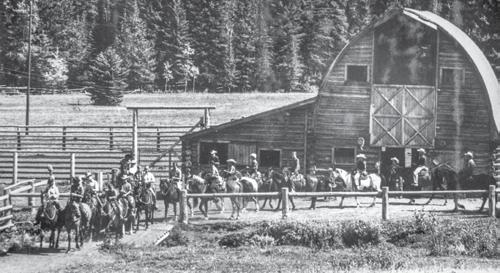
During its heyday in the 1950s and 1960s, Trail Creek hosted up to 30 guests during the summer.
TONI FRISSELL
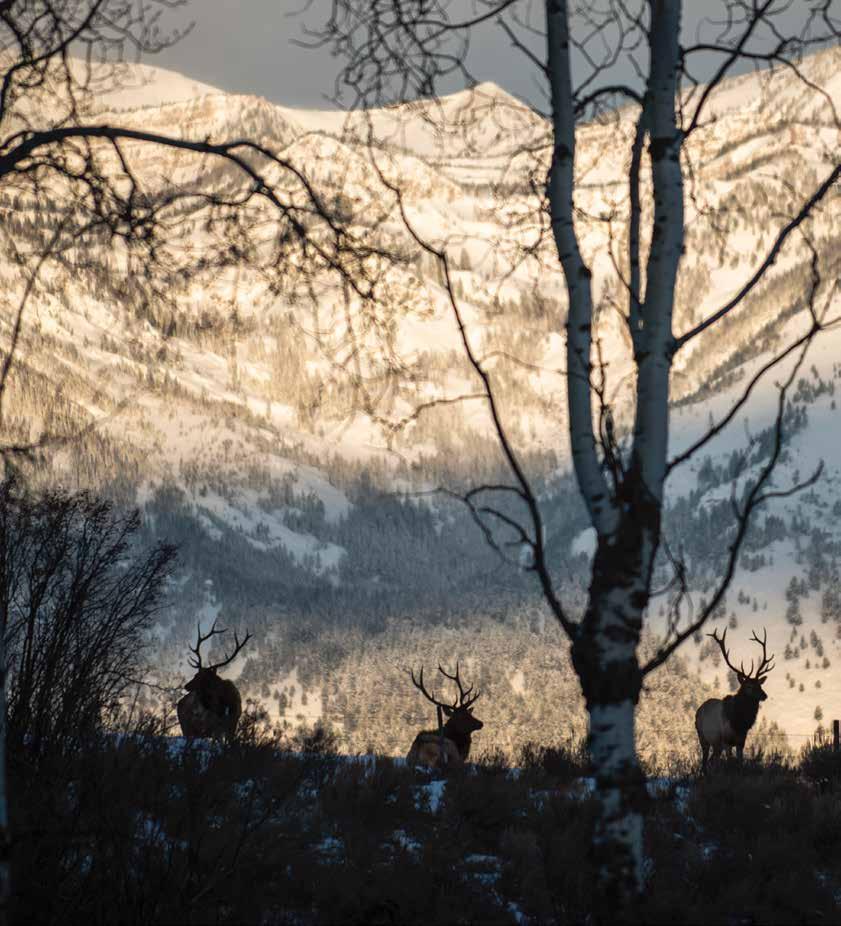
Portions of both federal and state public lands in Jackson Hole are off-limits to people in the winter to give local wildlife a break.
Winter Wildlife
// BY MOLLY ABSOLON
Closures
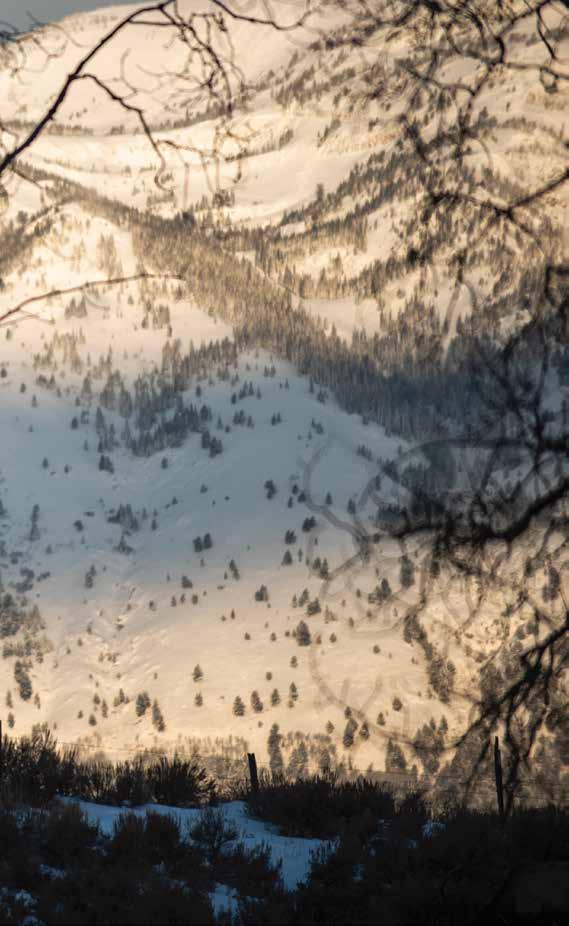
Just a few steps of post-holing in deep snow can be exhausting. You wallow around, searching for something firm to support your weight and keep you from sinking down to your crotch. Each step takes effort. But after such an extreme energy outlay, we humans get to return to our warm homes and pantries full of food. Wild animals don’t have that luxury. That’s why select swaths of public land in and around Jackson Hole are closed to humans in the winter.
“The reason we have winter wildlife closures in place is to protect wintering wildlife,” says Kyle Lash, the former senior game warden for Wyoming Game & Fish’s Jackson, South District (he’s still with WYG&F but now based in Cody). “When a skier or hiker startles an animal in the winter, if they’ve used up all their reserves, it’s likely that the animal will die in a day or two.” He says the months of March and April are particularly crucial for protecting wildlife because by that time, the animals have used up their fat reserves and any additional stress can be fatal.
“Most folks accept [winter wildlife] restrictions because they see the value in it,” says Ashley Egan, a wildlife biologist with the Bridger-Teton National Forest. “People recognize this place is known for its iconic wildlife, and they appreciate that. When people know the reasons why [a place is closed] and understand the trade-off between winter recreation impacts and winter wildlife survival needs, they accept the restrictions.”
People are responsible for knowing where winter wildlife closures are located—they occur on lands managed by the Bureau of Land Management, the BridgerTeton National Forest, the Caribou-Targhee National Forest, Grand Teton National Park, the National Elk Refuge, Teton County, Wyoming Game & Fish, and others— and when they are in effect. Most are from December 1 through May 1, but this does vary.
Until recently, it was a challenge to find all of the areas that were closed in winter in one place. “As a recreationist, it was difficult to know where they were,” says Morgan Graham, a geographic information systems and wildlife specialist with the Teton Conservation District. He spent more than 200 hours over three years compiling all the digital and paper maps from different agencies into a single dataset, which is now available as an online resource. “If it was confusing to me—someone experienced with maps—it had to be confusing for the general public.”
Here’s a quick guide to some of the valley’s major closures; find all closures on the free app Avenza, which allows you to pinpoint a location anywhere in the valley (and country!), and on Teton County Conservation District’s interactive online map for users, tetonconservation. org/winter-wildlife-closures.
JACKSON HOLE | WINTER
Wild animals need space and to be left undisturbed in order to preserve the energy necessary to get through Wyoming's harsh winter alive.
BRADLY J. BONER
LOCAL LIFE
ANATOMY OF
The riparian zones along the Snake River from Moran to Moose are closed to protect moose. “Riparian zones and smaller creeks with high-density woody vegetation provide both thermal cover and relatively high nutrition for moose and elk during the winter months,” Graham says.
The roughly 500 animals of today’s Jackson Hole/ Teton Bison Herd trace their lineage to bison brought from Yellowstone in the 1940s, that were originally intended for captivity but later escaped their enclosure. While some slip onto the National Elk Refuge to dine on alfalfa pellets, much of the herd favors the Wolff Ranch on the east side of Highway 89 south of Moran, where windswept, south-facing slopes and ridgetops provide natural forage.
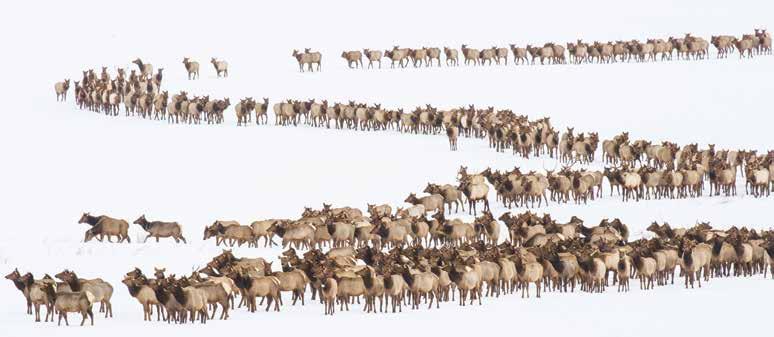
The South Park Wildlife Habitat Management Area and elk-feeding ground managed by Wyoming Game & Fish is closed to protect wintering elk. The state of Wyoming began feeding elk in the western part of the state more than 100 years ago to reduce winter elk deaths and decrease private property damage. Today, there are 21 staterun elk feedgrounds (plus the National Elk Refuge, which is run by the U.S. Fish and Wildlife Service).
South-facing slopes along the Gros Ventre Road in the Bridger-Teton National Forest are closed to protect habitat for bighorn sheep, deer, elk, and moose. “These sunnier, windswept aspects hold less snow, so animals can continue to forage while conserving energy,” Graham says.
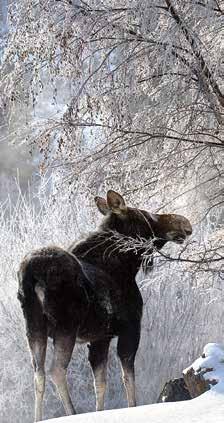
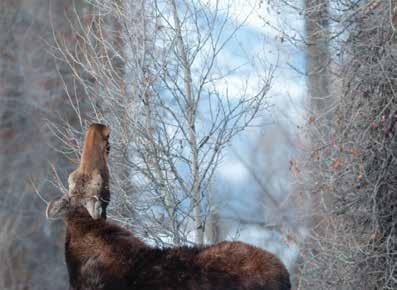
In forested habitat, like that found around Munger Mountain on the BTNF, “Moose can subsist from moving from tree well to tree well; they can access plenty of subalpine fir and spruce—enough to get them through their winter state of extended starvation,” Graham says. “Their bodies have evolved to pack on as many pounds as possible during the growing season and then draw on those reserves to make it through winter and spring until fresh green forage returns to the landscape.” The BTNF’s Egan says, “winter wildlife closures on the Bridger-Teton are contributing to healthy wildlife populations in the Greater Yellowstone Ecosystem. They are a powerful and respected tool to protect wintering wildlife on the landscape.”
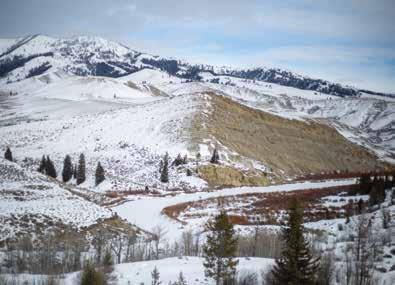
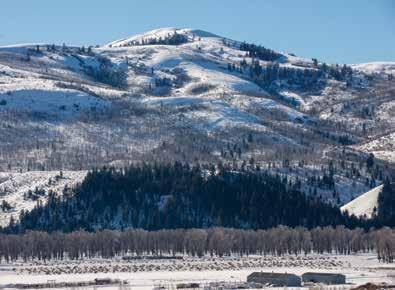
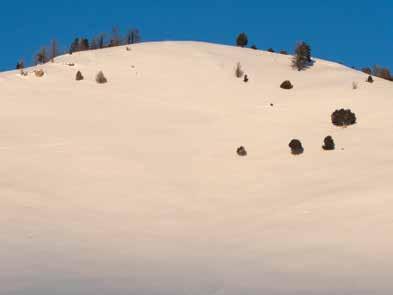
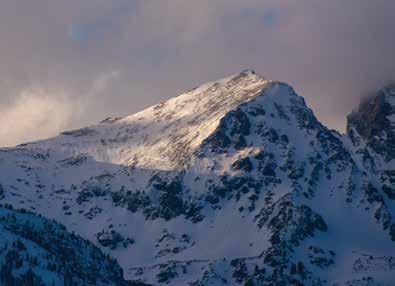
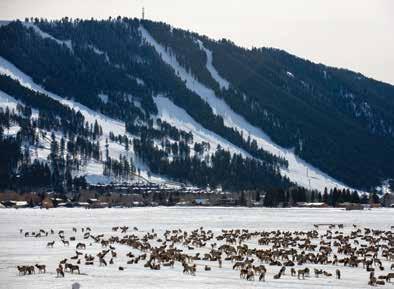
South of Snow King Resort, in the BTNF, lies a winter wildlife closure that includes slopes that many locals would love to ski—Josie’s Ridge, as well as the Leeks, Smith, Wilson, Horsethief, and Game Creek Canyons. But ski tracks are rarely seen on them. “I think the majority of people are willing to avoid certain areas if it helps wildlife survive,” Graham says. “When there are tracks, my first thought is that someone didn’t know.” But some people do encroach into these areas on purpose, and this can carry consequences.
“As the price of shed antlers increased and they became more valuable, more and more people were out [in closed areas] collecting antlers in late winter, pushing animals around and causing more stress,” Lash says. This caused the Wyoming Legislature to give WYG&F the authority to regulate antler collection on public lands west of the Continental Divide; WYG&F established a shed antler season, which went into effect in 2010 and generally coincides with the end of the winter wildlife closures. Several years ago, a local worker was caught and fined for illegally harvesting shed antlers in the closed area around Horsethief Canyon and spent 10 days in the Teton County Jail.
In the southern part of Grand Teton National Park, the summits of Mount Hunt, Prospectors Mountain, and Static Peak, which had been popular with backcountry skiers until this closure went into effect in 2001 to protect wintering bighorn sheep. Winter closures for bighorn are also in effect on the north sides of Darby and Teton Canyons, around Ranger Peak and Cirque Lake, as well as near Snowdrift Lake and the upper Death Canyon Shelf.
Showing how complicated winter wildlife closures can be, the closure of the A&W trail, between Adams and Wilson Canyons south of Jackson, is jointly overseen by Teton County, the Jackson Hole Land Trust, and the BTNF in partnership with the nonprofit Friends of Pathways.
The majority of the National Elk Refuge is closed year-round to human traffic. (Exceptions include a couple of hiking trails and a fishing season on Flat Creek.) In the winter, sleigh rides are allowed on the refuge. These tours travel close to wintering elk, but because the elk have become used to the horses and sleds, they are not stressed out by their presence. JH q q q
MY JACKSON HOLE LIFE
// BY JIM MAHAFFIE
Kathryn Mapes Turner
// PHOTOGRAPHY BY BRADLY J. BONER

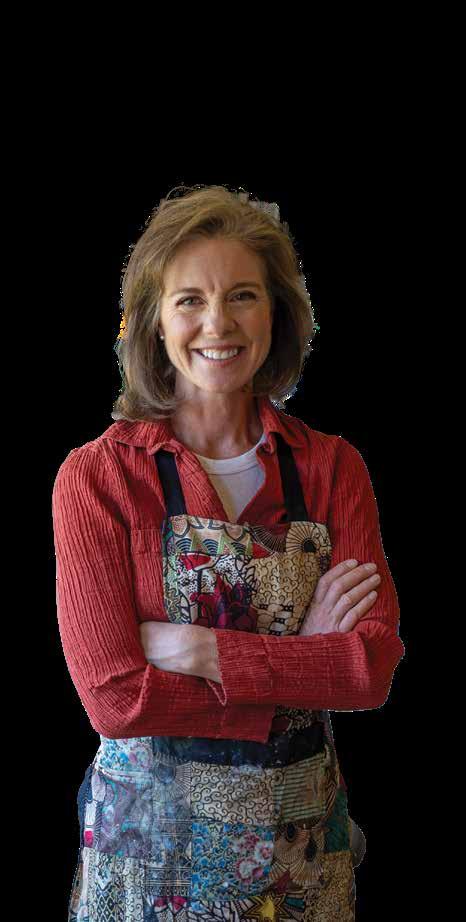
he figure in the big floppy straw hat and paintspattered apron is a regular sight in Jackson Hole. She’s studying her canvas on an easel, where a horse, moose, fox, or other animal is taking shape. Maybe it’s just an eye so far—she always starts with her subject’s eyes. The painting is destined for her Turner Fine Art Gallery in the Creekside Plaza, or a fine art show elsewhere in the country.
Born at St. John’s Hospital in Jackson and raised at the Triangle X dude ranch in Grand Teton National Park, Kathryn is a fourth-generation Turner, part of a large, tight-knit family descended from John and Maytie Turner, who bought the ranch in 1926. Turner’s brothers run it today as a concession within the National Park Service; it offers dude ranch stays, rafting and fishing trips, and horseback riding. Turner herself still helps break colts at the ranch every spring.
Turner was one of three kids in her elementary school class at Moran School and then attended Jackson Middle School and High School until her senior year, which she did at Bishop O’Connell High School in Washington, DC. (Her father, John F. Turner, had been appointed director of the U.S. Fish and Wildlife Service, and the family moved temporarily to the nation’s capital.) At the University of Notre Dame, where her parents had met, Turner majored in studio arts. She then studied art in Rome and at the Corcoran School of Art, and she earned a master’s degree in education from the University of Virginia. Then she had to make a decision: become a teacher in Fairfax County, Virginia, or pursue her longtime dream of becoming a working artist in Jackson Hole.
She returned to the valley in 2000 and today is living her dream. Her work is in the permanent collection at the National Museum of Wildlife Art and has been shown at the Charlie Russell Museum, the Buffalo Bill Cody Center of the West, the Phippen Museum, the Brinton Museum, and the Leigh Yawkey Woodson Art Museum; she has her own gallery; and she is a past featured artist at the prestigious Southeast Wildlife Exposition.
Jackson Hole artist Kathryn Turner in her home studio.

WINTER DESTINATION
KATHRYN SHARES SOME HIGHLIGHTS FROM HER JACKSON HOLE LIFE.
WILDLIFE WATCHING
My gallery is right across from the National Elk Refuge (on Highway 89), and I drive past it every day. It’s such a treasure, not just for elk; you can see wolves and bighorn sheep, and it’s an important winter range for mule deer. This valley is special, with so many different animals to see, admire, and paint. All the wildlife around us is a cool part of who I am. My dad was a wildlife biologist, and my brothers and cousins were all raised with that deep appreciation.
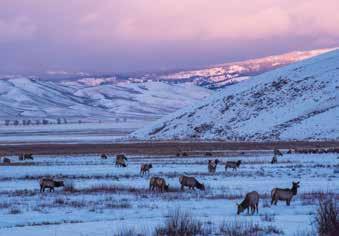
The Triangle X ranch is a unique winter destination—remote, magical, and quiet when compared to the hustle and bustle of town. In my opinion, it has the best cross-country ski terrain in the whole valley. Plus, unprecedented views and great food. Our wine-pairing dinners are particularly popular for locals who make a weekend of it. This year is the ranch’s 100th anniversary as a dude ranch owned and operated by my family.
"Wildlife is my first love, but it never stands still. I hire my nieces and nephews to hold horses for me. Everyone should get to watch horses running. That’s when they’re happiest— when they’re running out to pasture in the afternoons, with the low light and dust, and the Tetons as a backdrop.”
GALLERIES
It is amazing that we have, in our little town, the caliber of fine art that we do. My first art shows were at Triangle X; I displayed my paintings in the guest dining room before dinner and sold them for $25. In 2005, I started my first gallery, Trio, in a collaboration with two other artists. It became Turner Fine Art five years ago.
NATIONAL MUSEUM OF WILDLIFE ART
When I was 16, Bill Kerr [one of the NMWA’s founders] bought one of my watercolor paintings. He added it to the museum’s permanent collection. It was a vote of confidence for a young artist that set me on my path. Now the NMWA owns five of my pieces.
WHERE TO TAKE YOUR DOG
I’m blessed because I have the ranch and all its ski trails. Though it’s private land, my dad also has great XC loops on Meadow Road along the Snake River. My Portuguese water dog, Banjo, is a champ XC companion and goes out with me most days. Banjo also loves his days at the gallery because he gets to make new friends when clients visit. He even has his own fan club!
FIRST JOB
In a ranch family, everyone gets put to work. My first job was at eight. I’d wake up before dawn, get in the saddle, and trot around in the dark of our 1,400-acre lease, wrangling all the scattered horses to bring them in before 7 a.m. breakfast. It was a magical time—all alone with your horse, watching the sun rise with the elk herds and the cottonwoods. We were riding at the same time we learned to walk. Our daycare was putting us on a horse. JH
LOCAL
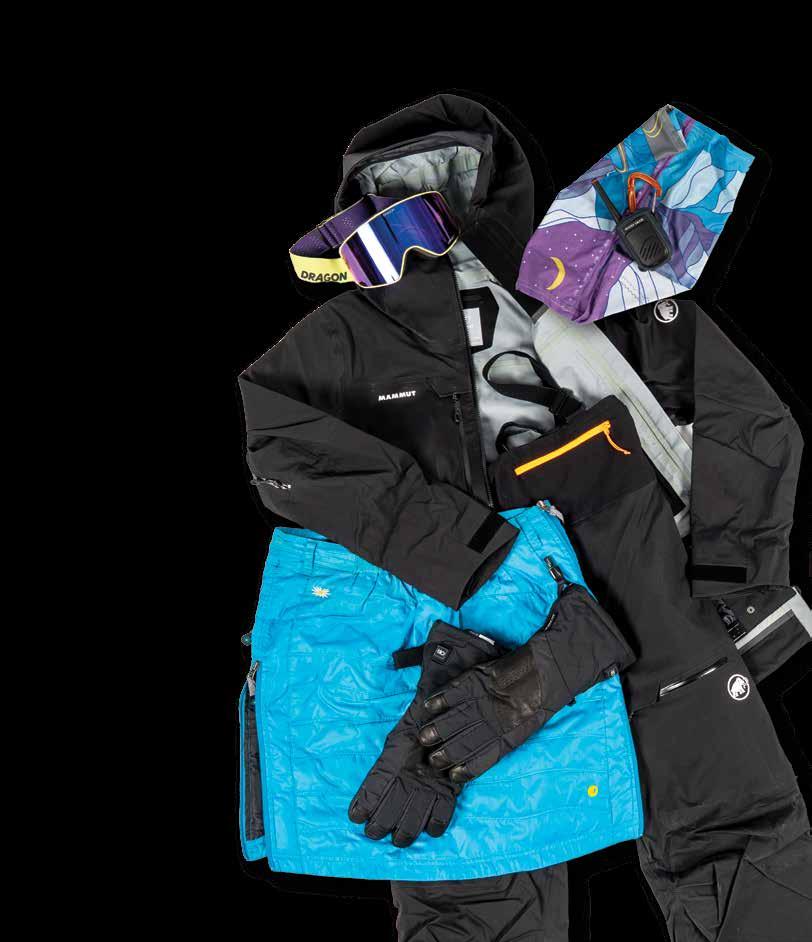
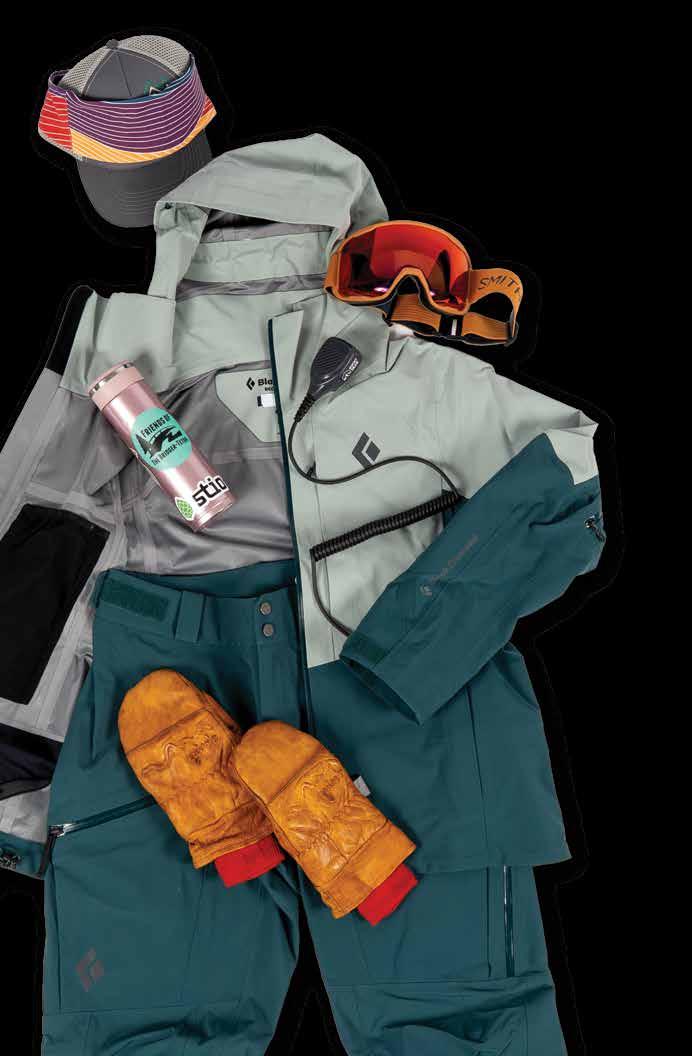
Not all days on the slopes are bluebird powder. On stormy days (at the resort or in the backcountry), turn to these tested and trusted pieces to stay comfortable.
Storm
Thanks to proprietary lens tech, Dragon Alliance’s NFX Mag OTG goggles offer amazing visual clarity; an antifog coating ensures the clarity stays even after snow starts falling. A magnetic lens-changing system allows you to quickly swap out lenses as conditions evolve. $280; available at Teton Village Sports, 3285 Village Dr., Teton Village
When you lose your friends in the whiteout that is Rendezvous Bowl during a storm, Rocky Talkie’s Mountain Radios help you reconnect. $220 (for 2 radios); available at Teton Mountaineering, 170 N. Cache St., Jackson
Keep snow from your face with a neck gaiter, which are made by as many different brands in as many different styles as there are skiers at JHMR on a powder day. Available at every ski/outdoor shop in the valley
There’s a reason all JHMR employees—from lifties to patrollers—wear Mammut uniforms: the Swiss brand knows how to keep you warm and dry in the harshest conditions. The hardshell Haldigrat HS Hooded Jacket and Bib Pants are supremely wind- and waterproof thanks to a Drytech Pro Technology membrane; they’re eco-conscious with an outer fabric made from post-consumer recycled nylon. Jacket $625, pants $529; available in men’s and women’s fits at Teton Mountaineering, 170 S. Cache St., Jackson
If buying a new kit isn’t in the cards, Skhoop’s Short Down Skirt—men can wear these, too— will keep your bum warm and dry on wet chairlifts without impeding movement. $160; available at Skinny Skis, 65 W. Deloney Ave., Jackson
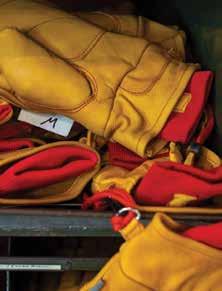
Outdoor Research’s Prevail Heated Gore-Tex Gloves keep hands dry and warm on even the stormiest of days thanks to a waterproof and windproof Gore-Tex insert and (rechargeable) batterypowered heat tech. $339; available at Snow King Mountain Sports, 400 E. Snow King Ave., Jackson
Skiing
// BY DINA MISHEV
AT THE RESORT
IN THE BACKCOUNTRY
Keep snow out of your eyes and your ears warm on the bootpack or skin up by pairing a ballcap with an insulated headband Available everywhere
The new Preview Goggles are Smith’s first to feature BirdsEye Vision, which provides a 25 percent increased field of view in a fixed lens. Making them ideal for backcountry skiing, they’ve also got specific ChromaPop Storm lenses with built-in 5x antifog and 3-layer DriWix foam to wick sweat away from your face. $200; available at Jackson Hole Sports, 7720 Granite Loop Road, Teton Village
The last thing you want to do when skinning uphill in a storm is delve into your pack or a pocket. Rocky Talkies’ Waterproof Hand Mic connects to the brand’s Mountain Radio to add a remote microphone, speaker, and push-to-talk button. Since it’s waterproof, the mic can be clipped to your shoulder for quick access. $48; available at Teton Mountaineering, 170 N. Cache St., Jackson
Because the stormier the weather, the better a hot drink or soup tastes, pack Zojirushi’s 16.9-ounce mug bottle (model SM-JF48-PM). It keeps contents hot for 12 hours, and its 2-inch-wide mouth means even chunky soups are easy to drink from it. From $20; available at japanwithlovestore.com
New for this year, Black Diamond’s Recon Stretch Shell and Recon Stretch Ski Pants are the rare pieces that balance storm protection with breathability thanks to a nylon fabric that has both 4-way stretch and BD.dry 3L with a PFC-free DWR finish. They’ll work at the resort, but they really shine in the backcountry: The jacket has two internal drop pockets perfect for skins, one of the thigh pockets on the pants has a tether for a beacon, and both jacket and pants have adjustable vents and an integrated RECCO reflector. Jacket $450, pants $400; available at Black Diamond, 160 W. Pearl Ave., Jackson
Since battery-operated heated gloves interfere with an avalanche beacon’s transmissions, in the backcountry we’ve relied on the decidedly lowtech Give’r Frontier Mittens to keep our hands warm and dry for a decade now. At the start of every season, we treat them with the brand’s beeswax Wax’n Packet to ensure they stay weatherproof and well-conditioned. Mittens $139, Wax’n Packet, $7; available at give-r.com JH
// BY SOFIA MCGULICK
Winter Traction
WE TESTED THESE SO YOU DON’T HAVE TO.
1
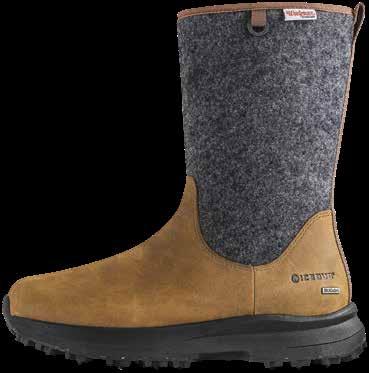
ICEBUG GROVE2 REWOOL
WHAT IT IS
Insulated, water-repellent, style-y unisex boots available with either 14 dynamic steel studs or Icebug’s proprietary Nordic Traction rubber soles.
STRENGTHS
Thanks to an insole, lining, and insock made with fleece, recycled wool, and an insulative foam made from algae (!), these are as toasty as sitting in front of a roaring fireplace; a newly thickened midsole makes walking even more comfy.
WEAKNESSES
The studded version needs to be paired with Icebug’s FloorSaver, which covers the spikey sole, to prevent damage to inside floors, and to also keep the studs from slipping. (They grip ice like a champ, but not the polished concrete floors of local grocery stores.)
BEST FOR Daily wear around town.
DETAILS
$210 (non-studded), $230 (studded), available at icebug.com
KAHTOOLA NANOSPIKES
2
BLACK DIAMOND DISTANCE SPIKE TRACTION DEVICE
3
Slip-on low-profile traction devices with 10 tungsten carbide studs and center plate ridges.
A workhorse slip-on spike system with 14 8mm heat-treated stainless steel spikes and a softshell, snowresistant toe cover.
These grip ice like winter grips Wyoming in January; the studs have a much lower profile than spikes, making them more comfortable for long distances.
Neither the lightest nor the burliest spike option, but the most durable, high-performing spikes that aren’t too big and heavy for stuffing in a pocket.
The studs aren’t big and burly enough to provide purchase in loose, heavy snow.
Your feet might get sore if you walk on solid ice with these for several miles.
Running or walking on solid ice.
When you want a quiver-of-one traction system to work on as many different surfaces as possible.
$55, available at Teton Mountaineering, 170 N. Cache St., Jackson
$100, available at Black Diamond, 160 W. Pearl Ave., Jackson
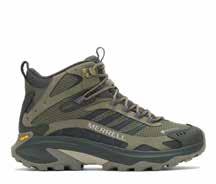
MERRELL MOAB SPEED
2
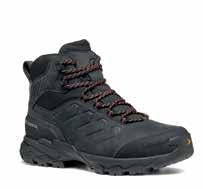
4
A light hiking boot with a Vibram TC5+ outsole that provides decent traction on all trails, whether they’re covered in snow or not.
5
A winter-specific hiking boot with PrimaLoft Pure insulation and an outsole made from a compound rubber formulated to stay flexible and grippy in cold temps and on snow.
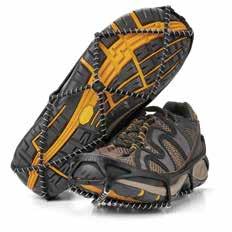
YAKTRAX WALK
6
The original slip-on traction devices, these have steel-coil-wrapped rubber and fit over most every shoe or boot.
Thanks in large part to a wide toebox, these are comfy out of the box for many people.
These boots have an integrated RECCO reflector, which can be found by search and rescue teams in emergency situations, like if you’re buried in an avalanche.
Affordable and super compact—they’ll not only fit in a jacket pocket, but even a pants pocket.
There’s a Gore-Tex layer, but no insulation; on the coldest days, feet can get cold.
Its treads were great on packed snow but didn’t feel secure on ice.
We don’t find these add additional grip to footwear that already has a decent tread.
When you want one boot that does multiple jobs— hiking (on either dirt- and snow-covered trails) or strapping into snowshoes.
Fat bikers and snowshoers; hikers on non-icy trails.
Convincing you that spiked traction devices are worth the extra money.
$180, available at Hoback Sports, 520 W. Broadway Ave., Jackson
$219; available at Teton Mountaineering, 170 N. Cache St., Jackson
$30, available at REI, 974 W. Broadway Ave., Jackson JH
SCARPA MORAINE POLAR GTX
LOCAL LIFE
JACKSON HOLE ICON
// BY EMILY COHEN
A Fine Balance
Karns Meadow is set for a long-awaited makeover, balancing nature and human needs.
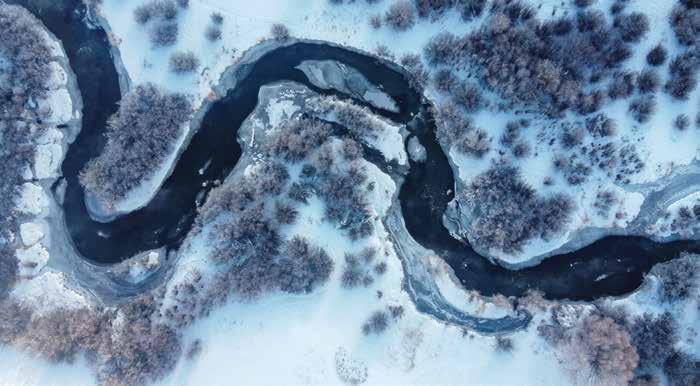
AFTER MORE THAN two decades of planning, a vision for Jackson’s 42-acre Karns Meadow park is finally taking shape. Tucked between the rodeo arena and the library in West Jackson, the meadow is a hidden oasis, unexpected in its relatively urban (for Wyoming) surroundings. But soon it will be a place for both people and animals to enjoy.
The land, homesteaded by the Karns family over 130 years ago, was intentionally left undeveloped. In a 2024 letter to the editor published in the Jackson Hole News&Guide, Jenny Karns described the land as a “childhood backyard field of dreams.” Between 2003 and 2009, the Karns family sold the property to the Town of Jackson in eight separate parcels, working with the nonprofit Jackson Hole Land Trust to place conservation easements on each one. A final master plan was approved in December 2024, and a phased development process is now underway.
Until now, the meadow—which has no infrastructure—has functioned largely as open space and wildlife habitat. In summer, seasonal workers have occasionally camped illegally in its willow thickets. Year-round, it supports beavers, songbirds, mule deer, moose, bald eagles, and trumpeter swans, and even serves as a connectivity corridor for migrating elk.
For years, town officials, environmental groups, and community advocates all had different ideas of how to balance access and preservation. Now, after more than two decades of debate, a compromise is moving forward.
The plan includes a parking lot, restroom, picnic shelter, and a 0.75-mile accessible pathway around the park’s perimeter. Though unpaved, the pathway will be surfaced with compacted granite dust, making for a mellow walk in summer. In winter, it will be
groomed for cross-country skiing, with a small portion plowed for pedestrian use.
Earlier proposals called for lighting and year-round access throughout the meadow. But wildlife advocates including the Jackson Hole Conservation Alliance successfully lobbied for scaled-back infrastructure to preserve wildlife habitat. Bikes and dogs won’t be allowed, and the park will close at sunset. The interior of the meadow will also be closed in winter to protect wildlife.
“We’re finally starting to construct a vision that’s been discussed for 20 years,” says Max Moran of Teton County Parks and Recreation, which is spearheading the park’s development. “Any progress is exciting.”
Although Karns Meadow won’t be part of the Teton County Pathways system, it will be a unique green space destination, distinct among parks in the town of Jackson, says Jenny Fitzgerald from the Jackson Hole Conservation Alliance. “It is a whole part of town that many people haven’t experienced, so I hope that once it opens, people will recognize how valuable it is as a resource,” she says. “In harsh winters, these low elevations are sheltered by buttes and provide valuable vegetation for mule deer and other animals. It offers incredible bird and wildlife watching in downtown Jackson.”
While full activation may not happen until late 2026, phased construction is already underway. There will be bridges over Flat Creek. Trail additions and amenities will roll out as funding and permitting allow. The Karns family, along with groups like the Jackson Hole Conservation Alliance and Friends of Pathways, will continue to advocate for careful stewardship. “It’s all about finding the right balance between nature and people,” says Moran. JH

PROFILE
TracyPoduska
// BY EMILY COHEN
TRACY PODUSKA
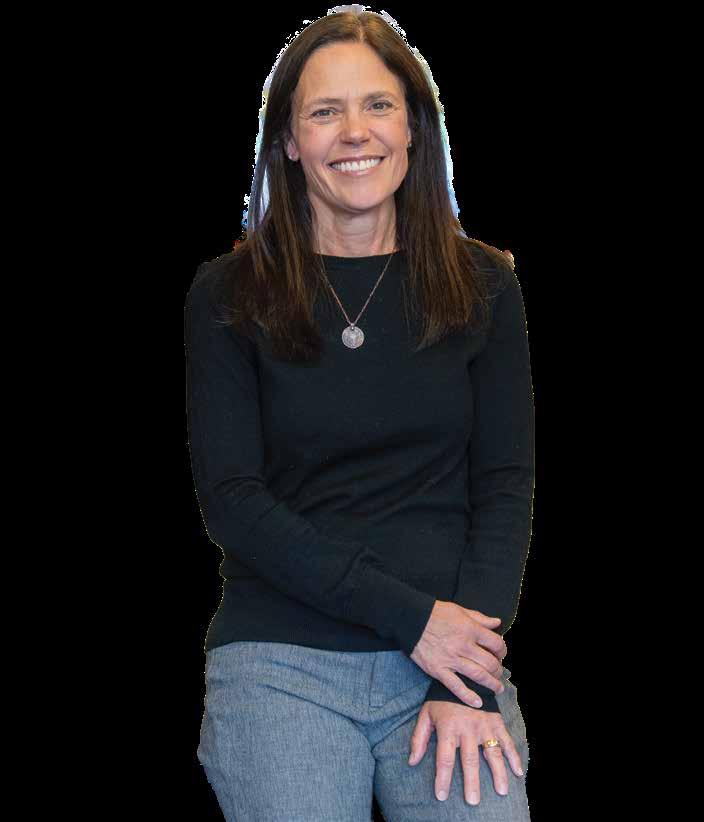
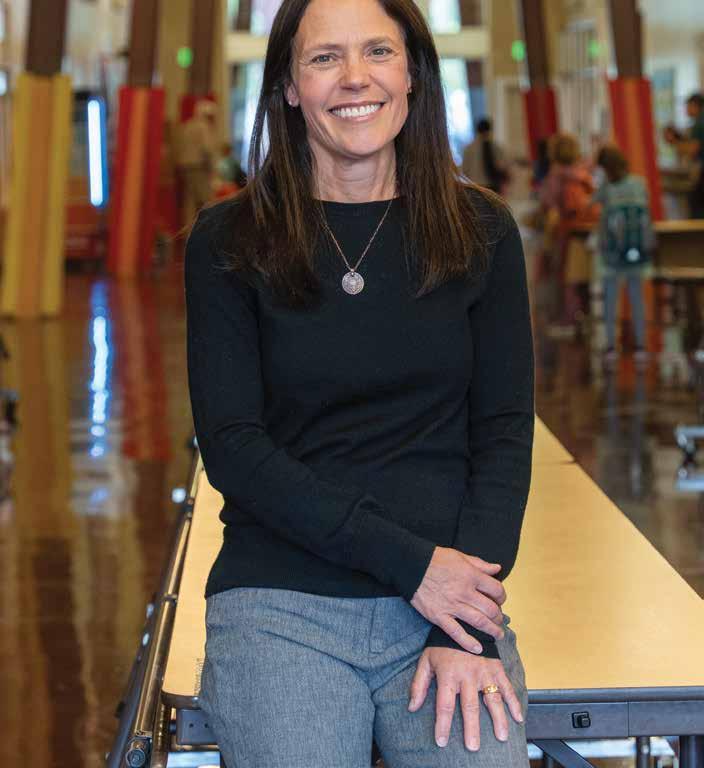
Jackson Elementary School principal Tracy Poduska is on the go most days. It’s how she’s wired—constantly moving, thinking, leading. Originally from Ohio, Poduska knew she wanted to be a teacher from the time she was a little girl. A driven student, she graduated from the University of Ohio in just three
day I take this environment for granted is the day I should probably live somewhere else.” Twenty-five years later, she is still here.
Poduska started as a fourth-grade teacher but was quickly tapped to lead the district’s gifted education program. From there, she became curriculum director, then principal of Wilson Elementary—also overseeing the elementary schools in Kelly, Moran, and Alta— before arriving at Jackson Elementary in 2017. “I never set out to be a principal,” she says. “But I fell in love with it. Every day you’re with teachers. Every day you’re with students.”
Her passion is teacher development—empowering educators to grow and thrive. “The better job I do supporting teachers, the better they can do for our students,” she says. “I work with and through people. If you want to make real change and keep people engaged, you have to do it together.”
" I want students to know their principal is someone who cares deeply about them. We take academics seriously, but we also believe in developing the whole child.”
—PRINCIPAL TRACY PODUSKA
years. Teaching came naturally. But Jackson Hole? That was a surprise.
“I’d never been west of the Mississippi,” she says, remembering a fateful summer road trip with her best friend from high school after her first year of teaching in Georgia. “We just went everywhere—El Paso to Banff.” Jackson Hole’s mountains, wildness, and sense of possibility drew her in. After a few return visits, she made the leap in 2000, moving from Ohio to Jackson and landing a job with the Teton County School District within six days of arrival. “I knew [Jackson Hole] was home,” Poduska says. “I promised myself that the
Still, leading a school in Jackson has its challenges. Chief among them: housing. “I’ve lost a lot of good people,” Poduska says. Teacher turnover, driven by the region’s high cost of living, presents real obstacles. “You wonder if this is a harbinger of things to come,” she says.
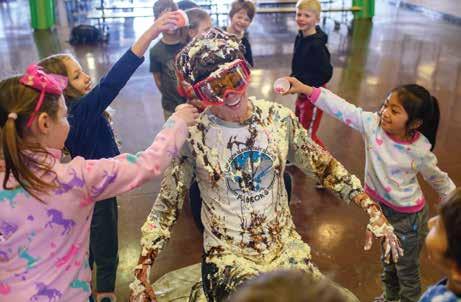
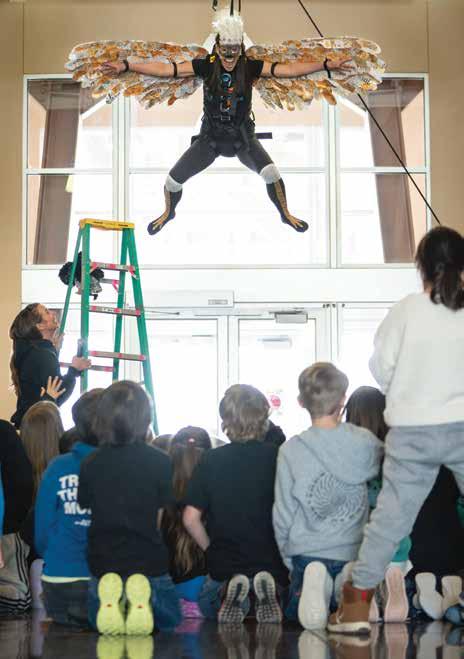
Poduska is known across the valley for finding silly gimmicks to motivate and reward students. She’s been taped to a wall, turned into an ice cream sundae, and has even “flown” through the gymnasium dressed as a falcon. “I want students to know their principal is someone who cares deeply about
Principal Tracy Poduska invited Jackson Elementary students to turn her into a sundae as a reward for more than 58,000 minutes of independent reading.
BRADLY
LOCAL LIFE
TRACY PODUSKA
them,” she says. “We take academics seriously, but we also believe in developing the whole child.”
Poduska helped create the Falcon Funds system, where students earn rewards for positive behavior, effort, and achievement. While some spend their “money” on toys and trinkets, others opt to have lunch with the principal or help her with morning announcements. “I feel honored when they pick me over a squishy,” she says.
She’s equally intentional about recognizing teachers and the many hats they wear. “They teach kids reading, writing, arithmetic. They are counselors. They are parent therapists. They are attendance officers.” Her mantra? “Work with and through people.”
One of her proudest recent initiatives is a monthly school-wide assembly focused on student recognition. Rather than honoring only traditional high achievers, each grade selects a student
To reward Jackson Elementary School students for reaching a reading goal, principal Tracy Poduska donned student-made wings to "fly" through the school.
who exemplifies a rotating theme— from perseverance to kindness to personal growth. Teachers share heartfelt stories in front of the entire school.
“Everyone cried,” Poduska says. “To hear about a student who’s learning English or who’s made huge strides in writing.” Those stories matter, and for Poduska, it’s important that everyone hears them. “Everyone cheers,” she says.
Outside of school, Poduska stays just as active. She loves cross-country skiing and recently took up accounting classes just for fun. “I’ve always loved numbers,” she says. “It’s a way to keep my mind sharp.”
Her husband, Greg, is also an educator—a history teacher at the middle school. They met at a welcome event for new teachers when she first started with Teton County Schools. “He came up and said, ‘You’re new here,’ and I remember thinking, ‘Oh, he’s cute.’” They’ve now been married for 23 years and raised two children in Teton County schools—one graduated in 2023, the other in 2025. Poduska earned her doctorate while her kids were little, juggling work, study, and parenting. “I’m disciplined about compartmentalizing,” she says. When she defended her dissertation at the University of Wyoming, she brought her daughter along. “I wanted her to see it. I wanted to show my kids they can do anything they set their minds to.”
Poduska says she learns from her students every day, especially from their resilience. “Some of them are dealing with really heavy stuff outside school. But they still show up and try. They remind me what perseverance looks like.”
KATHRYN ZIESIG
TRACY’S FAVORITE WINTERTIME ACTIVITIES
SKIING AT TRAIL CREEK
Trail Creek is home to the Jackson Hole Ski & Snowboard Club’s Nordic program, where Tracy’s daughter got her start before becoming a collegiate skier. A 10-mile track groomed for skate and classic skiing winds through Trail Creek Ranch and extends in loops into the BridgerTeton National Forest. Skiers will find a mix of open meadows, forested sections, and challenging uphills and descents. Day passes $26; trailcreekranch.com
WATCHING SKI-JORING
Skijoring, Poduska says, is “oh so Wyoming:” A galloping horse and rider pull skiers through a course of gates, jumps, and other obstacles. Catch this at Teton Valley Skijoring (February 21–22). Free, Tetonskijor.org
VISITING THE NATIONAL ELK REFUGE
“Jackson Elementary borders the Elk Refuge, and the amount and variety of wildlife is incredible,” Poduska says. “Of course, there are elk, but also foxes and coyotes.” Take a scenic drive or a walk along the Elk Refuge Road, or bundle up for a sleigh ride with Double H Bar, the refuge’s long-time concessionaire, to get up close to the wintering elk. Passes, $27 (kids) and $42 (adults); nersleighrides.com
Where Land, Lifestyle, and Legacy Meet.
Guiding buyers and sellers through Wyoming’s most significant estates and ranches with authenticity, storytelling, and trust.
For more than three decades, Latham Jenkins has connected people to place through thoughtful interpretation of Wyoming’s most remarkable properties. His work blends deep local insight with a global perspective, ensuring every transaction honors the land, its legacy, and the lifestyle it affords.
Recognized by RealTrends as Wyoming’s #1 individual broker in 2021 & 2024 and #2 in 2022 & 2023, Latham leads with integrity and results.


Her favorite days of the year? The first day of school, when everyone is filled with anticipation and excitement about a fresh start and all the possibilities to come, and the annual talent show at the end of the school year. “Seeing students who have some crazy stuff going on commit to something, [especially something] as scary or challenging as putting yourself out there on stage.”
In a place as transient and fast-changing as Jackson, Poduska is a constant— steadfast, joyful, and deeply committed to the community she calls home. JH





LOCAL LIFE
HELLO ROB DEARING
Rob
AS TOLD BY
IDearing
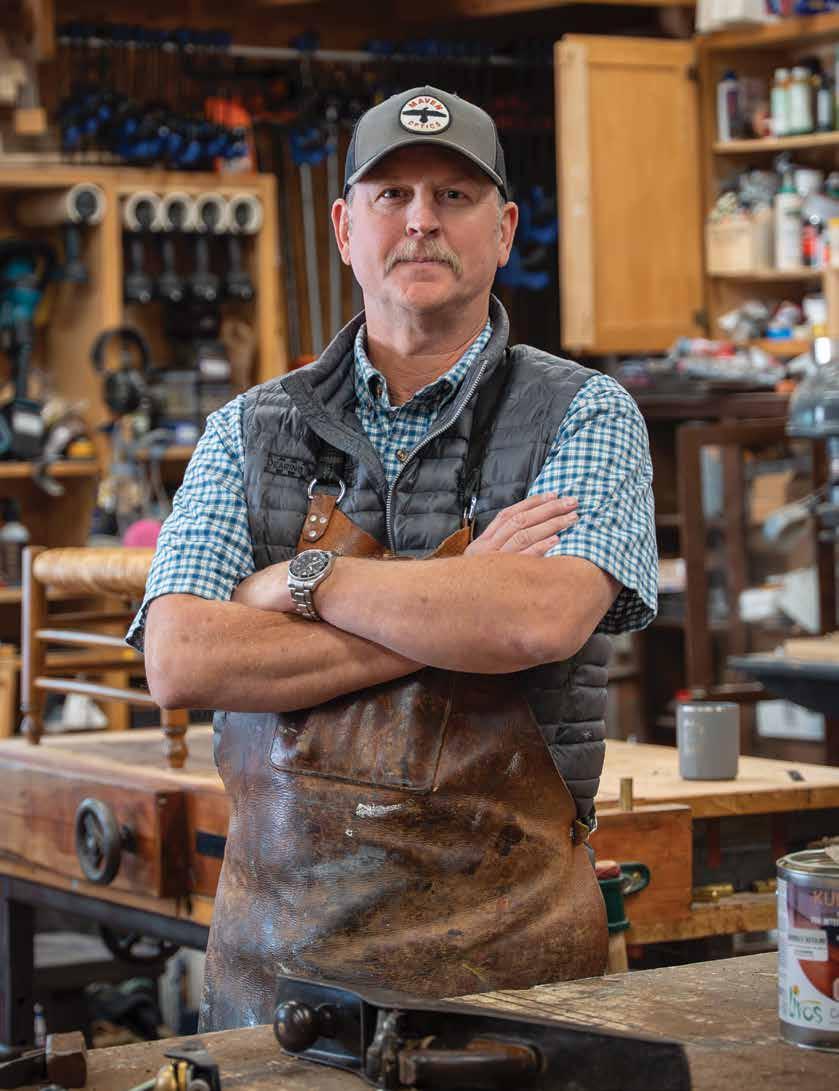
n the corner of a workshop in an industrial park south of downtown Jackson, wood shavings curl onto the floor like feathers, and a faint scent of varnish hangs in the air, mixing with the earthy tang of aged wood. This is where Rob Dearing rebuilds the past— one dovetail joint, spindle, and gossamer-thin veneer at a time.
Dearing came to Jackson in 1993 with a degree in parks, recreation, and tourism management from Clemson University. He imagined a career with the National Park Service. “I thought I’d be in the backcountry,” he says. Instead, he found himself working for Terry Winchell at Fighting Bear Antiques, learning how to bring broken things back to life.
By 2009, he’d started his own furniture-restoration business, working almost entirely by hand. “I’ve got machines, sure,” he says. “But most of the time it’s clamps, glue, chisels, and patience.” His workshop is filled with stacked pieces of salvaged wood, antique furniture in varying states of disrepair, and a growing archive of stories embedded in each restoration.
What began as a side job turned into a career steeped in craftsmanship and care. “I like the problem-solving part,” Dearing says. “Every piece is a mystery—how it was built, how it broke, how to make it whole again.” Sometimes he finds a bullet buried in a beam. Sometimes, playing cards or coins tucked in a drawer’s false back.
// BY SAMANTHA SIMMA
Restoring antique furniture takes patience and an appreciation for the past.
—ROB DEARING "
I like the problem-solving part. Every piece is a mystery— how it was built, how it broke, how to make it whole again.”
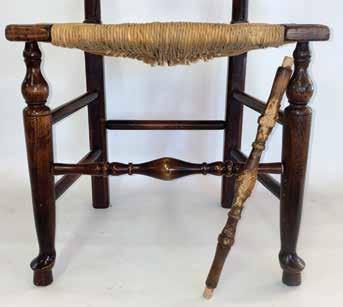
An antique chair came to Rob Dearing with a broken spindle, which he repaired with a new one, made in the exact shape of the original one.
LOCAL LIFE
HELLO ROB DEARING
COURTESY
“You never know what history is hiding inside,” he says.
One winter, cross-country skiing through Grand Teton National Park, Dearing spotted a cluster of old furniture on a covered porch. He recognized the craftsmanship—handmade, and worth preserving. “I took photos and showed them to [members of] the park service,” he says. That chance encounter led to a years-long partnership restoring heritage pieces for the NPS and the Murie Center.
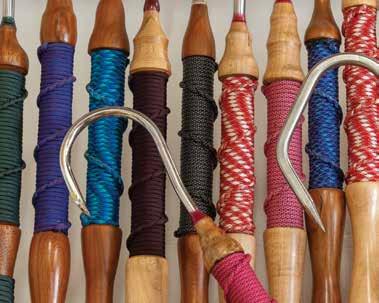
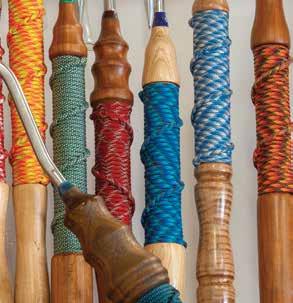
He’s not one to advertise. Clients find him through word of mouth or, more recently, through his Instagram feed, a catalog of meticulous repairs and the occasional fishing gaff. The gaffs—custom tools used to haul halibut into a boat—are a side project born from a trip to Alaska with his late father-in-law, known as Bear. Dearing named the line E. Bear’s Gaffs, a nod to Bear and his grandfather, Edward. He’s made over 100, each one unique and turned by hand.
"
There’s something satisfying about doing one thing really well. Restoration isn’t flashy. It’s slow. It’s quiet."
I grew up around antiques. My mom was a dealer. The first thing I remember fixing was the back of a chair—I was maybe six. Just hand-weaving the seat. I didn’t think much of it at the time. When I moved to Jackson, I trained as a bootmaker. That didn’t pan out. I started helping out at Fighting Bear Antiques, and that’s when I realized I already had the right instincts from my childhood. I stayed with it.
Old furniture tells you what it needs. Sometimes it’s obvious—like a broken leg. Sometimes it’s not until you take it apart that you find wormholes, loose joints, old fixes done badly. You take it down to the bones and build it back up. There’s a rule among restorers: from six feet away, you shouldn’t notice the repair. From six inches, you should say, “That’s a damn good fix.” That’s the bar.
I like cherry and mahogany, but I work with whatever I need to match. I’ve got stacks of salvaged wood— drawers full of dowels and knobs and fragments. There’s a whole network of us restorers around the country—we’re part of the Finishers Guild—and we trade pieces, ask for help, share techniques. It’s a small group. Maybe 75 of us. Most of my mentors are in their 70s or gone now. I’ve got one apprentice, Luke. He’s great. Sharp eye. Good hands.
I also make these fishing gaffs. I was up in Alaska with Bear, my father-in-law. We hooked a halibut but couldn’t get it into the boat. I came home and started turning wooden handles in the shop. Bear passed not long after, and I named them after him and my grandfather: E. Bear’s Gaffs. Every one of them is a little different. I match them to people’s boats, play with new cord patterns, different hooks. It’s fun.
HERE, ROB SHARES MORE OF HIS OWN STORY.
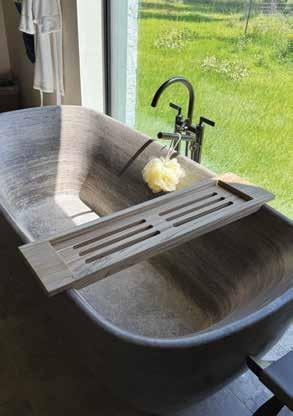
Dearing also creates original pieces, like this custom teak bathtub table.
PHOTO
Rob Dearing's custom fishing gaffs are used to hook large fish like halibut and haul them into a boat.
Jackson’s not always easy for this kind of work. I can’t just run down the road for materials. But there’s plenty of old furniture, and people here seem to care about keeping it around. That’s half the battle.
The Park Service stuff was a lucky break. I saw a table while skiing through the park, took a picture, showed it to a ranger. We started working together cataloging their pieces, restoring them. Some are locally made, one-of-a-kind. It’s good work. Quiet work. You feel like you’re preserving something that would otherwise be lost.
When I’m not in the shop, I’m with my wife, Molly, and our two kids. We ski, we hike, we get outside as much as we can. I open the shop doors when the weather’s good. The air smells better when it’s moving.
There’s something satisfying about doing one thing really well. Restoration isn’t flashy. It’s slow. It’s quiet. You’ve got to care about the details no one else sees. When someone comes in and says, “I didn’t even notice it was broken,” that’s the best compliment I can get.
Follow @dearingworkshop on Instagram to see recent restorations and available E. Bear’s Gaffs. JH

• Top rated Wyvern and AR/GUS Gold and Platinum Aircraft and Crew.
• Competitively priced “on-demand” charters.
• No long-term contracts or costly memberships.
• Locally owned and operated.

699.1422
Q
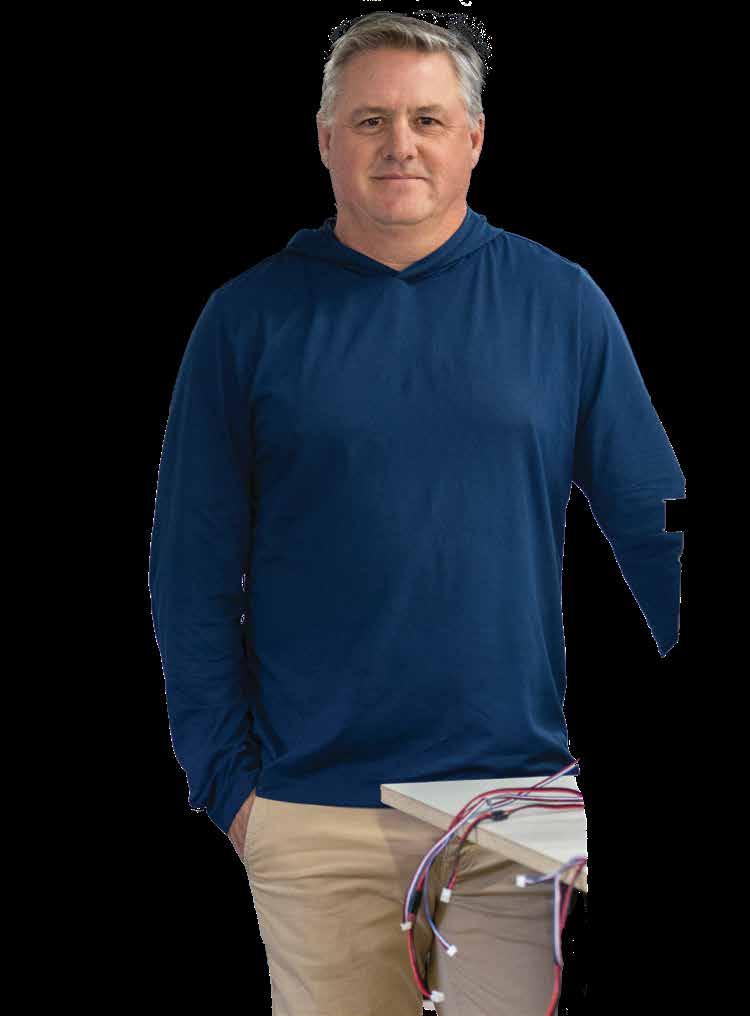
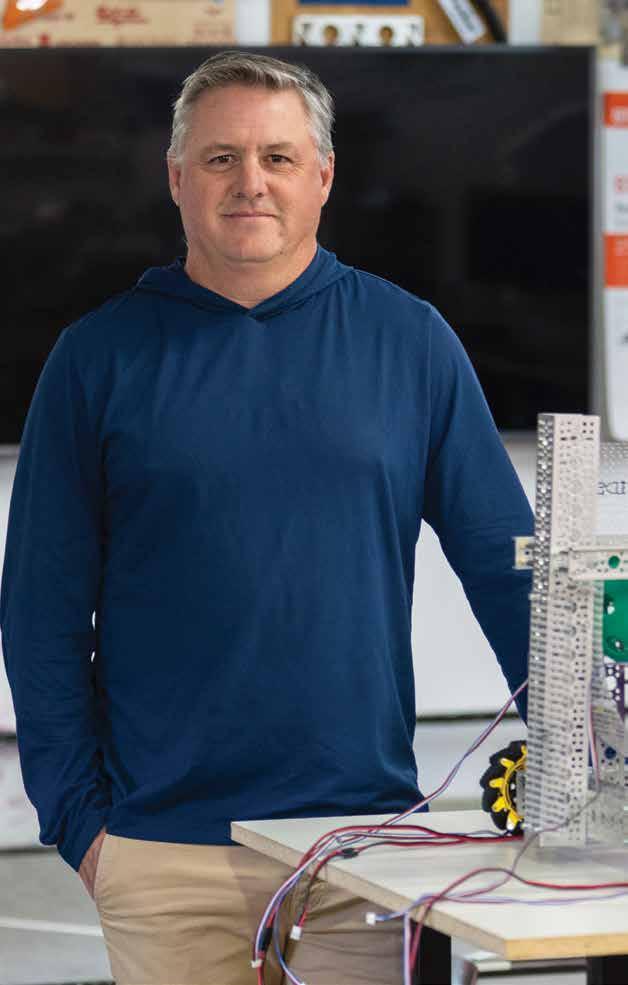
Gary’s passion in bringing engineering and STEM opportunities to communities that might not otherwise have access to them is why he stands out in our community.”
—BENNETT LIEBERMAN, JH HIGH SCHOOL PRINCIPAL
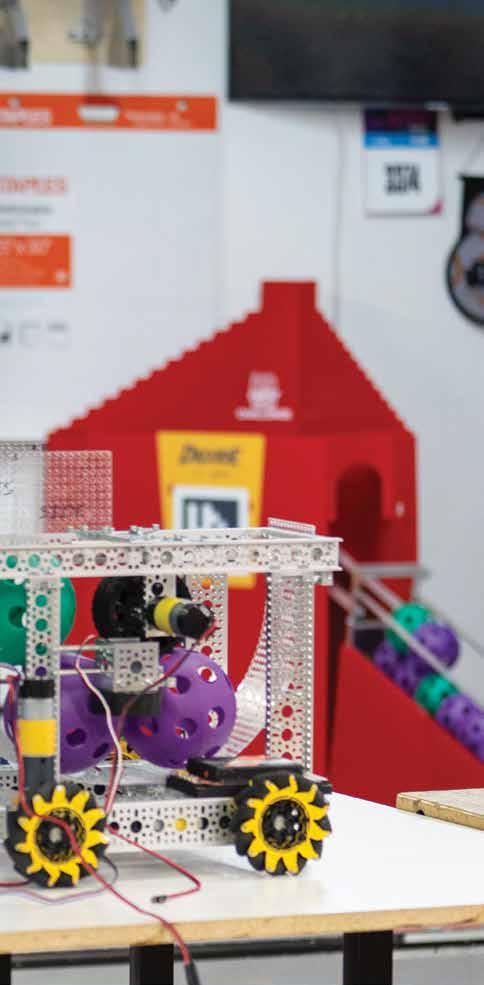
How do you get hundreds of mountain town kids fired up about something that doesn’t involve skiing, snowboarding, fishing, or climbing? Gary Duquette has that magic. Duquette runs the Jackson Hole RoboBroncs, which has grown from a single high school robotics club (in 2009) to more than 50 robotics teams across 12 Teton County schools. This year, more than 300 kids in elementary, middle, and high school are RoboBroncs.
Students build robots and compete in local, regional, and national competitions. Official challenges include tasks like lifting objects, navigating obstacles, and collaborating in alliance, but students tackle real-world problems, too, like designing robots to save sage grouse in Grand Teton National Park, blending engineering with conservation science (see the Q&A). “These experiences show them that robotics isn’t just for games—it’s for meaningful impact,” says Duquette, who retired from full-time teaching of science, technology, engineering, and math (STEM) skills in 2023 but continues to coach RoboBroncs.
Duquette also founded Wonder Institute, which has created community maker workshop spaces around Jackson. WI is a nonprofit supporting creative leadership, collaboration, and community. Local creatives can affordably rent space and equipment at the Teton County Library or the wellequipped woodshop and Silver Studio
LOCAL LIFE
HELLO GARY DUQUETTE
on Deer Drive. Makers include Olivia Hackett of Olivtrees wood art and jewelry. Kat Jacaruso and Zina Horman run Rip N Stitch, teaching sewing skills to students and making functional, sustainable goods. Caleb Nakia Rogers is a furniture maker who teaches Japanese joinery woodshop. And Kelvin Wu uses WI space to make custom skis, which are sold under his brand, Maiden Skis.
Bennett Lieberman, principal of Jackson Hole High School, is a friend, admirer, and very grateful fellow educator. “Gary has had to work with many community partners to give students opportunities to be exposed to a variety of STEM fields. He’s brought home many awards through the FIRST Robotics competitions, but more importantly, his work with the Wind River High School and their community is what stands out to me.”
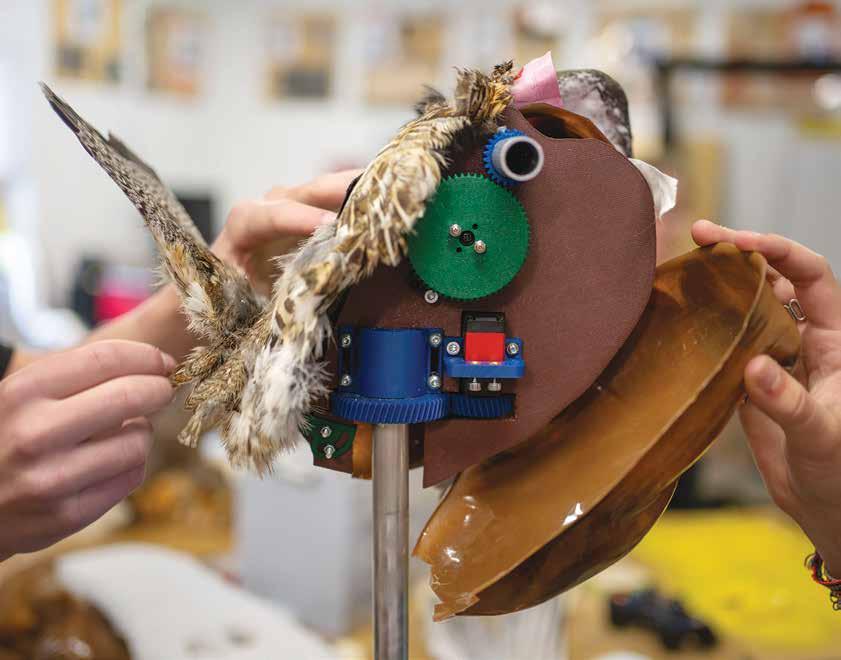
One of the RoboBroncs teams is collaborating with the Teton Raptor Center and Grand Teton National Park to engineer a working robotic male sage grouse capable of simulating complex mating behaviors like inflating air sacs, spreading tail feathers, and puffing-up chest feathers. The goal is to use the robot to move real-life sage grouse away from the busy Jackson Hole Airport runway during their mating season.
ERIN BURK
WE GOT GARY TO SIT DOWN AND CHAT.
Q: How did you end up in Jackson Hole?
GD: I’m the classic ski bum story. I got my BS in math and some of my teaching credits from the University of Massachusetts, Dartmouth, in 1992. I was cooking at a restaurant in Newport, Rhode Island. My Dad fixed up an old Ford Tempo and pushed me out of the house and west. I knew about Jackson for skiing, and I wanted to cook at the original Billy’s Burgers. I ended up first working in construction and as a breakfast cook at Bubba’s. Then I got a job teaching math at the high school.
Q: What changed? Why did you finally get a “real job?”
GD: I was kind of a lazy kid, but construction changed my life. It taught me that I had to be accountable. I worked with older guys who had accomplished something. One had climbed Everest. Another sailed across the oceans four times. They were some crazycool people, and they got in my face and got me to show some effort. I learned that success begets success.
Q: Can you pass that lesson onto kids?
GD: Because of my background, I can see kids differently than most teachers. I can tell my story, and I know how they feel. Lots of kids gravitate toward the hopeful message of finding yourself and what you want to do later in life.
Q: What first inspired RoboBroncs?
GD: A student who had recently moved here had robotics in his school in Atlanta. Kathy Milburn (former principal, Wilson Elementary) was then in charge of math and STEM programming in the district. She found the money to start a robotics program here. A bunch of students in our high school engineering classes jumped in and built a robot. The school district offers lots of sports, but besides Speech & Debate, the RoboBroncs is one of the few things kids can do in our schools that’s not sports-related. It was pretty cool because we all had to learn together as peers, because nobody knew what we were doing. Wes Womack from
Square One (now at Epsilon Technology) jumped in as our mentor, he was also key to our success.
Q: You’re also helping kids work with NASA?
GD: NASA runs the HUNCH program, (High School Students United with NASA to Create Hardware), and I work with Wyoming Indian High School [students]. They have completed projects like developing metal stakes for a moon mission and a sleeping bag for the lunar module. I’m currently working with students on NASA’s "soft goods" team to sew canvas organizational kits for astronauts. We’re training new students by having them produce bags for the Wonder Institute. It’s hands-on work that connects Native students directly to NASA engineers—an incredibly powerful experience.
Q: What does robotics offer kids?
GD: Besides STEM education, I think it offers a chance for hard work and soft skills, too. Robotics is all about failing, and kids learn the ability to fail, solve problems, and pick themselves up. That teaches drive, and if you’re driven, I believe you can do anything. My four kids went through our robotics programs. They’re all hard workers and good people. Robotics is different from anything else you can do. Above all, it’s about teamwork and working with your team through the exploration process.
Q: For how amazing RoboBroncs, WI, and HUNCH are, they don’t make the local news much.
GD: (laughs) People say I’m the worst marketer they’ve ever met.
Q: Working on anything really cool right now?
GD: Always! One cool project is that we’re building robotic sage grouse for the Teton Raptor Center. The goal is to lure grouse away from the dangerous Jackson airport runway area with a mock mating dance, and we’re building six robots that will do that. Nothing’s really worked so far, so they wanted to try robots. The kids love it.
Q: What’s your vision for the Wonder Institute?
GD: I’d like to see a place here in Jackson like the BARN (Bainbridge Artisan Resource Network) in Bainbridge Island, Washington. It’s a huge building specifically for makers and artisans, with 10 different studio spaces for glass, culinary arts, metals, technology, woodworking, writers, and more.
Q: You moved here to be a ski bum; do you still ski?
GD: I try to get out as much as possible— at [Jackson Hole Mountain Resort], on the Pass, and now my kids are getting me out of my bubble to ski backcountry in [Grand Teton National] Park. I’m an oldschool tele skier.

“Younger kids get hooked when building with their hands and seeing things move because of something they created and programmed. You can start really young with Lego robot kits and end with $10,000 robotics in high school. We try to keep it playful and purpose-driven. Iteration is the key for younger students, since they get to run the robots over and over again, making small changes—kind of like a live video game. As far as teaching STEM, it’s all about showing students that these tools and skills let them solve real problems, not just do well in school. Once they feel ownership of a project, they’re all in.” JH
GARY ON GETTING KIDS INTO ROBOTICS

EMILY COHEN

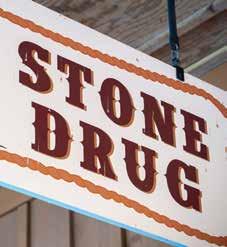
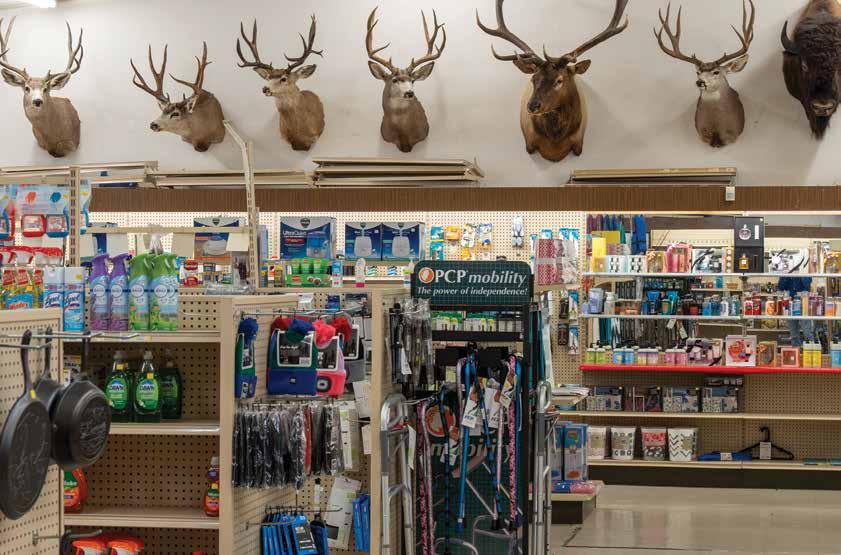
Stone Drug had it all: a coffee shop, records, electronics, Kodak and Polaroid cameras, garden supplies—and a pharmacy, of course.
Keeping watch over the aisles of painkillers and toothpaste at Stone Drug is a dozenstrong collection of deer, elk, and bison mounts. Peek behind the curtain adorned with pin-up girls to the right of the pharmacy counter, and you’ll find an assortment of vibrators and bondage collars.
When Stone Drug opened in the new Grand Teton Plaza in July 1976, owner Jack Stone told the Jackson Hole News that it was as “complete a store as you will find in Jackson.” Located on the south side of Broadway, just one mile from the Town Square, Stone Drug ushered in a new era for Jackson. Residents no longer needed to drive two hours to Idaho Falls for affordable plumbing supplies or film processing.
Stone Drug had it all: a coffee shop, records, electronics, Kodak and Polaroid cameras, garden supplies—and a pharmacy, of course. Legend has it that National Lampoon even spoofed Stoner Drug. Err, Stone Drug.
The first time that local fishing guide and newspaperman Paul Bruun saw a microwave was at Stone Drug. “All of sudden people were coming in and buying them like they were beef jerky,” Bruun says. He managed the sporting goods department for a couple of years after the store opened because he liked being around the gear. “I loved all the stuff they were selling—rifles, shotguns, ammo, fishing tackle,” he says.
Nearly 50 years later, Stone Drug is still the place to get a fishing license and refill your beta blockers. Model rocket kits? Aisle 1. Coleman stoves? Aisle 2. Worms and mealworms are $4 in the refrigerator by the cash
register. Sucker meat is $5. Off-brand perfumes are to the right when you walk in, next to Jackson Hole’s largest display of Burt’s Bees products. Customers like the “natural stuff,” says pharmacist and current owner Laura Lee Nelson.
Nelson started working at Stone Drug in 1979 as an intern after high school, but there was no job for her after graduating from college, so she went to Alaska for nearly three decades. She returned in 2010 to manage the pharmacy and bought the store in 2015—a shaky time to take over Wyoming’s oldest pharmacy. The year before, a Walgreens moved in across the street. “It was scary,” says Nelson about the direct competition from a national chain a few hundred feet away. But nature had her own plans. A landslide closed the Walgreens just three months after its opening. Starting on the hillside above the chain pharmacy, the landslide tore one family’s house in two and forced the evacuation of several businesses (in addition to Walgreens) and of about 60 people who lived in the immediate area of Budge Drive. After the landslide, a Stone Drug customer made bumper stickers: Stone Drug: Won by a Landslide. The stickers soon became collectors’ items, turning the natural disaster—and Stone Drug—into a legend. A Walgreens executive even stopped in after touring the landslide to buy a Stone Drug souvenir. Now, more than a decade after the landslide, Nelson says she still get requests for the bumper stickers.
Stone Drug is the only independent pharmacy in Jackson Hole and the oldest pharmacy in the state. Surviving decades of change, it remains a place for the community. Bruun says it’s easy for places to go corporate, but there’s a place and a need for the hometown store in a changing Jackson. “They are my pharmacy, and that’s the way it’s going to be,” he says. JH
PEAK
The factor that makes the Jackson Hole real estate market so unusual is the relative scarcity of private land. Ninety-seven percent of Teton County, Wyoming, is publicly owned—either national park, national forest, or wildlife refuge. This computes to just 75,000 privately held acres in a county spanning 2.5 million acres. The guaranteed open spaces and unobstructed views these surrounding public lands afford make the remaining private land a real treasure. Add the abundance of recreational opportunities found in and around the valley, and the quality of life one can enjoy in Jackson Hole is simply unbeatable.
Moreover, many of the properties featured here are secluded, scenic retreats located in the midst of prime wildlife habitat. Most existing and prospective property owners in Jackson Hole cherish this notion, and serve—or will serve—as stewards of nature.
One cannot put a dollar value on waking to the Teton skyline, skiing home for lunch, or listening to a trout stream gurgling through the backyard. In Jackson Hole, “living with nature” is not a fleeting, vicarious experience a person has while watching TV. Here, it’s a fact of life, and we wouldn’t have it any other way.
IN-HOLDING AT LOST CREEK RANCH
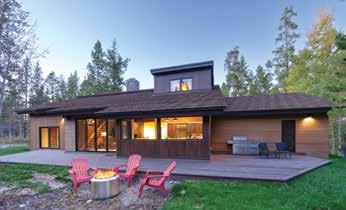
3,566 6 5 3,395,000 25-2294
BEDROOMS
Nestled within Grand Teton National Park, this Lost Creek Ranch retreat offers unmatched access to the wild beauty of Jackson Hole. Bordering millions of acres of national forest, it’s a haven for wildlife, adventure, and year-round recreation. The completely renovated main home and charming guest cabin provide ample space for family and guests. Offered fully furnished, this is a turnkey mountain escape that blends seclusion, convenience, and the true Jackson Hole lifestyle.
BUDGE KELLEY REALTY GROUP Rebekkah Kelley 307/413-5294 team@budgekelley.com budgekelley.com
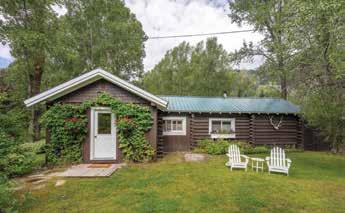
1,190 2 1
FEET
BEDROOMS
2,650,000 25-1999
This charming, historic cabin is 3/4 mile from downtown Wilson along beautiful Fish Creek Road. Lightly updated, the home is turnkey today, but offers great expansion or rebuild potential. Gear and toys for enjoying the mountain lifestyle can be stored in the detached one-bay garage. Mature trees and gardens provide a sanctuary to unwind. Steps from Fish Creek and 15 minutes to Jackson Hole Mountain Resort, this property’s setting and location are unmatched.
JACKSON HOLE SOTHEBY’S INTERNATIONAL REALTY Doyle Dawes Real Estate Partners www.doyledawes.com
5490 W. BLUE MOUNTAIN ROAD
MODERN HILLSIDE SANCTUARY
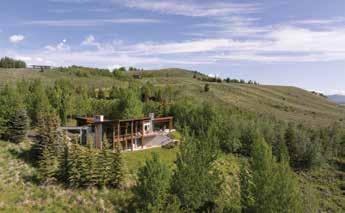
4,777
3 3.5
9,850,000 25-1806
Discover your own modern hillside sanctuary in Jackson Hole, a stunning 4,777-square-foot masterpiece located in one of the area’s most sought-after enclaves. This contemporary home features impressive design elements, including expansive glass walls that flood the space with natural light and provide views from every room. An open concept living area is seamlessly integrated with the gourmet kitchen and is perfect for entertaining. Ideally situated just a short drive from Wilson and the Town of Jackson, this one-of-a-kind residence provides easy access to world-class skiing, hiking and Jackson’s cultural scene.
HUFF VAUGHN SASSI
307/203-3000 huffvaughnsassi@jhsir.com mercedeshuff.com
CRYSTAL SPRINGS CONDO
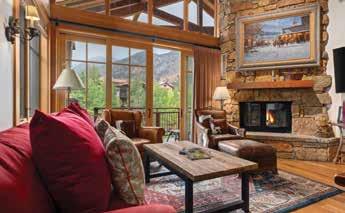
STUNNING MOUNTAIN LUXURY IN JOHN DODGE
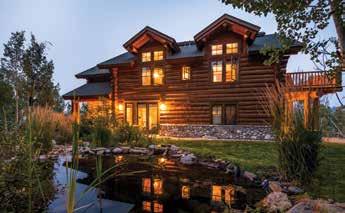
Immerse yourself in the Jackson Hole lifestyle with this breathtaking 5,000-square-foot masterpiece completed in November 2022. No expense was spared in its construction; materials like 150-year-old antique timbers and French monastery stone from the 18th century perfectly blend timeless elegance and rugged beauty, making it the ultimate retreat for both relaxation and entertainment.
BEDROOMS
7,495,000 25-2623
JACKSON HOLE SOTHEBY’S INTERNATIONAL REALTY Bryan Lyster • 307/690.5654 bryan.lyster@jhsir.com jhliving.com 2,070 3 5
Experience the ultimate slopeside retreat in this stunning penthouse at Crystal Springs, perfectly positioned in the best location at the base of Jackson Hole Mountain Resort. This mountain-facing residence features three spacious bedrooms plus a versatile loft, offering ample space for relaxation and entertaining, and an expansive deck provides the ideal setting for enjoying the vibrant village commons and sweeping mountain views. This penthouse combines premier ski accessibility with sophisticated mountain living.
HUFF VAUGHN SASSI
307/203-3000 huffvaughnsassi@jhsir.com mercedeshuff.com
SWEEPING MOUNTAIN VIEWS
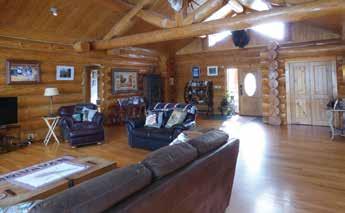
3,600 4 4
Surround youself in this custom log home situated on a 2.5 acre lot north of town. Four bedrooms and four bathrooms, 3,600 square-feet, detached three- car garage. $3,900,000. Call Nancy Martino, 307/690-1022, nancymartino@kw.com to schedule a showing.
BEDROOMS
3,900,000
KELLER WILLIAMS Nancy Martino, CRS, GRI, Associate Broker 307/690-1022 nancymartino@kw.com
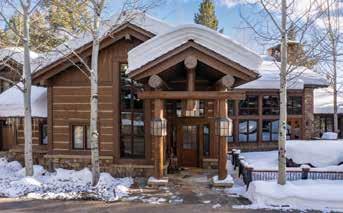
7,302 5 5 24,950,000
BEDROOMS
24-2892
Located at the top of the coveted Granite Ridge subdivision, this custom estate home embodies the ski culture of Jackson Hole. Featuring the easiest form of ski-in/ski-out available at Jackson Hole Mountain Resort. The groomed ski run slides directly past your private ski and gear room. Warm gathering places throughout to enjoy your morning coffee, a quick warmup, or aprés-ski festivities. The home features main level living with a remodeled chef’s kitchen, pantry, open concept dining and living, and expansive master suite with private office and terrace.
JACKSON HOLE SOTHEBY’S INT’L REALTY Rob DesLauriers • 307/413-3955 rob.deslauriers@jhsir.com robdeslauriers.com
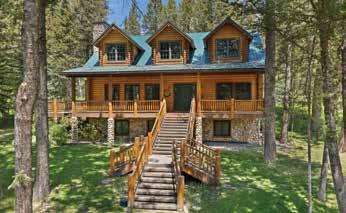
Custom log home located in Buffalo Valley on the northern end of Jackson Hole. Peaceful setting amidst the Teton Wilderness offers all-season recreation and access to the quintessential Wyoming lifestyle. Enjoy proximity to Grand Teton National Park, Turpin Meadow Ranch, and the Buffalo Fork River. Sold move-in ready.
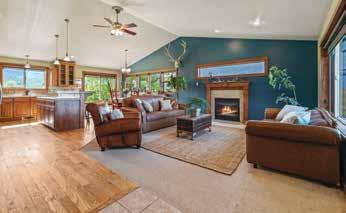
Convenient downtown location close to all of the amenities of Victor. Open living, kitchen and dining area with great natural light throughout. Private backyard with eastern mountain views. Attached two-car garage. Additional development possibilities.
JACKSON HOLE SOTHEBY’S INTERNATIONAL REALTY Spackmans & Associates
JACKSON HOLE SOTHEBY’S INTERNATIONAL REALTY Spackmans & Associates 914/588-2302 spackmans@jhsir.com
SLOPESIDE LEGACY HOME
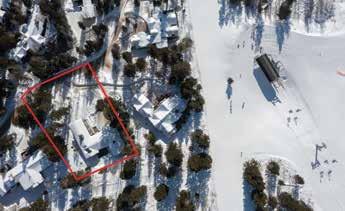
7,044 6 7.5
BEDROOMS
PRICE ON REQUEST
On one of only two Granite Ridge lots situated high enough to ski down to an upper lift, this exceptional home offers the finest in access and finishes. Ski-in, ski-out, slopeside, adjacent to national forest, and designed to maximize the views of the surrounding peaks, this is the ultimate home from which to enjoy an outdoor-focused lifestyle. Exceptional modern design melded with natural elements that together form a next level Jackson Hole retreat.
JACKSON HOLE SOTHEBY’S INTERNATIONAL REALTY Barbara Allen, Associate Broker 307/413-3510 barbara.allen@jhsir.com
OVERLOOKING TETONS
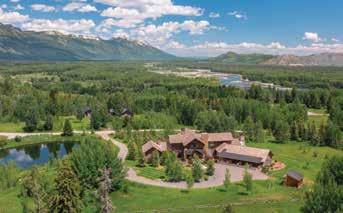
6,683 5 6 25-1542
Spots this perfect are rare, even in Jackson Hole. Two bodies of water grace the entrance, including a large waterfall that echoes throughout the property. Thoughtful landscaping creates privacy, but maintains the protected Teton view. Open your front door to the Grand Teton framed in the expansive great room windows. Five bedrooms plus office, six baths, three stone fireplaces with wide plank white oak floors, rustic beams, and Western modern touches throughout. Eight minutes to Wilson and 20 to the Jackson Hole Mountain Resort. Begin your Jackson Hole story.
JACKSON HOLE SOTHEBY’S INTERNATIONAL REALTY
Barbara Allen, Associate Broker 307/413-3510
barbara.allen@JHSIR.com
LUXURY RESIDENCES IN EAST JACKSON

4,401
5
5.5
Discover modern mountain living at Teton Landing, a new luxury neighborhood in East Jackson. Designed with clean architectural lines, natural materials, and expansive windows that frame sweeping mountain views, these homes embody the Jackson Hole lifestyle— adventurous yet refined. Just minutes from downtown, residents enjoy immediate access to nearby trails, world-class recreation, and peaceful mountain living. Please reach out for more information.
JACKSON HOLE SOTHEBY’S INTERNATIONAL REALTY
Betsy Campbell, Associate Broker
307/690-5684
betsy.campbell@jhsir.com Tetonlanding.com
MOOSEHEAD CABIN AT GRANITE RIDGE
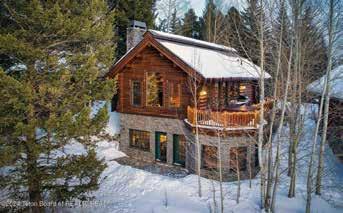
2,385 3 3
BEDROOMS
6,600,000 24-2547
Just 650 feet from the Granite Ridge Tow, multi-generational groups can gather and connect in a thoughtfully designed fusion of space and location. An open-concept great room features vaulted ceilings, a stone fireplace, and a generous kitchen with a bar for casual dining. From a spacious deck, watch skiers glide down the slopes as you relax in the spa or fire up the grill. A cozy upper-level sleeping loft offers peaceful nights; a private bedroom level includes the primary suite and a second bed and bath. Turnkey second home or investment just minutes from world-class skiing and iconic Grand Teton National Park.
LIVE WATER PROPERTIES JACKSON HOLE Latham Jenkins • 307/690-1642 latham@livewaterproperties.com livewaterjacksonhole.com
MOUNTAIN VIEW LODGE AT TRIBUTARY
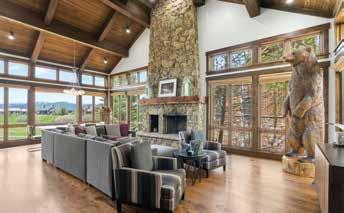
Set in one of Tributary’s premier locations, this Mountain View Lodge offers an appealing floor plan with excellent light and elevated views of the Big Hole Mountains over the 7th fairway of the David McLay Kidd designed golf course. Each bedroom includes an en-suite bath, with additional living space in the loft and lower level. Walking distance to downtown Driggs and a short drive to Grand Targhee Resort.
JACKSON HOLE SOTHEBY’S INTERNATIONAL REALTY
Des Jennings, Associate Broker 307/413-4945 des.jennings@jhsir.com

ENJOY
ARTS, CULTURE, FOOD, AND DESIGN
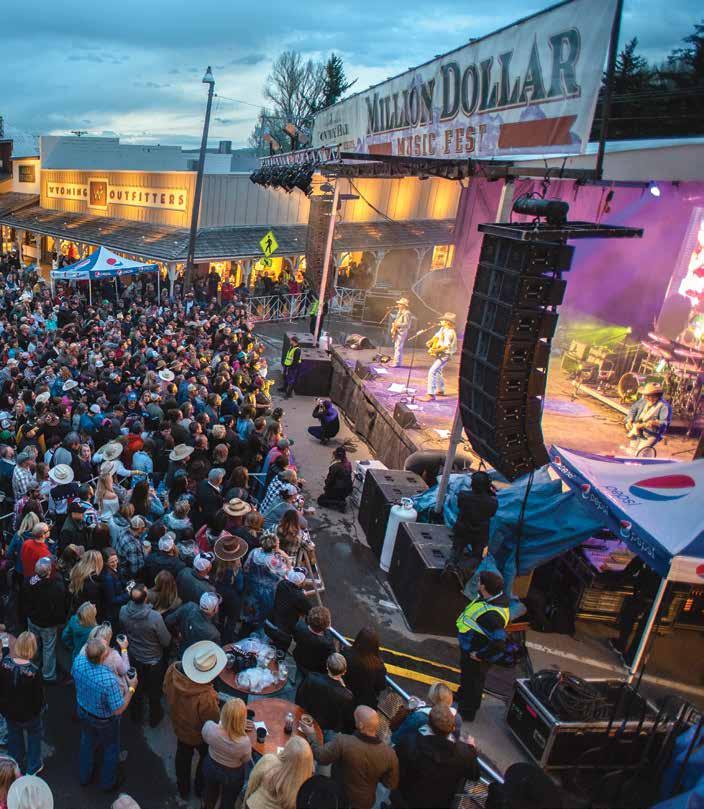
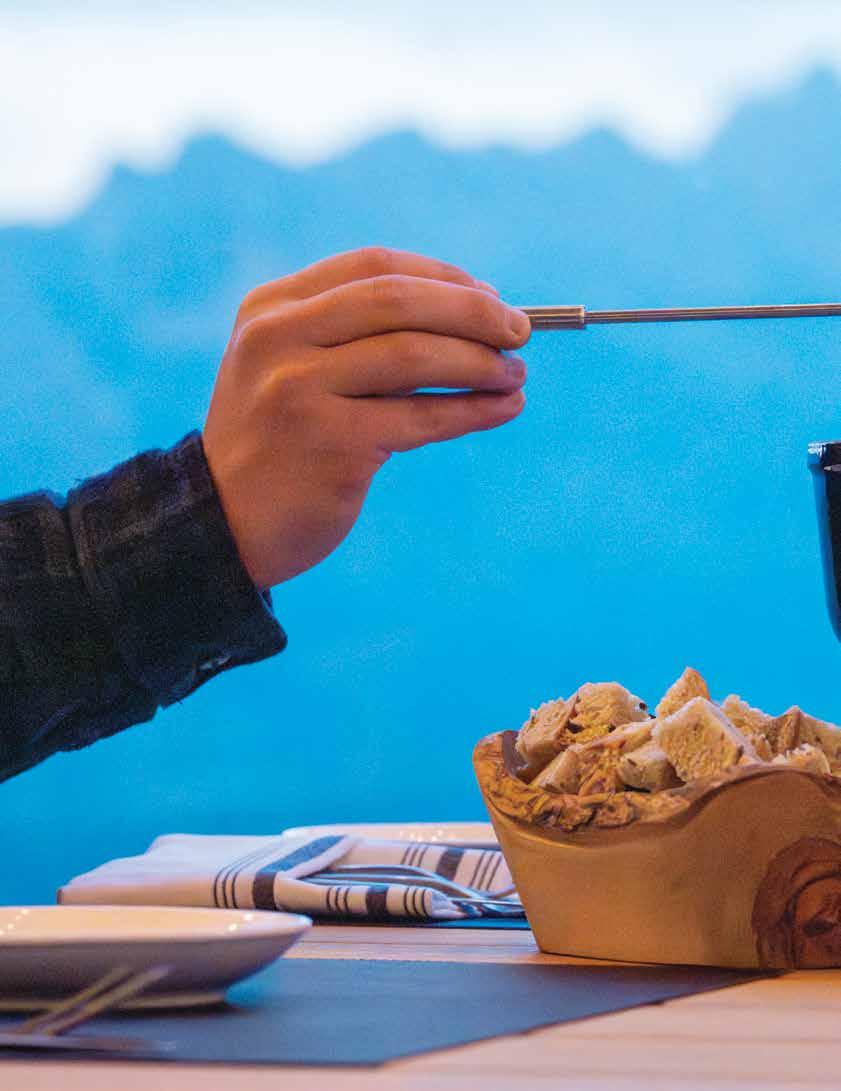
// BY SAMANTHA SIMMA
Coziness
on a Plate
Snow falls silently on the arches of Jackson’s Town Square, while the scent of something warm pulls visitors in from the cold. Comfort isn’t just a feeling—it’s also a flavor. It simmers in long-loved recipes, clings to the edges of cast iron skillets, and lingers in dishes passed across the table. Served in historic cabins, mountaintop lodges, and longtime local-favorite haunts, each dish here carries a story worth savoring.
With its fondue, Aurora, on the summit of Snow King Mountain, offers a cozy, communal dining experience that captures both Alpine tradition and the restaurant’s refined approach to comfort food. Served in a classic enameled cast iron pot, the fondue is made from a blend of Emmentaler, Gruyère, and Comté cheeses—all sourced from high alpage pastures in France and Switzerland. “Each cheese lends a different characteristic to the fondue,” says Aurora executive chef Brandon Hicks. “Emmentaler is nutty, salty, and savory while Gruyère focuses more on brown butter flavors with a meaty quality. Comté has a distinct dried fruit characteristic.” The mixture is melted with a dry, acidic Pinot Grigio and served with a spread of crudités, marble potatoes, and rustic country bread. Aurora’s unique touch comes in the form of artisan andouille sausage, which adds a piquant counterpoint to the richness of the cheese. “Fondue is best enjoyed among friends,” Hicks says. $42; open Thursday–Monday 4:30–9 p.m.; 100 E. Snow King Ave.; 307/284-4427, snowkingmountain.com/aurora
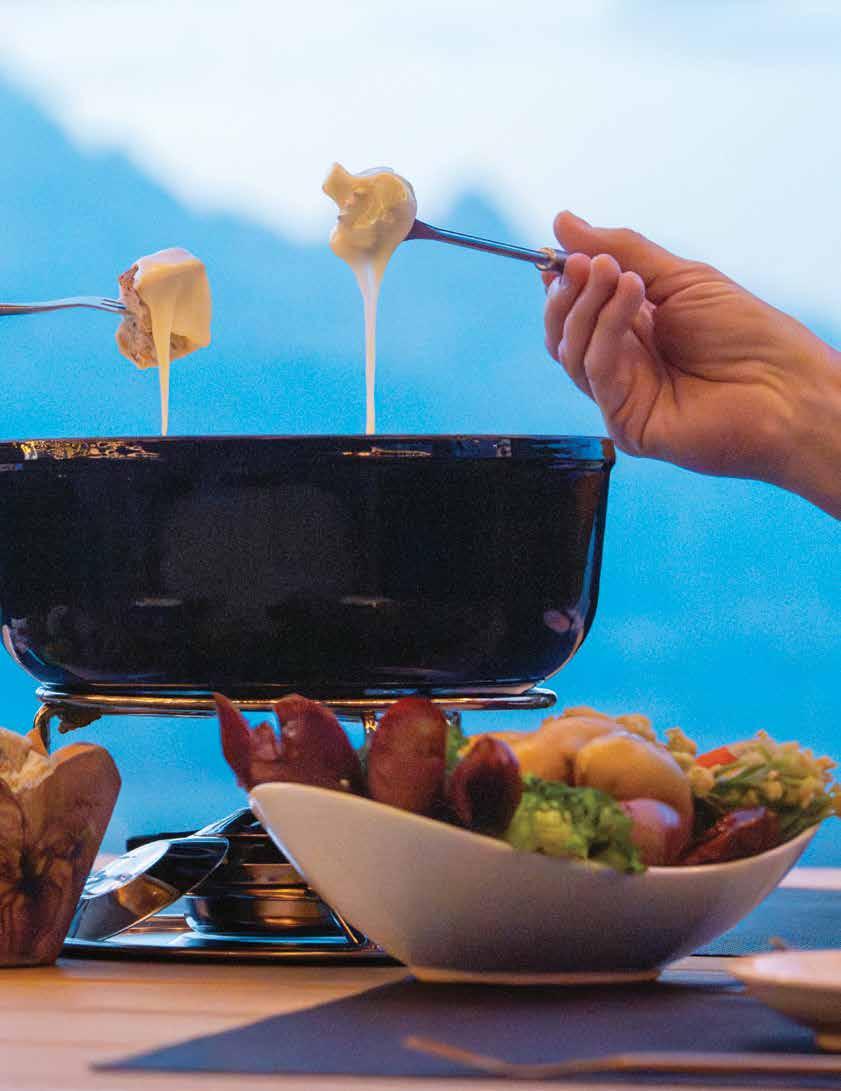
KATHRYN ZIESIG
Cafe Genevieve’s Cajun Eggs Benedict is a soulful take on a classic. Chef Josh Governale, who learned to cook alongside his grandfather, created the dish as an ode to his New Orleans roots. At the dish’s heart is a house-made Boudin sausage—a blend of pork, pork liver, rice, and the traditional “holy trinity” of onions, celery, and peppers—seasoned with a proprietary Cajun-inspired mix. Served over slices of French baguette and paired with homestyle potatoes, the dish is tied together with hollandaise sauce that’s made fresh every morning. “We believe this commitment to homemade quality and tradition is a key reason why the dish resonates so well with our diners,” says managing partner Fred Peightal. It offers a taste of Louisiana with a distinct sense of Jackson Hole place; Café Genevieve is in a 115-year-old cabin.
$24; open daily 8 a.m.–2:30 p.m.; 135 E. Broadway Ave.; 307/732-1910, genevievejh.com
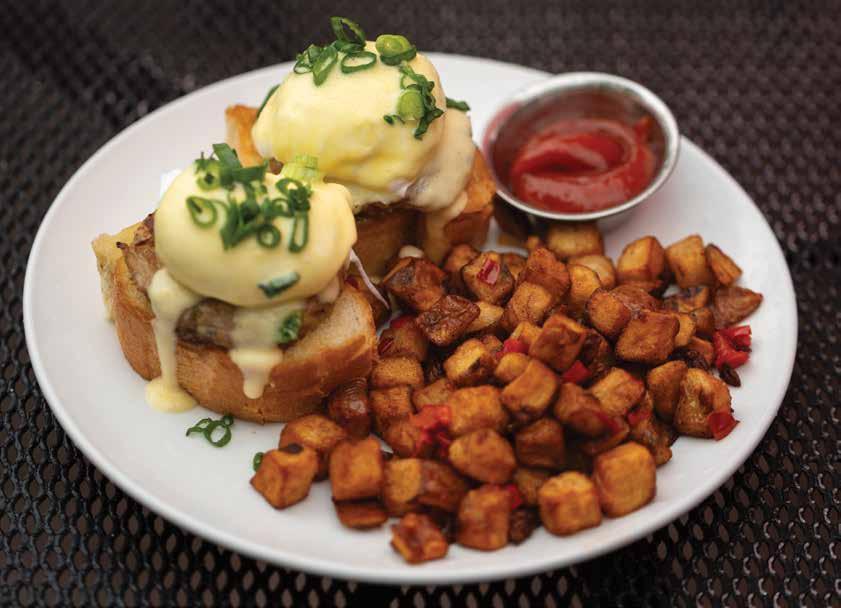
At The Bistro, the bacon-wrapped meatloaf is a menu staple. “We wanted to create a comfort food that made the restaurant feel like a home away from home—like an extension of their own kitchen,” Kendra Alessandro, vice president of marketing and communications at Fine Dining Restaurant Group, says about the meatloaf’s conception. Served with creamy pommes au gratin, Swiss chard, and a caramelized onion gravy, the dish is both nostalgic and elegant, and it hasn’t changed significantly since The Bistro first opened in 2001. It’s made using a closely guarded recipe developed by co-founder Roger Freedman. “Meatloaf can go either way, and Roger’s version is one people loved from the start,” Alessandro says. While the meatloaf itself hasn’t changed, to add seasonal variety, Freedman and the culinary team experiment with new accompaniments and sauces.
$29; open daily 7 a.m.–10 p.m.; 112 Center St.; 307/739-1100, thebistrojacksonhole.com
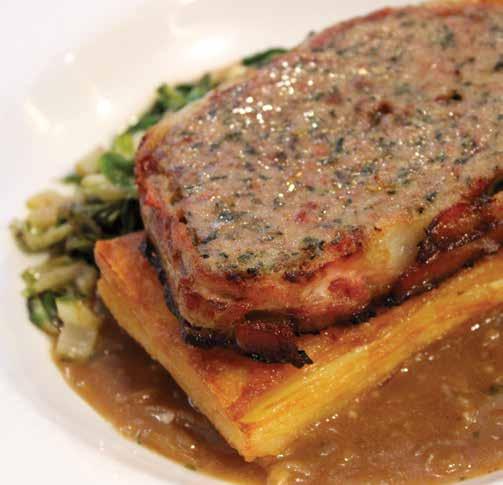
4
A staple at Trio since 2006, the Bleu Cheese Waffle Fries are crispy waffle fries smothered with a bleu cheese fondue. “The waffle fries’ woven texture and larger surface area make them the ideal vessel for the thick fondue cheese,” says Kelly Little, Trio’s marketing and floor manager. “Other fries pale in comparison!” Co-owner Jennifer Bradof craved them daily during pregnancy; today, her 15-year-old son Owen won’t leave the restaurant without getting some. “We very commonly have guests come back telling us they’ve tried to recreate the dish at home, which we love to hear!” Little says. “But they always say nothing compares to the way we do it at Trio.”
From $11; open Monday–Saturday 5–9:15 p.m.; 45 S. Glenwood St; 307/734-8038, bistrotrio.com

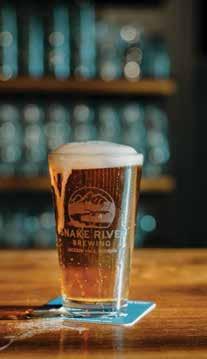


The corn chowder at the Silver Dollar Bar & Grill has been warming diners since 1985, when then-chef Arthur Leech put it on the menu. Intended as a hearty winter soup, its popularity quickly made it a year-round staple. It’s loaded with fresh corn, Idaho potatoes, bacon from a Utah farm, and melted cheddar, and topped with a crostini. “The heart that is put into making it” is what sets it apart, says Jesi Gelber, vice president of food and beverage. “Our chefs take pride in the staples we serve—and we do like bacon.” The recipe hasn’t changed in 40 years. Guests from around the world request the recipe, and some locals make the Silver Dollar for corn chowder their first stop after time away from the valley. One couple even orders it weekly, joking they’re “still trying to find the flaw.”
From $8; open daily 7 a.m.–11 p.m.; 50 N. Glenwood St.; 307/732-3939, worthotel.com

THE WORT HOTEL’S FAMOUS CORN CHOWDER RECIPE
INGREDIENTS
1/4 lb. bacon
1 yellow onion, chopped
2 stalks of celery, chopped
2 carrots, chopped
2 cups fresh corn kernels
1 cup white wine
1 tbs. minced garlic
1/2 tsp. dill
1/2 tsp. thyme
Flour to thicken
2 tbs. chicken base added to 2 qts. water
12 red potatoes, quartered
1/4 - 1/2 cup heavy cream
White pepper and salt to taste
DIRECTIONS
Cook bacon slowly until crisp, drain fat, and crumble bacon into the pan. Add vegetables, wine, garlic, dill, and thyme to the pan, and cook until tender. Add flour and cook while stirring well—do not brown. Add chicken broth and water, bring to a boil. Add potatoes and cook until tender. Add heavy cream until it reaches the desired consistency. Season with salt and white pepper to taste. Dish hot chowder into individual oven-safe crocks, add croutons, top with cheddar slices, and sprinkle with freshly grated Parmesan cheese. Place in the oven or under a broiler to melt and brown the cheese.
At Teton Thai, the Beef Noodle Soup reflects co-owner Suchada Johnson’s upbringing in Thailand. “My family made it every day,” says Johnson, who was a 2023 James Beard Best Chef: Mountain West finalist. “I wanted to bring that feeling of comfort into my own restaurant.” Built on a savory broth and finished with vinegar and fish sauce, the soup is spicy, salty, and sour. “We balance the flavor for each customer depending on their spice level,” says Sam Johnson, Suchada’s partner in life and at Teton Thai. “No two bowls are exactly alike.” They recommend a level 2 or 3 heat—enough to add intensity without overwhelming the delicate complexity of the broth.
$25; open Monday–Saturday 12–9 p.m.; 7342 Granite Loop Rd., Teton Village; 307/733-0022, tetonthaivillage.com JH
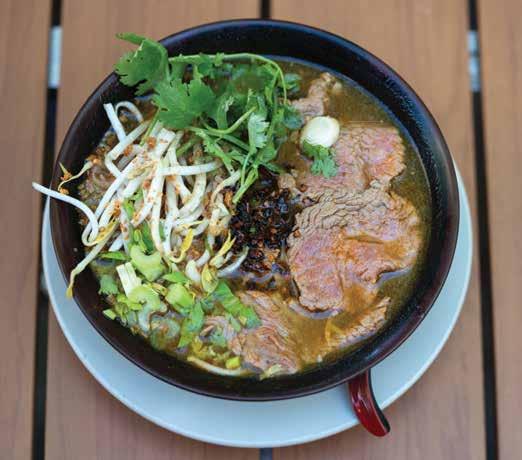

KATHRYN
ENJOY
JH PANTRY
Created more than 50 years ago, The Bunnery’s Oats, Sunflower Seeds, and Millet mix is as popular as ever.
//BY SAMANTHA SIMMA
On a crisp morning in Jackson Hole, a line forms outside The Bunnery. Inside, cast iron skillets sizzle with pancakes studded with oats and sunflower seeds, while loaves with toasted millet cool on open racks. For decades, this scene has repeated itself. At the center of it all is a blend locals know by heart and visitors buy to take home: O.S.M.
Short for Oats, Sunflower Seeds, and Millet, O.S.M. is a foundational component of The Bunnery’s identity, one that’s followed people home in the form of bagged baking mixes for nearly half a century.
The O.S.M. recipe dates back to 1974, when Laurel A. Wicks—known to most as Bru—began experimenting with whole grains in her home kitchen. Her early creations took shape under the name Bru’s Buns & Breads, and in 1980, she opened The Bunnery Restaurant & Bakery, just off Jackson’s Town Square.
The original O.S.M. mix was created with a straightforward goal: to bake food that was both nourishing and satisfying. In present day, The Bunnery’s team carries forth Wicks’s belief that “Eating is a vital part of our lives every day! The quality of the ingredients determines the outcome of the product—because the foods that we consume literally become us.” In conceiving the original
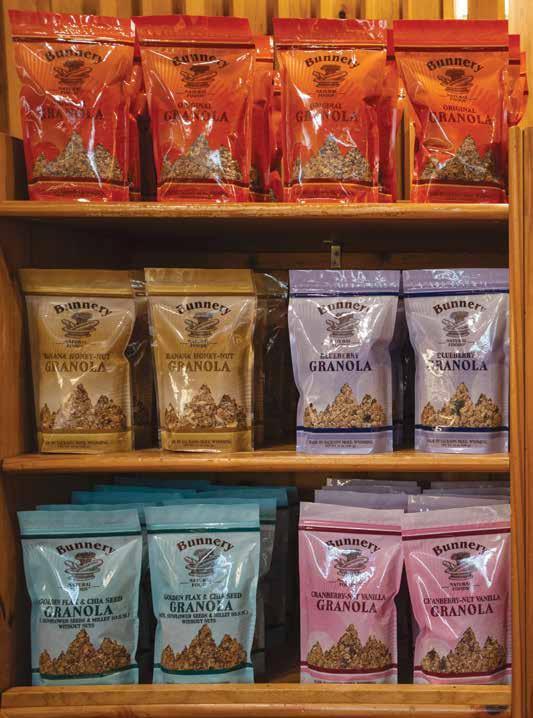
Original O.S.M. Granola is the most popular granola in The Bunnery’s line and blends oats, coconut, sunflower seeds, walnuts, and almonds with a touch of wildflower honey. It’s as good eaten by the handful on a chairlift as it is stirred into yogurt or paired with fresh fruit. Additional varieties—Cranberry Nut Vanilla, Banana Honey-Nut, Blueberry, and Golden Flax and Chia Seed—offer something for every taste. $12 for 12 oz.
O.S.M.
When baked in a standard loaf pan, O.S.M. Bread Mix produces a dense, seedy slice that holds its shape in the toaster or alongside soup. Its base delivers a hearty texture and toasty flavor. Many home bakers fold in mashed bananas, shredded carrots, or other add-ins for a personalized loaf. At The Bunnery, O.S.M. bread and rolls appear daily with breakfast plates, soups, salads, and quiche—helping the kitchen go through up to 30 pounds of it each day. $7.50 for 19 oz.

The Bunnery’s Original O.S.M. Pancake & Waffle Mix remains the most popular in the O.S.M. line. A crisp-edged waffle with a soft, nutty center, or a tender pancake, it’s a mix that works well beyond breakfast. Try it as a base for muffins, energy bars, or even as a savory pairing for creamed chicken. $7.50 for 18 oz.
Ready in about a minute, O.S.M. Oatmeal—a mix of oats, cracked wheat, oat bran, wheat bran, millet, and sunflower seeds—makes for a warm, filling breakfast. At the restaurant, it appears year-round as a side or main dish for those who want a simple, fortifying start to the day. At home, it’s easy to finish with fruit, honey, or spices. $10 for 15 oz.
The original O.S.M. mix was created with a straightforward goal: to bake food that was both nourishing and satisfying.
recipe, Wicks chose oats for fiber, sunflower seeds for protein and crunch, and millet for its subtle, nutty flavor and nutritional value.
Today’s O.S.M. mixes are a range of retail products rooted in the same grain trio and made using unprocessed ingredients and no preservatives. They are blended and packaged in small batches in Jackson Hole. There are flavored versions like blueberry, coconutvanilla, and double chocolate that offer variation without straying far from the original formula.
Find O.S.M. at JH Marketplace, Aspens Market, and Victor Valley Market, and, of course, The Bunnery (you can also order online at bunnery.com). For guidance—or inspiration—The Bunnery also sells a cookbook written by Wicks herself. Get Your Buns in Here includes the original O.S.M. recipes alongside suggestions for adapting them. JH
KATHRYN ZIESIG
TASTE OF JACKSON HOLE
ENJOY Mangy Moose
However it's prepared, this long-time entree at one of Teton Village’s oldest restaurants is a classic.
// BY LILA EDYTHE
Short
Ribs
The executive chef at the Mangy Moose, Shannon Chandler, doesn’t know how long the iconic Teton Village restaurant has had short ribs on its menu. Granted, Chandler, who was the founding chef at the popular Dubois, Wyoming, restaurant Nostalgia Bistro, only started at the Moose three years ago. But this reporter knows it has been at least since 2000, when she had the Moose’s short ribs during a Valentine’s Day dinner there. At that time they were served with a side of garlic mashed potatoes, which she remembers not eating because she didn’t want to smell like garlic all night. But she ate every last bite of the velvety, barely-had-to-chew-them short ribs, though.
“They’re an unofficial classic here at the Moose,” Chandler says. “Diners appreciate them greatly, and so do I. Short
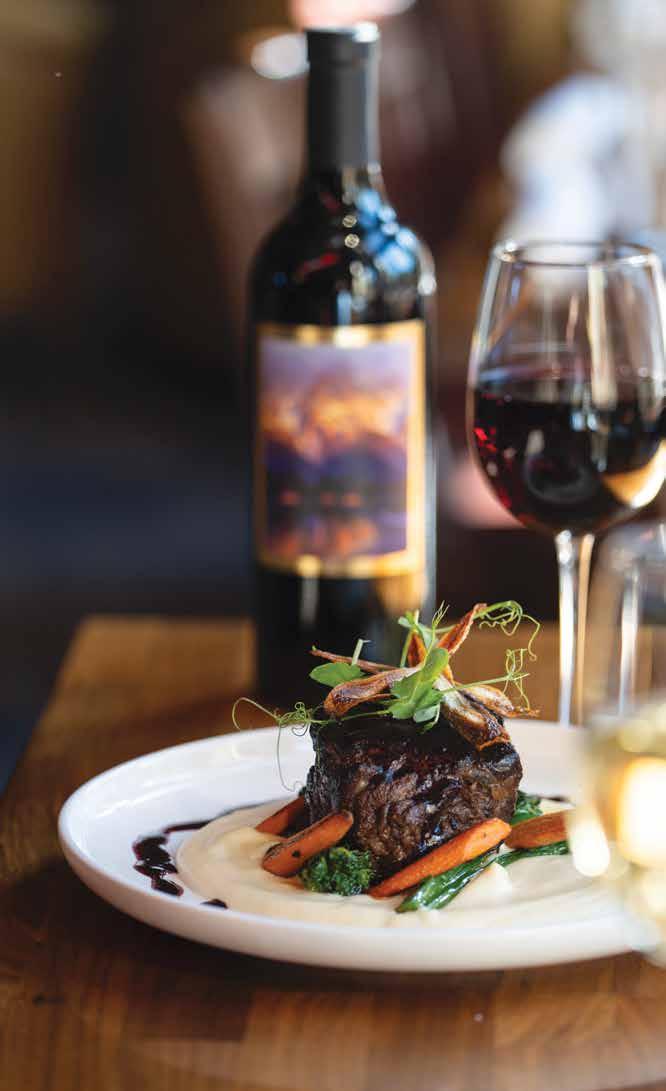
Every winter, the Mangy Moose does a slight tweak to its popular short ribs entree. This winter's version are beef and served with parsnip puree, huckleberry demi glacé, and seasonal vegetables.

ribs have kind of followed me through my career. I’ve always loved them and have tried to find a place for them on the menus of restaurants where I work.” Between founding Nostalgia Bistro and joining the team at the Moose, Chandler worked at Suda, The Kitchen, Cultivate Cafe, and the Jackson Hole Playhouse. And short ribs were on the menus of all of these, except Cultivate, which was vegetarian.
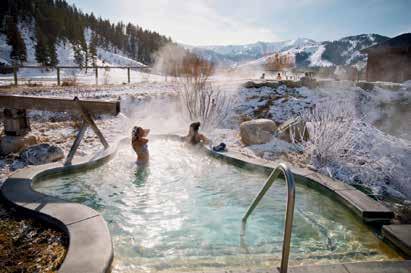
To ensure short ribs, which are on the Moose’s menu only in winter, stay interesting—both for Moose diners and for Chandler—he re-evaluates them annually. “A constant challenge with an iconic dish is whether we can get creative with it without losing what makes it iconic,” Chandler says. His first two winters at the Moose, he served bison short ribs prepared traditionally—braised in red wine—with seasonal vegetables, creamy mashed potatoes, and a red wine demi-glace. “And our guests loved them,” he says.
But they are evolving this winter. The biggest change is that they’re beef instead of bison short ribs. “We’re adding a bison steak to the menu this winter, and I try not to repeat game meat,” Chandler says. He also thinks the beef short ribs will taste better. “Beef has more marbling to it, and it will be a little more succulent than bison.”
At the time he was first interviewed in late September, Chandler was still wrestling with whether he wanted to braise the short ribs in red wine or be more creative with them, like brushing them with a house-made barbecue sauce or marinating them in sweet and/or savory Asian flavors. But, by October, “I decided to pair the short ribs with the huckleberry Demi glacé because the fruity tang of the huckleberries offsets the delicious fatty mouthfeel of the short ribs,” he says. “The parsnip purée is a good backdrop for the rich meat of beef short ribs because of its creamy light flavor and smooth texture. Local Cane Water Farm’s carrots have a fresh sweetness when paired with the smokiness of char-grilled broccolini.” JH



book Now
astoriapark.org 307-201-5925




Relax and renew in our mineral hot spring pools in a serene spot on the Snake River. Your visit helps to support our nonprofit work.
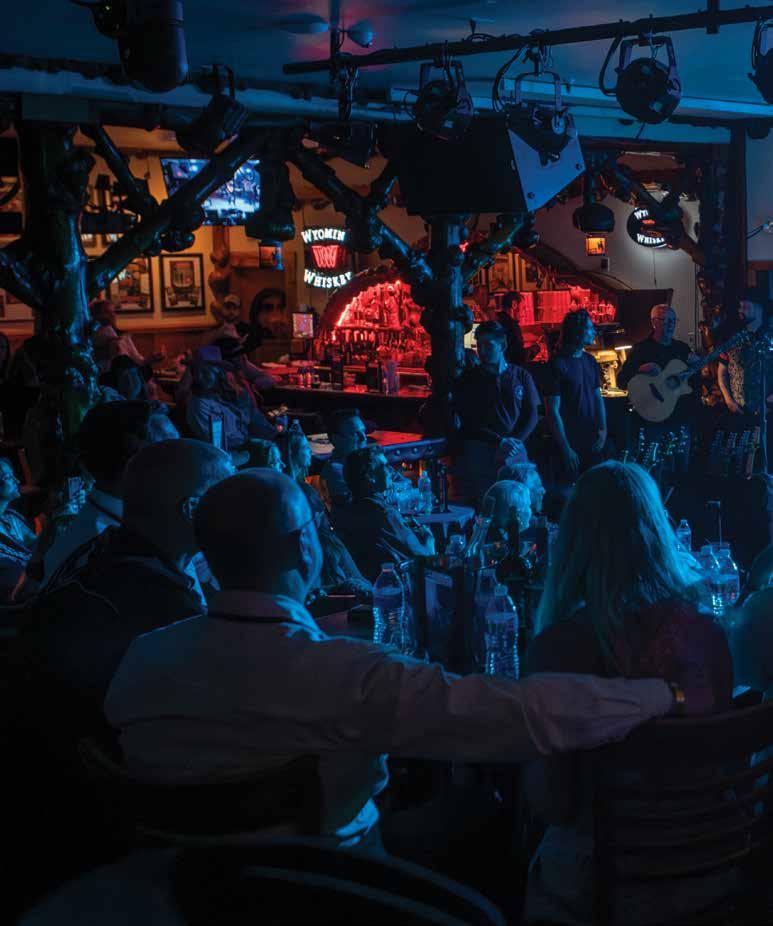
Golden
Age2.0
The Million Dollar Cowboy Bar and the Silver Dollar Bar & Grill are intimate venues that bring in big country names thanks to the late owner’s vision and love of music.
// BY RICHARD ANDERSON
// PHOTOGRAPHY BY BRADLY J. BONER
It’s a cold and windy night in October of 2021, with snow on the ground and more on the way. But inside the Wort Hotel’s Greenback Lounge, it’s warm and cozy—and about to get warmer.
The Del McCoury Band has taken the stage in the historic downtown venue. The 100-plus capacity audience is finishing dinner—included in the $150 ticket price—and the 82-year-old bluegrass patriarch is tuning up his guitar and chatting and laughing with his
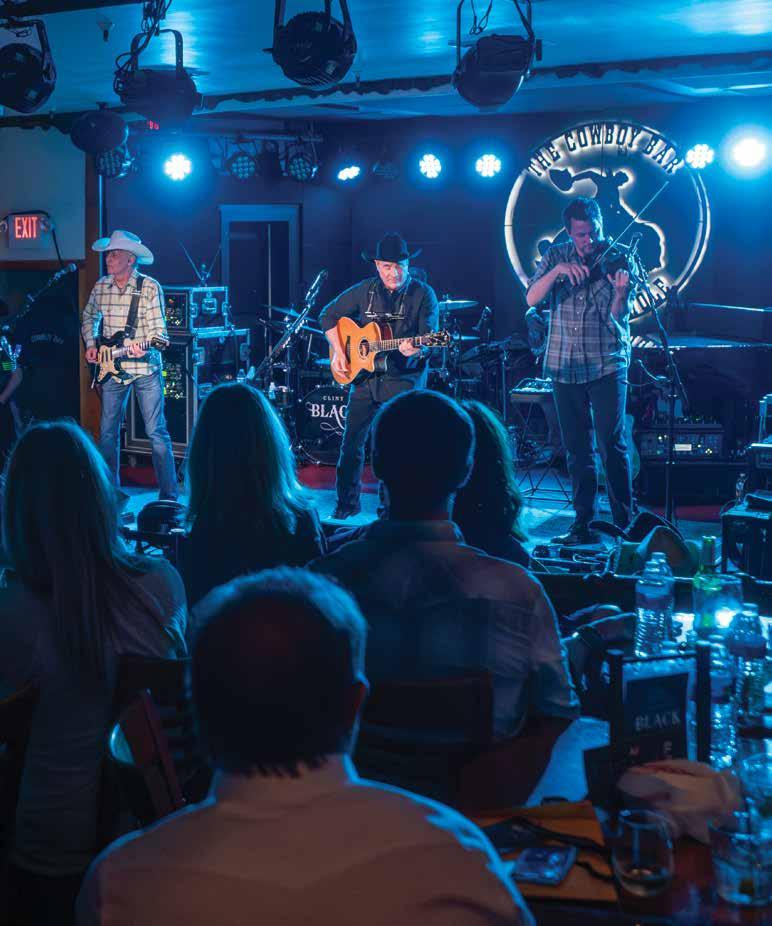
younger bandmates. He’s also glad-handing with nearby guests and his hosts: Jim Waldrop, general manager of both The Wort and the Million Dollar Cowboy Bar; Steve Robinson, the Nashville-based music broker instrumental in making the evening possible; and another guy who is grinning ear to ear like a kid who just had his fondest wish come true—the owner of both The Wort and the Million Dollar Cowboy Bar just around the corner, Bill Baxter.
Clint Black played to a sold-out crowd at the Million Dollar Cowboy Bar.
ENJOY
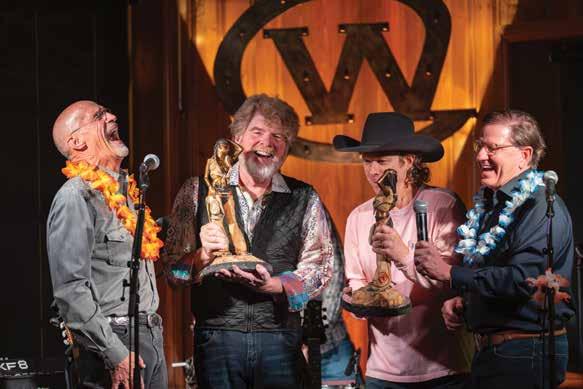
Bill had a vision of a new Golden Age of music in downtown Jackson."
—JUSTIN SMITH, ENTERTAINMENT MANAGER AT THE WORT AND THE COWBOY
Tonight is a special night: a Silver Dollar Showcase Session—a casual, intimate, occasionally rowdy evening of live music from a top star, one of the many brainstorms Baxter had to restore The Wort and the Silver Dollar to their original glory.
In 2008, Baxter—a noted Tennessee businessman, philanthropist, and “ubiquitous board member,” according to KnoxNews.com—became the sole owner of The Wort, the downtown hotel that was conceived by Charles J. Wort, a homesteader who arrived in the valley in 1893, and was then built and opened by his sons in 1941. Baxter immediately set about making extensive but sensitive upgrades, starting with the renovation of every guest room. However, “He quickly learned that the bar was
not sufficient to entertain at the level we wanted to make it more of a locals’ venue,” Waldrop says. “The critical part from day one was to get locals back into the Silver Dollar, and we felt we could do that with good music.” Baxter died in August 2024 at the age of 71.
The Wort Hotel and Silver Dollar Bar & Grill have hosted an impressive array of musicians over the years: Roy Clark and The Sons of the Golden West, Waylon Jennings, Glen Campbell, Jerry Jeff Walker, Arlo Guthrie, Doc Watson, and Leo Kottke. Rusty Draper, a singer and TV and radio announcer, booked two full weeks there so he could bring his wife and children on a family vacation. In the 1960s, bandleader Garn Littledyke invited a young fellow named Willie Nelson to play a few of his originals. However, while the hotel was rebuilt after a devastating fire in 1985, the Silver Dollar was diminished; guest rooms, a banquet room, and a small merchandise shop took over about half of its original space.
After Baxter finished the remodel of The Wort’s 55 guest rooms, he turned his attention to the Silver Dollar. The Silver Dollar’s original footprint was re-
claimed, the stage restored, the sound system improved, and a second bar that mirrored the details of the historic bar, down to its inlaid 1921 Morgan silver dollars, was built.
“It would have been a lot easier and a lot less expensive to put in a regular bar as opposed to an exact replica,” Waldrop says. “But [Bill] was adamant about that.” The space was also made to be flexible; it can be one large room that stretches from the bar and grill’s main entrance on Broadway Avenue, or removable, soundproof panels can be installed to create the cozy 350-squarefoot Greenback Lounge.
“Bill had a vision of a new Golden Age of music in downtown Jackson,” says Justin Smith, entertainment manager at The Wort and the Cowboy, which Baxter acquired in 2017 and also upgraded. “We came in and spent a lot of money keeping it the same,” Waldrop says. “We loved so many things about that, but we put different lighting in to highlight different aspects of what’s behind the bar and some of the architectural pieces that we felt were so much a part of the Cowboy.” The burled pine, the taxidermy critters in glass
Bill Baxter, left, and Jim Waldrop, right, shared a laugh with songwriters Mac McAnally and Scotty Emetick after their Silver Dollar Showroom performance.

cases, the Western kitsch, and the culture all stayed the same, but removable segments were designed for the stage to accommodate larger ensembles, and tens of thousands of dollars went into the sound system. “We wanted to have top-of-the-line equipment for when we were recruiting some of the bigger names,” Waldrop says.
And the big names came, with the help of Steve Robinson, who at one point in his career was tour manager for Randy Travis and remains well connected in Nashville’s music scene. Robinson had gotten to know Baxter in the late 1990s when Baxter, as commissioner of economic and community development for the State of Tennessee, went looking for quality musical artists to entertain bigwigs he was courting to move to his state.
Kevin Costner & Modern West played their only two shows of 2023 at the Million Dollar Cowboy Bar.
ENJOY
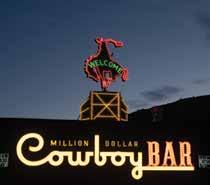
COMING THIS WINTER
January 22: Grammy-nominated country-rock singer/songwriter ERNEST makes his debut at the Million Dollar Cowboy Bar. Tix at milliondollarcowboy.bar.com
Find additional concerts at: @milliondollarcowboybar @worthotel worthotel.com
“When they had a visiting delegation—VW, Nissan, or whoever—in addition to the real nuts-and-bolts business they were attending to, we would do little private shows for a group of 50 or 200 in a ballroom or venue,” Robinson says. “They would hire us to produce these shows,” folks like Kenny Chesney or Jo Dee Messina. “That’s where Bill and I first started working together.”
With Robinson’s help, the Cowboy has brought in the likes of Clint Black, Riley Green, Luke Grimes, and Ned LeDoux. Hank Williams Jr. played there in 2020, the first big act after the COVID-19 pandemic, and Kevin Costner brought his band for the only gigs he had played in four years, Waldrop says. “He was weighing that against four shows in California and opted to come to Jackson. He stayed a full week, played two shows that sold out in like eight minutes. We sold tickets to buyers in 41 states—that really exemplifies Bill’s vision.”
The Silver Dollar’s Showroom Sessions were the result of a “simple conversation,” Waldrop says. “Bill loved songwriters and was enamored with
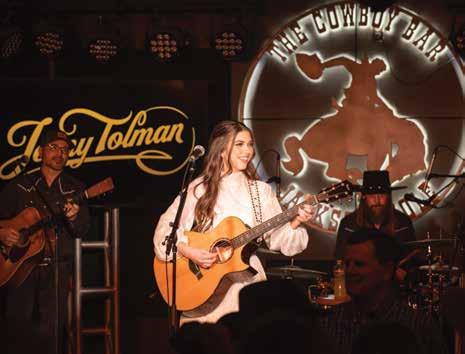
songwriting. So, one day he said, ‘I want to bring in songwriters,’ and somebody said, ‘Let’s call it “The Sessions,”’ and I said, ‘Let’s do dinner.’”
Robinson produced the first Showroom Session on October 18, 2018, with Steve Wariner, a Nashville country singer, songwriter, and guitarist whose string of hits dates back to the 1970s. Since then, the Greenback Lounge has hosted Doc Powell, Mac McAnally, Tommy Emmanuel, Jerry Douglas, Scott Emmerich, Dailey and Vincent, Rob Ickes and Trey Hensley, Blue Highway, and a young songwriter named Jenny Tolman, who greatly impressed Baxter.
Tolman met Baxter when she played a Showroom Session in October 2020. “I played the show, and after, he came up to me and wrote me a check on the spot because he felt that he didn’t pay me enough after he had seen the show,” she says. “I was blown away—I’m some unknown artist that he’s taking a chance on.” She came back the following year to open for the band Midland. “At the end of that, he comes up to me and he says, ‘You know, I really want an all-female festival … and I want you to be the face of it. Will you help me put it together?’” Tolman says.
“He became such a huge supporter of me. He honestly gave me the biggest blessing of my career, to host and curate Cowgirls at the Cowboy,” says Tolman, who, like Baxter, fell in love with the Tetons. She got engaged on the shore of Jenny Lake and then got married here; filmed the video for her song “Married in a Honky-Tonk” in the Cowboy; and has returned each October to organize, host, and perform at Cowgirls at the Cowboy, a three-day showcase at the Cowboy Bar that is still the only all-female country music festival in the country.
Another bright idea Baxter had was the Million Dollar Music Fest, a free day of country-rock by stars and up-andcomers held over Memorial Day weekend on Town Square since 2019, which in 2025 drew about 6,000 people. “He said, ‘I want a festival, a big fest,’” Waldrop says, “‘And I want to do it outside.’”
Nashville singer and songwriter Jenny Tolman first played a Showroom Session at the Silver Dollar Bar in 2020, and has since played shows at the Cowboy as the coordinator of the annual Cowgirls at the Cowboy showcase of all-female country music acts.
They accepted some funding from the Jackson Hole Travel & Tourism Board, but only for one year. Baxter wanted the community to know that this was a gift, Waldrop says.
“He put so much of his time and love into the Cowboy and Silver Dollar, into making sure people had a good time,” Tolman says. “You can tell by how the music scene has blown up … the type of artists we’re able to bring in is unprecedented.”
It’s not accidental but the result of a well-thought-out strategy: bring artists in, let them enjoy a few nights or a week at The Wort, with their family if they wish, like Rusty Draper did back in the day. “They go see the Tetons, go on a wildlife tour, whitewater raft, and play a show, too,” Waldrop says.
Like so many who experience Jackson Hole, they fall in love with Jackson Hole.
“It works,” Smith says. “They go back to Nashville and talk it up: ‘You got to go!’ That was the vision—give them
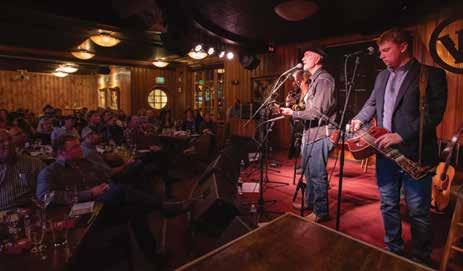
such a good experience that more want to come and do it.”
“Why would Hank Williams Jr. come here to play?” Smith asks. “It was the promise of a unique time in this mountain hamlet. And then that picks up momentum. Other famous musicians see pictures of Steve Wari-
ner and Larry Gatlin on the wall and say, ‘OK, I see what you’re doing.’” They build trust within the relatively small circle of Nashville-centered artists, Smith says, and among regulars, who come to trust that whatever The Wort or the Cowboy offers, it’s going to be good. JH
THE BUNKER
is a cutting edge fusion of sports and nightlife. Designed to suit guests that value craft cocktails, sports, and want to have an unforgettable experience with two multi-sport golf simulators, and exceptional service in a vintage speakeasy atmosphere. Perfect for date nights, corporate events and more!
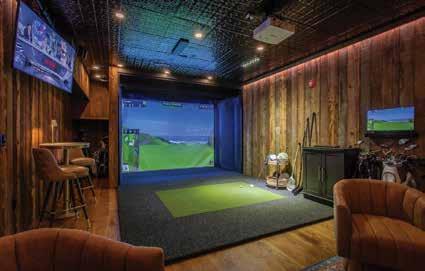


Showroom Sessions include dinner and a concert. Here Blue Highway performs.
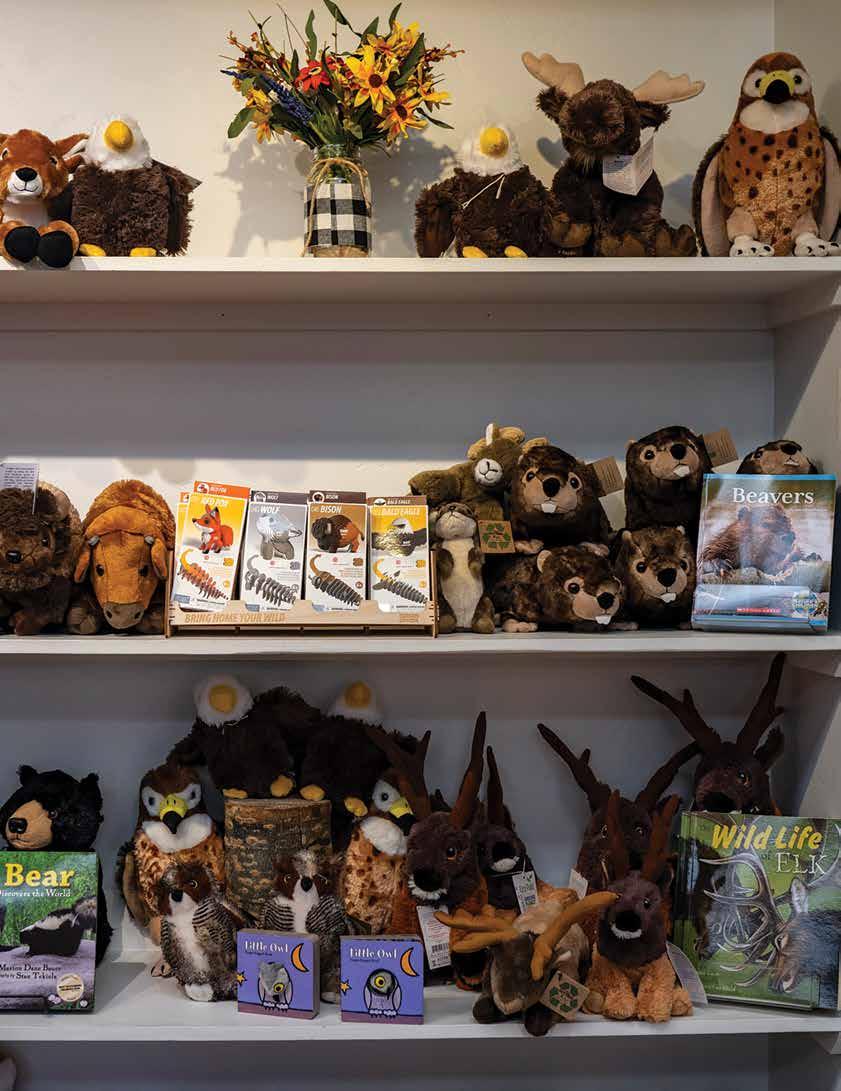
80 WINTER 2026 | JACKSON HOLE
Books and plushies at the National Elk Refuge and Greater Yellowstone Visitor Center.
// PHOTOGRAPHY BY PEARL SPURLOCK
// BY JIM MAHAFFIE
Look Closer...
We all love the classic Jackson Hole or national park t-shirt. And a baseball cap with a bison on the front is always cool, as is a wolf or grizzly sticker for your car’s bumper. But Jackson Hole shops and businesses also offer less-obvious souvenirs and gifts. For example, the Million Dollar Cowboy Bar and the Mangy Moose are iconic local establishments, and both offer clothes, caps, and other branded wear in on-site gift shops.
Or you could go even more insider, wearing a cap from King Ropes of Sheridan, Wyoming, or a hoodie from Bud’s Eastside Liquor. The former is authentic cowboy, and the latter is a beloved and funky liquor store that keeps East Jacksonites supplied with beer and cocktail fixings.

For a truly memorable souvenir.
HERE ARE SOME OTHER IDEAS FOR OUT-OF-THE-BOX SOUVENIRS AND GIFTS.
At the Moose entrance to Grand Teton National Park, just east of the Craig Thomas Discovery & Visitor Center, Artshop is nestled among the various businesses and services at Dornans. Here you can find prints, photos, ceramic art, sculpture, textiles, cards, and more from over 50 Jackson area creatives. Artwork at the store is described as “more approachable” than you’d find at the many galleries around Jackson’s Town Square. “There’s a big reason we called it a ‘shop’ and not a ‘gallery,’” says owner Alex Pope. “We want to be as inviting as possible for people on trips and headed to and from the parks and airport.” 12170 Dornan Rd., Moose
Jackson Hole Mountain Resort owns Hoback Sports and the Resort Store in Jackson, as well as JH Sports and Teton Village Sports at the base of the ski resort. They carry the usual Jackson Hole-branded merch, but then, in a nod to the treats available fresh at the top of the JHMR tram, there’s also a “waffles” sweatshirt, shirts sporting photos of the resort’s avalanche dogs, and long underwear printed with JHMR’s ski trail map. 520 W. Broadway Ave., Jackson (Hoback Sports); 50 Center St., Jackson (Resort Store); 7720 Granite Loop Rd., Teton Village (JH Sports); 3285 Village Dr., Teton Village (Teton Village Sports)

Jackson Hole’s homegrown outdoor performance and fashion brand Stio has two “mountain studios” (aka stores) in the valley, one in downtown Jackson and a second in Teton Village. Here you can buy performance fleece named for Wyoming’s tallest peak (Gannett Peak), athleisure pieces named after the second highest peak in the nearby Wind River Range (Fremont), and joggers whose name honors one of Jackson Hole’s oldest dude ranches, Turpin Meadow Ranch. We’ve seen Stio’s instantly recognizable logo, a whitebark pinecone, as far away as Istanbul and Lagos, Nigeria. 10 E. Broadway Ave., Jackson; and 3335 Village Dr. #113, Teton Village
Stop into History Jackson Hole to learn about the valley’s history and see a selection of historical images and artifacts, then go into its gift shop for cards made by local artist Mary Lohuis, mug and pinch pots from Art in the Alpine, antler bottle openers made by J2 Antler Designs, and reprints of some of the most popular images from among the 60,000-plus images in the museum’s permanent collection. Many of these images are on display; a museum archivist can find others for you that you can order. “We try to stock things that might keep people off their phones for a few minutes,” says communications director Kirsten Corbett. 175 E. Broadway Ave., Jackson
The Wyoming Whiskey distillery is in Kirby, Wyoming, but its Barrel House flagship storefront is in downtown Jackson. How about a pair of Wyoming Whiskey-branded deerskin gloves? Or highball glasses? Or a bottle of one of the distillery’s whiskeys? The shop is the best place to find limited editions, small-batch releases, and only-available-in-Wyoming bottles like Independence Rock and Queen of the Tetons, which honors Grizzly 399, a mother to 18 cubs over her 28-year life in and around Jackson Hole. If you want a libation distilled in Jackson, check out Still Works, the valley’s only craft distillery. Its tasting room has branded merch like rocks glasses, silipints, hammered copper mugs, shot glasses, and, of course, bottles of their craft spirits like gin and vodka. Beer lovers should check out Snake River Brewery and Roadhouse Brewing, both of which have shops inside their brewpubs. 45 W. Broadway Ave., Jackson (Barrel House); and 3940 S. Eagle View Dr, Jackson (Still Works)
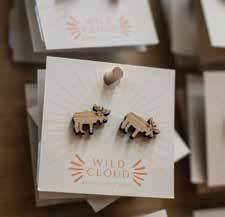
Just north of downtown Jackson, the National Elk Refuge & Greater Yellowstone Visitor Center’s front desk staff are available to answer questions, and a gift shop offers outdoorsy, wildlife, and Wyoming-related books, including Hiking Wyoming’s Wind River Range, Osborne Russell’s Journal of the Trapper, and kids’ books like Who Pooped In the Park? Yellowstone National Park: Scat and Tracks for Kids. You’ll also find posters of scenes from Grand Teton and Yellowstone National Park, stickers featuring local wildlife, stuffed animals, and, of course, wearable souvenirs like distressed Elk Refuge-branded hoodies and t-shirts. 532 N. Cache St, Jackson
Teton Gravity Research has been making genre-redefining ski movies from its world headquarters in Jackson Hole since 1996. Pop into the company’s movie studio (in Wilson) or its Town Square storefront to find branded goggles and optics, buffs, and stickers. TGR also did a collab with the Grateful Dead to produce stickers, pins, patches, zip-up jackets, goggles, hats, and t-shirts and hoodies. And, of course, you can also pick up one of TGR’s more than 30 ski films, including 2018’s Far Out, which won Movie of the Year and Best Post Production at the annual Powder Awards; 2023’s Flying High, which garnered Maggie Voisin “Standout Female Skier of the Year;” and the 2021 feature Stoke the Fire, filled with performances from Jackson Hole athletes and shot at locations around the valley. 1260 West St., Wilson (studio); and 50 W. Broadway Ave., Jackson
The National Museum of Wildlife Art’s Museum
Shop aims to stock books, jewelry, functional art, and more that can’t be found elsewhere in town. For example: the kid-friendly coffee table book Rediscovering the WPA Poster Art of Our National Parks, which includes over 400 illustrations; a puzzle of Wild About Art, the popular mural stretched across a wall in one of the museum’s classrooms and painted by local artist Greta Gretzinger; bison bolo ties; and wood-block paintings by Jackson-based artist Sue Tyler, who integrates natural elements into her wildlife-inspired work. 2820 Rungius Rd., Jackson
Made, with a location in Jackson and an “M” store at The Aspens, features mostly locally made and unique merchandise of all kinds. The shops offer handmade selections from more than 360 American artists—from jewelry to pottery, leather goods, glasses, kitchenware, pillows, and even local beef jerky. There’s an amazing array of Western-themed and Jackson-branded mementoes of all kinds. Here’s an idea: Made sells leather Give’r gloves, which were born in East Jackson and Town and Country magazine named “The Souvenir of Jackson Hole.” 125 N. Cache St. #702, Jackson (Gaslight Alley)
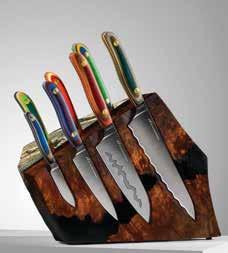

Jackson-Hole events that happen every winter, like the Wyoming Stage Stop Dogsled Race (January 30–February 7, 2026) and the Jackson Hole Snow Devils’ World Championship Snowmobile Hill Climb (March 19–22, 2026). These have branded merch, as does the Jackson Hole Moose hockey team, which plays at Snow King Sports & Events Center all winter long. JH
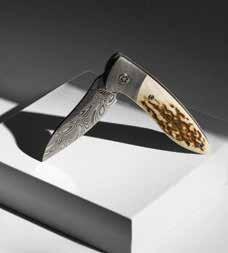
All the Light
One of Jackson’s busiest architectural photographers shares some of his favorite photos from the last decade.
// BY MAGGIE THEODORA
Aaron Kraft has been shooting homes in and around Jackson Hole for architects, interior designers, real estate agents, landscape architects, window manufacturers, builders, and property managers for more than 15 years. However, the first time a realtor asked him to photograph a listing, “it had never occurred to me that real estate was something that you photographed,” Kraft says.
Kraft spent much of his twenties traveling. Because he wanted to document his memories and experiences, he learned the basics of photography along the way. After landing back in his hometown of Jackson Hole, he turned his lens to the area’s wildlife and landscapes, with the occasional wedding and portrait session thrown in. When a real estate agent saw him with a camera, taking pictures at the Cutter Races one February, he asked Kraft if he photographed real estate listings. “I had a 16mm lens and no knowledge of how to photograph a building, but I knew that I couldn’t say no, so I started teaching myself,” he says. “I quickly realized architecture was much more interesting to me than shooting weddings or portraits. I could chase light and take my time, and create my own moods. It was something that I sort of fell into but something that I really enjoy now.”
Ideally, a client will give Kraft several days to shoot a property. “I want to spend as much time in spaces as possible to observe how light affects the mood of that space throughout the day,” he says. “If I have a couple of days, I can make images of a space in different lights, and they will evoke different feelings.”
As Kraft has refined his art, he has had a firsthand view of the evolution of the valley’s architecture. “Every year, there are fewer and fewer homes I’m asked to shoot that are the purely Western style that Jackson Hole used to be known for,” he says. “Homes here now are being designed to bring in more light and to focus on more than the traditional view corridors. I appreciate this evolution because, for me, it is all about the light. When I’m shooting, I’m studying how light plays differently from one minute to the next. I find that with really good architecture and design, I don’t have to struggle to find the right angle; it is just apparent.”
When I took this photo, it was something that I had never attempted but had been on my mind for a while. It is a mix of astrophotography, which was what I was shooting when I first started photography, and architecture. It turned out to be one of my favorite images that I made last year. I made it for the real estate team listing the property. We’ve known each other for a long time, and they know I am up for trying different things. Mack Mendenhall, the agent, knew that he wanted to name the home Starfall and also knew that I’d be up for capturing star trails over the home on a clear, moonless evening. This is a much more composited image than I usually do, and making it look natural was a challenge. While my client was a real estate team, the home was designed by Tyler Wilson Architects and constructed by Teton Heritage Builders.
// PHOTOGRAPHY BY AARON KRAFT
I really enjoy exploring architect Matt Bowers’s work. His designs are always a pleasure to shoot and are well thought out. This project was a remodel of a ranch-style home in South Park built in the 1970s. I think it may have been one of the first homes built in that area, and, like a lot of homes of that era, it was dark and felt closed off. Matt, who founded his own firm, MB Architects, in 2019 after years at CLB Architects, really opened it up and made it something special.
A little bit of an editorial feel is starting to come into architectural photography now. Clients aren’t asking for lifestyle shots, but they’re more interested in images that have a little bit of life in them. In this image, my German Shepherd, Savvi, was the perfect model. (Savvi is short for savage, which she isn’t at all.) My client for this shoot was HDLA (Hershberger Design Landscape Architects), and I just love the way they designed the landscape to work with the architecture built by Northview Building Group. The light that evening was awesome. It raked across the surfaces of the building, lighting up the grass, and was contrasted by the dark, moody skies.
One might think that taking interior and exterior shots is different, but, to me, both are about lighting and composition and how the two play together. To create this image, I spent a lot of time figuring out where the camera should be placed— both the correct spot and the correct height. I wanted to capture the space but also make sure that it had enough breathing room. I hope my intentionality shows up in the end result.
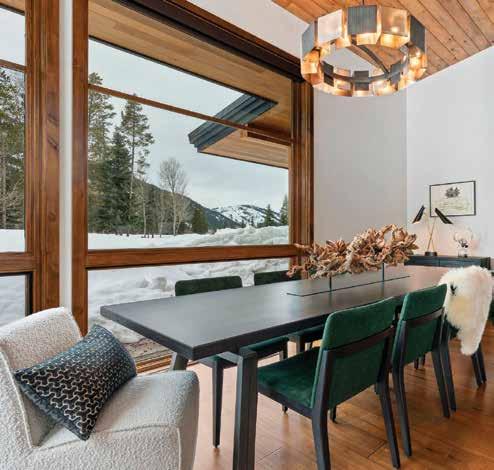


ENJOY DESIGN
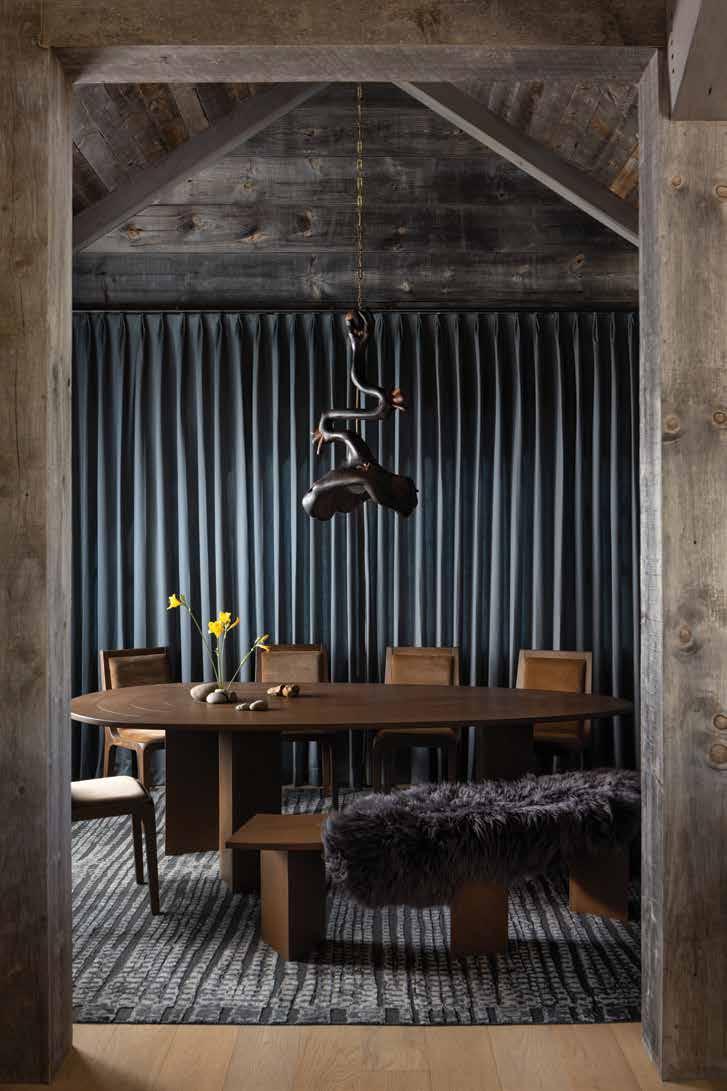
I feel like I’m getting repetitive, but it’s the light that again makes this image a favorite of mine. There are windows all over this room. I closed all of the available window coverings, flagged all other available light, and had light coming in through only one window—on the viewer’s left—to get a moody, directional feel. It was the interior designer—Valerie Peña, who is based in New York—who remodeled the space that hired me, and her design felt really dark and contrasty. I was trying to enhance that feeling by restricting the amount and direction of light.

This is a house in Newcastle, Wyoming, where I had never been before. It’s one of those Wyoming towns that you’d kind of bypass, but, if you do stop, you find cool, old homes and a grocery store and a bar where anyone will talk to you about your favorite Wyoming punk band (The Lillingtons from Newcastle) because they actually knew the guys. To get to this house, you drive up a dirt road for 30 minutes—passing through an Amish community and dodging flocks of wild turkeys. Arriving, you’re at the top of the Black Hills and in an austere landscape strewn with large boulders. The exterior shot is interesting for me because of the quality of light—it was dawn, there was wildfire smoke, and light filtered through the tall grasses. Where and how the house sits on the landscape was well thought out. Framing the image the way I did felt balanced to me.
The house is made of rammed earth, which isn’t immediately obvious from the outside— other than wondering how it blends in with the landscape so well—but the main wall in the dining room really showcases the material. Brandon Daigle of N38 Architecture was the architect, and Casper-based Alma Interiors did the interior design. JH
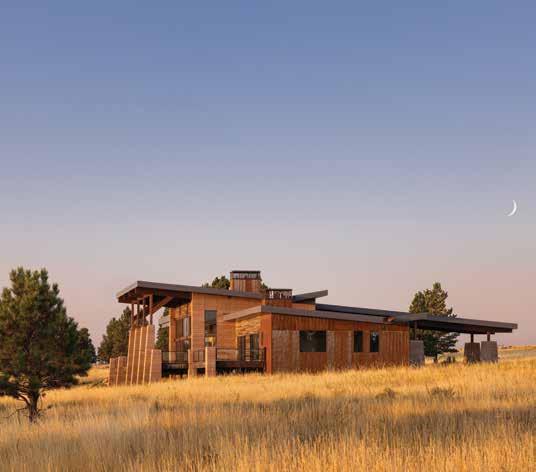
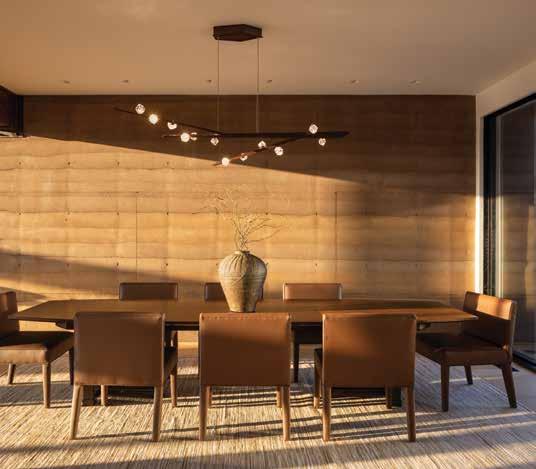
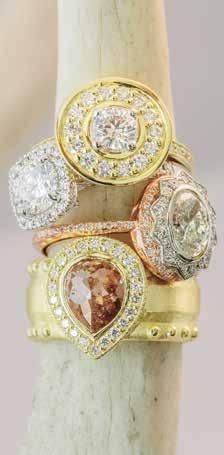
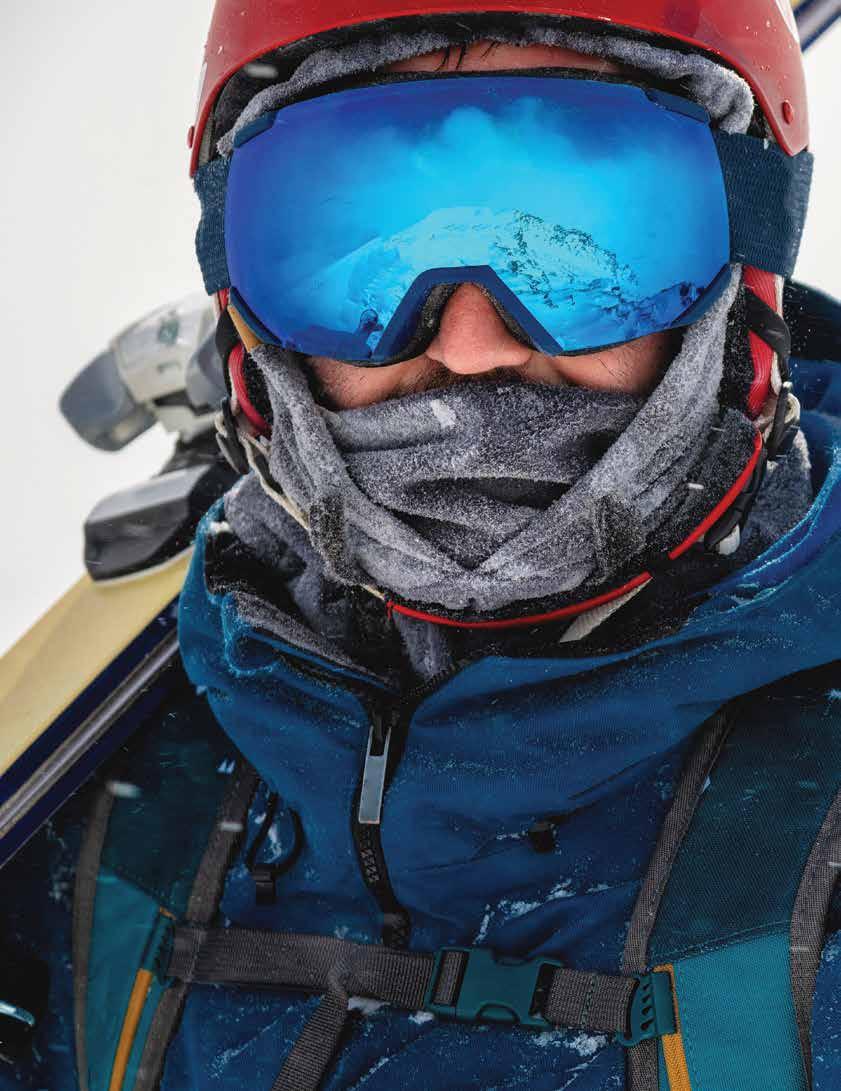
// BY BEVIN WALLACE
Facts Cold, Hard
The cold can be invigorating, or downright mean. Here are some things to consider when planning a winter outing in Jackson Hole.
If you haven’t experienced a Jackson Hole winter, get ready for a unique experience complete with epic powder skiing, beautiful snowshoe hikes, perfectly groomed Nordic trails—and frigid weather. From November to March, high temperatures in Jackson average around 22 degrees Fahrenheit, and we have roughly 50 days per year when the low temperature is below zero—so it’s literally freezing for most of the season. Add in the heavy snow, strong winds, and an active outdoor lifestyle, and you can see why being cold is part of life here.
Taking care of yourself in the cold—that is, avoiding some of the most unpleasant, and potentially dangerous, effects of freezing weather—is mostly about knowing the risks and being prepared. There are a few universal winter commandments—stay hydrated, dress in layers, and wear wicking apparel to keep dry—and then there are things that are a bit more specific. Here’s a rundown of those.
ENJOY
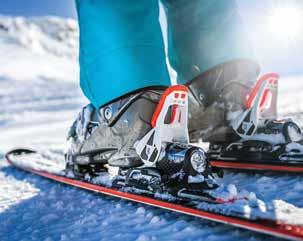
DON’T GET COLD FEET ON THE SLOPES
When you’re outside in the cold, especially if you’re not dressed properly for the weather, your body will prioritize keeping your core warm. To do this, it naturally constricts the blood vessels in your extremities and redirects blood flow to your core, leading to cold feet and hands. If you have poor circulation (like people with Reynaud’s syndrome) or boots that restrict blood flow—like typical ski boots—the situation can get worse quickly. To prevent having cold feet ruin your ski day or any day, first make sure your boots fit well and don’t cut off your circulation. Then add a pair of insulating socks made from either merino wool or a synthetic blend. Avoid cotton socks because they trap moisture and can make your feet colder. In extreme cold, consider wearing a thin liner sock with a warm sock layer on top. Heated socks also exist and are a pretty good option if you continuously suffer from cold feet. Wear proper cold-weather layers to keep the rest of your body warm. Chemical foot warmers can be tricky with form-fitting ski boots, but they’re cheap and worth a try. Also, keep moving. Stomp your feet, do a duckwalk, or just wiggle your toes to get the blood flowing.
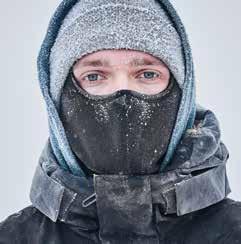
PROTECT YOUR SKIN FROM THE COLD
Cold air is brutal on exposed skin. Exposure to cold and wind can cause dry, chapped skin; exacerbate existing skin conditions; and even lead to frostbite, which is caused by tissue freezing and can create permanent skin damage or worse. Depending on the activity, there are several ways to save your skin from the effects of cold. The first and most obvious tactic is to make sure you don’t have any exposed skin. Wear a winter hat that covers your ears, gloves, a neck gaiter or scarf, and a face covering such as a balaclava or Buff. Some coldweather runners and cross-country skiers swear by face tape such as AntiFreeze and skin-protectant balms like Dermatone or Piz Buin’s Glacier Cream. If you try a balm, make sure it’s waterfree (since water freezes) and reapply often. And, staying well hydrated helps your skin from the inside out. If your skin does get irritated from the cold, apply a thick moisturizer and consider using a humidifier. Also, it’s counterintuitive, but warm showers are less drying than hot ones. If, when you’re out in the cold, your skin feels numb, waxy, or changes color, it could be frostnip or frostbite. This is usually caused by prolonged exposure to extreme cold, but it can happen quickly, especially if you have impaired circulation. Effected areas should be warmed gently in warm water; don’t rub or irritate the skin. Seek medical attention.
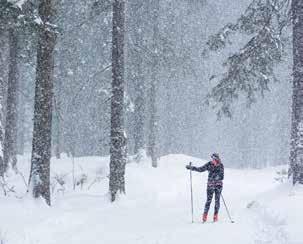
BE CAREFUL BREATHING COLD AIR
Remember when your mother told you not to go outside because you’d “catch your death of cold?” Well, she wasn’t totally wrong. While exercise is typically good for you, and so is fresh air, breathing hard in the cold can actually be bad for you. It can irritate the airways, leading to inflammation, and cause a bronchospasm or narrowing, making it harder to breathe. This is especially concerning for people with asthma or other respiratory conditions. Breathing cold air can also weaken the immune system, increase mucus production, and make you more susceptible to respiratory infections. To mitigate the risks, wear a scarf or face covering in extreme cold and dress warmly in general to keep your core and airways warm. Try to breathe through your nose, stay hydrated, and if you smoke, quit.
ADOBE STOCK
ADOBE STOCK
ADOBE STOCK
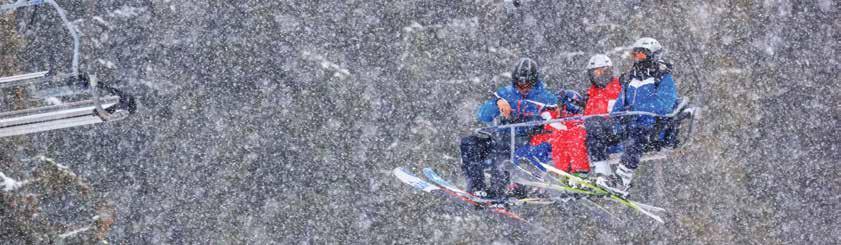
UNDERSTAND WIND CHILL
Wind chill happens when wind essentially blows away the layer of insulating warm air our body heat naturally produces and replaces it with cold air. The stronger and faster the wind, the more significant the effect. This increased heat loss makes us feel colder. Although it is defined as the “perceived decrease
in air temperature that people feel on exposed skin due to the effect of wind,” wind chill is real. It is a significant factor in the risk of frostbite, because skin can freeze more quickly at low wind chill temperatures. The wind chill temperature index is the measure of how cold the air feels on exposed skin. There’s actu-
ally a fun mathematical formula to determine it: Wind chill (ºF) = 35.74 + 0.6215T - 35.75(V^0.16) + 0.4275T(V^0.16), where T is the air temperature in Fahrenheit and V is the wind speed in miles per hour. This formula applies for temperatures at or below 50 degrees Fahrenheit and wind speeds above 3 miles per hour. JH
Blue Concierge Medical Care

Dr. Brent Blue
Dr. Brent Blue is a Board-Certified physician specializing in Family and Urgent Care Medicine. He is a long-term year-round resident of Teton County and is on the Board of Trustees of St. John’s Hospital in Jackson. His undergraduate degree is from Vanderbilt University and medical degree from the University of Louisville. His residency training was at the University of California, San Francisco where he also was an attending physician.
His practice is based in Wilson, Wyoming, for adults. Limited to thirty new patients.
Annual care includes a complete physical examination and basic laboratory work. Availability is 24/7 by phone and office visits by appointment (same day if necessary). House calls when appropriate.
For information or to set up an interview for joining the practice, call 307-733-7835.
www.blueconciergemedical.com
ENJOY
CHOOSE YOUR OWN ADVENTURE
// BY WHITNEY ROYSTER
How Can I Aura Farm
in Jackson Hole?
I'M SORRY. IS THAT ENGLISH?
Yes. It's a Gen Alpha term meaning to show off coolness.
THOUGHT YOU'D NEVER ASK!
Are you OK being outside?
IN WINTER? OMG, NO.
Grub at the Snake River Grill or Orsetto.
Use rizz in the tram line and make new friends on the Hobacks.
Post up in front of the Cowboy Bar.
YES. I AM LIKE A PENGUIN.
Flex a Stio fit.
Flick up in front of the Tetons like the cover of the Ye album.

Drop into Corbet's and post it on the 'gram.
AND IF YOU DON'T KNOW WHAT THIS MEANS, WE DON'T EITHER. WE CAN'T BELIEVE IT GOT BY OUR COPY EDITORS.

GALLERIES
Whether you’re passionate about plein-air, a serious collector of Western paintings by contemporary or deceased masters, or a casual art fan searching for a keepsake to remind you of your time spent here, in Jackson Hole you have the opportunity to enjoy art in a multitude of forms. Over the past two decades, Jackson Hole has grown to become one of the most heralded art centers of the West, popping off the tongues of aficionados alongside the likes of Santa Fe, Palo Alto, and Scottsdale. Begin by visiting some of the galleries highlighted here, which show the diversity of art available in the valley, from traditional wildlife and Western art to contemporary paintings and sculptures.
Jackson Hole Jewelry Co. brings modern design to mountain luxury. Inspired by the rugged grace of the Tetons, our handcrafted fine jewelry blends mountain elegance with modern sophistication. Whether you're marking a milestone or discovering something extraordinary, our downtown Jackson showroom welcomes you to experience luxury with heart and craftsmanship that endures.
Find your own piece of wearable art inspired by and created in our idyllic mountain town. Browse our stunning selection in our cozy historic cabin showroom, or meet with our jewelers to create the handcrafted piece of your dreams.
60 E. BROADWAY AVE.
307/201-722 JACKSONHOLEJEWELRY.COM
132 N. CACHE ST.
307/733-5933 JCJEWELERS.COM
JACKSON HOLE JEWELRY CO.
JC JEWELERS
ANDY WHITE

Based in the Tetons, New West KnifeWorks offers American-made knives for the kitchen and field. From chef knives to custom Damascus hunters and folders, each blade is a work of functional art that is “as beautiful as it is useful" (NY Times). Visit the showroom on Jackson’s Town Square to experience the cutting edge of American manufacturing—backed by a lifetime guarantee and free sharpening for life.
98 CENTER ST., UNIT C
307/733-4193
NEWWESTKNIFEWORKS.COM

As an artist owned and operated gallery, Sonia Tonkin Fine Jewelry is known for its magnificent Sun collection and the one-of-a-kind fine jewelry designs by the owner.
The gallery complements Sonia’s beautiful designs with an array of well-curated arts, minerals, crystals, and unique finds. Come on in! You will surely find “what tickles you heart.’’
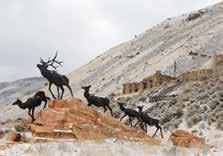
Founded in 1987, the National Museum of Wildlife Art is a world-class museum and nonprofit located in Jackson Hole, Wyoming. The Museum’s collection boasts more than 5,000 artworks representing wild animals from around the world. Featuring work by prominent artists such as N.C. Wyeth, Georgia O’Keeffe, Andy Warhol, Bob Kuhn, Albert Bierstadt, and Carl Rungius— the Museum’s unsurpassed permanent collection chronicles much of the history of wildlife in art, from 2500 B.C.E. to the present.
2820 RUNGIUS RD. 307/733-5771
WILDLIFEART.ORG
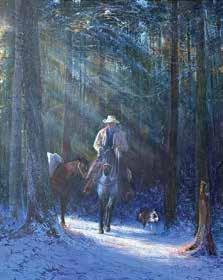
The West Lives On Gallery features fine art reflecting the rich heritage of the American West. Featuring Western, wildlife, and landscape art in our traditional and contemporary galleries, the West Lives On Gallery has been representing over 100 national and regional artists since 1998.
55 & 75 N. GLENWOOD ST. 307/734-2888
WESTLIVESON.COM

Specializing in Golden South Sea pearls and heirloom strands, Pearls by Shari brings the elegance of pearls to the heart of the Tetons. With over 20 years of pearlbuying experience, Shari Turpin brings unparalleled expertise to each design featured at 90 E. Broadway and Neiman Marcus locations nationwide. Whether you are memorializing your trip to Jackson or want to add a one-of-a-kind pearl design to your jewelry collection, Pearls by Shari features the widest selection of high-quality pearls in the United States. Make an appointment, or stop by our showroom located on the Square.
90 E. BROADWAY AVE.
307/734-0553
PEARLSBYSHARI.COM

Workshop is a highly curated boutique specializing in local and regional handmade goods. Our offerings include ceramics, jewelry, home goods, apparel, wellness products, books, and children’s gifts. Just steps off the Town Square on the green space behind Persephone Bakery, we invite you to stop in and see our collection!
180 E. DELONEY AVE. 307/203-7856
NATIONAL MUSEUM OF WILDLIFE ART PEARLS BY SHARI
WEST LIVES ON GALLERY
SONIA TONKIN FINE JEWELRY


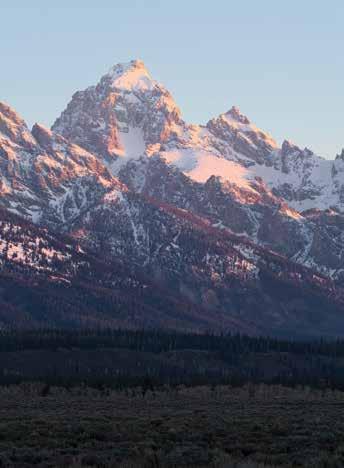


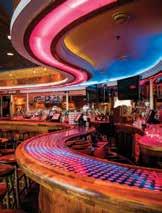

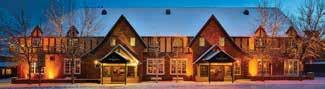

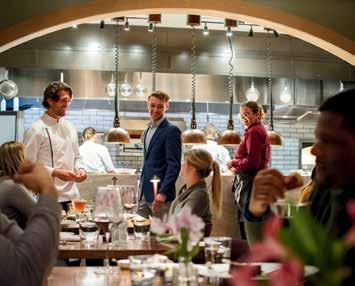




TAYLOR
GLENN
ENJOY

FIGS | 307/201-5350 | JACKSON
Mediterranean-inspired small plates/entrées. Vegetarian and vegan friendly.
Healthy Being Cafe, Juicery, Market | 307/200-9006 | JACKSON
Fresh, vibrant, always organic. Coffee, espresso, superfood lattes, cold-pressed juice, and smoothies. Salads, bowls, sandwiches, desserts.
North Grille at Jackson Hole Golf & Tennis Club | 307/733-7788 | JACKSON
Traditional country club fare with patio and indoor dining featuring unmatched Teton views.
Silver Dollar Bar & Grill | 307/732-3939 | JACKSON
Open for breakfast, lunch, dinner, and happy hour daily. Live music four nights a week.
Snake River Brewing Co. | 307/739-2337 | JACKSON
Jackson Hole’s living room since 1994. Serving up 12 taps of award-winning beers and a Westerninspired menu seven days a week 11 a.m.–10 p.m., bar closes 11 p.m. Brunch 8 a.m. to 11 a.m. Saturdays and Sundays. Wyoming’s oldest and most award-winning small craft brewery.
Snake River Roasting Co. | 307/312-2382 | JACKSON
Serving our very own specialty coffee, locally prepared food, and craft cocktails.
Teton Thai | 307/733-0022 | TETON VILLAGE
Dine in and take out in Teton Village; tetonthaivillage.com
Wild Sage | 307/733-2000 | JACKSON
Intimate dining with an innovative, seasonal menu; where French sensibility meets the mountain West. Serving breakfast and dinner.
FOUR SEASONS
Ascent Lounge | 307/732-5613 | TETON VILLAGE
This popular slopeside bar features creative bartenders and pan-Asian inspired plates. Relax by the wood-burning fireplace or outside on the heated patio.
First Chair Grab & Go | 307/732-5620 | TETON VILLAGE
Your perfect slopeside pit stop for mountain adventures.
The Handle Bar | 307/732-5156 | TETON VILLAGE
Grab a seat at our American pub and beer hall, featuring a wide selection of American and international beers, whiskeys, and provisions.
Steadfire Chophouse | 307/732-5620 | TETON VILLAGE
Enjoy panoramic views of Teton Village and Rendezvous Peak, a dynamic open kitchen, and a cozy setting at our inviting new chophouse that opened last summer.
GRAND TARGHEE
Powder Cache Bar & Grill | 307/353-2300 | GRAND TARGHEE RESORT
Full bar with craft cocktails, wine list, and Rocky Mountain fare.
Snorkels Café | 307/353-2300 | GRAND TARGHEE RESORT
Grab-and-go café with homemade breakfast, lunch, pastries, and coffee bar.
Trap Bar & Grill | 307/353-2300 | GRAND TARGHEE RESORT
A legendary Targhee bar with sports, live music, and our famous WYDAHO nachos.
JACKSON HOLE MOUNTAIN RESORT
Piste Mountain Bistro | 307/732-3177 | TOP OF BRIDGER GONDOLA
Offering an unforgettable dining experience with views of iconic Corbet’s Couloir. Available for bistro-style lunch and a pre-fixe dinner five nights a week. Reservations required.
Tram Dock Kitchen & Bar | 307/739-2738 | TETON VILLAGE
Tram Dock offers outdoor seating on a comfortable patio, music and drinks at the four-sided bar, and a menu fit to satisfy every appetite.
Trapper's | MID-STATION OF SWEETWATER GONDOLA
Elevated on-mountain dining experience offering stunning views and exceptional cuisine in a warm and lively setting. Reservations required.
SNOW KING MOUNTAIN
King's Grill | 307/201-KING | JACKSON
Classic American menu. Happy hour. Families welcome!
Snow King Café | 307/201-KING | JACKSON
Open for events only with sandwiches, burgers, beers, and kids meals.
Aurora Restaurant at Snow King Mountain Summit
TOP OF SNOW KING GONDOLA | JACKSON
Take a scenic gondola ride to enjoy elevated regional cuisine at the summit of Snow King Mountain. For an unforgettable experience, combine dinner here with stargazing at the Snow King Observatory and Planetarium.


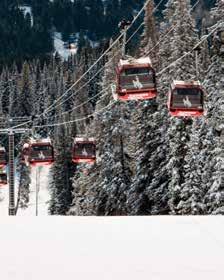
Piste Mountain Bistro delivers a lively dining experience at the top of the Bridger Gondola. Just beyond the friendly bar scene are floor-to-ceiling windows that offer exceptional views. Five nights a week, enjoy a specially curated pre-fixe dinner menu. Reservations highly reccomended.


Reservations
For Dinner: After 5:30pm, access to Piste via the Bridger Gondola is complimentary with a reservation.


BONDS THAT ENDURE
Being a ski or snowboard instructor at JHMR is more than a job, and many do it for decades.
In 1982, Lexey Wauters was one of 14 new ski instructors hired at Jackson Hole. Today, more than four 14, including Wauters, still work at Jackson Hole Mountain Re sort’s Mountain Sports School. “And some of the people that were in my class that don’t work at the resort anymore are still some of my closest friends,” says Wauters, who evolved from instructing to Mountain Sports School management during the 2002–2003 season and today is MSS’s assistant director. “Mountain Sports School bonds endure. Just today I told a new recruit class, ‘Look around at the people in this room. You don’t know it yet, but they are going to become a huge part of your life. Your future spouse, best friends, and bridesmaids are sitting in this room.’ It sounds cliché, but it is alarm ingly accurate.”
Caroline Evans Manley, whose first season at MSS was 2004, says, “The culture is very strong, and the people I work with are so talented and smart, and I’m constantly learning from them. We all take care of each other. There are so many instructors here that have been here for such a long time. I don’t think other resorts have that.”
Wauters agrees. “Some thing that I’ve always been struck by when I’ve trav eled to other ski areas
// BY DINA MISHEV // PHOTOGRAPHY BY KATHRYN ZIESIG
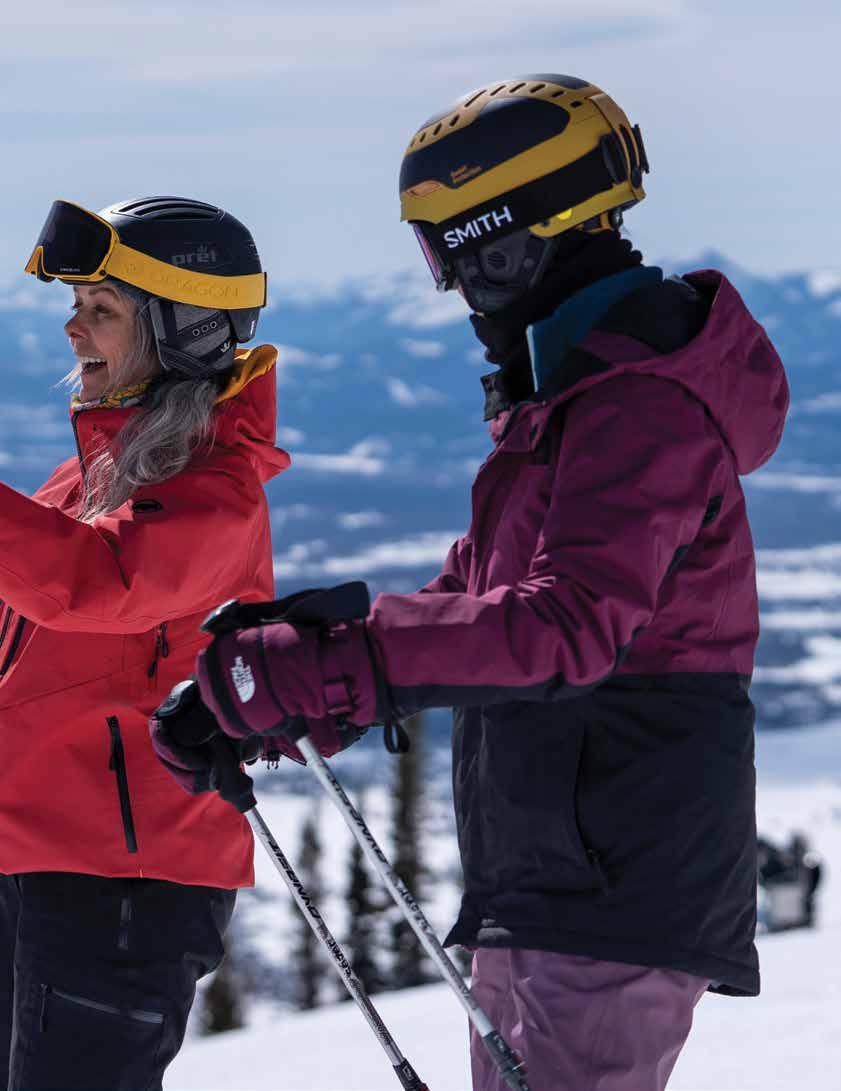
to work as a clinician or examiner, is that there is this crazy pride at being a ski instructor from JHMR. It is so evident,” she says. “It is hard to live here and hard to ski here. And if you’re a JHMR instructor, you know you’ve done this hard thing and made it work, and there is something recognizable about that.”
For the first several decades of its existence, when JHMR was still Jackson Hole Ski Corp and Pepi Stiegler, an Austrian who won a gold medal in the slalom at the 1964 Olympics in Squaw Valley (now Palisades Tahoe), was director of the ski school, it was even harder to be a Jackson Hole ski instructor. “Into the 1990s, we were still selling the good, old fashioned ‘ski week,’” Wauters says. “Guests skied with a group. If someone wanted a private lesson, they were onehour long. Maybe there were a few instructors actually making a living when I started, but everyone I knew all had second jobs—at restaurants or hotels—to help pay the rent.”
But this had changed by the time Manley started (in the early ‘00s). Gone were one-hour private lessons; in were by half- and full-day private lessons, which are more lucrative for instructors, and in which instructors often skied with the same clients for several days. Manley says, “When I was a newbie, I saw instructors that worked every day, were happy, had great relationships with guests and clients—it was very clear that if you put in the time, it was going to pay you back.”
Christina Cartier, who started at MSS in 2001, says, “Having worked as a nurse, I realize teaching skiing is not life-saving work, but it adds value to someone’s holiday and the possibilities in life. JHMR’s whole motto of creating memories, there is truth to that.”
We got five long-time JHMR MSS instructors to share their experiences and why (and how) they’ve made teaching skiing or snowboarding their life’s work.
CAROLINE EVANS MANLEY
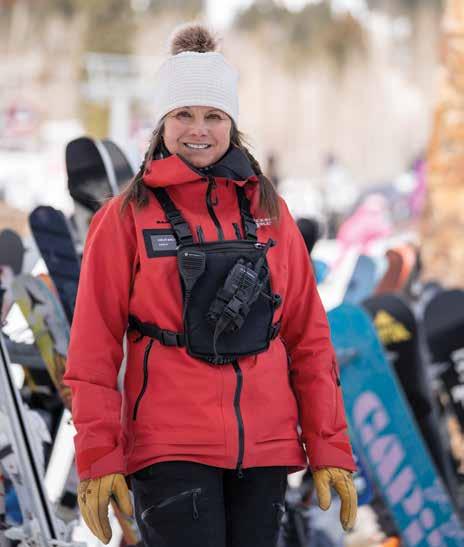
“I’m empathetic and so I was really good at knowing what it might feel like in someone else’s ski boots,” says Caroline Evans Manley. “I think this allowed me to encourage people to move into a little bit of their fear—they felt supported.”
Caroline Evans Manley arrived in Jackson Hole in the fall of 1988, when fires were still burning Yellowstone National Park (36 percent of the park was burned before snow extinguished the fires later that fall).
“I pulled in here and couldn’t even seen anything because the smoke was so thick, and there was ash on everything,” she says. “And I didn’t even have housing. I was camping along the river.”
Manley camped through the smoke and ash, but once it got winter-cold, she found a place to live and got a job working in the JHMR ticket office. “I wanted a free pass,” she says. That first winter, Manley, who says she grew up as a “recreational skier” on the slopes of New York’s Hunter Mountain, skied as much as possible. “And it wasn’t enough.”
She continued to work on and off for JHMR in different capacities—the adaptive program, ticket offices—and “skiing was always the backdrop. That was my motivation to be here.” It wasn’t until she started a family that Manley wanted to do something that was more of a career. I saw that teaching at
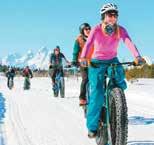
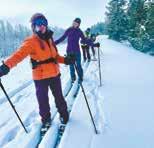
“The longevity of employees isn’t just at MSS, but also in lift ops and ski patrol and other departments. There is something soothing and amazing about this.”
CAROLINE EVANS MANLEY
MSS offered a pathway, and my two girls would get ski passes and I would have access to Kids Ranch and locals programs.”
In 2004, Manley went through a three-day MSS instructor tryout. She passed, and discovered she loved teaching. “I was hooked,” she says. “It was very clear that if you did the training, the mentorship, and the culture of the MSS, you could really make a go of it. Before I knew it, I was moving through the certification process and getting client referrals.” Within a few seasons, Manley was working as much as she wanted to, and her daughters, both now in their late 20s, were becoming great skiers. “I put in the time and it was awesome.”
But it wasn’t easy. “Skiing came easier to me than the teaching,” Manley says. “I really had to dig in deep to get through the certifications. Out with clients, I’d have these moments of ‘I’ve got this’ and moments that I didn’t, all in the same day.” She feels like she really came into her own as an instructor once she started coaching the resort’s multiday Steep and Deep Camp and Women’s Camp. “I’d have four days to build confidence in my skiers and make connections with them,” she says. “By the end of a camp, I felt like I had made an impact and people had really grown.”
Manley taught for almost 20 years and then transitioned into MSS management. “Passing long-time clients on to other instructors was difficult, but it was absolutely the right move for me,” she says. “Now I feel like all of the jobs I’ve had here have given me a big base of understanding of how MSS runs. The education never stops!"
Miles and miles of groomed track and ungroomed trails to skate or classic ski, fat bike, snowshoe or take a walk.
Come play in the Tetons!

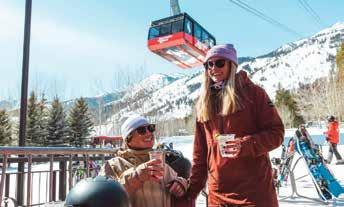



Keep the adventure going with the best après in
After a day on the hill, continue your Jackson Hole adventure at Tram Dock, located at the base of the Aerial Tram. Enjoy outdoor seating, a lively four-sided bar, and a varied menu that captures
culture and satisfies every appetite.

Jackson Hole’s
Teton Village.
CHRISTINA CARTIER
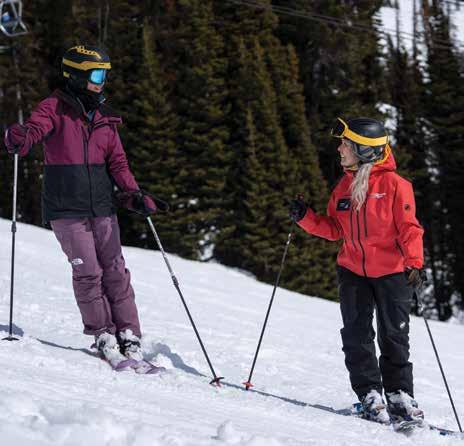
While Christina Cartier has elevated her own skiing way past the “vacation skier” she says she was when she first visited Jackson, she firmly believes that ski instructors don’t have to be the best skiers on the mountain to be great instructors. “I look at the coaches of Olympic level athletes. They can’t ski as well as the athletes they are training but still add incredible value,” she says.
Although she grew up in Europe, Christina Cartier subscribed to U.S. ski magazines. “Jackson Hole kept popping up in them,” she says. “I got it in my head that it was a place I needed to check out.” Cartier moved to the U.S. with her family in 1979, when she was 10, but didn’t make it to Jackson Hole until she was in her 20s. “We’d take family ski trips—we’d visit a different state so we’d get to know the country—but never came to Jackson Hole.
We’d fly into big cities and then go ski nearby,” she says.
When Cartier finally made it to Jackson Hole, she says, “I fell in love with the mountain like so many others.” It took her almost another decade to move here, though. In 2001, Cartier’s first job at JHMR was in the Nordic skiing arm of MSS. She started at the Nordic Center’s front desk, and then taught telemark and cross-country skiing, and, since JHMR had permits to do guided tours
in Grand Teton National Park, also led those. The following year, Cartier started transitioning to teaching alpine skiing but says she kept a foot in both locker rooms for a couple of years.
She likes alpine instructing because every day is different. “The guests change and so do the conditions on the mountain—it’s never the same, which keeps it fresh,” she says. “And also challenging. It is a puzzle of figuring out what will help each guest feel like they had the best day on the mountain and then meeting them at that place.”
Coming to Jackson Hole having never before taught skiing, Cartier says MSS’s coaching for instructors is
“I love teaching and helping the skier that wants to move past the groomers and start tackling steeper slopes, off-piste, and trees. That is pretty satisfying. Their sense of accomplishment and wonder tends to manifest when they reach that point.”
CHRISTINA CARTIER
incredible. “There is amazing training here for the instructors that seek it out. I know instructors from other resorts come here to get coaching from our team of coaches.” But not everything that makes a great ski instructor is teachable. “People skills are very important, and you have to intrinsically have a passion for helping people enjoy the sport.”
Total Number of Jackson Hole instructors in:
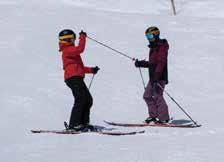
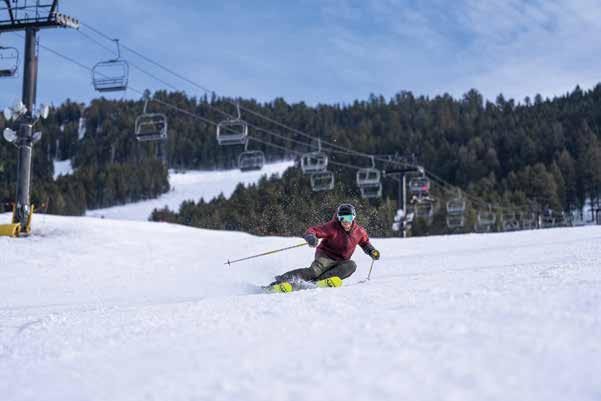
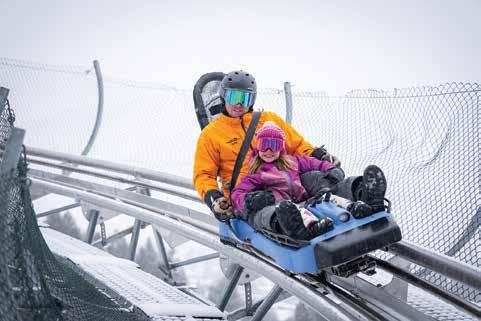
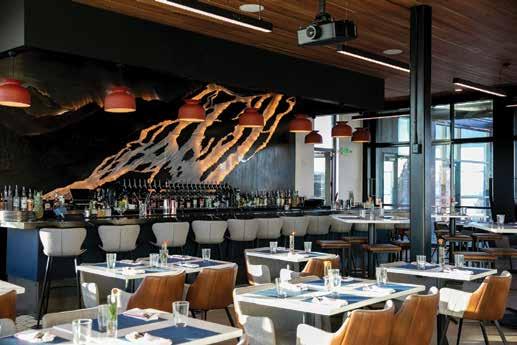
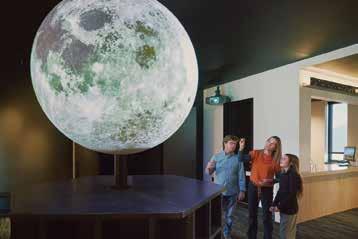

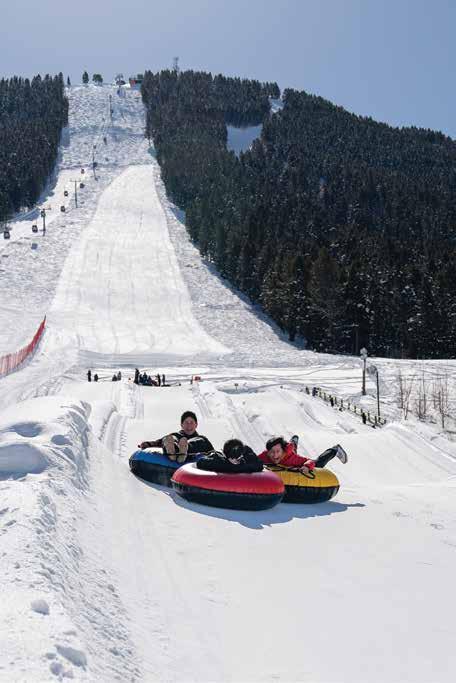
STEVE MARTIN
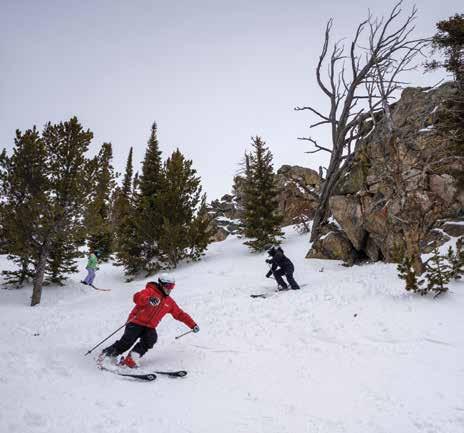
When Steve Martin started teaching at Jackson Hole in the early 1980s, then-director of the ski school Pepi Stiegler had a marketing plan that included instructors giving free lessons on Sundays. “At that time we weren’t a ski school built on private lessons, but on five-day lesson packages,” Martin says. “At the end of the comp Sunday lesson, we had to close the deal. And if you didn’t, there wasn’t any work for you the next week. In a way it was the best proving ground a ski instructor could ever have.”
Steve Martin started teaching skiing at JHMR in 1981. “There were maybe 35–40 instructors,” he says. “A lot of people wanted the free ski pass, and being an instructor meant a lot, even if in those days there wasn’t a lot of business. There were weeks I didn’t make enough money to buy food.” Thankfully, Martin taught a lot of kids, and their lessons came with lunch. If
he saw that a kid wasn’t going to finish their grilled cheese, he’d ask them if he could have it. “Thanks to the kids, I didn’t starve in the 80s,” he says.
But the food wasn’t his favorite part of teaching kids. “The kids and their parents might have thought that they needed me, but I needed them a lot more. Taking kids out for the day, it wasn’t a day of teaching, but it was a
day to go on an adventure. When you’re with these little cartoon characters, they will fix your problems.”
And Martin says teaching kids made him a better instructor. “To be able to effectively communicate a lesson to little people—when I could convey ideas that mentors like Victor Girden, Earnie Anderson, and Pepi Stiegler taught me, to three- and four-year-olds, that is when I felt like I became a master instructor as opposed to an ego instructor.”
Martin spent his earliest years teaching at JHMR with kids, then branched out to teaching adults, came back to teaching kids, and, since turning 60, exclusively does private lessons. “I just physically couldn’t do Kids Ranch any more,” he says wistfully. “I had to go to bigger people.” But these “bigger people” now include skiers he taught as kids, and also their kids. “I have a couple of families where I’ve taught three generations. While [Mountain Sports School] grew and it became a place instructors could make money, the memories are the gold of my life.”
“I’d load up on chocolate gold coins and go out on the mountain with [kids] and say, ‘let’s go look for treasure today!’ It didn’t matter what their ability was, whether we were skiing runs like Pooh-Bear, Ranger, or Toilet Bowl, I always made sure we found treasure.”
STEVE MARTIN

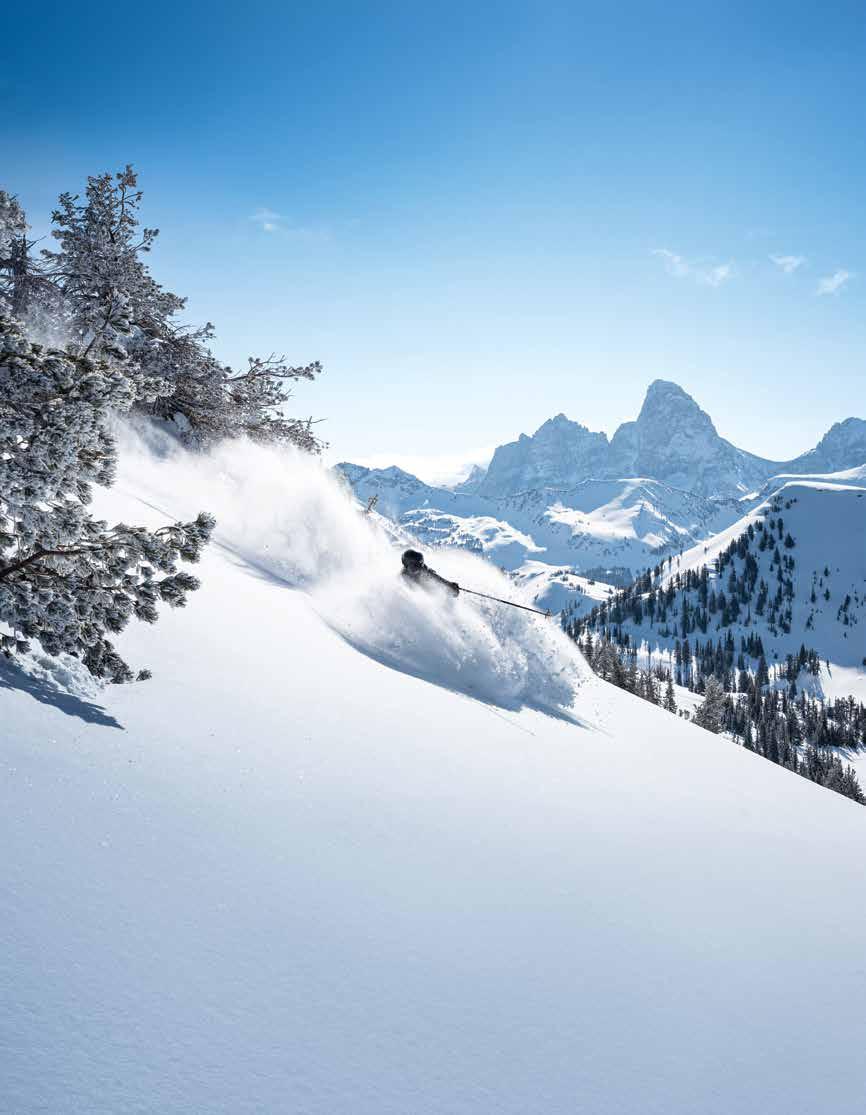


TOM BENNETT
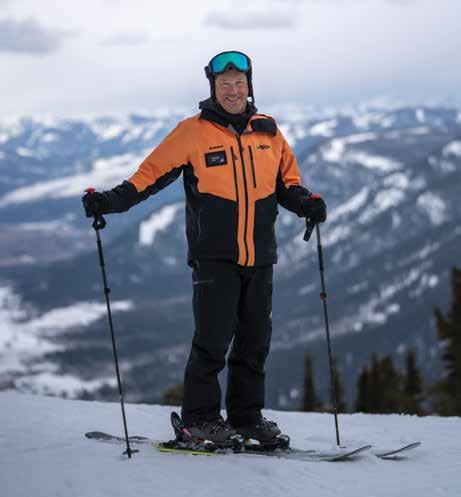
Even though Tom Bennett moved on from MSS to be a backcountry guide in 1998, he still maintains his PSIA Level 3 certification. “I like learning and the sharing of ideas that happens between instructors,” he says.
Taking a year off between his junior and senior years at Vassar College, where he was studying biochemistry, Tom Bennett taught skiing at Snow King. After earning his degree in 1986, Bennett came back to Jackson Hole and wanted to teach at JHMR. At that time, the tryouts lasted four days and included skiing with Pepi Stiegler, the founding instructor/director of the ski school. “It was very competitive and
macho. About 50 people applied and they hired 10 of us,” Bennett says.
“I really took to teaching,” he says. “I started thinking that it could be a career almost right away. You need to be lucky to make it as a ski instructor, but luck is the combination of preparation and opportunity.” Bennett earned his full instructor certification (today’s equivalent of Level 3) from PSIA his third season, the winter of 1988–1989. He quickly
learned about his teaching style: “I didn’t care how good of a skier a client was. I just wanted them to have fun.”
In 1998, JHMR opened its backcountry gates, and Bennett, who had been climbing and skiing big lines in the Tetons since his arrival in the valley, transitioned from teaching to guiding. “I was a huge backcountry skier and knew I wanted to be a part of that,” he says. Today, he has backcountry clients that he’s been skiing with for 20-plus years and, thanks to connections he’s made with other guides, has had the opportunity to guide all over the world, from the Alps to heli-skiing in Alaska
“To this day, many of my best friends are some of my clients.”
TOM BENNETT
and Chile. (In addition to guiding for JHMR, Bennett is also an Exum Climbing Guide.) “I am forever grateful for the opportunities I’ve had. Guiding has been so good to me.”
A blue-sky powder day in 2011 almost ended Bennett’s career though. He hit a rock in Rock Springs, a backcountry area south of JHMR, broke his leg, had six surgeries, and was on crutches for 15 months. “The doctors weren’t talking about whether I’d ski again, but whether I’d walk again,” Bennett says. “That time made me really think about what was important. I was staring down the barrel of not ever skiing again. Now I’m more appreciative of every day I get on skis and with clients.”
MIKE McGEE
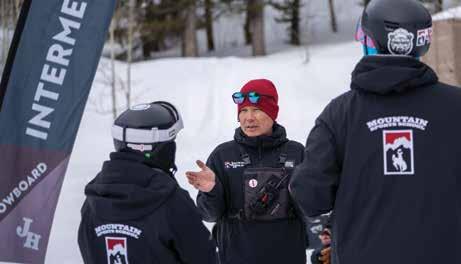
The first time Mike McGee saw snow was also the first time he tried snowboarding. It was 1989, and McGee was 18. “I grew up skateboarding and surfing in Southern California,” he says. Skating friends that had already gotten into the then-new sport of snowboarding took him to Mountain High, a resort about 90 minutes northeast of downtown L.A. “They took me to the top and left me there,” McGee says. “I’d been skating since I was five, so I got it, and got pretty hooked on it.”
Within several years, McGee evolved into snowboard mountaineering—climbing technical routes and then descending them via snowboard. He spent five years in Seattle honing these skills and then “decided the Tetons were where I needed to go.” It was 2000.
McGee tried out for JHMR’s snowboard school so that he’d get a pass and also to become a better snowboarder himself. “If you teach people to snowboard, you become better yourself,” he says. McGee did become better, and also fell in love with the job. “I found that I love teaching people how to snowboard. Teaching someone else how to snowboard allowed me to relive the stoke of my first times.”
Each year, McGee sought out more of the certifications that you need to make a career as a snowboard instructor. “It led to better lessons and clients.” It also eventually led to him transitioning from teaching clients to teaching other
instructors. “What I enjoy most now is passing on my knowledge and what I’ve learned to new instructors and watching them succeed,” he says. Since 2016, he has been on the Intermountain region snowboard education staff of the American Association of Snowboard Instructors, although McGee still finds time to ride with long-time clients when they’re in town. “But I don’t teach them anymore,” he says. “Now we’re out on the mountain as friends.” JH
“There were many times I thought I had to move on from teaching so I could get a ‘real job’ and make more money, but it was hard to give up something that creates so much stoke.”
MIKE MCGEE

Not owning any snow gear the first time friends took him snowboarding, Mike McGee, who grew up skateboarding and surfing, wore his full wetsuit underneath a pair of jeans.
Innovative features, bold colors, signature design.

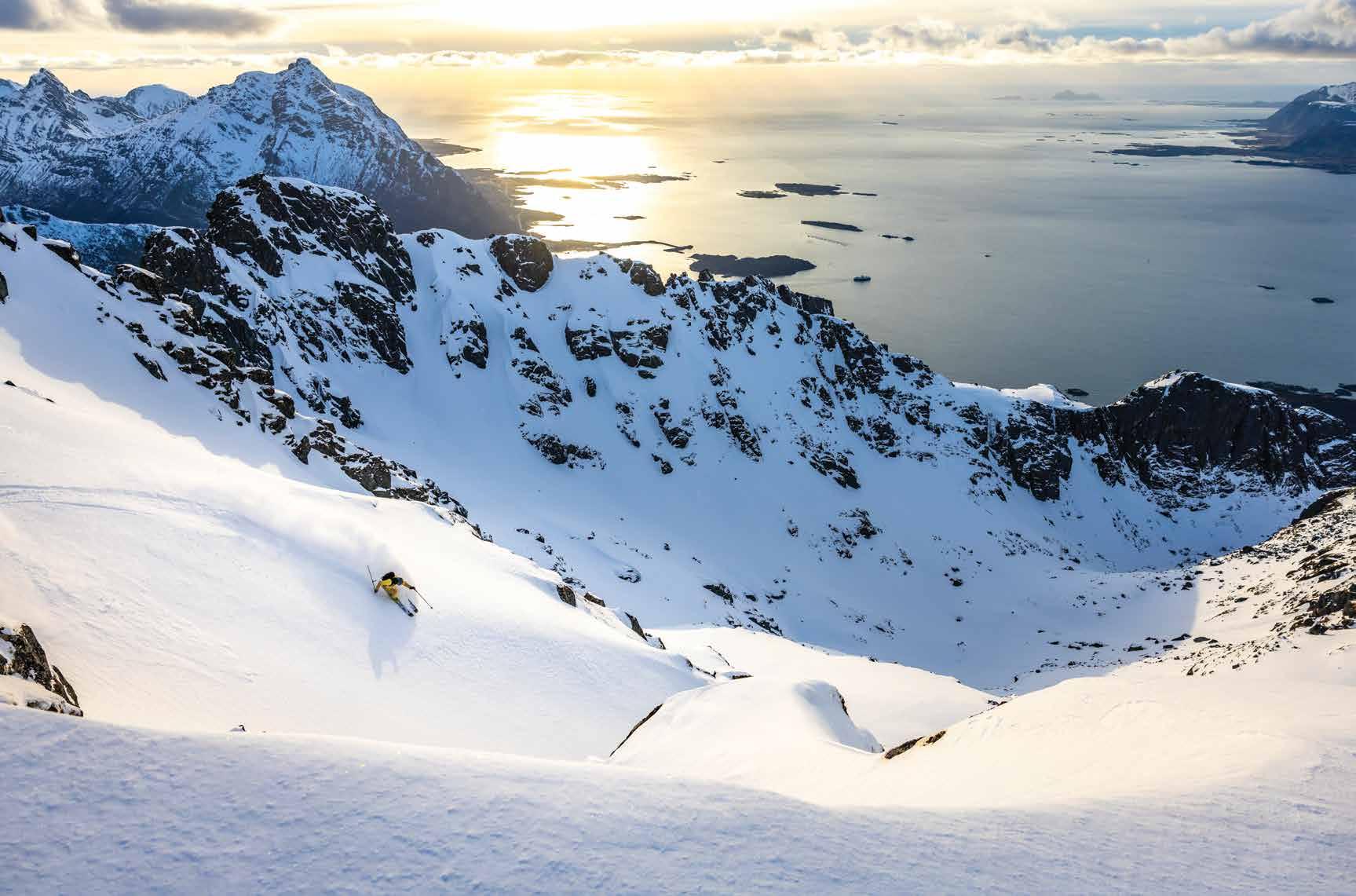


The lofoten collection
Adventures: If you want to travel here or to one of our unique lodges, we offer great packages or tailor-made adventures. Norrøna Stores: New York, Boston, Boulder, Aspen, Castle Rock.
Our mission is to create the greatest outdoor products and offer unique adventures. Crafted with quality, function, design, and sustainability through four generations since 1929. norrona.com
he sucking sound a boot makes coming off mud accompanied each of ecologist Katherine Gura’s steps through a wet meadow in the Shoshone National Forest. It wasn’t the only sucking on the scene. Mosquitos were constant companions.
But Gura was unfazed by the conditions. The thirtysomething ecologist was in her happy place: looking for great gray owls. She was surveying for the vole-eating raptors on the very edge of where they occur in the Rocky Mountains—near the tip of the Wind River Range—in an area that, to her eye, contained habitat that was just right.
THE FOREST
“These are beautiful meadows for great grays,” Gura said during the backcountry outing last summer. “As soon as I saw this, it made sense to me that they’re here.” The wet, grassy opening in the timber that drew Gura south from home was located within the suspected territory of the southernmost known great gray owl pair in the entire Greater Yellowstone Ecosystem. The birds came onto the radar when a Wyoming Game & Fish Department biologist, Frank Stetler, stumbled upon them while out hiking in 2023. Two years later, Gura wanted to see for herself, so she set aside a weekend to drive to Lander and check it out. Meticulously searching a forest for great

of the Greater Yellowstone Ecosystem ANTOMS
//BY MIKE KOSHMRL
Local resident and PhD scientist Katherine Gura has devoted much of her career to understanding the great gray owl, whose survival along the southern extent of its range might depend on how climate change influences Jackson Hole’s snowpack.
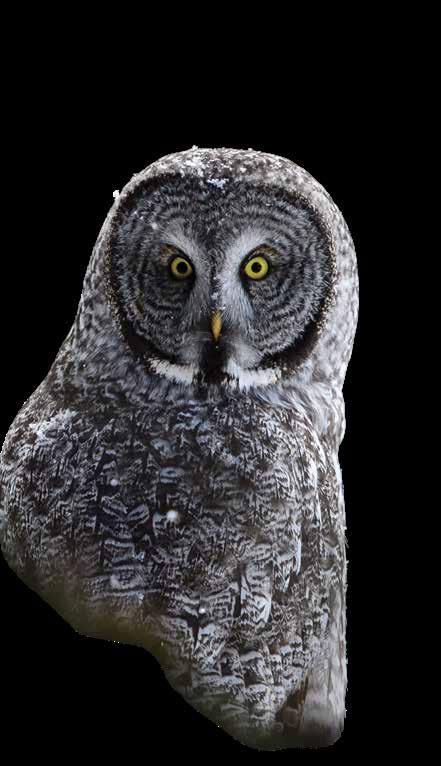
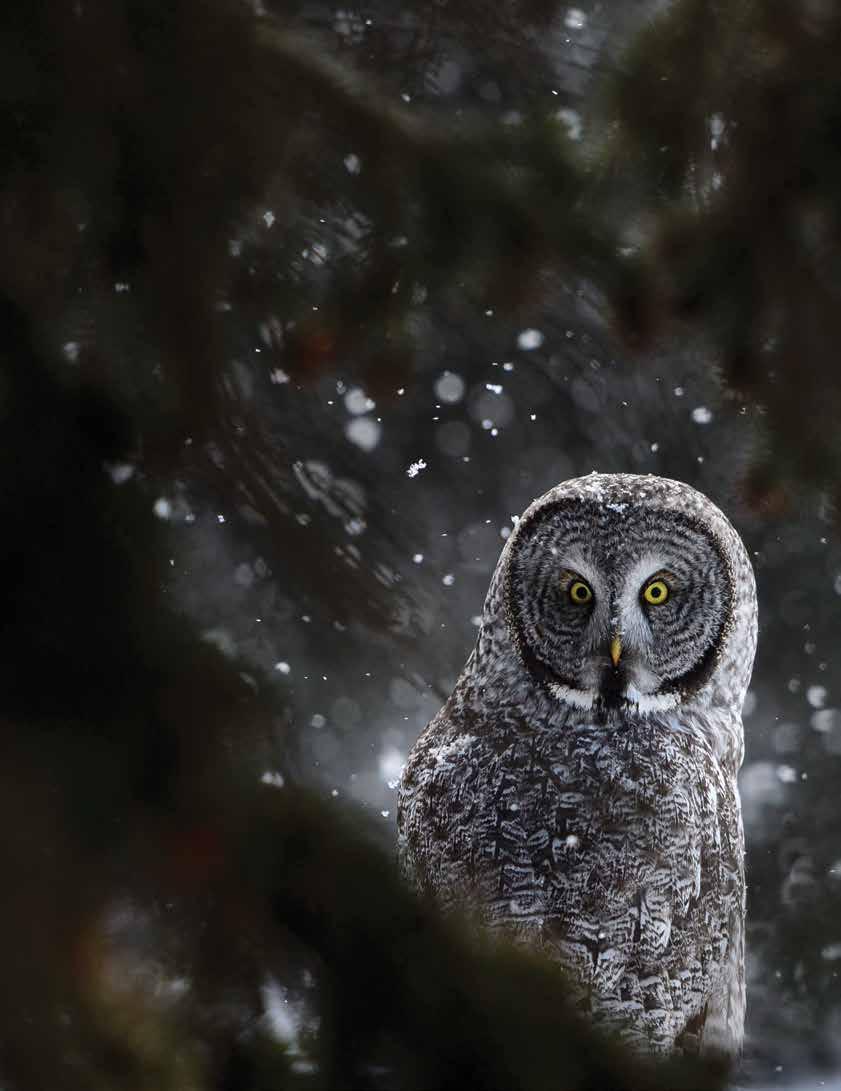
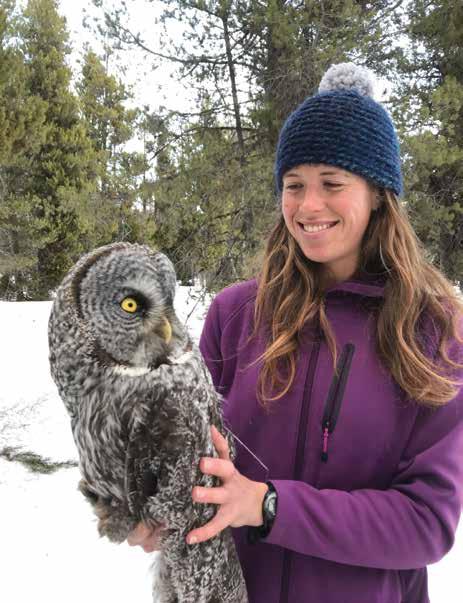
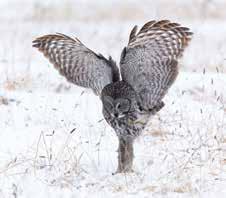
Gura’s science has helped shine a light on a factor that could contribute to great gray owls’ struggles. “It is the only long-term study in the Greater Yellowstone Ecosystem,” says Susan Patla, a retired nongame-bird biologist for Wyoming Game & Fish. “It’s also the most southern nesting population that we know of. We’re in a period of climate warming, and this is a boreal species. It makes her study really important.”
grays—with the mosquitoes, mud, all of it—is what she likes to do. “Sometimes we’re doing analyses, things like that, and it’s not the most fun,” Gura says, referring to her trusty field companion, a mixed-breed pup named Willet. “This is the fun stuff.”
Gura’s fun in the field underlies a devotion to better understanding Strix nebulosa, or great gray owls. It’s a species she’s been studying for a dozen years, dating back to when she was working as a technician for Craighead Beringia South. As the years passed, she picked up a PhD from the University of Wyoming while on staff at Teton Raptor Center, a Wilson-based rehabili-
tation and research center. Today, she’s a research scientist for Colorado State University. One constant of her professional ascension is the subject of her scientific inquiry: great grays. In the bird-watching world, they are iconic: mysterious, charismatic, and the tallest (from the tip of their tail to the top of their head) owls in the world. Although widespread in Canada and Alaska’s boreal forest, they’re less common—and their existence more tenuous—elsewhere in the United States. “Audubon came out with a prediction that, based on predicted environmental change, we’re not going to have great grays in the Lower 48 by 2060,” Gura says.
Going into the Teton Raptor Center’s great gray project, very little was known about the owls' basic ecology. The size of their territories was a mystery. The owls’ winter whereabouts were often unknown. Those pictures are now much clearer, thanks to the years of GPS data Gura and her colleagues have amassed. A territory is about 1.5 to 2 miles in diameter. During the winters, resident owls—especially during crusty snow years—are often out on “wanders” in the region. “Just to give one example, I had a bird that was occupying southern Yellowstone National Park, kind of around the Heart Lake area,” Gura says. “In November, it went all the way down to the Green River Lakes area near Pinedale. It spent about six weeks wandering down there and then went all the way back up to southern Yellowstone to spend the rest of the winter, which was just fascinating.”
Gura’s put her finger on one contributing factor to the seasonal flyabouts, which almost always end in the great grays returning to their home territory. “We’re having more and more rain events during the winter,” she says. “This past winter, we had five different significant rain-on-snow events that created ice crusts. For an owl that needs
Katherine Gura PhD is engaged in a long-term study on the movements and survival of great gray owls in and around Jackson Hole with the Teton Raptor Center and University of Wyoming.
TETON RAPTOR CENTER
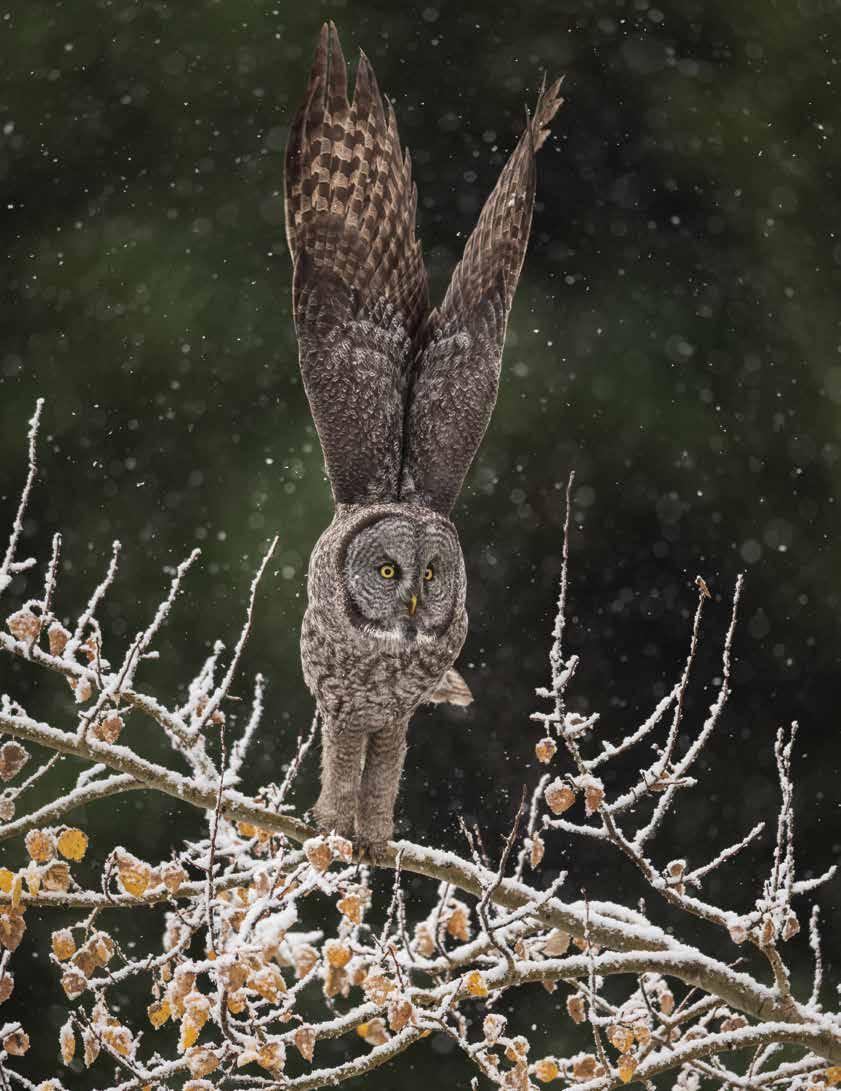
Gura's work is the only long-term study of great gray owls in the Greater Yellowstone Ecosystem,
to punch through the snow to access its food, those ice crusts are going to be really detrimental,” she says. The need to fly long distances to eat and stay alive, which is happening with increasing frequency, is one piece of a puzzle that ecologists are trying to solve to explain why great grays are prone to either reproducing or not. The wanders take a lot of energy, can deplete body conditions, and could make the raptors less likely to be mothers and fathers come the next summer.
More research is needed to pinpoint why—vole abundance is another hypothesis—but the Yellowstone region’s great gray population is either fecund,
or not, come breeding season. In a dozen years of looking, Gura’s mapped over 40 territories in the region and often several historic nest sites within each territory. Yet during some summers, like 2025, virtually every known great gray pair either doesn’t attempt to raise a brood or does nest and fails. That boom-bust could be a biological quirk that great grays are well equipped to handle, but the jury is still out. “Especially over time, if you have more and more of these poor years, that would be really concerning,” Gura says.
Wildlife and land managers have signaled concern for great gray owls. The Wyoming Game & Fish Depart-
ment classifies the bird as a “species of greatest conservation need” and labels the population as “vulnerable” and “severely” limited. “They’re a boreal species on the southern extent of their range, habitat-wise,” says Game & Fish nongame-bird biologist Zach Wallace, who took over for Patla. “There’s a very small population in the state.” However small that number is, though, it’s unknown, according to Wyoming Game & Fish’s records on great grays. Even in Gura’s study area, there’s no precise number after a dozen years of in-depth study. “This is a great example of why it’s important to continue to study these birds,” she says. “Because you
trusted real estate advisors in Jackson Hole for over 35 years. Backed by a locally owned brokerage powered by the #1real estate company in the

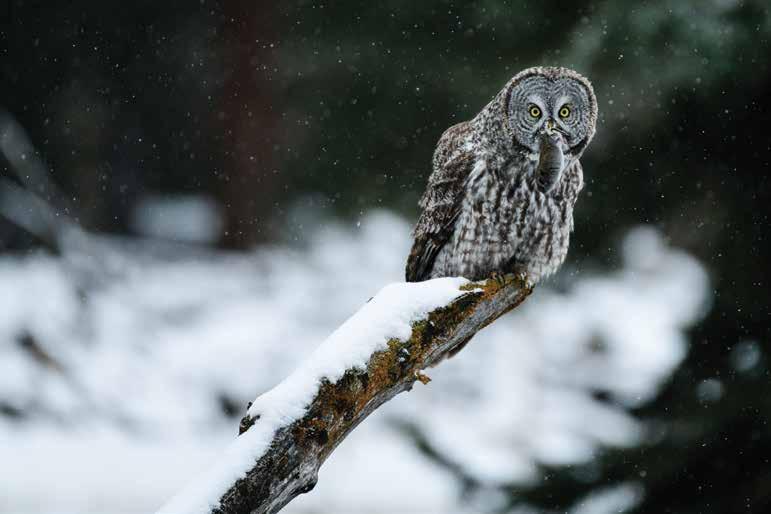
The continued presence of great gray owls in the Greater Yellowstone Ecosystem is uncertain. Based on predicted environmental change, by 2060 the species will no longer be found in the Lower 48.
have these fluctuating patterns, it becomes really hard to get a grasp on how the population is doing.”
The special treatment for great grays crosses jurisdictional lines. In the Bridger-Teton National Forest— where many of Gura’s research bird territories are located—great gray owls are classified as a “sensitive species.” Their habitat needs are fairly specific, Gura says, emphasizing that messy, older forests that provide downfall cover for rodents and shade for chicks are most ideal. She talks as she climbs a snapped-off lodgepole pine tree— known as a snag—that a great gray had nested in back in 2023. “One of the biggest management recommendations for habitat managers is to retain these large dead snags,” she says. “When you’re coming through and cleaning up a forest, retaining these snags is really critical.”
The primary venue for the great gray study, Jackson Hole has a rich history of wildlife research projects that have spanned many years or even decades. Biologists who’ve lived here have discovered and mapped the longestknown pronghorn migration route in the world. They’ve teased apart how mountain lions and wolves influence each other and the landscape. The examples of long-term biological inquiries are many, but high on the list of well-known studies that have improved understandings of species are Olaus Murie’s examination of the Jackson Elk Herd, which began almost a century ago, and Frank and John Craighhead’s pioneering research on Yellowstone’s grizzly bears, which spanned from the late 1950s through the 1960s.
One of Gura’s professional goals is to keep tabs on the Greater Yellowstone’s gray owl population for decades to come—through the balance of her days
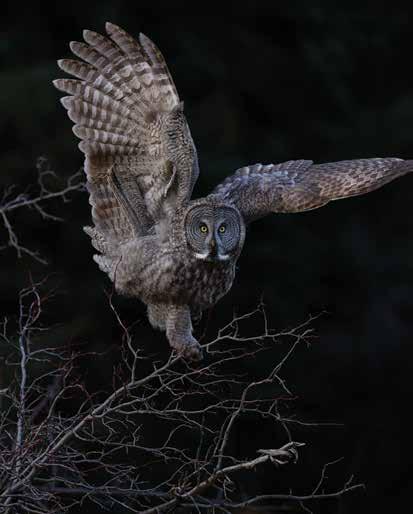
as a working biologist. “I’m very committed to continuing our research in the GYE,” she says. “We’ve established such a strong foundation of information on this population, and these birds are facing so many changes.”
Bryan Bedrosian, conservation director at the Teton Raptor Center, knows Gura well—he led the great gray project for years and served as a mentor. He says she’s got what it takes to handle the sometimes-grueling work of a field biologist. “She’s got the perseverance of, really, no one else that I know and just that stick-to-it-iveness,” Bedrosian says. “We’ve got a saying around here that when you go out in the field with me or anybody else, you bring lunch. But when you go out with Katherine, you bring a lunch and a dinner.”
Patla, the Game & Fish retiree, has witnessed the environmental changes affecting great gray owls firsthand. Decades ago, she says, great grays would congregate in impressive numbers in the cottonwood tree galleries outside of Tetonia, Idaho, but because of development or other reasons, they stopped showing up in big numbers. Meantime, the winter habitat conditions have changed. “I moved here in 1987, and the consistency and the duration of the snowpack have changed dramatically,” Patla says. “Without that consistent, powdery snow, the owls really can’t feed themselves during the winter.” By increasing the occurrence of wintertime
Boreal Forest Denizens in the GYE
Because of its geographic location along the high-elevation spine of the Northern Rockies, the Greater Yellowstone Ecosystem is home to a number of species that are more typically found in the boreal forest that blankets much of Canada and Alaska. The conifers that exemplify the biome, also known as the taiga, also grow here—albeit in much smaller, mountainous swaths of the landscape. Here are snapshots of two other species that accompany gray owls as boreal forest denizens making a go at life in the Lower 48.
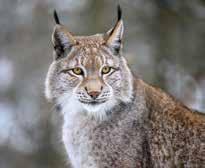
A charismatic, bigfooted, pointy-eared wildcat, lynx are barely hanging on, if not completely absent from the GYE, federal and state surveys have concluded. Protected by the Endangered Species Act as “threatened,” the last known breeding lynx in the region were found in the Wyoming Range around the turn of the century. They may never thrive in the region again, being dependent on snowshoe hares that occur only in low densities in Wyoming. Still, there have been occasional sightings, most recently a mature tom that was treed by a mountain lion hunter’s hounds in the Gros Ventre Range in 2022.
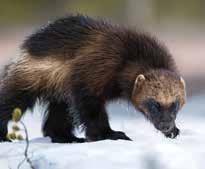
Snow-dependent like great gray owls, wolverines are another species for which the GYE marks the southern-most end of its range. A midsized mustelid related to weasels and American marten, wolverines are known for being exceptionally aggressive and also low-density and hard to find. Nearly a decade ago, the Wyoming Game & Fish Department completed an exhaustive statewide survey that sought to map occupied wolverine range. The results: wolverines are found in many of the Greater Yellowstone Ecosystem’s mountain ranges, including the Wind River Range, Absaroka Mountains, Gros Ventre Mountains, and Wyoming Range. To the best of biologists’ knowledge, they’ve been extirpated from outlying mountain ranges, like the Bighorns and Snowies.
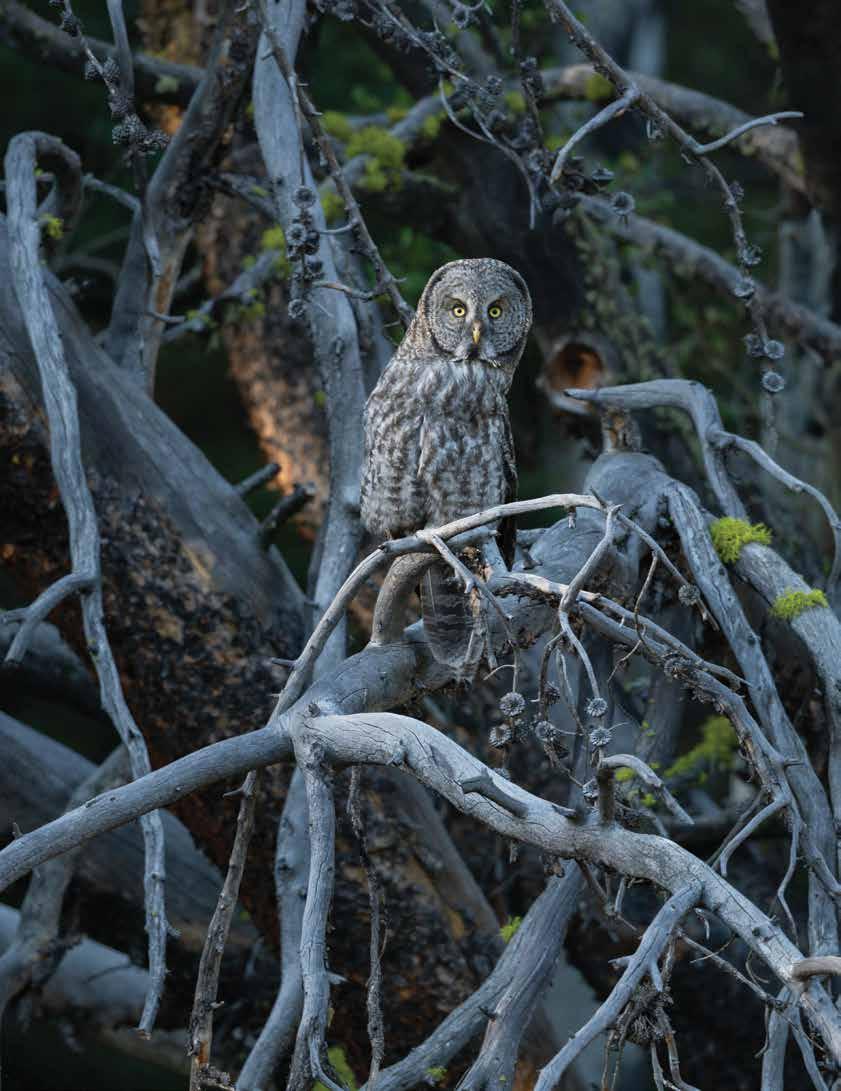
rain, climate change figures to make the snow even less favorable—and not just for great grays. Rough-legged hawks, a wintertime visitor, are another snow-dependent raptor that could see their distribution change as the climate warms, Bedrosian says.
Although a long-running research project can put a spotlight on a species, Gura hasn’t sought publicity, even once turning down an acclaimed film crew that wanted to tag along with her for an extended period. Great grays don’t especially need the fanfare. In the worlds of ornithology and birdwatching, they’re already a rock star species. “The first one I ever saw was in Yosemite National Park in California, and I burst into tears,” Patla says. “It is one of the 10 most-wanted bird species for birdwatchers throughout North America. One feels a connection. They’re more active during the day. Their eyes, they look right at you. And they’re so large, but yet so quiet.” There’s enough sensation around Wyoming’s great gray owls, which are sensitive to disturbance, that
their nest sites and even territories are closely guarded. “It’s censored on eBird [a bird-tracking app] for that reason,” says Wallace, the Game & Fish biologist. “The Raptor Center and parks keep all of their observations close.”
Nevertheless, some specimens earn celebrity status. Gura’s mind goes to a bird known as C3, a male great gray that the Teton Raptor Center captured and marked in 2014 who made himself famous by his choice of roadside territory in the south end of Grand Teton National Park. “It’s just incredible how many people got to experience a great gray owl through C3,” Gura says. After the famous bird’s transmitter died a couple of years later, he went missing, though in 2019 Gura managed to catch a glimpse of C3’s leg band while he was courting a female. The next day, she caught him again. “I was able to track him with a GPS transmitter the next several years, which was super cool,” she says. After nine years of being tracked as a research bird, the great gray owl known as C3 met his end. “We think it was
by a mountain lion, based on tracks,” Gura says.
The Saturday last summer when Gura was out and about surveying for great grays along the southern reaches of the Wind River Range she was also in search of a celebrity, albeit one much more seldom seen. The bird that Stetler, the Wyoming Game & Fish biologist, had spotted two years prior was the southernmost known breeding great gray owl in North America. (Though the range of a genetically distinct Californian subspecies Strix nebulosa Yosemitensis does reach farther south.)
Over the course of hours, Gura hooted and combed over the Shoshone National Forest, scanning the skies for movement, timber stands for roost trees, and the wet meadows where great grays like to hunt for voles. Long after the journalist who accompanied her departed, she found the “exciting” evidence that she was looking for: Two fresh feathers, spotted in a grassy meadow just a couple hundred yards away from the old nest. “I’m sure they were around nearby!” Gura says. JH
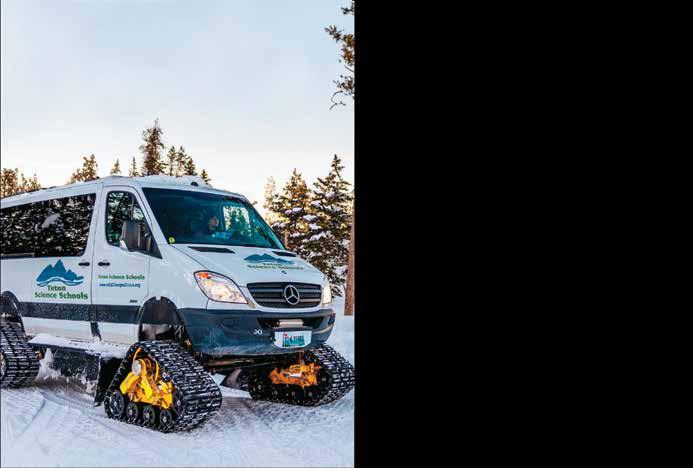
www.wildlifeexpeditions.org
(COMFORTABLY IN LUXURY, OF COURSE)

Since 1999, Wildlife Expeditions of Teton Science Schools has offered year-round guided tours in Grand Teton and Yellowstone National Parks. Our snow coach provides a once-in-a-lifetime chance to experience the solitude and serenity of Yellowstone National Park during the winter. Tailored to recent wildlife sightings and group interests, each tour promises an enriching and unforgettable adventure in the heart of nature.

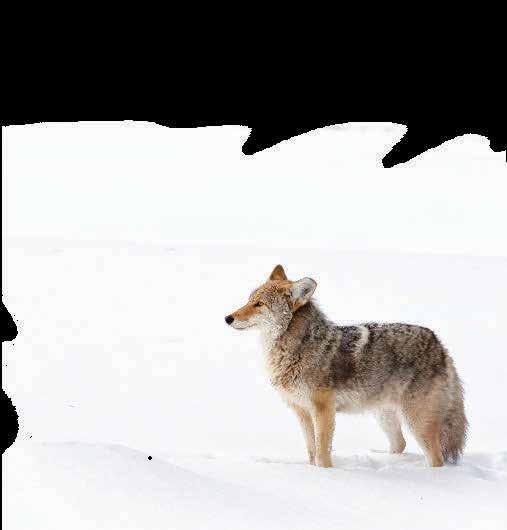

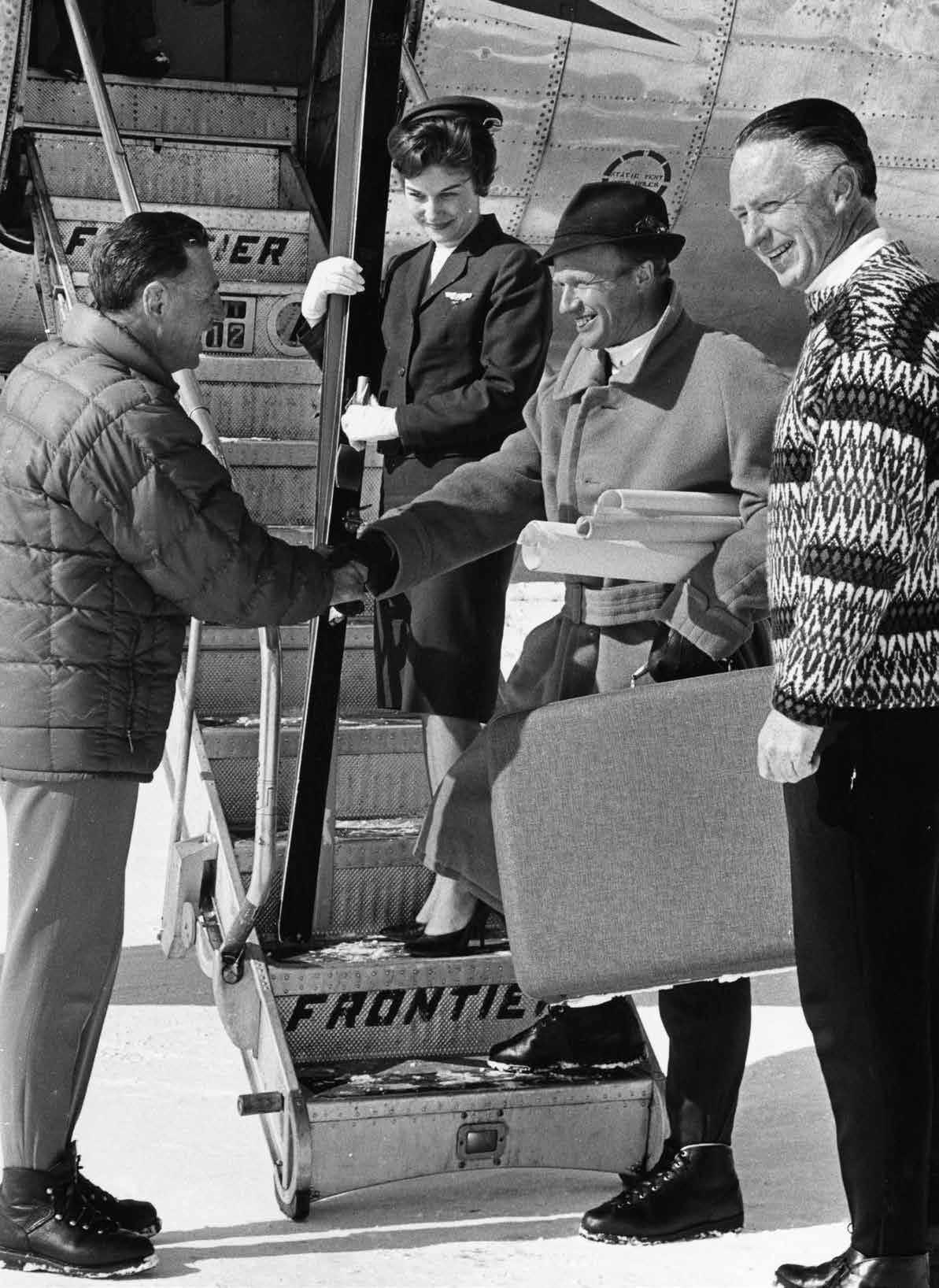
Paul McCollister and Alex Morley greet a skier arriving by plane.
// BY KATHERINE WONSON
DIAMOND ANNIVERSARY
a
Cruising through the RFID scanner to hop on a detachable highspeed quad ride that ends before you can finish eating a Tram Bar, it’s easy to forget that there was a time when mechanized travel up Rendezvous Peak seemed as unlikely as landing on the moon.
With 60 years of hindsight, the creation of Jackson Hole Mountain Resort seems like a foregone conclusion, but history shows it was anything but. JHMR’s origin story is a string of impossibilities and improbabilities that should have resulted in meltdown, failure, and bankruptcy, not in a 60th anniversary celebration for one of the world’s best-known ski resorts.
At noon on opening day, Tuesday, December 28, 1965, the Jackson Hole Ski Corp’s founders Paul McCollister and Alex Morley welcomed skiers to ride the mountain’s three lifts—and they were anything but the image of success. The ski area had opened three weeks behind schedule, resulting in the cancellation of over 1,000 lodging reservations—a massive impact on the valley’s burgeoning winter-hospitality industry.
The delayed start was just the beginning of the Ski Corp’s opening-day problems. Jackson’s new resort drew national attention because its aerial tram would be the longest and highest vertical ski lift in America. Jackson Hole Ski Corp’s value proposition was built on a promise to “match or surpass Europe in the quest for big mountains and short lift lines.” Hard to do without an aerial tram. The tram didn’t open until July 30, 1966.
As major construction projects go, a six-month delay in launching the tram seems relatively minor. Just consider the enormity of the undertaking: develop a world-class ski resort from scratch in a remote corner of Wyoming in less than two years. On opening day, McCollister and Morley may have actually been celebrating the fact that they had opened at all that season.
As often happens in go-for-broke origin stories, Alex Morley and another founding partner, Gordon Graham, left Ski Corps within the first five years. McCollister then spent the next few decades trying to prove that their ambitious idea was not just prophetic, but profitable. When the Kemmerer family purchased the resort in 1992, they made the investment required to fully realize the founders’ vision. And now, with the rag-tag days far enough in the rearview mirror to appreciate from a safe distance, Jackson Hole Mountain Resort is committed to “building on the mountain’s storied tradition,” according to current owner Mike Corbat—a tradition that began with its fair share of trials and tribulations.
Over the last decade, the tech industry has become nostalgic for its so-called “garage stories”—origin stories filled with all-nighters; streaks of incredibly good and bad luck; visionary, unyielding founders; and, of course, the requisite underwhelming, makeshift garage workspaces. These stories have a purpose: to highlight the determination and creativity that shaped the company we know today. Hewlett-Packard has even memorialized its garage story by
preserving its now-historic garage and turning it into a museum.
Today, if you fancy a museum moment with Jackson Hole Mountain Resort’s garage story, you can visit the Tram Dock Restaurant and run your hand along one of the 1966 tram cars manufactured by Traunsteinwerkstatten in Austria, painted cardinal red, in honor of Stanford, McCollister’s alma mater. The restaurant’s interior has been decorated with vintage Jackson Hole Ski Corp memorabilia, paying homage to the “impossible dreams” that fueled the resort’s founding.
There are not too many people who have created something from virtually nothing. This is my baby. It has turned out to be my life.”
JHMR CO-FOUNDER PAUL MCCOLLISTER
Take
look back at Jackson Hole Mountain Resort’s inaugural season 60 years ago.
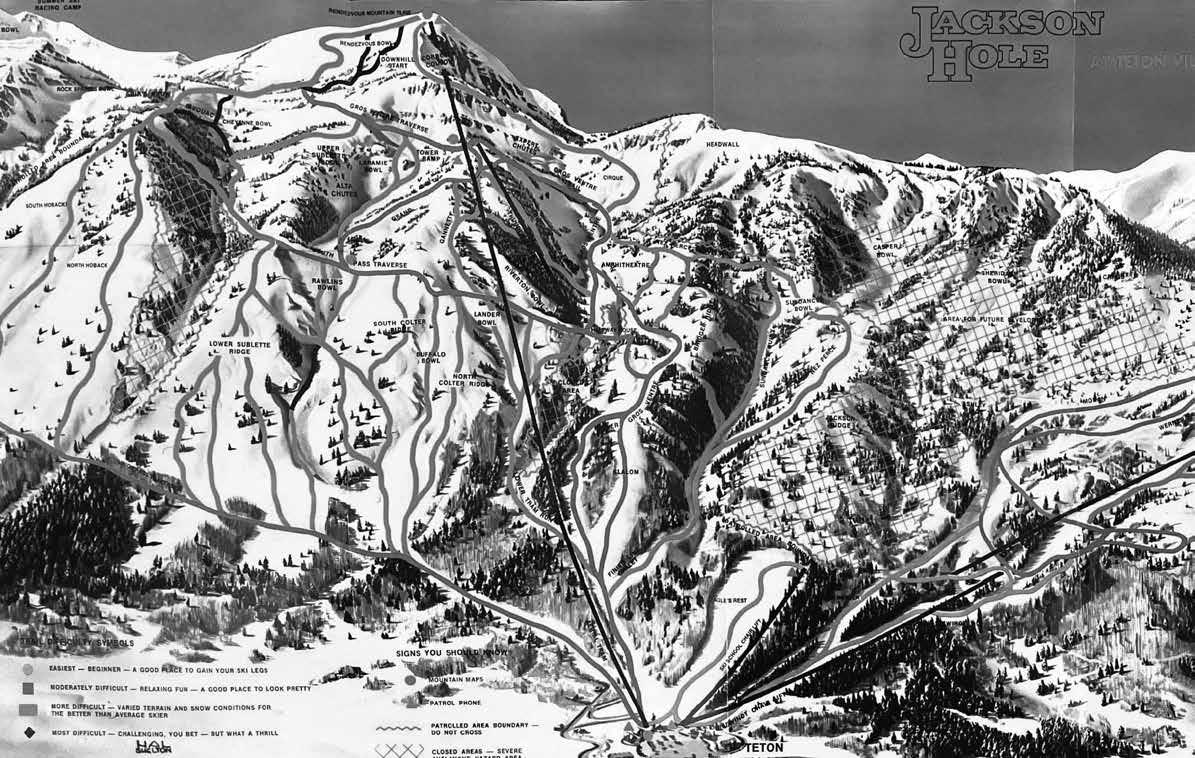
IDEAL AND OVERWHELMING
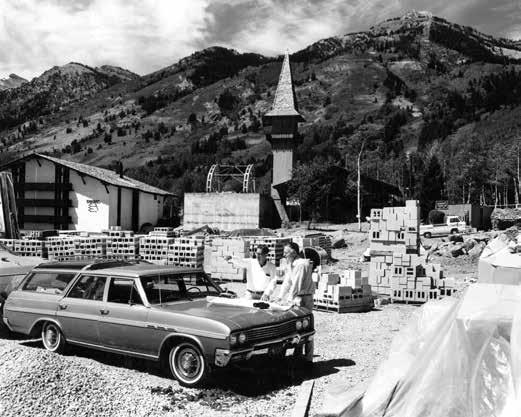
McCollister, an advertising salesman from California, and Morley, a developer from Cheyenne, were neighbors in the Antelope Flats area in Grand Teton National Park. Both were avid skiers and had joined forces to explore the idea of developing a ski area up Cache Creek. They agreed that a more suitable location was needed, and they skied Rendezvous Mountain together in 1962.
In 1963, after ski area expert Willy Schaeffler confirmed McCollister and Morley’s intuitions, calling the terrain “ideal and overwhelming,” McCollister and Morley formed the Jackson Hole Ski Corporation and, with the help of their first investors, purchased the ranch.
Jackson Hole cofounders Paul McCollister and Alex Morley in Teton Village in the fall of 1965, only several months before the planned opening of their ski resort.
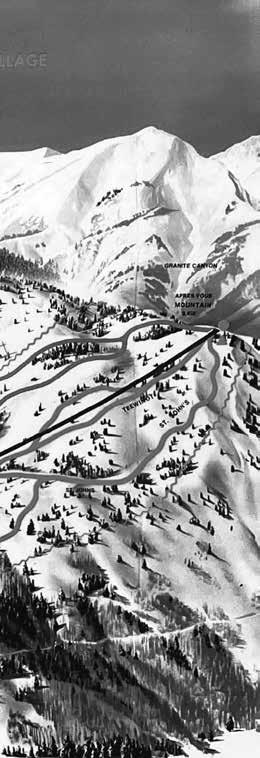
TRAMTROUBLES
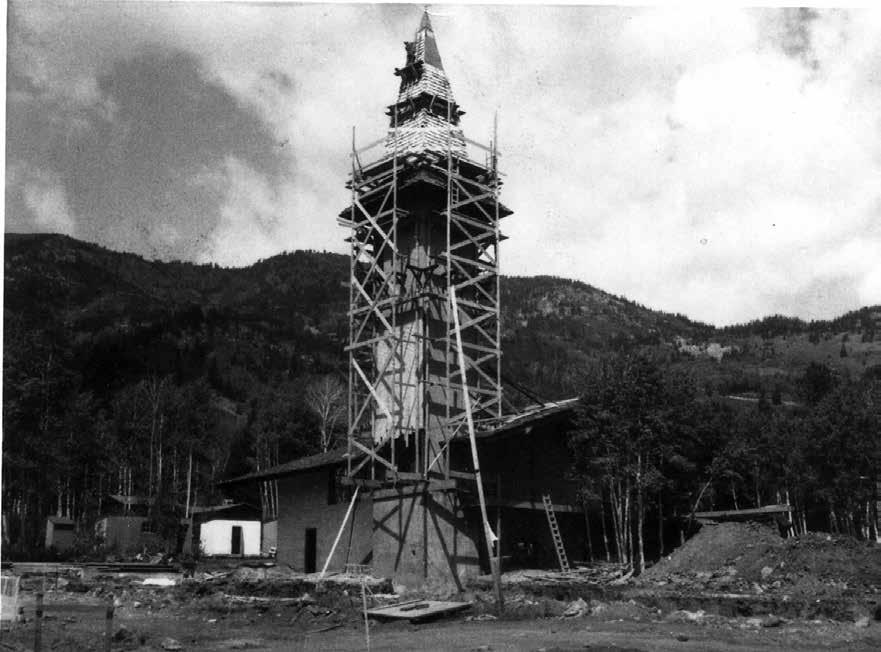
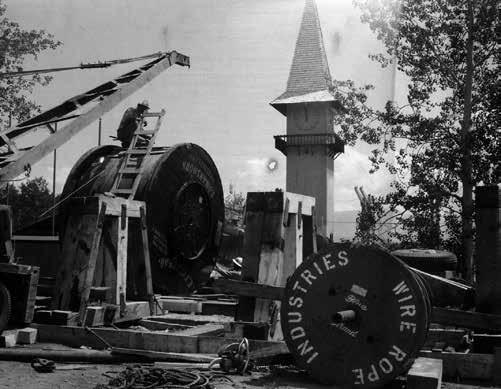
When construction of the tram began in the summer of 1965, it was slated for completion in several months. In a stroke of bad luck, the winch drum used to pull the cables ruptured, and the completion was delayed until late January. In December, McCollister, the consummate salesman, reassured incoming skiers that “exceptional skiing is still to be enjoyed by all types of skiers on the exciting and varied terrain served by our double chairlifts. These lifts alone provide more skiing than many major areas in the country.” Luckily, McCollister’s consolation sales pitch worked, and the guests came despite the missing tram.
Tram-construction delays continued through the summer of 1966. The tram finally opened on July 31, 1966, only to be closed for two days of repairs 10 days later. Despite its inauspicious beginnings, by all accounts the tram was, as journalist Jim Klobucher hoped, “built to truly Alpine dimensions, it offered a promise of skiing on a gauge unrivaled in America, on snow comparable with the finest in the Western Hemisphere, and in a setting of scenic grace and power.”
OPENING
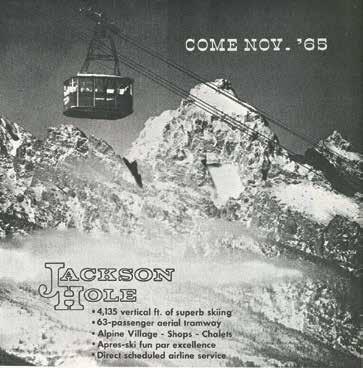
DAY
The December 5 opening was postponed to the 18th to accommodate construction delays. It was then delayed another 10 days due to a lack of snow. A local writer mused on the misfortune: “The weather plays strange tricks sometimes. For instance, when McCollister, Morley, and associates had their beautiful golf course ready to open—on Opening Day we had about six inches of snow! Now, when they set December 18 as the date their new ski lifts will start to operate, what happened? A shortage of snow … Well, anything can happen in Jackson Hole, and generally does.”
Jackson had suffered an unusually dry December, but thankfully, starting on December 23, a storm cycle delivered 22 inches of snow, providing a Christmas miracle for the Jackson Hole Ski Corp and its avid skiers anxiously waiting to try the new area.
Jackson’s luck continued to improve as news of a disastrous Christmas rainstorm in Aspen led to an uptick in reservations in Jackson. Within a month of opening, the mountain boasted a record 706 skiers in a single day. But there still wasn't a tram.
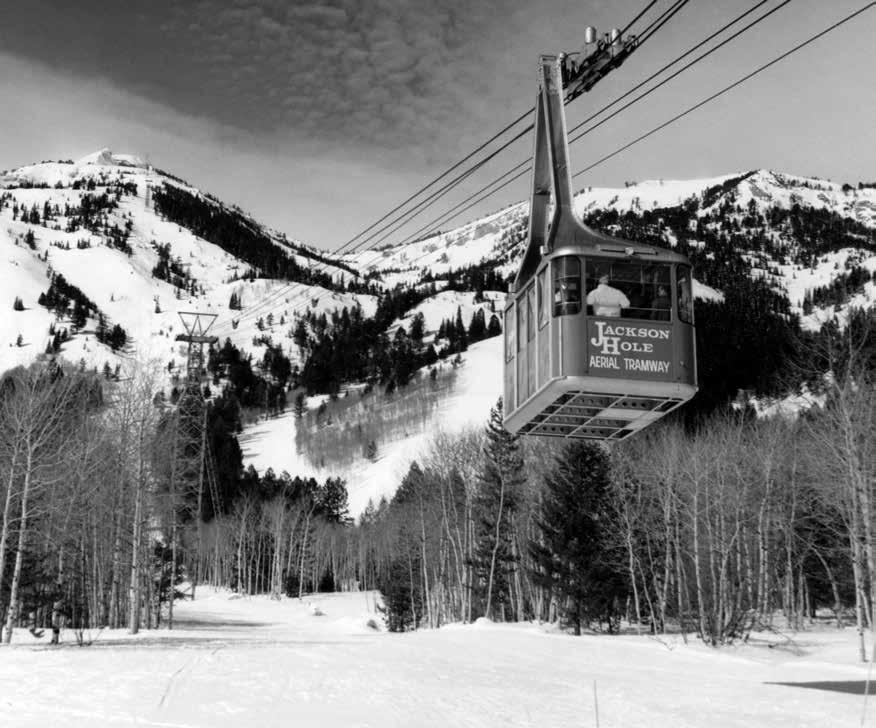
The tram didn't begin transporting skiers up Rendezvous Mountain until 1966, the start of Jackson Hole's second ski season
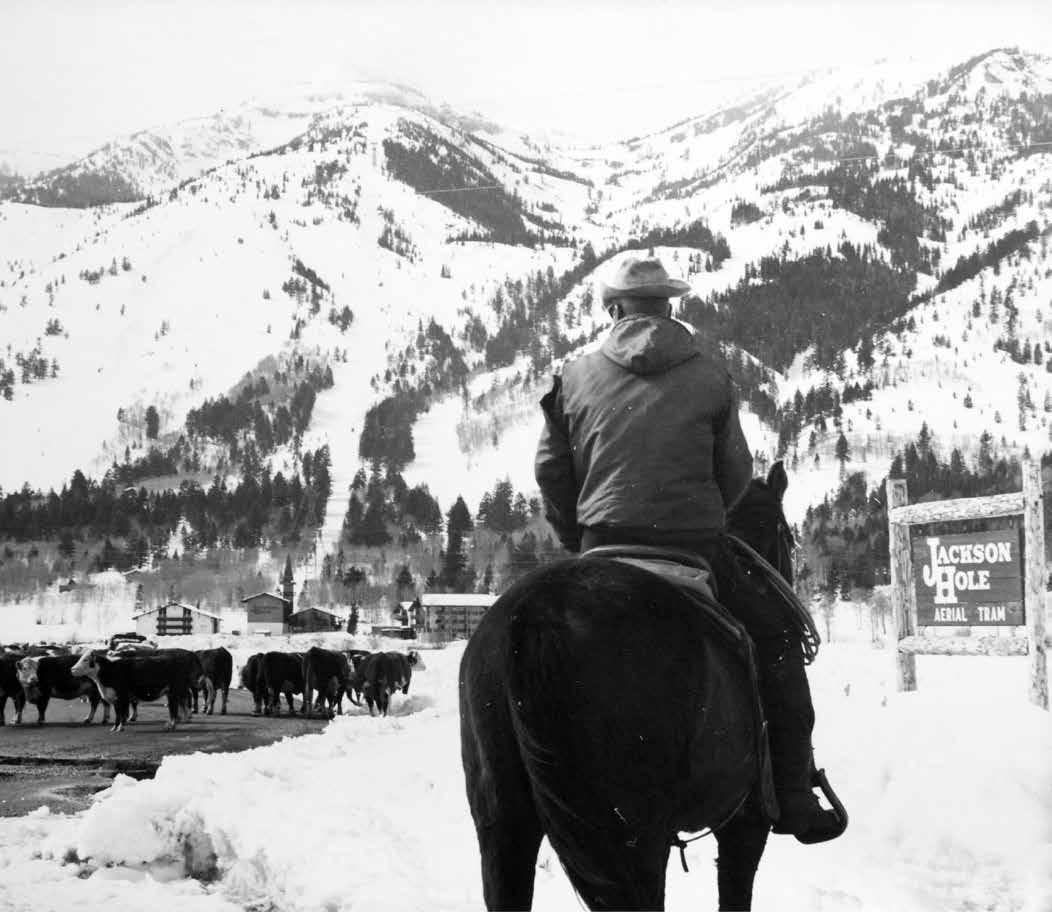
VILLAGE TETON
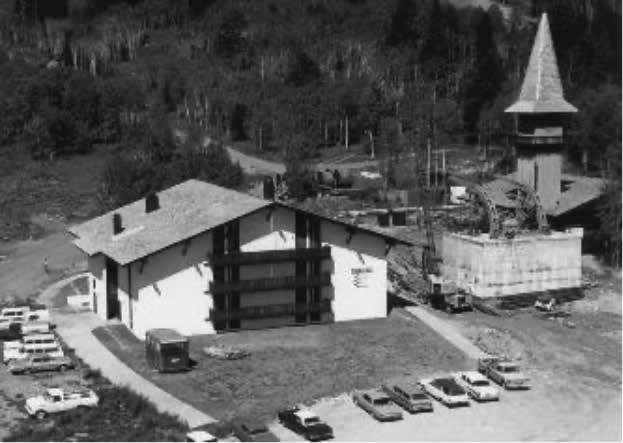
For opening season, Teton Village was not the “complete village” that the marketing department promised, and the town of Jackson offered little in terms of wintertime hospitality. At the time the ski area opened, only two hotels welcomed guests in Teton Village: Seven Levels Inn (shown below, left) and Alpenhof Lodge. The remainder of Teton Village was an expanse of snow fields—remnants of Crystal Springs Ranch, a summer camp for girls, that the Ski Corp purchased two years earlier. The tram tower stood where the Crystal Springs Barn had been. Before it became the Crystal Springs Ranch girls’ camp, the area was collectively known as “Poverty Flats,” due to the difficulty homesteaders had in supporting their families by farming its cobbly soils. JH
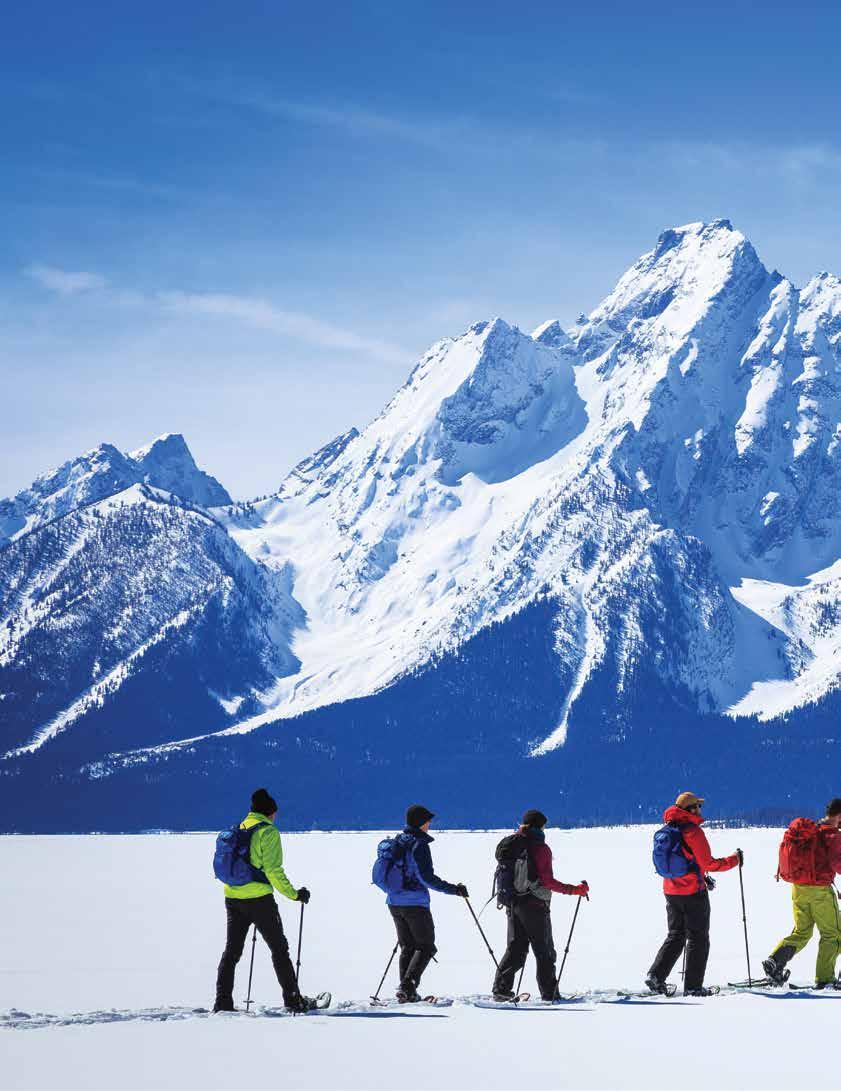
// BY MIKE KOSHMRL
Environmental Engine
Half of the Equality State is federal land, and its wild, open, publicly accessible spaces are underpinning a concerted effort to promote outdoor recreation in Wyoming, get visitors to branch out from the well-known Greater Yellowstone Ecosystem, and diversify the state’s economy.
Northwest Wyoming's national parks— Grand Teton and Yellowstone—have long been destinations for visitors looking to experience the outdoors. New efforts by the state seek to help engage tourists with lesser-known opportunities for outdoor recreation.
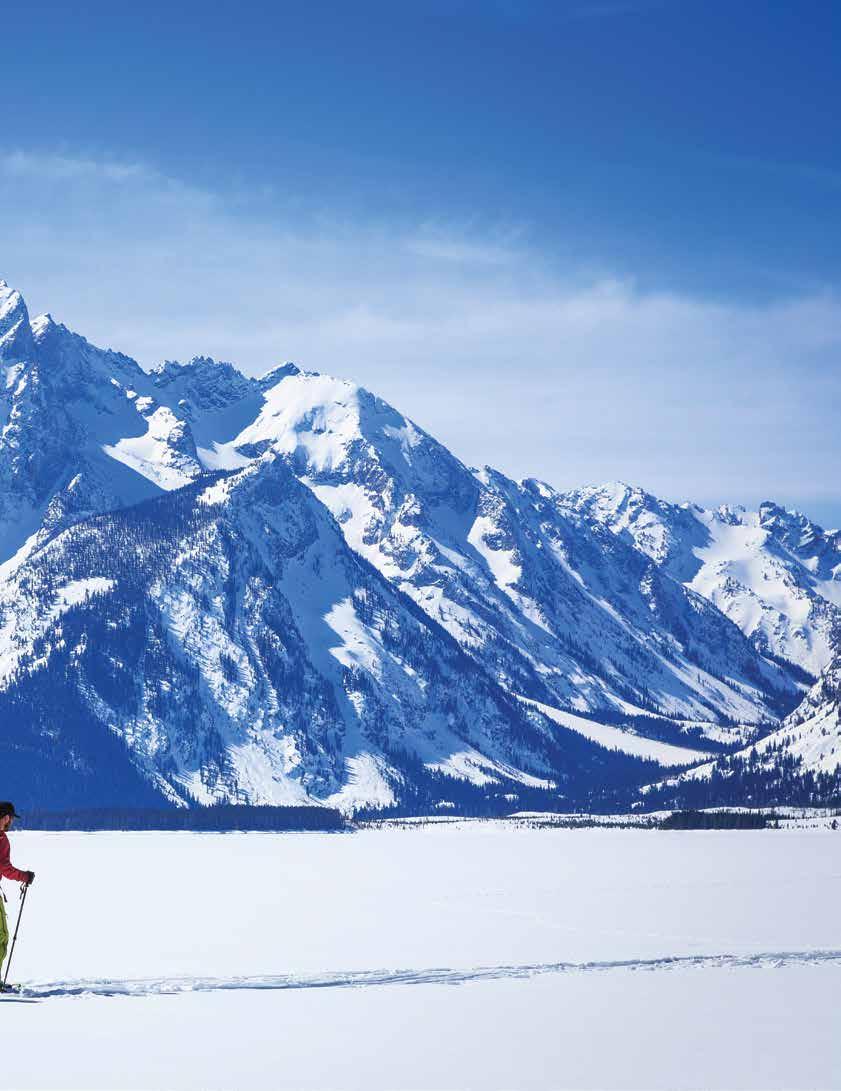
JACKSON HOLE
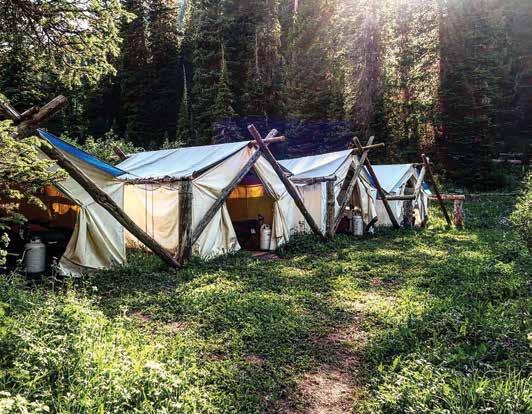
In 2023, outdoor recreation brought about $2.2 billion to Wyoming—4.1% of the state’s GDP—and provided 15,798 jobs. Only three states get a higher percentage of their GDP from outdoor recreation: Hawaii, Vermont, and Montana.
Sland. The southern corner of the Greater Yellowstone Ecosystem contains the best and largest tracts of sagebrush left on earth. The area’s main waterway, the 730-mile-long Green River, is a spectacular, stunning fishery that forms the headwaters of the Colorado River’s watershed. And on the opposite side of the valley from the Winds is the Wyoming Range, another massive expanse of public land that’s especially known for its world-class hunting.
The masses have caught on steadily over the decades. Sublette County has started to capitalize economically on its impressive outdoor profile. Between 2014 and 2024, annual visitor spending in the community jumped 32 percent, from $35.5 million to $46.9 million, according to a Wyoming Office of Tourism Report titled “The Economic Impact of Travel.” By the tail end of the timespan, the industry generated 440 jobs and $2.7 million in direct tax revenue—increases, respectively, of 22 percent and 59 percent. While tourism remains a relatively small part of the economy, which has been driven by oil and gas drilling, Sommers doesn’t discount its growing contribution. “It’s a key piece of the diversification of the economy of Sublette County,” he says.
ublette County is a microcosm of Wyoming. The northwest corner has long been a magnet for tourists seeking outdoor views and experiences; Yellowstone National Park was created by Congress in 1872, some 18 years before statehood. And Grand Teton National Park followed in 1929 (and was enlarged in 1950), forming destinations that have drawn millions of road-tripping Americans and visitors from overseas for generations. Those crowds keep steadily growing; Yellowstone crested one million visitors in 1948, two million in 1965, three million in 1992, and four million in 2015. However, other regions of the state have more recently caught on and are in earlier stages of deliberately promoting their peaks, rivers, and vast expanses as playgrounds for recreation. Tourism is an industry that’s gaining steam and significance, thanks in part to travel and tourism boards for each of Wyoming’s 23 counties and statewide promotion efforts. “In 2023, outdoor recreation brought in about $2.2 billion to the state of Wyoming and provided 15,798 jobs,” says Dan McCoy, who directs the University of Wyoming’s Jay Kemmerer Wyoming Outdoor Recreation, Tourism, and Hospitality Institute. “Our share of the state’s GDP is 4.1 percent. That doesn’t sound like a lot, but I think it’s in the top four in the country in terms of the importance of outdoor recreation to our economy.”
Topping the list is Hawaii, where 6.3 percent of the state’s economy can be traced to outdoor recreation. Wyoming neighbors Montana (4.6 percent) and Utah (3.4 percent) also rank near the top. Eastern seaboard states are where outdoor rec is least significant—it’s just 1.6 percent of the GDP in Connecticut and Delaware. In Wyoming, tourism and outdoor recreation have
Hunting activities, like this camp here, generated more than $105 million statewide in 2023.
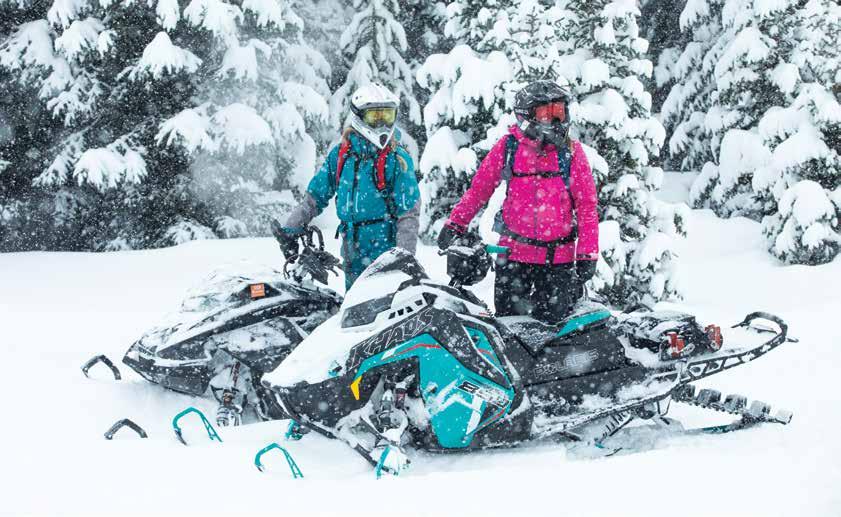
major overlap. With the nation’s lowest population, the Equality State mostly lacks the big city art and culture that draw people in from across state lines. Cheyenne, its capital and most populated city, ranks as the 360th largest metropolitan area in the United States. Wyoming’s world-class draws were already there when the people showed up: mountains, rivers, and open spaces.
“We don’t have Disneyland or amusement parks,” McCoy says. “When we think about tourism in a place like Wyoming, it’s very closely aligned with the outdoor recreation industry.” The U.S. Bureau of Economic Analysis report McCoy cites shows that there’s a great diversity in the types of recreation putting dollars into Wyoming’s coffers and checking accounts. Topping the list as of 2023—the most recent report—is hunting and shooting, which generated more than $105 million statewide. Boating and fishing brought in $79 million, snow sports $48 million, and climbing, hiking, and tent camping stimulated some $25 million in economic activity. Even cycling contributed $4 million.
According to Wyoming Office of Tourism data, the broader travel industry
(not just outdoor recreation-related) has soared as a segment of the state’s economy in the past quarter century. Overall traveler spending has more than tripled since the turn of the century and now nears $5 billion annually. It’s helping to keep the lights on in Wyoming communities: travel-related purchases generated some $277 million in tax receipts collected by the state, counties, and towns. Meanwhile, the overall economy—led by the mining and energy sectors—has largely stagnated since the real gross domestic product hit its peak at $41.6 billion in 2008. Even after four straight years of growth since the COVID-19 pandemic, 2024’s real GDP still hadn’t climbed all the way back to the previous high and was last listed at $40.5 billion.
Travel and tourism is now Wyoming’s second largest industry, according to Hailey Mach, a public relations manager for the Wyoming Office of Tourism. “People are coming to experience that true authentic Western culture. That’s a huge trend right now—going to the rodeos, going horseback riding,” Mach says. “On top of that, Wyoming is well known for its outdoor recreation. We have our national parks, skiing in Jackson.”
“We don’t have Disneyland or amusement parks,” McCoy says. “When we think about tourism in a place like Wyoming, it’s very closely aligned with the outdoor recreation industry.”
DAN MCCOY, DIRECTOR, UNIVERSITY OF WYOMING KEMMERER INSTITUTE
Wyoming has more than 2,500 miles of groomed snowmobile trails.
There’s been a concerted effort to capitalize on the millions of vehicles that point toward Yellowstone, the Tetons, and destinations like Devil’s Tower, encouraging stops in other reaches of Wyoming. “There are equally fantastic places throughout the state,” says Mark Tesoro, who manages Wyoming’s Outdoor Recreation Office. “We can really give visitors an opportunity to come and visit—and in effect, help bolster the economy of these smaller towns.”
The Evanston resident and newspaper publisher who leads the new state office, founded in 2018, used the southwest Wyoming town of Kemmerer as an example. The seat of Lincoln County is located at the southern tip of the Wyoming Range, and it butts up against Fossil Butte National Monument, a National Park Service property. “It’s the largest fossil fish quarry in the world,” Tesoro says. “It’s really an underutilized national monument, as far as traffic goes. There’s a great opportunity to bring more people there.” He’s not exaggerating. The monument’s website shows that it attracts only about 20,000 visitors annually. That’s a number that Grand Teton National Park would typically surpass by mid-afternoon on a busy summer day.
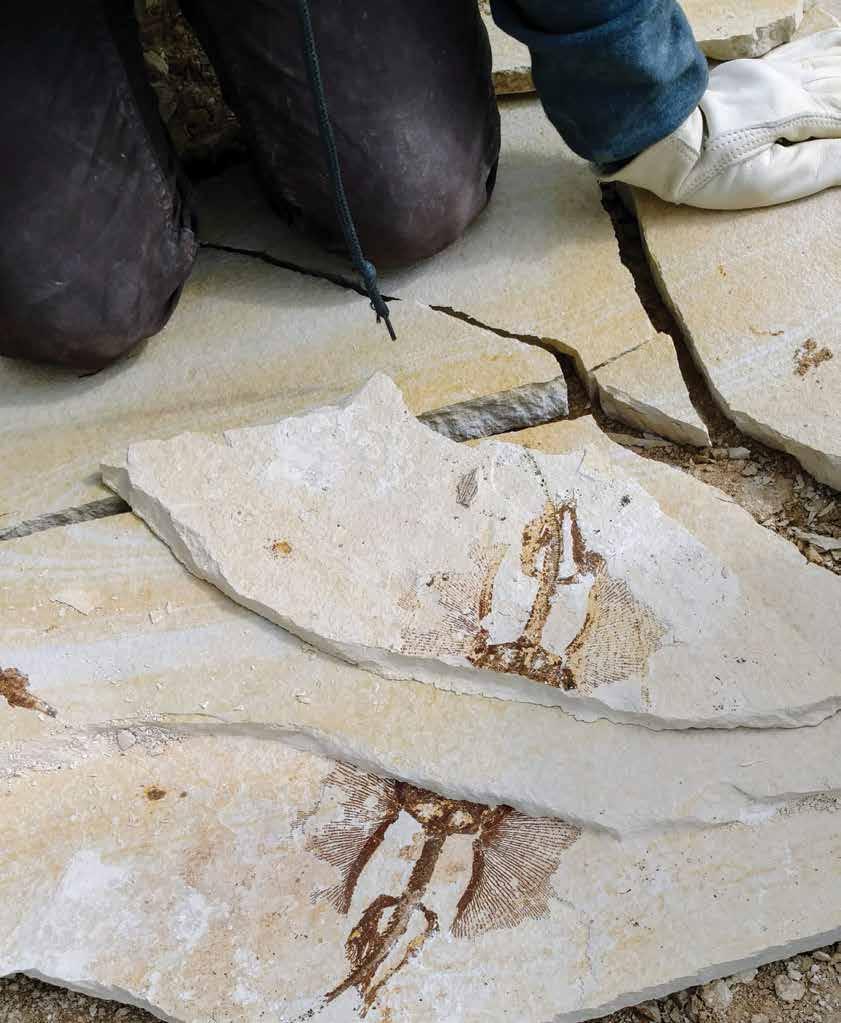
To date, fossils of 27 species of fish, 30 species of birds, 15 species of reptiles, 10 species of mammals, and over 400 types of plants have been discovered at Fossil Butte National Monument.
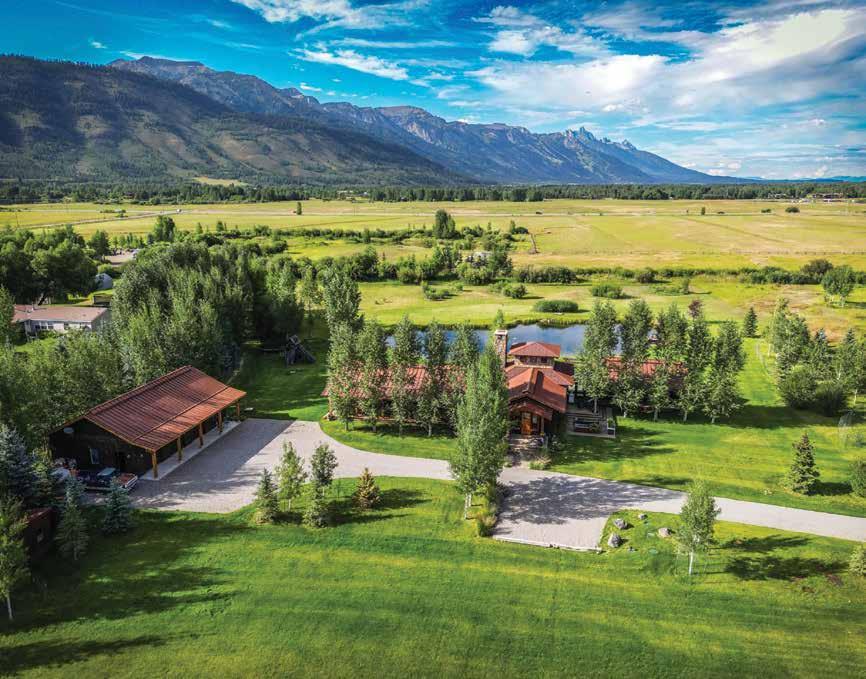
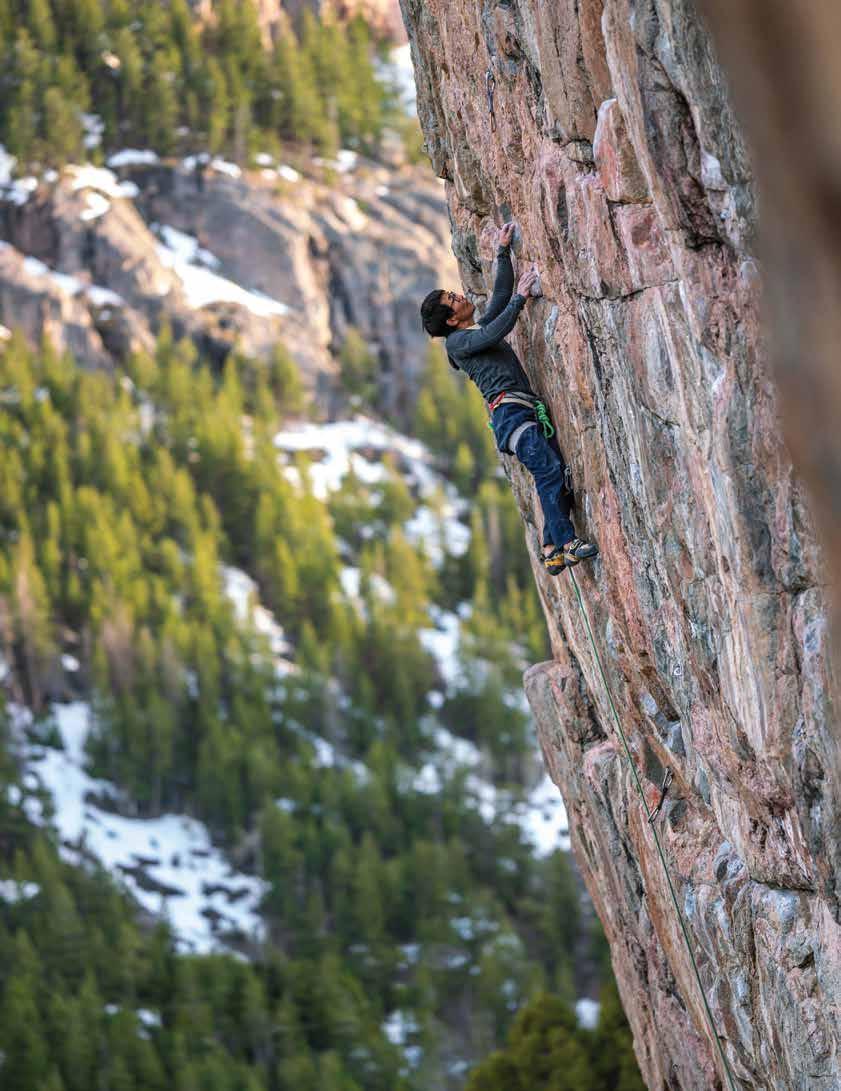
Wyoming hopes to help bolster the economies of smaller towns by showcasing outdoor recreation opportunities across the state—not just the already-popular national parks.
Sinks Canyon is one of 13 state parks in Wyoming. In the foothills of the Wind River Mountains, it is popular with rock climbers and also has hiking trails, a disappearing river, and yurts you can stay the night in.
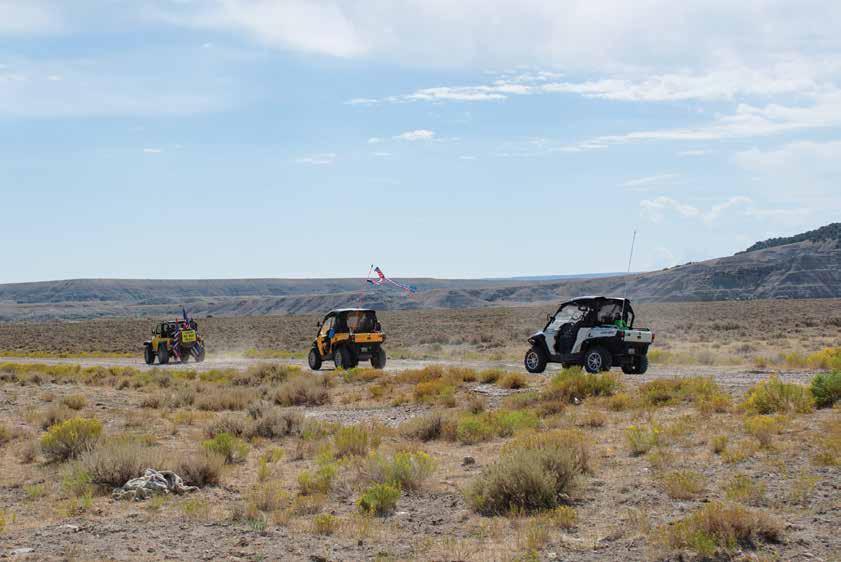
Wyoming’s state parks also deserve some more love, Tesoro says. Those parks, spread throughout the state, range from Laramie County’s mountain biking hotspot Curt Gowdy State Park to Thermopolis’s Hot Springs State Park to Sinks Canyon State Park, a draw for climbers and disappearing-river watchers outside of Lander. Altogether, the 13 state parks bring in just shy of five million visitors annually—about the same as Yellowstone alone. There are countless other lesser-known destinations sprinkled throughout the state that are located on federal land classified as national forest (Wyoming includes parts of eight) or on expanses administered by the Bureau of Land Management that Tesoro thinks are well worth the trip. “The Bridger Valley area, Sweetwater County, around Flaming Gorge, the Fontenelle area, the Red Desert—all of those areas
could use [and deserve] some more traffic,” Tesoro says. “The traffic means people are passing through communities, spending money, and hopefully staying in hotels.”
Helping stimulate that statewide effort to expose visitors to lesser-knownbut-amazing areas is a new trade group, the Wyoming Outdoor Recreation Business Alliance, which just incorporated as a nonprofit in January 2025. It’s uniting a wide array of public-landdependent businesses, from outfitters and guides to manufacturers, retailers, and nonprofits. (Founding members include a few Jackson Hole-based businesses, including Eco Tour Adventures and Jackson Hole Wildlife Safaris.) The advocacy group has several functions— helping grow Wyoming’s outdoor recreation industries sustainably is among them—but part of its mission is providing a voice for wild places when they’re
Tourism is an industry that’s gaining steam and significance, thanks in part to travel and tourism boards for each of Wyoming’s 23 counties and statewide promotion efforts.
“We can really give visitors an opportunity to come and visit—and in effect, help bolster the economy of these smaller towns.”
—MARK TESORO
The Red Desert in southwest Wyoming is one of the largest undeveloped areas in the Lower 48 states— almost 10,000 square miles. Within sections of it, you can go hiking, biking, off-roading, and hunting. It is home to the world's longest mule deer migration route, the world’s largest herd of desert elk, and the second-largest active sand dune complex in the world, the Killpecker Sand Dunes.
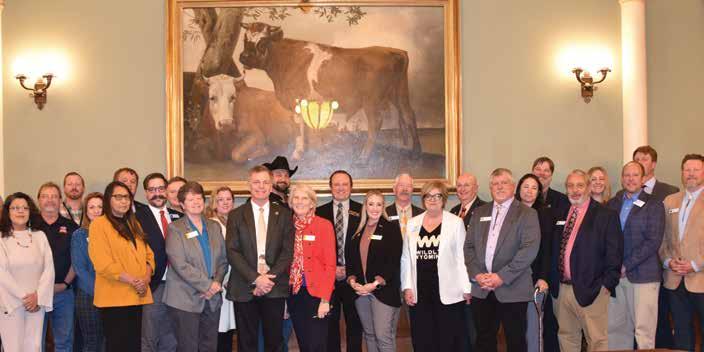
threatened. “We’ve already done a lot of that, connecting our business owners to our Congressional delegation as well as our state legislators,” says Addi Jenkins, the Wyoming Outdoor Recreation Business Alliance’s executive director. “Decisions that are made, whether in Cheyenne or in DC, affect people here at home, and it affects the bottom lines of our businesses.”
Tesoro and his team also have some new tools and funding streams at their disposal to help build lesser-known landscapes’ profiles. Wyoming’s Outdoor Recreation Office convenes a network of regional outdoor rec “collaboratives” that convene stakeholders for industries like mountain bikers, hikers, anglers, climbers, and equestrians four times a year. And there is also a new Wyoming Outdoor Recreation and Tourism Trust Fund, signed into law by Gov. Mark Gordon in 2023 and then later funded to the tune of $12 million. Going forward, it’s scheduled to receive an additional $6 million in state lodging tax dollars every biennial budget cycle, providing essentially an endowment for outdoor recreation.
While grantees haven’t been selected (the first disbursements of recreational grants will go out in July 2026), the funded
projects are likely to include trails and other infrastructure that will be distributed around the state. The fund is poised to provide investments that could help non-Teton County reaches of Wyoming close the gap as recreation destinations. “I think we are honestly still decades behind some of our neighboring states,” Tesoro says. “But we have a huge opportunity to move the needle in Wyoming.”
Eventually, the investments could help some Wyoming communities turn a corner and build reputations as great places to recreate. Those places, which tend to be public land dominated, are often the most desirable places to live, says McCoy at the University of Wyoming. “There’s kind of this tipping point where if you build recreational amenities, then people come and visit there and they see how wonderful those places are,” he says. “Then they want to stay in those places and try to build and grow businesses based on the fact that it’s a great place to live. A great example is Lander.”
Of course, there’s also the risk of becoming too desirable. Mountain resort communities throughout the West, including Jackson Hole, have been poster children of unaffordability for the working class, and the cost of living has
only become more problematic in the COVID pandemic’s wake. “It becomes more difficult for local residents to stay and to work and to afford those communities,” McCoy says. “That’s called the amenity trap.”
At least for now, few communities outside of Wyoming’s far northwest corner have to worry about becoming too renowned as recreation destinations. But in the Sublette County seat of Pinedale—just a 77-mile drive from Jackson and the recipient of many priced-out former residents—it is an active discussion. “When you get destination recreation in Sublette County, that leads to more people wanting to buy a second home in Sublette County,” says Sommers, the former speaker of the House. “And you can love a place to death. As you know, it certainly ruins your fishing hole.” There are also upsides to still being on the ground floor of having an outdoor recreation-based economy—specifically, the opportunity to grow with good planning and intention. “There’s this fear of Wyoming becoming overrun, becoming another Bozeman, another Boulder,” says Jenkins. “But we have the opportunity to do it really smartly right now, because we’re still in those infancy stages.” JH
Wyoming Governor Mark Gordon (left of center in the suit and tie) signed the Wyoming Outdoor Recreation and Tourism Trust Fund into law in 2023. Seeded with $12 million, it will receive an additional $6 million every two years to fund projects across the state that bolster outdoor recreation opportunities.
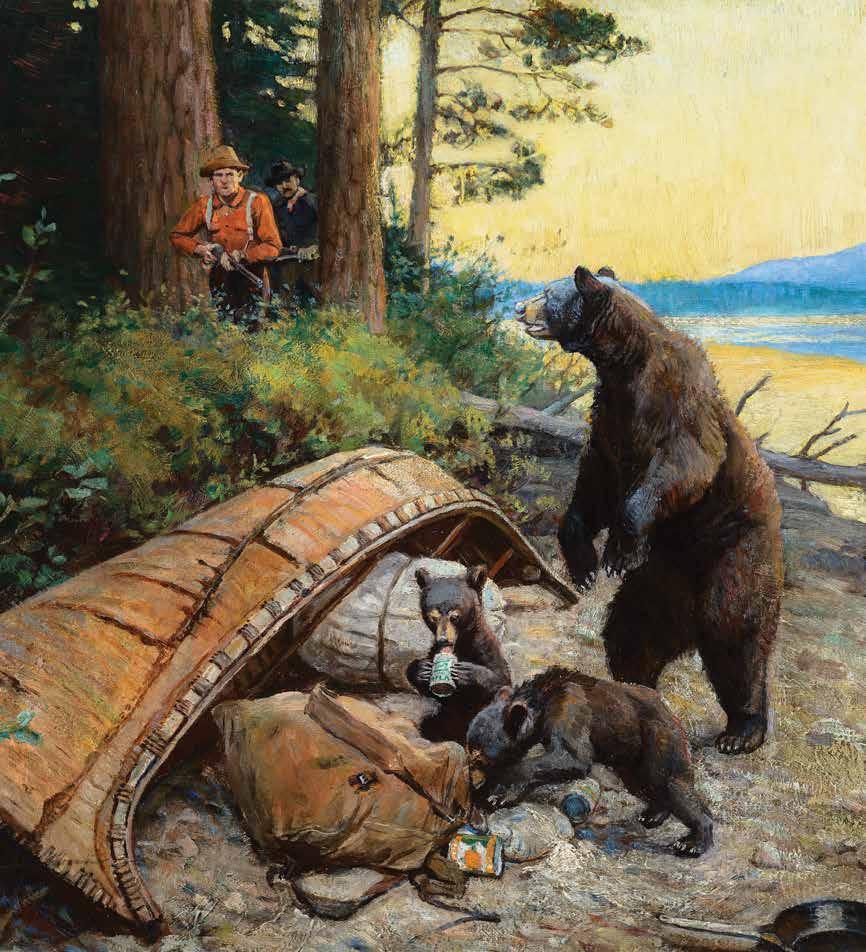
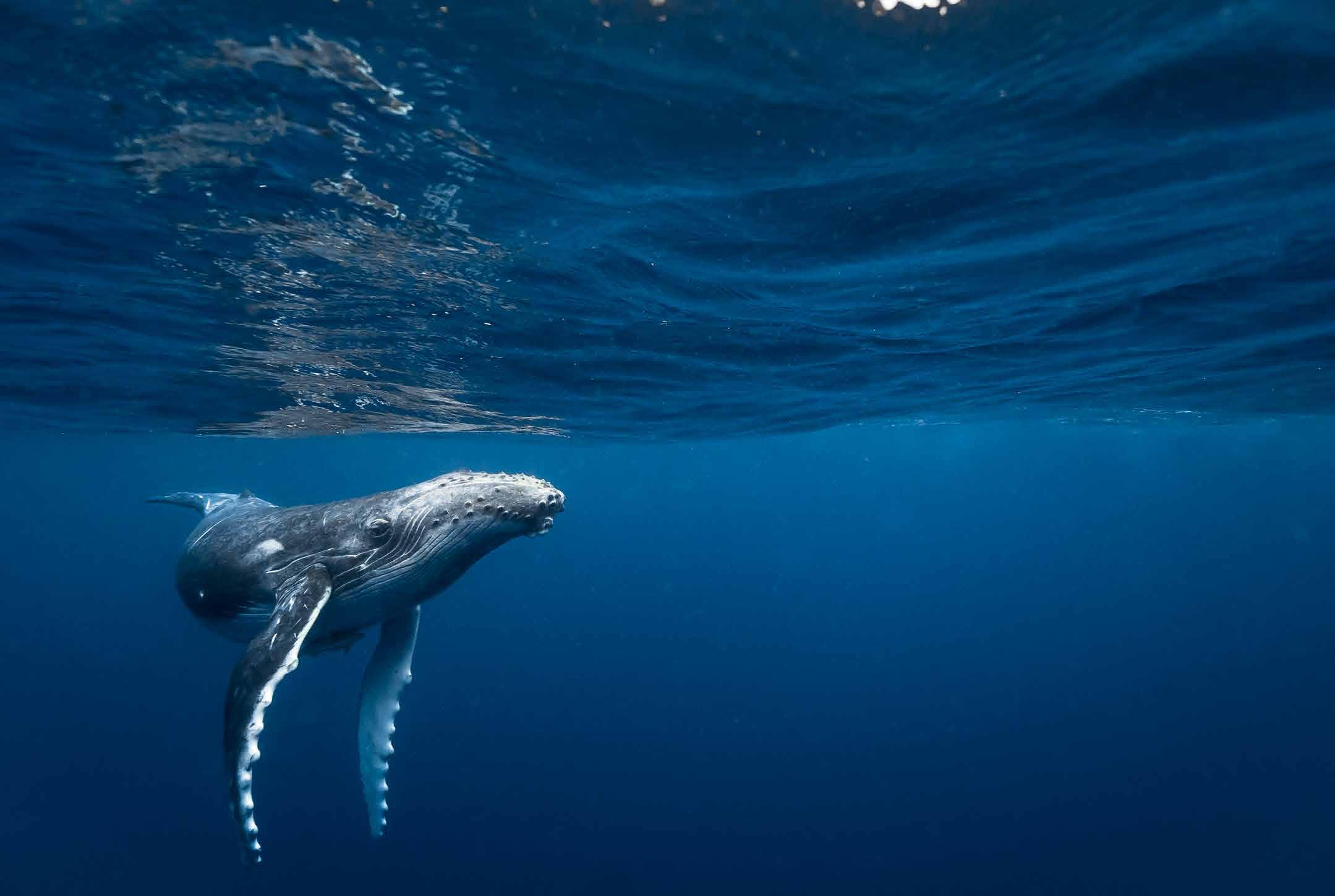


EXPLORE
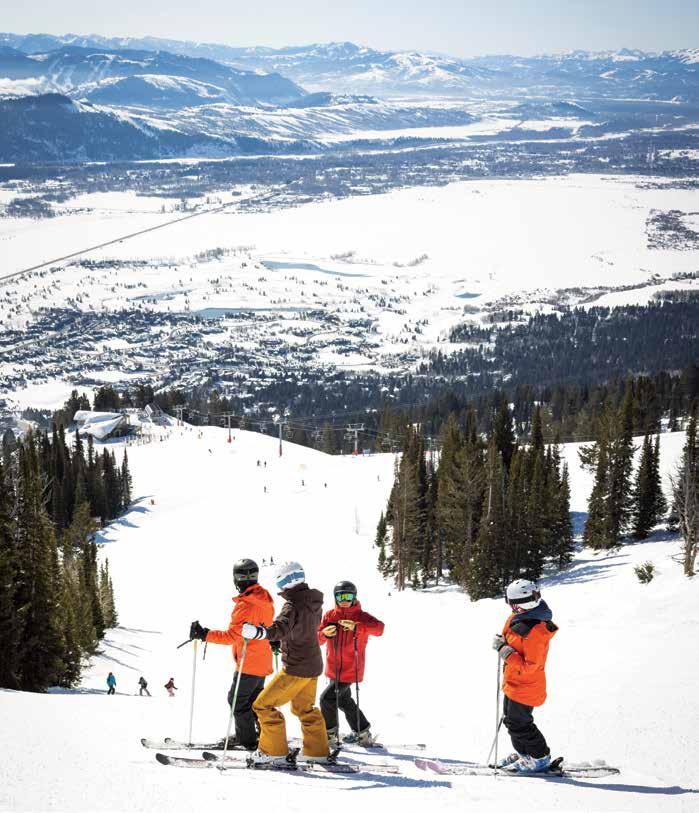
// BY BEVIN WALLACE
Where the Wild Women Are
Women: you might learn more and gain more confidence in your outdoor skills alongside other women.
“It had been on my bucket list for many years, and it was so phenomenal, I immediately signed up again,” says Elise Mahaffie, a Teton Village resident (who happens to be the art director of this magazine), of the Elevate Women’s Camp at Jackson Hole Mountain Resort. “I’m so used to skiing with the boys, and this was a very different dynamic—everyone was so supportive, so chatty, always cheering everybody on. And it really helped my skiing; I love learning and had some ‘aha’ moments.”
Mahaffie’s experience is not unusual, especially for women who are used to hanging with the guys on their outdoor adventures. “I grew up here and saw all these women getting dragged around by their husbands, boyfriends, and maybe not feeling totally comfortable. When you see another woman ski something, you’re more apt to do it; but if you see your husband do it, you’re like, ‘oh, cool, let him do it. I’ll go around’,” says Crystal Wright, a former pro skier who founded the Jackson Hole Babe Force in 2012 as an answer to the Jackson Hole Air Force, a term used for a group of locals (all men in the 1980s and still mostly men at the time of the Babe Force’s founding) who were pioneering freeride skiing and getting famous in the process. “The idea for us was to find friends to get buck wild with in the mountains,” says Wright. “We had our first ski day in February 2012, and 50 women showed up. I was like, ‘there’s a need for this.’”
Outdoor events and programs tailored specifically for women offer a chance to learn or practice a skill in a safe, sup-
portive environment. “There is something very powerful and special about women-only adventures,” says Katie McNamara, owner of Wheel Wranglers, a bike shop with locations in Jackson and Victor, Idaho, that offers women-only programming in partnership with Women in the Tetons (McNamara is a WIIT board member) and W.H.A.L.E.S. (Women Hikers and Literature Enthusiasts). “We work to create a space that celebrates being new at something and facilitates connections with women in the community.”
A study published in the Journal of Experiential Education found that women participating in all-female adventure programs experienced increased belief in themselves, desire to participate again, pride in their accomplishments, selfrespect, confidence, and courage. It’s no wonder that interest in and access to all-women adventures is growing.
According to Google, searches for “female-only travel” have increased by over 230 percent since 2016. Adventure travel and tour companies, no dummies, have been ramping up their women-only offerings accordingly. When Backroads, one of the world’s leading outfitters, launched Women’s Adventures in the fall of 2023, the trips filled up almost immediately, and the company, expecting continued growth, now offers more than 40 walking and hiking trips around the world exclusively for women.
In and around Jackson Hole, there are plentiful options for women to get out and enjoy the great outdoors with other like-minded women. Here’s a roundup of some to explore.
KATHRYN
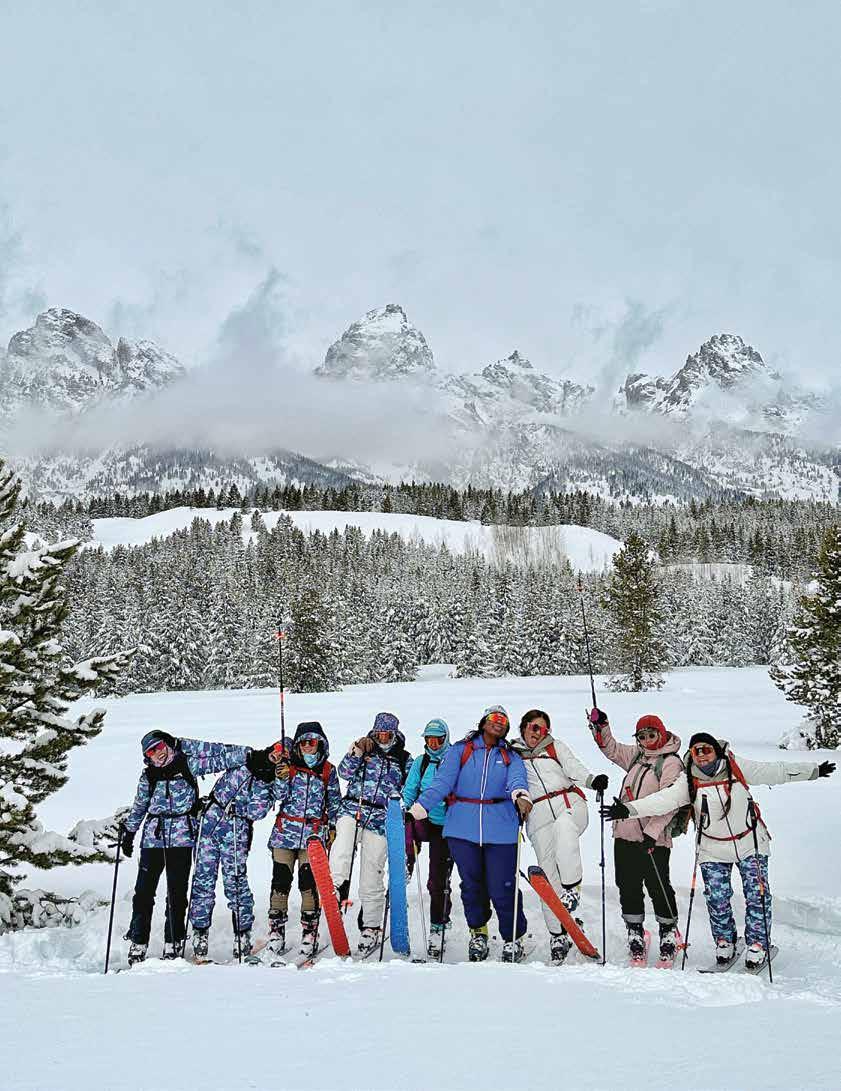
JACKSON HOLE MOUNTAIN RESORT
JHMR has several women’s camps, which offer a chance to learn from some of the resort’s best female coaches. The Elevate Women’s Ski Camp, offered every winter (Jan. 13–16, 2026), is a four-day camp for intermediate to expert skiers. The resort says that over half of the participants return year after year because they love it so much and appreciate the breakthroughs they make in their skiing. In addition to small-group instruction, which Mahaffie describes as “very customized and individualized,” the camp includes video analysis, après-ski events, and a celebration dinner on the final night.
The four-day Lady Shred Ski + Snowboard Camp (Mar. 3–6, 2026) is for intermediate to expert skiers and snowboarders and offers groups of friends that are a mix of skiers and snowboarders the chance to do a camp together. Campers are divided into small groups of either all skiers or all snowboarders and learn to handle JHMR’s diversity of conditions and terrain.
For women and non-binary individuals who are new to the backcountry, JHMR’s Beyond the Boundaries Camp offers an introduction to backcountry gear and safety with a focus on building community and confidence. This two-day camp (Jan. 31–Feb. 1, 2026) is for advanced to expert skiers and snowboarders. Campers learn to use touring skis or splitboards and climbing skins and better understand terrain selection in avalanche terrain. While avalanche safety is covered, this camp is not meant to be a replacement for an Avalanche Level 1 course. jacksonhole.com
A study published in the Journal of Experiential Education found that women participating in allfemale adventure programs experienced increased belief in themselves, desire to participate again, pride in their accomplishments, self-respect, confidence, and courage.
THE MOUNTAIN GUIDES, JACKSON HOLE
Jackson Hole Mountain Guides was founded in 1968 by legendary skier and climber Barry Corbet (the namesake of JHMR’s Corbet’s Couloir) and, several owners later, continues to offer guided backcountry trips in Grand Teton National Park and beyond, in winter and summer. Its Women’s Network which was founded 20 years ago by the late professional climber Aimee Barnes, who saw a need in the guiding community to connect women and create more work opportunities for them—offers climbing and backcountry skiing clinics to women (and nonbinary individuals; the company refers to “Femmes and Thems”) of all levels, including backcountry ski and avalanche courses every winter, including Backcountry Essentials and Avalanche Level 1. “We are most proud to be doing the backcountry skiing series in Jackson, which launched last year and will run again in 2026,” says women’s program manager Holly Mackin. “It’s designed to get local ladies in Jackson together to build upon backcountry skiing skills.” The Women’s Backcountry Touring Series consists of once-a-month meet-ups, each focusing on a different fundamental backcountry skill. themountainguides.com
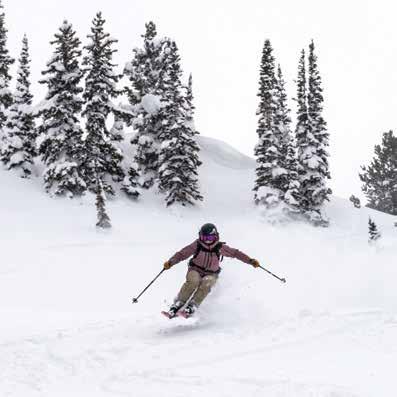
VACATION RENTAL MANAGEMENT SERVICES
Locally Owned, Globally Connected: With decades of experience, we blend expertise, industry-leading tools, and personal care to make your vacation rental dreams a reality.
Smart Locks
Improve security & enhance the guest experience.
Inspection Software
Stay up-to-date on ware and tear in your property.
Owner Portal
Stay informed & access real time reservation dara.
Remote Guest Check-in
Simplified check-in processes ensures a seamless, stress-free arrival.
Dynamic Revenue Management
Maximize your revenue with our real-time pricing strategies.
Channel Distribution
Perferred partnership with AirBnB, VRBO, Expedia, Booking.com & many more.
Learn More About What Makes Us Different:
Scan to Schedule a Consultation
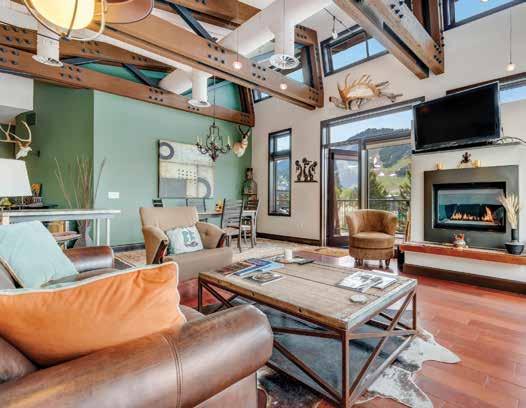
(307) 207-5009 • propertymanagement@jacksonvacations.com • JacksonVacations.com
EXPLORE
ADVENTURES FOR WOMEN ONLY
SKI DIVAS WOMEN’S SKI CAMPS
Former World Tour Freeskiing Champion Jessica Baker is one of only a handful (17 as of 2024) of female AMGAcertified mountain guides in the U.S. In the early 2000s, she worked for several years with Doug and Emily Coombs on their Steep-Skiing Camps in La Grave, France, and during those ski camps, “it was so clear that the male-dominated environment was a barrier to women even interested in trying something like it,” Baker says. In 2007, she founded Ski Divas. “I knew women were craving that opportunity to learn, grow, and push themselves in a more supportive environment,” she says. Ski Divas hosts women’s ski camps in far-flung locales such as Greenland and Alaska, as well as in the Tetons, partnering with Exum Mountain Guides for their annual Women’s Only Backcountry Ski Week, a four-day, five-night guided and instructional trip in the Teton backcountry. In 2023, Ski Divas started its Jackson-based BIWOC Ski Camp for all levels of skiers in the Black, Indigenous, and women of color communities, which includes three days of skiing and evening self-care workshops. skidivas.com
"
There is something very powerful and special about women-only adventures.”
—KATIE MCNAMARA, OWNER, WHEEL WRANGLERS
WOMEN IN THE TETONS
WIIT grew out of the Jackson Hole Babe Force. Today, Women in the Tetons is a volunteer-run nonprofit focused on empowering women “to seek adventure in the mountains,” according to board member Katie McNamara. “We do that
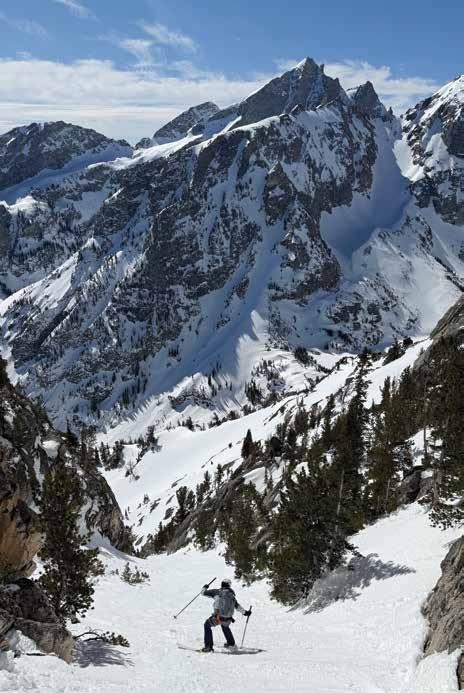
through two key areas—our scholarship program and events.” WIIT awards about $30,000 per year in scholarships to local women for things such as avalanche certification, outdoor education, and expeditions. Its events include the “Trails to Tailgate” series in the summer and ski and fat-biking meetups and ava-
lanche beacon clinics in the winter. “It’s amazing. We tend to have huge diversity in participants as far as ages—teens all the way up to retired women. It’s really great to get women in the same space trying something new and having some shared learning,” McNamara says. womeninthetetons.org
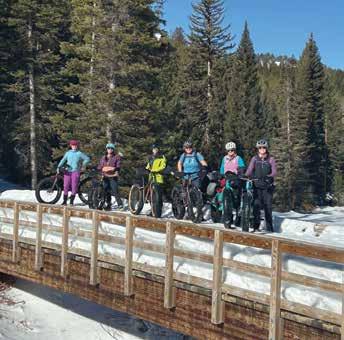
WHEEL WRANGLERS
In addition to a large selection of bikes for rent or purchase, Wheel Wranglers, a women-owned and -founded business, co-hosts women-only fat bike group rides and hosts womenonly bike-maintenance clinics. wheelwranglers.com
FARTHER AFIELD
Founded in 2015 as a Facebook group, Women Who Ski is now the world’s largest organized group of women skiers and snowboarders with over 17,000 members. Membership levels range from Green (free) to Blue ($25) and Black Diamond ($45); the Blue membership includes access to members-only local chat groups, and Black gets you early-bird access to information on upcoming Women Who Ski trips worldwide. womenwhoski.org
Girl, Get After It was founded in Bozeman, Montana, in 2017 by Cassidy Wendell during a rough time in her life. “Instead of searching for a community, I created one,” she says.
Today, GGAI has Red Bull as a partner and hosts events and supports nonprofits in over 20 communities, including Denver, Bend, Oregon, and Bozeman. The Jackson Hole chapter was launched in December 2024 and has over 50 members who enjoy activities such as a Phelps Lake group hike and the Cirque Series trail run at Grand Targhee. Membership ($15/month or $89/year) includes access to monthly in-person events and meet-ups (including ski days), a mobile app for connecting with fellow members, and more. girlgetafterit.com JH
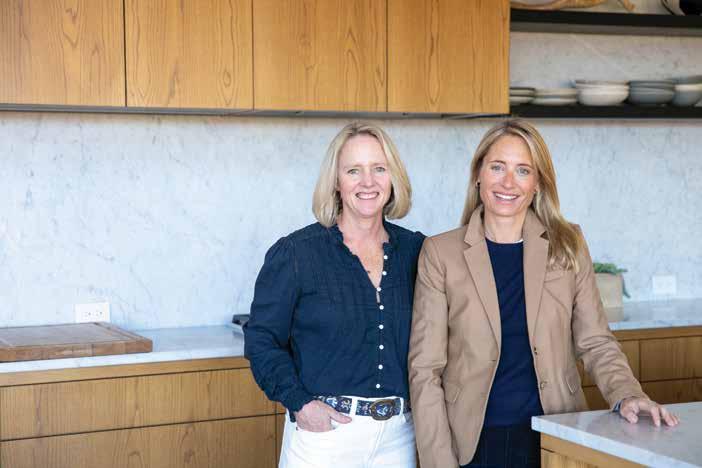
doyledawes.com doyledawes@jhsir.com @doyledawes
EXPLORE
RENDEZVOUS PARK
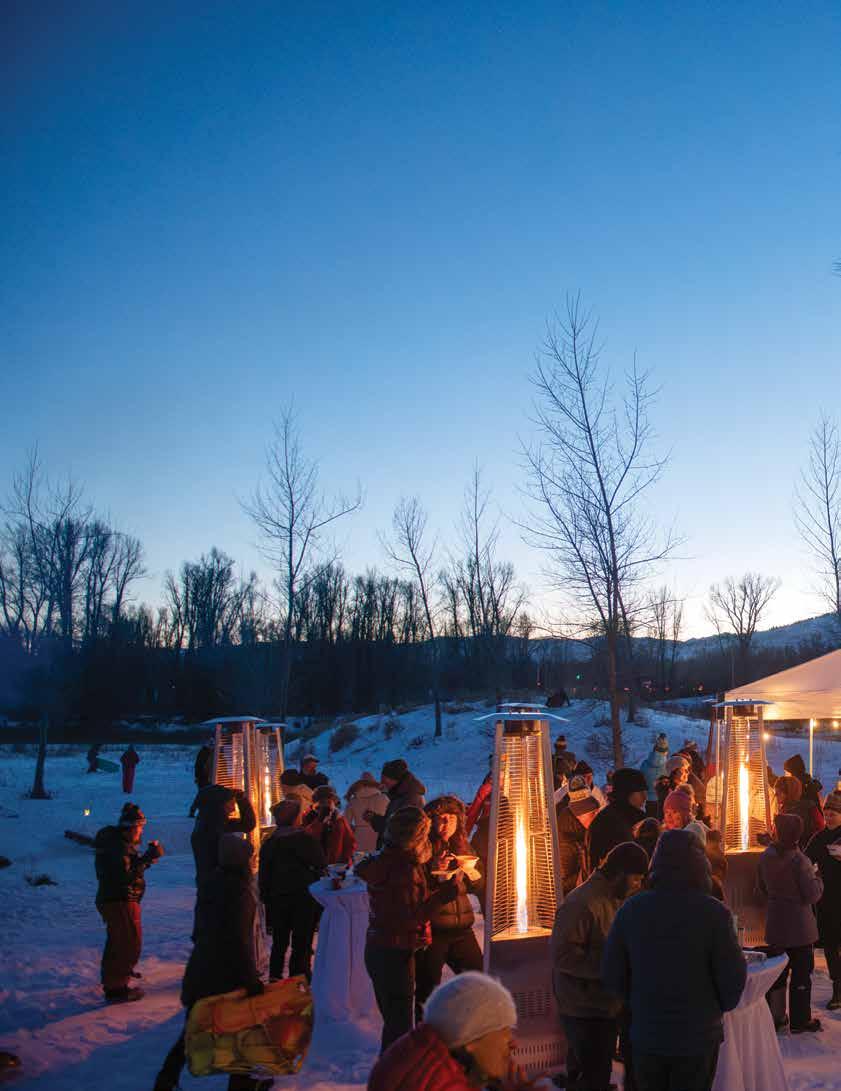
//BY EMILY COHEN
Rendezvous
Sled, hike, cross-country ski, and hang with a troll at this community park.
Oat R Park
nce a gravel pit, the 40-acre R Park is one of Jackson Hole’s most beloved community spaces. At the intersection of Wyoming Highway 22 and Teton Village Road, R Park—short for Rendezvous Park—is the result of a public-private partnership between Teton County and the Jackson Hole Land Trust. It opened in 2015, four years after the JH Land Trust purchased the property and engaged in a community-planning process to shape how the space would be used.
R Park is accessible by car, the START Bus, and the Pathways system (which is plowed for brave winter cyclists). It’s open daily from dawn to dusk, and leashed
dogs are welcome.
In winter, the park is a hub for cold-weather play— think sledding, cross-country skiing, and snowshoeing—and there’s even an avalanche beacon training area. In summer, families come to scramble over art installations, fish along the riverbank or in the stocked pond, or picnic under the cottonwoods. Year-round, local organizations use the park to hold a diversity of events, from a winter solstice celebration (shown here) to concerts and free kayak and paddleboard demos. R Park’s heart is a whimsical interactive sculpture, Mama Mimi, a giant troll made from reclaimed materials.
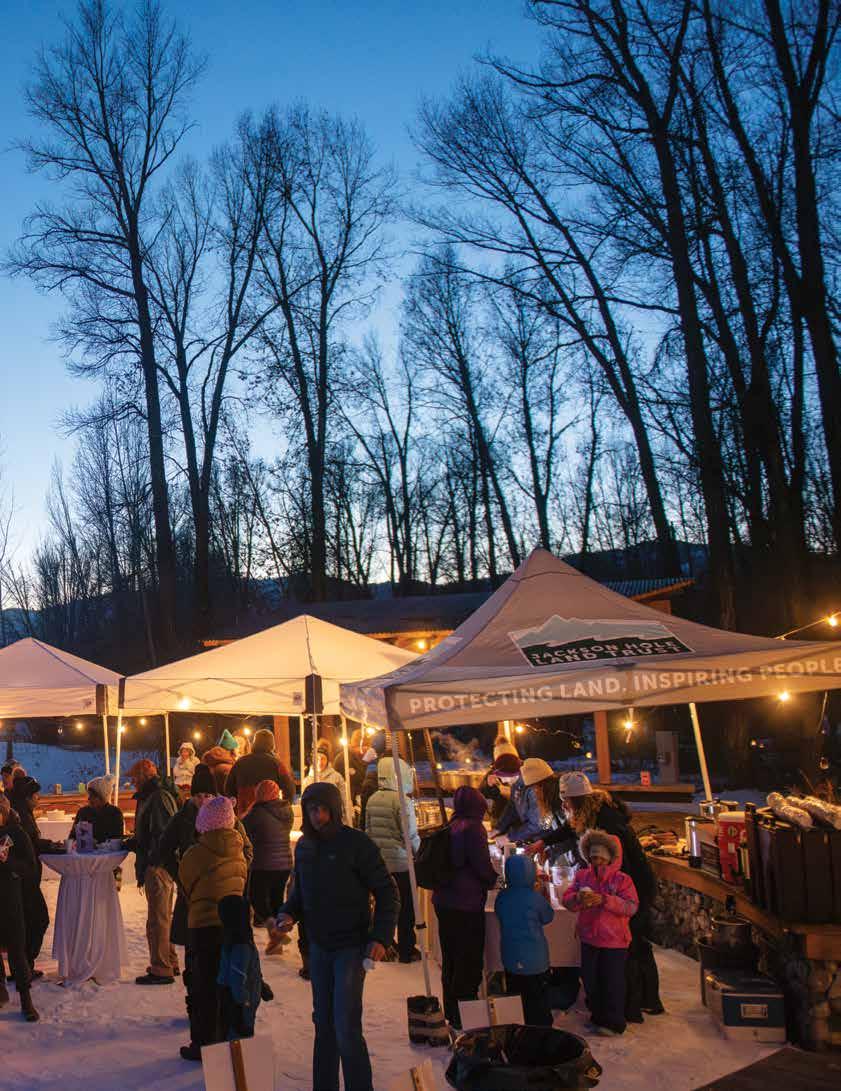
RENDEZVOUS PARK
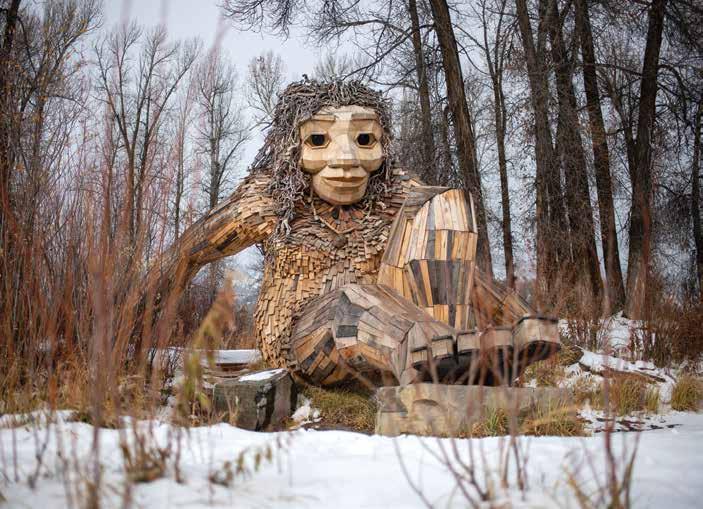
R Park’s most iconic feature is Mama Mimi, a 25-foot-tall troll created by Danish artist and environmental activist Thomas Dambo from locally reclaimed materials like recycled wood pallets, steel, and driftwood. Built in 2021 with support from Jackson Hole Public Art, Mama Mimi is part of Dambo’s global network of over 100 trolls, which you can explore via TrollMap.com. Nestled into the landscape, Mama Mimi’s outstretched legs invite children to climb and explore. Originally slated for just three years, it is now a semi-permanent installation.
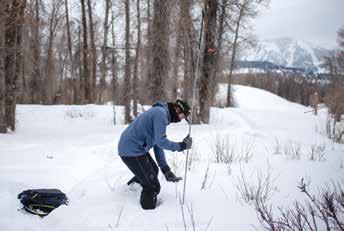
In winter, R Park is a hub for cold-weather play—sledding, cross-country skiing, and snowshoeing—and there’s even an avalanche beacon training area.
R Park is home to the valley’s only free avalanche beacon training area, a crucial resource for skiers and snowshoers who venture into the backcountry. The beacon area is equipped with a control box and eight buried transmitters; users can practice single- and multiple-burial searches, as well as probing, shoveling, and RECCO detector use.
With its gentle slope and wide runout area, R Park’s sledding hill is a local favorite for families with younger sledders. Parking is conveniently close, and the walk to the hill is short—even if your hands are full of sleds and hot cocoa.
R Park has 3.5 miles of user-packed walking and skiing loops. The R Park dike on the northwest side of the Snake River provides a quiet experience with minimal visitor traffic and the possibility of spotting moose in the ponds and wetlands. Many days, it’s likely you can walk here without the aid of snowshoes or cross-country skis. (But if you do this and find yourself postholing, please stop; the large divots left by postholing hikers ruin the trails for other users.) Because the trails here are mostly flat, they’re great for beginners. Trails wind through meadows, along the Snake River, and around art installations, including Mama Mimi and Flow. A pedestrian bridge at R Park connects to the east side of the Snake River, where you can enjoy a groomed 4.5-mile out-and-back cross-country ski path. JH
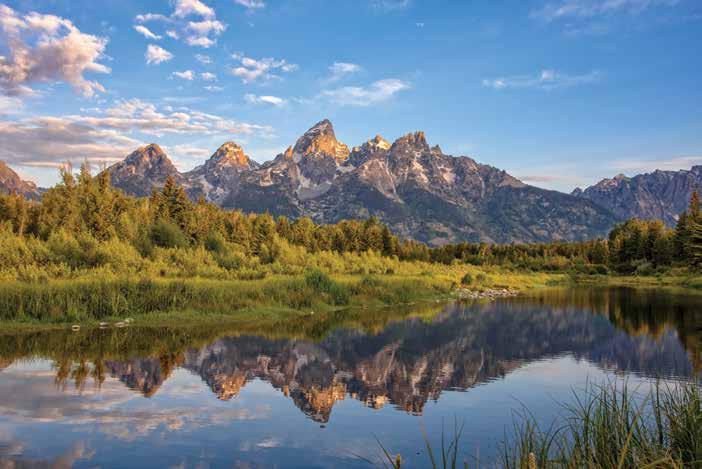

KAYLA RENIE
Where to see everyone’s favorite ungulate. //
BY EMILY COHEN
Moose on
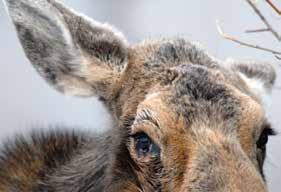
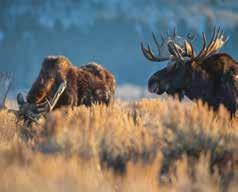
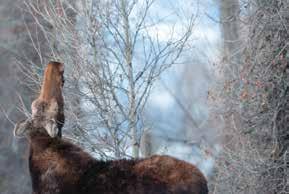
RAFTER J SUBDIVISION
If you know where to look, winter is your best bet for spotting moose in Jackson Hole. Their hulking, dark bodies stand out against the snowy landscape. Browsers, moose spend their days selectively munching on twigs, bark, and buds. In winter, they do this at lower elevations, where the snowpack is shallower. The largest member of the deer family, moose are powerful swimmers and can run up to 35 miles an hour. They tend to favor riparian areas— stream and river bottoms— where willows grow and snow doesn’t pile up. No matter where you go to spot moose, remember to give them space—at least 25 yards. They may look lumbering and docile, but they will charge if startled. If you run into a moose on the trail, it’s safest to give it the right of way.
Snow-covered sagebrush meadows meet cottonwoods and willows along the Gros Ventre River in the southeastern part of Grand Teton National Park. You’ll often see moose browsing willows near the riverbank or crossing open flats.
Minimal. Here you’ll see moose from your car; binoculars or a spotting scope are nice so you can see the moose in more detail.
A quiet neighborhood where moose hang out in landscaped yards and wander between ponds and riparian areas.
Bundle up in warm layers, wear sturdy walking shoes or boots, and consider using traction devices (see examples on page 38) on your footwear. You’ll be looking for moose by walking on plowed pathways that can sometimes be icy.
Drive north from Jackson on U.S. Highway 89. At the roundabout (6 miles north of town), turn right toward Kelly. With the Gros Ventre River to your right, immediately from the roundabout and continuing to the tiny community of Kelly, moose can be anywhere. Continue north past Kelly, where moose sometimes hang out in the open flats.
While in the area, check out Mormon Row, home to the often-photographed 100-plusyear-old T.A. Moulton Barn and more than 20 other historic buildings that date from the time of some of Jackson Hole’s earliest settlers.
About 5 miles south of Jackson on U.S. Highway 89, turn right onto Big Trail Rd. Park at the Rafter J office, which is just off W. Big Trail Rd.
Grab lunch or dinner at The Bird, Rafter J’s neighborhood restaurant, which serves huge burgers (on toasted English muffins) and has even bigger views of the Snake River Mountains.
GROS VENTRE ROAD AND KELLY FLATS
the Loose
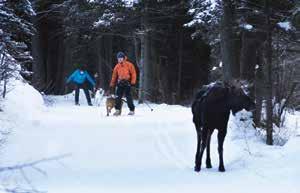
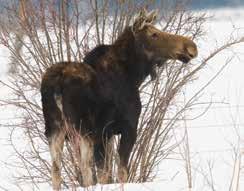
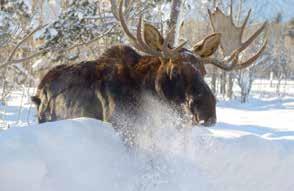
Only about 1 mile from the Town Square and in the Bridger-Teton National Forest, Cache Creek, a canyon with a creek and a decommissioned Forest Service road, is popular with locals looking for a quick outdoor fix (for themselves or their dog). The first 2 miles are the busiest.
Almost anything goes here—cross-country skis (the former road is groomed for classic and skate skiing), snowshoes, and even fat bikes. Friends of Pathways grooms singletrack trails specifically for the latter. Or you could bring nothing; the old road is so heavily used it gets packed down enough to walk on in winter boots.
From downtown Jackson, take Broadway Ave. east; turn right on Redmond Dr., then left on Cache Creek Dr. The trailhead is at the end of this road, about 1.5 miles from the intersection with Redmond.
In summer, this road in Grand Teton National Park can be a harrowing drive—it’s narrow, winding, and full of wildlife. In winter, the middle section is closed to cars and is an ideal place to snowshoe or cross-country ski.
If you start at the Teton Village end, you’ll have to pay an entrance fee into GTNP (the other end starts just before the Moose entrance station). Wherever you start, you’ll want snowshoes or cross-country skis to travel up the road beyond where the plowing stops.
An out-and-back trail on the west side of the Tetons in Idaho’s Caribou-Targhee National Forest, Darby is perhaps the most tranquil of the options presented. And even if you don’t see any moose, the quiet canyon, snow-covered trees, and burbling creek make for a magical winter outing that can be as long as 7 miles.
Cross-country skis, snowshoes, or a fat bike. The winter trail, which, in the summer is a road to a hiking trailhead, is usually groomed once a week.
Back on Broadway Ave., drive to its very eastern end, where the Elk Refuge road starts. Bighorn sheep can often be spotted about 2 miles up this road. Look for a rocky outcrop on the left side of the road and then keep your eyes peeled for movement.
From Teton Village, drive 1 mile north and into GTNP and continue until the road is closed (at the Granite Canyon Trailhead). From Moose, just before the GTNP entrance station, turn left onto Moose-Wilson Rd. About 3 miles south, at the Death Canyon Junction, the road is closed to cars. At both ends, park where the plowing ends.
About 3 miles from the Death Canyon Junction, explore the historic White Grass Ranch, which was the valley’s third dude ranch when it opened in 1919. Shuttered in 1985, it was added to the National Register of Historic Places in 1990.
From Victor, Idaho, head north on ID Highway 33 for 5 miles, then turn east on E. 3000 S. and follow signs to Darby Canyon. Park where the plowing stops.
Yes, it’s winter, but, since you’re on this side of the Tetons, you should stop at Victor Emporium for a huckleberry milkshake. JH
CACHE CREEK
MOOSE-WILSON ROAD
DARBY CANYON
RUGILE KALADYTE
Vibes Teton Valley
Spend a day exploring the quieter side of the Tetons.
L// BY MOLLY ABSOLON
ocated on the western—quiet—side of the Teton Range, Teton Valley, Idaho, offers quaint one-stoplight towns, uncrowded outdoor recreational spaces, and spectacular scenery. Home to roughly 12,000 people and the towns of Victor, Driggs, and Tetonia, Teton Valley was identified by National Geographic Adventure and Outside as one of the best places to live in the United States for people who like adventure. Even though that was back in 2001—giving the area plenty of time to have exploded in popularity—it hasn’t exploded.
Yes, Teton Valley has grown—its population has increased 24 percent over the last 15 years—but not so much as to have required a second stoplight. The price of single-family homes there has increased, but you can still get a lot more for your money in Teton Valley than you can in Jackson Hole. Because of this, much of Jackson Hole’s workforce makes the choice to live in Teton Valley. But more affordable housing is only part of what draws people to Teton Valley. It has a totally different vibe than Jackson—more low-key and casual, and maybe a little bit rough around the edges—and the locals like it that way.
One day can give you a taste of what Teton Valley has to offer, although—fair warning—it’s highly likely you’ll find enough to entice you to come back for more. Mix and match from the following list to create your perfect Teton Valley day.
Cross-country skiing in Teton Canyon.
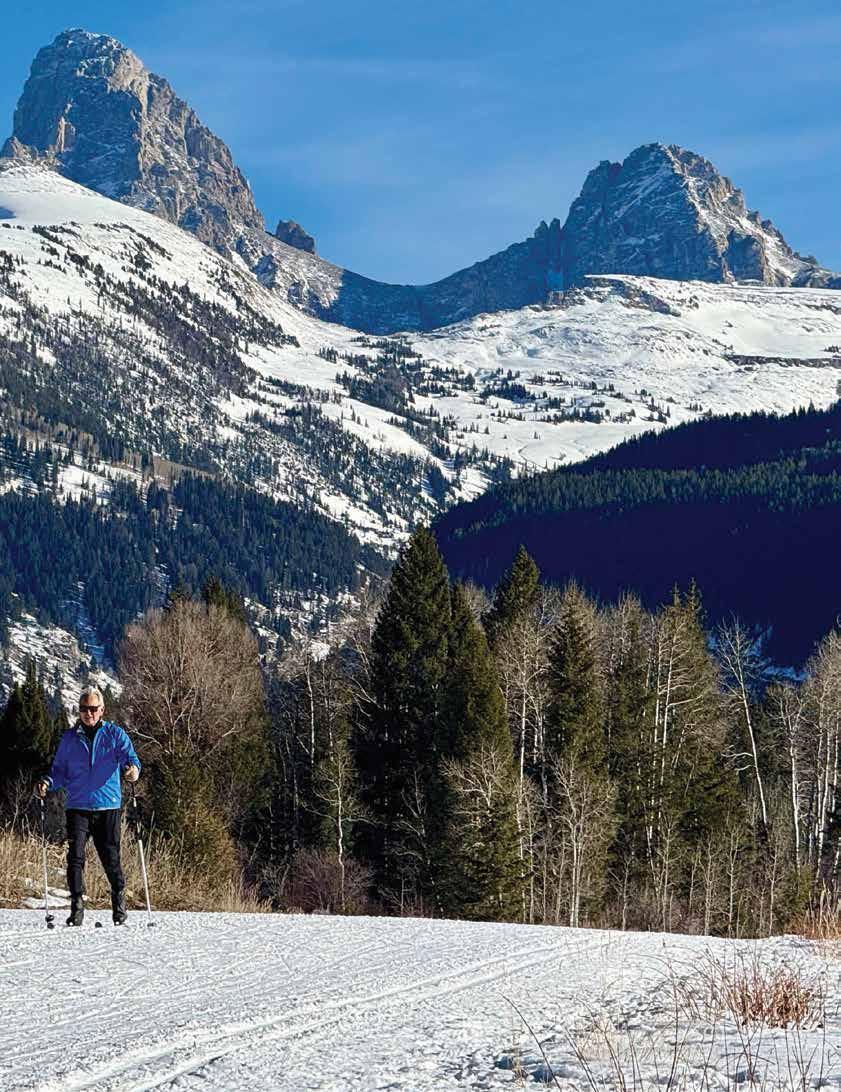
EXPLORE
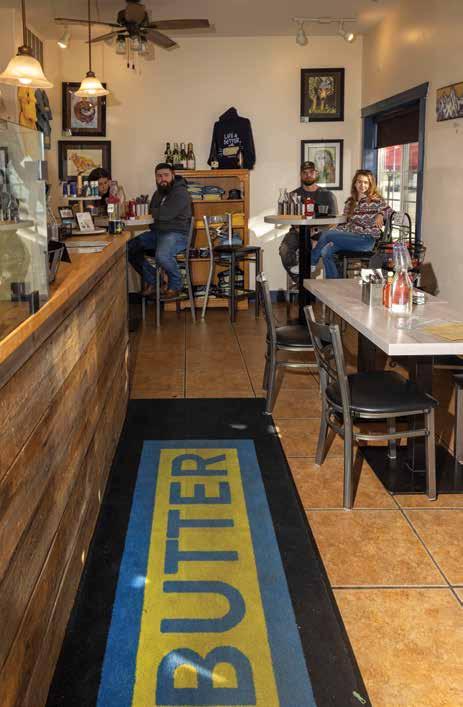
BREAKFAST
VICTOR
Known for its hearty meals (locals love the Cowboy Bowl; the pancakes also get rave reviews), friendly service, and quaint décor, Butter Café is Victor’s favorite breakfast place. Owned by Marcos Hernadez and Amelia Hatchard, (who also own Street Food in Wilson), Butter offers an eclectic blend of food that reflects Hernadez’s Mexican heritage and Hatchard’s professional training as a pastry chef. The couple met while working at the Four Seasons in Teton Village, where Hernandez

served as Hatchard’s pastry steward, although Hernandez’s real passion is the homestyle Mexican cooking he learned from his mother. Open 8 a.m.–2 p.m. daily; 57 S. Main St., Victor; 208/3992872, butterinvictor.com
Alpine Air Café serves artisan toasts and baked goods (the avocado toast, served on locally made 460 Bread, is a perennial favorite) and reflects founder Alex Suckling’s passion for everything coffee. Here, organic beans are roasted onsite in small batches for precise control over flavor and aroma. If you’re just looking for a hot beverage and a quick bite, the café has a sister drivethrough in the parking lot on the corner of Main Street and Center, where you can get coffee drinks and to-go breakfast and lunch items like bacon, egg, and cheese croissants and homemade muffins. Open 7 a.m.–1 p.m. Tuesday–Sunday (closed Mondays), Coffee Hut open 6 a.m.–12:30 p.m. daily; 175 W. Center St., Victor; 208/9708999, alpineaircoffee.com
DRIGGS
Rise Coffee House in Driggs has been a locals’ favorite since Martha Pendl opened its doors as Pendl’s Bakery in 2003. The first place to offer real gourmet coffee and homemade baked goods in the valley, Pendl’s was immediately popular, and people were worried that its sale and transition to Rise Coffee House in 2017 would change its beloved vibe. But Kisa Koenig and her team have kept the Pendl’s tradition going. Today, you can enjoy delicious breakfast sliders, burritos, and avocado toast, but Rise’s real claim to fame continues to be its delectable homemade baked goods, so don’t pass up on a little sweet treat to fuel your day. Open 7 a.m.–2 p.m. daily; 40 Depot St., Driggs; 208/354-7473, risedriggs.com
The varied backgrounds of Butter Café's owners are reflected in its menu.
The are plenty of pastry options in Teton Valley.
TETON VALLEY
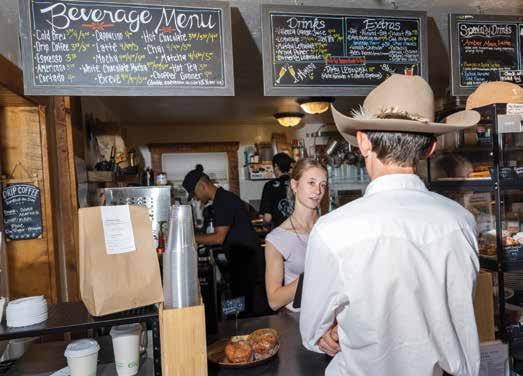
Driggs’s latest coffee shop, Wydaho Roasters, is open late, and patrons are welcome to linger over their coffee, inviting mobile office-ing with a bottomless cup of joe. Beans are roasted on-site, and the café brought in a professional French pastry chef to train its on-site pastry chefs. Open 6 a.m.–10 p.m. daily; 495 S. Main St., Driggs; 208/500-2349, wydahoroaster.com
Provisions Local Kitchen has an extensive breakfast and lunch menu, and, thanks to pine paneling, a woodstove, and a bright neon Budweiser sign over the kitchen door, the feel of an old-timey café. Portions are big and the staff friendly, but you won’t find much online about the place; there’s no website, just some Google reviews, most of which give Provisions five stars. Open 7 a.m.–3 p.m. daily; 95 S. Main St., Driggs; 208/354-2333


EXPLORE
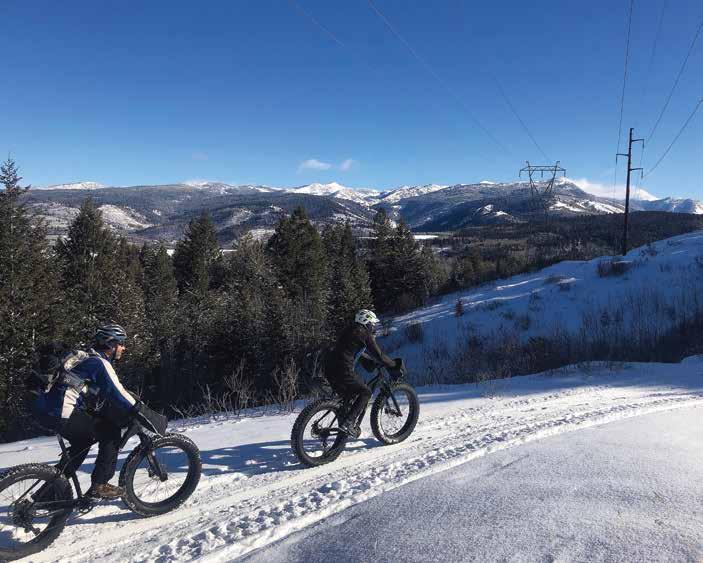
MORNING ADVENTURE
FAT BIKE SOUTHERN VALLEY
With wide, knobby tires, fat bikes let you ride on groomed snow trails. Rent one—booking in advance is recommended—from Wheel Wranglers, which has its storefront in Victor but will deliver rentals to the trailhead, so you don’t need to worry about transporting the bikes (fat bikes don’t fit on most standard bike racks). The Southern Valley Trail Network includes five miles of singletrack groomed for fat biking. Happy Hour, a three-mile out-and-back round-trip trail along Trail Creek, is a great option for first-timers. The trail rolls, but there aren’t any sustained climbs, and, for every up, you get a fun downhill. For more climbing and challenge, connect the Lady Slipper, Hillbender, and Nemo Trails. Check grooming status on the Teton Valley Trails and Pathways website, tvtap. org. Wheel Wranglers: open 10 a.m.–6 p.m. Tuesday–Saturday; 257 W. Center St., Victor; 208/690-0164, wheelwranglersvictor.com
SNOWSHOE TETON CANYON
If there’s one must-see place in Teton Valley, it’s Teton Canyon. Just east of Driggs, Teton Canyon provides an unsurpassed view of the Grand Teton and its smaller neighbors, the Middle and the South Tetons. It’s also a great place to snowshoe, especially for beginners.
Teton Valley Trails and Pathways grooms the summer road up Teton Canyon for Nordic skiing—both skate and classic—as well as fat biking. You can snowshoe along this road, but it can get crowded, so instead, head south out of the parking lot and across Sheep Bridge to a user-packed snowshoe trail that meanders through aspen groves and pine forests along Teton Creek. The four-mile out-andback trail is mostly level, but the canyon’s dramatic walls tower overhead, and the Grand looms off in the distance. Snowshoe rentals are available at Driggs’s three outdoor retailers: Habitat, Peaked, and Yöstmark (see information under Shopping, below).
TETON VALLEY
Fat bikers enjoy riding Powerline Road, which is accessible from the Mike Harris Trailhead.
You can snowshoe, fat bike, and Nordic ski in Teton Canyon.
LUNCH

VICTOR
Big Hole Barbecue owner Nick Jacob started experimenting with a meat smoker in 2008 and began selling BBQ out of a shack in Driggs later that year, but quickly he couldn’t keep up and so opened the Victor restaurant. Known for its delicate slow-cooked brisket, the menu also includes sliders, fish or shrimp tacos, mac and cheese, and chicken sandwiches and features regional ingredients like beef from the Carter Country Ranch in Tensleep, Wyoming. (There’s been a Big Hole BBQ in Jackson since 2017.) Open 11:30 a.m.–9 p.m. daily; 22 W. Center St., Victor; 208/270-9919, bigholebbq.com
DRIGGS
You won’t find commercial airlines at Driggs Memorial Reed Airport, but you will find one of the valley’s best restaurants, Forage Bistro and Lounge
Serving elegant food with a creative twist utilizing local and seasonal ingredients, Forage also has great Teton views. Open 12 p.m.–8 p.m. daily; 253 Warbird Ln., Driggs; 208/354-2856, forageandlounge.com
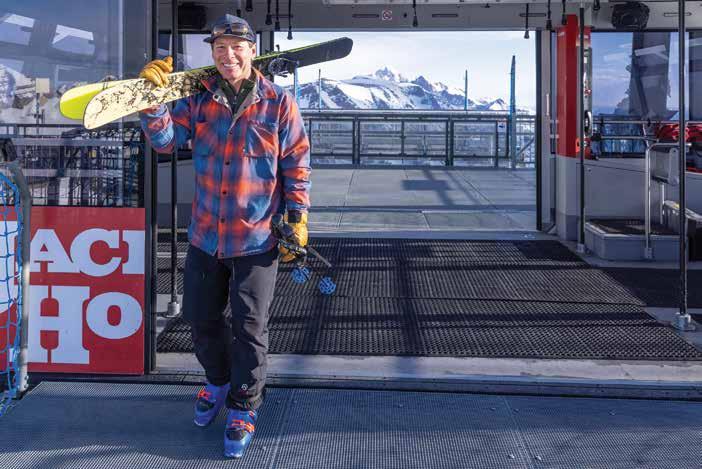
Recently relocated to Driggs Memorial Reed Airport from downtown Driggs, Forage features flair and hearty, comforting flavors.
EXPLORE
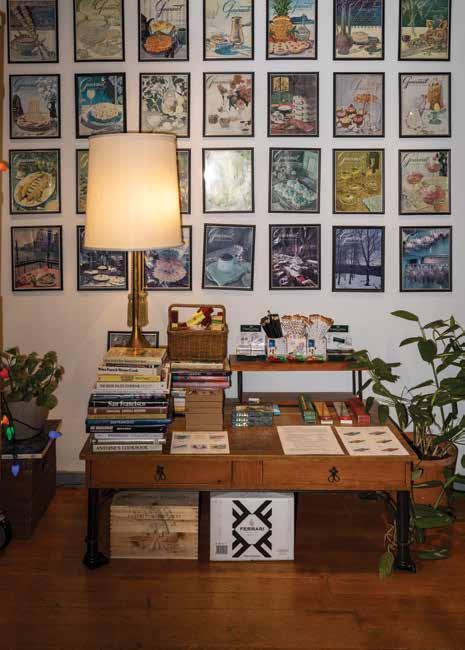
SHOPPING
The Emporium, readily identified by a mural on the north side of the building featuring a bear and a trout sharing a milkshake, is an eclectic gift store/ice cream shop/fly-fishing retailer. In the summer, the line for its famous huckleberry shakes goes out the door. You can still get ice cream in the winter, but if that doesn’t appeal due to the cold weather, get their huckleberry jam … and any tchotchkes, gag gifts, Patagonia clothing, fishing flies, and/or jewelry that catches your eye. Open 9 a.m.–8 p.m. daily; 45 N. Main St., Victor; 208/7872221, facebook.com/victoremporium
Cecily Costa—a graduate of the California Culinary Academy, self-professed foodie, and the owner/ founder of the Food Shed Idaho—says her store is full of all the things she loves: Zursan heirloom beans from Idaho Falls; pork and eggs from Late Bloomer Ranch in Driggs; olive oil produced in Puglia, Italy by the De Carlo family for more than 400 years; and a variety of pastas, vinegars, and chocolates. The Wall Street Journal featured this shop last March, and Costa loves to talk about food and offer tastings. She also usually has freshly baked cookies to share with patrons. Open 12 p.m.–6 p.m. Thursday–Monday; 139 W. Center St., Victor; 208/787-7695, foodshedidaho.com
Before landing in Victor, Cecily Costa spent 33 years
Fireweed Shop and Studio features the work of local and regional artists and also a selection of gifts, handmade jewelry, ceramics, homewares, and baby gifts curated with care by owner Katie Cooney. The shop provides studio space for creators and hosts events as part of its mission to cultivate passion, creativity, and community in Teton Valley. Open 10 a.m.–6 p.m. Tuesday–Saturday; 160 E. Little Ave., Driggs; fireweedshopandstudios.com
The Local Galleria carries local and regional artwork as well as handmade clothing and jewelry and, in case you find yourself artistically inspired, art supplies. Once a month, owner Teri Mclaren hosts Paint Night; pre-sketched canvases and supplies are provided, allowing even beginners to try their hand at creating a masterpiece. Open 10 a.m.–6 p.m. daily; 25 S. Main St., Driggs; 208/2700833, tetonvalleylocalart.com
Get your outdoor gear fix—whether rentals or sales—at Habitat Dirt and Snow, Peaked Sports, and Yöstmark Mountain Equipment. Habitat caters to boarders, Yöstmark leans toward backcountry alpine touring and mountaineering, and Peaked is geared toward resort skiers. Habitat Dirt and Snow: open 10 a.m.–6 p.m. Monday–Saturday; 18 N. Main St., Driggs; 208/354-7669, ridethetetons.com; Peaked Sports: open 9 a.m.–6 p.m. daily; 70 E. Little Ave., Driggs; 208/354-2354, peakedsports.com; Yöstmark Mountain Equipment: open 9 a.m.–6 p.m. daily; 110 E. Little Ave., Driggs; 208/354-2828, yostmark.com
Fireweed has featured over 125 artists and makers. Most of these live in the Rocky Mountains; several live and create in Teton Valley.
in San Francisco working as a professional chef and a specialty food importer.
TETON VALLEY
DINNER
BARS
VICTOR
The Knotty Pine, Guidepost Brewing, and High Point Cider all offer drinks and food, and often have entertainment including open mic (every Monday at Guidepost), trivia, bingo, story slams, and live music. Musician David Nelson, of New Riders of the Purple Sage, once called the Knotty Pine a “psychedelic roadhouse.” Guidepost Brewing: open 4 p.m.–10 p.m. Monday–Thursday and 2 p.m.–10 p.m. Friday–Sunday; 175 W. Center St., Victor; 208/254-0558, guidepostbrewing.com; Highpoint Cider: open 4 p.m.–9 p.m. Tuesday–Saturday; 7565 Lupine Ln., Victor; 208/648-3300, highpointcider. com; Knotty Pine Supper Club: open 4 p.m.–9 p.m. daily (for dinner, bar open later); 58 S. Main St., Victor; 208/787-2866, knottypinesupperclub.com
DRIGGS
The Royal Wolf is a classic small-town bar where everyone knows each other and the bartender often has your drink poured before you even ask. There’s homestyle food—burgers, sandwiches, and tacos—but most people are there for the companionship and the pool table, where you’ll always find a game. Open 11 a.m.–10 p.m. Thursday–Monday; 63 Depot St., Victor; 208/354-8365, theroyalwolf.com JH
VICTOR
Sergio’s Cocina Mexicana is a new addition to Teton Valley’s dining scene where you’ll find large family groups next to couples on a romantic date next to someone working on their computer next to a quinceañera celebration. In the kitchen, the food is lovingly made and fussed over by grandmothers. Open 11 a.m.–10 p.m. daily; 145 S. Main St., Victor; 208/787-7529, sergioscocina.com
DRIGGS
King Sushi serves sushi in a farmhouse on the way to Grand Targhee. Good sushi in Idaho? Yup! Head chef Jason King was nominated for the James Beard Best Chef in the Mountain West in 2024, and fish is flown in daily from the East and West coasts. Open 4:30 p.m.–9 p.m. Tuesday–Saturday; 98 E. Little Ave., Driggs; 208/354-5464, kingsushijh.com
Lula Wine Bar and Bistro is an unexpected dose of sophistication in downtown Driggs. (If you really want to be transported out of funky Teton Valley, check out the bathrooms!) Featuring bistro-style food and wines from around the world, Lula’s also hosts special events and live music. Open 4 p.m.–9 p.m. daily; 75 W. Little Ave., Driggs; 360/600-2538, lulawinebar.com
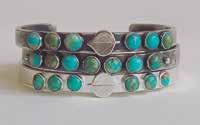
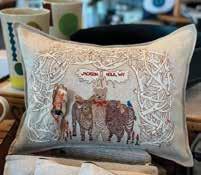


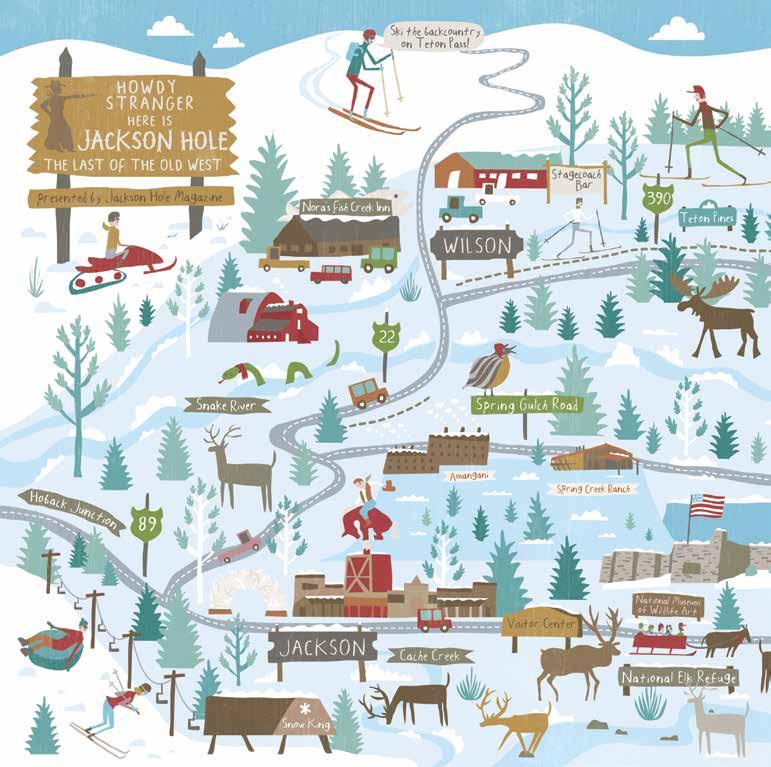
JACKSON HOLE
y Check out Kathryn Turner’s art gallery (p. 32).
y Enjoy the fondue at Aurora restaurant on the summit of Snow King (p. 64).
y Wander the aisles at Stone Drug (p. 56).
y Shop for unique souvenirs at Made (p. 80).
y Catch a Showcase Session at the Silver Dollar (p. 74).
y Eat O.S.M. pancakes or waffles at The Bunnery (p. 70).
y Take a ski lesson with a longtime JHMR instructor (p. 102).
y Warm up with Beef Noodle Soup at Teton Thai (p. 64).
y Pick up a pair of long underwear printed with the JHMR trail map (p. 80).
JACKSON
TETON VILLAGE
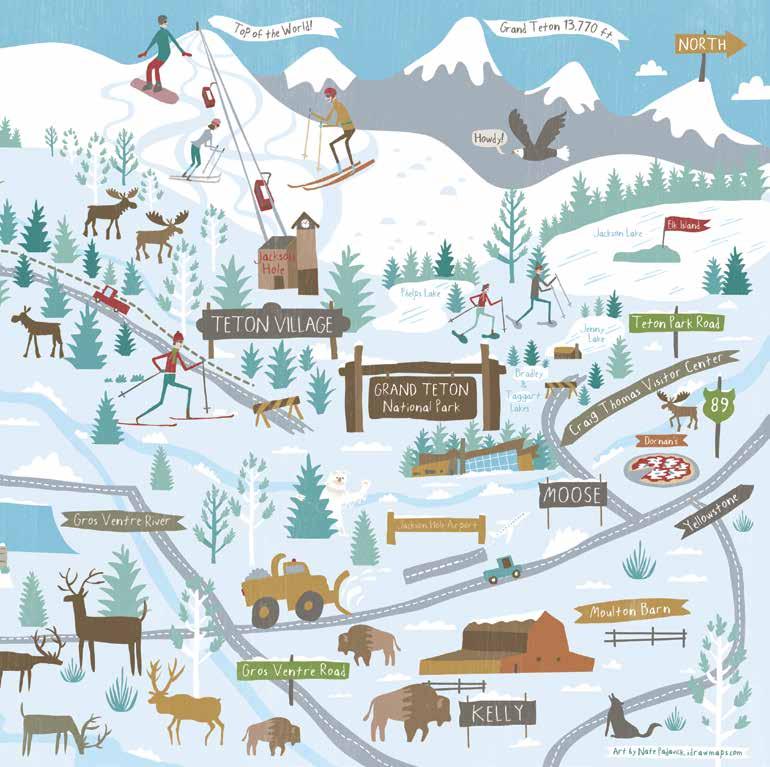
GRAND TETON
NATIONAL PARK
y Go looking for a great gray owl (p. 114).
y Take home some local art (p. 80).
WILSON
y Hang out with Mama Mimi the troll (p. 148).
y Go Nordic skiing at Trail Creek Ranch (p. 26).
y Stay in a cabin at Trail Creek Ranch (p. 26).
y Take a walk along the Snake River levee (p. 148).
y Meet birds of prey at the Teton Raptor Center (p. 114).
FARTHER AFIELD
y Hit a wine dinner at Triangle X Ranch (p. 32).
y Order the breakfast sliders at Rise Coffee House in Driggs (p. 156).
CALENDAR
SAVE THE DATE WINTER 2026
JACKSON HOLE RENDEZVOUS SPRING FESTIVAL
Spring’s biggest mountain party is back! Come together in Teton Village for an unforgettable night of live music, best friends, and pure Jackson Hole energy. jacksonhole.com
28
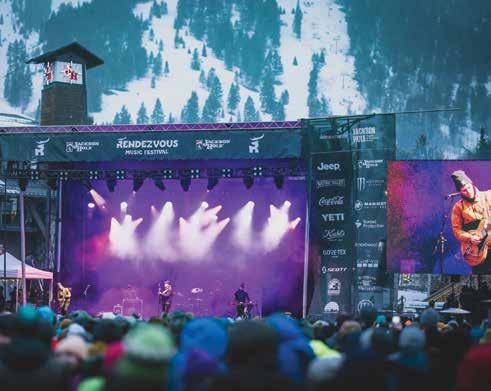
MARCH
Events below are based on information available as of late October 2025.
ONGOING
JACKSON HOLE MOOSE HOCKEY
Home games (at Snow King Arena) start at 7:00 on Friday and Saturday nights. snowkingsec.com/moose-hockey/
SLEIGH RIDES
Between December 20 and April 4, sleigh rides into the National Elk Refuge depart daily between 10 a.m. and 4 p.m. nersleighrides.com
JACKSON HOLE MOUNTAIN RESORT
Its 2,500 acres and 4,139 vertical feet of terrain are open from 9 a.m. to 4 p.m. daily through April 12 (conditions permitting). jacksonhole.com
SNOW KING MOUNTAIN
Lifts open daily until March 22, 2026. Hours: Monday–Friday 10 a.m.–6:30 p.m.; Saturday and Sunday 9 a.m.–4 p.m. (Summit Gondola closes at 4 p.m. daily). snowkingmountain.com
NATIONAL MUSEUM OF WILDLIFE ART
This museum takes an expansive view of the wildlife art genre with its 5,000-plus-piece permanent collection. wildlifeart.org
GRAND TARGHEE
Enjoy skiing and riding 3,000-plus acres on the west side of the Tetons from 9 a.m. to 4 p.m. daily through April 19. grandtarghee.com
DECEMBER
5–6 HOLIDAY ART BAZAAR
The Art Association’s annual Holiday Art Bazaar is a juried fair showcasing handcrafted ceramics, jewelry, paintings, photography, woodwork, textiles, body care, knitted wares, and more from area artists. Center for the Arts, artassociation.org
31 NEW YEAR’S EVE IN TETON VILLAGE
Celebrate the New Year in Teton Village with a glow worm parade and fireworks. 4:45–7:30 p.m. Teton Village, jacksonhole.com
JANUARY
30–February 7 PEDIGREE STAGE STOP SLED DOG RACE
Mushers and their dog teams start in Jackson and race seven stages around the Greater Yellowstone Ecosystem. wyomingstagestop.org
FEBRUARY
8–15 KINGS & QUEENS OF CORBET’S
Skiers compete to see who can ski Jackson Hole Mountain Resort’s most iconic run with the most style. Teton Village, jacksonhole.com
26–28 JACKSON HOLE FOOD & WINE FESTIVAL
Celebrate food, wine, sprits, and brews at this three-day event. Teton Village, jhfoodandwine.com
MARCH
19–22 49TH ANNUAL WORLD
CHAMPIONSHIP SNOWMOBILE HILL CLIMB
Watch amateur and professional snowmobilers race to Snow King’s summit. Snow King Mountain, snowdevils.org
28 JACKSON HOLE RENDEZVOUS FESTIVAL
This spring lifestyle and music festival brings unforgettable live music to Teton Village. jacksonhole.com

all performances at the Center for the Arts, Jackson
Christmas Classics with Tony DeSare

Wed, December 17 at 7 PM
Holiday tunes with jazz flair

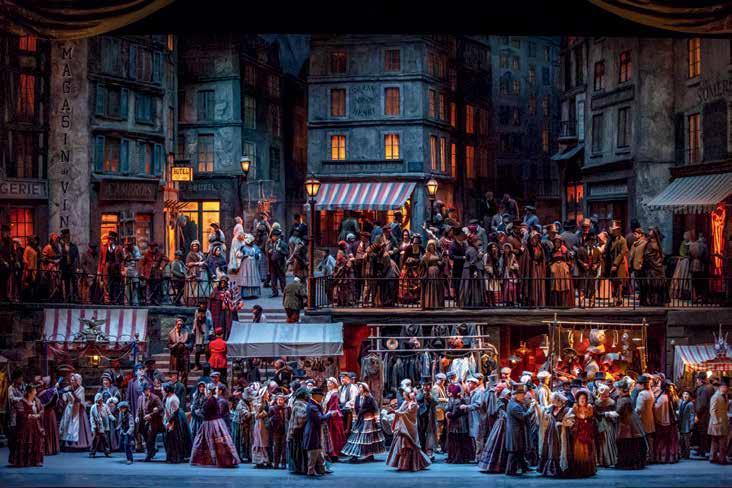
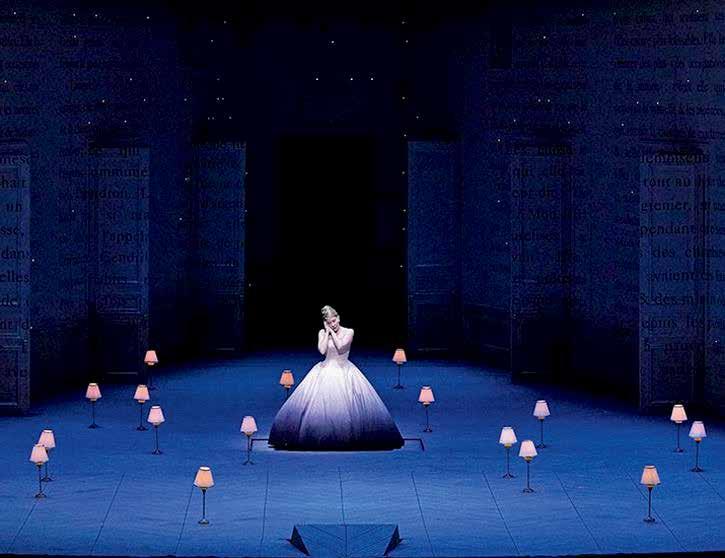
Puccini’s La Bohème Sun, January 11 at 3 PM
Strauss’ Arabella Sun, February 1 at 3 PM
WindSync
Thurs, January 29 at 7 PM Crowd-favorite quintet returns to Jackson Hole
Kittel & Co.
Wed, March 18 at 7 PM GRAMMY-nominated strings fuse folk, classical & more
Tchaikovsky’s Eugene Onegin Sun, June 7 at 3 PM Massenet’s Cinderella Sun, March 15 at 3 PM
get tickets

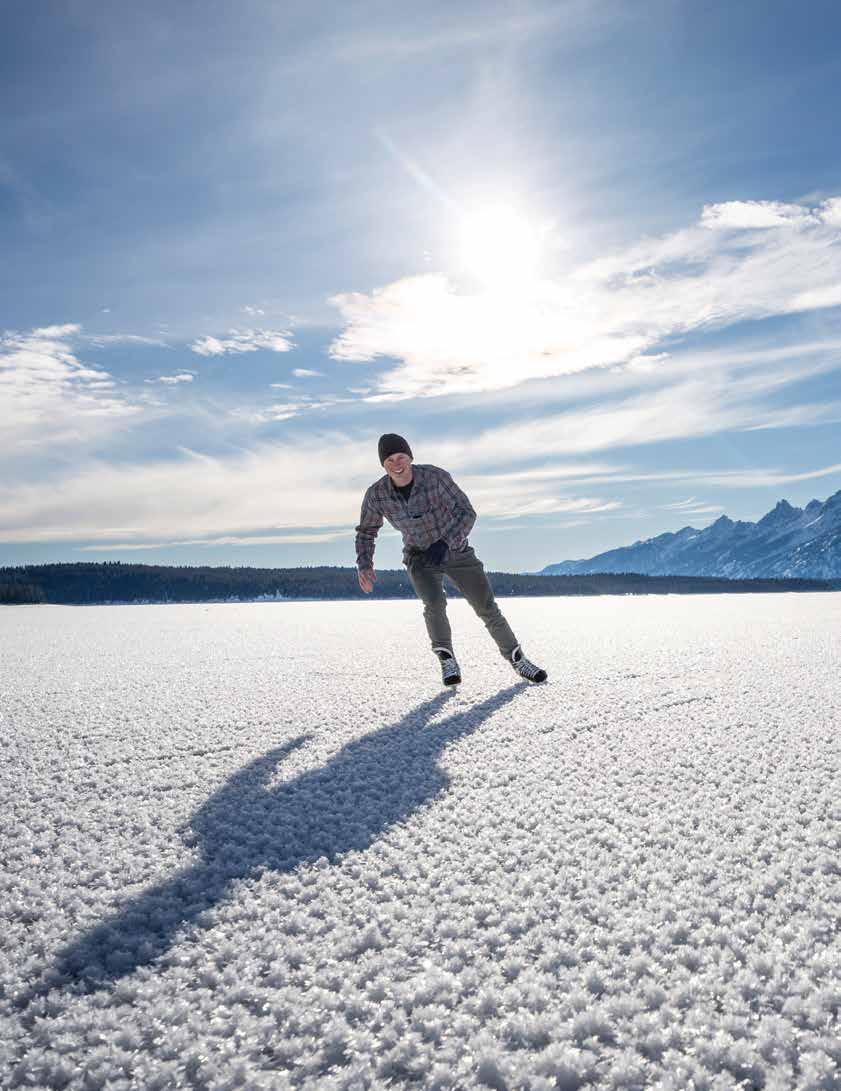
EXPLORE
PARTING SHOT
HOAR FROST SHIMMERS in the sunlight as an ice skater glides across Jackson Lake. Skating on "wild ice" — typically frozen lakes and streams — is optimal in early winter before significant snow accululates.
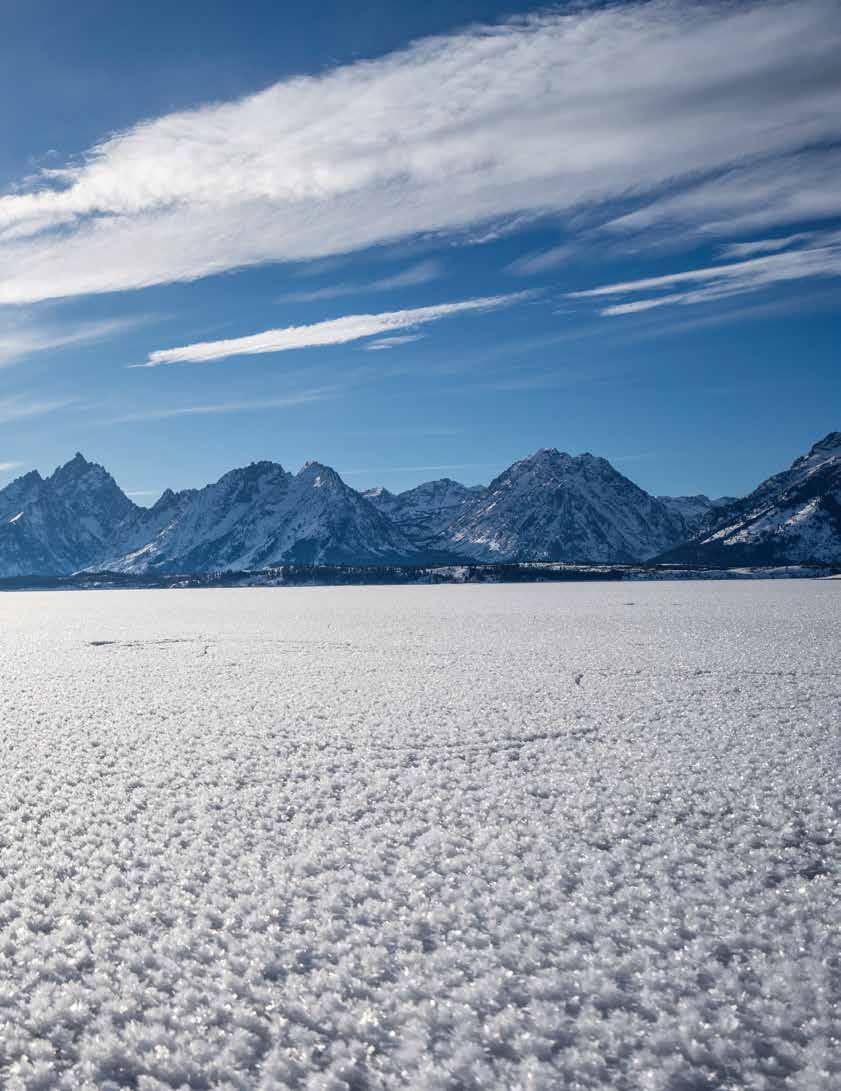
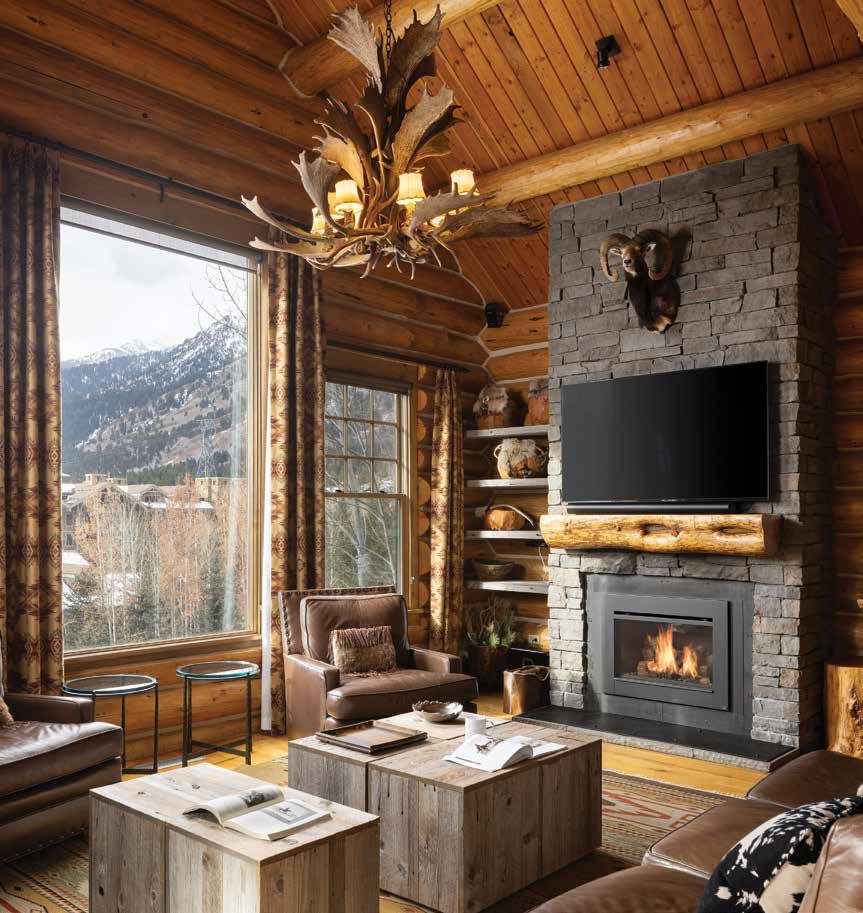
PHOTO:
Mirror Pond in 3 Creek Ranch | Jackson, Wyoming
Property ID: 2PDW25