BLURRING BINARIES & BENDING GENDER
AN ARCHITECTURE OF LOVE
JENNA FOLK
B. ARCH THESIS 2024 PENN STATE UNIVERSITY

PROJECT
GENDER BINARY
GENDER PERFORMANCE
GENDER PERFORMANCE ARTISTS
QUEER THEORY
QUEER THEORY & OTHER DISCIPLINES
QUEER THEORY & ART
QUEER THEORY & ARCHITECTURE
QUEERED SPACE, QUEER SPACE, &
QUEERING ARCHITECTURE
SITE SELECTION
CONTENTS
BRIEF
THE STATION AGENT THE CHANGE AGENT “QUEERED” SPACE INTERVENTION 03 05 07 12 23 29 02
PROJECT BRIEF
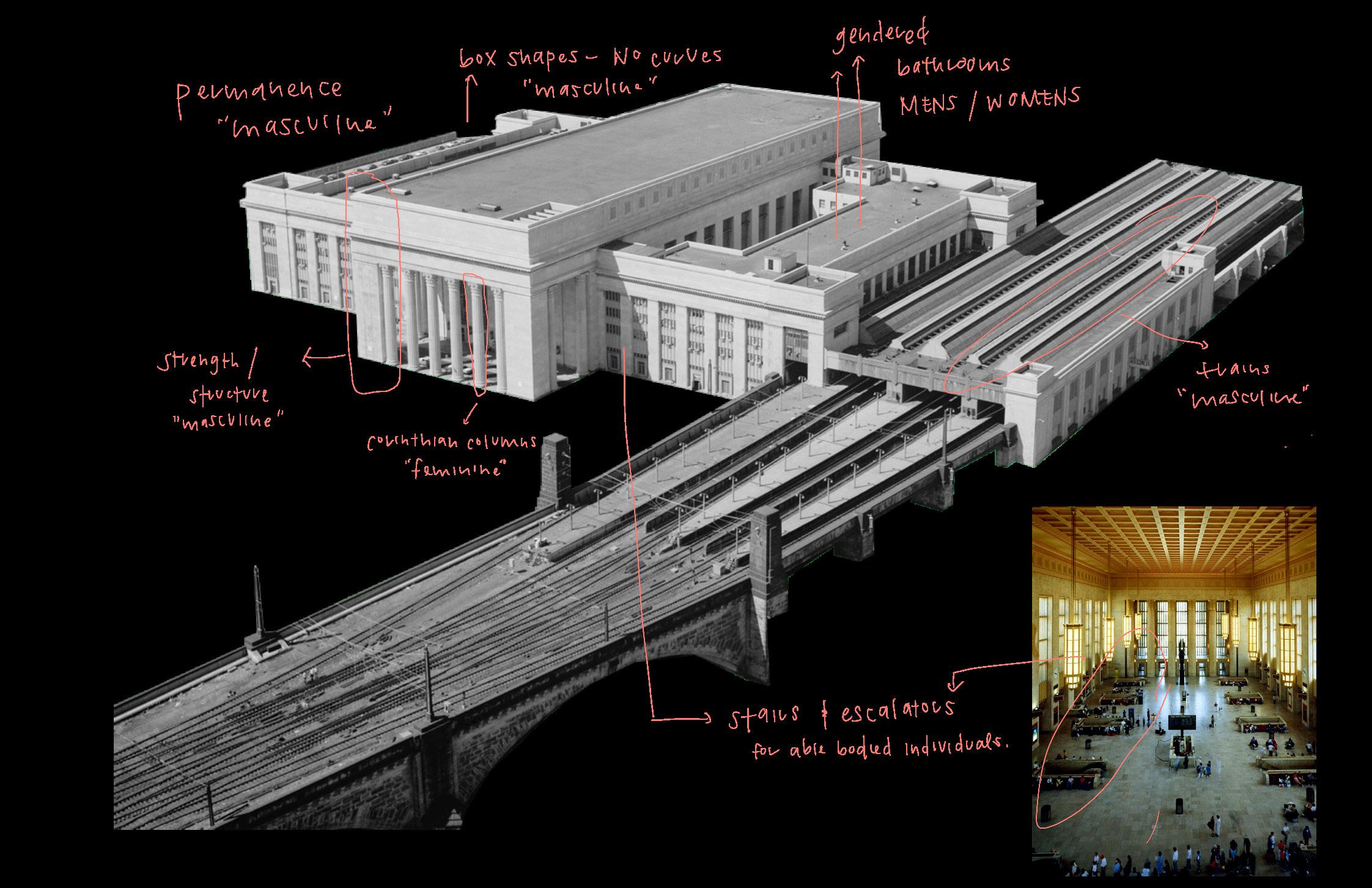
The changing of how we inhabit our bodies, changes how we inhabit and move through space. Architecture is closely intersected with our notions of identity both individually and collectively, so architecture can control and orient bodies, enforce norms and ways of living, and create hierarchies and binaries. Historically, materials and decorations have been used for their associations with the dichotomy of masculinity and femininity. In an architecture of power and strength, masculine traits of permanence, austerity, and authenticity are chosen in design, versus, an architecture of domesticity or nurturing, where feminine values of softness or lightness, curves, and sensuality are chosen.
The construction of space is inevitably constructed by societal ideals on gender. If we understand forms through language and all language is gendered, then architecture is creating a physical boundary by further enforcing the gender binary and gender roles understood by society.
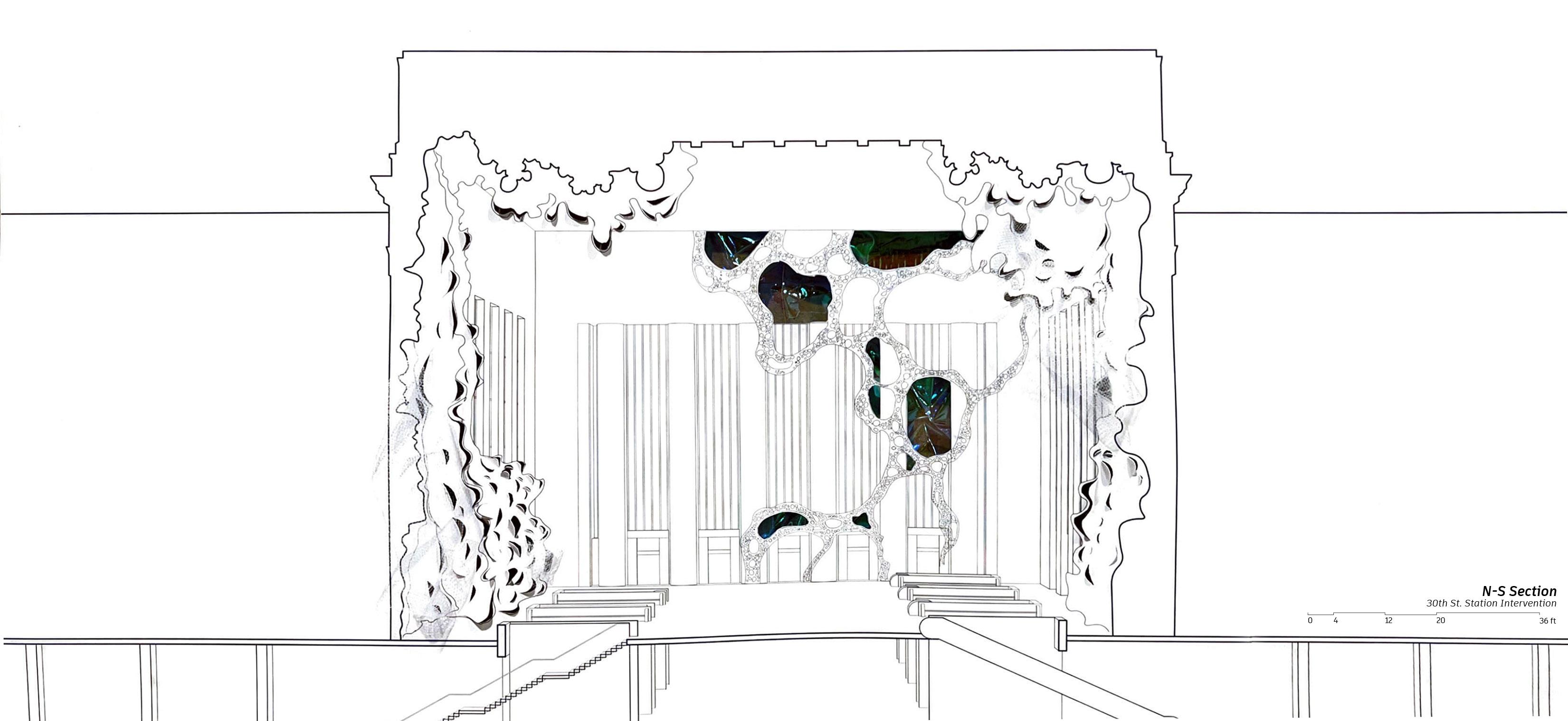
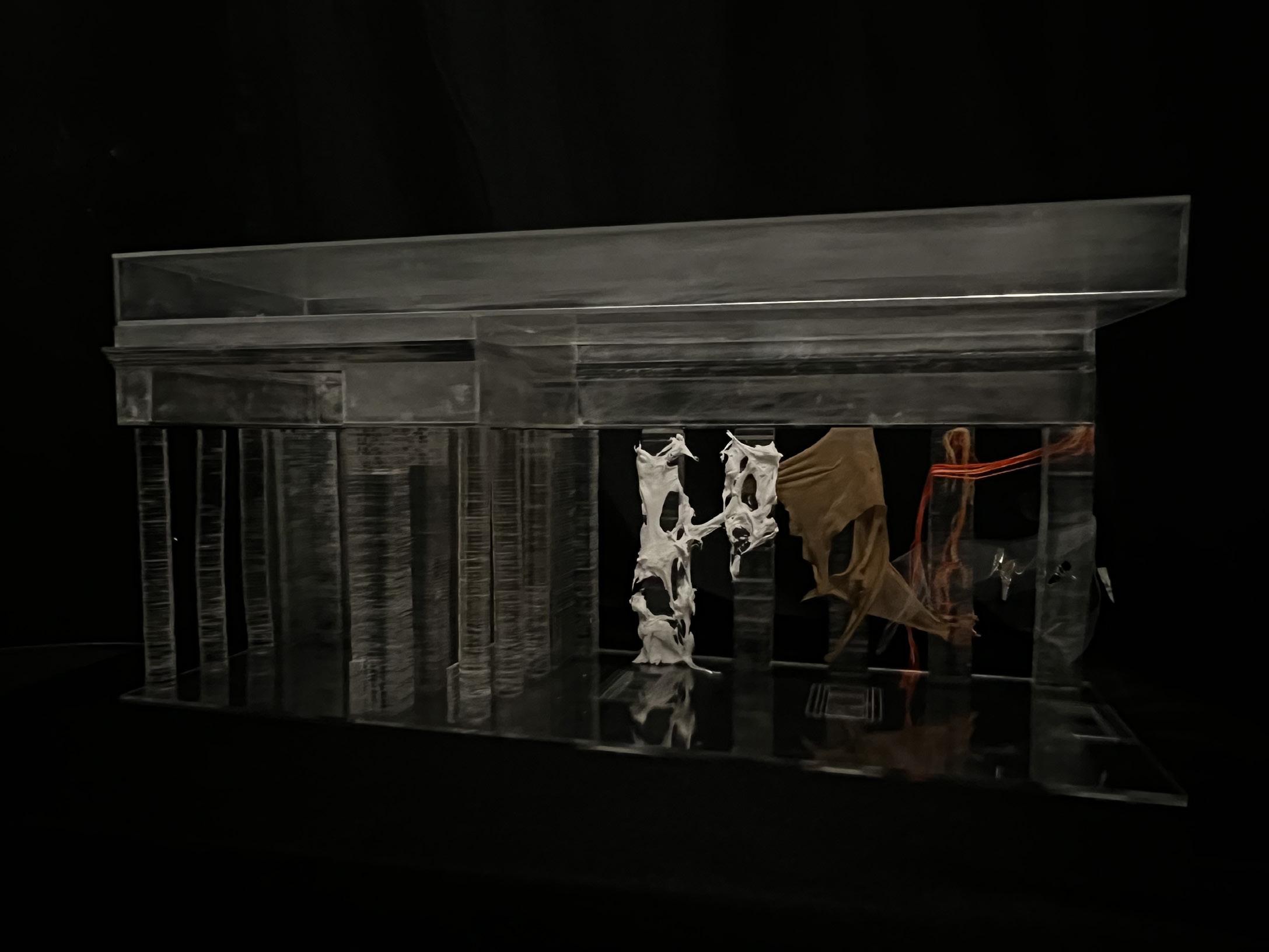
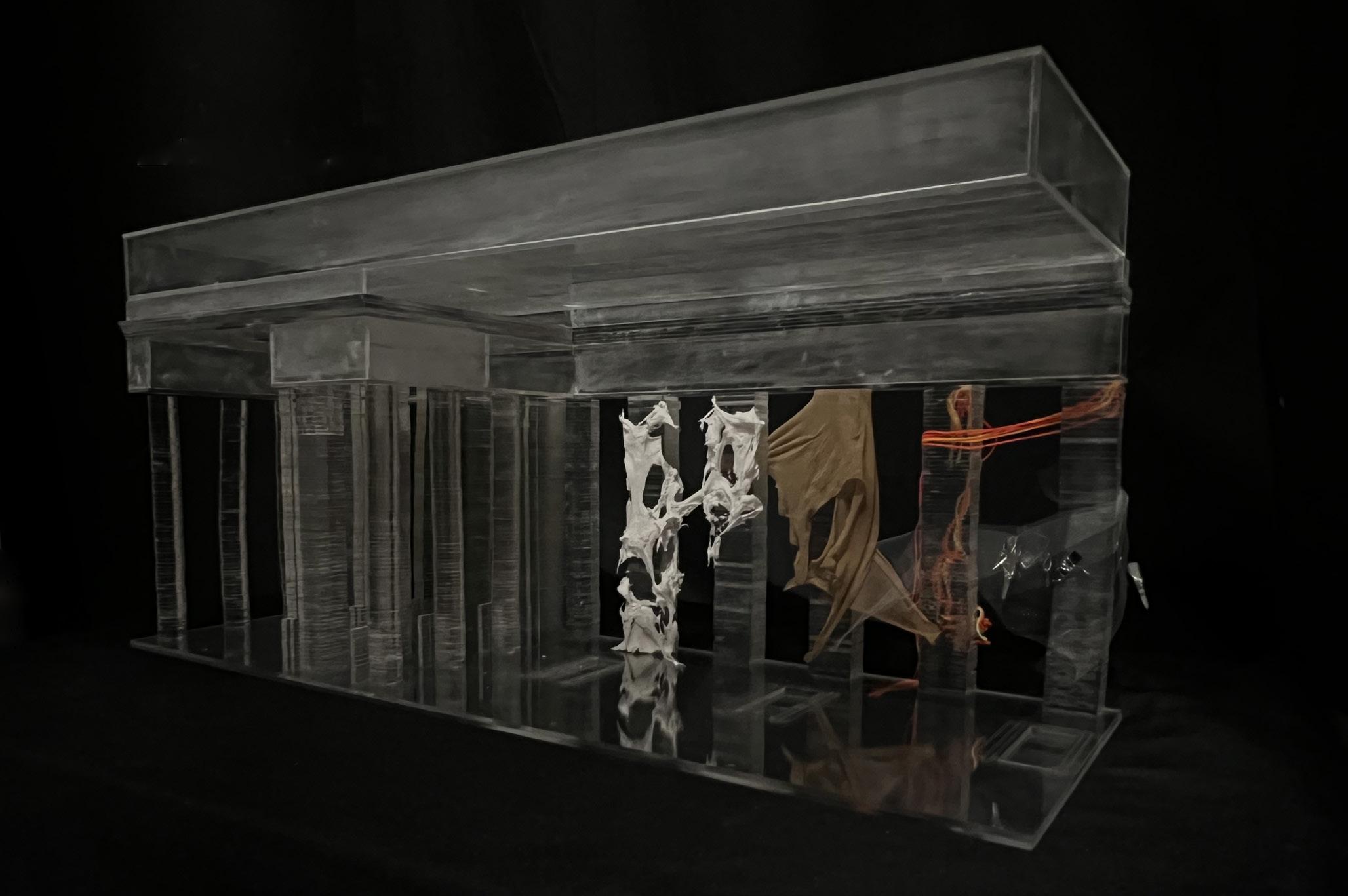
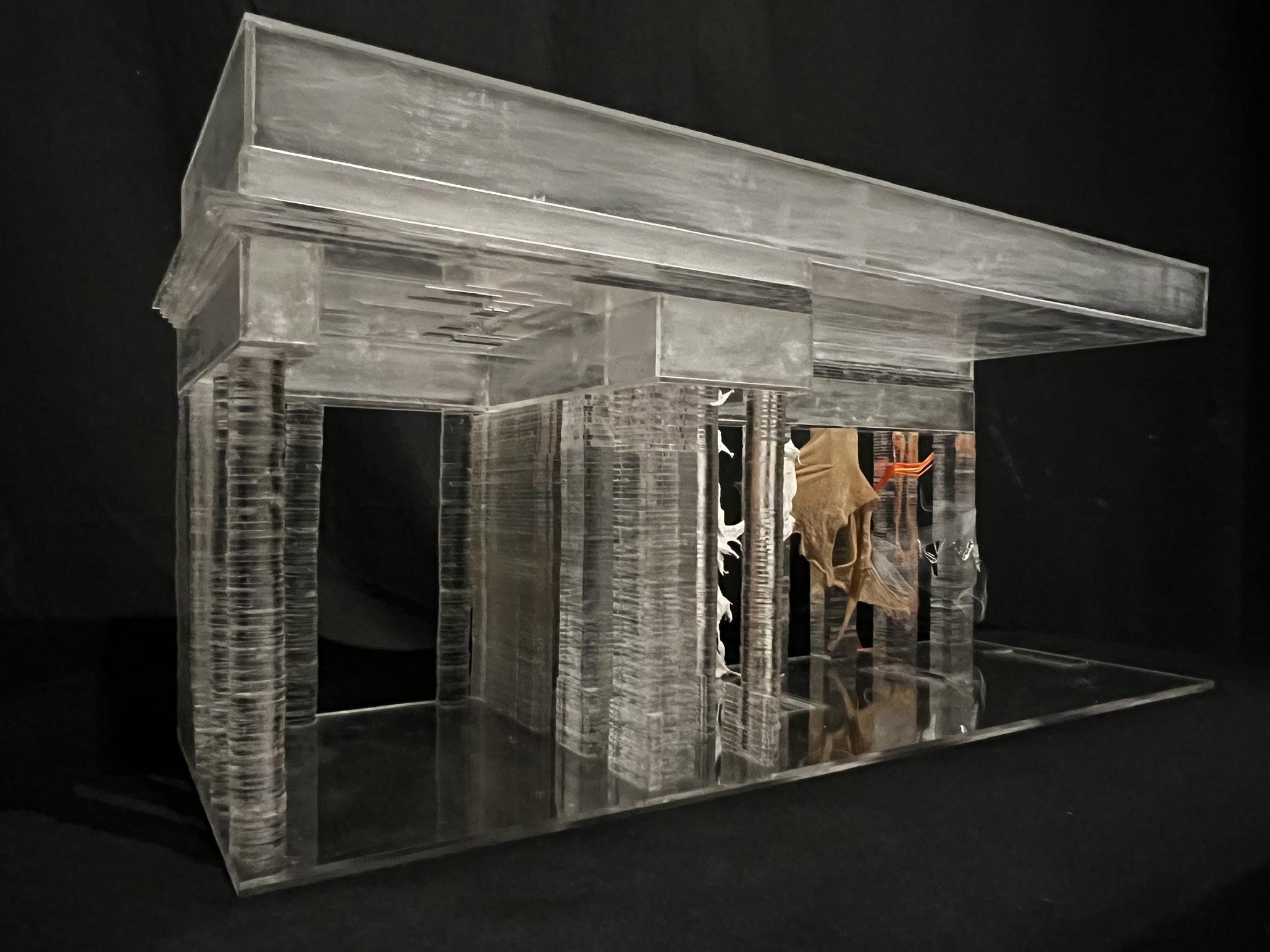
The intention of this project is to investigate the binary experience of a building and space, and through this study, gain a greater sensibility for the ways gender norms, perceptions, and binaries are perpetuated through the ways we construct the physical and occupiable world. The subject of investigation is the 30th Street Station in Philadelphia, a notable structure and welcoming icon to anyone arriving by train or bus to the “the City of Brotherly Love.” An experiential “queered” space installation challenges the well defined binary space of the station, deconstructing the architecture that forces humans to define themselves within space and rather creates an architecture of acceptance, reception, and love. Hard materials render soft forms, curved lines provide defined boundaries, and material quickly becomes immaterial. Layers distort and patterns warp experiences and without language to define these new forms, a non-binary ambiguity is created, ultimately transforming the known identity of architecture and therefore challenging and redesigning the known identity of the user.
03
04
The GENDER BINARY is a system that classifies sex and gender into a pair of opposites, often imposed by cultural norms, religion, or societal pressure. The binary system demands that all of the human population fits into one of two genders, man or woman.
BLURRING of the GENDER BINARY
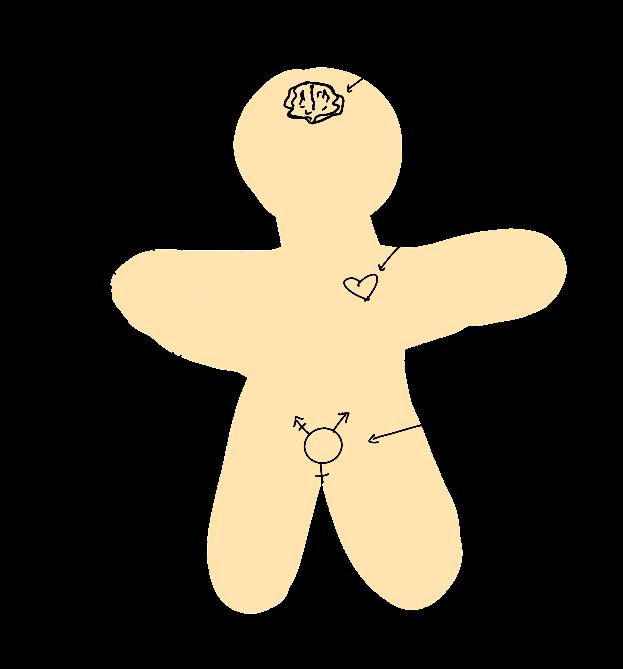
This system cannot encompass all humanity. There are “outliers” of the gender binary, hormonal mixing and blurring of masculinities:
The X and Y chromosomes carry over 1400 genes and only a few affect physiology leads to people being intersex. The SRY gene leads to the development of male sex chromosomes but no SRY gene and may therefore not develop as male. The levels
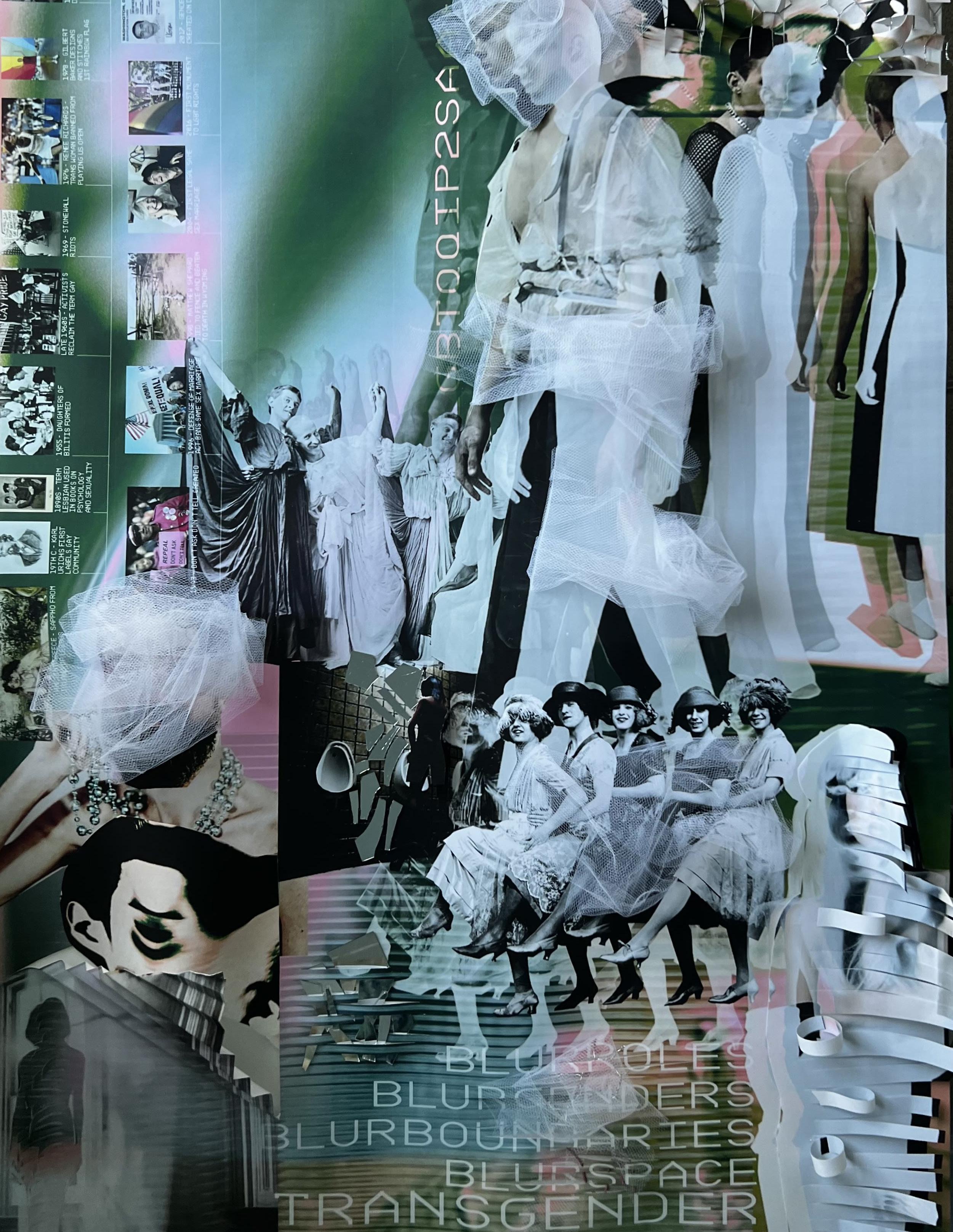
To create a way for all humans to find community, the acronym has been developed LGBTQQIP2SAA+ lesbian, gay, bisexual, transgender, queer, questioning, intersex, pansexual, two-spirit, nonconforming, gender non-binary, “Dansō”, agender, drag queens, etc.
The “+” indicates that the community includes more than contained in the acronym captured through labels.
BLURRING GENDER BINARIES over time
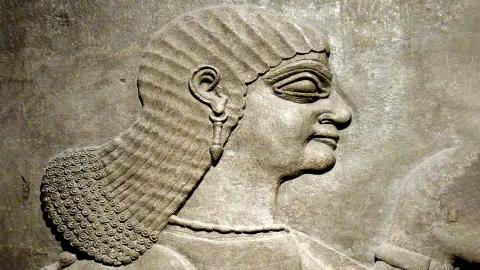
1700 BCE Mesopotamian Mythology - in the earliest written records of humanity are references to types of people who are neither male nor female, the Sumerian and Akkadian tablets describe how the gods created these people, their roles in society and different words for them.
2000-1800 BCEancient Egypt has three genders of humans; male, sekhet, and female.
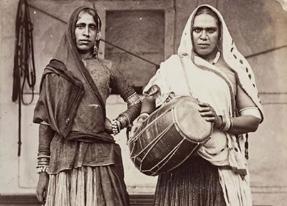
400 BCE - traditional gender-varient roles (analogous to nonbinary identity) are named Hijra in South Asian countries.
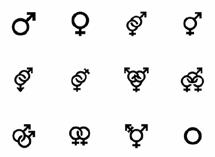
1st c. CEAncient Judaism recognized eight genders of the Talmud with distinct prohibitions for each.
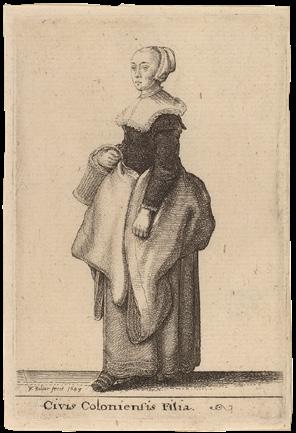
17th c. - Thomas Hall (birthname Thomasine) was raised as girl then performed as man in order to enter the military, after leaving the military Hall alternated between feminine and masculine attire until he was accused of having sex with both men and women.
1745 - After the “singular they” had been the standard gender neutral pronoun in english for hundreds of years, prescriptive grammarians began to say that was no longer acceptable for reason that neutral pronouns don’t exist in Latin, recommended using “he” as gender-neutral pronoun.
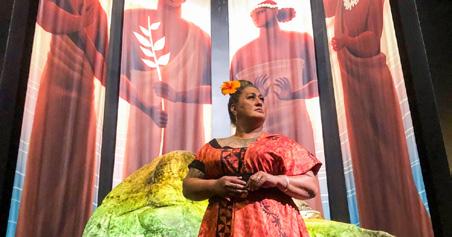
1789 - Māhū in Kanaka Maoli (Hawaiian) and Maohi (Tahitian), third gender people with traditional spiritual and social roles within their culture was first documented in Western logbook by Captain William Bligh.
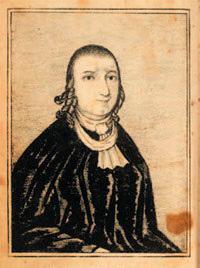
1752-1819 - The Public Universal Friend, a genderless evangelist who traveled throughout the eastern US to preach a theology based on that of the Quakers, believed that God had reanimated them from a severe illness with a new spirit that was genderless.
1990 - Native american/ first nations gay and lesbian conference chose two-spirit as an english umbrella term to define gender identities unique to native cultures.
1980s - handbook of psychiatry
DSM-III included “Gender Identity Disorder” to diagnose people as transsexual. Getting this diagnosis becomes a necessary step for many trans people to transition.
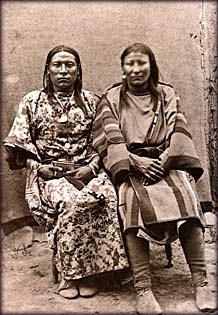
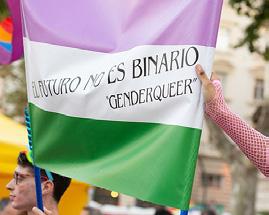
1990 - “gender queer” was defined as “a person whose understanding of her/hir/his gender identification transcends society’s polarized gender system.”
1995 - a neutrois person named HA Burnham created the word “neutrois” a name for nonbinary gender identity.
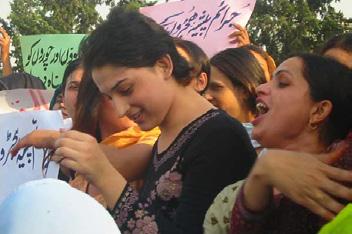
2009 - India began to allow voters outside the gender
2012 - The first annual International Nonbinary Day was celebrated on 14th July. 2013 - A newer version of handbook of psychiatry replaces the “gender identity disorder” diagnosis with “gender dysphoria” to lessen the pathologization of trans people.
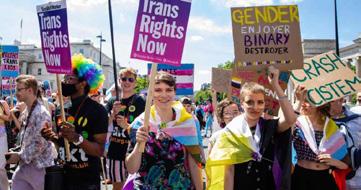

2010 - The state of Arkansas enacted a policy allowing gender on drivers licenses and state ID cards to be changed to M,F, or X with no questions asked, no documentation required.
binary to register their gender as other on ballots.
2014 47000 a whitehouse.gov petition for USA recognition nonbinary
2013 Nov 13 - 18 year old Sasha Fleischman was assaulted for wearing gender nonconforming clothing when they fell asleep on a public bus a stranger lit Sasha’s skirt on fire and suffered second and third degree burns.
05
binary, but in every human, there is a biological, genetic and
associated with gender and there is a natural variation that sex characteristics, however it is possible to be a person with XY of estrogen and testosterone shift and change over a lifetime.
developed over time;
two-spirit, androgynous, asexual, ally PLUS genderfluid, gender
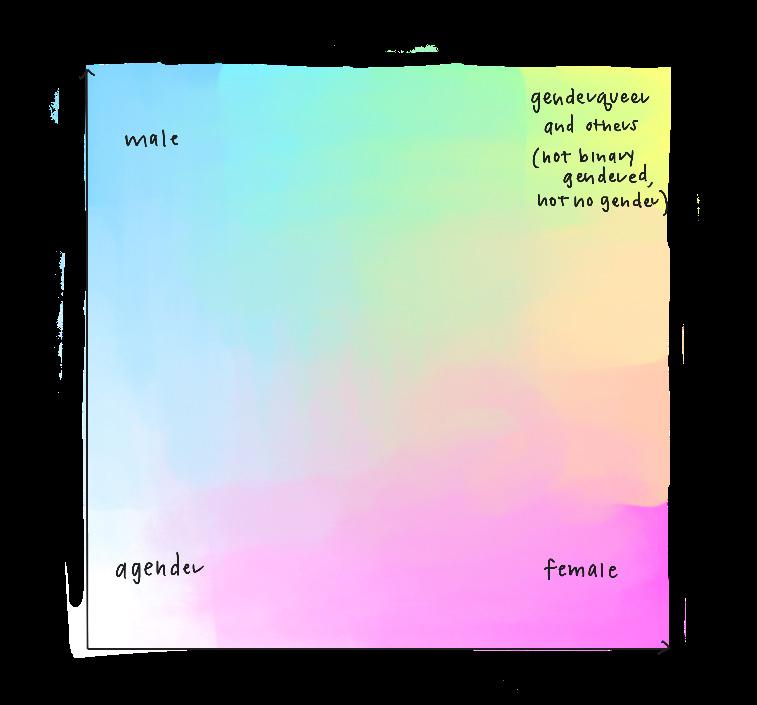
acronym AND not everyone’s sexuality or gender identity can be two-dimensional representation of gender spectrum
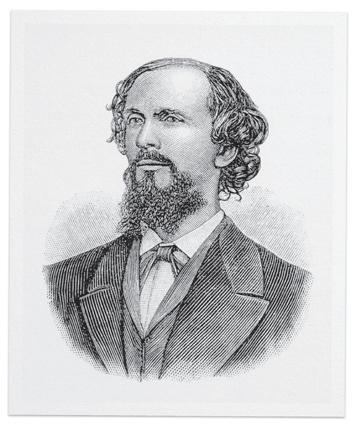
1870s - Karl Heinrich Ulrichs developed a theory in which men who are attracted to men and women who are attracted to women are because they are members of a third sex, a mixture of both male and female with the psyche of the opposite sex and coined names for homosexual (urnings(m) and urningin (f)), heterosexual (dionings) and bisexual (uranodionings).
2014 - More than 47000 people sign whitehouse.gov petition asking USA federal recognition of nonbinary genders.
2016 - MerriamWebster added cisgender, genderqueer, and Mx. to its unabridged dictionary.
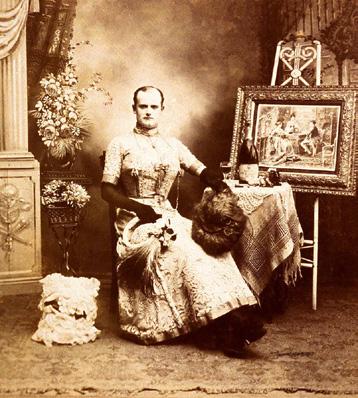
1890s - Paresis Hall in NYC was a place with an active nightlife for LGBT people.
1895Autobiographer Jennie June formed an organization called the Cercle Hermaphroditos of androgynes who frequented Paresis Hall, the earliest known organization for LGBT rights.
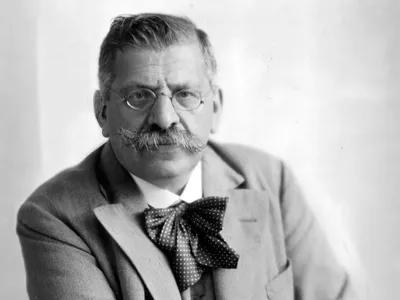
1910s - German sexologist Magnus Hirschfeld created the term “transvestite” and opened the first clinic to treat them, the Institute of Sex Research. In 1933, the Nazis destroyed it all, setting LGBT rights back 40 years.
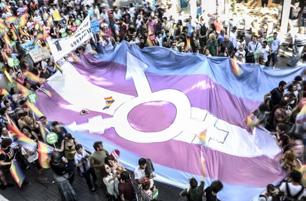
2017 - California passed the 2017 Gender Recognition Act to ensure that intersex, transgender, and nonbinary people have state issued identification documents that provide full legal recognition of their accurate gender identity.
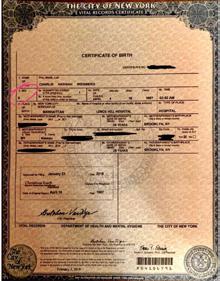
2018 - NYC passed a law allowing X gender markers on birth certificates without medical documentations.
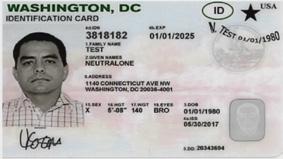
2017 - USA’s District of Colombia began to offer nonbinary drivers licenses.
2018 - Washington DC public schools began to offer nonbinary as a gender option on school enrollment form.
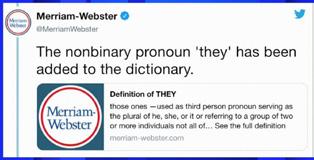
2019 - Merriam Webster declared “they” as top word of the year.
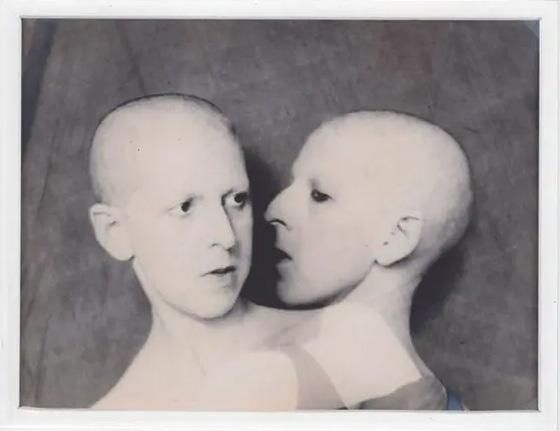
1944 - During WWII the Jewish surrealist artist Claude Cahun with their life partner Marcel Moore engaged in resistance work and activism against the Nazis during the German occupation of France. They were arrested in 1944 and sentenced to death but the sentence was never carried out.
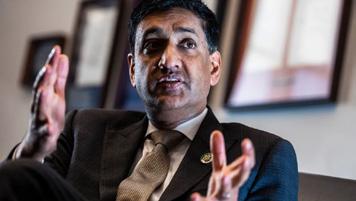
2020 - Ro Khanna proposed the Gender Inclusive Passport Act which would add an X option to USA passports.
2019 - American Psychological Association (APA) Style Guide was updated to endorse the use of singular “they”.

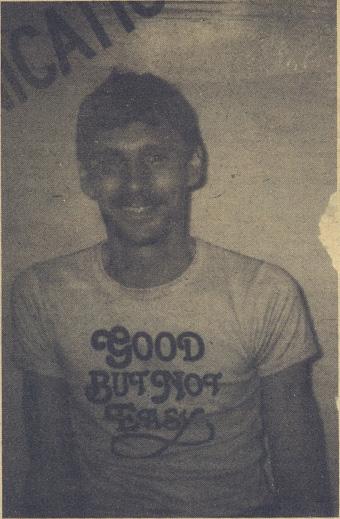
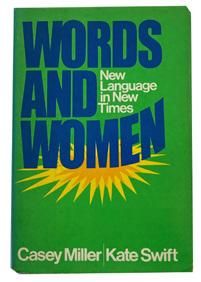
1970s-80s - feminists Casey Miller and Kate Swift were significant influences on encouraging people to take up gender inclusive language as alternative to sexist language that excludes or dehumanizes women, encouraged gender neutral pronouns.
1965 - The gender neutral title Mx. began to be used.
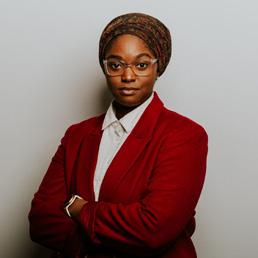
2021 - In June the American Medical Association (AMA) make a public statement recommending that the sex marker should be removed from the public facing part of birth certivficates - “birth certificate fails to recognize the medical spectrum of gender identity”.
2020 - Mauree Turner was elected to the Oklahoma state legislature making them the first openly nonbinary person elected.
1978 - An issue of Philadelphia Gay News contains interview D.J. Beck who started a transfeminine transition, lived as a woman for a year and a half, and ceased taking feminizing hormones. They explained that “our culture feels that one must be male or one must be female. Our society demands that you cannot be both, you cannot be in between, you cannot be flexible.” They felt uncomfortable as male and unnatural as female.
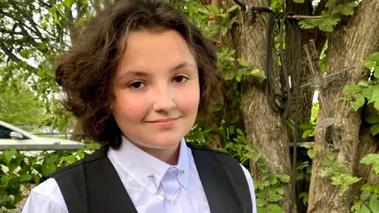
Feb. 7, 2024 - Nonbinary 16 year-old Nex Benedict endured over a year of bullying by their classmates and after being brutally beaten by their classmates in a bathroom at Owasso High School, died the following day. The school gave Benedict a two-week suspension and did not call emergency services after the attack.
06
setting the stage for GENDER PERFORMANCE
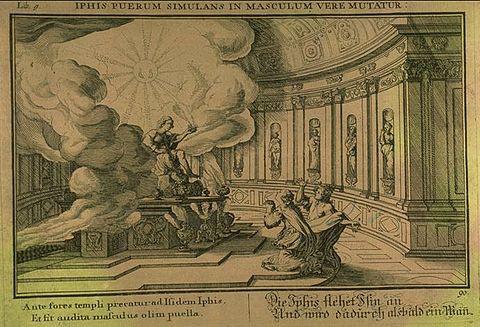
According to Ovid’s Metamorphoses, there was a man and woman, Ligdus and Telethusa, expecting a child. Ligdus informed his wife that they could not afford a dowry for a daugher and warned that if the child was female, she would be put to death. Telethusa was visited in the middle of the night by the Egyptian goddess Isis who advised her to disobey her husband’s orders and keep the child and raise them as a male regardless of gender, ensuring her that she would aid in future troubles. When the child was born it was female, Telethusa raised her as a son and instructed her in performing as a male, naming them Iphis, a gender neutral name. When Iphis was arranged to be married, Telethusa tried to delay the wedding as the ruse would be discovered and took Iphis to the temple of Isis and prayed for aid. When they left the temple her daughter was transformed, “Her face seemed of a darker hue, her strength seemed greater, and her features were more stern. Her hair once long, was unadorned and short... For in the name of truth, Iphis, who was a girl, is now a man!”
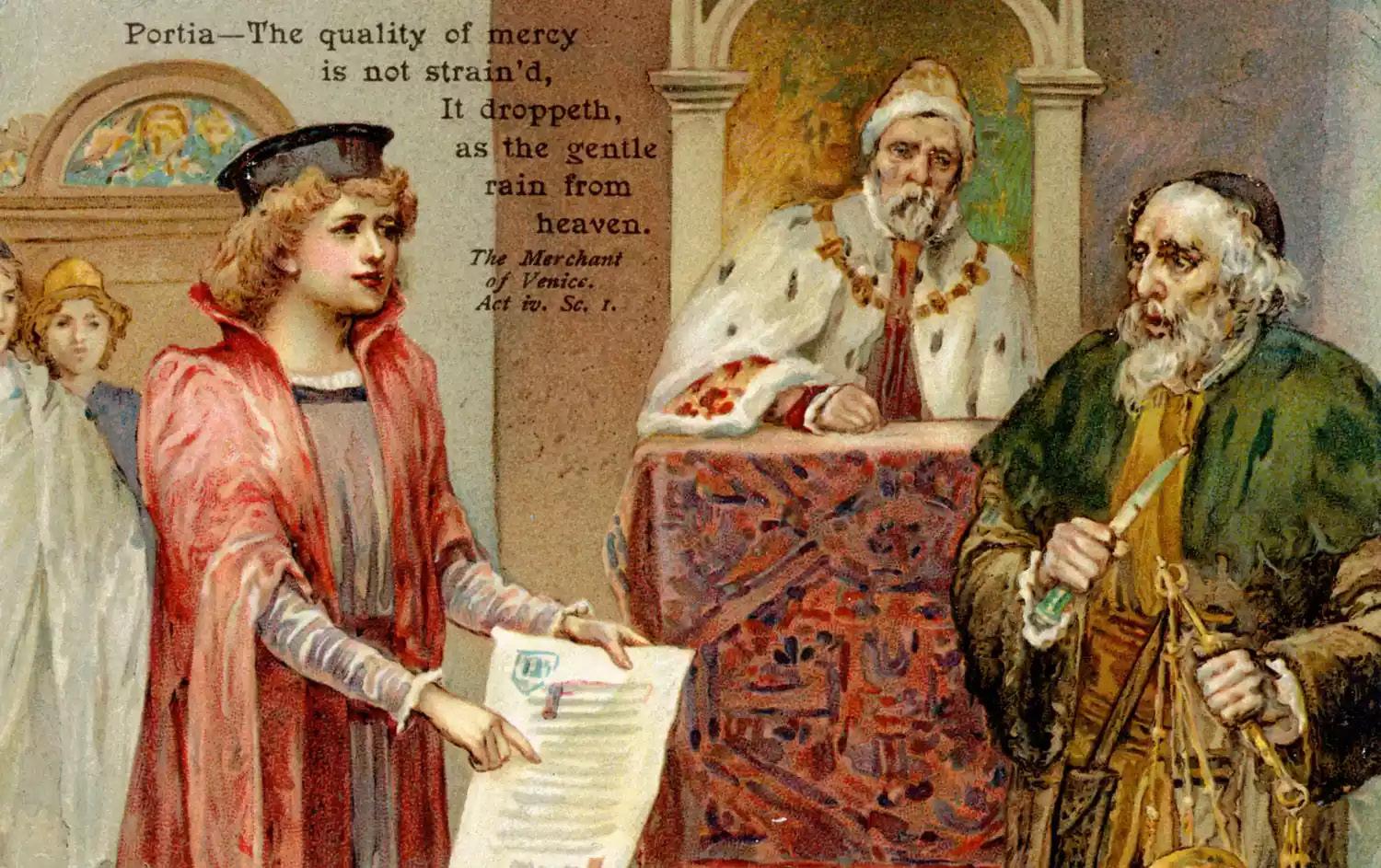
The tradition of men portraying women on public stages dates back to the theater of Ancient Greece, however it is most well known in practice in Shakespeare’s theater. In 17th century England, social expectations of femininity, being subservient, quiet, and homebound, played a significant role in the performance of gender on stage. Women were set to have ambitions confined to marriage, childbirth, and homemaking and were therefore legally restricted from the stage. Although there were consequences for “cross-dressing” in public, the theater provided a unique area where gender could be manipulated and played with by men because of the restriction of women.
Jo Michael Rezes, theater educator, begins scene from “The Importance of Being Earnest” They claim that because of the fluidity of gender has been rehearsed by many over time, but potential for experimentation with gender
07

GENDER PERFORMITIVITY THEORY
Judith Butler coins and develops the idea of Gender Performance in her book Gender Trouble. She describes the notion of gender as a performance and argues that masculinity and femininity are culturally learned behaviors. Gender performance relies not only on materials applied to the body but also on the environment in which the body is performing, so architecture plays a role in gender performance. In a 1988 essay by Judith Butler, she claims that “gender is an act which has been rehearsed, much as a script survives the particular actors who make use of it, but requires individual actors in order to be actualized and reproduced as reality one again.”
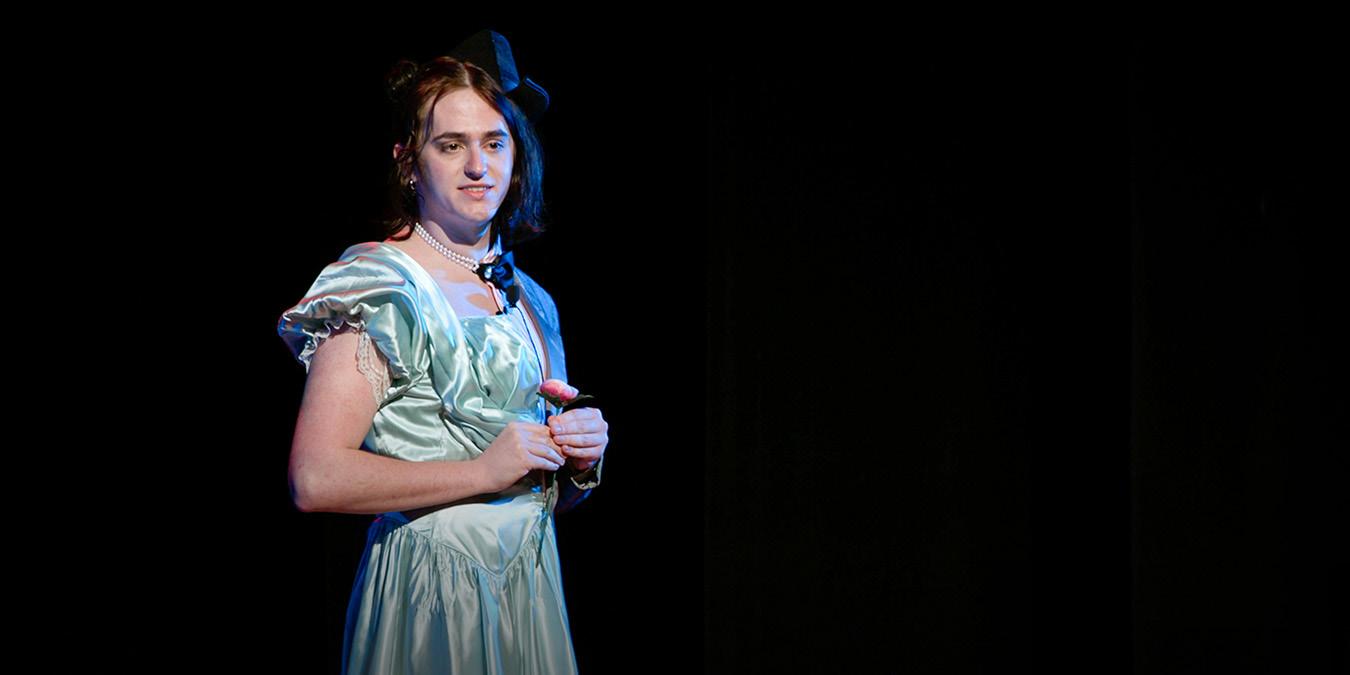
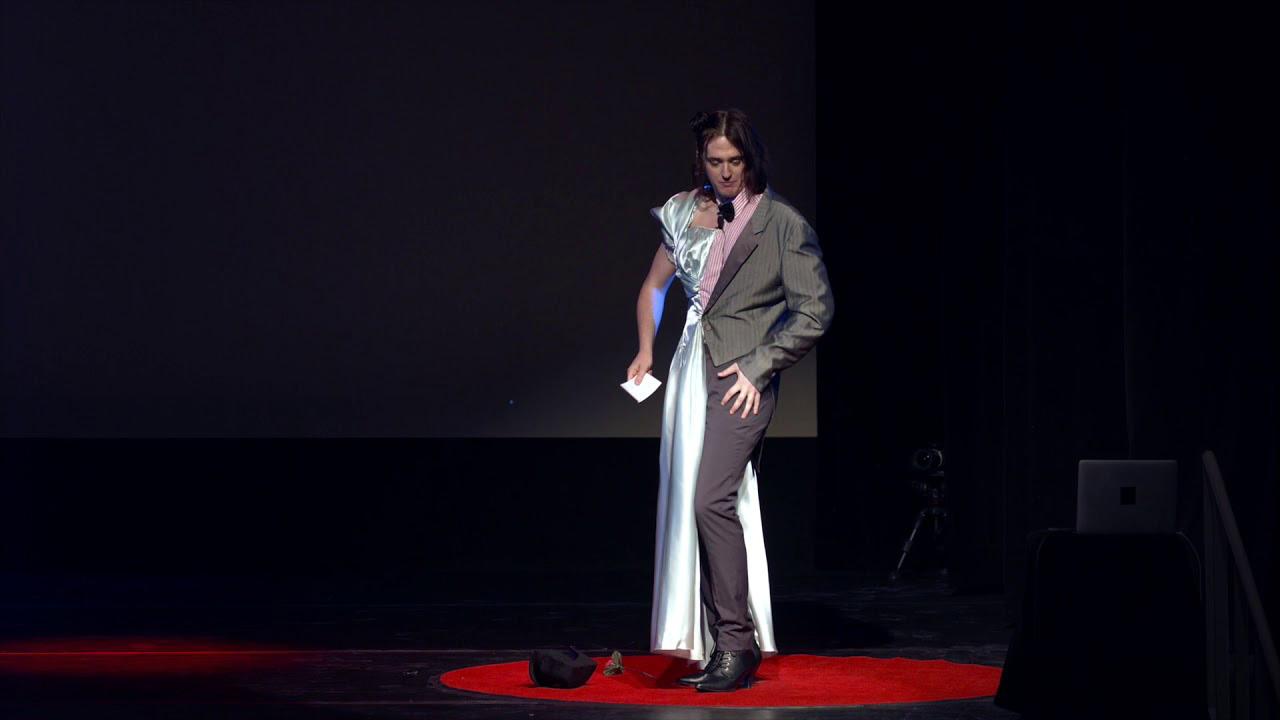
begins their TED Talk, “A playful exploration of gender performance”, with a performance of a Earnest” swapping between the gender binary by playing both roles of Cecily and Algernon. gender performance, “gender isn’t over, gender is just beginning.” Gender is an act that but when we fail or make mistakes because no one is ever truly ready for performance, the emerges.
08
GENDER PERFORMANCE artists
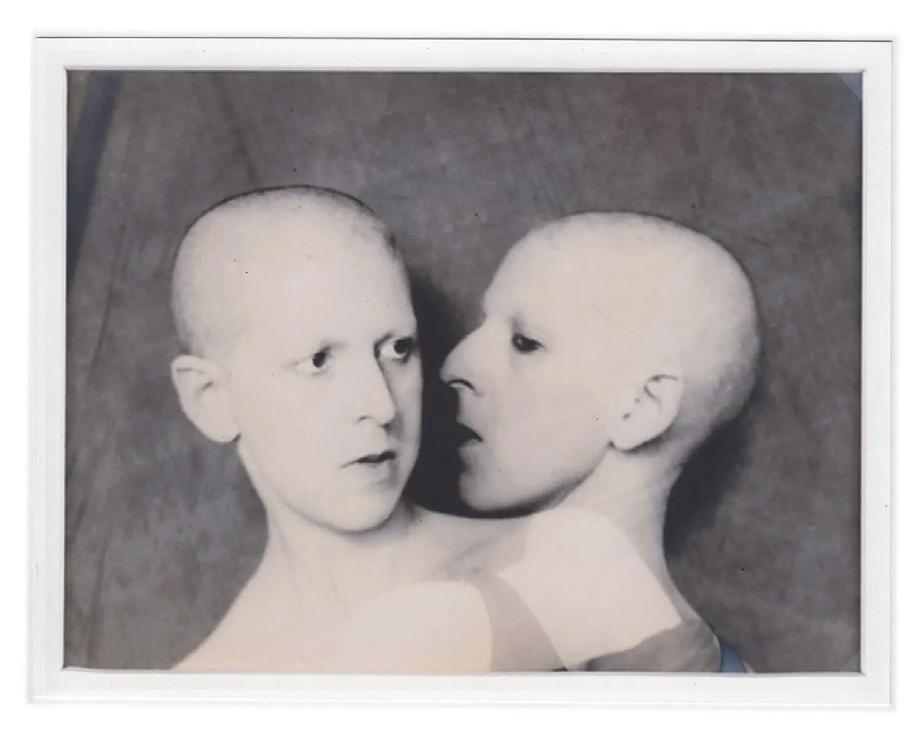
Claude Cahun, “Que me veux-tu?”, 1928
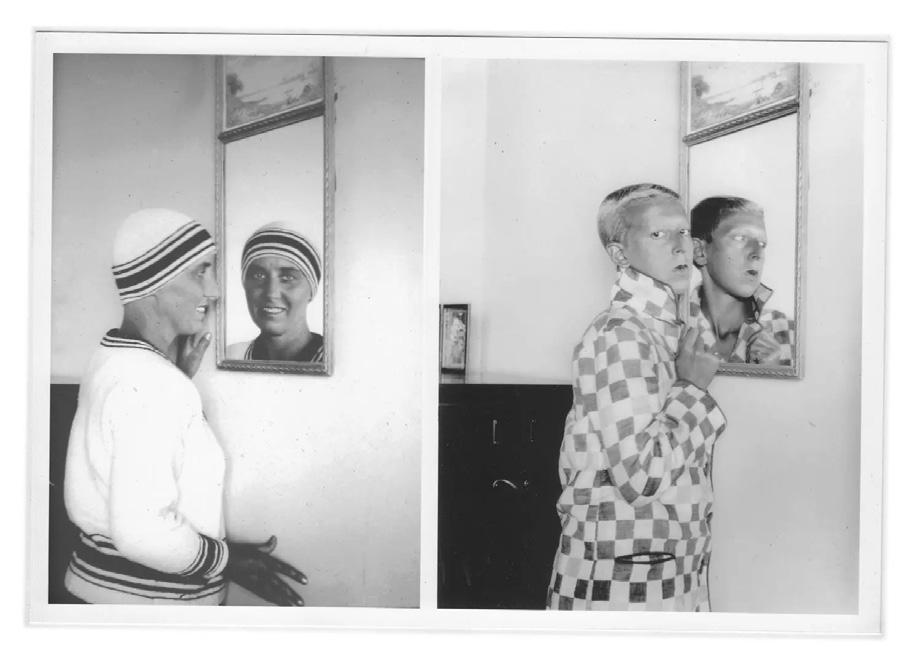
Claude Cahun, Left, “Marcel Moore” and right, “Self Portrait”, 1928
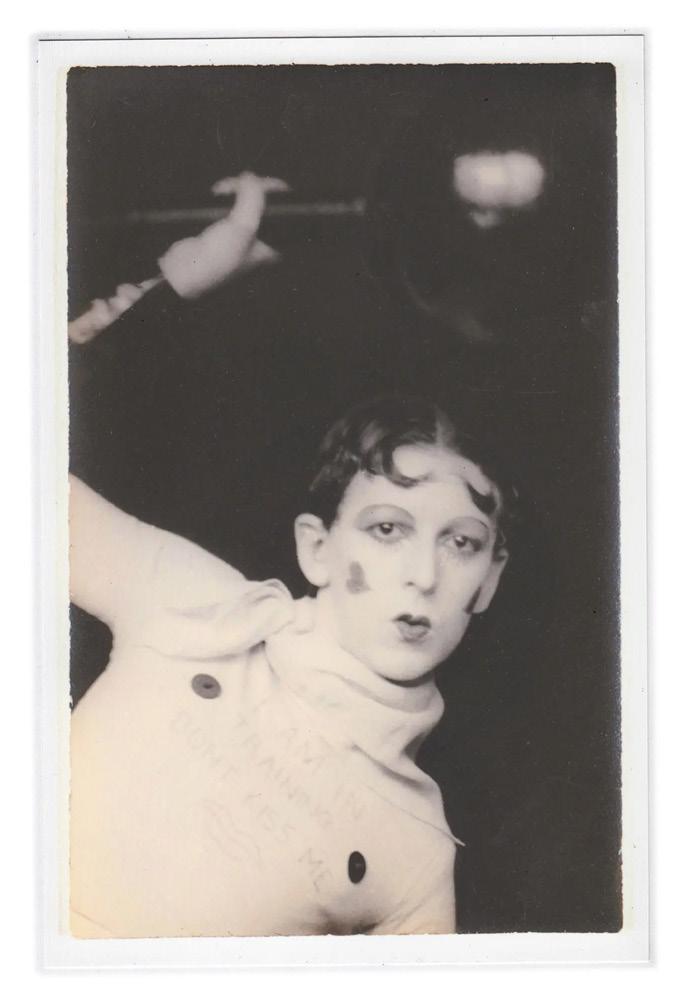
Claude Cahun and Marcel Moore, Untitled, 1928
Claude Cahun and Marcel Moore, Untitled (Claude Cahun in Le Mystére d’Adam), 1929
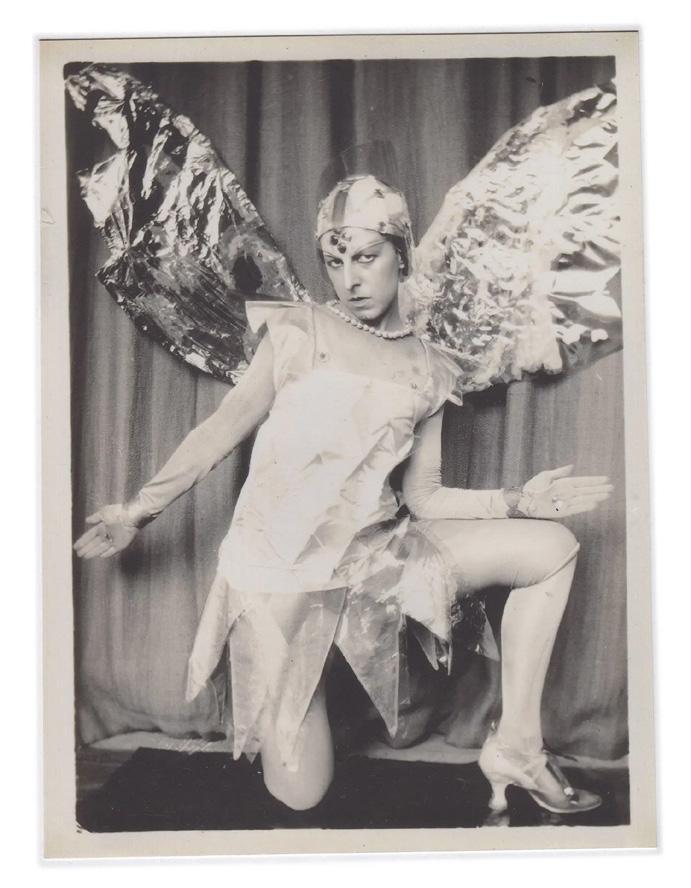
In the early 20th century France, society generally expected people to follow strict gender binary constructions. Lucy Schwob, however protested these norms, changing their name to Claude Cahun and engaging in a lifelong exploration of gender and sexual identity and ambiguity as a writer and photographer. Long before “they” was a gender neutral pronoun and terms like transgender and queer theory were developed, they revolted through playful, but deliberately ambiguous choreographed portraits of themself taken by partner Marcel Moore.
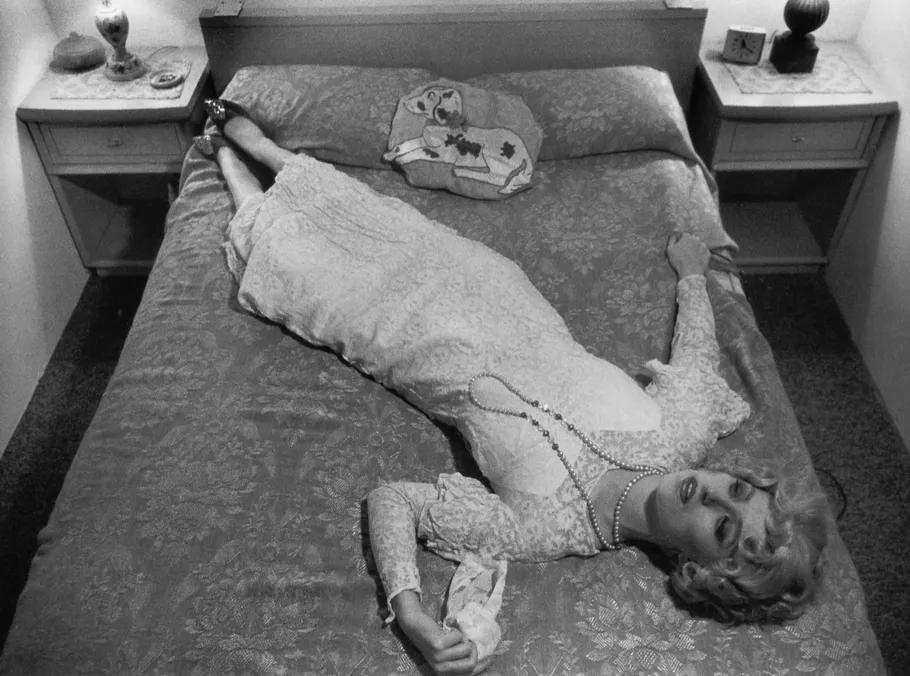
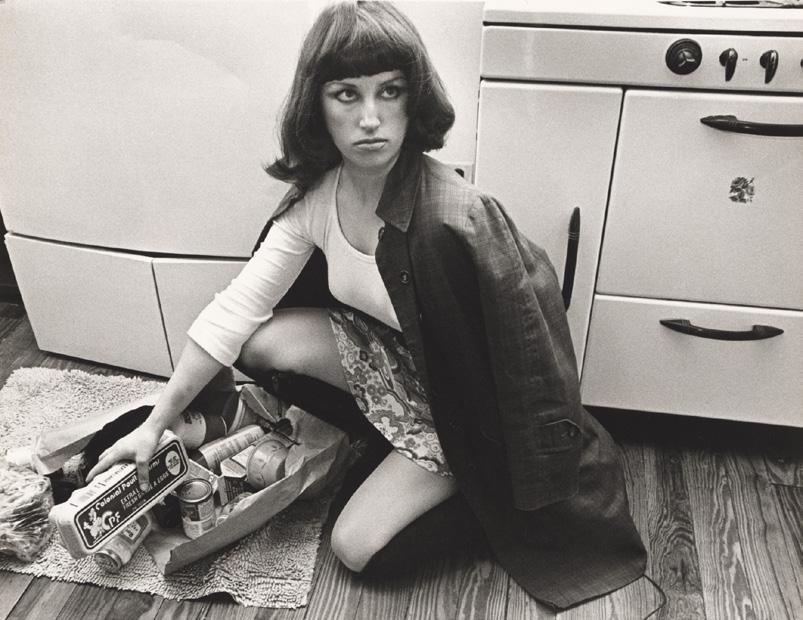
In Sherman’s collection of photographs, she casts herself in various stereotypical roles inspired by 50s-60s films, showing the performative characteristics of female behavior and their relations to the space around them.
09
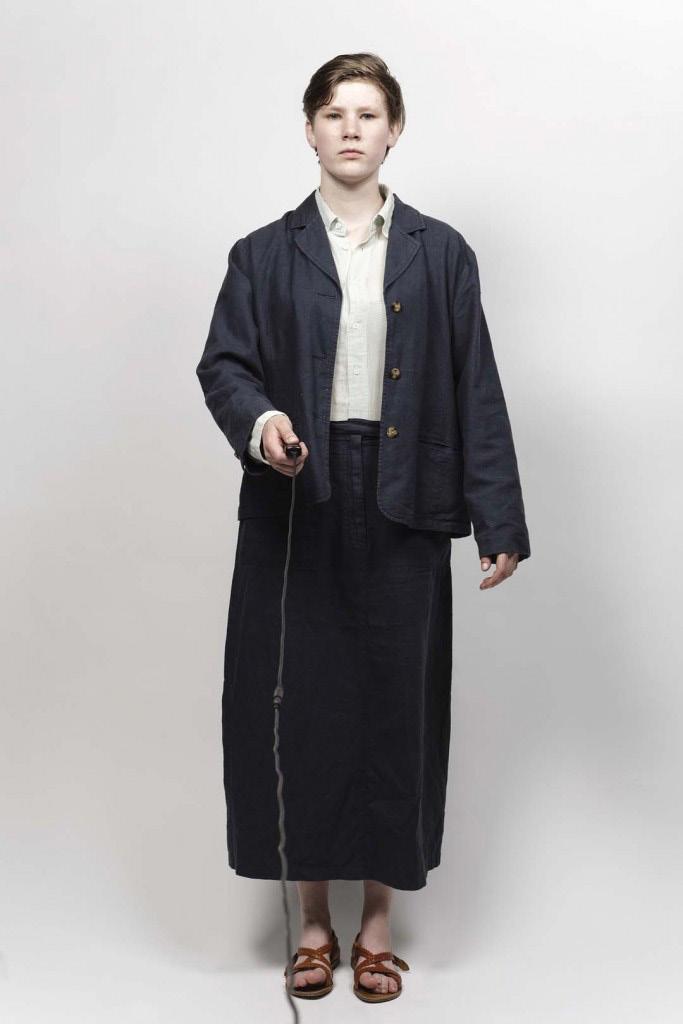
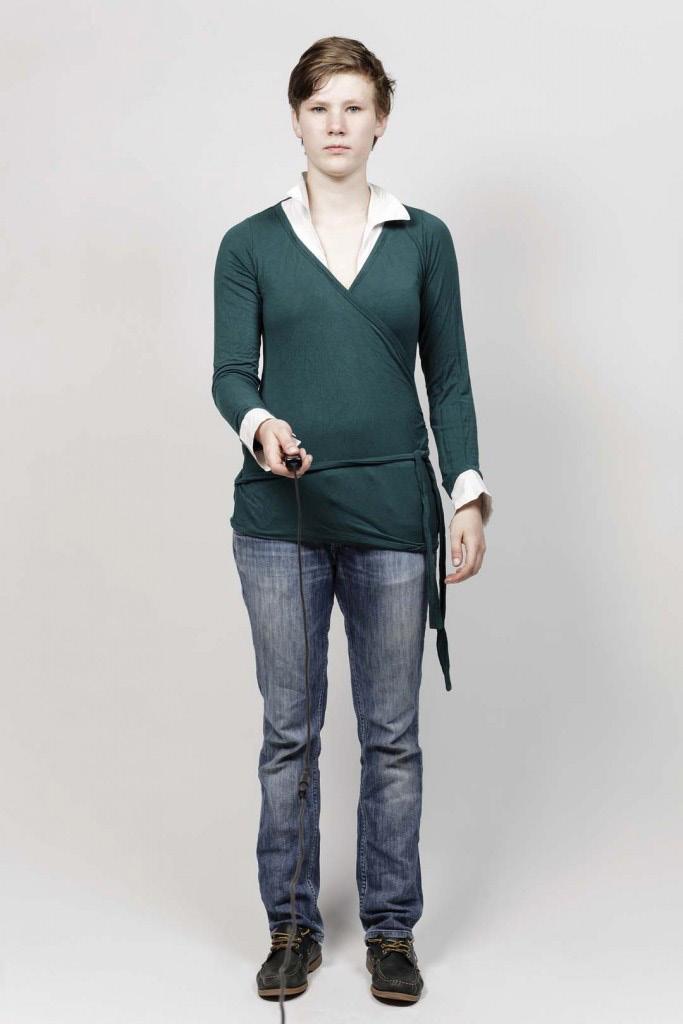
Bryce Anderson explores the fluidity of their identity through self-portraits and the art of gender performance and fluidity in make-up and fashion. They explain that they began shooting these images because, “I have always known that I’m not meant to be just ‘Bryce’, but a vehicle for the lives of others and their ideas to live through me.”
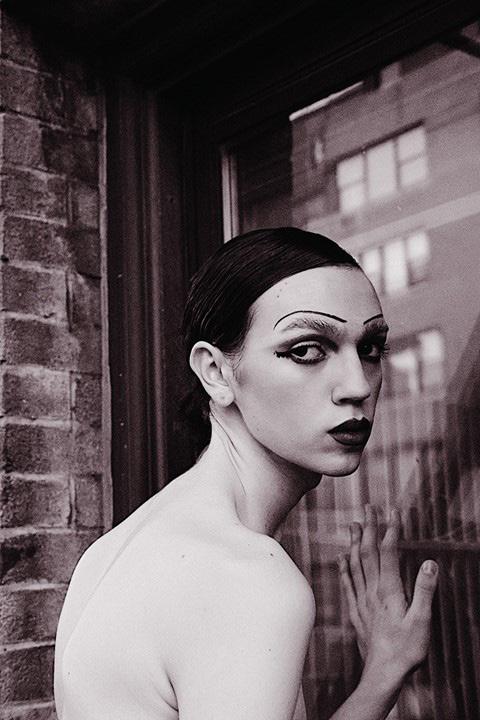
Bryce Anderson, Self-Portraits, 2020

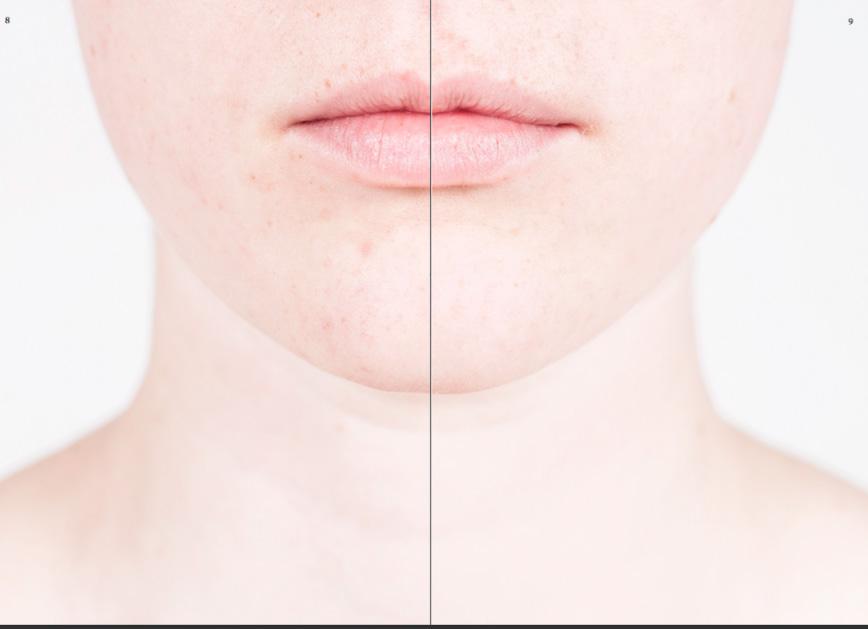
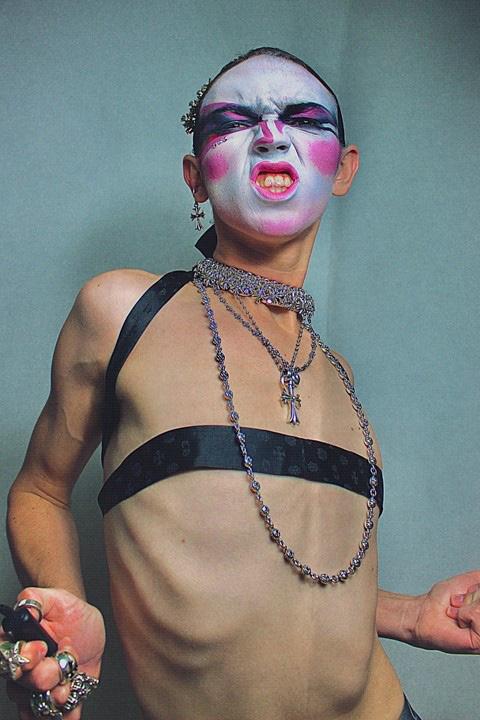

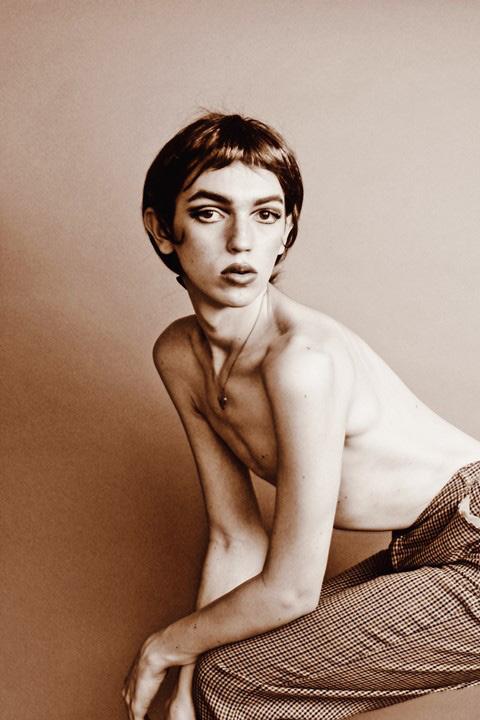
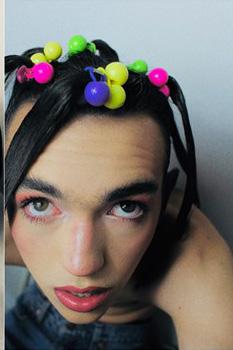

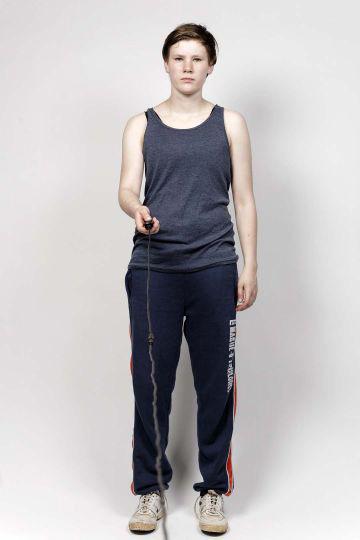
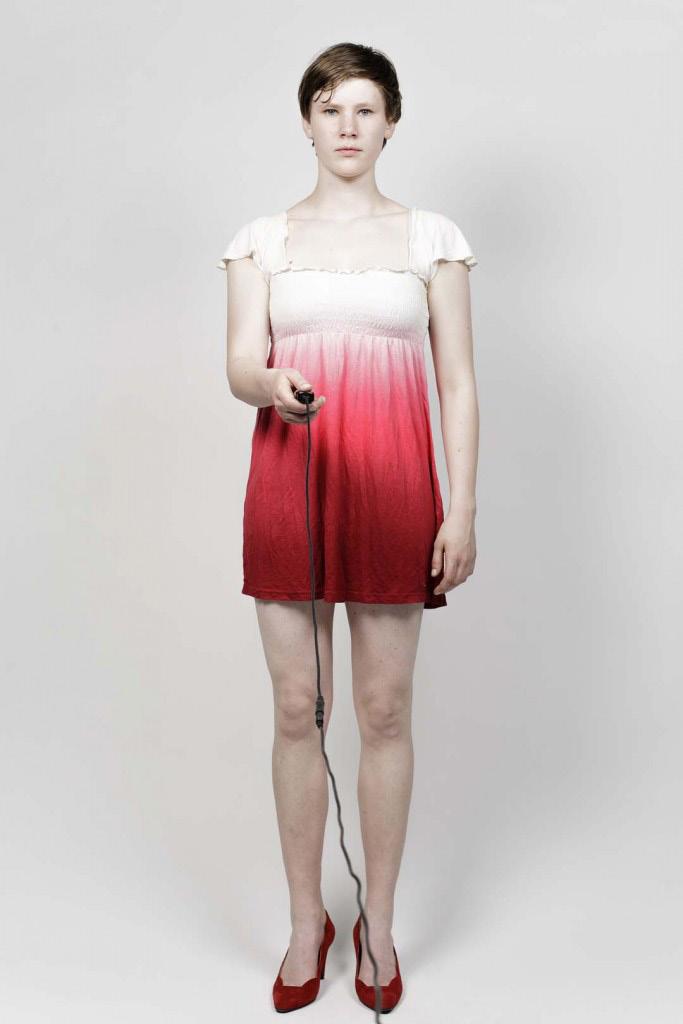
Chris Rijksen, Encore to Iphis, document 1 of the transformation, 2013
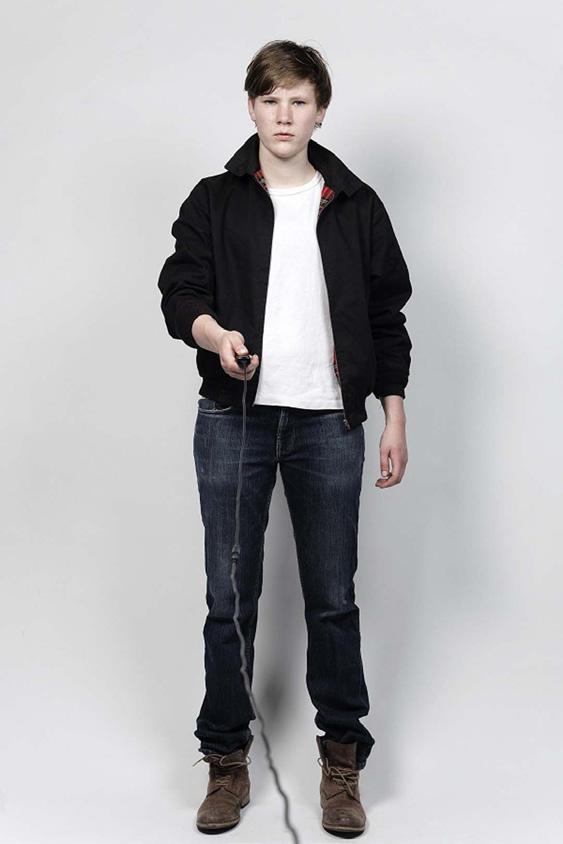
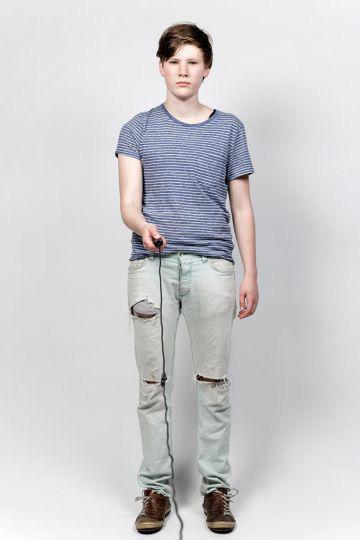
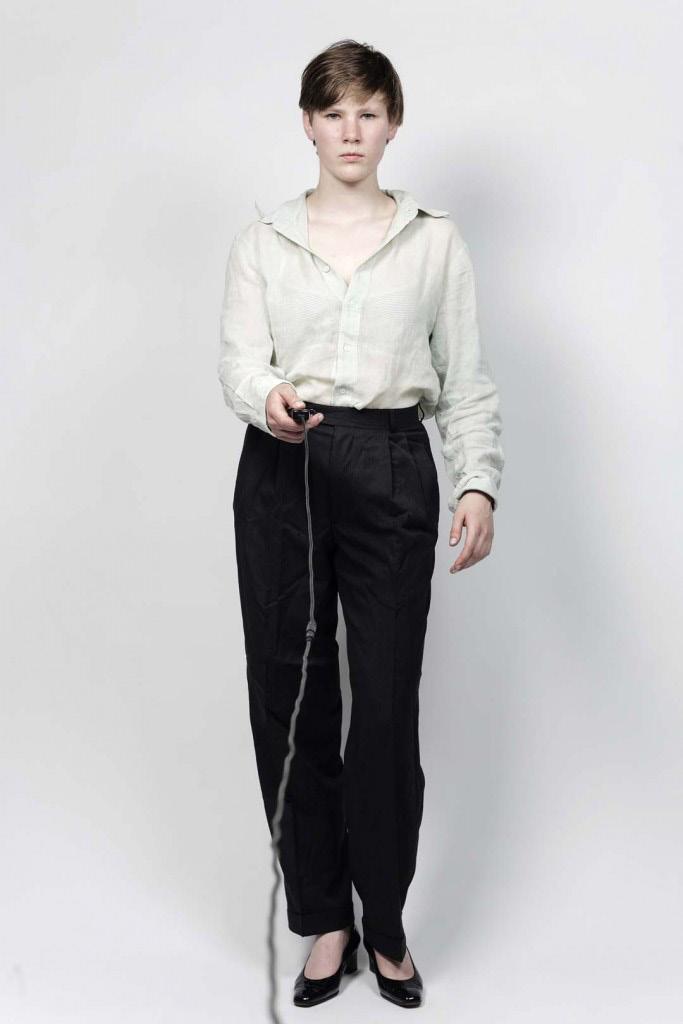
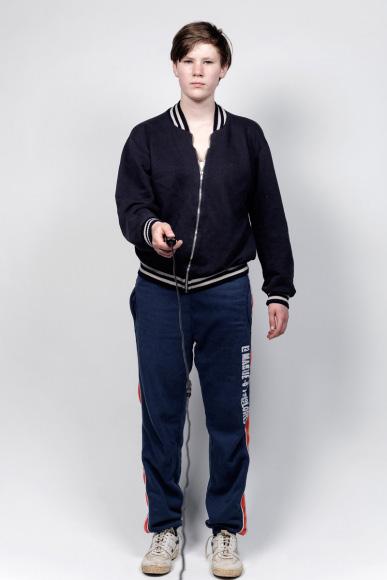
Chris Rijksen is a photographer and creative who produces collections and installations that question the transformation of the body between the male and female and the fluidity and malleability of gender expression.
 Cindy Sherman, Untitled Film Still #11, 1978
Cindy Sherman, Untitled Film Still #10, 1978
Chris Rijksen, Gender as a Performance, 2012
Cindy Sherman, Untitled Film Still #11, 1978
Cindy Sherman, Untitled Film Still #10, 1978
Chris Rijksen, Gender as a Performance, 2012
10

11
The distinction of queer within sexual orientation and queer as the interrogation of power structures and rearranging of hierarchies is essential to understand in defining the project.
QUEER THEORY
Queer Theory is a critical discourse developed in the 1990s to deconstruct (‘to queer’) sexuality and gender and oppose gender essentialism, the theory that attributes distinct and intrinsic qualities to men and women. Queer theorists instead see sexuality as a social construction, fluid, and plural rather than a fixed and natural identity. The term “queer theory” was coined by feminist theorist, Teresa de Lauretis and supported by the work of Judith Butler, introducing gender performativity. Queer Theory has significantly influenced cultural and literary theory, postcolonialism, and sociology, and “queering” is now applied to other academic disciplines.
A main concept that queer theory challenges is the idea of “heteronormativity,” a worldview that promotes heterosexuality as the norm and preferred sexual orientation and is reinforced in society through institutions. Heteronormativity is a form of power and control.
Queer theory, therefore, cannot be solely about sexuality because sexuality cannot be disconnected from the other categories of social status and identity. This allows queer theory to be applied to multiple disciplines and interrogate institutions and hierarchies that are constructed in society.
12
other disciplines intersecting with QUEER THEORY
LITERATURE and FUTURISM
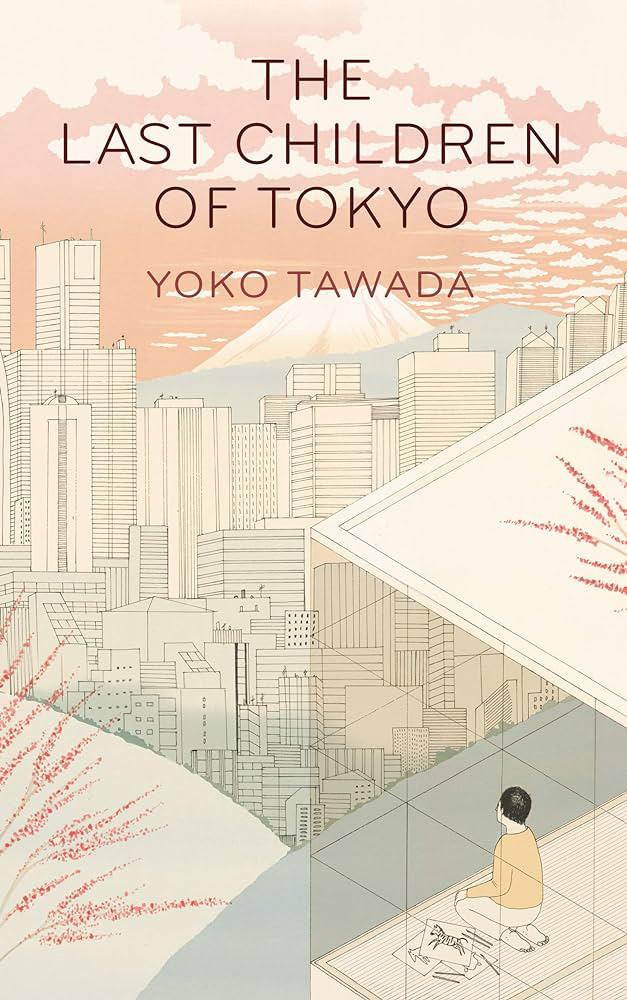
In post-nuclear disaster Tokyo, the old, most over 100 years of age and have lost the capacity to die, while the young are born with mutation, frail and prone to sickness. Japan is closed off from the rest of the world in the trade of both language and goods. The inner city of Tokyo is too contaminated to inhabit and the children in the novel have never played outside or experienced animals since they are all long extinct. The old cannot die due to their continued neglect of the interests of future generations and their crimes upon the environment. The elderly must witness the apocalyptic future they created and the end of the Anthropocene as they know it.
The novel resists a typical reproductive futurism where there is a child redeemer or salvation, and instead describes a queer future. The children in the novel embrace their abnormalities, trans-bodies and -genders, and differences. The distinction between male and female breaks down and most people change sex at least once in their lives. The children experience bodily abnormalities that change the way they interact with each other in school and the way they interact with the world. Tawada describes these abnormalities and interactions, “Even Mumey, who was in danger of falling with every step he took, knew how to cleverly shift his center of weight downwards and then throw himself onto Yasukawamaru’s back with his arms outstretched... It looked more like a precisely choreographed dance than a fight.” (Tawada, p. 156).
The novel adopts José E. Muñoz’s notion of “queer futurity”. Mumei, the young main character with mutations, directly translates to “nameless” which relates to the unknowability of the future to come expressed in queer futurity.
Muñoz describes this; “We have never been queer, yet queerness exists for us as an ideality that can be distilled from the past and used to imagine a future. The future is queerness’s domain... Queerness is essentially about the rejection of a here and now and an insistence on potentiality or concrete possibility for another world.”
“Consequently, reproductive futurism blocks contingency, including the possibility of queerness that exists outside heteronormativity, from arriving in the future, while continuously believing that ensuring the reproduction of the same identity, ideology and social orders in the future is “progress”.” (Otsuki, p. 462)
13
VOICE and MUSIC
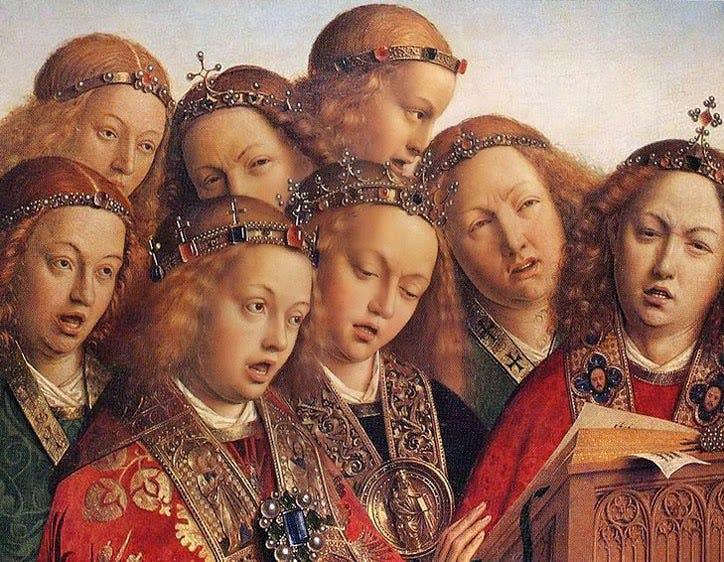
THE CASTRATO
The influence of testicular secretion causes the male vocal cords to increase in length by 67%, when the female vocal cords increase only 24% causing the lowering of pitch in male voices. In the late 16th century, the practice of castration began to preserve the unbroken male voice and carry high pitch into adulthood with fully grown resonating chambers and large throracic capacity. The initial stimulus for the production of castrati was by the Sistine Chapel in the Vatican City so singers could sing complex church music without allowing women to sing in the church. They continued to castrate young boys for this purpose until 1903. The process created bodily abnormalities, not just with a smaller larynx and vocal cords the size of female sopranos, but also with an abnormal growth and distorted look that was neither feminine nor masculine.
TRANSGENDER VOCAL PERFORMANCE
Gender dysphoria can be further exacerbated by the rigid gender roles tied to performance and pedagogy of European classical singing. Various aspects of vocal performance like passaggio, a break between vocal registers, have been understood as an essential biological reality, while they are really a cultural practice, constructed through performance norms, driven by gender. From antiquity to modern day, we have understood head voice and chest voice, but later developments of the fach system, voice parts, or falsetto voice regulate the performance of vocalists and often prescribe gender performance.
14
QUEERing ART
HANNAH HÖCH & DADAISM
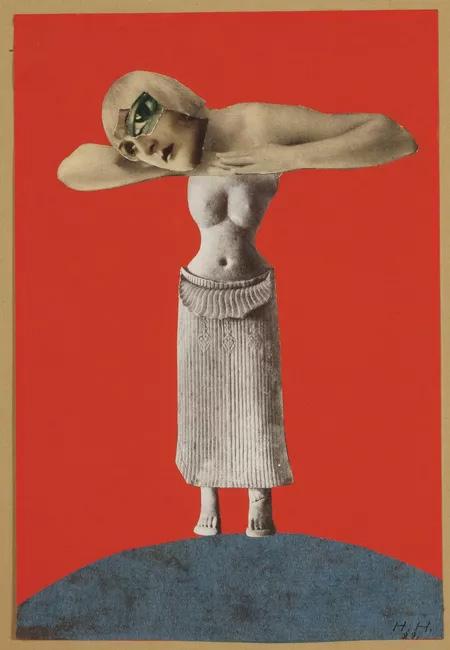
UNTITLED, HANNAH HÖCH, 1930
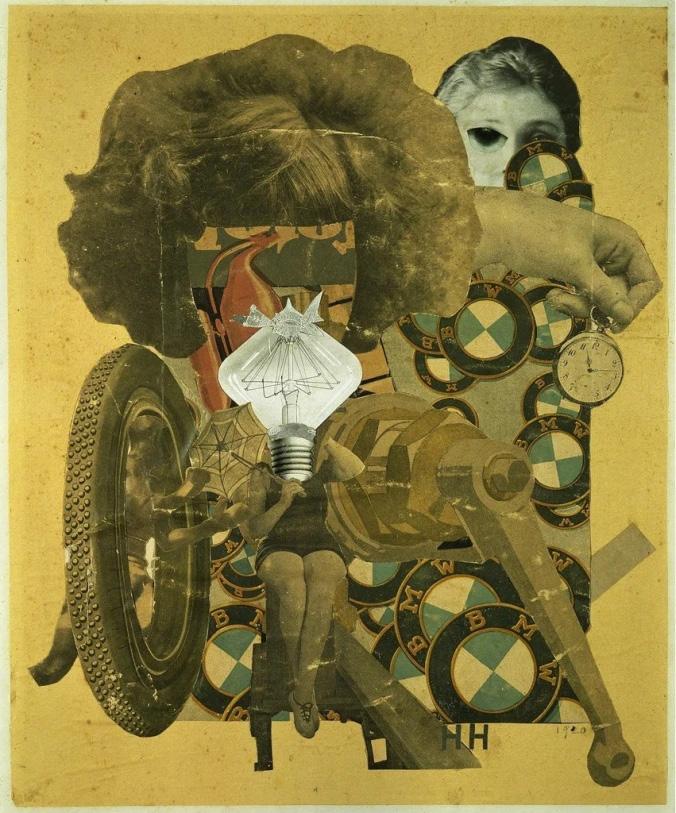
Höch’s photomontages offer her visions of German interwar culture from a queer, feminist perspective, critiquing the instability of the country. She addressed gendered discrimination in ‘The Beautiful Girl’ where the woman’s head is a lightbulb depicting how corporations and new technologies have overtaken individuality despite the myths of flexibility, rights, and opportunities hidden behind the “New Women”.
HOUSES OF RAVICKA, GLADMAN, 2022
In the speculative Houses of Ravicka, Gladman architecture as flexible, and never where

I SING THE BODY ELECTRIC, LINUS BORGO, 2022
The artist links his disability to transness , depicting a body that does not want to fit into the body as is.
THE BEAUTIFUL GIRL, HANNAH HÖCH, 1920
15
speculative fiction piece, Gladman defines moving around, where it was left.
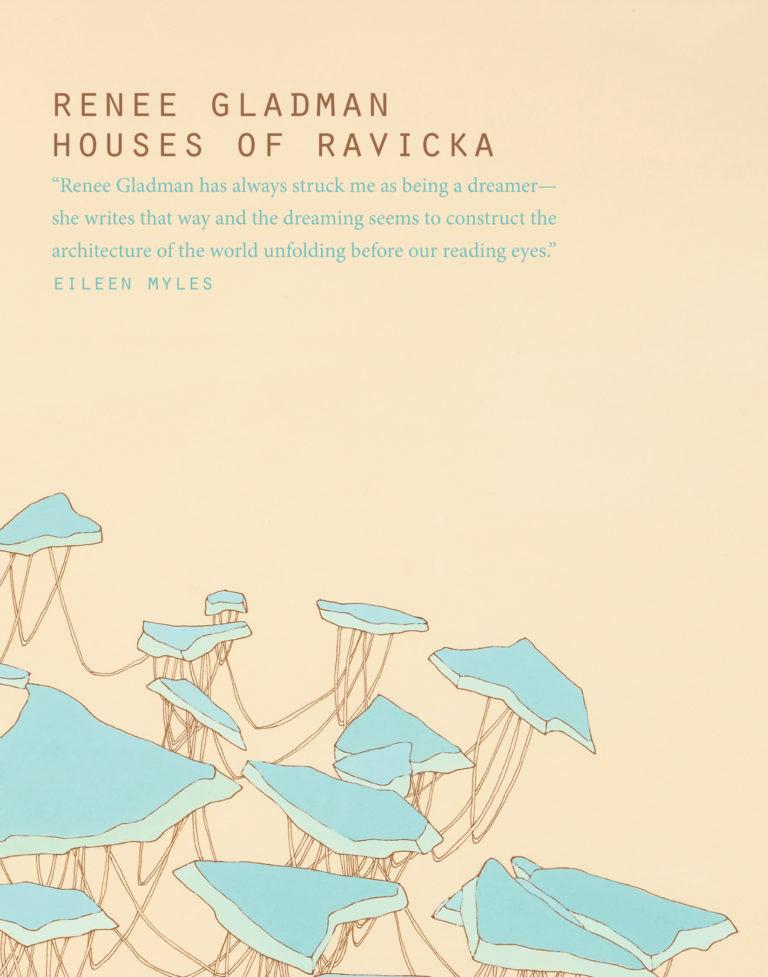
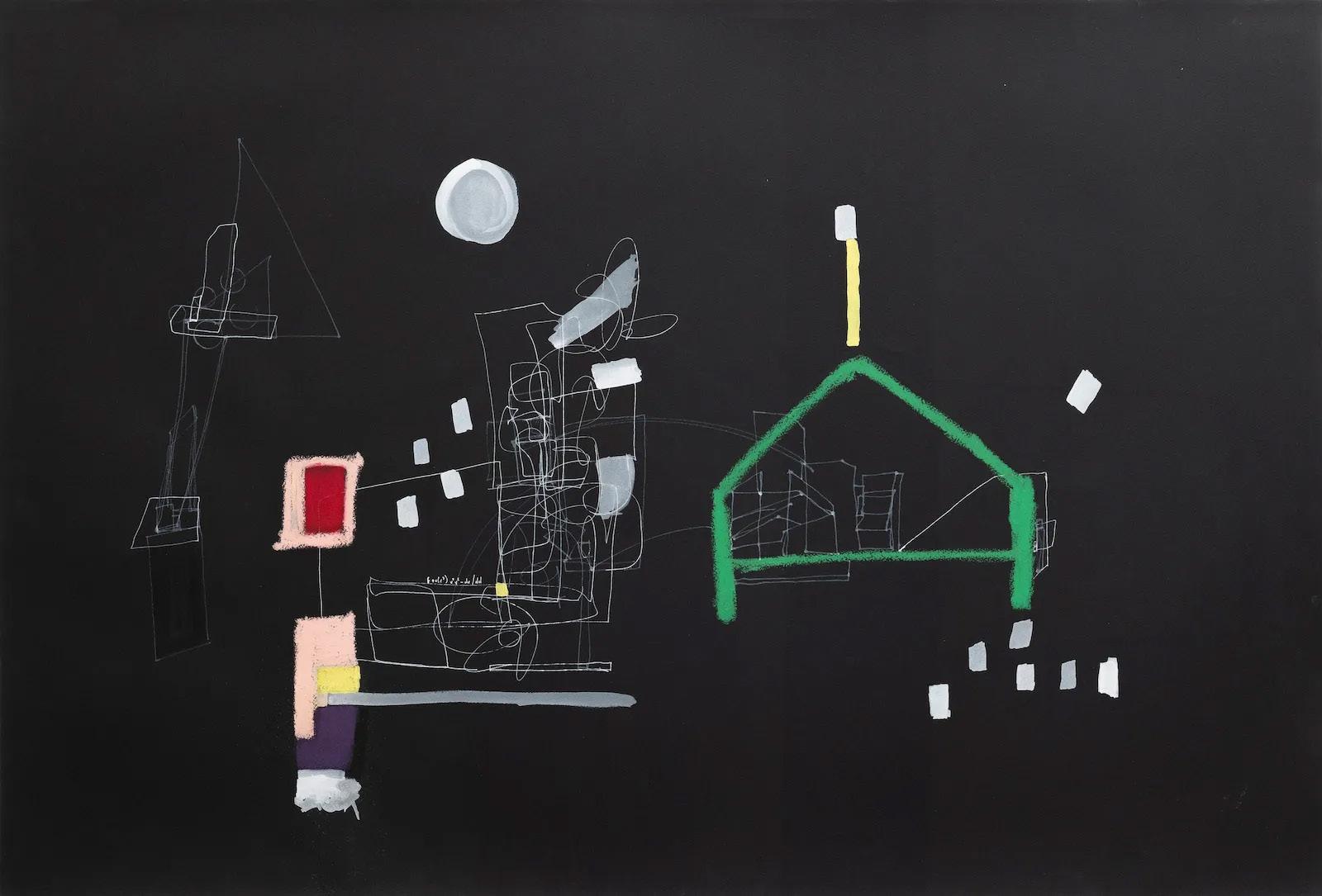
UNTITLED (BLACK CITY), RENEE GLADMAN, 2022
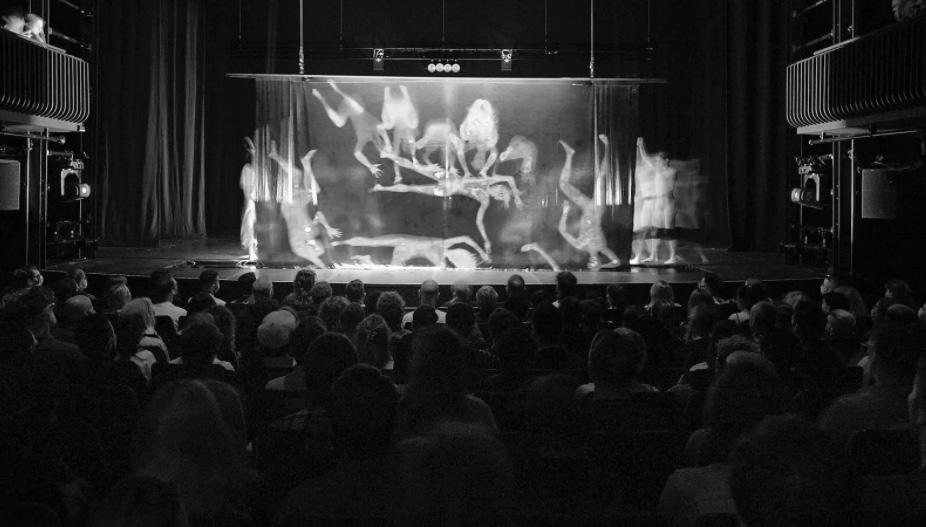
With the backdrop of US antitrans legislation, the piece asks; how do we manifest empowerment, sensuality and self actualization in a society that actively tries to erase? This piece is a combination of dance and cyanotype photography, the viewer’s physiology hijacked as live images are seared into the audience’s retina by a massive flashing box. The work opposes and reinterprets Yves Klein’s ‘Anthropometries’ paintings where the models acted as passive “human paintbrushes” through representation in a collective process of empowered labor. RAVICKA, RENEE
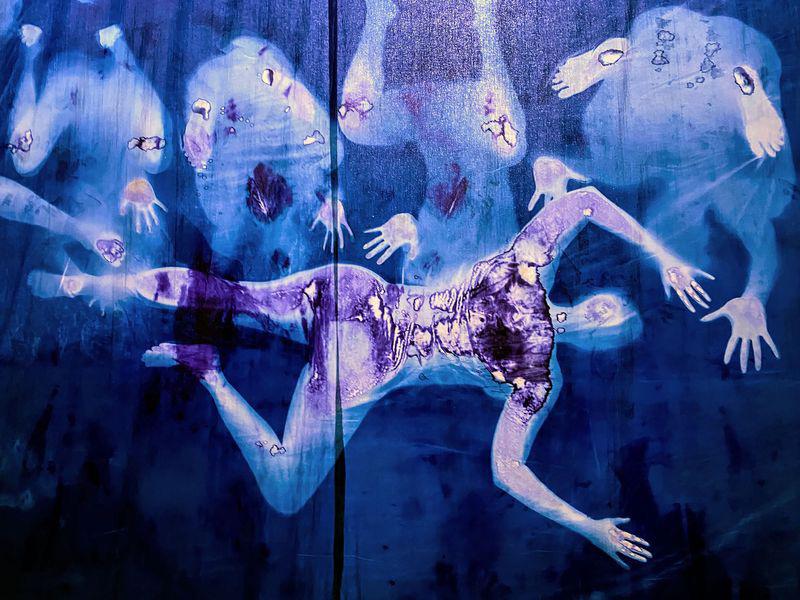
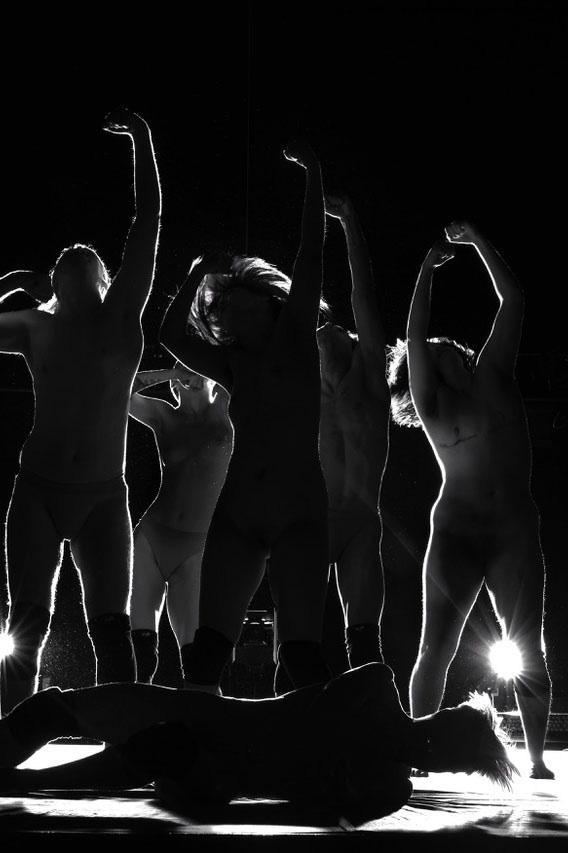
HUMAN MEASURE, CASSILS, 2024
16
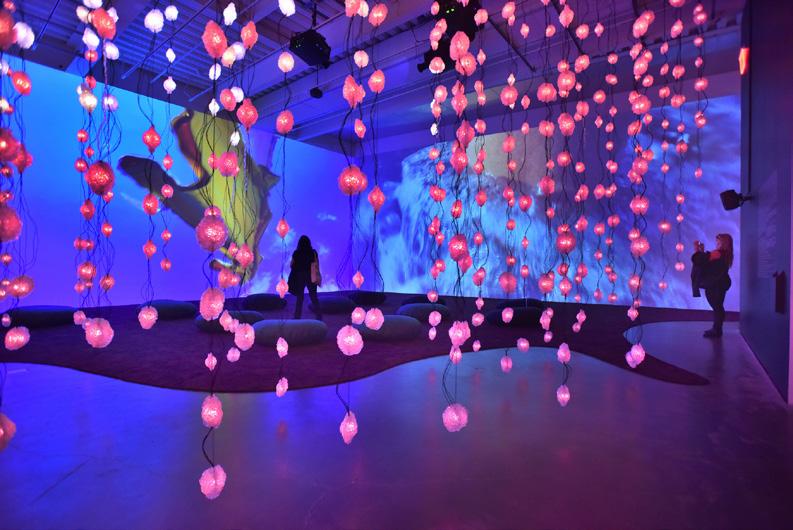
PIXELWALD, PIPILOTTI RIST, 2016
HERBSTZEITLOSE, PIPILOTTI RIST, 2004
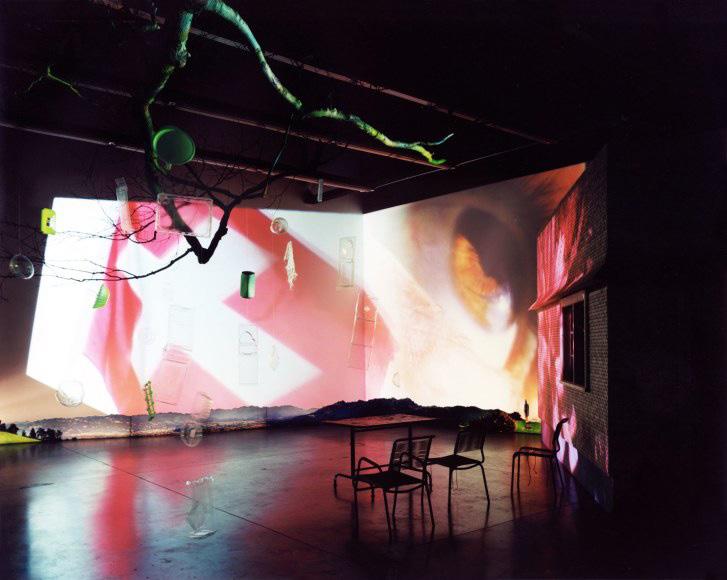
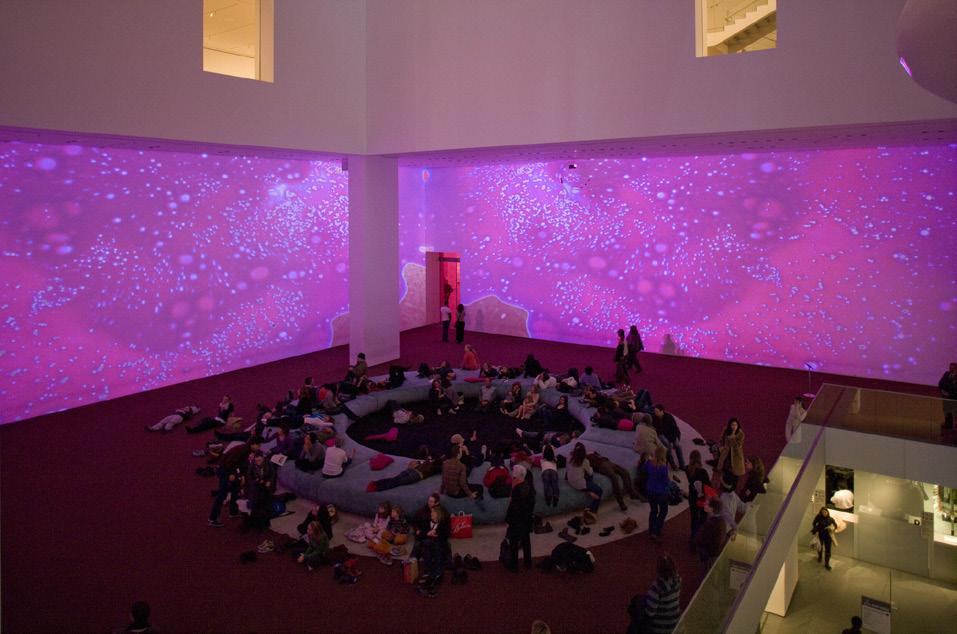
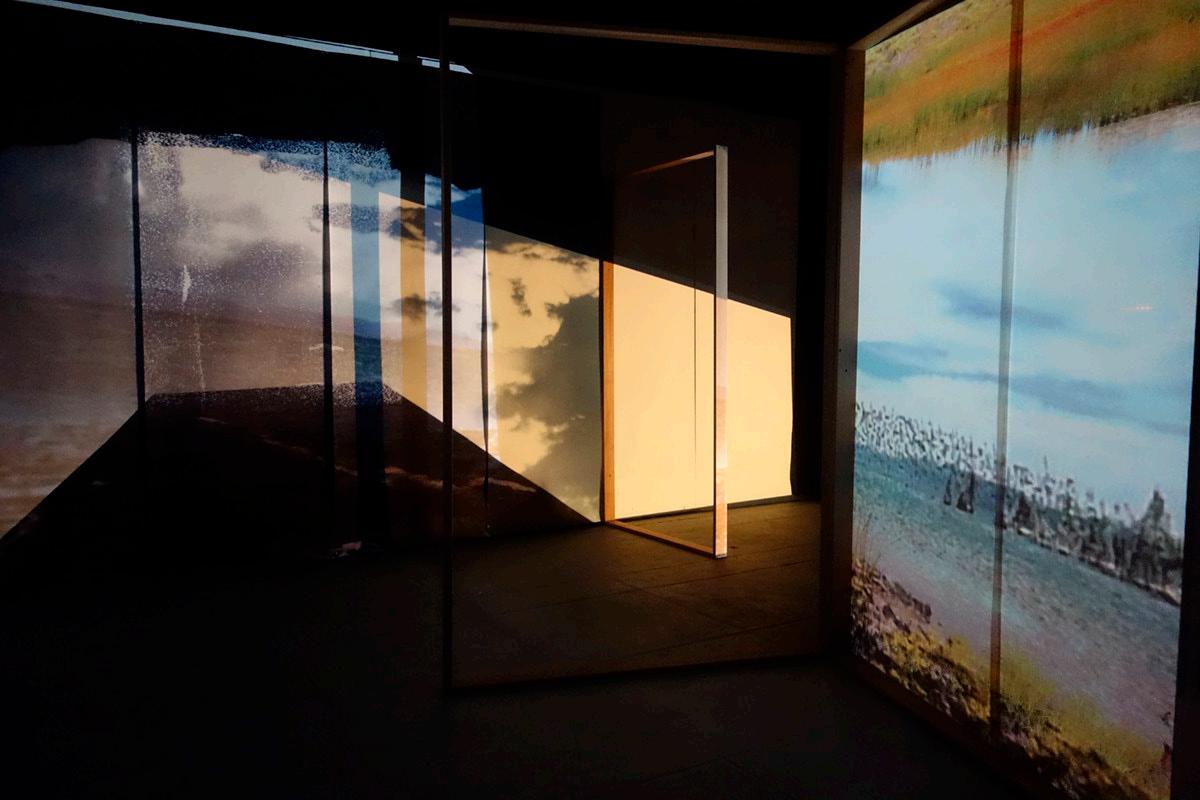
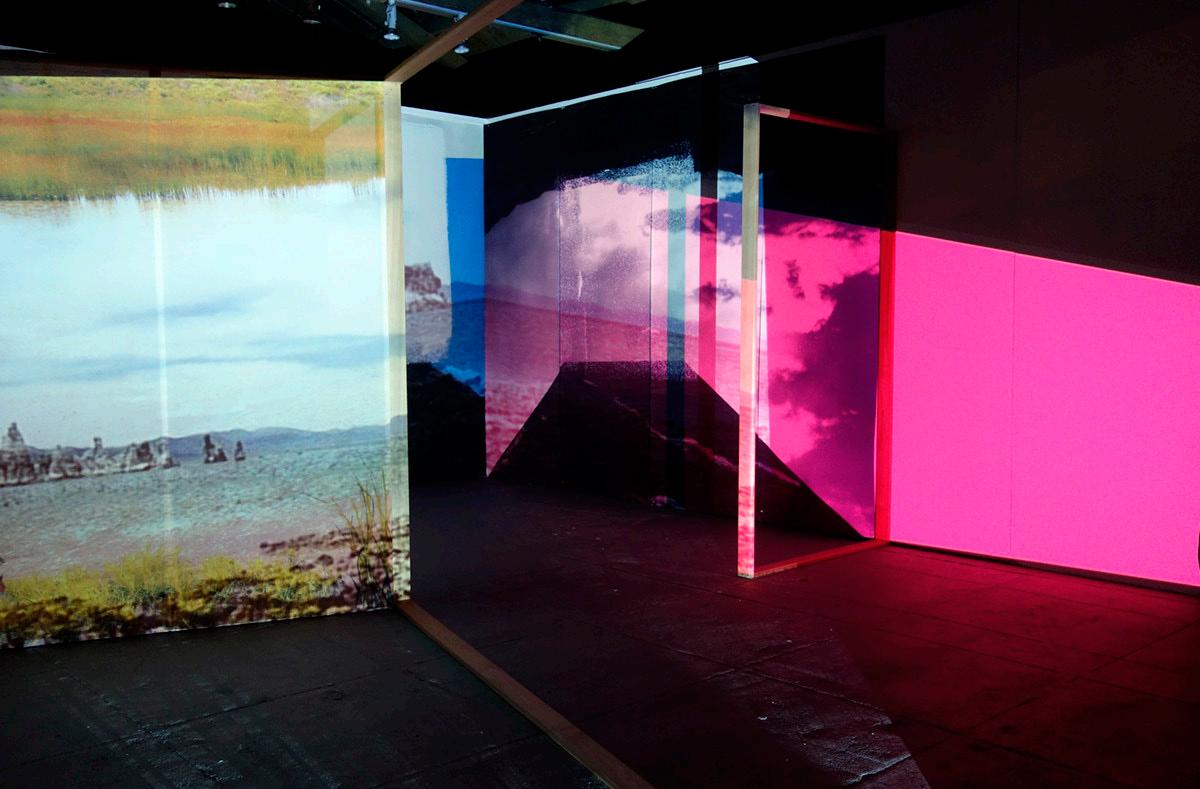
The work of Pipilotti Rist is described by them as “kissing” the architecture, two similar yet not identical surfaces coming in contact temporarily. Separation is inconceivable, yet inevitable. The moving images brush against the still volume.
POUR YOUR BODY OUT, PIPILOTTI RIST, 2008
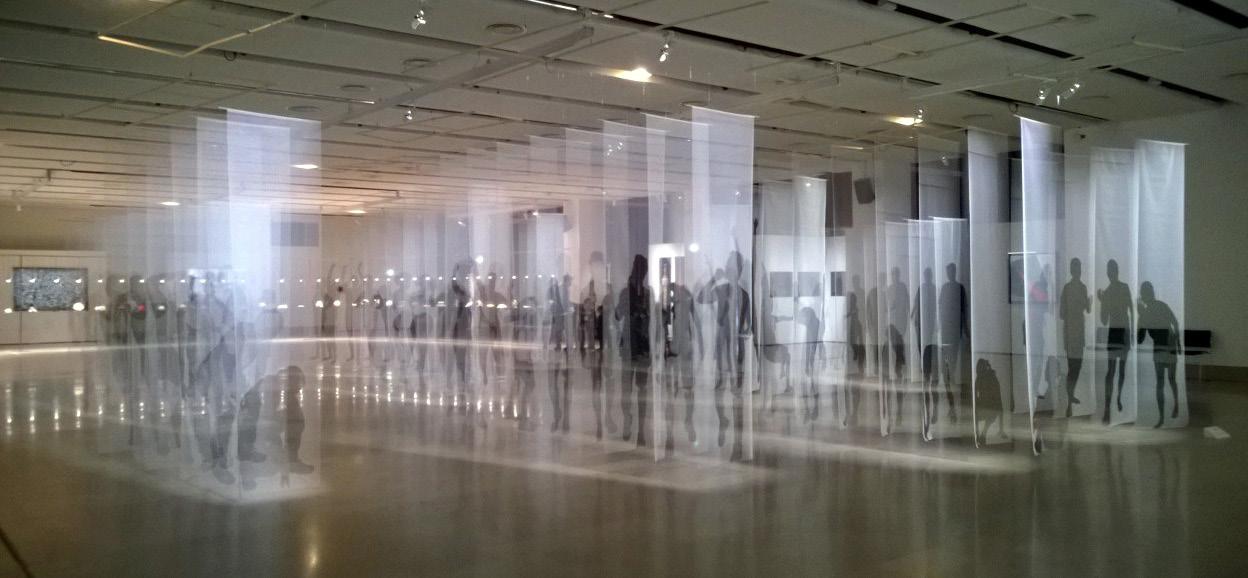
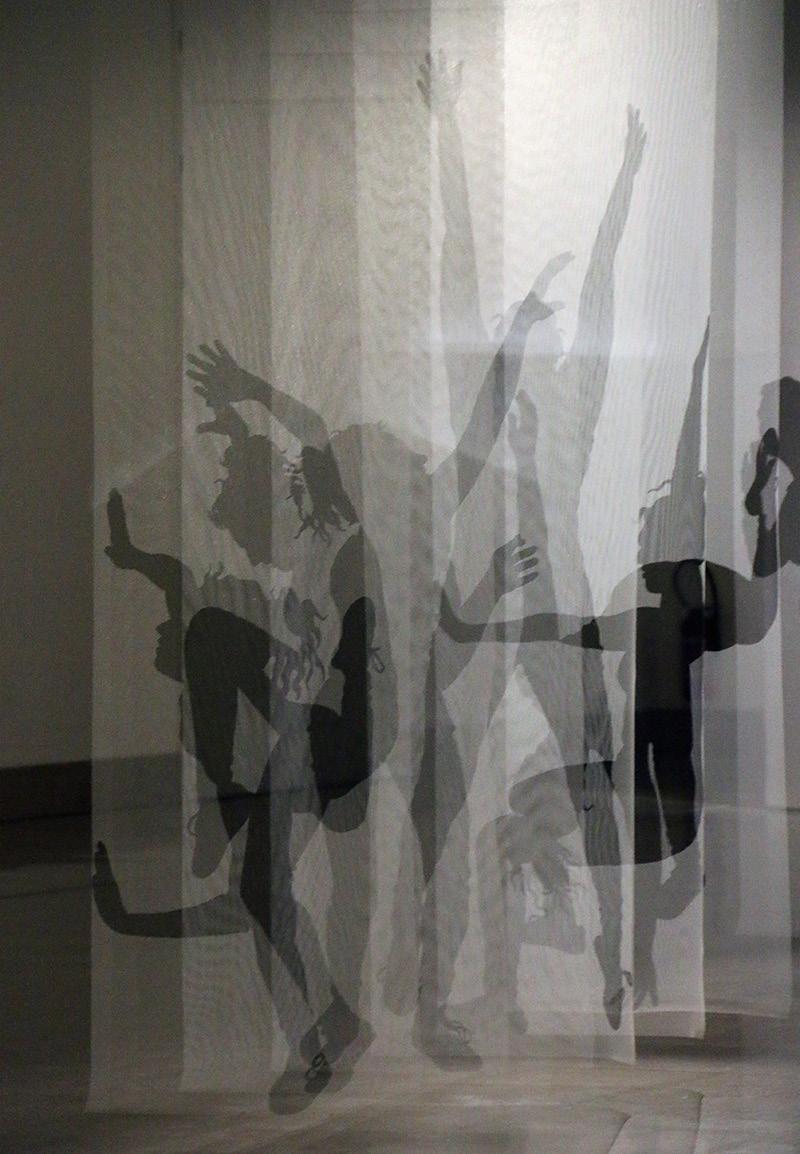
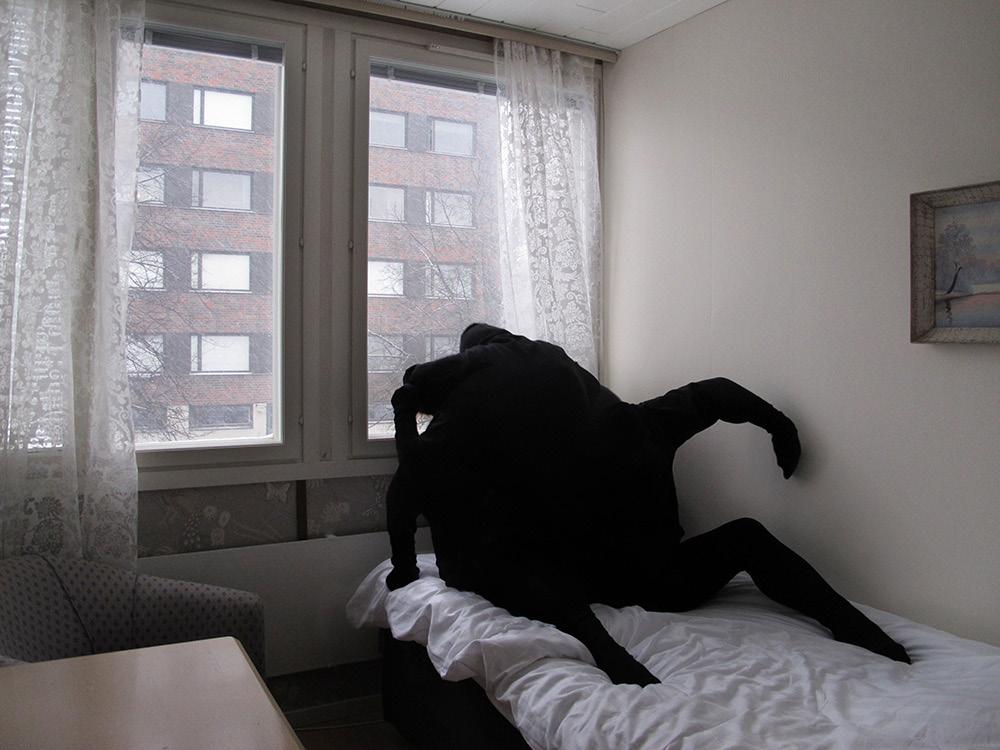
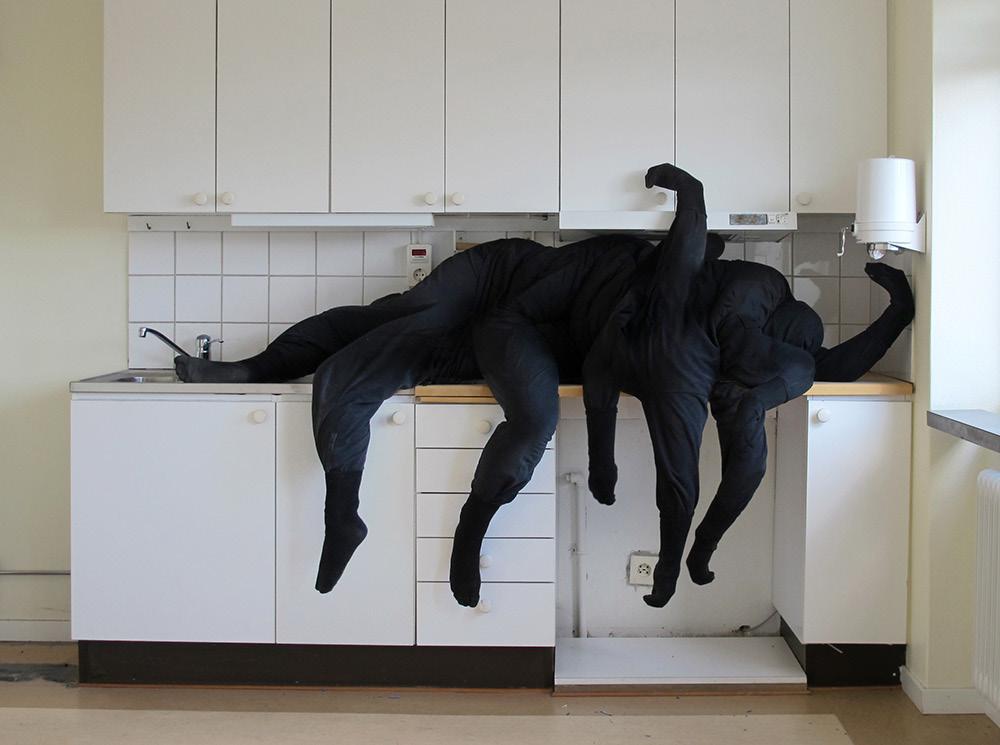
+ ARCHITECTURE + PERFORMANCE + IDENTITY
ART
DÉJÀ VU VII, PIA MÄNNIKKÖ, 2019
17
TENSES, PIA MÄNNIKKÖ, 2013-14
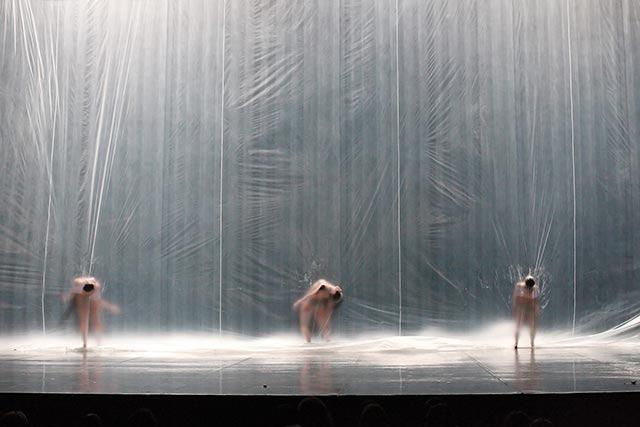
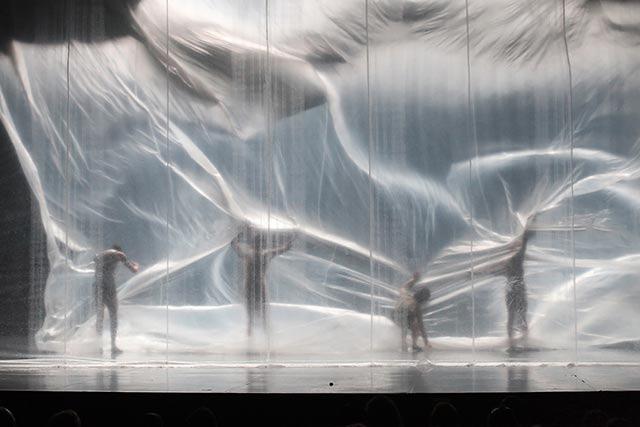
EX-STASIS, XÓCHITL GONZÁLEZ QUINTANILLA, 2010
UNTITLED (SHIFTING SPACES), CYBELE LYLE, 2012
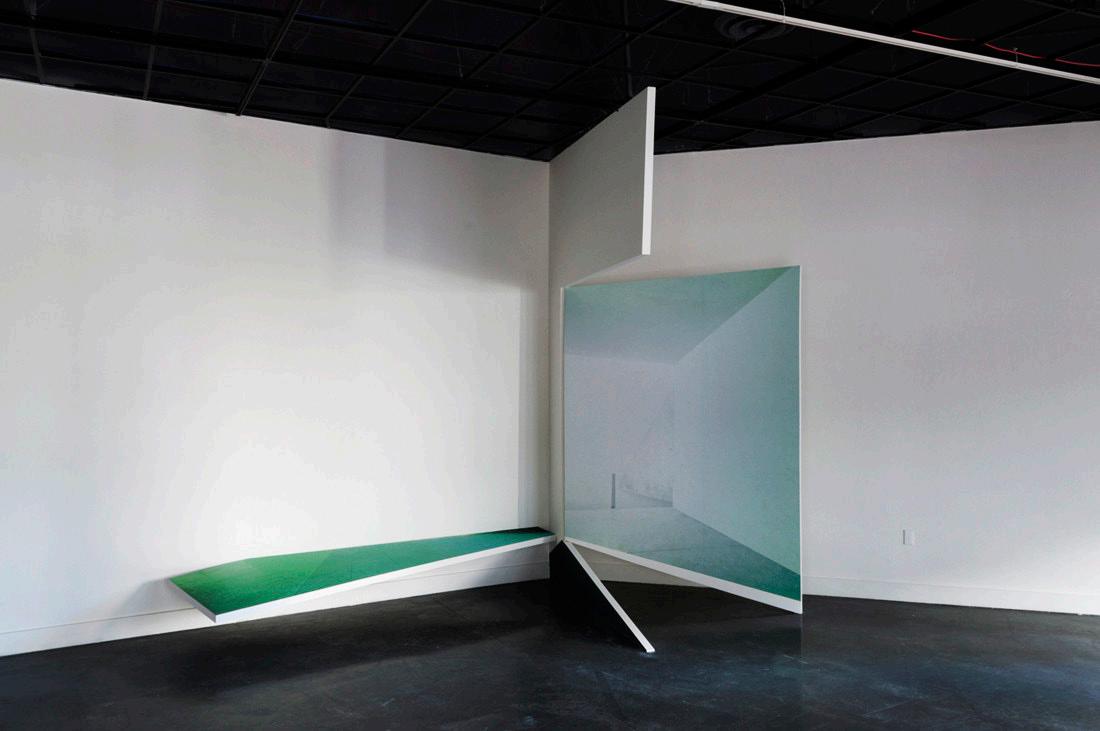
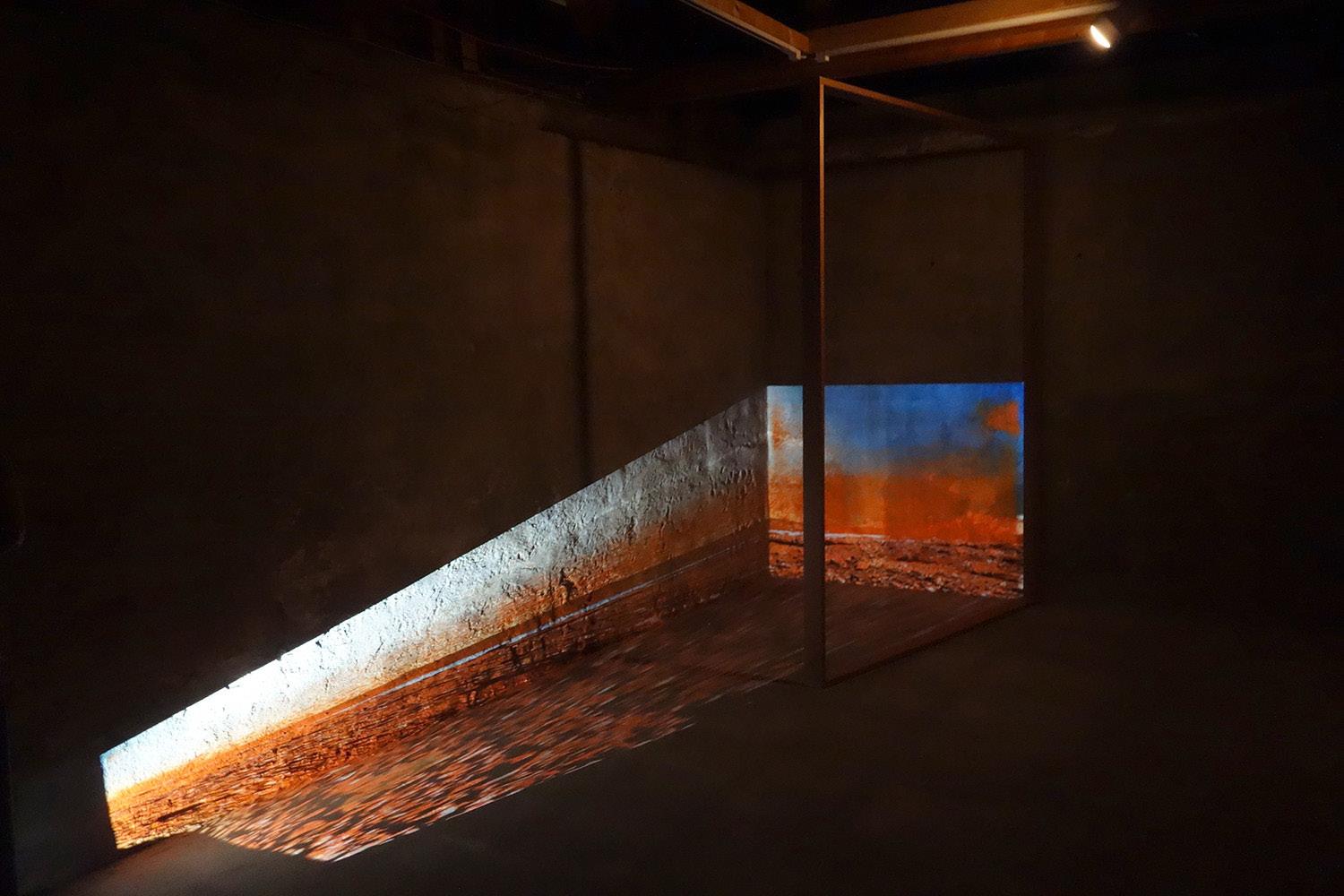
I FEEL THE WORLD AROUND ME, CYBELE LYLE, 2015
BOXED OUT, CYBELE LYLE, 2014
18
QUEER THEORY in ARCHITECTURE
Central to queer theory is the capacity to adapt and change and the queer movement identifies that transformation is always a matter of survival. The heteronormative world we live in declares itself subtly but excludes people directly. The networks formed between outliers is a result of this repression. In Queer Space, Aaron Betsky defines the ideal queer space as one that is liberating, avoiding the imprisoning aspects of the modern city, and lives only in and for experience. Author of Imminent Domain, Christopher Reed, defines queer space as, “...so fluid and contingent that the idea concrete queer space is an oxymoron.”
In order to critique heteronormativity, queer spaces have to have a permanent presence and have three levels of visibility; transparency, translucency, and opaqueness. The transparent layer represents the stereotypical aspects of queer space, the translucent layer is the first layer of realities of the culture, and the opaque layer is the private All of the layers are accessible by all people, but they must follow the rules of the center and an understanding of these visibilities allows for queer spaces to interact other spaces and grant fluidity to identities.
a “queering” of architecture, the resistance to architecture
“queered space”, a reaction to status quo and society’s normative
19
movement
formed defines of
of a presence The translucent private world. opaque interact with
queer diagram
queer space visibility
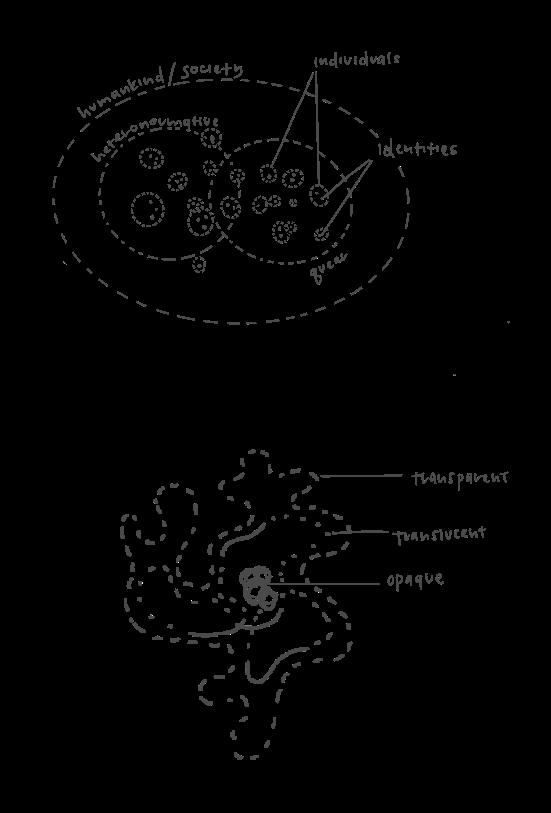
three distinctions: architecture as a tool of oppression and a re-appropriation of space as a tool of transformation “queer space”, space occupied by queer and marginalized people normative standards, a subversion of norms, act of resistance, and change in fabric of society.
heteronormative
Domain,
20
QUEER(ed) SPACE & QUEERING ARCHITECTURE
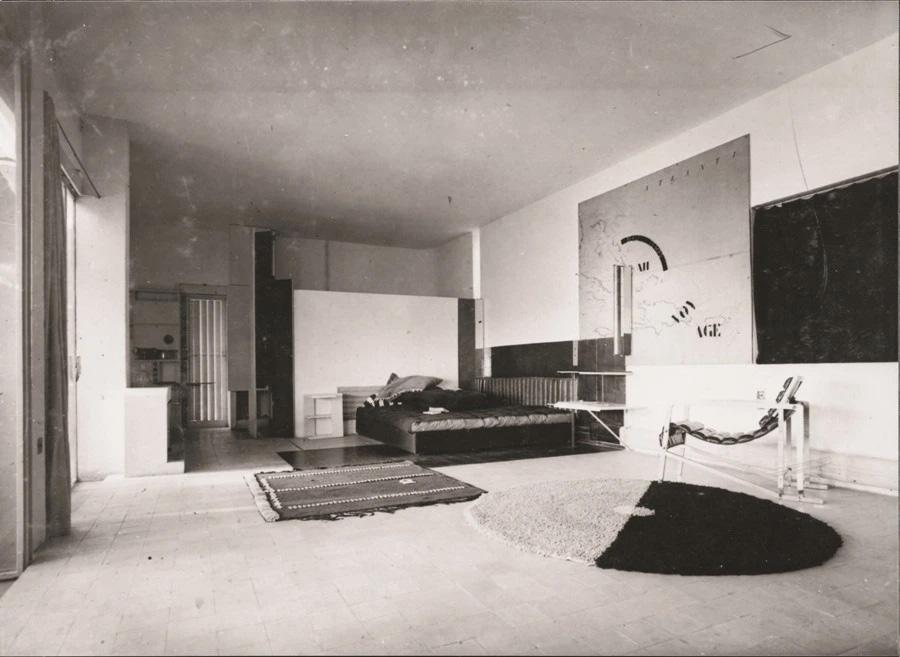
VILLA E1027, EILEEN GRAY, 1929
The villa defies simple divisions and proposes an other way of living that both hides and reveals simultaneously. These divisions are established through the exploration of texture and color, folds, layers, drapes, and inexact repetitions. The surfaces blend into the architecture through screens transformed to walls, rugs to floors, and folded surfaces into spaces.
The living room, the Boudoir de Monte Carlo, is a multifunctional space for many aspects of life; pleasure, rest, studies, business meetings, and parties. Historically, the Boudoir is a space devoted exclusively to the female, however the term itself raises an issue, since it reinstates women in a traditional dichotomy with men, body and sensuality versus mind and rationality, respectively. Gray counteracted this gendered binary through ambiguity. In the Boudoir, visitors are greeted in a space and entertained but it can also be a space to settle in. The space cannot be defined by a norm.
ANARCHITECTURE
The practices developed by the anarchitects in the 1970s were those of unmaking, unworlding, and disrupting the world and architecture as it is known. Gordon Matta-Clark cut into buildings demonstrating anarchistic and creatively destructive approaches to architecture, similarly to how a queering of architecture, will destroy norms, challenge authority, and unbuild the binary understandings of space.
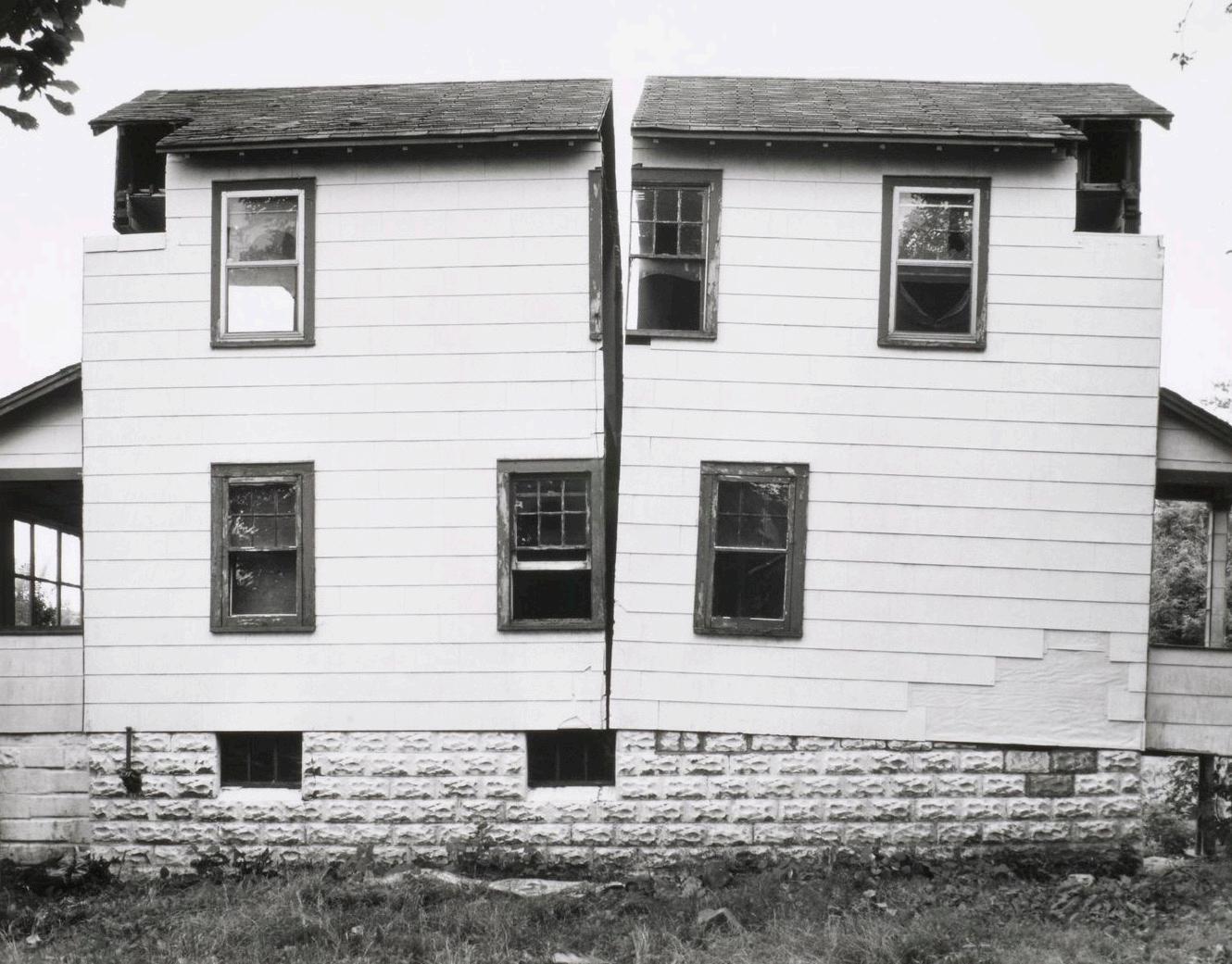
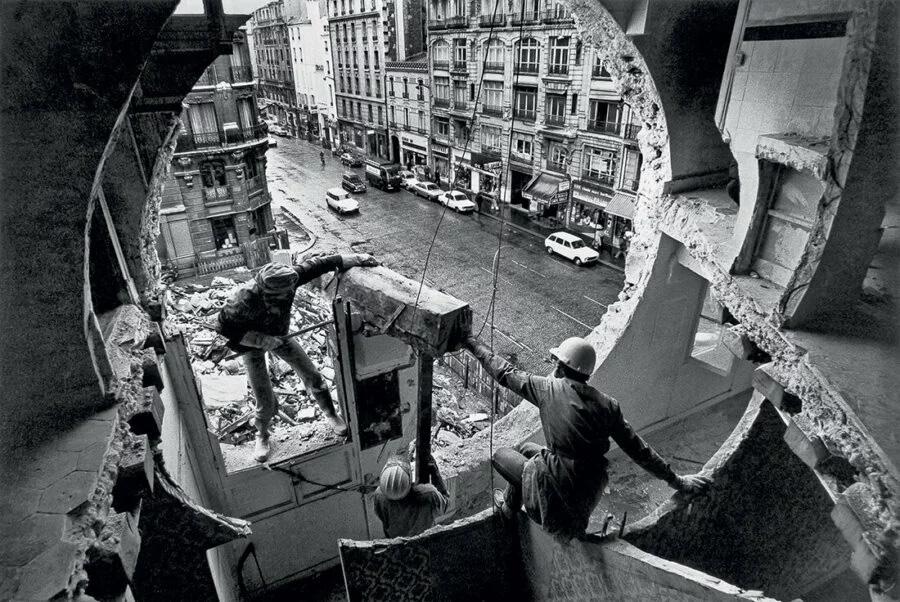
Anarchitecture, symbol for the perfection or repair, perfectly, but rather
SPLITTING, GORDON MATTA-CLARK, 1974
CONICAL INTERSECT, GORDON MATTA-CLARK, 1975
21
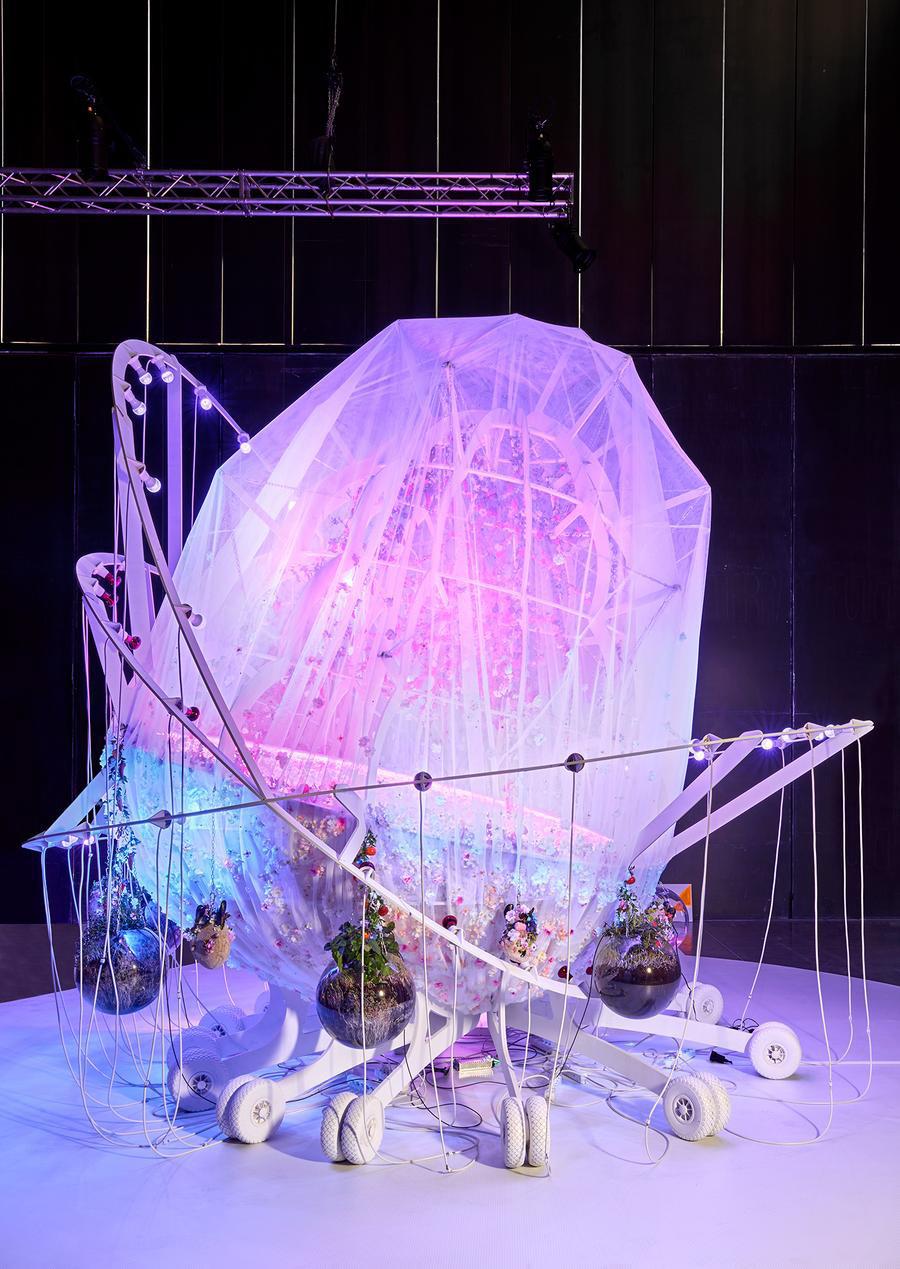

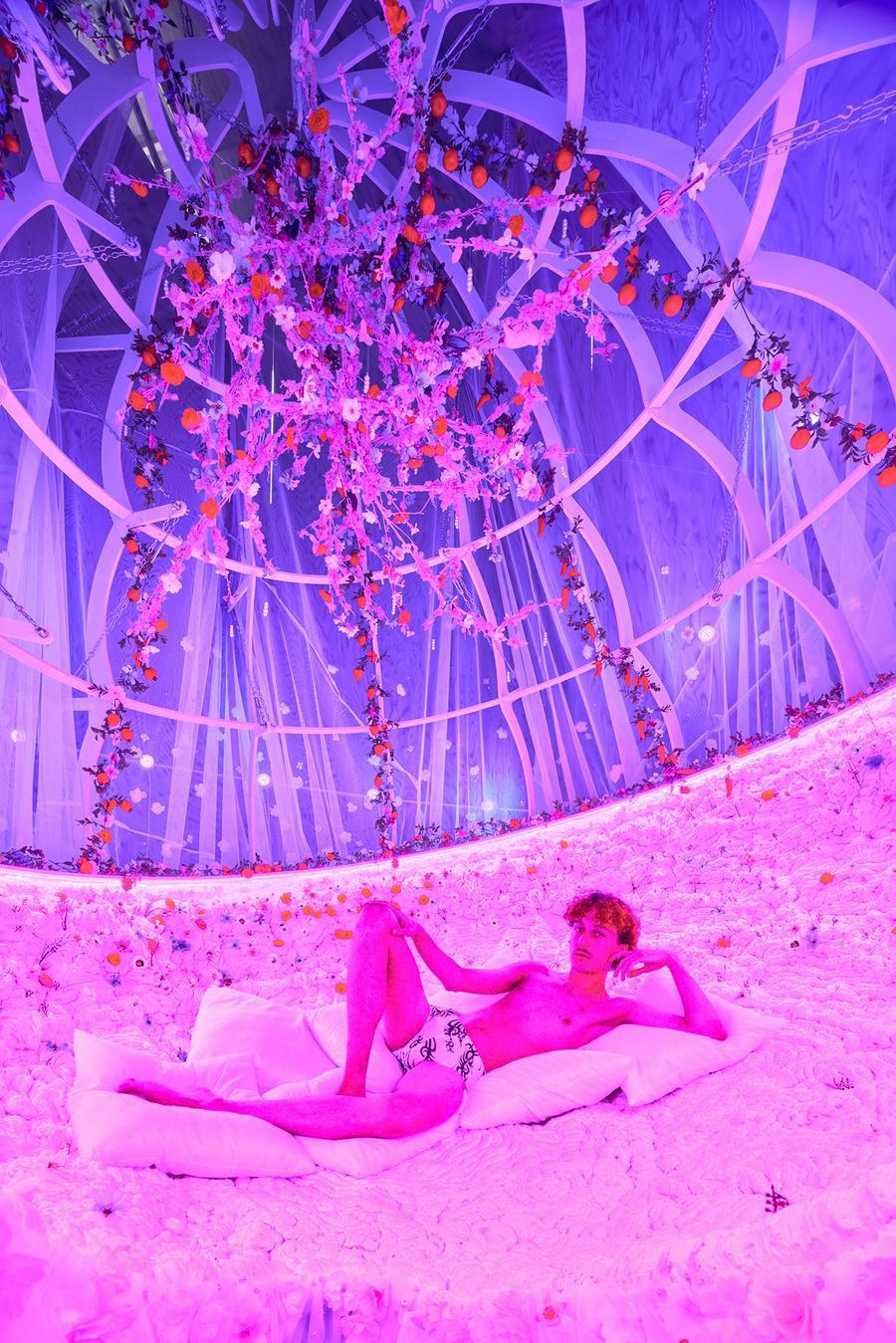
THE GARDEN FOR ROMANTIC CROSSOVERS,
TAKK, 2019
This prototype presented at the Matadero Madrid exhibition hall tests the links between humans, non-human animals, biological entities, and technology at a controlled scale. The project implements nature based solutions to mitigate the heat island effect and rethink the role of public space in relation to climate change from a queer point of view.


LAURIE MALLET HOUSE, JAMES WINES, 1985
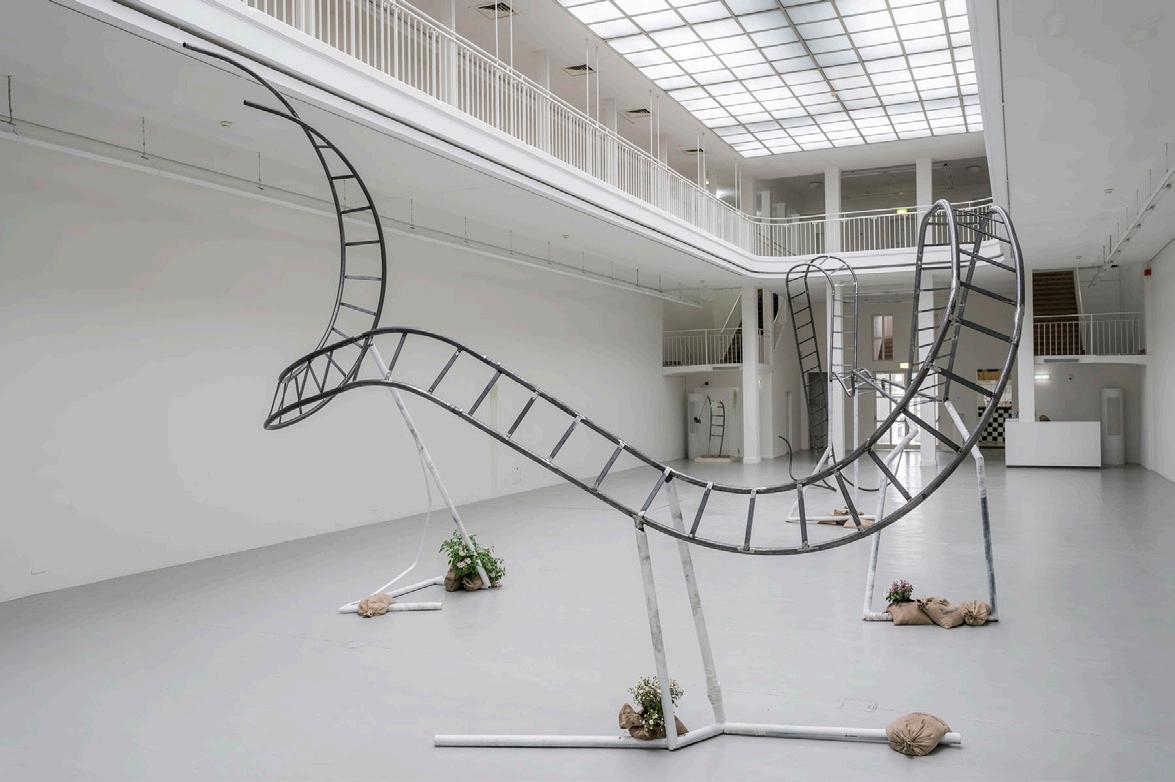
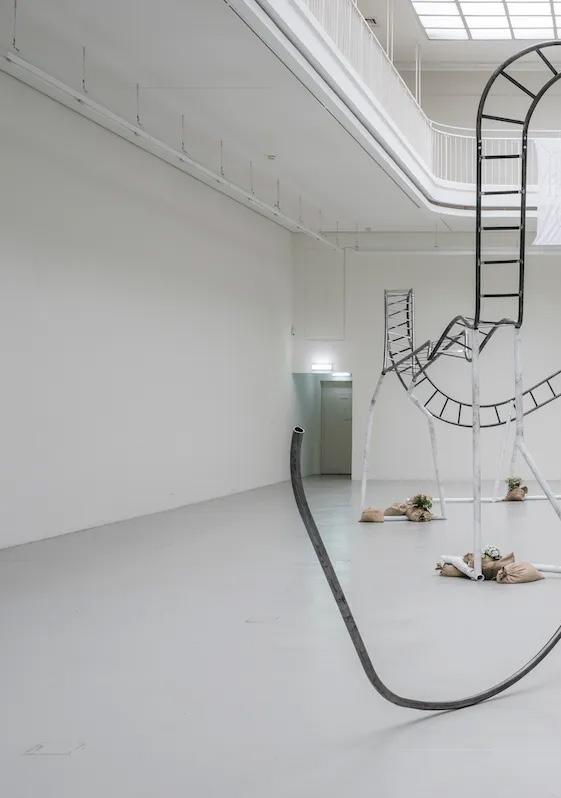
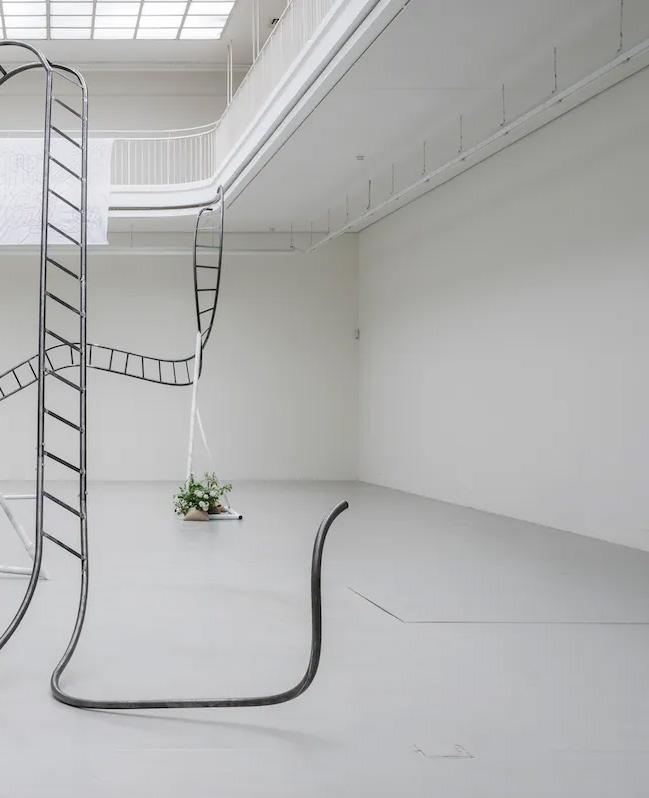
Anarchitecture, in Gravity Road becomes a the trans body that does not seek repair, or to inhabit a space well or rather seeks to undo the logic of the space it enters.
GRAVITY ROAD, JESSE DARLING, 2020
The disappearance, mutation, and morphing of typical household furniture creates an ambiguity to be lived in.
22
The Station Agent, DEVELOPING and CONNECTING identities

The Station Agent is a story where unlikely connections between very different people are made. A young man born with dwarfism moves to an abandoned train depot after his friend passes and while trying to maintain a life of solitude, becomes entangled with an artist struggling with tragedy, an overly friendly hot-dog vendor, a girl who shares fascination for trains, and a woman who seeks guidance. Despite on the surface having nothing in common and the want for isolation, they learn that they each have gifts to share with others and to respect and empathize with each other as they each have their own burdens of grief and pain.



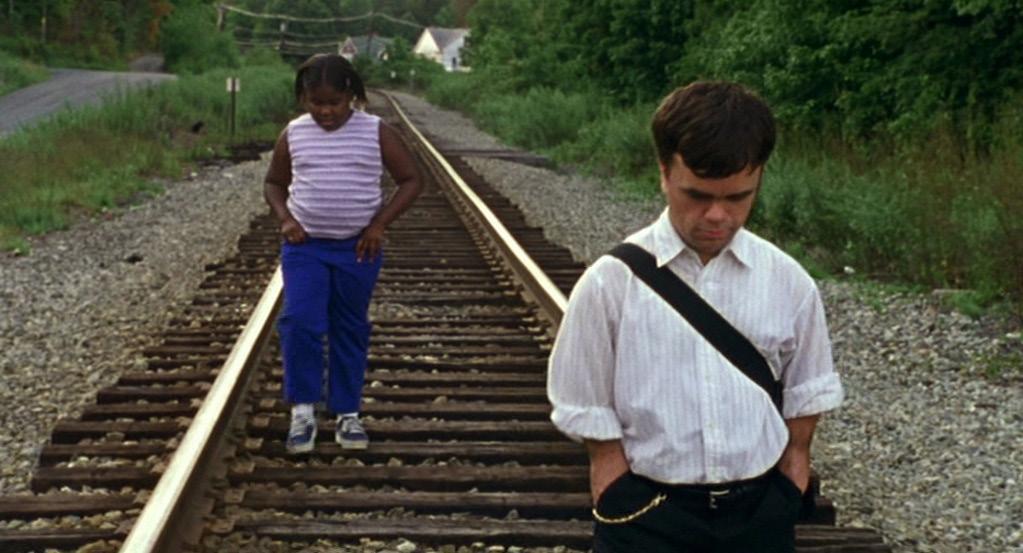

commuter
23
SITE: 30th Street
Station, an intersection of networks and identities
commuter regional rail NETWORK
The 30th Street Station invites 253,000 workers commuting to Philadelphia from surrounding suburbs and 146,825 workers leaving the city daily. With the wide audience of people coming from all walks of life, new connections and networks can be made through the understanding and reception of identity that the station has the potential to provide.
AIRPORT LINE 4041 daily weekday boardings CHESTNUT HILL WEST LINE 1752 daily weekday boardings CHESTNUT HILL EAST LINE 1573 daily weekday boardings CYNWYD LINE 98 daily weekday boardings FOX CHASE LINE 2001 daily weekday boardings LANSDALE / DOYLESTOWN LINE 6884 daily weekday boardings MANAYUNK / NORRISTOWN LINE 3074 daily weekday boardings MEDIA / WAWA LINE 3244 daily weekday boardings PAOLI / THORNDALE LINE 7187 daily weekday boardings TRENTON LINE 4507 daily weekday boardings 30th STREET STATION WARMINSTER LINE 3657 daily weekday boardings WEST TRENTON LINE 3613 daily weekday boardings WILMINGTON / NEWARK LINE 3420 daily weekday boardings SEPTA REGIONAL RAIL (COMMUTER RAILS) INTO 30TH ST STATION 0 2000 4000 8000 16000 ft
24
The CHANGE AGENT - 30th St Station, Philadelphia, PA existing conditions, constructions, and identity
25
0 4 12 20 36 ft Existing 30th St. Station E-W Section Existing 30th St. Station North Elevation 12 20 36 ft Existing 30th St. Station N-S Section 26
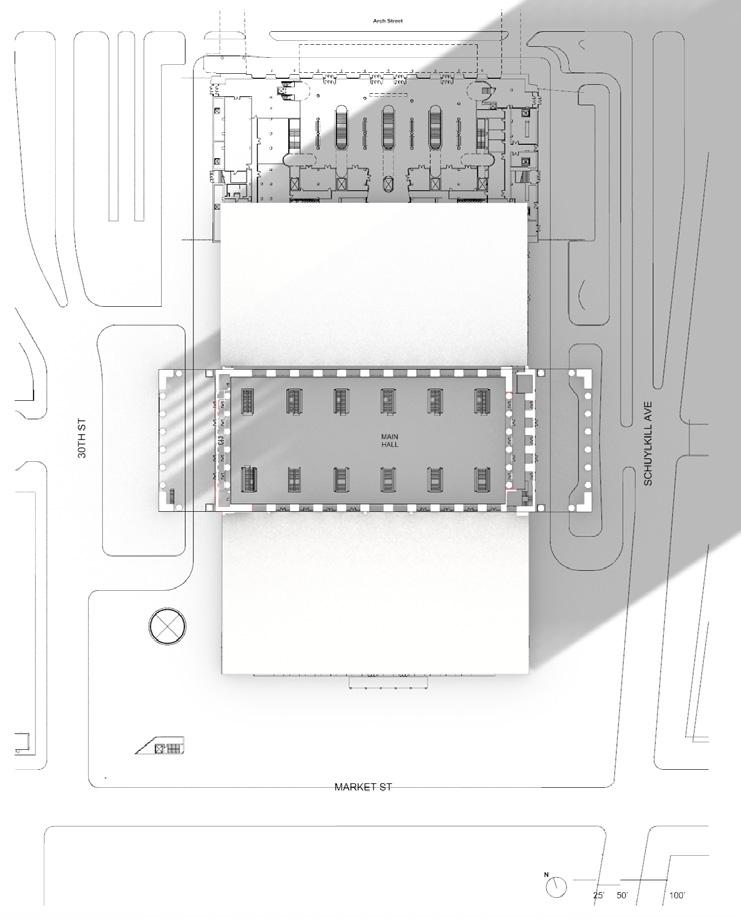
30TH STREET
MARKET STREET
ARCH STREET
AVENUE
SCHUYLKILL
MAIN HALL
SOUTH ARCADE
SOUTH CONCOURSE
0 16 32 64 96 160 ft N 27
NORTH WAITING ROOM
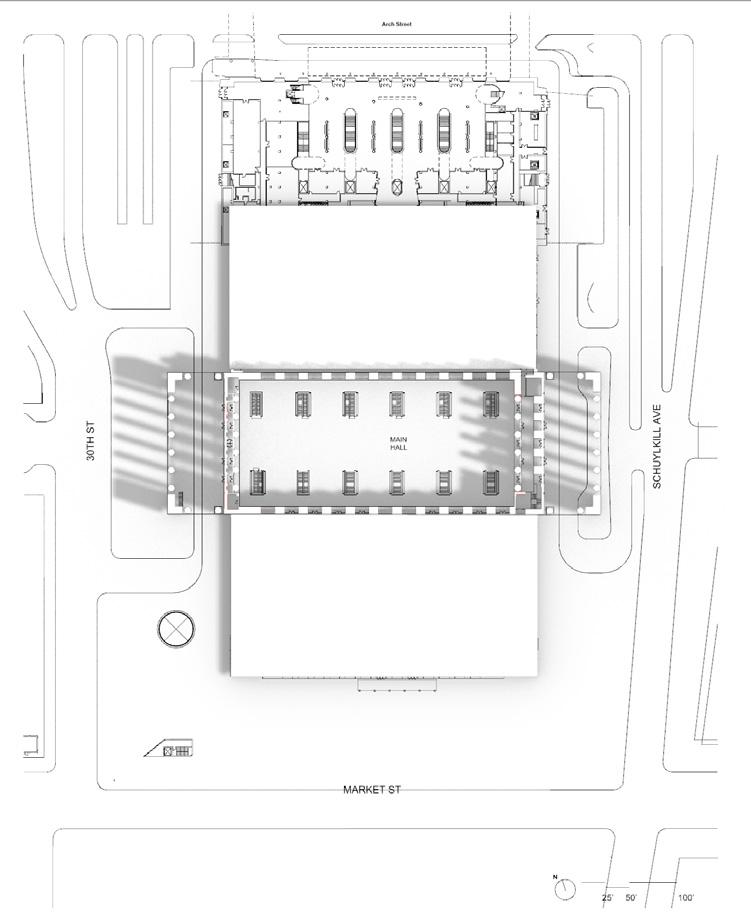
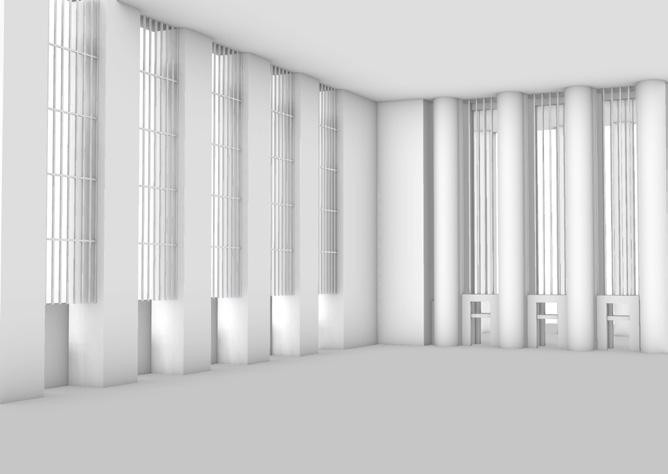
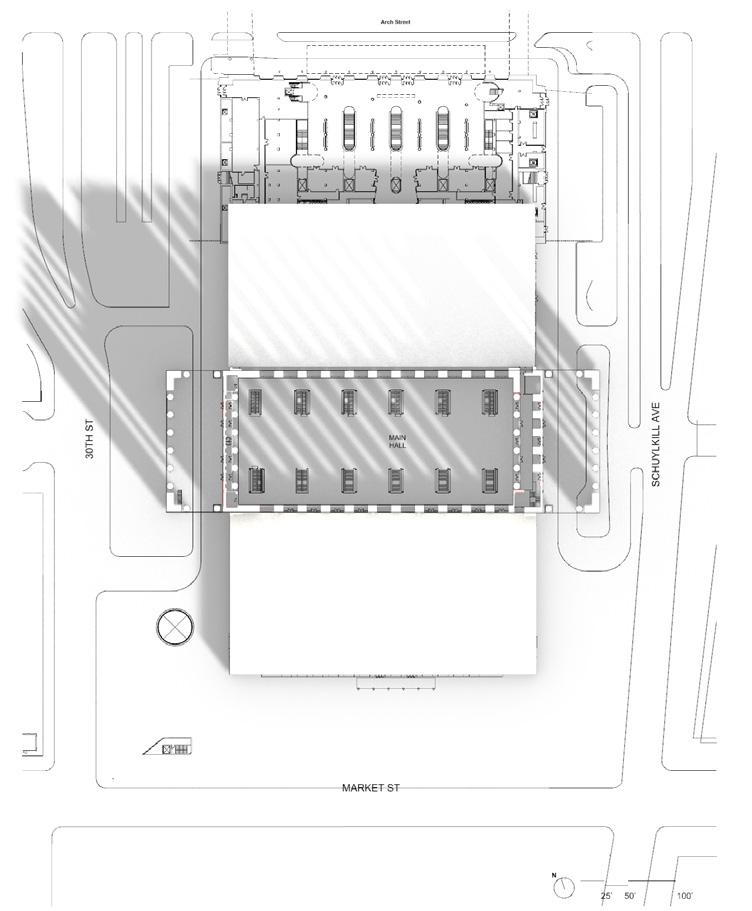
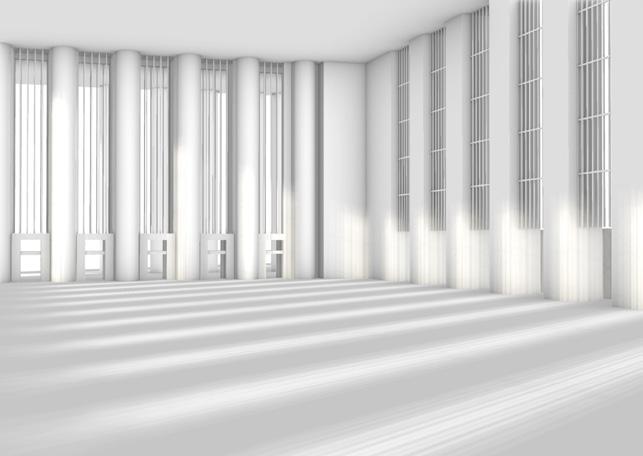
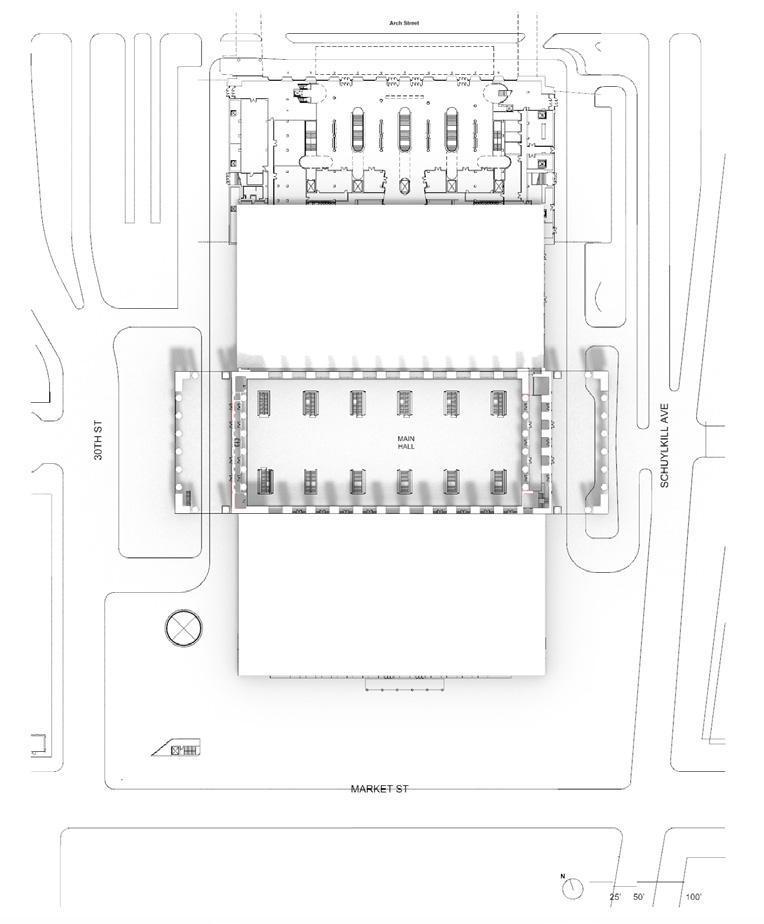
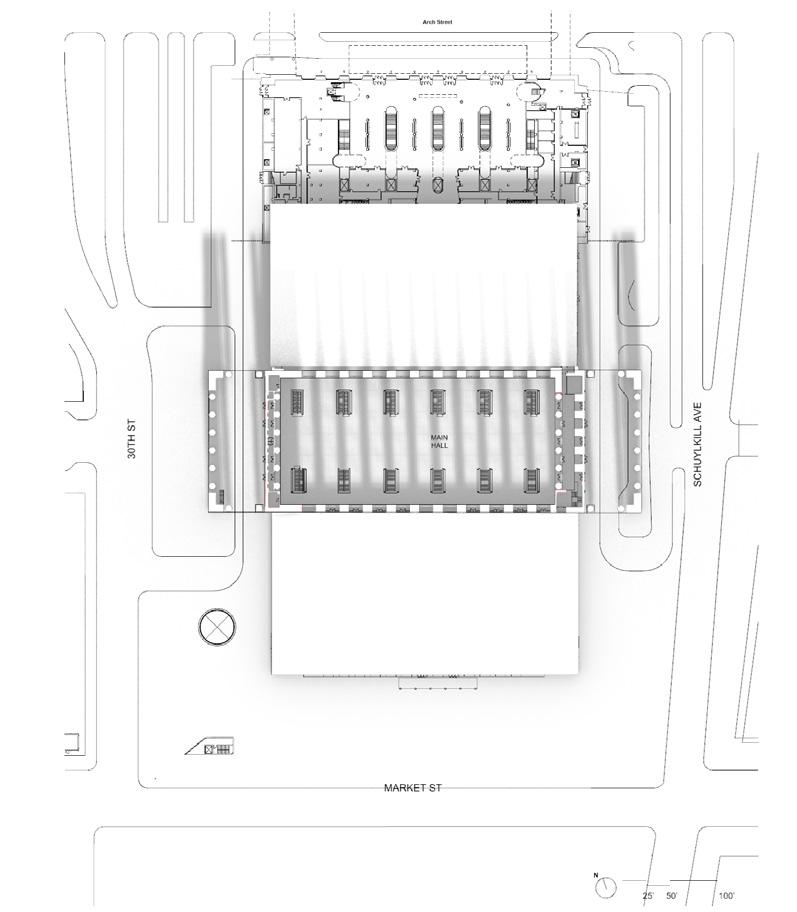
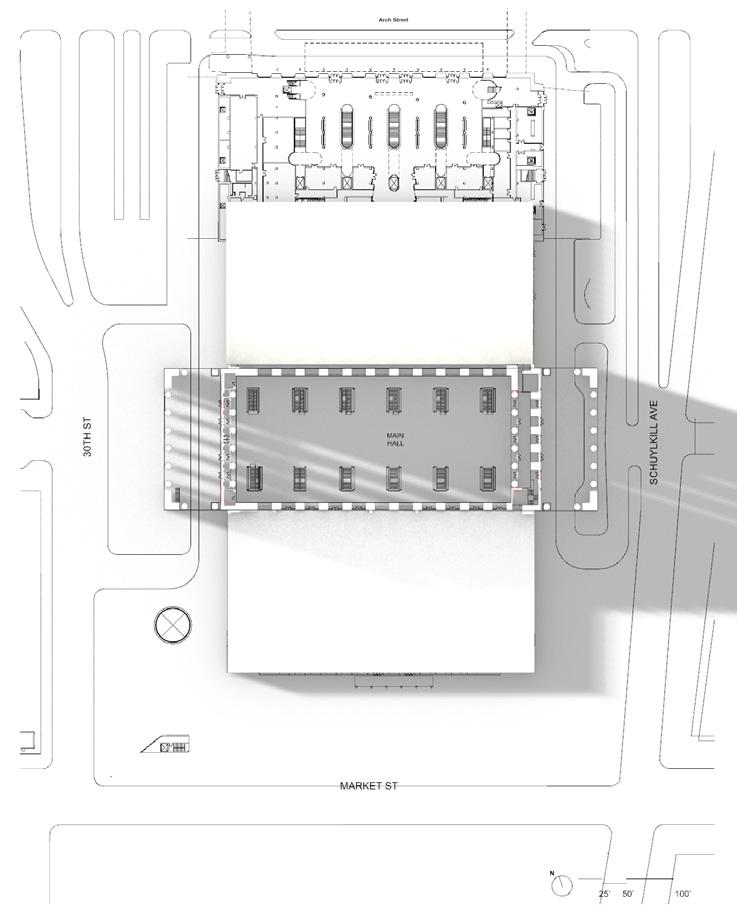
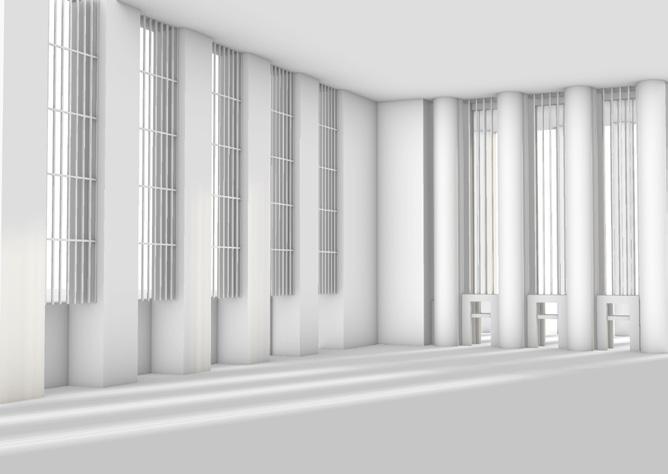
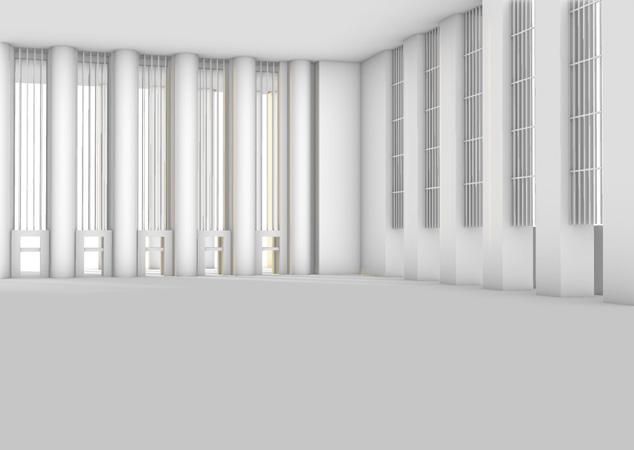
natural conditions contributing to PERSONAL IDENTITY
SUMMER LIGHTING
JULY 21st
MORNING - 9:30 AM
WINTER LIGHTING
DECEMBER 21st
MORNING - 9:30 AM
MIDDAY - 12:00 PM

MIDDAY - 12:00 PM

BEFORE SUNSET - 6:30 PM
BEFORE SUNSET - 4:30 PM
28
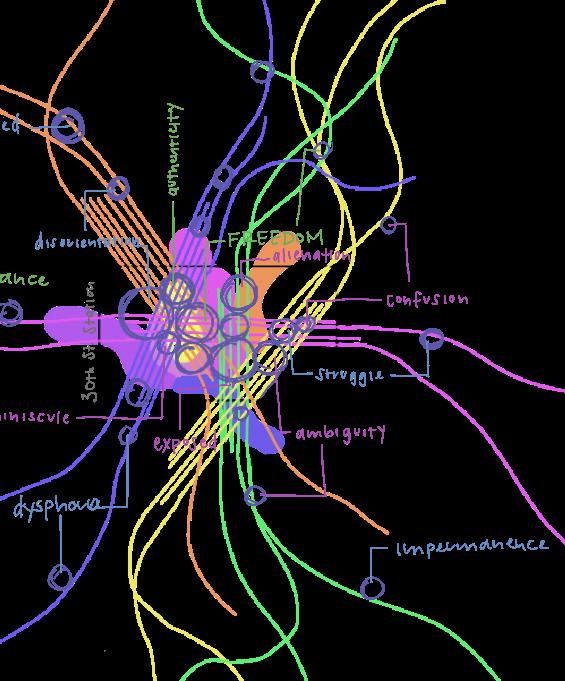
understanding IDENTITY through EMOTION: the architectural intervention
FEELING ATMOSPHERIC DEVICE
journey through understanding identity
clarity / norm distortion alienation
surveillence / exposed
dysphoria
ambiguity
freedom / authenticity
community
direct reflections, no distortions, clear
broken reflections, shattered reflections
silouettes displayed in motion in materials of various transparency / exposing of pipes, vents, identity waiting room, dark room
area of projections and intersecting / contrasting materials
user / objects blur together through semi transparent materials / ambiguous waiting space

direct reflections, no distortions, clear
network of acceptance and empathy through understanding of multilinear identities
emotions expressed on the outside
THERMAL SCANNING
The rapid changes in body temperature can be extremely revealing the face, through the thousands of tiny capillaries. Conversely, extremities, but rather use it for muscles and the body’s core in
Heat sensing cameras, thermal scanners can pick these fluctuations telling, in that it already is of low temperature, keeping itself warm, monitoring is being used to study social interactions between humans.
29
ARCHITECTURAL ISSUES TO ADDRESS
Architecture is closely intersected with our notions of identity, both individually and collectively, so architecture has the ability to control and orient our bodies, enforce norms and ways of living, and create hierarchies and binaries between the masculine and feminine. The intervention will challenge architectural spaces that force people to define who they are, encourage the following of gender norms and roles, and segregate people based on their gender expression or sexuality.
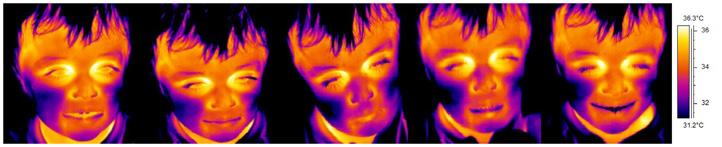
revealing of emotion. In a moment of anxiety or excitement, the body typically sends blood rushing to in a moment of true fear, the autonomic nervous system will stop sending blood to the face and order to prepare the body for either the fight or flight. fluctuations in body temperature up in fine detail and in real time. The tip of the nose is extremely warm, so therefore it is particularly sensitive to the rapid changes due to emotions. Thermal humans.
intervention
30
ATMOSPHERIC STUDIES OF EMOTION

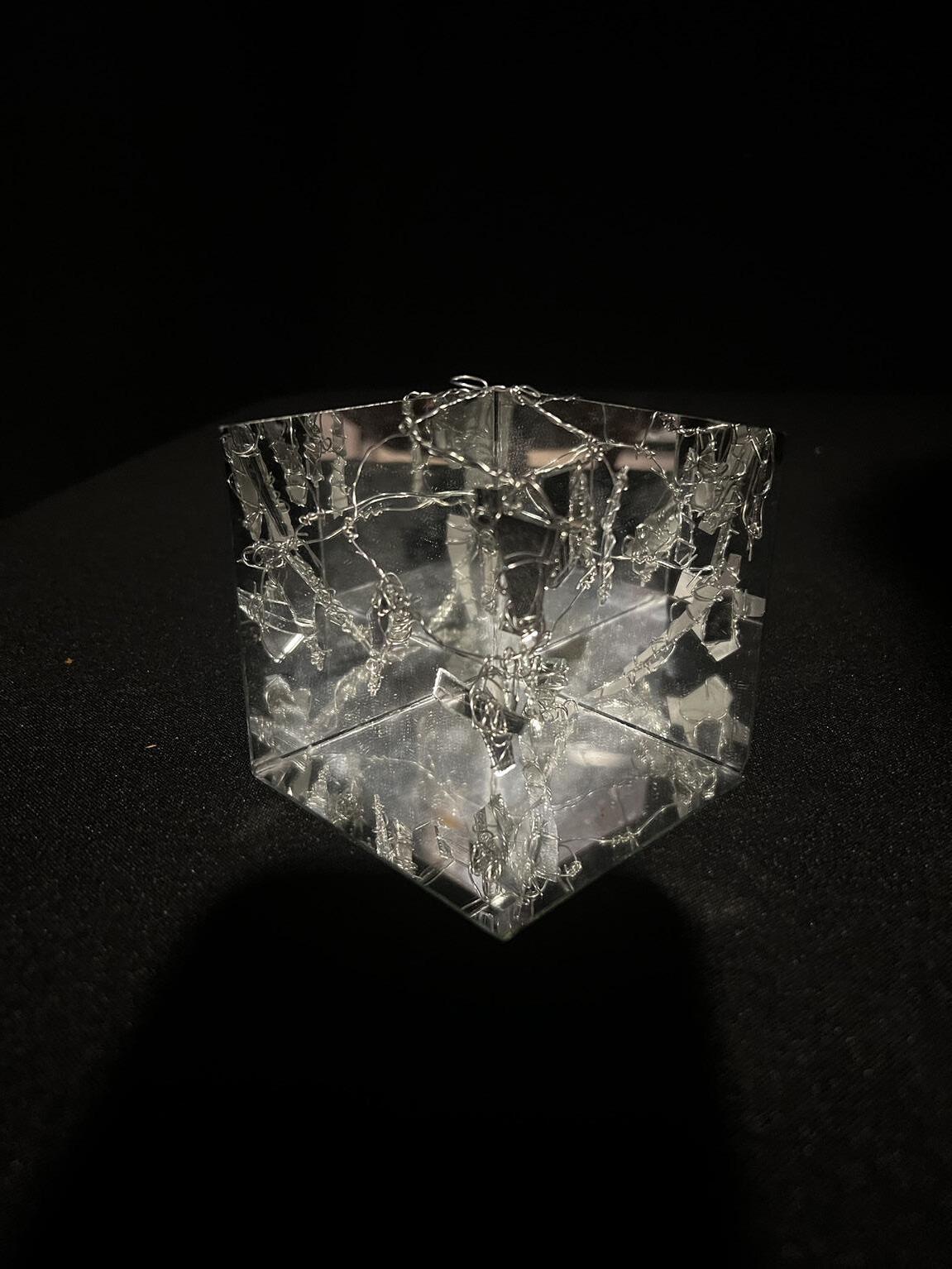
broken reflections, shattered reflections
distortion
31
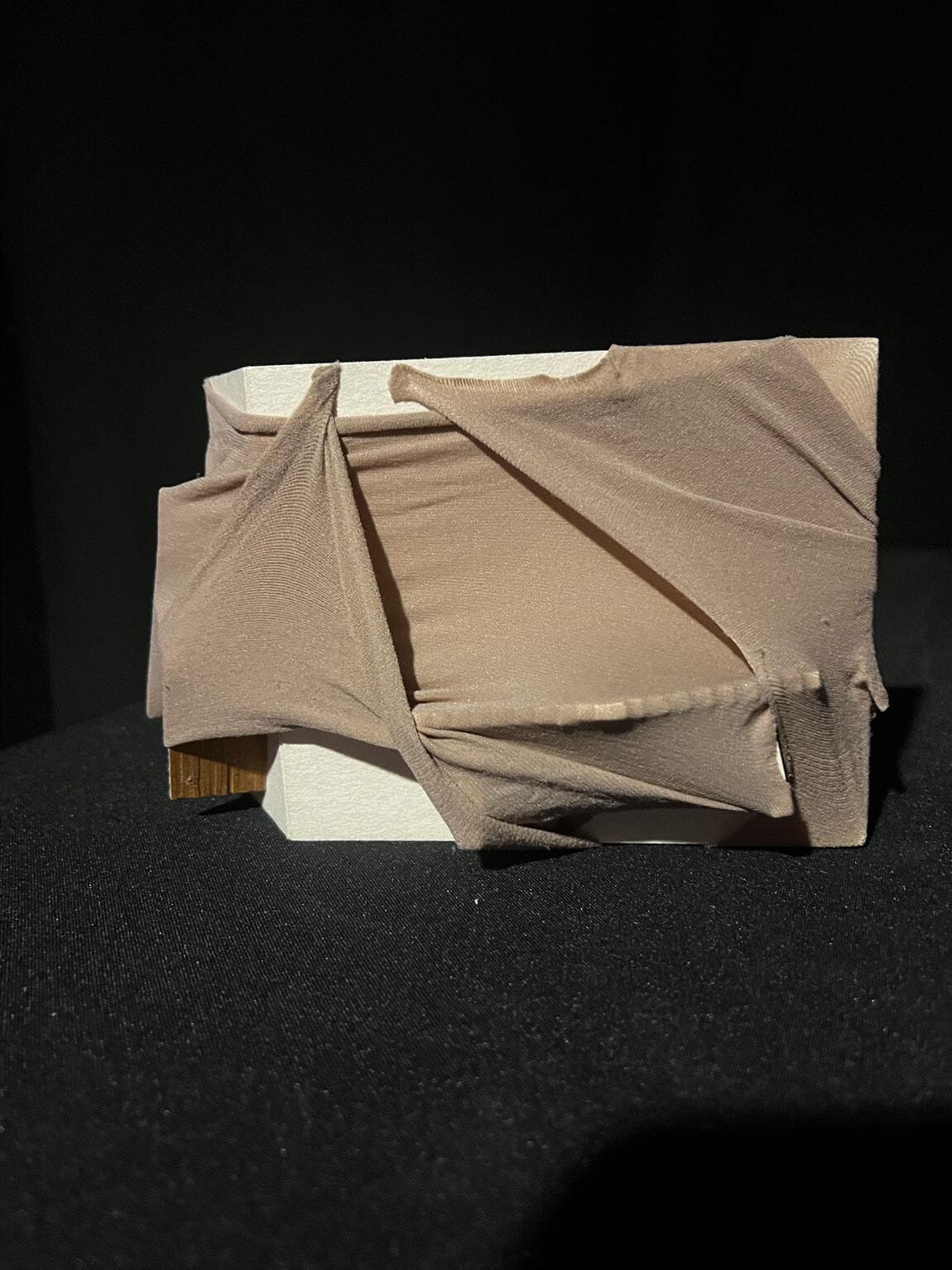
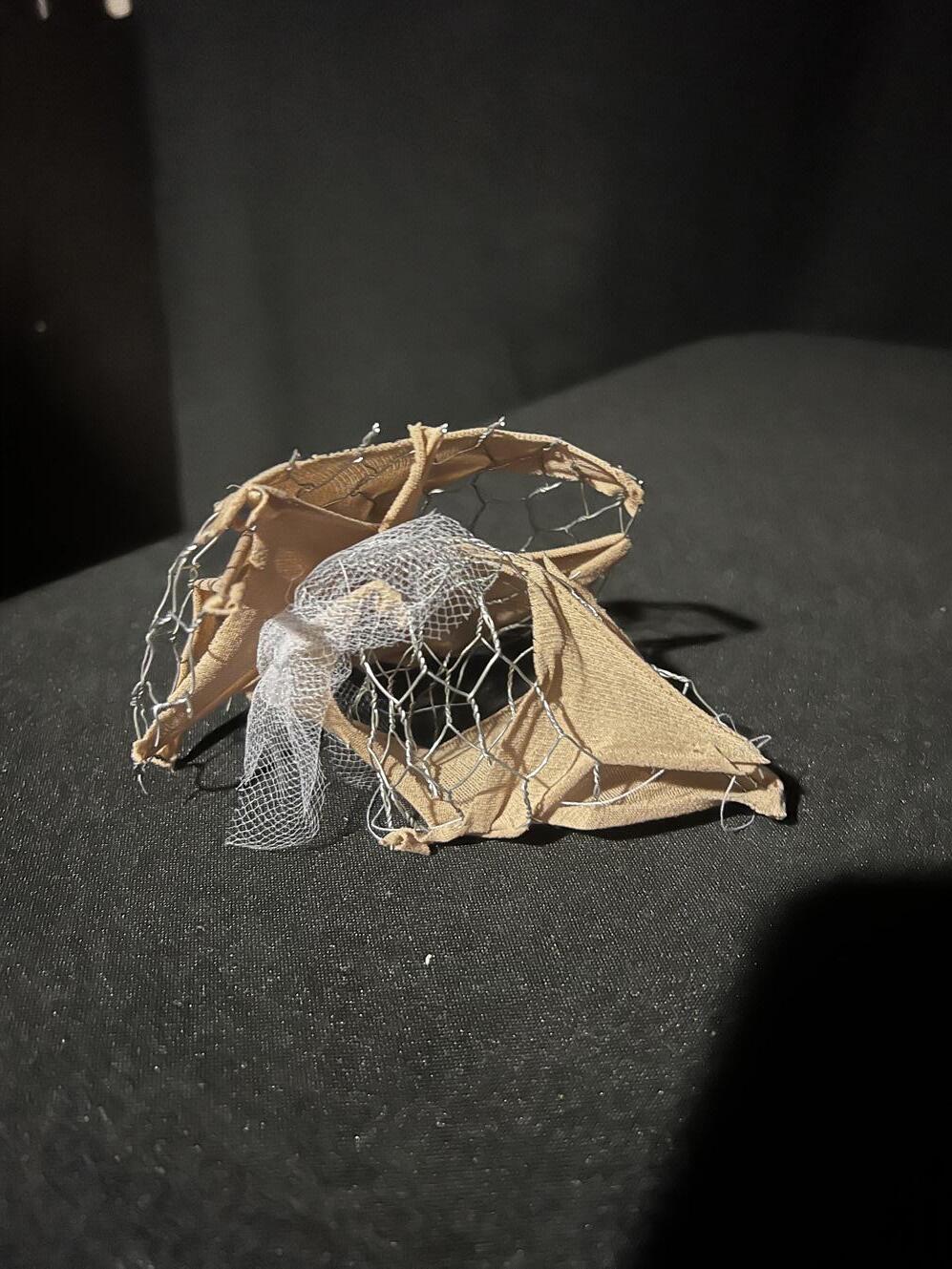
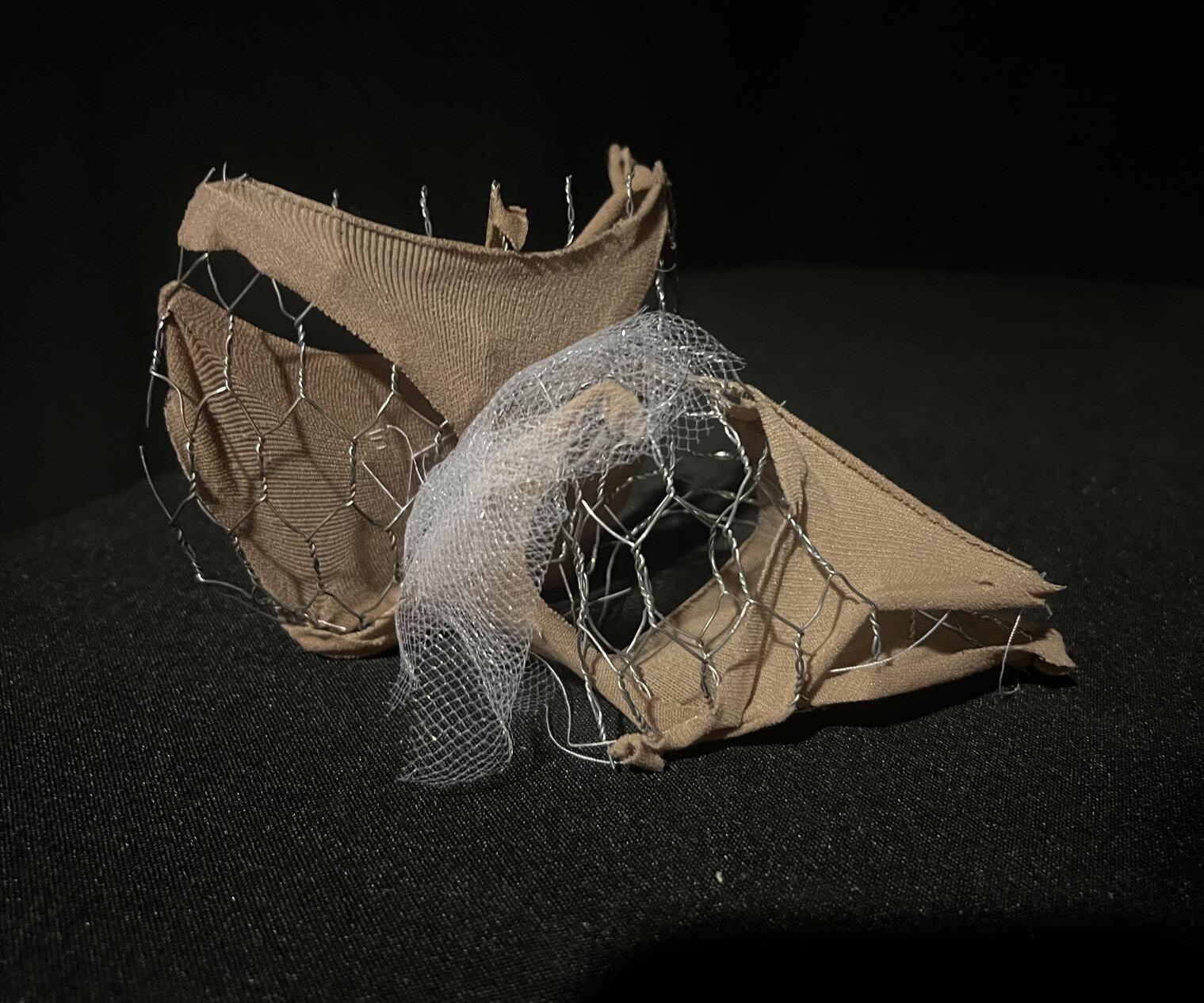
ambiguity
user / objects blur together through semi transparent materials / ambiguous waiting space
dysphoria
area of projections and intersecting / contrasting materials
32
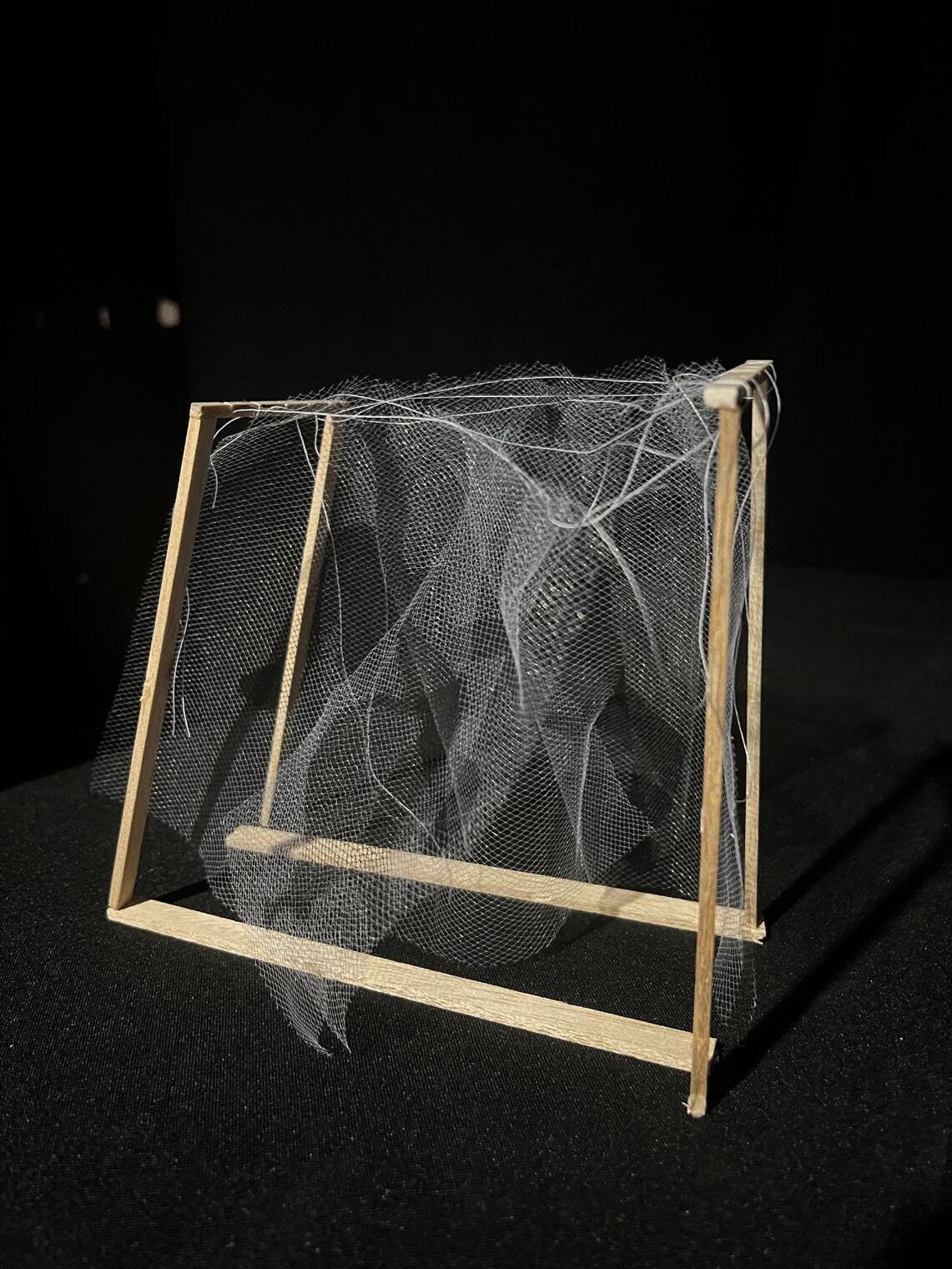
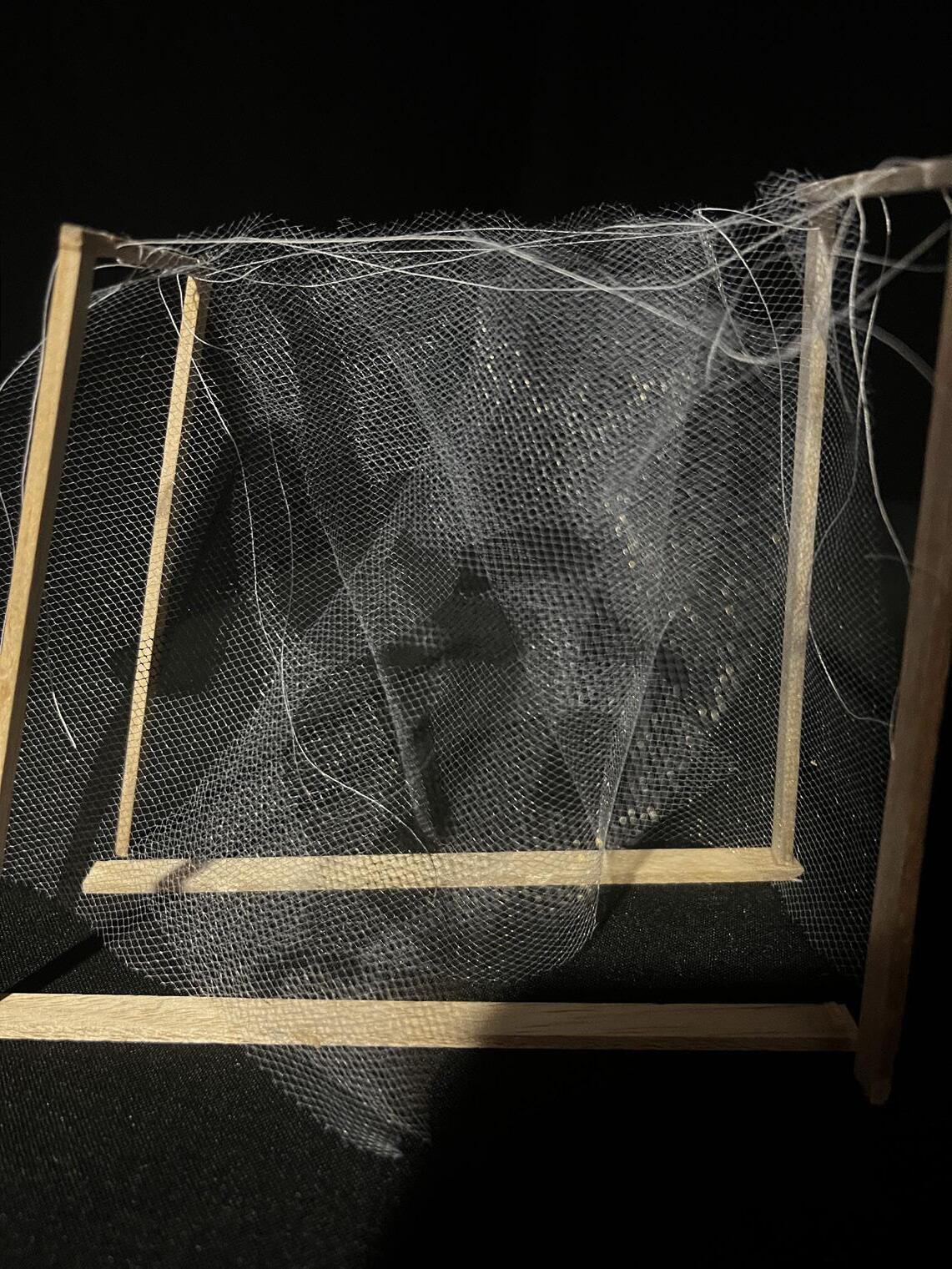
surveillence / exposed silouettes displayed in motion in materials of various transparency / exposing of pipes, vents, identity
33
community
network of acceptance and empathy through understanding of multilinear identities
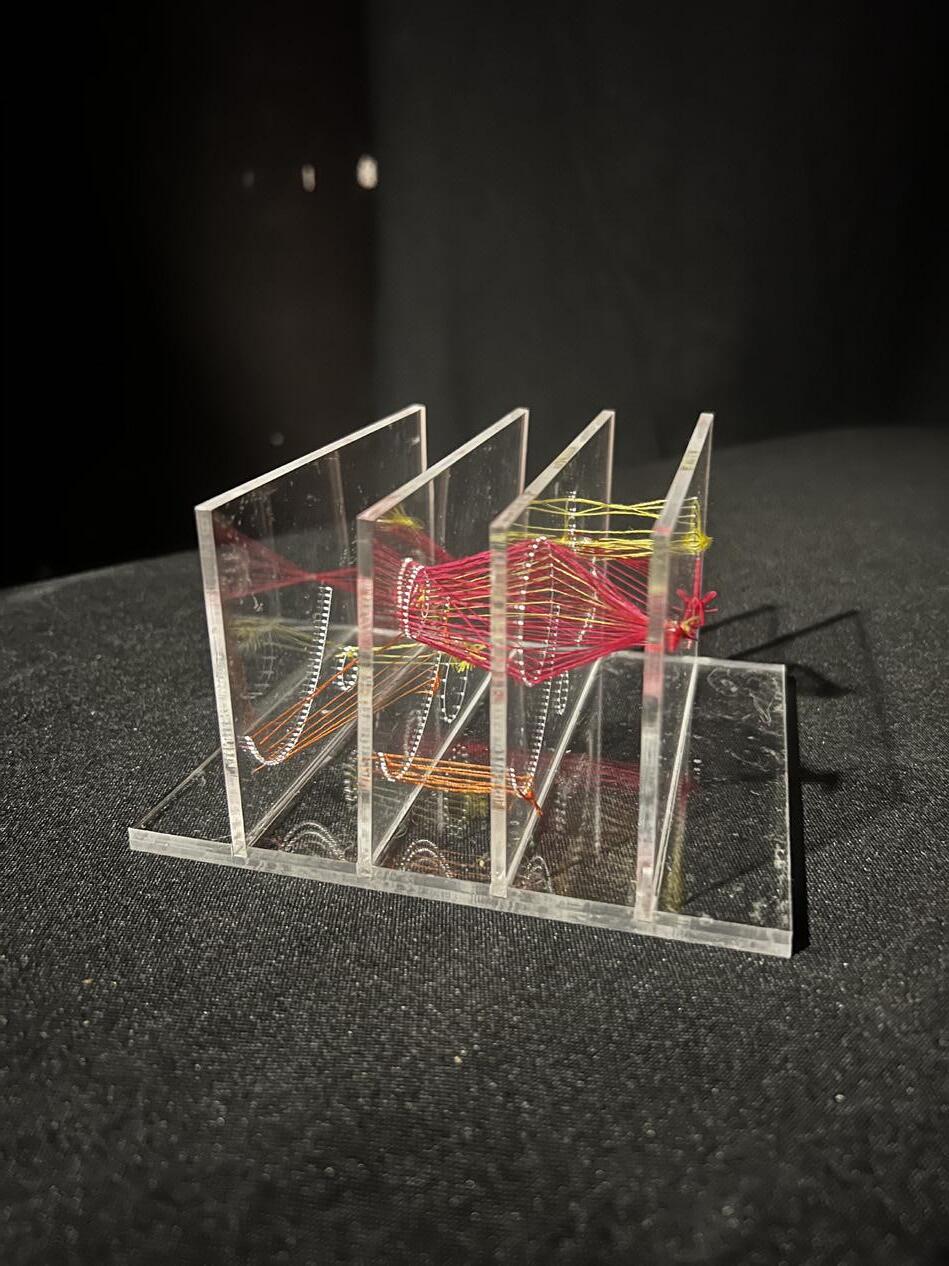
ATMOSPHERIC STUDIES OF EMOTION
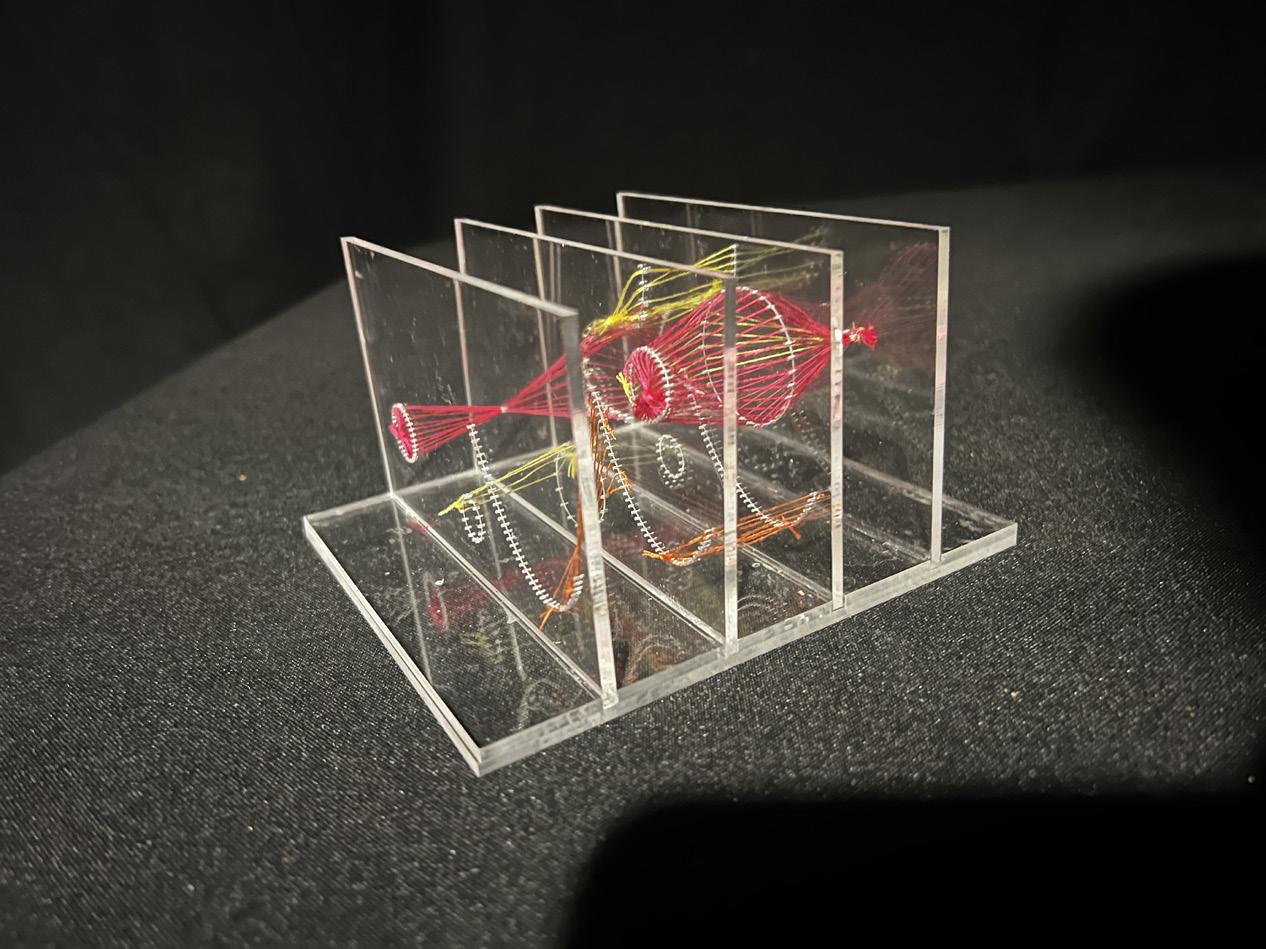
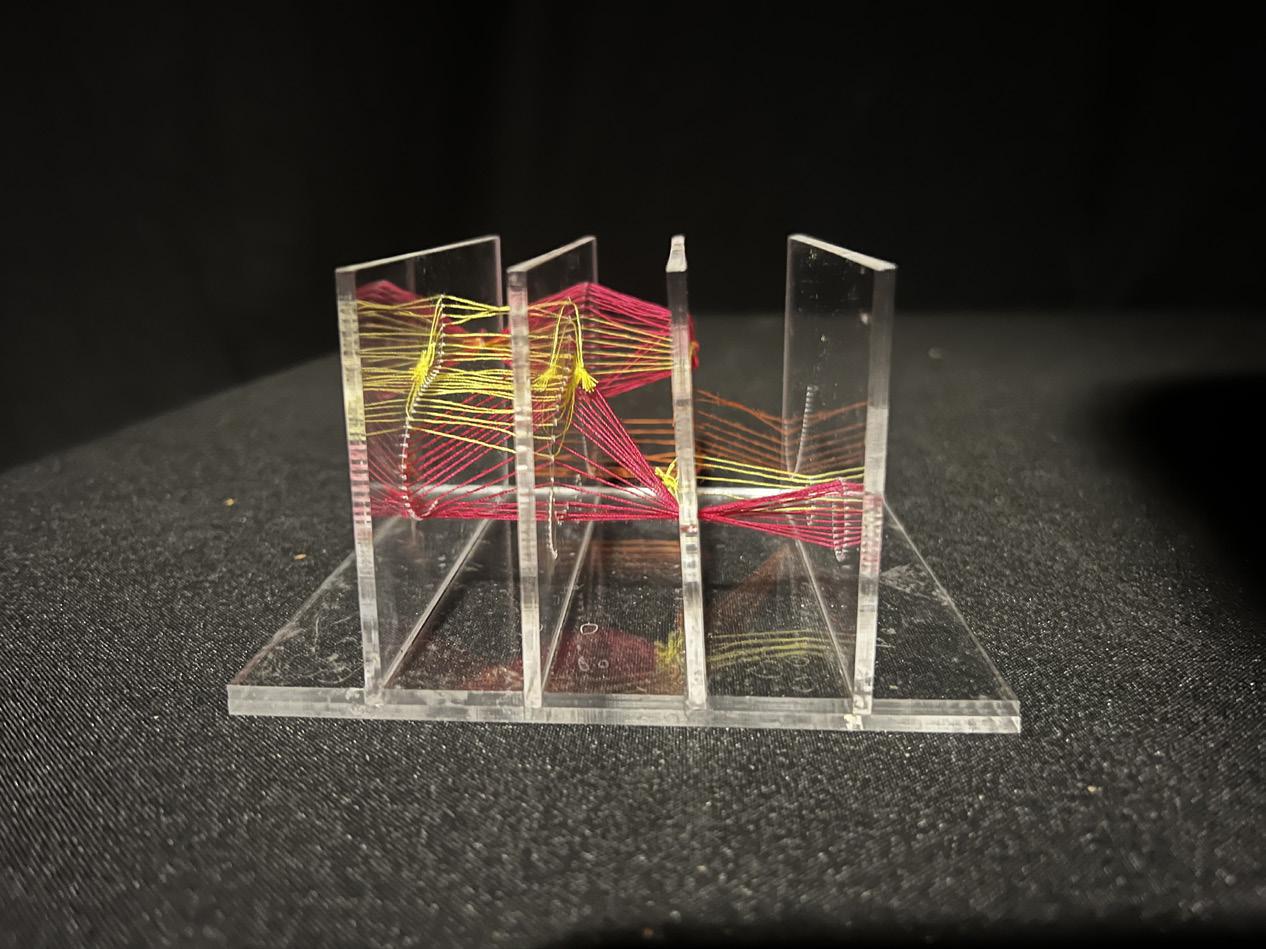
34
destination : LOVE
“queered”
space experience
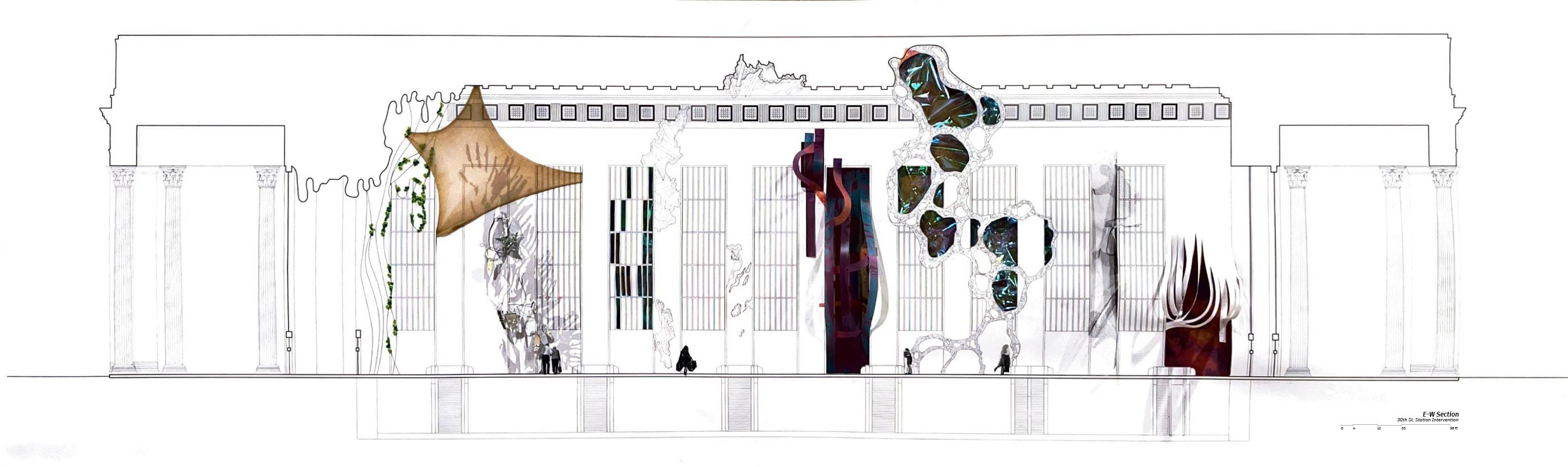
The intervention is designed through a clashing, warping, and deconstructing forms, and projections to invoke and create a type of journey of feelings, then shifting to distortion, alienation, surveillance, dysphoria, ambiguity, authenticity, and community. How we identify greatly influences what and the male influence on society and architecture has centered the beautiful. Rather than continuing to align to this gaze of beauty, a new gaze architecture becomes a symbol for the trans body, one that does not seeks to undo the
35
deconstructing of materials, feelings, beginning with clarity, ambiguity, and finally freedom, what we identify as beautiful, architecture we perceive as gaze is understood, and the not seek perfection, but rather logic of the space it enters.
36
destination : EMPATHY
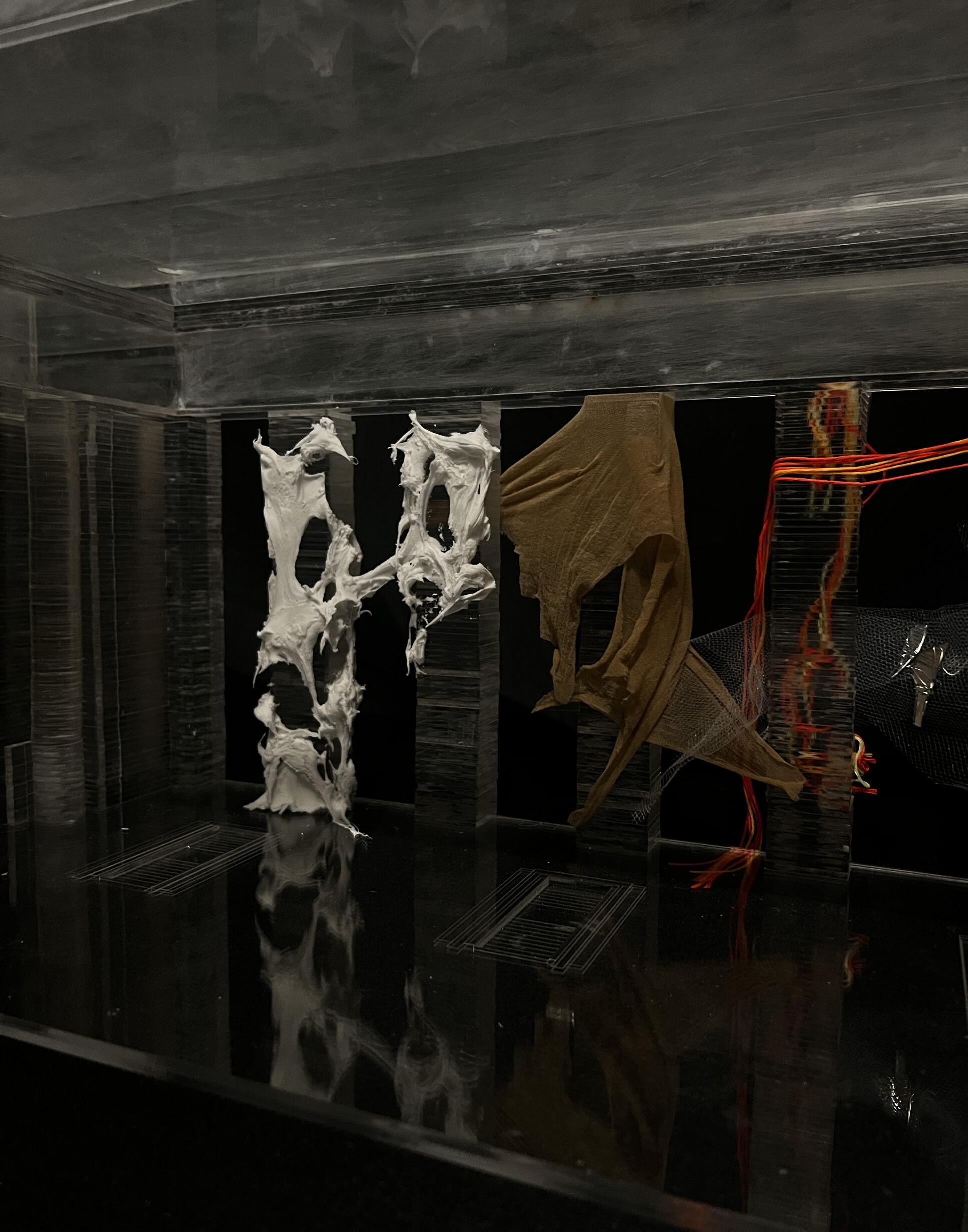
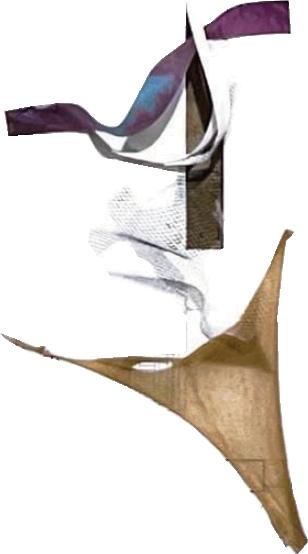
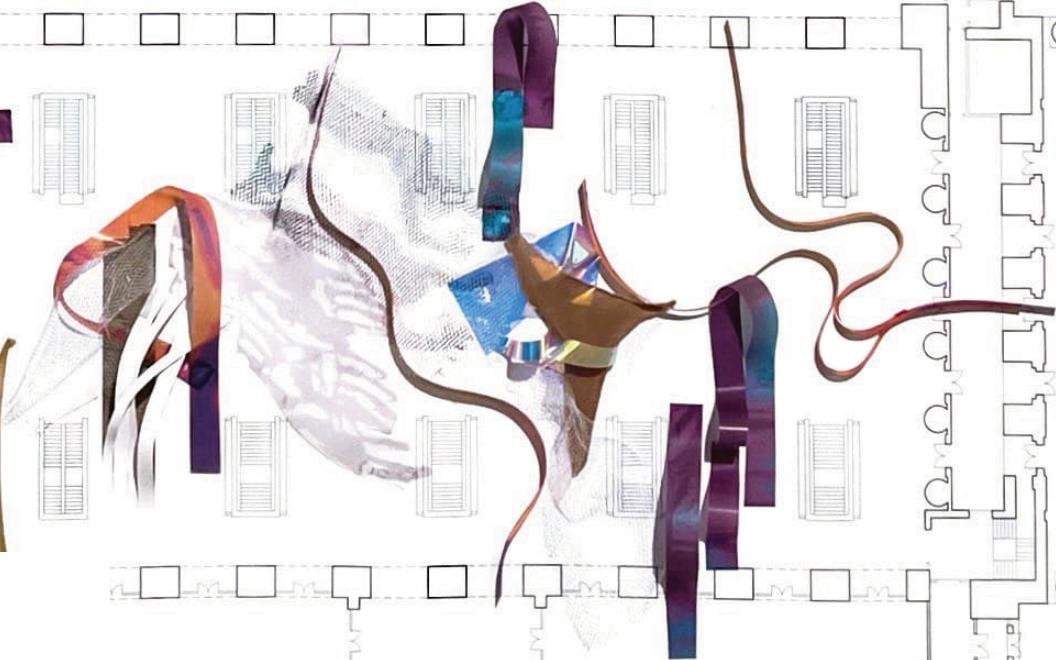
The artifacts of the project each become their own collage of clashing, warping, overlapping of materials, transforming, unworlding, and deconstructing the space of 30th Street Station. “queered” space experience
37
38
ARCH STREET 30TH STREET 0 16 32 64 96 N 30th 39
SCHUYLKILL AVENUE 160 ft 30th St. Station Plan Intervention destination : ACCEPTANCE 40
BIBLIOGRAPHY 41
Hayden, Dolores. “What Would a Non-Sexist City Be Like? Speculations on Housing, Urban Design, and Human Work.” Signs 5, no. 3 (1980): S170–87. http://www.jstor.org/stable/3173814.
Ho, Michelle HS. “From dansō to genderless: mediating queer styles and androgynous bodies in Japan.” In Gender in Japanese Popular Culture: Rethinking Masculinities and Femininities, pp. 29-59. Cham: Springer International Publishing, 2023.
Last, Nana. “Repositioning Center: Architecture, Gender and Fluidity.” Thresholds, no. 37 (2010): 50-55. https://www.jstor.org/stable/43876549.
Metcalf, Nicholas. “Why we need gender fluidity.” TED Talk. August 6, 2015. Video, 14:56. https://www. youtube.com/ watch?v=ICWB8pfGBvc
Castricum, Simona. “When Program is the Enemy of Function… Gender-Nonconforming Experiences of Architectural Space.” Architecture and Culture 5, no. 3 (2017): 371-381. https://doi.org/10.1080/20507 828.2017.1367549
Caldwell, Andrew, Jan Smitheram. “Blurring Binaries: A Queer Approach to Architecture through Embodied Connection.” The International Journal of Architectonic, Spatial, and Environmental Design 17, no. 2 (2023): 151-167. https://doi.org/10.18848/2325-1662/CGP/v17i02/151-167
Halberstam, Jack. “Unbuilding Gender.” Places Journal. October 2018. Accessed 28 Nov 2023. https://doi. org/10.22269/181003
Furman, Adam, Joshua Mardell. Queer Spaces, An Atlas of LGBTQ+ Places and Stories. London: RIBA Publishing, 2022.
Bell, David, and Gill Valentine, eds.1995. Mapping Desire: Geographies of Sexualities. London: Routledge.
Bonnevier, Katarina. “A Queer Analysis of Eileen Gray’s E.1027.” In Negotiating Domesticity: Spatial Productions of Gender in Modern Architecture, edited by Hilde Heynen and Gülsüm Baydar, 162-180. Taylor & Francis Group: 2005.
Sanders, Joel. “From Stud to Stalled! Architecture In Transition.” Log, no. 41 (2017): 145–54. http://www. jstor.org/stable/26323730.
Butler, Judith. Gender Trouble. Routledge, 1990.
Choquette, Elio. “Queering Architecture: (Un)Making Places.” The Site Magazine. 2018. https://www. thesitemagazine.com/read/queering-architecture
Rezes, Jo Michael. “A playful exploration of gender performance.” TED Talk. Dec 15, 2020. Video, 17:12. https://www.youtube.com/watch?v=BcOey28XXIw
Cottrill, J. Matthew. “Queering architecture: possibilities of space(s).” Getting Real: Design Ethos Now (2006): 359-370. https://www.acsa-arch.org/chapter/queering-architecture-possibilities-of-spaces/
Bey, Marquis, Cassils, and Jack Halberstam. “Affirmation 9: Queer/Trans Eco Territorial-Bodiments.” (Youtube Live-stream, Columbia GSAPP, New York, NY, April 3, 2024). https://www.youtube. com/channel/UCCPX4RfQsBcpKHk71ZM7m2
Lupton, Ellen. Skin: surface, substance + design. New York: Princeton Architectural Press, 2002.
Betsky, Aaron. The Monster Leviathan: Anarchitecture. Cambridge, MA: The MIT Press, 2023.
Wines, James. De-Architecture. New York: Rizzoli, 1987.
BIBLIOGRAPHY
42