A Journey Through Time
The rebirth of a 15th century house in Peyriac Minervois
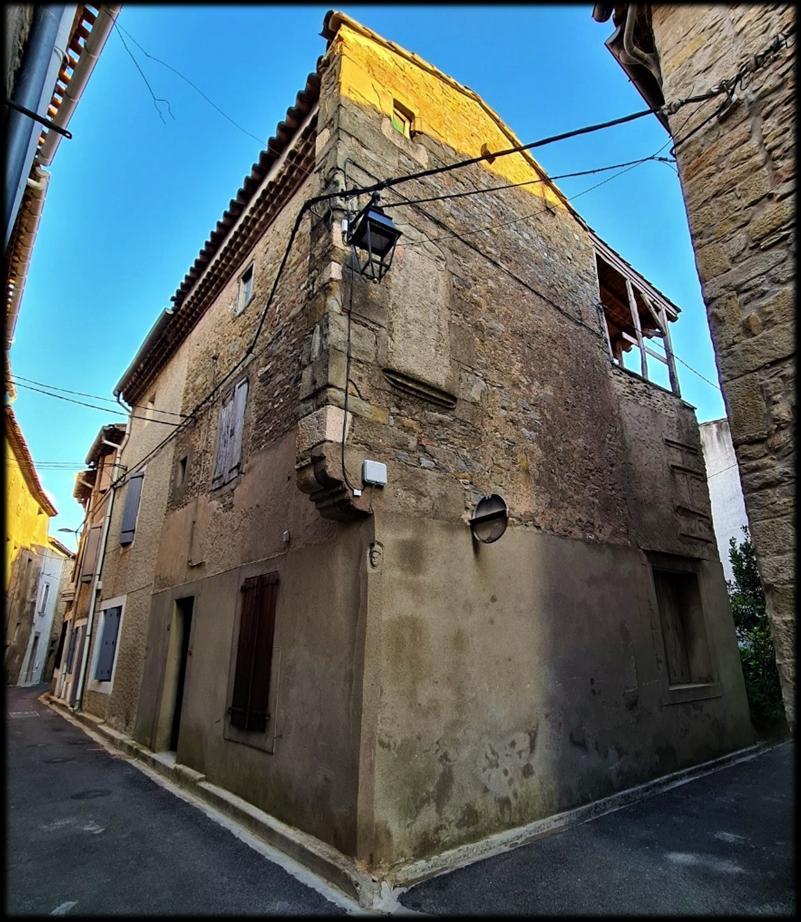
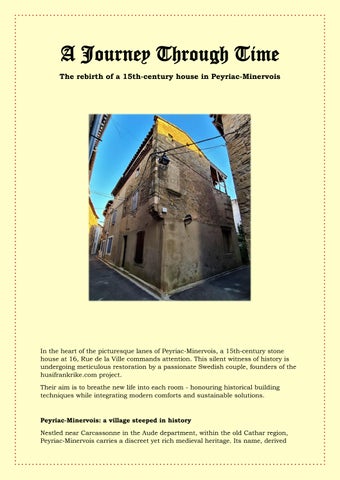
In the heart of the picturesque lanes of Peyriac Minervois, a 15th century stone house at 16, Rue de la Ville commands attention. This silent witness of history is undergoing meticulous restoration by a passionate Swedish couple, founders of the husifrankrike.com project.
Their aim is to breathe new life into each room - honouring historical building techniques while integrating modern comforts and sustainable solutions.
Peyriac Minervois: a village steeped in history
Nestled near Carcassonne in the Aude department, within the old Cathar region, Peyriac Minervois carries a discreet yet rich medieval heritage. Its name, derived
from the Latin Petra (stone), reflects the local quarries that were economically significant in the Middle Ages.
In the 11th century, local Minervois lords controlled the area a strategic stop between Carcassonne and Minerve. Peyriac became a small fortified town centred around a now vanished feudal castle.
During the 13th century, the Albigensian (Cathar) Crusade profoundly affected the region. Although Peyriac was not a main battlefield, its proximity to Minerve which fell in 1210 suggests it experienced turmoil. Following the Crusade, the French crown strengthened its hold on Languedoc, weakening local lordships.
Medieval Peyriac’s economy revolved around farming, viticulture and crafts. The village likely hosted markets and small workshops; many surviving stone houses still feature architectural details like corbels, mullioned windows or traces of stained glass.
Thus, Peyriac‑Minervois retains subtle yet lasting marks of its medieval past: feudal structures, religious upheavals, and village life. The restored house is part of this heritage, allowing immersion into medieval architecture and lifestyle.
1498: one house, six centuries of history
From the project's outset, uncovering the house’s history has been an educational adventure. From archival research in Carcassonne to visits by medieval archaeologist Frédéric Loppe, it emerged that the house may date back to 1498. Dendrochronological analysis at Lund University, village history and expert opinion support using that year as its construction date.
In 1498, historic events abounded: in France, Louis XII succeeded Charles VIII; in Peyriac Minervois, plans emerged for a new castle as military tech advanced; meanwhile, globally, Columbus embarked on his third voyage to the New World, Da Vinci completed The Last Supper, Machiavelli entered politics. In Sweden, King Hans (John II) reigned, with Sten Sture the Elder dominating politics.
Living in and restoring a house of over 520 years humbles and fascinates bringing the Middle Ages into dialogue with our era, each stone telling its own story.
The layout of the house
The house originally measured twice its current size and was once part of the neighbouring property at number 18.
The ground floor now comprises three rooms and a small courtyard, which are being transformed into an entrance hall, a kitchen with a dining area, and a guest bedroom.
Above, on the first floor, you’ll find a spacious hall, a bedroom, and a compact WC. In the attic, there is a generous room that opens onto a newly constructed terrace.
The bathroom: unity of tradition and modernity
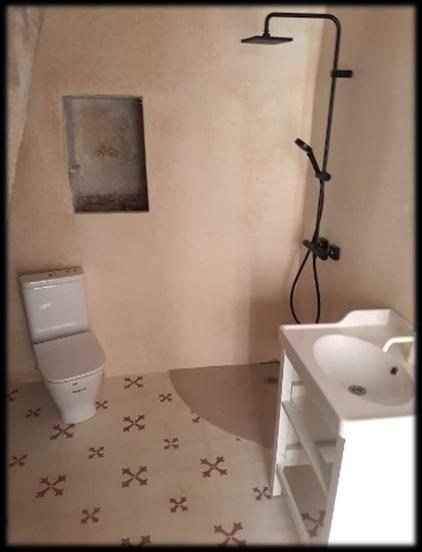
Formerly the entrance hall, this space has been painstakingly transformed into a bathroom. It features custom handmade floor tiles and a stone base shower tray. Concealed cast iron plumbing with elegant, timeless mixers.
Walls finished in tadelakt a traditional Moroccan waterproof plaster.
Fixtures are among the most water efficient in Europe. A Chinese imported heat pump water heater will significantly reduce energy consumption.
The kitchen: a return to culinary roots
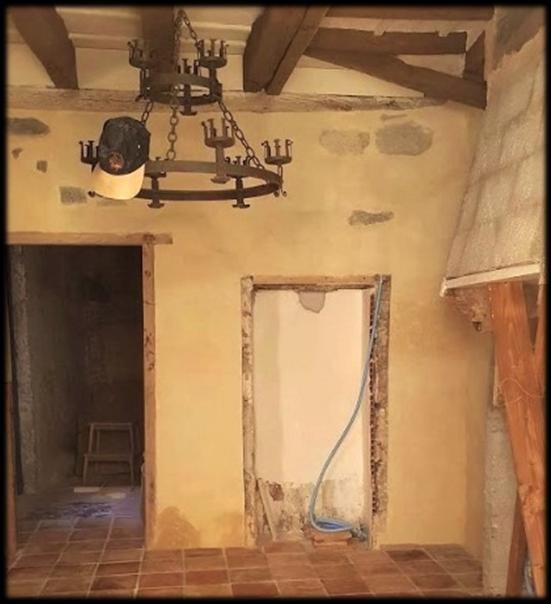
The nearly finished kitchen exudes authenticity: antique terracotta tiles laid in lime mortar with sand and lime joints, oak cabinetry made from Swedish oak, restored old wooden lintels. Lime based finishes without modern plasticizers.
A medieval style wrought iron chandelier enhances the warm, timeless feel.
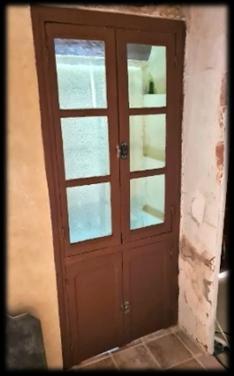
A built in wall cupboard from the early 20th century has been lovingly restored to preserve its original character.
The ground floor bedroom: medieval sobriety with comfort
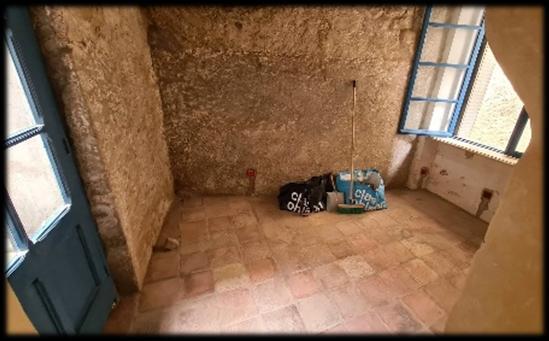
This bedroom will feature original terracotta floor tiles, walls with warm yellow‑sand hue lime plaster partly revealing the underlying stone.
A 1950s window and a 1920s courtyard door have been carefully restored.
New exposed oak beams, painted oak brown with oil paint, reinforce its cosy, authentic ambiance.
First floor: a reinterpreted medieval hall
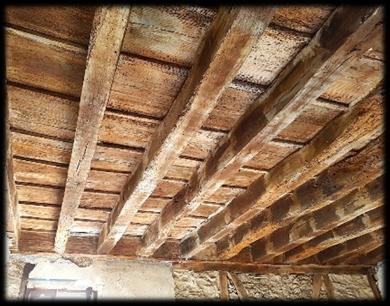
A generous 20 m² hall, half the original footprint, welcomes visitors with exposed late 15th century beams, raw stone walls and typical timber framed medieval architecture.
Carvemasters’ marks adorn the beams. A soon to be hung medieval style tapestry will enhance the historic character.
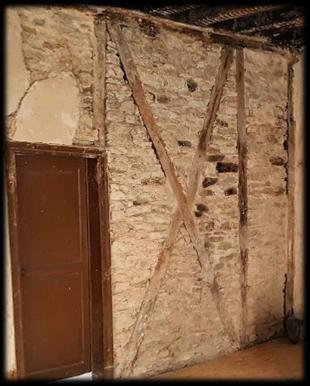
During renovations, a blocked up medieval window with a stone seat was uncovered - a rare find.
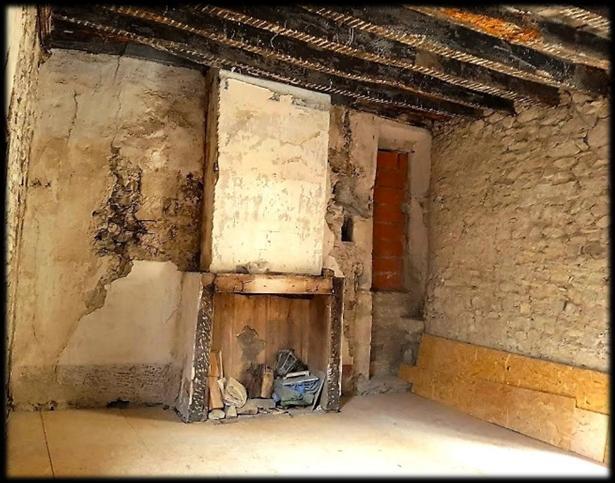
It will be restored with stained glass. A small bathroom, akin to the ground floor one, will be discreetly hidden behind a trompe l’œil door to maintain the space’s harmony.
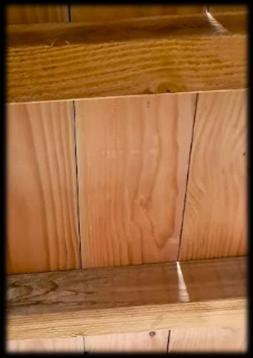
Also on this floor is a cosy bedroom with recently laid Douglas fir flooring using traditional forged iron nails, will have lime washed walls and a painted ceiling depicting a starry sky with local zodiac signs creating a poetic, timeless ambiance.
The attic with an 18th century touch and a terrace:
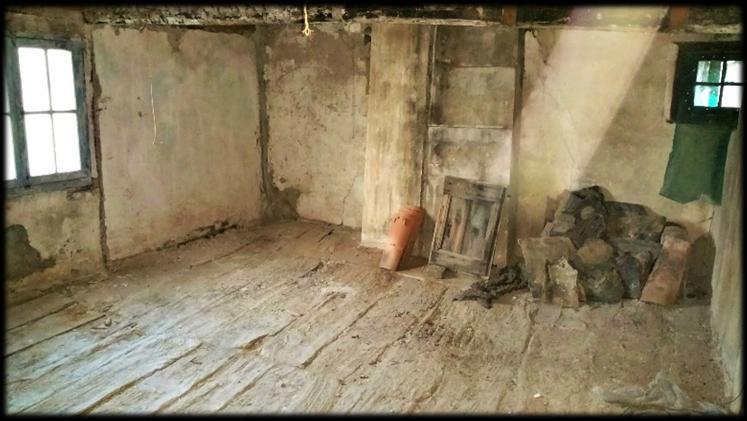
The second floor attic will be styled in an 18th century manner with bright colours. It will become a master bedroom and study.
The ancient (possibly 14th century) poplar plank floor will be partially covered to level it, while preserving a 1 m² section as a window to the original floor.
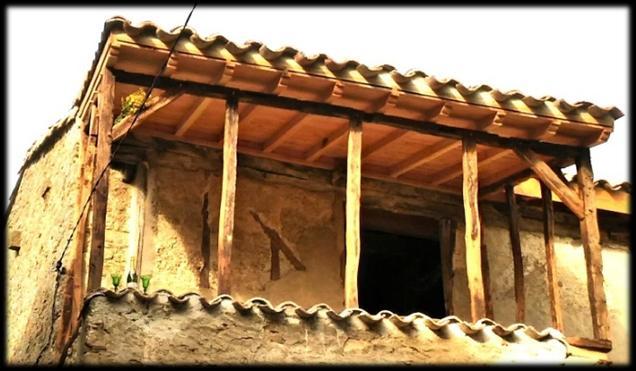
After buying, the idea of creating a patio grew – our friends on the Atlantic coast emphasised the value of outdoor space. Heritage authorities (STAP) forbade an open terrace in the historic centre, but allowed a dovecote or loggia.
Three months later, thanks to elegant designs by our Swedish architect friend, the project was approved! In spring 2016, we engaged an artisan from Apex, specialised in medieval and sustainable building techniques.
Despite slightly exceeding our initial budget, it aligned with our ambition.
They used entirely reclaimed medieval wood from the old roof, creating a singular structure deeply rooted in the site’s history and in harmony with the house’s spirit. Now only lacking the railing.
A sustainable, local strategy with organic materials
We prioritise local, eco smart materials: lime, terracotta tiles, local slate, dressed stone. All timber is untreated or finished with natural waxes or plant oils no solvents, plastics or PVC.
Hemp based bio materials provide excellent thermal and humidity regulating properties, eco smart interior finishes and natural, solvent free colours. All appliances and sanitary fittings are top‑grade EU class A for high efficiency.
Bringing history to life
For future medieval festivals in Peyriac Minervois, we intend the house to become a living centre for historical renovation and sustainable tourism. It aims to be a living model of heritage restoration using locally rooted materials and regional craftsmanship.
Ongoing historical research and possible AR (augmented reality) guides will allow visitors to follow the living story of this revived ancient site offering total immersion into the Middle Ages. The project is anthropological, educational and communal turning the house into an inspiring centre, showcasing authentic heritage techniques and a place for enriching encounters.
We hope it becomes a true journey through time, where heritage architecture comes to life in a collective endeavour and offers a memorable experience for all
Sources:
husifrankrike.com in Swedish, but also available in English via Google
Mon village entre les deux guerres: in French, Daily Life in Peyriac-Minervois
Le castrum de Peyriac-Minervois, in French, scientific article by Dr Fréd Loppe
Site de la Commune with a slideshow
Copyright: Jan Peter Bergkvist 2025