he year draws to a close with a distinct sense of momentum across Oceania’s cleaning and hygiene sector. The industry worked through rising expectations while suppliers, contractors and associations shaped a collective surge toward stronger capability, clearer environmental outcomes and technology that supports skilled teams.
Workforce development shaped the year as employers invested in training that lifted confidence and strengthened retention. Contractors focused on skilled supervision, clear career pathways and wellbeing programs that created motivated teams.
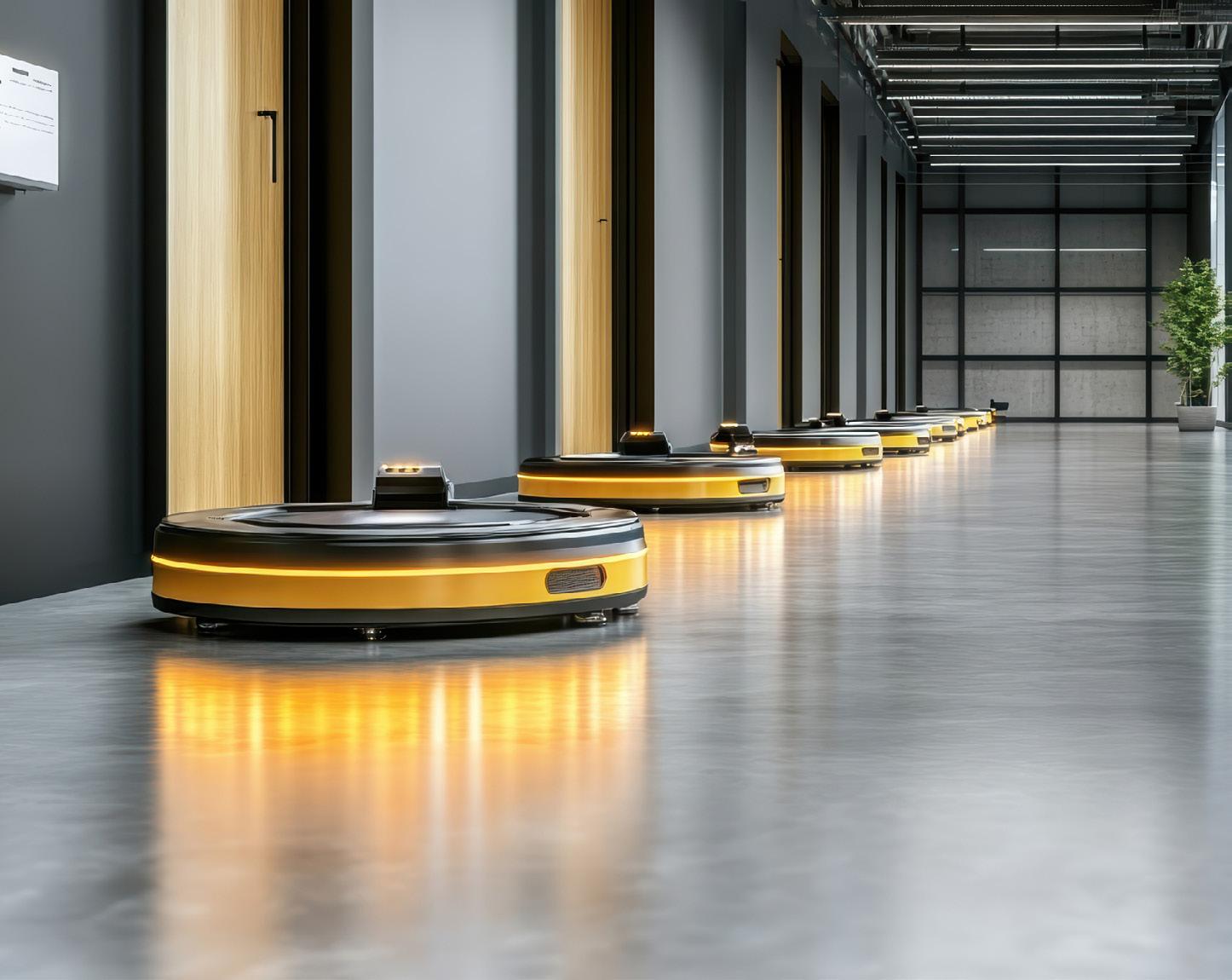
Technology expanded that progress as autonomous scrubbers, data-driven testing and smart dispensers created a new level of precision across daily tasks, creating space for robotics to ease physical strain and redirect teams toward more complex, higher-value work that sharpened overall performance. Sustainability advanced in parallel as clients sought measurable environmental results, prompting contractors to adopt efficient machines, lower-impact chemistry and refined refill systems that reshaped the rhythm of procurement and service delivery.
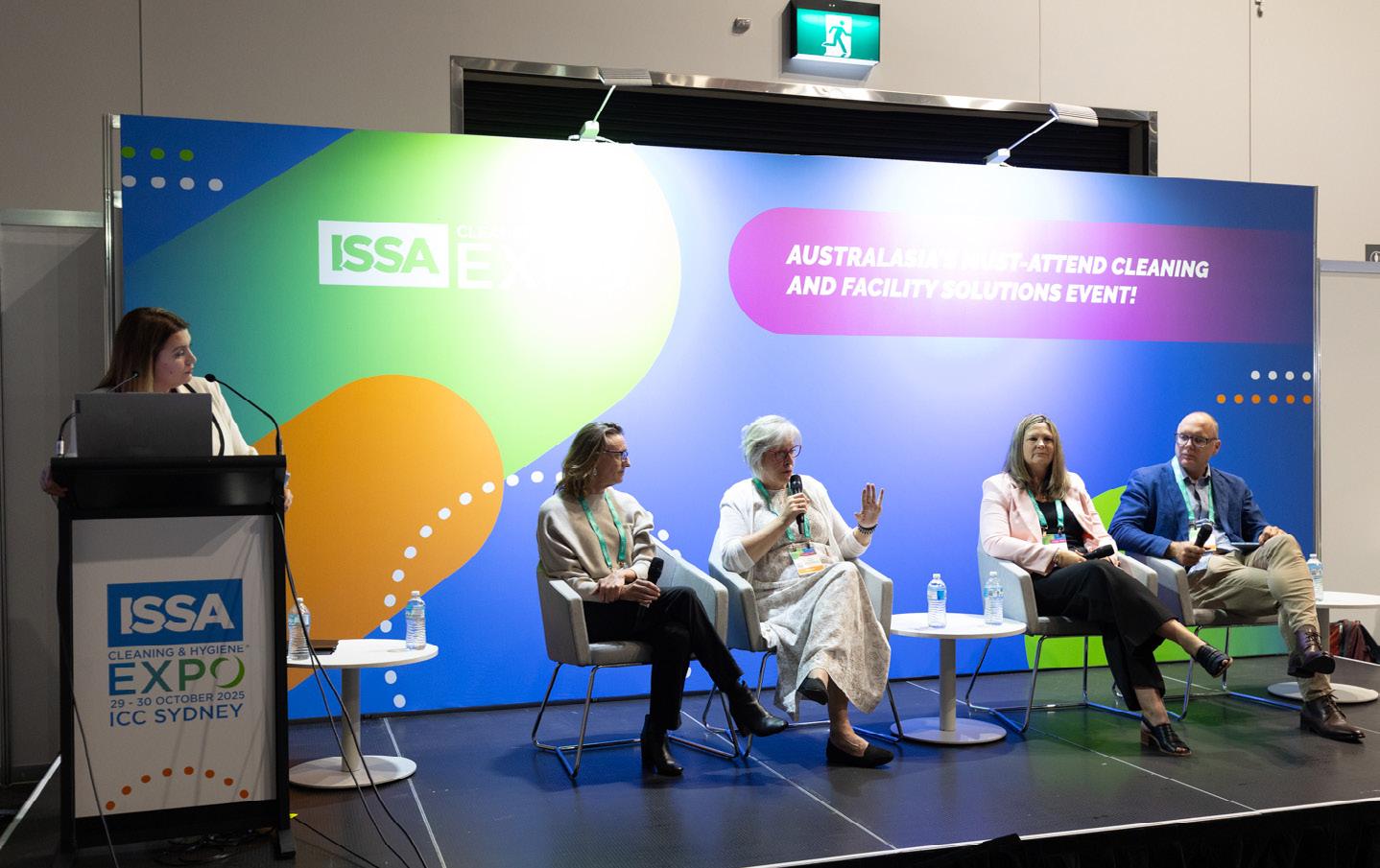
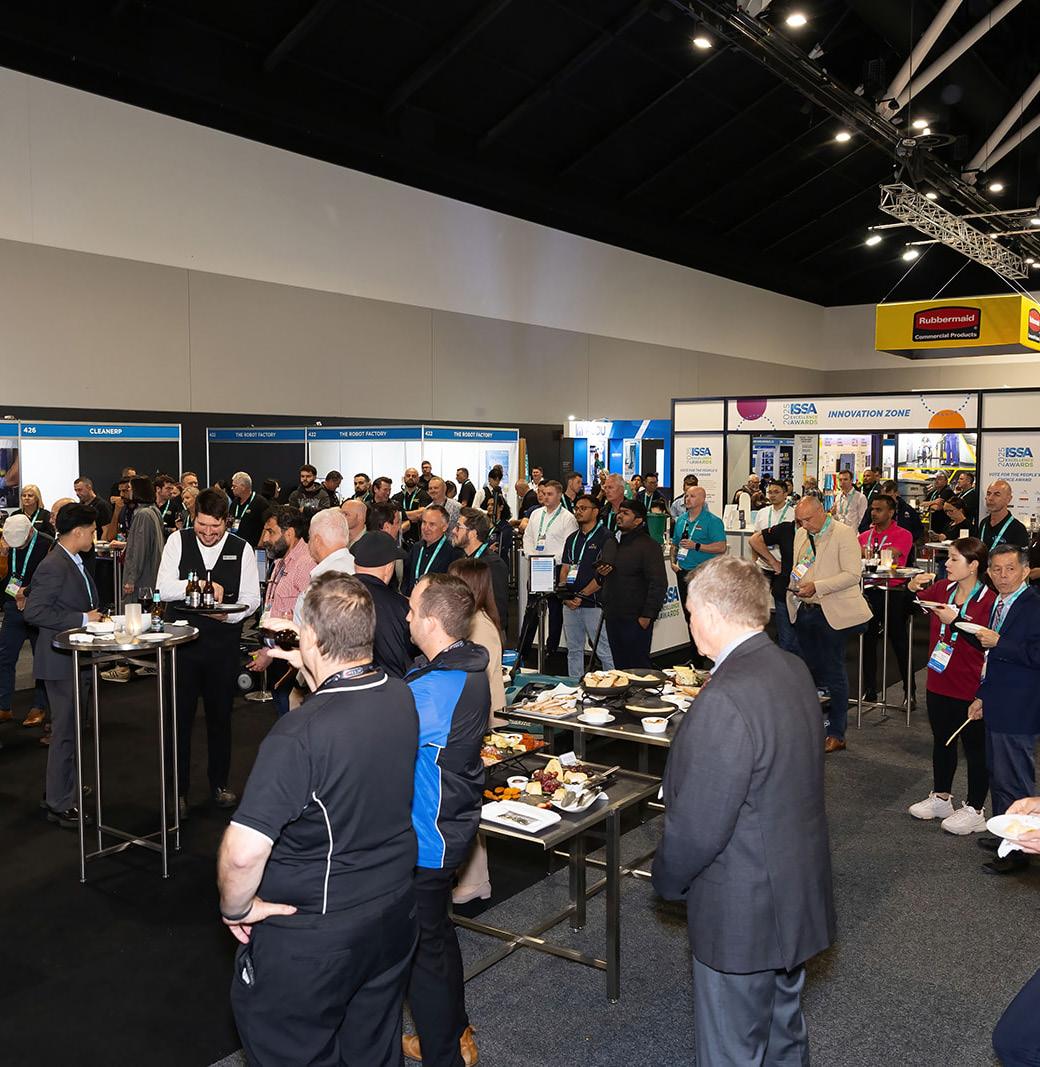
The ISSA Cleaning & Hygiene Expo in Sydney captured the spirit of the year with striking clarity. Across two energised days, delegates explored robotics, testing systems, sensor-driven tools and the latest in sustainable consumables. Sonia McDonald’s keynote created a powerful thread of resilience and leadership that shaped conversations across the show. Panels and workshops tackled regulation, mould, healthy buildings and the rise of evidence-based cleaning. The awards celebrated products that met genuine operational needs and reflected the inventive, practical momentum driving the sector.
Those two days revealed an industry moving with conviction, shaped by trust, transparency and shared knowledge. The conversations pointed toward a future defined by capability and care.
As 2026 approaches, the industry stands ready for fresh opportunity. Workforce strength, environmental clarity and intelligent technology will set the tone for a year of bold progress, where cleaning continues to rise in influence and purpose across Australia’s built environment.
Tim McDonald Editor
Niche Media takes its corporate and social responsibilities seriously and is committed to reducing its impact on the environment. We continuously strive to improve our environmental performance and to initiate additional CSR-based projects and activities. As part of our company policy we ensure that the products and services used in the manufacture of this magazine are sourced from environmentally responsible suppliers. This magazine has been printed on paper produced from sustainably sourced wood and pulp fibre and is accredited under PEFC chain of custody. PEFC certified wood and paper products come from environmentally appropriate, socially beneficial and economically viable management of forests.
YOUR PARTNER IN AGED CARE HYGIENE
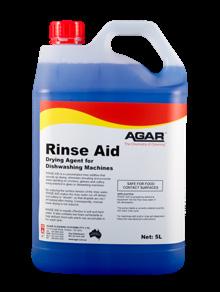
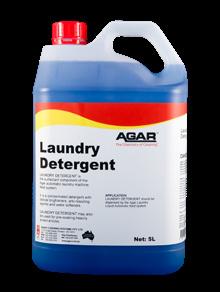
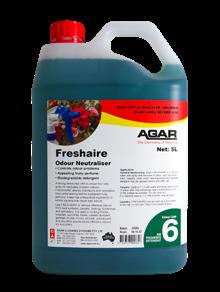
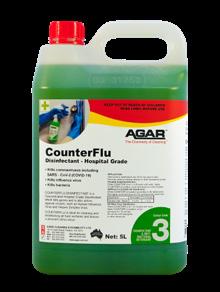
Agar provides trusted cleaning, disinfection, kitchen, and laundry solutions that support the hygiene standards expected in aged care environments. Our products help maintain clean, safe, and comfortable spaces that protect residents, staff, and visitors every day — delivering the performance, safety, and comfort essential for quality care.
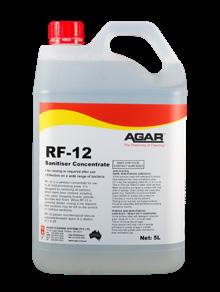
Non-caustic detergent degreaser for food areas RF-12 No-rinse sanitiser for use in all food processing areas
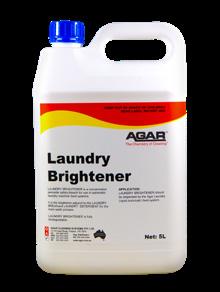
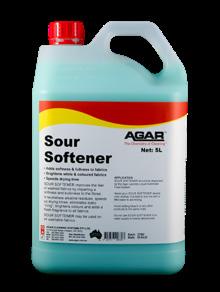
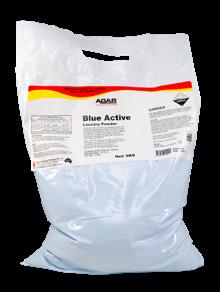
Laundry Brightener Safe & stabilised peroxide bleach for laundry Sour Softener Adds softness & fullness to washed fabrics Blue Active Premium grade laundry powder with fresh flower scent
Key Janitorial Products
Key Kitchen Hygiene
Key Laundry Solutions
What’s on
China Clean Expo
31 March – 3 April 2026
China’s leading cleaning show for hospitality and commercial spaces
Shanghai New International Expo Center
Shanghai, China
ISSA Cleaning and Hygiene Expo
8-9 October 2026
Australasia’s premier event for cleaning and facility solutions
Melbourne Convention and Exhibition Centre (MCEC).
Melbourne VIC
ISSA Show North America
16-19 November 2026
North America’s premier event for the commercial cleaning and maintenance industries
Mandalay Bay Convention Center
Las Vegas, NV
MOST CLICKED
ISS secures major Defence contract
A landmark deal between the Australian Department of Defence and ISS cements a six-year contract worth around $71 million annually, with options for extension.
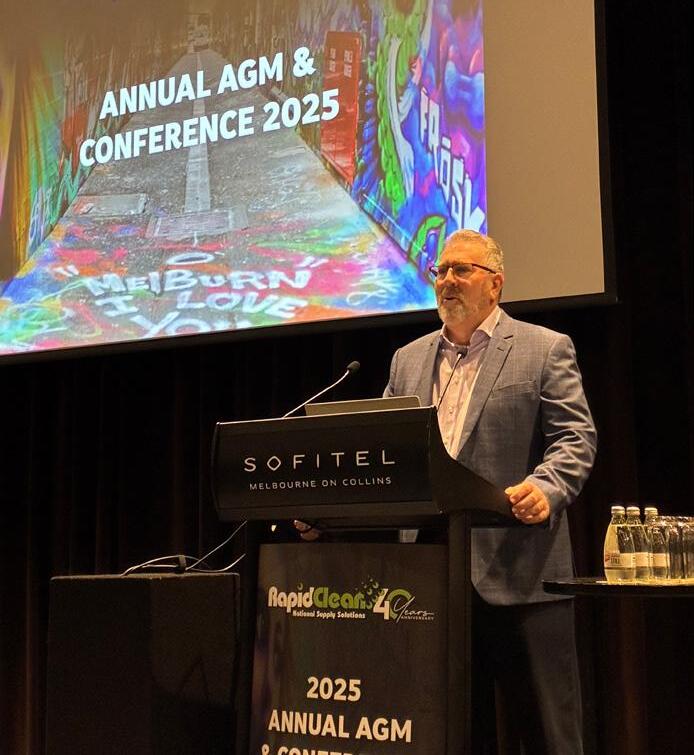
Keynote at the RapidClean AGM and Conference 2025
Speaker Adam Spencer gives an eyeopening and hilarious presentation on what he calls 'The GPT Revolution’.
Mastering chemical handling in the modern cleaning workplace
In Australia's cleaning and hygiene industry, the margin for error in chemical handling is shrinking. FMs are expected to reduce environmental impact, and improve workplace health and safety outcomes. What is your business doing to meet these demands?
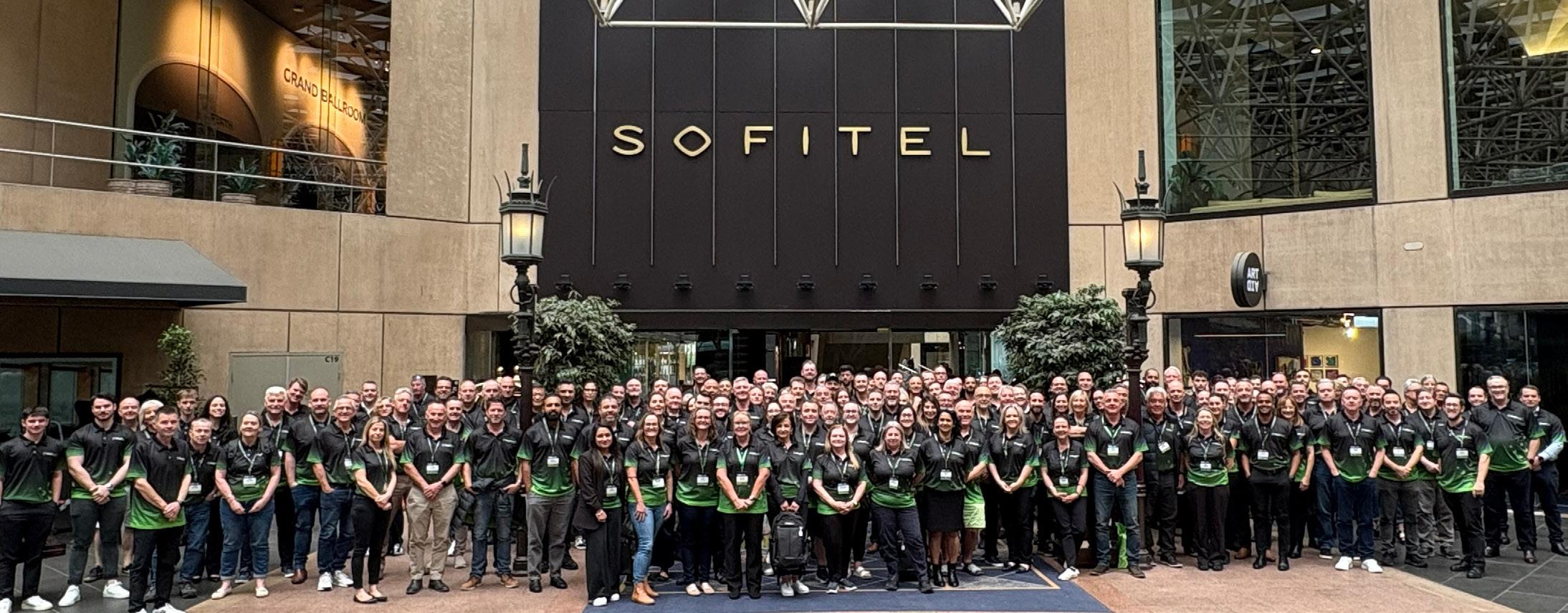
Day 2 wrap-up of the 2025 ISSA Cleaning and Hygiene Expo. Were you there?
“This was so much more than just a trade show. It was a moment of collective purpose.”
Day 1 panel discussions at ISSA Expo
A super informative chat with Gavin Macgregor-Skinner, Alissa Shida and Professor Greg S Whiteley on ʻThe Future of Cleaning Verification’. A fitting confirmation of the power of clean.
Built for the toughest jobs, made to last
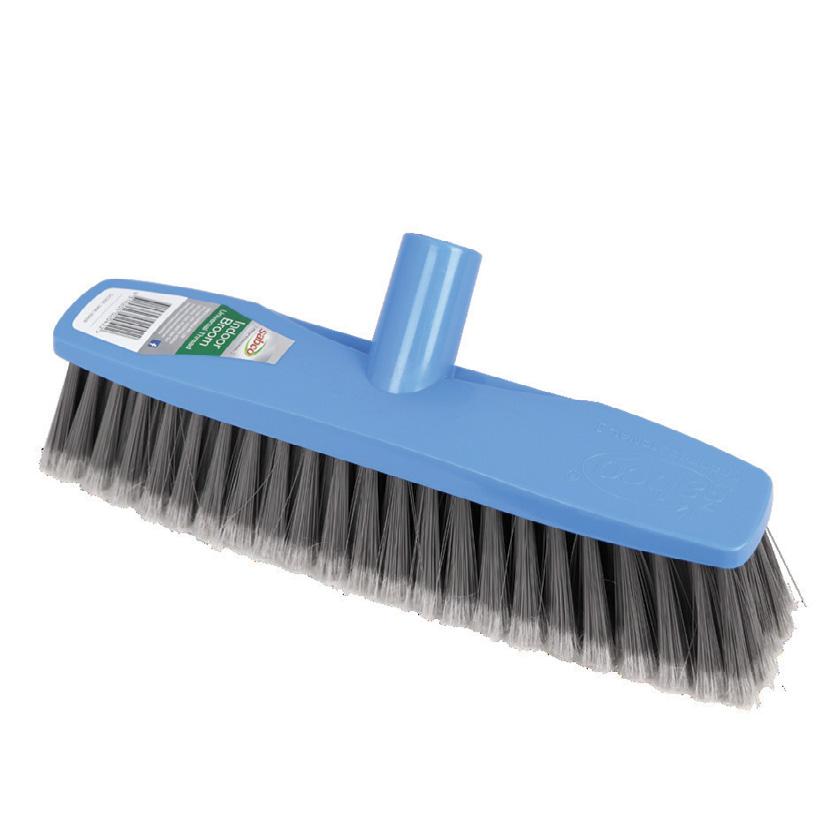
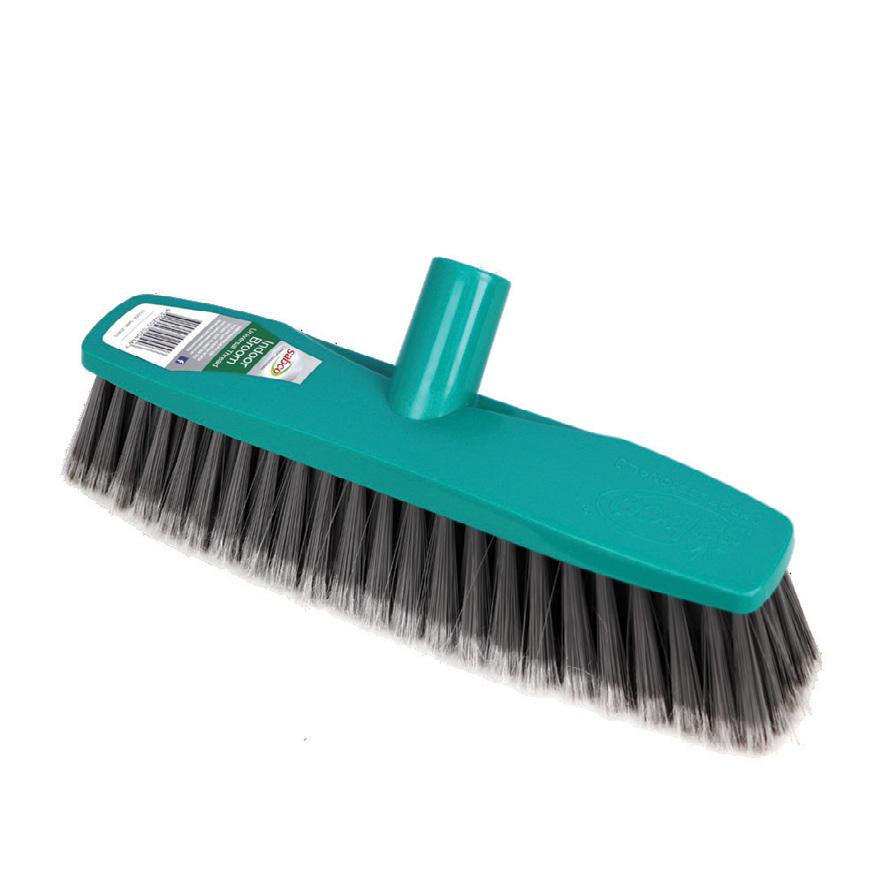
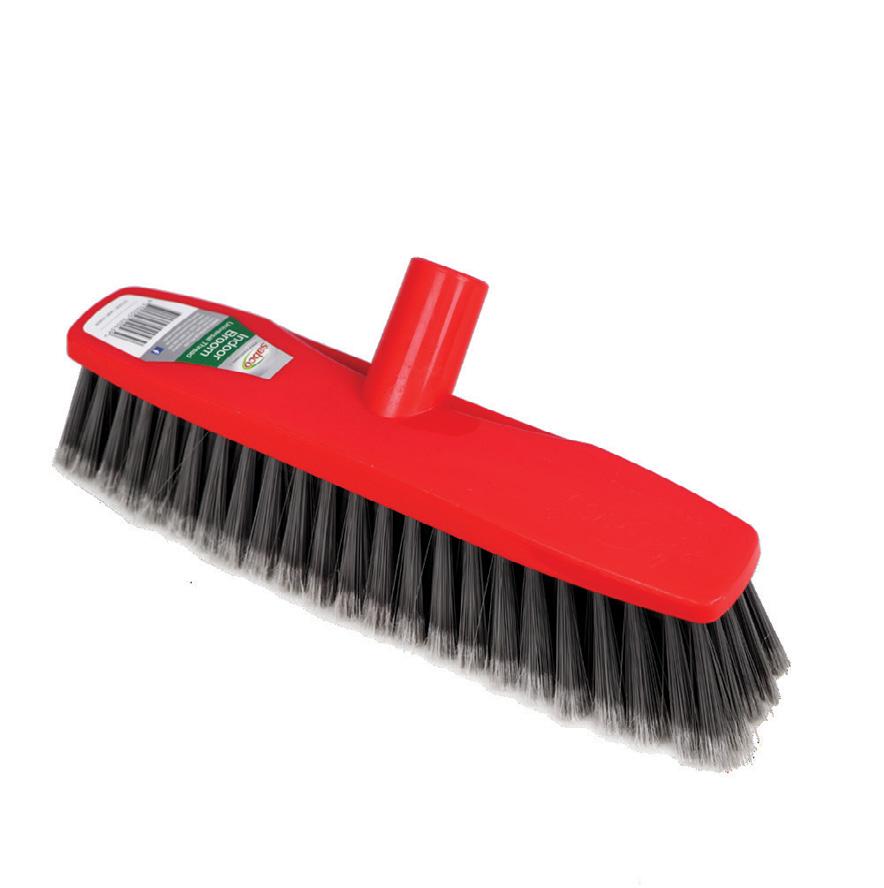
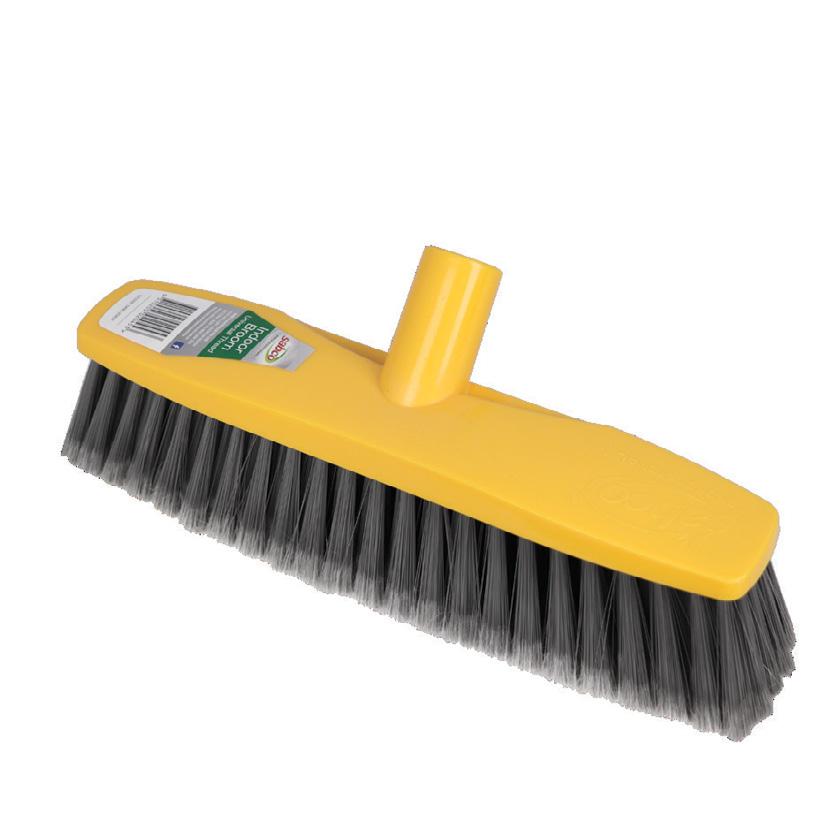
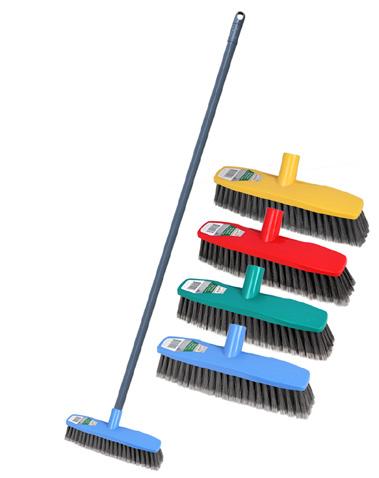
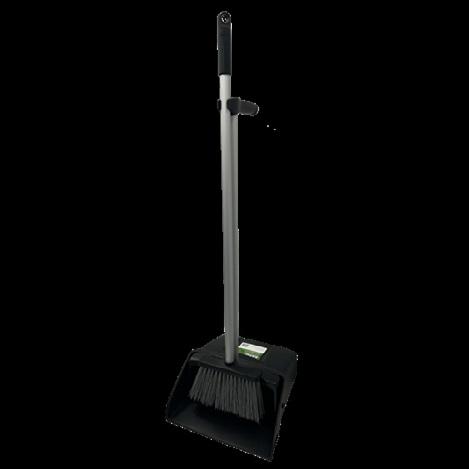
Sabco Professional launches the ULTIMATE ProSweep Industrial Broom Range, setting a new standard in industrial sweeping – from its ergonomic design to its robust materials.
ON THE COVER
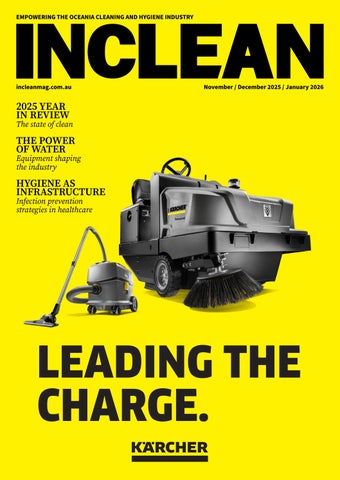
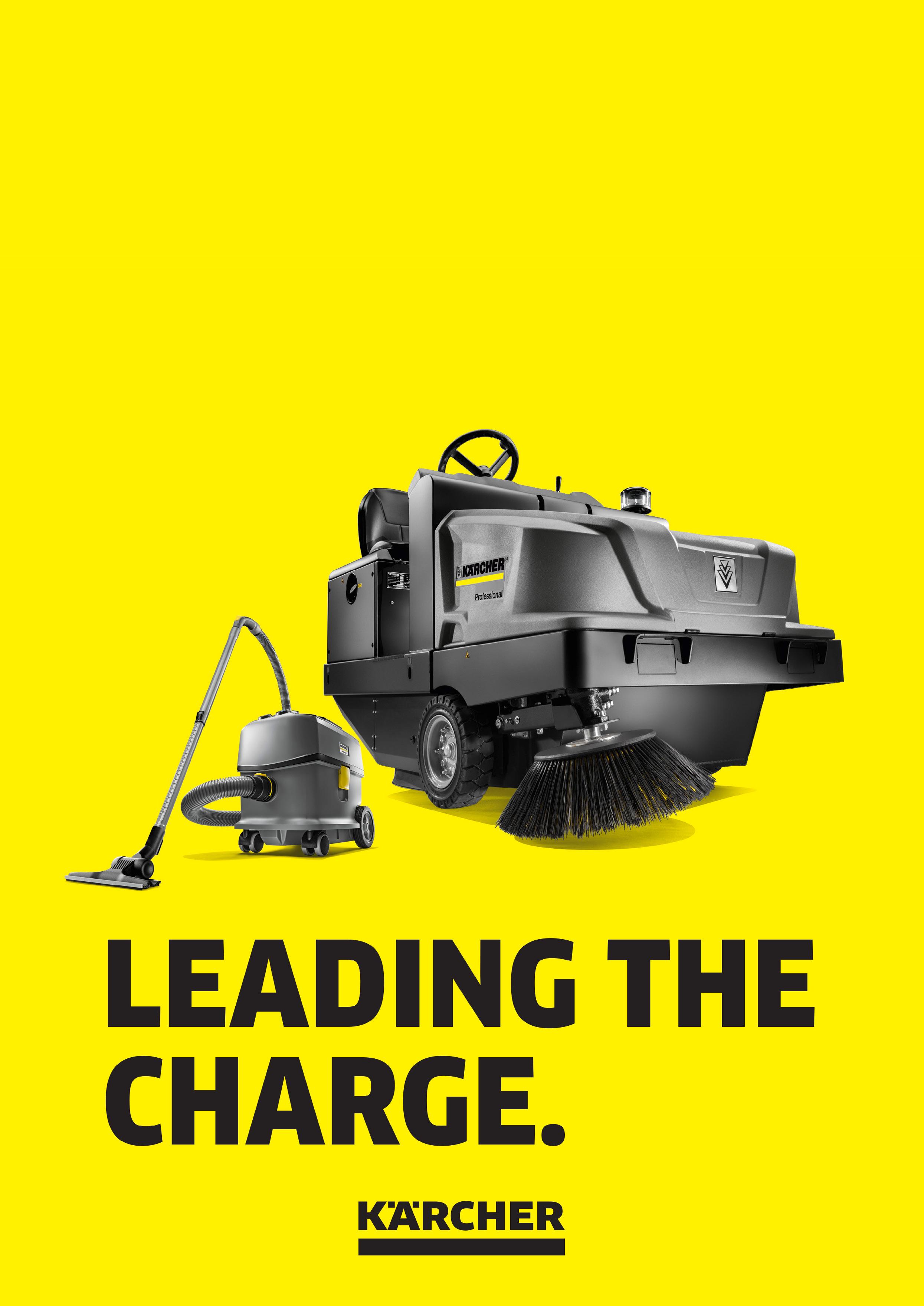
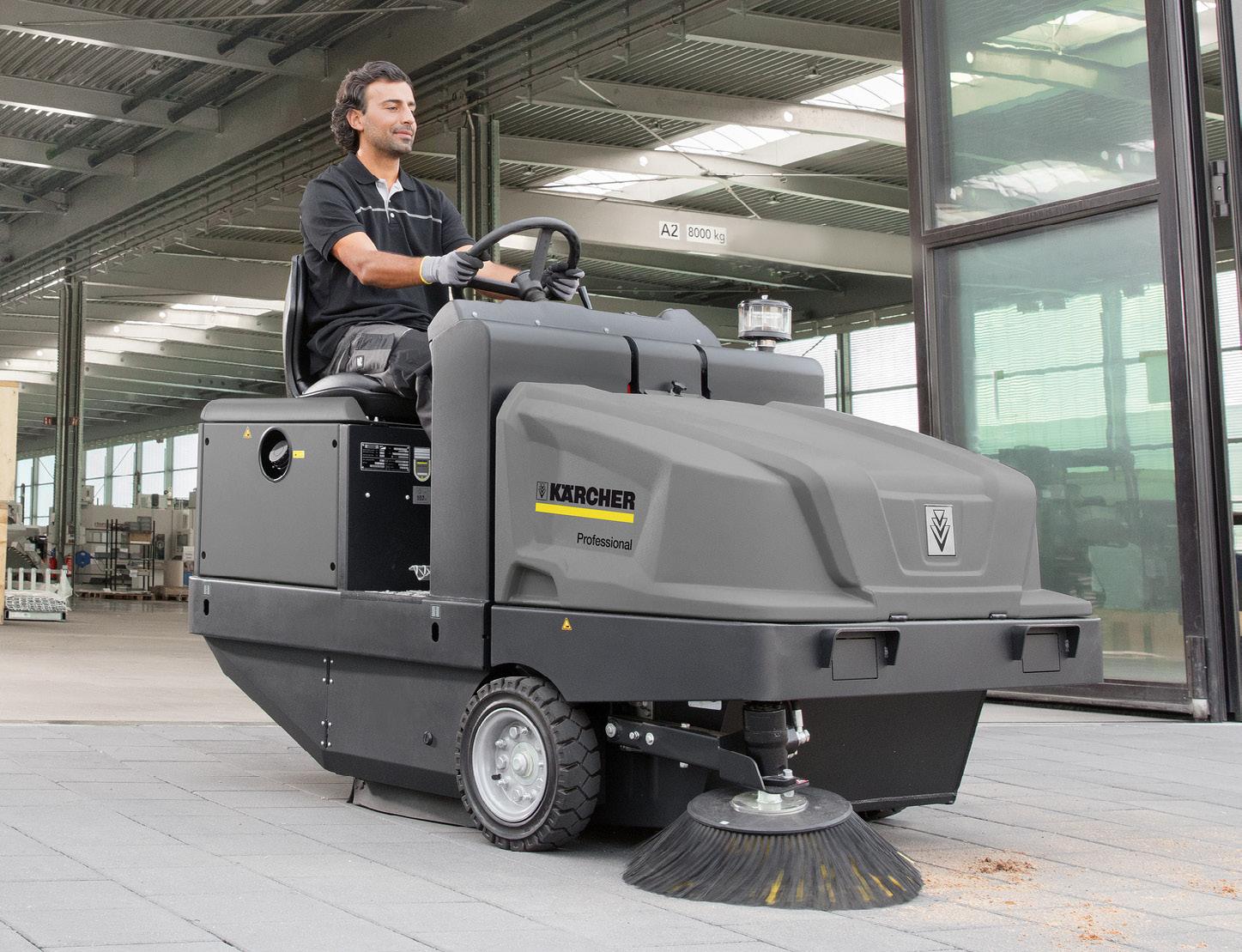
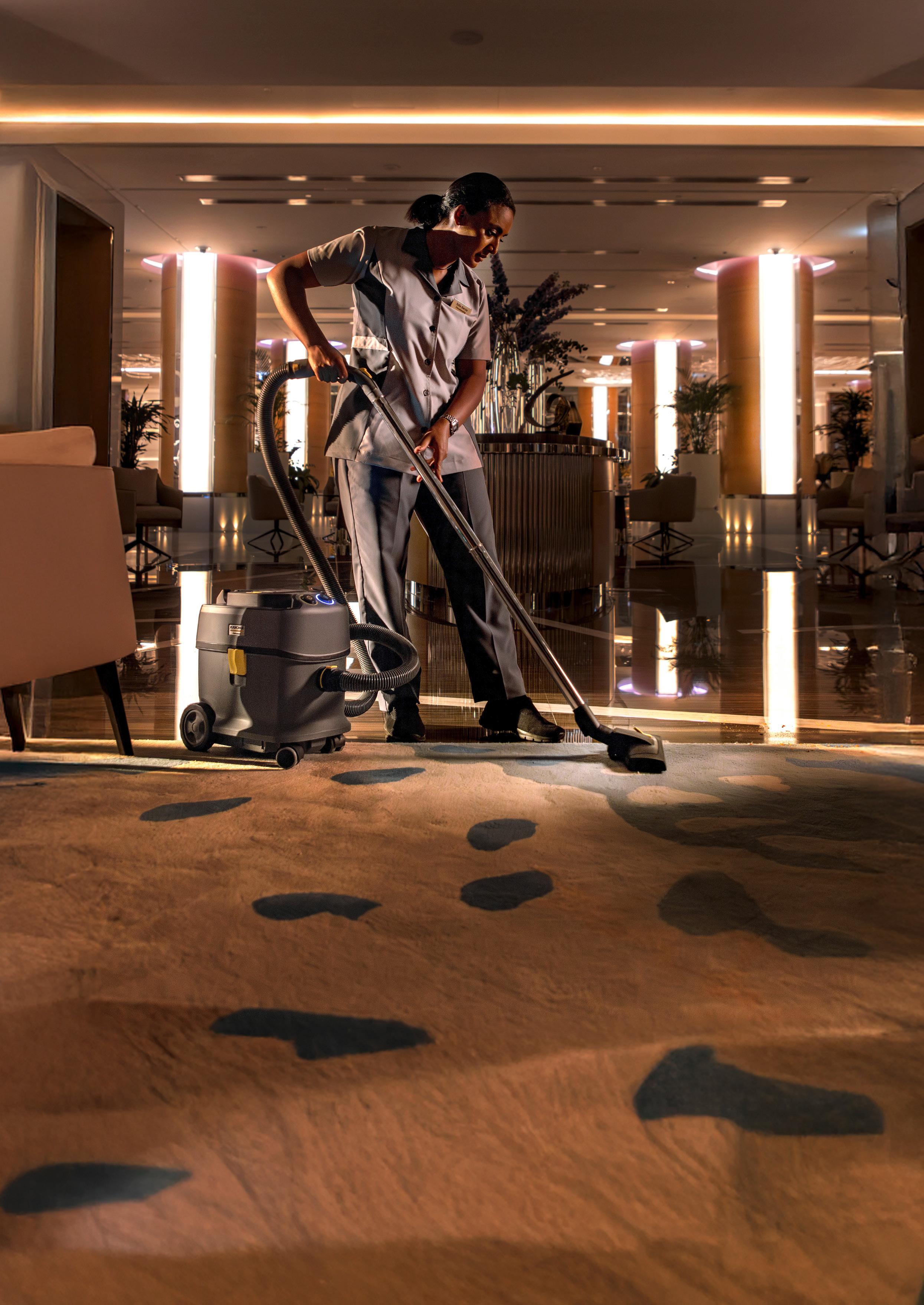
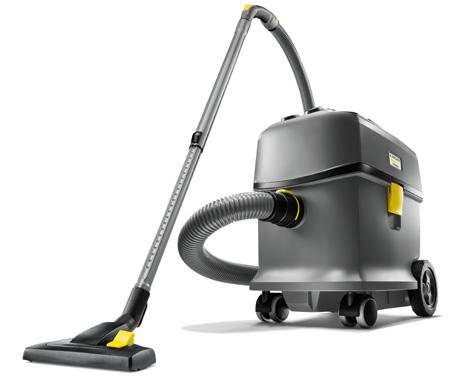
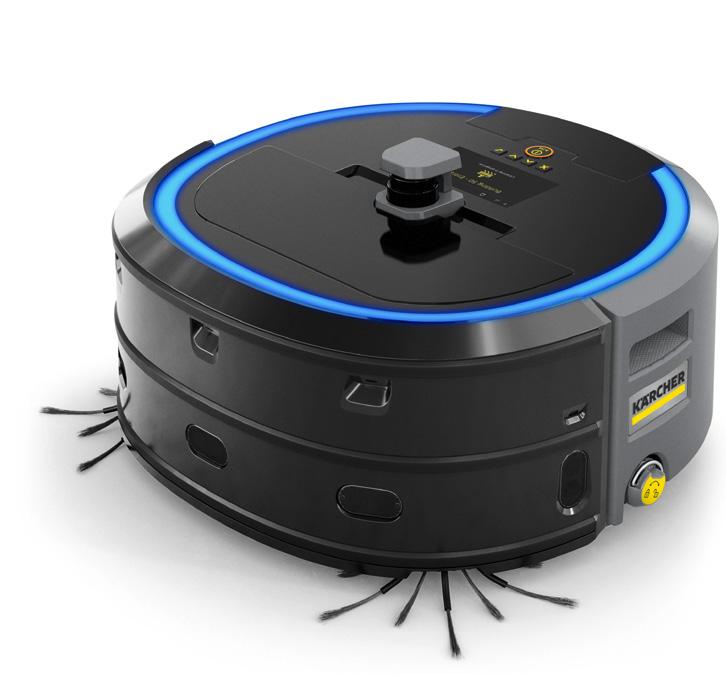
Kärcher Australia delivers powerful cleaning solutions for home, business and industry. Its Germanengineered machines, from high-pressure washers to vacuum and floor cleaners, combine robust performance with sustainability to make cleanliness effortless and efficient.
IN THIS ISSUE
12 The year in review
From workforce pressures to sustainability breakthroughs and technology adoption, 2025 reshaped Australia’s professional cleaning landscape.
22 The power of water
As water sets the pace in cleaning, new equipment is transforming how that power is harnessed.
32 Automation and AI shaping commercial sales
Automation and AI amplify your sales process, either magnifying mess or supercharging profitable growth fast.
36 The waste rethink
Cleaning now embraces material consciousness, closing waste loops and redesigning products, packaging and processes sustainably.
39 Clean by design
Cleaning is a core health service with infection prevention embedded across infrastructure, operations and environments.
ISSA Expo 2025 –conversation in action
Two charged days in Sydney saw the ISSA Cleaning and Hygiene Expo 2025 transform conversation into action, bridging resilience, sustainability and innovation through the people and products shaping the cleaning industry.
Words Tim McDonald
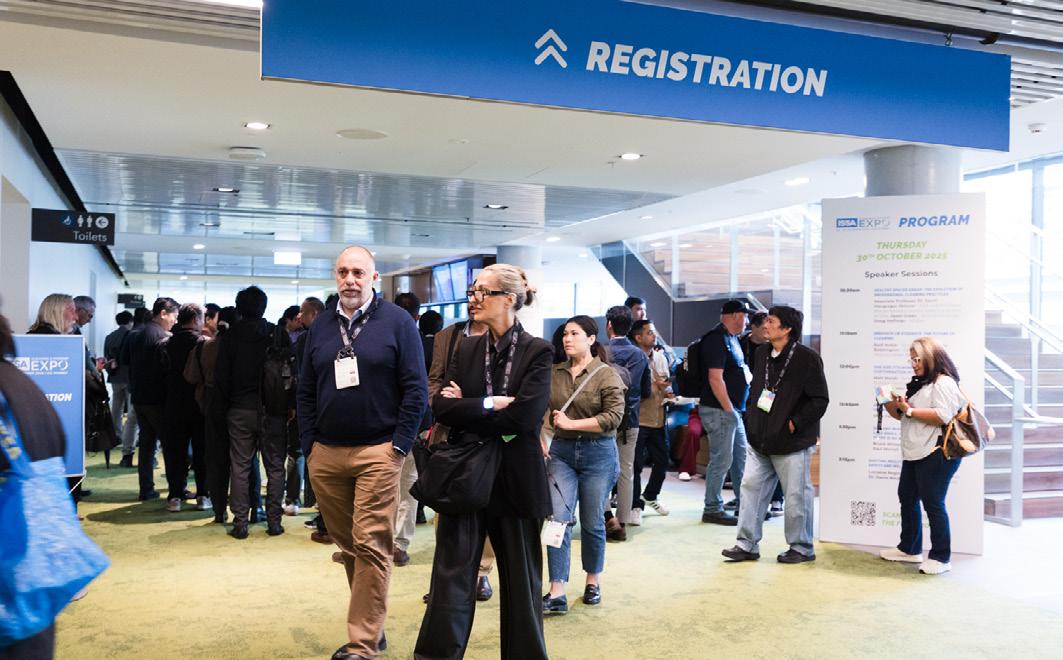
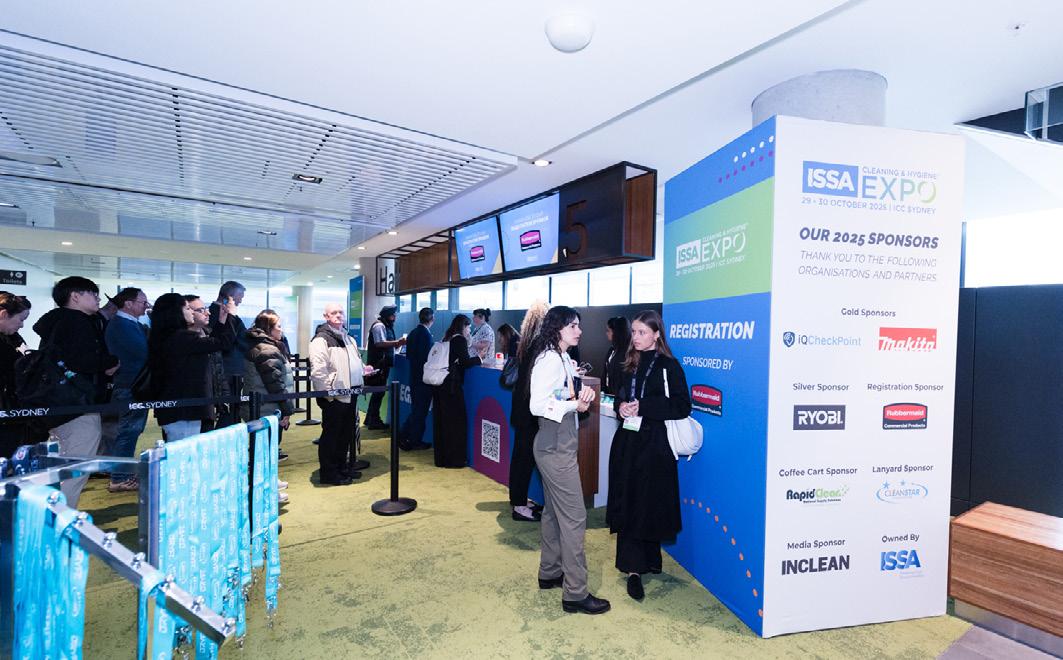
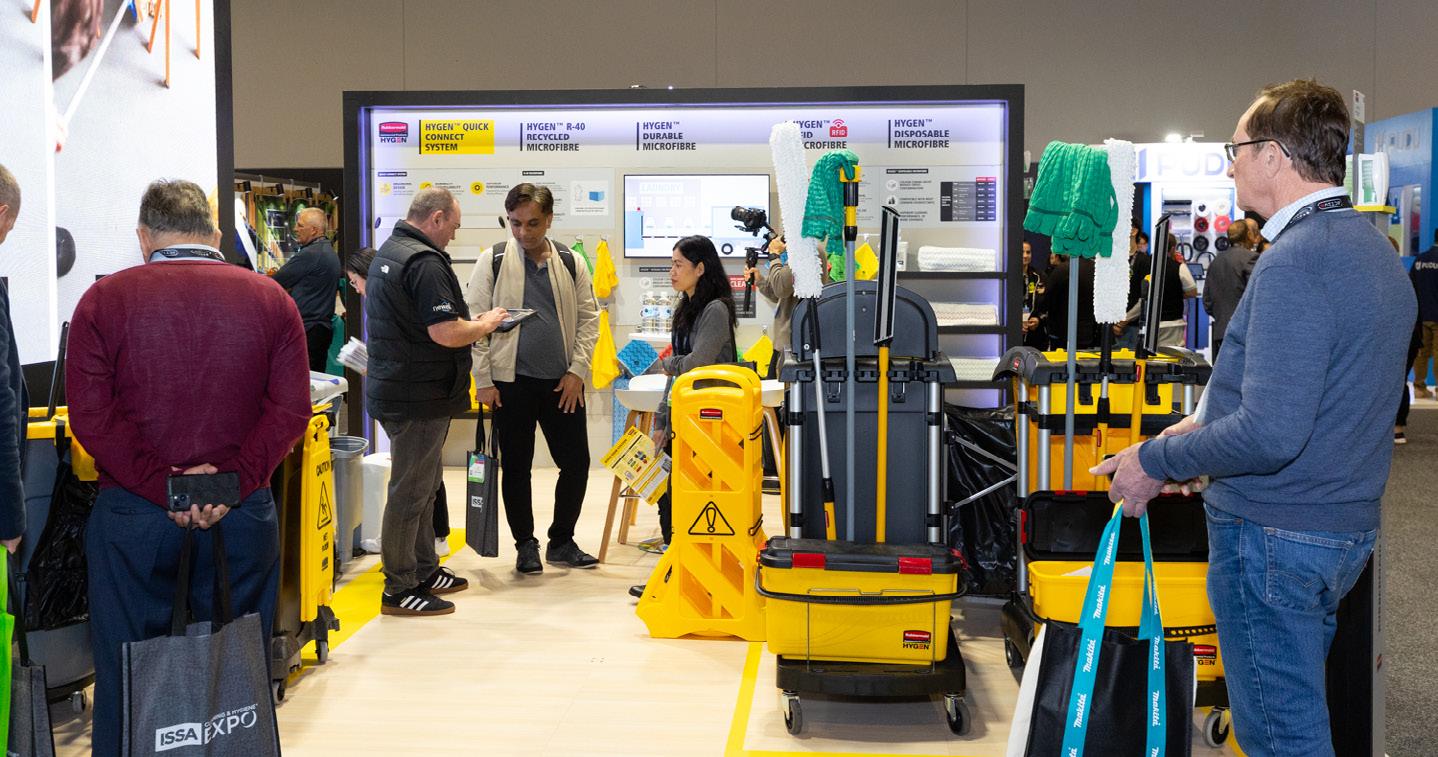
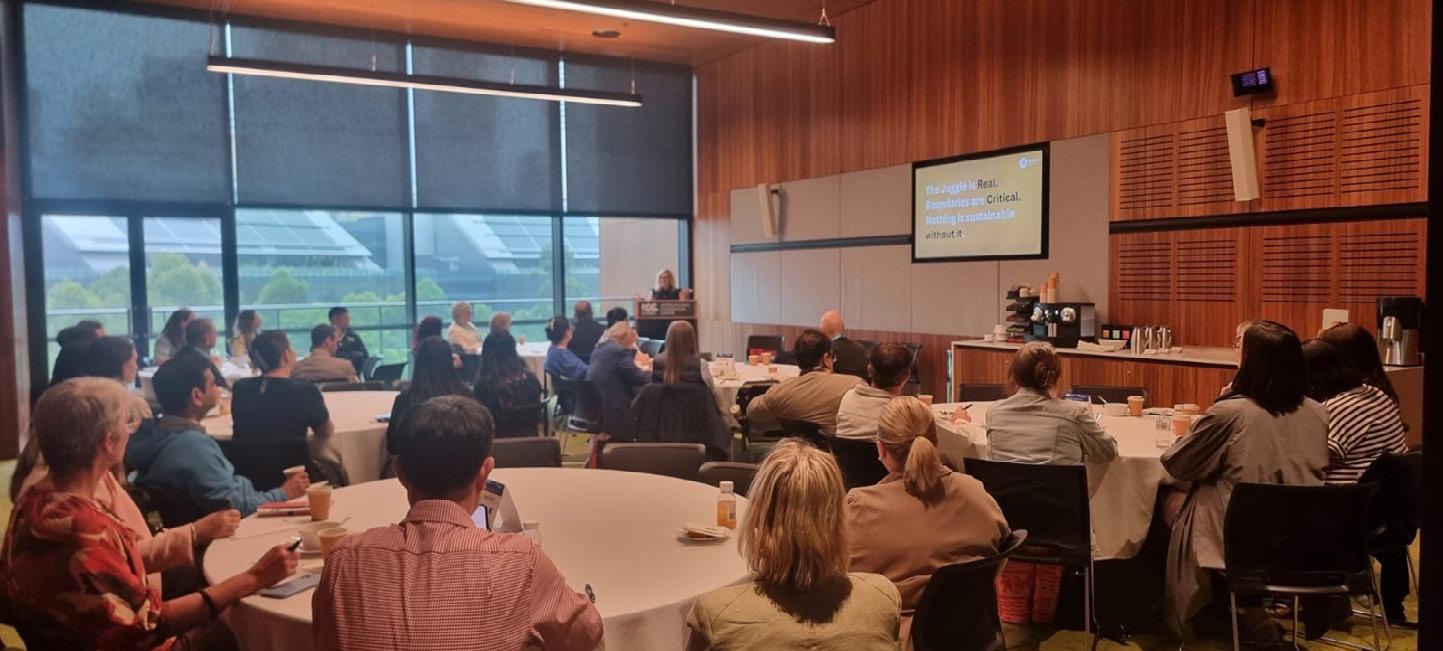
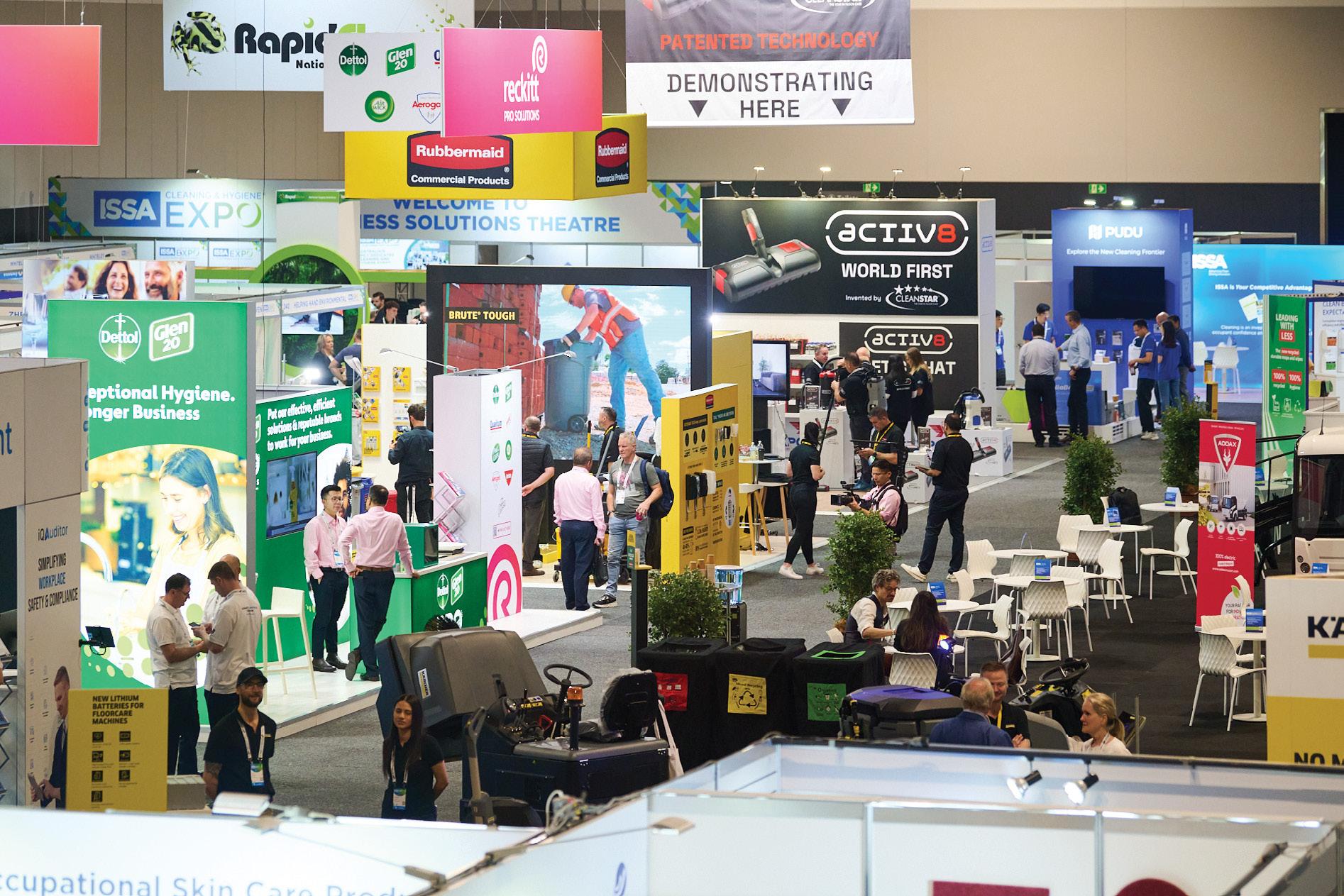
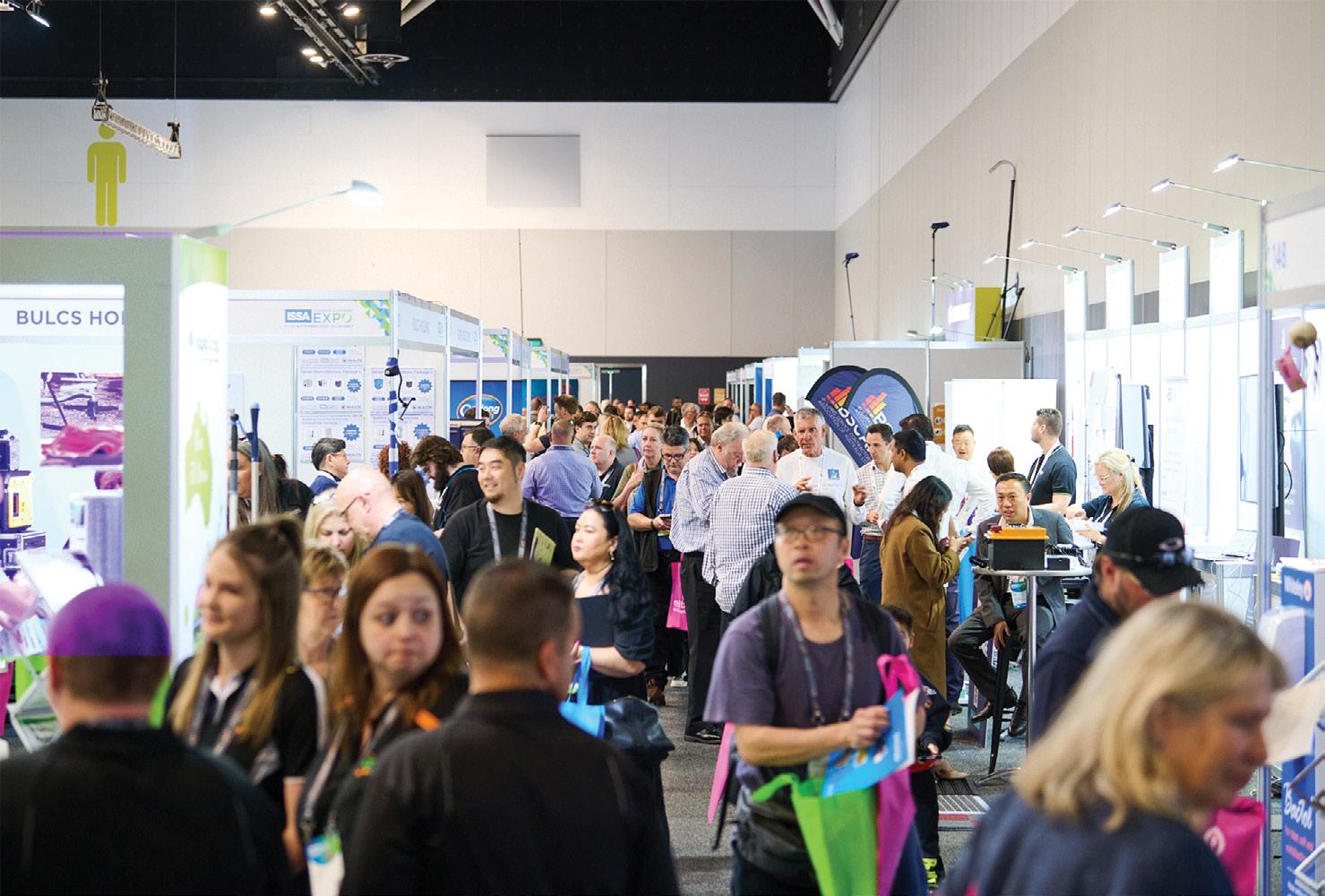
The hum began early on the first morning at ICC Sydney, as a steady rhythm of voices and footsteps moved through the halls while exhibitors adjusted final displays and visitors pressed toward the floor. Screens flickered, robots whirred and the sharp scent of new materials hung in the air. This was the return of the ISSA Cleaning and Hygiene Expo and with it, a wave of energy that pulsed through the industry.
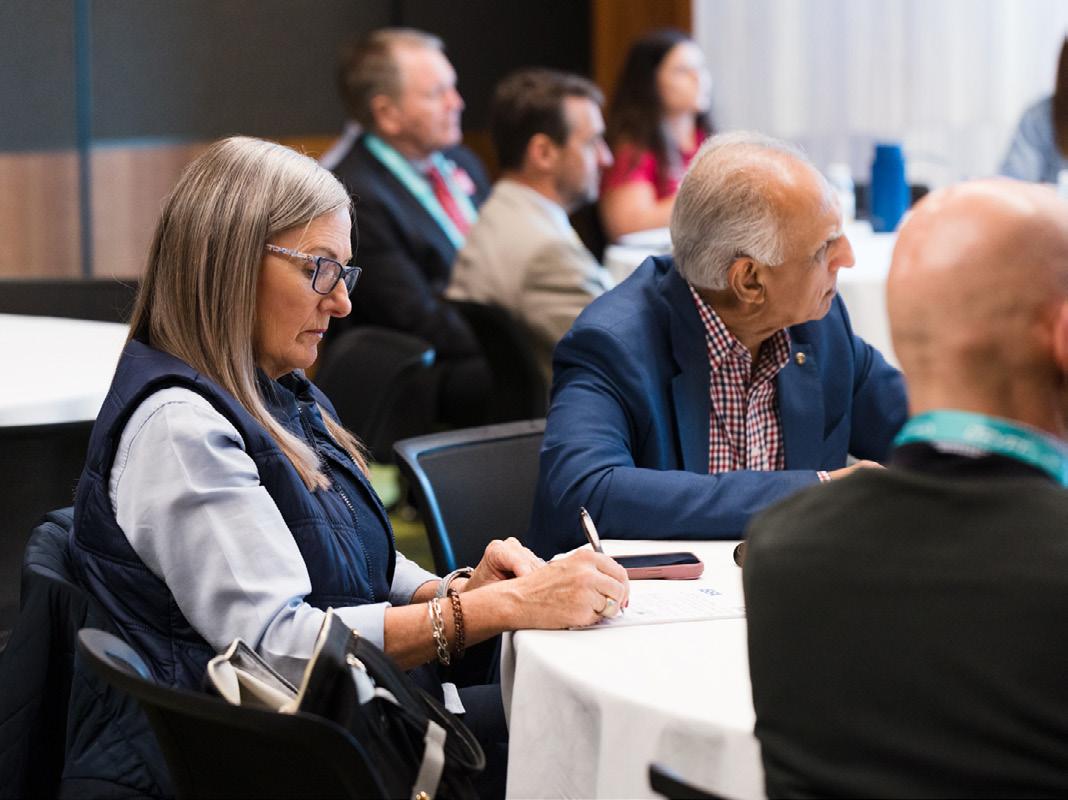
The event’s significance was reflected in its large attendance. It was symbolic of how far the sector had travelled in just a few years, from pandemic response to performance science and a focus on compliance and wellbeing.
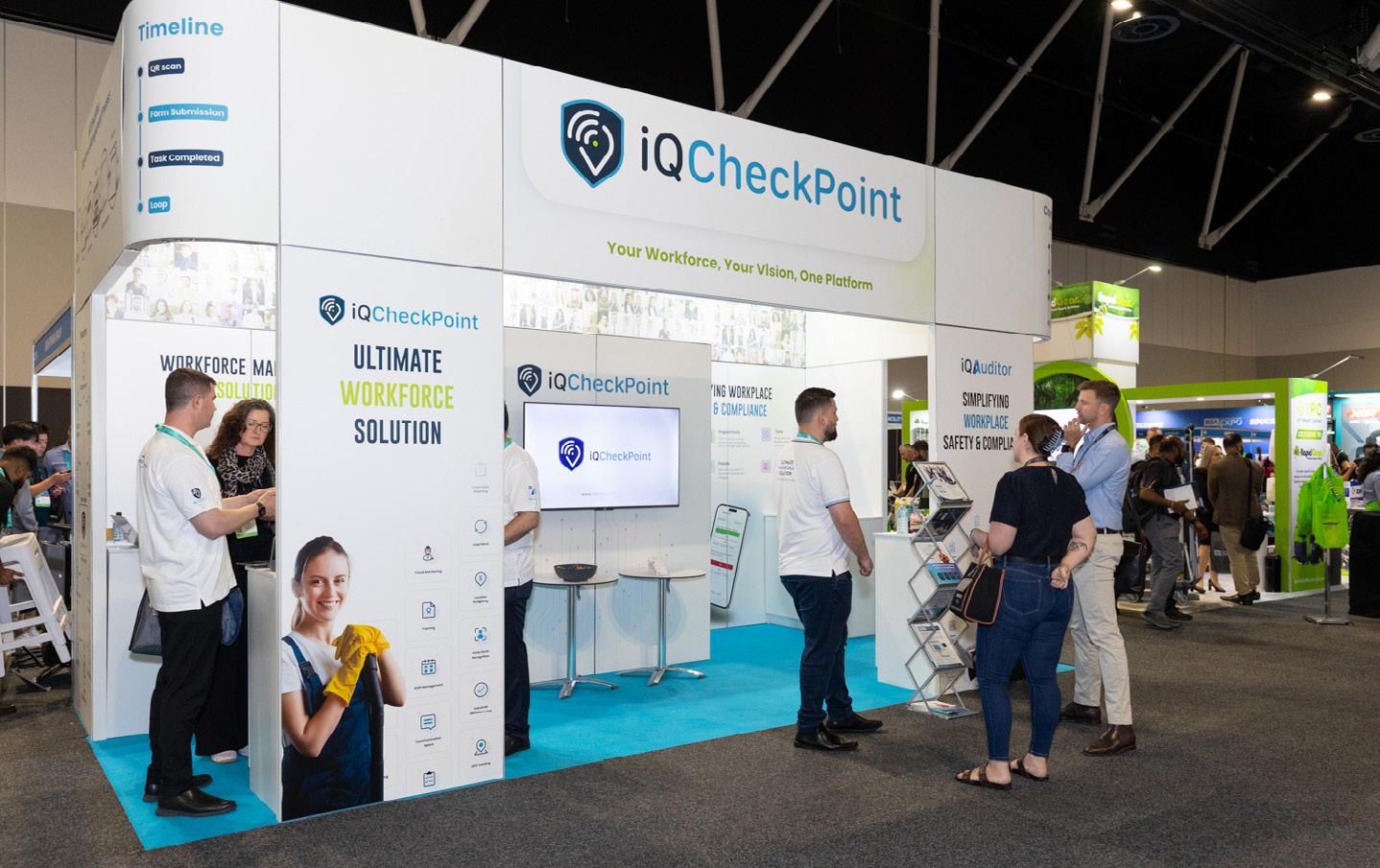
“One of the highlights was reconnecting with people we first engaged with years ago,” iQCheckPoint head of strategy and growth Steven Tanusoki said. “Since our first year at the expo, we built new features into our products based on real industry needs gathered from face to face conversations we had. Those connections we made last year returned this year to sign on with us, demonstrating a great testament to product evolution and long-term industry relationships.”
ISSA Oceania manager Lauren Micallef captured that sentiment when she said the enthusiasm was palpable from the moment the doors opened, adding that the breadth of discussion revealed just how fast the industry continues to evolve.
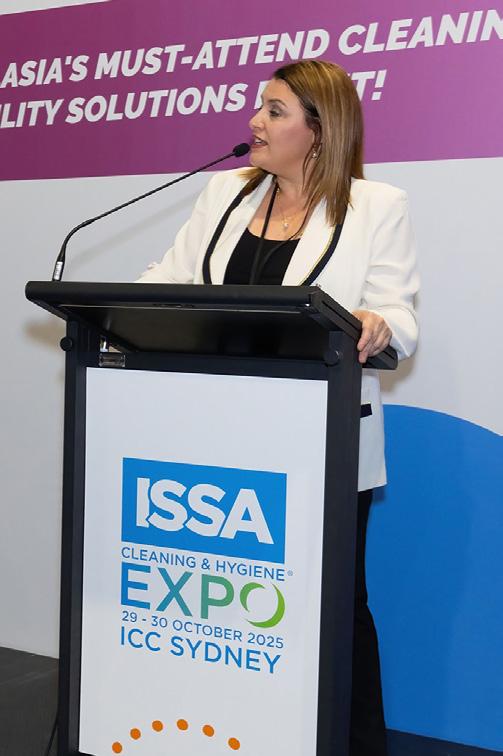
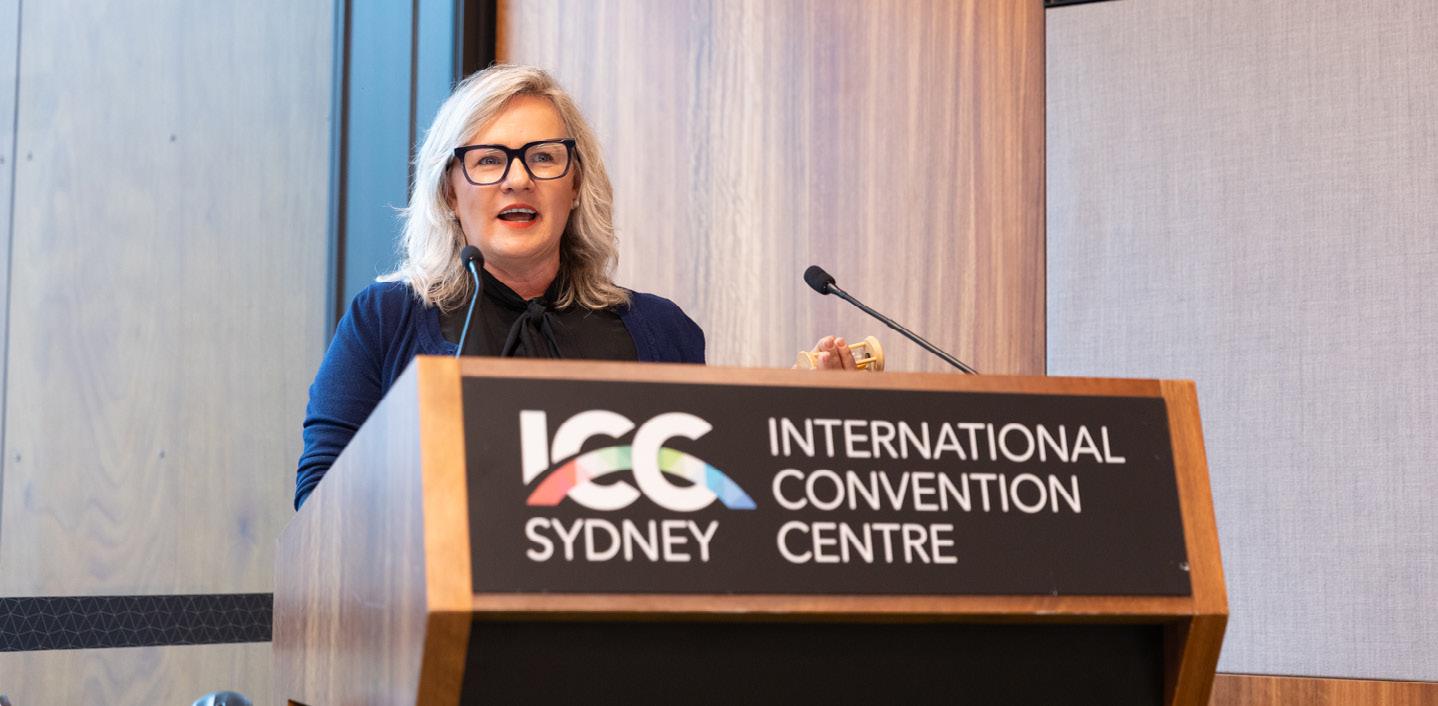
At the heart of the first day stood the ISSA Hygieia Network keynote by leadership expert Sonia McDonald. Her message, drawn from her presentation ‘The Hourglass of Resilience’, centred on the kind of strength that arises not from endurance alone but from the ability to bend and refocus. “Great humans make great leaders, so show courage before adversity appears,” she told the audience. Her words set a tone of action and renewal that threaded through the rest of the program.
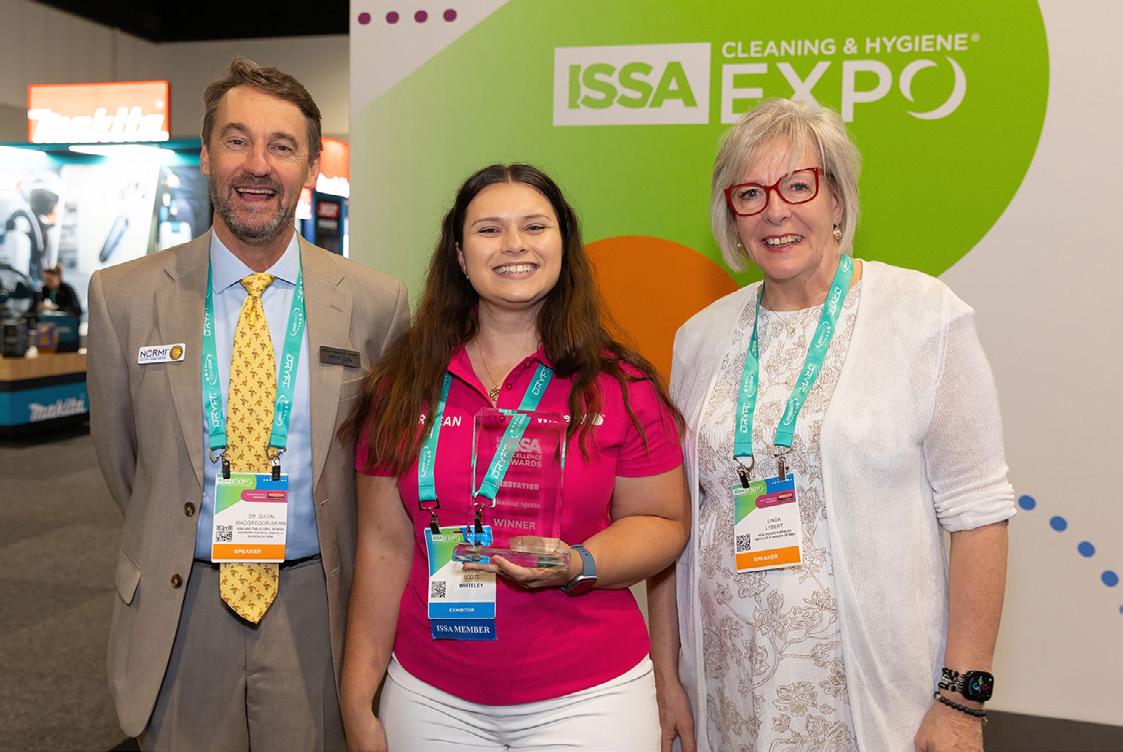
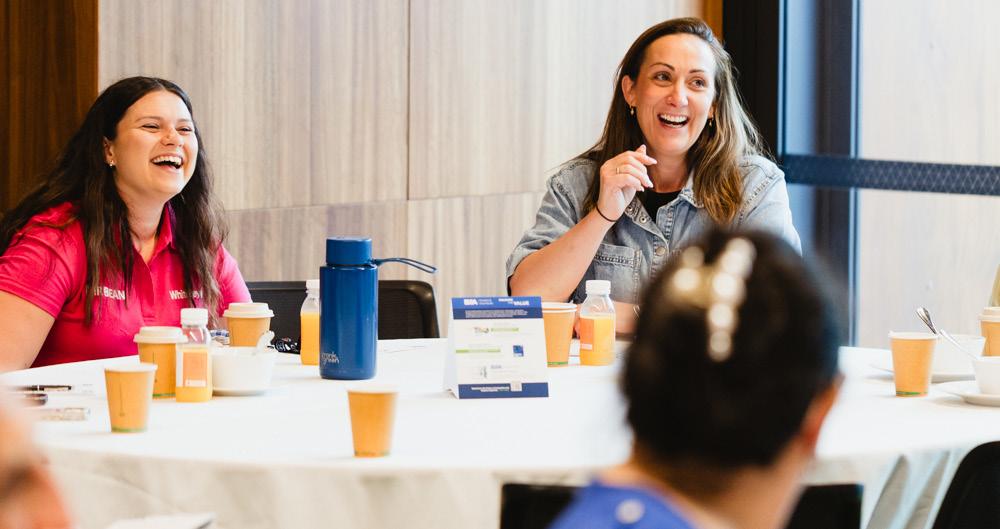
Nicole Scott from Whiteley said it was fantastic to see so many women connecting and engaging at this year’s show. “We’ve had great conversations and real interest in our products. I think having a show like this is just great to have those conversations and it makes an impact that we're not maybe able to do in our normal business hours.”
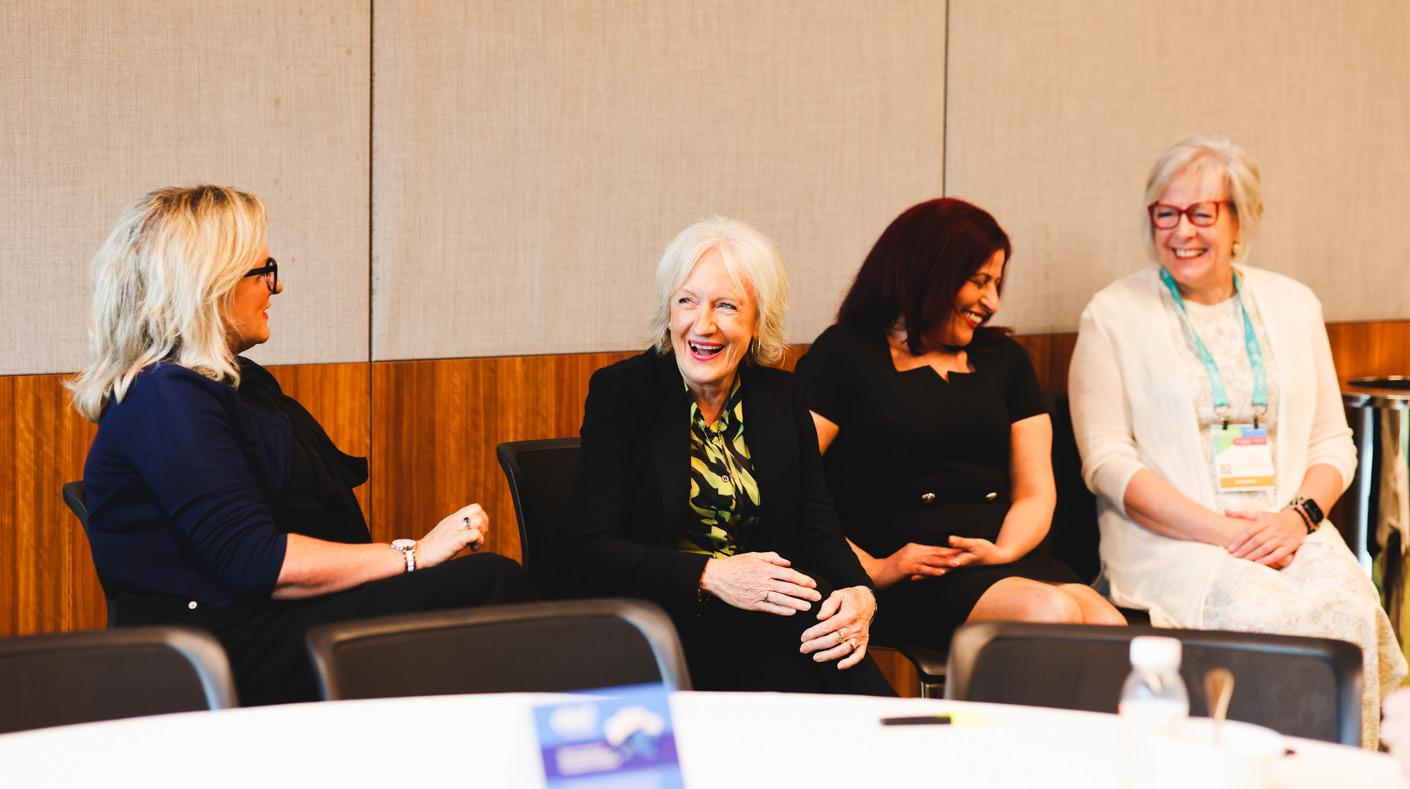
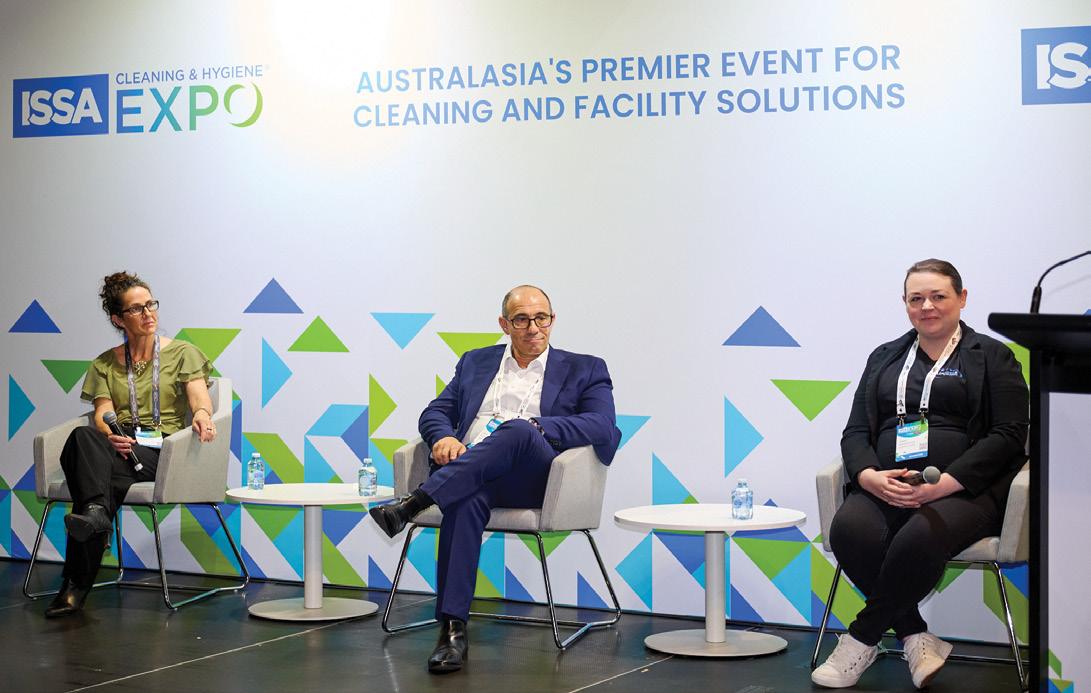
That spirit of connection flowed into the morning’s panel on overwhelm and resilience, where Lorraine Rogic, Linda Lybert and Kathryn Groening spoke candidly about the pressures of professional life. Rogic reminded the crowd that resilience is a skill everyone holds but must choose to use. “We’ve all got resilience,” she said. “It’s about tapping into it and giving yourself permission to use it.” Reflecting on the day’s atmosphere, Lybert added that the show’s intimate scale made networking effortless and meaningful, bringing everyone together to connect, share ideas and experience the industry’s best innovations in one place.
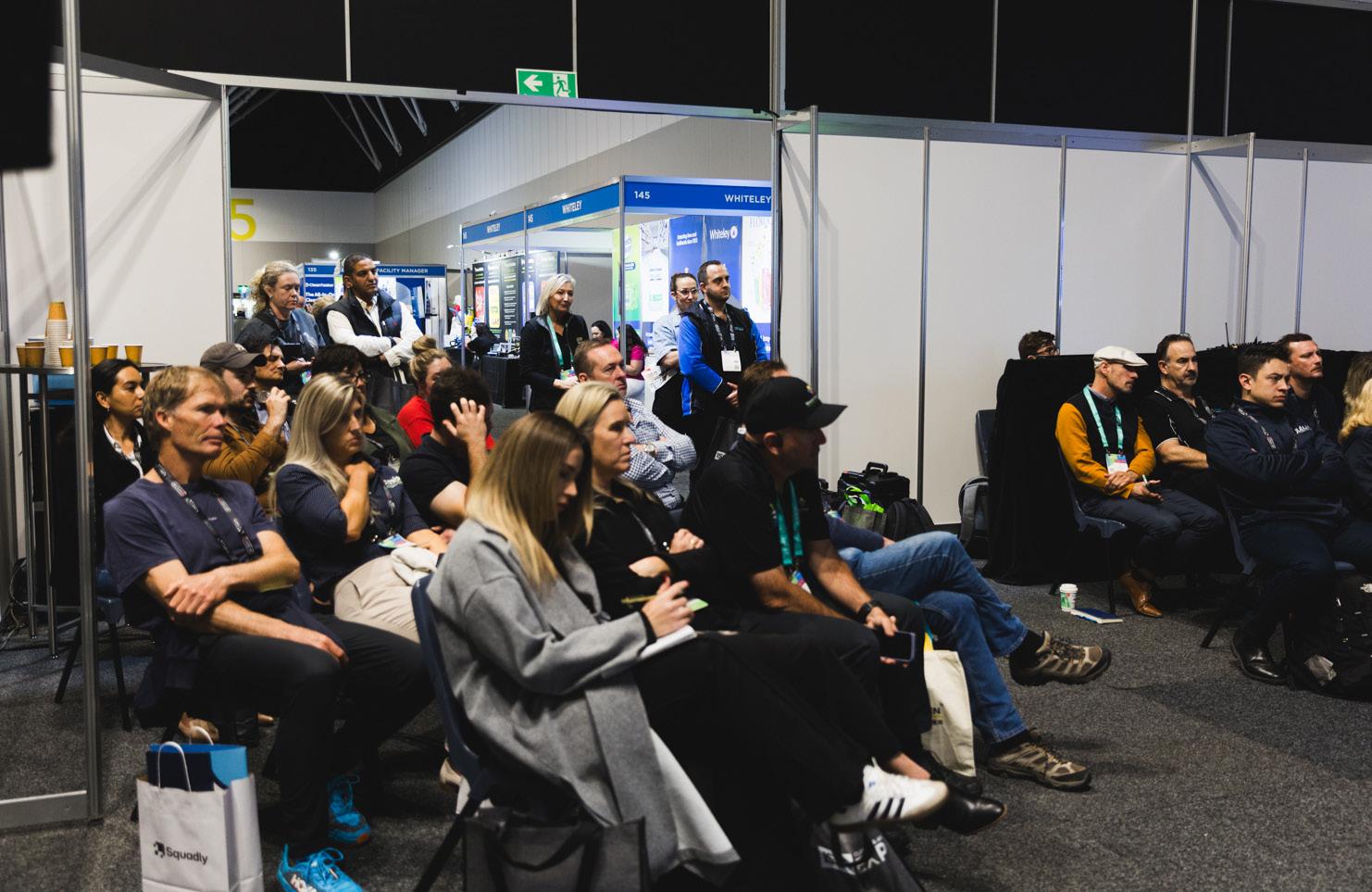
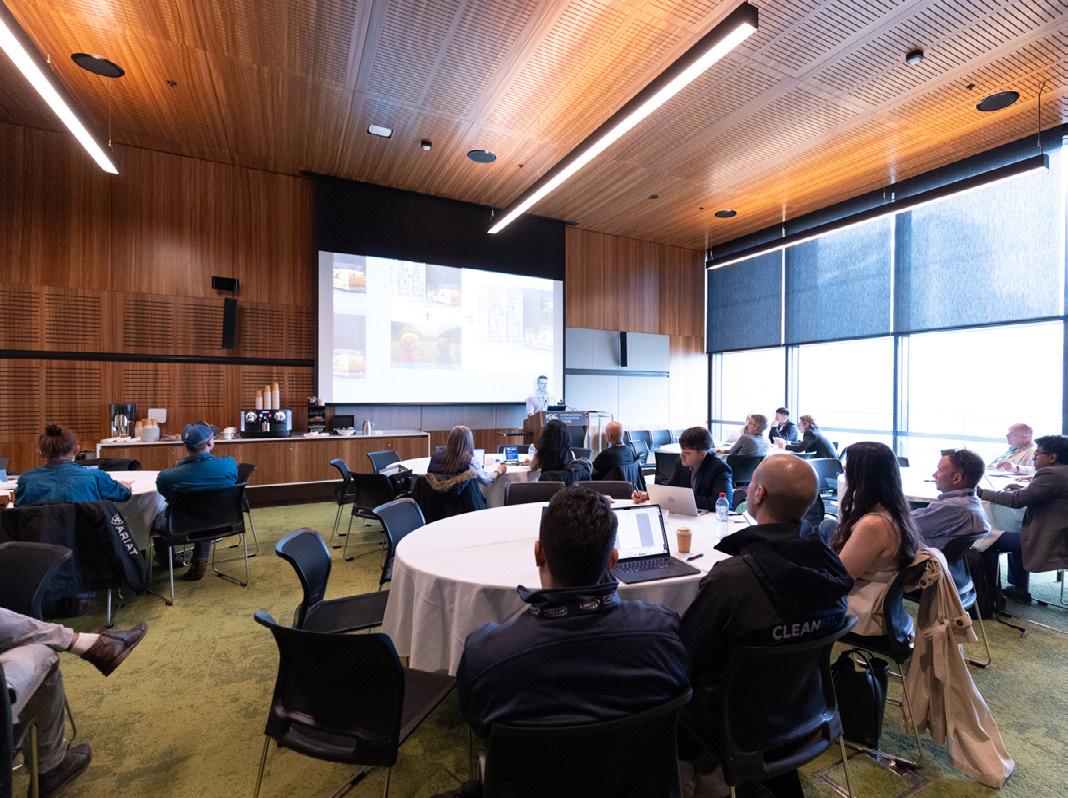
As the day progressed, conversations on the show floor echoed those same ideas of adaptability and trust. At one end, the Business Solutions Theatre hosted a lively exchange on green cleaning and consumer transparency. Dr Jennifer Semple, whose work centres on sustainability standards, offered a sharp perspective: “If there’s no transparency around why a claim was made, then you have a right to ask questions.” Her statement drew murmurs of agreement from an audience eager to ground sustainability in fact, not marketing. Elsewhere, in sessions on healthcare cleaning, robotics and verification, the dialogue deepened. Associate Professor Dr Gavin Macgregor-Skinner, Alissa Shida and Associate Professor Dr Greg Whiteley examined the shift from visual assessment to measurable validation. “We need systems that tell us how clean things are,” Whiteley said, “using ATP testing and fluorescent markers to gather reliable and defensible numbers.” His point spoke to a larger cultural turn within the industry from assumptions of cleanliness to evidence of it. In the discussion titled ‘Invisible risks, visible impact’, Liezl Foxcroft, Linda Lybert, Professor Brett Mitchell and Carrie Spinks drew attention to the crucial role of cleaning in healthcare and aged care environments. They emphasised that while the sector acknowledges its importance, the true influence of skilled, targeted cleaning on reducing healthcareassociated infections (HAIs) receives far less appreciation than it deserves.
The spotlight then moved to artificial intelligence in the session ‘Robots & Care: The future of AI in healthcare and aged care cleaning’. Tom Culver, Joe Azzi and Tom Pembroke explored how intelligent systems are beginning to shape cleaning practices, sharing both the emerging breakthroughs and the operational realities of introducing advanced automation.
“Humanoids will reach a level where their sensory technology allows them to see and detect what humans cannot, even odours and particulates on floors. That capability is almost here,” Culver said.
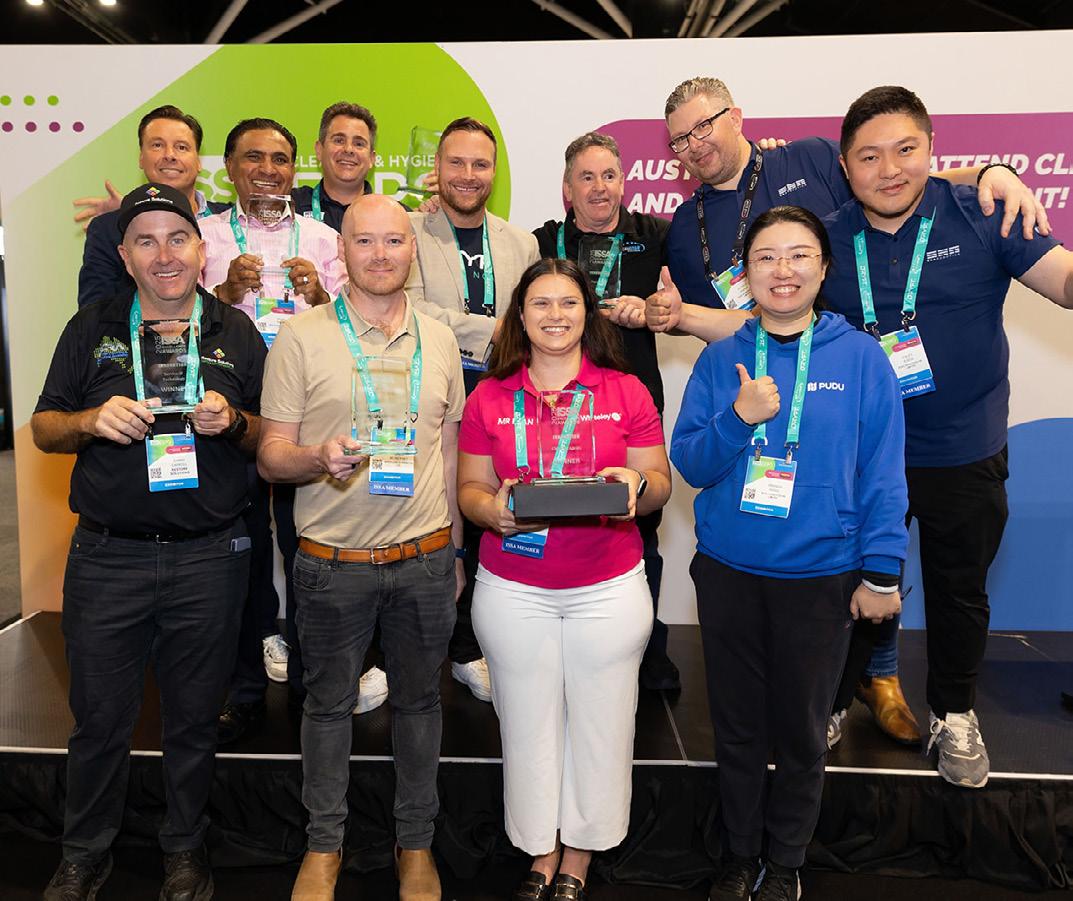
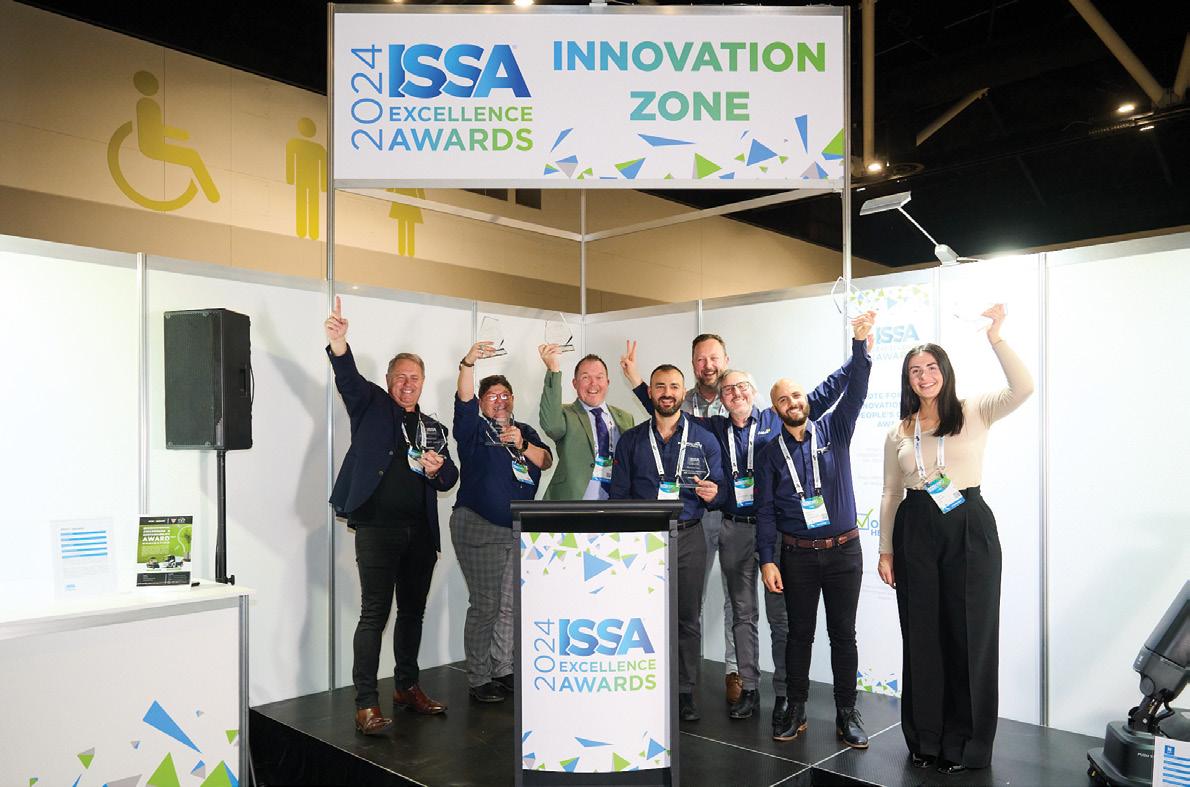
As the sun lowered over Darling Harbour, the crowd gathered once more, this time for celebration. The annual ISSA Excellence Awards recognised innovations from biodegradable wipes to advanced robotics and sensor-based systems. Each award reflected the same balance of creativity and practicality that had defined the day.
Micallef closed the evening with a note of gratitude, saying that day one had revealed the power of shared knowledge and the curiosity that drives progress. Her confidence set the stage for what would follow.
WHERE IDEAS TURN INTO ACTION
When the doors opened again the next morning, the sense of purpose was unmistakable. If day one had been about ideas, day two turned them into practice. The morning began with workshops that dived straight into the mechanics of compliance, regulation and risk. Lorraine
Rogic returned to lead an in-depth session on upcoming legislative changes affecting the cleaning sector, spanning workplace safety, HR and environmental obligations. It was a pragmatic guide for business leaders seeking to stay ahead of shifting frameworks and it drew a full house.
Not far away, a workshop led by Dr Gavin Macgregor-Skinner, Doug Hoffman and Jason Green examined what they called the evolution of healthy spaces. MacgregorSkinner framed it plainly: the industry cleans for health, safety and wellbeing. Hoffman described buildings as living systems – dynamic environments where air, surfaces and contaminants interact. Green added that data and analytics now play a defining role in shaping safer, lowallergen environments. Together, they made a compelling case for cleaning as an integrated science rather than a maintenance function.
By midday, the Business Solutions Theatre filled again for a debate titled ‘One Size Fits None: Standardisation vs Customisation in Cleaning Services’ . Matt Marsh, Kim Puxty and Peter Rundle explored how providers can uphold consistency while still adapting to client needs. Rundle captured the balance
required in modern service delivery: “What is said versus what people can afford are two different things,” he observed. “You have to read, interpret and find a way to deliver the service customers are looking for within the price parameters.”
In the afternoon, attention turned toward mould, a subject rising in relevance as climate volatility increases. In their session, ‘Mould Matters: Navigating the New Standard for Safer Buildings’, Macgregor-Skinner and Hoffman outlined how updated safety frameworks are reframing moisture management. “We do not wait for the flood or the heavy rain,” Macgregor-Skinner said. “It is dampness and where it comes from that we must define.” The simplicity of that statement carried weight, turning a technical issue into an urgent call for proactive design and response.
A SECTOR MOVING WITH PURPOSE
By late afternoon, conversations spilled from the theatres to the walkways. Delegates compared notes, shared insights and arranged follow-up meetings that would carry the spirit of the event into the months ahead. The expo closed
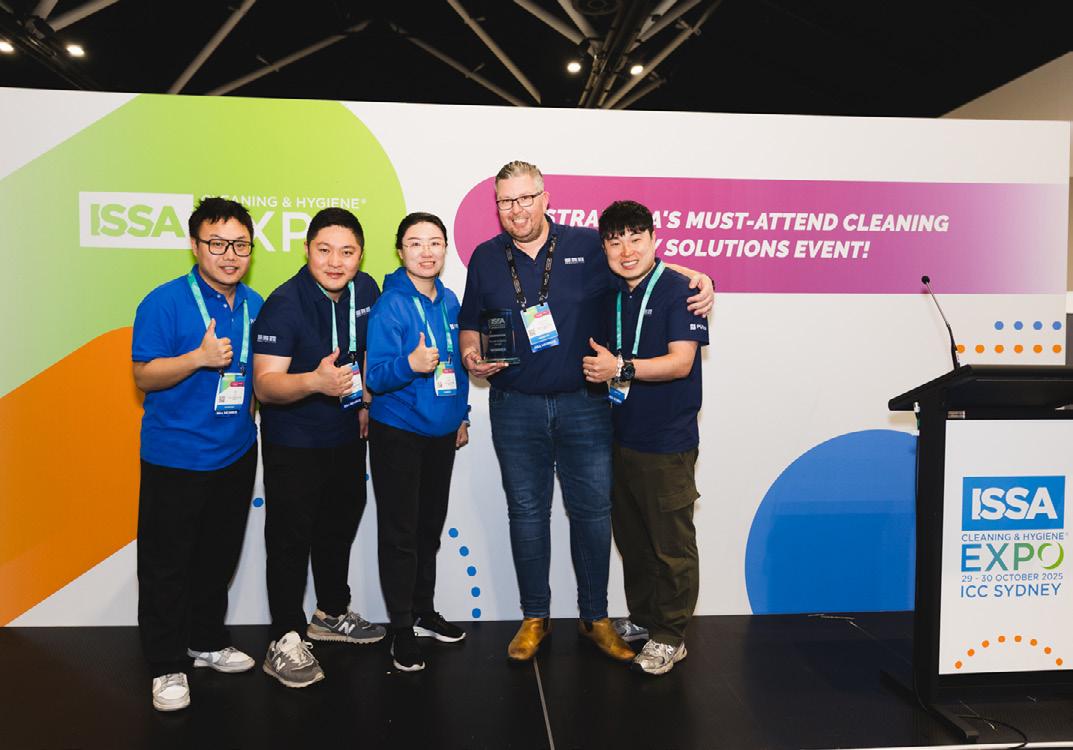
with one final recognition, the People’s Choice Award, presented to the team at Pudu Robotics.
As the crowds thinned and the lights dimmed, Micallef reflected on the significance of the two days. She spoke of purpose and unity, of an industry that continues to evolve in intelligence and care. “It was a moment of collective purpose,” she said. “The capacity to innovate, lead and raise standards felt amplified.”
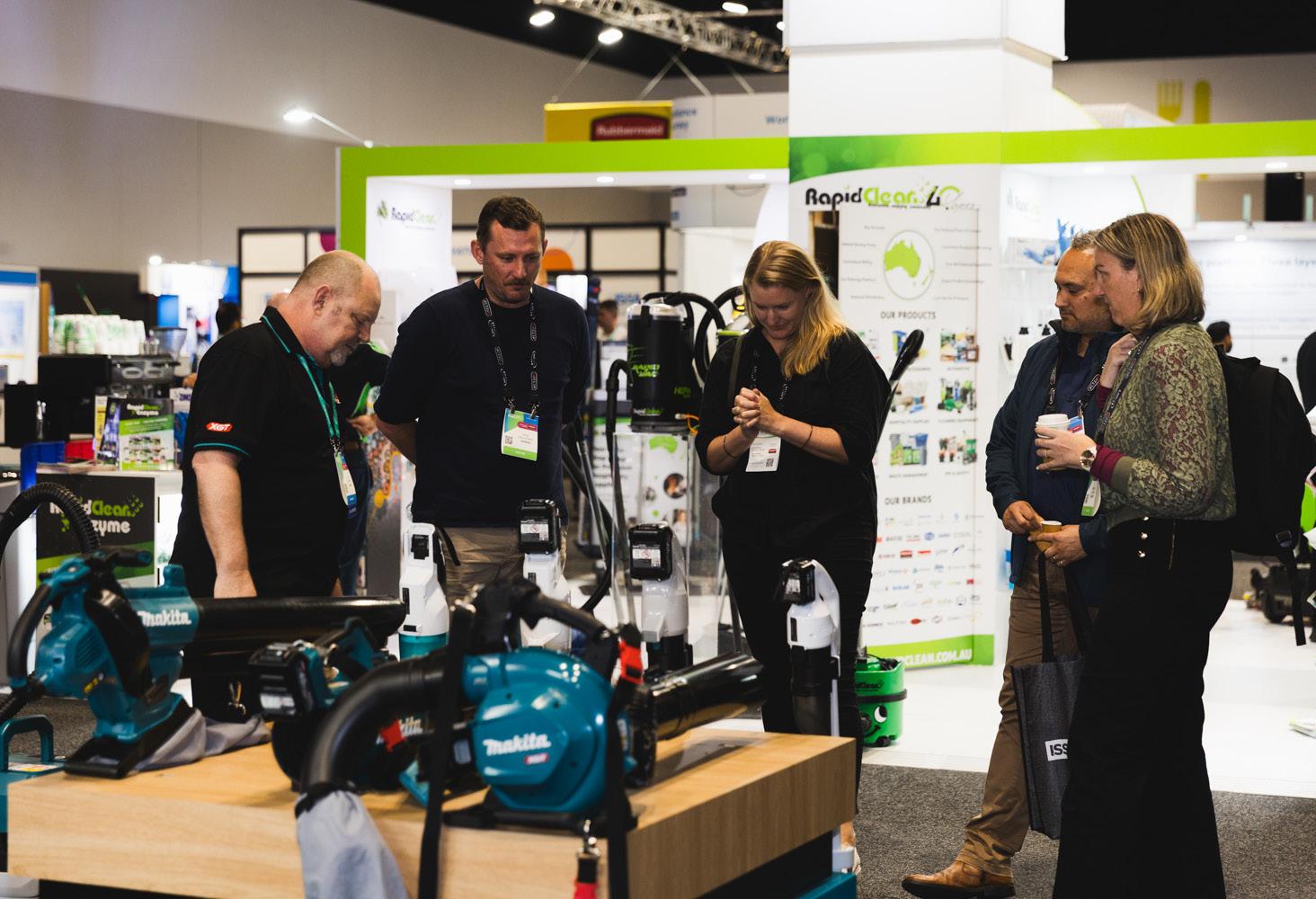
Chris McInerney of RapidClean echoed that feeling. “This expo brings the industry together in a way nothing else does. As exhibitors, we get to learn from leaders, see new ideas in action and share our own experiences. The sessions are inspiring, the energy is real and the event is run beautifully. We’ll definitely keep coming back.”
That sentiment was felt in every part of the expo. From leadership to logistics, from materials science to workplace culture, the conversation expanded beyond cleaning to something larger – the shared responsibility for public health and sustainable progress.
Cleanstar managing director Garth Michalson described the Expo as one of the most rewarding events his team had
been part of. “It gives the Oceania cleaning and hygiene community a real platform to exchange ideas, see new technologies firsthand and celebrate the progress we’ve made as an industry,” he said. “Every year, the Expo reminds us how strong and innovative this sector is and how collaboration drives that progress forward.”
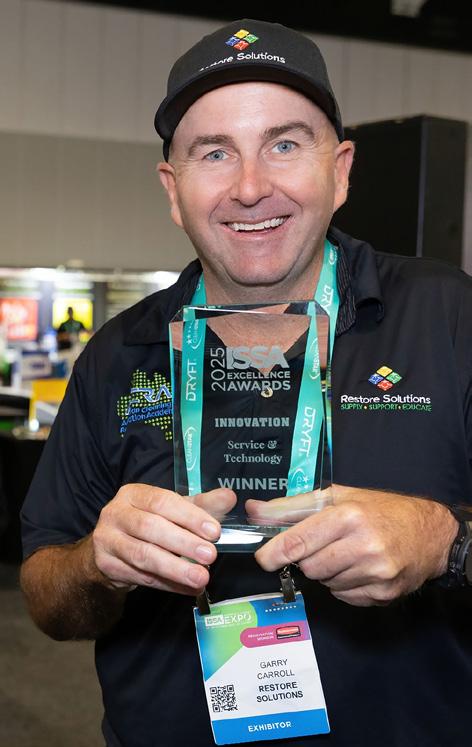
Garry Carroll from Restore Solutions had this to say: “The ISSA Show has been fantastic, absolutely flat out from start to finish. There were people everywhere, real energy in the hall. We never had more than a two-minute break. There were just people on people at our booth. It’s such great value and an incredible opportunity to connect.”
The 2025 ISSA Cleaning and Hygiene Expo was more than a meeting of suppliers and clients. It was a showcase of what the industry can become when collaboration replaces competition and learning moves from the stage to the everyday. The mood across ICC Sydney hinted at something more enduring than two days of dialogue. It suggested a future defined by intelligence, integrity and care.
And as the last machines powered down and the final delegates stepped into the spring evening, that future already felt within reach. ■
STATE OF CLEANTHE YEAR IN REVIEW
From workforce pressures to sustainability breakthroughs and technology adoption, 2025 reshaped Australia’s professional cleaning landscape.
Words Tim McDonald
Australia’s hygiene industry entered 2025 with momentum but also with pressure points that demanded attention. Workforce shortages, evolving regulatory frameworks, sustainability expectations and the rapid integration of technology created a year of challenge and opportunity. From bustling hospitals to corporate offices, cleaning has moved beyond the unseen background into a sector where operational precision, environmental accountability and skilled labour are increasingly valued. Suppliers, contractors and associations alike emphasised that 2025 was a year of recalibration, signalling a profession in transition.
The ISSA Cleaning and Hygiene Expo in Sydney provided a tangible snapshot of these shifts. Delegates navigated exhibition halls alive with autonomous scrubbers, data-enabled disinfecting devices and sustainable consumables, while panels addressed workforce retention, environmental compliance and future-ready operations. Industry awards celebrated innovation, yet the stories behind the winners highlighted far more than product novelty, they underscored a sector responding to real operational pressures and societal expectations.
WORKFORCE UNDER PRESSURE, PROFESSIONAL PRIDE RISING
Labour availability remained one of the most pressing challenges this year. Contractors reported continued competition for skilled cleaners and supervisors, with retention and training emerging as critical differentiators. Programs such as Quayclean’s SAFEtember initiative, which focused on safety and wellbeing, reflected a broader industry recognition that operational excellence depends on a motivated, protected and skilled workforce.
Associations including ISSA Oceania and Building Service Contractors Association of Australia (BSCAA) emphasised that workforce investment is now inseparable from service delivery. Contractors who prioritised upskilling, mentoring and career pathways have seen measurable improvements in retention and client satisfaction. Vocational education and micro-credentials grew in prominence, signalling a shift towards recognition of cleaning as a skilled profession rather than a transactional service.
Technology played a complementary role. Robotics, data tracking and automated dispensing allowed teams to focus on higher-value tasks, reducing repetitive strain and increasing efficiency.
The organisations that continue an integrated approach in 2026 will be the ones that lift professionalism, improve environmental outcomes and strengthen business resilience.
- Lorraine Rogic, Logic Business Resources
The past year has been transformative for the Australian cleaning industry, with real progress seen directly on the ground.
- Lisa Michalson, Cleanstar
“The past year has been transformative for the Australian cleaning industry, with real progress seen directly on the ground,” says Cleanstar co-founder Lisa Michalson. “AI-enabled tools, smarter battery platforms and more sustainable, repairable equipment are no longer future concepts; they’re now showing up in everyday commercial cleaning operations.”
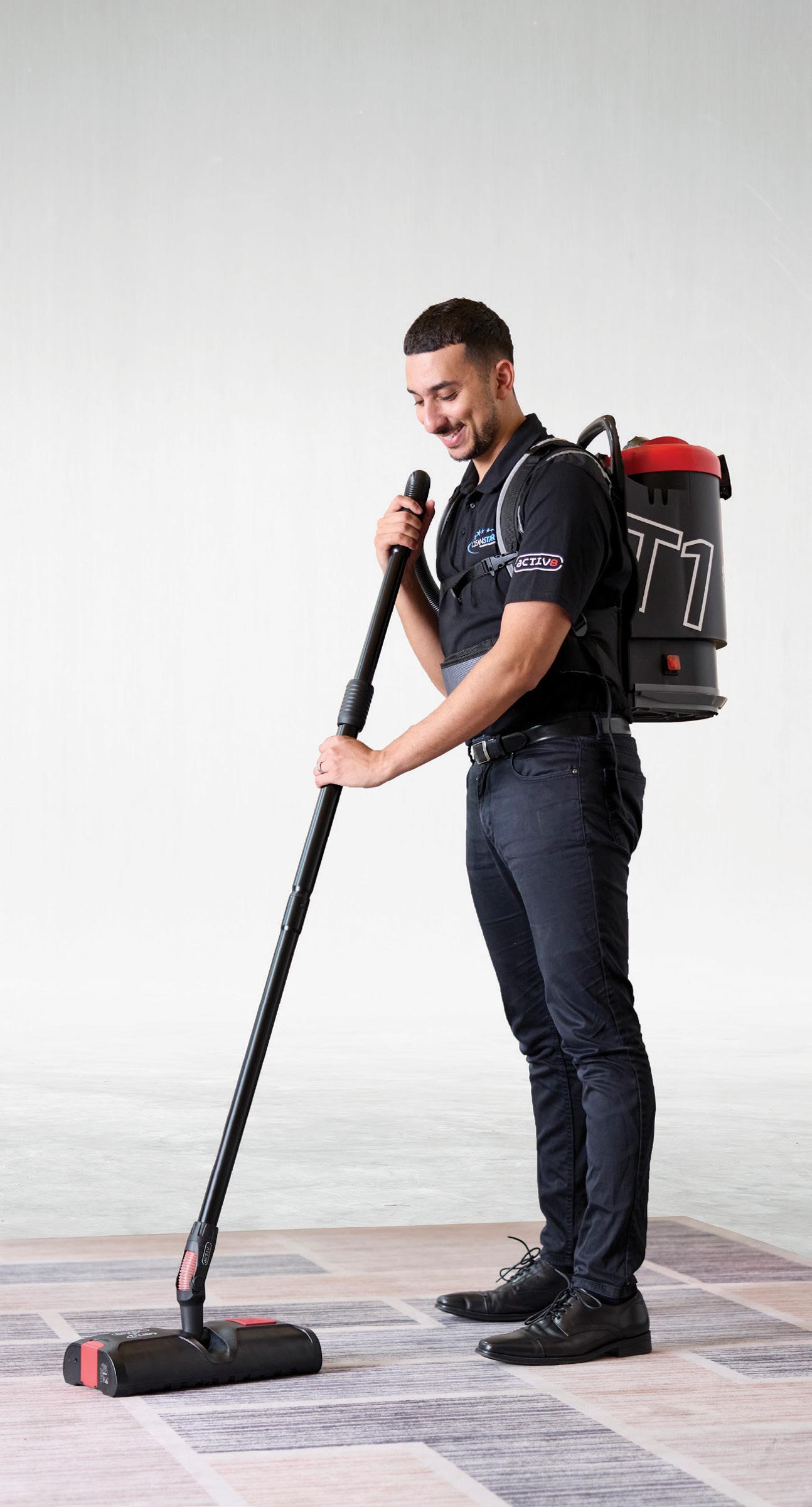
As PUDU MT1 and DRYFT demonstrated at the ISSA Expo, automation is most successful when it enhances human capability rather than replaces it. The integration of these tools has changed workforce expectations, with training increasingly encompassing both operational and digital skills.
SUSTAINABILITY MOVES FROM AMBITION TO ACTION
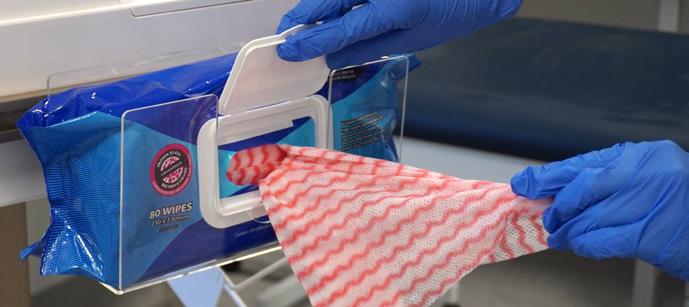
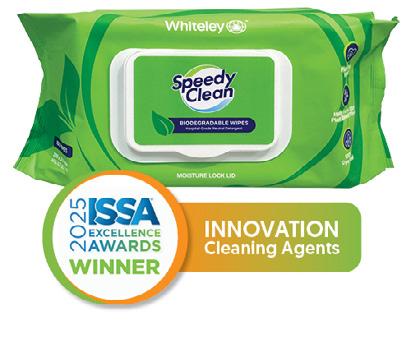
Sustainability moved from aspiration to operational imperative in 2025. Contractors and suppliers alike adapted to a landscape where clients now demand verifiable environmental outcomes. Biodegradable wipes, refillable dispensers, water-efficient machinery and energy-conscious cleaning methods all became differentiators. Products such as Whiteley’s Speedy Clean Biodegradable Wipes and CleanLIFE Vinegar Wipes, recognised at the ISSA Excellence Awards, reflect this convergence of performance and environmental responsibility.
Procurement managers increasingly assess products and contractors against carbon footprints, chemical load and circular economy credentials. Industry commentary from suppliers highlighted that the sector is no longer responding to regulatory pressure alone but to broader societal expectations. On-site recycling, waste separation and reduced packaging have moved from niche to mainstream, with contractors reporting that early adopters are winning preference in competitive tenders.
The challenge is consistency. Industry leaders emphasise that sustainability must be embedded in operational culture rather than implemented as isolated product choices. For many companies, this has required investment in training, process redesign and auditing systems to track environmental performance alongside hygiene outcomes.
TECHNOLOGY RESHAPES PRECISION AND PERFORMANCE
2025 confirmed that technology is no longer optional in professional cleaning. Data-enabled surface testing, autonomous scrubbers, cloud-based workflow management and smart dispensers are now integral to operational planning. The ATP Test Kikkoman A3, for example, demonstrated how rapid surface hygiene verification can provide measurable evidence of compliance, turning cleaning into a defensible, auditable service.
Autonomous cleaning solutions, including award-winning robotics like PUDU MT1, highlighted how efficiency gains and workforce relief can be achieved simultaneously. These technologies do more than save time; they offer organisations certainty in compliance, repeatability of outcomes, and documentation that resonates with regulators and clients alike.
Associations stressed that technology adoption also comes with a learning curve. Contractors must ensure integration is seamless, staff are confident in usage, and data is interpreted effectively. 2025 has shown that successful adoption is as much about organisational readiness as it is about machine capability.
REGULATION DRIVES ACCOUNTABILITY AND CONSISTENCY
Regulation evolved steadily through 2025, particularly where law intersects with health, workplace mobility and occupational safety. The introduction of Victoria’s Work from Home Plan marked a defining moment, highlighting a split between roles that can operate remotely and those that remain bound to physical sites. Cleaning sits firmly in the latter. As Logic Business Resources CEO Lorraine Rogic explains, “Cleaners are essential workers whose contribution cannot be dialled in or delivered from a laptop. They don’t get the same flexibility that others now see as a right. Their presence is what upholds hygiene, safety and business continuity.”
Rather than weakening the industry’s footing, this divide has made its contribution more visible and, therefore, more accountable. Rogic warns that the industry must respond with
greater structure and recognition. “If cleaners are required to be there every day, even when half the building is working from home, then their role must be protected, valued and supported, not treated as an afterthought.” This shift has changed how contractors approach compliance and workforce planning. Regulatory expectations now include not only infection control and chemical
Suppliers and contractors repeatedly stress that the year’s innovation have not been for show. Awards, expos and product launches have highlighted solutions that meet real operational needs. From autonomous scrubbers and data-driven surface testing to sustainable wipes and refill systems, 2025 has demonstrated that measurable outcomes, efficiency, safety
From eco-smart designs to carbon reduction goals, Kärcher leads the charge in greener professional cleaning
Driving sustainability across commercial cleaning.
In the world of professional cleaning, the demand for both greater efficiency and a smaller environmental footprint has never been more pressing. Businesses, from vast logistics centres to corporate offices, are searching for solutions that can maintain spotless environments without sacrificing their sustainability goals.
Kärcher embeds sustainability into its products and operations. The company offers products from vacuums to hot water pressure cleaners with eco!efficiency features to save energy and water. Furthermore, all its factories now run on 100 percent green electricity, demonstrating a comprehensive commitment to a cleaner environment.
The 36 V Kärcher Battery Power+ platform redefines professional cleaning by delivering corded performance without the cable, offering unmatched mobility across a diverse machine range. Representing a major innovative step, its Real Time Technology ensures optimal workflow management. Most importantly, by creating one compatible, powerful battery for the entire 36 V line, Kärcher
champions long-term sustainability through unified efficiency and reduced resource consumption.
Kärcher is committed to providing more sustainable options, with some key call outs in Kärcher’s professional line-up that showcase a powerful dual approach to reducing environmental impact while improving efficiency. This commitment is exemplified by the Lithium-Powered Sweeper (KM 120/250 R Bp Li), a ride-on industrial machine that eliminates the need for fuel, directly reducing carbon emissions and air pollution while providing long run times. Its low-noise operation is ideal for noise-sensitive areas like shopping centre car parks during early morning periods near residential zones. Furthermore, Kärcher’s Electric Hot Water High-Pressure Cleaners (HDS-E Models) are engineered for exhaustfree operation, making them perfect for contamination-sensitive environments such as food processing, manufacturing, hospitals, and community areas where air quality and noise control are paramount. Finally, Kärcher's innovative eco!Booster attachment is a game-changer for
professional high-pressure cleaning. It delivers a 50 percent higher cleaning performance compared to a standard nozzle, dramatically reducing cleaning time and simultaneously leading to a 50 percent saving in both water and energy consumption. This ultra-efficient solution represents a significant step toward greater resource conservation and productivity for any cleaning task.
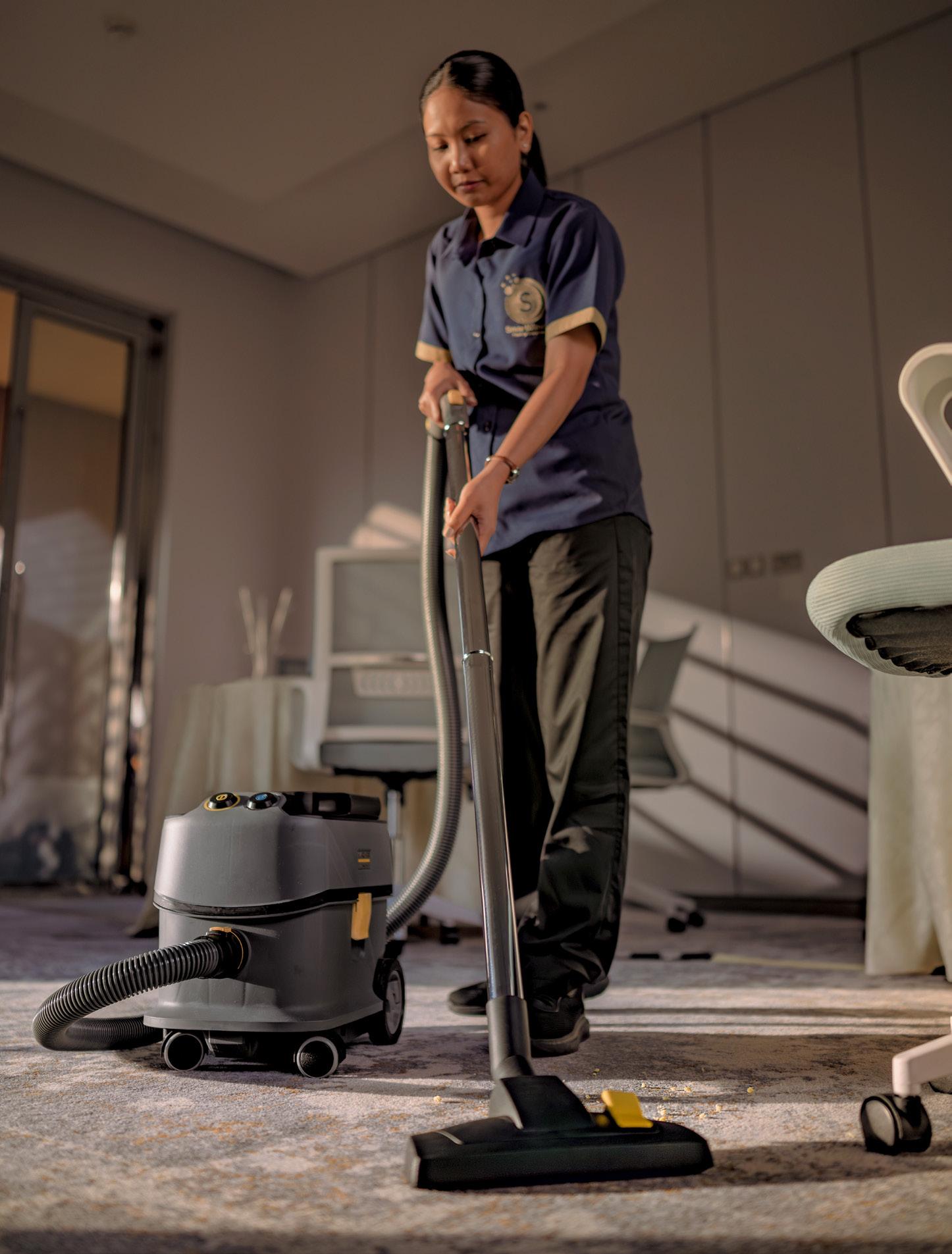
Utilising the 36 V Kärcher Battery Power+ platform, Kärcher's battery powered dry vacuum cleaners offer a clear path to reducing environmental impact in professional settings. By eliminating the need for a power cord and constant socket-switching, these machines provide enhanced mobility and productivity while directly contributing to a lower carbon footprint. Furthermore, models like the new Dry Vacuum range (T 10/1 Bp and T 15/1 Bp) are sustainably produced with up to 45 percent recycled materials and features eco!efficiency. Kärcher's professional battery-powered vacuums are not just a convenience, they are a key component of a modern, sustainable cleaning strategy.
LEADING THE WAY
Kärcher's commitment to sustainability is more than a company goal; it's a driving mindset evident in every aspect of its business. This dedication is reflected in its product line, which features energyefficient systems and high-pressure cleaners designed to conserve significant amounts of water. Beyond the products, the company has taken a bold stance on climate action by committing to the Science Based Targets initiative (SBTi). Kärcher aims to reduce its Scope 1 and 2 emissions from production by a remarkable 42 percent by 2030 and since 2021 it has been using 100 percent renewable electricity in all its facilities. By embedding these ambitious targets and sustainable practices, Kärcher is not only reducing its own environmental footprint but is also empowering its customers to do the same.
Kärcher isn't just adapting to a sustainable future, it's actively building it, one innovation at a time. ■
karcher.com.au
Back in balance
Lower back strain rises quickly in manual handling, yet smarter technique reduces pressure and protects workers.
Words Dr Denis Boulais
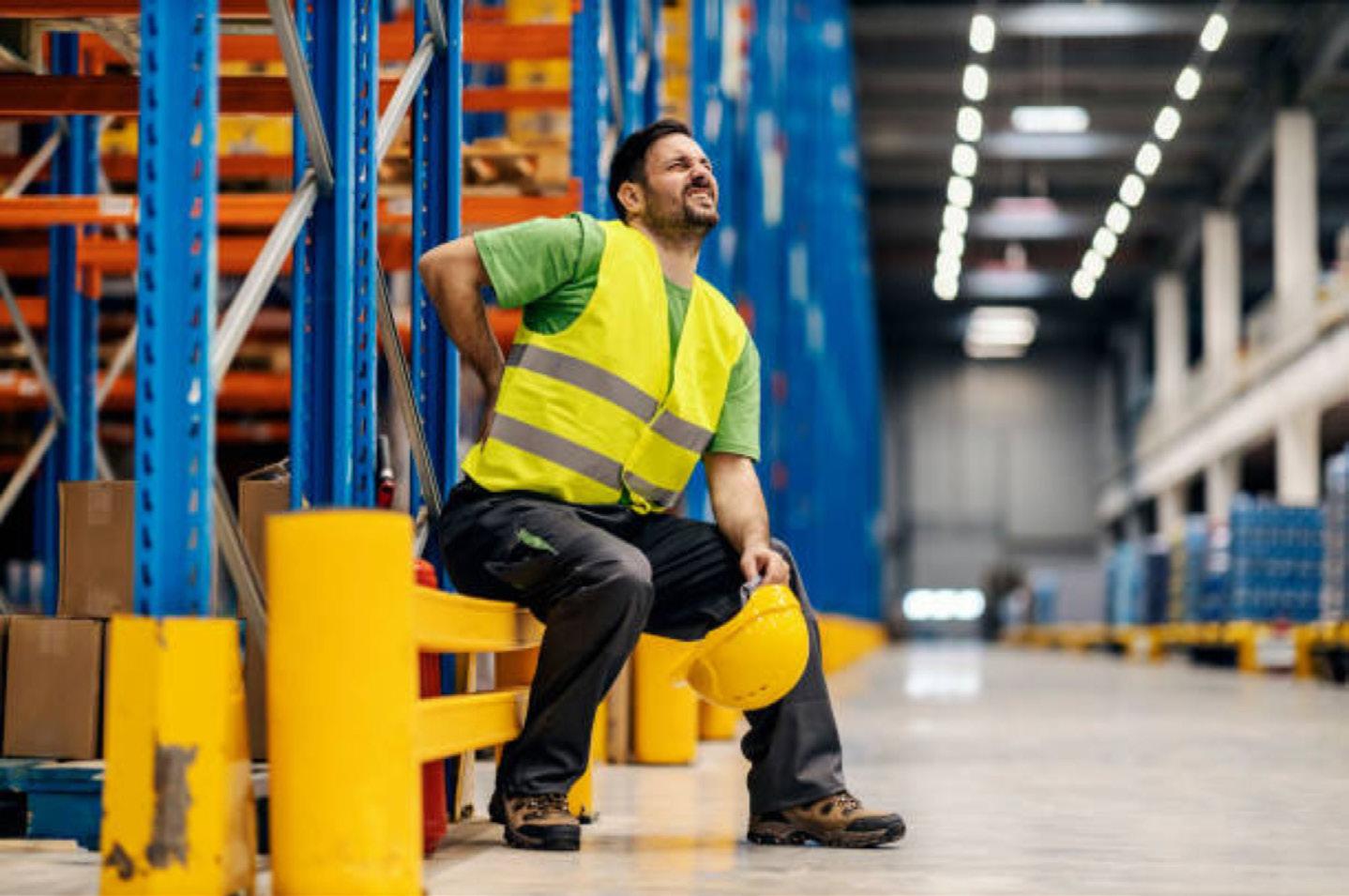
Lower back pain may affect most of us at some point in our lives. It is one of the most common ailments that humans encounter, a familiar companion with many aliases – lumbago, slipped disc, arthritis and, when pain shoots down the leg, sciatica.
The ailment often arrives without warning or a clear trigger, interrupts ordinary movement, unsettles sleep, then fades with the same mystery that marked its arrival.
The human spine evolved to stand upright through every waking hour, carrying the body’s weight while shielding the spinal cord. Its vertebrae and discs adapt to that constant demand by absorbing force and offering flexibility. The greatest strain sits just above the junction with the pelvis, which is why that lower section becomes the most frequent site of injury.
CAUSE OF MECHANICAL PAIN
Many ideas circulate about the origins of back pain, from weather-driven theories to the light-hearted line that it signals youth drifting away. These explanations add colour but lack
scientific grounding because what drives most lower back pain is strain. In the cleaning industry, plenty of routine tasks place that strain on the body, which makes careful identification, assessment and control of those tasks essential.
Mechanical pain can result from overstretching where a force causes excessive strain on the lower back. This may occur from emptying bins for example, particularly when the bin is heavier than the cleaner estimates prior to lifting. With the overstretching of soft tissues around a joint, the ligaments are the first to cause pain. Often these ligaments are referred to as retaining walls for the discs of the spine that absorb shock between the vertebrae. Of course, the extent to which the discs engage may influence the pain levels encountered.
When the ligament around a disc becomes damaged and the disc can no longer absorb shock, its outer wall weakens and the soft inner material begins to push outward. A pronounced bulge can press against the sciatic nerve and send pain into the leg, and the shift in spinal alignment that follows often amplifies the discomfort.
STEPS TO SAFE LIFTING
Safe lifting begins with deliberate preparation, because every controlled movement reduces strain before it starts.
Step one: Plan the lift. It is important to assess the size, shape and weight of a load. Think about where the load will be placed and if there are any obstructions. With risk assessment, any need for assistance should always be evaluated.
Step two: Consider the best way to lift by setting a stable stance with feet apart for balance, keeping the lower back free from bending or twisting, moving with smooth, controlled motion as the knees take the load and the back stays straight, and staying alert to every step and detail in the surrounding space.
Step three: Use the whole hand to get a secure and strong grip. If gloves are required, they should be provided and used.
Step four: If safe to do so, pull the load close to the body and aim to hold the centre of gravity as close to the abdomen as possible, engaging the arm muscles to handle the load.
Step five: If an object is too awkward or heavy, use a mechanical lifting aid. Where such devices are not available, locate another person and complete a team lift. Clear communication is vital when coordinating a team lift, particularly where there are more than two lifters involved.
It’s also important to warm up prior to manual handling, and aim to alternate heavy lifting tasks with lighter ones.
It’s important for a worker's health and spinal wellbeing to be proactive. The key to safe manual handling is hazard identification, assessment and control of tasks, taking into account site specific considerations. If you follow the steps above, you’re sure to stay back in balance. ■
ESG
Dr Denis Boulais
Manager – Quad Services.
BUILT TO LAST.
The new Kärcher dry vacuum range is engineered to handle the longest shifts, day in and day out. These ultra-quiet, high-performance 10L and 15L vacuums are designed with durability in mind from up to 45% recycled materials, available in both corded and 36V battery models to suit any job. Find out more at karcher.com.au.
HEPA
Rapid Group –shaping the future together
Record attendance, fresh supplier growth and remarkable generosity defined the RapidClean Conference 2025
Words Tim McDonald
The hum of conversation filled the Sofitel Melbourne ballroom as RapidClean members and suppliers gathered for the group’s 40th anniversary conference in October. Energy rippled through the room, fuelled by cooperation, family spirit and a sense that something much bigger was unfolding.
“Originally, six or maybe eight members got together and said, ‘How are we going to grow our businesses? How are we going to support each other?’” Rapid Group CEO Wayne Hill recalled. “That was 1985. Forty years later, here we are, with over 200 people in the room and families now part of it. The heart and soul of the business are still the same.”
Across two dynamic days, members shared ideas, reconnected with suppliers and celebrated milestones that confirmed RapidClean’s evolution from a small cooperative to a national force spanning Australia and New Zealand.
COOPERATIVE POWER IN MOTION
The conference carried a clear message: cooperation is not a relic, it’s a competitive advantage. “Success is shared,” Hill said. “Cooperatives aren’t just a business model, they’re a movement.”
That conviction was echoed by Melina Morrison from the Business Council of Co-operatives and Mutuals, who told the crowd that eight in 10 Australians are members of a cooperative or mutual. “They bring real competition to foreign-
owned stores, employing locally and taxed locally,” she said.
For Hill, the cooperative model remains RapidClean’s anchor point in an increasingly consolidated market. “Our members are family businesses, many of them second-generation,” he explained. “You’ve got suppliers like Clean Plus, MatTek, Actichem and Mayo Hardware that are all family-owned. The model works because these people genuinely care about service and community.”
That blend of independence and interdependence is central to RapidClean’s strength. “Every member is an owner of their business,” Hill said. “They know the industry. When they walk into a hotel with a problem, they know how to fix it. You can’t replace that kind of knowledge with a rep who just breezes through.”
CULTURE, CONNECTION AND COLLABORATION
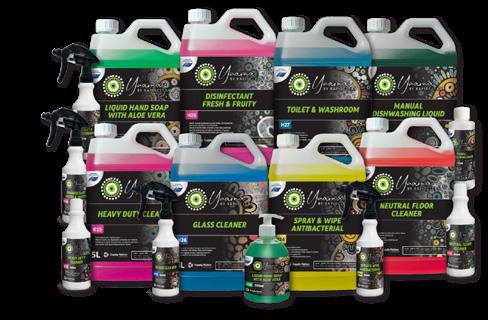
Cultural storytelling added depth to the 2025 conference. Chemrose partnered with RapidClean to launch an Indigenous brand identity, symbolising connection, unity and harmony. “If we get culture right, then people know who they are,” Chemrose director Geoff Simpson said. Clean Plus was commended for its collaborative approach to supplier partnerships. “Plenty of companies say they listen to customers,” national sales manager Ken Mattingley said. “Clean Plus actually listens together.”
For Hill, that spirit of collaboration defines RapidClean’s DNA. More than 75 percent of members attended this year’s conference, including full representation from New Zealand. Six new suppliers joined the Australian network and two more in New Zealand. Supplier spend rose by three and a half percent, and website traffic surged by 150 percent in Australia and 65 percent in New Zealand.
“They’re not just an online community,” Hill said. “They love face-to-face connection. I travel to see members twice a year in every state. That’s part of the membership. You’ve got to work together, because that’s what a cooperative is – collaborating.”
Hill has found this hands-on approach builds stronger relationships and a deeper understanding. “You come in with a job list for the day, but then you’re on the phone with a member for an hour,” Hill laughed. “Then another member calls, then a supplier drops by, and suddenly half your day’s gone. But that’s the business. It’s about people.”
FACING THE MARKET, TOGETHER
Amid the celebrations, Hill was frank about the challenges ahead. “The biggest pressures for our members are labour, freight, energy and general cost of doing business,” he said. “Regional members especially struggle to find and keep staff. And government tenders often come down to price, even when we’re offering Australian jobs, Australian taxes and 250 vans delivering product every day. We lose at the first hurdle because we’re two cents higher.”
Hill believes more needs to be done to recognise the economic and social value of cooperatives. “We’re working with government to help them understand that groups like ours employ locally, pay taxes here and reinvest in the community,” he said. “It shouldn’t have to be explained, but it does. I think politicians who’ve never run a business don’t see it from that perspective.”
That advocacy will continue through discussions with state and federal ministers in 2026, as RapidClean looks to strengthen the policy environment for Australian cooperatives.
STRATEGIC GROWTH AND SHARED AMBITION
Looking ahead, Hill is focused on disciplined, strategic expansion. “We have 72 stores and could have 100 within two years,” he said. “But growth has to be right. I don’t want to saturate the market or put members against each other. The goal is collaboration, not competition.”
Hill described the RapidClean ecosystem as “a sleeping giant that’s waking up”. With 44 suppliers in Australia and 22 in New Zealand, the network is broad but carefully balanced. “We’re selective about who joins,” he said. “It’s about complementary relationships, not competition. Suppliers have to work for the business — and our members absolutely support those who support them.”
CELEBRATION AND PURPOSE
The two-day program wasn’t all business. Delegates soaked up Melbourne’s sights, from the skyline views at Taxi Kitchen to the history-laden corridors of Old Melbourne Gaol. A gala dinner at Melbourne Zoo added a touch of wonder as
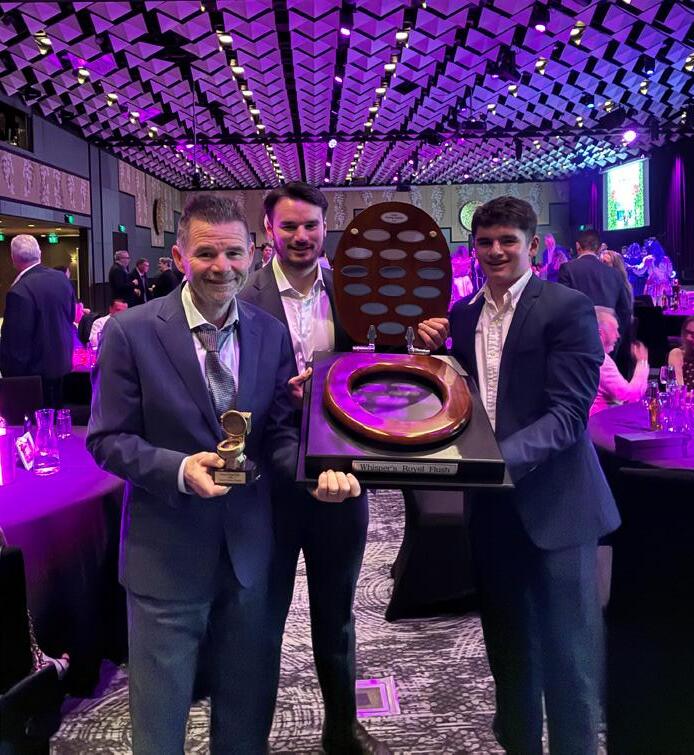
guests shared drinks under the setting sun and raised a record $35,478 for Cancer Council Australia and $7000 for the Cancer Society of New Zealand.
“As you all know, it’s not often I’m lost for words, but this year absolutely blew me away,” Rapid Group national key account manager Donna Willmette said.
The evening also honoured excellence within the network, with Abcoe Distributors named Australian Member of the Year, Waikato Cleaning Supplies taking home the New Zealand title and Huhtamaki Tailored Packaging and Filta recognised as top suppliers.
As the dance floor filled and the final auction bids closed, Hill reflected on what four decades of cooperation have built. “It’s about people coming together to grow stronger,” he said. “That was the goal in 1985, and it still is today.”
RapidClean’s 2025 conference closed on that note of shared purpose – a reminder that its strength lies not in size, but in the connections that continue to drive it forward. Queensland awaits in 2026. ■
RapidClean Member Awards
RapidClean Member of the Year
Australia
ABCOE Distributors
New Zealand
Waikato Cleaning Supplies
RapidClean Member
Runner-Up Recognitions
Australia 2nd Place
RapidClean Tasmania
Australia 3rd Place
Never 2 Clean
New Zealand Runner Up
Commercial Cleaning Repairs
Supplier Category Winners
Paper & Packaging
Huhtamaki Tailored Packaging
Cleaning Accessories
Edco – Edgar Edmondson
Cleaning Solutions
Clean Plus Chemicals
Machinery
Pacvac
Specialty Products
Accom Assist
PPE & Safety
Apollo
NZ Runner Up
Cottonsoft
Giving Back – Sharon Lees
Memorial Fundraising
Gala Dinner Auction set new fundraising records:
$35,000+ raised for Cancer Council
Australia
$7000+ raised for Cancer Society
New Zealand
THE POWER OF WATER
Equipment innovation is reshaping cleaning performance. As water sets the pace in cleaning, new equipment is transforming how that power is harnessed.
Words John Taylor
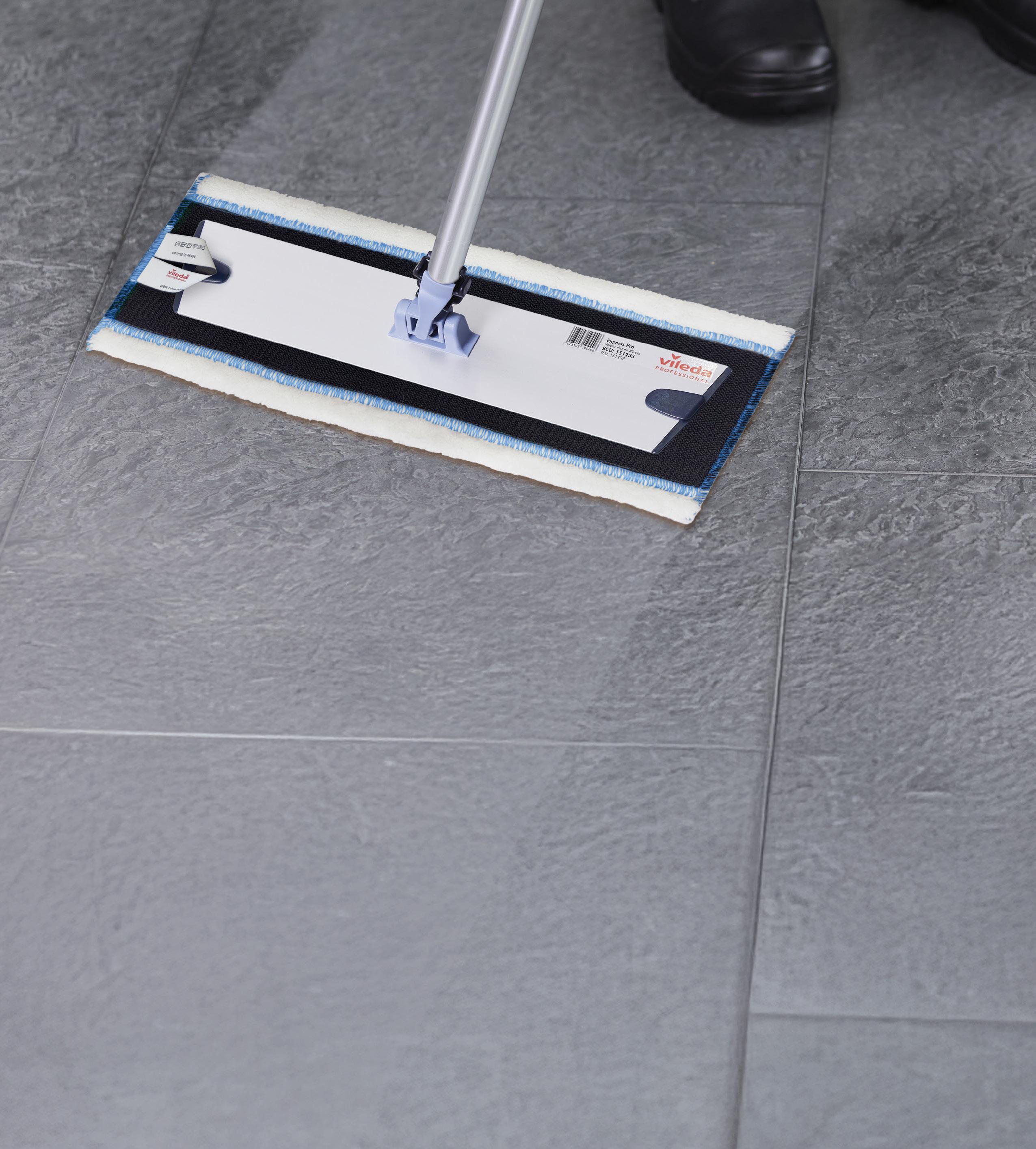
There aren’t many cleaning tasks that don’t involve water. OK, dusting, vacuuming and sweeping don’t need water, but as soon as the word ‘wash’ is used, water becomes the main player. Every cleaning task draws its strength from water and how it is released and directed in motion. From a mop bucket to a scrubber, a pressure washer to a carpet machine, through to window cleaning and even washing dishes, the effectiveness begins with water and the way it moves through the process.
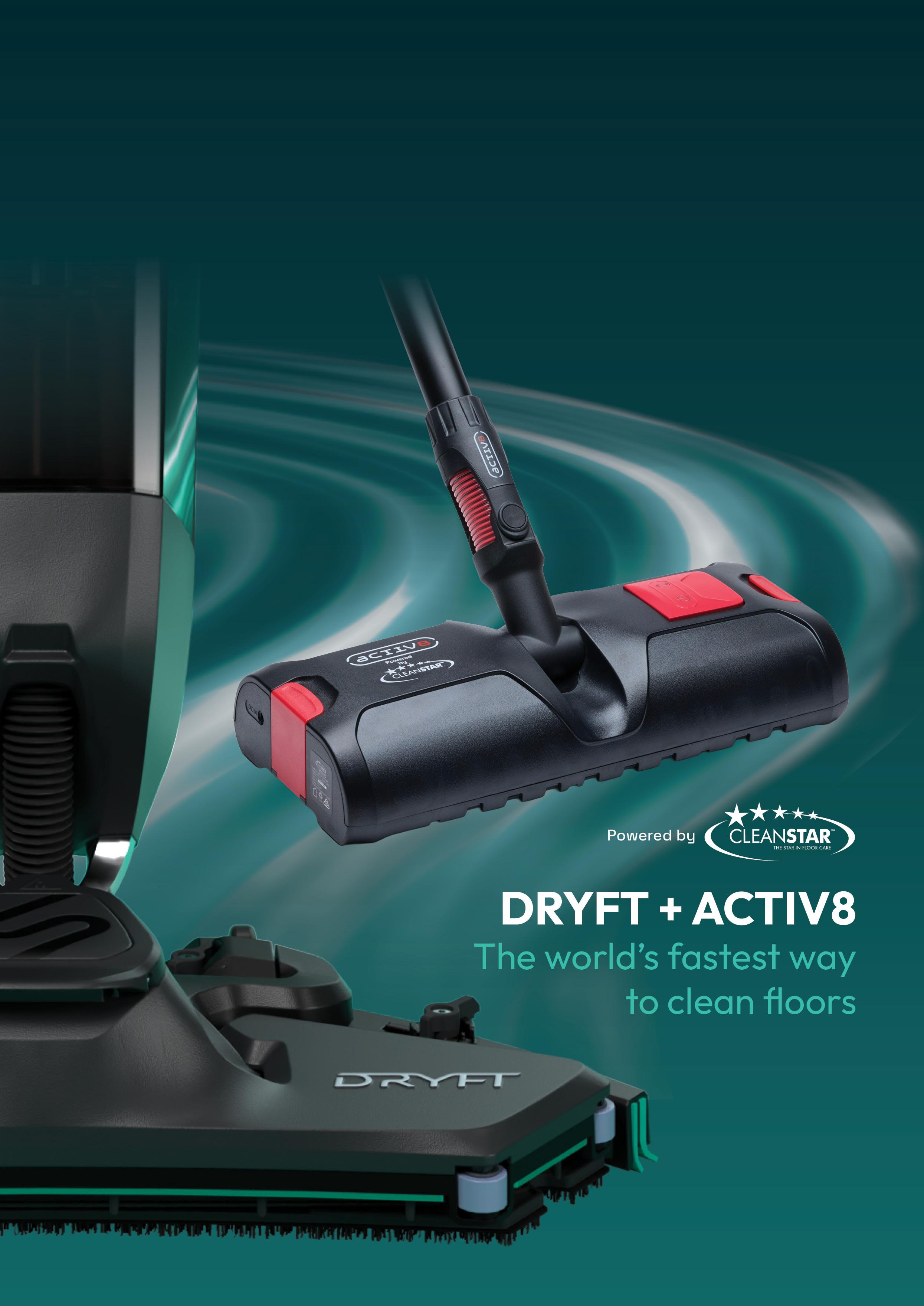
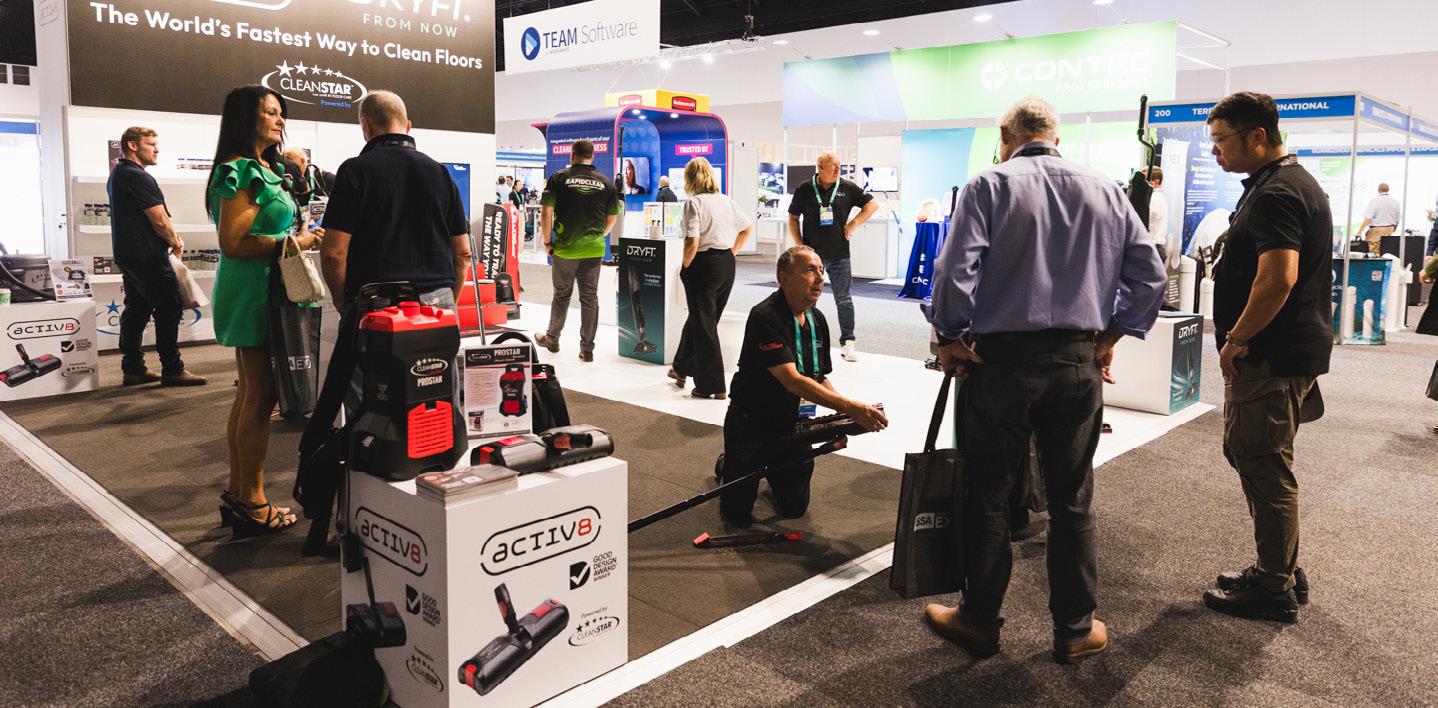
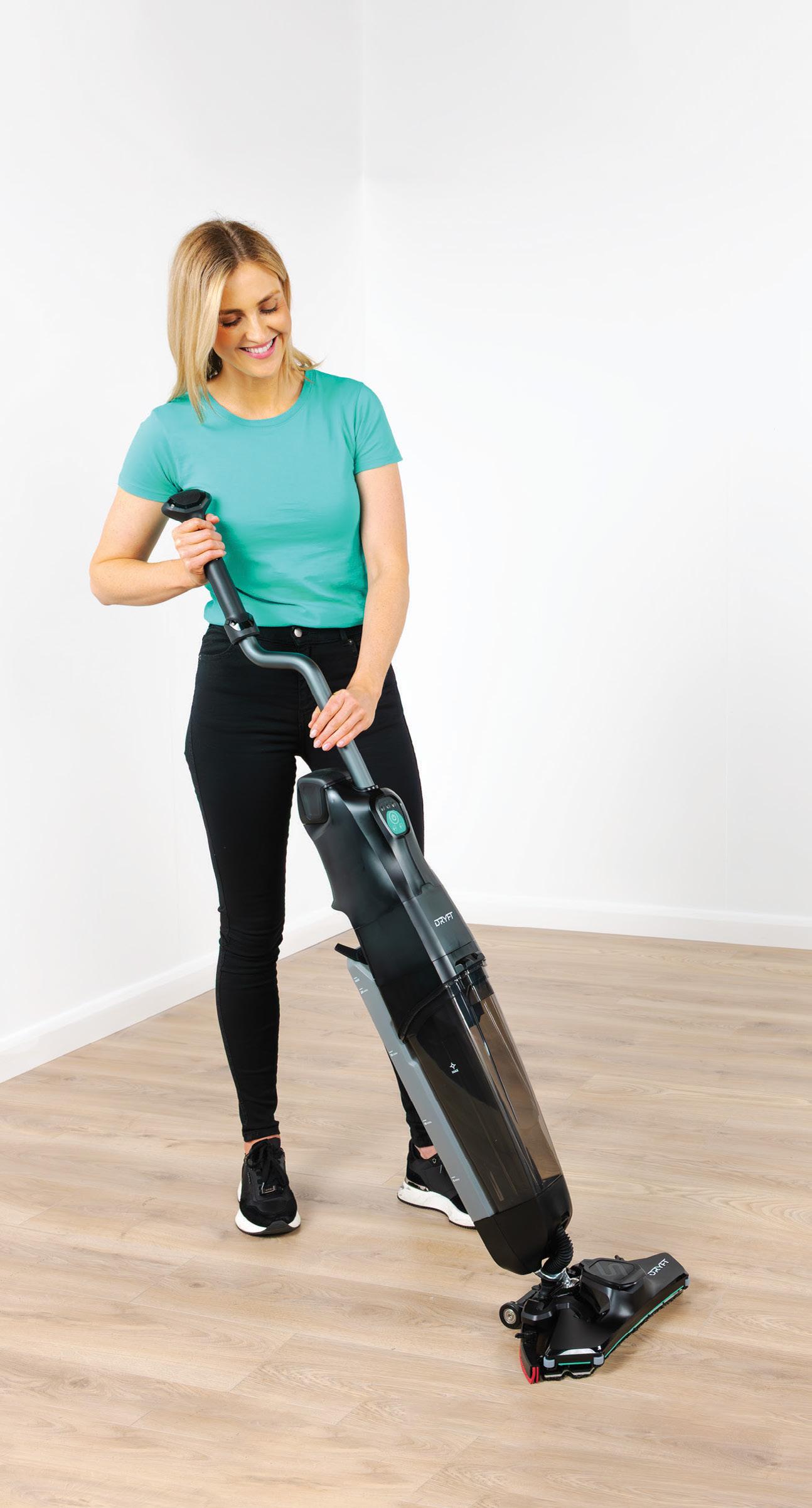
So, what’s new? At the recent ISSA Cleaning and Hygiene Expo, the DRYFT was a joint winner in the equipment category. The DRYFT introduces a fresh approach to small-space cleaning. It is a highly portable floor scrubber built with a distinctive S-shaped handle and an oscillating cleaning head, giving the operator control and precision in tight areas. It is made for the places where a mop would ordinarily be used, yet it eliminates the problem of cross contamination that comes from dipping a dirty mop into a clean bucket. With its targeted system, water use stays minimal while the clean remains consistent. There is no need to change the water after every room, as is required in healthcare cleaning.
Modern compact floor scrubbers are also overcoming the frustration that comes with cleaning high-traction flooring.
Surfaces carrying a high ‘R rating’, measured by how much grip they maintain under oily and wet conditions, defeat traditional string or microfibre mops, which tend to drag and smear rather than lift and remove. These harder-working floor types demand mechanical intervention, and compact scrubbers are stepping into that role.
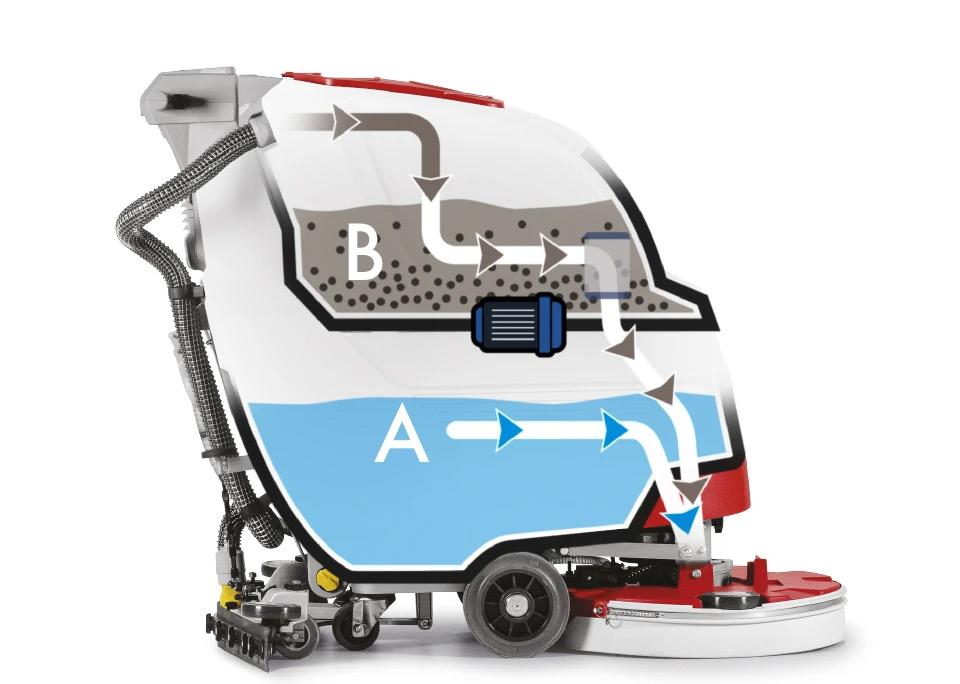
In larger floor (or auto) scrubbers, recycling the wastewater is not unique. The water is picked up by the squeegee and deposited into a recovery tank. It is then filtered and reused, a great option in mildly dirty areas such as pick and pack warehouses. There are also machines that dispense the optimum amount of water to match the speed at which the machine is travelling. Further, robotic auto scrubbers have the ability to stop water flow altogether should the machine come to a halt.
WHAT ABOUT CHEMICALS IN AUTO SCRUBBERS?
Contemporary scrubber models carry clean water in one tank and concentrated chemicals in another. When the floor demands more, the machine meters chemicals directly into the solution rather than diluting the entire tank. That means the main tank stays filled with clean water and chemical use responds to actual soil levels, leaving no need to discard unused diluted solution at the end of each shift.
WINDOW CLEANING WITH PURIFIED WATER
Regarded as one of the best chemicals to clean windows, purified water begins as ordinary tap water, often from sandstone, mineralrich or coastal areas, then passes through a filtration tank filled with charged beads. These beads capture and hold impurities and are replaced when a purity meter signals the operator. As the water takes on a mild positive charge, it draws in negative dirt particles, enhancing its cleaning force without the need for chemical additives.
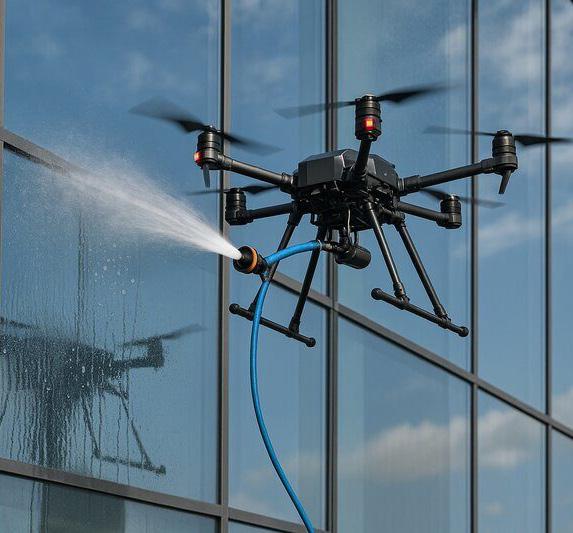
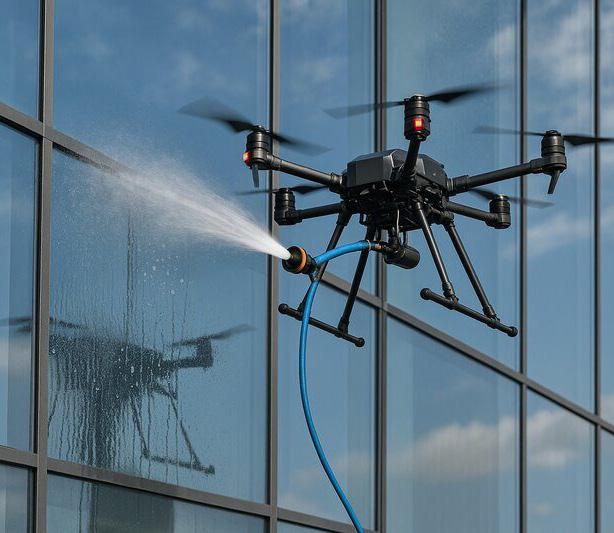
A simple water-fed wand with a brush is all that is needed for easily reached windows. More complex façades have traditionally called for squeegees and a bosun’s chair or a mobile gantry, methods that place the cleaner in a vulnerable position. Purposebuilt drones have radically changed that landscape. A lightweight hose runs from the filtration tank to the drone, and a skilled operator controls the flow, rinsing the glass from a safe distance. The positively charged purified water lifts and carries away dirt through flyscreens or past shutters if needed, and the run-off remains harmless to plants and wildlife.
Drones are now being used on some of the most difficult cleaning tasks. For extremely inaccessible contexts, drones have an onboard water storage tank and a small pump. The only drawback is that water weight limits capacity, so the tank needs frequent refilling.
Cameras on drones are able to inspect the area being cleaned to determine future maintenance. There are some fascinating stories from a five-star Sydney hotel, where windows once cleaned from a bosun’s chair are now serviced by drones equipped with cameras.
HOT WATER EXTRACTION CARPET CLEANING
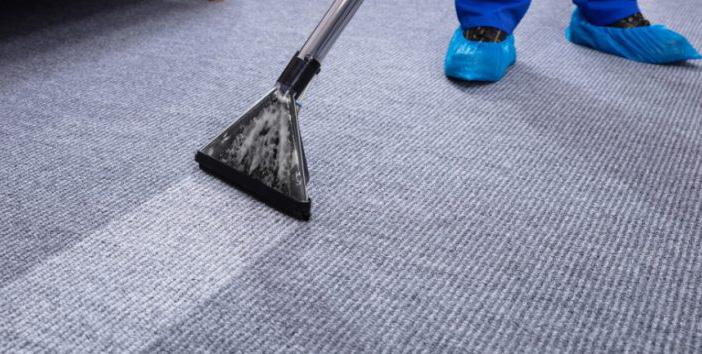
The introduction of steam carpet cleaning (now known as hot water extraction), many decades ago, revolutionised carpet cleaning. The process begins with a pump pushing water deep into the carpet fibres, followed by a vacuum system that extracts the dirt-laden solution. Before steam cleaning became common, carpets were treated with a slow-speed polisher fitted with a cloth pad soaked in cleaning solution, or a machine with soft brushes. Any remaining residue was removed once the carpet had dried, using a dry vacuum.
But blasting water into the carpet and then sucking out the dirty water a second later became the preferred method. Though many ideas for getting chemicals into the carpet have been tested over time, pre-spraying and using the extraction machine via a wand to rinse the dirt from the carpet has been accepted as the most effective method to date.
Variations have ensued. For a quick clean, floor scrubbers with heated pads that keep the carpets as dry as possible are effective. For a more thorough clean, recycling machines that reuse water perform best, complemented by self-contained extraction machines with cylindrical brushes that gently scrub the carpet before removing the dirty water.
There are some fascinating stories from a five-star Sydney hotel, where windows once cleaned from a bosun’s chair are now serviced by drones equipped with cameras.
HIGH-PRESSURE WASHING
Water blasters, or pressure washers, are rudimentary machines: a pump forces water into a nozzle that blasts the water onto a surface. The pumping systems range from the simple exhaust of a vacuum motor to massive pumps mounted on trucks. The trickiest part of pressure washing is understanding the pressure measurements – PSI, BAR or MPa. For reference, one MPa equals 145 PSI, and one BAR equals 14.5 PSI.
This makes it difficult to compare machines, but one thing is common: straight pressure is not as important as the amount of water pumped, referred to as litres per minute (LPM). For many years, electric, petrol and diesel-powered pumps were the only options, but battery pumps are now becoming more popular. Battery units do not have limitations for noise, fumes or power outlets, but they do have limitations for the pressure and water volume and working time.
Ecologically, pressure washing is one of the most efficient cleaning actions. In some situations, the force of the water hitting the surface being cleaned is sufficient without the need for chemicals. For example, ‘soft’ pressure cleaning with sodium bicarbonate is enough to remove graffiti from delicate or painted surfaces. As a non-pollutant, it can be used safely in sensitive environments.
Water should be considered as our greatest cleaning compound. When applied with the appropriate machines, the cleaning power is unmatched. As machines get smarter, cleaning becomes easier and less labour intensive. This is a win-win situation. Safer for the operator. Safer for the environment. And the result is a cleaner world for us all. ■
Innovation and excellence recognised at the ISSA Expo Awards 2025
Practical innovation and sustainability took centre stage at the ISSA Cleaning and Hygiene Expo Awards, celebrating solutions that transform cleaning operations.
Words Tim McDonald
The ISSA Cleaning and Hygiene Expo in Sydney unfolded as a study in momentum. Industry delegates filled the Sydney International Convention Centre with the steady hum of product demos, conversations about procurement and a sense that cleaning has moved from background routine to strategic investment.
The awards ceremony was the logical pinnacle of the event, focusing on the practical inventions and quietly ambitious product designs that will change the face of cleaning over the next year. Beyond novelty, award-winners offered usable steps forward for cleaners, facility managers and procurement teams wrestling with hygiene standards, sustainability and the economy of everyday cleaning. Judges rewarded machines that think for themselves and solutions that slim the labour needed to keep environments safe.
The Equipment category produced two winners that illustrate different ends of that spectrum. The PUDU MT1 took the headline Equipment prize and also captured the People’s Choice award after visitors voted in the Innovation Zone.
“Receiving this award is a tremendous affirmation of our team's dedication to redefining cleaning through AI and robotics,” said Pudu Robotics CEO Felix Zhang. “The ISSA Expo provides an invaluable platform for industry innovators like us to connect and drive progress, ultimately elevating standards for everyone.”
The MT1 is a compact autonomous unit built to clean with repeatable efficiency across hard floors and busy public spaces. Alongside the MT1, the DRYFT entry by Cleanstar, claimed an Equipment award for its clever approach to rapid drying and floor care.
Cleanstar co-founder Lisa Michalson said winning the ISSA Innovation Award for DRYFT is a strong validation of the industry’s appetite for practical, technology-driven solutions that genuinely improve cleaning outcomes. “The Expo serves the industry in an exceptionally positive way by creating a space where suppliers, distributors and end-users can connect, share insights, and accelerate the adoption of new technologies that lift standards across the sector.”
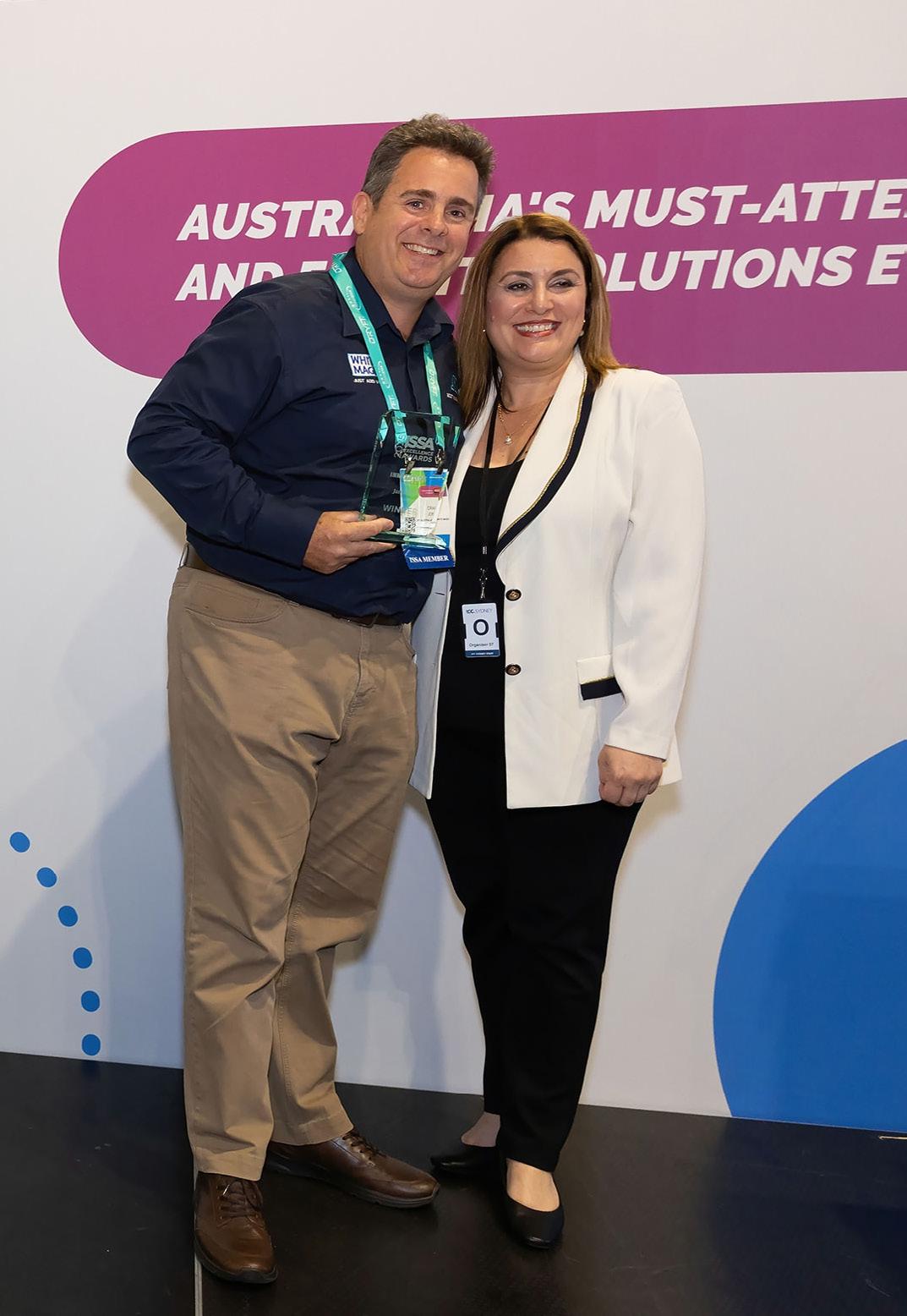
In Janitorial, the SYR SmartGuard Double Bucket earned recognition for a pragmatic yet well engineered rethink of the humble bucket and mop workflow.
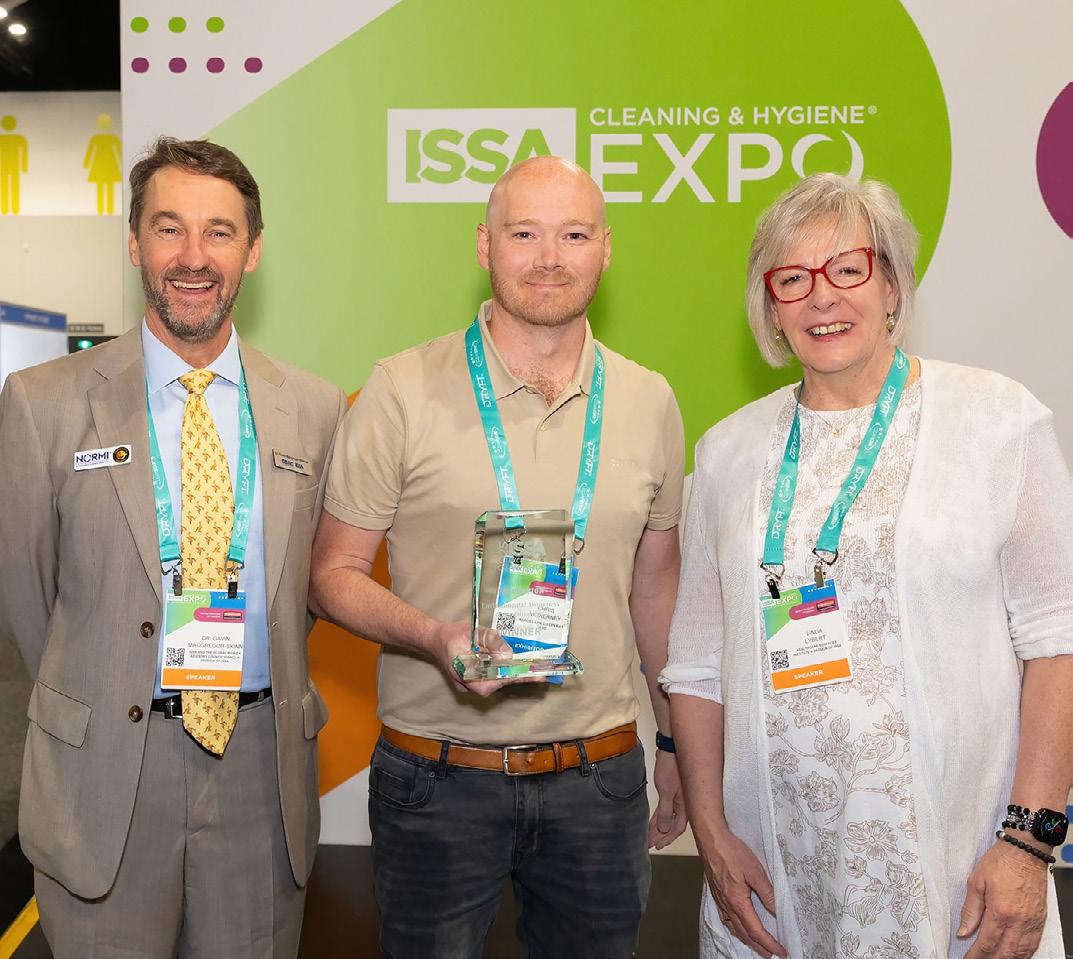
JTY director Craig Jones said it was a great reward for all the hard work of the team at Scot Young Research (SYR). “They have been creating original innovations in the commercial cleaning game since 1954,” he said. “The ISSA Hygiene Expo is an essential part of the commercial cleaning industry in Australia and JTY/SYR will continue to support it long term.”
Whiteley’s Speedy Clean Biodegradable Wipes stole the Cleaning Agents category by pairing performance with compostable credentials.
“This award highlights Whiteley's achievement in delivering a sustainable, hospital-grade neutral-detergent wipe, giving healthcare providers and professional cleaners an environmentally responsible option that still meets the rigorous performance standards,” Whiteley managing director Darran Leyden said. “Whiteley’s commitment to innovative research and best practice in infection prevention continues to drive product excellence.”
In Service and Technology, the ATP Test Kikkoman A3 was singled out for giving cleaning teams the means to validate surface hygiene quickly and simply. Egal Pads on a Roll took the Paper and Dispensing gong for a product that targets waste and dispensability in high-use zones.
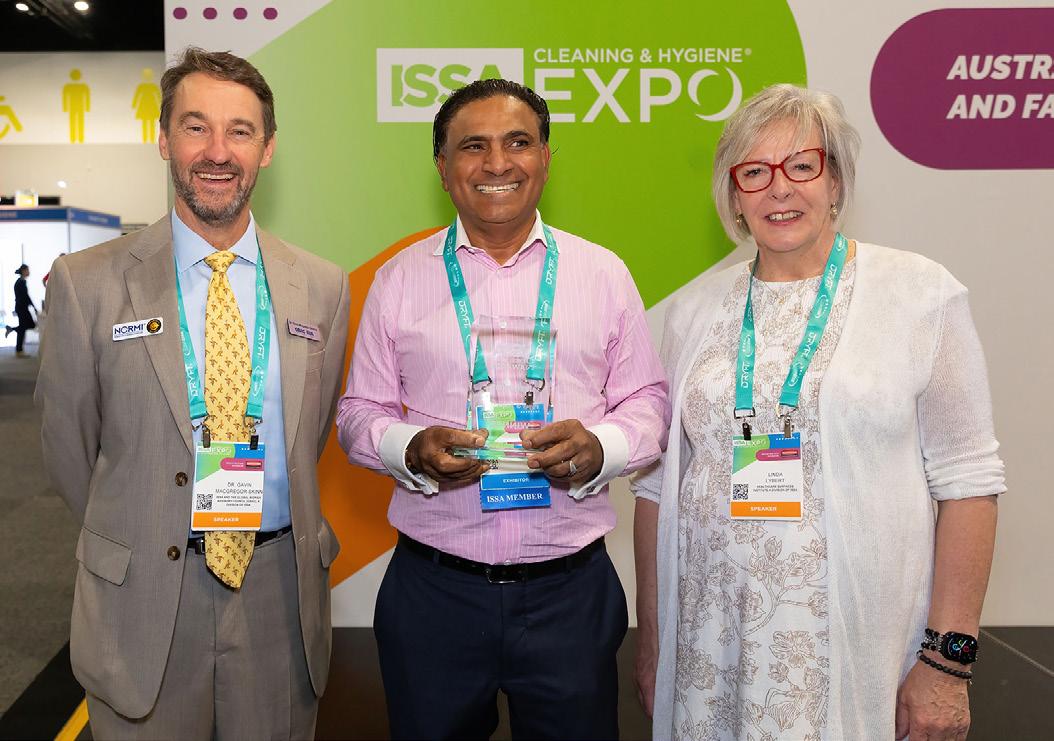
“Winning the ISSA Innovation award for EGAL Pads on a Roll was a welcome recognition of our mission towards providing ultra-accessible menstrual hygiene solutions in an emergency,” J S Hayes chief operating officer (COO) Kush Naidu said. “The ISSA Expo continues to lead the cleaning industry towards true innovation for real impact and meaningful collaboration between our industry peers, customers and partners.”
The Environmental Awareness and Sustainability award went to CleanLIFE Vinegar Wipes, a product that reframes an old ingredient with fresh environmental thinking. These winners were confirmed on the expo awards page and reflect a show that favoured practical innovation that people can implement now.
Judges said what struck them most about the winners was how plainly their entries answered a single client question. Facilities want outcomes that are measurable, repeatable and defensible. The ATP testers and autonomous scrubbers answer the measurability problem. The biodegradable wipes and vinegar based products answer the sustainability problem. The double bucket and the pads on a roll answer the operational problem. Each winner reduces a point of friction in an existing workflow. That pragmatic clarity is what made the judges’ choices feel less like fashion and more like direction setting.
“It was very hard to separate the entrants,” said judge John Taylor of Nivernais Pty Ltd. “For example, in the equipment section we had the first ever
draw for first place. Considering the three judges score the awards from a number of criteria independently, it is an amazing result.”
The tone across the winners was also notable. There was a clear preference for solutions that respect the people who use them. The SYR SmartGuard Double Bucket treats the cleaner as the primary user. It changes what the job feels like. The PUDU MT1 takes repetitive strain and monotony out of large area cleaning. The ATP device gives teams a simple way to show clients that a surface meets an agreed standard. When innovators design with users in mind the result is a faster adoption curve and more durable return on investment.
Sustainability sat at the heart of another strand. Speedy Clean Biodegradable Wipes and CleanLIFE Vinegar Wipes signalled that chemistry companies are reconciling efficacy with environmental expectations, but there was something deeper in the way Australian made products were received. When The Hygiene Co. stepped forward for recognition, its national sales manager Chris McInerney called it a “tangible win for Australian manufacturing, the business and the environment”, crediting the Adelaidebased team for developing a plasticfree, biodegradable product built from day one to remove imported wet wipes from circulation. His words grounded the conversation in purpose, proof that sustainability is not a marketing claim, it is a manufacturing choice. The fact that it was presented at an industry leading conference only underscored its weight. There is also a data and service story that should not be overlooked. ATP testing and smarter dispensing systems both push cleaning conversations into a language that executives understand.
Numbers, graphs and audit trails translate cleaning into an operational narrative. Those products change cleaning from a defensible cost into a measurable service that protects brand and reputation. The ISSA awards recognised that shift and sent a signal that technology which enables transparency will gain traction.
The People’s Choice result was telling. The PUDU MT1 won the popular vote after delegates cast ballots at the show which suggests the market is ready for robotics at scale, at least for certain applications. Popular enthusiasm matters. It accelerates buying cycles. It invites more suppliers to enter the category. That momentum will sharpen competition and, if history is any guide, drive down total cost of ownership.
Practical takeaways for operators can be read straight from the winners. Invest in tooling that reduces back of house labour without compromising on outcomes. Demand product proofs in the form of third-party tests or simple in situ ATP checks. Recalibrate specifications to reward biodegradability or proven low environmental impact. Treat cleaning innovations as part of a facilities strategy, not an afterthought in procurement cycles.
The expo and the awards together made a tidy argument. Cleaning carries technical, environmental and reputational weight. The products honoured on the night are not theatrical. They are tools for teams that operate in the real world. They will matter in the months ahead because they answer real problems. The ISSA Excellence Awards showed us where the market is moving. The challenge for suppliers is to keep pushing that trajectory, and the challenge for buyers is to recognise and deploy those tools with confidence. The winners in Sydney have set a clear example. The rest of the industry should take note and follow. ■
Flipping the hourglass: a leadership conversation
Resilient leadership grows through courage, clarity and human connection, shaping stronger teams in a demanding industry.
Words Tim McDonald
At this year’s ISSA Cleaning and Hygiene Expo, cleaning professionals came together to explore innovations in products and processes while investing in the one tool that shapes every success: the human mind.
One session at the Women in Cleaning & Facility Solutions Breakfast, presented by ISSA Hygieia Network, left a lasting impression. The Hygieia network is a community dedicated to advancing the careers of women in the cleaning and facility solutions industry.
It was led by Sonia McDonald, a multifaceted speaker whose experience spans motherhood, business leadership, coaching and authorship. The session approached resilience as a practical, actionable skill, one that transforms how we work, lead and live.
FLIPPING THE HOURGLASS
McDonald opened with a simple yet powerful metaphor: an hourglass. Every grain of sand represents a moment, a fragment of life we cannot reclaim, yet each moment shapes who we are. Watching the sand fall, she explained, teaches a fundamental truth about resilience: it is not measured by speed or control, but by focus. Life may push, tumble and unsettle, but how we choose to direct our attention shapes our experience.
Drawing from personal experience, she shared a period she calls a “life quake”. Living overseas with limited resources and a young child, she faced adversity alone, with little money and no immediate plan. It was a moment when the instinct to crumble was almost irresistible. But she made a conscious choice: to stand, act and rebuild, one decision at a time.
“Everything is a choice,” she said. “You can collapse under pressure, or you can flip the hourglass and start again.” That decision became her first lesson in resilience, forged in the messy, gritty reality of life.
COURAGE, CONNECTION AND CHOICE
Three guiding principles – courage, connection and choice – materialised for McDonald off the back of that challenging experience. According to her, courage is not the absence of fear but the act of moving forward despite it, rewiring the brain and instilling purpose. Connection is survival; even brief interactions, like a smile, a greeting, a thank-you, reinforce belonging and nurture resilience. Choice manifests in boundaries and energy allocation. Knowing what to focus on and what to let go of allows leaders to act with intention rather than reaction.
She also explored how neuroscience underpins these principles. Every time the brain responds to adversity or stress, it
strengthens neural pathways, enhancing emotional regulation and focus. “The reticular activating system, the brain’s filter for attention, determines what we notice,” she asserted. “ By directing focus toward strengths and opportunities, we reshape perception, turning stress into fuel for growth. Attention goes, energy flows.”
PUTTING RESILIENCE INTO ACTION
Following the keynote, McDonald joined a panel of industry leaders, including Linda Lybert, Lorraine Rogic and Kathryn Groening, for a lively discussion on ‘Overwhelm and de-stressing’. The conversation resonated deeply with attendees, reflecting the pressures of the cleaning and facility solutions industry.
“It’s about having that thick skin and getting on with it,” Rogic said. “We’ve all got resilience; it’s just tapping into it and giving yourself permission to use it.” Groening added, “You learn to bend and shift and have empathy.” Rogic emphasised that setbacks only matter if lessons are ignored, framing failure as a catalyst for growth.
McDonald described resilience as a muscle strengthened through courageous action, empathetic connection and self-awareness. Leadership, she said, involves stepping off the phone and out of the office to engage with people, understanding their strengths and offering guidance with clarity and kindness. “One of my favourite quotes is by Brene Brown: to be clear is to be kind, to be unclear is to be unkind,” she said, highlighting how courage and compassion intersect in effective leadership.
PRACTICAL STRATEGIES FOR LEADERSHIP AND GROWTH
Groening shared personal insights from her family business and corporate career, noting that resilience emerges through teamwork, agility and empathy. She encouraged leaders to walk the floor, talk to people and understand the operational realities of their teams. “Everything was in my email, yes, but connecting with people saved time and built trust,” she said. She also suggested maintaining a ‘brilliance folder’, a collection of personal achievements and lessons learned, to revisit during moments of doubt to reinforce confidence and resilience.
The panel agreed that coping with overwhelm requires awareness of personal boundaries and priorities. One panellist noted that overwhelm is subjective; by defining what truly matters, delegating effectively and taking strategic pauses, leaders can maintain composure even under pressure. “Sometimes all it takes is a few minutes outside to breathe and reset your mind,” said another, reinforcing the idea that resilience is cultivated through conscious, daily practice.
CREATING OPPORTUNITIES AND FOSTERING GROWTH
The discussion moved to practical strategies for creating growth and opportunity. Panellists shared experiences of stepping into roles that challenged them, taking calculated risks and supporting others to reach their potential. Lybert recounted being the first female candidate in northern Wisconsin to run for state assembly and later launching multiple businesses, demonstrating that courage and initiative often precede growth. Rogic highlighted that leadership opportunities exist in every role and success comes from recognising and acting on them without letting fear or internal doubts get in the way.
McDonald and the panel emphasised collaboration, emotional intelligence and empathy as essential qualities for leaders over the next five years. While technology and AI evolve rapidly, soft skills like kindness, communication and understanding remain crucial. Panellists urged leaders to coach and mentor emerging talent, preparing future leaders who are self-aware, resilient and capable of connecting with others while maintaining operational excellence.
THE ENDURING LESSON
At the heart of both the keynote and panel discussion was a clear message: resilience, courage and connection are inseparable from effective leadership. Leadership is measured not by title or authority but by choices made under pressure. Every decision to rise after a setback, to act with kindness, or to cultivate opportunity contributes to a lasting impact on teams, organisations and communities.
For cleaning professionals confronting daily operational pressures, these lessons resonated profoundly, inspiring them to turn challenge into opportunity. ■
HOW AUTOMATION AND AI ARE RESHAPING COMMERCIAL SALES
Automation and AI are force multipliers. If your sales process is weak, they’ll magnify the mess. But if
it’s
strong,
they’ll
supercharge growth, putting real dollars in the bank.
Words Brad Horan
Ten years ago, building a digital sales pipeline in a commercial cleaning business required a six-figure investment and a six- to 12-month implementation period. It involved consultants, IT specialists and often an internal team just to keep the system running.
Today, the barriers have collapsed. You can start with a free CRM tier and scale to around $150 per user per month for a modern pipeline that manages enquiries, proposals and follow-ups with far less effort, and far more consistency.
And now there’s a second layer: AI.
In our work with commercial cleaning clients, we use a specialised marketing AI system that can deploy a websitebased lead-generation assistant in under an hour. Trained on the business’ brand voice, customer language and service information, it qualifies enquiries, analyses reviews, drafts content and surfaces trends — capabilities that once required a copywriter, a designer and a coordinator watching the inbox all day.
These systems now start from around $600 a month, roughly the price of a lunch a day. They're not perfect but they improve every week.
Technology used to be the barrier; now it’s the easy part. The real danger is believing it can compensate for weak customer understanding. Automation can strengthen a good strategy, or accelerate a bad one.
1. KNOW YOUR BEST-FIT CLIENTS (AI MAKES THIS FASTER)
Some cleaning businesses already understand their ideal clients, but many rely on assumptions rather than evidence. One of the things we do with clients is use a custom AI model to analyse customer reviews, which gives a far more accurate and detailed picture.
Large language models (LLMs) don’t just summarise comments. They detect tone, emotion, recurring frustrations, hidden expectations and emerging themes. They can even infer likely demographics, such as age, gender or professional background, based purely on how reviewers write.
This gives cleaning businesses a data-driven understanding of what customers value, what bothers them, and which client types are naturally aligned with their strengths.
Once this is clear, your digital tools become targeted instruments, delivering the right message, at the right moment, to the right prospect/client.
2. MAP YOUR SALES PROCESS (BEFORE YOU AUTOMATE ANYTHING)
Every commercial cleaning business has a sales process, whether it’s documented or not. It may look like this:
Mapping this process is essential, because you can’t improve what you can’t see. A mapped process reveals where opportunities stall, where follow-ups get missed, and where human contact matters most. It also shows where technology can reliably support the team without harming relationships.
Real example:
A multi-site contractor we worked with implemented two simple automations:
1. instant enquiry acknowledgement, and 2. a targeted qualification step.
Within three months:
• conversion rates increased 24 percent, and
• quoting effort dropped by 32 percent
Once you know who your best-fit clients are and how they actually buy, you can create hero services that meet them at a moment that matters.
3. CREATE HERO SERVICES THAT FIT THE BUYER’S JOURNEY
Once you know who your best-fit clients are and how they actually buy, you can create hero services that meet them at a moment that matters. A hero service is more than a list of tasks. It delivers a clear purpose and provides a defined solution to a problem, risk, operational challenge or compliance requirement.
As an example, steam cleaning, disinfecting and HVAC wipedowns are generic cleaning services. Reframing them as a ‘Seasonal Hygiene Reset’ for winter completely flips it to solving a problem your customer has. Same tasks; different meanings.
Hero services give your team a structured way to talk about value, through CRM emails, SMS reminders, capability videos and in-person conversations.
Instead of generic messaging, you now have clear narratives aligned with what the client is actually dealing with right now.
4. BUILD THE DIGITAL PIPELINE
With clear strategy, the digital pipeline becomes straightforward and effective.
Step 1: Capture every enquiry in one CRM
If you don’t capture it, you can’t measure it. And if you can’t measure it, you can’t improve it.
A CRM becomes the central source of truth for:
• enquiries
• site notes
• proposals
• follow-ups
• tasks
• conversations
• pipeline value, and
• forecasting.
The cost barrier has shifted. You don’t need a custom system costing $50,000 to $250,000. CRMs now offer free entry plans and/ or paid seats from around $50 per month. One lost contract will exceed the cost.
Step 2: Add only the automation you need Automation works best when it supports the parts of the sales process that are predictable and repetitive, not the parts that require judgement or relationship-building. The goal isn’t to automate everything. It’s to automate the right things.
High-value automations include:
• instant enquiry acknowledgements
• proposal follow-up reminders
• seasonal hero-service triggers
• nudges for stalled opportunities, and
• renewal prompts.
These automations enhance your sales team by handling the small, easily overlooked tasks that ensure every step in the sales process is completed.
Step 3: Use CRM data to improve decisions
A good CRM goes beyond storing information, capturing the data behind every enquiry, quote and follow-up, providing visibility that emails and spreadsheets cannot match.
This data highlights:
• where opportunities slow down
• which clients convert consistently
• how long deals actually take and,
• which services are the most attractive.
With this clarity, you can focus your effort where it pays, more sales, better profit margins.
Quick check: Four numbers that predict pipeline health
• new qualified leads
• win rate (by segment)
• quote-to-close turnaround time, and
• pipeline value by stage.
THE ROLE OF AI IN A MODERN PIPELINE
AI isn’t here to replace people. It’s here to give owners sharper insight, better timing and clearer decisions, and that’s where the real profit is.
We find AI’s impact is greatest in two areas.
1. Content development (human-reviewed)
AI is an excellent first-draft assistant for:
• outreach emails
• campaign outlines
• capability statements
• LinkedIn posts, and
• proposal drafts.
We build custom AI tools for clients that learn how they talk about their work and what makes them different, so the content it produces actually sounds like them.
2. AI for trend and pattern research (quiet advantage)
This is where AI quietly changes strategic decision-making. It can scan:
• weather-related cleaning triggers
• mould/moisture-risk patterns
• seasonal hygiene concerns
• customer sentiment
• competitor messaging, and
• facility management trends.
We use this same approach with clients to surface trends, risks and seasonal triggers early, so their outreach lands before competitors even see the shift.
What AI found in 800 plus commercial cleaning reviews
• reliability mattered most
• communication gaps were common
• clients valued reliability over speed
• responsiveness created loyalty, and
• documents and systems improved professionalism.
Risks and guardrails
Technology is powerful but comes with risks.
Common pitfalls include:
• automating poor processes
• over-complicating workflows
• sending poor-quality AI-generated content without review
• losing the human touch, and
• using insecure tools.
Digital tools should support relationships, not replace them.
Final
thoughts
Automation and AI aren’t replacing the relationships at the heart of commercial cleaning. They’re strengthening them, by improving visibility, sharpening follow-ups, and helping businesses focus on what clients value most.
With costs lower than ever, the question is no longer ‘Can we afford a digital pipeline?’
It’s ‘Can we afford not to?’ ■
Brad Horan helps cleaning operators use custom AI tools to sharpen pricing, improve conversion rates and increase profit. If you’d like to see where AI could make you more money, or simply share feedback, reach out at bhoran@lucrature.com.
Big changes ahead for the Recognised ecolabel program
The Recognised® ecolabel program is entering an exciting new phase strengthening its alignment with international standards and expanding its market reach
Key enhancements include:
Alignment with ISO 14020 and ISO 14024, ensuring Recognised® meets global best practice
An updated Standard, including a new whole-of-business section, promoting sustainability in sourcing, energy, waste, water, and social responsibility
updated product criteria, with stronger limits and new requirements for environmental performance
A shift to three-year licences and revised fees that reflect the program’s value, while maintaining accessibility for all business sizes
Ongoing work towards Global Ecolabelling Network (GEN) accreditation, giving Recognised® international credibility
The cleaning industry is entering a new era of material consciousness, closing the loop on waste as a by-product and rethinking how products, packaging and processes can sustain both profit and the planet.
Words Tim McDonald
The story of waste has always been one of distance, yet that distance is shrinking as decision-makers across the sector treat waste as a design flaw rather than an inevitable outcome. What once centred on disposal now pivots toward design, and what once marked an ending now signals the beginning of another cycle.
The industry sits at a juncture where consumption meets care, handling the evidence of daily life while managing the invisible aftermath of human activity, and that position gives it immense influence over the way materials move through workplaces, institutions and cities. As the possibility of closing the loop grows more tangible, the tools and systems that service these spaces now carry a responsibility far greater than hygiene alone.
“Circular design is shifting the cleaning industry from a use and dispose mindset to one that seeks to reduce and reuse instead,” Bunzl’s head of sustainability Felicity Kelly says. “Many of our suppliers are developing concentrates that minimise transport emissions and refillable packaging that eliminates single-use plastics.”
This shift now stretches far deeper than packaging or product format. Freudenberg Home and Cleaning Solutions marketing director Lorenzo Tadeo describes circular design as a strategic priority rather than a trend. “Across the cleaning industry,
companies are rethinking materials, product lifespans and end-oflife solutions to close the loop and reduce environmental impact,” he says.
“At Freudenberg, circular design is central to our strategy. We use post-consumer recycled materials in our range of mops and cloths, design products for durability and recyclability and produce significantly less plastic packaging than the industry average.”
Tadeo adds that the next leap lies in the longevity of materials themselves, observing that “the biggest opportunity ahead is in creating even longer-lasting products and advancing recycled polymer technology, so materials stay in use and out of landfill for as long as possible.
COMPOSTABLE THINKING AND MATERIAL TRANSFORMATION
Compostable and biodegradable consumables have evolved from token gestures into genuine innovation. Advances in plant-based polymers and cellulose blends have produced products that meet professional standards while reintegrating into natural systems with minimal residue, yet this material challenge carries with it a behavioural one. Adoption relies on confidence that sustainability aligns with performance and can be supported by real-world infrastructure.
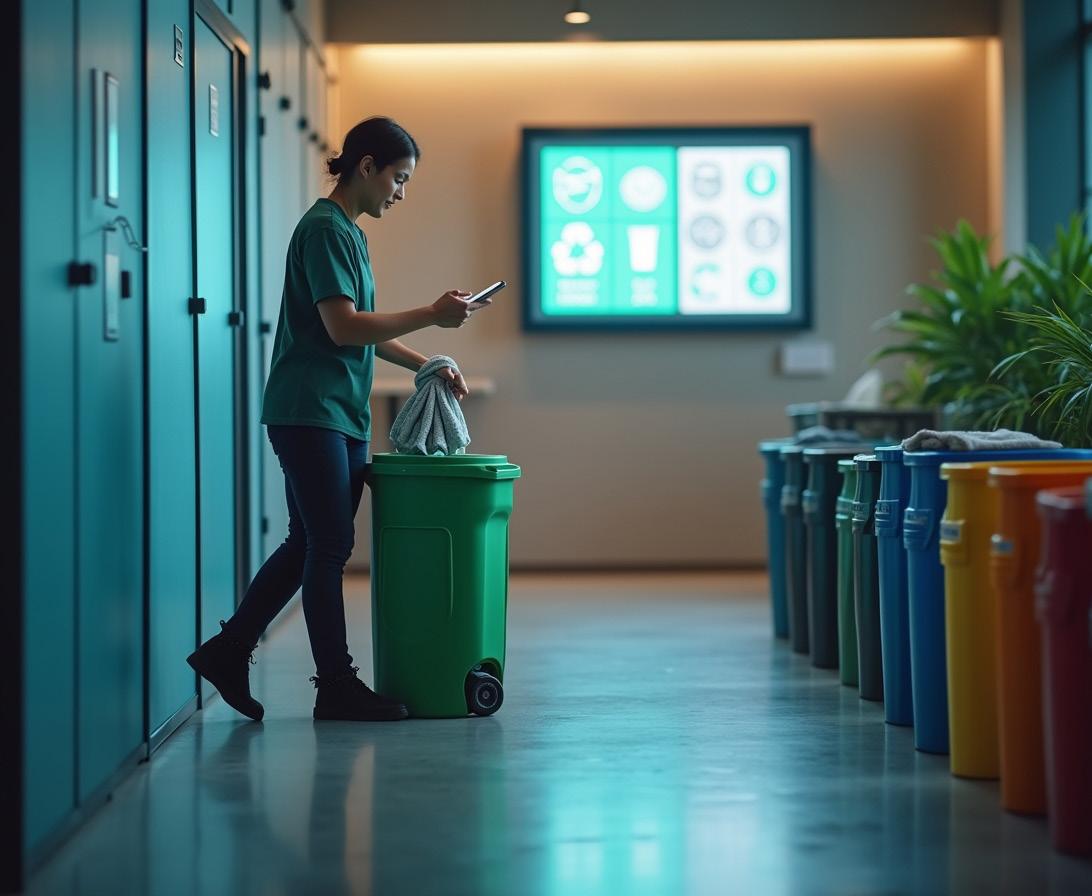
“Especially when considering compostable food service consumables, which can only be composted if they’re collected and processed correctly,” Kelly notes. “Cleaning providers can help by raising awareness with staff through clear bin signage, training and visual prompts, partnering with waste processors to confirm what can be composted in the area and reporting diversion rates to show what is being correctly sorted versus contaminated.”
Tadeo sees this alignment between intention and outcome as the turning point. “The challenge is to bridge the gap between sustainable product choices and real-world impact,” he explains. “This requires clear communication, measurable outcomes and support for clients to implement best practices in waste management and resource use.”
At Freudenberg, this support takes tangible form. “Our R ranges of mops and cloths use post-consumer recycled polyester, with third-party life cycle analyses and carbon footprint calculators to show clients the real carbon and waste savings. We also provide certified products and training so clients can reduce waste with confidence and track their progress.”
CIRCULAR PACKAGING AND THE RETURN ECONOMY
Packaging is becoming a test case for circularity. Beyond recyclability, the new ambition is recoverability and reuse, with
containers designed for multiple life cycles rather than single deliveries. Refill programs reduce transport emissions and resource demand, while modular systems minimise material variation and streamline downstream processing.
“Refillable packaging is a major opportunity,” Kelly says. “It’s more than eliminating single-use plastics. It’s also about designing systems that support reuse from the outset.”
This packaging rethink signals a broader mindset shift as businesses begin to recognise value in both volume and longevity. Containers that return, refill and circulate create more value with each use, changing the economics of waste from cost to opportunity and strengthening the partnership between manufacturers, distributors and end users.
CLOSING THE LOOP ON-SITE
Circularity gathers strength on-site, not at distant recycling facilities. Separation systems now integrate digital monitoring, smart sorting and data analytics that reveal exactly what is being discarded and why.
“Technology is giving cleaning teams unprecedented visibility over waste flows,” Kelly explains. “Smart bins, weight sensors and AI-enabled cameras can now identify what’s being disposed of and flag contamination instantly. Dashboard reporting enables teams to see which areas or shifts generate the most waste and where education or system tweaks are needed.”
The biggest opportunity is creating longerlasting products and advancing recycled polymer technology, so materials stay in use and out of landfill for as long as possible.
- Lorenzo Tadeo, Freudenberg
Tadeo sees the same digital shift driving clarity, accuracy and engagement. “We see across the industry an increase in adopting digital tools, software, smart bins and colour-coded systems that help teams separate waste and monitor progress in real time,” he says. “These strategies enable data-driven decision-making and more effective sustainability reporting, and our carbon footprint calculators and LCA tools support clients in measuring and reporting their sustainability gains.”
CULTURE, LEADERSHIP AND THE NEXT PHASE
The transformation of waste within the cleaning industry extends beyond technology into culture, encouraging businesses to redefine value and responsibility across entire material life cycles. Leadership plays a critical role in this shift, guiding teams and clients toward decisions that consider longevity and environmental benefit from the outset.
“Closing the loop requires leaders across the cleaning sector to see waste as a system inefficiency to be designed out,” Kelly says. “It starts with considering the entire cleaning life cycle and embedding circular thinking from the outset.”
Tadeo believes this turning point will emerge when sustainability holds equal weight to traditional procurement metrics. “Industry-wide, real progress requires moving beyond
short-term cost and convenience and instead prioritising solutions that deliver long-term environmental benefits,” he says.
“Leadership is needed within companies but also from government authorities and those setting tender requirements. When sustainability becomes a core requirement in public tenders and suppliers are incentivised for circular solutions, the entire industry gains the momentum to innovate.”
A CLEANER KIND OF PROGRESS
The cleaning industry has always been measured by what it removes, yet the future measures it by what it restores. As circular systems strengthen across material science, collection, separation and recovery, a new rhythm emerges that turns each act into a statement of intent.
“Modern robotics are equipped with sensors and AI-driven controls that regulate water and chemical use, ensuring only the necessary amount is dispensed,” Kelly says. “This shift improves water efficiency and reduces chemical waste.”
As the loop draws tighter, the industry advances toward a future where waste evolves into a resource waiting for its next purpose. In that evolution sits the next chapter of cleaning, built on continuity rather than disposability. ■
CLEAN BY DESIGN: FACILITIES REBUILDING FOR INFECTION PROTECTION
Cleaning has evolved from a maintenance task to a core health service. Here’s how infection prevention strategies in healthcare, education and transport environments are finding common ground. The result is hygiene practices built into infrastructure and operations, rather than an afterthought.
Words Varun Godinho
If there was a single moment in recent memory when embedding hygiene practices and protocols into facilities across healthcare, education and transport environments went from a perfunctory function to a core service, it was the onset of the COVID-19 pandemic. It served as a reminder that failing to install hygiene as part of the essential infrastructure would indeed lead to the loss of lives at an appalling scale.
As Gavin Macgregor-Skinner, senior director at ISSA and Global Biorisk Advisory Council (GBAC), explains, “Hygiene is no longer a support function; it is a pillar of the cleaning industry. Every school, hospital, airport terminal, bus and train depends on cleaning professionals and evidence-based practices to protect public health.”
INFECTION PREVENTION STRATEGIES
When it comes to controlling infections, environmental hygiene is a key consideration. Infectious diseases are caused by infectious agents (bacteria, viruses, parasites and fungi) and their toxic products. Controlling them through rigorous disinfection regimes directly controls the spread of the disease.
Infection control is vital in areas such as healthcare and education, where vulnerable individuals may already suffer from compromised immune systems. In the transport sector, which typically sees high volumes of transient traffic, the risk of an uncontrolled spread is even greater.
Within the healthcare setting, the need to embed hygiene and infection control protocols into the facility’s core services is vital. The Healthcare Surfaces Institute, a division of ISSA and part of the ISSA Healthcare Platform, finds that 1.7 million people get healthcare-associated infections (HAIs) each year, and around 99,000 people die annually, with many more suffering from altered lives that require ongoing medical care as a result of HAIs.
One of the starting points for stemming HIAs is to conduct routine and targeted cleaning using hospital-grade disinfectants approved by relevant bodies such as the Therapeutic Goods Administration (TGA). Facility managers must institute an enhanced cleaning regime of high-touch surfaces (bedrails, nurse call buttons, door handles, bathroom fixtures) and also reinforce practices such as terminal cleaning protocols for rooms after infectious patients have been treated within them.
“Most facilities, including healthcare, education and transport, now enforce strict protocols to ensure cleaning chemicals are up to standard and are registered with a cleaning regulatory body, with regular checks on dilution rates and Safety Data Sheets (SDS). Cleaning companies are no longer permitted to select chemicals independently; approved products must meet set standards,” Master Cleaners Training Institute CEO Liezl Foxcroft says.
“In addition, stringent measures are in place to prevent crosscontamination. These include the use of vacuums equipped with high-efficiency HEPA filters, colour-coded cleaning systems, high-quality microfibre materials and proper laundering of cloths and mops to maintain hygiene integrity.”
At an infrastructure level, the medical facility should increase air exchanges in clinical areas, install HEPA filtration and negative-pressure rooms for spaces with patients exhibiting airborne infections and regularly maintain its HVAC systems to prevent mould, microbial and dust spread.
In educational settings, including childcare facilities, schools and universities, young individuals have developing immune systems. One way to keep the spread of infections among them to a minimum is to establish daily cleaning schedules of classrooms, play areas and bathrooms. These cleaning schedules should ideally be aligned with age-group requirements, which would mean that childcare centres typically require more frequent sanitisation of mouthing objects and their soft toys.
The students themselves can also be made active participants
in infection control. One way is to include visual cues such as posters showing proper handwashing and cough etiquette.
At a management level, the caregivers must ensure rapid escalation of clean-up tasks during suspected gastro or flu outbreaks and a clear communication trail to parents about hygiene measures being implemented.
As for transport environments, protocols need to be implemented to ensure frequent disinfection of touchpoints such as handrails, seatbacks, push buttons and an overall overnight deep clean of vehicles, specifically using fast-acting detergents.
Operators of the mass-transit systems can also use data-driven cleaning schedules based on passenger density and time of day to optimise cleaning schedules.
LEARNINGS AND POLICYMAKING
Macgregor-Skinner says effective infection-spread control begins with making hygiene a measurable component of a facility in order to track its effectiveness. “Measuring hygiene requires moving beyond appearance to scientifically validated performance. You can’t manage what you don’t measure.
“When facilities monitor surface cleanliness using ATP testing, verify high-touch surface compliance, track indoor air quality indicators such as particulate matter and volatile organic compounds (VOCs) levels, and correlate cleaning interventions with reductions in absenteeism or infection rates, they demonstrate that cleaning is a health intervention, not a maintenance task. When facility managers and cleaning
Greater emphasis should be placed on the training and competency verification of cleaning staff during the Request for Proposal process.
- Liezl Foxcroft
companies add to their operations, competency-based workforce training, digital validation tools, and safer product selection metrics, then hygiene becomes part of the measurable infrastructure.”
Once hygiene can be measured, the next step is to have an involved workforce that changes regimented approaches to infection control and instead adapts them to modern-day requirements. A recent study shows hospitals in Australia are adopting a simple cleaning intervention that cuts infection rates, saves money and frees up beds – an approach that has the potential to be used in other settings like aged care and childcare.
Known as the CLEEN study, a clinical trial was conducted at Gosford Hospital and led by Avondale University’s Professor of Health Services Research and Nursing, and Honorary Professor at the University of Newcastle, Brett Mitchell, from Hunter Medical Research Institute’s Infection Research Program.
The trial introduced an additional three hours of cleaning per ward each weekday. Dedicated staff used detergent-disinfectant wipes to clean shared equipment. The results were dramatic. Cleaning compliance increased from about 20 percent to 70 percent, and there was a 34 percent reduction in HIAs.
Mitchell says infections are not only harmful for patients, but they also extend hospital stays and drive up diagnostic and treatment costs. He notes that reducing those infections enhances patient safety and makes the entire health system more efficient.
Foxcroft cautions decision-makers against cost-cutting exercises that could compromise IPC protocols. “We continue to
observe a ‘race to the bottom’ in pricing within the healthcare sector,” she says. “It is critical that procurement teams receive better training on why robust Infection Prevention and Control (IPC) training for cleaning staff is essential when awarding new cleaning contracts or selecting providers for healthcare facilities.
“Greater emphasis should be placed on the training and competency verification of cleaning staff during the Request for Proposal process. Currently, many cleaning staff are either not trained in IPC or, where training exists, there is often no ongoing competency assessment or refresher program.”
At a national level, there is a call for government policies to align with widespread IPC measures. Earlier this year, the Australasian College for Infection Prevention and Control, Australasia’s peak body for infection prevention and control, released a position statement urging the Australian Government to embed IPC expertise within the Australian Centre for Disease Control (CDC) structure. It argued that the measure would ensure expert IPC guidance during future pandemics, a comprehensive national IPC infrastructure, consistent IPC protocols, and a One Health approach for disease prevention.
As Macgregor-Skinner succinctly concludes, “When design and management of the built environment includes hygiene metrics as a function of architecture, workforce training, product selection and daily operations, we move from reacting to illness to preventing it. That is the now and the future – cleaning as a critical health service that safeguards people, strengthens resilience, maintains function and keeps society moving.” ■
ACCESS ALL AREAS
With cutting-edge digital solutions increasingly integrated with robust physical hardware, facility managers are rethinking conventional access security measures
Words Varun Godinho
Australia’s commercial security system market was valued at $3.16 billion in 2022, and is projected to reach $7.72 billion by 2032, growing at a compound annual growth rate (CAGR) of 9.37 percent from 2023 to 2032, according to market research firm Apollo Reports.
Smart locks, sensors, security cameras, biometric readers and software, including cloud-based controls, are all part of the mix.
For facility managers, one of the starting points for building modern access control systems is to ensure that the hardware installed on-premises seamlessly integrates with software solutions, many of which are now hosted on cloud services.
“Integration is key. We are seeing growing demand for hybrid systems – where mechanical hardware, electronic locks and cloudbased credentials all work
Together,” Access Hardware general manager for security solutions Mike Stevens says. “This allows facilities to retain the robustness of physical infrastructure while gaining the flexibility, auditability, and remote management that digital platforms offer.”
While standalone physical hardware was typically the legacy security system at most commercial facilities, the uptake of digital solutions is progressing at pace.
Physical ID is still used within the access control industry, although mobile access credentials along with digital IDs are now being increasingly adopted, according to a report by HID Global.
HID’s 2024 State of Physical Access Control Report found nearly two in five organisations (39 percent) actively use mobile identities. The majority of respondents adopted touchless/contactless solutions (48 percent) and mobile access (44 percent), making these two the largest trends shaping the access control sector.
CHALLENGES IN ACCESS CONTROL
Integrating and incorporating access control capabilities to work in tandem with mechanical key systems is a major risk management area for facility managers and presents unique stumbling blocks.
“A common challenge we find that facility managers face is balancing their security requirements with the convenience of an integrated solution, particularly in large, multi-site or multi-tenant facilities,” Stevens says.
A workaround is to offer products ranging from electronic auditcontrolled key cabinets to lockdown control for internal or external
security events, as well as tools that link both the access control and mechanical key systems through online registers. “We design systems that are easy to manage, meet compliance requirements, and can scale as sites grow or change,” Stevens adds.
There are legitimate concerns around privacy and the security of captured biometric data. Australia is now the fourth most targeted country for cyberattacks behind Japan, Germany and Brazil, according to Nozomi Networks Labs’ OT & IoT Security Report.
“In security, the ‘tech’ is only as strong as the rules around it,” Kastle Systems strategic partnerships manager Connor Chavarria says. “That’s why we work with facility managers to set clear permission levels so only the right people can access data – and for the right amount of time.
“With mobile credentials like Apple Wallet, your actual ID isn’t stored on the phone. It’s a secure token, so if the phone’s lost, there’s nothing for someone to steal. All data is encrypted from the door reader to the cloud, and we patch vulnerabilities before they become a problem. And every access event is logged.”
Salto Systems, a Spanish access, identity management and electronic locking technology company that also has extensive operations in Australia, has instituted similar stringent checks to safeguard access and privacy.
Salto technical sales manager for Oceania Mike Clews says the security of the company’s hardware and IoT products is a top priority.
“We believe that software security begins with secure hardware,” he says. “so every product we create is designed with built-in safeguards to protect against physical and cyber threats from the ground up.
“Salto also only uses data carriers, such as keycards, mobile phones, fobs, smart watches, that hold higher-level encryption. This includes the Mifare Desfire standard.”
Clews adds that when it comes to storing customer data, customers can opt for wholly cloud-based solutions or for the option of saving the data on-premises. “One of the key security considerations our clients make when deciding between Salto’s ProAccess Space on-premise software and Salto KS (Keys as a Service) cloud-hosted solutions is how much control they want over their data,” Clews explains.
He says by selecting Salto Space, clients have full control of their data and where it’s stored. The software has built-in security
features, including encryption for data at rest. If, instead, a client would like a cloud solution, their data is hosted in compliance with the European Union’s General Data Protection Regulation laws.
Access control providers in the country, especially those working across sensitive sites, are now progressively required to comply with Australian-specific laws. “We’re seeing facility managers impacted by regulations around cybersecurity, data privacy and governmentgrade security requirements,” Stevens says.
“For example, in government and defence settings, Security Construction and Equipment Committee (SCEC)-endorsed systems are often mandatory – not just for locks, but for access control panels, readers and software.”
The SCEC is part of the Australian federal government’s Protective Security Policy Framework (PSPF). It’s responsible for endorsing and evaluating security equipment and systems that are used in defence, government facilities and other critical infrastructure.
EMERGING TECH TRENDS
Stevens notes that there are some clear trends facility managers opting for access control systems are now actively considering. These include increased demand for cloud-based management and remote monitoring, greater integration between physical security and IT systems, a heightened focus on cybersecurity for access control networks, and mobile credentials and biometrics replacing traditional keys and cards.
There are also numerous advantages for facility managers looking to migrate their access control services to the cloud.
Kastle’s Chavarria outlines immediate pain points that are eased with the integration of cloud-based systems. “When a building moves to the cloud, the first thing facility managers notice is how much more seamless their job gets. No more calling IT every time a server needs a reboot or finding space for racks of equipment – it’s all managed off-site. If a tenant loses their pass or needs afterhours access, you can make the change from your phone without driving in.”
Chavarria goes on to add that the integration of AI into systems, especially CCTV cameras, has been a major boon for facility managers. Now, for example, instead of scrubbing through hours of footage to find when a package went missing, using natural language prompts, they can search for ‘red backpack’ and get the required footage in seconds.
Systems are also becoming more interconnected, so access control might talk to lift controls, desk booking or HVAC.
“Because updates and patches happen in the background, you’re not left with outdated security or long maintenance windows,” Chavarria says. “And when access control, CCTV, and visitor systems talk to each other, you’re not double-handling tasks – one update takes care of everything. I’ve seen sites cut hours of admin each week just by eliminating those manual processes.”
Beyond making sure that the access control systems ‘talk’ to other operational controls of the building, facility managers also now want an all-in-one solution rather than solutions managed by multiple contractors. “We’ve worked in just about every type of building in Australia – heritage sites, high-rise towers, mixed-use precincts – and we know the unique challenges of each,” Chavarria says. “We’re seeing more buildings move to fully managed services. So, instead of juggling different contractors for cameras, access and alarms, it’s one integrated service with everything updated and monitored for you.”
That desire to offer integrated services led to the family-owned Melbourne business Access Hardware becoming Australia’s largest commercial locksmith provider in July when it announced its acquisition of API Access & Security. “Access Hardware brings deep experience in commercial door hardware, master key systems and project delivery, while API adds national expertise in electronic security, access control and systems integration,” Stevens says. “For facility managers, this means one trusted partner who can manage everything from mechanical hardware and compliance requirements to electronic access systems, cloud integration and ongoing support.”
The tipping factor for facility managers deciding on access systems providers often comes down to the sustainability offerings of the vendor.
Companies such as Salto tout their ISO 14001 certification, which allows bragging rights that the company operates with environmental sustainability at the core of its operations. “Our manufacturing headquarters is 100 percent carbon neutral,” Clews says. “Salto Oceania is also a B-Cycle-Accredited Battery Steward, via the Battery Stewardship Council, and working with B-CycleAccredited Battery Recycler Ecobatt, a company that specialises in the safe collection, processing and recycling of battery products.”
With the aim of ensuring local relevance, Clews adds that some of Salto’s products are specifically compliant with local sustainability frameworks. “Locally, our XS4 Original, XS4 Original+ and XS4 One series of locks have been given a Green Building Council of Australia (GBCA) Green Star Responsible Product Value rating of 5,” he says.
Green Star is the GBCA’s sustainability rating system for the built environment, used to rate new and existing buildings, new fit-outs and new precinct developments. The GBCA’s Green Star Responsible Products rates building products on the basis of their transparency, sustainability and ethical sourcing.
The next generation of access security controls is sustainable, largely impenetrable, auditable and cyber-resilient. Facility managers are now riding the wave. ■
Built for performance. Made in Australia: Sabco Professional’s colourcoded indoor brooms lead the way
Now proudly made in Australia, Sabco Professional’s colour-coded indoor brooms deliver exceptional performance across all surfaces. Available in four colour options
— SABC-2042B (Blue), SABC-2042G (Green), SABC-2042R (Red) and SABC-2042Y (Yellow) — they help prevent cross-contamination in professional cleaning environments. Each broom features flagged, extra-long bristles for effective dust and dirt removal and a durable, powder-coated universal thread handle for long-lasting use. Manufactured in Laverton, Victoria, these brooms represent strength, quality and a renewed commitment to Australian-made innovation.
Sabco Professional sabcoprofessional.com.au
The all-in-one platform for on-site teams and office management.
Our AI enabled system guides your workforce with clarity and precision so your attention stays on service excellence instead of wrestling with clunky software.
Built for the cleaning industry, CleanTasker enhances operations with:
` Real-time visibility
` Automated scheduling
` Cleaner-friendly design
` Client portal with work order requests & communication
Designed for professional performance while supporting a more inclusive and sustainable supply chain. A Partnership for Positive Change. Together with Chemrose, Yaama by RapidClean represents more than quality products, it’s about sharing culture, giving back to Country and strengthening communities. Learn More by visiting the RapidClean website or contact your local RapidClean member today..
Score every time with interactive sport themed urinal screens by Cleanstar
If you’re a soccer (“football”) or basketball fanatic, then you’ll love Cleanstar’s interactive sport themed urinal screens which make going to the bathroom fun. Available in Lemon and Ocean Mist fragrances, these urinal screens provide opportunities for facility operators such as pubs, sporting clubs, schools and more to enhance user experience and engagement in male restrooms. Comes as a 10-pack. Sample packs are also available.
Experience reliable, high-performance cleaning with the batteryoperated Kärcher T 15/1 Bp. Built to last, this dry vacuum eliminates tripping hazards and delivers 66 minutes of runtime in eco!efficiency mode. Featuring HEPA 14 filtration, powerful suction and ultra-quiet operation, it is ideal for daytime cleaning. The range offers versatility with a compact 10L model and corded versions also available.
Karcher's contact details are –
Kärcher Australia 03 9765 2322 professionalenquiries.au@karcher.com
Wheelie bin cleaner
Wheelie bin cleaner is a detergent, sanitiser and deodoriser ideal for aged-care waste management areas. It removes food waste residues, kills odour-causing germs and leaves a clean, fresh fragrance – helping to maintain hygiene standards around bin bays and storage zones.
Spruce is a GECA-certified, all-purpose cleaner that supports daily hygiene in resident areas and common spaces. Its pH-neutral, low-VOC formula maintains indoor air quality while effectively removing everyday soil from hard surfaces.
Key Benefits
` GECA certified for assured environmental responsibility
` Safe on all washable surfaces, including sensitive floors
` Low fragrance and hypo-allergenic for resident comfort
` Supports better indoor air quality
Agar Cleaning Systems
1800 301 302
sales@agar.com.au agar.com.au/spruce
World first drip-catching urinal screens by cleanstar
Cleanstar’s new range of drip-catching urinal screens captures the residual drips that cause odours, slips and endless cleanup. With its patented funnel design and suction cups for easy application and secure placement, these urinal screens will keep your restroom floors dry and visitors happy. Available in Citrus Lemon, Orange and Ocean Fresh fragrances and in two styles: with clip to mount onto the front of the urinal or without clip. Comes as a 10-pack. Sample packs are also available.
CLEANSTAR
Ph: (03) 9460 5655
sales@cleanstar.com.au cleanstar.com.au
Kärcher KIRA CV 50
Maximise productivity and efficiency with the Kärcher KIRA CV 50. This autonomous robotic vacuum efficiently handles carpets and hard floors, freeing cleaning teams to focus on high-value tasks. Featuring smart mapping, user-friendly design and exchangeable 36 V batteries for continuous operation, the KIRA CV 50 delivers consistent, documented cleaning results with intuitive handling. Karcher's contact details are –
Kärcher Australia 03 9765 2322 professionalenquiries.au@karcher.com
V-Wipes™
Whiteley’s V-Wipes™ deliver rapid, hospitalgrade disinfection — proven to eliminate SARS-CoV-2 (COVID-19), along with pathogens such as VRE, CPE/CRE, and Measles virus. The wipes now feature a refreshed look with 50% less dye, maintaining their pH-neutral, non-hazardous formula that’s safe on most surfaces and equipment. The highly absorbent apertured fabric ensures fast, streak-free cleaning without compromising durability.
Ideal for environmental surfaces and non-critical medical equipment, V-Wipes™ continue to set the standard for effective and safe surface disinfection.
Whiteley whiteley@whiteley.com.au
1800 833 566 whiteley.com.au
Speedy Clean Biodegradable Wipes
Winner of the 2025 ISSA Innovation Award in the Cleaning Agents category, Whiteley’s Speedy Clean Biodegradable Wipes set a new benchmark by combining powerful surface cleaning with sustainable performance. Made from 100% plant-based fibres, these plasticfree wipes are fully biodegradable under certified commercial composting conditions.
Formulated as a hospital-grade neutral detergent, they clean effectively without leaving harmful residues. Ideal for sensitive healthcare and aged-care environments. With no added dyes and a moisture-lock lid to maintain freshness, Speedy Clean Biodegradable Wipes offer a natural, environmentally responsible solution for professional cleaning.
Whiteley whiteley@whiteley.com.au
1800 833 566 whiteley.com.au
PVA Micro: The Ultimate Streak-Free Cleaning Microfibre Cloth
Experience superior cleaning with PVA Micro, a unique cloth combining microfibre and PVA technology for exceptional absorbency and streak-free results. Perfect for glass, stainless steel, and hard surfaces, it rinses easily, holds fewer residues, and is durable for repeated use. Ideal for commercial and hospitality cleaning.
1300 669 686
csvic@fhp-ww.com
The new r - MicroLife Family
Recycled cleaning performance, driven to the top.
Meet the new r-MicroLife Family. Up to 100 percent recycled materials, finest microfibres, a very high durability and a proven virus and bacteria removal performance for results of hygienical excellence. All that to make your business future ready.