8 minute read
Clinical Burden of Spinal Implants

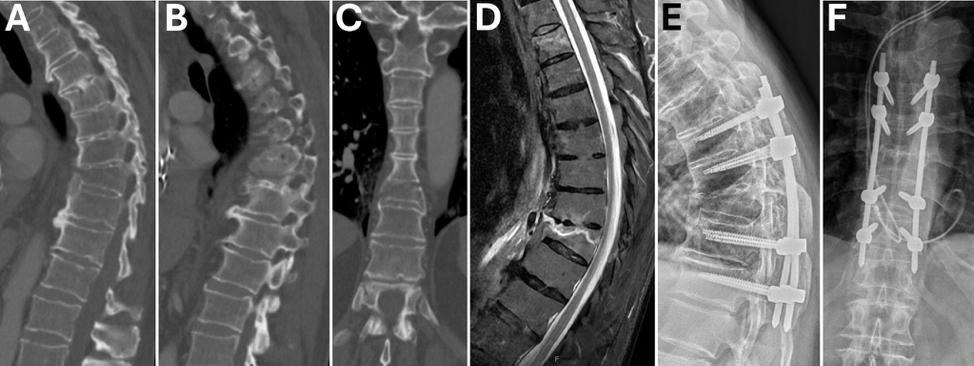
The prevalence of degenerative spinal conditions within the field of orthopedics has created a need for precise and functional technology for the treatment of disease. Traditional treatments serve to offer mechanical stability using spinal implants, such as rods, cages, and vertebral body replacements.[1] Implant placement does not mark the end of patient treatment; postoperative monitoring is required to ensure the prevention of adverse events. For example, surgical site infections occur in about 3.1% of spine surgeries.[2] While relatively uncommon, their consequences are severe, lengthening hospital stays and potentially costing up to $26,000 per case.[3] Infections involving spinal hardware are difficult to treat due to biofilm formation, often necessitating prolonged intravenous antibiotics, repeated debridement, or hardware removal. These in turn increase the risk of adverse patient outcomes such as pseudarthrosis, instability, or neurological decline.[3] Deep infections elevate reoperation risk and diminish long-term function underscoring the need for close postoperative monitoring.
Monitoring Spinal Implants
Clearly, monitoring implants is crucial in preventing adverse patient outcomes. Two common methods include imaging, which assesses implant position and surrounding tissue, and laboratory analyses, which measure systemic inflammatory markers.[4] These methods require specialist expertise and invasive sampling, involve late symptom recognition, and often lack generalizable quantitative indicators. A promising alternative to these traditional methods is SMART implants, which are orthopedic implants that combine intelligent telemetry with traditional biomechanical safety and efficacy. These SMART implants offer continuous patient monitoring and care while also providing quantitative data.[5] They mark a shift in implantable sensor technology that is reshaping the field.
Conventional SMART Implants
Early SMART implants relied on integrating batteries, telemetry units, and wired systems into the hardware. These devices offered a proof of concept that implants could serve as diagnostic and monitoring tools rather than passive stabilizers. For example, early load-sensing spinal rods incorporated strain gauges powered by small batteries that measured axial load in real time.[5] However, the reliance on batteries created a finite lifespan requiring eventual device replacement, which was invasive and risked leakage or corrosion.6 Similarly, percutaneous leads found within the wired systems allowed for increased infection risk and wire breakage.[4] These shortcomings hindered the long-term clinical translation despite the clear benefits of continuous in vivo monitoring. The advent of battery-free implantable sensors bypasses these limitations and presents a more miniaturized, efficient solution. Battery-free systems generally depend on passive resonant circuits, inductive coils, or capacitive interfaces that facilitate real-time wireless telemetry.[6,7] These advances have been demonstrated to reduce the device’s footprint and permit integration directly within orthopedic constructs, such as pedicle screws or interbody cages. A primary advantage of wireless operation is the elimination of long leads or bulky batteries, which can act as a nidus for mechanical failure or bacterial colonization.[6] The development of sensors for orthopedic use is predominantly characterized by three primary modalities: temperature, pH, and load monitoring. Each of these provides a unique physiologic or biomechanical parameter with clinical relevance.
Infection Detection
The primary application of SMART orthopedic implants is the early identification of infection. Conventional diagnostic methodologies frequently exhibit inadequate specificity and sensitivity, particularly during the early postoperative phase.[3] Implantable pH and temperature sensors have been developed to address this limitation by detecting localized changes at the bone–implant interface. Early infection frequently manifests with minimal temperature elevations that are localized to the surgical site. The utilization of implantable temperature sensors provides direct surveillance prior to the onset of systemic fever or elevated inflammatory markers.[8] The incorporation of pH sensors serves to enhance the scope of infection monitoring. The sensors’ functionality is predicated on the detection of localized acidification that accompanies bacterial metabolism and biofilm formation.[9] This acidification serves as a highly specific infection biomarker, distinguishing it from systemic inflammation. Collectively, these methodologies yield real-time, site-specific biomarkers that can direct timely interventions and mitigate the morbidity associated with delayed diagnoses.
Load Monitoring and Fusion Assessment
The efficacy of spinal fusion procedures is contingent upon the gradual transfer of load from hardware to bone during the consolidation phase of the fusion process.
Inadequate fusion results in pseudarthrosis, which is associated with pain, implant failure, and reoperation. Load-sensing implants have been shown to directly quantify these mechanical dynamics. Decreasing rod loads correspond to progressive fusion, while persistently elevated loads indicate delayed healing.10 This method empowers clinicians to assess fusion risk and customize rehabilitation protocols using objective, quantifiable load data. The integration of such systems into clinical practice holds the potential for earlier detection of nonunion, more precise assessment of recovery trajectories, and a reduction in the number of unnecessary reoperations.[11]
Personalized and Remote Patient Monitoring
The advent of SMART implants has heralded a paradigm shift in healthcare, marked by the ability to transmit sensor data wirelessly, thereby facilitating remote patient monitoring. This development stands to significantly reduce the reliance on in-person hospital visits and imaging studies, improving patient autonomy and convenience. Wireless interfaces can integrate with digital health, thus enabling real-time data sharing between patients and healthcare providers.[7] Such integration is conducive to the implementation of telemedicine models and chronic disease management, particularly in settings characterized by limited resources or a high proportion of rural residents. This personalized monitoring may serve as a guide for the development of customized rehabilitation protocols, including the adjustment of activity levels in accordance with implant strain or clinician notification of subclinical infections.[5] Consequently, the implementation of SMART implants has the potential to transform postoperative care from an episodic and reactive model to a continuous and proactive approach.
Implant Obstacles
Notwithstanding the evident advantages, battery-free implants confront challenges in technical design, biological integration, and regulatory oversight. Signal attenuation, calibration drift, and encapsulation durability remain significant limitations.[6,12] Cyclic loading may accelerate wear or calibration drift, creating a need for maintenance or routine follow-up. Fibrous encapsulation can reduce sensor sensitivity, and the sterilization of pH- or enzyme-sensitive coatings poses considerable practical challenges.[9] The successful integration of these technologies into clinical practice necessitates seamless surgical procedures without increasing operative times or introducing additional risks. 5 Finally, regulatory and ethical challenges persist, particularly in the domains of cybersecurity and equitable access, as outlined by the US Food and Drug Administration.[14] Surgeons and developing companies must remain vigilant about these limitations to safeguard patient welfare.
Future Directions
The future of SMART implants includes the development of multi-modal platforms that integrate infection and load monitoring.[13] The integration of artificial intelligence and machine learning into the interpretation of
References sensor data has the potential to facilitate the development of predictive models, thereby providing early warnings of pseudarthrosis or infection weeks before the manifestation of clinical symptoms.[4] This integration is particularly promising in the context of joint arthroplasty and fracture fixation, where infection and loosening remain significant challenges.[7] The commercial platforms, such as OrthoSENS, exemplify the translational trajectory of this technology, with remote data sharing capabilities that enable clinician oversight and patient engagement.
Conclusion
Battery-free wireless implants represent the most significant advancement in thisfield. The elimination of batteries and wires has resulted in the development of smaller, safer, and longer-lasting systems in comparison to previous generations. The transformation of orthopedic implants from passive stabilizers to dynamic diagnostic platforms capable of detecting infection and tracking fusion progression in real time is a significant development in the field.[8,9,10] The current research trajectory indicates that SMART implants are poised to transform postoperative care in orthopedics. With further refinement, these systems may evolve toward closed-loop systems capable of both monitoring and therapeutic response, thereby marking a new era of patient-centered surgical care.
References
1. Nouh MR. Spinal fusion-hardware construct: Basic concepts and imaging review. World J Radiol. 2012;4(5):193-207.
2. Zhou J, Wang R, Huo X, Xiong W, Kang L, Xue Y. Incidence of surgical site infection after spine surgery: A systematic review and meta-analysis. Spine. 2020;45(3):208.
3. Kasliwal MK, Tan LA, Traynelis VC. Infection with spinal instrumentation: Review of pathogenesis, diagnosis, prevention, and management. Surg Neurol Int. 2013;4(Suppl 5):S392-S403.
4 Wang J, Chu J, Song J, Li Z. The application of impantable sensors in the musculoskeletal system: a review. Front Bioeng Biotechnol. 2024;12.
5. Kim SJ, Wang T, Pelletier MH, Walsh WR. ‘SMART’ implantable devices for spinal implants: a systematic review on current and future trends. J Spine Surg. 2022;8(1):117-131.
6. Kim H, Rigo B, Wong G, Lee YJ, Yeo WH. Advances in wireless, batteryless, implantable electronics for real-time, continuous physiological monitoring. Nano-Micro Lett. 2023;16:52.
7. Bhatia A, Hanna J, Stuart T, Kasper KA, Clausen DM, Gutruf P. Wireless battery-free and fully implantable organ interfaces. Chem Rev. 2024;124(5):2205-2280.
8. Glassman SD, Carreon LY, Aruwajoye O, Benson NM, Li P, Kurian AS. Local temperature elevation as a marker of spinal implant infection in an animal model. North Am Spine Soc J. 2021;7:100077.
9. Fiore L, Mazzaracchio V, Gosti C, et al. Functionalized orthopaedic implant as pH electrochemical sensing tool for smart diagnosis of hardware infection. The Analyst. 2024;149(11):3085-3096.
10. Windolf M, Heumann M, Varjas V, et al. Continuous rod load monitoring to assess spinal fusion status–pilot in vivo data in sheep. Medicina (Mex). 2022;58(7):899.
11. Ramakrishna VAS, Chamoli U, Rajan G, Mukhopadhyay SC, Prusty BG, Diwan AD. Smart orthopaedic implants: a targeted approach for continuous postoperative evaluation in the spine. J Biomech. 2020;104:109690.
12. Xu B, Yu C. Wireless, battery‐free, implantable inductor‐capacitor based sensors. Advanced Electronic Materials. 2025;11(10):2500184.
13. Rich AM, Rubin W, Rickli S, et al. Development of an implantable sensor system for in vivo strain, temperature, and pH monitoring: comparative evaluation of titanium and resorbable magnesium plates. Bioact Mater. 2025;43:603-618. doi:10.1016/j.bioactmat.2024.09.015
14. Center for Devices and Radiological Health. Cybersecurity in Medical Devices: Quality System Considerations and Content of Premarket Submissions. June 26, 2025. Accessed September 30, 2025. https://www.fda.gov/regulatory-information/search-fda-guidance-documents/ cybersecurity-medical-devices-quality-system-considerations-and-content-premarket-submissions
Contributors:
Aryan Patel, BS[1]
Aimen A. Khan, BS[1]
Jimin Yeom, BA[1]
Noah A. Pogonitz, BS[1]
Puranjay Gupta, BS[1]
Sehajvir Singh, BS[2]
[1]From the Department of Orthopaedic Surgery, Rush University Surgery, at Rush University Medical Center in Chicago, Illinois, and [2]Drexel University College of Medicine in Philadelphia, Pennsylvania.