Seeing Beauty Across Diverse Art
Forms Today by Isam Vaid
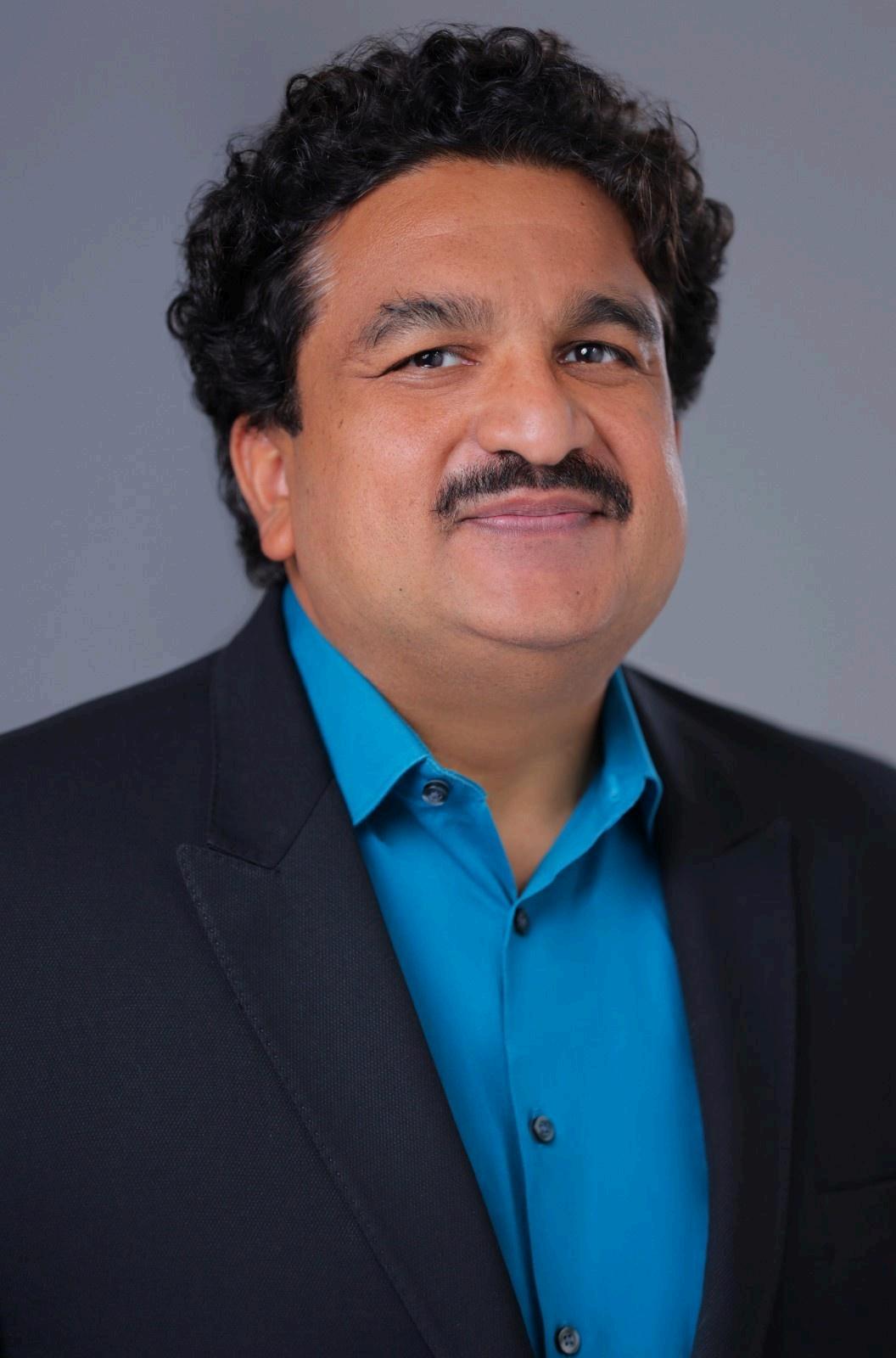
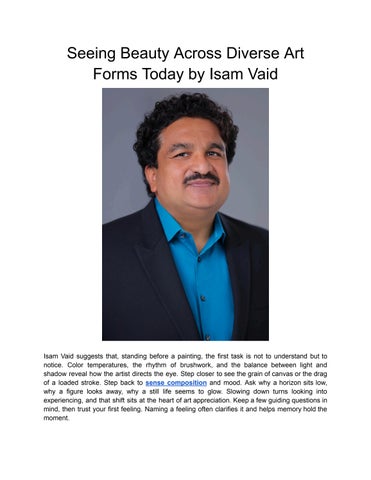
Isam Vaid suggests that, standing before a painting, the first task is not to understand but to notice. Color temperatures, the rhythm of brushwork, and the balance between light and shadow reveal how the artist directs the eye. Step closer to see the grain of canvas or the drag of a loaded stroke Step back to sense composition and mood Ask why a horizon sits low, why a figure looks away, why a still life seems to glow. Slowing down turns looking into experiencing, and that shift sits at the heart of art appreciation Keep a few guiding questions in mind, then trust your first feeling Naming a feeling often clarifies it and helps memory hold the moment.
Sculpture invites a different kind of attention because touch is implied even when forbidden Walk around a figure and track how edges carve the air. Notice how marble swallows light while bronze sends it back as a quiet shimmer The spaces between forms, the negative shapes, can ring like silence in music. In museums, observe how pedestals raise or humble a piece, and how shadows give it extra volume. Outdoors, feel how the wind and sun repaint surfaces throughout the day The more angles you give a sculpture, the more it answers That dialogue builds insight about material, scale, and the artist’s confidence.

Music asks for full listening rather than background hearing Begin with texture Is the sound thin as a solo violin or thick as a choir? Follow motifs as they appear, change, and return In a jazz trio, hear the conversation between bass and drums while the piano sketches harmony. In pop, notice how a pre-chorus builds tension and how the chorus releases it Lyrics carry a story, but rhythm carries energy Try listening once with eyes closed, then again while reading the words Both passes reveal different layers. Annotating a favorite track with time stamps builds attention and turns casual listening into a mindful practice
Dance translates rhythm into motion and tells stories with bodies in space Pay attention to weight. Some choreographers reach upward as if lighter than air, while others sink toward the floor to find grounded power Lines of arms and legs trace geometry that echoes the score Costumes and lighting are rarely decoration alone; they frame gesture and time. When watching, pick a single dancer for a minute, then widen focus to the ensemble to see patterns form and dissolve That shift from individual to group mirrors how communities move Afterward, try recalling one moment that stayed with you, whether a leap, a turn, or a shared breath.
Theater and film braid together many media into a single experience. Set design shapes world building, and sound design sneaks under the skin to guide feeling Actors create character through choices as small as a pause or a glance. Film adds camera movement that acts like a viewer’s attention, deciding what we see and when Ask what raises the stakes of a scene and how lighting reveals or hides truth In independent cinema, limited budgets often spark inventive solutions that feel intimate and honest. The more we learn to see each department’s contribution, the more we recognize craft rather than confusing impact with spectacle
Literature expands the gallery to the page, inviting readers to paint with imagination Savor the cadence of a sentence, the weight of a well-chosen verb, and the surprise of an image that snaps two ideas together Poetry concentrates experience, while novels offer long rooms to explore. Read paragraphs aloud to catch music hidden in prose. Trace themes across chapters like recurring motifs in symphonies. Keep a notebook where favorite lines sit beside your reflections Over time, this practice builds a personal lexicon that makes reviewing and recommending books more natural. It also strengthens empathy, a quiet gift of narrative art.
Appreciating various art forms grows through simple habits that fit daily life Browse a local gallery at lunch, stream a short film, read a poem before bed, or sketch what you notice on the train Share reactions with friends and compare differences without chasing a single correct answer. Over time, these small practices train attention, expand vocabulary, and make culture feel welcoming Art appreciation then becomes a way of seeing the world, not just an occasional event