Hobbies to Enrich a Health Scientist’s Life by Isam Vaid

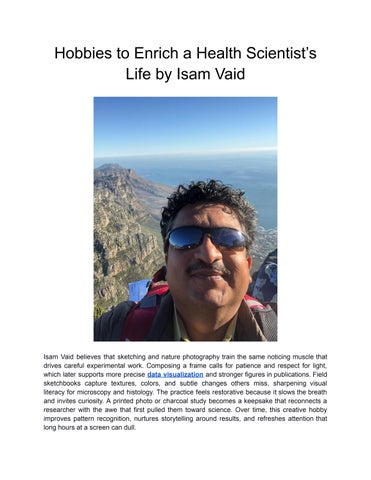
Isam Vaid believes that sketching and nature photography train the same noticing muscle that drives careful experimental work. Composing a frame calls for patience and respect for light, which later supports more precise data visualization and stronger figures in publications Field sketchbooks capture textures, colors, and subtle changes others miss, sharpening visual literacy for microscopy and histology The practice feels restorative because it slows the breath and invites curiosity A printed photo or charcoal study becomes a keepsake that reconnects a researcher with the awe that first pulled them toward science. Over time, this creative hobby improves pattern recognition, nurtures storytelling around results, and refreshes attention that long hours at a screen can dull
Gardening offers a living laboratory where variables reveal themselves in real time. Soil, water, pests, and seasonal light make hypotheses tangible and responsive Tending tomatoes, medicinal herbs, or pollinator beds encourages measured experimentation along with patience and restraint. The steady rhythm of watering calms a nervous system charged by grant deadlines and complex protocols, while pruning teaches timing and gentle decision-making Harvest days model feedback loops more vividly than any graph, turning attention toward outcomes that matter to communities Sharing surplus with neighbors opens conversations about nutrition and prevention For a health scientist, this simple hobby demonstrates how small, consistent interventions compound into meaningful wellbeing.

Movement-based hobbies restore posture, breath, and mood after hours in PPE or at a workstation Distance running clears mental noise and provides friendly metrics that reward consistency, swimming supplies low-impact strength, and a meditative cadence that steadies scattered thinking. Yoga improves proprioception and supports pipetting steadiness, microscope sessions, and ergonomic resilience Team sports add camaraderie, a protective buffer against isolation that can shadow specialized roles Mindful cooling routines and mobility work reduce
injury risk and improve sleep, which lifts productivity and memory The result is a grounded body that sustains sharper analysis and kinder collaboration in the lab.
Cooking is a laboratory that smells like home. Fermentation teaches patience and respect for microbial allies, while bread baking refines temperature control and timing under everyday constraints Building a weekly menu becomes a gentle trial in macronutrient balance, flavor diversity, and budget. Many researchers keep spice logs, noting pairings that make vegetables and lean proteins exciting during heavy project phases Hosting potlucks for colleagues strengthens team culture and gives space to celebrate small wins Sharing recipes also improves plain language skills, since clear instructions matter in kitchens and protocols alike. Culinary hobbies nourish energy, immunity, and joy, which ultimately support rigorous, ethical research
Music answers analytical fatigue with pattern and feeling. Practicing a piano prelude or layering beats in simple software builds structure without spreadsheets, creating new problem-solving pathways in the brain Regular sessions build discipline, fine motor control, and an emotional vocabulary that supports empathy with patients, participants, and collaborators. Community choirs and listening circles foster belonging across career stages, from trainees to principal investigators Live performances often restore awe, a state linked to prosocial behavior and broader attention. Keeping a compact instrument for travel brightens conference weeks and helps reset sleep after long flights, protecting mood and focus when presenting results
Volunteer mentoring connects expertise to purpose where it matters most. Guiding school clubs through science fair projects, reviewing community health pamphlets for clarity, or coaching data literacy at local libraries brings immediate feedback that sharpens communication. The curious questions of beginners expose assumptions hidden within technical jargon, which improves manuscripts, consent forms, and patient-facing materials Mentoring widens networks beyond a single subfield, often sparking collaborations that serve public health goals. It also affirms why the work matters, countering burnout with visible impact A few consistent hours each month can build scientific confidence in young minds while renewing the mentor’s own motivation
Finally, contemplative practices tie everything together. Journaling transforms scattered notes into patterns and intentions that guide experiments and habits Short, regular meditation sessions cultivate awareness of breath, thought, and posture, which is helpful during long instrument runs or peer review revisions Gratitude lists redirect attention toward supportive colleagues and the meaning carried by incremental progress These rituals are lightweight and portable, fitting into commutes or quiet minutes between assays. Over time, they reduce stress reactivity, increase patience, and sharpen decision-making When combined with creative work, movement, cooking, music, mentoring, and gardening, they complete a sustainable, human rhythm that enriches a health scientist’s life and research.