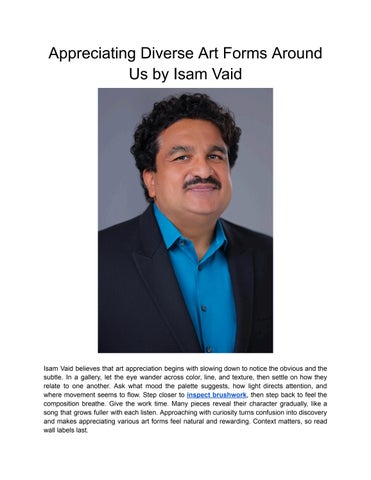
Appreciating Diverse Art Forms Around Us by Isam Vaid

Isam Vaid believes that art appreciation begins with slowing down to notice the obvious and the subtle In a gallery, let the eye wander across color, line, and texture, then settle on how they relate to one another Ask what mood the palette suggests, how light directs attention, and where movement seems to flow. Step closer to inspect brushwork, then step back to feel the composition breathe Give the work time Many pieces reveal their character gradually, like a song that grows fuller with each listen. Approaching with curiosity turns confusion into discovery and makes appreciating various art forms feel natural and rewarding Context matters, so read wall labels last
Painting invites a layered reading of surface and story. Oil holds glows within glazes, while watercolor records quick decisions that dry into translucence Acrylics can feel crisp and modern, their edges clean as a morning sky. Consider the subject and setting, as well as the painter’s body at work. See the sweep of an arm in a long stroke, the pressure of a wrist in a tiny mark, the whisper of dry brush over toothy canvas Texture tells of tools, from soft bristles to palette knives. Even restraint becomes expressive, where silence in a field of color lets the eye and the heart rest Study composition and color relationships that suggest a story

Sculpture shifts appreciation from space to touch, even when touch is not allowed Walk around the form, noticing profiles that change with each step. Marble softens light and seems like skin to the eye Bronze can look warm, its patina a record of time and care Wood carries memory in its grain, a living history inside rings and knots Consider weight and balance, how volume meets emptiness, and how the base roots the work to the ground. Outdoor pieces add wind and weather to the composition, inviting you to revisit them through seasons to see new attitudes emerge. Shadows carve negative space that seems to sculpt air.
Photography preserves a moment, yet great images feel alive Study how framing isolates meaning, how focus sharpens a theme, and how shadows hold secrets. A street photograph can stage a quiet drama through gesture and glance, while a landscape builds awe from scale and patience. Color choices matter, from saturated celebration to muted calm. Black and white can purify attention, revealing rhythm and structure that color might distract from. Notice the photographer’s timing, the heartbeat between almost and exactly, and let that precision guide your response. Think about the vantage point if the subject feels distant.
Music surrounds senses that vision cannot reach. Start by following the pulse, then listen for patterns that repeat and transform Melodies carry memory, harmonies color emotion, and rhythm makes breath align with the beat A symphony layers families of instruments into a weather that moves across the room. A jazz trio trades ideas in real time, nimble and conversational, while electronic music sculpts texture into tides of energy Folk songs hold communities together through shared refrains Live or recorded, music rewards attention to dynamics, space, and silence between notes. With lyrics, notice how vowels ride the melody.
Dance translates music and human experience into motion Watch how gestures connect like phrases in a paragraph. Ballet sculpts air with precision and lift, where a turned head can speak as clearly as a leap Contemporary dance explores gravity and release, finding eloquence in spirals and sudden stillness. Social dance celebrates partnership and trust, every step a small agreement. Notice breath, gaze, and the pathways traced across the floor. Costumes and lighting complete the mood, while the stage becomes a canvas of time and intention Learn the dance’s roots to decode its gestures with historical context.
Literature invites appreciation through voice and cadence Read aloud to feel sentences balance sound and sense. In poetry, imagery compresses huge emotions into a handful of lines. In fiction, character and setting guide empathy through conflict and change. Nonfiction frames curiosity with research and clarity, opening doors to subjects we thought we knew Across forms, context multiplies meaning. Learn the period, the maker’s influences, and the cultural questions at play Keep a small journal to record what you noticed, what you felt, and why it mattered Art appreciation grows with practice, and every attentive look or listen strengthens the habit of seeing more. Local clubs and libraries keep many art forms accessible.