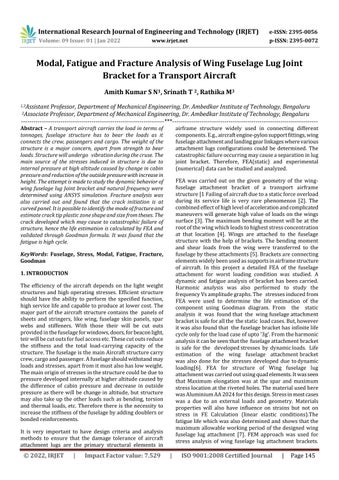
A transport aircraft carries the load in terms of tonnages, fuselage structure has to bear the loads as it connects the crew, passengers and cargo. The weight of the structure is a major concern, apart from strength to bear loads. Structure will undergo vibration during the cruse. The main source of the stresses induced in structure is due to internal pressure at high altitude caused by change in cabin pressure and reduction of the outside pressure with increase in height. The attempt is made to study the dynamic behavior of wing fuselage lug Joint bracket and natural frequency were determined using ANSYS simulation. Fracture analysis was also carried out and found that the crack initiation is at curved panel. It is possible to identify the mode of fracture and estimate crack tip plastic zone shape and size fromtheses. The crack developed which may cause to catastrophic failure of structure, hence the life estimation is calculated by FEA and validated through Goodman formula. It was found that the fatigue is high cycle. : Fuselage, Stress, Modal, Fatigue, Fracture,
KeyWords
The efficiency of the aircraft depends on the light weight structures and high operating stresses. Efficient structure should have the ability to perform the specified function, highservicelifeandcapabletoproduceatlowercost.The majorpartoftheaircraftstructurecontainsthe panelsof sheets and stringers, like wing, fuselage skin panels, spar webs and stiffeners. With those their will be cut outs providedinthefuselageforwindows,doors,forbeaconlight, teirwillbecutoutsforfuelaccessetc.Thesecutoutsreduce the stiffness and the total load carrying capacity of the structure.ThefuselageisthemainAircraftstructurecarry crew,cargoandpassenger.Afuselageshouldwithstandmay loadsandstresses,apartfromitmustalsohaslowweight. Themainoriginofstressesinthestructurecouldbedueto pressuredevelopedinternallyathigheraltitudecausedby the difference of cabin pressure and decrease in outside pressure as there will be change in altitude, but structure may also take up the other loads such as bending, torsion and thermal loads, etc. Therefore there is the necessity to increasethestiffnessofthefuselagebyaddingdoublersor bondedreinforcements.
International Research Journal of Engineering and Technology (IRJET) e ISSN: 2395 0056 Volume: 09 Issue: 01 | Jan 2022 www.irjet.net p ISSN: 2395 0072 © 2022, IRJET | Impact Factor value: 7.529 | ISO 9001:2008 Certified Journal | Page145 Modal, Fatigue and Fracture Analysis of Wing Fuselage Lug Joint Bracket for a Transport Aircraft Amith Kumar S N1, Srinath T 2, Rathika M3 1,3Assistant Professor, Department of Mechanical Engineering, Dr. Ambedkar Institute of Technology, Bengaluru 2Associate Professor, Department of Mechanical Engineering, Dr. Ambedkar Institute of Technology, Bengaluru *** Abstract
1.GoodmanINTRODUCTION
It is very important to have design criteria and analysis methods to ensure that the damage tolerance of aircraft attachment lugs are the primary structural elements in airframe structure widely used in connecting different components.E.g.,aircraftengine pylonsupportfittings,wing fuselage
stressfuselmaximumfatiguestresspropertieswaswasstressthatattachmeloadingwasestimationisanalysiscycleitbracketanalysiscomponentFEAfrequencyHarmonicdynamicattachmentofelementsfuselageanstructuratrootsurfacemaneuverscombinedduringstructurefuselageFEA(numerical)jointcatastrophicattachmentattachmentandlandinggearlinkageswherevariouslugsconfigurationscouldbedetermined.ThefailureoccurringmaycauseaseparationinlugbracketTherefore,FEA(static)andexperimentaldatacanbestudiedandanalyzed.wascarriedoutonthegivengeometryofthewingattachmentbracketofatransportairframe[1Failingofaircraftduetoastaticforceoverloaditsservicelifeisveryrarephenomenon[2].Theeffectofhighlevelofaccelerationandcomplicatedwillgeneratehighvalueofloadsonthewings[3].Themaximumbendingmomentwillbeattheofthewingwhichleadstohigheststressconcentrationthatlocation[4].Wingsareattachedtothefuselageewiththehelpofbrackets.Thebendingmomentdshearloadsfromthewingweretransferredtothebytheseattachments[5].Bracketsareconnectingwidelybeenusedassupportsinairframestructureaircraft.InthisprojectadetailedFEAofthefuselageforworstloadingconditionwasstudied.Aandfatigueanalysisofbrackethasbeencarried.analysiswasalsoperformedtostudytheVsamplitudegraphs.ThestressesinducedfromwereusedtodeterminethelifeestimationoftheusingGoodmandiagram.Fromthestaticitwasfoundthatthewingfuselageattachmentissafeforallthethestaticloadcases.But,howeverwasalsofoundthatthefuselagebrackethasinfinitelifeonlyfortheloadcaseofupto'3g'.Fromtheharmonicitcanbeseenthatthefuselageattachmentbracketsafeforthedevelopedstressesbydynamicloads.Lifeofthewingfuselageattachmentbracketalsodoneforthestressesdevelopedduetodynamic[6]FEAforstructureofWingfuselagelugntwascarriedoutusingquadelements.ItwasseenMaximumelongationwasatthesparandmaximumlocationattherivetedholes.ThematerialusedhereAluminiumAA2024forthisdesign.Stressinmostcasesaduetoanexternalloadsandgeometry.MaterialswillalsohaveinfluenceonstrainsbutnotoninFECalculation(linearelasticconditions).Thelifewhichwasalsodeterminedandshowsthattheallowableworkingperiodofthedesignedwingagelugattachment[7].FEMapproachwasusedforanalysisofwingfuselagelugattachmentbrackets.

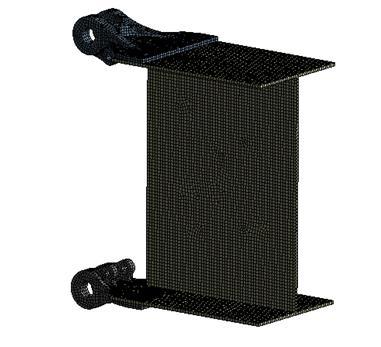
modellingandmeshingoflugjointbrackethascarried outusingANSYSsoftwareaccordingtospecifiedgeometrical Hexaconfiguration.Meshing
bottom and top lug holes of the wing fuselage Lug attachmentbrackethavebeenconstrainedwith sixDOFat thesemicircularcircumferentialsurface [8] 2.2 Modal analysis
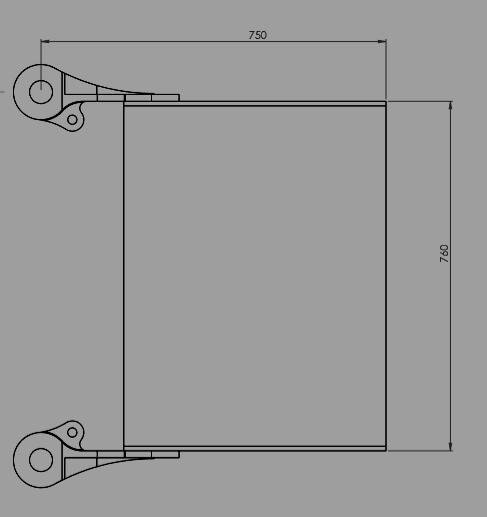
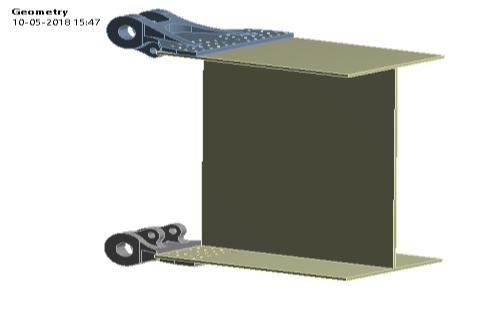
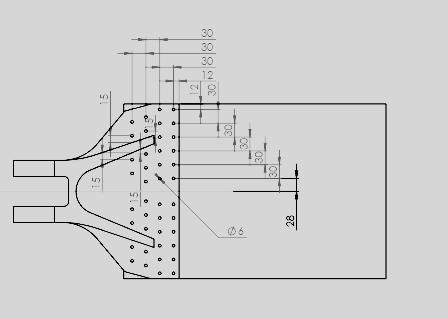
International Research Journal of Engineering and Technology (IRJET) e ISSN: 2395 0056 Volume: 09 Issue: 01 | Jan 2022 www.irjet.net p ISSN: 2395 0072 © 2022, IRJET | Impact Factor value: 7.529 | ISO 9001:2008 Certified Journal | Page146 Maximum equivalent stress for the Al alloy, Ti alloy and CFRPwerefoundtobesafebecausethemaximumstressis lesserthantheyieldstress.CFRPwing fuselageattachment materialweightisverylesscomparedtoAlalloyandTialloy [8] 1.1 Geometric Configuration The following geometric configuration has been used for analysis; Fig 1 Top view of wing fuselage lug joint bracket [8] Fig-2 Front view of wing fuselage lug Joint bracket [8] 1.2 Material and Mechanical Properties ThematerialusedforthecurrentstudyfortheIsectionof wingsparandrivetsjoint isaluminumalloy 2024T351. 1.Density=2800kg/mm3 2.Young’sModulus,E=70000N/mm2 3.Poison’sRatio,μ=0.3 4.YieldStrength,бy=378N/mm2 5.UltimateStrength,бu=485N/mm2 2. MODELLING AND ANALYSIS OF LUG JOINT BRACKET
Modal analysis is also important with
The
standsuchhighfrequencies(i.e.for theforcefrequencynottobeequaltothenaturalfrequency
was
as a static structural analysis,becausedifferentaircraftswillmayalsoexperience different blow winds (which may cause turbulence) and vortex having high force.If the aircraftstructureshouldbe properlydesignto
Method usedfor
The
meshing,whereafree hex dominant mesh was created. This method is highly recommendedforbodiesthatcannotbeswept.Thepowerof parallelprocessingwasautomaticallyappliedtocutdown the time. The number of element is 76285 and nodes are 42520 Fig 3 Isometric view of the lug joint bracket [8] Fig 4 Hex Dominant Meshing [8] 2.1 Boundary condition
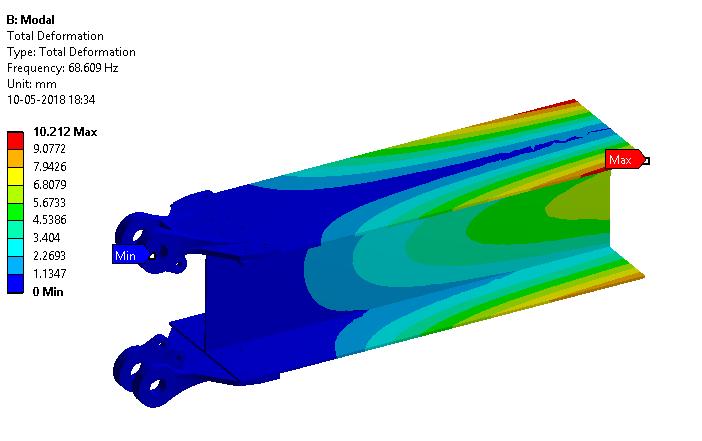
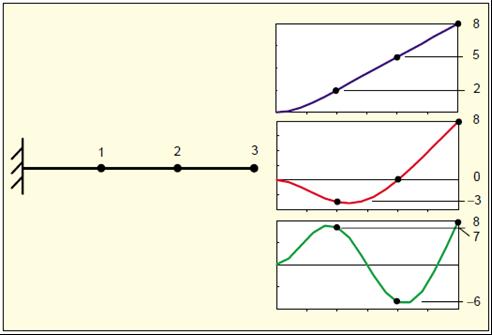
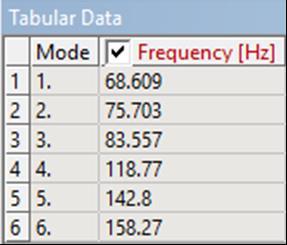
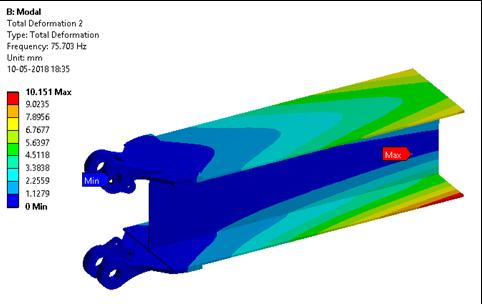
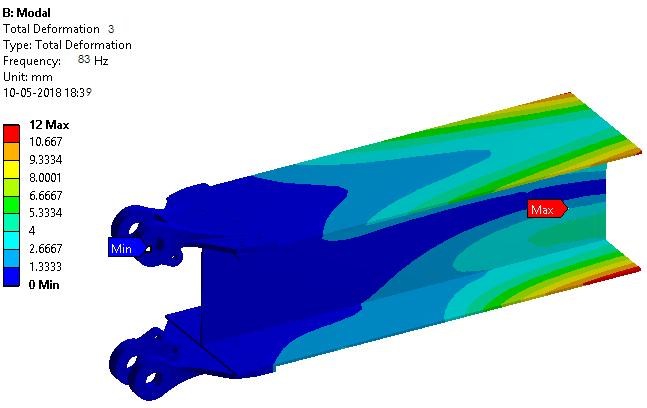
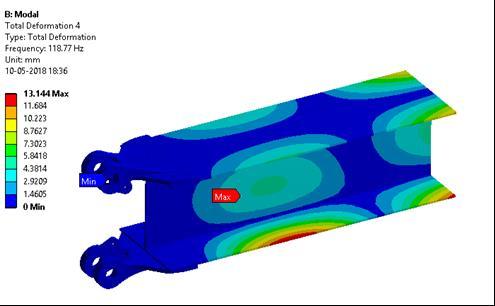
International Research Journal of Engineering and Technology (IRJET) e ISSN: 2395 0056 Volume: 09 Issue: 01 | Jan 2022 www.irjet.net p ISSN: 2395 0072 © 2022, IRJET | Impact Factor value: 7.529 | ISO 9001:2008 Certified Journal | Page147 of our structure), it may cause catastrophic failure of the structure. Natural frequency of structure may change, dependingmainlyonthreeparameters.Firstistheshapeof the structure (stiffness/aero elasticity), next the material usedanditsdamping ratio.It isknown thatas higherthe responseofourstructuretotheseforcefrequency,thelower will its natural frequency, while damping ratio tend to Inincrease.thiscurrent work the attempt is made to study the six modes of vibration of a Lug Joint Bracket of a aircraft structure. Fig 5 A 3 DOF model of a beam Fig 6 initial six modes and corresponding natural frequency for the applied load condition Fig-7 first mode and natural frequency at 68.609 hz Fig 8 Second mode and natural frequency at 75.7 hz Fig-9 Third mode and natural frequency at 83.55 hz Fig 10 fourth mode and natural frequency at 118.77 hz
2.4 Fatigue AnalysisofWing FuselageAttachmentFitting Of Aircraft
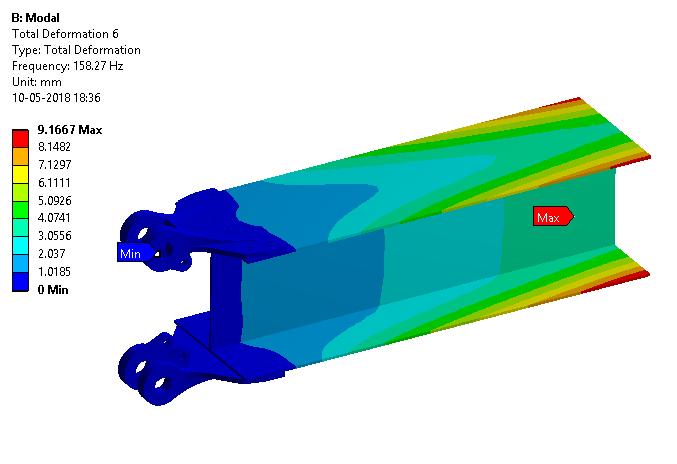
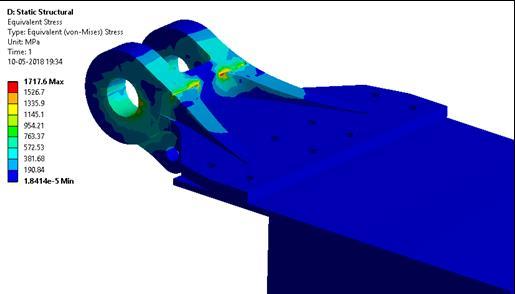
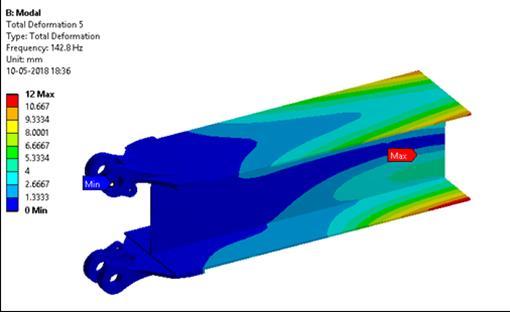
International Research Journal of Engineering and Technology (IRJET) e ISSN: 2395 0056 Volume: 09 Issue: 01 | Jan 2022 www.irjet.net p ISSN: 2395 0072 © 2022, IRJET | Impact Factor value: 7.529 | ISO 9001:2008 Certified Journal | Page148 Fig 11 fifth mode and natural frequency at 142.8 hz Fig 12 sixth mode and natural frequency at 158 hz 2.3 Fracture Mechanics Analysis of Wing Fuselage Intheansyspackageasubmodellingcapabilitieswhichhelps toevaluatethedistrubutionofstressandintensityfactorat the tip of the crack.Figure 13 shows the zone for fracture analysis, the circumferential crack inatiated in the curved panel can also be seen. The maximum equivalent stress obtained is 1717 Mpa . These results are essential for the predictionofresidualstrength Fig-13 maximum equivalent stress 1717 Mpa for the applied load condition
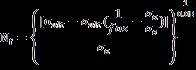
Where σ
==
=133.68
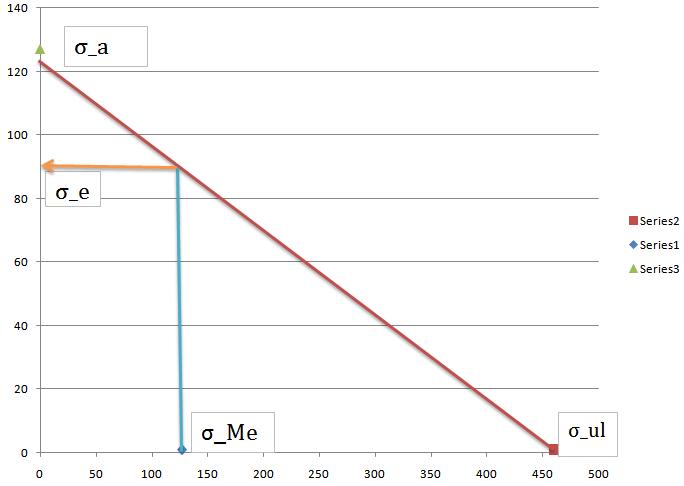
From the stress analysis of the fuselage the location of maximumtensilestresswasdetermined.Afatiguecrackwill initiatefromthelocationhavingthemaximumtensilestress ie. at one of the rivet hole [8]. For performing fatigue calculationstheconstantamplitudeloadingwasconsidered CalculationoffatiguelifewascalculatedbyusingGoodman criteria.Thevariouscorrectionfactorsareconsideredinthe calculationoffatigue Cycles
Mean
Where σ1=
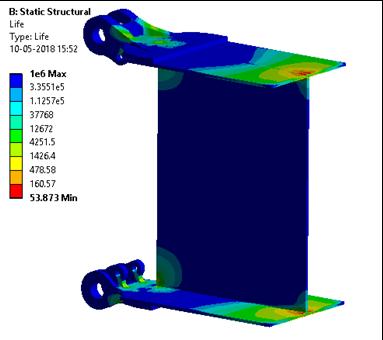
Fig 14, life estimation is 1000000 cycle Validation of Life Estimation Goodman diagram Stresscanbecalculatedfrom, 152.5mpa von =Equivalentvon MissesStress mpa MaximumPrincipalStress
2.5


[5]Failureinlugjointsandplateswithholes.J.Vogwelland J.M.MinguezSchoolofMechanicalEngineering,University of Bath, Bath BA2 7AY, U.K., Facultad de Ciencias, UniversidadDelPaisVasco,Bilbao,Spain.
[2] Failure analysis of wing fuselage connector of an agricultural aircrafts, Lujan witek, P 572 581, Volume 13, Issue4,EngineeringFailureAnalysis(2006).
[1]Stress and fatigue analysis of modified wing fuselage connectorforAgriculturalaircrafts,Lujanwitek,P773 778, Volume:43,Issue3,JournalofAircraft(2006).
[7] Design Structural Analysis and Fatigue Calculation of Wing Fuselage Lug Attachment of a Transport Aircraft, Abraham J ,Mr. Damodara Reddy, International journal & magazine of Engineering, Technology. Managment and Research.Volumeno4,2017,issue8,August2017,ISSN:2348 4845,60 65.
[8] Static Structural Linear Analysis of Fuselage Lug Joint Bracket for a Transport Aircraft with Mid Wing Configuration, Amith Kumar S.N, Dr.T.N Raju, Srinath T, International Research Journal of Engineering and Technology(IRJET),Volume:07Issue:11,Nov2020
[4]Stressintensityfactorsforcracksatattachmentlugs.R. RigbyandM.H.Aliabadi,BritishAerospace,Filton,Bristol BS99 7AR, U.K., Wessex Institute of Technology, Ashurst Lodge,Ashurst,SouthamptonS0407AA,U.K.
International Research Journal of Engineering and Technology (IRJET) e ISSN: 2395 0056 Volume: 09 Issue: 01 | Jan 2022 www.irjet.net p ISSN: 2395 0072 © 2022, IRJET | Impact Factor value: 7.529 | ISO 9001:2008 Certified Journal | Page149 σ2=MinimumPrincipalStress Fig 15, Goodman diagram Numberof Where,cycles: =Fatigue =Endurance==UltimatelifestressFactorofSafetylimit b=Fatiguestrengthexponent =Alternatingstress Theresultinglifeoffailureobtainedbyanalyticalmethodis greaterthan Cycleshenceitishighcyclefatigue 3. Result and conclusions To determine the inherent dynamic characteristics of lug jointbracketthemodalanalysiswascarriedoutandnatural frequencies were determined. Life estimation of Wing Fuselage cyclesdeterminedAttachmentFittingOfAircraftinFEMapproachwasanditisvalidatedinanalyticalmethod,1000000forwingfuselageattachmentisobtainedbyFEM
[3]Damagetoleranceassessmentofaircraftattachmentlugs.
whereasinanalyticalitwasobservedthat5.4x106 cyclesit wasfoundthatthefatigueishighcycle.
[6] Dynamic Analysis and Fatigue LifeEstimation of Wing Fuselage Attachment Bracket of an Airframe Structure, N.Bhaskara Rao,K.Sambasiva Rao, IJSRD International JournalforScientificResearch&Development|Vol.4,Issue 12,2017|ISSN(online):2321 0613.
T.R.Brussat,K.KathiresanandJ.L.Rudd,LockheedCalifornia Company, Burbank, CA 91520, U.S.A., AT&T Bell Laboratories, Marietta GA 30071, U.S.A., AFWAL/FIBEC, Wright PattersonAirForceBase,OH45433,U.S.A.
REFERENCES