

Connect with your community and watch it grow
List your hall on Vennu and make managing your space simple, efficient, and impactful.
No upfront costs No lock-in contracts Set up in minutes
A Smarter Way to Manage Your Church Hall
Vennu is the easiest way to connect your space with your community. Whether you're looking to reduce admin time, increase bookings, or create new opportunities for connection, our platform has you covered.
WITH VENNU, YOU GET:
• Real-time enquiry and booking tracking
• Secure online payments direct to your nominated account
• Custom listings with photos and key details
• Easy change and cancellation management
• Automated recurring bookings for regular events
• A live availability calendar
• Targeted digital marketing to boost visibility
• Friendly support, 7 days a week
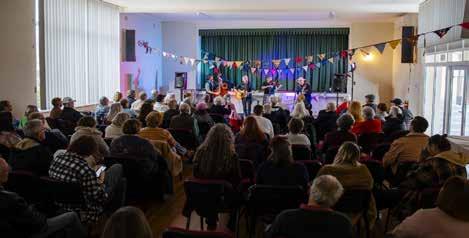
“Working with the Vennu platform has enabled us to offer our various spaces to a wider audience, including a recent event featuring popular Kiama folk group The Water Runners, and including the link to Vennu on our website has also made hiring the spaces an easy option.”
Janet Brentnall, Booking Officer Berry Uniting Church
WHY CHURCHES CHOOSE VENNU:
• Spend less time on admin – focus on what matters
• Turn idle space into valuable income
• Reach more people and grow your bookings
• Foster deeper community engagement
• Revitalise underused spaces with new activity and energy
Be part of something bigger. Share your space. Strengthen your community.
A New Heaven and a New Earth
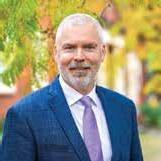
REV. DR PETER WALKER GENERAL SECRETARY
THE GENERAL SECRETARY IS APPOINTED BY THE SYNOD TO PROVIDE LEADERSHIP TO THE CHURCH BY ACTIVELY ENGAGING IN STRATEGIC THINKING ABOUT THE LIFE, DIRECTION, VISION AND MISSION OF THE CHURCH.
I heard Nelson Mandela speak in 1991 at a prayer service for South Africa. I sat up all night a few months earlier watching live coverage of his release from prison. Perhaps you did too. The service was in Sydney’s St Mary’s Cathedral. I’m surprised I was there. I wasn’t very prayerful then. I’m still working on it now! Yet I’m glad something drew me in. It was the first time I understood what it means to be sustained by hope.
It was also the first time I gained any sense of meaning in these words from the book of Revelation, which are our lectionary reading for New Year’s Day this summer: Then I saw a new heaven and a new earth, for the first heaven and the first earth had passed away… And I saw the holy city, the new Jerusalem, coming down out of heaven from God… And the city has no need of sun or moon to shine on it, for the glory of the Lord is its’ light ... Then the angel showed me the river of the water of life, flowing from the throne of God … On either side … was the tree of life… and the leaves of the tree are for the healing of the nations.
with my ears but somewhere deeper than that – for the first time.
I wasn’t overwhelmed but was gently taken hold of when I realised that God draws and saves people through the power of hope. It led me to reflect on Christ as the hope of the world. A hope that feels like the river of life itself. Healing for us. Healing for the nations. Christ is our hope and our salvation. John seemed to know that human language is incapable of expressing the reality of eternal things. Yet rather than be paralysed by those limits, he is set free by his inspired imagination to portray the wonder of the Gospel in a masterpiece of hope. His vision is that, in the end, we meet the beginning.
A HOPEFUL DECISION TO LIVE FOR WHAT MIGHT BE
This is where the inspiration to hope lies. Rather than saying I am making all new things, God says in John’s vision, ‘See, I am making all things new’. A small difference in wording but a huge difference in meaning. God’s hope is in this world and God seeks to reconcile and renew it, and us. Creation will not be replaced by a ‘new’ world. Waiting at the end of our hopes is the renewal of life. This world is not dispensable.
The prayer service was deeply moving. Beautiful hymns were sung and magnificent prayers were offered. It was all wonderful. Yet I was captivated by the words of Nelson Mandela, a prisoner on Robben Island for 27 years and sustained only by the hope of change in his country, and the words of John the Apostle, a prisoner on the Island of Patmos, who was not far from death at the time of his Revelation.
John had a vision of God’s new creation. He knew, as did Mandela, that holding faithfully, confidently, even tenaciously to what we hope for is the way to endure all hardship. I sat below the grand windows and arches of St Mary’s. I listened to Mandela’s hope (and courage) and his description of how the steadfast commitment of many churches to justice was a key reason for change in South Africa. And then I heard John’s vision of a world made new. I heard those words not only
I once thought of these visions as daydreaming. Now I think of them, and the hope they inspire, as more important than anything else in all the Scriptures. The words of Mandela and, most importantly, the words of Revelation brought an end to my adjustment to what is and, as I think back, were the beginning of my decision (a hopeful decision) to live for what might be. Hope is the way God stirs. As we move into Advent and Christmas, and when we read from Revelation at the beginning of the new year, we recall God’s hope for us, and our hope in God.
Matters




Do Not Be Afraid
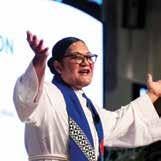
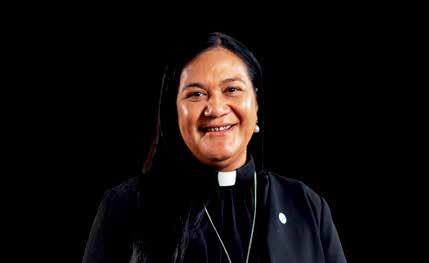
REV. FAAIMATA HAVEA HILIAU MODERATOR
instagram.com/moderator_ucanswact Follow the Moderator on instagram:
Hello friends!
As I spend time walking on Country, I am reminded just how much our actions and the changing climate affect the complex ecosystems that have remained in balance for thousands of years. The earth groans, and the First Nations custodians of our lands groan with creation.
I have also been reflecting on The Uniting Church Synod of NSW and ACT’s bold, historic and—some would say—scary decision to better resource communities across our state, including the Forest Advocacy Ministry on the Mid North Coast, who are facilitating our walk on Country with local custodians.
As we face seasons of significant change—in our communities, our world, and yes, in our Church itself—we’re asking big questions:
“How do we change?”
“How do we move forward together?”
“How do we walk as one Body of Christ through uncertainty?”
That’s big. Even scary.
But it’s also deeply exciting.
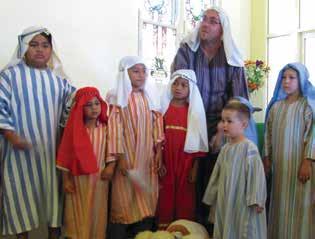
“Do not be afraid. I bring you good news that will cause great joy for all people.”
That’s how we move from fear to hope. From isolation to connection. Because transformation doesn’t happen when we avoid fear… it happens when we walk through it — together.
I am also spending time in retreat with leaders from across our Church: reminding ourselves that we find strength in our connectedness. This Christmas, we’re centring ourselves again on the birth of Christ, on the land we gather on, on the call to live with courage.
I BRING YOU GOOD NEWS THAT WILL CAUSE GREAT JOY FOR ALL PEOPLE
We’re grounded—literally—walking on Country, finding strength together, reminding ourselves that the Spirit is moving and active, that God’s lavish love and mystery is available to us all to transform our communities.
If the Christmas story has anything to teach us, it’s that right in the middle of fear and uncertainty, there were angels’ voices saying, “Do not be afraid.”
At Christmas, we remember — Christ is born. Joy has entered the world. We’re not alone. But knowing that truth and living it out? That takes courage.
It’s scary, stepping into the unknown.
Whether we’re talking about the climate crisis, standing up and advocating for social justice in a world that feels increasingly divided, or even navigating major change within our own church and movement…
There’s fear in doing the right thing.
There’s fear in not knowing how it will all unfold.
And yet the good news of Christmas is that God is with us. Always. Even in the uncertainty.
We might face deep uncertainty — but we also possess deep hope. Because Christ has come to bring good news, and to remind us who we are. So if you’re feeling afraid — know that you’re not alone. We’re walking into this new season together. We don’t need to be afraid of change — because we’re doing it with one another. And with God.
The Christ child came not to a world without fear, but to transform our fear into hope. To remind us who we are — beloved, called, and never alone.
Merry Christmas. And may joy and courage guide you into the new year.
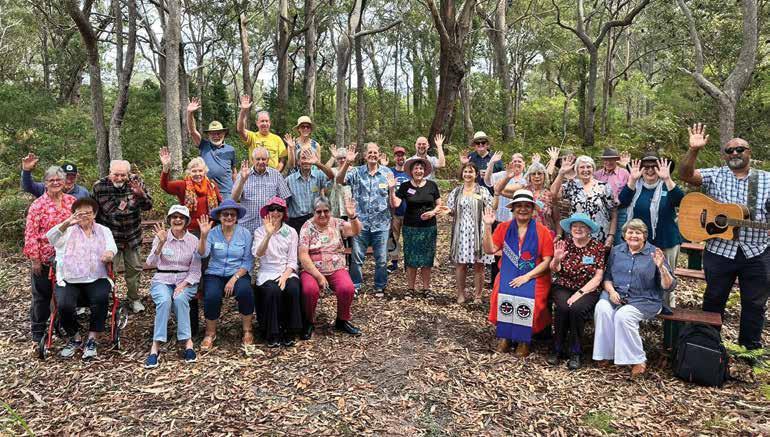
SAY...
IN RESPONSE TO THE STORY CHURCH TRADITIONS AND THE CREEDS
"I find the creeds inspiring in that most Christians from around the world, across denominations etc., can agree on these core beliefs and are unified in those beliefs."
ROB PALLOT
IN RESPONSE TO THE STORY THE ROLE OF DOUBT IN A GROWING FAITH
“Good words. A lot of people, like myself, get brainwashed into doubt as a child. I’m 70 but the same doubt that engulfed me when young still attempts to punish me now. Faith is the only way out of the prison of doubt – humility being essential in order to take the needed steps. Light of the Word leads the way even when the darkness of doubt oppresses.”
PHIL PUTMAN
IN RESPONSE TO THE POST HOLD THAT THOUGHT –JAMES ELLIS
“ My faith mainly come from my mum. Faith gives me strength and guidance. I think about stuff and it becomes reality. God listens!"
GREGORY TAYLOR
IN RESPONSE TO THE POST WHAT FORGIVENESS REALLY LOOKS LIKE IN DAILY LIFE
"We always invited our kids to respond with 'Thank you for saying sorry.' 'it's fine.' or 'that's okay.' It felt like it diminished the action that caused the tension or worse in the first place. It felt important to acknowledge the activity of saying sorry as well as opening up both to further conversation if needed. Without doing any diminishing."
DENISE SAVAGE
IN RESPONSE TO THE POST THE FOREST ADVOCACY MINISTRY GATHERING AND MID NORTH COAST PRESBYTERY’S ANNUAL RETREAT
"For me I think the hope is already found in communities of people doing God's work of serving and protecting our forest family for decades. I'm thankful that the church has eventually joined the party. It was great to have Rev. Faaimata Havea Hiliau with us, and to see how moved you were moderator in your closing remarks."
JASON JOHN
Jane Fry Bids Farewell as General Secretary
and Urges the Church to Return to Prayer and Congregational Faithfulness
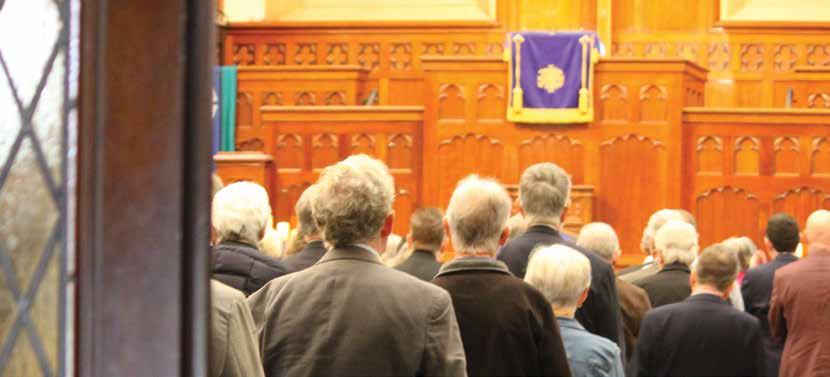
At her closure of ministry service at St Stephen’s Uniting Church on 29 October, Rev. Jane Fry reflected on nine years as General Secretary of the Uniting Church Synod of NSW and the ACT, offering both gratitude and caution as she concluded her tenure.
The celebration of Rev. Fry’s ministry opened with an Acknowledgement of Country from Nathan Tyson, Head of First Peoples Strategy and Engagement, followed by prayers led by former Moderator Rev. Simon Hansford and Associate Secretary Rev. Bronwyn Murphy. Scripture readings from Proverbs 8:22–36 and Matthew 6:25–34 were shared by Rev. Neale Roberts, and Rev. Elizabeth Raine delivered the sermon. The service concluded with liturgy, prayers, and a blessing for the conclusion of placement, led by the Moderator, Rev. Faaimata Havea Hiliau.
Speaking before members of her previous congregations and Synod staff, Rev. Fry said she remained convinced that “God is not finished with the UCA yet.” She described the present moment as a “Kairos” moment - an opportunity for the church to pause, reflect, and renew its commitment to faithfulness in a changing world.
Rev. Fry acknowledged her early scepticism toward some of the Synod’s major structural decisions, including the growth fund, Future Directions and Presbytery Project 3P decisions. Yet she affirmed that none of these measures could replace the essential role of local communities. “Only congregations can be the church,” she said, reminding those gathered that the vitality of the
“I AM VERY GRATEFUL FOR THE WAYS MY LEADERSHIP HAS BEEN ACCEPTED AND SUPPORTED"
JANE FRY
denomination depends not on strategy but on faith sustained in worship, service and prayer.
Reflecting on the condition of many congregations, Rev. Fry observed that anxiety and uncertainty have become more visible than hope and faith. “The faith of the church is only and can only be nurtured and grown from congregations,” she said. When worship and witness operate on “automatic pilot,” she added, even the most courageous decisions of Synod or presbyteries lose their meaning.
Rev. Fry spoke plainly about the risks of neglecting spiritual disciplines.
“Neglecting prayer, Bible study, worship and fellowship is incredibly dangerous,” she said. “Discipleship, leadership and ministry are sustained only by prayer.”
For her, prayer has remained the anchor of her leadership, reminding her that ministry “is never about you” and that “God’s got this, and God’s got you.”
Looking back on her appointment in 2017, Rev. Fry said she had sought to exercise the trust placed in her “with God’s help and to the best of my abilities.” She expressed gratitude for the support she had received from Synod staff and members, while also
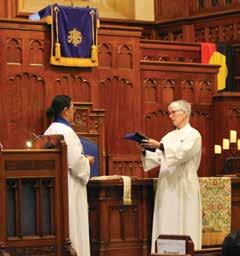
acknowledging moments when she fell short of the care and patience the role required.
“I am very grateful for the ways my leadership has been accepted and supported, and for all that we’ve been able to achieve together,” she said. “I acknowledge with regret the times when I haven’t lived fully into that call.”
Rev. Fry concluded by thanking the Synod, its members and staff for their kindness and trust, and by commending the work to her successor, Rev. Dr Peter Walker, with the assurance that God continues to guide the church forward.
ADRIAN DRAYTON



Presbytery Transition Commission Leaders Announced
A landmark proposal was passed by agreement on Day 3 of Synod 2025 to reshape the life and structure of the Uniting Church in NSW and ACT.
The proposal recommended dissolving the current 12 Presbyteries and forming three new regional Presbyteries: Northern, Central, and Southern.
Recognising the size of this shift, a proposal was accepted that set out a careful transition process with a dedicated Transition Commission and Principles which will guide its work, supported by Synod staff and leaders, and by staff teams from each new Presbytery.
recommending one to the Standing Committee. Discernment for the role of Commission Chair was solely in the hands of the SSC panel.
This task was both a tremendous privilege and challenge. Who to recommend when everyone before us is gifted, experienced, and highly recommendable? To help our discernment, we realised a key question when listening to each person was: Who do we believe God



NORTHERN PRESBYTERY LEADER


CHAIR
MS SHARON FLYNN
Learning Through Experience
with the Synod Risk Team
For congregations and organisations, questions of governance and compliance can feel daunting.
They are sometimes viewed as administrative burdens, separate from the heart of mission and ministry. But good governance and risk management are what allows mission to flourish in safe and sustainable way. With this in mind, leaders across the Synod are finding that engaging with the Synod Risk Team offers a practical and constructive way forward.
At Parramatta Community Uniting Church (PCUC), Business Manager Gary Sillett says the decision to invite the Risk Team for a comprehensive audit during their first months of operation has been foundational.
was done in a respectful way that encouraged people to engage, identify potential issues and finding constructive solutions.”
Initially, some leaders were hesitant. Risk, as Gary puts it, can be “a scary word.” But through the risk team’s approach, PCUC staff and the board came to see it differently.
Assembly uplift our risk management practices. They helped us update our Risk Appetite statement and better understand the key controls in place.”
Rob Floyd, National Director of Frontier Services, noted:
“My Board wanted an external facilitator with clear expertise in risk. Devin North was an excellent resource. He undertook a full analysis, facilitated a Board workshop, and then refined our risk documentation. The Board were very positive about the process and especially about his involvement.”
At PCUC, Board Chair Ian Gray reflected on the broader impact:
“Having an external risk lens gave us some really simple but transformational perspectives. The reports and recommendations we received weren’t put on a shelf rather they became live documents that are helping shape our governance, our ways to mitigate risk and our board meetings, supporting the way we move forward.”
From the outset, PCUC’s engagement with the Risk Team was designed to be collaborative. The risk team worked in a consultative manner, first agreeing on the scope of works, then meeting with stakeholders to gain a better understanding to ensuring that the review reflected the perspectives and operational needs of the organisation. The result was a set of clear reports with practical recommendations and remediation actions that provided structure, guidance and direction.
“The feedback was that it was a really positive experience, even though it was challenging at times. Everything
“It wasn’t about pointing out what we were doing wrong. It was about identifying and mitigating challenges on how things could be improved. People now feel confident to pick up the phone and call the team directly if they have a concern or question.”
For Gary, this represents a cultural shift. “It showed us that Synod is here to support and collaborate not penalise. That’s been one of the biggest changes I’ve seen.”
PCUC’s experience is echoed by other leaders across the church who have worked with the Risk Team.
Rev. Matthew Wilson, Mission and Leadership Presbytery Minister with Georges River Presbytery, said:
“They make addressing risk, governance, and compliance manageable and responsive rather than a list of obligations. They tailor their responses to our needs and experience, and they’ve been very professional and responsive to our congregations.”
Leo Iosifidis, National Director of Strategic Finance and Administration at the National Assembly, shared:
“The Synod Risk Team has been very helpful in assisting the National
“The process highlighted many areas where work was needed, but it was always done in a manner that encouraged stakeholders to move forward. The final report became an independent mirror of risk within PCUC — a live document reviewed and refreshed by governance and management.”
By engaging openly with the process, PCUC and other organisations are finding that risk management can strengthen governance, support staff and volunteers, and free leaders to focus on mission.
As Devin North - Head of the Risk Team explains, “Risk management is not about ticking boxes. It’s about planning well, anticipating challenges, and giving leaders the confidence to focus on what matters most…their people, their communities, and their mission.”
ADITEE VORA
Find out how can your congregation benefit from our Risk, Audit and WHS team: www.nswact.uca.org.au/support-services/ risk-audit-and-whs
A New BBQ Trailer
Brings Connection to UAICC Communities
A new purpose-built BBQ trailer is set to strengthen community gatherings and ministry across the Uniting Aboriginal and Islander Christian Congress (UAICC) in New South Wales.
Earlier this year, Pastor Tom Sloane and Nathan Tyson approached the Synod Mission Services Property team with a practical request - to explore the possibility of sourcing a BBQ trailer that could be based at the Condobolin UAICC Church and shared among other ministry centres when needed.
From that conversation grew a collaborative project to design and build a mobile BBQ trailer capable of supporting large community events and gatherings. The aim was simple: to create a durable, easy-to-transport unit that could serve hundreds of people and become a shared asset across UAICC ministries.
Dan Andrew, General Manager (Communications, Collaboration & Information) and Tim Dryden (Head of Property Services) from Synod Mission Services approved funding for the project, recognising the trailer’s value as a tool for hospitality and connection.
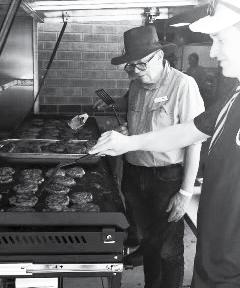
Rachael Hoddle, Property Partner with Synod Mission Services, oversaw the sourcing and construction process. She engaged FELK Engineering, a company based in Warners Bay, to custom-build the trailer. Over a three-month period between June and September, the team at FELK engineered the unit to suit the specific needs of UAICC communities, focusing on mobility, durability, and the capacity to feed large crowds.
The finished trailer represents months of planning and cooperation across several teams. It stands as a practical example of how shared vision and collaboration can produce something that directly supports ministry on the ground.
“It’s more than just a BBQ trailer,” said Nathan Tyson, Head of First Peoples
Strategy and Engagement. “It’s a way of bringing people together - feeding people and building community. It is already proving a great resource.”
The trailer had its first use over the October long weekend during a four-day event of around 450 people. Supporting meals, fellowship, and providing a focal point for connection and conversation.
“It got used really well among the nearly 450 people,” said Tom Sloane of the event and the blessing of the trailer. “It was a great four days of fellowship and camping blessing.”
"The BBQ came at a perfect time, it served many people and it was a blessing, we will hold family fishing competitions during summer so once again the BBQ will serve its purpose many times over. Thank you and team for this. Blessing to you all who organised the BBQ for these events and activities to happen."
The trailer will remain based in Condobolin but be available for use at other UAICC ministry centres when required. Its mobility means that it can travel to support various regional gatherings, celebrations, and outreach initiatives becoming a shared resource that reflects the spirit of community and cooperation at the heart of the project.
The success of the BBQ trailer project highlights what can happen when ministry leaders, property services, and local congregations work together toward a common goal. It is both a practical asset and a symbol of partnership and collaboration, something built not just to cook food, but to nurture connection among God’s people.
THE COMMUNICATIONS TEAM
Growing Supervisors a New Generation of
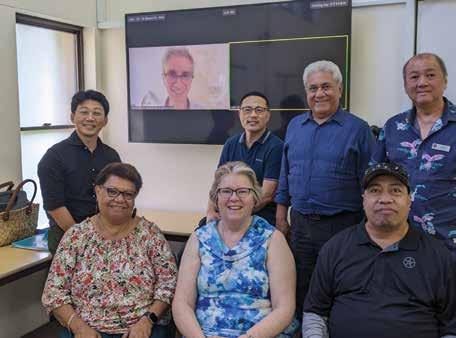
Professional Supervision provides an essential support structure around people in ministry, where they can reflect on their work with a skilled professional who enables a confidential space for unpacking the challenges and joys of leadership in the church.
Although we are a multi-cultural church, following a supported audit of supervision by Pastoral Relations Committee of Presbytery (PRC)’s back in 2022, it became clear that most supervisors across the wider churches and within the helping professions were from anglo-celtic backgrounds.
In consultation with Rev. Ben Gilmour, Director of Vital Leadership, Rev. Peter Walker Principal UTC and later Rev. Alimoni Taumoepeau, Intercultural Consultant in the Mission team, a proposal was put to the Ministerial Education Board (MEB) in 2023 that an intentional strategy of training supervisors from Culturally and Linguistically Diverse people (CALD) backgrounds be initiated. This enabled the beginning of UTC offering supervisory training for Ministers and suitably experienced lay people through the Graduate Certificate in Professional Supervision programme through Charles Sturt University. Special bequest funding was approved and a number of experienced people were approached to consider committing to this training to become Professional supervisors. This would enable supervision to be available in languages other than English and to provide cultural support for ministry leaders in our intercultural church.
The first cohort of 7 people began their studies in March 2024 with 1 subject per semester and have continued diligently learning and practicing as supervisors in training. They continued this year with 2 more subjects and I’m delighted to say that several others joined them in 2025. 10 people have completed
their studies and practical work at the time of this publication, which is a great achievement and something to celebrate. Hopefully they will be able to offer some supervision to ministry leaders in the coming years from diverse cultures. In 2025 a 2nd cohort began with 6 people training and they will continue into 2026 to complete their studies.
I hope a 3rd cohort will begin in March 2026 to continue to form new supervisors from diverse backgrounds for the ongoing benefit of the UCA’s ministry leaders and across the wider church.
It has been a privilege to accompany these ministry leaders as they have studied and now as they begin to provide Professional supervision for others in their ministry in their heart language. I have taught much but have also learned a huge amount about some of the unique challenges of working crossculturally and supporting these new supervisors as they go forward.
These are some comments about the course from this year’s graduates when asked what they’d say to someone thinking about becoming a Supervisor:
• “This is an excellent course, with a good mix of theoretical and practical learning! You will learn not only skills useful for supervision, but also general skills that are helpful in your daily life and across a range of professional contexts - skills such as listening, discerning, asking helpful questions, group facilitation, good process and theological reflection.”
• “I would say: just do it. It’s absolutely worth it. Not only is it deeply rewarding work, but there’s also a real need for more supervisors from diverse cultural backgrounds who can bring their unique perspectives into this space. Becoming a supervisor is not only a professional step, it’s a pastoral calling that contributes to healthier, more reflective, and more inclusive ministry communities.”
REV. JAN REEVE
SUPERVISION DEVELOPMENT OFFICER-VITAL LEADERSHIP TEAM UME & ADJUNCT LECTURER UTC PROFESSIONAL SUPERVISION
What is professional supervision: www.tinyurl.com/professional-supervision
Find out more about the course and enrollment: www.tinyurl.com/graduate-certificate-S-P

Hold That Thought is back with fresh conversations worth pausing for.
One idea, bite-sized. Big enough to spark your next coffee chat, youth group convo, or late-night debate.
Stay tuned as we release more thought provoking video via our instagram page
IS BACK!
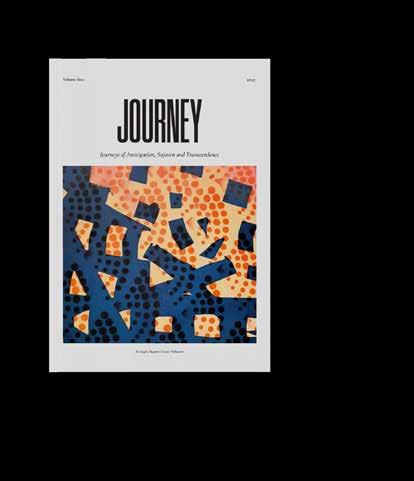
In this first special creative issue of Insights we delve into the depths of inner voyages, where self-discovery and spiritual awakenings lie. So, pack your bags (or simply open your mind) and prepare to be swept away on a voyage of discovery through Insights’ Journey Issue.
Presented in a high-quality hardcover with perfect binding, Journey is a striking addition to any coffee table collection or a meaningful gift for someone special this Christmas. All proceeds from sales will be donated to the Moderator’s Appeal and the Synod Growth Fund.

Stories of Growth

Maitland’s Fresh Vision for Church
Introducing the Maitland church plant team: Rev. Kevin Crouse and Pastor Pearl Nunn. Kevin brings a wealth of experience as a former missionary, coffee professional, and church planter, having run Mars Hill Café in Parramatta for ten years.
He is passionate about “edge ministry,” exploring innovative ways to expand what people consider church. Originally from the U.S., Kevin has called Australia home for 30 years.
Pearl is equally versatile having worked as a piano and music teacher, PhD-qualified historian, theatre maker, and youth worker at Adamstown Uniting Church. A dual citizen like Kevin, she spent 15 years living in Wales, UK, before returning to Australia. Both are thrilled to bring their combined experiences and creativity to Maitland.
DREAMING BIG IN A GROWING TOWN
For Kevin and Pearl, the Maitland church plant is part of a larger question: What is the future of the Uniting Church? Maitland itself is rapidly growing, nearing a population of 100,000, with around six new residents arriving each day and continual new developments. The team sees an opportunity to welcome those seeking spiritual connection and meaning in today’s world.
BREAKING NEW GROUND
Kevin and Pearl are mindful of Maitland’s Methodist roots, which date back to 1837 when the congregation first met in the billiards room of the Albion Hotel. To honour this tradition, the commissioning service’s “after party” was held at The Family Hotel, a local inclusive pub. Their September Open Table event also took place in a pub, reflecting Kevin’s curiosity about blending the sacred and the secular. “What does it look like to have church at a pub?” he asks. “Can secular rock concerts be held in a traditional church building?” These questions guide the team as they experiment and engage the community in open dialogue about faith, culture, and space.
LISTENING AND RESPONDING TO THE COMMUNITY
Community engagement is central to the Maitland church plant. Kevin and Pearl have met with local charities and community organisers to understand the area’s needs, particularly for vulnerable populations. Their monthly Open Table events provide a platform for people eager to explore faith differently. These gatherings encourage open conversations, where curiosity and questions are welcomed and it’s okay not to have all the answers.
The team emphasises that their work is not about imposing an agenda, but about meeting people where they are and supporting them in practical and meaningful ways. Listening carefully to the community in this foundational phase is shaping how the church plant will grow and serve.
ATTRACTING INDIVIDUALS WHO SHARE THE VISION OF A DYNAMIC, INCLUSIVE, AND SUSTAINABLE CHURCH
Their vision is to create a safe, inclusive space where people from all walks of life can explore faith together. This includes actively supporting the LGBTQIA+ community, walking the path of reconciliation with Aboriginal people, being mindful of the climate emergency, and advocating for local, national, and global social justice. The team’s hope is that this church plant will reflect the diversity of Maitland and cultivate a community where everyone can find belonging and purpose.
HOPE AND VISION FOR THE FUTURE
Looking ahead, Kevin and Pearl hope their church plant will positively impact the Maitland community in both visible and subtle ways. Providing resources and support for those most vulnerable is a priority, while also attracting individuals who share the vision of a dynamic, inclusive, and sustainable church.
This initiative forms part of a broader effort to ensure the Uniting Church remains relevant today one that values courage, innovation, and community building. Kevin and Pearl invite prayers for wisdom and courage as they step into the unknown, confident that their work in Maitland will nurture meaningful connections and lasting change.
ADITEE VORA
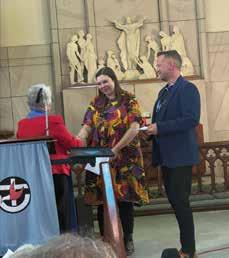

Suburban Seeds A New Chapter for Stories of Growth
The South West Sydney Church Plant will be unique in that it will grow out of Suburban Seeds, a Fresh Expressions Ministry of the Parramatta Nepean Presbytery which has been offering communitybased ministry in the South West Growth Corridor (between Narellan and Leppington) for just over 6 years.
This ministry reaches over 2000 families through its multiple outdoor based Play Groups and online Facebook groups.
Suburban Seeds has worked in partnership with other organisations and Uniting Churches on different projects to help support families within the local area; whether it’s helping the local school with its breakfast club, organising a seasonal community event, setting up a Kids Hope mentoring program or providing activities with other community organisations for community events.
Along with community engagement, Suburban seeds have been exploring how to create different spaces for spirituality and exploring Christian faith. A Sunday Breakfast group gathers twice a month to explore faith and they also have a regular Bible study that meets. Through their relationships and presence in the community conversations about faith and life happen naturally. They have already seen someone decide to follow Jesus and been baptised. They now have people asking about worship services, so developing a worshipping congregation seems to be a natural extension of what God is doing in the community.
Suburban Seeds is keen to see how a blended ecology of Fresh Expressions of church, alongside the growth of a more familiar/traditional worshipping congregation can create various spaces for those in the community to grow in faith and discipleship and to encourage one another in what it means to love God and their neighbour.
The current team for Suburban Seeds, consists of Rev. Christine Palmer (Community Minister), who will take on the Team Leader role of Suburban Seeds and Bethany Zinghini, the Assistant Playgroup co-ordinator. They are looking forward to the team growing and bringing onboard more team members to help develop a worshipping congregation and continue the community work, and Fresh Expressions. The area is young with a
mix of diverse cultural backgrounds and religions. The residents median age is 30 and couples with children make up 53% of the community. These families are looking for community, connection and support services. The hope is for Suburban Seeds to continue to be a place that connects people, faith and life, offering their community multiple ways to gather and grow in faith and provide a safe place that is welcoming and affirming of all people.
Incarnational ministry, being present in the community, building relationships, and looking for what God is doing and joining in has been at the heart of Suburban Seeds. After six years in the community and listening to those they encounter a vision is beginning to form around how they can become a place maker in the community and develop a place that serves the community. They are in the early listening and exploring stages of what it might mean in the long term to have a place that can offer connection, support and spirituality.
Perhaps a community centre and coffee shop with a child friendly space where the community can gather, along with space for the community to use for various activities throughout the week, where they can partner with other organisations who might provide services from the space to support families, along with providing space for various Fresh Expressions and worship gatherings.
It’s a big vision so prayer for this next phase of growing the team and beginning the worshipping congregation is needed, along with prayer for discernment as they continue listening to the community. They are looking forward to seeing just where God leads them.
REV. CHRISTINE PALMER COMMUNITY MINISTER AT SOUTHWEST SYDNEY CHURCH PLANT

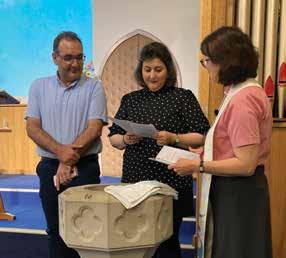
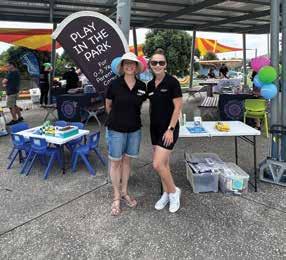
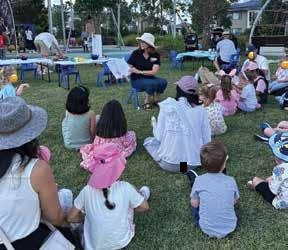
Be part of what’s growing at Suburban Seeds! Join the activities, explore new worshipping community, or follow the journey online.
Follow Suburban Seeds on Facebook:
www.facebook.com/SuburbanSeeds
Visit Suburban Seeds website: www.suburbanseeds.org
Moderator’s Christmas
The gift of Recovery and Hope
The Moderator's Appeal collects much needed funds whenever there is a crisis, and contribute to ongoing work with affected communities.

As weather patterns become more extreme, we experience more and more weather events that leave communities devastated by drought, fires and floods. If you or your Church would like to support recovery of communities in disasteraffected areas across the state, the Moderator's Appeal applies these funds where they are most needed.

Bangalow Byron Bay and Alstonville Congregations to Grow Young Together Stories of Growth
On Sunday 14 September, the congregations of Bangalow Byron Bay Uniting Church and Alstonville Uniting Church came together to celebrate the commissioning of Pastor Timothy Watts as their shared First Third of Life Ministry (FTLM) Coordinator.
The service, held in Alstonville, was the culmination of years of discernment, planning, and collaboration between two rural congregations seeking to grow young and engage more deeply with their communities.
The journey began with both congregations recognising the need to focus on younger generations and families. Rev. Phil Dokmanovic from Bangalow Byron Bay UC explained, “In 2021 our congregation noticed we were ageing, but also that we had a footprint in the communities around us, especially among families. That led us into the Growing Young journey, which helped us think strategically about the future. Out of that came a clear focus on families and children’s ministry.”
At the same time, Alstonville UC was also discerning its future direction.
Rev. Daniel Yang from Alstonville UC recalls: “Just after our mission planning process, we realised we didn’t have a clear path. Then the opportunity came to collaborate with Bangalow Byron Bay, who were already well-prepared. We’ve learnt a lot from them, and it’s been exciting to journey together.”
Despite differences in style and focus –Alstonville strong in its music program, Bangalow connected through local schools and community events – both congregations found their strengths complementary. Together, they began to plan a joint ministry role that could serve both communities.
BACKING FROM THE SYNOD GROWTH INVESTMENT FUND
With the encouragement and support of Rev. Ann Perrin, Mission Catalyst Rural and Regional with Uniting Mission and Education (UME), the two congregations applied for a Synod Growth Investment Fund grant. The process required significant time and collaboration but became an important part of their shared journey.
Phil reflected, “It felt like a long process. There were lots of meetings, drafts, and refinements, but it also brought us together. We had to sit down as
congregations and articulate what we hoped for. That was a gift in itself.”
Rev. Ann Perrin highlighted the significance of this collaboration by saying, “Both congregations worked really hard to come together. They didn’t just split a role in half; they created an integrated ministry that would serve both communities. For me, that’s the exciting part – they’re telling a new story for their region.”
In late 2024, their proposal was successful, securing the Strategic Grant funding over five years to employ a First Third of Life Ministry Coordinator. The position was designed to build on existing ministries, connect with schools and families, and explore new expressions of intergenerational church. When it came to filling the role, the congregations entered the search with openness and hope. In the end, they found their perfect fit. Pastor Timothy Watts was no stranger to the Northern Rivers, having served for several years in children’s and youth ministry at the local Baptist church.
Daniel shared, “I first met Tim years ago when he came to me with an idea for a children’s event. I was impressed by his passion and generosity. So, when this role came up, I immediately thought of him. He has been discerning this call for some time, and we’re grateful he said yes.”
PASTOR TIM’S CALL AND VISION
At the commissioning, Pastor Tim spoke openly about his faith journey – from childhood experiences in remote mission churches to years of ministry and teaching. He acknowledged the challenges he has faced, including personal setbacks, but described his strong sense of God’s call back into ministry through this new role.
“I don’t want to see children’s ministry as something separate, off to the side. My desire is for children and young people to be lifelong disciples of Jesus, to know that they are part of God’s family, not a church of tomorrow but the church today.”
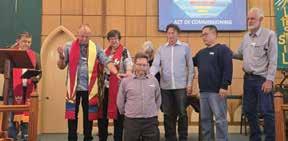
COMMISSIONING OF PS. TIM WATTS
The commissioning service was marked by prayer, storytelling, and a sense of anticipation. In her message, Rev. Ann Perrin reminded the congregations, “Bangalow Byron Bay and Alstonville are now being called to tell a different story for their community. My hope is that the wider community will recognise the values of your churches through the ministry you will now undertake with Tim.”
For both congregations, the service was also a celebration of what they had already achieved together. Phil noted that even before Tim began, the two churches had started sharing worship and prayer, laying the foundation for this new chapter.
LOOKING AHEAD
The long-term vision is bold: that in five years’ time, families moving into Bangalow, Byron Bay or Alstonville will know the Uniting Church as the place to go for connection, support, and community. The grant proposal outlines outcomes such as intergenerational engagement, stronger links with schools, and fresh expressions of church. These hopes echo the Synod’s wider commitment to supporting regional congregations to grow young and nurture thriving, intergenerational communities.
Daniel summed it up with joy saying, “We never expected this kind of collaboration would happen. But the Spirit has been guiding us, and now new things are happening we couldn’t have imagined.”
The commissioning of Pastor Timothy Watts marks the beginning of his ministry and a milestone in collaboration and faith.
It is a story of two congregations daring to work together, supported by the wider Church, to plant seeds of hope for our young generations.
ADITEE VORA
PasifiKare: Stories of Growth
A Collaborative Effort Supporting Pacific Islander Health

A COLLABORATION BETWEEN BLACKTOWN HOSPITAL AND BLACKTOWN REGIONAL UNITING CHURCH
In October 2023, Blacktown Regional Uniting Church (BRUC) welcomed two renal specialists from Blacktown Hospital, Associate Professors Lukas Kairaitis and Katrina Chau to a special mission planning day.
Their visit marked the beginning of a thoughtful collaboration aimed at addressing key health challenges facing the Pacific Islander community.
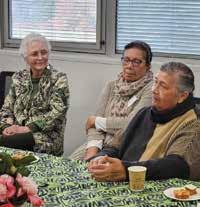
During their presentation, Associate Professor Lukas and Associate Professor Katrina highlighted research showing significantly higher rates of diabetes and kidney disease among people with Pasifika heritage. Unfortunately, many individuals were not accessing early intervention services. Recognising the important role that spirituality plays in many Pasifika cultures, Doctors, along with Church elders and volunteers explored how the Church could help bridge the gap.
Over the following months, conversations between BRUC and the renal team at Blacktown Hospital led to the development of PasifiKare - a monthly, culturally sensitive renal health Clinic designed specifically with Pasifika communities in mind.

Held at Blacktown Hospital, PasifiKare offers more than clinical support. It provides a welcoming space where patients can receive care in a setting that respects their cultural and spiritual identity. The Clinic takes place in a designated hospital meeting room and combines medical expertise with BRUC’s community support and hospitality.
Led by Associate Professor Lukas and Associate Professor Katrina, a multidisciplinary team of healthcare professionals provide holistic health care. The team includes partnerships with care coordinators, health coaches, and multicultural health staff, who work closely with the BRUC PasifiKare Coordinator - Wendy Cameron (a retired Pharmacist) in bringing patients to the Clinic from the extended Church community. The BRUC Ministry Team led by Rev. Dr. Raymond Joso, together with a core group of volunteers from BRUC, provide a culturally appropriate setting, pastoral support, refreshments and devotions.
Each clinic begins with a short devotion and introductions, fostering a relaxed and inclusive environment. Guest speakers, including dietitians, offer practical advice, recent topics have included the impacts of a high sodium intake and the importance of meal portion sizes. Afterwards, patients meet privately with renal specialists while others continue to connect over morning tea.
Morning tea is prepared and shared jointly by volunteer members of BRUC together with members of the hospital staff. Healthy options are shared. The setting is intentionally warm, featuring decorations and images from the Pacific Islands on a large screen, creating a familiar and welcoming atmosphere.
Patient care volunteers from BRUC are also present, offering quiet support and, when requested, sitting in on consultations to provide comfort and encouragement. Patients with kidney disease who wish to support PasifiKare and share their stories have also attended to provide solidarity and encouragement.
The Clinic concludes with a short blessing, reinforcing a sense of dignity and care for all involved.
Feedback from patients has been encouraging:
• “I feel so much better.”
• “I love coming here.”
• “My kidneys are improving.”
• “I have a better understanding of my health needs”
Looking ahead, the PasifiKare team is considering ways to involve other churches and broaden its reach to support more people in need.
PasifiKare represents a thoughtful and practical response to a complex health issue. It shows how local partnerships between healthcare providers and faith communities can make a meaningful difference in addressing physical health needs, while also acknowledging the importance of spirituality, culture and connection.
JOHN CAMERON SECRETARY BLACKTOWN REGIONAL UNITING CHURCH
For more information on PasifiKare contact the Blacktown Regional Uniting Church Office on: bruc.office@nswact.uca.org.au
For more information on Blacktown Regional Uniting Church visit the website: www.bruc.online

(BRUC)
Manning Uniting Church Acting as a Sanctuary in the Storm
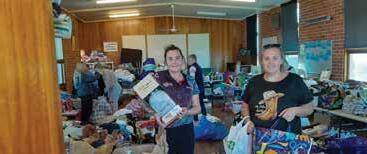
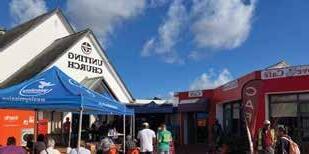
For ten weeks, from late May to the end of August, the Manning Uniting Church Centre in Taree served as a Disaster Recovery Centre.
In late May people around the state and beyond were stunned by the record floods that hit Taree and district, with images of people being plucked by helicopter from their rooves and balconies, amid widespread devastation after the Manning River rose metres during the night, separating Taree from its suburb of Cundletown across the Dawson River.

I received a phone call the next morning from a Cundletown resident pleading for help. Cundletown had become an island, cut off from all directions, with travellers evacuated from the riverbank campsite, truck drivers and some residents stranded with nowhere to seek refuge. Could I grant people access to the former church building, now a church community centre and garden? Fortunately, there is a key box on the outside wall, and I was able to give them the code so that they could get into the hall and kitchen.
A group of locals then took over and started supplying food and cooking it. The building has a kitchen and toilets but no showers; truck drivers were able to take people to their change-of-drivers station on the edge of town, where there are showers. Donations flooded in, filling the hall. The canteen from the Anglican College at Cundletown donated all the stock they had.
Once the roads were open again, the makeshift local group kept on receiving and giving out donations of clothing, food and other essentials, while continuing to cook and taking the meals
out to people in devastated villages and farms kept this up for over three weeks – and these were people with jobs and families. It was great to see community and church working together.
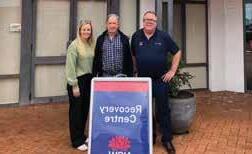
Meanwhile, back in Taree, I had a call from the NSW Restoration Authority asking if the Manning Uniting Church Centre could be used as a Disaster Recovery Centre. It is ideal for their purposes because it is right in the CBD and has an auditorium and a number of meeting rooms of various sizes. They moved in a couple of days later, taking over virtually the whole centre except for the church itself, bringing together in one place all the services that people needed to access.
In the first two weeks, they were seeing over two hundred people a day. Wesley Mission, whose building is just across the car park, and with whom we regularly work, set up a sausage sizzle on the forecourt. A roster of Red Cross volunteers greeted people as they arrived, gave out tickets and moved them inside as their time came. Another roster of Disaster Recovery Chaplains was always on hand. Specialist Disaster Recovery personnel from various agencies, including mental health professionals, and representatives of insurance companies filled the auditorium – and, in the early weeks, rooms beyond as well.
This was not without its challenges. The MUC Centre is the main headquarters for U3A classes in the Manning region and is also used on various days during the week by Legal Aid, Public Trustee, AA and other local bodies. It is also a hub for welfare support on Friday mornings. All these things, as well as people just accessing the reception area and our Red Dove Café, were disrupted by the Recovery Centre, but the situation demanded that we cope with that. People were very understanding, and it was a time of really being church to the community.
Stories of Growth
I, and other church members, spent quite a bit of time in the early stages sitting and talking to people as they waited, hearing all sorts of stories of terrible loss but also of great resilience and mutual support. People were also able to support each other. And when they came out, they were full of praise for the warmth and understanding of the Disaster Recovery personnel. Lots of little personal thank you notes were stuck on the glass doors.
Numbers visiting the Centre gradually declined and for the last four weeks, only the auditorium was needed, with the other rooms again available for other purposes. Ove the ten weeks, approximately 4,450 visits were made to the Centre, with many people needing to come in more than once. It was, and still is, a very trying time, with whole families stuck in a motel room because there is no other accommodation. It has been marvellous for MUC to be able to play such a key role in supporting our community through this terrible time. The church also hosted a Concert of Hope, which raised $4,000 towards flood relief.
JOHN DUN CHAIR OF MANNING UNITING CHURCH COUNCIL
SUPPORT THE DRCN
In times of disaster, stories like those from Manning remind us how vital it is to have people ready to listen, care, and walk alongside communities in crisis. The Disaster Recovery Chaplaincy Network (DRCN) brings together chaplains from across faith traditions in NSW and the ACT to provide this kind of compassionate presence wherever it is needed most. If you feel moved by John’s story and the ongoing work of DRCN, we invite you to learn more and consider supporting their ministry.
For more information go to: nswact.uca.org.au/social-impact/disaster-recovery-chaplaincy-network
From Foundations
to the Future

In August 2025, Concord Uniting Church marks a remarkable milestone: 100 years of serving as a spiritual home and community hub.
I
t has become a place of continuity for generations of families across Concord and beyond. For a century, the church has witnessed the ebb and flow of life: baptisms, weddings, funerals, and the quiet rhythm of weekly worship that has evolved alongside the diverse communities it serves.
FOUNDATIONS AND FAMILY LEGACIES
The story of Concord Uniting Church is intertwined with the lives of families who dedicated decades of service. The Hill family’s multigenerational involvement reflects the deep roots some congregants have in the church’s history. Edna Hill attended the East Church from late 1947 until its closure in 1988. She served as a Sunday School teacher from 1947 to 1972 and was an active member of the Ladies Church Aid, holding Secretary and Treasurer roles. Her husband, Reg Hill, shared the responsibility of counting and banking weekly offerings with other members during the same period.
Dennis Hill attended Sunday School from 1947 to 1957 and went on to teach from 1958 to 1969, serving as Sunday School treasurer from 1962. He also participated in the church choir from time to time. Dennis’ daughter, Michelle Hill, was christened in 1972 and served as church organist three Sundays a month from 1984 to 1988. Their extended family, including Narelle Hill (nee Iversen) and the Quelch family, also maintained deep connections with Concord’s various Methodist congregations over the decades. As Narelle and Dennis reflected, “Funerals there, our grandparents and parents marked life’s milestones in this sacred space.”
LIFE IN THE EARLY CHURCHES
Concord’s early churches namely Concord East Methodist at Wallace Street and Burwood Road, Wesley Methodist at Concord Road and Sydney Street, and Concord West Methodist at Wunda Road were not only places of worship; they were centers of community life. Laurice Jones, who came to Sydney in 1952 at age 13, remembered, “A typical Sunday would be Christian Endeavour at 10am, Church service 11am, Sunday School 2.30pm, evening service 7.15pm. There would usually be a Community Hymn Singing at 7pm first.”
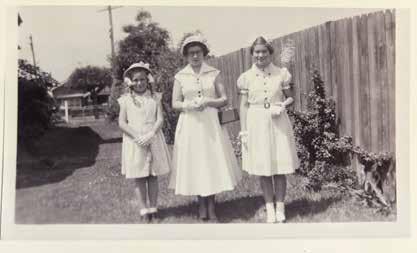
Sunday School at Concord Wesley was vibrant, with between 100 and 150 children from kindergarten to teenagers. Laurice recalled sitting annual Sunday School examinations in catechism, and the Sunday School Anniversary celebrations spanning three services over the first two Sundays in November. “We would occupy the choir stalls and had learnt a lot of hymns for the occasion,” she said. She fondly remembered Mrs E. Kentwell, who maintained a Birthday Book with all children’s names, sending a Scripture-based card each year: “I still have one from 1960 (21st birthday) with the ploughshare on it (the picture of which is on the outside wall of the building attached to the Concord Wesley Church Hall).”
COMMUNITY, SPORT, AND MUSIC
Church life extended beyond Sunday worship. Laurice shared that church organisations included the Ladies Church Aid, Men’s Brotherhood, and the Methodist Girls Comrades. Sport was also central: “We had a Soccer team (affiliated with the Combined District Churches Federation), and the girls hockey team. I played in the hockey team until I was married. Val Steward was the captain.”
Music played a vital role in worship, with the Wesley Church Choir led by Mr Donald Pettigrew, and Mrs. Kentwell often singing solo sections. One memorable piece she recalled was ‘God So Loved the World’. Choirs, musical performances, and drama productions became fixtures in the church’s social life, weaving together faith, friendship, and community spirit. Vivian Hodgson, daughter of Laurice Jones who attended Concord Wesley as a child, reflected, “Concord Wesley also held a Church picnic every year…Valma Steward was always up for a game of cricket! It was a great way to foster community spirit coming together as a church family.”
BELOW: LAURICE JONES (CENTRE) WITH HER TWO SISTERS, ALL DRESSED UP FOR THE SUNDAY SCHOOL ANNIVERSARY

YOUTH AND FAITH FORMATION
The Concord Uniting Church Youth Group, formed after the establishment of the Uniting Church in 1977, played a pivotal role in nurturing the next generation. Peter Hughes, reflecting on the first twenty years, wrote, “Bible studies and social activities on Saturday evening formed the core of the group’s activities. Faith and friendships were built to help each member face the ups and downs of life.”
Youth engagement extended beyond the church walls, with the group participating in the Ashfield Uniting Church Exodus Mission, national Christian youth conventions, camps in Katoomba, and festivals such as Blackstump. Drama productions, including the nativity retelling “Stained Glass Window,” were staged locally and at Wesley Central Mission events. Hughes emphasised, “Friendships built at camps opened the way for many who moved from the Hunter to find a spiritual home when they came to Sydney.”
MERGERS AND MILESTONES
Over the decades, multiple Concord Methodist congregations merged. In 1990, steps were taken to combine Concord Wesley and East Concord with Concord West (including Rhodes and Central Concord). Laurice recounted, “East Concord was sold, and the Rhodes property was bought by the Coptic Church. Concord Wesley was acquired by the Cheil branch of the U.C.A. In 1991 the Concord Uniting Parish was established in the premises at Wunda Rd, Concord West.” These structural changes were pivotal in consolidating the church’s resources, fostering unity, and providing a stable home for worship and community activities.
“FROM THE VERY BEGINNING, WE FELT EMBRACED NOT JUST AS GUESTS, BUT AS PART OF THE CHURCH FAMILY.”
A WELCOMING HOME FOR NEW COMMUNITIES
Concord Uniting Church has long embraced cultural diversity. The Korean congregation began worshipping at Concord in the early 2000s. Rev. Yangrae Son reflected, “We wouldn’t form a separate congregation, but they could become part of our church as a distinct worship group…It was a deeply meaningful experience, providing space for older Korean members to worship in their heart language, while encouraging the second generation to find their spiritual home in the broader church community.”
Similarly, In September 2016, the Tongan congregation, previously worshipping at Merrylands Uniting Church, joined Concord. Kasa described the experience: “From the very beginning, we felt embraced not just as guests, but as part of the church family.”
REFLECTIONS AND CONTINUITY
As Concord Uniting Church reaches its centenary, reflections from congregants underline the enduring impact of faith, friendship, and shared service. Dennis Hill, who has continued to serve as an auditor for the past forty years, emphasised the sense of continuity: “The church has been a part of our family life for generations. It has seen our families grow and change, and yet remains a constant presence.”
LOOKING FORWARD
As the church lives out its 100th year, it continues to embrace diversity and foster community. From the Hill family’s multigenerational involvement to the Tongan and Korean congregations, and from vibrant youth groups to enduring musical traditions, Concord Uniting Church demonstrates how faith can unite people across generations, cultures, and backgrounds.
The centenary is not only a celebration of the past but a call to look forward building a community where faith, friendship, and service flourish. Concord Uniting Church stands as a testament to the power of continuity, inclusivity, and shared spiritual life, a place where the story of one hundred years is both cherished and continued.
ADITEE VORA
Stories of Growth
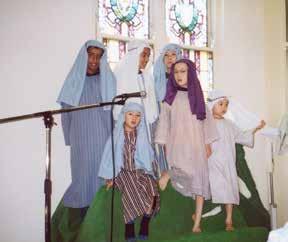
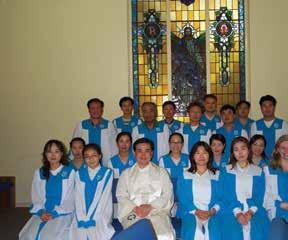
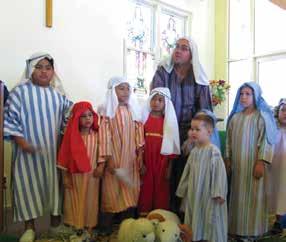
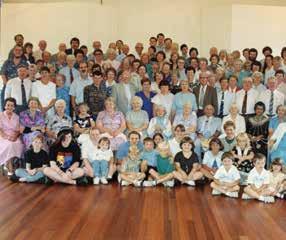
INDUCTION OF MEMBERS FROM BOTH KOREAN AND EUROPEAN BACKGROUNDS IN 2003 WITH REV. YANGRAE SON.
SUNDAY
SUNDAY
Upcoming Events & Courses
2026




A New Canvas for a Renewed Calling
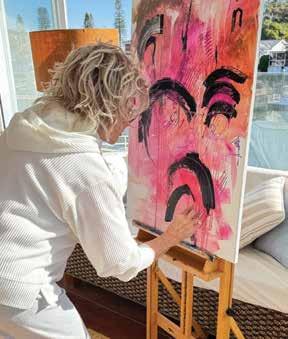
Retirement is just the beginning—Cherie Strudwick blends her pastoral heart with her artist’s hand to create soulful works that invite peace and reflection.
After more than fifty years in ministry, Rev. Cherie Strudwick has reached a turning point. Many would call it retirement. She doesn’t.
For her, it’s “re-firing”—a shift into a new way of serving.
“I don’t call it retiring—I call it re-firing,” says Cherie. “It’s not an ending; it’s a gentle turning of the page into something new.”
A LIFE SHAPED BY MINISTRY
Cherie’s ministry has touched countless lives. She has stood with people in joy and in sorrow, in faith and in struggle. “My heart and hands have been devoted to walking alongside people,” she says. “Ministry has shaped my life, my days, and my soul.”
As this chapter changes, she isn’t stepping away from that calling. Instead, she is finding a fresh way to express it.
ART AS MINISTRY
That fresh expression is Art By Cherie. What began as a personal love of painting has become a way of offering reflection and hope. Each piece, she says, is more than colour on canvas. It’s an invitation to pause, breathe, and sense the presence of God.
As Cherie explains it, “Each painting is a quiet space for reflection, an open door to grace, and an invitation to draw closer to the Divine.”

from my calling,” she says. “I’m reshaping it—giving it a new expression on canvas.”
Music also plays a part in this new season, weaving together creativity and faith. Whether through brushstrokes or melodies, Cherie’s hope is that people will discover moments of peace and renewal.
FOLLOWING THE WHISPERS OF THE HEART
Cherie sees this next stage as an encouragement for others too. She wants people to know it’s never too late to begin again.
“It’s never too late to follow the whispers of your heart, start again, and create something that carries love into the world,” she says.
EVERY BRUSHSTROKE IS A PRAYER, EVERY COLOUR A WHISPER— INVITING THE SOUL TO PAUSE, BREATHE, AND REST IN THE PRESENCE OF THE DIVINE
Cherie often pairs her artwork with short meditations and simple practices. These guide people to sit with the painting, notice the details, and allow space for God to speak. For her, art is not only beautiful—it can also heal and restore.
“My work blends colour, texture, and story to invite people to breathe deeply, remember beauty, and feel the presence of something greater. That’s why I include written meditations and simple instructions with each piece, guiding people in how to sit with the art, reflect, and let it draw them closer to the Divine.”
A CALLING THAT DOESN’T END
Though she no longer leads congregations, Cherie is clear that her ministry continues. It has simply taken on a new form. “I’m not stepping away
For her, every painting carries a prayer, every colour a whisper. And in that, her ministry continues—alive, open, and re-fired for what comes next.

Giving Where it Matters

A day out with Disaster Recovery Chaplain Rev. John Latta

Disaster Recovery Business Chaplain Rev. John Latta is met with a warm smile as he walks into the South Lismore Post Office. Post Mistress and Owner Tracey Ward’s smile is a recognition of a friend and companion who has supported her through some very dark and challenging times.
Tracy is one of thousands in Lismore who have lived through multiple floods in 2017, 2022, and again in 2025 following ex-Cyclone Alfred. The 2022 flood, one of the most severe in Australia’s history, changed the region forever.
Rev. Latta, a long-time Lismore resident himself, has walked alongside people through all of it, from small business owners to families and those left without homes.
As he points out watermarks still visible on buildings, the scale of the 2022 disaster comes into focus.
“It was a Sunday night and it hadn’t stopped raining for days,” he recalls. “People were forced into roof cavities as water rose through their homes. In the darkness, they were banging on their roofs and screaming for help, hoping someone in a tinny would reach them. Many thought they wouldn’t make it out.”
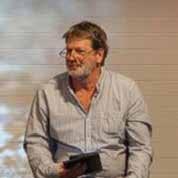
“Running the post office is about securing my future, but it’s also about helping to rebuild Lismore,” she says.
“We’ve launched a postcard project to send messages of heart from Lismore across the country to nursing homes, mental health centres, and community programs. We want to remind Australia who we are, a community of resilience and care,”
I WANT PEOPLE TO SEE THE HEART THAT DEFINES US, THE WAY WE PULL TOGETHER AND LOOK AFTER EACH OTHER
He agrees that that type of trauma doesn’t leave you.
“The scale and loss of this natural disaster was in my opinion the worst natural disaster this country has even seen, worse than Cyclone Tracy.”
The impact of the 2022 flood was devastating for Tracey Ward, impacting her business, home, marriage and the education of her daughters, as schools in the district were so badly damaged.
Taking over the South Lismore Post Office has presented a new chapter for her family and a sign of Lismore’s slow rebuilding.
A former CEO, writer, and PhD candidate, she’s channeling her energy into both recovery and community renewal.
Tracey hopes the project will help reframe Lismore’s identity.
“Rather than being seen as flood victims, I want people to see the heart that defines us, the way we pull together and look after each other.”
The Disaster Recovery Chaplaincy Network (DRCN) is a partnership between the Uniting Church and the NSW Government. Its chaplains provide emotional, spiritual, and practical support to people affected by natural disasters across the state. They work alongside emergency services, local councils, and recovery teams, offering care, listening, and presence when people are at their most vulnerable.
Rev. John Latta is one of many DRCN chaplains who walk beside communities long after media attention fades, helping people like Tracey rebuild hope.
The Moderator’s Disaster Appeal supports the vital work of the Disaster Recovery Chaplaincy Network and local congregations assisting communities across NSW and the ACT. Your donation helps provide direct support, training for chaplains, and recovery grants for people and towns still finding their footing after disaster.
JO MALONEY
Giving Where it Matters
Knitting
Hope
Through Trauma Teddies at Abbotsbury Uniting Church
At Abbotsbury Uniting Church, acts of service and fellowship are stitched together quite literally. Once a week, a group of women gather with knitting needles, conversation, and prayer, turning balls of wool into blankets, scarves, and now, trauma teddies.
Recently, the group welcomed Mark Layson, Director and Senior Chaplain of the NSW/ACT Disaster Recovery Chaplaincy Network (DRCN), who visited Abbotsbury Uniting Church1 to receive a new batch of the teddies and share stories from the frontlines of disaster recovery. The visit became a time of warmth and reflection, as the knitters learned how their simple acts of service are travelling far beyond their church walls.
“The church is called to share God’s love in both word and action,” said Pastor Sital Sanjivi of Abbotsbury UC. “The knitting of trauma teddies is a simple but powerful way of showing care and compassion to those who are hurting. It reminds people that they are not forgotten and that God’s love comes in very practical ways. This is truly living out the mission of the church – to be a light and comfort in the community.”
For the Abbotsbury knitting group, faith and fellowship naturally flow into service. “Every Wednesday, our ladies and friends from different denominations gather to knit. In that space there is laughter, prayer, stories, and strong fellowship,” Pastor Sital shared. “Out of that fellowship flows service. Their faith in God inspires them to give their time and skills, and their fellowship encourages them to keep going. It is faith put into action, and service that builds community.”
For Mark Layson, whose team of volunteer chaplains responds to fires, floods and other disasters across the state, the trauma teddies are not just handmade gifts but a bridge to connection. “Trauma teddies allow chaplains to give a tangible gift of comfort to a person in distress,” he explained. “While children
love them, adults can find the softness of a teddy comforting too. The teddy itself is a nice gift, but it also allows chaplains to make a connection quickly with people who may be finding the situation overwhelming.”
These teddies, he added, are now being dispersed to chaplains across NSW and the ACT, and have already been used following two severe weather events in the north of the state this year. “So often, the small things are the big things,” Mark said. “When a child is upset about the loss of a home, a pet, or their community, providing a teddy is a first small step to recovery. In a teddy, they have something in their hand that can be a positive reminder of safety and someone who cared.”
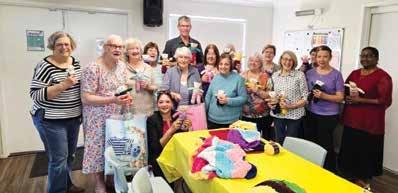
THE TRAUMA TEDDIES ARE NOT JUST HANDMADE GIFTS BUT A BRIDGE TO CONNECTION
For the knitters, this knowledge makes their work all the more meaningful. Pam Ortiger, who coordinates the Abbotsbury knitting group, described the sense of shared purpose that binds the group together. “It is knowing that while they are enjoying each other’s company, their busy fingers are working for others who are experiencing perhaps one of the most traumatic events of their life,” she said.
What began as a small local initiative has grown into an ongoing ministry of comfort. The trauma teddies are now part of the wider story of the Uniting Church’s care in community from those knitting in fellowship halls to chaplains walking beside people in moments of deep need.
As Mark reflected, “Chaplains do not enter disaster zones to fix people. They attend to compassionately walk beside people in their dark alley. The presence of a chaplain who has no agenda, but only the desire to be with someone in need, is powerful. So too are the hands that knit with the same intent bringing grace, hope and love where people may doubt any of those still exist.”
ADITEE VORA
In 2025 so far, DRCN volunteers have given over 10,000 hours of service to their community. Churches or individuals wishing to support the Disaster Recovery Chaplaincy Network can donate to the Moderator’s Appeal or contact the DRCN team at drcn@nat.uca.org.au
Giving Where it Matters
Share the Warmth of Junction 142 this Christmas
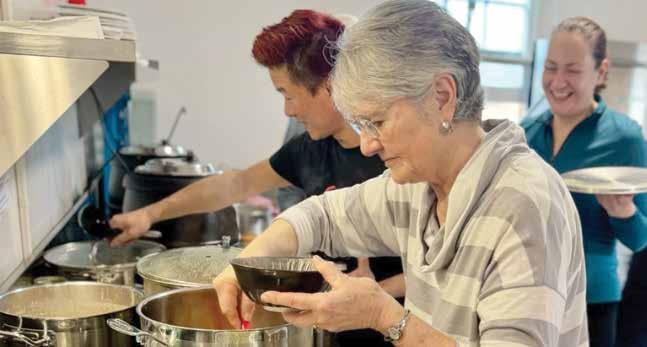
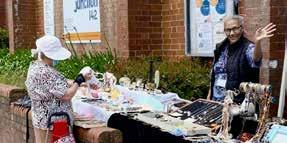
Is there any image more symbolic of the Christmas story than finding comfort and sanctuary in times of vulnerability? While we celebrate the season of goodwill in our comfortable homes, a community in the Blue Mountains, supported by the Leura Uniting Church, is actively ensuring that this fundamental human need is met for those experiencing hardship. Junction 142, a vital hub of compassion, proves that the Uniting Church's mission is not just a Sunday prayer, but a practical, hands-on commitment to our neighbours.
Junction 142 operates as an initiative born from the vision of the Leura Uniting Church and the local community. It’s a place where faith is translated directly into tangible service not just from the Church, but from local people willing to give their time and expertise. In fact, many volunteers work 50 or 60 hours a month in addition to their regular workaday lives, managing the various areas of support.
Over the past 11 years, Junction 142 has expanded to offer a range of services, providing a lifeline to those in need:
Open Table Food Service: In partnership with local organisations, Junction 142 serves hot meals three times a week and distributes food hampers containing essentials, including pantry staples and fresh produce. Since July 2020, over 459 food parcels have been distributed.
Free Shower and Laundry Services: With additional provision of clothing, bedding, and toiletries, this service has recorded 2,926 shower uses, 6,972 laundry cycles, and distributed 5,505 hygiene items since mid-2020.
Sweet Charity Op Shop: This welcoming store not only offers unique, colorful items but also connects visitors with health and housing services in the area, providing practical support and a friendly face.
Village Markets: Open Thursday to Saturday, these markets showcase local artisans specialising in art, crafts, and pre-loved items, while providing a
platform for new vendors to share their products with the community.
Community Locker Service: Enabled by a grant from the Katoomba Law Society, this service offers safe storage space for personal belongings.
Creative Space Hire: The historic 1930s hall at Junction 142 is available for concerts, exhibitions, and screenings, generating support for the centre’s community initiatives.
Crucially, the organisation does not receive regular grants from the Government or any other Body, although occasional specific-purpose grants are sometimes received. Instead, Junction 142 is sustained entirely by volunteer labour and the income generated from the weekly markets and the Op Shop.
WHY YOUR HELP IS NEEDED
The cost of providing these services including meals, food hampers, access to showers, laundry, clothing, personal hygiene needs, sleeping bags, and tents is understandably very high, despite receiving “rescued food” from local businesses and some donations of clothing. This is where the generosity of our wider Synod community becomes essential, as Junction 142 relies heavily on the generosity of our community to keep its doors open.
Your support isn’t just filling a general fund; it’s providing highly specific, lifechanging relief. For example:
A small donation can purchase a pair of work boots or sneakers, helping those who often go barefoot or squeeze into ill-fitting shoes.
A moderate gift could buy trackies or shirts, or cover the monthly gas or power bill to ensure hot water and heating for the shower and food prep areas.
A more substantial donation could help provide a small remuneration to the hard-working Co-ordinators of the Food Services and Shower & Laundry Service for their many hours of expertise.
Significant funds are also needed for essential building maintenance, such as upgrading the toilets or replacing the Hall’s roof, an investment in the future of the mission.
A CHRISTMAS CALL TO ACTION
The Christmas season is a profound reminder of the gifts of shelter, warmth, and compassion extended to the most vulnerable. As a Synod, we have a unique opportunity to embody this spirit by ensuring the Leura community can continue its invaluable work.
This December, we ask you to support Junction 142. Every dollar is a practical act of faith that goes directly to those in desperate need.
To learn more and support the work of Junction 142 visit:
www.junction142.org.au
ADITEE VORA
Nourishing the Foundation of Learning is The Jurd Way

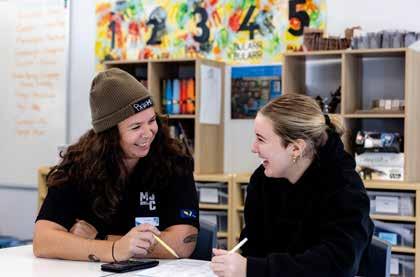
At Margaret Jurd College (MJC), we believe that before a young person can learn, they must first feel safe, supported, and cared for. Many of our students face complex challenges that can make school a difficult place to be. That’s why at MJC, we don’t just teach, we nurture.
Drawing inspiration from Maslow’s hierarchy of needs, we recognise that a student’s basic needs such as food, safety, and emotional security form the essential foundation for growth, learning, and confidence. Only when these needs are met can a young person truly engage in education and begin to thrive.
Every day, our team works to ensure that no student arrives at school hungry or worried about their next meal. Through our Breakfast and Lunch Programmes, we provide nutritious meals that help students start their day with energy and focus. In the mornings, our caseworkers often meet with students to help them settle, talk through challenges, and ensure they are ready to enter the classroom feeling calm and supported.
These seemingly small acts, such as sharing breakfast, checking in with a trusted caseworker, or accessing clean clothes and hygiene supplies, make an enormous difference. They help young people feel seen, valued, and ready to learn.
Beyond the school day, our Community Pantry extends that care to families, ensuring that essential groceries are available for those who need extra support. Stocking the pantry with non-perishable food items allows us to respond flexibly to the needs of our community. Whether it’s providing lunch for a student, a food parcel for a family, or a Christmas hamper filled with festive treats, every contribution helps create stability in a young person’s life.
Our Christmas Hamper Drive is one of the most heartwarming parts of the year. Each hamper is a gesture of kindness that brings joy to students and their families who may otherwise go without. It’s a simple but powerful way to support the whole family unit, acknowledging
that when families are supported, young people have a stronger foundation from which to grow.
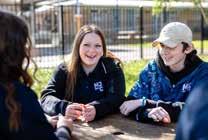
The work we do at MJC is grounded in compassion and care. We exist to engage young people facing challenges in education, offering an alternative secondary schooling environment for Years 9 to 12. Founded in the 1980s as a ministry of the Uniting Church, MJC was born from the vision of Margaret Jurd, a trailblazer who believed in doing things differently. From its beginnings in a pub in Carrington, MJC has always been about meeting people where they are and giving them the tools to move forward.
MJC HAS ALWAYS BEEN ABOUT MEETING PEOPLE WHERE THEY ARE AND GIVING THEM THE TOOLS TO MOVE FORWARD
Today, The Jurd Way continues that legacy by combining education with a strong focus on wellbeing. Every student is paired with a dedicated caseworker who helps them set personal and social goals, building the resilience and selfbelief needed to make positive choices for their future. Our trauma-informed practices ensure that each student receives the individual support they need to succeed, whether they’re completing their RoSA, pursuing their HSC (NonATAR), or developing essential life skills through our Lifeskills Programmes.
At MJC, we know that when a student’s basic needs are met, anything is possible.

HOW YOU CAN HELP
Your generosity helps us continue this vital work.
• Stock our pantry: Donate non-perishable food items to support our Community Pantry and Breakfast Programme.
• Fill a Christmas Hamper: Help bring joy to families this festive season with a hamper of treats and essentials.
• Make a non-monetary donation: To enquire about donating food, clothing, or other supplies, please email donations@mjc. nsw.edu.au
• Make a monetary donation: Support our students directly by making a one-off or recurring donation.
To contribute, visit: mjc.nsw.edu.au/student-supportprogram
Together, we can ensure every student feels safe, supported, and ready to learn.

Giving Where it Matters
Every Child Deserves a Canvas
WESLEY MISSION’S 3RD ANNUAL RISING ARTISTS CHRISTMAS EXHIBITION
Joy is seeing children who have experienced heartache and trauma in life come to discover their potential, feel their worth, and find their voice. That’s the aim of Wesley Mission’s Rising Artists Christmas Exhibition for children in Out of Home Care (foster care). Now in its third year, this remarkable exhibition continues to showcase the raw, unfiltered creativity of young people navigating the foster care system, inviting the community to come together in celebration and support.
For many of these children, the journey through foster care is filled with uncertainty and upheaval. Yet, within the walls of the exhibition, something truly special happens: their voices are amplified, their God-given value affirmed, their talents uplifted, and their dreams put on display for all to see. “Some kids have never known what it’s like to have their pictures put up on the fridge,” reflects Virginia Meers, Wesley Mission’s Ministry Coordinator. “We want them to have their own Archibald Prize.”
The 130 artworks to be displayed have been produced by children and youth in art workshops held throughout the year in Sydney and in regional areas as far north as Ballina, facilitated by Wesley Mission chaplains. They’ll be displayed in Wesley Mission’s pop-up gallery at 220 Pitt Street from 29 November to Christmas Day. During that time, the children’s artistic expressions and written descriptions will be viewed by thousands of people in the heart of Sydney’s CBD.
The exhibition’s judges are accomplished professional artists who volunteer their time and gifts to uplift all these Rising Artists. The judges award prizes for particularly outstanding works, of course. But they also award every child with a personal certificate. “This isn’t a ‘participation award,’” explains Joanna Garratt, Wesley Mission’s lead chaplain. “It’s a recognition of the unique beauty and immeasurable value we see in every child’s artistic expression.”
The Rising Artists Christmas Exhibition is a celebration of the idea that fostering creativity is a powerful way to foster healing, growth, and confidence in young lives. Visitors to the exhibition will leave with full hearts, having shared the privilege of seeing the inner worlds of the artists: their very real struggles, their remarkable resilience, and their authentic joy.
Beyond its primary purpose of celebrating and encouraging the Rising Artists themselves, the exhibition is also an inspirational invitation to the broader community to consider how they might make a direct difference. Many children across New South Wales still await the warmth and stability of a loving home. By opening your heart to their stories, perhaps you might also consider opening your home to a child in need. Becoming a foster carer is an extraordinary way to change a life.
As the exhibition’s artists show us, every child deserves a chance to dream. And to know the joy of being loved.
Where: Wesley Mission, 220 Pitt St, Sydney CBD
When: 29 Nov-25 Dec
Admission: Free

Lend a helping hand
As natural disasters continue to ravage our state and families fight to keep their head above water with cost-of-living pressures, we trust God and pray for resilience. Churches and missions across NSW and the ACT are there for families doing it tough.
There are many services across NSW and ACT that lend a hand to families who have been affected by the floods, or are just feeling the pinch due to rising interest rates and the cost of living.
Find a Feed lists the many Uniting Church organisations, Congregations and communities of faith that serve those in need.
• Multiple Services Low cost access to food or other services
• Food Banks Pick up or drop off point for free food
• Food Barns Low cost items sold to approved customers
• Free Meals
• Soup Kitchens Free food services
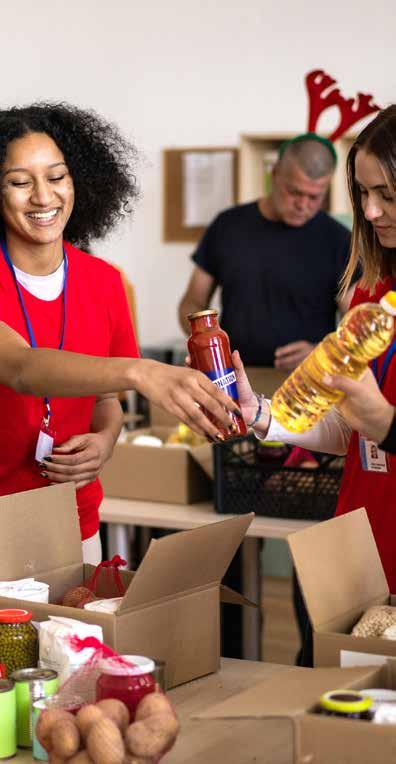





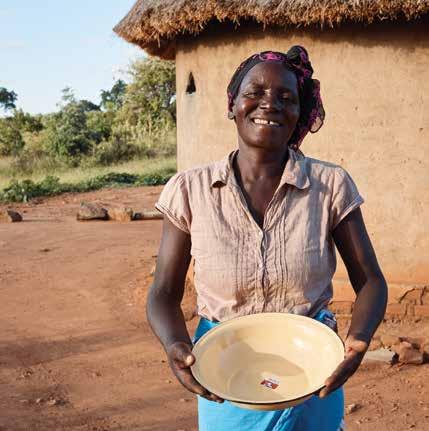
Joel Pratley/Act for Peace
Youth Leader Reflects on the Magic of UYC 2025
Having been a leader at every Uniting Youth Camp (UYC) since 2022, it was a joy and an honour to be part of UYC 2025 and to have witnessed what I believe is an ‘arrival’ moment in the growth journey that we as a camp community have been on since UYC’s conception.
UYC 2025 was full of all the things a youth camp should be full of: friendships, food, games on tarps covered with slime, the abandonment of said games for slip-and-slide adjacent anarchy, rock climbing, archery, campfire singalongs, and pranks conducted by both high schoolers and adult leaders alike. This year brought a new-found fervour about the house colour groups that UYC attendees are sorted into, with the house captains of the Blue Bears, Red Raptors, Yellow Gorillas and Purple Wolves pulling out all stops to rally their respective houses to earn points for the ‘House Cup’.
But beyond all of the fun, there were two things that I noticed about camp this year which struck a chord with me as a returning leader, and which have filled me with a deep sense of conviction that there is something very special going on in the UYC community that the wider church needs to hear about and invest into.

The first of these two things was the way that the campers took ownership of the worship part of the camp program. Each final night of UYC since 2022, we have held a camper-led night of worship and celebration. While this has taken on a variety of themes throughout the years, the aim of the leadership team has been to encourage campers to share something of their own: a reflection of their faith, or their growth, or of what camp has meant for them; and each year we have been blown away by what the campers have brought to the table. I can vividly remember a room brought to tears by a single spoken line about acceptance and belonging in 2022, and have myself been part of some multi-church bands on these final nights of camp.
This year, however, not only was the final night a celebration with dances, testimonies, poetry, music and reflections from campers, but each day of camp there were worship sessions led by our high schoolers - some who came as full bands from their respective churches, and some who jumped on board to have a go with some other keen musicians and became part of bands made up of members from all over NSW and the ACT, brought together by this camp, this opportunity, this invitation to bring their talents and use them for God at camp.
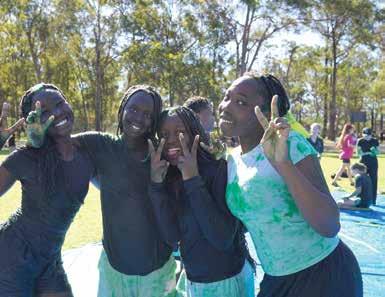
The second thing that I noticed wasn’t as obvious - where the culture of worship stood out loudly (literally) and clearly as something special this year, this second thing was subtle and nuanced, hard to pinpoint or to wrap words around. But, at its crux, it was connection. Relationship.
The fruits of friendships invested into for the past four years - friendships that span geographical and cultural boundaries. There was a togetherness that I noticed this year, a unity that spoke of trust built,
of an understanding that each member of this UYC community is welcomed, loved, and valued for exactly who they are and what makes them unique. It has taken us a few years and a few mistakes along the way, and obviously there is always room for growth, but this year more than any other year I was able to look around and see one UYC community, rather than a gathering of smaller communities from home congregations that had come to UYC. I saw it in the joy on faces when campers realised that leaders had returned to camp for another year, in the way that campers celebrated each others’ successes when rock climbing, in the jokes shared and in the vulnerabilities confided. I saw it in the pretences dropped and in the authenticity of interactions.
It has been a joy and an honour not only to lead at UYC 2025, but to bear witness to the growth of both individual campers and this whole community over the past four years. This year we reached an ‘arrival’ moment in terms of our hopes for what UYC could be as an authentic community that spans beyond geographical and cultural boundaries, and I look forward with great excitement to seeing future outworkings of this community.
It is abundantly clear to me that in UYC we see a glimpse of the potential of the future of the Uniting Church, and I feel a deep conviction that this is something that we as the church need to prioritise investing into. I wonder what the church will look like in the years to come, and I also wonder what parts of that will be a direct effect of the faith development and building of relationships that has taken place at UYC.
SOPHIE VAN EDE
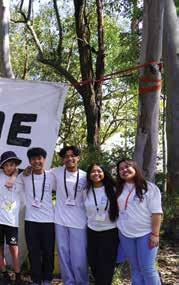
CA MP
The best way to support the ministry of Pulse is to donate to our "Send a Kid to Camp" fund.
These funds will be used to support those who otherwise could not afford to attend these events which are such high points in the faith formation of a young person. It continues a longer legacy dating back to the 1920s, when Methodist Church initiatives raised funds for children to attend Crusader camps.
“The Send a Kid to Camp fund is a fantastic opportunity for the whole church to contribute to the discipleship of young people in our Synod,” says Joanna Drayton, the Pulse Team Leader.
“Pulse receives funding requests from all over NSW and the ACT, mostly from rural and regional churches who are committed to getting their kids on our camps but for who the additional cost of transporting them to and from camp and funding leaders attendance is a stretch which sometimes puts these opportunities out of reach.”
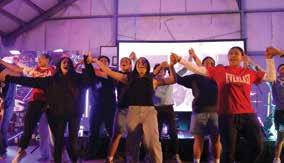
“Every little bit counts, your donations will go entirely to sending someone to one of our three major camps each year, so please think about what you could contribute to help build young people’s faith and develop young leaders as part of the Pulse ministry.”
"Send a Kid to Camp" directly supports young people to attend the Pulse camps throughout the year. This is a critical partnership opportunity for everyone to participate in ministry with young people—your donation can make a difference in one young person’s life (or many!) by subsidising or even covering their registration fees so they can attend, lifting their eyes and helping them see they are a part of the bigger family of God.
Young People Take Bold Steps of Faith at Quakers Hill Uniting
Sunday 28 September was a day of celebration at Quakers Hill Uniting as nine young people, aged 13 to 22, were baptised or confirmed. Six were confirmed and three were baptised, each one standing before the Church to share their testimony. They spoke about their decision to follow Christ, about God’s faithfulness in their lives, and about how the encouragement of the church has helped them take this step.
The service highlighted strong family connections. The six confirmations included three sets of siblings, and Youth Pastor Mark Watson had the privilege of baptising his daughter Hannah. After the service, more than 125 people gathered outside to celebrate in the sunshine and show their support.
Members of the congregation were moved by what they heard. One person reflected, “I felt joy in my heart all through the service. What wonderful testimonies those young people gave. I was gobsmacked that these teenagers have such a strong understanding of their faith. Almost all of them spoke about their relationship with God and their relationship with church family as empowering them on this important step.”
Another added, “Wow oh wow, so blown away by the words and commitments made today by our amazing youth.”
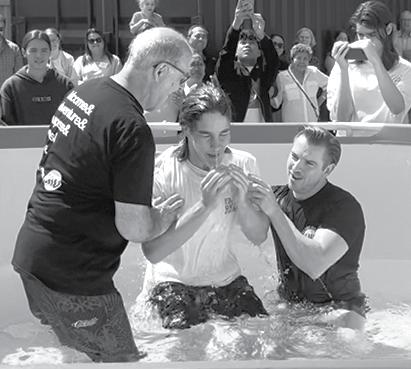
The growth of youth ministry at Quakers Hill has been steady in recent years. Just two years ago, only a handful of teens were attending Friday nights after moving on from the children’s program. Today, more than 20 young people are part of a thriving youth group that fills their Q-Hub meeting space every week.
Pastor Mark Watson, supported by the Growth Investment Fund, has been leading and mentoring this group, creating a space where young people can explore faith, ask questions, and grow together.
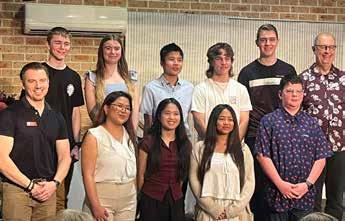
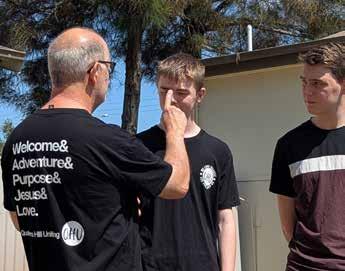
GOD IS AT WORK AMONG THE NEXT GENERATION. THE FAITH OF THESE YOUNG PEOPLE IS NOT ONLY SHAPING THEIR OWN LIVES BUT ALSO ENCOURAGING THE WIDER CHURCH FAMILY
For those who were present on Sunday, the message was clear: God is at work among the next generation. The faith of these young people is not only shaping their own lives but also encouraging the wider church family. Their testimonies reminded everyone that your witness matters, your encouragement makes a difference, and your prayers for young people are never wasted.
At Quakers Hill Uniting, nine young people took bold steps of faith. For you, it is a reminder that the church thrives when all generations walk together, listen to one another, and share in the joy of God’s ongoing work.
ADRIAN DRAYTON
A Rigorous Mercy
[Jesus] also told this parable to some who trusted in themselves that they were righteous and regarded others with contempt: 10 “Two men went up to the temple to pray, one a Pharisee and the other a tax collector. 11 The Pharisee, standing by himself, was praying thus, ‘God, I thank you that I am not like other people: thieves, rogues, adulterers, or even like this tax collector. 12 I fast twice a week; I give a tenth of all my income.’ 13 But the tax collector, standing far off, would not even look up to heaven, but was beating his breast and saying, ‘God, be merciful to me, a sinner!’ 14 I tell you, this man went down to his home justified rather than the other; for all who exalt themselves will be humbled, but all who humble themselves will be exalted.” Luke’s Gospel 18.9-14
Last week in Arizona, a man walks, in a stadium, full of people. He is wearing a suit. He is bearing a life-sized cross. He is waving to people in the crowd, as some of them applaud.
At the rally following the shooting death of a political activist in the United States, there were several indications of the syncretism of cultural, religious, political and media influences. Rage and worship, polemic and nationalism and grief took the stage during the event.
A few years ago, there was a primary school Easter drama in the Catholic Church of a regional town in western NSW. The usual mix of costumes compiled from cast-offs and sheets. A twelve-year-old boy bears the cross and the jeers of those around him, echoing that first Easter. He is Aboriginal. The poignancy of the casting causes me – and others around me – to catch our breath.
We know how this story appears to end.

crucifixion is a speed bump on the way to success.
And we have fallen amongst thieves.
I spent this morning with a colleague considering funeral ministry; one of the places we consistently engage in public theology. We talked about mercy and our calling to offer this gift to all who will receive. People come in grief and need to hear hope and forgiveness, not the ephemeral equivalent of a self-help app.
Our world is desperate for hope. In our thirst we are lured by illusions of comfort for us and blame for them. There is only darkness found on that path.
IN THE BROKEN CHRIST, GOD’S PRESENCE IS FULLY REVEALED
For those of us who follow the risen, crucified One, the temptation is always present to align ourselves with the social and political resources available to us. We arrive there out of fear, or discomfort, or because our society measures success in ways in which we stumble, and in which Jesus has no interest.
We will tailor the demands of Jesus to fit our culture more comfortably, and reinterpret his radical words of transformation, so that we remain undisturbed or, worse, confirmed in the way we live already.
A rational extension of this corruption is that we pronounce the social primacy of our faith and thus, the consequences for those who sit outside the schema we have shaped for ourselves and those like us. A moment later, we are talking of a Christian government, a Christian nation; in the following breath, we are talking of those who don’t belong.
We’ll make Jesus look like us, talk like us, eat the same foods and dislike the same people we dislike. We have created the risen Jesus in our own image, and the
We are able to offer mercy because we have first been offered it ourselves. We are recipients of that extraordinary gift, from a God who knows and loves us. This mercy, arising from Christ, crucified and risen, is the fount of life. It restores and cleanses, from all our brokenness.
A primary school child, carrying a cross. The story of God’s mercy does not end there. In the broken Christ, God’s presence is fully revealed. In Saturday’s silence, no speeches can be heard, no posts uploaded.
In Sunday’s wonder, the risen Christ embodies the only words worth hearing; forgiveness and life, the mercy of God. Never entitlement, always gift.
God of my integrity, in whom knowledge of truth and passion for justice are one; my heart was sentimental and you cleansed it with your rigorous mercy; my thoughts were rigid and you engaged them with your compassionate mind. Heal my fragmented soul; teach my naïveté; confront my laziness; and inflame my longing to know your loving discernment and live out your active love, through Jesus Christ, Amen.
A prayer from Janet Morley, All Desires Known, SPCK 1992
REV. SIMON HANSFORD
WITNESS Alive Across Our Synod
At Synod 2025, our Church launched the WITNESS album consisting of original songs born from the heart of our community. Since then, its music has echoed through congregations, youth camps, and gatherings across the Synod, carrying a shared voice of worship and the living pulse of faith.
WITNESS captures what we see and hear now, while declaring hope for what is to come. It invites us to sing courageously into unseen spaces, trusting that God is already moving even in silence and struggle. The album’s creation was an act of faith. Songwriters, musicians, and collaborators came together, weaving their stories, creativity, and trust into something that continues to grow. Here are just a few glimpses of how this new music is coming to life:
IGNITE:
YOUTH LEADING THE WAY
One of the most joyful threads in the WITNESS story has been the IGNITE youth crew — a passionate group of young leaders who stepped into the studio to lend their voices and hearts to songs like All to Rise and God Is Here
Watching these young people come alive in the studio was profoundly life-giving. Their faith and creativity shaped more than the recordings — they shaped the spirit of the songs themselves.
Even more inspiring has been seeing them take those songs home, leading them in youth groups, worship nights, and church gatherings.
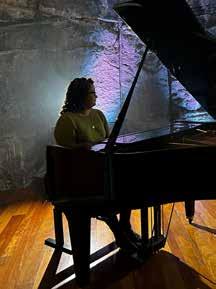

NEW MUSIC IN UNITING SCHOOLS
Music has been finding fresh expression within our schools too. Through an Artist-inResidence grant, Pymble Ladies’ College has embraced new worship music to rejuvenate chapel singing.
“Singing unites us,” says Edwina O’Brien from Pymble Ladies’ College. “It builds community, belonging, and offers spiritual joy.”
When David Gungor and I visited the schools, hearing hundreds of students lift their voices as we sang All of This Is Us and Brother was truly unforgettable. The energy in that moment was electric as if you could feel faith and joy filling the room. It’s something that still stays with me, knowing that those songs continue to inspire young people to sing their faith with courage and heart.
SONG SPOTLIGHT: YOUR BODY MADE MINE By
MAY LOVE BE OUR GUIDE
Mikali Anagnostis
As a child, before I had words to name God, I knew ‘Love’ through the way my parents cared for me. Their embodied acts of love were the ground of my being.
As I grew, I began to recognise that the love my parents showed me was part of the earth’s continual nourishment. Over time, I came to believe that the earth, my parents, and even my own body, are an overflow of the Love of the Divine.”
I remember one particular day, going for a walk on Garamagal Country. I lay down in the leaf litter and felt the earth holding me. In that moment, I knew the love of the earth, the love of my parents, and the love of God, were all one.
Your Body Made Mine celebrates the incarnation; the physical truth of God’s love expressed through our whole being. Mikali releases music with Marion St Sacred Arts. Hear their music and access sheet music via linktr.ee/marionst
From Quakers Hill Uniting Church
Creativity is thriving at Quakers Hill Uniting Church, where songwriter Daniel McIntosh penned May Love Be Our Guide after a challenge from Rev. Grant Atkins to write a song around their mission statement:
“We love because He first loved us.” 1 John 4:19
After weeks of uncertainty, inspiration struck suddenly at 2am. A melody emerged that captured the heartbeat of their faith.
“The song is about our calling to love as we have been loved,” Daniel shares. “It’s a response to God’s love, and a reminder that faith isn’t just something we feel, but something we live.”
Since its first performance, the song has travelled far beyond Quakers Hill, finding a home in worship, youth nights, and camps across our Synod.
ALIVE WITH POSSIBILITY
The story of WITNESS is still unfolding. This creative movement invites everyone to take part- to listen, to sing, and to bring the music to life within their own rhythms and communities.
Every time these songs are shared, the story grows, carried forward through every note, every smile, and every act of worship.
NATASHA HOLMES
Scan the Barcode to access resources including music, songbooks, and videos
Dr Maina Talia
Confronts Climate Denial at COP30
Dr Maina Vakafua Talia’s presence at COP30 in Belém stands out for its clarity and refusal to accommodate climate denial. As Tuvalu’s climate minister, on 30 September he used the summit to directly challenge the Trump administration’s rejection of climate science and its retreat from multilateral commitments. His criticism was not framed as diplomacy gone tense but as a matter of integrity and responsibility.
Talia described the administration’s actions as a “shameful disregard for the rest of the world,” a comment that contrasted sharply with the quiet caution many delegations have adopted in response to U.S. policy shifts. His concern was practical and immediate: the decision to cut climate adaptation funding directly affects Tuvalu, a nation already living with rising seas, salt intrusion, and the threat of community displacement.
A significant part of Talia’s approach comes from his grounding in theology. He studied at United Theological College in Sydney before completing his PhD under Rev. Dr Clive Pearson, who is known for his work at the intersection of theology and public life. This formation shaped the way he understands collective responsibility, the value of community, and the ethical obligations nations have when their choices impact vulnerable neighbours.
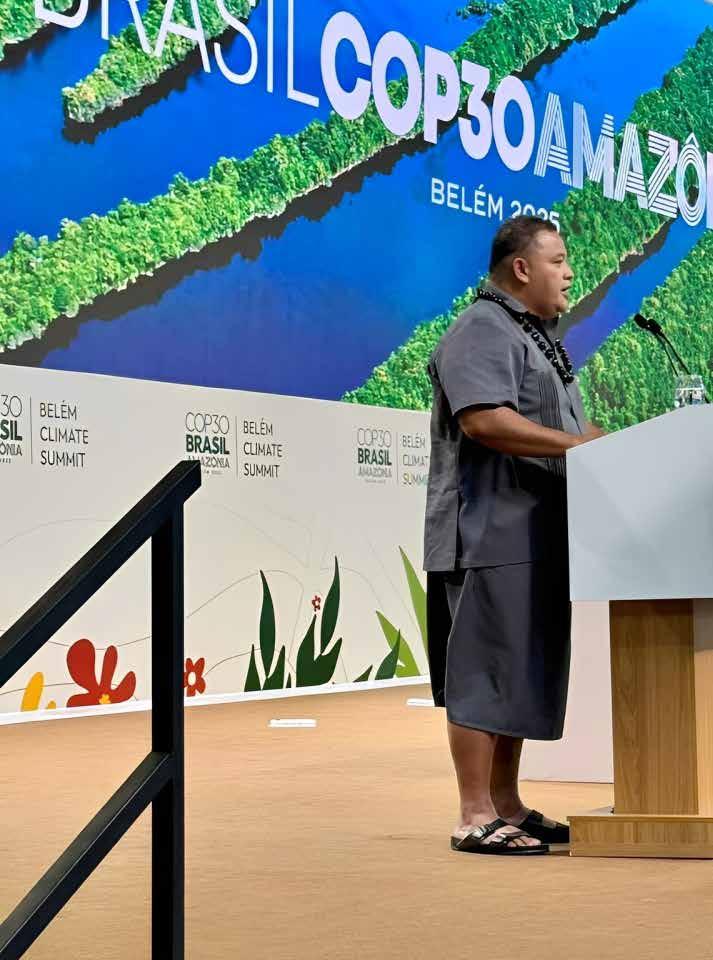
HIS VOICE BRINGS TOGETHER POLICY, CULTURE, AND BELIEF
During his years working as a climate change officer for the Ekalesia Kelisiano Tuvalu, he often framed climate issues as questions of justice rather than only environmental management. That perspective has carried into his political leadership. At COP30, he drew on principles familiar within Pacific theology, where care for land and ocean is tied to identity, stewardship and intergenerational duty. For Talia, rising seas are not an abstraction but a direct challenge to cultural continuity.
His theological grounding also informs how he interprets international law. When he referenced the obligation of states to prevent harm to the climate system, he spoke not only from legal precedent but from an ethical framework that expects nations to act in good faith when their choices have global consequences. That expectation extends to powerful states that choose not to participate fully in climate agreements.
Talia’s intervention at COP30 highlights a core tension: Tuvalu does not have the luxury of political posturing. He has made it clear that climate denial — whether through rhetoric or policy inaction — places small island states at risk. By naming this publicly, he refuses to let the summit sidestep the lived experience of frontline nations.
His voice brings together policy, culture, and belief in a way that sharpens the focus of the conference. He does not frame Tuvalu as a victim but as a community insisting on its right to continue. His theological training has given him a language of responsibility, accountability and shared humanity, all of which sit beneath his critique of climate denial. His message to COP30 is that decisions made by large nations shape the future of smaller ones, and that leadership requires honesty about that reality.
ADRIAN DRAYTON

We have already received a number of positive comments from treasurers who have used the new online module:
“It is always daunting using any new system, but once I’d checked the process and did a dummy run it was not a problem. My advice would be first make sure you have all the necessary data on hand to feed into the module and second answer only the question asked – do not give extra (unnecessary) information!”
Gerry Graham, Ashfield Parish Mission
“If a 79-yr old can do it, others should be able to too!”
Estelle Crabb, Kingscliff UC
“I decided to proceed with using the new tool, and I found it to be very easy to use. Some fields were pre-populated for our church, which avoided re-entry of data, and the help menus worked well. I only had 1 very minor issue with the tool, so I reached out for support on that issue. The response was very prompt and the issue was resolved. Overall I was impressed with the tool, the training and the support.”
Craig Hall, Gymea-Miranda UC
Annual Financial Returns: Still Time to Submit Yours
The Annual Financial Returns (AFR) process is an important part of how we, as a Synod, support the financial health and sustainability of our congregations.
Each year, the AFR provides valuable insight into the financial position and needs of congregations and presbyteries across NSW and the ACT. This information enables Synod to identify areas where further support may be needed, ensure congregations remain compliant with reporting obligations, and assist those seeking access to loans through Uniting Financial Services.
The official submission deadline for the FY25 Annual Financial Returns was 30 November 2025. However, if your congregation has not yet submitted, please know that it’s not too late. We warmly encourage treasurers and church councils to send in their AFRs as soon as possible. Even a late submission is an important contribution to our collective understanding of how we are stewarding our shared resources and mission.
We thank all Congregations and Presbyteries who have already taken the time to submit their AFRs before the deadline. So far, we are pleased to report that over 75 Congregations and
HOW TO SUBMIT:
If you need help with the online portal or prefer to submit your AFR traditionally, please email: AFR@nswact.uca.org.au
Presbyteries have made a submission. Your diligence and commitment are deeply appreciated. The timely submission of financial information plays a crucial role in strengthening the stewardship of our resources, ensuring transparency, and supporting the collective mission of the Uniting Church.
This year marks the rollout of the new online submission module, designed to make the process more convenient, secure, and streamlined. Many treasurers have already taken advantage of the new system, and early feedback has been encouraging. Whether online or via email, every submission helps the Synod better understand the financial landscape of our congregations and plan effectively for the future.
Together, through our continued cooperation and transparency, we can ensure that our shared ministry remains financially strong, compliant, and equipped to serve our communities in faith and love.
SYNOD FINANCE TEAM
To gain access to the module, please scab QR code for instructions >
Church Repairs: How to Find and Apply for Finance
Manly Uniting Church is a recent Church plant, housed in a historical neo-Romanesque Methodist Church on West Promenade, which turns 100 this year.
While the first attempted Church plant in 2020 was interrupted by the Covid lockdowns, today the congregation has a broad and diverse membership and has planted a range of mission enterprises, including a coworking space, exercise space and a social group for young families.
According to Church Council Chair, Carolyn Handley, taking on the stewardship of such an old building has not been smooth sailing, with significant works required to modernise the building and its soaring tower, and make it safe for congregation members, staff and visitors.
“The renovations inside of the Church was funded by money from the Northern Beaches Uniting Churches (NBUC) while we were a member of NBUC. We painted the walls and polished the floors. We also repaired the roof, which was done badly the first time and needed to be redone,” Mrs Handley says.
To pay for the remainder of the works, NBUC applied for a Schofield Loan through Uniting Financial Services (UFS). The loan, funded by a bequest made in 1878, offers up to $50,000 to Uniting Church congregations in NSW/ACT for essential and approved repairs to church buildings and manse properties, at an ultra-low interest rate of 0.5% p.a.
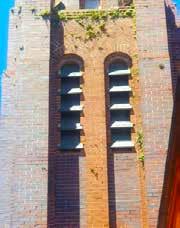
NBUC also applied for a UFS Church Loan, a specialised loan designed to fund capital expenditure on Churches, to enable Manly Uniting Church to compete the major works.
“The Schofield Loan was very helpful in enabling us to carry out the various works, because of the very low rate of interest it offers. We are currently using that and the Church Loan to have the Church tower bricks repointed. Due to the sea air in Manly the grout had worn away over many years, which was making the Church tower unsafe,” Mrs Handley says.
“The next job we plan to do is the eaves, which is an urgent job as one recently fell off, highlighting a safety issue.”
Max Blacker, Treasurer for NBUC, worked with Manly Uniting to obtain the finance needed for the works to be carried out.
“The support NBUC provided was undertaken in compliance with a Memorandum of Understanding between the two churches. The MOU included specific financial support including building rehabilitation, ministry and operational expenses,” he says.
“The loan application was unusual in that funds were to be used to fund works at a site that is not under the stewardship of NBUC. However, we worked through the issues with UFS in a timely, collaborative and efficient manner.”
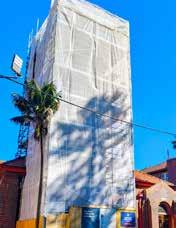
The current renovations to Manly Uniting Church, which have involved extensive scaffolding, are due to be completed in October.
“Once this stage is done, we will be able to have a relaunch and celebrate the Church’s 100-year anniversary. We are very much looking forward to having a Church that no longer looks derelict and where we can continue to build on our missional activities, which help community members to find a sense of belonging,” Mrs Handley concludes.
AMANDA TAYLOR
COMMUNICATIONS AND MARKETING MANAGER, UNITING FINANCIAL SERVICES
APPLYING FOR A CHURCH OR SCHOFIELD LOAN
If your congregation has a Church or manse that needs repair or renovation, knowing the steps involved to apply for a loan can help to make the process of obtaining finance faster and more efficient.
Before you apply, these are the things you need to know.
1. Congregations should first complete a Building Application form and return it to Synod Property.
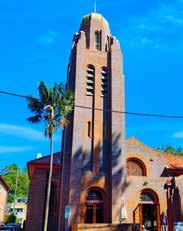
2. Once this is approved by Synod Property, applicants should complete the UFS Loan Application Form. This form should be returned to UFS with the Building Application Form, Presbytery sign off and relevant quotes for works to be undertaken.
3. Once the loan is approved by UFS, the applicant then reviews the Loan Agreement issued by UFS, seeks Church Council approval and returns the signed loan documents to UFS.
4. Funds are disbursed by UFS, with confirmation letters provided.

LECTIONARY REFLECTIONS
December 2025: Trusting the God of Tomorrow
Prepared by Rev. Dr Ockert Meyer
ADVENT 2 (7 DECEMBER)
Isaiah 11:1–10; Psalm 72:1–7, 18–19; Matthew 3:1–12; Romans 15:4–13
Both the Gospel and Old Testament readings give voice to one “crying out in the wilderness.” The wilderness was a defining space in Israel’s story — a place between slavery and the Promised Land. It was a liminal, uncertain space, much like our own time: not lost in despair, but not yet rejoicing; caught between fear of what lies ahead and longing for renewal.
Among Scripture’s many promises, few are as comforting or striking as Isaiah’s vision:
“They will not hurt or destroy on all my holy mountain, for the earth will be full of the knowledge of the Lord as the waters cover the sea.” (Isaiah 11:9)
This prophetic image stands in sharp contrast to the world we know, yet it offers a glimpse of divine possibility — a vision that gives hope and peace in a time of disorientation.
Paul reminds us in Romans 15:4 that “whatever was written in former days was written for our instruction, so that by steadfastness and by the encouragement of the Scriptures we might have hope.” Scripture’s purpose, Paul insists, is to sustain our hope — a hope anchored not in wishful thinking, but in the faithfulness of God revealed in Christ.
Hope, as theologian Rubem Alves once said, “is hearing the music of the future; faith is dancing to it.” Our hope is not optimism about outcomes but trust in the God who holds tomorrow. Advent invites us to live as wilderness people — pilgrims who trust the God of today for the day of tomorrow.
ADVENT 3 (14 DECEMBER)
Isaiah 35:1–10; Psalm 146:5–10; Matthew 11:2–11; James 5:7–10
The readings for the third Sunday of Advent are filled with anticipation and joy. Isaiah 35 opens with radiant imagery: “The wilderness and the dry land shall be glad, the desert shall rejoice and blossom; like the crocus it shall blossom abundantly and rejoice with joy and singing.”
Yet within the first 39 chapters of Isaiah — heavy with judgment and despair — this chapter feels oddly misplaced. Scholars
note its “brilliant contrast,” some suggesting it was inserted later. But perhaps its very “out-of-place” nature is the point. Prophetic hope always appears where least expected, just as joy often bursts forth in the most unlikely of settings.
Joy is like floodwater breaking through dry ground, disregarding the barriers we’ve built. It refuses containment. It appears “out of nowhere,” much like John the Baptist’s message in the wilderness — a reed trembling in the wind, a sign that new life is near. Advent joy is not denial of hardship; it is the stubborn conviction that God’s promise will find its way through.
ADVENT 4 (21 DECEMBER)
Isaiah 7:10–16; Psalm 80:1–7, 17–19; Matthew 1:18–25; Romans 1:1–7
Isaiah 7:14 speaks the familiar promise: “The Lord himself will give you a sign. Look, the young woman is with child and shall bear a son, and shall name him Immanuel.”
In Matthew’s Gospel, this prophecy finds fulfilment in the birth of Jesus — both heir to David and conceived by the Holy Spirit. Read alongside Psalm 80 and Romans 1, the picture widens: God’s hand rests on this child of promise, through whom new life and restoration will come.
The psalmist’s plea captures the heart of Advent’s longing:
“Give us life, and we will call on your name.” (Psalm 80:18)
The hope, peace, joy, and love of Advent all converge here — in the promise of life restored. The psalmist is not asking for more years, but for a renewed life worth living. He asks for the end of disappointment and the beginning of hope. Advent whispers that this new beginning is near. Christmas is coming — life is on its way.
CHRISTMAS DAY (25 DECEMBER)
Isaiah 62:6–12; Psalm 97; Luke 2:1–20; Titus 3:4–7
In The Color of Water, James McBride tells the story of his Jewish mother, who endured years of abuse under a cruel father. Her life was marked by fear and shame until she met McBride’s father, a Black Baptist preacher, who introduced her to a God who forgives and restores. She said:
“Your father changed my life. He taught me about a God who lifted me up and forgave me and made me new... I was reborn in Christ. Had to be, after what I went through.”
Her story of rebirth mirrors the message of Christmas. What happened to one broken life through Christ has, in the birth of Jesus, happened to all creation. History itself was reborn — time reset on a new trajectory toward life.
This is the joy of Christmas: that in Jesus, God has entered human history, transforming despair into hope and death into life.
CHRISTMAS 1 (28 DECEMBER)
Readings: Isaiah 63:7–9; Psalm 148; Matthew 2:13–23; Hebrews 2:10–18
The days between Christmas and New Year often feel suspended — the feasting slows, the world pauses, and yet questions linger. What difference has Christmas made? We proclaim the birth of the Prince of Peace, yet conflict, violence, and fear still fill our news and lives.


Immediately after the visit of the Magi, Matthew tells of the Holy Family’s flight to Egypt and the massacre of the innocents — stories of persecution and grief. From the beginning, the story of Jesus unfolds in the shadow of the cross. The birth of Christ takes place in a world bent on ending things.


Christmas, then, is not the conclusion of God’s work but its beginning. The incarnation is God’s invitation to humanity — a journey not of our ascent to God, but of God’s descent to us.
In Jesus, God comes near. God still comes near — in Spirit, in community, in the quiet spaces between our days. Christmas is not only a story we remember; it is a reality we live. Life moves on, but the same Jesus comes to us — today, tomorrow, and in every season yet to come.

January 2026: The Light That Leads Us On
Prepared by Rev. Dr Ockert Meyer


CHRISTMAS 2 (4 JANUARY 2026)
Jeremiah 31:7–14; Psalm 147:12–20; John 1:1–18; Ephesians 1:3–14
John 1 is among the most familiar passages in Scripture - and perhaps, for that very reason, one of the least understood. It may help to read it through the lens of Jeremiah. Scholars often call Jeremiah 30–31 the “Little Book of Comfort”, written during Judah’s darkest hour - when Jerusalem was under siege and exile loomed.
In that setting of fear and ruin, the prophet dares to sing of joy: women dancing, old and young rejoicing, and the promise, “I will turn their mourning into joy, I will comfort them and give
them gladness for their sorrow.” (Jer 31:13) These are not words of observation but of imagination - the vision of faith that sees beyond collapse to restoration.
What’s most striking in Jeremiah’s vision is what’s missing: the king, the temple, the land - the old pillars of Israel’s identity. When all else failed, they rediscovered the only foundation that endures: the light of God, the light the darkness cannot overcome. That same light shines in John’s prologue - the Word through whom all things came to be, now made flesh to dwell among us.
EPIPHANY 1 (11 JANUARY)
Isaiah 60:1–6; Psalm 72:1–7, 10–14; Matthew 2:1–12; Ephesians 3:1–12
The road to Epiphany stretches twelve days from Christmas, ending with the feast that celebrates Christ revealed as the light of the world. To understand this light, we go back to Genesis: “Let there be light.” This was not sunlight - for the sun came later - but the light of God, the illumination through which creation itself was understood.
Epiphany, then, is the invitation to see the world in Christ’s light. The magi, guided by “his star rising,” travelled far to bow before the child. The Greek word translated as “pay homage” (proskuneō) means to bow in reverence - it is the root of our word worship, once worth-ship: to ascribe worth.
Epiphany light exposes what is truly worthy of our devotion. For as Scripture and experience remind us - we become what we worship.
EPIPHANY 2 (18 JANUARY)
Isaiah 49:1–7; Psalm 40:1–11; John 1:29–42; 1 Corinthians 1:1–9
In this week’s Gospel, John the Baptist points to Jesus as “the Lamb of God” and “the Light of the world.” To grasp the depth of that declaration, we turn to Isaiah 49, where God speaks to a people “deeply despised and abhorred by the nations” (v.7). Israel, still scattered in exile, had begun to rebuild comfortable lives in Babylon - torn between two worlds: faith and compromise, despair and hope.
Into that tension God speaks: not simply words of comfort but a commission - “I will give you as a light to the nations.” Rather than retreat inward, God calls the weary and rejected to look outward, to become instruments of healing and witness.
As Rabbi Abraham Heschel observed, “Religion begins with an awareness that something is asked of us.” To encounter the light of Christ is not merely to receive comfort; it is to be called - to reflect that light into darkened places.
EPIPHANY 3 (25 JANUARY)
Isaiah 9:1–4; Psalm 27:1, 4–9; Matthew 4:12–23; 1 Corinthians 1:10–18
What Isaiah foresaw and John proclaimed now takes shape in Matthew’s Gospel. Jesus, the light to the nations, steps into the world and begins to call others to join his mission.
He begins not in power or prestige but in Galilee - in the territories of Zebulun and Naphtali, the first to fall in Israel’s exile and long regarded with contempt. It is here, among the overlooked and ordinary, that Jesus plants the seeds of his movement.
His first disciples were fishermen - not the simple, idealised figures of later imagination, but men of modest respect and limited influence. Yet it was precisely among such people that the first ekklesia - the “called out” communitybegan.
No one volunteers for discipleship in the Gospels. They are called. And that is the heart of Epiphany: God’s light shining not on the world’s powerful but through those least likely, least expecting to be chosen.
In these early weeks of the year, as Christmas light fades from our homes, Epiphany reminds us that the true light still leads us on. It calls us to see with faith when the way ahead is dim, to worship what is truly worthy, and to bear the light of Christ into every corner of our world.


February 2026: From Mountain to Wilderness


Prepared by Rev. Dr Ockert Meyer
EPIPHANY 4 (1 FEBRUARY)
Micah 6:1–8; Psalm 15; Matthew 5:1–12; 1 Corinthians 1:18–31


lives are shaped by God’s Law and our righteousness exceeds that of the Pharisees.


These readings sit in the season of Epiphany - where illumination and revelation run are lurking. Matthew begins with: “When Jesus saw the crowds, he went up the mountain; and after he sat down, the disciples came to him. Then he began to speak…”


Three details matter deeply here. First, Jesus’ ascent up the mountain recalls Moses climbing Sinai to receive God’s teaching. Second, Matthew’s note that Jesus “sat down” is not about fatigue - it signals authority. Rabbis sat to teach, taking the posture of divine instruction. Third, the Greek text adds a revealing phrase lost in translation: “He opened his mouth and began to teach them.” In Scripture, that phrase always signals revelation - a word from God about life’s deepest truth.


Jesus insists he has not come to abolish the Law but to fulfil it. “Until heaven and earth pass away,” he says, “not one letter, not one stroke will pass until all is accomplished.” In Israel, the Law was never just a list of moral rules. It begins with relationship: “I am the Lord your God.”


Jesus looks upon the crowd - the meek, the mourning, the poor - and tells them, “Blessed are you.” He does not command them to become meek or poor. He declares that the kingdom of God is already being built on and by them. It sounds impossible, yet it is precisely through God’s grace that the impossible becomes real. The Sermon on the Mount begins with this divine reversal: blessing where the world sees brokenness.
EPIPHANY 5 (8 FEBRUARY)
Isaiah 58:1–12; Psalm 112:1–10; Matthew 5:13–20; 1 Corinthians 2:1–16
Jesus often uses the “I am” sayings in the Gospels, but here he shifts: “You are the salt of the earth… you are the light of the world.” Notice, not you should bebut you are.
We are not called to be “the honey pots of the world,” as Helmut Thielicke quipped - not simply nicer or sweeter people - but something far more substantial. Directly after calling his followers salt and light, Jesus speaks of the Law. The two are inseparable. We are salt and light only when our


To be salt and light, then, is not about behaviour or moral niceness - it is about being in God. It means that our identity is not self-constructed but found in Christ. He is the flavour of our lives and the light by which we walk. Only in him do we become the salt of the earth and the light of the world.

TRANSFIGURATION (15 FEBRUARY)


That is the heart of Transfiguration: the unveiling of divine glory hidden in the ordinary. The change is not in Christ’s face alone, but in our vision - learning to see holiness in the everyday.
LENT 1 (22 FEBRUARY)


Genesis 2:15–17; 3:1–7; Psalm 32; Matthew 4:1–11; Romans 5:12–19


It is almost impossible to grasp the Gospel’s depth without Genesis. In the garden story, the serpent is never named as Satan or devil. The Hebrew word nachash means “shining” or “enchanting.” Intriguingly, nachash is the reverse of Shechinah - the radiant glory of God. The serpent, then, mimics divine light. Evil does not always appear as corruption; more often, it imitates goodness.


Exodus 24:12–18; Psalm 2; Matthew 17:1–9; 2 Peter 1:16–21

In the Old Testament, divine manifestations always happen on mountains. It is there Moses receives the Ten Commandments, Elijah hears God in the “sound of sheer silence,” and seventy elders of Israel behold the Lord (Exodus 24).
In that passage, an extraordinary thing occurs: “They saw the God of Israel, and they ate and drank.” Imagine - standing before the Holy One, and the response is not fear but table fellowship. Yet in the New Testament, this order reverses. After the resurrection, Jesus meets two travellers on the road to Emmaus. They do not recognise him - until they sit down, break bread, and eat. Then “their eyes were opened and they knew him.” The moment of recognition happens at the table.
Each time we gather for Communion, this same mystery unfolds. As we eat and drink, our eyes are opened. We see, perhaps for the first time again, who sits among us - the face of God in familiar human faces.

The serpent promises Adam and Eve a god-like life, freedom, and fulfilment— precisely the same temptation the devil offers Jesus in the wilderness: “Since you are the Son of God, turn these stones into bread… throw yourself down… take all the kingdoms of the world.” Each temptation distorts what is good—the desire for sustenance, protection, and power - into self-serving autonomy.
The devil rarely appeals to our worst instincts. He appeals to our best: our longing for honour, strength, and agency. But the path of discipleship begins here - in the wilderness - where those desires are stripped bare and re-ordered toward God. Lent is not simply a season of denial; it is the daily journey from the love of my own will to the will to love.
This is where conversion always happens. We discover that it is our willfulness - our insistence on controlling life - that separates us from God. Yet in that very awareness, grace meets us again, leading us from mountain to wilderness, from glory to struggle, from self-reliance to trust.
These Lectionary Reflections were prepared by Rev. Dr Ockert Meyer and have been edited for length. You can find the full text of the reflections at insights.uca.org.au

The Challenge of
Loving Difficult People
When Jesus said, “Love your enemies and pray for those who persecute you” (Matthew 5:44), he was calling his followers into a way of life that feels almost impossible. It is easy to love those who show kindness. It is natural to give back to those who give to you. But what about the person who wounds you with words? What about the family member who never lets go of past wrongs? What about the colleague who undermines you? Here is where the teaching of Jesus becomes not just a command, but a daily invitation to live differently.
Jesus grounded his words in the truth of God’s character. Just a few verses later he said, “He causes his sun to rise on the evil and the good, and sends rain on the righteous and the unrighteous” (Matthew 5:45). God’s care is not limited to those who deserve it. Every person receives breath, food, light, and life from his hand. If God does not withhold his care from those who resist him, then you are invited to see others through the same lens.
This does not mean pretending hurt is not real. The psalms are full of cries of pain and anger. “How long, Lord? Will you forget me forever?” (Psalm 13:1). God welcomes honesty about what others have done to you. Yet alongside that honesty comes the call to let love, not bitterness, have the final word.
Loving difficult people does not erase the need for boundaries. Proverbs says, “Above all else, guard your heart, for everything you do flows from it” (Proverbs 4:23). Guarding your heart sometimes means stepping back, limiting exposure, or refusing to allow destructive behaviour to continue unchecked. Jesus himself often withdrew from crowds that pressed too hard (Luke 5:16). Creating space does not contradict love. It can actually protect it.
your time with that person, but you can still pray that God will soften both their heart and yours.
Think of the colleague who speaks poorly of you at work. Jesus’ words echo again: “Pray for those who persecute you.” Your prayer might not change the colleague, but it will change you. It will open your heart to respond with fairness, not retaliation.
There are deeper examples too. Some parents forgive the driver who caused an accident that changed their family forever. Some believers forgive betrayal in marriage or friendship. Others pray for those who mock their faith. These choices echo the cross, where Jesus prayed, “Father, forgive them, for they do not know what they are doing” (Luke 23:34). Love of enemies is not a small suggestion—it flows from the very heart of the gospel.
IT IS ABOUT GOD’S SPIRIT SHAPING YOU TO LOOK MORE LIKE CHRIST
You may not feel capable of this kind of love. On your own, you are not. But Romans 5:5 promises, “God’s love has been poured out into our hearts through the Holy Spirit, who has been given to us.” Loving difficult people is not about your strength. It is about God’s Spirit shaping you to look more like Christ.
The danger is when boundaries harden into bitterness. Hebrews 12:15 warns, “See to it that no bitter root grows up to cause trouble and defile many.” Bitterness takes root when you replay offences and let resentment grow. Love resists that. Even if you must draw lines, your heart can still hold the other person before God in prayer.
Think of the neighbour who always complains. Romans 12:18 says, “If it is possible, as far as it depends on you, live at peace with everyone.” That may mean offering a kind greeting, even if the neighbour never returns it.
Think of a relative who brings up past failures at every family gathering. Ephesians 4:31–32 says, “Get rid of all bitterness, rage and anger… Be kind and compassionate to one another, forgiving each other, just as in Christ God forgave you.” Forgiveness does not mean excusing wrong, but it means refusing to let anger harden into hatred. You may need to limit
Prayer is where that shaping begins. Each time you lift up the name of someone who hurt you, you release a little of the anger that clings to you. Each prayer hands over the burden to God, who sees and judges rightly. Over time, your heart begins to change.
The challenge of loving difficult people will never disappear. Some days you may stumble back into anger or avoidance. Yet Jesus’ words stand: “Love your enemies.” This is not a command to weigh you down, but a path to freedom.
When you choose love, you step out of the cycle of revenge. You live as a child of God. You begin to reflect Christ, who loved without limit and laid down his life for friend and enemy alike.
As you face the difficult people in your own life, hear again the call of Jesus. Set boundaries that guard your heart. Refuse the trap of bitterness. Pray for those who wound you. And trust that the Spirit of God is at work, shaping you to love as Christ loved.
ADRIAN DRAYTON
AI in Preaching, Liturgy and Christian Community
In an era of algorithms and automation, perhaps the most radical witness of the church is simply this: gathering, praying, serving, and loving, confronting evil and injustice with a heart of reconciliation.
TECHNOLOGY AND THE PEOPLE OF GOD
The rise of any new technology evokes varied responses. Some are early adopters, eager to explore the potential. Others adopt later as the tools become mainstream. And there are always those who find change overwhelming, especially as keeping up with new developments often feels harder with age.
The relationship between faith and technology is long and complex. The printing press enabled widespread access to Scripture and fuelled the Reformation.
Mass media gave rise to televangelism and mega-churches. The internet and social media fractured religious discourse into digital tribes and echo chambers. Now, artificial intelligence (AI) is reshaping how we live, think, and worship.
For the Uniting Church, with its deep commitments to communal discernment, justice, and embodied worship, witness and service, the emergence of AI poses both opportunities and profound challenges.
WHAT AI CAN OFFER IN WORSHIP AND PREACHING Efficiency and Support for Ministry
AI can quickly generate sermon outlines, edit manuscripts, develop liturgical prayers, and even offer hymn suggestions. For smaller congregations or ministers juggling multiple congregations, this can be a time saver. It can free up time for pastoral care, missional participation, and community building.
Access and Creativity
Congregations with limited resources may find in AI a partner that brings drafting agendas for church council, offering new ideas to the table, or exploring new pathways and processes fit for context and community.
It can contextualise and draft events and even prayers for particular occasions, or open up insights from global theological sources otherwise hard to access.
Training and Education
AI tools can be used in theological formation. As one recent study notes, “AI-mediated dialogic simulations may enrich theological education by exposing students to diverse perspectives” (Papakostas et al., Religions, 2025).
Inclusion
With proper user guidance, AI could help generate liturgies in multiple languages, or draft worship resources that are more accessible to diverse learning and cultural contexts.
RISKS AND REALITIES
Theological and Spiritual Depth
Preaching and prayer are not simply about delivering well-crafted words and ideas. It is Spirit-inspired, shaped by consciousness and communal discernment, and always open to an encounter with God. AI can generate polished text, but it cannot embody lament, joy, confession, or prophetic passion; it cannot love as Christ loves.
As Tony Reinke asks, “In a world where AI can do everything we can do, but better, why do we need authors, scholars, ministers and pastors, evangelists, theologians, or Bible commentators at all?” (Authentic Preaching in the Age of AI, 2024).
Dependence and Commodification
There is a temptation to outsource too much. If worship becomes content production, the church risks commodifying God’s word and mission as well as losing the “work of the people” (leitourgia) that makes worship transformative.
Bias and Control
AI systems are trained on datasets curated by corporations with their own political, social and economic interests.
Which theologies, perspectives, or cultural assumptions are being amplified — and which are being silenced? For the Uniting Church, which values intercultural diversity and the voices of First Peoples, and discernment that includes the marginalised, this presents a challenge.
Environmental Stewardship
AI Expansion is an environmental justice issue in our own backyard. Sydney’s data centres already consume nearly 10 gigalitres of water annually — almost 2% of the city’s supply. Projections suggest this could rise to 25% of Sydney’s drinking water by 2035 (ABC News, 27 Aug 2025). Training a single large AI model can consume millions of litres of water and hundreds of tonnes of carbon emissions (Li et al., arXiv, 2023). In a time of climate crisis, how can churches embrace AI without grappling with its ecological footprint?

THEOLOGICAL REFLECTIONS
Imago Dei and Creatureliness
The Uniting Church affirms that humanity is created in the image of God, relational and embodied. AI reminds us of human limits, but the danger is forgetting that being human is more than efficiency or productivity and complex data articulations.
Kingdom and Empire
The Basis of Union calls the Church to witness to Christ, which is different to powers that threaten to destroy human community and diminish the whole creation. The concentration of power in a few tech corporations, with influence/ control greater than many nation-states, echoes biblical critiques of empire. The church must ask: does AI serve the Kin(g)dom of God, or reinforce systems of domination and control, which could be exploitative?

Worship as Communal Participation
AI can draft prayers, but it cannot gather around the Lord’s Table, baptise, or embody the messy, grace-filled reality of community. Even when worship feels ordinary or unpolished, it reflects the Triune God’s interdependent life reflected in us as the body of Christ. True worship resists the individualism and commodification of our age, but opens us to transcendence, transformation and deep communion in and with God and all creation.
PRACTICAL DIRECTIONS FOR THE UCA
Discernment and Boundaries: Use AI as a tool, not as an authority, it will not be a substitute for spiritual reflection, creating prayers or even creating sermons.
Transparency: Be honest with congregations and ministry contexts about when and how AI tools are used.
Education and Formation: AI cannot replace your own learning and development, let alone foster your ability for critical thinking and discernment.
The hard work of learning, discipleship and embodying this grows character and one’s own integrity as a whole person.
Justice and Sustainability: Advocate for ethical AI development, particularly regarding water, energy, and environmental impacts in Sydney and beyond. Bring a critical voice when AI is working against human agency and the flourishing of creation.
Community: Uphold embodied, person and community-focused worship, witness and service as central to the Uniting Church’s ethos. Don’t outsource this to AI.
WITNESS IN THE AGE OF AI
Jesus declared, “I have come to set the captives free” (Luke 4:18). For the Uniting Church, the challenge is to resist captivity to technological empires, and instead embody the freedom of God’s people.
AI may help us draft, polish, and imagine, but it cannot replace the Spirit’s work among a gathered people.
AI MAY HELP US DRAFT, POLISH, AND IMAGINE, BUT IT CANNOT REPLACE THE SPIRIT’S WORK AMONG A GATHERED PEOPLE
Worship is not about efficiency. It is about encounter: God with us, Christ in community, Spirit breathing life into ordinary people.
In an era of algorithms and automation, perhaps the most radical witness of the church is simply this: gathering, praying, serving, and loving, confronting evil and injustice with a heart of reconciliation, in ways no machine ever can.
And yes, I did use Grammarly AI to edit this and ChatGPT to find relevant quotes and illustrated resonances with other works related to my manuscript in the editing process and argument flow, but this is my work and not that of AI’s. I am also debating how much I use AI too.
For the Uniting Church, with its deep commitments to communal discernment, justice, and embodied worship, witness and service, the emergence of AI poses both opportunities and profound challenges.
REV. BEN GILMOUR
A Story of Grace Beneath the Rubble
Based on a true story, Roofman (2025) brings together Channing Tatum and Kirsten Dunst in a quietly gripping drama about crime, isolation, and unexpected grace. Directed by Derek Cianfrance (Blue Valentine, The Place Beyond the Pines), the film follows Jeffrey Manchester, a former U.S. Army Reserve soldier whose unusual method of burglary (entering McDonald’s restaurants through their roofs) earns him the nickname “Roofman.”
After escaping from prison, Manchester hides inside a Toys “R” Us for months, constructing a secret life above the shelves of bikes and dolls. The story could have easily turned into a dark comedy or a stylised crime thriller. But Cianfrance takes a more human route, one that focuses less on the crime and more on the person underneath it.
Tatum plays Manchester with restrained depth. There’s no charm or bravado, just a man caught between guilt and survival. The moments inside the toy store, a place symbolizing innocence, become quietly poetic. Each night, as he walks among the shelves, there’s a sense of both absurdity and sadness. His hiding place is filled with the laughter of children during the day and silence at night, a contrast that powerfully captures the brokenness of a man disconnected from the world.
Then comes Leigh Wainscot, played with tenderness and quiet conviction by Kirsten Dunst. Leigh works at Toys “R” Us as a saleswoman and is a local church volunteer who helps coordinate a toy donation drive.
One of the film’s standout scenes comes when Leigh invites her rude manager, Mitch played by Peter Dinklage, to the toy drive at her church. Her tone is gentle, her invitation without pressure or pity. Mitch discourteously rejected her invitation in a sharp and defensive tone. But Leigh’s patience never wavers. She offers grace without naming it, a profound compassion that echoes the call to love without condition. It’s a small exchange, yet it holds the heart of the film.

This was all witnessed by Manchester, who was watching it all from his hiding place via a setup camera in the manager's office. The next morning, Jeffrey collects some toys in a bag and rides to the church in an attempt to secretly help Leigh with her donation drive . While dropping it off, he gets pulled in by one of the church members where he comes face to face with Leigh for the first time. She doesn’t yet know who he really is. But their brief encounters slowly builds into something meaningful. Leigh’s presence brings light to Manchester’s shadowed world, not through romance, but through the simple act of kindness.
consequence lies a meditation on grace. Leigh’s response to Manchester’s past reflects the kind of compassion we rarely see in mainstream cinema, one that doesn’t excuse wrongdoing but insists on seeing the humanity that remains.
GRACE DOESN’T COME BECAUSE IT’S DESERVED, BUT BECAUSE IT’S GIVEN
The film offers a subtle echo of the Christian message: that grace doesn’t come because it’s deserved, but because it’s given. Leigh’s faith isn’t spoken about directly, but it’s evident in the way she moves through the world. Her compassion recalls the passage from 1 John 3:18: “Let us not love with words or speech but with actions and in truth.” Through her quiet persistence, she embodies a faith that acts rather than preaches.
As Manchester’s secret life begins to unravel, the story doesn’t head toward sensationalism. Instead, it moves inward towards reflection and consequence. When he’s finally arrested, the story could have ended there, but Roofman lingers a little longer, allowing space for something more redemptive. In the final act, Leigh visits him in prison. Their conversation is short and measured, but filled with weight. This simple act of presence brings to mind the spiritual mandate to visit those in bondage (Matthew 25:36). There’s no grand forgiveness scene, no sweeping music, no slow-motion reactions, just two people sharing a moment of understanding that feels like its own quiet miracle.
In a culture quick to condemn, Roofman offers a counter-story: that judgment is easy, but grace requires courage. It reminds us that faith is often lived out in small gestures, an invitation, a visit, a word spoken without judgment. Those moments may not make headlines, but they change hearts.
In September 2025 at the Toronto International Film Festival (TIFF), Channing Tatum was presented with Tribute Performer Award for his role in Roofman. This honour is not a competitive award in the traditional sense, but rather a special, pre-announced recognition of his work and a key early indicator of awards-season momentum. Roofman is available to watch now on Plex.
ADITEE VORA
AcClimatise

JIONE HAVEA Mission Catalyst – Stewardship of the Earth
Climate change is one of the critical challenges of our time that needs to find more attention in worship events.
"The Lectionary is not tuned to the current realities of real life, such realities as bushfire season, hurricane season, the mourning of Indigenous people on Invasion Day," says author Jione Havea. "The project is an invitation and a dare, to make the lectionary see, hear and feel the conditions and the environment in which we live."
"In other words, to tune the lectionary to the conditions and the mournings of the earth."
"These reflections are offered to help advocate for climate justice," says Alimoni Taumoepeau.
"Please use these these reflections in your study groups and worship and service events. This is at the heart of our theme for Synod 2025 - Transforming Communities," says Moderator, Rev. Faaimata Havea Hiliau.
This conviction is behind the “Acclimatise (the) Lectionary” project, which will begin by providing weekly reflections to address the realities of climate change and the rise of climate injustice.
JIONE HAVEA