CROWN
Facts and scientific study results
TGA-APPROVED DISTRIBUTOR:

®
1. Basic information on the material and the manufacturing process 4 2. Chewing simulation – Permanent crowns 6 3. Chewing simulation – Long-term temporary bridges 8 4. Marginal-gap tightness 10 5. Abrasion resistance 11 6. Color uniformity and colorfastness 12 7. Curing depth 13 8. Bond strength with luting cements 14 9. Flexural strength 15 10. Water absorption and solubility 16 11. Information on denture teeth/denture manufacture 17 12. Bond strength – denture tooth and denture 18 13. Biocompatibility 19 TABLE
CONTENTS 2
OF
INDICATIONS
Permanent crowns
Long-term temporary bridges
Denture teeth
Inlays
Onlays
TECHNICAL DATA
Veneers
1) Crown and veneering resins (following the standard)
2) Glass-fiber-reinforced resins – Determination of indentation hardness with a Barcol hardness tester
3) Biological assessment of medical devices – Part 1: Assessment and testing in the context of a risk management system.
Unless otherwise indicated, all tests have been carried out at DETAX GmbH or at SD Mechatronik GmbH in accordance with the relevant standards and specifications.
The test designs used in the chewing simulations were created by our technology partner Flemming Dental Tec GmbH.
Parameter Standard Unit Results Colors – – A1, A2, A3, B1, B3, C2, D3, BL Bending fracture DIN EN ISO 104771) MPa 115 Modulus of elasticity DIN EN ISO 104771) MPa 3500 Water absorption DIN EN ISO 104771) µg/mm³ < 40 Solubility DIN EN ISO 104771) µg/mm³ < 7.5 Shore D hardness Internal method Shore D 90 Barcol hardness DIN EN 592) Barcol 54 Viscosity Internal method mPa·s 1750 Biocompatibility DIN EN ISO 10993-13) – fulfilled
3
1. INFORMATION ABOUT THE MATERIAL AND THE MANUFACTURING PROCESS
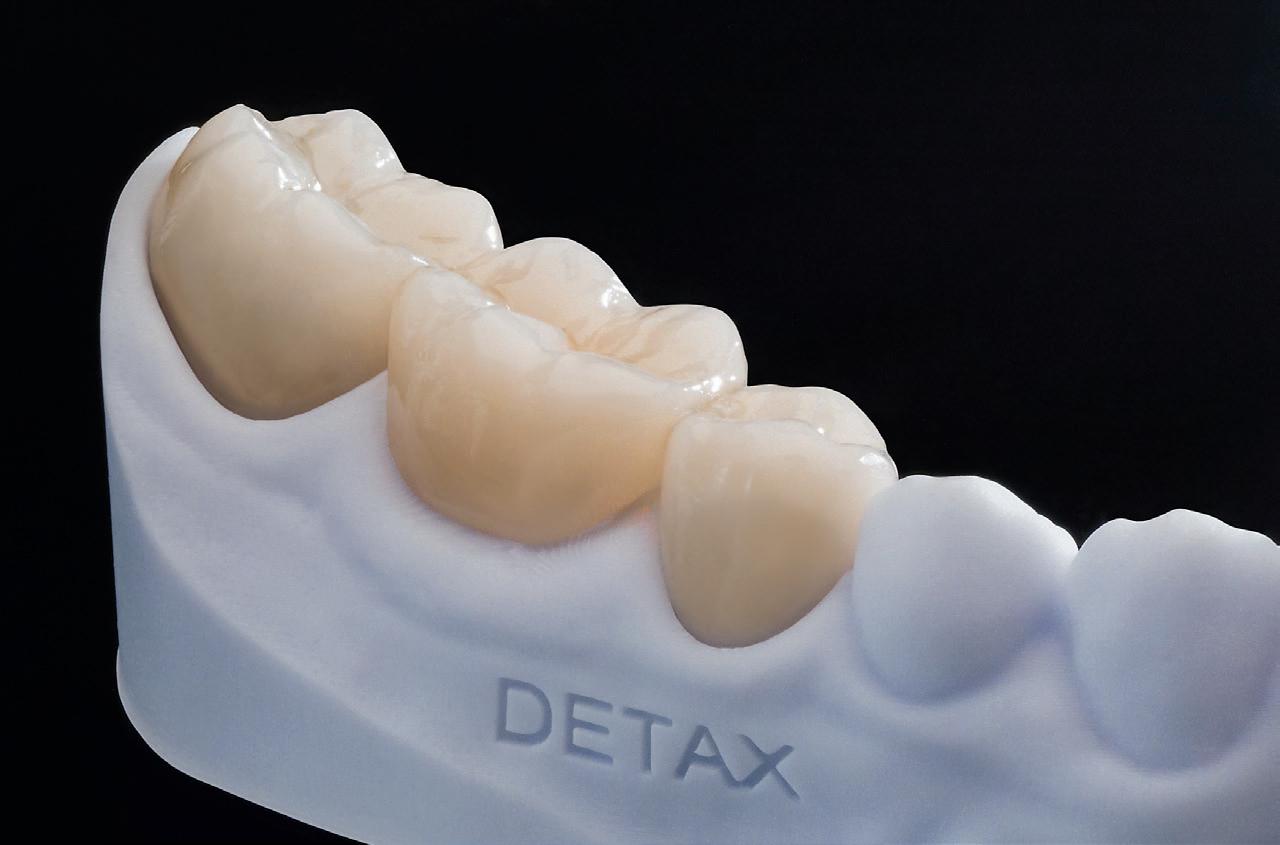
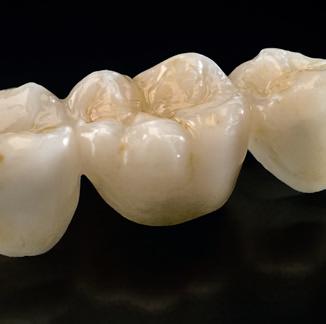
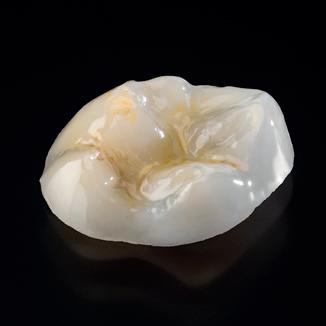
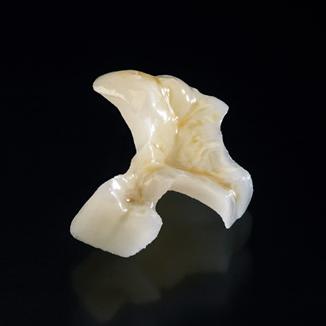
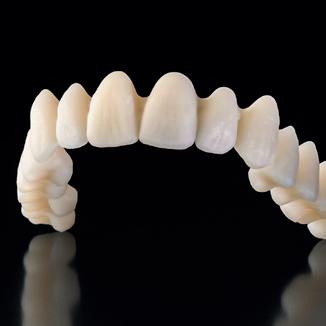
FREEPRINT ® CROWN is a light-curing formulation for the generative production of permanent crowns, inlays, onlays, veneers and denture teeth, as well as long-term temporary bridges of medical device class IIa using DLP 3D printing. Optimum adaptation of the material to the patient is ensured by a wide range of esthetically pleasing shades in accordance with the VITA classical A1–D4 shade scheme, which are not affected by environmental influences thanks to low water absorption. In addition to its perfectly matched transparency and opacity, the material has optimum dimensional stability thanks to maximum flexural strength and abrasion resistance. To achieve these excellent characteristics, the maximum achievable quality and patient satisfaction, a completely secured and validated process is necessary. That is why it is important to always and without exception follow the instructions for use during manufacture, processing and finishing.
The following quick reference guide outlines the sequence of processing and finishing, which is intended to serve as the basis for all tests and measurements performed in this study. For more detailed information on production and finishing, please refer to the instructions for use.
The restorations are printed in a 3D printer according to the instructions for use and then processed as follows: After removing the objects from the building plate, they are first freed from most of the excess resin with a light stream of compressed air before being cleaned in an ultrasonic bath with isopropanol for one minute. The support structures are then removed, and the printed objects are once again cleaned of excess resin and support residues using compressed air. Further cleaning (one minute) in a separate vessel with isopropanol and final drying with compressed air is followed by a drying phase for 30 minutes at room temperature. Post-exposure is performed in a xenon flash unit with 2 × 2000 flashes in an inert gas atmosphere (nitrogen 4.0).
FREEPRINT® CROWN also allows performing processing and post-exposure with other equipment, such as parameter-controlled cleaning in a fully automated cleaning unit or post-exposure in an LED post-exposure unit under vacuum.
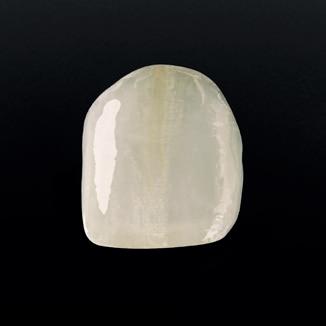
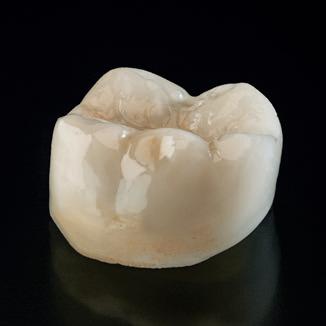
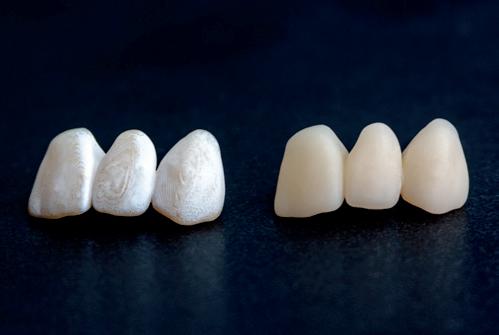
The influence of incorrectly performed processing can be seen in Figure 1. The chalking that occurs, the exposure of pigments on the surface due to loss of the organic resin matrix, during the cleaning process, is due to too long or aggressive cleaning. In the case of imperfectly adjusted formulations, this can be circum-
vented only by tedious manual cleaning, e.g. dabbing with cotton swabs or cloths soaked in isopropanol. However, here special attention must be paid to the fit, as this manual cleaning step does not allow easy and reproducible removal of the excess resin, which can lead to fitting problems in hard-to-reach areas that can be corrected only by subtractive removal of the surface particles. These processes are not automated and controlled, which is why automated cleaning in an ultrasonic bath or in a cleaning device has distinct advantages.
The processes described here and documented in the FREEPRINT® CROWN user manual have been carefully checked and validated. Tests were conducted to check the building accuracy of the material on the individu-
4
Fig. 1: Comparison of surface conditions after cleaning
al printers, the cleaning quality with various cleaning methods, the surface quality and mechanical stability during post-exposure by the differing types of post exposure equipment.
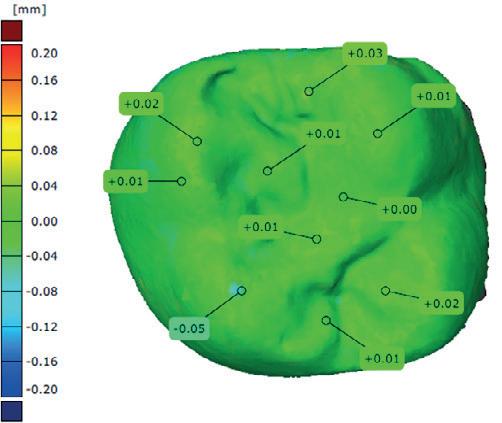
Figs. 2 and 3 show two height comparison images of a crown in occlusal and intracoronal view, respectively. This is a surface comparison between the surface of the printed crown recorded by means of an optical laser scanner and the original design file before printing. The height differences are displayed in color, whereby the green color stands for very high accuracy of fit and the red and blue colors for stronger deviations into the positive or negative range, respectively. The height differences are by default all in a range between -20 µm and 30 µm. Larger deviations of more than ±50 µm can be measured only selectively and cannot be completely ruled out in generative manufacturing processes due to the pixel size of the projectors and the layer thickness during printing, or due to artifacts during scanning.
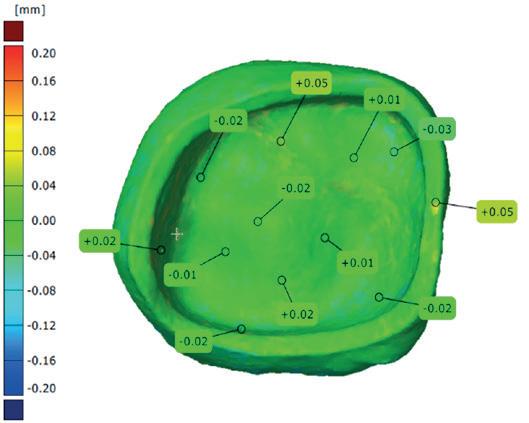
Based on these comparison images, it is possible to easily and accurately check the building accuracy of the 3D printers, as well as the quality of the cleaning process.
5
PDF DOWNLOAD Validation and compatibility overview
Fig. 2: Surface comparison: occlusal view
FREEPRINT MED FREEPRINT ® TEC PRIMEPRINT MED & TEC 385 nm supersplint temp splint Qualification PROCESS VALIDATION PRINTERS CERTIFIED VALIDATED RELIABLE V LATEST VERSION
Fig. 3: Surface comparison: intracoronal view
2. CHEWING SIMULATION –PERMANENT CROWNS
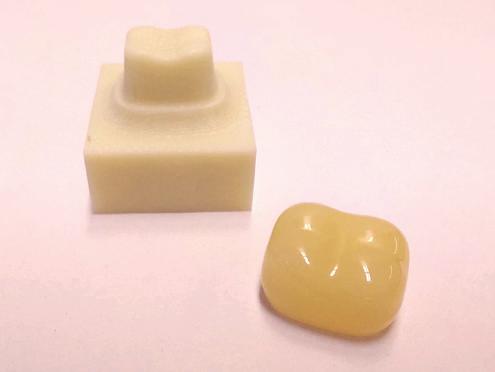
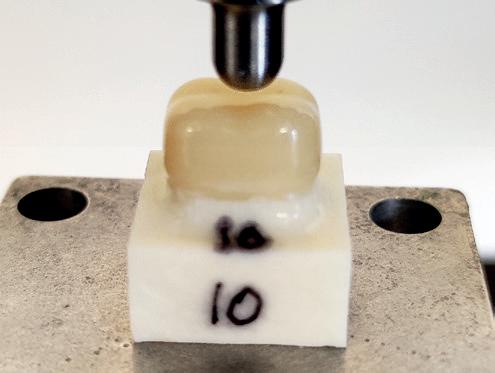
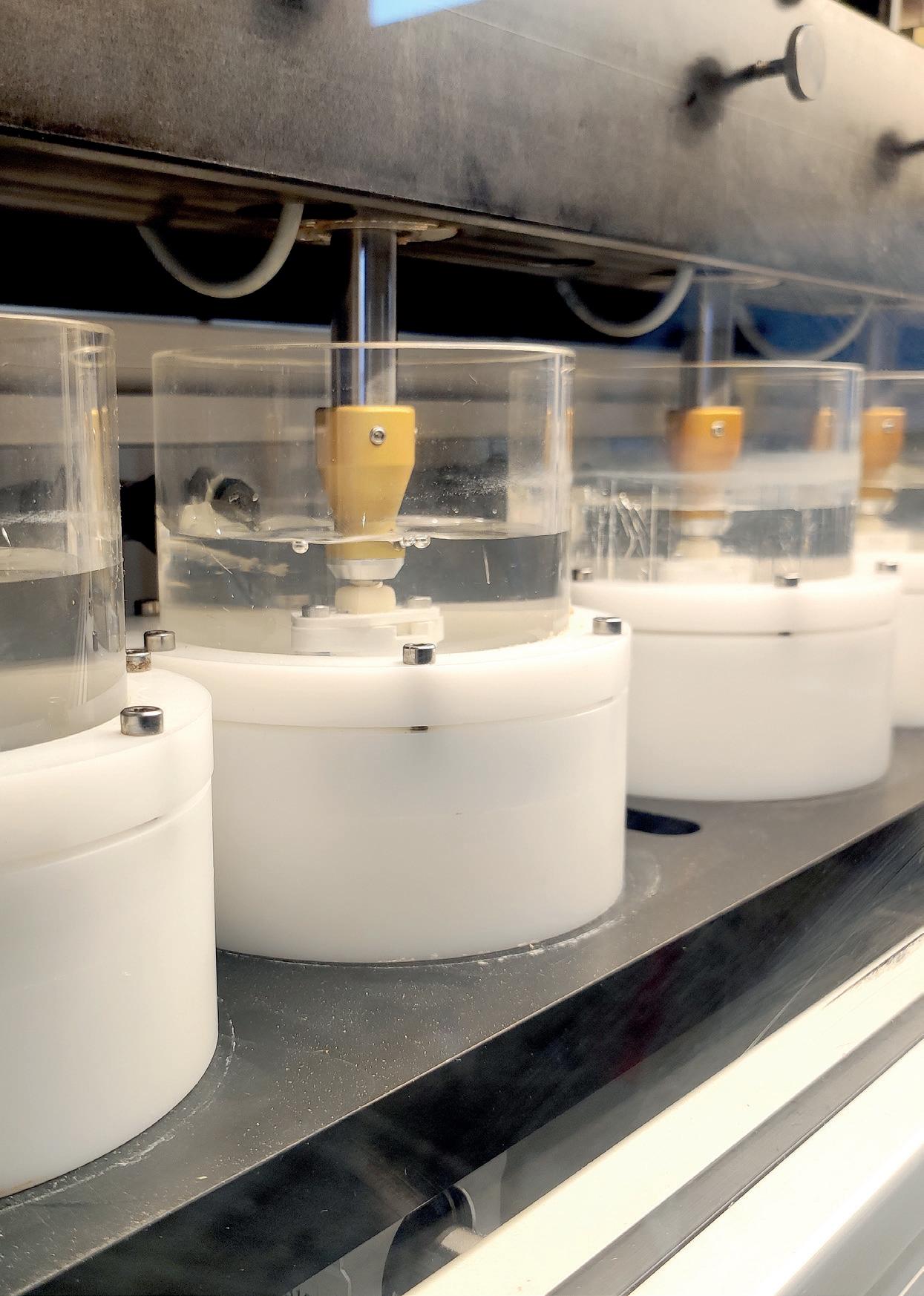 Fig. 4 and 5: Test specimens and test setup of the chewing simulation for permanent crowns
OBJECTIVE
Permanent crowns are exposed to high stresses during their wearing periods. Therefore, it is important to determine whether the printed components can be safely worn by the patient throughout the life cycle of the respective application. For this purpose, it is recommendable to perform a chewing simulation to test the longevity of FREEPRINT® CROWN as a crown material. The aim of the chewing simulation with thermal load cycling is to artificially age the permanent crowns in order to mimic the wearing time in the patient’s mouth. In this process, the breaking load of the crowns is determined before and after the chewing simulation with thermal load cycling in order to precisely check the behavior of the material in a typical environment.
METHOD AND MATERIAL
The test design used (Fig. 4), consisting of crown and stump, was designed and produced in an idealized manner with the following dimensions: The minimum occlusal thickness was 1.5 mm, circularly 1.5 mm and cervically 1.0 mm.
The printed crowns made of FREEPRINT ® CROWN were cemented with the self-adhesive composite luting cement RelyXTM Unicem 2 by 3MTM onto specially milled stumps made of the glass-fiber-reinforced high-performance material TriniaTM by Bicon Europe Ltd. This material was specifically selected because it has an elastic modulus of 18.8 GPa1, equal to that of natural dentin. A steatite ball (diameter: 6 mm) served as antagonist in the chewing simulation, which periodically impinged onto the occlusal surface of the crown with a force of 50 N, thus simulating chewing.
Here the thermal load cycling between 5 °C and 55 °C reflects the temperature fluctuations in the oral cavity caused by eating and drinking. During the chewing simulation, the permanent crowns were loaded with 2.5 million cycles, corresponding to a simulation of 10 years of wear.
The measurement of the breaking load followed the
RESULTS
All test specimens survived the chewing simulation with thermal load cycling without cracks or abnormalities. The initial average breaking load was 2380 N before the chewing simulation, and the average breaking load after a load-bearing period of ten years was 2180 N. Statistically, however, the results before and after the chewing simulation are not significantly different, suggesting a barely detectable degradation, which means that material fatigue can be ruled out.
The measured values are well above the human chewing forces, which can reach a maximum value of approx. 800 N and on average a value of approx. 500 N. Due to the very good breaking load values, it can be assumed that the risk of damage to the correctly bonded crowns is very low over this wear period.
chewing simulation and was carried out in the compression test (Figure 5). The test specimens were loaded with a universal testing machine and a loading attachment with steel ball (diameter: 5 mm) until fracture at a loading rate of 1 mm/min, and the results were compared with the initial values without chewing simulation.
In addition, µCT analysis of the test specimens before and after the chewing simulation was performed to detect any defects (cracks, inclusions, bubbles) caused by the printing process or the chewing simulation. Special attention should also be paid to cementation (see Chapter 4).
7
1 TDS Trinia (https://www.bicon.com/downloads/pdf/TRINIA_Brochure_DE.pdf)
Crowns before chewing simulation
Average breaking load in N 2380 2180 Standard deviation in N 88.6 198
Crowns after chewing simulation
3. CHEWING SIMULATION –LONG-TERM TEMPORARY BRIDGES
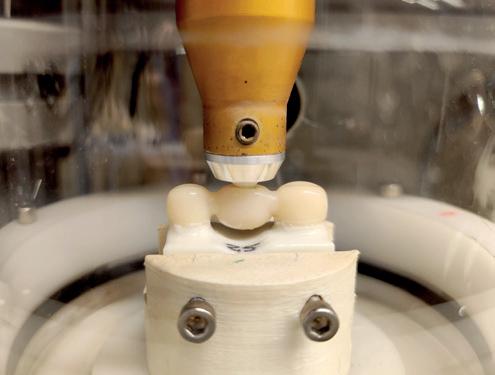
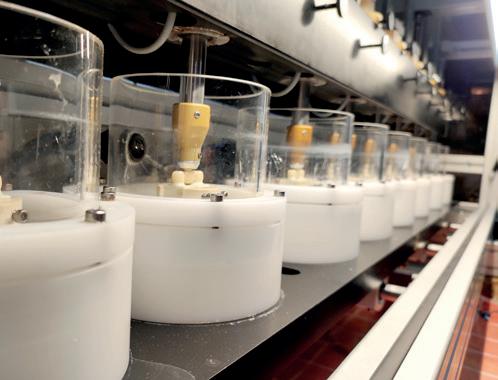
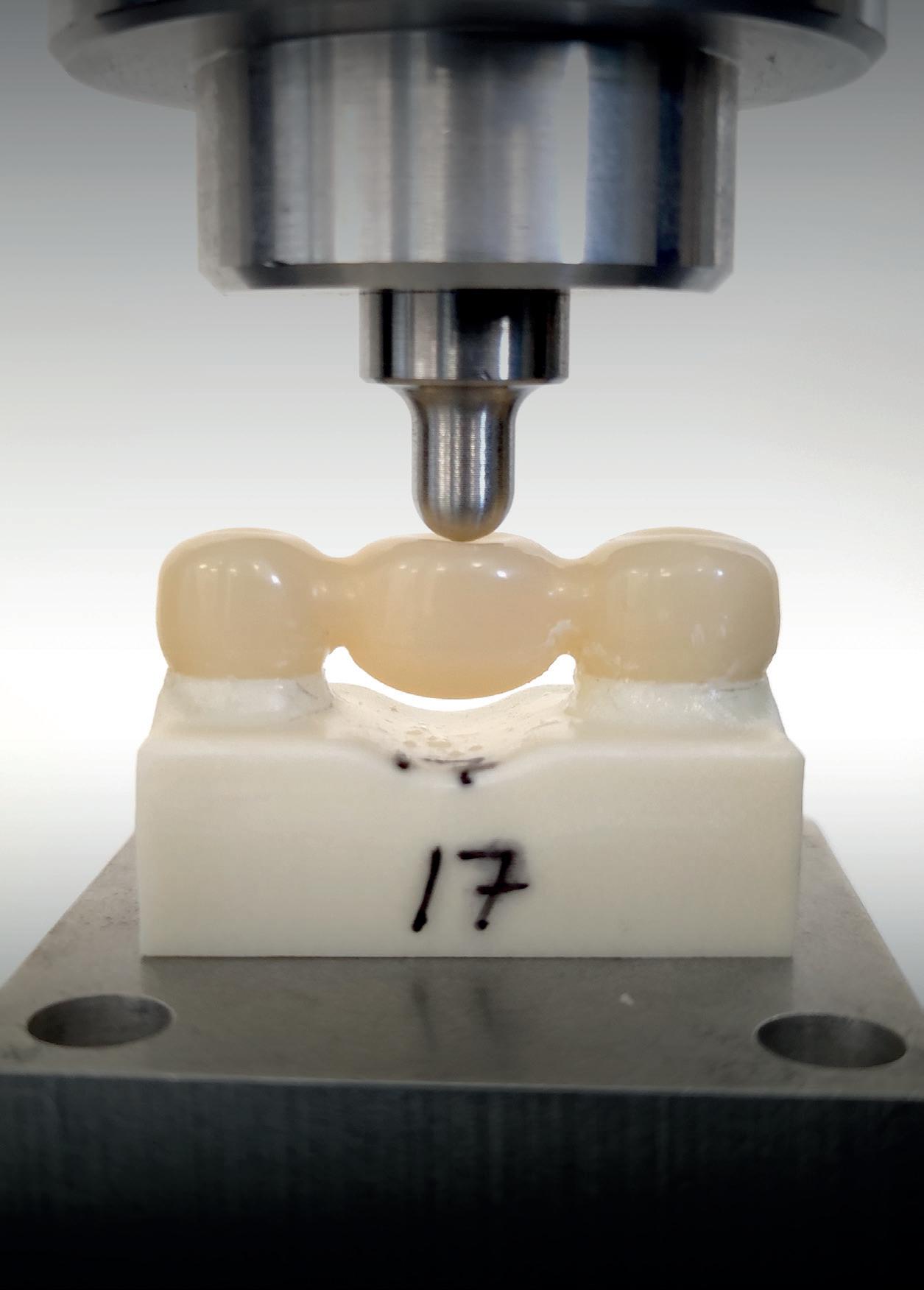 Fig. 6 and 7: Experimental setup of the chewing simulation for long-term temporary bridges
RESULTS OBJECTIVE
Similar to the requirements for a crown, bridges are also exposed to high forces and special loads during their service life. The force that a bridge must withstand, especially at the free pontics, is very high. This force must be deflected via the connectors to the bridge abutments, which require sufficiently stable connection cross sections for this purpose.
In order to be able to assess and map these forces more precisely, once more a chewing simulation is suitable. Due to the high forces involved, it was decided to test the application of the three-unit bridge with one pontic only as a long-term temporary restoration with a wearing time of one year.
METHOD AND MATERIAL
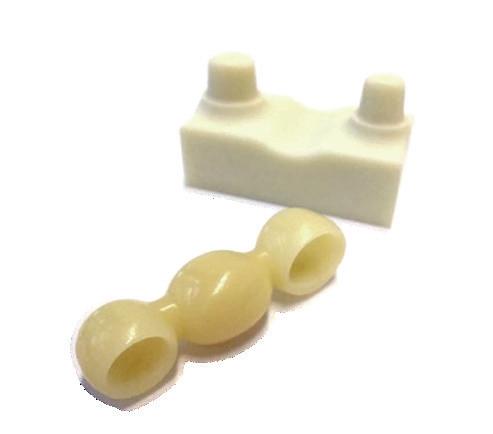
The chewing simulation with thermal load cycling of the long-term temporary bridge was performed in a way similar to the chewing simulation of the crowns (see Chapter 2). The test design used (Fig. 8), consisting of a three-unit bridge with one pontic and double stump, was designed and produced in an idealized manner with the following dimensions: The minimum occlusal thickness was 1.5 mm, circularly 1.5 mm and cervically 1.0 mm.
The connection cross-sections of the connectors of the pontic of the bridge were 16 mm². During the chewing simulation with thermal load cycling, the bridges were loaded with 250,000 cycles each, corresponding to a simulation of slightly more than one year of wear.
The measurement of the breaking load followed the chewing simulation and was carried out in a compression test comparable to the measurement of the crowns. The bridges were loaded to failure on the central pontic at a loading rate of 1 mm/min.
The results were compared with the baseline values without chewing simulation in order to exclude possible degradation.
Accordingly, the degradation of the breaking load by the chewing simulation is not significant, which means that material fatigue can be ruled out. In this measurement, too, the measured values are also significantly above the values of human chewing forces.
In addition, a µCT analysis of the test specimens before and after the chewing simulation was performed here, too, in order to identify any defects (see Chapter 4).
Fig. 8: Test specimen geometry for the chewing simulation
9
Bridges before chewing simulation Average breaking load in N 931 842 Standard deviation in N 145 169
Bridges after chewing simulation
All the test specimens survived the chewing simulation over one year of wearing without cracks or abnormalities. The initial average breaking load was 931 N before the chewing simulation, and the average breaking load after a wearing period of one year was 842 N. Statistically, however, the results before and after the chewing simulation are not significantly different.
4. MARGINAL-GAP TIGHTNESS OBJECTIVE
A restoration must blend smoothly into the tooth stump without any marginal gap. The marginal gap is a critical point that occurs due to the technically inevitable inaccuracy in the fit between the tooth and the restoration and forms a site of attack for bacteria, which can then cause tooth decay again (secondary caries). With a perfectly adjusted material/printer combination, the production of restorations using the generative process is so accurate that the marginal gap is very small. µCT analysis can be used to monitor whether the marginal gap changes during artificial aging. As already mentioned for the chewing simulation, the printed objects are also checked for defects before and after the chewing simulation, such as cracks or inclusions.
METHOD AND MATERIAL
To analyze the printed restorations bonded to the stumps, the test specimens were irradiated with X-rays, and the attenuation upon passage through the test specimen was recorded. The test specimens were gradually rotated, and the individual sectional images were reassembled to form a solid model.
RESULTS
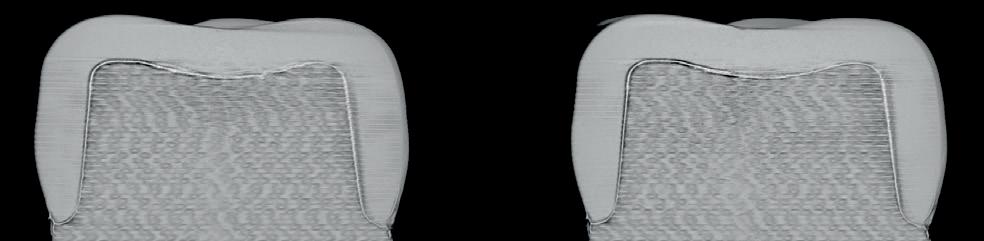
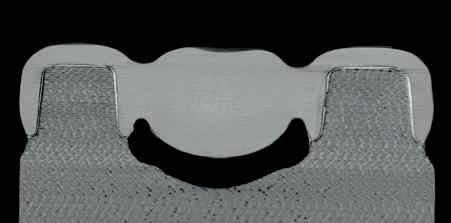
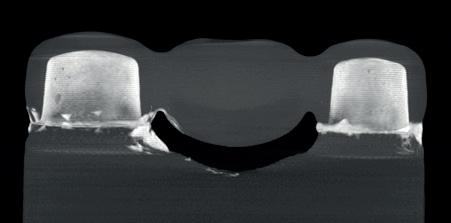
No abnormalities were found in the µCT analyses on the permanent crowns and the long-term temporary bridges. No cracks or inclusions, such as bubbles, could be detected either before or especially after the respective chewing simulation. Of particular interest in this examination was the cementation between the restoration and the stump (Figure 9). This can be seen as a uniform layer in the images taken, which suggests that the cementation was perfect.
10
Fig. 11: Comparative µCT image (sectional view) of a cemented crown before (left) and after (right) the chewing simulation
Figure 9: µCT image of the cemented bridge after chewing simulation
Figure 10: µCT image (sectional view) of the cemented bridge after the chewing simulation
5. ABRASION RESISTANCE OBJECTIVE
Abrasion resistance is an important property for a crown and bridge material, especially for long-term use in the patient’s mouth. FREEPRINT® CROWN comprises special fillers that reduce abrasion and thus counteract the wear of the restorations. In the abrasion resistance test, lateral movement performed in addition to the vertical chewing simulation acts on the crowns, exerting more stress on the surface of the crowns and thus possibly eroding particles from the surface.
METHOD AND MATERIAL
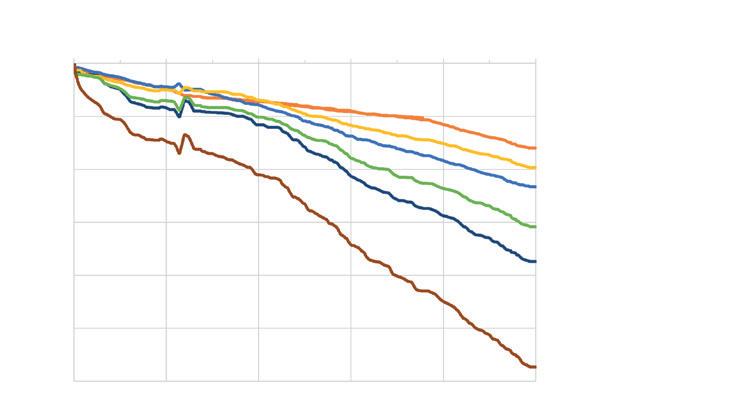
For determination of the abrasion resistance, various crowns were produced and appropriately cemented in a fixture, and then encapsulated with PMMA. The materials used for testing consisted of the FREEPRINT ® CROWN , two other generatively processed materials, two subtractively processed materials, and one fabricated material. A steel cone (30° tip angle, tip radius R1), which periodically impinges on the occlusal surface of the crown with a vertical force of 50 N, served as the antagonist for the measurement. The lateral path of 1.5 mm was traversed at a lateral velocity of 20 mm/s. During the test, the crowns were loaded with 1.2 million cycles at a temperature of 37 °C, which corresponds to a simulation of 5 years of wear.
RESULTS
During the measurement, the height loss of the individual specimens was measured and recorded, resulting in the wear curves of the test specimens. The height loss of the individual test specimens is shown in the table. It can be seen that there are differences between the individual production techniques of the crowns, with the fabricated teeth in particular attracting negative attention. It should be noted that FREEPRINT ® CROWN , with these low height loss values, can be used to produce very stable and abrasion-resistant restorations, some of which have significantly higher abrasion resistance than the other materials tested have, thus enabling production of long-lasting restorations.
11
Test specimen Height loss in mm 1 0.32 2 0.46 3 0.72 4 0.39 5 0.62 6 1.14 FREEPRINT ® CROWN printed tooth printed tooth milled tooth milled tooth fabricated tooth 240,000 480,000 720,000 960,000 1,200,000 Chewing cycles 0 0 -0.2 -0.4 -0.6 -0.8 -1 -1.2 Wear in mm
6. COLOR UNIFORMITY AND COLORFASTNESS
OBJECTIVE
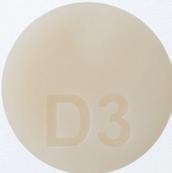
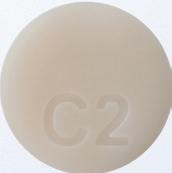
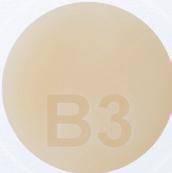
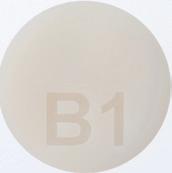
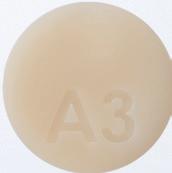
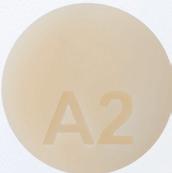
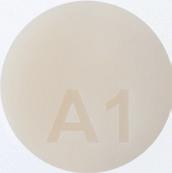
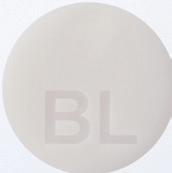
FREEPRINT ® CROWN , as a permanent or long-term temporary material, has an attractive and suitable color for every patient, which does not change due to environmental influences either. The material is currently available in eight colors: A1, A2, A3, B1, B3, C2, D3 and BL, based on the Vita classical A1–D4 color scheme (Figure 12). To this end, FREEPRINT® CROWN was tested for color uniformity, two batches of the same color, and for colorfastness, three different colors, in accordance with sections 5.8 and 5.9 of the DIN EN ISO 10477:2020 standard, as specified in ISO 7491:2000.
METHOD AND MATERIAL
The test specimens used complied with the standard, having a height of 1 mm and a diameter of 15 mm, and were preconditioned and stored in accordance with the specifications after polishing to a high gloss. Several sets of specimens were formed from the various materials of differing colors:
Set 1 (reference): dark, dry, (23 ± 2) °C, 7 d
Set 2 (water): dark, dist. water, (37 ± 1) °C, 7 d
Set 3 (irradiation):
1) dark, dry, (37 ± 1) °C, 24 h
2) irradiation: half covered with aluminum foil, dist. water, (37 ± 1) °C, 24 h
3) dark, dry, (37 ± 1) °C, 5 d
The colors FREEPRINT ® CROWN A1, A2 and A3 were used and submitted to visual testing after seven days. Storage and external influences must not cause the color to deviate from that of the reference specimens.
RESULTS
No color changes could be detected upon inspection of the test specimens. Neither the color uniformity test of the individual batches of the same color nor the colorfastness test of three different colors showed any differences in color.
12
Fig. 12: Currently available tooth shades
7. CURING DEPTH OBJECTIVE
For perfect biocompatibility and in order to achieve the outstanding properties of a permanent crown material, it is absolutely essential for the material to have sufficient curing depth. Here it is important to perfectly adjust the natural appearance of the teeth, i.e. the relationship between color, opacity and transparency, as well as translucency. Measurement of the curing depth according to section 5.2 of the standard DIN EN ISO 10477:2020 was carried out by means of a Vickers hardness test in the HV 0.5 method according to the specification of DIN EN ISO 6507:2018. This allows determining whether sufficient light can penetrate and, more importantly, whether the light used can penetrate deep enough into the pre-polymerized material during the post-exposure process to ensure the necessary complete curing during the residual polymerization of the objects.
METHOD AND MATERIAL
For this purpose, three circular test specimens with a height of 1 mm and a diameter of 15 mm each were printed, cleaned and exposed from only one side according to the standard. The top side was facing the light source; the bottom side was facing away from the light source. To comply with the standard, the opposite side (bottom side) must have at least 70 % of the hardness of the facing side (top side).
Three measurements were made on each of three test specimens, and the mean values were calculated.
RESULTS
Measurement of the exposed side showed an average value of 23.50 HV 0.5 in the Vickers hardness test. For the side not exposed directly, an average hardness of 20.31 HV 0.5 could be determined. The ratios of the measured values of the Vickers hardness test were all well above the limit of 70 % mandated by the standard, on average: 86.4 %. This ensures that the FREEPRINT ® CROWN material is sufficiently cured, and complete residual polymerization takes place during post-exposure. Especially since the temporaries are flipped during post exposure, or post-exposed from all sides, respectively.
13
Curing depth 0 1 2 3 Ø 70 %
Measurements according to DIN EN ISO 10477 with minimum value
8. BOND STRENGTH WITH LUTING CEMENTS OBJECTIVE
Determination of the bond strength between FREEPRINT ® CROWN and a dental luting cement is an important test for the selection of the latter when bonding the restorations.
This is a question not only of the adhesive effect between the materials, but also of the marginal-gap tightness mentioned in Chapter 4. The bond strength between FREEPRINT ® CROWN and two luting cements was tested according to section 5.5 of DIN EN ISO 10477:2020.
METHOD AND MATERIAL
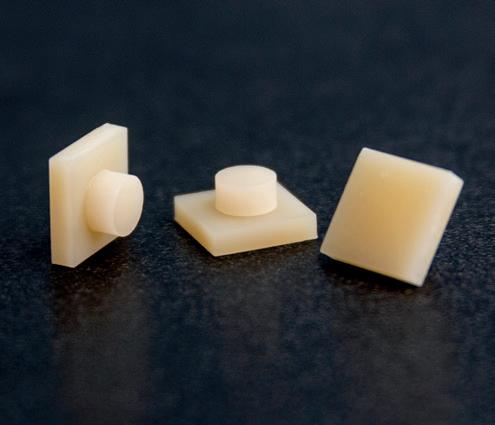
To this end, the two cements Variolink® Esthetic DC by Ivoclar and RelyXTM Unicem 2 by 3MTM were tested in combination with printed test specimens made of FREEPRINT® CROWN. The cements were applied to the printed test specimens in a cylindrical geometry, and light-cured according to the manufacturer’s instructions (Fig. 13). Conditioning was performed according to the standard: Dry storage of test specimens for 24 hours at (23 ± 2) °C followed by artificial aging in a water bath with thermal load cycling between 5 °C and 55 °C for 5000 cycles. The test specimens were loaded to failure in the following shear test using a universal testing machine at a constant crosshead speed of 1 mm/min.
The bond strength was determined from the measured forces and the bonding area, and the test is considered passed if the bond strength is not less than 5 MPa.
RESULTS
All test specimens of both cements met the specifications of a bond strength of more than 5 MPa according to the standard. The average bond strength of FREEPRINT® CROWN to RelyXTM Unicem 2 by 3MTM was 22.1 MPa, and to Variolink® Esthetic DC by Ivoclar 21.4 MPa. Both cements are suitable for luting FREEPRINT ® CROWN restorations and are listed in the Instructions for Use.
14
Test specimen Bond strength in MPa Test specimen Bond strength in MPa 1 23.1 1 24.7 2 21.0 2 24.0 3 19.7 3 15.8 4 23.7 4 19.4 5 23.0 5 23.0 Ø 22.1 Ø 21.4
3M RelyX Unicem 2 Automix Ivoclar Variolink Esthetic DC
Fig. 13: Test specimen for determination of bond strength
9. FLEXURAL STRENGTH OBJECTIVE
Determination of flexural strength is one of the classic mechanical tests for resins and composites. Here, essential bending and fracture characteristics are determined, which allows statements to be made about the maximum bending stress and the elastic modulus of a material. The test was carried out for FREEPRINT® CROWN according to section 5.4 of the standard DIN EN ISO 10477:2020.
METHOD AND MATERIAL
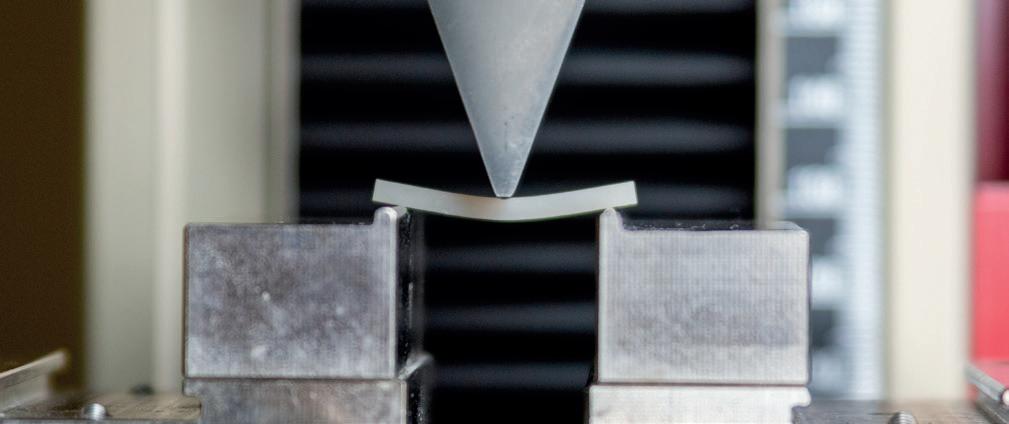
The test specimens to be used (dimension: 2 × 2 × 25 mm) were produced directly on a suitable printer and processed and post-exposed according to instructions. Conditioning consisted of water immersion for 24 hours at 37 °C to simulate the environment characterizing the oral cavity. Subsequently, the test specimens are loaded to failure in a quasi-stationary three-point bending test at a crosshead speed of 1 mm/min and a gap width of 20 mm (Figure 14). The measured force is converted into the corresponding flexural strength via the cross-section of the test specimens.
RESULTS
FREEPRINT ® CROWN achieves values in the range of 110 MPa to 120 MPa with an elastic modulus of 3400 MPa to 3700 MPa and is thus well above the specification of the standard, which defines a minimum requirement of > 50 MPa.
15
Flexural strength in MPa 100 50 FREEPRINT ® CROWN 1 2 3 0 COMPETITOR COMPETITOR
Fig. 14: Determination of the flexural strength
10. WATER ABSORPTION AND SOLUBILITY OBJECTIVE
Minimum water absorption and solubility is an important basis for the permanent application of FREEPRINT® CROWN . The examination, carried out in accordance with section 5.6 and 5.7 of the DIN EN ISO 10477:2020 standard, provides important findings with regard to oral stability. Conclusions can be drawn about the tendency to discoloration via water absorption, and about structural integrity and biocompatibility via solubility.
METHOD AND MATERIAL
For the examination, the test specimens having a height of 1 mm and diameter of 15 mm each were produced according to the standard, polished to high gloss and dried in a desiccator at 37 °C to constant weight. The weight of each test specimen is recorded, and the specimens are stored in a water bath at 37 °C for one week. The second weight determination of the test specimens follows. Subsequently, the test specimens were dried again to constant weight and balanced. The calculated differences from the measured masses of the individual test specimens were then related to the volumes of the test specimens in order to determine water absorption and solubility.
RESULTS
The average measured values for the water absorption of FREEPRINT® CROWN are in the range from 14 µg/mm³ to 16 µg/mm³ and thus well below the standard specification of < 40 µg/mm³. It can be assumed that this low water absorption also exerts significantly positive effects on the tendency to discoloration, so that no severe discoloration of the objects should be evident in the everyday life of the restorations. This has an impact on the esthetics and color stability of the incorporated restorations, which thus retain the desired colors for longer.
The resulting solubility values for FREEPRINT ® CROWN range from 0.1 µg/mm³ to 0.4 µg/mm³ and are thus also well below the standard specification, here < 7.5 µg/mm³. These excellent solubility values are an important indication that only a very small proportion of substances are leached from the restorations, which could potentially have a negative impact on the structural integrity of the material and its biocompatibility.
16
MANUFACTURE
Production of a complete denture is a time-consuming and complicated process when using the classical production method with powder/monomer mixtures. With the denture tooth application of FREEPRINT® CROWN, the dental technician now has the possibility to plan and manufacture a denture completely digitally, which has a great savings potential in terms of manufacturing time. In the manufacture of the denture, it is particularly important to ensure that the materials used are not post-exposed after the printing and cleaning process, but remain in their green state.
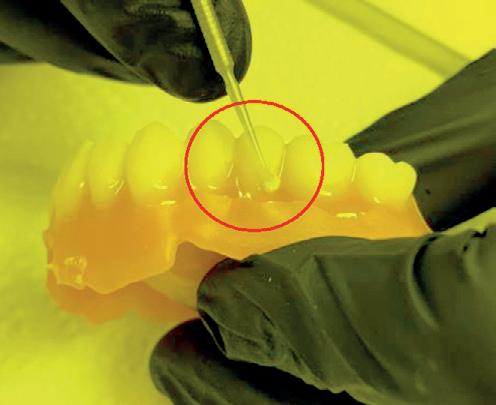
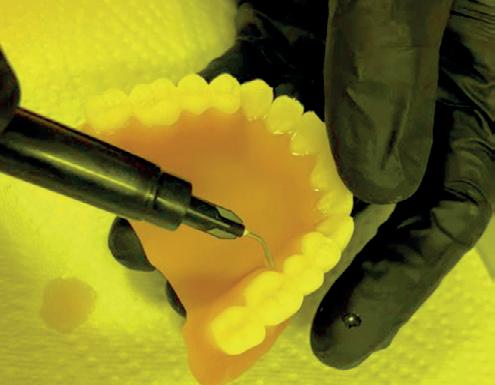
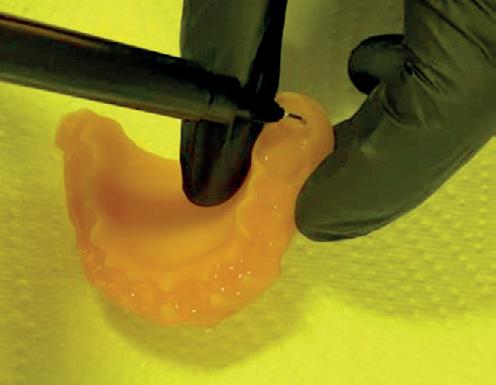
The green state describes the state of a printed object between printing and post-exposure in which polymerization is not completely finished yet and functional groups are still present on the surface for further reaction. This means that bonding can be carried out using the liquid FREEPRINT ® DENTURE material without further chemicals, such as primers or bonders, being required. In addition, it is possible to model the papillae and the transition to the denture teeth when bonding with the liquid material, which leads to further stabilization of the bond (Figs. 15–17).
For more detailed manufacturing information, please refer to the instructions for use. The high green strength of the two materials, FREEPRINT ® CROWN and DENTURE , makes this step possible, since thanks to the high strength in this state the distortion of the printed objects is very minimal. Production of the denture teeth as a complete dental arch supports and simplifies the entire process, as the two parts match each other optimally and thus no fitting problems can occur.
17 11. INFORMATION DENTURE
TEETH/ DENTURE
Fig. 15: Application of the liquid FREEPRINT® DENTURE material into the cavities under yellow light
Fig. 16: Insertion of the denture teeth and filling of possible flaws
Fig. 17: Removal of the excess with a brush
12. BOND STRENGTH –DENTURE TOOTH AND PROSTHESIS OBJECTIVE
For the application as denture teeth, it is important to investigate the suitable connection between the materials used, FREEPRINT ® CROWN and FREEPRINT ® DENTURE as denture base material. For this purpose, the bonding between the two materials was examined, which was conclusively tested in a shear test according to section 5.5 of DIN EN ISO 10477:2020.
METHOD AND MATERIAL
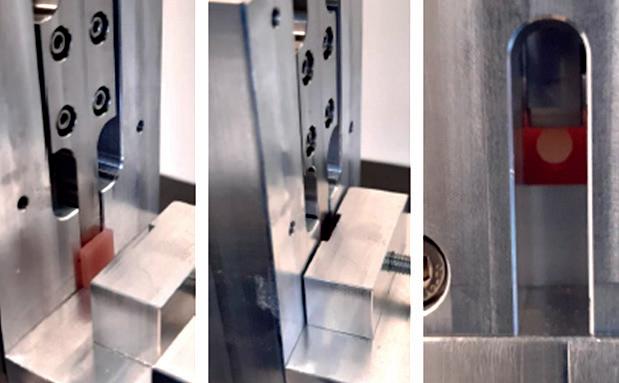
Printed cylinders made of FREEPRINT ® CROWN with a height of 2.5 mm and a diameter of 5 mm each were used as test specimens, which were glued onto likewise printed platelets made of FREEPRINT ® DENTURE Liquid FREEPRINT ® DENTURE served as the bonding agent. Conditioning was performed according to the standard: Dry storage of test specimens for 24 hours at (23 ± 2) °C and artificial aging in a water bath with thermal load cycling between 5 °C and 55 °C for 5000 cycles. The test specimens were then placed in a universal testing machine and loaded to failure with contact on the cylinders at a constant crosshead speed of 1 mm/min. The fracture pattern was analyzed for the type of fracture (cohesive or adhesive), and the bond strength was determined from the measured forces.
RESULTS
The bond strength of the measured test specimens averaged 40.6 MPa. The resulting fractures could be ascribed to a cohesive fracture within the denture base material. More specifically, the bond between FREEPRINT® CROWN and FREEPRINT® DENTURE , bonded with the liquid FREEPRINT ® DENTURE , was capable of tearing portions out of the base plate. The bond between the denture tooth and the denture shows a high bond strength.
18
Test specimen Bond strength in MPa 1 43.3 2 51.7 3 46.9 4 29.2 5 31.7 Ø 40.6
Fig. 18: Test set-up for measuring the bond strength between denture and denture tooth
13. BIOCOMPATIBILITY
For a material for crowns and bridges intended for longterm use in the mouth, accordingly various biocompatibility tests must be carried out pursuant to the DIN EN ISO 10933-1:2020 standard, which is fundamental for determining the biocompatibility of medical devices. The indication of FREEPRINT® CROWN clearly defines according to the standard that it is a medical device with a contact duration of more than 30 days (long-term contact), which has contact with the mucosa and must be tested accordingly.
The evaluation begins with a chemical analysis to identify the substances that can potentially be eluted from the objects, in order to have a toxicologist evaluate what testing is needed for the material.
In accordance with the MDR, not only freshly produced batches of material were used for printing the test specimens and all the tests, but also aged, repeatedly used and artificially stressed batches were, in order to ensure stability of the formulation even during and after natural use in production.
The various printing systems and post-exposure devices validated for FREEPRINT ® CROWN have also been appropriately reviewed to offer customers the widest possible variety of systems and process reliability.
Biocompatibility tests have been performed for FREEPRINT ® CROWN in accordance with the relevant standards. Acute systemic toxicity for determination of toxicity (ISO 10993-11)
Cytotoxicity for determination of cell toxicity (ISO 10993-5)
Sensitization for determination of contact sensitization (ISO 10993-10)
Irritation for the determination of the irritation potential (ISO 10993-10)
Chemical analysis
Genotoxicity for determination of the mutation potential of genes or chromosomes (ISO 10993-3)
19
20 DETAX GmbH, Carl-Zeiss-Str. 4, D-76275 Ettlingen, www.detax.com TGA-APPROVED DISTRIBUTOR: