
and a giant leap for infrastructure
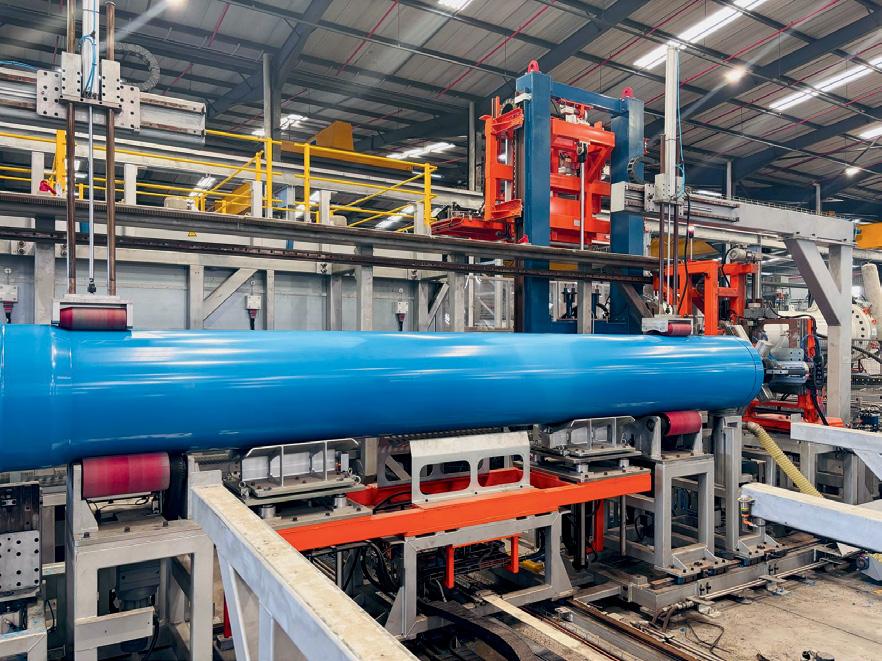
Sizabantu Piping Systems launches Africa’s first locally manufactured pipes, with capability from 710mm to 1200mm, now in full production.
In a landmark moment for local manufacturing, Sizabantu Piping Systems and Molecor have successfully produced large-diameter PVC-O pipes, with future capability of up to 1200mm.




Celebrating their 74th anniversary in 2026, APE Pumps and Mather+Platt continue to gain ground in the South African and broader African market, backed by their turnkey solutions approach. In addition to OEM pump and component fabrication, this incorporates in-house engineering design, plus mechanical and electrical contracting services. P6


Cover
Collaboration
IMESA elects new Fellows and Honorary
Bitumen
Transportation
Beyond the Grid: Why Johannesburg’s energy crisis demands a decentralised revolution 26
Sustainability
Smart gardens reuse greywater. Simple steps to extra cash in your pocket
Legal PPPs that saved SA’s energy sector can
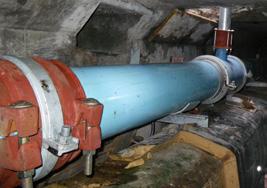

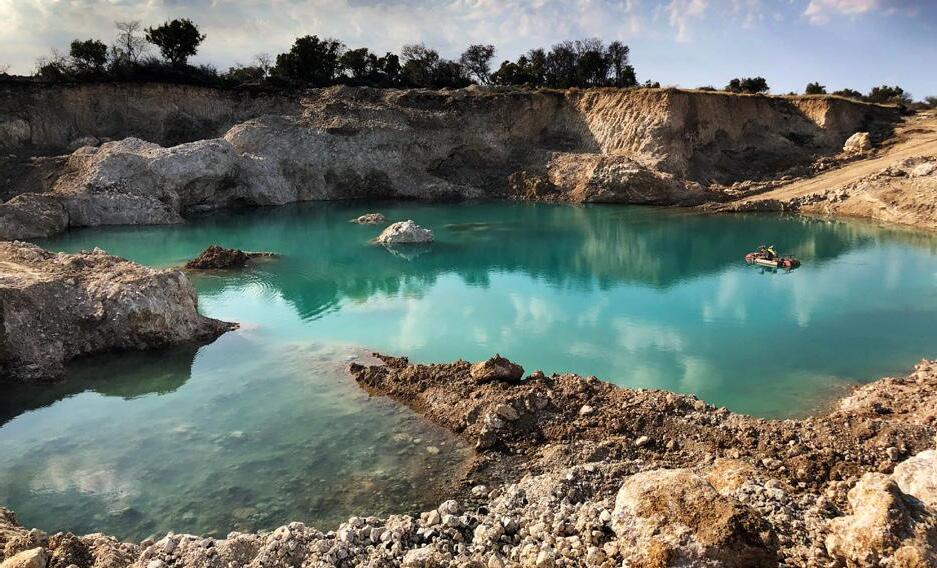
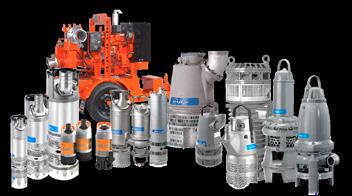
In today’s demanding industrial and municipal environments, you need more than a product; you need a complete, integrated solution. Xylem’s Water Solutions and Services (WSS) division is your single, expert partner, offering an unparalleled portfolio to tackle your most complex water and wastewater challenges head-on.
We combine decades of experience with a deep understanding of your operational needs, ensuring seamless project execution, from initial assessment to long-term management. Trust us to provide the strategic oversight that turns complex problems into efficient, reliable outcomes.
From critical Drainage and Dewatering to processing the most abrasive Sludge and Slurry, we provide the world’s leading technology. Our fleet features the legendary reliability of Flygt submersible pumps and the powerful performance of Godwin pumps, ensuring you have the right equipment for any job, no matter how tough. This is more than just hardware; it’s a guarantee of performance, backed by comprehensive support, delivering total peace of mind and operational excellence.
Don’t let water challenges slow you down. Contact our experts today to design your complete solution.


EDITOR Alastair Currie
Email: alastair@infraprojects.co.za
DESIGNER Beren Bauermeister
CONTRIBUTORS Carine Heyns, Devesh Mothilall, Geoff Tooley, Ian Venter, Michelle Kerr, Miyelani Holeni
DISTRIBUTION MANAGER Nomsa Masina
DISTRIBUTION COORDINATOR Asha Pursotham
SUBSCRIPTIONS
Email: distribution@infraprojects.co.za
ADVERTISING SALES
KEY ACCOUNT MANAGER Joanne Lawrie
Tel: +27 (0)82 346 5338
Email: joanne@infraprojects.co.za
PUBLISHER
IMESA (Pty) Ltd
P O Box 2190, Westville, 3630
Tel: +27 (0)31 266 3263
Email: info@infraprojects.co.za
ANNUAL SUBSCRIPTION: R805.00 (INCL VAT)
ISSN 0257 1978 IMIESA, Inst.MUNIC. ENG. S. AFR.
© Copyright 2025. All rights reserved.
IMESA CONTACTS
HEAD OFFICE:
Manager: Ingrid Botton
P.O. Box 2190, Westville, 3630
Tel: +27 (0)31 266 3263
Email: admin@imesa.org.za
Website: www.imesa.org.za
BORDER
Secretary: Celeste Vosloo
Tel: +27 (0)43 705 2433
Email: celestev@buffalocity.gov.za
EASTERN CAPE
Secretary: Susan Canestra
Tel: +27 (0)41 585 4142 ext. 7
Email: imesaec@imesa.org.za
KWAZULU-NATAL
Secretary: Narisha Sogan
Tel: +27 (0)31 266 3263
Email: imesakzn@imesa.org.za
NORTHERN PROVINCES
Secretary: Lethale Magagane
Tel: +27 (0)72 059 7444
Email: np@imesa.org.za
SOUTHERN CAPE KAROO
Secretary: Henrietta Oliver
Tel: +27 (0)79 390 7536
Email: imesasck@imesa.org.za
WESTERN CAPE
Secretary: Michelle Ackerman
Tel: +27 (0)21 444 7112
Email: imesawc@imesa.org.za
FREE STATE & NORTHERN CAPE
Secretary: Wilma Van Der Walt
Tel: +27 (0)83 457 4362
Email: imesafsnc@imesa.org.za
All material herein IMIESA is copyright protected and may not be reproduced without the prior written permission of the publisher. The views of the authors do not necessarily reflect those of the Institute of Municipal Engineering of Southern Africa or the publishers.

Next year marks the 32nd anniversary of South Africa’s 1994 transition to a new democratic dispensation. This remains an evolving process that has matured over time but needs a restart in places to ensure that we truly bridge the inequality gaps.
The only way to achieve this is by ensuring that South Africa’s political leadership are unified and in partnership with the private sector as the micro and macroeconomic drivers. Community participation also needs to be far more inclusive in effecting transformative infrastructure implementation.
One of the major burning issues is the unfolding water crisis, and here there are a combination of factors at play. Foremost is the population growth rate. When the first post-1994 census was completed in 1996, South Africa’s population was estimated at 40,5 million. Fast forward to the last census in 2022 and the figure had climbed to around 62 million, placing increasing pressure on existing infrastructure, and compounded by a steady rural migration to urban centres.
When you factor in asset management failures at local government level – highlighted by past Green Drop and Blue Drop Reports – it’s now reached a point where a hard restart is urgently required in terms of maintenance and new construction. This is reinforced by recent government statistics. These indicate that national reliability has dropped to around 68%, and the quality of water in 60% of water supply systems is deteriorating.
Addressing the rising threat is government’s Water Task Team, which is now engaging actively with the private sector to explore joint venture opportunities, in conjunction with key stakeholders that include Infrastructure South Africa.
Sustained industrial supply is essential in key sectors like agriculture, manufacturing, and mining – where there’s arguably more appetite for 50/50 public-private partnership (PPP) ventures. Then there’s the need to create new bulk water supply provision for municipalities, which is equally crucial. That’s a major motivator for new PPP mega treatment works but depends on local governmental capabilities to effectively manage the financial and engineering interface.
Either way, while private sector investment is an essential enabler, the public sector remains central to an effective and efficiency infrastructure network. Every taxed rand spent well makes the difference and there are many positive examples.
A case in point is a snapshot from Statistics South Africa’s recent Capital expenditure by the public sector survey. This confirms that public sector spending on infrastructure and other fixed assets rose from R234 billion in 2023 to R276 billion in 2024. A major portion was expended by Eskom during 2024 – amounting to some R49,5 billion – on capacity expansion and allied programmes, up from R39,3 billion in 2023. That ticks all the right boxes.
Allied strategic investments in 2024 included R21,8 billion expended by Passenger Rail Agency of South Africa for the restoration of urban commuter rail services. Transnet also invested around R18,3 billion to maintain capacity on port, pipeline, and rail infrastructure. In turn, SANRAL spent approximately R13,3 billion on South Africa’s strategic road network.
Then at the local level around 25,9% of the R276 billion spent in 2024 was invested by municipalities. The standout leaders were the City of Cape Town, the City of Johannesburg, and eThekwini Metropolitan Municipality.
So, there’s major work in progress, but still with many gaps to fill going into 2026. In some cases, like water and sanitation, it requires a quantum leap to get ahead of the curve. Plus, we need to provide sustainable assurances to investors.
The upside is that all indications flowing from the highly successful 2025 G20 Summit in Johannesburg support the view that its alliance partners are committed to helping build a stronger South Africa within the Global South context. That includes infrastructure renewal.
In addition to home benefits, this directly and indirectly contributes to broader African macroeconomic objectives that foster equitable trade and counter climate change threats that affect the entire globe.

To our avid readers, check out what we are talking about on our website, Facebook page or follow us on Twitter and have your say.


In each issue, IMIESA offers advertisers the opportunity to get to the front of the line by placing a company, product or service on the front cover of the journal. Buying this position will afford the advertiser the cover story and maximum exposure. For more information on cover bookings, contact Joanne Lawrie on +27 (0)82 346 5338.







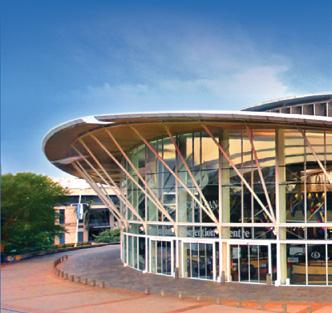

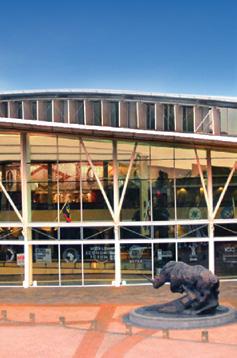













At the culmination of our 88 th IMESA Annual Conference in October 2025, the unified feedback from delegates is that municipal engineers must regain their place as joint decision-makers in infrastructure processes.
In the past, this has often been a onesided viewpoint that has not been commonly shared by municipal officials and politicians. The result has been a growing disconnect between engineering and political objectives, which has led to widespread service delivery shortfalls and growing community unrest.
Revisions to the current 1998 Local Government White Paper will go a long way in correcting this gap, with our conference panel debate on the topic exposing the pain points and highlighting some of the solutions.
The original White Paper was meant to be transformative in a post-apartheid South Africa. Key goals included the establishment of a new system of strong, accountable local government focused on socio-economic development. Citizens were also recognised as having the democratic right to truly participate in joint decision-making on matters effecting their lives and livelihoods.
Nothing changes here in terms of the original objectives. However, the stark reality is that the initial goals didn’t materialise as planned. So, that’s the key difference in the new White Paper revisions. They set out to tackle the systemic failures and performance challenges since 1994 that have intermittently derailed the intended outcomes of the first White Paper.
Based on the timeline, the nominated revision research groups had a deadline for respective report completion by the end of November 2025. A collated draft of all the findings will then be produced by designated writing teams for final public comment. After that, in March 2026 the ultimate document will be submitted to the Minister of Cooperative Governance and Traditional Affairs (CoGTA), as the custodian of the process, for actioning.
How inclusive and participative is the process?
As IMESA we’ve provided our comprehensive input. However, one of the key questions
we’ve raised concerns the composition of these writing teams, and more specifically the number of municipal engineers involved. To date, we haven’t received a response. That’s concerning because it would be pointless for engineering bodies to submit proposed action items and not have engineers represented in interpreting and compiling the final White Paper revision objectives.
The potential risk, if that is the case, is that the document could become more weighted in terms of legal and financial elements and not deal effectively with the engineering aspects that are fundamental to the local government turnaround strategy. Our appeal as IMESA is that we don’t miss this vital last step, because without sustained and equal engineering participation the objective of universal municipal performance will not be possible.
Why information sharing is key
Often the facts are hidden in plain sight, and siloed thinking can be eradicated through information sharing. Our national rollout of IMESA’s training module on “Design Flood Estimation in Municipal Areas in South Africa” is a good example.
This course was aimed at engineers and allied built environment professionals. However, fully understanding that nothing works in isolation, we’ve now incorporated a parallel layman’s programme entitled “Understanding Flood Risk”. This is aimed at councillors and top management municipal decision-makers who frequently influence or approve spatial development plans. The course highlights key flood risk factors, as well as the legal responsibilities of municipalities to plan appropriately for a safe environment. We’ve had unanimously positive responses from those attending, who’ve stated that
this high-level training better equips them to make the right decisions in support of their municipal engineers. It’s a positive work in progress.
Another interesting possibility that’s food for thought is the creation of a platform that enables retired engineers to stand for election as councillors. There are existing isolated examples. However, replicating the model across the municipal spectrum would certainly add major value in terms of top down and bottom-up infrastructure implementation, especially in terms of funding provision for asset management. That’s the Achilles Heel of effective service delivery.
Time for the holidays
In the meantime, I’d like to thank all our members, readers and advertisers for their fantastic support during 2025. Your commitment and passion for our industry as change agents is part of the “Build Back Better” strategy that can only be achieved through concerted public and private sector collaboration.
Next year’s local government election will be a key milestone in terms of South Africa’s evolving infrastructure roadmap. The successful implementation of the revised White Paper will also be an instrumental factor in subsequent national elections. However, for now it’s time for a well-deserved break. On that note, I would like to wish you and your families a happy and fulfilling festive season. I look forward to engaging with you all again in the New Year.
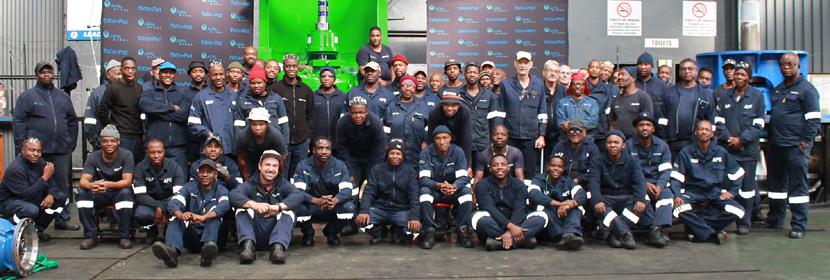
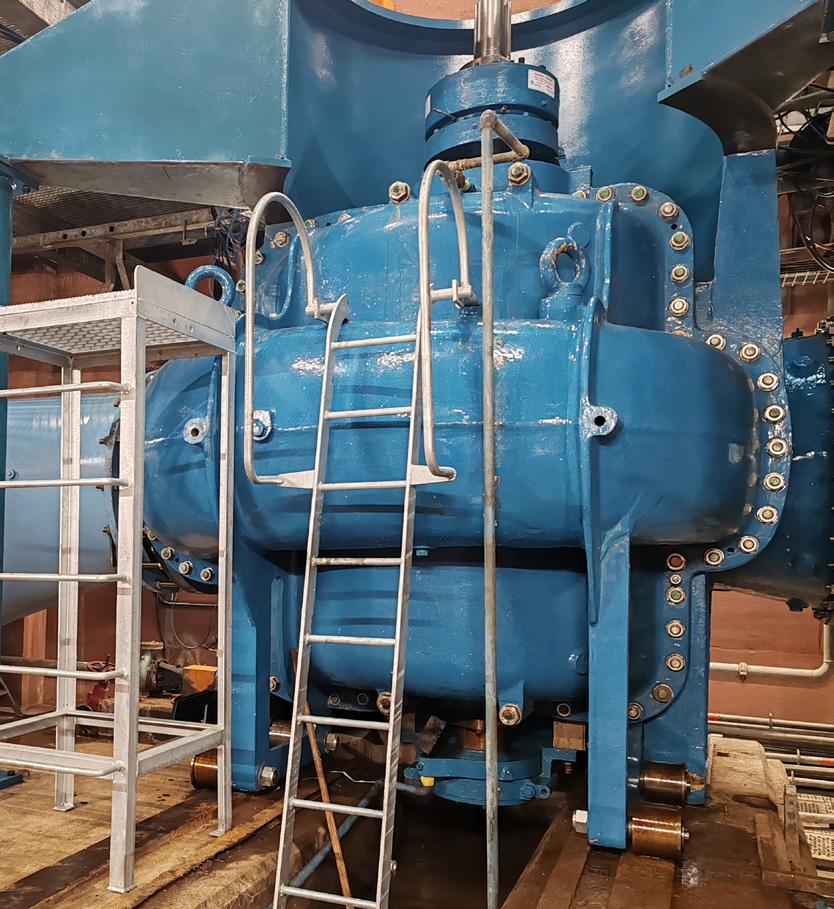
Celebrating their 74th anniversary in 2026, APE Pumps and Mather+Platt continue to gain ground in the South African and broader African market, backed by their turnkey solutions approach. In addition to OEM pump and component fabrication, this incorporates in-house engineering design, plus mechanical and electrical contracting services.
Over the past three years, we’ve invested extensively in new digital technologies and fabrication machinery upgrades to ensure that we have a full in-house capability, as well as the latest cutting-edge techniques,” explains John Montgomery, General Manager at APE Pumps and Mather+Platt, which forms part of multinational OEM leader, WPIL Limited.
“As a WPIL entity, we have an acquisition mandate to actively identify potential local pump OEMs and construction contracting specialists that align with our culture. The objective is to ensure that we have the capacity and skills to support South African new mega infrastructure projects in our fields of expertise,” Montgomery continues.
APE Pumps and Mather+Platt have also embarked on an integrated initiative to streamline their production throughput, supply chain and project implementation efficiencies in line with their ISO 9001 certified quality management system. A core focus is on digitising all operational and financial processes – including transitioning all
the group’s design blueprints since its formation in 1952 onto their cloud-based platform.
ERP integration: Faster, more efficient and transparent
Once finalised, APE Pumps and Mather+Platt’s Enterprise Resource Planning (ERP) system will seamlessly communicate in real-time with every departmental function. That includes key
CAD engineering design and Autodesk Fusion Operations software interfaces, with the capability for full automation of machining processes.
“The end goal for us is to eliminate paper processes wherever practical and to embrace the full advantages of the industry 4.0 and 5.0 environment. We recognise the value and future of Artificial Intelligence as a competitive tool, while ensuring that our personnel remain central and relevant,” explains Thorne Zurfluh, APE Pumps and Mather+Platt’s Engineering Manager leading the digitalisation project.
“In addition to helping lower APE Pumps and Mather+Platt’s carbon footprint in terms of waste reduction, this digitalisation process has direct benefits for our customers. These include faster fabrication and refurbishment turnaround times with no compromise on quality (thanks to real-time NCR reporting) – especially critical in the energy and water sectors,” Zurfluh explains.
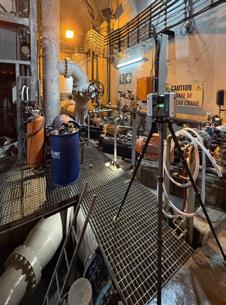
In addition to tracking, it provides full transparency on refurbishment estimations. An example is a pending power station project, where APE Pumps and Mather+Platt personnel have employed 3D scanning on the client’s Archimedes screw pump installations to accurately price the job based on a detailed method statement.
APE Pumps and Mather+Platt’s investment in 3D laser scanning enables personnel to precisely capture all elements to create a digital twin model
“Beyond our internal IT networks, there’s also an evolving need to embrace emerging external platforms like Building Information Modelling (BIM) as a multi-disciplinary project management and asset management interface,” says Zurfluh. “BIM is now a requirement on specified public sector infrastructure projects in countries like the UK, and South Africa is going the same route, spurred on by accelerated private sector adoption.”
APE Pumps and Mather+Platt’s work for Rand Water at the Lethabo raw water abstraction pump station serves as a prime example of digital twinning at work.
Originally installed in the 1980s, the four 650 Mℓ/d Mather+Platt pumps in service have performed optimally but reached the point where a comprehensive phased overhaul is required.
The first unit was extracted and shipped to APE Pumps and Mather+Platt’s Wadeville facility for refurbishment in Q4 2024 following a comprehensive 3D scan of the pump and facility. Completed within 12 weeks, the overhauled pump was subsequently reinstalled and commissioned in Q1 2025 during a scheduled Rand Water shutdown.
What makes this project especially significant is that all phases were completed by APE Pumps and Mather+Platt in-house in collaboration with Rand Water’s engineers.
“It also provided an opportunity to refine the investments we’ve made in our ERP and digital process enhancements to perfect digital twin layouts,” Zurfluh explains. “The ability to capture and import all surveyed data enables unprecedented engineering precision, which we interrogate during the design and preplanned reinstallation stages via simulation modelling. For the Lethabo project every last detail was incorporated down to the pipe support stands and fed into our approved production drawings.”

“Having all surveyed data captured in real-time is also a major time saver, especially since in the past this required manual measurement. This ensured that we were equipped to complete the works within the scheduled three-month timeframe. In addition to this, the refurbished pump is now performing at a higher output than the original with lower energy costs.”
Building on the lessons learnt, the second pump identified for refurbishment was completed within a much shorter timeframe of under two months during Q3 2025. The unit has been reinstalled and is pending commissioning.
“To reinforce the point in terms of turnaround efficiencies, a general estimated timeline in industry for a pump of this size would typically be around six months,” says Zurfluh.
Based on the envisaged programme, APE Pumps and Mather+Platt will refurbish the remaining two Rand Water units during 2026.
Meanwhile other recent projects completed include work for the Blantyre Water Board (BWB) in Malawi during Q4 2025, where new APE Pumps and Mather+Platt units have been installed in place of another OEM’s pump systems.
In the past, APE Pumps and Mather+Platt were appointed in 2013 to carry out two major turnkey refurbishment projects for BWB, which encompassed mechanical, electrical and civil phases at the Chileka pump station, and the Walker's Ferry raw water and high-lift pumping stations. Existing Mather+Platt pumps installed at these facilities during the 1960s were overhauled and brought back into optimum service, while latest generation group OEM pumps were added to meet increased water supply demand.
Wastewater opportunities
Alongside water and energy is the crucial importance of wastewater treatment. In the potable space APE Pumps and Mather+Platt work with all of South Africa’s Water Boards as well as leading Water Boards in Africa. The same applies in the industrial sector in terms of specialist pumps for raw water and downstream effluent treatment in key segments like the sugar cane industry.
However, as has widely been reported, South Africa (and many parts of Africa) face serious challenges in effecting compliant wastewater provision at municipal level. Here there are concerning gaps in funding provision, process control efficiencies and skills that negatively impact the water cycle.
“As a pump OEM, we are well-equipped to bring water or wastewater treatment plants back to specification. However, that won’t guarantee longerterm sustainability unless there’s a proactive shift
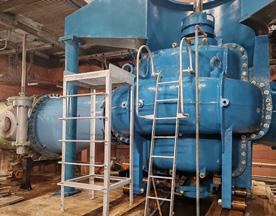
to public-private partnership (PPP) models that can co-finance and co-manage these plants efficiently and profitably,” says Montgomery.
“We continue to study the PPP possibilities, but the deciding factor is always going to be upfront financial guarantees in terms of operations and maintenance (O&M). That in turn will be strongly influenced by the greater or lesser extent of environmental pollution –often an unknow variable that significantly impacts on O&M treatment costs,” he continues.
Either way, Montgomery emphasises that specialist OEMs are the best qualified in terms of optimising their purpose-designed mechanically engineered systems. A good example is the selection of the right electric motor, e.g. air or water cooled, to ensure that OEM pumps run optimally. “Every component interacting with our pumps forms part of a holistic system, and one incorrect element can impact fluid transfer performance and unnecessarily increase running costs. It’s also vital that pumps selected match the duty requirements,” Montgomery explains.
In the end, it comes down to skills, experience and commitment. “As an employer we recruit and retain the best, and most of those who join stay for the remainder of their careers. They are proud to serve, and we are proud to celebrate their long service,” adds Montgomery.
“At the foundation level, we have a fresh batch of N6 qualified fitter and turner apprentices on the factory floor. We are also expanding our pool of engineers to ensure we can take on projects of increasing scale and complexity. Across the board we continue to lead, and our digital transition will set a new benchmark for industry performance,” Montgomery concludes.
www.apepumps.co.za www.matherandplatt.com
Hosted every two years, the IMESA/CESA Excellence Awards provides a platform to celebrate and elevate the role of municipal engineers and their built environment partners in designing and executing sustainable infrastructure that empowers communities.
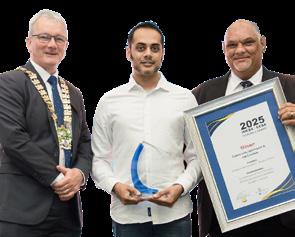
CATEGORY 1: WINNER Community Upliftment and Job Creation
As change agents, IMESA’s objective is to ensure that municipal engineers are recognised as innovators and leaders in a highly specialised field. In addition to celebrating excellence, the awards programme therefore serves as an opportunity to reinforce the importance of joint decision-making between municipal engineering leaders and public officials in the planning, design, maintenance and building of resilient towns and cities,” says IMESA President, Geoff Tooley, speaking at the awards ceremony on 28 th October 2025 the day before the IMESA 88th Annual Conference held in East London.
Comments Consulting Engineers South Africa (CESA) President, David Leukes, who co-presented at the awards ceremony:
“The Awards are a reminder of the power of collaboration in advancing sustainable development for all South Africans. In this respect, the 2025 IMESA/CESA Excellence Awards are a symbol of innovation, integrity and meaningful impact in our sector.”
“At CESA we see engineering as more than structures and systems. It is a tool to shape a sustainable and inclusive future. Municipalities are on the frontline of service delivery. This is where the partnership between IMESA, CESA and all other industry associations and stakeholders provides a powerful platform to advocate for professional solidarity as the foundation for good governance and outstanding engineering execution,” Leukes continues.
“Every successfully completed project embodies hope and progress. However, infrastructure is not an end in itself; it’s a catalyst for dignity, safety and opportunity. Yet we know that we face challenges, like constrained budgets, procurement bottlenecks, skills shortages, and the growing impact of climate change. Irrespective, every infrastructure investment must create enduring value for generations to come, and sustainability must be embedded at every stage of development.
“The projects recognised for an award at this event demonstrate that South African engineers are not only keeping pace with global best practice but are leading innovation, tailored to local contexts. To work in practice, the complexity of today’s infrastructure challenges demands collaboration across all spheres of government, the private sector and communities. When we work together, we can create systems that are not only functional but transformative. Let us continue to collaborate for the future we want.”
This year there were 21 entries, competing for an award in one of three categories, and the finalists are as follows:
Community Upliftment and Job Creation Winner
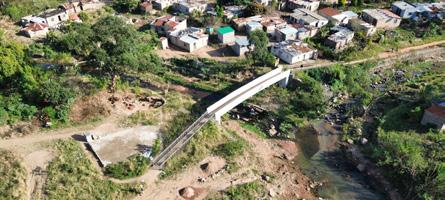
Project: Construction of four 25 m span reinforced concrete pedestrian bridges in Amaoti
Municipality: eThekwini Municipality
Main Consultant: eThekwini Municipality – Engineering Unit – Roads Provision Department
Category 1: Winning project description
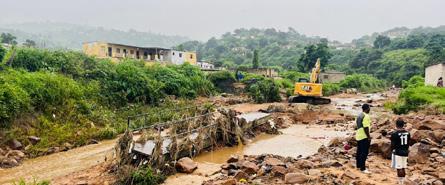
The Amaoti community has faced repeated devastation from flooding, with the April 2022 events significantly worsening conditions due to climate change. These floods caused the Ohlanga River to widen and destroyed the existing 12 m steel pedestrian bridges, leaving residents vulnerable and disconnected.
In response, the eThekwini Municipality’s Engineering Unit – Roads Provision Department launched a strategic intervention to improve resilience through the construction of four new pedestrian bridges. Funded by the National Disaster Management Centre (NDMC) as part of the Disaster Recovery, Reconstruction and Rehabilitation Programme, this initiative embodies the core principles of “Building Back Better”.
These new 25 m long single-span, U-shaped conventional reinforced concrete pedestrian bridges within a 1.7 km radius are designed to withstand future extreme weather events and provide safe, permanent access for the community.
A total of 40 people were employed, including 26 local residents and five emerging subcontractors. The project
also served as a training ground for young professionals through a graduate employment programme, helping close the engineering skills gap.
Importantly, all phases from conceptual design to construction supervision were executed entirely by in-house structural engineers from eThekwini Municipality, showcasing the city’s technical competence and commitment to sustainable, communityfocused infrastructure.
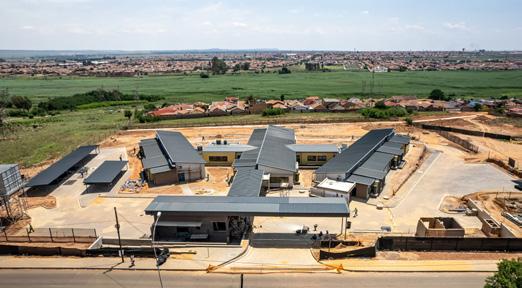
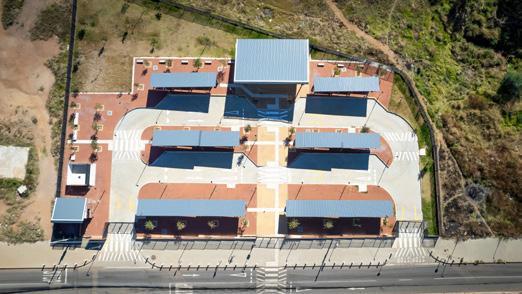
Project: Naledi Clinic
Municipality: City of Johannesburg
Main Consultant: DELTA Consulting Engineers & Project Managers
Project: Vlakfontein Public Transport Facility
Municipality: City of Johannesburg
Main Consultant: Mashigo/Timmas Holding Group JV
Environment and Climate Change
Winner
Project: Climate resilient sanitation demonstration project in the informal settlements of the City of Cape Town and eThekwini
Municipality: City of Cape Town and eThekwini
Municipality
Main Consultants: Delta Built Environment Consultants; Khanyisa Projects Submission: Water Research Commission
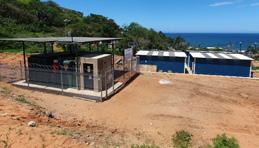
The stark reality of informal settlements in South Africa serves as daily evidence of the persistent inequalities that scar our nation. Since 1994, the South African government has prioritised service delivery, striving to rectify historical inequalities and expand access to essential services.
While progress has been made, the application of conventional service delivery models has often fallen short, particularly in reaching and effectively serving marginalised and indigent communities in informal settlements. The topography and density of settlements in these communities also makes it difficult to deploy traditional service delivery approaches, which are further challenged by climate change impacts.
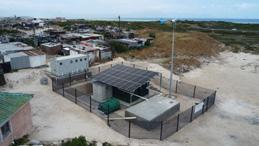
With funding support from the Gates Foundation and the Department of Science, Technology and Innovation (DSTI), the Water Research Commission in collaboration with the City of Cape Town and eThekwini Municipality are demonstrating how innovative water efficient sanitation systems (WESS)/ Non-Sewered Sanitation (NSS) technologies can effectively provide dignified and climate resilient solutions through pilot projects. These include the Masincedane informal settlement in the City of Cape Town and the Pholani informal settlement in eThekwini.
WESS/NSS are full water recycling systems, which are adaptable, scalable, reduce the risk of environmental contamination, and can
be implemented with minimal disruption to existing infrastructure. Furthermore, they offer the potential for resource recovery (water, energy, and nutrients). Their proven application provides a sustainable framework that can be adopted by other municipalities in South Africa facing similar challenges.
CATEGORY 2: WINNER
Environment and Climate Change
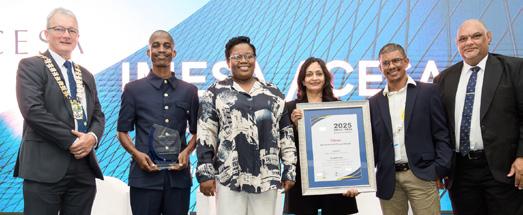
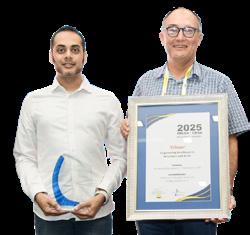
From left are Geoff Tooley, IMESA President; Phillip Majeke, Commercialisation Manager for the South African Sanitation Technology Enterprise Programme (SASTEP) at the Water Research Commission; Ednah Mamakoa, Technical Officer for the SASTEP Programme; Bhavna Soni, Deputy Head: eThekwini Water and Sanitation Unit; Denvor Cloete, Senior Professional Officer, Directorate: Water and Sanitation, City of Cape Town; and David Leukes, CESA President
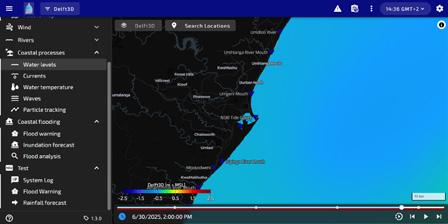
Project: eThekwini's Coastal Modelling and Forecasting
Municipality: eThekwini Municipality
Main Consultant: Deltares
Project: The rehabilitation and upgrade of the eastern stormwater channel in Orange Grove Municipality: City of Johannesburg
Main Consultant: Ndodana Consulting Engineers
CATEGORY 3
Engineering Excellence in Structures and Civils Winner
Project: Shallcross/Blundell Road and Bridge Construction
Municipality: eThekwini Municipality
Main Consultant: eThekwini Municipality –Engineering Unit – Roads Provision Department
The upgrade of the
eThekwini Municipality’s sophisticated Forecast Early Warning System (FEWS) is primarily focused on predicting stormwater-related floods

and adjoining
in
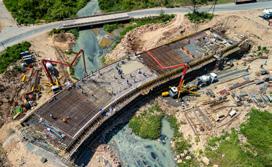
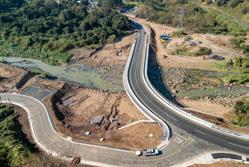
The Blundell “Smart Bridge” has a variety of different electronic sensors embedded throughout the structure that provide detailed information about exactly what is happening inside the concrete, which is a first for eThekwini Municipality
The project entails a new road alignment which has increased the minimum curve radii to 65 m, from less than 25 m before, which has in turn doubled the road design speed, while enhancing vehicle stability and comfort. A wider road cross section was designed to accommodate larger vehicles, particularly heavy trucks and buses, which frequently use the road. Pedestrian safety was a key consideration, with two sidewalks incorporated, one on each side along the entire route.
The old bridge was 32 m long and 6 m wide, and was severely undersized for both road traffic, pedestrian traffic and hydraulic
CATEGORY 3: 2ND PLACE
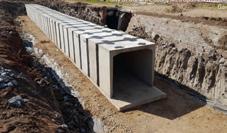
purposes. The new bridge is 90 m long, 14.5 m wide, and has a deck and abutments that sit completely outside the existing flood limits. It is also the first fully integral bridge in Africa to include a partially curved layout. The unusual structural arrangement is being monitored with a suite of built-in, web-linked instruments that will gather data to inform future designs for these kinds of tough, floodproof structures.
The works included demolishing the existing structure and using the demolished material within platforms and embankment protection. Other work included various service relocations, a new stormwater facility, river rehabilitation and the establishment of a picnic area.
This project demonstrates how conventional limits on the use of fully integral concrete bridges can and should be pushed by designers in South Africa. The project is deliberately intended to encourage the use of integral concrete bridges in a wider range
The Green Point Dome is a firstof-its-kind timber structure in South Africa, showcasing engineering ingenuity, sustainable design, and technical excellence
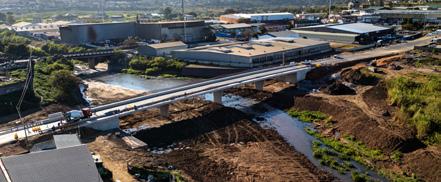
The Hunslet Road Bridge replaces three separate, old and deteriorated cellular bridges that were placed in a roadway fill embankment crossing the Piesang River floodplain
CATEGORY 3: 3RD PLACE

of circumstances than has previously been considered by designers. These types of bridges are an important form of resilient infrastructure that can handle the unpredictable demands of future climate change.
Planning, design, and contract management were performed in-house by municipal staff immediately after the flood event and all project stages were successfully fast-tracked due to the urgency. The project aims to serve as a motivation and strengthen the technical abilities within eThekwini Municipality by this novel structure, as well as promote and inspire other government authorities to follow.
The project balanced the economic needs of the local community, the larger community of ratepayers, and the environment to create innovatively sustainable, maintenance-free, elegant infrastructure which blends into nature visually and practically.
2nd
Project: Hunslet Road Bridge over the Piesang River
Municipality: eThekwini Municipality
Main Consultant: eThekwini Municipality –Engineering Unit – Roads Provision Department
Project: General building works of new education dome and experiential education garden: Green Point Park
Municipality: City of Cape Town
Professional Team: DK Architects, HHO Consulting Engineers, Senekal Allen & Partners (Quantity Surveyors), Entsha Construction
Conclusion
“Each project entered tells a story of creative responses that epitomise South African municipal engineering in practice. We congratulate the first, second and third place category winners on their exceptional achievements, and salute all our project entries for their outstanding work in positively changing the municipal landscape for a better South Africa,” Tooley concludes.
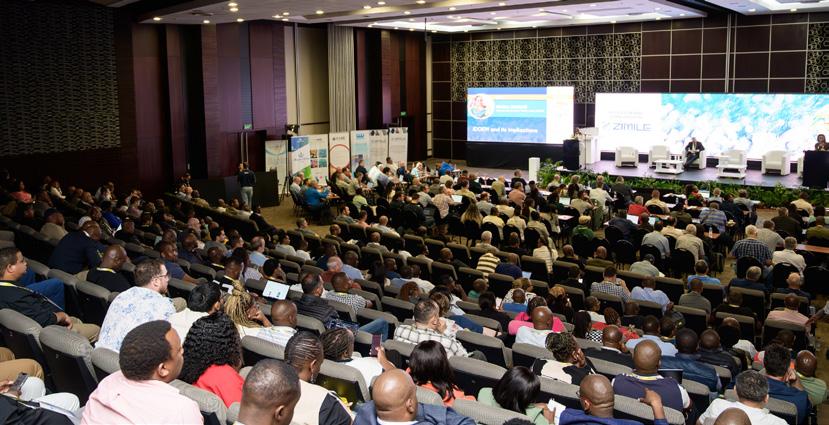
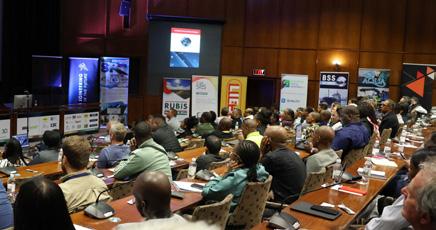
The integral role that municipal engineers play in enabling socio-economic development was a central focus at the 88th IMESA Annual Conference. Held between 29th and 31st October 2025 at the East London International Convention Centre, more than 650 delegates from across the public and private sector came together to listen and interact with a top range of speakers under the conference theme, “Sustainable Engineering Solutions”.
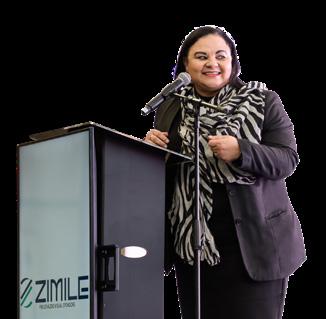
The conference’s keynote speaker, Lizelle Maurice, Executive Director at the Border-Kei Chamber of Business (BKCOB), stressed the crucial role of municipal engineers in enabling socio-economic sustainability through efficient, well-run towns and cities
Speaking at the opening session, IMESA President, Geoff Tooley, highlighted the challenges and opportunities to address gaps in infrastructure performance, both at local government level as well as across the public sector in general. “Finding solutions requires our combined experience, ingenuity and resourcefulness for service delivery and the fact that our 88th conference was sold out in record time illustrates the passion and commitment of those attending,” he states.
“Hosting this year’s conference in East London – a strategic port, agricultural and automotive hub – also underscores the importance of giving equal focus to every South African town and city as part of a unified approach to tackling infrastructure backlogs,” he continues.
“Throughout South Africa, there are municipal pockets of excellence that set the benchmark for others to follow. This conference serves as an
important platform to rally the industry behind IMESA’s mandate to promote and foster worldclass municipal engineering through knowledge transfer and capacity building, leading to professional registration with the Engineering Council of South Africa (ECSA).
“In parallel, South Africa’s consulting engineers and specialist OEMs play a vital role in design innovation and fit-for-purpose technology adoption. For municipal engineers, making informed decisions requires an expert understanding of the solutions available. Even more significantly, those solutions must be structured around the needs of business and communities.”
Keynote address: Everything rises and falls on municipal engineering
This latter viewpoint was reinforced by the conference’s keynote speaker, Lizelle Maurice, Executive Director at the Border-Kei Chamber of Business (BKCOB), who stressed the crucial role of municipal engineers in enabling businesses and communities to flourish.
“There’s a real need for municipalities to reinvest the tariff revenue earned in the upkeep of infrastructure services. We also understand that organisations like BKCOB have a direct and indirect contribution to make,” says Maurice.
Founded in 1877 and headquartered in East London, BKCOB’s primary mandate as the “Voice of Business” includes crowding in investment, facilitating commercial growth, NGO and community participation, plus ensuring that the
Paper 11: “Transforming Waste: Sustainable Sewage Sludge Management in George Municipality”
Author and presenter Melanie Geyer, Manager of Infrastructure Planning at George Municipality, together with IMESA President Geoff Tooley

Paper 4: “Transforming Conventional Wastewater Treatment into Multifunctional Water Reuse Facilities: The Ecreuse Approach in Buffalo City” Presenter and co-author Dr-Ing Manuel Krauss, Head of Resource Efficiency and International Cooperation at the Research Institute for Water Management and Climate Future at RWTH Aachen University is congratulated by IMESA President, Geoff Tooley
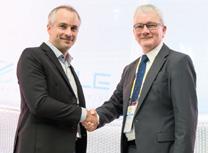
necessary services are in place, spearheaded by BKCOB’s Infrastructure Committee. Working closely with municipal representatives in conjunction with its members, the Infrastructure Committee’s mandate is to ensure that the enabling services – from electrification, water and sanitation to road and rail networks –function optimally, keeping pace with demand. An especially critical intervention has been the need to manage the economic cost of Eskom loadshedding. As a countermeasure, BKCOB facilitated a workable curtailment agreement solution, working with its municipal electrical engineering counterparts and Eskom, and dividing its manufacturing member entities into various blocks. During Stages 1 to 4, they could continue production without interruptions. Then from Stage 5 and above, members could choose one day of voluntary loadshedding in exchange
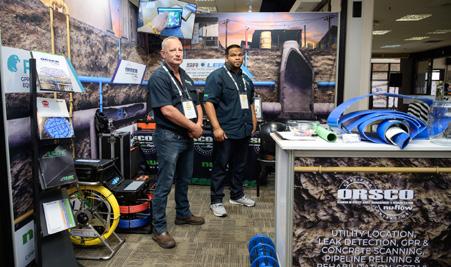
for uninterrupted supply for the next four days of production.
“Keeping the lights on is obviously crucial, but from BKCOB’s perspective, diversification is the key for our future success. While the automotive sector has historically been a major contributor to our regional economy, and hopefully will continue to do so, an overreliance carries a degree of risk in an evolving market. We have therefore identified the need to facilitate growth in other key segments like agriculture, agro-processing, general manufacturing, and tourism. In term of the latter, we have so much untapped potential,” Maurice explains.
“Naturally, that hinges on ensuring that East London and our surrounding towns are safe and welcoming places for visitors. First impressions are lasting impressions. We’ve compared ourselves against benchmarked cities like Cape Town and taken note of their successes, including their highly acclaimed central business district – a clean, vibrant hub for ongoing residential, commercial and hospitality development,” she continues.
“Our goal is to replicate this model by making East London the cleanest, safest, most beautiful city by the end of 2026. In addition to pristine infrastructure, that requires adopting a circular economy approach. We must divert more waste from landfills, in turn creating SMME and community employment opportunities.
“This initiative is particularly important within our informal settlements, which currently contribute to widespread litter pollution, impacting the environment, with downstream adverse effects on water quality, river, lagoon and ocean health.”
Through BKCOB’s Waste and Environmental Management Committee, eight recycling buyback centres have been rolled out to date, in partnership with PRO entities. An allied partnership was concluded in May 2022 following the signing of an MoU between BKCOB, the Buffalo City Metropolitan Development Agency and Buffalo City Metropolitan Municipality as part of their Clean and Green City programme.
“Within the mix, sport is a big stimulator of an economy, a prime example being the 2024 Summer Olympics in Paris. Everything had to work perfectly – and not just the event itself, but the engineered city services. Like the Olympics – or any other significant local or international sporting event – towns and cities must compete for the
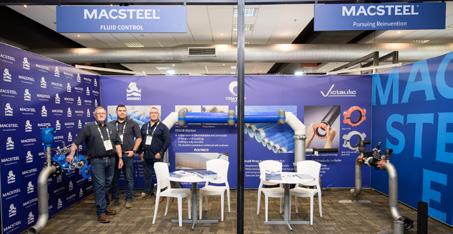
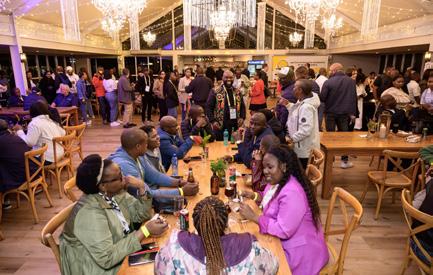
about progress through partnerships, innovation and a shared duty for the industry to engineer with purpose.
capabilities – step by step with industry needs, deepening the disciplines that deliver reliability,” she continues.
“Let’s be very frank about the municipal reality. Our systems are under pressure, but they are not beyond repair. Non-revenue water losses are a pressing concern, finances are constrained, and aspects like floods, droughts and power disruptions are pushing fragile systems to the breaking point.
“But rather than asking what went wrong, we need to ask what we need to do collectively that works. Sustainable solutions aren’t just timely, they are urgent. Municipalities don’t need more plans that gather dust, they need partners than can deliver real-time outcomes driven by technology enabled solutions.
right to host the event. Those with inadequate infrastructure will not make the cut. The same applies to attracting and retaining investors in general,” Maurice stresses.
In terms of sporting events, East London’s hosting of the annual National Water Polo Currie Cup is a prime example. The tournament has been successfully held in East London every year since 2022 – thanks to a BKCOB intervention that restored the dysfunctional state of the existing public swimming pool over a period of six weeks.
However, the same success story has not applied to the annual Iron Man 70.3 competition series, which used to include East London as one of its host cities. East London lost out to Mossel Bay in 2021 due to deteriorated structural issues at the Orient Beach Complex, which is owned by the Buffalo City Municipality. It will cost millions to restore. “This event used to contribute more than R30 million over a weekend to East London’s local economy. This reinforces the point that timely infrastructure maintenance is a key factor in winning or losing commercial opportunities,” Maurice explains.
“Ultimately, the way forward is through public and private sector cooperation. For an equal partnership to work, however, we must ensure that our municipalities are fully equipped with the skills and personnel needed to connect the dots. Everything rises and falls on municipal engineering,” Maurice concludes.
Diamond Sponsor address: The transformative power of infrastructure Zimile, the conference’s Diamond sponsor, concurs. Addressing the delegates, Marisa Naidoo, Business Unit Head: Innovation and New Technologies at Zimile says it’s fundamentally
“Since our founding in 2009, Zimile has been driven by the principle that engineering needs to uplift communities. Infrastructure is not just about steel and concrete: it’s about community dignity and reliability, as well as opportunities for the next generation,” says Naidoo.
“In this respect, technology is reshaping the way we plan, design, build and maintain – and people expect more – not just new assets, but assets that work sustainably within the climate change context. That’s why we refreshed our identity in 2025 with the tagline‘Zimile –Unbounded Engineering’. This means we refuse to be limited by past practices. Our engineering is open, data driven, collaborative and future focused.
“In response, we established our Innovation Unit – our engine for digital transformation, analytics and technology partnerships. This is only the start. We will keep growing our
“We translate emerging technologies into tools that operators can use practically. For the roads segment, we translate digital data into prioritised rehabilitation plans that optimise expenditure and extend pavement life. In wastewater, decanter dewatering improvements focus on stabilising operations while trimming down on opex and energy costs. For above and below ground assets, we’re looking at structured digital condition assessments that move teams from clipboards and reactive fixes to dashboards and predictive action. These are not theoretical pilots, they are live, field tested and designed to interlock with systems that municipalities already run.
“The IMESA 88th conference challenges us to make sustainability more than just a goal – it should be an engineering standard. Our work changes lives. Let’s move from innovation on paper to transformation on the ground. Let’s engineer without limits for our people, our progress and for South Africa and Africa.”
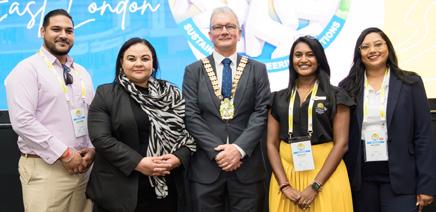
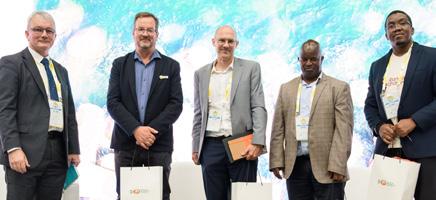
The panel for the “Quo Vadis? Updating the 1998 Local Government White Paper” interactive discussion. From left: Geoff Tooley, IMESA President; Johan Basson, IMESA EXCO Technical Director; Nick Graham from Nick Graham & Associates; Sandile Booi, Head of Directorate: Spatial Planning and Development at Buffalo City Metropolitan Municipality; and Luntu Ndalasi, Chief Director: Infrastructure Planning, Delivery and Maintenance at MISA
That future focus depends on a sustained pipeline of engineering graduates who are equipped to embrace an increasingly complex world. This was the motivation for the establishment of IMESA’s Young Professionals Portfolio (IMESA YP 2), founded within the IMESA KwaZulu-Natal branch in 2023 and now expanding nationally via IMESA’s branch network, recruiting members in the private and public domain.
Headed at IMESA EXCO level by Bhavna Soni, the current branch leadership comprises Dhiveshni Naidu (IMESA KwaZulu-Natal branch), Shravan Hanuman (IMESA Northern Provinces branch), and Lloyd Govender (IMESA Western Cape branch).
Co-presenting at the conference, Hanuman says the purpose of IMESA YP2 is to ensure that young engineers have a voice and access to opportunities. “We’ve achieved major successes to date through events, training and CPD accredited workshops, plus engagement with universities and students to ensure continuous connection through tertiary, graduate and professional levels.”
“We are now calling on passionate young engineers to come onboard and to help establish YP2 Chapters where these currently don’t exist at our other branches,” explains Hanuman. “These roles include event management, innovation, technical development, mentorship and outreach initiatives. If there’s one thing engineers love more than problem solving, it’s finding a smarter way to do it.”
Adds Naidu: “Our vision is simple but powerful. To create meaningful impact by promoting excellence, developing motivated mindsets, leadership, and enhancing both professional and personal growth.”
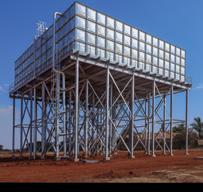
Programmes delivered to date include a speed mentorship event interacting with seasoned professional engineers, and an IMESA YP2 rendition of the Amazing Race in 2023, coined the Engineers’ Edition. “In partnership with our OEM sponsors, participating teams had to solve clues and complete staged engineering challenges – like assembling a water storage tank – in a race against time to win,” says Naidoo.
Programmes for 2026 include an IMESA Fun Run, the return of the leadership and mentorship workshop, and the Amazing Race Engineers’ Edition. IMESA YP2 will also be launching two fresh events in 2026, a mini conference to prepare young engineers for bigger stages like the IMESA Annual Conference; and a take on the old TV show “Who wants to be a millionaire” with the IMESA YP2 version, “Who wants to be an engineer”. Adds Hanuman: “Essentially, the future of engineering begins with us. It’s not something
that we wait for, it’s something that we build right now.”
Quo Vadis? Updating the 1998 Local Government White Paper
Effective infrastructure delivery is of course dependent on clear and practical implementation. The conference’s Panel Discussion entitled “Quo Vadis? Updating the 1998 Local Government White Paper” drilled down into this revision initiative being led by the Department of Cooperative Governance and Traditional Affairs (CoGTA). A core element is the need to address burning issues impacting on coherent service delivery. A key paper to read is Dr Kevin Wall’s conference presentation, entitled “How sound are the municipal foundations laid in 1998, and why is this important to local service delivery?”
Priorities outlined in the updated White Paper include improving cooperative governance between national, provincial, and local levels, depoliticising municipal governance, and promoting community-led development. The review process – with a final version planned for submission to CoGTA’s Minister in March 2026 – also endeavours to make municipalities more capable and financially viable.
The debate included the potential to consolidate smaller municipalities and tribal authorities, and to shift metros from an overreliance on national subsidies, together with a more workable execution of infrastructure development plans.
Delegate responses from the floor were revealing, particularly in ensuring that communities share a common goal with municipal engineers to promote, protect and preserve new and existing infrastructure. The common observation is that unemployment and disaffected communities remain a key
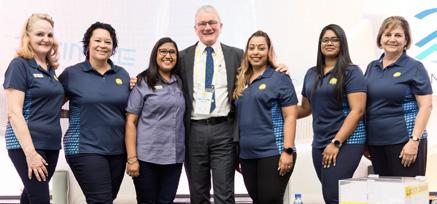
IMESA President, Geoff Tooley together with the IMESA Head Office Team. From left are Debbie Anderson, conference organiser; Melanie Stemmer, marketing and communications; Narisha Sogan, finance, CPD and bursaries; Dashree Reddy, delegate registration and technical divisions; Adel Naidu, membership and website administrator; and Ingrid Botton, institute secretary and head office manager
factor in infrastructure vandalism, plus illegal connections.












A number of delegates also emphasised the need for a clear separation between political influence – within a five-year administrative term – and medium and long-term infrastructure engineering led execution. The general view was that once the plan is approved and in place, it must be an exclusive engineering responsibility.
“The 17 papers presented were of the highest standard and will remain important references for future feasibility and design studies. Paper topics extended from non-revenue water management to wastewater reuse, strategic optimisation of Municipal Infrastructure Grant funding, flood line management, the implications of the Public Procurement Act, and waste management,” he continues.






Municipal finance departments must also ensure a fair allocation of revenue collection for infrastructure service provision in terms of maintenance and construction. In the past, the city engineer made the decisions, and the town clerk made sure the money was made available, following council approval.

The digital version of the 88 th IMESA Annual Conference Proceedings is available online, plus all the papers. Visit www.imesa.org.za to view and download
“The lessons learnt and the knowledge shared at our IMESA 88th Annual Conference are an inspiration for all engineers and public officials driving the change we need to see on the ground. A special thanks to Lizelle for reaffirming our value as municipal engineers,” says Tooley.
“The remaining papers covered water and sanitation strategies, biodiversity impacts, stormwater management and municipal road maintenance. Congratulations to all our presenters – they were selected from over 80 abstract submissions – and have made this year’s conference a major success,” adds Tooley.
“On a final note, we’d like to thank all our delegates, sponsors and exhibitors for their unwavering support. We look forward to welcoming you at our 89th IMESA Annual Conference at the Durban International Convention Centre, being held between 28th and 30th October 2026. In the meantime, let’s collectively move the infrastructure agenda forward,” Tooley concludes.
At the 88th IMESA Annual Conference in October 2025, special recognition was conferred on members of the Institute of Municipal Engineering of Southern Africa (IMESA) – either as Fellows or Honorary Fellows – for their dedication and commitment.
In terms of the criteria, elected Fellows must be corporate members of the Institute who are professionally registered with the Engineering Council of South Africa and actively in service. They also
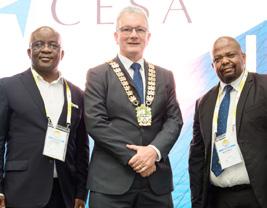
need to have been an IMESA member for at least five years and either hold or have held a senior executive or senior professional position in the field of infrastructure engineering and added value.
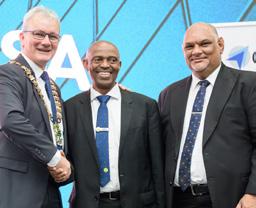
At the highest level, those achieving Honorary Fellowship status have distinguished themselves through their exceptional contribution to the advancement of infrastructure engineering.
During the 88th IMESA Conference, the following members were recognised by IMESA’s EXCO and Council:
Elected as Fellows
• Albertus Bezuidenhout
• Kubendran Govender
• Louis Havenga
• Johannes Karemaker
• Simon Knutton
• Mpoti Machaba
• Mark Marais
• Molahlehi Marate
• Moeketsi Mohlabi
• Ben Molleman
• Philippus Nice
• Hilna Viljoen
• Kwena Maphoto
Elected as Honorary Fellows
• Thabo Hlabela
• Allyson Lawless
“Being elected as either a Fellow or Honorary Fellow is a major career milestone, and our 2025 recipients are well deserving of this recognition,” says IMESA President, Geoff Tooley.





























CONFERENCE OF THE
INSTITUTE OF MUNICIPAL ENGINEERING OF SOUTHERN AFRICA











DIAMOND SPONSOR

GOLD SPONSOR

SIVER SPONSOR

BRONZE SPONSORS



MEDIA PARTNER










South Africa’s municipalities are caught in a cycle of service delivery protests, audit failures and declining public trust. Yet a tool designed to help break this cycle is often sidelined as a compliance burden. That tool is the Municipal Standard Chart of Accounts (mSCOA).
It is a system developed by National Treasury to create a standard way for all municipalities to record, classify and report their financial information. Its purpose is to improve the quality, consistency and comparability of financial data across municipalities.
At its core, mSCOA ensures that everything from budgeting to financial reporting is done in the same structured way, making municipal finances transparent and easier to manage.
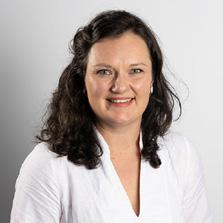
Miyelani Holeni, Group Chief Advisor at Ntiyiso Consulting Group
By Miyelani Holeni
Too often, mSCOA has been dismissed as a finance department concern. But it was never meant to be just about compliance. It is a strategic tool that, if embraced properly, can transform how municipalities plan, deliver services and build public trust.
National Treasury’s current work to regulate 14 core municipal business processes (including budgeting, supply chain management and asset management) represents the next step in mSCOA’s evolution: from a financial reporting exercise to a central engine for effective local governance. This is a clarion call for mayors, municipal managers and all directors to finally see mSCOA for what it is: a shared opportunity to build trust and accelerate delivery.

The evidence of its transformative power is no longer theoretical. mSCOA’s segments provide a multi-dimensional language that speaks to every part of the organisation. The project segment speaks directly to engineers and asset managers, allowing for precise tracking of infrastructure projects. The region segment empowers councillors and communities by providing a clear view of expenditure and outcomes
in every single ward. The funding segment offers the entire executive team a clear-eyed view of fiscal viability, moving us from asking “Did we comply?” to “Are we effective?”
This shift is profound. The regulation of these business processes will force the integration of strategy (the Integrated Development Plan, or IDP), budgeting and performance management (the Service Delivery and Budget Implementation Plan, or SDBIP) into a single, coherent cycle.
This integration kills two birds with one stone: it creates the elusive “one version of the truth”, and it eliminates the debilitating reporting fatigue that plagues our municipal officials. Imagine a real-time dashboard reflecting the true health of the municipality, replacing stacks of contradictory spreadsheets. This is within reach.
However, as a recent webinar poll starkly highlighted, the biggest barriers to this bright future are not technical, but human. Resistance to change and lack of staff capacity were identified as the primary obstacles. This confirms a universal truth: you can have the most compliant software system money can buy, but without the right people and processes, it is a sports car parked in the driveway.
The move to regulate business processes is a golden opportunity to address this exact failure. It forces us to look up from our spreadsheets and look at our organisations.
The prescription for success is clear and draws from the practical lessons of those leading the charge:
• Leadership ownership: the municipal manager and mayor must be the chief advocates, not
passive observers. mSCOA cannot be a finance project; it is an organisation-wide transformation that demands political will and cover. This regulation makes mSCOA undeniable, providing a mandate and a clear plan that leaders can rally behind.
• Breaking silos: this means reconstituting dormant mSCOA steering committees to include not just finance, but also IT, performance management, asset management, and operational departments such as procurement and HR. The Eastern Cape Provincial Treasury has provided a masterclass in this coordinated approach, employing dedicated champions in each district and fostering relentless coordination. Success is a function of breaking down internal walls.
• Investing in capacity: the wealth of materials provided by National Treasury, including detailed process manuals and system specifications, are themselves training tools. As Silma Koekemoer, Doctor of Philosophy from Nelson Mandela University has emphasised, these are designed for both financial and non-financial staff.
Continuous training is the antidote to the capacity constraint. Furthermore, the regulatory clarity justifies critical investment in modernising fragmented IT systems and integrating data platforms, providing a clear benchmark against which to measure current capabilities.
• Using the data: too often, mSCOA data is used only to prepare reports for National Treasury. This is like using a smartphone only to make phone calls. Its true value lies in tracking monthly performance, adjusting budgets mid-year and informing council decisions. This enables municipalities to track spending down to a specific project in a specific ward – making “ghost projects” a thing of the past.
For municipalities that have struggled to keep up with mSCOA implementation, this regulatory shift is not a threat, it is a definitive blueprint and a chance to reset. It provides the clarity and uniformity we have lacked, moving the conversation from “How do we interpret
the requirement?” to “How do we master the process?”
It also arms municipal officials with a clear set of requirements for their software vendors and consultants, allowing them to be held accountable for delivering systems that enable these critical processes, not just technically comply with them.
The path to victory, from vision to tangible service delivery, is paved with credible data. The regulation of these 14 processes provides the essential guardrails on that path. The challenges of change management remain very real, but they are now challenges we face with a clear map and a common goal.
This is our shared opportunity. It is a chance to move beyond compliance and use data to tell a new story about local government – a story of transparency, accountability and tangible progress.
The framework is no longer a constraint: it is the powerful enabling tool it was always meant to be. It is now up to local government to depress the accelerator and use mSCOA to drive the change our citizens so desperately need. Let’s not waste this roadmap.
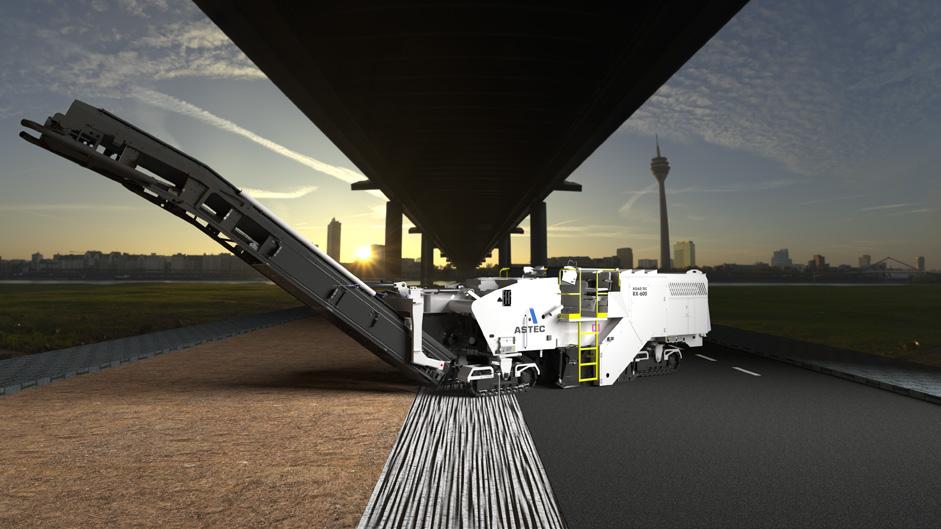

“In the evolving landscape of road construction and safety, the success stories lie right beneath our feet – quite literally,” says Michelle Lewis, KwaZulu-Natal Regional Technical Manager at Much Asphalt.
One of the most promising developments in modern pavement technology is Bitumen Rubber Asphalt Open Grade (BRAOG), a material that blends engineering innovation with environmental awareness. “Being part of the first BRAOG project in KZN is an honour and a privilege,” Lewis adds.
BRAOG is a stone skeleton and essentially an open-graded asphalt mix with an interlocking matrix of the coarse aggregate modified with bitumen
rubber. The binder is produced by blending base bitumen with finely ground crumb rubber obtained from the buffing of recycled pneumatic vehicle tyres. It is a non-homogeneous binder as the rubber crumb and bitumen remain as distinct detectable phases with their own localised properties.
Once the rubber crumb particles are added to the superheated bitumen they start to react with the aromatic components in the bitumen. This reaction process may be aided by the addition of a small quantity of aromatic oil to act as an “extender” to assist with the digestion of the rubber crumbs. Such oils, frequently termed “extender oils”, allow
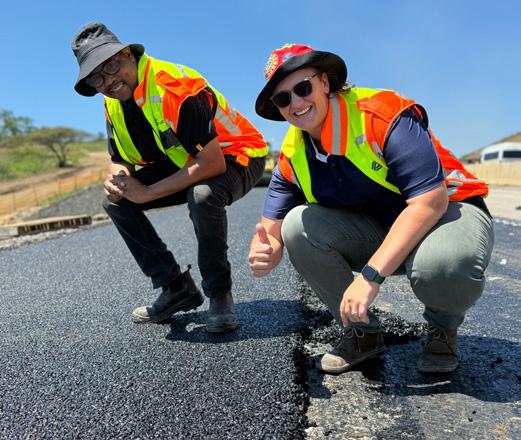
the rubber particles to swell without removing the binder aromatics required for product lifespan and aid particle dispersion in the binder.
“The result is a flexible, durable and environmentally friendly surfacing material that offers a unique combination of performance and sustainability,” says Lewis.
BRAOG is a functional layer, used for improved surface texture, surface drainage and noise abatement, and is upheld by a support layer or membrane to ensure longevity of the pavement structure.
Unlike dense-graded mixes, the open structure of BRAOG allows water to drain through the surface, reducing splash and spray during wet conditions and improving driver visibility and safety. This characteristic makes it especially effective for high rainfall regions and high-speed roadways.
“At the heart of BRAOG’s appeal is its recycled rubber component,” Lewis explains. “By repurposing end-of-life tyres, BRAOG directly contributes to waste reduction and circular economy goals – a major win for both engineers and environmental stewards.”
From a technical standpoint, the bitumen rubber blend enhances the binder’s elasticity and resistance to cracking and oxidative aging. The viscosity of the binder also supports the addition of more binder by mass into the mix compared to conventional binders. The result is a road surface that remains flexible under stress, minimising reflective cracking and extending pavement lifespan.
BRAOG’s high permeability aids in surface drainage while the rubberised binder provides superior noise reduction, a feature increasingly valued by road users, urban planners, and communities.
Where science, sustainability, and vision meet on the open road

Motorists experience quieter, smoother rides and road maintenance agencies benefit from longer maintenance cycles and reduced lifecycle costs. However, Lewis warns that successful implementation requires careful attention to the mix design, suitable drainage systems, handling of the binder, as well as placement and compaction techniques. “The viscosity and curing behaviour of bitumen rubber differ significantly from conventional binders, making quality control and expertise crucial to its performance and outcomes.”
A step forward for South Africa
Bitumen Rubber Asphalt (BRA) has been used successfully in South Africa since its introduction in the early 1980s.
“However, the application of BRAOG has not been nearly as widespread as its continuously graded or gap graded bitumen rubber asphalt counterparts. As far as we are aware BRAOG has not been used in KwaZulu-Natal to date and its performance in local conditions remains unverified,” says Lewis.
“Much Asphalt is performing comprehensive trials as a prelude to its planned use for SANRAL’s Upgrade to National Route 3
Section 3 between Ashburton Interchange (km 0.8) and Murray Road (km 5.9).
“These early trials and pilot projects are opening doors to evaluate the local performance of BRAOG under varying climatic and traffic conditions.”

Lewis, together with Joanne Muller, Gauteng Inner Regional Technical Manager at Much Asphalt, designed the BRAOG14 specifically for this application. “It uses a single size 14 mm and 10 mm stone combination to achieve the desired gap in the 14 mm nominal maximum particle size mix. We aim for 20% target voids in the mix to allow free draining of water that could otherwise cause adverse safety conditions.”
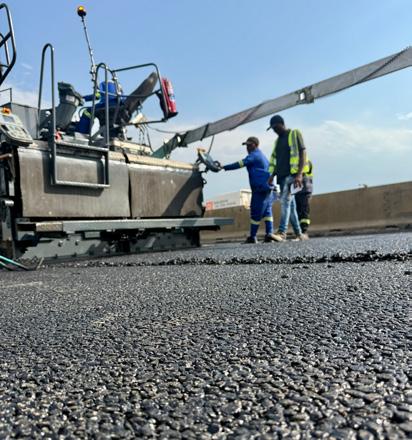
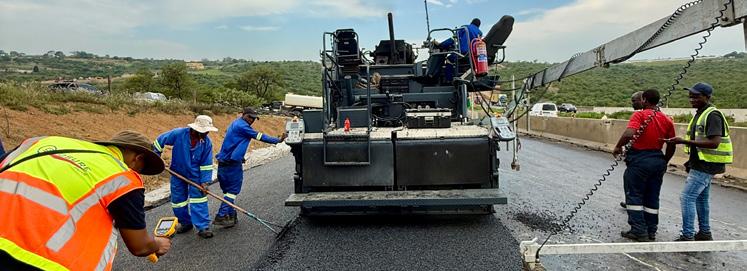
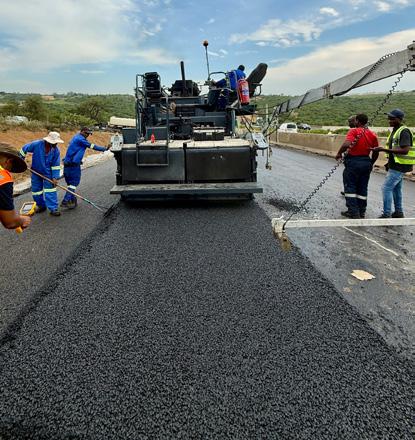
Paving trials using BRAOG14 at Ashburton on the N3 freeway
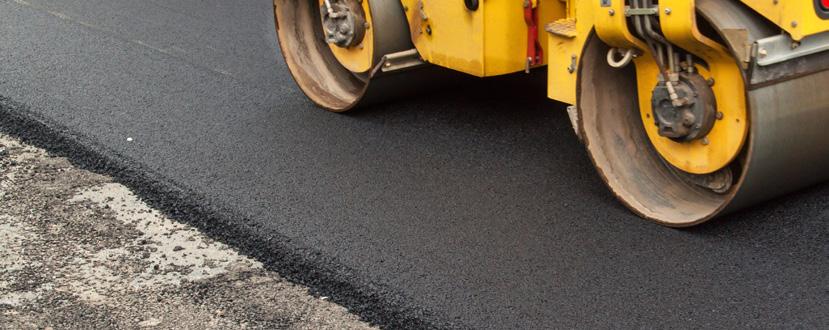
A close-up view of the functional 14 mm NMAS BRAOG layer
The mix has been successfully tested at the Much Asphalt Pietermaritzburg plant and paving trials are in progress on the southbound lanes of the N3 at Ashburton. The trial sections will be trafficked for eight to twelve months before the whole project gets a BRAOG14 final wearing course, should it perform as expected. The binder is being supplied by Colas, the consultant on the project is Naidu Consulting, the main contractor is Base Major Construction/CSCEC JV, and Ten Civils Construction is the sub-contractor for the paving works.
“As infrastructure agencies continue to balance cost, durability, and environmental stewardship, BRAOG stands out as a forward-looking solution –leveraging waste for improved performance, while delivering safer, smoother, longer-lasting roads,” Lewis concludes.
In nine short months, on 2nd and 3rd September 2026, the Society for Asphalt Technology (SAT) will host its fourth SATBinderrr conference. SATBinderrr 2026 will showcase talent and innovation and encourage discussion, with an overarching focus on sustainable quality across all aspects of asphalt and bitumen.
Named not only for its correlation to asphalt, but also for its role as the conference that binds the industry, SATBinderrr has enjoyed great success since its first iteration in 2021. It was held again in 2022 and is now a
biennial event that leapfrogs CAPSA conferences and in so doing supports the industry without competing with CAPSA.
SAT has close to 800 members, from students to globally recognised asphalt leaders. Their common goal is to promote excellence in the
asphalt industry. From within this pool comes the combination of proven wisdom and fresh ideas upon which we build SATBinderrr. SAT is known to offer the best value for money in the industry in its quest to provide quality professional development through learning and networking. SATBinderrr is the pinnacle of this offering.
We’re on the move
While retaining focus on what is important for the industry, the next SATBinderrr has some differences. Most importantly, the 2026 event is moving from its traditional home at the CSIR in Pretoria to The Capital Zimbali on the Dolphin Coast, north of Durban in KwaZulu-Natal. 3 4 1 2
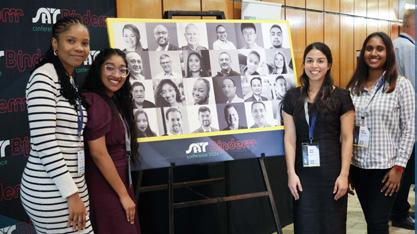
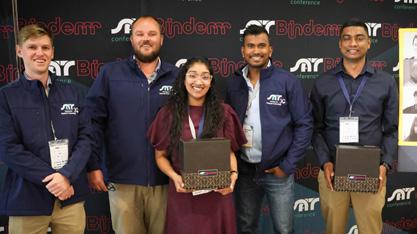
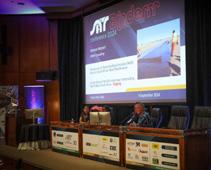
1 At SATBinderrr 2024 (from left): Sthabile Sibiya, Chemistry Focus Area Chair; Tarlia Gerald, Construction Focus Area presenter; Nishaat Mowzer, Seals Focus Area Chair; and Nikisha Sewpersad, Seals Focus Area presenter
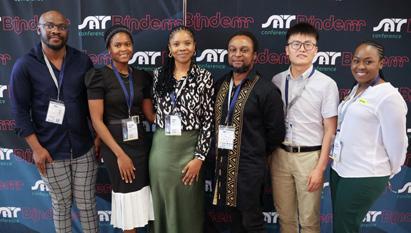
2 Chemistry Focus Area speakers at SATBinderrr 2024 (from left): Tladi Mofokeng; Sinethemba Mkhize; Sthabile Sibiya, Focus Area Chair; Georges Mturi, Focus Area Mentor; Jianmin Ma, international guest speaker; and Nteseng Ramoraswi
3 SATBinderrr 2024 Construction & Manufacturing Focus Area presenters (from left): Gary Wright, Focus Area Joint Chair; Eben van Zyl, Focus Area Mentor; Tarlia Gerald, presenter; Craig Naicker, Focus Area Joint Chair; and Randhir Haripersad, presenter
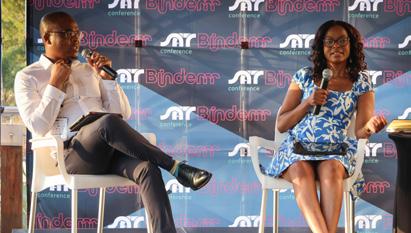
4 “Get to Know Shony” interview at the SATBinderrr 2024 cocktail evening. Tumelo Thothela, Asphalt Focus Area Mentor, is pictured on stage with Fulufhelo Shony Mathagu, Director: Roads Transport – Research, Policy and Guidelines at the National Department of Transport. This robust and entertaining interview and Q&A session with the audience was a highlight of SATBinderrr 2024, inspirational for the youth in the audience while answering important questions about the future of the industry
5 A full house at SATBinderrr 2024
6 SATBinderrr 2024 Seals Focus Area session and panel discussion
Nik Berning, who has bravely taken on the role of heading up the organising committee for the second time, says the decision to move away from Gauteng for this round was not taken lightly. “KwaZulu-Natal is undergoing tremendous infrastructure development and the freeway system around the eThekwini Metro and across the province is in the midst of unprecedented upgrades,” says Berning.
“We think this is a very exciting time and place to be hosting a conference that speaks to the critical topic of our road networks.”
He adds that The Capital Zimbali is a superb venue in a beautiful setting that will contribute to this conference as an experience not to be missed on the 2026 calendar. “There will be more space for the delegates and more branding opportunities to add value for our sponsors.”
Berning praised the SAT Eastern Region for its outstanding support and dedication to ensuring the success of this conference on home soil in KwaZulu-Natal. “We have the right people on the ground and I’m very happy about that.”
A call for abstracts, details of the focus areas, sponsorship opportunities, and the identity of the keynote speaker will follow soon.
On the issue of networking, the major motivation behind the founding of SATBinderrr www.socsat.co.za
in 2021, Berning says a golf day at the Ernie Els-designed Zimbali Lakes Signature Course has been secured for just this purpose. This event, preceding the conference on 1st September, is expected to draw a strong field and there will be a “get-to-know” golf session for anyone who wants to hit a little ball with a stick but does not yet have the skills.

Thinking back to when I was a green youngster in our sector, I was borderline terrified of speaking in front of an inperson SAT or RPF event, let alone a conference, be it CAPSA or otherwise. My first exposure to conference speaking came like a freight train, to an audience in Istanbul where my nerves got the better of me and I spoke so fast the translators struggled to keep up. It was nerve wracking, to say the least.
SATBinderrr, for me, is geared to giving the young practitioners an opportunity to hone the skills needed to stand on those stages. Having mentors through the conference process to assess and advise is a huge opportunity for the participants to learn and grow, to understand what is expected and what is acceptable. While they may not be seasoned presenters, these professionals are the future of our industry and are more than qualified to ensure that SATBinderrr upholds the technical excellence for which it is known.
This is a place where likeminded people from all walks of life and subsectors of the roads industry meet to collaborate, share their experiences and knowledge, and create connections that stand the test of time.
where talent, innovation & quality meet

It's often not what you know, but who you know to call for advice that makes the difference. SATBinderrr is the perfect coalescence of SAT’s objectives, providing the platform to share knowledge and technological improvements while bringing practitioners together to create connections and stimulate discussion and debate.
Joanne Muller
The journey towards the George Integrated Public Transport Network (GIPTN) began in 2005, following the redevelopment of the George Thembalethu taxi terminus and upgrading of the Sandkraal Road between the N2 and Industrial Road. One of the key outcomes of the study was a recommendation to develop George’s public transport system, as the existing services were failing residents.
By Carine Heyns
Routes were limited, services unsafe and unreliable, infrastructure inadequate, and taxi drivers faced precarious working conditions. These findings laid the groundwork for the George Mobility Strategy, which envisioned to provide a safe, affordable, accessible, reliable, dignified and convenient scheduled public transport system.
GO GEORGE was launched in December 2014 with an “infrastructure light” approach. This approach was adopted due to uncertainties relating to passenger demand and take-up, and thus the risk of investing in infrastructure that might be unused should the operation not materialise.
Phase by phase, the system grew, connecting more suburbs, and expanding on the initial infrastructure, with the most recent addition in October 2024 extending services between Thembalethu and the George industrial area.
Today, the network has 33 routes, 565 universally accessible stops, and 40 transfer locations that act as vital nodes, linking routes, and enhancing passenger comfort, safety, and wayfinding.
Since its introduction, the GO GEORGE service has had a significant socio-economic impact. In terms of improved accessibility and mobility, it operates 16 hours a day, seven days a week, linking previously underserved communities to healthcare, recreation, education, government services, and employment opportunities, with 70% of passengers using the service to travel to work.

By offering subsidised fares, the system significantly improves mobility for low-income households, making transport more affordable for the poorest of the poor, with 89% of passengers paying less for transport than they did before its introduction. GO GEORGE also provides enhanced accessibility for passengers with special needs, such as pregnant women, the elderly and children, and passengers with disabilities through universal design features, such as wheelchair ramps and level boarding, ensuring that the service is inclusive and equitable.
GO GEORGE has also generated a wide range of employment opportunities, creating jobs for bus drivers, technical staff, call centre agents, a vehicle operating company (VOC), construction firms, and local vendors. At the same time, it has contributed to the formalisation of the taxi industry by compensating or incorporating local minibus taxi operators into the system as VOC shareholders.
Through this process, 139 shareholders have been given the opportunity to participate in a formal business environment in a relatively lowrisk manner, fostering economic empowerment and long-term stability within the local transport sector.
In terms of urban development and investment, the introduction of GO GEORGE has catalysed significant urban improvements, triggering upgrades to roads, sidewalks, transfer locations, and areas around bus stops, thereby enhancing both the safety and attractiveness of key corridors and neighbourhoods. The GIPTN network has also shaped spatial planning, informing land use intensification corridors in the MSDF 2023. These interventions have contributed to rising property values and increased commercial activity along main routes, particularly within the CBD and other high-density areas, with most passengers recognising the system’s positive contribution to their neighbourhoods.
Since its inception, GO GEORGE has attracted over R741 million in infrastructure investment, of which about R568 million originated from outside of George, with further allocations still to be spent, demonstrating the system’s ongoing role as a driver of economic development and urban renewal.
Furthermore, the GO GEORGE fleet exceeds legislative minimum emission standards, operating 35 minibuses at Euro 4 level and 98 large buses at Euro 5 level, reinforcing its role in promoting cleaner, safer, and more efficient urban mobility.
The positive impact of GO GEORGE continues to unfold, with several routes in Phase 4A still under way and future phases (5, 6 and 7) planned. The evidence is clear that scheduled, safe, and reliable public transport is not a luxury but an essential investment in community upliftment, economic growth, and sustainable urban development.

This December, celebrate the holiday season with Ammann Kenzam’s exclusive Christmas Specials! Up to 20% discount on a wide range of our premium products, including laboratories, bitumen tanks, spare parts, drill core trailers, valves, burners, and mobile pressure washers. Our Christmas Specials are designed to help you enhance your operations while spreading holiday cheer. From December through January 2026, take advantage of this limited-time opportunity to invest in quality equipment that guarantees performance and reliability. Let us help you unlock excellence in asphalt technology this festive season.
Limited stock, call us now to find out more.






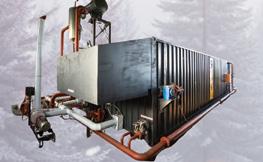



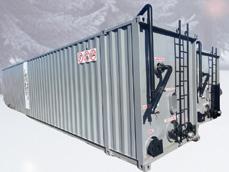


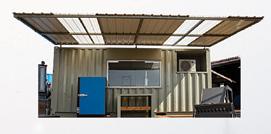



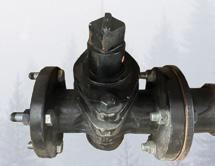






As Johannesburg continues to navigate the complexities of municipal electricity provision, a troubling pattern has emerged. Despite significant technological investments and policy frameworks, its entity City Power remains locked in a cycle of losing R2.5 billion annually to illegal connections and non-technical losses. Meanwhile, between July 2024 and March 2025, the city recorded 97 715 power outages. By
Here’s the uncomfortable question that needs asking: What if our approach to fixing City Power is fundamentally wrong? What if we’re optimising a twentiethcentury centralised model in a twenty-firstcentury decentralised world?
The statistics tell a sobering story. City Power’s ambitious smart meter conversion programme was paused in September 2025 due to billing discrepancies and customer complaints. Eskom’s planned 6.2 million smart meter rollout throughout South Africa faces implementation uncertainty and no confirmed budget. Even more telling, in informal settlements like Tshepisong only 3% of households pay for electricity.
So, when an estimated 10% of Johannesburg’s population lives in energy darkness – either through outages or tariff pricing – while the wealthy can afford rooftop solar and significantly reduce their net electricity bills through netbilling credits, calling ourselves a “smart city” rings hollow. Poor households remain

Devesh Mothilall, Head of Digitalisation: Smart City Office, and Head of Knowledge Hub: ECOE at the City of Johannesburg
Devesh Mothilall
locked into rising grid tariffs without access to prosumer pathways.
This isn’t merely a generation problem disguised as an infrastructure crisis. It’s an equity, ownership, and governance problem. And the technology to solve it already exists.
The Smart City paradox
Let’s be candid about what Johannesburg is doing right. The city has invested R2.4 billion in smart meters and grid upgrades through the Smart City Interventions since 2020. The Alexandra Township solar microgrid –a 1 MW installation serving 500 homes – represents genuine progress. Plans for 14 additional microgrids across Gauteng’s informal settlements show ambition. These interventions matter.
But here’s the controversial truth: smart meters alone will not solve the problem of illegal connections. They detect tampering on the device itself, not the bypassing of the entire meter. The technology of surveillance doesn’t address the root cause, which is energy poverty and exclusion. We’re investing billions in mechanisms to monitor and punish, while the underlying driver remains untouched.
For municipalities, this insight is critical: don’t deploy smart meters as punishment infrastructure. Instead, sequence smart meter deployment with simultaneously implemented legal prosumer pathways. When residents can legally own solar installations, trade surplus energy, and benefit financially from smart meter data transparency, compliance rates improve dramatically. Singapore’s Jurong Island microgrid and Nigeria’s Mokoloki Virtual Power Plant (VPP) demonstrate this principle:
when residents own and benefit from energy infrastructure, illegal connections decline organically.
What’s more revealing is the missed opportunity embedded in South Africa’s Integrated Resource Plan (IRP) 2025. The cabinet has allocated R2.23 trillion for energy infrastructure through to 2042. Of this massive quantum, only 16% is directed to nuclear and gas combined. This leaves an extraordinary opportunity for decentralised renewables if municipalities can demonstrate the political will to act boldly. Yet the conversation remains trapped within traditional centralised frameworks.
Three technologies are rapidly reshaping what’s possible for cities like Johannesburg: peer-topeer (P2P) energy trading, VPPs, and energy justice mechanisms.
The Brooklyn Microgrid in New York demonstrated that blockchain-enabled P2P energy trading works. Residents can trade excess solar directly with neighbours while earning credits that offset grid electricity. Power Ledger has reported 35% growth in P2P transactions globally across India, Australia, and Thailand. Zimbabwe’s NeedEnergy is building Africa’s first VPP with AI-driven P2P trading capabilities. Meanwhile, South Africa already possesses the regulatory sandbox framework – proven in fintech – but hasn’t applied it to energy.

For municipalities considering P2P energy trading pilots, my recommendation is to start modestly with defined neighbourhoods. Select a 1 000 to 2 000 household area with high rooftop solar adoption. Then provide blockchain-based trading platforms at minimal cost (or subsidised for lowerincome residents).
It’s important to establish clear tariff structures for P2P transactions – perhaps 80% of grid export tariffs to incentivise peer trading while avoiding grid destabilisation.
To gauge success or failure, the outcome of these pilots must be measured at set intervals of say 12 months, based on rigorous data collection. Key metrics include economic impact, grid stability, and social equity outcomes. Refining the model provides the evidence for citywide scaling. In parallel, municipalities must simultaneously develop equity safeguards, since not all residents have rooftops or capital for solar installations. Therefore, P2P trading pilots must include community-level microgrids in energy-poor areas, subsidised solar packages for lower-income households, and revenue-sharing mechanisms that ensure even non-prosumers benefit from energy democratisation. Otherwise, P2P trading becomes another mechanism for wealth concentration.
VPPs: Aggregating distributed resources
South Africa currently operates at least five utilityscale VPPs, with more under construction. The market is projected to grow from R33 billion in 2025 to R116 billion by 2031 – a compound annual growth rate of 23.2%.
Evolve’s Cape Town VPP aggregates hundreds of rooftop solar installations and batteries using AI algorithms. Umoyilanga’s VPP integrates generation sites 900 km apart, demonstrating scalability.
Yet here’s the provocative question: Why isn’t City Power partnering with informal settlement communities to create community-owned VPPs?
For municipalities developing a VPP strategy, the best approach requires the implementation of a three-tier ownership model:
• First, utility-scale VPPs aggregating commercial and industrial prosumers (existing model).
• Second, community VPPs with 51% community ownership controlling residential and smallcommercial installations.
• Third, household-level microgrids in energypoor areas with guaranteed local employment for operations and maintenance.
This multifaceted approach transforms the VPP from extractive (wealth flows to utilities and investors) to regenerative (wealth remains in communities). Nigeria’s Mokoloki project and Kenya’s Nairobi Solar Co-operative demonstrate that community ownership increases project sustainability, improves maintenance, and builds genuine energy equity.
In our local context, imagine treating Diepsloot, Klipspruit, and Soweto not as “problem areas” requiring load reduction, but as opportunities for energy democratisation. In the process, we can transform illegal connections into legal prosumer networks with revenue-sharing mechanisms. Suddenly, the energy crisis becomes an opportunity for inclusive economic participation.
This is where the conversation must become uncomfortable. Informal settlements face 8-12 hours of daily outages during high load-shedding stages. Residents of Diepsloot can charge phones and use lights through solar microgrids – but cannot cook or watch television. Only those who can afford rooftop solar benefit from NERSA’s net-billing framework and export credits. We’re creating new forms of energy apartheid in real-time.
Currently, the renewable energy transition – presently focused on commercial and industrial prosumers – systematically excludes
marginalised communities. Yet the fundamental principle underpinning South Africa’s energy transformation should be equity alongside efficiency. A truly smart city prioritises people over pipes, democracy over dependence.
For municipalities committing to energy justice, this requires establishing explicit equity frameworks. The starting point is to define what “energy access” means in your context –cooking, lighting, refrigeration, entertainment?
The next step is to allocate specific percentages of renewable energy infrastructure investment to energy-poor areas. In addition, equity frameworks must guarantee community participation in decision-making for all energy projects affecting their neighbourhoods. That includes establishing “energy justice zones” with subsidised solar microgrids, free or discounted electricity for essential services, and guaranteed local employment in energy infrastructure.
To work in practice requires municipal budgets that explicitly dedicate resources to energy equity – perhaps 30-40% of renewable energy investment in informal settlements rather than 3-5%. It also requires political willingness to subordinate efficiency optimisation to equity optimisation. Most municipalities haven’t demonstrated this commitment.
The governance crisis deserves equal attention to the technical one. Eskom’s unbundling – progressing since 2019 toward separate generation, transmission, and distribution entities – is reshaping South African electricity markets.
The National Transmission Company of South Africa (NTCSA) launched as a separate subsidiary in July 2024. This is genuinely significant for creating competitive electricity markets.
Yet here’s where climate finance intersects uncomfortably with sovereignty. The Just Energy Transition Partnership (JETP) made its
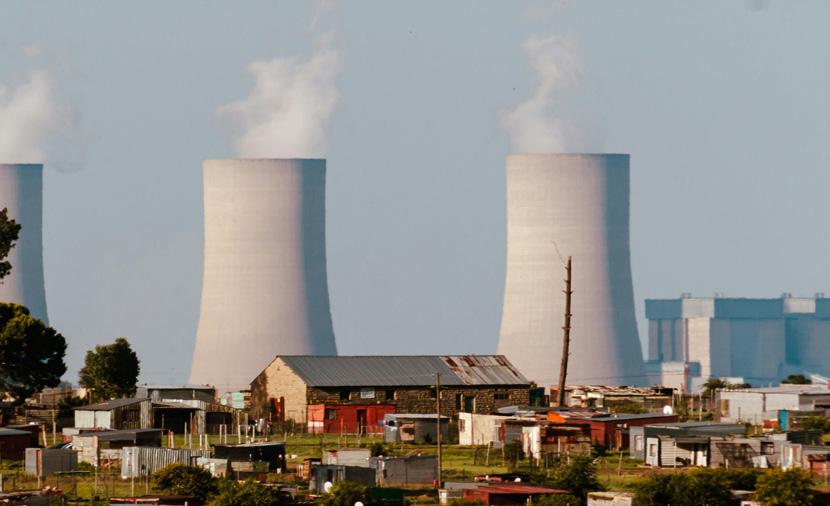
Currently, the renewable energy transition –presently focused on commercial and industrial prosumers – systematically excludes marginalised communities

R147 billion loan conditional on unbundling. International climate finance is driving structural reforms that may not serve local communities. Meanwhile, the IRP 2025 allocates resources to controversial technologies – reviving the pebblebed modular nuclear reactor abandoned after an R17 billion failure, and pursuing “clean coal” technology that critics rightly call unproven. So, is Johannesburg’s energy future being decided in national boardrooms and international finance institutions, or by the communities who actually need electricity? Sometimes resisting technical optimisation in favour of equity optimisation is the right choice.
What if Johannesburg adopted a fundamentally different governance model, namely a Community Energy Charter, grounded on the following five principles?
• Energy democracy: Establishing community energy cooperatives in every ward with decision-making authority over local generation and distribution. Beyond representation, these structures should have genuine authority: the power to refuse projects, to redirect investments, and to hold utilities accountable.
• Prosumer rights framework: Guarantee fair export tariffs for all energy producers, not

just wealthy homeowners. Create “energy justice zones” in informal settlements with subsidised prosumer infrastructure. Establish community solar gardens where residents without suitable rooftops can own proportional shares. Ensure tariff structures reward P2P trading alongside grid export, incentivising local energy economy development.
• Data sovereignty: Energy consumption data belongs to citizens, not utilities or third parties. Blockchain-based transactions ensure transparency and prevent manipulation. Citizens should have access to their historical consumption data in formats they can understand. Aggregate anonymised data should be published regularly to drive community awareness. Utilities should never monetise citizen data without explicit consent and benefit-sharing.
• Local manufacturing mandate: Leverage South Africa’s Renewable Energy Masterplan to require 50% local content in all smart city energy projects. Create green jobs in disadvantaged communities, not just executive positions. Establish training academies in energy-poor areas, developing installation, maintenance, and repair expertise. Ensure procurement preferences favour SMME solar installers and technicians from targeted communities.

• Technology neutrality with equity: Support all renewable technologies – solar, wind, biogas from waste – based on community needs rather than investor preferences.
Some neighbourhoods may benefit from biogas systems that convert organic waste to cooking fuel. Others may require rooftop solar for reliability. Utilities shouldn’t impose standardised solutions; communities should choose technologies matching their circumstances and priorities.
The choice: Digital-first or digital-avoidant
Johannesburg faces a genuine fork in the road.
Pathway One follows the Smart Surveillance City route, entailing the deployment of smart meters to monitor and punish. Key elements include centralised control in conjunction with private IPPs and international finance. Essentially, this approach perpetuates energy apartheid with different service levels for the rich and poor.
The better and preferred approach is to take Pathway Two – the Smart Energy Democracy route. This entails deploying smart infrastructure to empower and include through decentralise ownership with community cooperatives and P2P trading. The ultimate result is energy justice alongside energy security.
As stated earlier, the technology exists; the capital is flowing (R2.23 trillion nationally); and regulatory frameworks are emerging. What’s missing is the political will to prioritise people over pipes, democracy over dependence, and equity over efficiency.
Ultimately, Johannesburg needs a fundamental reimagining of who energy systems serve and who controls them. The question isn’t whether this is technically possible – it clearly is. The issue is whether City Power and municipal leadership have the commitment to lead South Africa’s energy democracy revolution, or whether we’ll perfect the art of twentiethcentury centralisation in a twenty-first-century distributed world.








Greywater is used water collected from bathtubs, showers, washing machines, even sinks and can be reused/recycled for other purposes. Greywater makes for as much as 70% of all residential buildings’ water use. Although greywater and blackwater are typically combined, separating the two, greywater on its own provides several reuse opportunities such as toilet flushing, and garden irrigation. This can additionally assist in lowering potable water use in arid areas by up to 30% for households and up to 60% for corporate buildings. Furthermore, saving money on garden irrigation through reuse can boost household savings by an estimated 40%.
Greywater can be collected from the source by installing a plumbing system from an outlet of a bathroom/kitchen to a garden or for toilet flushing or using a bucket to collect greywater from the bathroom and directly to your garden. Alternatively one can easily and manually collect or scoop greywater into containers for reuse.



South Africa's water crisis continues to intensify with our water systems facing immense pressure from ageing infrastructure, pollution, climate variability and inconsistent monitoring.
The data is sobering. We lose almost half of our potable water through leaks and system inefficiencies, and many South Africans still lack basic access to water. At the same time, nearly one in five South Africans have no access to safely managed sanitation. Add billions in funding gaps for major infrastructure projects, and the picture becomes bleaker. Without decisive action, we're heading for a national disaster.
The good news is that South Africa already has a proven blueprint for tackling infrastructure crises through public-private partnerships (PPPs). The Renewable Energy Independent Power Producer Procurement Programme (REIPPP) successfully addressed our electricity shortage by attracting billions in private investment while maintaining public oversight. This model can – and should – be adapted for water infrastructure.
The REIPPP structure is elegantly simple yet robust. Independent power producers sign 20-year power purchase agreements with Eskom, supported by implementation agreements with the government that effectively guarantee payments.

By Michelle Kerr
Direct agreements with lenders provide additional security. This framework attracted massive private investment because it offered certainty, appropriate risk allocation and government backing.
NWRIA platform
For water infrastructure, we're already seeing the building blocks fall into place. The National Water Resources Infrastructure Agency (NWRIA) – described as a SANRAL for water – is being established to act as the central coordinating body for bulk water infrastructure by April 2026. Like Eskom in the electricity sector, the NWRIA could serve as the primary contracting party for water infrastructure PPPs.
The Water Partnerships Office, established through an agreement with the Development Bank of Southern Africa, has already secured over R4 billion in project funding and is building a pipeline of bankable projects in areas like desalination, water reuse, and wastewater treatment. These are precisely the types of projects that could be fasttracked through a water-focused REIPPP model.
From a construction law perspective, this approach addresses one of the sector's biggest concerns: payment certainty. Contractors are understandably reluctant to take on municipal projects given the well-documented payment delays and financial instability of many local authorities. However, the REIPPP model's government guarantee structure could solve this problem.
While water services are delivered at the municipal level, national government mechanisms can support municipal financial stability when necessary for the public good. The NWRIA could
Michelle Kerr, Director: MDA Attorneys
fulfil the guarantor role that the government played in REIPPP, stepping in with innovative financing models to ensure contractors get paid. This isn't about bypassing municipalities but rather providing the financial backing they need to deliver essential services.
The March 2025 Water and Sanitation Indaba endorsed deeper collaboration between the Water Partnerships Office and the private sector, exploring innovative financing models like green and blue bonds. These debt instruments channel funds into projects with positive environmental impacts, such as sustainable water management and wastewater treatment. The successful Olifants Management Model in Limpopo, developed in partnership with mining companies, demonstrates that these partnerships are effective when structured properly.
What we need now is urgency. The NWRIA Bill is before the National Council of Provinces. But we can't afford to wait for perfect conditions. The REIPPP framework exists, the institutional architecture is taking shape, and private sector appetite is there – we just need the political will to adapt and implement.
The alternative is the continued deterioration of our water infrastructure, with mounting costs and deepening social and economic consequences. As construction law specialists, we've seen how wellstructured PPPs can deliver complex infrastructure projects on time and on budget. The REIPPP model proved that this works in the South African context.
The government should fast-track the adaptation of REIPPP for water infrastructure, using the NWRIA as the central contracting entity and extending the same guarantee mechanisms that made the electricity programme successful. This isn't about privatising water – it's about leveraging private sector expertise and capital to build the infrastructure our country desperately needs while maintaining public ownership and oversight.
The blueprint exists. Our crisis is real. The time for government to act is now.
Aleader in industrial automation and digital transformation solutions for over 30 years, Adroit Technologies is advancing its cutting-edge research and development (R&D) into an AI-powered Water Management Platform. The latter is designed to tackle one of South Africa’s most urgent infrastructure challenges: non-revenue water losses.
This R&D initiative presents an opportunity to develop a first if its kind, AI-driven “pseudometering” capability, a potential breakthrough that can infer consumption and pressure data in areas where physical meters are not installed.
“We have proven the initial concept and have now secured the support of the government and other industry leaders to develop this AIdriven platform,” confirms Frits Kok, Co-CEO at Adroit Technologies.
Adroit Technologies’ ongoing research aims to integrate new AI tools seamlessly with
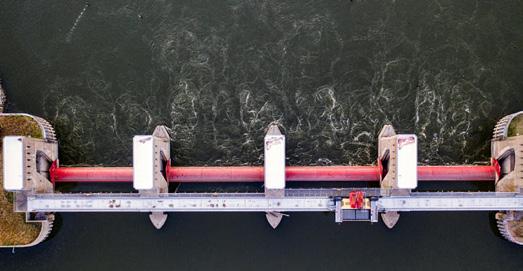

existing SCADA and telemetry systems to deliver predictive analytics, real-time alerts, and actionable insights, helping engineers identify hidden losses and optimise operations before crises arise.
Adroit Technologies’ current research is focused on developing a scalable, national level AI framework that leverages forecasting, anomaly detection, and digital twin modelling to enhance decision-making.
A hybrid neural network architecture (CNNLSTM) and self-healing data middleware are being designed to operate effectively even with incomplete or delayed data, a common challenge across South Africa’s municipalities.
“This research is about enabling resilience,” adds Hugo Pienaar, Director of Digital Services at Adroit Technologies. “By combining AI with decades of SCADA expertise, we are helping municipalities envision how to predict issues before they happen and manage scarce water resources more efficiently.”






Sustainably


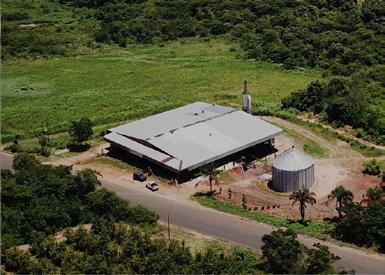
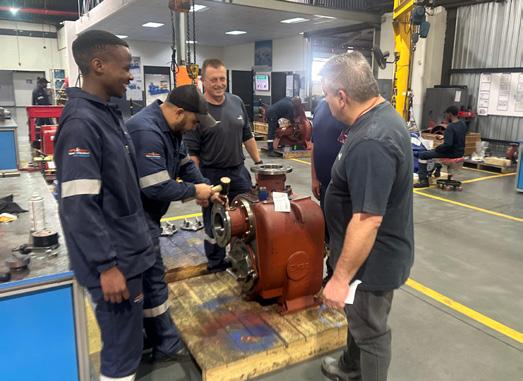
A KSB Imvubu pump in final production
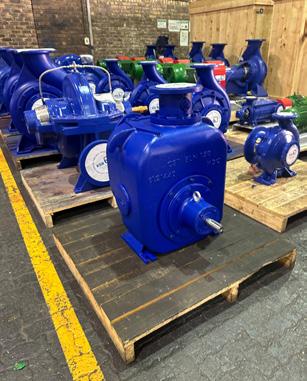
The new KSB ELN-150 is also known as the Imvubu or hippo pump due to its unique lifting “ears”, which give it a resemblance to the animal
KSB has officially launched the KSB ELN-150 Imvubu, a rugged new self-priming wastewater pump developed and built in South Africa specifically for African operating conditions.
Named after the Imvubu, which is the Zulu word for hippopotamus, the name carries a double meaning referring to its distinctive top-mounted lifting “ears” that mimic its profile in water, while its massive free-pass mouth and formidable strength mirrors the exceptional solids handling ability that swallows-up oversized waste and attests to the toughness and power of its design.
KSB Pumps and Valves product manager for wastewater, Hugo du Plessis, says the KSB Imvubu is the result of years of development, which measured the strengths and limitations of earlier self-priming pumps used in municipal wastewater networks across Southern Africa.
During this time KSB Pumps and Valves’ engineering team worked closely with municipalities and industry operators to understand the realities they face daily including clogging, solids carry-over, complex maintenance, pump failures in remote areas and the need for equipment that is easy to service in places where skills are often scarce, and
market, where customers told us exactly where the problems lie in terms of pump clogging, difficult seal replacement, thin casings that wear quickly and designs that simply do not stand up to raw, unscreened sewage,” says du Plessis.
“This culminated in the development of the KSB Imvubu pump, which is our answer to the market’s needs. It is proudly designed and manufactured in South Africa and takes the best global technology and optimises it for African conditions.”
He explains that the KSB Imvubu pump was developed using advanced CFD (Computational Fluid Dynamics) modelling and efficiency redesigns of the impeller, volute and hydraulic passageways. The result is significantly improved pumping performance, now reaching more than 65% hydraulic efficiency, which places it well ahead of competitor self-priming pumps currently in service.
“We live in South Africa and can see the challenges of dealing with sewerage and wastewater. We also listened to the
The new locally designed and manufactured KSB ELN-150 Imvubu pump is a breakthrough in wastewater handling in South Africa
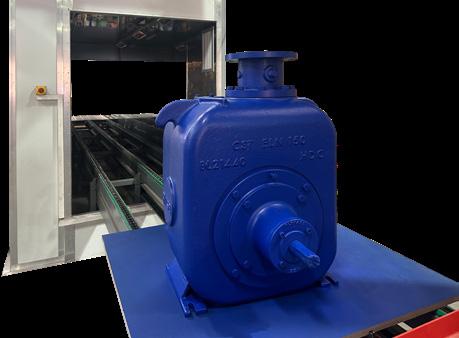
Critically, the pump achieves a 77.3 mm free-pass solids handling capability, exceeding the global raw sewage benchmark of 76 mm. In real-world
Max Flow: 429.4 m³/h
Max Head: 47.6 m
Suction Size: 150NB (6”)
Discharge Size: 150NB (6”)
Solids Handling: 77.3 mm
BEP Flow: 305 m³/h
BEP Head: 33 m
BEP ŋ: 65%
Temperature: up to 80°C
operation, that 1.3 mm can be the difference between uninterrupted pumping and a costly blockage.
“The free-pass is what sets us apart. It is market leading and equates to the fact that if a pump can pass a bigger solid it will clog less. It is that simple and less clogging means less callouts, less downtime and less cost.”
In addition, the KSB Imvubu features bearingsfor-life with no oil lubrication required. Unlike competing pumps that require oil chambers, top-up checks and contamination risk, the KSB Imvubu pump uses grease-for-life bearings and KSB’s own mechanical seal, which is lubricated by the pumped medium itself. This makes the pump environmentally cleaner, safer to maintain and significantly simpler to service.
The pump body is also cast with thick, heavyduty volute walls to resist erosion and extend operating life, while its smart design includes an inspection hatch that allows staff to clear blockages without removing the suction cover, which is a major advantage for treatment plant technicians and municipal maintenance teams.
“We know that South Africa’s wastewater infrastructure is under immense strain with limited resources and ever-rising sewage volumes, which means equipment must be robust and easy to service to ensure its longevity. These are exactly the issues we have considered and served as guiding principles for our Imvubu pump, and our design directly addresses the problems encountered in the field,” du Plessis explains.
“We have made this pump for Africa and that is why we made it to be maintained using basic tools and why it can be speed-adjusted using simple pulley changes. It can also do the job of two pumps simply by moving from low to high heads and low to high flows easily with no need for a second pump. It can even be mounted on diesel skids for remote pumping or flood emergency use. It is versatile, strong and practical.”
Applications extend beyond municipal wastewater to mining sumps, industrial effluent, pulp and paper, agricultural waste dams, river abstraction and portable dewatering units. The pump has already proven itself during
extended testing at the Drakenstein Wastewater Treatment Works in the Western Cape where it has operated continuously with excellent results.
Because the KSB Imvubu pump is 100% locally manufactured, it aligns strongly with the Department of Trade and Industry’s localisation incentives, supporting South African industry and local employment. It also positions KSB Pumps and Valves as a major contributor in the export of high value engineered products into Sub-Saharan Africa and other regions where similarly robust and versatile pumps are required.
“This is a pump we are proud to build in South Africa as it keeps our people employed and shows that we can compete and lead international brands. We like to think that we do not follow, we leapfrog. Our Imvubu pump is a direct answer for many of the failures making national headlines and the timing in this period of regeneration could not be more significant.
“Municipalities and utilities urgently need equipment that can keep working away with minimum attention and maintenance to clear the backlog – and we are proud to say the answer is the KSB Imvubu,” du Plessis concludes.




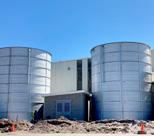




A site may have the best pipes, valves, filters, and seals, but if the pumps stop working, everything else is just an expensive pile of equipment going nowhere. This advice is obvious, yet many operations fail to maintain their pumps properly, even though it doesn’t need to be costly or take up much time.
Pump management and maintenance ensure uptime and help manage costs. Energy use and maintenance typically account for about half of a pump's lifetime spend, and they are closely linked. A wellmaintained pump runs more efficiently, uses less energy, and needs fewer costly interruptions.
Yet many sites cut corners by skipping maintenance or using cheap replacement parts, says Chetan Mistry, Xylem's Strategy and Marketing Manager for WSS.
“We’re often called in to fix pumps that have either been neglected or fitted with parts that just weren’t up to the job. Those shortcuts don’t only reduce efficiency. They can cause major failures, damaging components that would normally last for years. Overall, it costs the owner far more than if they had invested in proper maintenance upfront.”
Pumps from reputable suppliers are designed to deliver efficient and reliable service. Components such as bearings and seals are considered wear parts which need to be periodically replaced. Parts such as couplings, impellers, pump casings,
and motors will last for a long time but need to be inspected for wear and only need replacement if required.
However, there are conditions that can create a chain of failure across the pump. Worn bearings can cause vibrations and lead to further mechanical damage to the pump shaft, coupling and motor. A failed seal will allow for the ingress of water into the pump's motor chamber and cause motor failure.
Likewise, the wrong pump choice or improper installation costs more, works less, and doesn’t last as long. The pump is likely to break down much sooner than it should, use more electricity than necessary, or keep getting blocked and failing.
The consequences are higher running costs, more repairs, unexpected downtime, and service interruptions. In some cases, it can also create safety issues or damage the surrounding environment, such as flooding.
Regular and consistent inspections help spot issues early, often before they become serious:
• Paying attention to what you can see and hear: Signs of corrosion, small leaks, unusual heat,
higher-than-normal energy use, grinding noises, or odd vibrations. These are early warning signals that the pump needs attention – and catching them early can save both time and money.
• A pump needs to be the right fit for the job: Every site is different, ranging from high viscosity and pressures to abrasive and clogging materials such as sand or threads. Environmental factors impact longevity: pumps that run deep below the surface operate under harsh conditions with excessive dust, heat, and moisture, and the limited space makes regular maintenance difficult. If a pump doesn't match its operating conditions, it will become unreliable, require more maintenance, and have a much shorter lifespan, says Mistry. “Choosing the right pump for the right job makes all the difference in performance, reliability, and cost.”
Good parts matter
Most companies choose a quality pump from a trusted supplier because they know it will do the job. But then they undermine the investment and try to save money by using cheap parts or unqualified workshops.
That attempt to save money ends up costing more. Non-genuine parts wear out faster, and when they fail, the damage spreads to other components in the pump. What starts as a small issue – like a worn seal or clogged impeller – can snowball into a chain of failures and costly downtime.
By contrast, pumps maintained with genuine parts and serviced by trained technicians tend to run smoothly, only needing quick checks and occasional attention.
As Mistry puts it: “You don’t need a complicated or expensive maintenance plan to keep a pump going. These machines are built to last, as long as you respect them with the right parts and proper care.”
Chetan Mistry, Xylem's Strategy and Marketing Manager for WSS































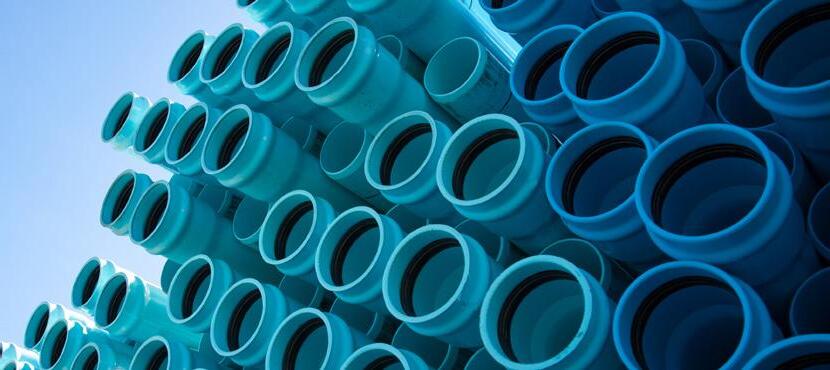
A detailed analysis reveals significant economic, environmental, and social benefits by shifting from reactive patching to root cause focused repairs in the nation's water infrastructure. By Ian
Venter

External pressures from heavy loads, ground movement, or inadequate support can cause pipes and joints to fracture or dislodge
South Africa's water infrastructure faces a critical challenge: recurring PVC pipe failures that impact water security, economic stability, and public health. This report outlines the severe consequences of current reactive repair methodologies. It presents a compelling case for adopting a proactive, “First time right” approach to address the root causes of these failures. By comparing the long-term impacts of both strategies over a 50-year projection, we demonstrate the imperative shift needed for sustainable water management.
The problem: Recurring PVC pipe failures
The extensive use of PVC pipes with joints and mechanical couplings in over 70% of South Africa's pressure applications makes their early failure a serious concern. These failures mainly arise from a combination of factors that result in significant non-revenue water losses and rising repair costs.
Causes of premature failures
Recurring failures often stem from unaddressed root causes during repairs. Ranked by prevalence these include:
• Poor installation practices: This includes improper assembly, inadequate bedding, and insufficient compaction, leading to initial weaknesses.
• Mechanical stress: External pressures from heavy loads, ground movement, or inadequate support cause pipes and joints to fracture or dislodge.
• Environmental conditions: Exposure to harsh chemicals, UV radiation, and extreme temperature fluctuations can affect PVC materials' properties and are time-dependent, requiring accommodation during the design.
• Cyclic pressures: Repeated fluctuations in water pressure contribute to fatigue and stress on the pipe system.
• Material defects: Though less common, inherent manufacturing flaws can also lead to premature failure.
The cost of reactive approaches
The prevalent “Just keep it going” (reactive) approach, which focuses on temporary patching rather than root-cause resolution, leads to a continuous cycle of failures. This methodology has profound economic, environmental, and social repercussions for South Africa, which are highlighted as follows:

Economic impacts
• Escalating repair costs : Reactive repairs are inherently inefficient, requiring repeated interventions that accumulate substantial financial burdens.
• High water loss: Significant volumes of treated water are lost through leaks, directly contributing to non-revenue water and increasing operational costs for water utilities.
• Infrastructure degradation: The continuous cycle of failures and temporary repairs accelerates the overall degradation of water infrastructure.
Environmental and social impacts
• Water scarcity exacerbation: Water loss from leaks intensifies South Africa's existing water

A thorough root cause analysis of PVC pipe
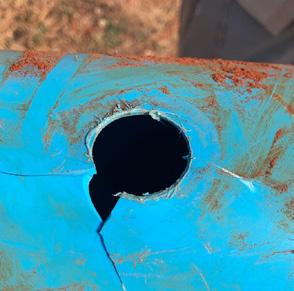
Ian Venter is a consultant specialising in polymer piping systems, representing Polymers and Piping (fittings) Systems South Africa (PPfSSA). With extensive experience in quality assurance and industry collaboration, Ian is dedicated to advancing standards and promoting compliance throughout the pipe manufacturing supply chain.
For further information, phone +27 82 770 8244 or e-mail: IanVenter@PPfSSA.com.
scarcity challenges, particularly in drought prone regions.
• Public health risks: Contaminated water sources due to pipe breaches pose direct health risks to communities.
• Impact on underserved communities: Poorer communities often bear the brunt of service disruptions and poor water quality, exacerbating social inequality.
Methodology: Statistical modelling and 50-year projections
Our analysis utilised Monte Carlo simulations to project the long-term implications of both reactive and proactive repair strategies over 50 years. This statistical modelling incorporated key parameters, including failure rates, repair costs, inflation (4.5%), and discount rates (8% for NPV calculations), to provide a robust comparative assessment.
The proactive solution: “First time right” repairs
A “First time right” proactive repair strategy fundamentally shifts the focus from temporary fixes to comprehensive, root-cause resolution. This approach aims to prevent future failures by addressing underlying issues during initial repair or installation.
Benefits of proactive repairs
• Reduced failure rates: Annual failures are projected to decrease by approximately 77%, from 16.3 to 3.7 failures per 100 km system.
• Substantial cost savings: Total nominal costs are expected to fall dramatically from R158 million to R31.5 million over 50 years. Net present value (NPV) savings are projected to be approximately R9 million.
• Mitigated water loss: Water loss is reduced significantly, from 813 840 m³ to 185 240 m³, leading to better resource conservation.
• Long-term sustainability: Proactive measures contribute to the longevity and reliability of water infrastructure, aligning with sustainable development goals and GDP growth.
The evidence unequivocally supports the imperative adoption of “First time right” proactive repair strategies for South Africa's PVC water infrastructure. This strategic shift promises substantial economic, environmental, and social gains, securing the long-term viability of the nation's water systems.
Key recommendations include:
• Mandate root-cause analyses: Implement policies requiring thorough root cause analyses for all PVC pipe failures to ensure that repairs address underlying issues.
• Ensure compliance with standards: Enforce strict adherence to engineering standards and best practices during both new installations and repair procedures.
• Invest in training and technology: Provide ongoing training for personnel on proper installation and repair techniques, alongside investment in technologies that support proactive infrastructure management.
• Policy integration: Incorporate proactive repair strategies into national and municipal water management policies and budgets.
By embracing a proactive stance, South Africa can transform its water infrastructure challenges into an opportunity for sustainable growth and improved quality of life for its citizens.

Specifying the correct pipe wall thickness is crucial to ensure optimum pressure management
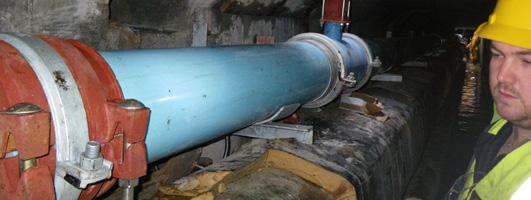
Every thriving city, town, and community depends on reliable water and sanitation infrastructure. At the heart of these essential systems lies an unsung hero: the humble plastic pipe. Whether delivering clean water, carrying sewage, or enabling industrial operations, these pipes form the arteries of modern life.
However, not all pipes are created equal. Ensuring that only certified, high-quality products make their way into critical infrastructure projects is the mission of the Southern African Plastic Pipe Manufacturers Association (SAPPMA).
“Plastic pipes are the lifelines of modern infrastructure. Their performance determines whether systems last for decades or fail prematurely. Our role is to ensure that every pipe bearing the SAPPMA logo meets the highest standards of quality, safety, and sustainability,” says Jan Venter, CEO of SAPPMA.
Raising the bar through standards and certification
Over the past four decades, rapid advances in polymer science and extrusion technology have reshaped the plastics industry. “The design stress of pipe materials has increased dramatically. Modern polymers and production equipment now allow higher outputs, more efficient material use, and exceptional quality control,” Venter explains.
SAPPMA approved manufacturers are audited regularly to ensure strict adherence to both national and international standards. Only those who meet the association’s exacting criteria are authorised to use the SAPPMA logo on their products – a mark that has become synonymous with trust and reliability.
For engineers, municipalities, and procurement officers, SAPPMA advocates that membership should be a requirement in tender specifications
as the simplest and most effective way to guarantee long-term performance. “The best pipe can fail if it’s not manufactured or installed correctly. Specifying SAPPMA approved products protects not only the project but also the people who depend on it,” he explains.
Sustainability built to last
Far from being disposable, plastic pipes are among the most sustainable components of modern infrastructure. When properly manufactured and installed, they can last more than 50 years thanks to their ability to resist corrosion, chemical attack, and environmental degradation.
Says Venter: “Plastic pipes offer a broad range of applications with minimal environmental impact. Even off-spec materials produced during manufacturing are recycled responsibly, usually on-site, and reused within strict limits. However, imported recycled material is not permitted for certified pipe production as it safeguards and protects product integrity and public safety.”
Bridging the knowledge gap
Despite decades of successful performance, misconceptions about materials such as PE, HDPE, and PVC persist within parts of the industry. To combat this, offering ongoing education and technical support is one of the key pillars of SAPPMA’s mission and focus areas.
“Our industry still faces pockets of misunderstanding, particularly around the direct performance characteristics of different
plastic materials. For this reason, SAPPMA offers webinars to our members and other interested parties free of charge, as well as regularly hosts seminars or conferences, publish information in trade magazines and publishes our comprehensive Technical Manual (now in its fifth edition). As an independent and non-profit body, we fill a crucial knowledge gap and take our responsibility of empowering designers, engineers, and decision-makers with practical, unbiased information very seriously”.
factory to field: Installation matters
Recognising that even the best pipe can fail if installed incorrectly, SAPPMA addresses this challenge through its Installation and Fabrication Plastics Pipe Association (IFPA) division. IFPA focuses specifically on installation standards and on-site best practices, ensuring that certified products are matched by certified workmanship.
“SAPPMA covers the entire value chain,” says Venter. “From design and manufacturing to installation and performance, our goal is to ensure every step upholds the same level of excellence.”
“Certified systems that carry the SAPPMA logo are designed to handle the specified pressures, flow rates, and temperature conditions safely. When the right pipe is matched to the right pump, you get maximum efficiency, reduced maintenance, and an extended service life for the entire system,” Venter explains.
By contrast, using uncertified or incompatible products can lead to costly downtime, environmental risk, and equipment damage. For this reason, many of SAPPMA’s member companies offer turnkey support that assists clients with technical advice, jointing methods, and system design – ensuring that every installation delivers the reliability it was designed for.
in
According to SAPPMA, short-term savings often come at a long-term cost. “The temptation to buy cheaper, non-certified products is understandable, but it’s a false economy. Piping systems are long-term investments. When you specify certified products and qualified installers, you ensure reliability, protect infrastructure budgets, and deliver true value for decades,” Venter concludes.

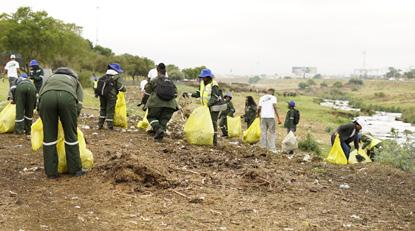
Water scarcity is becoming a worldwide issue rather than a remote concern. This is exacerbated by continuous strain on the limited supply of water due to urbanisation, population growth, and the increasing effects of climate change.

According to the International Water Management Institute, urban water consumption was forecasted to increase from 1995 to 2025 by 62%. With additional increase in population and climate change, water shortage is likely to manifest in 2050. For these reasons, it has become imperative that we find adaptable solutions in which we can maintain the existing water resource while seeking methods in which we can reduce the demand of potable water.
On 30th and 31st October 2025 at Uncle Tom’s Community Hall in Orlando West, Soweto, a new wave of change emerged in the community as Rand Water – Water Wise worked to address water leaks and the ongoing water shortage crisis. The two-day Drop-by-Drop Water Conservation Outreach was a bold initiative aimed at turning community frustrations into solutions and transforming complaints into actionable changes. The outreach showcased a movement where community residents, youth, entrepreneurs, and government leaders came together to build a future where every drop truly counted.
Objectives of the outreach campaign:
• Promote responsible water use and encourage community ownership of water resources.
• Encourage household leak detection and repair, addressing water loss at the source.
• Advocate for pollution prevention in local water systems.
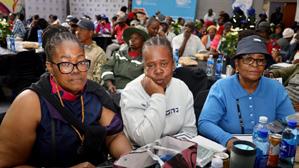
• Support sustainable water-saving practices across communities.
• Foster collaboration among civil society, government, and private partners to achieve collective water conservation goals.
Key outcomes:
• Public engagement: Reached over 2 000 households and interacted with 20 000 people, covering nearly 50% of Orlando West.
• Community participation: More than 250 residents attended the launch event (exceeding the expected turnout of 200), including youth, NGOs, schools, and local leaders.
• Awareness and capacity building: Heightened public understanding of water-saving practices through interactive Q&A sessions and demonstrations on leak repair and efficient water use.
• Media coverage : Featured on multiple platforms including ENCA, Soweto TV, EWN, Caxton Media, and others.
• Practical interventions:
- Three rainwater harvesting tanks were awarded to local households.
- Ten water-saving carwash devices distributed to small businesses.
- Launch of the community water watch initiative for residents to monitor and report leaks.
• Impact: Strengthened collaboration between communities and government, enhancing
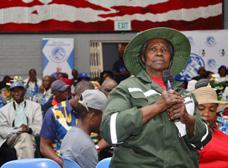
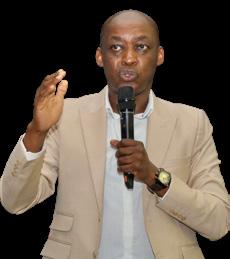
the visibility of Rand Water’s sustainability initiatives.
Rand Water – Water Wise encourages communities to take proactive steps to prevent the impending water shortage as preparations continue for upcoming on-the-ground outreach activations. This initiative is planned to be extended to selected areas of both Alexandra and Thembisa. Furthermore, the Drop-by-Drop Outreach will strive to promote the availability and sustainable management of water and sanitation for all, in alignment with the United Nations Sustainable Development Goal (SDG) 6.


Within the communities of Freedom Square, Botshabelo, and Thaba Nchu, a quiet but determined revolution has been underway. Armed with pipe wrenches, data capturing devices and newfound plumbing skills, local participants have stepped forward to fight one of Mangaung Metropolitan Municipality's (Mangaung’s) most persistent challenges: water leaks.
This Phase I initiative, which ran from July 2024 to June 2025, forms part of the Mangaung EPWP Water Leak Detection Programme, a transformative, labour-intensive endeavour funded through the Expanded Public Works Programme (EPWP) and the Presidential Employment Stimulus (PES).
National Treasury funding for the EPWP component amounted to approximately R11 million. A further R13,6 million was funded by Mangaung under its Revenue Enhancement programme, which included the cost of meter replacements, quality assurance on plumbing work, and materials.
“This project is far more than just a maintenance effort. It represents a shift in how the municipality tackles water loss, youth unemployment, and skills shortages, using public infrastructure work as a tool for development, revenue protection, and dignity restoration,” explains Van Dyk van Rooyen, SMEC Function Manager: Integrated Solutions at SMEC South Africa’s Bloemfontein office.
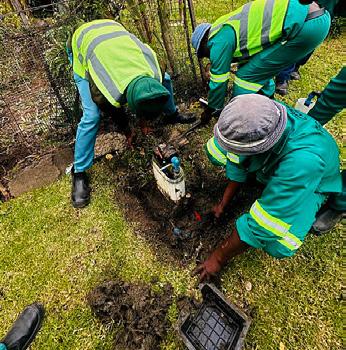
delivery. The outreach programme included doorto-door visits and direct household interactions to promote water-wise behaviour and encourage citizen responsibility.
Approximately 1 621 indigent households were inspected and 1 335 household leaks detected and repaired. The replacement of faulty meters ensures the accuracy of future billing information and consumption data
inspections completed; the number and types of leaks repaired; meter replacements and revenue gains; and programme progress by site and by street.
In Phase I approximately 1 621 indigent households were inspected and 1 335 household leaks detected and repaired. That translates into an estimated monthly water loss recovery of 5 340 kℓ
SMEC was appointed by Mangaung to oversee Phase I implementation in partnership with Mangaung’s Engineering Department: Water Conservation and Water Demand Management (WCWDM), and its Community Services Department.
Vulnerable areas with high water losses and undocumented usage have been targeted in tandem with the identification of water connection leaks within households and municipal infrastructure. Most of the affected communities in Phase I comprised low-income and indigent households, which now stand at the frontline of both municipal infrastructure maintenance and socio-economic upliftment.
Under the EPWP and PES, Phase I employed 150 local participants, offering accredited training, hands-on experience, and the opportunity to contribute meaningfully to municipal service
“This community-driven approach has been a great success because it embodies a people-centric development model, blending leak detection, plumbing repairs, and quality control with empowerment, learning, and longterm impact in meeting Mangaung’s WCWDM targets,” van Rooyen continues.
In terms of the process, teams of trained leak detectors were employed to perform household and network inspections, with the results recorded via mobile platforms for immediate reporting. Plumbers then responded to the identified leaks, fixing broken taps, leaking toilets, and replacing faulty meters.
Each repair was logged and monitored in realtime using an interactive Power BI dashboard purpose-designed by SMEC’s engineering and data management teams.
As van Rooyen explains, this tool allows the municipality to pinpoint where interventions are working, and where more attention is needed. The dashboard also tracks the number of
“The Mangaung EPWP Water Leak Detection Programme is proof that service delivery can be transformative when driven by the people it serves,” adds van Rooyen. “As Mangaung advanced its revolution against waste and neglect, partners across the spectrum, from councillors to contractors, from households to heads of departments, joined forces. Together, they have made great strides to reclaim the future of Mangaung’s water, one repaired leak at a time.”
“Equally important has been the skills transfer opportunities – which supports future careers in technical trades and infrastructure services –with around 4 200 training days provided during Phase I.”
Due to the success of this initiative, Phase 2 implementation budgets have now been finalised and approved for the 2025-2026 financial year. This will entail the employment and training of 150 new candidates. These EPWP participants – working alongside dedicated technical teams – will systematically identify and repair leaks across the municipality, ensuring operational efficiency, environmental sustainability, and asset management lifecycle optimisation.
As for Phase I, SMEC will oversee the implementation of the project in conjunction with Mangaung’s engineering personnel.
Consulting Engineers South Africa (CESA) has announced that enrolment for its 2026 Business of Consulting Engineering Management Development Programme (BCE MDP) will be limited to 30 participants.
This decision, says CESA, underscores its commitment to delivering a high-quality learning experience that emphasises personalised mentorship, active engagement and practical outcomes.
“Limiting next year’s intake to 30 participants underscores our commitment to maintaining the exceptional quality and impact that define this programme. With a smaller cohort, we create a more inclusive and interactive learning environment, one that encourages deeper discussion, stronger peer connections, and meaningful collaboration. Every student will benefit from personalised mentoring and the opportunity to fully engage with the programme’s material,” says Chris Campbell, CEO of CESA.
“In our industry, continuous learning is nonnegotiable. The BCE MDP will equip engineers with the strategic insight and management capability to accelerate their careers and add measurable value to their firms,” he adds.
The BCE MDP is designed to bridge the gap between technical engineering expertise and business leadership. The 10-month programme includes more than 60 practical and strategic focused subjects, on project delivery, legal and contractual aspects, financial management, and interpersonal skills.
Campbell explains that engineers increasingly face complex projects, multidisciplinary teams, and high client expectations that demand leadership, decision-making and commercial awareness. “By emphasising these skills, the programme helps create a new generation of leaders who can drive innovation, efficiency, and sustainable growth, reinforcing the profession’s role in shaping South Africa’s infrastructure and economic future.”
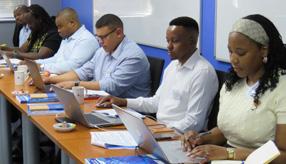
With a smaller cohort, CESA’s School of Consulting Engineering creates a more inclusive and interactive learning environment
On this industry-specific management development programme, participants benefit from one afternoon of weekly interactive online sessions, with bespoke materials and certification, carrying 15 ECSA CPD credits, all of which contribute to their professional development.
“Whether you aspire to lead, pursue leadership roles or transition into a different role, engineering practitioners and built environment practitioners broadly who complete the BCE MDP emerge more capable, more confident and more competent.
“By combining real-world case studies with practical application, the BCE MDP continues to evolve in response to the changing demands of the consulting engineering industry,” Campbell concludes.
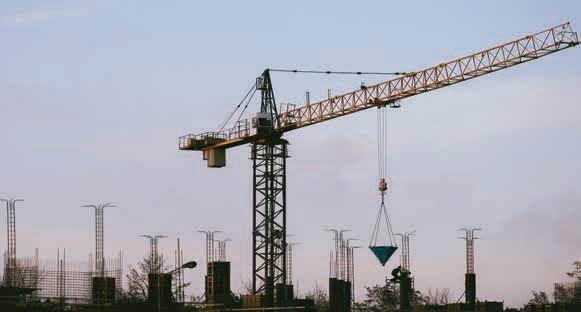

· Network with Industry Leaders: Connect with top professionals from both public and private sectors.
· Gain Insights on Current Trends: Learn about the latest developments in infrastructure policies, technologies, and best practices.
· Marketing Opportunities: Showcase your brand to key decision-makers through sponsorship and exhibition opportunities.
· Engaging Discussions: Participate in discussions on pressing infrastructure challenges and innovative solutions.
· Continuing Professional Development: Earn 2 CPD points for attending.


The delivery of quality infrastructure projects is inseparable from the commitment to continuous professional development, particularly through mentorship, asserts Makhaotse Narasimulu and Associates (MNA) Consulting Engineers.
With decades of combined experience, MNA underscores that sustained mentorship promotes technical excellence, risk mitigation and leadership development, critical for long-term project success.
Infrastructure projects are complex, often spanning multiple years from conception to completion. Engineers involved in these projects learn through practical experience that mentorship amplifies the lessons acquired throughout a project lifecycle. Agilen Moodley, Director of Human Resources at MNA, emphasises that attending to mentorship continuously enables knowledge transfer, allowing lessons learnt on one project to improve outcomes on subsequent ventures.
“You cannot grow without mentorship,” says Moodley. “Engineers entering the industry often possess strong theoretical foundations but limited practical exposure. Mentorship bridges this gap, helping young professionals navigate the oftencomplex developmental stages from student to professional engineer,” he notes.
MNA's mentorship model ensures that junior engineers are not confined to narrow tasks but
Director of Human Resources at MNA
are exposed to a broad spectrum of engineering functions. This rotational experience builds a foundation of understanding across water, transport, and structural disciplines, empowering engineers to develop holistic views and problemsolving skills. The firm’s approach also recognises the limited availability of experienced mentors across the sector by expanding middle management roles, which provides peer mentorship and leadership guidance.
“Middle management, being closer to dayto-day project work, is well-positioned to offer timely advice and insights that are directly relevant to junior engineers' immediate tasks and development goals. It’s not just about senior directors mentoring juniors anymore. Middle managers have become the backbone of mentorship, offering continuous leadership and peer guidance. They form the vital link bridging the experience gap while expanding leadership capacity within the company,” Moodley highlights.
Another benefit of the MNA mentoring programme, he said, is that the Water and Sanitation division is now majority-led by females who were previously underrepresented in leadership roles.
Through regular project collaboration, knowledge sharing sessions and formal appraisals, mentorship becomes embedded in everyday business operations at MNA.
Importantly, the company promotes secondments with municipal partners, offering mentorship to public sector engineers for skills transfer. These partnerships help build institutional capacity within municipalities, enabling engineers to register professionally and contribute effectively to critical infrastructure projects that serve communities.
While constraints such as time pressures present challenges to sustained mentorship, MNA’s structured approach – with clear career pathways, defined mentorship goals, and performance-linked progression – helps overcome these obstacles. The company fosters a culture of shared responsibility, where mentors and mentees actively engage in continuous learning.
Mentorship also plays a vital role in fostering ethical and responsible practice among engineers, essential for infrastructure projects that impact public safety and wellbeing. “In mentoring, we don’t just pass on technical knowledge but cultivate engineers’ ethical resilience – preparing them to stand firm on principles, raise concerns, and make decisions that may not always be easy, but are right,” Moodley states.
Engineers trained under such mentorship are better prepared to meet regulatory requirements, standards, and community expectations. “Ethical mentorship is fundamental because the infrastructure projects we deliver affect entire communities. It’s our duty to ensure that every engineer we train understands the gravity of their responsibility – that public safety and trust are paramount.”
MNA’s mentorship success extends beyond the firm, with many previous mentees excelling in government and private sector roles, carrying forward the firm’s values and expertise. This cycle of mentorship strengthens the overall engineering profession in South Africa, ensuring quality infrastructure delivery becomes the norm rather than the exception.
“It’s a strategic investment, not just a compliance exercise,” Moodley concludes. “It benefits both the employee and the employer – growing a skilled, confident workforce that improves project delivery and uplifts the industry and the lives of others as a whole.”
Astec Industries completed its acquisition of TerraSource Global (TSG) in July 2025. TSG offers renowned, long-established brands that include Gundlach Crushers, Jeffrey Rader, Pennsylvania Crusher Elgin, Tabor Vibratory Screens, Norris Screen, CMI and CSI. This investment delivers enhanced value and expanded solutions for Astec customers around the world, including in South Africa and across the continent.

TSG is a provider of precise, industryleading equipment including crushers, feeders, separators, sizers, liquid and solid separation, dewatering and waste management solutions. The addition of TSG’s technologies to Astec’s portfolio boosts the group’s capabilities in the aggregates, mining, power generation and industrial minerals sectors.
Expanding on the benefits for African customers, Astec chief technology officer Michael Rai Anderson says: “Africa remains a key market for Astec. The integration of TSG equipment will enable us to deliver an even broader range of world-class solutions in the region. Customers gain access to TSG’s premier crushing, feeding and sizing systems, which complement Astec’s existing aggregate and mining solutions.”
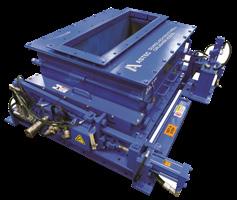
Anderson further communicated, “In addition, the acquisition brings new product categories to Astec’s portfolio, including specialised crushing and feeding systems for soft to medium-hard materials. TSG also introduces coal crushing, biomass and industrial material handling solutions that expand Astec’s range beyond traditional aggregates.”
With TSG products, now fully backed by Astec South Africa’s established infrastructure for sales, service and spare parts, customers will enjoy improved local support, Anderson notes.
“The local availability of components and technical expertise enables faster turnaround and continuous operations, ensuring reduced lead times and increased uptime. The enhanced engineering collaboration means that customers will benefit from the combined R&D and technical innovation of both companies.”
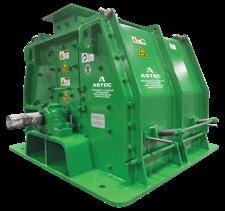
With Astec South Africa serving as the regional hub for all TSG sales, service and support, training programmes have been implemented for seamless integration and to ensure that Astec’s local teams are fully certified on TSG’s portfolio of technologies. Anderson says that further skills development, service centre expansion and job creation opportunities are expected as demand grows and additional capacity and personnel are needed in the region.
“With TSG now part of the Astec family, we are ideally positioned to serve as a single-source provider for all crushing, screening, feeding and material handling solutions across Africa. We will ensure that customers have access to the best global solutions with local support,” Anderson concludes.
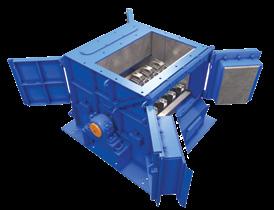
Civil engineering companies are dependent on yellow machine fleets but wait for triggers in the form of sustainable contracts that justify the acquisition of new equipment. These are the thoughts of a managing director of one of the big five civil construction companies operating predominantly in the Western Cape.
Established in 1994 by John Cullum, Johan Scriven, and Alex von Klopmann, CSV Construction started operating from small premises in Ceres. The three partners had derived their company’s name from the first letters of their surnames.
Celebrating 31 years in business, CSV Construction has grown to be one of the largest diversified civil engineering companies in the Western Cape, which is a tribute to the tenacity of its founders and the continued quality of the company’s work.
Alex von Klopmann, his fellow directors and management team attribute the company’s success to their focus on training. In addition to upskilling their own people, they go a step further by assisting promising Grade 11 and 12 learners at selected schools.
They founded the CSV Academy in 2015 and human resources officer, Charmaine Duke, leads the initiative. In 2024, the Academy partnered
One of two Bell B30E ADTs recently acquired by CSV Construction to support its civil engineering projects
with Kayamandi Secondary in Stellenbosch, Zandvliet High in Macassar, and Hottentots Holland High in Somerset West. Twenty-four students received specialised math and science tutoring during afternoon and evening classes and after matriculating they will pass through a training facility where they will be considered for bursaries or trade training.
“This we believe will allow us to leave a lasting legacy as a company and make a real difference,” says Alex.
This commitment to nurturing future talent reflects CSV Construction’s own journey. From humble beginnings where each partner worked with a bakkie and five labourers, CSV Construction now employs over 700 people. “Since the world economic downturn in 2008/2009 and the recovery since then, we’ve shown rapid growth, and our portfolio of successfully completed projects grows every year. We’re proud to say that as a company, we’ve evolved from a construction company to one that is known for executing specialised civil engineering projects, and we are always challenging ourselves.”
CSV Construction’s impressive portfolio includes retail outlets, office parks, warehousing, wine cellars, township
developments, and student accommodation.
“It’s exciting and challenging to now work in renewable energy and providing structures for solar and wind turbine complexes,” Alex adds.
“We’re also seen as the ‘go-to-company’ when it comes to large-scale water management and all its related challenges along with micro tunnelling, for which we’ve imported specialised tunnel-boring machines from Europe.”
Despite an influx of work in the company’s order book, Alex and his fellow directors are conservative when it comes to investing in new earthmoving equipment. “Yes, we have enjoyed the ramp-up in construction activity in recent years, but it’s still vitally important to manage the peaks and troughs of the business cycle by applying cash flow gearing and not over capitalising on equipment purchases,” he cautions. “We firmly believe in analysing the triggers that indicate when the time is right to invest in equipment as those have proved accurate indicators over the years.”

One such trigger was a contract to upgrade the passage and direction of the Sir Lowry’s Pass

The Bell B30E has a rated payload of approximately 28 000 kg, making it a versatile workhorse
River. This seemingly gentle flowing stream that runs across a potential floodplain in Gordon’s Bay can turn into a raging torrent when enough water enters it from the heights of the Hottentot Hollands mountain range that the famous Sir Lowry’s Pass transcends.
“With our company and its engineers recognised as specialists in working with water, our task is to reshape the river, reinforce its banks, and incorporate many changes to make the flow of the river more user-friendly for the proposed housing which is said to be developed on both the eastern and western sides,” Alex explains.
The extensive upgrades include berm construction, grade levelling, and rectification of the Sir Lowry's Pass River's alignment between the N2 in the north and False Bay (Indian Ocean). This will create land for development and drastically reduce the flooding risk.
The upgrade further includes the construction of bridges, erosion control measures like riprap, gabions, berms, and small concrete structures, the creation of non-motorised transport facility pathways, service provision, landscaping and the demolition of various walls and structures.
“When we analysed what we’d need in terms of loading and haulage equipment for this challenging project, we realised that two additional 30-ton articulated dump trucks (ADTs) and one large excavator would fit the bill,” Alex says. “With
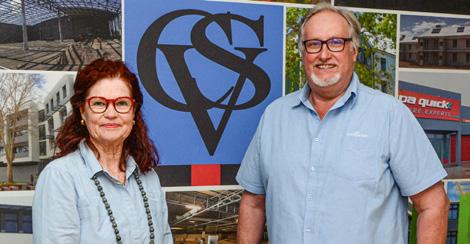
the project due to run for at least 40 months, it justified the purchases as we generally finance our yellow metal equipment over 36 months.”
CSV has a long and solid relationship with Bell Equipment and their Bell sales representative, Fiona Johnson, had sent CSV a list of equipment that was considered essential to this project, with Bell B30E ADTs heading the list.
CSV took delivery of two Bell B30E ADTs in April 2024. One is deployed on the river site and the other at a quarry from where the rock fill and aggregate material is supplied, some 15 km away. Although these are not seen as production machines, as one would have in mining, CSV is pleased with their average fuel consumption, which is monitored.
As the Sir Lowry's Pass River project progressed, the need for a large, powerful tool for massive excavations came to the fore and CSV ordered a new Kobelco SK520XD-10 excavator and added a Kobelco SK380XD-10 excavator for a pipeline project in Montagu Gardens. Both machines were delivered in September 2024.
Although CSV Construction has long relied on the solid performance and reliability of Bell ADTs across various sizes, they are new to the Kobelco brand.
However, Alex notes that they have been highly impressed by the overall performance, powerful breakout force, and fuel efficiency of their two Kobelco excavators.
“Interestingly, the Kobelco SK380-10 excavator is being used where 1,2 m diameter pipes are laid in a 5,5 km long tunnel that has been
created with a tunnel boring machine in the middle of a busy Cape Town suburb,” he adds.
While under warranty, and especially Kobelco Excavators’ extended warranties, all servicing will be done by Bell Equipment Cape Town technicians. CSV Construction employs a plant manager, a workshop manager and seven mechanics, all of whom assist the machine operators and ADT drivers to keep their pre-shift checks up to date and do preventative maintenance. These regimes have evolved over time as CSV Construction’s own fleet of vehicles and machines numbers more than 100.
“Much as we believe in building long and lasting relationships with our clients, so we believe in building long and lasting relationships with our suppliers and Bell Equipment has for a long time been part of our business,” Alex concludes.
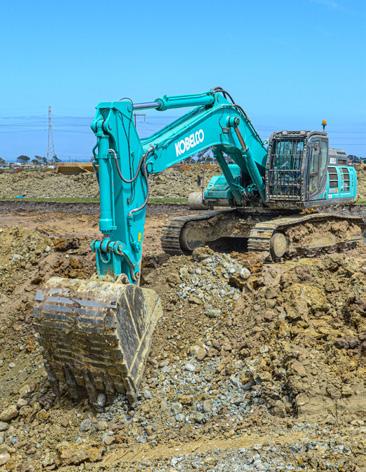
The Kobelco SK520XD-10 excavator has an operating weight of around 52 700 kg



































































AECOM siphokuhle.dlamini@aecom.com
AFI Consult banie@afri-infra.com
ARRB Systems info@arrbsystemssa.com
Asla Construction (Pty) Ltd johanv@asla.co.za
BMK Group brian@bmkgroup.co.za
Bosch Projects (Pty) Ltd mail@boschprojects.co.za
BVI Consulting Engineers marketing@bviho.co.za
Camjet info.jhb@camjet.co.za
CCG puhumudzo@ccgsytems.co.za / info@ccgsystems.co.za
Civtech Engineers (Pty) Ltd admin@civtech.biz
Corrosion Institute of Southern Africa secretary@corrosioninstitute.org.za
Dlamindlovu Consulting Engineers & Project Managers info@dlami-ndlovu.co.za
EFG Engineers info@efgeng.co.za
Elster Kent Metering Mark.Shamley@Honeywell.com
EMS Solutions paul@emssolutions.co.za
ENsync Engineers info@ensync.africa
ERWAT mail@erwat.co.za
Gabion Baskets mail@gabionbaskets.co.za
GIBB marketing@gibb.co.za
GIGSA secretary@gigsa.org
GLS Consulting info@gls.co.za
Gorman Rupp Cordeiro@gormanrupp.co.za
Gudunkomo Investments & Consulting info@gudunkomo.co.za
Hatch Africa (Pty) Ltd info@hatch.co.za
HB Glass Filter Media info@hardybulkinglass.com
Herrenknecht schiewe.helene@herrenknecht.de
HSA Technology (Pty) Ltd cs@hubersa.com
Hydro-comp Enterprises info@edams.co.za
IMQS Software (Pty) Ltd shemine.adams@imqs.co.za
Infrachamps Consulting info@infrachamps.co.za
INFRATEC info@infratec.co.za
Institute of Waste Management of Southern Africa iwmsa@iwmsa.co.za
IQHINA Consulting Engineers & Project Managers info@iqhina.co.za iX engineers (Pty) Ltd hans.k@ixengineers.co.za
Izinga Holdings info@izingalabezi.co.za
JG Afrika DennyC@jgafrika.com
KABE Consulting Engineers info@kabe.co.za
Kago Consulting Engineers kagocon@kago.co.za
Kantey & Templer (K&T) Consulting Engineers ccherry@ct.kanteys.co.za
Kitso Botlhale Consulting Engineers info@kitsobce.co.za
KSB Pumps and Valves (Pty) Ltd salesza@ksb.com
Kuhle Mcebo Engineers admin@kuhlemceboeng.co.za
KUREMA Engineering (Pty) Ltd info@kurema.co.za
Lektratek Water general@lwt.co.za
Loshini Projects muzi@loshini.co.za
m4a fagan@m4a.co.za
Makhaotse Narasimulu & Associates mmakhaotse@mna-sa.co.za
Mariswe (Pty) Ltd neshniec@mariswe.com
Martin & East gbyron@martin-east.co.za
M & C Consulting Engineers (Pty) Ltd info@mcconsulting.co.za
Mhiduve adminpotch@mhiduve.co.za
MPAMOT (Pty) Ltd mpumem@mpamot.com
Mvubu Consulting & Project Managers miranda@mvubu.net
NOTHI Group info@nothigroup.co.za
NTGR Engineering info@ntgr.co.za
Nyeleti Consulting naidoot@nyeleti.co.za
Prociv Consulting & Projects Management amarunga@prociv.co.za
Rainbow Reservoirs quin@rainbowres.com
Re-Solve Consulting (Pty) Ltd maura@re-solve.co.za
Ribicon Consulting Group (Pty) Ltd info@ribicon.co.za
Royal HaskoningDHV francisg@rhdv.com
SABITA info@sabita.co.za
SAFRIPOL mberry@safripol.com
SAGI annette@sagi.co.za
SALGA info@salga.org.za
SAPPMA admin@sappma.co.za / willem@sappma.co.za
SARF administrator@sarf.org.za.co.za
SBS Water Systems marketing@sbstanks.co.za
Silulumanzi Antoinette.Diphoko@silulumanzi.com
Siroccon International (Pty) Ltd admin@siroccon.co.za
SiVEST SA info@sivest.co.za
Sizabantu Piping Systems (Pty) Ltd proudly@sizabantu.com
Siza Water (RF) Pty Ltd PA@sizawater.com
Sky High Consulting Engineers (Pty) Ltd info@shconsultong.co.za
SKYV Consulting Engineers (Pty) Ltd kamesh@skyv.co.za
Smartlock jp.alkema@smartlock.net
SMEC capetown@smec.com
SOUTH AFRICAN VALUE EDUCATION Sabiha@savegroup.co.za
Southern African Society for Trenchless Technology director@sasst.org.za
SRK Consulting jomar@srk.co.za
Structa Group info@structatech.co.za
Superior Filtration (Pty) Ltd info@superior-filtration.com
TPA Consulting roger@tpa.co.za
Ultra Control Valves peter@ultravalves.co.za
V3 Consulting Engineers (Pty) Ltd info@v3consulting.co.za
Videx Storage Tanks sales@vidextanks.co.za
VIP Consulting Engineers esme@vipconsulting.co.za
VNA info@vnac.co.za
Water Institute of Southern Africa wisa@wisa.org.za
Wam Technology CC support@wamsys.co.za
Wilo South Africa marketingsa@wilo.co.za
WRCON ben@wrcon.co.za
Zimile info@zimile.co.za
Zutari charmaine.achour@zutari.com
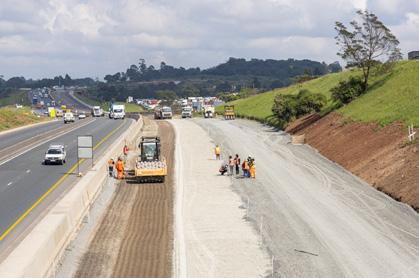
AfriSam’s Roadstab Cement continues to play a vital role in strengthening the country’s road infrastructure. As a purposedesigned stabilising cement, it provides engineers and contractors with a dependable high-performance solution for improving the strength, durability and longevity of road layers – particularly in challenging local conditions.
Developed specifically for road construction applications, AfriSam Roadstab Cement enhances the performance of in-situ materials used in base and subbase layers. The result is a stable platform with superior load bearing capacity and improved resistance to deformation, ensuring that roads can withstand high traffic volumes and harsh climatic conditions.
According to AfriSam’s Cementitious Executive, Vishal Aniruth, AfriSam Roadstab Cement has been formulated to meet the exacting demands of road layer stabilisation. “It provides superior strength gain and reduced shrinkage cracking, ensuring that the stabilised base layers perform optimally over the road’s design life.”
“The product’s controlled composition ensures predictable setting times and uniform strength development, which helps contractors maintain tight construction schedules without compromising on quality,” he says. “Its versatility across different soil types and project scales has made it a trusted choice for both urban and rural roads across southern Africa.”
Building for sustainability
Sustainability lies at the core of AfriSam’s product development philosophy, and Roadstab Cement is no exception. It is manufactured using specifically selected clinker replacement materials that significantly reduce its carbon footprint compared to conventional cements, without sacrificing performance.
“By using Roadstab Cement, contractors are not only achieving a cost effective and durable road construction solution, but are also actively reducing the environmental impact of their projects,” he says. “It is a practical example of how innovation in materials can support sustainable infrastructure development.”
Partnering for quality and long-term value
AfriSam backs its specialised cement range with the country’s most extensive technical support network. Through its laboratory and field services teams, the company assists clients with mix designs, materials testing and quality control to ensure optimal results on site.
“Our customers appreciate that AfriSam is more than just a supplier,” Aniruth adds. “We work alongside them to make sure that every road built with Roadstab Cement achieves its intended performance and durability.”
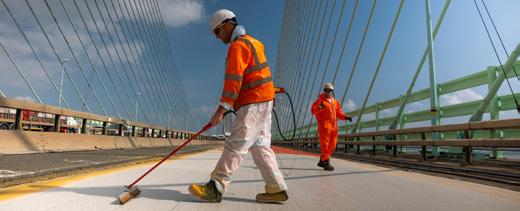
ELIMINATOR® offers rapid curing, climate adaptability and long-term durability –minimising closures and maintenance for critical infrastructure
As infrastructure networks age and traffic demands increase, the longterm protection of bridges, overpasses, culverts and other critical concrete structures has become a top priority for engineers and contractors.
Within the Saint-Gobain group, GCP’s internationally proven waterproofing technologies
– available in South Africa through Chryso Southern Africa – are providing advanced solutions for both new construction and rehabilitation projects. These products, including BITUTHENE® 5000 and ELIMINATOR® Bridge Deck Waterproofing, are engineered to extend service life, improve safety and reduce costly maintenance on vital transport infrastructure.
BITUTHENE® 5000 is a heavy-duty composite membrane developed for use beneath hot-applied asphalt concrete wearing courses. It incorporates a moisture and water resistant rubberised asphalt layer reinforced with a puncture and heat resistant polypropylene mesh, providing dimensional stability, flexibility and excellent adhesion.
Supplied in rolls with a protective release paper for easy handling, the membrane is cold applied, requiring no heating or hot bitumen bedding. It is suitable for both new construction and repair applications, offering effective waterproofing for bridges, overpasses and other vehicular traffic structures as well as parking decks.
In rehabilitation projects, BITUTHENE® S5000 strips are recommended for restoring concrete pavements with asphalt overlays, preventing premature deterioration caused by reflection
cracking and sub-base erosion. The membrane’s high resistance to water, combined with its ability to remain flexible over extreme service temperatures, ensures performance even during harsh winter cycling over small cracks.
On structures where detailing is critical, BITUTHENE® Liquid Membranes and BITUTHENE® 5000 Mastic can be used to seal terminations, edges and overlaps, ensuring complete waterproofing integrity.
“BITUTHENE® 5000 is designed with the realities of modern infrastructure projects in mind,” says Andries Janse van Rensburg, Business Development Manager – Specialty Building Materials at Chryso Southern Africa.
“Its robust construction, flexibility and proven ability to withstand extreme conditions make it a trusted choice for protecting concrete structures against water ingress and deterioration. The fact that it is cold applied means faster, safer and more consistent installation on site.”
The ELIMINATOR® Bridge Deck Waterproofing membrane offers equally impressive performance for steel and concrete bridges which are constantly exposed to water, chlorides and frost – conditions that can lead to deterioration and even structural failure.
This cold spray-applied system is based on ESSELAC® advanced resin technology, creating a
GCP waterproofing systems protect bridge decks from water and traffic damage

fully bonded composite layer between the bridge deck, waterproof membrane and asphalt surfacing. The result is a membrane that withstands punishing climate conditions and heavy traffic loads while maintaining its bond and integrity.
ELIMINATOR® can be applied in virtually any climate, curing in just one hour even in high humidity or low temperatures, preventing costly weather delays and allowing for greater scheduling flexibility. A two colour application process enables on-the-spot quality assurance, while the membrane’s ability to withstand asphalt surfacing temperatures up to 250°C eliminates overcoating time constraints and accelerates project completion.
“ELIMINATOR® has a proven global record of protecting thousands of bridges over decades of service,” Janse van Rensburg adds. “Its rapid curing time, adaptability to almost any climate and long-term durability are significant advantages for contractors and road authorities who cannot afford prolonged closures or recurring maintenance. It is a cost effective way to protect the substantial investments made in these essential structures.”






The official magazine of the Institute of Municipal Engineering of

www.imesa.org.za









































TO ADVERTISE
Joanne Lawrie
c +27 (0)82 346 5338
e joanne@infraprojects.co.za
TO SUBSCRIBE
e distribution@infraprojects.co.za
Contact us for content marketing opportunities across print and digital platforms.
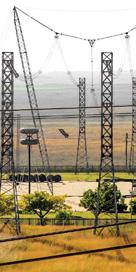






IMIESA , weekly newsletters , social media posts and www.imesa.org are the platforms used by your target audience for information on infrastructure development, maintenance and service delivery. Our readers are key decision-makers in the industry.