Research that matters from the College of Agricultural, Consumer and Environmental Sciences
Research within the College of ACES impacts all our lives. With expertise in agriculture and the environment, data and technology, family and communities, and health and wellness, our reach is both broad and deep. Uniting us is a deep commitment to solving real-world problems affecting Central Illinois, the United States, and the globe.
Here, we highlight a fraction of our world-class research in the area of family and communities, promoting family resilience and wellbeing; evaluating the effectiveness of federal programs; and revealing the roles of parental relationships on children.
THE FAMILY RESILIENCY CENTER SUPPORTS FAMILIES, YOUTH, AND COMMUNITIES
The Family Resiliency Center, housed in the Department of Human Development and Family Studies, works to address emergent public health and social justice issues facing families, individuals, and communities. The FRC takes a holistic, inclusive, and transdisciplinary approach, engaging with community collaborators to develop research and policies that promote health, resilience, and wellbeing. Current projects examine how families, youth, and childcare providers cope with COVID-19 stressors; how mindfulness practices can benefit minority adolescents in urban environments; and how to build research and policy skills among youth ages 13-18. The FRC website provides resources that offer practical solutions to common family and household stressors, including Building Blocks of Resilience and Mealtime Minutes.
ACES STUDY PROVES WORTH OF FEDERAL NEW-PARENT PROGRAM
New parent education programs have received significant federal funding in recent decades, with the goal of preparing adults for the stresses of raising young children. But few of these programs have been evaluated for efficacy by third-party researchers. In a recent study, ACES family scientists tracked 339 couples enrolled in the Family Expectations program, funded through the Administration for Children and Families under the U.S. Department of Health and Human Services. Researchers compared couples’ responses on surveys administered before and after the program, finding significant positive benefits overall. Specifically, couples in the program reported lower psychological distress, better mental health, lower levels of harsh parenting, improved couple functioning, and more co-parent satisfaction. The benefits were still detectable 12 months later, suggesting the programs are well worth the investment.
The Family Resiliency Center applies a holistic approach to public health and social justice issues.
ACES research found new parent education programs eased stress of early parenthood and boosted couple satisfaction.
DISCOVER : Family & Communities
COMMUNITY HEALTH WORKERS IMPROVE CHILDHOOD VACCINE UPTAKE
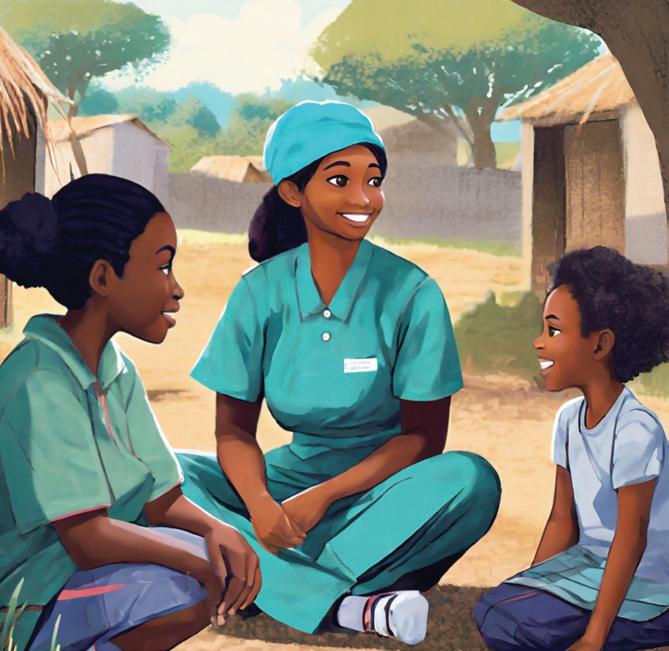
As trusted messengers, community health workers can be an essential part of public health efforts around the world. A recent study from ACES researchers showed that community health workers dramatically improved childhood vaccine uptake in rural Madagascar, where access to health care is limited. The researchers examined the outcomes of Santenet2, a large-scale, USAID-funded health intervention program that reached about half the country’s population between 2009 and 2011. The program trained two volunteer community health workers in each village to inform families about vaccination campaigns and encourage them to participate. For the most remote villages, 10 kilometers or more from health centers, community health workers significantly increased vaccination rates. Although the study took place in Madagascar, the results reinforce the value of community health workers more broadly.
Volunteer community health workers increased vaccine uptake for children in remote Madagascar villages, according to ACES research
When dads keep parental conflict constructive, kids experience more positive socioemotional development.
FUNDING SOURCES
HOW DADS’ APPROACH TO PARENTAL CONFLICT AFFECTS KIDS
When children are small, parental conflict can have an outsize effect on their socioemotional development. That’s well documented, especially for the motherchild relationship, but few studies have focused on how parental conflict affects the father-child relationship. An ACES study leveraging Department of Education data found preschoolers have fewer negative socioemotional outcomes when heterosexual fathers handle conflict with their wives in a constructive way. Fathers who communicated openly and tried to reach compromise with their partners, as opposed to using criticism or physical violence, showed more involvement and warmth toward kids. This, in turn, led to more positive child development. The researchers call for more investment in educational programs to teach parents, including those not in heterosexual or married partnerships, how to handle relationship conflicts in a constructive manner.
Family Resiliency: The Family Resiliency Program was established in 2002 in partnership with The Pampered Chef, founded by U of I alum Doris Kelley Christopher, who also provided funding for The Pampered Chef Endowed Chair in Family Resiliency and Doris
Kelley Christopher Hall, where the Family Resiliency Center has been housed since 2006
Jacinda K. Dariotis, Family Resiliency Center
Contact: Jacinda K. Dariotis, dariotis@illinois.edu
Childhood Vaccines: The Population Reference Bureau and the Hewlett Foundation
Catalina Herrera-Almanza, Agricultural and Consumer Economics