Dear GRA Members,
I am excited to share with you GRA's newly adopted 2024-2026 Strategic Plan that will guide our organization through 2026. As we celebrate over 30 years of leading groundwater education and advocacy in California, this plan represents our commitment to expanding our impact and evolving with the rapidly changing water resources landscape.
Our Foundation Remains Strong

At our core, GRA's mission remains unchanged: we are dedicated to resource management that protects and improves groundwater supply and quality through education and technical leadership. Our vision of "Sustainable Groundwater for All" continues to drive everything we do.
Why a New Strategic Direction?
The groundwater industry has experienced unprecedented change in the past decade. From SGMA implementation to emerging challenges like PFAS, our field is evolving rapidly. Additionally, new technologies and virtual platforms have enabled us to reach members globally. To maintain our position as the premier groundwater organization in the Western United States, we must adapt and grow.
Our 2024-2026 Strategic Plan focuses on two vital priorities:
Strategic Priority #1: Expand & Engage Membership
We're investing in professional marketing expertise to better communicate our value and reach new members. Our goals for this strategic priority include increasing membership and significant growth in digital engagement.
Strategic Priority #2: Continue to Lead in Groundwater
We are focused on expanding our sphere of influence through innovation and advocacy by building strategic partnerships with a goal of 50% increase in affiliates and reimagining our event portfolio to maximize value while optimizing volunteer resources. We anticipate full implementation of these changes in 2026.
What This Means for You
As a member, you'll see positive changes:
• Enhanced educational offerings
• More strategic and impactful events
• Expanded networking opportunities
• Greater value from your membership through new partnerships and programs
Our Guiding Principles
These strategic changes are anchored in clear principles that define who we want to be as an organization. We strive to be recognized as helpful, reliable thought leaders that others in local public agencies, government, NGOs, and technology sectors can turn to for practical, thoughtful, and technically sound insights into groundwater challenges. As a knowledge hub for groundwater professionals, we foster a culture of mutual respect, collaboration, and open communication while maintaining our commitment to technical excellence. We're dedicated to providing cutting-edge guidance and serving as the go-to resource for groundwater industry learning throughout our members' careers. Inclusivity remains at our core – "groundwater for all" isn't just a vision statement, it's a commitment to building a community that connects groundwater professionals with the broader world, helping us all grow and learn from each other. Finally, we're taking an intentional, data-driven approach to our growth, ensuring our strategic initiatives are guided by solid data and meaningful member input.

The Board of Directors and I are committed to regular progress updates on these initiatives. We'll be reviewing advancement at each board meeting and making adjustments as needed to ensure we meet our goals. Your membership and engagement make GRA's work possible. As we implement this strategic plan, we welcome your input and participation. Together, we'll continue building an organization that serves as the premier resource for groundwater professionals while advancing our vision of sustainable groundwater for all.
I’m adding a new section to this letter for members “Asks”, which are ways to engage more deeply in our well-connected GRA community:
• Follow us on LinkedIn “GRA: Groundwater Resources Association of California” – you’ll get the most up to date information on events and news in the GRA community.
• Attend your next local branch meeting – a nice way to connect with peers in-between GRA conferences.
• Celebrate the 10-Year Anniversary of SGMA with a day of celebration with DWR on 11/18/24. Info at: The Road to Sustainability: SGMA 10-Year Anniversary Event - November 18, 2024
• Get up to speed on trends by sitting in on the ACWA Groundwater Committee Meeting on 12/03/24 in Palm Desert.
• Lean into your writing skills with a contribution to our HydroVisions publication – email rfricke@geiconsultants.com.
• Update your membership for 2025. Corporate Members can sign up an unlimited number of staff within their organization, talk to your colleagues about getting connected as members!
Best regards,
Christy Kennedy

President, Groundwater Resources Association

by Chad Taylor
- Todd Groundwater; Sodavy Ou - West Yost; and Erik Cadaret - Yolo County Flood Control & Water Conservation District
The 2024 Groundwater Law and Legislation Forum was held on April 18, 2024, at the Elks Tower in downtown Sacramento. This one-day event was organized jointly by GRA and Brownstein to provide an opportunity for interactive learning and engaging around current legal and legislative issues affecting California groundwater. The focus of this year’s forum was a recognition of ten years of progress on the Sustainable Groundwater Management Act (SGMA), upcoming issues related to groundwater sustainability, application of Proposition 218 to groundwater management, water storage and groundwater recharge, upcoming legislation affecting groundwater professionals and users, and emerging contaminants including Per- and polyfluoroalkyl substances (PFAS). An impressive group of speakers, presenters, and panelists were organized and included current and former State legislators and representatives from state regulatory agencies, water agencies, academia, and advocacy groups among others.
The opening panel of the day focused on the first ten years of SGMA; which have brought us to the beginning of the implementation phase. The panelists noted that Groundwater Sustainability Agencies (GSAs) should be looking toward the first five-year evaluations of Groundwater Sustainability Plans (GSP) as the Department of Water Resources (DWR) continues to track annual reports and groundwater conditions to assess ongoing efforts to achieve groundwater sustainability. Stakeholder engagement remains an important component of SGMA for GSAs, who should encourage engagement from interested stakeholders, especially in areas with disadvantaged communities. One panelist referenced the pending
amendment to the California Constitution when discussing the challenges in reaching stakeholders. Amendment 16 proposes to modify the California Constitution to declare that the people have a right to clean air and water and a healthy environment. This amendment could provide new avenues for GSAs to engage with stakeholders.
Navigating the requirements of Propositions 218 and 26 when planning for funding GSA responsibilities was the topic of the second panel. Panelists reminded attendees that Proposition 218 is one of the seven exceptions to taxes as fees, but there are requirements for compliance, including providing Special Benefits, estimating the amount of those benefits, and distributing charges proportionally. The panelists showed that while compliance with these propositions is complicated, it is also achievable. Successful campaigns will include carefully considered fee studies and engineer’s reports, an understanding of the constituency, and outreach to develop an understanding of the need for assessments among voters.
California’s cycle of extreme dry and extreme wet conditions and what to do when floods hit was the topic of the postlunch third panel. This topic has been on the minds of many California water professionals, and the panel explored historical and current efforts to capture and store flood water to manage water supply during dry years. Areas of discussion included major infrastructure projects, such as the Sites Reservoir, and the long-term efforts of Southern California water agencies to capture and store water in groundwater basins. The panelists generally agreed that there is no single solution to flood management, storage, and capture, but every effort to increase storage for dry periods is worthwhile.
The final panel of the forum discussed emerging contaminants with a focus on PFAS. The panelists noted that regulation of PFAS continues to roll out on the Federal and State level, with

significant announcements in early April of 2024. While there are currently no California maximum contaminant levels (MCLs) for PFAS compounds, the state is required to comply with federal regulations or may set more stringent statewide thresholds. The recently adopted California Public Health Goals (PHGs) for PFOA and PFOS, two of the most common PFAS compounds, are lower than the MCLs adopted by the United States Environmental Protection Agency (USEPA) and could eventually be set as State MCLs lower than Federal limits. State legislation to limit ongoing PFAS production and use also continues. The currently proposed Senate Bill (SB) 903 would increase prohibitions on PFAS addition to products sold or distributed in California unless the use of PFAS in the product is necessary and there is no safer alternative available. Existing laws already prohibit manufacturing, distributing, or selling new textiles, food packaging, and cosmetics containing PFAS. The panel did raise concerns regarding USEPA’s
move to consider PFAS as a hazardous substance under the Comprehensive Environmental Response, Compensation, and Liability Act (CERCLA). This addition leaves open a question as to the responsibility of water and wastewater utilities for long-term management of PFAS in treatment waste streams, including treatment residuals. Water agencies and utilities are bringing litigation to PFAS manufacturers to seek funding to address PFAS concerns and lobbying federal legislators to specifically exclude water and wastewater utilities from these responsibilities under CERCLA.
The Law and Legislation Forum continues to be a meaningful event in the GRA annual calendar of conferences and offers a unique opportunity to hear from and meet with legislators, policymakers, agency staff, and other groundwater professionals. Consider making this one-day event in Sacramento a priority in your schedule.


by Marcus Trotta, Sierra Ryan, Ryan Alward, and Julia Ekstrom
What is SB 552 and what does it mean to you?
Senate Bill 552 (SB 552) of 2021 aimed to address critical gaps necessary for enhancing drought resilience in California’s small and rural communities. These communities are often disproportionately affected during dry periods, lacking guidance for water shortage planning and drought response. As a result, households face water scarcity, relying heavily on hauled water, while state agencies grapple with understanding the extent of drought impacts. The California Legislature passed SB 552 with goals to 1) better understand future risks of drought on small water systems and private domestic well users and 2) support planning for addressing future risks. To achieve these goals, the law creates new requirements for counties and small water systems.
Counties must establish a standing drought task force focusing on domestic wells and state small systems and develop a drought resilience plan for these groups.
Small water suppliers have various new requirements, some of which depend on their number of connections. Larger small systems (>1,000 connections) and school systems must develop a water shortage contingency plan (link to templates). Systems with fewer than 1,000 connections instead must add a drought element to their emergency notification plan. All small water suppliers are now required to submit water use and supply data to the State Water Resources Control Board and implement a set of shortage mitigation measures if they are financially feasible. These measures include requiring customer metering, having groundwater well monitoring systems in place, securing at least one secondary source of water, installing backup generators, and meeting flow requirements to support firefighting, each on its own deadline.
While the Safe and Affordable Funding for Equity and Resilience (SAFER) Needs Assessment now incorporates tracking of these small water system requirements as part of
its assessment, the overall State Board’s SAFER Program for assistance is distinct from this set of SB 552 requirements.
Points of coordination between Counties and GSAs
The implementation of SB 552 creates an opportunity to usher in a new era of collaboration between Counties and Groundwater Sustainability Agencies (GSAs). This legislation has become a catalyst for joint efforts in several key areas, as summarized below, and has transformed the landscape of groundwater coordination and fostered a transparent and cohesive approach to water management.
1. Domestic Well Inventories: SB 552 has empowered Counties to take the lead in compiling and maintaining data on domestic wells within their jurisdiction. This inventory forms the bedrock of informed decisionmaking for GSAs, creating a shared understanding of local groundwater usage dynamics. The ongoing collaboration ensures the accuracy of this inventory, providing a solid foundation for effective groundwater management strategies.
2. Data Collection and Sharing: The collection of groundwater-level data and monitoring coordination is another area of shared interest. For example, GSAs have to relate groundwater elevations to undesirable results for domestic well owners. Counties that often issue well permits and now have obligations for action when wells go dry have a strong vested interest in reviewing data from representative monitoring points to catch alarming trends and react to them. Likewise, counties may have other monitoring data that could be a useful addition to GSA monitoring programs, such as detailed well permitting data collection or biotic or water quality monitoring results. Through coordinated monitoring efforts, a more comprehensive understanding of groundwater dynamics emerges, enabling both entities to make decisions that align with the broader goal of sustainability.

3. Stakeholder Outreach: SB 552 has paved the way for unified outreach efforts, ensuring consistent messaging to stakeholders. Counties and GSAs, recognizing the importance of public awareness, can align their communication strategies to convey a unified message. This concerted effort aims to inform the public, agricultural stakeholders, and other interested parties about the shared vision for sustainable groundwater practices and services available when needed. Clear messaging and transparency can help build trust between the community, the GSA, and the County.
4. Collaborative Win-Win Solutions: The legislation further promotes collaboration by encouraging the identification of common solutions to mitigate risks for GSA projects/ actions and County Domestic Well Mitigation plans. Shared challenges, such as overdraft and contamination threats, should be met with collaborative strategies. When counties and GSAs pool resources, expertise, and solutions, they can enhance the overall effectiveness of groundwater management practices for the benefit of all stakeholders involved.
In essence, SB 552 has opened avenues for robust collaboration between Counties and GSAs, emphasizing the importance of working together at the local level for sustainable groundwater management, which is a key tenet of SGMA. This collaborative approach not only complies with SB 552 but also positions Counties and GSAs as key players in securing the long-term vitality of groundwater resources.
Challenges & opportunities
While the collaborative efforts described above will better position Counties and GSAs in assessing risks and planning mitigation strategies for vulnerable domestic wells and small community water systems, several challenges and uncertainties will require careful consideration and ongoing close coordination during the development and implementation of drought resilience plans:
• Overlapping authorities and a lack of clarity on who is ultimately responsible for mitigating failed wells due to drought conditions can hinder or delay emergency mitigation and assistance efforts. Establishing clear roles and responsibilities for these scenarios will be necessary at the local level to facilitate effective response and assistance between Counties and GSAs during future droughts.
• While short-term mitigation strategies, such as water hauling or providing bottled water, can provide critical relief during well-failure events. Long-term technical solutions can be limited in areas containing marginal or poor-yielding aquifer systems, existing overdraft, or water quality impairments. In such circumstances, consolidation of existing water systems and domestic wells, which can be costly and complex, may be the only viable solution. Additionally, modifications to County well ordinances may be needed to establish or strengthen requirements to assess these risks prior to issuing new well permits to proactively avoid new future problems. For example, the County of Santa Cruz is currently updating its well ordinance to require stronger well yield testing in areas of known water supply challenges.
• Effective and consistent outreach to rural domestic well owners and small water systems can be challenging given the wide variety of geographic areas, water resource conditions, and supply sources. In Sonoma County, countywide implementation of SB552 includes focused outreach and data collection at a Supervisorial District scale to capture some of these unique differences and support proactive and targeted mitigation planning.
• The lack of resources among GSAs, Counties, State Small Water Systems, and many domestic well owners further hinders the ability to respond swiftly to urgent water shortages. Coordinated action and resource allocation, including ongoing state funding opportunities, are urgently needed to ensure the resilience of domestic wells and small water systems during drought events.
article continues on next page
Bringing together law, policy and business acumen to solve your toughest challenges.


DWR SB 552 Primer
The DWR SB 552 Primer summarizes the 2021 drought planning legislation
DWR Alignment & Coordination - SB 552 Fact Sheet
“The purpose of this document is to identify opportunities and encourage counties and GSAs to align and coordinate their respective responsibilities for drought and water shortage planning efforts for rural communities under SB 552 and the long-term sustainability goals of groundwater basins under SGMA.”


DWR Water Shortage Vulnerability tool
The webtool allows the user to perform a State Smalls and Domestic Well Analysis for any county in the state. It shows the number of small water systems and domestic wells in the filtered area and returns a vulnerability score.

Grant Funding
The grant funding application period for SB 552 support has closed. The link above provides the status of counties that have received up to $125,000 or direct technical assistance.
Geosyntec’s collaborative group of nationally recognized scientists, engineers and professionals are known for their innovative work in water supply, water and wastewater management, and industrial water management.


by Garrett Rapp
Early April is a fantastic time to be in southern Arizona. The sun is out, it’s not too hot yet, and the famous rattlesnakes have only begun to awaken. This past April, several hundred groundwater professionals and students convened at the Pascua Yaqui tribal land at the Casino Del Sol for the 18th Biennial Symposium on Managed Aquifer Recharge
(BSMAR18). The conference brought technical specialists, regulators, managers, and operators from around the world together to share the latest advancements in managed aquifer recharge (MAR).
BSMAR18 was my fourth BSMAR and first as an organizer. The conference highlighted the benefits of multidisciplinary thinking in enhancing MAR. My takeaways


from the conference were the array of new and developing technologies, regulatory successes and challenges, and examples of successful MAR projects.
The MAR technologies on display at the conference ranged from the development of aquifer storage and recovery (ASR) wells to large-scale modeling to determine optimal locations for MAR projects. David Pyne, the ASR guru, provided a comprehensive overview of ASR technologies and discussed practical challenges gained through a career of experience. Artificial intelligence, including machine learning, has proven to be a powerful tool to understand complex recharge systems and guide management decisions. In the water quality space, the ability to characterize and treat water before, during, and after MAR is rapidly advancing. It’s even possible to recapture some of the energy used in the ASR process.
Sarah Porter, the director of Arizona State University’s Kyl Center, was the keynote speaker of the conference and spoke to some of the regulatory challenges and solutions related to MAR in Arizona. There were many examples of creative responses to regulatory challenges in MAR implementation in California, Arizona, and other regions, highlighting the value of tailored solutions that align with local values and meet specific project needs.
Finally, the case studies of successful MAR ranged from heavily urbanized areas where basins have been strategically sited for regional benefit to ASR wells in agricultural areas with land subsidence challenges, and even injection wells recharging water in a complex, fractured aquifer. Several public agencies, such as Tucson Water and Orange County Water District, reflected on their history of successful recharge and discussed challenges on the horizon including handling more intense storm events and characterizing the impact of emerging contaminants. The diverse perspectives showcased at BSMAR18 provided invaluable insights for addressing various MAR challenges.
Hosting the conference near Tucson, a city revitalized by MAR decades ago, was very fitting. The post-conference field trip to Tucson’s recharge facilities was a great cap to the week. For MAR to be an effective tool for water resources management in a deeply uncertain future, we must work to develop it from all sides and at all levels. One person who inspired me and many others to continue working to empower others to build a sustainable future was Dr. Thomas Meixner, to whom the Arizona Hydrological Society (AHS) bestowed a posthumous Lifetime Achievement Award at the conference. Thank you to the AHS and the Groundwater Resources Association of California for putting on a great conference and for generously funding the student attendees. It was truly a MARvelous week. See you at the next symposium!


by Pete Dennehy, Bill Mok, and Trey Driscoll
Land subsidence is a costly and problematic result of groundwater overdraft in San Joaquin Valley, where prime agricultural farmland is ideal for producing high yields of valuable crops. However, overplanting, hardening of demand with perennial crops, and limited surface water availability have allowed groundwater demands to outpace groundwater supply. Growing cities and degraded water quality in shallower aquifers further stress the subsidence prone deeper aquifers. These factors lead to groundwater overdraft that drives subsidence, despite extensive efforts to slow the processes.
This article focuses on the history and impacts of subsidence in the San Joaquin Valley, particularly the Tulare Lake subregion, where recent subsidence rates are the highest in the state. This article is the fourth installment of a five-part HydroVisions series on land subsidence, including:
• California’s Sinking Feeling: An Introduction to Subsidence (Fall 2023)
• Subsidence Data: Techniques, Availability, and Interpretation (Winter 2024)
• Models: Tools for Estimating and Predicting Subsidence (Spring 2024)
• Damage Done: Causes and Impacts of Land Subsidence in the San Joaquin Valley (this issue)
• Arrested Displacement: Subsidence Mitigation (planned for Winter 2025)
The final article in the series, planned for spring 2025, will focus on actions being taken in the San Joaquin Valley and other parts of the state to avoid and minimize subsidence impacts going forward.
Subsidence in the San Joaquin Valley has been called the greatest human alteration of the Earth’s surface (Galloway et al., 1999). The primary cause of this subsidence is reduced groundwater levels due to overdraft. Improvements to the vertical turbine pump and rural electrification in the 1930s allowed wells to be drilled deeper and pump more water from greater depths (Galloway et al., 1999). The extensive clay interbeds in the deep sedimentary basin near Tulare Lake are particularly susceptible to subsidence from decreased pore pressure, which is caused by groundwater overdraft. Other localized drivers of land subsidence include oil and gas extraction, natural processes such as faulting and tectonic down warping, and expansive soil types susceptible to hydrocompaction (LSCE, 2014).
Historical water level declines in the San Joaquin Valley have been significant, up to 400 feet during the 1950s and 1960s, coinciding with subsidence rates of up to 1 foot per year. The state and federal water projects completed in the late 1960s lessened groundwater pumping, allowing groundwater levels to rebound by up to 200 feet in some areas (LSCE et al., 2014).
Despite rising groundwater levels in the 1970s and 1980s, subsidence continued at a reduced rate due to residual subsidence – the continued land sinking after groundwater levels stabilize or rise. Modeling by Stanford University researchers suggests that residual subsidence may continue for decades after overdraft is reversed (Lees et al., 2022). For example, subsidence numerical model using data compiled near Hanford, CA simulated 3 feet of subsidence between 1965 and 1985, despite stable to increasing groundwater levels during this time.

In recent years, groundwater overdraft and subsidence has accelerated in parts of the San Joaquin Valley. Regional groundwater overdraft since 2012 has resulted in the greatest rates and extents of subsidence since state and federal water projects were constructed in the 1960s. Figure 1 shows the annual subsidence from 2016 to 2022. Annual subsidence rates measured by remote sensing exceed 1 foot per year in 2016 and 2022 (Figure 1). The highest subsidence rates, shown in red, are found in the Tulare Lake hydrologic region near Corcoran.
Lowering of groundwater levels does not always result in

subsidence. Figure 2 shows groundwater levels in a similar period between 2017 and 2022; the red dots are wells with greater than 25-foot groundwater level decrease and orange dots are wells with between 5 and 25 feet of groundwater level decline. Since overdraft in confined aquifers with compressible clay layers results in far greater subsidence than overdraft in unconfined aquifers, bedrock, or areas that lack compressible clays, areas not as susceptible to subsidence (i.e. near Bakersfield, the northern Sacramento Valley, and coastal areas) have minimal or no subsidence despite having similar groundwater elevation declines as the Tulare Lake area.
article continues on next page

In the future, the Tulare Lake hydrologic region will almost certainly continue to subside. Even with ongoing aggressive efforts to stabilize groundwater levels, residual subsidence is projected to continue, potentially for decades (Lees et al., 2022). Future subsidence, however, could be minimized but will require a significant, coordinated, regionwide effort to recharge deep aquifers and reduce groundwater pumping in the most critically subsiding areas.
Subsidence
Subsidence impacts are widespread in the San Joaquin Valley and costly to mitigate. The main impacts of subsidence include reduced water conveyance capacity, increased flood risk, and damage to well infrastructure. Subsidence may impact roads, pipelines, railroads, and foundations, but limited historical data exist to establish a clear connection. The cost to mitigate subsidence impacts can be extraordinary and is only increasing as industry costs for construction and permitting increase. For context, the historical cost of subsidence in the San Joaquin Valley from 1955-1972 was estimated at $1.3 billion in 2013 dollars (LSCE et al., 2014).
The costliest subsidence impacts are damages to water conveyance infrastructure. Differential, or uneven subsidence along a canal reach results in reduced conveyance along the entire system. Canal systems must be operated at reduced capacity to maintain freeboard for the canal lining and embankment and clear structures such as bridge crossings (SLDMWA, 2023). Additionally, reduced canal slope downstream of subsided areas further decreases flow capacity of gravity canal systems. The mechanisms for subsidence impacts to the Friant-Kern Canal are demonstrated on Figure 3 (FWA, 2019). Canals impacted by subsidence must
be realigned to raise the freeboard elevation and clear canal crossings to operate as intended.
Similar to canal conveyance impacts, flooding by rivers and streams can be exacerbated by subsidence and is expensive to address. Convergence of water occurs in the most subsided areas because of increased stream slope and flow upstream, and decreased slope and flow downstream. Additionally, since flood water accumulates at low elevation, subsidence can increase flood zone area and depth (LSCE et al., 2014).
Widespread flooding in the Tulare Lake region, such as in 2023, is likely made worse by subsidence, but is also influenced by other factors like unmanageable runoff volumes and levee breaches unrelated to subsidence. Mitigating flood risks from subsidence is often accomplished in the San Joaquin Valley by raising levees heights.
Damage to groundwater wells is a more localized impact of subsidence and the costs are typically borne by the well owner. Subsidence causes compressional forces that deform and eventually break well casings (Borchers, et al., 1998). Drillers in some areas are now installing wells with compression sleeves to mitigate well casing compaction from subsidence. However, there are limits to how much compaction a well with compression sleeves can tolerate before failure occurs. Well repairs are typically paid for directly by the well owner, unlike canal and flood control systems that are repaired using a wider variety of funding sources.
The most consequential subsidence impacts in the San Joaquin Valley are reduced capacity of the regional water conveyance systems – the Friant-Kern and Delta-Mendota Canals. For example, subsidence reduced the capacity of the Friant-Kern Canal by nearly 60%, resulting in an estimated lost conveyance of 300,000 acre-feet in 2017, (FWA, 2024), the

3rd wettest year for the 123-year record. Reduced capacity has a negative feedback loop with subsidence; water that would be used in lieu of groundwater pumping cannot be conveyed, which causes more pumping and increased subsidence.
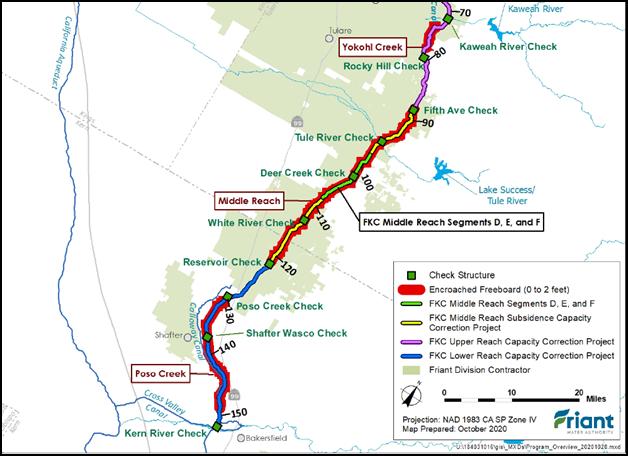
The Friant-Kern Canal Middle Reach Capacity Correction Project will eventually repair 33 miles of the 152-mile-long system and is being completed in two phases, as shown in Figure 4 (FWA, 2024). Phase I was completed in 2024 and realigned the canal in the most subsided segments D, E, and F. Phase II will realign the middle reaches upstream and downstream of Phase I but is yet to be scheduled. The cost for Phase I to repair 10 miles of the Friant-Kern canal was $325 million (FWA, 2024) and Phase II repairs to an additional 23 miles will cost many hundreds of millions of dollars. Since subsidence continues at rates that exceed the design capacity, the Friant Water Authority is concerned that future mitigation will be necessary. Moreover, repair of the Delta-Mendota Canal will have similar costs.
Conclusions
Subsidence rates in the San Joaquin Valley are progressing faster than ever in some areas where groundwater levels are at historical lows. Subsidence reduces capacity of water conveyance infrastructure, increases flood risks, and damages well casings. Unfortunately, even if groundwater overdraft stops today, subsidence will continue for decades. There is hope however, as groundwater level recovery in 2023 contributed to reduced subsidence and, in some cases, elastic rebound of the ground surface elevations. The next and final article in this series will look at how groundwater levels can be managed in the San Joaquin Valley to slow future subsidence and mitigate impacts that might occur.
Borchers, J.W., Gerber, M., Wiley, J., & Mitten, H.T., 1998. Using DownWell Television Surveys to Evaluate Land Subsidence Damage to Water Wells in the Sacramento Valley, California. U.S. Geological Survey, Sacramento, California.
DWR, 2023. California’s Groundwater Conditions: Semi-Annual Update. October 2023.
Friant Water Authority (FWA), 2019. How Subsidence Threatens Sustainability. https://static1.squarespace.com/ static/58c2eccc15d5db46200ea426/t/614a3679ddbcc4201e9a 8b35/1632253572488/Friant_Subsience_Impacts_Brochure.pdf
FWA. 2022. Friant-Kern Canal System-Wide Capacity Correction. Draft Reconnaissance Study. November 2022.
FWA, 2024. eWATERLINE. July 2024. https://static1.squarespace. com/static/58c2eccc15d5db46200ea426/t/66a82161a0a20c4058509b ea/1722294627625/FWA_eNews_07-2024_V3.pdf
Galloway, D.L., S.E. Ingebritsen, F.S. Riley, M.E. Ikehara, and M.C. Carpenter, 1999. The Role of Science - Land Subsidence in the United States. U.S. Geological Survey Circular 1182. https://pubs.usgs.gov/circ/ circ1182/pdf/part4.pdf
Lees, M., Knight, R., & Smith, R. 2022. Development and Application of a 1-D Compaction Model to Understand 65 Years of Subsidence in the San Joaquin Valley. Water Resources Research, https://agupubs. onlinelibrary.wiley.com/doi/10.1029/2021WR031390
Luhdorff and Scalmanini Consulting Engineers (LSCE), Borchers, J.W. and Carpenter M., 2014. Land Subsidence from Groundwater Use in California.
San Luis and Delta-Mendota Water Authority (SLDMWA), 2023. DeltaMendota Canal Subsidence Correction Project Draft Environmental Assessment/Initial Study. Public Draft. CGB-EA-2023-011. https:// sldmwa.org/wp-content/uploads/2023/02/01_DMC_MainBody_IS_ sheet_508.pdf

by Hugo A. Loaiciga, Ph.D., P.E., B.C. WRE, P.H. - Director, Hydrology Laboratory, University of California, Santa Barbara, CA, hloaiciga@ucsb.edu
The background of subterranean streams: Los Angeles v. Pomeroy (1899)
The State of California classifies groundwater as either a subterranean stream or percolating groundwater (State Water Resources Control Board (SWRCB), 1999). Specifically, groundwater that is not part of a subterranean stream is classified as percolating groundwater. In determining the legal classification of groundwater, the SWRCB and its predecessors have relied on the California Supreme Court’s decision in Los Angeles v. Pomeroy (1899), which established the distinction between subterranean streams and percolating groundwater. The precedent-setting Los Angeles v. Pomeroy case dealt with the condemnation by the City of Los Angeles of a tract of land encompassing about three hundred and fifteen acres owned by the West Los Angeles Water Company for the purpose of constructing and maintaining a projected system for supplying water to its inhabitants. The City of Los Angeles, at the date of the commencement of condemnation on June 8, 1893, had a population of about seventy thousand souls, having increased to that number from less than twelve thousand in 1880, and covered an area of about twenty thousand acres. The rapid growth of the city promised to continue, and the only source of water supply at the time for its inhabitants and for municipal purposes was the Los Angeles River. The land which the city sought to condemn
lies between the Cahuenga Range in the eastern end of the Santa Monica Mountains and the Verdugo Mountains. In this area, the Los Angeles River changes its easterly course towards the south through the water gap it carved (the Los Angeles Narrows) as it flows out of the San Fernando Valley towards the Pacific Ocean (Sylvester and O’Black Gans, 2016), just north of what is today the Autry Museum of the American West. The city planned to utilize the condemned land for a tunnel, driven east to west, a few feet below the bed of the river. Filtration galleries would be extended north and south from the tunnel from which water, draining and filtering out of the saturated soil, was to be delivered to the main supply pipe of the city, and thence to its water-distributing system.
The owners of the tract of land challenged the condemnation and the case went to trial in March 1896. The principal points of controversy between the City of Los Angeles and the owners of the tract of land were (1) the existence of a welldefined subterranean stream by which the waters, or a large portion of the waters, resulting from the rainfall within the watershed of the San Fernando Valley, are carried off through the Los Angeles Narrows; and (2) the rights of the City of Los Angeles, as successor to the Mexican pueblo, in the waters of the Los Angeles River (i.e., Pueblo water rights).. The City claimed that it had certain extensive rights in the stream over and above those of ordinary riparian owners, and that the stream itself consists not only of the visible surface flow of the river, but of the large subterranean flow slowly passing through the boulders, gravel, and sand under and adjacent

to the river. It became therefore necessary for the Court to decide under what circumstances subterranean flow under and adjacent to a stream constitutes an indivisible extension of the stream and subjected to established water-rights law for streams. In doing so, the Court insinuated the criteria defining a subterranean stream that is used nowadays. Los Angeles v. Pomeroy (1899) relied on and cited the writings of Clesson S. Kinney in “A treatise on the law of irrigation and water rights and the arid region doctrine of appropriation of waters” published in 1894. Los Angeles v. Pomeroy (1899) cites Kinney’s work classifying groundwater: “. . . watercourses are divided into two distinct classes -- those whose channels are known or defined, and those unknown and undefined. . . . . “if underground currents of water flow in well defined and known channels, the course of which can be distinctly traced, they are governed by the same rules of law that govern streams flowing upon the surface of the earth. . . . This rule practically disposes of the second class of subterranean waters -- those whose channels are unknown and undefined . . . are all classed with percolating waters”.
In Los Angeles v. Pomeroy (1899), the Court asserted the City’s Pueblo water rights in a ruling that upheld the condemnation of the tract of land. More important for the future of groundwater adjudication, however, was the Court’s concurrence with Kinney (1894) in finding that it is undisputed that subterranean streams are governed by the same rules that apply to surface streams. The Los Angeles v. Pomeroy ruling set an influential and lasting precedent that would give the SWRCB permitting authority over the appropriation of water flowing as a subterranean stream when the following criteria are met (SWRCB, 1999): (1) a subsurface channel must be present; (2) the channel through which the subterranean stream flows must have relatively impermeable bed and banks; (3) the course of the channel must be known or capable of being determined by reasonable inference; and (4) groundwater must be flowing in the channel. Such authority is vested by California’s Water Code section 1200. Absent evidence to the contrary, groundwater is assumed to be percolating groundwater, not a subterranean stream. Percolating groundwater is not subjected to the Water Code sections that apply to surface streams. Thus, the SWRCB has
permitting authority over subterranean streams but does not have permitting authority over percolating groundwater. The burden of proof is on the person asserting that groundwater is a subterranean stream flowing through a known and definite channel.
The California Sustainable Groundwater Management Act (SGMA) regulates the withdrawal and management of percolating groundwater in medium- and high-priority basins that are not adjudicated. Most groundwater is of the percolating type, and this has profound implications for sustainable groundwater management in California as it is argued next.
The definition of a subterranean stream expanded the water rights of riparian owners or appropriators, but is it hydrogeologically reasonable in the context of sustainable groundwater management?
Clesson S. Kinney was born December 5th, 1859, in East Townsend, Ohio. He studied law and thereafter moved to Salt Lake City, Utah, where he established a law office. Over the succeeding decades, he devoted himself to the practice of law, specially concerning the law of irrigation and water rights. He became one of the nation’s foremost experts on water rights and irrigation properties. Kinney authored his four-volume treatise on irrigation and water rights in 1894. This work gained him wide praise and it became a standard cited as an authority in the courts of the West, and also the U.S. Supreme Circuit and district courts. The Los Angeles v. Pomeroy (1899) ruling cited above is one example of Kinney’s influence, which endures to this date as California’s legal definition of subterranean streams and percolating groundwaters.
The definition of a subterranean stream pioneered by Kinney and used in California took place when the discipline of hydrogeology was in a primitive stage at the end of the 19th century, with the first US Geological Survey publication related to groundwater movement being that by King (1899). It preceded the development of large-scale groundwater withdrawal powered by modern pumps, in which the cone of depression exerted by large-capacity wells extends through strata and over long distances from the location of a well. The definition of a subterranean stream applied by the SWRCB
is not grounded on hydrogeologic principles, but, rather, emerged from court proceedings that attempted to resolve conflicting interpretations of certain type of water rights. The second criterion to be met by a subterranean stream cited above prescribes a channel through which the subterranean stream flows that has “relatively impermeable” bed and banks. This acknowledges that soil and rock are rarely, if ever, truly impermeable, and that geological strata exchange groundwater. These strata have porosity to store groundwater, but they differ in their capacity to transmit it, especially in usable quantity for economic use. In this section, this Author seeks to demonstrate that sustainable groundwater management is incompatible with the classification of groundwater as either subterranean stream or percolating groundwater. A modern understanding and practice of groundwater management and groundwater law must instead view groundwater as a continuum that extends from the recharge zone to the discharge zone. The interpretation of groundwater as a continuum is explained with the aid of Figure 1, where a simplified representation of strata, stream, and groundwater flow is depicted under two conditions (a) natural flow or low-disturbance conditions, and (b) flow affected by groundwater withdrawal. The elevation view displayed in Figure 1 is a conceptual simplification of the hydrogeologic setting of the Santa Ynez River Groundwater Basin (SYRGB) in Santa Barbara County. The geologic and hydrologic characteristics of the SYRGB were described in seminal water resources investigations by Upson and Thomasson (1951) and Wilson (1959), and expanded in groundwater sustainability plans (GSPs) written for three medium-priority sub-basins within the SYRGB (GSI Water Solutions and GEI Consultants, 2022; Geosyntec Consultants, Stetson Engineers, and Dudek, 2022a; Geosyntec Consultants, Stetson Engineers, and Dudek, 2022b).
The SYRGB lies within Santa Ynez River Basin, which is a westward-trending, linear, somewhat irregular structural depression bounded respectively to the north and south by the Santa Rafael and Santa Ynez mountain ranges. The SYRGB is drained by the Santa Ynez River, which flows westwardly along 70 miles from its headwaters to the Pacific Ocean. The SYRGB spans an area of 317.3 square miles and harbors 1,429 registered wells within it (Loaiciga and Kram, 2024). Two principal sedimentary units are recognized in the SYRGB: (1) the consolidated, essentially non-water-bearing rocks, and (2) the unconsolidated water-bearing deposits.
The consolidated rocks underlie the unconsolidated deposits along the entire length of the basin and crop out in the foothill areas. The consolidated rocks comprise the Franciscan, Knoxville, Tejon, Sespe, Vaqueros, Rincon, Monterey, Foxen, and Sisquoc formations, ranging in age from Jurassic to Pliocene. These rocks, largely of marine origin, consist of undifferentiated siliceous and diatomaceous shale, siltstone, and mudstone of Tertiary age. As the material is fine grained and compacted, it has small groundwater-bearing capacity, except for water in local fractures that sustains ephemeral springs.
The unconsolidated deposits include the Careaga Sand of Pliocene age and the Paso Robles Formation of Pliocene and Pleistocene age, the Orcutt Sand and terrace deposits of Pleistocene age, the alluvium, river-channel deposits, and eolian deposits of Recent age. These deposits all are water bearing. The Careaga Sand is of marine origin and consists of fine- to medium-grained massive sand, locally containing lenses of pebbles and fossil shells. The Paso Robles Formation is of continental origin and consists of coalescing alluvial fans of lenticular beds of clay, sand, and gravel. It is generally of relatively low permeability but it is nevertheless tapped by wells. This formation, like the Careaga Sand, is capable of storing large volumes of water and of transmitting it to the overlying formations.
Figures 1(a) and 1(b) show the Santa Ynez River underlain by alluvium (Qa), which is depicted within the polygon whose vertices are marked by the letters A, B, C, D, and E in Figure 1. The alluvium in turn is underlain by the lower-permeability Paso Robles Formation (QTp). The alluvium meets the criteria for a subterranean stream and is recognized as such by the SWRCB. For this reason, groundwater withdrawals by wells installed in the alluvium fall within the permitting jurisdiction of the SWRCB (see well 2 in Figure 1(b)), whereas wells not in the alluvium (see well 1 in Figure 1(b)) are considered to tap percolating groundwater and fall within the jurisdiction of the groundwater sustainability agencies (GSAs) that exist in the SYRGB. Under the natural or low-disturbance conditions depicted in Figure 1(a), groundwater is recharged in the uplands where the Paso Robles Formation (QTp) and Careaga Sand (Tca) outcrop. Groundwater flowed towards the Santa Ynez River and created a perennially discharging stream as documented by Wilson (1959). Notice that the subterranean stream in the alluvium receives groundwater from the Paso Robles Formation and the Careaga Sand. The Santa Ynez River was a gaining stream under these conditions. Figure 1(b) depicts present conditions following many decades of increasing groundwater withdrawal in the SYRGB. The regional groundwater level has been lowered so that the Santa Ynez River no longer flows except during periods of heavy rain when it acts as a losing stream, i.e., its streamflow seeps into the alluvium. Groundwater flow is captured by wells in the alluvium and wells tapping the Paso Robles Formation and the Careaga Sand. Streamflow depletion and the decline of the regional groundwater levels in the SYRGB have adversely impacted habitats for several threatened and endangered species, the best-known one being the steelhead trout (Loaiciga and Kram, 2024).
A meaningful sustainable groundwater management strategy in the SYRGB, and elsewhere in California, would regulate well permitting and withdrawal, focusing on the cumulative impacts that groundwater extraction has on local and regional groundwater conditions and dependent groundwater ecosystems. Such strategy would not differentiate between subterranean streams and percolating groundwater for permitting and regulatory purposes. Rather, the continuous nature of groundwater would be recognized and there would
be centralized management of groundwater with the objective of achieving sustainability and protecting biological richness as required by the public trust doctrine enshrined in the California Constitution.
References
GSI Water Solutions and GEI Consultants. (2022). Santa Ynez River Valley Groundwater Basin – Eastern Management Area Groundwater Sustainability Plan.
Geosyntec Consultants, Stetson Engineers, and Dudek. (2022a).
Groundwater Sustainability Plan for the Santa Ynez River Valley Groundwater Basin Bulletin 118 Basin No. 3-15 Western Management Area Groundwater Sustainability Agency.
Geosyntec Consultants, Stetson Engineers, and Dudek. (2022b).
Groundwater Sustainability Plan for the Santa Ynez River Valley Groundwater Basin Bulletin 118 Basin No. 3-15 Central Management Area Groundwater Sustainability Agency.
King, F. H. (1899). Principles and conditions of the movements of ground water. 19th Report of the US Geological Survey to the Secretary of the Interior. Government Printing Office, Washington, D.C.
Loaiciga, H.A., Kram, M. (2024). Groundwater-surface water interactions and implications of groundwater withdrawal and streamflow storage for groundwater-dependent ecosystems in the Santa Ynez River Valley Groundwater Basin, Santa Barbara County, California. Santa Barbara, California.
State Water Resources Control Board (SWRCB). (1999). In the Matter of Application 29664 of Garrapata Water Company: Extraction of Water by Garrapata Water Company From the Alluvium of the Valley of Garrapata Creek in Monterey County, California. Sacramento, California.
Sylvester, A.G., O’Black-Gans, E. (2016). Roadside Geology of Southern California. Mountain Press Publishing Co. Missoula, Montana.
Upson, J.E. and Thomasson, H.G. (1951). Geology and water resources of the Santa Ynez River basin, Santa Barbara County, California. US Geological Survey Water Supply Paper 1107.
Wilson, Jr., H.A. (1959). Ground-Water Appraisal of Santa Ynez River Basin Santa Barbara County, California, 1945-52. US Geological Survey Water Supply Paper 1467.


by Roohi Toosi, PE, President at APEX Environmental & Water Resources
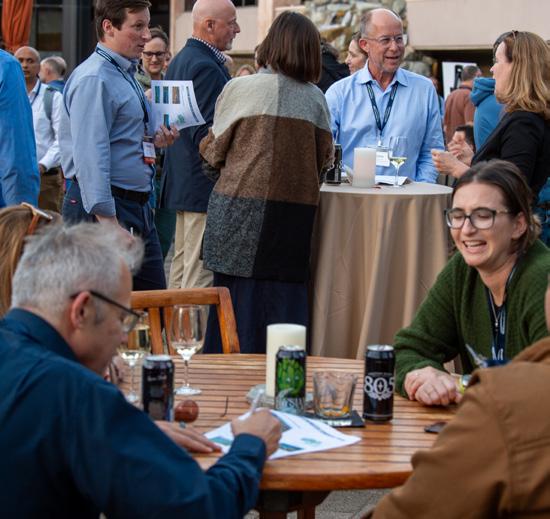
Words cannot fully describe the transformative experience of the 2024 Western Groundwater Congress (WGC). The Groundwater Resources Association (GRA) of California produced an outstanding event! For three magical days, over 330 attendees gathered in the picturesque mountains of Tahoe, surrounded by a radiant energy that inspired open discussions, forward-thinking ideas, and lasting relationships. This year’s WGC was enriched by a record number of technical sessions, panels, workshops, and networking events, and was a testament to the shared passion and dedication of our groundwater community.
The Congress began with a powerful and reflective introduction by Herman Fillmore, the Cultural and Language Resources Director for the Washoe Tribe of Nevada and California. He grounded our discussions by highlighting the significance of the ancestral lands of the Washoe people, emphasizing the profound connection between the land and water that sustains us all. Fillmore's heartfelt remarks reminded us that while land often defines places, water is the unifying element that connects and "grounds" us. This inspiring opening set the stage for the conference, encouraging attendees to reflect on the importance of honoring the land and its stewards while fostering meaningful dialogue about water sustainability.
The 2024 WGC was nothing short of spectacular. With more than 60 exhibitors and sponsors, the event was brimming with opportunities to explore cutting-edge technologies, innovative ideas, and impactful collaborations. This year’s agenda featured an impressive array of technical sessions, workshops, and panels, covering diverse topics such as groundwater sustainability through SGMA, climate change adaptation, and advanced modeling techniques.
Among the many firsts this year were the introduction of poster pitches and a highly anticipated field trip. Poster pitches offered presenters the opportunity to briefly share their research and invite attendees for deeper engagement during the poster session. The feedback was overwhelmingly positive and made the poster session more impactful. The field trip, hosted by the Olympic Valley Public Utility District, offered participants an inside look at the complex hydrogeology of the Olympic Valley and was a resounding success. Additionally, the Welcome Cup of Joe provided newcomers with a warm introduction, while the Darcy Dash morning hike and the evening receptions offered attendees unique ways to connect in the stunning Tahoe setting
The venue itself added to the magic. Nestled in the mountains, the setting provided a serene and inspiring backdrop for discussions and networking. From the Silent Disco under the stars to trivia nights, and wine blackjack, the balance of professional engagement and lighthearted fun made this year’s WGC an unforgettable experience.

The highlight of the Congress was undoubtedly the keynote panel on digital transformation. In my opening speech, I emphasized the need for evolution and growth, urging us to ask the important questions: Why do we do what we do, and for what purpose? Reflecting on the billions of years of evolution that led to this moment, I shared my belief that our impact and connections define our existence.
"The reason I am a big advocate for AI and digital transformation is because I personally believe it is our evolutionary responsibility to create a greater consciousness— one that has access to all the data, knows everything, and makes the best decisions based on the available data at that time. And hopefully, we free up more time for us to focus on what really matters: people and our community."
The keynote panel was comprised of a group of esteemed experts and leaders, with unique perspectives from water utilities, the agricultural sector, hardware technology, and artificial intelligence. Each panelist shared their unique insights, showcasing practical applications and the transformative potential of digital tools in addressing challenges like climate change and resource management.
The success of this year’s WGC was a collective achievement. I am deeply grateful to GRA’s leadership for trusting me to guide this incredible event and to the sponsors and exhibitors whose support made it possible. The contributions of our planning committee, track chairs, and co-chairs were invaluable in shaping the technical direction of the Congress.
Special thanks to the volunteers and staff who worked tirelessly behind the scenes. Their dedication ensured that every detail, from the welcoming session for newcomers to the culminating field trip, ran seamlessly. I also want to recognize the hard work of our DEI (Diversity, Equity, and Inclusion) and student engagement leaders, whose efforts made the Congress more inclusive and engaging than ever before.
As we left the mountains, we carried with us not only new knowledge and connections but also a renewed sense of purpose. The challenges we face as groundwater professionals are immense, but gatherings like the WGC remind us of the power of collaboration and innovation.
To all who answered the call of the mountains and joined us at the 2024 WGC, thank you. Your passion, ideas, and camaraderie made this event possible, and I am already looking forward to seeing what we will accomplish together in the coming years.
Until next time, let us continue to evolve, grow, and protect the precious resources that sustain us all. When the mountains called us this year, we answered and will continue the discussions next year along the San Diego beaches.


PROVIDING INNOVATIVE SOLUTIONS FOR MANAGING OUR CRITICAL UNDERGROUND WATER
Related Services
Managed Aquifer Recharge
Hydrogeologic Feasibility Studies
Subsidence Risk Evaluations
Water Resources Modeling
Stormwater Management
PFAS Assessment & Remediation
Water Well Supply Design & Construction
Sustainable Groundwater Management
Groundwater Quality Assessment & Mitigation




For over three decades, EKI has delivered comprehensive environmental and water resources engineering solutions across the U.S., earning trust through quality and ingenuity.
• Over 90% of our projects come from referrals and returning clients.
• Eight offices across six states.
• Expert team of engineers, hydrogeologists, and scientists.
• Full-spectrum environmental, engineering, and water resources services.
• Known for responsiveness, creativity, and exceptional results.

by Chris Bonds - DWR, Sacramento Branch Member at Large
GeoH2OMysteryPix is a fun addition to HydroVisions that started in Fall 2022. The idea is simple; I share some questions, some cool supporting geology and/or water resources photo(s) along with a hint, and readers email in their guesses.
In a future issue of HydroVisions, I will share the answer(s) along with some brief background/historical information about the photos and acknowledge the first person(s) to email me the correct answer(s).
GRA looks forward to your enthusiastic participation in GeoH2OMysteryPix.
SUMMER 2024 ANSWERS

What is this? Where is it Located?
Hint: A unique West Coast facility.
Congratulations to Don Ashton, Sr. Project Manager, Apex Companies, LLC for providing the following correct response to the Summer 2024 GeoH2OMysteryPix questions:
“Your GeoH2OMysteryPix is of the Barge Lock at the Sacramento Harbor where the shipping channel connects to the main Sacramento River.”
Background/History: The Stone Lock Facility, historically known as the William G. Stone Locks Facility, is a navigational lock facility built by the U.S. Army Corps of Engineers (USACE) in 1961 as part of the Deep-Water Ship Channel Project, authorized by the River and Harbor Act of
1946. The Facility was named after William G. Stone who was instrumental in persuading the USACE to study the navigation project, which eventually was constructed. The Sacramento Deep Water Ship Channel Project connects the Pacific Ocean to the Sacramento River, consisting of a deep-water ship channel, the Port of West Sacramento, a barge canal, a bascule bridge, and two sector gates forming a lock chamber (the Stone Lock Facility). The Deep Water Ship Channel Project consists of a 40-mile-long deep-water ship channel beginning at the head of the Suisun Bay near Collinsville, California, continuing north to the Port of West Sacramento, and then eastwardly through a barge canal and lock chamber, connecting to the Sacramento River.

The Stone Lock Facility is the most northeastern portion of the Deep Water Ship Channel Project and contains the navigational lock. Although the two sector gates are no longer operated for navigational purposes, the lock chamber was historically used for raising and lowering water levels so barges and other watercraft could pass between the Sacramento River and the Barge Canal. Although the Stone Lock Facility was federally decommissioned in 2000, it includes a removable flood wall feature, that when in place, provides flood protection from the Sacramento River during high-water events. In 2020, the City of West Sacramento completed a historical significance evaluation of the Stone Lock Facility that confirmed its eligibility for registration as a historical resource and property.
The Stone Lock Facility presents an opportunity to be preserved as a physical representation of its historically significant past, while becoming a regional attraction as part of the Stone Lock Plaza, an envisioned sub-area of the City’s future Central Park.
References:
ArcGIS 2022. Stone Lock Plaza Story Map. September 29: https://storymaps.arcgis.com/stories/756f490224724950b9372f91c90f6b37
2022. City of West Sacramento and West Sacramento Historical Society Archives.


What is this? Where is it Located? Hint: A historic California landmark. Think you know What this is and Where it is Located? Email your guesses to Chris Bonds at goldbondwater@gmail.com

by John Karachewski, PhD
Amboy Crater in the eastern Mojave Desert was designated a National Natural Landmark in 1973 for its visual and geological significance. Amboy Crater is part of the Mojave Trails National Monument and lies about halfway between Barstow and Needles along the Historic Route 66 National Trails Highway. Amboy Crater is a cinder cone in one of the youngest volcanic fields in the United States. Views from the crater rim include lava flows, eolian deposits, alluvial fans, Bristol Dry Lake (upper right), and Bristol Mountains.
Amboy Crater consists of basaltic cinders and lava flows that have been dated at 79±5 ka with cosmogenic 36Cl methods. One hypothesis suggests that the cinder cone and lava flows erupted during a short period, perhaps on the order of decades. Both aa and pahoehoe lava flows cover about 28 square miles around Amboy Crater. The lava flows issued from the breached western base of the cinder cone. The rocks at Amboy Crater appear to have been deposited on playa deposits of Bristol Lake. However, cores from the Bristol Lake consist of large amounts of gypsum and salt which suggest ephemeral playas or short-lived shallow lakes.
The 3-mile round-trip hike to and around the crater rim takes about 2 to 3 hours and is best undertaken in the winter or early spring. Desert wildflowers can start to bloom in late January, depending on winter rains. In contrast, summer hiking is discouraged as temperatures often exceed 100°F. Remember to carry plenty of water.
Photographed by John A. Karachewski, PhD, on November 4, 2022. The approximate GPS coordinates of the photograph are 34.544799° and -115.789463°. Additional information about the geology of Amboy Crater is available at: Geology Underfoot in Southern California and USGS Surficial geologic map of the Amboy 30’ x 60’ quadrangle, San Bernardino County, California


With offices in Oakland, San Luis Obispo, Sacramento, and Monterey, we specialize in:
Water Resources Planning and Management
Groundwater Sustainability Plan Development and Implementation
Groundwater Modeling
Managed Aquifer Recharge
Hydrogeologic Investigations
Municipal Well Design
Regulatory Compliance


Ryan Alward is a Principal Hydrogeologist with INTERA who has spent the last 18 years focusing on California's water resources and supply projects. Ryan’s recent focus has been assisting GSA’s with SGMA implementation and supporting municipal water supply projects.
Chris Bonds is a Senior Engineering Geologist (Specialist) with the California Department of Water Resources (DWR) in Sacramento. Since 2001, he has been involved in a variety of statewide projects including groundwater exploration, management, monitoring, modeling, policy, research, and water transfers. Chris has over 31 years of professional work experience in the private and public sectors in California, Hawaii, and Alaska and is a Professional Geologist and Certified Hydrogeologist. He received two Geology degrees from California State Universities. Chris has been a member of GRAC since 2010, a Sacramento Branch Officer since 2017, and has presented at numerous GRAC events since 2004.
Erik Cadaret is an Associate Geologist with West Yost Associates and joined the GRA Board of Directors in 2021. Erik’s role with West Yost is to support various groundwater technical projects for clients within the state of California, management of a GSA in northern California, and support business development efforts to engage new clients. What Erik loves the most about his job is the interpersonal interaction with clients to help find creative solutions to meet their needs. Erik loves being a part of GRA because it provides an outlet to collaborate with some of the greatest minds in groundwater. Erik also loves to geek out on techy, innovative ideas that may significantly benefit the water industry in achieving sustainable groundwater for all.
Pete Dennehy, PG, CHG, is a senior hydrogeologist at Montgomery & Associates. He specializes in hydrogeologic investigations for groundwater resource management. He focuses on implementing groundwater sustainability plans including filling monitoring data gaps, projecting future groundwater conditions and subsidence with a range of likely scenarios, and preparing reports evaluating progress towards achieving sustainability goals.
Trey Driscoll, PG, CHG, is the Managing California Director of Water Resources & Supply for INTERA. We provide stewardship and innovation to state and local water agencies for a sustainable tomorrow focused on water planning, supply development, recharge (ASR and MAR) and decision-support. Trey enjoys collaborating with fellow GRA members to help shape the future of water resources in California.
Julia Ekstrom is a Senior Environmental Scientist supervising the Water Justice Team at the California Department of Water Resources. Her programs include tool and indicator development for local drought planning, a statewide interagency drought task force, and local assistance programs.
John Karachewski, PhD, retired recently from the California-EPA in Berkeley after serving as geologist for many years in the Geological Support Branch of the Permitting & Corrective Action Division for Hazardous Waste Management. John has conducted geology and environmental projects from Colorado to Alaska to Midway Island and throughout California. He leads numerous geology field trips for the Field Institute and also enjoys teaching at Diablo Valley College. John enjoys photographing landscapes during the magic light of sunrise and sunset. Since 2009, John has written quarterly photo essays for Hydrovisions.
Christy Swindling Kennedy, PE, PG, CHG, is a hydrogeologist, water resources engineer, and strategy lead for Woodard & Curran. She has served in numerous roles such as engineering, operations, people leadership, and was the CMO for RMC Water & Environment. She has over 20 years in the consulting engineering business focused on water management and resiliency. With her technical background in hydrogeology and water resources engineering coupled with her business development expertise, she serves as an advisor to a water industry-focused accelerator and two venture funds.
Hugo A. Loaiciga, Ph.D., P.E., B.C. WRE, P.H., holds a doctorate in Water Resources and Hydrology from UC Davis. He served as Water Commissioner for the City of Santa Barbara for six years before joining the Geography Department in 1988. Dr. Loaiciga received the 2002 Service to the Profession Award from ASCE and the Environmental and Water Resources Institute, and was named a Fellow of ASCE in 2007 for his contributions to water resources engineering. He is currently focused on projects related to groundwater, earthquake hazards, stormwater management, watershed management, land subsidence, and sustainable water/energy development.
Chin Man “Bill” Mok, PE, GE, PG, BC.WRE, is a Vice President, Principal Engineer and Geologist at GSI Environmental Inc. He specializes in integrated water resources management and optimization under uncertainty, high-resolution subsurface characterization, water system reliability, resilience, and vulnerability evaluation. He also holds adjunct faculty positions in academia and has been teaching courses on groundwater, engineering risk analysis, and applications of machine learning.
Sodavy Ou is an environmental scientist at West Yost focused on water resources with expertise in regulatory assessment and development of compliance strategies, compliance monitoring and reporting, and mitigation evaluation. She enjoys hiking and looking at pictures of baby animals during her time off.
Garrett Rapp is a Senior Engineer at West Yost, specializing in groundwater management, modeling, and managed aquifer recharge. He served as the Technical Program Chair for BSMAR18.
Sierra Ryan is the Water Resources Program Manager at the County of Santa Cruz. Her programs include overseeing the County’s drought response, drinking water program, groundwater sustainability program, fisheries management, and water quality lab.
Chad Taylor is the Vice President and Principal Hydrogeologist at Todd Groundwater specializing in groundwater supply development, management, and monitoring on all scales from individual property to basin wide.
Roohi Toosi, PE, is a Board Director and a member of several committees at GRA. Over the course of his career, Mr. Toosi has conducted and managed projects for utilities, school districts, municipalities, military bases, private developers, contractors, farmers, water districts, and large consulting firms.
Marcus Trotta is a Principal Hydrogeologist with Sonoma Water and serves as plan manager for the Santa Rosa Plain, Petaluma Valley and Sonoma Valley Groundwater Sustainability Agencies. In these roles he leads technical studies and monitoring of riverbank filtration facilities and basin-scale groundwater resource studies and management programs.