







The
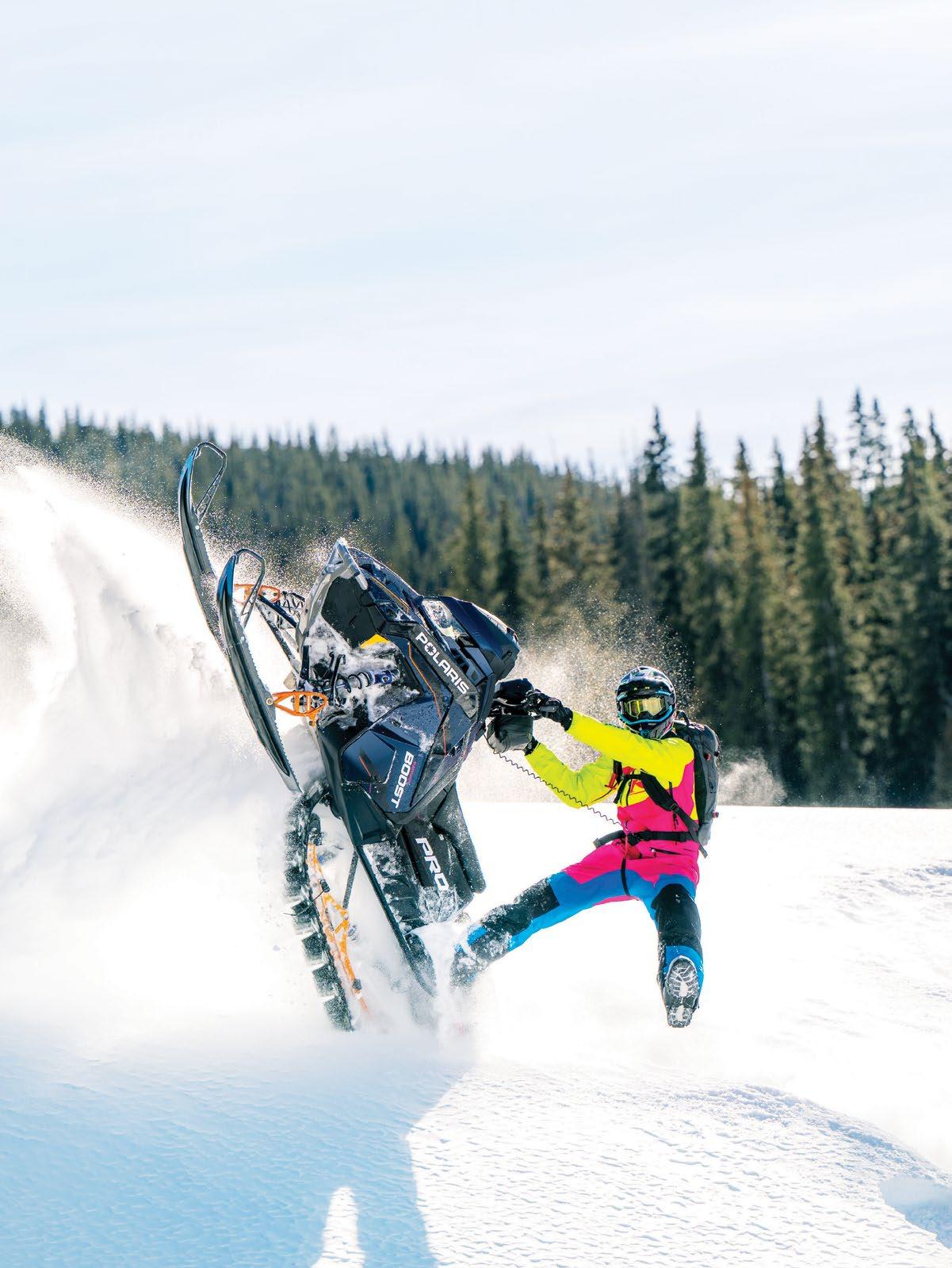
Rider: Scott Rhodes
Expert
Photo: Tristin Ironi for SnoWest
Photo: Tristin Ironi for SnoWest




The
Rider: Scott Rhodes
Expert








HARRIS PUBLISHING, INC.
Darryl W. Harris—Founder
Jason Harris—President
Chuck Harris—Vice President
Ryan Harris—Vice President
Clayton Ward—Treasurer
ADVERTISING AND EDITORIAL OFFICES
190 1st St. Idaho Falls, ID 83401
Phone: 208-524-7000 Fax: 208-522-5241


PUBLISHER / CONTENT DIRECTOR
RYAN HARRIS
EXECUTIVE
EDITOR - BRADY L. KAY
EMERITUS EDITOR - STEVE JANES
PHOTOGRAPHER - TRISTIN IRONI
SNOWEST TEST STAFF
RYAN HARRIS - STEVE JANES
RHETT CLARK - JUSTIN STEVENS
BRUCE KERBS - BROC GENTA NATE KING
ADVERTISING MANAGER - KEVIN MALCOM kevin@snowest.com
EDITORIAL STAFF - REBECCA BLACKSON
DESIGN - LAVON HORNE
IT DIRECTOR - CHUCK HARRIS
CONTROLLER - CLAYTON WARD
ACCOUNTING - JASON HARRIS
CIRCULATION - CHUCK HARRIS
WEB CONTENT CREATOR - KARCIN HARRIS
NEWSSTAND MANAGEMENT
ProCirc Retail Solutions Group
SnoWest Magazine is published 7 times per year by Harris Publishing, Inc.,
Copyright (c) 2026, Harris Publishing, Inc. All rights reserved. Reproduction in whole or in part, without written permission, is strictly prohibited.
SUBSCRIPTION SERVICES/ ADDRESS CHANGE:
190 1st St. Idaho Falls, ID 83401 208-524-7000 or www.SnoWest.com
SUBSCRIPTION RATES:
SnoWest, $38.95 Print + Digital per year. $12.00 Digital only per year Back issues, when available, $5.00 each.
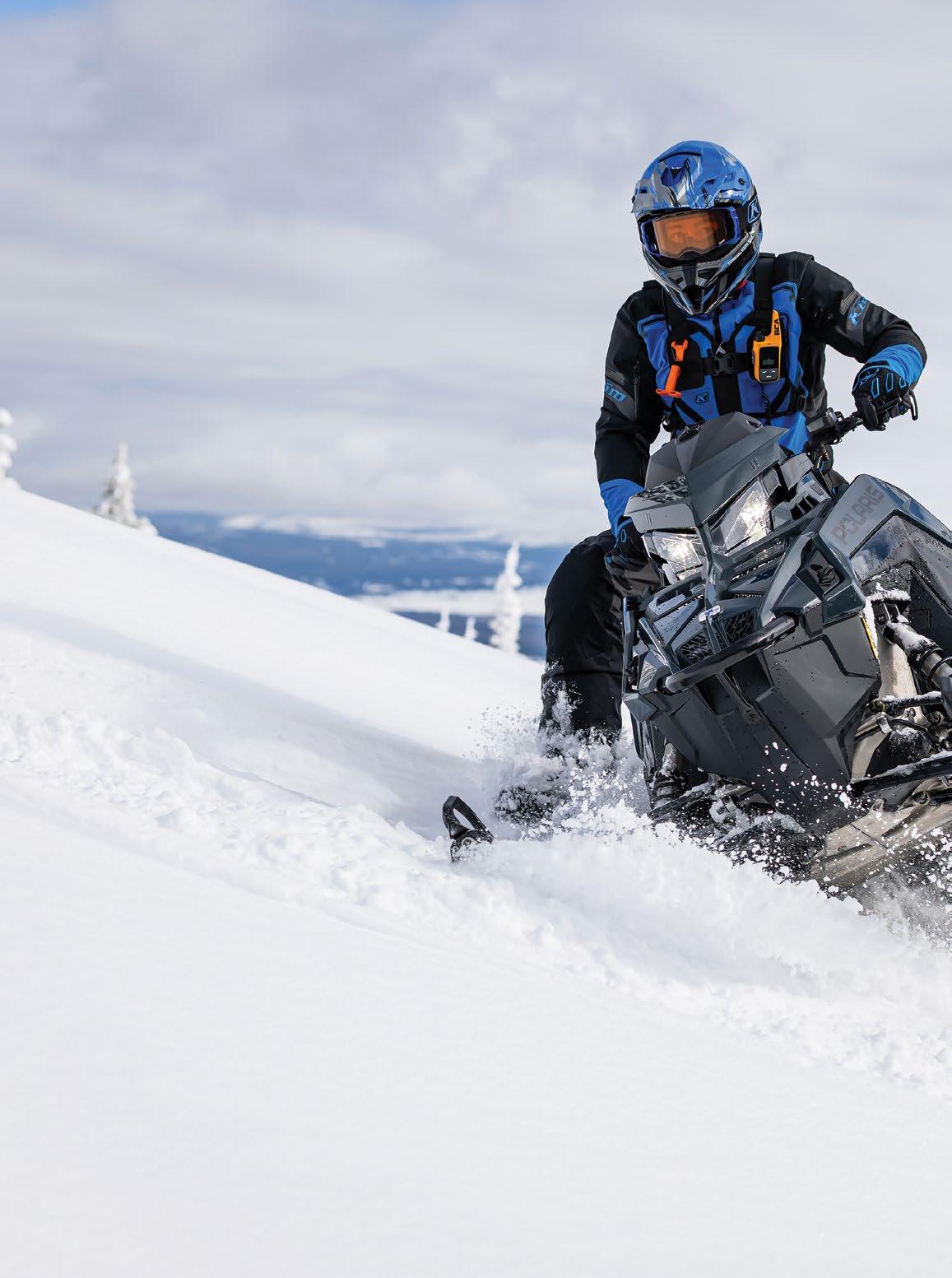
TRACK TECH HAS COME A LONG WAY IN THE LAST DECADE. AND IT’S OFTEN OVERLOOKED WITH ALL OF THE FOCUS ON POWERPLANTS AND OTHER AREAS OF THE SLEDS. OUR TEST STAFF DIVES IN AND TALKS ABOUT THE DIFFERENCES BETWEEN THE POLARIS SERIES 8 AND SERIES 9 RMK TRACKS IN THIS ISSUE.
RIDERS: JUSTIN STEVENS
TRISTIN IRONI FOR SNOWEST
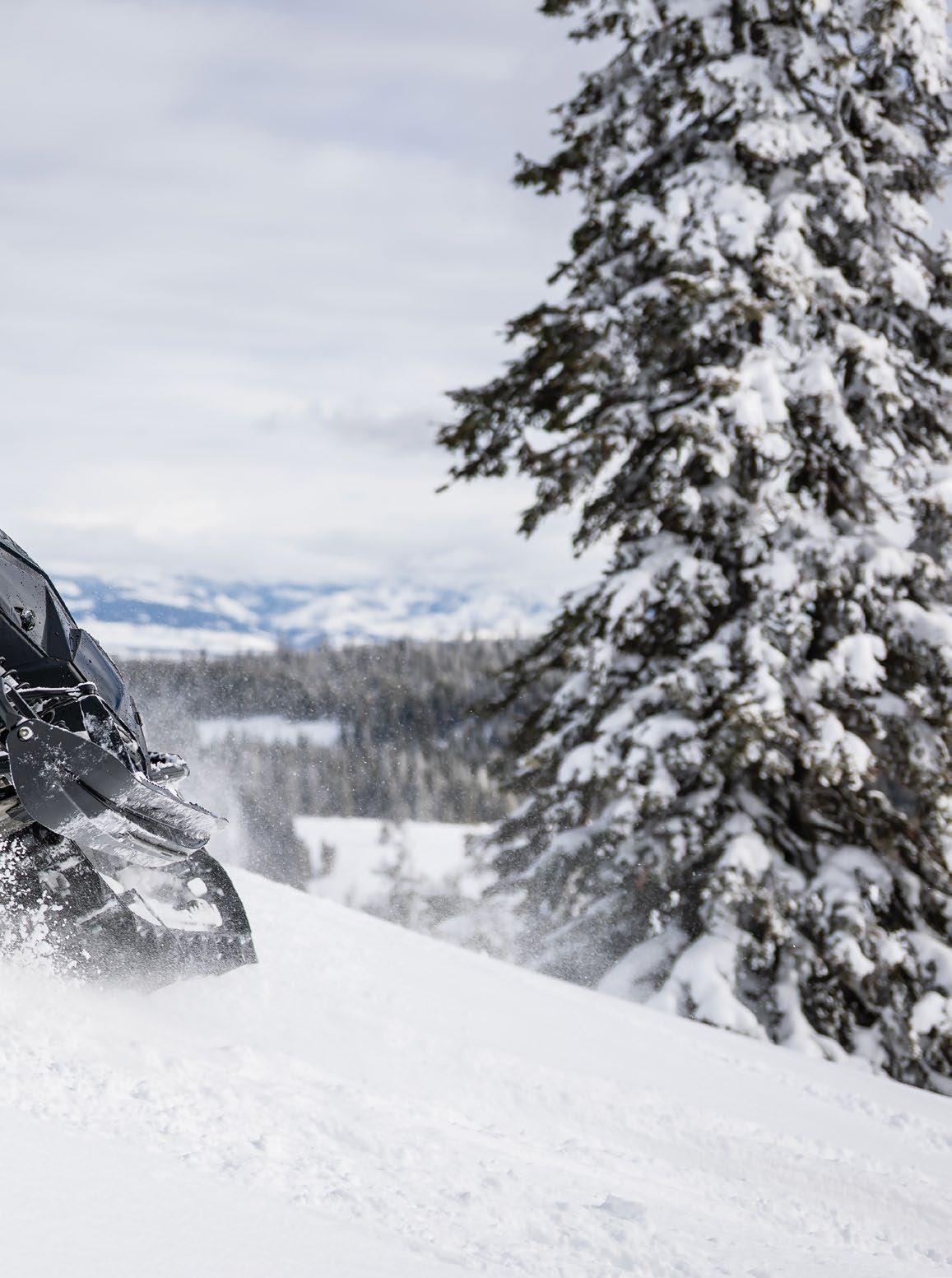
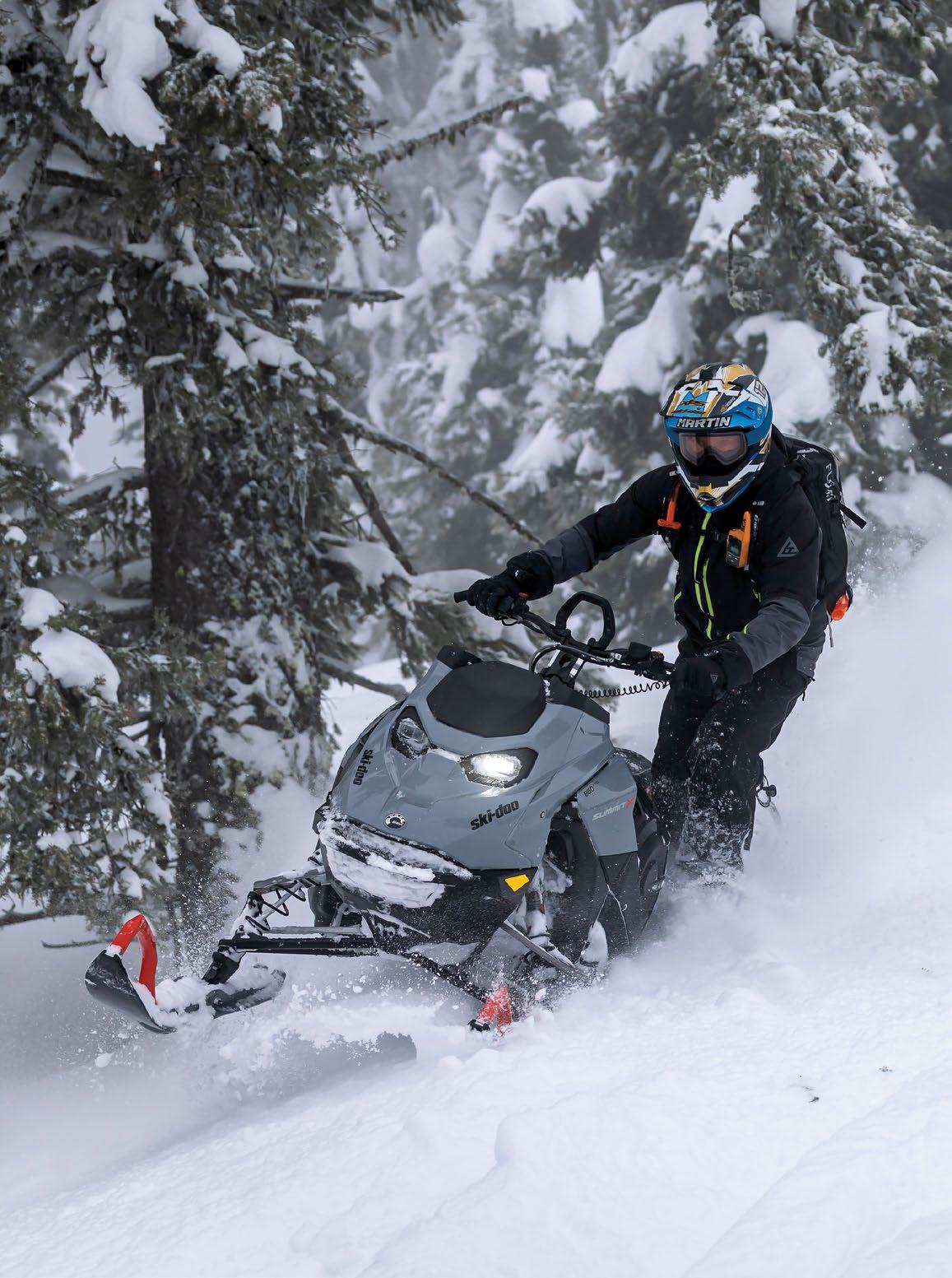
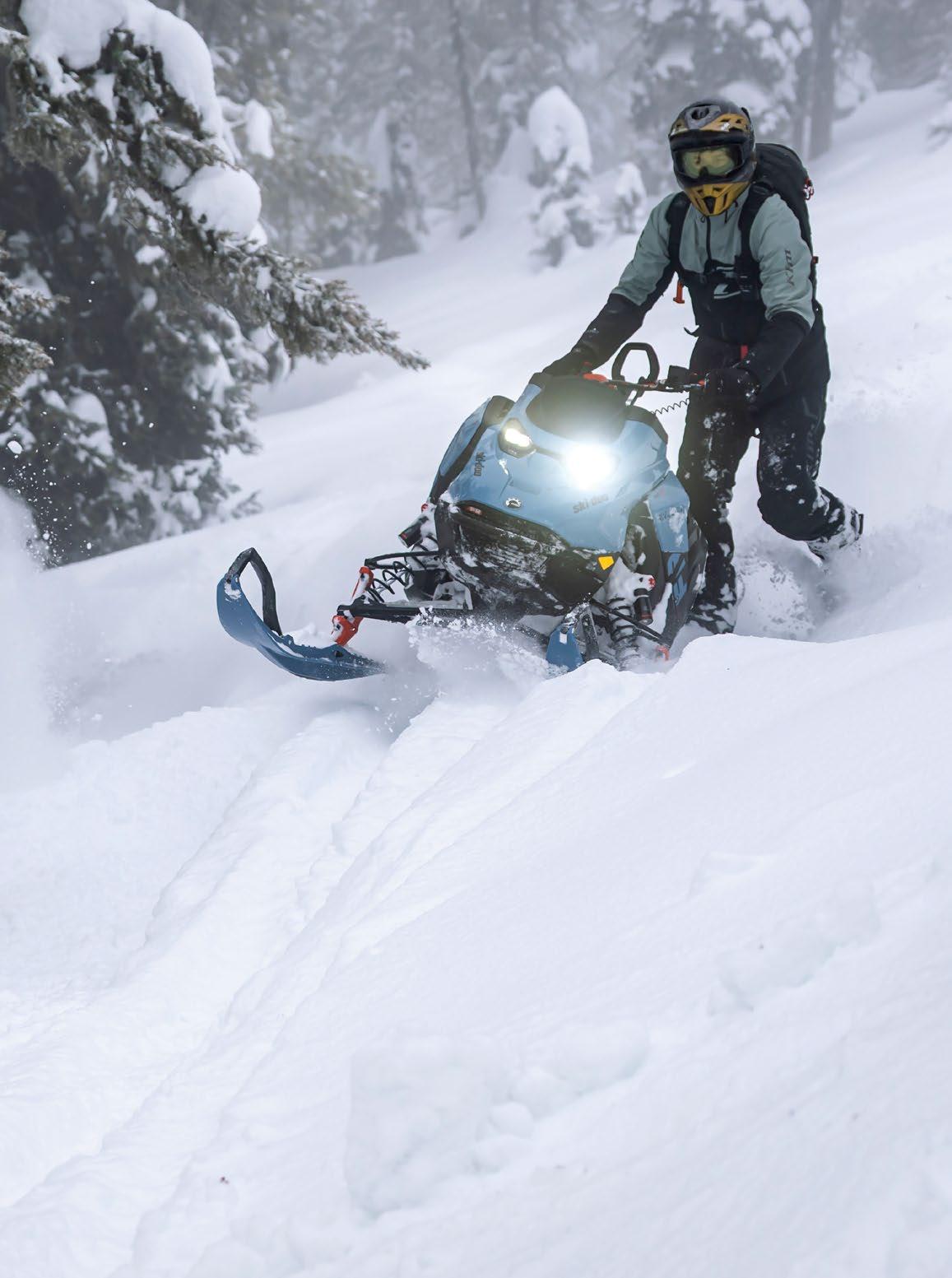
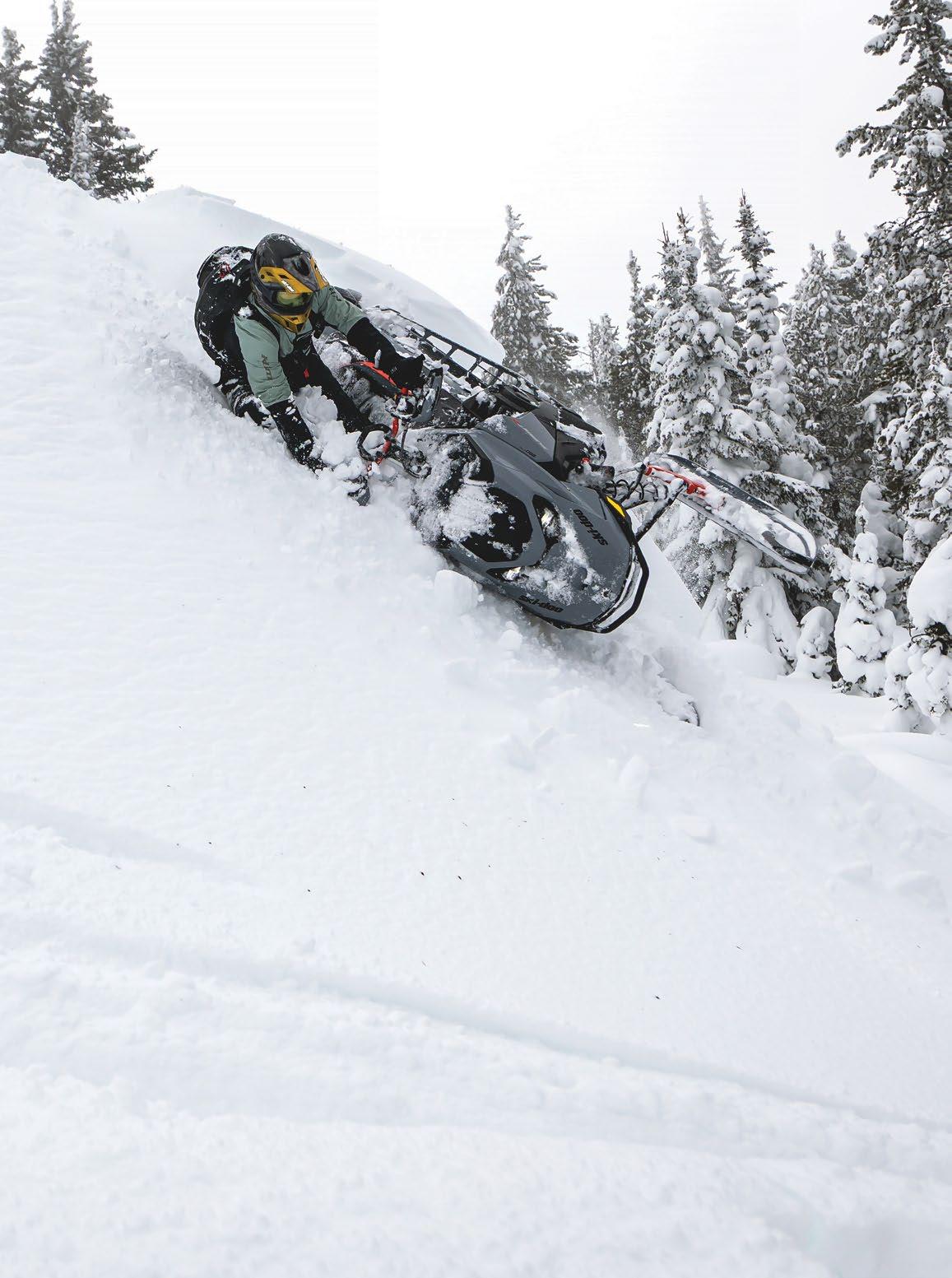
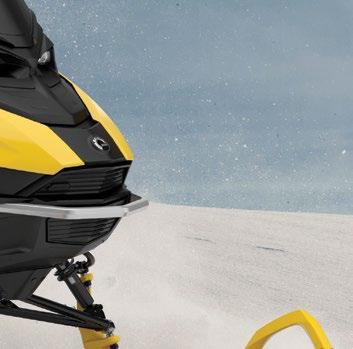
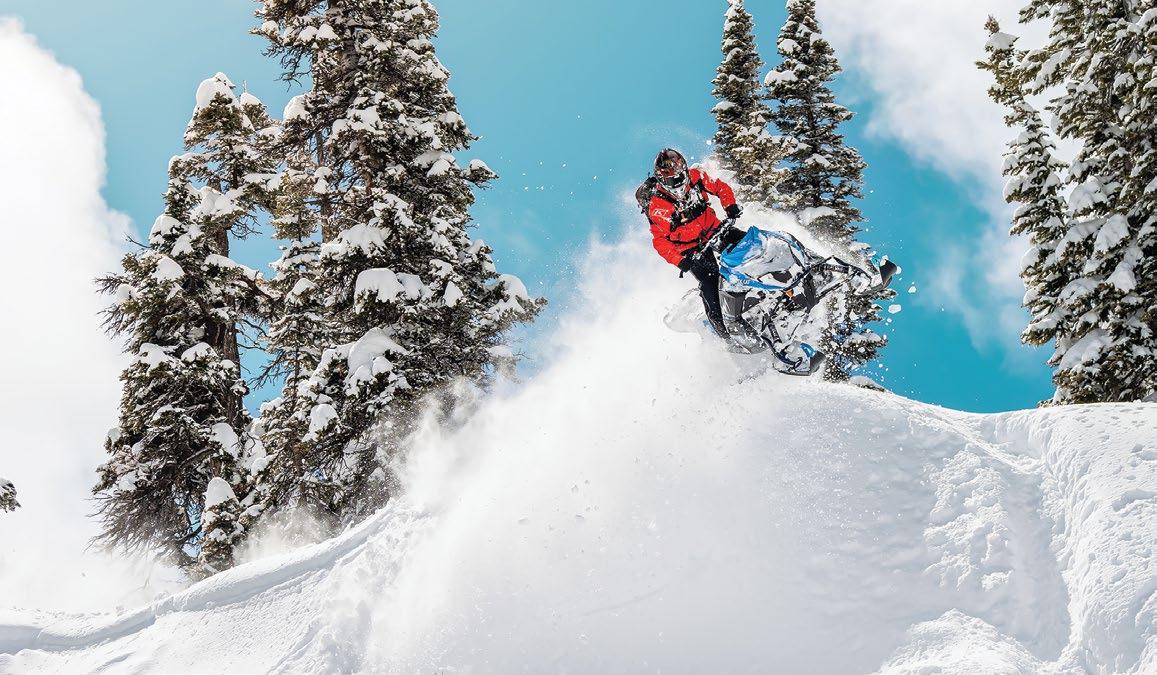
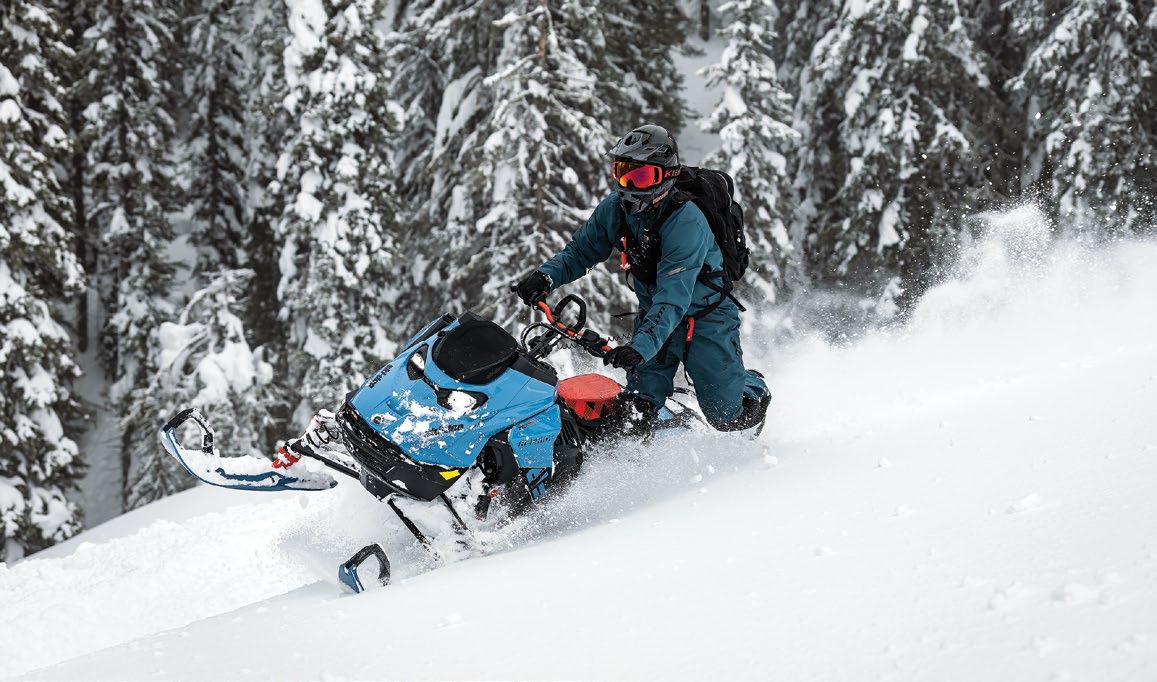
NEVER HAS THE RIDER’S CHOICE BEEN SO GREAT WHEN IT COMES TO SHOPPING MOUNTAIN SLEDS ESPECIALLY WITH THE 2026 SKI-DOO LINEUP. THE SUMMIT X, SUMMIT X WITH EXPERT PACKAGE (NOT PICTURED) AND THE FREERIDE ARE ALL CAPABLE BUT DISTINCTLY DIFFERENT DEEP-SNOW SLEDS.
BY STEVE JANES
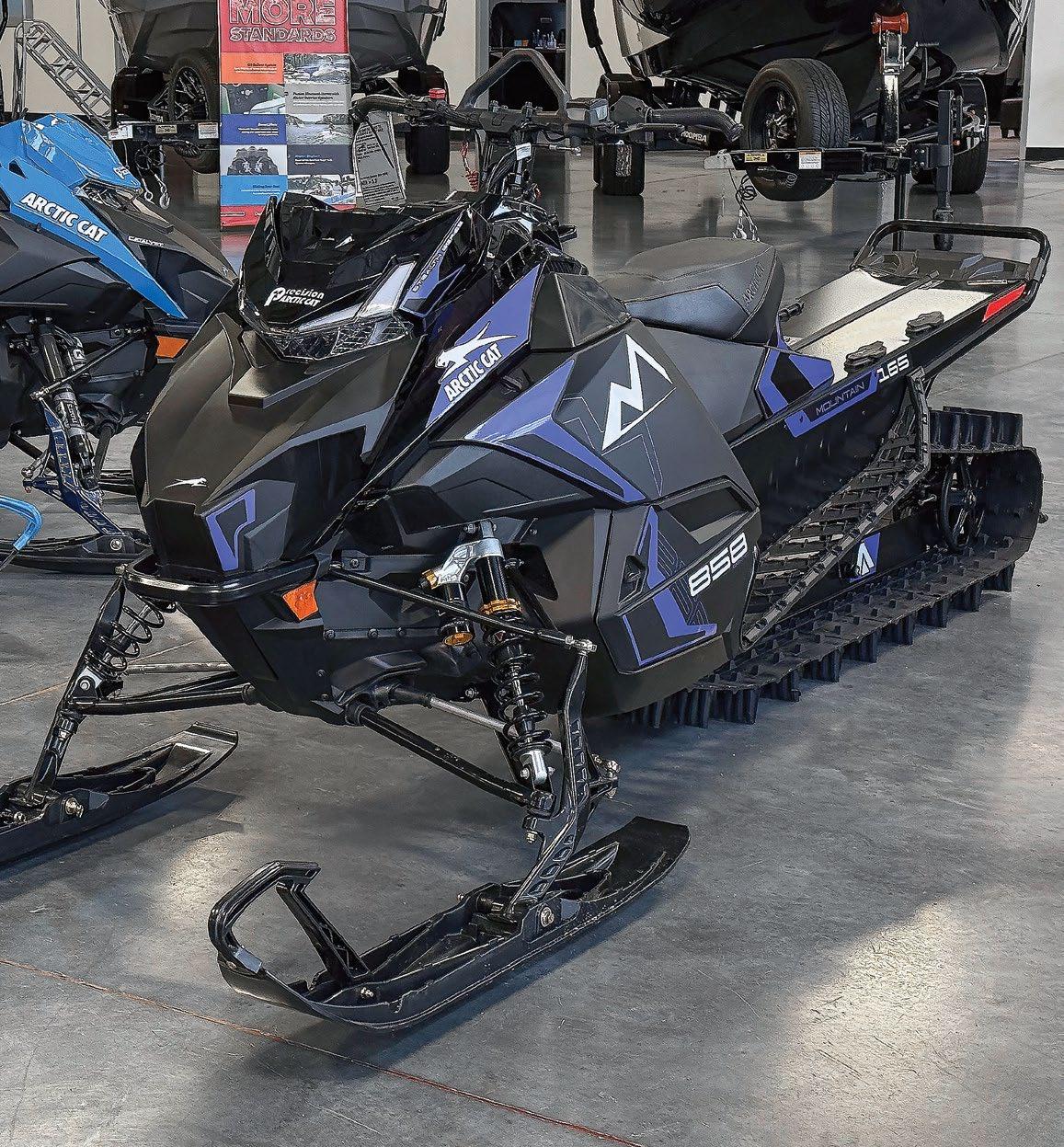
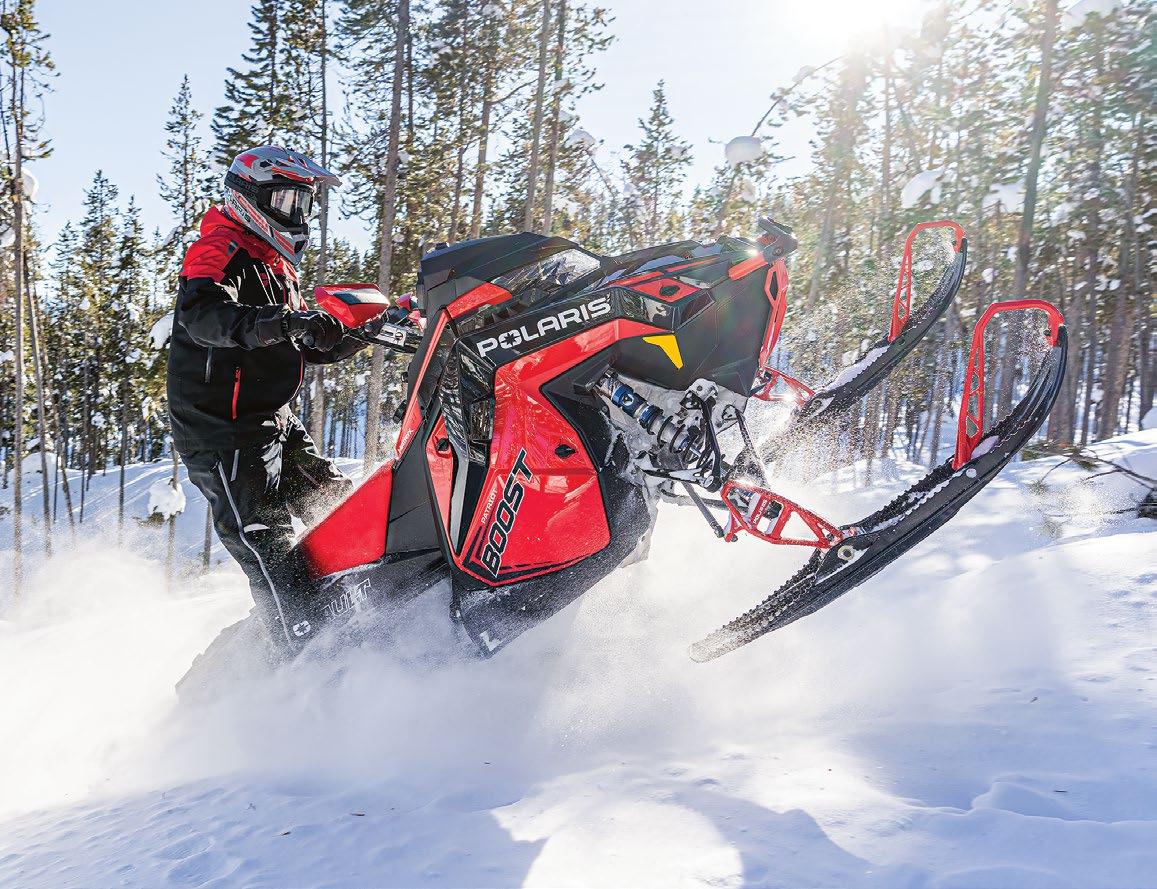
Somewhere between power and turbo power is a limited class of snowmobiles which feature awesome power—that’s the big bore engines of the Ski-Doo 850 E-TEC, Arctic Cat 858 and the Polaris 9R.
While Polaris, Ski-Doo and Lynx offer both 850 naturally-aspirated engines as well as turbo engines, Cat chose to go with the 858cc C-Tec2 engine and try to squeeze a little more bottom-end grunt to compete with the Polaris 899cc Patriot 9R engine
The M 858 may feel lighter as it churns out about 160 horsepower that hits hard and offers a broad powerband. The 9R delivers incredible torque on the bottom end and continues to build power throughout the powerband with its engine that sees
around 166 horsepower on dynos. The Rotax 850 E-TEC used in Ski-Doo Summits has been shown to dyno at 165 horsepower.
Cat is built on the Catalyst platform with the AWS 36 front suspension and the Alpha One Rear. Polaris has put the 9R on the Matryx Pro-Light chassis with the RMK React front end and either the Pro RMK or the Khaos rear skid. Ski-Doo has lightened its 2026 Summit X by up to 14 pounds with a new coilover skid and a bunch of changes and the Expert dropped up to 8 pounds with some big changes including the new S32 front end.
The M 858 offers three track options—the 154x2.6, 154x3 and 165x3 PowerClaw tracks. The 9R is available in four track configurations for the Pro RMK: 155x2.75 or 165x2.75 Series 8 tracks
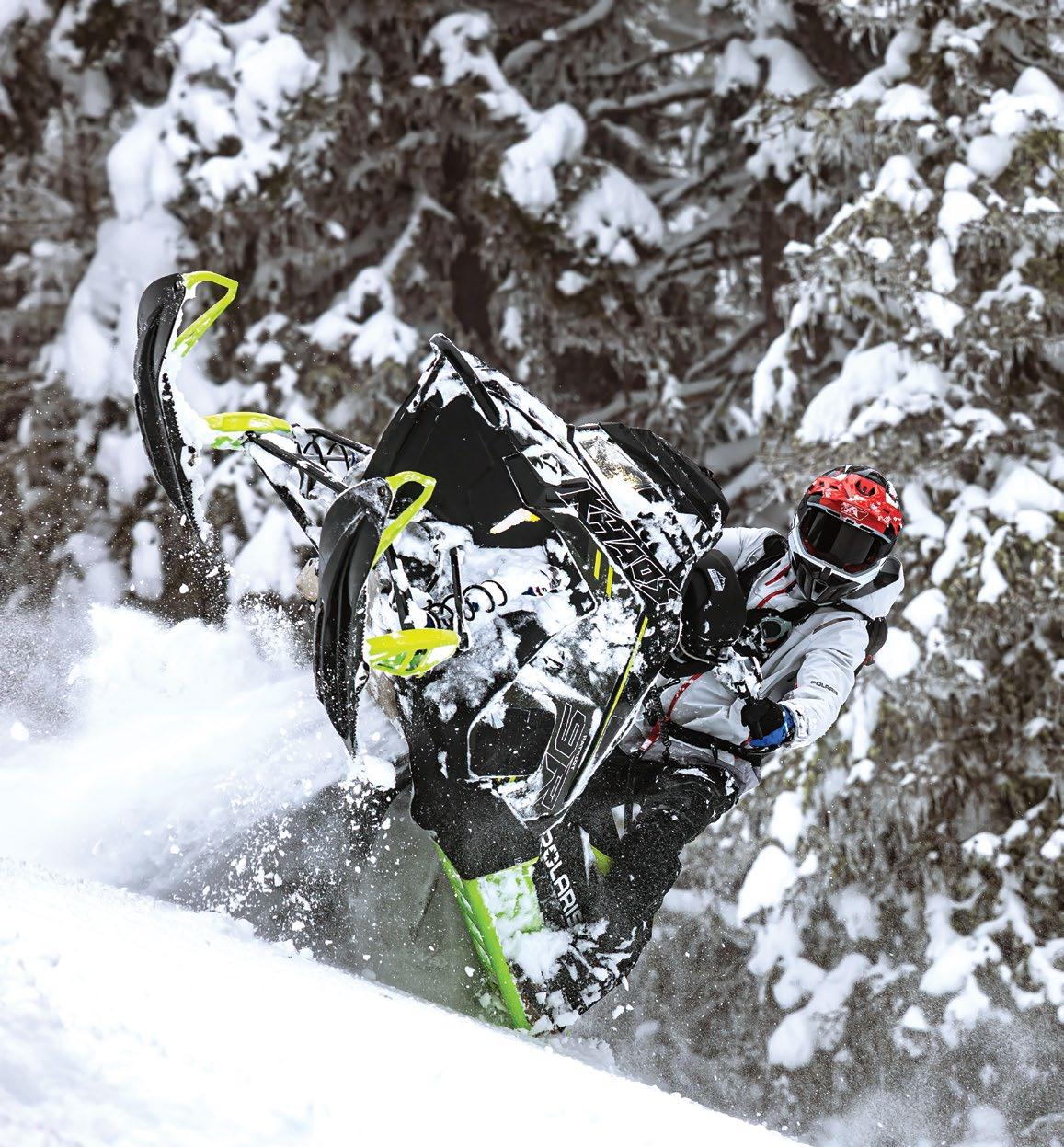
SCOTT RHODES
or 155x3.25 and 165x23.25 Series 9 tracks. The RMK Khaos model offers the same four mountain tracks plus the 146x2 Crossover and 146x2.6 Series 6 tracks. The Summits come 16-inch-wide tracks in 154 and 165 lengths with 2.5 or 3.0 lugs, depending on model. The Summit X track and the Expert track are uniquely different as well.
The RMK Khaos handles somewhat similarly to the M 858 with the lighter front end feel where the skis come up much faster giving these two sleds a more playful ride. The Pro RMK stays a little more grounded and predictable in steep terrain that will allow it to be much more under control in technical riding conditions. The Summit X has a very lively and playful feel with easy handling characteristics. The Summit Expert is more
of a precision machine, and has the narrowest ski stance of all with a 32-inch front end.
The M 858 comes in at a price tag ranging from $17,600 to $20,000. The 9R is priced between $19,000 and $23,000.
The Summit X comes in around $16,899 with SHOT starter system and the Summit Expert starts at $17,699 with SHOT. Both Summits are even less expensive without the SHOT starter but it’s worth the $600 add-on.
So if you’re looking for more bottom-end grunt and top-end performance but don’t want to invest in a factory turbo, either Summit 850, M 858 or 9R will take you to that next level without busting your budget.
MASON RUTLEDGE
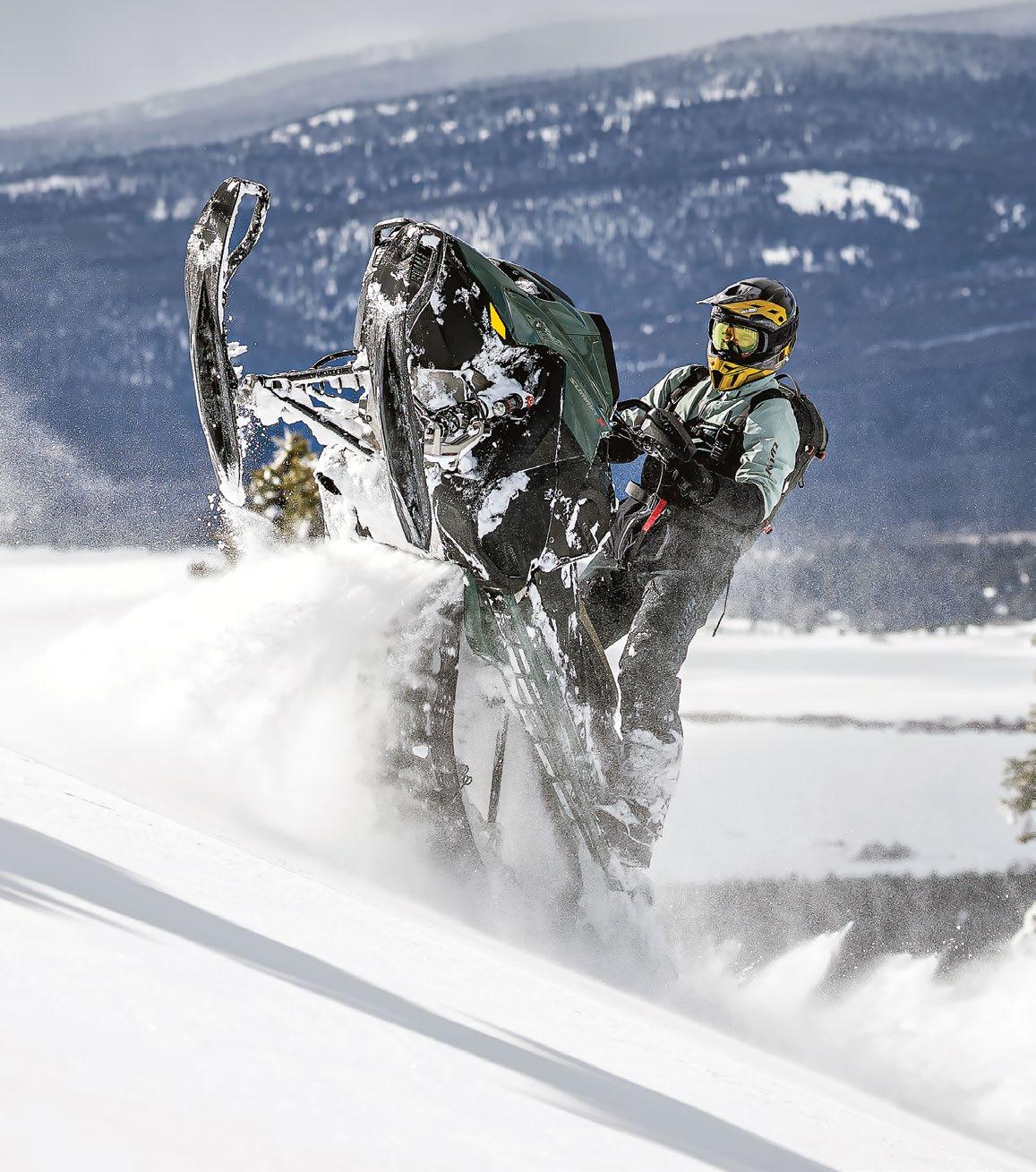
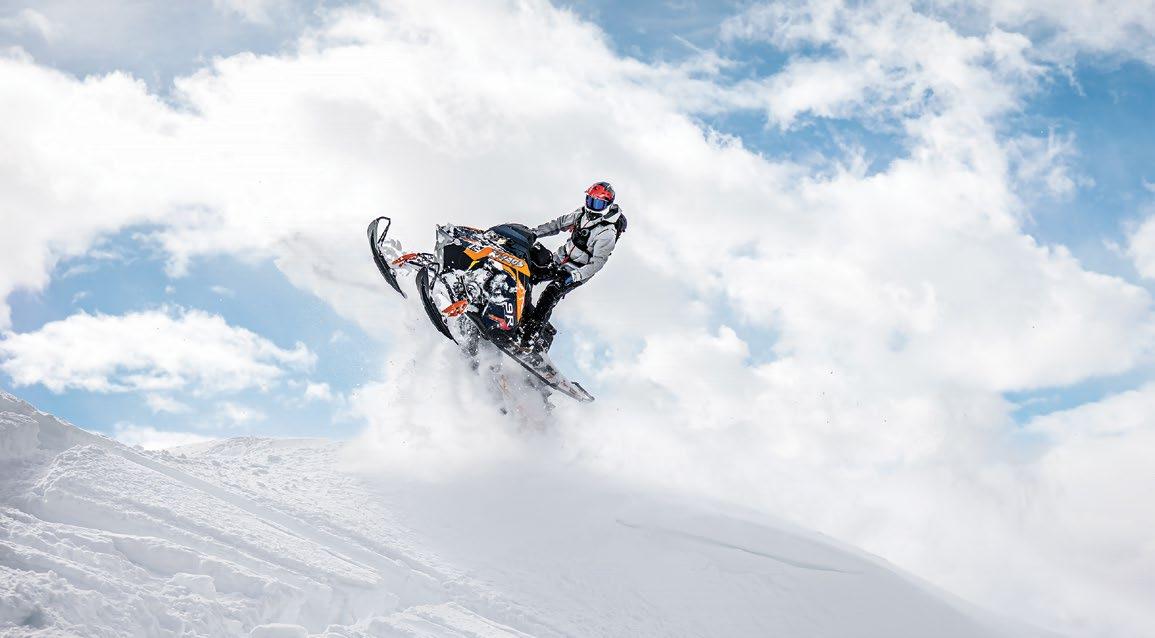
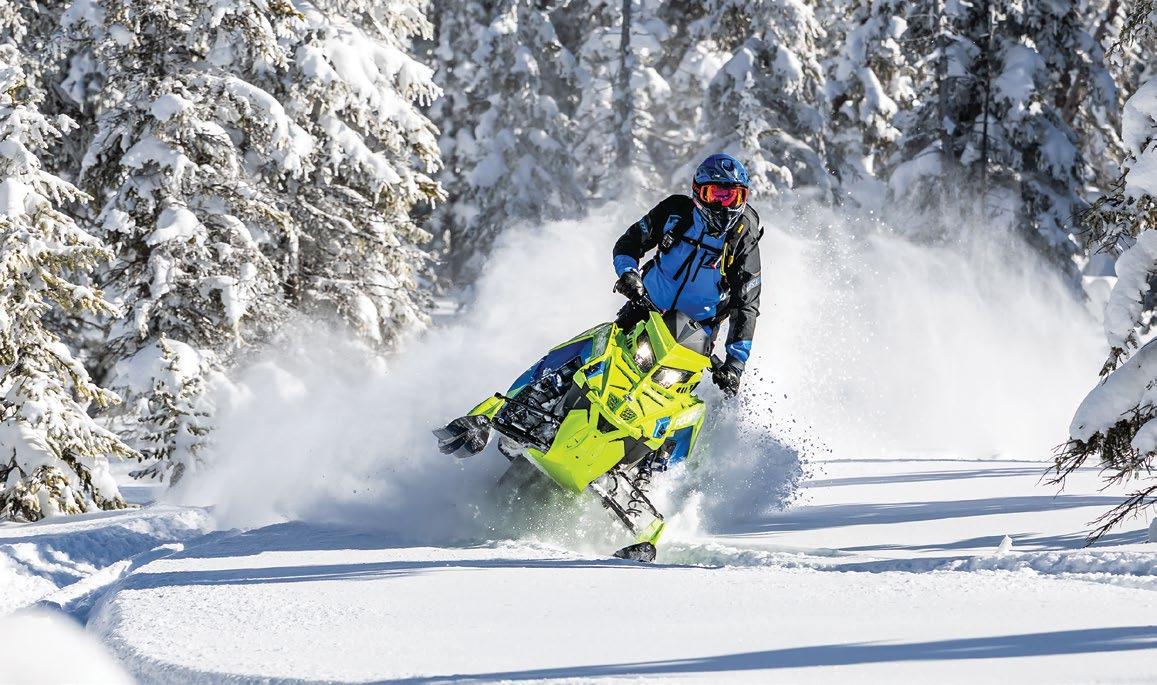
A LOOK AT WHAT THE SNOWEST TEST CREW HAD TO SAY ABOUT THE SUMMIT 850, 9R
Bruce Kerbs—The 9R just feels strong on the bottom end. When riding in trees, I would prefer the 9R over a turbo or naturally-aspirated 850. When it comes to real technical riding like on edges of cornices or through the creeks, it’s a hard choice between a big bore or a turbo. I think Cat engineers are all excited with the M 858. And the entire industry is excited for the enthusiasm that Cat’s bringing to the industry. Competitors tend to push each other to better meet the consumer’s needs and wants. It is healthy to have competi-
tion. And Cat did manage to lose about 7.5 pounds off the M 858 this season with an aluminum drive shaft, lightweight brake disc, and a little bit here and there. The Summit X has definitely improved a lot with the change in suspension, and the Expert probably maneuvers even better. The Expert has always been one of my favorite sleds. Ski-Doo has done a great job with consistent power and great clutches right out of the box.
snow, it’s nice to have the Pro 9R because it’s a little more grounded. The Khaos 9R wants to lift the skis a little bit more. The Pro is perhaps a little more predictable and easier to ride. However, for most riding conditions I still prefer the Khaos 9R over the Pro 9R. I have to admit I really like the Summit Expert. The way that it tracks down through the trees is super nimble. You can stay fairly rider neutral and make the turns.
Rhett Clark—For the conditions we’ve been riding in and what we’ve been doing, the 9R has been an awesome sled. It’s
got plenty of power, a great bottom end, and it feels lighter than the Boost. If you’re taking yourself up a nasty creek or on a steep sidehill the 9R is not going to wear you out. It’s easier to ride in those conditions where the Boost is heavier. The Boost has tons of power, but some of that power can wear you out. The naturally aspirated Summits work really well. They have a lot of power at the bottom end. I think Ski-Doo’s 850 E-TEC is one of the better engines. It packs a lot of power off the bottom and works very similar to the turbo.
Matt Entz—If I’m heading out with a group of newer riders, I’m taking a Polaris 9R RMK Khaos 155 with the 3.25 track. Since we will likely ride terrain that is more suitable for this group so they can ride safely and have fun, the 9R is the most fun to ride in my opinion in the least technical terrain. Sounds like a day for lots of wheelies and silly sled maneuvers.
Dave McClure—On technical rides my sled of choice is the M 858 Sno Pro 154x3. I like the 3-inch track because it’s lightweight and works amazing in the deep snow.
Tony Jenkins—The Summit X is lightweight and has great power. I would ride the Ski-Doo 850 Summit X 154 for a mix of technical and experienced mountain riding. d


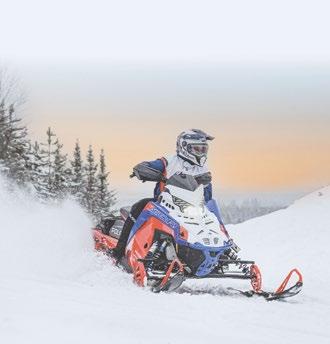





As winter sports enthusiasts, we eagerly await the snowy season for the adrenaline rush of snowmobiling. The feeling of the cold air rushing past, the sight of the unspoiled white landscapes—it’s a winter wonderland waiting to be discovered. Amidst the excitement and adventure, it’s essential to ensure that you’re properly protected with snowmobile insurance. Here are a few reasons why snowmobile insurance is a wise decision.
The most signi cant bene t of snowmobile insurance is the peace of mind it brings. Knowing that you’re covered in case of unexpected events allows you to fully immerse yourself in the winter experience. Focus on the breathtaking landscapes and the adrenaline rush of riding, without the nagging worry of potential nancial setbacks.
Your snowmobile is a valuable investment that deserves protection. With comprehensive and collision coverage, you can rest easy knowing that repair or replacement costs will be covered in the event of certain damage, theft, or accidents. Keep your ride in top condition without breaking the bank.
Be prepared for the unexpected Accidents can happen, even to the most experienced riders. Snowmobile insurance offers liability coverage, protecting you from the nancial implications of thirdparty injuries or property damage, up to speci ed limits. You can relax and have fun in your winter activities, whether riding on trails or exploring the backcountry, when you have the right protection.
Homeowners insurance may provide some coverage for your snowmobile, but it often has limitations and can have a more costly deductible. A dedicated snowmobile insurance policy ensures that you’re adequately covered speci c to your needs.
Policies can provide off-premises and permissive use, allowing you to con dently have friends and family drive your snowmobile occasionally. You also have the option to add minor operators as drivers, so you can rest easy knowing that you have the right protection if something goes wrong.
Since no two snowmobilers are alike, snowmobile insurance lets you choose your own coverage options. You can customize your policy to include things like accessory and custom parts/equipment coverage to provide protection if you’ve made enhancements or upgrades to your snowmobile. This way, you can be sure that your insurance plan matches your speci c needs.
Obtaining insurance coverage for your snowmobile is often a requirement from lenders if you have nanced its purchase. Not only does snowmobile insurance ful ll this obligation, but it also provides peace of mind by safeguarding your nancial interests.
Have fun in the winter with con dence, knowing that you have the proper coverage for your situation. Invest in snowmobile insurance and ensure that your thrilling escapades remain just that—thrilling, safe, and unforgettable. Let the snow-covered landscapes be your playground, and let insurance be your safety net.
Scan to get a quote in as little as 3 minutes
to learn more.
BY STEVE JANES
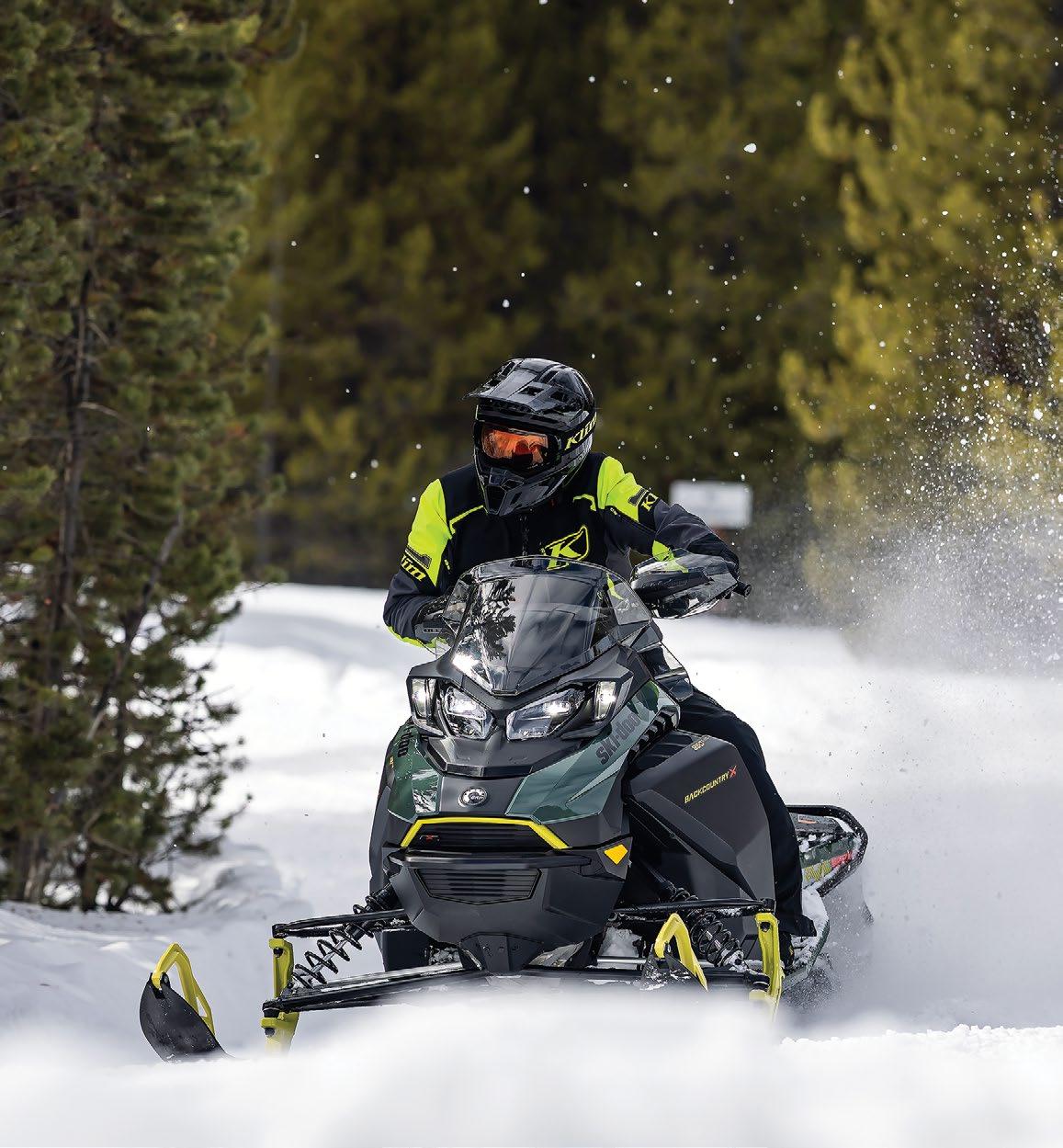
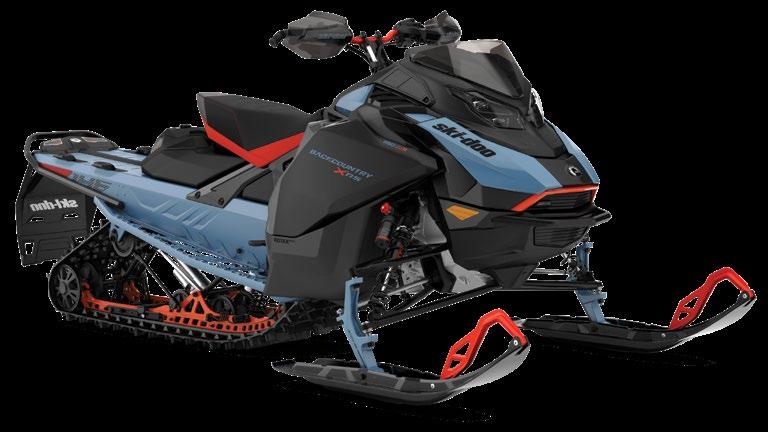
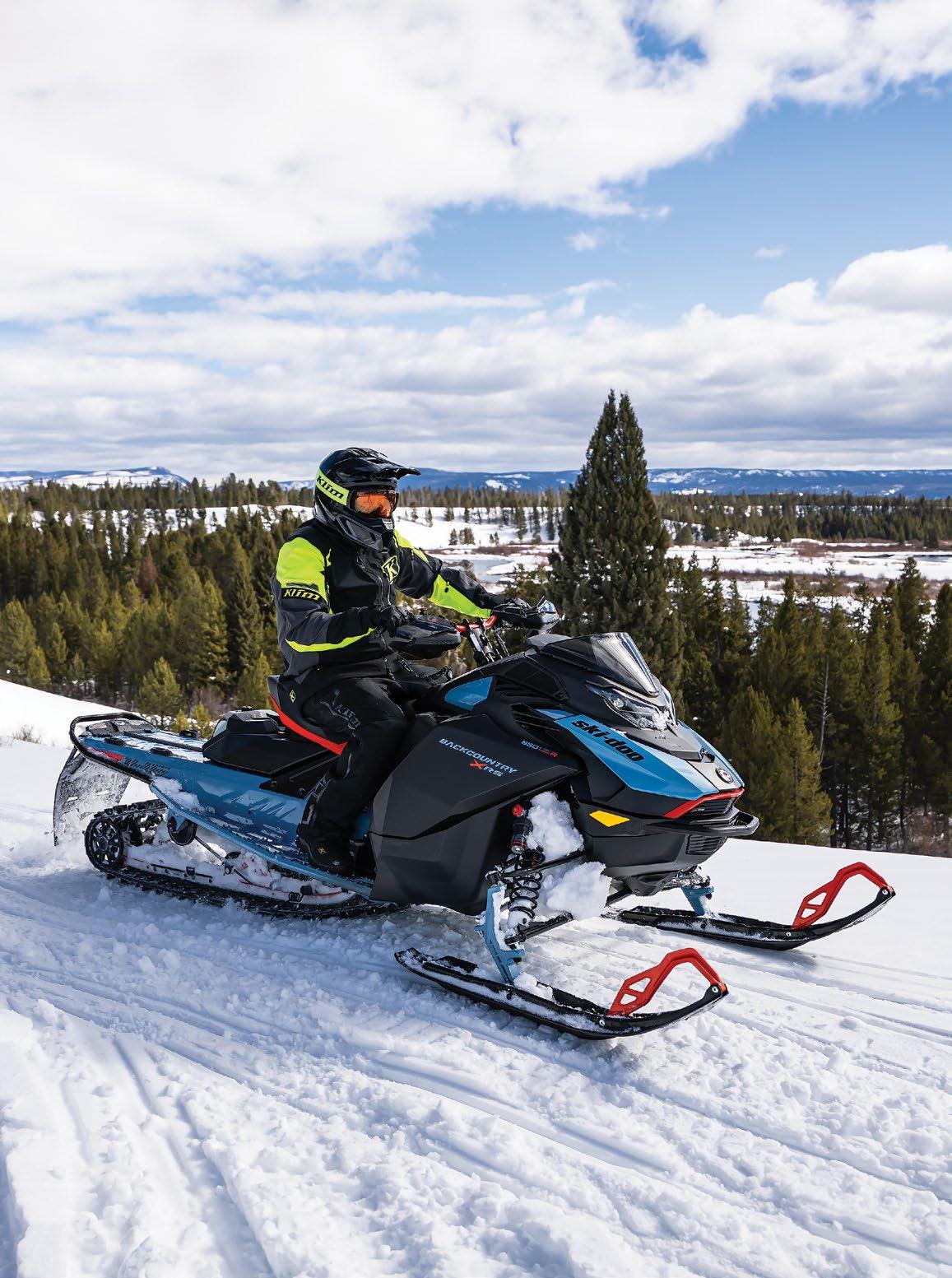
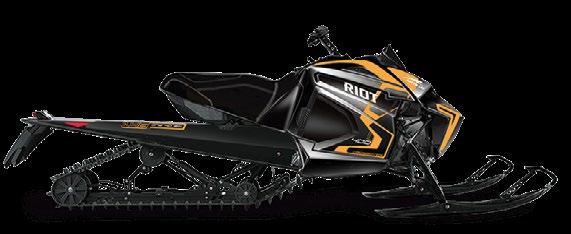
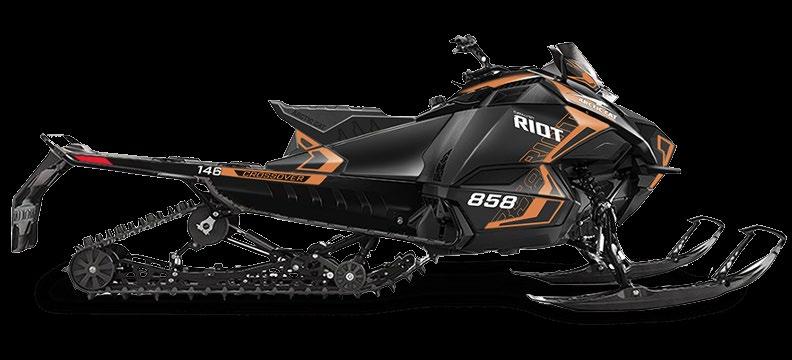
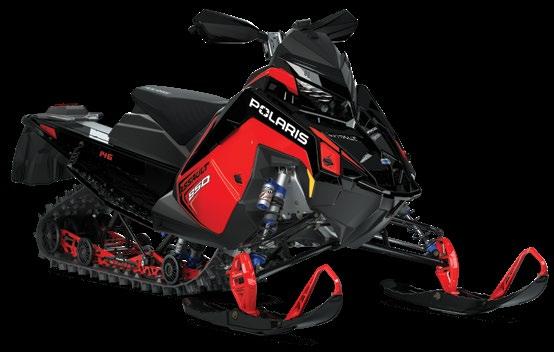
Three snowmobiles epitomize power and performance while turning big bumps and long drops into big boy playgrounds—the Arctic Cat RIOT 858, Polaris Switchback Assault 9R and the Ski-Doo Backcountry X-RS.
These performance machines are built specifically to pound terrain and to turn any cornice, mound or rough trail into features to attack for technical riding. Although these three models are capable of blasting through deep snow, their primary function is to seek out the kind of terrain where the rider’s imagination and skill level allow him to create the awesome twists, jumps and lines that are YouTube worthy.
The RIOT is back for 2026 and our exposure to it on snow
has been very limited, given the May changeover with Arctic Cat corporate. Our first take, however, is that the RIOT 858 with its different packages available in the Catalyst chassis will be light, quick and anxious to catch big air.
The RIOT features the 858 two-stroke C-Tec2 engine which will deliver awesome power and performance. This model is also available with the 600 twin C-Tec2 engine. When paired with the 146x1.75 Hurricane track, it will hook up hard and climb up out of the snow. The AC5S or Arctic Cat ATACshocks (depending on model) are performance-built and designed to absorb hard hits.
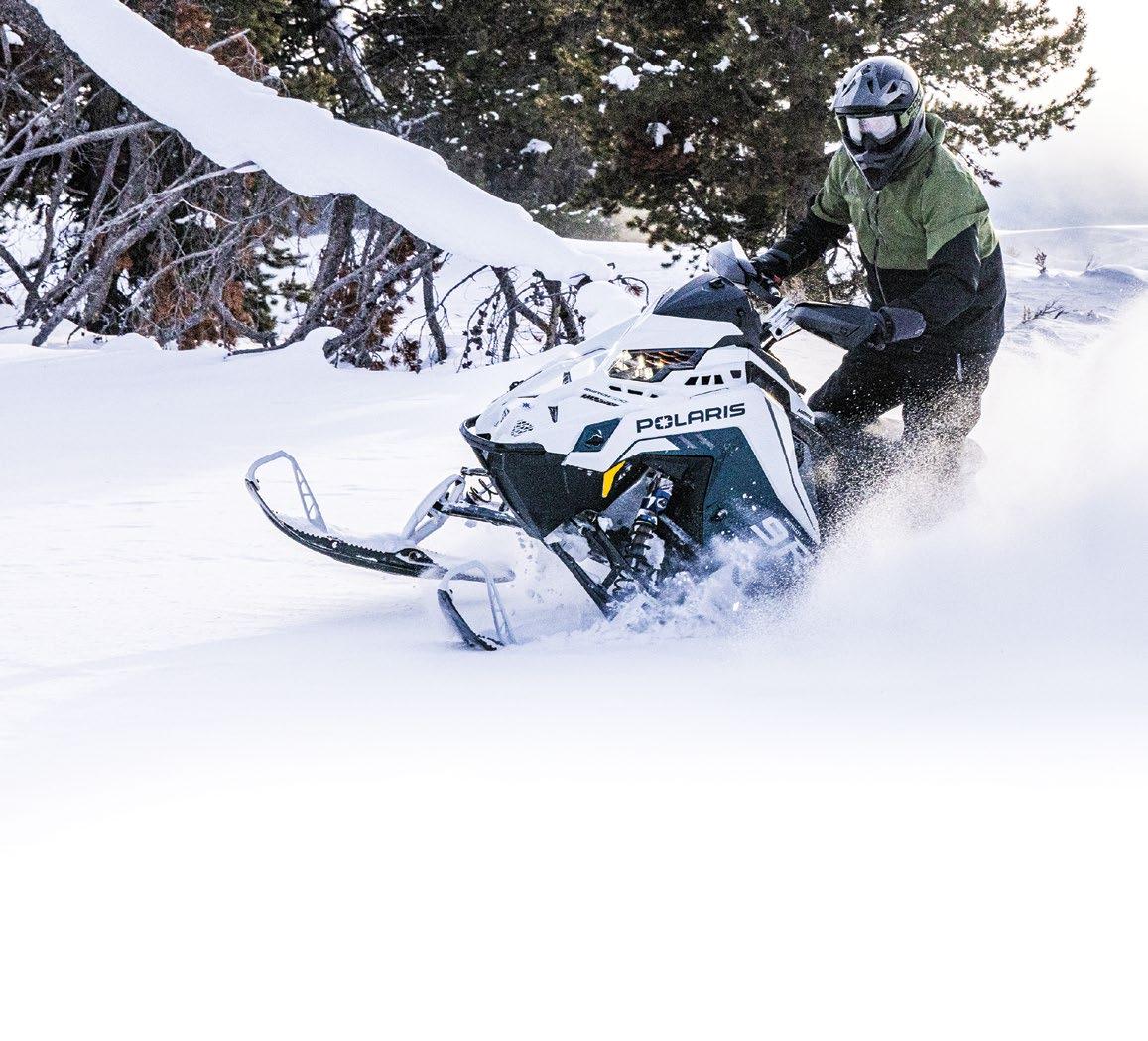
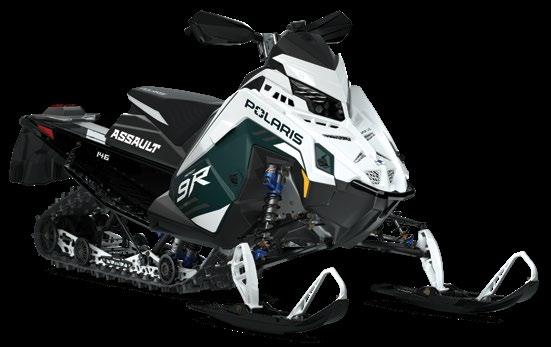
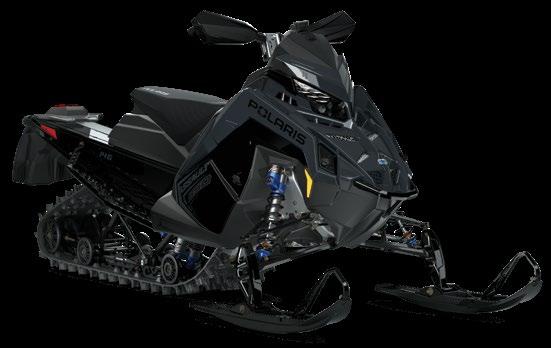
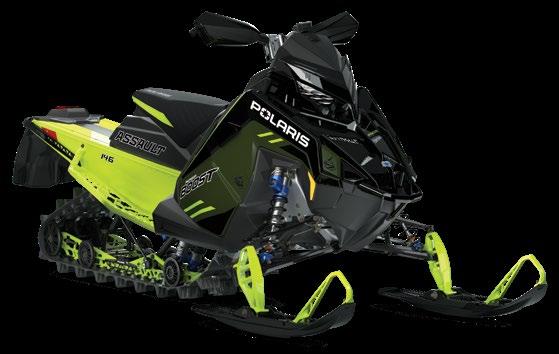
The Switchback Assault brings versatility to the snow. It
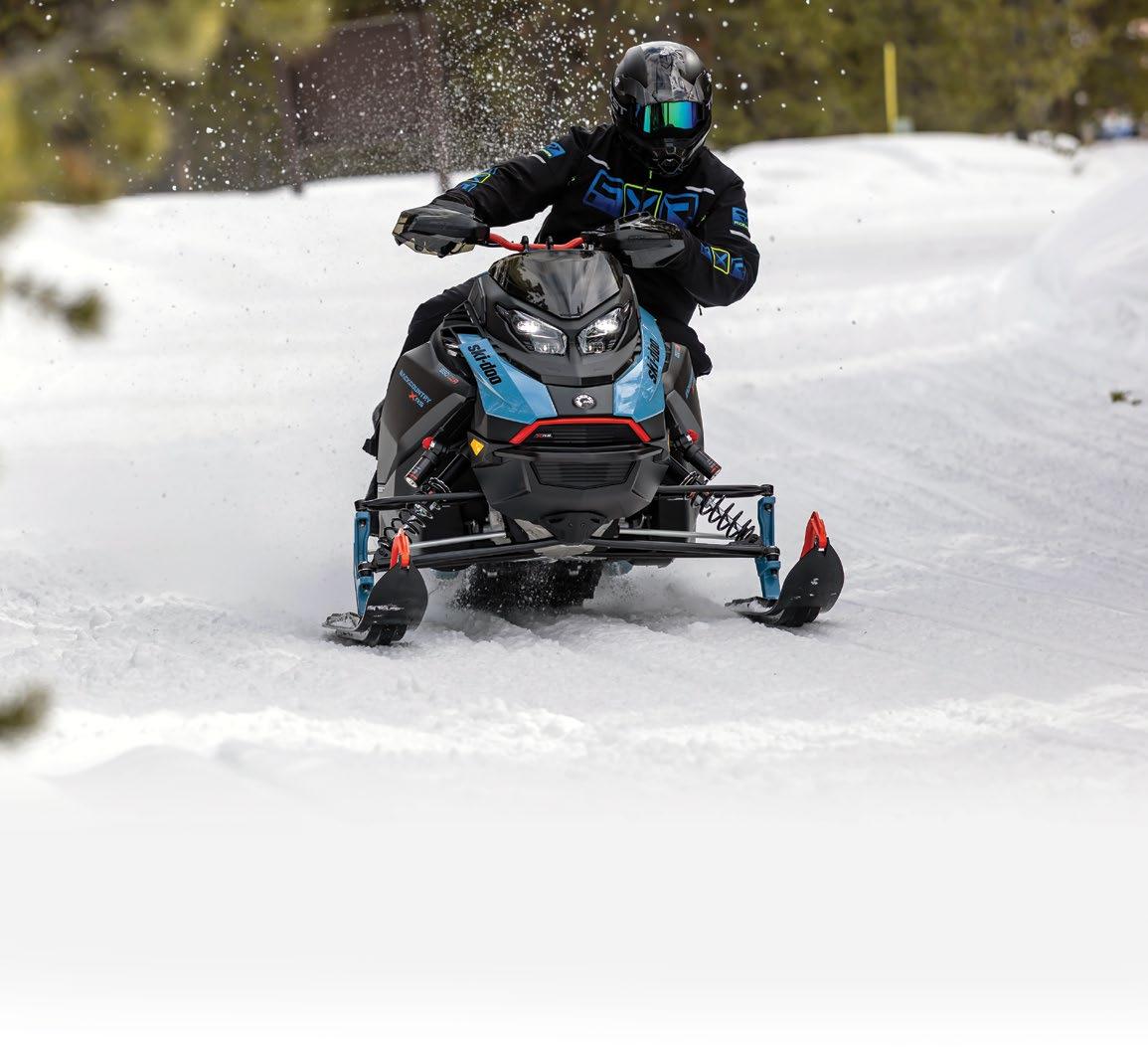
has a perfect balance of speed, trail performance and quick response. The 9R powerplant in the Crossover Matryx chassis with the Escape IFS adjustable front end will compete well against the HCX and X-RS.
The Assault offers the broadest variety of configurations, featuring three engine packages, two front end packages and four track packages, depending on engine and front end. You can dial in the package that best suits your riding style.
The Backcountry X-RS is also designed to offer a large variety of options to make it very customizable. If you go with the 850 E-TEC engine, you will have the least powerful of the three snowmobiles on the snow. However, if you go with the Turbo
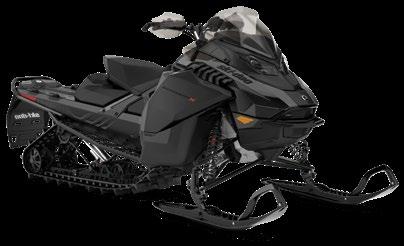
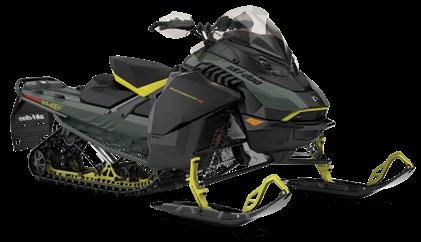
R, you will likely have the most powerful sled in the class.
Although there are several track options, the PowderMax 146x2 matches up with the 146 tracks on the Cat and Polaris.
The cMotion X rear suspension is designed for trail performance and durability for taking on the big bumps and hard crunches.
All three of these competitors tip the scales at around 500 pounds. The price range will vary from about $18,899 on the RIOT 858 with ATAC to just over $20,000 on the Assault 9R and up to $22,000 if you go to the Turbo R on the X-RS.
So, if tricks and technique in technical terrain is your cup of tea, these three crossover models should be on the top of your list. d


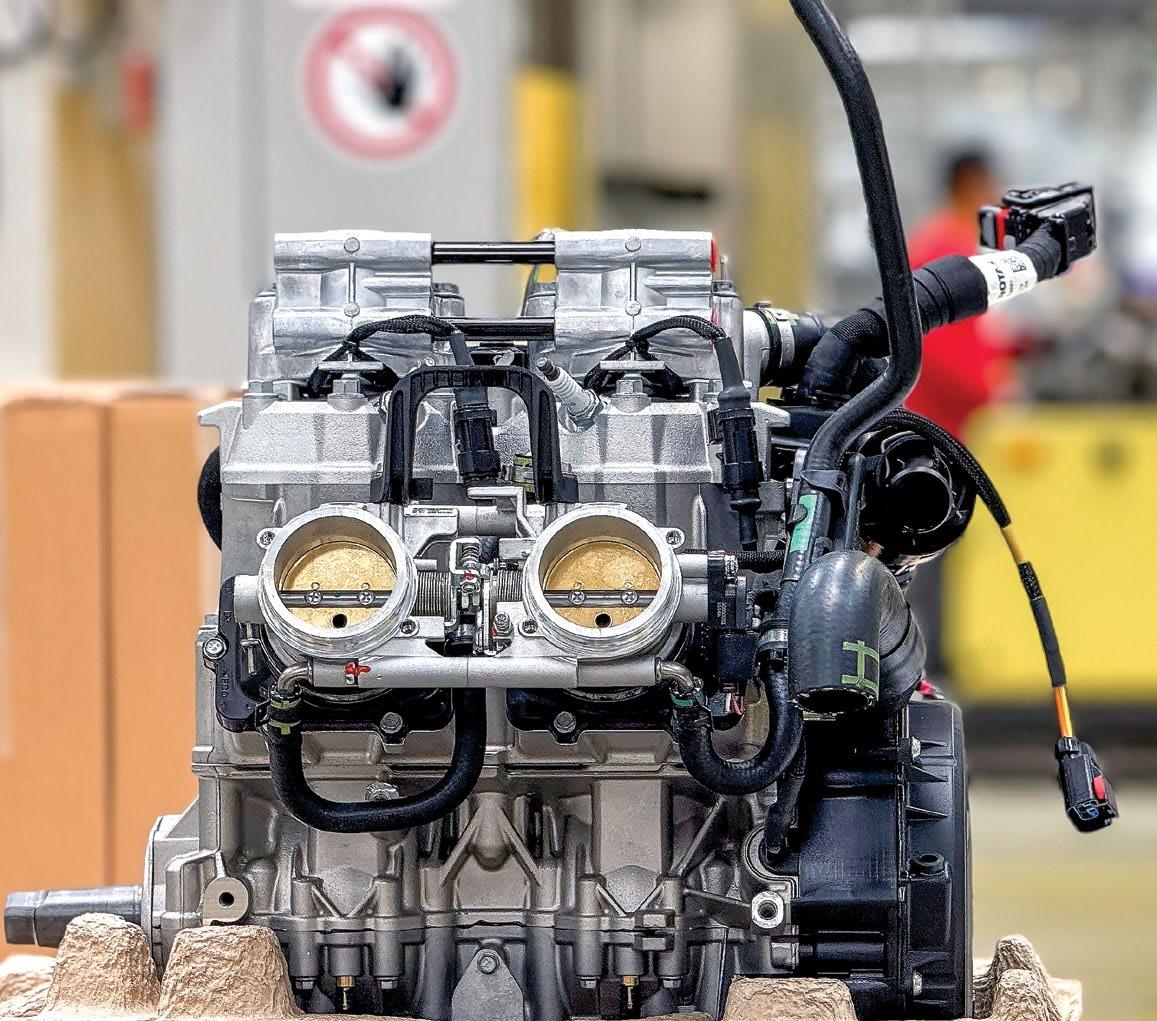
In mid-October, Ski-Doo invited us on a trip of a lifetime—a flight to Austria to spend two days touring (nearly) every corner of the ROTAX factory. Here’s what we learned.

Rotax headquarters and factory are located in Gunskirchen, Austria. A small town just north of the Austrian Alps surrounded by farms and fields. We flew into Munich, Germany, and drove two hours to the plant.
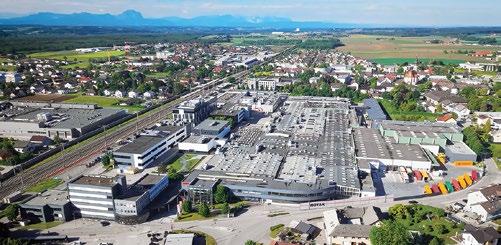
Rotax started in 1920 and first made engines for Ski-Doo snowmobiles in 1962. Bombardier acquired Rotax in 1970. Bombardier then sold its recreational product division (BRP) in 2003. Rotax built its 10-millionth engine in 2021. In 2023, it launched its first electric power unit, which now powers Can Am motorcycles and ATVs, and Ski-Doo’s electric snowmobile for rental operations. Rotax employs roughly 1,500 employees in Austria.
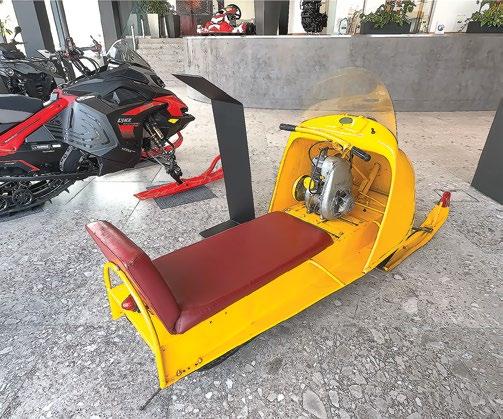
In the Rotax lobby, we found the first-ever Rotax-powered Ski-Doo snowmobile. It has a 150 single 2-stroke engine!
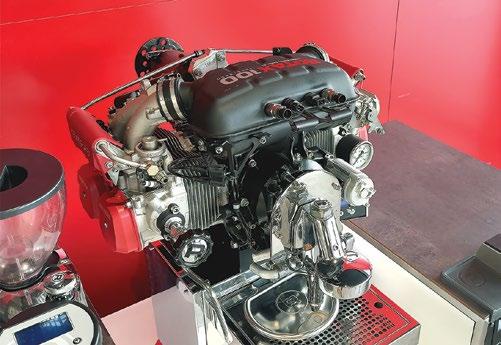
Also in the lobby, we found this espresso machine made from a Rotax engine.
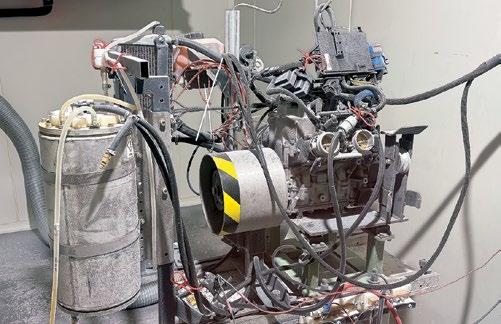
After a few introductory and educational powerpoint presentations and some much-needed caffeine, our tour kicked off with going through the Rotax R&D facility. This is a special cold-start testing R&D room, where controlled climate conditions can bring the temperature down to minus 40 degrees. That’s where Fahrenheit and Celsius cross, by the way. Engines in this dyno room are brought down to the desired temperature, then started. Then cooled back down and started again. Over and over again. At different temperatures and climate conditions across the board. Engineers take the data and adjust the calibration. This is why your Ski-Doo starts so easily regardless of the conditions.
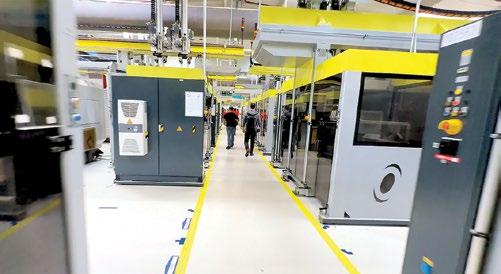
The Rotax facility is expansive, clean and efficient. We put some serious steps in these two days.
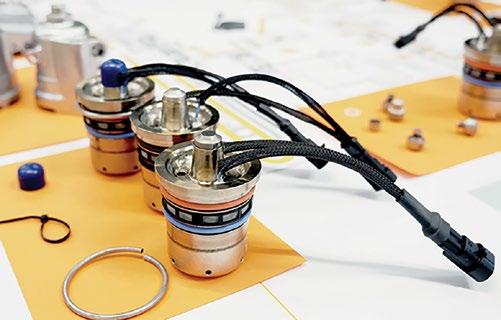
On the tour, we were able to see how the E-TEC fuel injectors are made—and watch them be tested (more on that in a sec). This is a nearly-complete injector that sits atop the cylinder of your Ski-Doo 850 E-TEC engine. The injector nozzle is at the very tip of that protruding shaft in the center.
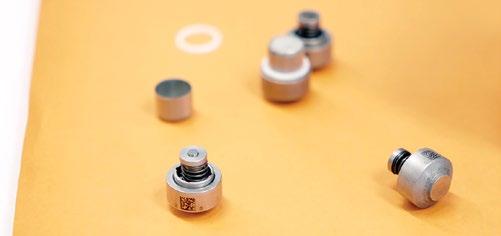
This is the injector nozzle. If you look really closely at the nozzle on the right that’s laying on its side, you can see a small circle inside the flush surface. That’s the portion of the nozzle that protrudes out and sprays the fuel into the cylinder. This stuff is calibrated down to the micron. Literally—one micron. A human blood cell is seven microns.
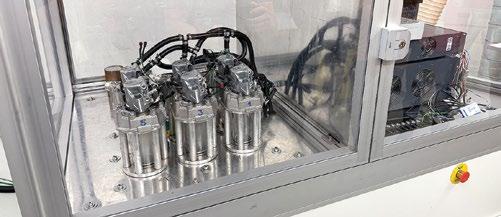
Each injector is flow-tested after assembly, calibrated in onemicron increments and then marked with a QR code that carries that injector’s coefficient with it to match it to the ECU at final engine assembly.
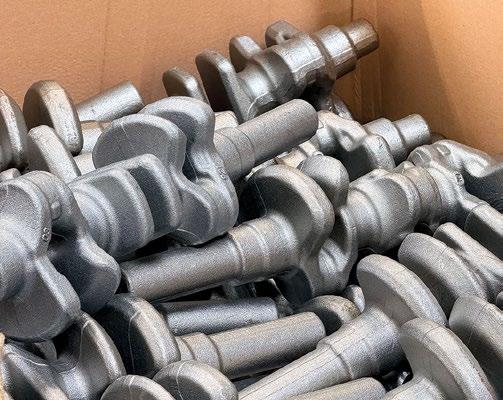
Rotax uses forged crankshafts and handles all the milling and machining in-house in its Austria factory.
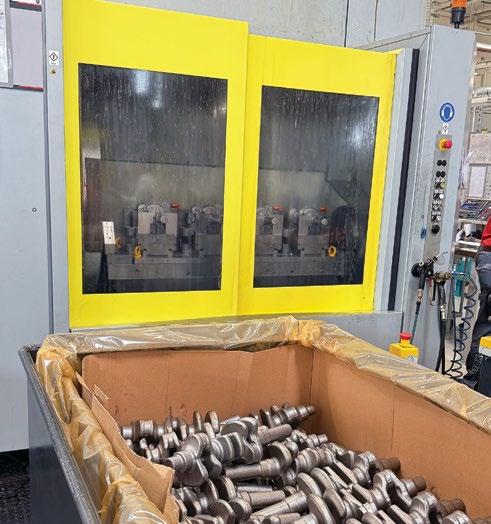
These are cranks fresh off the forging process ready to be transferred by a robotic arm into the grinding station, where the bearing surfaces and journals will be machined down to spec.
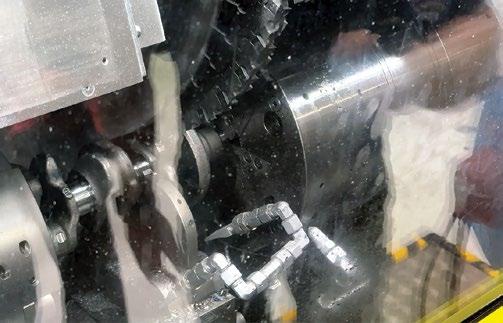
is the milling machine
surfaces down to prepare them for the next process.
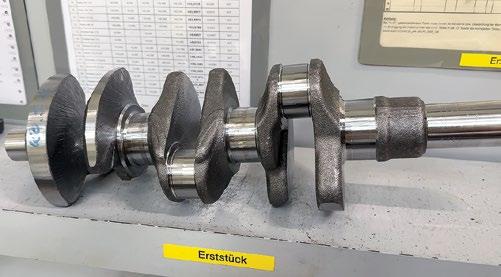
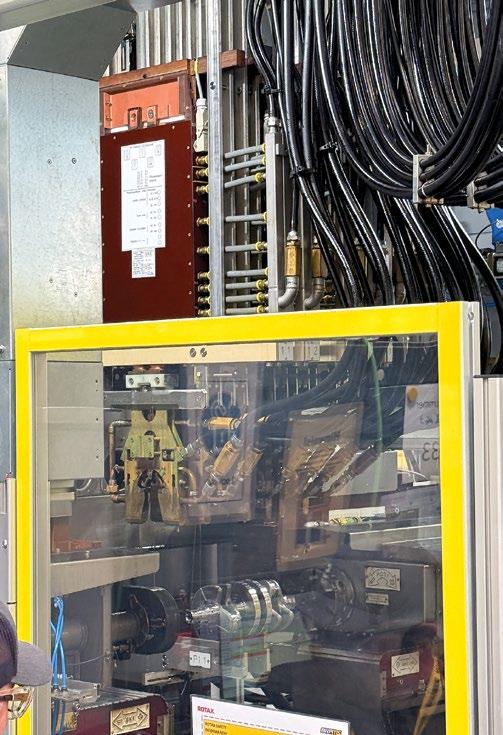
Each crankshaft is heat-treated in specific areas to maximize its durability. This automated machine heats the crankshaft with an electrical coil and then cools it immediately with a coolant solution.
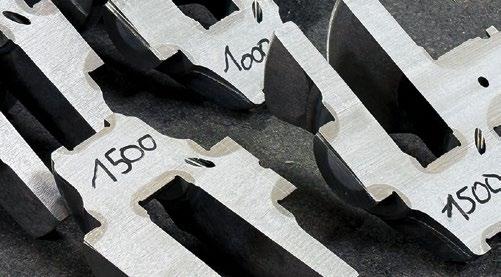
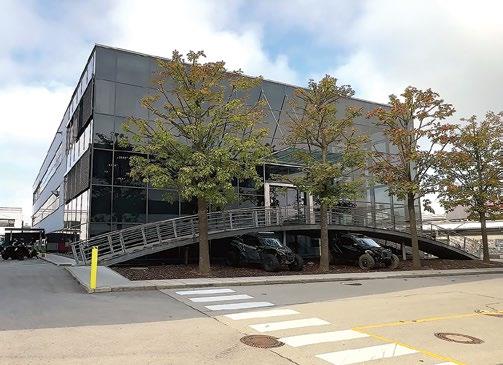
The Rotax factory is absolutely stunning. They take great care to provide a safe and clean environment.
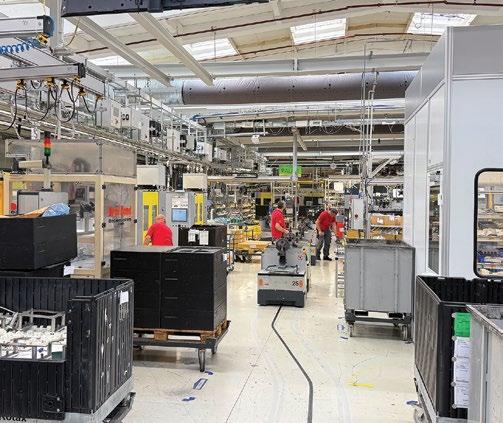
The assembly line portion of the factory is enormous. Did we pause for a moment to take pictures and get lost from the rest of the group once? Maybe…
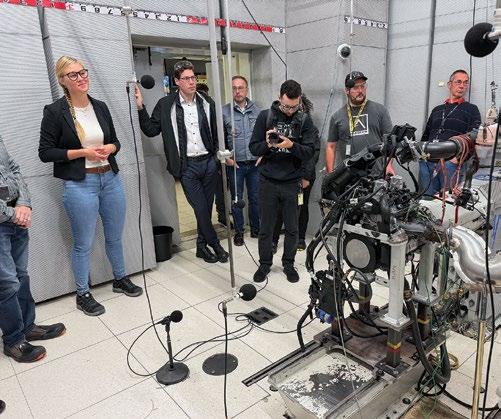
This is a special sound-controlled room that’s part of the NVH engineering team at Rotax. NVH stands for Noise, Vibration and Harshness. Madeleine Froeschl (left), Group Leader NVH, explained in great detail how the facility works to create a 3D map of any engine based on its noise and vibration.
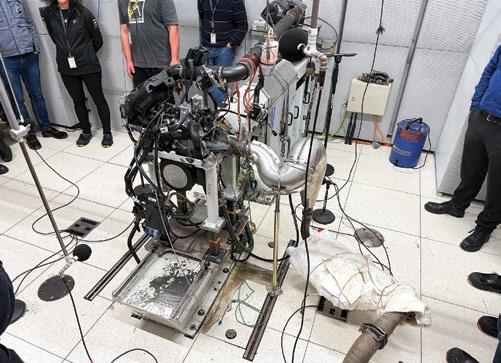
This dyno room is designed to isolate the engine noise from the drivetrain, intake and exhaust. The floor reflects sound and the walls absorb it. You can quite literally hear your own heartbeat inside this room. Strategically-placed microphones capture everything from the engine and help engineers identify where noises–wanted and unwanted–eminate from the engine.
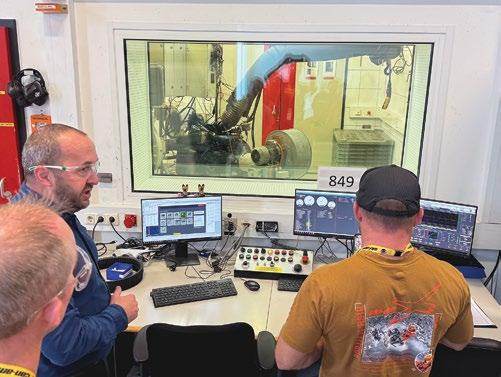
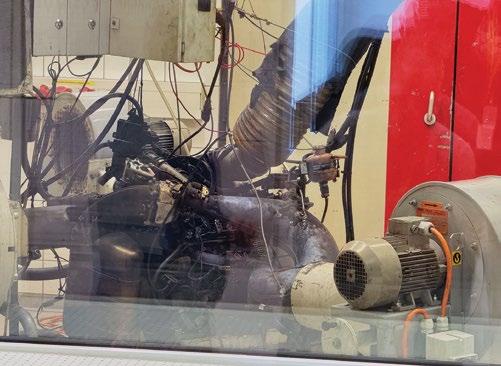
Monfette, Rotax R&D Director, explains this station to
and
This station is an endurance testing dyno. The 850 E-TEC Turbo R inside the dyno room has been running for hundreds of hours non-stop. The engineers run it at various RPM for various stretches. Rotax has systems that closely monitor every aspect of the engine to detect abnormalities. If detected, engineers can shut down the engine and tear it down for analysis before a catastrophic failure occurs. Engineers can’t learn much at that point. Data is crucial to these teams.
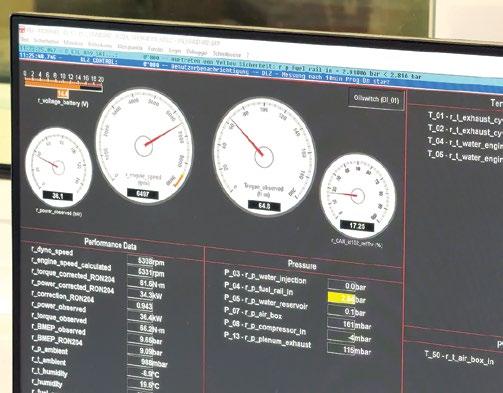
A shot of some of the monitors on the 850 E-TEC Turbo R engine that’s running for hundreds of hours straight.
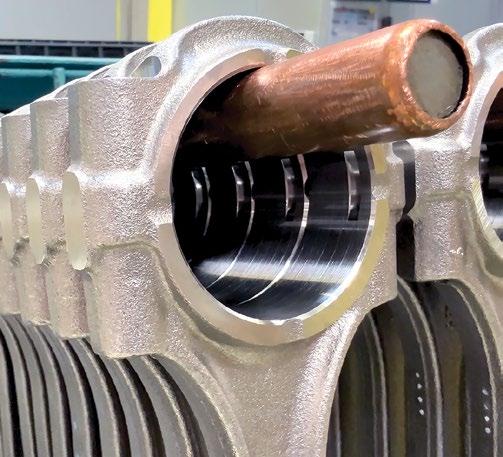
Rotax uses a patented fracture-split process to separate the big end of its connecting rods. These rods are forged as onepiece with the bearing surface milled and machined to spec, ready to have the big bearing end split.
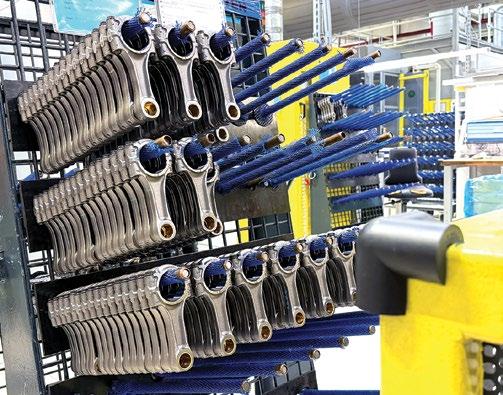
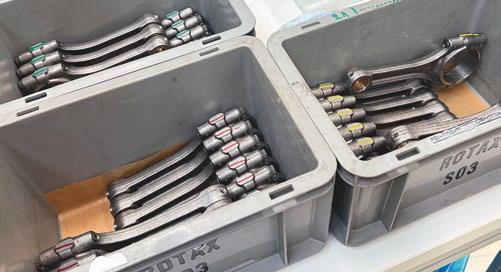
Connecting rods ready for engine assembly.
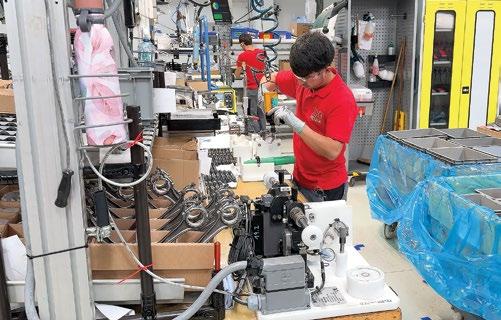
Each rod is placed in these special tool stations where the piston is attached to the wrist pin end and then the cap is removed for crank assembly.
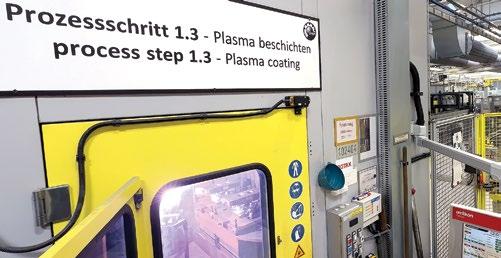
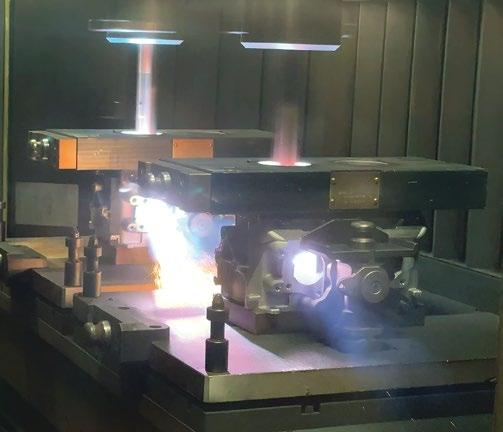
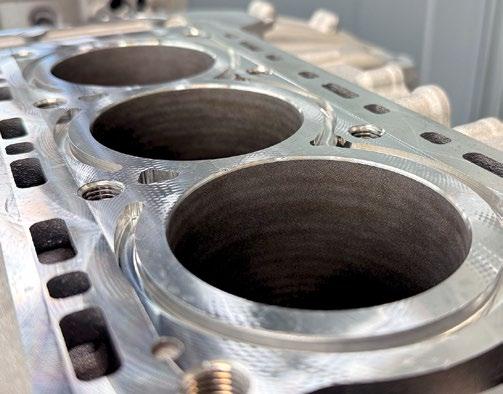
Rotax brought plasma-coating to the 2-stroke engine world and is the only 2-stroke engine that offers plasma-coated cylinders. Plasma coatings retain oil on the cylinder surface better than Nikasil, and the process is more environmentallyfriendly than Nikasil.
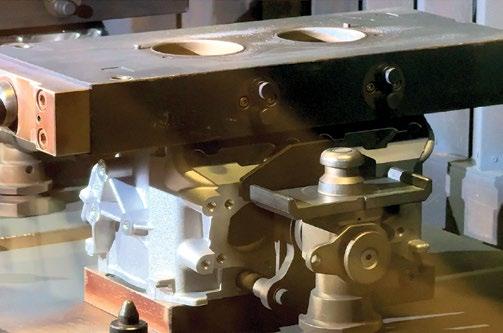
the plasma machine ready for coating.
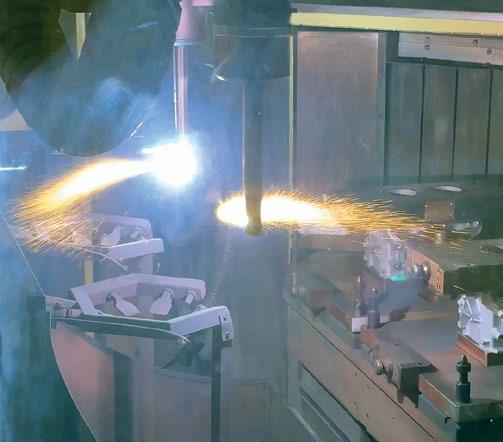
The plasma spray nozzles moving to the cylinders.
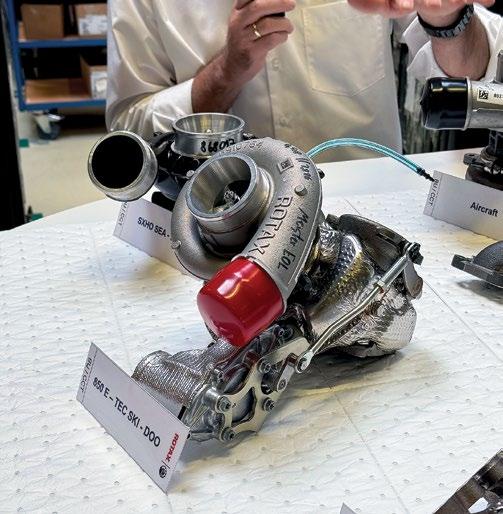
Rotax also designed, developed and manufactures all of its own turbochargers, including the Turbo R system found on Ski-Doo 850 E-TEC Turbo R snowmobiles.
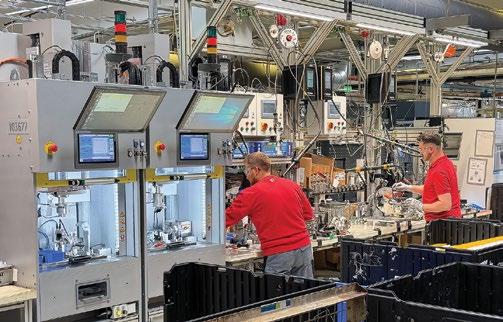
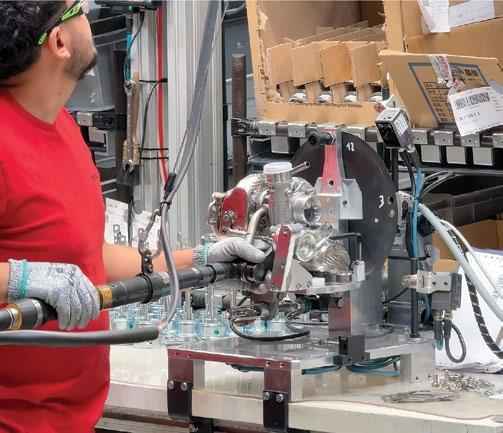
The turbocharger assembly line includes all of the turbocharger systems for both 2-stroke and 4-stroke engines.
If you own a
your
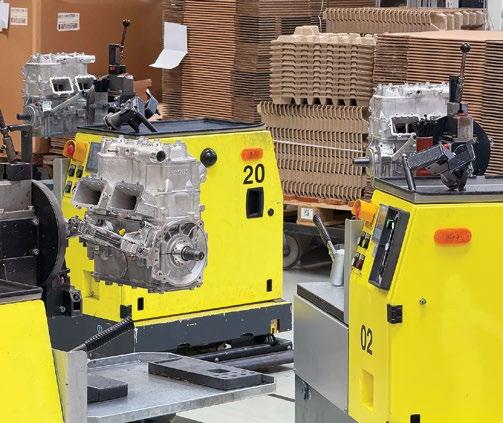
We caught the tail-end of some Ski-Doo 2-stroke engines being completed on the line as everything was shifting to 4-stroke engine assembly.
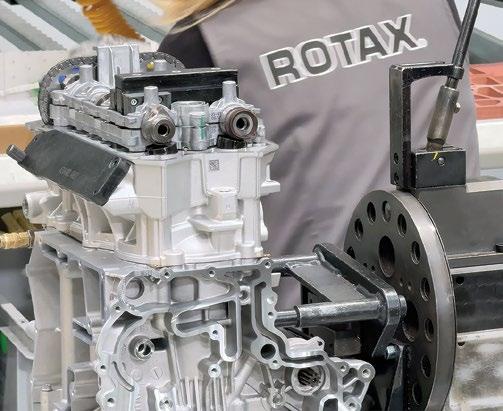
We watched Rotax 4-stroke engines used for many Ski-Doo sleds run down the assembly line.
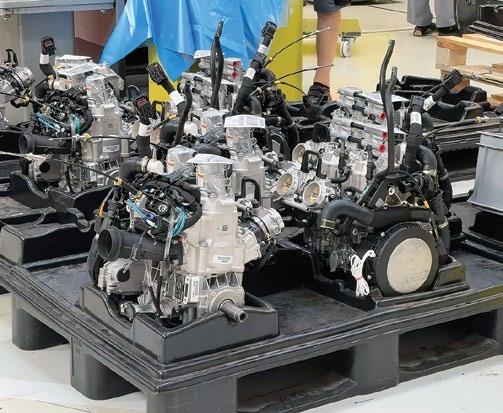
Following the completion of all the 2-stroke engines slated for production sleds on the assembly process, Rotax ran a batch of 2-stroke crate engines.
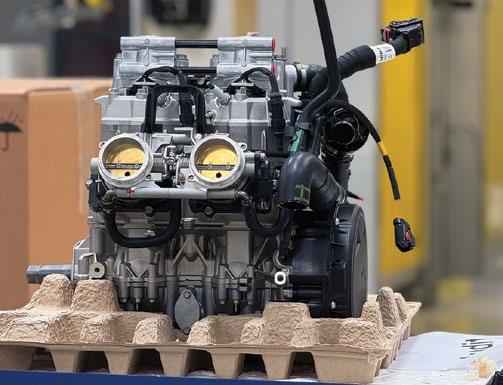
Rotax relies on automation for much of the manufacturing processes, but human integration is a key element of the final assembly. Each component has a QR code that the worker scans that verifies that it is the right part going on the right engine at the right time.
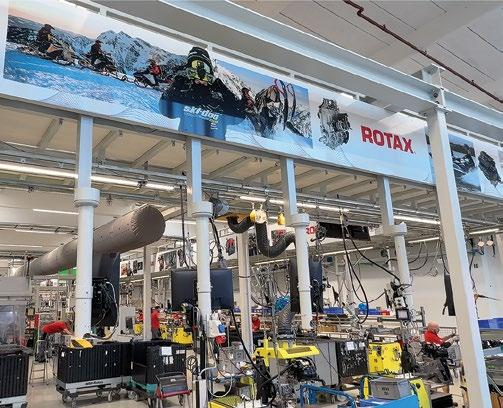
Here’s an interesting fact: Each Rotax engine is “started” and spun in a final check station, but without actually burning fuel and emitting exhaust. This final check also uses AI to scan the outside of the engine and make sure every nut, bolt, wire harness and zip tie is in the right place.
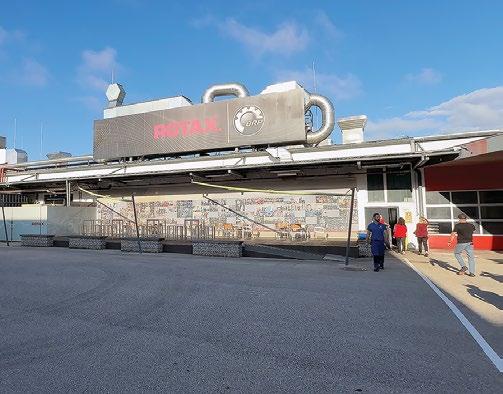
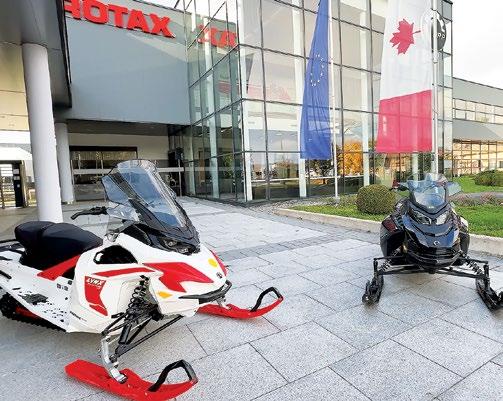
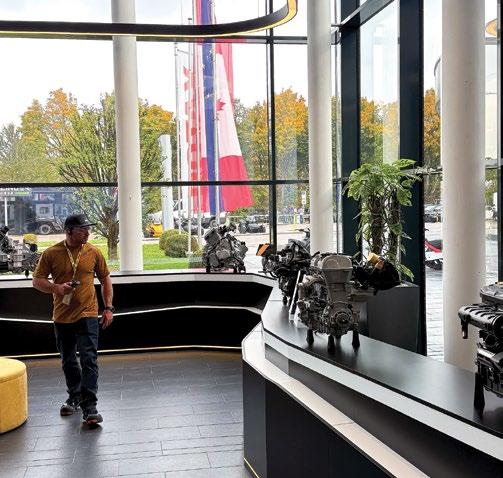
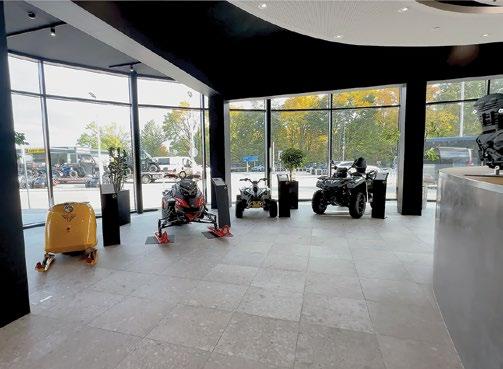
Rotax builds engines for snowmobiles (2- and 4-stroke and electric), personal watercraft, three-wheel motorcycles, ATVs, side-by-sides, electric motorcycles, 2-stroke and electric karts; aircraft, boats and fire service pumps.
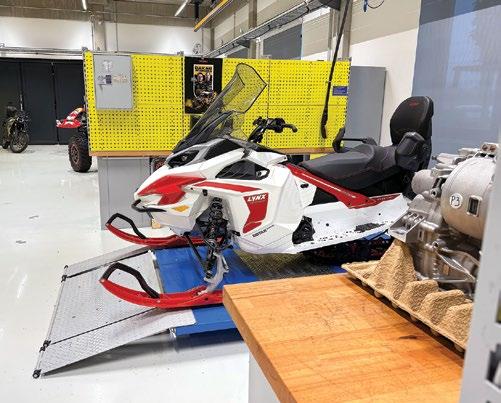
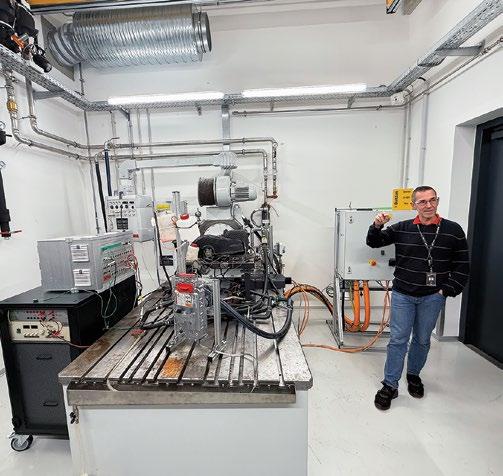
We also toured the electric propulsion systems R&D department, where
makes electric motors for a variety of EVs.
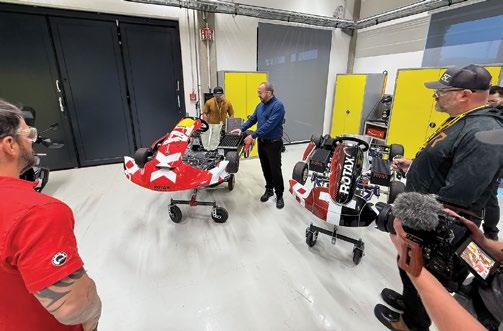
Kart racing is HUGE in Europe (the gateway to F1 racing) and Rotax is a major player in that market. Rotax builds 2-stroke engines for ICE karts and electric propulsion motor systems for electric karts. And, Rotax developed and distributes the kart tires.
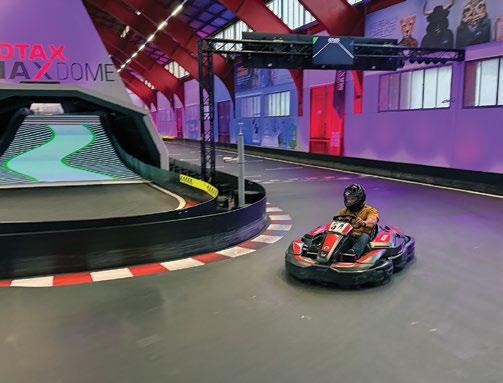
Part of our experience in Austria was driving both the 2-stroke karts outdoors before our plant tour and electric karts indoors afterwards at a place called Rotax MAX Dome. That’s an indoor kart arena owned by Rotax that features interactive gaming aspects that project objects, lanes and rewards onto the two-level track. Steve Martin dominated the kart races.
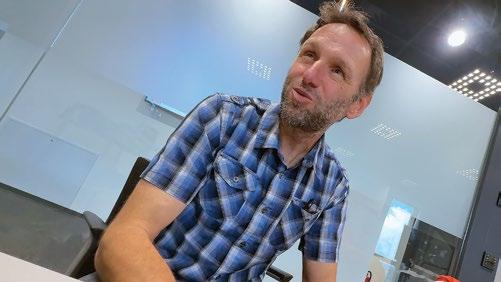
One of the top highlights of the trip in our book was the 30 minute conversation we had with Roland Ennsmann—Senior Lead Engineer 2-stroke engine development, and Christian Berger—Project Manager 2-stroke engine development. These guys were tasked with coming up with the world’s first factory 2-stroke turbo system—the Ski-Doo 850 E-TEC Turbo and subsequent Turbo R. Roland shared some fascinating stories about how they created and developed the aspects of the 850 E-TEC Turbo system that makes it perform so well. We could pick these guys’ brains for days and days. Who knows.. Maybe we’ll get them on The SnoWest Show podcast someday to share the stories they told us.

And given the timing of our tour in October, the colors and views were spectacular.
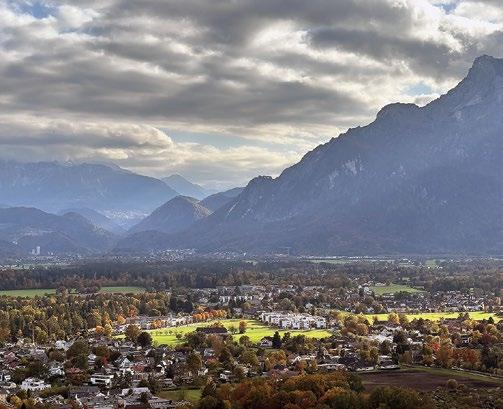
Austria is breathtaking. Following our two days at Rotax HQ with our Ski-Doo
we toured some of the surrounding regions.
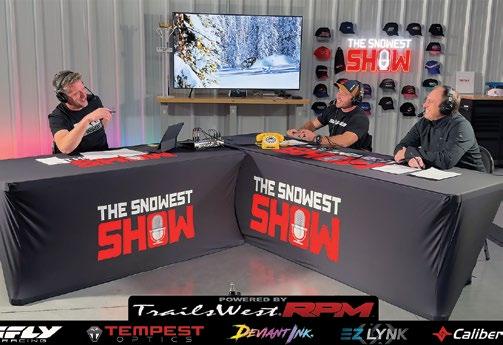
And speaking of our podcast… if you want even more details from our Ski-Doo
by
Apple
find the episode of The
on the
or
Steve Martin joins us to talk about everything we saw and experienced, with a few stories and extras thrown in. Check it out! d
BY STEVE JANES
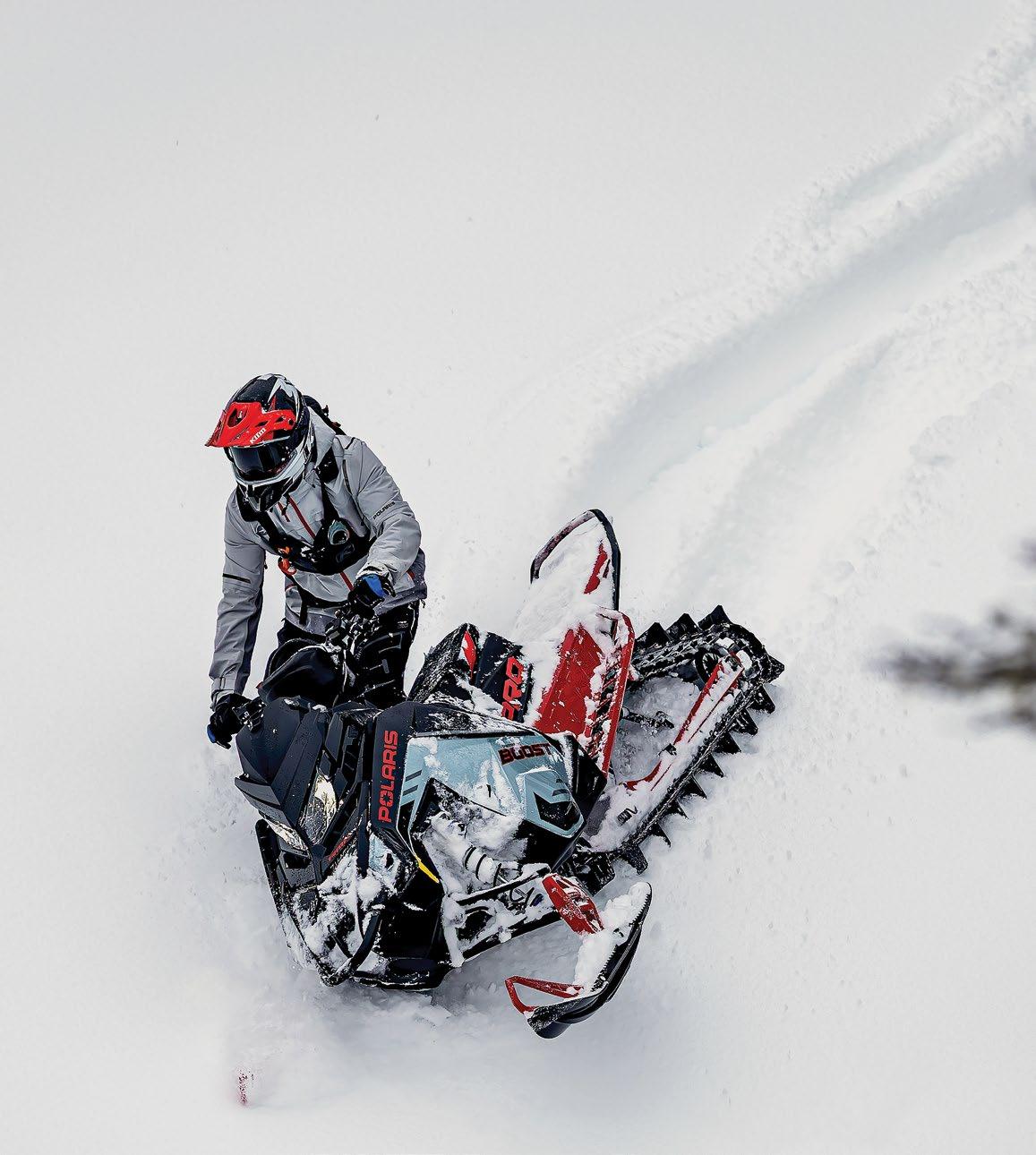
Polaris riders find themselves second-guessing their decisions about which track to choose for their 2026 snowmobiles. And even though there is only a half-inch difference in lug height, usually the consensus is “the bigger the better.”
But that’s not necessarily true, depending on your track length, engine, model or riding style. Both tracks have their advantages, yet neither track has any notable disadvantages.
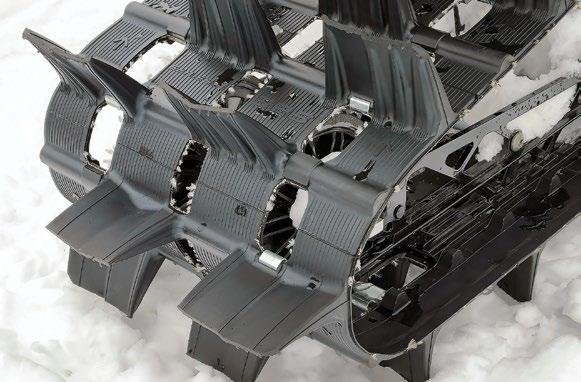
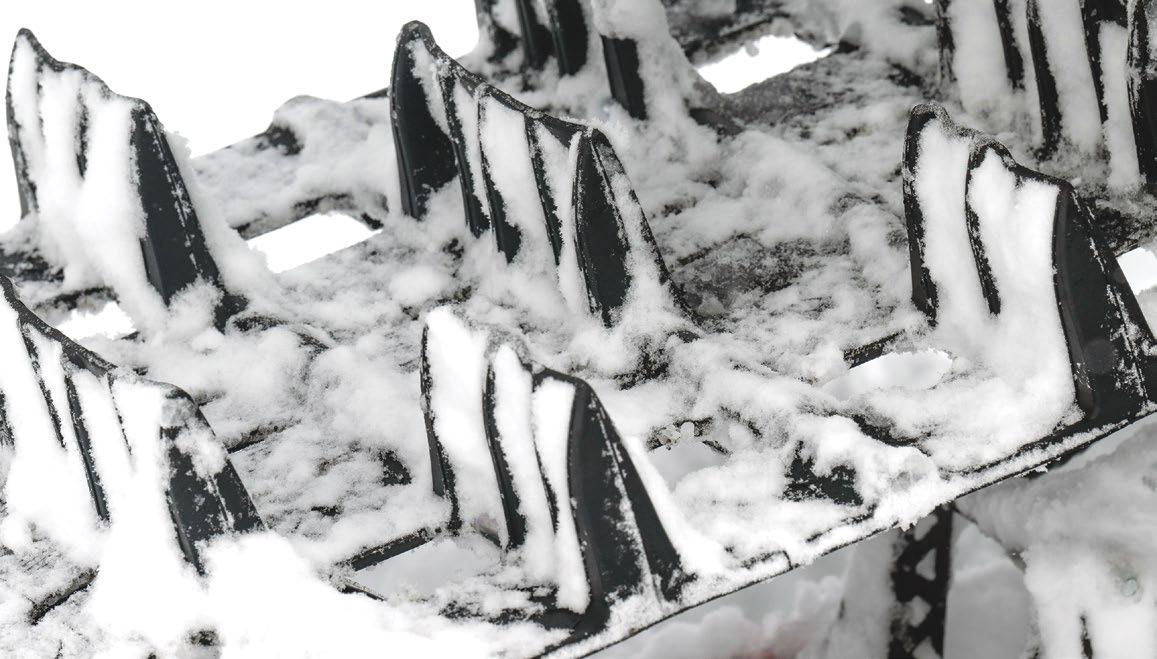
The Series 8 comes with a 2.75-inch lug, which is a little more than the competitors’ 2.5-inch lugs but a little less than the 3-inch lugs. The Series 9 comes with a 3.25-inch lug which
is the deepest OEM lug on the snow.
The Series 8 is specifically designed for deep snow and is designed to get on top of the snow for better flotation while reducing trenching. The Series 9 is built for extreme deep snow conditions and technical terrain where maximum lift and bite is desired. Its taller lugs and more aggressive grip may trench slightly more, but it will climb out of a hole and get your sled back on top of the snow.
Depending on your riding style and model, if you prefer the Pro RMK, perhaps the Series 8 is a better fit since the
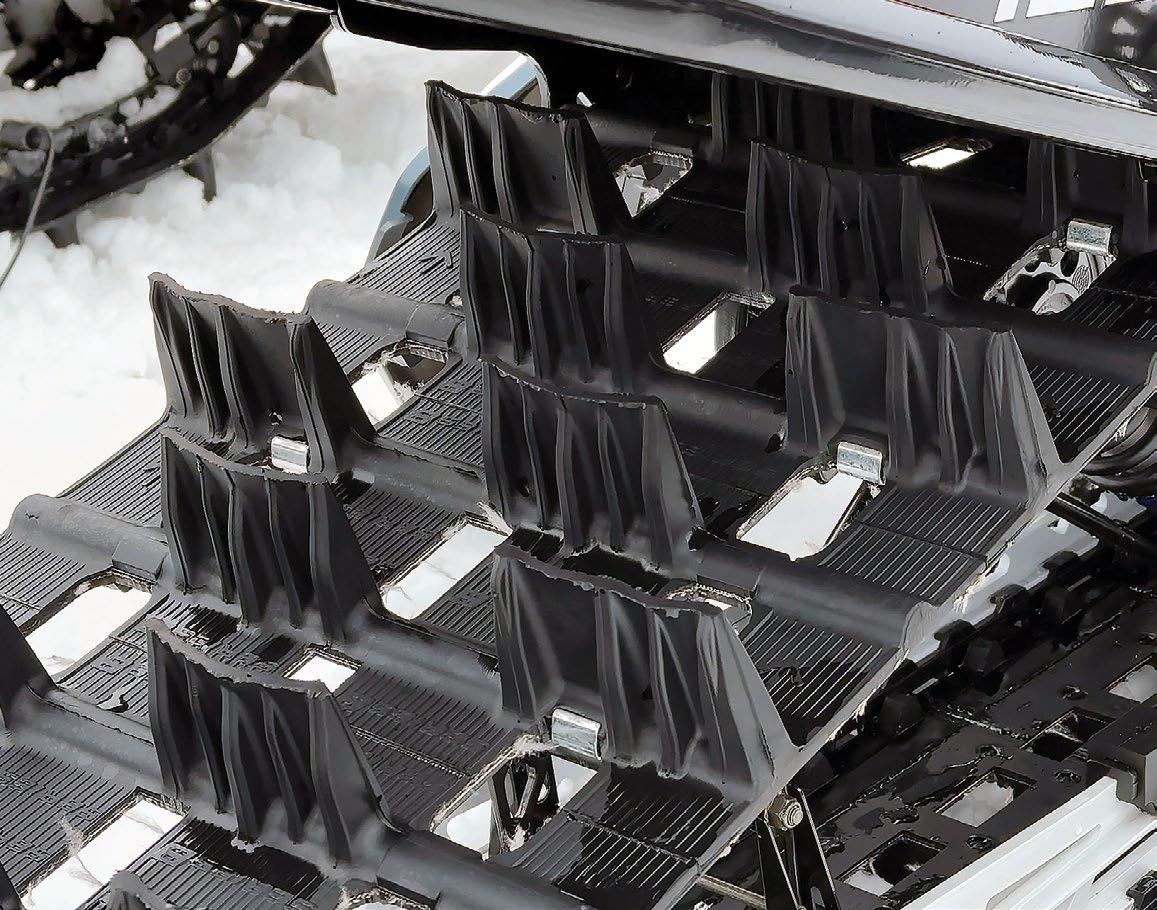
SERIES 8 2.75”
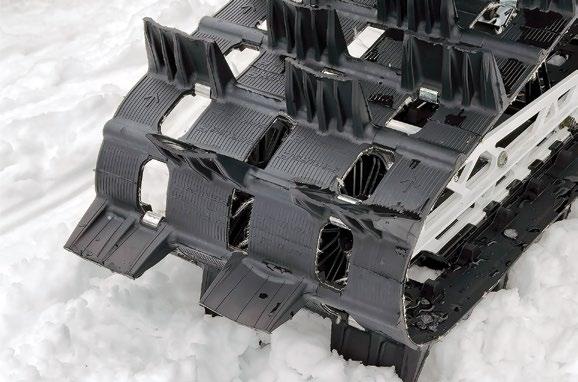
SERIES 8 2.75” SERIES 9 3.25”
suspension is designed to stay flat so a track that is designed to get on top of the snow would make it easier for you when winding your way through the trees. If you prefer the RMK Khaos, the Series 9 may be a better fit since its suspension is designed to lift the front and pivot through terrain more aggressively. Also, Boost engines are likely going to lift the front end more which would make the Series 9 more practical unless you prefer keeping the nose down.
If you are considering weight and rotating mass, the Series 8 is slightly lighter since there is less material in the lug design.
The Series 8 would feel slightly quicker and handle lighter.
If your riding area tends to have either less snow depth or heavier snow, the Series 8 is probably the better choice. However, for the steep and deep where the powder is dry, you can’t beat the Series 9.
So it comes down to whether you’re looking for a versatile ride that does everything well or whether you want a more aggressive ride in technical terrain. The Series 8 is for the nimble and quick style of riding while the Series 9 shines in vertical performance in bottomless power.
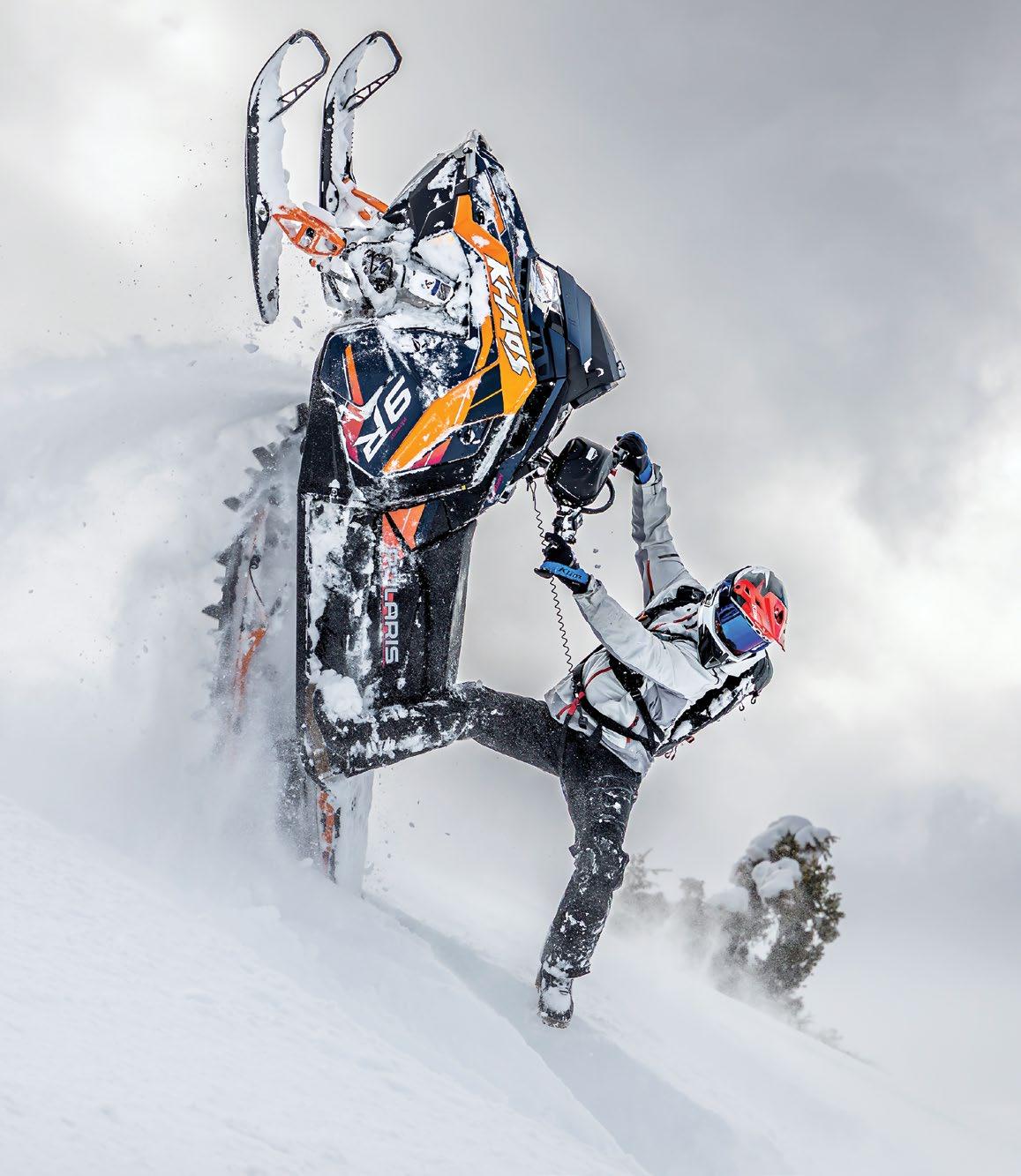
Ryan Harris—The difference in the 2.75 and 3.25 Polaris track offers about as big a difference as between riding the Pro or the Khaos because the 2.75 is more forgiving so you can be in and out of the throttle without really affecting what the track is doing. But with the 3.25, like the Khaos, it just hooks up so fast it stands the sled up or jumps forward instantly. The 3.25 also has changed the riding style. It used to be that you would take the Pro into the deep snow because it would go
where you want to go and do what you want to do. But with the 3.25 you can now go into the trees and still pop the front end up when you want, or settle the front end down and still stay on top of the snow. Or you can lay it down on its side and turn it around back to where you came.
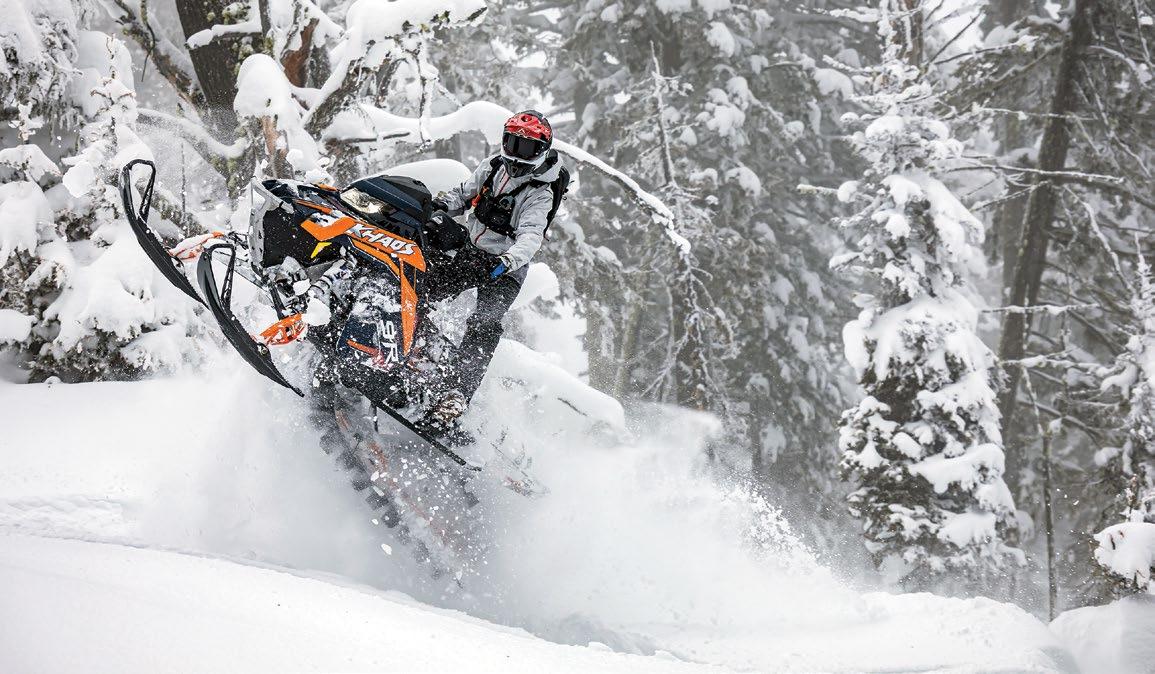
Bruce Kerbs—Since it was first introduced, I’ve always liked the 3.25 track. Polaris has done a good job with the track pattern, making it a great all-around track in most
snow conditions. I feel like it gets you up on top of the snow and keeps you there even when you think you’re about stuck. Between the engine and the track, you have a great combination of power and flotation.
Rhett Clark—The 165 track length will hold the sidehill a little better since there’s more track back there and you are less likely to wash out the rear end. In the deeper snow it stays on top just a little better so it’s less likely to get stuck. However,
the longer track does take a little more emphasis to turn your sled back up hill. The longer track does react slightly slower so it takes a little more effort to get it out of tricky situations. When the snow is set up, on an aspirated sled you may be able to feel the difference in track length a little bit more … but on a turbo, you really don’t notice any weight difference between the 154 and 165 or lug size. When the turbo is spooling up, everything feels lighter.
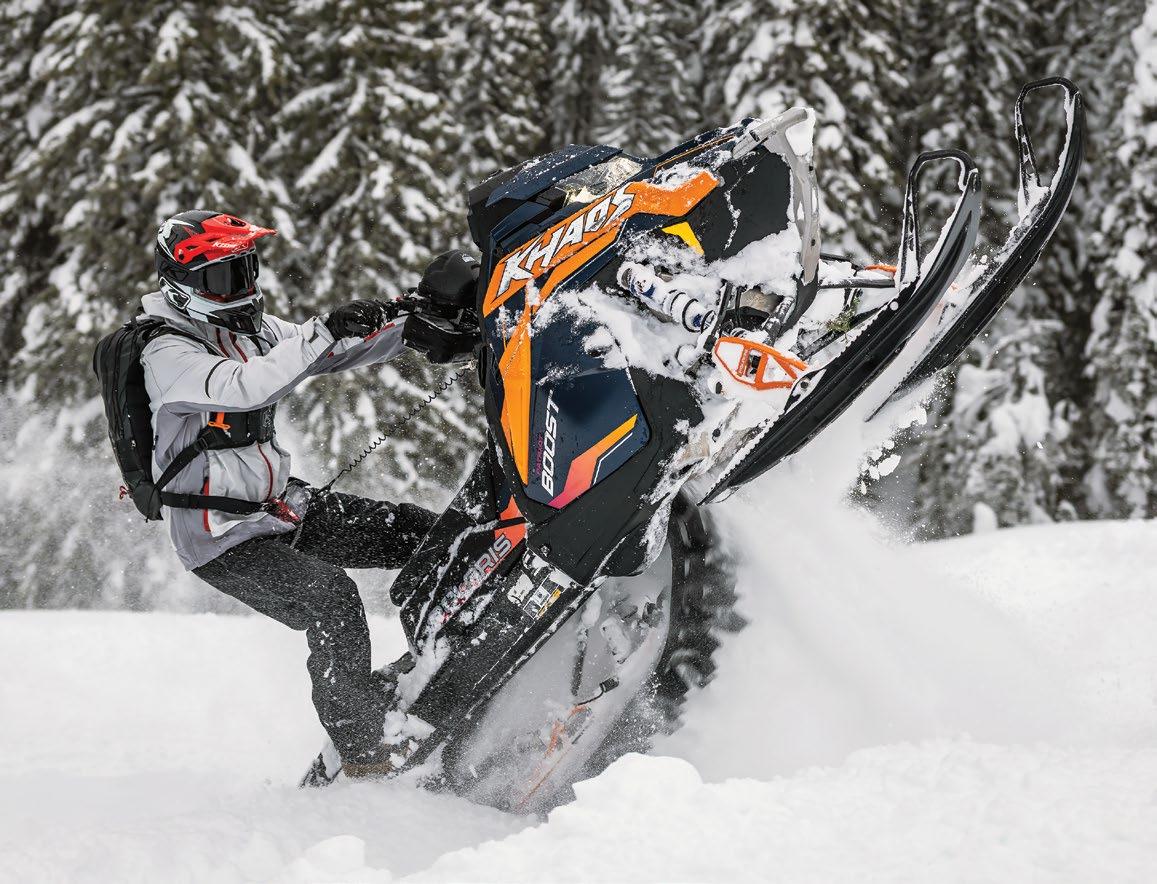
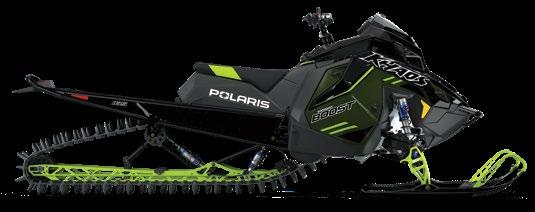
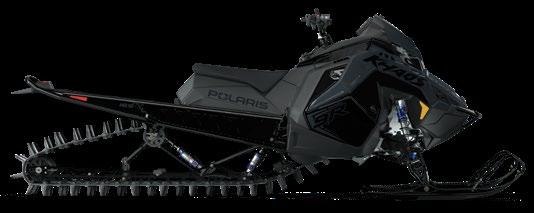
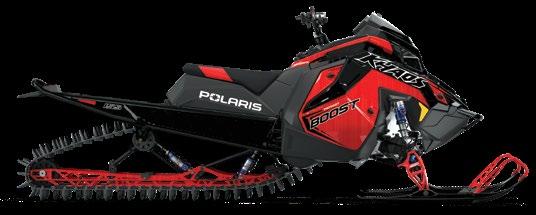
Matt Entz— For a group of inexperienced riders in deep snow terrain, I’d recommend the Polaris 9R RMK Khaos 155 with the 3.25 track. This sled will allow the group to be able to safely ride and have fun, and this configuration is the most fun when riding less technical terrain. Sounds like a day for lots of wheelies and silly sled maneuvers.
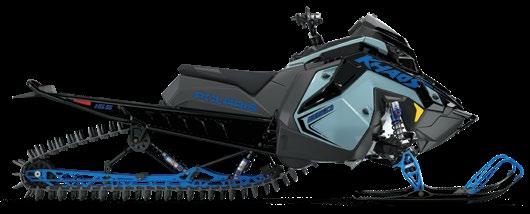
For an experienced female rider but new to mountain riding, I’d recommend the 9R PRO RMK 155 with the 2.75 track. That’s a stable yet incredibly easy setup to ride with insane capabilities. It’s nice and light so it conserves rider energy. And the insane low end and response of that engine make learning and initiating maneuvers very easy. d
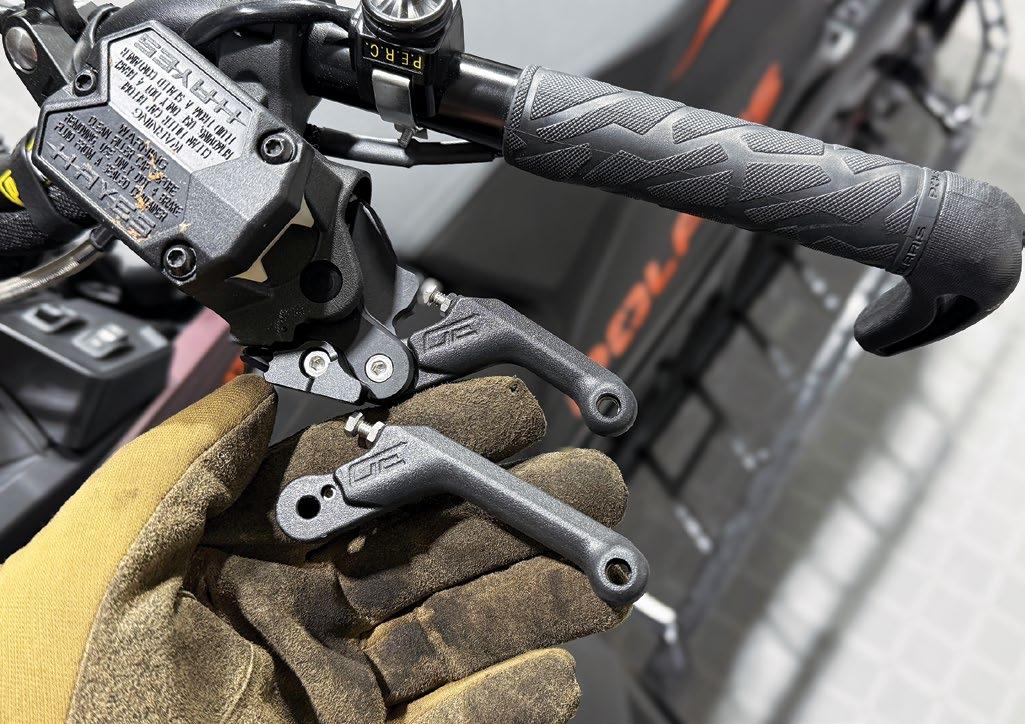
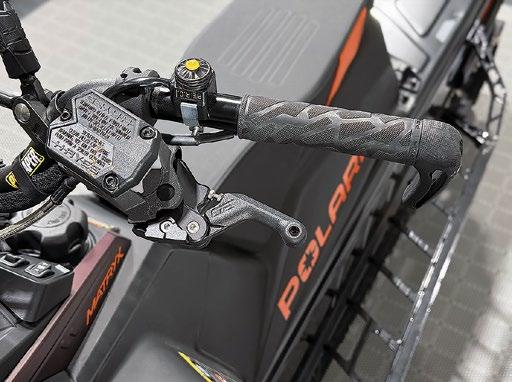
The 3D Logik Matryx V2 brake lever is a great upgrade for riders who want improved feel, better durability, and fewer chances of ending a ride with a broken lever. Made from an engineered cold-resistant polymer, it flexes instead of snapping and features a 90-degree, multi-directional folding design to survive tip-overs, tree rubs, and technical backcountry mishaps.
You get two lever lengths—Shorty (installed) and Regular—so riders can match comfort to hand size and riding style. The ergonomics feel natural, and the non-metal surface stays warmer in deep-winter temps.
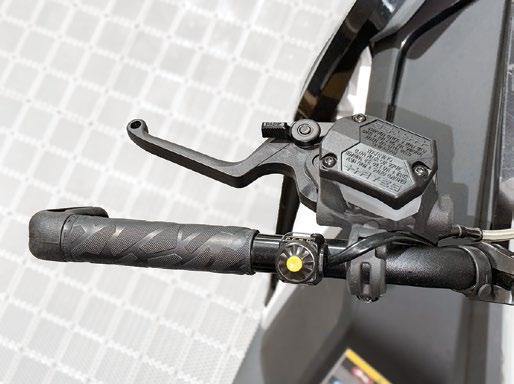
Installation is simple, fitment is clean, and the lever maintains solid modulation and control without feeling sloppy.
What stands out most is the control feel. The lever’s contour is comfortable, and the folding action is tight enough not to feel sloppy, yet free enough to articulate during a crash or tree rub. Riders who prefer a onefinger brake pull will appreciate the shorty’s shape, while tree riders and technical climbers will value the confidence of knowing a minor mistake won’t end the day.
For deep-snow mountain riders, this lever solves a real problem: durability without rigidity.
A durable, lightweight, and thoughtfully designed brake lever that delivers real value to mountain riders. Cheap insurance for anyone who pushes their Matryx into tight terrain.
Price: $120
Fits: 2022+ Polaris Matryx
Colors: Black, Orange, Purple, Red, Silver, Sky Blue
MORE INFO
3d-logik.com d
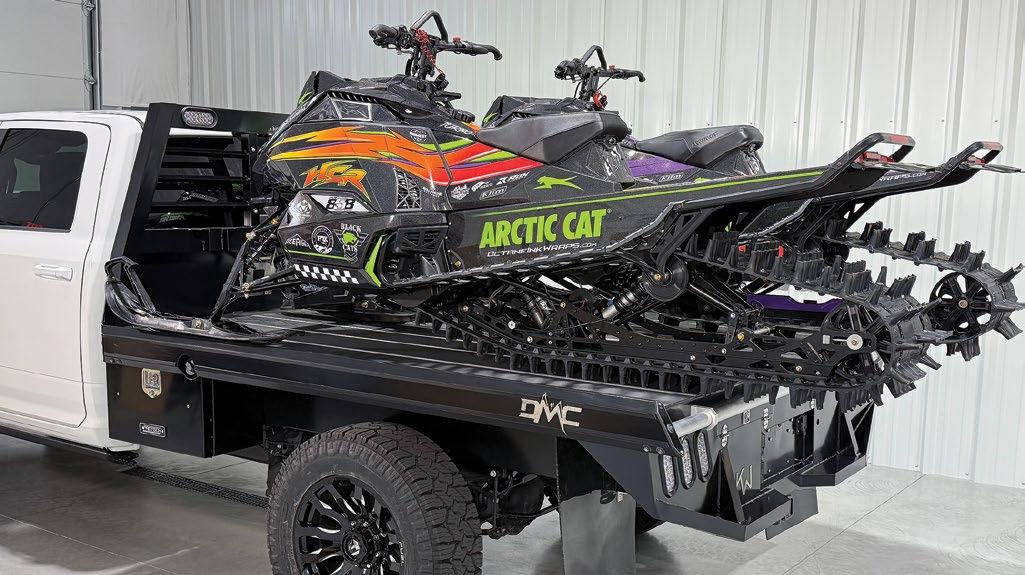
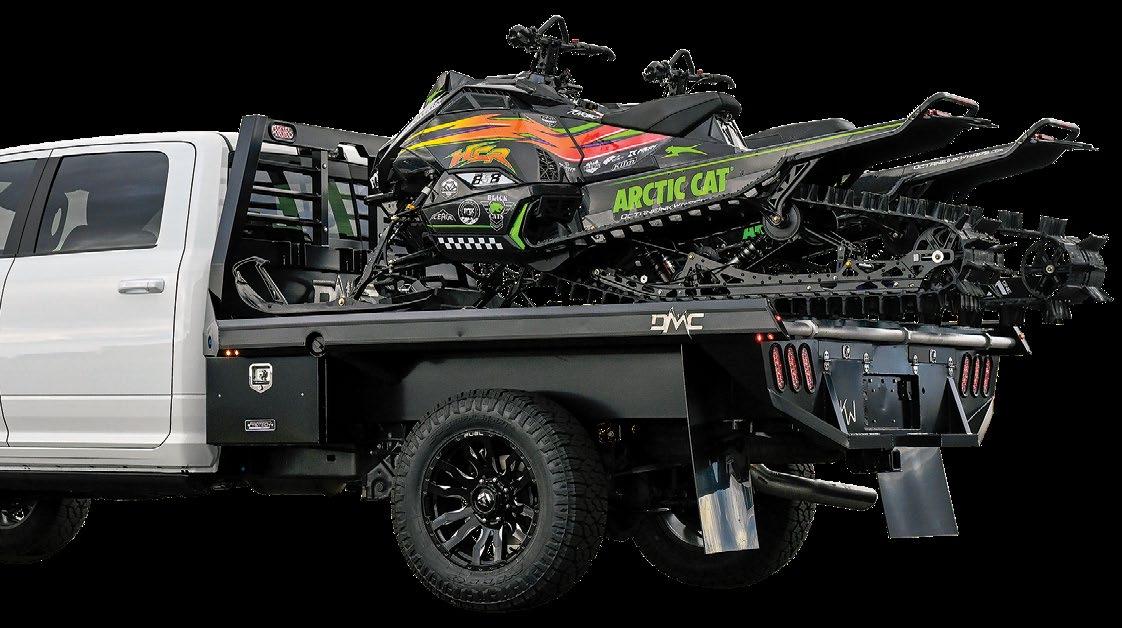
Arctic Cat’s David McClure is known for his wild custom-built mod Arctic Cats. Now McClure has a new way to transport his Arctic Cats.
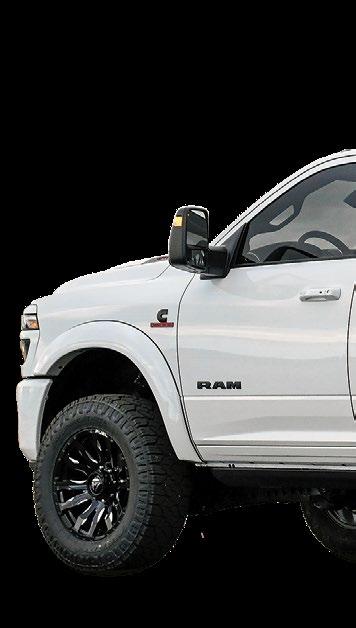
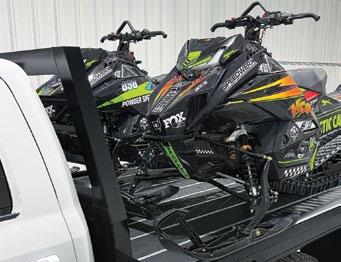
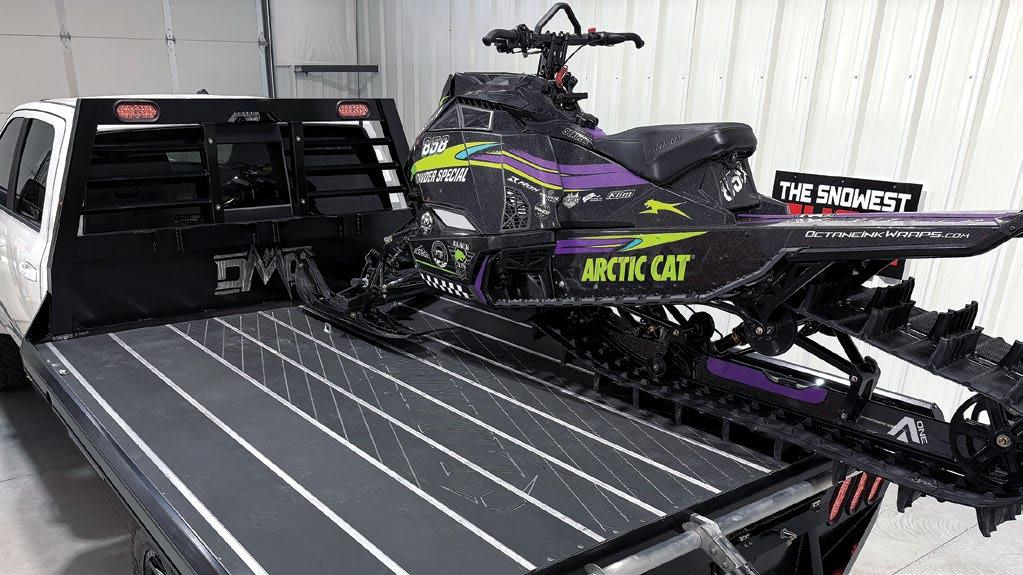
Dave teamed up with Mike Kopp of Kopp Welding in Swan Valley, Idaho, to create a one-off custom aluminum flatbed that can easily load and haul Dave’s toys. Dave showed up at the SnoWest studio with his two new 2026 Arctic Cats–an M 858 and an HCR 858.
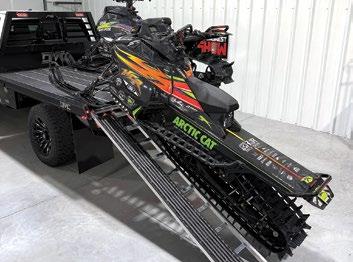
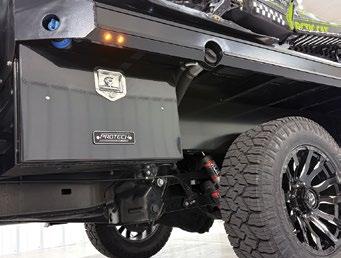
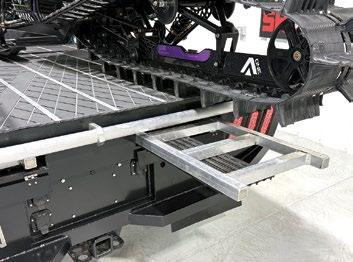
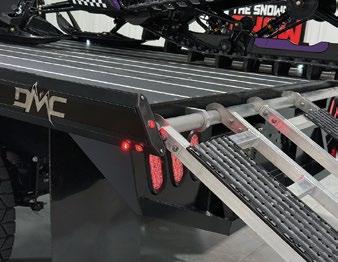
The flatbed features deck materials from a Limitless sled deck. From there, Kopp created a full flatbed with integrated ramps and ramp storage. Plus—this flatbed can still tow a gooseneck trailer.
The ramp setup allows Dave to load sleds, ATVs, dirt bikes or sideby-sides onto the flatbed. The ramps
stow in compartments beneath the bed deck with access at the rear of the flatbed.
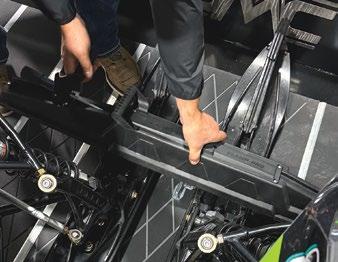
Kopp—who TIG welded the entire thing—added storage solutions and the headache rack. Alisha Martin of ArcticInsider fabricated the laser-cut DMC logos. There’s Caliber Products glides on the ramps and a Clamp Pro tie down bar. Ace Powder Coating coated the bed. Octane Ink designed the logos for it. And Fox kicked in shocks for the Ram 2500.
Why not just run a sled deck? “One day I’m hauling two sleds on the flatbed,” says McClure. “The next day I’m hooking to a gooseneck. So the regular sled deck just doesn’t work for me.”
Check out The SnoWest Show powered by Trails West RPM on YouTube, Apple Podcasts or Spotify
to catch the episode where McClure shows us the whole truck setup and talks about the build. d
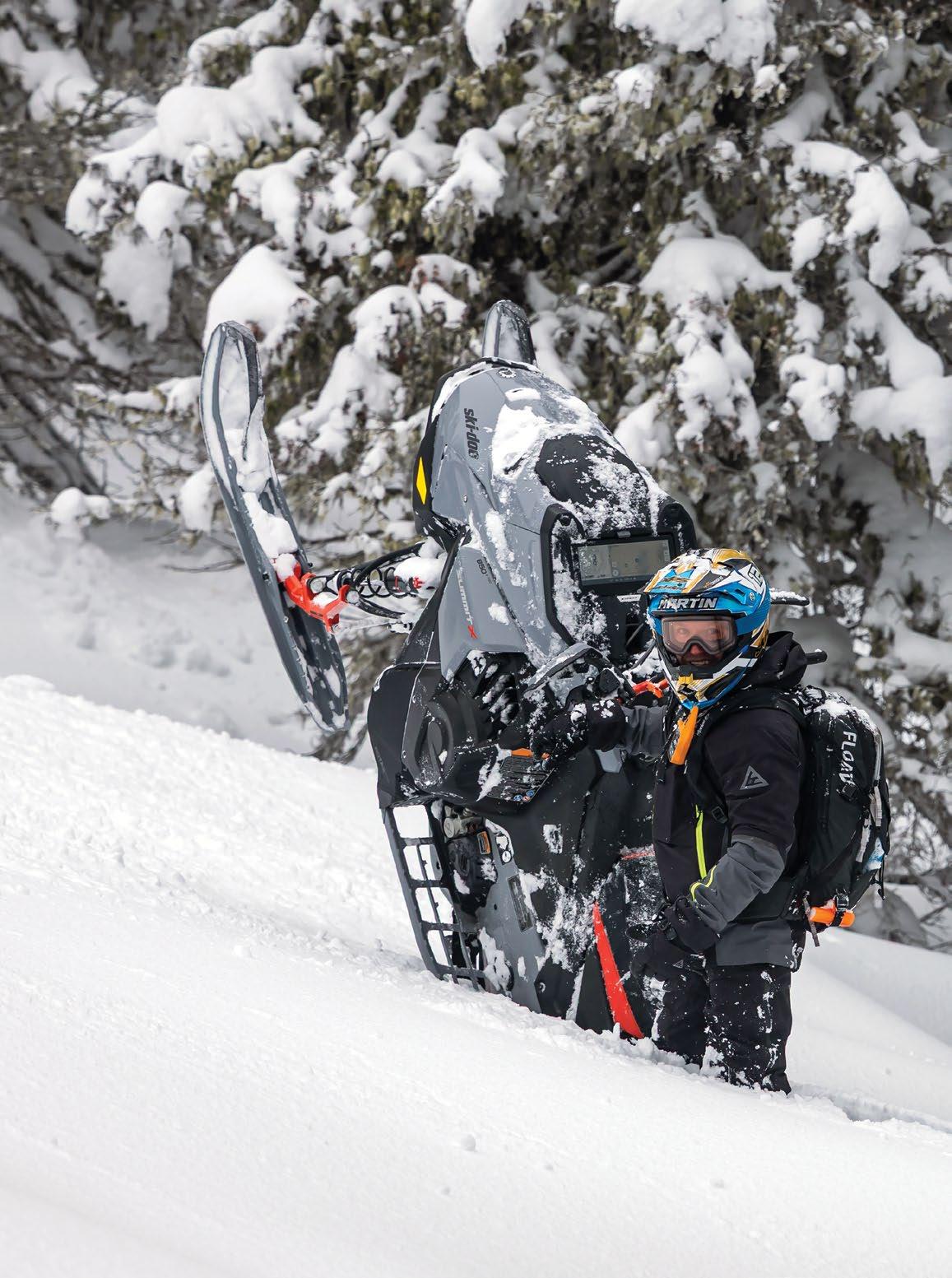
STEVE MARTIN HAS TO BE ONE OF THE HAPPIEST SNOWMOBILE AMBASSADORS EVER. IF YOU CAN CATCH HIM AT A MOMENT SUCH AS THIS (OR WHEN HE’S OUT OF GAS) WHERE HE’S NOT FLYING THROUGH TREES WITH THE THROTTLE TO THE BAR, HE’LL BE GRINNING EAR TO EAR.
RIDERS: