27 minute read
Chapter 8 SERVICE AND STORAGE

Generalinformation
Warning
BEFORE performing any service on the Telehandler, unless expressly instructed to the contrary, exercise the MANDATORYSAFETYSHUTDOWN PROCEDURE (Safety chapter). After service has been performed, BE SURE to restore all guards, shields and covers to their original positions BEFORE resuming machine operation.
When a problem occurs, don’t overlook simple causes such as an empty fuel tank. Check for leaks and broken connections. Make note of any specific problem symptoms, noises, etc. and contact your local Mustang dealer.
IMPORTANT: Always dispose of waste lubricating oils, anti-freeze and hydraulic fluids according to local regulations or take them to a recycling center for disposal. DO NOT pour them onto the ground or into a drain.
Dealer Services
NOTE: All service routines, with the exception of those described under the “Dealer Services” topic, are owner-operator responsibilities. All operator services described under the subtopics are also referred to on a decal located inside the small rear access door of the operator’s station. Refer to the Lubrication chapter of this manual for lubrication information.
NOTE: This Service and Storage chapter details procedures to follow for making routine maintenance checks, adjustments and replacements. The majority of the procedures are also referred to in the Maintenance chapter of this manual. For engine-related adjustments and servicing procedures, refer to the engine manual provided.
Precautions
DO NOTperform any maintenance or repair without the owner’s prior authorization. Allow only trained personnel to service the machine.
Warranty repairs can only be done by a Mustang dealer. Dealers know what portions of the machine are covered under the terms of the Mustang Warranty and what portions are covered by other vendor warranties.
The following areas of internal components service replacement and operating adjustments should only be attempted by (or under the direction of) an authorized Mustang Telehandler dealer.
IMPORTANT: DO NOT service or repair major components, unless authorized to do so by your Mustang dealer. Any unauthorized repair will void the warranty.
Powertrain Components
The engine and transmission are coupled together with a transfer case. All service routines related to the internal components are precise and critical to proper powertrain operation. The axle differential and planetary ends are also sophisticated assemblies that require special know-how and tools for servicing.
IMPORTANT: If any area of powertrain componentry is suspected of faulty operation, contact your Mustang dealer for further assistance.
Hydraulic System Components
Valves, pumps, motors and cylinders are sophisticated assemblies, which require special know-how and tools for servicing. All cylinders are approprietly designed with particular strokes, diameters, checks and hose connection provisions unique to the machine application requirements. Ahydraulic schematic (located at the back of this manual) can be used as a guide for service reference, as required.
Warning
Tilt, lift, extend, and leveling cylinders have counterbalance valves. These valves keep hydraulic fluid from entering or exiting the cylinders while not being used, and are under extremely high pressure. Before removing any of these valves, it is REQUIRED to call the Mustang Service Department. Failure to do so may result in serious injury or death.
Internal service on any of these components should only be performed by (or under the direction of) an authorized Mustang Telehandler dealer. Warranty repairs can only be done by a Mustang dealer.
Electricalcomponents
An electrical system schematic is provided, which includes instrumentation, electrical components and switch connections. It is located at the back of this manual and can be used as a guide for service reference, as required.
Operator Services
Some of the operator-related services will require access to components located inside the superstructure under shields, hoods and covers. The chart on this page notes components accessed in each particular area.
Access To Components Chart
Axle (underside)
Engine Transmission Transfer Case
Drive Shafts
Solenoid valves (rear and middle)
Main Control Valve (rear)
Muffler (underside)
Air Cleaner
Battery
Radiator
Brake Valve (dash area)
Travel Controls (dash area)
Boom Controls (right side)
Hydraulic Test Ports (pump)
Hourmeter
Electric Switches (dash area)
Electric Switches (right side)
Hydraulic Pump
Hydraulic Reservoir (underside)
Fuel Tank (underside)
Fuse Box (rear)
Hydraulic Filter (underside)
Warning
DO NOT smoke or allow any open flames in the area while checking or servicing hydraulic, battery or fuel systems; all contain highly flammable liquids or explosive gases, which can cause an explosion or fire if ignited. Wear a face shield when disassembling spring-loaded components or working with battery acid. Wear a helmet or goggles with special lenses when welding or cutting with a torch.
When working beneath a raised machine, always use blocks, jack-stands or other rigid and stable supports. Wear appropriate protective clothing, gloves, and shoes. Keep feet, clothing, hands and hair away from moving parts.
Always wear safety glasses or goggles for eye protection from electric arcs from shorts, fluids under pressure, and flying debris or loose material when the engine is running or tools are used for grinding or pounding.
NEVER weld on bucket, forks, boom, support frame or ROPS/FOPS without the consent of the manufacturer. These components may be made with metals that require special welding techniques, or with designs that do not allow weld repairs. NEVER cut or weld on fuel lines or tanks.
If repair welding is ever required, BE SURE to attach the ground (-) cable from the welder as close as possible to the area to be repaired. Also, remove positive (+) battery terminal connection before welding.
Choose a clean, level work area. Be sure there is sufficient room, clearances, and adequate ventilation. Clean the walking and working surfaces. Remove oil, grease and water to eliminate slippery areas. Use sand or oil absorbing compound, as necessary, while servicing the Telehandler.
Before starting inspection and repair, move the machine onto a level surface, shut down engine, and release all hydraulic pressure. Always block the boom securely, or lower it to full ground contact. Place all controls in neutral.
Block the tires. Turn off the master disconnect switch to shut off power from the battery, and remove the ignition key. Remove only guards or covers that provide needed access. Wipe away excess grease and oil.
Excessively worn or damaged parts can fail and cause injury or death. Replace any cracked or damaged parts. Care should be taken to assure that all replacement parts are interchangeable with original parts and of equal quality.
Use care not to damage machined and polished surfaces. Clean or replace all plates and decals that are damaged or painted over and cannot be read.
Warning
NEVER leave guards off or access doors open when the machine is unattended. Keep bystanders away if access doors are open.
After servicing, check the work performed, no parts left over, etc. Install all guards, covers, and turn on the master disconnect switch and to activate battery power.
Service Every 10 Hours or Daily
Checking Fueltank Level
The fuel level is shown by the fuel level gauge. After operation each day, the fuel tank should be filled to prevent water from condensing in the tank. To fill, remove the filler cap and add fuel.
Adrain plug is provided in the bottom of the fuel tank for removing condensation and other foreign materials. Open the plug and allow water and fuel to drain into a container until only clear fuel is flowing from the tank.
Checking Fuelfilter
NOTE: The fuel filter will require occasional replacement to maintain a clean and adequate fuel flow for maximum engine horsepower. The frequency of filter replacement will be determined by the cleanliness of available fuel, the care used in storing fuel supplies, and the operating conditions in which the machine is used.
Small amounts of water can be drained from the fuel filter. The drain plug should be removed weekly until clear fuel is flowing from the outlet to drain off any water accumulation.
Checking Engine Oillevel
With the machine on level ground, and the engine stopped for ten minutes or more, raise the engine hood and remove the engine dipstick. Wipe it clean, re-insert it and remove to obtain a reading. If the oil level is below the ADD mark, fill with the required amount of oil to bring the level to the FULLmark. See the Lubrication chapter for the type of oil to use.
Check Transmission Oillevel
The machine must be on level ground and the boom lowered and completely retracted. With the engine and transmission at operating temperature, parking brake on, travel lever in Neutral and the engine at low idle, raise the engine hood and remove the dipstick, located by the front wall, and check the oil level. If the oil level is below the ADD mark, fill into the tube with the required amount of oil to bring the level to the FULL mark. See the Lubrication chapter for the type of oil to use.
Checking Radiator Coolant Level
Warning
DO NOT remove the radiator cap when the engine is running hot or overheated. Coolant is extremely hot and under pressure and it can burn your skin. Allow sufficient time for the radiator to cool BEFORE relieving the pressure and removing the radiator cap.
With the machine on level ground, remove the radiator cap. If the coolant level is below the filler neck, add a low-silicate ethylene glycol based coolant mixed with quality water and supplemental coolant additives (SCAs) suitable for heavy-duty diesel engines. See the engine manual for additional information. Replace the radiator cap securely.
NOTE: If the engine is operated with a loose radiator cap, the pressure bypass will not work and the engine will run hot.
Checking Hydraulic Oillevel
The machine must be on level ground and the boom is lowered and completely retracted. With the engine stopped for ten minutes or more, raise the engine hood. Remove the dipstick located alongside the hydraulic oil fill tube cap. If the oil level is below the ADD mark, fill with the required amount of oil to bring the level to the FULLmark. See the Lubrication chapter for the type of oil to use.
IMPORTANT: Be careful when removing the reservoir filler cap so that no dirt or other foreign matter enters the hydraulic system. DO NOT OVERFILL.
Checking Tire Pressures
Proper and equal tire pressure should be maintained for all four tires to enhance operating stability and extend tire life.
When installing tires on the machine, be sure that all tires are of the same size and type. ALWAYS replace tires with the same size furnished as original equipment. Replacement tires must be purchased locally.
Check the tire pressure “cold.” All 12-ply tires should be inflated to 70 psi (480 kPa).
NOTE: If the tires have been filled with water or calcium chloride for ballast, a calcium chloride tire pressure gauge MUST be used to check the tire pressure.
When removing tires, follow industry safety practices. Deflate completely prior to removal. After assembly of the tire on the rim, use a safety cage or restraining device while inflating.
Checking Wheellug Nut Torque
On NEWmachines, or anytime a wheel has been removed, re-torque wheel nuts until 450 ft.-lbs. (610 Nm) is maintained.
Warning
Inflating or servicing tires can be hazardous. Whenever possible trained personnel should service and mount tires. To avoid possible death or serious injury, follow these safety precautions:
1.BE SURE the rim is clean and free of rust.
2.Lubricate both the tire beads and rim flanges with a soap solution. DO NOT use oil or grease.
3.DO NOT place fingers on the tire bead or rim during inflation. Use a clip-on tire chuck with a remote hose and gauge, which allows standing clear of the tire while inflating it.
4. NEVER inflate beyond 35 psi (240 kPa) to seat the beads. If the beads have not seated by the time the pressure reaches 35 psi, deflate the assembly, reposition the tire on the rim, relubricate both parts and reinflate. Inflation pressure beyond 35 psi with unseated beads may break the bead or rim with explosive force sufficient to cause death or serious injury.
5.After seating the beads, adjust the inflation pressure to the recommended operating pressure listed.
6.DO NOT weld, braze, or otherwise attempt to repair and use a damaged rim.
Checking Instruments Operation
Allow the engine to warm up for about five minutes before beginning operation. Indicator lamps should be off and gauges should register normal readings. Tilt the frame from side to side with the frame leveling control and note the frame angle indicator movement.
Checking Generalmachine Operation And Condition
Are any decals missing or damaged? Are all guards, shields and covers in place? Do all controls function smoothly and properly? Are there any abnormal vibrations or noises? Are any hose or fitting connections leaking? Is the engine exhaust color normal (light grey)?
Warning
Manufacturers of push-pull control cables advise taking the following operation and maintenance precautions:
Do not adjust the control cable with the engine running.
Agradual or sudden increase in the no-load friction (cable disconnected at both ends) of a control cable is an indication of a pending or present performance problem. The control cable should be replaced.
Agradual or sudden decrease in the useable travel is a indication of a pending or present performance problem. The cable should be replaced.
Control cables that have moisture inside of them or have frozen should be replaced. Do not apply heat to dry or thaw control cables.
Control cables are lubricated for the life of the control cable. Do not remove the seals or lubricate control cables.
Control cables are designed to be nonrepairable. Do not attempt to repair control cables.
Failure to heed could result in death or serious injury.
CHECKING WORK PLATFORM SAFETY (WPS) SYSTEM (if used)
Warning
If the WPS System fails to operate properly during any of the System checks, DONOT USE the machine until the cause has been corrected. Contact your dealer (or Mustang Manufacturing Company) for service information and parts.
Machine Position
Before beginning the WPS System checking procedures, position the machine as follows:
1.Machine on level surface,
2.Boom fully lowered,
3.Frame level,
4.Transmission in “N” (Neutral),
5.Parking brake switch “OFF,”
6.WPS System switch “OFF,”
For 742 and 944 models:
Remote shutdown switch plugged in and “Engaged.”
For 1155 model:
Remote shutdown switch “Engaged.”
Activation Tests
To test the WPS System activation logic:
1.Start the engine and press the WPS rocker switch “ON.”
The WPS System lamp in the switch should be flashing.
2.Apply the service brakes.
The WPS switch lamp should be illuminated continuously after three seconds, indicating that the WPS System has been activated. The parking brake should engage, as indicated by the lamp in the parking brake switch illuminating.
The carriage tilt and auxiliary functions, which are controlled by the buttons on the joystick handle, should now be disabled. The hydraulic joystick should continue to function normally for boom raise/lower and extend/retract.
Lockout Tests
To test the transmission and joystick control lockout logic:
1.Shift the transmission into “F” (Forward) and increase the engine speed slightly. The transmission should remain de-clutched, allowing the engine to increase speed easily. Return the transmission selector to “N” (Neutral) after the check.
2.Have an assistant move the remote shutdown switch to “Dis-engaged.”
The hydraulic joystick should now be disabled, so that boom raise/lower and extend/retract will no longer function.
Have the assistant move the remote shutdown switch to “Engaged” after the check.
3.Tilt the frame to the right slightly more than two degrees.
The hydraulic joystick should now be disabled, so that boom raise/lower and extend/retract no longer function.
Repeat the procedure with the frame tilted to the left.
Return the frame to a level position after the checks.
De-activation Tests
To test the WPS System de-activation logic:
1.Turn the keyswitch to “OFF” and wait for the engine to stop. Then turn the keyswitch back to “ON.”
The WPS switch lamp and the parking brake switch lamp should both be illuminated.
2.Turn the keyswitch “OFF” and then press the WPS rocker switch to “OFF.” Turn the keyswitch back to “ON.”
The WPS switch lamp should be flashing and the parking brake switch lamp should be on continuously.
3.Start the engine and apply the service brakes. The WPS switch lamp and the parking brake switch lamp should go off after approximately three seconds of brake pedal application.
If WPS System fails to perform properly, troubleshoot using the chart on page 64. Contact your dealer for service information and parts.
Service Every 50 Hours or Weekly
Refer to the Lubrication chapter of this manual for weekly grease fitting locations and related details.
100 Hours (New Machine Only)
The following initial oil and filter changes should be made at this time on a new machine. Thereafter these changes should be made at the regular maintenance schedule listed. Refer to those schedules for procedures necessary.
Engine Oil and Filter (250 Hours)
Transmission Oil and Filter(1000 Hours)
Hydraulic Return Filter Element(1000 Hours)
NOTE: Perform all other service requirements up to this point as well as the following:
Checking Axle Oillevels
Differential
NOTE: The Telehandler should be on a level surface for this procedure.
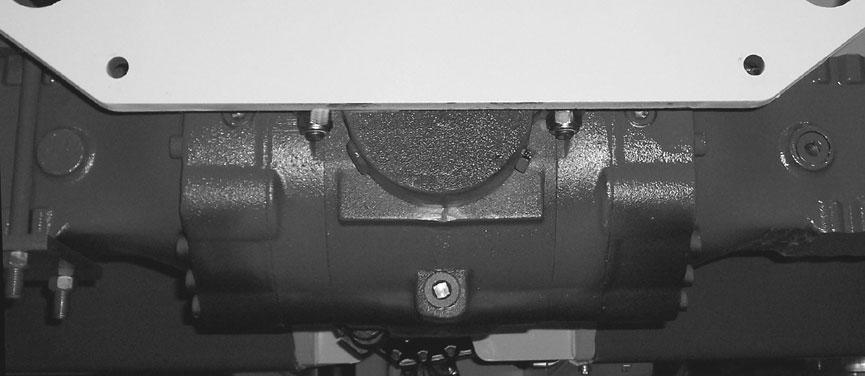
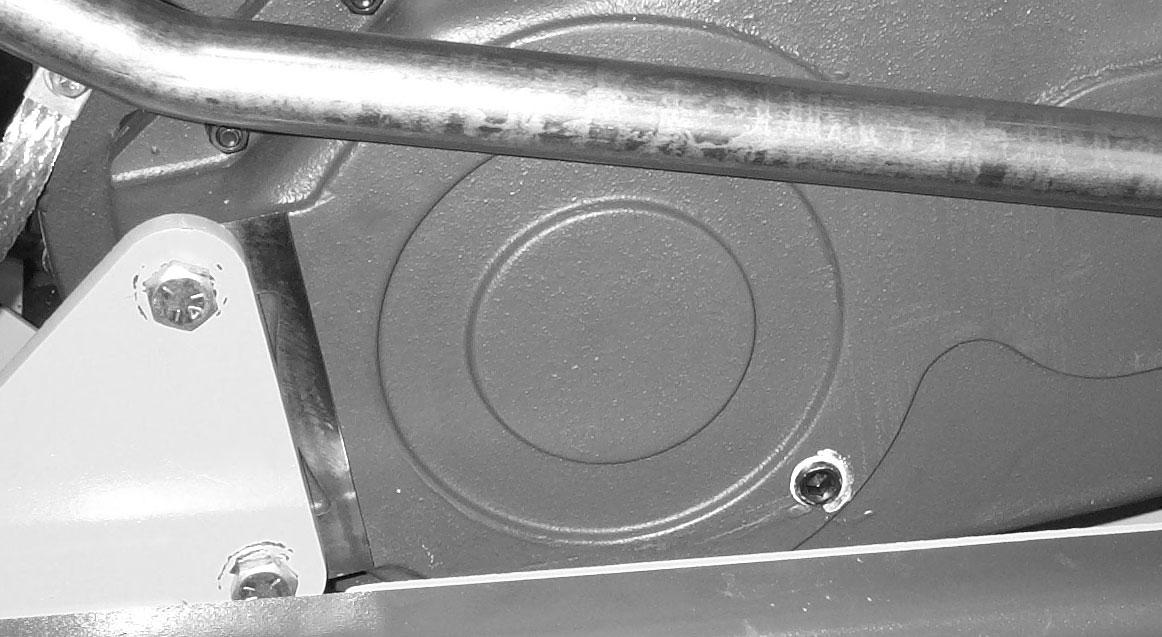
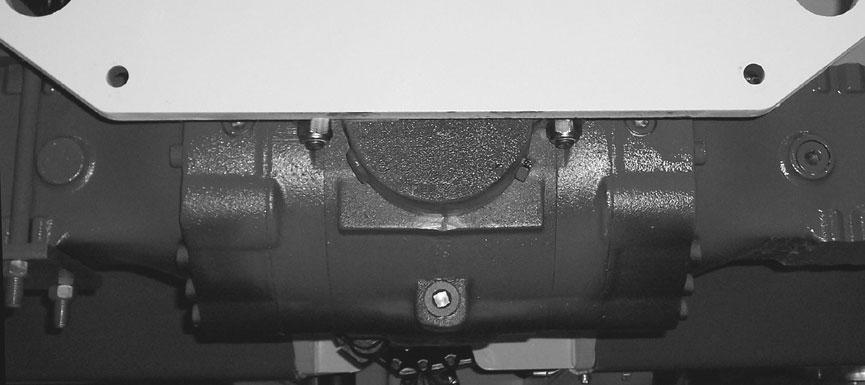
Remove each oil level check/fill plug, (see illustration). Oil should flow out the hole. If low, fill until oil flows out the hole. When oil overflows, replace the plug, wait 10 to 15 minutes and repeat the check/fill procedure. Continue this process until the differential is full. See the Lubrication chapter of this manual for the proper oil specification. Replace the oil level check/fill plug.
Checking Transfer Case Oillevel
Remove the oil level check plug. Oil should flow from the hole. If low, remove the breather cap located on the front side of the transfer case. Fill with the proper oil until oil flows from the check hole. Replace the check plug and the breather cap.
Planetary Hubs
NOTE: The planetary hubs can be checked without jacking up the machine.
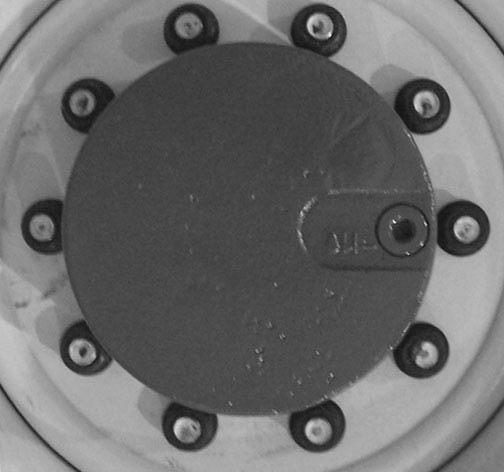
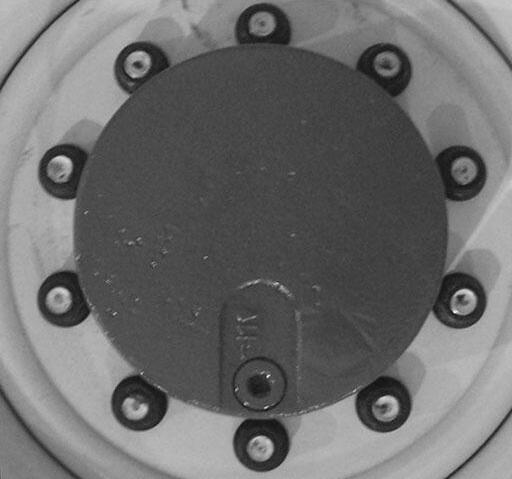
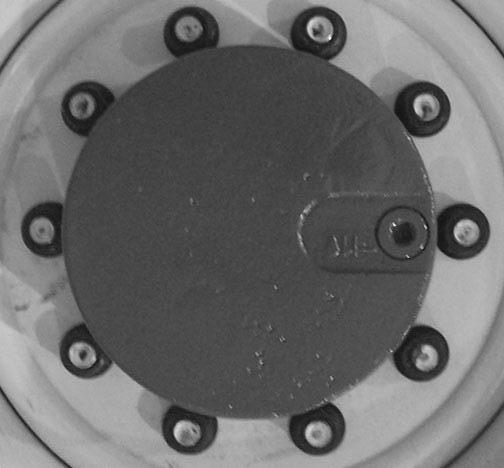
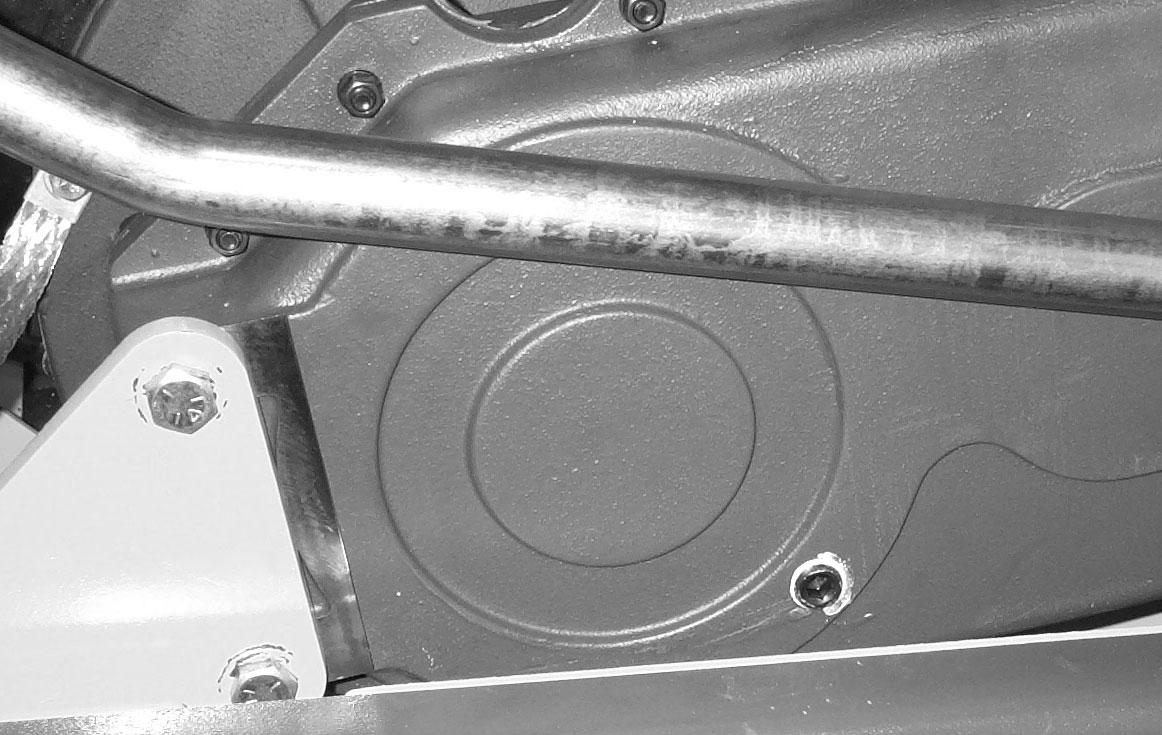
The planetary hubs have one plug each used for filling and draining (see illustration). For checking the level and filling, position the wheel until the plug is horizontal. Remove the check/fill plug. If oil does not run out, add oil until it overflows. Check the other hubs the same way. Refer to the oil specifications in the Lubrication chapter of this manual.
Changing Fuelfilter
The frequency of filter replacement will be determined by the cleanliness of available fuel, the care used in storing fuel supplies and the operating conditions in which the machine is used.
NOTE: For filter replacement procedure, refer to the engine manual for the machine.
After fuel filter replacement, bleed the air out of the fuel system by following the procedure in the engine manual.
Fuel Bleeding Procedure
When the fuel filter is removed and replaced, or if the engine runs out of fuel, air must be bled from the system. Refer to the engine manual for proper bleeding procedure.
If the engine still will not start, consult an authorized engine dealer.
IMPORTANT: Only an authorized engine dealer can perform warranty service on the engine.
Warning
NEVER service the fuel system while smoking, while near an open flame, or if the engine is hot.
Planetary Oil Check/Fill Plug in Check/Fill Position
Diesel Fuel Injectors
Whenever faulty or plugged fuel injectors are indicated, contact an authorized engine dealer.
Diesel Injection Pump Timing
Whenever injection pump timing or other injection pump service is indicated, such as by abnormal engine operation, contact an authorized engine dealer.
Warning
Escaping diesel fuel under pressure can have sufficient force to penetrate the skin. Before applying pressure to the fuel system, BE SURE all connections are tight and lines and hoses are not damaged. Use a piece of wood or cardboard to search for suspected leaks. If injured by escaping fuel, see a doctor familiar with this type of injury at once or gangrene may result.
Changing Engine Oiland Filter
Change the engine oil and filter using the following procedure:
1.With the engine warm, remove the crankcase drain plug. Some plugs are equipped with a magnet to gather metal particles. Clean and flush away all metallic filings from the plug and re-install it.
IMPORTANT: DO NOT discharge oil onto ground. Catch and dispose of per local waste disposal regulations.
2.The engine oil filter should be changed at every oil change interval. Remove and discard the filter. Wipe the gasket sealing area of the block with a clean cloth.
IMPORTANT: OEM engine oil filters have special by-pass valves built in. Use only genuine OEM engine replacement filters.
3.Apply a thin coat of clean oil to the new oil filter gasket. Spin tighten. Refill the crankcase with new oil. Follow specifications in the Lubrication chapter for type and viscosity of new oil.
4.After new oil has been added, run the engine at idle speed until the oil pressure light is off. Check for leaks at the filter and drain plug. Re-tighten only as much as necessary to eliminate leakage.
Checking The Battery
The battery furnished in the machine is a 12-volt, wetcell battery.
The top of the battery must always be kept clean. Clean the battery with a brush dipped in an alkaline solution (ammonia or baking soda and water). After the foaming has stopped, flush the top of the battery with clean water. If the terminals and cable connection clamps are corroded or have a buildup, disconnect the cables and clean the terminals and clamps with the same alkaline solution. Wash hands after handling battery.
Warning
Explosive gas is produced while a battery is in use or being charged. Keep flames and sparks away from the battery. Make sure battery is charged in a well-ventilated area.
NEVER lay a metal object on top of a battery, because a short circuit can result.
Battery acid is harmful on contact with skin or fabrics. If acid spills, follow these first aid tips:
1.IMMEDIATELYremove any clothing on which acid spills.
2.If acid contacts the skin, rinse the affected area with running water for 10 to 15 minutes.
3.If acid comes in contact with the eyes, flood the eyes with running water for 10 to 15 minutes. See a doctor at once. NEVER use any medication or eye drops unless prescribed by the doctor.
4.To neutralize acid spilled on the floor, use one of the following mixtures: a.1 pound (0.5 kg) of baking soda in 4 quarts (4 liters) of water. b.1 pint (0.5 liters) of household ammonia in 4 quarts (4 liters) of water.
Whenever battery is removed from the unit, BE SURE to disconnect the negative (-) battery terminal connection cable first.
Jump Starting
If the battery becomes discharged or does not have enough power to start the engine, use jumper cables and the following procedure to jump-start the engine.
IMPORTANT: BE SURE that the jumper battery is also a 12-volt D. C. battery, and the vehicle used for jump starting has a negative ground electrical system.
Warning
The ONLYsafe method for jump-starting a discharged battery is for TWO PEOPLE to perform the following procedure. The second person is needed for removing the jumper cables, so that the operator does not have to leave the operator’s compartment while the engine is running. NEVER make the jumper cable connections directly to the starter solenoid of either engine. DO NOT start the engine from any position other than the operator’s seat, and then ONLYafter being sure all controls are in “neutral”.
Closely follow the jump-start procedures, in the order listed, to avoid personal injury. In addition, wear safety glasses to protect your eyes, and avoid leaning over the batteries while jump-starting.
DO NOT attempt to jump-start the machine if the battery is frozen, because this may cause it to rupture or explode.
1.Turn the keyswitches on both units to OFF. Be sure that both units are in “Neutral” and NOTtouching.
2.Connect one end of the positive (+) jumper cable to the positive (+) battery terminal on the disabled machine first. DO NOTallow the jumper’s positive (+) cable clamps to touch any metal other than the positive (+) battery terminals. Connect the other end of the positive (+) jumper cable to the jumper battery positive (+) terminal.
3.Connect one end of the negative (-) jumper cable to the jumper battery negative (-) terminal.
4.Make the final negative (-) jumper cable connection to the disabled Telehandler’s engine block or frame (ground) NOTto the discharged battery’s negative (-) post. If making the connection to the engine, keep the jumper clamp away from the bat- tery, fuel lines, and moving parts.
NOTE: Twist the jumper cable clamps on the battery terminals to ensure a good electrical connection.
5.Proceed to start the machine. If it does not start immediately, start the jumper vehicle engine to avoid excessive drain on the booster battery.
6.After the machine is started and running smoothly, have the second person remove the jumper cables (negative (-) jumper cable first) from the jumper vehicle battery, and then from the disabled machine while being careful not to short the two cables together. Allow sufficient time for the alternator to buildup a charge in the battery before attempting to operate the machine or shutting off the engine.
NOTE: If the battery frequently becomes discharged, have the battery checked for possible dead cells, or troubleshoot the electrical system for possible short circuits or damaged wire insulation.
Checking And Torquing Boom Leaf Chains
Inspect the leaf chains for wear and proper tension. On the three-section boom, two of the chains are on the top front of the boom. Athird chain is accessible from inside the rear of the boom (see three-section boom illustration below).
Detail
On the four-section boom, three chains are on the top front of the boom. Afourth and fifth chains is accessible from the rear of the boom (see four-section boom illustration on the next page).
Chain Hookup Detail Four-Section Boom
Run the boom out slowly to inspect. Conditions to look for include cracked or broken plates, protruding or turned pins, and excessive wear. With a steel tape, measure 16 links of the strand that flexes over the sheaves. If the section measures 12.375” (314 mm) or more, the chain should be replaced. DO NOTrepair sections of a chain. Replace the complete chain.
Chain anchors and sheaves also require inspection, for worn or broken fingers and worn flanges.
After any chain has been replaced, operate under loaded conditions and re-check the torque. Adjust the chains per the following procedure: Extend the boom to its maximum length, then retract the boom slowly until the chain slack allows the chain to rest on the top of the boom. Torque the chains on the front of the boom to 30 ft.-lbs. (40 Nm). Lubricate with 80W90 oil.
Checking Boom Slide Pad Wear And Clearance
The boom is equipped with special nylon low-friction slide pads between the telescopic sections (see illustration). These are pre-greased and initially worn-in at the factory. Normally greasing is not required, except for maintaining a light film of grease on the pad tracking areas of the boom sections. An exception is if a boom section has been replaced.
Visually check for loose pad bolts. The bolts are torqued to 30 f.t-lbs. (40 Nm). If the bolts are retorqued at any time, Loctite® thread lock must be reapplied to the bolts.
If the boom starts to chatter under load, grease the slide pads and wipe off the excess. If a top or side slide pad shows excessive wear, loosen the bolts and insert shims to each side or top and bottom for even distribution of clearance. Re-apply Loctite® thread lock to the bolts and re-torque to 30 ft.-lbs. (40 Nm). Bottom slide pads should be replaced when their thickness is worn down to 3/8” (9.5 mm).
Failure to maintain proper slide pad clearance and thickness could cause damage to the boom, resulting in sudden boom failure.
CHECKING WORK PLATFORM SAFETY (WPS) SYSTEM
Follow the procedure for checking the WPS System as outlined on page 54.
Service Every 1000 Hours or Yearly
NOTE: Perform all other service requirements up to this point as well as the following:
Changing Transmission Oiland Filter
Operate the machine long enough to warm up the transmission oil. Shut off the engine. Access to filter and drain plug is from underneath the machine. Proceed as follows:
1.Remove the drain plug and drain oil. Replace the drain plug.
IMPORTANT: DO NOT discharge oil onto ground. Catch and dispose of per local waste disposal regulations.
2.Remove and discard the oil filter. Wipe the sealing surface on the transmission with a clean cloth. Apply a thin coat of clean oil to the new oil filter gasket. Spin tighten.
3.Refill the transmission with new oil as shown in the Lubrication chapter of this manual.
IMPORTANT: DO NOT OVERFILL! lf the oil level is too high, oil foaming, excessively high oil temperature and oil leakage at the seals could result.
4.Start and run the machine long enough for the oil to circulate and warm slightly. Recheck the level with the dipstick.
Changing Radiator Coolant
Drain, flush and refill the cooling system as follows:
IMPORTANT: DO NOT discharge coolant onto ground. Catch and dispose of per local waste disposal regulations.
1.Loosen the radiator cap to its stop. This will release any system pressure. Remove the cap when all pressure is bled off.
NOTE: Check the engine temperature lamp every minute or two after coolant has been changed. Air pockets can form, and it may be necessary to refill the cooling system after a short period of use, as the air naturally bleeds out of the system.
Changing Hydraulic Return Filter Element
The hydraulic return filter element is a cartridge-type accessible from underneath the chassis. Initial replacement is after the first 100 hours. Unscrew the filter cover and remove. Slide off the old element and discard. Insert the new element onto the housing and replace the cover.
Warning
Lower the boom to the ground when servicing the hydraulic system.
IMPORTANT: The hydraulic return filter is equipped with a restriction sensor. If the dash indicator light comes on, the element should be replaced.
Remove the radiator cap only when the engine is cool, or painful burns could result.
2.Open the radiator drain cock. Remove the water jacket drain plug from the engine block. When all coolant is drained, flush the system with clean fresh water. Allow the flush to drain completely.
3.Replace all drain plugs and tighten the radiator drain cock. Clean the cooling fins in the radiator with water pressure or steam.
IMPORTANT: Fill the cooling system with a lowsilicate ethylene glycol based coolant mixed with quality water and supplemental coolant additives (SCAs) suitable for heavy-duty diesel engines. See the engine manual for additional information.
4.Inspect the radiator cap seal before re-installing it. Replace it if it appears to be damaged. The 13 psi (90 kPa) pressure cap and engine thermostat work in conjunction with each other to maintain proper engine cooling.
CHANGING AIR FILTER ELEMENT’S
The air cleaner assembly consists of an outer (primary) filter element and an inner (safety) filter element. The air cleaner has a restriction indicator sensor. The dash lamp will indicate when the element should be replaced.
The outer element should be replaced when the restriction indicator lamp is on while the engine is running. The inner element should be replaced every third time the outer element is replaced, unless the outer element is damaged or the inner element is visibly dirty. Along with a daily check of the restriction indicator lamp, check that the air cleaner intake hose and clamps, and the mounting bracket hardware are properly secure.
Unlatch the three latches on the air cleaner and remove the cover. Clean out any dirt in the cover assembly.
Outer Element
1.Carefully pull the outer element out of the housing. Never remove the inner element unless it is to be replaced.
2.Clean out any dirt in the housing. Leave the inner element installed during this step to prevent debris from entering the engine intake manifold.
3.Use a trouble light inside the outer element to inspect for bad spots, pinholes and ruptures. Replace the outer element if any damage is found. The outer element must be replaced if it is oil- or soot-laden.
NOTE: Cleaning the outer element is not recommend.
Inner Element
NOTE: Replace the inner element only if it is visibly dirty or if the outer element has been replaced three times.
Before removing the inner element from the housing, clean out any dirt in the housing. Leave the inner element installed during this step to prevent debris from entering the engine intake manifold. Remove the inner element.
Reinstallation
IMPORTANT: NEVER use an element that is damaged. Severe engine wear and eventual failure can result if dirt gets through a hole in the element.
1.Check the inside the housing for any damage that may interfere with the elements.
2.Be sure that the element sealing surfaces are clean.
3.Insert the element(s), making sure that they are seated properly.
4.Secure the cover to the housing with the three clamps.
5.Check the hose connections and make sure they are all clamped and tightened properly.
NOTE: Keep spare elements on hand to eliminate down time.
Changing Axle Differential And Planetaryoil
Differential
1.Remove the drain plug and drain the oil. Replace the drain plug (see illustration).
IMPORTANT: DO NOT discharge oil onto ground. Catch and dispose of per local waste disposal regulations.
2.Remove the check/fill plug and fill the differential with oil as specified in the Lubrication chapter. When the oil flows out the oil check/fill hole, replace the plug. Wait 10 to 15 minutes and repeat this process until the axle is full. Repeat the procedure with the other axle (see illustration).
Axle Planetary Hubs
The axle hubs have one plug each used for draining and filling (see illustration).
1.Position the wheel until the drain/fill plug points down. This will allow the oil to drain out. Remove the drain/fill plug.
IMPORTANT: DO NOT discharge oil onto ground. Catch and dispose of per local waste disposal regulations.
2.Re-position the hub so the drain/fill plug is horizontal. Fill with fresh oil as specified in the Lubrication chapter. Re-install the drain/fill plug. Repeat this procedure on the other hubs.
Steering Relief Pressure
Plug a 3000 psi (207 bar) oil or liquid filled gauge in the main/steering test port. Turn the steering full to the right or left. The gauge should read 2500 psi (172 bar).
Check Main Relief Pressure
With the gauge in the main/steering test port and the boom extended, retract the boom fully. The gauge should read 3000 psi (207 bar).
Change Hydraulic Reservoir Oiland Strainer
Planetary Oil
Drain/Fill Plug in Fill Position
Checking Alternator And Fan Belt Condition
Refer to the engine manual for proper belt tension adjustment and replacement procedures. If the belt is worn or cut, it should be replaced. Order replacement belts from your Gehl dealer.
Checking Exhaust System
Examine the muffler and tail pipe for possible holes. Re-tighten any loose clamps and make sure the manifold outlet gasket is not leaking.
Clean all dirt and debris from around the area where the hydraulic system suction (large) hose connects to the wall of the reservoir.
1.Remove the drain plug and drain oil. Wash or blow off any collected particles on the magnetic drain plug.
IMPORTANT: Do NOT discharge oil onto ground. Catch and dispose of per local waste disposal regulations.
2.Disconnect the suction hose and remove the sump strainer from inside the reservoir. Inspect the strainer. If it has any damage, holes, etc., it should be replaced. Otherwise, wash it clean with an industrial solvent, dry with a rag and coat with fresh hydraulic oil.
3.Flush out the bottom of the tank with clean hydraulic oil. Re-install the drain plug and strainer and reconnect the suction hose.
4.Fill the tank with fresh oil. Follow specifications in Lubrication chapter of this manual.
NOTE: Perform all other service requirements up to this point as well as the following:
Check Hydraulic System Relief Pressures
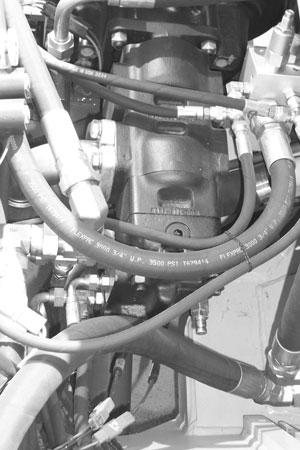
Pressure settings for relief valves are pre-set at the factory. Atest port is provided at the hydraulic pump.
Before conducting any pressure checks, check the engine speed. Engine speed must be 950 to 1000 rpm at low idle, and 2690 to 2750 rpm at high idle.
Warning
Escaping hydraulic oil under pressure can have sufficient force to penetrate the skin. Before applying pressure to the hydraulic system, be sure all connections are tight and lines and hoses are not damaged. Use a piece of wood or cardboard to search for suspected leaks. If injured by escaping hydraulic oil, see a doctor familiar with this type of injury immediately or gangrene may result.
IMPORTANT: Hydraulic fluid and filters should be replaced any time contamination is present before the normally scheduled change.
Changing Transfer Case Oil
Raise the engine hood for access.
1.Remove the drain plug from underneath to drain oil.
6.If the ambient temperature (at any time during the storage period) is expected to drop below freezing, make sure the engine coolant is either completely drained from the radiator and engine block or that the amount of anti-freeze in it is adequate to keep the coolant from freezing. Refer to the engine manual for anti-freeze recommendations and quantities.
During Storage
1.About once each month, connect the battery and, before starting the engine, check all fluid levels to make sure they are at the proper level.
2.Start the engine and allow it to run until it warms up. Then move the machine a short distance to help relubricate the internal parts. Run the engine until the battery has a chance to recharge, and then shut it off.
IMPORTANT: DO NOT discharge oil onto ground. Catch and dispose of per local waste disposal regulations.
2.Remove the breather cap on the front side of the transfer case. Fill with fresh oil until it flows from the check plug hole. Follow specifications in the Lubrication chapter of this manual.
Storing The Machine
If the Telehandler will not be operated for a long period of time, prepare and store it using the following procedures:
Before Storage
Perform the following prior to placing the machine in storage:
1.Wash the entire machine.
2.Lubricate all grease fittings as described in the Lubrication chapter of this manual.
3.Change engine oil as outlined in the Service and Storage chapter of this manual.
4.Apply grease to all exposed hydraulic cylinder rod areas.
5.Disconnect the battery cable clamps and cover the battery, or remove the battery from the machine and store it separately.
IMPORTANT: If it is desired to operate the hydraulic cylinders at this time, BE SURE to wipe the protective grease (and any adhering dirt) from the cylinder rods prior to starting the engine. After operating, if the machine is to be returned to storage, re-coat the cylinder rods with grease.
After Storage
After removing the machine from storage and BEFORE operating it, perform the following:
1.Change engine oil and filter to remove any condensation and residues.
2.Wipe off grease from cylinder rods.
3.Lubricate ALLgrease fittings.
4.Follow the starting and warm-up procedures outlined in the Operation and Adjustments chapter of this manual.