
2024–25 ANNUAL REPORT

2024–25 ANNUAL REPORT
Hepatitis SA’s contribution to viral hepatitis research initiatives continued at a pace during the year. The Kirby Institute’s TEMPO clinical trial that we have been involved in for the past 4 years, finished at all 4 Needle and Syringe Program sites in January. Our partnership continued with the Kirby Institute in the National Hepatitis C Pointof-Care Testing Program and sub-studies – EMPOWER, which was rolled out at various community sites, and Liverhealth, which was rolled out in two Chinese communities during the year.
Hepatitis SA Needle and Syringe Peer Services program launched its new name SA Harm Reduction Peer Services (SAhrps) at the AIVL Human Rights Summit, held in Adelaide in December. At this same event, we were thrilled to learn that AIVL’s Peer of The Year, was our very own Margie Randle. Earlier in the year, at the South Australian Network of Alcohol and Other Drugs Services (SANDAS) Inaugural Awards for the SA alcohol and other drugs (AOD) sector, Carol Holly was honoured for her Outstanding Contribution in Peer Living Experience. These accolades from local and national sector colleagues were indeed welcome and well deserved.
This year Hepatitis SA was also granted a Controlled Substances licence to be an Authorised Supplier of TakeHome Naloxone – and after undertaking the required training, our harm reduction peers began rolling it out at all NSP sites which they staff.
From January, Heplink, a Hepatitis Australia
administered program with funding from the Australian government, has allowed a greater focus on hepatitis B with a dedicated HBV educator 3 days per week, which has been a very welcome opportunity to increase our engagement with communities affected by hepatitis B and the workforces who support them. Heplink funding also allowed for a harm reduction peer to provide blood-borne virus prevention and harm reduction workforce development sessions in 6 rural areas of South Australia, in response to requests for skills development in engaging people who use drugs. This peer also managed to engage AOD/NSP clients in brief information and support sessions at 2 of these rural sites.
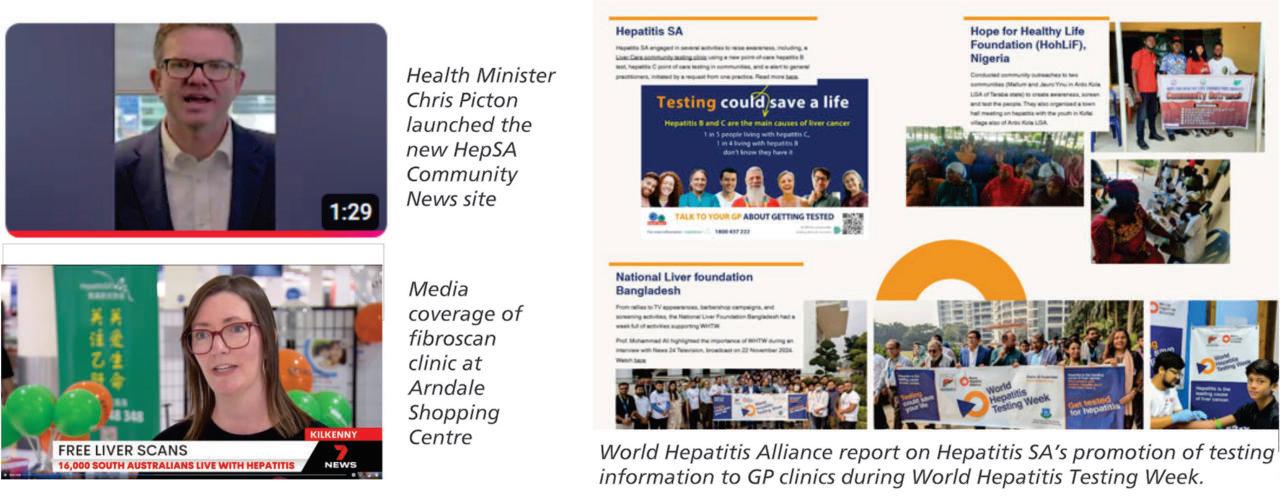
The Education team and the Communications team also had a busy productive year with some highlights including the setting up of systemic viral hepatitis workforce development program for all SAPOL officers, and hitting the milestone of 100 editions of our Community News quarterly magazine and the engagement of the Health Minster, the Hon Chris Picton, to launch virtually, the new Community News website for World Hepatitis Day in July 2024.
Hepatitis SA staff are always open to learning and taking on new responsibilities in response to the needs of the clients of our services. In response to syphilis becoming a growing concern in South Australia, all Hepatitis SA program areas have added this topic to their
information and education services, and Hepatitis SA’s Education Coordinator now sits on the HIV and STI subcommittee of the SA STI and BBV Advisory Committee (SASBAC) to SA Health.
In May it was extremely disappointing to learn that our main SA Health funding would be cut by 10% for the 2025-2026 year. The letter from SA Health stated:
This decision to reduce funding for this program has not been made lightly, and re ects changing epidemiological trends and population heath needs. Hepatitis SA has made significant contributions to South Australia’s nation leading progress towards hepatitis C elimination, and to strengthening the state’s response to hepatitis B and syphilis. Within a reduced funding envelope and informed by epidemiological data, Hepatitis SA is requested to consider opportunities to deliver a more targeted response to hepatitis C with a focus on the remaining priority populations and settings where the burden is greatest..
Over the year we said goodbye to a number of long-term staff - educator Gary Spence retired in July, Hepatitis Helpline volunteer Debra Landers left in December, and Joy Sims our part-time librarian and administration officer retired in May 25, who at this time was one of our longest serving staff, with over 25 years at Hepatitis SA.
Other staff who left this year, included educator Shannon Wright, who had been on extended leave prior to resigning, and peer worker Sharon Drage, who had been working on TEMPO. In their place, some current part-time staff increased their hours, we welcomed back peer worker Fred Robertson for one day per week to join the team doing hepatitis C point-ofcare testing at the Adelaide Remand Centre, and we welcomed Craig Shrubsole to the education team late in the year.
We also farewelled Board member Josh Riessen at the 2024 Annual General Meeting, and welcomed Tamara Shipley and Memoona Rafique.
I would like to thank all those who have left during the year for their valuable contribution to our organisation, which for most, was over many years.
I would also like to thank all our sector partners, both locally and nationally, who support the work we do in South Australia.
Finally, I would like to thank those who administer our funding – the STI and BBV Section of SA Health, Southern Adelaide Local Health Network and Drug and Alcohol Services SA, and Hepatitis Australia. I would also like to thank Abbvie for supporting quarterly operator meetings to coordinate hepatitis C pointof-care testing across the state. Participation at these meetings has grown over the year, and ha allowed the sector to have some great conversations, sharing our successes and suggestions to overcoming barriers to hepatitis C testing and treatment in South Australia.
Arieta Papadelos Chairperson
The Education Team had another great year, delivering 43 community sessions to 1,068 participants across multicultural services, drug and alcohol services, mental health services, and Aboriginal health services.
The Education Team joined up with the Information and Support Team and the Heplink HBV Educator, Jesse, to provide the Hepatitis C National Point of Care Program Substudy – Liver Health, where two screening days were facilitated with the Chinese Welfare Association and the Chinese Association of South Australia. These days were made easier with Yingbin and Jesse who were able to communicate with the community members in language when filling out the consent forms, and we also had one of our volunteers, Vivien, come and help with interpreting during the rapid HCV testing and fibroscanning. Over the two days we tested 44 participants. These clinics are such a good way to engage with the community, and we are looking forward to offering this testing to more multicultural communities in the coming year.
Our team, often with the Heplink HBV Educator, also participated in 23 health expos and other awareness raising events, engaging with 1,345 community members. A highlight was the World Hepatitis Day awareness raising event at Arndale Shopping Centre, which was a great success. CALHN viral hepatitis nurse Jeff Stewart attend and was
kept very busy, performing 56 fibroscans for the community. The day was a collaboration between PEACE Multicultural Services and Hepatitis SA. Hepatitis Australia also managed to secure Channel 7 News who attended the event and interviewed myself and Memoona Rafique from PEACE. It aired on both the 4pm and 6pm news programs and we had calls from community members who enquired about further testing days.
The prisons have started doing a ‘Yellow Brick Road’ style interactive activity where prisoners get a sheet of paper which has questions they are required to ask each service a question, once they have completed the sheet, they take it to one of the Activity Coordinators to receive a goody bag with items from each service in there. It has been a really effective way to ensure prisoners engage with each service.
The Education team also provided 61 workforce development sessions to 892 staff from various organisations, including drug and alcohol services, youth services, and correctional staff.
Hepatitis SA’s Positive Speaker Program continued this year, and we invited NSP peers and Hepatitis C peers to present at specific sessions as well. In total, positive speakers accompanied educators to five workforce and twelve community sessions. Hearing from lived experience speakers adds immense value, and
participants often express their gratitude. Here are a few comments:
“A humanistic take on what it is like living with hep C, gives more depth to what it means for individuals.”
“Powerful, emotive element.”
“It was good to hear about the potential effects and how devastating it can be, thank you for sharing.”
This year we continued our collaborative stigma work with Mosaic Counselling, Thorne Harbour Health SA and Positive Life SA and a small group of blood borne virus lived experience members, and we are slowly working through the Action Plan that was developed through the original Stigma and
Discrimination Working Group which was convened by SA Health.
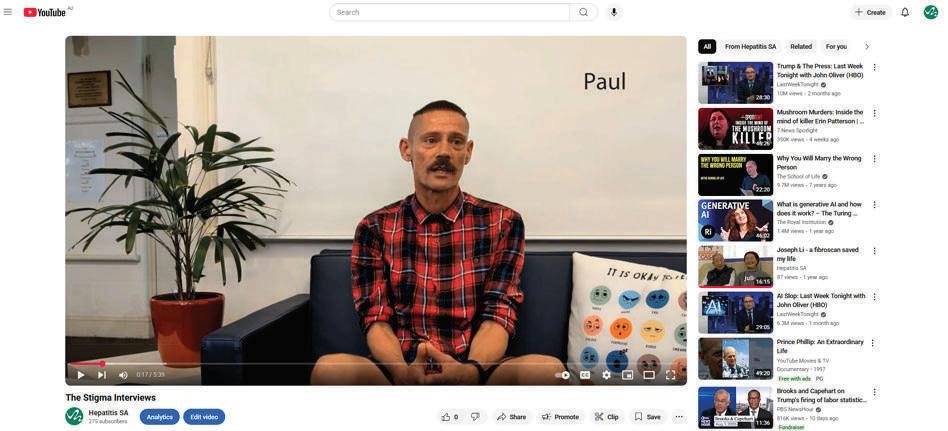
Emma Williams, from Mosaic Counselling Service, and I presented about our work at the inaugural UNSW Stigma Conference. In this presentation we debuted one of the group’s projects of creating a short video to tackle stigma faced by people living with a blood borne virus. The fiveminute video (see image above) features interviews with four people discussing their lived experience and thoughts around the stigma they encounter.
During the year we saw more changes to the education team, Gary officially locked in his retirement, and we wish him all the best in his new adventures. Thank you, Gary, for your incredible
contributions over the past eight years! From your start with the hepatitis B community education project in the Filipino community to your recent collaboration with SA Police to establish a structured training code for officers, your impact has been invaluable.
Towards the end of the year, we also welcomed a new Educator, Craig, who has slotted into the team with ease, and we are happy to have him join us. I would like to thank the team for another great year of work out in the community, and I’m looking forward to seeing what the coming year holds for us.!
Jenny Grant Coordinator
This year, NSP Peer Projects launched a new name and logo, to become SA Harm Reduction Peer Services (SAhrps). The Harm Reduction in the name highlights our approach to engaging with people who use and inject drugs by providing NSP services and information to reduce drug related harm without stigma or judgement.
SAhrps Harm Reduction
Peers provided NSP services full-time at three ‘Primary’ NSPs (Noarlunga Health Precinct, Noarlunga Centre; Wonggangga Turtpandi Aboriginal Primary Health Care Services, Port Adelaide; and DASSA Northern Services, Elizabeth).
Peers also provided NSP services on a sessional (part time) basis to engage with priority populations at Uniting Communities and Salvation Army Sobering Up Unit NSPs in the Adelaide CBD.
Primary and Sessional Peer NSP Sites
There were almost 50,000 more syringes distributed through the Peer staffed NSPs this year than the previous year. The trend of informal peer distribution continues to grow, with fewer people accessing the NSPs but overall collecting greater numbers of syringes to distribute to their social networks. There were increases in the number of information/peer education interactions, intensive support interactions and referrals to other services. SAhrps NSP Peers recorded:
• 13,719 interactions
• 1,428,396 syringes distributed
• an average of 104 syringes provided per interaction
• 511 new NSP service users
• 2,401 interactions with Aboriginal and/or Torres Strait Islander service users
• 4,777 occasions of peer provided information, education and intensive support/complex needs interactions
• 1,160 referrals -mainly to other NSPs, AOD services and hepatitis C testing/ treatment
SA Harm Reduction Peer Services Highlights
Resources developed - The ABC of GHB, a guide to safer use of GHB developed with GHB users in response to increasing use of GHB; initiation of the NSP Newsletter –produced on an ‘as needs’ basis, with 2 editions produced to date.
Hepatitis SA became licenced as an Authorised Alternative Supplier of the opiate/ opioid overdose reversal medication, naloxone.
Peers and other accredited workers can now provide naloxone as a nasal spray or intramuscular (IM) injection, together with instruction on how to administer naloxone and peer education on recognising and responding to opiate/opioid overdose.
Participation in awareness days and other campaigns
- including International Overdose Awareness Day community BBQ, World Hepatitis Day quiz and the Centre for Social Research in Health’s Stigma Indicators Monitoring Project provided opportunities to raise awareness of important
issues such as overdose and stigma.
The SAhrps Project Worker’s and Coordinator’s participation on panels facilitated by AIVL (‘Keeping the Flame’ World Hepatitis Day webinar and ‘Ageing Amongst People Who Use Drugs’ APSAD 2024 panel)
The AIVL AGM & Health and Human Rights Summit in Adelaide - launch of the SAhrps program name and branding; long-time Harm Reduction Peer, Margie, receiving the national AIVL Network Award for ‘Peer Worker of the Year’ in recognition of outstanding service to People Who Use and Inject Drugs. As SAhrps was the Summit’s unofficial host, we were delighted with the positive feedback about Adelaide and our team, and the comments that “this was the best AGM yet”.
Hepatitis SA Hackney NSP
There were 1,410 client interactions recorded at Hackney NSP (78% male; 22% female). People accessing the Hackney NSP for the first time was a growing trend, with the number of new service users increasing again this year, by about 40%. While the proportion of NSP interactions for methamphetamine or heroin is similar to last year, the proportion of
NSP interactions relating to Performance and Image Enhancing Drugs (PIEDS/ steroids) use has increased. This year, over 1/3 of Hackney NSP service users reported using PIEDs. Hackney NSP also recorded increases in the number of syringes distributed (15,848 more), information/peer education interactions and referrals.
• 221 new NSP service users
• 58 Aboriginal and Torres Strait Islander NSP interactions (similar to last year)
• 165,802 syringes distributed (15,848 increase from last year)
• 356 occasions of information/education
• 116 referrals to other NSPs, AOD services and hepatitis C testing/ treatment
• 37% of clients reported using amphetamines
• 18% of clients reported using heroin
• 34% of clients reported using PIEDS
Heplink
Heplink, an Australian government information and support program administered by Hepatitis Australia, contributed funds for a Harm Reduction Peer to provide services at the Hackney Rd NSP site for
3 days per week, which lessened the need for other Hepatitis SA staff to volunteer at the NSP, which was taking them away from their core roles more and more as this service became busier.
In response to requests, Heplink also funded a Harm Reduction Peer to provide blood-borne virus prevention workforce development to 67 agencies across 6 rural areas of South Australia, and harm reduction peer education to 39 people who use and inject drugs in 2 of those areas.
Heplink also brie y trialled harm reduction and support phone sessions to pre-release prisoners who had asked to talk to someone with lived/ living experience of drug use, but this was a less successful initiative, as the prisoners were wanting an AOD counselling service rather than the harm reduction we provide.
A big thank you to our amazing team for their work in 24-25: Andrea, Bridget, David, Fiona, Justin, Margie, Mark, Meagan, Penni and Ruby.
Carol Holly Coordinator
This was a significant year where we set a new direction for the Community News and marked its 100th issue acknowledging the work of those who started the publication and kept it going through the years. Our activities during the year included:

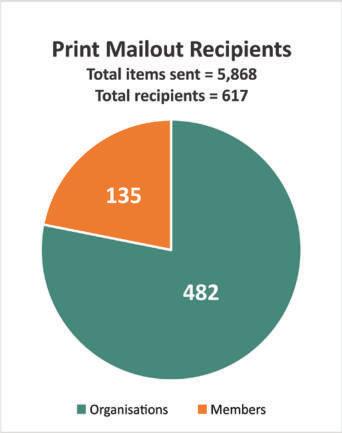
Published 4 issues of Community News including issue #100.

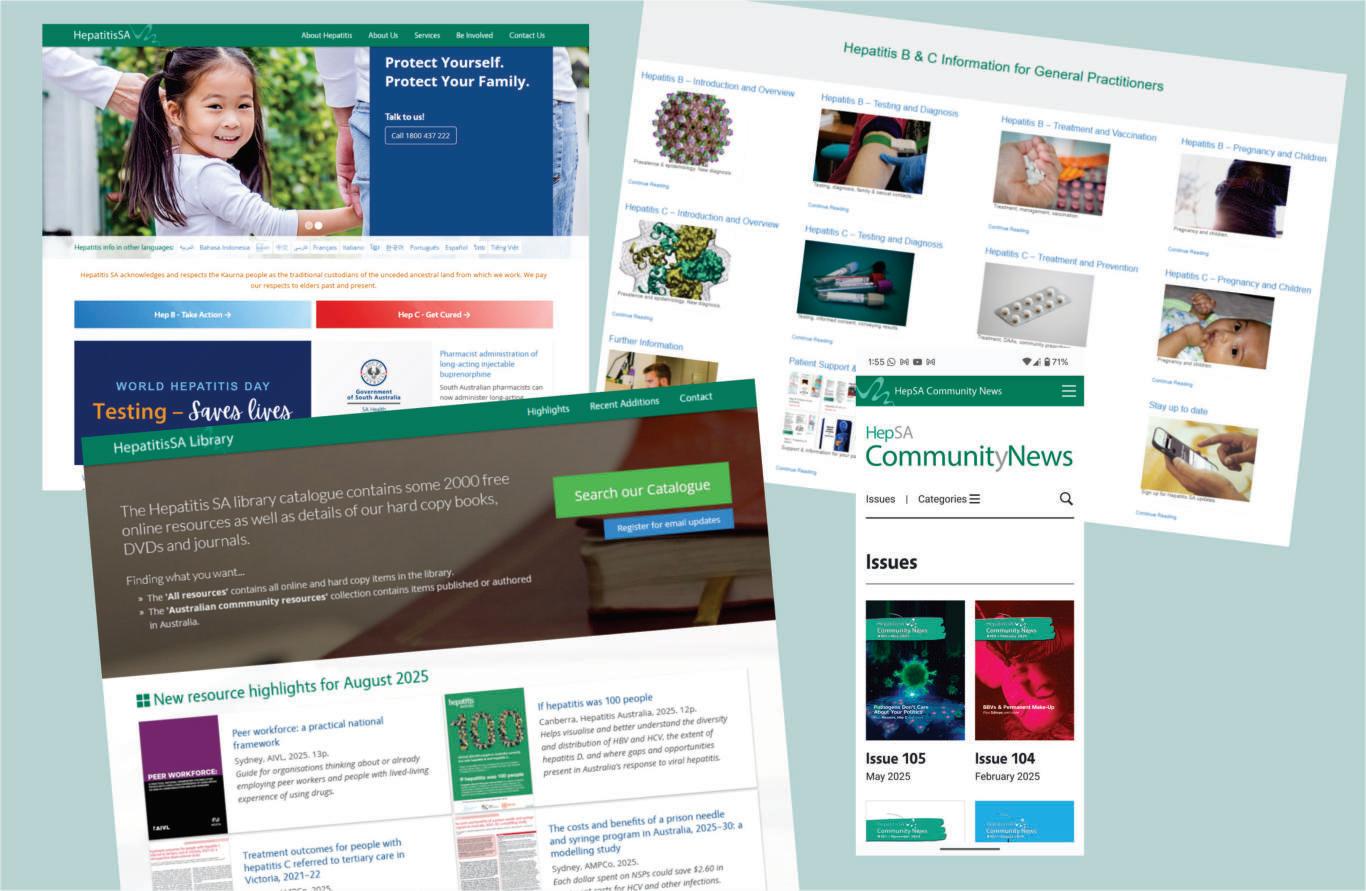
Launched a new News website; posted 70 new articles

Maintained a hepatitis specialist library of 2000+ titles

Produced booklets, videos, promo items, and posters

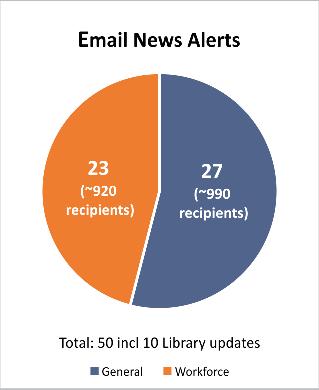
Sent 50 e-news alerts to 989 recipients

Maintained a map of SA Hepatitis B prescribers
Designed logo and branding for the SAhrps program

Shared 458 social media posts with 1,744 followers

Facilitated another successful WHD campaign

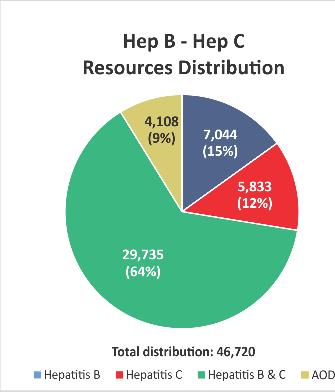
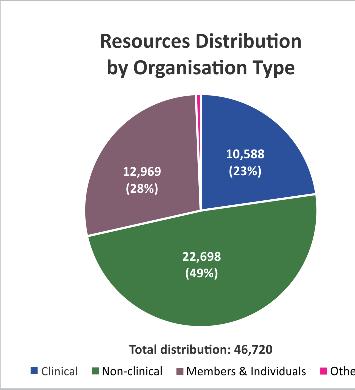
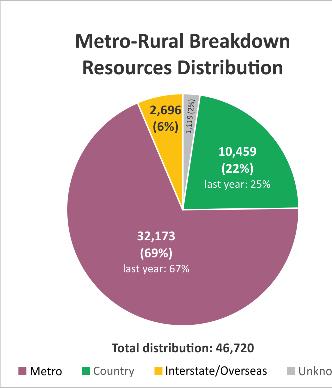
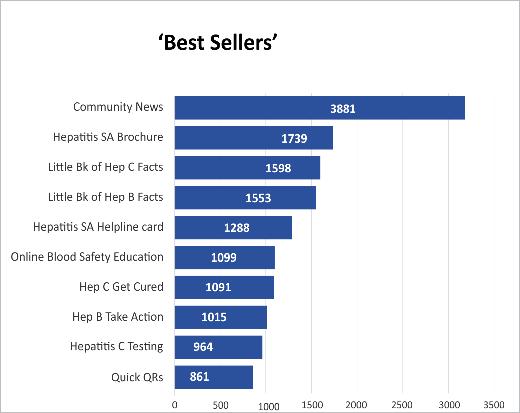
Distributed 46,720 resource items

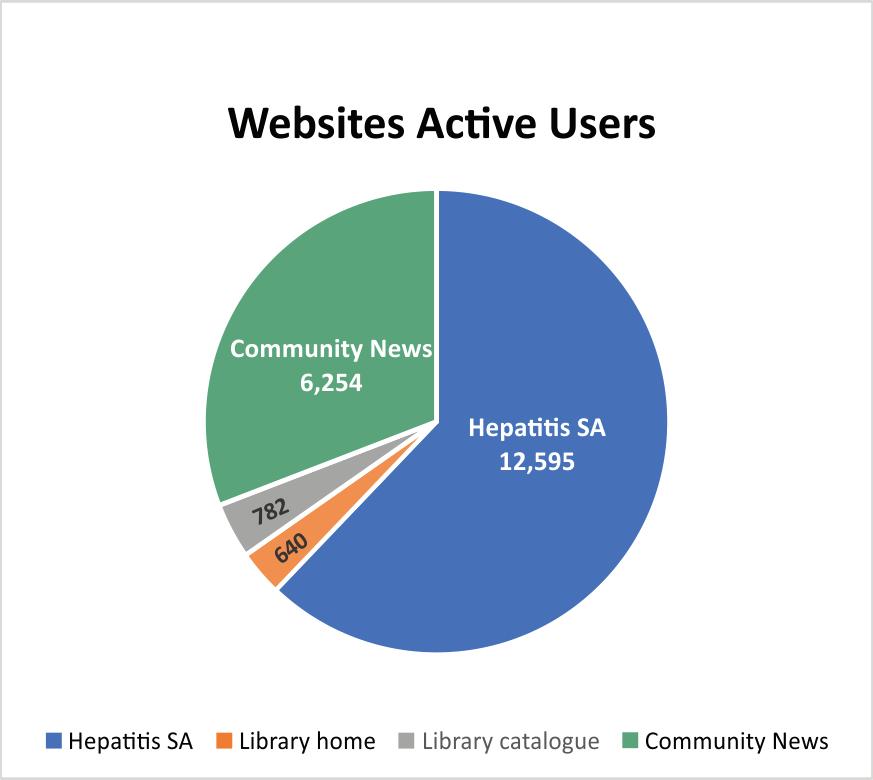
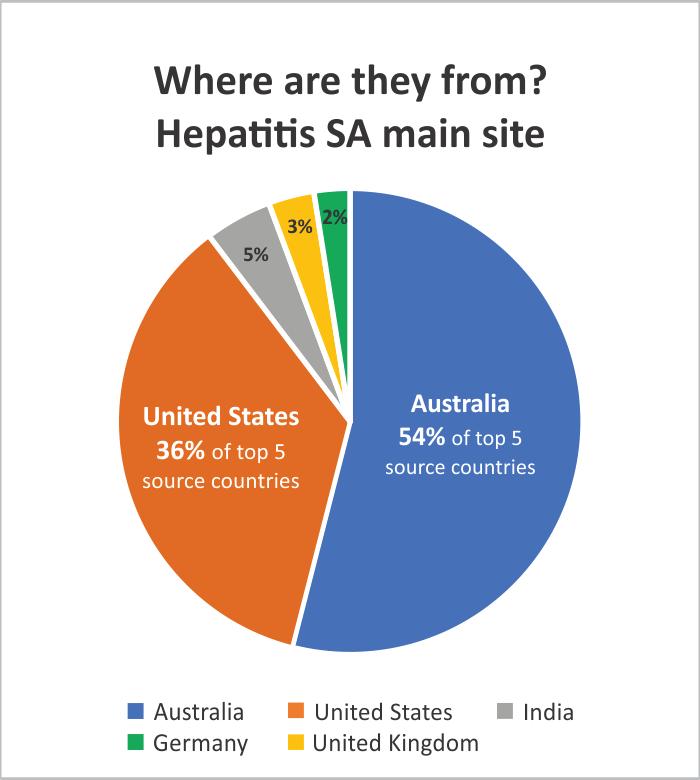
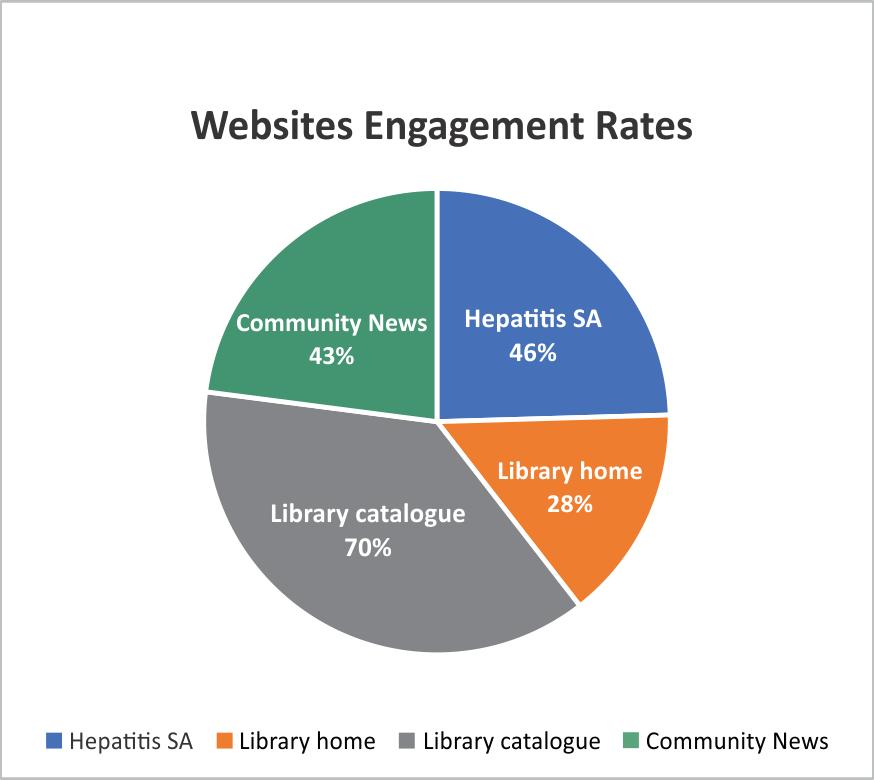
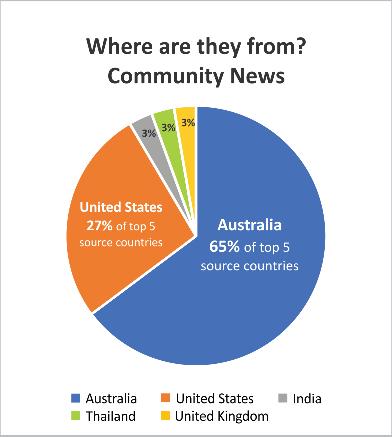
Had 20,271 active users on our suite of active websites

Promoted the first World Hepatitis Testing Week
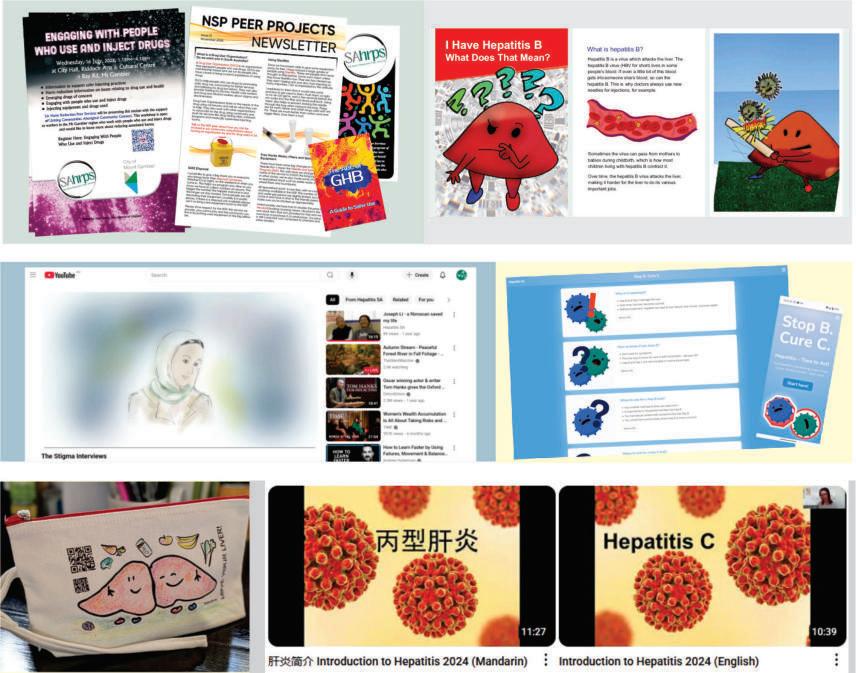
Some of our web assets
World Hepatitis Day & World Hepatitis Testing Week highlights
Conclusion
The development of the HepSA Community News site in a few short months, including research, design, user testing and content migration was possible only with great teamwork. Well done all – and especially to web developer, Bryan and editor, James.
Cecilia Lim Coordinator
The Information and Support Team is comprised of three people who have a lived experience of hepatitis C and treatment. These hepatitis C peers shre their lived experience of hepatitis C, along with information regarding transmission, testing, (which includes pre and post-test counselling), and referrals, with a focus on increasing access to hepatitis C treatment to those most at risk of transmission in our state. The team engaged 382 people throughout this year within Homelessness Services and Alcohol and other Drug ( AOD ) services, and a further 1012 people within custodial settings.
At all locations, the Hepatitis C peers conducted rapid testing for hepatitis C virus antibodies and/or RNA, working closely with Viral Hepatitis Nurses who provided Direct Acting Antiviral medications for anyone who tested positive for hepatitis C infection.
The homelessness services attended during this past year were WestCare – Baptist Care Services, Hutt Street Day Centre, and Catherine House, where the peers tested 144 people (98 men and 46 women).
AOD Services that the peer workers attended in the metropolitan areas this year included Noarlunga and Hackney Needle & Syringe Program sites, Uniting Communities at Christies Beach and Smithfield, and OARS Community Transitions in the South. The majority ( 184 of 187 ) of these participants were enrolled in EMPOWER, which is a sub-study of the Australian National HCV PoCT Testing Research Project by the Kirby
Institute at the University of New South Wales whereby participants are reimbursed $20 for their time, including participation in a short survey.
We also assisted the Kirby Team to enrol and test 56 participants at Drug & Alcohol Services of SA (DASSA) Central and Northern Services over 4 days for their ETHOS Wave 3 Project, which is a national high intensity observational study comprising surveys, finger stick RNA testing and fibrosis scans in alcohol and other drug settings.
The Information and Support Coordinator contacted the City of Onkaparinga (Noarlunga Council) for locations of high-density housing and other possible locations suitable for high intensity testing activities. With their support, we decided upon having a testing day at the Christie Downs Community House. Hepatitis SA volunteers led a mailbox drop to 500 houses nearby, and the event was also heavily promoted via the NSP Peer at the Noarlunga NSP site. This activity was well received by the community.
Testing events were also conducted together with our Education Team under the LiverHealth sub-study of the National HCV POCT Program, Kirby Institute, UNSW –this study aims to enhance assessment of liver disease and viral hepatitis among culturally and linguistically diverse people with incentivised rapid testing for hepatitis B & C. We appreciated support from two local Chinese community groups for hosting us during this reporting period to
run Liverhealth. The first of which was held at The Chinese Welfare Association of Adelaide with 21 participants and the second at The Chinese Association of South Australia (CASA) located in Black Forrest with 23 participants.
We also were able to conduct rapid hepatitis C testing at Tapari Wellbeing Centre in Port Pirie with 5 participants, Stepping Stones Day Centre in Port Augusta with 17 participants and West Coast Youth in Port Lincoln with 19 people.
In 2024-2025, the hepatitis C peers attended the Adelaide Remand Centre (ARC) on a weekly basis. In February 2025 after ethics and data requirements were in place, the team was able to offer ‘Insti Tests’ to the remandees. These ‘Rapid Antibody Tests’ were conducted with 430 new admissions to the ARC. The peer workers provided 530 HCV rapid RNA tests throughout this year, providing a total of 878 HCV tests for the males on remand. The Viral Hepatitis Nurses were able to provide the DAA treatment quickly to any eligible participant who testing positive for HCV RNA.
At the Adelaide Women’s Prison, the peers had harm reduction conversations, including information about the availability and use of Naloxone with 49 women there. They provided HCV RNA tests with 12 of the women who believed they may have been at risk of hepatitis C.
The peers attended a Health Expo at Mobilong Prison speaking with 96 male
prisoners about hepatitis C as they participated in a quiz raf e. The Viral Hepatitis Nurse from SALHN conducted 6 antibody tests on the day and 20 RNA Tests, and the HCV Peer returned the following week with the nurse to test the remaining 12 who had requested testing at the expo.
Hepatitis C Antibody testing was also offered at Port Lincoln Prison for 34 men, and over 2 days, teams from Hepatitis SA, Flinders PoCT and CALHN provided information and testing at Yatala Labour Prison to 76 prisoners comprising 69 Antibody tests and 9 for HCV RNA.
In early 2025, we wound up the Kirby Institute’s TEMPO Study, conducted at 4 South Australian Needle and Syringe Program (NSP) sites since 2022. TEMPO was a randomized controlled trial to compare point-of care HCV RNA testing, dried blood spot testing, and standard of care to enhance treatment uptake among people with HCV who have recently injected drugs.
Hepatitis SA peers were part of the study team at each of the 4 SA sites in partnership with the three Adelaide Local Health Networks.
Hepatitis SA continued to provide the confidential free call Helpline, and Prisonline service to South Australians requiring information and support regarding viral hepatitis. Information and support is also available to people who wish to access the service in-person, via email and Webchat through the Hepatitis SA website. Referrals to other services are provided as needed.
The Helpline & Support Service received a total of 128 contacts: 94 through the helpline, 10 via the Prisonline, 10 through the webchat, nine emails, five in-person. Eighty-five clients made contact for the first time. The majority (123) were seeking information, two emotional support and three were discrimination related. Most callers (109) were from the metro area, eight from regional SA, six from interstate, and five overseas.
Workers disclosed their lived experience of viral hepatitis to 14 clients. Referrals were provided to 88 people that included, the Adelaide Dental Hospital Special Needs Unit, antidiscrimination orgs, hepatitis friendly GPs, NSPs, viral hepatitis nurses & SA Prison Health Service Nurses, other Hepatitis SA services amongst others.
Client quotes:
“Thank you, I am glad you listened and understood.”
“Thanks, that’s really helpful.”
The service was staffed by Hepatitis SA workers and long-term experienced volunteers, Fred and Debra. After nearly 24 years of volunteering on the Helpline, Debra retired in December 2024. We thank Debra for her unwavering dedication and kindness. Through countless moments—big and small—Debra has touched lives, offered support, and inspired all those around her with her compassion and integrity. We wish Debra all the best in her future.
Lisa Carter Coordinator
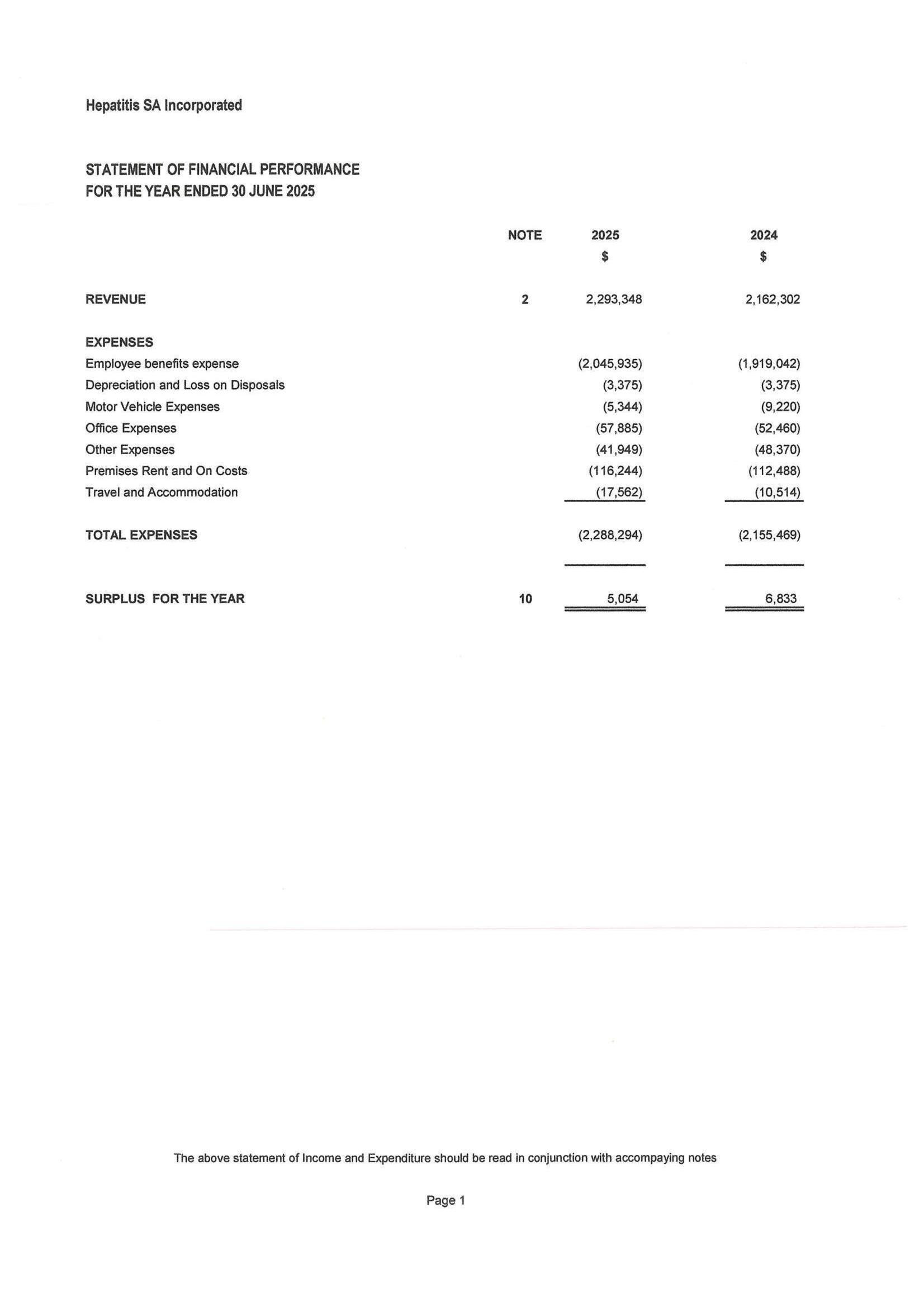
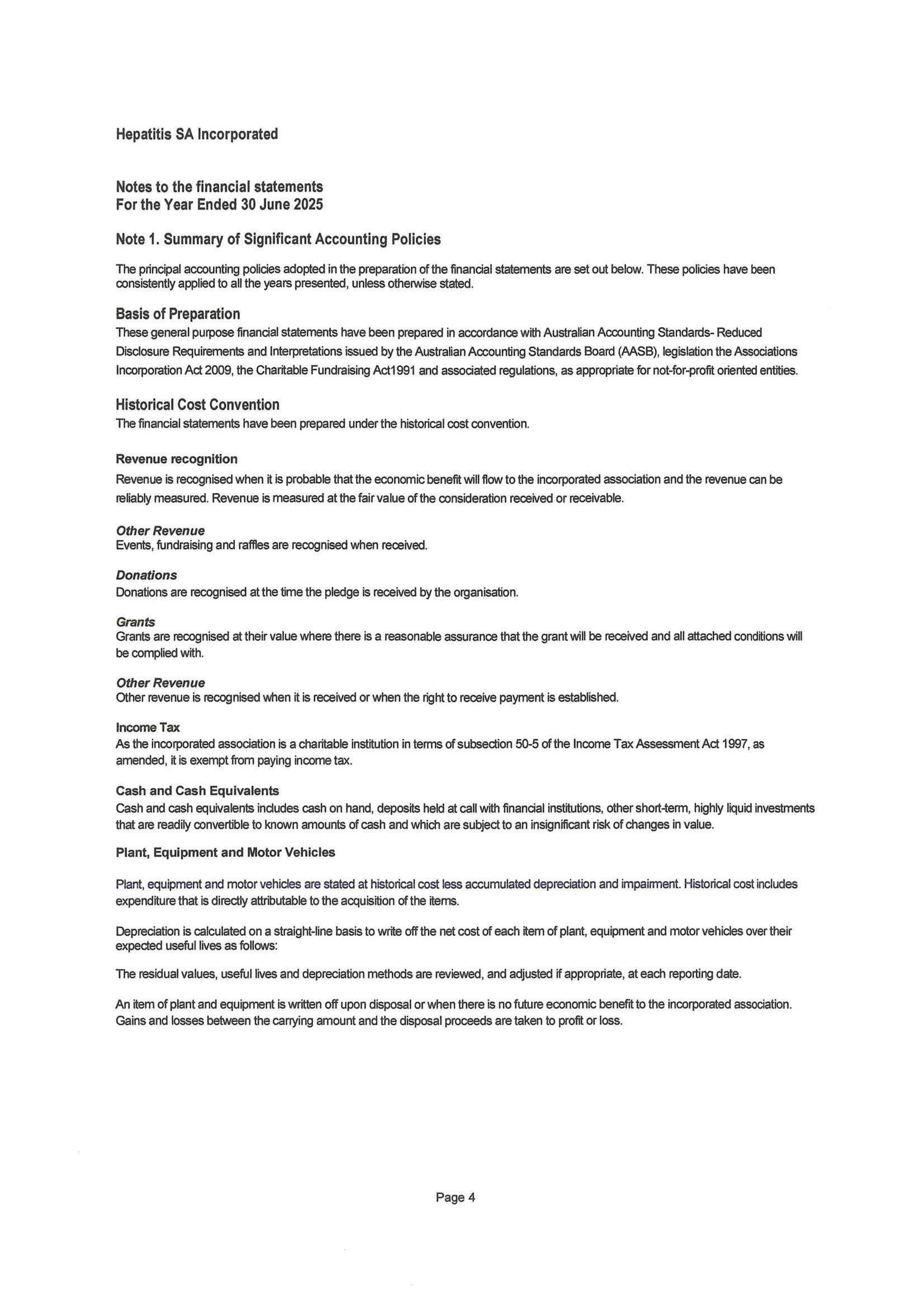
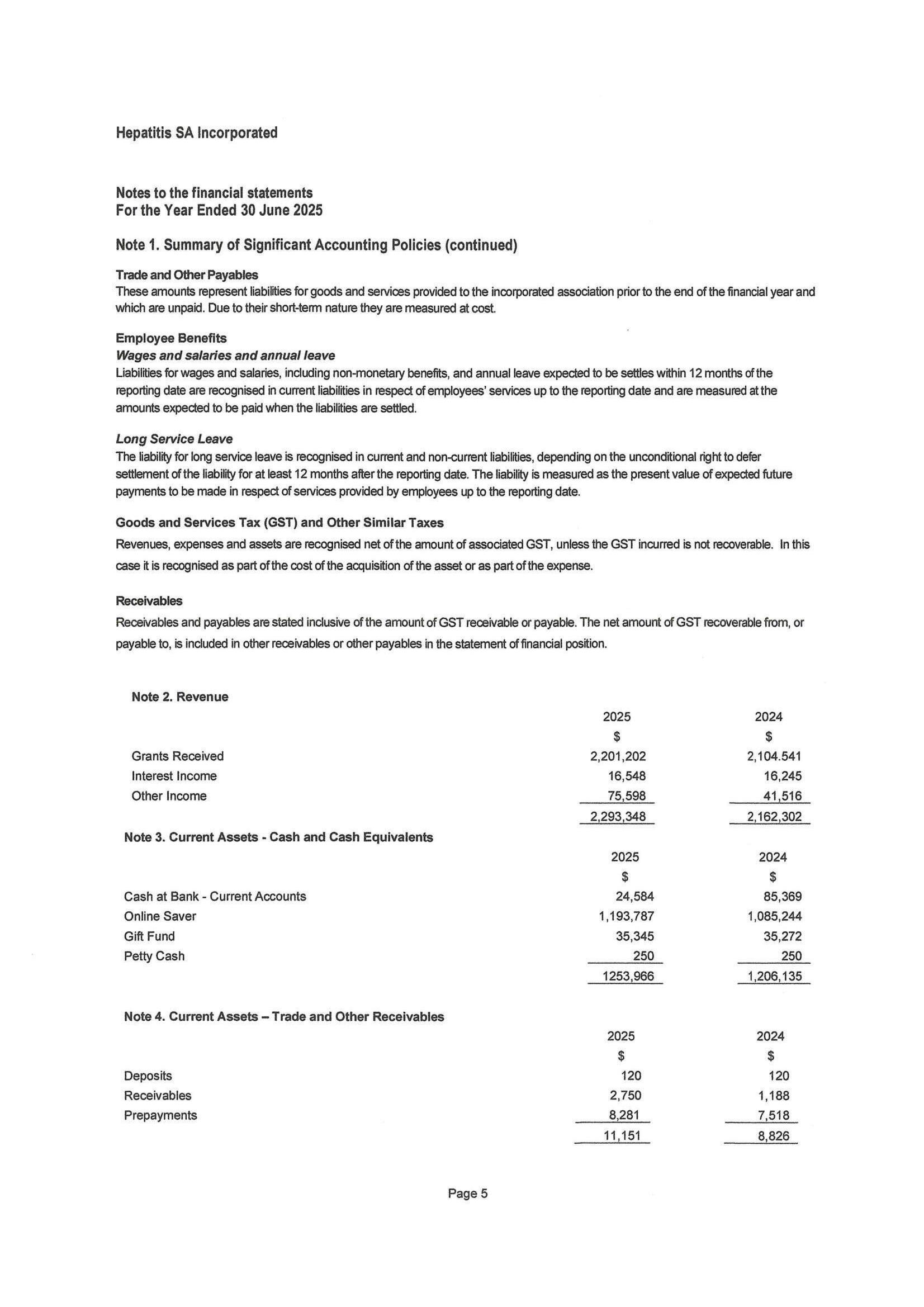
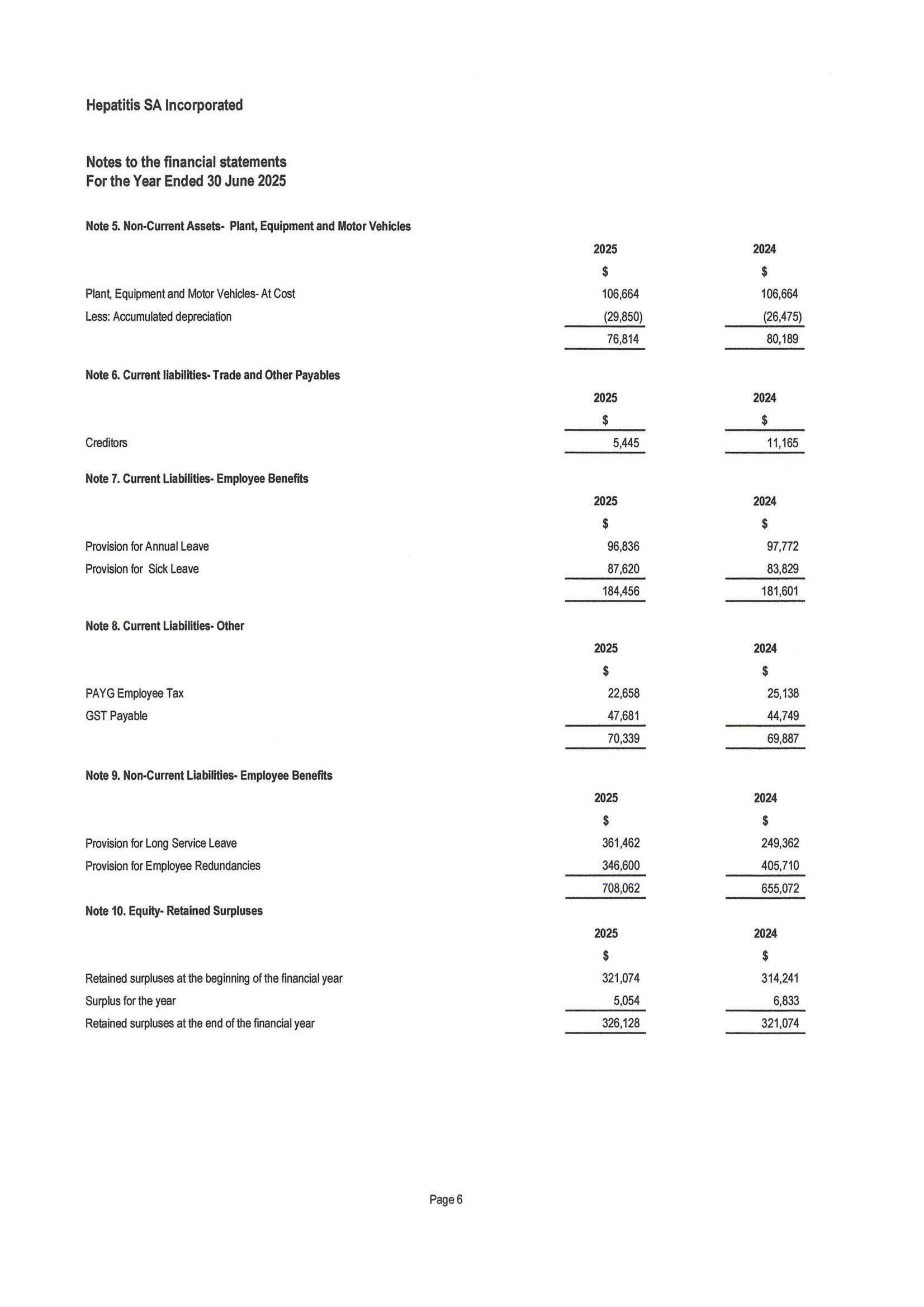
Total revenue for Hepatitis SA for 2024-2025 was $2,293,348. This was made up from grant income of $2,201,202 for our 2 main recurrent grants from SA Health and for Heplink funding from the Australian government, as well as other income of $92,146 which included interest, recoupments and a small amount in donations.
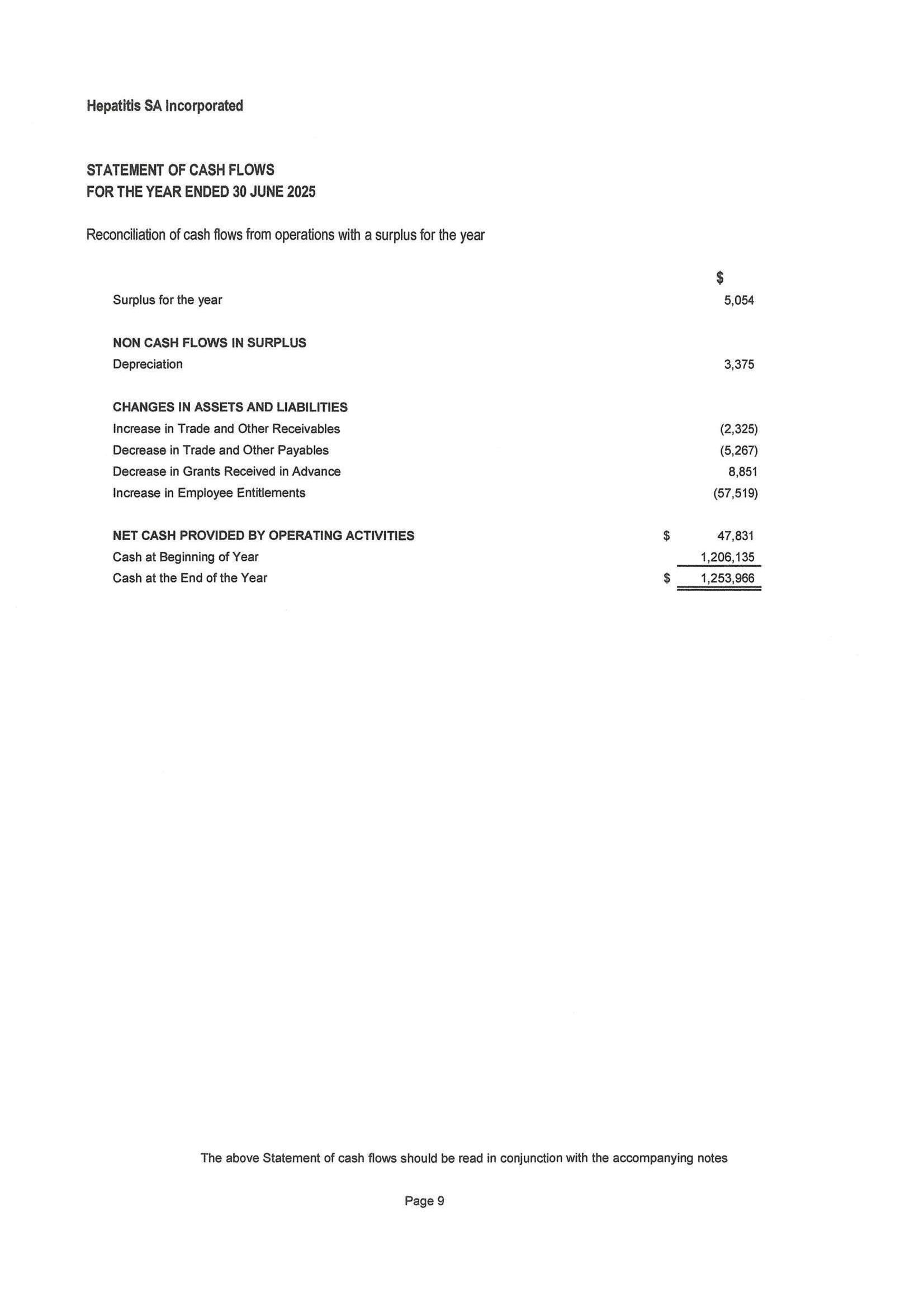
Total expenditure for the year was $2,288,294. The major expense was the Employee Benefits expense of $2,045,935 with other large expenses being Premises Rent and Outgoings of $116,244, Office expenses of $57,885 as well as other expenses of $41,949 which was largely comprised of Program costs of $37,758. Motor vehicle expenses were $5,344, Travel and accommodation was $17,562 and the Depreciation and
amortisation expense was $3,375.
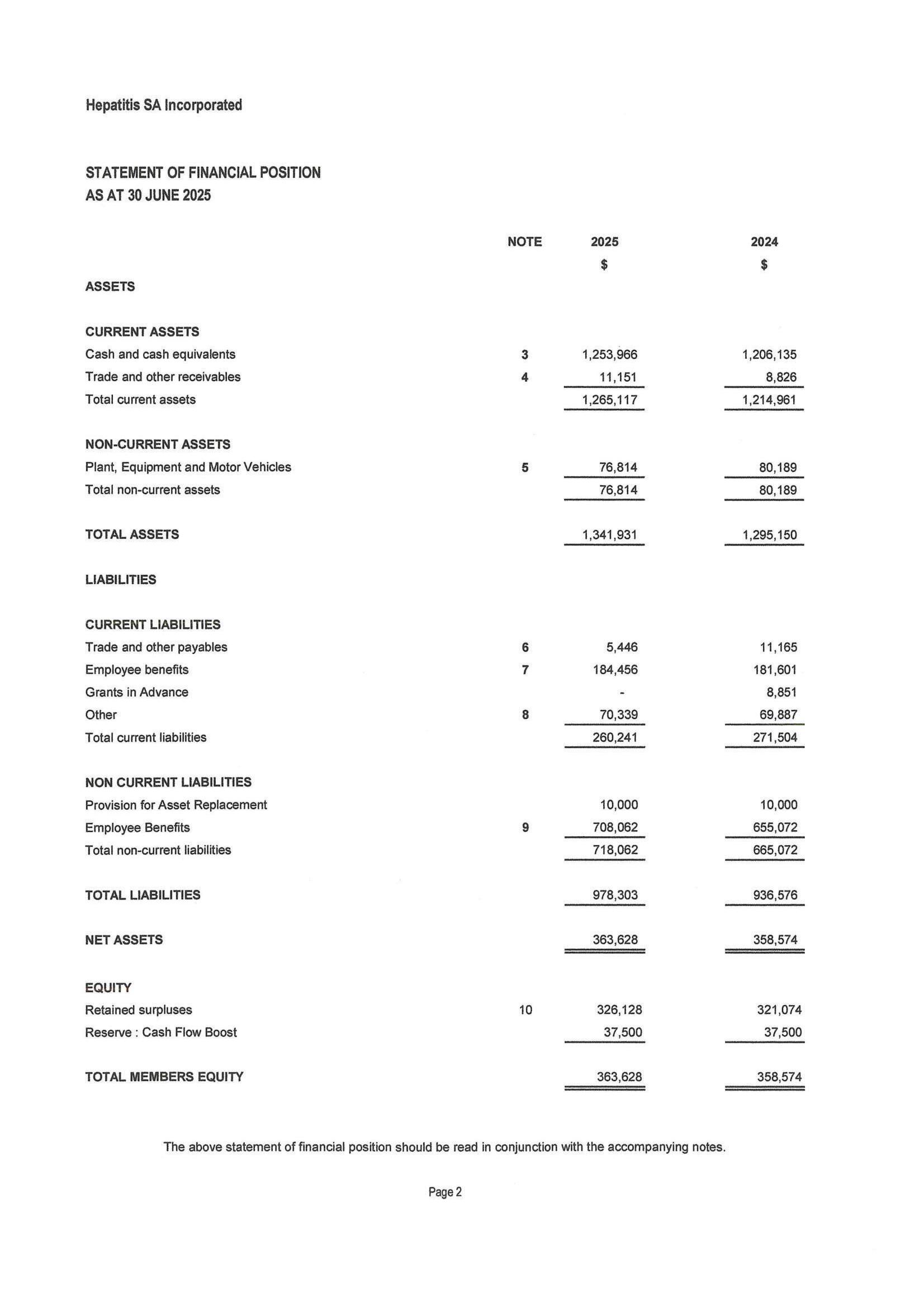
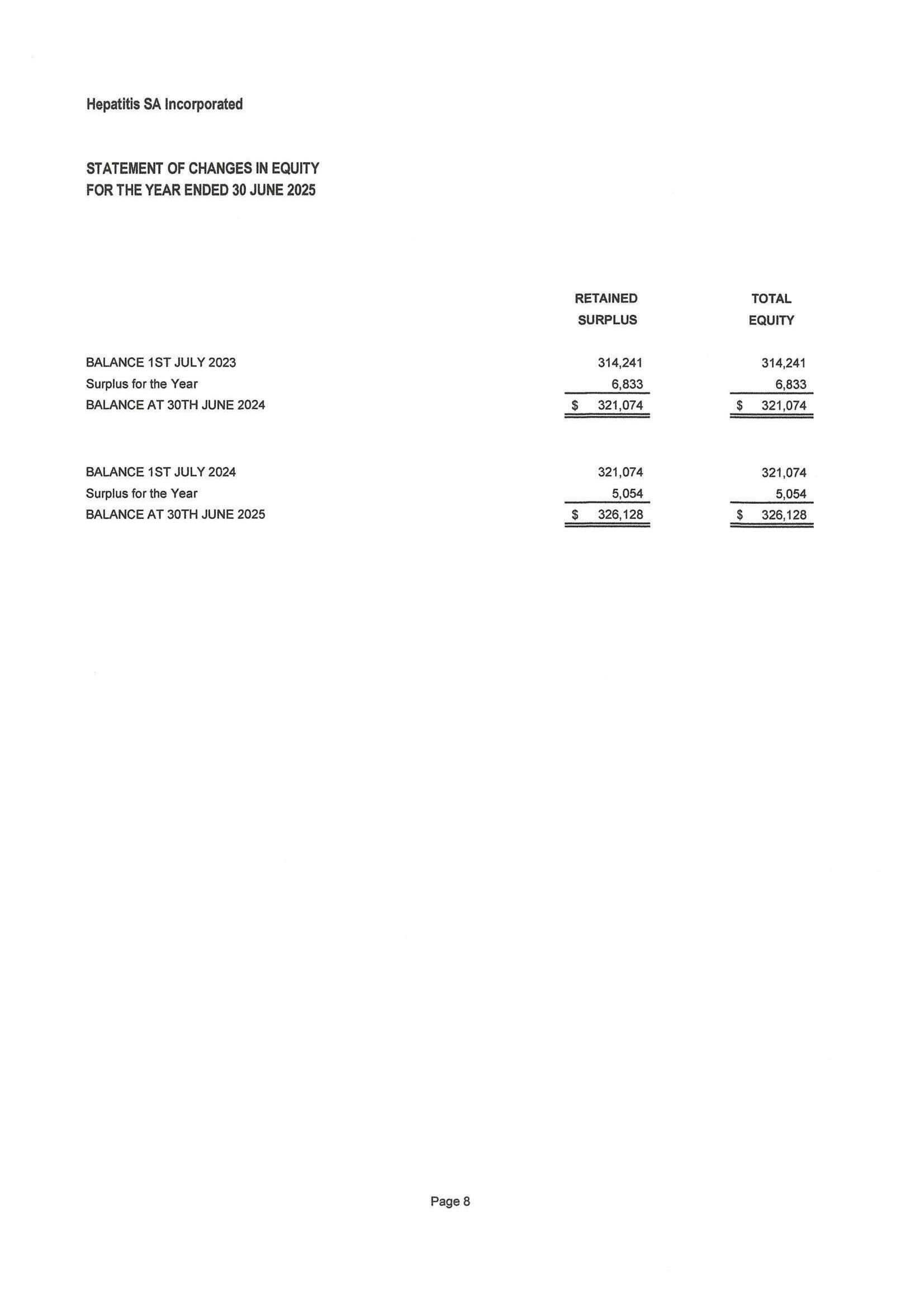
For the 2024-2025 financial year, Hepatitis SA had a surplus of $5,054 and this resulted in total equity of $363,628 as at 30 June 2025.
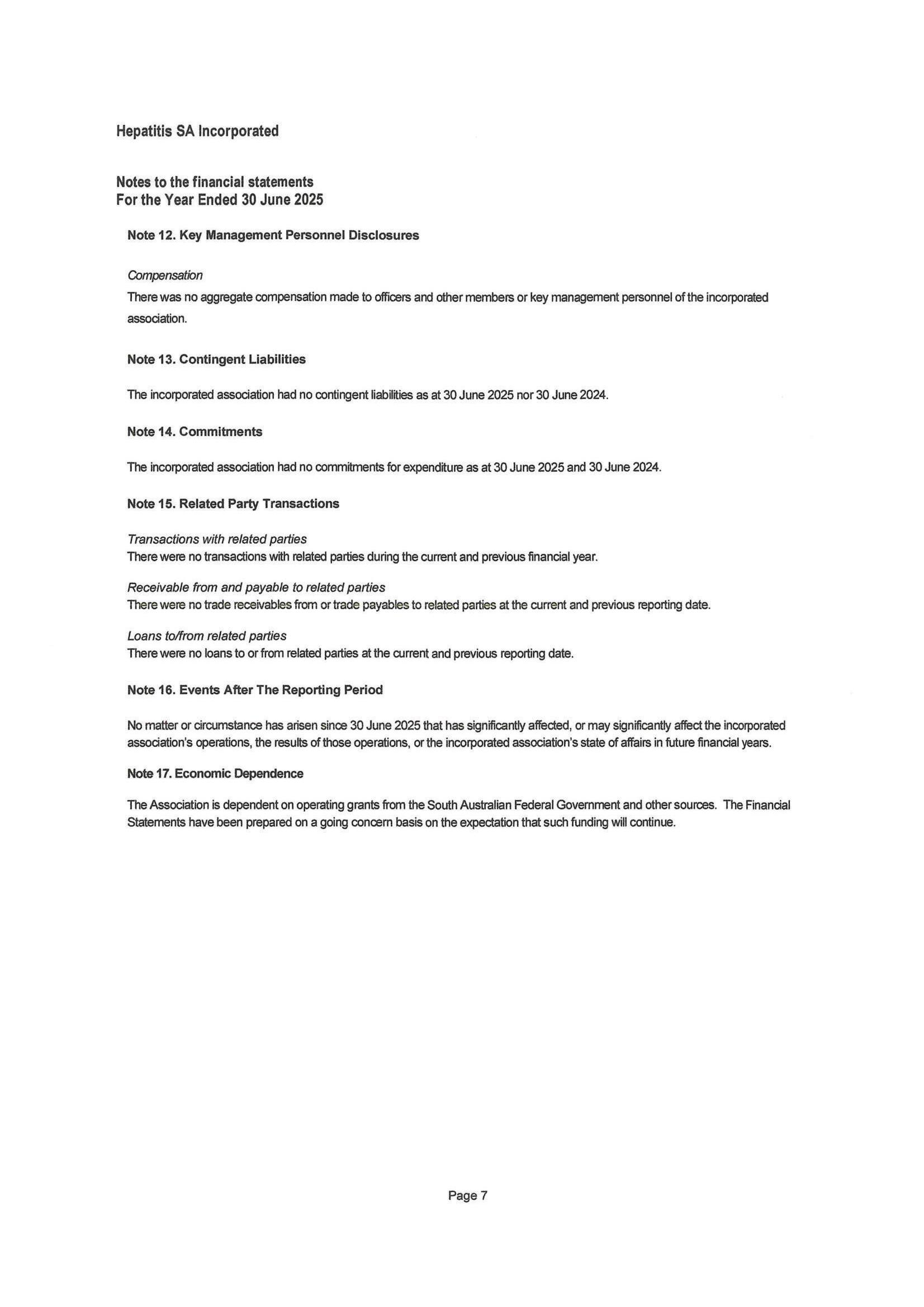
Hepatitis SA would like to thank the STI and BBV Section at the South Australian Department for Health and Wellbeing and Drug and Alcohol Services South Australia for administering Hepatitis SA’s major grants during the 2024-2025 financial year. We would also like to thank Hepatitis Australia for administering Heplink funding from the Australian government and Abbvie for their sponsorship of quarterly sector meetings for the Coordination of HCV POC Testing in South Australia.
Michael Larkin Treasurer