THE FOUCAULT PENDULUM’S REVOLUTION 6. DINING WITHOUT DYING: USING CRISPR TO REMOVE MYCOTOXINS IN CORDYCEPS MILITARIS 8. A CASE STUDY OF THE DIRE WOLF “DE-EXTINCTION”
VACCINE HESITANCY AND MISINFORMATION: HOW IT’S AFFECTING US TODAY 12. INVESTIGATING SUBCONSCIOUS BIAS IN PAIN PERCEPTION
WRITER: MICHELLE JOHNSTON
WRITER: OLIVIA BARRETT
WRITER: SAMANTHA VACCARELLA
ADVISOR: DR. J.D. GANTZ
MISSION STATEMENT
HENDRIX SCIENTIFIC’S PURPOSE IS TO IMPROVE OUR ABILITIES TO COMMUNICATE SCIENCE IN A WAY THAT IS ACCESSIBLE TO ALL AUDIENCES. AS WE LEARN TO SYNTHESIZE SCIENTIFIC DISCUSSIONS, NEWS, AND RESEARCH AT HENDRIX AND BEYOND, WE WILL GRASP A BETTER UNDERSTANDING OF SCIENCE OURSELVES.
INTERESTED IN SUBMITTING? GO TO OUR INSTAGRAM OR SCAN THE QR CODE BELOW!
FOLLOW US ON INSTAGRAM! @HENDRIXSCIENTIFIC
NOTE FROM THE EDITOR
SYDNEY GREENE
EDITOR-IN-CHIEF
The Hendrix Scientific represents such a special corner of the Hendrix Community and presents students with the rare opportunity to explore their scientific curiosity free of the threat of academic consequence. This special issue features several personal experiences students had while at undergraduate research programs over the past summer. In their pieces, they discuss the projects they were part of as well as their personal development as a result of these experiences. They explore what it means to conduct research and to embody the effort you put into your work. In every piece, however, students were able to take a scientific question and communicate the personal and global implications of its investigation in a meaningful way. No student’s academic progression occurs in a vacuum: we are all experiencing different things within the context of the broader Hendrix Community and we are all constantly learning from one another’s experiences. At a time when misinformation and miscommunication is prolific, I believe the Hendrix Scientific has, and will continue, to embody this hallmark of the Hendrix Community.
As with each issue of the Hendrix Scientific, this issue showcases Hendrix Students’ diverse interests and different styles of science communication. Part of our mission is to give students a space to pilot different methods of science communication and you will discover them as you read this issue. Hendrix’s liberal arts curriculum gives each student a background in a variety of subjects, and I believe that is reflected in each student’s piece. I am beyond excited to introduce you to the third issue of Hendrix Scientific. We are incredibly thankful for our readers for giving us an audience to share our joys of science with. We hope that you enjoy this issue just as much as we have.
THE FOUCAULT PENDULUM’S REVOLUTION
JULIE SCHWARTZ
In the year 1633, after being convicted of heresy by the Catholic church, Galileo Galilei was forced to retract his claim that the Earth rotates on an axis (Finocchiaro, 2009). Two centuries later, and only a few kilometers away from where Galileo’s trial took place, Léon Foucault performed a public experiment proving Galileo’s ideas (Sommeria, 2017). This experiment, known as the Foucault Pendulum, ended the centuries of debate over whether the sun and stars rotated daily around Earth or if it was Earth rotating (Tobin, 2002). Foucault pendulums have been installed around the world, including in the Atrium of the Charles D. Morgan Center for Physical Sciences at Hendrix College.
Anyone who has walked through the Atrium has likely noticed the 235-pound brass ball, held to the ceiling by a cable, swinging in the center of the room. When people pass through the Atrium at different times over the course of a day, they might notice that the direction of the pendulum swing changes. Someone observing the pendulum swing in the East-West direction could return several hours later to find the pendulum swing in the North-South direction (Taylor, 2005). This gradual change is known as precession. An observer taking careful measurements of the pendulum would find that in 41.7 hours, the pendulum completes a full precession cycle, or moves in a circle to swing in the same direction in which it started.
Foucault designed this simple experiment to demonstrate the rotation of the Earth, but how exactly does the pendulum accomplish this? The precession of the pendulum occurs because while the pendulum is swinging, the Earth is rotating underneath it. Because the Earth is approximately spherical and rotates on an axis, different latitudes experience the rotation differently. Even though a person near the equator is rotating at the same angular rate as a person near the north pole, the person near the equator is physically moving at a faster speed because they are farther away from Earth’s axis. In the same way, geographic latitude affects how the Earth moves under a pendulum.
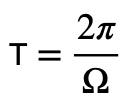
The rotation of the Earth affects the motion of a pendulum in two ways. The first is called the Coriolis force, which is dependent on the speed of Earth’s rotation, and the latitude and velocity of a subject of interest (Taylor, 2005). The second is a centrifugal “outward” force and is also dependent on latitude. Interestingly, both the Coriolis and centrifugal forces are not really forces at all: they are known as pseudoforces. Unlike forces caused by gravity or electromagnetic fields, the Coriolis and centrifugal pseudoforces are only present in a rotating reference frame, like the surface of the Earth (Taylor, 2005). Even though these pseudoforces only exist because of the motion of the Earth, they still produce observable effects. The same way a person riding in a car around a turn feels a centrifugal force pushing them away from the direction of the turn, the Foucault pendulum experiences pseudoforces. By accounting for these pseudoforces in the equations of motion of the pendulum, we determine that the precession rate, Ω, is proportional to the rate of Earth’s rotation, ω, and the sine of the latitude, λ, according to
This means that the time it takes for a pendulum to complete a full precession, T, is proportional to the inverse of the sine of the latitude such that
With these relationships, we can determine properties of Foucault pendulums around the world. A pendulum at the equator, where λ is 0°, will not precess at all, oscillating in a constant plane as seen by a nearby observer (Taylor, 2005). A pendulum at the north pole will complete a full clockwise precession in 24 hours; an observer in space would see the pendulum oscillating in one plane while the Earth rotates counterclockwise below it (Norman Phillips, 2005).
The understanding of Earth’s rotation held by both scientists and the general public has significantly improved since Galileo’s time. Pendulum precession was observed in the 17th century, at Accademia del Cimento (Gerkema & Gostiaux, 2009). The Florence institution, ironically
founded by students and supporters of Galileo, likely did not understand that the Earth’s rotation produced the precession effect and fixed their pendulum to prevent its precession (Middleton, 1971) (Gerkema & Gostiaux, 2009). Now, people around the world can visit museums and universities to learn about and see firsthand evidence of Earth’s rotation. By making science accessible for the general public, Foucault proved to the world that Galileo’s ideas were correct. The Foucault pendulum exemplifies how effective science communications can turn revolutionary ideas into common knowledge.
References
Finocchiaro, M. A. (2009). THAT GALILEO WAS IMPRISONED AND TORTURED FOR ADVOCATING COPERNICANISM. In R. L. Numbers (Ed.), Galileo Goes to Jail and Other Myths about Science and Religion (pp. 68–78). Harvard University Press; JSTOR. https://doi.org/10.2307/j. ctvjghtcb.12
Gerkema, T., & Gostiaux, L. (2009). Petite histoire de la force de Coriolis. Reflets de La Physique, 17, 18–21. https://doi.org/10.1051/ refdp/2009026
Norman Phillips. (2005). What Makes the Foucault Pendulum Move Among the Stars? In M. R. Matthews, C. F. Gauld, & A. Stinner (Eds.), The pendulum: Scientific, historical, philosophical and educational perspectives. Springer.
Sommeria, J. (2017). Foucault and the rotation of the Earth. Comptes Rendus. Physique, 18(9–10), 520–525. https://doi.org/10.1016/j. crhy.2017.11.003
Taylor, J. R. (2005). Classical mechanics (Nachdr.). University Science Books.
Tobin, W. (2002). The life and science of Léon Foucault–The Man whoproved the world turned round. Cambridge University Press,
DINING WITHOUT DYING: USING CRISPR TO REMOVE MYCOTOXINS IN CORDYCEPS MILITARIS
MICHELLE JOHNSTON
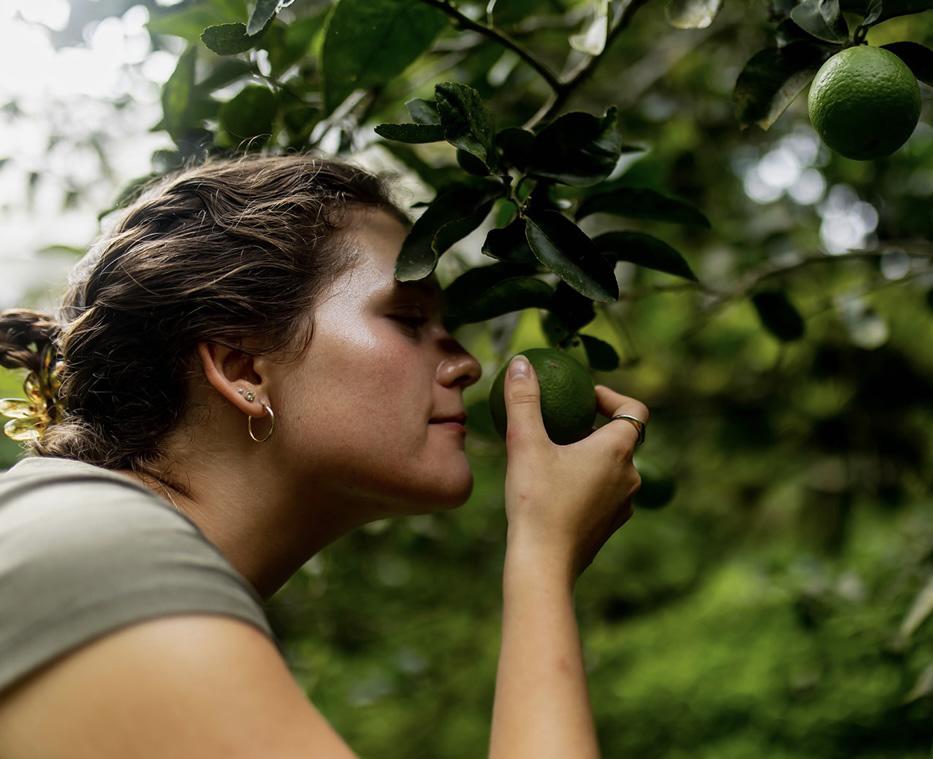
Cordyceps mushrooms are a valuable source of food and nutrients in many countries, primarily in East Asia. However, they may produce Ustilotoxin B, a type of mycotoxin that can cause gastrointestinal disturbances in humans. A recent study by Liu et al. (2024) attempted to make cordyceps mushrooms safer for human consumption by using CRISPR/Cas9 to eliminate the production of toxins. Researchers identified protein clusters associated with the production of Ustilotoxin B. Using CRISPR/Cas9, which removes the sections of genes that code for the production of toxins in the fungi’s DNA, they eliminated the genes linked to these protein clusters in Cordyceps militaris, enhancing the nutritional properties and quality of the crop. The deletion of the genes CmustYb and CmustYa yielded ustilotoxin-free cordyceps mushrooms.
Researchers first identified the gene clusters of ustilotoxin from the genome of C. militaris by searching an online protein sequence database, BLASTP, using the protein sequences of the ustilotoxin protein clusters from U. virens (Liu et al., 2024). To cut out the regions containing the two genes, two single guide RNAs (sgRNAs) were designed to cut out the segment containing the two genes, CmustYa and CmustYb, which were then introduced to the plasmid DNA that also encoded the Cas9 sequence. Noncoding DNA sequences, ones that do not encode proteins, were used to repair the plasmid-Cas9-sgRNA. After the plasmid was transformed into C. militaris and mutant strains were allowed to grow, researchers analyzed the sequences to validate that the genes were deleted and that other regions
of the DNA were not affected. They then let the fungi grow to edible mushrooms and detected no ustilotoxin B production.
The result of this study demonstrates statistically significant correlation that CRISPR/Cas9 can manipulate the genome of C. militaris to create a strain of fungi that is not harmful to human health, as the genetic manipulation of cordyceps has been challenging in the past. The deletion of the two genes also exhibited very little effect on the development
and nutritional qualities of C. militaris. This enhances the notion that using CRISPR/Cas9 systems is an effective method of enhancing food safety, which could be used to manipulate the genetic sequences of other food sources to enhance their safety for consumption. The next steps for this research could include testing the effects of modified
Photo by Adobe Stock
fungi on human consumption to ensure the safety of these fungi for commercial consumption. Using CRISPR/Cas9 to eliminate toxins in crops can serve as a preliminary measure to reduce the risk of food hazards in safety and quality testing facilities. This approach could also lower the costs associated with the continuous testing and certification of food materials.
References Liu, M., Wang, A., Meng, G., Liu, Q., Yang, Y., Wang, M., Wang, Z., Wang, F., & Dong, C. (2024). Innovative application of CRISPR for eliminating Ustiloxin in Cordyceps militaris: Enhancing food safety and quality. LWT, 204, 116420. https://doi.org/10.1016/j.lwt.2024.116420
Photo by Adobe Stock
A CASE STUDY OF THE DIRE WOLF “DE-EXTINCTION”
OLIVIA BARRETT
In April 2021, news broke that a group of scientists in the United States had genetically recreated the dire wolf causing a “de-extinction”. This leaves some questions. What is a dire wolf? How did they recreate this species? What is the purpose?
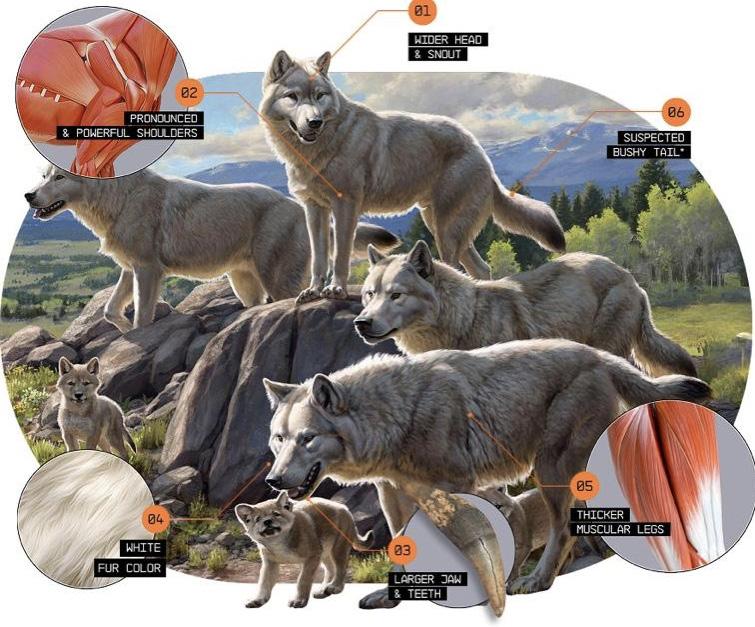
The dire wolf is an extinct species that roamed North America over 13,000 years ago. They had distinct white fur and large teeth. While differing from the grey wolf, they genetically have 99% identical DNA (Colossal, 2025) (Zimmer, 2025). So, what caused this extinction? Interestingly, this species was genetically isolated, meaning there was little interbreeding with other wolf species. This happened because unlike other wolves of the time, dire wolves did not cross breed with any other wolf species. Additionally, during their time, tar was seeping through the ground creating tar pits. This killed many animals of the time including horses, sloths, bison, and camels, which were major food sources for the dire wolves (San Diego Zoo Wildlife Alliance Library, 2024). They would either starve or enter the tar pits and get trapped when trying to catch prey. La Brea tar pits are a national park in California where tons of dire wolf fossils have been recovered. These remains showed evidence of significant damage to the teeth and bones. This leads archeologists to believe that the teeth were damaged from the wolves resorting to eating bones of prey because resources were so low, while the damage to the bones was attributed to fights over food (San Diego Zoo Wildlife Alliance Library, 2024). The ability to
look at these fossils is incredibly helpful to understand the physical characteristics of the dire wolves, however the tar pits destroyed significant amounts of their DNA (Colossal, 2025). DNA samples would be vital to their recreation, so how did they recover it?
Colossal is a company with headquarters in Dallas, Texas. Their mission statement reads, “For colossal, de-extinction is not just about making an organism that is or resembles an extinct species. It’s about merging the biodiversity of the past with the innovations of the present in an effort to create a more sustainable future” (Colossal, 2025). To begin their work, Colossal sequenced 46 specimens from the tar pits, and only found two with usable DNA, a 13,000-yearold tooth and 72,000-year-old skull. From these pieces, the scientists recovered 500 times more DNA than previously recovered. Next, the team began looking for grey wolf DNA that could be genetically modified to match that dire wolf DNA that was recovered. The challenge was that many grey wolves today have DNA that is tainted with domestic dog ancestry. Domestic dog DNA does not closely match that of dire wolf’s DNA, making it unusable. After testing countless grey wolves, the team located 4 with pure DNA. Now, it was time for the genetic modifications. The grey wolf cells were isolated and grown in a dish. Using CRISPR gene editing (that many of us have had the privilege of using in Genetics here at Hendrix), the geneticists introduced 14 different genes at 20 locations in the grey wolf DNA. CRISPR gene editing allows genetic material to be added, removed, or altered
This image shows the phenotypic qualities typically found in a dire wolf (Colossal, 2025)
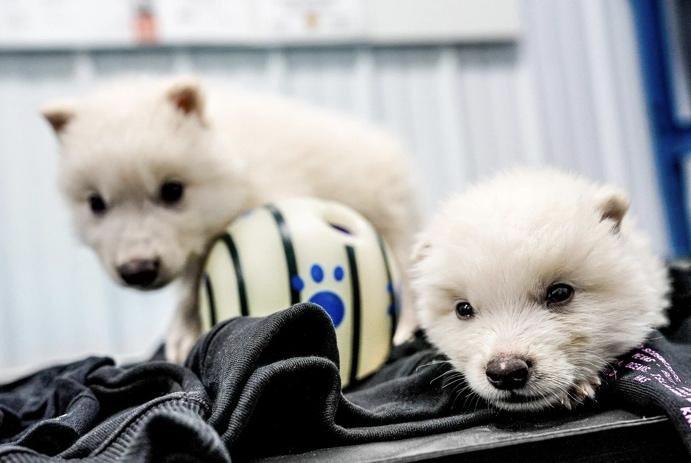
enzymes and guide RNA to precisely cut DNA and repair it once the edits have been accomplished (CRISPR Therapeutics, 2025). Once successfully altered, the “new” DNA was transferred into empty dog eggs (Colossal, 2025). Dozens of these eggs were implanted into large dogs that served as surrogates. Only four of these implantations were successful pregnancies. Four pups were born; however, one did not make it due to unrelated health problems (Colossal, 2025). The three other pups are currently alive and well, two born in October 2024, the other in January 2025. These puppies are 20% larger than grey wolves their age, meaning they have the physical and genetic characteristics that resemble the dire wolf, but are they really a dire wolf (Zimmer, 2025)?
Many scientists and investigators have differing opinions on whether or not these genetically engineered puppies should be considered dire wolves. Dr. Julie Meachan, a vertebrate paleontologist and a functional morphologist, spoke out and said, “I don’t think they are actually dire wolves. I don’t think what we have is dire wolves. What we had is something new -- we have a mostly gray wolf that looks like a dire wolf.” (Schlosberg, Brooksbank & Villareal, 2025). In response, Colossal’s lead scientist Dr. Beth Shapiro, said “I think that the best definition of a species is if it looks like that species, if it is acting like that species, if it’s filling the role of that species then you’ve done it” (Schlosberg, Brooksbank & Villareal, 2025). Both scientists have a point, so it is important to address the conversation of nature versus nurture. Although these puppies look like a dire wolf, how much of their behavior can be attributed to DNA (Schlosberg, Brooksbank & Villareal, 2025). These puppies will not be raised by a dire wolf pack that can teach it typical dire wolf behavior, nor will they be consuming the same food and developing the same microbes, or even just breathing in the same air into their bodies (Zimmer, 2025). So, is genetics enough, or are these aspects necessary for dire wolf identification? There are too many nuances to form an answer to that question.
Colossal advertised its purpose to be biodiversity conservation, however this may not be so straight forward. This type of innovation could help preserve the endangered red wolf population. Even so, the unpredictability of genetically creating extinct species is too high. A bioethicist and geneticist at Columbia University, Dr. Robert Kiltzman, warns that we need to seriously consider how tampering with ecosystems may impact other species and more (Schlosberg, Brooksbank & Villareal, 2025). This is a conversation that has been a long time coming but due to Colossal’s recent creation, it is now something that must be addressed. Colossal’s next goal is to bring back the wooly mammoth by 2028, only three years from now (Schlosberg, Brooksbank & Villareal, 2025). Successful or not, these developments are changing the scope of what is possible with science and raising questions with difficult answers.
In conclusion, the genetic recreation of the dire wolf using DNA from ancient fossils and CRISPR gene editing has led to much debate. By modifying grey wolf DNA and implanting embryos into surrogate dogs, three pups were born that resemble the wolves in size and appearance. Colossal views this as a step toward biodiversity conservation, while other experts debate if these animals can truly be considered dire wolves. It is important to talk about these ethical and ecological concerns, as they highlight the complexities of de-extinction and what science has now made possible.
References
Colossal Laboratories. (2025, April 7). Science. Colossal. https://colossal.com/ direwolf/science/ CRISPR Therapeutics. (2025). Gene editing. https://crisprtx.com/gene-editing Direwolf Biology. Colossal. (2025, April 7). https://colossal.com/direwolf/biology O’Kane, C. (2025, April 8). The Dire Wolf, which went extinct 12,500 years ago, revived by Biotech Company. CBS News. https://www.cbsnews.com/news/direwolf-extinct-dna-puppies-colossal-biosciences/
San Diego Zoo Wildlife Alliance Library staff. (2024, May 7). Libguides: Extinct dire wolf (canus dirus) fact sheet: Diet & Feeding. Diet & Feeding - Extinct Dire Wolf (Canus dirus) Fact Sheet - LibGuides at International Environment Library Consortium. https://ielc.libguides.com/sdzg/factsheets/extinctdirewolf/diet Schlosberg, J., Brooksbank, T., & Villareal, M. (2025, April 7). Scientists say they revived dire wolf through biotech company’s de-extinction process. ABC News. https://abcnews.go.com/US/dire-wolf-revived-biotech-companys-de-extinctionprocess/story?id=120558562
Zimmer, C. (2025, April 7). Scientists revive the dire wolf, or something close. The New York Times. https://www.nytimes.com/2025/04/07/science/colossal-direwolf-deextinction.html
Image of Romulus and Remus, the two dire wolf puppies born in January 2024 (Zimmer, 2025)
VACCINE HESITANCY AND MISINFORMATION: HOW IT’S AFFECTING US TODAY
SAMANTHA VACCARELLA
In 2019, the World Health Organization (WHO) named vaccine hesitancy as one of the top ten threats to global health (WHO, 2019). Their statement was supported just a year later at the start of the worldwide Covid-19 pandemic. Despite the accelerated development of a vaccine for Covid-19 in early 2021, along with strong encouragement from government officials and health-care experts, many people refused to vaccinate. In 2023, the Center for Disease Control (CDC) estimated that 18.6% of Americans had not received the Covid-19 vaccine (Nwachukwu, 2024). Today, the CDC claims that only 23% of American adults are up to date on their Covid vaccine (CDC, 2025). So, what is causing this widespread vaccine hesitancy and how do we, as a society, even begin to address such a large-scale problem?
To start, it’s important to understand what vaccine hesitancy is, as well its history. WHO defines vaccine hesitancy as “the reluctance or refusal to vaccinate despite the availability of vaccines” (WHO, 2019). Vaccine hesitancy has existed as long as vaccines themselves. When the first ever vaccine was introduced by Edward Jenner to help fight smallpox in the late 1790’s, many people were concerned about the safety and efficacy of this invention while others said that vaccination went against their religious beliefs (Jacobson et al., 2020). Today, people still cite some of these reasons when deciding not to vaccinate, even though the immunizations are heavily tested for safety and efficacy before being released to the public.
One of the biggest contributing factors to vaccine hesitancy today is the spread of misinformation. The circulation of false information can take place in many ways, including across social media platforms, through unverified news sources, and in “fringe” science theories, shared by public or political officials. Fringe science includes ideas that may look scientific in nature but are lacking in evidence or have already been refuted by the scientific community (Dutch, 1982). One common example of misinformation regarding vaccines comes from two studies performed by Andrew
Wakefield and colleagues from 1998 and 2002. These two studies falsely claimed the MMR (measles, mumps, and rubella) vaccine caused autism (Offit, 2024). After a lengthy investigation, it was revealed that the data was misrepresented and deemed fraudulent. The study was officially retracted in 2010 (Triggle, 2010).
Even though there has been sufficient research since the Wakefield study proving that there is no causal relationship between the MMR vaccine and autism, many parents and anti-vaccination groups still believe the retracted study is credible. Another example of misinformation is that many childhood vaccines contain mercury-based preservatives, such as Thimerosal, an ingredient that can cause neurodevelopment disorders and autism. While in the past, there were some multi-dose immunizations, such as DTaP and Hepatitis B, that contained Thimerosal, there are currently no childhood vaccines on the market that contain this ingredient (Offit, 2020). Thimerosal is still in some multidose influenza vaccines, but it has been determined that ethylmercury is excreted from the body in just a few days and therefore cannot accumulate in any harmful amount (DeStefano et al., 2019).
Anti-vaccination groups (anti-vaxxers for short) that receive and distribute this misinformation can use fear, confusion, and lack of trust in health-care professionals to prey on vulnerable populations who may lack scientific literacy and the resources to differentiate between fact and fiction. This false information can result in vaccine hesitancy, which directly impacts public health. Vaccination rates have continued to decline across the globe, which contributes to outbreaks of diseases such as measles, an extremely contagious viral infection that was almost eradicated in the 1960’s. This rise in outbreaks due to vaccine hesitancy is a result of a loss of herd immunity, which is “the indirect protection from an infectious disease that happens when a population is immune either through vaccination or immunity developed through previous infection” (WHO, 2020).
Vaccine misinformation and hesitancy is detrimental to public health, and there are several ways we can combat this issue at both a community and individual level. One example is through educational campaigns that provide accurate information about vaccines from trusted sources, such as health-care providers, immunology professionals, and credible scientific organizations. While social media has been detrimental in the spread of false information, it is important to remember that we can also use it as a tool to share correct and factual statistics. Sharing data from credible sources is a great way to help teach people about how vaccines can protect our community. Fact-checking information on social media and reporting anything that is false is a great way to help debunk and stop the spread of misinformation.
To summarize, vaccine hesitancy is a prevalent issue in global and public health systems today, making it imperative to combat misinformation. An anti-vaccination mindset has contributed to the outbreaks of many easily preventable and containable diseases, such as measles and Covid-19, across vulnerable communities. Going forward, it is imperative that we address vaccine hesitancy head-on by providing resources to help us educate our communities.
References
Centers for Disease Control and Prevention. COVID Data Tracker. U.S. Department of Health & Human Services. 10 April 2025. Available online: https://www.cdc.gov/covidvaxview/weekly-dashboard/index.html
DeStefano, F., Bodenstab, H. M., & Offit, P. A. (2019). Principal controversies in Vaccine Safety in the United States. Clinical Infectious Diseases, 69(4), 726–731. https://doi.org/10.1093/cid/ciz135 Dutch, S. I. (1982). Notes on the Nature of Fringe Science. Journal of Geological Education, 30(1), 6–13. https://doi.org/10.5408/0022-1368-30.1.6
Jacobson, R. M., St Sauver, J. L., Griffin, J. M., MacLaughlin, K. L., & Finney Rutten, L. J. (2020). How health care providers should address vaccine hesitancy in the clinical
INVESTIGATING SUBCONSCIOUS BIAS IN PAIN PERCEPTION
VENESSA HOLTZER
The act of perceiving pain is a complex experience. Pain perception is influenced by a wide variety of social and psychological factors. Gender and race can be considered among the most significant of these factors, shaping not only how individuals express and experience pain, but also how their pain is assessed and viewed by others. Research has consistently demonstrated that gender plays a crucial role in these processes. The gender differences that are found are not based on biology alone, but also on societal expectations of gender, with women’s suffering often being underestimated compared to men’s (Coll et al., 2012). In addition to gender, race also heavily influences pain perception resulting in individuals from marginalized groups having a higher likelihood of their pain being underestimated (Contreras-Huerta et al., 2013). Due to the unpreventable nature of subconscious bias, there constantly exists the possibility of individuals experiencing compounded prejudice due to a combination of both their racial and gender identity, resulting in people facing significantly lower accuracy when assessing individuals of a different race and gender as them (Wandner et al., 2012). The presence of these subconscious biases is incredibly alarming, especially considering how often it is that individuals need to quickly and accurately assess another person’s pain. Even healthcare workers suffer the consequences of these biases, often resulting in a significant decrease in quality of care for women (Cohen, 1980). If medical professionals who have been extensively trained to evaluate and treat peoples suffering fall victim to these biases, how badly do they affect the average person?
To further explore the gendered and racial contexts of pain perception, I conducted a study at Hendrix College to assess whether the accuracy of an individual’s ability to assess another person’s pain changed depending on the observed gender or race of the assessed individual. I hypothesized that participants would rate women’s pain significantly lower than they rated men’s pain, and that participants would rate black individuals’ pain significantly
lower than they rated white individuals’ pain. Participants completed randomized versions of a survey that asked them first to answer either a masculine, feminine, or neutral priming question about themselves. The masculine question asked them to think about a time that they took on a leadership role, the feminine question asked them about a time when they were empathetic towards others, and the neutral prime asked them to describe a route they took to campus (Fowler et al., 2011). Then, participants were shown four different photos of people exhibiting nonverbal cues of pain: a black man, a white man, a black woman, and a white woman. They were then asked to rate the pain level they believed the person was experiencing on a scale of 1-10. Unbeknownst to the participants, the photos were taken from The Delaware Pain Database (Mende-Siedlecki et al., 2020). All the pictured individuals exhibited the same pain level, which was an 8.00 on a scale from 1 to 10.
The results of the survey showed that gender had a significant effect on how people rated the photographed individual’s pain. Women’s pain was significantly underrated in comparison to men’s, with women’s pain being rated on average a 4.80, and men’s a 6.04. The results also showed a significant effect of race specifically when it came to white women. Their ratings were significantly lower on average compared to every other group, which was unexpected. As previously mentioned, I had hypothesized that participants would rate the black individual’s pain significantly lower than white targets. I believe that perhaps this finding comes as a result of the modern concept of ‘white women tears’ which reflects a belief that white women use their emotions in manipulative, dramatic, and often false ways. One way to further investigate whether this concept skewed the results would be to gather data from a larger, more diverse sample size in future research.
Overall, gender and race have been observed to ignite bias in a way that leads to inaccuracy in pain perception,
especially concerning the underestimation of women’s pain. These findings can seem hopeless, but as research continues in this vein, psychologists and other professionals will continue to take steps towards solutions to these issues, to mitigate the effects of stereotypical perceptions of our identities in both social and medical contexts.
References
Cohen, F. L. (1980). Postsurgical pain relief: Patientsʼ status and Nursesʼ Medication choices. Pain, 9(2), 265–274. https://doi.org/10.1016/03043959(80)90013-5
Coll, M.-P., Budell, L., Rainville, P., Decety, J., & Jackson, P. L. (2012). The role of gender in the interaction between self-pain and the perception of pain in others. The Journal of Pain, 13(7), 695–703. https://doi.org/10.1016/j. jpain.2012.04.009
Contreras-Huerta, L. S., Baker, K. S., Reynolds, K. J., Batalha, L., & Cunnington, R. (2013). Racial bias in neural empathic responses to pain. PLoS ONE, 8(12). https://doi.org/10.1371/journal.pone.0084001
Fowler, S. L., Rasinski, H. M., Geers, A. L., Helfer, S. G., & France, C. R. (2010). Concept priming and pain: An experimental approach to understanding gender roles in sex-related pain differences. Journal of Behavioral Medicine, 34(2), 139–147. https://doi.org/10.1007/s10865-0109291-7
Mende-Siedlecki, P., Qu-Lee, J., Lin, J., Drain, A., & Goharzad, A. (2020). The Delaware Pain Database: A set of painful expressions and corresponding norming data. PAIN Reports, 5(6). https://doi.org/10.1097/ pr9.0000000000000853
Wandner, L. D., Scipio, C. D., Hirsh, A. T., Torres, C. A., & Robinson, M. E. (2012). The perception of pain in others: How gender, race, and age influence pain expectations. The Journal of Pain, 13(3), 220–227. https:// doi.org/10.1016/j.jpain.2011.10.014
1600 Washington Avenue Conway, AR 72032
Have any questions or want to get involved in Hendrix Scientific? Reach out at hendrixscientific@gmail.com.