

Plot Summary
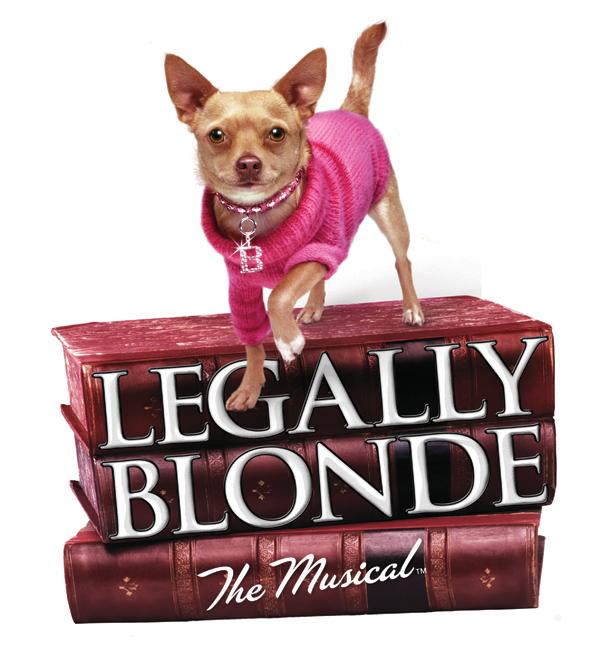
Legally Blonde: The Musical follows Elle Woods, a fashionable UCLA sorority president who seems to have it all. Her life is upended when her boyfriend, Warner Huntington III, dumps her instead of proposing. He claims he needs a ‘serious’ wife for his future career as a senator. Determined to win him back, Elle studies her way into Harvard Law School.
At Harvard, Elle is initially an outcast, mocked by her peers and Warner’s new fiancée, Vivienne Kensington. However, she finds support in Emmett Forrest, a hardworking teaching assistant, and Paulette, a quirky beautician. Elle eventually earns a spot on a prestigious internship under Professor Callahan to defend fitness mogul Brooke Wyndham, who is accused of murder.
During the trial, Callahan makes a lecherous move on Elle, causing her to temporarily lose faith. With encouragement from Vivienne and Emmett, Elle returns to the courtroom. She uses instinct, learning and her own specialised knowledge of hair care, specifically the ‘rules of perms’, to expose the real killer, securing Brooke’s acquittal.
In the end, Elle realises she is far more than a ‘blonde’ stereotype. She rejects a crawling Warner, discovers her feelings for Emmett, and graduates as class valedictorian. She proves that being true to yourself and being smart are not mutually exclusive, and that you don’t have to change who you are to be considered capable or intelligent.
The History of Legally Blonde
The story of Legally Blonde: the Musical is a journey from a self-published novel to a modern Broadway classic that became a cultural phenomenon, largely thanks to a groundbreaking partnership with MTV. The musical is based on the 2001 novel by Amanda Brown and the hit film starring Reese Witherspoon. The stage adaptation was crafted by a powerhouse creative team including Laurence O’Keefe (Heathers), Nell Benjamin (Mean Girls), a script by Heather Hach and Direction & Choreography by Jerry Mitchell (Kinky Boots, Hairspray).
After a brief out-of-town tryout in San Francisco, the show opened at the Palace Theatre on Broadway on 29 April 2007. The original cast featured breakout performances that are still legendary in the theatre community, including, amongst others, Laura Bell Bundy as Elle Woods (Tony-nominated). Unlike most Broadway shows of the time, Legally Blonde embraced television to harness its audience. In October 2007, the entire musical was filmed and aired on MTV. It was a massive hit, bringing Broadway to a younger demographic that couldn’t travel to NYC. Continuing its leverage of TV marketing, MTV aired a competition called Legally Blonde: The Search for Elle Woods to replace Laura Bell Bundy when she left the show. The winner, Bailey Hanks, took over the lead role in 2008. While the Broadway production was a ‘fan favourite’ but didn’t win any of its seven Tony nominations, the West End production (which opened in 2010, starring Sheridan Smith) was a critical darling. It won three Olivier Awards, including Best New Musical. Today, the show is one of the most frequently performed musicals in senior schools and colleges worldwide. Its themes of empowerment and ‘pink power’ have given it a lasting shelf life, with a major UK and Ireland tour currently running through 2026.
Director’s Notes
We have been blessed with a surfeit of brilliance in our current cohort of actors: incredible talent coming up from Lower School into Removes this year, tremendous Sixth Formers and exceptional Middles and Fifths. Especially girls. Boys too, of course. But a raft of exceptional female talent. So, what to choose? What piece would best serve the current collection of performers who want to participate in a major whole-school production?
It is always a challenge to choose well. There are many factors - not least trying to suit the actors in front of you but also themes which are appropriate, challenging, thought-proking; the availability of performing rights, casting requirements of the text, availability of set for hire (a significant consideration when coming offsite rather than producing in-house) and finding costumiers who can provide the necessary outfits for a cast of over fifty. Legally Blonde was an excellent fit: demanding and with suitable performance challenge for our excellent cast; highly energetic, very funny and with youth appeal in abundance. It was certainly met with great enthusiasm at the announcement and audition. And perhaps most importantly, a fantastic piece for female performers, thus playing to our current strength in casting. Granted, it’s not Les Misérables in terms of historic weight or tragic catharsis: it’s frivolous and fun, with great characters and important themes of female empowerment and the rejection of prejudice. But it does also come with a problem… “Gay or European?”
If you read Millie’s excellent leader, she dissects this sequence and its associated problems in eloquent detail, and needless to say, we have given significant thought to the appropriateness of the choice. Does the infamous courtroom routine, in which the witness’ nationality and sexuality are judged by his outward appearance, run the risk of giving rise to homophobic mockery or audience misinterpretation and even offence? Our answer was NO. It is a piece of theatrical parody, in which the stereo-typer not the stereotype, is being mocked. The foolishness and outright idiocy of the legal team as they pass judgment on Nikos based on his external characteristics, and the madness of the sweeping generalisation that all gay men and all European men are indistinguishable by appearance, is so ridiculous as to be recognised as satire. It is not Nikos who is being mocked, or what he represents. It is the idiots who would label him thus.
We are fortunate to feel that at Haileybury, we have gone beyond this: we are an inclusive, international community; we uphold values of acceptance and tolerance; we promote anti-racism and anti-homophobia, and we are confident enough in our progress in this regard to choose not only to stage the show but to keep the sequence intact. To embrace the conversation. And this brings us to the value of theatre and of the arts: to raise debate, to encourage discussion; to ‘hold as t’were a mirror up to nature’ and allow us to acknowledge our achievements and failings, even to laugh at them, so we may improve ourselves and our society in the process. In the spirit of The Book of Mormon, Jerry Springer the Opera, The Producers and all other brilliant theatrical satire, we invite you to join us as we walk the fine line of parody in the safe knowledge of solidarity.
Enjoy the show.
Jacob Thomas Director and Head of Haileybury Drama
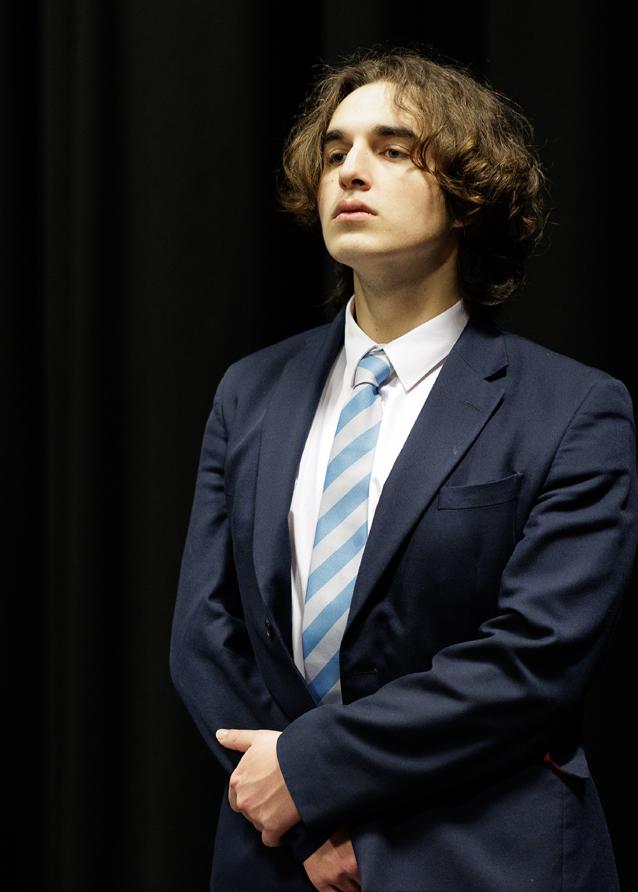
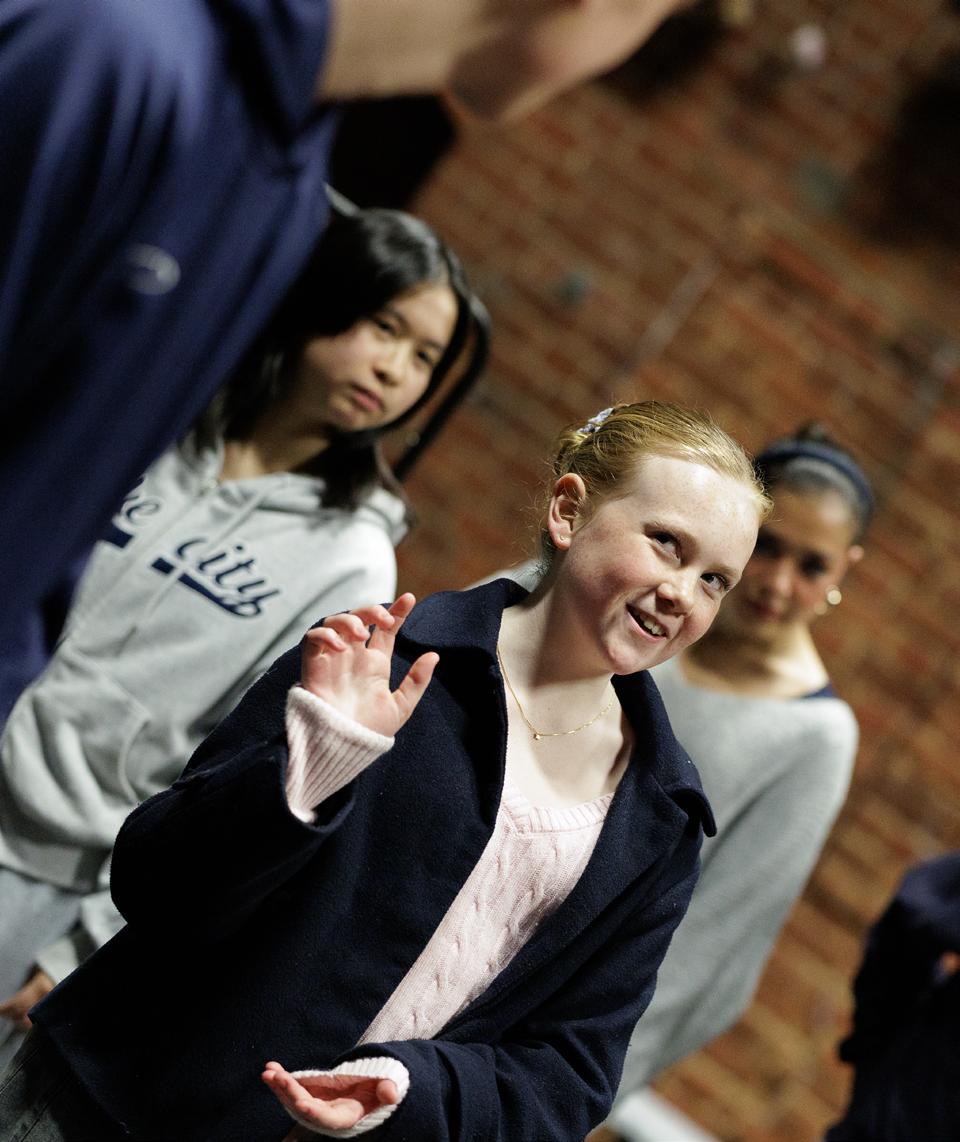
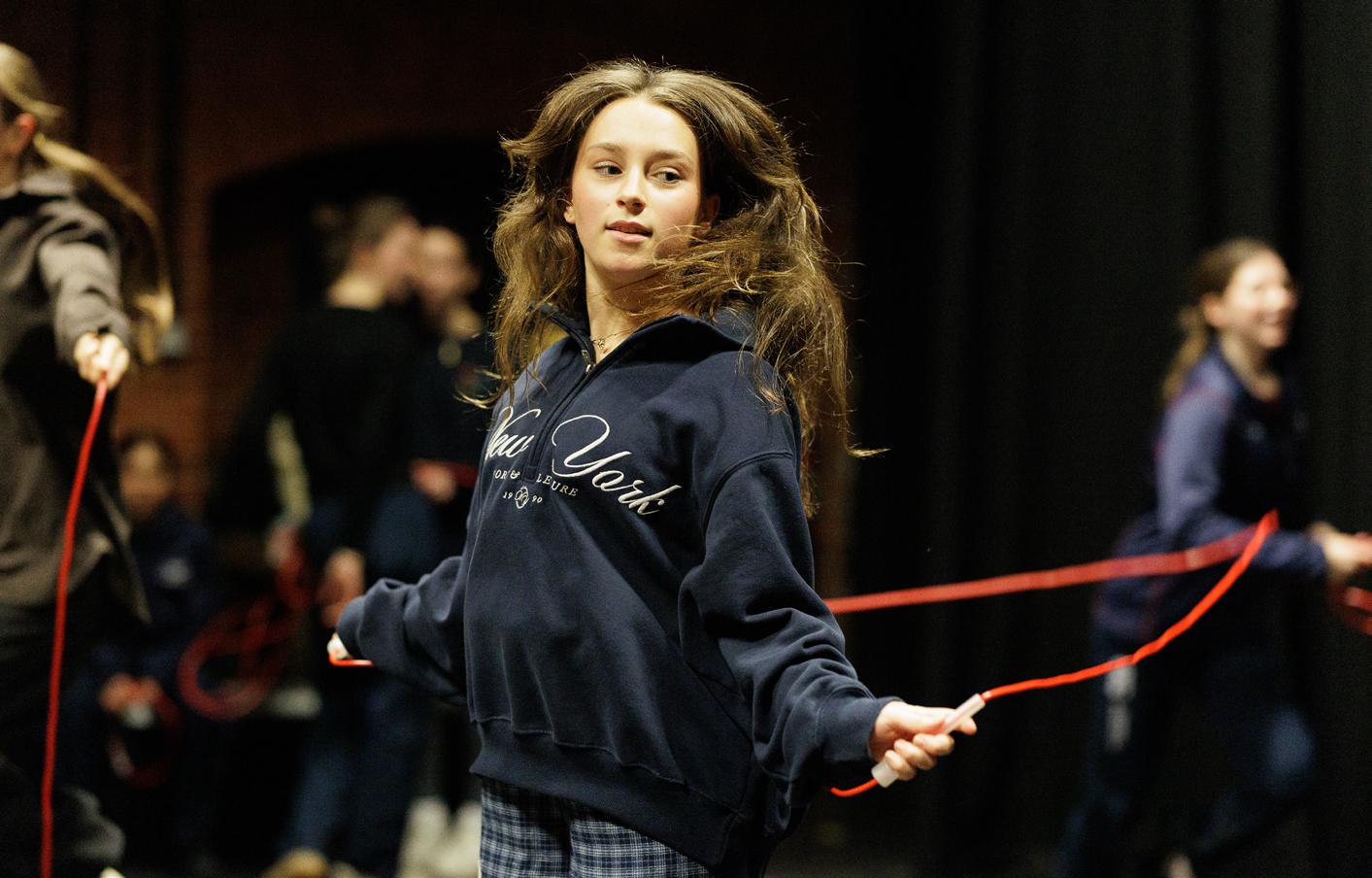
Rehearsal Process
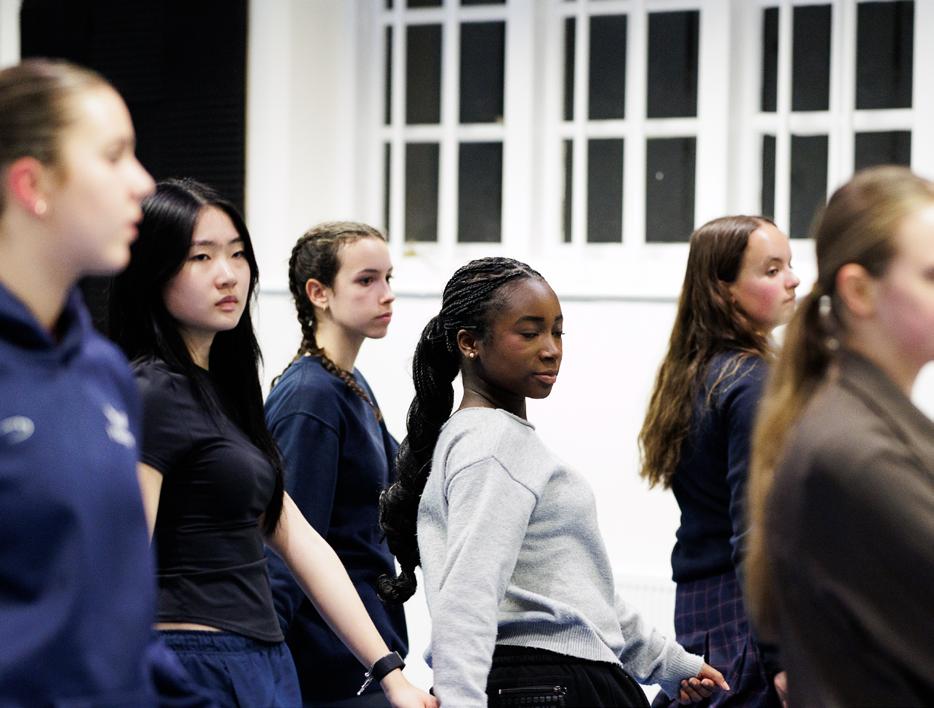
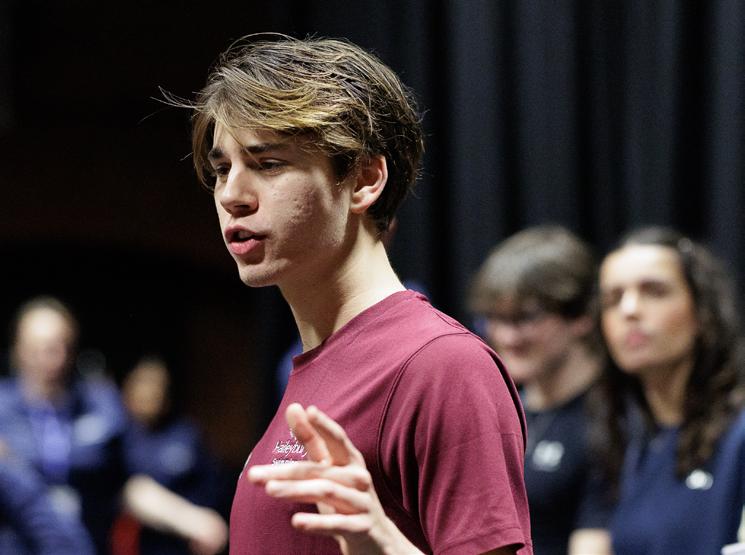
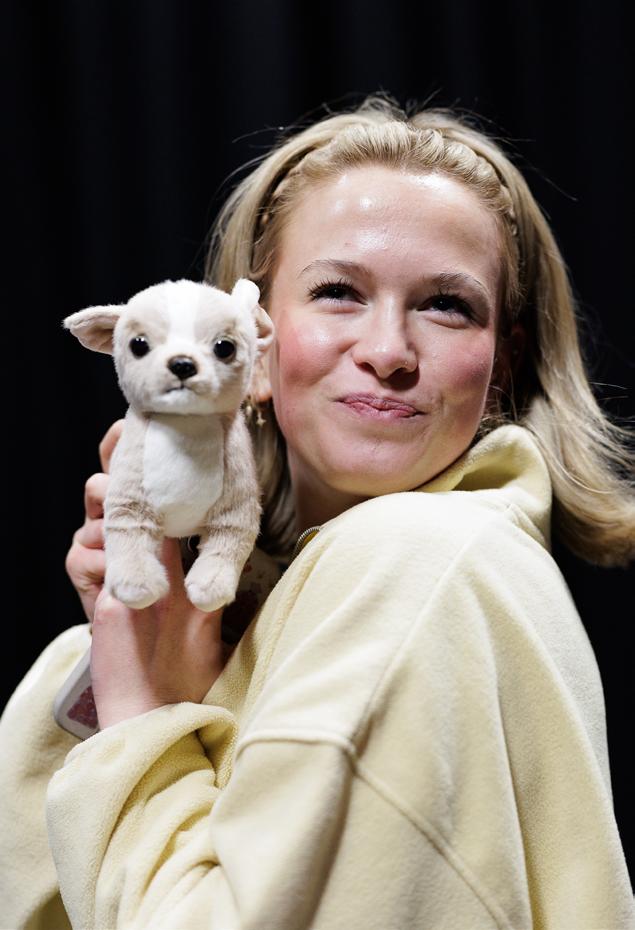
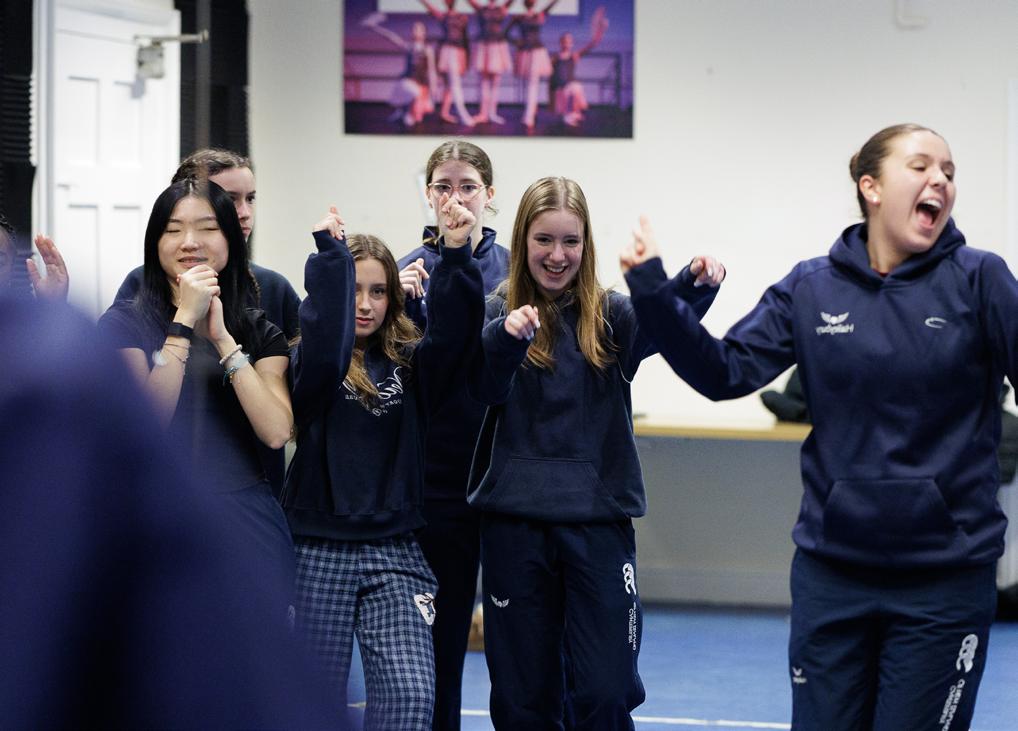
During the process, pupils have worked with a musical director, choreographer, assistant director and director to realise the movement, mime, dance, singing and acting challenges of the show. They have crafted characters, embraced collaboration and learned to trust, respect and support each other as a company.
Gay or
European?
Representation, parody and walking the fine line in theatre.
Legally Blonde’s courtroom number, Gay or European, serves as a masterful example of musical theatre satire, but it also walks a perilous tightrope of whether it shows progress and tolerance, or reinforces stereotypes of the ‘flamboyant’ nature of European men.

The core comedic device used is the notion that there is a link between sexual orientation and aesthetic signifiers. The central question is whether the sequence successfully ridicules the stereotyper, or accidentally validates the stereotype. The character of Nikos, who the song surrounds, is presented as having typical European mannerisms and clothing, which could perhaps be deemed ‘flamboyant’ or ‘camp’ by American standards. The song’s punchline is the courtroom’s inability to comprehend nuance, and shows how bigoted thinking reduces complex identities down to visual appearances. The musical debuted during a rapid period of queer visibility, where communities moved from presenting LGBT storylines as a punchline or a ‘special episode’ topic toward having sustained, multi-dimensional representation. Within this sequence, it was important to ensure the audience was not laughing with prejudice, missing the element of satire. When well-directed, the sequence forces dialogue on queer coding. The song argues that the only difference between ‘Gay’ and ‘European’ is the context through which the prejudiced viewer processes external information. The song is a comment on society as a rule, not making an observation about Nikos, but making an observation about how we approach and work around stereotypes. The number exposes absurdity and forces us to acknowledge stereotypes before we act on them. The song is a theatrical tightrope, and can only succeed if the audience’s laughter is directed outwards at the lawyers and their discriminatory checklist, and not inward at the heightened stereotype of Nikos’ character.
By Millie Whale Drama Scholar, Lower Sixth, Allenby Elle Woods
Cast
Elle Woods
Margot
Serena
Pilar
Emmett Forrest
Paulette
Professor Callahan
Warner Huntingdon III
Vivienne Kensington
Brooke Wyndham
Enid
Sassy Kate
Leilani
Gaelen
Bookish Kate
Saleswoman
Store Manager
Violinist
Waiter and Elle’s Dad
Elle’s Mom
Grandmaster Chad
Professor Winthrop
Professor Lowell
Professor Pforzheimer
Aaraon
Suzy Tepesh
Whitney
Harvard Student
Dewey
H&H salesgirl
Second Perfume Girl
Salesgirls
Kyle (the hunky UPS guy)
TV reporter
DA Joyce Riley
Nikos
Carlos
Kiki the colourist
Chutney Wyndham
Court Stenographer
Guard
Bookish Client
Cashier (and Delta Nu)
Millie Whale
Sophie Tong
Sabrina Quinlivan
Sophia Wylde
Jasper Harth
Ivy Fletcher
Rufus Kellie
Oscar Davison
Emily Polledri
Alice McKeown
Olivia Crone
Hailey Young
Sofiia Sergadeeva
Kalli Mager
Kyrah Brawn
Georgie Neuff
Hattie Middleton
Theo Baughan
Louis Tavana
Flo Cornell
Will Farrow
Samuel Kačmár
Daniel Hiscock
Jonathan Jarmer
Theo Baughan
Ria Patel
Georgie Button
Millie Hanlon
Thomas Axe
Savannah Gibbs
Emilia Schneider
Matilda Samuels
Henry Meredith
Catherine Hiscock
Amaziah Owusu-
Banahene
Will Farrow
Jonathan Jarmer
Isla Evans
Nataliia Voitenko
Matilda Samuels
Danny Hiscock
Viktoriia Grebeniuk
Honor Packer
Judge Lucy Shutes
Ensemble
(UCLA students, Frat
Boys and Frat Girls, Delta
Nus, Salon Folk, Harvard Students, Parade Folk)
Amelie Roche
Audrey Sallavuard
Betsy Hilliam
Carissa Wild
Catherine Hiscock
Charlotte Head
Daniel Hiscock
Emilia Schneider
Georgie Hart
Georgie Neuff
Harriet Middleton
Honor Packer
Isla Evans
Jonathan Jarmer
Kyrah Brawn
Louis Tavana
Lucy Shutes
Mabel Cornell
Matilda Samuels
Millie Hanlon
Nataliia Voitenko
Priscillia Lam
Ria Patel
Samuel Kačmár
Savannah Gibbs
Sofiia Sergadeeva
Sophia Fusco
Tess Holden
Thomas Axe
Valentina Bryce
Viktoriia Grebeniuk
Creatives
Director
Jacob Thomas
Musical Director
Jonathan Gibson-Smith
Choreographer
Katie Barrett
Haileybury Technicians
Toby Everett and Katie Kelson
Costumes
Margaret Bicknell at Thespis Costumes and Katie Kelson
Set provided by UK productions
Company Stage Manager
Toby Everett
Deputy Stage Manager
Kate Green
Assistant Stage Manager
Katie Kelson
Sound
Sam Auty
Sound 2
Johnny Royall
Lighting
Emma Daly
Drums in the band
Oscar Baggs
Stage Crew
Josh Cox
Follow Spot Operators
Fabian Cheung
Oliver Graham
Forthcoming Haileybury Events

Dance Show - The annual dance showcase, 18 March, 7.30 pm Big School
Lower School drama production
School of Rock by kind arrangement with Andrew Lloyd Webber Theatres, 7 - 9 May, The Ayckbourn Theatre.
Arts Week 15 - 19 June
•A Night on Broadway
•Immersive Shakespeare - Julius Caesar
•Drama Showcase
•Music Concerts
•Art Exhibition