GENERAL SITUATION IN MEXICO
Weekly Review I December 10, 2025


Weekly Review I December 10, 2025
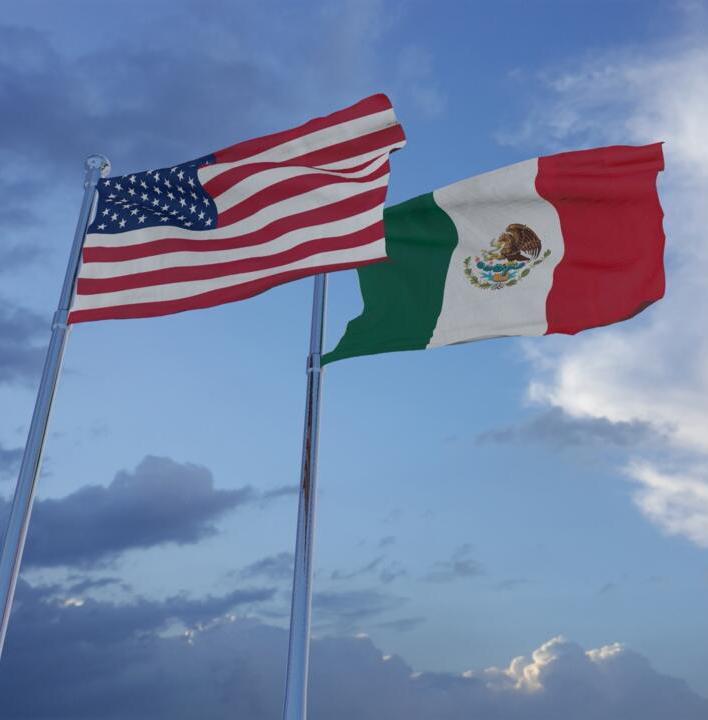
• President Claudia Sheinbaum held a brief meeting with U.S. President Donald Trump and Canada’s Prime Minister Mark Carney after the FIFA World Cup 2026 draw in Washington. Mexico’s president stated that it was a protocol encounter rather than a formal political discussion.
• The exchange focused on maintaining a positive atmosphere among the three North American partners. Trump briefly raised commercial issues, but no bilateral meeting has yet been scheduled.
• The interaction occurred amid heightened trade tensions, as Trump reiterated that the USMCA review in 2026 could lead the United States to let the agreement expire or renegotiate it under new terms. His remarks added weight to the political backdrop of the otherwise ceremonial gathering.
• Sheinbaum highlighted three guiding principles for Mexico’s approach to Washington: preserving a constructive relationship with the United States, protecting the 40 million Mexicans living there, and prioritizing agreement over confrontation, always “with coordination, not subordination.”
SOURCES: EL ECONOMISTA

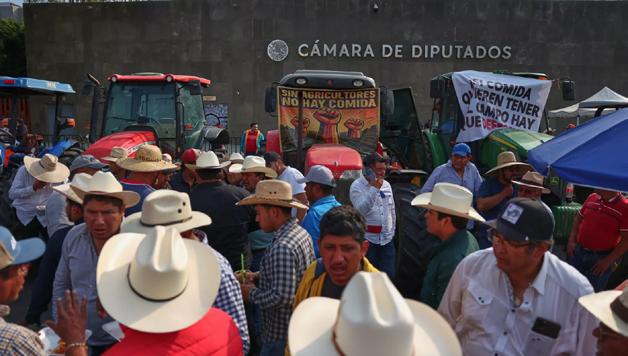
• Farmers across Mexico intensified protests and blockades of highways and custom points in response to the discussion of the new General Water Law. Although federal authorities opened dialogue and introduced 68 modifications to the original draft presented by President Sheinbaum, farmers argue that changes remain insufficient and that the process is moving too quickly, without genuine consultation.
• The reform, will eliminate illegal water markets, strengthen transparency, recognize community water systems, and safeguard access for vulnerable users.
• For industry, improved monitoring and transparent allocation may strengthen long-term planning, though increased bureaucracy and the risk of reduced concession volumes could complicate operations, particularly in water-stressed regions.
SOURCES: LA JORNADA
• U.S. President Donald Trump stated that he may allow the USMCA to expire next year, suggesting he would seek a new agreement with Mexico and Canada instead, arguing that both countries had “taken advantage” of the United States under previous administrations.
• His remarks generated immediate uncertainty given that the agreement was renegotiated during his own first term and has been central to regional economic integration.
• In response, the most influential business organizations in North America—the Mexican Business Council (CMN), the U.S. Business Roundtable, and the Business Council of Canada— issued a joint statement urging all three governments to move quickly to extend and strengthen the USMCA ahead of the first joint review.
• They stressed that North American trade and integrated supply chains have delivered decades of economic benefits and that preserving a tariff-free, stable trilateral framework is essential for long-term competitiveness, investment certainty, and job creation across the region.
SOURCE: EL UNIVERSAL
• BILL TO AMEND THE FEDERAL LABOR LAW ON REDUCING THE WORKWEEK
Presented by: Federal Executive
Objective: The proposal sets a maximum 40hour workweek, defines daily limits by shift type, and regulates overtime with higher pay rates. It mandates at least one paid rest day per six days worked, requires employers to electronically track work hours, and introduces a gradual transition to reach 40 hours by 2030 without reducing pay.
Status: 2025-12-03 – Referred to United Commissions for review.
• MINUTE THAT ISSUES THE GENERAL BILL TO AMEND ARTICLE 123, SECTION A OF THE POLITICAL CONSTITUTION OF THE UNITED MEXICAN STATES ON REDUCING THE WORKWEEK
Presented by: Federal Executive
Objective: The proposal introduces a 40-hour weekly work limit, mandates at least one paid rest day for every six days worked, and sets weekly overtime at a maximum of twelve hours. It includes a gradual reduction of the workweek from 48 hours in 2026 to 40 hours in 2030 without affecting compensation.
Status: 2025-12-03 – Referred to United Commissions for review.
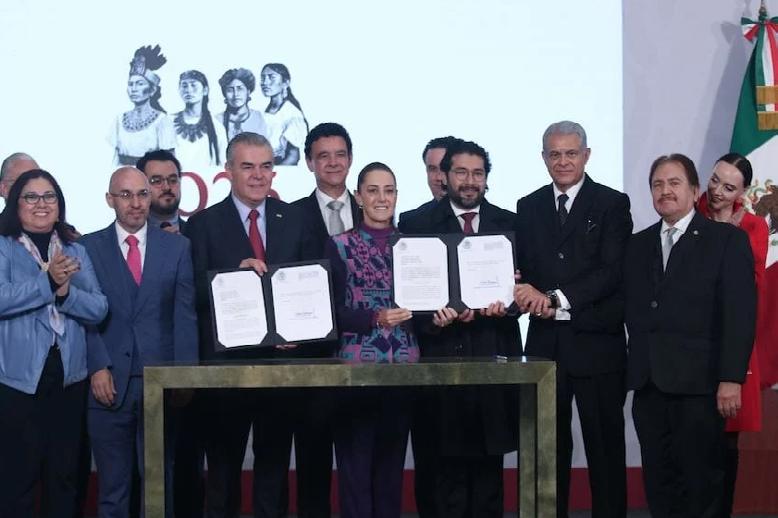
• INITIATIVE TO ISSUE THE GENERAL WATER LAW AND AMEND THE NATIONAL WATERS LAW
Presented by: Federal Executive
Objective: The initiative issues a new General Water Law to guarantee access, availability, and sanitation of water, define shared responsibilities across government levels, promote sustainable use, and recognize community water systems. It also reforms the National Waters Law to strengthen state control, eliminate transfers of water rights, ensure proper use of concessions, improve transparency, deter irregular practices, and establish water-related offenses.
Status: 2025-12-04 – Approved, turned to the Federal Executive for its publication in the Official Gazette (DOF)
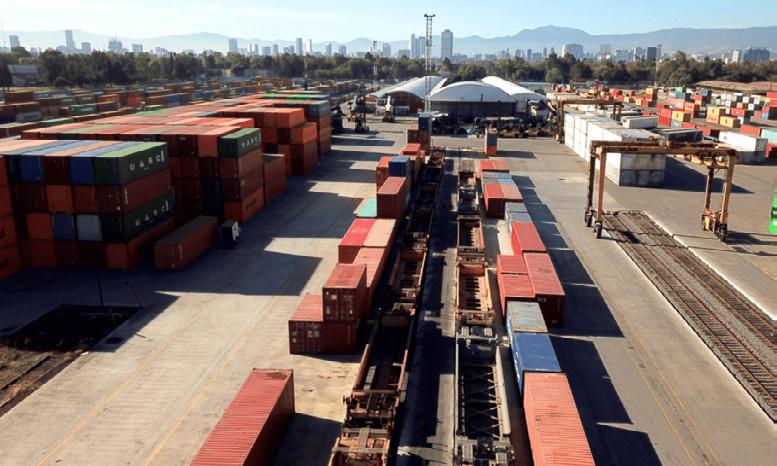
• DECREE TO AMEND VARIOUS TARIFF ITEMS IN THE TARIFF OF THE LAW ON GENERAL IMPORT AND EXPORT TAXES
Presented by: Committee on Economy, Trade and Competitiveness
Objective: The draft revises multiple tariff codes, eliminating some and reducing rates for others. The updated version decreases the original 1,400 HTS codes to about 1,100.
Status: 2025-12-09 – Published in the Parliamentary Gazette.


The San Diego Regional Chamber of Commerce and Tijuana’s DEITAC are driving stronger cross-border collaboration to boost competitiveness and attract investment in the CaliBaja region, emphasizing that San Diego and Tijuana must act as a unified economic gateway rather than as competing markets. During the 2025 Cali-Baja Business Summit, leaders highlighted opportunities in the energy transition, AI adoption, and regional supply chains, as well as the need to modernize border infrastructure—such as the San Ysidro expansion and the upcoming Otay II crossing—to reduce annual losses caused by long wait times. Ongoing partnerships among chambers, economic development groups, and universities are enabling pilot programs like SENTRI and new mobility initiatives for students, tourism, and workers, demonstrating how the region turns collaboration into concrete, scalable projects that strengthen its binational competitiveness.
SOURCE: INDUSTRIAL NEWS BC

Sonora is advancing the professionalization of academic talent to support its new Semiconductor Design Center, as Governor Alfonso Durazo promotes a specialized training program aligned with the state’s Plan Sonora for Sustainable Energy. The initiative aims to build a shared technical foundation for universities by training professors and researchers in high-level micro- and nanofabrication processes at Cidesi in Querétaro, including silicon wafer processing and cleanroom protocols. The program positions the Instituto Tecnológico Superior de Cajeme (Itesca) as the lead institution within the State Semiconductor Consortium, coordinating student and faculty development to meet the needs of the region’s growing electromobility and nearshoring sectors. Participants from multiple Sonoran universities received intensive instruction on oxidation, lift-off, photolithography, surface preparation, and selective material deposition, with the goal of strengthening regional capabilities in applied research, talent development, and prototyping. This collaboration is expected to transfer technology and best practices from Cidesi to Itesca’s cleanroom, building the technical standards and methodologies required for the effective operation of the Semiconductor Design Center in Sonora.
SOURCE: LA JORNADA

Chihuahua is strengthening its industrial diversification strategy by deepening ties with Taiwanese technology companies, generating more than 30,000 jobs and positioning Ciudad Juárez as a key hub for advanced manufacturing in Mexico. Led by the state’s economic development agency Prodech, officials met with the Taiwan Electrical and Electronic Manufacturers’ Association to review current operations and explore new projects tied to semiconductors and high-tech production. Recent agreements signed with major firms such as Foxconn, Pegatron, Wistron, and Inventec—following a visit to Taiwan last year—are driving investment in infrastructure, talent development, and the creation of a technology ecosystem aligned with the Semiconductor Route linking Ciudad Juárez, Phoenix, and Austin. This strategy strengthens Chihuahua’s role in the global electronics supply chain, reinforcing Ciudad Juárez as a growing hub of manufacturing, innovation, and international connectivity.
SOURCE: EL CONGRESISTA

Durango is strengthening its Industrial Logistics Center with the inauguration of the Coficab II plant, reinforcing the state’s appeal for new investment and specialized job creation. Governor Esteban Villegas emphasized that the expansion of global companies like Coficab supports the state’s development strategy, which includes ongoing improvements in infrastructure, services, and energy supply for the logistics hub. Coficab now exceeds $170 million USD in total investment in Durango and employs more than 1,400 people, with the new phase alone surpassing $60 million USD. Company leaders noted that Durango is becoming one of Coficab’s fastest-growing platforms in the Americas, while local authorities highlighted the region’s security, water availability, and social stability as key advantages. Complementary projects—including an IMSS childcare center, the expansion of Clinic 44, a new hospital, road improvements, and energy upgrades—will support the continued industrial growth of the state.
SOURCE: EL ECONOMISTA


Index Nuevo León celebrated its 39th anniversary with “Christmas Magic,” a festive event recognizing nearly four decades of supporting the state’s IMMEX manufacturing and export sector. During the celebration at Salón Icon, members and partners enjoyed a dinner, dancing, a raffle, and messages of gratitude from Index president Felipe Villarreal and director general Zelina Fernández. The organization highlighted its mission of representing and strategically connecting IMMEX companies, promoting their interests, strengthening capabilities, and opening new opportunities. From January to September 2025 alone, IMMEX companies in Nuevo León generated $28 billion in exports and created more than 11,000 jobs across 741 registered facilities.
SOURCE: PLAYERS OF LIFE
Coahuila continues to expand its industrial reach with the upcoming Saltillo–Monterrey train project, a 120-kilometer rail corridor connecting Derramadero and Santa Catarina that is expected to transform mobility and economic development in the Northeast. With an investment exceeding 38 billion pesos, the project aims to streamline transportation between two major manufacturing hubs while boosting employment and local supply chains. The CTM, which will administer the collective labor contract, estimates the project will generate at least 3,500 permanent jobs—peaking at up to 5,500 during construction—mainly in transportation, specialized construction, and support services. The initiative prioritizes local suppliers and coordinated hiring processes, aligning with Coahuila’s strategy to strengthen regional value chains. As part of President Claudia Sheinbaum’s national plan to expand passenger rail infrastructure, the Saltillo–Monterrey train is positioned as a competitive solution to improve labor mobility, reduce travel times, and enhance connectivity between two of Mexico’s most dynamic industrial centers.
SOURCE: PLAYERS OF LIFE

San Luis Potosí advanced its energy transition agenda through the 5th Clean Energy and Energy Transition Forum, bringing together industry leaders, academia, and public institutions to address the challenges and opportunities of building a more sustainable and competitive energy model. Discussions focused on renewable energy, electromobility, and circular economy strategies, emphasizing the need for technical decision-making, long-term investment, and coordinated collaboration to achieve scalable results. The forum highlighted ongoing progress supported by global companies such as BMW and Veolia, which are developing projects to improve energy performance, reduce emissions, and strengthen local supply chains. Overall, the event underscored the importance of continued innovation, specialized talent, and cross-sector partnerships for San Luis Potosí to solidify its regional leadership in clean energy and sustainable industrial growth.
SOURCE: MEXICO INDUSTRY
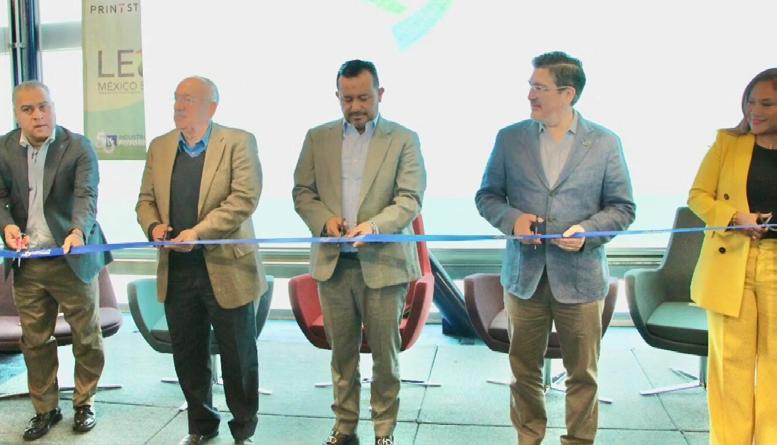
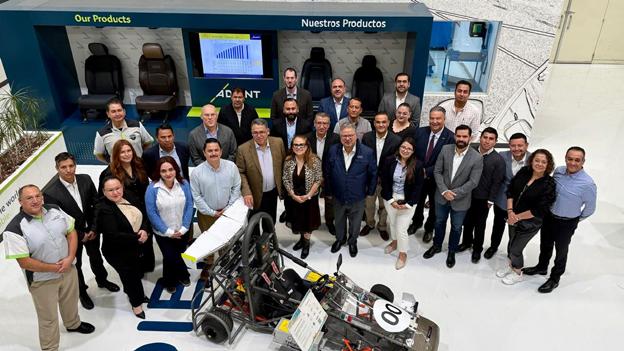

ATWS 2026 will bring global automotive innovation leaders to Mexico City, positioning itself as the country’s first high-level summit dedicated to technology, AI and cybersecurity in the automotive and auto-parts sector. The event comes at a pivotal time for Mexico, now the world’s 5th-largest producer and exporter of light vehicles and the 4th-largest producer of auto parts, supported by a large domestic market of 36 million vehicles and nearly 1,000 parts factories.
The summit responds to the sector’s accelerating digital transformation, where operational efficiency, automation and data-driven processes have become strategic priorities. With Mexico facing roughly 300,000 cyberattacks per day and global investment fueling more than 2,000 new AI companies in 2024, the need for stronger digital infrastructure and advanced security frameworks has become urgent.
SOURCE: MEXICO INDUSTRY

Chesisa will develop six new industrial parks in Tultitlán and Tultepec, State of Mexico, backed by a MXN 3.5 billion investment and expected to generate more than 2,800 direct and indirect jobs. The project strengthens the State of Mexico’s position as a major manufacturing and logistics hub, bringing the total number of industrial parks in the state to roughly 228.
Strategically located within the Valley of Mexico’s industrial corridor, the new sites aim to attract logistics and e-commerce operators, light manufacturing, value-added production and nearshoring projects requiring rapid delivery to the country’s largest consumer market.
Authorities highlight the region’s connectivity, workforce availability and regulatory certainty as key advantages. The expansion also supports last-mile logistics growth and creates new opportunities for SMEs in transport, industrial services, maintenance and security. However, increasing industrial density will require addressing mobility, water management and service-capacity challenges. Overall, the developments signal the Valley of Mexico’s growing ambition to capture a larger share of nearshoring and logistics investment.
SOURCE: ENERGY MAGAZINE
Lightera, a fiber-optic cable manufacturer and connectivity solutions provider, expanded its plant in Mexicali to add a new production line for optical-fiber cables. The facility now employs 400 direct workers and serves the telecommunications and data-center sectors, strengthening Mexico’s digital infrastructure.
Xiamen Intretech, a manufacturer of automotive electronics, IoT devices, and navigation systems, executed a US$60M expansion in Apodaca, Nuevo León. Its new 44,000 m² plant will produce automotive rear-view mirrors, IoT devices, and navigation units, generating 2,000 jobs—one of the quarter’s most talent-intensive projects.
Bayon Precision Automotive, part of the automotive-parts and electromobility supply-chain industry, invested US$28M in San Luis Potosí to produce aluminum die-cast components for EV and electromobility markets.
MLS México, a LED-lighting manufacturer, will invest US$261.7M to build a new production complex in Durango, creating 3,500 jobs through a phased rollout to 2030.
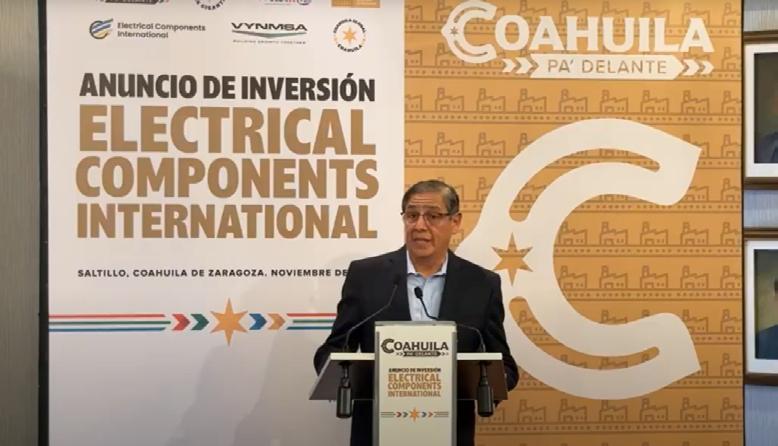
ECI, a manufacturer of electrical-distribution systems for the automotive and transport industries, will invest approximately US$ 32.5 million to build a new plant in Torreón, Coahuila. The facility is expected to generate 1,200 direct jobs, strengthening the industrial corridor in La Laguna.
Quartux, a Mexican specialist in battery-energy storage (BESS), will receive US$50M from AINDA, a major Mexican infrastructure-investment fund, to fast-track utility-scale storage projects — strengthening Mexico’s electrical grid capacity and supporting the energy transition.
SOURCES: MEXICO NOW, MEXICO INDUSTRY, CLUSTER INDUSTRIAL
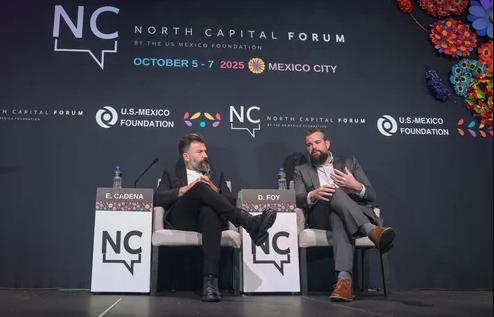
At the 2025 North Capital Forum, Prodensa CEO Emilio Cadena joined senior executives and public leaders to unpack the forces reshaping North American integration. As part of our commitment to sharing strategic insights with the business community, we’re launching a special blog series featuring takeaways from expert panels and high-level trilateral discussions.
This edition looks at the growing momentum behind trade, investment, security, and labor mobility across the region—and what global manufacturers must understand to plan with confidence.

• USMCA Ambassadors Signal Confidence: Canada and Mexico highlight a stronger, more unified regional approach to trade and security.
• Why Integration Matters Now: Nearshoring strategies are accelerating, and the North American manufacturing platform is becoming more competitive than ever.
• Security as a Supply Chain Advantage: New levels of bilateral and trilateral cooperation are reducing border risk and improving logistics reliability.
• Labor Mobility Takes Center Stage: Legal migration programs are increasingly essential to industrial workforce stability.
• Looking Ahead to the USMCA 2026 Review: A pivotal moment for shaping rules of origin, digital trade, and competitiveness.
• Mexico–Canada Alignment Deepens: A strengthening axis that adds financial depth and strategic diversification to the region.
The message from regional leaders is clear: industry engagement is essential. Now is the time for manufacturers, supply chain executives, and investors to help define the next chapter of North American competitiveness.
Prodensa’s experts stand ready to convert these geopolitical insights into actionable strategies—whether you’re exploring nearshoring, expanding manufacturing in Mexico, or evaluating turnkey and shelter solutions.
Read the full analysis and stay ahead of the shift.
NORTH AMERICA’S NEXT MANUFACTURING LEAP WILL BE DIGITAL—BUT THE REGION ISN’T READY YET
At the 2025 North Capital Forum, Emilio Cadena, CEO of Prodensa, joined a panel of industry innovators to examine the deeper structural forces shaping the future of North American manufacturing. Together with other Prodensa executives, the conversation moved beyond the traditional nearshoring narrative—spotlighting the connectivity, energy, talent, and cybersecurity challenges that global companies must solve to compete in the next decade.
This blog is part of our ongoing insight series from the North Capital Forum, designed to help international investors and supply chain leaders navigate what’s coming next.
INSIDE THIS EDITION:
• Digital Infrastructure: The Hidden Bottleneck.Telecom and tech leaders warned that North America’s connectivity gap—from broadband shortages to fragmented spectrum policies—could slow the region’s ability to lead in advanced manufacturing. With the 2026 USMCA review on the horizon, regulatory alignment is more urgent than ever.
• Energy Capacity: The New Strategic Variable. Nearshoring decisions now hinge on long-term power reliability, not just immediate availability. A unified North American energy strategy—including smart grids and real-time data—is emerging as a priority for manufacturers planning future investments.
• AI Risks and Industrial Cybersecurity.As automation accelerates, so do vulnerabilities. Deepfakes, synthetic identities, and digital fraud represent rising threats for global manufacturers. Trust and authentication technologies will become foundational to cross-border operations.
• Talent in the Age of Automation.The region’s workforce training systems are falling behind technological demands. Companies expanding into Mexico or scaling operations must evaluate talent pipelines and invest in upskilling to ensure resilience and competitiveness.
• From National to Regional Content.A powerful takeaway: North America must shift from isolated national strategies to a regional approach where intermediate goods produced in any country strengthen the whole ecosystem. This is especially relevant for companies leveraging Mexico’s shelter or turnkey manufacturing models.
PRODENSA KEY TAKEAWAYS:
• Nearshoring success depends on closing North America’s digital and energy infrastructure gaps.
• Connectivity and data flow must become core components of the 2026 USMCA review.
• AI readiness requires both innovation and protection—from cybersecurity to identity verification.
• Workforce development must accelerate to meet the needs of next-generation manufacturing.
• A regional content strategy can unlock more efficient, integrated supply chains across North America.
The opportunity is clear: For companies exploring EOR solutions, shelter services, or turnkey manufacturing in Mexico, long-term success will depend on how well the region aligns its infrastructure, talent, and strategic vision. VISIT OUR WEBSITE TO EXPLORE OUR FEATURED BLOG POSTS, EBOOKS, AND CASE STUDIES. PRODENSA.COM/INSIGHTS