GENERAL SITUATION IN MEXICO
Weekly Review I December 3, 2025


Weekly Review I December 3, 2025
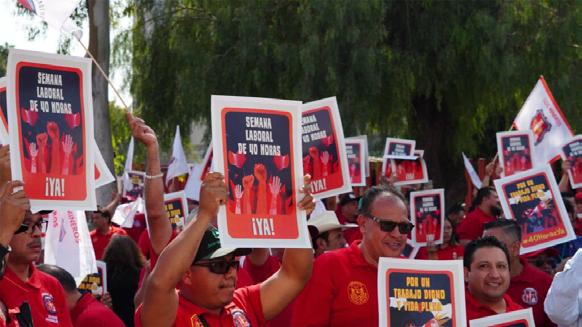
The Government of Mexico, through the Ministry of Labor and Social Welfare, has presented a Constitutional Reform and Labor Law Reform to reduce the standard workweek from 48 to 40 hours by 2030, without any reduction in workers’ salaries or benefits. This initiative, developed throughout 2025, seeks to improve health, safety, and work-life balance while modernizing labor regulations. The proposal emerged from an extensive dialogue process held from June 19th to November 30th, comprising more than 40 workshops and over 2,000 participants. Representatives from business organizations, trade unions, academia, government institutions, and civil society participated in building a broad consensus around the reform. The initiative has not yet been presented in the Official Gazette; when it is, it will be shared separately.
The core of the reform elevates the 40-hour workweek to Constitutional status, making it a guaranteed right. Importantly, the reduction will under no circumstances imply lower wages or loss of benefits. For the first time, overtime work for minors will be completely prohibited. To facilitate adaptation for companies and workers, the change will be gradual: starting in 2027, the maximum ordinary workweek will decrease by two hours each year until reaching 40 hours on January 1, 2030 (46 hours in 2027, 44 in 2028, 42 in 2029, and 40 in 2030).
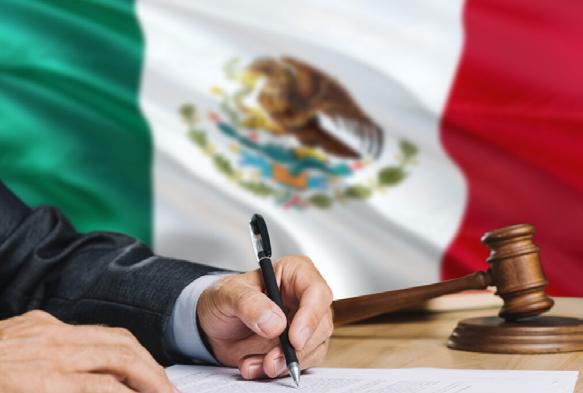
The initiative is expected to be presented today, December 3rd, 2025, in the Senate, to be discussed in Congress during the next legislative period, which starts on February 1st.
(The two-hour annual reduction will be effective on January 1st of each year.)
The proposed timeline includes:
• Presentation of the initiative to Congress today.
• Discussion and approval in the Congress of the Union during the next legislative period (February 1st, 2026 – April 2026)
• Entry into force on May 1, 2026.
• First two-hour reduction effective January 1, 2027.
Additional protections include a new daily cap of 12 hours, when combining ordinary and extraordinary hours, ensuring workers receive adequate rest. Currently, the Federal Labor Law allows up to 3 extra hours per day, three times per week, for a total of 9 hours of overtime weekly. Under the new initiative, overtime remains voluntary and will be capped at 12 hours of double overtime + 4 hours of additional triple pay overtime, making it a total of 16 hours per week of overtime.
To guarantee compliance, employers will be required to implement mandatory electronic time-recording systems for all workers. The Ministry of Labor will issue the corresponding regulations.
The proposed Labor Reform in Mexico aims to reduce the standard workweek to 40 hours by 2030 through a gradual two-hour annual decrease starting in 2027, while maintaining salaries and benefits. Key changes include constitutional protection of the 40-hour work week, bans on overtime for minors, limits on daily hours to 12, voluntary overtime up to 12 hours weekly with a cap on triple-pay hours, and mandatory electronic hour registries for compliance. Developed via extensive stakeholder consultations, the reform seeks to enhance health, safety, and work-life balance for over 13 million workers in key sectors like manufacturing and retail.
SOURCE : GOVERNMENT OF MEXICO
• The Congress has opened a series of working groups to refine the proposed tariff package that would impose duties of 10% to 50% on more than 1,400 tariff codes from countries without trade agreements.
• Lawmakers and business chambers are reviewing exceptions, sensitive sectors and potential risks for industries dependent on specific foreign suppliers.
• The Secretary of Economy has emphasized that the plan was designed with technical safeguards, ensuring that none of the included inputs show dependence of 50% or more on a single non-treaty partner.
• These discussions highlight rising caution over supply chain vulnerabilities and competitive pressures from Asia. The review process underscores deepening unease among domestic industries seeking stronger safeguards as global trade dynamics shift.
SOURCE: EXPANSIÓN

MEXICO

• U.S. – USTR to Hold Public Hearing This Week to State Position Ahead of USMCA Review.
• The Office of the U.S. Trade Representative will conduct a three-day public hearing from December 3-5th, 2025, in the main hearing room of the U.S. International Trade Commission in Washington, DC, to gather stakeholder testimony on the operation of the USMCA.
• This input will help formulate the U.S. position for the mandated 2026 joint review with Mexico and Canada, focusing on priorities in areas like labor, environment, digital trade, supply chains, and overall effectiveness.
• Post-hearing rebuttal comments are due seven days after the final session.
• The hearing, rescheduled from November, underscores efforts to strengthen the agreement amid ongoing tariff tensions.
SOURCE: FEDERAL REGISTER
• Last week, the Trump administration rolled out tariff reductions on Chinese imports as part of the Economic and Trade Arrangement signed on November 4th, which aims to ease tensions and promote balanced trade.
• Key changes include halving the “fentanyl-related” tariff from 20% to 10% effective November 10th, suspending the planned increase of the reciprocal tariff from 10% to 34% until November 10th, 2026, and extending Section 301 exclusions through the same date.
• In exchange, China committed to suspending retaliatory tariffs, purchasing $50 billion in U.S. soybeans annually, delaying rare earth export controls, and addressing IP theft and currency manipulation.
• This one-year extendable deal addresses the $500 billion bilateral deficit, with implications for stabilizing supply chains in EVs and tech while maintaining leverage for future negotiations.
SOURCE: WHITE HOUSE
REFORM TO ARTICLE 86 OF THE FEDERAL LABOR LAW
Presented by: Joint Committees on Labor and Social Welfare; Gender Equality; and Legislative Studies, First Committee
Objective: Mandates federal and state labor authorities to conduct workplace inspections to verify compliance with equal pay obligations.
Status: 2025-11-25 –Approved by the Senate and sent to the Chamber of Deputies
INITIATIVE TO AMEND, ADD, AND REPEAL VARIOUS PROVISIONS OF THE PUBLICPRIVATE PARTNERSHIPS LAW
Presented by: Dip. Felipe Miguel Delgado (PVEM)
Objective: The initiative modernizes Mexico’s public-private partnership framework by defining mixed-investment projects, strengthening legal certainty, and promoting transparency and sustainability.
Status: 20-11-25 - Turned to Commissions


BILL WITH DRAFT DECREE FOR THE PREVENTION AND INTEGRAL MANAGEMENT OF WASTE
Presented by: Senator Rafael Alejandro Moreno (PRI)
Objective: Incorporate the principle of “Priority Reuse,” giving precedence to return, reuse, and refill systems over other waste-management methods, including recycling. It adds key definitions related to circular economy. A National System of Reusable Packaging is created.
Status: 2025-11-25 – Published in the Parliamentary Gazette
BILL ISSUING THE LAW FOR THE PROTECTION OF INFORMANTS, AND REPORTERS OF ILLEGAL, UNETHICAL, OR PUBLIC-INTEREST RISK PRACTICES WITHIN ORGANIZATIONS
Presented by: Senator Imelda Castro Castro (MORENA)
Objective: Establish principles and mechanisms to protect individuals who, in good faith, report illegal, unethical, or risky acts within public or private entities. It creates a Protection System for Informants in the Private Sector to promote integrity, transparency, and risk prevention.
Status: 2025-11-25 – Published in the Parliamentary Gazette

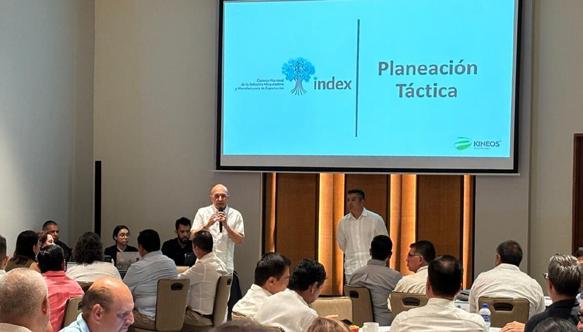

Index Mexicali, the organization representing the export manufacturing industry, is developing its 2026 Strategic Work Plan to boost the competitiveness of Baja California’s capital. President Salvador Maese explained that industrial leaders and sector specialists are defining concrete actions for the association’s specialized committees, which will focus on strengthening local supply chains, trade facilitation and USMCA review readiness, environmental sustainability, tax compliance, occupational health, access to reliable and competitive energy, workforce development, women’s inclusion, and digital transformation. Maese emphasized that the plan reflects a united commitment from the industry to position Mexicali as a leader in competitiveness, innovation, and sustainable development, driving prosperity and better jobs for the community.
SOURCE: INDUSTRIAL NEWS BC

Index Chihuahua held its monthly Finance Committee meeting, led by director Laura Ortega, with a focus on strengthening financial management and regulatory compliance in the state’s export manufacturing sector. Participants explored financial tools to boost competitiveness—highlighted by a presentation from MUNDI on strategies for optimizing operations and expanding international growth—and examined the evolving responsibilities of legal representatives under Mexico’s current fiscal environment. The session also addressed labor and fiscal compliance, including preventive practices related to Article 21 of the Law to Prevent and Punish Human Trafficking. Index Chihuahua thanked attendees for contributing to stronger financial practices that support responsible and competitive operations across the region.
SOURCE: MEXICO INDUSTRY
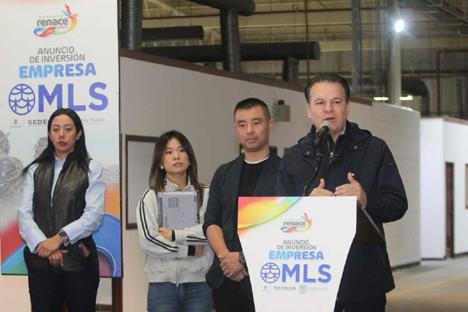

MLS will invest $260.7 million USD in a new LED manufacturing plant in Gómez Palacio, Durango—an announcement led by Governor Esteban Villegas together with local authorities and executives from the Asian company. The project, one of the largest recent investments in La Laguna, will be developed in three stages and is expected to generate 3,000 to 3,500 direct jobs once fully operational. The first phase includes $21.7 million USD for a 26,000 m² industrial facility that will begin operating in early 2026 and create 300–500 initial jobs. MLS, one of the world’s largest LED manufacturers, plans to bring its suppliers to the region, develop its own industrial park, and establish an R&D center focused on electronic components and technology transfer, marking a significant industrial boost for Gómez Palacio and the region.
SOURCE: PLAYERS OF LIFE


NUEVO LEON
Prodensa celebrated its 40th anniversary in Monterrey by bringing together clients, partners, and industry leaders for a high-level event on the future of global manufacturing and North American competitiveness. CEO Emilio Cadena shared data-driven insights on technology shifts, supply-chain restructuring, and rising compliance demands, emphasizing the need for Mexico to communicate its strategic value more clearly to the
United States. He also highlighted Prodensa’s expanding capabilities in trade compliance, regulatory management, and workforce transformation as companies prepare for rapid changes in skills and operating models.
(Foto adjunta)
SOURCE: PRODENSA

Index Guanajuato held its end-of-year session to review advances in the export manufacturing sector and outline the strategic actions that strengthened the state’s industrial momentum in 2025. The organization highlighted the role of more than 350 IMMEX companies that drive Guanajuato’s export leadership among non-border states through diversified supply chains, productivity gains, and strong job creation. Alfonso Carlos Valdés Carmona was reaffirmed as president for 2026, ensuring continuity in initiatives focused on supplier development, industrial integration, and expanded production capabilities. With participation from state economic authorities, the session emphasized regional collaboration to enhance logistics and advanced manufacturing. Looking ahead, Index Guanajuato expects greater dynamism in 2026, fueled by nearshoring, the consolidation of the automotive cluster, and rising external demand, and reaffirmed its commitment to strengthening talent, capabilities, and global market integration.
SOURCE: MEXICO INDUSTRY
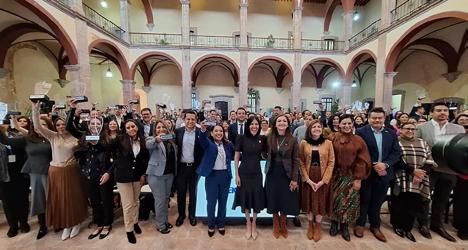

Querétaro honored 99 companies with the Distintivo Sin Brecha 2025, recognizing their efforts to promote workplace equality, with the automotive sector standing out through firms such as Brose, Siemens, Harman, Valeo, and ZF, which collectively impact thousands of workers through improved organizational culture, infrastructure, and internal protocols. During the ceremony, Labor Secretary Liliana San Martín highlighted the program’s growth—now totaling 145 recognized companies since its creation—and noted that this year’s recipients include 34 first-time awardees, 65 renewals, and 26 companies achieving four consecutive years, along with the addition of two municipalities and a union. The distinction has become a key instrument for advancing equitable work environments in strategic sectors such as automotive, where inclusive practices continue to expand.
SOURCE: CLUSTER INDUSTRIAL

Mexico’s industrial inventory surpassed 110 million square meters by the end of October, with Mexico City emerging as one of the main drivers of national growth. The capital concentrated 32 percent of the new industrial supply, reflecting its continued strength as a core logistics and manufacturing hub. In construction activity, Mexico City accounted for 18 percent of all projects nationwide, positioning it as the second-largest market after Monterrey. Industrial leasing in October reached nearly 500,000 square meters, with Mexico City leading national demand at 23 percent. This performance underscores the region’s sustained appeal for companies seeking proximity to consumers, infrastructure, and workforce availability. Despite rising national vacancy—now at 4.4 percent—Mexico City remains one of the more resilient markets, with vacancies increasing mainly in Guadalajara, Monterrey, and Mexicali.
SOURCE: MILENIO

The State of Mexico is advancing plans to develop a new pharmaceutical and medical-device cluster, beginning in the municipality of Naucalpan. According to Economic Development Secretary Laura González Hernández, the area offers favorable conditions for these industries, including logistics infrastructure, skilled labor, and an existing industrial base. The project envisions a regional corridor that will start in Naucalpan, extend through Tlalnepantla, and reach Toluca, forming a concentrated zone aimed at attracting high-value investments.
The initiative is part of the state government’s broader clusterization strategy, which seeks to channel investment into regions with strong productive potential while promoting sectors capable of generating more specialized employment and better wages. By grouping companies within the corridor, authorities aim to strengthen supply chains, improve competitiveness, and create an ecosystem that supports advanced manufacturing in the life-sciences sector.
SOURCE: EL UNIVERSAL
Solfium, the Canadian-Mexican clean energy company, announced $10M USD investment to install a new solar energy plant in Querétaro. This expansion aims to accelerate solar adoption in Mexico, empower small and medium-sized enterprises (MSMEs) in corporate value chains, and is projected to generate 750 jobs (150 direct, 600 indirect).
Emergent Cold LatAm, a leading company in the coldchain logistics and refrigerated warehousing industry, invested $30 million USD to open a new temperature-controlled distribution center in Tlajomulco, Jalisco. With 12,000 pallet positions of storage capacity and 240 total jobs created, the project strengthens food safety, traceability, and distribution efficiency across Western Mexico.
With a $2.8 million USD investment, Holcim México inaugurated the first fully electric concrete plant in Zapopan, Jalisco. By removing more than 110,000 liters of diesel from its operations, the company will cut close to 300 tons of CO₂ emissions every year, reinforcing its commitment to cleaner construction solutions.
Tongling, a Chinese Tier 1 automotive interior supplier, invested $90 million USD to establish a new plant in Irapuato, Guanajuato. This project will strengthen the local automotive supply chain by creating 460 direct jobs, further consolidating Guanajuato’s position as a key industrial hub in Mexico.
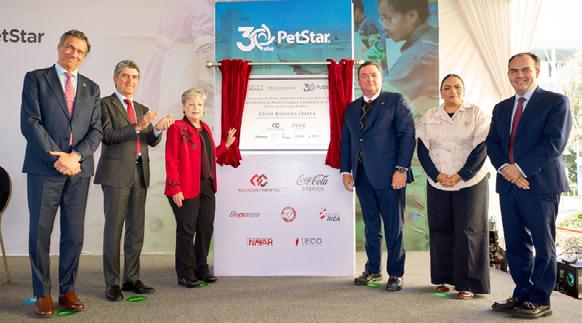
PetStar (Coca-Cola System’s PET recycling partner) expanded its plant in Toluca, making it the world’s largest food-grade PET recycler, with an investment of approximately $142 million USD. A 70% increase in production capacity is expected, enabling the plant to process over 123,000 tons of PET annually (equivalent to 5.5 billion bottles), significantly strengthening Mexico’s circular economy.
Avantti Medi Clear, a specialized sterilization services provider for the medical device industry, inaugurated its second plant in Tijuana, Baja California, supported by an investment of over $12.5 million USD. The new facility enhances the region’s medical manufacturing ecosystem by adding technical and specialized jobs and deploying advanced E-Beam sterilization technology.
SOURCES: MEXICO INDUSTRY, CLUSTER INDUSTRIAL
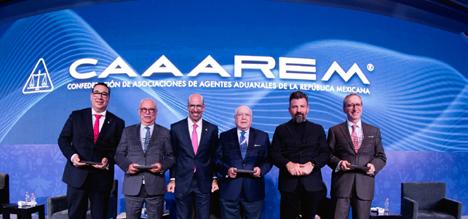
During the 85th National Congress of Customs Brokers (CAAAREM), Prodensa CEO Emilio Cadena shared a clear message: the 2026 USMCA review is not a threat—it is a strategic opportunity for Mexico. With global trade shifting toward regionalization, security, and supply chain resilience, the USMCA must adapt to today’s geopolitical realities.
Panelists emphasized that North America’s integrated production ecosystem is stronger than ever: U.S. exports to Mexico average $2,600 per capita, and every manufacturing job created in Mexico correlates with one in the U.S. Rising tariff differentials also make USMCA compliance a competitive advantage for companies operating under shelter, IMMEX, or turnkey models.
Mexico now has the chance to strengthen trusted supply chains, scale advanced manufacturing, and position itself as a regional leader heading into the 2026 review.
At the North Capital Forum, leaders from across the region—including Prodensa CEO Emilio Cadena—highlighted how North America is entering a new phase of collaboration driven by geopolitics, supply chain resilience, and shared economic goals. Panelists emphasized that “The North American Way” is rooted in cross-border cooperation and innovation, positioning Mexico as a pivotal hub in this evolving ecosystem.
With its strategic location, growing talent base, and mature industrial infrastructure, Mexico is no longer just a low-cost option— it is a core engine of North American manufacturing. Companies integrating Mexico into their operations benefit from secure, diversified supply chains and stronger regional competitiveness.
Shelter services and Employer of Record (EOR) models are accelerating entry into Mexico, helping global manufacturers launch quickly, stay compliant, and leverage USMCA incentives.
For executives evaluating nearshoring, now is the moment to act and build long-term advantage in North America.