GREAT MINDS WIT & WISDOM® 8 GRADE MODULE 4 TEENS AS CHANGE AGENTS

Great Minds® is the creator of Eureka Math® , Wit & Wisdom® , Alexandria Plan™, and PhD Science® .
Published by Great Minds PBC greatminds.org
© 2023 Great Minds PBC. All rights reserved. No part of this work may be reproduced or used in any form or by any means—graphic, electronic, or mechanical, including photocopying or information storage and retrieval systems—without written permission from the copyright holder. Printed in the USA A-Print 1
Handout 1A: Verbals
Handout 2A: Verbals Sort
Handout 4A: Verbals
Handout 5A: Fluency Homework
Handout 6A: Evaluation of Mediums
Handout 9A: Multimedia Exhibit Checklist
Handout 10A: Research Process Packet
Handout 10B: Model Research Essay
Handout 10C: Multiple-Meanings Chart
Handout 11A: Fluency Homework
Handout 13A: Bus Boycott Events and Impact
Handout 14A: Readers’ Theater: Browder v. Gayle Handout 14B: Infinitives
Handout 15A: Paraphrase and Quotation Analysis
Handout 19A: Fluency Homework
Handout 23A: Fluency Homework
Handout 24A: Verbals Analysis
Handout 25A: Informative/Explanatory Writing Checklist
Handout 28A: Multimedia Presentation Checklist
Volume of Reading Reflection Questions
Wit & Wisdom Family Tip Sheet
Directions: Examine the underlined words, and determine their roles or functions in the sentences. Describe each word’s function on the lines. If you can, name the part of speech as well.
As you examine these words, consider the following questions:
What information does the word give the reader?
What question does it answer (i.e., Who? What? Which? Why? To what extent?)?
What is the word’s relationship to other words in the sentence?
“Jim Crow’s job was not only to separate the races but to keep blacks poor” (Hoose 4).
“In 1950, nearly three in five black women in Montgomery, Alabama’s capital city, worked as maids for white families, and almost three-quarters of employed black men mowed lawns and did other kinds of unskilled labor” (Hoose 4).
“Riding the bus was like having a sore tooth that never quit aching” (Hoose 4).
PART 1 Directions: Record the description of the function next to the each part of speech.
PART 2 Directions: On a separate sheet of paper, draw three columns. Label one column Nouns, one column Adjectives, and one column Adverbs. Sort the verbals in the sentences in the correct column based on their function in the sentence.
1. Speaking up for what you believe in is not always easy.
2. Some Black passengers refused to give up their seats to White passengers.
3. The enraged bus drivers sometimes became violent.
4. Black citizens rode buses to get home from work every day.
5. The depressing rules and customs oppressed the Black population.
6. White passengers enjoyed sitting on the buses no matter how crowded.
Directions: Record the description of the function next to the each part of speech.
Verbals: a verb form acting as a different part of speech; they seem to represent an idea of an action but don’t function as a verb. : verbal acting as an adjective : verbal acting as a noun, adjective, or adverb
: verbal acting as a noun
Ends in: Begins with:
Ends in:
Example(s): Example(s): Example(s):
Directions:
1. Day 1: Read the text carefully, and annotate to help you read fluently.
2. Each day:
a. Practice reading the text aloud three to five times.
b. Evaluate your progress by placing a √+, √, or √- in the appropriate, unshaded box.
c. Ask someone (adult or peer) to listen and evaluate you as well.
“Rebellion was on my mind that day. All during February we’d been talking about people who had taken stands. We had been studying the Constitution in Miss Nesbitt’s class. I knew I had rights. I had paid my fare the same as white passengers. I knew the rule—that you didn’t have to get up for a white person if there were no empty seats left on the bus—and there weren’t. But it wasn’t about that. I was thinking, Why should I have to get up just because a driver tells me to, or just because I’m black? Right then, I decided I wasn’t gonna take it anymore. I hadn’t planned it out, but my decision was built on a lifetime of nasty experiences.”
Hoose, Phillip. Claudette Colvin: Twice Toward Justice. Farrer Straus Giroux, 2011, p. 32.
Student Performance Checklist:
Accurately read the passage three to five times.
Read with appropriate phrasing and pausing.
Read with appropriate expression.
Read articulately at a good pace and an audible volume.
*Adult or peer
Day 1 Day 2 Day 3 Day 4 You Listener* You Listener* You Listener* You Listener*
Directions: In each of the following categories, rate and explain your agreement or disagreement with the criterion statements in order to evaluate the advantages and disadvantages of the film and print text mediums. Then record a key sentence or phrase from each medium that Claudette Colvin uses to describe her experience.
Medium: Video: “Claudette Colvin: The Original Rosa Parks.”
Category Criterion Statement
Rating and Rationale
1: Strongly agree 2: Agree 3: Neutral 4: Disagree 5: Strongly disagree
Engagement
Understanding
Precision
Emotion
Distinctiveness
A key sentence or phrase that Claudette uses to describe her experience:
This medium makes me interested in Claudette’s arrest.
This medium provides a comprehensive understanding of Claudette’s arrest.
This medium conveys the information in a specific and ordered sequence.
This medium affects the way I feel about Claudette’s arrest.
This medium gives a unique account of Claudette’s arrest.
Medium: Print text: pages 34–36 of Claudette Colvin: Twice Toward Justice, from “One of them said to the driver,” to “prayed like I had never prayed before.”
Category Criterion Statement
Rating and Rationale
1: Strongly agree
2: Agree
3: Neutral 4: Disagree
5: Strongly disagree
Engagement
Understanding
Precision
Emotion
Distinctiveness
This medium makes me interested in Claudette’s arrest.
This medium provides a comprehensive understanding of Claudette’s arrest.
This medium conveys the information in a specific and ordered sequence.
This medium affects the way I feel about Claudette’s arrest.
This medium gives a unique account of Claudette’s arrest.
A key sentence or phrase that Claudette uses to describe her experience:
Directions: Evaluate your placard by marking + for “yes” and Δ for “needs improvement” in the appropriate boxes. Revisit and revise the sections of your placard that need improvement.
I stated the qualities, medium, and/or use of the artifact.
I provided historical context for the artifact, including when it was made.
I defined the social, cultural, or political context of the artifact, including how it was interpreted or understood at the time.
I explained how this artifact contributes to an understanding of Claudette Colvin’s motivations for refusing to give up her seat.
I considered a wide audience who may not be familiar with the story of Claudette Colvin in my writing.
I considered how incorporating this artifact in a multimedia presentation will create interest in Claudette’s story.
Total number of +’s
Directions: Use this packet to track your research process and collect sources, evidence, and notes as you research and plan for your End-of-Module Task.
Identify an Issue: Use the space to draw a Mind Map around a social issue of your choice. Then, respond in writing to the question.
What makes this issue social?
Record a Research Question: Use the space to record your initial research question. As you develop your understanding and revise your question, use the subsequent spaces to record your revisions.
Initial Research Question:
Research Question Revision #1:
Research Question Revision #2:
Research Question Revision #3:
Identify Keywords and Search Terms: Underline key terms in your research question, and then write your key words in this table. Use the table to record synonyms and elaboration for these key terms—these are your keywords, which you can use to generate search results!
Term Example: Teen
Synonyms
Teenager Adolescent Juvenile Minor
Elaboration
High school Student Young Youthful
Find Sources: Use your keywords to search for sources, either online or in your library. Track your searches and results with the table.
Date
Search Information
Keywords used: Number of sources found:
Are the sources relevant to my question?
What is working well? What can I try next time I search?
Sources Found
Record any sources you think will work well for your project in this column so you can return to them later.
Assess Sources: Use the following table to assess your sources. If you decide that a source is not credible, you will need to return to your research and identify a new, credible source.
Citation Information Where is this source from?
Is the publication credible? What are the motivations behind the presentation of this source?
What does this source say?
What evidence does this source use?
What is the central idea of this source?
How does this source connect? How does this source contribute to your overall understanding? Does this source agree or disagree with your other sources?
Does this source raise any new questions?
Does anything about this source surprise or confuse you?
Does this source contain any new keywords that might be helpful in your research?
Author: Title: Publisher: Date: Author: Title: Publisher: Date:
Author: Title: Publisher: Date:
MLA Citation: Use the information below to help you draft MLA citations for your sources.
Directions: Label the parts of the following citation:
Example:
Pappas, Stephanie. “Social Media Cyber Bullying Linked to Teen Depression.” Scientific American, Springer Nature, 23 June 2015, http://witeng.link/0564. Accessed 12 October 2016.
Then, practice your understanding of MLA citation by recording a citation for one of your sources:
Synthesize Evidence: Using all of your sources, collect notes that respond to the following questions. Remember to include in-text citations so you remember where each note came from!
What is the social issue?
What are the circumstances?
Where and when is this social issue a concern?
What is happening to draw attention to this social issue?
Is there a larger social movement that is responding to this social issue?
How have teen change agents responded to this social issue?
What role do teens play in the larger social movement?
What strategies have teens used in responding to this issue?
What does the teen hope to accomplish?
Self-Assess Remaining Needs: Use the questions to self-assess your sources and information, and identify what information you may still need. Then, return to research to find an additional source or sources. If you answer “yes” to all these questions, proceed to the next step.
Do I have at least three sources?
Is one of my sources a nonprint medium?
Do my sources come from credible, relevant publications?
Do I understand my social issue?
Do I have a teen change agent, or change agents, represented in my sources?
Do I have information about my teen change agent’s circumstances?
Do I understand what motivated my teen change agent to create change?
Do I know the strategy or strategies they used to effect social change?
Do I understand what my teen change agent hoped to, or hopes to, accomplish?
Outline Your Essay: You are now ready to outline your informative essay, synthesizing your research to respond to your main research question. Use the following organizer to draft an outline for your essay, and then begin writing!
What is your hook?
What is your thesis statement?
Body Paragraph 1
Who is your teen change agent?
What are their circumstances?
What motivated them to create change?
Body Paragraph 2
What strategies did your teen change agent use?
How did they respond to this social issue?
What does this teen change agent hope to accomplish?
MLA citation format.
Alphabetical by author’s last name.
Include all sources used and cited in essay!
Congratulations, you are now ready to write your informative essay!
Teens today can be bullied with no way to escape. Bullies can use technology to attack their peers over and over again any time of the day, with terrible consequences. This type of bullying is called cyberbullying. Victims of cyberbullying have no safe spaces and can be abused no matter how hard they try to get away from the harassment. Thankfully, there is hope for teens today. After learning about the damage of cyberbullying, teen change agent Trisha Prabhu created an app called ReThink to help teens make better choices when they use technology. The goal of ReThink is to make the internet a safe place for everyone and help teens make more responsible choices that will put an end to cyberbullying.
Cyberbullying is a common experience for teens who have access to technology. Cyberbullying is defined as abuse that uses technology to cause another person emotional harm (Kidshealth.org 1). This includes using social media sites such as Facebook (Pappas 6). Cyberbullying is specific to teens, according to Kids Health, a nonprofit website dedicated to the health of young people. If adults are involved in the same activity, it is classified as cyber-harassment or cyberstalking. One mean message or post is not usually considered cyberbullying; rather, cyberbullying is a pattern of repeated harm (Kidshealth.org 6). A review of several studies by researchers at the University of Alberta put the number of teens targeted by cyberbullies close to twenty-five percent (Pappas 4). Troublingly, multiple sources confirm that teens are reluctant to tell their parents about this bullying. In addition, as teens grow older, their parents know less and less about their children’s online activity (Pappas 12–14; “Teens and Cyberbullying” 6). Sources agree that teens who experience cyberbullying are more likely to be depressed or think about suicide (Pappas 5; Kidshealth.org 2).
Cyberbullying is easy to accomplish; therefore, safeguards are necessary in order to stop cyberbullies. Kids Health notes that many schools have rules against cyberbullying. They also have consequences: bullies can be suspended or asked to leave sports teams (Kidshealth.org 3). However, these punishments still do not stop bullies at the source of the abuse. The bullies need to be asked to make better decisions in the moment of posting or writing, and this is what makes the work of teen change agent Trisha Prabhu so important and exciting.
Sixteen-year-old Trisha Prabhu was inspired to become a change agent in the fight against cyberbullying after reading about the suicide of twelve-year-old Rebecca Sedwick, who was cyberbullied for over a year and a half (“15-Year-Old’s ‘ReThink’” 10; Harvey). In an interview with talk show host Steve Harvey, Trisha says that Sedwick’s tragic death motivated her to become an “upstander and not a bystander” (qtd. Harvey). Trisha recognized that cyberbullies who use technology to harass others threaten public spaces that should be safe for everyone. The daughter of two computer scientists, Trisha learned how to write computer code at age ten, so it is no surprise that she turned to technology for a solution to cyberbullying (“15-Year-Old’s ‘ReThink’” 9).
Trisha became an “upstander” against cyberbullying by developing an app called ReThink. The teen “app-tivist” eloquently explains that ReThink is “the first proactive app to stop cyberbullying before it happens” (Harvey). ReThink works by analyzing text and asking the teen if they really want to post their message. Ultimately, the goal of the app is to get teens to be more thoughtful and responsible with their online activity (“15-Year-Old’s ‘ReThink’” 3–8; Harvey).
Before developing her app, Trisha researched the brain and discovered that the part of the brain that “regulates impulse control is not fully developed in teenagers” (“15-Year-Old’s ‘ReThink’” 11). This means that teens do not always think about the consequences of their actions. Therefore, ReThink aims to be an added layer of control for teens. Studies show that Trisha’s method works: ReThink was ninety-three percent effective at stopping teens from sending and posting harmful messages (Harvey). Trisha is using her intelligence and technological skills to make a big difference online.
In conclusion, ReThink is able to make real changes to the way teenagers use social media. But curbing cyberbullying is not the only benefit of the app. Trisha explains that many teenagers are excited about ReThink because they feel like their parents are giving them “trust and respecting them” (Harvey). The teen change agent’s goal for ReThink is to keep the application free and accessible across a wide range of platforms, such as smartphones and computers with different operating systems (Harvey). Trisha’s goal is to make the internet a safe place for everyone (“15-Year-Old’s ‘ReThink’” 19) and, in doing so, to try to put an end to depression and tragic events that happen as a result of cyberbullying.
“15-Year-Old’s ‘Re-Think’ App Aims to Prevent Cyberbullying.” ABC News, ABC News Internet Ventures, 26 Aug. 2015, http://witeng.link/0565. Accessed 6 Dec. 2016.
Harvey, Steve. “New App to Stop Cyberbullying.” YouTube, uploaded by Steve Harvey, 29 Feb. 2016, http://witeng.link/0567. Accessed 6 Dec. 2016.
Hirsch, Larissa, reviewer. “Cyberbullying.” KidsHealth, The Nemours Foundation, June 2014, http://witeng.link/0566. Accessed 6 Dec. 2016.
National Crime Prevention Council. “Teens and Cyberbullying: Executive Summary of a Report on Research Conducted for National Crime Prevention Council.” National Crime Prevention Council, 28 Feb. 2007, http://witeng.link/0568. Accessed 6 Dec. 2016.
Pappas, Stephanie. “Social Media Cyber Bullying Linked to Teen Depression.” Scientific American, Springer Nature, 23 June 2015, http://witeng.link/0564. Accessed 12 October 2016.
Directions: Write a different definition in each box to show the multiple meanings of the word. Then, write a sentence for each definition of the word on the lines beneath each box.
Directions:
1. Day 1: Read the text carefully, and annotate to help you read fluently.
2. Each day:
a. Practice reading the text aloud three to five times.
b. Evaluate your progress by placing a √+, √, or √- in the appropriate unshaded box.
c. Ask someone (adult or peer) to listen and evaluate you as well.
“Mass meetings continued at black churches every Tuesday and Thursday night. Young, round-faced Dr. Martin Luther King, Jr., who urged boycotters to refrain from violence and seek charity toward whites in their hearts, inspired crowds with stirring speeches that often included ideas and philosophies from distant times and places. He talked about the power of love to change the world. ‘He had poetry in his voice, and he could snatch scripture outa the air and make it hum,’ said E. D. Nixon, who admitted ‘he was saying it better ‘n I ever could.’ King began to emerge as a charismatic national figure.
Determined to apply economic pressure peacefully, black protestors let the nearly empty buses rumble on by like green ghosts, ignoring the doors that snapped open invitingly at the corners, and devised their own transportation system. Coached by leaders of Baton Rouge’s bus boycott of 1953, the Montgomery Improvement Association (MIA) designed an alternative to the buses on the scale of a wartime military transport system, moving tens of thousands of maids and yard men and clerks and students around Montgomery’s far-flung neighborhoods every day. And it was entirely voluntary—it ran on dedication, generosity, and hope.”
Hoose, Phillip. Claudette Colvin: Twice Toward Justice. 2009. Farrer Straus Giroux, 2011, pp. 73–74.
Accurately read the passage three to five times. Read with appropriate phrasing and pausing. Read with appropriate expression.
Day 1 Day 2 Day 3 Day 4
You Listener* You Listener* You Listener* You Listener*
Read articulately at a good pace and an audible volume.
*Adult or peer
Directions: Collaborate with your classmates to respond to your assigned question. Gather evidence from the pages listed in parentheses, and write responses using bullet points and textual evidence with page citations. Then, share your information with the members of your original small group.
1. Who organized the boycott, and what specific actions did they organize (text box, page 74)?
2. What kinds of details and plans had to come together for the boycott to succeed (page 74-top of page 77)?
3. How did the Colvin family participate in the boycott (pages 77-79)?
4. What happened in Montgomery as a result of the boycott (page 79-top page 81)?
5. To what degree did the Black protesters succeed in their goal to create social change by using the bus boycott “to apply economic pressure peacefully” (73)?
Directions: Using information from pages 93 to the top of page 100 of Claudette Colvin: Twice Toward Justice, answer the following questions for your assigned person. Use evidence from the text to respond to these questions, but practice paraphrasing by putting the answers in your own words, and citing your evidence
What is this person’s name and, if known, approximate age at the time of the trial?
What is this person’s role in Browder v. Gayle?
What attitude does this person have toward the Montgomery Bus Boycott?
What quotation, either from the person or Hoose, best captures the person’s purpose or motivation in the lawsuit?
Rewrite your responses above into a short paragraph written from the first-person perspective of your assigned person:
Choose one member of your group to act as your character in the Readers’ Theater. Your presenter will share your character sketch, speaking as your assigned character.
Infinitives are composed of to + a present tense verb form (e.g., to rebel, to speak, or to write). They can function as adjectives, adverbs, and even nouns! How do we determine the function of infinitives when we have so many options? Let’s explore!
PART 1 Directions: Underline the infinitives in the sentences. Then, explain the infinitive’s function in the sentence on the lines below.
“As Fred Gray later said, ‘I don’t mean to take anything away from Mrs. Parks, but Claudette gave us all the moral courage to do what we did’” (63).
“He talked about the power of love to change the world” (76).
Bus companies shut down several bus routes just to remain open for business (79).
PART 2 Directions: Work in small groups to answer the questions for your group’s part of speech. Use Handout 4A to help you complete PART 2.
What questions does it answer?
Where can I find one in a sentence?
What are some tricks to help me?
Directions: Read the following sets of evidence from Claudette Colvin: Twice Toward Justice. First, explain how this evidence helps you understand Claudette Colvin’s role in the Civil Rights Movement, then choose which evidence you think is more effective in developing this understanding and explain your thinking.
After analyzing the evidence on this handout, identify an additional set of evidence that explains Claudette’s importance to the Civil Rights Movement.
Evidence
1. Quotation “‘Jeremiah Reeves’s arrest was the turning point of my life’” (24).
1. Paraphrase “Jeremiah’s plight pulled Claudette’s attention away from her personal difficulties to the injustices blacks faced everywhere” (24).
2. Quotation “‘And I think you just brought the revolution to Montgomery’” (37).
2. Paraphrase “Jo Ann Robinson had a personal reason to admire anyone who took on the bus system” (39–40).
3. Quotation ‘I had no idea adults were talking about me and looking into my life’” (53).
How does this evidence help you understand Claudette’s role in the Civil Rights Movement?
Which is more effective—the paraphrase or the quote? Explain your choice.
3. Paraphrase “A swarm of adjectives began to buzz around Claudette Colvin, words like ‘emotional’ and ‘uncontrollable’ and ‘profane’ and ‘feisty’” (52).
4. Quotation “‘I don’t mean to take anything away from Mrs. Parks, but Claudette gave all of us the moral courage to do what we did’” (65).
4. Paraphrase “When Mrs. Parks walked out of the dim courthouse and into the cool, bright morning, she was surprised to find several hundred cheering supporters waiting for her” (64).
5. Quotation “‘I ran outside and there was my neighbor and she said yes, and we were so happy’” (109).
5. Paraphrase “A team of creative lawyers and four tough women— two of them teenagers—had just booted Jim Crow off the bus” (108).
Now, identify your own set of evidence!
Quotation
Paraphrase
Directions:
1. Day 1: Read the text carefully, and annotate to help you read fluently.
2. Each day:
a. Practice reading the text aloud three to five times.
b. Evaluate your progress by placing a √+, √, or √- in the appropriate unshaded box.
c. Ask someone (adult or peer) to listen and evaluate you as well.
The world, we are told, is in the midst of a revolution. The new tools of social media have reinvented social activism. With Facebook and Twitter and the like, the traditional relationship between political authority and popular will has been upended, making it easier for the powerless to collaborate, coordinate, and give voice to their concerns. When ten thousand protesters took to the streets in Moldova in the spring of 2009 to protest against their country’s Communist government, the action was dubbed the Twitter Revolution, because of the means by which the demonstrators had been brought together. A few months after that, when student protests rocked Tehran, the State Department took the unusual step of asking Twitter to suspend scheduled maintenance of its Web site, because the Administration didn’t want such a critical organizing tool out of service at the height of the demonstrations. “Without Twitter the people of Iran would not have felt empowered and confident to stand up for freedom and democracy,” Mark Pfeifle, a former national-security adviser, later wrote, calling for Twitter to be nominated for the Nobel Peace Prize. Where activists were once defined by their causes, they are now defined by their tools.
Gladwell, Malcolm. “Small Change.” The New Yorker, Condé Nast, 4 Oct. 2010. Accessed 16 Nov. 2016.
Accurately read the passage three to five times.
Read with appropriate phrasing and pausing.
Read with appropriate expression.
Student Performance Checklist:
Read articulately at a good pace and an audible volume.
*Adult or peer
Date Class
Day 1 Day 2 Day 3 Day 4
You Listener* You Listener* You Listener* You Listener*
Directions:
1. Day 1: Choose a paragraph from one of your End-of-Module source texts that is based on the centrality of the ideas of your research focus. Read the text carefully, and annotate to help you read fluently.
2. Each day:
a. Practice reading the text aloud three to five times.
b. Evaluate your progress by placing a √+, √, or √- in the appropriate, unshaded box.
c. Ask someone (adult or peer) to listen and evaluate you as well.
3. Last day: Write and deliver a short “declamation,” or explanation of the rationale for your choice.
Student Performance Checklist:
Accurately read the passage three to five times.
Read with appropriate phrasing and pausing.
Read with appropriate expression.
Read articulately at a good pace and an audible volume.
*Adult or peer
Day 1 Day 2 Day 3 Day 4
You Listener* You Listener* You Listener* You Listener*
Directions: Read the paragraph, and underline all participles, infinitives, and gerunds. Label the verbal with a P for participle, I for infinitive, or G for gerund. Then, using the space below the paragraph, write the verbal and explain its function in the sentence. See the example below. Create more lines as needed.
A well-chosen multimedia piece can enhance a presentation. Selecting the work is the challenging part. To begin, you must consider the purpose. If your purpose is persuading, then you may want to consider a multimedia piece that can be used to appeal to your audience’s sense of fairness or emotions. Another significant concern is accuracy and quality. If the selected piece contains false information, viewers will assume the rest of your project is also incorrect. Checking the source of the multimedia piece is the best way to ascertain its accuracy. Being strategic and critical will always help you create a polished, appealing product.
1. chosen - describes the piece - adjective
Directions: Use this checklist to revise your writing. Mark + for “yes” and Δ for “not yet.” Ask someone (adult or peer) to evaluate your writing as well.
I demonstrate comprehension of my research sources.
I respond to all parts of the prompt.
I focus on my topic throughout the piece.
I introduce the topic clearly in my introduction paragraph.
My introduction paragraph gives some kind of preview of the rest of the piece.
I organize my ideas clearly in body paragraphs.
My conclusion paragraph explains what the teen change agent hopes to accomplish.
I use transitions to smoothly and logically connect paragraphs and ideas.
I develop my topic with sufficient evidence from text(s).
My evidence is relevant to the topic.
I elaborate upon evidence by analyzing it accurately.
I paraphrase when it is appropriate for the evidence.
I use direct quotes when it is appropriate for the evidence.
I synthesize evidence from two sources to communicate a single idea.
I use a variety of sentence patterns (simple, compound, complex, compoundcomplex) to add clarity and interest to my writing.
I use vocabulary words that are specific and appropriate to the content.
I write precisely and concisely, without using unnecessary words.
I write in an appropriately formal style.
My writing style is appropriate for the audience.
I include one example of the active and one example of the passive verb moods to emphasize an actor or an action.
I incorporate at least three sources, including one nonprint source.
Self +/ Δ Peer +/ Δ Teacher +/ Δ
I use correct citations when paraphrasing and quoting evidence.
I include a Works Cited page in MLA format.
Total number of +’s
Self +/ Δ Peer +/ Δ Teacher +/ Δ
Directions: Use this checklist to revise your writing. Mark + for “yes” and Δ for “not yet.” Ask someone (adult or peer) to evaluate your writing as well.
I demonstrate an understanding of my research content.
I respond to all parts of the prompt.
I focus on my topic throughout the presentation.
I introduce the topic clearly.
My introduction previews what will follow in my presentation.
I organize my ideas.
I explain two to three other ways teens could respond to this social issue.
My reflective statement explains why this is a personally significant social issue.
I develop my topic with sufficient, well-chosen evidence from my essay.
I refine my understanding from my essay and maintain my focus of analysis.
I use multimedia components to strengthen claims and add interest to my presentation.
I express ideas precisely and concisely, without using unnecessary words.
I speak in an appropriately formal style.
My presentation style is appropriate for the audience.
I use the conditional and subjunctive verb moods to express uncertainty or describe a state contrary to fact.
I speak loudly and clearly during my presentation.
I speak at an appropriate speed.
I use eye contact.
I use clear pronunciation.
I include relevant and effective research from my essay.
Total number of +’s
Self +/ Δ Peer +/ Δ Teacher +/ Δ
Student Name: Text: Author: Topic: Genre/type of book: Share your insights about your independent reading by responding to the questions.
Informational Text
1. Wonder: Look closely at the title, the cover illustration, and the back matter of this text. What questions do you have that this text might address?
2. Organize: Write an objective summary of this text. How does this text compare to other texts you have read on a similar topic?
3. Reveal: Find a paragraph in the text that had special meaning for you. Tell how each sentence played a role in developing the idea.
4. Distill: What point(s) is the author making in this text? How does this point help to reveal the author’s point of view?
5. Know: Choose a particularly informative passage of the text. Create a video to show what you learned from the passage. Have a friend evaluate if the original text or your video is most effective in teaching the idea.
6. 6. Vocabulary: Identify three vocabulary words for which you used context clues to mentally define the words. Write each definition, and then look each of them up in the dictionary to verify your interpretation.
1. Wonder: After reading the first chapter, jot your thinking as to how the book relates to social change or injustice. What questions would you like to see answered by the end of the book?
2. Organize: Write an objective summary of this book. Tell how the main character changed from the beginning of the book to the end.
3. Reveal: Identify two characters in the book with contrasting points of view. Find a quotation from each character that reveals these different points of view.
4. Distill: What central themes emerged in this text? Trace the development of one of the themes through the book.
5. Know: In what ways has reading this text deepened your knowledge of, and understanding about, change agents or social change?
6. Vocabulary: Identify three to five vocabulary words that were new to you in this text. Describe how you learned the meaning of each word.
Wit & Wisdom is our English curriculum. It builds knowledge of key topics in history, science, and literature through the study of excellent texts. By reading and responding to stories and nonfiction texts, we will build knowledge of the following topics:
Module 1: The Poetics and Power of Storytelling
Module 2: The Great War
Module 3: What Is Love?
Module 4: Teens
Change Agents
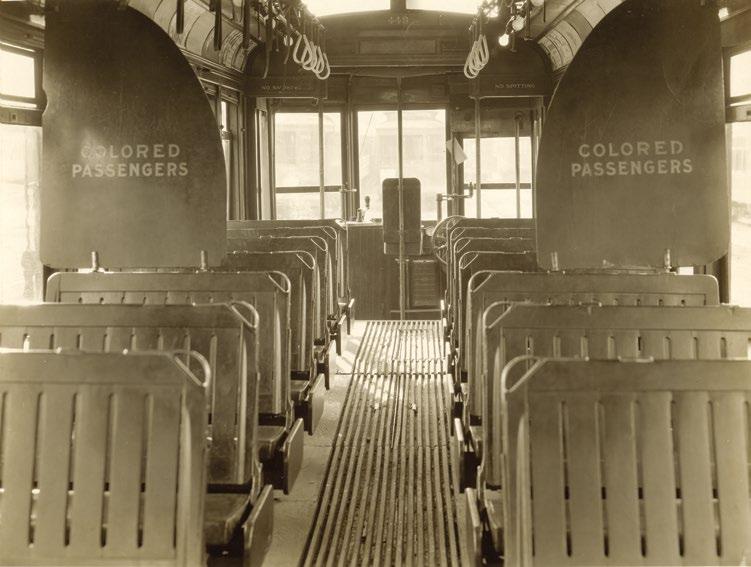
In the fourth module, Teens as Change Agents, students examine the story of Claudette Colvin’s role in the Civil Rights Movement, deepening their knowledge of American history and their understanding of how people, including teens, challenge injustice and create change. Through their reading and independent research, students ask: How do people effect social change?
OUR CLASS WILL READ THESE BOOKS: Historical Account (Informational) Claudette Colvin: Twice Toward Justice, Phillip Hoose
OUR CLASS WILL WATCH THIS VIDEO: “Claudette Colvin: The Original Rosa Parks”
OUR CLASS WILL READ THESE ARTICLES:
“Social Media Sparked, Accelerated Egypt’s Revolutionary Fire,” Sam Gustin “Small Change,” Malcolm Gladwell
OUR CLASS WILL EXAMINE THIS SCULPTURE: Ladder for Booker T. Washington, Martin Puryear
What motivated Claudette Colvin?
What role did Claudette Colvin and others play in the Civil Rights Movement?
What strategies do people use to effect social change?
How do teens effect social change?
What is the story of the year?
As your Grade 8 student reads, ask:
How does this text build your knowledge of how people can effect social change? Share what you know about how people can respond to injustice in their daily lives and effect social change.
We’ve Got a Job: The 1963 Birmingham Children’s March, Cynthia Levinson
I Am Malala, Malala Yousafzai
Freedom Walkers: The Story of the Montgomery Bus Boycott, Russell Freedman
The Boy Who Harnessed the Wind, William Kamkwamba
The Mysterious Benedict Society, Trenton Lee Stewart
Wonder, R. J. Palacio
Zlata’s Diary: A Child’s Life in Wartime Sarajevo, Zlata Filipovic
The Boys in the Boat: Nine Americans and Their Epic Quest for Gold at the 1936 Berlin Olympics (Young Readers Edition), Daniel James Brown
A Friend Called Anne, Jacqueline Van Maarsen
Anne Frank: The Diary of a Young Girl, Anne Frank
Endangered, Eliot Schrefer
Freedom’s Children: Young Civil Rights Activists, Ellen Levine
Turning 15 on the Road to Freedom: My Story of the 1965 Selma Voting Rights March, Elspeth Leacock, Susan Buckley, and Lynda Blackmon Lowery
Ashes of Roses, MJ Auch
Be a Changemaker: How to Start Something that Matters, Laurie Ann Thompson
We Were There, Too! Young People in U.S. History, Phillip Hoose
You can talk about change agents at any time, anywhere. Ask: What motivates people to create social change? How do people define injustice in their specific situation? How do different people respond to injustice and effect social change? Why are teens important change agents?
Great Minds® has made every effort to obtain permission for the reprinting of all copyrighted material. If any owner of copyrighted material is not acknowledged herein, please contact Great Minds® for proper acknowledgment in all future editions and reprints of this module.
All material from the Common Core State Standards for English Language Arts & Literacy in History/Social Studies, Science, and Technical Subjects © Copyright 2010 National Governors Association Center for Best Practices and Council of Chief State School Officers. All rights reserved.
All images are used under license from Shutterstock.com unless otherwise noted.
Handout 19A: Reprinted with permission from Malcolm Gladwell, “Small Change: Why the revolution will not be tweeted,” The New Yorker, October 4, 2010. Copyright 2010 Malcolm Gladwell.
For updated credit information, please visit http://witeng.link/credits.
The following writers, editors, reviewers, and support staff contributed to the development of this curriculum.
Karen Aleo, Elizabeth Bailey, Ashley Bessicks, Sarah Brenner, Ann Brigham, Catherine Cafferty, Sheila Byrd-Carmichael, Lauren Chapalee, Emily Climer, Rebecca Cohen, Elaine Collins, Julia Dantchev, Beverly Davis, Shana Dinner de Vaca, Kristy Ellis, Moira Clarkin Evans, Marty Gephart, Mamie Goodson, Nora Graham, Lindsay Griffith, Lorraine Griffith, Christina Gonzalez, Emily Gula, Brenna Haffner, Joanna Hawkins, Elizabeth Haydel, Sarah Henchey, Trish Huerster, Ashley Hymel, Carol Jago, Mica Jochim, Jennifer Johnson, Mason Judy, Sara Judy, Lior Klirs, Shelly Knupp, Liana Krissoff, Sarah Kushner, Suzanne Lauchaire, Diana Leddy, David Liben, Farren Liben, Brittany Lowe, Whitney Lyle, Stephanie KaneMainier, Liz Manolis, Jennifer Marin, Audrey Mastroleo, Maya Marquez, Susannah Maynard, Cathy McGath, Emily McKean, Andrea Minich, Rebecca Moore, Lynne Munson, Carol Paiva, Michelle Palmieri, Tricia Parker, Marya Myers Parr, Meredith Phillips, Eden Plantz, Shilpa Raman, Rachel Rooney, Jennifer Ruppel, Julie Sawyer-Wood, Nicole Shivers, Danielle Shylit, Rachel Stack, Amelia Swabb, Vicki Taylor, Melissa Thomson, Lindsay Tomlinson, Tsianina Tovar, Sarah Turnage, Melissa Vail, Keenan Walsh, Michelle Warner, Julia Wasson, Katie Waters, Sarah Webb, Lynn Welch, Yvonne Guerrero Welch, Amy Wierzbicki, Margaret Wilson, Sarah Woodard, Lynn Woods, and Rachel Zindler
We are grateful for the many educators, writers, and subject-matter experts who made this program possible.
David Abel, Robin Agurkis, Sarah Ambrose, Rebeca Barroso, Julianne Barto, Amy Benjamin, Andrew Biemiller, Charlotte Boucher, Adam Cardais, Eric Carey, Jessica Carloni, Dawn Cavalieri, Janine Cody, Tequila Cornelious, David Cummings, Matt Davis, Thomas Easterling, Jeanette Edelstein, Sandra Engleman, Charles Fischer, Kath Gibbs, Natalie Goldstein, Laurie Gonsoulin, Dennis Hamel, Kristen Hayes, Steve Hettleman, Cara Hoppe, Libby Howard, Gail Kearns, Lisa King, Sarah Kopec, Andrew Krepp, Shannon Last, Ted MacInnis, Christina Martire, Alisha McCarthy, Cindy Medici, Brian Methe, Ivonne Mercado, Patricia Mickelberry, Jane Miller, Cathy Newton, Turi Nilsson, Julie Norris, Tara O’Hare, Galemarie Ola, Tamara Otto, Christine Palmtag, Dave Powers, Jeff Robinson, Karen Rollhauser, Tonya Romayne, Emmet Rosenfeld, Mike Russoniello, Deborah Samley, Casey Schultz, Renee Simpson, Rebecca Sklepovich, Kim Taylor, Tracy Vigliotti, Charmaine Whitman, Glenda Wisenburn-Burke, and Howard Yaffe
The following early adopters provided invaluable insight and guidance for Wit & Wisdom:
Bourbonnais School District 53 • Bourbonnais, IL
Coney Island Prep Middle School • Brooklyn, NY
Gate City Charter School for the Arts • Merrimack, NH
Hebrew Academy for Special Children • Brooklyn, NY
Paris Independent Schools • Paris, KY
Saydel Community School District • Saydel, IA
Strive Collegiate Academy • Nashville, TN
Valiente College Preparatory Charter School • South Gate, CA
Voyageur Academy • Detroit, MI
Design Direction provided by Alton Creative, Inc.
Project management support, production design, and copyediting services provided by ScribeConcepts.com
Copyediting services provided by Fine Lines Editing
Product management support provided by Sandhill Consulting