GREAT MINDS WIT & WISDOM® 4 GRADE MODULE 4 MYTH MAKING
Great Minds® is the creator of Eureka Math® , Wit & Wisdom® , Alexandria Plan™, and PhD Science®
Published by Great Minds PBC greatminds.org
© 2023 Great Minds PBC. All rights reserved. No part of this work may be reproduced or used in any form or by any means—graphic, electronic, or mechanical, including photocopying or information storage and retrieval systems—without written permission from the copyright holder. Printed in the USA 1 2 3 4 5 6 7 8 9 10 XXX 27 26 25 24 23 979-8-88588-754-0
Handout 2A: Exit Ticket
Handout 2B: Evidence Paragraphs
Handout 2C: Fluency Homework
Handout 3A: “Pandora’s Box” Organizer
Handout 3B: Evidence Organizer
Handout 3C: “Pandora’s Box” Glossary
Handout 3D: Morphology Flashcards
Handout 4A: Myth Analyzer
Handout 4B: Frequently Confused Words
Handout 5A: Myth Presentations Notes
Handout 6A: Greek Myth Title Cards
Handout 6B: Theme Strips
Handout 6C: Editing Sentences
Handout 6D: Editing a Paragraph
Handout 7A: Informative/Explanatory Writing Checklist
Handout 8A: Fluency Homework
Handout 9A: Drama Organizer
Handout 10A: Evidence Organizer
Handout 11A: Introduction Template
Handout 12A: Guiding Questions to Analyze Myths
Handout 12B: Other Native American Tales
Handout 12C: Evidence Organizer
Handout 12D: Introduction Template
Handout 14A: “When Raven Soared”
Handout 14B: Informative/Explanatory Writing Checklist
Handout 15A: Fluency Homework
Handout 16A: Beginning Story Map
Handout 16B: Evidence Organizer for Focusing Question Task 3
Handout 16C: Prefix fore–
Handout 17A: Story within a Story Map, Part 1
Handout 18A: Reactions/Reveals Chart
Handout 19A: Fluency Homework
Handout 22A: Informative/Explanatory Writing Checklist
Handout 23A: Fluency Homework Handout 24A: Story within a Story Map, Part 2 Handout 25A: Poems in Walk Two Moons Handout 25B: “The Tide Rises, The Tide Falls” Handout 25C: Themes/Messages/Lessons
Handout 26A: Evidence Organizer for Focusing Question Task 4 Handout 27A: Formal vs. Informal English Handout 28A: Fluency Homework Handout 28B: Formal Frederick and Informal Franny Handout 30A: Norms for Speaking Collaboratively Handout 30B: Ways to Participate in a Collaborative Conversation Handout 31A: Informative/Explanatory Writing Checklist
Handout 32A: Evidence Organizer for End-of-Module Task Handout 33A: Speaking and Listening Checklist
Handout 34A: End-of-Module Task Essay Planner
Handout 35A: Informative/Explanatory Writing Checklist
Handout 36A: Greatest Heart Nominee
Volume of Reading Reflection Questions
Wit & Wisdom Family Tip Sheet
Directions: Write three characteristics of myths, the names of two Greek gods/ goddesses, and one way Greeks honored their gods.
Directions: Examine the two example paragraphs to determine which one uses evidence most effectively.
• Read each of the paragraphs, looking for how the author used evidence in each paragraph.
• Underline textual evidence that you find.
A myth is a story that is told over and over and explains why something is the way it is. The ancient Greeks had many myths they shared about the gods they believed in. The ancient Greeks created myths to teach people why natural events happened and to tell their people how to behave. Myths help us understand what the ancient Greeks believed long ago. They told their myths over and over to spread their beliefs and shape how people behaved.
A myth is a story that is told over and over and explains why something is the way it is. The ancient Greeks had many myths they shared about the gods they believed in. The ancient Greeks created myths to teach people why natural events happened and to tell their people how to behave. Creation myths explained everything in nature. The myth about Demeter explains why we have seasons. Demeter was sad when her daughter was stolen away by Hades to the underworld. Because she was sad, Demeter stopped caring for the crops, and they died. This explained winter. Greeks had morality myths, too, which taught people how to behave. For example, the myth about Arachne explains that someone who is boastful and disrespectful will be punished. Arachne
disrespected the goddess Athena and was turned into a spider as a punishment. This myth explains what will happen if you behave badly and explains why there are spiders in the world. Myths help us understand what the ancient Greeks believed long ago. They told their myths over and over to spread their beliefs and shape how people behaved.
Directions:
1. Day 1: Read the text carefully and annotate to help you read fluently.
2. Each day:
a. Practice reading the text aloud three to five times.
b. Evaluate your progress by placing a √+, √, or √- in the appropriate, unshaded box.
c. Ask someone (adult or peer) to listen and evaluate you as well.
3. Last day: Answer the self-reflection question at the end.
Gift from the Gods, pp. 4-5
But when the battle of Troy broke out and Achilles went to fight, the very thing his mother had tried to prevent happened: during a siege on the city, one fateful arrow pierced his heel, his only mortal part, killing him.
Still, Achilles became revered as one of the greatest Greek heroes, for without him, the Greeks never would have defeated the Trojans. He lives on in our language also. We call a person’s weakness his or her Achilles’ heel, especially if that person seems otherwise invincible.
pp. 4–5.
Accurately read the passage three to five times.
Read with appropriate phrasing and pausing.
Read with appropriate expression. Read articulately at a good pace and an audible volume.
*Adult or peer
Self-reflection: What choices did you make when deciding how to read this passage, and why? What would you like to improve or try differently next time? (Thoughtfully answer these questions in the space below. Use a separate sheet of paper if necessary to complete your reflection.)
Directions:
• Read the myth, “Pandora’s Box,” in Gifts from the Gods: Ancient Words & Wisdom from Greek & Roman Mythology.
• Record answers to the questions about the myth in the boxes on the left.
• Read pages 10–15 in Understanding Greek Myths.
• Record details from the text that support your answers about “Pandora’s Box.”
1. What role did the gods play?
“Pandora’s Box” Understanding Greek Myths
“Pandora’s Box”
Understanding Greek Myths
2. What was the problem?
3. How was the problem resolved?
“Pandora’s Box” Understanding Greek Myths
5. What can we learn about the beliefs of the ancient Greeks? How does the myth relate to the word moral?
“Pandora’s Box” Understanding Greek Myths
4. What idea does this myth explain?
Directions: Choose the strongest evidence to support your focus statement. Write brief notes in the boxes. Follow the prompts at the top of the chart. Remember to only write notes that support your focus statement.
Prompt: For an audience who might be interested in learning more about myths and why people created them, write a well-developed paragraph in which you explain what a myth is and why the Greeks created myths. Develop your ideas with evidence and examples from pages 6–23 of Understanding Greek Myths and from the book Gifts from the Gods .
Focus Statement:
Why is this important? What does this help us understand?
Where did this inform ation come from? List title and page number.
List details from the text that support your focus statement. Use quotations and paraphrasing.
What are the characteristics of myths?
Myths gods and goddesses.
Why is this important? What does this help us understand?
Where did this information come from? List title and page number.
List details from the text that support your focus statement. Use quotations and paraphrasing.
What are the characteristics of myths?
Myths include heroes and monsters.
Creation myths tell how the world came to be.
Morality myths taught people how to behave.
Directions: Use this glossary to understand the meanings of some of the words from the story “Pandora’s Box” in Gifts from the Gods: Ancient Words & Wisdom from Greek & Roman Mythology.
infused (v.) Mixed together. The athlete’s talent was infused with strength and skill. insatiable (adj.) Can’t be satisfied or fulfilled. The bear had an insatiable hunger for fish. bestowed (v.) To be given something. The child was bestowed with special gifts on her birthday. quarrel (n.) To fight or argue. The kids had a quarrel about who would be the team captains. endure (v.) To work through, or deal with, a difficult challenge or event. She endured the difficult math homework because she knew it would help her on her test.
Directions: Cut out the cards and shuffle them. Match each word to its definition. monochrome having one color polychrome having many colors monocle eyeglass for one eye monologue a long speech given by one person monopoly when one company controls most of a product or service polygon a shape with many angles apathy without feelings about something amoral without morals abyss without a bottom like a bottomless pit theology the study of god or gods
Directions: Reread the myth about Victoria in Gifts from the Gods. Record bulleted notes to answer each guiding question.
What is happening?
What mystery does this myth solve?
Where do we see aspects of this myth today?What are the themes?
two
Can be a preposition: Go to the store.
Is the number 2: Please give me two pennies.
Replaces also: I want to see, too
OR Means “an excess of”: It is taking too much time.
Shows location: The water is over there
their
Shows ownership: Their car broke down.
Is a pronoun: The tree lost its leaves.
Directions: Use the chart. Write the correct words in the sentences below. to too there its it’s
Is a contraction meaning “it is”: It’s cold out today.
1. Please give me new address so I can send a holiday card.
2. There were roosters in the road this morning.
3. If you go to the fair, I would like to go, .
4. We went school at 8:00 in the morning.
5. is a new secretary in the front office.
6. The moon lit up the night sky with glow.
7. I am glad that almost the weekend.
Directions: Cut out the strips along the dotted lines.
Life versus death
Justice will win
How evils and hope entered the world
Hard work is rewarded
Why we have seasons
How spiders came into the world
How people got fire
You will be punished if you disrespect the gods
Being full of yourself will be punished
There are consequences for disobeying a god
Why some people are generous and kind
Directions: Use the Frequently Confused Words Anchor Chart and a dictionary to proofread the following sentences. Cross out the misspelled words and write the correct spelling above each word.
1. A German archelogest set out too find the roons of the city of Troy.
2. They hid there bravest soldyers inside the hoarse.
3. The peeple had no king, but the oracle said that there king would arrive by oxcart.
4. The temples that the Greeks built for there gods were carefuly balanced in size and shap.
5. Although they got the idea two write things down from there tradeing partners, the Greeks added simbols for vowels.
Sentences adapted from Hyde, Natalie. Understanding Greek Myths. Crabtree, 2012. Myths Understood 3.
Directions: Proofread the following paragraph by circling misspelled words or incorrectly used words. Use the Frequently Confused Words Anchor Chart and a dictionary to check spelling if necessary. Cross out the misspelled words and write the correct spelling over each word.
In the country of Greece, there lived a goddess named Fortuna. She brought good fortune two many people. They were happy for there fortunes from her. If she carried a ball, she was concerned with luck. If she carried a horn of plenty they’re were riches too be found. Soldiers, sailors, farmers, and all who depended on luck prayed to Fortuna. There prayers two Fortuna were supposed too protect them. One day she ignored there pleas for help and they’re ships sank. However, she always favored those who were bold and brave.
Sentences adapted from Lunge-Larsen, Lise. Gifts from the Gods: Ancient Words & Wisdom from Greek & Roman Mythology. Illustrated by Gareth Hinds, Houghton Mifflin Harcourt, 2011.
Directions: Use this checklist to revise your writing. Mark + for “yes” and Δ for “not yet.”
Ask someone (adult or peer) to evaluate your writing as well.
Describe what a myth is.
Explain why ancient Greeks created myths.
Use textual evidence to support your explanations.
I respond to all parts of the prompt.
I focus on my topic throughout my paragraph.
I introduce the topic clearly with a topic sentence.
I group similar ideas together in my paragraph.
I include a conclusion sentence that relates to my explanation.
I use transitions to link ideas.
I develop my topic with evidence from text(s).
I include evidence related to the topic.
I elaborate upon evidence by explaining or analyzing it.
I use a variety of sentence patterns (simple, compound, complex).
I use vocabulary words that are specific and appropriate to the content.
I use a writing style appropriate for the audience.
Self +/Δ Peer +/Δ Teacher +/Δ
I underline two frequently confused words to show I have used them correctly.
I revise my paragraph to improve my ideas.
I revise my paragraph to improve my word choice.
I edit my paragraph for correct spelling.
I edit my paragraph for correct punctuation.
I edit my paragraph for correct capitalization.
Total number of +’s
Directions:
1. Day 1: Read the text carefully and annotate to help you read fluently.
2. Each day:
a. Practice reading the text aloud three to five times.
b. Evaluate your progress by placing a √+, √, or √- in the appropriate, unshaded box.
c. Ask someone (adult or peer) to listen and evaluate you as well.
3. Last day: Answer the self-reflection question at the end.
Pushing Up the Sky, page 70
The people of the village pantomime various activities such as carving wood, fixing fishing nets, working on canoes, and mixing food. Raven stands in his tree to one side of the stage.
RAVEN: Caa-awk, Caa-awk. My name is Raven. One of my jobs is to keep watch. That’s why you see me on top of the tallest trees like this one. I can see better up here. Let me tell you a story about something I saw once long ago. It’s a good story. It’s about a monster and some brave people. It’s a story about me too. Caa-awk, Caa-awk! That makes the story even better.
VILLAGE CHIEF: What a good day this is. I am glad we moved to this village.
FIRST MAN: I just hope that cannibal monster does not find us again.
Bruchac, Joseph. Pushing Up the Sky: Seven Native American Plays for Children. Illustrated by Teresa Flavin. Dial Books for Young Readers, 2000.
Accurately read the passage three to five times. Read with appropriate phrasing and pausing. Read with appropriate expression. Read articulately at a good pace and an audible volume.
*Adult or peer
Day 1 Day 2 Day 3 Day 4 You Listener* You Listener* You Listener* You Listener*
Self-reflection: What choices did you make when deciding how to read this passage, and why? What would you like to improve or try differently next time? (Thoughtfully answer these questions in the space below. Use a separate sheet of paper if necessary to complete your reflection.)
Directions: Use this chart to organize and record notes about key details in the play “Gluskabe and Old Man Winter.”
Character(s): Setting:
Conflict(s):
The main problem in this part of the story is ... Resolution:
Summary:
Theme:
Date Class
Directions: Write an introduction for the play that includes the following:
• What the reader will learn by reading the play.
• Background information to understand the play.
• Specific words and phrases to make the reader want to continue reading.
Directions: Choose the best evidence to support your focus statement. Write brief notes in the boxes. Remember to only write notes that support your focus statement.
Prompt: What do myths from different cultures have in common?
Focus Statement:
What does this help us understand?
Source
Where did this information come from? List title and page number.
Evidence
List details from the text that support your focus statement. Use quotations and paraphrasing.
What is the name and theme of the myth?
What similarities in theme and importance exist between the two myths?
Directions: Use the boxes below to write complete, detailed sentences that will become an introduction for a comparison and contrast essay about two myths from different cultures.
Hook
Identify and describe myth 1.
Identify and describe myth 2.
Focus Statement (Thesis that tells how the myths are similar in theme)
Use the sentence frame to write your thesis: and are similar because .
Directions: Use the questions below to guide your discussion about each myth. Record your ideas on a new copy of Handout 10A: Evidence Organizer.
Summarize the Story
• What is the problem the people face?
• How do they try to solve the problem? Are they successful or not?
• What is the next problem the people face?
• How do they try to solve it? Are they successful or not?
• How does the story end?
Determine the Theme of the Story
Why Does This Matter?
• What lesson is taught?
• What does the story explain?
• What do these stories reveal to us about the challenges people face?
• Are the people in the stories more similar or different in how they behave? Why?
• If the people who told these stories never met, how is it possible that the lessons they teach are so similar?
• What does this teach us about being human?
Directions: Read one of the myths and complete an evidence organizer to explain how the theme of the myth compares to another myth from a different culture.
The Sun, Moon, and Stars
A traditional Navajo story retold by Donna Henes
The First People had only four lights to illuminate the world: white light from the eastern mountains, blue light from the southern mountains, yellow light from the western peaks, and darkness from the north. These lights were dim and much too far away to bring heat.
The people wanted more daylight. “We barely have enough to see,” they complained.
So First Woman sent Glowworm, Fox Fire, Lightning Beetle, and Firefly to the four corners. They would give more light when it was needed.
But the First People were still not satisfied. “These lights are too small. They flicker on and off and are of little use to us. We do not have night eyes like Owl or Bat!”
First Woman kept trying to please her people. She consulted Fire Man on his glowing mountain. He offered to make the land around Fire Mountain bright, but he warned her that the light would not cover all the lands and there would be smoke.
The people liked the brightness, but they were still not happy. “We do not like the heat and the smoke that comes from Fire Mountain. The heat scorches the earth and we are choked by the smoke,” they grumbled.
Eventually, First Woman had an idea for a different way to send light to Earth. She asked for a large, flat piece of the hardest rock available. After a long search, the people brought her a slab of quartz. It took a lot of hard work and a lot of help for First Woman to carve the quartz into two wheels.
Once the wheels were ready, First Woman and First Man decorated them as faces with symbols of the powers they each had. They decorated the first wheel with a mask of blue turquoise to give light and heat. They attached red coral to the earlobes and around the rim. On each side was a horn to hold male lightning and rain. On the rim, they placed bird feathers—cardinal, lark, and eagle—to fly it through the sky and spread the rays of heat and light in the four directions. This was the Sun wheel.
When it was time to decorate the second wheel, First Woman said, “We do not need more heat and light. This one will carry coolness and moisture.” She and First Man used white shell to create a face, with a band of yellow pollen on its chin and a rim of red coral. This wheel had feathers, too: magpie, nighthawk, turkey, and crane feathers to bear its weight. Its horns held female lightning and soft winds. This was Moon wheel.
“This Sun wheel and Moon wheel cannot stay here,” declared First Woman. “We must place them in the sky!” First Man suggested they carry the disks to the top of the highest mountain and fasten them to the sky with darts of lightning, which the people did.
Now the people had light, heat, coolness, and moisture all coming from the sky. But still they found something to complain about. Because the Sun always stayed in the east and never moved, one side of the land had an unending summer, and the other side had a winter that lasted forever. “This is not right,” they whined.
First Man agreed. “The Sun must move across the sky, but how can it travel when it is only a stone and has no spirit?” At that moment, two ancient, wise men stepped forward and offered to help. “We will give our spirits to the Sun and the Moon so they will have life and power to move across the sky.” One entered the turquoise disk and he was called Jóhonaa’áí, or Sun Bearer; the other entered the white disk and he was called Tl’éhonaa’áí, or Moon Bearer.
Once the Sun and the Moon were following their paths through the sky, the people returned to where First Woman had carved the wheels. The blanket where she had worked was covered with many small stone chips of every shape and size, plus stone dust from the cutting.
“These white stones must not be wasted! We will use them to make more lights in the night sky,” exclaimed First Woman. So again, they worked with their flint knives, chisels, and stone hammers to shape the stars.
To this day, the Sun, the Moon, and the stars created by First Woman, First Man, and all the people remain in the sky where they give light and heat by day and luminous, sparkling patterns at night.
“The Sun, Moon, and Stars.” Retold by Donna Henes, Appleseeds, Jan. 2007.
For many moons, in the woods near Kitchigami (kit-chee-GAH-mee, Lake Superior), the Ojibwe stripped birch bark and cut limbs to make wigwams and canoes. They fished in the big lake and harvested wild rice and corn. They gathered sarsaparilla, mugwort, and other herbs to use for healing the sick. During Lake-Freezing Moon (November), they hunted for deer, moose, and bear.
One winter, during Gitci-manito-gizis (gi-chee-MAN-i-toe-gee-zis), (Big Spirit Moon), a terrible sickness swept through an Ojibwe village. People burned sage and cedar boughs in their wigwams to purify the air. The mide (medicine man) chanted songs to attract healing spirits to each wigwam. He sprinkled boiled solomon-seal root on hot stones for the sick to inhale healing fumes. Yet, one after another, people died. Before long, all the medicinal herbs were gone.
The chief summoned a young messenger boy. “Running Wolf,” the chief said, “you must hurry to the next village. We need mucki-ki (healing herbs) to save the rest of our people.” But Running Wolf also became ill. His body began to burn with the dreaded fever, and he could not get up from his mat. White Rabbit, his young sister, became frightened.
“I will fetch the healing herbs,” she said. “No,” said Running Wolf. “You cannot survive this bitter cold. It is a long distance to the next village, and the way is dangerous. It must be the wish of Kitche Manitou (KIT-chee MAN-i-too), the Great Spirit, that all our village shall die.” White Rabbit could not bear to see her brother die. Already many of their family and neighbors had perished. She could not let any more villagers suffer this terrible sickness. Even during this frigid moon, she must get help for her people.
While Running Wolf slept by the fire, White Rabbit found the deerskin moccasins she had helped her mother sew and lined them with rabbit fur. She thought about the dangerous journey. With her mother and the other women of the village, she had harvested berries. She had harvested wild rice in the swamp and reeds for rush mats. Surely, she could find her way to the next village.
Wrapping her fur coat about her, and wearing her beaver mittens, she slipped through the doorway of the wigwam into the howling winter wind. Snow stung her face. She shivered with cold, but kept trudging through the snow. When night fell over the valley, White Rabbit imagined frightening spirits chasing her, screeching with the winds through the blackness. She crossed the icy swamp and finally saw a glimmer of firelight from the neighboring village.
White Rabbit was welcomed into a wigwam, where she told her story. “Please, I need a bundle of mucki-ki to help my village,” she said. “Many people are dying of a terrible sickness.”
“Here, I have a pouch of yarrow and goldenrod, sumac, and tamarack root,” said an old woman. “At daybreak, a messenger will go with you. Now, my child, warm yourself by this fire.”
After eating a bowl of berries and boiled rice, White Rabbit snuggled under the woman’s moosehide blanket. But she could not wait until morning. Without the herbs, Running Wolf and the others would soon die. After the old woman had fallen asleep, White Rabbit crept out into the cold, carrying the pouch of medicinal herbs. She darted across the snowfields and through the icy swamp. Trees creaked and groaned. It was with a thunderous clap, just as she ran by. It frightened her so, she did not notice her
moccasins had come off until she was well beyond the spot.
“Oh dear,” she cried. “I cannot go back. There is not enough time to find my moccasins. They are buried deep in snow by now.”
Weary, she ran on, clutching the medicine. The crusty snow cut her bare feet. Just before dawn, she reached the edge of the forest. Her cracked, bleeding feet were so painful that she could walk no farther. Almost home, she fell in the snow.
“Help!” she cried out. “I have come with mucki-ki!”
Villagers came running. They carried White Rabbit into the wigwam and covered her with fur robes, wrapping her frostbitten feet to warm them. The herbs healed the people, and there were no more deaths in the village that winter. Next spring, during Flowering Moon, White Rabbit and Running Wolf discovered beautiful new flowers in the woods. Each delicate blossom was shaped like a tiny moccasin, pink and white.
“This is where I lost my moccasins in the deep snow,” said White Rabbit.
Thereafter White Rabbit was called Wah-onnay, “Little Flower.” Today many moons later, this precious moccasin flower is commonly called the lady’s slipper. It grows in the woods of Kitchigami Land and beyond—a delicate reminder of a brave Ojibwe maiden.
“Legend of the Moccasin Flower: An Ojibwe Tale.” Retold by Mary Morton Cowan, Faces, Apr. 2010.
Directions: Choose the best evidence to support your focus statement. Write brief notes in the boxes. Remember to only write notes that support your focus statement.
Prompt: What do myths from different cultures have in common?
Focus Statement:
Elaboration/Explanation
What does this help us understand?
Source
Where did this information come from? List title and page number.
Evidence
List details from the text that support your focus statement. Use quotations and paraphrasing.
What is the name and theme of the myth?
Prompt: What do myths from different cultures have in common?
Elaboration/Explanation
What does this help us understand?
Source
Where did this information come from? List title and page number.
Evidence
List details from the text that support your focus statement. Use quotations and paraphrasing.
Focus Statement:
Context
What is the name and theme of the myth? What similarities in theme and importance exist between the two myths?
Directions: Use the boxes below to write complete, detailed sentences that will become an introduction for a comparison and contrast essay about two myths from different cultures.
Hook
Identify and describe myth 1.
Identify and describe myth 2.
Focus Statement (Thesis that tells how the myths are similar in theme)
Use the sentence frame to write your thesis: and are similar because .
Directions: Read the text carefully, then refer to it as needed to answer the questions on Assessment 14A: New-Read Assessment 1.
“When Raven Soared,” Leigh Anderson (“A trickster myth ...”)
Long ago—when the Earth was young and unsettled—humans were not always humans, and animals were not always animals. Magic wove its way into the air. Raven soared over treeless frozen tundra, snowcapped mountains, and towering pine trees. He rode through icy waters on the backs of whales. On land, he walked among the people, wearing a feathered cape.
Raven was a trickster and mischief-maker who took on many forms—from a prancing deer to a cedar splinter. He was as vain as he was wise. He was as boastful as he was big-hearted. Often, he lied or misled others and fell into sticky messes of his own making. Raven made mistakes, but he had great power and spirit. He tried to do what was right—most of the time.
When Raven saw the people struggling in darkness, he decided to help. A greedy, powerful chief had stolen the stars, Moon, and Sun. He had trapped them in three beautiful boxes, letting no one near their light. But Raven knew the greedy Chief’s greatest wish: a grandson. With this knowledge, Raven made a plan.
One day, Raven saw the Chief’s daughter drinking from a creek. He turned himself into a pine needle and floated on the water. The girl swallowed this pine needle as she drank. Some months later, the Chief’s daughter had a baby boy. The boy grew quickly and made the Chief proud. But the boy was really Raven.
One day, the boy (who was Raven) pointed to one of three beautifully carved boxes. “Ga-a! Ga-a!” he cried, until the Chief let him play with the box. When the Chief looked away, Raven opened the box and let out the stars.
When the Chief lost his anger, Raven asked for the second beautifully carved box. “Ga-a! Ga-a!” he cried again, until the Chief let him play with the box. When the Chief looked away, Raven opened the box and out flew the Moon.
When the Chief lost his anger, Raven asked for the last beautifully carved box. “Ga-a! Ga-a!” he cried a third time, until the Chief let him play with the box. When the Chief looked away, Raven opened the box and a golden ball of light rolled out.
Raven turned back into a bird and flew up through the lodge’s smoke-hole. He tossed the Sun into the sky and soared away into the clouds. The great Chief shook his fists and shouted with anger. But Raven only cawed and cackled as the Sun warmed his feathers and gave light to the people of the world.
So say the legends of the people who first settled the Pacific Northwest coast. Their languages and stories are often as different as the places in which they live, but Raven flies through many of their myths. He shows us humanity’s worst and best qualities. We may not always make the right choices, but if our hearts are in the right place we can make things come out for the best in the end.
Other Native American myths have “trickster” characters, too. Coyote slinks through many of the Great Plains tribal legends. Hare bounds through southeastern native tales. Blue Jay has top-flight billing in many eastern-forest tribal myths.
Anderson, Leigh. “When Raven Soared.” Appleseeds, Mar. 2008.
Directions: Use this checklist to revise your writing. Mark + for “yes” and Δ for “not yet.” Ask someone (adult or peer) to evaluate your writing as well.
Describe one myth or tale including its theme.
Describe the other myth or tale including its theme.
Explain similarities in treatment of theme.
Explain why this matters.
I respond to all parts of the prompt.
I focus on my topic throughout the piece.
I introduce the topic clearly in the introductory paragraph.
I organize my ideas into body paragraphs.
I include a conclusion paragraph that relates to my explanation.
I use transitions to link paragraphs and ideas.
I develop my topic with evidence from text(s).
I use evidence related to the topic.
I elaborate upon evidence by explaining or analyzing it.
I use a variety of sentence patterns (simple, compound, complex).
I use vocabulary words that are specific and appropriate to the content.
Self +/Δ Peer +/Δ Teacher +/Δ
I use a writing style appropriate for the audience.
I use two modal auxiliaries (can, may, must). Underline them.
I revise to improve my ideas.
I revise to improve my word choice.
I edit for correct spelling.
I edit for correct punctuation.
I edit for correct capitalization.
Total number of +’s
Directions:
1. Day 1: Read the text carefully and annotate to help you read fluently.
2. Each day:
a. Practice reading the text aloud three to five times.
b. Evaluate your progress by placing a √+, √, or √- in the appropriate, unshaded box.
c. Ask someone (adult or peer) to listen and evaluate you as well.
3. Last day: Answer the self-reflection questions at the end.
Walk Two Moons, pp. 2-3.
Not long ago, when I was locked in a car with my grandparents for six days, I told them the story of Phoebe, and when I finished telling them–or maybe even as I was telling them—I realized that the story of Phoebe was like the plaster wall in our house in Bybanks, Kentucky.
My father started chipping away at a plaster wall in the living room of our house in Bybanks shortly after my mother left us one April morning. Our house was an old farmhouse that my parents had been restoring, room by room. Each night as he wanted to hear from my mother, he chipped away at that wall.
On the night that we got the bad news—that she was not returning—he pounded and pounded on that wall with a chisel and a hammer. At two o’clock in the morning, he came up to my room. I was not asleep. He led me downstairs and showed me what he had found. Hidden behind the wall was a brick fireplace.
The reason that Phoebe’s story reminds me of that plaster wall and the hidden fireplace is that beneath Phoebe’s story was another one. Mine.
Creech, Sharon. Walk Two Moons. 1994. HarperCollins, 2011.
Accurately read the passage three to five times. Read with appropriate phrasing and pausing.
Read with appropriate expression. Read articulately at a good pace, and an audible volume.
You Listener* You Listener* You Listener* You Listener*
*Adult or peer
Self-reflection: What choices did you make when deciding how to read this passage, and why? What would you like to improve or try differently next time? (Thoughtfully answer these questions in the space below. Use a separate sheet of paper if necessary to complete your reflection.)
Characters Settings Plot
Directions: Choose the best evidence from Walk Two Moons to support your focus statement. Write brief notes in the boxes. Include linking words in your elaboration. Remember to only write notes that support your focus statement. Be sure to include the main connection.
Prompt: How are Sal’s and Phoebe’s stories connected?
Focus Statement: Sal and Phoebe are connected because they have many things in common, and they also share some similar experiences.
Explain or give more information about the quotations and paraphrases.
Where did you find this information? List chapter and page number.
List details from the text that support your focus statement. Use quotations and paraphrasing.
Things Sal and Phoebe have in common or experiences they share
Connection 1
Connection 2
Connection 3
Directions: Underline the root of each word (the part that is not the prefix). Use the prefix fore- and the root to determine the word meaning. If needed, use a dictionary to find the meaning of the word. See sample below.
1. Foreshadow: A writing device used to give a little bit of information ahead of time, and to hint at something to come. 2. Forearm:
Part 2: Write two sentences about Walk Two Moons. Use a word with the prefix fore- in each sentence.
1. 2.
Directions: Write details from chapters 9–12 that show how each character reacts to the messages on Phoebe’s porch. Think about what these details reveal about the character. Record your ideas below.
Character
Mrs. Winterbottom
What is their reaction?
What does their reaction reveal?
Mr. Winterbottom
Mary Lou
Phoebe
Sal
Date Class
Directions:
1. Day 1: Read the text carefully and annotate to help you read fluently.
2. Each day:
a. Practice reading the text aloud three to five times.
b. Evaluate your progress by placing a √+, √, or √- in the appropriate, unshaded box.
c. Ask someone (adult or peer) to listen and evaluate you as well.
3. Last day: Answer the self-reflection questions at the end.
I wondered why it was so easy for me to see that Phoebe’s mother was worried and miserable, but Phoebe couldn’t see it—or if she could, she was ignoring it. Maybe she didn’t want to notice. Maybe it was too frightening a thing. I wondered if this was how it had been with my mother. Were there things I didn’t notice?
Later that afternoon, when Phoebe and I went downstairs, Mrs. Winterbottom was talking with Prudence. “Do you think I lead a tiny life?” she asked.
“How do you mean?” Prudence said, as she filed her nails. “Do we have any nail polish remover?”
Phoebe’s mother retrieved a bottle of nail polish remover from the bathroom.
“Oh!” Prudence said. “Before I forget—do you think you could sew up the hem on my brown skirt so I could wear it tomorrow? Oh, please?” Prudence tilted her head to the side, tugged at her hair in exactly the same way Phoebe does, and smooshed up her mouth into a little pout.
“Doesn’t Prudence know how to sew?” I asked.
“Of course she does,” Phoebe said. “Why?”
“I was just wondering why she doesn’t sew her own skirt.”
“Sal, you’re becoming very critical.”
Before I left Phoebe’s that day, Mrs. Winterbottom handed Prudence her brown skirt with the newly sewn hem, and all the way home I wondered about Mrs. Winterbottom and what she meant about living a tiny life. If she didn’t like all that baking and cleaning and jumping up to get bottles of nail polish remover and sewing hems, why did she do it? Why didn’t she tell them to do some of these things themselves? Maybe she was afraid there would be nothing left for her to do. There would be no need for her and she would become invisible and no one would notice.
Creech, Sharon. Walk Two Moons. 1994. HarperCollins, 2011.
Student Performance Checklist
Day 1 Day 2 Day 3 Day 4 You Listener* You Listener* You Listener* You Listener* Accurately read the passage three to five times.
Read with appropriate phrasing and pausing. Read with appropriate expression. Read articulately at a good pace, and an audible volume.
*Adult or peer
Self-reflection: What choices did you make when deciding how to read this passage, and why? What would you like to improve or try differently next time? (Thoughtfully answer these questions in the space below. Use a separate sheet of paper if necessary to complete your reflection.)
Directions: Use this checklist to revise your writing. Mark + for “yes” and Δ for “not yet.” Ask someone (adult or peer) to evaluate your writing as well.
Describe at least three ways Sal and Phoebe are connected.
Include the main connection between Sal and Phoebe.
Include related ideas shared in a class discussion.
I respond to all parts of the prompt.
I focus on my topic throughout the paragraph.
I introduce the topic clearly.
I use at least three vocabulary words that are specific and appropriate to the content.
I include a conclusion that relates to the introduction.
I use at least three linking words to connect ideas.
I develop my topic with evidence from text(s).
I include evidence related to the topic.
I elaborate upon evidence by explaining or analyzing it.
I use a variety of sentence patterns (simple, compound, complex).
I use a writing style appropriate for the audience.
Self +/Δ
+/Δ
+/Δ
I revise to improve my ideas.
I revise to improve my word choice.
I edit for correct spelling.
I edit for correct punctuation.
I edit for correct capitalization.
Total number of +’s
Directions:
1. Day 1: Read the text carefully and annotate to help you read fluently.
2. Each day:
a. Practice reading the text aloud three to five times.
b. Evaluate your progress by placing a √+, √, or √- in the appropriate, unshaded box.
c. Ask someone (adult or peer) to listen and evaluate you as well.
3. Last day: Answer the self-reflection questions at the end.
Walk Two Moons, pp. 150-151
I sat on the edge of a gorge in the Badlands, looking back at Gram and Gramps and the pregnant woman on the blanket. I pretended that it was my mother sitting there and she would still have the baby and everything would be the way it was supposed to be. And then I tried to imagine my mother sitting here on her trip out to Lewiston, Idaho. Did all the people on the bus get out and walk around with her or did she sit by herself, like I was doing? Did she sit here in this spot and did she see that pink spire? Was she thinking about me?
I picked up a flat stone and sailed it across the gorge where it hit the far wall and plummeted down, down, careening off the jagged outcroppings. My mother once told me the Blackfoot story of Napi, the Old Man who created men and women. To decide if these new people should live forever or die, Napi selected a stone. “If the stone floats,” he said, “you will live forever. If it sinks, you will die.” Napi dropped the stone into the water. It sank. People die.
“Why did Napi use a stone?” I asked. “Why not a leaf?”
My mother shrugged. “If you had been there, you could have made the rock float,” she said. She was referring to my habit of skipping stones across the water.
I picked up another rock and sailed it across the gorge, and this one, too, hit the opposite wall and fell down and down and down. It was not a river. It was a hole. What did I expect?
Creech, Sharon. Walk Two Moons. 1994. HarperCollins, 2011.
Accurately read the passage three to five times. Read with appropriate phrasing and pausing. Read with appropriate expression. Read articulately at a good pace, and an audible volume.
*Adult or peer
Day 1 Day 2 Day 3 Day 4 You Listener* You Listener* You Listener* You Listener*
Self-reflection: What choices did you make when deciding how to read this passage, and why? What would you like to improve or try differently next time? (Thoughtfully answer these questions in the space below. Use a separate sheet of paper if necessary to complete your reflection.)
Part 1
Directions: Read the poem, take notes in your Response Journal, and be prepared to discuss.
“the little horse is newlY” by E.E. Cummings
Born)he knows nothing,and feels everything;all around whom is perfectly a strange ness(Of sun light and of fragrance and of Singing)is ev erywhere(a welcom ing dream:is amazing) a worlD.and in this world lies:smoothbeautifuL ly folded;a(brea thing a gro Wing)silence,who; is:somE oNe Cummings, E.E. “the little horse is newLY.” Elite Skills Classics, www.eliteskills.com/ analysis_poetry/The_Little_Horse_Is_Newly_by_e_e_cummings_analysis.php
Part 2
Directions: Follow along as you listen to a reading of the poem. Answer the questions on Handout 25B, rereading the poem as necessary.
“The Tide Rises, The Tide Falls” by Henry Wadsworth Longfellow
The tide rises, the tide falls, The twilight darkens, the curlew calls; Along the sea-sands damp and brown The traveler hastens toward the town, And the tide rises, the tide falls.
Darkness settles on roofs and walls, But the sea, the sea in darkness calls; The little waves, with their soft, white hands Efface the footprints in the sands, And the tide rises, the tide falls.
The morning breaks; the steeds in their stalls Stamp and neigh, as the hostler calls; The day returns, but nevermore Returns the traveler to the shore. And the tide rises, the tide falls
Longfellow, Henry Wadsworth. “The Tide Rises, the Tide Falls.” Poetry Foundation, www.poetryfoundation.org/poems/44651/the-tide-rises-the-tide-falls#poem.
Directions: Listen to the poem, read what Sal says about it on pages 169–170, and answer the questions together with your group. Cite from the text in some of your responses.
1. What mood does this poem have? How does hearing the poem add to the mood? What else do you notice about how the poem sounds?
2. What does Sal say about this poem? How does she say the poem makes her and Phoebe feel?
3. How does Sal summarize the poem? Cite from the text in your response. What do she and Phoebe think happens to the traveler?
4. Why do you think the author includes this poem? How is the poem connected to the themes in this story?
5. What do you think Ben means by “maybe dying could be normal and terrible” (173)? How does this connect back to the Blackfoot myth about Napi?
Directions: Record the themes, messages on the porch and their meanings, and the lessons from Walk Two Moons.
Directions: Choose the best evidence from Walk Two Moons to support your focus statement. Write brief notes in the boxes. Remember to only write notes that support your focus statement.
Prompt: What does Sal learn in Walk Two Moons ?
Elaboration/Explanation
Give more information about the evidence and how it is connected to the messages on the porch.
Source
Where did you find this information? List chapter and page number.
Evidence
Focus Statement: Through her experiences and the messages on Phoebe’s porch, Sal learns many things about herself, others, and the world in Walk Two Moons . Context
List details from the text that support your focus statement. Use quotations and paraphrasing.
Is this lesson about self, others, and/or the world?
Is this lesson about self, others, and/or the world?
Where did you find this information? List chapter and page number. Name Date Class © 2023 Great Minds PBC
Give more information about the evidence and how it is connected to the messages on the porch. G4 M4 Handout 26A • WIT & WISDOM® Page 3 of 4This page may be reproduced for classroom use only.
Directions: Read the quotations from Walk Two Moons. The first set uses informal English. The second set uses formal English. As you read, consider how informal English differs from formal English.
Informal English:
“Gramps barreled through Wyoming like a house afire. We snaked through winding roads where the trees leaned close, rustling rush, rush, rush, rush, rush” (193).
“’Huzza, huzza!’ Gram said “ (193).
“‘We had a wing-ding of an argument over it. You told me you had no dang idea how it got there’” (194).
“‘You’ve sure got your heart set on that, don’t you, you stubborn gooseberry?’ said Gramps.” (209).
“‘We’re gonna eat up Montana,’ Gramps said. ‘We’re gonna get to the I-dee-ho border tonight. You watch me. I’m putting this pedal to the metal—’” (212).
Formal English:
“It was late when we arrived at Yellowstone” (193).
“We parked the car and walked up a low hill” (210).
“There were people speaking languages other than English; next to us was a tour group of Italians; across the way was a group of Germans” (210–211).
What characteristics do you notice about informal versus formal English? List the characteristics in the chart.
Sentences from Creech, Sharon. Walk Two Moons. 1994. HarperCollins, 2011.
Directions:
1. Day 1: Read the text carefully and annotate to help you read fluently.
2. Each day:
a. Practice reading the text aloud three to five times.
b. Evaluate your progress by placing a √+, √, or √- in the appropriate, unshaded box.
c. Ask someone (adult or peer) to listen and evaluate you as well.
3. Last day: Answer the self-reflection questions at the end.
Walk Two Moons, pp. 257-258
But as I sat there thinking these things, it occurred to me that a person couldn’t stay all locked up in the house like Phoebe and her mother had tried to do at first. A person had to go and do things and see things, and I wondered, for the first time, if this had something to do with Gram and Gramps taking me on this trip.
The beagle in my lap was just like our Moody Blue. I rubbed her head and prayed for Gram. I thought about Moody Blue’s litter of puppies. For the first week, Moody Blue wouldn’t let anyone come anywhere near those puppies. She licked them clean and nuzzled them. They squealed and pawed their way up to her with their eyes still sealed.
Gradually, Moody Blue let us touch the puppies, but she kept her sharp eyes on us, and if we tried to take a puppy out of her sight, she growled. Within a few weeks, the puppies were stumbling away from her, and Moody Blue spent her days herding them back, but when they were about six weeks old, Moody Blue started ignoring them. She snapped at them and pushed them away. I told my mother that Moody Blue was being terrible. “She hates her puppies.”
“It’s not terrible,” my mother said. “It’s normal. She’s weaning them from her.”
“Does she have to do that? Why can’t they stay with her?”
“It isn’t good for her or for them. They have to become independent. What if something happened to Moody Blue? They wouldn’t know how to survive without her.”
While I prayed for Gram outside the hospital, I wondered if my mother’s trip to Idaho was like Moody Blue’s behavior. Maybe part of it was for my mother and part of it was for me.
Creech, Sharon. Walk Two Moons. 1994. HarperCollins, 2011.
Accurately read the passage three to five times. Read with appropriate phrasing and pausing. Read with appropriate expression. Read articulately at a good pace, and an audible volume.
*Adult or peer Self-reflection: What choices did you make when deciding how to read this passage, and why? What would you like to improve or try differently next time? (Thoughtfully answer these questions in the space below. Use a separate sheet of paper if necessary to complete your reflection.)
Directions: Draw facial features on each “face” for Formal Frederick and Informal Franny, adding features for each that are fitting. Then, fold the paper in half. Use the appropriate side to show who is speaking.
Formal: Greetings, Mr. President!
Informal: Hey there, buddy!
Directions: Read these instructions with your class to prepare for discussion.
What does it mean to speak collaboratively?
To speak collaboratively means to engage with peers in an academic conversation to meet a common goal.
When you speak collaboratively, you work with others to share and respond to ideas to reach a greater understanding of a text or question.
1. Take turns speaking. Speak at least once!
2. Listen respectfully and carefully to others’ ideas. Give your full attention to the person speaking.
3. Build on the ideas of others. Connect to what has been said and add related ideas.
4. Ask questions if you are confused!
5. Agree or disagree with ideas, not people. Be polite!
6. Ask others to support their ideas. Ask for an example or evidence from the text.
7. Invite new voices to share ideas. Encourage other students to join the conversation.
8. Stay focused on the goal or question. Do your part to help the group reach greater understanding of a text or question.
Directions: Cut out one or two cards to use in the class discussion.
Make a connection between ideas.
• That idea relates back to ...
Add on to what someone else says.
• I agree with , and I’d like to add ...
• I really like that idea because ...
Give a different viewpoint.
• I politely disagree with because ...
• That’s a great point, but I think ...
Refocus the conversation on the question or purpose.
• I’d like to go back to what was saying about ...
• Let’s go back to the question/idea that ...
Encourage someone to tell more about their ideas.
• That’s an interesting idea. Can you say more about that?
Explain your thinking.
• I think that because ...
Offer an example to support your own or someone else’s idea.
• An example of that would be ...
Ask a question or clarifying someone else’s idea.
• I have a question about ...
• In other words, are you saying ...?
• , could you please rephrase that?
Elaborate on an idea to explain why it is important.
• That idea is important because ...
Summarize the conversation.
• So, the big idea seems to be ...
• So, what can we conclude from this?
Directions: Use this checklist to revise your writing. Mark + for “yes” and Δ for “not yet.” Ask someone (adult or peer) to evaluate your writing as well.
Describe two main lessons Salamanca learns.
Explain one message and how it connects to Sal’s first lesson.
Explain another message and how it connects to Sal’s second lesson.
Optional: Connect a lesson from “Pandora’s Box” to Sal.
I respond to all parts of the prompt.
I focus on my topic throughout the piece.
I introduce the topic clearly in the introductory paragraph.
I organize my ideas into body paragraphs.
In the conclusion, I restate the focus statement and reflect on its significance
I use transitions to link paragraphs and ideas.
Development
I develop my topic with evidence from text(s).
I include evidence related to the topic.
I elaborate upon evidence by explaining or analyzing it.
Style
I use a variety of sentence patterns (simple, compound, complex).
Self +/Δ Peer +/Δ Teacher +/Δ
I use vocabulary words that are specific and appropriate to the content.
I use a writing style appropriate for the audience.
I revise my essay to improve my ideas.
I revise my essay to improve my word choice.
I edit my essay for correct spelling.
I edit my essay for correct punctuation.
I edit my essay for correct capitalization.
Total number of +’s
Directions: Choose the best evidence to support your focus statement. Write brief notes in the boxes.
Remember to only write notes that support your focus statement.
Prompt: What can we learn from myths and stories?
Focus Statement:
Why is this important? What does this help us understand?
Where did this information come from? List title and page number.
List details from the text that support your focus statement. Use quotations and paraphrasing.
What themes are in myths? What are the lessons we can learn?
What themes are in myths? What are the lessons we can learn?
Where did this information come from? List title and page number. © 2023 Great Minds PBC
Why is this important? What does this help us understand? G4 M4 Handout 32A • WIT & WISDOM® Page 2 of 2This page may be reproduced for classroom use only.
Directions: Evaluate your participation by marking + for “yes” and Δ for “not yet” in the appropriate boxes. Ask someone (adult or peer) to evaluate your participation as well.
Self +/Δ Peer +/Δ Teacher +/Δ
I followed all the rules for speaking in a group.
I listened respectfully and carefully to my peers’ ideas.
I spoke clearly and at an understandable pace.
I paraphrased what I heard my peers say before adding my own comments.
I made comments that contributed to discussion and greater understanding of the text(s) or question.
My comments showed that I am engaged in and curious about what we are learning.
I elaborated on comments from my peers.
I supported my ideas with textual evidence.
I agreed and disagreed respectfully.
I helped my peers stay focused on the goal or question.
Total number of +’s
Directions: Complete this planner to help you develop and organize your ideas for your End-of-Module Task.
Introduction Hook (H) red
How will you “hook” your audience, or catch their attention?
Introduce (I) red
Introduce your topic. Provide any necessary background information or context for your topic.
Thesis (T) green
State your essential idea about what we can learn from myths and stories, previewing your two supporting points (i.e., two big ideas we learn from reading myths and stories).
Point 1— (first idea we learn)
Point 2— (second idea we learn)
Topic Statement (To S) yellow
State your first point in support of your thesis. Evidence (E) yellow
Cite evidence from the module texts that develops point 1, including any necessary context.
Elaboration (E) yellow
Explain how the evidence develops point 1 and how it can impact people today.
Concluding Statement (C) yellow
Close your paragraph.
Topic Statement (To S) blue
Transition from your last point, and state your second point in support of your thesis.
Evidence (E) blue
Cite evidence from the module texts that develops point 2, including any necessary context.
Elaboration (E) blue
Explain how the evidence develops point 2 and how it can impact people today.
Concluding Statement (C) blue
Close your paragraph.
Thesis (T) Reflection (R). Conclusion (C) green
Reinforce your thesis.
Reflect on the significance of your thesis. What do you want your reader to remember about the big ideas we can learn from reading myths and stories?
Directions: Use this checklist to revise your writing. Mark + for “yes” and Δ for “not yet.” Ask someone (adult or peer) to evaluate your writing as well.
I describe one theme we can learn from myths and stories.
I describe a second theme we can learn from myths and stories.
I refer to textual evidence to support points.
I explain why the themes matter.
I respond to all parts of the prompt.
I focus on my topic throughout the piece.
I introduce the topic clearly in the introductory paragraph.
I provide background information in the introduction.
I organize ideas into body paragraphs.
The conclusion paragraph relates to the thesis.
I use transitions to link paragraphs and ideas.
I develop my topic with evidence from texts.
I include evidence related to the topic.
I elaborate upon evidence by explaining how it supports my thesis.
Self +/Δ Peer +/Δ Teacher +/Δ
I use a variety of sentence patterns (simple, compound, complex).
I use three vocabulary words that are specific and appropriate to the content. Circle them.
I use a writing style appropriate for the audience.
I use two modal auxiliaries (can, may, must). Underline them.
I revise my essay to improve my ideas.
I revise my essay to improve my word choice.
I edit my essay for correct spelling.
I edit my essay for correct punctuation.
I edit my essay for correct capitalization.
Total number of +’s
Directions for the Awards Skit:
• Select a passage from your text which provides the evidence for your character’s great heart. Use the fluency checklist on the bottom of this handout to decide when your reading is fluent.
• Create a precise name for your nominees’ Great Heart Award (e.g. The Hopeful Great Heart Award, The Selfless Great Heart Award).
• Generate a list of reasons why your nominee won this Great Heart Award.
• Using items cut from magazines or printed from a computer, create a specialized poster award that would be meaningful to your character or person. You may also draw your own images, or use a multimedia program to create the award.
• Write an acceptance speech for your nominee (character) which includes the following success criteria:
• Use two vocabulary words from this module.
• Use two transition words or phrases.
• Use one reference to a myth from Module 4.
• Practice presenting your award.
• Assign one group member to introduce your character by reading the text passage from your real or imagined character.
• Assign one group member to present the award.
• Assign one group member to role play the real or imagined character and read the acceptance speech.
Student Performance Checklist:
Read with appropriate phrasing and pausing. Read with appropriate expression.
Read articulately at a good pace and an audible volume.
Reading One Reading Two Reading Three You Listener You Listener You Listener
Student Name: Text: Author: Topic: Genre/Type of Book: Directions: Share what you have learned through reading.
Informational Text
1. Wonder: Study the cover, the back, and the table of contents. Tapping your honest curiosity, write three questions that stem from the information.
2. Organize: Choose one rich paragraph in the text. Retell the paragraph in your own words, either in writing or orally.
3. Reveal: Consider how this text is structured. Is it organized by chronology (sequence), comparison, cause/effect, or problem/solution? How does knowing the structure help you to understand the information in the text?
4. Distill: What is the essential meaning of this text? What is communicated by the author’s choice of topics?
5. Know: How did this text build your knowledge? Explain how the information from this text built on ideas from other texts. Give examples.
6. Vocabulary: Write three important vocabulary words and define them based on context clues. Look each word up in a dictionary to check your definition. Choose the definition that matches the meaning in the passage.
1. Wonder: What about the front and/or back covers makes you curious? Jot down three questions you have about this story before you begin to read.
2. Organize: Summarize this story. Use the most helpful summary strategy you learned this year.
3. Reveal: Choose the most exciting part of this story. If you were a movie director or screen writer, how would you stage this part of the story? What would you say to the actors as they portray the characters in this scene?
4. Distill: What is a theme of this story? Provide evidence from the text to support your response. How is this theme similar to themes from other stories you have read this year? Does it relate to any of the mythology themes you have studied? How?
5. Know: How does this story build on what you already know about mythology?
6. Vocabulary: Look for two key words or phrases in this book that are either intended as figurative language or related to mythology. Write a sentence to show that you understand each word or phrase.
Wit & Wisdom is our English curriculum. It builds knowledge of key topics in history, science, and literature through the study of excellent texts. By reading and responding to stories and nonfiction texts, we will build knowledge of the following topics:
Module 1: A Great Heart
Module 2: Extreme Settings
Module 3: The Redcoats Are Coming!
Module
In the fourth module, Myth Making, we will read and analyze myths from the ancient Greeks and Romans, as well as Native American tribes, to learn the purpose and importance of these stories in their cultures. Students will also enjoy reading Walk Two Moons, a beautiful tapestry of stories within stories to reveal a modern-day myth that captures a snapshot of our human experience. Students will explore the question: What can we learn from myths and stories?
OUR CLASS WILL READ THESE BOOKS:
Novel (Literary)
Walk Two Moons, Sharon Creech Drama (Literary)
Pushing Up the Sky: Seven Native American Plays for Children, Joseph Bruchac
Historical Account (Informational)
Understanding Greek Myths, Natalie Hyde
Myths (Literary)
Gifts from the Gods: Ancient Words & Wisdom from Greek & Roman Mythology, Lise Lunge-Larsen
OUR CLASS WILL EXAMINE THESE PAINTINGS:
Pandora, Dante Gabriel Rossetti
Pandora, Odilon Redon
OUR CLASS WILL EXAMINE THIS GRAPHIC:
“The Raven Steals the Light,” Bill Reid and Robert Bringhurst
OUR CLASS WILL READ THIS MYTH:
“When Raven Soared,” Leigh Anderson
OUR CLASS WILL READ THESE POEMS:
“The Tide Rises, The Tide Falls,” Henry Wadsworth Longfellow
“the little horse is newlY,” E.E. Cummings
OUR CLASS WILL EXAMINE THIS SCULPTURE:
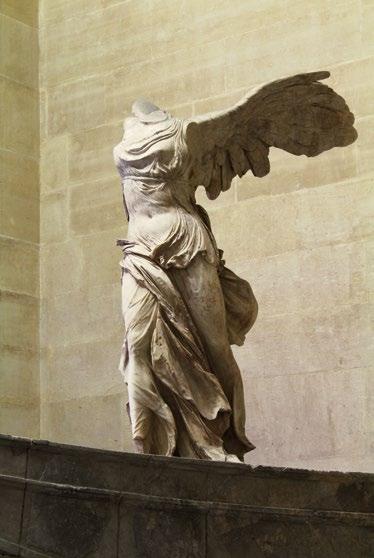
Winged Victory of Samothrace
OUR CLASS WILL WATCH THESE VIDEOS:
“Aerial Acropolis Focusing on Parthenon House of Goddess Athena/Acropolis. Athens, Greece”
“Secrets of the Parthenon,” PBS Nova
“The Tide Rises, The Tide Falls”
“Samothrace Reconstruction: Hieron to Nike”
OUR CLASS WILL VIEW THIS PHOTOGRAPH: Parthenon, Britannica
OUR CLASS WILL ASK THESE QUESTIONS:
What are myths, and why do people create them?
What do myths and stories from different cultures have in common?
How are Sal’s and Phoebe’s stories connected in Walk Two Moons?
What does Sal learn in Walk Two Moons?
As your Grade 4 Student reads, ask:
How does this text build your knowledge of myths and stories? Share what you know about myths and stories.
Treasury of Egyptian Mythology: Classic Stories of Gods, Goddesses, Monsters, & Mortals, Donna Jo Napoli
Treasury of Greek Mythology: Classic Stories of Gods, Goddesses, Heroes, and Monsters, Donna Jo Napoli Pegasus, Marianne Mayer
Cupid and Psyche, M. Charlotte Craft
A Collection of Rudyard Kipling’s Just So Stories, Rudyard Kipling
Greek Myths for Young Children, Heather Amery
Percy Jackson and the Olympians: The Lightning Thief, Rick Riordan
Fables, Arnold Lobel
The Water Dragon: A Chinese Legend, Li Jian
Classic Myths to Read Aloud: The Great Stories of Greek and Roman Mythology, William F. Russell
Ask your Grade 4 student to explain what makes a myth, a myth.
Retell a myth and explain its purpose.
Explain why people first created myths.
Explain the two main types of myths.
Discuss what the ancient Greeks learned from myths.
Summarize what was happening in the books read in class.
Create a comic strip to record in pictures what is happening in each story that is read in class. Discuss with your child each night.
Practice reading aloud the fluency passages assigned for homework.
Discuss the characters in Walk Two Moons. Who are they? Why are they important to the story?
Discuss the trip Salamanca takes with her grandparents. Ask where they traveled to each day and look these places up together in books and on the Internet.
Write your own family myth and share it with others.
Great Minds® has made every effort to obtain permission for the reprinting of all copyrighted material. If any owner of copyrighted material is not acknowledged herein, please contact Great Minds® for proper acknowledgment in all future editions and reprints of this module.
All material from the Common Core State Standards for English Language Arts & Literacy in History/Social Studies, Science, and Technical Subjects © Copyright 2010 National Governors Association Center for Best Practices and Council of Chief State School Officers. All rights reserved.
All images are used under license from Shutterstock.com unless otherwise noted.
The Painted Essay® is used by permission of Diana Leddy.
Handout 12B: “The Sun, Moon, and Stars” retold by Donna Henes from Around and About the Planets , Appleseeds January 2007. Text copyright © 2007 by Carus Publishing Company. Reprinted by permission of Cricket Media. All Cricket Media material is copyrighted by Carus Publishing d/b/a Cricket Media, and/or various authors and illustrators. Any commercial use or distribution of material without permission is strictly prohibited. Please visit http://www.cricketmedia.com/info/licensing2 for licensing and http://www.cricketmedia.com for subscriptions.
Handout 12B: “Legend of the Moccasin Flower: An Ojibwe Tale” retold by Mary Morton Cowan from Faces magazine April 2010. Text copyright © 2010 by Carus Publishing Company. Reprinted by permission of Cricket Media. All Cricket Media material is copyrighted by Carus Publishing d/b/a Cricket Media, and/or various authors and illustrators. Any commercial use or distribution of material without permission is strictly prohibited. Please visit http://www.cricketmedia.com/info/licensing2 for licensing and http://www.cricketmedia.com for subscriptions.
Handout 14A: “When Raven Soared” by Leigh Anderson from What a Story! Myths and More , Appleseeds March 2008. Text copyright © 2008 by Carus Publishing Company. Reprinted by permission of Cricket Media. All Cricket Media material is copyrighted by Carus Publishing d/b/a Cricket Media, and/or various authors and illustrators. Any commercial use or distribution of material without permission is strictly prohibited. Please visit http://www.cricketmedia.com/info/licensing2 for licensing and http://www.cricketmedia.com for subscriptions.
For updated credit information, please visit http://witeng.link/credits
The following writers, editors, reviewers, and support staff contributed to the development of this curriculum.
Karen Aleo, Elizabeth Bailey, Ashley Bessicks, Sarah Brenner, Ann Brigham, Catherine Cafferty, Sheila Byrd-Carmichael, Lauren Chapalee, Emily Climer, Rebecca Cohen, Elaine Collins, Julia Dantchev, Beverly Davis, Shana Dinner de Vaca, Kristy Ellis, Moira Clarkin Evans, Marty Gephart, Mamie Goodson, Nora Graham, Lindsay Griffith, Lorraine Griffith, Christina Gonzalez, Emily Gula, Brenna Haffner, Joanna Hawkins, Elizabeth Haydel, Sarah Henchey, Trish Huerster, Ashley Hymel, Carol Jago, Mica Jochim, Jennifer Johnson, Mason Judy, Sara Judy, Lior Klirs, Shelly Knupp, Liana Krissoff, Sarah Kushner, Suzanne Lauchaire, Diana Leddy, David Liben, Farren Liben, Brittany Lowe, Whitney Lyle, Stephanie Kane-Mainier, Liz Manolis, Jennifer Marin, Audrey Mastroleo, Maya Marquez, Susannah Maynard, Cathy McGath, Emily McKean, Andrea Minich, Rebecca Moore, Lynne Munson, Carol Paiva, Michelle Palmieri, Tricia Parker, Marya Myers Parr, Meredith Phillips, Eden Plantz, Shilpa Raman, Rachel Rooney, Jennifer Ruppel, Julie Sawyer-Wood, Nicole Shivers, Danielle Shylit, Rachel Stack, Amelia Swabb, Vicki Taylor, Melissa Thomson, Lindsay Tomlinson, Tsianina Tovar, Sarah Turnage, Melissa Vail, Keenan Walsh, Michelle Warner, Julia Wasson, Katie Waters, Sarah Webb, Lynn Welch, Yvonne Guerrero Welch, Amy Wierzbicki, Margaret Wilson, Sarah Woodard, Lynn Woods, and Rachel Zindler
We are grateful for the many educators, writers, and subject-matter experts who made this program possible.
David Abel, Robin Agurkis, Sarah Ambrose, Rebeca Barroso, Julianne Barto, Amy Benjamin, Andrew Biemiller, Charlotte Boucher, Adam Cardais, Eric Carey, Jessica Carloni, Dawn Cavalieri, Janine Cody, Tequila Cornelious, David Cummings, Matt Davis, Thomas Easterling, Jeanette Edelstein, Sandra Engleman, Charles Fischer, Kath Gibbs, Natalie Goldstein, Laurie Gonsoulin, Dennis Hamel, Kristen Hayes, Steve Hettleman, Cara Hoppe, Libby Howard, Gail Kearns, Lisa King, Sarah Kopec, Andrew Krepp, Shannon Last, Ted MacInnis, Christina Martire, Alisha McCarthy, Cindy Medici, Brian Methe, Ivonne Mercado, Patricia Mickelberry, Jane Miller, Cathy Newton, Turi Nilsson, Julie Norris, Tara O’Hare, Galemarie Ola, Tamara Otto, Christine Palmtag, Dave Powers, Jeff Robinson, Karen Rollhauser, Tonya Romayne, Emmet Rosenfeld, Mike Russoniello, Deborah Samley, Casey Schultz, Renee Simpson, Rebecca Sklepovich, Kim Taylor, Tracy Vigliotti, Charmaine Whitman, Glenda Wisenburn-Burke, and Howard Yaffe
The following early adopters provided invaluable insight and guidance for Wit & Wisdom:
Bourbonnais School District 53 • Bourbonnais, IL
Coney Island Prep Middle School • Brooklyn, NY
Gate City Charter School for the Arts • Merrimack, NH
Hebrew Academy for Special Children • Brooklyn, NY
Paris Independent Schools • Paris, KY
Saydel Community School District • Saydel, IA
Strive Collegiate Academy • Nashville, TN
Valiente College Preparatory Charter School • South Gate, CA
Voyageur Academy • Detroit, MI
Design Direction provided by Alton Creative, Inc.
Project management support, production design and copyediting services provided by ScribeConcepts.com
Copyediting services provided by Fine Lines Editing
Product management support provided by Sandhill Consulting