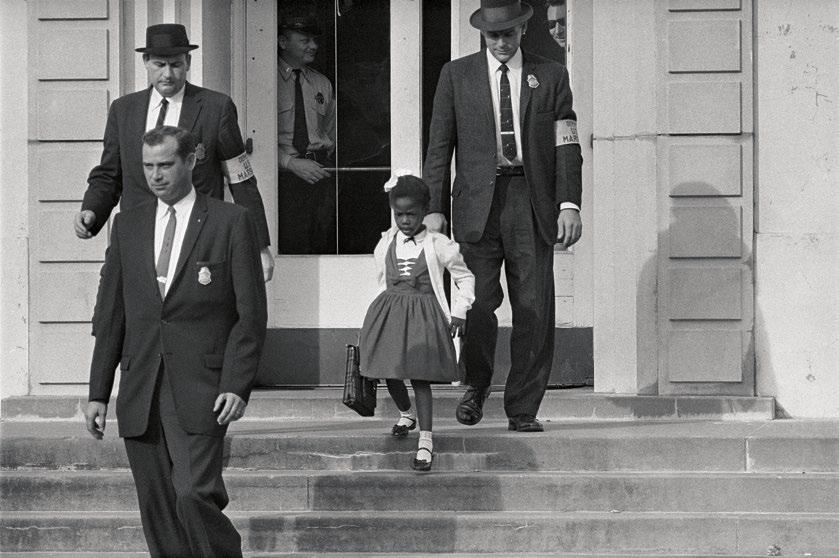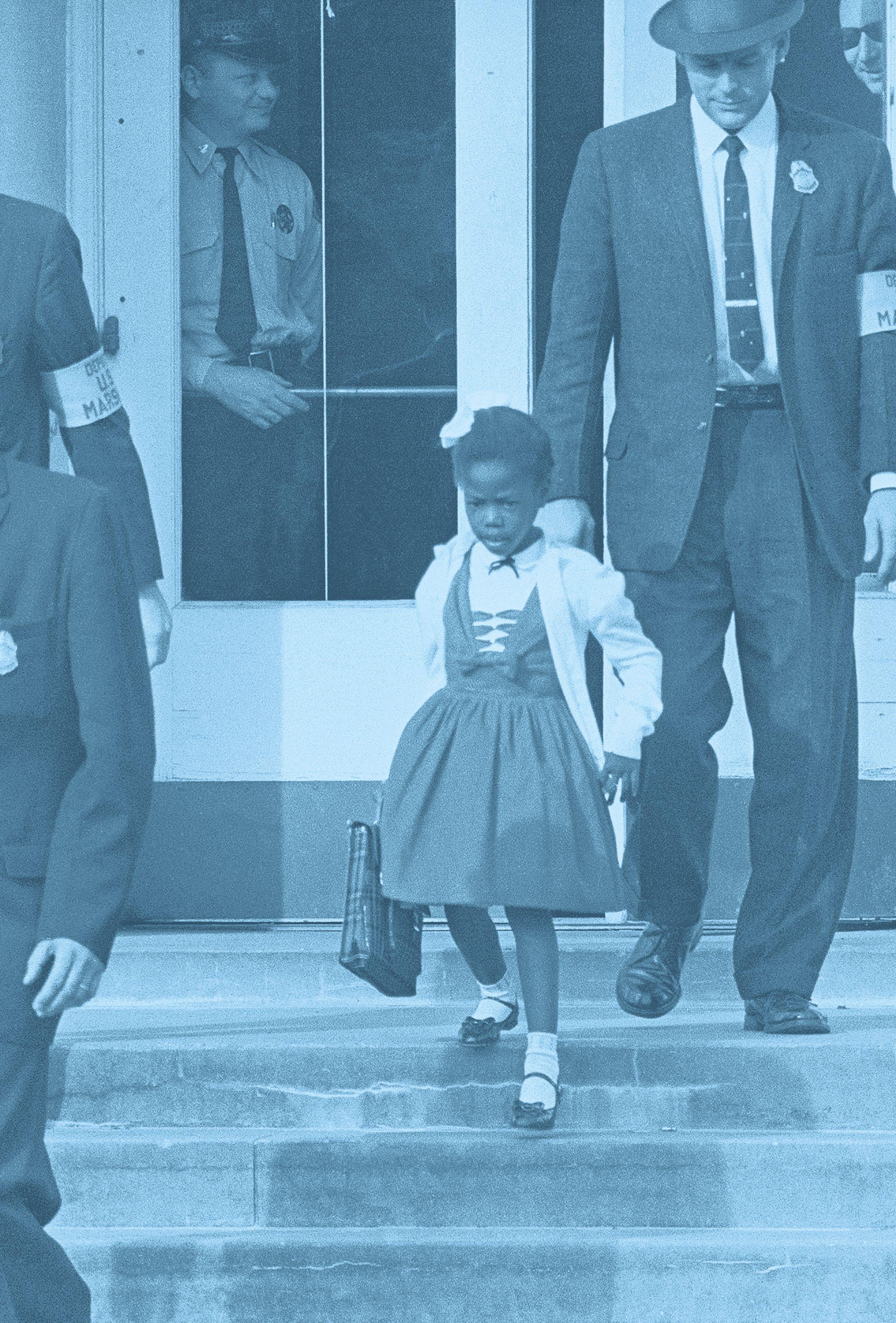
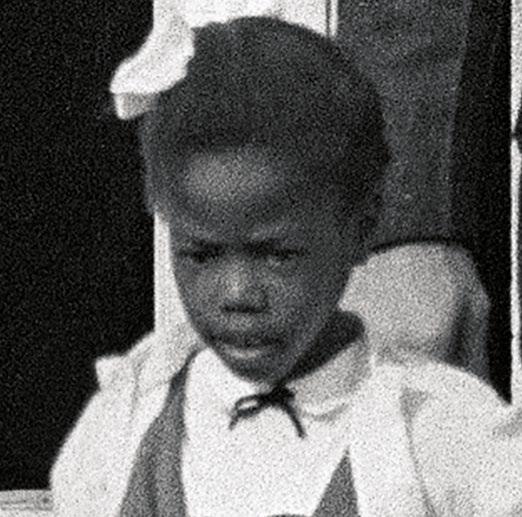
GREAT MINDS TEACHER EDITION WIT & WISDOM® 2 GRADE MODULE 3 CIVIL RIGHTS HEROES
Great Minds® is the creator of Eureka Math® , Wit & Wisdom® , Alexandria Plan™, and PhD Science® .
Published by Great Minds PBC greatminds.org
© 2023 Great Minds PBC. All rights reserved. No part of this work may be reproduced or used in any form or by any means—graphic, electronic, or mechanical, including photocopying or information storage and retrieval systems—without written permission from the copyright holder. Where expressly indicated, teachers may copy pages solely for use by students in their classrooms.
Printed in the USA A-Print
Module Summary 2 Essential Question 3
Suggested Student Understandings 3 Texts 3
Module Learning Goals 4 Module in Context............................................................................................................................... ........................ 6 Standards ............................................................................................................................... ....................................... 7 Major Assessments 8 Module Map 10
Focusing Question: Lessons 1–6 What injustices did people face before the Civil Rights Act of 1964? Lesson 1 ............................................................................................................................... ....................................... 21
n TEXTS: Ruby Bridges Goes to School: My True Story, Ruby Bridges • U.S. Marshals Escorting Ruby Bridges (photograph)
¢ Vocabulary Deep Dive: Use Prefixes to Find Meaning: –in Lesson 2 33
n TEXT: Martin Luther King, Jr. and the March on Washington, Frances E. Ruffin; ¢ Vocabulary Deep Dive: Using Context to Find Meaning: Protest, refuse Lesson 3 47
n TEXTS: Martin Luther King, Jr. and the March on Washington, Frances E. Ruffin • Ruby Bridges and the Civil Rights Movement (photographs)
¢ Vocabulary Deep Dive: Examine Academic Vocabulary: Civil Rights Lesson 4 59
n TEXTS: Martin Luther King, Jr. and the March on Washington, Frances E. Ruffin • “Dr. Martin Luther King Jr.: A Leader and a Hero” (video)
¢ Vocabulary Deep Dive: Word Relationships: Segregation, integration Lesson 5 73
n TEXTS: Martin Luther King, Jr. and the March on Washington, Frances E. Ruffin • “Ain’t Gonna Let Nobody Turn Me Around” (video)
¢ Style and Conventions Deep Dive: Examine Adverbs
Lesson 6 87
n TEXTS: Martin Luther King, Jr. and the March on Washington, Frances E. Ruffin • “Ain’t Gonna Let Nobody Turn Me Around” (videos)
¢ Vocabulary Deep Dive: Word Relationships: Ask, tell, command, demand, request, order, force
What was Martin Luther King Jr.’s dream for the world?
Lesson 7 101
n TEXTS: I Have a Dream, Dr. Martin Luther King Jr. • “I Have a Dream” (audio recording)
¢ Vocabulary Deep Dive: Using Root Words to Find Meaning: Equally, equality
Lesson 8 115
n TEXTS: “America (My Country Tis of Thee),” Stephen Griffith • I Have a Dream, Dr. Martin Luther King Jr. • Selma to Montgomery March, Alabama, 1965, James Karales (photograph)
¢ Style and Conventions Deep Dive: Examine Adjectives
Lesson 9 131
n TEXTS: I Have a Dream, Dr. Martin Luther King Jr. • Selma to Montgomery March, Alabama, 1965, James Karales (photograph)
¢ Style and Conventions Deep Dive: Examine Adverbs to Add Detail
Lesson 10 145
n TEXTS: “America (My Country Tis of Thee),” Stephen Griffith • I Have a Dream, Dr. Martin Luther King Jr. • Martin Luther King, Jr. and the March on Washington, Frances E. Ruffin • Selma to Montgomery March, Alabama, 1965, James Karales (photograph)
¢ Style and Conventions Deep Dive: Examine Adjectives and Adverbs
Lesson 11 ............................................................................................................................... ................................... 159
n TEXTS: “America (My Country Tis of Thee),” Stephen Griffith • I Have a Dream, Dr. Martin Luther King Jr. • Martin Luther King, Jr. and the March on Washington, Frances E. Ruffin • U.S. Marshals Escorting Ruby Bridges (photograph) • Selma to Montgomery March, Alabama, 1965, James Karales (photograph)
¢ Vocabulary Deep Dive: Prefix re–
Lesson 12 175
n TEXTS: I Have a Dream, Dr. Martin Luther King Jr. • “Words Like Freedom,” Langston Hughes
¢ Vocabulary Deep Dive: Frayer Model: Freedom, liberty Lesson 13 189
n TEXTS: “Words Like Freedom,” Langston Hughes • I Have a Dream, Dr. Martin Luther King Jr. • Selma to Montgomery March, Alabama, 1965, James Karales (photograph)
¢ Vocabulary Deep Dive: Compound Words
Focusing Question: Lessons 14–18
How did Ruby Bridges respond to injustice?
Lesson 14 201
n TEXTS: Ruby Bridges Goes to School: My True Story, Ruby Bridges • “Words Like Freedom,” Langston Hughes
¢ Style and Conventions Deep Dive: Experiment with Adjectives and Adverbs
Lesson 15 215
n TEXT: Ruby Bridges Goes to School: My True Story, Ruby Bridges
¢ Style and Conventions Deep Dive: Experiment with Adjectives and Adverbs
Lesson 16 229
n TEXTS: Ruby Bridges Goes to School: My True Story, Ruby Bridges • “This Little Light of Mine,” Harry Dixon Loes
¢ Vocabulary Deep Dive: Word Relationships
Lesson 17 243
n TEXTS: Ruby Bridges Goes to School: My True Story, Ruby Bridges • “This Little Light of Mine,” Harry Dixon Loes
¢ Style and Conventions Deep Dive: Examine Sentence Variety
Lesson 18 255
n TEXTS: “Ruby Bridges Goes to School: My True Story, Ruby Bridges • “This Little Light of Mine,” Harry Dixon Loes • Civil Rights – Ruby Bridges (video) • “Dreams,” Langston Hughes
¢ Style and Conventions Deep Dive: Excel with Adjectives and Adverbs
Focusing Question: Lessons 19–23
How did Ruby Bridges respond to injustice?
Lesson 19 267
n TEXT: The Story of Ruby Bridges, Robert Coles
¢ Vocabulary Deep Dive: Suffix –ful
Lesson 20 281
n TEXT: The Story of Ruby Bridges, Robert Coles
¢ Vocabulary Deep Dive: Word Relationships
Lesson 21 295
n TEXT: The Story of Ruby Bridges, Robert Coles
¢ Style and Conventions Deep Dive: Experiment with Sentence Variety
Lesson 22 309
n TEXTS: The Story of Ruby Bridges, Robert Coles • “Ruby Bridges Interview”
¢ Style and Conventions Deep Dive: Experiment with Sentence Variety
Lesson 23 321
n TEXT: The Story of Ruby Bridges, Robert Coles
¢ Style and Conventions Deep Dive: Execute with Sentence Variety
Focusing Question: Lessons 24–29
How did the Mendez family respond to injustice?
Lesson 24 333
n TEXT: Separate Is Never Equal: Sylvia Mendez and Her Family’s Fight for Desegregation, Duncan Tonatiuh
¢ Vocabulary Deep Dive: Compound Words
Lesson 25 345
n TEXT: Separate Is Never Equal: Sylvia Mendez and Her Family’s Fight for Desegregation, Duncan Tonatiuh
¢ Vocabulary Deep Dive: Context Clues: Inferior, superior
Lesson 26 359
n TEXT: Separate Is Never Equal: Sylvia Mendez and Her Family’s Fight for Desegregation, Duncan Tonatiuh ¢ Vocabulary Deep Dive: Context Clues: Improve, reject, convince Lesson 27 371
n TEXT: Separate Is Never Equal: Sylvia Mendez and Her Family’s Fight for Desegregation, Duncan Tonatiuh
¢ Vocabulary Deep Dive: Prefix uni–
Lesson 28 ............................................................................................................................... .................................. 383
n TEXTS: Separate Is Never Equal: Sylvia Mendez and Her Family’s Fight for Desegregation, Duncan Tonatiuh • Video with Sylvia Mendez and Sandra Mendez Duran ¢ Vocabulary Deep Dive: Compound Words
Lesson 29 395
n TEXT: Separate Is Never Equal: Sylvia Mendez and Her Family’s Fight for Desegregation, Duncan Tonatiuh ¢ Vocabulary Deep Dive: Prefixes bi– and tri–
How can people respond to injustice?
Lesson 30 ............................................................................................................................... ................................ 407
n TEXTS: All Module Texts • “This Little Light of Mine,” Stephen Griffith ¢ Vocabulary Deep Dive: Prefix co–Lesson 31 419
n TEXTS: All Module Texts • U.S. Marshals Escorting Ruby Bridges (photograph) Lesson 32 425
n TEXT: All Module Texts Lesson 33 433
n TEXTS: All Module Texts • “Dreams,” Langston Hughes
¢ Vocabulary Deep Dive: Direct Vocabulary Assessment Part 1 Lesson 34 443
n TEXT: All Module Texts
¢ Vocabulary Deep Dive: Direct Vocabulary Assessment Part 2
Appendix A: Text Complexity ............................................................................................................................. 453
Appendix B: Vocabulary 459
Appendix C: Answer Keys, Rubrics, and Sample Responses 469
Appendix D: Volume of Reading 485
Appendix E: Works Cited 487
Our Ruby taught us all a lot. She became someone who helped change our country. She was part of history, just like the generals and presidents are part of history. They’re leaders, and so was Ruby. She led us away from hate, and she led us nearer to knowing each other, the White folks and the Black folks.
–Ruby’s Mother, Epigraph, The Story of Ruby Bridges
Module 3 compels students to closely examine the impact of three key Civil Rights heroes: Martin Luther King Jr., Ruby Bridges, and Sylvia Mendez. How did these figures respond to the injustices they faced? What can we learn from their actions? A series of narrative nonfiction texts and historical photographs serve as students’ insight to the past. By examining the impact of these three individuals on the country, students build deep knowledge of what it means to live out the nation’s creed of “liberty and justice for all.”
The Module begins by introducing students to Ruby Bridges, the first Black student to attend a White elementary school in Louisiana. Both the accessibility of the text and the fact that Ruby herself is a Grade 1 student help invite students into this moment in history.
Students then zoom out to study two texts about King. Martin Luther King, Jr. and the March on Washington sets the historical stage for a close reading of excerpts from the famous “I Have a Dream” speech, with stunning paintings by Kadir Nelson. Students examine the power words have to inspire change. They examine the power of the individual to unite others in the fight against injustice.
Armed with this historical background knowledge, students return to the story of Ruby Bridges with a deeper sense of the significance of her actions. Students experience the same historical moment in two texts. They examine the moment when Ruby Bridges walks into the White elementary school for the first time. Students examine point of view in these texts, and experiment with narrative writing that details thoughts, feelings, and actions.
Students then turn their attention to Separate is Never Equal: Sylvia Mendez and Her Family’s Fight for Desegregation, the story of Sylvia Mendez and her family’s fight to end school segregation in California in the 1940s. This text offers insight into the power of laws in effecting systemic change. Students develop a more nuanced understanding of point of view, look closely at the illustrations, and develop their narrative writing skills to include a sense of closure.
The End-of-Module (EOM) Task invites students to step into the shoes of one of the two children they learned about in the module: Ruby Bridges or Sylvia Mendez. Students write an original narrative describing a moment from one of the module texts. Students look through the eyes of another to describe their thoughts, feelings, and actions in the face of injustice.
The module culminates in a Socratic Seminar in which students have the chance to make connections among the three Civil Rights heroes they have studied. Students explore the importance of responding to injustice, and come to recognize the impact an individual can have in helping to make the world a better place for us all.
How can people respond to injustice?
People have fought injustices in the United States.
The Civil Rights Movement had many heroic leaders.
Schools, restaurants, movie theaters, and many other public places were segregated before the Civil Rights Movement.
People fight injustice with words such as speeches, songs, and literature.
People fight injustice with actions such as protests and petitions to change laws.
Picture Book (Informational)
I Have A Dream, Dr. Martin Luther King, Jr.; paintings, Kadir Nelson
Martin Luther King, Jr. and the March on Washington, Frances E. Ruffin; illustrations, Stephen Marchesi
Ruby Bridges Goes to School: My True Story, Ruby Bridges
The Story of Ruby Bridges, Robert Coles; illustrations, George Ford
Separate is Never Equal: Sylvia Mendez and Her Family’s Fight for Desegregation, Duncan Tonatiuh
Selma to Montgomery March, Alabama, 1965, James Karales (http://witeng.link/0361)
U.S. Marshals Escorting Ruby Bridges, Associated Press (http://witeng.link/0354)
Civil rights march on Wash[ington], D.C., Library of Congress (http://witeng.link/0362)
Woman with camera and crowd at the March on Washington, 1963, Library of Congress (http://witeng.link/0363)
“Educational Segregation in the United States Prior to Brown V. Board of Education” (map) (http://witeng.link/0355)
“Words like Freedom,” Langston Hughes (http://witeng.link/0365)
“Dreams,” Langston Hughes (http://witeng.link/0292)
“Civil Rights - Ruby Bridges” (http://witeng.link/0367)
“Dr. Martin Luther King Jr.: A Leader and a Hero” (http://witeng.link/0356)
“Ruby Bridges Interview” (http://witeng.link/0368)
“Sylvia Mendez and Sandra Mendez Duran” (http://witeng.link/0369)
“Ain’t Gonna Let Nobody Turn Me Around,” Stephen Griffith (http://witeng.link/0359)
“Ain’t Gonna Let Nobody Turn Me Around,” The Freedom Singers (http://witeng.link/0359)
“This Little Light of Mine,” Stephen Griffith (http://witeng.link/0366)
“America (My Country Tis of Thee),” Stephen Griffith (http://witeng.link/0360)
“Different Voices,” Anna Gratz Cockerille
“When Peace Met Power,” Laura Helweg
Recognize how people responded to injustices in the United States.
Understand the Civil Rights Movement in the United States and the changes that resulted.
Identify leaders who fought against segregation.
Recognize that speeches are an important type of literary text.
Build knowledge of literary devices, including rhymes and repeated words and phrases and how they add meaning to texts. (RL.2.4)
Identify who is telling the story. (RL.2.6)
Recognize how different characters have different points of view and how that impacts the way a story is told. (RL.2.6)
Determine how images add information to text to improve comprehension. (RI.2.7)
Identify the most important points in a text. (RI.2.9)
Compare and contrast the important points told by different texts on a topic. (RI.2.9)
Write informative paragraphs using information from module texts that include an introduction, topic statement, evidence, and conclusion. (W.2.2)
Organize and choose text evidence to respond to a prompt. (W.2.2, W.2.3, W.2.8)
Write narrative paragraphs describing a moment in time with details. (W.2.3)
Write narrative paragraphs describing a response to a problem that include thoughts, feelings, and actions. (W.2.3)
Speak with peers on one topic. (SL.2.3)
Gather information about a topic and ask/answer questions to prepare to speak about that topic. (SL.2.3)
Listen for the topic of a conversation and ask for more information about that topic. (SL.2.1.c)
Distinguish between adjectives and adverbs and use them correctly in writing. (L.2.1.e)Expand and rearrange a variety of sentences. (L.1.f)
Use word knowledge to predict the meaning of compound words. (L.2.4.d)
Distinguish shades of meaning among closely related verbs and adjectives. (L.2.5.b)
Knowledge: The Civil Rights Movement is an era of American history led by many heroes. In this module, students closely read informational texts to build their knowledge of how leaders of the Civil Rights Movement—Ruby Bridges, King, and Sylvia Mendez—brought permanent change to the United States. Students develop an understanding of how different responses to injustice—including speaking, protesting, and contesting injustice in court—resulted in changes to segregation. By engaging with a series of rich, complex texts, including several poems, songs, and a famous speech, students explore the challenges and responses of leaders in American history.
Reading: Students closely read a variety of informational texts and study historical images to build their knowledge of Civil Rights leaders. Engaging with protest songs and poems of the Civil Rights Movement, students see how repetition and rhyme can emphasize words’ powerful meanings. Students examine images to build understanding of informational text, identifying the most important points in images and texts and recognizing how different authors present different points. Students also learn to determine how a narrator’s point of view adds different information to a text. Students read different accounts of the same event, exploring how authors can provide different information and points of view.
Writing: In the beginning of Module 3, students build on the informative writing skills they practiced in Modules 1 and 2. Students discuss the importance of research sources when writing about historical moments, and practice drawing evidence from different texts when writing an informative paragraph. After this practice, students then turn their attention to narrative writing. Students use SCAPE charts to identify story elements as pre-writing for their own narrative paragraphs. They examine the importance of thoughts, feelings, and actions as details in their narrative paragraphs. In the EOM Task, students write a narrative from the perspective of Ruby Bridges or Sylvia Mendez, looking through their eyes to describe their thoughts, feelings, and actions in the face of injustice.
Speaking and Listening: Students develop their speaking and listening skills further in this module by thinking about how to listen for a main topic and then how to speak on topic to deepen their understanding. Students practice listening and determining the main topic when listening to a text or in a conversation. They then practice asking questions to gather information and deepen their focus of a topic. During two Socratic Seminars, students integrate these new skills with those they learned in Modules 1 and 2. In the first Socratic Seminar, students discuss the power of King’s words. In the final lesson of the module, students discuss how responding to injustices can impact the world.
RL.2.4 Describe how words and phrases (e.g., regular beats, alliteration, rhymes, repeated lines) supply rhythm and meaning in a story, poem, or song.
RL.2.6 Acknowledge differences in the points of view of characters, including by speaking in a different voice for each character when reading dialogue aloud.
RI.2.7 Explain how specific images contribute to and clarify a text.
RI.2.9 Compare and contrast the most important points presented by two texts on the same topic.
W.2.3 Write narratives in which they recount a well-elaborated event or short sequence of events; include details to describe actions, thoughts, and feelings; use temporal words to signal event order; and provide a sense of closure.
W.2.8 Recall information from experiences or gather information from provided sources to answer a question.
SL.2.1.c Ask for clarification and further explanation as needed about the topics and texts under discussion.
SL.2.3 Ask and answer questions about what a speaker says in order to clarify comprehension, gather additional information, or deepen understanding of a topic or issue.
L.2.1.e Use adjectives and adverbs, and choose between them depending on what is to be modified.
L.2.1.f Produce, expand, and rearrange complete simple and compound sentences.
L.2.4.d Use knowledge of the meaning of individual words to predict the meaning of compound words.
L.2.5.b Distinguish shades of meaning among closely related verbs and closely related adjectives.
RL.2.10 By the end of the year, read and comprehend literature, including stories and poetry, in the grades 2–3 text complexity band proficiently, with scaffolding as needed at the high end of the range.
RI.2.10 By the end of year, read and comprehend informational texts, including history/social studies, science, and technical texts, in the grades 2–3 text complexity band proficiently, with scaffolding as needed at the high end of the range.
L.2.6 Use words and phrases acquired through conversations, reading and being read to, and responding to texts, including using adjectives and adverbs to describe.
1. Write an informative paragraph using evidence from two different sources about injustices before the Civil Rights Act of 1964.
2. Write an informative paragraph describing Martin Luther King Jr.’s dream.
3. Write an exploded moment narrative from the point of view of Ruby Bridges about the injustices she faced as she walked into the school.
Write an informational paragraph that answers the question and includes an introduction, topic statement, and concluding sentence.
Use one piece of evidence from two sources.
RI.2.1, W.2.2, W.2.8
Write an informational paragraph that answers the question and includes a topic statement, two pieces of evidence with clearly defined points, and a concluding sentence.
Use topic-specific words to convey meaning. Use text features to locate information.
RI.2.1, W.2.2, W.2.8
Write a paragraph that answers the question and is written from first person point of view. Use SCAPE story elements.
Use time (temporal) words
RL.2.3, W.2.3, W.2.8, L.2.1.e
4. Write an exploded moment narrative from the point of view of Ruby Bridges about her response to injustice as she stops in the middle of the crowd.
Write a paragraph that answers the question and is written from first person point of view.
Use SCAPE story elements. Use time (temporal) words. Use details to describe thoughts, feelings, and actions. Expand sentences with adjectives and adverbs.
RL.2.3, W.2.3, W.2.8, L.2.1.f
5. Write an exploded moment narrative from the point of view of Sylvia Mendez as she sits in the courtroom during the Mendez family’s trial.
Write a first person point of view paragraph that answers the question.
Use SCAPE story elements. Use time (temporal) words. Use details to describe thoughts, feelings, and actions. Expand sentences with adjectives and adverbs.
RL.2.3, W.2.3, W.2.8
1. Read pages 12–15 and 26–27 of Ruby Bridges Goes to School: My True Story and then answer questions about details from the story and from the historical photographs..
2. Read the poem “Dreams” by Langston Hughes and then answer questions about the repetition and meaning.
3. Read “Different Voices” by Anna Gratz Cockerille and answer the questions about point of view.
Explain how historical photographs contribute to and clarify a text. RI.2.7
Identify how repeated words and phrases supply meaning in a poem.
RL.2.4
4. Listen to the Read Aloud of “When Peace Met Power” by Laura Helweg and an excerpt from Martin Luther King, Jr. and the March on Washington and answer the questions about important points about the same topic.
Acknowledge difference in points of view. Identify meanings of compound words. Distinguish shades of meaning from closely related verbs.
RL.2.6, L.2.4.d, L.2.5.b
Identify similar points about the same topic. Compare and contrast similar points.
RI.2.9
1. Explain why Martin Luther King Jr.’s words are powerful. Analyze and collect evidence to answer the question. Demonstrate the ability to speak on topic when talking.
2. Explain how responding to injustice can impact the world. Analyze and collect evidence to answer the question. Demonstrate the ability to speak on topic when talking.
SL.2.1c, SL.2.3, SL.2.6, RI.2.1
SL.2.1c, SL.2.3, SL.2.6, RI.2.1
Write an exploded moment narrative from either the point of view of Ruby Bridges or Sylvia Mendez about their responses to injustice.
Write a paragraph that answers the question and is written from first person point of view.
RL.2.3
Use SCAPE story elements. Use time (temporal) words. Use detail to describe thoughts, feelings, and actions. Expand sentences with adjectives and adverbs.
W.2.3, W.2.5, W.2.8
Demonstrate understanding of academic, text-critical, and domainspecific words, phrases, and/or word parts.
Acquire and use grade-appropriate academic terms. Acquire and use domain-specific or text-critical words essential for communication about the module’s topic.
L.2.6
*While not considered Major Assessments in Wit & Wisdom, Vocabulary Assessments are listed here for your convenience. Please find details on Checks for Understanding (CFUs) within each lesson.
Focusing Question 1: What injustices did people face before the Civil Rights Act of 1964?
Text(s) Content Framing Question Craft Question(s) Learning Goals
1 Ruby Bridges Goes to School: My True Story
U.S. Marshals Escorting Ruby Bridges (image)
Wonder What do I notice and wonder about The Story of Ruby Bridges: My True Story?
Ask questions and make observations about Ruby Bridges Goes to School: My True Story (RI.2.1)
Make observations about how a historical photograph connects to the text. (RI.2.7)
Explore the meaning of the word injustice, formed when a known prefix is added to a known word.
(L.2.4.b)
2 Martin Luther King, Jr. and the March on Washington
Wonder
What do I notice and wonder about Martin Luther King, Jr. and the March on Washington?
3 Martin Luther King, Jr. and the March on Washington Ruby Bridges and the Civil Rights Movement Slide Show (photographs)
4 Martin Luther King, Jr. and the March on Washington “Dr. Martin Luther King Jr.: A Leader and a Hero” (video)
Organize
What’s happening in Martin Luther King, Jr. and the March on Washington?
Examine
Why is gathering information from sources to answer a question important?
Reveal
What does a deeper exploration of historical connections reveal in Martin Luther King, Jr. and the March on Washington?
Experiment
How does gathering information from multiple sources work?
Ask and answer questions about Martin Luther King, Jr. and the March on Washington using a variety of question words. (RI.2.1)
Use sentence-level context to determine the meaning of the words protest and refuse. (L.2.4.a)
Identify the main topic of sections of an informational text. (RI.2.2, SL.2.2) Generate examples of Civil Rights in order to understand the importance of the Civil Rights Act of 1964. (L.2.5.a)
Make connections among a series of historical events in the text. (RI.2.3)
Examine what a text and video have to say about the same topic: the injustices people faced before the Civil Rights Act of 1964. (W.2.8)
Compare important points presented by two texts on the same topic. (RI.2.9)
Demonstrate an understanding of word relationships by categorizing words related to integration and segregation. (L.2.5.a)
Focusing Question 1: What injustices did people face before the Civil Rights Act of 1964?5 FQT Martin Luther King, Jr. and the March on Washington
“Ain’t Gonna Let Nobody Turn Me Around”
Distill
What is the essential meaning of Martin Luther King, Jr. and the March on Washington?
Examine
Why is listening for main topic important? Experiment
How does listening for main topic work?
Execute
How do I use multiple sources for Focusing Question Task 1? Examine
Why do writers use adverbs?
Describe how repeated language conveys meaning in a song. (RL.2.4)
Determine the essential meaning of an informational text by looking closely at historical photographs. (RI.2.7)
Answer the Focusing Question Task using information from two sources. (W.2.2, W.2.8, RI.2.1)
Explain the purpose of adverbs and identify what they modify. (L.2.1.e)
6 Martin Luther King, Jr. and the March on Washington
“Ain’t Gonna Let Nobody Turn Me Around”
Know
How does Martin Luther King, Jr. and the March on Washington build my knowledge of the injustices happening in America in the 1960s?
Execute
How do I use multiple sources for Focusing Question Task 1?
Use multiple sources when writing an informative paragraph. (W.2.2, W.2.8, RI.2.1)
Describe how repeated words connect to meaning in a song. (RL.2.4)
Distinguish shades of meaning among the related verbs ask, tell, command, demand, request, order, force. (L.2.5.a, L.2.5.b)
7 I Have a Dream
“I Have a Dream” (audio recording)
Wonder
What do I notice and wonder about I Have a Dream?
Generate text-based observations and questions about I Have a Dream. (RI.2.1)
Use the known root word equal to determine the meaning of the words equality and equally (L.2.4.c)
Focusing Question 1: What injustices did people face before the Civil Rights Act of 1964? Focusing Question 2: What was Martin Luther King Jr.’s dream for the world?8 I Have a Dream
Selma to Montgomery March, Alabama, 1965 (image)
“America (My Country Tis of Thee),” (MP3 file)
9 I Have a Dream
Selma to Montgomery March, Alabama, 1965 (image)
10 “America (My Country Tis of Thee),” (MP3 file)
I Have a Dream Martin Luther King, Jr. and the March on Washington
Selma to Montgomery March, Alabama, 1965 (image)
Organize
What’s happening in I Have a Dream?
Examine
How is gathering information from sources to answer a question important?
Examine
Why do writers use adjectives?
Organize
What’s happening in I Have a Dream?
Reveal
What does a deeper exploration of topic reveal in I Have a Dream?
Examine
Why are adverbs important for adding detail?
Examine
Why is speaking on topic important?
Experiment
How does speaking on topic work?
Execute
How do I gather information from sources to answer a question in informative paragraphs?
Examine
Why and when do writers use adjectives and adverbs?
Explain how images contribute to a text. (RI.2.7)
Identify and explain the purpose of adjectives. (L.2.1.e)
Explain how images contribute to a text. (RI.2.7)
Identify and explain the purpose of adverbs. (L.2.1.e)
Compare and contrast the main points of two texts on Martin Luther King Jr.’s “I Have a Dream” speech. (RI.2.9)
Collect evidence to answer a question in an informative paragraph. (W.2.8, RI.2.1)
Identify and compare the purpose of adjectives and adverbs. (L.2.1.e)
11
FQT “America (My Country Tis of Thee),” (MP3 file)
I Have a Dream Martin Luther King, Jr. and the March on Washington Selma to Montgomery March, Alabama, 1965 (image)
Distill
What is the essential meaning of I Have a Dream?
Execute
How do I use information from sources in Focusing Question Task 2?
Examine the impact of repeated language in I Have a Dream. (RL.2.4)
Use an additional source to answer a question in an informative paragraph. (W.2.2 W.2.8, RI.2.1)
Determine the meaning of the new word formed when the prefix re is added to a known word. (L.2.4.b)
12
FQT “Words Like Freedom”
I Have a Dream
Knowledge
How does I Have a Dream build my knowledge of what a just world might look like?
Execute
How do I use information from sources in Focusing Question Task 2?
Compare and contrast the main points of two texts on Martin Luther King Jr.’s “I Have a Dream” speech. (RI.2.9)
Write an informative paragraph, drawing evidence from two sources. (W.2.2, W.2.8, RI.2.1)
Develop vocabulary knowledge of the word freedom through the creation of a Frayer Model. (L.2.5.a, L.2.6)
13 SS “Words Like Freedom”
I Have a Dream Selma to Montgomery March, Alabama, 1965 (image)
Know
How does I Have a Dream build my knowledge of what a just world might look like?
Execute
How do I speak on topic when participating in a Socratic Seminar?
Participate, as both a listener and speaker, in a Socratic Seminar about the power of Martin Luther King Jr.’s words. (SL.2.1c, SL.2.3, SL.2.6)
Use the meaning of known words to predict the meaning of unfamiliar compound words. (L.2.4.d)
Focusing Question 2: What was Martin Luther King Jr.’s dream for the world?14
NR Ruby Bridges Goes to School: My True Story
Wonder
What do I notice and wonder about Ruby Bridges Goes to School: My True Story?
Examine
Why are first person narratives important? Experiment
How do writers choose between adjectives and adverbs?
15 Ruby Bridges Goes to School: My True Story
Organize What’s happening in Ruby Bridges Goes to School: My True Story?
Experiment
How does writing a first person narrative work? Experiment
How can I use adverbs to expand sentences and add detail to my writing?
16
FQT Ruby Bridges Goes to School: My True Story
“This Little Light of Mine”
Reveal
What does a deeper exploration of point of view reveal in Ruby Bridges Goes to School: My True Story?
Execute
How do I write a first person narrative in Focusing Question Task 3?
17
FQT Ruby Bridges Goes to School: My True Story
“This Little Light of Mine”
Distill
What is the Essential Meaning of Ruby Bridges Goes to School: My True Story?
Execute
How do I write a first person narrative in Focusing Question Task 3? Examine
Why do writers rearrange sentences?
Answer questions about historical photographs to understand how they contribute and clarify text. (RI.2.7)
Ask and answer questions about Ruby Bridges Goes to School: My True Story. (RI.2.1)
Generate adjectives and adverbs depending on the word that is being modified. (L.2.1.e)
Understand and recount the narrative elements of a text. (RL.2.2, SL.2.4)
Expand sentences, choosing between adjectives and adverbs depending on what is being modified. (L.2.1.e, L.2.1.f)
Describe how repetition adds meaning to a song. (RL.2.4)
Analyze point of view in a text. (RL.2.6)
Distinguish shades of meaning among the related sets of verbs. (L.2.5a, L.2.5b)
Determine the essential meaning of a text by rereading and answering questions. (RL.2.2)
Narrate an Exploded Moment. (W.2.2, W.2.8, RI.2.1)
Compare the effects of sentence variety to understand its purpose and importance. (L.2.1.f)
Focusing Question 3: How did Ruby Bridges respond to injustice?
18 NR “This Little Light of Mine”
Ruby Bridges Goes to School: My True Story
Civil Rights –Ruby Bridges (video)
“Dreams,” Langston Hughes
Know
How does Ruby Bridges Goes to School: My True Story build my knowledge of how people might respond to injustice?
Excel
How do I improve my first person narratives with temporal words? Excel
How do I improve my work using adjectives and adverbs?
Describe how repeated words add meaning to a text. (RL.2.4)
Compare an important point from two texts. (RI.2.9)
Use a temporal word in narratives to signify a sequence of events. (W.2.3)
Expand sentences by adding adjectives and adverbs depending on what is being modified. (L.2.1.e)
Focusing Question 4: How did Ruby Bridges respond to injustice?
Text(s) Content Framing Question Craft Question(s) Learning Goals
19 The Story of Ruby Bridges Notice and Wonder
What do I notice and wonder about The Story of Ruby Bridges?
Examine
Why are exploded moments in writing important?
Ask and answer questions about The Story of Ruby Bridges. (RI.2.1)
Determine the meaning of new words formed when the suffix –ful is added to known base words, such as in hopeful, peaceful, powerful, and fearful (L.2.4b)
20 The Story of Ruby Bridges Organize What’s happening in The Story of Ruby Bridges?
Experiment
How does an exploded moment work?
Recount a text, including all the story elements. (RL.2.2, SL.2.4)
Distinguish shades of meaning among the related sets of adjectives, including anxious, frightened, strong, mighty, terrible, and confident. (L.2.5.a, L.2.5.b)
21 FQT The Story of Ruby Bridges Reveal
What does a deeper exploration of dialogue reveal in The Story of Ruby Bridges?
Execute
How do I explode a moment in Focusing Question Task 4?
Experiment
How do writers rearrange sentences to increase sentence variety?
22 FQT The Story of Ruby Bridges Distill
What is the essential meaning of The Story of Ruby Bridges?
Execute
How do I explode a moment in Focusing Question Task 4?
Experiment
How do writers use adjectives and adverbs to rearrange sentences?
23 The Story of Ruby Bridges Knowledge
How does The Story of Ruby Bridges build my knowledge of how people might respond to injustice?
Excel
How do I improve on my exploded moment narrative? Execute
How do I rearrange sentences in my Focusing Question Task to make my writing clearer and stronger?
Understand the different points of view of two characters in a text. (RL.2.6)
Plan the structure of an exploded moment, including thoughts, feelings, and actions. (W.2.3)
Rearrange sentences to increase sentence variety. (L.2.1.f)
Describe how Ruby Bridges responds to injustice to determine the essential meaning of the text. (RL.2.2, RL.2.3) Narrate an exploded moment. (W.2.3)
Rearrange sentences to increase sentence variety by beginning them with adjectives or adverbs. (L.2.1.f)
Build knowledge about Ruby Bridges’ response to injustice. (RL.2.3)
Elaborate on narratives by adding details. (W.2.3, W.2.5)
Rearrange simple and compound sentences to increase sentence variety. (L.2.1.f)
24 Separate is Never Equal: Sylvia Mendez and Her Family’s Fight for Desegregation
Wonder
What do I notice and wonder about Separate is Never Equal?
Ask and answer questions about Separate is Never Equal: Sylvia Mendez and Her Family’s Fight for Desegregation. (RI.2.1)
Use the meaning of known words to predict the meaning of unknown compound words. (L.2.4.d)
Focusing Question 4: How did Ruby Bridges respond to injustice? Focusing Question 5: How did the Mendez family respond to injustice?
25 Separate is Never Equal: Sylvia Mendez and Her Family’s Fight for Desegregation
Organize
What’s happening in the first half of Separate is Never Equal?
Examine
Why is ending a narrative with a sense of closure important?
Examine three story elements of Separate is Never Equal: Sylvia Mendez and Her Family’s Fight for Desegregation. (RL.2.1)
Use sentence-level context and glossary to determine and clarify the meaning of the words inferior and superior (L.2.4.a)
26 Separate is Never Equal: Sylvia Mendez and Her Family’s Fight for Desegregation
What’s happening in Separate is Never Equal?
How does a sense of closure work with an “exploded moment”?
Identify the story elements of Separate is Never Equal: Sylvia Mendez and Her Family’s Fight for Desegregation and recount the story. (RL.2.2)
Use sentence-level context to determine the meaning of the words improve, reject, and convince. (L.2.4.a)
27 FQT Separate is Never Equal: Sylvia Mendez and Her Family’s Fight for Desegregation
What does a deeper exploration of the beginning and the end reveal in Separate is Never Equal?
Execute
How do I explode a moment in Focusing Question Task 5?
Draw connections between the Beginning and Ending of the story to understand the text Separate is Never Equal: Sylvia Mendez and Her Family’s Fight for Desegregation. (RL.2.5)
Craft a narrative that includes thoughts, feelings, actions, and a sense of closure. (W.2.3)
Determine the meaning of the new word formed when the prefix uni is added to a known word. (L.2.4.b)
Focusing Question 5: How did the Mendez family respond to injustice?27
FQT Separate is Never Equal: Sylvia Mendez and Her Family’s Fight for Desegregation
Reveal
What does a deeper exploration of the beginning and the end reveal in Separate is Never Equal?
Execute
How do I explode a moment in Focusing Question Task 5?
Draw connections between the Beginning and Ending of the story to understand the text Separate is Never Equal: Sylvia Mendez and Her Family’s Fight for Desegregation. (RL.2.5)
Craft a narrative that includes thoughts, feelings, actions, and a sense of closure. (W.2.3)
Determine the meaning of the new word formed when the prefix uni is added to a known word. (L.2.4.b)
28
FQT Separate is Never Equal: Sylvia Mendez and Her Family’s Fight for Desegregation
Video with Sylvia Mendez and Sandra Mendez Duran
Distill
What is the essential meaning of Separate is Never Equal?
Execute
How do I explode a moment in Focusing Question Task 5?
Determine an essential meaning of the text. (RL.2.2)
Write a narrative paragraph. (W.2.3, W.2.5, RI.2.1)
Use the meaning of known words to predict the meaning of unknown compound words. (L.2.4.d)
29 Separate is Never Equal: Sylvia Mendez and Her Family’s Fight for Desegregation
Know
How does Separate is Never Equal build my knowledge of how people might respond to injustice?
Excel
How do I improve my exploded moment narratives with temporal words?
Identify ways that the Mendez family responded to injustice. (RL.2.3)
Improve exploded moment narratives by adding a temporal word. (W.2.3, W.2.5)
Determine the meaning of the new word formed when the prefixes bi and tri are added.
Focusing Question 5: How did the Mendez family respond to injustice?30
NR EOM
All Module Texts Know
How do the Module 3 texts build my knowledge?
Execute
How do I use narrative writing in the EOM Task?
Acknowledge differences in point of view. (RL.2.6)
Collect evidence to answer the EOM task. (W.2.8)
Determine the meaning of the new word formed when the prefix co– is added to a known word. (L.2.4.b)
31
NR EOM
All Module Texts Know
How do the Module 3 texts build my knowledge?
32 EOM All Module Texts Know
How do the Module 3 texts build my knowledge?
33 VOC All Module Texts Know
How do the Module 3 texts build my knowledge?
Execute
How do I use narrative writing in the EOM Task?
Execute
How do I use narrative writing in the EOM Task?
Excel
How do I improve narrative writing in the EOM Task?
Compare and contrast important points in two texts on the same topic. (RI.2.9)
Write a narrative paragraph. (W.2.3)
Write a narrative paragraph. (W.2.3)
Finish drafting a narrative paragraph. (W.2.3)
Revise a narrative paragraph. (W.2.5)
Demonstrate understanding of module words by analyzing correct or incorrect use in context. (L.2.6)
34 SS VOC
All Module Texts Know
How do the Module 3 texts build my knowledge?
Execute
How do I speak on topic in a Socratic Seminar?
Strengthen writing based on feedback. (W.2.5)
Ask and answer questions to deepen understanding. (SL.2.3)
Demonstrate understanding of module words by analyzing correct or incorrect use in context. (L.2.6)
What injustices did people face before the Civil Rights Act of 1964? Ruby Bridges Goes to School: My True Story, Ruby Bridges U.S. Marshals Escorting Ruby Bridges (http://witeng.link/0354), Associated Press
Welcome (5 min.)
Understand the Essential Question
Launch (5 min.)
Learn (60 min.)
Explore Module Texts (10 min.)
Listen Actively and Record Observations (30 min.)
Examine Module Cover Photograph (20 min.)
Land (3 min.)
Answer the Content Framing Question Wrap (2 min.)
Reflect on Volume of Reading
Vocabulary Deep Dive: Use Prefixes to Find Meaning: Injustice (15 min.)
The full text of ELA Standards can be found in the Module Overview.
RI.2.1, RI.2.7
Writing W.10*
Speaking and Listening Language L.2.4.b
Ask questions and make observations about Ruby Bridges Goes to School: My True Story. (RI.2.1)
Generate and record two questions and one observation about the text in Response Journal.
Make observations about how a historical photograph connects to the text. (RI.2.7)
Blank Wonder Chart (retain for future lessons) Sticky notes
Volume of Reading Reflection Questions
Stop and Jot one connection between the module cover photograph and Ruby Bridges Goes to School: My True Story.
Explore the meaning of the word injustice, formed when a known prefix is added to a known word. (L.2.4.b)
Stop and Jot the meaning of the words incorrect, incomplete, and inactive
* This lesson prepares students for W.10, which first appears in the Grade 3 CCSS.
How can people respond to injustice?
FOCUSING QUESTION: Lessons 1–6
What injustices did people face before the Civil Rights Act of 1964?
CONTENT FRAMING QUESTION: Lesson 1
Wonder: What do I notice and wonder about The Story of Ruby Bridges: My True Story?
In this lesson, students are introduced to the concept of injustice as they explore the covers of the informational texts of the module. Students listen to the first Read Aloud of The Story of Ruby Bridges: My True Story. They generate questions about the text and then record what they notice and wonder in their Response Journal. Students examine the module cover photograph of Ruby Bridges, learning how examining historical photographs provides information about times and places they have not seen themselves.
5 MIN.
5 MIN.
Instruct students to Think-Pair-Share, and ask: “When have you used the word unfair?” Use Equity Sticks to choose three pairs to share with the class.
n I wanted to stay up late, but my dad would not let me.
n I wanted to hang out with my friend, but I had to clean my room.
n My brother started a fight, but I was blamed.
Post and read the Essential Question, pointing out the word injustice. Explain that unfair and injustice are often thought to be synonyms, or words that mean the same thing. However, injustice is a stronger word; it goes beyond some of the moments we might think about as unfair. When things are unjust, people are not being treated in the ways that everyone deserves to be treated.
Explain that in this module students will learn how real people respond to injustice. Tell students that they will continue to explore the word injustice in the Deep Dive of this lesson.
Reread the Essential Question, and ask: “How do we answer Essential Questions?” Volunteers respond.
Reinforce that the Essential Question is the big question to answer during the module as students explore the module texts.
Leave the Essential Question posted for students to reference throughout the module.
5 MIN.
Post the Essential Question, Focusing Question, and Content Framing Question. Students Echo Read the Focusing Question. Point out the word injustice. A volunteer reminds the class of the meaning of this word.
Explain that, in this module, students will read a number of nonfiction texts about people fighting injustice. Ask: “What is an informational text?” Provide ten seconds of wait time before calling on a volunteer to respond.
Reinforce that nonfiction texts are texts that are not fiction. They provide true, or real, information.
Explain that some nonfiction texts are written like a story, or narrative. Ask: “What does it mean if something is narrative nonfiction?” Provide ten seconds of wait time before calling on a volunteer to respond. If needed, remind students that they read narrative nonfiction texts in Module 2, such as The Buffalo Are Back and Journey of a Pioneer.
Reinforce that narrative nonfiction texts contain mostly true information but are told like a story; they are often the true story of someone’s life.
Ask: “What do we do the first time we read a new text?” A volunteer responds. Reinforce that the first time a new text is read, students notice and wonder. Students Echo Read the Content Framing Question.
60 MIN.
EXPLORE MODULE
10 MIN.
Display the cover of Ruby Bridges Goes to School: My True Story and flip through to show students some of the images. Ask: “What do you notice about the images in this text?” Use Equity Sticks to call on students to share their observations.
Support students in noticing that this text includes photographs of real people and places. These are called historical photographs. Read the title, emphasizing the phrase true story; Ruby Bridges is a real person, and she wrote this book about the true story of her life.
Instruct students to Think-Pair-Share, and ask: “What texts from Module 2 were about real people and places?” Circulate and reinforce correct answers.
Ask the above question and then direct students to review their Knowledge Journal for the people and places they learned about in Module 2.
n Theodore Roosevelt was a real person in The Buffalo Are Back. He really did help the buffalo in the West.
n The Plain Indians are a real group of Native American tribes.
n I’m not sure if She-Who-Is-Alone was a real person, but the Comanche tribe was real.
n Johnny Appleseed was about a real man named John Chapman who planted apple seeds.
n John Henry was based on someone real, too. He really did work on the railroads.
Ask: “What topic did you learn by reading about these real people and places?” A volunteer responds.
Reinforce that students learned about life in the West during a particular time in American history. Explain to students that in Module 3, they are going to explore a different time period in America’s past.
Circulate the room to show students the covers of all five module texts. Echo read each text title. Divide students into small groups of three to four. Ask: “What similarities do you notice about these texts? Why might they be grouped together in this module?” Give students time to discuss. Circulate and encourage students to generate at least three observations.
Use Equity Sticks to call on students to share what they noticed about the group of Module texts.
n There are two different texts about Martin Luther King Jr.
n There are two different texts about a girl named Ruby.
n I notice really beautiful pictures and photographs.
n I have heard about Martin Luther King before. He is a real person. Maybe this module is about him.
n It looks like there are lots of children on the covers of these books.
Prompt students to notice that this module includes two texts about a real man named Martin Luther King Jr, two texts about a young girl named Ruby Bridges, and one text about a girl named Sylvia Mendez. The texts are about real people and places during a particular time in America’s past.
Ruby Bridges Goes to School: My True Story is read aloud at the start of this module to invite students into this moment in history. Both the accessibility of the text and the school setting support student engagement. Students listen to this text read aloud once in this lesson, and then return to it in Lessons 14–19.
In Lesson 14, students will complete a New-Read Assessment on this text. Because the aim is for students to demonstrate independence in the New-Read Assessment, limit instruction in this lesson to the initial, individual written reflection on questions and observations, but do not address them in this lesson.
The pages of this text are not numbered. For ease in instruction, number the pages of the book in advance of the Read Aloud. The title page is page 1, making the first page of actual text page 2.
Tell students you are going to read the text aloud so they can listen closely. Encourage students to think deeply about what they notice and wonder as they listen to the text read aloud. Remind students that they should notice and wonder about the images as well as the text.
Read the text aloud, modeling fluent reading. Pause to give students extra time to notice the details of the photographs on each page.
Remind students of the Wonder Wheel they used throughout Module 2 to help them generate questions about the books they read. Ask: “What words appeared on the Wonder Wheel?” Volunteers recall that the Wonder Wheel used the words who, what, when, where, why, and how Display a Wonder Wheel as needed.
Let students know that instead of discussing their questions and observations with the class, they will reflect on the book independently. Tell students they are going to work independently to write two questions and one observation about the text in their Response Journal. Remind students that a good question about the text can help them dig deeper to understand more deeply what is happening and why it matters. Let students know that these important observations and questions will be revisited in Lesson 14 when they continue their study of Ruby Bridges Goes to School: My True Story.
Record two questions and one observation in Response Journal.
Pages 24–25 of Ruby Bridges Goes to School features Norman Rockwell’s The Problem We All Live With, showing Ruby Bridges surrounded by U.S. Marshals and including a racial slur in the background.
Use this opportunity to remind students that racial slurs are words people use to show disrespect and hatred towards people of different races. Point out that the use of this word was common at the time. People still use this word today as a hateful slur. Reinforce the power of language and how words can cause pain.
Draw on students’ knowledge of the Civil Rights Movement to discuss how words can be used to attack and disrespect people.
Remind students that considering their use of language is one way they can help bring more kindness and fairness to the world.
Students may or may not notice this word. As needed, consider these suggestions for discussing emotionally charged language:
Set ground rules for the discussion, such as showing respect for all viewpoints.
Do not expect an individual or group to serve as a “spokesperson” for their race, gender, or other group.
Invite outside experts or community leaders to give other perspectives.
Be honest with students about your own feelings, and explain to them why it is important to explore the impact of language.
If the class is initially hesitant to talk, try having students express their feelings through journal entries, free writing, or anonymous responses.
Explain to students that in this module, in addition to reading about real people and places from the past, they will look closely at historical photographs.
Ask: “Do you ever look at photographs from your past? What do you learn from them?” Give students time to discuss with a partner, and then share.
n Sometimes I look at pictures from when I was a baby. It reminds me of a time I can’t really remember myself.
n I look at pictures of family who live far away. It reminds me of what they look like and what we do together when they visit.
n Looking at pictures of me playing with my friends makes me remember what kinds of things we’ve done together.
Tell students that historical photographs are images of real people and places from the past. Students will “read” these images as closely as they read the module texts so that they can learn even more about what happened during this time in America. The photographs give them eyes into the past, so that they can “see” events that they were not actually there to experience.
Put students into small groups of three to four. Explain that they will work together to generate observations and questions about the module cover photograph.
Reveal the module cover photograph, U.S. Marshals Escorting Ruby Bridges. (http://witeng.link/0354)
Students work in small groups to generate questions and observations about the module cover photograph. They pick one question and one observation to write on sticky notes.
Circulate the room and offer support to students who are struggling to generate observations and questions. Encourage students to follow their curiosities about anything they see in the photograph.
If students are struggling to generate observations and questions, help them focus on a certain aspect of the photograph. Direct them to generate one question or observation about the little girl, one about the men in the photograph, and one about the setting. This focus will support students who feel overwhelmed by all that is going on in the photograph.
Ask for a volunteer from each small group to share one question and one observation with the class. Have students post their sticky notes on class chart paper. Group similar questions and observations, and support students in noticing connections between them.
Students may independently make the connection that this photograph is of Ruby Bridges walking to school, a moment from the book they just heard read aloud. If students do not make this connection, wait until this point in the lesson to reveal that the photograph shows a moment from the book they just read.
Ask: “What connections do you see between this photograph and the module text we just read?”
Support students in discovering that this photograph is of Ruby Bridges, the young girl they just read about in the first module text.
Ask students to Stop and Jot one connection between the photograph and the text they just heard read aloud. Direct students to look closely at the details of the photograph, and to think back to what they heard read aloud about Ruby.
Students jot one connection they see between the module cover photograph and the module text about Ruby Bridges.
Reassure students that they will return to this photograph, as well as many others, later in Module 3. Photographs will give them a window into this time in America’s past. Now, they are going to listen to the first module text.
Land3 MIN.
Read aloud the Content Framing Question. Ask: “What did we do to help us answer this question today?”
n We wrote down what we noticed.
n We wrote down questions.
Remind students that they will answer the questions they generated later in the module.
Students Echo Read the Essential Question. A volunteer reminds the class of the meaning of injustice Collaborate with students to develop a Nonverbal Signal for injustice such as putting their hand over their heart. Students should signal throughout the module as they hear examples of injustice
As students unpack the Civil Rights Movement, consider strategies for emphasizing the following messages:
NOTE
The struggle for equal rights continues to this day in a variety of settings.
There are many stories of how individuals respond to injustice. Consider sharing stories from your region’s history or current events.
Distribute and review the Volume of Reading Reflection Questions. Explain that students should consider these questions as they read independently and respond to them when they finish a text.
Students may complete the reflections on paper and submit them directly. The questions can also be used as discussion questions for a book club or other smallgroup activity. See the Implementation Guide for a further explanation of Volume of Reading, as well as various ways of using the reflection.
In this lesson, students practice generating their own questions and observations about the module text and about a historical photograph. (RI.2.1)
Analyze students’ questions and observations to see if they stay close to the text and deepen understanding. If students are struggling, supply question stems. In Lesson 14, students will use Response Journal entries to develop a Notice and Wonder Chart.
Time: 15 min.
Text: Ruby Bridges Goes to School: My True Story, Ruby Bridges
Vocabulary Learning Goal: Explore the meaning of the word injustice, formed when a known prefix is added to a known word. (L.2.4.b)
Students explored the prefix un– in Module 1 (Lesson 21) and Module 2 (Lesson 29), and the prefix dis– in Module 1 (Lesson 21). In today’s lesson, students explore the word injustice and its prefix in–. Guide students to notice prefixes in other words, such as unequal and inequality, throughout the module.
Write the words “fair” and “unfair” next to each other on the board. Instruct students to Think-PairShare about the following question: “What is different about these two words?”
n One word has the prefix un–.
n The words have opposite meanings.
After students share, follow up with, “How did you use the prefix to determine the meaning of the word unfair?”
n I separated the prefix and the word fair in my mind and thought about what both word parts meant.
n I know that un– means “not,” so unfair means “not fair.”
Confirm that the word unfair has the prefix un– and draw a box around the prefix. Remind students that prefixes are small word parts, and that when they are added to the beginning of a base word, they change the base word’s meaning. Explain that today students will learn about another prefix that can also mean “not.”
Reference the posted Essential Question, directing students’ attention to the word injustice. Ask: “Do you see a prefix in this word?” Volunteers respond.
Confirm that in– is the prefix and explain that this prefix sometimes means “not.”
Post the definition of justice as, “fairness.” Remind students that the word fairness means people being treated equally.
Instruct students to Stop and Jot, and ask: “Now that you know the meaning of justice, what do you think the word injustice means? How did you determine that?”
n Injustice means something that is unfair or not fair.
n I figured it out by thinking about the meaning of in–.
Then, instruct students to add the prefix in– to the Word Study section of their Vocabulary Journal.
Remind students that knowing the meaning of prefixes can help them determine the meaning of other words.
Instruct students to Think-Pair-Share, and ask: “Based on what you know about the prefix in–, what do you think the meaning of each of these words is?”
List and read the following words: incorrect incomplete inactive
Students Stop and Jot the meaning of the words incorrect, incomplete, and inactive. Circulate as students work to gather informal assessment data.
Pairs discuss the meaning of each word. Land
“What do you remember about the word injustice and our Essential Question for this module?” Volunteers respond.
Instruct students to Think-Pair-Share or Stop and Jot, and ask: “What is an example of an injustice you learned about in today’s lesson?”
Have students record the word injustice and its definition into their personal dictionaries. Tell students to box the prefix and write the meaning of the prefix in– above the word. Then, have students add their example of injustice.
injustice
Something that is not fair. unfairness Example
Not being allowed to go to the same school as someone else because of your skin color.
Remind students that throughout Module 3 they will continue to investigate the injustices people faced and how they responded to these injustices.
TEXT WIT & WISDOM®
FOCUSING QUESTION: LESSONS 1-6
2 3 4 5 6 7 8 9 10 11 12 13 14 15 16 17 18 19 20 21 22 23 24 25 26 27 28 29 30 31 32 33 34 1
Welcome (6 min.)
Explore the Text Launch (4 min.)
Learn (60 min.)
Listen Actively (15 min.)
Share Observations and Develop Questions (20 min.) Track Questions (20 min.)
Explore Vocabulary in Context (5 min.)
Land (3 min.)
Answer the Content Framing Question Wrap (2 min.)
Assign Homework
Vocabulary Deep Dive: Using Context to Find Meaning: Protest, refuse (15 min.)
The full text of ELA Standards can be found in the Module Overview.
RI.2.1, RI.2.4, RF.2.4
Writing W.10*
Speaking and Listening SL.2.1
Language L.2.4.a L.2.4.a
Ask and answer questions about Martin Luther King, Jr. and the March on Washington using a variety of question words (RI.2.1)
Contribute questions to a Wonder Chart for Martin Luther King, Jr. and the March on Washington
Use sentence-level context to determine the meaning of the words protest and refuse. (L.2.4.a)
Gather clues about the meaning of the word refuse on page 22.
Handout 2A: Question Cube (see lesson for details; pre-cut and assembled; retain for future lessons)
Handout 2B: Fluency Homework Sticky notes
Blank chart paper for Wonder Chart for Martin Luther King, Jr. and the March on Washington (see lesson for details; retain for future lessons)
* This lesson prepares students for W.10, which first appears in the Grade 3 CCSS.
FOCUSING QUESTION: Lessons 1–6
What injustices did people face before the Civil Rights Act of 1964?
CONTENT FRAMING QUESTION: Lesson 2
Wonder: What do I notice and wonder about Martin Luther King, Jr. and the March on Washington?
Students are introduced to a pivotal moment in the Civil Rights Movement by reading Martin Luther King, Jr. and the March on Washington. They notice and wonder about the photos, illustrations, and text. The lesson ends with students delving deeply into the word march to deepen their understanding of this historical event.
6 MIN.
Explain to students that today they are going to move on to the second module text. Reassure students that they will return to reading about Ruby Bridges later in the module.
Distribute copies of Martin Luther King, Jr. and the March on Washington. Read aloud the title and ask students to closely examine the cover illustration.
Instruct students to Think-Pair-Share, and ask: “What do you notice about the front cover of this new text?”
4 MIN.
Read aloud the Focusing Question and Content Framing Question. Reread the Focusing Question, noting that there are a number of important, and possibly unknown, words. Reassure students that they will begin learning about these people and ideas in both today’s core lesson and Deep Dive. Reiterate that in this lesson they are reading, making observations, and asking questions about the new text.
Instruct students to flip through the text. Ask: “What type of text is this book? How do you know?” Use Equity Sticks to call on a few students to respond. Confirm that like the story about Ruby Bridges,
Martin Luther King, Jr. and the March on Washington is a nonfiction, informational text about a real person in history. It contains both illustrations based on real events and historical photos.
It is not necessary to inform students that this text was not written by King himself, unlike the Ruby Bridges text, which was written by Ruby herself. Let students discover this and other similarities and differences from the Ruby Bridges text on their own.
Reread the back cover. Ask: “Think about the question, ‘Why were they there?’ What might be happening during this ‘historic day’?” Have students look again at the front cover picture and Think-Pair-Share reasons why so many people may have come to Washington, DC in the summer of 1963.
n It must be when Martin Luther King Jr. did something important and we remember it.
n The title says there was a march on Washington. Is that something people did because something was unfair?
n The man’s mouth is open like he is saying something. It looks like a lot of people are there listening to him talk on that day!
n We just learned the word unjust. Maybe this book has something to do with how all those people are trying to make life better and not unjust.
60 MIN.
LISTEN ACTIVELY 15 MIN.
Remind students that readers prepare themselves to be good listeners during Read Alouds. Ask: “What are some ways we prepare ourselves?”
Use Equity Sticks to call on three students to share their answers and support them in emphasizing how the goal can help them be successful.
Reinforce the two listening goals from previous modules:
n Noticing the Whole Message
n Prepare to Listen
Encourage students to think about which strategy is most useful to them when listening to a new text and to make a mental note to use that strategy during the Read Aloud today.
Read the story aloud with minimal interruptions as students follow along in the text.
Instruct students to Think-Pair-Share, and ask: “What did you notice as we read today?”


n One man roller-skated to Washington, D.C. from Chicago (7).


n There are so many people at the March on Washington. They look like little dots in the illustration (9).
n The signs in the pictures show that Black people and White people could not be together (14–18).
n Martin Luther King Jr. was so important that the president watched his speech on TV (42).
n Martin Luther King Jr. fought to make the laws better with his words and things are better (44–45).
Circulate and choose three groups to share with the class.
Introduce students to a new strategy for asking questions after a Read Aloud: a Question Cube. Explain to students that they will use Question Cubes to help them generate questions and observations throughout the module.
Display a Question Cube, pre-cut and created from Handout 2A. Explain that each side of the cube has a different question word, similar to the Wonder Wheel. Volunteers read the words on the cube.
Give students highlighters and ask them to highlight the words why and how. Explain that these are two question words that often lead to challenging questions about a text. Good readers will use these words to ask questions that dig deeply into a text.
Highlighting the question words, why and how, and asking students to use these words more is meant to raise the bar for students at this point in the school year. Many will be comfortable asking who, what, when, and where questions. Asking them to generate more how and why questions will support students in thinking more critically as they read and wonder.
Demonstrate how students will roll the Question Cube, read the question word that lands on top to guide them in generating questions. Invite students to use that question word to generate a question about the text. Remind students that during this module they are challenging themselves to ask questions that make them think more deeply about the text. When students roll a why or how, instruct them to work with their group to develop at least two questions with that word.
If students find the Wonder Wheel more engaging, use that instructional routine rather than the Question Cube. The purpose of the activity is to generate questions; what leads to them doing so is less important.
Form groups of three to four students to generate observations and questions about the text.
Students record their questions on sticky notes with each group member taking responsibility for writing at least one question. The writer should put their name on the back of the sticky note.
Circulate and choose a number of high-quality text-based questions to use when introducing the Wonder Chart.
20 MIN.
Students who have worked with Wit & Wisdom in previous grades may be familiar with the Wonder Chart. At this time in the year, the focus of the Wonder stage will shift toward supporting students in both generating and answering their questions. Observations will still be shared, but do not need to be charted. Use your knowledge of students’ abilities to modify instruction as needed.
Post a blank Wonder Chart labeled “Wonders for Martin Luther King, Jr. and the March on Washington.” Explain that now that students are experienced questioners, they are ready to think more about answers.
Ask: “What do we do when we want to uncover answers to the questions we have about a text?”
n We talk to each other about the text.
n We often go back into the book to read again.
n We reread the part we are wondering about.
Remind students that rereading a text can help them find answers to questions. Explain that readers keep track of their questions so they can think back as they reread and look for answers using the text. When readers find complete answers, they move the question to the column with the check mark. If they only find part of the answer, they move their question to the middle column with the arrows.
Read aloud one sticky note. Think Aloud considering whether you remember the answer to this question from the text. Model revisiting the text to confirm or add to your thinking. Add the page number(s) where you found evidence to the bottom of the sticky note. Finally, place the sticky note in the appropriate column.
Loop students in to this process as you repeat it for the remaining questions. Students Stop and Jot about details they remember from the text. Students use the following Nonverbal Signals to indicate whether they are able to answer the question:
Thumbs-up: I remember the answer from the text.
Thumbs-sideways: I remember part of the answer from the text.
Thumbs-down: I don’t remember the answer.
Call on students to share their thoughts. For those questions students decide to place in the “Complete Answer” column, return to the text to confirm and clarify students’ thinking.
Display the Wonder Chart and make time for students to revisit their questions as they continue to work with the text. Move sticky notes along the Wonder Chart to indicate the extent to which each question has been answered.
Wonder Chart for Martin Luther King, Jr. and the March on Washington
Why does the book talk about Abraham Lincoln if it is about Martin Luther King Jr.? (11)
Why were there laws to keep Black people and White people apart?
Who are the people wearing black suits holding hands on page 20 and 21?
Why did the illustrator make some pictures in color and some black and white?
Why did Martin Luther King Jr. get put in jail? (35)
Instruct students to Mix and Mingle, and ask: “Which question are you most excited to learn more about? Why?”
Ask students to Think-Pair-Share about the word march. Use Equity Sticks to call on students to share their answers.
Have students turn to pages 26 and 27 and Choral Read. Instruct students to find the words March and marches
1 What differences do you notice between the word March in the first paragraph and marches in the second paragraph?
n The word march has a capital letter.
n March is part of March on Washington.
n Marches has –es on the end and is not capitalized.
Explain that while March is a month in the year, the word march can also be used as an action, making it a verb, and it can be a thing that happens, making it a noun.
Have students Choral Read page 27 and notice the photo. Tell them to look for clues to the meaning of march.
2 What do you think are the definitions of march and March with a capital M?
n The people are walking together, so marching means walking together.
n They are at the March on Washington, so a march is a special thing that happens when people march together.
Confirm that when march is an action it means to walk with others in regular steps. When march is a noun, it is an event where people walk together in protest, like the special March on Washington.
Distribute Vocabulary Journals. Instruct students to record the following sentences, placing a V next to the sentence with march as a verb and an N next to the sentence with march as a noun.
The people marched. The people went to a march.
TEACHER NOTE Consider taping these sentences in students’ Vocabulary Journal before the lesson to maximize instructional time.
Read aloud the Content Framing Question
Ask: “What did we do today to answer this question today?”
n We used the Question Cube to ask questions about the book.
n We asked more questions using how and why.
n We tracked our questions on the Wonder Chart.
Look for organic opportunities to revisit the Wonder Chart and encourage students to update their questions based on their growing understanding of the text.
Remind students of the Essential Question and ask: “What have you learned so far about how Martin Luther King Jr. responded to injustice?” Students Stop and Jot in their Response Journal to answer this question and share their responses with a partner.
Today is the first day of fluency homework practice for Module 3. Distribute Handout 2B to students and assign students a fluency passage based on their level. Alternatively, invite students to choose which passage they would like to practice. Explain that students are to read the fluency passage every night and turn in the homework at the end of this set of lessons.
Handout 2B: Fluency Homework
Directions: Choose one of the text options to read for homework. Have an adult or peer initial the unshaded boxes each day that you read the passage.
Option A
Name: The man’s name is Martin Luther King Jr. He is a preacher and the son of a preacher. He has grown up in Georgia. He knows all about what it is like to be a Black person in the South.
Dr. King is a man of peace. But he is also a fighter. He doesn’t use his fists or weapons. He uses words. In the South, Dr. King has led many other protests. One was a march in Georgia. Another was a protest against a bus company in Alabama. 89 words Ruffin, Frances E. Martin Luther King, Jr. and the March on Washington. Penguin Young Readers, 2001.
Using the fluency passage, review previously taught words with irregular spellings. Display and read aloud irregularly spelled words such as what, doesn’t, was, against, and many. Read aloud one word at a time and ask: “How does this word not fit sound-spelling patterns you know?” If needed, follow up with more specific questions such as, “What sound do the letters ai make in against? How is this word different from most words with the ai vowel team?” Help students identify and describe the irregular spellings.
In this lesson, students generate questions about the text in small groups using a Question Cube, a new question-generation instructional routine. (RI.2.1, SL.2.1)
Each student: Forms questions using who, what, when, where, why and/or how. Generates questions relevant to their observations of the text.
Support students as they become familiar with using the Question Cube by modeling questions with each question stem if needed. Show the connection between the Question Cube and other questioning strategies such as the Wonder Wheel, and offer students the choice of using whichever strategy helps them feel successful. Encourage students to challenge themselves to use the question stems in ways that demonstrate deeper thinking about the text such as making predictions, analyzing the reasons for events, and considering the impact of the text images.
Time: 15 min.
Text: Martin Luther King, Jr. and the March on Washington, Frances E. Ruffin
Vocabulary Learning Goal: Use sentence-level context to determine the meaning of the words protest and refuse. (L.2.4.a)
TEACHER NOTE
In Module 2, students learned how to pull from a variety of strategies to gather more information about unfamiliar or unknown words. Consider reposting the following chart and highlighting relevant strategies with students before their Stop and Jot in today’s Deep Dive.
Strategies
1. Look for words and phrases outside the word that give clues.
2. Look inside the word for word parts we know (prefixes, suffixes, roots).
3. Look at the pictures for extra information.
4. Think about the word’s part of speech (noun, verb, adjective, etc.).
5. Replace the word with another word and ask: “Does this make sense in the sentence?”
Write the word protest in a small circle on the board and draw a large circle around the small circle. Instruct students to record this chart in their Vocabulary Journal.
Direct students to page 13. Instruct students to Stop and Jot in the outer circle clues around or outside the word protest that give more information about its meaning.
Say: “Flag or point to the sentence on page 13 in Martin Luther King, Jr. and the March on Washington that gives the most information about the meaning of protest.” Circulate to ensure that students are pointing to the sentence, “They will speak out against something they think is wrong.”
Invite students to Think-Pair-Share, and ask: “How does this sentence help you to understand the meaning of the word protest?” After students have had time to think and discuss in pairs, call on student volunteers to share.
n In the text it says they came to do something—protest. Then, in the next sentence it explains more about what they came to do.
Reinforce that often, authors include important information about a word (even its definition) in the sentence following the word.
For students struggling with locating the sentence that indicates the meaning of protest, ask them to listen carefully as you read page 13 again. Have students clap when they hear the phrase that explains what protest means. If students still struggle, ask them to point to a picture in the book that represents the word protest and ask why.
Extend: Extend students’ ability to gather precise evidence by posting the following phrases: “is wrong,” “speak out,” “against something,” and “they think.” Ask students which of these phrases best defines the word protest and why.
Confirm the definition of protest and have students write the definition in their Vocabulary Journal. Ask students whether protest is a verb or a noun on page 13.
protest (v.) To state that you disagree or are angry about something.
Instruct students to Think-Pair-Share, and ask: “How are the people in this picture protesting? Why are the people in this picture protesting?”
n The people are protesting by holding signs that ask for change.
n They are protesting because they disagree with unfair laws.
n The people are protesting by marching to show that they want change.
You may want to draw students’ attention to the fact that protest is used as both a noun and a verb in the text. Turn to page 34 and read the sentence, “In the South, Dr. King has led many other protests.”
Ask: “What is different about the word protest in this sentence?”
n It is a thing, a noun.
Confirm for students that protest can be used as a verb and a noun, meaning “the action of people who are trying to change something.” The word march as a verb and as a noun provides another good opportunity to examine differences in words’ parts of speech and their meaning.
Instruct students to draw another set of circles and to write the word refuse in the center circle. Direct students to page 22.
Pairs work together to gather evidence from the text that supports or indicates the meaning of the word refuse. Students write their evidence circle around the word “refuse.”
The sentence after the word refuse says people were “dragged out.” That shows me that people wouldn’t leave.
It says there were “sit-ins,” when people would sit and not move.
Ask: “How did you determine the definition of refuse? What other word would you replace refuse with?” Call on several students using Equity Sticks.
n I looked around the word at what the people in the sentence were doing and what was happening to them after they refused.
n The people were saying “no.”
Validate student-generated definitions and show students the dictionary definition to confirm its meaning.
refuse (v.) To not be willing to do something; to say ‘no’ to doing something. She refused to cheat during the game.
Have students draw two stick figures with speech bubbles in their Vocabulary Journal.
Instruct students to write in one speech bubble what someone protesting an unfair law might say.
Instruct students to write in the next speech bubble what someone refusing to do something might say.
Have two student volunteers share their speech bubbles.
What injustices did people face before the Civil Rights Act of 1964? Martin Luther King, Jr. and the March on Washington, Frances E. Ruffin; Illustrations, Stephen Marchesi “Educational Segregation in the United States Prior to Brown V. Board of Education” (map) (http://witeng.link/0355)
Welcome (4 min.)
Mark Distance on a Map Launch (1 min.)
Learn (65 min.)
Unpack New Vocabulary (5 min.)
Identify Main Topic and Supporting Details (40 min.)
Examine Research Sources (20 min.)
Land (3 min.) Answer the Content Framing Question Wrap (2 min.)
Assign Homework Vocabulary Deep Dive: Examine Academic Vocabulary: Civil Rights (15 min.)
The full text of ELA Standards can be found in the Module Overview.
RI.2.1, RI.2.2, RF.2.4
W.2.8
Speaking and Listening
SL.2.1, SL.2.2
Language L.2.5.a
Identify the main topic of sections of an informational text. (RI.2.2, SL.2.2)
Identify the main topic of each section to a partner.
Generate examples of civil rights in order to understand the importance of the Civil Rights Act of 1964. (L.2.5.a)
Gather examples of civil rights in their Vocabulary Journal.
Map of the United States Blank chart paper for Research Sources Chart (retain for future lessons)
FOCUSING QUESTION: Lessons 1–6
What injustices did people face before the Civil Rights Act of 1964?
CONTENT FRAMING QUESTION: Lesson 3
Organize: What’s happening in Martin Luther King, Jr. and the March on Washington?
CRAFT QUESTION: Lesson 3
Examine: Why is gathering information from sources to answer a question important?
Students begin this lesson by learning more about life in the South and the impact of segregation on Martin Luther King Jr. They reread the text to unpack the main topic of each section, test-driving their ideas by examining supporting details. Lastly, students explore the use of multiple sources when writing informational text.
Ask students to do the work of finding the states on the map during the discussion. If students are not familiar with the location of states, then locate the states on the map for them.
Also, as needed, clarify misconceptions about Washington, DC. For example: Make it clear that Washington, DC is not the state of Washington. Note that it is unique, or special, because it is the capital city of the whole country and not a part of any one state.
Display a map of the United States and distribute copies of Martin Luther King, Jr. and the March on Washington. Have students turn to page 24. Read aloud pages 24 and 25 while all students follow along. Locate Washington, DC and have a student place a sticker on the map.
Then have students turn to page 6 and ask for a volunteer to read aloud pages 6 and 7 while all students follow along. Identify New York City and Chicago on the map and place stickers.
Use the sticker placement to emphasize the long distances protestors traveled on foot (and even on skates!) to participate in the March on Washington.
1 MIN.
Remind students that they have already shared observations and asked questions about Martin Luther King, Jr. and the March on Washington. Ask: “What question will we think about next?” A volunteer responds.
Read aloud the Focusing Question and Content Framing Question.
65 MIN.
UNPACK
5 MIN.
Display “Educational Segregation in the United States Prior to Brown V. Board of Education” (http:// witeng.link/0355), a map indicating states with segregated schools.
Point out how the red states, where school segregation was “required,” include Georgia, where King grew up, and Louisiana, where Ruby Bridges attended school.
Define segregation as the practice of separating people according to groups, such as Black and White people. Post it on the Word Wall and have students record this new word in their Vocabulary Journal. If necessary, tell students that to segregate means “to keep apart.”
Explain that laws segregating schools were an example of Jim Crow laws, unjust laws that kept Black and White people apart. There were laws segregating children into separate schools in the red states when King was a child.
Segregation
The action of separating people based on the color of their skin.
If students are ready to use the suffix –tion, discuss the suffix after introducing the word segregation. Explain that the suffix –tion means “the result of” or “the action of.” Display other –tion words with familiar base words, such as imagination, introduction, organization, and correction. Read aloud one word at a time and ask: “How is this word the result of something?” Highlight relationships between the base word and suffix, such as people making a correction when they correct something. Tell students the letters tion will help them read words in upcoming fluency passages, such as nation and education. For an extra challenge, discuss other spellings for /shun/ in a final syllable, such as –sion and –cian
Remind students of their previous learning, specifically about the main topic in Module 1 and major events in Module 2. Help them recall that the Buttons, Bags, and Boxes routine helped them to figure out the main topic of a text and the supporting details. Explain that since they practiced this routine in Modules 1 and 2, they are now ready to identify main topics and supporting details without the Buttons, Bags, and Boxes Routine.
Adjust the instruction to include the Buttons and Bags Routine for this lesson.
Ask: “What is the main topic of a section of text?” Volunteers respond.
n It is the most important idea.
n The main topic is what it is about overall.
Ask: “What are supporting details?” Volunteers respond.
n They are small pieces of information in the text.
n The details are all the parts that help you figure out the main topic. They connect.
Explain that rereading the text is a good way to start thinking about the main topic. Tell students they will listen to the text in four sections today. At the end of each section, they will pause to think about the main topic and supporting details of that section.
When you read an important, unfamiliar word in the text, stop and briefly define the word and provide an example sentence. Then reread the text’s sentence without interruption and continue the Read Aloud. See “Words to Know” in Appendix B for suggested words.
Distribute sticky notes. Instruct students to follow along as the book is read aloud. At the indicated pause points, prompt students to jot the main topic of the section they just heard.
Once students have had time to come up with an idea of the main topic, call on volunteers to share their idea for the main topic of that section. Test the validity of each main idea by calling on students to recall at least three key details from the section. Remind students that the key details should support the main topic. If they do not, then they need to come up with a different main topic. Consider modeling this process with the first section.
Section 1: Read aloud pages 1–10.
Main Topic: In 1963, many people from all over the country came to Washington, DC.
Supporting Details:
People came by plane, car, train, and bus.
Some people walked over 230 miles.
The people gathered at the end of a long pool by the Lincoln Memorial.
Section 2 Read aloud pages 11–20.
Main Topic: People went to Washington to protest unjust laws.
Supporting Details:
Black and White people were kept apart in the south.
Black people and White people had to use different restaurants and hotels.
Black people had to use a different door at the movie theater. They had to sit in seats far away from the movie screen!
They had to sit on the back of buses. They could not even drink from the same water fountain!
Section 3: Read aloud pages 26–43.
Main Topic: In Washington, many, many people thought and heard about a dream for a just world.
Supporting Details:
The crowd marched to the statue of President Lincoln. People sang songs. People talked about freedom.
King gave an important speech to the crowd!
He gave the speech that says “I Have a Dream!”
He wants things to change so Black kids and White kids can play together.
People were clapping and people were crying too.
A lot of people watched on TV, such as President Kennedy.
Section 4: Read pages 44–47.
Main Topic: After the March on Washington, many unjust laws changed.
Supporting Details:
The Civil Rights Act of 1964 said that people could not be separate anymore!
White people and Black people can’t be separated just because of the color of their skin.
Jot the main ideas of each of the three sections on chart paper as class notes:
Section 1: In 1963, many people from all over the country came to Washington, DC.
Section 2: People went to Washington to protest unjust laws.
Section 3: In Washington, many, many people thought and heard about a dream for a just world.
Section 4: After the March on Washington, many unjust laws were changed.
Support students in noticing that all three of these main topics connect back to the March on Washington. Prompt students to notice how the sections are organized to tell what happened before, during, and after the march. Explain to students that many books use this text structure of before, during, and after, especially when they are describing an important historical event.
Ask students to turn to a partner and describe the main topics of each of the three sections of Martin Luther King, Jr. and the March on Washington as they leaf back through the text. Prompt students to use the notes on the class chart paper to help them as they orally recount the four different sections of the text.
Pairs identify the main topic of each section of the text.
Offer the following sentence frames to support this oral recount of the text.
The first section of the text is about
The second section of the text is about
The third section of the text is about
The last section of the text is about
Whole Group
20 MIN.
Post the Craft Question: Why is gathering information from sources to answer a question important?
Distribute student copies of Martin Luther King, Jr. and the March on Washington. Choral read the paragraph on the back cover that begins, “On a hot summer day in 1963 . . .” Ask students to point to the question that appears in that paragraph.
Explain how the author wrote this book to explore the question: “Why were they there?” The author did research to explore why people gathered at the March on Washington, and why it was an important historical moment that helped bring change in the country. To do this research, the author had to look at multiple sources, or pieces of information.
Remind students of the short research task they did on Johnny Appleseed in the previous module. Explain that when they read the Scholastic News online article about the real John Chapman, and then picked a Fun Fact to appear in their digital book, they were doing research using a source. The Scholastic News online article was a source, or another place to get information.
Instruct students to Think-Pair-Share, and ask: “What kinds of sources do you think the author might have used to write Martin Luther King, Jr. and the March on Washington?” Circulate and reinforce logical conclusions.
n Maybe the author looked at other books about that time.
n Interviews! Maybe the author listened to stories of people who were there.
n The author could have watched movies about it, or read about it online.
n The author definitely looked at pictures and chose photographs.
If students are struggling to do this independently, direct them back into specific sections of the text. For example, have students reread page 4 and then ask: “Where do you think the author might have found out that there were 250,000 people at the March?” Students may think about the internet or an article or book. Turn to pages 14 and 15 and ask: “Where do you think the author got these photographs? Do they count as a source?”
Pointing students back to the specific sections of the text will help them recognize how the author used sources to write the text.
Explain that throughout this module, students will use multiple sources to collect evidence about the topic of Civil Rights. To do this, they will first brainstorm all the different kinds of sources that researchers look at when they write in-depth about a topic.
Display blank chart paper with the heading “Research Sources” at the top.
Students work in small groups to brainstorm at least three different sources writers use when they research a topic. Remind students to think about sources they used when they were learning about the West.
Call on volunteers to add to the class chart. Write student responses on the chart and then post in the classroom. Explain that throughout Module 3, students will use several of these different sources to help them write.
Remind students that, in Module 2, they learned that looking at two or more sources helps a researcher learn even more about the topic. It helps them get a bigger picture! In the next few lessons, students will use both a video on King and the book on the March on Washington to help them write. By looking at both sources, they will gather more information to help them answer the Focusing Question and write their Focusing Question Task.
3 MIN.
Return to the class notes from earlier in the lesson.
Instruct students to Think-Pair-Share, and ask: “How did we answer this question today?”
Circulate and choose two pairs to share with the class.
Wrap2 MIN.
Students practice Day 2 of fluency homework.
In this lesson, students identify the main topic of each of the four sections of the text. (RI.2.2) Each student:
Jots their initial ideas of the main topic of each section on sticky notes.
Contributes to class conversation on key details that support these main topics.
If students have trouble identifying main topics, start by having them list key details from each section first. Once students have named key details, then prompt them to see what those key details have in common. This will help students discover main topics by looking closely at the details.
Time: 15 min.
Text: Martin Luther King, Jr. and the March on Washington, Frances E. Ruffin
Vocabulary Learning Goal: Generate examples of civil rights in order to understand the importance of the Civil Rights Act of 1964. (L.2.5.a)
Post the two sentences below and ask: “What is different about these two ideas?”
1) I want to eat dessert daily. It’s my right!
2) I have a right to food and water.
Students Think-Pair-Share before offering responses.
n Eating dessert daily is not a right; it is a privilege that is nice to have.
n People have a right to what they need to survive, such as food, water, shelter, etc.
Share the definition of right: something each person deserves, or is allowed to have, get, or do.
Next, read the following statements. Ask students to stand up when they hear something they think is a right, something every person deserves, and to stay seated when they hear something they think is not a right. After each, call on one or two students to explain their responses.
People have a right to education. (Yes)
People have a right to arrive at school when they want. (No)
People have a right to not wear a seatbelt. (No)
People have a right to clean drinking water. (Yes)
People have a right to be treated fairly. (Yes)
Explain that civil rights are the rights of citizens to political and social freedom and equality.
Reread the posted Focusing Question from the core lesson, emphasizing the phrase the Civil Rights Act.
Ask: “What do you remember about the Civil Rights Act from Martin Luther King, Jr. and the March on Washington?” Pause to allow students think time, then encourage them to listen for what they remembered as you reread pages 44–47 of the text. Call on two volunteers to respond.
n The Civil Rights Act made it illegal to separate people based on skin color.
n The Civil Rights Act was a law created in 1964.
n The Civil Rights Act made it easier for everyone to vote.
Post the following definition:
law A rule made by the government that people must follow.
Ask: “What are some examples of laws you know?”
n Children have to ride in special seats in cars.
n Drivers must stop at stop signs.
n Children in the United States must go to school.
It is the law in most states that everyone must wear a seatbelt while driving.
Direct students to page 13 of Martin Luther King, Jr. and the March on Washington and point their attention to the sign that states “We March for Civil Rights Laws Now!”
Ask: “How are the people in this photograph demanding civil rights laws?”
n They are marching and showing others what they want.
n They are holding up signs to ask for change.
Ask: “Why are civil rights laws important?”
n Civil rights laws are rules stating that all people should be treated fairly.
Post the following definition:
civil rights The rights every person should have, such as the right to vote or be treated fairly.
Martin Luther King Jr. was a leader in the fight for civil rights.
Direct students to write the word and definition of civil rights in the center of a page in their Vocabulary Journal. Model for students how you create a web diagram, with the definition in the center, as shown below.
Pairs focus on pages 6, 12–13, 20–21, 26–27, searching for examples of civil rights that people demanded on their signs. Ask students to record these examples in the web diagram they created in their Vocabulary Journal.
Students may mistakenly record a word such as “segregation” as an example of civil rights. Guide students to revise their response by asking, “Segregation, or separating Black and White Americans because of their skin colors, is unfair. The civil right that Black Americans were fighting for was .”
Remind students of the Focusing Question: “What injustices did people face before the Civil Rights Act of 1964?”
Ask: “How does our work today help us answer our focusing question?”
n Black Americans did not have the civil rights they deserved, like integrated schools and voting rights.
n We learned more about how laws were unfair and how many people wanted to change these laws.
n Before the Civil Rights Act, people demanded the rights of Black Americans by marching and protesting.
Civil rights: the rights every person should have, such as the right to vote or be treated fairly
Jobs for everyone Integrated schools
Voting rights
QUESTION: LESSONS 1-6 What injustices did people face before the Civil Rights Act of 1964? Martin Luther King, Jr. and the March on Washington, Frances E. Ruffin; Illustrations, Stephen Marchesi “Dr. Martin Luther King Jr.: A Leader and a Hero” (video) (http://witeng.link/0356)
Welcome (3 min.) Study Images
Launch (3 min.)
Learn (65 min.)
Read Closely to Make Connections (30 min.)
Experiment with Collecting Evidence from Two Sources (35 min.)
Land (3 min.) Answer the Content Framing Question Wrap (1 min.) Assign Homework
Vocabulary Deep Dive: Word Relationships: Segregation, integration (15 min.)
The full text of ELA Standards can be found in the Module Overview.
RI.2.1, RI.2.3, RI.2.7, RI.2.9, RF.2.4
Writing W.2.8
Speaking and Listening SL.2.1, SL.2.2 Language L.2.5.a
Handout 2B: Fluency Homework Handout 4A: Connecting Historical Events
Handout 4B: Evidence Organizer Handout 4C: Word Relationships Scissors and tape
Make connections among a series of historical events in the text. (RI.2.3)
Verbally describe the connection between two historical events from the text.
Examine what a text and video have to say about the same topic: the injustices people faced before the Civil Rights Act of 1964. (W.2.8)
Cite information from print and video sources on Handout 4B.
Compare important points presented by two texts on the same topic. (RI.2.9)
Think-Pair-Share to compare one point found in both the book and the video.
Demonstrate an understanding of word relationships by categorizing words related to integration and segregation. (L.2.5.a)
Stop and Jot how two categorized words are related.
FOCUSING QUESTION: Lessons 1–6
What injustices did people face before the Civil Rights Act of 1964?
CONTENT FRAMING QUESTION: Lesson 4
Reveal: What does a deeper exploration of historical connections reveal in Martin Luther King, Jr. and the March on Washington?
CRAFT QUESTION: Lesson 4
Experiment: How does gathering information from multiple sources work?
Students begin this lesson by examining photos and illustrations from Martin Luther King, Jr. and the March on Washington. Students then explore connections between historical events. Finally, students collect evidence on what a video and Martin Luther King, Jr. and the March on Washington reveal about the injustices people faced before the Civil Rights Act of 1964.
3 MIN.
Remind students of their previous study of historical photographs and distribute copies of Martin Luther King, Jr. and the March on Washington
Instruct pairs to flip through the text and discuss the images they see. Remind students that a key focus of this module will be on studying the images, including historical photographs, within a text.
3 MIN.
Read aloud the Focusing Question and Content Framing Question. Explain that in today’s lesson students will explore how historical events in Martin Luther King, Jr. and the March on Washington are connected. To do this, they will look closely at one short passage.
Ask: “Why is it helpful to reread a short passage from a text?”
n Rereading helps us remember what happened in the text.
n We can look at all the details in a small passage.
n We can look closely at what all the words mean.
Reinforce the importance of close reading of short passages of a text after you understand the main idea of the whole text. Good readers know that looking closely at a text will help them uncover details they missed the first time.
65 MIN.
READ CLOSELY TO MAKE CONNECTIONS 30 MIN.
Ask students if the two texts they have read so far in Module 3 take place in the present or the past. Confirm that both Ruby Bridges Goes to School and Martin Luther King, Jr. and the March on Washington take place in the past.
Define history as the study of past events. Write it on the Word Wall as students record this new word in their Vocabulary Journal.
The study of past events.
Consider working with students to develop Nonverbal Signals for key vocabulary in this module. Use your knowledge of students’ needs to modify vocabulary instruction, drawing upon Nonverbal Signals, the Word Wall, and Vocabulary Journal as needed.
Ask: “What other American history have you learned about this year?”
n The American West.
n We learned about the pioneers and how they settled the West.
n We learned about the Native Americans who lived in the West before the settlers got there.
n We learned about the buffalo and how they almost disappeared.
Explain to students that in this lesson, they are going to focus on the connections across different historical events.
Explain that historical events happened in the past and cause important changes. To study this indepth, students are going to “zoom in” on page 11 in the text to read it closely.
Distribute copies of Martin Luther King, Jr. and the March on Washington. Prompt students to Partner Read page 11.
Ask the following text-dependent questions (TDQs) to support students in identifying the historical events on this page. Direct students back into the text to show exactly where they got the evidence for their answer. As needed, provide brief background information on slavery and its connection to the Civil War.
1 What did President Lincoln do over 100 years ago?
n Free the people who had been slaves.
n End slavery.
2 How do you know?
n The text says, “President Lincoln helped free the people who were slaves.”
Prompt students to remember their discussion of the Emancipation Proclamation when they learned about John Henry, a former slave, in Module 2. Reiterate that the Emancipation Proclamation is the name for the order that President Lincoln gave that prompted an end to slavery. Remind students that while President Lincoln helped, he certainly was not the only person who brought the end of slavery. There were many people who gave their lives to help bring justice and equality. Because he was the president, Lincoln was able to issue a law, or order, like the Emancipation Proclamation.
3 What was happening in 1963?
n It says there had been no slavery for a long time.
n The text says that Black people and White people were still not treated equally.
n So it still was not just or fair.
Explain that students will now practice making connections between these events. Handout 4A: Connecting Historical Events
Distribute Handout 4A. Pairs cut out and put the historical events in order. Then, each partner practices describing how the events are connected.
Students put the historical events in order and explain them to a partner.
Circulate the room to make sure that students are ordering the events correctly. Reinforce the use of compound sentences by offering helpful words and phrases for connecting the events like: “long ago,” “then,” “but.”
n Long ago, there was slavery in our country. Then President Lincoln ended slavery. But, in 1963, Black people were still not treated fairly.
Prompt students who are ready for an extra challenge to write two sentences describing the connections between events: one sentence using before and one using after.
Example student responses include:
There was slavery in the country before President Lincoln helped end it.
Black people were still not treated fairly after President Lincoln stopped slavery.
Instruct students to Think-Pair-Share, and ask: “What did you learn by connecting these historical events?”
n I learned that slavery ended, but things still weren’t fair.
n I learned that President Lincoln helped bring change.
n I learned that it takes a long time to help make things just and fair.
Explain to students that as they continue to read about different historical events in this module, it is important to make connections between the events. Making these connections is how readers make sense of stories from the past and learn from them.
Remind students that in the previous lesson, they learned the importance of collecting evidence from two sources to answer a question. Today, students will analyze what two different sources reveal about the same topic.
Post the Craft Question: How does gathering information from multiple sources work?
Distribute Handout 4B. Choral read the Focusing Question
Task: What were the injustices people faced before the Civil Rights Act of 1964? Have students highlight the word injustice and explain that today they will examine what injustices people faced before the Civil Rights Act of 1964.
Ask: “What do you notice about this Evidence Organizer that is different from the ones we usually use?” Support students in noticing that this Evidence Organizer has two columns: one for evidence from the book and one for evidence from the video.
Tell students that they are first going to collect evidence from the book. Students draw a circle around “Book” on the Evidence Organizer.
Prompt students to consider the four sections of the book they examined in the previous lesson. Ask: “Which section of the book had to do with the injustices before the Civil Rights Act of 1964?”
n The second section explained why people went to the March.
Explain to students they are now going to reread the second section of the book to collect one piece of evidence that describes some of the injustices Black Americans faced.
Assign partners and distribute copies of the books. Using a document camera or large version of the chart, model rereading, finding and recording the first piece of evidence. Then direct students to find and verbally discuss an additional piece of evidence to add to their charts.
n Black people could not eat in many restaurants (15).
n They had to sit in the back of buses (17).
n Sometimes they had to go through different doors to movie theaters (16).
Call on pairs to share one piece of evidence with the class. Use key words and phrases to jot notes on the class chart paper to support students as they check to make sure that they included similar evidence.
ScaffoldRather than having students keep their own Evidence Organizers, create a class Evidence Organizer with students contributing ideas using sticky notes.
Reread the Craft Question: How does gathering information from multiple sources work?
Ask: “Why is it important to gather information from more than one source?” A volunteer responds. Explain that students will now experiment with gathering information from a second source. Have students locate and place a square around the word “video” on the Evidence Organizer.
Play the video, “Dr. Martin Luther King Jr.: A Leader and a Hero”: (http://witeng.link/0356) once all the way through.
Then, explain that you will play the video a second time as students identify examples of injustice. Remind students of the Nonverbal Signal they used earlier and tell them to make this signal when they notice an example of an injustice.
Students make a Nonverbal Signal when they notice an example of injustice from a second source.
Pause the video two to three times and ask volunteers to share the evidence they noticed.
Students choose at least one piece of evidence to add to Handout 4A.
n Black people and White people couldn’t sit next to each other on a bus.
n People had different water fountains.
n There were separate schools.
Use key words and phrases to jot notes on class chart paper to support students as they check to make sure that they included similar evidence.
Work closely with students who are struggling to identify injustices from the video. Form a small group and have them listen again to 1:17–2:09. When students hear an example of injustice, have them raise their hand. Pause the video and ask students to name the injustice in their own words. Write this on a class Evidence Organizer as students write on their own copies. Repeat this process for all three pieces of evidence until the Evidence Organizer is complete.
Reassure students that it is acceptable if some of the examples they choose from the book are the same as those from the video. When evidence appears in more than one source, it serves as extra proof. Good researchers often look to find the same facts in more than one source.
Explain that when a source is focused on a specific topic, the author decides what the most important points should be about that topic. Tell students to revisit the important points about injustices Black Americans faced in both the text and the video.
Ask a volunteer to remind the class what it means to compare and contrast. Reinforce that students will be identifying how the important points are similar and how they are different.
Ask: “What is similar, or the same, about the important points you found in the text and the video?”
n Both sources explained that buses were segregated.
n The Black people had to sit in the back of the bus and couldn’t sit near White people. I found that evidence in both the book and the video.
Ask: “Did the author of the text make different points from the writer of the video?”
n The book described how Black people had to use different doors to go to the movies, but that detail wasn’t included in the video.
n The video explained that Black and White people went to separate schools, but that detail wasn’t included in the book.
As a class, identify one important point that was explained in both texts. Then, instruct students to Think-Pair-Share on how the point was presented in each text.
Students Think-Pair-Share to compare one point found in each text.
Circulate and choose two pairs to share their thinking with the class. Explain that in this module, students will practice comparing and contrasting a number of points found in different texts.
3 MIN.
Echo Read the Content Framing Question.
Ask: “Why was it helpful to look at the connections between historical events in this text?” Use Equity Sticks to select students to respond.
n It helped me see how different events connect.
n I could see why events like the March on Washington happened.
n It helped me understand the history of the March.
1 MIN.
Students practice reading the passage for Day 3 of the fluency homework from Handout 2B: Fluency Homework.
Handout 2B: Fluency Homework
Directions: Choose one of the text options to read for homework. Have an adult or peer initial the unshaded boxes each day that you read the passage.
Option A
Name: The man’s name is Martin Luther King Jr. He is a preacher and the son of a preacher.
He has grown up in Georgia. He knows all about what it is like to be a Black person in the South.
Dr. King is a man of peace. But he is also a fighter. He doesn’t use his fists or weapons. He uses words. In the South, Dr. King has led many other protests. One was a march in Georgia. Another was a protest against a bus company in Alabama.
89 words Ruffin, Frances E. Martin Luther King, Jr. and the March on Washington Penguin Young Readers, 2001. © Great Minds PBC
G2 M3 Handout 2B WIT & WISDOM Page of 4
If students need practice distinguishing long and short vowels when reading words, they can sort words from the first and/or second fluency passage. After reading aloud the passage to students, distribute slips of paper printed with single-syllable words from the passage such as years, free, slaves, end, time, black, white, will, speak, and think. Students read each word aloud, then sort them by short and long vowels. After sorting and discussing the patterns, students Echo Read the full passage.
In this lesson, students read closely to describe connections among historical events. (RI.2.3) Each student: Orders three events from the text. Identifies the connection among these events.
Students may need additional non-historical examples of two connecting events before they can transfer this skill successfully to historical events. Consider providing the first event and asking students to provide a connected, resulting event such as, “Our team won the local championship game, so then we played in the state finals.” Also consider providing a resulting event and asking students to provide a prior event such as, “After I finish second grade, I will enter third grade.” Help students identify the two events and the connecting words. Then apply the skill to historical events. Work with this standard in Grade 2 leads to an understanding of cause-effect relationships in Grade 3.
Time: 15 min.
Text: Martin Luther King, Jr. and the March on Washington, Frances E. Ruffin
Vocabulary Learning Goal: Demonstrate an understanding of word relationships by categorizing words related to integration and segregation. (L.2.5.a)
TEACHER NOTE To maximize instructional time, cut out the words on Handout 4C in advance and give them to students in an envelope.
Draw students’ attention back to the word segregation on the Word Wall and in their Vocabulary Journal from Lesson 3.
Segregation
The action of separating groups based on the color of their skin.
Direct students to pages 12–19. Instruct students to find one example of segregation in a picture in the text. Have students Think-Pair-Share about how the picture shows segregation.
n This is an example of segregation because Black and White people have to use different water fountains.
Next, ask students to identify a picture that shows the opposite of segregation. Students might choose the image of Black and White children playing together on pages 38–39 or the image of the man taking down a “Whites Only” sign on page 45. Call on one or two volunteers to share their choices.
Explain to students that the opposite of segregation is integration. Provide the following definition for students to add to their Vocabulary Journal.
Integration
Bringing together people who were separated.
Demonstrate and have students repeat hand motions that represent integration and segregation (i.e., fingers and hands interlocked as integration and hands apart as segregation). The actual ASL signs for the words integrate (http://witeng.link/0357) and separate (http://witeng.link/0358) may also be helpful kinesthetic reinforcements.
Instruct students to cut out the words on Handout 4C: Word Relationships.
Students Echo Read each word.
Explain to students that, with a partner, they will sort the words based on which word, integration or segregation, they relate to the most.
Tell students that they must be prepared to share why they placed each word in its category and how it relates to the other words.
Post the following sentence frames on sentence strips to support oral expression:
Handout 4C: Word Relationships
Directions: 1. Cut apart the words below the chart. 2. Sort the words under either integration or segregation.
Name: separate apart unfair Jim Crow justice join injustice Civil Rights together fair
Integration Segregation © Great Minds PBC Page of 1
“I placed in this category because .”
“ is related to the other words because .”
Once a pair has sorted their words and provides a justification for the placement of several words, have students tape their words onto the T-chart on Handout 4C.
If students finish quickly, challenge them to explain or write down how all of the words in one column are connected to one another.
When students are finished, use Equity Sticks to have individual students share where they placed each word and why.
The more that students engage with the words in a variety of ways, the more quickly they will develop a semantic framework around the words and will be able to express them orally and in writing. As students work, during their share or at some other point in your day, consider using the following prompts and questions to promote engagement with the vocabulary.
When might people join hands?
What would it look like to sit apart?
Why might the teacher separate two children in the classroom?
Why did people want to protest Jim Crow laws?
What might someone fighting for justice say or do?
Which would be a greater example of an injustice? Why? (Someone cheats in a game. OR Black and White children have to attend separate schools.)
What are three things that are fair? Unfair?
Which is an example of integration? Which is an example of segregation? Why? (Black and White children playing together. Black and White people eating at separate lunch counters.)
Tell students to pick one word that they categorized under segregation and one word that they categorized under integration.
Students Stop and Jot on how these words are related to each other.
Civil Rights and Jim Crow are related to each other because Jim Crow laws were against Black people’s civil rights.
Fair and unfair are related to each other because they are opposites.
Ask: “Which of these columns represents what America was like before the Civil Rights Act of 1964 was passed?” Instruct students to place their finger on the appropriate column. Choose students to share their reasoning.
n The words in this group, segregation, are related to the injustices that Black people faced before the Civil Rights Act of 1964.
QUESTION: LESSONS 1–6 What injustices did people face before the Civil Rights Act of 1964? Martin Luther King, Jr. and the March on Washington, Frances E. Ruffin; Illustrations, Stephen Marchesi “Ain’t Gonna Let Nobody Turn Me Around,” performer Stephen Griffith, original author unknown (video) (http://witeng.link/0359)
Welcome (5 min.)
Read Fluently and Reflect Launch (2 min.)
Learn (60 min.)
Examine Listening for the Main Topic (5 min.)
Experiment with Listening for the Main Topic (5 min.)
Look at Images to Distill the Essential Meaning (25 min.)
Execute Writing with Two Sources (25 min.)
Land (8 min.)
Answer the Content Framing Question
Wrap (2 min.)
Assign Homework
Style and Conventions Deep Dive: Examine Adverbs (15 min.)
The full text of ELA Standards can be found in the Module Overview.
RI.2.1, RI.2.7, RL.2.1, RL.2.4, RF.2.4
Writing
W.2.2, W.2.8, W.10*
Speaking and Listening SL.2.1, SL.2.2
Language L.2.1.e
MATERIALS
Handout 5A: Lyrics to “Ain’t Gonna Let Nobody Turn Me Around”
Handout 4B: Evidence Organizer Assessment 5A: Focusing Question Task 1
Handout 5B: Adverbs
Speaking and Listening Anchor Chart
Sticky notes
Blank chart paper for Adverbs Anchor Chart (see Deep Dive for details; retain for future lessons)
Describe how repeated language conveys meaning in a song. (RL.2.4)
Think-Pair-Share on the use of repeated words in “Ain’t Gonna Let Nobody Turn Me Around.”
Determine the essential meaning of an informational text by looking closely at historical photographs. (RI.2.7)
Contribute to a small group discussion of essential meaning based on the photographs.
Answer the Focusing Question Task using information from two sources. (W.2.2, W.2.8, RI.2.1)
Write an informative paragraph using evidence from two sources.
Explain the purpose of adverbs and identify what they modify. (L.2.1.e)
Write a response to the question, “Why do writers use adverbs?”
* This lesson prepares students for W.10, which first appears in the Grade 3 CCSS.
FOCUSING QUESTION: Lessons 1–6
What injustices did people face before the Civil Rights Act of 1964?
CONTENT FRAMING QUESTION: Lesson 5
Distill: What is the essential meaning of Martin Luther King, Jr. and the March on Washington?
CRAFT QUESTION: Lesson 5
Examine: Why is listening for the main topic important?
Experiment: How does listening for the main topic work?
Execute: How do I use multiple sources for Focusing Question Task 1?
Students listen to a famous protest song, “Ain’t Gonna Let Nobody Turn Me Around.” The song relates to the knowledge puzzle of this module, while also serving as a vehicle for teaching the new listening skill, “Listen for the Main Topic” as students examine how repeated language adds meaning. Students then look closely at historical photographs in the text to determine the essential meaning of Martin Luther King, Jr. and the March on Washington. Students craft their informative paragraphs using information from two sources at the end of the lesson.
5 MIN.
Pair students who have been working on the same homework fluency passages. Refer to the Fluency Anchor Chart and remind students to demonstrate the qualities of fluent reading.
Then, instruct students to Think-Pair-Share, and ask: “How does your fluency work help you understand the text Martin Luther King, Jr. and the March on Washington?”
Ask for volunteers to read aloud their passage and share their thinking, making sure to include representatives for both fluency passages.
n When I can read fluently, I can understand the text better.
n It makes it easier to understand what is going on and focus on the text.
n I get to reread the same passage over and over, so I really understand it.
Pair students with different fluency passages. Instruct them to discuss how both passages impact their understanding of the text before sharing with the whole class.
2 MIN.
Read the Focusing Question and Content Framing Question. Ask: “What have we learned about essential meaning?” Volunteers respond.
Reinforce that essential meaning is what the reader takes away from the text. Explain that students will look closely at photographs in the text to distill the essential meaning. First, they will listen to a well-known protest song from the Civil Rights Movement.
60 MIN.
5 MIN.
Access the Stephen Griffith recording video (http://witeng.link/0359), and ask students to listen attentively as you play the first two verses of “Ain’t Gonna Let Nobody Turn Me Around.”
Instruct students to Think-Pair-Share, and ask: “If someone asked you what that song was about, what would you tell them?”
Post the Craft Question: Why is listening for the main topic important?
Explain that being able to identify the main topic as a listener means you can ask questions that help to deepen your understanding.
Explain that “Ain’t Gonna Let Nobody Turn Me Around” was first sung as a spiritual song, but when it was introduced to protestors during the Civil Rights Movement, it quickly became a well-known protest song. Tell students that as they think about the main topic of the song in the next part of the lesson, to think about what makes it a good protest song.
Explain that they can listen for the main topic when they listen to read alouds, poems, presentations, and songs. Specifically, they can listen for:
Words or phrases that are repeated.
A question being asked and answered.
An idea that is repeated but phrased differently throughout the presentation.
Display the Speaking and Listening Anchor Chart from the first two modules.
Define the Main Topic as the issue or idea that the text is about.
Distribute Handout 5A. Ask: “Let’s look again at the first verse of the song. What do you notice about the words?” Ask students to Think-Pair-Share their observations. Confirm that many words are repeated. Highlight repeated words and phrases on the display copy and ask students to similarly color or highlight repeated words on their handouts.
Name:
Handout 5A: Lyrics to “Ain’t Gonna Let Nobody Turn Me Around”
Directions: Use these lyrics to follow along with the song.
Ain’t Gonna Let Nobody Turn Me Around
Ain’t gonna let nobody turn me ’round Turn me ’round, turn me ’round
Ain’t gonna let nobody turn me ’round I’m gonna keep on walkin’ Keep on talkin’ Marchin’ to that freedom land
Ain’t gonna let segregation turn me ’round Turn me ’round, turn me ’round
Ain’t gonna let segregation turn me ’round I’m gonna keep on walkin’ Keep on talkin’ Marchin’ to that freedom land
Ain’t gonna let Jim Crow turn me ’round Turn me ’round, turn me ’round
Ain’t gonna let Jim Crow turn me ’round I’m gonna keep on walkin’ Keep on talkin’ Marchin’ to that freedom land
Instruct students to Think-Pair-Share, and ask: “What is the Main Topic, or meaning, of this song? What words in the song give you that idea?”
n I think it is about becoming free because of the words “freedom land.”
n I think it is about the March on Washington because the song is about walking and marching.
n The song could also be about not letting people stop you or turn you back. I heard “ain’t gonna let nobody turn me around” lots of times.
n Maybe the “ain’t gonna let nobody turn me around” means that someone is trying to stop them and they are not stopping. They want to go forward to freedom.
Circulate and choose two pairs to share their thinking with the class.
Explain that this is an example of a protest song that was sung during the March on Washington. Confirm that the main topic of the song is marching toward justice and freedom, and the repetition helps us know the main topic and gives the song an important meaning.
Ask: “What makes this song a good protest song?”
n The main topic is marching and the protestors are marching.
n It is easy to remember so all the protestors can learn it.
n The words can be changed easily to protest different injustices.
Replay the song as students follow along with the lyrics. Choose three to five places to pause the music and discuss or reinforce key vocabulary and concepts.
Tell students that today and throughout the module, as they listen to the texts being read aloud, they should listen for the main issue or idea that the text is about. Remind them that in Module 2 they learned that a whole text has a main topic and sometimes sections have main topics, too.
Add “Listening for the Main Topic” as a new line on the Speaking and Listening Anchor Chart. If time allows, have students Echo Read the Speaking and Listening Anchor Chart.
Explain to students that in this lesson, they are going to look closely at some of the images to unpack the essential meaning of the book. Distribute class copies of the text. Ask: “What do we already know about the images in this text?” Have students flip through the images and Think-Pair-Share an answer.
n They are of real people and places.
n Some of them are photographs.
n Some of them are pictures that were drawn.
Ask students to turn to pages 18–19. Ask: “What injustice does the image show?” Encourage students to look closely at this image and discuss how they know that it depicts something unfair.
Circulate the room to prompt students to look closely at the details of the image. Use the close examination of these two photographs to reinforce the meanings of the words injustice and segregation. Point students back into their Vocabulary Journal to recall the meanings of these words, if needed.
Pull together the class and ask: “How did people respond to these injustices?” Post this question on class chart paper and have students Choral Read it. Explain to students that to answer this question, they are going to focus on historical photographs.
Reinforce the meaning of respond. Then, model the process of examining photographs by returning to pages 20–21. Think Aloud as you determine that protesting is one way people can respond to injustice.
Distribute sticky notes and ask students to find another image in the book that shows how people responded to the injustice of segregation. Circulate the room and prompt students with the question, “What did people do to help change these injustices? How did they respond?”
Students study the image they have chosen and describe one way people responded to the injustices before the Civil Rights Act of 1964. They jot one response on a sticky note and post it to the class chart paper.
Once students have posted their notes, read a few aloud to students so they can hear the similarities and differences between them.
People marched together.
People gathered together from all across the nation.
People held signs.
People came to Washington to hear Martin Luther King Jr.
People protested.
Ask: “What happened as a result of people coming together at the March? Did anything change?” See if students can answer this question using what they remember from the text. If not, point them back to page 44 to reread.
n One year later, they passed a law.
n It was the Civil Rights Act of 1964.
n It said people could not be treated differently because of their skin.
Remind students of the important learning they have done around identifying the Essential Meaning of a text. Reinforce that an Essential Meaning is the big idea or overall topic of a text. Explain to students that they are now ready to consider the Essential Meaning of this text.
Put students into groups of three to four to discuss the following question:
What message does the book teach you? What is the essential meaning?
Students discuss the Essential Meaning of the text based on their close examination of the images.
Circulate the room to support students as they discuss. Once students have had time to come up with an idea, call on each small group to share with the class. Support students in noticing connections across their ideas.
n When there are injustices, people can protest to help make things just.
n If lots of people have the same idea for change, they can make it happen.
n You should fight for what is right.
n Change can start with one person and grow to many people.
After the class discussion of potential Essential Meanings, ask students to choose one to write in their Response Journal.
Thank students for paying such close attention to the images in this text. Explain that in the same way it is important to reread passages from the book, it is important to look closely at the images.
Post the Craft Question: How do I use multiple sources for Focusing Question Task 1?
Students should now be familiar with this section of the text. Encourage independent reading if students are ready and model using the illustrations to support comprehension. If there are students who would still benefit from support, pull aside a small group to choral read and collect evidence from the book.
Remind students that in the previous lesson they worked on collecting evidence from two sources on the same topic: injustices before the Civil Rights Act of 1964. Explain that students will now complete this task. Handout 4B: Evidence Organizer
Direct students’ attention back to Handout 4B as you display the class Evidence Organizer. Students Mix and Mingle for three minutes to give and get at least one new piece of evidence for their chart.
Bring the class back together. Use Equity Sticks to call on volunteers to share additions to the Evidence Organizer. Use key words and phrases to document students’ thinking. Replay the video as needed.
Consider the following supports for this task: Activate prior knowledge of injustice Develop the Topic Statement together. Choose one column of the Evidence Organizer (book or video) to complete as a class. Model the note-taking process by choosing key words and phrases (rather than sentences) to represent your thinking.
Focusing Question Task: What were the injustices people faced before the Civil Rights Act of 1964? Introduction: An injustice is when someone is not treated how all people should be.
Topic Statement: There were many injustices before the Civil Rights Act.
Sources Book Video
Evidence 1 Not allowed in some restaurants (15) Bus seats
Evidence 2 Back of buses (17) Different water fountains
Evidence 3 Different doors to movie theaters (16) Different schools
Conclusion: Many injustices happened before the Civil Rights Act.
Distribute Assessment 5A and chorally read the Focusing Question Task.
Give students time to continue working in pairs to complete the Evidence Organizer. If students are struggling, pull aside a small group to offer extra support.
Once students have completed the Evidence Organizer, they are ready to begin writing. Tell students that to complete the Focusing Question Task they are going to write an informative paragraph using the same format they learned in Module 2.
Ask a volunteer to review the parts of an informative paragraph: introduction, topic statement, evidence sentences, and conclusion. Students repeat the order twice.
Remind students that they are going to use evidence from both the video and the book to answer the question. To do this, they will highlight one piece of evidence from the book column and one piece of evidence from the video column.
If some students are ready for an extra challenge, have them notice if there are pieces of evidence that are the same in the book and the video. For example, both the book and the video offer evidence of the fact that Black people had to sit in the back of buses. Have students choose one of these examples to include in their paragraphs. Explain to students that they can say that the evidence appeared in both the book and the video, and this helps make their point even stronger.
Students choose one piece of evidence from each source and begin to write their ITEEC informative paragraphs.
Students verbally rehearse their paragraphs before beginning to write.
By this point, students have practiced the structure of informational paragraphs several times. This is a great opportunity to release responsibility and ask students to demonstrate independence. Some students, however, may still need support crafting an Introduction and Topic Statement. Pull aside a small group for extra support. Have students reread the Focusing Question Task. Support them in coming up with a Topic Statement that directly answers that question. Then, remind them how an Introduction helps set the stage for the Topic Statement. In this case, defining the word injustice is one example of how a writer might set the stage. Offer students time to craft an Introduction and share it with the small group before moving on to independently write the evidence and Conclusion sentences.
Congratulate students for digging into the task, and reassure them they will get additional time to finish in the next lesson.
Land8 MIN.
Read aloud the Focusing Question and Content Framing Question.
Ask: “How did the photos help you understand the Essential Meaning?” Volunteers respond.
n The photos showed injustices Black people faced.
n They helped show me how people responded and came together.
n The photos helped me see what it was like at the March on Washington.
Remind students that photographs are especially helpful in providing true details and information that help readers connect with historical, or past, events in a real way.
Students continue with their fluency homework.
In this lesson, students distill the essential meaning by looking closely at photographs in the text. (RI.2.7)
Each student:
Identifies an image of an injustice before the Civil Rights Act of 1964. Names one response to injustice exhibited in one of the text’s historical photographs.
If students are struggling, pull aside a small group to unpack the historical photograph on pages 26–27. Ask students to first name what is happening in the photograph. Support students in noticing details, such as the signs that people are carrying. Ask students to imagine that they are in the photograph: why are they there? This question will prompt students to think about how the photograph shows how people responded to injustice.
Time: 15 min.
Text: Martin Luther King, Jr. and the March on Washington, Frances E. Ruffin
Style and Conventions Learning Goal: Explain the purpose of adverbs and identify what they modify. (L.2.1.e)
Adverb Refresher:
Writers use adverbs to add detail to their writing and give more information.
Adverbs tell us where, how, when, to what extent, or in what manner an action is performed.
Adverbs usually modify verbs, but can also modify other parts of speech like adjectives or other adverbs. Adverbs may come before or after another part of speech. Many adverbs end in –ly
STYLE AND CONVENTIONS CRAFT QUESTION: Lesson 5 Examine: Why do writers use adverbs?
While adverbs can modify verbs, adjectives, or other adverbs, this module focuses on using adverbs to modify verbs. The relationship between verbs and adverbs is a concrete entry point for students. Additionally, this module focuses heavily on adverbs ending in the suffix –ly
Pass out the following sentences from Handout 5B: Adverbs:
The people marched slowly.
The people clapped loudly for Dr. King.
Black and White people had to sit separately
Martin Luther King Jr. treated people fairly
Instruct students to Think-Pair-Share, and ask: “What do the underlined words have in common?”
n They all end in –ly.
n All of the words describe something.
Explain that the underlined words are all adverbs, and that in today’s Deep Dive students will investigate adverbs to determine why and how writers use them.
Display page 11 from Martin Luther King, Jr. and the March on Washington and read aloud the following excerpt: “Now it is 1963. There has been no slavery for a long time. But are Black people and White people treated equally? No.”
Instruct students to Think-Pair-Share, and ask: “What does it mean to be treated equally?”
n Being treated equally means to be treated in the same way.
Tell students that equally is an adverb, just like the words students examined in the Launch.
Instruct students to orally complete the sentence frame with a partner: “The adverb describes how .”
n The adverb equally describes how people are treated.
Model circling the word treated and drawing an arrow from equally to treated.
But are Black people and White people treated equally?
Bring students’ attention back to the sentences from the Launch.
Distribute Handout 5B, which includes the example listed above. Pairs complete the sentence frame, “The adverb describes how ” for each of the sentences listed. Students should circle the word being described and draw an arrow from the adverb to this word.
The adverb slowly describes how people marched.
The adverb loudly describes how people clapped.
The adverb separately describes how people sat.
The adverb confidently describes how King spoke.
If students struggle to identify the word that the adverb describes, have them act out the sentences and draw their attention to the action they are performing. You might also consider reading aloud the sentences, using expression to emphasize the verbs and adverbs in each sentence.
Ask students: “What do you notice about the words that you circled: marched, clapped, sat, spoke?” Call on one or two volunteers to respond.
n These are all action words.
n The adverbs all described verbs.
Students complete Handout 5B and then write a response to the question, “Why do writers use adverbs?”
Writers use adverbs to describe verbs.
Writers use adverbs to give more detail about what is happening.
If needed, prompt students with questions such as:
How do the adverbs change the sentences on the handout?
Where are the adverbs located in the sentences?
What would happen to the sentence if the adverb was missing?
Choose two student volunteers to share their response to the question, “Why do writers use adverbs?”
n Adverbs add detail about an action.
n Writers use adverbs do describe verbs.
Following today’s Deep Dive, record these responses on an Adverbs Anchor Chart for students’ future reference.
QUESTION: LESSONS 1-6 What injustices did people face before the Civil Rights Act of 1964?
Martin Luther King, Jr. and the March on Washington, Frances E. Ruffin; Illustrations, Stephen Marchesi “Ain’t Gonna Let Nobody Turn Me Around,” Performed by Stephen Griffith and also The Freedom Singers, original author unknown (http://witeng.link/0359)
Welcome (5 min.)
Sing and Connect Launch (3 min.)
Learn (60 min.)
Execute Focusing Question Task 1 (25 min.)
Identify the Response and Impact (15 min.)
Record Knowledge (10 min.)
Learn from Lyrics (10 min.) Land (5 min.)
Answer the Essential Question Wrap (2 min.)
Assign Homework
Vocabulary Deep Dive: Word Relationships: Ask, tell, command, demand, request, order, force (15 min.)
The full text of ELA Standards can be found in the Module Overview.
RI.2.1, RL.2.1, RL.2.4
Writing
W.2.2, W.2.8, W.10*
Speaking and Listening SL.2.1
Language L.2.5.a, L.2.5.b
MATERIALS
Assessment 5A: Focusing Question Task 1
Handout 6A: Informative Writing Checklist
Handout 4B: Evidence Organizer
Sticky notes
Blank chart paper for the Response and Impact Chart (retain for future lessons)
Knowledge Journal Notecards
Use sources when writing an informative paragraph. (W.2.2, W.2.8, RI.2.1)
Write an informative paragraph using text and video evidence.
Describe how repeated words connect to meaning in a song. (RL.2.4)
Think-Pair-Share on the significance of select words in “Ain’t Gonna Let Nobody Turn Me Around.”
Distinguish shades of meaning among the related verbs ask, tell, command, demand, request, order, force (L.2.5.a, L.2.5.b)
Pairs arrange the verbs in order according to their strength.
* This lesson prepares students for W.10, which first appears in the Grade 3 CCSS.
FOCUSING QUESTION: Lessons 1–6
What injustices did people face before the Civil Rights Act of 1964?
CONTENT FRAMING QUESTION: Lesson 6
Know: How does Martin Luther King, Jr. and the March on Washington build my knowledge of the injustices happening in America in the 1960s?
CRAFT QUESTION: Lesson 6
Execute: How do I use multiple sources for Focusing Question Task 1?
In this final lesson for Martin Luther King, Jr. and the March on Washington, students complete their informative paragraphs using both text and video evidence. Students then reflect on new knowledge of how America changed after the Civil Rights Act of 1964 was passed and the injustices that led to this change. These experiences will provide them with the tools to answer the essential question “How can people respond to injustice?” at the conclusion of this module.
5MIN.
SING AND CONNECT 5 MIN.
Play “Ain’t Gonna Let Nobody Turn Me Around” (http://witeng.link/0359). Model and encourage students to sing along and move to the beat.
Ask: “How does this song connect with Martin Luther King, Jr. and the March on Washington?” Volunteers respond.
n The song talks about marching. That’s what happened during the March on Washington.
n It also talks about segregation, which is what people were trying to change.
n The song says something about the Jim Crow laws.
Explain that later in this lesson students will continue to explore this song. Challenge students to share the song with family members and explain how it is connected to what they are learning about the Civil Rights Movement.
5 MIN.
Read aloud the Focusing Question and Content Framing Question.
Ask: “What is one word or short phrase that tells something important you’ve learned about what life was like during the time of the March on Washington?”
Distribute sticky notes and ask students to write down their responses. Collect a few strong, repeated responses to display and read aloud.
n Unfair laws n Injustice n Hard n Separate n Mean n Protest marches n Martin Luther King, Jr.
Congratulate students on all their new learning about what life was like during this important period in American history. Explain that in this lesson students will think more deeply about the knowledge they are gaining about the Civil Rights Movement, and how people responded to injustices.
60 MIN.
Individuals
MIN.
Post the Craft Question: How do I use sources for Focusing Question Task 1?
Explain to students that to start today’s lesson, they are going to finish the informative paragraphs they started writing in the previous lesson.
Ask: “What is special about how we gathered information to write these informative paragraphs?” Help students remember that they used two different sources to help them answer the question.
Encourage students to reread what they wrote in the previous lesson and recall what they still need to add to it to make it a complete paragraph. Give students time to complete the Focusing Question Task.
Distribute Handout 6A. As students finish, direct them to use the checklist to make sure that the paragraph includes all of the important parts of the ITEEC, including evidence from two sources.
Name:
Handout 5A: Lyrics to “Ain’t Gonna Let Nobody Turn Me Around”
Directions: Use these lyrics to follow along with the song.
Ain’t Gonna Let Nobody Turn Me Around
Ain’t gonna let nobody turn me ’round Turn me ’round, turn me ’round Ain’t gonna let nobody turn me ’round I’m gonna keep on walkin’ Keep on talkin’ Marchin’ to that freedom land
Ain’t gonna let segregation turn me ’round Turn me ’round, turn me ’round Ain’t gonna let segregation turn me ’round I’m gonna keep on walkin’ Keep on talkin’ Marchin’ to that freedom land
Ain’t gonna let Jim Crow turn me ’round Turn me ’round, turn me ’round Ain’t gonna let Jim Crow turn me ’round I’m gonna keep on walkin’ Keep on talkin’ Marchin’ to that freedom land
Handout 6A: Informative Writing Checklist
Directions: After completing your informative paragraph, circle Yes or Not Yet to answer each prompt. Be sure to include a writing goal.
Reading Comprehension Self Peer Teacher
I understand the injustices that people faced before the Civil Rights Act of 1964. Yes Not Yet Yes Not Yet Yes Not Yet Structure Self Peer Teacher I start the paragraph with an introduction.
Yes Not Yet Yes Not Yet Yes Not Yet I include a topic statement. Yes Not Yet Yes Not Yet Yes Not Yet I include at least two points with evidence.
Page of
Name: Page of


Leave enough time for students to read the paragraph aloud to a partner. Direct students to listen closely to their partner to see if they can identify which piece of evidence came from the book and which came from the video. Give students time to discuss after they have read aloud.
Yes Not Yet Yes Not Yet Yes Not Yet
If time allows, make copies of the informative paragraphs. As students share their informative paragraphs with a partner, direct them to color code the two pieces of evidence in the paragraph. Use yellow for the evidence from the book, and blue for the evidence from the video. Ask partners to explain why they chose this evidence, and how the two sentences work together to prove the topic statement.
Praise students for their work with using two different sources on the same topic. Ask: “What topic did you write about in this informative paragraph?” Direct students back to the Focusing Question Task prompt.
n We wrote about injustices that happened before the Civil Rights Act of 1964. Explain to students that they are now going to look more closely at how people responded to these injustices, and what impact that had on the country.
Draw the following chart on class paper and post it in the classroom. Explain to students that this is a Response and Impact Chart that they will return to throughout the module.
Ask: “What do we already know about the word response?” Prompt students to consider how they looked at responses shown in a historical photograph in the previous lesson. If students are struggling, you may also remind them that they examined how the pioneers responded to challenges in Module 2.
n A response is the way someone acts when something happens.
n We can learn about people by how they respond to challenges.
n In Module 2, the pioneers responded to challenges with hard work. They kept trying and eventually they made it West.
Ask: “What do we already know about the word impact?” Prompt students to consider how they learned about the impact of the Native Americans and the settlers on the prairie in Module 2. An impact is what happens when one event changes another.
n One change can impact everything!
n In Module 2, the settlers had a big impact on the prairie.
Review the meanings of response and impact until students are comfortable with them. Prompt students to recall what they learned about these two words in Module 2. Return to Knowledge Chart Entries from Module 2, if needed.
Explain to students that throughout this Module, they are going to look at how specific people responded to injustice, and what impact their actions had on the country. They will document what they learn on this chart so that they can look for patterns across all of the module texts.
Students respond to the following questions to contribute to the class Response and Impact Chart.
Ask: “What did Dr. Martin Luther King Jr. do to respond to the injustices in his world?” Give students time to Think-Pair-Share. Document strong responses in the left hand column of the Response and Impact Chart.
n He gave a speech called, “I Have a Dream.”
n He marched to protest injustices.
Ask: “What impact did Martin Luther King Jr. have on the country?” Give students time to Think-PairShare. Document strong responses on the right hand column of the Response and Impact Chart.
n The country passed the Civil Rights Act of 1964.
n The laws started to become fairer for Black people, but it was just a start.
n Martin Luther King Jr. had a dream for a better world and made it happen.
n Martin Luther King Jr. inspired lots of other people to keep fighting for justice.
Prompt students to reread the conclusion sentences that they wrote in their informative paragraphs. Ask students to talk with a partner about whether they mentioned the impact of people coming together at the March on Washington. If they did not, give students time to revise or add on to their conclusion so that it mentions the impact, particularly the passing of the Civil Rights Act of 1964.
Text Response: How did people respond to injustices?
Martin Luther King, Jr. and the March on Washington
Martin Luther King Jr. gave a speech called “I Have a Dream.”
Impact: What impact did their actions have on the country?
The country passed the Civil Rights Act of 1964.
They inspired people to keep fighting for equal rights.
If time allows, support students as they chorally read the information added to the Response and Impact Chart.
Ask: “Why might it be important for us to examine the impact of Martin Luther King Jr.’s actions?”
n So that we can see how things changed because of what he did.
n When we look at the impact, we can see how things changed.
n We can see how events connect.
RECORD KNOWLEDGE 10 MIN.
Tell students it is time to record entries on the Knowledge Journal Chart. Have students think about important knowledge and skills they learned. Instruct students to Think-Pair-Share, and ask: “What important knowledge did you gain from studying Martin Luther King, Jr. and the March on Washington?” Encourage students to reference the graphic organizer of major events and their evidence organizer on Handout 4B.
Pull Equity Sticks to solicit responses from students. Record responses that capture new learning from Lessons 2–6.
Instruct students to Think-Pair-Share, and ask: “What did you learn to do as a writer? What did you learn to do as a reader?”
Martin Luther King Jr. gave a speech during the March on Washington that gave people hope for a better world.
People can respond to injustice in different ways.
The March on Washington was a protest against segregation. It led to laws being changed.
I can collect evidence from more than one source.
I can connect historical events.
I can explain how photographs give me information.
If time allows, prompt students to look back at the Wonder Chart questions they generated in Lesson 2. Have students read these questions aloud with a partner. Ask: “Through our study of this text, were we able to answer some of the questions that we had?” Call on students to share their reflections using Equity Sticks. Encourage students to notice which questions they were able to unpack by studying the text, and which questions they are still not able to answer. Propose to students that they will learn even more about the topic as they read more module texts.
10 MIN.
Explain to students that they are now going to listen again to “Ain’t Gonna Let Nobody Turn Me Around.”
Remind students that in the previous lesson they learned how repeated words are used to emphasize what is important. Ask students to think about the main topic, or meaning, they identified in the song from thinking about the repeated words.
Explain that today students are going to again look at these repeated words and see what new knowledge they can build about the meaning.

Play “Ain’t Gonna Let Nobody Turn Me Around” (http://witeng.link/0359).
Ask students to listen for the new words added in each verse. Work with students to identify a Nonverbal Signal for new words. Post new words as they are identified.

V1: nobody
V2: segregation
V3: Jim Crow
V4: Bull Connor
V5: nobody (like V1)
Remind students that they have learned two of these words and phrases, segregation and Jim Crow, during previous lessons. Ask students to find the word segregation on the Word Wall or in their Vocabulary Journal and have a volunteer state the definition.
Ask: “What did Jim Crow laws do?” Volunteers respond. Confirm that they were laws that kept Black and White people apart.
Ask students to raise their hands if they have heard of Bull Connor. Acknowledge that this name is likely unfamiliar. Ask: “Why do you think this person is in this song?”
Students will likely reply that he is probably someone who tried to turn Black people around and away from freedom. Confirm that Bull Connor is the name of a person who forced people to follow segregation laws.
Instruct students to Stop and Jot, and ask students to read the list of new words again.
Ask: “Why do all of these repeated words belong in the song?”
Pause to give students time to think and respond. Then, repeat the question, and instruct students to Think-Pair-Share their answers.
Pairs discuss why they believe these specific words are repeated within the song.
n I remember Jim Crow laws kept people apart. People fought to change them.
n The singer isn’t going to let ‘nobody’ or unjust laws make them turn around.
n People were protesting these things at the march.
n All the words help show the main topic.
Circulate and choose two pairs to share with the class. Reinforce that repeated language helps readers understand what is important, or the meaning, of a text.
Remind students that this is an example of a protest song, and explain that words in protest songs often change slightly in each verse (or part of the song) to make a point about a particular injustice. There were many causes of the injustice, and the song helps make some of those clear.
Thank students for listening so closely to this song and unpacking how it connects to the knowledge they are building about the Civil Rights Movement.
Project and play the second version of “Ain’t Gonna Let Nobody Turn Me Around” performed at the White House by The Freedom Singers: (http://witeng.link/0359). Explain that the White House is where the President of the United States lives and works.
1 “In what ways is the song different in this setting?” Have students record two differences in their Response Journal.
n I see President Obama listening.
n There is a group of people singing.
n The leader talked about the song before they started.
n The audience sings and claps along.
n The words are a little different and so is the way they sing.
Ask: “Why were Americans singing this song in 2010?” Give students time to Think-Pair-Share before calling on volunteers.
n People always keep fighting for what is fair!
n There is still injustice in our society.
n So that we don’t forget what happened during the Civil Rights Movement.
Add the words injunction and jailhouse to the list of new verse words created during the Welcome. Explain that the lead singer shared a story about a time these words were added to the song in response to a historical event in 1962, a few years before the March on Washington. Remind students that in the Launch they learned that words in protest songs often change in response to the setting.
Remind students to continue their home reading routine with a selection of their choice.
In this lesson, students complete an informative paragraph featuring details from two different sources. (W.2.8, W.2.2)
Each student: Follows the structure for informative paragraphs.
Includes one piece of evidence from a text source and another from the video source.
Support striving readers by providing additional opportunities to view video sources or read video transcripts. Students could then highlight evidence on such transcripts to transfer to their evidence organizers. Consider providing recording devices for students to dictate and then print their paragraph drafts; they can then devote more time to the revisions and editing.
Time: 15 min.
Text: Martin Luther King Jr. and the March on Washington, Frances E. Ruffin
Vocabulary Learning Goal: Distinguish shades of meaning among the related verbs ask, tell, command, demand, request, order, force. (L.2.5.a, L.2.5.b)
In Module 3, students will continue to investigate the subtle shades of difference in meaning between words, building on their work in the Deep Dives from Lessons 2 and 26 in Module 2. Students will build an understanding that authors carefully choose words to convey meaning and build an image in their readers’ minds. In addition, students will be able to apply a deeper understanding of verbs and adjectives when expanding sentences and adding detail to their narrative writing.
As in Module 2, when analyzing a group of verbs that are close in meaning, students can place the words on a word line to rate the relative “intensity” of the words. This helps students understand the subtle shades of difference in meaning between words. Students may also benefit from the visual comparison of a color gradient (such as a paint swatch) to indicate that words, like colors, can be similar but not exactly the same.
Show students the illustration on page 20 of Martin Luther King, Jr. and the March on Washington Direct students’ attention to the sign that says “We Demand Voting Rights Now!”
Instruct students to Think-Pair-Share, and ask: “How would this sign be different if it said ask for and not demand?”
n It wouldn’t sound as strong.
n When someone asks for something, the other person can reply “yes” or “no.” If someone demands something, they are saying it must happen.
Ask students to think of an example of a time they have asked for something and an example of a time they have demanded something. Then, encourage them to think about how they felt in each situation and how strong their request was.
Explain to students that they will explore several verbs that describe how someone gets what they want. Tell students that they will use a word line to order the words from weakest to strongest.
Post the following words: force, tell, command, ask, demand, order, request. If necessary, post the definitions for less familiar words:
Word Definition
order To command that someone do something. command To give an order in a forceful way. demand To ask for powerfully. force To make someone do something against their will. request To politely ask for something.
Ask students what they notice about the posted words.
n They all relate to getting someone to do something.
Pass out notecards with the words force, tell, command, ask, demand, order, request. Instruct students to arrange the verbs in order according to their strength.
As students work, circulate and encourage pairs to use the words in sentences and draw on examples of the words in their lives. Use the following questions to support students with reordering their words:
Did Martin Luther King Jr. ask or force people to march with him?
Did the Civil Rights Act request or order that segregation end?
Is telling someone to do something stronger or weaker than asking them to do something?
Which of all the words is strongest? Why?
When and why would someone ask or request something? When would someone tell someone to do something? When would someone command/demand/order/force someone to do something?
If students need support with oral expression and syntax formation, provide the following sentence frame on a sticky note for usage with their partner: “I think is stronger than because ”.
Pairs finish ordering verbs according to their strength.
If students finish ordering the words quickly, encourage them to write sentences containing each word in their Vocabulary Journal.
TEACHER NOTE Note that there is some leeway in determining the order of the verbs. The most important part of the activity is the student usage of words and student dialogue about the words.
Word Line might resemble the one below.
Land Post the following sentence about the text. Instruct students to Think-Pair-Share about which verb best completes the sentence.
Before the Civil Rights Act of 1964, unfair laws Black and White people to stay apart.
asked told forced
Circulate and view students’ responses. Then, call on volunteers to share why they chose that word.
n People had to follow the laws or they got in trouble, so this tells me the laws forced Black and White people to stay apart.
n The word forced is stronger than told and asked
Remind students that a single verb can change the entire meaning of a sentence and that writers choose verbs carefully for this reason. Tell students that they will be studying and experimenting with other verbs throughout the module.
LESSONS 7–13 What was Martin Luther King Jr.’s dream for the world?
Have a Dream, Dr. Martin Luther King, Jr., paintings by Kadir Nelson
Have a Dream” (audio recording)
Welcome (4 min.)
Explore the Text
Launch (4 min.)
Learn (58 min.)
Discuss Text Type (7 min.)
Listen Actively (14 min.)
Share Observations and Develop Questions (12 min.)
Track Answers (10 min.)
Listen to Audio Version (15 min.)
Land (5 min.)
Answer the Content Framing Question
Wrap (4 min.)
Assign Homework
Vocabulary Deep Dive: Using Root Words to Find Meaning: Equally, equality (15 min.)
The full text of ELA Standards can be found in the Module Overview.
RI.2.1, RF.2.4
Speaking and Listening SL.2.1, SL.2.2
Language L.2.5.a L.2.4.c
MATERIALS
Handout 7A: Fluency Homework Handout 7B: Root Word Equal
Blank chart paper for Wonder Chart for I Have a Dream (see lesson for details; retain for future lessons)
Question Cubes
Sticky notes
Generate text-based observations and questions about I Have a Dream. (RI.2.1)
Contribute to a class Wonder Chart.
Use the known root word equal to determine the meaning of the words equality and equally. (L.2.4.c)
Complete questions 1–6 on Handout 7B.
FOCUSING QUESTION: Lesson 7
What was Martin Luther King Jr.’s dream for the world?
CONTENT FRAMING QUESTION: Lesson 7
Wonder: What do I notice and wonder about I Have a Dream?
Students are introduced to the beautifully illustrated picture book adaptation of Martin Luther King, Jr.’s famous speech given during the March on Washington. After exploring the concept of speeches, students notice and wonder about the text as the teacher reads aloud. Then students listen to the recording of the same excerpt spoken by Martin Luther King, Jr. during the March on Washington and have another opportunity to notice and wonder about this important historical document.
4 MIN.
Display the cover of I Have a Dream, holding the book or book jacket open to include the back portion of the painting. Ask students to notice and wonder about the portrait of King and the statement “I Have a Dream.” Then, have students sketch a picture of something he might be thinking about in their Response Journal.
Scaffold
Encourage students to illustrate something they notice or wonder about the painting or title.
Students share their sketches with a partner.
4 MIN.
Read aloud the Focusing Question and Content Framing Question. Remind students that in Martin Luther King, Jr. and the March on Washington, they were introduced to his famous I Have a Dream speech. Explain that in today’s lesson they will learn more about King’s dream for his world.
Have students look closely at King’s expression and think about the title.
Ask: “How do you think Martin Luther King Jr. is feeling in this picture? What in the picture makes you think that?” Have students discuss their ideas in small groups.
n He doesn’t really look happy or sad. His mouth is closed and straight so maybe he is just thinking.
n He is looking out at the clouds so he is maybe hopeful for his dream.
n His eyes and eyebrows look like my dad’s when he is determined and serious. I think he is feeling that way about his dream of freedom.
Use your knowledge of students’ vocabulary to generate a few words representing different emotions (e.g., such as thoughtful, hopeful, sad, and determined). Encourage students to use the posted words or others they think best describe his portrait expression. Use Equity Sticks to select a few students to share their ideas with the class. Students stand when they hear the emotion vocabulary word.
Encourage students to continue thinking about this question as they explore I Have a Dream
58 MIN.
MIN.
Ask students to take a minute to think back to what happened when the crowd gathered in front of Lincoln’s statue during the March on Washington. Have them think silently before they return to the text.
Remind students that Martin Luther King Jr. gave a speech during the March on Washington. Reread pages 30–36 of Martin Luther King, Jr. and the March on Washington to students.
Ask: “What does the text say about how Martin Luther King Jr. uses his words during the March on Washington?”
n The text says that he uses words instead of weapons. Maybe that means that his words are powerful.
n The text says that he uses “words of hope.” That must mean that his words help people hope their world could be better.
n It says he gives a speech about his dream for the world.
If students have not yet used the word speech, introduce it to them by rereading the sentence: “His speech is about his dream for a better world.”
Instruct students to pay attention to the differences they notice between this speech and an informational text, such as Martin Luther King, Jr. and the March on Washington.
Encourage students to ponder this idea using the text as well as their background knowledge. Resist the urge to dive in and lead students to the correct answer too early. Students will have the entire lesson sequence to examine what a speech is, so there will be plenty of time to unpack the meaning. At this point, encourage curiosity.
Tell students that they are about to listen to the speech that King gave during the March on Washington. Explain that the text does not include the entire speech, but just specific sections.
Before reading, ask students to close their eyes and create a mental picture of what they think it looked like and felt like to be in Washington that day, listening to King’s speech. Encourage students to draw a picture of the event in their mind as you reread pages 28–31 of Martin Luther King, Jr. and the March on Washington aloud.
If time allows, consider having students draw an actual picture based on the details from Martin Luther King, Jr. and the March on Washington. Encourage students to include details from the text in their drawings.
Ask: “What do you notice about the picture you have drawn in your mind of the scene that day?”
n I feel the grass beneath my feet.
n It is very hot and I’ve been waiting a long time, listening to lots of speakers.
n I’m eating a bagged lunch with my friends.
n The crowd is growing very quiet. He is about to speak!
Tell students to keep that mental picture in their mind as they listen to the first Read Aloud of the speech.
LISTEN ACTIVELY 14 MIN.
Explain that you will read the text twice for students and remind them to notice and wonder about the illustrations as well as the text.
Read aloud the text, uninterrupted, modeling fluent phrasing and expression. Pause to give extra time for students to look at the beautiful pictures that accompany the speech.
Read the text once more, letting students know they will next share their observations and questions.
There will be many words in this speech that students do not know. Mention to students that it is okay if they do not know all of the words in this speech. Reassure students that they will spend a lot of time learning about the language of this speech. Given the complexity of the speech, it will benefit students to have quick definitions offered of some of the words as you read the text aloud the second time. See “Words to Know” in Appendix B for suggested words.
Instruct students to Think-Pair-Share, and ask: “What did you notice as we read today?”
n The pictures look so real. (3–4)
n I keep hearing the word dream a lot. He also says the word I a lot. (5–6)
n I think he is talking about slavery, which we learned about in the last book, too. (7–8)
n This picture is a close-up of King’s face. It is really zoomed in! (11)
n He says the word together a lot. He wants people to be together. (19–20)
n These last words ring! They sound very exciting. (31–32)
Circulate and listen for examples of observations that show students are thinking deeply about the text and making thoughtful observations. Ask these pairs to share with the class.
Move the discussion to questioning, and have pairs use the Question Cube to generate at least one question each about the text and record them on sticky notes.
Students generate questions about the text and write their questions on sticky notes with a partner taking responsibility for writing at least one question down. The writer should put their name on the back of the sticky note.
Post a blank Wonder Chart labeled “Wonders for I Have a Dream.”
Call on pairs to share one or two questions that they think might be answered by looking more closely at the text. Post these on the Wonder Chart.
If students have the same question, put a star next to the first posting of it. At the end, point out to students if questions that were asked by multiple students. These might be especially powerful questions to return to later in the lessons and discuss their answers deeply.
If students are ready for an extra challenge, have them generate at least one question that starts with why or how Remind students that questions that start with these words are often more complicated to answer. These questions can often help students dig deeply into the text.
Remind students of the work they did answering questions about the text, Martin Luther King, Jr. and the March on Washington.
Refer to the Wonder Chart and let them know they will find answers to these questions (and probably more!) as they work with the text over the next few lessons.
How are the pictures made? Are they photos or are they painted? How did the artist make them look so real? (pages 3–4)
What is a creed? What is the nation’s creed? (pages 5–6)
What kinds of schools do Martin Luther King Jr.’s kids go to? Do they go to segregated schools? (9–10)
What is this a picture of? Is it something happening now, or what King dreams about? (pages 13–14)
What song is this? Did he sing it in his speech? (pages 21–22)
How does King feel when he gives this speech? His face looks serious, but also like he has a mission. (pages 27–28)
Support students in recalling that a way to answer questions about a text is by rereading. Remind them how to use the Wonder Chart by moving their sticky notes to the “Answers in Progress” column, if they are actively working on finding the answer, and then moving it to the “Complete Answers” column, once the answer is fully answered.
Read one sticky note aloud and model revisiting the text and answering the question. Guide students to take a bigger part in the process by directing you on what steps to take. Invite them into the discussion by asking:
n “What should I do next?”
n “Do you remember any of the answers from the text?”
n “What part of the text should I reread?”
n “What page had the evidence?”
n “Is the answer still in progress or is the answers complete?”
Continue to call on students to lead the process of attempting to answer the questions. Let them know that the Wonder Chart will be revisited as they continue to work with the text.
When preparing for the lesson, make sure that the book’s CD-ROM is in the computer and set up to start playing at 11:10. This will make for a smooth transition from the class Notice and Wonder Chart to listening to the audio recording.
Remind students that at the start of the lesson they were asked to think about how a speech is different from a written text.
Have students Think-Pair-Share, and ask: “What do you think makes a text a speech?”
n King spoke the text aloud to a crowd. Maybe a text is a speech if you speak it aloud.
n And maybe you have to say it to other people, like when we practice our fluency.
n It seems like he was trying to tell people something important. Maybe that is part of what makes a speech, too?
Reiterate the fact that speeches are read aloud to others. In this case, King’s speech was performed in front of a large crowd.
Tell students they are now going to listen to part of King reading the speech at the actual March on Washington. Explain to students that because this recording includes the entire speech, and not just the excerpts, there are parts that are not in the book.
Ask students to notice what this speech sounds like when they hear King himself read it aloud.
Play the audio recording from 11:10 to the end.
Ask: “What do you notice about how this speech sounds when Martin Luther King Jr. reads it to the crowd?”
n It sounds very serious.
n His voice sways up and down, like when we practiced Varying Inflection.
n It sounds like he really means it.
n He has to speak loudly so the big crowd can hear him.
n The crowd claps a lot for him.
Point out to students that this version of the speech sounds different from when they first heard it. Connect to students’ fluency performances as you explain that speech delivery, or the way the speaker adds emotion by changing their voice, is really important for thinking about the meaning of the speech.
Students will be working closely with CCSS RL.2.4 in this module. Look for organic opportunities, such as the one above, to emphasize the essence of this standard: the sound of language.
Guide students in adding the word speech to their Vocabulary Journal:
Word Definition
speech
A talk given in front of a group of people.
Instruct students to Think-Pair-Share, and ask: “Have you ever practiced a speech before? Or have you heard a friend or family member give a speech?”
Inform students that because speeches are read aloud and performed, they are going to practice part of I Have a Dream for their fluency homework.
If the foundational skills curriculum uses scooping for phrasing, have students draw lines to scoop natural reading phrases on a copy of their fluency passage. Draw lines on a large copy of the passage, then use a pointer or your fingers to model reading with phrasing. Students Echo Read one or more lines with phrasing, scooping the phrases using two fingers on their own copies or Sky Writing to follow along on the large copy.
5 MIN.
Instruct students to Mix and Mingle, and ask: “What did you notice about the text today? What did you wonder?”
Choral Read the Essential Question. Ask: “What did you learn from Martin Luther King, Jr. and the March on Washington about Martin Luther King Jr. that helps you answer the Essential Question?” Encourage students to refer to the Knowledge Journal Chart. Volunteers respond. Emphasize that King responded to injustice by leading protests and making speeches.
4 MIN.
Distribute Handout 7A. Point out to students that they are reading a passage from I Have a Dream this week.
Handout 7A: Fluency Homework
Directions: Read the text for homework. Have an adult or peer initial the unshaded boxes each day that you read the passage.
I have a dream that my four little children will one day live in a nation where they will not be judged by the color of their skin but by the content of their character.
I have a dream today.
I have a dream that one day... little Black boys and Black girls will be able to join hands with little White boys and White girls as sisters and brothers. I have a dream today. 75 words
King, Martin Luther, Jr. I Have a Dream. 1963. Illustrated by Kadir Nelson, Random House Children’s Books, 2012.
Name: © Great Minds PBC
G2 M3 Handout 7A WIT & WISDOM Page of 2
Students are assigned this passage for four nights; however, they will be studying this passage through Lesson 13. Use your judgment and understanding of students’ needs to determine how to disperse this fluency practice.
Tell students that for homework tonight, they should practice reading aloud this passage from the speech several times. Encourage students to pay special attention to accuracy and pacing. In the next lesson, they will practice in small groups.
Have students circle the expression “content of their character” on the handout. Explain to students that “content of their character” is an expression that King uses to talk about how people are on the inside, rather than what they look like on the outside. Have students reread the sentence in the passage to make sure that the expression makes sense to them.
In this lesson, students generate questions about the text in small groups using a Question Cube. They also work toward answering questions using a Wonder Chart. (RI.2.1, SL.2.1)
Each student:
Forms and records one or more questions using who, what, when, where, why and/or how.
Generates questions relevant to their observations of the text.
Students should now be familiar with using the Question Cube, but model questions with each question stem if needed. Continue to offer students the choice of using whichever strategy helps them feel successful. Continue encouraging students to challenge themselves to use the question stems in ways that demonstrate deeper thinking about the text such as making predictions, analyzing the reasons for events, and considering the impact of the text images.
Support students as they begin to take ownership of the answering process on the Wonder Chart. Look for opportunities during the week to model answering questions with evidence, and prompt students to reflect on their new learning and contribute answers to Wonder Chart questions.
Time: 15 min.
Text: I Have a Dream, Dr. Martin Luther King, Jr., paintings by Kadir Nelson
Vocabulary Learning Goal: Use the known root word equal to determine the meaning of the words equality and equally. (L.2.4.c)
Post and read aloud the following sentence, based on content from the book jacket of I Have a Dream: “Martin Luther King Jr. called for freedom and equality for all people, no matter the color of their skin.”
Highlight or underline the word equality
Ask: “What do you notice about the word equality?” Volunteers respond.
n I see the root word equal in it.
n It is a noun, like the word freedom.
Circle the root word equal. Reinforce that students can use the root word to develop an idea about the meaning of the word, as they did in Module 2 with words such as settler or explorer
Instruct students to Think-Pair-Share, and ask: “Where have you seen or heard the root word equal?”
n At snack time, we all get an equal amount of snack. Everyone gets the same amount.
n During math class, we say number sentences or equations are equal when they are the same number or amount.
n Martin Luther King Jr. said that people deserve equal rights. That means they deserve the same rights.
Confirm for students that equal is a word that means being or having the same value, measure, or amount as something else.
Direct students back to the word equality in the posted sentence.
Ask: “What does it mean that Martin Luther King Jr. called for equality for all people?”
n It means he wanted all people to be treated the same. Validate students’ usage of the root word equal to support their understanding of the sentence.
Confirm for students that equality is a noun that means “the quality of being equal or the same.”
Post the following excerpt, also addressed in the Deep Dive in Lesson 5: “Now it is 1963. There has been no slavery for a long time. But are Black people and White people treated equally? No.”
Instruct students to write the word equally in their Vocabulary Journal and underline the root word.
Have students Stop and Jot what it means that people were treated equally. Volunteers respond.
n Martin Luther King Jr. wanted people to be treated in the same way or in an equal way.
Confirm for students that equally means “in an equal way” or “in the same way.”
Extension
For Spanish speakers, exploring the root igual in the Spanish words igualedad and igualmente provides a helpful connection. If the lesson is extended to include prefixes, the words desigualedad and desigualmente can be explored in the same way.
Explain that students will now think about how understanding the root word equal helps them use words with this root. Distribute Handout 7B: Root Word Equal. Read through the directions as students follow along.
Students complete questions 1–5 on Handout 7B.
n equality, equally
n Both words have to do with things being the same, and both words have the root or base word equal.
n Black and White people were not being treated equally.
n Martin Luther King Jr. wanted equality for all people, no matter the color of their skin.
n Things were not equal for Black and White people.
Ask students to choose one of the words from today’s Deep Dive and write another sentence about King’s hope for a better world on their handout.
Circulate and review student responses. Preselect three students who used the words properly to read aloud their sentences.
If you feel students are ready, this lesson can be extended or combined with L.2.4.b so that students also practice determining the meaning of a new word when a known prefix is added as well.
Give students the words equally, equal, and equality on notecards along with the prefixes un– and in– on smaller notecards. Allow students to experiment with creating new words such as unequally, unequal, or inequality
Ask students to write down the words they build in their Vocabulary Journal.
Guide students in annotating the words’ roots and prefixes to develop definitions of the words, as shown below. For example, students might draw a rectangle around the prefix with its meaning and underline the root word with its meaning.
not in the same way un equally
Then, have students fill in the sentence frames below with the words unequal, inequality, and unequally
1. People were upset by the [unequal] way they were treated.
2. Martin Luther King Jr. fought against [inequality].
3. Martin Luther King Jr. spoke because people were being treated [unequally].
7–13 What was Martin Luther King Jr.’s dream for the world? “America (My Country Tis of Thee),” Stephen Griffith (http://witeng.link/0360) I Have a Dream, Dr. Martin Luther King, Jr.; paintings by Kadir Nelson Selma to Montgomery March, Alabama, 1965, James Karales (http://witeng.link/0361)
Welcome (5 min.)
Wonder about a Patriotic Song Launch (3 min.)
Learn (64 min.)
Examine Point of View (10 min.)
Reread to Determine What’s Happening (30 min.)
Examine Research Sources (12 min.)
Notice and Wonder about a Photograph (12 min.)
Land (2 min.)
Answer the Content Framing Question
Wrap (1 min.)
Assign Homework
Style and Conventions
Deep Dive: Examine Adjectives (15 min.)
The full text of ELA Standards can be found in the Module Overview.
RI.2.1, RL.2.6, RI.2.7, RF.2.4
Writing W.2.8
Speaking and Listening SL.2.1, SL.2.2
Language L.2.1.e
MATERIALS
Handout 7A: Fluency Homework Handout 8A: Identifying Adjectives Research Sources Chart (created in Lesson 3; retain for future lessons)
Blank chart paper for Point of View Chart (see lesson for details; retain for future lessons)
Blank chart paper for See-ThinkWonder Chart (see lesson for details; retain for future lessons)
Sticky notes
Blank chart paper for Adverbs Anchor Chart (see Deep Dive for details; retain for future lessons)
Explain how images contribute to a text. (RI.2.7)
Respond to TDQs on how images add meaning to a text.
Identify and explain the purpose of adjectives. (L.2.1.e)
Identify adjectives and generate alternative adjectives in sentences.
FOCUSING QUESTION: Lesson 8
What was Martin Luther King Jr.’s dream for the world?
CONTENT FRAMING QUESTION: Lesson 8
Organize: What’s happening in I Have a Dream?
CRAFT QUESTION: Lesson 8
Examine: How is gathering information from sources to answer a question important?
Students begin the lesson by listening to the patriotic song, “America (My Country Tis of Thee),” which is featured in the adapted version of Martin Luther King, Jr.’s “I Have a Dream” speech. Students are introduced to the literary term point of view. Then students conduct a close read of pages 1–11, focused on how the paintings and text come together to explain what is happening in the text. Lastly, students consider all the different sources available for building knowledge about King’s dream for his world.
Welcome5 MIN.
Wonder about a Patriotic Song
Play the song “America,” commonly called “My Country ‘Tis of Thee,” without announcing the title. (http://witeng.link/0360)
Model and encourage students to sing along and move their bodies to the song.
Ask: “How do you decide when to move your body?” Volunteers respond.
Explain that students will return to this song over the next few lessons and think about ways the lyrics, or words of a song, help create a beat, or a pattern that might make them want to dance.
TEACHER NOTE Download the MP3 file in advance of the lesson.
Ask students to raise their hands if they recognize the song. Ask: “Who thinks they know the name of this song?” Volunteers respond.
Confirm that this song is entitled “America,” but most people call it “My Country ‘Tis of Thee” since it begins with those words.
Share the name and title of the song with students, noting that they may find the tune familiar.
Play the first verse again, encouraging students to sing along, and ask: “What do you wonder about this song?” Volunteers respond.
Tell students it is a patriotic song written very long ago in the early 1800s. Encourage students to think about what is happening in the song and allow a few volunteers to share.
3 MIN.
Reread page 20 of I Have a Dream. Emphasize, or call on a volunteer who makes the observation, that the first verse of “America (My Country Tis of Thee),” is included in this part of King’s speech.
Show the illustration and ask students to Think-Pair-Share about what is happening on these pages. Explain that in today’s lesson, students will think more about what is happening in I Have a Dream as they listen to, speak, and even sing parts of King’s speech.
Read aloud the Focusing Question and Content Framing Question.
64 MIN.
10 MIN.
Open I Have a Dream to pages 10–11. Prompt students to chorally read the text on page 11 as they follow along with you.
Ask: “Whose dream is this? And how do you know?”
n It’s Martin Luther King’s dream.
n I know it’s King’s dream because he is the one who wrote the speech.
n The text says, I, which is the person speaking, Martin Luther King Jr.
Prompt students to notice the pronoun I. Explain that because this word starts the sentence, the dream belongs to the person speaking: Martin Luther King Jr.
Introduce the term point of view to students. Explain that a point of view is a way of thinking about or looking at something. When someone writes using the word I, he or she is writing from their own point of view. They are speaking for themselves, rather than telling what someone else thinks. Tell students that when this happens in a text, it is called first person point of view.
Title a blank chart paper, Point of View Chart. Under the title, create the subheading “First Person Point of View Key Words.”
Explain to students that different texts in this module are told from different points of view and that this chart will help them understand the different points of view by keeping track of some key words. The pronoun, I, is a key word that indicates the text is being told in first person point of view.
Add, I, below the First Person Point of View subheading.
Point of view chart
First Person Point of View Key Words
Words to talk about something that happens to me:
• I
TEACHER NOTE Retain the Point of View Chart for review and additional input throughout the rest of the module.
Instruct students to Think-Pair-Share and speak in first person point of view. Give time for both partners to try out a sentence. Circulate the room to support students.
Ask: “From what point of view is this speech written?”
n From first person point of view.
As students add the term point of view to their Vocabulary Journal, add it to the Word Wall. Explain that students will continue to examine point of view throughout the rest of the module.
Word Meaning point of view
A way of thinking about or looking at something.
In Lessons 8 and 9, students participate in a close reading of I Have a Dream. The speech is broken up into two parts so that students can engage deeply with each page of the text. A series of rich TDQs is offered below.
If time is short, choose the questions that will best support your students in unpacking what is happening in the speech using the illustrations, text, and prior knowledge.
Explain to students that now that they have read I Have a Dream once to get a sense of what it is about, they are ready to reread and dig into the text more deeply.
Ask: “Why is it helpful to reread a text for a second, or even third, time?” A volunteer responds.
n So that we understand what’s happening.
n So that we hear all the details.
n So that we can write about it clearly.
n So that we see things that we missed the first time.
Tell students that in this lesson and in the next lesson, they are going to reread and answer questions to help them understand all that is happening in this complex speech. Today, they will work with the first half of the text, pages 1–10. Acknowledge how challenging this text is and encourage students to listen closely as you reread and ask questions.
As previously noted, this text has high vocabulary demands for Grade 2. Many of these TDQs will support students with new words. When you read an important, unfamiliar word in the text, stop and briefly define the word and provide an example sentence. Then reread the text’s sentence without interruption and continue the Read Aloud. See “Words to Know” in Appendix B for suggested words.
Additionally, use vocabulary tools, such as the Word Wall and Vocabulary Journal, flexibly and in ways that best support your students.
Students Think-Pair-Share to answer the following TDQs.
Read pages 2–3.
1 Ask: “What is happening in this painting?”
n King is going to give his speech.
n King is standing in front of a man sitting in a chair. I think that is a statue of President Lincoln.
n There are a lot of microphones. They are going to make the speech loud so everyone can hear it.
If students did not notice, point out the statue of Abraham Lincoln directly behind King giving his speech.
2 Ask: “What do we know about Abraham Lincoln from reading Martin Luther King, Jr. and the March on Washington?”
n Abraham Lincoln ordered the Emancipation Proclamation.
n He was president.
n He helped free the slaves.
Read pages 4–5.
Explain to students that a creed is a set of beliefs. The nation’s creed is what the nation believes, which is that “all men are created equal.” Ask students to reflect on what they learned about the meaning of equal in the Deep Dive for Lesson 7.
3 Instruct students to Think-Pair-Share, and ask: “What does it mean that ‘all men are created equal?’”
n Equal means that things are the same for everyone.
n When people are equal, they are treated the same. They are treated fairly.
n All people should be treated fairly.
Read pages 6–7.
Post the following phrases.
“heat of injustice” “oasis of freedom”
Explain to students that an oasis is a place in the middle of the desert where there is water and plants can grow. Support students in noticing how King uses the word heat to describe injustice and oasis to describe freedom.
4 Ask: “What would an oasis of freedom feel like? How would it be different from the heat of injustice?”
n An oasis of freedom would feel good. It would feel like getting water when you are really thirsty. Freedom feels good.
n The heat of injustice would feel bad. When things are unfair, people feel bad.
This is a sophisticated concept for Grade 2. If students are struggling, consider offering the following Think Aloud to make the connection between oasis and freedom. Follow up with the above question so that students have the chance to apply this new learning.
If I were in the middle of the desert, I might have to go long periods of time without water. Imagine how thirsty I would be! When I finally got to an oasis, I’d get water, and it would feel so good. I would be relieved.
I think Martin Luther King Jr. is trying to say that if you went without your freedom for a long time, and then you finally got it, it would feel so good. It would feel kind of like drinking water after you were walking out in the hot desert for days.
Read pages 8–9.
Encourage students to notice that this is the passage they are practicing for their fluency homework. Instruct students to turn to a partner and review the meaning of the phrase “content of their character.”
5 Ask: “What does King mean when he says he hopes his children ‘will not be judged by the color of their skin but by the content of their character’?”
n He means that he hopes they are judged for what they are like on the inside, instead of the color of their skin.
n He means that how people act and think is more important than what they look like or where they are from.
Read pages 10–11.
6 Ask: “What ‘dream’ is King talking about? Is it the kind you have when you sleep?”
n No, it’s how he wants the world to be.
n It’s his vision.
n It’s what he thinks should happen.
Congratulate students for all of the close listening and deep thinking they did to answer these TDQs. Explain to students how important it is to dig deeply into a text to be sure that you understand what is happening. By understanding what is happening, students will be able to unpack the essential meaning of the speech in future lessons.
Post the Craft Question: Why is gathering information from sources to answer a question important?
Point out to students that they worked on the same Craft question with the last text, when they gathered information from more than one source to write about the injustices in America before the Civil Rights Act of 1964.
Ask: “What is a research source? Can you give three examples?” Volunteers respond.
n A research source is something you read closely to help you answer a question.
n A source could be a book, or it could be a movie or a website.
n Or it could be a painting, too.
Display the Research Sources Chart created in Lesson 3. Explain to students that as they learn about King’s dream, they will look closely at several different sources.
Post the prompt for the Focusing Question for I Have a Dream:
What was Martin Luther King Jr.’s dream for the world?
Ask: “What are some of the sources we’ve already looked at that might help us answer this question?” Students Think-Pair-Share.
n We can use the I Have a Dream book we’ve been reading.
n And we can use the CD of King reading his speech, or even the video!
n We could use the last book, too. Martin Luther King, Jr. and the March on Washington talked about his dream some, too.
If students do not suggest using the Martin Luther King, Jr. and the March on Washington book, offer that as a possible source.
Ask: “What did we learn through our last writing task about the importance of using different sources to help us answer a question?” Give students a minute to discuss in pairs before prompting class discussion.
n Looking at more than one source helps us get a bigger picture.
n Different sources sometimes say different things.
n It helps us learn even more about the topic.
Explain to students that as they learn about King’s dream, they will look at a few different sources so that they gain as much knowledge as they can.
Ask: “What have we learned from photographs about the Civil Rights Movement?” Choose two volunteers to share their thinking with the class.
Remind students that, as they have discussed, people use photographs to gain knowledge and information about moments in history. Explain that they can also examine photographs as works of art, like they did with the Bierstadt painting in Module 2 or the four season paintings in Module 1. Remind students that today they will embark on the content stages with a new photograph, just as they would with a new text.
Ask: “What questions do we ask when we first encounter a work of art or a new text?” Volunteers respond.
n What do we notice?
n What do we wonder?
Reinforce that the first step in studying a new work of art is to observe it carefully and describe what they see.
Display the photograph, Selma to Montgomery March, Alabama, 1965, by James Karales (http://witeng.link/0361) but do not to tell the students the title. Allow students to study the image for thirty to sixty seconds without commenting.
If possible, zoom in on the image to fill your screen. The Virginia Museum of Fine Arts website also provides a magnifying tool which allows you to zoom in on specific sections of the image. Consider using this tool to examine details of the photograph in later lessons. For this first lesson, students should observe and share first impressions of the image as a whole.
Instruct students to Think-Pair-Share, and ask: “What do you see in this photograph?”
Display a three-column chart based on the example below. Point out how there is a new column added to the chart: “Think: What does that make me think?”
Tell students that noticing elements of the photograph can help them think about the image more deeply. Drawing on the knowledge they have gained in this module, they can add their ideas to the middle column.
Distribute sticky notes and ask students to Stop and Jot their answers and add them to the chart.
Model completing a row by writing a sticky note: “I notice that there are a lot of African American people in that line!” and placing it in the first column. Then write on a new sticky note: “I think they are protesting in support of civil rights” and place it in the second column. Then, work with students to develop a question about the photograph.
Notice: What do I notice in this photograph?
Think: What does that make me think?
Wonder: What do I wonder about this photograph?
Encourage students to read one another’s answers as they add their sticky notes to the chart.
For students who struggle with writing or organization, you may provide sticky notes with sentence frames, such as:
I notice
That makes me think
I wonder how I wonder why
As a group, review each column on the chart. Use Equity Sticks to invite students to share their answers.
Notice: What do I notice in this photograph?
n I notice that the photograph is in black and white.
n I notice there are a lot of people!
n There are a lot of African Americans in the crowd.
n There are some White people too.
n I notice two American flags near the center of the line.
n It looks like they are marching through a field.
n It looks like it might rain.
Think: What does that make me think?
W.8.2.A: Introduce a topic clearly, previewing what is to follow.
Wonder: What do I wonder about this photograph?
This standard can refer to a thesis or introduction, but the same concept can be applied to a paragraph starting with a topic sentence.
Remind them that in the next lesson they will continue to view the photograph and organize what is happening, just as they will do with the text.
2 MIN.
Instruct students to Think-Pair-Share, and ask: “What is happening in pages 1–10 of I Have a Dream?”
n King is giving his speech in front of the statue of President Lincoln.
n The speech is about his hopes and dreams for freedom.
1 MIN.
Assign Day 2 of fluency homework.
In this lesson, students conduct a close read of pages 1–11 of the text and Kadir Nelson’s paintings in I Have a Dream, using information gathered from the text and illustrations to better understand the speech. (RI.2.7)
Each student: Refers back to the images and the text to respond to TDQs. Draws conclusions based on the information they gather from both the images and the texts.
Support striving readers by using a Think Aloud to model the above process, working one page or page spread at a time. Then, slowly bring students into the Think Aloud, encouraging them to ask themselves key questions about what they are learning from the text and from the illustrations.
Look for opportunities to reinforce this skill in other content areas and instructional groupings.
Time: 15 min.
Text: I Have a Dream, Dr. Martin Luther King, Jr.; paintings by Kadir Nelson
Style and Conventions Learning Goal: Identify and explain the purpose of adjectives. (L.2.1.e)
Writers use adjectives to describe or clarify nouns and to make their meaning clearer to the reader.
Adjectives modify nouns or pronouns, while adverbs describe a verb, adjective, or another adverb.
Adjectives help writers to be more descriptive and to create imagery so that the reader has a deeper understanding.
Many times, adjectives appeal to the five senses and help the reader.
Adjectives also help writers to create, clarify, and clearly communicate to readers.
Adjectives describe nouns and give readers more details such as color, size, shape, nationality, origin, feelings, characteristics, age, and/or opinion.
STYLE AND CONVENTIONS CRAFT QUESTION: Lesson 8 Examine: Why do writers use adjectives?
TEACHER NOTE
Students last examined adjectives in Module 1, focusing on how they support a reader’s visualization of a text. In today’s lesson, students focus on identifying adjectives and considering their purpose. Note that students may need to review the definition of a noun before discussing how adjectives describe nouns.
Post the following sentence from King’s speech: “Let freedom ring from the mountains of New York.” Instruct students to close their eyes and visualize the words as you read aloud.
Then add the word mighty to the posted sentence and repeat it: “Let freedom ring from the mighty mountains of New York.”
Instruct students to Think-Pair-Share, and ask: “How did adding the word mighty change the sentence?” Follow up with questions such as, “What is the word mighty describing?”
n The word mighty gave more information about the mountains.
n The word helped me see the mountains as really large and gave me a picture in my mind of gigantic mountains.
n The word mighty described the mountains.
n The word mighty made the speech sound more interesting and powerful.
Repeat the same activity with the following example from Martin Luther King, Jr. and the March on Washington: “A crowd has gathered at one end of a pool” versus “A crowd has gathered at one end of a long, narrow pool.”
Ask: “What do you remember from previous modules about words like mighty that describe nouns? Remind students that nouns are people, places, or things. Volunteers respond.
n These words are called adjectives.
n Adjectives describe nouns.
Confirm that adjectives are words that describe nouns.
Ask students to repeat which word is being described in the sentence above. Circle mountains. Ask students which word is describing mountains. Underline mighty. Draw an arrow from mighty to mountains to represent the connection. Together, read and fill in the sentence frame, “The adjective describes the noun .”
Ask: “What other adjectives could we use to describe the mountains?”
n huge, large, gigantic.
Distribute Handout 8A. Instruct students to underline the adjectives, circle the descriptive words, and draw an arrow representing their connection. For each sentence, students think of another adjective that could also describe the noun.
Students complete Handout 8A, identifying adjectives and generating alternative adjectives.
Name:
Directions:
8A: Identifying Adjectives
1. Underline the descriptive word and circle the word being described.
2. Draw an arrow showing the connection.
3. Fill in the sentence frame.
4. Come up with another adjective that could fit in the sentence.
Example:
Let freedom ring from the mighty mountains of New York.
The adjective mighty describes the noun mountains
1. Martin Luther King Jr. gave a powerful speech.
The adjective describes the noun
Another adjective:
Ask: “What question do most of your adjectives answer about the word they are describing?”
Volunteers respond.
n Most adjectives answer the question “What kind?”
Go through the nouns on the handout, asking, “What kind of speech/crowd/day?” Students respond chorally.
Instruct students to jot on the bottom of their handout an answer to the question, “Why do writers use adjectives?”
Following today’s Deep Dive, record student responses on an Adjectives Anchor Chart. Retain this chart for future lessons.
LESSONS 7–13 What was Martin Luther King Jr.’s dream for the world?
I Have a Dream, Dr. Martin Luther King, Jr., paintings by Kadir Nelson
Selma to Montgomery March, Alabama, 1965, James Karales (http://witeng.link/0361)
Welcome (8 min.)
Practice Fluency Launch (1 min.) Learn (63 min.)
Reread to Determine What’s Happening (30 min.)
Complete the Dream Circles (23 min.)
Organize What is Happening in a Photograph (10 min.)
Land (2 min.)
Answer the Content Framing Question Wrap (1 min.)
Assign Homework
Style and Conventions Deep Dive: Examine Adverbs to Add Detail (15 min.)
The full text of ELA Standards can be found in the Module Overview.
RI.2.1, RI.2.2, RI.2.7, RF.2.4
Speaking and Listening
SL.2.1, SL.2.2
Language L.2.1.e
Handout 7A: Fluency Homework
Handout 9A: Response Cards for Dream Circles
Handout 9B: Adverbs
Two circles of different sizes (see lesson for details; retain for future lessons) Scissors
See-Think-Wonder Chart (created in Lesson 8)
Adverbs Anchor Chart (created in Lesson 5)
Explain how images contribute to a text. (RI.2.7)
Respond to TDQs on how images add meaning to a text.
Identify and explain the purpose of adverbs. (L.2.1.e)
Students expand sentences with adverbs.
FOCUSING QUESTION: Lessons 9
What was Martin Luther King Jr.’s dream for the world?
CONTENT FRAMING QUESTION: Lesson 9
Organize: What’s happening in I Have a Dream?
Students follow up on the Lesson 8 work with pages 1–11 of I Have a Dream by practicing their fluency homework. Then, they continue their close read of the text before sorting key details about the dream Martin Luther King Jr. outlines. Finally, they revisit Karales’ photograph.
8 MIN.
Remind students of how they looked closely at the text and images associated with their current fluency homework. Ask students to look at Handout 7A and explain that they are going to practice reading this passage aloud in small groups. The goal is to practice for accuracy and pacing, so that when students practice at home, they can begin to think about their performance.
Put students into groups of three to four to practice reading the speech aloud. Have students work through the following activities:
1. Choral read the passage as a whole group, two times, focusing on accuracy and pacing.
Handout 7A: Fluency Homework Directions: Read the text for homework. Have an adult or peer initial the unshaded boxes each day that you read the passage.
I have a dream that my four little children will one day live in a nation where they will not be judged by the color of their skin but by the content of their character.
I have a dream today.
I have a dream that one day... little Black boys and Black girls will be able to join hands with little White boys and White girls as sisters and brothers. I have a dream today. 75 words
King, Martin Luther, Jr. I Have a Dream. 1963. Illustrated by Kadir Nelson, Random House Children’s Books, 2012.
2. Read the text aloud individually, while the others follow along to check for accuracy. Remind students to be kind and help each other if they get stuck in the passage. This is still only the second day with the passage, so it is not expected for students to know and be able to easily read the full passage.
Circulate the room to support students with spots where they might be struggling.
1 MIN.
Read aloud the Focusing Question and Content Framing Question. Ask: “Why do we have the same Content Framing Question as we did in the last lesson?” Reinforce that today’s close reading will focus on determining what’s happening in the second half of the text.
63 MIN.
30 MIN.
In Lessons 8 and 9, students participate in a close reading of I Have a Dream. The speech is broken up into two parts so that students can engage deeply with each page of the text.
A series of rich TDQs is offered below. If time is short, choose the questions that will best support your students in unpacking what is happening in the speech using the illustrations, text, and prior knowledge.
Remind students that in the previous lesson they did a close reading of the first half of I Have a Dream Open the text to pages 10–11. Ask students to recall with a partner what kind of dream King is talking about in this speech.
n It is what you hope for and want to happen.
n It’s not the kind of dream that you have while you sleep.
n He is talking about a dream for the country.
Tell students that in today’s lesson, they are going to reread and answer questions to help them understand the second half of the text, pages 12–31. Encourage students to listen closely as you reread and ask questions.
Students Think-Pair-Share to answer the following TDQs.
Read pages 12–15.
1 Flip between the two images on these pages. Ask: “What do these two paintings show us about Martin Luther King Jr.’s dream?” Think-Pair-Share with a partner.
n He hopes that all children -- Black and White -- will play together.
n All the kids look happy because they are together and free.
n There is a painting of beautiful land with lots of sunshine.
n Maybe this is what he thinks it will look like when people are free.
Read pages 16–17.
2 Reread the last sentence on the page. Ask: “What do you think a ‘beautiful symphony of brotherhood’ might look like?”
n A symphony is a big group of people playing music. They have to work together.
n Maybe it would look like a big group of people working together.
n Brotherhood is when people are close like brothers and sisters. So he wants people to treat each other like family.
TEACHER NOTE
Read pages 18–19.
Students may need vocabulary support with the words symphony and brotherhood as they tackle this question. Provide quick definitions so that students can make connections and start to think about the question.
3 Ask: “What does Martin Luther King Jr. dream Black people and White people will do together?” Turn to a partner and try to remember three actions. Call on volunteers to share one with the class.
n Work together.
n Pray together.
n Struggle together.
n Go to jail together.
n Stand up for freedom together.
Emphasize the repetition of the word together in all of these actions. Explain to students that while some of these actions are good and others are bad, the important point King is trying to make is that Black people and White people would do them together.
Before reading pages 20–27, ask students to put a finger up every time they hear the words “let freedom ring” in the next passage. Explain to students that they will try to count how many times they hear it.
Read pages 20–27.
Call on volunteers to share how many times they heard the words “let freedom ring.” Explain that it occurs ten times. Point out that the first time is in the song, “America (My Country Tis of Thee).” Show students where this is in the text.
TEACHER NOTE The focus in Lesson 10 is on helping students unpack the purpose of repetition in this speech. Beginning to notice repetition in this lesson helps lay the foundation for students to consider its purpose and meaning in future lessons.
Read pages 28–31.
4 Reread the text on page 30. Ask: “Why does it make sense that this last painting is of birds flying in the sky? How does it connect to the text?” Students Think-Pair-Share.
n The song says, “Free at last!”
n Birds are free when they are flying in the sky.
n The painting shows what it feels like to be free.
Thank students for all of the close listening and deep thinking they did to answer these questions. Explain to students how important it is to dig deeply into a text to be sure that you understand what’s happening. By understanding what’s happening, students will be able to unpack the essential meaning of the speech in future lessons.
TEACHER NOTE
Before this lesson, draw and cut out two circles of different sizes: a small circle labeled “dream for children”, and a large circle labeled “dream for the states/ nation.” Both circles should be large enough for students to tape Response Cards inside of them.
Explain to students that in today’s lesson, they are going to focus on identifying the different parts of King’s dream. Display the pre-cut circles and ask students to chorally read the labels on the “Dream Circles”: dream for children and dream for the states/nation.
Put students into pairs. Distribute one copy of Handout 9A for each pair of students. Have students cut out the Response Cards. Explain to students that each Response Card includes one key detail from the text about King’s dream. Each one of those details talks about either his dream for children or his dream for the states/nation.
Explain to students that they are now going to sort these key details into two groups: one group of all the details that relate to King’s dream for children, and another group of all the details that relate to his dream for the states/nation.
Give students time to sort the Response Cards into two piles. Circulate the room with a copy of the text to reread sections as students need.
Name:
Handout 9A: Response Cards for Dream Circles
Directions: Cut out the Response Cards below and sort them into two groups: one group of all the details that relate to Martin Luther King Jr.’s dream for children and another group of all the details that relate to his dream for the states/nation
The nation will “rise up and live out the true meaning of its creed.”
In Georgia, the sons of former slaves and the sons of former slave owners will be able to sit down together.
Mississippi will become “an oasis of freedom and justice.” My four children will not be judged by the color of their skin.
Little Black boys and girls will join hands with little White boys and girls. Freedom will ring from the Rockies in Colorado.
All God’s children will sing “My Country ‘Tis of Thee” with new meaning. Freedom will ring from the hilltops of New Hampshire.
G2 M3 Handout 9A WIT & WISDOM Page of 2
© Great Minds PBC
Once students have had the chance to work in pairs to sort the Response Cards, bring the class together. Use Equity Sticks to call on students, one at a time, to add one of the Response Cards to the class Dream Circles. When a student adds a Response Card to either the children or states/nation Dream Circle, ask them to explain why.
As time allows, return to the text to reread the passage from which each key detail was taken. Support students in explaining how that detail relates to either children or states/nation by having them underline or highlight key words on the Response Card.
Ask students, “How many parts of Martin Luther King Jr.’s dream did we identify today?” Reinforce that students identified two major parts of King’s dream. Direct students’ attention toward the size of each circle. Note that, although there are two circles, they are actually both part of one circle that represents King’s dream.
Direct students to look closely at the small and large circles. Then ask: “What is the relationship between Martin Luther King Jr.’s dream for children and his dream for the states/nation?” Volunteers respond.
n The small circle is his dream for children. It fits inside the large circle, his dream for the nation.
n His dream for children is part of his dream for the nation.
Ask: “Why do you think Martin Luther King Jr. talked about both parts of his dream?” Volunteers respond.
n They tell about different parts of his dream.
n His dream for children shows us what it would look like every day if his dream for the country came true.
n His dream for the states and the nation is big. So it helps to know what it looks like for people, like his children.
Introduce the idea of zooming in and zooming out on an image. Explain to students that just like a movie director can zoom in and out on a scene to show you more details, a writer can zoom in and out on a moment.
If time allows, chorally read the details listed in each circle to reinforce what students discovered.
TEACHER NOTE Students will return to these details in Lesson 10. To maximize instructional time, find time for students to tape their final sorts into their Response Journal.
10 MIN.
Display the photograph, Selma to Montgomery March, Alabama, 1965, by James Karales (http://witeng.link/0361)
Point to the See-Think-Wonder Chart from Lesson 8 and remind them that they shared thoughtful ideas and questions about the photograph.
Use your knowledge of students’ skills and understanding to determine how to facilitate the following TDQs.
5 Describe the setting of the photograph.
n People are walking along the top of a hill or ridge in a field.
n There are no buildings.
n There are no trees.
n There are big dark clouds in the sky.
n We can see far into the distance.
If students do not mention the sky and the clouds, ask “What is the weather like? How can you tell?”
n It looks like it is about to rain.
n There are giant dark storm clouds in the sky.
6 What besides the people do we see toward the center of the image?
n We see an American flag that is a little taller than the people. The flag rises slightly above the line.
n We see another flag further down the line
7 What does the photographer show us about the length of the line of people?
n The people stretch all the way into the distance. We can’t see the end of the line.
n Part of a person is at the very front of the line. We can’t see if there might be more people ahead of the line.
Explain that this is a photograph of an important march, led by King in 1965, protesting for African Americans’ right to vote. The march lasted five days, and spanned fifty-four miles, from Selma to Montgomery, Alabama.
Explain that thousands of protesters walked for 12 hours each day and slept in fields and homes along the way. This was an especially risky and challenging protest because on two earlier attempts segregationists attacked and blocked the crowd from marching. When the marchers finally arrived in Montgomery, nearly 25,000 supporters joined them to protest on the steps of the state capital.
Consider displaying a map of the United States and asking students to identify the distance between Selma and Montgomery. Share that this photograph was taken by a photojournalist named James Karales, who documented the Civil Rights Movement for news magazines.
8 Imagine you were walking in this group of people. What sounds might you hear if you were marching?
n Many footsteps making a rhythm.
n The wind blowing.
n People chanting, singing, talking.
n Leaders using a bullhorn.
Use the magnifying tool on the Virginia Museum of Fine Arts website to enlarge the three people walking together at the far left of the image.
9 What do you notice about these people?
n Two men and one woman are walking together.
n They remind me of soldiers, marching together (in unison).
n Their legs are in the same position, and their bodies lean at the same angle.
n They are dressed the same with light shirts and dark pants.
n They look proud and determined.
10 What do their poses tell us about what the protesters might be thinking or feeling?
n Maybe these people feel determined.
n Maybe they feel important and powerful.
Explain that in the next lesson, students will look at what the art elements reveal about the photograph’s deeper meaning.
2 MIN.
Ask: “How did we decide what’s happening in I Have a Dream?” Volunteers respond.
Reinforce that rereading a text, looking closely at the images and text, can help readers understand what is happening in a text.
Wrap1 MIN.
Assign Day 2 of Fluency Homework. Compliment students on the improvements they made during small group practice in today’s lesson and encourage them to keep working on accuracy and pacing.
In this lesson, students conduct a close read of pages 12–31 of the text and Kadir Nelson’s paintings in I Have a Dream, using information gathered from the text and illustrations to better understand the speech. (RI.2.7)
Each student: Refers back to the images and the text to respond to TDQs. Draws conclusions based on the information they gather from both the images and the texts.
Support striving readers by continuing to practice the skill of close reading with a range of grade-level informational texts (see Appendix D) about the Civil Rights Movement.
Time: 15 min.
Text: I Have a Dream, Dr. Martin Luther King, Jr., paintings by Kadir Nelson
Style and Conventions Learning Goal: Identify and explain the purpose of adverbs. (L.2.1.e)
STYLE AND CONVENTIONS CRAFT QUESTION: Lesson 9
Examine: Why are adverbs important for adding detail?
In today’s lesson, students continue to examine why writers use adverbs and why adverbs are important in their writing. Students see that writers do not simply add adverbs for the sake of expanding their sentences, but do so to improve their writing by giving more information to the reader.
Post the following sentences:
People protested segregation.
People peacefully protested segregation.
Instruct students to Think-Pair-Share, and ask: “What is different about these two sentences? How does the word peacefully affect the sentence?”
n One sentence has an adverb, peacefully.
n The adverb gives more detail about the action, protested.
n The word peacefully improves the sentence. Without that word, we wouldn’t know how the people spoke out against segregation.
Instruct students to record the second sentence, “People peacefully protested segregation.”
Have students circle the verb, or action word, in the sentence (protested). Prompt students with the sentence frame, “The adverb describes how .” Then, have students underline the adverb (peacefully) and draw an arrow from the adverb to the verb to represent the connection.
Circulate and note which students are able to identify the verb, adverb, and represent the connection.
If students struggle to identify verbs or understand how adverbs give more information about verbs, consider playing charades with verbs and adverbs. For example, have a student perform an action, such as walking around the room. Then, ask other students to be “adverbs” and tell the student how to complete the action (e.g., slowly, rapidly, quickly).
Ask: “Is the adverb before or after the verb in this sentence? Could we put the adverb somewhere else in the sentence?”
n The adverb is before the verb.
n The adverb could also go after the verb. The sentence could say, “People protested segregation peacefully.”
Turn to page 27 of I Have a Dream. Ask: “What is Martin Luther King Jr. doing in this illustration? What is the action word or verb?”
n Martin Luther King Jr. King is speaking.
Write: “Martin Luther King Jr. spoke” on the board.
Instruct students to imagine they were in Washington, DC, listening to King’s speech. If time allows, play an excerpt of the speech recording. Ask students, “How did Martin Luther King Jr. speak?” Follow up with questions such as, “How did he sound? How do you think he was feeling as he spoke?” Volunteers respond.
n Dr. King spoke confidently.
n Dr. King proudly spoke.
n Dr. King spoke loudly.
n Dr. King fearlessly spoke.
As students respond, prompt them to turn adjectives into adverbs by adding –ly (e.g., “King spoke loudly” versus “King spoke loud”). In addition, prompt students to vary the placement of the adverb both before and after the verb.
Distribute Handout 9B. Direct students to the images on pages 12–13 and 28–29 and ask them to create a list of adverbs to improve and expand the sentences on their handout.
Students complete Handout 9B, expanding the sentences with adverbs.
Handout 9B: Adverbs
Directions: 1. Circle the verb in the sentence. 2. Ask a “how” question about the verb. For example, “How did Martin Luther King Jr. speak?” 3. Write an adverb on the blank to expand and improve the sentence. 4. Draw an arrow from the adverb to the verb. 1. The children play with each other.
play
Examples of responses:
n The children play nicely with each other.
n The children play fairly with each other.
n The children happily play with each other.
n The marchers listened closely to Martin Luther King Jr.
n The marchers watch Martin Luther King Jr. seriously.
n Martin Luther King Jr. King treated people fairly.
n The marchers walk slowly.
n The marchers walk bravely.
Instruct students to Think-Pair-Share, and ask: “Why do writers use adverbs? How do adverbs work?”
Record strong student responses on an Adverbs Anchor Chart.
Adverbs add detail about an action.
Can describe verbs.
End in –ly (usually).
Come before or after a verb.
fairly, equally, peacefully, nicely, closely, confidently, loudly, bravely
Explain to students that in upcoming lessons, they will examine their own writing and experiment with using adverbs to add detail about actions.
Create an Anchor Chart with the following list of adverbs to support students in adding detail to their narrative writing. If students are using verbs without adverbs, prompt them to describes how that verb is performed.
slowly, quickly, swiftly, speedily, loudly, silently, wonderfully, terribly, proudly, softly, quietly, bravely, boldly, fearlessly, fearfully, peacefully, calmly, anxiously, lovingly, kindly, gently, politely, angrily, fairly, unfairly, equally, unequally, nervously, happily, cheerfully, joyfully, sweetly, gently, seriously, rudely, barely, frequently, gradually, faithfully.
What was Martin Luther King Jr.’s dream for the world?
2 3 4 5 6 7 8 9 10 11 12 13 14 15 16 17 18 19 20 21 22 23 24 25 26 27 28 29 30 31 32 33 34 1 WIT & WISDOM®
“America (My Country Tis of Thee),” Stephen Griffith (http://witeng.link/0360)
I Have a Dream, Dr. Martin Luther King, Jr.; paintings by Kadir Nelson; Martin Luther King, Jr. and the March on Washington, Frances E. Ruffin; Illustrations, Stephen Marchesi, Photographs from March on Washington, DC (http://witeng.link/0362), (http://witeng.link/0363)
TEXTS G2 M3 Lesson 10 © 2023 Great Minds PBC
Welcome (4 min.)
Listen for the Topic of “America (My Country Tis of Thee),”
Launch (1 min.)
Learn (66 min.)
Examine Speaking on Topic (7 min.)
Experiment with Speaking on Topic (7 min.)
Zoom In and Zoom Out on a Historic Moment (15 min.)
Organize Evidence from Dream Circles (25 min.)
Reveal Space and Light in a Photograph (12 min.)
Land (3 min.)
Answer the Content Framing Question
Wrap (1 min.)
Assign Homework
Style and Conventions Deep
Dive: Examine Adjectives and Adverbs (15 min.)
The full text of ELA Standards can be found in the Module Overview.
RI.2.1, RI.2.9, RL.2.1, RF.2.4
Writing W.2.8, W.10*
Speaking and Listening SL.2.1.c, SL.2.3
Language L.2.1.e
Handout 9A: Response Cards for Dream Circles
Handout 10A: Comparing Adjectives and Adverbs
Speaking and Listening Chart
Dream Circle materials (created in Lesson 9)
Whiteboards and markers
Compare and contrast the main points of two texts on Martin Luther King Jr.’s “I Have a Dream” speech. (RI.2.9)
Think-Pair-Share on similarities and differences between the important points from two texts.
Collect evidence to answer a question in an informative paragraph. (W.2.8, RI.2.1)
Identify evidence from Handout 9A.
Identify and compare the purpose of adjectives and adverbs. (L.2.1.e)
Identify and compare adjectives and adverbs in a handout.
* This lesson prepares students for W.10, which first appears in the Grade 3 CCSS.
FOCUSING QUESTION: Lessons 7–13
What was Martin Luther King Jr.’s dream for the world?
CONTENT FRAMING QUESTION: Lesson 10
Reveal: What does a deeper exploration of topic reveal in I Have a Dream?
CRAFT QUESTION: Lesson 10
Examine: Why is speaking on topic important?
Experiment: How does speaking on topic work?
Execute: How do I gather information from sources to answer a question in informative paragraphs?
In this lesson, students apply and extend their knowledge of topic to the speaking skill Speaking on Topic using the song “America (My Country Tis of Thee).” Students then examine historical photos, which leads to the understanding that different authors address topics in different ways. Next students consider the different ways the texts Martin Luther King, Jr. and the March on Washington and I Have a Dream approach the topic of the March on Washington.
4 MIN.
Remind students that many texts, including songs, have topics. Ask: “What does it mean for something to be the topic of the text?” Volunteers respond.
Reinforce that the topic is what the text is mainly about.
Play the song and display the lyrics, encouraging students to sing along and think about the topic as they listen. Students Stop and Jot an idea or two in their Response Journal. Let them know they will discuss their thinking later in this lesson.
1 MIN.
Read aloud the Focusing Question and Content Framing Question. Explain that topic will be a key word in today’s learning.
66 MIN.
Whole Group
Explain to students that today they are going to practice a new speaking goal: Speaking on Topic. Read the Craft Question: Why is speaking on topic important?
Display the Speaking and Listening Chart and add the goal, “Speak on Topic.”
Ask: “What do we already know about the word topic?”
n A topic is something about the world that you study.
n A topic is how you focus on something to learn about it.
n We study different topics in our modules.
Ask: “What do you think it means to speak on topic?”
n Maybe it means to say things that connect to the topic.
n Yes, so that you talk about the focus, instead of just anything you want.
n Maybe it means to stay focused on the topic when you share ideas.
After students have discussed, reiterate that “Speaking on Topic” means staying focused on the area of study when you contribute to class discussions.
Ask students if they have ever had a time when an adult was telling them something and before the adult finished, they started doing something else. Give an example of a time when you were teaching and after you had started to give instructions, the classroom phone rings, or someone comes to the door and you have to stop teaching. Then when you go back to teaching, you have to back track to remind yourself and the students what you were talking about.
Ask students to give a thumbs-up if this has happened to them before.
Explain that when the topic that you were speaking about gets interrupted, sometimes the information, or instructions, are confusing or unclear.
Ask: “Why does it help to speak on topic during a class discussion?” Volunteers respond.
n It helps everyone stay focused on the same ideas.
n It helps everyone understand what is going on.
n It helps us learn more about our focus.
Explain that to Speak on Topic, students can: Ask questions to make sure you understand the topic when someone else is speaking. Gather additional information from your resources to make sure you are speaking on topic.
Reiterate that “Speaking on Topic” can help class discussions stay focused. When class discussions are focused, it usually helps students learn even more about the topic.
Read the Craft Question: How does speaking on topic work?
Organize students into small groups.
Display the lyrics to “America (My Country Tis of Thee).”
my country (title, verse 1 and 2) sweet land (verse 1) thy name I love (verse 2) I love thy rocks and rills (verse 2) my heart with rapture thrills (verse 2)
Support students in understanding that rapture is another word for extreme joy.
Ask: “What is the topic of the song?”
Circulate and challenge students to look at the displayed lyrics and identify words or phrases that are repeated. Instruct students to use the repeated words to support their discussion of the topic and model with my country in the title.
Bring the class together, and instruct students to use a scale of 1–3 (1 being low, 3 being high) to evaluate their ability to speak on topic.
Explain that students will have more time to practice this skill in a future Socratic Seminar.
This section of the lesson addresses standard CCSS RI.2.9: Compare and contrast the most important points presented by two texts on the same topic. This is a complex standard, and students will likely need varying levels of support to grow in their confidence and understanding. Use Think Alouds to model this thought process throughout the module.
Explain to students that they are now going to look at some photographs from the March on Washington, where King delivered his “I Have a Dream” speech in 1963.
Post the following two photographs from the March on Washington, side-by-side:
http://witeng.link/0362
http://witeng.link/0363
Ask: “What do you notice about these two photos?”
n They both have a lot of people in them.
n They are both in black and white, instead of in color.
n One is a lot closer to the people and one was taken further away, like up in the sky.
Keep the question open-ended and see if students notice that the images were taken from different points of view on the scene. Students may make the connection themselves that one photo is a lot more zoomed in and the other is zoomed out. If they do not, then support them in making this observation.
Explain to students that these two photos are another example of zooming in and zooming out to show a moment from different perspectives. In this case, the photos literally zoom in to show just a small part of the crowd and zoom out to show a large part of the crowd during the March on Washington.
Distribute class copies of Martin Luther King, Jr. and the March on Washington, and display a copy of I Have a Dream. Explain to students that they are now going to look closely at two passages to see how they tell about the topic.
Have students partner read pages 31–39 in Martin Luther King, Jr. and the March on Washington. Ask: “What points does this book tell us about Martin Luther King Jr.’s speech?”
Students write at least two points in their Response Journal before they share with the class. Use Equity Sticks to select students to share.
n This book says that King speaks words of hope.
n It says that the speech is about his dream for a better world.
n This book uses some words from the speech.
Ask students to turn to page 38. Read the page chorally as a class. Then, ask students to point to the words that came directly from the speech.
Read aloud pages 13–14 in I Have a Dream. Ask: “What do you notice about these two passages we just read?”
n They are the same!
n The quotes in Martin Luther King, Jr. and the March on Washington are exactly the same as in I Have a Dream.
Reiterate that both texts include the real words from King’s speech. Ask students to look back to page 38 in Martin Luther King, Jr. and the March on Washington. Ask: “What do the other words on the page describe?”
n The other words describe the dream, but they are not from the speech.
n They give us a big idea of what the speech was about.
n The other words recount the speech, like when we recount our stories.
Students notice that the other words on the page describe King’s ideas, but they are not the speech itself. Point out how this book includes some of King’s words, but it also includes the author’s summary of it and the new text, I Have a Dream, only uses the actual words from the speech.
Explain that now that students have practiced making observations about each text, they are ready to compare and contrast the important points each text makes.
Work with students to identify at least two points per text. Once these are selected, instruct students to Think-Pair-Share on the similiarites and differences between these points.
Students compare and contrast key points from the two different texts.
Circulate and choose two students to share their thinking with the class.
Individuals
Ask: “Why do you think it is important that we read both texts on the speech?”
n Reading the different texts helped us understand different information about the speech.
n And reading about the whole March on Washington helped us understand why the speech was so important.
n I Have a Dream gave us the details of the speech, but Martin Luther King, Jr. and the March on Washington set the scene.
n One zoomed in and one zoomed out.
Thank students for paying such close attention to how these two texts zoom in and zoom out on a historical moment. Explain that choosing sources that give different information about a topic is part of how a good researcher learns the most about that new topic.
Ask students to look again at the Dream Circles that they connected in the previous lesson. Prompt students to Think-Pair-Share, and ask: “How did the two different texts connect?”
n They are both part of the same dream.
n He talks about children, the states, and the nation so that he can show us more about his dream.
n We can see the big dream, and also see what it looks like for you and me.
Remind students about how a writer sometimes zooms in and zooms out on a moment to show us even more, just like a movie director does in a film. Ask: “How did Martin Luther King Jr. zoom in and zoom out when he told the country about his dream?”
n He zoomed in when he told us about his dream for children.
n He zoomed back out when he talked about the states, and then he zoomed out again when he talked about the nation and the land.
Tell students they are now going to use all the evidence they gathered on the Dream Circles to write an answer to the second Focusing Question Task. Post and chorally read the prompt.
What was Martin Luther King Jr.’s dream?
Instruct students to reference their sorting from Lesson 9. Explain to students that these are their very own Dream Circles that they will use to pick evidence to answer the Focusing Question Task. Remind students that there are two Dream Circles: one small and one large.
Reread the prompt and make the connection that will choose one piece of evidence from the children Dream Circle and one piece of evidence for the states/nation Dream Circle.
Ask: “Why will it be important to include both of these circles when you write about King’s dream?”
n So we tell about the different parts of his dream: small and large.
n So that people can see even more of what his dream looks like.
n People will see that his dream was for children but also for the whole country, and even the world!
Students place check marks next to two pieces of evidence, one from each Dream circle, from Handout 9A. Then, students sketch a picture to support their evidence.
Encourage students to visit the class Dream Circles as they choose evidence. Remind students to choose points that they think strongly illuminate King’s dream.
Name:
Handout 9A: Response Cards for Dream Circles
Directions: Cut out the Response Cards below and sort them into two groups: one group of all the details that relate to Martin Luther King Jr.’s dream for children, and another group of all the details that relate to his dream for the states/nation
The nation will “rise up and live out the true meaning of its creed.”
In Georgia, the sons of former slaves and the sons of former slave owners will be able to sit down together.
Mississippi will become “an oasis of freedom and justice.” My four children will not be judged by the color of their skin.
Little Black boys and girls will join hands with little White boys and girls. Freedom will ring from the Rockies in Colorado.
All God’s children will sing “My Country ‘Tis of Thee” with new meaning. Freedom will ring from the hilltops of New Hampshire.
If students finish their Dream Circles early, prompt them to work with a partner to begin orally rehearsing their evidence sentences for the Focusing Question Task. Direct students back to the posted prompt. Explain that the circles they made will serve as their evidence. They will need to pick an order to explain them in and practice connecting them in complete sentences. This will help prepare them for their writing of the task in Lesson 11.
Page of
Explain that in the next lesson, students will use evidence circles to help them write the answer to Focusing Question Task 2.
Display the photograph, Selma to Montgomery March, Alabama, 1965, by James Karales (http://witeng.link/0361).
Remind students that today they will reveal deeper meaning in the photograph by continuing to examine it closely. Explain that they will focus their observation on the shapes, spaces, and dark and light areas in the image.
Distribute whiteboards and ask students to sketch the image using only four shapes—one for the clouds, one for the skyline beneath the clouds, one for the line of people, and one for the land. Remind them that they should draw just one shape to show the line of people, rather than sketching the individual figures. Tell them that it may help to squint at the image to see the shapes. Students hold up their whiteboards to share.
Ask: “What are the largest shapes? What are the smallest shapes?”
n The largest shapes are the storm clouds in the sky and the hill in the foreground.
n The smallest shapes are the people and the flags.
Ask students to set their whiteboards aside without erasing the picture. They will return to them later in the lesson.
Explain that in art, the word space has a special meaning: the areas around, between, or within shapes or forms in a work of art. Add the word space to the Word Wall.
space
The areas around, between, or within shapes or forms in a work of art.
Use your knowledge of students’ understanding to facilitate the following TDQs.
1 Where do you see large or small spaces in the photograph? Invite students to point to the spaces in the image as they describe them.
n There is a large space in the sky, where the storm clouds are.
n There is a large space on the hillside, in the foreground.
n There are small spaces between the people. They are walking close together.
n There is a small white space between the people and the dark clouds above them.
Remind students that they have been discussing the writer’s point of view in texts. Explain that photographers can have a point of view as well. When the photographer chooses where to stand, how to hold his camera, and what to include (or not include) in a photograph, he makes a choice about his point of view.
2 What was James Karales’s point of view when he took this photograph?
n I think he was down at the bottom of a hill near the march since it looks like we are looking up at them.
n I think he was pointing his camera up at the protesters because we can see a lot of sky above them.
3 Was there a lot or a little space between him and the marchers? How can you tell?
n I think there was a lot of space between him and the marchers because you can see a lot the brush and grass in the foreground.
n I think he was pretty far away from the people near the beginning of the march because you can see their faces a little, and he was really far away from the people at the back of the line.
n The people look small compared to the land and the sky so I think he was far away.
4 How might this photograph have looked different if Karales had chosen to stand closer, or to show just one or two faces in the march?
n We wouldn’t know how many people are in the march or how big it was.
n We couldn’t see the giant storm clouds in the sky.
n We wouldn’t see the field, so we wouldn’t know where they were.
n We would be able to see the expressions on their faces better.
5 How does Karales’s point of view affect how we see the marchers?
n The marchers are dark against the bright sky.
n He is far away so we can’t see the people’s faces.
n If he had been closer, we would notice individual people more clearly. Instead we see the people as a strong group together.
n The storm clouds take up a lot of the space above the marchers. It looks like the clouds are bearing down on them.
Make note of how the photograph includes light and dark areas. Ask students to return to their whiteboard drawings and shade in each shape to show how light or dark it is. Students hold up their whiteboards as they finish.
6 Where do you see the darkest areas in the image? Where are the lightest areas?
n The darkest areas are the large storm clouds and most of the people’s hats and clothing.
n The lightest areas are the sky behind the marchers, the woman in the middle’s white clothing, and the white stripes on the flag in the middle.
7 How do the use of space and light show us what is important in the photograph?
n The dark clouds take up a lot of space in the photograph. They look dangerous and important. They make us feel that the people might be in danger.
n The dark clouds seem to press down upon the people, as though a storm might be about to hit, making their journey more difficult.
n There is a lot of space around the people, including the sky and the hillside. The people look small compared to the landscape.
n We can see far into the distance. We know that there are a lot of people marching.
n The people are dark against the white sky. This makes them seem stronger together.
n Because we can see the people all together it appears that one person is not the most important. All of the people together give the line its power.
Praise students for using the new art vocabulary to examine and explore this photograph. Remind them that, in the next lesson, they will discuss the essential meaning.
3 MIN.
Answer the Content Framing Question
Instruct students to Think-Pair-Share and ask: “How did the texts Martin Luther King, Jr. and the March on Washington and I Have a Dream each share with us King’s dream?”
Wrap1 MIN.
Assign Day 3 of fluency homework.
In this lesson, students worked as a class and with a partner to compare and contrast the important points presented by I Have a Dream and Martin Luther King, Jr. and the March on Washington. Each student: Identified at least two important points from each text. Discussed how the points from each text were the same. Discussed how the points from each text were different.
Support striving readers by first focusing on identifying the important points from a text. Model this process for one text, and then bring in a second resource and ask pairs to identify the important points.
Once students are comfortable with this part of the process, bring in a visual and use Think Alouds to model comparing and contrasting points.
Time: 15 min.
Text: I Have a Dream, Dr. Martin Luther King, Jr., paintings by Kadir Nelson
Style and Conventions Learning Goal: Identify and compare the purpose of adjectives and adverbs. (L.2.1.e)
STYLE AND CONVENTIONS CRAFT QUESTION: Lesson 10
Examine: Why and when do writers use adjectives and adverbs?
Post the following two sentences:
Dr. King was a brave man.
Dr. King acted bravely.
Instruct students to record the sentences, circle the word being described, and draw an arrow from this word to the descriptive word.
Instruct students to Think-Pair-Share, and ask: “What is different about the underlined words in each sentence?”
n In the first sentence, brave is describing the noun man
n In the second sentence, bravely is describing the verb acted
n One word has –ly at the end.
Review the suffix –ly, which can turn adjectives into adverbs as in quickly, and also function as an adjective suffix meaning “like” as in saintly. Display other –ly adverbs with familiar base words, such as quickly, slowly, kindly, and fairly. Read aloud one word at a time and ask students to explain the adverb using the relevant adjective. For example, “A person moving quickly is being quick.”
Ask: “What do we know about words that describe verbs and words that describe nouns?”
n Words that describe nouns are called adjectives
n Words that describe verbs are called adverbs.
n Bravely is an adverb and brave is an adjective.
Distribute Handout 10A and read aloud, “Dr. King spoke proudly to the crowd.”
Instruct students to underline the descriptive word in the sentence (proudly). Then, instruct students to circle the word that bravely is describing (spoke).
Ask: “Is proudly an adverb or an adjective? Why?”
n Since proudly is describing a verb, it is an adverb.
Students complete Handout 10A, identifying and comparing adjectives and adverbs.
Name: Handout 10A WIT & WISDOM
Handout 10A: Comparing Adjectives and Adverbs
Directions:
1. Underline the descriptive word.
2. Circle the word being described.
3. Ask yourself, “is the word I circled a noun or a verb?”
4. Decide if the underlined word is an adverb or an adjective.
Adjective Adverb
Dr. King spoke proudly to the crowd.
Martin Luther King Jr. was a kind man.
Ruby speaks kindly to others.
The people sang sweetly.
My country ‘tis of thee, sweet land of liberty.
The red hills of Georgia.
Students respond to the questions on the bottom of Handout 10A: “How are adjectives and adverbs different?” and “When would a writer choose an adjective and when would a writer choose an adverb?”
Adjectives describe nouns, and adverbs describe verbs.
Writers choose adjectives to give more detail about people, places, or things.
Writers choose adverbs to give more detail about actions.
FOCUSING QUESTION: LESSONS 7–13
What was Martin Luther King Jr.’s dream for the world?
2 3 4 5 6 7 8 9 10 11 12 13 14 15 16 17 18 19 20 21 22 23 24 25 26 27 28 29 30 31 32 33 34 1 WIT & WISDOM®
“America (My Country Tis of Thee),” Stephen Griffith (http://witeng.link/0360) I Have a Dream, Dr. Martin Luther King, Jr.; paintings by Kadir Nelson
Martin Luther King, Jr. and the March on Washington, Frances E. Ruffin; Illustrations, Stephen Marchesi
U.S. Marshals Escorting Ruby Bridges (http://witeng.link/0354)
TEXTS G2 M3 Lesson 11 © 2023 Great Minds PBC
Welcome (3 min.)
Identify Repetition in Song
Launch (2 min.)
Learn (66 min.)
Notice Repetition of Key Words (10 min.)
Find the Meaning in Repeated Words (15 min.)
Use Repetition to Distill the Essential Meaning (10 min.)
Write Using Sources (22 min.)
Distill the Essential Meaning of a Photograph (9 min.)
Land (3 min.)
Answer the Content Framing Question Wrap (1 min.)
Assign Homework
Vocabulary Deep Dive: Prefix re–(15 min.)
The full text of ELA Standards can be found in the Module Overview.
RI.2.1, RL.2.1, RL.2.2, RL.2.4, RF.2.4
Writing
W.2.2, W.2.8, W.10*
Speaking and Listening SL.2.1.c, SL.2.3 Language L.2.5.a L.2.4.b
Students’ completed Dream Circles from Lesson 10
Handout 7A: Fluency Homework Assessment 11A: Focusing Question Task 2
Handout 11A: Introduction/ Conclusion Organizer
Handout 11B: Prefix re–
Speaking and Listening Anchor Chart
Examine the impact of repeated language in I Have a Dream. (RL.2.4)
Stop and Jot to identify repeated words and their importance within the speech.
Use an additional source to answer a question in an informative paragraph. (W.2.2, W.2.8, RI.2.1)
Write Introduction and Conclusion sentences drawing on evidence from Martin Luther King, Jr. and the March on Washington.
Determine the meaning of the new word formed when the prefix re– is added to a known word. (L.2.4.b)
Determine definitions of the words they built with known words and known prefixes.
* This lesson prepares students for W.10, which first appears in the Grade 3 CCSS.
FOCUSING QUESTION: Lessons 7–13
What was Martin Luther King, Jr.’s dream for the world?
CONTENT FRAMING QUESTION: Lesson 11
Distill: What is the essential meaning of I Have a Dream?
CRAFT QUESTION: Lesson 11
Execute: How do I use information from sources in Focusing Question Task 2?
Students look at repetition of key words as a clue to the essential meaning. They review their knowledge of the essential meaning of a text and explore how repetition of key words helps readers determine the essential meaning of I Have a Dream. Lastly, students craft introductory and concluding statements for their informative paragraphs about Martin Luther King Jr.’s dream for his world.
3 MIN.
Ask: “What song have we been studying? What words do you remember repeating in that song?” Volunteers respond.
Reinforce that students have been studying “America,” and that the words freedom and free are not only repeated, but they are in each verse!
Ask: “Why might the words freedom or free be in each verse?” Volunteers respond.
n America has freedom.
n The song is about freedom.
n Freedom is important to Americans.
Remind students that by looking closely and noticing both new and repeated words in song texts, they will be better able to understand the meaning.
Use the lyrics of “America” to review the concept of rhyme and discuss its impact on a song.
2 MIN.
Read aloud the Focusing Question and Content Framing Question.
Ask: “What have we learned about the essential meaning of a text?” Reinforce that essential meaning is what the reader takes away from the text. Explain that today students will look for ways to use the clues an author leaves to identify an essential meaning.
66 MIN.
In this lesson the instruction focuses on standard RL.2.4: Describe how words and phrases (e.g., regular beats, alliteration, rhymes, repeated lines) supply rhythm and meaning in a story, poem, or song. The text is an informational text yet lends itself to this standard because the language in the speech is poetic and demonstrates the literary devices that this standard addresses, most notably repeated lines.
Explain that looking for repeated words, or words that are said over and over, is one way to reveal, or uncover, a deeper meaning of a text.
Ask: “Are there any words you remember repeating in King’s ‘I Have a Dream’ speech?” Volunteers respond.
Reinforce that King uses repetition of words throughout his speech. Explain to students that they are now going to listen to an excerpt of the speech once more. This time they are going to have a specific task while they listen.
Divide the class into three groups and give them the following tasks:
1 Tell Group 1 that they are going to listen for the words I have a dream in the speech and place their hands on their head every time they hear it.
2 Group 2 will listen for the words hope and faith and place their hands on their shoulders.
3 Group 3 will listen for the word together and freedom and hold their arms out in front of them.
Remind students that once they hear the words, they should immediately respond with their assigned Nonverbal Signal, and then put their hands back down to listen again. Read aloud pages 11–20.
If students need additional support, add emphasis to the words as you come across them in the reading. Do this the first few times the words appear in the text, and then slowly begin to release responsibility over to the students by not adding emphasis to the words in your delivery.
If time permits, refer back to Martin Luther King, Jr. and the March on Washington. On page 40 of that text, the author emphasizes that King repeats I have a dream nine times during his speech. Ask students to think about why the author, Frances E. Ruffin, makes a point to mention how many times this phrase is repeated.
Discuss the words hope, dream and faith with students and generate a list of student definitions based on background knowledge and the text.
Then post a class definition and ask students to add to their Vocabulary Journal as you add these words to the word wall.
hope
A wish for something to happen; desire. dream
A strong goal or hope. faith Complete trust or confidence.
Students can apply previously learned syllable patterns to words from I Have a Dream such as hope, dream, and faith. Select and display regularly spelled words that use previously taught syllable types. For example, closed syllables include men, skin, black, and sing; vowel-consonant-e syllables include rise, slave, white, and hope; open syllables include go, we, and so; vowel team syllables include faith, South, pray, true, and join; vowel-r syllables include work and girl; consonant-le syllables include able, struggle, little, and table. Students read the words, then identify the type of syllable(s) in the word. See “Six Syllable Types” by Louisa Moats and Carol Tolman for descriptions of common syllable patterns. (http://witeng.link/0364)
Ask: “Why do you think King repeats these words so often?” Volunteers respond.
Incorporate students’ ideas as needed to reinforce that King repeats words so that his points are memorable to the audience. Repeating words makes the audience remember and think about what was said. Support students in noticing how using all of these words makes the speech more interesting to listen to, and that speakers repeat key words they want listeners to hear and remember because they are important to the meaning of the text.
Point out to students that King was a master at how he used repetition in this speech, and because of that, it made his speech very powerful and moving.
For students who are ready, have them reread the song “America (My Country Tis of Thee)” and identify the repeated words in the song. They can write them in their Response Journal and share their findings with the class.
Ask: “Why do we reread passages from a text?”
n So that we can understand it better.
n So that we can pick out key details.
n So that we can figure out what it means.
Reiterate that rereading parts of a text gives the reader time to think more deeply about what is happening.
Encourage students to prepare themselves for thoughtful listening as sections are reread. To do this, they need to ready their minds and bodies by taking some breaths and to recall what it means to listen to the whole message. Refer to the Speaking and Listening Anchor Chart and skills learned in Modules 1 and 2.
Reread pages 20–31 of I Have a Dream
TEACHER NOTE
The first few words of the passage are, “This will be the day . . . ” (20). Students may need help unpacking what this refers to, so provide some extra support. Prompt students to consider what this refers to with a partner. If students are struggling, support them by explaining that King has just finished telling all about his dream. When he says, “This will be the day . . . ” he is talking about when his dream comes true. This last part of the speech explains what would happen if his dream were to come true.
Pose the TDQ for students to discuss in small groups. Call on volunteers to share answers with the class.
1 Give an example of repetition in this part of the speech.
n He repeats the words, “Let freedom ring . . .” over and over.
n Yes, and he names different states where it will ring!
n The pictures also repeat.
n He wants to see freedom in all the different places of our country.
n It’s the important message he wanted the audience to remember.
Tell students that, especially after the previous two close reads, listening for repeated words and thinking about the meaning of those words and the repetition helps them develop a deeper understanding of the text. Share that they will practice with a few more sections from the book.
Read pages 12–13 and pages 28–29 and ask students to think quietly about what repeated words they heard in the passages.
Instruct them to listen one more time to the two passages and to listen carefully for what is repeated in each of the sections. After they hear the sections reread a second time, they are going to Stop and Jot in their Response Journal the words that are repeated and how those words add meaning to the speech.
After listening to pages 12–13 and pages 28–29 the second time, students write in their Response Journal telling which words are repeated and how those words are important to the speech.
There are repeated words within each passage and across the two passages. Students can write about the repetition within one of the passages or across the two. There is not one right answer. The goal is that students recognize how the repeated words are emphasizing the meaning of the speech.
Tell students that they are now going to use their Response Journal ideas about repeated words to generate ideas for the essential meaning of King’s speech.
Remind students that an essential meaning is an overarching message, or an important idea that the reader can take away, or remember. Prompt students with the question, “What was Martin Luther King Jr.’s dream for the country?” By answering this question, they will come up with a possible essential meaning of the speech.
Students may come up with several different versions of the essential meaning. Remind students that whatever essential meaning they come up with should be able to be supported by the evidence from the last few lessons.
Students work in small groups to determine an essential meaning of the speech. Remind students to focus on their Module 3 speaking and listening skills, speak on topic, and listen for main topic.
2 Why does he say let freedom ring so many times in the speech?
Circulate the room and support students. If needed, bring students together to share possible essential meanings with the class.
Once small groups decide on one essential meaning, students record their ideas in their Response Journal for use with the second Focusing Question Task.
Possible Essential Meanings:
Martin Luther King Jr. had a dream that freedom would ring everywhere.
Martin Luther King Jr. had a dream that everyone would be treated fairly in the nation.
Martin Luther King Jr. had a dream for freedom in the whole country.
Post and chorally read the Craft Question: How do I use information from sources in Focusing Question Task 2?
Distribute Assessment 11A: Focusing Question Task 2. Review the task and requirements with students as they follow along.
Remind students that they have already looked at many different sources to help them learn about the dream that King had for the country. Ask: “What are some of the sources you looked at to learn about the dream?” Volunteers respond.
n We read two different books about it.
n We listened to the CD of the speech.
n We watched a video about King.
n We watched a video of part of the speech.
n We looked at the pictures in I Have a Dream.
n We listened to the song, “America (My Country Tis of Thee).”
Explain that when students write an answer to this prompt, they are going to use the evidence that they collected from I Have a Dream on their Dream Circles, and then they are going to use what they learned from Martin Luther King, Jr. and the March on Washington to help them write the Introduction and Conclusion. They will focus on the two books as sources when they write their informative paragraphs.
Tell students that they can use the essential meaning they wrote in their Response Journals as their Topic Statement and the two pieces of evidence from I Have a Dream that they marked on their Dream Circles in Lesson 10 as their evidence. Give students a few minutes to turn to a partner and orally rehearse this part of the paragraph.
Tell students that before they write, they are going to work on the Introduction and Conclusion statements, using knowledge they learned from Martin Luther King, Jr. and the March on Washington.
Name:
Handout 9A: Response Cards for Dream Circles
Distribute Handout 11A.
Directions: Cut out the Response Cards below and sort them into two groups: one group of all the details that relate to Martin Luther King Jr.’s dream for children, and another group of all the details that relate to his dream for the states/nation
The nation will “rise up and live out the true meaning of its creed.”
In Georgia, the sons of former slaves and the sons of former slave owners will be able to sit down together.
Mississippi will become “an oasis of freedom and justice.” My four children will not be judged by the color of their skin.
Little Black boys and girls will join hands with little White boys and girls. Freedom will ring from the Rockies in Colorado.
All God’s children will sing “My Country ‘Tis of Thee” with new meaning. Freedom will ring from the hilltops of New Hampshire.
Handout 9A WIT & WISDOM Page of
Name:
Distribute class copies of Martin Luther King, Jr. and the March on Washington. Have students work together in pairs to craft introduction and conclusion sentences that answer the questions on the chart.
Students craft Introduction and Conclusion sentences drawing on evidence from Martin Luther King, Jr. and the March on Washington.
Once students have drafted introduction and conclusion sentences, have them share with another pair of students. Students can help each other revise these sentences.
Explain to students that it is alright if they have more than one sentence for their introduction or conclusion. Because of how much information they learned about King’s dream, they have a lot to include in their paragraphs. Students have been practicing writing informational paragraphs for many weeks, so if they are ready to make slight adaptations, this is a good opportunity.
Students are now ready to start drafting the Focusing Question Task paragraphs. Reiterate that students already have all of the sentences that they need. Now, they just need to put it all together.
Give students the remaining time to draft their informative paragraphs.
Pull aside a small group to review introduction and conclusion sentences, using the Informative Writing Anchor Chart. Guide students through the process of rereading to answer the questions, and then crafting introduction and conclusion sentences. Discuss with students why answering these questions helps them write engaging introductions and conclusions. The introduction question will give the reader background, and the conclusion will explain the impact that the speech had on people.
Reassure students that they will have time in the next lesson to finish drafting their informative paragraphs.
9 MIN.
Display both module images in separate areas of the room: U.S. Marshals Escorting Ruby Bridges (http://witeng.link/0354) and Selma to Montgomery March, Alabama, 1965, by James Karales (http:// witeng.link/0361).
Post the questions “How are these photographs different?” and “What do these photographs have in common?” Students Mix and Mingle to answer the questions.
Allow students to first Stop and Jot about each question before Mixing and Mingling.
1 How are these photographs different?
n Ruby Bridges was in a city, surrounded by a school and guards, while the protesters were in the countryside, surrounded by the land and open sky.
n Ruby Bridges is a child. Most of the protesters are adults.
n We can see the faces of the people in the Ruby Bridges photo. We can’t see the faces of the people in the photograph of the march.
n The photograph of Ruby Bridges shows the experience of one girl alone, while the photograph of the protesters shows the experience of many people together.
2 What do these photographs have in common?
n Both photos are black and white, from the 1960s.
n Both photographs show people very serious and determined.
n Ruby and the protesters both faced danger and had to be brave.
n Both photographs show people standing up to injustice by taking action.
Focus students’ attention on the Karales photo. Ask volunteers to come up and point to the flags.
3 Why are the flags important in this image?
n They are in the middle of the line of people, almost the center of the photo.
n They represent freedom.
n They represent the people’s desire to vote as American citizens.
n They show that even though the protesters were unhappy with the laws they were still proud to be American.
Explain that both James Karales and the uncredited photographer of U.S. Marshals Escorting Ruby Bridges were photojournalists, or photographers who documented the news. Both photographs were originally printed in newspapers or magazines, and not intended to be hung in art galleries or museums, but the Karales photograph has since been printed in many art books and hung in many art exhibitions.
4 Why do you think the photograph by James Karales has become so popular?
n The dark sky and the long line of people tell an important story, but also make a beautiful picture by using value and space.
n The photograph reminds me of the painting we studied in Module 2 (by Bierstadt) that also had a dramatic, cloudy sky.
n The photograph represents the power of the Civil Rights Movement.
n It captures the emotion of an important moment in American history.
n It shows how people were strong together in the face of danger and hatred.
Explain to students that in some ways this image points to the question they have been investigating throughout the entire module, “What do we do when there are injustices in the world? Do we live with them like they are, or do we strive to help make change?”
3 MIN.
Answer the Content Framing Question.
Pair students and have them share the essential meaning of I Have a Dream they recorded in their Response Journal earlier in the lesson.
Tell students that they will now sing the first verse of “America (My Country Tis of Thee)” again, but this time they should think about the central message of I Have a Dream. Display page 20 of the text and remind students that the children “will be able to sing with new meaning” once everyone has freedom. After singing, ask for volunteers to share how their thoughts and feelings have changed from the first day they sang until now.
1 MIN.
Assign Day 4 of fluency homework (Handout 7A).
Directions: Read the text for homework. Have an adult or peer initial the unshaded boxes each day that you read the passage.
I have a dream that my four little children will one day live in a nation where they will not be judged by the color of their skin but by the content of their character.
I have a dream today.
I have a dream that one day... little Black boys and Black girls will be able to join hands with little White boys and White girls as sisters and brothers. have a dream today. 75 words
King, Martin Luther, Jr. I Have a Dream. 1963. Illustrated by Kadir Nelson, Random House Children’s Books, 2012.
Name: Page of
Students identify repeated language in select pages and write about how it adds meaning to the text. (RL.2.4)
Each student: Listens for and identifies repetition. Describes how they think those words add meaning to the speech.
Support striving readers by displaying the words on chart paper and using different colors of highlighters to draw their attention to repetition, such as little or join hands. Practice rereading the text without these words and prompt students to notice the change in meaning.
Time: 15 min.
Text: I Have a Dream, Dr. Martin Luther King, Jr., paintings by Kadir Nelson
Vocabulary Learning Goal: Determine the meaning of the new word formed when the prefix re– is added to a known word. (L.2.4.b)
TEACHER NOTE
In today’s core lesson students identified repetition in I Have a Dream and considered how repetition helped them develop a deeper understanding of the text.
To save time, consider cutting Handout 11B for students in advance and providing students with an envelope or plastic bag with the word parts.
Ask: “What is repetition? When have we seen this word before?” Volunteers respond.
n Repetition is when something is written or said again and again.
n We learned about repetition when we noticed repeating lines in King’s speech.
Tell students that there is a prefix that indicates repetition and which means “again.”
TEACHER NOTE
If necessary, explain that some words beginning with re– do not follow this pattern. In addition, re– can also mean “back” or “backward.”
Write the words retell and reread on the board.
Ask: “What do these words have in common?”
n Both words have the prefix re–.
Instruct students to Think-Pair-Share, and ask: “How does the prefix re– change the meaning of each of these words?”
n Retell means “to tell again.”
n Reread means “to read again.”
n Re- adds “again” to the base words, tell and read.
Instruct students to add the prefix re– to the Word Study section of their Vocabulary Journal. Ask: “What other prefixes have we learned about this year? What do they mean?” Prompt students to use their Vocabulary Journal to find the other prefixes in previous lessons. Use Equity Sticks to call on three student volunteers.
n Un–, dis–, and in– mean “not.”
Distribute Handout 11B: Prefix re-. Tell students that they will create words using the prefixes and base words on the handout. Handout 11B: Prefix re–
Students create words using the prefixes and suffixes on Handout 11B. Students write these words in their Vocabulary Journal and write the definition next to each new word. Possible examples of words:
If students finish early, have them brainstorm other words they can think of with the prefix re–, such as repaint, remake, rethink, reteach, review, refocus.
Have students create a “morphology tree” in their Vocabulary Journal or in the classroom. Students can label the trunk with the prefix re–. Write or glue words with this prefix on the branches or leaves.
Instruct students to write in their Vocabulary Journal how the prefix re– changes the meaning of a word. Students share their response with a partner.
Welcome (5 min.)
Notice and Wonder about a Civil Rights Poem
Launch (5 min.)
Learn (60 min.)
Perform the Speech (15 min.)
List How Two Authors Tell Different Points (15 min.)
Add to Knowledge Journal (5 min.)
Finish the Focusing Question Task (25 min.)
Land (4 min.)
Answer the Content Framing Question Wrap (1 min.)
Assign Homework
Vocabulary Deep Dive: Frayer Model: Freedom, liberty (15 min.)
The full text of ELA Standards can be found in the Module Overview.
RI.2.1, RI.2.9
W.2.2, W.2.8, W.10*
Language L.2.5.a
Compare and contrast the main points of two texts on Martin Luther King Jr.’s “I Have a Dream” speech. (RI.2.9)
Think-Pair-Share on similarities and record differences in Response Journal.
Write an informative paragraph, drawing evidence from two sources. (W.2.2, W.2.8, RI.2.1)
Assessment 11A: Focusing Question Task 2
Handout 11A: Introduction/ Conclusion Organizer
Handout 9A: Response Cards for Dream Circles
Handout 12A: Informative Writing Checklist
Handout 12B: Frayer Model
Knowledge Journal Chart
Draft Focusing Question Task 2.
Develop vocabulary knowledge of the word freedom through creation of a Frayer Model. (L.2.5.a, L.2.6)
Generate examples and nonexamples of freedom and complete the Frayer Model.
* This lesson prepares students for W.10, which first appears in the Grade 3 CCSS.
FOCUSING QUESTION: Lessons 7-13
What was Martin Luther King Jr.’s dream for the world?
CONTENT FRAMING QUESTION: Lesson 12
Knowledge: How does I Have a Dream build my knowledge of what a just world might look like?
CRAFT QUESTION: Lesson 12
Execute: How do I use information from sources in Focusing Question Task 2?
In this lesson, students make connections between Langston Hughes’s poem, “Words Like Freedom,” and I Have a Dream. They then continue to explore how two texts can present important points in similar and different ways. Finally, students complete Assessment 11A: Focusing Question Task 2.
5 MIN.
Access the following link and project or display “Words Like Freedom”: (http://witeng.link/0365).
Read the poem aloud, demonstrating fluency and emphasizing the rhythm and the more somber tone of verse two.
Read the poem aloud again and ask: “What familiar word or words do you hear that connect with our texts? Turn to your neighbor and talk about how the poem might connect with I Have a Dream or other module texts.” Acknowledge that freedom is in the poem and strongly connects with the module texts.
5 MIN.
Read aloud the Focusing Question and Content Framing Question.
Ask a volunteer to state the meaning of justice. Ask: “What might a just world mean?”
n A world full of justice.
n A world where all people are treated fairly.
n A world where everyone is equal and has rights.
Explain that Martin Luther King, Jr. and other civil rights leaders fought for a just and free nation.
60 MIN.
PERFORM THE SPEECH 15 MIN.
Put students into small groups. Congratulate students for doing such great work with their fluency homework this week. In this lesson, they will now get the chance to perform the speech for a small group.
In small groups of three to four, have students go through the following steps:
1 Practice chorally reading the excerpt once more as a group.
2 Take three deep breaths together.
3 Take turns reading the excerpt individually, paying special attention to varying inflection and performing the speech for their “audience.”
4 After each student performs, each peer offers one compliment. Encourage students to make these compliments as specific as possible.
5 Have students thank each other for listening so closely to each other’s performances.
If your students are not ready yet to perform the passage individually, consider putting them into small groups of four. Then, have pairs perform for each other. The most important thing is that students get practice performing a speech, either individually or in pairs.
After students have performed for each other, invite them to stand up and take a big stretch. Then, ask them to Think-Pair-Share on the following questions.
Ask: “What did it feel like to read the speech aloud to an audience?”
n It made me nervous.
n I was excited and tried my best to make it sound interesting.
n It felt a little scary, but I took deep breaths.
Ask: “What is important about speeches as a type of text?”
n Speeches are read aloud to others.
n They are performed, usually in front of crowds.
n They need to engage people and help them pay attention.
Tell students they have read two different books about the Civil Rights Movement so far in this module. Reinforce that students have studied the meaning of civil rights, and that the period of time in history when African American people fought to have the same civil rights as White people is called the Civil Rights Movement.
Tell students that the two texts provided two different viewpoints on the Civil Rights Movement. The first text told about events that lead up to the March on Washington and the speech, “I Have a Dream,” given by King at the March. The second text is the words of King from his speech.
Today they will work to understand how two texts that inform them about the same topic, Civil Rights, can provide different information.
Tell students they will listen to different excerpts from the book, I Have a Dream. As they listen to each section, have them think about the most important points that King is making.
As you read each time ask:
“What is the most important point of this excerpt?”
Use Equity Sticks for students to share their ideas about the most important points after each passage.
the sons of former slaves and the sons of former slave owners will be able to sit down together (6) little Black boys and Black girls will be able to join hands with little White boys and White girls (13) [Everyone will] be able to work together, pray together, struggle together, go to jail together, stand up for freedom together, knowing that we will be free one day (19)
Instruct students to Think-Pair-Share, and ask: “What do these points have to do with the topic: Civil Rights?”
n When everyone has the same rights, all the things King is talking about will be possible.
n Everyone should have the same civil rights and everyone can be together if they all have the same civil rights.
Next tell students you are going to read excerpts from Martin Luther King, Jr. and the March on Washington and that they should look for the most important points. Encourage students to look back at their Response Journal notes from Lesson 11 to inform their thinking on the most important points.
As you read each excerpt, ask: “What is the most important point of this excerpt?”
Use Equity Sticks for students to share their ideas about the most important points after each passage.
There has been no slavery for a long time. But are Black people and White people treated equally? No. (11)
In the South and in some other states, there are laws to keep Black people and White people apart. (12)
Black people cannot eat in many restaurants or stay in many hotels. (13)
In movie theaters, they must enter by separate doors and sit way up in the balcony. (16)
On public buses, they have to take seats in the back. (17)
There are signs that say, “For Whites Only.” (18)
Instruct students to Think-Pair-Share about how all of these important points are connected to civil rights.
Ask: “What do these points have to do with the topic: Civil Rights?”
n All of the points are about what happened before Black people and White people had equal civil rights.
n They tell how Black people were treated badly.
Students Think-Pair-Share to discuss how the texts provide similar points about the Civil Rights Movement. Then, students write in their Response Journal to tell how the two texts provide different points about civil rights.
Display the class Knowledge Journal Chart. Ask students to think about what they have learned by studying and practicing King’s speech.
Ask the following questions and have students Think-Pair-Share their responses. Then, use Equity Sticks to have a few students share with the class. Record strong responses on the Knowledge Journal Chart.
Students answer questions to identify the new knowledge and skills they have gained by reading this module text.
What I know What I can do
Speeches are a type of text that are read aloud to others.
Speeches often have repetition to make clear the most important points and so that they sound engaging.
Reading parts of King’s actual speech helped me learn more about his dream for the world.
I can perform an excerpt from a speech to my peers.
I can read two books on the same topic and see why they are both important.
I can identify repetition in a speech.
As needed, use the following questions to scaffold students’ thinking:
We read two different texts about King’s speech. What did I Have a Dream help teach you?
Why was it useful to read two books about this speech?
What did we learn about speeches as a type of text?
What did you learn by practicing part of the speech?
Why is repetition sometimes important in a speech?
Remind students that in Lesson 11 they started writing an informative paragraph to answer the Focusing Question Task. Ask: “What is special about how we gathered information to write these informative paragraphs?” Help students remember that they used Martin Luther King, Jr. and the March on Washington to help them write their Introduction and Conclusion statements. Have students take out Handout 11A, and encourage them to reread what they wrote in the Lesson 11 and remember what they still need to add to it to make it a complete paragraph.
Name:
Handout 11A: Introduction/Conclusion Organizer
Directions: Use the following pages from Martin Luther King, Jr. and the March on Washington to help you draft your introduction and conclusion statements.
Focusing Question Task: What was Martin Luther King’s dream?
Who was Martin Luther King Jr.? Reread pages 32–34.
What impact did Martin Luther King Jr.’s speech have? Reread pages 41–47.
Direct their attention back to their Response Journal entries on Handout 9A. Instruct students to Think-Pair-Share their checked evidence. Remind students that these pieces of evidence will form the body, or middle, of their writing.
G2 M3 Handout 9A WIT & WISDOM
Name:
Handout 9A: Response Cards for Dream Circles Directions: Cut out the Response Cards below and sort them into two groups: one group of all the details that relate to Martin Luther King Jr.’s dream for children and another group of all the details that relate to his dream for the states/nation
The nation will “rise up and live out the true meaning of its creed.”
In Georgia, the sons of former slaves and the sons of former slave owners will be able to sit down together.
Mississippi will become “an oasis of freedom and justice.” My four children will not be judged by the color of their skin.
Little Black boys and girls will join hands with little White boys and girls. Freedom will ring from the Rockies in Colorado.
Scaffold
Students complete Focusing Question Task 2.
Martin Luther King Jr. used words instead of weapons. He gave a speech about his dream for the world. His dream was for freedom to ring across the nation. He hoped Black and White children would hold hands and be friends. His speech helped bring change to the country. It was just a start.
Distribute Handout 12A. As students finish, direct them to use the Informative Writing Checklist to make sure they included all the important parts of an informational paragraph, including evidence from two sources.
Leave enough time for students to read the paragraph aloud to a partner. Ask students to listen closely to how their partner used both of the books to help answer the question. Give students time to discuss after they have read aloud.
Handout
When students are done drafting their paragraphs, make photocopies. Give students two different colors of highlighters. Ask students to highlight all of the information that came from I Have a Dream in one color, and all of the information that came from Martin Luther King, Jr. and the March on Washington in a different color. Encourage students to notice how they used both texts to help them write the paragraph. Good researchers use more than one source when they answer a question.
Congratulate students for becoming expert researchers and learning to write using two different sources on the same topic.
Have students’ partner share their Response Journal entry that tells how the two texts provide different information about a topic of Civil Rights.
Assign additional fluency practice, as needed.
In this lesson, students complete Focusing Question Task 2, an informational/explanatory piece describing King’s dream for the world. (W.2.2, W.2.8, RI.2.1)
Each student: Uses two sources. Includes an introduction and concluding sentence. Cites two pieces of textual evidence.
Analyze students’ final pieces, identifying patterns of misunderstanding or areas of need. Use this data to inform small group instruction, bringing in previous informative/explanatory materials and samples.
Time: 15 min.
Text: I Have a Dream, Dr. Martin Luther King, Jr., paintings by Kadir Nelson; “Words Like Freedom,” Langston Hughes; Martin Luther King, Jr. and the March on Washington, Frances E. Ruffin
Vocabulary Learning Goal: Develop vocabulary knowledge of the word freedom through creation of a Frayer Model. (L.2.5.a)
Ensure that the definitions of freedom and liberty are posted.
Word Meaning
freedom (n.)
The ability to act and speak as one wants. liberty (n.)
The right to act as one chooses.
Tell students that they are going to play a game. If their answer is “Yes,” they should stand up. If their answer is “No,” they should sit down.
Read the following prompts. Have a student explain their answer and give students the opportunity to revise their answer and thinking.
If you have the liberty to check out any book in the library, can you choose any book on the shelf? (Yes)
If you have to sit with your class at lunch, do you have the freedom to sit wherever you want in the cafeteria? (No)
If someone has the freedom to wear whatever they want to school, do they have the right to wear shorts? (Yes)
Distribute Handout 12B, which has freedom written in the center and the definition of freedom already written for students.
Remind students that a Frayer Model is a tool for helping to explore and remember a new word.
Ask students: “What words or phrases come to your mind when you think about the word freedom?”
n Choices or choosing
n Liberty n Rights n Doing what you want to.
n Going where you want to.
n Permission to do something.
Directions: Complete the Frayer Model for freedom
Jot down student answers in the “Facts/Characteristics” box of the Frayer Model.
Scaffold
If students struggle with this question, consider posting a list of words that are associated with and are not associated with freedom. Have students clap when they hear a word that they associate with freedom
What are some other facts or characteristics about freedom?”
n People protest and fight for freedom.
n Freedom is positive. It’s a good thing.
n Freedom is a civil right.
Jot down these answers with students in the “Facts/Characteristics” box.
Tell students that they will generate examples and nonexamples of freedom from the texts they have read in the module thus far and from their personal experiences.
Students work in pairs to come up with examples and nonexamples of freedom and complete their Frayer Model.
Use the following questions to support students to generate examples and nonexamples from the module and from personal experience:
Why did King give his “I Have a Dream” speech? What freedoms and liberties did Black people not have?
What freedoms were people marching for?
What nonexamples of freedom can you find in the illustrations on pages 14–19 of Martin Luther King, Jr. and the March on Washington?
What freedoms did King want his children to have?
Do people today have the liberty or freedom to vote for the president they want?
What freedoms and liberties does an adult have that a child doesn’t have?
What are some liberties or freedoms that you have in your life?
What are some liberties or freedoms that you do not have in your life?
Do you have the freedom to leave school whenever you want?
Definition: The ability to act and speak as one wants.
Examples: Slavery ending.
The right to enter through the same door at the movie theater. civil rights
Being allowed to the same schools.
Being able to protest and say your ideas.
Word: freedom
Facts/Characteristics: choices or choosing liberty rights doing what you want to going where you want to permission to do something
People fight for freedom. Freedom is a good thing.
Nonexamples: Slavery Jim Crow Laws
Having to eat in different restaurants.
Black people had to drink from different, not as nice water fountains. Not being able to sit anywhere on the bus.
Use Equity Sticks to call on three students to share examples or nonexamples of freedom from their Frayer Model.
What was Martin Luther King Jr.’s dream for the world?
“Words Like Freedom,” Langston Hughes
I Have a Dream, Dr. Martin Luther King, Jr.; paintings by Kadir Nelson
Selma to Montgomery March, Alabama, 1965, James Karales (http://witeng.link/0361)
Welcome (4 min.)
Notice and Wonder about a Civil Rights Poem
Launch (2 min.) Learn (65 min.)
Examine Language in “Words Like Freedom” (12 min.)
Speak on Topic in a Socratic Seminar (25 min.)
Discover How a Photograph Builds Knowledge of Art (10 min.)
Participate in an Author’s Share (18 min.)
Land (3 min.)
Reflect on the Essential Question Wrap (1 min.)
Assign Homework
Vocabulary Deep Dive: Compound Words (15 min.)
The full text of ELA Standards can be found in the Module Overview.
RI.2.1, RL.2.1
Speaking and Listening SL.2.1c, SL.2.3, SL.2.6
Language L.2.4.d
MATERIALS
Handout 13A: Socratic Seminar Self-Reflection Handout 13B: Compound Words Sentence strips Tape
Participate, as both a listener and speaker, in a Socratic Seminar about the power of Martin Luther King Jr.’s words. (SL.2.1c, SL.2.3, SL.2.6)
Ask and answer questions that stay on topic and deepen the conversation about the power of Martin Luther King Jr.’s words.
Use the meaning of known words to predict the meaning of unfamiliar compound words. (L.2.4.d)
Enter compound words from the handout into their Vocabulary Journal and draw a picture to represent their meaning.
FOCUSING QUESTION: Lessons 7-13
What was Martin Luther King Jr.’s dream for the world?
CONTENT FRAMING QUESTION: Lesson 13
Know: How does I Have a Dream build my knowledge of what a just world might look like?
CRAFT QUESTION: Lesson 13
Execute: How do I speak on topic when participating in a Socratic Seminar?
In this lesson, students begin with a fluency practice and analysis of “Words Like Freedom.” Then, students participate in a Socratic Seminar about Martin Luther King Jr.’s words and their impact. Finally, students publish their Focusing Question Task 2 responses by sharing them in small groups.
4 MIN.
Access the following link, and project or display “Words Like Freedom”: http://witeng.link/0365.
Read the poem aloud, demonstrating fluency and emphasizing the rhythm and the more somber tone of verse two. Reread, encouraging students to join in as they can.
If students need extra work with sounds of the letter y, practice with words from “Words Like Freedom.” Students annotate words that end in y. Display a list of the words. Discuss the patterns students see in the sounds made by y For example, ask, “In these words, what sound does y make in each syllable type?” Reinforce sound-spelling patterns such as the following: Y at the end of a one-syllable, open syllable word usually makes the long /i/ sound as in cry and why. Y at the end of multi-syllable words usually makes the long /e/ sound, as in every and liberty. The vowel team ay makes the long /a/ sound as in say and day Y often comes at the end of words. For a description of open and vowel team syllables, see “Six Syllable Types” by Louisa Moats and Carol Tolman. (http://witeng.link/0364)
2 MIN.
Read aloud the Focusing Question and Content Framing Question.
Explain that as students dig deeper into this poem during the lesson and the Deep Dive they will discover more about why the poet chose to talk about the words freedom and liberty—and how that can add to their knowledge about King’s dream.
65 MIN.
Whole Group
12 MIN.
Access the following link and display “Words Like Freedom” on class chart paper or using a projector: http://witeng.link/0365
Read the poem aloud as students follow along. Then, have students Think-Pair-Share answers to the following three questions:
1 What kinds of words are “sweet and wonderful to say”?
n Words like freedom.
2 What kinds of words “almost make me cry”?
n Words like liberty.
Ask: “What does the word freedom mean?” Prompt students to look back in their Vocabulary Journal if they are struggling to come up with a definition.
n Freedom means being able to act and move as one wishes.
n Freedom means a specific right.
Explain to students that liberty is a word that means close to the same thing as freedom. Guide students in adding the following definitions to their Vocabulary Journal.
liberty The right to act as one chooses.
freedom The ability to act and speak as one wants.
Point out to students that liberty and freedom mean similar things. Remind students that when words mean close to the same thing, a reader can often replace one word with the other in a sentence and it will still make sense. Test this out by replacing liberty with freedom in the second stanza. Point out that both words can be “sweet and wonderful to say” and “almost make me cry.”
Ask: “Why would words like freedom and liberty make someone almost cry?”
n If you don’t have freedom or liberty, or don’t think you do, it might make you cry to hear about them.
n Maybe because you want them, but don’t have them.
n Some people don’t have freedom or liberty, but they want it very much.
This is an especially challenging question for students. Support students by connecting back to the module texts. Remind students that people at the March on Washington were fighting for freedom and liberty for all. Explain that this was a tough fight because it was something that they cared so much about. When you care a lot about something, and you don’t have it but others do—like the right to go to a school that you want to, or the right to sit where you want on the bus—it can make you upset. Facilitate a conversation with students about how it feels when you don’t have freedom. Explain that this is why the poem says that “words like liberty” can almost make you cry.
Explain to students that they will discuss the meaning and importance of the words freedom and liberty further in the Deep Dive. Now, they are going to discuss the power of King’s words in a Socratic Seminar.
Display and Echo Read the Craft Question: How do I speak on topic when participating in a Socratic Seminar?
Display the Speaking and Listening Anchor Chart. Direct students’ attention toward the Module 3 Speaking and Listening Goals: Speak on topic; Listen for the main topic.
Instruct students to Think-Pair-Share, and ask: “How can you focus on these skills during today’s Socratic Seminar?”
Choose two pairs to share their thinking with the class.
Post and Echo Read the Socratic Seminar Opening Question: Why were Martin Luther King Jr.’s words powerful?
Follow-up questions:
Why did Martin Luther King Jr. repeat words? What impact did the repetition have?
How did people respond to Martin Luther King Jr.’s words?
What happened as a result of his speech?
Why did Martin Luther King Jr. use words instead of weapons?
How did Martin Luther King Jr. sound when he spoke? What impact did this have?
Tell students that to prepare to answer this question in a Socratic Seminar, they should think about the question and collect evidence. Put students into pairs and have them Stop and Jot ideas about the Opening Question.
Refer students to use the charts that have been created and their own ideas from their Response Journal to collect evidence. Encourage students to use these tools during the seminar as well.
Give pairs five minutes to discuss and jot some thoughts on sticky notes in preparation for the Socratic Seminar.
Review the expectations for the Socratic Seminar. Have students form the seminar circle.
Remind students that during discussion they should:
Ask questions that help everyone dig more deeply into the topic.
Take a breath and ask a new question that will help steer the conversation back on topic if their thoughts start to wander.
Respond directly to what others say to stay on topic.
Read aloud the Opening Question one more time: Why were Martin Luther King Jr.’s words powerful? Then have them discuss their response to the question.
n In Martin Luther King, Jr. and the March on Washington, the author discussed how King used his words instead of weapons.
n Martin Luther King was not violent, so he used his words instead.
n He used his words with lots of power. He would repeat words that he wanted to make sure that his audience heard, like dream, hope, and faith
n He also used words that helped paint pictures in peoples’ minds.
n There was a big silence after the speech.
n Lots of important people were listening to Martin Luther King’s words, like the president.
n Eventually the laws changed because of his words.
n He was very strong when he spoke.
n King used words to help bring change, and it worked.
Students participate in the Socratic Seminar with a focus on staying on topic and listening for the main topic.
TEACHER NOTE As a facilitator of the discussion, you may need to prompt students to think more deeply about their answers and responses to one another. Use the “Follow-up questions” above to support students when the conversation dies or goes off topic.
Students reflect on their participation in and effectiveness with the Speaking and Listening Goals using Handout 13A.
Display the photograph, Selma to Montgomery March, Alabama, 1965, by James Karales (http://witeng.link/0361) one final time.
10 MIN.
Explain that today students will review the knowledge they have gained from examining an important photograph as a work of art.
Ask: “What do we know about this image now that we have examined it closely?”
n We know that the photographer chose to stand far away to include the space around the protesters and the stormy sky.
n We know that the photographer used dark and light values to show what is important, like the clouds and the people.
n We know that it shows a group of people standing up for their rights, even in a dangerous situation.
n We know that the line of marchers appears between the earth and the sky, each person contributing to the event, but no one person as the star.
Ask “What makes this image strong or powerful?”
n The large spaces and areas with dark and light values make this image very strong.
n The clouds in the sky make it seem like something is about to happen.
n The long line of people seems powerful and strong.
n The flags in the middle show pride in the United States.
Ask “What knowledge of art do we have as we look at this photograph?”
n We know that where photographers stand and how they hold their camera can affect their point of view.
n We know that value describes how dark or light something is in a work of art.
n We know that artists use space to show what is important in their work.
n We know that a historical photograph can also be considered a work of art.
Ask: “What are some examples of celebrations in your family?” Volunteers respond.
Explain that writers also celebrate when they finish a piece, including by sharing their writing with each other.
Organize students into small groups and support them in developing a sharing-order.
Small groups share their responses to Focusing Question Task 2.
3 MIN.
Instruct students to Think-Pair-Share, and ask: “What have you learned about how people can respond to injustice?”
Use Equity Sticks to choose pairs to share with the class.
1 MIN.
Assign additional fluency practice, as needed.
Context and Alignment
Students participate in a Socratic Seminar on the impact of King’s words. (SL.2.1.c, SL.2.3)
Each student: Stays on topic when speaking. Listens for the main topic. Cites evidence from the text. Practices agreed upon Socratic Seminar guidelines.
Track students’ participation strengths and areas for growth as they speak. Use this data to inform small group instruction with targeted speaking and listening mini-lessons.
Time: 15 min.
Text: I Have a Dream, Dr. Martin Luther King, Jr., paintings by Kadir Nelson
Vocabulary Learning Goal: Use the meaning of known words to predict the meaning of unfamiliar compound words. (L.2.4.d)
Students examined compound words in Module 1, Lesson 3. In Module 3, students will be assessed on their ability to use the meaning of known words to predict the meaning of an unfamiliar compound word. Note that sometimes a compound word’s meaning might have nothing to do with the meaning of its individual parts, as with “butterfly.” Avoid using these nonexamples in teaching students about compound words.
Post and read aloud the following words:
Tell students to visualize each word in their mind as you read it aloud.
Instruct students to match each word in the first column with one word from the second column to make a new word.
Instruct students to Think-Pair-Share, and ask: “What do you notice about the words you made?”
n They are two words put together.
n The words together have a different meaning than the words by themselves.
n They are longer words.
Ask: “What do you remember from Module 1 about words that are formed when two words are put together to create a word with a new meaning?” If necessary, provide students with examples from Module 1 such as rainstorm, windowpane, or landscape. Volunteers respond.
paper shelf noon G2 M3 Lesson 13 WIT & WISDOM® 198
book after news © 2023 Great Minds PBC
n These are called compound words.
Write the word bookshelf on a sentence strip. Have a volunteer cut the sentence strip into two pieces. Show students how you jot a quick sketch of each word part on the back of the sentence strip. Then, connect the two sketches.
Ask: “How can we use these two sketches and words to form of a definition of the word bookshelf?”
n When you put the words book and shelf – and their individual meanings – together, the compound word means a shelf where books are stored.
Distribute Handout 13B.
Tell students that they are looking at a variety of compound words and explain that they will determine their meaning by doing the following:
1 Cut the word into two smaller words.
2 Sketch a symbol or picture on the back of each word.
3 Put the two images together and use the words’ meanings to think of the meaning of the compound word.
Students tape the compound words from Handout 13B into their Vocabulary Journal and draw a picture to represent their meaning.
Name:
Handout 13B: Compound Words Directions:
Cut the compound word into two smaller words.
Sketch a symbol or picture on the back of each word showing its meaning.
Put the two images together and use the words’ meanings to think of the meaning of the compound word.
Tape the compound word into your Vocabulary Journals and write or draw its definition.
hill top hilltop = the top of a hill G2 M3 Lesson 13 WIT & WISDOM®
Have students respond to the following question in their Vocabulary Journal: “How can you determine the meaning of compound words?” Use Equity Sticks to choose two students to share.
n By knowing the meaning of the smaller words in the compound word.
QUESTION: LESSONS 14–18
Ruby Bridges respond to injustice?
Ruby Bridges Goes to School: My True Story, Ruby Bridges
“Words Like Freedom,” Langston Hughes (http://witeng.link/0365)
Welcome (4 min.)
Reflect on Questions and Observations
Launch (3 min.)
Learn (60 min.)
Engage in a New-Read Assessment 1 (22 min.)
Share Observations and Develop Questions (10 min.)
Track Answers (13 min.)
Examine First Person Narratives (15 min.)
Land (3 min.) Answer the Content Framing Question
Wrap (5 min.) Assign Homework
Style and Conventions: Experiment with Adjectives and Adverbs (15 min.)
The full text of ELA Standards can be found in the Module Overview.
RI.2.1, RI.2.7
Writing W.2.3, W.10*
Speaking and Listening SL.2.1
Language L.2.1.e
Assessment 14A: New-Read Assessment 1
Handout 14A: Fluency Homework
Handout 14B: Experiment with Adjectives and Adverbs
Wonder Chart from Lesson 1
Sticky notes, two colors
Knowledge Journal Chart
Blank chart paper for Narrative Writing Anchor Chart (retain for future lessons)
Note cards
Adjectives Anchor Chart
Adverb Anchor Chart
* This lesson prepares students for W.10, which first appears in the Grade 3 CCSS.
Answer questions about historical photographs to understand how they contribute and clarify text. (RI.2.7)
Complete New-Read Assessment 1.
Ask and answer questions about Ruby Bridges Goes to School: My True Story. (RI.2.1)
Contribute to a class Wonder Chart about Ruby Bridges Goes to School: My True Story
Generate adjectives and adverbs depending on the word that is being modified. (L.2.1.e)
Choose one sentence and explain the choice of an adverb or adjective to describe the word on the card.
FOCUSING QUESTION: Lessons 14–18
How did Ruby Bridges respond to injustice?
CONTENT FRAMING QUESTION: Lesson 14
Wonder: What do I notice and wonder about Ruby Bridges Goes to School: My True Story?
CRAFT QUESTION: Lesson 14
Examine: Why are first person narratives important?
Students re-engage with Ruby Bridges’s autobiography, first read in Lesson 1, by completing the first New-Read Assessment of the module. Next, they make new observations and consider new questions about the text. Students learn the importance of narrative writing as well as how to structure first person narratives. Finally, students begin their next fluency passage: Langston Hughes’s poem, “Words Like Freedom.”
The goal of the Welcome and the Launch is to activate prior knowledge, but not to engage in discussion about the text due to the New-Read Assessment. If students try to provide more information than is asked or attempt to start a discussion, ask them to write their idea on a sticky note and discuss it after the New-Read Assessment.
Show students the cover of Ruby Bridges Goes to School: My True Story with your finger over the title so they can not see her name Tell students to stand up if they remember the name of the girl on the cover. Then ask those standing to tell the class her name in unison. Confirm that the book is about Ruby Bridges and have students sit down.
Read the title of the text aloud. Explain to students that they will now return to their study of Ruby Bridges. Let them know that before they dig back into the text, they will review their Response Journal.
Direct students to open their Response Journal to the first entry from Module 3 about the text Ruby Bridges Goes to School: My True Story. Remind students of the careful thinking they did to formulate questions that would help them dig deeper into the text. Ask students to read the observation and two questions they wrote down to themselves. Have them put a checkmark next to the question they are most interested in answering today.
3 MIN.
Read aloud the Focusing Question and Content Framing Question.
To activate students’ prior knowledge related to the focusing question, ask: “What does it mean to respond to injustice?” Volunteers respond. Confirm that people respond to, or react to, injustices like unfair Jim Crow laws in various ways, such as participating in protest marches.
Inform students that they will first complete a New-Read Assessment on Ruby Bridges Goes to School: My True Story. Remind students that the assessment gives them a chance to show new skills they have learned without support from the teacher or peers.
After the assessment, students will share their observations and questions about the text and see which questions they are now able to answer.
The pages of this text are not numbered. For ease in instruction, number the pages of the book in advance of the Read Aloud. The title page is page 1, making the first page of actual text page 2.
Students will also be working with copies of the text in this assessment. Consider numbering the pages in student editions (or marking assessed pages with sticky notes) to support them in referencing specific pages.
Post and distribute Assessment 14A. Choral read the questions on the handout.
Instruct students to look closely at the task and decide what they need to do for success. Although it is up to students to decide how many times they reread, the Organize stage is especially important for orientation to the text and task. Engaging in the appropriate stages of reading and using appropriate accompanying routines, without teacher cues, shows how well the student has internalized the value of deep comprehension for assessment success.
Distribute copies of Ruby Bridges Goes to School: My True Story. Instruct students to read the book and then complete the assessment independently.
Students complete Assessment 14A, looking back at the specified pages in their copies of the text as needed, to answer the questions.
Depending on the needs of the class, consider reading the text to the whole class, reading with a small group of selected students, or having students read in partnerships. Another option is to provide an audio recording of the text as a scaffold for selected students. However, if students do not read the text independently, remember to take this information into account when analyzing the results of the assessment.
Consider scribing answers for students with limited writing skills. Students may respond in phrases or words when appropriate.
See Appendix C for sample student responses.
If students finish early, encourage them to return to their Response Journal and see if they are able to answer their initial questions from Lesson 1.
TEACHER NOTE As students examine the text and photographs more closely, they may make note of the racial slur on the Normal Rockwell painting on pages 24–25. If this happens, see the suggestions included in Lesson 1.
Instruct students to Think-Pair-Share, and ask: “What did you notice about Ruby Bridges Goes to School: My True Story?”
n The signs in the photographs seem very mean. (2–3)
n There is the same picture inside as on the cover! It must be Ruby. (9)
n There are lots of big, tall men around Ruby when she goes to the new school. (13)
n The people are yelling at Ruby. (14-15)
n Ruby is the only kid in school. (17)
n Mrs. Henry seems so nice. She cares for Ruby. (18–19)
n Ruby feels happy when the other kids come back. (20–21)
n Lots of people want to tell Ruby’s story. They write to and about her, or draw her, too. (22)
n Ruby is all grown up now! (26–27)
n Ruby likes to visit schools everywhere now that she is grown up. (28–29)
n Ruby thinks everyone should be nice to each other. (30)
Guide students to revisit the question in their Response Journal that they started during the Welcome and determine if they have heard an answer.
Have students work in pairs to use the Question Cube to develop more questions. Direct students to choose at least one unanswered question, either from Lesson 1 or this lesson, to write on sticky notes to be added to the Wonder Chart.
Post the Wonder Chart. Ask students to review the questions they wrote on sticky notes and choose the one that would help the class dig deeply into the text. Remind them that sometimes a question that asks why or how helps them to dig deeper into the text. Post the questions on the Wonder Chart.
Since students have worked as a class to answer questions, begin to release the support so pairs can answer and check questions independently.
Call on volunteers to reinforce the process for answering a question:
Think about the question to see if you remember anything about the text.
Write partial or complete answers on a sticky note.
Revisit the text to find or confirm the answer.
Add partial answers to the “Answers in Progress” column. Add “Complete Answers” to the last column.
Students Echo Read the questions on the Wonder Chart. Assign each question to a pair (repeating questions as needed).
Pairs discuss and check answers to the questions on the class Wonder Chart.
Circulate and listen to students work to answer the questions. Give each pair a sticky note to record their answers.
Think about students’ reading abilities as you organize groups. Consider:
Pairing students strategically so there is a strong reader in each pairing.
Reading aloud pages to groups or having students chorally read from the text to help all students focus on the deeper thinking skills.
Circulating as students work and help them find the page in the book where they will find the answer, or assist them in placing the sticky note in the correct place on the chart.
Assigning more than one question to some pairs.
Wonders for Ruby Bridges Goes to School: My True Story
Questions ? Answers in Progress Complete Answers
How did Ruby feel when she went to her new school? (12–17)
Why would people be so mean to Ruby when they don’t know her at all? (14–15)
Why did parents take their kids out of school? Why did they change their minds? (18–21)
Why did Ruby get so much attention by famous people? How did Ruby feel about it? (22–25)
Does Ruby still visit schools to help kids learn to be kind? (28–30)
Conduct a Whip Around as each pair shares their answer and textual evidence. Update the Wonder Chart and encourage students to continue thinking about these unanswered questions.
15 MIN.
Post the Craft Question: Why are first person narratives important?
Display the cover of the text. Point to the word my in the title, and ask: “What does this word tell us about the point of view in this book?” Direct students back to the Point of View Chart posted in the classroom.
n The words me/mine are used with first person point of view.
n Along with the word I.
n This tells us that this book is first person point of view.
Explain to students that just like a person can read a book written in first person point of view, a person can write from first person point of view. Ruby Bridges wrote in first person point of view, using the words me/my and I to tell her own story.
Tell students that they, too, can write from first person point of view. In today’s lesson, they will practice this skill using events from their own lives.
Ask students to turn to a partner and describe what they did this morning when they woke up. Give students one minute to share with a partner.
Direct students to choose one sentence to write in their Response Journal. Have them underline the words me/my and I wherever they appear. Pull students together and confirm that they all used the words somewhere in their sentence. Reiterate that this means they just wrote a sentence from first person point of view.
Ask: “How do you know this sentence is written in the first person point of view?”
n I used the words me/my and I.
n I told about something that happened to me. And I was the one telling it.
Explain to students that they can write multiple sentences from first person point of view.
Introduce the term narrative to students. Explain that a narrative tells a story. When an author writes a story using the words I, me, my, and mine, then it is a narrative written in first person; they are telling a story from their own life.
Post a blank piece of chart paper and title it, “Narrative Writing Anchor Chart.” Ask: “What kinds of writing have we been doing so far this year?” As needed, prompt students to various classroom artifacts from previous modules, such as the Informational Writing Anchor Chart posted in the classroom.
n Informational writing.
n Sentences that say something that a text said.
n Sentences with evidence from the text.
Explain to students that for the rest of this module, they are going to learn how to write this new kind of piece: a narrative. Just like informational writing, narratives have certain features. Explain to students that in future lessons, they will write notes about these features on the Narrative Writing Anchor Chart.
Ask: “What do narratives tell?”
n They tell stories!
Jot this response on the Narrative Writing Anchor Chart: Narrative Writing Anchor Chart
What do narratives tell? Stories
Ask: “Why are first person narratives an important kind of writing?” Students Think-Pair-Share.
n People can write about stories that actually happened to them, like Ruby.
n When you read first person, you get to understand more about the person’s thoughts and feelings.
n Narratives tell stories, which are fun to read about.
Reiterate the importance of telling stories through writing. Explain to students that they will continue to work with narratives for the rest of the module, even practicing writing their own.
Land3 MIN.
Choral read the Content Framing Question.
Remind students that they read Ruby Bridges Goes to School: My True Story for the second time today. The first time they read this text was at the very beginning of the module.
Ask: “What did we do to notice and wonder about this text? What was different from what we usually do?” Volunteers respond.
n We reread the questions and observation we had when we first read the book.
n We added new questions to our old questions.
n We answered some of the questions that we had the first time we read it.
Ask: “Why was it helpful to reread this text? Volunteers respond.
n Rereading helps you learn more from a text.
n I noticed new parts of it by reading it again.
n I was able to answer some of my questions.
Reiterate the usefulness of reading a book twice, and generating new questions and observations about it. Explain to students that they will continue to study this text for the next several lessons, learning even more about Ruby Bridges.
If students need additional work with regular and irregular past-tense verbs, practice with verbs from Ruby Bridges Goes to School. Display or distribute slips of paper printed with a mixture of regular and irregular past-tense verbs, such as irregular verbs wrote, took, thought, came, and regular verbs loved, married, painted. Students read each word aloud, sort them into regular and irregular, then write the corresponding first person, present-tense verb next to each past-tense verb, such as write next to wrote. For an extra challenge, students can discuss how to change the verb when adding –ed in regular past-tense verbs. For example, drop the e in love, change y to i in marry, and do not change paint
Read aloud the poem modeling fluency and expression. Remind students that the second stanza about liberty expresses the sadness African Americans felt about not having the liberty, or right, to make choices freely, such as which schools they attended.
Ask: “What should be different about how you read the first and second parts of the poem?” Confirm that the first stanza is joyful but the second stanza should be read in a quieter, more serious and thoughtful tone.
Name: Handout 14A WIT & WISDOM
Handout 14A: Fluency Homework
Directions: Read the text for homework. Have an adult or peer initial the unshaded boxes each day that you read the passage.
There are words like Freedom Sweet and wonderful to say.
On my heart strings freedom sings All day everyday. I have a dream today.
There are words like Liberty That almost make me cry.
If you had known what I know You would know why. 40 words
Hughes, Langston. “Words Like Freedom.” Goodreads Web. Accessed 15 Sept. 2016.
Distribute Handout 14A. Tell students they are reading the poem by Langston Hughes, “Words Like Freedom,” that they learned about in the two previous lessons. Page of
Students complete a New-Read Assessment to demonstrate successful explanation of how specific images contribute to and clarify a text. (RI.2.7)
Each student explains by answering multiple choice questions and in written responses how a specific image(s) adds to their understanding of the text.
If students need additional support with standard RI.2.7, the text Ruby Bridges Goes to School: My True Story offers many additional opportunities to practice using historical photos. Select images and support students as they read the text and study the image by asking questions such as, “What is happening in this part of the text? What is happening in the photo? What details in the photo add new information? What details in the photo better help you understand the text?” Consider presenting students with photos without the text and have students generate appropriate captions. Also consider having students choose additional photos from online sources that would add information or more clearly explain a text.
Time: 15 min.
Text: Ruby Bridges Goes to School: My True Story, Ruby Bridges
Style and Conventions Learning Goal: Generate adjectives and adverbs depending on the word that is being modified. (L.2.1.e)
STYLE AND CONVENTIONS CRAFT QUESTION: Lesson 14
Experiment: How do writers choose between adjectives and adverbs?
In the Style and Conventions Deep Dive from Lesson 13, students differentiated between adjectives and adverbs in sentences and thought about why writers use each. In today’s Deep Dive, students will move on to generating their own adjectives and adverbs depending on what is being modified.
In preparation for today’s Deep Dive activity, prepare sets of notecards with the following words written on them: student, problem, Mrs. Henry, children, teacher, stand, yelled, play, learned, Ruby.
Post the following sentence: “A mob stood outside the school, yelling at Ruby.”
Tell students that a big crowd of people that wants to be violent is called a mob.
Ask students if the underlined word is a noun or a verb (noun). Follow up by asking whether they will describe the word using an adjective or an adverb (adjective). Then, brainstorm adjectives as a class that could describe the mob (angry, scary, mean, loud).
Repeat this procedure with the following sentence: “Ruby walked to school.”
Students should identify the word as a verb that should be described with an adverb (bravely, confidently, slowly, quickly).
Work with students to create Nonverbal Signals for the terms adjectives and adverbs. Draft a few sentences including everyday nouns and adjectives or verbs and adverbs. Display these sentences for students, asking them to identify whether a word is an adjective or adverb using the assigned Nonverbal Signal.
Make the Adjectives and Adverbs Anchor Charts visible to students. Instruct students to ThinkPair-Share, and ask: “What do you recall about when writers use adjectives and when writers use adverbs? Why do writers use adjectives and adverbs?”
n Writers choose adjectives to give more detail about people, places, or things. Writers choose adverbs to give more detail about actions.
n Writers use adjectives to describe nouns.
n Writers use adverbs to describe verbs.
Tell students that today they will continue to practice choosing between adjectives and adverbs depending on what they are describing.
Divide students into groups of two or three.
Pass out notecards to each group with the following words written on them: student, problem, Mrs. Henry, children, teacher, stand, yelled, play, learned, Ruby. Add other nouns and verbs you feel would be valuable for your students to experiment with.
Distribute Handout 14B. Handout 14B: Experiment with Adjectives and Adverbs
Read the following directions aloud to students:
1 Pull a card from the pile and decide whether the word on the card is a noun or a verb.
2 Decide whether you will describe the word with an adjective or an adverb.
3 All group members write a sentence using the word card and the describing word.
4 Group members share their sentences with each other.
5 Repeat.
Model this process once, demonstrating how to return to the directions to confirm the next step.
Students take turns drawing word cards. As students play, remind them that adverbs often answer the question “how?” while adjectives often answer the question “what kind?” Circulate and ask students questions such as, “What kind of problem?” or “How did they play?” depending on whether the word is an adjective or adverb.
Students choose one sentence on their handout and explain why they chose an adverb or adjective to describe the word on the card.
Bring the class together and have several student volunteers share their sentences and explain why they chose an adverb or an adjective.
n My sentence was “The children played nicely on the playground.”
n I described the verb played with the adverb nicely because adverbs describe action words.
Welcome (3 min.) Preview the Focusing Question Task
Launch (4 min.)
Learn (63 min.)
Investigate Point of View (7 min.)
Reread to Identify Story Elements (18 min.)
Recount the Story (8 min.)
Participate in a Shared Writing (15 min.)
Experiment with Narratives (15 min.)
Land (4 min.)
Answer the Content Framing Question Wrap (1 min.)
Assign Homework
Style and Conventions Deep Dive: Experiment with Adjectives and Adverbs to Add Detail (15 min.)
The full text of ELA Standards can be found in the Module Overview.
RI.2.1, RL.2.2
Writing W.2.3, W.10*
Speaking and Listening SL.2.1, SL.2.4
Language L.2.1.e L.2.1.e, L.2.1.f
Sentence strips and magnetic or moveable surface for class SCAPE Chart (retain for future lessons)
Sticky notes
Narrative Writing Anchor Chart (from Lesson 14) Blank chart paper
Understand and recount the narrative elements of a text. (RL.2.2, SL.2.4)
Recount the text to a partner using the class SCAPE Chart.
Expand sentences, choosing between adjectives and adverbs depending on the word that is being modified. (L.2.1.e, L.2.1.f)
Choose at least one adjective and one adverb to add to writing.
* This lesson prepares students for W.10, which first appears in the Grade 3 CCSS.
FOCUSING QUESTION: Lessons 14–18 How did Ruby Bridges respond to injustice?
CONTENT FRAMING QUESTION: Lesson 15
Organize: What’s happening in Ruby Bridges Goes to School: My True Story?
CRAFT QUESTION: Lesson 15
Experiment: How does writing a first person narrative work?
Students investigate Ruby Bridges’s first person point of view. Then they reread to determine the setting, characters, actions, problem, and ending of the text. Students use the SCAPE model as a guide for recounting a narrative text. The lesson concludes when students experiment with first person narrative writing, key preparation for their third Focusing Question Task.
Read aloud the Focusing Question: How did Ruby Bridges respond to injustice?
Remind students of how the work they are doing each day with Ruby Bridges Goes to School: My True Story helps them answer the Focusing Question and reinforce that they should think of this big question as they read and discuss the text over the next few lessons.
Share with students Focusing Question Task 3, which they will be working on as they study the text: What injustices did Ruby Bridges experience as she walked into the school?
Explain that they will “zoom in” on this important moment over the next few lessons to help them write Focusing Question Task 3.
4 MIN.
Post and Choral Read the Content Framing Question. Ask: “What might we do to answer the question ‘What is happening in Ruby Bridges Goes to School: My True Story?’” Volunteers respond.
n We could think about what Ruby and the other characters did in the story.
n We could think about where and when the story takes place.
n How Ruby responds to the problem also tells us what is happening.
n We could try to name what happens in the beginning, middle, and end.
Explain that in this lesson, students will learn about a new strategy, SCAPE, that will help them organize their thoughts as they recount the story and find the answers to their questions. Consider slowing down and counting the SCAPE acronym, letter-by-letter, on your fingers as you introduce this concept.
63 MIN.
Distribute class copies of Ruby Bridges Goes to School: My True Story. Ask students to silently read page 8. When all students have completed the reading, ask: “Who is telling the story? How do you know?”
Confirm that Ruby Bridges is the person telling the story, and ask: “What words on page 8 tell us that the book is about the person writing the story?”
n She introduces herself by saying, “My name is Ruby Bridges.”
n A lot of the sentences start with the word I so that tells me that the book is about the author.
Review the Point of View Chart from Lesson 8 before the above task.
Reinforce that I Have a Dream was written from the same point of view, and ask volunteers what point of view the book is written from. Confirm when a student responds that it is first person point of view.
Remind students that this is a true story about an important historical figure. Explain that many stories about important people in history are written about the famous person, not written by the famous person. This text is special because it is written by Ruby Bridges herself. When a book is written by the person it is about, it is an autobiography. As needed, reference familiar biographies and autobiographies for students as you explain the distinction.
Ask: “Why do you think the adult Ruby Bridges decided to tell her story from her own point of view as child?”
n Since it’s a children’s book, I think she thought we would like it more.
n I think she wrote it this way because we can think more about what her life was like.
n She can tell us what she was thinking and feeling when she was young, like us.
TEACHER NOTE
Help students understand that this autobiography is written as a narrative nonfiction text. It has true information but follows a narrative structure with story elements such as setting, characters, action, problem, and ending.
Whole Class
TEACHER NOTE
18 MIN.
Wit & Wisdom modules feature a number of craft models, including CSPER and SCAPE. In this module, SCAPE is used to support students in developing exploded moments, a type of narrative writing that often does not include a clear resolution.
Although this is an informational text, its structure lends itself to literary standards.
Explain that, to answer what is happening in this text, students will identify story elements in a new way. Activate students’ prior knowledge by reminding them that they used Story Stones in Modules 1 and 2. Explain that the SCAPE strategy uses many of the same story elements. Let them know the mnemonic SCAPE makes the story elements “sticky” or easy to remember. Explain the parts of SCAPE: setting, characters, action, problem, and ending. Pass out five sticky notes to each student and have students write the first letter of each element on one sticky note. Students repeat the parts of SCAPE, holding up the corresponding sticky note as they say each element.
TEACHER NOTE
Consider preparing these sticky notes ahead of time to maximize instructional time.
Review all of the stages of the SCAPE strategy, connecting frequently to the work they have done in the past with Story Stones.
If students need instruction on the two new elements action and ending, consider the following suggestions:
1 Call on students to share what they already know about those two elements.
2 Confirm that action is “what events happen” and ending is the “resolution to the problem” or “the event that happens at the end.”
3 Explain that frequently the action happens as a response to something someone does.
Explain that, although SCAPE helps them remember all the parts of a narrative, the parts do not always have to be in this order. For example, some authors may introduce the problem before the action. Reinforce this point by developing a SCAPE Chart using moveable sentence strips or an interactive whiteboard and software. Note the placement of problem before action in the SCAPE Chart below; emphasize to students how all the parts are present, just in a different order as SCPAE.
TEACHER NOTE This point is further emphasized beginning in Lesson 21 when students work with the SCPAE graphic organizer.
Ask students to read the text with a partner and use their labeled sticky notes to mark the elements as they read. Encourage students to read the book through to the end, thinking about the SCAPE strategy, but not interrupting the partner read to write.
See “Words to Know” in Appendix B for suggested words to define for students before their reread.
Model locating and marking a narrative element.
Assign pairs an element to focus on as they read.
Let students know that the purpose of the SCAPE graphic organizer is to record the story elements of the book and that complete sentences are not necessary. Tell students that using words and phrases is acceptable; these are just notes they will use to help them recount the story.
TEACHER NOTE
If students are struggling with the idea of how the SCAPE strategy works, help them see how it might work using a story from their own lives. Offer one of the following prompts: the first time you rode a bike, the first time you played a sport, a time you had a disagreement with a friend. Have students unpack this story using the SCAPE elements.
Consider color-coding each story element to support visual learners.
Using Equity Sticks to select pairs to share their marked elements as you enter words and phrases for each element on the class SCAPE Chart.
Text or Event: Ruby Bridges Goes to School: My True Story
Setting A long time ago (2) OR 1960–1961 (8 and 12) William Frantz Elementary School (11)
Characters Ruby Bridges Mrs. Henry
Problem Some people did not want Ruby at the White school (14–15) No other kids (14–16) Alone with Ms. Henry (14–16)
Action Ruby kept going to school (18)
Ending Children came back (20) People heard Ruby’s story (22–26) Black and White students go to school together (28)
Remind students that narratives also have a message for the reader. Instruct students to Think-PairShare, and ask: “What do you think the message of Ruby Bridges Goes to School: My True Story is? Why?”
Ask two pairs to share their thinking with the class. Encourage students to continue thinking about these messages over the next few lessons.
Inform students that they will use the SCAPE strategy to help them recount this story. They will then apply their reading knowledge to their writing as they use the SCAPE to organize their narrative writing.
Explain to students that they will use the class SCAPE Chart to guide them as they recount the story. First they will recount orally and then they will contribute to a shared writing task.
Instruct students to use the SCAPE strategy to recount Ruby Bridges Goes to School: My True Story from beginning to end, emphasizing that they should take the key words and phrases from the class chart and turn them into complete, verbal sentences.
Pairs verbally recount the text using the class SCAPE Chart.
Call students’ attention to a piece of blank chart paper and explain that together they will compose a paragraph based on the SCAPE Chart.
Use the following procedure for each story element in the SCAPE strategy:
1 Prompt students to think about one element at a time.
2 Use Equity Sticks to call on students to share.
3 Support students in restating sentences to make complete Grade 2 statements as you record them on the chart paper.
4 Repeat with each element of SCAPE until students complete a narrative retelling of the story.
Sample SCAPE narrative:
A long time ago, Ruby Bridges started school at the William Frantz Elementary School. Some people yelled at her because they did not want her at the White school. Families did not want to send their children to school with Ruby, so Ruby was alone with her teacher Mrs. Henry. Ruby kept going to school even though she was alone. Then the children came back to school. Many people heard about what Ruby did.
Reread the shared writing, instructing students to listen for each story element. When they hear a story element, they should hold up the corresponding sticky note from earlier in the lesson.
15 MIN.
Post the Craft Question: How does writing a first person narrative work?
Direct students to look at the Narrative Writing Anchor Chart they created in Lesson 14. Review that narrative writing tells about stories. Explain to students that, just like informational paragraphs, narratives have a structure. Authors include the different story elements, like setting, character, action, problem, and ending, when they write narratives.
Display a blank SCAPE Chart. Ask: “How did we use this chart to recount Ruby Bridges Goes To School: My True Story?”
n We used it to name the story elements.
n First, we named the setting and characters, then the action and problem, and then the ending.



n Once we named those, we could recount the story.
Explain to students that they can also use the SCAPE Chart to prepare to write their own narrative The SCAPE model helps them be sure they are including all of the elements.
Model how to complete a SCAPE Chart using an event they might experience in real life. Use short phrases and drawings as notes in the far right column. The purpose of these notes is to help students remember all of the elements of a story they want to tell, so they should be in a form that best supports students. Remind students that sometimes the action comes before the problem (SCAPE) but the action frequently comes after the problem (SCPAE).

Text or Event: Running late for school
Setting At home
Character Me My brother
Problem Couldn’t find my shoes
Action Used teamwork to find them
Ending We ran to the bus stop We made it
Recount the story using the SCAPE chart for support. Ask: “Why might it be helpful to use a SCAPE chart when writing a narrative paragraph?”

n To help you remember all the parts of your story.
n To help you with the order.
n To help you organize your thoughts.
Explain that students will now complete a SCAPE Chart in their Response Journal for an event from their own lives. This could be the first time they rode a bike, or a time they had an argument with a friend.
Students use the labeled sticky notes from earlier in the lesson to quickly create a chart in their Response Journal. Then, they record words, pictures, or short phrases to help them remember the story. Finally, they use their SCAPE Charts to recount their event to a partner.
Reinforce how SCAPE can help students organize narrative paragraphs. Add the SCAPE story elements to the Narrative Writing Anchor Chart, calling on volunteers to name them.
What do they tell about?
What are the story elements?
Stories
Setting
Character Action Problem Ending
Thank students for all of their hard work on the SCAPE Charts in this lesson. Tell students that in the next lesson they will practice completing a SCAPE Chart for an event from Ruby Bridges’ life.
Land4 MIN.
Ask: “How did we describe what is happening in Ruby Bridges Goes to School: My True Story?” Volunteers respond.
Students practice quizzing each other on what each part of SCAPE stands for.
Assign Day 2 of fluency homework.
Context
Students recount the text using the SCAPE organizer to organize their response to the Content Framing Question and prepare them for narrative writing throughout the module. (RI.2.2)
Each student: Works with a partner to identify the setting, characters, action, problem, and ending. Contributes notes to the class SCAPE Chart. Recounts the text verbally using the SCAPE strategy to their partner.
Students may need additional practice identifying story elements. Use additional texts with very clear actions, problems, and ending with small groups of students. Provide page numbers for targeted rereading to find evidence for the SCAPE organizer. Consider supporting students with recording information by requiring only a minimal amount of words with page numbers or pages flagged to express each story element.
Time: 15 min.
Text: Ruby Bridges Goes to School: My True Story, Ruby Bridges
Style and Conventions Learning Goal: Expand sentences, choosing between adjectives and adverbs depending on the word that is being modified. (L.2.1.e, L.2.1.f)
STYLE AND CONVENTIONS CRAFT QUESTION: Lesson 15
Experiment: How can I use adverbs to expand sentences and add detail to my writing?
Write the following sentence about the front cover of Ruby Bridges Goes to School: My True Story on the board: “The girl stands.”
Instruct students to Think-Pair-Share, and ask: “How can I add more detail to this sentence? What kinds of words would I use to describe what is happening in this picture?”
n You can add descriptive words about the girl or how she stands.
n An adjective would describe girl and an adverb would describe stands.
Circle the words girl and stands. Have students jot down the words girl and stands in their notebook and brainstorm descriptive words underneath them.
Ask students to rewrite the sentence, adding one or both descriptive words.
The brave girl stands.
The brave girl stands confidently.
Ask: “How did the words we added improve the sentence?” Volunteers respond.
n Now the reader knows more about the girl and how she is standing.
n This extra detail gives the reader a clearer image to picture.
Post the following sentence from page 15 of Ruby Bridges Goes to School: My True Story: “They yelled at me to go away.”
Model stretching out the sentence with descriptive language. Show students how you circle the verb yelled in the sentence. Ask students for one of the words they brainstormed to describe yelled. Show students how you add the adverb to the sentence using a caret. Draw an arrow from the adverb to the verb.
rudely
They yelled ^ at me to go away.
Explain that you just expanded, or stretched out, a sentence and that today, students will find their own sentences to improve with descriptive language.
Instruct students to repeat the process that they practiced as a whole class. Tell students to:
Locate a piece in their Response Journal that they think would benefit from additional descriptive language.
Circle a verb or noun they see that can be described further.
Write the word down.
Brainstorm two to three adjectives or adverbs to describe it.
Choose a strong adjective or adverb to add using a caret ^.
Students choose at least one adjective and one adverb to add to their work. Students use carets to add in their adjectives or adverbs and then draw an arrow from the adverb or adjective to the word it describes.
calmly vicious Ruby walked ^through the crowd and didn’t even cry. The ^mob yelled at her to go away.
Bring students together with their Response Journal.
Have one student volunteer to read their original sentence without an adverb or adjective, and then reread the sentence with an adverb or adjective.
Ask students what changed and to describe how the adverb expanded and added detail to the sentence.
QUESTION: LESSONS 14–18 How did Ruby Bridges respond to injustice? Ruby Bridges Goes to School: My True Story, Ruby Bridges “This Little Light of Mine,” Harry Dixon Loes; Performer Stephen Griffith (http://witeng.link/0366)
Welcome (3 min.)
Review Point of View Launch (3 min.)
Learn (65 min.)
Sing and Examine Repetition (15 min.)
Think about Point of View (20 min.)
Collect Details for a Narrative (30 min.)
Land (3 min.)
Answer the Content Framing Question Wrap (1 min.)
Assign Homework
Vocabulary Deep Dive: Word Relationships (15 min.)
The full text of ELA Standards can be found in the Module Overview.
RI.2.1, RL.2.4, RL.2.6, RF.2.4
Writing W.2.3
Speaking and Listening SL.2.1, SL.2.4
Language
L.2.5.a, L.2.5.b
Assessment 16A: Focusing Question Task 3
Handout 16A: Lyrics to “This Little Light of Mine” Handout 16B: SCAPE Chart Handout 16C: Shades of Meaning
Point of View Chart
Blank chart paper for SCAPE Chart (see lesson for details; retain for future lessons)
Describe how repetition adds meaning to a song. (RL.2.4)
Discuss how repeated language influences the meaning of “This Little Light of Mine.”
Analyze point of view in a text. (RL.2.6)
Generate one word that describe Ruby’s point of view towards the injustices she faces.
Distinguish shades of meaning among the related sets of verbs. (L.2.5.a, L.2.5.b)
Order words based on their strength.
FOCUSING QUESTION: Lessons 14–18
How did Ruby Bridges respond to injustice?
CONTENT FRAMING QUESTION: Lesson 16
Reveal: What does a deeper exploration of point of view reveal in Ruby Bridges Goes to School: My True Story?
CRAFT QUESTION: Lesson 16
Execute: How do I write a first person narrative in Focusing Question Task 3?
This lesson begins with a brief review of first person point of view. Students then closely examine repeated language in the song “This Little Light of Mine.” Next, students identify additional words used to convey the first person point of view in Ruby Bridges Goes to School. At the end of the lesson, students identify and orally rehearse the story elements of a moment from the text as preparation for writing a narrative paragraph in subsequent lessons.
3 MIN.
Distribute texts and ask: “Who is telling the story of Ruby Bridges Goes to School?” How do you know?” Use Equity Sticks to choose a few students to share.
n Ruby is! It says My True Story on the cover.
n I see the word I a lot in the book, so that means Ruby is telling about herself.
3 MIN.
Read aloud the Focusing Question and Content Framing Question.
Have students Think-Pair-Share and ask: “What do you remember about the point of view of a text?”
n It is who is talking.
n It is about who is telling what is happening.
n There is a chart that shows “I” means first person point of view.
If no one mentions first person point of view, remind students that it is when someone is talking about himself or herself. Have students find and point to a word in the text that supports the fact that Ruby Bridges Goes to School is written from Ruby’s own point of view. Confirm that means it is written in the first person point of view
Explain that in this lesson students will think more about point of view as well as learn a new song.
65 MIN.
15 MIN.
Post and distribute Handout 16A. Remind students that songs, like speeches, are examples of text as well.
Access the following link to play “This Little Light of Mine”, encouraging students to sing along: (http://witeng.link/0366).
Explain that now you will replay the song as students focus on repetition. Encourage students to sing along and follow along with the lyrics.
Instruct students to Think-Pair-Share, and ask: “What did you notice about the repetition in this song?” Use Equity Sticks to choose two pairs to share.
Name:
Handout 16A:
Lyrics to “This Little Light of Mine”
Directions: Use these lyrics to follow along with the song.
This Little Light of Mine
This little light of mine, I’m gonna let it shine.
This little light of mine, I’m gonna let it shine.
This little light of mine, I’m gonna let it shine.
Every day, every day, Every day, every day, I’m gonna let my little light shine.
Everywhere I go, I’m gonna let it shine.
Everywhere I go, I’m gonna let it shine.
Everywhere I go, I’m gonna let it shine.
Every day, every day, Every day, every day, I’m gonna let my little light shine.
Deep down in the South, we’re gonna let it shine.
Deep down in the South, we’re gonna let it shine. Deep down in the South, we’re gonna let it shine. Every day, every day, Every day, every day, I’m gonna let my little light shine.
Direct students’ attention to Handout 16A and highlight the repetition of verse one at the end of the song.
Ask: “Think about these two verses. Why are they the same?” Volunteers respond. Confirm that when words are repeated in stories and songs they are important to the meaning of that text. Highlight the repetition of the words light and shine throughout the song.
Have students Think-Pair-Share and ask: “When you sing the words, ‘I’m gonna let my little light shine,’ what are you thinking about? What meaning do they add to the text?”
Pairs discuss how the repeated language impacts the meaning of the song.
n I bring my light everywhere I go.
n I am happy and shining all the time.
n A light helps us feel safe at night, or when we are in the dark.
n I think about verse 5 and I know that my light shines because I want everyone to be free everywhere.
20 MIN.
Although Ruby Bridges Goes to School is an informational text, as a first person narrative, it also lends itself to being studied as a literary text.
This section of the lesson lays the groundwork for RL.2.6, instruction geared toward acknowledging the differences in points of view of characters.
Ask all students to attend to the Point of View Chart introduced earlier in the module. Remind students of what they learned about Point of View in Lesson 8.
Restate that a point of view is a way of thinking about or looking at something. When someone writes using the word I, they are writing from their own point of view.
Ask: “How is the point of view in Ruby Bridges Goes to School similar to point of view in I Have a Dream?”
n They are both first person point of view.
n Martin Luther King, Jr. was talking about himself, and Ruby Bridges is talking about herself.
Reiterate that the word, I, is one word that Ruby uses when talking about herself.
Students hunt in the text for other words that Ruby uses to talk about herself. Provide sticky notes for students to annotate as they hunt for other first person pronouns. Add student responses to the Point of View Chart.
Ask: “What other words did Ruby use to talk about herself in the book?” Write answers on the First Person Point of View Chart. See example, below.
Words to talk about something that happens to me: I me my we us
Thank students for their contributions to the Point of View Chart. Reinforce how identifying pronouns can help a reader understand who is telling the story.
Explain to students that identifying pronouns like I, me, and my is only one part of understanding point of view in a text. Restate that a point of view is a way of thinking about or looking at something.
Put students into pairs and distribute one index card per pair. Explain to students that they are going to work together to come up with one word that describes Ruby’s perspective on the injustices she faces.
Ask: “What is Ruby’s way of thinking about or looking at the injustices she faces?” Instruct students to first discuss openly with their partner, and then determine one word to write on the index card.
n Ruby stays very calm when she faces injustices.
n Ruby doesn’t get too scared, even though what is happening is so scary.
n Ruby is very brave. She keeps showing up every day.
n Ruby keeps fighting the injustices even when she grows up. She cares a lot.
Students work in pairs to identify one word that describes Ruby’s point of view towards the injustices she faces. Calm
Caring
Collect the index cards and read them aloud to students. Ask students to listen for words that repeat, and raise their hands when they hear one.
Reiterate Ruby’s calm bravery in the face of injustice. Explain that this is part of her point of view. Explain that as students examine point of view throughout the module, they can look at pronouns and also think about the perspective of the person telling the story.
For students that need a challenge, have them think about how the book could be written from another character’s point of view. Consider the point of view of Ruby’s mother or Mrs. Henry. Ask students to think silently about how the story would change if it were told from another person’s point of view.
Ask: “Why is it important that we hear Ruby’s point of view on her own story?”
n We learn what she saw and felt and thought.
n We learn what it was like for her to be at her new school.
n We understand her perspective.
Explain that because this is Ruby’s story, it is particularly important that we hear her perspective on how she responded to injustice.
Post the Craft Question: How do I write a first person narrative in Focusing Question Task 3?
Remind students that in Lesson 15 they looked at how they could use a SCAPE Chart to help them write stories. Ask: “How does the SCAPE Chart help us prepare to write a story?” Have students ThinkPair-Share.
n The SCAPE Chart helps us name all the parts of the story.
n We make sure we know the setting, character, action, problem, and ending.
n If we know all those parts, then we can tell the story.
Explain to students that in this lesson they are going to use a SCAPE Chart to recount an event from Ruby Bridges’s life.
Post the SCAPE Chart that students completed to recount the entire book in Lesson 15. Explain to students that on this chart they recorded the story elements for the entire book. Today, students will “zoom in” on one specific moment to recount using the SCAPE.
Prompt students to remember how they “zoomed in” on parts of King’s speech when they read “I Have a Dream.” Ask: “Why is it useful to zoom in on certain moments in a text?”
n We can see more details.
n We can see things we may not have seen with the whole book.
n It helps us understand one moment better.
Reiterate the importance of zooming in on a moment to study it more closely. Explain that especially when you are telling a story, it can be helpful to zoom in on a moment to capture all of the details in it.
Display the prompt from Assessment 16A: Focusing Question Task 3.
Name: Assessment 16A: Focusing Question Task 3
Task: Read pages 12–15 of Ruby Bridges Goes to School: My True Story. Write a narrative from the point of view of Ruby Bridges as she walks into her new school on the first day. Describe Ruby’s response to injustice during this moment.
Read pages 12–15 of Ruby Bridges Goes to School: My True Story. Write a narrative from the point of view of Ruby Bridges as she walks into her new school on the first day. Describe Ruby’s response to injustice during this moment.
Students Echo Read the prompt.
Explain to students that they are going to “zoom in” and write about the moment when Ruby was walking to her new school for the first time. Distribute class copies of the text. Have students follow along as you reread pages 12–15.

Post a blank SCAPE Chart. Explain that the class will work on a shared chart while students jot notes down on their own chart. Distribute Handout 16B. Have students record notes on their handouts as you model using the class chart paper. As much as possible, prompt students to return to the text to help them get the information they need to record the story elements from this event.


Name:


Handout 16B: SCAPE Chart
Directions: Write down words or phrases to name or describe the setting, characters, action, problem, and solution of the story. Use this chart when the action comes before the problem.
or Event: SCAPE Chart
Model both drawing pictures and writing short phrases to complete the SCAPE Chart. Reinforce the importance of doing both when taking notes. Reiterate the importance of these notes being useful to students when they write. Encourage students to write phrases and draw pictures so that they will have the information they need to help them write a paragraph about the event in a future lesson.
Text or Event: The first day Ruby walks to the White school.
Setting Walking up to the school building On the street
Character Ruby Her mom The marshals Crowd of angry people
Action Ruby walking to new school, the White school
Problem Crowd does not want her to go to the White school Yelling at her Holding signs
Ending Ruby makes it into the school and has her first day of school
After completing this chart together as a class, put students into pairs. Explain to students that they are now going to use the story elements on the SCAPE Chart to recount this moment from the story. Encourage students to use as many details from the SCAPE Chart as they can.
Students orally rehearse the story elements of a moment from the text as preparation for writing a narrative paragraph.
Circulate the room to support students as they recount the story to their partner. If students are missing major story elements, redirect them back to their SCAPE Charts. If time allows, call on a couple of students to share their oral recount of the moment.
Explain to students that in the next lesson, they are going to write about this moment from Ruby’s point of view.
Ask students, “What words do we use when we write about ourselves using the first person point of view?” Direct students back to the Point of View Chart.
n I, me, and mine.
Let students know that in the next lesson they will recount the moment from the first person point of view. They will write their first narratives.
Land3 MIN.
Ask students to think about what they have learned about point of view and look again at the Point of View Chart.
Instruct students to think silently for ten seconds, and ask: “What is the point of view of Ruby Bridges Goes to School: My True Story?” Students respond all at once.
Instruct students to Think-Pair-Share, and ask: “How does hearing the story told from Ruby’s first person point of view help you understand the text?”
Circulate and choose two pairs to share with the class.
1 MIN.
Assign Day 3 of fluency homework.
Context and Alignment
Students explore point of view and contribute to a class Point of View Chart. (RL.2.6)
Each student:
Finds examples of pronouns in the text that convey the first person point of view.
Identifies words that describe Ruby’s perspective on the injustices she faces.
If some students need additional support, consider working with a small group. Have students talk about an event that happened to themselves and record first person pronouns they use. Reread the text and model how to identify words that reveal the first person point of view using highlighter tape on a shared text. Then, challenge students to locate and identify these pronouns using other familiar texts. Correct use of first person pronouns is an important skill needed for successful completion of the Focusing Question Task.
Time: 15 min.
Text: All Module Texts
Vocabulary Learning Goal: Distinguish shades of meaning among the related sets of verbs. (L.2.5.a, L.2.5.b)
In the Deep Dive for Lesson 6, students ordered a set of verbs according to their strength. In today’s Deep Dive, students will order multiple sets of verbs according to their strength. Considering the subtle differences between similar verbs will support students in choosing the most appropriate words in their writing. Note that the words are pulled from across module texts..
Post the following sentence and options for verbs underneath.
“I have a dream today,” Martin Luther King Jr. .” (mumbled, announced, screamed)
Activate students’ prior knowledge of the word mumbled in the Deep Dive from Lesson 28 of Module 2.
Ask: “What kind of words are the words in paratheses?” Volunteer responds.
n Those are action words.
n Those are verbs.
Instruct students to Think-Pair-Share, and ask: “Which verb fits best in the sentence? How is that verb a better fit than the other verbs?”
n Announced fits the best. When you announce something, you say something to a group of people.
n Screamed is too strong. Martin Luther King Jr. wasn’t screaming.
n Mumbled is too weak.
Remind students that auhors carefully choose the verbs in their writing to communicate their message. As readers and writers, it’s important to think about which verbs to use for what purpose.
Explain to students that today, students will investigate the power of verbs from module texts.
Distribute Handout 16C. Tell students that each row of verbs needs to be cut out and ordered from least strong to strongest.
Students cut out the words from Handout 16C and glue each row in order from least strong to strongest, working in pairs.
Sample Word Lines might resemble the ones listed below. Note that there is some flexibility in determining which verb goes where. switch, change, transform think, believe, know walk, hurry, speed said, yelled, howled touched, pushed, shoved would, could, should moan, cry, sob liked, enjoyed, loved
Bring students together and have student volunteers orally justify their verb placement. Encourage students to use the words in a sentence or act out the words to support their justification.
n If someone shoves someone, they are pushing them very hard, so I placed shoved after pushed.
n When I hurry to school, it looks like this. When I speed to school, it looks like this.
n Someone sobs if they are very upset. Sobbing is like crying, but more powerful.
QUESTION: LESSONS 14–18 How did Ruby Bridges respond to injustice? Ruby Bridges Goes to School: My True Story, Ruby Bridges “This Little Light of Mine,” Harry Dixon Loes; Performer Stephen Griffith (http://witeng.link/0366)
Welcome (5 min.) Sing and Examine Repetition
Launch (2 min.)
Learn (63 min.)
Determine the Essential Meaning (28 min.)
Identify Responses and Impacts (5 min.)
Execute the Focusing Question Task (30 min.)
Land (4 min.)
Answer the Content Framing Question Wrap (1 min.)
Assign Homework
Style and Convention Deep Dive: Examine Sentence Variety (15 min.)
The full text of ELA Standards can be found in the Module Overview.
RI.2.1, RL.2.2, RL.2.3, RL.2.4
W.2.3, W.2.8, W.10*
Speaking and Listening SL.2.2
Language L.2.1.f
MATERIALS
Assessment 16A: Focusing Question Task 3
Handout 16A: Lyrics to “This Little Light of Mine” Handout 16B: SCAPE Chart Handout 17A: Sentence Variety
Thoughts and Feelings Chart
Response and Impact Chart Point of View Chart
Speaking and Listening Anchor Chart
Determine the essential meaning of a text by rereading and answering questions. (RL.2.2)
Write a sentence about the essential meaning of the text in Response Journal.
Narrate an exploded moment. (RL.2.3, W.2.2, W.2.8)
Draft Focusing Question Task 3.
Compare the effects of sentence variety to understand its purpose and importance. (L.2.1.f)
Choose whether Excerpt A or B has more sentence variety and explain the choice.
* This lesson prepares students for W.10, which first appears in the Grade 3 CCSS.
FOCUSING QUESTION: Lessons 14–18
CONTENT FRAMING QUESTION: Lesson 17
Distill: What is the Essential Meaning of Ruby Bridges Goes to School: My True Story?
CRAFT QUESTION: Lesson 17
Execute: How do I write a first person narrative in Focusing Question Task 3?
In this lesson, students enjoy singing along with “This Little Light of Mine” as they examine the repetition in the lyrics. This prepares them to apply their knowledge that repetition can provide clues for essential meaning to the text Ruby Bridges Goes to School. Students reread the entire text and close-read passages to examine changes in point of view and Ruby Bridges’s responses to injustice. After determining and recording a supported essential meaning, students complete their first person narrative paragraphs.
5 MIN.
Post and distribute Handout 16A, the lyrics to the song “This Little Light of Mine.” Play the song, encouraging students to sing along. (http://witeng.link/0366)
Highlight the repetition in verse one at the end of the song.
Ask: “Think about these two verses. Why are they the same?” Volunteers respond. Confirm that when words are repeated in stories and songs they are important to the meaning of that text. Highlight the repetition of the words light and shine throughout the song.
G2 M3 Handout 16A WIT & WISDOM
Name:
Handout 16A: Lyrics to “This Little Light of Mine”
Directions: Use these lyrics to follow along with the song.
This Little Light of Mine
This little light of mine, I’m gonna let it shine.
This little light of mine, I’m gonna let it shine.
This little light of mine, I’m gonna let it shine.
Every day, every day, Every day, every day, I’m gonna let my little light shine.
Everywhere I go, I’m gonna let it shine.
Everywhere I go, I’m gonna let it shine.
Everywhere I go, I’m gonna let it shine.
Every day, every day, Every day, every day, I’m gonna let my little light shine.
Deep down in the South, we’re gonna let it shine.
Deep down in the South, we’re gonna let it shine.
Deep down in the South, we’re gonna let it shine.
Every day, every day, Every day, every day, I’m gonna let my little light shine.
© Great Minds PBC
2 MIN.
Read aloud the Focusing Question and Content Framing Question.
Explain to students that in today’s lesson they apply their skills of determining the essential meaning of “This Little Light of Mine” to the autobiography of Ruby Bridges.
63 MIN.
DETERMINE THE ESSENTIAL MEANING 28 MIN.
Whole Group
Remind students of their learning of essential meaning with Martin Luther King, Jr. and the March on Washington and I Have a Dream. Explain to students that rereading the text is important to finding the essential meaning of a text.
Ask: “How can rereading help you understand the meaning of the text?”
n When I read a second time, I think about the meaning more because reading the words is easier.
n I notice new things every time I read a text.
n Sometimes I’m confused the first time I read, but not the second time.
Distribute the text to each student. Have them reread the entire text independently.
TEACHER NOTE If there are students that cannot read independently, facilitate their reading by pairing them with partners or reading the text aloud.
Explain to students that in addition to rereading the entire text, sometimes reading sections of a text closely can help clarify the text and help them understand the meaning more deeply.
Read aloud pages 26–30. Read the pages uninterrupted, pausing to show pictures.
Ask: “What point of view is this section of the book? How do you know?” A volunteer responds. Confirm that the text is written in first person point of view and that the words I and my are used throughout. Support students by referring to the Point of View Chart.
Ask: “What is the time word that is repeated?” Reread page 26 aloud if support is needed. A volunteer responds. Confirm that the time word that is repeated is now.
Guide students by using the following questions to understand the importance that the beginning of the book is written about the thoughts, feelings, and actions of Ruby, the little girl, but the ending is about the adult. Reinforce the idea that by using the word now, the point of view changes slightly.
Ask: “What does the word now tell us? How is this section of the book different than the first 25 pages?”
n Most of the book tells us about when Ruby was a little girl. The ending tells us about Ruby as a grownup.
n The word now tells us that we are going to learn about what Ruby is doing today.
n In the beginning, the book is written by Ruby about what she thought when she was little. The end is still written by Ruby, but was about what she thinks as a grown-up.
n One part of the book is in the past, but the part that uses the word now is in the present.
Ask: “How does a text written in first person point of view tell us about a person’s thoughts, feelings, and actions?”
n We don’t have to guess how Ruby feels or what she thinks—she tells us!
Emphasize the importance of using the text to understand Ruby’s thoughts, feelings, and actions. Read aloud pages of the text that have a clear statement about thoughts, feelings, and actions and record what students find.
Post a blank chart with two columns. Write “Thoughts, Feelings, Chart” (including quotes).
Read aloud page 8. Then ask: “What do we learn about Ruby’s thoughts and feelings on this page?”
n Ruby says, “I liked my school. I liked my teacher. I liked my friends.” That’s how she felt.
n Ruby says, “I like” a lot. She liked a lot of things at her old school.
Record student responses. Repeat the process. Read aloud pages 12, 17,–18, 20–21, and 28–30. Then ask what they learned about her thoughts and feelings.
She wished the other students would come back. (18) Ruby liked her old school. (8)
Ruby felt alone. (17)
She loved Mrs. Henry. (18)
She was very, very happy—the other students came back. (21)
Ruby likes to visit schools. (28)
Challenge students by having them work in small groups to find examples of Ruby’s thoughts and feelings. Assign each group one page or set of pages. Provide three sticky notes and ask them to write thoughts, feelings, and/or actions. Share responses to create the class Thoughts and Feelings Chart.
Remind students of the Focusing Question: How did Ruby Bridges respond to injustice? Explain to students that in this book readers learn how Ruby responded to injustices as a little girl and also how she responded as an adult.
Have students Think-Pair-Share about the questions: “How does Ruby respond to injustice as a little girl? How does Ruby respond to injustice as an adult?”
Provide time for students to discuss and deeply think about these big ideas. Encourage them to return to the text to look for the answers. Use Equity Sticks to have students share their answers.
Sample responses that answer how Ruby responded to injustice as a child include:
n When Ruby was a kid, she was brave and went to the school even though some people didn’t want her there.
n Ruby walked through the crowd of people yelling at her.
n She went to school by herself even though she was lonely.
n Ruby kept going to school until finally the other students came back!
Sample responses that answer how Ruby responded to injustice as an adult include:
n Ruby visits schools and tells children her story.
n Ruby tells children that White people and Black people should be friends.
n Ruby tells children to be kind.
Thank students for the rereading and thinking that they did. Let them know that thinking about what is important in the book helps them find the essential meaning. Organize students into groups of four or five and have them think about how and why Ruby responded to injustice to help them figure out the essential meaning.
Circulate around the room and listen to student conversations. If students are struggling to come up with the essential meaning themselves, guide them with one additional question. Ask: “What did Ruby learn from her experience that she shares with children today?”
Direct students to write the essential meaning in their Response Journal. Use Equity sticks to call on students and share their responses.
Sample responses include:
n People should try to be kind to each other.
n No matter the color of someone’s skin, people should treat one another fairly and with kindness.
n People of all races should be treated equally and with respect.
Students write the essential meaning of the text in Response Journal.
Congratulate students on their discovery of the essential meaning. Let students know that they will continue to discuss the way Ruby Bridges responded to injustices in the next lesson.
Remind students of the Response and Impact Chart from Lesson 6. Let them know that they will add to it with new information from Ruby Bridges Goes to School: My True Story.
Guide students through the process of adding their learning from today’s lesson to the Response and Impact Chart. Prompt students to consider the essential meaning of the text that they just wrote in their Response Journal.
Text Response: How did people respond to injustices? Impact: What impact did their actions have on the country?
Ruby Bridges Goes to School: My True Story
Ruby was brave and was the first Black student at an all-White school. Ruby goes to schools to tell kids her story. Ruby tells kids to be nice to each other.
Now all Black students and White students go to school together. Kids learn to be nicer to each other.
Post the Craft Question: How do I write a first person narrative in Focusing Question Task 3?
Give students two to three minutes to practice recounting the story elements they recorded on the SCAPE Chart on Handout 16B. Circulate the room to be sure that students are recalling all of the major story elements.
Pull the class together. Explain to students that today they will write a narrative about this moment from the text. Tell students that what is special about this paragraph is that they are going to write this paragraph from first person point of view, putting themselves into Ruby’s shoes as she is walking to school.
Remind students of their discussion from Lesson 16. Ask students, “What words help me write in first person point of view?” Direct students back to the Point of View Chart.
n I, me, and mine.
Model for students how to take the notes and sketches from the SCAPE Chart and turn them into first person point of view sentences.
Think Aloud:
The event on my SCAPE Chart is that Ruby is walking to the White school for her first day. Instead of saying what Ruby did, I am going to put myself in Ruby’s shoes. I am going to pretend that I am Ruby on this day. So I would say, “Today is the first day I am going to the White school.”
Next, let’s look at the problem and turn that into first person point of view. There are a few notes on the SCAPE Chart: “people do not want her to go to the White school, yelling at her, holding signs.” One way to turn these phrases into sentences is by saying: “The crowd does not want me to go to school with the White kids. They are yelling at me. They are holding signs.”
Give students three to five minutes to orally rehearse changing their notes on the SCAPE Chart to first person point of view. Prompt students to focus on the “action” and “problem” rows. Circulate the room to assess. Remind students to pretend they are Ruby, and put themselves in Ruby’s shoes.
n I am walking to my new school.
n It is the first day.
n It is the White school.
n They do not want me to go to the school.
n They are yelling at me.
n They are holding up signs.
n I keep walking with my mom.
Once students have time with their oral rehearsal, ask: “What do you think Ruby is thinking and feeling in this moment?” Have student Think-Pair-Share and then write one feeling and one thought on sticky notes. Encourage students to add thoughts or feeling to their writing if they feel ready. Let them know they will look more closely at thoughts and feelings in future lessons.
It is an important step for students to begin to think about thoughts and feelings as they write their narratives. However, adding these thoughts and feelings is not required for the Focusing Question Task 3; elaborating with these details will be a focus of future lessons in this module.
Once students have practiced their oral rehearsal, they are ready to start writing Focusing Question Task 3. Distribute Assessment 16A. Choral Read the prompt:
Read pages 12–15 of Ruby Bridges Goes to School: My True Story. Write a narrative from the point of view of Ruby Bridges as she walks into her new school on the first day. Describe Ruby’s response to injustice during this moment.
Demonstrate how students will take their notes from their SCAPE Charts to develop their narratives from Ruby’s point of view.
Students begin Focusing Question Task 3.
Name: Assessment 16A: Focusing Question Task 3 Task: Read pages 12–15 of Ruby Bridges Goes to School: My True Story. Write a narrative from the point of view of Ruby Bridges as she walks into her new school on the first day. Describe Ruby’s response to injustice during this moment.
Halfway through the time, ask students to pause. Ask students to silently reread what they wrote. Have students underline where they see the words I, me, and my. Ask: “What do these words tell us?” Call on a volunteer to explain that these words indicate first person point of view.
If students do not see these words, explain that they may need to revise. Invite them to a small group for the reminder of the writing time.
Pull aside a small group to work with them on translating the SCAPE notes into first person point of view. Use Focusing Question Task 3 as a shared writing task. Call on students to help add sentences. Have all students write as you model on the class chart paper. Some students will need this extra support in translating the notes from the SCAPE Chart into a paragraph, whereas others will be ready to try it out on their own. Use this small group instruction to help all students get the support they need.
Thank students for digging into a challenging, new task. Learning new types of writing is not easy, and they did an excellent job.
4 MIN.
Remind students that rereading the text helped them focus on the essential meaning.
Ask: “Which pages in the text really helped you determine the essential meaning of Ruby’s autobiography?” Have students flip through their texts and place a sticky note on the page or pages that they feel provide strong evidence and support for the essential meaning. Circulate and ask a few students with strong responses to share with the class.
1 MIN.
Assign Day 4 of fluency homework.
In this lesson, students distill the essential meaning of the text. They focus on the importance of rereading and examining repetition and point of view when determining essential meaning. (RI.2.6)
Each student: Rereads the text and contributes to both class and partner discussions. Records a supported essential meaning in their Response Journal.
Continue to work with struggling students by providing TDQs and rereading specific text passages that provide strong evidence, such as repetition, for the essential meaning. Consider providing multiple essential meanings and ask students to evaluate their validity using text details to determine the strongest one. Since this skill is integral to the Wit & Wisdom framework, students will continue to have opportunities to grow with this skill throughout every module.
Time: 15 min.
Text: The Story of Ruby Bridges, Robert Coles
Style and Conventions Learning Goal: Compare the effects of sentence variety to understand its purpose and importance. (L.2.1.f)
STYLE AND CONVENTIONS CRAFT QUESTION: Lesson 17
Examine: Why do writers rearrange sentences? TEACHER NOTE
In this Deep Dive, students will begin exploring a new skill focused on language standard L.2.1.f, considering how they might rearrange sentences and sentence parts to add variety or clarity. You will note that in Lesson 18 students are assessed on L.2.1.e as part of Focusing Question Task. Use your judgment and discretion when determining the best way to sequence Deep Dives in Lessons 17 and 18 for students.
Writers create sentence variety in many ways, using a wide range of patterns and lengths. In Module 1, students focused on forming compound sentences to add variety. In the current module, students have focused on expanding their sentences with adverbs and adjectives to make their messages clearer and more interesting.
As an introduction to rearranging sentences in today’s Deep Dive, students will focus on opening sentences with different types of descriptive words. This activity serves as an accessible entry point, which builds on their knowledge of adverbs and adjectives. In later grades, students will learn many more techniques for increasing sentence variety.
Students Mix and Mingle about the following question: “What are some ways writers improve their sentences?”
n Writers put sentences together to form compound sentences.
n Writers use conjunctions, like and, but, or so, to connect ideas.
n Writers use adjectives and adverbs to add descriptive language.
Tell students that writers improve their sentences in another way that they will discover today.
Read both excerpts aloud and have students follow along.
Instruct students to underline the first word of each sentence.
Name:
Handout 17A: Sentence
Directions: Compare the two excerpts.
Excerpt Version One: Ruby experienced that kind of school day every day, for weeks that turned into months.
She walked to the Frantz School surrounded by marshals. Ruby walked slowly for the first few blocks. She was wearing a clean dress and a bow in her hair and carrying her lunch pail. Ruby saw a crowd of people marching up and down the street as she approached the school.
Excerpt Version Two: Every day, for weeks that turned into months, Ruby experienced that kind of school day.
She walked to the Frantz School surrounded by marshals. Wearing a clean dress and a bow in her hair and carrying her lunch pail, Ruby walked slowly for the first few blocks. As Ruby approached the school, she saw a crowd of people marching up and down the street.
Distribute Handout 17A. Explain that students will compare two versions of a scene from The Story of Ruby Bridges. Page of 2
Instruct students to Think-Pair-Share, and ask: “How are the two excerpts similar and different?”
Follow up with, “How do the two excerpts begin sentences differently?”
n Most of the words in the excerpts are the same.
n Some of the words are in a different order.
n In the first excerpt, the beginnings of the sentences sound the same. The first word is always “Ruby” or “she.”
n In the second excerpt, the sentences begin in different ways. One sentence starts with “every day,” another sentence starts with “wearing a clean dress,” and another sentence starts with “As Ruby approached.”
Next, ask students to think of one word that describes each paragraph.
n Excerpt One: predictable, boring, the same.
n Excerpt Two: changing, interesting.
Point out that when something has variety, it is full of changes and differences and combinations instead of being the same.
On Handout 17A, students choose whether Excerpt A or B has more sentence variety and explain their choice.
Have students Quick Write a response to the following question: “Why do writers rearrange sentences? How does this change the reader’s experience?”
Explain that in upcoming lessons, students will learn several new ways to begin sentences, increasing their options for sentence variety in their own writing.
“This Little Light of Mine” (http://witeng.link/0366) Ruby Bridges Goes to School: My True Story, Ruby Bridges Civil Rights – Ruby Bridges (video) (http://witeng.link/0367) “Dreams,” Langston Hughes
Welcome (5 min.) Sing and Connect Launch (2 min.) Learn (62 min.)
Engage in a New-Read Assessment (20 min.)
Compare Important Points (20 min.)
Excel by Adding Temporal Words (22 min.)
Land (5 min.)
Answer the Content Framing Question Wrap (1 min.)
Assign Homework Style and Conventions Deep Dive: Excel with Adjectives and Adverbs (15 min.)
The full text of ELA Standards can be found in the Module Overview.
RI.2.1, RI.2.9, RL.2.4
Writing
W.2.3, W.2.5, W.10*
Speaking and Listening SL.2.1, SL.2.2
Language L.2.1.e
Handout 16A: Lyrics to “This Little Light of Mine”
Assessment 18A: New-Read Assessment 2 Handout 18A: Narrative Writing Checklist
Speaking and Listening Anchor Chart
Response and Impact Chart
Knowledge Journal Chart
Narrative Writing Anchor Chart
Adverbs Anchor Chart
Adjectives Anchor Chart
* This lesson prepares students for W.10, which first appears in the Grade 3 CCSS.
Describe how repeated words add meaning to a text. (RL.2.4)
Complete New-Read Assessment 2.
Compare an important point from two texts. (RI.2.9)
Identify one piece of evidence from each text that shows the comparison of an important point.
Use a temporal word in narratives to signify a sequence of events. (W.2.3)
Add one temporal word to a narrative.
Expand sentences by adding adjectives and adverbs depending on the word that is being modified. (L.2.1.e)
Choose one adverb and one adjective to add to Focusing Question Task 3.
FOCUSING QUESTION: Lessons 14–18
How did Ruby Bridges respond to injustice?
CONTENT FRAMING QUESTION: Lesson 18
Know: How does Ruby Bridges Goes to School build my knowledge of how people might respond to injustice?
CRAFT QUESTION: Lesson 18
Excel: How do I improve my first person narratives with temporal words?
Students gain further knowledge of the Civil Rights Movement through the song “This Little Light of Mine” and historical photographs. Students complete a New-Read Assessment examining how repetition adds meaning in the Langston Hughes poem, “Dreams.” They then read the text Ruby Bridges Goes to School and watch an interview about Ruby Bridges to identify and compare important points. The lesson concludes with students adding time (temporal) words into their first person narratives.
5 MIN.
Distribute Handout 16A and play the song, “This Little Light of Mine,” encouraging students to sing along expressively and move with the music. (http://witeng.link/0366)
Ask: “How does this song connect with the module texts?”
n I remember the song is about the light of freedom. Martin Luther King Jr. wanted freedom for everyone.
n The song describes a shining light in the South, and I remember that there were unfair laws in the South.
G2 M3 Handout 16A WIT & WISDOM
Name:
Handout 16A:
Lyrics to “This Little Light of Mine”
Directions: Use these lyrics to follow along with the song.
This Little Light of Mine
This little light of mine, I’m gonna let it shine.
This little light of mine, I’m gonna let it shine.
This little light of mine, I’m gonna let it shine.
Every day, every day, Every day, every day, I’m gonna let my little light shine.
Everywhere I go, I’m gonna let it shine.
Everywhere I go, I’m gonna let it shine.
Everywhere I go, I’m gonna let it shine.
Every day, every day, Every day, every day, I’m gonna let my little light shine.
Deep down in the South, we’re gonna let it shine.
Deep down in the South, we’re gonna let it shine.
Deep down in the South, we’re gonna let it shine.
Every day, every day, Every day, every day, I’m gonna let my little light shine.
© Great Minds PBC
n The song is about how each person has a light and can shine it every day, everywhere. That means we all can shine our light and be kind, even when it’s hard, just like Ruby did.
n Maybe marchers sang it when they protested at the March on Washington, like the other song we learned.
2 MIN.
Use Equity Sticks to call on students to share their answers to the question above.
Read aloud the Focusing Question and Content Framing Question.
Congratulate students on all their new learning about how Ruby Bridges responded to injustice as a child and continues to help create justice and peace as an adult. Explain that in today’s lesson students will expand their understanding of how individuals such as Ruby Bridges impacted the Civil Rights Movement and our nation’s history.
62 MIN.
Individuals
Share with students that they will have the opportunity to answer questions on the New-Read Assessment about the repeated language in the poem, “Dreams.” Distribute Assessment 18A: New-Read Assessment 2. Read the directions and questions to students.
As students work independently on the New-Read Assessment, take a few minutes to jot additions to the Knowledge Journal Chart. Invite students who finish early to silently read what you added to the chart and think about whether there is anything else they would add from their work with this module text. Students will return briefly to this chart at the end of the lesson.
Many White people did not want segregation to end.
Ruby Bridges was six years old when she became the first Black girl to go to a White school.
Because of Ruby Bridges and other brave students, schools are not segregated anymore.
When a story is told by the person it is about we call it first person point of view.
A person’s actions can have a big impact on his or her own life and on the lives of many other people.
I can use the SCAPE strategy to help me retell a story and to write a paragraph about a big moment.
I can compare how two texts share important points.
I can write in a narrative in first person point of view.
I know how to use adjectives and adverbs correctly.
Encourage students to Prepare to Listen during the video as they would during a Read Aloud. Refer to the Speaking and Listening Anchor Chart to remind students of the Speaking and Listening skills they have already learned.
Let students know that they will continue learning about Ruby Bridges by watching a video.
Show students the interview. Let students find out for themselves that it is an interview with Ruby as an adult. (http://witeng.link/0367)
Ask: “What did you notice about the video?”
n I thought we would see Ruby as a child, but she is grown up!
n Ruby said she didn’t know what to expect on the first day of school.
Students write at least one piece of evidence comparing important points for each text.
Choose two students to share their comparisons with the class. Then instruct students to Think-PairShare, and ask: “How are the important points different?”
Post the Craft Question: How do I improve my first person narratives with temporal words?
Remind students that in Lesson 17, they wrote their first first person narratives. Ask: “What are the features of a first person narrative?” Point students to the Narrative Writing Anchor Chart.
n It tells a story.
n It tells about the setting, character, action, problem, and ending.
n We can use SCAPE Charts to help us write them.
n Sometimes we put ourselves in other peoples’ shoes and write from their points of view.
TEACHER NOTE Some students will need additional time to draft their narratives. Distribute class time so that students get the time that they need to complete their drafts before revising to include details.
Explain to students that in today’s lesson they are going to look at time (temporal) words that help a reader know the sequence of events.
Explain that providing information about the sequence of events is also an important detail.
Direct students to the Narrative Writing Anchor Chart. Add temporal words to the chart and congratulate them on all they have learned about writing narratives.
What do they tell about? stories
What are the story elements?
Setting
Character
Action
Problem
Ending
How can I indicate time? temporal words (but, then, finally)
Students may notice the Norman Rockwell painting, The Problem We All Live With, is in the video. They may also notice that the racial slur was removed from the picture. As needed, see the suggestions included in Lesson 1.
Ask: “How is the point of view from the video similar to that of the Ruby Bridges Goes to School text?” Confirm that in both, the adult Ruby Bridges is remembering her childhood experiences at Frantz Elementary School.
Replay the video at 1:26. Ask: “What did Ruby learn from her experience at the school?” Confirm that Ruby learned not to judge others by the color of the skin. This is also the message that King spread to people.
Ask: “Which text clearly states Martin Luther King Jr.’s message?” Confirm that the text I Have a Dream is an excerpt of his speech that allowed King to spread his message. Reinforce the understanding that the book I Have a Dream also had the same important point.
Ask: “How do Ruby and Martin Luther King Jr. tell people about this important message differently?”
n King told everyone! He told large groups of people and small groups through speeches. It seems he was mostly talking to the grown-ups though.
n Ruby doesn’t give big speeches in front of thousands of people. Ruby goes to schools and talks to small groups of children.
Students might also find the important point of not judging each other by the color of the skin in the text Martin Luther King Jr. and the March on Washington. Challenge students by comparing this important point in all three texts.
Have students work in small groups to think about the texts Ruby Bridges Goes to School and I Have a Dream. Direct students to find evidence that the texts share the important point that people should not judge others on the color of their skin. Encourage students to reread pages of the text if necessary. Have students record the evidence in their Response Journal.
Then call on students to share out with their evidence.
People should not judge others based on the color of their skin.
Mrs. Henry and Ruby did not judge each other on the color of their skin (18).
King says he wants his four kids to be judged by the “content of their character,” not their skin.
Black children and White children can go to the same school (28).
He wanted Black and White children to hold hands.
Black people and White people can be friends (29).
Ask students to brainstorm the temporal words they already know from Module 2. Support students in remembering how they learned to use the words first, then, and finally.
Explain that adding time (temporal) words provides connections and helps to show the order events happened. Let students know that unlike informational writing, it is not always required that all of the words they learn today get added to their writing. Only use the ones that sound natural and make sense. Focus on three words: but, then, finally.
If students’ narratives already include but, then, or finally, have them underline the word. If a narrative does not have one of these words, ask students to add but, then, or finally.
Circulate the room to see how students are adding details into their writing. Ask students to share strong examples.
I am walking to my school. My mom is walking with me but I see many White people yelling at us and holding signs. They do not want me to go to that school. Then, I am scared, but the marshals keep us safe. Finally, I feel better when I am inside the school.
Students add one temporal word to their narrative.
TEACHER NOTE
Although students are adding details to their narrative writing in the Excel stage, it is still considered practice. They will not be assessed on temporal words and adding thoughts and feelings until Focusing Question Task 4.
Explain to students that there are lots of different temporal words that they can use when writing narrative paragraphs to give a sense of when things happened. In future lessons, students will generate new temporal words and practice including them in their own narratives.
Distribute Handout 18A. Review the Narrative Writing Checklist. Explain that students should reread their narratives and check that they have included every item on the checklist in their narrative. After they assess their own narratives, have them share their narrative with a partner and have them assess using the Narrative Writing Checklist.
Handout 18A:
TEACHER NOTE
If time allows, encourage students to reflect on their first time writing a narrative paragraph: How is it different from writing informational paragraphs? What do they like about it? What is new? What are they struggling with? Explain to students that they will get lots of practice writing these new types of paragraphs. Encourage students by emphasizing how well they did, and reiterate the fact that it takes a long time to master a new type of writing.
Congratulate students for digging into a new writing type. For the rest of the module, they will continue practicing how to write narratives so that they become as expert at them as they are at writing informational paragraphs.
5 MIN.
TEACHER NOTE
Because of limited time, jot down additions to the Knowledge Journal Chart during the New-Read Assessment in this lesson.
Direct students’ attention to the additions on the Knowledge Journal Chart. Read these additions aloud to students.
Ask: “Which of these new ideas or skills has been the most challenging for you? Why?” Invite students to discuss with a partner. Circulate the room to support student discussion.
1 MIN.
Remind students to continue their home reading routine with a selection of their choice.
In this lesson, students examine the importance of repeated language in “Dreams” by Langston Hughes (RL.2.4).
Each student: Identifies repeated words and phrases. Demonstrates understanding of the impact of repetition on meaning.
Students also complete narratives in which they write about Ruby’s response to injustice from first person point of view (W.2.3, W.2.8).
Each student: Follows the SCAPE structure. Includes two temporal words.
Look for opportunities throughout the module to further incorporate provided protest songs or rhyming poetry related to the Civil Rights Movement. Model expressive reading and singing, emphasizing the presence of repetition and rhyme.
Support students who found writing in first person point of view challenging by encouraging them to reread Ruby Goes to School: My True Story and to read narratives of the other students in the class. Make copies of the student narrative and have them highlight the pieces of the SCAPE. Consider working in small groups with students who need support adding temporal words to their narratives.
Time: 15 min.
Text: Ruby Bridges Goes to School, Ruby Bridges
Style and Conventions Learning Goal: Expand sentences by adding adjectives and adverbs depending on the word that is being modified. (L.2.1.e).
STYLE AND CONVENTIONS CRAFT QUESTION: Lesson 18
Excel: How do I improve my work using adjectives and adverbs?
In today’s Deep Dive, students will be assessed on L.2.1.e by adding at least one adjective and one adverb to Focusing Question Task 3.
If you feel that your students would benefit from continued practice or assessment, you might utilize the same process and have students insert adverbs or adjectives into Focusing Question Tasks 4 and/or 5.
Display Adverbs and Adjectives Anchor Charts.
Ask: “Why do writers expand sentences with adverbs and adjectives?” Students Mix and Mingle.
n Adverbs and adjectives can improve sentences by giving more detail to the reader.
n The extra detail gives readers a clearer image in their mind.
Instruct students to circle verbs or nouns in Focusing Question Task 3 that would benefit from more detail.
Students write down the words they circled. Under each word, they list adverbs or adjectives to describe the word.
Students choose at least one adverb and one adjective from their list and add them to their Focusing Question Task 3 paragraph.
The following paragraph indicates where students might add adjectives or adverbs.
Today, I am walking quickly to my new school. My mom is walking with me. I see many White people loudly yelling at us and holding mean signs. They do not want me to go to that school. I am scared, but the marshals keep us safe. Finally, I feel better when I am inside the quiet school.
Instruct students to choose one sentence they expanded with an adverb or adjective.
Students write a response to the following question: “How did adding an adjective or adverb improve your sentence?” Call on two students to share using Equity Sticks.
Welcome (5 min.)
Explore the Text Launch (3 min.)
Learn (61 min.)
Examine Genre (3 min.) Listen Actively (15 min.)
Share Observations (5 min.)
Develop and Discuss Questions (20 min.)
Examine an Exploded Moment (18 min.)
Land (3 min.) Answer the Content Framing Question
Wrap (3 min.) Assign Homework
Vocabulary Deep Dive: Suffix –ful (15 min.)
The full text of ELA Standards can be found in the Module Overview.
RI.2.1
Writing W.2.3, W.10*
Speaking and Listening
SL.2.1, SL.2.2
Language L.2.4.b
MATERIALS
Handout 2A: Question Cube
Handout 19A: Narrative Comparison
Handout 19B: Fluency Homework
Knowledge Journal Chart
Narrative Writing Anchor Chart
Sticky notes
Wonder Chart
Ask and answer questions about The Story of Ruby Bridges. (RI.2.1)
Develop and discuss at least two questions.
Determine the meaning of new words formed when the suffix –ful is added to known base words, such as in hopeful, peaceful, powerful, and fearful. (L.2.4.b)
Define the words peaceful, fearful, hateful, and powerful in pairs.
FOCUSING QUESTION: Lessons 19–23
How did Ruby Bridges respond to injustice?
CONTENT FRAMING QUESTION: Lesson 19
Notice and Wonder: What do I notice and wonder about The Story of Ruby Bridges?
CRAFT FRAMING QUESTION: Lesson 19
Examine: Why are exploded moments in writing important?
In this lesson, students continue with the same Focusing Question as in the previous arc; this time experiencing Ruby’s story through a narrative nonfiction text, Ruby Bridges Goes to School. Students continue to ask and answer questions with encouragement to find the answers to their own questions. Finally, students examine the concept of an exploded moment as they prepare to write a narrative from Ruby’s point of view.
5 MIN.
Distribute both Ruby Bridges Goes to School and The Story of Ruby Bridges. Read aloud the titles.
Pairs flip through the pages and discuss the following questions:
How does this book look different than Ruby Bridges Goes to School?
How does this book look similar to Ruby Bridges Goes to School?
TEACHER NOTE
Because this is the first time students are interacting with the new text, encourage free discussion and observation. Students will likely be excited to search for similarities and differences between the two Ruby Bridges texts. More formal observations will take place when students hear and read the text as the lesson unfolds.
3 MIN.
Read aloud the Focusing Question and Content Framing Question.
Ask: “What do you notice about this Focusing Question?” Confirm that it is the same as the previous Focusing Question.
Ask: “Look at the Knowledge Journal Chart. What have we already learned about the injustices Ruby Bridges faced? What do we know about her responses?” Use Equity Sticks to select students for sharing, and encourage students to use Word Wall words in their responses.
n She wasn’t allowed to go to the closer White school for kindergarten. But then the law said she should go in first grade. She was brave and went even though some people were mean.
n Some people yelled at Ruby when she went to the White school, but she still liked school and her teacher. She was happy and made new friends when the kids came back.
n Ruby still went to her new school even though it was lonely and scary. When she grew up she decided to help all students learn to be kind to each other.
Explain that in today’s lesson students will hear the new text and have an opportunity to notice and wonder about the way the author, Robert Coles, shares Ruby’s story.
If needed, review the vowel teams ai and ay with words from The Story of Ruby Bridges. Display or distribute slips of paper printed with ai and ay words, such as said, day, play, pray, pail, fair, and against. Students read each word aloud, then sort them by vowel team and discuss patterns. Highlight the pattern that the long /a/ sound can spelled with ai in the middle of a word, as in fair, and ay at the end of a word, as in play. Also note irregular sounds for ai, such as those in against and said
61 MIN.
Ask students to stand if they believe The Story of Ruby Bridges is a true story. Confirm that this text is true; it is narrative nonfiction. It has elements of a narrative since it is told like a story, but it also has nonfiction elements, or true information. Explain that this is also a biography, a true story about a person, written by someone else. In this case, Robert Coles wrote the story of Ruby Bridges.
Like the last text, this new text is told as a narrative, and all the elements of a narrative text are included.
Briefly explore the word parts of biography and autobiography.
Read aloud the entire text uninterrupted, modeling fluency and expression. During the Read Aloud, model how to speak in different voices for each character. The Afterword on the last page will be used for instruction during Lesson 23 and can be left unread until then.
Remind students that this is a good time to practice their Listening Goal of Prepare to Listen. If students feel their minds wandering, they should take a deep breath and refocus on the text.
Instruct students to Think-Pair-Share, and ask: What did you notice about The Story of Ruby Bridges?
n This book mentions the same law that said Black kids and White kids should go to school together (9).
n Mrs. Henry seems to worry about Ruby a lot (18).
n Ruby looks so little when she stops in the middle of the crowd (23).
n Ruby is so brave when she stops in the middle of that crowd. Even the marshals were scared (23)!
n Ruby prayed for the mean people (25–26).
n I don’t think this book is written in first person point of view.
The dialogue in this text is actually comprised of direct quotations from interviews between the author and the people in the story: Ruby, her mother, and Mrs. Henry. Also, note that some of Ruby’s quotes are from the point of view of Ruby as an adult, while others are from her as a child.
Circulate and listen to student conversations. Make note of text-based observations and highlight them for the class.
Distribute Handout 2A and sticky notes (two per student).
Small groups use the Question Cube to develop questions. Students write at least two questions on sticky notes. Groups then discuss their questions, placing a checkmark on those they can answer. Challenge groups to try to use all the question words.
Name: Handout 2A: Question Cube Directions: Cut out the shape below and fold on the dotted lines. Tape along the edges to form a cube. Roll the cube and form a question using the resulting word.
Who When What Where Why H How Page of
Post the Wonder Chart. Ask each group to share at least one question that they were unable to answer.
Continue to release the support so students can answer questions independently.
How were the other three little Black girls treated at their school? (9)
What does “hold her head up high” mean? (10)
Why did Ruby always tell Mrs. Henry she was “fine”?
Why did Ruby think it was so important to pray in the middle of the crowd?
Why did Ruby ask for forgiveness for the mean people?
Use Equity Sticks to choose a volunteer to remind the class of the process for answering questions.
Circulate and listen to students’ discussions. Continue to look for questions to add to the Wonder Chart. Encourage students to keep these unanswered questions in mind throughout their study of the text.
Post the Craft Question: Why are exploded moments in writing important?
Explain that students will build on the skills they learned about writing a narrative from first person point of view. They will combine these skills to zoom in on an important part of a story and explode it!
Post the Narrative Writing Anchor Chart. Remind students of their learning about the story elements included on the SCAPE Chart. Support a volunteer in reviewing the parts of SCAPE. Reinforce that the structure can vary, especially in narratives. Sometimes the action comes before the problem (SCAPE), but the action frequently comes after the problem (SCPAE).
Introduce a new type of narrative writing called “exploded moment.” Guide students to Think-PairShare about the word moment first and then the word exploded. Students may be familiar with the word moment, but answers for the word exploded may be more imaginative and may or may not be accurate.
Provide the definitions of the words.
explode (v.)
To suddenly put out energy or burst open. moment (n.) A short period of time.
Explain that the word moment is a “short period of time.” Also explain that as writers they are going to explode, or “put a lot of energy,” into one moment. They are going to write about the character’s thoughts, feelings, and actions in order to make one small moment very powerful like an explosion! The exploded moment provides elaboration through details so the reader can understand what a character is seeing, hearing, thinking, and feeling. It can turn facts into beautiful and exciting writing that makes the reader feel as if they were there!
Distribute Handout 19A. Explain that pairs will read two different narratives written about a moment in Ruby Goes to School: My True Story. After students read the first narrative, have students work with a partner to highlight the elements of the SCAPE.
Pairs read the second paragraph. Have students work in pairs to use a different color to highlight the words in the second paragraph that show Ruby’s thoughts, feelings, and actions.
Handout 19A: Narrative Comparison
Directions: Read both narratives. First, highlight the elements of SCAPE in the first narrative. Then, underline Ruby’s thoughts and feelings in the second narrative.
Narrative #1
I am going to the Frantz Elementary School. My mom is walking with me. I see many White people yelling at us and holding signs. They do not want me to go to this school. The marshals keep us safe. I am going to walk in to the school quickly. I made it inside!
Narrative #2 I am scared to go to Frantz Elementary School. It makes me feel better to walk with my mom. see many White people yelling at us and holding signs. Why are they being so mean? don’t understand why they do not want me to go to this school. The marshals keep us safe. That makes me feel better too. I want to cry but I will be brave. We try to get in the school quickly.
Name: © Great Minds PBC
G2 M3 Handout 19A WIT & WISDOM Page of
To offer more support, study the two paragraphs as a Whole Group activity instead of as partner work
I am going to the Frantz Elementary School. My mom is walking with me. I see many White people yelling at us and holding signs. They do not want me to go to this school. The marshals keep us safe. I am going to walk in to the school quickly. I made it inside!
I am scared to go to Frantz Elementary School. It makes me feel better to walk with my mom. I see many White people yelling at us and holding signs. Why are they being so mean? I don’t understand why they do not want me to go to this school. The marshals keep us safe. That makes me feel better too. I want to cry but I will be brave. We try to get in the school quickly.
Support student understanding of the importance of adding details through questions.
Ask: “What did you learn about Ruby in the second paragraph?”
n I learned that Ruby was scared.
n By changing a few things, the narrative gets so much better!
n I learned what it’s like to be in Ruby’s shoes!
Reinforce that the imaginative part of the exploded moment must make sense based on evidence from the text. Even though narrative writers use imagination to describe what people in the text may have been thinking or feeling, those descriptions are based on events. Be clear that this imaginative writing should not include descriptions that are unrealistic or unbelievable. Writers should focus on describing actual historical events.
Ask students: “What if instead of the last line ‘I want to cry but I will be brave,’ it was replaced with ‘I thought of a silly joke and I giggled.’ Would that make sense?”
n The text tells us that the people were being mean to Ruby, so I don’t think she would be giggling.
n I don’t think Ruby would be thinking about something silly. The crowd sounded scary!
n That doesn’t make sense. People don’t usually laugh when they are being yelled at!
Post the Craft Question: Why are exploded moments in writing important?
Ask students to answer the Craft Question in their Response Journal. Then have them share their responses about why exploded moments are important.
n My writing will have more detail!
n It will help the reader feel like he’s really there!
n Knowing what a person thinks and feels will help people understand my writing better.
Reinforce understanding of the exploded moment by adding it to the Narrative Writing Anchor Chart.
What do they tell about? stories
What are the story elements? Setting Character Action Problem Ending
How can I indicate time? temporal words (but, then, finally)
How can I add details?
exploding moments: describing thoughts, feelings, and actions
Congratulate students on their deep thinking about the exploded moment narratives. Let students know that in the next lesson, they will take what they have learned and apply it to their own writing to make it exciting.
3 MIN.
Instruct students to Think-Pair-Share, and ask: “What question(s) are you interested in thinking about tomorrow as we reread The Story of Ruby Bridges?”
Ask: “What questions may take some research to answer?” Volunteers respond.
3 MIN.
Distribute Handout 19B. Tell students there are two passages to choose from for this week’s fluency homework.
Read aloud both passages. Assign students a fluency passage based on their level. Alternatively, invite students to choose which passage they would like to practice. Explain that students are to read the fluency passage every night, and turn in the homework at the end of this set of lessons.
Fluency Homework
Students continue to develop and refine their ability to ask and answer questions (RI.2.1). Each student:
n Listens actively in order to develop questions.
n Generates two questions.
n Discusses questions with classmates.
If students are still asking very surface-level questions, choose a few page spreads to focus on and encourage them to really examine the words and illustrations. Challenge students to ask a variety of questions and celebrate their ability to focus and think deeply about the text.
Time: 15 min.
Text: The Story of Ruby Bridges, Robert Coles
Vocabulary Learning Goal: Determine the meaning of new words formed when the suffix –ful is added to known base words, such as in hopeful, peaceful, powerful and fearful. (L.2.4.b)
Post the following sentence from page 18 of The Story of Ruby Bridges with the word hopeful underlined: “The teacher decided to wait and see if Ruby would keep on being so relaxed and hopeful or if she’d gradually begin to wear down—or even decide that she no longer wanted to go to school.”
Instruct students to Think-Pair-Share, and ask: “What do you notice about the underlined word?” Follow up with other questions such as “What or who is the word describing?” or “What type of word is this?” or “What word parts do you see inside the word?”
TEACHER NOTE
If necessary, remind students that proper nouns are a type of noun and are still a person, place, or thing.
n The word hopeful is describing Ruby.
n The word hopeful is an adjective because it’s describing a noun.
n I see the word hope when the ending is removed.
Ask: “What do you remember about prefixes from past modules?” Volunteers respond.
n A prefix is a small word part.
n A prefix is added to the beginning of a base word and changes the word’s meaning.
Explain to students that a suffix is another type of small word part that comes at the end of a word and changes the meaning of that word.
Display the word hopeful and instruct students to copy this down in their Vocabulary Journal. Instruct students to underline the base word and circle or put a rectangle around the small word part they see at the end of the word.
Explain to students that the suffix –ful means “full of” or “to have a lot of.”
Then instruct students to jot down what they think hopeful means.
hope ful = full of hope full of
Students work with a partner to define the word list below and use each word in a sentence about the module.
peaceful fearful hateful powerful
Students should underline the root word and circle the suffix before defining each word.
peaceful – full of peace; The March on Washington was a peaceful protest.
fearful – full of fear; Ruby wasn’t fearful, even though there was a mob.
hateful – full of hate; The mob screaming at Ruby was hateful
powerful – having lots of power or full of power; Martin Luther King Jr.’s words were powerful
Direct students to add the suffix –ful to the Word Study sections of their Vocabulary Journal and brainstorm a list of words with the suffix –ful with a partner (e.g., joyful, thankful, forgetful, playful, watchful, spoonful, colorful, helpful, thoughtful, wonderful, harmful).
Welcome (5 min.)
Examine Illustrations
Launch (1 min.)
Learn (65 min.)
Compare Texts (15 min.)
Use SCAPE to Identify Story Elements (15 min.)
Record Story Elements (5 min.)
Use SCAPE to Recount Story (15 min.)
Experiment with Exploded Moments (15 min.)
Land (3 min.)
Answer the Content Framing Question
Wrap (1 min.)
Assign Homework
Vocabulary Deep Dive: Word Relationships (15 min.)
The full text of ELA Standards can be found in the Module Overview.
RI.2.1, RL.2.2
Writing W.2.3, W.10*
Speaking and Listening SL.2.1, SL.2.4
Language L.2.5.a, L.2.5.b
MATERIALS
Handout 16B: SCAPE Chart Handout 20A: Shades of Meaning Blank SCAPE Class Chart
Narrative Writing Anchor Chart
Exploded Moment Process Chart Scissors and tape
Recount a text, including all the story elements. (RL.2.2, SL.2.4)
Recount the text with a partner.
Distinguish shades of meaning among the related sets of adjectives, including anxious, frightened, strong, mighty, terrible, irritated, and confident. (L.2.5.a, L.2.5.b)
Order words from least strong to strongest.
* This lesson prepares students for W.10, which first appears in the Grade 3 CCSS.
FOCUSING QUESTION: Lessons 19–23
How did Ruby Bridges respond to injustice?
CONTENT FRAMING QUESTION: Lesson 20
Organize: What’s happening in The Story of Ruby Bridges?
CRAFT QUESTION: Lesson 20
Experiment: How does an exploded moment work?
In this lesson students reread the text, The Story of Ruby Bridges, to identify story elements and recount this new version of the historical events that occurred in Ruby Bridges’s early life using the SCAPE Chart. Prior to the rereading, students compare this version of the injustice Ruby faced with her autobiography. Students end the lesson by learning how to think carefully about the text to support their inclusion of thoughts, feelings, and actions into their exploded moment narratives.
Welcome5 MIN.
Distribute copies of The Story of Ruby Bridges. Remind students that in Lesson 19 they learned that Robert Coles shares Ruby’s story in a different way than Ruby did herself in her autobiography, Ruby Bridges Goes to School. One important difference is that Coles’s text uses illustrations rather than historical photos.
Instruct students to form pairs and examine the illustrations in the text. As they work through page by page they should try to recall what is happening in each illustration.
Distribute Ruby Bridges Goes to School. Ask students to try and determine if any illustrations match up with historical photos. Have students place sticky notes on pages where the images appear to depict similar situations. Volunteers share. Flagged images should include Ruby on her way to school and Ruby in school with Mrs. Henry.
Encourage students to think about why only some of the illustrations match up with historical photos as they reread the text to determine what is happening in the version by Coles.
1 MIN.
Ask: “What do we ask ourselves the second time we read a text?” Students respond in unison.
Read aloud the Focusing Question and Content Framing Question.
Learn65 MIN.
COMPARE TEXTS 15 MIN.
Whole Group
Distribute copies of Ruby Bridges Goes to School. Encourage students to continue thinking about the similarities and differences between the two texts. Explain that both stories are narrative nonfiction, informational, or true, texts that are written like a story.
Ask: “Think about the way these two texts are written. How are they different?”
n One is an autobiography and one is a biography.
n One is written by Ruby Bridges, but the other one is not.
n The one written by Ruby Bridges has photographs, and the other one has drawings.
Ask students: “How is an autobiography different from a biography?”
n An autobiography is written by the person the book is about.
n A biography is about a famous person, but someone else wrote the book.
Ask: “What is different about the way the text is written in the autobiography by Ruby Bridges and in the biography by Robert Coles?”
n The autobiography sounds like a child is talking. It’s Ruby.
n In the one that is written by Ruby Bridges, she talks about herself and she uses the word I in a lot of sentences.
n The biography, the story written by Robert Coles, sounds like he wasn’t there.
n When I listen to the one by Ruby Bridges I feel like I am in the story, but when I listen to the one by Robert Coles, I feel like I am watching the story like it’s a movie.
Explain to students that the biography is not written by Ruby Bridges herself; the story is told through the eyes of different people: the author, Robert Coles, Ruby’s mother, Mrs. Henry, and Ruby. In this version of what happened when Ruby attended William Frantz Elementary, some different points of view are shared. In the first book we read, we learned what Ruby thought and remembered about her experience. In this new version, we also find out a little about what other people, like Ruby’s mother and Mrs. Henry, were thinking and remember about Ruby’s experience.
TEACHER NOTE Although Ruby Goes to School is a narrative nonfiction text, its structure lends itself to the literary standards.
Display a blank class SCAPE Chart. Challenge students to remember the information recorded on the SCAPE Chart. Confirm that the chart records the story elements: Setting, Characters, Action, Problem, Ending.
Distribute Handout 16B. Explain that the class will fill out some of the SCAPE Chart together, and then they will fill out the rest with partners. Handout 16B: SCAPE Chart
Ask for volunteers to tell the class the setting and the characters. Then read aloud page 9, as students look at pages 8–9.
Ask: “What is the big event, or action, in this story that we heard about on this page?”
n The judge said the Black girls can go to the White school.
n Ruby Bridges was sent to the William Frantz Elementary School, the White school near her house.
n Other Black girls went to another White school.
Remind students that in texts, the action can lead to the problem, and confirm that it does in this story. Add it to the class SCAPE Chart.
Ask: “What is the problem? How do you know?”
n White people didn’t want Ruby to go to the White school. It’s the same as the other book we read.
n People were yelling and being really mean to Ruby when she went to school.
n Ruby stopped in the middle of all the angry people! The marshals were scared!
Affirm that the problem is similar to the problem in Ruby Bridges Goes to School. Explain that this text has an additional part to the problem. Ruby stopped in the crowd when everyone was screaming at her! Add the problem to the class SCAPE Chart. Point out that on this SCAPE Chart, the action comes before the problem.
With their partners, students skim The Story of Ruby Bridges to find the important information they need to complete the SCAPE Chart.
See “Words to Know” in Appendix B for suggested words to define for students prior to their reread.
In order to facilitate the location of the pertinent material, provide page numbers to students who may have difficulty navigating the entire text. For: the Setting, page 8; Characters, pages 5 and 16; Problem, pages 12 and 22; Action, page 25; Ending, page 26.
Use Equity Sticks to have students share their ideas and complete the class chart.

Setting William Frantz School New Orleans 1960
Character Ruby Mrs. Henry angry crowd


Action judge said Black kids should go to White school Ruby went to Frantz Elementary.
Problem angry crowd Ruby stopped in middle of crowd marshals scared
Ending Ruby remembered to pray. Ruby asked forgiveness for them.

Pair students to use the SCAPE Chart to recount The Story of Ruby Bridges. One partner tells the story from beginning to end using the details on the SCAPE Chart in their Response Journal. The other partners looks at the SCAPE Chart to check that all of the story elements are included in the retelling. Have partners make checks in each box of the SCAPE Chart after they have ensured that it is included in the narrative. Partners switch roles.
Similar to Lesson 14, complete a shared writing to capture a SCAPE paragraph to recount the story as a class. Call on pairs that volunteer to share one idea from their oral rehearsals to add to the class writing.

In 1960 a judge said that Ruby should go to a White school. Her school was William Frantz Elementary School. A lot of people did not want this. All the children stopped coming to school. Ruby had to learn in a classroom with no kids. Ruby walked past angry people to get to school. They yelled and were mean to her. But Ruby did not give up. She smiled and worked hard with her teacher, Mrs. Henry. One day, Mrs. Henry saw Ruby stop in the middle of the angry crowd. Ruby stopped to pray because she forgot. The marshals got scared. Ruby remembered to pray for the White people after school.
Ask students to think about the central message of the text and to write their ideas in their Response Journal. Use Equity Sticks to select students to share their ideas with the class.
Choose one central idea to message and reinforce.
Encourage students to continue paying attention to story elements within the text. Explain that they will use the SCAPE format to write their own paragraphs about one part of the story during the craft lesson today.
15 MIN.
Post the Craft Question: How does an exploded moment work?
Direct students to look at the Narrative Writing Anchor Chart and discuss what they learned about narratives and exploded moments.
Explain that students will be experimenting with developing their own exploded moments about a specific moment from the text.
Let students know that when they write the exploded moment, they will need to imagine how Ruby might have been feeling or what she may have been thinking in a specific moment. The writing will be a combination of factual information from the text and thoughts and feelings that may or may not be stated in the text.
The fact part of their narrative will be the story elements listed on the SCAPE Chart. The imaginative pieces will be the thoughts and feelings of the characters.
Explain that although the thoughts, feelings, and actions in the story can be imaginative, they need to make sense. They cannot tell a different story than the one the text tells. Let students know this idea will be discussed later in the lesson.
Explain to students that they will first reread the section of the text that contains the information for the moment in the text they are going to study more closely and explode! Next, they will use the SCAPE strategy to pull out the factual information. Then, they will think deeply about the characters and what is happening to them. This will help them add information to help the reader better understand what it must have been like to be in that situation.
Write an Exploded Moment Process Chart on chart paper to help students remember the steps and build independence. Let students know this will be posted so they can refer to it throughout the module.
1. Reread sections of text and look at pictures.
2. Fill out the SCAPE Chart.
3. Jot down ideas about thoughts, feelings, and actions.
4. Write a narrative that combines the SCAPE and thoughts, feelings, and actions.
Read aloud page 15. Call on volunteers to fill out the SCAPE Chart with the class. Point out that on this SCAPE Chart the problem comes before the action. Then let students know that the class will think carefully about the thoughts and feelings of Ruby.
Event: Ruby walked through the crowd every day.
Setting Frantz Elementary School Character Ruby Problem crowd marched up and down street They shouted at her. pushed toward her
Action Marshals kept them from Ruby. threatened to arrest them
Ending Ruby hurried. She didn’t talk to them.
Guide students to answer the following questions to help them think about Ruby’s thoughts, feelings, and actions. Have students jot down words that describe the thoughts, feelings, and actions on sticky notes.
Have students look at the elements in the problem box on the SCAPE Chart.
What is Ruby thinking and feeling when she sees the crowd marching?
What is Ruby thinking and feeling when they shout at her?
What is Ruby thinking and feeling when they start to push toward her?
Next, have students think about the Action box on the SCAPE Chart.
What is Ruby thinking or feeling about the marshals?
How does she feel when they threaten to arrest people?
Then, have students think about the Ending box on the SCAPE Chart.
What is Ruby thinking and feeling as she hurries?
What is Ruby thinking and feeling when she doesn’t talk to the crowd?
Circulate through the room as students jot words on sticky notes. Ask students with exemplar descriptive words to share with the class. Post the sticky notes next to the class SCAPE Chart.
Congratulate students on their ability to put themselves in Ruby’s shoes. Explain that they will use this same format when they write an exploded moment narrative for the Focusing Question Task.
Review the elements of SCAPE with students. Name the character, setting, action, problem, and ending, and have students point to the correct box on the class SCAPE Chart.
Students Think-Pair-Share about how the SCAPE Chart helps them recount the story.
1 MIN.
Assign Day 2 of fluency homework.
If students need practice distinguishing long and short vowels when reading words, they can sort words from the first and/or second fluency passage. After reading aloud the passage(s) to students, distribute slips of paper printed with single-syllable words, such as that, time, went, same, fair, then, by, right, mob, those, and men Students read each word aloud, then sort them by short and long vowels. After sorting and discussing the patterns, have students Echo Read the full passage.
In this lesson, students use the SCAPE model to recount Ruby Bridges Goes to School. Students work with a partner who makes checks on the SCAPE Chart to make sure pieces of the SCAPE model are included.
Recount from the beginning to the end using details.
Include every element from the SCAPE Chart including: setting, characters, action, problem, and ending.
Guide students to think about the most important details as they fill out the SCAPE Chart. Remind them that the action and problem will be carried out by the main character or affect the main character in some way. Support students by demonstrating this from the text and from exemplar student narratives.
Time: 15 min.
Text: The Story of Ruby Bridges, Robert Coles
Vocabulary Learning Goal: Distinguish shades of meaning among the related sets of adjectives, including anxious, frightened, strong, mighty, terrible, irritated, and confident. (L.2.5.a, L.2.5.b)
TEACHER NOTE To maximize instructional time, consider cutting out the word sets on Handout 20A for students in advance.
Read aloud page 25 and stop after the word irritated
Ask: “What do you know about the word irritated?” Volunteers respond.
n It is an adjective describing Ruby’s feelings.
n When someone is irritated, they are annoyed or something is bothering them.
Post the following three sentences: “Ruby became angry,” “Ruby became irritated,” and “Ruby became furious.”
Instruct students to Think-Pair-Share, and ask: “What is different about these words? Why do you think the author chose the adjective irritated and not furious or angry?”
n Angry and furious sound stronger than irritated.
n Someone might be irritated or annoyed at first and then become angry.
n Ruby is irritated at Mrs. Henry because Mrs. Henry was confused about why she stopped, but she isn’t angry.
n The mob is angry and furious, but Ruby is more irritated.
Validate students’ ideas that angry and furious are stronger words than irritated
Instruct students to Stop and Jot how they would put these words in order from least strong to strongest.
n irritated angry furious
Have students make their faces irritated, angry, and then furious to “feel” the increasing strength of the words.
Distribute Handout 20A: Shades of Meaning. Tell students to order each row of adjectives from least strong to strongest.
Handout 20A: Shades of Meaning
If necessary, provide students with the following definitions:
ecstatic (adj.) Feeling or expressing extreme happiness or joy. The girl was ecstatic about the birth of her baby sister.
courageous (adj.) Very brave. The courageous firefighter rescued the person from the building.
Students cut out the words from Handout 20A and order them from least strong to strongest. Students tape their word lines when they are complete.
As students work, circulate and ask questions, such as the following, to increase conversation around the words:
What would a happy/joyful/ecstatic person look like?
What might a terrified person say or do? What about an anxious person?
What is an example of something terrible happening? Something bad happening?
Sample Word Lines might resemble the ones listed below. Note that there is some leeway in determining which adjective goes where.
happy, joyful, ecstatic anxious, frightened, terrified strong, powerful, mighty bad, mean, terrible confident, brave, courageous
Scaffold
Encourage students to make motions or faces that illustrate each of the feelings or traits, and to draw these faces or illustrations and place them next to their notecards. Encourage students to use the words in sentences, explaining why they think one word is stronger than another word (“I think is stronger than because ”), and give examples of the words (“Someone might feel or be if/by ”).
You might consider making the word lines more complex by adding in other adjectives from the text, such as relaxed, calm, and comfortable, and asking students where they would place these words on existing word lines.
Have students choose one of their word lines and explain in writing on Handout 20A why they ordered the words in the way they did. Students share their explanation with a partner.
Welcome (6 min.)
Create Conversation Launch (3 min.)
Learn (60 min.)
Recognize Differences in Points of View (30 min.)
Plan an Exploded Moment (20 min.)
Execute the Focusing Question Task (10 min.)
Land (5 min.)
Answer the Content Framing Question Wrap (1 min.)
Assign Homework
Style and Conventions Deep Dive: Experiment with Sentence Variety (15 min.)
The full text of ELA Standards can be found in the Module Overview.
RI.2.1, RI.2.4, RL.2.6, RF.2.4
Writing
W.2.3, W.10*
Speaking and Listening SL.2.1
Language L.2.5.a L.2.1.f
Assessment 21A: Focusing Question Task 4
Handout 21A: SCPAE Chart Handout 21B: Sentence Variety
Understand the different points of view of two characters in a text. (RL.2.6)
Create a T-chart to record the differences in points of view.
Plan the structure of an exploded moment, including thoughts, feelings, and actions. (W.2.3)
Contribute to a SCPAE Chart and write Ruby’s thoughts, feelings, and actions on sticky notes.
Rearrange sentences to increase sentence variety. (L.2.1.f)
Rearrange sentence parts to form new sentences.
* This lesson prepares students for W.10, which first appears in the Grade 3 CCSS.
FOCUSING QUESTION: Lessons 19–23
How did Ruby Bridges respond to injustice?
CONTENT FRAMING QUESTION: Lesson 21
Reveal: What does a deeper understanding of dialogue reveal about The Story of Ruby Bridges?
CRAFT QUESTION: Lesson 21
Execute: How do I explode a moment in Focusing Question Task 4?
In this lesson students create and closely examine dialogue in the text. This helps students recognize and better understand multiple points of view. Students then collect evidence needed to answer the narrative prompt by completing a SCAPE Chart. Next, students begin drafting their narratives for Focusing Question Task 4.
Distribute texts to pairs and display pages 18–19. Remind students that in a previous lesson they looked closely at Martin Luther King Jr.’s face and thought about what he was thinking. Explain that now students should look closely and quietly at the illustration of both Ruby and Mrs. Henry on page 19.
After a moment, ask: “What might Mrs. Henry say to Ruby in this setting, and what might Ruby say back? What clues give you those ideas?” Encourage students to role play and speak expressively as they share what Mrs. Henry and Ruby might say to one another. Suggest one partner pretend to be Mrs. Henry and the other partner pretend to be Ruby.
Provide the opportunity to switch roles. Circulate and guide students to create appropriate conversations by asking questions such as “What about the illustration gave you that idea?”
3 MIN.
Explain that sometimes when text is read, readers imagine what characters are saying based on clues in words and images. Other times, the text states what characters say to one another. Ask: “How can you tell when you are reading the actual words one character is saying to another in a text?” Display a set of quotation marks and confirm that quotation marks are placed on either side of the spoken sentence or phrase.
Depending on prior experiences, students may need additional support recognizing conversation signaled by quotation marks in text. Consider finding additional examples of quotations from familiar texts to share with the class or small groups, in advance of the lesson.
Read aloud the Focusing Question and Content Framing Question.
Highlight the word dialogue. Explain that dialogue is the word we use when characters in text speak to one another and have conversations. Tell students that in this lesson they will close-read a passage with dialogue to unpack what it reveals about each person who is speaking.
60 MIN.
30 MIN.
Remind students of their previous readings of the book and the discussion about what is happening in the story. Read aloud pages 20–22. Ask students to Think-Pair-Share about what is happening in the story on these pages.
Ask: “What does Mrs. Henry see outside the window? What is her point of view?”
n She is watching Ruby walk through the angry people, but then she stops.
n She sees Ruby’s lips moving, so she thinks she is talking to the mean people.
Ask: “What is really happening as Ruby walks into school?”
n Ruby isn’t talking to the protestors; she is praying for them!
n Ruby forgot to pray, so she stopped in the crowd to pray.
Let students know that they will look at a page of the text closely together. During the Read Aloud, ask students to listen for words that describe how Ruby and Mrs. Henry are feeling.
Read aloud page 25. Volunteers respond. Confirm that Mrs. Henry is feeling surprised and Ruby is feeling irritated.
Ask: “What do you think the word irritated means?” A volunteer responds. Confirm that the word irritated means “annoyed or made angry.” Write it on the Word Wall as students add it to their Vocabulary Journal.
irritated (adj.) Slightly angry or annoyed.
Ask: “Who does Ruby become irritated with?” Count to three and have students share their answer in a loud whisper: Mrs. Henry.
1 Why does Ruby feel irritated with Mrs. Henry on this page?
n She asked Ruby why she talked to the people, but Ruby didn’t talk to the people.
n After Ruby told her she didn’t talk to the people, Mrs. Henry still said she did.
n It seems Mrs. Henry doesn’t believe Ruby! It’s irritating when someone doesn’t believe you.
n Ruby might be irritated at the idea of talking to those mean people!
2 Why does Mrs. Henry feel surprised?
n Mrs. Henry is probably surprised that Ruby would talk to the people who were so mean.
n Mrs. Henry might be surprised because stopping in the crowd could be dangerous.
Let students know that they will practice reading the dialogue from the text. Explain that when they read dialogue they should speak in a different voice for Mrs. Henry and Ruby.
Demonstrate speaking in an irritated and surprised voice by saying the same sentence in two different ways. For example, “The dog jumped on the bed.” Model speaking in an irritated voice, making sure to sound annoyed by varying inflection, placing emphasis on powerful words, and dragging words out. Then model speaking the same lines in a surprised voice, making sure to sound shocked by varying inflection in a different way, placing emphasis on different words, and ending the sentence in an upswing, almost like a question. Provide a few minutes for students to experiment with irritated and surprised voices with a partner.
Have students take turns reading the part of Ruby and Mrs. Henry. Direct them to use different voices for each character that show who is irritated and who is surprised.
Ruby: “I didn’t stop and talk with them.”
Mrs. Henry: “Ruby, I saw you talking. I saw your lips moving.”
Ruby: “I wasn’t talking. I was praying. I was praying for them.”
Circulate the room, listening to how students demonstrate their understanding of the feelings of Mrs. Henry and Ruby by speaking in different voices for each character.
3 What does this dialogue tell us about how Ruby is feeling and what she is thinking?
n She doesn’t seem scared since she is praying for them.
n Ruby might think they need more help than she does! She is very brave.
Ask: “How does looking through the window give Mrs. Henry a different understanding of the event?”
Volunteers respond. Emphasize that when people watch or carry out an action, they see things differently. This can sometimes lead to misunderstandings.
In this text, Mrs. Henry misunderstood what Ruby was doing because she was only watching it. What she could not see or hear from the window was that Ruby had thoughts and feelings that caused her to act a certain way.
Students create a T-chart in their Response Journal and write Ruby’s point of view in one column and Mrs. Henry’s point of view in the other column. Students can use phrases and words to record the different points of view.
Mrs. Henry’s Point of View Ruby’s Point of View saw Ruby stop in the crowd thought Ruby was talking to the angry people stopped in the crowd was praying was asking God to forgive people
20 MIN.
Post the Craft Question: How do I explode a moment in Focusing Question Task 4?
Inform students that they will start planning to write an exploded moment narrative.
Reinforce student understanding that writing an exploded moment is a way to zoom in on important information. Remind students of their learning of how the structure and the imaginative pieces work together to form the exploded moment. The SCAPE Chart provides the factual information from the text, and the exploded moment is where writers get to use their imagination.
Let students know that they will take a closer look at the part of the text that Mrs. Henry watched.
Explain to students that they will fill out the SCAPE strategy for only the moment that Ruby stops in the crowd to pray, not the entire text.
Name: Assessment 21A: Focusing Question Task 4
Task: Reread pages 20–25 in The Story of Ruby Bridges by Robert Coles. Write an exploded moment narrative from the point of view of Ruby Bridges as she stops in the crowd on her way into school. Explain her response to injustice by describing her thoughts, feelings, and actions in this moment. Include one adjective and one adverb. Checklist
Reread pages 20–25 in The Story of Ruby Bridges, Robert Coles. Write an exploded moment narrative from the point of view of Ruby Bridges as she stops in the crowd walking into school. Describe her response to injustice by describing her thoughts, feelings, and actions in this moment.
Explain to students that they will begin to plan and draft their exploded moment narrative. Let them know that they will have time in the next lesson to write and that a lot of their time today will be spent on making a good plan, which will make the writing easier.
Refer to the Exploded Moment Process Chart. Ask students what the first step is. Confirm that the first step is to reread the section of the text that contains the moment they are going to explode. Ask pairs to flip through the text and place a sticky note on the correct page. Circulate the room, checking to make sure all pairs have found the correct page.
Distribute Handout 21A. Read the text aloud as students follow along silently. Ask volunteers to contribute to filling out the modified SCAPE (SCPAE) Chart with the class.
Handout 21A: SCPAE Chart
Directions: Write down words or phrases to name or describe the setting, characters, problem, action, and ending of the story. Use this chart when the problem comes before the action.

Name: SCPAE Chart Text or Event: Setting
Text or Event: Ruby stopped in the crowd.
Setting Frantz Elementary School (12) Character Ruby
Mrs. Henry Problem Some people did not want Ruby to go to the school. They were mean to her (12–15).
Action Ruby stopped in the middle of the crowd (20–23). Ending Ruby prayed for the people who were mean (26).
Post example sentence starters for students to refer to as they begin to formulate their sentences. Let them know the sentence is to help them organize their ideas, but they do not need to write the entire sentence on the sticky notes. Remind students that although the thoughts and feelings might not be stated in the book, they should contribute to the story, not contradict the story.
I think I feel
I am . (action)

Ask students to use sticky notes to jot down thoughts, feelings, and actions. Then have them place the sticky notes directly on their completed SCPAE Chart. After pairs complete the sentence stems, use Equity Sticks to share the ideas with the class.
Students contribute to the class SCPAE Chart and jot down Ruby’s thoughts, feelings, and actions during this moment of the text.
Allow time for pairs to orally rehearse their exploded moment narrative. Circulate the room to guide students, making sure they are including factual information from the SCAPE Chart, imaginative details about thoughts, feelings, and actions, and are orally forming sentences that combine both.
Independent
Remind students of the success criteria.
Setting
Characters Action Problem Ending (sense of closure) first person point of view one detail to describe a thought one detail to describe a feeling one detail to describe an action one time (temporal) word rearrange a sentence using one adjective rearrange a sentence using one adverb
Consider chunking the above success criteria, explaining one section at a time rather than all at once.
Ask students to begin drafting their exploded moments. Remind them to refer to the SCAPE Chart that they completed as well as the sticky notes with the thoughts, feelings, and actions.
Congratulate students on planning their exploded moments and beginning their draft. Remind them that they will finish in the next lesson.
5 MIN.
Post the Content Framing Question.
Ask: “How does dialogue help us to understand the points of view of individuals?”
Partner students and ask them to discuss the question. Use Equity Sticks to have students share their understandings of how dialogue reveals point of view.
1 MIN.
Assign Day 3 of fluency homework.
In this lesson, students reread dialogue to better understand different points of view about the same story event (RL.2.6).
Each student: Rereads the text to recognize and understand varying points of view.
Reads dialogue expressively to reveal characters’ feelings. Creates a T-chart in their Response Journal to record the different points of view.
Consider providing additional opportunities for students to expressively read aloud dialogue from familiar texts. Closely reread and discuss the points of view of each character to aid students’ verbal interpretations, focusing on what each character may or may not know and understand about story events. Offer vocabulary support for words that describe feelings by providing word banks and real-life examples of when and why such feelings are experienced.
Time: 15 min.
Text: The Story of Ruby Bridges, Robert Coles
Style and Conventions Learning Goal: Rearrange sentences to increase sentence variety. (L.2.1.f)
STYLE AND CONVENTIONS CRAFT QUESTION: Lesson 21
Experiment: How do writers rearrange sentences to increase sentence variety?
Post sentence strips with the following sentence fragments:
Ruby walked confidently with her head held high into school
Tell students that these phrases can be arranged in various ways to make a complete sentence. Instruct students to orally form at least two sentences using the sentence parts.
Have student volunteers rearrange the sentence strips and read aloud their sentences to the class. As students share, jot their sentences on the board.
Note to students that sometimes as you write a sentence, you add a comma because you are joining two phrases. You also listen to the pause in the sentence and think about how a comma might help you read it smoothly. Model fluent reading, inserting natural pauses.
Show students the variety of sentences created from the phrases above:
Ruby walked confidently into school with her head held high.
Confidently, Ruby walked into school with her head held high.
With her head held high, Ruby walked confidently into school.
Ruby walked into school confidently with her head held high.
Confidently, with her head held high, Ruby walked into school.
Explain to students that they just generated a variety of sentences. Ask: “Why do writers use sentence variety?” Call on two student volunteers.
n To keep writing interesting.
Explain that students will rearrange their sentence parts to form a variety of sentences with a variety of openings.
In pairs, students rearrange the sentence parts on Handout 21B, forming at least two sentences for each item they share orally.
Handout 21B: Sentence Variety
Directions: Cut out the sentence parts. Rearrange them to create at least two different sentences. Write down your sentences in your notebook.
Sentence One: Sentence Two:
n To draw readers’ attention to certain parts of the text. Distribute Handout 21B. Students cut out the sentence fragments on Handout 21B. Page of
Name: something unusual happened as Mrs. Henry watched Ruby one morning suddenly in front of the angry mob Ruby stopped calmly she stood howling people facing the © Great Minds PBC
Sentence Three:
As Mrs. Henry watched Ruby one morning, something unusual happened; Something unusual happened as Mrs. Henry watched Ruby one morning; One morning, something unusual happened as Mrs. Henry watched Ruby.
Suddenly, in front of the angry mob, Ruby stopped; Suddenly, Ruby stopped in front of the angry mob; In front of the angry mob, Ruby stopped suddenly.
Calmly, she stood facing the howling people; She stood calmly, facing the howling people; Facing the howling people, she stood calmly.
Explain to students that they can put three sentences that they formed together to make a paragraph that includes lots of sentence variety.
Instruct student pairs to form a paragraph with the three separate sentences.
Have three different students read their paragraphs aloud to the class.
n One morning, something unusual happened as Mrs. Henry watched Ruby. Suddenly, Ruby stopped in front of the angry mob. Calmly, she stood facing the howling people.
n As Mrs. Henry watched Ruby one morning, something unusual happened. Ruby stopped suddenly in front of the angry mob. Facing the howling people, she stood calmly.
Review that adding sentence variety strengthens writing and keeps the reader’s attention. Explain that in the Deep Dive for Lesson 22, students will learn specific strategies for starting sentences with more variety.
How did Ruby Bridges respond to injustice? The Story of Ruby Bridges, Robert Coles; Illustrations, George Ford “Ruby Bridges Interview” (http://witeng.link/0368)
Welcome (4 min.)
Read Fluently and Reflect Launch (2 min.)
Learn (60 min.)
Take Notes to Distill the Essential Meaning (30 min.)
Execute an Exploded Moment (30 min.)
Land (8 min.)
Watch Interview Wrap (1 min.) Assign Homework
Style and Conventions Deep Dive: Experiment with Sentence Variety (15 min.)
The full text of ELA Standards can be found in the Module Overview.
RI.2.1, RL.2.3, RF.2.4
Writing W.2.3
Speaking and Listening SL.2.1, SL.2.2
Language L.2.1.e L.2.1.e, L.2.1.f
Assessment 21A: Focusing Question Task 4
Handout 21A: SCPAE Chart Handout 22A: Sentence Variety
Response and Impact Chart
Small index cards
Describe how Ruby Bridges responds to injustice to determine the essential meaning of the text. (RL.2.3)
Take notes about Ruby’s response to injustice in order to determine the essential meaning of the text.
Narrate an exploded moment. (W.2.3)
Begin Focusing Question Task 4.
Rearrange sentences to increase sentence variety by beginning them with adjectives or adverbs. (L.2.1.e, L.2.1.f)
Rearrange sentences, inserting adverbs or adjectives.
FOCUSING QUESTION: Lessons 19–23
How did Ruby Bridges respond to injustice?
CONTENT FRAMING QUESTION: Lesson 22
Distill: What is the essential meaning of The Story of Ruby Bridges?
CRAFT QUESTION: Lesson 22
Execute: How do I explode a moment in Focusing Question Task 4?
Students practice and reflect on the importance of fluency practice at the beginning of this lesson. Then students reflect on ways to help determine the essential meaning of a text. Small groups practice rereading selected passages and taking notes that help identify how Ruby Bridges responds to injustice, thereby revealing essential text meaning. Then students complete their drafts of the exploded moment narrative begun in Lesson 21. The lesson concludes with students watching a video interview featuring Ruby Bridges, as an adult, reflecting on her childhood experiences with injustice.
4 MIN.
Pair students who have been working on the same homework fluency passages. Refer to the Fluency Anchor Chart and remind students to demonstrate the qualities of fluent reading.
Then instruct students to Think-Pair-Share, and ask: “How does your fluency work help you understand the text, The Story of Ruby Bridges?”
Ask for volunteers to read aloud their passage and share their thinking, making sure to include volunteers for both fluency passages.
n I really understand now what is happening in the story.
n Every time I practice I think I get better at understanding the text.
n My fluency work is helping me write about the story, too.
Extension
Pair students with different fluency passages. Instruct them to discuss how both passages impact their understanding of the text before sharing whole class.
2 MIN.
Read aloud the Focusing Question and Content Framing Question.
Ask: “What kinds of clues have we used to determine essential meaning?” Volunteers respond.
Confirm that rereading and thinking more deeply about repetition and characters’ actions can help students determine essential meaning, or what the reader takes away from reading the text.
Explain that today students will look closely at words and create pictures to help them distill the essential meaning.
60 MIN.
30 MIN.
Explain to students that in today’s lesson, they are going to listen closely to passages of the text in order to help them distill the essential meaning. They will listen to the text Read Aloud as a class, and then they will divide up into small groups to look closely and record some notes.
Distribute partner copies of the text so that students can follow along as you read aloud. Reread pages 16–25 of the text as students follow closely.
Divide students into small groups of three to five. Assign each group one of the passages below. Explain the tasks below to students so that they are clear about what they are doing with their assigned passage:
1. Perform a Choral Reading of your assigned passage.
2. Work together to pick out three words from the page that describe how Ruby acted when she faced injustices.
3. Work together to draw one picture that shows how Ruby acted when she faced injustices.
Remind students that they are focusing on the pages they were assigned. The evidence they collect should be from those pages rather than from their memory. Distribute three small index cards for students to write their words and one piece of paper for students to draw a picture.
Passage 1: Pages 16–17
Passage 2: Pages 18–19
Passage 3: Pages 24–25
As students work, circulate the room to support them in rereading the passage aloud. At this point students will have heard the text several times, so they may be prepared to read on their own. Consider assigning groups with a mix of striving and advanced readers so that they can support each other in this independent read of a passage. It is okay to assign a passage to more than one group so that group sizes can stay small.
Students collaboratively choose three words and draw one picture that illustrates Ruby’s response to injustice in an assigned passage.
Ask each group to share what they found with the class. Have students post their three words and picture as “notes” on class chart paper. Title this class chart paper “Response to Injustice.”
Passage Words Picture
Pages 16–17 big smile ready to learn polite worked at desk normal relaxed
Pages 18–19 relaxed comfortable calm confident doing fine not worn down sat by herself
Pages 24–25 said a prayer praying hurried
As time allows, encourage students to make connections across these different responses. Then give students time to Think-Pair-Share in their small groups. Ask: “What is the essential meaning of this text? What message does Ruby’s response give readers?”
Circulate the room as students discuss. Then call on volunteers from two or three groups to share their ideas for an essential meaning. There are many possible essential meanings for this text. As much as possible, point students back to the notes they collected on the class chart paper. Emphasize how Ruby’s response to injustice can teach us a lesson about the world, and that this is the essential meaning of the text.
If you are calm and brave, you can overcome injustices. You can be forgiving of people even if what they do is unfair or mean. Sometimes you have to just keep trying.
Prompt students to think about Ruby’s actions when faced with injustice and the essential meaning they just unpacked in the text. Then ask: “If you could talk to the adult Ruby, what is one question you would like to ask her about her actions when she was a kid?” Think-Pair-Share with a partner.
Students brainstorm a question for the real Ruby Bridges with a partner. Use Equity Sticks to have students share these questions with the class. Post a few questions on class chart paper and tell students that they will return to these questions at the end of the lesson.
Post the Craft Question: How do I explode a moment in Focusing Question 4?
Reinforce that a good plan helps authors with their ideas so they are ready to write.
Distribute Handout 21A. Provide time for students to read over the narratives they started. Remind them to include all parts of the SCPAE Chart and to add the thoughts, feelings, and actions they added on sticky notes. Reinforce that they should combine these ideas together using complete sentences in their narrative. Be sure the teacher-written model from Lesson 20 is on display so students can refer to it.
Ask pairs to read what they have already written as well as orally rehearse what they have not had time to write down on paper yet.
As students write, circulate the room to make sure students are using the SCAPE Chart, the text, and pictures.
If students need additional support to combine factual information with the imaginative feelings and thoughts, provide more time for oral rehearsal.
Students craft an exploded moment narrative in response to Assessment 21A. Name: Assessment 21A: Focusing Question Task 4 Task: Reread pages 20–25 in The Story of Ruby Bridges by Robert Coles. Write an exploded moment narrative from the point of view of Ruby Bridges as she stops in the crowd on her way into school. Explain her response to injustice by describing her thoughts, feelings, and actions in this moment. Include one adjective and one adverb. Checklist for Success: Be sure to include all of the following in your response:
Provide fifteen minutes at the end of the class so students can read their narratives aloud. Choose a few exemplar sentences from student work to share with the class. Discuss what made the sentences vivid and meaningful.
8 MIN.
Remind students of the questions they came up with that they would like to ask the adult Ruby Bridges. Point to them on the class chart paper and read a few aloud.
Inform students that a student, just like them, really did get the chance to ask the grown-up Ruby Bridges questions. This student-reporter even taped her interview so that she could share it with other students reading about Ruby.
Show students the Ruby Bridges Interview: (http://witeng.link/0368)
If running short on time, play the video from 0:00 to 3:25. This segment of the video will help serve as a bridge to the content of Lesson 23, when students complete the Response and Impact Chart for this text.
If you do watch the video in its entirety, note that the video ends abruptly.
If time allows, ask: “Did the student reporter ask any of the same questions you had?” Students turn to their partner and discuss.
Congratulate students for unpacking the essential meaning of the text today. Explain that in the next lesson, they will record Ruby’s response on the Response and Impact Chart and reflect on all the knowledge they have gained by reading this text.
1 MIN.
Assign Day 4 of fluency homework.
In this lesson, students describe how Ruby Bridges responds to injustice as a means of determining the essential meaning of the text (RL.2.3).
Each student:
Contributes to a small group as they collaboratively choose three words and draw one picture that illustrates Ruby’s response to injustice in an assigned passage.
Discusses with a partner the essential meaning of the text.
Work with a small group to practice taking text-based notes. Model and Think Aloud how to choose relevant details to record. Consider providing a few possible essential meanings and have students reread specific text passages to evaluate their validity.
Time: 15 min.
Text: The Story of Ruby Bridges, Robert Coles
Style and Conventions Learning Goal: Rearrange sentences to increase sentence variety by beginning them with adjectives or adverbs. (L.2.1.f)
STYLE AND CONVENTIONS CRAFT QUESTION: Lesson 22
Experiment: How do writers use adjectives and adverbs to rearrange sentences?
Post the following sentence from yesterday’s Deep Dive: “Confidently, Ruby walked into school with her head held high.”
Instruct students to Think-Pair-Share, and ask: “What type of word starts this sentence? What question does this word answer?”
n The sentence starts with an adverb, confidently.
n Confidently describes how Ruby walked.
n The adverb answers the question “How did Ruby walk?”
Then post the following sentence: “Worried, Mrs. Henry watched Ruby out the window.”
Ask: “What type of word starts this sentence? What question does this word answer?” Volunteers respond.
n The sentence starts with an adjective, worried.
n Worried describes the noun Mrs. Henry.
n The adjective describes how Mrs. Henry is feeling.
Uncover a Starting Sentences with Variety Chart such as the one below.
adverb
adjective
Confidently, Ruby walked into school with her head held high.
Worried, Mrs. Henry watched Ruby out the window.
Explain to students that today they will practice starting sentences with adverbs and adjectives. Starting sentences this way gives more detail about how an action occurred or what kind of noun is being described. Point out that sometimes it will work well to start a sentence with an adjective or adverb, and sometimes it may not work as well. This trial and error is part of experimenting with rearranging sentences.
Distribute Handout 22A. Draw students’ attention to the first sentence, “Ruby went to school eagerly each day.”
Ask: “What is the adverb or adjective in this sentence?”
n eagerly
Instruct students to move the adverb to the beginning of the sentence and rewrite. Circulate the room as students rearrange this sentence, looking for which students might need additional support with the remainder of the handout.
Write the rearranged sentence on the board.
Have student volunteers explain why there is a comma after the word eagerly.
n The comma makes the sentence easier to read.
n The comma is where there is a short pause in the sentence.
Handout 22A: Sentence Variety
Directions:
1) Read the sentence and underline the adverb or adjective.
2) Rearrange and revise the sentence, placing an adverb or adjective at the beginning.
3) If needed, insert a comma in the right place.
• Ruby went to school eagerly each day.
• The marshals watched Ruby frightened.
• Martin Luther King Jr. spoke bravely to the crowd of people.
• Ruby’s mother watched her walk to school nervously.
Name: Page of 2
n The comma separates the parts of the sentence and makes the meaning clear.
Students complete the remainder of Handout 22A. Note that students might delete smaller words when revising some of the sentences on the handout.
1. Eagerly, Ruby went to school each day.
2. Frightened, the marshals watched Ruby.
3. Bravely, King spoke to the crowd of people.
4. Nervously, Ruby’s mother watched her walk to school.
5. Strong and courageous, Ruby’s family could get through any trouble.
6. Irritated, Ruby told Mrs. Henry, “I didn’t stop and talk to them.”
Instruct students to Think-Pair-Share, and ask: “How can we use adjectives and adverbs to give our sentences more variety?”
n We can open our sentences with them so that our sentences start in interesting and new ways.
n We can move them around in our sentences to make our writing more interesting to read.
Welcome (4 min.)
Create Point of View Launch (2 min.)
Learn (60 min.) Read the Afterword (10 min.) Identify the Response and Impact (10 min.)
Record Knowledge (10 min.)
Excel with Exploded Moment (30 min.)
Land (8 min.)
Answer the Content Framing Question Wrap (1 min.)
Assign Homework
Style and Conventions Deep Dive: Execute Sentence Variety (15 min.)
The full text of ELA Standards can be found in the Module Overview.
RI.2.1, RL.2.3
Writing W.2.3, W.2.5, W.10*
Speaking and Listening SL.2.1
Language L.2.1.f
MATERIALS
Handout 23A: Narrative Writing Checklist
Wonder Chart from Lesson 19
Response and Impact Chart
Knowledge Journal Chart
Sticky notes
Starting Sentences with Variety Chart
Build knowledge about Ruby Bridges’s response to injustice. (RL.2.3)
Contribute to a class Response and Impact Chart. Elaborate on narratives by adding details. (W.2.3, W.2.5)
Use the Narrative Writing Checklist to elaborate on the details in a narrative.
Rearrange simple and compound sentences to increase sentence variety. (L.2.1.f)
Rearrange two sentences and write on a separate sheet of paper.
* This lesson prepares students for W.10, which first appears in the Grade 3 CCSS.
FOCUSING QUESTION: Lessons 19–23
How did Ruby Bridges respond to injustice?
CONTENT FRAMING QUESTION: Lesson 23
Knowledge: How does The Story of Ruby Bridges build my knowledge of how people might respond to injustice?
CRAFT QUESTION: Lesson 23
Excel: How do I improve on my exploded moment narrative?
In this final lesson for The Story of Ruby Bridges, students reflect on new knowledge of how the injustices of segregation started to change after 1960. Students listen to the Afterword to learn more details about what happened after the text concludes. Students then add to the module Response and Impact Chart as well as the Knowledge Journal Chart. Finally, students reread and revise their narrative paragraphs. These experiences provide students with the tools to answer the Essential Question “How can people respond to injustice?” at the conclusion of this module.
4 MIN.
Display the last illustration from the text featuring Ruby Bridges walking with her back to the reader. Remind students they have learned from many sources about her real life experience with injustice. Also remind students that our point of view of her and the setting of this drawing is rather limited since we are only seeing her from behind and there are few details about the setting.
Ask: “What might Ruby be doing and thinking in this illustration?”
Give students a few minutes to reflect and imagine, and then have students form pairs or small groups. Instruct students to show with their faces, bodies, and voices what they imagine Ruby is doing and thinking if only she could be seen from the point of view of in front of her. Students should recall text evidence and may pretend that either Ruby is approaching or leaving Frantz Elementary, and she may have a variety of facial expressions, but they should be consistent with what she is imagined saying. If time allows, ask a few students to perform in front of the class.
2 MIN.
Read the Focusing Question and Content Framing Question.
Congratulate students on learning so much about how injustice affected Ruby Bridges’s life. Remind students that Ruby Bridges is an important part of the Civil Rights Movement, and in this lesson students will reflect upon the impact she had on history.
60 MIN.
READ THE AFTERWORD 10 MIN.
Whole Group
Explain to students that an “Afterword” is a part of a book that comes at the very end and tells what happened after the story was over. Write “Afterword” on class chart paper and underline the word after.
Flip to page 28, of The Story of Ruby Bridges and tell students that this book has an “Afterword.” Ask students to listen closely as you read it aloud.
Read aloud page 28, and then ask the following two TDQs.
TEACHER NOTE
The “Afterword” of the text has some complex vocabulary. Offer definitions while reading aloud to students. The primary purpose of reading this section of the text is to offer students the additional information about Ruby Bridges. It is less important that they unpack these words in context at this moment in the instruction.
Use your knowledge of students’ understanding to determine how far in-depth to go into the first three paragraphs of the Afterword before asking the following TDQs.
1 Why did the two White boys eventually come back to the school with Ruby?
n Their parents were tired of them getting into trouble.
n The parents wanted them to go back to school.
n The parents wanted them to get an education, too.
n She is a businesswoman and she has kids.
n She still helps her old school.
n She helps with education in lots of places in the country.
Ask students to Think-Pair-Share to name one reason why it is helpful to read the “Afterword” of a text. Circulate the room to make sure that students understand how an “Afterword” can reveal important events that happen after the story is over.
Remind students that throughout this module, they have been examining how specific people responded to injustice, and what impact their actions had on the country. They have been documenting what they have learned on the Response and Impact Chart so that they can look for patterns across all of the module texts.
Students respond to the following questions to contribute to the class Response and Impact Chart.
Ask: “According to this text, what did Ruby Bridges do to respond to the injustices in her world?” Point students back to the Response and Impact Chart they created in Lesson 22. Document strong responses in the left-hand column of the Response and Impact Chart.
n Ruby Bridges was the first Black student to go to the White school.
n She was calm and showed up every day, ready to learn.
n She was very brave.
n She said a prayer for the angry mob even though they yelled at her.
Ask: “What impact did Ruby Bridges have on her school and the entire country?” Give students time to Think-Pair-Share. Document strong responses on the right-hand column of the Response and Impact Chart.
n The White kids eventually came back to the school.
n Black kids and White kids played and learned together at Ruby’s school.
n Ruby helped kids across the country. She set an example.
n There was less segregation in schools because Ruby made an impact.
2 What does Ruby do now that she is an adult?
The Story of Ruby Bridges
Response:
How did people respond to injustice?
Ruby was calm and brave when she entered the school every day. She kept coming until others joined her.
Ruby said a prayer for the angry mob.
Impact: What impact did their actions have on the country?
White kids and Black kids learned together in Ruby’s school.
There was less segregation in schools across the country.
Look at the Response Column for both Ruby Bridges texts. If time allows, chorally read these two boxes. Ask: “What is different in how these two texts name Ruby Bridges’s response to injustice?”
n In The Story of Ruby Bridges, Ruby says a prayer.
n This does not happen in Ruby Bridges Goes to School.
Support students in noticing the similarities and differences between how these two texts describe Ruby’s response to injustice.
Tell students it is time to record entries on the Knowledge Journal Chart. Have students think about important knowledge and skills they learned. Instruct students to Think-Pair-Share, and ask: “What important knowledge did you gain from studying The Story of Ruby Bridges?” Encourage students to reference their Response Journal and Focusing Question Task 4.
Use Equity Sticks to solicit responses from students. Record responses that capture new learning from Lessons 20–24 in the “What I Know” column of the Knowledge Journal Chart.
Instruct students to Think-Pair-Share, and ask: “What did you learn to do as a writer? What did you learn to do as a reader?” Record strong responses in the “What I Can Do” column of the Knowledge Journal Chart.
Ruby Bridges was calm and brave when she walked into the White school every day.
Different characters in a book sometimes have different points of view.
Narrative writing tells stories.
Look at the different points of view of characters in a text.
Explode a moment to include more details in my narrative writing.
Incorporate thoughts, feelings, and actions into a narrative.
If time allows, prompt students to look back at the Wonder Chart questions they generated in Lesson 19. Have students read these questions aloud with a partner. Ask: “Through our study of this text, were we able to answer some of the questions that we had?” Call on students to share their reflections using Equity Sticks. Encourage students to notice which questions they were able to unpack by studying the text and which questions they are still not able to answer. Propose to students that they will learn even more about the topic as they read more module texts.
30 MIN.
Post the Craft Question: How do I improve on my exploded moment narrative?
Congratulate students on completing the planning and writing of their exploded moment narratives. Explain that now they will take another look at their narratives and try to improve on them.
Distribute Handout 23A. Read the checklist aloud. Point out that students have just begun learning about rearranging sentences. Let students know that they will learn more about this in the Deep Dive for this lesson. Explain that they can add what they already learned to their narratives, but it won’t be required in their narratives until Focusing Question Task 5.
First, have students reread their writing, thinking about the criteria. Then, ask them to carefully consider each criteria on the Narrative Writing Checklist and mark the “yes” face or the “not yet” face. Next, ask students to have their partner provide feedback on their narrative.
Handout
Writing Checklist
Guide students to engage in conversation with partners about their writing to help them prioritize how to improve on their narrative. After students check that all story elements are included in their recounting, have students focus on adding additional details, such as thoughts, feelings, actions, or temporal words, using sticky notes.
Circulate the room to help students decide what criteria still needs to be met, and support them as needed.
Students use the Narrative Writing Checklist to check that all criteria have been met. Then they revise, using sticky notes, to include all of the criteria or revise to make their elaboration of details stronger.
Group three to four students and allow them to share their finished products. Congratulate students on the completion of their exploded moment narratives!
8 MIN.
Display the Knowledge Journal Chart and explain that the knowledge students gain continues to build as they explore new topics and ideas. Display the Wonder Chart from Lesson 19.
Instruct students to select one question from the Wonder Chart that they were curious about before reading the text and write a response to that question in their Response Journal.
Students Mix and Mingle to share the question and response from their journals.
TEACHER NOTE
Consider playing one or more songs from the module softly in the background.
Wrap1 MIN.
As needed, assign additional fluency practice.
In this lesson, students complete narratives in which they write about an exploded moment during Ruby’s response to injustice from first person point of view (W.2.3, W.2.8, L.2.1.f).
Each student:
Follows the SCAPE structure in first person point of view. Includes details that describe a thought, a feeling, and an action.
Includes two temporal words.
Rearranges a sentence with an adjective.
Consider working with small groups of students who need extra practice adding temporal words or adjectives to their narratives. Support students as they find examples in familiar texts. Work with individuals to identify places in their own writing where they could add descriptive details, and offer additional opportunities for students to revise.
Time: 15 min.
Text: The Story of Ruby Bridges, Robert Coles
Style and Conventions Learning Goal: Rearrange simple and compound sentences to increase sentence variety. (L.2.1.f)
STYLE AND CONVENTIONS CRAFT QUESTION: Lesson 23
Execute: How do I rearrange sentences in my Focusing Question Task to make my writing clearer and stronger?
Show students the following sentences: “Dr. King had a dream to end inequality. Dr. King worked tirelessly to make the world a better place.”
Ask: “What do you notice about how both of these sentences begin? How can I add more variety to my writing?” Volunteers respond.
n Both sentences start with “Dr. King.”
n You could rearrange the words in your sentences.
n You could move the adverb to the beginning of the sentence.
Highlight the second sentence, “Dr. King worked tirelessly to make the world a better place.”
Explain to students that you will rearrange this sentence. Model rearranging the sentence, moving “tirelessly” to the beginning and adding a comma.
“Tirelessly, Dr. King worked to make the world a better place.”
Direct students to:
Scan their Focusing Question Task.
Locate one to two sentences they can rearrange to be clearer or more interesting.
Highlight the sentences.
Write the revised sentences on a separate sheet of paper.
Students write at least one revised sentence on a separate sheet of paper.
Original Sentence: The people still yell at me every day and try to scare me.
Rearranged Sentence: Every day, the people still yell loudly at me and try to scare me.
Instruct students to Quick Write a response to the following question: “How did rearranging the sentence you chose improve your writing?”
n Rearranging this sentence improved my writing by making it more varied and interesting.
n Rearranging this sentence improved my writing by making my ideas clearer.
Have students staple their revised sentence to their existing Focusing Question Task 4 with the original sentence highlighted.
Welcome (5 min.)
Explore the Text Launch (7 min.)
Learn (53 min.)
Notice and Wonder with Illustrations (33 min.)
Answer Picture-Dependent Questions (20 min.)
Land (5 min.)
Answer the Content Framing Question
Wrap (5 min.)
Assign Homework
Vocabulary Deep Dive: Compound Words (15 min.)
The full text of ELA Standards can be found in the Module Overview.
RI.2.1, RF.2.4
Writing W.10*
Speaking and Listening SL.2.1
Language L.2.5.a L.2.4.d
Handout 24A: Fluency Homework
Handout 24B: Compound Words
Blank chart paper for Notice and Wonder Chart (see lesson for details; retain for future lessons)
Sticky notes of two different colors
Notecards
* This lesson prepares students for W.10, which first appears in the Grade 3 CCSS.
Ask and answer questions about the illustrations in Separate Is Never Equal: Sylvia Mendez and Her Family’s Fight for Desegregation (RI.2.1).
Contribute to a class Notice and Wonder Chart.
Use the meaning of known words to predict the meaning of unknown compound words (L.2.4.d).
Write the meaning of the underlined compound words on Handout 24B.
FOCUSING QUESTION: Lessons 24–29
How did the Mendez family respond to injustice?
CONTENT FRAMING QUESTION: Lesson 24
Wonder: What do I notice and wonder about Separate Is Never Equal?
In this lesson, students are introduced to a family who impacted the Civil Rights Movement and represented the Mexican American experience of the 1940s in California. Students are given the opportunity to enjoy and examine the text by looking at the rich illustrations to introduce the story of the Mendez family’s fight for school desegregation. TDQs are provided to support students as they think more deeply about the text. Students also begin to make connections between previous texts and this final core module text.
5 MIN.
Display the front cover and read aloud the first part of the title, Separate Is Never Equal. Ask students to quietly notice and wonder about the title and cover illustration.
Have students Think-Pair-Share their observations and questions. As students are sharing, walk around and offer students a closer look at the illustration. Remind students to wonder about the title as well as the illustrations.
7 MIN.
Read aloud the Focusing Question and Content Framing Question.
Tell students that this text introduces them to another real family responding to injustice, the Mendez family. Read aloud the rest of the title: Sylvia Mendez and Her Family’s Fight for Desegregation and tell students Sylvia and her family are fighting against segregation.
Activate students’ prior knowledge of key words in the title. Ask a volunteer to provide the meaning of segregation using their Vocabulary Journal as needed. Remind students of their Deep Dive work with this work earlier in the module.
Then ask: “What do you know about the word separate? How does the illustration on the front cover connect with this word?” Volunteers respond.
n I know that when things are separate they are apart. On the cover, there are two groups of kids and they are apart and separate.
n I think the kids are going to separate schools because I see two buildings in the background and it looks like the kids are holding school books and lunches.
n The two groups are walking away from each other, so they are separate.
Then ask: “What do you know about the word equal?” Volunteers respond. Confirm that equal means “the same.”
Encourage students to wonder about the meaning of the title Separate Is Never Equal and how it connects with the text as students notice and wonder about the illustrations. Also encourage students to think about how this text connects with other module texts.
53 MIN.
33 MIN.
Because of the complexity of the text, introduce the text to students through the rich illustrations. Providing time for students to notice and wonder about the pictures alone will help them understand what is happening in the text and supporting comprehension when the story is read aloud in the next two lessons.
Post a blank Note and Wonder Chart and label it “Separate Is Never Equal.”
Tell students that before the text is read aloud over the next few lessons, the class will first Notice and Wonder only about the illustrations in the text. Explain that you will move through the book slowly, allowing each child to look at the pictures. Keep students engaged by providing two sticky notes each to jot down ideas about their observations and their questions. Emphasize that students will have a chance to share their ideas, but that they should be silent as the class moves through the book, jotting down their ideas.
Before starting the Notice and Wonder, recall students’ knowledge of segregation. Ask: “What historical figure that we studied fought against segregation in school?” Whisper-Respond, “Ruby Bridges.”
Let students know that segregation was not just a problem in the South for Black people, like Ruby, but it was also a problem for Mexican American students who wanted to attend the school closest to their house and have an equal education.
Remind students of the work they have been doing with question stems, especially those that begin with “how” and “why” and really help to dig deeply into the text. Encourage students to continue digging in deep with their questions.
Open the book to the title page, which shows Sylvia and her family. Ask: “Who do you think these people are?” Confirm that the girl with the braids is Sylvia and that the picture includes the rest of the Mendez family: mother, father, and two brothers. Point out that Sylvia wears the same dress in every picture of the book, except one. Also have the class look at the hair, clothes, and accessories of the family members.
Move through the pages slowly. If necessary, walk around the room, pausing so all students can see the illustrations.
Students Stop and Jot their observations and questions.
I notice … I wonder …
The boy is pointing at Sylvia (2 and 3). Why is Sylvia crying and hanging her head (3)?
The White building looks nice! It was on the front cover (7).
What is the White building? Maybe it is a school (7).
The two girls with Sylvia look almost like twins (10 and 11)! What is Sylvia looking at (11)?
The man at the desk looks like he is not very nice (13). Why is he pointing away from Sylvia’s father (13)?
There is cow poop and bugs (14)! Why are they eating their lunch on the ground with bugs (15)?
The people are walking away. The kids are looking back at the Mendez family, but the parents are looking down (16 and 17).
What is that paper Sylvia’s father is holding (16 and 17)?
It looks like the kids are in jail (19)! Why aren’t they swimming (19)? That building looks important. There is a flag (23). Who is that man (23)?
The Mendez family all have their mouths open (26 and 27). Are they all talking at one time (27)?
Sylvia’s mouth is closed, her hands are hidden, and she is not behind the wood shelf (28 and 29). Why isn’t Sylvia talking (28 and 29)?
Sylvia seems to be having fun on the playground (35)! Can she go to school anywhere she wants, like Ruby (35)?
Conduct a Whip Around in which each student shares either an observation or question. Choose sample student responses to add to the class chart.
Since there is only one copy of the book, read the question and then walk around with the book, making sure each student sees the illustration. As students are talking in small groups, walk around with the book a second time so students can look again at the illustration.
Thank students for their observations and questions about the text using only the illustrations. Let them know that they are going to answer questions about a few pages, but they can only use what they see in illustrations to help them answer. Provide time for students to Think-Pair-Share with a small group, and then each group shares an idea.
1 Why do you think Sylvia is crying on pages 2 and 3?
n Sylvia looks like the only Mexican American student. Is she the first one to attend a White school like Ruby?
n The boy seems to be saying something mean to her.
n She is walking away from the boy with her head hanging low. Maybe he yelled at her.
n Maybe she doesn’t have any friends. She might feel alone, like Ruby did.
2 Look at the illustrations on pages 18 and 19. Why do you think the White kids are in the pool but the Mexican American kids are not?
n When we read Martin Luther King Jr. and the March on Washington, we learned that segregation wasn’t just at school. It happened at movie theaters and hotels too. Maybe pools were segregated too.
n That sign says Mexicans are not allowed in the pool!
n The Mexican American kids and the White kids are separated just like on the cover.
3 As some of you might have noticed, this scene takes place in a courtroom. What do you think is happening in the illustrations on page 28?
n I think Sylvia and her family are trying to get a law changed. This is like what happened when people changed the law so Ruby could go to the White school.
n Everyone is moving their hands a lot. That means they are talking. They might be talking about how segregation is unjust.
n The man with the white hair has a black robe on. I think he is called a judge. I think he will make the decision.
n Only the judge and Sylvia have closed mouths and hands that can’t be seen. I think that means they are listening, not talking.
4 What is happening on pages 34 and 35?
n Sylvia looks happy!
n Mexican American kids and White kids are playing together!
n Sylvia is holding her head high! It’s not hanging low anymore!
n I think the judge helped Sylvia and her brother.
n I think the boy at the beginning isn’t being mean to Sylvia anymore!
Support students who found this activity challenging by returning to the same pictures and questions after the text is read aloud. These students might find more success answering the questions after a deeper examination and will be able to gather stronger meaning from the illustrations.
Explain that over the next two lessons, they will hear the book read aloud and dig more deeply into the story of Sylvia Mendez and her family.
5 MIN.
Instruct students to Mix and Mingle, and ask: “What do you notice or wonder now about how this text connects with other module texts?”
5 MIN.
Distribute Handout 24A.
Read aloud both fluency passages. Assign students a passage based on their level. Alternatively, invite students to choose which passage they would like to practice. Explain that students are to read the fluency passage every night, and turn in the homework at the end of this set of lessons.
Briefly address any vocabulary concerns.
Using the fluency passage, review previously taught words with irregular spellings. Display and read aloud irregularly spelled words such as friend. Read aloud one irregular word and ask, “How does this word not fit sound-spelling patterns you know?” If needed, follow up with more specific questions, such as “What sound do the letters ie make in friend? How is this word different from most words with the ie vowel team?” Help students identify and describe the irregular spellings. For more reinforcement, students can generate regularly spelled words that include the same letters. For example, after discussing ie in friend, students could generate ie words with long /e/ sounds, such as thief and cookie, and ie words with long i sounds, such as pie and lie
Students continue to develop and refine their ability to ask and answer questions (RI.2.1). Each student:
Contributes one observation or one question to the class Wonder Chart.
Participates in small group discussion and contributes to answering picture-dependent questions.
Consider sectioning the book to help students focus their attention on smaller portions. Model making an observation and then wondering about that observation or section of the text. Progress through the entire text, supporting frequent questioning and reflection. Support students by leaving the class copy of Separate Is Never Equal accessible to all students. Students may continue making observations and thinking of questions.
Time: 15 min.
Text: Separate Is Never Equal, Duncan Tonatiuh
Vocabulary Learning Goal: Use the meaning of known words to predict the meaning of unknown compound words. (L.2.4.d)
Write the following words on notecards with one word per card: note, book, fire, fly, sun, shine, foot, print, skate, board, book, mark, egg, shell, air, plane, gold, fish, bed, room, sand, box, thunder, storm, book, shelf, dish, washer, bird, house, rail, road, rattle, snake.
Pass out notecards listed above.
Inform students that they are holding part of a word, but someone else in their class has the other part of their word.
If necessary, have students draw a sketch of the word on the back of the notecard as in the Deep Dive from Lesson 13.
Instruct students to Mix and Mingle and search for a partner to form a real word.
Once students have found their partner, have them discuss two questions:
What is the meaning of the word on each card?
What is the meaning of the word your cards form together?
Have student pairs hold up the words they formed.
n notebook, firefly, sunshine, footprint, skateboard, bookmark, eggshell, airplane, goldfish, bedroom, sandbox, thunderstorm, bookshelf, dishwasher, birdhouse, railroad, rattlesnake.
Ask: “What do you notice about all of these words?” Call on two students using Equity Sticks.
n These words are all compound words, or two words put together.
n The words together have a different meaning than the words by themselves.
Ask: “What strategy did you use to determine the meaning of the compound word?”
n We thought about what the words meant individually, and then put them back together to figure out the meaning of the compound word.
Tell students that they will work with partners and use the same strategy to determine the meaning of compound words in sentences about Ruby Bridges. Remind students that they can visualize or sketch each of the smaller words inside the compound word to help themselves determine its meaning.
Distribute Handout 24B, which features the following sentences: Handout 24B: Compound Words
1 At mealtime, there was no one else for Ruby to eat lunch with.
2 Ruby walked along the sidewalk to school.
3 There is a flowerpot on the shelf in Ruby’s classroom.
4 Ruby carried a lunchbox to school.
5 Ruby went to the classroom with a big smile on her face.
6 Ruby Bridges is now a successful businesswoman. Students write the meaning of the underlined compound words on Handout 24B.
1 mealtime – time when people gather to eat
2 sidewalk – a place for people to walk on the side of the road
3 flowerpot – a container or pot for flowers
4 lunchbox – a box to keep your lunch in
5 classroom – a room where a class learns
6 businesswoman – a woman who works in business
Students Think-Pair-Share, explaining how they determined the meaning of one of the compound words.
n First, I split flowerpot into two parts, flower and pot. Then, I thought about what each word meant and looked like separately and then put the words back together. Next, I made sure that my guess made sense in the sentence.
Welcome (2 min.)
Prepare to Listen Launch (2 min.)
Learn (67 min.)
Listen Actively (25 min.)
Examine Story Elements (20 min.)
Study Text Quotations (7 min.)
Examine Closure (15 min.)
Land (3 min.)
Answer the Content Framing Question Wrap (1 min.)
Assign Homework
Vocabulary Deep Dive: Context
Clues: Inferior, superior (15 min.)
The full text of ELA Standards can be found in the Module Overview.
RL.2.1, RL.2.2, RF.2.4
W.2.3, W.10*
Speaking and Listening SL.2.1, SL.2.2, SL.2.6
Language
L.2.4.a, L.2.4.e
MATERIALS
Handout 21A: SCPAE Chart Handout 19A: Narrative Comparison
Blank SCAPE Chart
Text Quotations Chart (see lesson for details)
Narrative Writing Anchor Chart
Examine three story elements of Separate Is Never Equal: Sylvia Mendez and Her Family’s Fight for Desegregation. (RL.2.2)
Orally recount the setting, characters, and problem from the text, Separate Is Never Equal.
Use sentence-level context and glossary to determine and clarify the meaning of the words inferior and superior. (L.2.4.a)
Jot down clues in the sentence about the word superior and develop a definition.
* This lesson prepares students for W.10, which first appears in the Grade 3 CCSS.
FOCUSING QUESTION: Lessons 24–29
How did the Mendez family respond to injustice?
CONTENT FRAMING QUESTION: Lesson 25
Organize: What’s happening in the first half of Separate Is Never Equal?
CRAFT QUESTION: Lesson 25
Examine: Why is ending a narrative with a sense of closure important?
Students begin this lesson by actively listening to the first half of the text read aloud, pausing to discuss and determine story elements. Students work in pairs to recount the character, setting, and problem elements of the SCAPE organizer. Then students look closely at one of several important quotations in the text written in both English and Spanish. Lastly, students examine the importance of closure in narrative writing.
2 MIN.
Display Separate Is Never Equal and remind students that in the previous lesson they examined and wondered about the rich illustrations. Have students Think-Pair-Share, and ask: “What is something you noticed and wondered about the illustrations in Separate Is Never Equal?”
2 MIN.
Read aloud the Focusing Question and Content Framing Question.
Tell students that in today’s lesson they will listen to the first half of the text and determine what is happening in this part of the text.
67 MIN.
LISTEN ACTIVELY 25 MIN.
Due to the complexity and length of this text, the Read Aloud is in four parts, with two parts taking place during this lesson and the last two parts of the text being read during Lesson 26. Provide students with ample opportunity to think, discuss, and share ideas about the text throughout both lessons.
As you read each section, look for opportunities to reinforce key vocabulary. When you read an important, unfamiliar word in the text, stop and briefly define the word and provide an example sentence. Then reread the text’s sentence without interruption and continue the Read Aloud. See “Words to Know” in Appendix B for suggested words.
Explain to students that because there is so much to learn in the text, Separate Is Never Equal, they spent a whole day during Lesson 24 looking at and thinking about the illustrations. Share that today they will read half of the text and then generate questions and discuss observations about the text. They will complete the text in the next lesson.
There are several Spanish words and phrases in this text. You may want to prepare for the Read Aloud in advance by using a tool that provides audible translations for words if you are unfamiliar with Spanish pronunciations.
Encourage students to take a deep breath to Prepare to Listen to the Read Aloud of the text.
Read the text aloud, uninterrupted from the beginning to page 15. After you read page 15, ask students to Think-Pair-Share and tell their partner what happened so far in the story. After a minute of talking, give instructions that if one partner has not shared yet, they should switch so that both partners share their understanding of what has happened in the text.
Post a blank SCAPE Chart. Remind students how they have been using the SCAPE strategy to help think about the story elements.
Ask: “What information do we usually learn about at the beginning of a text?”
n The setting.
n Where the story is happening.
n We learn about the characters in the story.
n The problem can be in the beginning of a story too.
1 Who are the characters in Separate Is Never Equal?
n Sylvia and her family.
n And her aunt and her cousins.
n The people at the school are characters too, such as the secretary and Mr. Harris, the superintendent.
Explain that all of the people in the book are characters, but some characters have a bigger part of the story and are called main characters, and other characters only have a small part in the story. Explain that they should focus on the actions and thoughts of the main characters. The main characters in this story are Sylvia and Mr. and Mrs. Mendez.
2 What is the problem in this text, Separate Is Never Equal?
n They had to go to a school only for Mexican students, even though they were American citizens not Mexican citizens
n Sylvia and her brothers wanted to go to the Westminster school with their cousins, but they weren’t allowed.
n Sylvia and her brothers had to go to the Mexican school because they looked Mexican.
TEACHER NOTE
Allow students to share all of the different perspectives of the problem in the text at this point. Later, the class will revisit their ideas about the problem as they have a better understanding of what is happening in the text.
Continue with the Read Aloud and stop at page 23.
Have students Think-Pair-Share again to discuss one thing they learned during this portion of the Read Aloud.
3 Who is the new main character?
n The new main character is Mr. Marcus.
n The lawyer is a main character.
TEACHER NOTE
If students bring up Mrs. Mendez, Mr. Estrada, or the truck driver, confirm that they all had an important role in the story and that is why the author included them. However, they are important in one part of the story, not the entire text.
4 What do you think the problem is in the text?
n We were right! The problem is that Sylvia can’t go to the Westminster school.
n They have to go to the Mexican school and it’s not fair.
n The Mexican and White kids are segregated, just like with Ruby Bridges!
n It’s an injustice that all the kids can’t go to the school they want to go to.
5 Why is Mr. Marcus important? What did Mr. Marcus and Mr. Mendez do together?
n Mr. Marcus and Mr. Mendez went all over to find other families who had the same problem.
n Mr. Marcus helped to integrate a swimming pool.
n Mr. Marcus filed a lawsuit because he is a lawyer.
Remind students of the SCAPE Chart they have used to identify story elements with the two texts about Ruby Bridges. In this story, the problem comes before the action, so create the class chart accordingly.
Distribute Handout 21A. Explain to students that they are going to work with a partner to state the elements of the text that they learned about today.
Partners recount the text.
Display sentence frames for students to use during their rehearsal:
Setting The story, Separate Is Never Equal, takes place … (when, where, or both)
Characters The characters in the story are …
Action One thing that happens is …; Then …; Later … happens.
Problem The problem in the story is … End In the end, …
For more support, copy and cut the SCAPE paragraph sentence strips and only distribute the Setting, Characters, and Problem strips. Students work in pairs, with each partner orally rehearsing all three statements describing the story elements.
Circulate the room with the class copy of the text to support students with rereading sections of the text as needed.
After students have worked with partners to do their oral rehearsals, pull together the whole class to take notes.
Ask volunteers to share answers for the Setting, Characters, and Problem boxes on the class chart displayed for all students to see.


Text or Event: Separate Is Never Equal
Setting California 1944
Characters Sylvia, Mr. and Mrs. Mendez
Problem had to go to the segregated school
Congratulate students for identifying three of the major story elements of this complex text. Explain that in the next lesson, students will dig more deeply into what happened in the text.
7 MIN.
Explain that one special feature of this text is that some sentences are written in both Spanish and English. Create a T-chart with text phrases that are in both Spanish and English.
Post the following quotation, reminding students that quotations are what characters are saying in a text:


“Sylvia,” said her mother. “¿No sabes que por eso luchamos?” “Don’t you know that is why we fought?” (3).
Model and ask students to Choral Read both the Spanish and English translations. Use a translation program to provide correct pronunciation of the Spanish, if needed.

Spanish English
“¿No sabes que por eso luchamos?”
“Don’t you know that is why we fought?”
Reread page 3 and ask: “What’s happening in this part of the text?” Have students Think-Pair-Share their response. Volunteers share with the class. Confirm that in this passage Sylvia tells her mom that the kids are mean and she doesn’t want to go to that school anymore. Her mother then responds with the quotation.
Ask: “How would you say this quotation expressively to show what is happening in the text?” Pairs practice, and volunteers demonstrate in English, Spanish, or both.
Congratulate students on their fluent reading of both Spanish and English. Tell students that in the next three lessons they will have more opportunities to read from the text in both languages.
15 MIN.
Post the Craft Question: Why is ending a narrative with a sense of closure important?
Let students know that to learn more about the ending of a narrative, they will revisit work they completed about the The Story of Ruby Bridges. Ask students to take out Handout 19A and the SCAPE Chart they filled in for Focusing Question Task 4.
Direct students’ attention to the ending on the completed SCAPE Chart for Focusing Question Task 4. Ask students to read it silently. Then have students silently read the sample narratives on Handout 19A.
Reinforce how the Ending on the SCAPE Chart helps to formulate a closing sentence in their narrative. Add “How do they end?” to the Narrative Writing Anchor Chart.
Name:
Handout 19A: Narrative Comparison
Directions: Read both narratives. First, highlight the elements of SCAPE in the first narrative. Then, underline Ruby’s thoughts and feelings in the second narrative.
Narrative #1
I am going to the Frantz Elementary School. My mom is walking with me. I see many White people yelling at us and holding signs. They do not want me to go to this school. The marshals keep us safe. I am going to walk in to the school quickly. I made it inside!
Narrative #2
I am scared to go to Frantz Elementary School. It makes me feel better to walk with my mom. I see many White people yelling at us and holding signs. Why are they being so mean? I don’t understand why they do not want me to go to this school. The marshals keep us safe. That makes me feel better too. I want to cry but I will be brave. We try to get in the school quickly.
Have partners Think-Pair-Share about the question: “What do you notice about the last sentences?” Use Equity Sticks to hear responses.
n It’s about what happened at the end of the story.
n The ending of the first narrative is very close to the Ending of the SCAPE. The second narrative uses some different words, but it’s still what happened at the end.
n It’s the resolution to the problem.
Confirm that the last sentence is the Ending on the SCAPE and usually the resolution to the problem. Emphasize that students keep this in mind as they write their exploded moments.
What do they tell about? stories
What are the story elements? Setting Character Problem Action Ending
How can I indicate time? temporal words (but, then, finally)
How can I add details? exploding moments: describing thoughts, feelings, and actions
How do they end? Answer what happened after the action. Describe the resolution.
Ask the Craft Question: Why is ending a narrative with a sense of closure important? Have students jot down one idea why endings are important in their Response Journal.
Circulate the room to find meaningful responses and ask students to share. Responses include:
n It tells the reader how the problem got solved.
n The person reading knows it is over!
3 MIN.
Ask: “What did we do today to answer the question ‘What’s happening’ in the text?” Volunteers respond.
If students need additional work with spelling patterns for the long /e/ sound, practice with verbs from Separate Is Never Equal. Display or distribute slips of paper printed with a variety of long /e/ words, such as equal, three, speak, monkey, clean, dealing, street, trees, appeal, and agree. Students sort them by spelling pattern for long /e/, then discuss their observations. Highlight patterns such as the following: At the end of a two-syllable word, long /e/ is usually spelled with ey as in monkey. At the end of a one-syllable word, long /e/ is usually spelled with ee as in three and agree Vowel teams ea and ee can spell long /e/ in the middle of words such as speak and street
Assign Day 2 of fluency homework.
In this lesson, students identify and recount the characters, setting, and problem of the first half of the text (RL.2.2).
Each student:
Recounts what happens in the first half of the text to their partner.
Contributes to class discussion and creation of a SCAPE Chart.
If students struggle with answering the TDQs and determining the story elements, reread the text again, and more frequently pause to ask TDQs as new story elements are encountered in the text. Encourage students to refer to SCAPE Charts from previous texts and make connections with the story elements of the current text. Make sure unfamiliar, topic-related words are understood so that students can focus on story comprehension. Consider introducing difficult vocabulary words in advance of the Read Aloud of the next half of the text in Lesson 26.
Time: 15 min.
Text: Separate Is Never Equal, Duncan Tonatiuh
Vocabulary Learning Goal: Use sentence-level context and glossary to determine and clarify the meaning of the words inferior and superior (L.2.4.a, L.2.4.e).
Instruct students to Think-Pair-Share, and ask: “What steps can we take to determine the meaning of an unknown word?”
n Look for words and phrases outside the word that give clues.
n Look inside the word for word parts we know (prefixes, suffixes, roots, base words, compound words).
n Look at the pictures for extra information.
n Think about whether the word is a noun, adjective, verb, or adverb.
n Replace the word with another word and ask: “Does this make sense in the sentence?”
n Use a glossary or dictionary.
Students and teachers generated a chart with these steps in the Lesson 16 Deep Dive of Module 2. If necessary, chart these steps again to serve as a reference for students as they work today
Read aloud page 16 of Separate Is Never Equal to students and ask: “What is Sylvia’s father describing on page 16?”
n Sylvia’s father is talking about his children’s school.
n He is saying that the school isn’t a good school that will prepare the children to succeed.
n He is saying that the building is a problem, but that’s not the only problem.
Post the following excerpt:
“It’s not fair that our kids have to go to an inferior school,” he said. “It’s not only the building that’s the problem—the teachers at the school don’t care about our children’s education.”
Ask: “What part of speech is the word inferior?” Prompt students by asking whether it is a verb, noun, adverb, or adjective.
n The word inferior is describing the school, so it is an adjective describing a noun.
Instruct students to jot down clues in the sentence about the word inferior.
n Mr. Mendez says that it is not fair that his children have to go to the school.
n He says that the building and school are not good for all children.
Ask: “If you put all of these clues together, what do you think inferior means? What other word could we substitute for inferior?”
n Lesser, worse, bad, awful.
Ask: “How could we check if the meaning we discovered from our clues is correct?”
n We could use a glossary or dictionary to check if the meaning is correct.
Turn to the glossary and ask students where you can find the definition of inferior.
n Glossaries are in alphabetical order, so it should be right after words that start with H.
Read the definition of inferior: “of lesser quality.”
Read aloud page 13 of the text. Ask: “Who is Mr. Atkinson?”
n He’s the superintendent of all the schools in the county.
Post the following excerpt:
“In the following days, Mr. Mendez met with Mr. Atkinson, the county superintendent—Mr. Harris’s superior—and then with the school board, which oversaw all of the schools in Orange County.”
Ask: “What part of speech is the word superior?” Prompt students by asking whether it is a verb, noun, adverb, or adjective.
n The word superior is a noun. Mr. Atkinson is Mr. Harris’s superior.
Ask: “Inferior is an adjective and superior is a noun. What do you notice about how the parts of speech provide information?”
n Superior is a noun but we learn more than just a person, place, or thing. We learn he’s the one in charge.
Sometimes a noun can contain important information by itself. It doesn’t need an adjective to describe it!
Students jot down clues in the sentence about the word superior and a definition.
n We know Mrs. Harris is the superintendent of the Westminster school. This sentence says that Mr. Atkinson is in charge of the schools in the entire county. That’s more than just one school!
n The county superintendent must be more important than Mr. Harris, the superintendent of just Westminster. He must be more important than someone in charge of just one school. He must be his boss.
Ask: “If you think about all these clues, what do you think superior means? What other word could we substitute for superior?”
n Boss.
n The person in charge.
Read the definition of superior: “a person of higher rank or importance.”
TEACHER NOTE If necessary, explain that rank is someone’s position compared to other people in the workplace.
In the same way as above, have students direct you to the glossary and to the word superior. Land
Students add inferior and superior to their Vocabulary Journal.
inferior (adj.)
Of lesser quality.
superior (n.) A person of higher rank or importance.
Welcome (7 min.)
Study Text Quotations
Launch (3 min.)
Learn (60 min.)
Listen Actively (25 min.)
Complete the SCAPE Chart and Recount the Story (20 min.)
Experiment with Closure (15 min.)
Land (4 min.) Think About the Focusing Question Wrap (1 min.) Assign Homework
Vocabulary Deep Dive: Context Clues: Improve, reject, convince (15 min.)
The full text of ELA Standards can be found in the Module Overview.
RI.2.1, RL.2.2, RF.2.4
Writing W.2.3
Speaking and Listening SL.2.1, SL.2.2
Language L.2.4.a
Handout 21A: SCPAE Chart
Class SCAPE Chart from Lesson 25 Text Quotations Chart Class SCAPE Chart (blank)
Exploded Moment Process Chart
Identify the story elements of Separate Is Never Equal: Sylvia Mendez and Her Family’s Fight for Desegregation and recount the story. (RL.2.2)
Orally recount the text, Separate Is Never Equal.
Use sentence-level context to determine the meaning of the words improve, reject, and convince. (L.2.4.a)
Substitute the word convince with another word or phrase.
FOCUSING QUESTION: Lessons 24–29
How did the Mendez family respond to injustice?
CONTENT FRAMING QUESTION: Lesson 26
Organize: What’s happening in Separate Is Never Equal?
CRAFT QUESTION: Lesson 26
Experiment: How does a sense of closure work with an “exploded moment”?
Students begin this lesson by engaging with one of several important quotations in the text written in both English and Spanish. Next, students listen to the second half of the text read aloud, pausing to discuss and determine story elements. Students work in pairs to recount the actions and ending of the SCAPE organizer. Lastly, students work with a partner to craft an ending statement using a temporal word to create closure for their narrative paragraphs.
7 MIN.
Refer to the Text Quotations Chart and remind students they are learning to say text quotations in both English and Spanish. Add a row below and post the following quotation from the text: “No queremos problemas.” “We don’t want any problems” (17).
Model and ask students to Choral Read both the Spanish and English translations. Use a translation program to provide correct pronunciation of the Spanish, if needed.
Spanish English
“No queremos problemas.”
“We don’t want any problems.”
Reread page 17 and ask: “What’s happening in this part of the text?” Have students Think-Pair-Share their response. Volunteers share with the class. Confirm that in this passage Mr. Mendez tries asking other Mexican American parents to sign the petition for school integration. They are afraid to sign because they work on White-owned farms and don’t want problems such as losing their jobs.
Ask: “How would you say this quotation expressively to show what is happening in the text?” Pairs practice, and volunteers demonstrate in English, Spanish, or both.
3 MIN.
Read aloud the Focusing Question and Content Framing Question.
Ask: “What did we do yesterday to answer the question ‘What’s happening’?” Volunteers respond. Explain that today students are again working hard to answer the question “What’s happening” in this difficult text.
60 MIN.
LISTEN ACTIVELY 25 MIN.
Due to the complexity and length of this text, the Read Aloud is in four parts, with the first two parts having been read during the previous lesson (Lesson 25) and the last two parts of the text being read during this lesson. Provide students with ample opportunity to think, discuss, and share ideas about the text throughout both lessons.
As you read each section, look for opportunities to reinforce key vocabulary. When you read an important, unfamiliar word in the text, stop and briefly define the word and provide an example sentence. Then reread the text’s sentence without interruption and continue the Read Aloud. See “Words to Know” in Appendix B for suggested words.
The literary nature of this text lends itself to the literary standards.
Draw students’ attention to the class SCAPE Chart for Separate Is Never Equal and review the three parts they completed in the previous lesson. Ask: “Which two parts of the SCAPE still need to be added to the chart?” Confirm that Action and Ending have not yet been completed and that during the Read Aloud today those pieces of the text will become clear.
Encourage students to take a deep breath to Prepare to Listen to the Read Aloud of the text.
Read pages 24–30 of the text aloud, with minimal interruptions. After you read page 30, ask students to Think-Pair-Share and tell their partner what happened during this section of the text. After a minute of talking, give instructions that if one partner has not shared yet, they should switch so that both partners share their understanding of what has happened in the text.
Call students back together.
1 What is happening in this part of the text?
n They are in court.
n Mr. Marcus is asking questions about why they have to go to the Mexican school.
n Sylvia and her family are watching in the courthouse.
n The judge is deciding what is the right answer.
n They win the trial! It’s in the newspaper!
2 What is Sylvia doing during the trial?
n She is sitting in the courtroom with her family.
n She is listening and hears a lot of lies.
n She is thinking about what she would tell the judge if she had the chance to speak.
Continue reading aloud to the end of the book. After completion of the Read Aloud, instruct students to Think-Pair-Share again to tell their partner one thing they learned during this portion of the Read Aloud that they did not notice during the first half of the Read Aloud today or in the previous lesson and one question they have about the text.
3 How does the story end?
n They win again and the law changes.
n Now they can go to the Westminster school.
n All students in California can go to the school they want.
n Sylvia is happy at her new school.
Remind students of the SCAPE Chart they started in Lesson 25 and that they have already completed the Setting, Characters, and Problem rows on the chart.
Explain to students that they are going to work with a partner to state the elements of the text that they learned about today during the Read Aloud, the Actions and the Ending.
Provide sentence frames for students to use if needed. Explain that the row that tells about the Action has several different sentence starters because there is usually a series of Actions in a story, not just one.
Setting The story, Separate Is Never Equal, takes place … (when, where or both)
Characters The characters in the story are …
Action One thing that happens is …; Then …; Later … happens.
Problem The problem in the story is …
End In the end, …
For more support, copy and cut the SCAPE Paragraph sentence strips and only distribute the Actions and Ending strips. Students work in pairs with each partner orally rehearsing statements describing the story elements.
Circulate the room with the class copy of the text to support students with rereading sections of the text as needed.
Ask volunteers to share answers for the Action and Ending boxes on the class SCAPE Chart displayed for all students to see.
Setting California 1944
Character Sylvia, Mr. and Mrs. Mendez
Problem had to go to the Mexican school Action Mr. Mendez asked questions. He collected information and got a lawyer. They went to court to fight the injustice.
Ending They won the lawsuit. Sylvia and her brothers could go to the school that they wanted to go to.
Finally, have students take turns orally recounting the story using the class SCPAE Chart to put together their paragraphs. Have partners make a check on each story element on the chart to make sure all the important pieces are included in the recounting.
Students recount the story including all the story elements.
15 MIN.
Post a class SCPAE Chart and distribute Handout 21A to students. Let students know that in this chart the problem comes before the action.
Explain that the class will focus on one moment from the text in order to take a deeper look at providing a sense of closure. Reread pages 17–18. Refer students to the Exploded Moment Process Chart and have students work with a partner to complete the SCPAE Chart together. Remind students that they do not have to write complete sentences on the SCPAE Chart. Words and phrases as well as sketches are acceptable.
Most students should feel comfortable completing the SCPAE Chart with very limited guidance since they have repeated the process a few times. Provide support for students who have found completing the SCPAE Chart challenging.
Text or Event: Mr. Mendez got an idea. Setting Westminster Character Mr. Mendez truck driver Problem no one would sign petition worried about problems didn’t want to get fired Action truck driver told him about filing a lawsuit
Ending hired lawyer
Have students recall information about the importance of the ending. Confirm that the ending is the resolution to a problem. Draw students’ attention to the Ending box of the SCPAE Chart.
Ask students to notice the location of pages 17–18 in the text. Ask them if the moment is in the beginning, middle, or end of the book. Confirm that it is in the middle. Point out that the moment they are studying has a beginning, middle, and end, and it is just one moment that contributes to the entire text. Emphasize that moments can have a resolution, but it will not be the same as the resolution of the entire book.
Have students focus on turning their notes and sketches about the ending into a sentence. Provide time (temporal) words to help them start their sentences, such as Finally, Lastly, and In the end. Let students know that these time words let readers know more about the sequence of events; in this case, that the narrative is coming to a close.
Have students work with a partner to turn the Ending into closure for their narrative. Circulate the room and have students share strong examples of sentences that provide closure.
4 MIN.
Have a volunteer read the Focusing Question. Ask: “What parts of the SCAPE Chart help us identify the injustice Sylvia experienced and her family’s response? What was the injustice and response?” Have students Think-Pair-Share and select a few strong responses to share with the class.
Wrap1 MIN.
Assign Day 3 of fluency homework.
In this lesson, students identify and recount the actions and ending of the second half of the text (RL.2.2).
Each student: Recounts what happens in the second half of the text to their partner. Contributes to class discussion and completion of a SCAPE Chart.
If students struggle with answering the TDQs and determining the story elements, reread the text again and more frequently pause to ask TDQs as new story elements are encountered in the text. Make sure unfamiliar, topic-related words are understood so that students can focus on story comprehension. Review the concept of actions using real-life examples, and provide additional familiar texts for small group practice with recognizing and recounting actions and endings.
Time: 15 min.
Text: Separate Is Never Equal, Duncan Tonatiuh
Vocabulary Learning Goal: Use sentence-level context to determine the meaning of the words improve, reject, and convince (L.2.4.a).
Turn to page 25 of the text and read the first two paragraphs.
Post the following sentence and underline the word improve: “He said that he sent children to the Mexican school to help them improve their English.”
Ask: “What part of speech is the word improve?” Volunteers respond.
n It is an action word or verb.
Instruct students to Stop and Jot a phrase that they could substitute for “improve their English.”
Use Equity Sticks to call on two students and have them share a phrase to replace the phrase “improve their English.”
n Correct their English.
n Make their English better.
Ask: “What other clues give us information about the word improve?”
n It says that Sylvia thought that her English did not need to improve because it was already just as good as any of the other children.
n It says “to help them.”
Confirm for students that improve means “to make better.”
Ask: “What steps did we take to determine the meaning of the word improve?”
n We thought about what part of speech improve was.
n We thought about a word or phrase we could substitute in the sentence and asked ourselves, “Does this make sense?”
n We thought about what was happening in the story.
n We looked for clues around the word in the text.
Tell students that they will try to develop definitions for two other words in the text by thinking about the kind of word it is (part of speech), thinking about what is happening in the story, and thinking about another word or phrase that would make sense in the sentence.
Read the remainder of page 25 and point out the word rejected.
In their notebooks, instruct students to write down the word’s part of speech, clues about the word, and a synonym that can fit in place of rejected. Tell students that a synonym is a word that means the same thing as another word.
The word rejected is a verb.
The phrase “wouldn’t let in” would fit in place of rejected.
The word “denied” is a synonym for rejected and fits in its place.
The word “refused” is a synonym for rejected and fits in its place.
Turn back to page 18 and read the first paragraph. Instruct students to repeat the steps above with the word convince
Ask: “What is happening on this page?”
n Mr. Mendez is trying to get people to sign the petition so that the schools can be integrated.
Students substitute the word convince with another word or phrase in the following sentence: “One day, a truck driver overheard Mr. Mendez trying to convince a worker to sign his petition.”
Persuade. Get. Influence. Coax.
Instruct students to add the following words and meanings to their Vocabulary Journal, along with any information you feel is valuable from the examples and nonexamples discussed above.
Synonyms (words that mean the same thing)
improve (v.) To make better. correct
reject (v.) To refuse to accept, approve, or believe. refuse, deny convince (v.) To cause someone to believe or accept. persuade
Use the following questions with students as a whole class, in pairs, or in small groups to promote the new vocabulary words’ usage.
How might you convince a family member to let you have dessert? Why?
If someone rejects your help, do they want you to help them? Why?
If someone felt upset and now they feel happy, did their mood improve? Why?
How would you improve your performance in school?
How might someone convince you to buy a product?
How would you improve our school?
Have you ever rejected someone’s idea? Why?
Which phrases match the word reject? What about the word convince?
“I refuse.” “Yes.”
“Let me prove it to you.”
How did the Mendez family respond to injustice?
Separate Is Never Equal: Sylvia Mendez and Her Family’s Fight for Desegregation, Duncan Tonatiuh
Welcome (8 min.)
Study Text Quotations
Launch (2 min.)
Learn (60 min.)
Zoom In on the Beginning and Ending (30 min.)
Plan to Write an Exploded Moment (20 min.)
Execute the Focusing Question Task (10 min.)
Land (4 min.)
Answer the Content Framing Question Wrap (1 min.)
Assign Homework
Vocabulary Deep Dive: Prefix uni– (15 min.)
The full text of ELA Standards can be found in the Module Overview.
RI.2.1, RL.2.5, RF.2.4
Writing W.2.3, W.10*
Speaking and Listening SL.2.1, SL.2.2
Language L.2.1 L.2.4.b
MATERIALS
Assessment 27A: Focusing Question Task 5
Handout 27A: Response Cards, copied and cut apart prior to lesson
Handout 21A: SCPAE Chart
Text Quotations Chart
Blank SCAPE Chart
Exploded Moment Process Chart
Draw connections between the Beginning and Ending of the story to understand the text, Separate Is Never Equal: Sylvia Mendez and Her Family’s Fight for Desegregation. (RL.2.5)
Draw a three-frame picture with labels in the Response Journal showing the beginning, middle, and end of the story. Explain the connections between the beginning and ending to a partner.
Craft a narrative that includes thoughts, feelings, actions, and a sense of closure. (W.2.3, RI.2.1)
Write an exploded moment narrative that describes Sylvia Mendez’s thoughts, feelings, actions, and has a sense of closure.
Determine the meaning of the new word formed when the prefix uni– is added to a known word. (L.2.4.b)
Define and draw a picture of a unicycle in their Vocabulary Journal using the known prefix uni– and known word cycle
* This lesson prepares students for W.10, which first appears in the Grade 3 CCSS.
FOCUSING QUESTION: Lessons 24–29
How did the Mendez family respond to injustice?
CONTENT FRAMING QUESTION: Lesson 27
Reveal: What does a deeper exploration of the beginning and the end reveal in Separate Is Never Equal?
CRAFT QUESTION: Lesson 27
Execute: How do I explode a moment in Focusing Question Task 5?
Students begin this lesson by engaging with the third of four important quotations in the text written in both English and Spanish. Next students reread passages from the beginning and ending of the text to focus on the connections between them. Students also create a beginning-middle-end picture of the text in their Response Journal. Students then complete a SCAPE organizer for an exploded moment from the text and orally rehearse a narrative paragraph with a partner before beginning to draft their Focusing Question Task.
8 MIN.
Refer to the Text Quotations Chart and remind students they are learning to say text quotations in both English and Spanish. Add a row below and post the following quotation from the text:
“Es una injusticia,” said Mr. Mendez. “It’s an injustice” (22).
Model and ask students to Choral Read both the Spanish and English translations. Use a translation program to provide correct pronunciation of the Spanish, if needed.
Spanish English “Es una injusticia.”
“It’s an injustice.”
Reread page 22 and ask: “What’s happening in this part of the text?” Have students Think-Pair-Share their response. Volunteers share with the class. Confirm that in this passage, Mr. Mendez learns about another family suffering the injustice of being denied access to a White school even though the father served in World War II.
Ask: “How would you say this quotation expressively to show what is happening in the text?” Pairs practice, and volunteers demonstrate in English, Spanish, or both.
2 MIN.
Read aloud the Focusing Question and Content Framing Question.
Explain that in today’s lesson students will reread passages from the text to reveal deeper understanding as well as plan and begin Focusing Question Task 5.
60 MIN.
30 MIN.
Explain to students that they are going to begin this lesson by carefully rereading the beginning of Separate Is Never Equal. Ask: “Why is it helpful to reread parts of a text?”
n It helps us learn more about the book!
n So that we can remember things we forgot.
n So we can look closely at just one part.
Reinforce the importance of rereading to study particular moments in a text. Ask students to think about the beginning and the ending of the book as you read aloud the first and last two pages of the text.
Read aloud pages 2–3 of Separate Is Never Equal. Next, read aloud pages 34–35 of the book.
Ask: “What event is happening in the beginning and what event is happening at the end of the book?”
n The beginning of the book is the first day of school.
n The end of the book is the second day of school.
Confirm that the beginning of the story is Sylvia’s first day at the new school and the end of the story is her second day of school. Ask: “What happens in the middle of the book?” A volunteer
responds. Confirm that the rest of the book tells what happened before Sylvia went to the Westminster school.
Explain that in order to think deeply about the beginning and end of the text, and what is in between those parts, the students will read some of the actions and words of Sylvia and her mom from these two parts of the text.
Organize students into four groups.
1. Distribute the precut cards from Handout 27A. Provide each group with one of the four cards, making sure every student in a group has the same card.
2. Have two groups chorally read the actions and words of Sylvia and her mother on her first day at the Westminster school (pages 2–3) and two groups chorally read the actions and words of Sylvia and her mother on her second day at the Westminster school (pages 34–35).
3. Instruct the two groups of students with cards labeled “Beginning” to stand on one side of the room and the two groups of students with cards labeled “Ending” to stand on the other side of the room.
4. Have each group chorally read the cards while the other three groups listen.
TEACHER NOTE
Name:
Beginning Sylvia’s actions and words
For the rest of the day, Sylvia did not speak or introduce herself in her classes. She kept her head down when walking in the halls. She told her mother, “I don’t want to go to that school anymore. The kids are mean.”
Ending Sylvia’s actions and words
The next day, she returned to the Westminster School. This time she did not listen to any whispers. She ignored the children who pointed at her and called her names. Instead, she held her head high.
Beginning Mrs. Mendez’s actions and words Sylvia, “¿No sabes que por eso luchamos?” Don’t you know that is why we fought?
Ending Mrs. Mendez’s actions and words
“…we fought to make sure you could attend a good school and have equal opportunities.”
© Great Minds PBC
The cards can be read in order so that the two groups with the Beginning cards read first and the two groups with the Ending cards read after.
To support students in chorally reading their cards, provide a short period of time for the groups to rehearse. Move around the room rehearsing with each group.
1 How did Sylvia feel at the beginning of the book?
n Sad because it says she kept her head down.
n Ashamed.
n Embarrassed.
n Maybe alone, because the other kids are not Mexican or Mexican Americans, like her.
2 How did Sylvia change from the beginning to the end of the book?
n Sylvia didn’t want to go to school, but then she did go back.
n Sylvia was sad at the beginning, but she was happy at the end.
n Sylvia didn’t understand at first about what her parents fought for, but then she did.
n On the first day, she kept her head down. On the second day, she held her head high.
3 What does Sylvia’s mother want her to understand when she says, “Don’t you know that is why we fought?”
n They fought because they had to change the way people were thinking of Mexican people and Mexican American people.
n They fought so White people would stop thinking they were better than Mexican people.
n She wants her to know that they changed the laws so Sylvia could go to that school.
4 How did Sylvia feel at the end of the book? How do you know?
n Confident.
n Proud because it says she held her head high.
n Happy.
5 If the beginning of the book is the first day of school and the end of the book is the second day of school, what is happening in between those parts of the book?
n It tells how they fought so that Sylvia and her brothers could go to the Westminster school.
n It tells all about how Sylvia’s family had to fight to make people understand Mexican people should be treated fairly.
n The text says the Mexican school is not good. The White school is much nicer.
Have student groups with the Beginning Response Cards reread their cards.
6 Why do you think the story is organized by showing the first day of the new school before explaining that the Mendez family fought for desegregation?
n To show how hard it was to desegregate the schools.
n To tell us that the other kids didn’t want to integrate, like with Ruby Bridges.
n The author showed us what happened after the court so we know that Sylvia’s family won but that it was hard.
Have student groups with the Ending Response Cards reread their cards, then ask: “And why do you think the author waited all the way until the conclusion, or end of the book, to tell about the second day of school?”
n Because all the parts in the middle are what made Sylvia able to be proud on the second day.
n We could see how the Mendez family fought for their kids when it was hard and Sylvia had to not hate school even if it was hard.
n The ending of the story shows that fighting injustices can make good changes.
Reread “Three years ago, in the summer of 1944” at the top of page 5. Prompt students to notice that the story goes back in time. Explain to students that one important change in setting is that the book goes back in time. On pages 2–3, Sylvia is in her school. On pages 4–5, the reader is brought back in time to when Sylvia’s family first arrived in California.
Students draw a three-frame picture with labels in their Response Journal showing the beginning, middle, and end of the story. Students use their drawings to Pair-Share with a partner and explain how the beginning and end of the story are connected.
20 MIN.
Post the Craft Question: How do I explode a moment in Focusing Question Task 5?
Distribute Assessment 27A: Focusing Question Task 5.
the prompt for Focusing Question Task 5.
Read pages 24–29 in Separate Is Never Equal, Duncan Tonatiuh. Write an exploded moment narrative from the point of view of Sylvia Mendez as she listens to the trial. Describe her response to injustice by describing her thoughts, feelings, and actions in this moment.
Let students know that after working on the plan for writing, they will begin drafting independently to respond to the prompt. Post a blank SCPAE Chart. Note that in this story the problem comes before the action. Have students take out a clean copy of Handout 21A.
Reference the Exploded Moment Process Chart and direct students’ attention to the first step. Read aloud pages 24–29. Tell students to listen for the setting and the main characters during the Read Aloud. Have students fill in the Setting and the Characters independently on their SCPAE Charts. Use Equity Sticks to have students share out. Write the Characters and the Setting on the class chart.
Task
Text or Event: Sylvia went to the trial.
Setting courtroom
Character Character Sylvia Mr. Marcus Mr. Kent judge
Problem Mr. Kent tried to prove Mexicans not as good didn’t speak English said they were dirty not smart not nice clothes



Action Mr. Marcus tried to prove Mexicans and Americans were equal. girl could speak English Segregation makes one group feel bad and one group feel they are better.
Ending
The judge nodded. He seemed to agree.
Students Think-Pair-Share to complete the Problem, Action, and Ending on the SCPAE Chart. Circulate and offer support when necessary.
Let students know that they are going to look closely at Sylvia’s thoughts, feelings, and actions. Ask students to think about how Sylvia might feel in this moment. Again, have students use words, phrases, and sketches to write thoughts, feelings, and actions on sticky notes. Have students place the sticky notes directly on their SCPAE Charts next to the element.
Remind students that they are going to write using the first person point of view. Ask: “What pronouns will you use in your writing?” Confirm that they will use: I, my, and me. Allow students time to orally practice their exploded moment. Have partners place a checkmark next to each part of the SCPAE when they hear it in the oral narrative.
Post sentence frames to help students include thoughts, feelings, and actions as well as expand on their sentences.
I feel because . (I feel mad because no one is letting me talk.)
I think is . (I think he is lying.)
I think is because . (I think the judge is going to side with us because he nodded his head.)
Provide more time for students to add in at least one sentence with a thought and feeling to their oral rehearsal.
Read aloud the Focusing Question and the Focusing Question Prompt from Assessment 27A.
Reread pages 24–29 in Separate Is Never Equal, Duncan Tonatiuh. Write an exploded moment narrative from the point of view of Sylvia Mendez during the courtroom scene. Describe her response to injustice by describing her thoughts, feelings, and actions in this moment.
Review the criteria for success with students.
Students draft Focusing Question Task 5.
Support students by allowing students to access the text while they write. Looking at the rich illustrations might help students to think more deeply about the thoughts, feelings, and actions of Sylvia.
Circulate to support students when necessary. Explain that students will continue their writing for Focusing Question Task 5 in Lesson 28.
4 MIN.
Ask: “How did zooming in on the beginning and the end of the book help you better understand Separate Is Never Equal?” Give students time to Think-Pair-Share.
Wrap1 MIN.
Assign Day 4 of fluency homework.
In this lesson, students more deeply understand the text after closely examining the beginning and ending (RL.2.5).
Each student:
Chorally reads the actions and words of Sylvia and her mother either at the beginning or ending of the text. Participates in a class discussion of TDQs. Draws a three-frame picture with labels showing the beginning, middle, and end of the story. Explains the connection between the beginning and ending to a partner.
If students struggle to answer the TDQs, work with a small group to reread and look again at the clues in the illustrations. Think Aloud and model how to create a three-frame picture. Also consider providing a sentence frame for students to use while sharing, such as “In the beginning Sylvia..., but at the end Sylvia... because she thought about what her mother said.”
Time: 15 min.
Text: Separate Is Never Equal, Duncan Tonatiuh
Vocabulary Learning Goal: Determine the meaning of the new word formed when the prefix uni– is added to a known word. (L.2.4.b)
TEACHER NOTE
Deep Dives in Lessons 27, 29, and 30 focus on the use of word parts to determine meanings of words. In some cases, in order to provide the clearest example of these prefixes, words not included in the text have been pulled into instruction.
Instruct students to take out their Vocabulary Journal and turn to the Morphology Section.
Instruct students to Think-Pair-Share, and ask: “What have you already learned about prefixes?”
n Prefixes are word parts attached to the beginning of words.
n The prefixes un–, dis–, and in– all mean “not.”
n The prefix re– means “again.”
Post and read aloud the following words and definitions:
unique: one of a kind
unicorn: a mythical animal with one horn
unison: to perform something in one (the same) way
Ask: “What do these words and their definitions have in common?”
n All the words begin with uni–
n All the definitions have the word “one.”
n They all have to do with something having one of something else.
Confirm for students that uni– means “one.”
Ask: “What is a school uniform?”
n It is when all students have to wear the same outfit.
n Everyone has the same clothes.
Draw a line in the word for students and explain how it has two parts: uni/form. Tell students that the root word form means “shape.” Explain that when you add the prefix uni–, the word means “one shape.”
Explain to students that while uniforms do not actually give every person one shape, they do make people look more similar on the outside.
Point out that a bicycle is a bike with two wheels.
Students define the word unicycle and draw a picture of it in their Vocabulary Journal.
A unicycle is a bike with one wheel.
Students add the prefix uni– to the Morphology Section of their Vocabulary Journal, listing words from the lesson with the prefix uni– and any other examples they might think of.
How did the Mendez family respond to injustice?
Is Never Equal: Sylvia Mendez and Her Family’s Fight for Desegregation, Duncan Tonatiuh
with Sylvia Mendez and Sandra Mendez Duran (http://witeng.link/0369)
Welcome (5 min.)
Examine a Text Quotation Launch (3 min.)
Learn (58 min.)
Study Text Quotations (18 min.)
Distill the Essential Meaning (10 min.)
Execute the Focusing Question Task (30 min.)
Land (8 min.)
Reflect on the Content Framing Question Wrap (1 min.)
Assign Homework
Vocabulary Deep Dive: Compound Words (15 min.)
The full text of ELA Standards can be found in the Module Overview.
RI.2.1, RL.2.2, RF.2.4
Writing W.2.3, W.2.5, W.10*
Speaking and Listening SL.2.1, SL.2.2
Language L.2.2 L.2.4.d
* This lesson prepares students for W.10, which first appears in the Grade 3 CCSS.
MATERIALS Assessment 27A: Focusing Question Task 5
Handout 28A: Narrative Writing Checklist
Handout 28B: Compound Words
Text Quotations Chart
Determine an essential meaning of the text. (RL.2.2)
Use key words from text quotations to determine essential meaning.
Write a narrative paragraph. (W.2.3, W.2.5, RI.2.1)
Finish drafting and begin revising Focusing Question Task 5.
Use the meaning of known words to predict the meaning of unknown compound words. (L.2.4.d)
Define the word footsteps
FOCUSING QUESTION: Lessons 24–29
How did the Mendez family respond to injustice?
CONTENT FRAMING QUESTION: Lesson 28
Distill: What is the essential meaning of Separate Is Never Equal?
CRAFT QUESTION: Lesson 28
Execute: How do I explode a moment in Focusing Question Task 5?
In this lesson, students unpack Spanish text quotations to help them distill the essential meaning of Separate Is Never Equal. With support and guidance from the teacher, students use evidence from the book to answer TDQs. They then work with a partner to generate one idea for the essential meaning and record it in their Response Journal. Students are then ready to dig back into Focusing Question Task 5. They complete the drafts they started in Lesson 27 and begin to revise using the Narrative Writing Checklist.
5 MIN.
Refer to the Text Quotations Chart and remind students they are learning to say text quotations in both English and Spanish. Add a final row below and post the following quotation:
“Cuando la causa es justa, los demás te siguen.” “When you fight for justice, others will follow” (33).
Model and ask students to Choral Read both the Spanish and English translations. Use a translation program to provide correct pronunciation of the Spanish, if needed.
“Cuando la causa es justa, los demás te siguen.” “When you fight for justice, others will follow.”
Reread the second paragraph on page 32 that carries over onto page 33. Ask: “What’s happening in this part of the text?” Have students Think-Pair-Share. Volunteers share with the class.
n People who didn’t know Sylvia and her family were trying to help them.
n People from all of the country were trying to help!
n Even people who were not Mexican tried to help.
Ask: “How would you say this quotation expressively to show what is happening in the text?” Pairs practice, and volunteers demonstrate in English, Spanish, or both.
3 MIN.
Read aloud the Focusing Question and Content Framing Question.
Have students Think-Pair-Share, and ask: “What are some clues we’ve found in our module texts that have helped us determine the essential meaning?” Volunteers respond. Confirm that sometimes authors share essential meaning by repeating key words like in I Have a Dream, including important illustrations and images like in Martin Luther King Jr. and the March on Washington, or using rich descriptions like in The Story of Ruby Bridges
Tell students that in this lesson they are looking at how Duncan Tonatiuh uses Spanish quotations to provide clues for the essential meaning readers take away from Separate Is Never Equal.
58 MIN.
18 MIN.
Ask: “I notice only a few pages of text include Spanish words. Why might the author have included a few Spanish translations of what characters are saying?” Volunteers respond.
n The characters were real Mexican American people who spoke Spanish and English, so that makes the text more real.
n Maybe those parts were really said by the people in Spanish and are important to the whole story.
Draw students’ attention to the Text Quotations Chart. Explain that students will study one quotation at the beginning of the book and one quotation at the end of the book. They will answer TDQs to help them distill the essential meaning of the text.
TEACHER NOTE
Support students in unpacking these Spanish quotations using the following TDQs. Page numbers are included in the sample student responses. Return to these pages to reread as needed. Prompt students to provide text details in their responses by asking questions like “What else do you remember from the text that gives you that idea?” Reread or display a few suggested pages to confirm.
Quotation 1: Page 3
Tell students to look again at the first quotation from page 3. Read it aloud and highlight the words “we fought.” Remind students that in an earlier lesson they looked closely at what was happening on these pages. Reread the entire page spread and recount if needed.
“Sylvia,” said her mother. “¿No sabes que por eso luchamos?” “Don’t you know that is why we fought?” (3)
1 Why does Sylvia’s mother use the word we to tell who fought?”
n Sylvia’s aunt tried to enroll her in the White school (8–9).
n Sylvia’s dad talked with other parents and traveled all over to get support for the lawsuit (20).
n Sylvia’s mom took care of the farm while Mr. Mendez was away fighting the law (20).
n Lots of other families joined the lawsuit (22–23).
2 What kind of fighting happened in this text?
n Sylvia’s aunt refused to enroll any of the kids when she was told “no” (11).
n Mr. Mendez kept asking “Why?” to the school officials when he didn’t get an answer that made sense (12–13).
n Mr. Mendez made a parent group and tried to collect signatures for a petition (17).
n Mr. Marcus filed a lawsuit on behalf of the Mendez family (23).
Emphasize the role of legal action in responding to injustice. Explain that the Mendez family fought not in a physical way, but by using words. Tell students that creating a petition and filing a lawsuit were ways of challenging the injustices the Mendez family and others faced.
Ask: “How does this use of the word fought connect with your knowledge of Martin Luther King Jr. and Ruby Bridges?” Volunteers respond.
n We learned that King led peaceful protests and gave speeches to fight injustice. The Mendez family fought the bad laws by talking about how the schools were unequal and unfair.
n Ruby did what was right by going to school no matter how hard it was to face the mean people. Sylvia’s dad kept asking questions and would not quit even though it was hard and the school leaders were mean to Mexican Americans.
Quotation 2: Page 33
Explain to students that they are now ready to return to the quotation on page 33, the one they looked at in the very beginning of the lesson. Chorally read the quotation and highlight “others will follow.”
“Cuando la causa es justa, los demás te siguen.” “When you fight for justice, others will follow” (33).
3
In what ways did others follow the Mendez family in their fight for justice?
n The truck driver heard that people wouldn’t sign the petition. He told Mr. Mendez he should file a lawsuit with the help of Mr. Marcus (18).
n Three more families joined the fight because Mr. Marcus helped (22–23).
n The Mendez family got support from people of all different backgrounds and from different parts of the country (32).
Offer students the opportunity to analyze the second quotation from the Text Quotations Chart, page 17: “No queremos problemas.” “We don’t want any problems.”
Highlight the word problems and ask: “What problems did the Mendez family face as they fought for justice?” Provide time for students to locate and reread relevant passages of the text on their own. Encourage students to incorporate these ideas into their understanding of the essential meaning.
Suggested pages for close reading for text or illustration evidence:
Pages 11–13. Focus on “rules are rules” and Mr. Mendez’s repetition of “But why?” without an acceptable answer.
Page 16. Focus on “The Mendez family did not give up” and the illustration showing them holding hands.
Page 17. Focus on the fact that every time he got the same answer to his request for signatures of support.
Pages 20–21. Focus on the long hours Sylvia’s father would spend traveling and the effect on her mother.
Pages 24–27. Focus on the fact that the trial lasted five days, during which Sylvia had to listen quietly in disbelief at what was said.
Page 30. Focus on the fact that Judge Paul McCormick took almost a year to give his decision, and then there was yet another trial.
Page 33. Focus on the fact that a new state law was finally passed in 1947, three years after the Mendez family moved there.
Explain to students that now that they have looked closely at these two quotations, they are ready to unpack the essential meaning of the text. Put students into pairs. Direct students to think about how the quotations helped them understand more deeply what Sylvia and her family experienced. Ask: “What essential meaning will you take away from this text?”
Students first Think-Pair-Share and then record an essential meaning in their Response Journal.
n The Mendez family fought really hard. It took a long time, but they changed things and made them better.
n The Mendez family fought hard for justice. A lot of people helped them win.
Circulate the room to support students as they jot down one idea for the essential meaning in their Response Journal. Encourage students to use words and draw pictures as they brainstorm. Once they have orally practiced a sentence with their partner, they can work together to write it.
As time allows, call on students to share their essential meaning ideas with the class. Post a few sample student responses on chart paper so that students can see the connections across their ideas.
30 MIN.
Post the Craft Question: How do I explode a moment in Focusing Question Task 5?
Make sure students have Assessment 27A. Reintroduce Focusing Question Task 5 by reading aloud the prompt and reviewing the criteria.
Reread pages 24–29 in Separate Is Never Equal, Duncan Tonatiuh. Write an exploded moment narrative from the point of view of Sylvia Mendez during the courtroom scene. Describe her response to injustice by describing her thoughts, feelings, and actions in this moment.
Guide students to read the work they completed during Lesson 27. Provide time for students to work with their partner to repeat and improve on their oral narratives before they continue writing.
Explain that once they finish their narratives, they will check that they included all of the criteria using Handout 28A. Read the checklist to students. Guide them to think about the checklist as they continue their writing. Let them know they will use the checklist in Lesson 28 to check that their narrative meets the criteria.
Students finish drafting and begin revising Focusing Question Task 5.
See Appendix C for sample student responses to Focusing Question Task 5.
Name: Assessment 27A: Focusing Question Task 5 Task: Reread pages 24–29 in Separate Is Never Equal: Sylvia Mendez and Her Family’s Fight for Desegregation by Duncan Tonatiuh. Write an exploded moment narrative from the point of view of Sylvia Mendez during the courtroom scene. Describe her response to injustice by describing her thoughts, feelings, and actions in this moment. Checklist for Success: Be sure to include all of the following in your response:
8 MIN.
Show the first forty-five seconds of this video featuring Sylvia Mendez and her sister, Sandra, as they reflect on their childhood experiences: http://witeng.link/0369.
Ask: “Why might Sylvia remember the beginning event from the text so vividly or clearly?” Volunteers respond.
n It made her cry. I remember things that make me cry.
n Because of what her mother said. Sylvia’s mother really wanted Sylvia to know why she should stay at that school.
n Maybe she finally realized that what had happened was really important.
Have students reread the essential meaning they wrote in their Response Journal. Ask: “How does this video help you better understand the essential meaning of the text?”
n Watching her talk about how that boy made her feel makes it more real.
n I’m glad her mom and dad fought so hard for her to go to a good school.
n It’s cool that she can tell people about how her family fought for justice when she was young.
n I hope when I grow up I can talk about something important my family did to make the world better!
Consider playing the remainder of the video featuring Sandra Mendez during the next lesson. Her point of view of the events surrounding the Mendez trial is very different and would expand students’ understanding of their impact on the Civil Rights Movement and American history.
Students continue to practice their fluency passage, as needed.
In this lesson, students distill the essential meaning by looking closely at Spanish quotations from the text (RL.2.2).
Each student: Contributes to class discussion of TDQs. Works with a partner to write an essential meaning in their Response Journal.
Analyze the essential meaning that students write in their Response Journal. If students are struggling to document an essential meaning, pull aside a small group to look closely at the English translations of the two Spanish quotations. Ask students to draw a picture of the quote on page 33, including details that show how others followed the Mendez family in their fight against injustice. Help students unpack how this picture shows one essential meaning of the text: people can come together and support each other in the fight against injustice.
Time: 15 min.
Text: Separate Is Never Equal, Duncan Tonatiuh
Vocabulary Learning Goal: Use the meaning of known words to predict the meaning of unknown compound words. (L.2.4.d)
Post the word fieldworker.
Ask: “What do you notice about the word fieldworker?” Volunteers respond.
n I see two words, field and worker.
n It is a compound word.
Instruct students to Stop and Jot a definition for fieldworker. Instruct students to draw a sketch of both word parts and then a picture representing the entire word.
Use Equity Sticks to call on three students to share out how they came up with a definition for fieldworker
n A fieldworker is probably someone who works in a field.
n I sketched a picture of a field and a picture of a person working, and then a picture of someone working in a field.
Learn
Explain that after looking at a word’s parts to guess the meaning, it is also important to look around the word at what is happening in the text. The clues in the text will help to prove or disprove their idea about the word’s meaning.
Turn to page 5 of Separate Is Never Equal and read: “Her father, Gonzalo Mendez, had labored for years as a field-worker, picking grapes and oranges.” If necessary, tell students that labored means “worked.”
Note that this form of the word fieldworker has a hyphen, which joins two words to show they have a combined meaning. However, the words fieldworker and field-worker possess the same meaning. As needed, explain to students that authors will sometimes hyphenate compound words they are concerned may be misread. However, as compound words become more familiar, the hyphens may be dropped.
Instruct students to Think-Pair-Share, and ask: “Did we learn any more information about the word field-worker in Separate Is Never Equal?”
n A field-worker can be someone who works on a farm, like Gonzalo Mendez.
n Our definition of field-worker makes sense.
Explain that today, students will continue using the words they know inside compound words to come up with a definition, while also looking at the words in context.
Distribute Handout 28B.
Guide students to come up with a definition for the underlined words in the following sentences from and about the text:
1. One day, a truck driver overheard Mr. Mendez trying to convince a worker to sign his petition.
2. There was a playground with monkey bars and a red swing.
3. The Mendez victory made the newspaper headlines.
4. He was a businessman, and he was used to dealing with people.
5. Sylvia’s family sat in the courtroom and listened to the judge.
Name:
Handout 28B: Compound Words Directions: Determine the definition of the underlined words in the following sentences from and about Separate Is Never Equal. 1. One day, a truck driver overheard Mr. Mendez trying to convince a worker to sign his petition. 2. There was a playground with monkey bars and a red swing. 3. The Mendez victory made the newspaper headlines
He was a businessman, and he was used to dealing with people. 5. Sylvia’s family sat in the courtroom and listened to the judge. 6. Sylvia made friends with her classmates at Westminster School. Choose one compound word. How did you determine its meaning?
6. Sylvia made friends with her classmates at Westminster school.
Have students define the compound word footsteps in the following sentence: “Sometimes she saw him come home in the evening, but often she only heard his footsteps when he got in late at night.”
Ask: “How did you determine the definition of compound words today?” Volunteers respond.
n We looked inside the word at the word parts.
n We also looked outside the word at the text around the word to see if our definition made sense.
Welcome (7 min.)
Practice Text Quotations
Launch (1 min.)
Learn (62 min.)
Explore the Illustrations (12 min.) Identify the Impact and Response (12 min.)
Record Knowledge (8 min.)
Excel with Exploded Moment Narratives (30 min.)
Land (4 min.)
Answer the Content Framing Question Wrap (1 min.)
Assign Homework
Vocabulary Deep Dive: Prefixes bi– and tri– (15 min.)
The full text of ELA Standards can be found in the Module Overview.
RL.2.1, RL.2.3, RF.2.4
Writing W.2.3, W.2.5
Speaking and Listening SL.2.1
Language L.2.4.b
Handout 28A: Narrative Writing Checklist
Handout 29A: Prefixes bi– and tri– Text Quotation Chart Response and Impact Chart Knowledge Journal Chart Temporal Words Chart
Narrative Writing Anchor Chart
Identify ways that the Mendez family responded to injustice. (RL.2.3)
Contribute to the class Response and Impact Chart.
Improve exploded moment narratives by adding a temporal word (W.2.3, W.2.5)
Revise exploded moment narratives with new temporal words to signify time order.
Determine the meaning of the new word formed when the prefixes bi– and tri– are added to a known word. (L.2.4.b)
Define the words bilingual, trilingual, and triangle
FOCUSING QUESTION: Lessons 24–29
How did the Mendez family respond to injustice?
CONTENT FRAMING QUESTION: Lesson 29
Know: How does Separate Is Never Equal build my knowledge of how people might respond to injustice?
CRAFT QUESTION: Lesson 29
Excel: How do I improve my exploded moment narratives with temporal words?
In this lesson, students reflect on how their new learning about the Mendez family adds to their previous understanding of different ways people fight injustice and impact their world. They begin by looking at the text illustrations and learning more about the authors’ inspiration. They add to the Response and Impact Chart and contrast the different responses to injustice demonstrated by Ruby Bridges and Sylvia Mendez. Students then summarize their new knowledge by contributing to the Knowledge Journal Chart. Finally, students have an opportunity to improve their narratives by adding temporal words.
7 MIN.
Offer students the opportunity to pair up and practice the quotations from the Text Quotation Chart. Encourage students to try to fluently speak both the Spanish and English translations.
Cover the English translations. Have volunteers model fluent reading of the Spanish quotations as other volunteers provide English translations.
1 MIN.
Read aloud the Focusing Question and Content Framing Question.
Tell students that today they will reflect on all their new learning about the Mendez family and think about their understanding of how people respond to injustice. They will also work to improve their narratives.
Display the front cover of Separate Is Never Equal. Prompt students to look closely at the illustrations. Ask: “What do you notice about the way the illustrator drew people in this book?”
n People’s heads are very big and round.
n They have curly ears.
n People have square bodies. The bodies are small.
n There are lots of shapes.
Support students in noticing that these illustrations have a particular style. Point out that the illustrator made a choice about how he wanted the people to look, which is different from real life. Explain to students that the author/illustrator modeled the pictures after a traditional kind of drawing used in Mexican culture.
The author/illustrator, Duncan Tonatiuh, based his illustrations on traditional Mexican art, particularly that of the Mixtec codex. These drawings were a way that people used to write down stories long ago in Mexico. People would draw these images on tree bark or animal hide. They would tell stories of warriors and kings. Many of these written texts are now lost, but there are still a few that survived. For further information or to see these examples of traditional pieces of art, research the illustrator and the Mixtec codex.
Ask: “Why might the author have modeled the illustrations after traditional Mexican art?”
n Because Sylvia is Mexican American.
n The story is about Mexican American school children. That type of drawing is from Mexico. Support students in making the connection that the illustrator is honoring a part of Mexico’s history by using a type of drawing from that culture.
Remind students that throughout this module, they have been examining how specific people responded to injustice, and what impact their actions had on the country. They have been
documenting what they have learned on the Response and Impact Chart so that they can look for patterns across all of the module texts.
Students respond to the following questions to contribute to the class Response and Impact Chart.
Ask: “What did Sylvia Mendez and her family do to respond to the injustices in her world?” Document strong responses in the left-hand column of the Response and Impact Chart.
n Sylvia and her family kept asking “But why?”
n They filed a lawsuit.
n They came together with other families to fight injustice.
n They kept trying and did not stop.
Ask: “What impact did Sylvia Mendez have on her school and the country?” Give students time to Think-Pair-Share. Document strong responses on the right-hand column of the Response and Impact Chart.
n Sylvia and her family helped change laws.
n They helped Sylvia and other Mexican American children.
n They helped end segregation in schools.
Text Response: How did people respond to injustices?
Separate Is Never Equal
Sylvia and her family asked “But why?” over and over again.
Impact: What impact did their actions have on the country?
Sylvia and her family helped win a lawsuit that changed the laws in the country.
Sylvia and her family helped change laws.
They ended segregation in their school.
They joined up with other families.
Sylvia and her family did not give up.
They helped end segregation in schools in the country.
Prompt students to look at the Response and Impact Chart for Separate Is Never Equal and the two Ruby Bridges texts. Ask: “What similarities do you notice between how Sylvia and Ruby responded to injustices?”
n Both Ruby and Sylvia helped end segregation.
n They both brought change to their schools.
n They both helped bring change to schools everywhere in the country.
n Both of them had help from their families.
n They both had to face people who were angry and did not want to change.
Ask: “What differences do you notice between how Sylvia and Ruby responded to injustice?”
n Sylvia’s family helped start a lawsuit, which Ruby’s family did not do.
n Sylvia’s family went to court a lot.
n Ruby had to walk through angry mobs to get to school every day.
n Sylvia was in California, but Ruby was in the South.
Support students in noticing the similarities and differences between how Sylvia and Ruby responded to injustice.
Tell students it is time to record entries on the Knowledge Journal Chart. Have students think about important knowledge and skills they learned. Instruct students to Think-Pair-Share, and ask: “What important knowledge did you gain from studying Separate Is Never Equal?” Encourage students to reference their Response Journal and Focusing Question Task 5.
Pull Equity Sticks to solicit responses from students. Record responses that capture new learning from Lessons 25–29 in the “What I Know” column of the Knowledge Journal Chart.
Instruct students to Think-Pair-Share, and ask: “What did you learn to do as a writer? What did you learn to do as a reader?” Specifically, prompt students to consider how they are growing in their study of writing narratives. Record strong responses in the “What I Can Do” column of the Knowledge Journal Chart.
What I Know What I Can Do
I know some Spanish words from the book and what those words mean in English.
Write a narrative about an exploded moment.
There were fights against injustice in lots of places across the country, including California.
Include thoughts, feelings, and actions in a narrative.
Look at different points of view in a book.
Characters have different points of view in a book.
Sylvia was a real little girl in California. She is now grown up and continues to help schools.
If time allows, prompt students to consider the fact that this author, Duncan Tonatiuh, used research sources when he was writing Separate Is Never Equal. He used transcripts from the real court proceedings, as well as dialogue from interviews with the real Sylvia Mendez. Explain that a court transcript is just a written document of everything that was said in court.
Prompt students to consider what they learned about research sources at the start of Module 3. Direct students to look back at the Research Sources Chart they created in Lesson 3. Ask: “Why is it important to use research sources when you tell a real-life story?” Call on a volunteer to explain that research sources can help a writer make sure that they are telling the true story.
Support students in adding “interviews” and “court transcripts” to the Research Sources Chart.
30 MIN.
Post the Craft Question: How do I improve my exploded moment narratives with temporal words?
Remind students of their learning of words that provide information about time. Let students know these words provide the reader important information. Explain that they will learn more time words to help add detail about time to their writing.
Post the Temporal Words Chart. Have the class Choral Read the words on the chart. Ask them to use at least one time word in their narratives. Let them know the chart will be displayed so they can continue to refer to it.
Instead of “First” Instead of “Next” or “Then” Instead of “Finally” Today In the beginning One day
The next day Suddenly After a while But After that Later
Students add a new temporal word to their narratives.
Lastly In the end Eventually At last At the end
Congratulate students on all they have learned about writing narratives. Post the Narrative Writing Anchor Chart and have students Choral Read the chart. Explain that all of the learning they have done in the module will help them with their EOM Task.
What do they tell?
What are the story elements?
Setting
Character
Action
Problem
How can I add details?
exploding moments: describing thoughts, feelings, and actions
How can I indicate time?
How do they end?
temporal words (but, then, finally, today, the next day)
Answer what happened after the “action.”
Describe the resolution.
Distribute Handout 28A. Read the checklist aloud.
Have students reread their writing, paying careful attention to the criteria. Then ask them to carefully consider each criteria on the Narrative Writing Checklist and mark the “yes” face or the “not yet” face. Next, ask students to have their partner provide feedback on their narrative using the checklist.
Guide students to engage in conversation with partners about their writing to help them prioritize what to revise. Allow time for oral rehearsal, as students think about how to make adjustments.
Provide time for students to revise their exploded moment narrative. Circulate the room to support them as needed.
Handout 28A: Narrative Writing Checklist
Congratulate students on their work planning, writing, and revising! Allow students to read their narratives to the class. Encourage them to read their vivid narratives with appropriate emphasis and by varying inflection. Reinforce that because of their hard work, students are now ready to complete the EOM Task.
4 MIN.
Have students review both the Response and Impact Chart and the Knowledge Journal Chart. Then have them Think-Pair-Share, and ask: “What did we write on our class charts about the Mendez family that will best help you remember ways people can respond to injustice?” Volunteers share with the class.
1 MIN.
Remind students to spend time reading at home and practicing fluency daily.
In this lesson, students complete narratives in which they write about an exploded moment showing Sylvia’s response to injustice from first person point of view (W.2.3, W.2.8).
Each student:
Follows the SCAPE structure in first person point of view.
Includes details that describe a thought, a feeling, and an action.
Includes one temporal word.
Rearranges a sentence with an adjective.
Rearranges a sentence with an adverb.
If students struggle with writing from a first person point of view, provide additional time to verbally rehearse, and consider scribing these verbalized sentences for later use. Work with small groups of students who need extra practice adding temporal words, adjectives, or adverbs to their narratives. Support students as they find examples in familiar texts and collect them in word banks. Students could then experiment with them by adding them to sentence frames. Also work with individual students to identify places in their own writing where they could add descriptive details, and offer additional opportunities for students to revise.
Time: 15 min.
Text: Separate Is Never Equal, Duncan Tonatiuh
Vocabulary Learning Goal: Determine the meaning of the new word formed when the prefixes bi–and tri– are added to a known word (L.2.4.b).
Ask: “What did you discover in a previous lesson about the prefix uni–?”
n It means “one.”
Remind students that they determined that a unicycle is a vehicle or bike with one wheel.
Post the words bicycle and tricycle next to images showing each one.
Instruct students to Stop and Jot, and ask: “What do you think the prefixes bi– and tri– mean?”
n The prefix bi– probably means “two” because a bicycle has two wheels.
n The prefix tri– probably means “three” because a tricycle has three wheels.
Confirm that bi– means “two” and tri– means “three.” Circle the prefixes in the words bicycle and tricycle
Post the words unicolor, bicolor, and tricolor
Ask students to record these words in their Vocabulary Journal, circle the prefixes, and Stop and Jot a definition for each.
n Unicolor means “having one color.”
n Bicolor means “having two colors.”
n Tricolor means “having three colors.”
Validate that students looked at the known base word, color, and its prefix to determine each word’s meaning.
Distribute Handout 29A. Tell students they will use the prefixes to determine how to best complete the sentence or answer the question.
Something that happens biweekly can happen every weeks. (2)
Something that happens triweekly can happen every weeks. (3)
How many wings does a biplane have? (2)
A trilogy is a movie or book with parts. (3)
A triplet is a set of . (3)
When you bisect something, you divide it into parts. (2)
When you trisect something, you divide it into parts. (3)
How many horns does a triceratops have? (3) How many sports are in a triathlon? (3)
Next, tell students that the word lingual means “language.”
Handout 29A: Prefixes bi– and tri Directions: Circle the prefix in each underlined word. Then, fill in each blank with the correct number.
• Something that happens biweekly can happen every weeks.
• Something that happens triweekly can happen every weeks.
• How many wings does a biplane have?
• A trilogy is a movie or book with parts.
• A triplet is a set of
• When you bisect something, you divide it into parts.
• When you trisect something, you divide it into parts.
• How many horns does a triceratops have?
• How many sports are in a triathlon?
• Can you think of any other words with bi– and tri–?
Name: Handout 29A WIT & WISDOM Page of 2
Students define the words bilingual, trilingual, and triangle on Handout 29A.
n The prefix bi– means “two,” and lingual means “language,” so bilingual means “speaking two languages.”
n The prefix tri– means “three,” so trilingual means “speaking three languages.”
n Triangle means “a shape with three angles and three sides.”
Confirm that the Mendez family is bilingual because they speak Spanish and English. Someone who is trilingual speaks three languages.
Have students raise their hands if they speak two languages or more as a way to increase engagement.
Students add the prefixes bi– and tri– to the Morphology Section of their Vocabulary Journal, listing words from the lesson under each.
Welcome (5 min.)
Revisit a Module Song Launch (3 min.)
Learn (60 min.)
Complete New-Read Assessment 3 (30 min.)
Unpack the EOM Task (30 min.) Land (5 min.)
Set a Writing Goal for the EOM Task Wrap (2 min.) Assign Homework
Vocabulary Deep Dive: Prefix co–(15 min.)
The full text of ELA Standards can be found in the Module Overview.
RL.2.2, RL.2.3, RL.2.6
W.2.8, W.10*
Speaking and Listening SL.2.1, SL.2.2
Language L.2.4a
MATERIALS
Acknowledge differences in point of view. (RL.2.6).
Complete New-Read Assessment 3.
Collect evidence to answer the EOM Task. (W.2.8)
Contribute to a class SCAPE Chart in preparation for the EOM Task.
Determine the meaning of the new word formed when the prefix co– is added to a known word. (L.2.4.b)
Assessment 30A: New-Read Assessment 3
Narrative Writing Anchor Chart
Two blank SCAPE Charts (for class notes)
Define the word coworkers using the prefix co– and the known base word workers
FOCUSING QUESTION: Lessons 30–34
How can people respond to injustice?
CONTENT FRAMING QUESTION: Lesson 30
Know: How do the Module 3 texts build my knowledge?
CRAFT QUESTION: Lesson 30
Execute: How do I use narrative writing in the EOM Task?
After enjoying “This Little Light of Mine,” students complete New-Read Assessment 3, which focuses on point of view. Next, students get their first glimpse of the EOM Task on narrative writing. The class collaboratively completes SCAPE Charts for important moments about Ruby Bridges and Sylvia Mendez. The lesson concludes with students reflecting on their narrative writing skills and setting a goal for self-improvement.
5 MIN.
Access the following link to play the “This Little Light of Mine,” encouraging students to sing along: http://witeng.link/0366
3 MIN.
Read aloud the Focusing Question and Content Framing Question.
Ask: “Do you see this question already posted in our classroom?” Acknowledge that this is the same question as the Essential Question for the entire module.
Explain to students that in today’s lesson, they will first complete a New-Read Assessment and then unpack the EOM Task. Further explain that as students complete the writing task, they will explore even more deeply how one important person featured in the module responded to injustice.
60 MIN.
Distribute Assessment 30A and read the directions aloud as students follow along.
Students complete New-Read Assessment 3.
30 MIN.
Explain to students that over the course of the next several lessons, they will be writing a narrative about an exploded moment from one of the module texts. Tell students that this is an opportunity for them to practice and improve the narrative writing skills they have developed throughout Module 3.
Take a minute to review the Narrative Writing Anchor Chart with students. Ask: “What have you learned about narrative writing in this module?” Prompt students to draw from what they recorded on the Narrative Writing Anchor Chart.
n We learned that narratives tell stories.
n We learned how to use a SCAPE Chart to organize the parts of a narrative.
n We described thoughts, feelings, and actions.
n We added words to help tell the timing.
n We practiced exploding moments.
n We worked on the endings of our narratives.
What do they tell about? stories
What are the story elements? Setting Character Action Problem Ending
How can I add details? exploding moments: describing thoughts, feelings, and actions
How can I indicate time? temporal words (but, then, finally, today, the next day)
How do they end? Answer what happened after the “action.” Describe the resolution.
Inform students that for the EOM Task, they have a choice between two different exploded moments: one is about Ruby, and the other is about Sylvia. Display the covers of The Story of Ruby Bridges and Separate Is Never Equal. Explain to students that their only job in today’s lesson is to study both moments so that they can choose which one they would like to write about. To do this, they will work together as a class to complete SCAPE Charts for both moments.
Post a blank SCAPE Chart. Note that in this text the problem comes before the action. Ask students to listen closely as you reread page 34 of Separate Is Never Equal. Then prompt students to help you complete the SCAPE Chart for this moment. Jot quick notes on the class SCAPE Chart, including words, phrases, and pictures.
Students contribute to SCAPE Charts as preparation for the EOM Task.
Since students will have just read Separate Is Never Equal, jot quick notes on this class SCAPE Chart. The point of this exercise is to give students a solid understanding of each moment before they choose. Students will have time to unpack this moment more before they draft narratives.
Text or Event: Sylvia returning to school at the end of the book
Setting Westminster school Character Sylvia new classmates (White and Mexican American)
Problem Other kids are pointing at Sylvia and calling her names.
Action Sylvia does not listen to the whispers. She ignores the kids making fun of her. She holds her head up high.
Ending Sylvia makes a friend. By end of year, she makes lots of friends. She is glad for her family.
Explain to students that they will now reread a moment from The Story of Ruby Bridges. Post a new SCAPE Chart. Again, in this moment from the text, the problem comes before the action. Ask students to listen closely for the story elements as you reread page 16. Then prompt students to help you complete the SCAPE Chart for this moment. Jot quick notes on the class SCAPE Chart, including words, phrases, and pictures.
Since it has been a while since students have studied this text, consider flipping through the pictures on pages 1–15 to remind students of all that happened prior to this moment. Prompt students with a few “What’s happening?” questions as you flip through the images so that they recall the major events of the text.
Text or Event: Ruby walking into the empty classroom
Setting Frantz Elementary School first grade classroom empty
Character Ruby Mrs. Henry Problem Ruby is alone in the class. None of the White kids will come to school anymore. She has no one to play and learn with, or to eat lunch with.
Action Ruby has a big smile. She is always ready to learn. She shows up every day. Ending Ruby learns to read and write. She is calm. Eventually the kids come back.
Once both SCAPE Charts are complete, ask students to think silently about which moment they would like to write a narrative about. As students consider, post the following prompts.
Option 1
Reread page 34 in Separate Is Never Equal by Duncan Tonatiuh. Write an exploded moment narrative from the point of view of Sylvia at the end of the book when she goes back to school. Show her response to injustice by describing her thoughts, feelings, and actions.
Reread page 16 in The Story of Ruby Bridges by Robert Coles. Write an exploded moment narrative from the point of view of Ruby when she enters the empty classroom. Show her response to injustice by describing her thoughts, feelings, and actions.
Read the prompts aloud to students. Then ask students to choose Option 1 or Option 2. Have students jot the number down in their Response Journal.
If time allows, have students find a partner who chose the same writing prompt as they did. Give them time to practice recounting the SCAPE elements of the moment they will write about. Prompt students to use the class SCAPE Chart to make sure they remember all the elements.
Explain to students that in the next lesson, they will look more closely at the exploded moment they chose. They will practice writing down some thoughts, feelings, and actions as preparation for writing their narratives.
5 MIN.
Ask students to Think-Pair-Share with a partner about one part of writing narratives that they find especially challenging. Circulate to support students as they discuss challenges.
Once students have had the chance to discuss with a partner, ask them to Stop and Jot one writing goal for the last writing task of the module.
If time allows, use Equity Sticks to call on students to share with the class. Once a student names a goal, ask students to raise their hands if they had the same goal.
2 MIN.
Students select and practice a fluency passage from the entire module.
Students complete a New-Read Assessment 3 to demonstrate their understanding of differences in the point of view of characters (RL.2.6).
Each student:
Correctly completes a chart with details about the points of view of two different characters using two passages about the same event.
Explains in a sentence why each character sees the same event differently.
Correctly answers multiple-choice questions, stating that the main difference between two passages is the point of view of the characters rather than other story elements.
If students need additional practice with identifying multiple points of view, consider using concrete, real-life examples. A class or school event can be used to demonstrate how different students and adults can experience the same event, such as a school assembly, from many points of view. Practice shared writing about that school event from multiple points of view. Then find additional examples of varying points of view in familiar texts, and support students as they identify the different characters’ viewpoints with rereading and Think Alouds. Remind students that one good way to really see text events through different characters’ eyes is to expressively read dialogue, and provide opportunities for Readers’ Theater or fluency practice with dialogue.
Time: 15 min.
Text: Separate Is Never Equal: Sylvia Mendez and Her Family’s Fight for Desegregation
Vocabulary Learning Goal: Determine the meaning of the new word formed when the prefix co– is added to a known word (L.2.4.b).
Post and read aloud the following sentence about the text: “Many groups of people cooperated to win the fight against segregation.”
Draw a line dividing the underlined word: co/operate. Explain to students that this word has two parts, and to unpack its meaning, they are going to look closely at both parts.
Ask students to first look closely at operate. Explain that workers operate machines, and businessmen operate computers. Ask: “What might the word operate mean?”
n Operate might mean “to run something, or make something work.”
n If workers operate machines, then they make them work.
Ask: “If operate means “to work,” then what might cooperate mean?” Reread the sentence above about the text. Support students in unpacking a definition of the word cooperate based on what they know about how people came together around a common cause in the text.
Post the following definition:
Cooperate: to work together
Ask: “Do you have any ideas about the meaning of the prefix co– by looking at the definition of this word?”
n Co– might mean “together” or “with.”
Confirm for students that the prefix co– means “with” or “together.”
Instruct students to add this prefix to the Morphology Section of their Vocabulary Journal.
List the following words, providing definitions of the base words as needed. coauthor co-create co-educational coexist cofounder co-located cooperate copilot co-president co-star
Students work in pairs to define the words.
Turn to page 16 of Separate Is Never Equal and read the first two sentences.
Students define the word coworkers using the prefix co– and the known base word, workers.
n Coworkers are people who work in the same place.
n Coworkers are people who work together.
NOTE
Over the course of Module 3, students have been introduced to many new prefixes: in–, re–, uni–, bi–, tri–, and co–. As a way to wrap up learning from the Deep Dives throughout the module, review these with students today during the Land.
Ask student pairs to give an example of a word with each prefix learned over the course of the module and explain how the prefix changes the word’s meaning.
Welcome (5 min.) Revisit a Module Song Launch (3 min.)
Learn (60 min.)
Complete New-Read Assessment 4 (30 min.)
Plan a Narrative Paragraph (30 min.)
Land (4 min.) Answer the Content Framing Question Wrap (3 min.) Assign Homework
The full text of ELA Standards can be found in the Module Overview.
RI.2.1, RI.2.9
W.2.8
Speaking
SL.2.1
Compare and contrast important points in two texts on the same topic. (RI.2.9)
Complete Focusing Question Task 5.
Write a narrative paragraph. (W.2.3)
Collect details on thoughts, feelings, and actions in preparation for drafting a narrative for the EOM Task.
Assessment 31A: New-Read Assessment 4 Handout 31A: EOM Task Prewriting SCAPE Charts from Lesson 30
FOCUSING QUESTION: Lessons 30–34
How can people respond to injustice?
CONTENT FRAMING QUESTION: Lesson 31
Know: How do the Module 3 texts build my knowledge?
CRAFT QUESTION: Lesson 31
Execute: How do I use narrative writing in the EOM Task?
After enjoying “Ain’t Gonna Let Nobody Turn Me Around,” students complete a New-Read Assessment focusing on comparing and contrasting the important points of two texts. Next, students work in pairs to take a closer look at the actions, thoughts, and feelings of either Ruby Bridges or Sylvia Mendez. Recording these details prepares students for drafting their individual narrative paragraphs in the next lesson.
5 MIN.
Access the following link to play “Ain’t Gonna Let Nobody Turn Me Around,” encouraging students to sing along: (http://witeng.link/0359)
Display the lyrics so that students can follow along as they listen.
3 MIN.
Read aloud the Focusing Question and Content Framing Question.
Explain to students that in today’s lesson, they will first complete a New-Read Assessment, and then they will begin to plan the EOM Task.
60 MIN.
Distribute Assessment 31A and read the directions aloud as students follow along.
Students complete New-Read Assessment 4.
Name: Assessment 31A: New-Read Assessment 4
Directions: Listen to the Read Aloud of “When Peace Met Power” by Laura Helweg. Then, answer the following questions. When Peace Met Power by Laura Helweg illustrated by Giovanni Da Re
The children who marched, sang, and prayed under blasting fire hoses were acting nonviolently. They showed the world the power of peaceful protest.
Martin Luther King, Jr., had studied ideas of nonviolent protest since he was a college student. By 1963, nonviolence was a central part of his ideas. In Birmingham, he explained his ideas to the children.
“Birmingham was a mean city today,” he said after the children’s first march. “We must meet hate with love.”
Nonviolence wasn’t an easy idea, especially for southern Blacks. They met hate every day, including from the all-White police force. They expected unfair arrests, beatings, or worse from police.
To the Black community, one man stood for hate more than any other person in Birmingham. Eugene “Bull” Connor was the Commissioner of Public Safety. This meant that he led the police and fire departments. Connor used his job to maintain segregation and to bully Blacks.
G2 M3 Assessment 31A WIT & WISDOM Page of 5
© Great Minds PBC
Display the two SCAPE Charts completed by the class in Lesson 30. Remind students that in the previous lesson, they reread moments from the text to complete these SCAPE Charts.
Ask: “How did completing a SCAPE Chart help you prepare to answer the EOM Task?”
n Now that we have the chart, we know the story elements.
n We will want to include these elements in our narratives.
n With the SCAPE, we know what happened. Now we can write about it.
Explain to students that completing a SCAPE Chart was the first step in preparing to write the EOM Task. In today’s lesson, they are going to unpack the thoughts, feelings, and actions of their character so that they are ready to write.
If time allows and students need the extra support, consider having students record story elements on their own SCAPE Chart. Distribute blank SCAPE Charts. Have students work with a partner to review the class notes before jotting down their own. Encourage students to use the note-taking strategies that are most useful to them: words, phrases, and pictures. If students struggled with the SCAPE Chart in Lesson 30, this will provide an extra opportunity to review the major story elements before moving on to identify thoughts, feelings, and actions.
Distribute Handout 31A. Pair students who chose the same writing prompt. Explain to students that they will work together to complete Handout 31A. Remind students to use the notes on the class SCAPE Chart to help them.
Distribute copies of The Story of Ruby Bridges. Instruct pairs working with this text to Partner Read page 16 before completing Handout 31A. Pair striving and advanced readers for extra support.
Name:
Handout 31A: End-of-Module Task Prewriting
Directions: Work with a partner to complete the following questions. Take notes using words, phrases, and pictures. Who are you?
Name the problem you are facing. Describe your thoughts and feelings. thoughts

Since there is only one copy of Separate Is Never Equal, pull aside the students working with this passage to reread page 34. After the small group reread of Separate Is Never Equal, circulate the room to support any students struggling with The Story of Ruby Bridges
Students work in pairs to take notes on the thoughts, feelings, and actions of either Ruby Bridges or Sylvia Mendez in preparation for their EOM Task. w
Circulate the room as students work on Handout 31A. Encourage students to take the notes that will be most helpful to them as they write. This might include words, phrases, or pictures.
Pull aside a small group of students struggling to take notes on the thoughts, feelings, and actions of their character. Work with these students to complete Handout 31A as a small group. Reread sections of the text as needed to prompt students to generate text-based thoughts, feelings, and actions. Once done, chorally rehearse the notes you took as a group.
If time allows, encourage students to orally rehearse the notes they took on Handout 31A. Circulate the room to support students.
Explain to students that in the next lesson, they will rehearse their notes again and begin drafting their EOM Task.
4 MIN.
Have students Think-Pair-Share, and ask: “How is planning a narrative paragraph about either Sylvia Mendez or Ruby Bridges helping you better understand how children can respond to injustice?”
Wrap3 MIN.
Students select and practice a fluency passage from the entire module.
Students complete a New-Read Assessment to demonstrate their ability to compare and contrast the most important points presented by two texts on the same topic (RI.2.9).
Each student: Identifies important points in two texts. Identifies whether points are the same or different.
Bring in supplemental texts on a broader topic, such as the Civil Rights Movement, and support students in continuing to practice this skill.
Welcome (7 min.)
Revisit a Fluency Passage
Launch (4 min.)
Learn (60 min.)
Revisit a Historical Photograph (20 min.)
Rehearse and Draft a Narrative (40 min.)
Land (3 min.)
Answer the Content Framing Question
Wrap (1 min.) Assign Homework
The full text of ELA Standards can be found in the Module Overview.
RI.2.1, RF.2.4
W.2.3, W.2.8, W.10*
Speaking
SL.2.1
Write a narrative paragraph. (W.2.3)
Orally rehearse and draft a narrative in response to the EOM Task.
Assessment 32A: EOM Task
Handout 7A: Fluency Homework
Handout 31A: EOM Task Prewriting
FOCUSING QUESTION: Lessons 30–34
How can people respond to injustice?
CONTENT FRAMING QUESTION: Lesson 32
Know: How do the Module 3 texts build my knowledge?
CRAFT QUESTION: Lesson 32
Execute: How do I use narrative writing in the EOM Task?
The powerful words of Martin Luther King Jr. are revisited at the beginning of this lesson as students reread their fluency work from earlier in the module. They then reflect upon how his words and the module cover photograph of Ruby Bridges have broadened their knowledge and understanding. Lastly, after verbally rehearsing the exploded moment elements in the format of mock interviews, students draft their first person narrative paragraphs.
Put students into small groups of three to four. Redistribute Handout 7A. Remind students of all practice they did with this excerpt from I Have a Dream earlier in the module. Explain to students that they are now going to return to that fluency passage in small groups.
Students Choral Read the fluency passage on Handout 7A, twice if time allows.
4 MIN.
Read aloud the Focusing Question and Content Framing Question.
Ask: “How did reading excerpts from Martin Luther King Jr.’s speech build your knowledge?”
n It helped me see how he inspired others.
n The speech helped me learn about the injustices people faced.
n It helped me see why it was important for people to come together and respond.
n The speech showed me the power of words.
Explain to students that in today’s lesson, they will also revisit a historical photograph that they looked at earlier in the module. By revisiting module texts, students can reflect on all that they have learned in Module 3.
60 MIN.
Remind students that throughout Module 3, they have looked closely at historical photographs to give them eyes into the past. Ask: “What have you learned from looking at historical photographs in Module 3?” Give students time to Think-Pair-Share.
n We have been able to see things from the past.
n The photographs helped show us what it was really like to be at a protest or march.
n The photographs helped us understand what we were reading about.
n They showed us people and places we hadn’t seen before.
Explain to students that they are now going to revisit the image that they looked at in the very first lesson of Module 3.
Display the module cover photograph, U.S. Marshals Escorting Ruby Bridges (http://witeng.link/0354).
Support students in using the knowledge they gained throughout Module 3 to unpack this photograph more deeply. Ask the following TDQs, as time allows:
1 What’s happening in this photograph? How can you tell?
n Ruby is walking to the White school for the first time.
n I can tell because she is surrounded by the marshals.
n This is the part from the book when she walks into the school.
2 What adjectives could you use to describe how Ruby might be feeling in this image?
n Lonely.
n Serious.
n Determined.
3 If you were Ruby, what might you see at this moment?
n I might see people holding signs.
n And yelling at me.
n I might see a huge crowd.
n I might see my mom next to me.
n And the marshals surrounding me.
4 Whose view are we seeing in this photograph?
n Maybe it is someone in the crowd.
n We are looking at Ruby and not very far away.
n Maybe it is the view of one of the protesters.
Invite students to reflect silently, and ask: “How much more do you know about this photograph now that you have read all of the module texts?” Invite students to Think-Pair-Share with a partner.
Thank students for all of the hard work they have done to look closely at historical photographs throughout Module 3. Reiterate the importance of looking at photographs as closely as one would read a text. Congratulate students for developing this skill throughout Module 3.
Remind students that in Lesson 31, they took notes on thoughts, feelings, and actions from the point of view of either Ruby or Sylvia. Ask students to silently reread their notes on Handout 31A. Put students into pairs with someone different than the person they worked with to complete the handout.
Have students take turns interviewing each other using Handout 31A: one student will read the bolded questions, and the other student will answer using their notes. Model this process for students.
Circulate the room to support students as they “interview” each other as either Ruby Bridges or Sylvia Mendez.
n Student A: Who are you?
n Student B: I am Ruby.
n Student A: Name the problem you are facing.
n Student B: I am all alone in class.
Handout 31A: End-of-Module Task Prewriting
The purpose of this “interview” is to support students as they begin to write from first person point of view. Handout 31A will encourage students to use the first person pronouns as they describe thoughts, feelings, and actions. This interview functions as an oral rehearsal in preparation for writing the narrative paragraph. Consider the option of adding a microphone “prop,” such as a pencil with a push-on eraser or cardboard cut-out, to help students modulate who is talking and who is listening.
Pull aside any students with notes missing from Handout 31A. Support these students in rereading sections of the text to complete their notes. If students do not have one text-based thought, feeling, and action, it will be difficult for them to succeed in drafting the narrative paragraph. This is a great time to course-correct.
Congratulate students for taking such good notes in preparation for the EOM Task. All of this hard work completing the SCAPE Chart and Handout 31A will help them write their narratives.
Distribute Assessment 32A. Instruct students to highlight the writing prompt option that they chose. Have students chorally read the criteria.
Ask students to open their Response Journal to the writing goal they set at the end of Lesson 30. Prompt students to keep this in mind as they start to draft their paragraphs.
Give students the remaining time to begin drafting their narrative paragraphs. Circulate the room to offer support.
Students begin drafting their narratives in response to the EOM Task.
G2
Name: Assessment 32A: End-of-Module Task Directions: Choose either Option 1 or Option 2.
Option 1 Reread page 34 in Separate Is Never Equal by Duncan Tonatiuh. Write an exploded moment narrative from the point of view of Sylvia at the end of the book when she goes back to school. Show her response to injustice by describing her thoughts, feelings, and actions.
Option 2 Reread page 16 in The Story of Ruby Bridges by Robert Coles. Write an exploded moment narrative from the point of view of Ruby when she enters the empty classroom. Show her response to injustice by describing her thoughts, feelings, and actions.
Checklist for Success: Be sure to include all of the following in your response: Setting Characters Action Problem Ending (sense of closure) © Great Minds PBC
3 MIN.
Have students Think-Pair-Share, and ask: “How has drafting your first person narrative paragraph about either Sylvia Mendez or Ruby Bridges helped you better understand how children can respond to injustice?”
1 MIN.
Ask students to practice singing a favorite Module 3 song. Encourage students to teach it to a family member.
In this lesson, students draft a first person narrative paragraph about an exploded moment in either Sylvia Mendez’s or Ruby Bridges’s life. Students have had three previous opportunities to learn and use the narrative writing structure in this module (W.2.3, RI.2.1).
Each student:
Uses details from prewriting organizer about the main character’s actions, thoughts, and feelings.
Includes SCAPE elements from a class SCAPE Chart.
Orally rehearses with a partner in the format of an interview.
Includes at least one thought, feeling, and action in their first person narrative.
If students need additional support with SCAPE elements, reread passages of text that include the difficult elements. If students are having difficulty with identifying the thoughts, feelings, and actions of the main character and/or describing them in first person, Think Aloud and model as you reread select passages to find text evidence. Alternatively, offer students a word bank of thoughts, feelings, and actions, and ask students to select appropriate answers based on the text evidence. Consider scribing or using transcription software to aid students with limited writing skills.
*Note that there is no Deep Dive in this lesson. Use any additional time to support practice of the vocabulary and/or style and conventions skills introduced in the module.
Welcome (6 min.)
Revisit a Module Poem Launch (1 min.)
Learn (60 min.)
Prepare for a Socratic Seminar (20 min.)
Finish and Revise a Narrative (40 min.)
Land (4 min.)
Answer the Content Framing Question
Wrap (4 min.)
Assign Homework
Vocabulary Deep Dive: Direct Vocabulary Assessment Part 1 (15 min.)
The full text of ELA Standards can be found in the Module Overview.
RI.2.1
Writing W.2.3, W.2.5, W.2.8
Speaking and Listening SL.2.1.c, SL.2.3
Language L.2.6
MATERIALS
Assessment 32A: EOM Task
Assessment 33A: Direct Vocabulary Assessment
Handout 33A: Narrative Writing Checklist
Speaking and Listening Anchor Chart
Response and Impact Injustice Chart
Index Cards
Finish drafting a narrative paragraph. (W.2.3)
Write a response to the EOM Task.
Revise a narrative paragraph. (W.2.5)
Revise a narrative to include at least one thought, one feeling, and one action.
Demonstrate understanding of module words by analyzing correct or incorrect use in context. (L.2.6)
Complete Direct Vocabulary Assessment Part 1.
FOCUSING QUESTION: Lessons 30–34
How can people respond to injustice?
CONTENT FRAMING QUESTION: Lesson 33
Know: How do the Module 3 texts build my knowledge?
CRAFT QUESTION: Lesson 33
Excel: How do I improve narrative writing in the EOM Task?
To begin this lesson, students reread the poem “Dreams” and reflect upon how it furthers their knowledge of the Civil Rights Movement. Next, students review the module Response and Impact charts as they begin to synthesize deeper understandings of the broader impact of Martin Luther King Jr., Ruby Bridges, and Sylvia Mendez. Students will express these understandings during the final Socratic Seminar of the module during Lesson 34. Students finish and revise their narrative paragraphs at the conclusion of this lesson.
6 MIN.
Display and Choral Read the poem “Dreams” by Langston Hughes: http://witeng.link/0292.
Have students Think-Pair-Share, and ask: “How did this poem help you build your knowledge about the Civil Rights Movement?”
n It also helped me learn about the importance of dreams.
n We have to hold on to our dreams for making the world better.
1 MIN.
Read aloud the Focusing Question and Content Framing Question.
Explain to students that in today’s lesson, they are going to prepare for the final Socratic Seminar of Module 3, as well as finish drafting their EOM Tasks.
Explain that today’s Socratic Seminar will give students the chance to reflect on all of the knowledge they have built about how people responded to injustices during the Civil Rights Movement.
Display the Speaking and Listening Anchor Chart. Ask: “What speaking and listening skills did we work on in this module? How have they helped us learn?” Volunteers respond.
Reinforce that listening for main topic and speaking on topic are two essential skills to being an effective listener and speaker. Remind students to focus on these skills during the upcoming discussion.
Display and have students Choral Read the opening question for the Socratic Seminar: How can responding to injustice impact the world?
Prompt students to return to the Response and Impact Chart they have been adding to throughout the module. Have students work with a partner to reread and discuss the “Impact” column of this chart. Ask: “What impact did Martin Luther King Jr., Ruby, and Sylvia have on the world?”
Circulate the room as students discuss with a partner.
After students have discussed with a partner, prompt them to identify one point that they would like to remember for the Socratic Seminar. Explain to students that they are going to jot a note about this on an index card in preparation for the seminar.
Distribute one index card to each student. Students jot a note about a topic they discussed with their partner. Remind students that their notes should stay on topic. Redirect students to the opening question of the Socratic Seminar if they are off topic.
Encourage students to include words, phrases, and pictures on their index card. The purpose of the index card is to support students in the Socratic Seminar. They should take whatever kinds of notes will best help them remember their main topics.
Remind students that in Lesson 32 they started drafting their narratives. Explain to students that in today’s lesson they will finish writing and start to revise.
Before students begin to write, ask them to silently read what they already have. Ask: “Does your narrative include at least one thought, one feeling, and one action?” Have students reflect silently. Encourage students to continue writing and to be sure to include all three of these in their narratives.
Students continue drafting narratives in response to the EOM Task.
Circulate the room to support students. As needed, redirect students to the class SCAPE Charts and Handout 33A as they work. Keep copies of the texts available around the classroom so that students can refer to them as needed.
If some students finish early, invite them to draw a picture that illustrates their exploded moment. Encourage students to include as many details as they can remember from the text. Ask them to reflect on the thoughts, feelings, and actions they wrote about and see if they can show those in their drawing.
Once the majority of students have completed their paragraphs, pull the class together. Explain that they are now going to focus on revising their paragraphs.
Remind students of the question you asked at the very start of the lesson. Ask it again: “Does your narrative include at least one thought, one feeling, and one action?” Have students reflect silently.
Ask students to underline the thought, circle the feeling, and put a star next to the action. Model this for students using the sample response below. Explain to students that this sample is from Focusing Question Task 3.
Today, I am quickly *walking to my new school. My mom is walking with me. I see White people yelling loudly at us and holding signs. They do not want me to go to that school. I am scared, but the marshals keep us safe. Finally, I am happy when I am inside the school.
Explain to students that if they do not have one thought, one feeling, and one action, they should add to their paragraph. Give students the remaining time to make these revisions.
Students revise to include at least one thought, one feeling, and one action in their narratives.
Pull aside a small group of students struggling to identify thoughts, feelings, and actions in their paragraphs. In particular, students may be struggling to identify actions because the actual word may not appear in their paragraph. Remind students that an action is anything that the character does. Offer examples of actions: walking, running, sitting, and smiling. As students start to notice the actions in their paragraphs, prompt them to share with the small group.
Congratulate students for finishing and revising their narratives. Ask students to turn in Assessment 32A, including the draft of their paragraph. Explain to students that you will read their paragraph to identify an individual focus for revision in Lesson 34. Then students will get the chance to share their paragraphs with a partner.
4 MIN.
Remind students they have recorded a lot of information about how three famous Americans responded to injustice during the Civil Rights Movement. Ask: “What is a word or words that will help you always to remember the response of one of these important people? Discuss with your neighbor, and then write the name of the person and the word or words on the back of your index card.”
n Ruby: brave, showed kindness, made friends.
n Sylvia: proud, family helped, never gave up.
n King: peaceful, dream, important speech.
Collect index cards and save them for the Socratic Seminar in Lesson 34.
Challenge students to use adjectives or adverbs to complete a sentence frame for each person’s response.
Martin Luther King Jr. had a peaceful and powerful response to injustice. Sylvia and her family had a determined and proud response to injustice.
Ruby responded to injustice bravely and calmly
Ask: “What do you most want to say about how responding to injustice can impact the world?” Talk with your family about the important point or points you plan to make during tomorrow’s Socratic Seminar.
For their EOM Task, students draft and revise a first person narrative of an exploded moment (W.2.3, RI.2.1).
Each student: Completes their paragraph draft. Identifies the thought(s), feeling(s), and action(s) in their narrative. Revises to include at least one of each required element.
Evaluate each student’s draft and determine one individualized focus skill for revisions. Circle this skill on Handout 33A so that students can revise with this focus in mind during Lesson 34.
Time: 15 min. Text: N/A Vocabulary Learning Goal: Demonstrate understanding of module words by analyzing correct or incorrect use in context (L.2.6).
Introduce the assessment to students by explaining that they will answer questions to show their knowledge of the many new words they have learned in the module.
Distribute Assessment 33A and pencils. Name:
Explain to students how to fill out the response sheet: each question can be answered with a “Yes” or a “No.” If students think the answer is “yes,” they should draw a circle around the smiley face. If they think the answer is “no,” they should draw a circle around the frowny face.
Assessment 33A: Direct Vocabulary Assessment
Begin the assessment. Using the questions in Appendix C, read each question two times before students fill out their answers. As students work, make sure they are following directions correctly.
Provide oral cues as necessary if students need help locating the proper row and where to mark their answers.
Give students feedback on their efforts. Point out positive effort, such as students who took their time, students who revisited their answers to double check, and students who wrote neatly.
This material is based on research from the following study and on materials based on the study created by Gail Kearns:
Kearns, Gail, & Andrew Biemiller (2010). Two-Questions Vocabulary Assessment: Developing a New Method for Group Testing in Kindergarten through Second Grade. Journal of Education, 190 (1/2), 31–41.
Welcome (8 min.) Reflect on the Module Launch (2 min.)
Learn (60 min.)
Revise and Share a Narrative (30 min.)
Speak on Topic in Socratic Seminar (30 min.)
Land (3 min.)
Answer the Content Framing Question Wrap (2 min.) Assign Homework
Vocabulary Deep Dive: Direct Vocabulary Assessment Part 2
The full text of ELA Standards can be found in the Module Overview.
RI.2.1
Writing W.2.3, W.2.5, W.2.8
Speaking and Listening SL.2.1.c, SL.2.3
Language L.2.6
Assessment 32A: EOM Task (with one circled criterion)
Assessment 34A: Direct Vocabulary Assessment
Handout 33A: Narrative Writing Checklist
Handout 34A: Socratic Seminar Self-Reflection
Knowledge Journal Chart
Speaking and Listening Anchor Chart
Strengthen writing based on feedback. (W.2.5)
Revise a narrative paragraph based on individual feedback from the teacher.
Ask and answer questions to deepen understanding. (SL.2.3)
Speak on topic in a Socratic Seminar.
Demonstrate understanding of module words by analyzing correct or incorrect use in context. (L.2.6)
Complete Direct Vocabulary Assessment Part 2.
FOCUSING QUESTION: Lessons 30–34
How can people respond to injustice?
CONTENT FRAMING QUESTION: Lesson 34
Know: How do the Module 3 texts build my knowledge?
CRAFT QUESTION: Lesson 34
Execute: How do I speak on topic in a Socratic Seminar?
In this final lesson of Module 3, students have the opportunity to reflect on all their learning about responding to injustice during the Civil Rights Movement. They make final revisions to their first person exploded moment narratives. The module culminates with a powerful Socratic Seminar that addresses the question, “How can responding to injustice impact the world?”
8 MIN.
Post the Knowledge Journal Charts from throughout Module 3. Students engage in a Gallery Walk of all the charts. They then record responses to the first two steps of a 3-2-1 Reflection in their Response Journal.
Three things I learned about the Civil Rights Movement.
Two questions about Civil Rights I want to learn more about.
Students share one of the answers to the questions they wrote in their Response Journal with a partner.
2 MIN.
Read aloud the Focusing Question and Content Framing Question.
Explain to students that in today’s lesson, they will finish and share their EOM Tasks, as well as participate in the final Socratic Seminar of the Module.
60 MIN.
Remind students that in Lesson 33, they revised their narratives to include one thought, one feeling, and one action. Ask: “Why does it help to include thoughts, feelings, and actions in a narrative?”
n So that the reader knows what happened.
n And so that they know what it felt like to be there.
n It helps to explode the moment!
Redistribute Assessment 32A, including students’ narrative drafts. Point out to students that one of the criteria on the handout has a star next to it. Explain that this is an area they should focus on as they continue revising their paragraphs.
Give students the remaining time to revise based on the individual area of focus they received. Encourage students to ask for help as they need it. Consider pairing together students working on the same criteria so that they can support each other.
Students revise their narratives based on individual feedback.
Name: Assessment 32A: End-of-Module Task Directions: Choose either Option 1 or Option 2.
Option 1 Reread page 34 in Separate Is Never Equal by Duncan Tonatiuh. Write an exploded moment narrative from the point of view of Sylvia at the end of the book when she goes back to school. Show her response to injustice by describing her thoughts, feelings, and actions.
Option 2 Reread page 16 in The Story of Ruby Bridges by Robert Coles. Write an exploded moment narrative from the point of view of Ruby when she enters the empty classroom. Show her response to injustice by describing her thoughts, feelings, and actions.
Checklist for Success: Be sure to include all of the following in your response: Setting Characters Action Problem Ending (sense of closure) © Great Minds PBC
G2 M3 Assessment 32A WIT WISDOM Page of 2
Distribute Handout 33A when students are nearing the end of the revision process. The Narrative Writing Checklist can be used as a final check before sharing with partners.
Leave time for students to share their narratives with a partner. Pair students who worked on different exploded moments (e.g., one student who wrote from Ruby’s point of view and one student who wrote from Sylvia’s point of view).
After each student has shared, give students time to discuss any similarities they notice between how Ruby responded to injustice and how Sylvia responded to injustice in those moments. Ask: “Are there any similarities between Ruby and Sylvia’s actions in these exploded moments?”
n Ruby kept going back to school day after day, and so did Sylvia.
n They were both very brave.
n They both kept their heads high.
n Ruby and Sylvia were both leaders.
Handout 33A: Narrative Writing Checklist
Support students in making connections between their narrative paragraphs about Ruby and Sylvia. Congratulate students for all of their hard work on narrative paragraphs over the course of Module 3. They learned an entirely new type of writing!
Explain to students that as the last activity for Module 3, they are going to engage in a Socratic Seminar. This Socratic Seminar offers a chance for students to make connections across texts and demonstrate all of the knowledge they have gained about the Civil Rights Movement.
Ask: “What speaking goal have we been practicing during Module 3?” Refer students to the Speaking and Listening Anchor Chart. Call on a volunteer to name the goal of “Speaking on Topic.”
Ask: “Why is it important to speak on topic throughout a Socratic Seminar?”
n So that you can build on what someone else said.
n So that the conversation has a focus.
n So that the discussion goes deeper
Remind students that during discussion they should:
Ask questions that help everyone dig more deeply into the topic.
Take a breath and ask a new question that will help steer the conversation back on topic if their thoughts start to wander.
Respond directly to what others say in order to stay on topic.
Encourage students to consider whether they are speaking on topic as they contribute to the Socratic Seminar. Explain that after the seminar, they will have the chance to reflect on how they did.
TEACHER
It may be helpful to have students review their self-assessment checklist and any feedback they received on their participation in the last Socratic Seminar to focus their attention on what they can improve in this one.
Ask students to get out the index card they prepared in Lesson 33. Give students a minute to reread this card to a partner as a warm-up for the Socratic Seminar.
Review the expectations for Socratic Seminar. Have students form the seminar circle.
Post and have students Echo Read the Socratic Seminar Opening Question: How can responding to injustice impact the world?
Students participate in the Socratic Seminar with the goal of speaking on topic.
Encourage independence in the Socratic Seminar. As needed, prompt or redirect student conversation using these follow-up questions:
How did Martin Luther King Jr. respond to injustice? What impact did this have on the world?
What impact did Ruby Bridges have on her school? on the world?
What impact did Sylvia Mendez and her family have on the world?
Why is it important to respond to injustices?
What happens if we don’t respond to injustices?
What did you learn from King, Ruby, and Sylvia about making the world a more just place?
n King used a speech to help bring change.
n Lots of people, including the president, heard his speech. It inspired them to change.
n Ruby Bridges didn’t give a speech, but she was very brave. She went to the first White school.
n She had to keep showing up over and over again.
n Eventually, this helped change the schools across the country.
n If Ruby didn’t keep going to the school, maybe Black kids and White kids would still go to separate schools.
n Sylvia’s family used laws to help impact the world.
n They filed a lawsuit.
n It is important that they all responded to injustices because they helped make the world a better place.
n If they didn’t respond, then there would still be injustices.
Explain to students that while King, Ruby, Sylvia, and many other people have helped fight injustices, the world is still not a perfectly fair place. There are still injustices, and times when all people are not treated equally. Pose the following question at the end of the Socratic Seminar, giving students the chance to connect to their own lives and experiences.
What will you do to help make the world a more fair, or just, place?
n I will think about how I use my words. I will try to be kind.
n I will try to include everyone when I play.
n If I see an injustice, I will say something about it.
n I will try not to be mean to others.
Congratulate students for making so many rich connections about the Module 3 texts in this Socratic Seminar. Distribute Handout 34A so that students can self-assess their participation.
G2 M3 Handout 34A WIT & WISDOM
Handout 34A: Socratic Seminar Self-Reflection
Directions: Use one of the letters below to describe how often you performed each action during the Socratic Seminar. A = I always did that. S = I sometimes did that. N = I’ll do that next time.
I spoke on topic.
I noticed the whole message.
I linked what I said to what others said.
I looked at the speaker.
I spoke only when no one else was speaking.
I used kind words.
Name: © Great Minds PBC
3 MIN.
Have students complete the 3-2-1 Reflection they started in their Response Journal by naming one thing about Civil Rights that they will teach to others.
Ask students to Think-Pair-Share.
Wrap2 MIN.
Students share the 3-2-1 Module Reflection with a family member.
Evaluate students’ final EOM Task paragraphs using the success criteria on the Narrative Writing Rubric in Appendix C (W.2.3).
Note which students completed the task with targeted support, such as teacher-facilitated revision, and which students completed it independently. Keep in mind the Narrative Writing Rubric expresses end-of-year expectations for Grade 2. Students will continue practicing the rubric criteria in upcoming modules.
Time: 15 min. Text: N/A Vocabulary Learning Goal: Demonstrate understanding of module words by analyzing correct or incorrect use in context. (L.2.6)
Distribute Assessment 34A and repeat directions from Deep Dive Assessment Lesson 33.
Explain to students that they will take the second half of the Vocabulary Assessment and will answer questions in the same way that they did in the previous lesson.
Begin the second half of the assessment. Read each question (see Appendix C) twice. As students work, make sure they are following directions.
Provide oral cues as necessary if students need help locating the proper row and where to mark their answers.
Assessment 33A: Direct Vocabulary Assessment
Give students feedback on their efforts. Point out positive efforts, such as students who took their time, students who revisited their answers to double check, and students who wrote neatly.
This material is based on research from the following study and on materials based on the study created by Gail Kearns:
Kearns, Gail, & Andrew Biemiller (2010). Two-Questions Vocabulary Assessment: Developing a New Method for Group Testing in Kindergarten through Second Grade. Journal of Education, 190 (1/2), 31–41.
Great Minds carefully selects content-rich, complex module texts. Module texts, especially the core texts, must be appropriately challenging so that students develop their literacy skills and progress toward meeting Anchor Standard for Reading 10 by year end. Great Minds evaluates each core module text using quantitative and qualitative criteria outlined in both the Core State Standards (CCSS) (http://witeng.link/0483) and the updated CCSS Appendix A guidance on text complexity (http://witeng.link/0093).
This Appendix provides text complexity details for each core text in order of module appearance. The analysis supports teachers and administrators in understanding the texts’ richness and complexity, and the module’s knowledge build and goals. Alongside the Family Tip Sheets, this information can also support conversations with families about texts.
For ideas to support multilingual learners see the Wit & Wisdom Multilingual Learner Resource.
Core module texts:
Title and Author Martin Luther King, Jr., and the March on Washington, Frances E. Ruffin
Description of Text This informational text describes the March on Washington and the events leading up to the march, and includes excerpts from Martin Luther King, Jr.’s famous “I Have a Dream” speech at the Lincoln Memorial. The book ends with a description of the Civil Rights Act of 1964 and the message that powerful words can affect change. The text makes clear that King made a difference in the world through his words.
Complexity Ratings
Quantitative: 550L
Qualitative:
Meaning/Purpose: The text provides concrete information about the March on Washington, the reason for the march, and the results of the march. The purpose is clear and explicit, as the text focuses on the March on Washington and its impact on the world.
Structure: The chronological order of the march provides the structure for the text. Text features in the main text are nonexistent, but the photographs and illustrations add interest to the words and add valuable, complementary information.
Language: Vocabulary is accessible for young readers, but the content load for young readers adds to the complexity of the text. Sentences are short, fact-filled, and often are structured with a question/answer format.
Knowledge Demands: The text demands a high level of discipline-specific knowledge about King and the Civil Rights Movement.
Students are introduced to a pivotal moment in the Civil Rights Movement by reading Martin Luther King, Jr. and the March on Washington. They notice and wonder about the photos, illustrations, and text, and learn about life in the south and the impact of segregation. Work with photographs and other text features supports student comprehension.
This accessible text provides foundational knowledge for the module’s topic: the Civil Rights Movement.
Description of Text This informational text is an excerpted, picture book version of Martin Luther King Jr.’s “I Have a Dream” speech, with stunning illustrations by Kadir Nelson. The complete speech, delivered in August 1963, is provided, along with a CD-ROM of the speech.
Complexity Ratings Quantitative: 1030L
Qualitative:
Meaning/Purpose: The purpose of the text is clearly stated and rich with meaning: it is King’s hope for equality in American society. While the purpose of the text is clear, it is delivered through complex figurative language and historical references.
Structure: This excerpted version of the speech focuses on King’s articulation of his vision for the future of the country. The thesis statement “I Have a Dream” gets returned to again and again as he offers examples of the changes he hopes for in the country. Repetition is key to the structure of this speech.
Language: The vocabulary in this text is complex, with both rich academic language (transforms, oppression, creed) and figurative language that brings the words alive on the page.
Knowledge Demands: While meaning can be made without a significant amount of prior knowledge, true understanding of the significance of King’s words demands a high level of discipline-specific knowledge about King and the Civil Rights Movement.
Students first encounter this famous speech through a read aloud, before exploring the concept of speeches and the text’s illustrations. Students consider the relationship between the illustrations, historical photos, and the text, and organize key details to determine a central message. Students also explore the repetitious structure of the speech; analyzing the speech’s repetition supports students’ comprehension of King’s ideas. While King’s speech in its entirety is above grade-level complexity, this text excerpts key passages from the speech and pairs them with illustrations to support student meaning-making.
I Have a Dream introduces students to one of the most important political speeches of the last century and provides a framework for students’ learning in this module. Students compare how the texts Martin Luther King, Jr. and the March on Washington and I Have a Dream approach the topic of the March on Washington.
Description of Text This informational text is an autobiography of Ruby Bridges’s experience integrating William Frantz Elementary School in New Orleans in the 1960s. Ruby Bridges, the author, tells her experience as a young child. The photographs of Ruby, her teacher Mrs. Henry, and the painting of Ruby by Norman Rockwell add to this rich text about a young girl who did a very brave thing and taught an important message.
Complexity Ratings
Quantitative: 470L
Qualitative:
Meaning/Purpose: The autobiography provides concrete information about the conditions in the South during segregation through photographs and simple, predictable, repetitive language accessible to most young readers. The focus of the text is clear, with matching photographs that add to the depth of information for the reader and add to the impact of the content.
Structure: The chronological order of Ruby’s year in first grade provides the structure for the text. Text features include photographs from the actual event that add interest and valuable complementary information. There are no other text features in this book to support young readers as they navigate informational text.
Language: Vocabulary is accessible, but the content load for young readers adds to the complexity of the text. Sentences are short, repetitive, and contain some vocabulary that might be challenging for a few readers.
Knowledge Demands: Some discipline-specific knowledge about Ruby Bridges and the Civil Rights Movement will add to the comprehension of the text.
Students analyze the text’s use of first-person point-of-view, considering how this perspective develops their understanding of Ruby’s experience. Students also continue to practice the skill of identifying problems and resolutions within a text. Students compare Ruby’s first-person point-of-view to a documentary film that tells her story from a third-person point-of-view. The familiar concept of a child going to school makes the text more accessible and allows students to make personal connections to the module’s larger context.
Work with this narrative autobiography builds on students’ work with narrative nonfiction texts in Module 2. Students encounter this text in the first lesson of the module to introduce them to the module’s key figure: Ruby Bridges. However, work with this text begins in earnest after students have built foundational knowledge through their reading of Ruffin’s informational text and King’s speech. Students’ work with this autobiography prepares them to engage with Coles’ more complex informational text about the same topic.
Description of Text This is a story about Ruby Bridges and her experience integrating William Frantz Elementary School in the 1960s. To write the story, Coles, a psychologist, interviewed Ruby Bridges during that year and was moved to write this true story about this incredible child. Rich watercolor illustrations temper the harsh realities of the story. The story begins with Ruby’s family moving to New Orleans for a better life. Ruby is ordered to attend the William Frantz Elementary School and learns to read and write with Mrs. Henry despite the hardships she endured. The author ends the story with Ruby’s prayer for the mob of people who want to kill her, and an author’s note that explains how the school was eventually integrated.
Complexity Ratings
Quantitative: AD730L
Qualitative: Meaning/Purpose: The meaning of the text is to show how Ruby handled the order to integrate the William Frantz Elementary School. The angry mob is ever-present, yet Ruby is calm and continues to pray for the people in the mob twice a day.
Structure: The story structure follows the chronology of Ruby’s year, but the final solution is recounted in the author’s note.
Language: Vocabulary is challenging for young readers, and the content load for young readers adds to the complexity of the text. Sentences are long, complex, and sophisticated. Students will need support navigating this text.
Knowledge Demands: The text requires a high level of discipline-specific knowledge about Ruby Bridges.
Students identify story elements and recount this new version of the historical events that occurred in Ruby Bridges’ early life, comparing it to Ruby Bridges Goes to School. Students analyze dialogue in The Story of Ruby Bridges in order to write dialogue in their own narratives and identify and analyze the text’s essential meaning.
This narrative nonfiction text continues students’ work with narrative nonfiction and its ability to convey factual information. Students deepen their understanding of Ruby Bridges and the Civil Rights Movement through reading Coles’ text and comparing it to Bridges’ autobiographical narrative.
Description of Text This informational text is an example of an extremely well-researched picture book that tells the story of a real family’s fight for desegregation in the schools. Author Duncan Tonatiuh uses articles, interviews, and real court transcripts to write the story of Sylvia Mendez: a young girl in Westminster, California, who was forced by the school district to attend the Mexican school across town. The Mendez family, unable to get any real answers for why their daughter cannot attend the school of their choice, organizes a lawsuit to challenge the school district. Their efforts helped bring an end to segregation in the schools in California in 1947. The text is an inspiring story of a family that has the courage to question the way things are and fight for true justice for their daughter and many others.
Complexity Ratings
Quantitative: AD870L
Qualitative:
Meaning/Purpose: The purpose of the text is to chronicle the three-year battle between the family of Sylvia Mendez and public schools to end segregation in California. The text is clear yet complex requiring some unpacking of the layers of significance.
Structure: The story is chronological from 1944 to 1947 apart from the first two pages and the last two pages, which both take place at the end of the court case when Sylvia attends the Westminster school for the first time.
Language: There is complex vocabulary specific to schools and court cases and references to locations in California and organizations of people. The glossary in the back is extensive.
Knowledge Demands: The text requires general knowledge of the Civil Rights Movement and integration of schools to provide context, although this text takes place twenty years prior to the March on Washington.
Students build on their work connecting images with text, as they examine the illustrations in Tonatiuh’s book and consider how they develop understanding. Students recount the character, setting, and problem elements, applying the skills they have been developing throughout the module. Students also make connections among the texts they have read and this final module text. Direct instruction in lessons 25 through 28 support students in working with both Spanish and English language portions of this multilingual text.
In this culminating text of the module, students examine the impact of the Civil Rights Act in a new context: Californian desegregation. This shift in setting allows students to apply what they know about the Civil Rights Movement, as well as expanding their understanding of where and how the Movement had effect. Ultimately, students reflect on different ways people fight injustice and affect change.
Title and Author Separate Is Never Equal: Sylvia Mendez and Her Family’s Fight for Desegregation, Duncan TonatiuhWit & Wisdom focuses on teaching and learning words from texts. Students develop an awareness of how words are built, how they function within sentences, and how word choice affects meaning and reveals an author’s purpose.
The purpose of vocabulary study in Wit & Wisdom is to achieve the following three key student outcomes:
Improve comprehension of complex texts.
Increase students’ knowledge of words and word parts (including affixes, Latin or Greek roots, etc.).
Increase students’ ability to solve for unknown words on their own.
In order to achieve these outcomes, vocabulary study in Wit & Wisdom emphasizes the following three categories of vocabulary words:
Content Vocabulary: Necessary for understanding a central idea of the domain-specific text and/or module topic).
Academic Vocabulary: “High-priority” words that can be used across disciplines and are likely to be encountered in other texts. Often abstract and with multiple meanings, these words are unlikely to be known by students with limited vocabularies.
Text-Critical Vocabulary: Words and phrases that are essential to students’ understanding of a particular text or excerpt.
Vocabulary study in Wit & Wisdom will occur within the following types of instruction:
Core 75-min. Daily Lessons: Vocabulary study that is essential to understanding the text at hand. Instructional strategies are explicitly introduced and practiced during vocabulary instruction and put into practice during a reading of a text.
Vocabulary Deep Dives: Vocabulary instruction and practice that advances students’ knowledge of high-value words and word-solving strategies, focusing on aspects such as abstract or multiple meanings, connotation, relationships across words, and morphology.
Vocabulary learning is assessed indirectly through application, and directly through two question assessments (Kindergarten–Grade 2) and sentence assessments (Grades 3–8).
Indirect Assessment: Students are expected to use and incorporate words from the below list into their academic discourse, through speaking and listening (during Socratic Seminars) and writing (during formal writing tasks, such as the EOM Task).
Direct Assessment: Students’ word knowledge will also be evaluated directly through definition assessments. Assessment words are selected because of their importance to the module’s content as well as their relevance and transferability to other texts and subject areas. Teachers should make this list of assessed words available to students. (List of assessment words can also be broken down into smaller word banks for ease of use.)
The following is a complete list of all words taught and practiced in the module. Those that are assessed, directly or indirectly, are indicated.
TDQ; Annotate for word meaning 2, 2 DD protest TDQ; Context Clues Direct assessment in Deep Dives 33 and 34 2 DD refuse Deep Dive; Context Clues Direct assessment in Deep Dives 33 and 34 3, 3 DD Civil Rights TDQ; Teacherprovided definition 3 DD law Teacher-provided definition Direct assessment in Deep Dives 33 and 34 3 history Teacher-provided definition 4 DD segregation
Teacher-provided definition; Categorization
Categorization; Teacher-provided definition 4 DD separate Categorization; Teacher-provided definition
Direct assessment in Deep Dives 33 and 34 2 march G2 M3 Appendix B: Vocabulary WIT & WISDOM® 460
Dives 33 and 34 30 DD improve Context Clues Direct assessment in Deep Dives 33 and 34 30 DD convince Context Clues Direct assessment in Deep Dives 33 and 34
Understanding vocabulary and building background knowledge are essential for students’ comprehension of complex text. In Wit & Wisdom, students study topics for an extended period of time, building background knowledge. However, students may need additional support with unfamiliar vocabulary as they access complex text.
The words listed here may pose a challenge to student comprehension. Provide definitions or a glossary for these challenging words so that students will comprehend complex text. Use a free resource such as Wordsmyth (http://witeng.link/glossary) to generate glossaries for students.
Martin Luther King Jr. and the March on Washington,
pouring (4)
narrow (8)
statue (8, 28)
memorial (8, 28)
Civil War (11)
slavery (11)
Ruffin
balcony (16) colored (18) dragged (22) capital (25) preacher (32) weapons (34) peace (34) threats (36) nation (37) rises (40)
I Have a Dream, Dr. Martin Luther King Jr. difficulties (2) deeply (2) rooted (2) nation (5) creed (5) former (6) brotherhood (6) sweltering (6) oasis (6) oppression (6) transform (6) content (8) character (8) flesh (15) hew (17) despair (17) jangling (17) discords (17) symphony (17) prodigious (22)
curvaceous (24)
molehill (25)
hamlet (29) spiritual (29)
“America (My Country Tis of Thee),” Stephen Griffith rills rapture thrills
Ruby Bridges Goes to School: My True Story, Ruby Bridges community (2) allowed (5) government (7) marshals (12) brave (22) famous (26) important (30)
The Story of Ruby Bridges, Robert Coles crops (5) barely (5) janitor (6) spirit (6) credit (10) courage (10) event (10) proud (10) federal marshal (12) threatening (15) irritable (16) gradually (18) mob (18, 25) howling (20) budge (22) persuade (22) prayer (25)
forgive (26) terrible (26)
Separate Is Never Equal, Duncan Tonatiuh perfectly (2) parted (2) crowded (2, 5) belong (2) fought (3, 34) nearby (5) labored (5) field-worker (5) leasing (5) handsome (7) spacious (7, 15) enroll (8) attend (8, 12, 15) auburn (10) stormed (11) worry (12) businessman (12) superintendent (12, 24) satisfactory (13) clapboard (15) shack (15) expect (16) collect (17) signatures (17) petition (17) integrate (17) regardless (17) opportunities (17) overheard (18) lawsuit (18)
irrigation (21) oversaw (21) arose (21) risked (22) injustice (22) case (23) districts (23) system (23) trial (24) courtroom (24) hearing (24) cleanliness (26) impetigo (26) tuberculosis (26) disbelief (26) degrading (26) hygiene (26) economic (27) outlook (27) defense (28) lawyers (28) testify (28) specialists (29) aura (29) necessary (29) mechanism (29) headlines (31) ecstatic (31) appealed (31) relevant (32) judge (32)
Lesson 5: Focusing Question Task 1 Sample Response
Lesson 11: Focusing Question Task 2 Sample Response
Lessons 13 and 34: Speaking and Listening Structure Rubric
Lesson 14: New-Read Assessment 1 Answer Key
Lesson 16: Focusing Question Task 3 Sample Response
Lesson 18: New-Read Assessment 2 Answer Key
Lesson 21: Focusing Question Task 4 Sample Response
Lesson 27: Focusing Question Task 5 Sample Response
Lesson 30: New-Read Assessment 3 Answer Key
Lesson 31: New-Read Assessment 4 Answer Key
Lesson 32: End-of-Module Task Annotated Sample Response
Lesson 33: Direct Vocabulary Assessment Part 1 Answer Key
Lesson 34: Direct Vocabulary Assessment Part 2 Answer Key
Lesson 34: Grade 2 Narrative Writing Rubric
Focusing Question: What were the injustices people faced before the Civil Rights Act of 1964?
Prompt: Write an informative paragraph using evidence from two sources to answer the Focusing Question Task (W.2.2, W.2.8, RI.2.1).
Be sure to include all of the following in your response: an introduction a topic statement one piece of evidence from two sources a conclusion
Sample Response:
n An injustice is when someone is not treated how all people should be. There were many injustices before the Civil Rights Act. The book said Black people could not eat in many places. The video said Black people could not go to White schools. People marched and came together. They passed the Civil Rights Act of 1964.
Rubrics,
Focusing Question: What was Martin Luther King Jr.’s dream for the world?
Prompt: Write an informative paragraph using evidence from two sources to answer the Focusing Question Task (W.2.2, W.2.8, RI.2.1).
Be sure to include all of the following in your response: an introduction a topic statement one piece of evidence from two sources a conclusion
n Martin Luther King Jr. used words instead of weapons. He gave a speech about his dream for the world. His dream was for freedom to ring across the nation. He hoped Black and White children would hold hands and be friends. His speech helped bring change to the country. It was just a start.
1 (Does not yet meet expectations)
Does not ask questions. Does not answer questions. Does not request more information. Speaks off topic.
2 (Partially meets expectations)
Asks questions. Answers questions. Sometimes requests more information. Speaks about related ideas.
3 (Meets expectations)
and 34: Speaking and Listening Structure Rubric Grade 2 –Speaking and Listening 4 (Exceeds expectations)
Asks questions about key details. Answers questions about key details. Requests more information to clear up confusion. Speaks on topic.
Asks clarifying and probing questions about key details. Answers clarifying and probing questions about key details. Requests elaboration to further understanding. Speaks on topic and prompts others to do the same.
Structure
Tracks speakers. Can repeat back what is heard. Sometimes gives the speaker cues. © 2023 Great Minds PBC
Eye contact and body language demonstrate attention. Can repeat back what is heard in sequence. Cues the speaker with gestures and/or facial expressions.
Eye contact and body language demonstrate interest. Can repeat back what is heard in sequence from memory. Listens actively and cues the speaker with gestures and facial expressions.
Sometimes tracks speakers. Doesn’t yet remember what is heard. Does not yet cue the speaker. G2 M3 Appendix C: Answer Keys, Rubrics, and Sample Responses WIT & WISDOM® 472 This page may be reproduced for classroom use only.
Text: Ruby Bridges Goes to School: My True Story, Ruby Bridges
1. Ruby, her mother, marshals (men with arm bands). RI.2.7
2. C. Marshals came with us to make sure that we were safe. RI.2.1
3. Ruby’s mother took her to Frantz School. The marshals came to protect her. RI.2.1
4. The marshals are staying close by Ruby when she walks to school with her mother. There are three marshals all around Ruby when she goes into the school. They keep her safe.
RI.2.7
5. B. People are yelling at Ruby for going to the White school. RI.2.4, RI.2.7
6. Ruby (grown up), Mrs. Henry (her teacher) RI.2.7
7. C. Now we talk to each other often. RI.2.1
8. They like each other and are still friends. RI.2.1
9. They are smiling and Ruby is kind of hugging Mrs. Henry. RI.2.7
Focusing Question: How did Ruby Bridges respond to injustice?
Prompt: Read pages 12–15 of Ruby Bridges Goes to School. Write a narrative from the point of view of Ruby Bridges as she walks into her new school on the first day. Describe Ruby’s response to injustice during this moment (RL.2.3, W.2.2, W.2.8, L.2.1.e).
Be sure to include all of the following in your response: setting characters
action
problem
ending (send of closure) first person point of view one time (temporal) word
Sample Response:
n Today, I am quickly walking to my new school. My mom is walking with me. I see White people yelling loudly at us and holding signs. They do not want me to go to that school. I am scared, but the marshals keep us safe. Finally, I am happy when I am inside the school.
“
Dreams” by Langston Hughes1. Student color-coded all occurrences of each word, in the appropriate color. RL.2.4
2. B. They repeat. RL.2.4
3. Student underlined the first line in each stanza. RL.2.4
4. B. Because it is the main idea of the poem. RL.2.4
5. A. Life is like a bird that cannot fly. RL.2.4
6. Repetition helps make clear the meaning of the poem. RL.2.4
Focusing Question: How did Ruby Bridges respond to injustice?
Prompt: Reread pages 20–25 in The Story of Ruby Bridges by Robert Coles. Write an exploded moment narrative from the point of view of Ruby Bridges as she stops in the crowd while walking into school. Describe her response to injustice by describing her thoughts, feelings, and actions in this moment (W.2.2, W.2.8, L.2.1.f).
Be sure to include all of the following in your response: Setting
Characters
Action
Problem
Ending (sense of closure) first person point of view one detail to describe a thought one detail to describe a feeling one detail to describe an action one time (temporal) word one adjective one adverb rearrange a sentence with an adjective rearrange sentence with an adverb
n Day after day I walk past the mean people yelling at me. They scream loudly. Why are they so mean to me? I walk with the marshals who make me feel better. The people still yell at me every day and try to scare me. Before school, I always pray for the angry people. One day I forgot. I had to stop and say my prayer in the crowd. I asked God to forgive the White people for being angry at me.
Focusing Question: How did Ruby Bridges respond to injustice?
Prompt: Reread pages 24–29 in Separate Is Never Equal, Duncan Tonatiuh. Write an exploded moment narrative from the point of view of Sylvia Mendez during the courtroom scene. Describe her response to injustice by describing her thoughts, feelings, and actions in this moment (W.2.2, W.2.8).
Be sure to include all of the following in your response:
Setting
Characters
Action
Problem
Ending (sense of closure)
first person point of view
one detail about thoughts
one detail about feelings
one detail about an action one time (temporal) word
rearrange a sentence with an adjective rearrange a sentence with an adverb
Sample Response: n Today was the first day of the trial. We went to Los Angeles to the courthouse. I dressed in my best clothes. I sat with my family. Mr. Kent took the stand and told lies, more than once. I was so angry that I wanted to yell. But instead I stared in disbelief. I felt hurt that he said such mean things about Mexican American students. I wonder why no one from the school asked me questions. The judge nodded his head. I hope this means he agrees with us.
Text: “Different Voices,” Anna Gratz Cockerille
Answer
Relevant Standards
1. No question – reading only RL.2.2
2. No question – reading only RL.2.2
3. Use words and phrases to complete the chart: What does Lucille see? What does the photographer see? firemen with hoses and water exploding water hitting the kids in the back kids falling down water hurting the kids
RL.2.6
4. She is in the protest and he is watching it. RL.2.6 5. A. The point of view RL.2.2 6. news | paper L.2.4.d
7. A printed paper with new information about important events. L.2.4.d
8. read: spray, blast, explode L.2.5.b
9. The water wouldn’t be coming out as quickly and be as scary. L.2.5.b
10. B. Demand L.2.5.b
Answer Keys, Rubrics, and
Text: “When Peace Met Power,” Laura Helweg
1–2.
“When Peace Met Power” Martin Luther King Jr. and the March on Washington
Peaceful protests are a good way to fight injustice. King led peaceful protests. He used words.
3. The points are the same because they are both about peaceful protests. The points are different because one talks about King.
RI.2.9
Responses
RI.2.9
4. B. Peaceful protests can help bring change. RI.2.9
5. peaceful, risky, dangerous, deadly L.2.5.b
6. class/mate
L.2.4.d
Essential Question: How can people respond to injustice?
Prompt: Write an original narrative choosing one of the options below (W.2.3, RI.2.1).
Option 1
Reread page 34 in Separate Is Never Equal by Duncan Tonatiuh. Write an exploded moment narrative from the point of view of Sylvia at the end of the book when she goes back to school. Show her response to injustice by describing her thoughts, feelings, and actions.
Option 2
Reread page 16 in The Story of Ruby Bridges by Robert Coles. Write an exploded moment narrative from the point of view of Ruby when she enters the empty classroom. Show her response to injustice by describing her thoughts, feelings, and actions.
Students write an exploded moment narrative from the point of view of either Ruby Bridges or Sylvia Mendez.
With prompting and support, students contribute to class SCAPE Charts for the moments from both module texts. Students use these notes to help them choose the moment they would like to write about.
Students complete a prewriting activity to support them in identifying thoughts, feelings, and actions from the point of view of either Ruby or Sylvia.
Students step into the shoes of either Sylvia or Ruby to be interviewed by one of their classmates; this serves as an oral rehearsal before drafting.
Students draft a narrative paragraph that details an exploded moment from a Module 3 text.
Each paragraph includes one thought, one feeling, and one action. Students also revise based on feedback from the teacher.
Students share their revised paragraphs with a partner.
Sample Responses:
Option 1:
My parents won the court case. I am going to the White school. Other kids are pointing at me and calling me names. I do not listen to what they whisper. I feel sad, but I hold my head up high. I think about how my family fought for me. Eventually I make a friend. After some time, I make many new friends.
Lexile: 360L
Option 2:
I am going to my new school. I walk into an empty classroom. It is empty except for Mrs. Henry. I think about how none of the White kids will come to school. I feel lonely. I wish I had someone to eat lunch with, but I try to smile. I come to school every day to learn. I feel calm. One day, the kids come back to school.
Lexile: 320L
In these responses, standard W.2.3 is addressed as students write an original narrative to recount an event from one of the Module 3 texts. Students include thoughts, feelings, and actions from the point of view of either Ruby Bridges or Sylvia Mendez. The narrative writing checklist encourages students to revise to include temporal words and a sense of closure to their narratives.
1. Injustice: If something is fair, is it an injustice? (No)
2. Order: If an adult says to a child, “You must go to bed now,” are they ordering them to bed? (Yes)
3. Law: If someone stops at a stoplight, are they breaking the law? (No)
4. Refuse: If someone refuses to answer you, are they speaking? (No)
5. Protest: Might a student protest a rule they think is unfair? (Yes)
6. Segregation: Would Black and White people being forced to use different water fountains be an example of segregation? (Yes)
7. Equally: If two people get paid different amounts for the same job, are they being paid equally? (No)
8. Hopeful: Would someone frown about something if they were hopeful about it? (No)
9. Anxious: If someone is anxious about talking in class, are they afraid to speak? (Yes)
10. Irritated: If you think something is funny, are you irritated by it? (No)
11. Demand: Would someone demand something that they really want? (Yes)
12. Reject: If someone rejects an idea, do they agree with it? (No)
13. Improve: Will someone improve at something if they never practice? (No)
14. Separate: Could you separate two classes of students into one larger group? (No)
15. Convince: If you convince your parents to let you watch a movie, do they let you watch it? (Yes)
1. Convince: If you don’t want any cake, would you try to convince a friend to give you some? (No)
2. Protest: Would someone protest a rule they agree with? (No)
3. Injustice: If someone is treated differently because of their skin color, is this an injustice? (Yes)
4. Law: Is a law something that people are supposed to follow? (Yes)
5. Refuse: If someone refuses to move, are they sitting still? (Yes)
6. Segregation: Is people of many skin colors sitting together segregation? (No)
7. Separate: Can you separate a bag of M&Ms into different colors? (Yes)
8. Demand: If you pay someone a dollar, are you demanding your money? (No)
9. Order: If someone says, “I’d love if you come with me,” are they ordering you to join them? (No)
10. Equally: If two people split something in half, are they sharing it equally? (Yes)
11. Hopeful: If you are hopeful about passing a test, do you think you will do well? (Yes)
12. Anxious: If someone is anxious about going on an airplane, are they looking forward to the flight? (No)
13. Irritated: If something bothered you, were you irritated by it? (Yes)
14. Reject: If someone’s job application is rejected, did they get the job? (No)
15. Improve: Would picking up trash improve the environment? (Yes)
1 (Does not yet meet expectations)
2 (Partially meets expectations)
Does not respond to prompt; off-topic. Does not recount any events. Does not provide a sense of closure. Does not use temporal words.
Responds to some elements of prompt. Recounts events in a confusing or unclear sequence. Attempts to provide a sense of closure but ending is unclear. Inconsistently or incorrectly uses temporal words to signal event order.
Does not include details to describe actions, thoughts, and feelings.
Does not use compound sentences. Does not use adjectives and adverbs to describe things.
Does not show command of end-of-grade-level language standards for conventional written English, including mechanics, usage, and spelling; errors significantly interfere with overall meaning and writing is difficult to follow.
Includes one or two general details.
Attempts to use one or two compound sentences but may be improperly used. Uses one or two adjectives and adverbs to describe things.
Shows partial command of end-of-grade-level language standards for conventional written English, including mechanics, usage, and spelling; errors interfere with meaning and some main points are not intelligible to reader.
3 (Meets expectations)
Responds to all elements of prompt. Recounts a well-elaborated event or short sequence of events. Provides a sense of closure. Uses temporal words to signal event order.
4 (Exceeds expectations)
Includes some details to describe actions, thoughts, and feelings.
Uses simple and compound sentences. Uses several adjectives and adverbs to describe things.
Uses simple and compound sentences. Shows general command of endof-grade-level language standards for conventional written English, including mechanics, usage, and spelling; some errors interfere with meaning.
Responds thoroughly to all elements of prompt. Recounts a well-elaborated event or short sequence of events that flows well. Provides a more thorough sense of closure. Uses a variety of temporal words to signal event order.
Structure
Includes several precise or well-chosen details to describe actions, thoughts, and feelings.
Development
Uses a variety of appropriately chosen simple and compound sentences. Uses several precise or wellchosen adjectives and adverbs to describe things.
Shows consistent command of end-of-grade-level language standards for conventional written English, including mechanics, usage, and spelling; occasional errors may interfere with meaning but main points are intelligible to reader.
Style
Students may select from these recommended titles that support the module content or themes. These texts can be used as part of small group instruction or as part of an independent and/or choice reading program. Volume of Reading Reflection Questions can be found in the back of the Student Edition document.
Lexile measures are listed below when available. The Lexile code AD (Adult Directed) refers to a book that is usually read aloud to a child and includes difficult language or text elements. A text labeled with NC (Non-Conforming) Lexile indicates a developmentally appropriate text that is better suited for high-ability readers.
(AD410L) Martin’s Big Words: The Life of Dr. Martin Luther King, Jr. Doreen Rappaport*
(690L) Heart on Fire: Susan B. Anthony Votes for President, Ann Malaspina
(790L) Abraham Lincoln: Lawyer, Leader, Legend, Justine and Ron Fontes
(1030L) I Have a Dream, Martin Luther King Jr.
(AD500L) Sit-In: How Four Friends Stood Up by Sitting Down, Andrea Davis Pinkney
(AD660L) Freedom on the Menu: The Greensboro Sit-Ins, Carole Boston Weatherford
(660L) Remember: The Journey to School Integration, Toni Morrison
(AD720L) The Case for Loving: The Fight for Interracial Marriage, Selina Alko
(N/A) We Want to Go to School, Marianne Cocca-Leffler
(AD380L) Henry’s Freedom Box: A True Story from the Underground Railroad, Ellen Levine
(430L) Two Friends: Susan B. Anthony and Frederick Douglass, Dean Robbins
(780L) I Could Do That! Ester Morris Gets Women the Vote, Linda Arms White
(800L) Testing the Ice: A True Story About Jackie Robinson, Sharon Robinson*
(1030L) A Is for Abigail: An Almanac of Amazing American Women, Lynne Cheney
(N/A) The Listeners, Gloria Whelan
*This title is currently out of print.
“Ain’t Gonna Let Nobody Turn Me Around.” YouTube, uploaded by Stephen Griffith, 7 Jan. 2014, Web. Accessed 15 Sept. 2016.
American Sign Language Dictionary, Handspeak, Web. Accessed 15 Sept. 2016.
Bridges, Ruby. Interview by Abi Lista. “Ruby Bridges Interview.” 21 Oct. 2010. Scholastic, Web. Accessed 15 Sept. 2016.
Bridges, Ruby. Ruby Bridges Goes to School: My True Story. 2003. Scholastic, 2009.
“Educational Segregation in the United States Prior to Brown v. Board of Education.” Wikipedia, Web. Accessed 16 June 2022.
“Civil Rights – Ruby Bridges.” YouTube, uploaded by Jaime McGrath, 22 Jan. 2013, Web. Accessed 15 Sept. 2016.
Coles, Robert. The Story of Ruby Bridges. Illustrated by George Ford, 1995. Scholastic, 2010.
“Dr. Martin Luther King, Jr.: A Leader and a Hero.” YouTube, uploaded by Scholastic, Web. Accessed 16 June 2022.
“The Freedom Singers Perform at the White House: 8 of 11.” YouTube, uploaded by infomisa, 16 Sept. 2012, Web. Accessed 15 Sept. 2016.
Gratz Cockerille, Anna. “Different Voices.” Cobblestone, Oct. 2013. Cricket Media, Carus Publishing Company.
Griffith, Stephen. “America (My Country Tis of Thee).” FolkSongIndex.com, uploaded 7 June 2013, MP3 file, Web. Accessed 15 Sept. 2016.
Helweg, Laura. “When Peace Met Power.” Cobblestone, Oct. 2013. Cricket Media, Carus Publishing Company.
Hughes, Langston. “Dreams.” Poets.org, Academy of American Poets, Web. Accessed 15 Sept. 2016.
Hughes, Langston. “Words Like Freedom.” Goodreads, Web. Accessed 15 Sept. 2016.
Karales, James. Selma-to-Montgomery March for Voting Rights in 1965. 1965. James Karales Collection, Rare Book, Manuscript, and Special Collections Library, Duke University. Picturing America, National Endowment for the Humanities, United States, Web. Accessed 15 Sept. 2016. PDF.
King, Martin Luther, Jr. I Have a Dream. 1963. Illustrated by Kadir Nelson, Random House Children’s Books, 2012.
Leffler, Warren K. Civil Rights March on Wash[ington], D.C. 28 Aug. 1963. Library of Congress, United States Congress, digital ID=ppmsca 03129. Accessed 15 Sept. 2016.
Leffler, Warren K. Photograph of woman with camera and crowd at the March on Washington, 1963. 28 Aug. 1963. Library of Congress, United States Congress, digital ID=ppmsca 37251. Accessed 15 Sept. 2016.
Mendez, Sylvia and Sandra Mendez Duncan. “I Remember Being in Court Every Day.” StoryCorps, Web. Originally aired on Morning Edition, NPR, 26 Mar. 2010.
Moats, Louisa and Carol Tolman. “Six Syllable Types.” Reading Rockets, WETA, 2009, Web. Accessed 15 Sept. 2016.
Photograph of U.S. Deputy Marshals escorting Ruby Bridges from William Frantz Elementary School. America.gov: The U.S. Civil Rights Movement, United States Department of State, United States, Web. Accessed 15 Sept. 2016.
Ruffin, Frances E. Martin Luther King Jr. and the March on Washington. Illustrated by Stephen Marchesi. 2001. Penguin Group, 2012.
Smith, Samuel Francis. “My Country ’Tis of Thee (America) (lyrics only).” Kids Environment Kids Health, National Institute of Environmental Health Sciences, National Institutes of Health, United States Department of Health and Human Services, United States, Web. Accessed 15 Sept. 2016.
“This Little Light of Mine.” YouTube, uploaded by Stephen Griffith, 7 Jan. 2014, Web. Accessed 15 Sept. 2016.
Tonatiuh, Duncan. Separate Is Never Equal: Sylvia Mendez and Her Family’s Fight for Desegregation. Abrams Books for Young Readers, 2014.
Zimbler, Suzanne. “Sitting Down to Take a Stand.” Time for Kids, Time, 1 Feb. 2010, Web. Accessed 15 Sept. 2016.
Great Minds® has made every effort to obtain permission for the reprinting of all copyrighted material. If any owner of copyrighted material is not acknowledged herein, please contact Great Minds® for proper acknowledgment in all future editions and reprints of this module.
All images are used under license from Shutterstock.com unless otherwise noted.
All material from the Common Core State Standards for English Language Arts & Literacy in History/Social Studies, Science, and Technical Subjects © Copyright 2010 National Governors Association Center for Best Practices and Council of Chief State School Officers. All rights reserved.
Handout 14A: “Words Like Freedom” from The Collected Poems of Langston Hughes by Langston Hughes, edited by Arnold Rampersad with David Roessel, Associate Editor, copyright © 1994 by the Estate of Langston Hughes. Used by permission of Alfred A. Knopf, an imprint of the Knopf Doubleday Publishing Group, a division of Penguin Random House LLC. All rights reserved. Any third party use of this material, outside of this publication, is prohibited. Interested parties must apply directly to Penguin Random House LLC for permission.
Assessment 18A: “Dreams” from The Collected Poems of Langston Hughes by Langston Hughes, edited by Arnold Rampersad with David Roessel, Associate Editor, copyright © 1994 by the Estate of Langston Hughes. Used by permission of Alfred A. Knopf, an imprint of the Knopf Doubleday Publishing Group, a division of Penguin Random House LLC. All rights reserved. Any third party use of this material, outside of this publication, is prohibited. Interested parties must apply directly to Penguin Random House LLC for permission.
Assessment 30A: “Different Voices” by Anna Gratz Cockerille from Kids Fight for Civil Rights, Appleseeds October 2013. Text copyright © 2013 by Carus Publishing Company. Reprinted by permission of Cricket Media. All Cricket Media material is copyrighted by Carus Publishing d/b/a Cricket Media, and/or various authors and illustrators. Any commercial use or distribution of material without permission is strictly prohibited. Please visit http://witeng.link/cricketmedia for licensing and subscriptions.
Assessment 31A: “When Peace Met Power” by Laura Helweg from Kids Fight for Civil Rights, Appleseeds October 2013. Text copyright © 2013 by Carus Publishing Company. Reprinted by permission of Cricket Media. All Cricket Media material is copyrighted by Carus Publishing d/b/a Cricket Media, and/or various authors and illustrators. Any commercial use or distribution of material without permission is strictly prohibited. Please visit http://witeng.link/cricketmedia for licensing and subscriptions.
For updated credit information, please visit http://witeng.link/credits
The following writers, editors, reviewers, and support staff contributed to the development of this curriculum.
Karen Aleo, Elizabeth Bailey, Ashley Bessicks, Sarah Brenner, Ann Brigham, Catherine Cafferty, Sheila Byrd-Carmichael, Lauren Chapalee, Emily Climer, Rebecca Cohen, Elaine Collins, Julia Dantchev, Beverly Davis, Shana Dinner de Vaca, Kristy Ellis, Moira Clarkin Evans, Marty Gephart, Mamie Goodson, Nora Graham, Lindsay Griffith, Lorraine Griffith, Christina Gonzalez, Emily Gula, Brenna Haffner, Joanna Hawkins, Elizabeth Haydel, Sarah Henchey, Trish Huerster, Ashley Hymel, Carol Jago, Mica Jochim, Jennifer Johnson, Mason Judy, Sara Judy, Lior Klirs, Shelly Knupp, Liana Krissoff, Sarah Kushner, Suzanne Lauchaire, Diana Leddy, David Liben, Farren Liben, Brittany Lowe, Whitney Lyle, Stephanie Kane-Mainier, Liz Manolis, Jennifer Marin, Audrey Mastroleo, Maya Marquez, Susannah Maynard, Cathy McGath, Emily McKean, Andrea Minich, Rebecca Moore, Lynne Munson, Carol Paiva, Michelle Palmieri, Tricia Parker, Marya Myers Parr, Meredith Phillips, Eden Plantz, Shilpa Raman, Rachel Rooney, Jennifer Ruppel, Julie Sawyer-Wood, Nicole Shivers, Danielle Shylit, Rachel Stack, Amelia Swabb, Vicki Taylor, Melissa Thomson, Lindsay Tomlinson, Tsianina Tovar, Sarah Turnage, Melissa Vail, Keenan Walsh, Michelle Warner, Julia Wasson, Katie Waters, Sarah Webb, Lynn Welch, Yvonne Guerrero Welch, Amy Wierzbicki, Margaret Wilson, Sarah Woodard, Lynn Woods, and Rachel Zindler
We are grateful for the many educators, writers, and subject-matter experts who made this program possible.
David Abel, Robin Agurkis, Sarah Ambrose, Rebeca Barroso, Julianne Barto, Amy Benjamin, Andrew Biemiller, Charlotte Boucher, Adam Cardais, Eric Carey, Jessica Carloni, Dawn Cavalieri, Janine Cody, Tequila Cornelious, David Cummings, Matt Davis, Thomas Easterling, Jeanette Edelstein, Sandra Engleman, Charles Fischer, Kath Gibbs, Natalie Goldstein, Laurie Gonsoulin, Dennis Hamel, Kristen Hayes, Steve Hettleman, Cara Hoppe, Libby Howard, Gail Kearns, Lisa King, Sarah Kopec, Andrew Krepp, Shannon Last, Ted MacInnis, Christina Martire, Alisha McCarthy, Cindy Medici, Brian Methe, Ivonne Mercado, Patricia Mickelberry, Jane Miller, Cathy Newton, Turi Nilsson, Julie Norris, Tara O’Hare, Galemarie Ola, Tamara Otto, Christine Palmtag, Dave Powers, Jeff Robinson, Karen Rollhauser, Tonya Romayne, Emmet Rosenfeld, Mike Russoniello, Deborah Samley, Casey Schultz, Renee Simpson, Rebecca Sklepovich, Kim Taylor, Tracy Vigliotti, Charmaine Whitman, Glenda Wisenburn-Burke, and Howard Yaffe
The following early adopters provided invaluable insight and guidance for Wit & Wisdom:
Bourbonnais School District 53 • Bourbonnais, IL
Coney Island Prep Middle School • Brooklyn, NY
Gate City Charter School for the Arts • Merrimack, NH
Hebrew Academy for Special Children • Brooklyn, NY
Paris Independent Schools • Paris, KY
Saydel Community School District • Saydel, IA
Strive Collegiate Academy • Nashville, TN
Valiente College Preparatory Charter School • South Gate, CA
Voyageur Academy • Detroit, MI
Design Direction provided by Alton Creative, Inc.
Project management support, production design, and copyediting services provided by ScribeConcepts.com
Copyediting services provided by Fine Lines Editing
Product management support provided by Sandhill Consulting