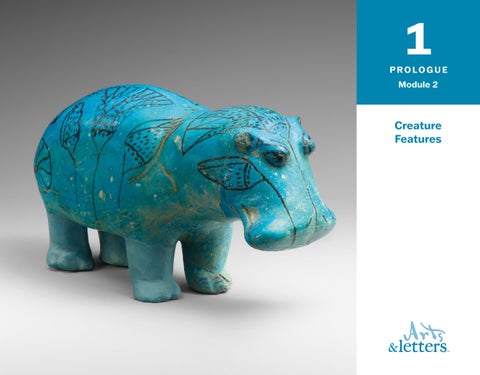
PROLOGUE
1 Creature Features
Module 2
Prologue | 1 | Module 2
Creature Features
What do people learn by studying animals?
Great Minds® is the creator of Eureka Math® , Eureka Math2® , Wit & Wisdom® , Arts & Letters™, and PhD Science®
Published by Great Minds PBC greatminds.org
© 2025 Great Minds PBC. All rights reserved. No part of this work may be reproduced or used in any form or by any means—graphic, electronic, or mechanical, including photocopying or information storage and retrieval systems—without written permission from the copyright holder. Where expressly indicated, teachers may copy pages solely for use by students in their classrooms.
Printed in the USA A-Print 1 2 3 4 5 6 7 8 9 10 XXX 27 26 25 24 23
ISBN 979-8-88811-240-3
Prologue Module Overview Prologue Module Focus
1
Arc B | What Do You Do with a Tail Like This?
Prologue to L8
• Learning Goal | Examine how plants and animals use their unique features.
• Language Progress | Listen closely to what others say.
Prologue to L9
• Learning Goal | Identify unique features of animals.
• Language Progress | Expand sentences by using question words.
Arc A | Seven Blind Mice
Prologue to L3
• Learning Goal | Discuss what each character observes in Seven Blind Mice
• Language Progress | Expand sentences by using question words.
Prologue to L4
• Learning Goal | Identify how the objects the mice observe are similar to elephant parts in Seven Blind Mice.
• Language Progress | Listen closely to what others say.
Prologue to L5
• Learning Goal | Expand sentences about what the mice observe.
• Language Progress | Expand sentences by using question words.
14
32
38
20
26
Prologue to L10
• Learning Goal | Identify details about the American alligator.
• Language Progress | Use verbs that match the nouns in number.
44
Arc C | Dear Treefrog
Prologue to L13
• Learning Goal | Discuss the characters’ actions during summer.
• Language Progress | Expand sentences by using question words.
Prologue to L14
• Learning Goal | Discuss a treefrog’s features.
• Language Progress | Expand sentences by using question words.
50
56
Contents
� � � � � � � � � � � � � � � � � � � � � � �
Prologue
� � � � � � � � � � � � � � � � � � � � � � � � � � � � �
� � � � � � � � � � � � � � � � � � � � � � � � � �
Prologue Materials
Preparation � � � � � � � � � � � � � � �
Prologue English Language Development Standards � � � � �
Prologue
� � � � � � � � � � � � � � � � �
Module
� � � � � � � � � � � � � � � � � � � � � � � � � � � � �
Texts
2 Knowledge Threads
3
and
3
4
Language Connections
6
Plan
10
� � � � � � � � � � � � � � � � � � � � � � � � � � � �
� � � � � � � � � � � � � � � � � � � � � � � � � � � �
� � � � � � � � � � � � � � � � � � � � � � � � � � � �
� � � � � � � � � � � � � � � � � � � � � � � � � � � �
� � � � � � � � � � � � � � � � � � � � � � � � � � � �
� � � � � � � � � � � � � � � � � � � � � � � � � � �
� � � � � � � � � � � � � � � � � � � � � � � � � � �
� � � � � � � � � � � � � � � � � � � � � � � � � � �
Arts & Letters | © Great Minds PBC
Prologue to L15
• Learning Goal | Understand how the girl changes in Dear Treefrog.
• Language Progress | Take turns with others when speaking.
Arc D | Feathers
Prologue to L18
• Learning Goal | Understand the structure of Feathers
• Language Progress | Expand sentences by using question words.
Prologue to L19
• Learning Goal | Understand the different types of feathers.
• Language Progress | Write by using complete sentences.
Prologue to L20
• Learning Goal | Form sentences about items mentioned in Feathers and analyze the verbs in their sentences.
• Language Progress | Use verbs that match the nouns in number.
Arc E | Me … Jane
Prologue to L25
• Learning Goal | Use verbs to describe characters’ actions in Me … Jane
• Language Progress | Use verbs that match the nouns in number.
Prologue to L26
• Learning Goal | Identify Jane’s actions and describe how she feels.
• Language Progress | Write in complete sentences.
62
Prologue to L27
• Learning Goal | Use pronouns to replace nouns.
• Language Progress | Use appropriate pronouns to replace nouns.
Arc
F |
Buzzing with Questions
68
Prologue to L30
• Learning Goal | Identify questions that Charles Henry Turner asks about insects.
• Language Progress | Take turns with others when speaking.
98
74
Prologue to L31
• Learning Goal | Identify the steps of Charles Henry Turner’s scientific process.
• Language Progress | Listen closely to what others say.
80
Prologue to L32
• Learning Goal | Understand how Charles Henry Turner solves problems.
• Language Progress | Listen closely to what others say.
Appendices
86
92
110
� � � � � � � � � � � � � � � � � � � � � � � � � � �
� � � � � � � � � � � � � � � � � � � � � � � � � � �
� � � � � � � � � � � � � � � � � � � � � � � � � � �
� � � � � � � � � � � � � � � � � � � � � � � � � � �
� � � � � � � � � � � � � � � � � � � � � � � � � � �
� � � � � � � � � � � � � � � � � � � � � � � � � � �
� � � � � � � � � � � � � � � � � � � � � � � � � � �
� � � � � � � � � � � � � � � � � � � � � � � � � � 104
� � � � � � � � � � � � � � � � � � � � � � � � � �
� � � � � � � � � � � � � � � � � � � � � � � � � �
116
Vocabulary � � � � � � � � � � � � � � � � � � � � � � � 122 Prologue Reference Charts � � � � � � � � � � � � � � � � � � � 125 Prologue Student Resources � � � � � � � � � � � � � � � � � � 131 Works Cited � � � � � � � � � � � � � � � � � � � � � � � � � � � � � 138 Credits � � � � � � � � � � � � � � � � � � � � � � � � � � � � � � � � 139 Acknowledgments � � � � � � � � � � � � � � � � � � � � � � � � � 139 Arts & Letters | © Great Minds PBC
Prologue

What do people learn by studying animals?
PROLOGUE MODULE FOCUS
Arts & Letters Prologue™ lessons for module 2 focus on helping students deepen their understanding of what people learn by studying animals.
• Prologue lessons support reading development by providing opportunities for students to discuss key details and main ideas from each module text. Students discuss how the mice in Seven Blind Mice study an unknown object. They identify key details about animal features in What Do You Do with a Tail Like This? Students discuss what a young girl in Dear Treefrog learns by studying a treefrog. They analyze key details provided in Feathers: Not Just for Flying. Students discuss how Jane Goodall’s love of animals led her to living out her childhood dream of studying animals in Me … Jane. Finally, students discuss Charles Henry Turner’s quest for knowledge in Buzzing with Questions.
• Prologue lessons support reading development by providing opportunities for students to discuss key details and main ideas from each module text. Students identify key details about animal features in Seven Blind Mice, What Do You Do with a Tail Like This?, Dear Treefrog, and Feathers: Not Just for Flying. Students discuss how people study animals in Me … Jane and Buzzing with Questions.
• Prologue lessons support writing development by helping students write complete sentences. This support prepares students to write informative paragraphs for the module tasks.
• Prologue lessons support speaking and listening development by providing more instruction and practice for the module’s speaking and listening goals: Take turns with others when speaking, and listen closely to what others say.
• Prologue lessons support language development by providing opportunities for students to work on expanding sentences by using question words. Additionally, students receive support identifying and using various parts of speech, including nouns, pronouns, and verbs.
ESSENTIAL QUESTION
Arts & Letters | © Great Minds PBC
PROLOGUE TEXTS
Books
Literary
• Dear Treefrog, Joyce Sidman and Diana Sudyka
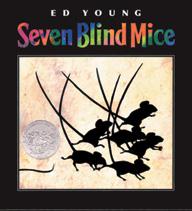
• Seven Blind Mice, Ed Young
Literary Nonfiction
• Buzzing with Questions: The Inquisitive Mind of Charles Henry Turner, Janice N. Harrington and Theodore Taylor III
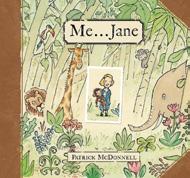
• Me … Jane, Patrick McDonnell
Informational
• Feathers: Not Just for Flying, Melissa Stewart and Sarah S. Brannen
• What Do You Do with a Tail Like This?
Steve Jenkins and Robin Page
Video
• “Adaptations,” Great Minds®

1 | Module 2 | Prologue Module Overview 2
Arts & Letters | © Great Minds PBC
KNOWLEDGE THREADS
• People learn about animal features by making observations and asking questions.
• Animals use their unique features to help them survive in their environments.
• Studying animals can inspire people to protect animals and their habitats.
PROLOGUE MATERIALS AND PREPARATION
Prepare the following materials for use throughout the module.
• Determine how to access module texts.
• Determine how to display Prologue reference charts, Prologue student resources, and select Learn book pages. These are listed in the Materials section of each lesson.
• Print or copy student resources from the Prologue Student Resources appendix. These are listed in the Materials section of each lesson.
• Make a problem story stone by cutting out the story element image from the Prologue Reference Charts appendix.
• Determine how to access the Module 2 Speaking and Listening Goal Tracker from the Great Minds® Digital Platform.
• Ensure access to the module 2 Knowledge Cards.
• Note that Dear Treefrog, Feathers, Me … Jane, Seven Blind Mice, and What Do You Do with a Tail Like This? are unpaginated texts. Number your texts; begin with the title page as page 1. Pages on the left will be even, and pages on the right will be odd.
• Ensure students have paper for short responses. They can use their journals or other paper.
• For a comprehensive list of all the materials used in the module, see the digital platform.
1 | Module 2 | Prologue Module Overview 3
Arts & Letters | © Great Minds PBC
PROLOGUE ENGLISH LANGUAGE DEVELOPMENT STANDARDS
Arts & Letters Prologue lessons for module 2 provide additional language support to develop the following English Language Development (ELD) standards. Educators should consult their state’s ELD standards and proficiency descriptors to identify the best ways to help multilingual learners reach the module’s learning goals. See the Great Minds® Digital Platform for a lesson-by-lesson breakdown of ELD standards.
WIDA Standards
ELD-SI.K-3.Narrate: Multilingual learners will
• Share ideas about one’s own and others’ lived experiences and previous learning
• Connect stories with images and representations to add meaning
• Recount and restate ideas
ELD-SI.K-3.Inform: Multilingual learners will
• Describe characteristics, patterns, or behavior
• Sort, clarify, and summarize ideas
• Summarize information from interaction with others and from learning experiences
ELD-SI.K-3.Explain: Multilingual learners will
• Share initial thinking with others
• Compare and contrast objects or concepts
ELD-SI.K-3.Argue: Multilingual learners will
• Support own opinions with reasons
ELD-LA.1.Narrate.Interpretive: Multilingual learners will interpret language arts narratives by
• Identifying a central message from key details
• Identifying how character attributes and actions contribute to an event
• Identifying words and phrases that suggest feelings or appeal to the senses
ELD-LA.1.Inform.Interpretive: Multilingual learners will interpret informational texts in language arts by
• Asking and answering questions about descriptions of attributes and characteristics
ELP Standards
Standard 1: An ELL can construct meaning from oral presentations and literary and informational text through grade-appropriate listening, reading, and viewing.
Standard 2: An ELL can participate in grade-appropriate oral and written exchanges of information, ideas, and analyses, responding to peer, audience, or reader comments and questions.
1 | Module 2 | Prologue Module Overview 4
Arts & Letters | © Great Minds PBC
Standard 3: An ELL can speak and write about grade-appropriate complex literary and informational texts and topics.
Standard 4: An ELL can construct grade-appropriate oral and written claims and support them with reasoning and evidence.
Standard 5: An ELL can conduct research and evaluate and communicate findings to answer questions or solve problems.
Standard 7: An ELL can adapt language choices to purpose, task, and audience when speaking and writing.
Standard 8: An ELL can determine the meaning of words and phrases in oral presentations and literary and informational text.
Standard 9: An ELL can create clear and coherent grade-appropriate speech and text.
Standard 10: An ELL can make accurate use of standard English to communicate in grade-appropriate speech and writing.
1 | Module 2 | Prologue Module Overview 5
Arts & Letters | © Great Minds PBC
PROLOGUE LANGUAGE CONNECTIONS
Students’ home languages and cultures are assets that everyone in the school setting should value and celebrate. Teachers can support the strategic use of home language to activate background knowledge, acquire ELA knowledge and world knowledge, and engage with grade-level content. This happens individually and in groups. Teachers should encourage students to draw explicit metalinguistic connections between English and their home language through cognates and morphological awareness.
Multilingual learners in the United States speak a variety of languages, but an increasing majority speak Spanish at home. In 2019, more than 75 percent of students who were identified as “English learners” spoke Spanish as a home language (National Center for Education Statistics). For this reason, we offer a number of supports for Spanish speakers.
Contrastive Analysis
This module focuses on helping students expand sentences by prompting each other with question words (who, what, when, where, why, how). Prologue lessons also help students understand how to correctly use nouns, verbs, and personal pronouns in sentences. For students who speak other language(s), the grammatical rules of English may be confusing. There are grammatical differences for which students may need extra instruction. In addition to Spanish, we compare English to Arabic and Chinese, the second and third most common languages spoken among multilingual learners in the United States (National Center for Education Statistics).
1 | Module 2 | Prologue Module Overview 6
Arts & Letters | © Great Minds PBC
Language Similarity Difference
Spanish Spanish also uses personal pronouns to replace nouns.
Spanish also requires agreement between nouns and verbs.
Arabic Arabic also uses personal pronouns to replace nouns.
Arabic also requires agreement between nouns and verbs.
In Spanish, the subject of the sentence can be omitted entirely, or personal pronouns can be used in addition to the subject.
In Spanish, the suffix -s is added to conjugate second-person verbs, not third-person verbs.
In Arabic, personal pronouns always reflect gender and number. Arabic speakers often mistake he and she because he sounds similar to the Arabic word for she.
In Arabic, the verbs must also reflect the gender of the subject.
Mandarin Chinese Chinese also uses personal pronouns to replace nouns.
In Chinese, personal pronouns do not reflect gender. Chinese also uses the same pronouns for objects and subjects, so there is no difference between the Chinese words for he and him.
In Chinese, there is no subject-verb agreement.
1 | Module 2 | Prologue Module Overview 7
Arts & Letters | © Great Minds PBC
Spanish Cognates
Here are Spanish cognates for terms taught in module 2 Prologue lessons. Teacher notes in the lessons draw attention to Spanish language cognates. Use an online Spanish dictionary for pronunciation guidance or to play a recording of the Spanish cognate for students.
Term Cognate
ability (n.) habilidad (s.)
adapt (v.) adaptar (v.)
appendix (n.) apéndice (s.)
camouflage (n.) camuflaje (s.)
classify (v.) clasificar (v.)
curious (adj.) curioso (adj.)
discover (v.) descubrir (v.)
evidence (n.) evidencia (s.)
experiment (n.) experimento (s.)
observe (v.) observar (v.)
problem (n.) problema (s.)
1 | Module 2 | Prologue Module Overview 8
Arts & Letters | © Great Minds PBC
Term Cognate
pronoun (n.)
scientist (n.)
similar (adj.)
study (v.)
survive (v.)
unique (adj.)
verb (n.)
pronombre (s.)
científico (s.)
similar (adj.)
estudiar (v.)
sobrevivir (v.)
único (adj.)
verbo (s.)
1 | Module 2 | Prologue Module Overview 9
Arts & Letters | © Great Minds PBC
MODULE PLAN
Essential Question | What do people learn by studying animals?
Arc A | Seven Blind Mice
Lesson 1
Opening Bookend
Lesson 2 Wonder Seven Blind Mice Young Hare
Lesson 3
Organize Seven Blind Mice Young Hare
Lesson 4
Reveal Seven Blind Mice Young Hare
Lesson 5
Distill Seven Blind Mice Young Hare
KEY = assessment = Prologue lesson
Lesson 6
Know Seven Blind Mice “Here Come the Elephants”
Arc B | What Do You Do with a Tail Like This?
Lesson 7
Wonder What Do You Do with a Tail Like This?
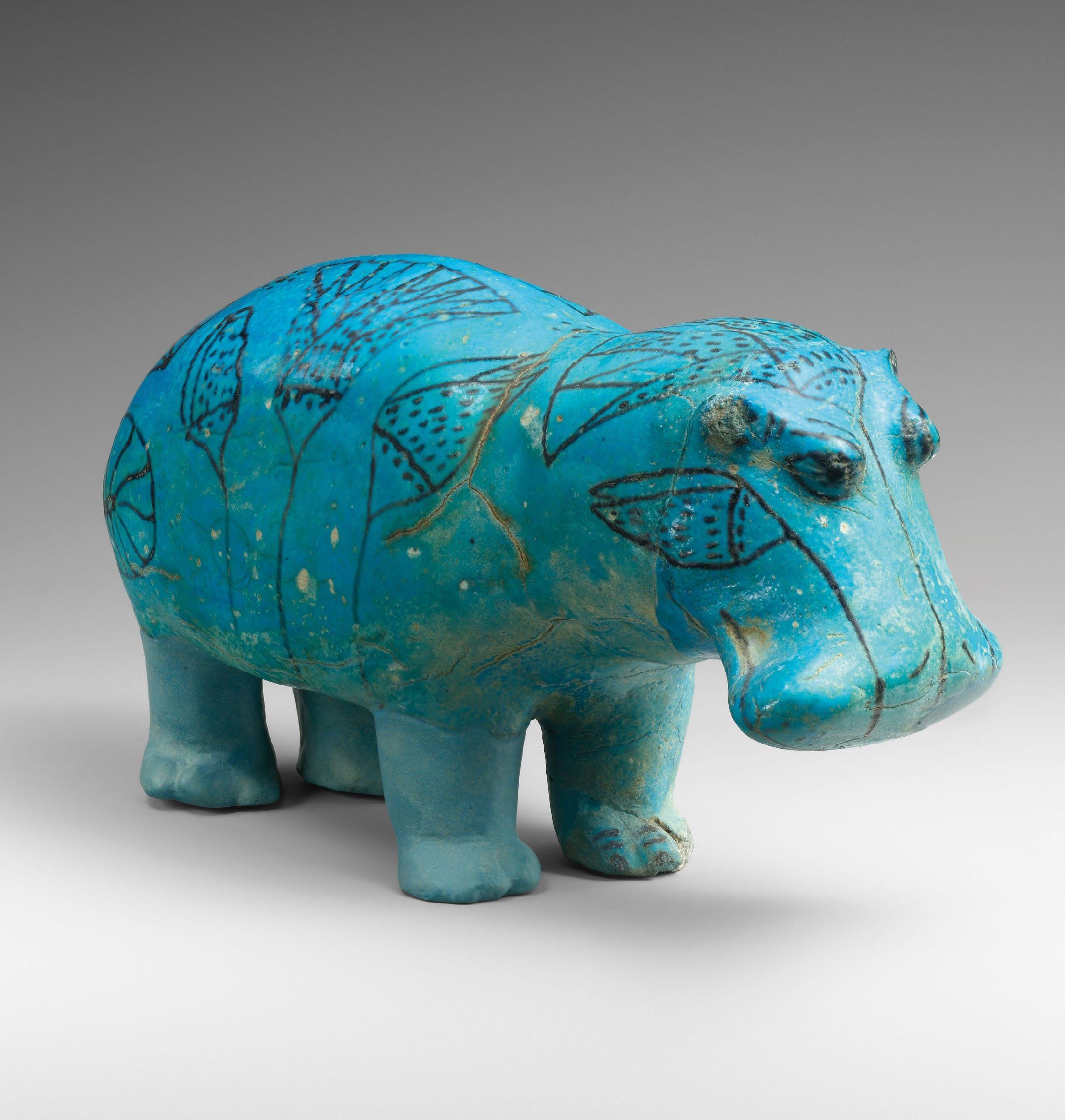
Hippopotamus (“William”)
Lesson 8
Organize What Do You Do with a Tail Like This?
Hippopotamus (“William”)
Lesson 9
Reveal What Do You Do with a Tail Like This?
Hippopotamus (“William”)
Lesson 10
Reveal What Do You Do with a Tail Like This?
Hippopotamus (“William”)
Lesson 11
Know What Do You Do with a Tail Like This?
“Don’t Eat Me!”
1 | Module 2 | Prologue Module Overview 10
Arts & Letters | © Great Minds PBC
Arc C | Dear Treefrog
Lesson 12
Wonder Dear Treefrog
Lesson 13
Organize Dear Treefrog
Lesson 14
Reveal Dear Treefrog Lesson 15 Distill Dear Treefrog
Lesson 16
Know Dear Treefrog
Module Task 1 completed
Arc D | Feathers
Lesson 17
Wonder Feathers Lesson 18
Organize Feathers Lesson 19
Organize Feathers Lesson 20
Reveal Feathers Lesson 21
Know Feathers
Module Task 2 completed
Lesson 22
Listening Comprehension Assessment 1
Lesson 23
Responsive Teaching
Arc E | Me … Jane
Lesson 24
Wonder Me … Jane Lesson 25
Organize Me … Jane Lesson 26
Reveal Me … Jane Lesson 27 Distill Me … Jane
Module Task 3 completed Lesson 28
Know Me … Jane
1 | Module 2 | Prologue Module Overview 11
Arts & Letters | © Great Minds PBC
Arc F | Buzzing with Questions
Module Finale
12 1 | Module 2 | Prologue Module Overview Lesson 29
Lesson 30
Buzzing with
Lesson 31 Reveal Buzzing with
Lesson 32 Distill Buzzing with
Lesson 33 Know Buzzing with
Module Task 4 completed Lesson 34 Listening Comprehension Assessment 2 Lesson 35
Teaching Lesson 36 Know module texts Lesson 37 Know module texts Lesson 38 Know module texts
Task completed Lesson 39 Closing Bookend
Wonder Buzzing with Questions
Organize
Questions
Questions
Questions
Questions
Responsive
End-of-Module
Arts & Letters | © Great Minds PBC
Prologue to Lesson 3
Essential Question | What do people learn by studying animals?
OVERVIEW
Preview
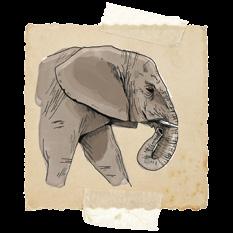
Students discuss what each mouse in Seven Blind Mice observes. As they discuss what each character observes, students practice expanding sentences by using question words. This work prepares students to retell the story in lesson 3.
Learning Goal
Discuss what each character observes in Seven Blind Mice.
LEARNING TASK: Act out what each blind mouse observes in Seven Blind Mice.
Language Progress
In this lesson, students work on this module language goal: Expand sentences by using question words.
To support students with beginning English proficiency, use the Who and What Question Word cards to provide students
with visual cues. To support students with intermediate English proficiency, prompt them to form one response that answers both questions.
Vocabulary character (n.) observe (v.)
Materials
TEACHER
• Seven Blind Mice
• character story stone (Prologue Reference Charts appendix)
• Knowledge Card: observe
STUDENTS
• Seven Blind Mice
• Elephant Parts (Prologue Student Resources appendix)
• coloring utensils: green, yellow, purple, red, orange, blue
Preparation
• Seven Blind Mice is an unpaginated text. Number your text; begin with the title page—which includes the book title, author, and illustrator—as page 1. Pages on the left will be even, and pages on the right will be odd.
• Make a character story stone by cutting out the story element image from the page in the Prologue Reference Charts appendix. Alternatively, cut out the image and paste it onto a real stone.
• Determine how to display Elephant Parts. See the Learn section for details.
• Determine how to display the sentence frames. See the Learn section for details.
14
Arts & Letters | © Great Minds PBC
LAUNCH 5
minutes
Practice Vocabulary
1. Review the vocabulary term character by displaying the term. Engage students in Vocabulary Exploration. Display the character story stone to help students understand the term’s meaning.
2. Display the cover of Seven Blind Mice. Ask this question:
Who are the characters in this story?
3. Reinforce the correct response: the seven blind mice.
4. Remind students that the story is about seven blind mice who observe something new. Ask this question:
What do you think it means to observe something?
5. Display the Knowledge Card for observe to reinforce the correct definition. Direct attention to the image to help students understand the term’s meaning.
Language Supports
The term observe has a Spanish cognate: observar. Share this language connection with students whose home language is Spanish.
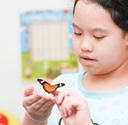
For students with beginning English proficiency, prompt them to look around the classroom and state things they observe. Provide this sentence frame: I observe .
6. Tell students that they will discuss what each character observes in Seven Blind Mice.
Definition character (n.): a person or creature in a story
Definition observe (v.): to notice someone or something carefully
15 1 | Module 2 | Arc A | Prologue to Lesson 3
Arts & Letters | © Great Minds PBC
LEARN
20 minutes
Discuss Character Observations
1. Direct attention to pages 4–5. Read aloud page 4, starting with “On Monday, Red.” Ask this question: Who is this page about?
2. Reinforce the correct response: Red Mouse.
Language Support
For students with beginning English proficiency, clarify that mice is the plural form of mouse.
3. Direct attention to the illustration on page 5. Ask this question: What does Red Mouse observe?
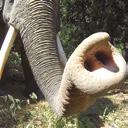
4. Reinforce the correct response: an elephant’s leg.
5. Remind students that the mice are blind, which means that they are unable to see, and that the mice use other senses, such as touch, to observe the elephant. Explain that each mouse thinks that they are observing a different object.
6. Display and distribute Elephant Parts. Tell students that these are the objects that the mice think that they are observing. Direct attention to each object and Echo Read the name of the object.
7. Tell students that they will discuss which object each mouse observes and will color the object to match the color of the mouse. Distribute green, yellow, purple, red, orange, and blue coloring utensils to each student.


8. Instruct students to listen to what the Red Mouse thinks the elephant’s leg is. Read aloud page 6 starting with “It’s a pillar.” Ask this question: What does Red Mouse think the elephant’s leg is?
1 | Module 2 | Arc A | Prologue to Lesson 3 16
Module Prologue to Lesson This page may be reproduced for classroom use only. 133 L3 Elephant Parts Color each object to represent the mouse who observed the object. Six boxes each with drawing of an object. A pillar. A snake. spear. A cliff. A fan. rope. ARTS LETTERS Great Minds PBC Arts & Letters | © Great Minds PBC
9. Reinforce the correct response: a pillar.
10. Direct attention to the illustration on page 7. Tell students that the illustrations provide clues about the character and what they observe. Explain that this illustration is of a red pillar to show that Red Mouse is the character who thinks the Something is a pillar.
11. Direct attention to Elephant Parts. Instruct students to locate the pillar and to color it red.
12. Direct attention to the illustration on page 11. Instruct students to Think–Pair–Share to answer these questions:
Who is this page about?
What does the character observe?
13. Reinforce the correct responses:
• character—Green Mouse
• observes—a snake
14. Direct attention to Elephant Parts. Instruct students to find the snake and to color it green.
15. Tell students that they will work with a partner to color the remaining objects to match the color of the mouse who observes the object.
Language Support
If possible, pair students who speak the same home language.
16. Distribute Seven Blind Mice to pairs.
1 | Module 2 | Arc A | Prologue to Lesson 3 17
Arts & Letters | © Great Minds PBC
17. Invite a few students to share what color they used for each object.
Language Expansion
For students with intermediate English proficiency, encourage them to form complete sentences that include the character’s name and what they observe.
18. Reinforce the correct responses:
• spear—yellow
• cliff—purple
• fan—orange
• rope—blue
19. Display and read aloud these sentence frames:
• On Monday, Red Mouse observes a .
• On Tuesday, Green Mouse observes a .
• On Wednesday, Yellow Mouse observes a .
• On Thursday, Purple Mouse observes a .
• On Friday, Orange Mouse observes a .
• On Saturday, Blue Mouse observes a .
1 | Module 2 | Arc A | Prologue to Lesson 3 18
Arts & Letters | © Great Minds PBC
LAND 5 minutes
Demonstrate Learning
1. Introduce the learning task. Instruct students to take turns telling a partner what each mouse observes.
Analyze Student Progress
Monitor: Do students correctly identify the object each mouse observes?
Offer Immediate Support: If students need additional support recalling what each mouse observes, direct their attention to their Elephant Parts. Instruct students to match the color of each object with the color words in the sentence frames.
2. Reinforce the correct responses:
• On Monday, Red Mouse observes a pillar.
• On Tuesday, Green Mouse observes a snake.
• On Wednesday, Yellow Mouse observes a spear.
• On Thursday, Purple Mouse observes a cliff.
• On Friday, Orange Mouse observes a fan.
• On Saturday, Blue Mouse observes a rope.
3. Explain that taking a closer look at what each character observes can help students better understand the story.
1 | Module 2 | Arc A | Prologue to Lesson 3 19
Arts & Letters | © Great Minds PBC
Prologue to Lesson 4
Essential Question | What do people learn by studying animals?
OVERVIEW
Preview
Students discuss similarities between the objects and the parts of an elephant in Seven Blind Mice. As they discuss these objects, students practice listening closely to what others say. This work prepares students to recognize the similarities between the elephant’s body parts and the objects in lesson 4.
Learning Goal
Identify how the objects the mice observe are similar to elephant parts in Seven Blind Mice.
LEARNING TASK: Describe how an object is similar to an elephant part.
Language Progress
In this lesson, students work on this module speaking and listening goal: Listen closely to what others say.
To support students with beginning English proficiency, spend more time reviewing the vocabulary for parts of the elephant and the objects the mice thought they were touching. To support students with intermediate English proficiency, ask them to recount their partner’s ideas after conversations.
Vocabulary
similar (adj.)
Materials
TEACHER
• Seven Blind Mice
• paper bag
• classroom objects
• class Elephant Outline (Prologue Student Resources appendix)
• class Elephant Parts (Prologue Student Resources appendix)
STUDENTS
• Elephant Outline (Prologue Student Resources appendix)
• one object from Elephant Parts
Preparation
• Seven Blind Mice is an unpaginated text. Number your text; begin with the title page—which includes the book title, author, and illustrator—as page 1. Pages on the left will be even, and pages on the right will be odd.
• Gather several familiar classroom objects, such as a pencil, an eraser, and a marker to add to a paper bag. See the Launch section for details.
• Determine how to display the sentence frame. See the Learn section for details.
• Cut apart the objects on Elephant Parts so that each student receives one of the objects. See the Land section for details.
20
Arts & Letters | © Great Minds PBC
LAUNCH
5 minutes
Practice Vocabulary
1. Direct attention to the paper bag. Tell students that they will take turns guessing what object is in the bag.
2. Without letting students see, place one object into the bag. Instruct students to take turns closing their eyes, reaching into the bag, and feeling each object.
3. Ask these questions:
What do you think is in the bag?
How did you make your guess?
4. Remind students that the mice in Seven Blind Mice can only touch one part of the elephant and are trying to figure out what the elephant is without being able to see it.
5. Tell students that they will discuss how the seven blind mice made their guesses about what each part of the elephant was.
LEARN 20 minutes
Discuss Similar Objects in Seven Blind Mice
1. Display Elephant Outline. Label the leg, trunk, tusk, head, ear, and tail. Echo Read the elephant parts.
2. Display Seven Blind Mice. Direct attention to pages 12–13. Ask this question:
Which part of the elephant does Yellow Mouse observe?
21 1 | Module 2 | Arc A | Prologue to Lesson 4
Module Prologue to Lesson 134 This page may be reproduced for classroom use only. L4 | Elephant Outline Attach your object to similar part of the elephant. © Great Minds PBC Arts & Letters | © Great Minds PBC
3. Reinforce the correct response: the tusk.
4. Direct attention to the tusk on the Elephant Outline. Ask this question:
If you closed your eyes and touched the tusk, how do you think it would feel?
Language Support
For students with beginning English proficiency, invite them to discuss this question with a partner who speaks the same home language.
Key Ideas
• hard
• pointy
• long
5. Direct attention to pages 14–15. Ask this question: What does Yellow Mouse think the elephant’s tusk is?
6. Reinforce the correct response: a spear.
7. Show the cut-out spear from Elephant Parts. Explain that a spear is a weapon that has a long straight handle and a sharp point.
8. Model how to attach the spear next to the tusk on the displayed Elephant Outline.
9. Introduce the vocabulary term similar by displaying the term. Engage students in Vocabulary Exploration. Tell them that a tusk is similar to a spear.
Definition
similar (adj.): almost the same as someone or something else
1 | Module 2 | Arc A | Prologue to Lesson 4 22
Arts & Letters | © Great Minds PBC
10. Tell students that they will practice listening closely to what others say. Explain that listening closely means looking at the speaker and paying close attention to what they say. Emphasize that listening closely helps the listener understand what the speaker is trying to say.
11. Instruct students to Think–Pair–Share to discuss this question:
How are an elephant’s tusk and a spear similar?
Language Expansion
For students with intermediate English proficiency, prompt them to explain multiple similarities.
Key ideas
• They are both pointy.
• They are both long.
• They are both hard.
12. Distribute one of the cut-out objects from Elephant Parts to each student.
1 | Module 2 | Arc A | Prologue to Lesson 4 23
Module Prologue to Lesson This page may be reproduced for classroom use only. 133 L3 | Elephant Parts Color each object to represent the mouse who observed the object. Six boxes each with drawing of an object. pillar. snake. A spear. cliff. fan. A rope. ARTS LETTERS Great Minds PBC Arts & Letters | © Great Minds PBC
LAND 5 minutes
Demonstrate Learning
1. Introduce the learning task. Instruct students to Think–Pair–Share to answer this question:
How is the object you received similar to a part of an elephant?
Remind students to listen closely to what their partner shares.
Analyze Student Progress
Monitor: Do students form sentences that describe a similarity between their object and a part of an elephant?
Offer Immediate Support: If students need additional support describing similarities, encourage them to first describe their object and then to look for a part of the elephant that is similar.
Language Expansion
For students with intermediate English proficiency, ask them to summarize what their partner stated.
Key Ideas
• An elephant leg and a pillar are both wide.
• An elephant trunk and a snake are both bumpy.
• An elephant ear and a fan are both floppy.
• An elephant tail and a rope are both stringy.
2. Instruct students to attach their object to the displayed Elephant Outline where there is a similar part.
3. Tell students that thinking about how objects in Seven Blind Mice are similar to parts of the elephant helps them understand why the mice were confused.
1 | Module 2 | Arc A | Prologue to Lesson 4 24
Arts & Letters | © Great Minds PBC
Prologue to Lesson 5
Essential Question | What do people learn by studying animals?
OVERVIEW
Preview
Students discuss what the mice observe in Seven Blind Mice. As they discuss the mice’s observations, students practice expanding sentences by using question words. This work prepares students to discuss the central idea in lesson 5.
Learning Goal
Expand sentences about what the mice observe.
LEARNING TASK: Expand a sentence about the part of the elephant that Blue Mouse observes.
Language Progress
In this lesson, students work on this module language goal: Expand sentences by using question words.
To support students with beginning English proficiency, display a sample sentence with the nouns highlighted for students to use as a reference throughout the lesson. To support students with intermediate English proficiency, prompt them to ask each other questions to expand their sentences.
Vocabulary
noun (n.)
Materials
TEACHER
• Seven Blind Mice
STUDENTS
• none
Preparation
• Seven Blind Mice is an unpaginated text. Number your text; begin with the title page—which includes the book title, author, and illustrator—as page 1. Pages on the left will be even, and pages on the right will be odd.
• Determine how to display the sentences about the mice’s observations. See the Learn section for details.
26
Arts & Letters | © Great Minds PBC
LAUNCH
5 minutes
Practice Vocabulary
1. Display Seven Blind Mice. Ask these questions:
What animals are in this story?
What objects are in this story?
2. Reinforce the correct responses:
• animals—mice, elephant
• objects—pillar, snake, spear, cliff, fan, rope
Write responses in a visible location.
3. Tell students that words that name animals and objects are called nouns. Introduce the vocabulary term noun by displaying the term. Engage students in Vocabulary Exploration.
4. Instruct students to identify other nouns in the classroom.
5. Tell students that they will expand sentences by using question words to discuss what the mice observe in Seven Blind Mice.
LEARN 20
minutes
Identifying Nouns in Seven Blind Mice
1. Display and read aloud this sentence: Red Mouse observes the elephant.
2. Ask this question:
Which words in this sentence are nouns?
Definition noun (n.): a word that identifies a person, place, or thing
27 1 | Module 2 | Arc A | Prologue to Lesson 5
Arts & Letters | © Great Minds PBC
3. Think aloud to model how to identify the nouns in the sentence.
4. Tell students that they will practice expanding sentences by asking questions about the nouns in the sentences. Explain that expanding sentences means giving more detail in a response.
5. Direct attention to the illustration on page 5. Ask this question:
Which part of the elephant does Red Mouse observe?
6. Reinforce the correct response: the elephant’s leg. Write the sentence: Red Mouse observes the elephant’s leg.
Teacher Note
To help students understand this concept, use one color to write the initial sentence and another color to write the expansion.
7. Ask this question:
What does Red Mouse think it is?
8. Reinforce the correct response: a pillar. Write the expanded sentence: Red Mouse observes the elephant’s leg and thinks it is a pillar. Echo Read the expanded sentence.
9. Ask this question:
Which words in this sentence are nouns?
10. Reinforce the correct response: Red Mouse, leg, and pillar. Invite a student to annotate the nouns in the sentence.
Sample Think Aloud
Sentences usually have nouns at the beginning when they tell who or what the sentence is about. The sentence is about Red Mouse. Red Mouse is a thing, so he is a noun. The next word is observes and that tells what he is doing, so that is not a noun. An elephant is a thing, so an elephant is also a noun.
1 | Module 2 | Arc A | Prologue to Lesson 5 28
Arts & Letters | © Great Minds PBC
11. Display and Echo Read the sentence: Green Mouse observes the elephant. Direct attention to the illustration on page 9. Instruct students to ask and answer this question with a partner:
Which part of the elephant does Green Mouse observe?
Language Support
For students with beginning English proficiency, guide them to turn to a partner and repeat the question.
Language Expansion
For students with intermediate English proficiency, prompt them to respond by using a complete sentence.
12. Reinforce the correct response: trunk.
13. Display and Echo Read this sentence: Green Mouse observes the elephant’s trunk.
14. Instruct students to ask and answer this question with a partner:
What does the mouse think it is?
15. Reinforce the correct response: a snake. Write this expanded sentence: Green Mouse observes the elephant’s trunk and thinks it is a snake. Echo Read the expanded sentence.
16. Ask this question:
Which words in this sentence are nouns?
17. Reinforce the correct response: Green Mouse, trunk, and snake. Invite a student to annotate the nouns in the sentence.
1 | Module 2 | Arc A | Prologue to Lesson 5 29
Arts & Letters | © Great Minds PBC
LAND 5
minutes
Demonstrate Learning
1. Display and Echo Read this sentence: Blue Mouse observes the elephant. Direct attention to the illustration on page 25.
2. Introduce the learning task. Pair students with new partners. Instruct students to take turns forming an expanded sentence that answers these questions: Which part of the elephant does Blue Mouse observe? What does the mouse think it is?
Analyze Student Progress
Monitor: Do students form a complete sentence that explains that Blue Mouse thinks the elephant’s tail is a rope?
Offer Immediate Support: If students need additional support forming this sentence, prompt them to use this sentence frame: Blue Mouse observes the elephant’s and thinks it is a .
3. Display and Echo Read the correctly expanded sentence: Blue Mouse observes the elephant’s tail and thinks it is a rope.
4. Invite a few volunteers to identify the nouns in this sentence.
5. Reinforce the correct responses: Blue Mouse, tail, and rope.
6. Remind students that practicing expanding sentences will help them discuss their responses to questions about Seven Blind Mice in detail.
1 | Module 2 | Arc A | Prologue to Lesson 5 30
Arts & Letters | © Great Minds PBC
Prologue to Lesson 8
Essential Question | What do people learn by studying animals?
OVERVIEW
Preview
Students discuss how plants and animals use their unique features to survive, protect, and camouflage themselves. As students discuss these unique features, they practice listening closely to what others say. This work prepares students to identify the key details of What Do You Do with a Tail Like This? in lesson 8.
Learning Goal
Examine how plants and animals use their unique features.
LEARNING TASK: Describe how a plant or an animal uses one of their unique features.
Language Progress
In this lesson, students work on this module speaking and listening goal: Listen closely to what others say.
To support students with beginning English proficiency, pause the video frequently to ask questions about the features of specific plants and animals being discussed. To support students with intermediate English proficiency, encourage them to ask questions about details they observe in “Adaptations.”
Vocabulary
camouflage (n.)
feature (n.)
survive (v.)
unique (adj.)
Materials
TEACHER
• “Adaptations” (digital platform)
• Knowledge Cards: feature, unique, survive, camouflage
STUDENTS
• none
Preparation
• none
32
Arts & Letters | © Great Minds PBC
LAUNCH 5
minutes
Practice Vocabulary
1. Review the vocabulary term feature by displaying the Knowledge Card. Engage students in Vocabulary Exploration.
2. Facilitate a discussion of this prompt: Describe some of your features.
3. Tell students that many of the features that they described are unique. Introduce the vocabulary term unique by displaying the Knowledge Card. Engage students in Vocabulary Exploration.
4. Think aloud to model describing one of your unique features.
5. Ask this question: What unique features do you have?
Language Support
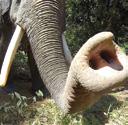
Definition feature (n.): an interesting or important part or ability
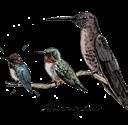
If possible, pair students who speak the same home language and instruct them to discuss their unique features.
6. Tell students that they will learn about the unique features of plants and animals.
Definition unique (adj.): very special or unusual
Sample Think Aloud I know that unique means “special” and feature means “something interesting that I can do.” A unique feature about me is that I can rub my stomach and pat my head at the same time!
33 1 | Module 2 | Arc B | Prologue to Lesson 8
Arts & Letters | © Great Minds PBC
LEARN 20 minutes
Discuss Unique Features of Plants and Animals
1. Tell students that they will watch the video “Adaptations.” Remind them that the video is about the unique features of some plants and animals.
Language Support
For students whose home language is Spanish, play the Spanish version of the video.
2. Remind students that they have been working on this speaking and listening goal: Listen closely to what others say. Instruct them to listen closely for details about the unique features mentioned in the video. Play “Adaptations.”
3. Ask this question: What did you learn about the unique features of plants and animals?
Key Ideas
• Strong beaks can crack open nuts.
• Long, thin beaks can drink nectar.
• Color sends signals to enemies.
4. Remind students that the video is titled “Adaptations” and that it mentions that plants and animals develop new features, called adaptations.
5. Tell students that the video explains that each plant or animal has unique features that help it survive.

6. Introduce the vocabulary term survive by displaying the Knowledge Card. Engage students in Vocabulary Exploration. Definition survive (v.): to continue to live
1 | Module 2 | Arc B | Prologue to Lesson 8 34
Arts & Letters | © Great Minds PBC
7. Think aloud to help students understand how one of the features helps a plant or an animal survive.
8. Tell students that they will watch “Adaptations” again and will listen for details about a unique feature that helps a plant or an animal survive.
9. Play “Adaptations.”
10. Remind students that they have been practicing listening closely to what others say. Tell them that listening closely means looking at the speaker and paying close attention to what they say.
11. Instruct students to Think–Pair–Share to answer this question:
What unique feature does a plant or an animal use to survive?
12. Remind students to listen closely as their partner shares.
Language Support
For students with beginning English proficiency, provide this sentence frame: use their to survive.
Language Expansion
For students with intermediate English proficiency, prompt them to share an example about a plant and an animal.
Key Ideas
• Hummingbirds use their beaks to survive.
• Plants use their color to survive.
• Animals use their color to survive.
13. Reinforce that the video explains that plants and animals use color to hide from enemies. Tell students that this is an example of camouflage.
Sample Think Aloud I know that animals need food to survive. The video mentions that cardinals use their beaks to break open nuts so that they can get food. I can say, “Cardinals use their beaks to survive.”
1 | Module 2 | Arc B | Prologue to Lesson 8 35
Arts & Letters | © Great Minds PBC
14. Introduce the vocabulary term camouflage by displaying the Knowledge Card. Engage students in Vocabulary Exploration.
Language Support
The term camouflage has a Spanish cognate: camuflaje. Share this language connection with students whose home language is Spanish.
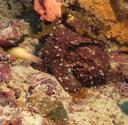
15. Tell students that they will watch the video for a final time. Explain that this time they will discuss with a partner how a plant or an animal uses its unique features to survive.
16. Play “Adaptations.”
LAND 5 minutes
Demonstrate Learning
1. Introduce the learning task. Instruct students to Think–Pair–Share to answer this question: How does a plant or an animal use its unique features to survive?
Language Expansion
For students with intermediate English proficiency, ask them to summarize what their partners stated. Remind students to practice listening closely to their partner.
Analyze Student Progress
Monitor: Do students identify a unique feature mentioned in the video and explain how this feature helps a plant or an animal survive?
Offer Immediate Support: If students need additional support sharing an example of how plants and animals use their features to survive, replay “Adaptations” and pause the video after an example is stated. Review the section of the video by asking follow-up questions.
Definition
camouflage (n.): something (such as color or shape) that protects an animal from attack by making the animal difficult to see in its surroundings
1 | Module 2 | Arc B | Prologue to Lesson 8 36
Arts & Letters | © Great Minds PBC
Key Ideas
• Plants use their color to hide from enemies.
• Animals use their color to camouflage.
• Animals use their physical features, like beaks, to eat food.
2. Remind students that understanding how plants and animals use their features helps them analyze the central idea of the text.
1 | Module 2 | Arc B | Prologue to Lesson 8 37
Arts & Letters | © Great Minds PBC
Prologue to Lesson 9
Essential Question | What do people learn by studying animals?
OVERVIEW
Preview
Students identify features of animals described in What Do You Do with a Tail Like This? As they discuss animal features, students practice expanding sentences by using question words. This work prepares students to explain how animals use their features in lesson 9.
Learning Goal
Identify unique features of animals.
LEARNING TASK: Explain how the bald eagle’s features are helpful.
Language Progress
In this lesson, students work on this module language standard: Expand sentences by using question words.
To support students with beginning English proficiency, focus on reading the most important sentences about each animal and on using the illustrations to support comprehension. To support students with intermediate English proficiency, encourage them to use details from the text to describe the animal features.
Vocabulary
ability (n.) feature (n.)
Materials
TEACHER
• What Do You Do with a Tail Like This?
• Knowledge Card: feature
• class Animal Study Chart (Prologue Reference Charts appendix)
STUDENTS
• What Do You Do with a Tail Like This?
Preparation
• What Do You Do with a Tail Like This? is an unpaginated text. Number your text; begin with the title page—which includes the book title, author, and illustrator—as page 1. Pages on the left will be even, and pages on the right will be odd.
• Make a class Animal Study Chart. See the Launch section for details and the Prologue Reference Charts appendix for a sample.
38
Arts & Letters | © Great Minds PBC
LAUNCH 5
minutes
Practice Vocabulary
1. Remind students that they have been learning about unique animal features.
2. Review the vocabulary term feature by displaying the Knowledge Card. Engage students in Vocabulary Exploration.
3. Direct attention to the back cover of What Do You Do with a Tail Like This? Ask this question:
What features do you notice about the lizard?
Key Ideas
• green
• long tail
• forked tongue
4. Display the class Animal Study Chart. Read aloud the name and description of the color and size categories. Tell students that these categories are helpful when discussing unique animal features.
Teacher Note
Keep the Ability row covered during Launch, if possible.
5. Direct attention to each row of the chart. Ask these questions:
What color is the lizard?
What size is the lizard?
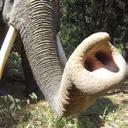
Definition feature (n.): an interesting or important part or ability


39 1 | Module 2 | Arc B | Prologue to Lesson 9
Module Prologue reference Charts 128 Animal Study Color What color is it? Size How big is it? Ability What can it do? Run Fly Swim two-column chart. Great Minds PBC Arts & Letters | © Great Minds PBC
Key Ideas
• color: green
• size: long and skinny
6. Tell students that they will use this chart to discuss animal features.
LEARN
20 minutes
Discuss Animal Features
1. Display pages 18–19. Direct attention to the four-eyed fish. Ask these questions: What color is the four-eyed fish?
What size is it?
Encourage students to use this sentence frame: The four-eyed fish is .
Key Ideas
• The four-eyed fish is blue.
• The four-eyed fish is long.
2. Direct attention to the Ability row on the class Animal Study Chart. Tell students that many animals also have unique abilities. Introduce the vocabulary term ability by displaying the term. Engage students in Vocabulary Exploration.
3. Tell students that they will now listen for details about the four-eyed fish’s ability.
Definition ability (n.): the power or skill to do something
1 | Module 2 | Arc B | Prologue to Lesson 9 40
Arts & Letters | © Great Minds PBC
4. Read the caption for the four-eyed fish on page 18, starting with “If you’re a.” Ask this question:
What ability does the four-eyed fish have?
Encourage students to use this sentence frame: The fish can .
Language Support
For students with beginning English proficiency, reword the question as “What can the four-eyed fish do?”
5. Reinforce the correct response: The fish can look above and below the water at the same time.
6. Direct attention to pages 30–31. Tell students that there is more information about the four-eyed fish in this part of the book. Read aloud the four-eyed fish appendix entry on page 30, starting with “In the rivers.” Ask this question:
What else did you learn about the four-eyed fish’s features?
Key Ideas
• The four-eyed fish has two eyes.
• The two eyes are divided.
7. Instruct students to Think–Pair–Share to answer this question:
How do these features help the four-eyed fish?
8. Reinforce the correct response: These features help the four-eyed fish watch for predators.
9. Tell students that they will now discuss another animal’s unique features.
1 | Module 2 | Arc B | Prologue to Lesson 9 41
Arts & Letters | © Great Minds PBC
10. Display pages 18–19. Direct attention to the eagle. Instruct students to Think–Pair–Share to answer these questions:
What color is it?
What size is it?
Encourage students to use this sentence frame: The eagle is .
Key Ideas
• The eagle is brown, white, and orange.
• The eagle is big.
11. Tell students that they will now listen for details about the eagle’s abilities. Read the caption for the eagle on page 18. Ask this question:
What ability does the eagle have?
Encourage students to use this sentence frame: The eagle can .
12. Reinforce the correct response: The eagle can spot tiny animals from high in the air.
13. Tell students that they will now listen for more information about the eagle in the appendix. Read aloud from the eagle appendix on page 30, starting with “The bald eagle.”
14. Instruct students to Think–Pair–Share to answer this question:
What else did you learn about the eagle’s features?
Key Ideas
• The eagle hunts by sight.
• The eagle’s eyesight is four to eight times as sharp as that of a human.
• The eagle can fly 150 miles per hour.
1 | Module 2 | Arc B | Prologue to Lesson 9 42
Arts & Letters | © Great Minds PBC
LAND 5 minutes
Demonstrate Learning
1. Introduce the learning task. Instruct students to Think–Pair–Share to answer this question:
How do these features help the eagle?
Analyze Student Progress
Monitor: Do students provide a text-based example of how the eagle uses one of its unique features?
Offer Immediate Support: If students need additional support describing one of the eagle’s unique abilities, ask this question: How does the eagle use its eyes to help it?
2. Invite a few students to share their responses.
Key Ideas
• The eagle uses its eyesight to hunt for rabbits, small birds, and fish.
• The eagle uses its speed to catch its prey.
3. Tell students that analyzing key details helps them build more knowledge about animals.
1 | Module 2 | Arc B | Prologue to Lesson 9 43
Arts & Letters | © Great Minds PBC
Prologue to Lesson 10
Essential Question | What do people learn by studying animals?
OVERVIEW
Preview
Students discuss features of the American alligator. As they discuss this alligator, students practice identifying nouns and verbs in sentences. This work prepares students to write about a unique feature of an animal in lesson 10.
Learning Goal
Identify details about the American alligator.
LEARNING TASK: Write a complete sentence with a noun and a verb about the American alligator.
Language Progress
In this lesson, students work on this expectation for the End-of-Module Task: Use verbs that match the nouns in number.
To support students with beginning English proficiency, display sample sentences that show verbs matching singular and plural nouns for students to refer to throughout the lesson. To support students with intermediate English proficiency, encourage them to reflect on why the verbs change to match the nouns in their independent sentences.
Vocabulary
noun (n.)
verb (n.)
Materials
TEACHER
• What Do You Do with a Tail Like This?
STUDENTS
• none
Preparation
• What Do You Do with a Tail Like This? is an unpaginated text. Number your text; begin with the title page—which includes the book title, author, and illustrator—as page 1. Pages on the left will be even, and pages on the right will be odd.
• Determine how to display the sentence frame. See the Learn section for details.
44
Arts & Letters | © Great Minds PBC
LAUNCH
5 minutes
Practice Vocabulary
1. Display What Would You Do with a Tail Like This? Direct attention to the elephant on page 28. Ask this question: What is this?
2. Reinforce the correct response: an elephant.
3. Remind students that the word elephant is an example of a noun. Review the vocabulary term noun by displaying the term. Engage students in Vocabulary Exploration.
4. Explain that the word elephant is a noun because it is an animal, or a thing.
5. Ask this question: What is the elephant in the illustration doing?
6. Reinforce the correct response: spraying water.
7. Explain that spraying water is a verb, or something the elephant does. Introduce the vocabulary term verb by displaying the term. Engage students in Vocabulary Exploration.
8. Tell students that they will practice identifying nouns and verbs in sentences about animals.
LEARN 20 minutes
Describe the American Alligator
1. Direct attention to the American alligator on page 28. Ask this question: What is this?
Definition noun (n.): a word that identifies a person, place, or thing
Definition verb (n.): a word that expresses an action
45 1 | Module 2 | Arc B | Prologue to Lesson 10
Arts & Letters | © Great Minds PBC
2. Reinforce the correct response: an alligator. Tell students that this alligator is called the American alligator.
3. Ask this question: Is the word alligator a noun or a verb?
4. Reinforce the correct response: a noun.
5. Tell students that the alligator will be the subject of sentences they will form. Display this sentence frame: The American alligator .
6. Tell students that they will now think about actions of the American alligator. Remind them that another name for an action word is a verb.
7. Invite students to act out verbs that animals can do, such as run, jump, or swim.
Language Expansion
For students with intermediate English proficiency, ask them to compare actions of two different animals such as alligators and birds.
8. Instruct students to listen for verbs, or things the American alligator does, as you read the appendix entry. Then read aloud the American alligator appendix entry on page 28, starting with “The American alligator.”
9. Ask this question:
What does the American alligator do?
Language Support
For students with beginning English proficiency, reread the appendix entry and instruct them to listen for details about what the American alligator hunts.
1 | Module 2 | Arc B | Prologue to Lesson 10 46
Arts & Letters | © Great Minds PBC
Key Ideas
• lives in swamps and rivers
• eats fish, turtles, and birds
• uses their noses and tails to dig holes
• hunts in the water
10. Use responses to write sample sentences in a visible location about the alligator (e.g., The American alligator eats fish).
11. Remind students that nouns are words that identify a person, place, or thing. Direct attention to a sample sentence. Ask this question:
What nouns are in this sentence?
12. Invite a student to annotate the nouns in the sentence.
13. Remind students that verbs are words that express an action. Ask this question:
What is the verb in this sentence?
14. Invite a student to annotate the verb in the sentence.
15. Repeat steps 11–14 with another sentence about the American alligator.
16. Tell students that complete sentences need a noun and a verb.
1 | Module 2 | Arc B | Prologue to Lesson 10 47
Arts & Letters | © Great Minds PBC
LAND
5 minutes
Demonstrate Learning
1. Distribute writing materials to each student. Tell students that they will follow the instructional routine Jot–Pair–Share to respond to a prompt. Explain that this routine has three parts. First, students jot a short answer to the prompt. Next, they share their response with a partner. Finally, you facilitate a brief discussion with the whole class.
2. Introduce the learning task. Instruct students to Jot–Pair–Share to respond to this prompt:
Write a sentence about the American alligator.
Analyze Student Progress
Monitor: Do students use details from the appendix to write a complete sentence about the American alligator?
Offer Immediate Support: If students need additional support creating details, reread a sentence from the appendix and help students identify a verb to complete the sentence frame: The American alligator .
3. Display students’ sentences and lead the class in identifying the nouns and verbs in the sentences.
Key Ideas
• The American alligator digs holes.
• The American alligator lives in swamps.
• The American alligator hunts.
4. Tell students that writing and discussing animals by using nouns and verbs helps them understand the text better.
1 | Module 2 | Arc B | Prologue to Lesson 10 48
Arts & Letters | © Great Minds PBC
Prologue to Lesson 13
Essential Question | What do people learn by studying animals?
OVERVIEW
Preview
Students discuss the characters’ actions during summer in Dear Treefrog. As they discuss the characters’ actions, students practice expanding sentences by using question words. This work prepares students to retell the story in lesson 13.
Learning Goal
Discuss the characters’ actions during summer.
LEARNING TASK: Describe the actions of the treefrog during summer.
Language Progress
In this lesson, students work on this module language goal: Expand sentences by using question words.
To support students with beginning English proficiency, preview the sentence frames that will be used in the lesson and instruct students to practice using them.
To support students with intermediate English proficiency, encourage them to work with others who are at similar proficiency levels to determine how to add details to their responses.
Vocabulary
camouflage (n.) season (n.)
Materials
TEACHER
• Dear Treefrog
• class Question Word Cards (Prologue Reference Charts appendix)
• Knowledge Card: camouflage
STUDENTS
• none
Preparation
• Dear Treefrog is an unpaginated text. Number your text; begin with the title page—which includes the book title, author, and illustrator—as page 1. Pages on the left will be even, and pages on the right will be odd.
• Make a set of class Question Word Cards. See the Learn section for details and the Prologue Reference Charts appendix for a sample.
• Determine how to display the sentence frames. See the Learn and Land sections for details.
50
Arts & Letters | © Great Minds PBC
LAUNCH
5 minutes
Practice Vocabulary
1. Display Dear Treefrog. Direct attention to the names of the seasons at the top of pages 4, 24, 34, and 36. Tell students that Dear Treefrog takes place in different seasons.
2. Review the vocabulary term season by displaying the term. Engage students in Vocabulary Exploration.
3. Display the names of the four seasons around the room:
• spring
• summer
• fall
• winter
4. Tell students that they will follow the instructional routine Take a Stand to discuss which season they like the best and why. Explain how this routine works. First, you read aloud the displayed seasons. Next, students decide which displayed season best represents the season that they like the best. Then they move to the area of the room labeled with that season and discuss with others who chose the same season.
5. Lead students through Take a Stand.
Language Support
If possible, pair students who speak the same home language, and instruct them to discuss their favorite season.
6. Tell students that they will discuss what the characters in Dear Treefrog do during the summer season.
Definition
season (n.): one of the four periods (spring, summer, autumn, and winter) into which the year is commonly divided
51 1 | Module 2 | Arc C | Prologue to Lesson 13
Arts & Letters | © Great Minds PBC
LEARN
20 minutes
Discuss the Characters’ Actions
1. Display the class Question Word Cards labeled Who and What. Remind students that they have been expanding sentences by using question words. Tell them that they will focus on who and what questions today.
2. Direct attention to the front cover of Dear Treefrog. Ask this question: Who is in the story?
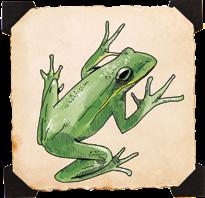
3. Reinforce the correct response: a girl and a treefrog.
4. Direct attention to pages 4–5. Tell students that they will discuss what the girl and the treefrog do during the summer.
5. Read aloud the portion of page 4 from “I See You” to “was only leaf.” Ask this question:
Who does the girl suddenly see?
Language Support
For students with beginning English proficiency, define unfamiliar terms such as suddenly, tangled, and dollop
6. Reinforce the correct response: the treefrog.
7. Facilitate a discussion of this question: Why was it hard for the girl to see the treefrog?
Teacher Note
Display the class Question Word Card labeled Why to help students understand this question.
1 | Module 2 | Arc C | Prologue to Lesson 13 52
Module 2 | Prologue reference Charts 129 Question Word Cards Who Where When Why What How Six word cards labeled Who, Where, How, When, Why, and What. Arts Letters Great Minds PBC Arts & Letters | © Great Minds PBC
Key Ideas
• The treefrog is green like a leaf.
• The treefrog is tiny.
• The treefrog lives in many plants.
8. Emphasize that the girl did not see the frog at first because she only saw a leaf.
9. Read aloud page 5, starting with “Small and agile.” Ask this question:
What does it mean that treefrogs blend into their surroundings?
10. Think aloud to model making a connection between the text and the vocabulary term camouflage.
11. Review the vocabulary term camouflage by displaying the Knowledge Card. Engage students in Vocabulary Exploration.
12. Read the portion of page 4 from “You look so” to “new here too?”
13. Instruct students to Think–Pair–Share to answer this question:
What does the girl notice about the frog?
Key Ideas
• The treefrog looks bumpy.
• The treefrog looks soft.
• The treefrog is tucked inside itself.
14. Ask this question:
What does the girl ask the treefrog?
Sample Think Aloud
The text says that treefrogs blend into their surroundings. This makes me think of camouflage. I think the girl didn’t see the frog because it was camouflaged.
Definition camouflage (n.): something (such as color or shape) that protects an animal from attack by making the animal difficult to see in its surroundings
1 | Module 2 | Arc C | Prologue to Lesson 13 53
Arts & Letters | © Great Minds PBC
15. Reinforce the correct response: Are you new here too?
16. Instruct students to Think–Pair–Share to answer this question: What does the girl mean when she says, “Are you new here too?”
17. Reinforce the correct response: This is a new place for the girl, and she wants to know whether it is a new place for the treefrog as well.
18. Direct attention to the illustration of the moving van on the dedication page. Remind students that the girl just moved to a new house.
19. Tell students that they will now practice forming a sentence about what the girl does in summer. Display and read aloud the sentence frame: In summer, the girl .
20. Instruct students to Think–Pair–Share to take turns forming sentences about what the girl does in summer.
Language Expansion
For students with intermediate English proficiency, prompt them to form sentences that describe two or more things that the girl does in summer.
Key Ideas
• In summer, the girl moves to a new house.
• In summer, the girl notices the treefrog.
• In summer, the girl observes the treefrog.
1 | Module 2 | Arc C | Prologue to Lesson 13 54
Arts & Letters | © Great Minds PBC
LAND 5 minutes
Demonstrate Learning
1. Introduce the learning task. Tell students that they will now discuss what the treefrog does in summer. Instruct students to Think–Pair–Share to discuss this prompt:
Describe what the treefrog does during summer.
To help students form an expanded sentence, provide this sentence frame: During summer, the treefrog .
Analyze Student Progress
Monitor: Do students form a complete sentence that describes what the treefrog does in summer?
Offer Immediate Support: If students need additional support forming a complete sentence, direct their attention to pages 4–5 of Dear Treefrog. Instruct students to first identify the treefrog in the illustration and then describe what the treefrog is doing.
Key Ideas
• During summer, the treefrog sits on leaves.
• During summer, the treefrog watches the girl.
• During summer, the treefrog blends into its surroundings.
2. Remind students that practicing expanding sentences by asking who and what questions will help them discuss their responses to Dear Treefrog in detail.
1 | Module 2 | Arc C | Prologue to Lesson 13 55
Arts & Letters | © Great Minds PBC
Prologue to Lesson 14
Essential Question | What do people learn by studying animals?
OVERVIEW
Preview
Students discuss the treefrog’s features in Dear Treefrog. As they discuss the treefrog’s features, students practice expanding sentences by using question words. This work prepares students to discuss the way tree frogs adapt to their surroundings in lesson 14.
Learning Goal
Discuss a treefrog’s features.
LEARNING TASK: Write a sentence about how a treefrog uses its features.
Language Progress
In this lesson, students work on this module language goal: Expand sentences by using question words.
To support students with beginning English proficiency and to clarify vocabulary terms from the text, encourage them to act out what the treefrog is doing. To
support students with intermediate English proficiency, prompt them to complete the sentence frames by using different words than their partner uses.
Vocabulary
camouflage (n.) evidence (n.) feature (n.)
Materials
TEACHER
• Dear Treefrog
• class Treefrog Diagram (Prologue Student Resources appendix)
• class Question Word Cards (Prologue Reference Charts appendix)
• Knowledge Cards: feature, camouflage
STUDENTS
• Treefrog Diagram (Prologue Student Resources appendix)
Preparation
• Dear Treefrog is an unpaginated text. Number your text; begin with the title page—which includes the book title, author, and illustrator—as page 1. Pages on the left will be even, and pages on the right will be odd.
• Make a set of class Question Word Cards. See the Learn section for details and the Prologue Reference Charts appendix for a sample.
• Determine how to display the sentence frames. See the Learn and Land sections for details.
56
Arts & Letters | © Great Minds PBC
LAUNCH 5 minutes
Practice Vocabulary
1. Review the vocabulary term feature by displaying the Knowledge Card. Engage students in Vocabulary Exploration.
2. Display Dear Treefrog. Remind students that the girl in the story observes a treefrog and learns about its features.
3. Tell students that they will discuss the treefrog’s features and find evidence about how these features help the treefrog.
LEARN 20
minutes
Discuss the Treefrog’s Features
1. Display and distribute the Treefrog Diagram. Tell students that they will first identify important features of the treefrog.
2. Instruct students to identify and label the treefrog’s skin, toes, and eyes.
3. Tell students that they will form sentences about the treefrog’s features. Display and read aloud this sentence frame: A treefrog uses its

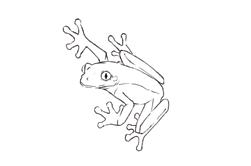
4. Lead students in forming sentences about the treefrog’s skin, toes, and eyes.
Definition feature (n.): an interesting or important part or ability
57 1 | Module 2 | Arc C | Prologue to Lesson 14
.
Module 2 Prologue to Lesson 14 This page may be reproduced for classroom use only. 135 L14 Treefrog Diagram Label the parts of the treefrog. Arts & Letters | © Great Minds PBC
5. Display the Question Word Card labeled How. Tell students that they will now find evidence to help them expand their sentences to explain how a treefrog uses these features.
6. Introduce the vocabulary term evidence by displaying the term. Engage students in Vocabulary Exploration.
Language Support
The term evidence has a Spanish cognate: evidencia. Share this language connection with students whose home language is Spanish.
7. Instruct students to listen for evidence about how a treefrog uses its skin. Read aloud page 7, starting with “When startled, treefrogs.”
8. Direct attention to the term camouflage. Review the vocabulary term camouflage by displaying the Knowledge Card. Engage students in Vocabulary Exploration.
9. Display and read aloud this sentence frame: A treefrog uses its skin to .
Tell students that they can use this sentence frame to form their expanded sentence to explain how a treefrog uses its skin.
10. Instruct students to Think–Pair–Share to form sentences that explain how a treefrog uses its skin.
Language Expansion
For students with intermediate English proficiency, prompt them to use the term camouflage in their response and to explain how this helps a treefrog (e.g., a treefrog uses its skin as camouflage for protection).
Key Ideas
• A treefrog uses its skin as camouflage.
• A treefrog uses its skin to protect itself from other animals.
• A treefrog uses its skin to hide.
Definition evidence (n.): something that shows that something else exists or is true
Definition camouflage (n.): something (such as color or shape) that protects an animal from attack by making the animal difficult to see in its surroundings
1 | Module 2 | Arc C | Prologue to Lesson 14 58
Arts & Letters | © Great Minds PBC
11. Tell students that they will now listen for evidence about how a treefrog uses its toes. Read aloud page 9, starting with “Treefrogs’ long, delicate.”
12. Instruct students to Think–Pair–Share to take turns forming sentences that explain how a treefrog uses its toes.
Remind students that they can expand their sentences with evidence by using this sentence frame: A treefrog uses its toes to .
Key Ideas
• A treefrog uses its toes to climb bushes and trees.
• A treefrog uses its toes to move.
13. Tell students that they will now listen for evidence about how a treefrog uses its eyes. Read aloud page 13, starting with “Treefrogs’ large eyes.”
14. Instruct students to Think–Pair–Share to take turns forming sentences that explain how a treefrog uses its eyes.
Remind students that they can expand their sentences with evidence by using this sentence frame: A treefrog uses its eyes to .
Language Support
For students with intermediate English proficiency, reread the first sentence from page 13 and explain the meaning of the phrase catch any movement as used in this sentence.
Key Ideas
• A treefrog uses its eyes to catch movement.
• A treefrog uses its eyes to see what is happening around it.
1 | Module 2 | Arc C | Prologue to Lesson 14 59
Arts & Letters | © Great Minds PBC
LAND
5 minutes
Demonstrate Learning
1. Introduce the learning task. Instruct students to select one treefrog feature and to write a sentence about how a treefrog uses that feature.
Prompt students to use one of these sentence frames to form an expanded sentence:
• A treefrog uses its skin to .
• A treefrog uses its toes to .
• A treefrog uses its eyes to .
Analyze Student Progress
Monitor: Do students write a complete sentence that explains how a treefrog uses its skin, toes, or eyes?
Offer Immediate Support: If students need additional support forming a complete sentence about how a treefrog uses its features, direct attention to pages 7, 9, and 13 and instruct students to first identify the treefrog and then to think about what it is doing and why.
2. Invite a few students to share their responses.
Key Ideas
• A treefrog uses its skin as camouflage.
• A treefrog uses its toes to climb bushes and trees.
• A treefrog uses its eyes to catch movement.
3. Remind students that they can expand their sentences about the treefrog’s features by searching for evidence in the text.
1 | Module 2 | Arc C | Prologue to Lesson 14 60
Arts & Letters | © Great Minds PBC
Prologue to Lesson 15
Essential Question | What do people learn by studying animals?
OVERVIEW
Preview
Students work to understand the changes in Dear Treefrog. As they discuss changes, students practice taking turns when speaking. This work prepares students to discuss a central idea in lesson 15.
Learning Goal
Understand how the girl changes in Dear Treefrog.
LEARNING TASK: Discuss one way that the girl changes in Dear Treefrog.
Language Progress
In this lesson, students work on this module speaking and listening goal: Take turns with others when speaking.
To support students with beginning English proficiency, assign a number or a letter to each partner and specify which partner goes first during the discussions. To support students with intermediate
English proficiency, encourage students to use phrases such as “Now it’s your turn” and “Now it’s my turn” to facilitate taking turns.
Vocabulary
change (v.)
Materials
TEACHER
• Dear Treefrog
• Change image (digital platform)
• small object (e.g., a ball)
• class Beginning, Middle, and End Chart
• class Feeling Words (Prologue Reference Charts appendix)
STUDENTS
• none
Preparation
• Dear Treefrog is an unpaginated text. Number your text; begin with the title
page—which includes the book title, author, and illustrator—as page 1. Pages on the left will be even, and pages on the right will be odd.
• Choose a small object (e.g., a ball) for students to use as a speaking tool. Gather enough of these objects for students to use during partner discussions. See the Launch and Learn sections for details.
• Determine how to display the Change image. See the Launch section for details.
• Make a class Beginning, Middle, and End Chart. See the Learn section for details.
• Make a class Feeling Words. See the Learn section for details and the Prologue Reference Charts appendix for a sample.
• Determine how to display the sentence frames. See the Learn section for details.
62
Arts & Letters | © Great Minds PBC
LAUNCH
5 minutes
Practice Vocabulary
1. Display the Change image. Instruct students to look closely at the image.
2. Tell students that they will work on this speaking and listening goal: Take turns with others when speaking. Direct attention to a small object, such as a ball. Explain that students will hold the object when it is their turn to speak so that everyone can hear each other’s ideas clearly. Ask this question: What do you notice about this image?
3. Pass the speaking tool to a student and invite them to share their response. Pass the tool to a few other students and invite them to share their responses.
4. Introduce the vocabulary term change. Display the term. Engage students in Vocabulary Exploration.
5. Tell students that they will identify how things change in Dear Treefrog.
LEARN 20 minutes
Discuss Changes in Dear Treefrog
1. Display the class Beginning, Middle, and End Chart. Explain that students will review the events from the beginning, middle, and end of the text to discuss the changes that occur.
Definition change (v.): to become different
63 1 | Module 2 | Arc C | Prologue to Lesson 15
Beginning Beginning, Middle, and End Middle End A three-column chart with headings labeled Beginning, Middle, and End. Arts & Letters | © Great Minds PBC
2. Display Feeling Words. Tell students that they will first discuss how the girl in the story feels.
3. Direct attention to the illustration of the girl on page 5 of Dear Treefrog. Ask this question: How does the girl feel in the beginning of the story?
Remind students of the speaking and listening goal: Take turns with others when speaking.
Key Ideas
• sad • lonely
4. Instruct students to Think–Pair–Share to answer this question: Why do you think the girl feels this way at the beginning of the story?
Teacher Note
Distribute small objects for students to use during partner discussions to encourage taking turns while speaking.
Language Expansion
For students with intermediate English proficiency, instruct them to indicate details in the illustration that support their responses.
Key Ideas
• She feels sad about moving to a new place.
• She feels lonely because she does not know anyone yet.
5. Add responses to the Beginning section of the chart.
1 | Module 2 | Arc C | Prologue to Lesson 15 64
Happy Scared Angry Mad Shy Curious Sad Proud Excited Disappointed Loving Nervous Worried Module 2 Prologue reference Charts 130 Feeling Words A group of emojis shows different feelings. The drawn faces show happy, loving, sad, angry or mad, disappointed, worried, excited, curious, proud, scared, nervous, and shy. © Great Minds PBC Arts & Letters | © Great Minds PBC
6. Direct attention to page 5. Ask this question:
What important event happens in the beginning of the story?
7. Reinforce the correct response: The girl finds a treefrog. Add this to the chart.
8. Tell students that they will now discuss the middle of the story. Direct attention to the illustration on page 25. Instruct students to Think–Pair–Share to answer these questions:
How does the girl feel in the middle of the story?
Why does she feel this way?
Key Ideas
• She feels nervous because she is going to a new school.
• She feels shy about making new friends.
9. Add responses to the Middle section of the chart.
10. Instruct students to listen to find out what the girl does in the middle of the story. Read aloud the portion of page 24 from “Good thing I” to “to be brave.” Ask this question:
Who is the girl talking to in this part of the story?
11. Reinforce the correct response: the treefrog.
12. Ask this question:
What does the girl want the treefrog to help her do?
Language Support
For students with beginning English proficiency, explain that brave means “not afraid.” Prompt students to determine who the girl wants to help her feel brave.
13. Reinforce the correct response: feel brave. Add this response to the Middle section of the chart.
1 | Module 2 | Arc C | Prologue to Lesson 15 65
Arts & Letters | © Great Minds PBC
14. Tell students that they will now discuss what happens at the end of the story. Direct attention to the illustration on page 31. Instruct students to Think–Pair–Share to answer these questions:
How does the girl feel at the end of the story?
Why does she feel this way?
Key Ideas
• She feels happy because she has a new friend.
• She feels excited because she is observing the treefrog with her new friend.
15. Add responses to the End section of the chart. Review the information from the chart.
16. Tell students that they will work with a partner to discuss how the girl changes throughout the story. Display and read aloud these sentence frames: In the beginning, the girl . In the end, the girl .
17. Instruct students to work with a partner to use these sentence frames to organize their ideas.
LAND 5
minutes
Demonstrate Learning
1. Introduce the learning task. Instruct students to take turns sharing with a partner how the girl changes in Dear Treefrog. Remind them to take turns when speaking.
Language Expansion
For students with intermediate English proficiency, prompt them to form sentences that describe how the girl changes. Provide these sentence frames: In the beginning, the girl . In the end, the girl .
1 | Module 2 | Arc C | Prologue to Lesson 15 66
Arts & Letters | © Great Minds PBC
Analyze Student Progress
Monitor: Do students describe how the girl changes from the beginning to the end of Dear Treefrog?
Offer Immediate Support: If students need additional support describing how the girl changes, instruct them to focus solely on how her feelings change.
2. Invite a few students to share their responses. Instruct them to use a nonverbal signal (e.g., a thumbs-up) when they hear a response like their own.
Key Ideas
• In the beginning, the girl is lonely, but in the end, she has a friend.
• In the beginning, the girl alone observes the treefrog. In the end, she and a friend observe the treefrog.
3. Explain that taking a closer look at how characters change can help students better understand the stories they read.
1 | Module 2 | Arc C | Prologue to Lesson 15 67
Arts & Letters | © Great Minds PBC
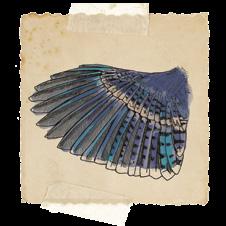
Prologue to Lesson 18
Essential Question | What do people learn by studying animals?
OVERVIEW
Preview
Students examine the organizational structure of Feathers and review information provided in different parts of the text. As they discuss the information from the text, students practice expanding sentences by using question words. This work prepares students to organize the story into main ideas and key details in lesson 18.
Learning Goal
Understand the structure of Feathers.
LEARNING TASK: Expand a sentence to explain how birds use their feathers.
Language Progress
In this lesson, students work on this module language goal: Expand sentences by using question words.
To support students with beginning English proficiency, prompt them to respond to questions by using complete sentences that begin with the word feathers. To support students with intermediate English proficiency, prompt them to turn and ask a partner what they learned about feathers on each page.
Vocabulary
feature (n.)
Materials
TEACHER
• Feathers
• Knowledge Card: feature
STUDENTS
• none
Preparation
• Feathers is an unpaginated text. Number your text; begin with the title page—which includes the book title, author, and illustrator—as page 1. Pages on the left will be even, and pages on the right will be odd.
• Determine how to display this sentence: Birds use feathers. See the Launch section for details.
• Determine how to display the sentence frame. See the Land section for details.
68
Arts & Letters | © Great Minds PBC
LAUNCH
5 minutes
Practice Vocabulary
1. Display Feathers. Assess and activate prior knowledge by asking this question:
What is this book about?
Key Ideas
• different birds
• different feathers
• how birds use their feathers
2. Remind students that they have been learning about different animal features. Review the vocabulary term feature by displaying the Knowledge Card. Engage students in Vocabulary Exploration. Tell them that feathers are a feature of birds.
3. Display and read aloud this sentence: Birds use their feathers.
4. Tell students that they will read parts of Feathers to expand this sentence to share more about this important bird feature.
LEARN 20 minutes
Discuss Feathers
1. Direct attention to pages 4–5. Ask this question:
What do you notice about these pages?
Definition feature (n.): an interesting or important part or ability
69 1 | Module 2 | Arc D | Prologue to Lesson 18
Arts & Letters | © Great Minds PBC
2. Direct attention to the large text at the top of the page, the picture of the bird, and the caption. Tell students that they will take a closer look at the different parts of this page.
3. Read aloud the large text at the top of page 4: “Feathers can warm like a blanket.” Ask this question:
What did you learn about feathers from this part?
Key Ideas
• Feathers are like a blanket.
• Feathers are warm.
Language Support
For students with beginning English proficiency, model getting warm by using a real blanket to help them understand the comparison.
Language Expansion
For students with intermediate English proficiency, ask them to think of other things that keep people warm.
4. Continue reading page 4 from “On cold, damp” to “to its skin.” Ask this question:
What did you learn about feathers from this part of the page?
Key Ideas
• Blue jays use their feathers to keep warm.
• Blue jays fluff up their feathers to stay warm.
• Feathers trap warm air.
5. Direct attention to page 5. Ask this question:
What type of bird do you think this is?
1 | Module 2 | Arc D | Prologue to Lesson 18 70
Arts & Letters | © Great Minds PBC
6. Read aloud the caption on page 5. Explain that this type of bird is called a blue jay.
7. Direct attention to the illustrations on page 4. Ask this question: What do you notice about the illustrations?
8. Think aloud to model how to make meaning of the illustrations.
9. Direct attention to pages 6–7. Explain that these pages contain information that is connected to the previous page. Tell students that they will discuss what they learn from these pages.
10. Lightly fold page 5 to show that the text on page 7 continues the sentence from page 4 and is still about feathers. Read aloud the complete sentence from pages 4 and 7: “Feathers can warm like a blanket or cushion like a pillow.”
11. Direct attention to the image of a pillow on page 7. Ask this question: What did you learn about feathers from this page?
Language Support
For students with beginning English proficiency, model getting comfortable by using a real pillow to help them understand the comparison.
Key Ideas
• Feathers are like a pillow.
• Feathers are soft like a cushion.
12. Direct attention to the illustration on page 6. Explain that this bird uses its feathers like a pillow. Direct attention to the caption on page 7 as you read it aloud.
13. Instruct students to listen to find out how the wood duck uses its feathers like a pillow. Read aloud the portion of page 7 from “A female wood” to “keep them warm.” Direct attention to the image of a nest of eggs on page 7 to support comprehension.
Sample Think Aloud
On page 4, I notice different types of feathers and what looks like a piece of clothing. I know that the text says, “Feathers can warm like a blanket,” so I think that this might be part of a blanket. The illustration shows me how feathers are like a blanket.
1 | Module 2 | Arc D | Prologue to Lesson 18 71
Arts & Letters | © Great Minds PBC
14. Ask this question:
How does the wood duck use her feathers like a pillow?
Key Ideas
• She puts them into her nest to make it comfortable.
• She puts them under her eggs to protect them.
15. Instruct students to draw a picture of a bird on a piece of paper and to label the feathers.
LAND 5
minutes
Demonstrate Learning
1. Introduce the learning task. Instruct students to copy and complete this sentence frame to describe one way that birds use their feathers: Birds use their feathers to .
Analyze Student Progress
Monitor: Do students expand the sentence by adding details that describe one way that birds use their feathers?
Offer Immediate Support: If students need additional support expanding the sentence, direct their attention to page 4 and reread the sentence.
1 | Module 2 | Arc D | Prologue to Lesson 18 72
Arts & Letters | © Great Minds PBC
2. Invite a few students to share their responses. Instruct them to use a nonverbal signal (e.g., a thumbs-up) when they hear a response like their own.
Key Ideas
• Birds use their feathers to keep warm when the weather is cold.
• Birds use their feathers to cushion eggs in their nest.
3. Explain that taking a closer look at what we can learn from different parts of a text can help us better identify key details.
1 | Module 2 | Arc D | Prologue to Lesson 18 73
Arts & Letters | © Great Minds PBC
Prologue to Lesson 19
Essential Question | What do people learn by studying animals?
OVERVIEW
Preview
Students review Feathers to develop an understanding of the different types of feathers and their uses. As they learn about feathers, students work on forming complete sentences. This work prepares students to identify key details in lesson 19.
Learning Goal
Understand the different types of feathers.
LEARNING TASK: Write a complete sentence about how birds use a certain type of feather.
Language Progress
In this lesson, students work on this expectation for the End-of-Module Task: Write by using complete sentences. To support students with beginning English proficiency, direct their attention to pages 30–31 of Feathers and refer to either the down or semiplume feathers. Instruct students to form their sentences about these feathers. To support students with intermediate English proficiency, prompt them to write a sentence that explains both the location and the function of their selected type of feather.
Vocabulary
similar (adj.)
Materials TEACHER
• Feathers
STUDENTS
• none
Preparation
• Feathers is an unpaginated text. Number your text; begin with the title page—which includes the book title, author, and illustrator—as page 1. Pages on the left will be even, and pages on the right will be odd.
• Determine how to display an image of a bird, such as an illustration from Feathers. See the Launch section for details.
• Determine how to display the sentence frame. See the Learn and Land sections for details.
74
Arts & Letters | © Great Minds PBC
LAUNCH
5 minutes
Activate Prior Knowledge
1. Display an image of a bird. Lead students in labeling the bird’s eyes, mouth, body, feathers, and wings.
2. Explain that birds have different types of feathers in different places on their body.
3. Tell students that they will learn about the different types of feathers on a bird’s body.
LEARN 20 minutes
Discuss Types of Feathers
1. Display Feathers. Direct attention to the second box on page 30. Read aloud the portion of page 30 from “stiff bristle feathers” to “to locate food.”
2. Ask this question: What type of feather is this?
3. Reinforce the correct response: a stiff bristle feather.
4. Ask this question: Where are a bird’s bristle feathers?
Language Support
For students with beginning English proficiency, direct their attention to the displayed image of the bird to assist them in identifying the location of these feathers.
5. Reinforce the correct response: around the eyes and mouth.
6. Direct attention to your eyelashes and explain that they help protect your eyes.
75 1 | Module 2 | Arc D | Prologue to Lesson 19
Arts & Letters | © Great Minds PBC
7. Ask this question:
How do birds use bristle feathers?
Key Ideas
• to protect their eyes
• to locate food
8. Remind students that they have been working on expanding sentences by using question words. Display and read aloud this sentence frame: Birds use their feathers to .
9. Think aloud to model how to expand the sentence frame to form a complete sentence about bird feathers.
10. Instruct students to work with a partner and to take turns forming complete sentences about how birds use their feathers.
Language Expansion
For students with intermediate English proficiency, instruct them to use the specific name of the feathers in their response.
11. Direct attention to the third box on page 30 and the first box on page 31. Explain that birds use these two types of feathers in a similar way.
12. Introduce the vocabulary term similar by displaying the term. Engage students in Vocabulary Exploration.
Language Support
The term similar has a Spanish cognate: similar. Share this language connection with students whose home language is Spanish.
Sample Think Aloud
We just read that bristle feathers protect birds’ eyes. This is my sentence: Birds use their feathers to protect their eyes.
Definition
similar (adj.): almost the same as someone or something else
1 | Module 2 | Arc D | Prologue to Lesson 19 76
Arts & Letters | © Great Minds PBC
13. Read aloud the portion of the third box on page 30 from “Soft, fluffy down” to “to its skin.” Then read aloud the portion of the first box on page 31 from “Semiplume feathers work” to “warm and dry.”
Ask this question:
How do birds use these types of feathers?
Key Ideas
• to stay warm and dry
• to trap body heat
14. Instruct students to work with a partner and to take turns forming complete sentences about how birds use their feathers.
15. Direct attention to the last box on page 31. Instruct students to listen for details about how birds use this type of feather.
16. Read aloud the portion of the last box on page 31 from “The flight feathers” to “keep its balance.”
Ask this question:
How do birds use this type of feather?
Key Ideas
• to move
• to steer
• to keep balance
17. Instruct students to work with a partner and to take turns forming complete sentences about how birds use their feathers.
1 | Module 2 | Arc D | Prologue to Lesson 19 77
Arts & Letters | © Great Minds PBC
LAND 5 minutes
Demonstrate Learning
1. Introduce the learning task. Instruct students to copy and complete this sentence frame to describe one way that birds use a type of feather: Birds use their feathers to .
Analyze Student Progress
Monitor: Do students expand the sentence by adding details that describe one way that birds use their feathers?
Offer Immediate Support: If students need additional support writing a complete sentence, instruct them to first identify which type of feather they want to write about. Then instruct them to describe how birds use this type of feather.
2. Invite a few students to share their sentences.
Key Ideas
• Birds use their feathers to locate food.
• Birds use their feathers to stay warm.
• Birds use their feathers to keep their balance.
3. Tell students that using complete sentences makes writing easier to read and understand.
1 | Module 2 | Arc D | Prologue to Lesson 19 78
Arts & Letters | © Great Minds PBC
Prologue to Lesson 20
Essential Question | What do people learn by studying animals?
OVERVIEW
Preview
Students discuss the items that feathers are compared to in Feathers. As they discuss these items, students practice using verbs that match the nouns in number. This work prepares students to analyze similarities between bird feathers and common objects in lesson 20.
Learning Goal
Form sentences about items mentioned in Feathers and analyze the verbs in their sentences.
LEARNING TASK: Write a sentence about how sponges are used.
Language Progress
In this lesson, students work on this expectation for the End-of-Module Task: Use verbs that match the nouns in number.
To support students with beginning English proficiency, provide them with a choice of two verbs for their sentence. To support students with intermediate English proficiency, encourage them to form two sentences about each item: one sentence that includes a singular noun, and one that includes a plural noun.
Vocabulary
noun (n.)
verb (n.)
Materials
TEACHER
• Feathers
• umbrella
• blankets • sponges
STUDENTS
• none
Preparation
• Feathers is an unpaginated text. Number your text; begin with the title page— which includes the book title, author, and illustrator—as page 1. Pages on the left will be even, and pages on the right will be odd.
• Gather one or more umbrellas, blankets, and sponges for student observation and discussion. If you are unable to obtain these objects, locate pictures for the discussion. See the Launch section for details.
• Determine how to display complete sentences during the discussion. See the Learn section for details.
• Determine how to display the sentence frame. See the Land section for details.
80
Arts & Letters | © Great Minds PBC
LAUNCH 5
minutes
Practice Vocabulary
1. Display an umbrella. Ask this question: What is this?
2. Reinforce the correct response: an umbrella.
3. Remind students that they have been learning about nouns and verbs. Review the vocabulary terms noun and verb by displaying the terms. Engage students in Vocabulary Exploration.
Language Support
The term verb has a Spanish cognate: verbo. Share this language connection with students whose home language is Spanish.
4. Ask this question: Is an umbrella a noun or a verb?
5. Reinforce the correct response: a noun. Emphasize that the umbrella is a noun because it is a thing.
6. Tell students that they will be looking at other nouns to practice forming sentences about them.
Definitions
noun (n.): a word that identifies a person, place, or thing verb (n.): a word that expresses an action
81 1 | Module 2 | Arc D | Prologue to Lesson 20
Arts & Letters | © Great Minds PBC
LEARN 20 minutes
Discuss Items from Feathers
1. Facilitate a discussion of this question: How do you use an umbrella?
Key Ideas
• to block the rain
• to not get wet
• to keep others dry
2. Remind students that they have been writing complete sentences. Display and read aloud this complete sentence: The umbrella protects.
3. Ask these questions:
What is the noun in this sentence?
What is the verb in this sentence?
4. Reinforce the correct responses: Umbrella is the noun, and protects is the verb.
Language Support
For students with beginning English proficiency, invite them to act out being an umbrella and protecting to reinforce their understanding of the difference between nouns and verbs.
Language Expansion
For students with intermediate English proficiency, invite them to think of other verbs that could be used in this sentence.
1 | Module 2 | Arc D | Prologue to Lesson 20 82
Arts & Letters | © Great Minds PBC
5. Display the blankets. Ask this question:
What are these?
6. Reinforce the correct response: blankets.
7. Facilitate a discussion of this question:
How do you use blankets?
Key Ideas
• to decorate my bed
• to keep me warm
• to help me sleep
8. Display and read aloud this complete sentence: Blankets keep me warm.
9. Ask this question:
What is the verb in this sentence?
10. Reinforce the correct response: keep.
11. Annotate the word keep in the sentence. Tell students that this verb is about the blankets.
12. Display and read aloud this complete sentence: A blanket keeps me warm. Ask this question:
What do you notice about the verb in this sentence?
1 | Module 2 | Arc D | Prologue to Lesson 20 83
Arts & Letters | © Great Minds PBC
13. Reinforce that the verb keeps in this sentence has an s at the end. Annotate the word keeps in this sentence.
14. Explain that verbs change if the nouns that they are about are singular or plural. Remind students that singular means “one” and plural means “more than one.”
15. Direct attention back to this sentence: Blankets keep me warm. Ask this question: Is the word blankets singular or plural?
16. Reinforce the correct response: plural.
17. Annotate the sentence to show the connection between blankets and keep in this sentence (e.g., with an arrow connecting the two words).
18. Direct attention back to this sentence: A blanket keeps me warm. Ask this question: Is the word blanket singular or plural?
19. Reinforce the correct response: singular.
20. Annotate the sentence to show the connection between blanket and keeps in this sentence.
21. Display the sponges. Tell students that they will now form a sentence about how they use sponges. Ask this question:
Is the word sponges singular or plural?
22. Reinforce the correct response: plural.
23. Instruct students to Think–Pair–Share to discuss how they use sponges.
Key Ideas
• to clean
• to wash dishes
• to scrub dirt
1 | Module 2 | Arc D | Prologue to Lesson 20 84
Arts & Letters | © Great Minds PBC
LAND 5 minutes
Demonstrate Learning
1. Introduce the learning task. Display this sentence frame: Sponges . Instruct students to write a complete sentence about sponges. Prompt students to be sure that their verb matches the noun sponges.
Analyze Student Progress
Monitor: Do students write a sentence about sponges in which the verb matches the noun in number?
Offer Immediate Support: If students need additional support writing a sentence that includes a verb that matches the noun, instruct them to identify the noun and determine whether it is singular or plural. Then instruct students to determine whether their verb needs to end with an s
2. Invite a few students to share their responses.
Key Ideas
• Sponges wash dishes.
• Sponges scrub dirt.
• Sponges clean.
3. Remind students that writing sentences in which the verbs match the nouns helps readers understand their writing.
1 | Module 2 | Arc D | Prologue to Lesson 20 85
Arts & Letters | © Great Minds PBC
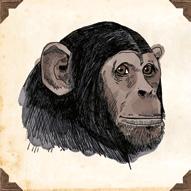
Prologue to Lesson 25
Essential Question | What do people learn by studying animals?
OVERVIEW
Preview
Students discuss characters’ actions in Me … Jane. As they discuss these actions, students practice using verbs that match nouns in number. This work prepares them to describe events in lesson 25.
Learning Goal
Use verbs to describe characters’ actions in Me … Jane.
LEARNING TASK: Complete sentences about Jane with verbs that match the nouns in number.
Language Progress
In this lesson, students work on this expectation for the End-of-Module Task: Use verbs that match the nouns in number.
To support students with beginning English proficiency, use one color to annotate verbs that match singular nouns and a different color to annotate verbs that match plural nouns. To support students with intermediate English proficiency, prompt them to provide additional verbs for each sentence.
Vocabulary
noun (n.)
observe (v.)
verb (n.)
Materials
TEACHER
• Me … Jane
• Knowledge Card: observe
STUDENTS
• Jane’s Actions (Prologue Student Resources appendix)
Preparation
• Me … Jane is an unpaginated text. Number your text; begin with the title page—which includes the book title, author, and illustrator—as page 1. Pages on the left will be even, and pages on the right will be odd.
• Determine how to display the sentence frames. See the Learn section for details.
86
Arts & Letters | © Great Minds PBC
LAUNCH 5
minutes
Practice Vocabulary
1. Act out jumping. Ask this question:
What am I doing?
2. Reinforce the correct response: jumping.
3. Tell students that they can use a noun and a verb to describe your action.
4. Review the vocabulary terms noun and verb by displaying the terms. Engage students in Vocabulary Exploration.
Language Support
The term verb has a Spanish cognate: verbo. Share this language connection with students whose home language is Spanish.
5. Display and read aloud this sentence: Ms. Smith jumps.
Teacher Note
Use your name as the subject of the sentence.
6. Ask these questions:
What is the noun in this sentence?
What is the verb?
7. Reinforce the correct responses: Ms. Smith is the noun and jumps is the verb. Annotate the noun and the verb in the sentence by using two different colors.
Language Support
For students with beginning English proficiency, invite them to act out other verbs to develop their understanding of nouns and verbs.
Definitions noun (n.): a word that identifies a person, place, or thing verb (n.): a word that expresses an action
87 1 | Module 2 | Arc e | Prologue to Lesson 25
Arts & Letters | © Great Minds PBC
8. Tell students that they will use nouns and verbs to discuss events from Me … Jane.
LEARN
20 minutes
Describe Characters’ Actions
1. Display page 7 of Me … Jane. Ask this question: What is happening on this page?
2. Reinforce the correct response as you display and read aloud this sentence: Jane looks at squirrels.
3. Ask these questions:
Whom is this sentence about?
What is the verb?
4. Reinforce the correct responses: The sentence is about Jane, and looks is the verb. Annotate the sentence to identify this noun and verb.
Teacher Note
Students may notice that squirrel is also a noun. Explain that we want to focus on whom the sentence is about and who is doing the action.
5. Direct attention to Jubilee in the illustration. Tell students that you now want to form a sentence about Jane and Jubilee.
6. Display and read aloud this sentence: Jane and Jubilee look at squirrels. Ask these questions:
Whom is this sentence about?
What is the verb?
1 | Module 2 | Arc e | Prologue to Lesson 25 88
Arts & Letters | © Great Minds PBC
7. Reinforce the correct responses: The sentence is about Jane and Jubilee, and look is the verb. Annotate the sentence to identify this noun and verb.
8. Echo Read these displayed sentences:
• Jane looks at squirrels.
• Jane and Jubilee look at squirrels.
9. Ask this question:
What do you notice about the verbs in these sentences?
10. Reinforce that the verbs are the same, but the verb in the first sentence has the suffix -s at the end.
11. Ask this question:
Why do you think the verbs are different in these two sentences?
12. Reinforce that the suffix -s is added to a verb when the noun is singular, or describes just one person, place, or thing. The verb does not have the suffix -s when the noun is plural, or describes more than one person, place, or thing.
Language Support
For students with beginning English proficiency, prompt them to use the illustration to count Jane and Jubilee.
Language Expansion
For students with intermediate English proficiency, prompt them to think of irregular verbs (e.g., am, is, are) that could also be used in these sentences.
13. Display and read aloud these sentences:
• Jane squirrels.
• Jane and Jubilee squirrels.
1 | Module 2 | Arc e | Prologue to Lesson 25 89
Arts & Letters | © Great Minds PBC
14. Tell students that the verb see can be used to complete these sentences.
15. Display and Echo Read these words: see, sees.
16. Instruct students to Think–Pair–Share to determine which word completes each sentence.
17. Reinforce these correct responses:
• Jane sees squirrels.
• Jane and Jubilee see squirrels.
18. Tell students that the verb observe can also be used to complete these sentences.
19. Review the vocabulary term observe by displaying the Knowledge Card. Engage students in Vocabulary Exploration.
20. Display and Echo Read these words: observe, observes.
21. Instruct students to Think–Pair–Share to determine which word completes each sentence.
22. Reinforce the correct responses:
• Jane observes squirrels.
• Jane and Jubilee observe squirrels.
23. Direct attention to page 15. Ask this question: What is happening on this page?
Key Ideas
• Jane and Jubilee hide in the chicken coop.
• Jane and Jubilee try to learn where eggs come from.
Definition
observe (v.): to notice someone or something carefully
1 | Module 2 | Arc e | Prologue to Lesson 25 90
Arts & Letters | © Great Minds PBC
LAND 5 minutes
Demonstrate Learning
1. Distribute Jane’s Actions. Read aloud the sentences.
2. Introduce the learning task. Instruct students to choose the correct verb to complete the sentences about Jane and Jubilee.
Analyze Student Progress
Monitor: Do students identify the correct verb to match the noun in each sentence?

Offer Immediate Support: If students need additional support identifying the correct verb in each sentence on the handout, instruct them to first identify whether the noun in the sentence is singular or plural. Use responses to review the rules about verbs ending with the suffix -s accordingly.
3. Invite a few students to share their responses, and reinforce the correct responses:
• Jane hides in the chicken coop.
• Jane and Jubilee hide in the chicken coop.
4. Tell students that understanding how to match verbs to nouns helps them clearly communicate their ideas.
1 | Module 2 | Arc e | Prologue to Lesson 25 91
Module Prologue to Lesson 25 136 This page may be reproduced for classroom use only. L25 Jane’s Actions Circle and write the correct verb to complete each sentence. 1. Jane (hide, hides) in the chicken coop. 2. Jane and Jubilee (hide, hides) in the chicken coop. ARTS & LETTERS © Great Minds PBC Arts & Letters | © Great Minds PBC
Prologue to Lesson 26
Essential Question | What do people learn by studying animals?
OVERVIEW
Preview
Students describe Jane in Me … Jane. As they discuss Jane, students practice forming complete sentences. This work prepares students to analyze words and illustrations in Me … Jane in lesson 26.
Learning Goal
Identify Jane’s actions and describe how she feels.
LEARNING TASK: Describe how Jane feels at the end of Me … Jane.
Language Progress
In this lesson, students work on this expectation for the End-of-Module Task: Write in complete sentences.
To support students with beginning English proficiency, encourage them to orally rehearse their sentence prior to writing it. To support students with intermediate English proficiency, prompt them to form one response that answers multiple questions.
Vocabulary curious (adj.)
Materials
TEACHER
• Me … Jane
• class Feeling Words (Prologue Reference Charts appendix)
STUDENTS
• none Preparation
• Me … Jane is an unpaginated text. Number your text; begin with the title page—which includes the book title, author, and illustrator—as page 1. Pages on the left will be even, and pages on the right will be odd.
• Make a class Feeling Words. See the Launch section for details and the Prologue Reference Charts appendix for a sample.
• Determine how to display the sentence frames. See the Learn and Land sections for details.
92
Arts & Letters | © Great Minds PBC
LAUNCH 5 minutes
Practice Vocabulary
1. Display Feeling Words. Invite students to use their faces to match the expressions shown as you review the words.
2. Direct attention to several of the feeling words, such as happy, excited, and nervous. Invite students to share instances when they experienced these feelings.
Language Support
If possible, pair students who speak the same home language, and instruct them to discuss this prompt.
3. Remind students that they previously described characters by using some of these feeling words.
4. Tell students that they will think about Jane’s feelings in Me … Jane.
LEARN 20 minutes
Describing Jane
1. Direct attention to page 3 of Me … Jane. Ask this question: What is Jane doing?
2. Reinforce the correct response: getting a new toy.
93
1 | Module 2 | Arc e | Prologue to Lesson 26 Arts & Letters | © Great Minds PBC
3. Ask this question:
How do you think Jane feels in this part of the story?
Key Ideas
• happy
• loving
• excited
Language Support
For students with beginning English proficiency, prompt them to act out receiving a new toy. Then instruct them to select a face on Feeling Words that most closely matches the face that they just made.
4. Display and read aloud this sentence frame: Jane is when . Remind students that they have been expanding sentences by adding more details. Tell them that they can use this sentence frame to describe how Jane feels and what is happening that causes her to feel this way.
5. Instruct students to Think–Pair–Share to take turns forming complete sentences that describe Jane in this part of the story.
Language Expansion
For students with intermediate English proficiency, pair them with a partner who has similar proficiency and instruct them to add additional details by describing multiple feelings.
Key Ideas
• Jane is happy when she gets a new toy.
• Jane is loving when she gets Jubilee.
• Jane is excited when she gets Jubilee.
1 | Module 2 | Arc e | Prologue to Lesson 26 94
Arts & Letters | © Great Minds PBC
6. Direct attention to page 17. Ask this question: What is Jane doing?
7. Reinforce the correct response: watching a chicken. Remind students that in this part of the story Jane wants to know where eggs come from.
8. Ask this question: How do you think Jane feels in this part of the story?
Key Ideas
• curious
• nervous
• excited
9. Tell students that curious is one way to describe Jane in this part of the story. Introduce the vocabulary term curious by displaying the term. Engage students in Vocabulary Exploration. Direct attention to the curious face on Feeling Words to help them understand the term’s meaning.
10. Instruct students to work with a partner and to take turns forming sentences that describe Jane’s feelings in this part of the story.
11. Invite a few students to share their responses.
Key Ideas
• Jane is curious when she observes the chicken.
• Jane is nervous when she hides in the chicken coop.
• Jane is excited when she finds out where eggs come from.
12. Tell students that they will now discuss how Jane feels at the end of the story.
Definition curious (adj.): having a desire to learn or know more about something
1 | Module 2 | Arc e | Prologue to Lesson 26 95
Arts & Letters | © Great Minds PBC
13. Read aloud pages 30–37, starting with “At night Jane.” Instruct students to answer this question with a partner:
What happens at the end of the story?
Key Ideas
• Jane’s dreams come true.
• Jane studies animals.
• Jane moves to Africa.
14. Instruct students to Think–Pair–Share to answer this question:
How do you think Jane feels in this part of the story?
Key Ideas
• happy
• proud
• excited
15. Tell students that they will now write a complete sentence that describes Jane at the end of the story.
1 | Module 2 | Arc e | Prologue to Lesson 26 96
Arts & Letters | © Great Minds PBC
LAND 5 minutes
Demonstrate Learning
1. Introduce the learning task. Instruct students to describe Jane by using this sentence frame: Jane is when .
Analyze Student Progress
Monitor: Do students write a complete sentence that accurately describes Jane at the end of the story?
Offer Immediate Support: If students need additional support writing a complete sentence, instruct them to describe what happens at the end of the story. Then instruct them to describe how Jane feels at the end of the story.
2. Invite a few students to share their responses.
Key Ideas
• Jane is happy when she is in Africa.
• Jane is proud when her dreams come true.
• Jane is excited when she studies animals.
3. Tell students that describing characters can help them understand what is happening in a story.
1 | Module 2 | Arc e | Prologue to Lesson 26 97
Arts & Letters | © Great Minds PBC
Prologue to Lesson 27
Essential Question | What do people learn by studying animals?
OVERVIEW
Preview
Students discuss events in Me … Jane. As they discuss events, students practice using pronouns to replace nouns. This work prepares them to replace nouns with pronouns in lesson 27.
Learning Goal
Use pronouns to replace nouns.
LEARNING TASK: Identify the pronoun to complete a sentence about an event in Me … Jane.
Language Progress
In this lesson, students work on this module task goal: Use appropriate pronouns to replace nouns.
To support students with beginning English proficiency as they learn how pronouns are used, provide visual supports for each pronoun, such as labeling pictures of familiar people and objects. To support students with intermediate English proficiency, encourage them to compare their original statements with statements that include pronouns, and reflect on why a specific pronoun replaced a noun.
Vocabulary
pronoun (n.)
scientist (n.)
Materials TEACHER
• Me … Jane
• Knowledge Card: scientist
• sticky notes
STUDENTS
• Pronoun Practice (Prologue Student Resources appendix)
Preparation
• Me … Jane is an unpaginated text. Number your text; begin with the title page—which includes the book title, author, and illustrator—as page 1. Pages on the left will be even, and pages on the right will be odd.
• Determine how to display the sentence frames. See the Learn and Land sections for details.
• Write each of the following pronouns on an individual sticky note: she, he, they, it. See the Learn section for details.
98
Arts & Letters | © Great Minds PBC
LAUNCH
5 minutes
Practice Vocabulary
1. Review the vocabulary term scientist by displaying the Knowledge Card. Engage students in Vocabulary Exploration. Display and read aloud these sentences: The scientist is studying ants. She is curious.
2. Direct attention to the word she. Ask these questions:
Who is she?
How do you know?
Key Ideas
• She refers to the scientist because the sentences are about the woman pictured on the card.
• She refers to the scientist because she is a woman who studies ants.
3. Explain that writers and speakers use words such as she in place of nouns. Remind students that a noun is a word that identifies a person, place, or thing. Scientist is the noun, and the word she refers to the scientist.
4. Tell students that she is an example of a pronoun. Introduce the vocabulary term pronoun by displaying the term. Engage students in Vocabulary Exploration.
Language Expansion
For students with intermediate English proficiency, invite them to share pronouns that they know.
5. Tell students that they will practice using pronouns to discuss what happens in Me … Jane.
Definition scientist (n.): a person who is trained in science and whose job involves doing research and solving problems
Definition pronoun (n.): a word that replaces a noun
99 1 | Module 2 | Arc e | Prologue to Lesson 27
Arts & Letters | © Great Minds PBC
LEARN 20 minutes
Form Sentences About Me … Jane
1. Tell students that they will first identify nouns. Direct attention to the front cover of Me … Jane. Ask this question:
What nouns do you see in this illustration?
Key Ideas
• Jane
• Jubilee
• plants
• animals
2. Display and read aloud these pronouns: she, he, they, it. Explain that these pronouns can be used to replace the nouns on the front cover.
3. Direct attention to Jane. Ask this question:
What pronoun describes Jane?
4. Reinforce the correct response: she. Direct attention to the sticky note with she on it to reinforce understanding. Tell students that the pronoun she is used when talking about Jane because she is a girl.
Teacher Note
Create an additional set of pronoun sticky notes that can be used to label the front cover of the text for students to refer to throughout the lesson.
1 | Module 2 | Arc e | Prologue to Lesson 27 100
Arts & Letters | © Great Minds PBC
5. Display and read aloud this sentence: She is happy. Tell students that this sentence could describe Jane. Instruct students to Think–Pair–Share to form other sentences about Jane that include the pronoun she. Key Ideas
• She loves animals.
• She is in the jungle.
• She holds Jubilee.
6. Direct attention to Jubilee. Ask this question: What pronoun describes Jubilee?
7. Reinforce the correct response: he. Direct attention to the sticky note with he on it to reinforce understanding. Tell students that the pronoun he is used when talking about Jubilee because he is a boy.
8. Instruct pairs to take turns forming sentences that include the pronoun he.
9. Display and read aloud the sticky note with they on it. Tell students that the pronoun they is used when referring to more than one noun. Direct attention to Jane, Jubilee, and the animals. Explain that the pronoun they could be used to talk about these nouns.
10. Instruct pairs to take turns forming sentences that include the pronoun they.
11. Display and read aloud the sticky note with it on it. Tell students that the pronoun it is used when talking about nouns that are not people or animals. Direct attention to one of the trees in the illustration. Explain that the pronoun it could be used to talk about this tree. Emphasize that it is used when there is only one noun.
12. Instruct pairs to take turns forming sentences that include the pronoun it.
13. Direct attention to the pronoun sticky notes. Tell students that they will use these pronouns to replace nouns in sentences.
1 | Module 2 | Arc e | Prologue to Lesson 27 101
Arts & Letters | © Great Minds PBC
14. Display and read aloud this sentence frame: Jane loves animals. studies them.
15. Ask this question: Which pronoun completes this sentence?
Language Support
For students with beginning English proficiency, prompt them to first identify who the sentence is about.
16. Reinforce the correct response: she. Invite a volunteer to place the correct sticky note in the blank.
17. Choral Read the completed sentence. Annotate the sentence to show the connection between Jane and she (e.g., draw an arrow between the two).
18. Display and read aloud this sentence frame: Jane and Jubilee climb trees. have fun together.
19. Instruct students to Think–Pair–Share to determine which pronoun should be used to complete this sentence.
20. Reinforce the correct response: they. Invite a volunteer to place the correct sticky note in the blank.
21. Choral Read the sentence. Annotate the sentence to show the connection between Jane and Jubilee and they.
22. Tell students that they will now practice with two new sentences. Distribute Pronoun Practice. Read aloud the sentences.
1 | Module 2 | Arc e | Prologue to Lesson 27 102
Module 2 Prologue to Lesson 27 This page may be reproduced for classroom use only. 137 He It L27 Pronoun Practice Select the pronoun that completes each sentence. Write the pronoun in the blank. 1. Jubilee is Jane’s toy. is her best friend. 2. Jane read a book. was about animals. Two incomplete sentences, each with word missing. At the top are two answer choice boxes that read, He and It. Arts & Letters | © Great Minds PBC
LAND 5 minutes
Demonstrate Learning
1. Introduce the learning task. Explain that students should use one of the pronouns from the word box to complete each sentence. Instruct students to complete Pronoun Practice with a partner.
Analyze Student Progress
Monitor: Do students select the correct pronoun for each sentence?
Offer Immediate Support: If students need additional support identifying the correct pronoun, instruct them to first annotate who or what the sentence is about.
2. Invite a few students to share their responses, and reinforce the correct responses:
• he
• it
3. Tell students that using the correct pronoun helps convey information clearly.
1 | Module 2 | Arc e | Prologue to Lesson 27 103
Arts & Letters | © Great Minds PBC

Prologue to Lesson 30
Essential Question | What do people learn by studying animals?
OVERVIEW
Preview
Students discuss the questions that Charles Henry Turner asks in Buzzing with Questions. As they discuss these questions, students practice taking turns with others when speaking. This work prepares students to complete a story map and retell events from Buzzing with Questions in lesson 30.
Learning Goal
Identify questions that Charles Henry Turner asks about insects.
LEARNING TASK: Develop a question about bees.
Language Progress
In this lesson, students work on this module speaking and listening goal: Take turns with others when speaking.
To support students with beginning English proficiency, assign a number or letter to each partner and specify which partner goes first during the discussions. To support students with intermediate English proficiency, encourage them to alternate which partner goes first during each turn.
Vocabulary
scientist (n.)
Materials TEACHER
• Buzzing with Questions
• Knowledge Card: scientist
STUDENTS
• none
Preparation
• Buzzing with Questions is an unpaginated text. Number your text; begin with the title page—which includes the book title, author, and illustrator—as page 1. Pages on the left will be even, and pages on the right will be odd.
• Determine how to display the sentence frames. See the Learn and Land sections for details.
104
Arts & Letters | © Great Minds PBC
LAUNCH
5 minutes
Practice Vocabulary
1. Display Buzzing with Questions. Direct attention to Charles Henry Turner in the illustration on the front cover. Ask these questions: Who is this? What do you know about him?
2. Emphasize that Charles Henry Turner is a scientist who asks a lot of questions.
3. Review the vocabulary term scientist by displaying the Knowledge Card. Engage students in Vocabulary Exploration.
4. Remind students that scientists, such as Jane Goodall, are curious and ask a lot of questions.
5. Tell students that they will look at the questions that Charles Henry Turner asks.
LEARN 20 minutes
Discuss Charles Henry Turner’s Questions
1. Display Buzzing with Questions. Read aloud the portion of page 4 from “Questions hopped through” to “animals and bugs.” Ask this question: What does Charles Henry Turner ask questions about?
2. Reinforce the correct response: plants, animals, and bugs. Clarify the meaning of plants, animals, and bugs by directing attention to each type of creature in the illustration on page 4. Explain that bug is another word for “insect.”
Definition scientist (n.): a person who is trained in science and whose job involves doing research and solving problems
105 1 | Module 2 | Arc F | Prologue to Lesson 30
Arts & Letters | © Great Minds PBC
3. Direct attention to the illustration on page 12. Ask this question:
What kind of insect is this?
4. Reinforce the correct response: spider. Tell students to listen for a question that Charles Henry Turner has about spiders.
5. Read aloud page 12, starting with “One question led.” Ask this question:
What question does Charles Henry Turner have about spiders?
Language Expansion
For students with intermediate English proficiency, prompt them to use details from the text to expand their response (e.g., Charles wants to know whether spiders can learn or if they make the same web over and over).
6. Reinforce the correct response: Can spiders learn?
7. Display the sentence frame: Can spiders ? Instruct students to work with a partner and to take turns using the sentence frame to answer the question:
What questions do you have about spiders?
Language Support
For students with beginning English proficiency, brainstorm a list of questions about spiders and instruct them to choose a question to repeat to a partner.
8. Direct attention to page 18. Ask this question:
What kind of insect is this?
9. Reinforce the correct response: ant. Tell students to listen for a question that Charles Henry Turner has about ants.
1 | Module 2 | Arc F | Prologue to Lesson 30 106
Arts & Letters | © Great Minds PBC
10. Read aloud page 19, starting with “Charles wondered how.” Ask this question:
What questions does Charles Henry Turner have about ants?
Key Ideas
• How do ants find their way home?
• Does the Sun guide ants to their home?
• Do ants use smell to find their way home?
11. Display the sentence frame: How do ants ? Instruct students to work with a partner and to take turns using the sentence frame to answer the question:
What questions do you have about ants?
12. Direct attention to page 25. Ask this question:
What kind of insect is this?
13. Reinforce the correct response: bee. Tell students to listen for a question that Charles Henry Turner has about bees.
14. Read aloud the portion of page 25 from “One student wrote” to “bees sense time.” Ask this question:
What question does Charles Henry Turner have about bees?
15. Reinforce the correct response: Can bees sense time?
1 | Module 2 | Arc F | Prologue to Lesson 30 107
Arts & Letters | © Great Minds PBC
LAND 5 minutes
Demonstrate Learning
1. Display this sentence frame: Can bees ?
2. Introduce the learning task. Instruct students to take turns using the sentence frame to create a question about bees and sharing the question with a partner.
Analyze Student Progress
Monitor: Do students correctly form a question about bees?
Offer Immediate Support: If students need additional support creating a question, direct them to the illustrations on pages 26–29 and prompt them to share what they wonder.
3. Invite a few students to share their questions.
4. Tell students that looking at the questions that Charles Henry Turner asks and creating their own questions can help them understand what a scientist does.
1 | Module 2 | Arc F | Prologue to Lesson 30 108
Arts & Letters | © Great Minds PBC
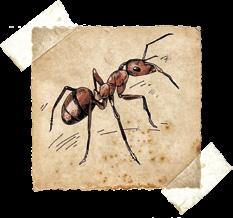
Prologue to Lesson 31
Essential Question | What do people learn by studying animals?
OVERVIEW
Preview
Students discuss Charles Henry Turner’s experiments in Buzzing with Questions. As they discuss these experiments, students practice listening closely to what others say. This work prepares students to identify similarities in experiments in lesson 31.
Learning Goal
Identify the steps of Charles Henry Turner’s scientific process.
LEARNING TASK: Share one thing that Charles Henry Turner discovers.
Language Progress
In this lesson, students work on this module speaking and listening goal: Listen closely to what others say.
To support students with beginning English proficiency, provide additional time for students to focus on what their partner is saying during the discussions. To support students with intermediate English proficiency, encourage them to ask questions about their partner’s response.
Vocabulary discover (v.) experiment (n.) scientist (n.)
Materials
TEACHER
• Buzzing with Questions
• Knowledge Cards: scientist, discover
• bowl
• water
• small objects that sink or float
• class Scientists’ Steps Flowchart
STUDENTS
• none
Preparation
• Buzzing With Questions is an unpaginated text. Number your text; begin with the title page—which includes the book title, author, and illustrator—as page 1. Pages on the left will be even, and pages on the right will be odd.
• Gather a bowl, water, and a few small objects to place in the bowl. See the Launch section for details.
• Create a class Scientists’ Steps Flowchart. See the Launch section for details.
110
Arts & Letters | © Great Minds PBC
LAUNCH
5 minutes
Practice Vocabulary
1. Display a bowl of water and a few small objects that may sink or float. Ask these questions:
Which objects will float?
Which objects will sink?
2. After students make predictions, invite them to place each item in the water to find out whether it sinks or floats.
3. Tell students that they just acted like scientists. Review the term scientist by displaying the Knowledge Card. Engage students in Vocabulary Exploration. Display the blank class Scientists’ Steps Flowchart. Add question in the first box. Remind students of the question posed earlier: Which objects will sink or float? Tell students that they conducted an experiment to find the answer. Add experiment in the second box on the chart.
Language Support
For students with beginning English proficiency, add images to the flowchart to support comprehension of the terms question, experiment, and discover.
4. Introduce the vocabulary term experiment by displaying the term. Engage students in Vocabulary Exploration.
Language Support
Scientists’ Steps Flowchart
Definition scientist (n.): a person who is trained in science and whose job involves doing research and solving problems
Definition
experiment (n.): something that is done as a test
The term experiment has a Spanish cognate: experimento. Share this language connection with students whose home language is Spanish.
5. Tell students that they will discuss Charles Henry Turner’s experiments.
111 1 | Module 2 | Arc F | Prologue to Lesson 31
Arts & Letters | © Great Minds PBC
LEARN 20 minutes
Discuss Questions, Experiments, and Discoveries
1. Tell students that they will practice listening closely to what their classmates say. Facilitate a class discussion of this question:
What are some ways that we can listen closely?
Key Ideas
• look at the person speaking
• not speak while someone else is speaking
• ask questions about what was said
2. Display pages 26–27 of Buzzing with Questions. Read aloud the first sentence, starting with “Questions kept circling.” Ask this question:
What insect does Charles have questions about?
3. Reinforce the correct response: bees. Direct attention to the flowchart. Ask this question: Charles Henry Turner has a question about bees. What will he do next?
4. Reinforce the correct response: He will do an experiment.
5. Read aloud the portion of page 27 from “In a St. Louis” to “Charles tried again.” Ask this question: What does Charles Henry Turner do in this experiment?
Key Ideas
• He puts red cardboard circles with honey where the bees fly.
• He watches to see whether the bees are interested.
1 | Module 2 | Arc F | Prologue to Lesson 31 112
Arts & Letters | © Great Minds PBC
6. Explain that Charles Henry Turner does not get his question answered, so he has to do another experiment.
7. Read aloud page 28, starting with “He caught bees.” Instruct students to Think–Pair–Share to answer this question:
What does Charles Henry Turner do in this experiment?
Remind students to practice listening closely to their partners.
Key Ideas
• He catches bees in a bottle.
• He pours bees onto the red circles with honey.
• He uses blue circles to see what bees will do.
8. Remind students that Charles Henry Turner uses experiments to find answers to his questions. Tell students that scientists like Charles Henry Turner hope to discover new information.
9. Introduce the vocabulary term discover by displaying the Knowledge Card. Engage students in Vocabulary Exploration. Write discover in the third box of the flowchart.
10. Instruct students to listen to find out what Charles Henry Turner discovers. Read the portion of page 28 from “Once the bees” to “circles carried honey.” Ask this question:
What does Charles Henry Turner discover?
11. Reinforce the correct response: Bees learn that there is honey on the red circles.
Language Expansion
For students with intermediate English proficiency, ask them to retell the steps that Charles Henry Turner takes to learn about bees.
12. Tell students that Charles Henry Turner now wants to know whether bees will be attracted to honey on blue circles. Instruct students to listen to find out what Charles Henry Turner discovers. Read aloud page 29, starting with “Whether he used.”
Definition discover (v.): to see, find, or understand something for the first time
1 | Module 2 | Arc F | Prologue to Lesson 31 113
Arts & Letters | © Great Minds PBC
LAND 5
minutes
Demonstrate Learning
1. Introduce the learning task. Instruct students to Think–Pair–Share to answer this question: What does Charles Henry Turner discover?
Remind students to listen closely to what their partner says.
Analyze Student Progress
Monitor: Do students share that Charles Henry Turner discovers that bees can see color?
Offer Immediate Support: If students need additional support discussing Charles Henry Turner’s discovery, reread the last sentence on page 29 and ask this question: What was Charles Henry Turner the first to prove?
2. Tell students that paying attention to Charles Henry Turner’s questions, experiments, and discoveries helps them understand how scientists work.
1 | Module 2 | Arc F | Prologue to Lesson 31 114
Arts & Letters | © Great Minds PBC
Prologue to Lesson 32
Essential Question | What do people learn by studying animals?
OVERVIEW
Preview
Students describe how Charles Henry Turner solves problems in Buzzing with Questions. As they discuss these problems, students practice listening closely to what others say. This work prepares students to discuss how Charles Henry Turner is indefatigable in lesson 32.
Learning Goal
Understand how Charles Henry Turner solves problems.
LEARNING TASK: Share how Charles Henry Turner solves a problem involving spiders.
Language Progress
In this lesson, students work on this module speaking and listening goal: Listen closely to what others say.
To support students with beginning English proficiency, encourage them to review questions and answers by using their home language. To support students with intermediate English proficiency, encourage them to state why they agree with what their partner says.
Vocabulary
indefatigable (adj.) problem (n.)
Materials
TEACHER
• Buzzing with Questions
• problem story stone (Prologue Reference Charts appendix)
STUDENTS
• none
Preparation
• Buzzing with Questions is an unpaginated text. Number your text; begin with the title page—which includes the book title, author, and illustrator—as page 1. Pages on the left will be even, and pages on the right will be odd.
• Make a problem story stone by cutting out the story element image from the page in the Prologue Reference Charts appendix. Alternatively, cut out the image and paste it onto a real stone.
116
Arts & Letters | © Great Minds PBC
LAUNCH 5 minutes
Practice Vocabulary
1. Display the problem story stone. Ask students this question:
What does this story stone represent?
2. Reinforce the correct response: the problem.
3. Introduce the vocabulary term problem by displaying the term. Engage students in Vocabulary Exploration.
Language Support
For students with beginning English proficiency, reinforce the meaning of the term by facilitating a brief discussion of problems students face at school.
4. Tell students that they will discuss how Charles Henry Turner solves his problems in Buzzing with Questions.
LEARN 20 minutes
Discuss Problems That Charles Henry Turner Faces
1. Display pages 4–5 of Buzzing with Questions, and read aloud the portion from “Questions that itched” to “all his questions.” Facilitate a class discussion of this question:
What problem is mentioned on these pages?
2. Reinforce the correct response: There were never enough books to answer all of Charles Henry Turner’s questions.
3. Read aloud the portion of page 5 from “Charles Henry Turner” to “And Charles did.” Ask this question:
What does Charles Henry Turner do to solve his problem?
Definition problem (n.): something that causes trouble or worry; a challenge
117 1 | Module 2 | Arc F | Prologue to Lesson 32
Arts & Letters | © Great Minds PBC
4. Reinforce the correct response: finds answers.
5. Direct attention to pages 6–7. Ask this question:
Where does Charles Henry Turner go to find answers?
6. Reinforce the correct response: to college.
7. Read aloud page 6, starting with “He read and.” Instruct students to Think–Pair–Share to answer this question:
What does Charles Henry Turner do to get to college?
Remind students to listen closely to what their partner says.
Key Ideas
• reads
• studies
• works hard
8. Emphasize that many people thought that Charles Henry Turner would not go to college. Tell students that Charles Henry Turner worked very hard to get into college.
9. Display pages 10–11. Ask these questions:
How would you describe Charles Henry Turner on these pages? How do you think he feels?
Key Ideas
• happy
• excited
• determined
10. Instruct students to listen closely to how their classmates describe Charles Henry Turner.
1 | Module 2 | Arc F | Prologue to Lesson 32 118
Arts & Letters | © Great Minds PBC
11. Read aloud the portion of page 10 from “Charles was ‘indefatigable’” to “a classmate said.” Direct attention to the word indefatigable.
12. Introduce the vocabulary term indefatigable by displaying the term. Engage students in Vocabulary Exploration.
13. Explain that these illustrations show that Charles Henry Turner is indefatigable because he is working to solve his problems and does not look tired.
14. Invite students to share personal examples of being indefatigable to connect with the text. Ask this question:
What is something that you enjoy working hard at?
15. Instruct students to look through the text with a partner, and to find another example of a problem that Charles Henry Turner works hard to solve.
Language Support
For students with intermediate English proficiency, direct them to pages 28–29. Instruct students to describe the problem that Charles Henry Turner is trying to solve in this part of the text.
Key Ideas
• wonders whether bees can see color
• tries to find out whether spiders can learn
• faces racial prejudice
16. Instruct students to discuss this question with a partner:
How does Charles Henry Turner solve these problems?
Key Ideas
• conducts experiments
• works hard
• gets involved in his community
Definition indefatigable (adj.): able to work or continue to work for a long time without becoming tired
1 | Module 2 | Arc F | Prologue to Lesson 32 119
Arts & Letters | © Great Minds PBC
LAND 5 minutes
Demonstrate Learning
1. Introduce the learning task. Instruct students to discuss these questions with a new partner:
What problems does Charles Henry Turner face?
How does he solve these problems?
Remind students to listen closely to what their partner says.
Analyze Student Progress
Monitor: Do students discuss the challenges that Charles Henry Turner faces and the steps he takes to overcome these challenges?
Offer Immediate Support: If students need additional support describing a problem and solution, describe one of the problems mentioned in the text, such as Charles Henry Turner not finding the answers to his questions. Then prompt students to think about how he solves this problem.
2. Listen for students to address key ideas in their discussions.
Key Ideas
• problems: has many unanswered questions, knows people think he won’t go to college, wants to know more about insects’ behavior
• solutions: reads books, works hard, conducts experiments
3. Tell students that discussing how characters solve problems can help readers better understand the characters.
1 | Module 2 | Arc F | Prologue to Lesson 32 120
Arts & Letters | © Great Minds PBC
Prologue Vocabulary
ability (n.)
the power or skill to do something to lesson 9
camouflage (n.)
something (such as color or shape) that protects an animal from attack by making the animal difficult to see in its surroundings to lessons 8, 13, and 14 | lesson 10

discover (v.)
to see, find, or understand something for the first time to lesson 31 | lesson 31

evidence (n.) something that shows that something else exists or is true to lesson 14
noun (n.)
a word that identifies a person, place, or thing
to lessons 5, 10, 20, and 25 | lesson 6
observe (v.) to notice someone or something carefully to lessons 3 and 25 | lesson 3

change (v.) to become different to lesson 15
character (n.) a person or creature in a story to lesson 3
curious (adj.)
having a desire to learn or know more about something to lesson 26
experiment (n.)
something that is done as a test to lesson 31
feature (n.)
an interesting or important part or ability to lessons 8, 9, 14, and 18 | lesson 7

indefatigable (adj.)
able to work or continue to work for a long time without becoming tired to lesson 32 | lesson 32
problem (n.)
something that causes trouble or worry; a challenge to lesson 32
pronoun (n.)
a word that replaces a noun to lesson 27 | lesson 27
122
Arts & Letters | © Great Minds PBC
scientist (n.)
a person who is trained in science and whose job involves doing research and solving problems to lessons 27, 30, and 31 | lesson 27

verb (n.)
a word that expresses an action to lessons 10, 20, and 25 | lesson 11
season (n.)
one of the four periods (spring, summer, autumn, and winter) into which the year is commonly divided to lesson 13
similar (adj.) almost the same as someone or something else to lessons 4 and 19
survive (v.) to continue to live to lesson 8 | lesson 10

unique (adj.) very special or unusual to lesson 8 | lesson 8

1 | Module 2 | Prologue Vocabulary 123
Arts & Letters | © Great Minds PBC
Prologue Reference Charts
Story Stones
1 | Module 2 | Prologue Reference Charts 127
ARts & LetteRs | © Great Minds PBC
Animal Study
Color What color is it?
A two-column chart.
Size How big is it?

Ability What can it do?
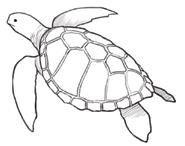
1 | Module 2 | Prologue Reference Charts 128
Run Fly Swim
ARts & LetteRs | © Great Minds PBC
Question Word Cards
Six word cards labeled Who, Where, How, When, Why, and What.
Who Where
How
When
Why What
1 | Module 2 | Prologue Reference Charts 129
ARts & LetteRs | © Great Minds PBC
Feeling Words
A group of emojis shows different feelings. The drawn faces show happy, loving, sad, angry or mad, disappointed, worried, excited, curious, proud, scared, nervous, and shy.
Happy Scared Angry Mad Shy Curious Sad Proud Excited Disappointed Loving Nervous Worried 1 | Module 2 | Prologue Reference Charts 130
ARts & LetteRs | © Great Minds PBC
Prologue Student Resources
L3 | Elephant Parts
Color each object to represent the mouse who observed the object.
Six boxes each with a drawing of an object. A pillar. A snake. A spear. A cliff. A fan. A rope.
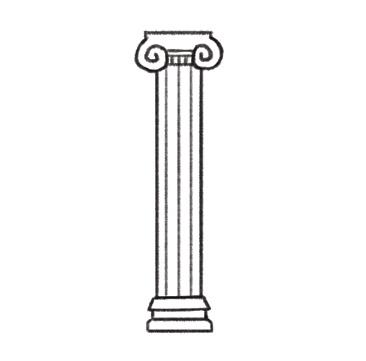
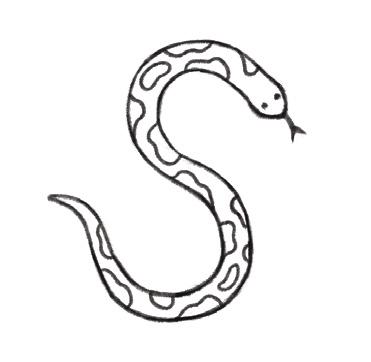
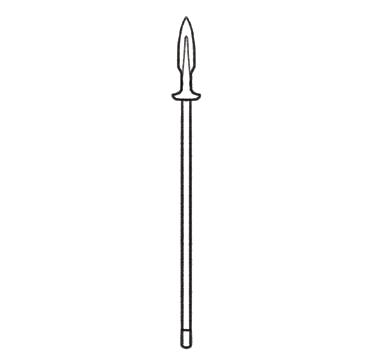
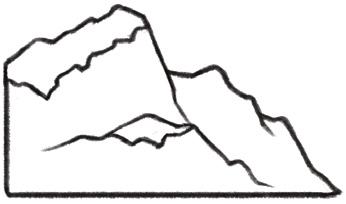
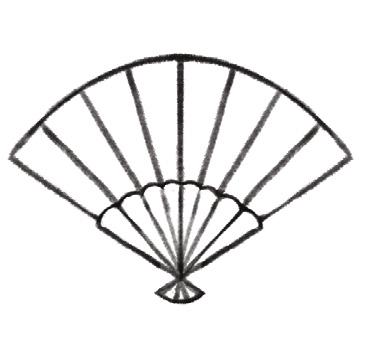
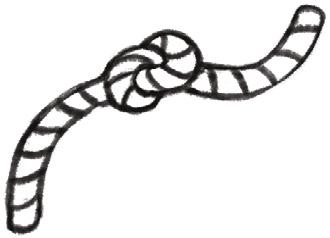
This page may be reproduced for classroom
1 | Module 2 | Prologue to Lesson 3
only. 133
use
ArTs & LeTTers | ©
Minds PBC
Great
L4 | Elephant Outline
Attach your object to a similar part of the elephant.
1 | Module 2 | Prologue to Lesson 4 134 This
may
reproduced
use only.
page
be
for classroom
| ©
PBC
ArTs & LeTTers
Great Minds
L14 | Treefrog Diagram
Label the parts of the treefrog.
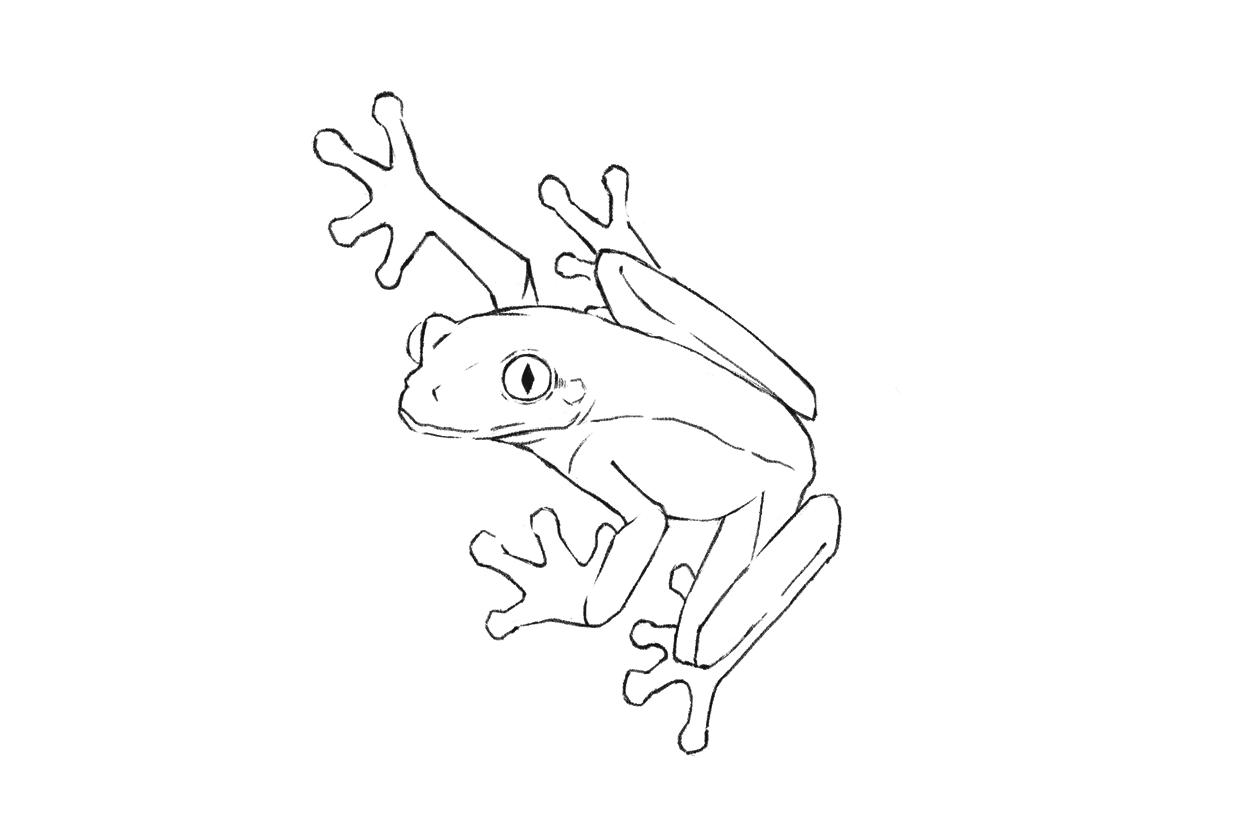
This page may be reproduced for classroom
1 | Module 2 | Prologue to Lesson 14
only. 135
use
|
PBC
ArTs & LeTTers
©
Great Minds
L25 | Jane’s Actions
Circle and write the correct verb to complete each sentence.
1. Jane (hide, hides) in the chicken coop.
2. Jane and Jubilee (hide, hides) in the chicken coop.
1 | Module 2 | Prologue to Lesson 25 136
This page may be reproduced for classroom use only.
ArTs & LeTTers | © Great Minds PBC
L27 | Pronoun Practice
Select the pronoun that completes each sentence. Write the pronoun in the blank.
Two incomplete sentences, each with a word missing. At the top are two answer choice boxes that read, He and It.
1. Jubilee is Jane’s toy. is her best friend.
2. Jane read a book. was about animals.
1 | Module 2 | Prologue to Lesson 27
use only. 137 He
This page may be reproduced for classroom
It
ArTs & LeTTers | © Great Minds PBC
Works Cited
Harrington, Janice, N. Buzzing with Questions: The Inquisitive Mind of Charles Henry Turner. Illustrated by Theodore Taylor III, Calkins Creek, 2019.
Jenkins, Steve, and Robin Page. What Do You Do with a Tail Like This? Houghton Mifflin, 2003.
McDonnell, Patrick. Me … Jane. Little, Brown, 2011.
National Center for Education Statistics. “English Learners in Public Schools.” Condition of Education, US Department of Education, Institute of Education Sciences, 2022, https://nces.ed.gov/programs/ coe/indicator/cgf.
Sidman, Joyce. Dear Treefrog. Illustrated by Diana Sudyka, Houghton Mifflin Harcourt, 2021.
Stewart, Melissa. Feathers: Not Just for Flying. Illustrated by Sarah S. Brannen, Charlesbridge, 2014.
WIDA. WIDA English Language Development Standards Framework 2020 Edition: Kindergarten–Grade 12. Board of Regents of the University of Wisconsin System, https://wida.wisc.edu/sites/default/files/resource/ WIDA-ELD-Standards-Framework-2020.pdf.
Young, Ed. Seven Blind Mice. Philomel Books, 1992.
138
Arts & Letters | © Great Minds PBC
Credits
Great Minds® has made every effort to obtain permission for the reprinting of all copyrighted material. If any owner of copyrighted material is not acknowledged herein, please contact Great Minds for proper acknowledgment in all future editions and reprints of this module.
Cover, Hippopotamus (“William”), 1961–1878 BCE Sculpture, 7 8 7 × 2 16 15 × 4 16 7 in, Gift of Edward S. Harkness, 1917, Courtesy of the Metropolitan Museum of Art, New York, NY; page 1, Ercan Uc/Shutterstock.com; page 2, Seven Blind Mice book cover Copyright © 1992 Ed Young, Me…Jane book cover Copyright © 2011
Acknowledgments
Karen Aleo, Trevor Barnes, Allie Beman, Madison Bonsignore, Kelsey Bordelon, Sarah Brenner, Mairin Broadwell, Catherine Cafferty, Melissa Chung, Emily Climer, Ashley Cook, Julia Dantchev, Camille Daum, Laurie Delgatto-Whitten, Enaka Enyong, Angelica Escalante, Jen Forbus, Pamela Frasier, Nina Goffi, Caroline Goyette, Lorraine Griffith, Emily Gula, Shelley Hampe, Elizabeth Haydel, Robin Hegner, Sarah Henchey, Patricia Huerster, Holli Jessee, Stephanie Kane-Mainier, Lior Klirs, Liana Krissoff, Karen Latchana Kenney, Karen Leavitt, Farren Liben, Brittany Lowe, Whitney Lyle, Liz Manolis, Meredith McAndrew, Cathy McGath, Emily McKean, Maya McLaughlin, Maia Merin, Patricia Mickelberry, Julie Mickler, Andrea Minich, Lynne Munson, Katie Muson, Gabrielle Nebeker, Amy Ng, Vivian Nourse, Carol Paiva, Catherine Paladino, Michelle Palmieri, Marya Parr, Katie Pierson, Eden Plantz, Jovanni Ramos, Natalie Rebentisch, Rachel Rooney, Miguel Salcedo, Lori Sappington, Amy Schoon, Carolyn Scott, Nicole Shivers, Danae Smith, Rachel Stack, Susan Stark, Seshmi Taylor Williams, Sarah Turnage-Deklewa, Kati Valle, Kara Waite, Keenan Walsh, Katie Waters, Sarah Webb, Erika Wentworth, Margaret Wilson, Eleanor Wolf
Patrick McDonnell, Freebilly Photography/Shutterstock.com; page 3, Lindsay Helms/Shutterstock.com, Lukas Kovarik/Shutterstock.com; page 15, 90, and 122, Vach cameraman/Shutterstock.com; pages 33, 39, 57, 69, and 122, Satvchannel/ Shutterstock.com; pages 34 and 123, Vlad Sokolovsky/Shutterstock.com; pages 36, 53, 58, and 122, Longjourneys/Shutterstock.com; pages 99, 105, 111, and 123, Chubykin Arkady/Shutterstock.com; page 127, xpixel/Shutterstock.com.
All other images are the property of Great Minds.
Ana Alvarez, Lynne Askin-Roush, Stephanie Bandrowsky, Mariel Bard, Rebeca Barroso, Brianna Bemel, David Blair, Charles Blake, Lynn Brennan, Adam Cardais, Dawn Cavalieri, Tatyana Chapin, Christina Cooper, Gary Crespo, Lisa Crowe, David Cummings, Cherry dela Victoria, Sandy Engelman, Tamara Estrada Del Campo, Ubaldo Feliciano-Hernandez, Soudea Forbes, Diana Ghazzawi, Laurie Gonsoulin, Kristen Hayes, Marcela Hernandez, Sary Hernandez, Abbi Hoerst, Ashley Kelley, Lisa King, Sarah Kopec, Drew Krepp, Jennifer Loomis, Christina Martire, Siena Mazero, Alicia McCarthy, Thomas McNeely, Cindy Medici, Ivonne Mercado, Brian Methe, Sara Miller, Christine Myaskovsky, Mary-Lise Nazaire, Tara O’Hare, Tamara Otto, Christine Palmtag, Katie Prince, Jeff Robinson, Gilbert Rodriguez, Karen Rollhauser, Richesh Ruchir, Isabel Saraiva, Gina Schenck, Leigh Sterten, Mary Sudul, Deanna Thomann, Tracy Vigliotti, Bruce Vogel, Dave White, Charmaine Whitman, Nicole Williams, Glenda Wisenburn-Burke, Samantha Wofford, Howard Yaffe
1 | Module 2 | Credits 139
Arts & Letters | © Great Minds PBC
MORE MEANINGFUL ENGLISH FOR ALL
Prologue lessons support students’ vocabulary acquisition, and oral language development. Through this research-based instructional approach, students—including multilingual learners and those with language-based disabilities—gain confidence and are better prepared to build enduring knowledge.
Prologue prepares every student to succeed.
GRADE 1 MODULES
Module 1 | A World of Books
Module 2 | Creature Features
Module 3 | Wind Power
Module 4 | World Tales
ISBN 979-8-88811-240-3
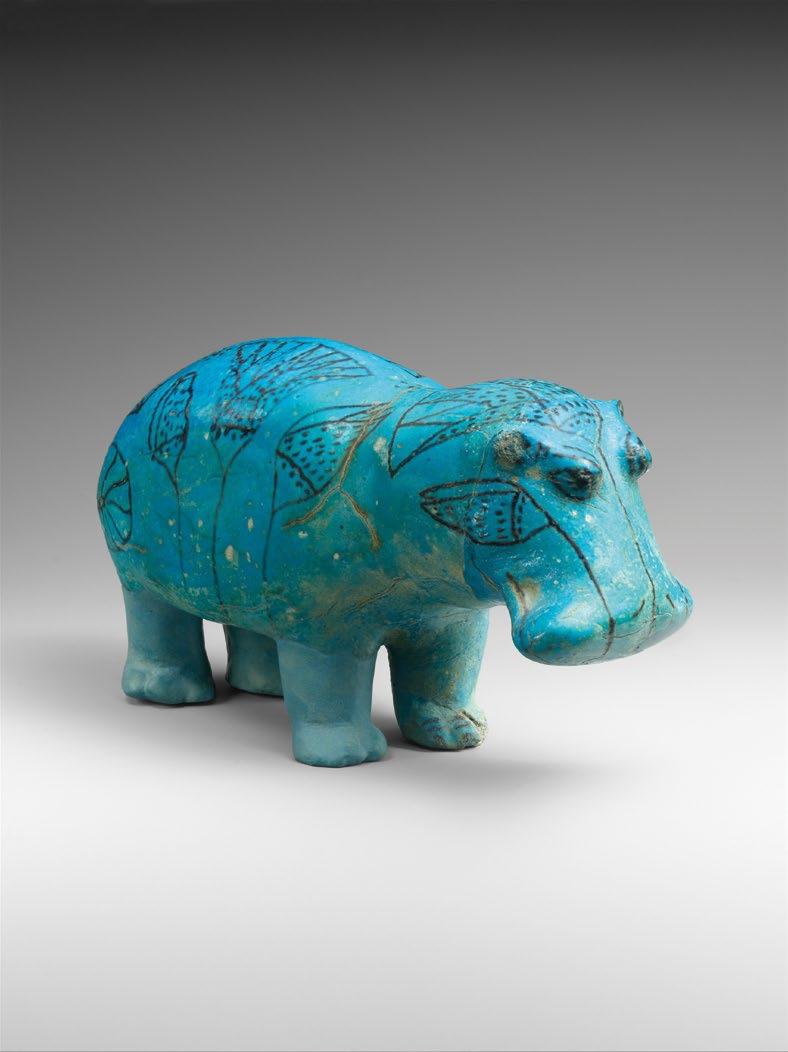
ON THE COVER
Hippopotamus (“William”), 1961–1878 BCE
Sculpture, 7⅞ × 2 15⁄ 16 × 4 7⁄ 16 in
A
9 798888 112403
Gift of Edward S. Harkness, 1917
Courtesy of the Metropolitan Museum of Art, New York, NY