IMMIGRANT CHILDREN TRANSFORM HEARTS BISHOP STOWE ON THE CHURCH IN APPALACHIA
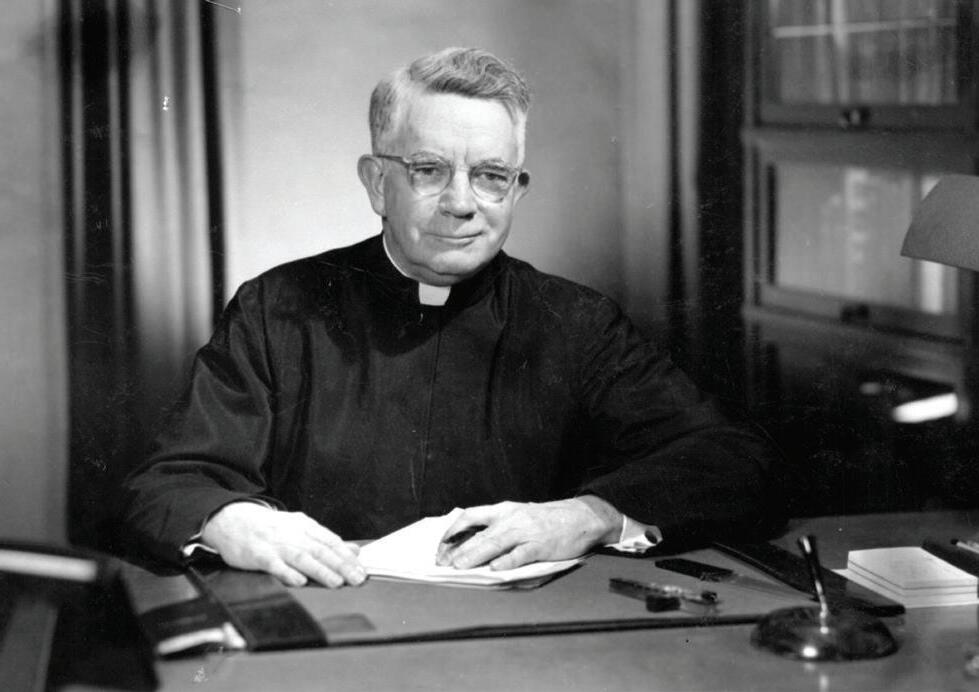
We are a Catholic society of priests and Brothers who, along with numerous coworkers, establish the Catholic Church in small-town and rural America. Founded in 1939 by Father William Howard Bishop, Glenmary is the only religious community devoted exclusively to serving the spiritually and materially poor in the rural US home missions. Today, supported entirely through freewill offerings, we staff missions and ministries throughout Appalachia and the South.
Glenmary missioners serve in areas where frequently less than one percent of the population is Catholic, a significant percentage have no church affiliation, and the poverty rate is often twice the national average. Glenmary is known for respecting the many cultures encountered in the home missions. Our missionary activity includes building Catholic communities, fostering ecumenical cooperation, evangelizing the unchurched, social outreach, and working for justice.
GLENMARY CHALLENGE
Our quarterly magazine has three goals: to educate Catholics about the US home missions, to motivate young men to consider Glenmary priesthood or brotherhood, and to invite all Catholics to respond to their baptismal call to be missionary by partnering with Glenmary as financial contributors, prayer partners, professional coworkers, and/or volunteers.
Glenmary Challenge is sent to all donors, to US diocesan clergy, and to anyone who requests it. (To begin receiving issues, use the contact information below.)
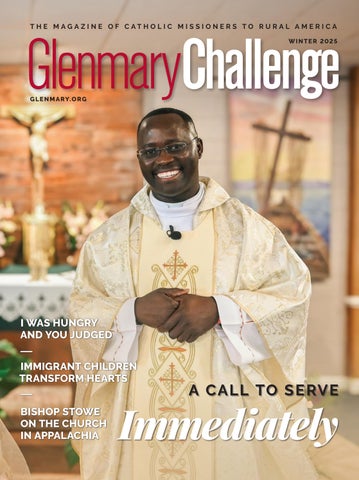
As a missionary society, Glenmary is no stranger to transition and change. Our priests and Brothers leave one mission area to be sent to a new place, to build upon the foundation that came before them. Father Cavine Okello is experiencing this firsthand. Just weeks after his priestly ordination in Kenya, he assumed pastor of one of our missions in Eastern North Carolina. Assistant editor Omar Cabrera shares what so far has been Father Cavine’s extraordinary journey. Sometimes, change includes softening our hearts. Father Steven Pawelk reflects on how the children of immigrants have changed his heart and his perspective as a Catholic pastor. He prays that they can soften other peoples’ hearts too. You can read his essay in this issue.
And Father Neil Pezzulo reminds us of the importance of empathy, because you never know what is happening in someone else’s life.
Change affects us all, even in the Communications Office. After the publication of our last issue, Francisco Cepeda resigned as editor of the Glenmary Challenge. We wish him the best in his future endeavors.
In the midst of this transition, your assistant editors—Laney, Omar, and Theresa—remain committed to sharing the good news and the fruitful works of Glenmary.
Despite all these changes, one thing remains constant—Glenmary's mission to serve the people of Appalachia and rural America. That’s been true for more than 85 years, as seen by the 50th anniversary of the Church document, This Land is Home to Me, which Glenmary helped bring to fruition. John Feister, our retired editor, talks on the subject with Bishop Stowe.
Our newest editor, Lindsay Braud, will have started as you read this, and she will introduce herself in the next issue. We thank you for your loyalty to us and continued readership of the Glenmary Challenge
We hope you have a blessed Advent and Merry Christmas!
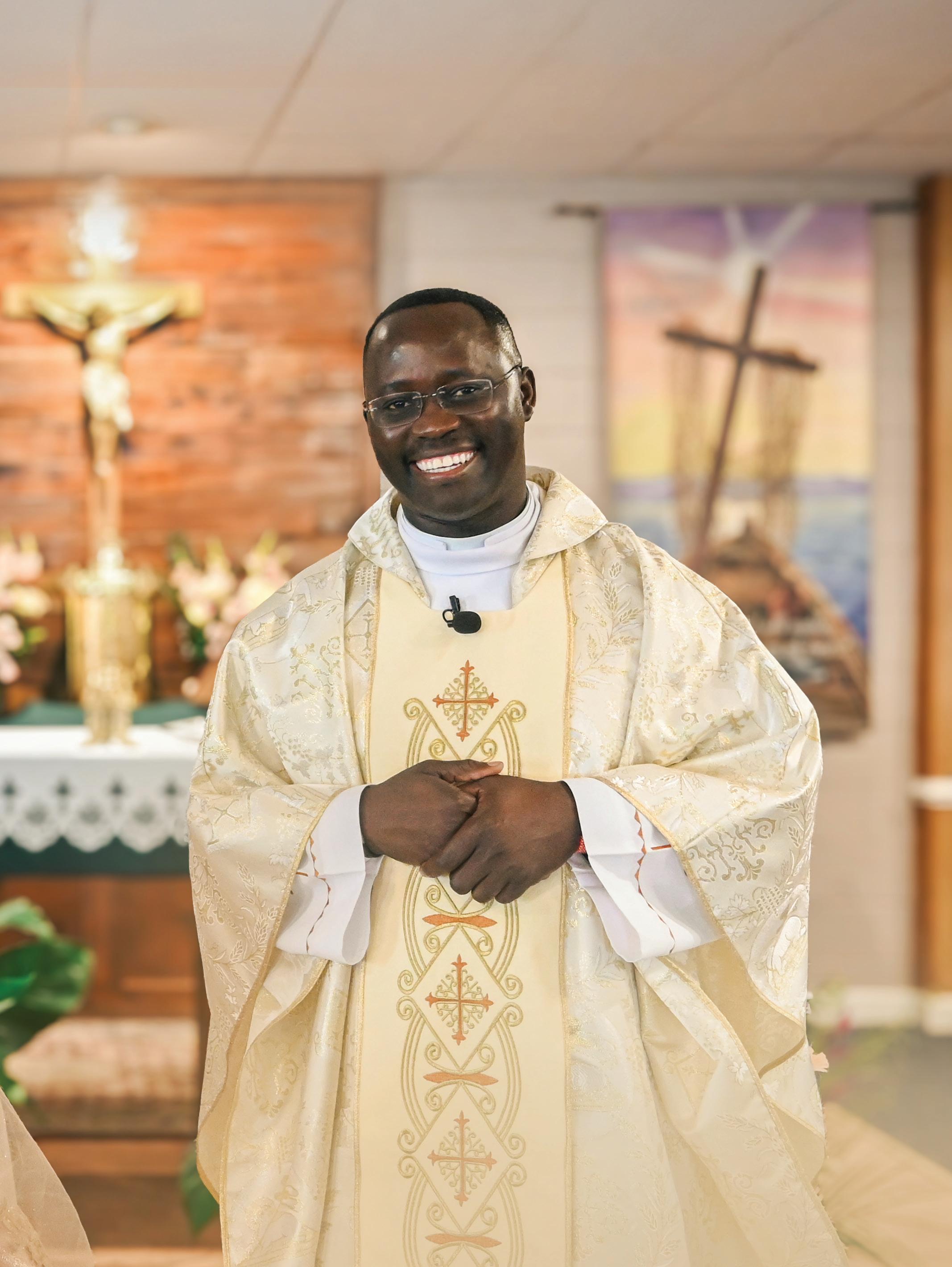
Just days after his ordination as a priest, Father Cavine Okello took the reins of a mission parish. Months later, he reflects on this extraordinary journey.
12 14 16 I WAS HUNGRY AND YOU JUDGED MY HUNGER
God is greater than our minds and hearts. We don’t get to measure someone else’s hunger or faith. By Father Neil Pezzulo
CHILDREN OF IMMIGRANTS TRANSFORM HEARTS
As a mission pastor of immigrants and their families, immigration is more than a legal issue. It’s a moral one. By Father Steven Pawelk THIS LAND IS HOME TO ME: AN INTERVIEW WITH BISHOP STOWE
Fifty years ago, Glenmary helped create a document on the Church in Appalachia. Bishop Stowe reflects on its relevance today. By John Feister
Chris Phelps, Lucy Putnam, Father Vic Subb, Father Richard Toboso, Father Aaron Wessman
14
PAGE 16
GlenmaryChallen
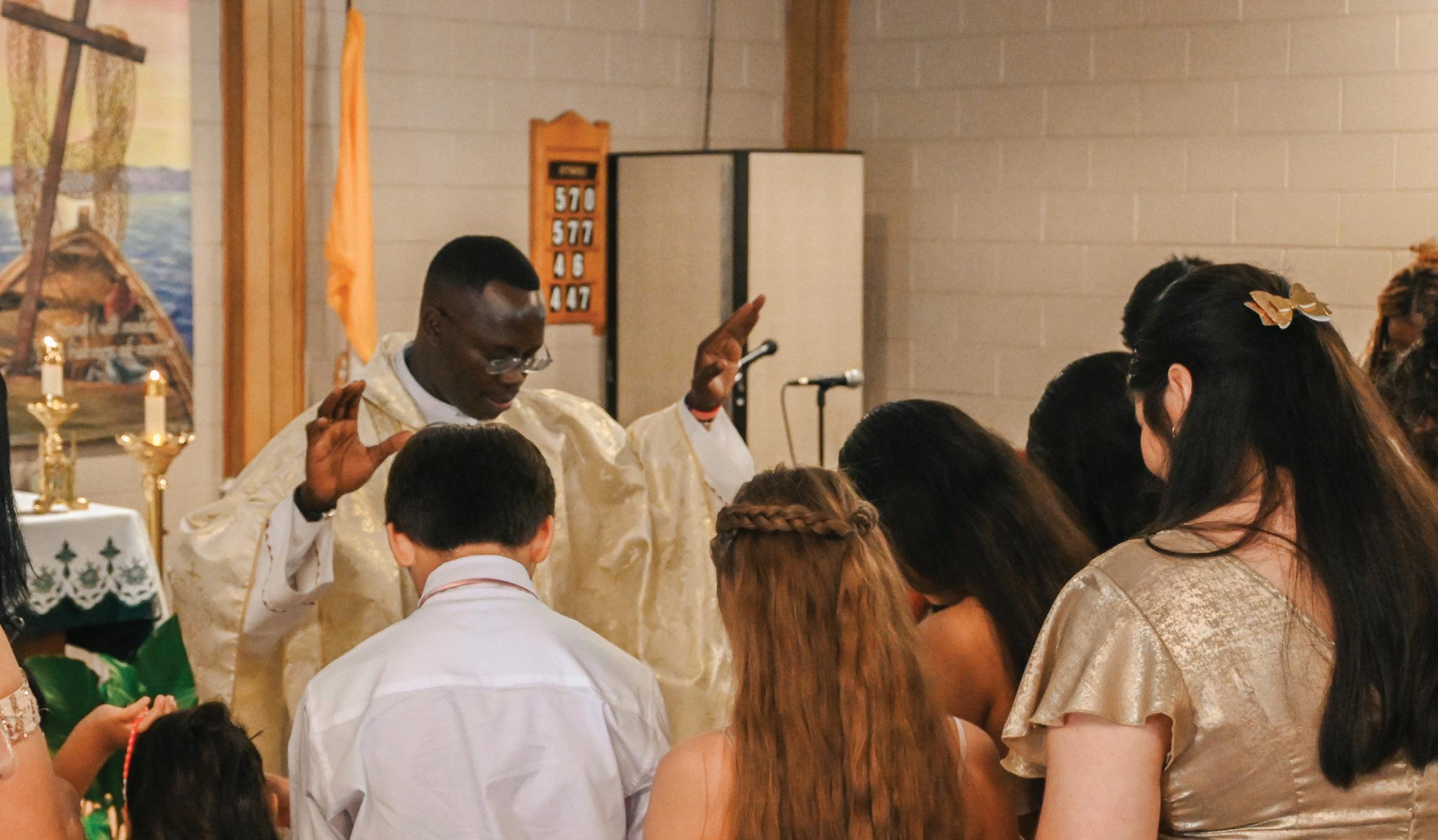
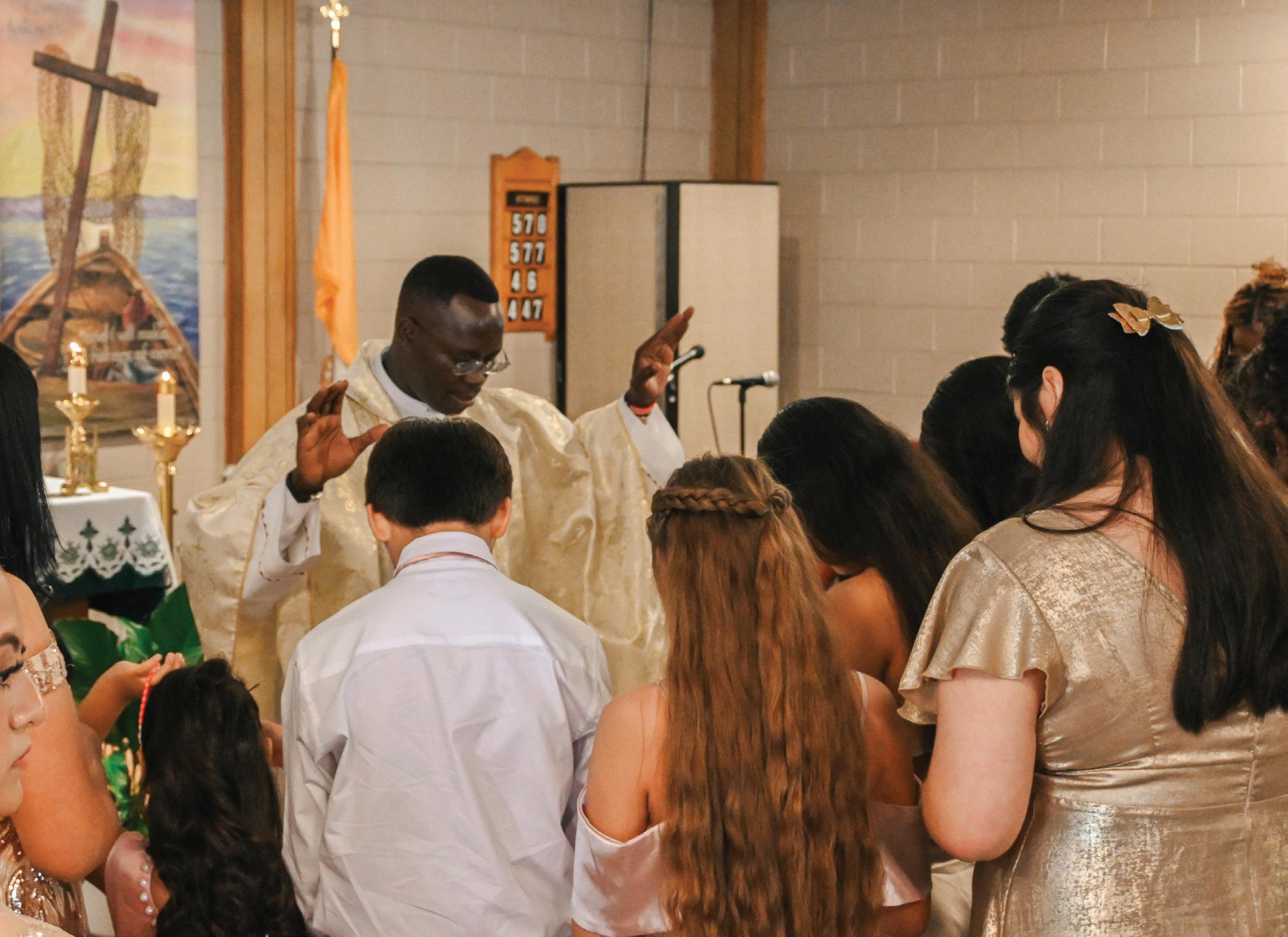
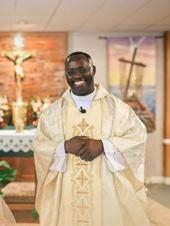
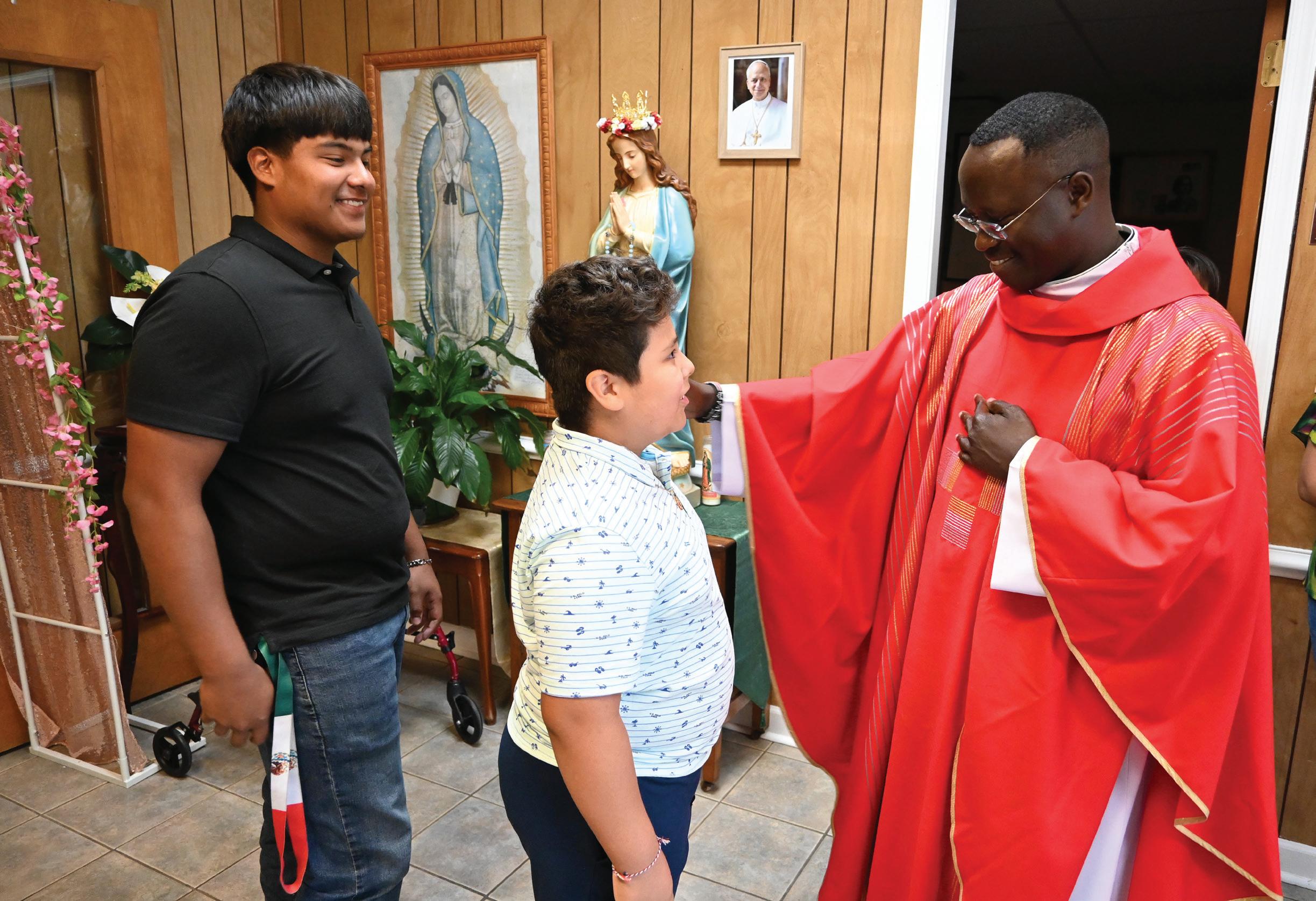
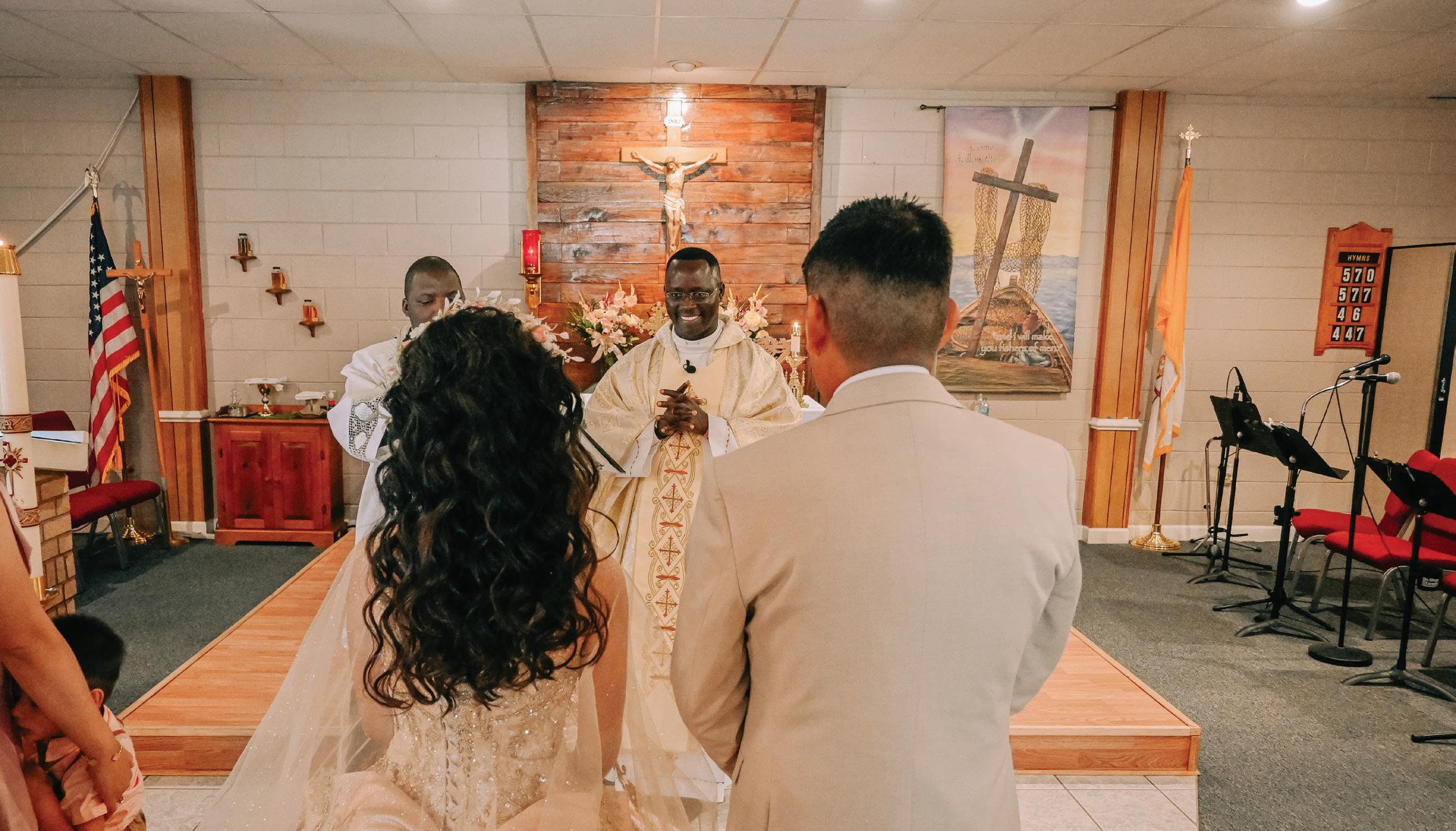
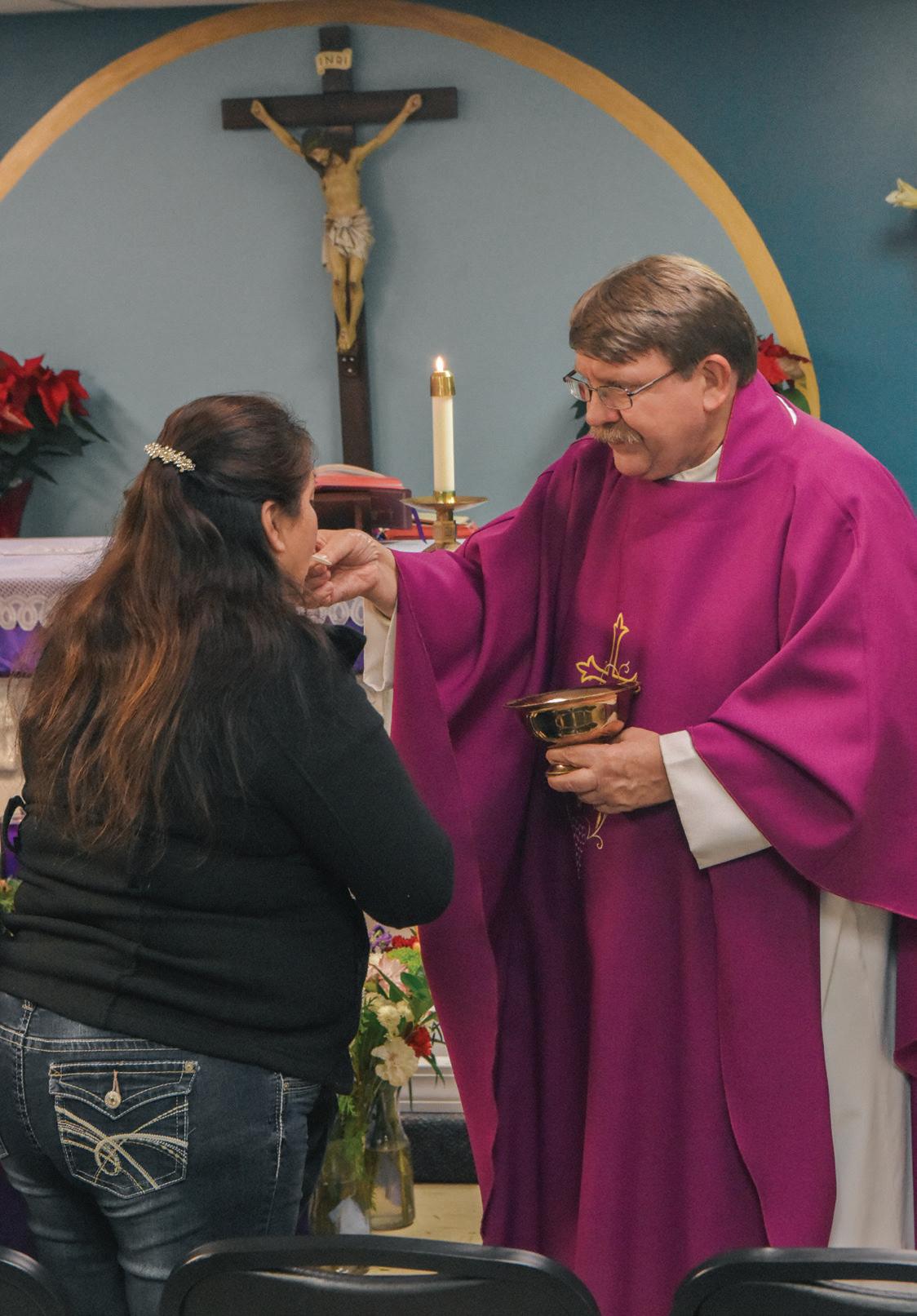
Father Cavine shows his joy after celebrating a quinceañera Mass as parish pastor of Saint Joan of Arc, in Plymouth, North Carolina. Photo by Omar Cabrera.
Photo by Ashley Lodge
Photo courtesy of the Diocese of Lexington
Photo by Omar Cabrera
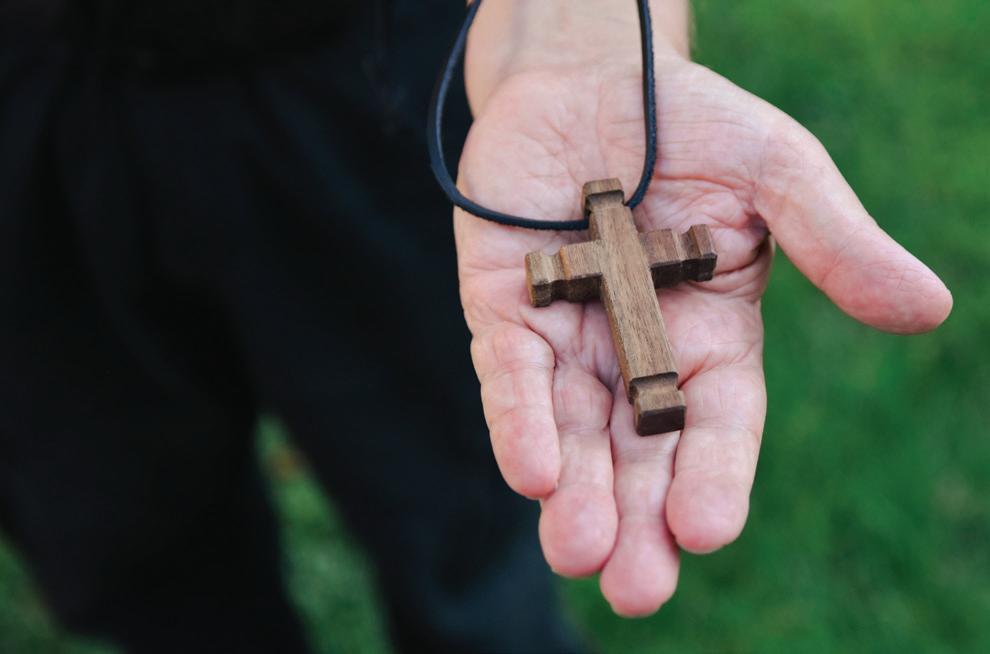
Glenmary Brother Joe Steen crafted these simple, walnut wood crosses. They are a reminder to live out our missionary vocation.
how can i be a
MISSIONER TODAY?
from
the president Father Dan Dorsey
Father Vic Subb, a faithful and inspiring Glenmarian, has long been a living example of what it means to be a Glenmary missioner. If you’ve been reading your Challenges you might know that he’s been having health issues. As he recovers, but ponders what’s next, he continues to embody that missionary spirit—not through travel or ministry in one of our Glenmary missions, but through prayer, presence, and asking a simple daily question: “How can I be a missioner today? ”
It’s a question that grounds and defines him. If we follow Jesus, it’s a question that challenges all of us. It reminds us that the missionary call isn’t tied to geography, age, or ability. It ’s about disposition, awareness, intention, and presence. You can be a missioner even from a hospital bed, on your morning commute, at your kitchen table, or in line at the grocery store. That’s the power and beauty of missionary discipleship—it’s accessible to all of us, every day.
Glenmary’s Missionary Cross
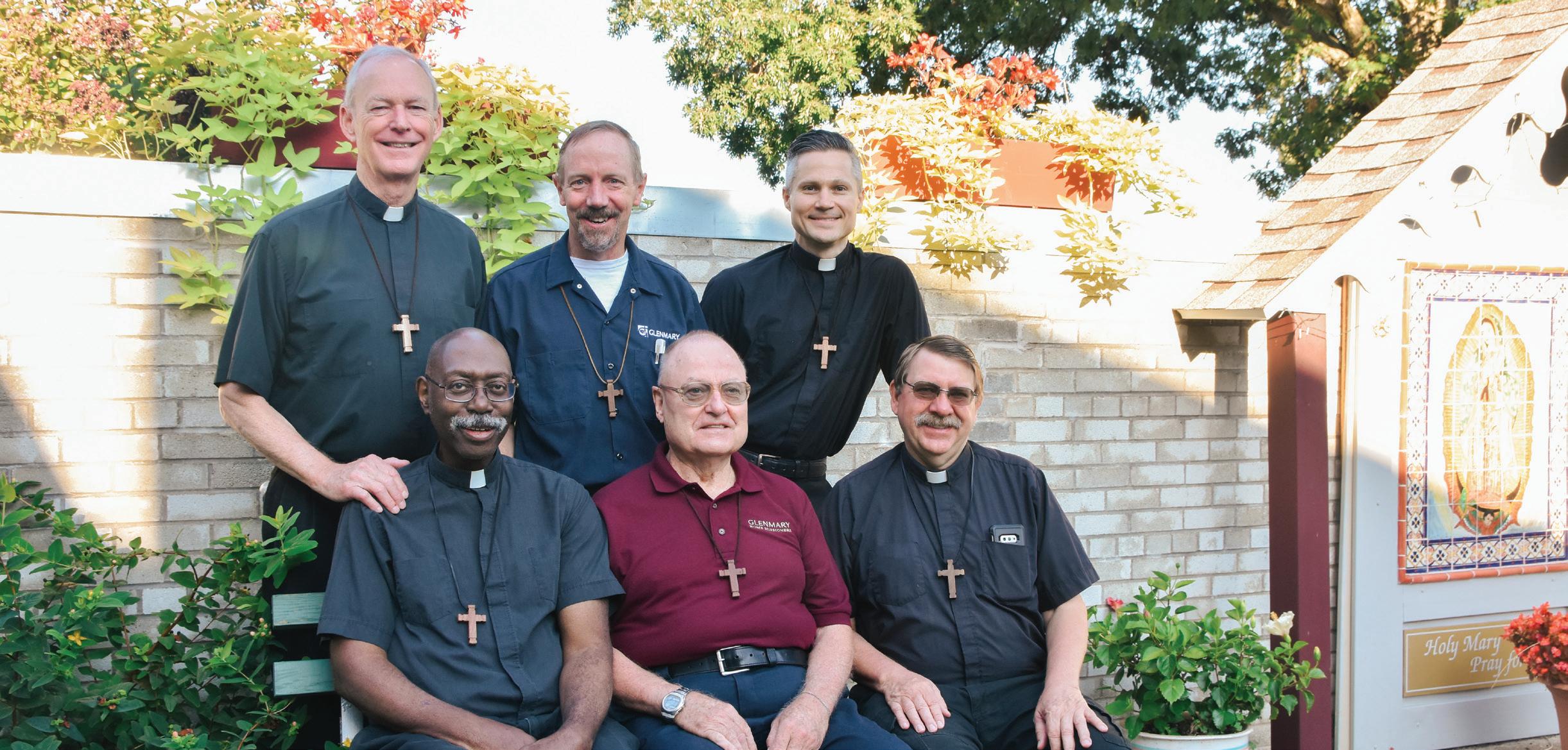
A few years ago, Brother Joe Steen went to his woodshop and created the Missionary Cross for Glenmary. We don’t have any kind of habit—our priests often wear clerical shirts, and Brothers wear everyday clothes. We chose this cross, hanging on a simple necklace, as a way to identify Glenmarians. We present it to new members at their Final Oath.
Brother Joe, builder of churches and craftsman, handmade each of the crosses and while they are all the same, there are subtle differences. The cross is a humble, powerful sign of our commitment to Christ, his mission, and our Glenmary way of life.
The symbolism of the cross speaks deeply to Glenmary’s charism and way of life. It also captures who each of us is called to be in our missionary discipleship. Brother Joe set out with an idea in mind. These crosses:
• are walnut wood – a native American wood, reminding us of the land and people we are called to serve
• have a simple design – representing the simplicity of our lives and those we walk with
• have curved indentations – signs of gentleness and the tender mercy of God
• have imperfect facets – a reminder of our humanity and our ongoing need for redemption through Jesus Christ
Each Glenmarian wears this cross at significant Glenmary gatherings—funerals, oaths, regional or national events. But we also wear it whenever our hearts call us to remember our oath and to live our missionary vocation.
Do you have a “missionary cross” that you wear or carry to remind you of your missionary discipleship?
Missionary Moments in Daily Life
You don’t need a title to be a missioner. You just need
Photo by John Feister
a heart that says “yes” in the small things. The witness of Father Vic is that he always seems to have time for those he encounters. How can you be a missioner today?
Here are a few examples from Father Vic’s playbook:
• Begin with gratitude. Notice the ordinary blessings—clean water, a warm bed, a meal shared, a supportive community. Say a blessing for each of them. Live with an awareness that nothing is guaranteed and everything is grace.
• Pay attention to people. Service workers. Strangers. Neighbors. Offer a warm greeting, a smile, a “thank you.” Be the person who isn’t in a hurry. Be someone who listens.
• Recognize Christ in everyone. Everyone you meet is carrying something: a burden, a worry, a hope. See with the eyes of Christ. Respond with patience, mercy, and love.
Other questions for all of us to ponder:
• Have you encountered someone recently who was the gentle, loving presence of Jesus to you?
• Have you taken a small action—intentional, compassionate—that made someone feel seen or valued?
The Missionary Cross is a sign of a Glenmarian's commitment to Christ, his mission, and the Glenmary way of life.
Would you be willing to share that moment? I would love to hear from you. Whether it’s a story of someone who touched your life, or a moment when you lived your missionary call in the ordinary moments of life, email your thoughts to ddorsey@glenmary.org. You can use the address on the inside cover if you prefer.
Remember, the missionary heart beats not only in far-off places, but in everyday encounters—in smiles, in service, in silence, and in love. So let us each begin today with Father Vic’s simple, profound question: “ How can I be a missioner today? ”
Glenmary News & Notes
Mass of Remembrance and Hope
On Friday, September 26, St. Michael the Archangel mission in Unicoi County, Tennessee, held a Mass of remembrance and hope in memory and honor of the six victims who died in the flooding caused by Hurricane Helene one year ago. The entire community was invited. Also in attendance were pastors from other churches, city officials, and many non-Catholics.
“The Mass was very meaningful to me because this is the way we celebrate our departed,” says Lorena Reynoso, St. Michael’s director of religious education.
After Mass, Father Tom Charters blessed a memorial tree, dedicated to the flood victims, located on the church grounds. Then the community shared a meal together. “The fellowship we had after Mass was just as special,” Lorena says. “Everyone enjoyed each other’s company and memories and acknowledgement of all that we have overcome in the last year.”
The event was one of several that took place in the community hosted by the Unicoi County long-term recovery group "to restore hearts, rebuild hope, and honor the journey since Hurricane Helene."
COMMUNITY / Flood anniversary
Photo by John Feister
Photo by Lorena Reynoso
Father Tom Charters (left) blesses a tree dedicated to the six flood victims.
SUPPORT / Annual fundraiser
Thousands Join Glenmary’s Country Raffle
Glenmary’s annual Country Raffle returned in 2025, once again giving participants the chance to win big while supporting Glenmary’s mission. Thanks to the incredible generosity of our friends and supporters, this year’s raffle raised more than $129,000!
On September 12, Glenmary priests, Brothers, and lay coworkers gathered at headquarters for our third annual Facebook Live drawing. Hosted by Glenmary President Father Dan Dorsey, the event was filled with laughter, excitement, and heartfelt gratitude for everyone who made the raffle a success.
This year’s raffle saw more than 2,800 participants and an astounding 67,000+ entries. “Thank you for all the many ways you support us,” Father Dan shared. “Your prayers, your monetary gifts, and just your support when we meet you.”
Glenmary Young Adult travels to Rome
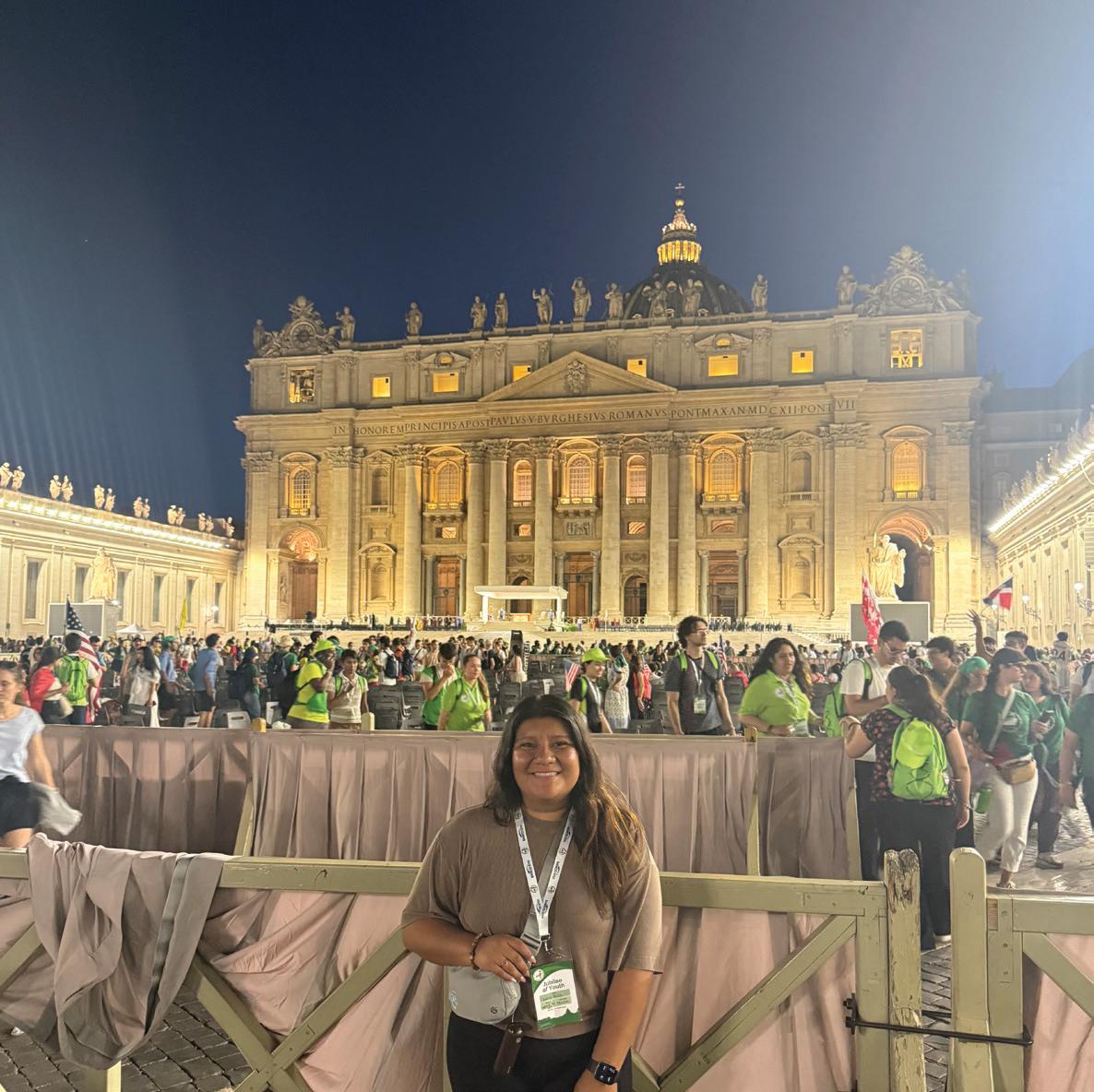
Kenia Avila, a parishioner of Glenmary’s mission in Macon County, Tennessee, experienced a once-in-a-lifetime opportunity this summer. With 50 other young adults from the Diocese of Nashville, she participated in the Jubilee of Youth in the Vatican from July 28 to August 3. An estimated one million youth and young adults were in attendance, reports Vatican News.
Following the Jubilee, Kenia traveled with her pilgrimage group around Italy to visit saints and sacred sites. She went to Assisi, where the bodies of St. Francis and now St. Carlo Acutis are buried; San Giovanni Rotondo, where St. Padre Pio is buried; and Lanciano, where the first recorded Eucharistic miracle occurred in the eighth century.
“I think my favorite part was actually going in to see the first miracle,” Kenia says. “I got chills just seeing this and I was like, I can't believe I'm literally here.”
Back home, her experience in Italy has made a lasting impact. “Ever since I've just been more involved in church,” she says. “It was just an eyeopening experience for me. I want to help others see that as well.”
“We were doing [events] like 7 in the morning all the way until like 9 pm,” Kenia says of the pilgrimage, which included having Mass at the Vatican.
Photo by Chris Phelps
Photo courtesy of Kenia Avila
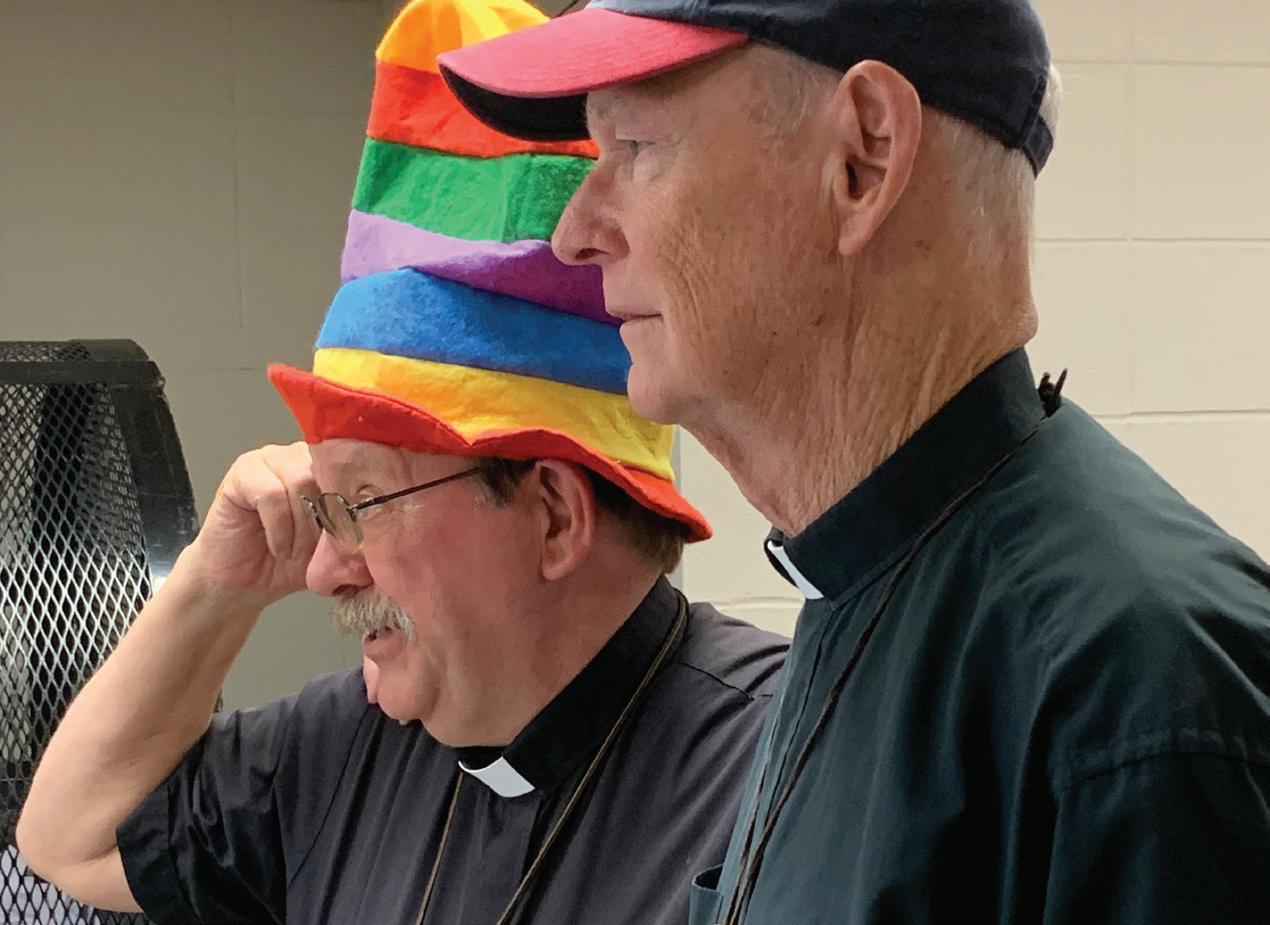
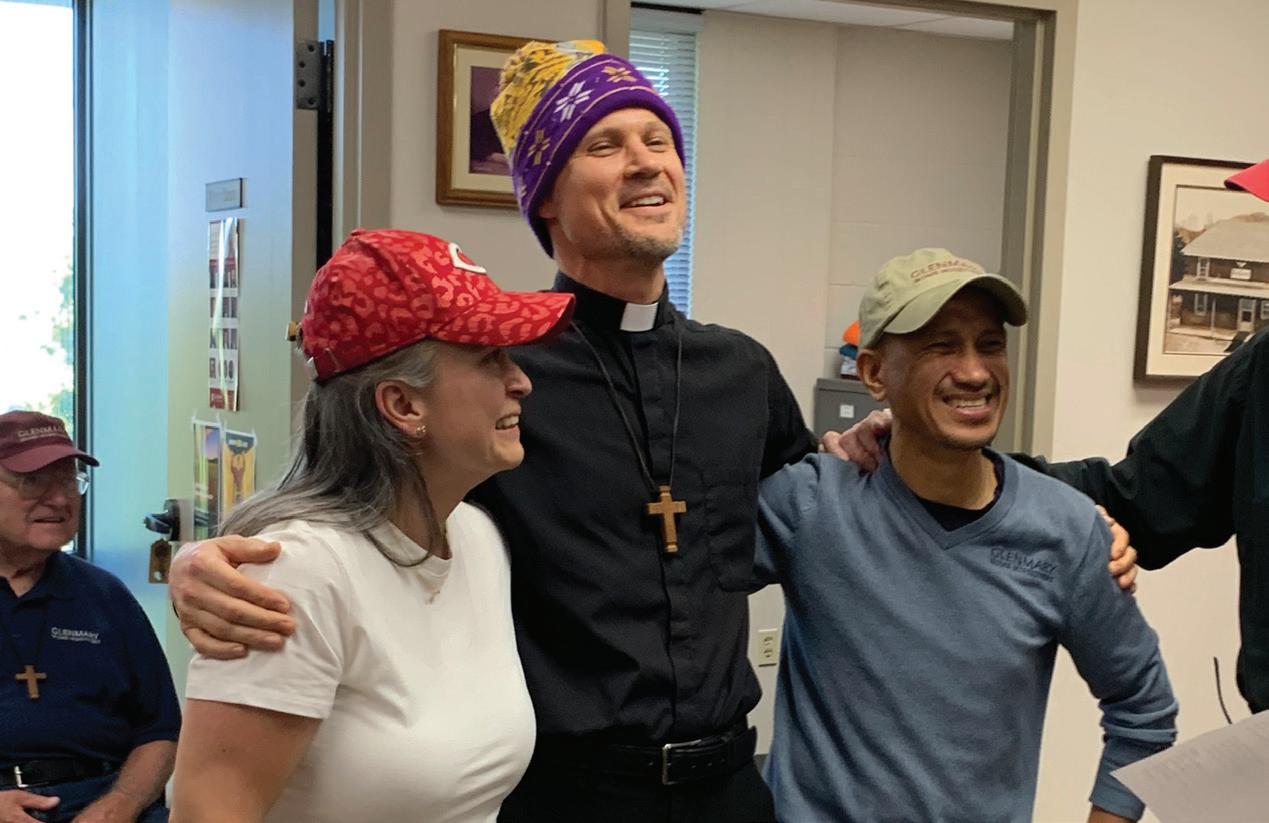
Glenmary coworkers showed up in their many hats to celebrate the annual raffle drawing.
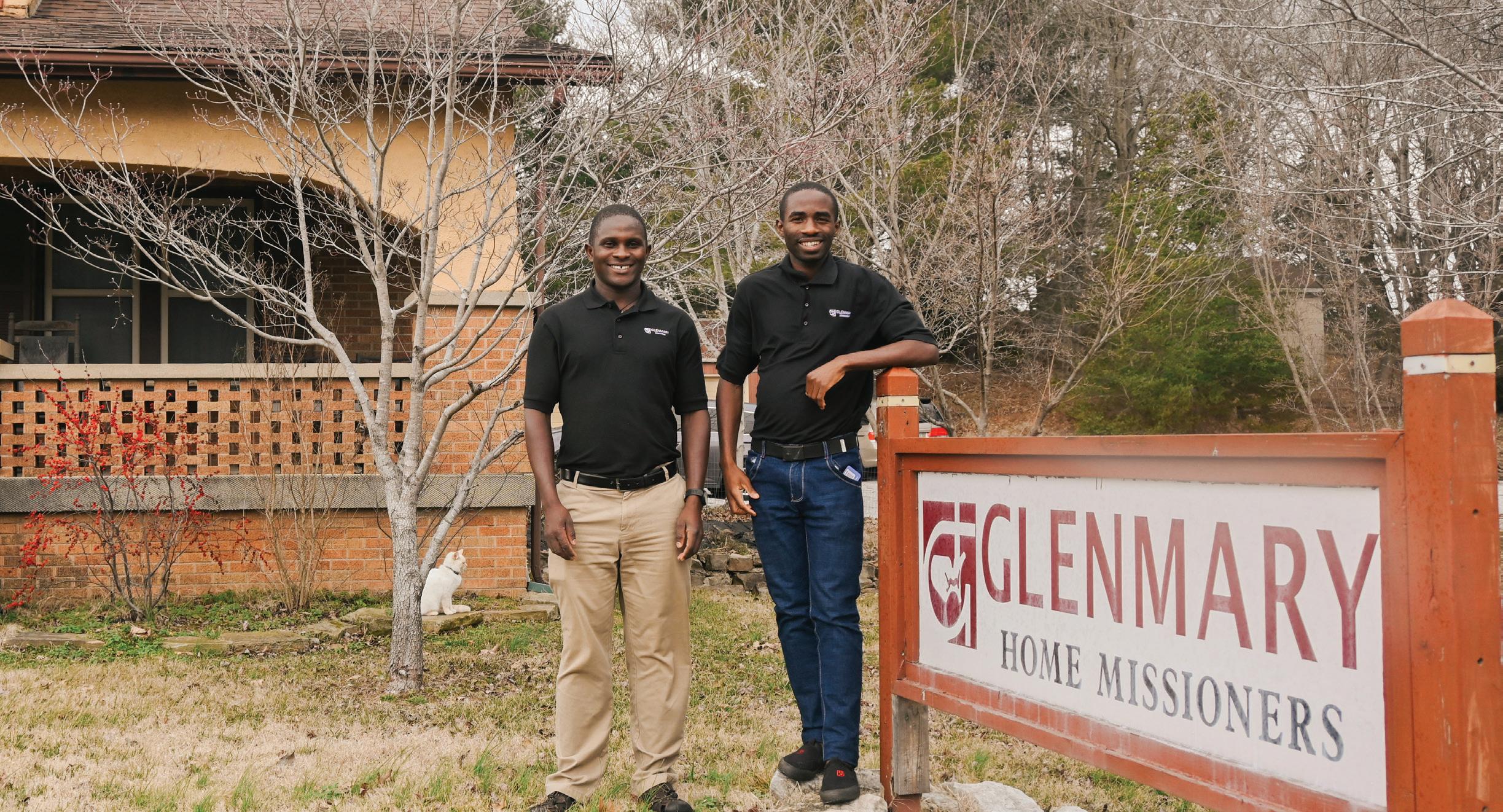
Aloysius (left) and Evarist are two men in formation studying at St. Meinrad. No new Glenmary students will join them this year.
FORMATION / No new students
Immigration impacts Glenmary Vocations
For the first time in 23 years, Glenmary will not have any new students enter its formation program this year. Two young men, one from Kenya and another from Uganda, were accepted by Glenmary and St. Meinrad Seminary to begin their formation this fall. They received permission to obtain a student visa; however, both men were denied entrance to the United States by the US Embassy.
“My heart breaks for the students who then have to wait another year to try to enter again,” says Father
around the missions
EUCHARISTIC CONGRESS
Marco and Daisy Tavares, Glenmary’s regional Hispanic ministers, and our Vocations Department attended the annual Eucharistic Congress hosted by the Diocese of Charlotte. While sharing the Glenmary mission with participants, they met former Glenmary parishioners and Father Patrick O’Connor, whose grandmother was a former Glenmary lay missioner.
Aaron Wessman, director of vocations. “It also breaks in that I know Glenmary will not be able to do as much good work in our missions. The imperfect and cumbersome legal immigration situation of the United States hampers our mission in many ways.”
Despite this setback, our Vocations Department remains hopeful. “We pray a lot,” says Father Aaron. “Through the grace of prayer, the gift of hope remains alive.” They continue to visit prospective students, host Come & See retreats, and, of course, pray for vocations. If you would like to pray for more vocations to Glenmary, write to us at info@glenmary.org for a free copy of the booklet “Prayer Partners for Vocations.”
SHARING THE FAITH
Nineteen children are gathering weekly for religious education classes at Holy Family mission in Early County, Georgia. This year, lessons have included learning about St. Carlo Acutis, healthy boundaries, and the Immaculate Heart of Mary. In October, the children ages 3 and up took turns reciting each prayer of the rosary together.
BISHOP IFFERT VISIT
Father Aaron Wessman, first vice president, and Nathan Smith, director of ecumenism, welcomed Bishop John Iffert from the Diocese of Covington, Kentucky, to Glenmary’s headquarters in August. Bishop Iffert toured the offices, visited the Father William Howard Bishop Memorial Museum, and celebrated Mass at Our Lady of the Fields Chapel.
by
Photo
Omar Cabrera
Greeting parishioners in a
Immediately
Just days after his ordination as a priest, Father Cavine Okello took the reins of a mission parish. Months later, he reflects on this extraordinary journey.
TEXT AND PHOTOS
BY OMAR CABRERA
Father Cavine Okello was having a good time in Kenya with his sisters and other relatives. The atmosphere at his parents’ home was full of laughter while some prepared dinner. The family had gathered to celebrate the recent ordination of their beloved Cavine as a Glenmary priest.
“We were remembering stories and making jokes,” Father Cavine says. “This was just a few days after my ordination.”
But the situation would take a turn. At around 9 p.m., when the family was about to have supper,
Father Cavine got an unsettling WhatsApp message. “In the US, they were just waking up,” he recalls. The message came from one of the members of the Glenmary council, the governing body of the congregation. “He was urging me to go back to Plymouth as soon as I landed in the US.”
Plymouth is the town in North Carolina where Father Cavine served as a deacon before heading to Kenya for his ordination. In the initial message, “I got a sense of urgency,” he says. The council member told him that “there was an issue with Father Vic’s health
kind and friendly manner is common for Father Cavine.
Along with his bags, he carried a lot of uncertainty, but also a strong faith.
and that I needed to get back to the parish.” He should immediately cancel any other celebrations or friends’ visits in the US.
Father Vic Subb, the pastor of the Glenmary parish in Plymouth, was transported to Cincinnati to receive urgently needed medical care after a steep decline of his health.
“It was a surprise, or I can say a shock to me,” Father Cavine says, “because Father Vic was one person that I was looking up to. After ordination to priesthood, I was looking forward to come back [to Plymouth] and work with him, and we used to talk a lot, and he thought he was going to be here.”
It was mid-February this year. Just days later, the recently ordained Glenmary priest was flying back from Nairobi to Raleigh, North Carolina, to then drive to Plymouth. Along with his bags, he carried a lot of uncertainty, but also a strong faith.
A new endeavor
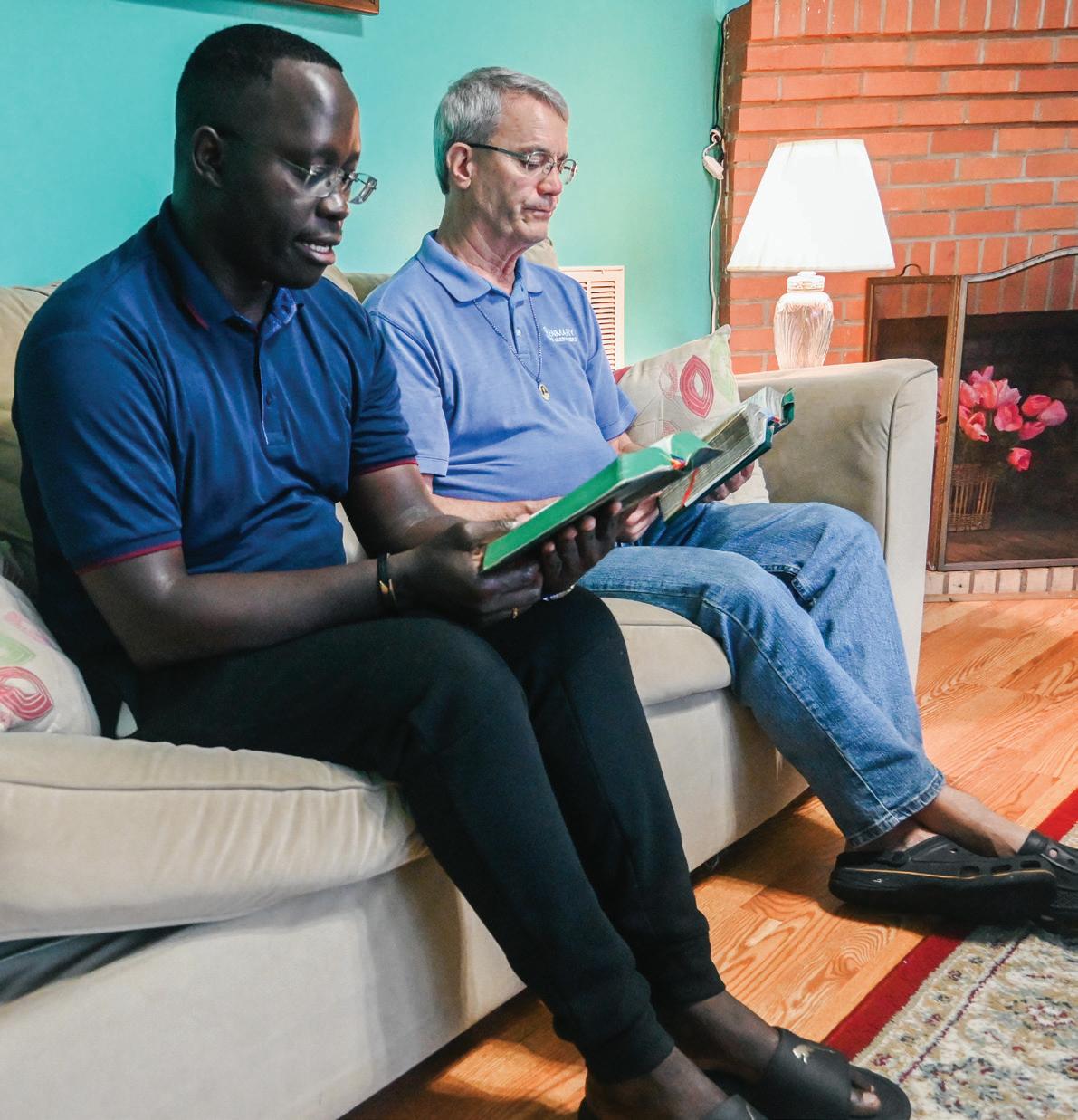
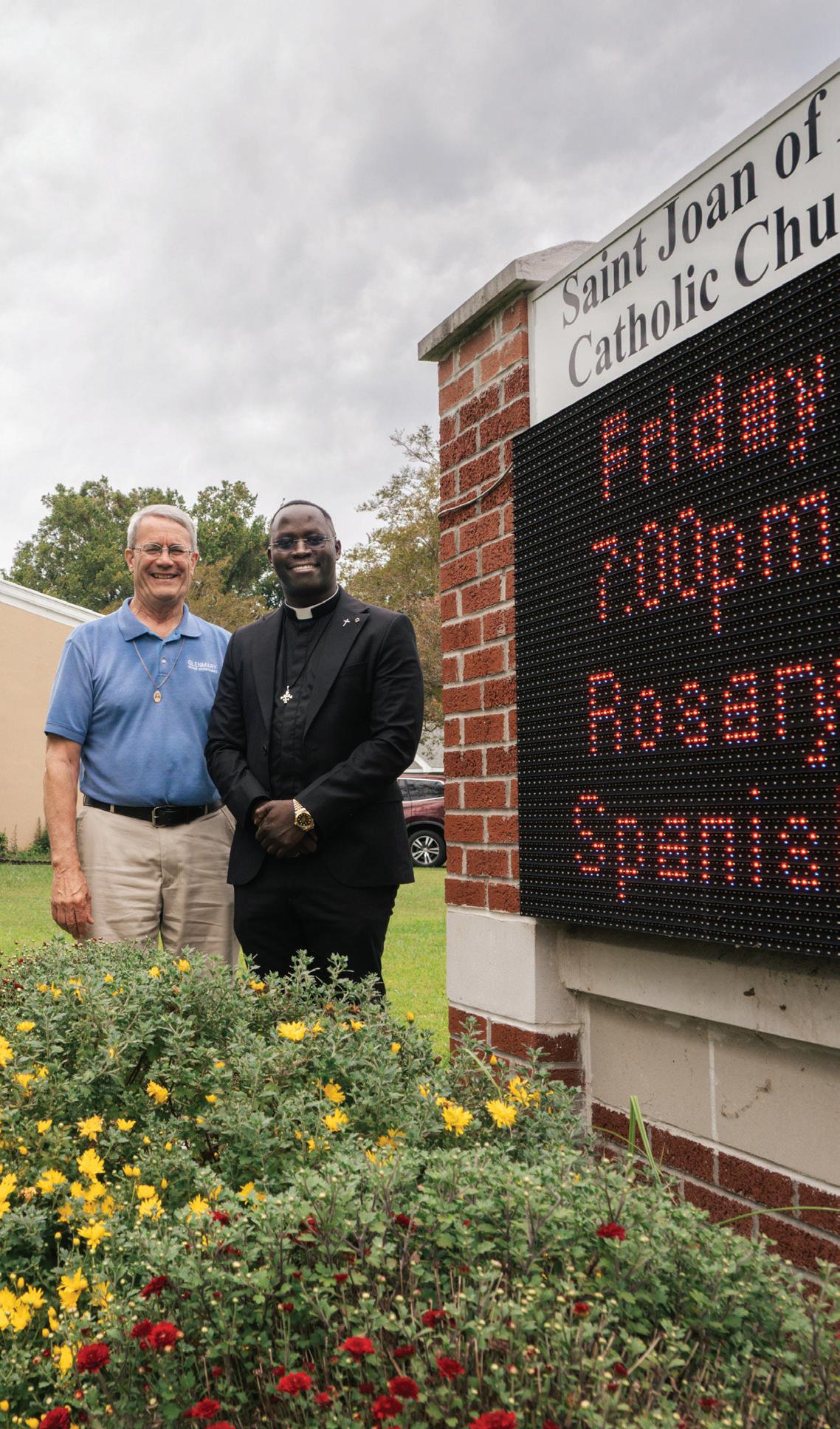
The Glenmary mission of St. Joan of Arc in Plymouth serves the people of Washington County in Eastern North Carolina. Along with the pastor, Glenmary Brother Craig Digmann also serves in the county and lives in the same house where Father Vic lived, and Father Cavine moved in the summer of 2024 as a deacon.
Assuming pastor of a mission parish in the US as a young, recently ordained priest from Kenya proved to be challenging for Father Cavine.
“Father Vic left big shoes to fill,” says Thao Pam, the youth group coordinator at St. Joan of Arc. “I think one of the big challenges is that we have a lot of different cultures in our parish.”
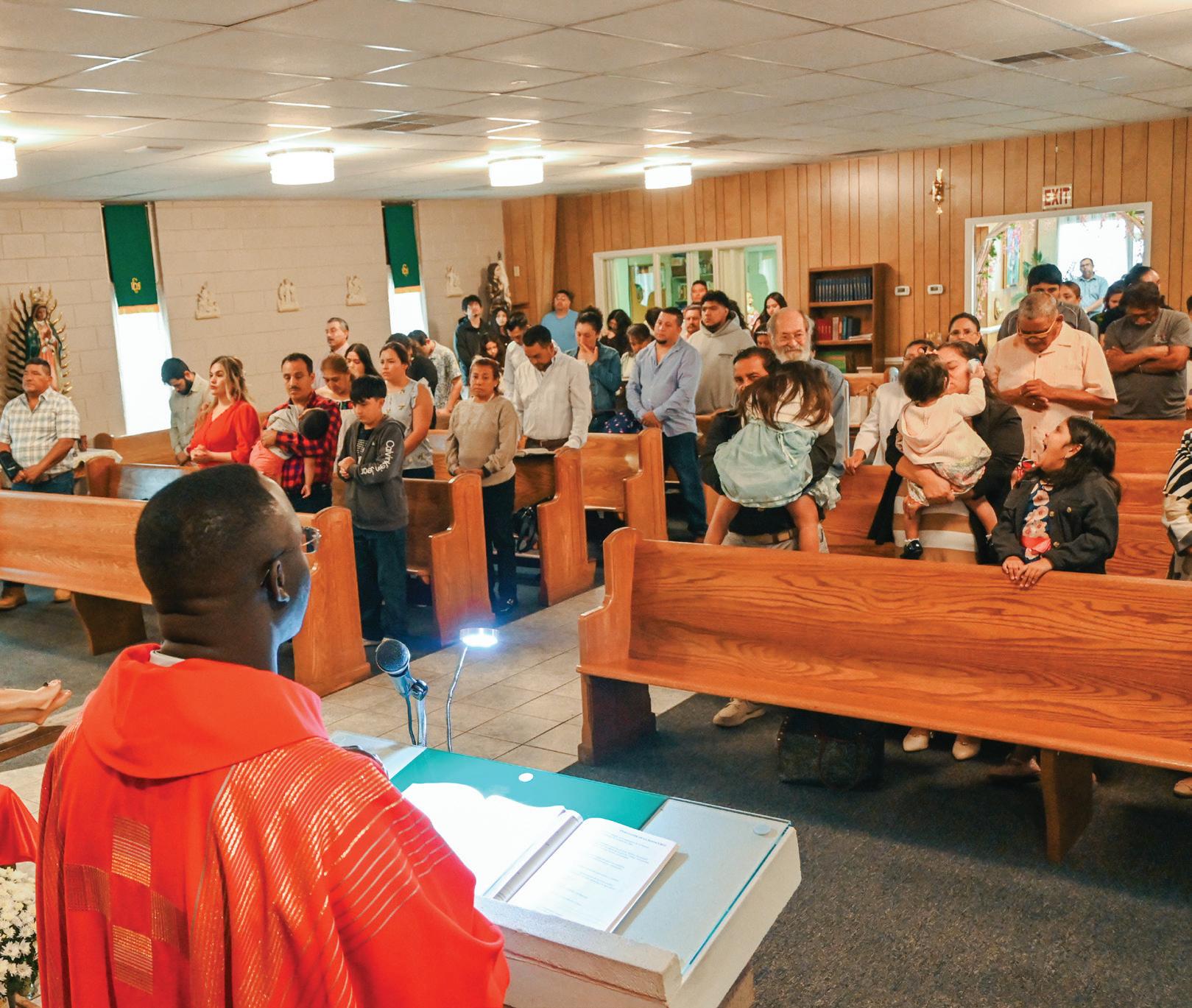
Latinos represent the majority of parishioners at St. Joan of Arc, which includes an outreach ministry to migrant workers at a seafood plant about an hour away from Plymouth. The parish community also includes Anglos and Asians, mainly from the Philippines.
Thao, who was born and raised in the area to a Filipino family, also serves as secretary for the parish council. She highlights that Father Cavine “brings new energy to the parish.” For instance, in preparation for religious education classes this fall, Father Cavine met with catechists and gave an orientation on what to expect from the formation and what they
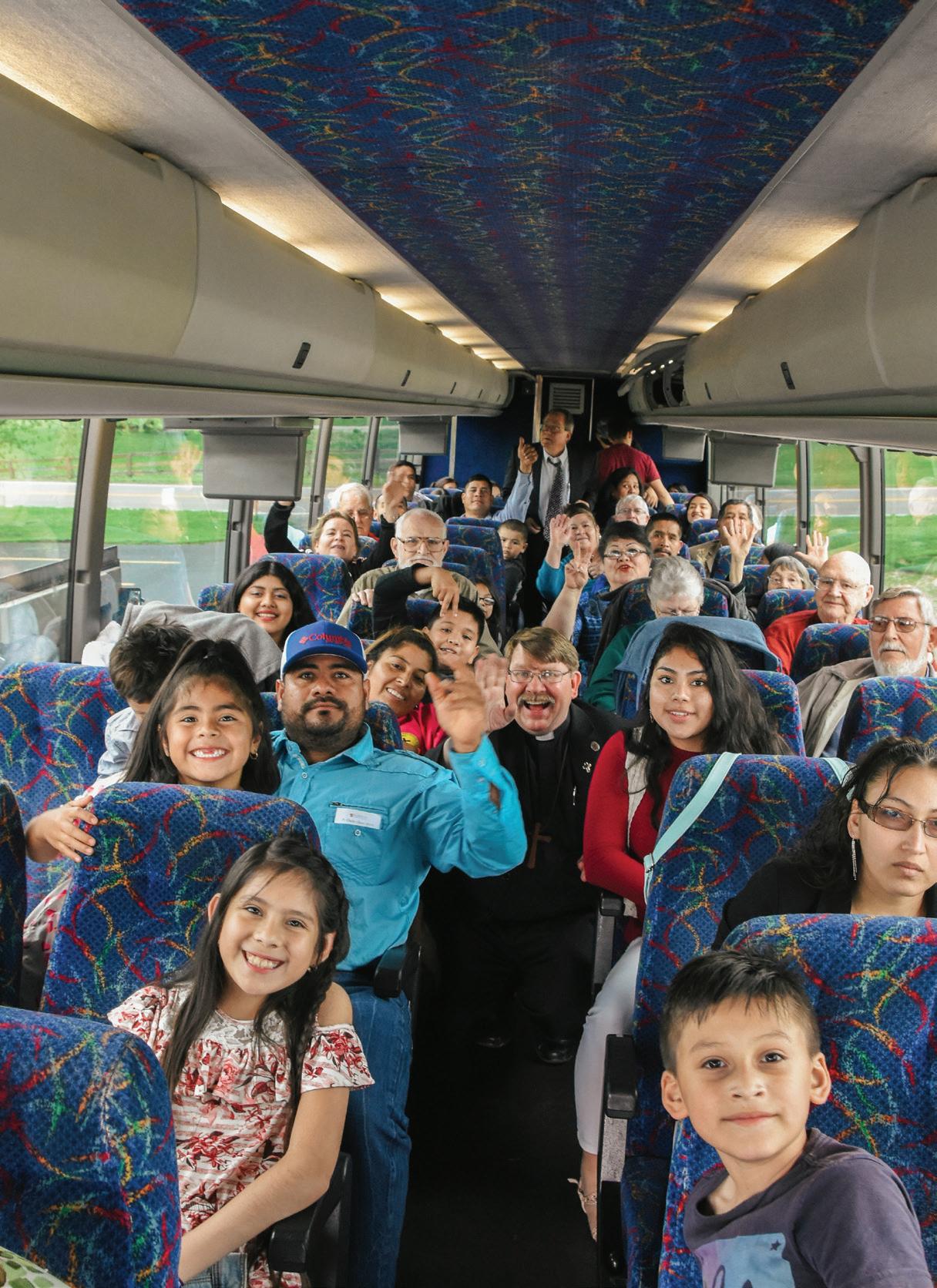
Hispanics represent the vast majority of parishioners at Father Cavine's mission in North Carolina.
Father Cavine and Brother Craig Digmann, who share the same house, say their morning prayer.
should do to achieve those goals. And on the first day of classes, he spoke to approximately 17 students and parents on how important the sacraments are for us as Catholics.
Father Cavine is also making sure that parishioners understand the relevance of the sacraments and what is aligned with the Catholic doctrine and what is not, says parishioner Jim Fourney. “He seems like it’s important for him to maintain the sanctity of the sacraments.”
The sacraments are one of the sources of strength for Father Cavine. For instance, he says, “You go to the sick person, you anoint them. They feel like, you know, through that power of the anointing, the sacrament, they are feeling better.” Seeing the power of God act that way is very “consoling,” the young Glenmarian highlights.
Aligned with that relevance of the sacraments, Father Cavine is also doing a good job at keeping sacramental records, forms, parishioners’ names and contact information, says catechist Rose Allen. This helps the parish community to advance the different ministries in a more organized way.
Heading the mission parish is “a big task, but Father Cavine has handled it very well,” Thao says. “He has kind of given that structure back.”
A gentle and kind pastor
Beyond all he does, Father Cavine is also making an impact because of the way he does it all. Parishioners see in him a caring and approachable pastor.
Brother Craig Digmann (left) also serves at the mission in Washington County, NC.
Father Cavine speaks to a quinceañera and her father, during her special Mass.
“He tries to make everybody comfortable,” Jim adds. “Every weekend, he shakes my hand. He shakes my hand and says ‘Hello!’ and asks me how I’m doing. He is a very personable, outgoing, and welcoming person.”
“He seems to be gentle and kind,” Rose adds. Father Cavine also treasures the love that God and some especially warm parishioners give him. “People love,” he says. “Priesthood is a gift. God has shown me that amid the storm that maybe is going around, there are anchors that I can hold onto.”
“I always try to live one day at a time,” the Glenmarian says. “When I wake up and I celebrate Mass, I go back to the house, the rectory, and I thank God. He has been gracious to me.”
Assistant editor Omar Cabrera holds an MA in journalism from the University of Colorado at Boulder. He is editor of El Reto Glenmary.
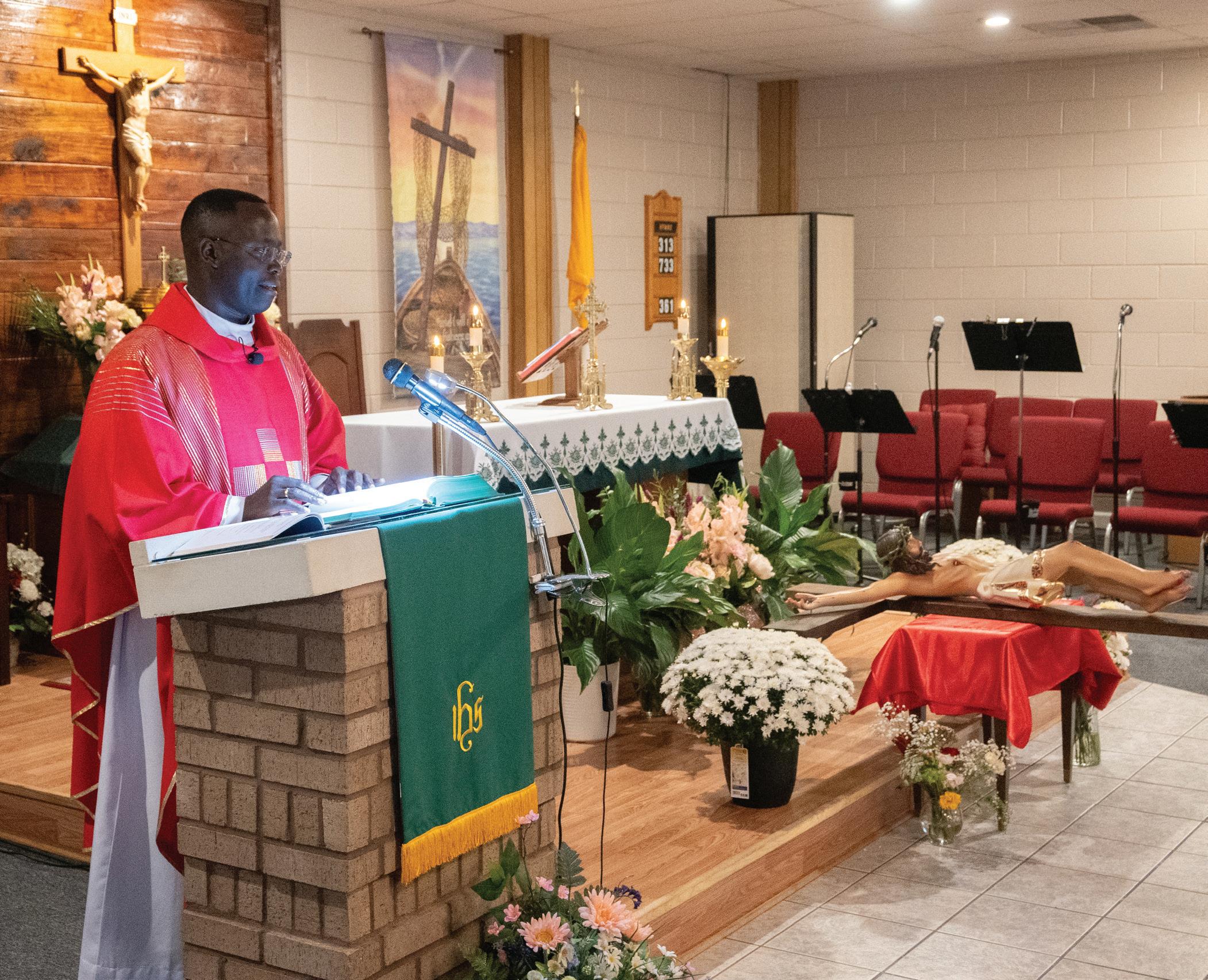
The young Glenmarian takes great care to prepare his homilies, several parishioners
When I wake up and I celebrate Mass, I go back to the house, the rectory, and I thank God. He has been gracious to me.
—FATHER CAVINE
say.
Iam in the process of moving, which is not such a big deal; about 20% of Americans move every five years or so. But one of the advantages of moving is that this is an opportunity to both downsize and reminisce when I encounter something I have not seen in a while.
While packing up I found this wonderful quote from Henri Nouwen; oddly, I cannot remember why I saved it, but here it is speaking directly to my heart as I am packing up.
“God is greater than our minds and greater than our hearts, and just as we have to avoid the temptation of adapting God to our finite small concepts, we have to avoid adapting God to our limited small feelings.”
Welcome the stranger
For a couple of days, I carried this quote close to my heart. I am unsure why this stayed with me until one
I was hungry
AND YOU JUDGED MY HUNGER
God is greater than our minds and hearts. We don’t get to measure someone else’s hunger or faith.
BY FATHER NEIL PEZZULO
morning it finally began to make sense.
I was at a place where I have never been, a church, a place where I am a stranger. I did not know them, and they did not know me.
As I was waiting to meet the pastor, another person came into the office and asked for some food. I was sitting there pretending I was not eavesdropping on the conversation, but I could not help myself.
Without repeating the conversation, I was both shocked and embarrassed over how this person—this hungry person—was received. I began to wonder if the church secretary had ever read Matthew 25. When did we see you hungry and not feed you?
Based on what I was seeing and hearing, I remained doubtful; however, I was not there to judge “as we have to avoid the temptation of adapting God to our finite small concepts.”
I was hungry and you judged me and my hunger.
by Francisco
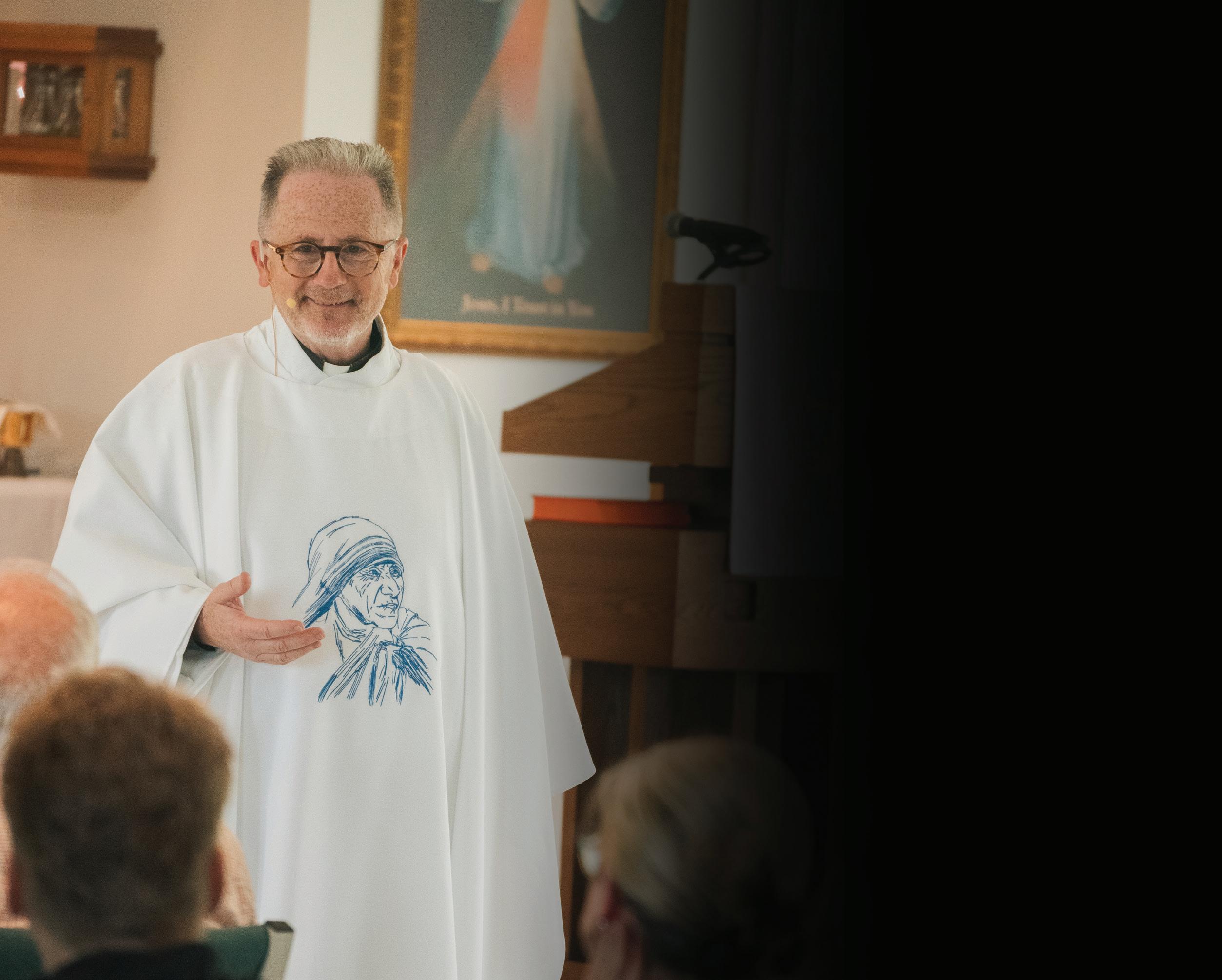
Father Neil preaches at one of his last Masses in Tenneesee before moving to Southwest Georgia.
Photo
Cepeda
“God is greater than our minds and greater than our hearts.”
HENRI NOUWEN
Personal experiences
How do we know how hungry someone else is? Or how thirsty? How do we appreciate how happy or how well-rested someone may be?
How do we tell someone their condition or state of being is less valid than our own? If we limit God to our own limited understanding, or worse yet, our own limited politics, we can easily fall into the sin of judging.
We have no choice but to believe people when they talk about what or how they feel. We must take them at their word when discussing such subjective, extremely personal subjects.
What is a regular occurrence for some is monumental for others. My college roommate continued his education and achieved a graduate degree from an Ivy League school in New England. His wife, also educated at the same school, has suffered many physical, emotional, and spiritual setbacks over the years.
For her, some days getting out of bed, brushing her teeth, and combing her hair is as much of an accomplishment as obtaining graduate degrees from an Ivy League college. Who am I to judge? I am, as a follower of Christ, called to respect, honor, and cherish her as a fellow Christian. In all our humanity, we are quick to judge.
Faith is real
Our faith is emotional; it does not come from intellectual exercise, it comes from a personal encounter with Christ. Simply because we do not share the same emotions or never had this experience does not make it any less real.
The same emotions can be felt by different people but in different ways, with different intensities and different results. But again, no less real. Just like the feeling of hunger or a headache.
Our faith is subjective. Faith can’t be measured. But someone’s relationship with their Creator is as real as temperature, hunger, pain, pleasure, happiness, or sadness. “God is greater than our minds and greater than our hearts.”
It takes an arrogance too strong and empathy too weak to compel someone to dismiss the condition of another. Perhaps it’s simply ignorance that empowers people to scorn the needs or feelings or beliefs of others. This is why it’s so dangerous to claim to measure someone else’s faith. How do we judge how strong or weak their faith may be? Or question its existence at all?
Despite the impossibility of adequately quantifying faith, sadness, hunger, or fatigue, people still try. They pass judgments based on their own experiences while ignoring the experiences of others. When they ignore others, they expect their own views to be accepted. And ironically, the only way their views can be accepted is by faith.
Father Neil Pezzulo is the sacramental minister for six counties in Southwest Georgia.
WE HAVE NO CHOICE BUT TO BELIEVE PEOPLE WHEN THEY TALK ABOUT WHAT OR HOW THEY FEEL.
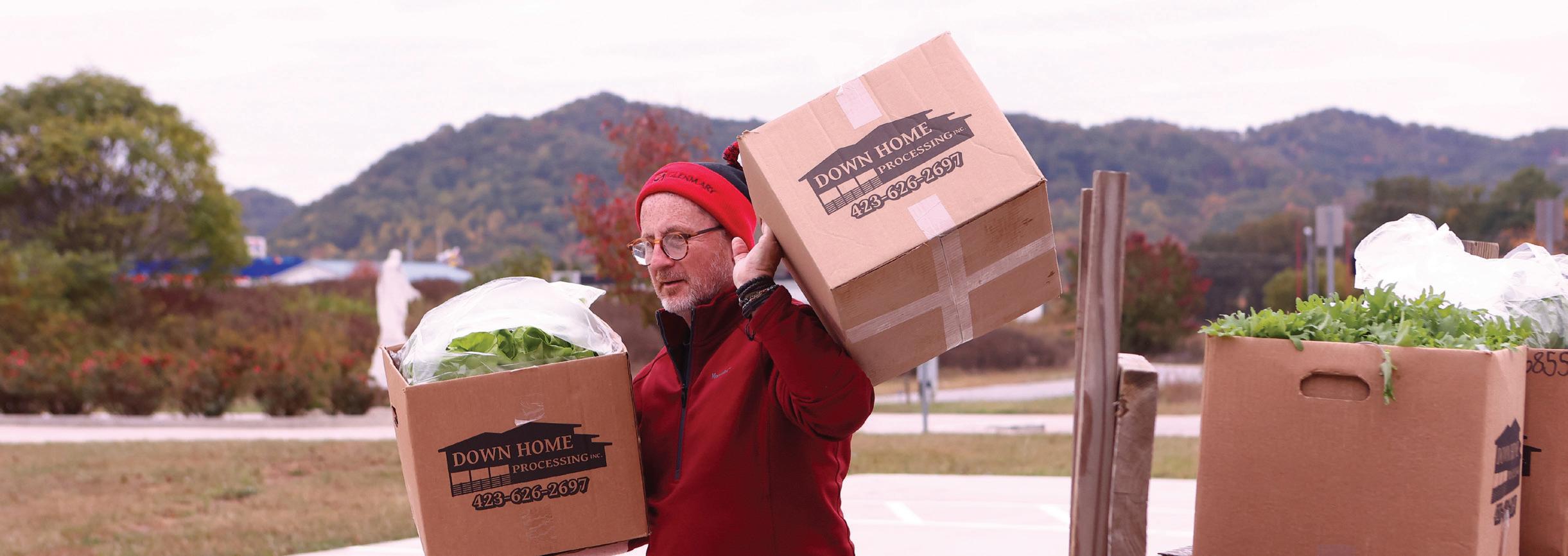
Father Neil helped found the Fresh Wagon, a mobile food pantry in Union County, Tennessee.
Photo by Ashley Lodge
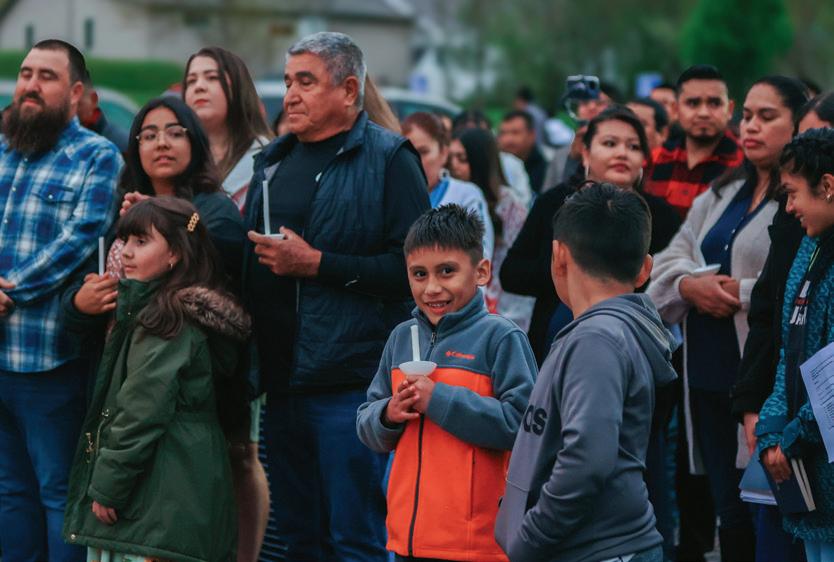
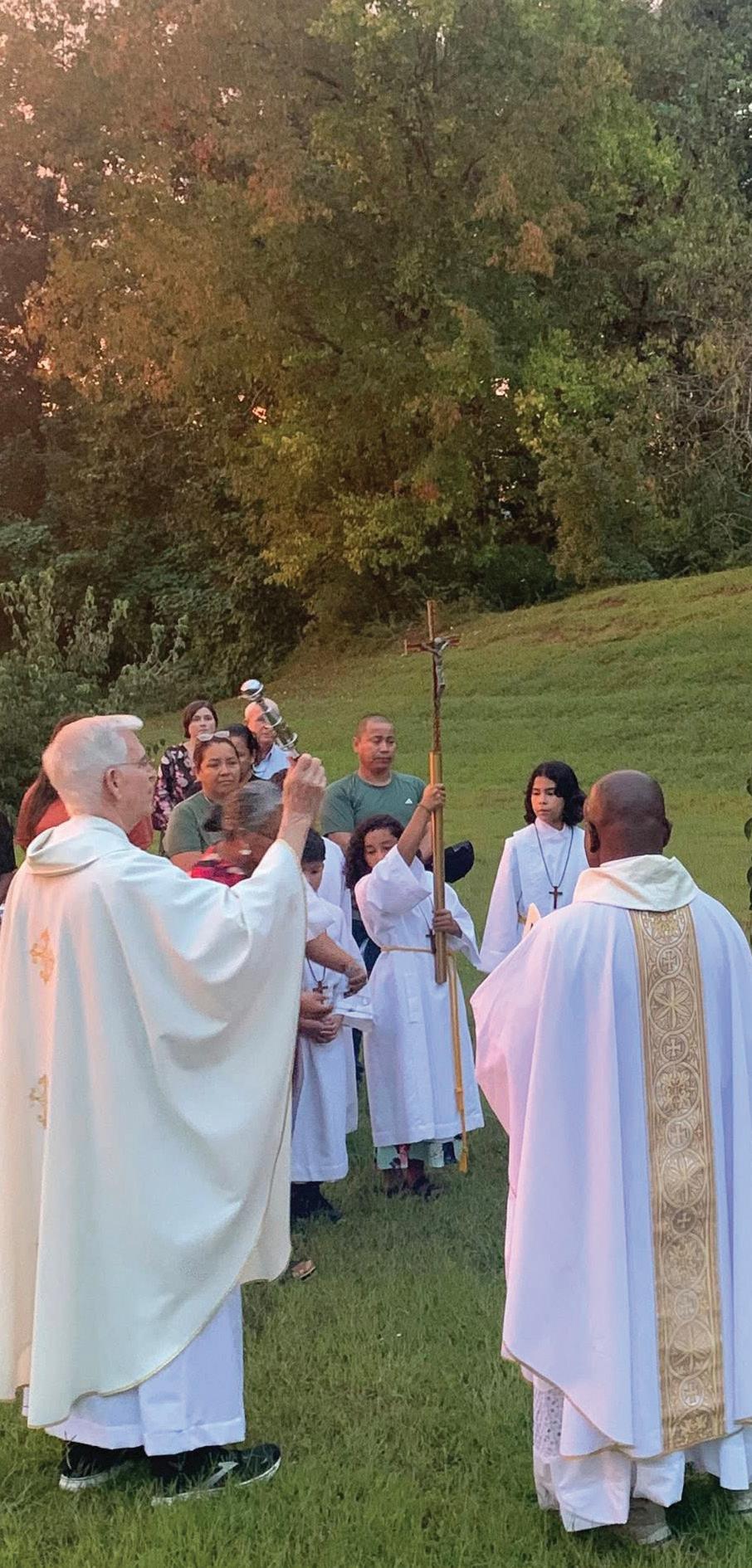
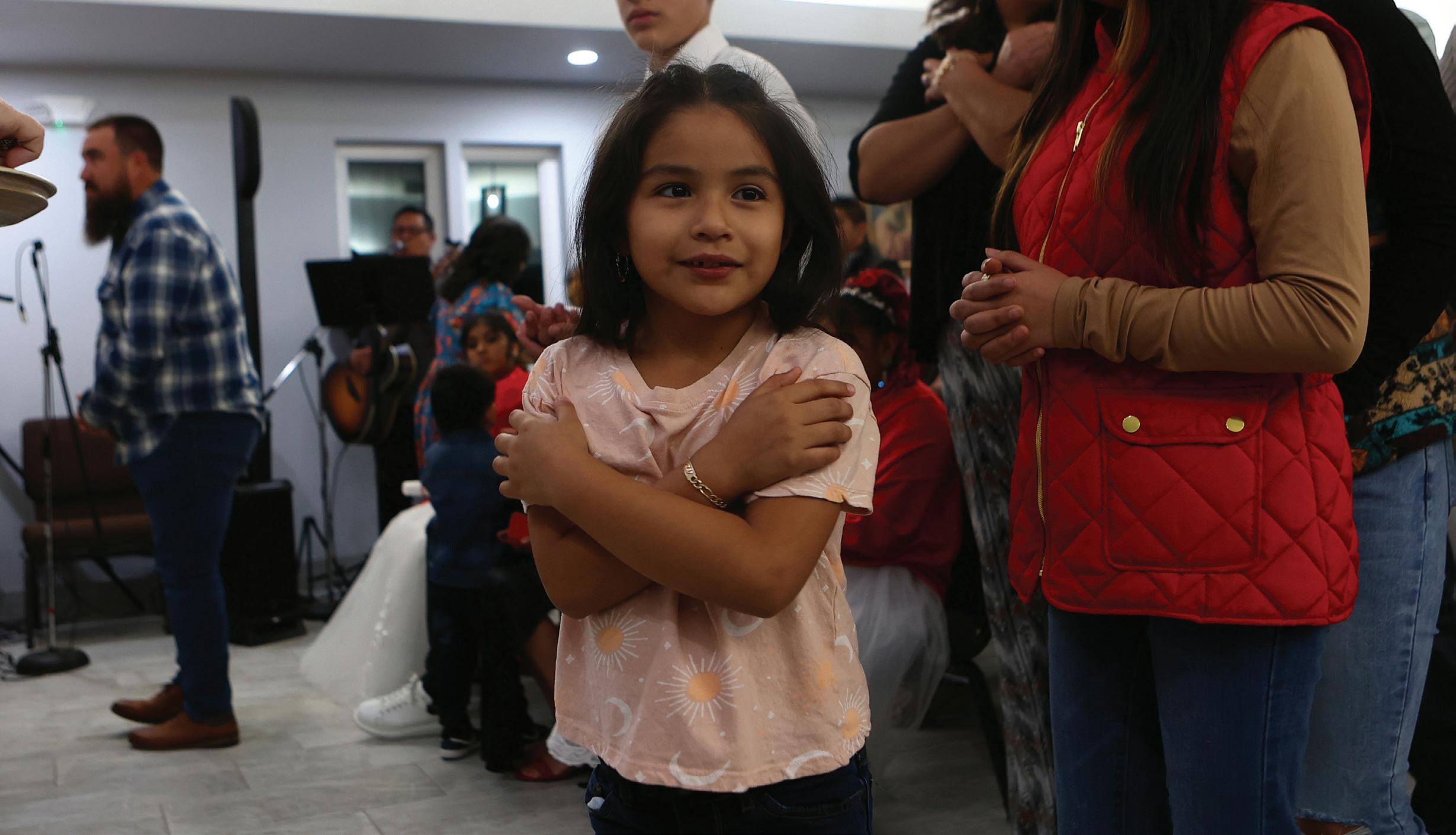
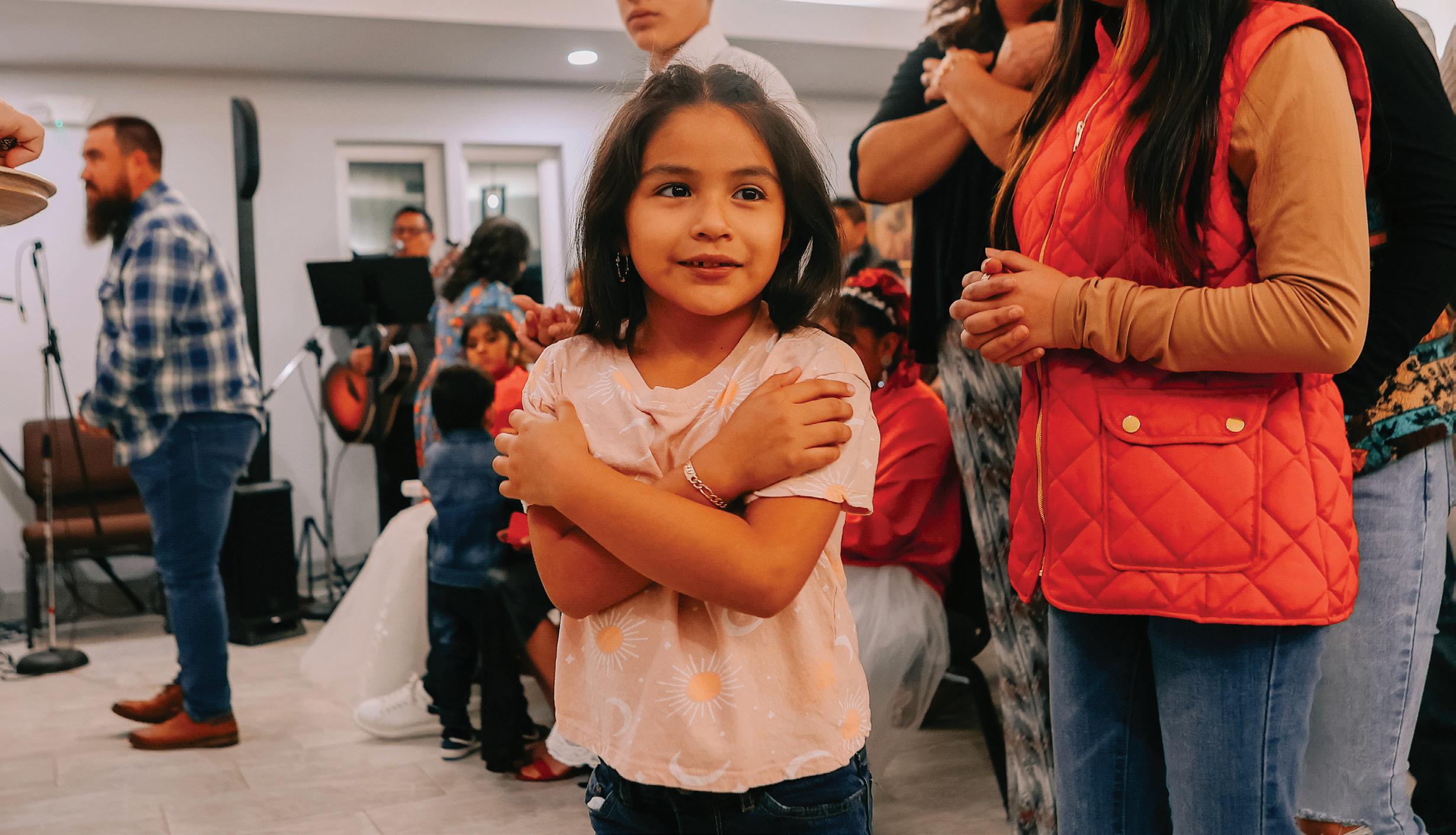
Kids are God’s children regardless of legal status, race, or any other divisive factors, Father Steven says.
CHILDREN OF IMMIGRANTS
Transform Hearts
Immigration is less a legal issue than it is a moral one. A mission pastor shares that the tears of immigrant children have transformed his heart, as he hopes they transform yours.
BY FATHER STEVEN PAWELK
April 2018. As I am driving over the mountains between my two missions, I begin receiving phone calls.
“They took my husband!” a parishioner tells me. “They took my mom!” says another one, crying. “I am being held by Immigration!” a woman tells me.
As I arrive at St. John Paul II Catholic Church in Rutledge, Tennessee, five children ages 5 to 15, packed in a car, anxiously wait for me to open the parish doors. All of their parents work at a meatpacking plant that was raided. By noon, there are 50 women and children in my church. By around 5 p.m., there are over 100 people worrying about their parents, spouses, and siblings.
My work with immigrants began unexpectedly in 1989, when I was assigned to a three-parish mission based in Claxton, Georgia. There, immigrants worked at Vidalia onion fields and numerous poultry plants. These families came to church, demonstrated strong faith and strong family ties.
I asked an immigrant dad why he did not come with papers. (He came alone; his kids and wife were still in Mexico.) “I would, if I could,” he said. In my conversation with him, I first discovered that a passport from Mexico and many other countries is insufficient to enter the United States. He went on to explain: “If I work
here for six months and am sent back to Mexico, I will feed my five children meat for a year, not just rice and beans. If I am able to work for a year or more, I can save money to send them to school.” (In Mexico, education is free only up to eighth grade.) “God calls me to provide for my family. What risks, Father, would you take to feed your family?”
I have never forgotten this man’s story. At that same parish, in 1991, I experienced my first workplace raid at a poultry plant. Again, parents and school officials were calling me. Parents were taken from the poultry plant but not permitted to get their children, mostly because the children were US citizens. Teachers gathered care packages for the children to take home, and I waited for them at the trailer park to help each terrorized child find a family to take care of them. Of course, before the month was out, every parent was back in Georgia working somewhere else. What parent would not come back at any expense to take care of their children? If they had not, how would they have been judged?
In Mississippi, with the help of Father Francois Pellisier, the Spanish Mass was started at one of my two parishes. Yet, my own Spanish was very limited. I hired Sigifredo and his family to assist me since he was the only one who applied for the position. They
Photo by Ashley Lodge
lived in Colombia and had relatives in Mississippi.
Sigifredo and his youngest 8-year-old daughter arrived with an R1 work visa (religious worker), but his spouse and 11-year-old daughter had an R2 visa, which didn’t allow them to work. Afterward, in renewing their visas, they were sent a letter that they needed to leave in 30 days. We discovered that the immigration office made an error. Even with a legal aide, mistakes are made because immigration rules vary depending on the applicant’s country of origin.
Moral and legal issues
The 2018 raid in Bean Station, near Rutledge, Tennessee, was not the only event affecting children. The only Latino basketball player at one of the small schools endured racial insults from people in the stands and opposing teams, but the coach said nothing.
After the raid, I invited the newspaper to interview some of the families. The reporter was determined to do a hard story about “illegals.” Instead, she left crying after talking to the children and became a supporter of immigration reform.
One of the most tragic stories was when a mother and son from Honduras showed up at church. The 7-year-old son was bathing and feeding his mom since her arms were cut off above her elbows and her face scarred because her husband would not cooperate with the drug lords in Honduras. She was made an example. She and her son were given tourist visas. Yet, her 3-year-old daughter was not given a visa to travel thus leaving her in Honduras with the father. The tortured woman qualified for refugee status, but then she would never see her daughter again. She went back home.
My heart bleeds for these children and their suffering. They have reminded me that immigration is less a legal issue than it is a moral issue. Remember, not every law is moral (abortion and capital punishment are legal, but immoral). And not every illegal action is immoral (many Catholics, including the pope, broke the law to protect Jewish people from the Nazis during WWII).
As a pastor, I am called to serve all God’s children regardless of legal status, race, class, or any other divisive factor. It is my task to strengthen and feed the body of Christ so all may have salvation. Before we can change laws, we must first change hearts.
May the tears and fears of these children transform your hearts as they have mine.
Father Steven Pawelk is the director of the novitiate and Glenmary’s second vice president.
Father Steven was the mission pastor in Rutledge, Tennessee, when an immigration raid occurred 15 miles away.
Latino parishioners accompany Father Steven to Glenmary's priestly ordinations in 2019.
Photo by John Feister
Photo by John Feister
THIS LAND Is Home to Me:
AN INTERVIEW WITH BISHOP STOWE
Fifty years ago, Glenmary helped create a document on the Church in Appalachia. Bishop Stowe reflects on its relevance today.
BY JOHN FEISTER
This year marks the 50th anniversary of a landmark document for the Church in Appalachia. But don’t count it out yet—This Land Is Home to Me: A Pastoral Letter on Powerlessness in Appalachia continues to influence the mission of the Church in this region.
The document , issued in 1975, came from a synodal process. That is, it started with listening at the grassroots and having conversations to discern the local challenges for the Church. It was
signed by all 25 Catholic bishops whose dioceses are partially or completely in Appalachia. Glenmarians were instrumental in its creation, working closely with others in the Catholic Committee of Appalachia (CCA), a federation of Catholics working in the region.
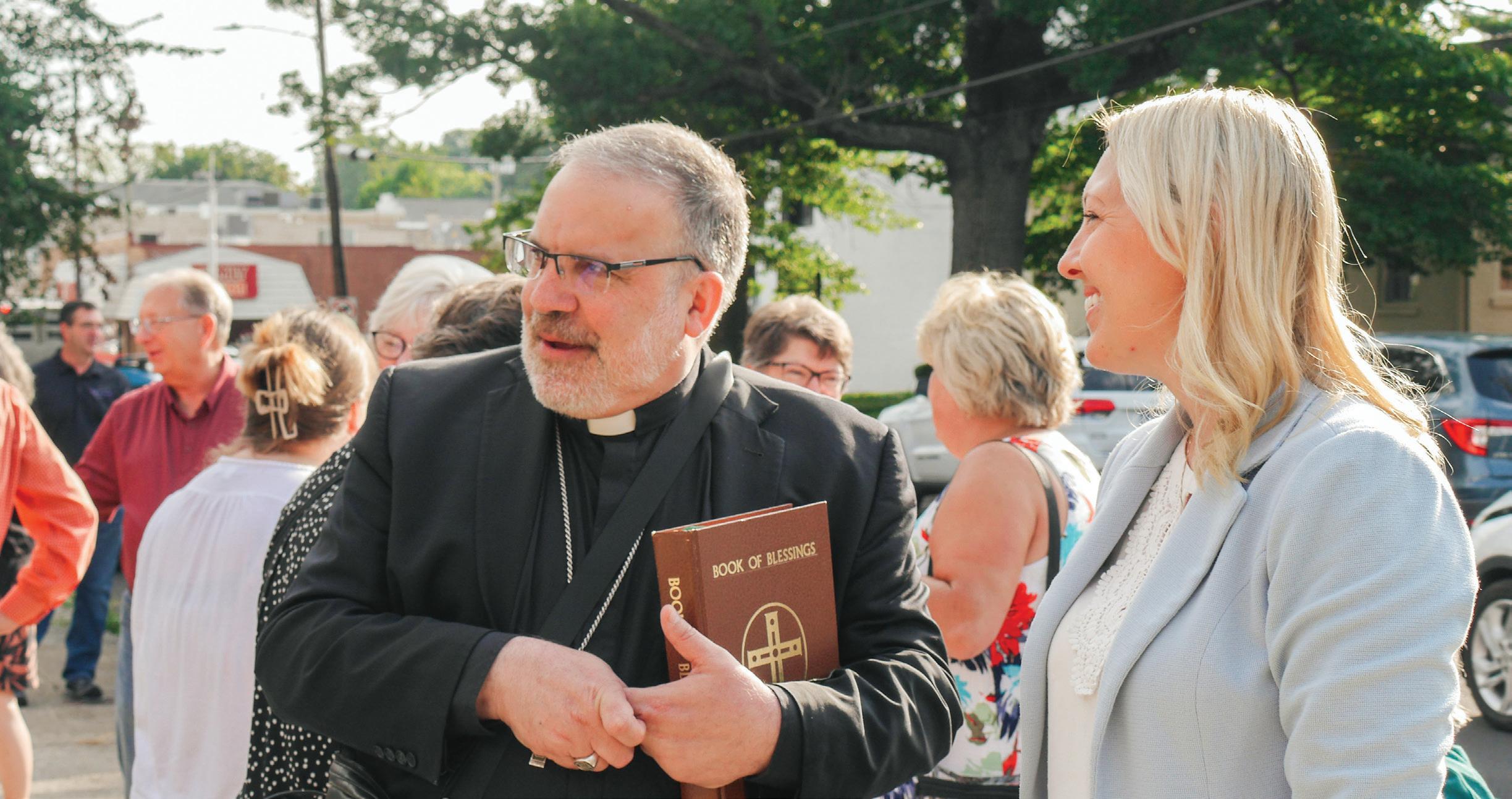
We asked Bishop John Stowe, bishop of the Diocese of Lexington, Kentucky, about the living significance of the pastoral letter. A Conventual Franciscan, he helps lead CCA as its episcopal moderator.
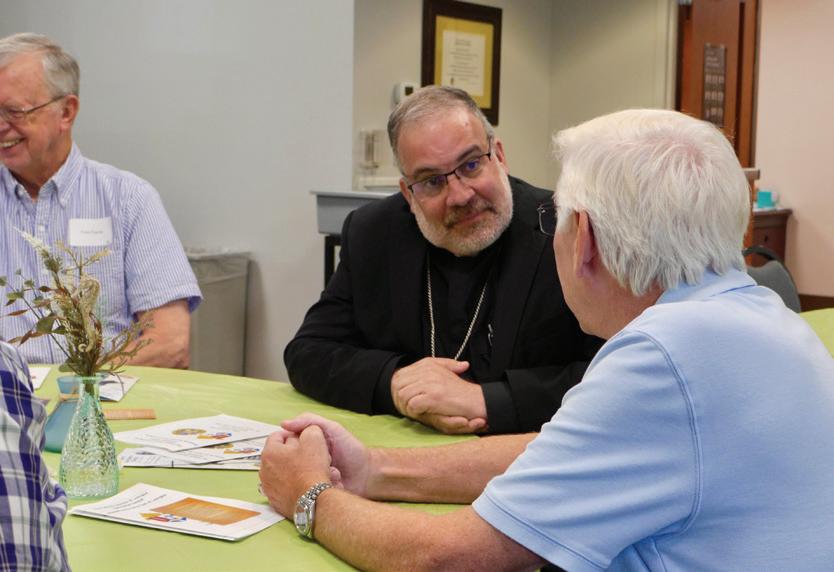
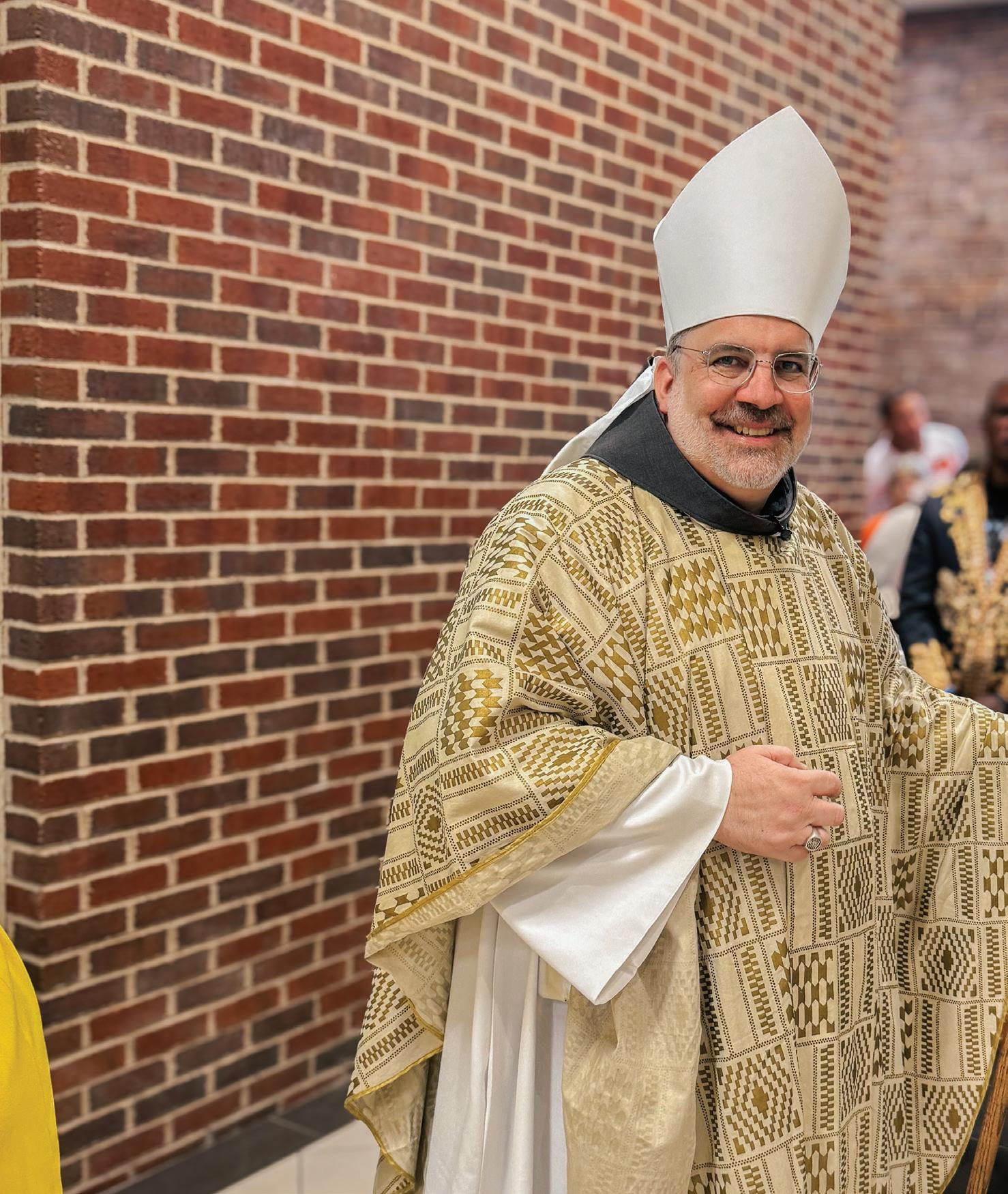
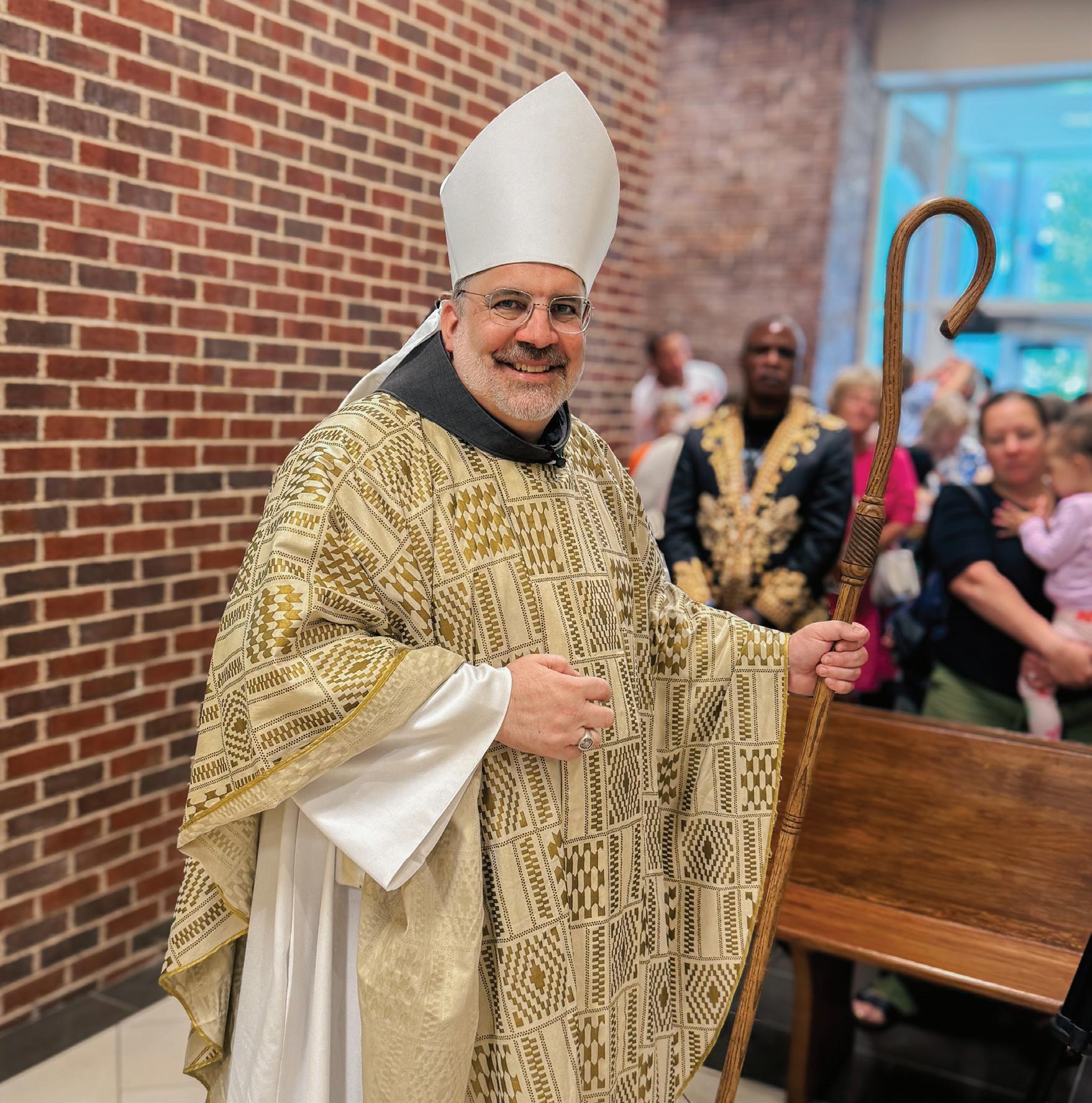
Bishop Stowe, originally from Ohio, was ordained the third Bishop of Lexington in 2015.
Bishop Stowe first studied This Land is Home to Me as a theology student in the ’90s.
Photo courtesy of the Diocese of Lexington.
Photo courtesy of the Diocese of Lexington.
Q: Do you think the document is still relevant all these years later?
A: It's very relevant. I've been rereading it this year and been talking about it quite a bit. I think it also has to be read in light of the two subsequent letters, one by the bishops 20 years later [ At Home in the Web of Life], and then the so-called People's Pastoral that came out in 2015.
I think there's a progressive course within them. The third one [People’s Pastoral] really shows the influence of Pope Francis. It’s written by the laity, calling on the authority of the magisterium of the poor and the magisterium of the earth.
The first one [This Land is Home to Me] was really groundbreaking because, you know, it's written in a very accessible style, kind of a free-verse poetry, looking at the land, the people, looking at the context, and the environment. Then looking at the way that the message of Jesus is to be incarnate there and then setting direction for the Church going forward. We were not familiar with Church documents written in such an accessible way.
Q: People have called Appalachia a colony, like an overseas colony. Most of your diocese is pretty much in Appalachia; what do you think about that statement?
A: In some ways it's still true, but I think, more, we're reaping the results of that because the coal mining industry is in a long period of bust, and we have a greater awareness of the damage that the coal industry does, not only to miners but to the environment.
On the one hand, you have people who are fiercely defensive of coal as something that provided their livelihood, and in some cases their identity as coal miners. But the very same people who would insist that we need to keep coal as an option don't necessarily want their kids going into that work because they know the long-term consequences of breathing in the dust.
Q: As a bishop, how do you avoid the kind of polarized positions of: “We believe in coal” vs. “We think coal is the enemy”?
A: We always have to be respectful of people's livelihoods and their culture. I think the key is listening to people's stories, because when they hear themselves talk about the damage that it's done to their health, the community, and the environment, they're not quite as defensive about
it. But if you come in attacking a way of life and that which has given them their identity, they're going to be defensive. And it's understandable.
Q: In some ways, the letters started naming the environmental crisis that was all tied up with this industry. It seems like Pope Francis had that same understanding of what was happening in his region.
A: Pope Francis was very good at connecting the human and the ecological issues, realizing that according to our faith, our economies are always supposed to work for the flourishing of the human person, not the person working for the economy.
At Home in the Web of Life kind of anticipated what Pope Francis does with Laudato Si’, making the interconnections. Most people will agree about the natural beauty of the Appalachian region. But oftentimes the majestic mountains, the waterfalls, the trees, can hide the poverty that exists side by side with them. The pastoral letters ask the question: Why is that? Pope Francis in Laudato Si’ recognized that the exploitation of the poor to fuel development in other places is a global phenomenon, that we're all interconnected.
I believe Pope Leo is going to have his own style for sure, but he has spoken on several occasions in the short time that he has been in the papacy about the importance of the environment and the importance of care for creation.
Q: Pope Francis embraced a spirit of synodality, of listening and dialogue, which was certainly the spirit of This Land Is Home to Me. Will that spirit outlive Pope Francis?
A: I certainly hope so. Synodality requires not only conversion, but a changing of the Catholic culture. And that means it's a lot harder than just implementing a program. I'm very hopeful about it. I think the Church needs it to survive. I think that was the vision of Pope Francis. In Pope Leo's first English interview he pretty much was saying that synodality is about everyone having a voice and a say in the direction of the Church. You know, that requires a conversion.
You can read the three pastoral letters at ccappal.org
John Feister is the retired director of Communications and Marketing for Glenmary.
LETTERS TO THE EDITOR
PRESIDENT’S COLUMN
Father Dan, your President's letter hit me so hard. I’m continually praying for those in need as they are continually threatened in many, many ways. Your essay really described the temperament we need to focus on as Catholics. Thank you for writing it. Your words were extremely thought provoking.
Jerrie G. | Albuquerque, NM
SPECIAL ACKNOWLEDGEMENT
Father Chet—I had recently donated a small amount when you spoke at Holy Spirit, Indianapolis, and then online when I reflected on my donations and where I would like them to go. When I subsequently donated I added some
comments about your presentation during the homily and thought that would be the end of that.
Well, lo and behold, when receiving my donation letter from Glenmary, there was a handwritten note added by you thanking me. I was utterly shocked with the schedule and duties you have that I merited a special acknowledgement. I stand in awe with the religious in our Church who have given so much to serve God. One day you will receive a personal "special acknowledgement."
I wished that I had the ability to donate more, if only my name was Jeff Bezos rather than Jeff Meyer. Rest assured I will continue to make quarterly contributions as long as I can.
WE WANT LETTERS TO THE EDITOR!
It is so hard for me to wrap my head around the fact that in 2025 in the United States of America that parts of our country are like third world countries when it comes to access to Catholicism. While my daily prayers are somewhat minuscule in the big picture, know that the Glenmary missioners and you in particular are in them. Thank you for all that you do and will do in God's name!
Jeff Meyer | New Palestine, IN
PRAYING FOR VOCATIONS
I get the Glenmary Challenge and ‘soak’ it up the minute it arrives. Praying for more vocations through Hispanic community.
Kathy Screen | Baton Rogue, LA
Send to: Editor, Glenmary Challenge, PO Box 465618, Cincinnati, OH 45246. Email: challenge@glenmary.org. Comments are printed at the discretion of the editor and may be edited for clarity and space. Please include a postal address with your letter.
We cannot separate our
treatment of
the Earth
from our
treatment
of
the poor. They suffer together when we choose exploitation over responsibility.