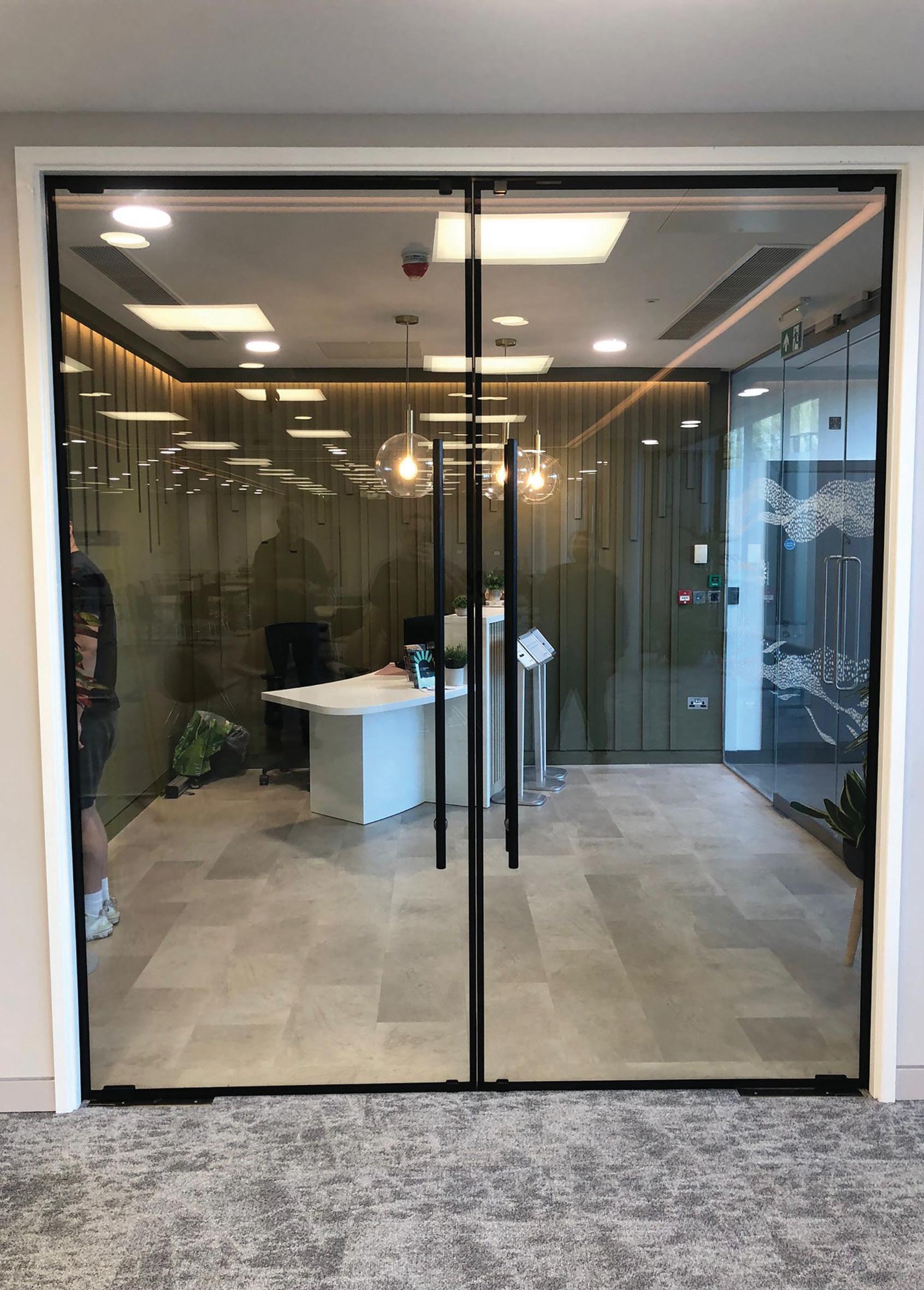
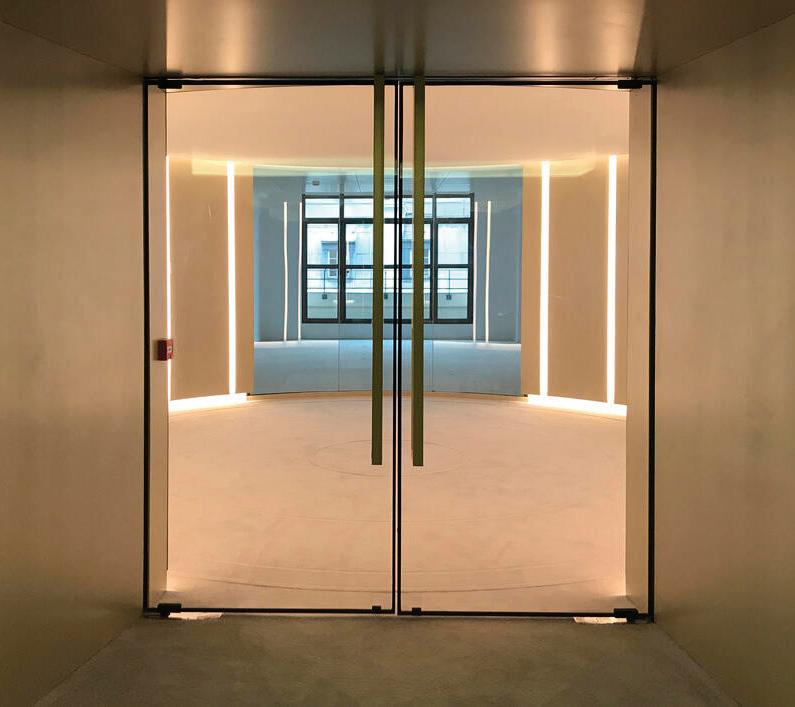
For fire resistance and protection of people and property
Now available for UK manufacture
Multifunctionality in fire protection
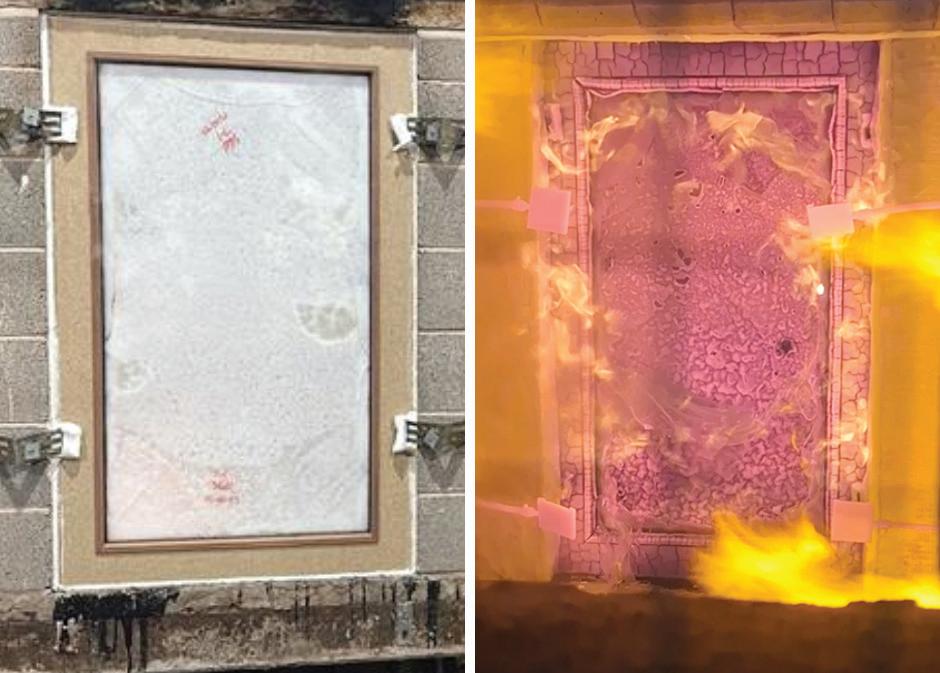
PYRAN® S is a pre-stressed, monolithic borosilicate single pane safety glass in accordance with EN 13024-1.
As a component in fire-resistant glazing that meets the requirements of resistance classes E 30, E 60, E 90 and E 120, it has proven its outstanding optical and mechanical characteristics over the years in a wide variety of buildings.
Areas of application
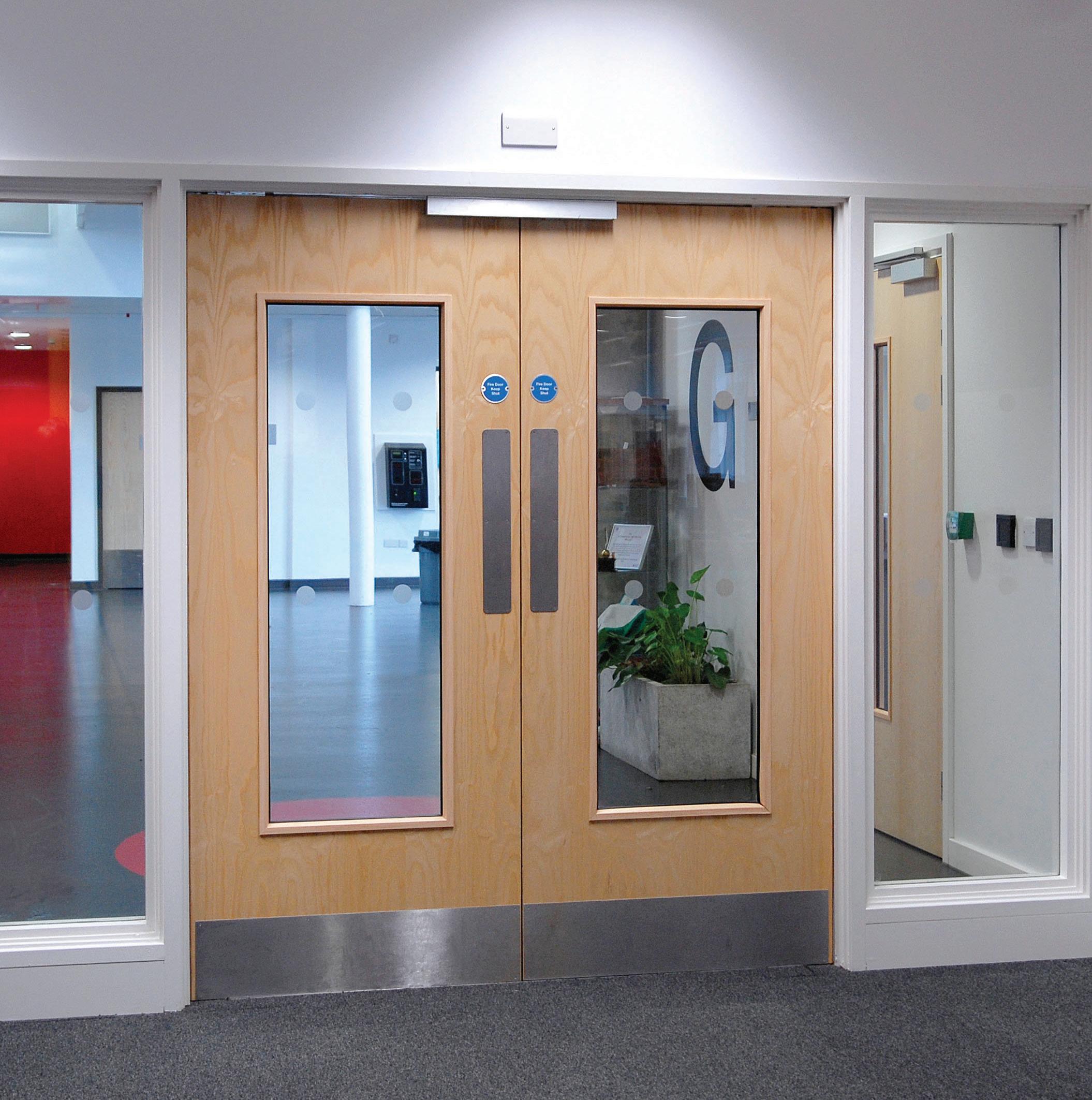
PYRAN® has been internationally approved and ideally suited for:
• Facades
• Partition walls
• Skylights and rooflights
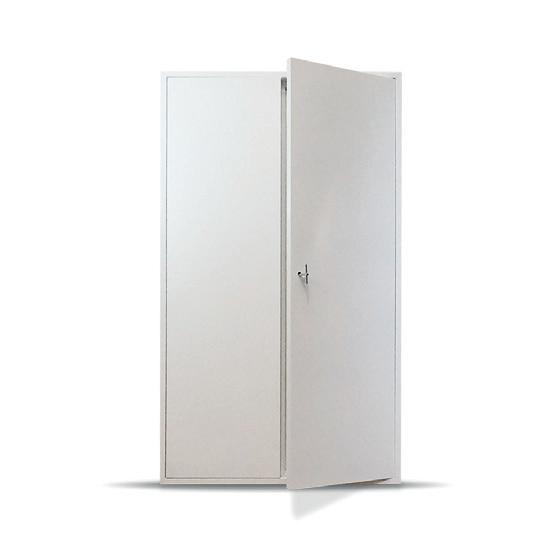
• Doors
• Roofs
• Smoke screens
• lift door glazing
• lift shaft glazing
Facts
• Higher ability to withstand temperature differentials: In comparison to soda-lime glass, tempered borosilicate glass can better withstand temperature differentials and can therefore be glazed with normal edge covers (20±2 mm).
• Higher softening temperature: Because the glass is selfsupporting for more than 30 minutes, large panes and simple frame constructions are now possible.
• Higher viscosity: The glass flow rate is low due to the high viscosity and durability of borosilicate glass, so with more edge cover, greater fire resistance times in excess of 90 minutes can be achieved.
• NiS crystals do not form: Due to the chemical composition of borosilicate glass, nickel sulphide crystals cannot form. Spontaneous glass fracture due to embedded NiS crystals cannot happen with PYRAN®.
Further information is available from our sales and technical offices or visit www.firmanglass.com
Over the past month, fire safety has once again forced its way into global headlines — and not because of innovation or progress. From highrise tragedies abroad to renewed scrutiny of building standards here in the UK, the message is depressingly familiar: when fire safety is treated as a tick-box exercise rather than a living, maintained responsibility, people die.
For those of us working in fire-door safety, these stories are not distant events. They are warnings. They remind us that a fire door is never “just a door” — it is a piece of lifesaving equipment that must be designed, installed, inspected and maintained with the same seriousness as any other safetycritical system. And yet, we continue to see non-compliant doorsets, missing closers, compromised compartmentation and a lack of basic understanding across many sectors.
Here in the UK, new regulatory frameworks are raising expectations, but scepticism remains. Are we genuinely improving standards, or simply increasing paperwork? Are fire doors being checked properly — and by competent people — or are they still the weak link in too many buildings?
If there is one thing the last few weeks has made clear, it is this: fire safety does not fail suddenly. It fails slowly — through neglect, budget cuts, poor workmanship and misplaced confidence — until the moment a fire exposes every weak point at once. Our job, collectively, is to stop that chain long before it starts.
Thank you for continuing to raise standards. Lives depend on it.
Chris Champion Editor
Contents
4 Meet The Panel
You are invited to submit technical questions, requests for general advice and comments.
8 What the World News Tell Us The Panel - Comments and Observations.
16 Software & IT Golden Thread in Action - How DoorDataSystems.com Revolutionises Fire Doors Lifecycle Management.
30 Fire Resistant Powder Coating
Architectural Powder Coating Reaction to Fire Safety and Gateway 2 Compliance.
38 Fire Aware
Safety Specialists are becoming the Fire Aware Educators, requests for general advice and comments.
Christina Lazenby Publisher / All Enquiries M: 07805 051322 christina@firedoor-journal.co.uk
Kate Carnall Graphic Design / Ad Specifications kate@hook-a-duck.co.uk
The views contained herein are not necessarily those of Fire Door Journal and whilst every effort is made to ensure information throughout is correct, Fire Door Journal does not accept liability for errors. The views expressed by contributors and the content of letters, are not necessarily those of Fire Door Journal and therefore cannot take responsibility. Please recycle this magazine so we can continue to use recycling in our effort to help the environment.
Meet The Panel
Get
acquainted with our Expert Panel,
here to answer your questions and discuss the topics that matter, value your opinions and listen to your ideas.
You are invited to submit technical questions, requests for general advice and comments. This will provide the panel with the opportunity to share their perspectives and respond where appropriate, share their thoughts and offer guidance where they can.
Please send your questions and comments to: christina@firedoor-journal.co.uk
Nicola John Managing Director, Fire Door Maintenance Training and Development (FDM by UAP Ltd)
Chris Champion Editor, Fire Door Journal
An experienced and professional journalist and Editor with significant experience across a wide variety of businesses including the composite door and fire door industry, the window, door and glass industry in general, landscaping products and manufacturing. Experienced presenter and speaker at seminars, conferences and exhibitions with many television and radio appearances. Skilled interviewer and writer of editorial material, articles and press releases. 60 years of work experience with 35 years at Director level.
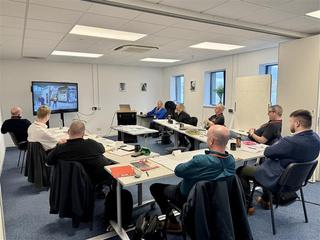
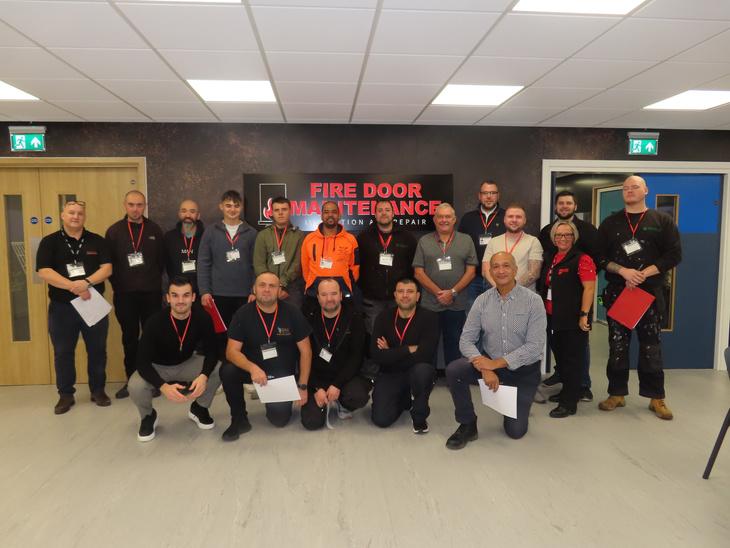
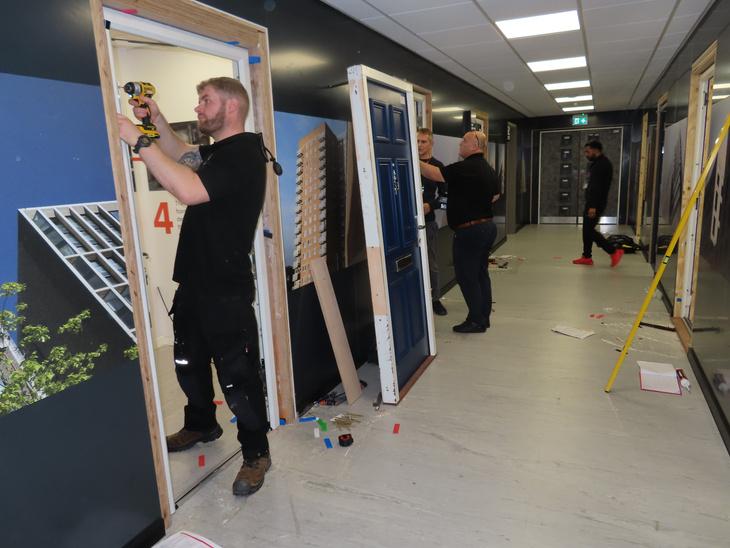
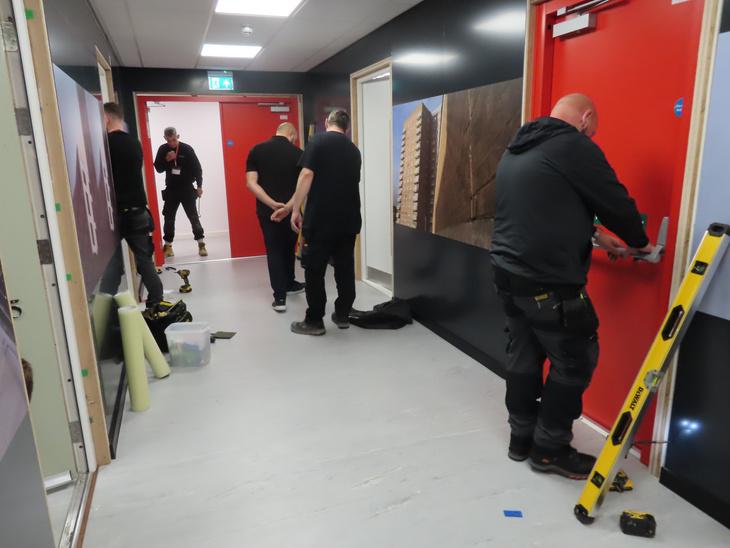
As the Managing Director of the Fire Door Training Academy, Nicola is passionate about elevating fire safety standards. The award winning academy, housed in a stateof-the-art training centre, is dedicated to equipping professionals with the knowledge and skills needed to ensure fire doors are installed, inspected, and maintained correctly. Their mission statement is to significantly improve safety and standards in the fire door industry. The recent legislative changes underscore the critical importance of fire safety in buildings. The demand for specialised training in fire door inspection, installation and maintenance is unprecedented. Nicola’s team comprises fire safety experts, educators and support staff, committed to elevating fire safety standards.
FDM was established to address the growing need for high-quality fire door training after the Grenfell tragedy, ensuring professionals across the industry have the skills and confidence to meet evolving fire safety regulations. Since launch, FDM has partnered with over 50 industry
Christina is the Managing Director of the window, door and conservatory newspaper, Glass News (Glass People Ltd) which distributes monthly to manufacturers, fabricators and installers, established 15 years. Christina has worked within the window/ door industry, including fire doors, in some way or another for 30 years and is an experienced publisher of a number of B2B titles, within niche sectors and construction.
leaders and top suppliers of door sets and components, including Falcon Timber, GGF, Mann McGowan, Lorient, PDS, IG Doors, Sentry, Strongdor, NorDan, and many more.
A round table was recently hosted at FDM head quarters, composing of an indomitable team of fire safety experts, including the esteemed Dame Judith Hackett, resulting in The Fire Door Maintenance Report.
You can obtain a free copy of this report.
Please email the publisher of Fire Door Journal to receive your electronic copy.
Raising Standards in the Fire Door Industry
fdmltd.co.uk
Bryan Bultema Managing Director, ODL Europe
Bryan Bultema is Managing Director of ODL Europe, part of the global ODL corporate group with over 80 years of experience in developing high-performance building products. Based in Bootle, Liverpool, ODL Europe is focused on building value into building products and setting higher standards for safety, performance and sustainability.
As a panelist for the Fire Doors Journal, Bryan shares insight into how the
leadership, ODL Europe has invested in advanced solutions that provide consistent performance and assurance across the supply chain.
Central to this approach is the Guardsman FD30 Fire Door slab. Developed in collaboration with Capstone Engineering and leading fire door fabricators, the Guardsman is a nextgeneration GRP composite fire door designed to deliver dependable performance every time. Tested under UKASaccredited conditions, it consistently exceeds its FD30 classification, achieving burn times of up to 70 minutes. Constructed with Agrifiber cores, FSC® certified timber and durable GRP skins, it combines safety with sustainability and long-term resilience.
Bryan continues to drive ODL Europe’s commitment to delivering proven, accredited composite door solutions that give specifiers, contractors and building owners complete confidence in performance.
Owen Jones Technical Director, Distinction Doors Ltd
Owen Jones brings over 30 years of experience in the construction products industry, having begun his career with IG Limited in 1990. He later joined IG Doors Ltd as Technical Development Manager, contributing significantly to its growth into one of the UK’s largest composite door set manufacturers.
Since 2021, Owen has served as Technical Director at Distinction Doors Ltd, where he leads the technical development and supply of composite door blanks and components, including
a fully tested fire door system. His expertise spans the manufacture of GRP, ABS, and steel composite doors within timber and PVC-U frames.
A Chartered Engineer and BFRC-accredited thermal simulator, Owen is committed to advancing product standards and safety. He was instrumental in founding the Association of Composite Door Manufacturers (ACDM), serving as Technical Director and Vice Chairman, and currently chairs the ACDM group within the GGF.
Owen has contributed to key industry initiatives, including post-Grenfell discussions with MHCLG, and has held roles on several BSI committees, notably chairing the latest revision of BS 8529 for composite doors. His collaborative approach and technical insight make him a respected figure in the sector and a trusted voice in regulatory development.
Mike Rigby
Managing Director, MRA
Research and the MRA Team Members
Mike Rigby Founded Michael Rigby Associates (now MRA Research, MRA Building Markets Reports, and MRA Data Services) in 1991 to bring new insight and direction to the building materials, construction and home improvements sector. With a background in both consumer and trade markets, including 10 years in marketing and research at Dulux paints, time as head of marketing at a national builder’s merchant, and as marketing director of a national home improvement company, he understands the challenges facing the home-improvement and construction industries.
Mike’s experience of fire safety: Mike was involved in PR for the Passive Fire Protection Federation for several years in the 2000’s. Exova, the Fire Service, ASFP, the Government and other bodies were PFPF members, so he heard the inside stories and went to Westminster with the chair and deputy chair when the Government tasked the PFPF with leading one of its task forces. The Lakanal House fire, a prequel to Grenfell, and a fire in the Channel Tunnel occupied the team for a
long time. The PFPF was eventually merged with the ASFP. Mike also worked on PR for a leading group of passive fire protection products. MRA produced the ‘Fire Door Quarterly Trends’ survey for the BWF and its fire door scheme for 10 years, which appeared in BMN magazine. When Grenfell occurred, the Government knew so little about fire doors and fire safety that they sent a bunch of officials to one of Mike’s clients to learn about fire doors. After the Grenfell Inquiry, Judith Hackitt tasked the CPA to consult the industry on it’s Marketing (loose and unsubstantiated claims), and the CPA asked MRA Research to consult the industry on the new code (which is now run by the CCPI - Code for Construction Product Information). Since then MRA Research has worked on a research project on specifiers and fire products for a large international, and has just conducted fire safety research for another large group.
Mike is a member of the Market Research Society, a liveryman of Worshipful Company of Builders’ Merchants, and Worshipful Company of Marketors.
Jason Robinson Technical Director, Robust
With over 25 years of industry experience, Jason is a recognised authority on fire door performance and compliance. His expertise spans product testing, certification and design innovation, with a specialist focus on innovative fire safety solutions.
Within Robust, Jason is responsible for leading product development, driving improvements and standardisation in design and processes, overseeing testing and certification, and ensuring compliance with the latest standards. A strong advocate for third-party testing and certification, Jason champions its role in providing customers with confidence that products not only meet legislation but also deliver proven, reliable performance in real-world applications.
George Edwardes Technical Director, Fire Protection Association
As the FPA’s Technical Director George oversees the strategic direction and delivery of the FPA’s technical services, supporting its mission to reduce fire risk and improve safety standards across the built environment. The FPA is deeply involved in the assessment, testing and training related to fire doors, providing:
• Specialist training courses to ensure fire doors are installed, maintained and inspected by competent professionals
• Fire risk assessments and compartmentation surveys to ensure fire doors are installed and maintained correctly
• Full scale fire testing at our laboratory to both British and European furnace test standards.
George and the FPA continue to support industry, insurers, and regulators with evidencebased guidance and technical expertise, helping to ensure that fire doors fulfil their critical role in protecting lives and property.
Steve Goodburn Business Development Director, Pyroguard
Steve Goodburn is Business Development Director at Pyroguard, a leading global manufacturer of fire-safety glazing solutions. With extensive experience in Business Development, Key Account Management and manufacturing operations, Steve brings both commercial insight and technical expertise to the sector. He is a strong advocate of a systembased approach to passive fire protection, recognising the need for fire doors to be tested and certified as complete assemblies.
A regular contributor to industry debate, Steve has authored RIBA-approved CPD materials and delivered presentations to architects, specifiers and manufacturers on the correct specification of fire-resistant glazing. He has also driven product innovation, including the launch of Pyroguard Advance for timber and steel fire-door systems. Passionate about safety and design, Steve views the fire-door industry as a unique responsibility: safeguarding lives while supporting architectural creativity.
Ian Glenister Technical and Sales Manager, DoorCo
Ian Glenister has worked across a range of sectors within the fenestration industry over the last 40 years including Production, Quality, Operations, Sales Management and Certification. With knowledge across commercial, retail and trade sectors, Ian’s knowledge of fenestration as a whole is vast, making him the perfect candidate to spearhead DoorCo’s fire door operation.
Since the Grenfell tragedy and the subsequent MHCLG investigation, DoorCo have actively been working towards a fire door solution to meet the needs of the supply chain in the changing world of fire doors and with an emphasis on consistency. Working closely with key suppliers including their slab manufacturing partner, DoorCo Korea, Ian has been the project lead for one of the largest and most successful type testing fire door projects in the UK.
Gareth Jeffries is the Commercial Sales Director of Permadoor and Wrekin, part of the Epwin Group. Permadoor, the UK’s original composite door manufacturer, is an industry leader in the design and supply of highperformance composite fire doors for the social housing and affordable homes sector. Renowned for innovation, the business is committed to compliance, sustainability and product performance.
With more than seven years at Permadoor and extensive experience in the building materials sector, Gareth plays a pivotal role in driving strategic growth. He ensures the business remains ahead of evolving Building Safety Act requirements and stricter regulations, while aligning the needs of specifiers, contractors and building managers with innovation in compliance and performance. Passionate about raising standards, Gareth provides invaluable insight into how regulation, sustainability and safety can be translated into practical solutions that deliver safer, more sustainable homes and genuine peace of mind for all stakeholders.
Karen Trigg Business Development Manager, South East, Allegion UK
Karen started her journey in the architectural ironmongery sector in 1994 and has built an established career grounded in technical expertise and customerfocused service. Drawing upon 30 years of industry experience, Karen supports architects, contractors, door manufacturers and end users with expert guidance on fire door hardware specification and performance and remains committed to raising awareness on key themes such as fire safety, building regulations and testing standards.
Since joining Allegion UK in 2017, Karen has advised local authorities, architectural ironmongers and manufacturers on all aspects of fire safety and door hardware, ensuring projects are equipped with the most suitable, effective and compliant fire door hardware solutions.
Karen is also a strong advocate for continued education and professional development, holding qualifications such as DipGAI and DipFD that complement her extensive industry knowledge. Her passion for fire safety performance makes her a trusted voice for those committed to delivering safe, secure and accessible buildings.
Wojciech Brożyna Managing Director, Aluprof UK
Wojciech Brożyna is Managing Director of Aluprof UK, a leading supplier of aluminium systems for windows, doors, and façades. With more than 20 years’ experience in the fenestration and construction industry, he has played a key role in delivering safe, sustainable, and high-performance solutions across the UK and Ireland.
Jonny Millard Managing Director, UK Fire Door Training
Jonny Millard is the Managing Director of UK Fire Door Training, the UK’s largest and most trusted fire door training provider. A qualified teacher and fire door inspector, Jonny founded the company with a clear mission to raise standards in fire safety training while keeping training affordable and accessible.
What began as a small family business has grown into the nation’s leading authority on fire door competence and one
Wojciech, one of the directors of the Council for Aluminium in Building (CAB), has been actively engaged with industry institutions and trade bodies, strengthening collaboration across the sector. He promotes compliance, innovation, and education to ensure Aluprof’s systems meet the highest technical and fire safety standards.
Wojciech works closely with architects, contractors, and specifiers to raise awareness of fire door performance, certification, and regulatory requirements, supporting safer building design. His focus lies in combining technical expertise with practical guidance to help the industry meet Gateway 2 obligations and wider responsibilities under the Building Safety Act.
of the fastest growing training companies in the country. Training over 10,000 professionals across installation, inspection and maintenance. UK Fire Door Training is recognised for its highquality practical courses, delivered in purpose-built centres and through mobile rigs that bring hands-on learning directly to clients nationwide.
Alongside its practical courses, the company provides an extensive library of online CPD and compliance courses, ensuring that learners at every level can stay current with legislation and best practice. Every course is created and delivered by industry experts, combining technical precision with real-world application, and all are sold at fair, reasonable prices that reflect Jonny’s belief that competence should be within reach for everyone.
Fire Doors, Fire Safety and yet another round of promises: What the last month’s world news tells us
If you’ve spent the last decade listening to governments and developers insist that “lessons have been learned” after every major fire disaster, the past month’s world news won’t inspire much confidence. Several high-profile incidents — particularly the catastrophic fire in Hong Kong — have once again exposed the same old problems: shoddy materials, ignored warnings, blocked escape routes, and fire-safety systems that exist only on paper.
And for those in the UK who are told repeatedly that our building safety regime is “one of the best in the world”, the global pattern feels uncomfortably familiar.
Hong Kong: A Towering Failure That Could Happen Anywhere
At the end of November, a fire ripped through Wang Fuk Court, a residential complex in Hong Kong, killing over 150 people and injuring many more (according to global press reports). The scale of the tragedy has shocked the
world — but the alleged causes are depressingly similar to what UK residents have heard since Grenfell:
• Renovation materials were reportedly flammable.
• Scaffolding and foam insulation acted like fuel.
• Safety warnings were ignored.
• Regulatory oversight appears to have been wafer-thin.
The Hong Kong government has announced a “judge-led independent inquiry”, which will sound very familiar to anyone in the UK who’s lived through years of building-safety inquiries, reports, and recommendations —
often followed by… not much real change.
Meanwhile, China has launched a nationwide fire-safety crackdown, ordering inspections of insulation, fire doors, escape routes and construction practices. Again, this mirrors the UK’s own post-crisis push — but critics suggest such inspections usually fade once headlines disappear.
A Global Problem: Locked Doors, Blocked Exits, and Same Excuses
This isn’t just Asia’s problem. Recent incidents in Bangladesh and India highlight fundamental
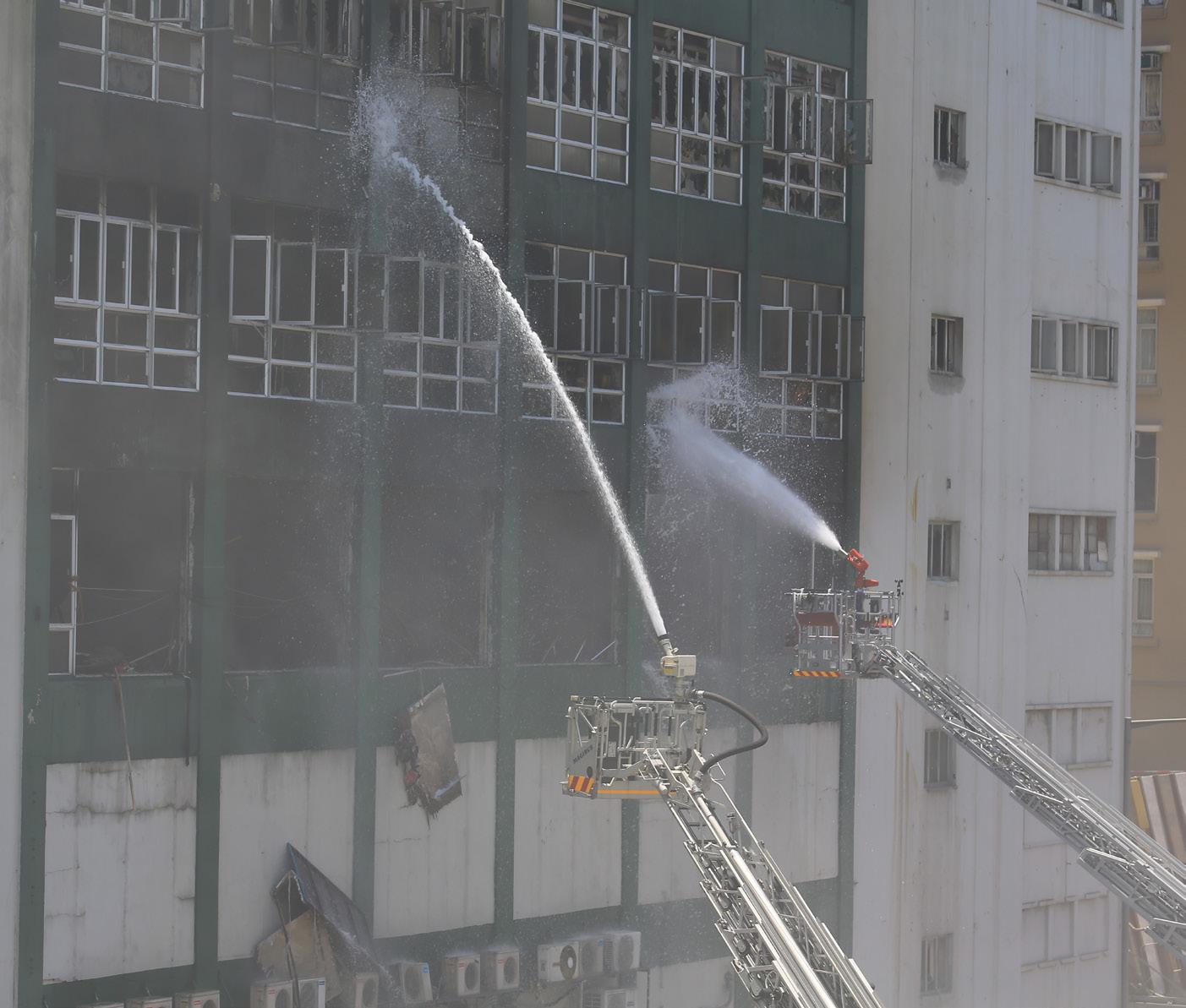
Firemen working tirelessly to put out a high rise building fire, one of the most serious fires in Hong Kong history, 2024
failures that echo issues seen in UK care homes, HMOs, student accommodation and older tower blocks:
• A Bangladesh factory fire caused deaths after a locked door prevented workers escaping — the kind of basic, avoidable failure that still crops up in UK safety reports.
• In India, officials recently warned that industrial areas lacked essential fire-safety systems and regular inspections.
Wherever such tragedies occur, authorities insist that reviews will be carried out, improvements made, and future disasters prevented. Yet similar stories repeat worldwide.
Fire Doors: The Most Basic Line of Defence — Still Widely Misunderstood
Across multiple countries — the UK included — fire doors are treated as a minor detail rather than what they really are: a life-or-death barrier that buys people time.
In the UK, regulators and firesafety advocates are urging better installation, maintenance
and checking of fire doors. But scepticism is justified:
• We’ve seen countless buildings fitted with doors that fail tests.
• Social housing tenants often report broken closers, gaps, or uncertified replacements.
• New regulations sound strong, but enforcement is often weak.
• Building owners sometimes prioritise cost over compliance until forced by legal action.
Experts have also raised concerns that some “compliant” fire doors are so heavy and stiff that older or disabled residents struggle to open them — effectively trapping the people they are supposed to protect.
Why This Matters to the UK — Especially Now
Many UK residents assume disasters elsewhere are the result of “different standards”. But the truth is uncomfortable:
• The UK is still dealing with unsafe cladding, untested materials, missing fire-stopping, and questionable fire-door installations.
Across multiple countries — the UK included — fire doors are treated as a minor detail rather than what they really are: a life-or-death barrier that buys people time.
• Thousands of buildings remain under investigation.
• Leaseholders are still fighting to get dangerous structures fixed.
• Local authorities often lack enforcement resources.
• Developers and government regularly argue over who is responsible for funding repairs.
So when global fire disasters make the news, they serve as a reminder: building safety failures are not exotic or foreign problems — they are familiar, systemic, and still happening here.
The Hard Question: Has Anything Really Changed?
Authorities everywhere insist the same things after every catastrophe:
• “We’ll learn from this.”
• “We’re improving regulations.”
• “Safety is a top priority.”
But the pattern repeats. Fires become headlines, promises are made, and when attention fades, so does urgency.
So, our Panel asks:
• Are fire doors actually being checked?
• Are escape routes genuinely safe?
• Are materials properly certified — or just assumed to be?
• And who is held responsible when they aren’t?
What are your views on this article?
Email in confidence: christina@firedoor-journal.co.uk
Your comments will be put to our panel, once permission is granted or you can just simply have your say.
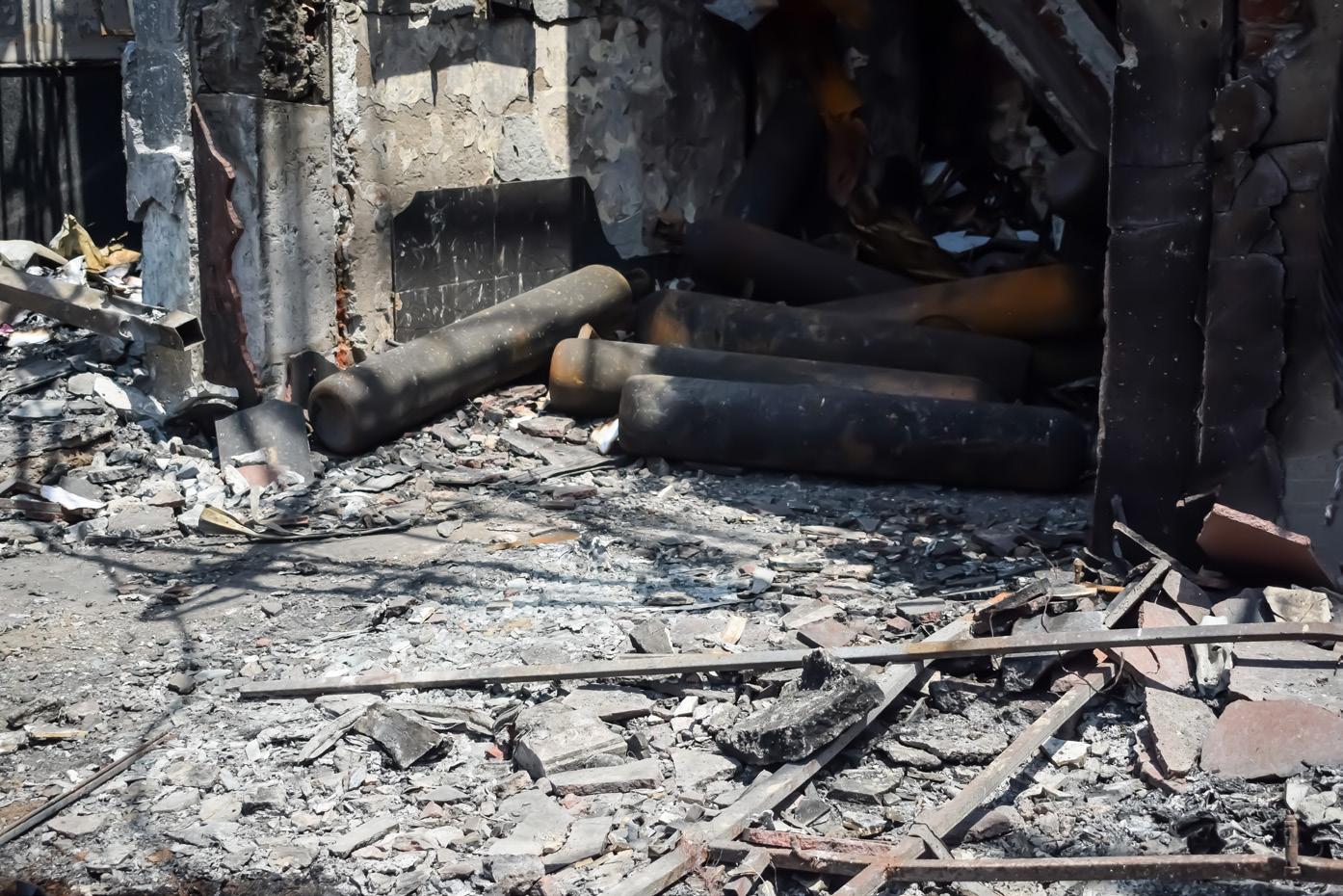
Fire Breakout at a Children’s Hospital when an Oxygen Cylinder Exploded
Exclusive Reader Subscriber Offers
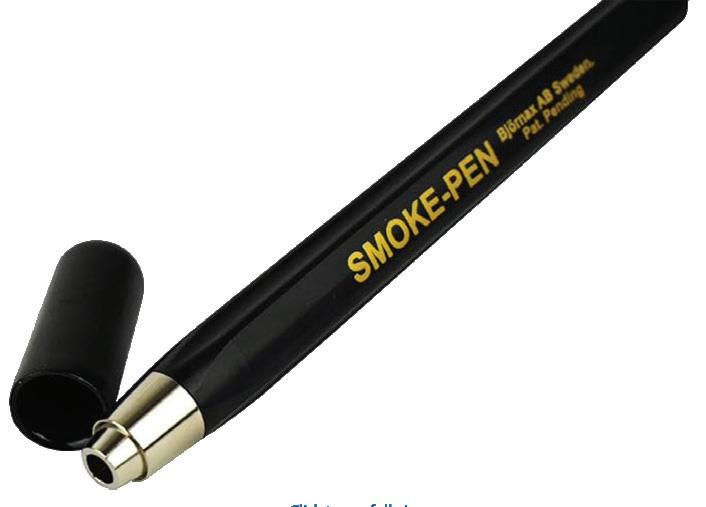
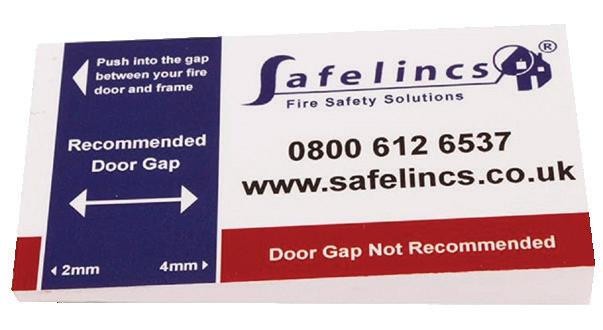
Fire Door Gap Gauge & Smoke Pen Checker Tools
All
(must be booked for December
To redeem please enter: FDJ10 in the Coupon Code section, when booking
Visit our website for course options: www.fdmltd.co.uk
and Light, Pocket Fit
The gaps between a Fire Door and its frame need to be 2 to 4mm in width to ensure that both the door can close smoothly and that the fire cannot spread through the gap of the fire door.
Fire Door Gap Gauge
• Lightweight and durable plastic body
• Angular construction ensures no-fuss, intuitive use regardless of architrave
• Simple insert-and-glance design with clearly marked "Recommended Door Gap" area
• Compact design for easy storage and transport – fits in your pocket!
• Dimensions: 70 x 40 x 2-9 mm
Smoke Pen - Innovative Smoke Testing Solution
Exclusive to Arctic Hayes the Smoke Pen is an easy-to-use solution for Leak Testing, Airflow Studies, and to test Aspirating Smoke Detention Systems (ASD).
APPLICATIONS: This Pen can be used for smoke alarms, airtightness tests, ducting & cabinet testing, extraction arm flow testing, slight air movement, gas spillage and for compulsory CO spillage checks of boiler/case sills post fitting or re-fitting.
SAFE & EASY TO USE: When lit, the stick emits a continuous, non-corrosive, non-hazardous white smoke. Just like with a mechanical pencil, press the button at the top end to open the claws, insert the smoke stick, light and perform your test.
SMOKE STICKS: The Pen comes with 3 Smoke Sticks. Each stick gives out around 30 minutes of smoke. The stick can be extinguished by replacing the cap on the pen. Additional sticks can be bought separately.
WHAT’S IN THE KIT? 1 x Smoke Pen; 3 x Smoke Sticks.
https://firedoor-journal.co.uk/subscriptions/
You will need to
to
Join a growing community of professionals who prioritise safety, performance and compliance in every project.
Please note you can view the Fire Door Journal online, free of charge, however, you will still need to subscribe if you wish to receive the print or digital journal and monthly newsletter via email. Subscription to the monthly newsletter is free of charge.
As a subscriber, you’ll get:
• Free essential, practical tools to help your work.
• Discounts and exclusive offers only available to subscribers.
• Updates on fire door regulations and standards.
• Installation and maintenance best practices.
• Expert interviews, case studies, technical advice and product reviews.
• Upcoming industry events and training opportunities.
• A Panel of Experts available to answer all of your fire door related questions.
• Digital Edition direct to your inbox bi-monthly, six editions per year.
• Print Edition posted to your chosen address, six editions per year.
• Digital Newsletter direct to your inbox, monthly, twelve editions per year.
• Updates on fire door regulations and standards.
• Installation and maintenance best practices.
• Expert interviews, case studies, technical advice and product reviews.
• Upcoming industry events and training opportunities.
Subscription costs:
• Monthly E-newsletter direct to your inbox, twelve editions per year - free of charge.
• Digital Edition direct to your inbox bi-monthly, six editions per year, along with the Print Edition posted to your chosen address, six editions per year – £49 +VAT (one invoice to cover all six editions). You will automatically receive the monthly digital newsletter.
To Subscribe
Please fill in the form on our website: https://firedoor-journal.co.uk/subscriptions/ You can also email your subscription preferences (Free Digital Newsletter or Print & Digital Editions) with full invoice details if you have chosen print, to: christina@firedoor-journal.co.uk
Distribution
(Distribution is updated bi-monthly once subscriptions are counted).
copies
BeCompetent: Restoring trust through irrefutable competence
The Problem
In construction and fire safety, competence has too often been assumed, not proven.
Courses are completed and certificates issued, yet there remains no single, trusted way to show who is truly competent and who is not.
That is about to change.
The Solution
BeCompetent is a new independent digital training and competency platform designed to bring structure, transparency and trust to the built environment.
Created by the team behind UK Fire Door Training, BeCompetent is a separate, industrywide venture with a simple purpose: to create a live, verifiable record of competence that individuals, employers, and regulators can trust.
No grey areas. No assumptions. Just proof. Significant investment has already been made in the platform, with several hundred thousand pounds committed to its development and early infrastructure. This level of funding reflects both the scale of the ambition and the seriousness of intent behind the project.
How It Works
Launching in 2026, the platform will debut within the fire door sector,
aligning with the CITB
Fire Door Installation Competence Framework. Its foundation is built around the four pillars of professional competence: Skills, Knowledge, Experience and Behaviours (SKEB). Each of these elements will be tracked and live-managed through dynamic digital competency pathways.
These pathways will show, in real time, where an individual stands within their professional development. They will display what has been achieved, what remains current and what requires further attention. NVQs, CPD and regulated qualifications will all feed into the system, allowing users to see what has been completed, when, where, with whom, and whether it is still up to date.
Organisations will gain the ability to prove competence across their teams, tracking progress against defined frameworks, identifying skill gaps and evidencing compliance. Individuals will gain insight into
their own strengths and weaknesses, seeing exactly where they excel and where further development is needed. Every aspect of SKEB, from practical capability to professional conduct, will have a place to be logged, proven and continually educated on.
From the outset, BeCompetent will also recognise regulated training completed at other centres, ensuring that legitimate, compliant learning is fully acknowledged. The goal is to unify the industry under one credible, evidence-based system rather than fragment it further.
“SKEB is at the heart of competence. BeCompetent will give it structure, visibility and meaning. For the first time, both individuals and organisations will be able to see, prove and improve their competence with complete clarity.” Jonny Millard, Managing Director
Jonny added, “Others will no doubt attempt to replicate what we’re
“BeCompetent is about proof, authenticity, removing friction and education.”
doing, but they quickly realise it’s not as simple as keeping a log of certificates. BeCompetent is about proof, authenticity, removing friction and education. It helps individuals and organisations understand what needs to be done, bringing clarity to complex frameworks in a language people understand. It is layers upon layers of integrated systems, data and learning that most struggle to comprehend.”
The Future
The initial platform development is nearing completion and will enter testing in late 2025. Much of the technology remains confidential until launch, but its purpose is clear: BeCompetent will be the undisputed record of who has what, who is competent and who is not. Collaboration with industry will be key.
A future where Skills, Knowledge, Experience and Behaviours aren’t claimed they’re proven, authenticated, and trusted.
That’s BeCompetent. For further information or early access enquiries, contact: info@becompetent.co.uk
FDM and FPA announce new training centre to advance fire safety standards
Training & Development (FDM) has partnered with The Fire Protection Association (FPA) to launch a stateof-the-art training centre in Oxford, opening on 1 January 2026. The facility will deliver four specialist FDM courses and qualifications, expanding development opportunities for fire safety professionals.
The new site will operate as a satellite version of FDM's practical Training Academy in Bury and host a range of practical accredited courses, including the Responsible Persons, Fire Door Procurement, Fire Door Inspection, and Fire Door Awareness courses. FPA will also deliver FDM’s Level 3 vocational Diploma qualification in Inspection of Fire Resistant Doorsets under licence.
To widen access to FDM’s bespoke training, the
partnership will see FPA visit FDM’s centre in Bury each month to deliver the Fire Risk Assessors qualification, while FDM will travel to the FPA centre each month to lead its Fire Door Installation and Fire Door Repair and Maintenance courses.
FDM was founded to meet the growing need for high-quality fire door training in the wake of the Grenfell tragedy, ensuring professionals across the sector have the skills and confidence to meet the evolving fire safety regulations. FDM has trained 1,200 professionals since opening in February 2024, forging partnerships with 60 leading industry bodies. It has also earned national recognition, winning Training Provider of the Year at the 2025 Fire & Security Matters Awards,Fire Solution of the Year at the 2025 London Construction Awards, and Training Company of the Year at the 2024 National Fenestration Awards.
Nicola John, Managing Director of FDM, said: “We’re extremely proud that the FPA, one of the industry’s most well-established and respected associations, has recognised that our courses and materials are industry leading. We share a dedication to raising fire safety standards, and this collaboration is just the start of a long and prosperous partnership. Together, we’ll bridge knowledge gaps for its thousands of members across the UK and shape the future of fire safety in our industry.”
The FPA is the UK’s leading fire safety organisation, dedicated to helping businesses and communities reduce fire risk. Independent and not for profit, the FPA works closely with regulators, insurers, and fire professionals to promote best practise in fire safety across the UK.
Kelly Donoghue, Head of Training at the FPA, said: “Our new partnership with FDM further strengthens our comprehensive suite of fire door training, which we’ll deliver from January 2026 at our state-of-the-art training facility. This collaboration reflects our shared commitment to change, using our expertise to raise fire safety standards for fire door professionals.”
Nicola John
What do FDM Of fer?
In Person GQA Accredited Courses:
Fire Door Inspection Course
Fire Door Installation Course
Fire Door Repair and Maintenance
Fire Door Awareness
Procurement Course
GQA Accredited Short Online CPD Courses:
Navigating FD Documentation
Identification Marks and Labels
Fire and Acoustic Seals
Regulated Vocational Qualification:
FD Inspector Diploma Level 3 – GQA
Installation Diploma qualification Level 3
Further regulated qualifications coming soon
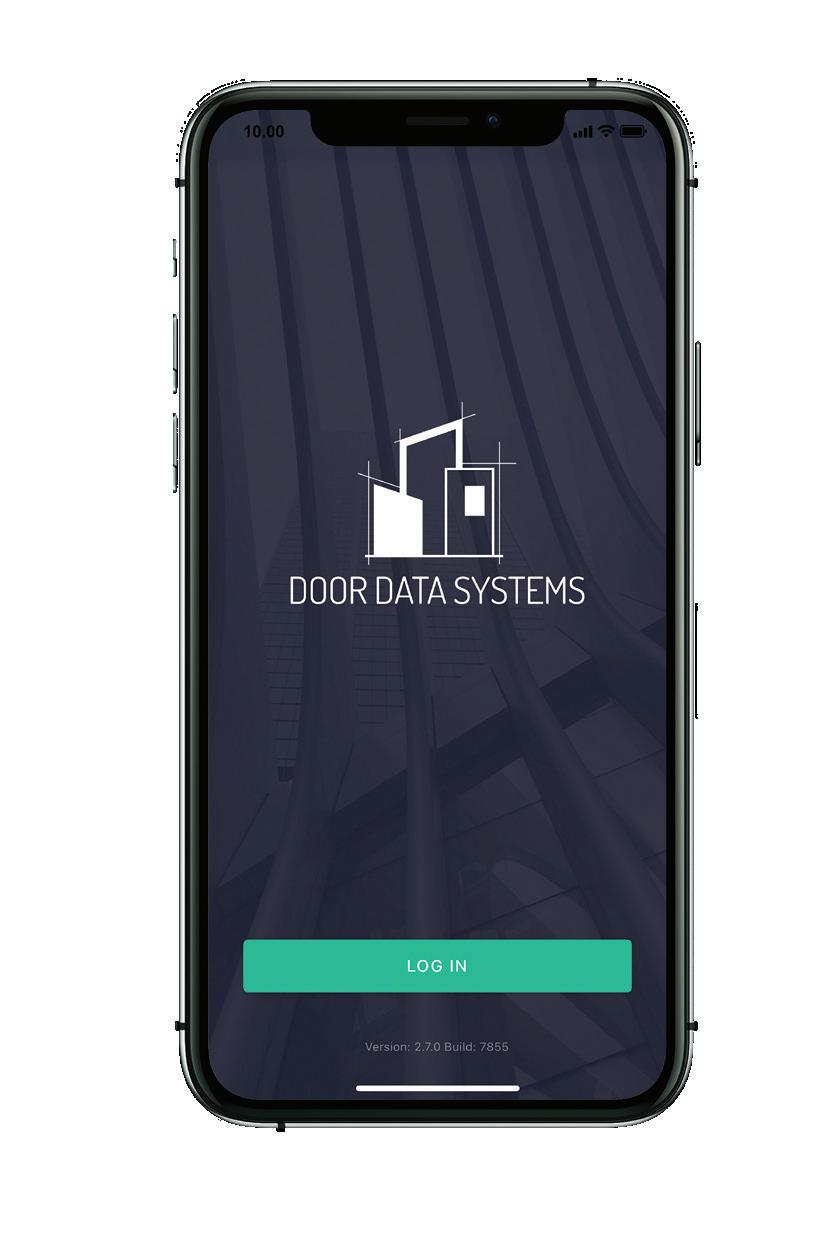
Golden Thread in Action: How DoorDataSystems.co.uk Revolutionises Fire Door Lifecycle Management
The Door Data Systems platform, fast becoming known as the ‘National Fire Door Register’, exemplifies the practical application of the ‘Golden Thread’ theory by providing a comprehensive, digital solution for managing fire door information throughout their entire lifecycle.
This approach directly addresses the industry’s demand for transparency, traceability, and compliance in fire safety, especially in the wake of heightened regulatory scrutiny post-Grenfell.
What is the Golden Thread?
The golden thread, as defined by Dame Judith Hackitt’s review, is an accurate, up-to-date, and accessible digital record of a building’s design, construction, and ongoing maintenance. For fire doors, this means maintaining a seamless, digital audit trail that captures every stage—from manufacture to installation, inspection, maintenance, and eventual replacement.
DoorDataSystems Embeds the Golden Thread
Digital Records from Manufacture
Door Data Systems collaborates with leading door manufacturers to embed NFC data tags into each fire door at the point of production. These tags provide robust links to critical data to support ongoing trades in completing their tasks.
Manufacturers information such as certification, fire rating, parts and components used, create a “digital fingerprint” for each door. This ensures that every door’s journey is traceable from day one.
Installation and Commissioning
During installation, certified professionals use the Door Data Systems app to scan the door’s tag, confirm specifications, upload photographic evidence ensuring a benchmark system is instigated. All data is time stamped, ensuring accountability and real-time updates to each installer account. Door Data Systems reduces back room administration, produces detailed report supporting 3rd party certification schemes and provides a quick and easy transfer of data (regulation 38) to the client.
Inspections
and Maintenance (stock condition and new door management)
Routine inspections and maintenance are streamlined with digital templates aligned to British Standards. Inspectors log findings, upload photos, and schedule remedial works directly via the mobile app. Every action is recorded against the specific door, maintaining an up-to-date stock condition and compliance record. The ease of use app utilising voice recognition and
clear photo’s provides clear and precise records for maintenance engineers to understand exactly what is required.
Facility Management
The platform provides a central dashboard for stakeholders—housing associations, building managers, contractors, and regulators—to access the complete digital history of each fire door. This includes installation records, inspection reports, certifications, and maintenance logs, all of which are exportable to existing asset management systems. Managing a system of maintenance via the Door Data Systems
platform is quick and easy, safe and places the Responsible Persons in control.
Supporting Best Practice and Compliance
By digitising the golden thread, Door Data Systems enables housing providers to evidence compliance with regulations such as the Fire Safety (England) Regulations 2022. The system’s open-access philosophy ensures that no single party “owns” the safety data, promoting transparency and collaboration across the supply chain.
Find out more by visiting www.doordatasystems.co.uk or contact: enquiries@doordatasystems.co.uk
2 HOUR FIRE RATED BOTH DIRECTIONS
SPEED FIT RISER
DOORS
120 Minute UKAS fire tested to BS EN1634-1:2018 Fully compliant 36dB acoustic rating BS EN ISO 10140-2:2010 Part B compliant Smoke tested to BS EN 1026 Insulated with a U Value of 0.55W/2mK
Our lead times are solid. Just like our doors.
Unity Doors is committed to bringing its customers the very best service, as well as premium quality composite fire doors.
That's why the company has recently launched a fast, 7 day turnaround across all its solid core, composite fire doorset styles. The perfect solution for emergency replacement programmes.
Commitment to service & innovation
Unity Doors is committed to bringing its customers more and that doesn’t simply apply to contemporary style but to certification too. The company continually invests in testing and in recent months as undertaken
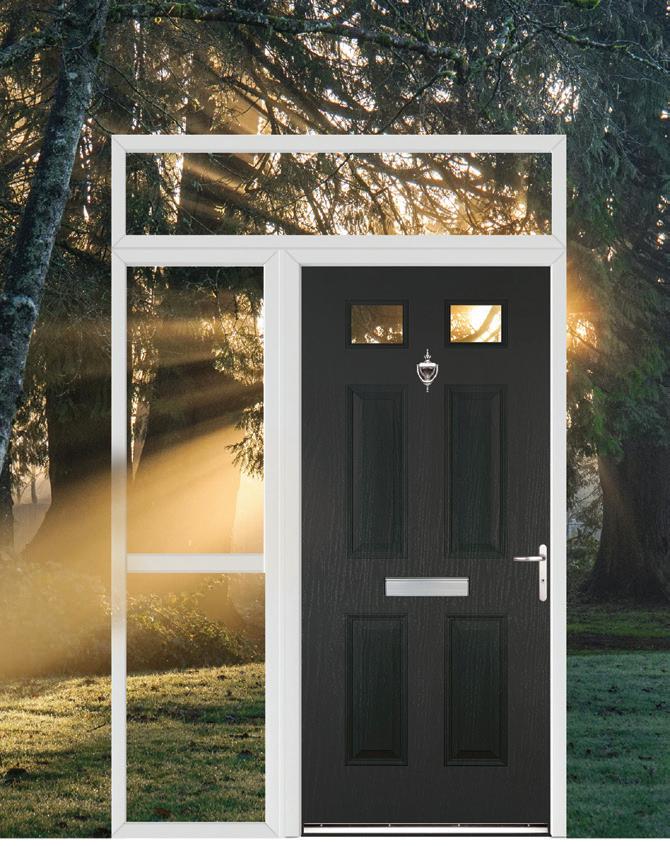
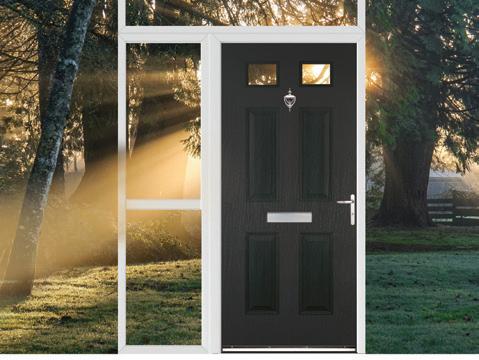
yet more and is soon to share this news with the market. This comes swiftly following the recent release of new sidelight options. A direct response to growing demand from clients seeking increased natural light without compromising fire safety. The new range combines contemporary design with uncompromising compliance, offering:
• Glazed sidelights, toplights, or flag windows – all fire-rated glass
• Bi-directional EN1634-1 fire resistance & EN1634-3 smoke control
• Complete doorsets delivered nationwide, supply from just 7 days, install service available
To find out more and to book a meeting with the commercial team, email - enquiries@unitydoors.com, +44 1531 822585.
Advances in fire-resistant materials
Steve Goodburn, Business Development Director at Pyroguard, discusses how the latest advances in fire safety glass are enabling specifiers and contractors to meet fire safety regulations with fire doors.
“Increasingly, specifiers and contractors are looking for solutions that not only meet stringent fire safety standards and evolving building regulations but also support modern design expectations. One area seeing significant innovation is fire safety glass, where recent advances are allowing for greater design flexibility and reliability in performance.
Fire safety glass in fire doors
Fire doors are recognised as an essential component in retaining fire safety in buildings. With modern advances in fire safety glass, this means that fire doors can benefit from glazing, but without the need for wired glass that detracted from their aesthetics.
Modern fire safety glass consists of multiple panes of glass with fire-resistant interlayers, which allow the glass and overall door system to withstand extreme heat to support safe evacuation.
When exposed to high temperatures, these interlayers react, forming a protective barrier against flames, smoke and radiant heat. These interlayers can provide excellent fire resistance, alongside other properties, such as thermal efficiency, acoustic insulation and even attack resistance.
Made up of an innovative gel interlayer, Pyroguard Advance provides EW classifications with fire resistance of 30 or 60 minutes. This is the only cuttable fire safety glass manufactured in the UK to feature this innovative gel interlayer, providing the flexibility to be cut on site without compromising on fire performance. Not only is this range of fire safety glass fully tested and certified to European standards, but it can also be combined with laminated glass counterpanes in order to meet P1A anti-attack requirements, making it a suitable option for use in steel, timber and composite applications.
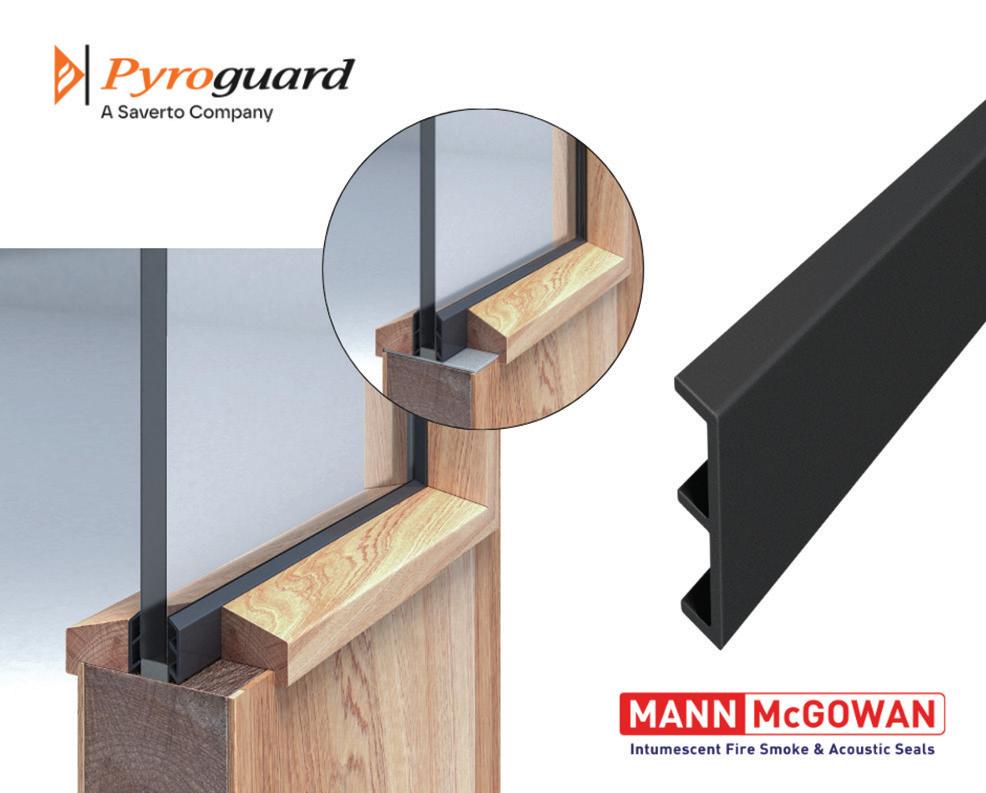
Intumescent seals may only be a small component of an overall door system, but they play an important role in fire door performance. Working with Pyroguard, Mann McGowan has recently developed a new compressible intumescent glazing seal, Pyroglaze Compression, which is suitable for use with a range of different door cores and bead types. Pyroglaze C enhances fire performance of the surrounding components; when exposed as the intumescent swells to completely seal gaps. In the case of door glazing, use of Pyroglaze C, reduces the risk of premature ignition of glazing beads on the protected face.
Pyroglaze C has been tested to EN 1634-1 in conjunction with Pyroguard Advance to 30 and 60 minutes. Made from graphite, Pyroglaze C is resistant to humidity and moisture, which means it maintains its integrity and performance even in challenging environmental conditions.
Changes to fire door testing
From September 2029, fire door systems tested to BS 476-22 will no longer meet UK Building Regulations. Instead, compliance will be with the European classification system, BS EN 13501-2.
This change forms part of a broader Government strategy to enhance building safety and performance, following the Hackitt Enquiry, highlighting the need for more rigorous and transparent testing of fire doors.
The move towards EN testing standards represents a significant change in how fire doors are assessed and specified within the industry. This change will affect how products are chosen, specified and certified. Developing and testing fire-rated products takes time, and it is therefore important to begin sourcing fully certified solutions that already meet EN classifications sooner rather than later.”
To find out more, visit: https://www.pyroguard.eu/
Composite & Timber Fire Doors from Unity
Unity Doors, the UK’s foremost manufacturer of composite and timber fire doors, continues to drive innovation and certification within the sector.
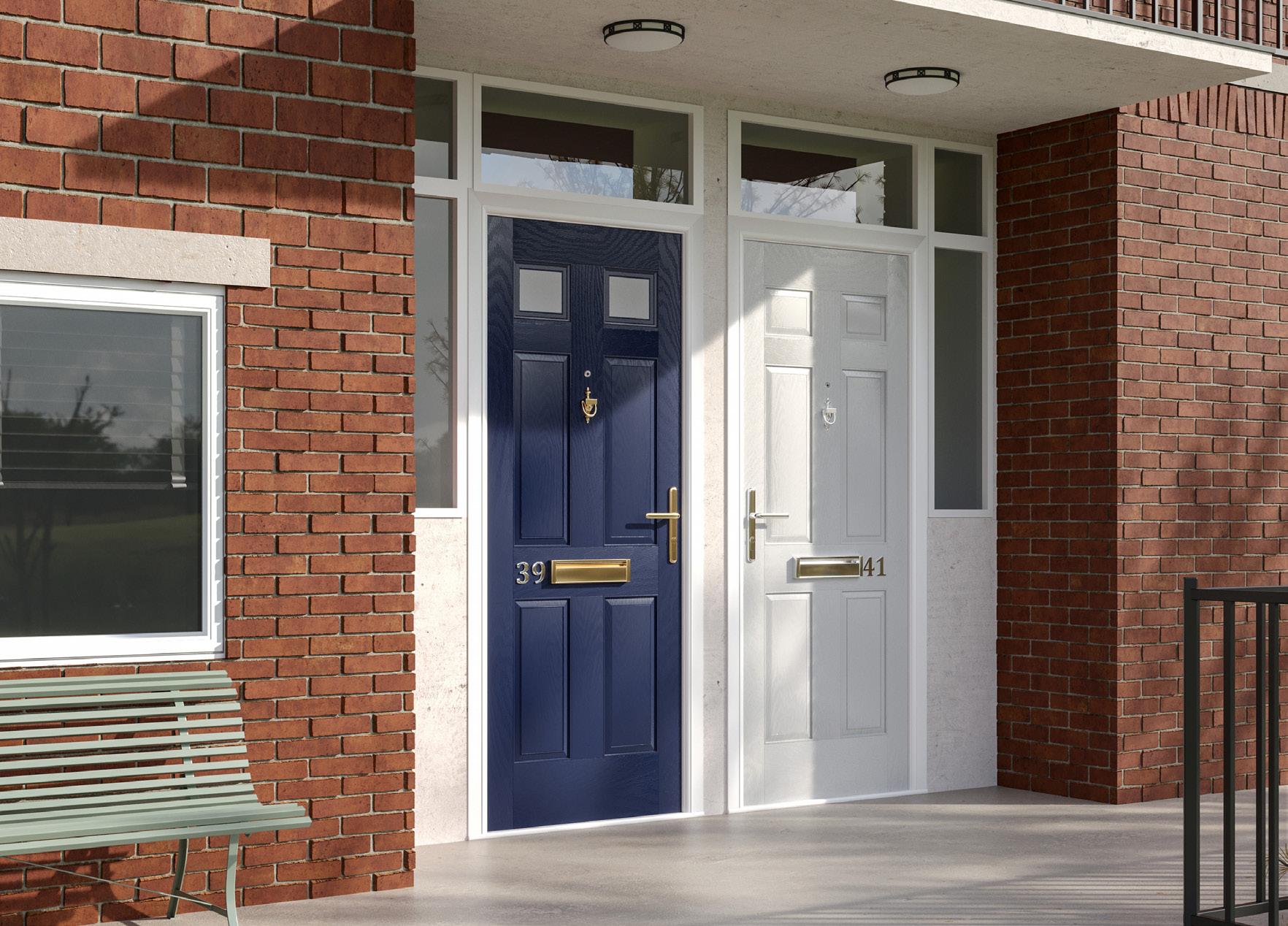
Responding directly to specifier demand, the company has expanded its market-leading portfolio with the launch of composite fire doors with sidelights.
This new development ensures that Unity Doors not only delivers the highest standards of fire safety and compliance, but also offers enhanced design flexibility for modern social housing projects. Fully third-party tested, UKCA marked, and available in a wide choice of styles and colours, Unity Doors’ latest range seamlessly combines certified safety, performance and aesthetics, making it the trusted partner of choice for fire door installations nationwide.
www.unitydoors.com
A Complete Fire Door Solution
From GRP composite apartment entrance doors, with fanlights and sidelights, to internal timber fire doors for kitchens and service cupboards, Hurst Doors’ reinforces its position as a reliable, compliant supplier of fully certified fire door solutions across both composite and timber formats.
It’s important to note that while Hurst’s composite FD30 fire doors have been tested to EN 1634 and deliver an average resistance time of 44 minutes, almost 50% above the standard requirement, its timber
fire doors are tested to BS 476 and comply fully with their respective performance standards.
All stages of Hurst’s manufacturing process have been audited under the Q-Mark Fire Door Manufacturing Scheme, with both composite and timber fire doors tested and certified for fire resistance, and enhanced security, significantly reducing the risk of product failure.
E: info@hurstdoors.co.uk, or call 01482 790790. www.hurstdoors.co.uk
Draig 30 – Fire protection from Hörmann Truedor
The range of Draig 30 composite fire doors from Hörmann Truedor provide uncompromising protection against fire and smoke for both external and internal installations.
Designed to meet the highest standards and certification, the range offers a robust solution that is built to last without compromising on style and performance.
Proven to keep fire at bay for more than 30 minutes, the Draig range of doors have been bi-directionally tested in accordance with EN1634-1 for fire and EN1643-3 for smoke control. Constructed from premium materials the doors are built for durability and are tested to PAS 24:2022 for impact resistance. They offer outstanding performance with exceptional weather resistance, sound insulation, and thermal efficiency. Security is a key feature, with advanced
multi-point locking systems and ‘Secured by Design’ accreditation provided as standard. Additionally, each door unit holds third-party accreditation under the BM Trada Q-Mark scheme.
https://hormanntruedor.co.uk/door-collections/
Easy, Accurate Installation with Briton Accufit Templates
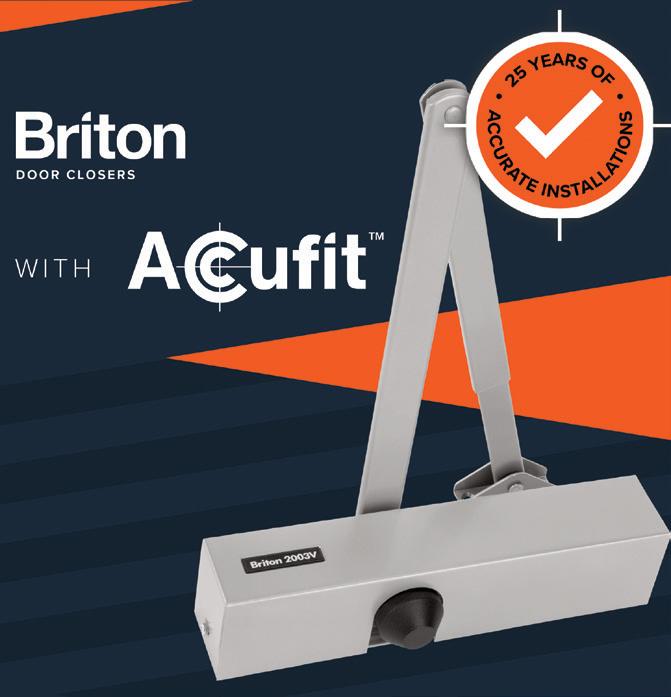
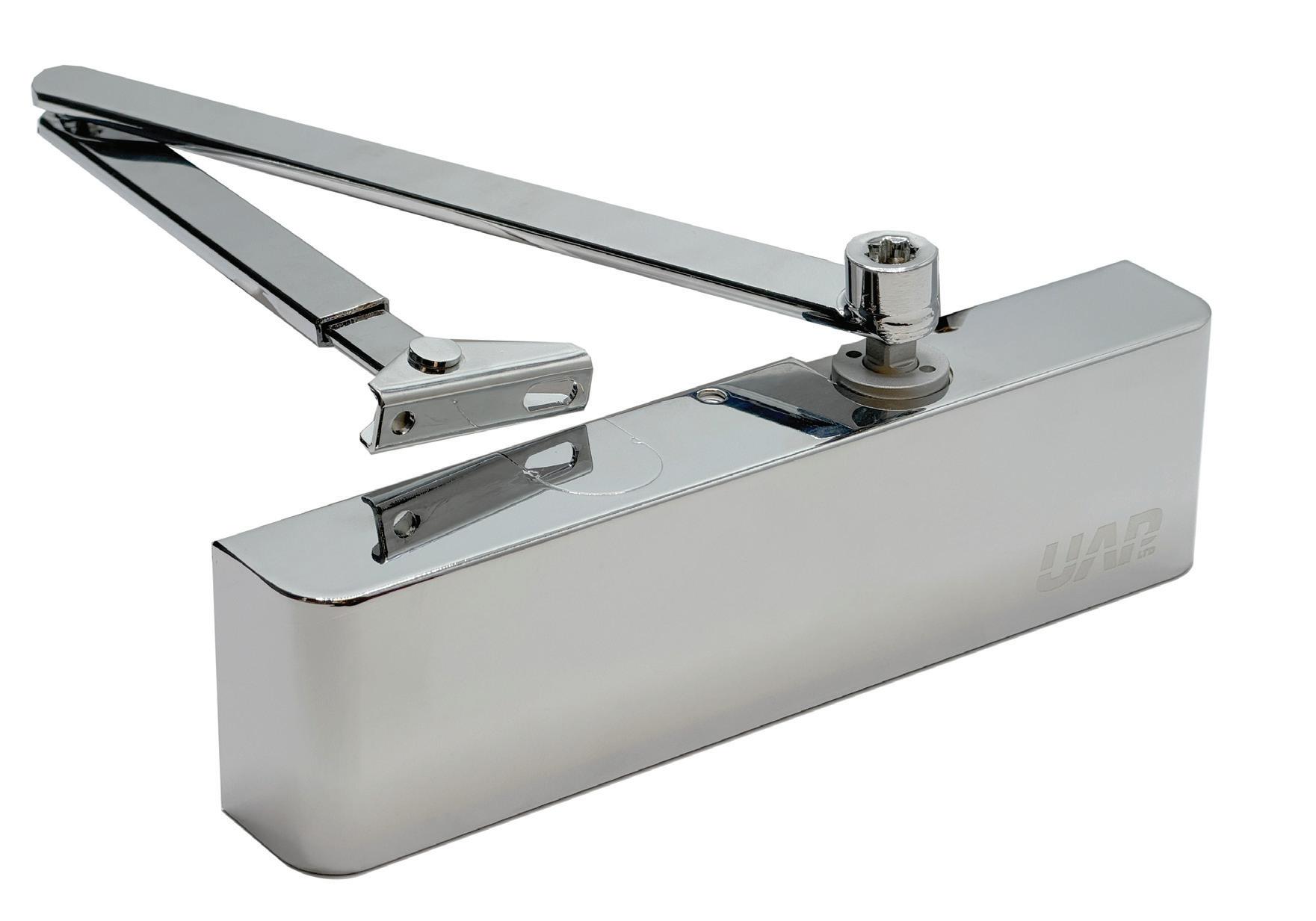
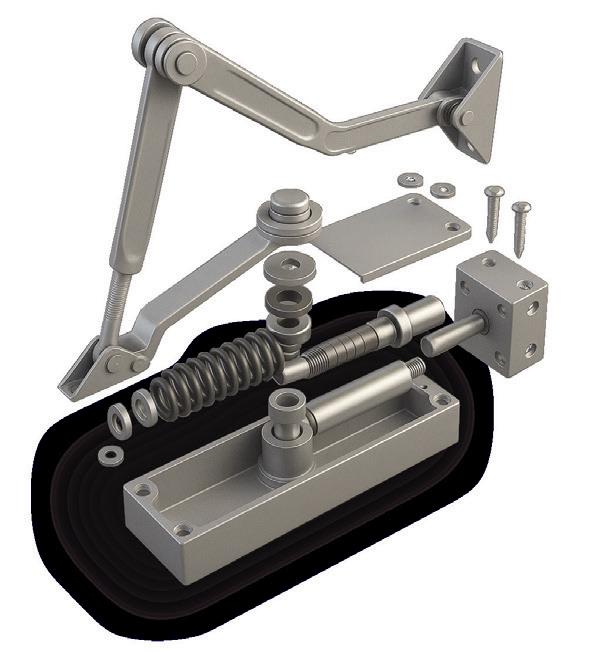
Door hardware installation demands precision, and for over 25 years, Briton’s unique ‘peel and stick’ Accufit system has provided installers with the means to fit door closers quickly and accurately at the first attempt.
Accufit self-adhesive installation templates are designed to simplify the installation process and are proven to support professionals by improving the accuracy of fittings, reducing installation time and enhancing the life of Briton’s trusted door closer solutions.
Freshly revised for Briton’s leading product lines, the Accufit
system provides clear step-bystep instructions for door mount, parallel arm and transom mount applications and is critical for ensuring closers function smoothly and maintain fire safety effectively as a result.
Accufit is developed around simplicity and is an essential tool for eliminating the costly issues that arise from incorrect fitting. Installers simply select the correct template, peel away the adhesive backing and align the arrow markers with the top edge of the door. Once smoothed into place, the template indicates all screwhole fixing positions for the door closer body, arm bracket or track arm, before being removed cleanly to reveal perfectly positioned guides ready for drilling.
Updated versions of the Accufit template are now supplied with
Creating Safer, Inclusive Environments with Boss Cam Action
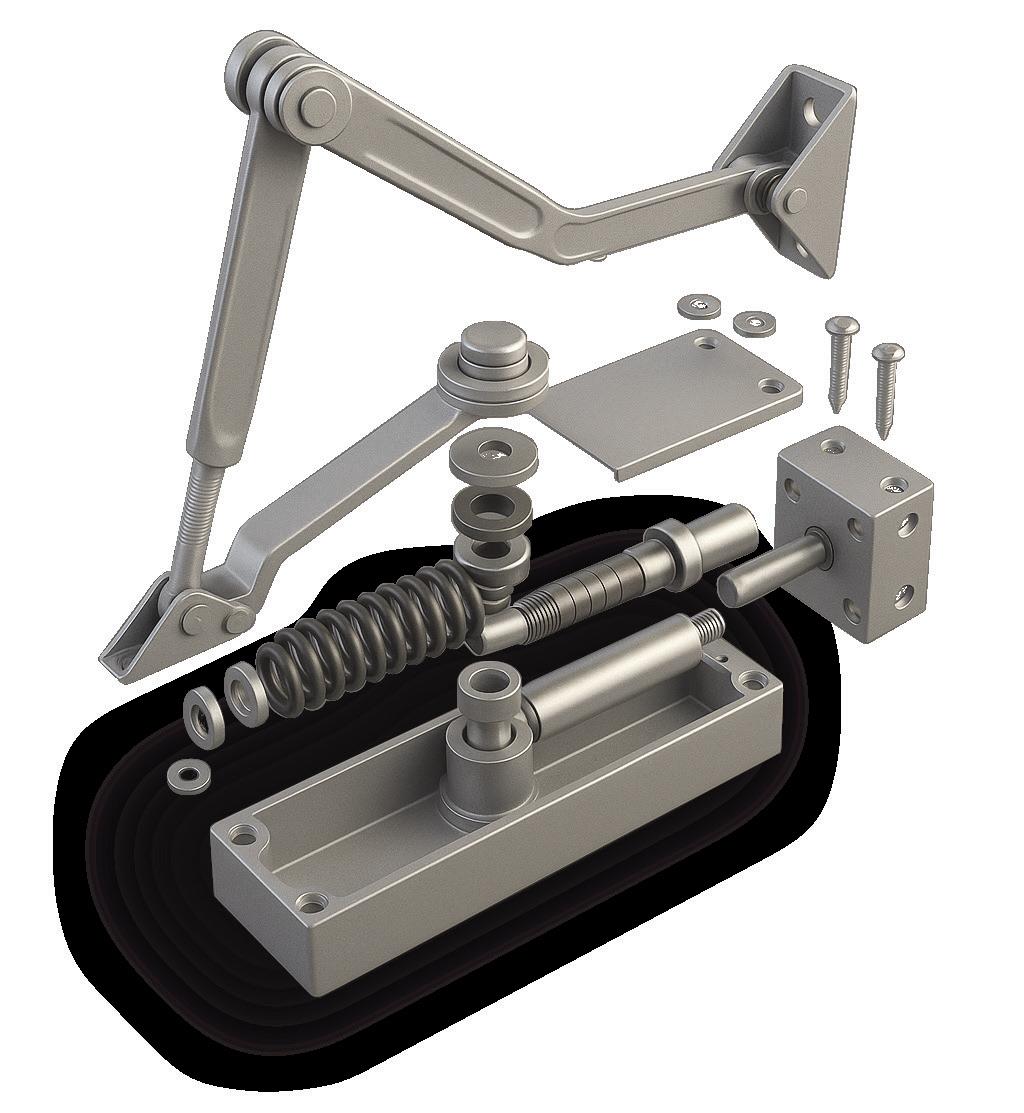
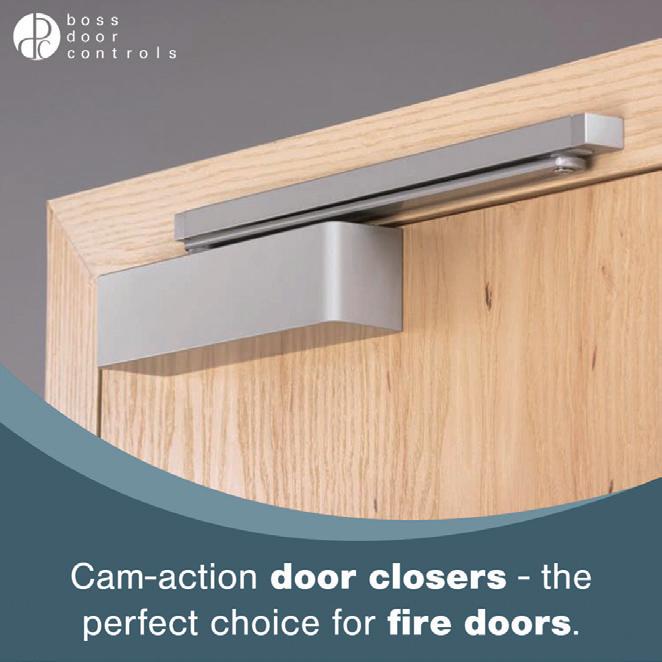
The creation of safe, accessible spaces for all begins with correctly specified door hardware, and Boss cam action door closers stand out as an ideal choice for fire doors in high-traffic environments where safety, seamless movement and aesthetics must blend together.
Boss cam action door closers deliver a refined balance of mechanical efficiency and ease of use, supporting the needs of a diverse set of users. Whether installed on residential timber doors or used as an electromagnetic hold-open solution in public settings, Boss cam action
Door Closers
closers operate with lower friction and require significantly less closing force than traditional rackand-pinion solutions.
Where elderly visitors and limited mobility users may benefit from smoother, more manageable door operation, these high-performance solutions promote safety and independence by reducing the resistance needed to open and close the door - and all without compromising on security.
The full range of Boss cam action closers are engineered for smooth, controlled closing, and feature adjustable settings that allow building managers to finetune closing speed and force. This ensures doors continue to close securely without slamming - supporting the principles of inclusive design and helping to minimise wear on both the
Briton 2003, 2003V, 2130B and 1110 door closers, with availability expanding across the wider Briton door closer range in 2026.
For professionals seeking efficiency and precision in every door closer installation, Accufit delivers easy, accurate and reliable installation right out of the box.
For more information on Briton door closers and Accufit, visit: www.briton.co.uk
door and its hardware to extend reliability and product lifespan.
The slim, modern profile of Boss’s signature door closer solution also complements design-led interiors, delivering both functional and visual appeal. For any project prioritising inclusivity, durability and elegant design, Boss cam action door closers offer a clear and compelling advantage.
For more information on the newly extended cam action closer range, visit: bossdoorcontrols.com
Glass Fire Doors
All glass fire doors from OWS Fire Rated
OWS Fire Rated, the specialist designer, fabricator and installer of fire resisting glazed systems have recently been acquired by the Haerens Group. Eribel, a specialist in technical joinery and also a member of the Haerens Group, has now secured the Lunax fire door technology, previously held by Vetrotech, a subsidiary of the SaintGobain Group. Thanks to this strategic operation, the Lunax product is being integrated into the OWS Fire Rated product portfolio.
“The technology integrates perfectly with our existing range of fireproof, burglarproof, bullet-proof and acoustic joinery in wood, aluminium and steel.”
Lunax is recognized as a pioneer in fully glazed interior fire resisting doors, combining excellent aesthetics with high technical performance. The product can provide up to EI 60-minute fire resistance and can be installed as a stand-alone door system or combined with glazed sidelights and over-panels.
The group will continue to develop and innovate the Lunax range, thus offering clients, designers, and developers first class products that will meet both the visual and functional requirements within both new and existing buildings.
“With Lunax, we are reaffirming our commitment to high-level technical and aesthetic solutions,” says Steven De Tollenaere, CEO of the Haerens Group. “The technology integrates perfectly with our existing range of fireproof, burglarproof, bullet-proof and acoustic joinery in wood, aluminium and steel.”
For more information relating to Lunax please contact Kevin Hulin at OWS Fire Rated. Tel 01342 836630 kevin.hulin@owsfirerated.co.uk
The Guardsman Fire Door
A standout solution in fire door safety
• UKAS Accredited:
BS EN 1634-1 – internal and external use.
• Exceeds FD30: Average 52 mins, up to 70+ mins fire resistance.
• Building Safety Act Ready: Traceable, verifiable performance.
• Agrifiber Core: Renewable, stable and consistent.
Allegion UK celebrate excellence in scheduling as return sponsor of GAI Education Awards
Allegion UK is proud to return as sponsor for this year’s Diploma in Scheduling award at the Guild of Architectural Ironmongers (GAI) Education Awards, taking place at London’s Grand Connaught Rooms on Thursday 20th November.
This year’s ceremony marks the 45th GAI Education Awards, which is recognised as a flagship event in the annual architectural ironmongery calendar and for the second year running, Allegion UK is sponsoring this award to celebrate the outstanding achievements of the rising stars of the industry.
Speaking on Allegion’s returning role as sponsor, Pete Hancox,
“The GAI Education Awards is a prestigious industry event, and in continuing our role as sponsor we aim to support and nurture the next generation of industry leaders.”
Country Manager at Allegion UK commented:
“Allegion has long been a champion of professional development within the architectural ironmongery industry, and our ongoing support of the GAI Education Programme reflects our commitment to
elevating standards, encouraging education and fostering new talent.
The GAI Education Awards is a prestigious industry event, and in continuing our role as sponsor we aim to support and nurture the next generation of industry leaders. DipGAI
For more information on the 45th GAI Education Awards, visit: www.gai.org.uk/GAI/GAI/GAIEducationAwards/GAI-Education-Awards-2025.aspx
To find out more about Allegion UK, visit: www.allegion.co.uk
is recognised worldwide, and we are incredibly proud to celebrate both the exceptional individual achievement this award represents, and most importantly, the pivotal role the Guild plays in our industry.”
Pete Hancox
FDM by UAP Ltd named Training Company of the Year for second consecutive year
Fire Door Maintenance (FDM) by UAP Ltd has once again been named Training Company of the Year at the 2025 National Fenestration Awards, recognising its continued leadership in raising competence and accountability across the fire door industry.
This consecutive win marks another milestone for FDM, which has redefined fire door training since launching in 2024 as the UK’s first hands-on, practical training centre dedicated solely to fire door education.
Over the past 18 months, more than 1,200 professionalsfrom architects and installers to Responsible Persons and landlords - have completed FDM’s GQA-accredited courses. Each programme combines practical experience with rigorous assessment to embed life-saving competence at every stage of the fire door lifecycle.
In 2025, FDM also hosted a national industry roundtable on fire door competence, joined by leading figures including Dame Judith Hackitt, whose endorsement recognised FDM as “an exemplar of good practice” in the built environment. Insights from this event directly informed FDM’s report, Raising Standards in the Fire Door Industry, shaping its roadmap for continued impact across the sector.
Looking ahead, FDM is expanding its national footprint. In partnership with the Fire Protection Association (FPA), it will open a second stateof-the-art training centre in Oxford in January 2026, further
strengthening the availability of specialist fire safety education across the UK.
Nicola John, Managing Director at FDM by UAP Ltd, said: “To be named Training Company of the Year for the second year running is an incredible honour, and a reflection of how far the industry has come in recognising the value of competence and practical training. Our mission has always been to drive change through education, and we’re proud to be leading that shift. But this is only the beginning. We’re committed to building a safer, more competent future, one fire door, one learner, and one project at a time.”
The Everyday of Fire Door Safety
Kirk Smith of Allegion UK reviews a dangerous inconsistency in fire safety, outlining why fire doors deserve the same respect as the other day to day items people use around their homes, work and places of leisure.
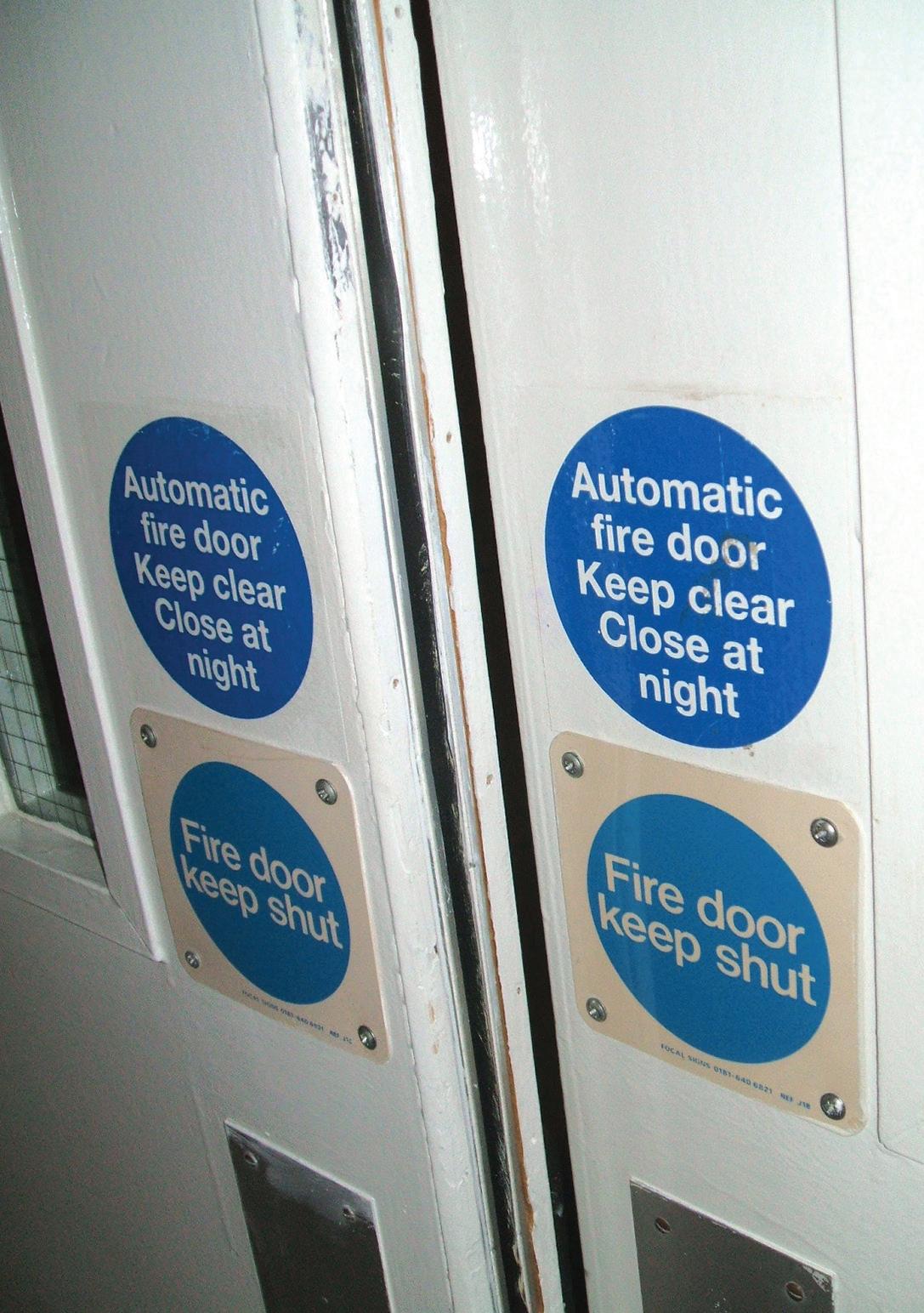
Whether it’s boiling the kettle, charging your phone or changing a lightbulb, it’s second nature to be cautious when handling a potentially dangerous object. The common appliances, technologies and commodities found around our homes and places of work can pose risks and from an early age we learn to identify these dangers. However, there’s another everyday item that often gets overlooked and doesn’t receive the same level of attention: fire doors.
Fire doors and their hardware are purpose built to prevent the spread of smoke and fire in an emergency and are a key element of any building’s passive fire protection system. Though, despite their crucial role in safeguarding our lives, and the fact they are used just as frequently as many of the other everyday objects in our built environment, fire doors are all too often neglected, misused and poorly maintained.
Whilst individuals are likely to study the safety features of their personal products and learn how to correctly use them, why is this not the case for fire doors and their hardware?
Kirk Smith of Allegion UK discusses this risky contradiction: “Safety measures are an integral part of our lives, and many of us are vigilant when it comes to personal responsibility and how common items should be operated and looked after. As observant people,
we review the condition of our charger wires, we blow out candles and matches when we’re finished with them and we closely check product reviews for the appliances we buy, all to reduce the chance of faults and fire and the danger it presents to the buildings we reside in. And when a product doesn’t perform as it should, we act.
“It would appear then that we live in a culture obsessed with functionality and safety, yet there is a worrying knowledge gap when it comes to the world of fire door safety. Whether it’s in our homes, places of work or public buildings, fire doors are used millions of times every day and are meticulously designed to serve as life-saving barriers, protecting property and people in the event of a fire. Though they play an ever present role in our day to day, many that walk through them fail to recognise the significance of a fully compliant fire door and what
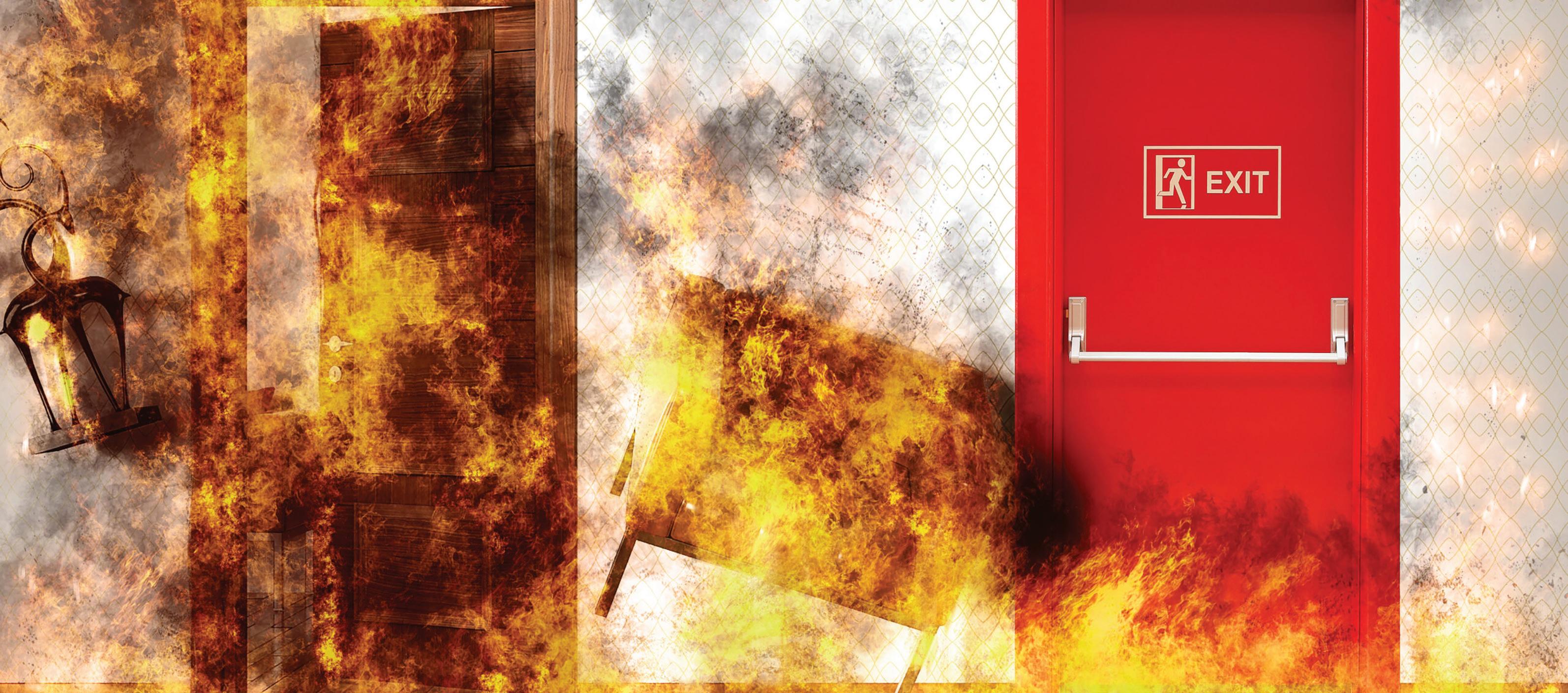
Fire image and fire exit door in the house. Emergency Exit Door and Interior wooden door
makes one effective at saving lives in an emergency.
“Fire doors are often the first line of defence against fire and smoke and maintaining their integrity is critical to us all. When closed, a certified fire door will typically compartmentalise a space for 30 to 60 minutes, preventing the spread of smoke and fire and providing occupants with an opportunity to escape. Conversely, an ineffective fire door system can fail within minutes, and an open one is considered useless in a fire. During the closing action, a fire door relies on its hardware, calling upon hinges, locks, latches and door closing devices to secure it firmly in place. In a fire situation, not one of these components can fail and as such, doorsets are rigorously tested to ensure they meet necessary standards, conforming to UKCA and CE certifications and FD ratings.
“We’re not simply talking about a safety feature; fire doors are a legal requirement in all nondomestic premises and houses in multiple occupation (HMOs). However, individuals are less inclined to check whether they meet the right condition or standards once installed. Perhaps it’s a case of visibility, where a broken or exposed wire screams danger, a fire door simply blends into its surroundings until it is needed. Questions also remain over accountability and competence, with many unsure on the responsibilities associated with keeping fire door systems operational. Regardless, where building owners and designated responsible persons bear the legal responsibility for fire door compliance, everyone has a role to play in ensuring fire door safety.”
Routine responsibilities can save lives
In many cases, improved awareness and communication towards fire door safety can help mitigate risk. As many maintain a level of scrutiny towards other everyday items, it’s clear that a
greater understanding is needed concerning fire door use and compliance. But what more can be done to ensure fire doors and their hardware receive the same level of attention and care as our other everyday belongings? Kirk Smith continues:
“The first step is about fostering and filling knowledge gaps. What does a compliant fire door look like? How should one operate? And what is its role in my building’s fire safety strategy? Just because a fire door is visually present doesn’t mean it will work, especially if it has been neglected, misused or its fitted with hardware lacking the correct certification – a fire door certified for domestic use may not be suitable in a high-traffic commercial setting, for example. The industry must look to bridge the gap by providing resources and support tools whilst reminding people that fire safety is a shared responsibility.
“Where the use of uncertified hardware can compromise the effectiveness of a fire door, it’s also important to recognise that a building’s fire doors will not perform as intended unless essential hardware has been correctly specified, installed and maintained. Routine maintenance checks are crucial, and responsible persons are urged to assess the certification, gaps, seals, hinges and closing elements on fire doors on a quarterly basis, ensuring they are maintained in an efficient state and in good working order.
“Though, in any circumstance, occupants should be encouraged to report damage and propped open fire doors. In higher risk buildings where many rely on shared fire
safety systems, it’s vital that people feel comfortable to communicate concerns and, more importantly, know who they can turn to when a fire safety issue arises. Just as we wouldn’t ignore the smell of gas or exposed live electrical wires on show, you shouldn’t ignore a faulty or improperly used fire door. With this in mind, basic routine fire door safety practices can include:
• Keeping fire doors closed
• Locating fire door signage and recognising emergency escape routes
• Checking hardware and intumescent/smoke seals are in good working order
• Reporting damage on fire doors and their hardware
“Whether we recognise it or not, fire door safety is embedded into the way we live, work and play and it is wrong to overlook fire doors until we need them in an emergency. Instead, we must strive to create a culture, one that is centred around greater awareness, shared responsibility and competent action. Simply put, it’s time to give fire doors the same attention as the items that entertain and convenience us.
The support that Allegion UK can provide
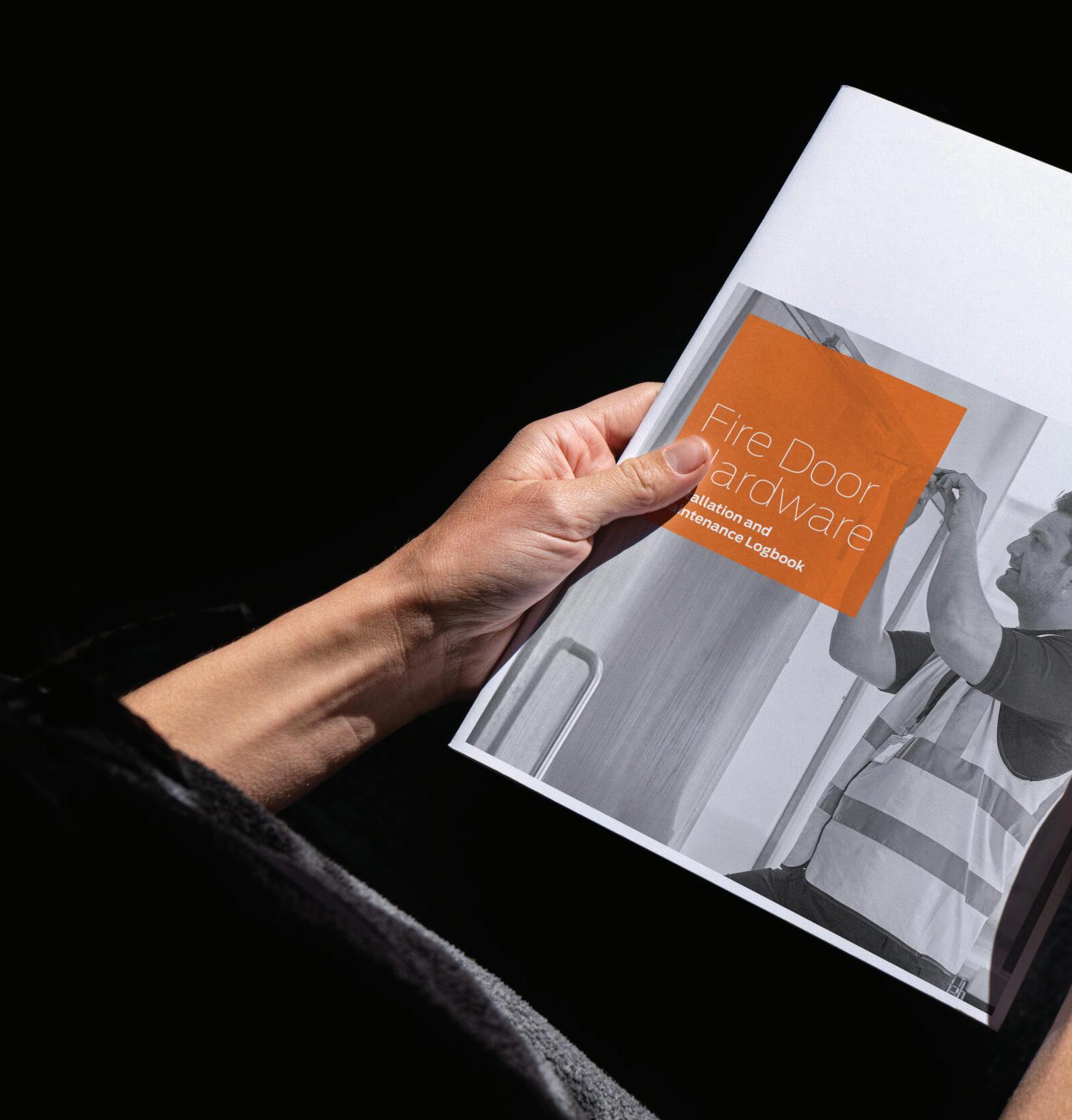
Allegion UK works closely with reputable bodies such as the GAI, BWF-FDA and DHF and as a conscious member of the supply chain is committed to supporting customers throughout product specification and the necessary installation and maintenance procedures thereafter. Allegion has a wealth of customer support resources, including its newly downloadable ‘Fire Door Hardware Maintenance and Installation Logbook’ which has been designed to address common issues in these areas whilst offering accessible installation guidance and comprehensive maintenance walkthroughs for each of the critical elements of fire door hardware.
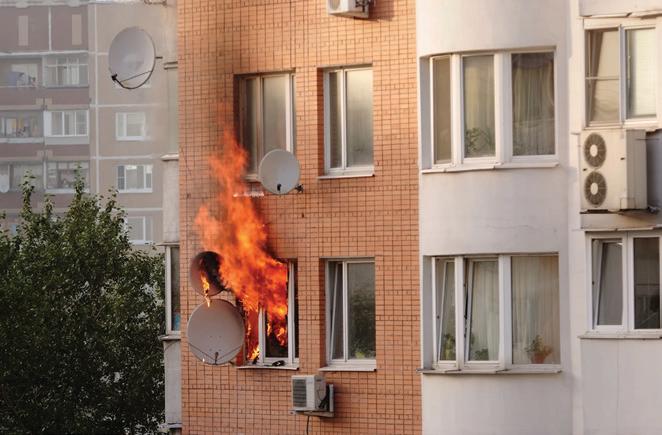
Fire in the window of building
Fire Resistant Powder Coating
Architectural Powder Coating Reaction to fire, Safety and Gateway 2 Compliance
Architectural powder coatings play an essential role in the safety, performance, and aesthetic durability of modern building façades. Beyond their visual appeal and long-term weather resistance, these coatings are increasingly being evaluated for their contribution to fire safety. Powder coated aluminium systems, when correctly specified, applied and tested, provide finishes that meet the stringent reaction to fire classifications of A2-s1,d0 under EN 135011. This ensures that the coating system does not significantly contribute to the spread of flame or smoke in the event of a fire which is a critical requirement for highrise and multi-occupancy buildings.
Reaction to fire in architectural coatings is not achieved by the powder alone but through the integration of the entire system including the aluminium substrate, pre-treatment, and
coated finish. Non-combustible aluminium finished with approved architectural powders create a durable, stable façade solution that can withstand high temperatures without igniting or releasing harmful fumes. Many architectural powders are formulated to meet Class 1 or Class 0 standards under UK Building Regulations, offering specifiers confidence that these finishes will perform safely when tested as part of a complete façade system.
In the wake of the Building Safety Act and the introduction of Gateway 2, the regulatory focus on product safety and system compliance has intensified. Gateway 2 represents the stage at which all fire and structural safety information must be fully demonstrated before construction begins. This includes detailed evidence of the fire performance of external wall systems meaning that powder-coated aluminium systems must be supported by third-party testing, product certification, and compliance documentation. Coating applicators and system suppliers must therefore ensure that every component, including the powder coat finish, aligns with the project’s approved fire safety strategy.
Whist the QUALICOAT Specification and EN 12206-1 do not mention reaction to fire, achieving an A2s1, d0 fire classification under EN 13501-1 depends significantly on the thickness of the powder coating applied to aluminium components. A consistent, controlled film build ensures the coating contributes minimal combustible material to a fire scenario, helping maintain the substrate’s non-combustibility.
Excessive thickness can increase fuel load and smoke generation, jeopardising the s1 and d0 ratings, while insufficient coverage can compromise the integrity and performance of the finish. By applying the powder coating within the powder manufacturer’s specified micron range and ensuring uniform curing, powder coaters can achieve the balance required to meet stringent A2-s1, d0 performance criteria.
From a compliance standpoint, manufacturers following the QUALICOAT Specification have a solid foundation for Gateway 2 readiness. Licensed QUALICOAT approved powder coat applicators constantly check all process parameters including tests for durability, adhesion, and resistance to UV and corrosion, plus powder thickness which is vital for ensuring that the reaction to fire performance of the final façade is achieved. However, Gateway 2 goes further by demanding coating traceability and demonstrable proof of conformity. This requires close collaboration between powder manufacturers, applicators, façade fabricators, and fire engineers.
Ultimately, architectural powder coating is no longer just a matter of aesthetics or corrosion protection, it is integral to overall building safety. By specifying systems that are fire-tested, third-party certified,
Chris Mansfield
and compliant with Gateway 2 documentation requirements, architects and developers can ensure their façades not only look exceptional but also meet the highest standards of safety and accountability. As the Construction Industry continues to evolve under new regulatory scrutiny, the role of compliant, high-performance powder coatings in achieving safe, sustainable architecture has never been more important.
Powder coaters are increasingly seeking QUALICOAT licensing to demonstrate proven quality, reliability, and compliance in a more demanding architectural and construction environment. The QUALICOAT licence is a globally recognised quality label for the coating of aluminium and its alloys, ensuring that the entire process, from pre-treatment through to final curing, meets strict international standards. As building regulations tighten and clients demand greater transparency in product performance, holding QUALICOAT approval has become a mark of professional credibility and technical excellence.
Beside the Building Safety Act and the introduction of Gateway 2, another driver is the technical and commercial advantage QUALICOAT licence holders gain. Licensed coaters have access to a network of approved powders, pre-treatments, and processes, ensuring consistent and repeatable coating quality. This minimises the risk of coating failures such as peeling, chalking, or corrosion, issues that can be costly to repair and damaging to reputation. By meeting QUALICOAT’s stringent criteria, applicators can work with major system houses, façade contractors, and specifiers who increasingly require QUALICOAT compliant coatings for their projects.
Fire Resistant Powder Coating
Environmental responsibility is also influencing this shift. QUALICOAT promotes sustainable coating practices, including chromefree pre-treatments, energyefficient curing, and reduced waste generation. These practices align with modern environmental standards and help coaters support the sustainability objectives of their clients and construction partners. The license thus serves as both a quality and sustainability credential, reflecting a company’s commitment to responsible manufacturing.
In essence, powder coaters are becoming QUALICOAT licensed to align with the evolving standards of safety, durability, and transparency in modern architecture. It gives them a competitive edge, opens new business opportunities, and ensures their coatings can be confidently specified on high-profile, safetycritical projects. The QUALICOAT label is now seen not just as a certification, but as an essential requirement for doing business in the architectural aluminium sector.
By Chris Mansfield, QUALICOAT Chair
Passive Protection
Passive Protection, Active Responsibility: Meeting Fire Safety Standards in Healthcare Buildings
To safeguard patients, visitors and staff in healthcare facilities, the design, installation and maintenance of fire protection measures is critical. One of those measures is fire doors. Here, Peter Barker, Technical Policy Manager at Warringtonfire, discusses their importance and the key considerations to ensure they will perform as required in the event of a fire.
Healthcare premises, whether they be a hospital or a nursing home, can present several challenges when it comes to fire protection. This is because of their size, complexity, and the many occupants within, all with differing needs. As such, having a clear and robust fire safety strategy is crucial.
Given that the complete evacuation of a healthcare site is often impractical, the common approach taken with fire safety for these buildings is progressive horizontal evacuation. The principle involves moving occupants from the fireaffected area through a fireresisting compartment line to an adjoining area, which is designed to protect the occupants from fire and smoke. Providing it is safe to do so, the occupants remain in the fire safe area (refuge) until the fire is extinguished or, if necessary,
further evacuation is required to another refuge.
In conjunction with other measures, fire-resistant compartment lines are a critical element of a fire safety strategy. If the fire-resistant compartment lines and fire doors cannot be relied upon, the evacuation strategy will be severely compromised.
Functions of Healthcare Fire Doors
A fire doorset specified for use in a hospital or healthcare facility will have to provide fire resistance to meet the functional requirements of Part B of the Building Regulations. According to HTM 05-02: Guidance in support of functional provisions for healthcare premises, unless pressurisation techniques complying with BS EN 12101-6 are used or the door is located within a cavity barrier, the doorset must also offer smoke control.
Aside from that, healthcare fire doors must adhere to many other performance and design requirements. For example, cross-corridor doorsets will need to withstand constant opening and closing, as well as resisting potential damage; doorsets into cleanrooms must be totally hygienic; and doors on highsecurity wards must safeguard patients and staff.
Moreover, doorsets must meet the functional requirements of Part M of the Building Regulations. For example, vision panels towards the leading edge of a door leaf require zones of visibility at specific heights from the floor.
As fire doors have multifunctional uses, fire safety training should be given for staff to explain their importance. This should be in the context of the overall fire strategy of the healthcare building and how misuse could compromise their performance.
Planning for maintenance
Ongoing maintenance of fire resisting doorsets should be incorporated in a programme of inspection. This will help with anticipating malfunction or defects before they occur and improve the longevity of fire protection elements.
Planned Preventative Maintenance (PPM) is often the typical route. This involves regular inspections dictated by relevant risk assessment, professional judgement and local circumstances.
Doors are often accidentally damaged by staff within the building transporting patients and goods, so encouraging staff to use doors in a responsible manner can mitigate the chances of this happening. This is especially important for personnel that use equipment and machinery that have a high risk of breaking the door, such as trolleys and beds.
Design features, such as electronic hold open devices, may also help protect doors from being repeatedly hit. These automatically release the doors on activation of a fire or smoke alarm. Such devices must be approved for use with the doorset designs on site and regularly checked to make sure they will release the door to its closed position in the event of fire.
Fixing fire doors
Should repair works be needed for fire doors, it is vital that the person undertaking these has a sound knowledge of fire-resisting doorsets and be familiar with the appropriate testing and certification process. Along with this, they need to be competent (i.e. have the skills, knowledge, experience, and behaviours) to ensure the performance of the doorset is maintained.
All too often, well intended repair works by improperly trained personnel can have a detrimental impact on the fire resistance performance of the door, whether replacing glazed elements without the correct fire rated glazing seals or fitting incompatible hardware.
Keeping records of the original supporting test evidence and/or third-party certification for the installed doorsets is also critical. This helps with maintenance programmes and means if future components like intumescent strips need replacing, they can be on a like-for-like basis.
Third-party certification for assurance
For peace of mind that both fire-resisting products and the personnel responsible for installing and maintaining them are up to standard, third-party certification schemes should be considered. While not mandated in the UK, NHS bodies are encouraged to utilise such schemes, through the advice given in HTM 05-02: Guidance in support of functional provisions for healthcare premises.
To support this, BM TRADA, sister company to Warringtonfire and part of the Element Materials Technology group, operates a ‘Fire Doors Explained’ training course. This provides training for staff who need to understand, manage, specify, install and maintain fire doors. The course covers the design, manufacture, and testing of fire doors as well, and can be delivered directly to staff at healthcare facilities, serving to provide confidence in the performance of a doorset throughout its operational lifetime.
For more information, please visit: https://www.bmtrada.com/training/fire-training/fire-doors-for-the-health-sector
Allegion UK unveils new Fire Door Hardware Installation and Maintenance Logbook
In support of greater fire safety standards, Allegion UK has announced the launch of its new Fire Door Hardware Logbook, a practical guide designed to assist responsible persons with hardware installation and maintenance.
Allegion has unveiled its latest customer resource in line with this year’s Fire Door Safety Week, with an aim of drawing attention to two of the most prominent problem areas of fire door safety in improper installation and inadequate maintenance. Allegion’s new logbook
addresses the common issues in these areas and offers accessible guidance on essential compliance requirements whilst simplifying documentation and record-keeping for those tasked with upholding the integrity of fire door systems.
With an inuitive format covering detailed installation guidance and quarterly maintenance checklists, the logbook acts as a hands on resource for responsible persons and provides comprehensive walkthroughs for each of the critical elements of fire door hardware,
including overhead door closers, panic and emergency exit hardware, electromagnetic hold open devices, seals, locks, latches and door furniture. The launch reflects Allegion’s ongoing commitment to raising standards within the fire door industry.
Pete Hancox, country manager at Allegion UK, comments on the launch:
“As the industry continues to address fire door compliance and building safety, the significance of accurate fire door hardware installation and competent maintenance procedures can’t be overstated. Our new Fire Door Hardware Logbook is both a valuable tool and a reminder for building owners, facility managers and responsible persons that fire door safety continues to require attention following the specification process.
“We’re proud to add another invaluable resource to our library of support tools as we take a proactive step towards improving awareness and education on installation and maintenance. The launch coincides with fire door safety week and presents us with an opportunity to amplify crucial messages, as we look to support best fire door safety practice and positively contribute to safer buildings across the UK.”
The new Allegion ‘Fire Door Hardware Installation and Maintenance Logbook’ is now available in print and digital format. To download a copy of Allegion’s ‘Fire Door Hardware Installation and Maintenance Logbook’, visit: www.allegion.co.uk/en/resource_centre/product_catalogues.html. To find out more about Allegion UK, visit: www.allegion.co.uk
UAP launches door closer range: Precision-engineered for performance, style, and compliance
UAP Ltd, a leading UK-based supplier of high-quality door hardware and security solutions, has officially launched its all-new Door Closer Range: a trio of highperformance door closers designed to combine safety, durability, and architectural style in one uncompromising offering.
Built for use across residential, commercial, and public settings, the range meets the highest standards for fire safety, accessibility, and long-term reliability. All models are CE marked to EN1154 and tested to EN1634. Adjustable closing speed and latching action ensure smooth, controlled operation, with multiple mounting options for flexible installation.
The range includes three distinct solutions, each available in a choice of premium finishes, and designed to meet
specific performance and aesthetic requirements across a variety of project types. The new Slimline Cam Action Door Closer delivers smooth, effortless operation on heavy doors, making it ideal for public buildings and accessibility-focused applications. It meets BS8300 and Approved Document M, with low opening resistance, a clean, minimalist design, and is fire-rated for up to 120 minutes on timber fire doors.
The Rack and Pinion Door Closer offers robust, reliable performance in a classic overhead configuration.
“Performance isn’t optional, and protection is non-negotiable.”
Manufactured using sustainable materials, it delivers consistent results across interior and exterior settings. It is fire-rated for up to 120 minutes and built with high corrosion resistance for long-term durability.
For projects that demand discretion, the Concealed Cam Action Door Closer provides powerful functionality in a hidden format.
Designed for FD60-rated timber fire doors (60 minutes) when installed with the appropriate
intumescent pack, it also meets BS8300 and offers the same low opening resistance for ease of use in high-spec environments.
Simon Monks, Group Sales and Marketing Director at UAP Ltd, said: “‘Closing the door on compromise’: that’s the driving force behind our new door closer range. Performance isn’t optional, and protection is non-negotiable. With three models, multiple finishes, and full fire and accessibility compliance, the range is built to deliver where it counts — giving professionals confidence in every spec, every install, every time.”
For more information or to speak with the UAP sales team, visit https://uaplimited.com or contact sales@uaplimited.com
Pyroguard and Mann McGowan unveil new innovative compressible dry seal for fire-rated glazing
Mann McGowan, working in partnership with its sister company Pyroguard, has launched Pyroglaze Compression – a groundbreaking compressible intumescent glazing seal. The new seal is now being recommended as part of Pyroguard’s fire-rated glazing solutions.
Pyroglaze Compression (Pyroglaze C) is a clean, quick and easyto-install dry glazing, fire-rated seal, Certifire approved to CF 5818. Designed for use in glazed apertures, the product is available in options for both 30- and 60minute* fire-rated glass.
Manufactured from graphite, Pyroglaze C is unaffected by humidity and moisture and can be wiped clean, making it ideal for use in hospitals and other ‘clean’ environments.
Offering 50% compression to accommodate the tolerances associated with timber beaded
“As industry standards transition from BS 476-22 to EN 1634-1, Pyroglaze C has been designed and tested specifically to meet EN fire testing requirements.”
*For 60-minute fire rated applications, Pyroglaze Compression should be used with the Pyroglaze 100ECSA 54 mm x 2 mm glazing liner.
glazing systems, Pyroglaze C delivers a reliable fit and improved factory efficiency, with no curing downtime. Installation is straightforward and requires no special tools or sealant gunssimply cut, apply, and finish using the self-adhesive backing tape.
The new product also enhances fire integrity compliance. In the event of a fire, the intumescent material swells to completely seal the glazing rebate, reducing the risk of premature ignition of glazing beads on the protected face. Pyroglaze C is suitable for use with a wide range of door cores and has been tested to EN1634-1 with various EW and EI glazing types.
Steve Goodburn, Business Development Director at Pyroguard, commented: “We have responded to market demand for a compressible seal solution that is simple to install and unaffected by moisture. As industry standards transition from BS 476-22 to EN
1634-1, Pyroglaze C has been designed and tested specifically to meet EN fire testing requirements and has exceeded the standards for both 30- and 60-minute fire ratings.”
“The wealth of new test evidence for Pyroglaze Compression used in harmony with the new Pyroguard Advance glass range gives specifiers and customers the option to source vital components from a single trusted technical partner.”
Offered as part of a complete glazing solution from Pyroguard under CF 5818, Pyroglaze C provides tested and certified compatibility for specifiers and builders. It is also available to be sold and stocked separately, allowing fabricators, installers and distributors to integrate it into their projects.
For more information visit: https://www.pyroguard.eu
Safety specialists are becoming the Fire Aware educators
Experts in a diverse range of skills in fire safety are becoming the Fire Aware Educators to help guide those in the supply chain trying to find their way around the wave of legislation and compliance currently being introduced.
Key changes under the Building Safety Act involve data collection for all information at key stages of construction, while there have been
amendments to Approved Document B and new regulations for Residential Evacuation Plans which come into effect in 2026.
The growing fire safety industry body Fire Aware has a number of specialist members who also act as technical guidance experts for members who need help around the new challenges of legislation.
Gavin Skelly, Fire Aware CEO, said: “Members specifically provide training courses relating to fire safety and management relevant for designers, main contractors, domestic trades, material suppliers, building management, hotel and leisure,
commercial and private landlords and local authorities.
He said: “At a time of increasing concern for the safety of the public who use our buildings and spaces, the fire safety industry is under increasing scrutiny and those with a duty of care should understand this is more than a job, it is a vocation.
“We believe there is enough legislation to ensure safety if they are understood and followed. We have specialists who can help guide anyone in the supply chain around some of this new legislation because it can be challenging given its complexity and scale.”
The expanding industry body is leading the way by focusing on the moral responsibility of all those working in the fire safety supply chain including designers, developers, asset owners, managers and other stakeholders.
It aims to change the culture of the built environment sector by introducing a moral code of conduct via a series of charters designed to influence how member companies behave in upholding their duty of care.
Fire Aware is a recognised membership body serving the built environment and related sectors with a common aim to work and trade responsibly to all best practice standards in the interests of the safety of the general public.
“We believe there is enough legislation to ensure safety if they are understood and followed. We have specialists who can help guide anyone in the supply chain around some of this new legislation because it can be challenging given its complexity and scale.”
Fire Aware: Raising the bar saves lives
Growing fire safety industry body Fire Aware is spelling out the benefits of raising standards in the industry in the interests of protecting people.
As its membership grows, the organisation is sending a message to the fire safety industry supply chain – think about your duty of care and your moral responsibility.
Gavin Skelly, Fire Aware CEO, said: “We are receiving a lot of positive feedback from the supply chain at all levels from large organisations to smaller businesses. They all want to play their part and we are asking all of those working this industry to think about their duty of care and what that means.
“We should all be following the new legislation including the new Building Safety Act as a minimum level. Our standards go beyond that and address the issues of best practice. Ultimately, we are all protecting people’s lives.
“The buildings we work on and the protection we install in all its different forms mean we are meeting
our obligations. This is more than a job. Working in this industry is a vocation and should not be underestimated.”
Fire Aware members can provide training courses relating to fire safety and management including legislation for designers, main contractors, domestic trades, material suppliers, building management, hotel and leisure, commercial and private landlords and local authorities.
The expanding industry body offers membership to all those working in the fire safety industry supply chain including designers, developers, asset owners, managers and other stakeholders.
It aims to change the culture of the built environment sector by introducing a moral code of conduct via a series of charters designed to influence how member companies behave in upholding their duty of care.
Fire Aware is a recognised membership body serving the built environment and related sectors with a common aim to work and trade responsibly to all best practice standards in the interests of the safety of the general public.
Leading construction sector manufacturer pulls apprenticeships in the wake of
‘disastrous’
reforms
Leading staircase and door manufacturer Stairways Midlands has paused its apprenticeship programme after two decades, following proposed government reforms that industry leaders warn will “spell disaster”.
The reforms to apprenticeship assessment plans developed by Skills England include slashing the duration of carpentry and joinery apprenticeships from 25 months to around eight months
They would also alter the end-point assessment, allowing assessment organisations to “sample” only a portion of the knowledge, skills and behaviours criteria to determine an apprentice’s competence,
rather than requiring them to demonstrate they meet all of them – a shift that industry leaders have warned will lead to inconsistency, erode confidence, and create a “race to the bottom” in training quality.
Apprentices at a Stairways Factory
Karen Wood, Joint Managing Director, Commercial
Skills England is currently running test pilots across five apprenticeship standards –including the Carpentry and Joinery Apprenticeship, which is now on hold following an industry backlash.
Stairways Midlands, which operates three Midlands-based factory units, with over 85,000 sq ft of production capacity, was, until recently, in a successful partnership with Walsall College training Level 2 Bench Carpentry and Joinery Apprentices every year.
But given the proposed changes to how this apprenticeship programme works, and the uncertainty surrounding them, Karen Wood, Joint Managing Director at Stairways Midlands, said the company had “no choice”
but to withdraw the offer of apprenticeship placements this year.
Karen, who as a Go Construct STEM Ambassador has committed to attracting talented young people into the sector, said:
“Apprenticeships have always been a cornerstone of our business and a vital pipeline for skilled talent. We’ve proudly trained dozens of apprentices over the years –including several who have gone into management roles here – but under these new proposals, the model is simply not fit for purpose.
“Reducing training time to just eight months and removing thorough independent assessment shows a fundamental lack of appreciation for the range of skills and depth of knowledge it takes to do this
“Reducing training time to just eight months and removing thorough independent assessment shows a fundamental lack of appreciation for the range of skills and depth of knowledge it takes to do this work, and will set the industry back years.”
work, and will set the industry back years.
“We’ve had no choice but to pause our apprenticeship intake for the first time in more than two decades. It’s deeply frustrating, but we cannot in good conscience support a reformed system that seems to prioritise speed and cost over competence and safety.”
The British Woodworking Federation (BWF), which represents the woodworking and joinery manufacturing sector and sits on the Level 2 Carpentry and Joinery Apprenticeship Trailblazer group, spoke out after its feedback was “ignored” at “every stage.”
The BWF has spearheaded an industry response, bringing together a coalition of 23 organisations that have written to the Prime Minister calling for an immediate suspension of the plans.
In their letter, the coalition warns that the proposed “governmentled changes… will spell disaster for the construction industry and undermine the Government’s ambition to generate economic growth.”
Adds Karen: “We need properly trained, competent people entering our industry. Short-term policy decisions like this not only devalue the hard work of apprentices and trainers but undermine the culture of safety and excellence that the construction sector has worked so hard to build.”
As part of the BWF membership, Stairways is adding its voice to the growing coalition urging the Government to halt the reforms and re-engage with industry trailblazer groups to develop a model that reflects the realities of hands-on, safety-critical trades.
Karen adds: “The BWF has been clear that the reforms as they stand are not supported by the industry. We stand with them and others in calling for a rethink that puts quality, competence and safety first.”
To find out more on Stairways, visit: https://stairways.co.uk/