YEFL-Ghana exist to empower youth through engagments, networks, information sharing and capacity building to lead change.
About YEFL-Ghana
YEFL-GHANA believes in empowering young people. The act of leading change requires skills that are relevant for every step of action one will take towards the change process. That is why capacity building is key in our mission to enhance skills, ability and attitudes of young people to lead the desired change in their respective communities.
Youth Leading change is the ultimate goal, where we find ourselves in a stage where young people are taking the initiative with a high sense of awareness and awakening; actions that ignites the act and art of activism; that shifts the position of youth from an era of spectating to active participation
Acknowledgement
YEFL-Ghana's Board of Directors, Management, and Staff would like to express their gratitude to its Donors, Partners, Government agencies and MMDAs, beneficiaries, traditional leaders and most especially members of YEFL-Ghana for their tremendous contributions to the successful implementation of its annual plan. To our hard-working volunteers that are supporting the youth leading change agenda, we a preciate your efforts.
Acronyms
CSOs: Civil Society Organizations
DA: District Assembly
E4L: Empowerment for Life
MMDA: Metropolitan, Municipal and District Assemblies
MP: Member of Parliament
NYA: National Youth Authority
SDGs: Sustainable Development Goals
YPs: Youth Parliamentarians
Message from the Board Chairman
We are excited to be resilient in the face of a global pandemic and continuously working with and for the betterment of young people.
The year 2020 heralded unprecedented economic hardships, threatening to deepen gaps in access to schooling, jobs, that are relevant to a prosperous life for young people.
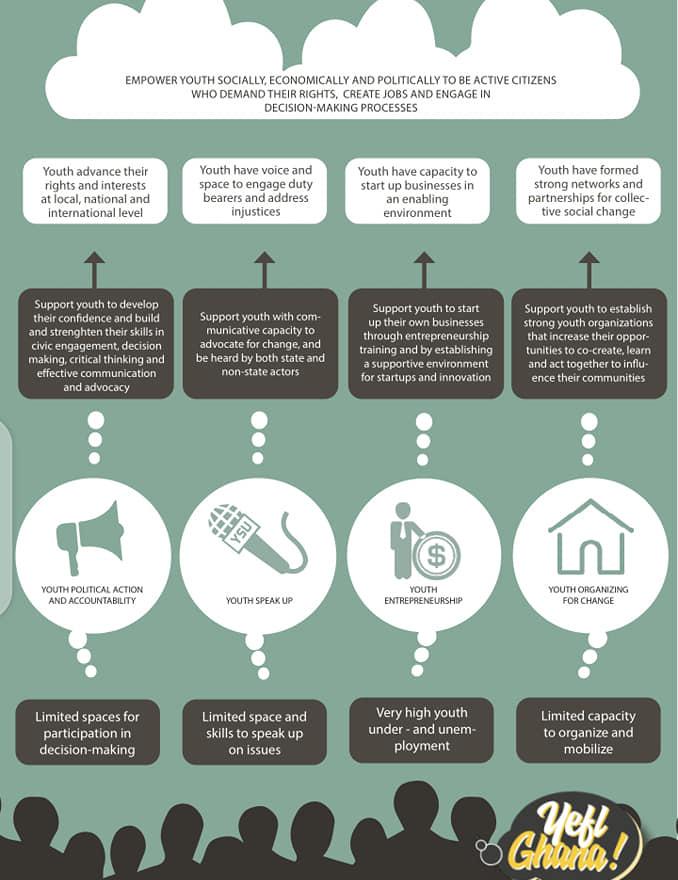
For us, the pandemic ignited our creativity to meet the shared needs of young people. Our progress towards the strategic objective of empowering youth socially, economically, and politically to be active citizens who demand their rights, create jobs and engaged in decision making process is steadfast. The Board of YEFL-GHANA has worked closely with the management of the organization to prioritize the development of an emergency risk response plan. We had to make pragmatic decisions to safeguard our beneficiaries which affected our direct contact with them and adopting working conditions that suited our context.
Our accomplishment in 2020 are connected to our partners that believe in the course of providing opportunities for young people to lead change.
I would like to appreciate the hardwork-
ing board members for their continuous support and expertise. I also extend warm appreciation from the board to the staff of YEFL-Ghana and volunteers.
Am pleased to share with you all the 2020 annual report that reflects our contribution to shaping young people to lead change deemed fit for their communities.
Zakaria Issah Nabilla Board Chairman
Executive Summary
Reflection of the success and our accomplishment in the year 2020 came through persevering through a global pandemic towards the realization of our 2023 strategic plan. For young people emerging from a Global Crisis that halted education and retarred efforts towards the attainment of the sustainable goals, targeted support for young people is a surest bet to consolidate and propel our gains. Just like the youth we work with and for, YEFL-GHANA is guided by our learning by doing principle which enable us gather relevant lessons that shapes our steps into the future.
We are excited to have reached out to four thousand young people (4,000) through our response to the global pandemic with adequate information, and bridging gaps in access to personal protective equipment. Our youth programming reached over two thousand young people (2,016) with our economic, social, and political empowerment interventions.
We have almost doubled our geographic reach through our political empowerment interventions and are now supporting young people in fifteen (15) districts in Northern Ghana. We are excited that targeted youth are leading
change in holding persons in power accountable and leading in campaigns leveraging on people’s power to influence change. Later in this report you would realize how young peoples’ actions are contributing to creating an equitable society.
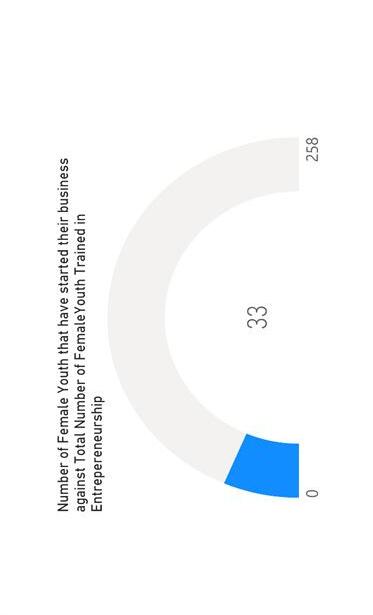
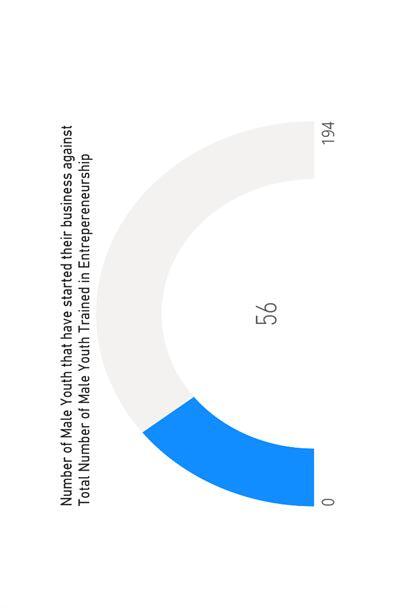
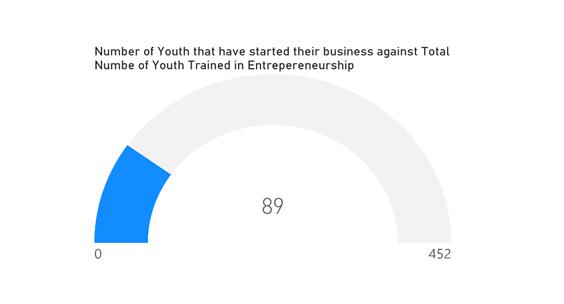
In our efforts to help youth create jobs and gain career opportunities, we have used an equality perspective to look at those who benefit from our programs. As a result, 57.1 percent of 452 as this year's targeted beneficiaries are young women. So far, eighty-nine (89) recipients, 53 men and 33 women, have begun their businesses. Without your help, none of this work will be feasible. By investing in YEFL-GHANA and the talent of our youth, you are paving the way for true, long-term growth. We are ecstatic to have you with us.
Jawol Vera Magan Executive Director
Covid -19 Response
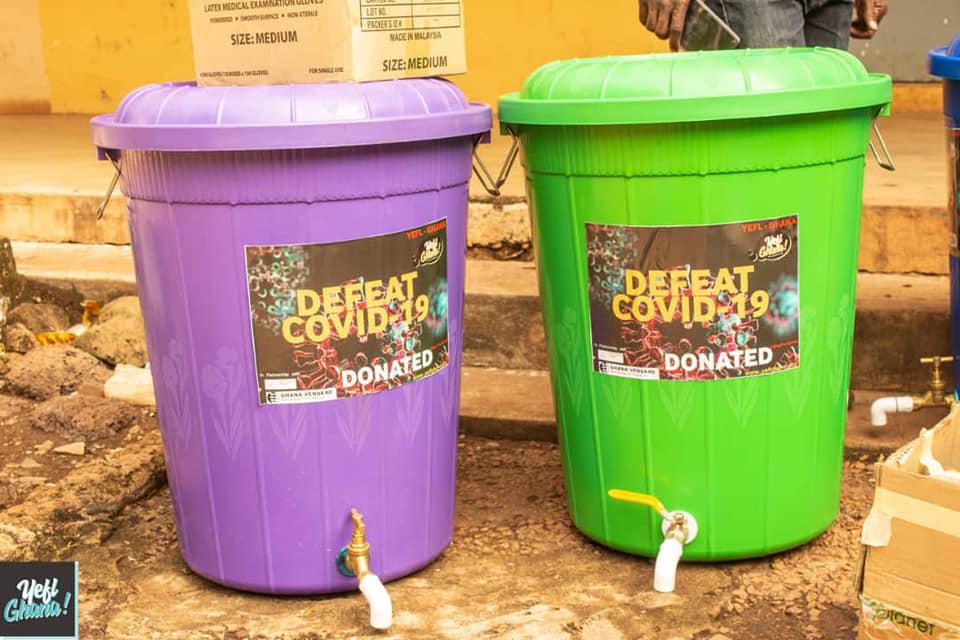
The unpredictable times of the pandemic of coronavirus prompted YEFL-Ghana to follow its youth-led change initiative and to help young people with critical knowledge and emergency response kits. Acting with others to promote this initiative, YEFL-Ghana based its attention on education in the field of public health and the provision of personal protective equipment's.
Together with young local artists in Ghana, the public health education initiative on Covid-19, including communication to avoid and mitigate risky infectious behaviors, has led to the development of 15 public health mes-
sages in 15 local languages distributed across Ghana through radio stations. We are pleased that our intervention targets minority ( e.g fulani) ethnic groups with appropriate knowledge on
coronavirus. The public health message is published and available via https:// bit.ly/3wMwamO and contributing to our behavior change communication strategy tarteging young people. We catalyzed our Art of Change alumina so that we can meet our community through different social networking channels. We launched a video production of various Ghanaian languages
which educates preventative measures against covid-19 via entertainment. The created messages on public health led to addressing two main issues: that is, active/recovered coronavirus patients becoming stigmatized and Ghanaian compliance with Covid-19 Protection Protocols. The pandemic prompted us to promote the usage of personal protection equipment in societies we engage, with which we have given support in seven (7) districts, five (5) youth parliaments, and three (3) reading clubs through our current relationship or partnerships. We
are excited that this personal protective equipment's were distributed among basic schools to support governments efforts to safely reopen schools, supported youth parliament to sustain their engagement and reading clubs to safely continue learning.
Youth Political Action and Accountability
We empowered young people including women and persons with disability with the right skills, tools, platforms and the capacity to become politically active and demand for accountable and transparent governance from the community to national levels through our Youth Parliaments (a youth-friendly accountability platform promoting youth voice, participation, behavioiur change and holding duty bearers accountable), Youth Speak Up (an initiative that supports active citizenship and engagement of young people as change agents addressing injustice), Youth Networks and Art of Change projects.
Youth Parliament & Youth Speak Up!
The expansion of the youth political action and accountability pillar (districts) in five (5) newly created Savannah region is building a high cadre of young people that are assertive in promoting peaceful coexistence, and claiming their rights from persons with power. It is encouraging that four (4) out of five (5) targeted Youth Parliaments were established this year, paving the way for discussions with their respective district assemblies and establishing them as legitimate actors in the districts.
The Youth Parliament concept is complemented with our Community Journalism approach, this approach trains community based journalist who will identify, investigate engage and share information for Youth Parliamentarians to discuss. The CJs further amplify the issues using social media and community radio to engage both duty bearers and entire community on the issues. The discussions of the youth parliaments and Community Journalist during their parliamentary sittings bother on the social development of their communities.
Recognizing the need for peaceful co-existence, Youth Parliaments begun to hold discussions and interface with duty bearers at the various district levels in line with promoting youth voices and youth participation in decision-making processes at the local levels. Youth Parliaments used their platforms to engage Parliamentary Aspirants contesting for the December 2020 elections in Ghana. Through a programme dubbed ‘Democracy Forum’, the youth parliaments provided a platform for the MP Aspirants to explain to the constituents their plans for developing their constituencies on identified topics by the youth. This has set the grounds for the youth to hold further engagement with elected MPs in the constituencies that held these events.
Results Outlook 1
09 parliamentary sittings held across 4 Districts contributed to; peaceful elections at 3 flash points at Wulensi, co-option of youth parliament member in district sanitation comittee, allocation of two (2) waste bin container at Zagyuri in the sagnairgu municipality
Sittings
144 youth comprising 94 male and 50 females received training on parliamentry procedure and proceedings
1415 young people aged 15-35 years comprising 980 males and 435 females directly reached
11 community journalist comprising 08 males and 03 females traiined on community journalism concept. CJs have jointly authored 5 impact stories
Youth power fixes broken pipes
Development in a community effects positive changes in the community and in the lives of its people. Community members are being supported by the appropriate institutions/agencies to identify and take collective action on issues which are of importance to them. The intervention of constructing linking roads for economic purposes and creating gutters to solve the issue of stagnant waters in the communities of the Bimbila district, led to the brokage of water pipes. An issue that kept occurring and got people in the affected towns complaining about water wastage. The Bimbila Youth parliament registered their concerns and out of that, they were able to gain free airtime on a radio station to discuss about the issue, get people informed and appeal to the right institutions to take necessary actions in solving the problem. Their actions got the contractor paying off some money to the assembly to be given to the water board to fix the problem as the appropriate agency in charge. A similar challenge in the Bimbila township led to a delegation of the Bimbila youth parliament sent to waterboard to enquire about why these broken pipes were not being fixed to avoid water wastage. Evidences from the visit
proved that, the appropriate materials/ logistics/pipes required for the fixing were not available, and it was made known that when they are available, these concerned community members would be called upon to witness solving the problem. One concerned community member (youth parliamentarian) said;
“two days time when the things arrived, they called us & when we went, we actually saw those things and from there when they gave us those things until now, we have not seen any challenge.”
The efforts of the Bimbila youth parliament in solving all these problems; helping to fix broken pipes in affected towns of the Bimbila district, putting an end to the issue of water shortage in the Bimbila township, and seeing to the gravelling of the constructed roads with speed ramps to avoid over speeding, were recognized and appreciated by the entire community and were urged to continue developing their communities and the district as a whole.
‘’When we started the youth parliament people were not interested in joining the youth parliament in Bole, but now people call me to give guidelines as to how to join the youth parliament. Because of what we do we have had tremendous support from the DCE, the health director and other members of the Assembly. Personally, am excited about discussing issues about my community, particularly of interest to me is addressing open defecation. Being part of this process has built my confidence and improved on my public speaking skills. Am hoping that I continue to be part of the youth parliament to help my community’’
Seidu Fati, Speaker Bole Youth Parliament.
Youth Networks
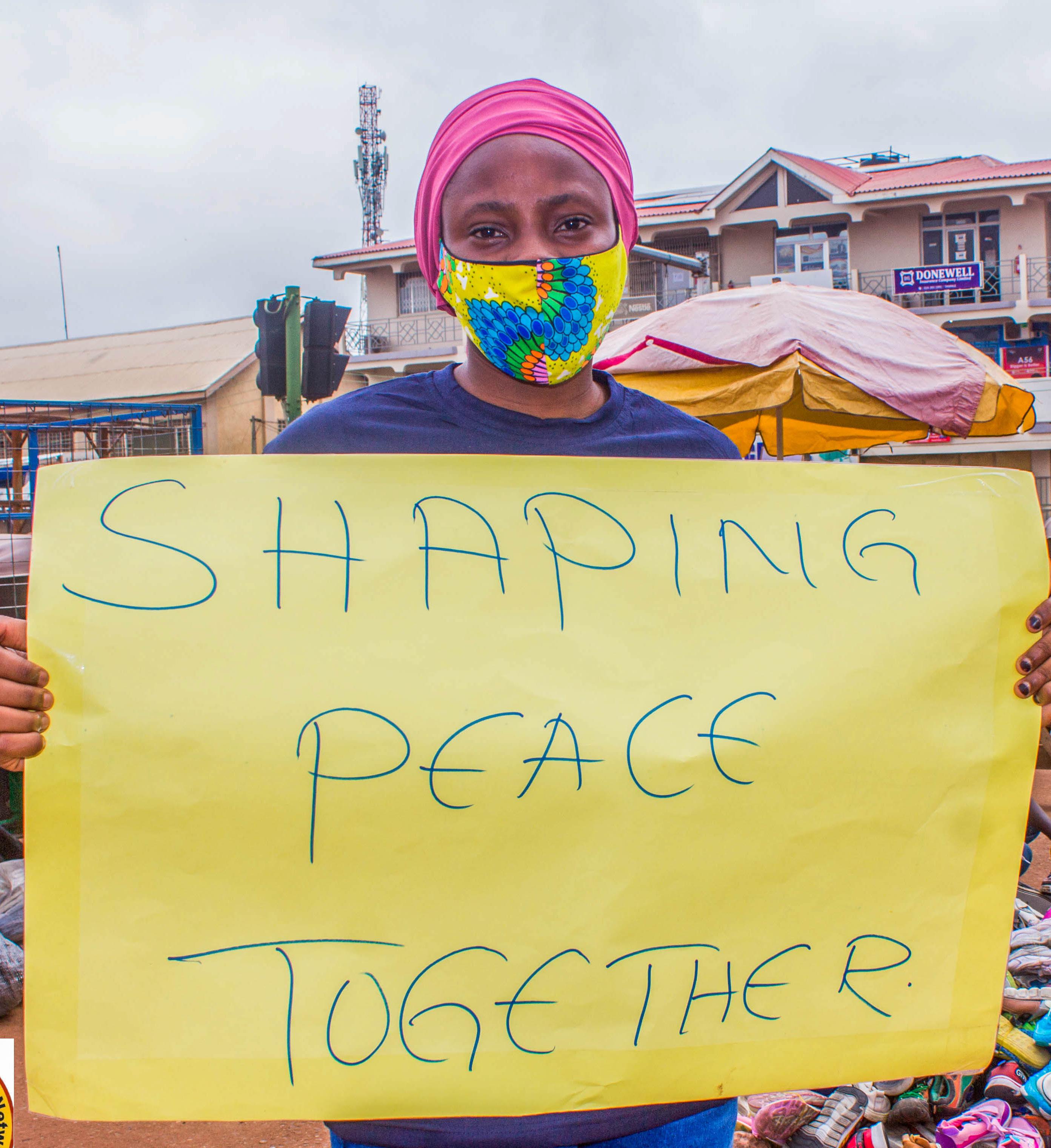
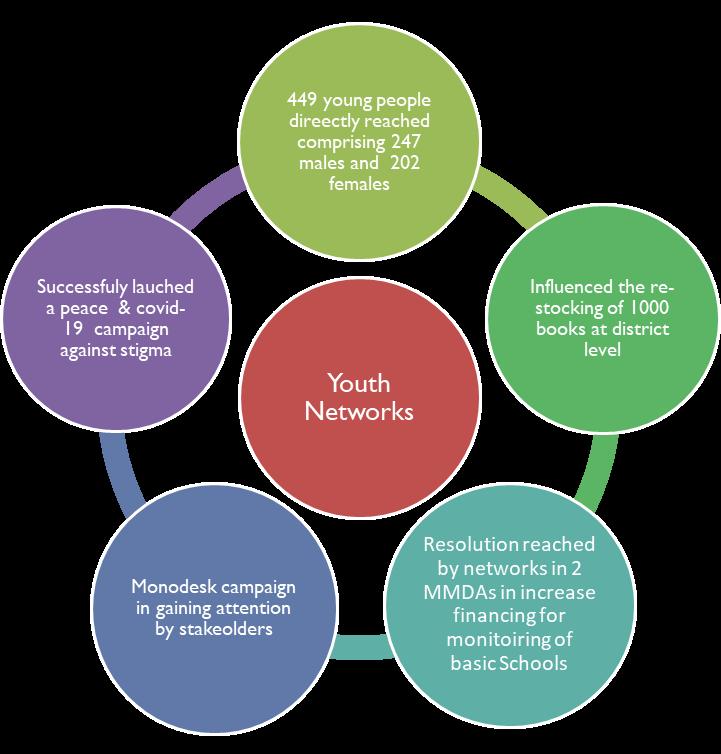
Election in Ghana demonstrated the need for peaceful coexistence. Via its peaceful political activity, the Youth Networks has drawn cooperation with others to promote the campaign for peace. These current partnerships help to expand their support base away from a unilateral support structure that leads to the survival of the youth networks. The peace movement of the Youth Networks has effectively led political party vigilantes to push for peaceful elections. The activities of the Youth Network (flash mobs and media) also sparked similar actions among youth groups in the area. A remarkable social action by the youth networks is the urgency to ensure the transmission of knowledge on the Covid 19 pandemic through the usage of social networking. The network reacted to the need to end covid 19 patients' stigmatization through a sequence of social media involvement with the general population, and public education on conformity with safety protocols was exceptional in particular on the markets. Their accomplishments further won 40 participants of the youth network the opportunity to study the effects of coronavirus & mental health by the African online University
Engagements
In general, the combined collaboration to affect the transition from a dual desk to a mono-desk acquired traction after ratification by the Northern Regional Coordinating Council. This was done after a number of crucial meetings with the regional network of young people, through the use of recorded facts to pitch the mono-desk initiative. The NRCC has since devoted itself to exchanging the Monodesk model with various MMDAs for its next move. A documentary amplyfing the shift from the use of dual desk is published via https://bit.ly/3j6PKq6
Results
Outlook 2
Youth Organizing for Change
Explained Introduction
We believe in the collective voice of the youth mobilized and organized for action. We have facilitated this process through the Annual Youth Forum, Youth centers, Twinning, activities Annual Youth Forum: Opportunities for youth participation in decision – making processes and in employment remain a major challenge for the youth. The Annual Youth Forum celebrated to mark the African Youth Day, therefore provided youth the opportunity to discuss with key stakeholders and policy makers the policy challenges confronting the youth and to find alternative approaches to addressing their challenges. The forum affirmed the need to prioritize youth entrepreneurship as an alternative for youth employment and the demand for accountability from stakeholders as key for youth participation in decision – making. The forum observed the need for policies that create an enabling environment for youth participation in employment and in demand for accountability and issued a communique to the Northern Development Authority and the GIZ to support the call. The new youth strategy was also launched at the forum to have the youth
informed about the pathways for their social, economic and political empowerment. Read further about our new youth strategy via https://bit.ly/3zQ6KGW
Youth Center:
Youth mobilization remains a critical challenge for collective civic engagement as the youth demographic continues to surge. We observed that this was largely so due to the fact that the youth lacked the physical spaces for their mobilization, empowerment and engagement; that, “youth groups” that are pervasive in every community do not comprise of young people ( as prescribed by Ghana’s National Youth Policy and the African Youth Charter to be individuals between the ages of 15 and 35 years) but mostly of adult youth who are beyond the 35 years of age; and that the pathways for their participation in civic engagement were limited and thereby excluding this critical category from meaningful participation in decision – making processes. A new youth strategy was therefore developed to address these challenges. The strategy actioned for a shift from working with “youth groups” to young individuals setting two categories of age limit; 1) 15years – 26 years and 2) 27years – 35years. The first category being the prioritized beneficiaries of programs and interventions and ably supported by the
second category who have received capacity building supports in the last seven years. The exit strategy for the second category will be to transition them into alumni networks in 2021 and to offer them the necessary support for them to provide mentoring, capacity building and support to the first category.
On the issue of physical spaces, strategically, we entered into collaboration with two local assemblies (Savelugu Municipal Assembly and Karaga District Assembly) with unoccupied and abandoned facilities to release them for occupation by the youth as Youth Centres. The Youth Centres will serve as physical spaces that will catalyze a network of young enthusiasts, mobilized around issues and interests, where these young people will have the capacity to co-create, learn and act together in synergy with others to influence change in their communities, build their self-confidence and leadership skills.
Ghana Girls Goals:
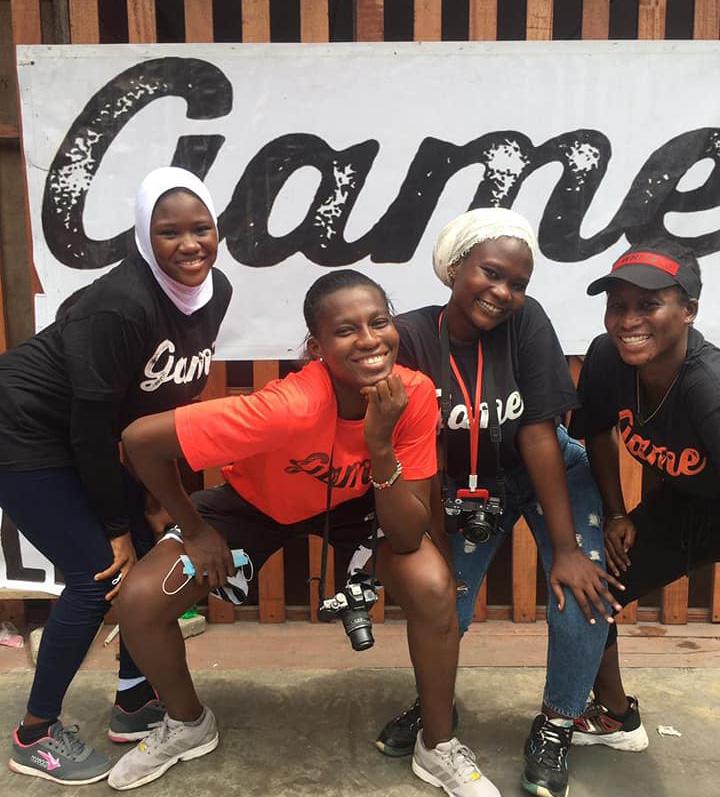
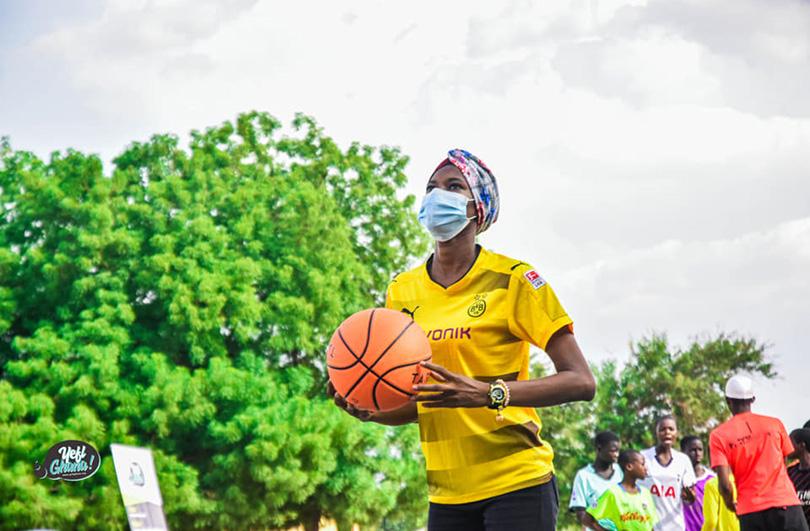
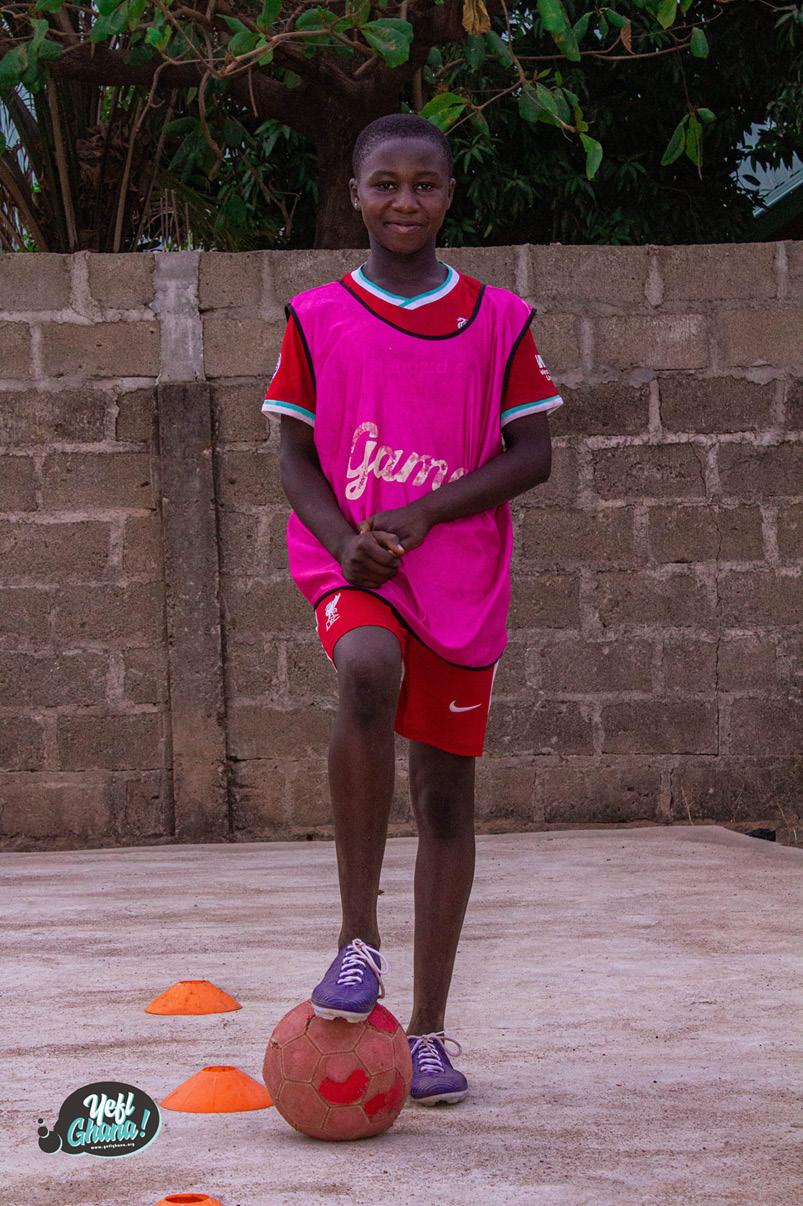
The Ghana Girls Goal seeks to increase girl's participation in sports. Thus far, the project has recruited 14 play makers and reached out to about 150 kids who are learning and practicing football, dance and basketball, weekly. The Playmakers serve as coaches to the kids during practice and it is pleasing to
report that during this period, the project has been able to record boys and girls playing together on same field and same game/sport. The knowledge of PMs has been increased in child protection to en-
able them engage the kids effectively. The confidence level and ability of the kids as participants of the project has improved and they are now able to play together and speak out on issues that concern them during play.
‘'My name is Alhassan Alimatu, aged 14, I joined the Ghana Goals Girls Project to learn football because, when I see others play, I become happy, so I want to also learn how to play football and to become a professional footballer that will become beneficial to me and my family in future’’
Youth Entrepreneurship Introduction
Our entrepreneurship training for youth is aimed at addressing target 8.3 which promotes entrepreneurship and innovation and encourages the growth of small and growing enterprises, includ
employment and decent work for all women and men, including young people and persons with disabilities, and equal pay for work of equal value and target 8.6 to substantially reduce the proportion of youth not in employment, education or training respectively by
is a time-tested approach with 75% success and sustainable rate to training young entrepreneurs in the rural communities of Northern Region of Ghana. To contribute to the above SDGs and in addressing youth unemployment, two pathways for youth employment was implemented in 2020 namely; 1) entrepreneurship development, and Village Savings and Loans Association (VSLA) and 2) vocational skills development. Financial assistance, business support services, and professional and employability skills will be the third pathway to be introduced in 2021. For the entrepreneurship and VSLA pathway, a cohort of 25 youth in 5 districts in the Northern Region were selected and formed into the VSLA and provided with training on savings attitude and on sav-
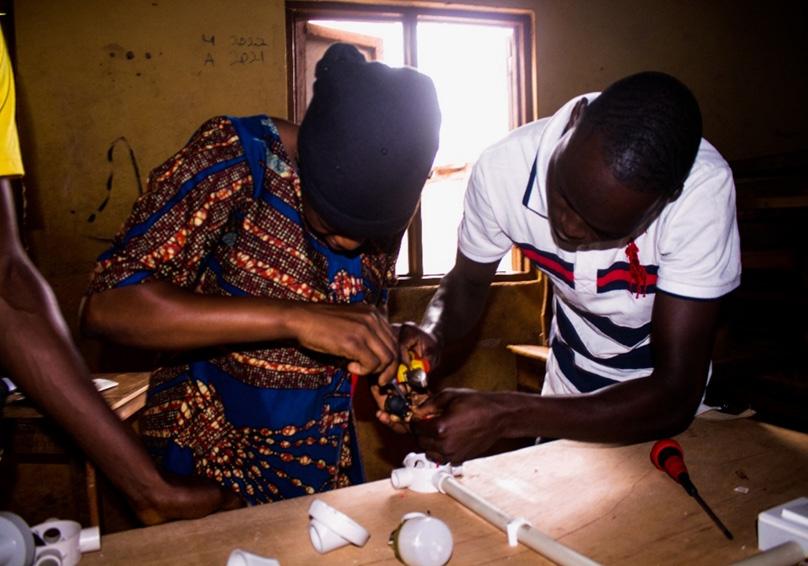
ings for 6 months, and then 5 days of Bootcamp Entrepreneurship, and follow – up trainings and mentorship. This approached reached 202 young people. To specifically target more young women under this pathway, a literacy and numeracy skills training was instituted just for young women for a period of 6 months also which run alongside the VSLA and then the Bootcamp Entrepreneurship training. This pathway is funded under the Empowerment for Life Program (E4L) through GV in Denmark. The second pathway, which is largely vocational skills training in basic electrical installation, welding and fabrication, building and construction, dress making, make – up artists among others were provided to 250 beneficiaries through nineteen (19) service providers for a period of 6 months. This pathway is implemented under a project dubbed Youth Lead Initiative For Employment (Youth LIFE 2.0) with funding from the Catholic Relief Services (CRS). This category of beneficiaries and 270 others in 2021 will be provided with an additional professional and employability skills training to broaden their chances of getting employed and be able to employ others.
For Shawana, 22 and a single mother of two kids, her participation in Youth Led Initiative For Employment (LIFE) 2.0 is an opportunity never to be missed after having missed Youth LIFE 1.0 in 2016.
According to Shawana, in 2016 when she got selected as a beneficiary, she was not to realize her dream of learning a skill and owning a business because her husband now former wouldn’t let her.
She laments “Hmm, I regret falling for his deception when he told me he wanted me to further my education to the tertiary level but not to learn some “trade” and ended up impregnating me leaving me with nothing but joblessness without skills and having to take care of my two kids (11 months and 5 years respectively).
The story of Shawana, is not a single story. It is a story shared by many young girls who get trapped in early marriage to the detriment of education, their reproductive health and enterprise development. But there is hope as Shawana stressed “I have moved on” and “I am happy to be part of this process once again with independence.”
She adds “I know very well that I may lose custody of my two kids, but I still have a responsibility to give them my best as a mother.”
‘‘So far being here, I have learnt a lot from it if I may say. I have been able to
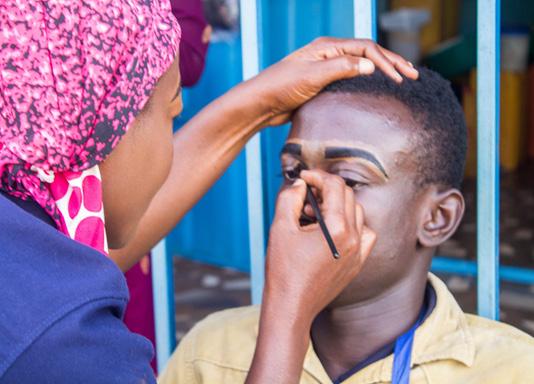
plate hair, do complete make up and then washing, retarching and the others. We are still in the learning process. So far being here is very important to me. When I leave here am also planning to establish my own business and get people to train. It will help me to earn my daily bread from it and will help them too’’.
Meet Abdul-Hakeem, a 26 year old young man breaking gender sterotypes in female dominated trades in Northern Region of Ghana.
“The reason I chose to become a makeup artist is that I see that a lot of guys don’t go into it and a young guy I see the business aspect of it even though there are challenges. People in the society say ..you a guy why do you do hairdressing? It’s for ladies..it’s for ladies. You know all those things are things that also push me to commit to it. Yeah because some -
times you don’t limit certain things for feminine side. Things can also be for the masculine side. And actually, I have learn a lot.. I can plate hair, do makeup, pedicure, medicure....and with this I intend to be a good example in society and to be a motivator to the masculine side who want to do the feminine jobs.”
Results Outlook 3
In our efforts to help youth create jobs and gain career opportunities, we have used an equality perspective to look at those who benefit from our programs. As a result, 57.1 per cent of 452 targeted beneficiaries in the year 2020 are young women. So far, eighty-nine (89) recipients, 53 men and 33 women have begun their businesses. The target number of young people for this year are drawn from the Empowerment for Life Program and the Youth Life 2.0 Project. The outlook of young people that have sucessfuly started their business in 2020 has been grately affected by the global pandemic, Covid-19, which is compounding already existing bottlnecks to start-ups.
Our team
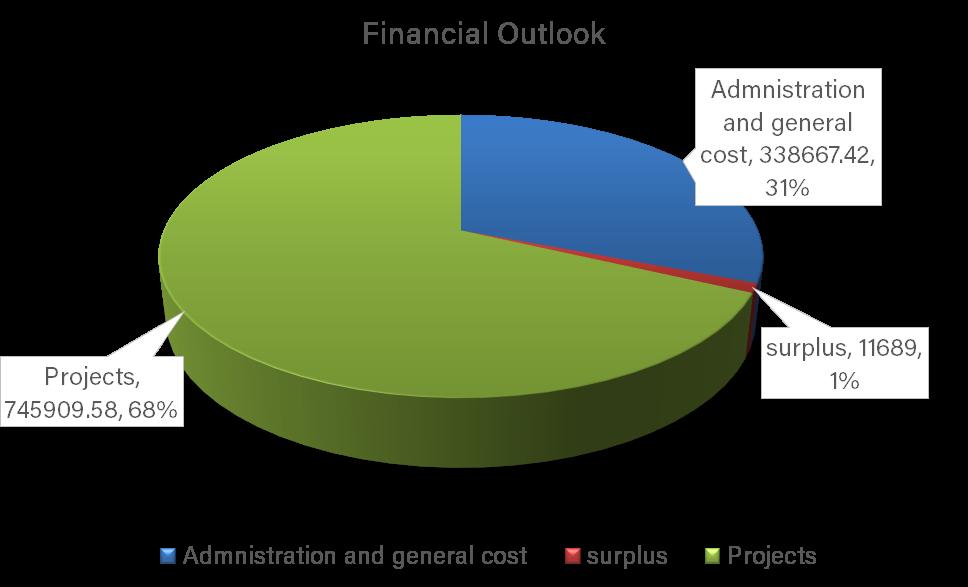
2020 Financial Outlook
YEFL-Ghana exists to inspire youth to lead transformation through engagements, networks, knowledge sharing, and capacity building.