









Another year is up and winter has come to our gardens I’ve finally arrived in my new garden in Scotland and I am full of ideas and new challenges for 2026 With a wetter, colder climate to deal with up here over the border, I am going to need to rethink my growing but I am very excited to get stuck in! My smaller growing space means there will be a lot more pots and growing upwards in my plans. Bring on the new year and another growing season.
First though, we have to navigate a cold dark winter. Thankfully we have lots of fantastic articles this month to inspire us to get outside even when it’s cold. Don’t let winter stop you from enjoying your garden.
Of course we still have some festive articles to get you ready for the big day and even a festive tipple to celebrate all the hard work of 2025!
A huge thank you from all of us at Garden Folk for all your support this past 12 months We wish you all a wonderful Christmas and a Happy New Year We can’t wait to bring you more garden inspiration in 2026!


The shorter days and longer nights are hard for a lot of gardeners. We crave being outside, our hands in the soil, pottering around our growing spaces.
Here are a few of my own tried and tested tips for helping to beat the winter blues for gardeners...
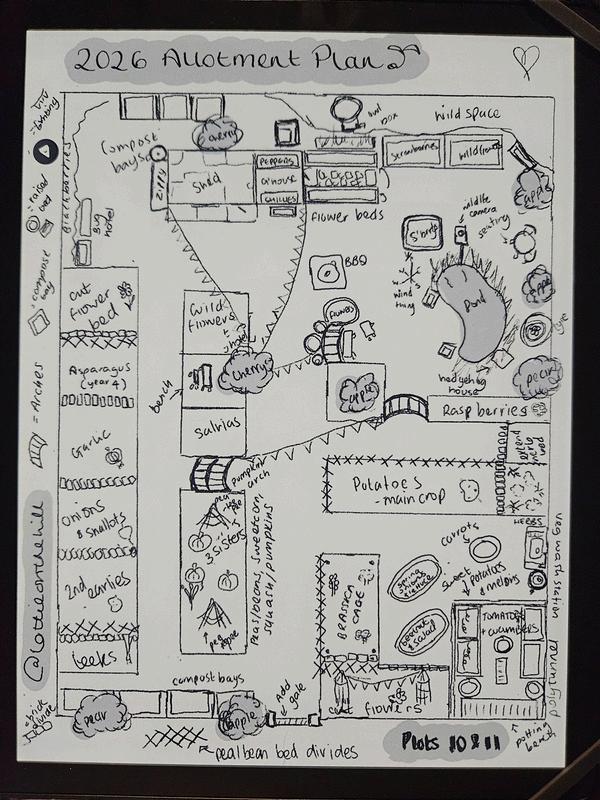
Make a plan
You don't have to be an artistic genius to draw out a rough plan of your growing space for the year ahead Add some exciting changes to the current layout to give you something to look forward to
Sort out your seed collection
We're all guilty of hoarding out of date seeds or more packets of salad leaves than we'll ever possibly be able to sow! Have a clear out- donate to a local seed swap, school, charity, or offer them to your local allotments
Have a power (half) hour outside
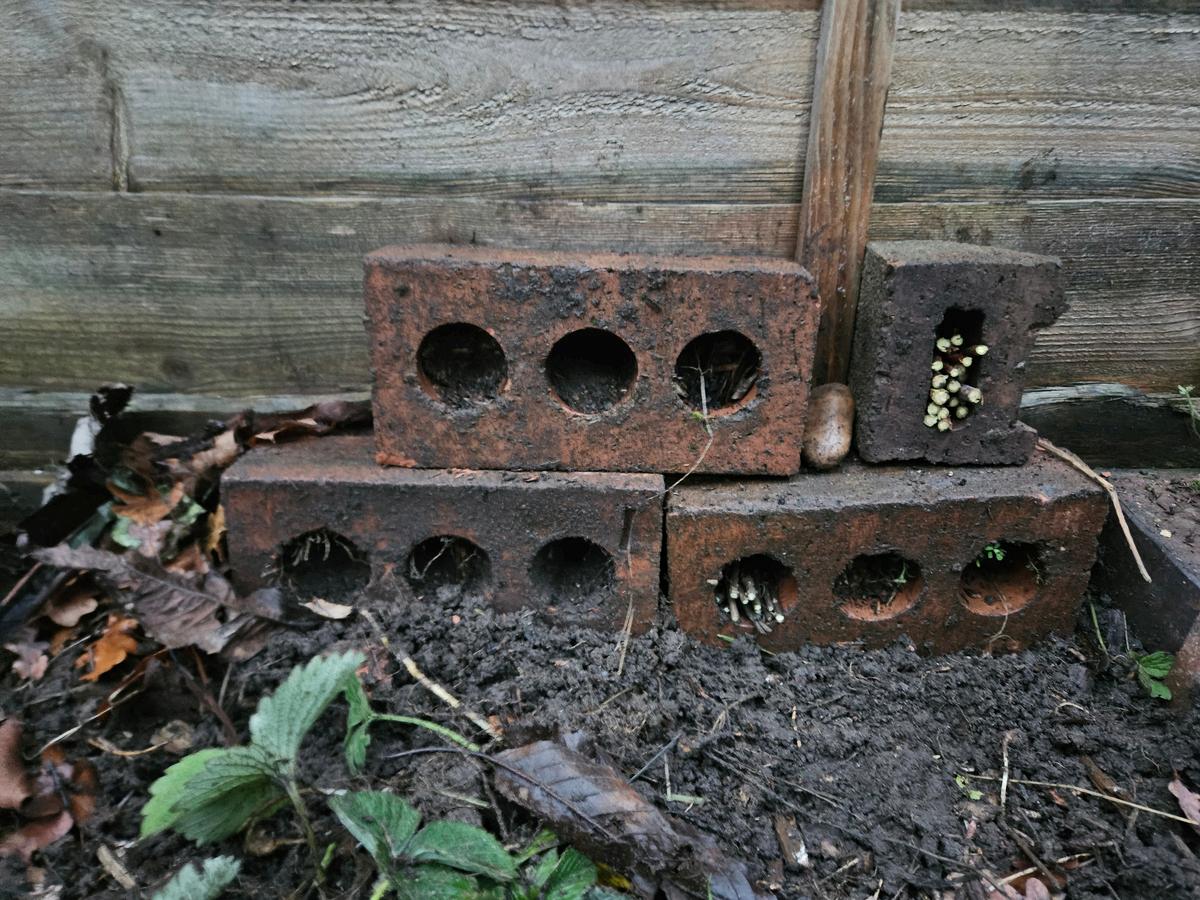
You'd be amazed at what you can achieve in a short space of time Let your competitive side come out! This week, I spent 15 minutes building a small bug hotel out of bricks, twigs cut from my raspberry canes, and leaves. It was all the time I had before I lost the light outside, but I knew I needed to get some time at the allotment for my mental wellbeing.
Taking care of your tools is something you, and your growing space, will thank you for later Give your hand tools a good clean and sharpen
Time on your side, but not the weather?
Have a sort out! This time of year is perfect shed! Poly tunnel/ greenhouse and having and tidy up. I'm very guilty of chucking thin later" and never getting round to it. I also h hundred plant pots that need cleaning and
Write and reflect on your grow year.
There's nothing more satisfying than lookin and remembering your successes, and lear failures Better yet, why not write about the Mag?
If, like me, you miss being outside and bein space at this time of year, why not give the have helped me regulate my mental health missing my allotment over winter.
Be sure to let me know how you get on!
Get ahead for next year and start planning.

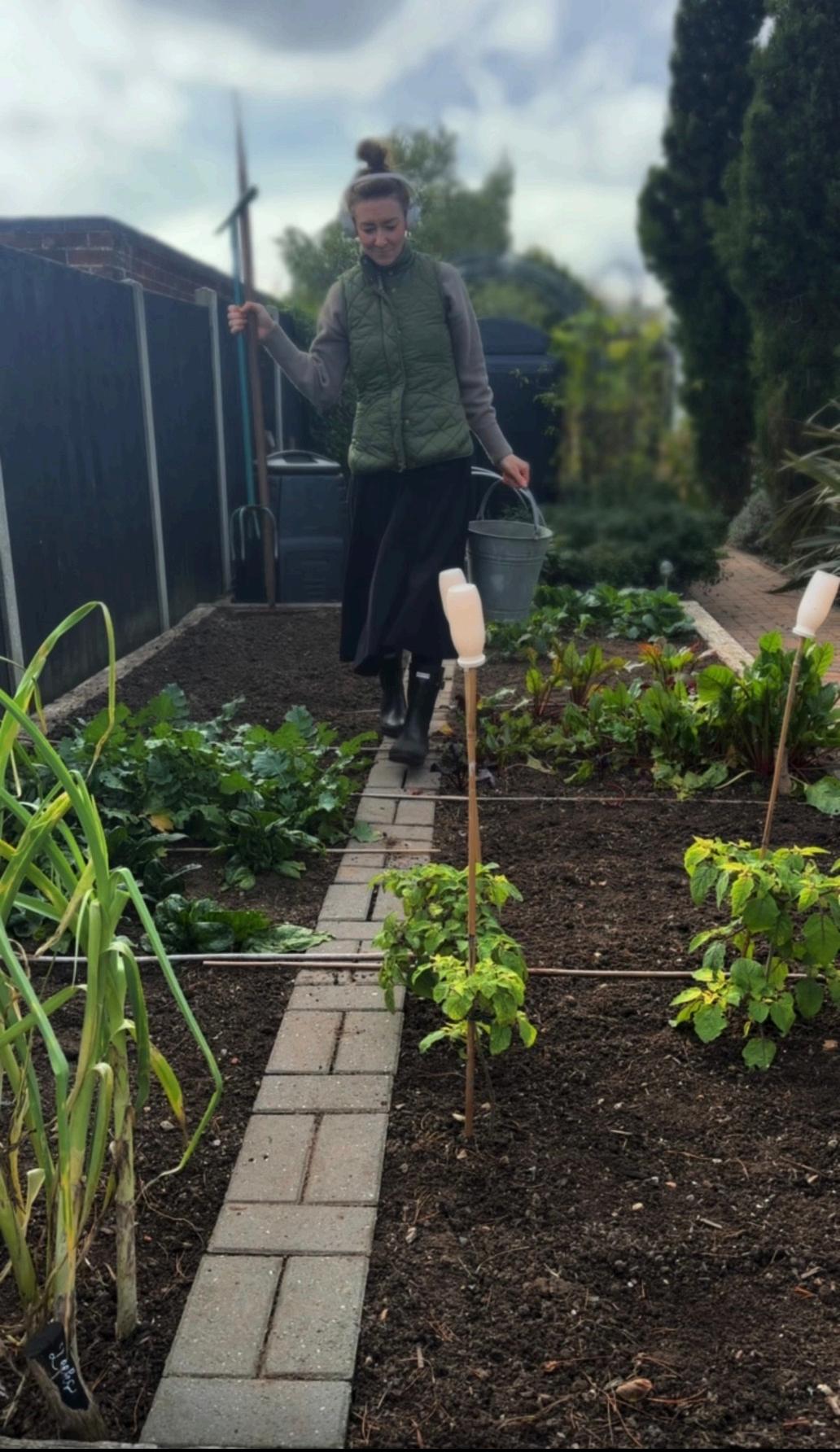
There is a quiet honesty in the choice to live off the land, an honesty that asks you to look at your life differently; slowly, deliberately, without rushing toward the next demand It never begins with a grand gesture. It slips in softly, almost unnoticed, in the way you start paying attention: the way the soil feels between your fingers, the way light shifts across your raised beds, the way a single tomato plant can ground you after a long day. Living off the land begins long before the first harvest. It begins in the longing to reconnect with something real.
As the seasons unfold, that longing becomes a practice. You rise with the garden, checking the beds before your morning tea, noticing how each day carries its own texture; warmer soil, cooler breeze, the subtle lean of seedlings toward the sun. Nature never hurries, and slowly you stop hurrying too. Instead of living in reaction to noise, deadlines, and screens, you find yourself aligning with a quieter pace, one that has been here long before us. It is ancient, steady, and impossibly grounding.
When the garden begins to give, it doesn’t just fill your basket; it fills your days with purpose Tomatoes swell in their own time Chives burst into purple fireworks that call in the bees The rosemary plant you once bought as a small, apologetic garden centre pot grows into a fragrant, woody monument to resilience You begin to understand abundance differently It is not excess; it is connection A single cucumber grown by your own hands holds more flavour, more life, than a dozen bought without thought
Inside, the kitchen transforms It stops being a place of duty and becomes a place of alchemy Jars line the counters like a timeline of the seasons: herbs drying gently in the afternoon sun, sauces simmering into deep, rich colours that promise warmth in the months ahead. Cooking stops being formulaic. You start trusting your senses. A handful of basil, dried thyme you tied together last July, tomato water saved from your last batch of jars; everything becomes instinctual, almost ritualistic. Your kitchen becomes a living archive of your seasons.
But living off the land is not romantic every day. It demands sweat, patience, and the kind of resilience you only discover by doing It’s bending low in the rain because seedlings need shelter It’s the weight of a watering can when your back aches It’s watching a promising crop lost overnight to frost or pests Yet in the disappointment, there is a deeper kind of understanding; one that modern life rarely invites You learn humility You learn that control is a fragile illusion You learn that nature gives generously but not on demand, and that beauty often lives in the imperfect (wabi sabi); the misshapen carrot, the tomato cracked from rain, the herbs that bolt earlier than expected These are reminders that life, in all its flaws, is still generous
Over time, even the way you experience time itself changes Days stop being measured in productivity and start being measured in presence. Morning is marked by birds squabbling at the feeders; afternoon by the warmth across the beds; evening by the earth cooling beneath your bare feet. What once felt like a chore becomes a ritual. Watering is meditation. Harvesting is gratitude. Cooking is devotion. You find yourself returning to a version of life that feels intentional, grounded, and quietly sacred.
By Tori Thomas
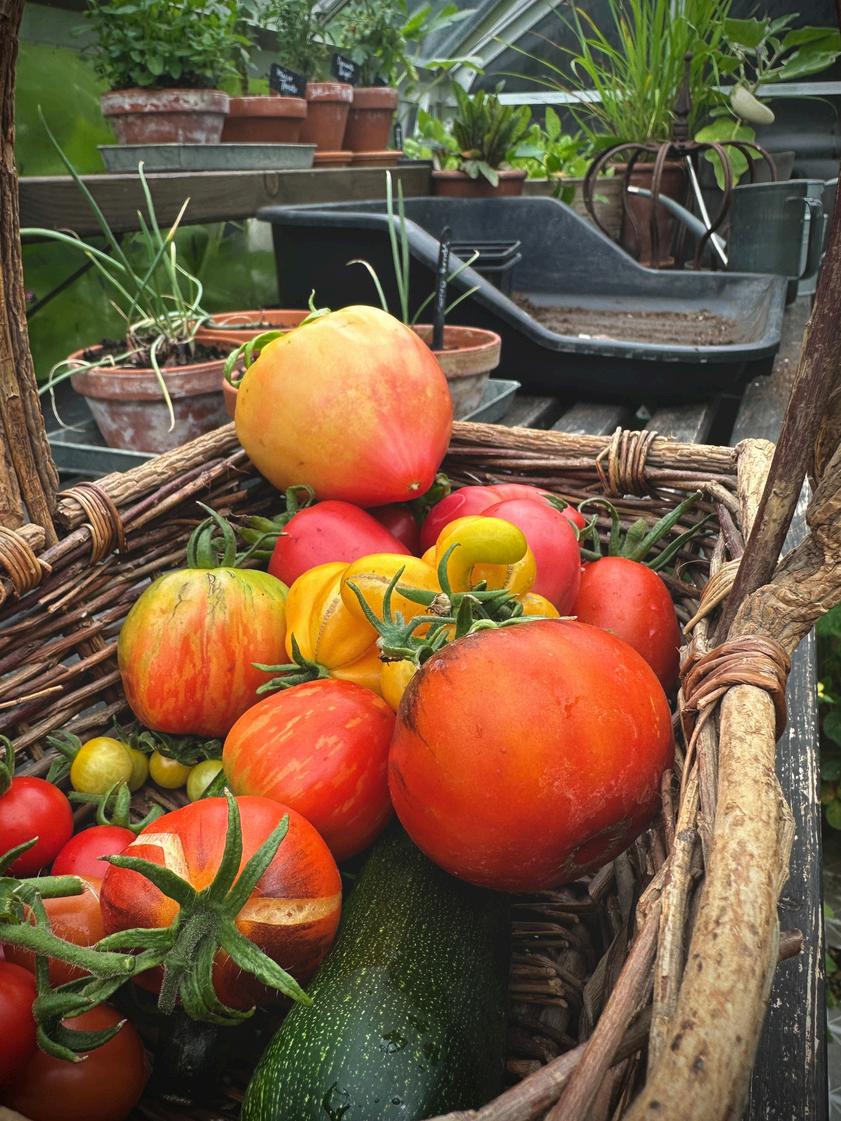
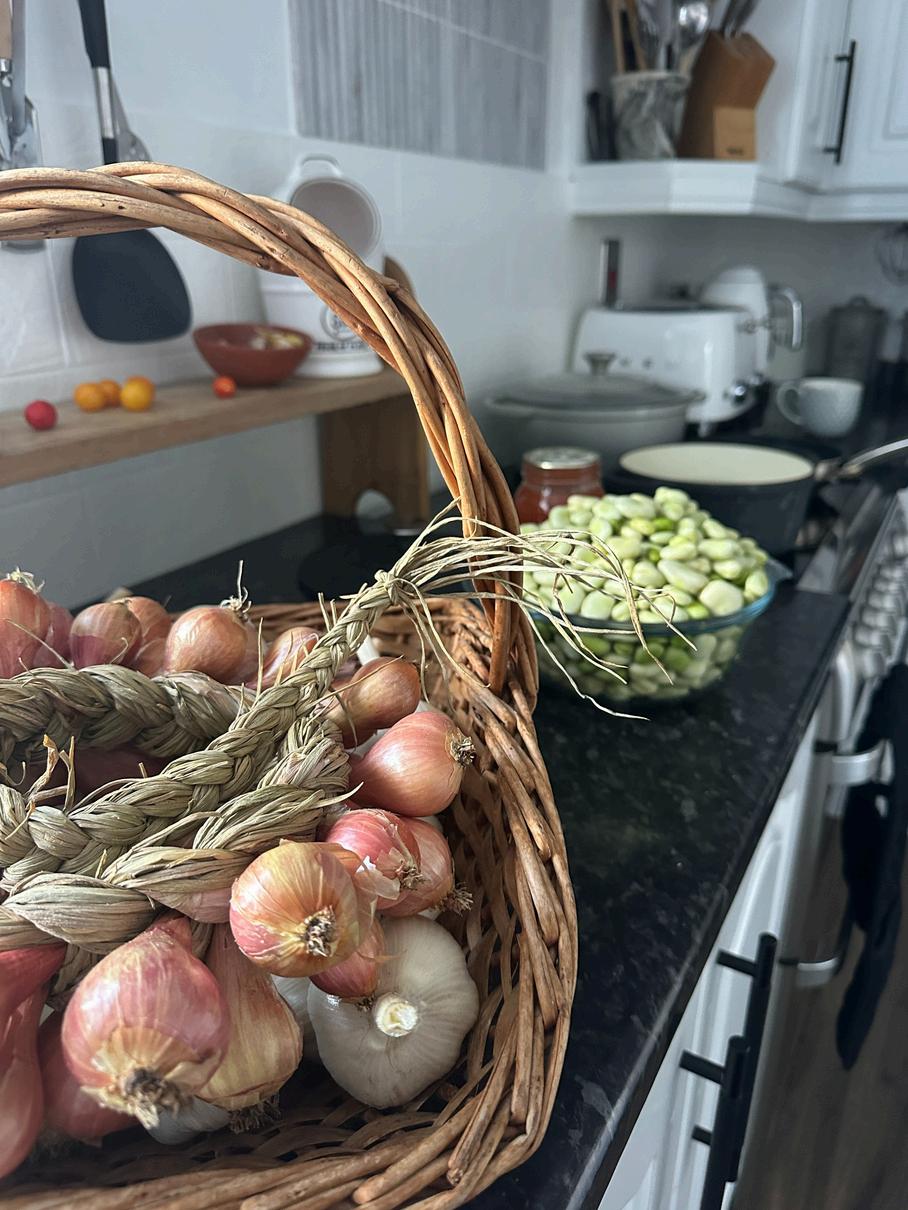
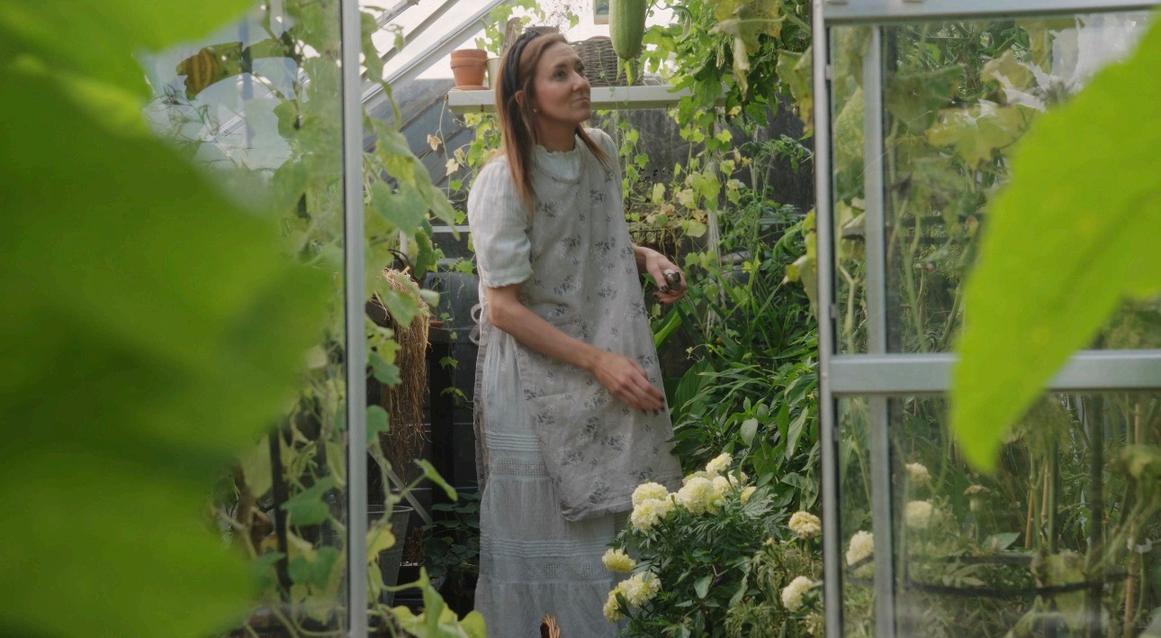
And slowly, something within you shifts The land becomes more than a place you tend; it becomes a companion, a constant, a mirror It steadies you when the world feels sharp It gives you purpose on days when people disappoint you It reminds you; viscerally, undeniably; that you belong somewhere That growth is still possible That you are capable of nurturing a life that nurtures you back
Living off the land is not about perfection or producing everything you eat It is about reclaiming your life one small, rooted act at a time It is about stepping away from the frantic pace of modern living and stepping toward a version of yourself that feels more honest, more present, more whole. To live off the land is to choose simplicity without deprivation, abundance without excess, and nourishment that starts with seed, soil, and intention.
And as you settle into this way of living; into the momentum, the patience, the reciprocity; you begin to sense that this is only the beginning. Because once you say yes to the land, it asks something more from you. It invites you deeper.
And that is where the real journey begins
Christmas is back in the Shop!






Grab yourself a last minute Christmas gift and use code FESTIVEFOLK for an exclusive discount



By Mel Lord

Have you heard the echo of a horn on the wind during a frigid December evening? It was once believed that frenzied storms sweeping the country around the time of the solstice heralded the Wild Hunt, sometimes called Herla’s Assembly Led by the god Wodan, also known as Old Nick or Hackleberg in England, this mob was said to race across the sky at Yule With his entourage supposedly containing hounds, the ghosts of famous warriors and fairies This furious host carried off cows and chased either wild boar, a silver doe or a beautiful woman Galloping after her for seven years, mostly likely a reference to the calendar months of winter Odin himself would wear a broad-brimmed hat and was accompanied by his faithful ravens Huginn and Muninn As well as an owl named Tutursel Witnessing this spectacle was highly dangerous Looking at it could cause madness, blindness or even death Alternatively someone could be swept off if they were outside during a hunt and magically transported hundreds of miles away
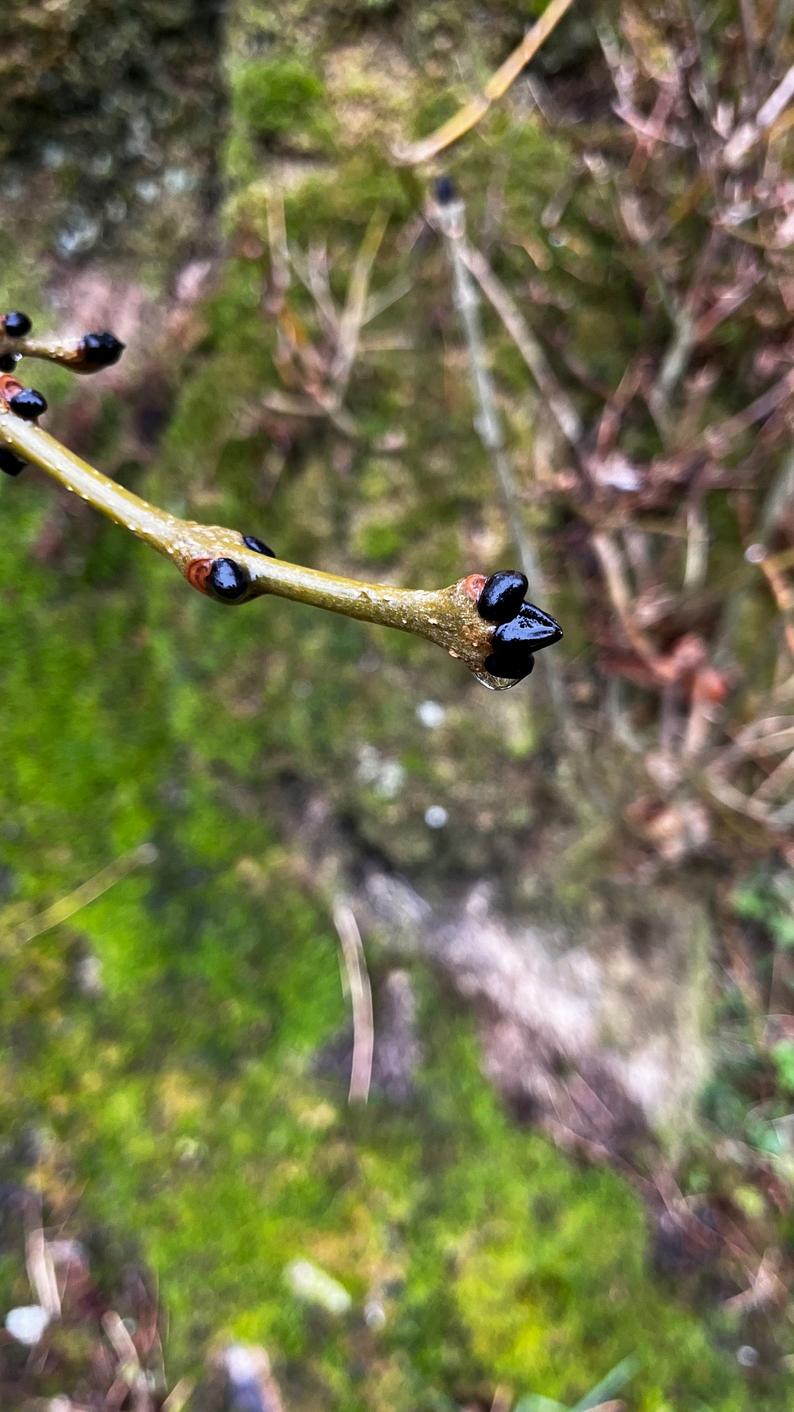
However Wodan wasn’t all bad In fact he was often associated with plants and trees Primarily the ash Norse mythology claims Yggdrisil or the “world tree” was the ultimate specimen So immense that it was capable of supporting nine different realms Including our own Middle Earth Odin often visited and used its power to gain an understanding of ancient runes His role as a patron of bards and poetry might be why storytellers carved songs and tales into ash wood too Additionally the All Father was responsible for creating the first human couple from trees that he and his two brothers found washed up on a beach Man was formed from the ash Odin named him Ask and his soul was born within its branches
A Christmas tradition involving ash bark says that you can burn a faggot of it wrapped in green twigs on the hearth and make a wish each time the bonds snap. With unwed girls choosing a bond and seeing if theirs is the first to break. Foretelling who will be married the quickest.
Wodan’s name was also inv referred to as the Nine Herb C nine types of poison or infectio repeated to the patient three recipe to create a paste or drin The plants listed are buckthorn chervil, crab apple, fennel, la and nettle Which do have r properties even though this treatment were recorded in the mentioned twice and said to be of every kind”. Implying that h herbalist.
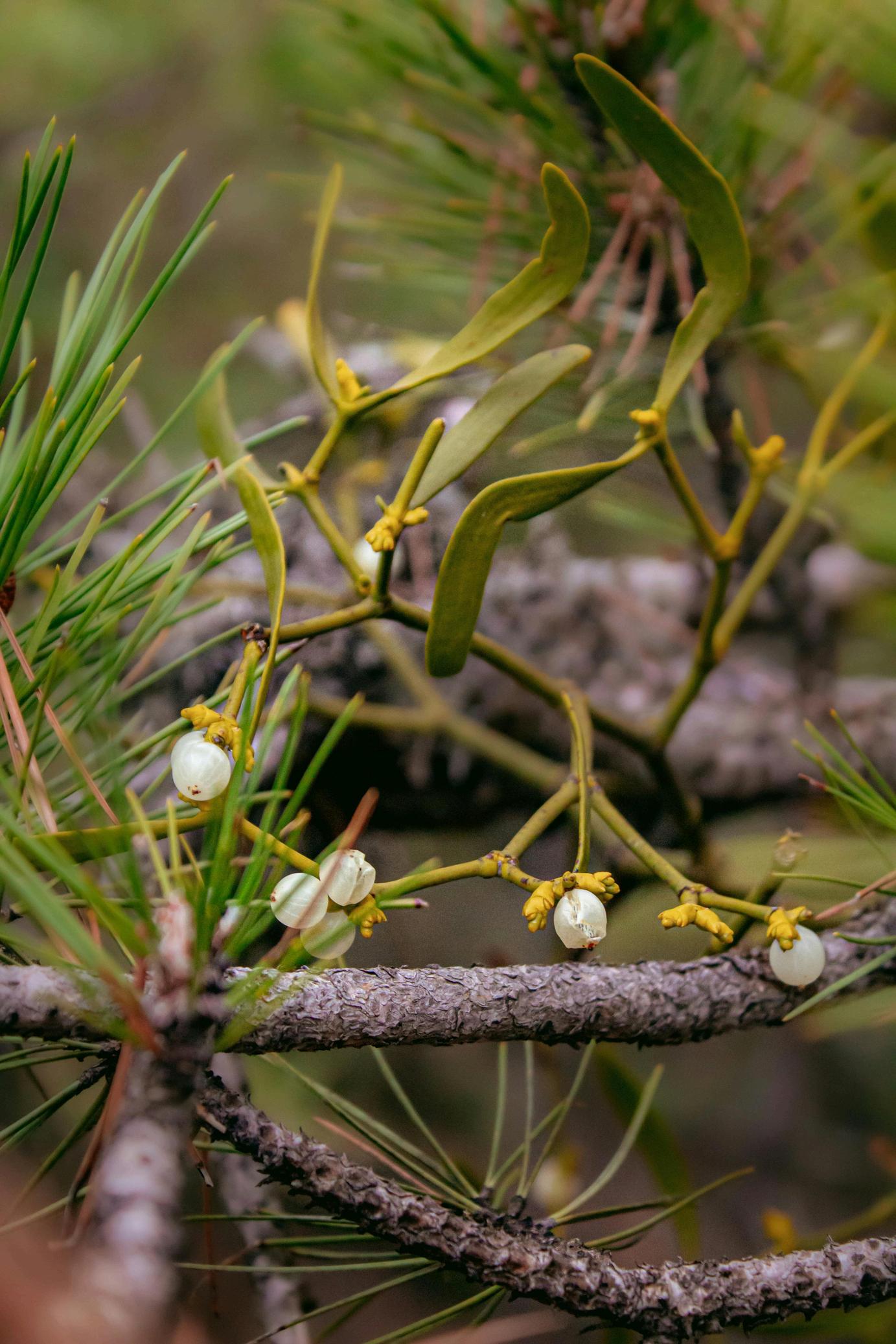
Another emblem of the fest connection to him is mistle responsible for the murder of h of light and his parents' pride began to have unsettling drea mother Frigg travelled the wo things swear not to harm her trees that could be fashione
Unfortunately she forgot mistle this mission and heard her con asked the parasitic plant so he arrow that he gave to Baldr’s Baldr declared himself invincib other gods to try and kill him. P in disaster when Höd success Who was not immune to the mi Frigg and Wodan wept for became the pearlescent berrie appear from October. Despit these fruits are useful to ha providing a food source for the rare mistletoe marble moth. farmers were in the habit of mistletoe and giving it to the c after New Year's Day. An act bring good luck. As it can’t su and is never found on the g thought to be spread by bird common name may stem from words. “Mistel” was a term f translates to twig. Leaving us poo on a stick. Hardly roman stopped it from becoming a Christmas hospitality, love and

As December wraps the garden in a frosty embrace, the world outside may seem quiet, but there is still life stirring in the nooks and crannies. Birds forage for food, mammals find shelter, and the occasional insect braves the cold on a rare sunny day. For wildlife gardeners, this is a time to embrace the beauty of a winter garden, while continuing to support the wildlife that calls it home. December is also a wonderful time to reflect on the year gone by and dream about the gardening adventures ahead.
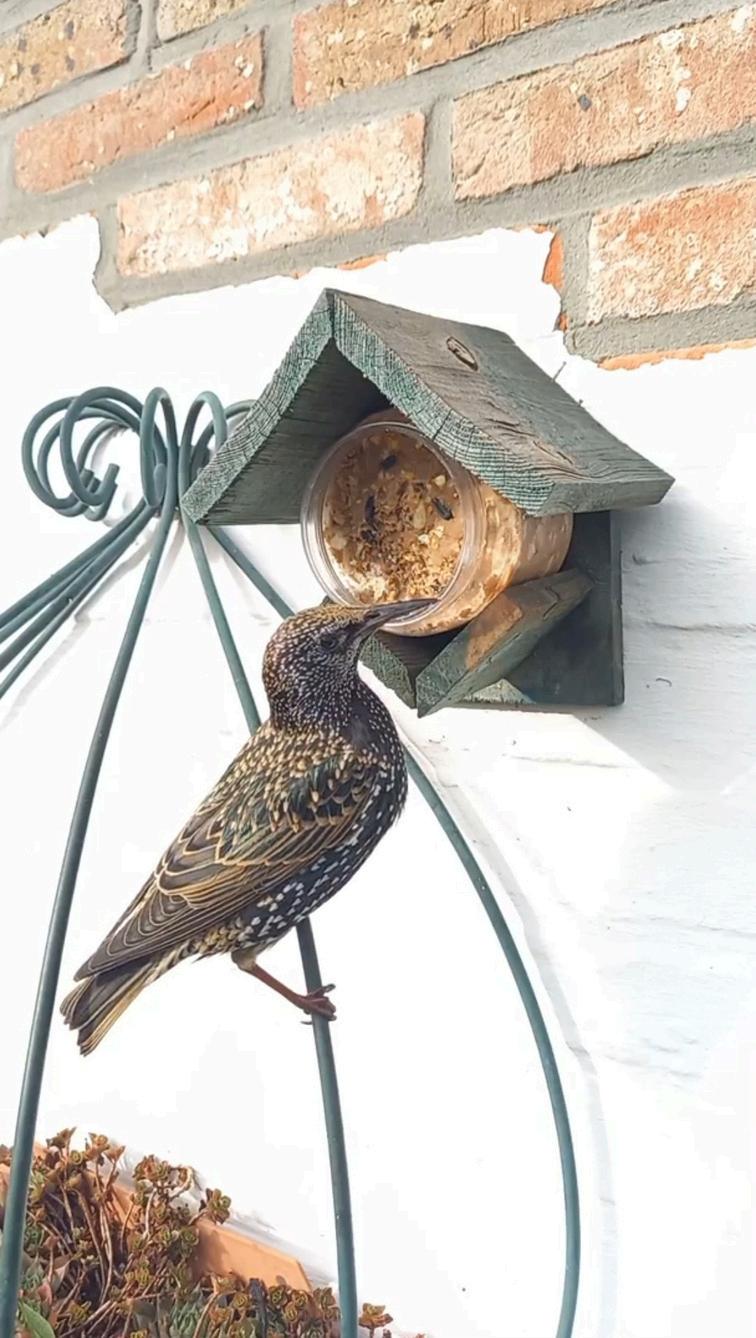
Winter is the hardest season for birds, and your feeders are a crucial source of sustenance Keep them well-stocked with high-energy foods like suet, sunflower hearts, peanuts, and fat balls Scatter seeds and fruit on the ground for blackbirds, robins, and other ground-feeding species, and provide fresh water daily, ensuring it doesn’t freeze
Help wildlife through the cold months by providing safe spaces for hibernation and shelter. Piles of leaves, logs, and stones make excellent refuges for hedgehogs, frogs, insects, and other small creatures. Check your compost heap and woodpile before disturbing them, as they may already house hibernating visitors.
Decorate with the wildlife in mind.

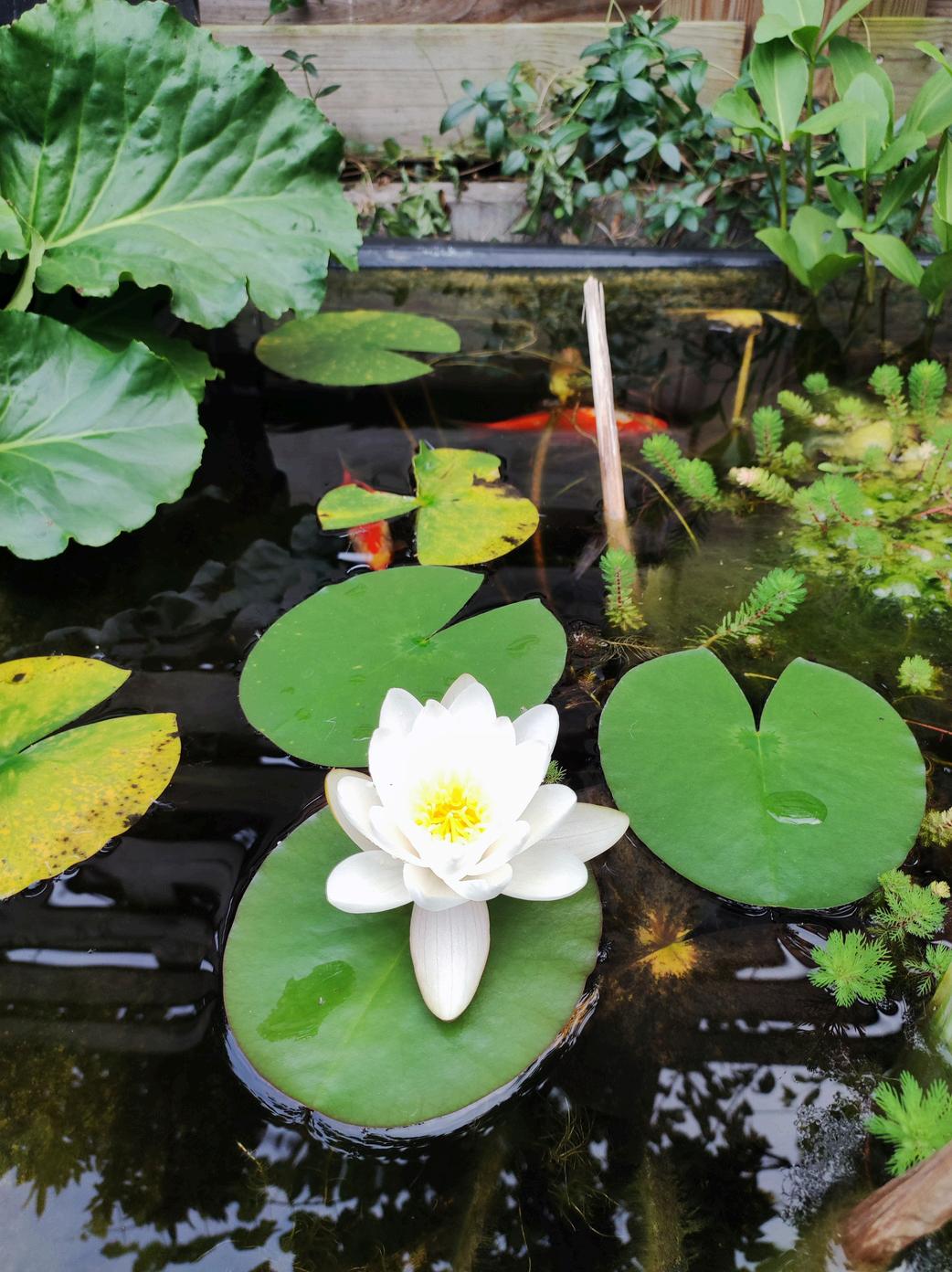
Keep a small section of your pond ice-free to allow amphibians and insects to access oxygen and enter or leave the water Float a tennis ball or small bundle of sticks on the surface to prevent it from freezing over entirely
When the festivities are over, give your Christmas tree a second life in the garden. Lay it down in a quiet corner as shelter for insects and small mammals, or cut off branches to cover tender plants as frost protection, or create a wildlife pile. If you have space, consider replanting it in your garden for wildlife, and you, to enjoy year-round and for many years to come.
December is an excellent time to plant bare-root trees and shrubs, if the soil isn’t frozen Opt for wildlife-friendly species like hawthorn, holly, or crab apple to provide food and shelter for birds, bees, and other creatures in the coming seasons
Resist the urge to tidy up too much in your garden. Seed heads and hollow stems provide vital food and shelter for birds and insects during winter. They also add a touch of frosty beauty to the winter landscape.
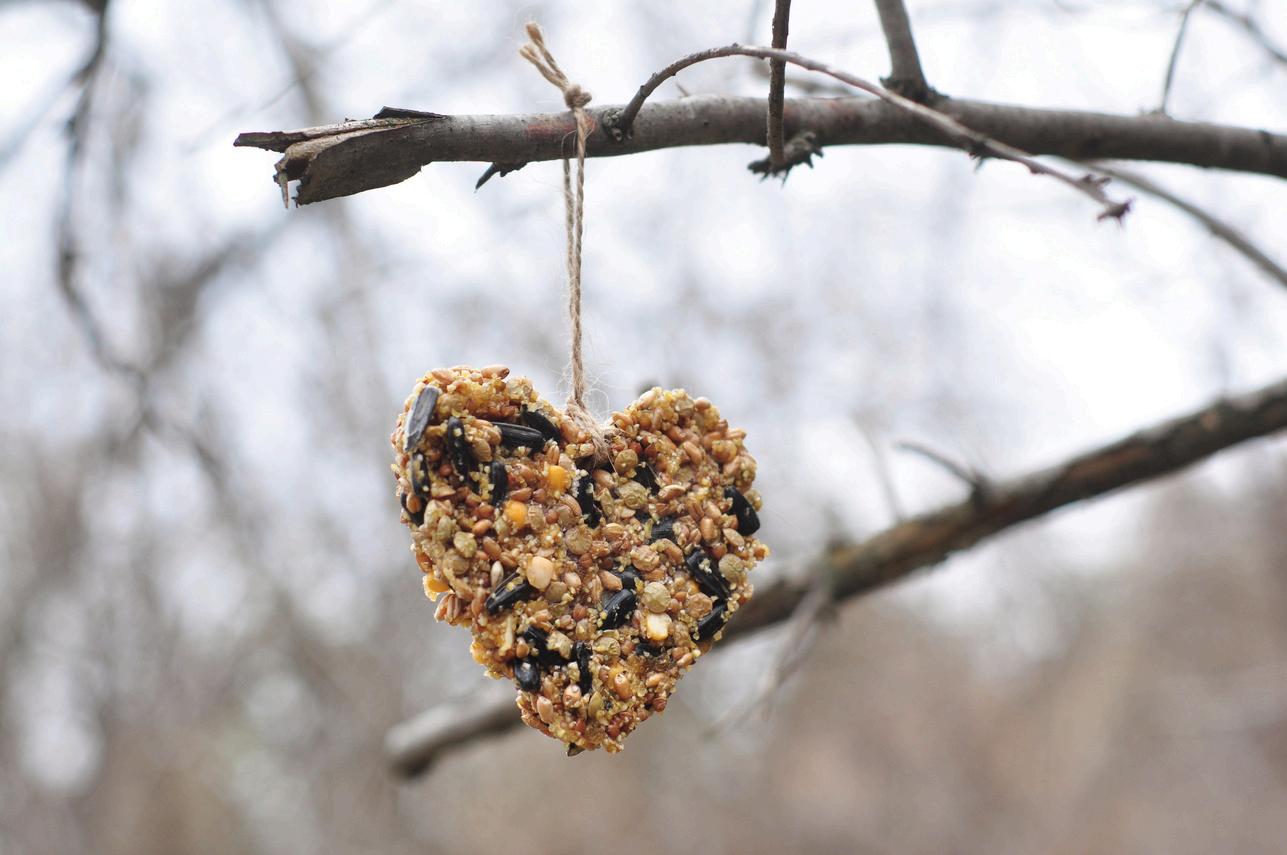
As you deck the halls, consider adding a wildlifefriendly twist to your garden decorations Create garlands of cranberries, unsalted popcorn, and dried fruit to hang outside for birds and squirrels. Pine cone feeders coated in peanut butter and birdseed are a fun project and a festive treat for your feathered friends. Make sure to check out the December issue from Garden Folk Magazine 2024 to find more fun ideas in my article about decorating for wildlife, and many other fun and wonderful holiday season ideas from gardeners across the globe.
Take advantage of the quieter days to plan your garden for next year Research pollinator friendly plants, native wildflowers, and hardy perennials that can add beauty and biodiversity to your garden. Place your orders early to ensure you ’ re ready for spring.
Winter is an excellent time to dream big! Sketch out plans for a new wildlife pond, meadow, or flower patch that you can start creating in the new year Research native plants and wildlife-friendly features to incorporate into your design
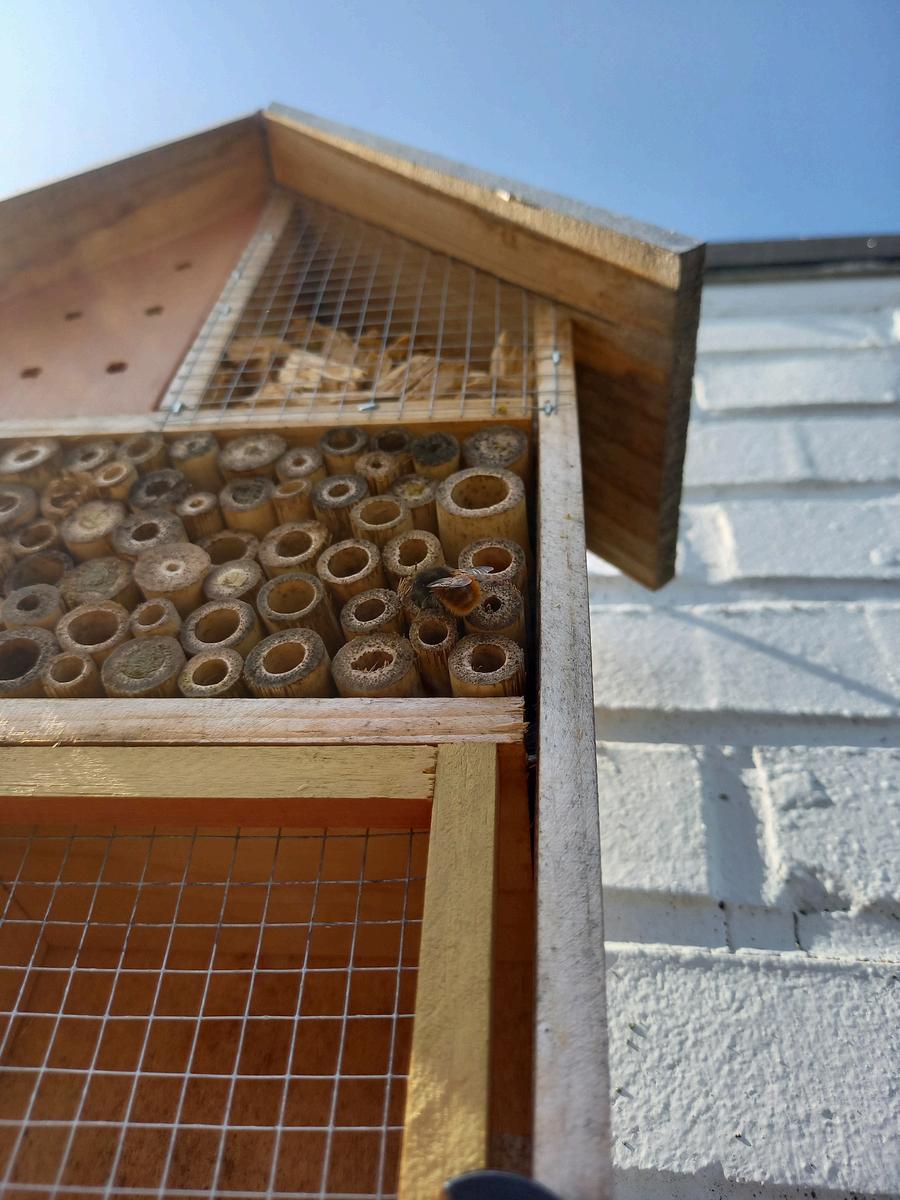
Use the quieter season to clean and repair birdhouses, insect hotels, and other wildlife structures. Patch up any damage and ensure they’re ready for use when nesting season begins in spring.
It’s not too late to plant out spring bulbs such as crocuses, tulips, and daffodils. These early bloomers will provide a vital nectar source for pollinators emerging on warmer days in late winter or early spring.
Dedicate a notebook or digital document to your wildlife gardening efforts. Record what worked well this year, what you’d like to improve, and any exciting new projects for the coming seasons. Documenting your garden’s progress is not only rewarding but can help you track changes in wildlife activity over time.
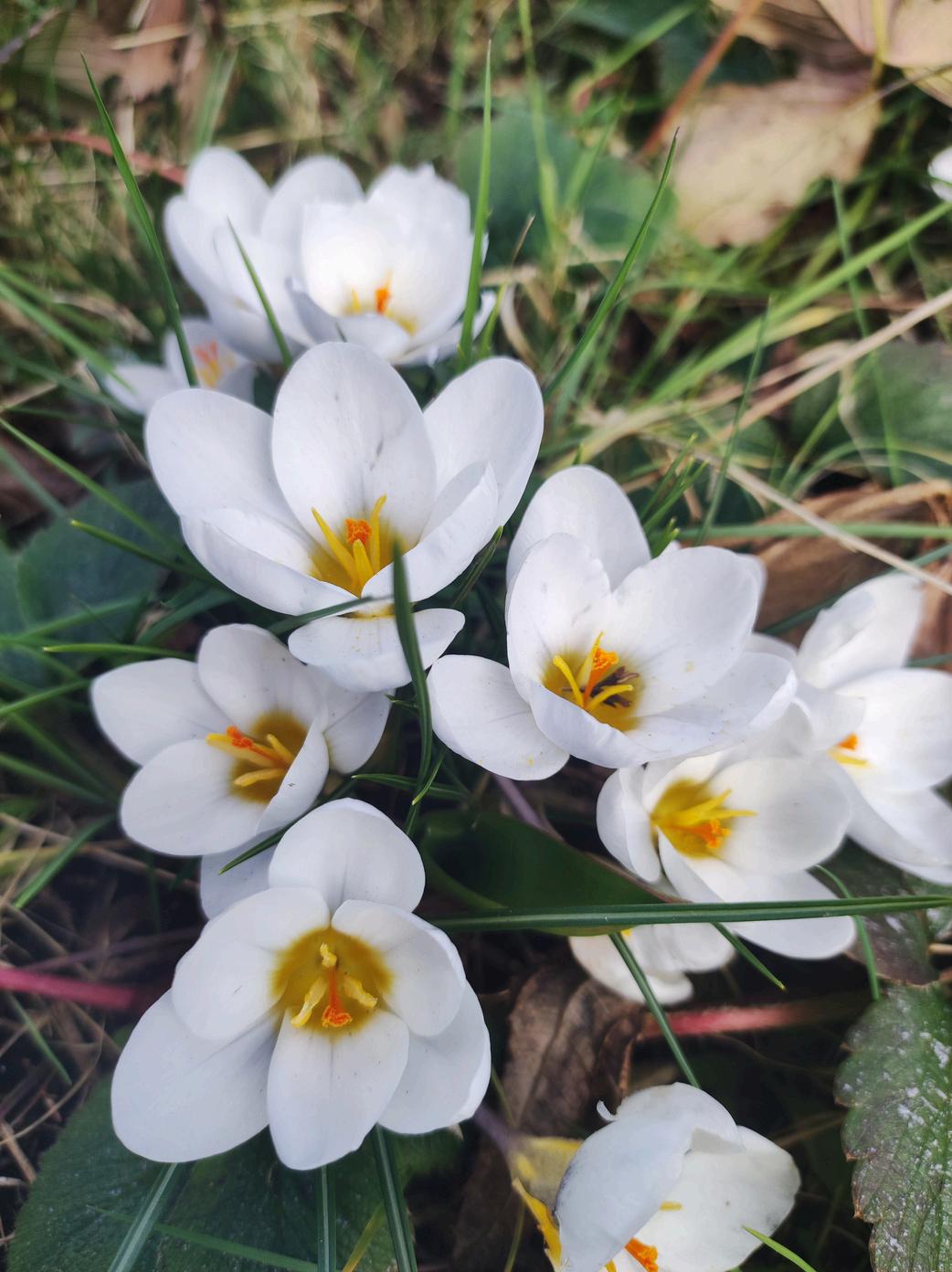
The first signs of blooms.
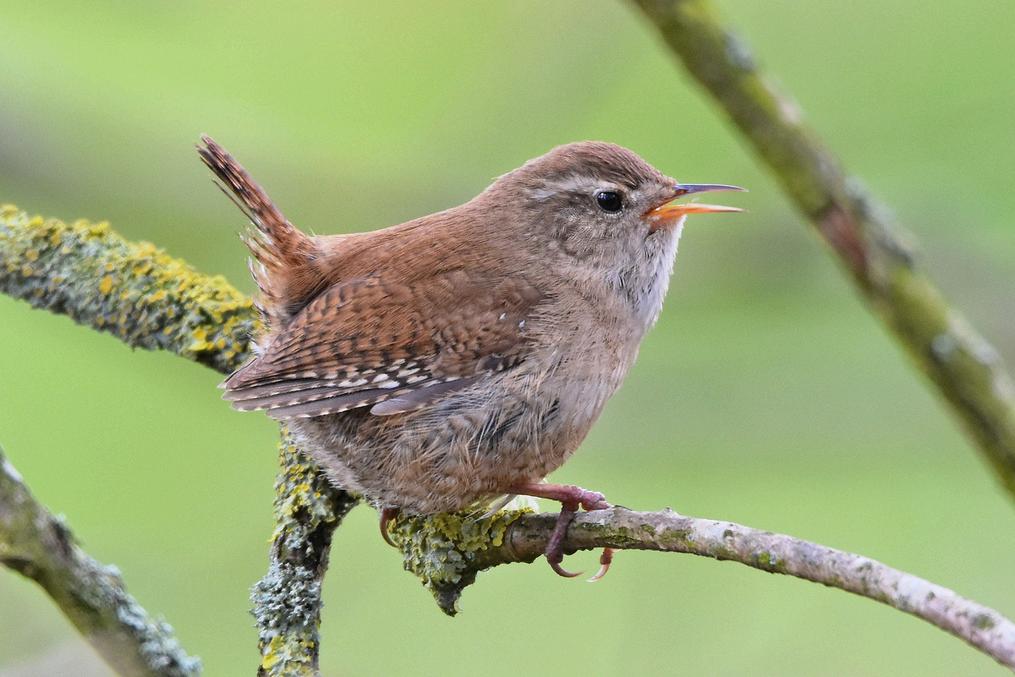
Wrens are the ‘kings of winter’.
Embrace the outisde this winter.
Known in Dutch as the winterkoning ("king of winter"), the tiny yet mighty wren is a heartwarming presence in December gardens. With its upright tail and rapid, bubbling song, the wren is a joy to spot as it flits about in search of insects among garden debris. Despite its small size, this little bird is full of character and energy, thriving even in the frosty heart of winter.
Wrens are voracious insect eaters, helping to control pests in your garden. Their sharp eyesight and small size allow them to hunt in crevices and corners other birds can’t reach.
Create Shelter: Wrens love hiding in wood piles, hedges, and dense shrubs. A pile of logs or leaves provides a cosy, safe haven.
Provide Food: While wrens primarily eat insects, they may also enjoy suet, mealworms, or small seeds during harsh weather.
Keep Your Garden Wildlife-Friendly: Avoid heavy pruning and leave untidy areas, as wrens thrive in sheltered, wild spots.
December is a time for reflection, preparation, and quiet appreciation of the garden’s winter beauty By supporting wildlife through the colder months and planning ahead for spring, you ’ re laying the foundation for a thriving, biodiverse garden As we close the year, let’s celebrate the small steps we ’ ve taken to make our gardens a welcoming haven for the creatures that share our world
Thank you for joining us on this adventure and see you all next year!
By Mel Heris

The Christmas season is a wonderful time to pause and reconnect with the natural world. As the garden transforms into a peaceful winter wonderland, we can embrace the slower pace of nature and enjoy the subtle beauty that winter wildlife brings The crisp air, frost-kissed branches, and quiet stillness offer a perfect backdrop for festive activities that support the wildlife in our gardens
Whether you're taking a mindful walk, creating handmade gifts for garden creatures, or observing the unique changes happening in nature, this time of year offers countless opportunities to engage with the wildlife around us
es that blend ouch of wildlife:
The spirit of Christmas is all about giving, so why not share a little wildlife magic with your friends and family?
Here are some wonderful wildlife gifts to share with your loved ones are:
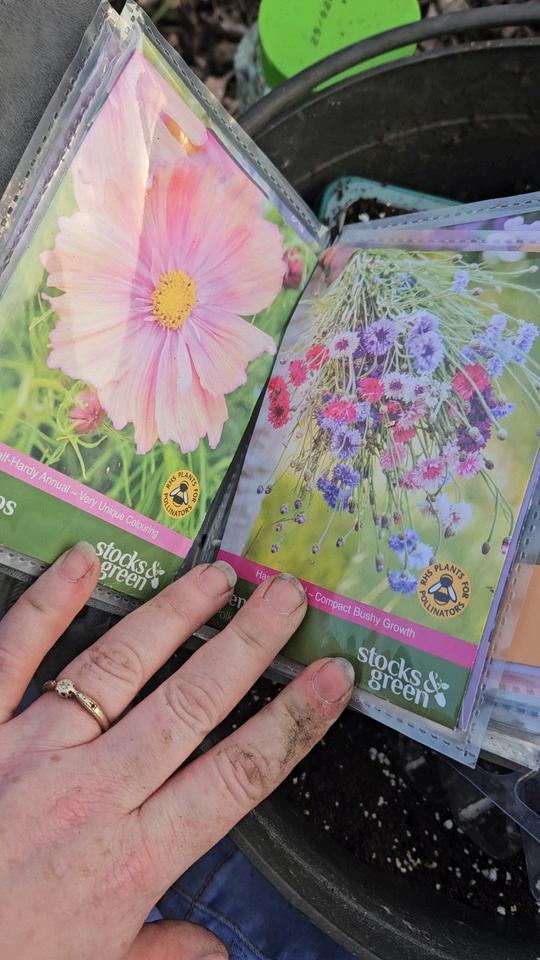
Native wildflower seed packets: Perfect for attracting bees, butterflies, and other pollinators when spring arrives.
Bird food: A simple way to help garden birds survive the cold winter months.
Homemade wildlife treats: Pine cone feeders coated with peanut butter and seeds, or DIY mini insect hotels crafted from natural materials.
Gardening kits: Small pots, compost, or native plants ready to grow and provide food or shelter for wildlife

Wildlife-themed journals or guides: Inspire loved ones to observe and record the creatures visiting their garden, creating a year-round connection with nature
Sharing these wildlife-friendly gifts spreads the joy of the season beyond your own garden, creating a network of care for the creatures that bring our outdoor spaces to life, while encouraging loved ones to slow down and immerse themselves in nature’s magic
Create a wildlife advent calendar: A gift for nature every day
Instead of (or alongside) the traditional chocolate advent calendar, why not create a wildlife themed one that gives back to your garden’s creatures? Every day in December, you can introduce a small act of kindness for the wildlife around you From scattering seeds for ground feeding birds to hanging up new feeders or placing fresh nesting materials in sheltered areas, each small gesture can make a big difference during the harsh winter months
For example, on one day, you might craft homemade bird feeders using pine cones, peanut butter, and birdseed, and on another, you could place out a shallow dish of water for birds to drink from when other water sources freeze over. You can also start larger projects, like setting up a hedgehog shelter, building an insect hotel, or even adding some native winter plants to provide additional food sources.
By the time Christmas Day arrives, your garden will have been transformed into a haven for wildlife, full of food, shelter, and warmth
Make sure to check out the Wildlife Advent Calendar I put together for the November 2024 issue of Garden Folk Magazine for inspiration and a handy overview
Christmas wildlife walk: Obser winter wonders
One of the simplest yet most rewarding w wildlife during the festive season is by ta the leaves have fallen and the garden se many species of birds and other wildlife Birds like robins, blackbirds, and blue tit during colder months, and if you're lucky seasonal visitors.
A Christmas wildlife walk offers a peace can bring a sense of calm during the bus yourself with a pair of binoculars and a down the species you encounter, downlo Merlin to help you with the identification them flying around If you're heading ou a thermos of hot chocolate or tea to turn holiday ritual
There's something truly magical about w against a backdrop of frost or snow, rem nature continues even through the coldes

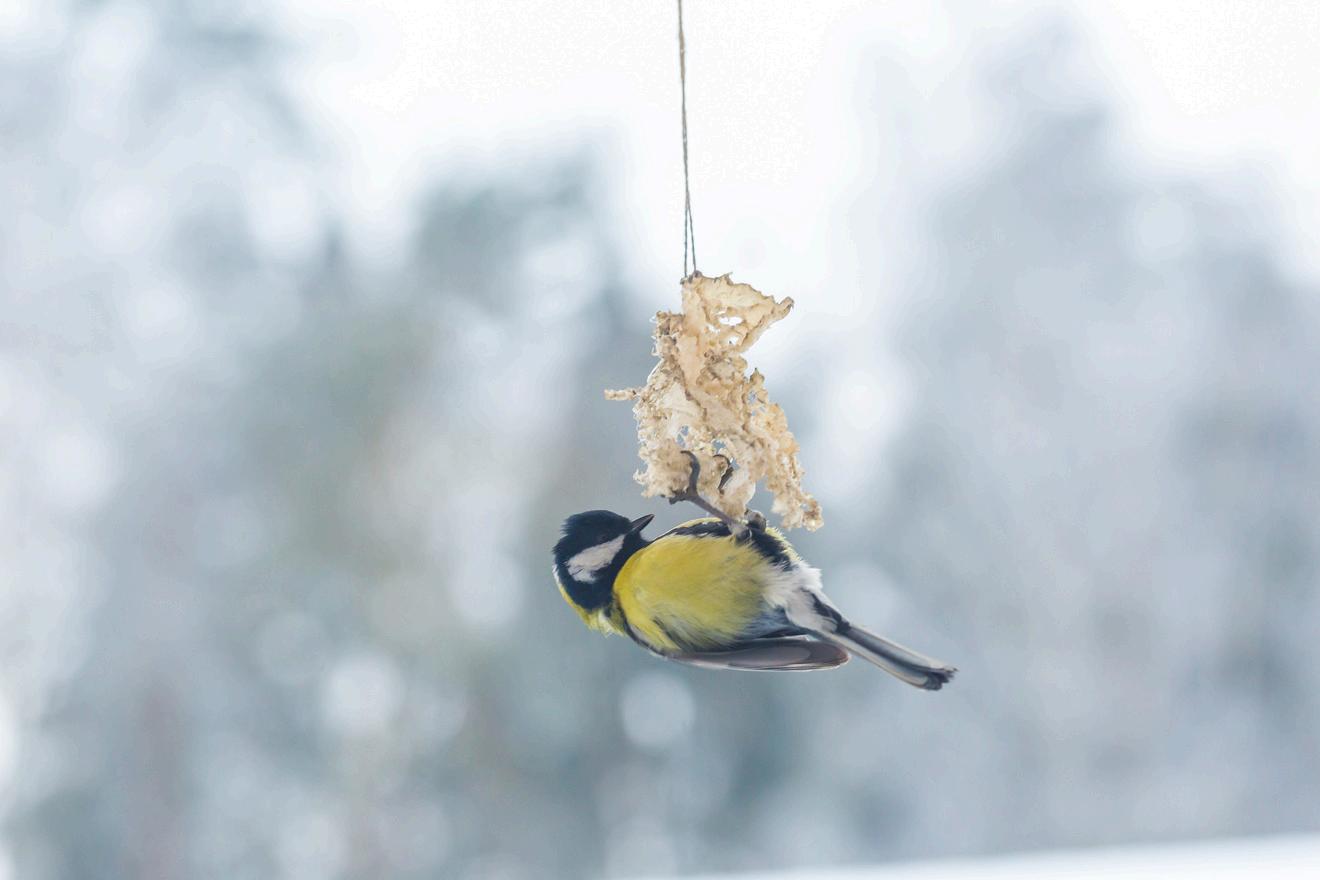
What birds will you spot in your garden?
Growing squash in your garden couldn’t be easier.
Garden photography: Capturing the beauty of winter wildlife
Winter provides striking photo opportunities in the garden From frost-covered leaves glistening in the early morning sun to birds perched on snow-dusted feeders, the cold season offers endless beauty to capture through the lens
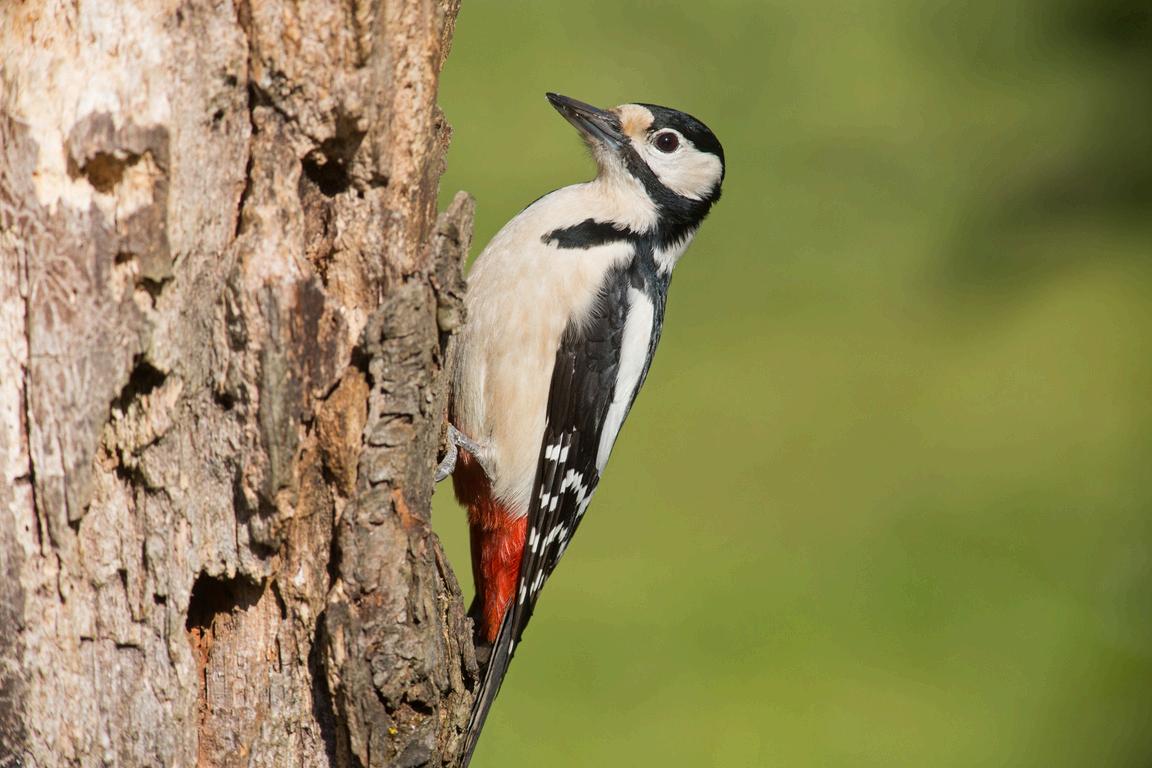
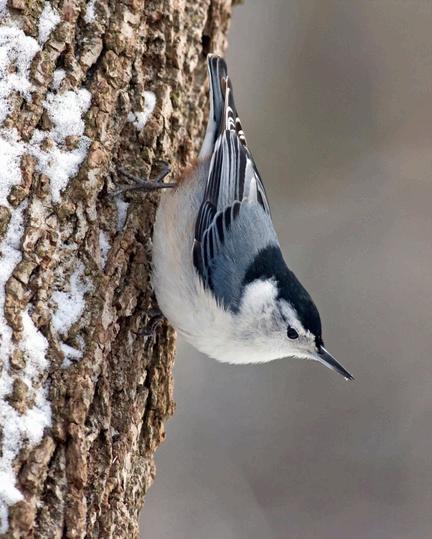
Winter wildlife photography can also be a relaxing way to spend time outdoors, allowing you to fully appreciate the beauty of your surroundings. If you ’ re patient, you might be able to capture rare garden visitors, like woodpeckers, and nuthatches. Take your time, immerse yourself in the scene, and let nature unfold before you.
Winter days offer a chance to observe the secretive world of winter wildlife. For this, you can set up a wildlife camera or you can cosy up in front of a window, writing down all the wildlife friends you see.
You can even turn this into a fun family activity by making it a weekly "Wildlife Watch Party." Gather around the camera footage or a window with a cup of hot chocolate, cosy blankets, and some festive treats, and share the excitement of spotting new visitors with friends and family.
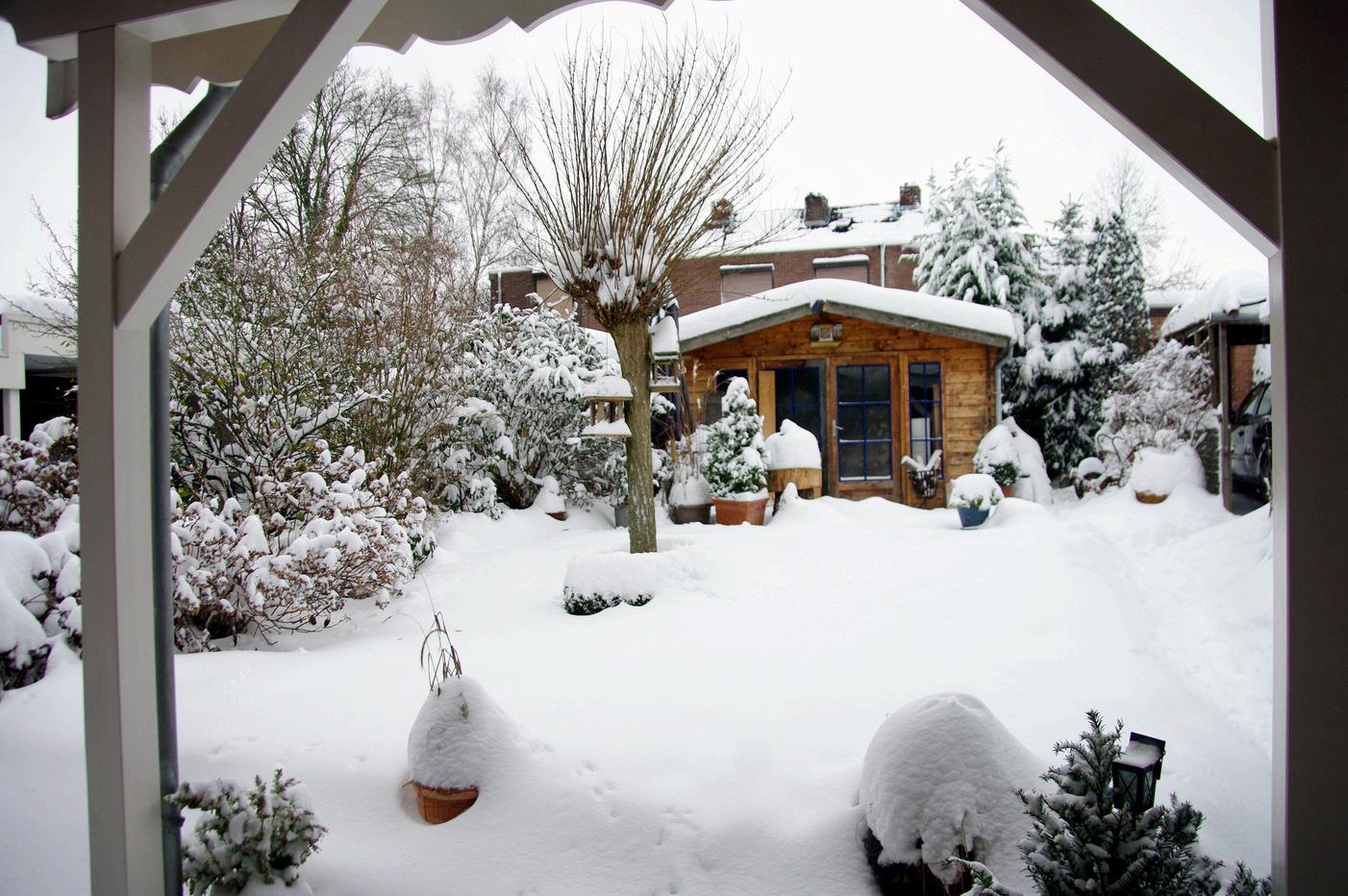
Whether you capture a fox prowling through the snow or a robin foraging through fallen leaves, these moments bring the wonder of wildlife into your holiday traditions
The festive season offers the perfect opportunity to celebrate the beauty of winter wildlife While we prepare our homes for holiday cheer, we can also extend that spirit of warmth and generosity to the creatures that share our gardens Whether you're observing birds on a chilly walk or creating homemade feeders, these activities allow us to experience the magic of nature even in the depths of winter
By engaging with the natural world around us, we not only create a wildlife-friendly garden but also embrace the peaceful, reflective qualities of the season. Christmas, after all, is about giving and in giving back to wildlife, we cultivate a deeper connection to our surroundings and help ensure that our gardens remain thriving sanctuaries year-round.
Happy holidays to you, your loved ones, and the wildlife that calls your garden home!


Do you remember that feeling when you were a child out on a winter's day? Your cheeks stinging it was so cold and dare I say it, your nose streaming and yet still you felt great for it. Well, we may be older and possibly wiser, but we still need to get outside even on the coldest of days.
It’s easy this time of year to feel the urge to hibernate. The days are shorter, it can feel we leave to go to work in the dark and when we go home it’s dark once again. Towns and cities are full of the mayhem that is Christmas and let’s face it there isn’t much going on in the garden The urge to shut the curtains and snuggle up in front of the TV to watch a film is difficult to ignore
We need to get outside more than ever this time of year We need to see daylight and hopefully the sun as well Although the sun won’t give us a full dose of the Vitamin D we need, it will help give us a little boost Seasonal Affective Disorder (SAD) affects more then two million people in the UK although I wonder if there are many more people who have the symptoms without being diagnosed Us gardeners are used to getting in the garden at every opportunity during Spring and Summer so it can be a shock to the system when we are faced with being indoors a lot more; last year I became houseplant obsessed just so I could do some form of gardening.
How amazing does it feel breathing in the fresh air on a cold and frosty morning? This isn’t just a great feeling but also is filling our lungs with oxygen, killing off germs and boosting our immune system. It gives us a feeling of clearing our mind and gives a much needed reminder that longer and warmer days will be back soon
There’s a hymn called ‘In the bleak midwinter’ where there is a line ‘earth stood hard as iron’ and I feel this is how the ground and garden can be Not much is happening, the soil can feel solid beneath our shoes, but underneath the ground earthworms are still working albeit at a slower pace and the spring bulbs we lovingly planted are developing root systems to aid their growth Birds are still around looking for berries and seeds There are still things happening, we just need to make sure we get outside to see it

There is beauty in the winter garden- you just need to look for it.
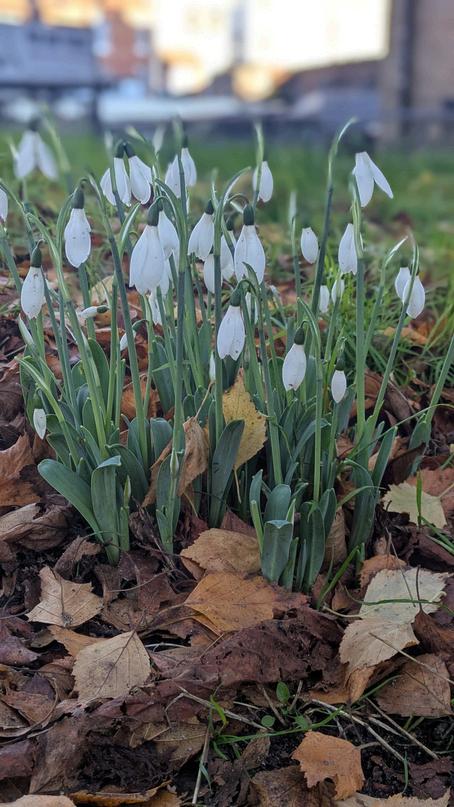
Look out for the first snowdrops.
Wear layers. You may be cold when you first get outside but get moving and you’ll soon warm up.
Make sure you have a warm drink with you. I love having a steaming mug of tea with me whilst having a morning check on the garden
Take those sunglasses with you The sun is low but strong so protect those eyes
Look out and listen for the birds They’re around you ’ ve just got to spot them
Observe the changes in your garden Changes are happening, leaves popping out of the soil and tiny buds are forming, spring is on the way


Over the summer months of 2025, I fulfilled a lifelong dream: travelling high into the far reaches of Norway, through its glassy fjords and deep into the Arctic Circle. This ethereal, otherworldly kingdom, often called the land of the midnight sun, was bathed almost constantly in the most magical, golden light I have ever seen. It was a 24-hour daylight spectacle and it was glorious!

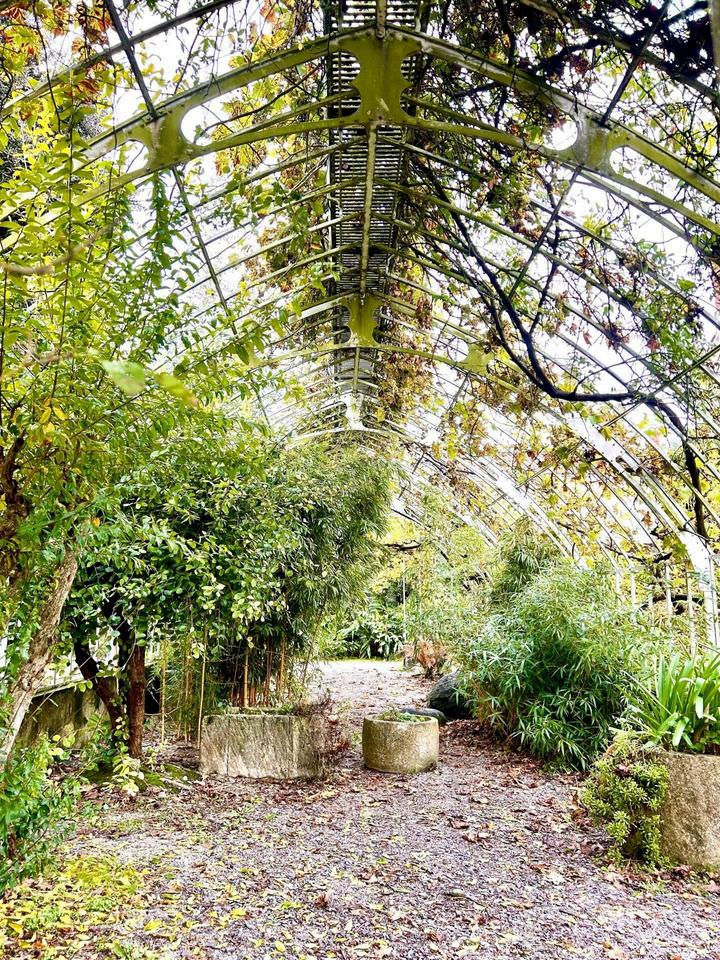
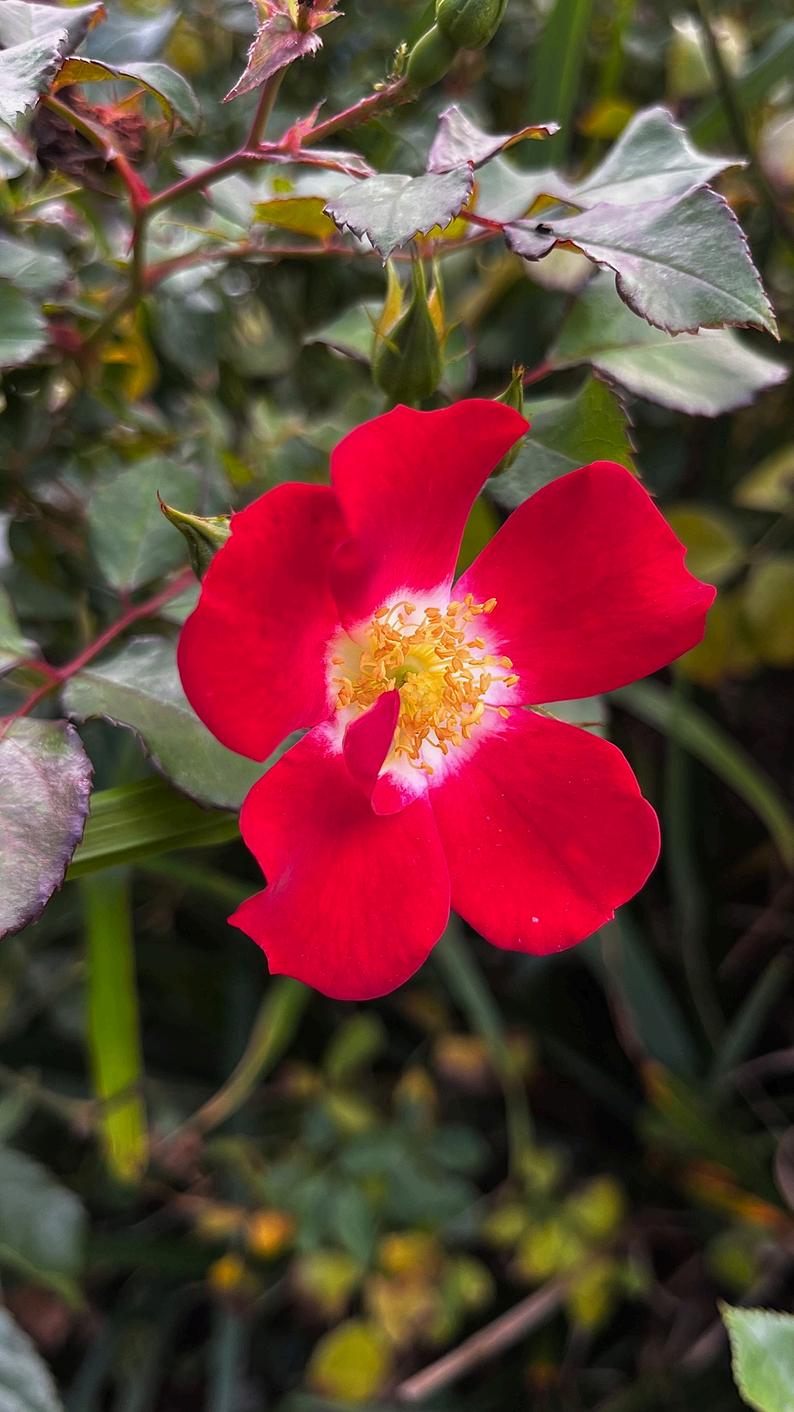
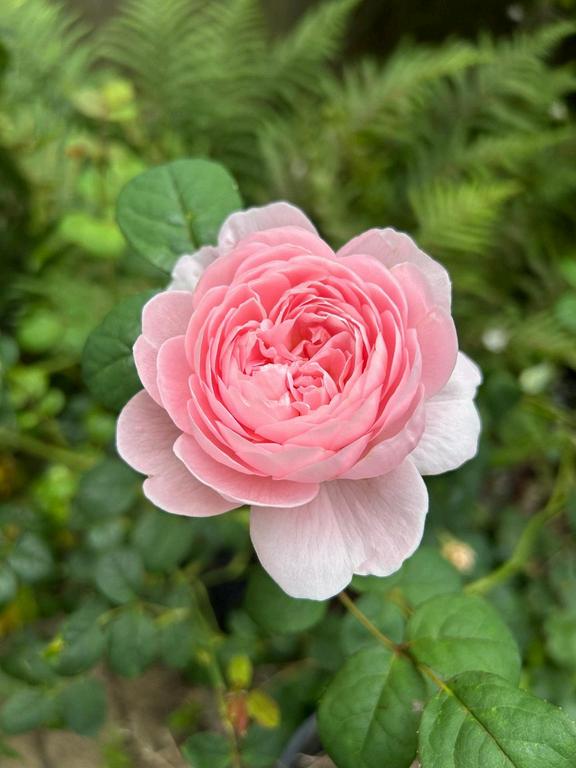
Fast-forward to today and I am back in England. It’s cold, it’s bleak, and it’s raining (yes, the gardens needed it). The clocks have returned to Greenwich Mean Time - mean in the truest senseand the grey drizzle attempts to wash away what little colour is left in the garden Through the window I spy a single bloom of Rosa ‘Queen of Sweden’ waving defiantly at me, her pink petals battling the gloom

By Kim O’Brien
I want to stay cosy by the fire, but tempting as it is to hibernate on days like these, it’s more important than ever to step outside
The colder months are a perfect time to plan a garden visit While summer ’ s floral displays may have largely faded, winter reveals a different kind of beauty; one of form, texture, and architecture Bare branches, seed heads, and frost-edged stems all tell their own quiet stories Wrap up warm and head for one of the many RHS gardens, National Trust estates, or heritage arboretums; or if your wanderlust stirs; why not tick a bucket-list garden further afield?

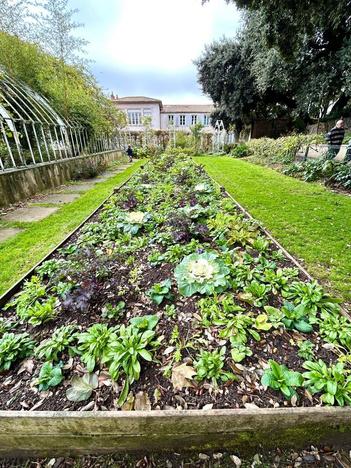


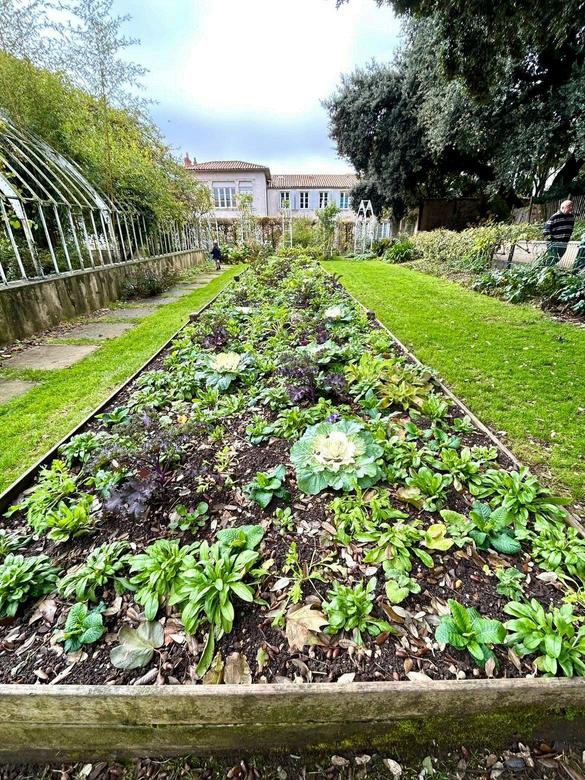
I hopped across the Bay of Biscay to La Rochelle, on France’s western coast, to visit Le Jardin Botanique and what a jewel it was! An exquisite collection of rare and unusual plants, displayed with that effortless flair the French do so well Open, cast-iron trellises, some painted white, others left bare, that framed the pathways, adorned with climbing greenery and a sense of timeless romance It was easy to imagine Louis XVI and Marie Antoinette strolling hand-in-hand through these very gardens
One of my favourite sights was a solitary maple, clinging to its last fiery leaves beside a still pond The foliage glowed a tender shade of pinkish-orange, moments away from surrendering to the wind, but heartbreakingly beautiful in its fragility
Nearby, the vegetable garden offered a charming surprise: neat rows of brassicas, unnetted but flawless, sharing their beds with foxgloves and primulas in full flower. These early bloomers seemed as confused as I was, was it truly Winter, or had spring arrived early?
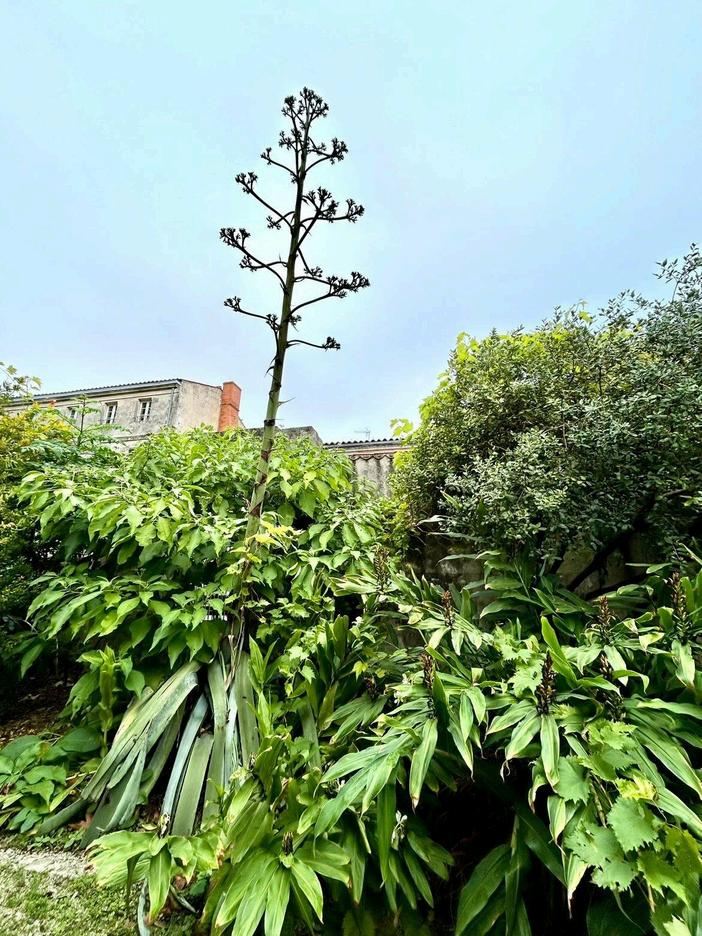
particular specimen was over eighty years old, flowering no - and only time - before it would die. I felt certain I was mea if nature had saved this rare spectacle just for this moment.
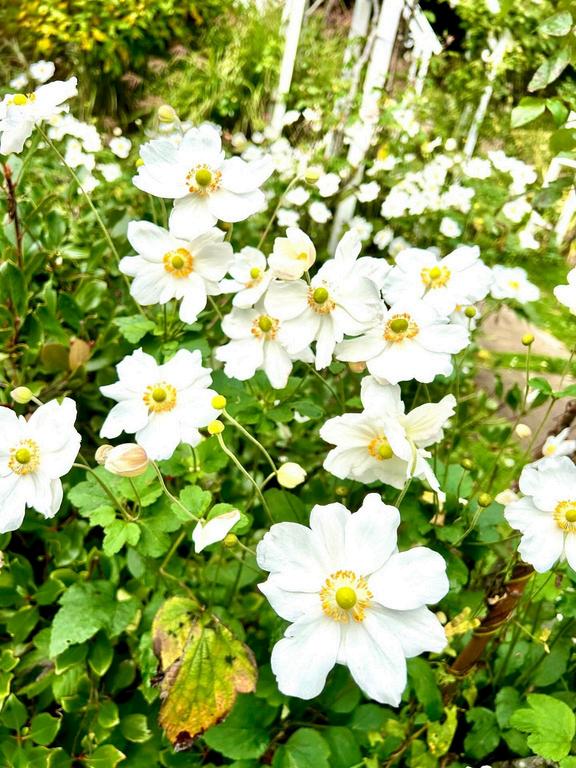
Elsewhere, a walkway of white arches led me into what felt fairytale, flanked on both sides by white Japanese anemone × hybrida), their luminous petals glowing against the stone was so dreamlike it might have inspired Shakespeare himse here in winter it felt like the antithesis of a midsummer night soft, funereal reverie instead
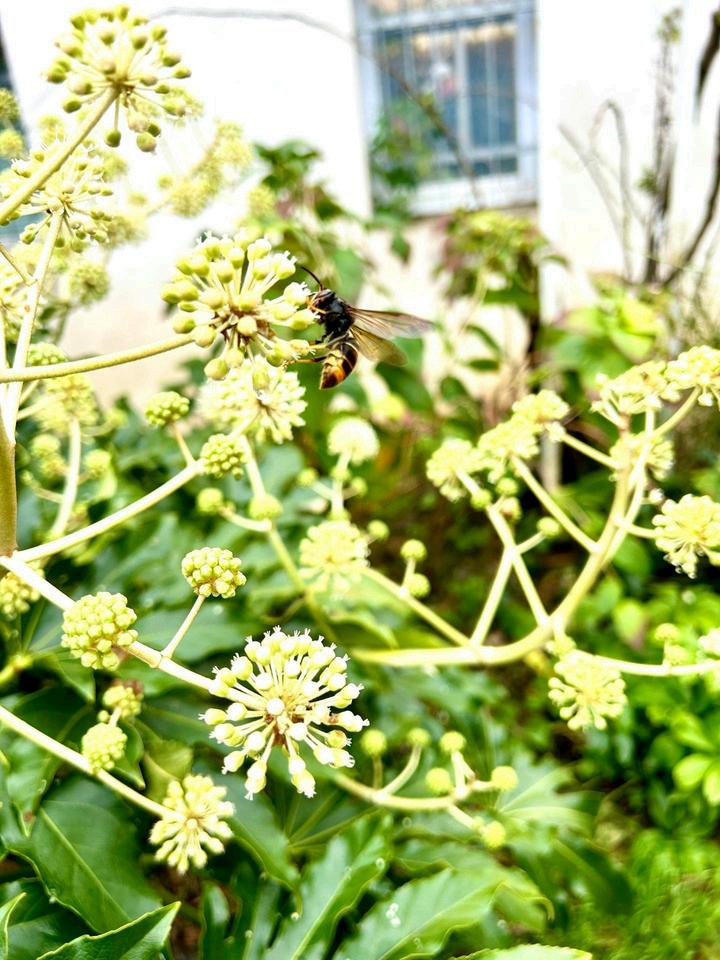
But even now, the garden was alive Fat hornets buzzed gre the flowering Fatsia japonica, I counted more than fifty! Wh woodland floor was carpeted with fungi, reminding me that decay and renewal are simply two sides of the same cycle The yin and the yang of a healthy ecosystem
And so, as the dark of winter tightens its grip, I’m reminded how vital it i for us to get outdoors. Whether it’s a stroll around the local park or a plane or boat ride to somewhere new, the world is still brimming with wonder, if only we will step out to see it.
After all, as I write this, that Queen of Sweden rose is still waving, beckoning impatiently to me through the drizzle, inviting me into the garden and refusing to take no for an answer.
So what are you waiting for?
There’s a whole world waiting for you beyond your own front and back door
Happy exploring!


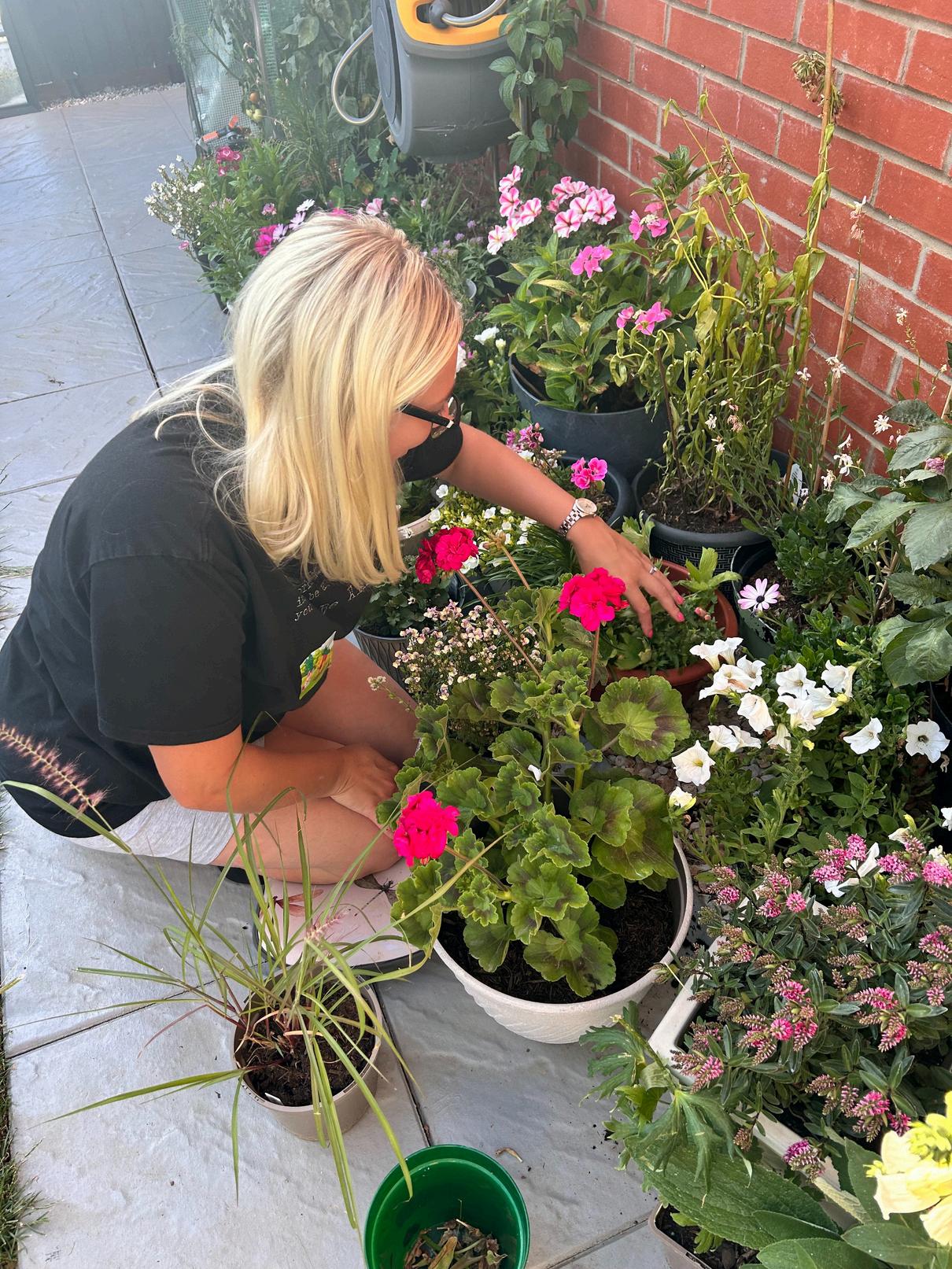
Like a lot of folk, my journey into all things horticulture and gardening stemmed from going through a bad patch in my life.

By BeckyWilliams
Since 2022, I have been transforming my new build garden, (we all know what new build, clay soil is like!) and I found the bug for growing from seed. In my opinion, nothing can beat that excitement of checking on a batch of seeds every morning and seeing that tiny seed germinating, then caring for tender seedlings through all seasons, it’s just so uplifting! The passion and enthusiasm have grown, and now as an amateur gardener, I am going to be building my very first Showcase Garden at BBC Gardener’s World Live next year! I am so excited and grateful for this opportunity, especially having the chance to raise awareness, and money, for an amazing local charity whom I am very pleased were happy to join me on this project Support4Sight are a charity who support blind and visually impaired people and their families in Essex, to help them lead the life they want to lead, whilst overcoming any social, emotional or practical issues which may arise when facing sight loss Back in September before submitting my application, I was able to visit one of Support4Sight’s weekly support groups and get some feedback from the exact users my garden is intended for. I found this super useful, and of course I also have my dad on hand for any practical questions I may have.
The inspiration for my design comes from growing up with a parent who is registered blind and seeing first-hand the challenges and barriers which are faced. My lovely dad started losing his sight in his twenties and so I have unfortunately witnessed what a scary and lonely place it can be to lose something as important, as your sight I hope to create a safe, welcoming and accessible space which celebrates the senses beyond sight I strongly believe everyone can find peace and joy within nature and a garden, and it can become a truly shared experience, for everyone
From my first visit to the NEC earlier this year and speaking with some wonderful previous applicants – Laura (@lottieonthehill), Ant (@thegardeninggeek) and Sammy (insammysgarden) to name a few, I knew this is something I wanted to do and the vision I had in my head then, hasn’t left since! It’s my first thought in the morning when I wake up and the last thing on my mind at night, a welcomed distraction which takes over your life, in a good way.

I found out in October that my application was successful and now with just over six months to go, the journey continues I hope to be able to share the highs, lows, stresses and celebrations with you all I wanted to say a big thank you to all the support I have received so far I don’t underestimate the hard work that will be required from me and the team, especially as I have jumped straight into a Showcase Garden, but I am so ready for it! If you ’ re going to go for it, go for it I say! If any garden friends reading this would be interested in being part of the build team, growing plants for the build or being involved in anyway, then please reach out as this is more of a community project, than a personal one.
For further information on the charity please visit the Support for Sight website. To follow my build journey - @itsbeckysgarden on Instagram. Thanks for reading, I hope to be back with another update in a few months!
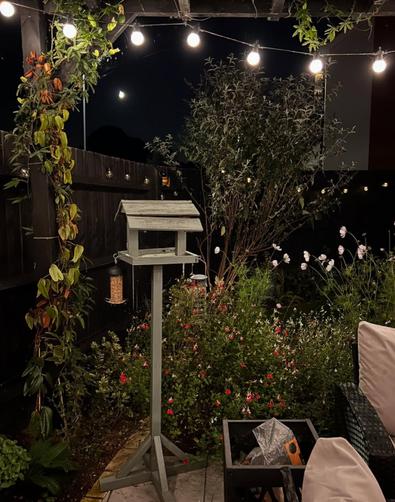
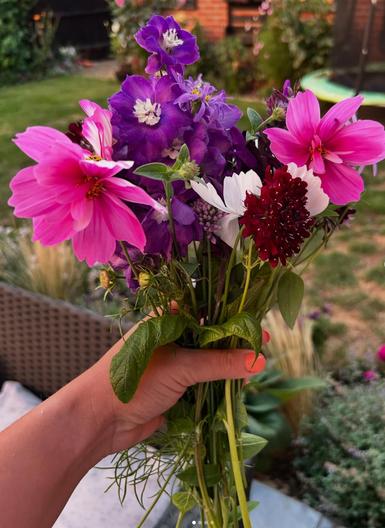



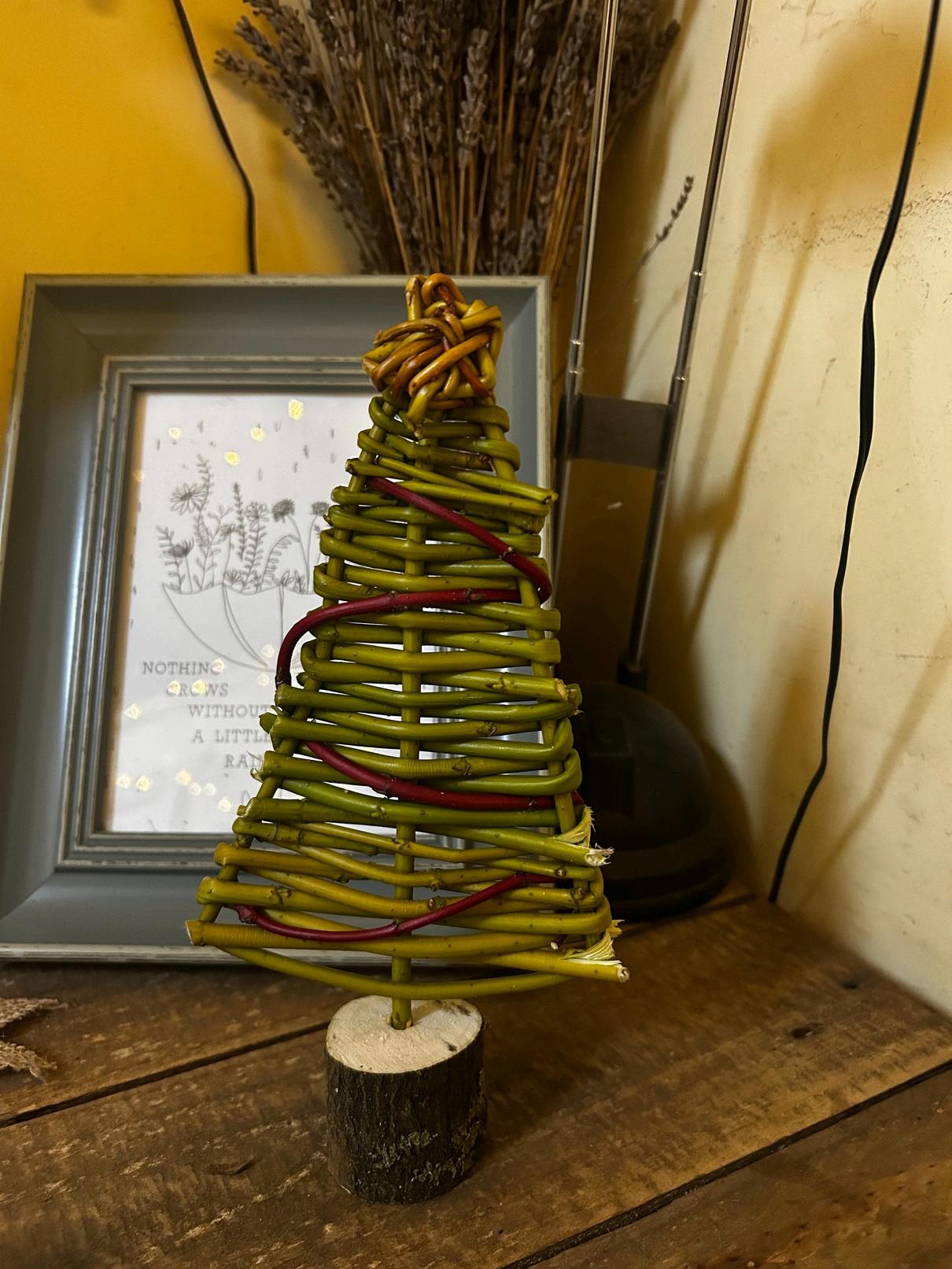
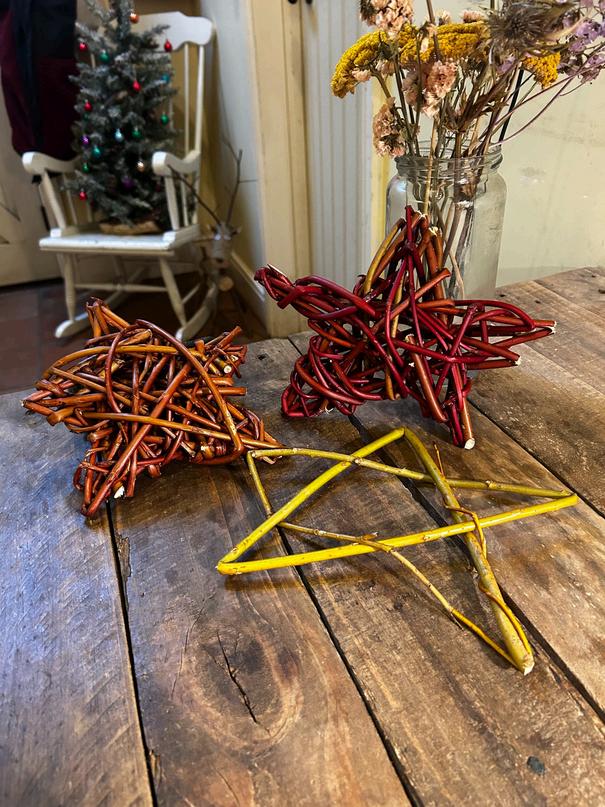
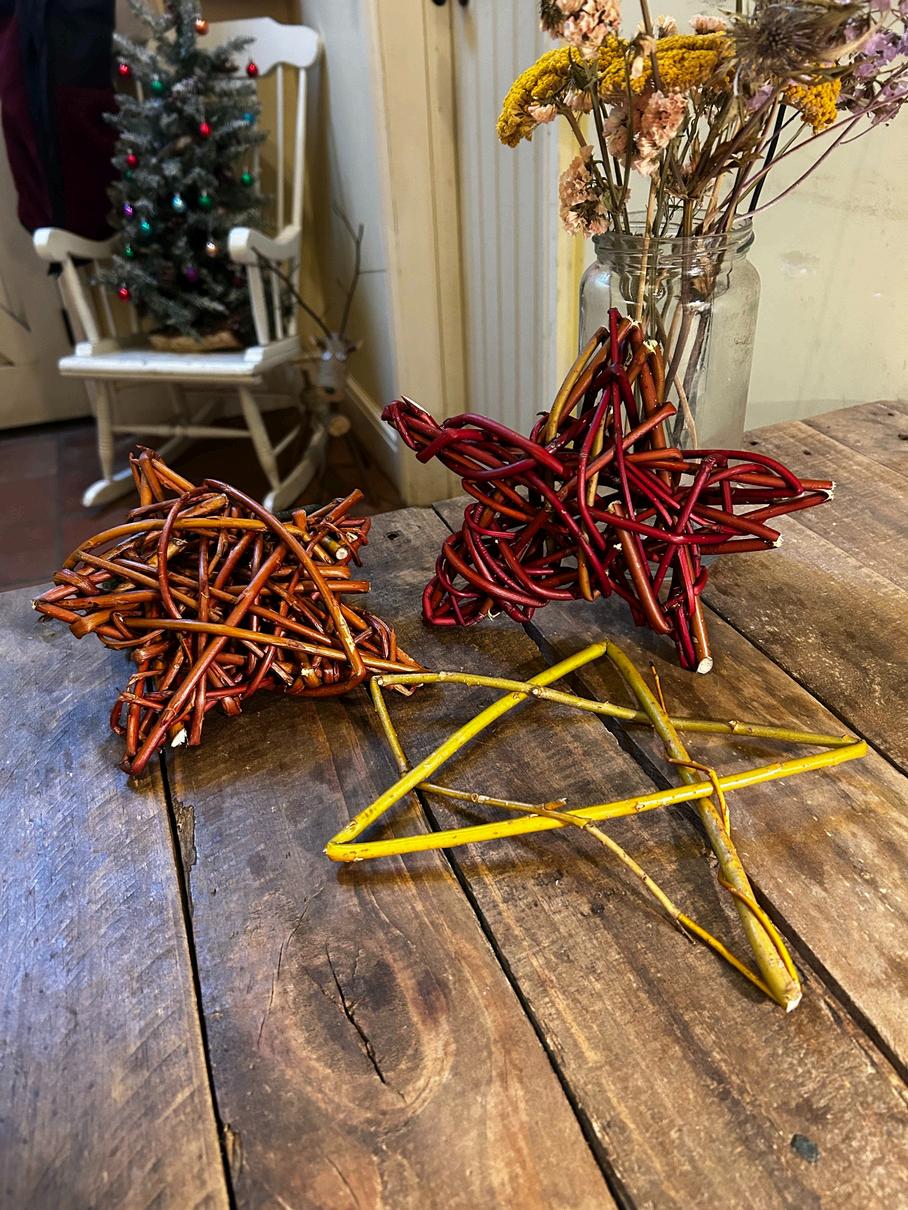
Imagine the scenario: all the shops are shut and you have forgotten to buy a very important person a Christmas present, what are you going to do? What if I told you with a bit of creativity you could make something straight out of your garden? You’ll need willow, hazel or some cornus; if you don’t have them in the garden, I am sure you could forage some from the local area

By Marc Ridpath @gardeneriddler
So we are going to start really basic- make a basic 5 point star shape using 5 equal length sticks from willow, hazel or cornus (dogwood) Straight, pencil thick stems will work for this Next, tie some string or wire to secure the points and where the sticks cross in a hexagon shape You could also scale this up and create various different sized stars out of larger sticks if you wanted to but use screws to secure the corners as wire and string won’t be enough Then add fairy lights for the extra Christmas sparkle
Once you have a basic star shape, you are going to weave 20 to 30, metre long stems around this to create a woven star I usually start by going from corner to corner then turn the star around then do the opposite corner. I find it’s gets easier the more stems you add as you have more stems to weave in and out of. Keep adding stems until you are happy with the coverage.
When you have finished, you can add some ribbon to the top so it can be a hanging ornament or if you put a loop in the middle on one side you could even use it as a Christmas tree topper. Alternatively you could just have it as an ornament on a mantle piece or side board
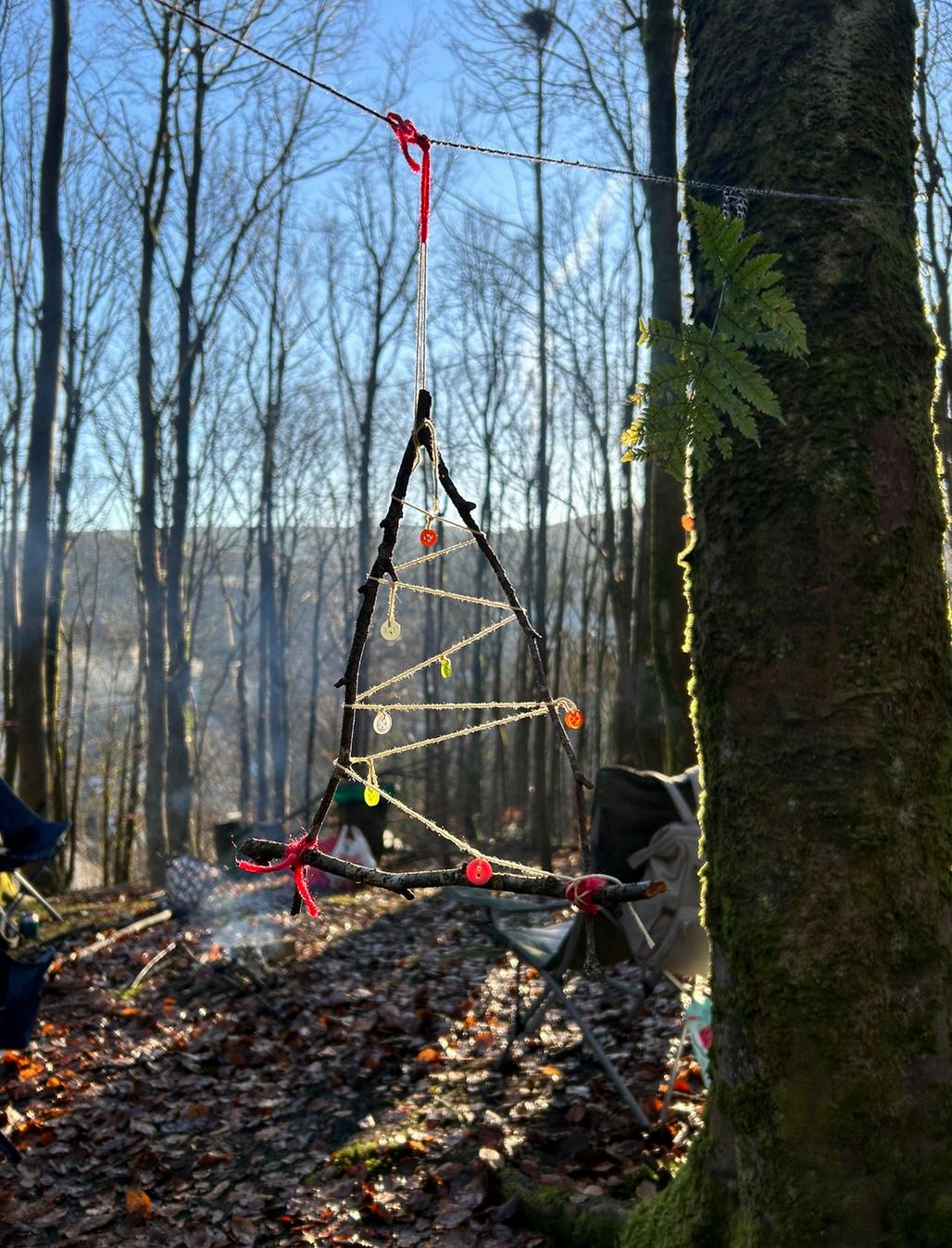
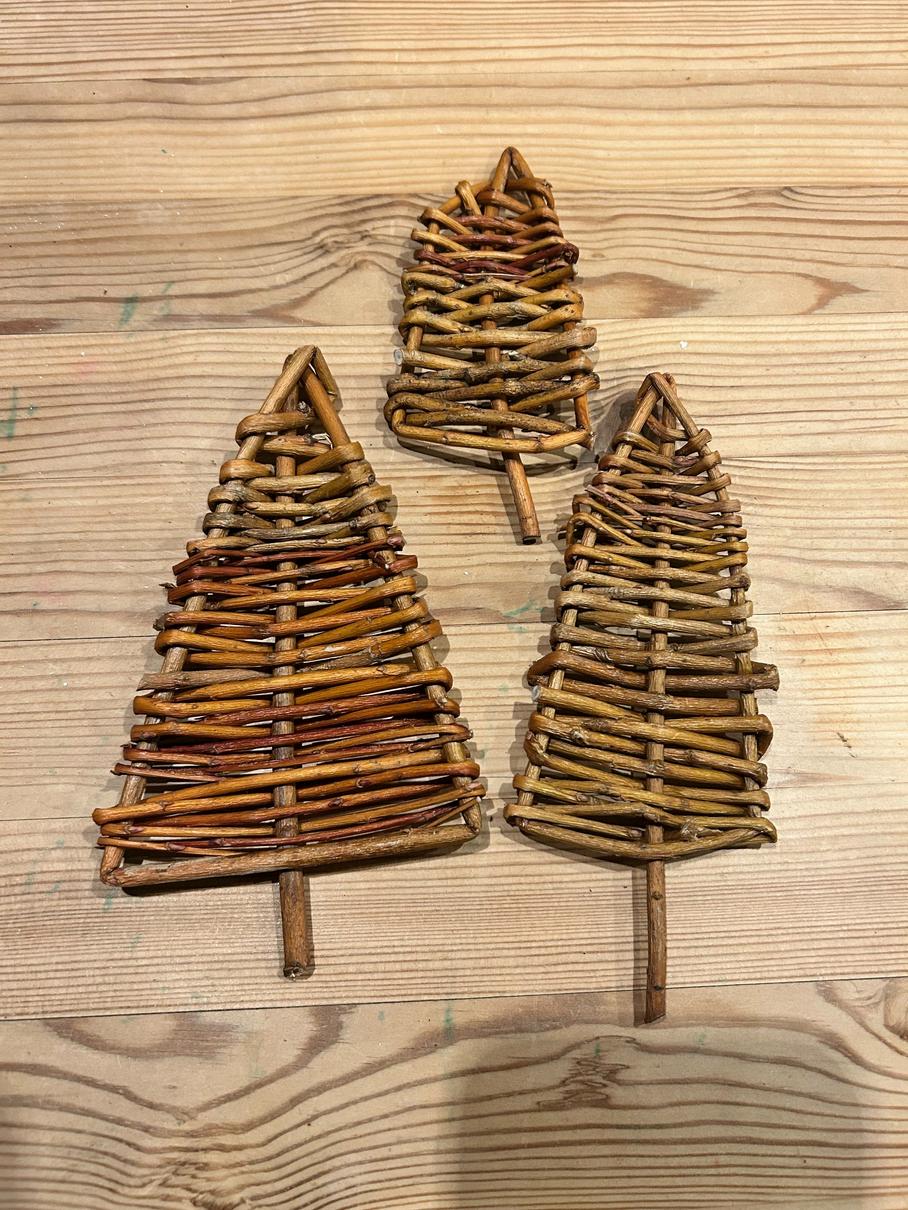
Another quick make is a woven tree. You can use really thin bits of willow for this. To start with, you need a piece about 40cm long. Start with the thickest end, measure about 10cm then bend the stem to the right and come back down to the end of the stem then bend to the left at about 8cm then bend right at about 6cm.
You should have what looks like a basic Christmas tree outline now with a bit of extra stem sticking up at the top. Thread that bit of stem to the right side of the middle stem of the tree shape, then over the middle in to the left hand side, then under the outside left stem If you have any extra, bend it around the outside of the tree shape then under the middle stem and over the right hand stem Now you just need to use as many stems as you need to fill your tree shape alternating each row either over or under the middle stem
Once the shape is full cut off any extra bits of stem to tidy up then again either tie some string or ribbon to hang as an ornament Or you could get an inch thick bit of stem, drill a hole in the middle and use it as a stand for your tree
I hope I have given you some garden based gift ideas that are truly unique and from the heart rather than just buying some novelty item from a shop. I hope you all have a wonderful Christmas and spend lots of time with your loved ones creating memories. Or time alone eating mince pies and drinking hot chocolate. Whatever makes you happy!
Its a busy month ahead for Marc.

Shortbread
Shortbread
250g (9 oz) Plain Flour
250g (9 oz) Plain Flour
75g (3oz) caster sugar
75g (3oz) caster sugar
175g (6oz) Butter
175g (6oz) Butter
Easy festive biscuit bakes, that are perfect to bake with kids.
1 Heat oven 160°C/Gas mark 3. Line and grease a baking sheet
1 Heat oven 160°C/Gas mark 3. Line and grease a baking sheet
2 Mix Flour and sugar in a bowl, rub in the butter
2 Mix Flour and sugar in a bowl, rub in the butter
3 Knead well to form a smooth dough
3 Knead well to form a smooth dough
4 Roll out with a floured rolling pin about 1 cm (½ inch) thick , cut out chosen shapes
4 Roll out with a floured rolling pin about 1 cm (½ inch) thick , cut out chosen shapes
5 Prick with a fork and place on the baking sheet and bake for 30 mins or until pale and golden. (Can dust with caster sugar at this point for an extra sparkle).
5 Prick with a fork and place on the baking sheet and bake for 30 mins or until pale and golden. (Can dust with caster sugar at this point for an extra sparkle).
6 Leave to cool before eating
6 Leave to cool before eating
Gingerbead
90g butter
62g soft light brown sugar
62g soft brown sugar
150g golden syrup
150g golden syrup
250g plain flour
250g plain flour
Pinch of salt
Pinch of salt
2 tsp ground ginger
2 tsp ground ginger
¼ tsp bicarbonate soda rolling
¼ tsp bicarbonate of soda Extra flour for rolling butter
1 Pre heat oven to 170°C
1 Pre heat oven to 170°C
2 Melt butter in a large pan over a low heat then add the sugar and syrup, remove from the heat and stir.
2 Melt butter in a large pan over a low heat then add the sugar and syrup, remove from the heat and stir.
3 Add the dry ingredients and mix until blended into a thick dough, cool for at least 30 mins in the fridge. The dough should be cool enough to handle and easy to roll, and shouldn’t be sticky to touch.
3 Add the dry ingredients and mix until blended into a thick dough, cool for at least 30 mins in the fridge. The dough should be cool enough to handle and easy to roll, and shouldn’t be sticky to touch.
4 Roll out on a lightly floured work surface until 5mm thick, cut out the chosen biscuit shapes and place on a baking sheet lined with greaseproof paper. Bake in the oven for 15-20mins until firm to touch, the biscuits will crisp on cooling.
4 Roll out on a lightly floured work surface until 5mm thick, cut out the chosen biscuit shapes and place on a baking sheet lined with greaseproof paper. Bake in the oven for 15-20mins until firm to touch, the biscuits will crisp on cooling.
5 Place on a cooling tray when firm enough to handle.
5 Place on a cooling tray when firm enough to handle.
6 Decorate with icing sugar and sprinkles if you wish.
6 Decorate with icing sugar and sprinkles if you wish.




400 g white chocolate, finely chopped 397g tin of condensed milk 200g of biscuit spread 3 speculoos biscuits crushed

1 Line a 20cm square tin with nonstick baking paper and put to the side.
2 Put the chocolate, condensed milk, biscuit spread and a pinch of salt in a microwaveable bowl.
3 Microwave for 30 seconds then stir, repeat this until all the chocolate is melted, normally around 2 minutes altogether
4 Tip the mixture in your prepared tin and level the top with a spoon. Scatter the crushed biscuits on the top and then put into the fridge to set, for at least 3 hours.
5 Cut into squares and enjoy!
6 The fudge will keep for up to wo weeks in a container…but I doubt it will last that long.



Last month we made our Cranberry, Orange and Ginger gin. If you haven’t done this yet dont worry there is still time before Christmas. Just head to our November issue. Now we are going to use it for the easiest festive cocktail!

50ml Cranberry, Orange and Ginger Gin (full recipe here)
300ml Ginger beer, chilled

This recipe couldnt be easier grab your gin and ginger beer and stir. It’s that simple and will wow your guests this Christmas.


Using the Christmas Pudding Liquer we made last month warm up with a Butter Brandy this December.
1 tsp of butter

1 tbsp of brown sugar 60ml of Christmas Pudding Liquer Warm not boiling water

1Warm your glass or mug with hot but not boiling water. If using a glass make sure it is one which can take hot liquids.
2 Empty the water out and mix your butter and brown sugar to a paste.
3 Add in your Christmas Pudding Liquer and mix.
4 Top with warm water and throughly mix till the butter melts.

If you haven’t made the Christmas Pudding Liquer just use Brandy and add in some spices when mixing the butter and sugar.

you like to write for

We are always looking for new writers to join the team, no experience needed and everyone is welcome.
If you have a story you would like to share or just want to try your hand at writing, get in touch and pop us an email

Get in touch





Nothing screams Christmas like the divisive Brussel sprout Love them or loath them, there is no escaping this tiny brassica come the festive season. I have enjoyed growing these vegetables immensely this year and wanted to celebrate them not just on Christmas day. Whether you ’ re trying to find a use for your left over brussels or just want to incorporate some yuletide cheer to your week night dinner, this decadent Marcaroni Cheese recipe will hit the spot


(serves 4)
250g Brussel Sprouts (cleaned & trimmedand sliced into 10p thickness)
200g Macoroni Pasta
100g Streaky Bacon (cut into pieces)
100g Emmental (grated)
120g Mature Cheddar (grated- reserve 20g for topping)
35g Butter
600ml Milk
35g Plain Flour
1 tbsp Dijon Mustard (heaped)
1 tbsp Thyme
Salt & Pepper
1 Preheat your oven to 200c

2 In a large pan of boiling water cook your Macaroni for 4 minutes, drain well and set aside.
3 On a medium heat, cook your bacon for 4-5 minutes until crisp. Remove it from the pan with a slotted spoon and set aside.

4 In the same pan add 5g of the butter, once melted add your sliced sprouts. Cook for 3-4 minutes until slightly softened. Remove from the pan and set aside.
5 Lower the heat under your pan and melt the remaining 30g of butter. Add the flour and allow to cook for a couple of minutes. Whilst continuously whisking, slowly add the milk a little at a time creating a silky smooth sauce (by doing this slowly you will avoid a lumpy sauce). Bring to the boil (still stirring) and then simmer for a few minutes until thickened and remove immediately from the heat.
6 To your sauce, add the mustard, cheese, salt and pepper to taste and combine.
7 Add your macaroni, sprouts, bacon and thyme back into the sauce and coat fully. Transfer to a baking dish and sprinkle the remaining cheddar over the top and bake in the oven for 20 minutes until molten and bubbling. Serve with a side salad and vinaigrette.

The festive season is upon us which can only mean one thing. That’s right food. I love entertaining and want to make sure I can feed everyone without any worries, and lets be honest we all love warm bread and a fabulous dip, so enter my gorgeous Gluten free Focaccia and Vegan green goddess dip. This dip is great with so many things, Salads, with roasted chicken, fish or just for dunking! We love it in a pita with some shawarma at home.
Gluten free Focaccia
2 ½ cups of gluten free white bread flour or a 1:1 gluten free flour
2 tsp of baking powder
1 ½ cups of warm water ideally at 50c
2 ¼ teaspoons of instant yeast
1 tblsp sugar
1 tsp of kosher salt
4 tblsp olive oil – divided
Topping
Fresh rosemary, salt and pepper or some parmesan cheese – or vegan alternative for a vegan version.

1 Combine all the dry ingredients in a large mixing bowl.
2 Warm the water to the ideal temperature, you can use a microwave or stove top. A good way to test is to put your finger in, if its too hot to hold your finger in comfortably for 5 seconds its too hot.
3 Add the yeast and sugar to the warm water. Stir to combine, then let it bloom to the side for around 3-5 minutes, it should start to look foamy on top.
4 Pour 2 tblsp of olive oil into the yeast mixture and then add this to the dry ingredients. Stir to combine. The dough will be more like a batter -don’t panic its meant to look like this, bonus is there’s no need to knead.
5 Line an 8x8 metal baking pan with some baking paper.
6 Drizzle with 2 tblsp of olive oil and spread around the paper.
7 Gently transfer the focaccia dough to the pan and pat it gently with a spatula or dip your fingers in some olive oil and gently push the dough out by hand.

8 Drizzle with 1 tblsp of oil over the top. Preheat the oven to 200c fan assisted 180c

9 Cover the pan with cling film or a clean tea towel and let it rise in a warm place for at least 30 minutes- if your using regular yeast you will need at least an hour. It should roughly double in size.
10 Dimple to dough once proved with your finger tips be gentle don’t push down to hard, you just want that classic focaccia dimple. Add any toppings you are doing, but always salt
11 Bake in the oven for 25-30 minutes. Remove it from the pan and let it cool for at least 10 minutes before slicing.
12 You can store any left over focaccia in an airtight container at room temperature for 2-3 days or freeze it for up to 2 months.

Vegan Green Goddess dip – makes around 1 ½ cups
1 ½ cups of fresh parsley, stalks and all
1 ½ cups of coriander or basil
½ cup of fresh dill or 1 teaspoon of dried.
1 chopped spring onion
2 garlic cloves
A good pinch of kosher salt (or any rock salt)
½ cup of tahini
The juice of two lemons
¼ cup of water
You could add some fresh green chilies to the mix if you fancy something with a little kick.

1 Put the fresh herbs, (and dried dill if using it instead of fresh) sping onion, and garlic into your hand blender/ food processor etc and giver a couple of bursts to finely chop everything. If your adding chilies these would go in here too.
2 Add the tahini and lemon juice, blitz again until well combined. The mixture should be thick at this point. Scrape any mixture off the sides.
3 Run the food processor again and slowly add in the water until the mixture looks creamy and to the consistency you’d like. For example, if you’re doing a dip you’ll want to use ¼ cup of water, but if your wanting it as a dressing you might want to add a little more water.
4 Taste to check the seasoning and serve. It will store in the fridge for up to 5 days.


...and help us keep making the Garden Folk Mag
We appreciate all the support given to the magazine by all the Garden Folkour readers, writers, industry supporters and anyone else who cheers us on Running the magazine each month does incur financial costs though, so if you are able to contribute, either with a one off payment or by becoming a member, it would really help to keep the magazine going... and growing.

There are currently three membership tiers to choose from, all with great benefits
















December bring the darkest shortest days of the year and despite the festivities, it can be difficult to maintain positive vibes and motivation. Getting out in our gardens and community spaces can make a huge difference to our winter wellbeing so don’t forget to spend some tine appreciating, prepping and planning your space this month
Flowers
Sweetpeas
Violas
Meconopsis
Impatiens
Geranium
Begonia
Cyclamen


There may not be much time to garden outdoors this month but get out there when you can and try to incorporate aspects of the garden into your activities indoors too
Create beautiful natural decorations with foliage from your garden
Edibles
Winter Lettuce
Broad Beans
Spring Onions
Onions
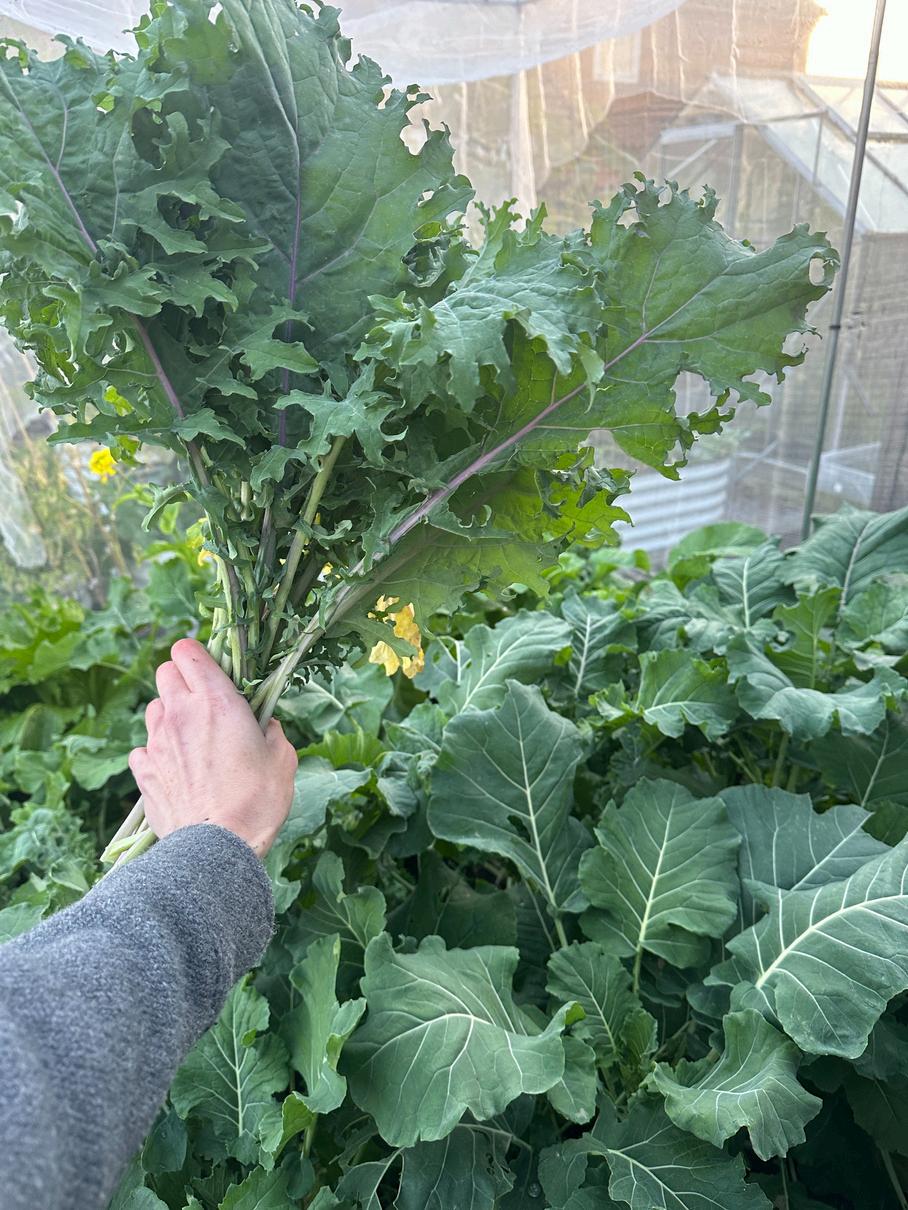
Mustard leaves
Plant bare root fruit bushes and trees
Organise your seed collection.
Harvest perennial tubers such as oca, mashua and jerusalem artichokes.
Make a plan for your garden space in 2026.
Finish planting spring bulbs
Plant new trees and roses during their dormant period
Come and join the @gardenfolkmag team for live garden updates throughout the month over on Instagram.

What to listen to while you sow:

Sense-Making in a Changing World
This podcast explores ‘what now ’ What thinking do we need to navigate a positive and regenerative way forward; what does a thriving oneplanet way of life look like; where should we putting our energy In this changing world and in challenging times, we offer these voices of clarity and common sense.
Sow your onion seed on Boxing Day
Have a brew outside
Avoid tidying the garden borders to make sure not to disturb overwintering wildlife
Tidy your shed, wash pots and sharpen tools
Tend to your houseplants.
Make a seed sowing schedule for the new year

If you’re in need of Garden related ‘stuff’ remember that Garden Folk Supporters get some amazing discounts with some great companies!
Set the date for January 9th for the next issue