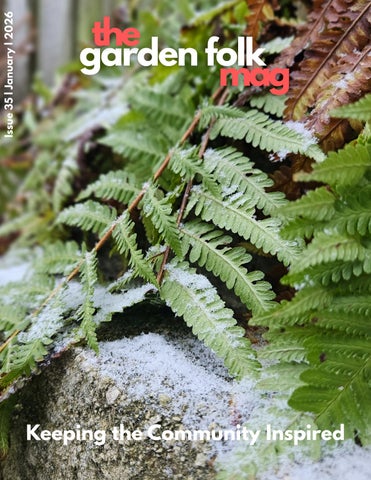
Issue 35 l January l 2026
the garden folk mag
Keeping the Community Inspired
4
Contents 3 Editors Notes
Features 4 Go gently into the new year Creating a wildlife garden: A monthly step-by-step guide Photo Credit:Marc Ridpath
Garden Journeys
Photo Credit: Amy West
10
11 Living off the land
Garden Projects
Photo Credit: Tori Thomas
14 Kerrys Kitchen garden 16 Why I’m resetting allotment? 19 Top tips for growing sweet peas
19
Photo Credit: Natacha Ramsay
16
Photo Credit: Kim O’Brien
Photo Credit: Laura Whiskens
11
23
Photo Credit: Alex Ottley
14
Photo Credit: Kerry Tomlinson
10
Photo Credit: Mel Hayward
This Month 22 Write for Garden Folk 23 Plot to Plate: Pencillin Soup 24 Become a Garden Folk Supporter 25 Gardening in January Managing Editor - Ally Phillimoore
Would you like to be part of a future issue? Just pop us an email info@gardenfolkmag.com
Senior Editor - Anjee Harrison
Visit our website @gardenfolkmag 2
Happy New Year Garden Folk! January has arrived and while we are most definitely still in the grip of winter, our gaze as gardeners is more and more firmly fixed on the season ahead. Small steps are being taken towards our best gardening year ever (every year promises to be the best right?); chillies sown on heated mats, potatoes chitting on the windowsill, trees pruned, and beds mulched. Every small action moves us closer to the growing to come. This issue offers a gentle lean into the new year while also reminding us to take our cues from nature and enjoy the slower days and the rest. We wish all of our Garden Folk Friends a very successful year. We’re excited to share all your gardening ups and downs to come.
What a cold start to the year!
Go gently into this New Year
Photo Credit: Marc Ridpath
It’s the start of another year and in gardening terms a bit of a blank slate, you hopefully haven’t failed at anything yet. But even if you have, every failure is a lesson learnt. This time of year is the time to catch up and get ahead of the rising tide that is spring, when everything bursting in to growth.
As I write this we have experienced some of the harshest frosts we have had this winter -8 this morning in Lincolnshire. Obviously, that limits what can be done in the garden. It’s perfect weather for infrastructure projects building new beds, sheds, compost bays or fencing. Ridpath I also have a fab crafty build involving a whole By Marc @gardeneriddler Christmas tree and spring bulbs. So don’t throw your tree away without checking out my Instagram. After such a productive year in the garden last year, I go in to this year with some uncertainty because I don’t know yet whether I will have the same level of support as I had last year. It’s hard to make any concrete plans for the year ahead. It’s good that I like to be as fluid as I can be, it usually all comes together in the end.
Photo Credits : Marc Ridpath
I do wish we would all slow down a bit more at this time of year though; everyone is so eager to get rid of Christmas decorations. I think it’s why January seems like it’s 52 weeks long! We have slowly been reducing the decorations at home but also changing from Christmas decoration to other natural decorations like dried allium heads with lights that look similar in the place of colourful Christmas lights. I always used to think the house looked so bare and depressing after Christmas so I am finding ways to decorate to keep the house feeling cozy and full of natural things. I know it’s not for everyone, but me and my family get great comfort from it and it eases the transition in to the new year back to school and work.
Winter has a beauty all of it’s own. I was reading something today which challenged where the tradition came from to take down your decorations after the twelfth night and how it’s bad luck if you don’t. There was a time when we would keep decorations up in to February for something called Candlemas or pagan Imbolc which is a festival celebrating the returning light and beginning of spring. Now I am not a religious person at all, but I think we could all get on board with celebrating spring and keeping the natural decorations up a bit longer, or like me refresh with different natural decorations. My wreaths are still looking as good as the day they went up so I won’t be taking them down any time soon. The festive creations are not going anywhere. Features
5
Photo Credits: Marc Ridpath
Nature can help to create cosy feels indoors all year round.
Why not keep your festive decorations up a little longer if they’re looking this good? Why not celebrate your harvests as home decorations?
I guess what I am trying to say is don’t feel pressure to take down what you are enjoying or move on to the next thing to have to start buying things that the shops want you to buy now. I was enjoying the mince pies, can we keep selling them instead of hollow egg shaped chocolate flavoured things in excessive packaging? Before this descends fully into me on my soap box, let’s turn back to positivity embracing rest and enjoying nature this winter. Snowdrops will do it, my favourite early bulb that always reminds me of my mums mum. They really are like a blank slate, such a simple but extremely elegant flower that bring a little hope and intrigue for the year ahead. This year try not to judge yourself against anyone else’s standards because there is only one of you, and only you walking in those muddy wellies. Also, be more empathetic to others because you never know what they have been through or are going through to make them the person they are right at this second. Grow what makes you happy and just keep sowing-something will grow eventually!
6
Features
By Mel Heris
Photo Credits: Stock Canva Image
@bluebellandbumblebee
Creating a Creating a wildlife wildlife garden: garden: A monthly A monthly step-by-step step-by-step guide guide
January: A New Year, A New Gardening Chapter January not only brings with it the start of the year, but it is also a new chapter, a blank canvas waiting to be filled with fresh ideas. And while the cold still settles over the soil, this gentle pause is the perfect time to look ahead and imagine what the coming gardening season might bring. So to celebrate the new year, and all the possibilities it brings, I would like to introduce a new monthly feature: a step-by-step guide on how to create a wildlife garden.
Photo Credit: Stock Canva Image
Creating spaces that support pollinators throughout the seasons. Adding small water features for insects, birds, and amphibians. Making cosy spots for wildlife to us as shelter Choosing plants that offer food and habitat all year round. Helping different wildlife friends by adjusting small everyday gardening habits.
Photo Credit: Stock Canva Image
Photo Credit: Mel Heris
Photo Credit: Mel Heris
Each step will be something you can build on as the seasons shift, and by the end of the year, you’ll have built a space that offers food, shelter, water, and sanctuary to a whole host of wildlife friends.
Features
Photo Credit: Stock Canva Image
Photo Credit: Stock Canva Image
A sneak peek at what you can expect:
8
Photo Credit: Stock Canva Image
Photo Credit: Stock Canva Image
This step-by-step monthly guide will include simple tips, practical advice, small jobs, and a little wildlife project each month.
Photo Credit: Stock Canva Image
Photo Credit: Mel Heris
Creating a wildlife garden step-by-step
This month’s wildlife project: Creating a feeding and drinking spot for birds To begin our journey, we’re starting with one of the simplest and most rewarding ways to support wildlife, especially during this time of year. Winter can be a challenging time for birds. Natural food sources grow scarce, water can freeze, and long, cold nights mean they need plenty of energy to stay warm. By offering a reliable place to eat and drink, you’re giving them a lifeline through these frosty months. In return, birds bring so much to a garden. They help keep insect populations in balance, scatter seeds, and fill even the quietest days with beauty, happiness, and song. Plus, once they learn your garden is a safe spot, many will keep returning throughout the year.
Photo Credit: Stock Canva Image
Picking the right spots
Photo Credit: Mel Heris
Photo Credit: Mel Heris
Photo Credit: Stock Canva Image
Are there spots for them to hide nearby? Shrubs, hedges, or trees nearby provide birds with cover and a way to quickly escape from predators. Can they look around? Birds like to look around while they eat to help them spot danger, so avoid completely enclosed areas. Is there room to provide an elevated feeder and/or a stable surface? Feeders hung from a branch or a dish on a stable (higher) stand can help birds feel safe. Is there a lot of heavy foot traffic? Make sure you choose a quieter corner of the garden so birds won’t be startled by constant movement. Is the area dry and sheltered? Avoid areas that get waterlogged or are overly exposed to harsh winds. Birds prefer spots that are cosy and safe from the elements.
Photo Credit: Mel Heris
Walk through your garden and look for quiet, sheltered areas where birds feel safe. A few things to look for and keep in mind when picking the right spot to hang up a bird feeder/create a bird feeding spot are:
Each step will be something you can build on as the seasons shift, and by the end of the year, you’ll have built a space that offers food, shelter, water, and sanctuary to a whole host of wildlife friends.
Photo Credit: Mel Heris
Check what you already have Before creating a new feeding or drinking spot, it’s good to take stock of what’s already in your garden. Take stock of the following: Feeders or dishes: Note what types of feeders or bowls you already have. Are they suitable for seeds, nuts, fat balls, or fruit? Water sources: Do you already have a birdbath or shallow dish? If so, is it easily accessible and clean? Condition and safety of existing features: Check for any damage that could make feeders unsafe for birds. Do any of the existing features have to be repaired or replaced? Gaps in provision: Are there birds that visit but don’t have a suitable feeding option or do you need more of a certain type of bird food?
Photo Credit: Stock Canva Image
Photo Credit: Mel Heris
How to create a feeding and drinking spot for birds
Winter is hard on the birds. Features
9
Photo Credit: Stock Canva Image
Photo Credit: Mel Heris
Photo Credit: Mel Heris
Create a feeding spot and stocking it with bird food
Photo Credit: Stock Canva Image
Sunflower seeds Peanuts or chopped nuts (unsalted) Mixed birdseed blends Dried fruits like raisins Suet for energy, especially in colder months Fat balls Bird peanut butter Dried meal worms For ground-feeding birds, sprinkle some seeds on the soil or provide a shallow tray on the ground Make sure to clean your feeders regularly with warm soapy water
Photo Credit: Stock Canva Image
Gather everything you need, place the bird feeder in your chosen spot, and stock up your birdfeeder with:
Choose the right container: Use a shallow dish, birdbath, or tray. Make sure it’s stable and won’t tip over. Pick a safe location: Place it in a quiet, sheltered spot with some nearby cover so birds feel safe while using it. Add some small stones or pebbles for perching or as a shallow landing spots, especially for smaller birds. Keep it clean: Empty and rinse regularly to prevent algae or bacteria buildup. Maintain water levels: Keep it topped up, and in winter ensure there is unfrozen water available for birds.
Photo Credit: Mel Heris
Tips on how to provide a drinking spot for birds are:
Photo Credit: Mel Heris
Provide fresh water for birds to drink and bathe. Water is essential, especially in colder months when natural water sources can freeze.
Photo Credit: Stock Canva Image
Setting up a drinking spot
Other monthly wildlife jobs Watch which birds visit, how they use the feeding and drinking spots, how your garden feels to them, and use this to: Make a simple list of what works well, what could be improved, anything that catches your eye, and any idea that pops into your head. Plan lightly for the month ahead. Think about areas where you want to add other wildlifefriendly features, like shelter or pollinator-friendly plants. But most importantly, keep it simple. This month is about starting small, noticing what’s already there, what works, and which spots wildlife already seems to favour. Winter is hard on the birds. 10
Features
January is a month of beginnings and by taking these first small steps, you’re already shaping a garden that welcomes life in every season. I’m excited to explore the year with you, one project at a time, and to watch how your wildlife garden grows throughout the growing season. See you all next month!
Living Off the Land: The Practice
Photo Credit: Tori Thomas
Once the decision has been made, living off the land stops being an idea and starts becoming a way of moving through the world. It is no longer just something you admire or aspire to; it is something you participate in daily, often without realising how deeply it has begun to shape you. The garden is no longer a backdrop to your life; it becomes woven into it, quietly influencing how you eat, how you plan, how you rest, and how you respond when things do not go to plan.
Tomatoes swell in thier own time.
Food becomes central, not in a restrictive or obsessive way, but in a deeply grounding one. You start building meals around what is ready rather than what you crave. The garden gently reshapes your appetite. Tomatoes dictate your dinners in summer. Greens carry you through spring. Roots anchor you in winter. You stop asking the land to provide everything at once and instead allow it to offer what it can, when it can. In return, you feel more nourished, more connected, more aware of the quiet intelligence in seasonal eating. There is a profound shift that happens when your freezer fills with your own harvest, when shelves are stacked with jars you labelled by hand, when meals are built from what you preserved months earlier. It creates a sense of security that cannot be bought. You realise that self-sufficiency is not about isolation or doing everything alone; it is about preparedness, intention, and respect. It is about knowing you have done what you can, in partnership with the land, to care for yourself through the leaner months. Yet the practice of living off the land is not only physical. It is emotional, mental, and deeply reflective. The garden has a way of revealing your habits, your impatience, your tendency to overdo or under-trust. On days when you are tired, it teaches you to prioritise. On days when you are restless, it gives you somewhere to place that energy. On days when you are overwhelmed, it asks only for presence. The work becomes a form of regulation, a way to return to yourself without needing to name what feels off. There is also a deep sense of responsibility that comes with this life. You become aware that every choice matters: how you care for the soil, what you take and what you leave, how you compost, how you conserve water, how you honour the life that feeds you. Living off the land sharpens your ethics in quiet ways. Waste feels heavier. Excess feels unnecessary. You begin choosing quality over quantity, care over convenience, intention over impulse.
12
Photo Credits: Tori Thomas
Living this way asks you to slow down enough to notice patterns. You begin to recognise when the soil needs rest, when the plants are asking for less intervention rather than more, when the weather is about to turn long before the forecast confirms it. There is a growing trust between you and the land, built through observation rather than instruction. You learn that not every problem needs solving immediately, and not every intervention improves the outcome. Sometimes the most skilled thing you can do is step back.
By Tori Thomas @torisallotment
Your kitchen becomes a living archive of your seasons.
No matter the season Tori is getting out there.
Community begins to take on new meaning too. Excess courgettes are shared, jars are exchanged, seeds are saved and passed on. Living off the land quietly reconnects you with an older way of being human; one where knowledge was shared, abundance was circulated, and food was a language of care. Even in solitude, you are never truly alone; the land connects you to something collective, something inherited, something deeply human.
Photo Credits: Tori Thomas
Living off the land teaches restraint as much as it teaches abundance. It shows you that doing less can sometimes give more. That tending consistently is more powerful than rushing intensely. That sustainability is not about extraction, but reciprocity. You stop asking, “How much can I get?” and start asking, “How can I care for this well?” And slowly, the practice becomes second nature. You no longer need to romanticise it, because it is simply how you live. You move through your days with soil under your nails, meals built from memory and season, and a quiet confidence rooted in the knowledge that you are capable of providing for yourself in meaningful ways. Yet even here, this is not the end. Because once the practice becomes integrated, another question begins to surface; one that moves beyond food, beyond gardens, beyond self-sufficiency. Living off the land starts to shape not just how you live, but why. And that is where the deeper work begins…
Who is ready for another year of growing veg?
Photo Credits: Tori Thomas
Over time, the garden stops feeling like a project and starts feeling like a relationship. You learn its moods, its strengths, its vulnerabilities. You know where frost settles first, where water lingers, where the soil is richest. You begin planning not just for yield, but for balance. You plant with the future in mind, trusting that the work you do now is an offering to a version of yourself you haven’t yet met.
Purple lupins in Montys Garden Look after the wildlife in your garden this winter.
Tori is always got her hands in the soil.
Garden Journeys
13
Photo Credit: Kerry Tomlinson
Kerry’s kitchen garden
Preserving is a great way to keep the season going.
I’ve spent two months on a gardening hiatus and I honestly expected to be greeted with a lot of plant death and disappointment on my return. I’m thrilled to say the Kitchen garden had other ideas though; it’s been ticking itself over just fine in my absence much to my delight. Self-seeded nasturtiums filled the majority of the beds with lush greenery and pastel flowers, even enticing the caterpillars back too. The greenhouse plants, despite the drought, continue to dish out the tomatoes and chillies which blew my mind! I have never had winter harvests of tomatoes before and they still taste sweet.
Photo Credits: Kerry Tomlinson
The past couple of months have been quieter from me here, though the kitchen garden itself was anything but still. My smallest garden helper hasn't been too well recently and we've spent many weeks baffling hospital consultants with his very worrying and unusual symptoms but I’m pleased to say that they took excellent care of him and he’s back to now full health. So, with the intensity of mum duties reduced, I now have the headspace and time to get back to my biggest passion.
A perfect addition to every dish!
These extra outdoor harvests have kept homegrown pickings on our plates and nourished us in more ways than one. As someone who started the year with not a lot of passion for cooking, I’ve now found myself strangely drawn to the kitchen with a new love for home-made meals. From Greek inspired green beans and Cucumber piccalilli; Mediterranean roasted veggies and Ramen bowls to simple Tomatoes on toast, I’ve loved surprising my brood with my culinary creations. The fact they’ve been willing to eat them has made them good sports! The garden gave her all until the first heavy frost hit, bringing our first growing season to an abrupt end. Creating this new growing space has been my most favourite family project to date. I love that together we have built not just the garden but memories that we will carry through our lives. This project bonded us, got us outside during the cold months and created many conversations. It’s taught us patience, new skills, to embrace the unexpected and that a little imagination really can go a long way.
By Kerry Tomlinson @lottie_thyme_
Will it be another sucessful tomato year?
Whose ready for more homegrown meals?
So now it’s time to get the garden tidied and prepped for the 2026 growing season. I love winter gardening and there is a long list of jobs to do over the next few weeks. I’ve made a start by clearing, mulching and covering the raised beds with wire grids to prevent the cat using them as her own personal litter trays. The greenhouse needs emptying, a good sweep and a wash down which the kids will be in charge of. Broad beans, garlic, chillis and onions are the first veggies on our growing list to be sown during January. The tulip bulbs need planting and Sweet pea seeds from Jen’s Wirral flower farm will soon find their way into root trainers. I’ll share our progress with you next time. Happy New Year!
Garden Projects
15
When I first took on Plot 10 back in spring 2021, I was still very new to the world of growing my own and gardening. And whilst the plot was largely a blank canvas. I will be the first to admit that I had no idea what I was doing. Also, as my partner graciously told me. I was on my own with it!
Photo Credits: Laura Whiskens
Photo Credits: Laura Whiskens
Why I'm resetting my allotment.
A must have tool!
So now, on the cusp of my sixth year of allotment life, I’ve decided it’s time to have a bit of a reset across plots 10 and 11. The changes might seem minor to some, but to me they will make a big difference in a couple of ways. The first, reduces both the number of paths (and therefore wood chip trips) and also beds. It is the physical number of beds that affects the second – and biggest - change. Which is entirely psychological; by reducing the number of beds, mentally it feels less overwhelming, even if the actual growing space hasn't reduced.
Photo Credits: Laura Whiskens
This year, after Gardener's World Live, I felt overwhelmed by the allotment. It's difficult to show in photographs just how large the two plots are in real life. So when they are left to 'go wild' for a few weeks, it can take months to get back on top of it. I can see why a lot of less experienced or busy plot holders feel they have no choice but to give up their allotments.
By Laura Whiskens @lottieonthehill
Photo Credits: Shona Price
Tomatoes galore.
However, that has never been an option for me. My plot is my safe haven. My happy place. At the age of 42, I have discovered that my 'calling' in life is to have dirt in my finger nails, an aching back, and an obsessive need to check if my seeds have germinated every half and hour. I am 98% crazy plant lady. Just ask anyone who speaks to me on a regular basis! Therefore, keeping my double plot is my only option. And that is why I had to re-set it - so that it works for me, now that I am more experienced and I am used to working in the space. This reset has also come about because I'd really love to help other plot holders see that it is possible to recover from an overgrown plot and get back on track. You don't have to surrender your plot just because it's gotten overgrown with weeds - believe me! I know that it can feel overwhelming and like you might never get it back under control, but you can!
Garden Projects
17
Starting your onions and garlic in modules will give them a head start if your beds aren’t ready to plant into yet.
You just need some determination, a plan, and some really good tools. Every gardener has a different set of favourite tools, depending on their space and what kind of area they are working on. For me, my go-to tool is a hori hori knife. They are multi-functional and can handle the toughest of weeds and ground conditions. Which has been needed on my plot!
While I'm busy clearing the plot and prepping it. I have potted up my garlic, onion, and shallot sets in the polytunnel. This will give them a chance to develop good root systems while I get their final growing spaces ready. I can't wait to show you how my plot goes from abandoned to 'wow' between now and spring!
18
Garden Projects
Photo Credits: Laura Whiskens
I've also invested in weed membrane to cover the beds over for winter, but thick layers of cardboard work just as well! It's free, if you ask around, and it just needs to be weighed down. Cardboard will also break-down over winter into the soil-just make sure it is a natural finish, not shiny, and remove any sticky tape before laying it down.
Photo Credits: Kim O’Brien
Top tips Top tips for for Growing your Growing your best best ever sweet ever sweet peas peas
January can often feel as if the garden has hit the pause button, but for sweet-pea lovers this is the moment the magic begins. Sowing sweet peas now gives them time to form strong roots and sturdy stems, leading to taller plants that are earlier flowering for a longer season of scented blooms, and we all know there is nothing like the fragrance of sweet peas. It’s simply phenomenal! If you have a polytunnel, greenhouse or cold frame you have the perfect protected environment to coax these beloved climbers into life while much of the garden sleeps on. The Norwegian Fjords are utterly stunning.
Sowing sweet pea seeds
Why January?
Getting started Choose deep modules, root-trainers, compostable trays, or even toilet-roll tubes. Sweet peas dislike root disturbance, so giving them a tall, narrow container encourages a long, straight taproot. Use a high-quality peatfree seed compost and sow 3-4 seeds per cell at a depth of about 2–3cm. Water gently and place your trays on a bench in a light area. Sweet peas are prone to becoming leggy in low light levels and they really dislike this so give them as bright and sunny a spot as possible to keep them happy.
Photo Credits: Kim O’Brien
Sweet peas are hardy annuals that relish a cool start. Sowing undercover in January mimics the natural conditions of their Mediterranean origins, cool nights and gentle winter warmth, without the risk of harsh frost damage. Under glass, temperatures remain more stable, preventing the frost damage that young seedlings often suffer in open gardens this early in the year.
By Kim O’Brien @garden.with.kim
Use biodegradable trays to minimise root disturbance when planting out Kim planted out sweet peas along the entire 3 metre length of my polytunnel
Growing strong plants By late January or early February, seedlings should be a few centimetres tall. Pinch out the growing tip above the second or third pair of leaves. This simple but essential step encourages bushier growth and more flowering stems later on.
20
Photo Credits: Kim O’Brien
Keep watering but avoid too much water as sweet peas dislike soggy compost. Good airflow helps prevent fungal issues, and good ventilation is key, so avoid crowding your trays.
Why not create some sweet pea magic like Kim!
Kims Top tips
Preparing for planting out
Top tip for planting out sweet peas:
I decided to devote the entire length of my polytunnel to sweet peas last year and created an epic 3m wall made up of over 60 individual sweet peas plants! This was an absolute labour of love but the result was incredible and the fragrance was out of this world! The entire neighbourhood was cloaked in the scent of sweet peas which could be smelled from several streets away, and I was picking several large bunches daily to keep them flowering from early May right through until the beginning of July!
Photo Credits: Kim O’Brien
By March or April, plants will be sturdy, well-rooted, and ready to be hardened off. These early-sown sweet peas will rocket away once planted into rich, well-manured soil with something to climb. String pea netting is ideal.
Interplant sweetpeas with cloves of garlic to deter rodents from having a nibble. Garlic is a natural mouse repellent.
Top tips for keeping sweet peas flowering longer: Pick blooms as soon as they appear and keep picking daily to prevent flowers from setting seed as this shortens the flowering season.
Top tips for longer stems: Gilly Norah
Wild Swan
Mr P
Aurora Borealis
Remove tendrils and tie in using string instead. This ensures all the energy goes to the stems and flowers and isn’t wasted on climbing and clinging. Removing tendrils daily is a wonderful, mindful task, as is picking all those fabulous bunches of fragrant sweet peas!
Garden Projects
21
Would you like to write for Garden Folk mag? We are always looking for new writers to join the team, no experience needed and everyone is welcome. If you have a story you would like to share or just want to try your hand at writing, get in touch and pop us an email
Get in touch
Italian Penicillin Italian Penicillin Soup Soup Banish away the January blues and help defend against colds and sniffles with this tried and tested Italian classic. This recipe uses simple ingredients to create a healthy, warming and nutritious soup. Traditional recipes call for pastina but you can use any small pasta of choice- I went for orzo but you could equally go for broken vermicelli or even rice if you wanted a gluten free option.
(serves 4) 1tbs Olive oil 1 Onion diced (circa 110g) 2 Celery Sticks diced 2 Carrots diced (circa 145g) ¾ tbs Rosemary (dried) ¾ tbs Thyme / Winter savory(dried) 3 Garlic cloves crushed (large) 1.7L Vegetable stock 140g Orzo Salt and Pepper Parsley chopped Parmesan (optional)
1 In a large saucepan warm the olive oil and add the diced onion, celery, carrot, rosemary and thyme gently sweating for 10 minutes. You are looking for the vegetables to start to soften but not colour. 2 Add the garlic and a generous grind of black pepper, mix well and continue to cook for a further 5 minutes. 3 Add the stock and simmer for 20 minutes. Remove the pan from the heat and with a stock blender / in a food processor blend until completely smooth and return to pot seasoning to taste. 4 In a separate pan cook your orzo (or pasta/ rice of choice) as per the packet instructions, adding it to the soup once ready. 5 Serve hot - garnished with parsley and your favourite bread.
By Natacha Ellis @comtessetachie
Become a Garden Folk Supporter ...and help us keep making the Garden Folk Mag We appreciate all the support given to the magazine by all the Garden Folkour readers, writers, industry supporters and anyone else who cheers us on. Running the magazine each month does incur financial costs though, so if you are able to contribute, either with a one off payment or by becoming a member, it would really help to keep the magazine going... and growing.
There are currently three membership tiers to choose from, all with great benefits. .
Gardening in January We welcome the start of a new gardening year but we’re also very aware that mother nature isn’t quite ready to spring into action just yet. The job list this month is very much about caring and preparing and accepting that winter is a time to reset and reconnect.
Things to sow/plant Flowers Sweetpeas Snapdragons Lobelia Petunia Geranium Begonia Daylillies
Jobs to do Let the weather and the temperatures guide the level of activity (or inactivity) your expend in the garden this month. There’s definitely no need to rush but anything you do manage to do may give you a wee head start.
Edibles Winter Lettuce Broad Beans Spring Onions Onions Spinach Plant bare root fruit bushes and trees
Come and join the @gardenfolkmag team for live garden updates throughout the month over on Instagram.
Notice the first new life as the snowdrops start to appear.
Mull over your garden plans for the year and break ideas down into manageable chunks.
Take this opportunity to relocate any dwarf trees or shrubs that have outgrown thier spaces.
Sow your onion seed.
Add some little plants to winter bedding or pot displays- pansies, heather and cyclmen all work well.
Start chillies indoors with heat and light.
Fill any gaps in your seed collection.
What to listen to while you sow: Inspiration to help you garden the organic way, with advice, tips and interviews from the UK's leading organic gardening organisation, Garden Organic. Hosted by Fiona Taylor and Chris Collins.
Prune flowering shrubs such as roses and wisteria.
Continue to plant new trees and roses during their dormant period.
Check ponds and float a tennis ball on the surface to avoid it freezing over completely.
Check overwintering tubers
Sharpen your garden tools.
If you’re in need of Garden related ‘stuff’ remember that Garden Folk Supporters get some amazing discounts with some great companies!
This Month
25
Issue 35 l January l 2026
Set the date for February 6th for the next issue
Keeping the Community Inspired