PLUS:
• Full-Sun vs. Partial-Sun Outdoor TVs
• 6 Ways to Win Through Process
• 2 025 CES Picks Awards Winner Showcase

PLUS:
• Full-Sun vs. Partial-Sun Outdoor TVs
• 6 Ways to Win Through Process
• 2 025 CES Picks Awards Winner Showcase
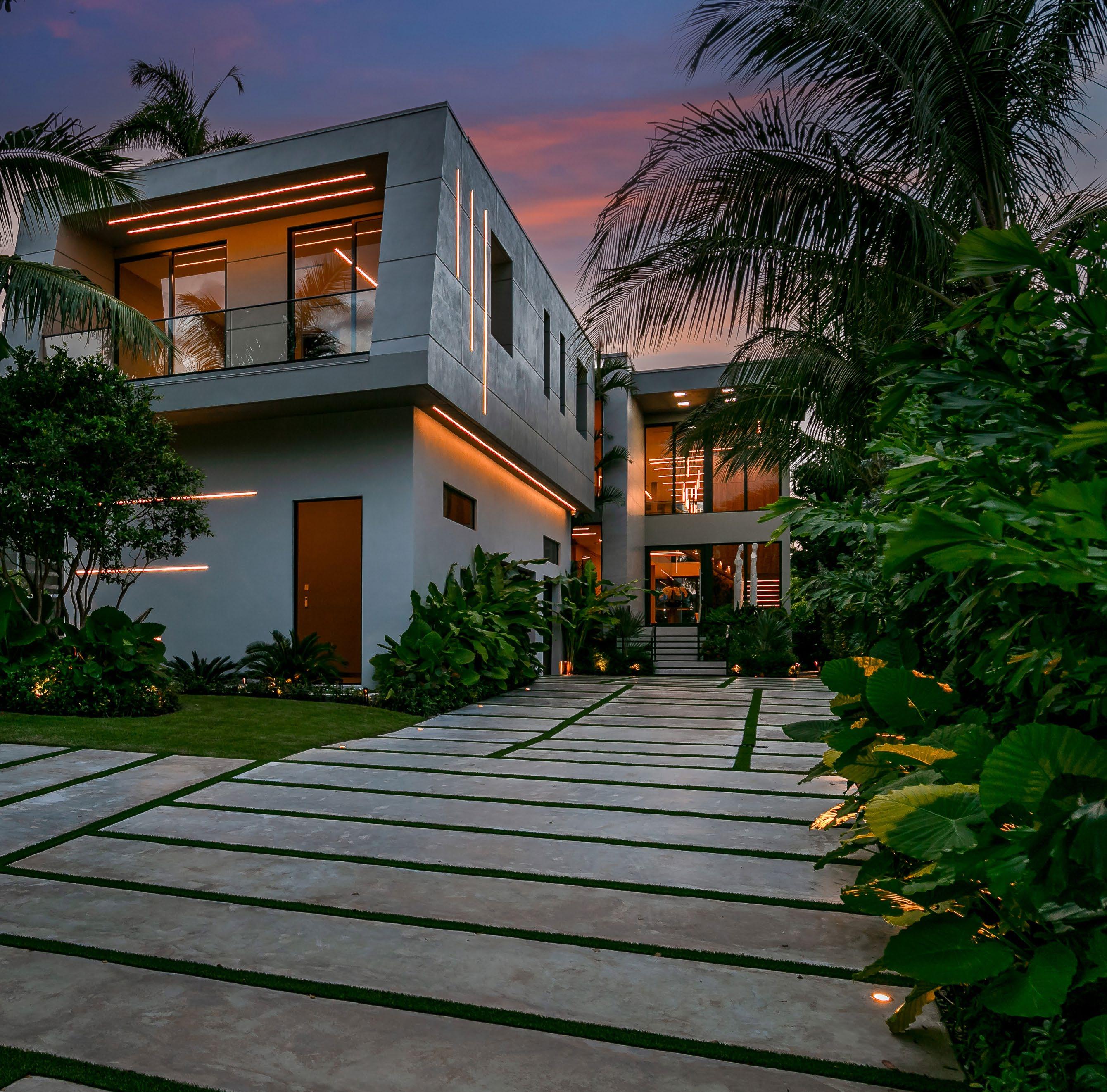
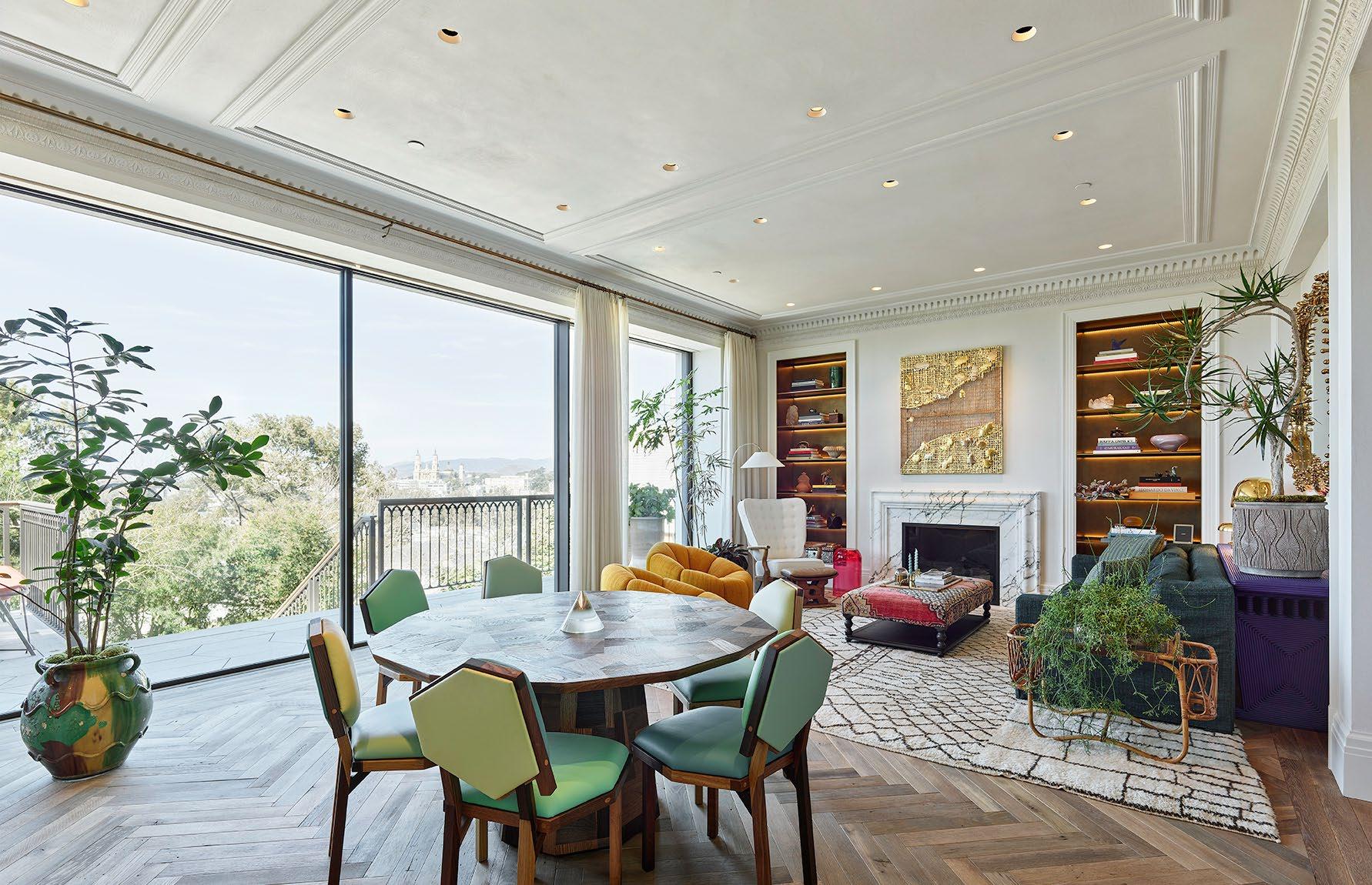
Luxury Home Builder Provides a Full Experience That Extends Beyond the Walls of the House
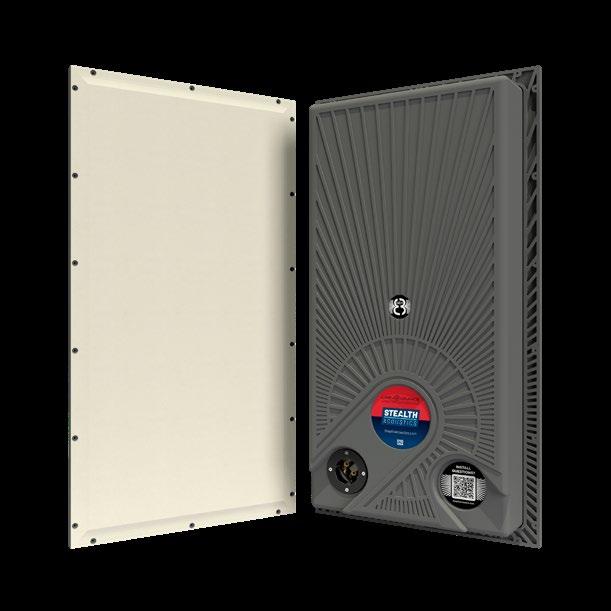
Review:
Stealth Acoustics
LineRadiance 430
Invisible Speakers




An integrator explains why he upgraded to the Premium CEDIA membership tier. By Michael Glarvey,
Outsmarted
How
Changing
20 Tech Showcase — 2025 ‘Residential Systems’ Picks Awards Winners
As we do each year, the staff at Residential Systems has named their Picks Awards winners for CES 2025. Only products that were submitted to the awards program were eligible to win; entries were judged based on their potential impact on the custom installation industry.
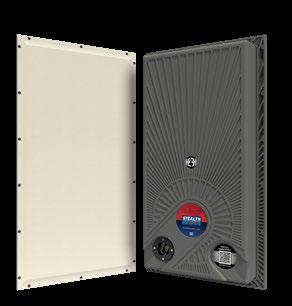
If you walked the vast majority of people into a room with these playing, they would be gobsmacked by the amount and quality of sound coming from nowhere and everywhere.
By John Sciacca
14 Bringing the Indoors Outside Luxury home builder provides a full experience for buyers that extends beyond the walls of the house.
By Anthony Savona
18 6 Ways to Win Through Process Process expert Jason Sayen and pros from ProjX360 offer tips on better managing your business.
By Krissy Rushing Tomlin
26 Integration Guide to Home Networks Making Stronger Connections
As home networks get more burdened, industry manufacturers, service providers, and integrators work to make sure they remain robust and dependable.
By Karen Mitchell
For luxury home builder Michael Nouri and integrator Neil Lorick, the smart home experience should extend from the house to the entire property. Find out how they did just that for this coastal South Florida home. See page 14 for the story.


BY ANTHONY SAVONA
Iattended my first tradeshow in May 1991 — barely a month after getting my first job out of college. It was a Summer CES in Chicago, and I was going there to gather information for the Video Magazine Buyer’s Guide Series. I don’t recall much about it aside from a couple of meals with my new co-workers and a sizeable amount of stress over making sure I saw everything I needed to.
And with that recurring theme, so began my quest to do a tradeshow the right way.
Since that time, I have attended hundreds of events in various capacities — sometimes covering one topic, sometimes the whole show. Sometimes I am there to have meetings with exhibitors and other times to report on sessions for a Show Daily. Lately, there are plenty of times when I am there exclusively for a Show Daily, and barely able to have a minute on the exhibit floor.
The only consistent thing about all the shows is that nagging feeling of missed opportunities. After all, each event offers the possibilities of discovery, connection, and knowledge. It’s a lot of pressure.
When I decide to focus on booth appointments to network and learn about the latest new products and trends, I miss out on the rest of the show floor and those hidden (and not-so-hidden) gems. When I leave too much time dedicated to exploring the show floor, I miss time with the people I interact with regularly through emails and the chance to develop deeper relationships. Also, when I don’t have appointments, I find I waste a lot of time waiting for someone to talk to at the booth — time that could be better used. We are on the clock, people!
I think I came the closest to getting it right at the most recent Lightapalooza. I had several appointments, but not wall-to-wall, so I had time to walk the floor and meet new companies and people. I was also able to sit in on about a half-dozen sessions, all of which provided some food for thought and some words for the website. The networking events led to some great conversations — some industry-related and some not. And I was able to attend a

fantastic last-evening dinner hosted by one of my closest industry friends.
Of course, part of the reason I was able to do this was because of the manageable size of Lightapalooza. The trick will be to translate this to a larger show with Dailies and Best of Show awards and whatnot.
If anyone has figured out how to properly manage their time at tradeshows — or has any tips at all on making the most of these experiences — please drop me a line so I can share it with everyone. I can’t imagine I am the only one who feels this way.
Even though I have already attended three tradeshows in 2025, there are plenty more coming up for me to try some new techniques. Let’s finally get it right!


March 2025 Volume 26, Number 3
KATYE MCGREGOR BENNETT
Katye McGregor Bennett is chief strategist and CEO of KMB Communications and an avid podcaster. Podcasts include Connecting Tech + Design and AV Trade Talk.
MATT BERNATH
Matt Bernath is a CE veteran with more than two decades in retail, wholesale, CI, and business coaching. In 2021, Matt and a group of partners acquired VITAL, and Matt now serves as the company’s president/CEO.
HENRY CLIFFORD
Henry Clifford is president of Livewire, an integration firm in Richmond, VA. He also serves on the CEDIA Business Working Group and writes a bi-monthly blog for www.residentialsystems.com.
KRISSY RUSHING TOMLIN
Krissy Rushing Tomlin is the founder and CEO of RISE Media Strategy, an AV content marketing, social media management, and PR firm for manufacturers, SaaS providers, and integrators in the home technology and pro AV spaces.
JOHN SCIACCA
John Sciacca is a principal with Custom Theater and Audio, in Myrtle Beach, South Carolina. In his free time, he blogs prolifically about the CE industry. cineluxe.com
GRANT OLAFSON
Grant Olafson is vice president of sales at Furrion.










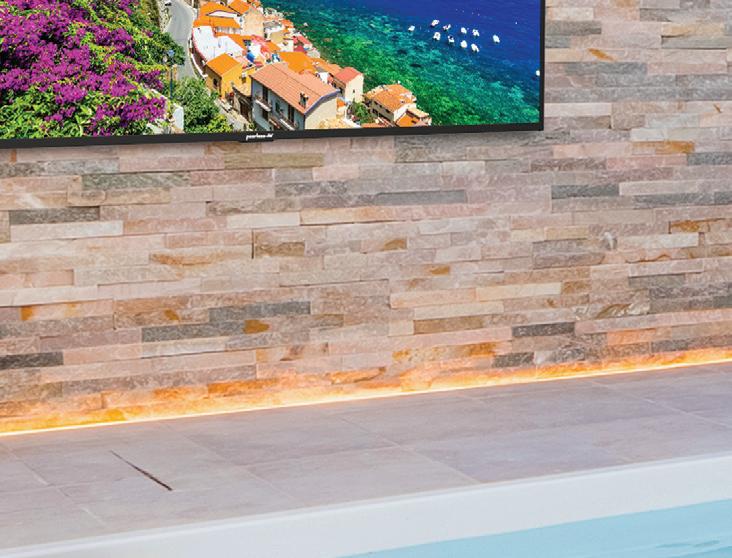


The CI lighting market continues to evolve, as does the tradeshow that champions it.
BY ANTHONY SAVONA • PHOTOS BY ISHA KIPP-COOK/ISH-THIS MULTI MEDIA
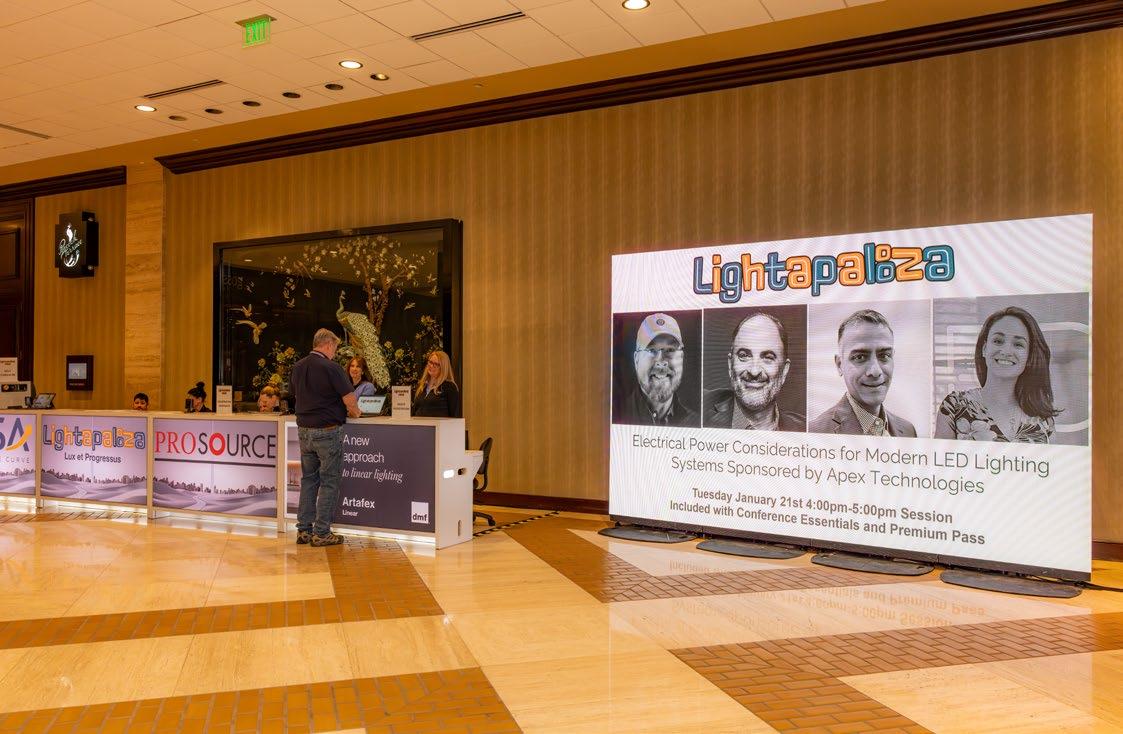
The fourth Lightapalooza, which took place January 20-23, 2025, in Dallas, Texas, held its usual assortment of education sessions, exhibits, and networking opportunities, but it also provided a snapshot of where the CI industry is right now in the lighting category and how far it has come. Naturally, beginners can still find information on lighting basics, but the courses now go far deeper in terms of both lighting technology and the techniques used to make sure homes function as well as they can — and look great while doing it.
To illustrate this expanding viewpoint, this year the show brought in some outside voices to present, including Jennifer Brons and Dr. Mariana Figueiro from the Light and Health Research Center at Mount Sinai School of Medicine. Brons hosted a session called “How to Provide Home Lighting That Supports Your Clients’ Health and Well-being,” while Dr. Figueiro tackled “What Is Circadian-Effective Lighting and Why Does it Matter?”
Craig A. Bernecker, Ph.D., FIESNA, LC, offered two different classes on Photometry, and Greg Barrett and Amer Maleh covered “The Evolution of Architectural Lighting from Rome to Now.”
There was plenty of real-world lighting design advice from Lightapalooza
favorites Peter Romaniello, IALD, and David Warfel from Light Can Help You. VITAL’s Matt Bernath held many sessions focusing on the business aspects of adding lighting to a CI business, this year being complemented by Jason Sayen’s project management classes.
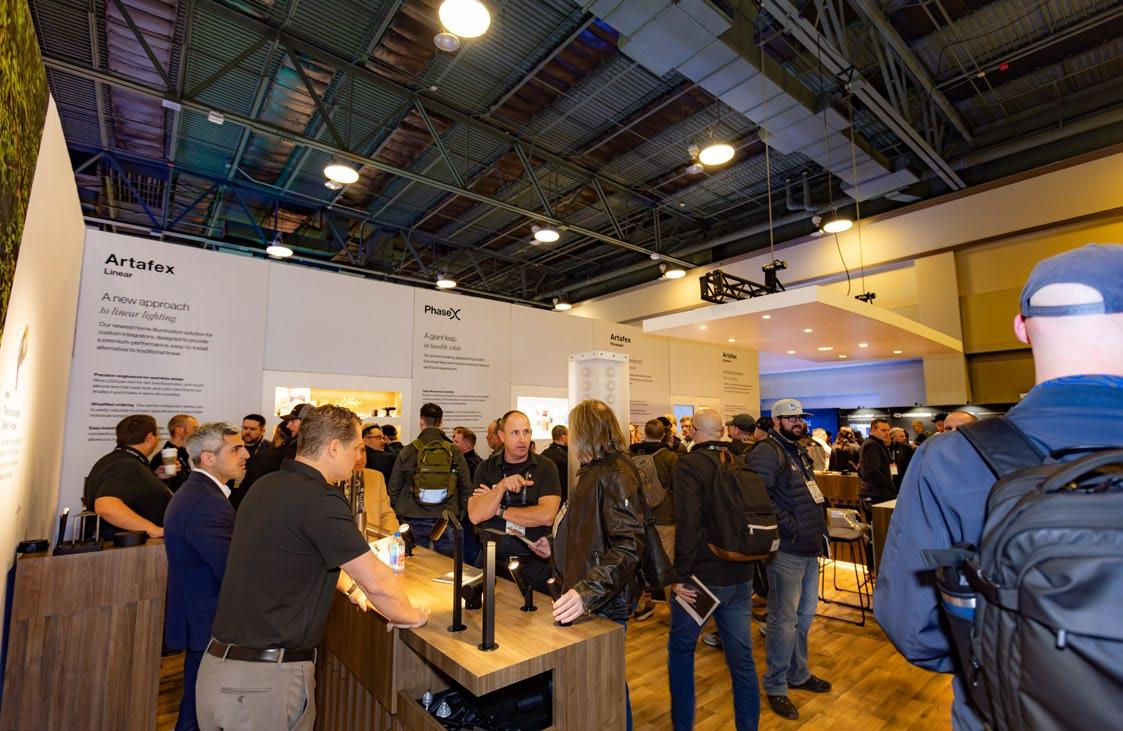
There were many opportunities for manufacturer training in the session schedule, but this year Lightapalooza added Showcase Suites, which were small rooms dedicated to a single manufacturer that could use them however they wanted. Most put some product on display, but left room for classroom-style seating where they would hold their own classes. For example, DMF Lighting used its Showcase space to quickly bring dealers up to speed on its new PhaseX technology.
Heard at Lightapalooza
I was fortunate enough to sit in on quite a few sessions at Lightapalooza, and here are some of the highlights of what I heard.
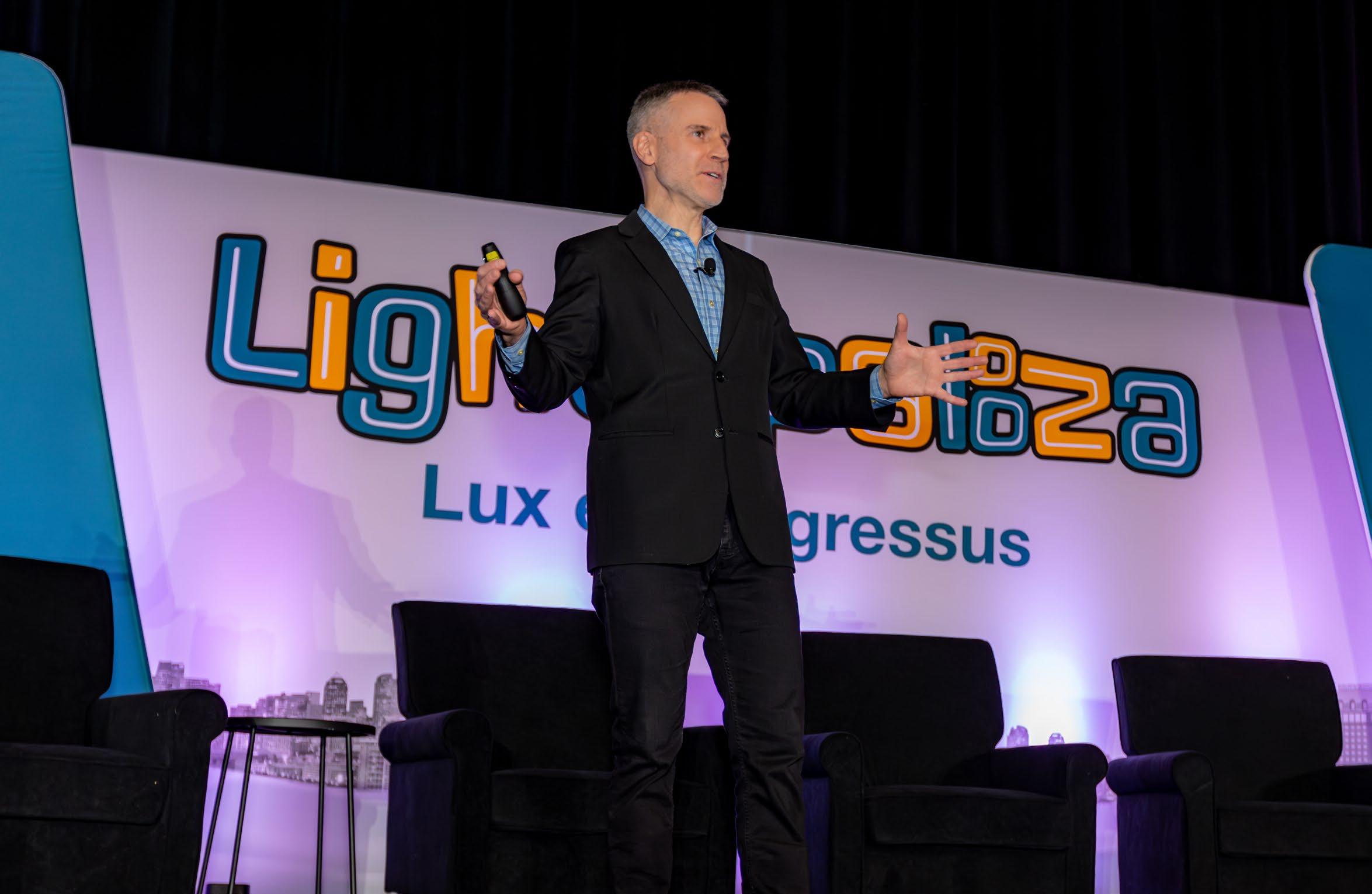
The keynote session, “The Luminous House — Unlocking the Full Potential of Residential Lighting,” given by Kevin Houser, Ph.D., PE (NE), FIES, LC, LEED AP, a professor at the School of Civil & Construction
Engineering at Oregon State University and the co-founder of Lyralux, Inc., provided a historical and philosophical look at residential lighting. Starting with a look at Philip Johnson’s Glass House in Connecticut, which was completed in 1949, Houser showed how the concepts used then still have meaning today, despite the great leaps in technology. (As an aside, he mentioned that Johnson used to have to walk around his house at night using candles…).
He also explained how light creates shapes, shadows, and highlights that help us understand the room around us, and how creative architecture uses a combination of ambient luminescence (reflected light), focal glow (light that commands our attention), and a layer of sparkle or play of brilliants (such as the light created by a chandelier).
Finally, he simplified lighting into four variables: Time (duration of exposure), Pattern (luminous distribution), Spectrum (warm white or cool white, tinted or highly saturated), and Intensity (dim up or down). These four variables can be manipulated to evoke the desired responses from the viewers.
A pair of lighting designers, Bruce Clark and Lynne Stambouly, teamed up to present “Best Laid Plans – Managing Lighting Projects That Survive the Project Gauntlet,” which covered the numerous things that can go wrong when working with the other trades on a project — and how to plan for and overcome them. They laid out what each stakeholder typically likes in a partner: architects like order and symmetry; interior designers love design and finishes; builders like budgets and schedules; HVAC techs like hallways and first dibs; millwork carpenters like tight grooves and joints; and the homeowner wants to feel important, be treated with respect, and they want to change their mind.
“Fixtures Unlocked: Seizing Opportunities and Overcoming Industry Challenges,” a panel moderated by HTSA’s Tom Doherty and featuring lighting designer Warfel, manufacturer rep Dave Thomas, and DMF Lighting’s Mike Libman and Ellie Doherty, covered the many reasons why a custom installation dealer should get into the light fixture business. For Thomas, first and foremost is the opportunity it provides, because he believes the fixture category by itself will soon equal the whole AV category.
And if you are afraid that you won’t be very good at it in the beginning, and worry about disappointing your clients, Warfel said that the baseline for lighting is ridiculously low, so if you do a halfway decent job, it is better than they would have without you. That certainly takes some pressure off.
The show floor once again was filled with CEDIA Expo-style exhibits from
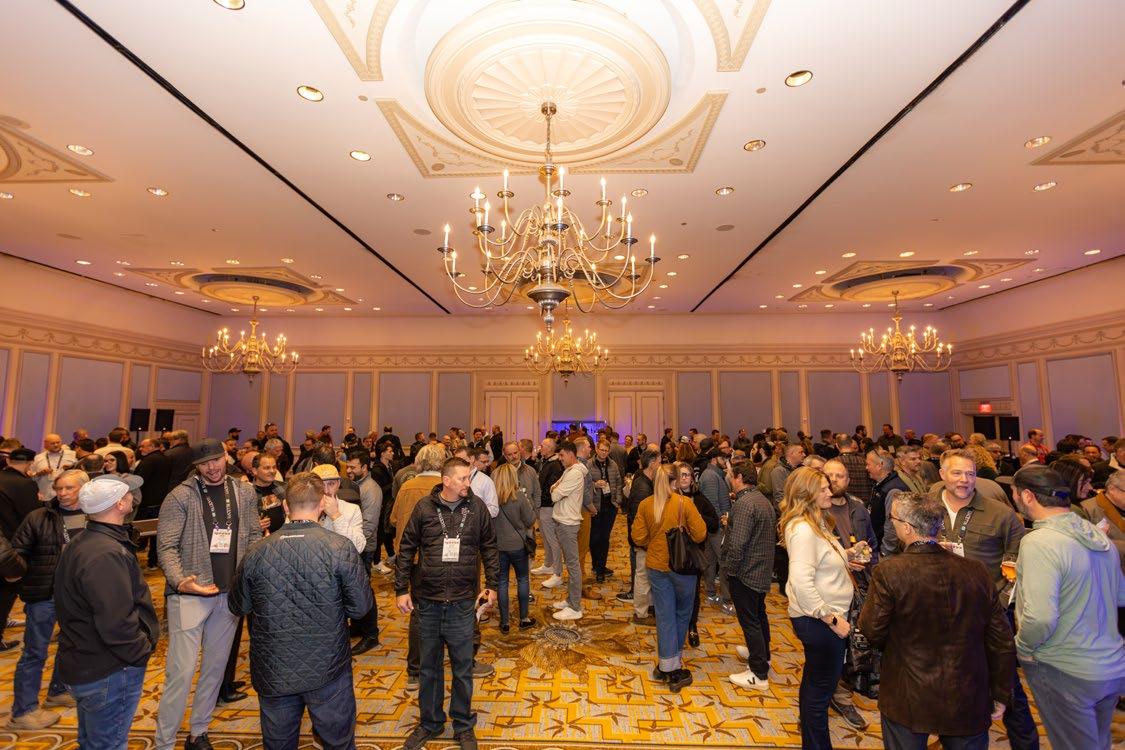
some of the top companies that provide lighting fixtures, lighting control, and power options for the channel, along with business tools such as ProjX360, D-Tools, and VITAL.
Once again, DMF Lighting used Lightapalooza to launch new products, releasing the crowd-drawing PhaseX and Artafex Linear the day before the exhibit floor opened. Crontrol4 also used the show as the opportunity to launch its new Lux keypad series, and Savant presented its Savant Smart Budget power solution.
AiSPIRE was there with a host of products, including its Colorscaping line and its Astro Retrofit 6-inch dim-to-warm downlight. PureEdge had its unique Corda rope light on display. ProLuxe brought back its moon display from CEDIA Expo and I was glad I got to experience it again.
There were also numerous networking events, including cocktail parties the first two nights — one to celebrate the opening of the show and the other to fete the new Showcase Suites area. Both were well-attended, but still easy to find and you could have conversations with those you wanted to.
It seems clear that lighting is not a fad or a fading buzzword and will be a part of the industry going forward. Lightapalooza continues to evolve with the market, making it a valuable learning resource not only for integrators but for anyone working in lighting.
If your company is involved in lighting — or even thinking about getting involved in lighting — a trip to Lightapalooza should be added to your schedule.
BY MICHAEL GLARVEY, FOUNDER AND MANAGING DIRECTOR OF LUUXX
I founded LUUXX over a decade ago with the vision to build a company that would deliver excellence in high-end residential integration. The journey has been rewarding, but navigating an industry with few formal regulations certainly presents its challenges. I have always believed in the importance of staying at the top of our game, and that’s where being a CEDIA member has proven to be invaluable.
LUUXX has been a proud CEDIA member for most of its existence. Recently, we upgraded to Premium membership through its newly launched tiering system. CEDIA is one of the few recognized bodies providing certification in our industry, and aligning with an organization that prioritizes quality and trust has been a critical component of our success.
A few years ago, we made a strategic shift to focus on collaborating with architects and designers. This decision transformed our business, and we leveraged CEDIA’s resources to support this evolution. Becoming certified to deliver CEDIA-approved CPD sessions became a cornerstone of our strategy. These sessions have opened doors to exciting projects and reinforced our standing as trusted experts in the field. They’ve played a pivotal role in solidifying our reputation and securing client confidence.
When CEDIA introduced its new membership tiering structure, upgrading to Premium membership was a natural progression. The benefits were clear and aligned perfectly with our goals. Premium membership offers cost-effective training opportunities for an unlimited number of our staff. Since training is vital for keeping our team at the forefront of industry standards, this was a no-brainer.
As business owners, I believe we have a responsibility to ensure our teams are equipped with the skills and knowledge they need to excel.

For me, that responsibility goes hand-in-hand with our partnership with CEDIA. Their resources and support have helped us push boundaries, raise standards, and deliver exceptional results for our clients.
Beyond training, the additional benefits of Premium membership also support our growth. Priority listing on CEDIA’s search tool enhances our visibility to potential clients, while early access to new programs and products ensures we remain competitive in a fast-paced market. These advantages help us stay ahead of trends and maintain our edge.
Choosing Premium membership wasn’t just a practical decision — it also signifies our dedication to being part of a recognized body that values professional development and excellence. For any company aiming to elevate standards, access industry-leading training, and gain a competitive edge, I wholeheartedly recommend becoming a member. It’s been a springboard for our success, and I’m confident it can do the same for others.
For more information on CEDIA’s Membership Tiering Structure, head to https:// cedia.org/smart-home-professionals/membership/member-benefits-pricing/.





Transform outdoor spaces with EVO by Coastal Source—the ultimate solution for landscape and architectural lighting. Engineered for custom integrators, EVO combines unmatched durability and versatility with innovative design. Crafted from solid brass and backed by a lifetime warranty, EVO delivers superior performance with its patented fixtures. Achieve up to 560 lumens with multiple beam angles, dispersion patterns, and color temperatures. Fully modular, EVO adapts seamlessly to any outdoor space, offering endless configurations and effortless Plug+Play™ connections.
Illuminate with style, precision, and reliability that lasts a lifetime. Discover EVO. Redefine what’s possible in outdoor lighting. Visit CoastalSource.com/EVO.



Available through authorized dealers and contractors. coastalsource.com | 800.719.1996




What showrooms and experience centers can learn about clearly communicated, user-friendly tech demonstrations.
BY KATYE MCGREGOR BENNETT
A friend recently shared details of their visit to a high-end technology integration showroom designed to showcase the latest in high-end audio, video, and smart home innovations. This particular showroom offered all the comforts of modern living, where everything from lighting to climate control could be adjusted with a simple voice command or command on a touchscreen. Sadly, what they experienced was an unexpectedly frustrating encounter that underscored a critical flaw in the world of smart technology: A simplified user experience often takes a back seat to a razzle-dazzle demo.
The culprit? A smart toilet in a beautifully appointed bathroom. This wasn’t just any toilet. It was a fully automated, state-of-the-art fixture boasting features like automatic lid opening, heated seat, selfcleaning capabilities, and an advanced flush system. A placard on the wall enthusiastically detailed how effortlessly the toilet could adjust to user preferences. Graphics and short phrases shared how sensors detect motion, the lid opens gracefully, and a control panel offers an array of options for a tailored experience. The showroom eagerly suggested this was something every visitor needed in their home.
As it turns out, the only thing missing was any mention of how to flush the toilet.
After hearing their story, curiosity got the better of me, so I decided to test it myself. When I went to the same showroom, everything functioned smoothly until it was time to flush. I waited, expecting the automatic flush to engage. Nothing happened. I waved my hand near the sensors and pressed what I thought was the flush button on the sleek control panel — still nothing. I pressed more buttons. The bowl cleaned itself again and other exciting things happened, but still no flush. Panic set in. Surely there had to be a manual option, right? And then the lights went off. Why? Because motion sensors in the room hadn’t sensed a door opening or any motion in the room while I stood in the stall, staring at the instructions on the wall trying to figure out how to flush the toilet. As soon as I moved, the lights came back on. Great! Back to reading.
The control panel offered a myriad of functions, none of which seemed to trigger the flush. In that moment, surrounded by cutting-edge technology, I felt completely powerless and vulnerable.
This experience was both humorous and enlightening. Here I was, in a space designed to showcase the ease and efficiency of smart living, utterly stumped by what should be the simplest function of all — flushing a toilet. The best part? It was a manual flush unit, just like every other manual flush toilet on the market. Did my friend think to check or did I? No. Why? Because it was sold as being touchless and smart, and the directions on the placard said nothing of the lever on the left of the tank.

No matter how advanced or innovative a product is, its value diminishes if the user can’t operate it intuitively.
This incident highlighted a crucial lesson for technology integrators: No matter how advanced or innovative a product is, its value diminishes if the user can’t operate it intuitively. Smart technology should simplify life, not complicate it.
Here are a few key considerations for showrooms that could transform a frustrating experience into a seamless one:
• User-Centric Design: Design should prioritize the end-user experience over aesthetic minimalism. While sleek, button-less surfaces look modern, they can be intimidating and impractical if users can’t figure out how to perform basic functions.
• Clear Visual Indicators: Automated functions need a manual option. Relying solely on automation is what we all dream of, but it can be a design flaw, especially in shared spaces or showrooms where users may not be familiar with the technology.
• Accessible Manual Overrides: Every smart device should have an easily accessible manual control option. Whether it’s a flush handle, a light switch, or a thermostat dial, redundancy ensures that users aren’t left stranded when technology falters. Homes with children, the elderly, or those with compromised capacities benefit greatly from simple solutions that are easy to recognize and repeat.
My mom would be mortified to know I’m sharing bathroom stories as part of a marketing exercise. However, I maintain that this encounter with an elusive flush lever — which was a minor inconvenience in the grand scheme of things — offers a major insight. For technology integration firms, this story serves as a valuable reminder. Showrooms and experience centers are meant to inspire confidence and excitement about smart living. Every demonstration — whether guided or solo — must not only showcase the sophistication of the technology but also its ease of use. At the end of the day, no one wants to feel outsmarted by their toilet.
Need help creating a clear, concise narrative for your showroom, experience center, or marketing materials? Drop me a line at katye@kmbcomm.com. I’m here to help!
BY MATT BERNATH
The luxury home services industry is evolving, with institutional investors recognizing the potential of integration businesses. For independent operators, this shift may feel unsettling, but it’s also an opportunity to strengthen and future-proof your business.
In a recent episode of The Flywheel Effect podcast, Brent Sonnek-Schmelz and I tackled this timely topic, offering insights on how to adapt, compete, and thrive in a changing market. Our advice is clear: focus inward, refine your operations, and position your business to succeed on your terms.
Industries like HVAC, plumbing, and roofing have already seen waves of consolidation, with private equity and other investors building larger, more scalable businesses from smaller independents. Now, custom integration is on the RADAR. Investors see an industry with a strong foundation, untapped growth potential, and the opportunity to bring efficiency to fragmented markets.
The influx of institutional money is a sign that the custom integration market is maturing. Investors wouldn’t target an industry unless they saw value and potential. For integrators, this recognition underscores the importance of running a professional, well-organized business.
Private equity firms buy established businesses, improve their operations, and grow their value over time. Their focus is on profitability and efficiency, which means they look for companies with consistent cash flow and room to scale. Often, the goal is to grow and sell over a defined time horizon, such as three to seven years.
Venture capital firms, on the other hand, take calculated risks on companies with high growth potential, often backing new technologies or services. Their approach is about transformation and long-term growth, often building larger, legacy businesses.
The point isn’t to adapt your business to these investors — it’s to understand their impact on the market and how their strategies could influence the competitive environment. Knowing what they value can help you strengthen your business for the future, regardless of your goals.
Get Your Financials in Shape — Every business owner benefits from clean financials. Not only does it provide a clear picture of your company’s performance, but it also makes your business more resilient. Avoid “comingling” personal and business expenses — transparency is key.
Create Recurring Revenue — Think about how HVAC companies sell annual maintenance agreements or pest control firms offer quarterly services. Service contracts and maintenance plans create steady, predictable income streams and build long-term customer relationships. This kind of stability is crucial, especially in competitive markets.

Focus on Scalability — If your business relies too heavily on the owner, it’s time to invest in systems and processes that reduce that dependency. Scalability isn’t just about growth; it’s about making your business more efficient, less stressful, and more adaptable to change.
When larger players enter a market, they often invest heavily in marketing and customer education. This raises awareness of the industry as a whole, giving all businesses — big and small — a boost. Take advantage of this heightened visibility by showcasing what makes your business unique.
As service contracts and professional systems become more common, they raise the bar for the entire industry. Independents who adopt these practices early can stay ahead of the curve and deliver a better customer experience.
Large companies can struggle to provide the personalized service and community connections that independents excel at. Lean into your strengths as a local operator by offering customized solutions and building strong relationships with your customers.
It’s easy to view institutional investment through a lens of scarcity: if they win, I lose. But that’s rarely the case. These investors are interested in expanding the market and reaching customers who may not have considered integration services before. A growing market creates opportunities for everyone.
The best way to compete is to focus on your own business. By delivering exceptional service, streamlining operations, and building customer loyalty, you can thrive regardless of market changes.
Running a more efficient, scalable business doesn’t have to mean preparing for a sale — it means creating a company that works better for you. With the right systems in place, you can spend less time putting out fires and more time focusing on the parts of the business you enjoy.
Building a stronger business gives you flexibility. Whether you want to grow, sell, or simply enjoy less stress and more profit, the choice is yours. The goal is to create a business that aligns with your values and goals, to provide the most happiness today and options for the future.
Institutional investment in the luxury home services industry is not going to replace the independent operator. Just look around at how many successful independent HVAC, pest control, and roofing contractors still exist. It’s time to recognize the value of an evolving market that you are lucky enough to be a part of. For business owners, this is an opportunity to focus inward, refine operations, and build something even stronger.
Think about your next steps. Are your operations as efficient as they could be? Are your financials clean and transparent? Are you offering value to your customers in a way that sets you apart? These questions aren’t just about competing — they’re about thriving.
Changing times and new technology bring the opportunity to reevaluate how you run your business.
BY HENRY CLIFFORD
The past few years have seen amazing innovations in technology the likes of which the world hasn’t seen since the 1990s commercialization of the World Wide Web. Throw in Scott Galloway’s “10 years of innovation in 3 months” during the 2020 global pandemic, and it can feel at times like we’re riding on the hood of a Ferrari.
Changing times bring the opportunity to reevaluate our habits and reject inertia’s powerful siren call. Are there jobs that can now be done by AI? Let’s dig in a little more by role to find out more.
Accounting: A typical fledgling CI business starts with an accounting person on a part-time basis who may grow into a full-time role. $1MM in revenue needs a full-time role, $2MM begins to need one or two resources, and $3MM begins the need for a well-defined controller, accounts payable/ receivable clerks, and maybe even a fractional CFO. While your early days may have hired some or all of these roles internally, outsourced and AI capabilities are rapidly changing that dynamic. For example, QuickBooks has an automated accounts receivable function that allows vendors to email bills that are transcribed by AI without the need for manual data entry by your staff. It’s not perfect, but it helps eliminate a tedious task fraught with the potential for human error.
Vendors who can take on your entire accounting back office are now commonplace on platforms like Upwork. With today’s prevalence of cloud software running in the browser, it’s never been easier to onboard remote resources just by issuing them a username and password to your system.
Design & Engineering: Whether you have a dedicated system designer or not, now is a great time to evaluate who is doing the work. Consider giving your salespeople an “Easy” button where they can visit a prospect, come up with a budget, and send it seamlessly to a design & engineering resource. Portal.io’s CEDIA Expo launch of its new AI proposal tool is a great example of this new concept in action. Salespeople can record a walkthrough, describing what they want. Portal.io’s AI tool then transcribes the conversation and creates the beginnings of a proposal that a system designer can then buff and polish. Other resources like Blue Dog and AVDL specialize in taking sales requirements and translating them into fully fledged D-Tools proposals complete with full technical drawings.
Sales: Whether you have full-time salespeople or you’re a full-time hunter/owner, nothing happens until you sell something. There are portions of the sales cycle that can now be outsourced or automated. Remote worker sites like somewhere.com specialize in helping fill roles like outbound prospecting. Imagine a full-time remote worker coldcalling your prospects 40 hours a week for a fraction of what it would cost you to hire an in-house employee. In the words of sales guru Neal Lappe, “No one defaults to prospecting.” Instead of spending your time frustrated at your sales team or lack of time to prospect, consider outsourcing it.
Installation and Project Management: Outfits like Resideo’s Herman

AV are dedicated to providing subcontracted labor services to the pro-AV community. Whether it’s installation, rack fabrication, service, project management, or design engineering, they have coverage across the United States. Imagine just being able to sell a job in another market and having reliable subcontracted labor fulfill it for you.
Service & Support: Remote Managed Service (RMS) providers like Parasol and OneVision have been around for the better part of the last decade, fulfilling the promise of giving CI businesses a reprieve from service calls after hours and offering frustrated clients a live person 24/7.
Marketing: Companies like One Firefly and ProSource Marketing have been around for over a decade, helping busy CI business owners with website development, search engine optimization, content creation, and customer engagement. Very few CI businesses have the budget for in-house marketing talent, and it’s hard to keep up with a fast-moving channel like marketing. Social media interaction alone is enough to drown even the most eager of would-be influencers. Newer entrants like PriceGuide.ai (full disclosure: I’m a co-founder) offer integrators the ability to amp up their web presence lead generation by 300% over sites with standalone “contact us” forms.
Legal: Chances are you’re already outsourcing this one. With the advent of ChatGPT, consider questioning whether you need a lawyer for simple agreements and other basic forms. Complex buy/sell agreements and contracts will always need the expert eye of a good attorney, but don’t be surprised if more and more of these simple legal documents are an AI prompt away in the coming months.
IT: If you’re not inside complex networks every day, the complexity of designing and servicing them can be a tremendous drag on your business — especially if they’re poorly architected. This is where companies like Access Networks, WhyReboot, Blackwire Designs, SpecOp Secure, and others shine. Give them some basic client information and you’ll get back a turnkey network design, including documentation showing how it all connects. Support after the sale means they’re able to monitor your networks 24/7/365 and take care of fixing most issues remotely. Many of these companies have working relationships with RMS providers like Parasol and OneVision to give your customers a single “wringable neck.” No matter which part of your business you decide to outsource or give over to AI, you’ll have to button up your organizational back-office workflow to make it happen. If you have any parts of the company that work because of tribal knowledge or only respond the way the jukebox in Happy Days did to the Fonz’s knowing touch, you’re going to have a rough time bringing in outsiders to take over. Consider this an opportunity to get your house in order so that the business is about roles as opposed to individuals. That way you can begin hiring people from all sorts of backgrounds, focusing more on aptitude and values while being able to train the rest.
Stay frosty, and see you in the field.
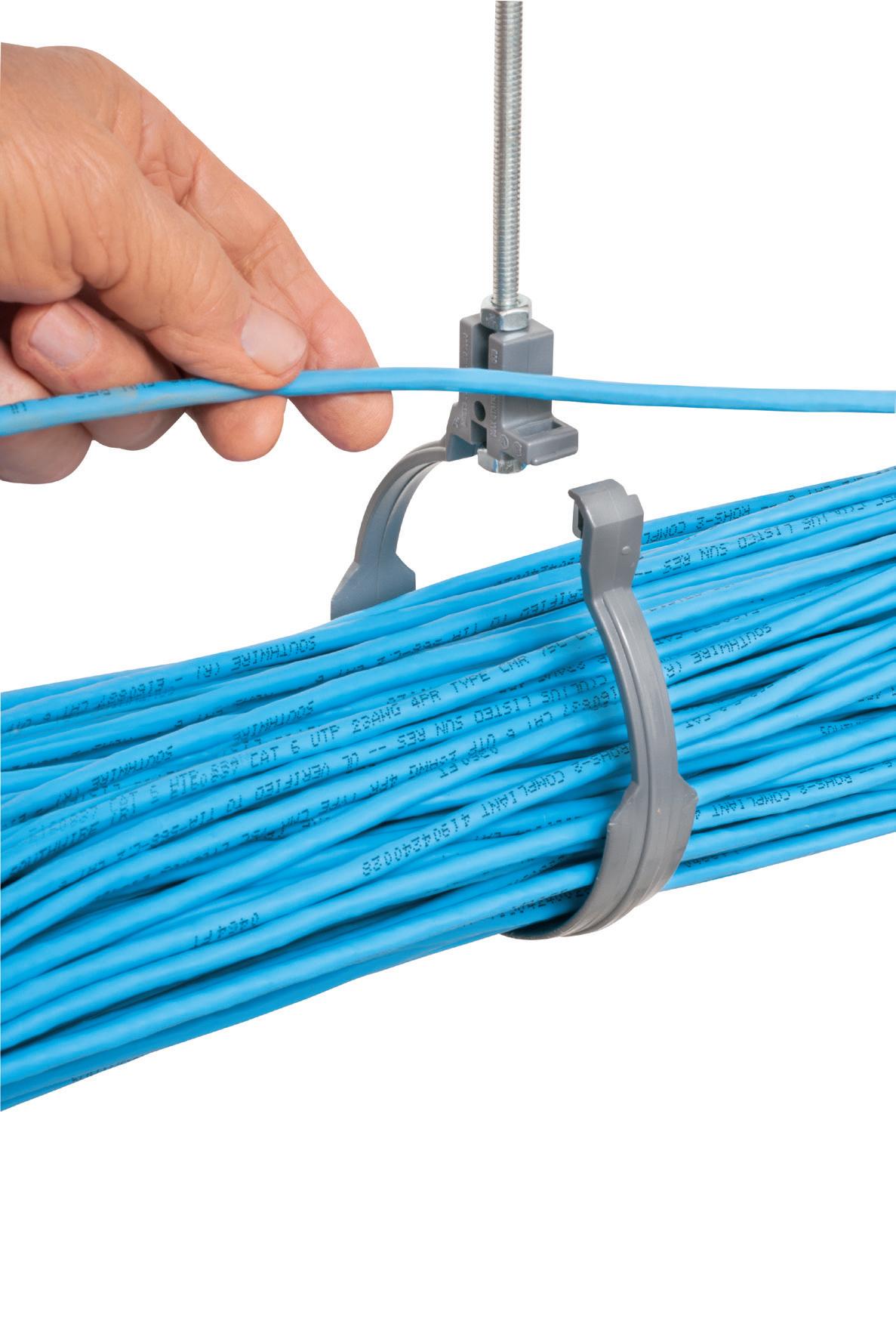

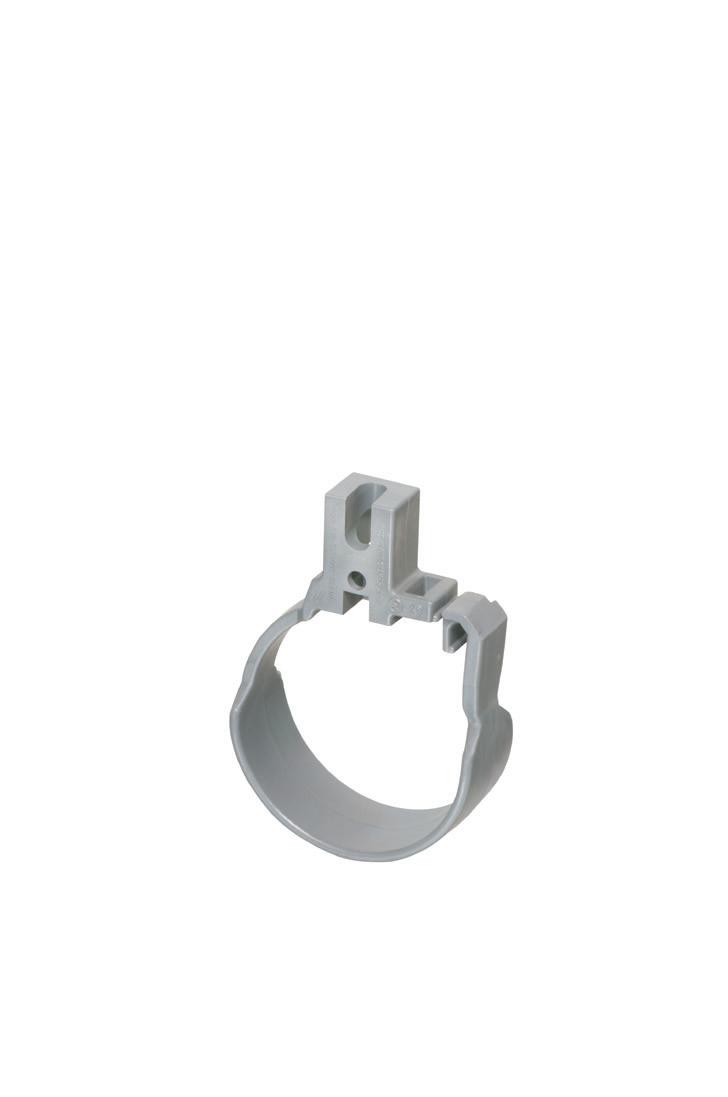
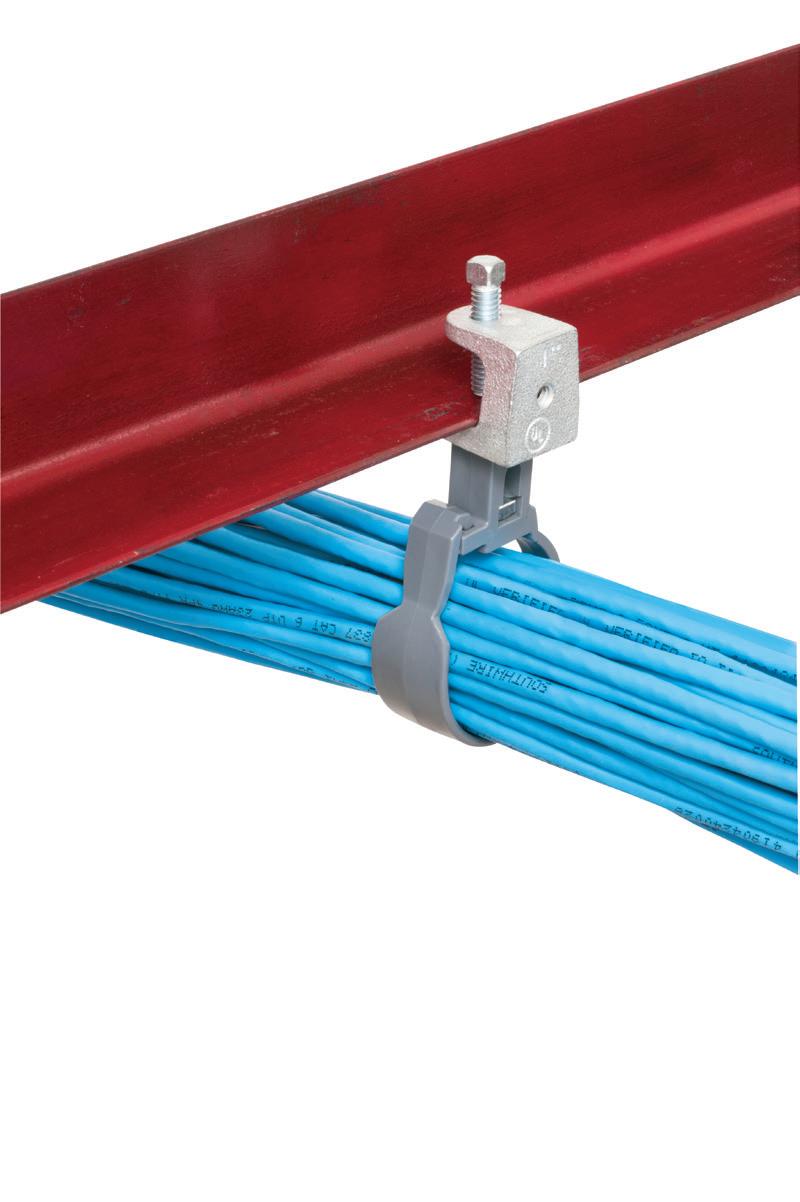
aifittings.com/landing/the-hoop

•
Luxury home builder provides a full experience for buyers that extends beyond the walls of the house.
BY ANTHONY SAVONA
For luxury home builder Michael Nouri, the smart home experience should extend from the house to the entire property and even the sea. Nouri, who builds many homes on the coast of Florida, includes stunning backyards in his projects — along with an optional yacht for the homeowner to purchase — and the technology experience is the same from carpet to grass to waves.
Nouri recently completed a move-in-ready estate with integrator Neil Lorick of South Florida’s Automation Sensation that is yacht-less (for now) but features all the luxuries a homeowner could want both indoors and out. The spectacular waterfront home, offered now at just under $13 million, is move-in ready with a home theater, digital glass elevator, and a gym with sauna for starters. As the Zillow listing states, “The 16,840 SF lot is meticulously landscaped and has a brand new 50-foot dock with direct ocean access.”
Maybe you’d like a yacht with that…
For Nouri, the outdoors gets the same treatment as the indoors because it
has to be a seamless experience.
“People come to Florida to live outdoors — we have six months out of the year that we don’t need air conditioning,” says Nouri. “That’s why our homes are designed with no separation between indoors and outdoors. If we build a kitchen inside, we build a matching outdoor kitchen. Every detail, from dynamic lighting to immersive soundscapes, is crafted to unify both spaces into one cohesive experience.”
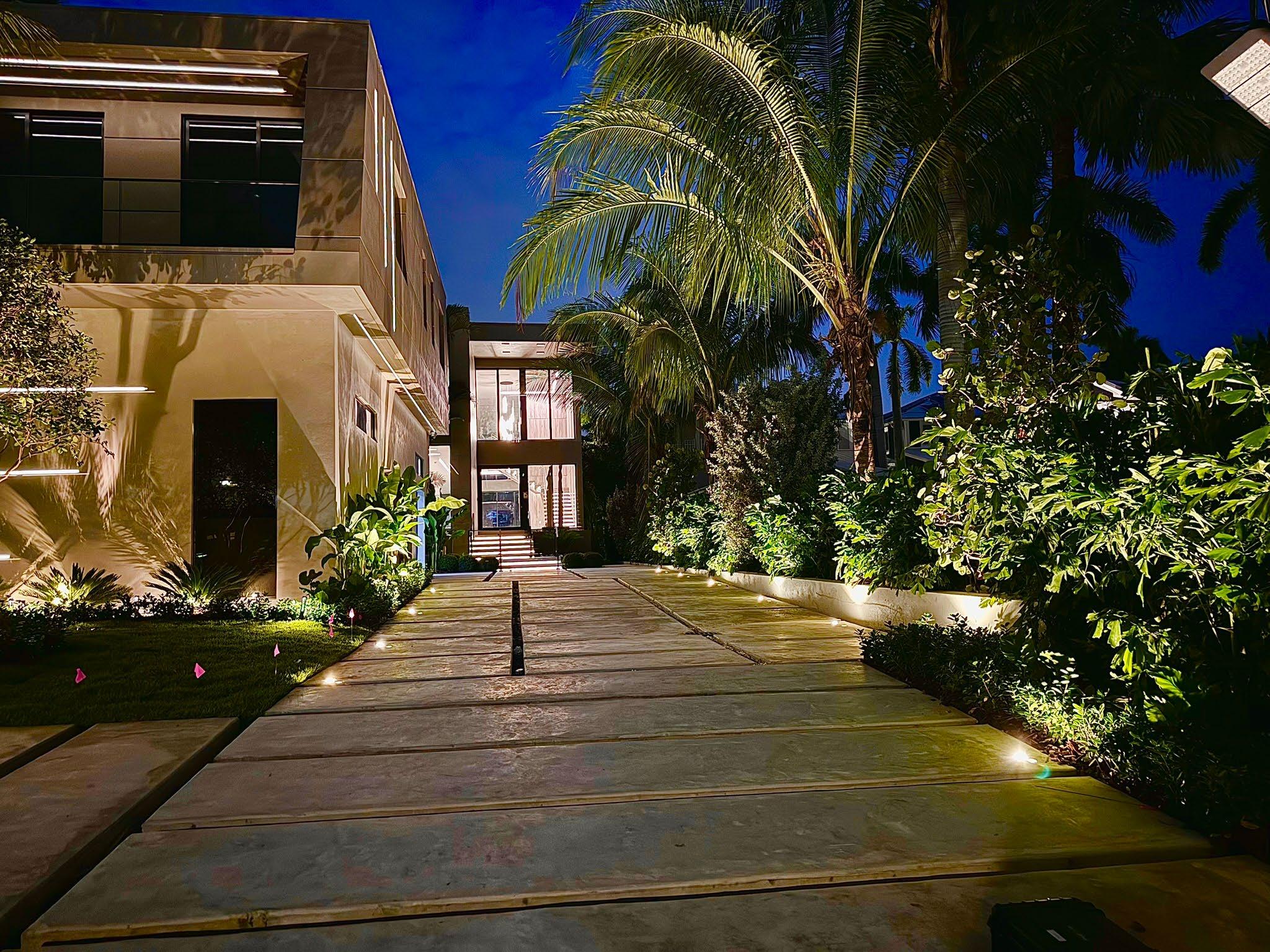
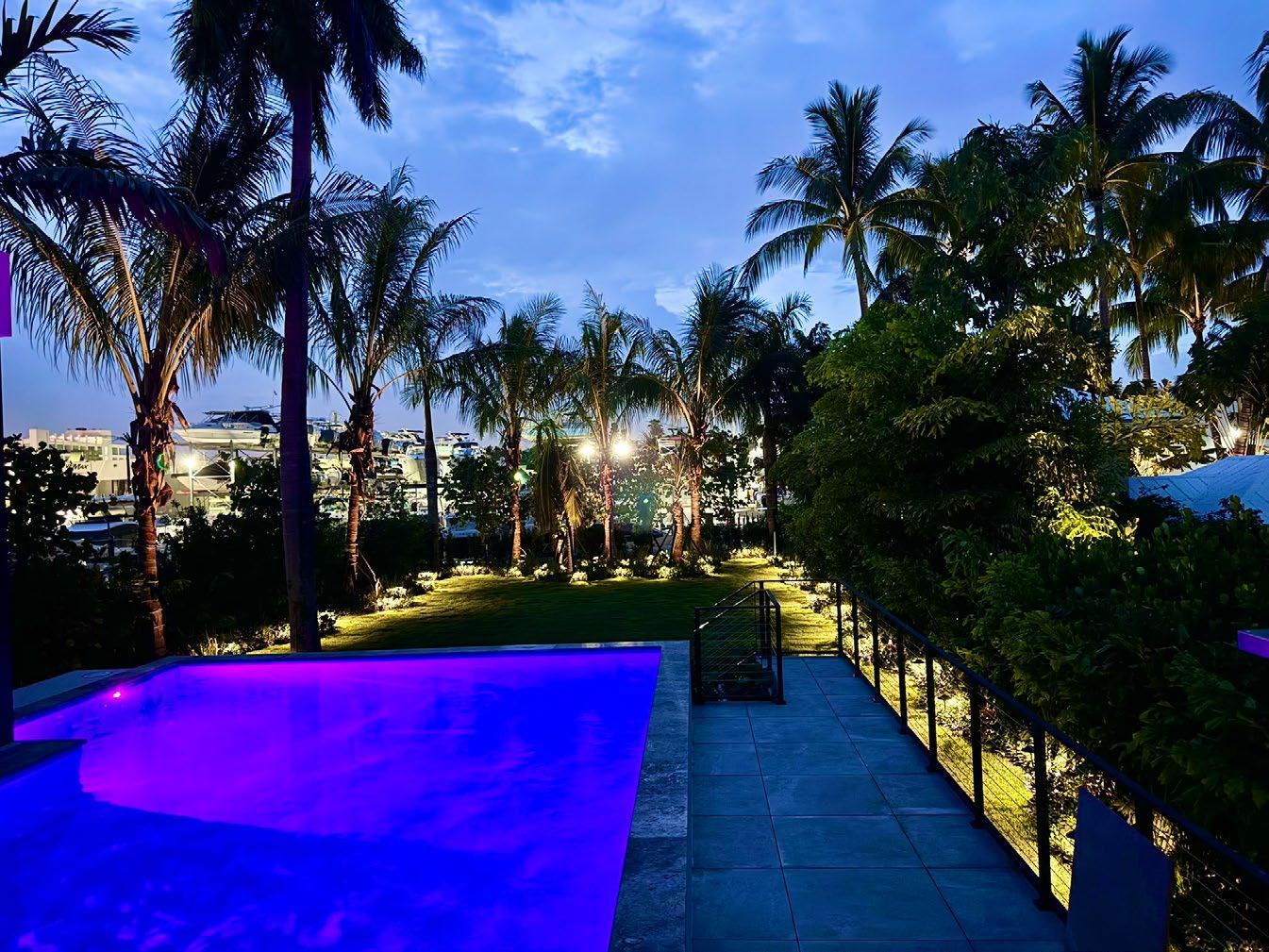
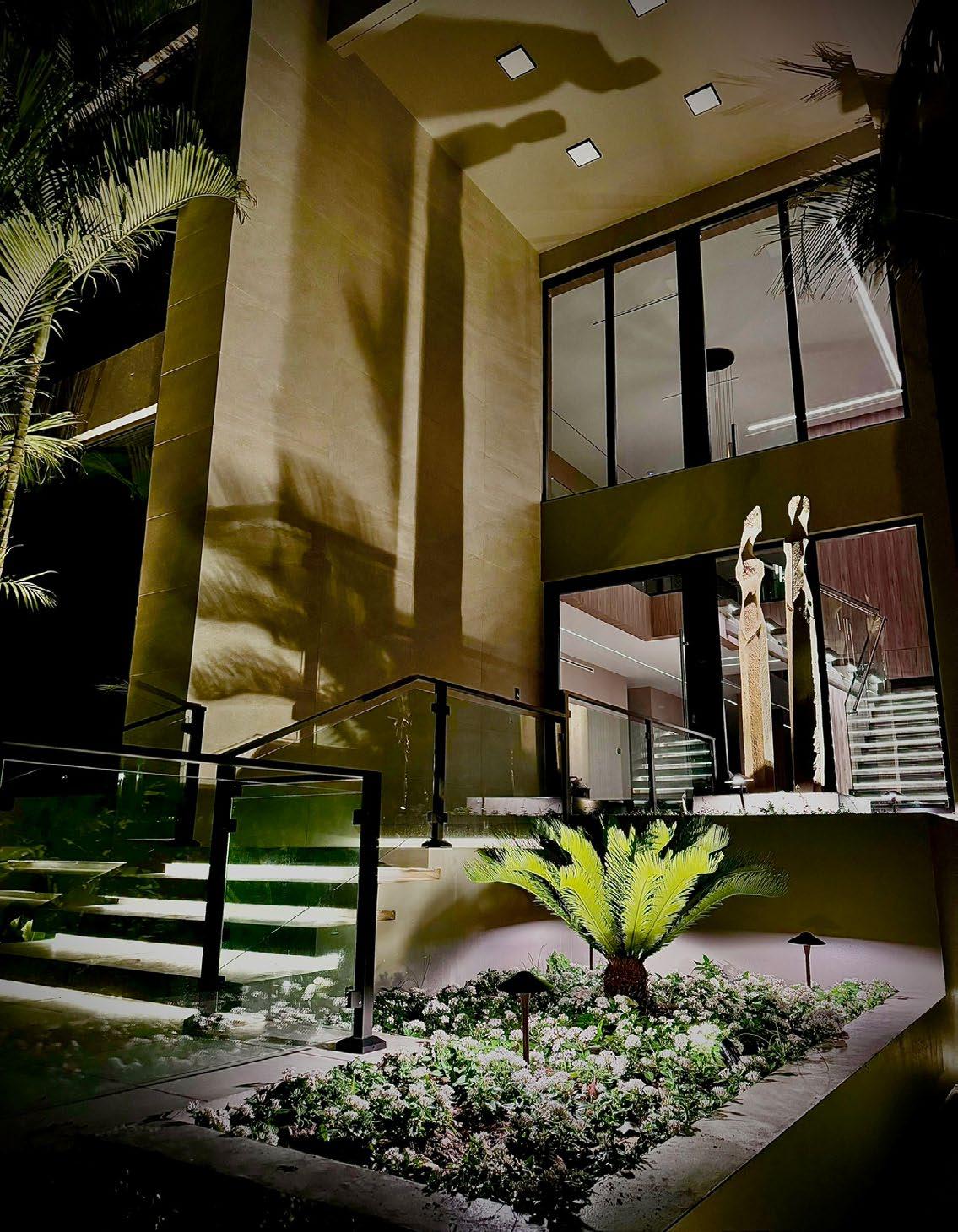
The property is quite long as it reaches from the street to the shoreline, but at 50 feet, it is not too wide. Still, thanks to rows of tall, beautiful trees on either side, there are no neighbors in sight. And while the trees look naturally lovely throughout the day, they really come to life at night thanks to copious amounts of landscape lighting.
“You put the shrubbery and trees in different layers, and then each layer has to be colored,” says Nouri. “We do landscape lighting in a way that creates dimension rather than just shoot a light up into a tree. With the light, you create illusion, and we call ourselves ‘outdoor magicians’ to unify the indoor and outdoor and to expand them to make it look like you are on your own island — nothing exists outside of your space.”
This design required 75 landscape lights to be installed by Lorick and his
“With the light, you create illusion, and we call ourselves ‘outdoor magicians’ to unify the indoor and outdoor and to expand them to make it look like you are on your own island — nothing exists outside of your space.”
—Michael Nouri
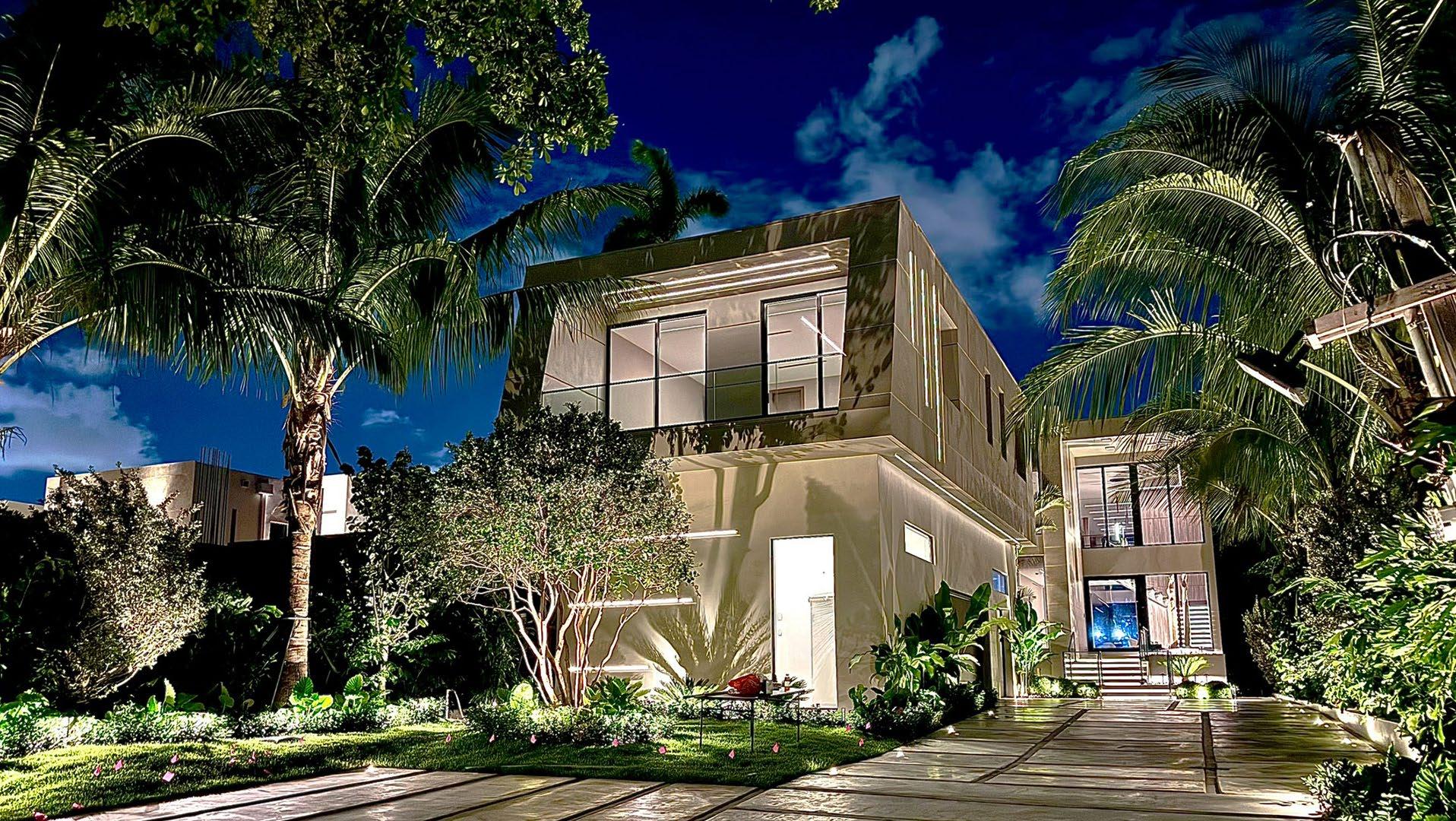
team, with additional lights installed on the walkways, under the eaves, on the patio, and by the pool.
Outdoor living isn’t just a visual experience, and the audio complements the scenes nicely, both inside and out. “The music for indoor and outdoor must be in sync so, as you walk out, you have the same kind of music all the way to your dock,” Nouri says. “When you do that properly, you don’t feel like you’re in and out — you’re just floating.”
The sound can be consistent but can also be catered to the different areas. “We set the zones up differently outside,” Lorick adds. “The patio and the pool are in their own zones, and then the landscape is another zone. People want to hear different things when they are hanging around the patio and pool areas.”
The outdoor areas use 15 Sonance Mag Series speakers with eight ceilingmounted speakers. The patio area uses four Sonance speakers and one subwoofer.
The entire property, inside and out, is automated by a URC Total Control System, earning South Florida’s Automation the Most Unique Installation from URC’s most recent Unsurpassed Awards. The Total Control system handles 40 Lutron lighting RA3 dimmers and uses URC’s HDA for audio distribution.
Lorick and his team created many scenes at Nouri’s request, and, at least until the home finds an owner, there is one scene in particular that gets the most use. “We created a ‘Realtor’ scene so I could stop getting those phone calls to activate certain lights and put on soft music,” says Lorick. “I made it easy to demo the house. The lighting goes on, the music comes on, and it turns the home theater on. Plus, I recorded Michael saying, ‘Welcome to the Nouri home — the home of the future,’ and that
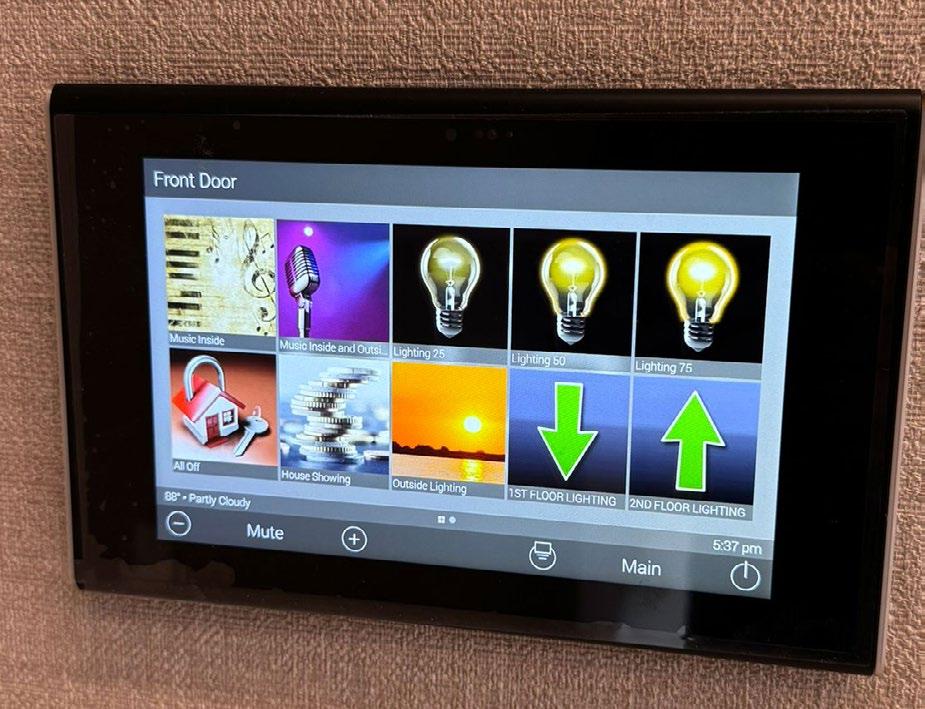
is announced when the button is pushed. The realtors hit the button, and that’s it. They do not need to touch anything else.”
The Realtor scene is programmed to set the stage for a unique buyer experience, and it includes all interior and exterior lights, plus a deep blue light for the pool. URC’s HDA plays jazz on the audio system both inside and out.
Nouri knows quite a bit about the evolution of the smart home, as he is proclaimed the creator of the first smart home by both himself and a 1989 article from the Los Angeles Times called, “The lights and the rest of the house are run by a talking computer named Alexander.” Yes, the system that the writer, T. W. McGarry, describes in that 36-year-old article is run by a voice-command assistant with a name that is remarkably close to the one most used today.
He has been honing his system, called “The Nouri Way,” for decades and is now able to build magnificent, strong (which is needed on the storm-heavy Florida coast), stylistic, and smart houses in only nine months from a cleared property to a finished project. He now plans to head to California’s Pacific Palisades with his team, including Lorick, to help rebuild the homes lost in the fires.
“Reconstruction is about more than just rebuilding walls; it’s about integrating everything — structure, technology, and design — into one seamless vision,” says Nouri, who is also a trained structural engineer. “That’s why I’m bringing my team there — to introduce a new era of smart, resilient, and beautifully integrated homes to the West Coast.”
BY KRISSY RUSHING TOMLIN
or any integration firm, process is crucial in all areas of your business — from sales to installation to accounting. A welldefined process can even help identify potential risks early in the project lifecycle to help your team anticipate and mitigate challenges. Spreadsheets and to-do lists holding hands isn’t a process that you can build a business around. While implementing process can be challenging because it requires a thorough examination of your business operations, the results are worth the effort.
We chatted with Jason Sayen, process architect at I Am Sayen, Doug Greenwald, owner of ProjX360 and HTA Certified integration firm Creative Sound & Integration, and Ryan Thomson, process implementation at ProjX360, to understand key areas where AV integrators can change their thinking or improve their processes for better business and greater profitability.
“Integrators must understand that if you don’t have good processes already in place, software and apps — any of them — will not magically fix your business,” says Greenwald. “What software is here to do is help guide and keep your processes in alignment. If you have processes in place, software is going to help streamline your business and make it more efficient, which in turn gives you a better bottom line.”
“If your process isn’t defined, you’re a slave to your tools,” adds Sayen. “Yes, you will have to bend your process to the software, but if you are forced to change your process completely, it’s not the right tool. Most integrators have tried multiple pieces of software before finding the one that works the best. That literally costs tens of thousands of dollars. Invest in defining your process first.”
According to Thomson, the AV integrators he onboards present a patchwork of software solutions — an average of nine pieces — to keep their workflows moving. “When they reach out to us, their goal is usually to eliminate many of those and use one piece of software as much as they possibly can.”
Change isn’t easy, and introducing new processes into your organization is both time-consuming and disruptive. “When you start to dive into documenting and improving process, many businesses can’t define the start or stop point, so it becomes overwhelming,” says Sayen. “Look at your business through the lens of your client’s journey and identify their touchpoints based on project milestones, phases, and departments/



functions. Doing this gives you a strategy to decide where to tackle process first.”
Onboarding new software for project management workflows and processes is a process in itself. “We don’t try to sugarcoat it, adopting new software is painful for businesses. But there is merit to the old adage, ‘no pain, no gain,’” comments Greenwald. “It takes a time investment to learn anything new. Process and project management software is no different.”
In fact, this is why ProjX360 offers a one-on-one demo and sandbox versus a free trial period. “You need to do the learning to see the benefits of the software, and that won’t happen during an unguided free trial.”
Sales is usually the first department involved in a project. Enabling the sales team with good process is therefore crucial for success. “A process of weekly meetings to discuss prospect status and proposal reviews with the team will catch potential issues with a project before it’s sold. This lets the entire team know what projects are in the pipeline and allows them to catch things before they become a problem in production,” says Sayen. “This way, sales can continue to sell and not get sucked into project management issues.”
Establish your sales process and use software to enhance and execute it. For example, ProjX360 has sales process templates inside its sales CRM called Activities. “You can make Activities due at standard intervals. If you add that Activity template to the salesperson’s pipeline, the software automatically populates dates for you. On those dates, you’ll get an automated email, so Activities don’t fall through the cracks, helping manage the sales process,” says Greenwald.
Process and project management is all about how teams work together. One project will likely be touched by every department and person at your integration firm, from sales to accounting. That’s why good project management processes pay close attention to how a project goes through its lifecycle and the handoff from person to person, team to team.
“Where are your handoffs? How are they communicated? And how do you tell somebody else it’s their turn?” Thomson asks integrators during onboarding.
“With most companies I interact with, the first breakpoint is not having a clearly defined process when transitioning a signed project into production,” Sayen adds. “Define when communication updates should happen and to who. Weekly meetings are the manual process where updates should happen. If you aren’t doing weekly meetings, start. No software will take their place. Once weekly meetings are established, you can see where software can fit in to manage daily updates.”
Selecting project management software that excels at communicating the handoff for all steps of the project is key. “ProjX360 connects all of these handoffs with workflow. The whole reason we exist is to keep that process in alignment for AV integration firms,” says Thomson.
For example, using the ProjX360 platform, if a salesperson is pushing a Proposal into a Project, the PM team is alerted, letting them know it’s their turn. The PM team will push Projects into Product Requests to tell Inventory it’s their turn. Then Scheduling will hand that off to the field. “Our software is designed for the AV workflow so you aren’t trying to fit a square peg into a round hole,” adds Greenwald.
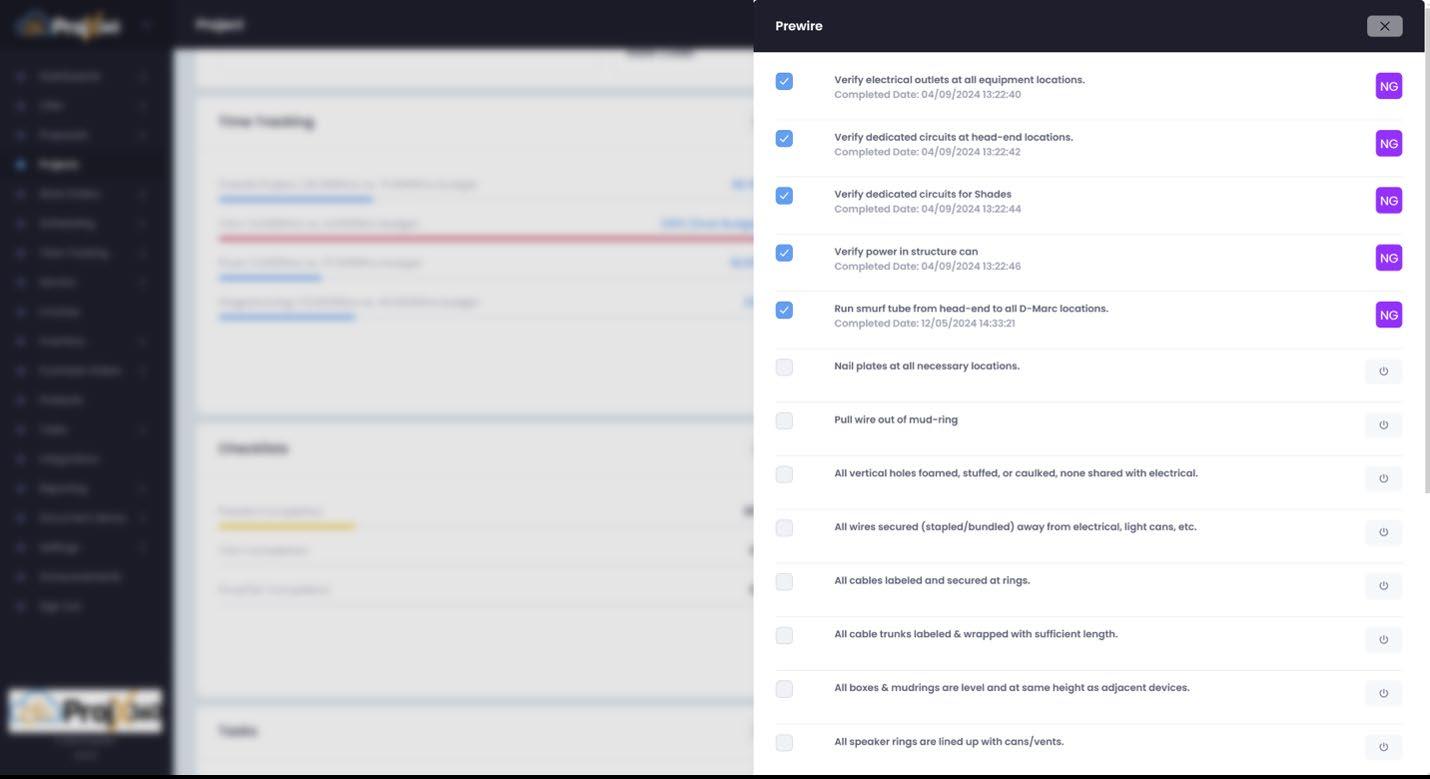
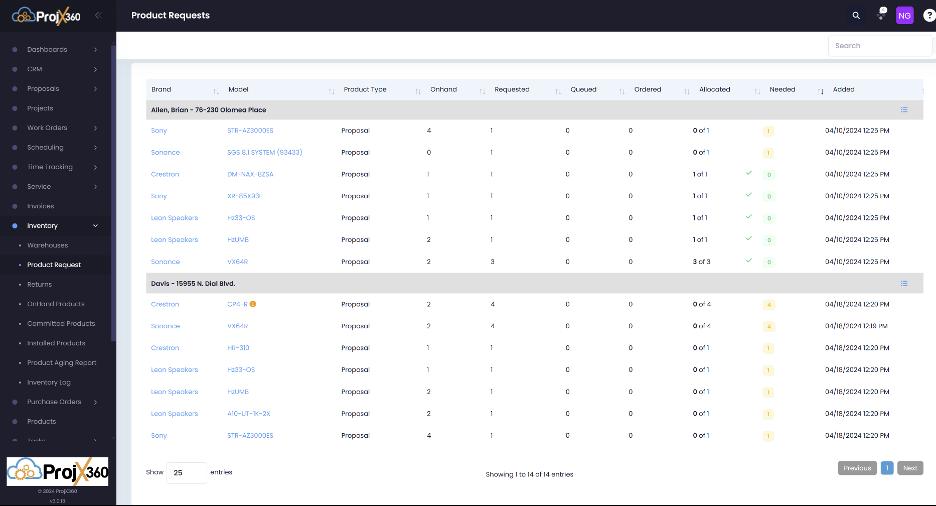
Poor scheduling processes are a gargantuan waste of manpower and money for AV integration firms. “Imagine you send a team out to do a job only to realize they’re missing product necessary for installation,” says Greenwald. “It’s a waste of an entire day, wages for your employees, gas, opportunity costs, and none of it is billable to the client because it’s your mistake. Now you have a day that was profitable replaced by a day that eats into profits.”
Putting a scheduling process in place and augmenting that process with good software is key. “Sit with the team and talk through the phases of a project,” Sayen notes. “Define those milestones on when product is received and how it should be communicated. It needs to be in sync with the PM because while you are in between phases and products are being ordered, they are checking the site status. Those two should update each other in weekly production meetings or via communication software. Again, have a process first and then find software that streamlines it.”
Scope creep in project management is where a project’s scope gradually
expands beyond the originally defined parameters, meaning new features, tasks, or requirements are added without proper adjustments to the budget, timeline, or resources, often leading to delays and exceeding project limitations. “There are two big perpetrators of scope creep for AV integrators: either the product changes and the cost goes up or labor increases. Anything within these two pillars will break down your job’s profitability,” says Greenwald.
“Usually scope creep happens because there either wasn’t a clear scope of work developed up front or because the handoff from sales to project management didn’t happen,” says Sayen. “If the project follows a defined scope-of-work process and then has a proper handoff to allow engineering and the PM to say, ‘Yeah, this won’t work,’ it will all get flushed out before it goes into production.”
Keeping in alignment with process, software can help identify and stop scope creep. ProjX360 shows scope creep in bright red. “It’s literally in your face on every work order and product detail page on the platform,” says Thomson. “You can’t ignore it.
Learn more about the products that took home this year’s prizes.
As we do each year, the staff at Residential Systems has named their Picks Awards winners for CES 2025. Only products that were submitted to the awards program were eligible to win; entries were judged based on their potential impact on the custom installation industry.
Here are the Residential Systems Picks Awards winners for CES 2025:
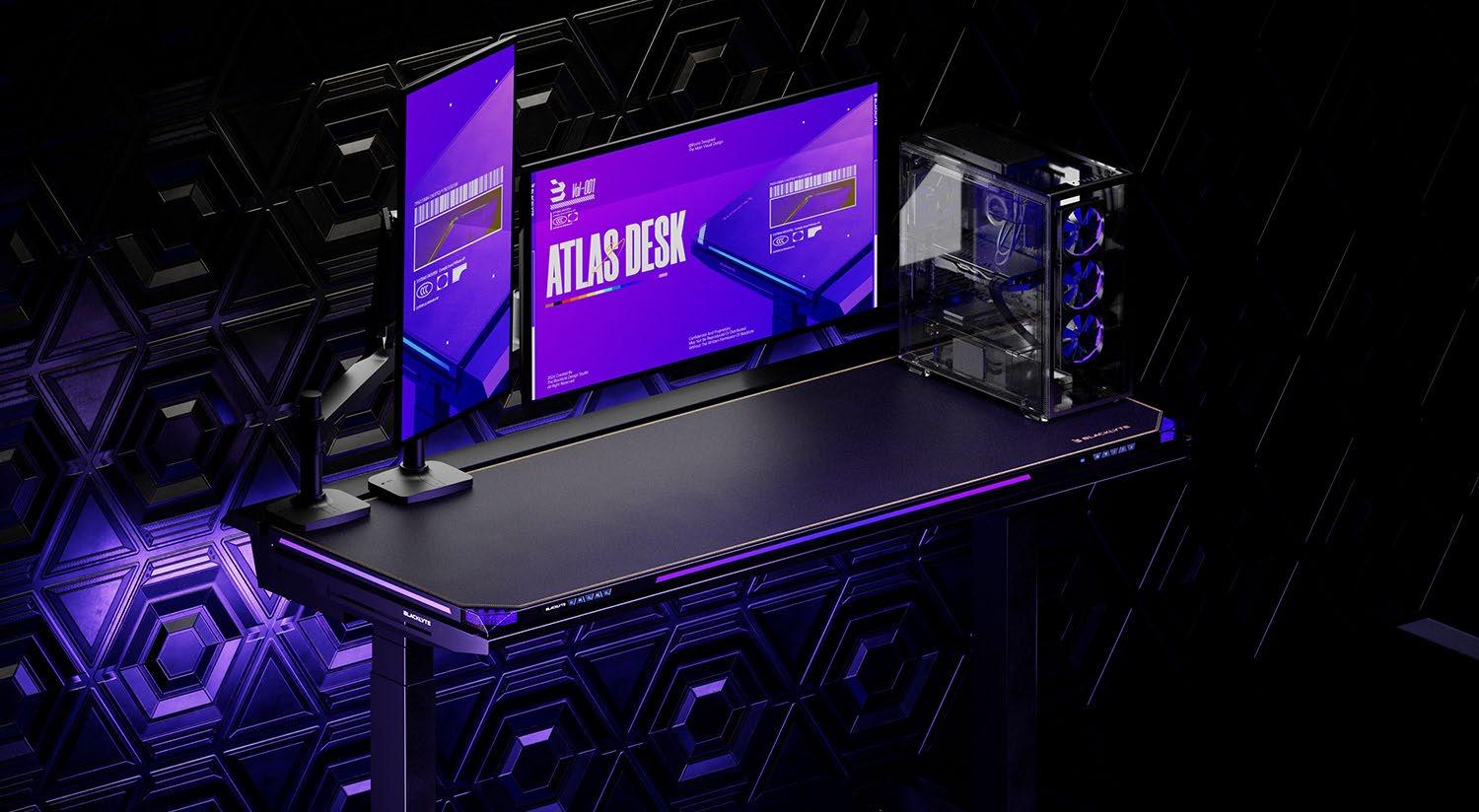
The Atlas Desk leverages advanced smart lighting software to synchronize in-game actions with dynamic lighting effects in real-time, enhancing user immersion and elevating the intensity of competitive gaming experiences. Additionally, the system incorporates intelligent scene recognition, automatically adjusting the lighting color palette based on on-screen content. This fosters an environment conducive to emotional regulation and relaxation, seamlessly blending functionality and user comfort.
Blacklyte has equipped the Atlas Desk with three core features: height adjustability, cable management, and algorithmic extensibility. These features address the diverse needs of users, ensuring a clean and organized workspace while delivering a convenient and immersive gaming experience.
More Info: https://blacklyte.com/products/blacklyte-desk
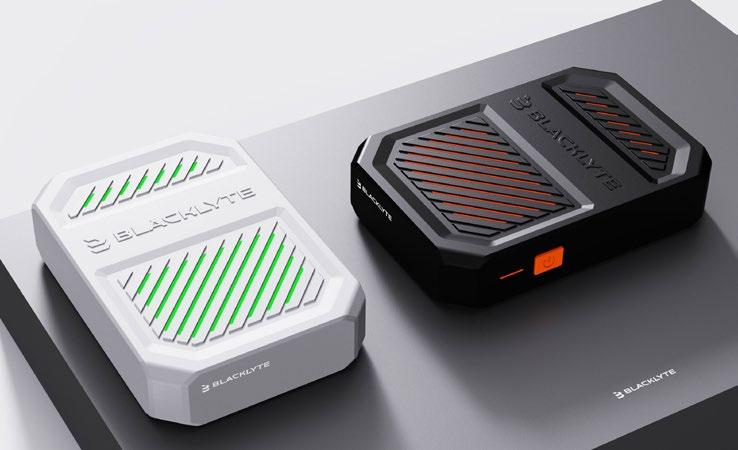
The G01 Intelligent Gateway revolutionizes e-sports by integrating screen and game-action synchronized lighting with both wired and wireless connectivity, offering real-time interactive lighting experiences. Built on the principles of “universal connectivity” and “algorithmic scalability,” it employs proprietary image processing and audio-visual algorithms to dynamically adjust lighting schemes based on screen content and ambient audio. Fabricated from durable ABS and PC materials, the G01 combines robust construction with minimalist aesthetics, characterized by angular lines and a tactile finish that complements any gaming setup. Beyond gaming, it functions as a smart device manager, connecting and controlling multiple peripherals to deliver seamless integration. The G01 evolves through edge-cloud collaborative learning, enabling advanced intelligent
assistant functions that adapt to user needs over time.
More Info: https://blacklyte.com
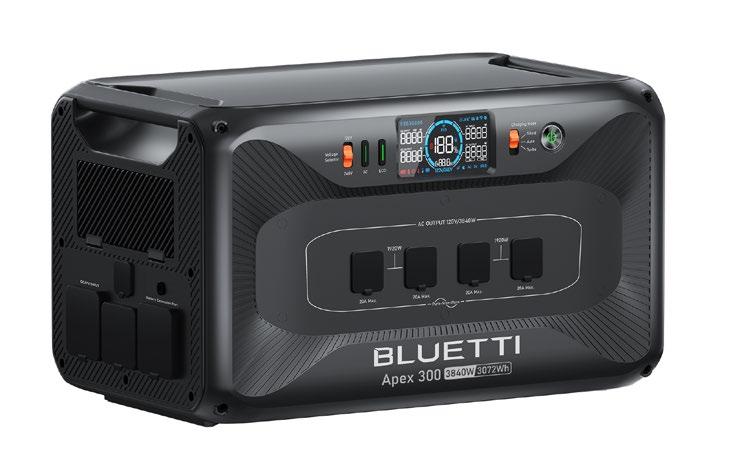
Featuring an intelligent Parallel-Expanding System, the BLUETTI APEX 300 home backup power solution supports simultaneous 120V/240V output, up to three parallel units, and 1 to 18 expandable battery packs. This enables a maximum power output of 11.52 kW and a 58 kWh capacity, capable of fully charging electric vehicles like Tesla and supporting heavyduty devices with ease.
Powered by Turbo Boost Charging technology, the APEX 300 charges from 0% to 80% in 45 minutes and offers versatile charging options, including AC, solar, EV station, car. As a powerful PV-charging off-grid backup device, it supports up to an impressive 30,720 watts of input, providing reliable and ultra-fast charging.
More Info: http://www.bluettipower.com
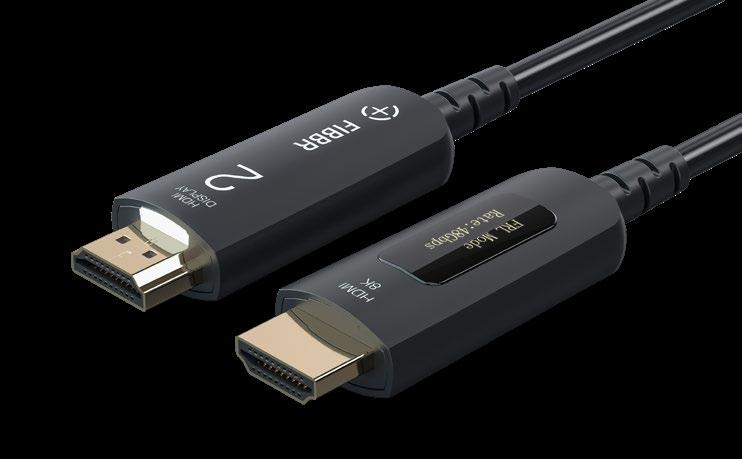
The FIBBR self-developed Ultra Pro3 active optical fiber cable transmitter features a distinctive digital display screen, offering plug detection, highspeed signal detection, HPD (Hot Plug Detection), and fixed rate detection (only supporting HDMI 2.1 device rate detection in FRL mode). Users can grasp the cable connection status and real-time transmission rate by viewing the LED screen and accurately differentiate whether “HDMI 2.1” adopts the TMDS or FRL protocol.
As a genuine HDMI 2.1 FRL cable, FIBBR Ultra Pro3 fulfills all the features and functions of HDMI 2.1, such as a 48 Gbps high bandwidth, 8K@60Hz/4K@120 Hz resolution, and the support for Dynamic HDR, ALLM, VRR, QFT, QMS, eARC, and more.
More Info: http://fibbr.com/products/home-theater/HDMI_Ultra_Pro3. html
Building on the success of the L9 Series, the Hisense L9Q TriChroma
3 4 5
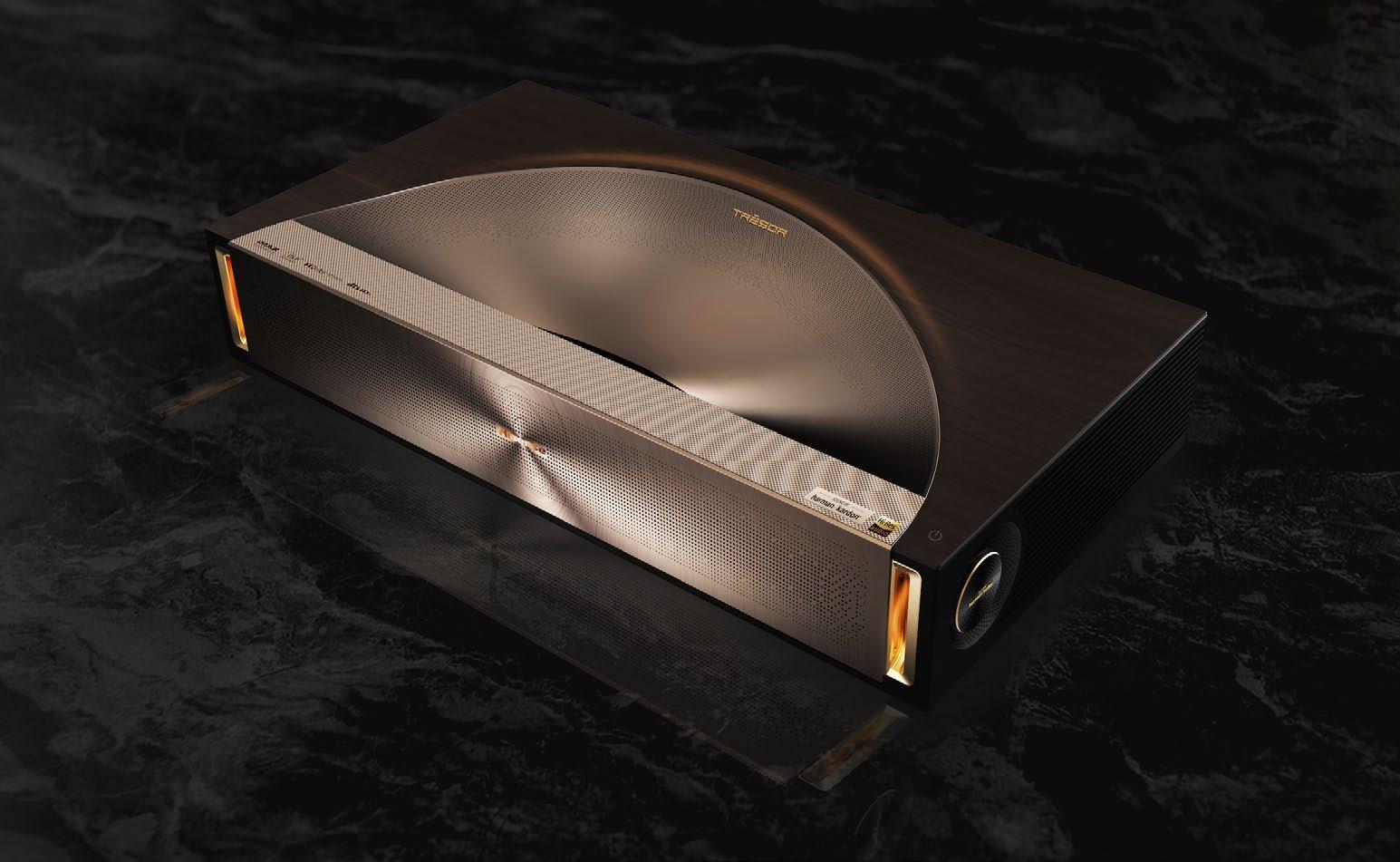
Laser TV advances Laser TV technology with a new 0.18 throw ratio and 4000 lumens of brightness, covering 110% of the BT.2020 color space coverage for color accuracy and vibrancy. Its TriChroma triple laser light engine delivers crisp, lifelike visuals, with a native contrast ratio of 3000:1, ensuring every scene is filled with breathtaking detail.
Every L9Q comes with a paired Ambient Light Rejection (ALR) screen, available in sizes up to 150 inches, making it adaptable for any space or lighting condition. The ALR screen enhances brightness and clarity, even in brightly lit rooms, allowing for a theater-like experience in all environments. For the first time, the L9 features an auto screen alignment and advanced keystone correction rather than a fixed ratio to allow for multiple screen sizes and effortless installation.
With Dolby Vision, HDR10+, and HLG, along with the industry’s first 6.2.2 surround sound system, the L9Q creates a cinematic experience that rivals professional theaters.
More Info: https://www.hisense-usa.com/projectors
The Jackery HomePower Energy System is designed to provide homeowners with energy independence, combining cuttingedge technology with an intuitive, user-friendly design. This permanent, grid-tied energy storage solution reduces reliance on the grid, cuts down on soaring energy costs, and can operate both with or without rooftop solar.
The HomePower is equipped with a high-voltage battery system designed to provide safe and scalable
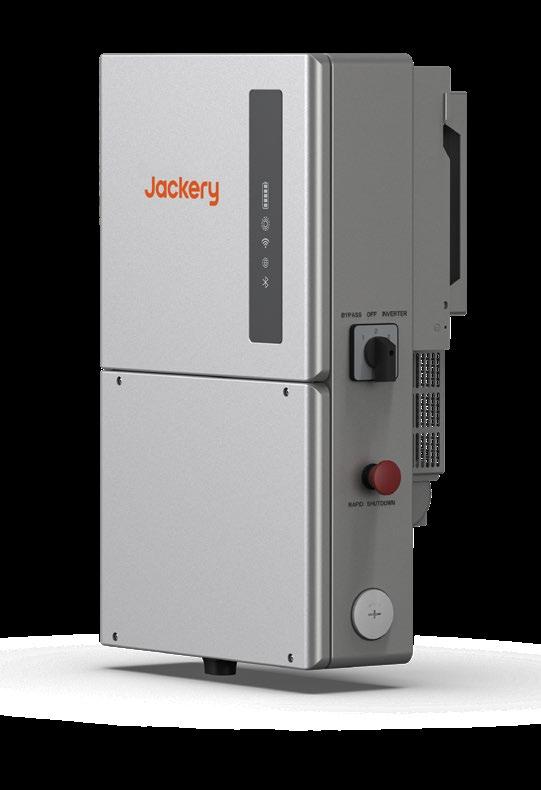
energy storage to fit your home’s needs. The modular design allows for a quick and easy installation process, with individual stacks ranging from 7.7 kWh to 15.4 kWh and the ability to connect multiple units to achieve a total system capacity of 123.2kWh per inverter.
The HomePower’s hybrid inverter is a smart and flexible product designed to operate with high-voltage batteries in on-grid or off-grid modes. It offers different modes of operation to best suit energy requirements and provide maximum operational efficiency.
More Info: https://drive.google.com/drive/ folders/1j4gRM31HtIlbpxzgPXrymtI4SlECrCLE?usp=drive_link
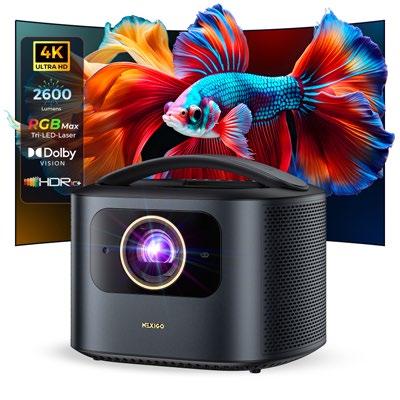
The NexiGo TriVision Ultra is a high-performance, portable 4K projector boasting patented Tri-LED-Laser light source technology with an 4ms low latency. This innovation combines the benefits of tri-color LED brightness and tri-color lasers, resulting in a broader color gamut, pinpoint color accuracy, and enhanced brightness. Its elegant design breaks away from the traditional projector shape, adapting seamlessly to various home styles.
More Info: https://www.nexigo.com/trivision
The Nice voice assistant offers a seamless, intuitive, and secure experience. Built natively into the trusted Nice Home Management platform, this solution eliminates the complexities of third-party integrations, delivering speed, reliability, and data privacy. With Nice voice assistant, users can control their media, cameras, climate, lighting, security, and more with intuitive ease.
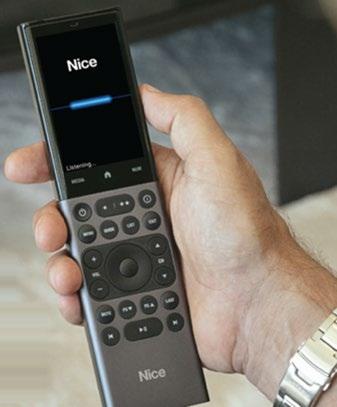
Context-awareness is at the heart of the Nice voice assistant. It understands user location and device preferences, enabling intuitive and natural language control. Interfaces can be associated with a location or a media zone, allowing users to issue a command without an explicit location or unique device name. Homeowners can personalize their experience with the ability to choose between male and female voices and customize acknowledgment sounds, putting them in complete control. And, with continuous over-the-air updates, Nice voice assistant is constantly evolving, adding new features, language support, accent comprehension, and an overall smarter voice control experience.
More Info: https://na.niceforyou.com/products/smart-home/nice-voiceassistant/
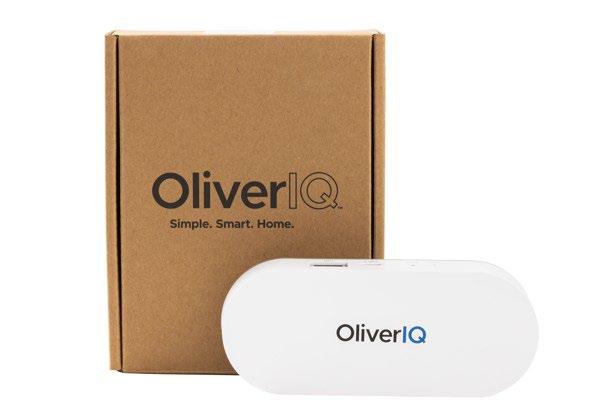
OliverIQ is a smart home as a service (SHaaS) platform that unites all the connected devices in the home in a single, user-friendly app, backed by unlimited AI-powered service and support. Consumers and home automation installers can quickly and easily add, control, and automate virtually any device from today’s leading manufacturers. OliverIQ includes complete home automation, live security monitoring, remote device monitoring and management, and comprehensive customer support — all for a low monthly fee.
More Info: http://www.oliveriq.com
The Samsung Neo QLED 8K (QN990F) TV is packed with several firsts. It features Samsung’s Glare-Free technology for the first time on an
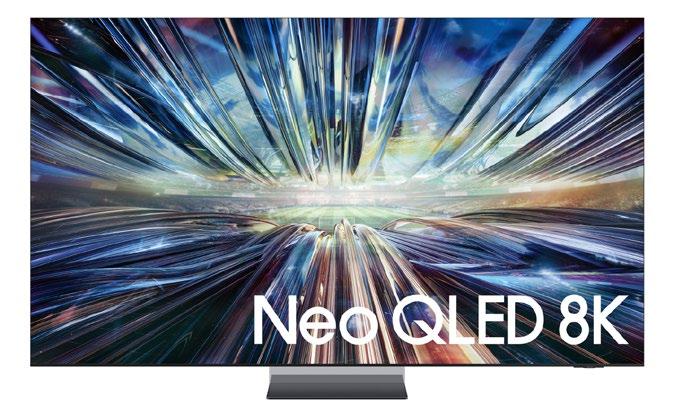
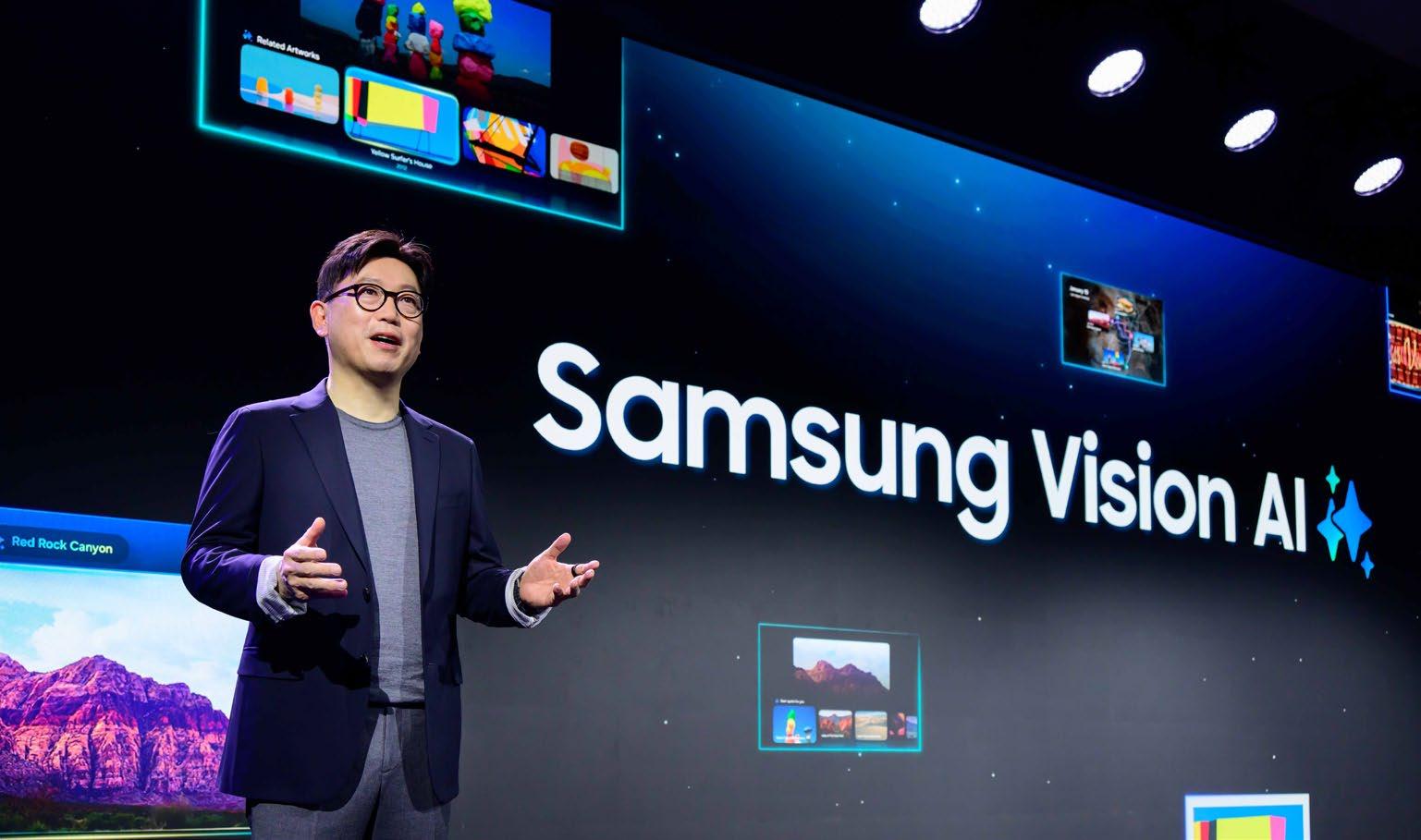
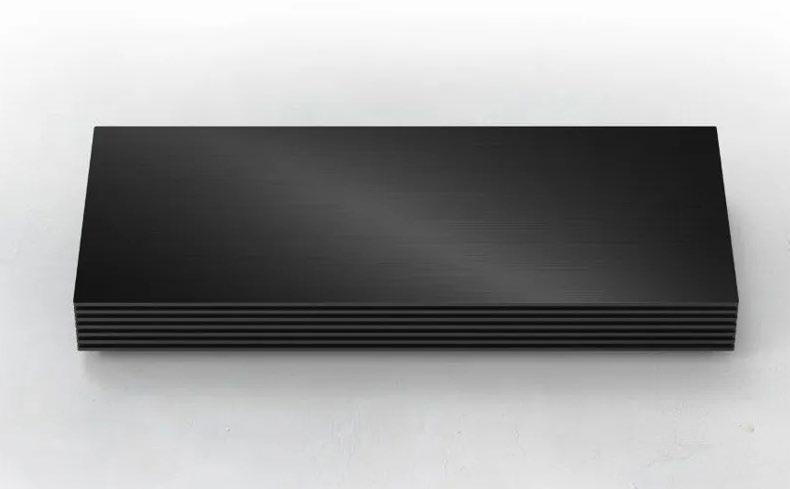
8K TV. It also debuts an all-new Wireless One Connect Box, which leverages Wi-Fi 7 and Omni-Directional Technology to transmit wirelessly from up to 10 meters away, even with obstacles in its path. It doesn’t even need to face your TV to transmit an 8K resolution at up to 120 Hz. Plus, QN990F owners will have access to the Samsung Art Store, providing a gallery-like experience with thousands of pieces of art from renowned museums and institutions all across the globe. Its upgraded NQ8 AI Gen 3 processor delivers a realistic 8K picture — upscaling anything you watch, even SD/ HD classics — into brilliant 8K resolution.
More Info: https://news.samsung.com/us/
Across the 2025 Samsung TV lineup, AI delivers more than just great picture quality. It powers great experiences that make your day simpler, more dynamic, and more fun. Click to Search helps you learn more about what you watch — from actor filmographies to scene locations and more. Samsung’s AI processor automatically recognizes what’s on screen and provides information tailored to you, in realtime. Just use the new AI button on your SolarCell remote to dive in and get learning.
AI will enable new security and accessibility features on 2025 Samsung TVs. Samsung AI Home Security transforms your TV into a smart security hub. It analyzes video feeds from your connected cameras and audio from your TV’s microphone to provide comprehensive home monitoring. It can detect unusual sounds and movements, such as falls or break-ins, to give you more peace of mind whether you’re at home, or away. You’ll receive alerts and notifications on your phone or directly on your TV screen, helping you stay connected to your home while ensuring the safety and well-being of your loved ones.
More Info: https://news.samsung.com/us/
The Samsung Wireless One Connect Box represents a major leap forward in user experience, design flexibility, and seamless installation. It allows you to easily store bulky devices and unsightly cables up to 10 meters away, giving you more choice of where to mount your TV and how to curate your space. Previously, the Samsung One Connect Box relied on a thin, translucent cable that, while inconspicuous, still required a direct connection to the TV. By contrast, the Wireless One Connect Box wirelessly transmits video and audio signals straight to your TV for a completely cable-free experience never before possible on a Samsung TV. It can even transmit with obstacles in its path, thanks to Omni-Directional Technology supported by Wi-Fi 7. Plus, its smaller and even more discrete than its predecessor.
More Info: https://news.samsung.com/us/
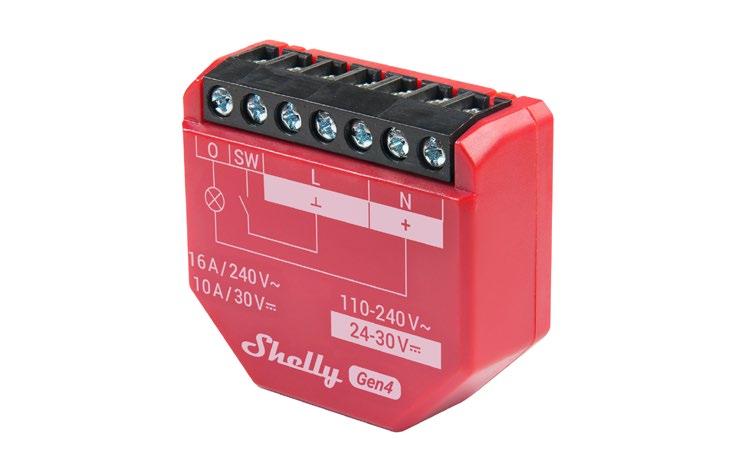
The Shelly 1 PM Gen4 Mini is the world’s smallest relay, designed to automate lights, garage doors, irrigation systems, and small appliances with installation and setup in under 10 minutes. Now with multi-protocol support for WiFi, Bluetooth, Zigbee, and Matter, the Shelly 1PM Mini Gen4, delivers versatile smart home automation coupled with unparalleled performance in a remarkably compact form.
At 35% smaller than other relays, the Shelly 1PM Mini Gen4 fits perfectly behind switches or sockets, making it ideal for retrofit projects even in the tightest spaces. Its advanced processor ensures secure, efficient performance, while its integrated energy management system delivers detailed, real-time power monitoring, empowering users to track energy usage, identify inefficiencies, and reduce costs. The Shelly 1PM Mini Gen4 also enables advanced features like scheduling, synchronization, and scene control giving users the ability to customize and streamline their energy management and home automation.
More Info: https://us.shelly.com/
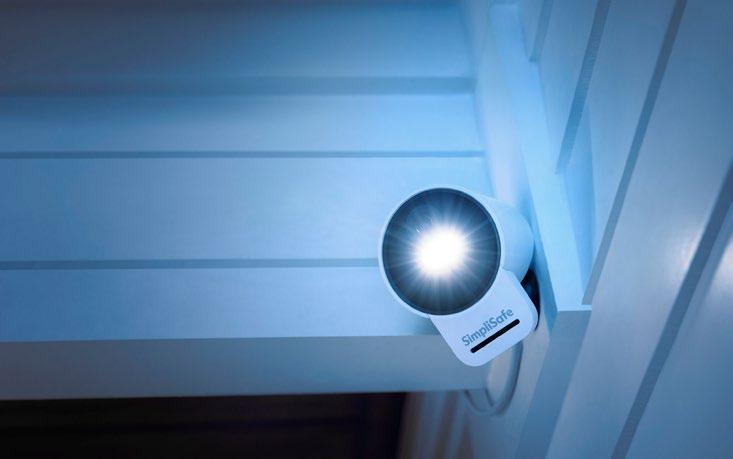
SimpliSafe’s Outdoor Security Camera Series 2 With Active Guard Outdoor Protection is designed to help prevent crime before it happens through a unique combination of edge and cloud AI with live SimpliSafe security agents. First, the Outdoor Camera uses edge AI to detect human movement approaching the home. The camera is intelligent enough to discern between a person walking toward the home versus a car passing by or dog running around. When a person is detected, the service then uses AI in the cloud to determine if the person matches a “familiar face” profile saved to a customer’s account.
The face matching assessment is sent to a SimpliSafe security agent, who ultimately determines if the individual on camera matches a familiar face saved to the customer’s account. If the person is unrecognizable, the agent will engage and intervene using two-way audio. If needed, the agent can trigger the camera’s 90 dB siren, turn on spotlights, and even request police dispatch, all while capturing video evidence.
To ensure that video recordings and familiar face profiles remain private and protected, SimpliSafe only allows agents to review video recordings and familiar faces for a limited time when the system is armed and a possible threat has been detected. SimpliSafe also ensures all familiar faces are securely encrypted in transit and at rest. All customers can easily control data privacy preferences and delete data, such as video recordings and familiar faces through the SimpliSafe App.
More Info: https://simplisafe.com/outdoor-security-camera-series2?srsltid=AfmBOorPDxrrnOWirPmZDKRPiFLF_JbC-56F679axM0u_ rWXqqmW4UdI
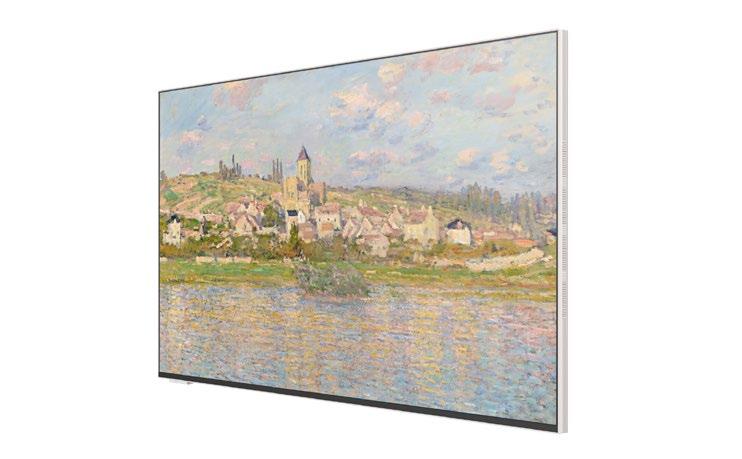
The Skyworth C1 Canvas Art TV is a blend of home decor and multimedia technology that is designed to enhance both the aesthetic and functional aspects of a living space. The C1 Canvas boasts a slim, elegant frame that allows it to mimic the look of a framed piece of art when not in use. With the ability to display a wide range of digital art, personal photos, or classic masterpieces, the C1 Canvas offers a customizable visual experience that complements the interior design of any home. The screen is engineered to deliver vibrant colors and deep contrasts, ensuring that whether you’re viewing dynamic video content or static art, the quality is exceptional. The C1 Canvas provides versatility and flexibility, serving as a focal point of a room’s design while providing entertainment, making it the choice to combine technology with style seamlessly.
More Info: http://www.skyworthusa.com/c1
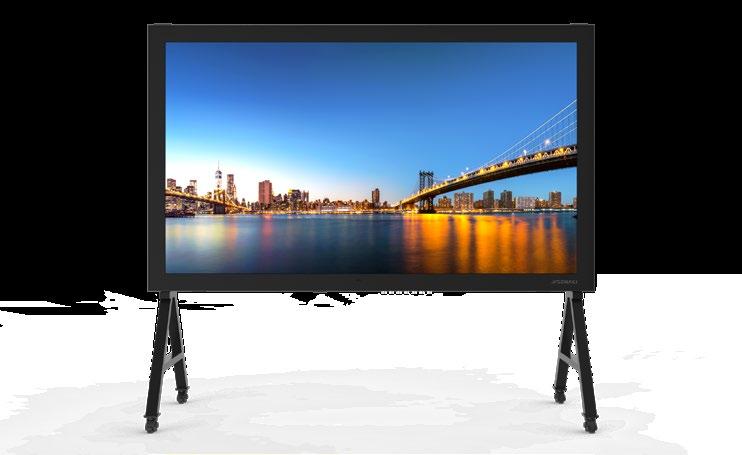
The SONAGI Helios features a dazzling 2000-nit UHD (4K) display that ensures an ultra-bright and vivid viewing experience even in direct sunlight. Ordinary TVs struggle outdoors, but the Helios thrives, delivering true-to-life colors, incredible sharpness, and brilliant contrast that make every image pop. Engineered to endure, this TV comes encased in a robust protective case paired with impact-resistant glass, offering resilience against accidental damage, impacts, or environmental elements. The Helios 108-inch TV is also equipped with advanced anti-glare technology that minimizes reflections and enhances visibility. With an IP65 weatherproof rating, this TV is expertly sealed against dust, moisture, and water. Experience endless entertainment options at your fingertips with webOS, the intuitive and user-friendly smart platform pre-installed
on the SONAGI Helios TV. Stream your favorite content effortlessly via popular apps like Netflix, Hulu, Amazon Prime, YouTube, and more. Builtin Wi-Fi connectivity ensures a seamless streaming experience, while easy navigation lets you switch between apps, settings, and live TV with ease.
More Info: http://www.sonagi-electronics.com
With a symphony of advancements to the driver, amplifier, DSP, and new auto EQ room correction, SVS SB17-Ultra R|Evolution unleashes breathtaking low frequencies with massive impact, convincing musicality, unerring accuracy, and pinpoint control. Starting with the driver, it was a ground-up process engineering the largest, most formidable driver ever deployed in an SVS subwoofer. To ensure stable transfer of electromagnetic current from the dual-mono amplifier to the 55-pound toroidal ferrite magnet motor, SVS designed the first ever 8-inch dual-voice coil resulting in effortless output with exacting control over the 17-inch driver. Copper clad aluminum voice coil wire combines the best properties of both elements, yielding ideal thermal capacity and magnetic field strength in the motor.
The all new high-excursion 17-inch driver features a glass fiber composite cone, long-throw catenary SBR rubber surround, and toroidal ferrite electromagnetic motor capable of generating massive sound pressure levels far below the threshold of human hearing, with frequency response accuracy and acoustic linearity.
Generating the sonic muscle behind the most powerful and highestfidelity SVS subwoofers ever is a unique dual mono-block STA-2800 Class-D amplifier design with MOSFET output stage. Each amplifier drives one of the dual voice coils to double the power into the motor while asserting pinpoint control and maximizing output potential. Eight 60 Amp 200 Volt MOSFETs deliver extreme high current for reference-level output
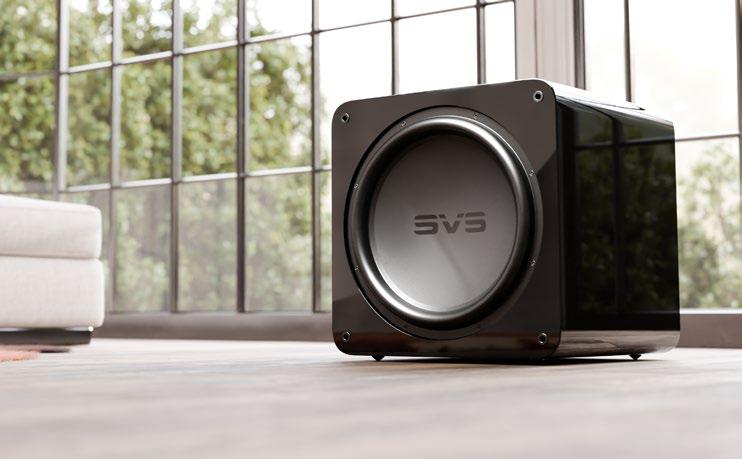
with maximum efficiency.
More Info: https://www.svsound.com/products/sb17-ultra-revolutionsubwoofer
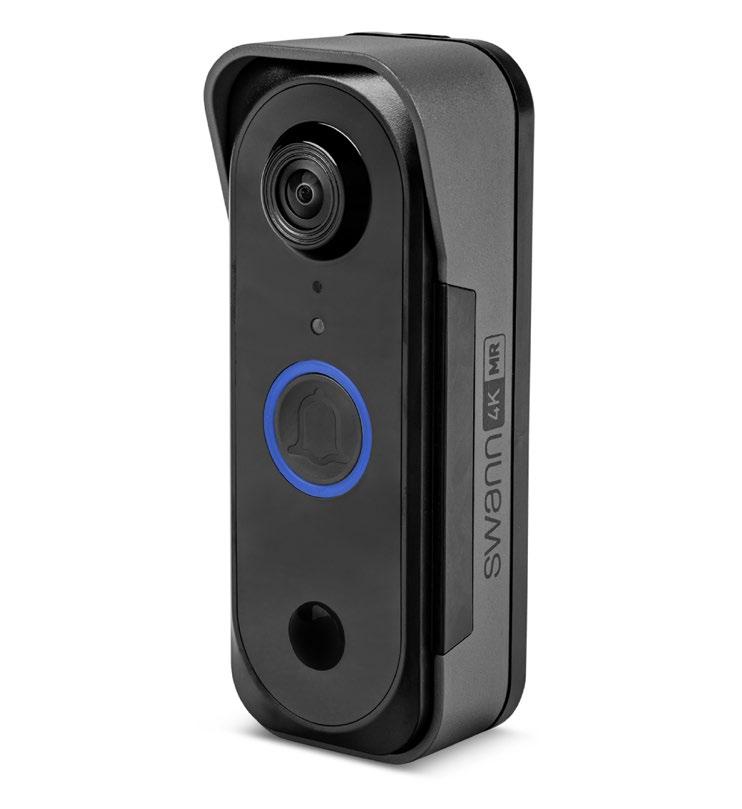
The Swann Security MaxRanger4K Video Doorbell features longer wireless HaLow transmission — up to 1000 feet/300m — that can reach doorways, gates, entrances, etc.. It also includes the SwannShield AI Voice Assistant that can answer the door for you like it’s a real person. It is designed for large homes and can be positioned at the doorway, gate, or entrance.
More Info: https://us.swann.com/
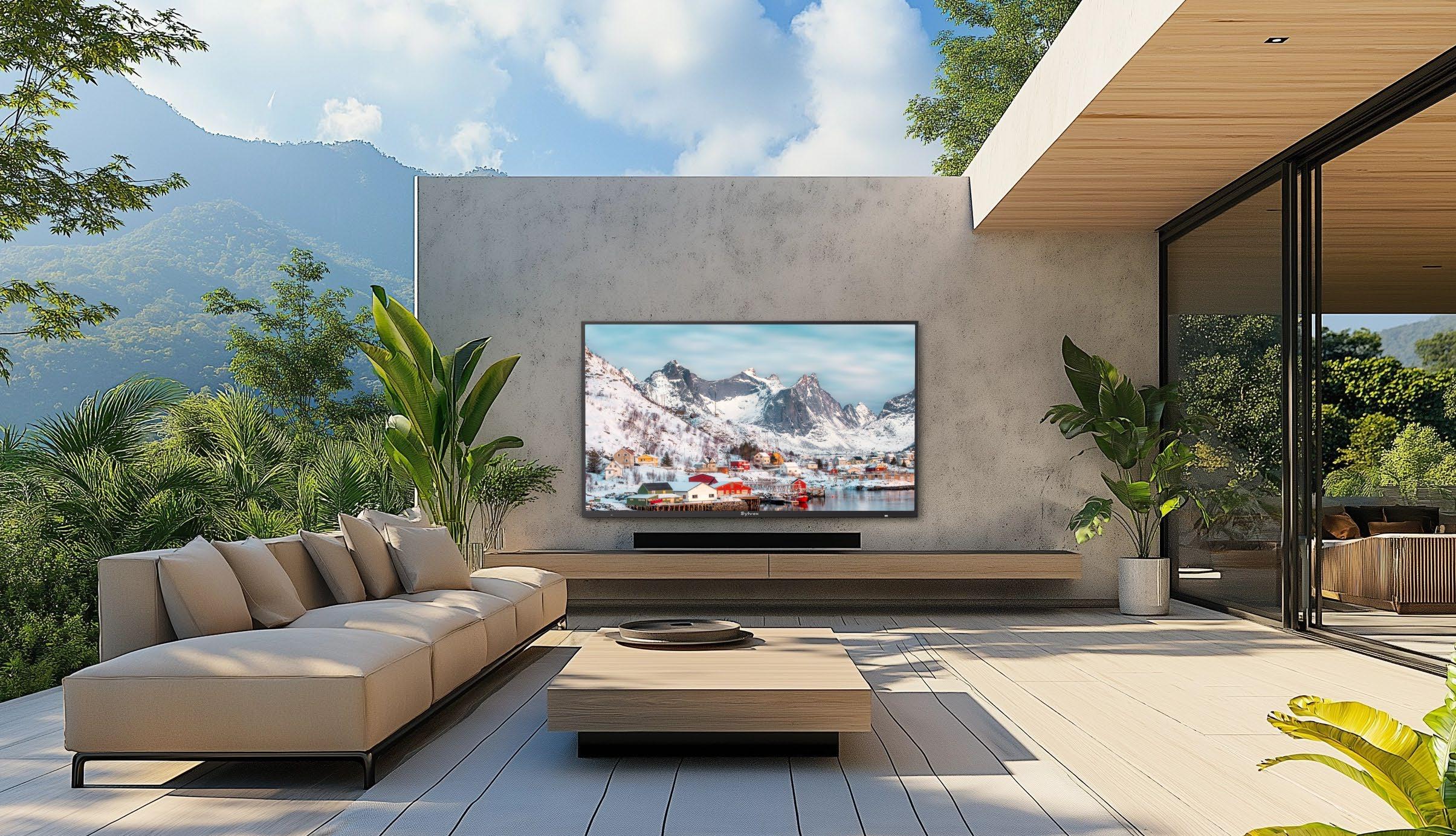
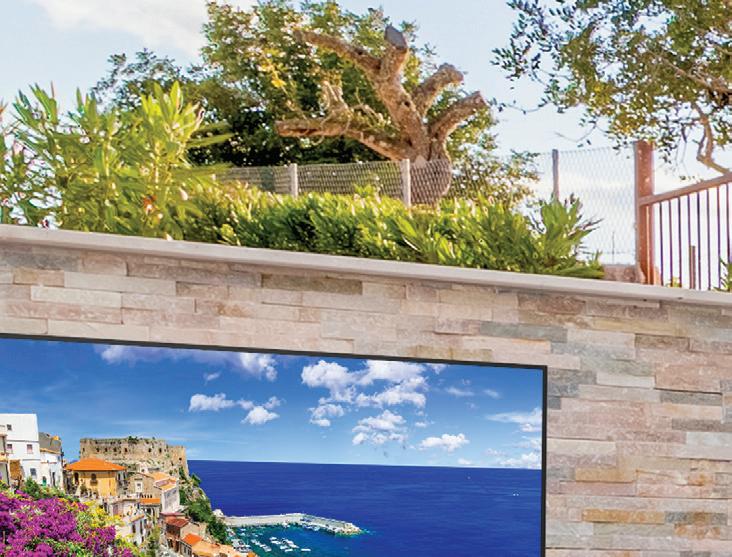
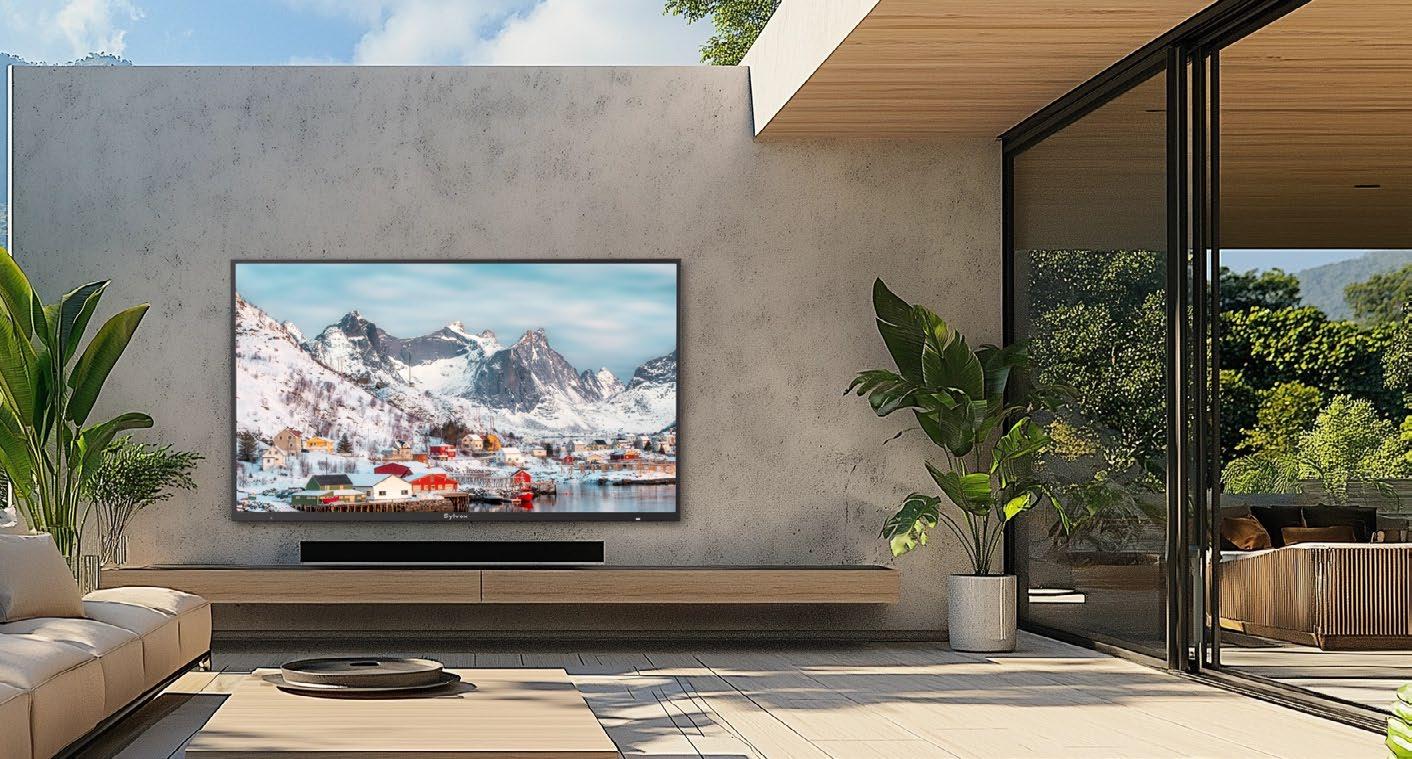
The world’s largest outdoor TV, combining proprietary Helio QLED technology, an ultra-bright 5000-nit display, and an IP55 weatherproof rating, redefines what’s possible under the open skies. Built to perform in any season, it endures extreme temperatures from –22 degrees F to 122 degrees F (-30 degrees C to 50 degrees C), ensuring year-round reliability with professional-grade durability on the hottest days and the coldest nights. Premium features include 4K Ultra HD resolution and an anti-reflective matte screen for crystal-clear viewing, even in direct sunlight. A 120 Hz refresh rate and ultra-low latency (<8ms) provide smooth, responsive performance, perfect for action-packed scenes or gaming. Theater-quality 60-watt dual-speaker Dolby Vision and Dolby Atmos, with built-in Google TV, ensure immersive entertainment for everyone.
More Info: https://www.sylvoxtv.com/
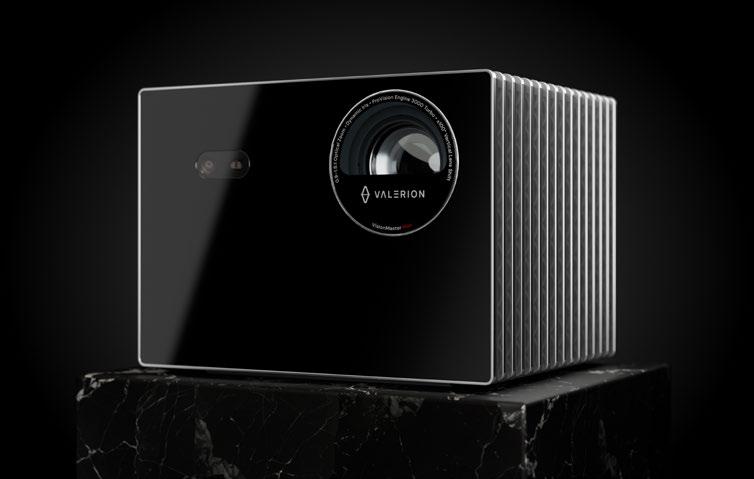
The Valerion VisionMaster Series is an RGB laser projector that is powered by the ProVision Engine, making it the first lifestyle projector to combine advanced RGB triple-laser technology, a professional-grade lens system, and the state-of-the-art MT9618 AI-SoC chipset for true cinematicgrade imaging. Offering 4K UHD resolution, 3000 ISO lumens, a 110% REC 2020 color gamut, and a 15,000:1 contrast ratio — all enhanced by proprietary Enhanced Black Level (EBL) technology — it ensures vibrant, detail-rich visuals with true-to-life colors. EBL deepens dark scenes to reveal even subtle details for an immersive experience.
The OpticFlex Lens System adds flexibility with ±100% vertical lens shift, 0.9-1.5:1 optical zoom, and dynamic iris control, making installation straightforward and preserving image quality without digital zoom. As the first projector powered by the MT9618 AI-SoC chipset, VisionMaster
offers lightning-fast performance for movies and gaming, with MEMC 4K at 120 Hz for ultra-smooth visuals. It also supports expansive 21:9 and 32:9 aspect ratios and features ultra-low input lag (4ms at 1080p @ 240 Hz), making it perfect for gaming. Built-in Google TV+ provides instant access to top streaming platforms like Netflix, YouTube, Amazon Prime Video, Disney+, MAX, Hulu, Apple TV+, and Paramount+. VisionMaster integrates seamlessly with Alexa, Google Home, and Apple HomeKit for smart home compatibility.
More Info: https://www.valerion.com/de/visionMaster
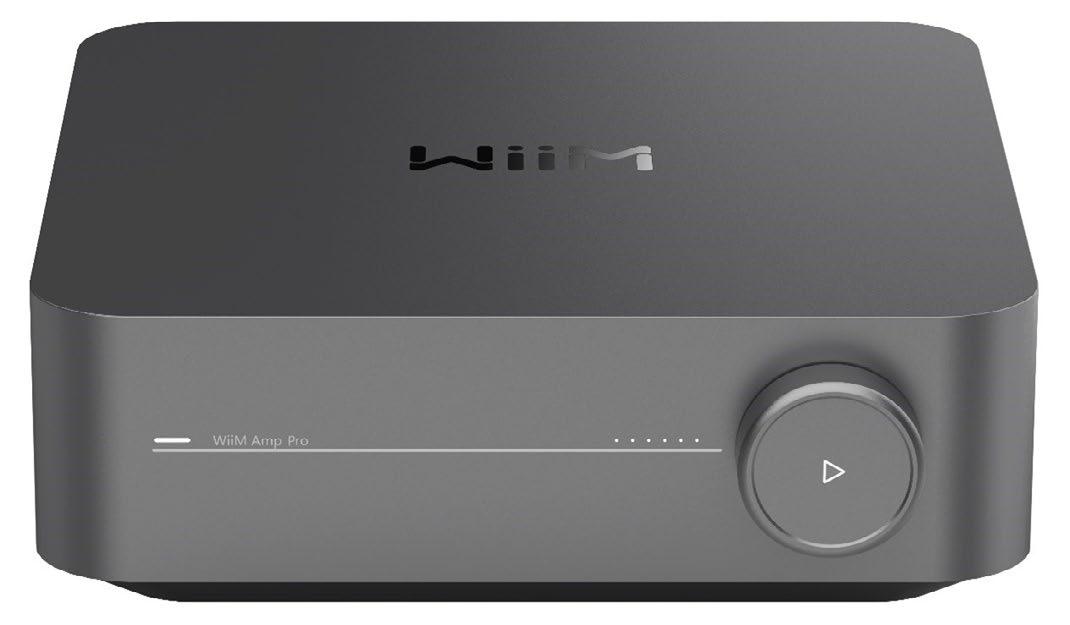
The compact WiiM Amp Pro boosts the sound quality to a new level and features the latest Wi-Fi 6E and BT 5.3 with BT LE audio support, providing rock solid wireless connectivity needed for most demanding HiRes audio streaming. Seamlessly integrate the WiiM Amp Pro with your classic passive speakers, your cinematic TV setup, or even your vintage recorder player for effortless audio streaming. Use the WiiM Home App to play music from your favorite music services, or straight from your go-to music app. Go hands-free with voice commands via Alexa, Google Assistant, or Siri — all in the highest possible sound fidelity. Packing 60 watts per channel at 8 ohms, or 120 watts per channel at 4 ohms, this amplifier can power up to four speakers. Built-in room correction takes precise acoustic measurement of your room, creating customized correction for your speaker and subwoofer. Enjoy gapless music playback, supporting up to 24bit/192 kHz quality.
More Info: https://www.wiimhome.com/wiimamp/overview
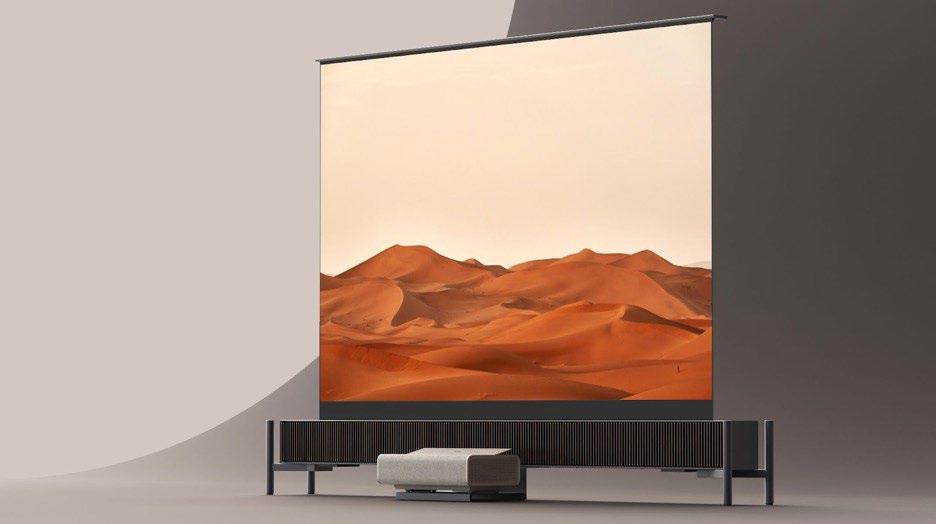
XGIMI Ascend is a concept product unveiled at CES 2025, merging a motorized Ambient Light Rejection screen with premium Harman Kardon soundbars for a seamless home entertainment experience. The motorized 100-inch ALR screen offers two modes: a full cinematic display or a reduced height for a cozy, fireplace-like ambiance. Its wide viewing angle and ambient light rejection ensure clear, vibrant visuals in any lighting.
Designed to pair with XGIMI’s AURA 2 ultra short-throw projector, Ascend creates an all-in-one home cinema. AURA 2 features motorized lens covers, 4K resolution, and Dolby Vision, complemented by built-in Harman Kardon speakers enhanced with Dolby Atmos for immersive sound. As a concept, Ascend embodies XGIMI’s dedication to innovation. Its spacesaving design merges high-end visuals and premium audio into a single unit, setting a new standard for home entertainment.
More Info: https://us.xgimi.com/pages/xgimi-ces-2025-elevate-yourhome-entertainment
As home networks get more burdened, industry manufacturers, service providers, and integrators work to make sure they remain robust and dependable.
By Karen Mitchell
f you build it, they will use it — and use it a lot — so your home networks have to be bulletproof and well-maintained. One way to do this is to design the system as if nearly everything is connected to the network because it is.
“From the outset, we prioritize a thorough assessment of the client’s current and future needs,” says Anthony Cotignola, COO, Audio Video Systems, Inc. a Cleerline dealer. “This includes identifying the number of connected devices, bandwidth demands, and potential growth over the years. Our design includes enterprise-grade networking equipment, proper heat management, and scalability to ensure long-term reliability.
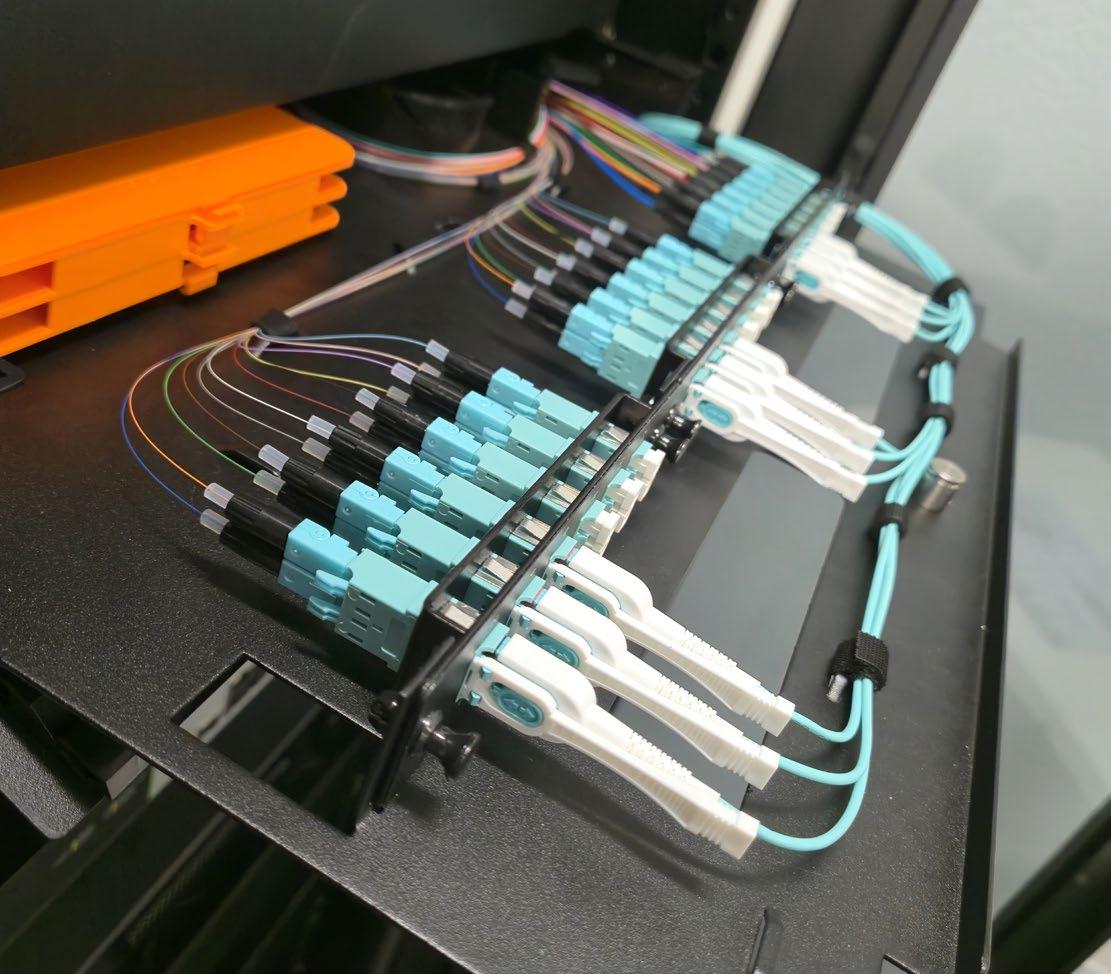
“Cleerline’s advancements in fiber-optic solutions are game-changers,” he adds. “Their complete fiber-optic line makes installing and terminating fiber far more efficient and profitable.”
“First things first, don’t let the tail wag the dog,” advises Ryan Bottini, product marketing manager, Vaddio and Luxul. “Your network will certainly be impacted by the layout of your space and the materials used throughout
the building. However, the priorities in any project should be first and foremost the user experience of the client. Aesthetics, comfort, and function trump all else.”
To ensure your network accommodates the project design, be sure to choose access points with the highest strength signals, he says. “Luxul always specs its access points to have the highest signal output current regulations will allow. Perform a site survey during installation to ensure adequate coverage; we go in-depth on site surveys. If you’re feeling unsure, consult an expert. Luxul offers free design consultations that are backed by a guarantee.”
For the time being, Bottini notes, Luxul is focused on optimizing its WiFi 6 product line. “We believe standardizing on this protocol offers the best solution for the vast majority of our customers,” he says. “Until Wi-Fi 7 becomes standard on all of the internet-of-things devices in our homes, it offers little benefit above prior protocols.
“In 2024, Luxul launched a new Wi-Fi 6 access point, the AP-3064. It features as robust a signal strength as you’ll find in the market, and its new

Delivering valuable and reliable content is the smartest way to engage and inform your audience
Future B2B merges decades of expertise with the nimbleness of a startup. Our established brands, like SmartBrief, ActualTech, and ITPro deliver expert-led niche newsletters, cuttingedge advertising solutions, pipeline-enhancing lead generation, and unforgettable live and virtual events.




Future B2B’s qualified audiences spans 16 industries, 200+ newsletter and nearly 10 million leaders.
Benefit from Future B2B’s proprietary email platform to reach a targeted audience in a brand safe, contextually relevant environment.
Optimize your campaign with direct access to your FutureB2B account management team.
Gain access to a secure portal to view campaign results, including company and persona-level engagement.


user interface makes installation simple. In addition, we’ve enabled it to support up to two AP-3064s to connect wirelessly to the network and function as bridge extenders, providing flexibility in network design. In 2025, we are expanding the product line with an outdoor AP, a new templatized user interface for even easier network installation, a 10G managed switch, and a light-managed, small-format switch.”
“The process at Access Networks has always been to plan, plan, plan,” says Bryce Nordstrand, VP/GM, managed services, Access Networks. “To do so, there are many questions that need to be answered prior to selecting or installing any network products, including: How many devices are going to be connected to the network, both wired and wireless? How much area and what kind of area needs to be covered with Wi-Fi? Are floor plans available? Is PoE required, and, if so, how much PoE wattage will be needed to support the PoE-powered devices? What is the Internet Service Provider’s service type and speed? Is there an expectation of parental controls or deeper cybersecurity service for the project? What is the service-level agreement with the home or business owner? Is there any need to segregate traffic on the network? What is the owner’s expectation of downtime versus uptime?
“These are just some of the questions that need to be considered,” he continues. “This is why, as part of the Snap One/ADI combined business, we have a team of professionals ready and willing to help our customers navigate the complex and ever-evolving world of network solutions. We always approach every project with a fresh set of eyes, because no home and no project are ever the same. What worked last time may not work this time, and evaluating each project on its own can save a lot of headaches and lost revenue. Access Networks is committed to expanding access and options for customers by providing networking options for a wide variety of projects.”
Access recently launched its new A770 Wi-Fi 7 access point, which is a highcapacity, tri-band concurrent wireless access point that supports up to 1024 clients and contains over 4000 dynamic antenna patterns. “Wi-Fi 7 offers clients unprecedented speeds, reduced latency, and even greater reliability than previous generations to elevate their experience in even the most demanding environments,” Nordstrand says. “Combining this with patented technologies like BeamFlex+ adaptive antennas and our limited lifetime warranty, the A770 provides customers with a truly advanced solution for any client’s network needs.
“We are also rolling out a new platform experience for our ARCC cloudbased network controller that gives customers more features than before,” he notes. “After listening to our customer’s feedback, we have developed a new ARCC dashboard that offers a more intuitive interface and new capabilities like license and access point inventory management, greater visibility into financial and subscription statuses, better permissions and controls for their organizations, co-terming subscriptions by zone, and much more. Our team is excited to release this new dashboard to add to the existing benefits of ARCC that help improve customer’s network operations.”
One of the biggest challenges is helping homeowners and builders understand the complexities of home networking, says Adam Zell, owner, Boston Automations, a Blackwire dealer. “It’s essential to convey the importance of proper network design and investing upfront to avoid future issues, all while keeping the explanation simple and relatable,” he says. “Many people have grown accustomed to poor Wi-Fi performance from a single providersupplied gateway, unaware that significantly better solutions are available.” Boston Automations takes a comprehensive approach to ensure reliable
network and Wi-Fi performance. “We start by partnering with Blackwire Designs to create detailed Wi-Fi heatmaps using Ruckus access points mapped onto our CAD drawings,” Zell adds. “Next, we focus on equipping our technicians with strong foundational knowledge in networking, enabling them to confidently install and troubleshoot systems for optimal performance.”
Cody Crossland, vice president of sales & customer service, Blackwire Designs, says, “The chief concern for any installation is having a comprehensive plan based on a thorough assessment. An in-depth evaluation of the project requirements, including the number of devices, bandwidth demands, and future scalability, should be the first step. Networks should be designed to ensure adequate coverage and capacity while considering potential interference and device prioritization.”
Making sure the infrastructure being installed is built for reliability is another fundamental step. “Using enterprise-grade networking equipment, such as managed switches, access points, and robust cabling will establish a strong foundation,” Crossland says. “Implementing redundant systems and power backup solutions will prevent downtime and reduce truck rolls in the future. The security and easy management of the network is a third key consideration. Integrate network security measures from the outset, including VLANs if necessary for device segregation, firewalls, and strong encryption protocols. Ensure that the comprehensive plan includes ongoing monitoring and remote management to proactively address issues and maintain performance.”
Blackwire continues to innovate with its latest offerings, Crossland says. “The new Network Provisioning Service delivers pre-configured, labeled, and installation-ready networking gear, eliminating on-site setup and saving time. The VideoWall Pro app, the first for Control4 systems, provides intuitive video wall management from a single screen. Other highlights include the AV-over-IP Preconfiguration Service for plug-and-play video distribution, the Blacklight app for easy linear lighting design, and our Network Design Assistance and Predictive Wi-Fi Heatmap service, enabling enterprise-grade installations with ease. These solutions empower integrators to save time, reduce costs, and deliver exceptional results.”
TO WIRE OR GO WIRELESS, THAT’S THE QUESTION
“This is a question of performance and stability needs,” Crossland says. “Installers should prioritize wired connections for devices that require high bandwidth, low latency, or consistent performance, such as gaming consoles, streaming devices, security cameras, and workstations. Opt for wireless connections for devices that depend on mobility, like smartphones, tablets, and laptops, or where cabling is impractical, such as in retrofitted spaces or aesthetically sensitive areas. For future scalability, installers should consider a hybrid approach to balance the load on the wireless network. Wiring as many stationary devices as possible will reduce congestion on the Wi-Fi and ensure optimal performance for devices that must connect wirelessly.”
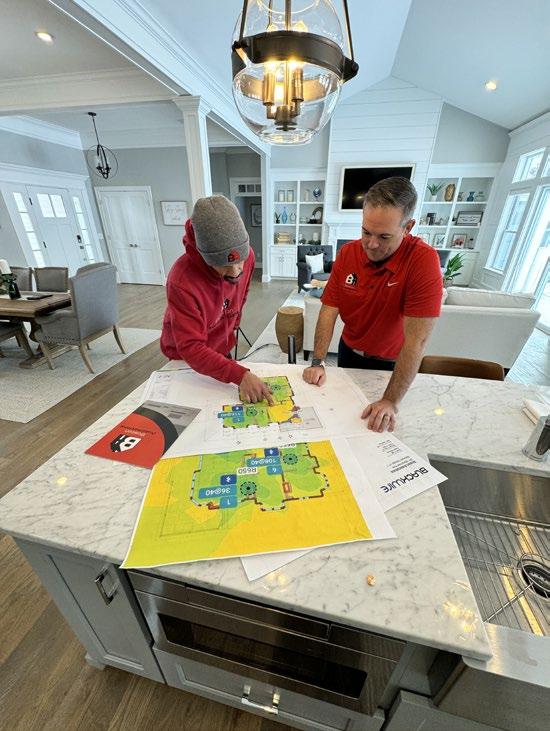
The basic rule of thumb is that anything that can be wired should be wired, Bottini says. “In general, a direct wired connection will perform better on basically every metric. In addition, every device connected to your network decreases the bandwidth competition for devices that need to be wireless. Running a wired connection to high-bandwidth devices like streaming devices, gaming consoles, and workstations is worth the effort. For instances where a wired connection is not possible, it is important to remember that higher frequency bands like 5 GHz and 6 GHz provide greater bandwidth and speeds but have shorter ranges and don’t penetrate materials well. Therefore, it is best to place access points within proximity and direct line of sight to devices that will require higher bandwidth/speed.”
The decision comes down to performance, reliability, and location Cotignola says. “High-bandwidth devices like media servers, gaming consoles, and workstations are always wired to ensure maximum speed and low latency. Wireless is reserved for mobile devices and areas where hardwiring isn’t feasible, but we ensure robust wireless coverage using strategically placed access points.”
“Although the convenience of wireless network connectivity is attractive, the best connection for reliability and performance is a wired network connection, eliminating the possibility of environmental impacts,” Nordstrand says. “The Wi-Fi protocols always need to consider interference and regulated radio output as part of the solution. With ever-changing RF environments caused by the constant fluidity of devices and interference being added and subtracted from a home or business, wired connections are still the most reliable and consistent. So, uptime and reliability should be considered greatly when deciding on how exactly a device should be connected, given either option for that device is available.”
“Ideally, ongoing management of a network should be one of the foremost considerations when designing, selecting, and deploying quality network solutions,” Nordstrand says. “Gone are the days of port forwarding to access devices on a site; this should be the absolute last resort. Many network solutions available in the market include cloud capabilities and these include our OvrC-enabled network devices or ARCC cloud-control network manager, or a third-party device that sits on the LAN and provides remote access using a separate cloud, all offering the option to manage networks remotely. All these solutions use secure connections and tunnels to administer and service the network.
“VPN access is also still one of the leading options to gain remote access to
a customer’s network and should be highly considered in a service strategy,” he adds. “These options all provide longterm and reliable access, and are the cornerstones of proper network management from day one and beyond.”
This is where it pays to be proactive with monitoring and maintenance, Crossland explains. “Implement network monitoring tools to track performance, detect anomalies, and anticipate issues before they impact the user. Schedule regular firmware updates, security patches, and equipment checks to maintain reliability and security. Design the network with scalability in mind, allowing for easy integration of new devices and technology upgrades. Plan to regularly assess network usage trends to adjust capacity, bandwidth allocation, or device prioritization as needed based on activity. User education and support is a key part of long-term management — including providing endusers with clear documentation and training on network usage and basic troubleshooting. Establish a support system for ongoing assistance, ensuring users can adapt to changes and maintain optimal performance over time.”
Audio Video Systems implements systems with remote monitoring and management capabilities (such as OvrC) to proactively identify and address issues, says Cotignola. “We also educate clients on the importance of software updates and offer service contracts to handle ongoing maintenance.”




It was the waning hours on the final day of CEDIA Expo 2024 and a PR friend was taking me around for my final booth visits of the show, which led me to run into Chris Pruet, the social media marketing manager at Stealth Acoustics.
Of course, I was aware of Stealth. I mean, how could you not be? What with their overthe-top, massive outdoor LED video systems, including the Extreme that can tuck a 190-inch microLED display into an enclosure that resides completely underground when not in use, or the “Transformer” that typically spends the entire Expo slowly unfolding out of its container like a butterfly stretching its newfound 120-inch wings, before folding back inside itself to tuck completely back into its housing. Cool stuff, to be sure, but also a little too pricey for the kinds of installs most of us are doing.
What Pruet showed me that really caught my interest was the eighth generation of the company’s invisible speakers, the LineaRadiance 430 (L-RAD 430). While the Expo floor isn’t the best place to catch an audio demo, the sound emanating from the speakers completely hidden inside drywall and behind layers of paint was incredibly impressive.
Invisible speakers are a category that has always interested me, and one that is seeing growth from other manufacturers such as Sonance, JBL, and Origin Acoustics. But it’s also one that I’d never reviewed, installed, or really had much experience with.
But how to review such an animal? Pruet said he had me covered. He had demo units of the company’s brand-new models built into pre-fabricated 2x4 walls that would give me the full listening experience without needing to do an actual install. And to complete the package, he also sent along Stealth’s SA2400-MKII high-
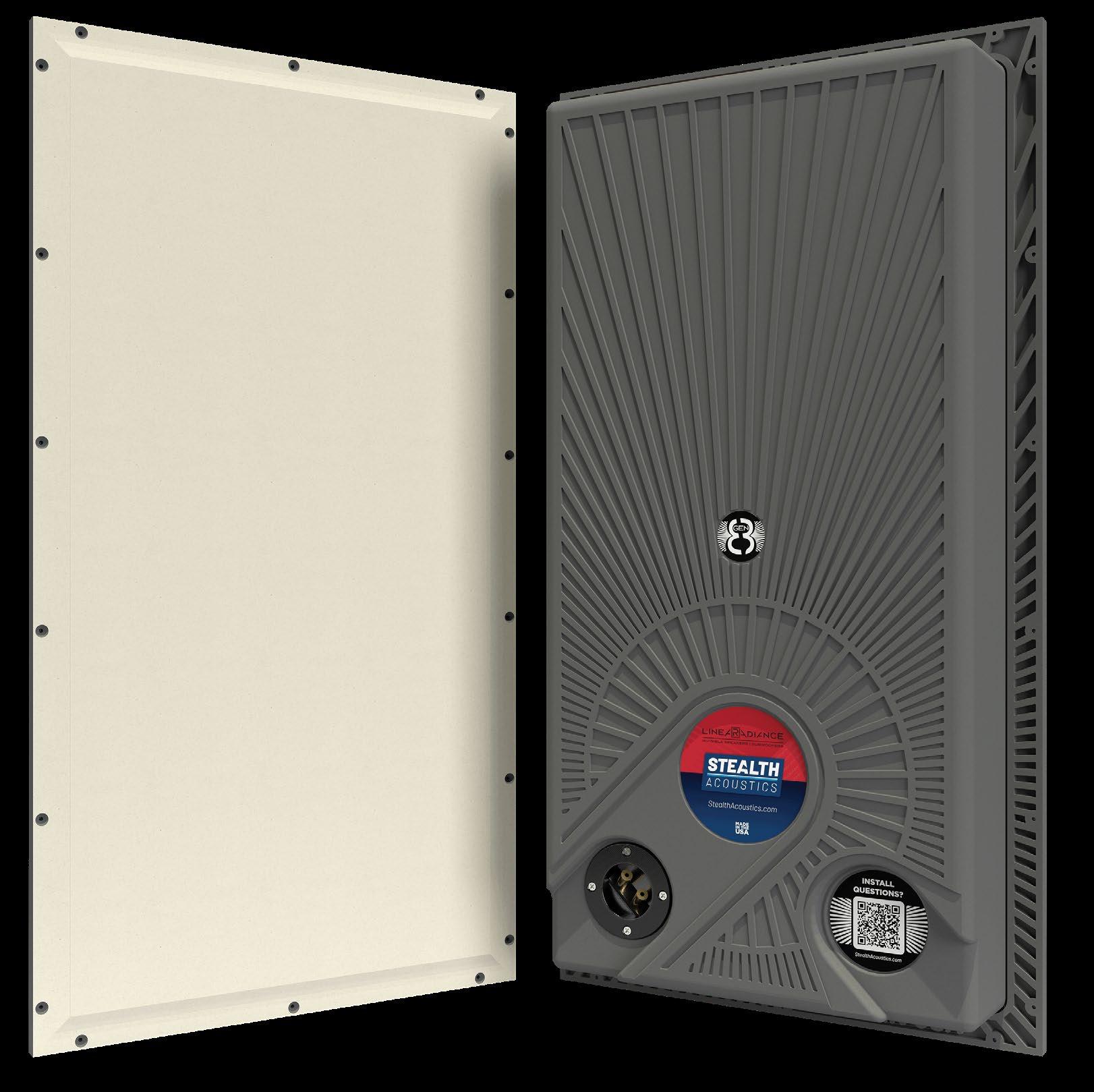
current amplifier with DSP designed to work with the company’s full line of invisible speakers. Done and done!
Beyond the fact that Stealth has obviously beenthere, done-that with this being its eighthgeneration product, I loved that the company was born out of Dimensional Communications,
a premier systems integration company founded in 1972 and based in Mount Vernon, Wash. How often have you seen something missing in our industry that you know would be a killer solution? A better mount, a better bracket, a better design, a better implementation… Back in 2001, Dimensional founder Paul Hagman saw that the options available for “invisible speakers” didn’t meet his expectations, so he set out to
By John Sciacca
888-865-6800
STEALTHACOUSTICS.COM
Shockingly good, full-range sound from a truly invisible speaker; detailed and articulate high frequencies
Finding a great/reliable “Mud Buddy”
Invisible, in-wall/ceiling, three-way, full-range speakers with integrated backbox
Frequency response 35 Hz–20 kHz
Sensitivity 83 dB (1 watt/1 meter)
170-degree vertical and horizontal dispersion
Includes two 8-inch low-frequency drivers, 1-1/8-inch neodymium mid driver, and 1-inch neodymium highfrequency driver
Two independent, self-receiving protection circuits
Includes mounting screws and shims 20-year warranty includes reimbursement for wall repair costs
Dimensions and Weight: 15.875 x 29.875 x 3.25 inches (HxWxD); Weight: 26 pounds
develop a full-range, high-performing invisible solution and started Stealth Acoustics. After two years of R&D, the company brought its first speakers to CEDIA Expo in 2003 and has been steadily refining and improving the design ever since, which brings us to the LineaRadiance.
There are currently two models available in the LineaRadiance line — the L-RAD 430 reviewed here and a smaller L-RAD 116. However, the company has plans for a full family of speaker and subwoofer offerings, with five speakers planned in the lineup. The additional models are expected to be released around the time you are reading this.
There are numerous upgrades and improvements in this eighth-gen lineup, including new transducer/exciter driver designs, increased efficiency and power handling, re-voiced crossovers, larger diaphragm surface areas, and a new woofer
mount for increased internal air volume.
According to Pruet, “Each generation represents new technology, crossovers, dampening, etc. that increased the overall performance with each upgrade. Now with our eighth-gen product, we’re seeing serious conversion from ‘traditional’ speakers to the ‘invisible’ category, even in performance zones.”
Beyond performance improvements, the eighth-gen products also come with acoustically tuned/injection-molded backboxes at no additional cost, and the front face has a new beveled finish to ensure easier wall applications and a new paper finish for better material adhesion. Lastly, all eighth-gen products come with a 20-year warranty, up from the previous 5-year warranty.
The L-RAD 430 is a brand new, true 3-way design and features dual 8-inch woofers, a 1 1/8-inch neodymium mid-frequency driver, and a 1-inch neodymium high-frequency driver, with a rated frequency response of 35 Hz–20 kHz. The speaker has a total radiating surface of 325 square inches and has high-frequency dispersion rated at 170 degrees, both vertically and horizontally. The L-RAD 430 is currently the flagship in Stealth’s line, and they retail for $3000 a pair.
While it has a rated 8-ohm impedance and can be technically driven by any amplifier or home theater AVR, the speakers are not very sensitive at 83 dB (1 watt/1 meter) and take a robust amplifier to drive to their potential. Stealth suggests feeding them at least 150 watts and obviously recommends using its own SA2400MKII, which can output 310 watts/channel. At $1500 MSRP, the SA4200 amp is an easy add-on to the system and can drive up to four speakers with 450 watts/channel at 4 ohms. Pruet also mentioned that Stealth is an integration partner with AudioControl and LEA Professional, and both have the full line of Stealth DSPs available in their respective amplifier models.
“Fear is the mind-killer. Fear is the little death that brings total obliteration. I will face my fear. Where the fear has gone there will be nothing.” —Frank Hebert, Dune
As I mentioned at the outset, I have very little experience with the invisible speaker category. The closest I’d ever come was a review of the Revolution Acoustics SSP6 Multiducer back in 2014, which was a product that mounted onto the drywall and delivered audio by exciting the surface. But, if you boil it down to why I’ve never sold or installed any invisible speakers like the
Stealth, it really comes down to one word: fear I feared the installation. I feared the care required for the drywall finish. I feared the speakers wouldn’t look right when installed or sound good enough for the premium price. I feared there would be some post-install problem. Basically, I feared the unknown.
In our line of work, it’s so much easier to just stick with what you know, what works, that I never felt a need to venture out of that comfort zone. And I imagine some of you reading this have been holding off on selling invisible speakers for many of the same reasons.
I shared these fears with Pruet to get his take.
“This happens to be my favorite discussion to have,” he said. “I often reflect back to my days in the lighting category and working with Lutron dealers. When getting a guy into the lighting category, it was always a discussion of ‘I’m NOT an electrician.’ Well, what do these guys do to be successful? They hire a ‘sparky buddy,’ an electrician who will work for him and install the Lutron switches and panels exactly the way the AV integrator wants. This is no different in the invisible speaker category. Matter of fact, invisible speakers and lighting should be considered the same. They are the most custom and profitable options you can sell to your clients. So, I tell guys, ‘Get your own ‘Mud Buddy’ and allow him to do his work, and he’ll make you a bazillion dollars!’”
When the LRAD-430s are really jamming, you can definitely feel a lot of bass energy coming off the back of the enclosure, so I asked Pruet about the possibility of these speakers popping a screw or seam in the finished drywall.
“That is a common concern,” Pruet agreed, “but it has never happened. When installed correctly, they only put mud around the frame [of the speaker], but not on the speaker itself. We suggest no more than 2mm of paint/ wallpaper to be applied to the face/diaphragm of the speaker. This will ensure maximum performance without cracking.”
Speaking for all invisible speakers, the one instance where “cracking” can happen is if hot mud/quick-set joint compound is used, so Stealth highly suggests not using hot mud when invisible speakers are being installed, rather using typical, 24-hour air-dry mud.
Regarding the 20-year warranty, that’s all well and good, but if you had to go and pull/ cut a bad speaker out of the wall, the cost of the speaker itself is probably going to be the least of your concerns. Here, Stealth goes the extra mile to stand behind its product. If the speaker is deemed faulty in those 20 years, the



FOLLOW US twitter.com/resisys facebook/resisys
CONTENT
MD, Content, AV Anthony Savona anthony.savona@futurenet.com
Contributors: Katye McGregor Bennett, Matt Bernath, Sam Cavitt, Henry Clifford, Dave Donald, Tim Fitzpatrick, Jason Griffing, Anthony Grimani, Karen Mitchell, Lisa Montgomery, Todd Anthony Puma, John Sciacca, Lisa Slayman, Gordon van Zuiden Production Manager Heather Tatrow Art Editors Matt Lochrie & Rosie Webber
ADVERTISING SALES
Managing Vice President of Sales, B2B Tech Adam Goldstein, adam.goldstein@futurenet.com 212-378-0465
SUBSCRIBER CUSTOMER SERVICE
To subscribe, change your address, or check on your current account status, go to residentialsystems.com and click on About Us, email futureplc@computerfulfillment.com, call 888-266-5828, or write P.O. Box 1051, Lowell, MA 01853.
LICENSING/REPRINTS/PERMISSIONS
Residential Systems is available for licensing. Contact the Licensing team to discuss partnership opportunities. Head of Print Licensing: Rachel Shaw, licensing@futurenet.com
MANAGEMENT
SVP, MD, B2B Amanda Darman-Allen VP, Global Head of Content, B2B Carmel King MD, Content, AV Anthony Savona VP, Head of US Sales, B2B Tom Sikes
Managing VP of Sales, B2B Tech Adam Goldstein VP, Global Head of Strategy & Ops, B2B Allison Markert VP, Product & Marketing, B2B Andrew Buchholz Head of Production US & UK Mark Constance Head of Design, B2B Nicole Cobban FUTURE US, INC. 130 West 42nd Street7th Floor New York, NY 10036

company will pay the dealer up to $2000 for wall repair to cover removal and reinstallation of a new speaker, which should definitely help to alleviate some of the post-installation fear. To help prevent any speaker damage from happening, each speaker has two independent protection circuits, separate for the high/ mid and low-frequency sections, that will automatically reset if they are overdriven.
Chris sent my review speakers in prefabricated 2x4 enclosures, so my installation was limited to just unboxing everything, running some speaker wiring from the amp to each speaker, and then connecting source components. Obviously, a real-world installation would be a lot more involved.
For this, Stealth has a wealth of “how to” resources available on its website, including videos, documents covering installation, acoustics isolation rules, basic finish tips, joint compound installation, wallpaper finish, and step-by-step walk-throughs.
According to the company, “Installing a Stealth Acoustics Invisible Speaker is as simple as fitting a drywall patch! The speakers are built on a solid frame and baffle board that contain the traditional drivers, exciters, and crossovers found in most speakers. This portion mounts directly to the structural framing. The face of the speaker is smooth and durable and is designed to finish in a similar fashion to the wallboard surrounding it.”
While the speakers are designed to install in standard 2x4 walls with 0.5-inch drywall, they are equally at home in 2x6 walls, steel walls, if the sheetrock is thicker, or if plaster finish is being used. The key is that there can be no more than 1/16-inch of all materials — joint compound, primer, paint, plaster, wallpaper, etc. — over the face of the finished speaker, as that will adversely affect the performance. (If you’re dealing with a wall that will have spray foam insulation, Stealth recommends using a metal backbox for an easier installation.)
The opening where the speakers install does need to be framed out on all four sides, meaning that blocking will likely need to be installed above and below the speaker to create a pocket for it to mount into and securely screw to on all four sides.
Like the pre-installation brackets or frames you are probably currently using for your in-wall/ceiling speakers, Stealth offers a
PlaceSaver, which eliminates the need to cut in holes after the sheetrock has been installed, and ensures you have the proper framing around each speaker’s perimeter.
Watching the installation videos, the finishing process looks relatively straightforward, albeit time-consuming. Stealth recommends seam tape followed by at least three light applications of joint compound, allowing 24 hours between each application for complete drying, with sanding between each coat. The company also suggest that all unfinished wallboards and speakers be primed with latex-based primer-sealer before painting. Scheduling this and how much your “Mud Buddy” will charge for three or more visits to a job site is something you’ll need to factor in. Or get your heart right with you or someone on your staff using a drywall trowel.
Because these speakers produce a fairly prodigious bass output, sound transmission to adjacent rooms could be a concern. Pruet suggested using backboxes, but also installing layers of Dynamat/Hushmat behind the speakers in areas that are most critical for sound isolation.
Usually, when laying out architectural speakers, we’re concerned with getting them to line up with ceiling lights or vents, or positioning them where they will look aesthetically pleasing after the installation. But, when the Stealth speakers are correctly installed, they will be totally invisible after they’re in and finished, so locating them becomes far less about where they’ll look good and all about where they’ll sound the best. For critical listening, the front wall in a standard left/right array is a great choice, however, due to the speakers’ ultra-wide, 170-degree dispersion pattern, they can really fill a room if placed in a ceiling. They would also be fantastic for use as surround and height channels in a home theater install.
The SA2400 amplifier is a 2U rackmountable, fully featured unit that offers a ton of flexibility for integrating with a variety of systems. It offers RCA unbalanced, XLR balanced, and speaker-level inputs and outputs, as well as a Toslink optical input. There is also a 12v trigger in/out, ground lift, and detachable power cord. An array of frontpanel buttons is available for adjusting volume and navigating the menus via the LED display.
The amp is programmable using the free Stealth Signal Management System
(SSMS) PC software, which offers 11 bands of full Parametric EQ, a full limiter stage, highand low-pass filters with selectable slopes, and more, along with access to 10 different DSP presets optimized for a variety of Stealth speakers. The software is easy and intuitive to use, and a computer connects to the amp via an included USB cable to make and download any changes.
Performance
I had the speakers shipped to my CI showroom so I could spend some time with them during the day. I brought them into our large theater, set them next to some Monitor Audio Silver Series towers, connected the amp, and used a Yamaha single-disc CD player to fire them up. The disc already in the player was Cassandra Wilson’s Blue Light ‘Til Dawn, which seemed a great place to start.
The disc’s second track, “Come On In My Kitchen,” starts with some acoustic guitar before the drum beat and cymbal strikes kick in, and it was clear that the sound I’d heard at CEDIA wasn’t a fluke. The bass has weight and depth, and the cymbals have a real shimmer. At Pruet’s suggestion, I spaced the speakers slightly wider apart than I normally would, and they really create a huge wall of sound while still providing a nice phantom center and a clear sense of stereo separation.
The disc’s third track, “Tell Me You’ll Wait For Me,” begins with Wilson singing a cappella, and then some deep bass and brush strokes, and the LRAD-430’s delivered texture to the bass strings as well as the delicacy of the brushes.
Popping in Miles Davis’ seminal Kind of Blue, again what impressed me was the articulation of the high frequencies, especially on the slower tracks like “Flamenco Sketches,” both the original and alternate takes (tracks 5 and 6). Track five starts with Miles’ horn blowing gently into the room, with Jimmy Cobb’s delicate brushwork restrained but clear in the background, while track six begins with some heavier plucks on the bass and a brasher intro by Miles.
After a time, I brought the speakers home to my listening room and connected them to the Marantz CD50n, which gave access to streaming via HEOS. I also connected the Marantz Model 50 amplifier to the speakers to see how they’d sound with a “regular” amp.
While the Model 50 did its best, at only 70 watts/channel, I could tell it just didn’t have the chutzpah to drive the low end of the towers, and under-powered, they sounded a bit thin. I reconnected the SA2400 and used the SSMS
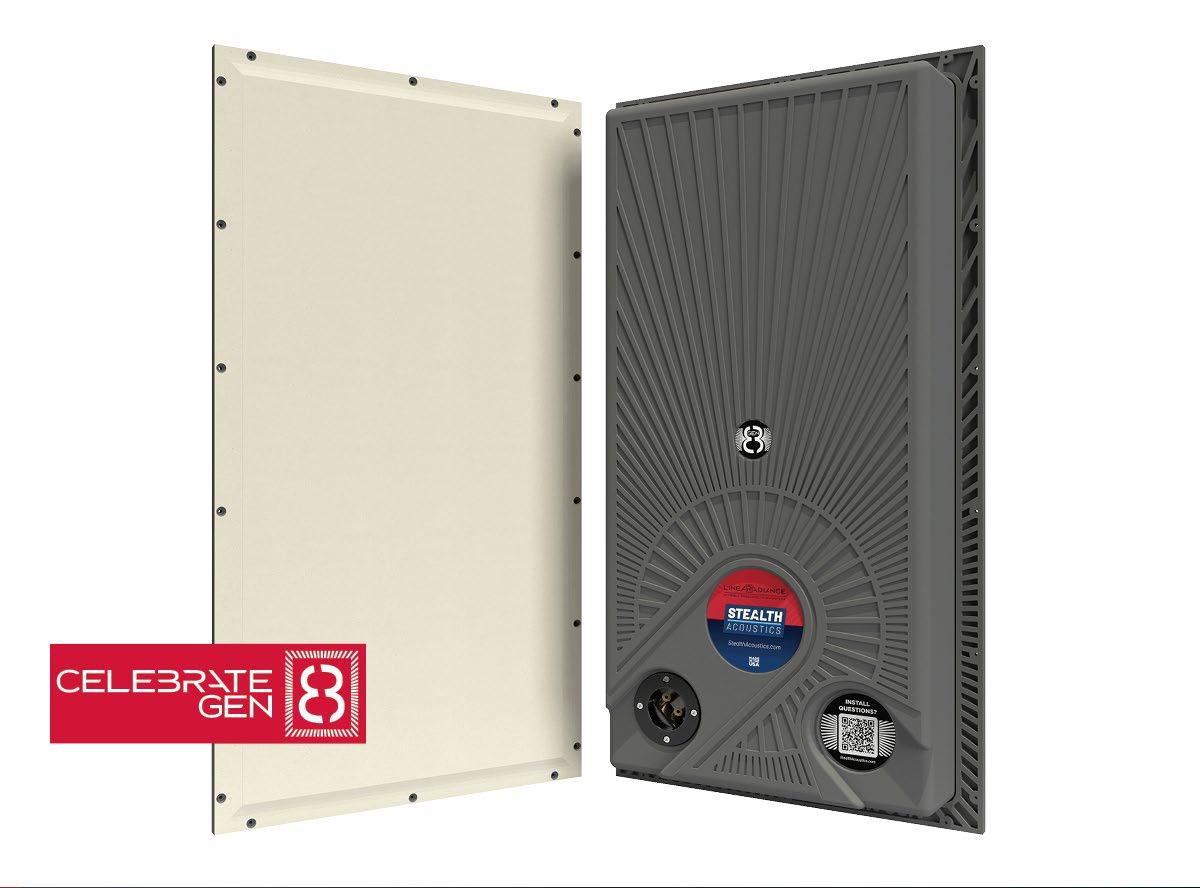
software to check how Stealth’s DSP affected the sound. The pre-loaded DSP adds some parametric EQ that drops bass by 3 dB at 100 and 524 Hz, and toggling this on/off, it was apparent that the trims helped with mid-bass articulation. One note regarding the amp: It does have an 8-speed automatic fan to keep it cool, but it is fairly audible in a quiet listening room, so locate it accordingly.
Listening to Hans Zimmer’s “Beginnings Are Such Delicate Times” from the Dune 2 soundtrack, the track’s opening big notes showed that while the speakers definitely have low-end capabilities, they can’t plumb and produce the deepest notes, so critical full-range listening would benefit from adding a subwoofer. (Though, to be fair, I’d say that about nearly all speakers.) However, what I really loved was the spaciousness and width of the presentation. The swirling sounds that travel back and forth across the front channels reached far behind the physical cabinets of the speakers and well into the sides of my room.
Repeatedly, what most impressed me with the sound from the LRAD-430s was the highfrequency reproduction, which is never harsh and always clear. Granted, it’s not the same detail as what I’m getting from the SVS Ultra Evolution diamond-coated tweeter, but the panels present the sonic image wonderfully.
It isn’t long before you stop thinking of these as “invisible speakers” performing some magic trick by making audio appear seemingly out of thin air and just start thinking of them as speakers. Whether I was throwing bombastic
content like The Crystal Method or Daft Punk at them, or more “refined” content like the audiophile-standby female vocals of Norah Jones, Diana Krall, and Rebecca Pidgeon, the LRAD-430s just did their job of reproducing the music.
If there are any areas where they lacked performance, I’d say the midrange isn’t as full sounding, and some upper-bass signals can get crowded, certainly what that pre-loaded DSP is helping to address. Also, they don’t have much presence at low volumes as the bass info doesn’t “kick in” until given a bit of gas. And if pushed to extreme volumes, especially with bass-heavy content, they can start to sound a bit strained.
However, I think if you walked the vast majority of people into a room with these playing, they would be gobsmacked by the amount and quality of sound coming from nowhere and everywhere!
At just over $1000/pair for Stealth Acoustics’ entry offering — with an incredibly generous dealer demo discount to boot — properly installing some of these in your showroom will definitely open up new opportunities for you. In fact, you could take a page from the old Bose playbook and have these mounted on a wall behind some tower speakers, and convince most people they were listening to towers, not invisible speakers. The results will likely have you closing higher sales on your distributed audio systems, and putting better speakers into more rooms.
For the best experience, clients need to understand the differences are between full- and partial-sun outdoor TVs.
BY GRANT OLAFSON, VICE PRESIDENT OF SALES, FURRION
As outdoor living spaces become more sophisticated, it’s critical for people to understand how environmental factors impact AV performance — specifically their selection of a proper outdoor television. Furrion manufactures televisions for a variety of outdoor environments, and one large area of confusion that exists in the market is what is a full-sun TV and what should its capabilities be?
Full-sun environments are areas consistently exposed to direct sunlight throughout the day, such as uncovered patios, decks, and commercial spaces with little to no shade. These environments require an outdoor television that is capable of withstanding extreme conditions with features that address those needs. High screen brightness, broad operating temperature range, robust cooling system, elevated weather resistance, and impact-resistant screens are important features to consider when purchasing a television for this environment.
To address this need, Furrion introduced the Aurora Full-Sun Pro

Series outdoor smart TV that is purpose-built for full-sun exposure in both commercial and residential spaces. The 2500-nit brightness screen ensures optimal viewing in direct sunlight, and an IK09-rated impactresistant screen protects against flying debris and accidental mishaps. The IP66-rated housing can withstand all forms of weather, while an operating temperature range of –24 degrees F to 140 degrees F ensures performance in some of the most extreme environments.
Instead of a cooling system that utilizes fans that would struggle to keep a television cool, Furrion integrates industrial heat sinks that allow the TV to perform at a more extreme temperate range and avoid isotropic blackouts that can develop on many of the other TVs in the market.
Understanding these nuances ensures the right solutions are specified for every outdoor space. Choosing purpose-built products like the Aurora Full-Sun Pro Series not only enhances client satisfaction but also sets the standard for lasting performance in outdoor AV installations.
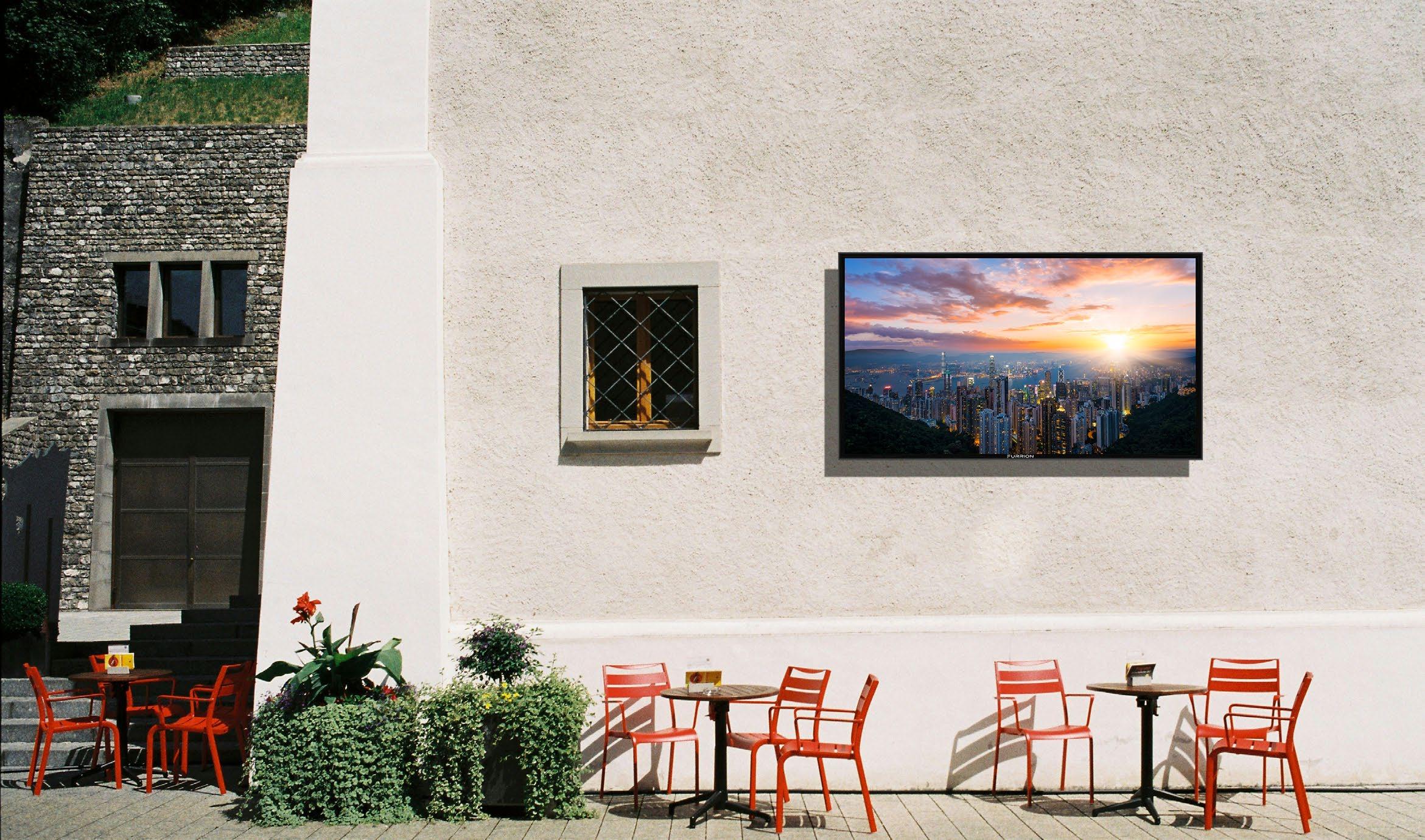

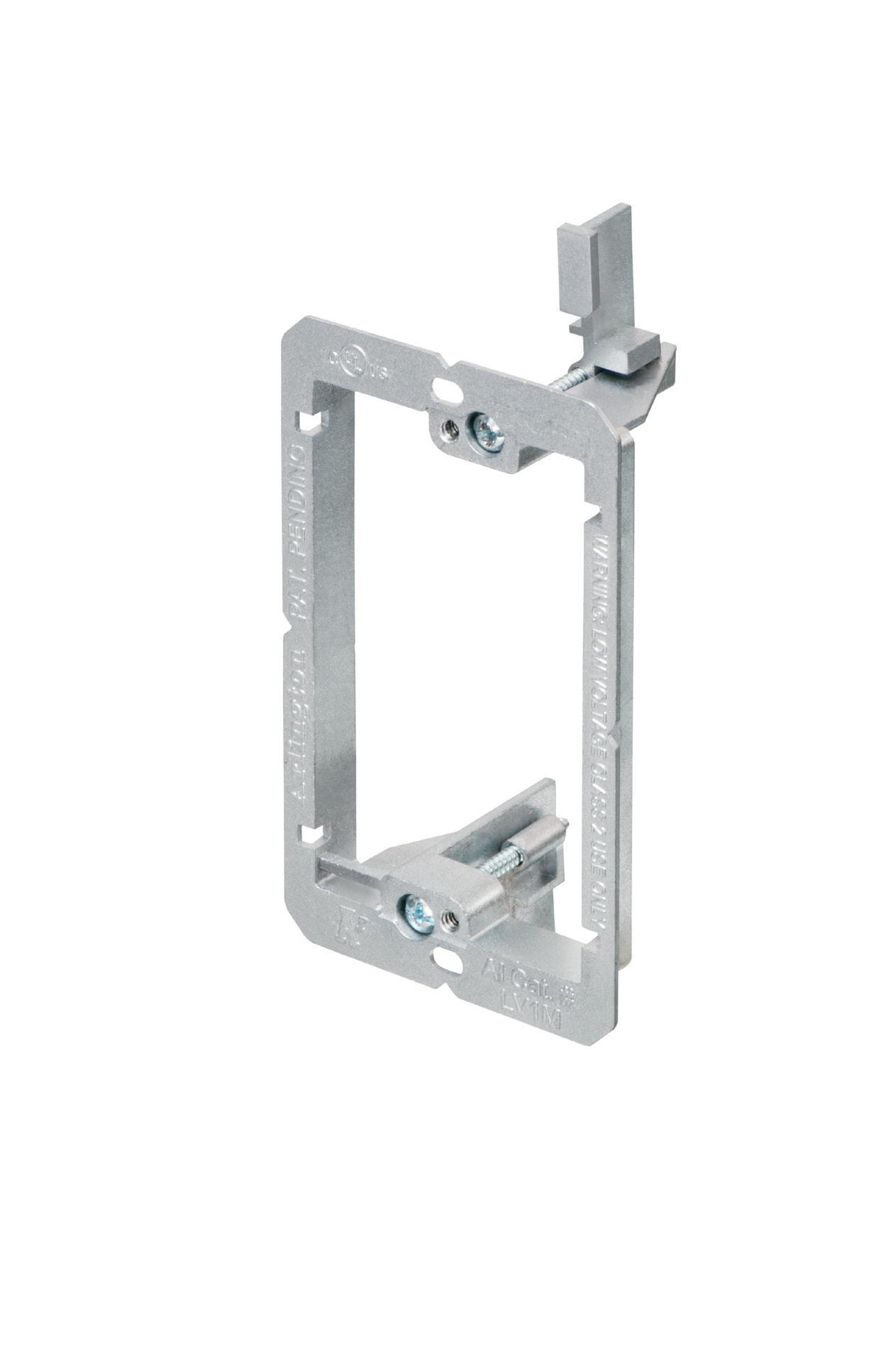
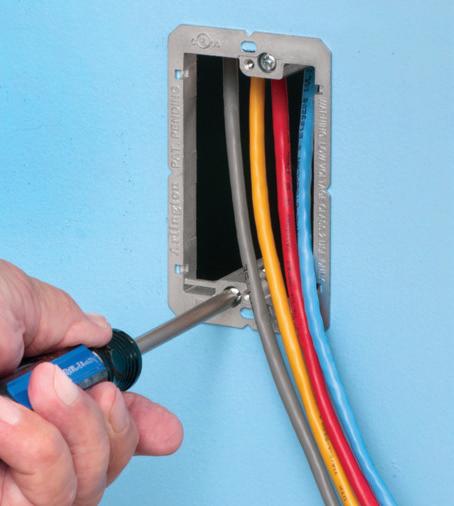
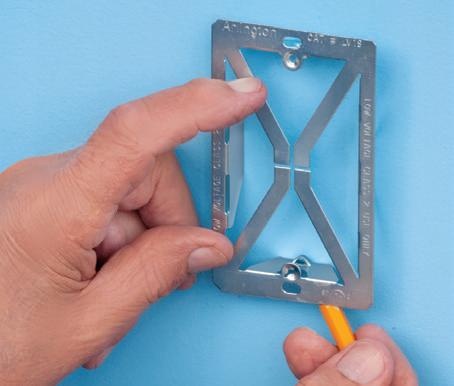
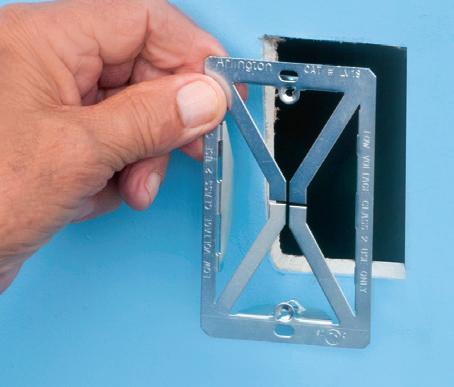
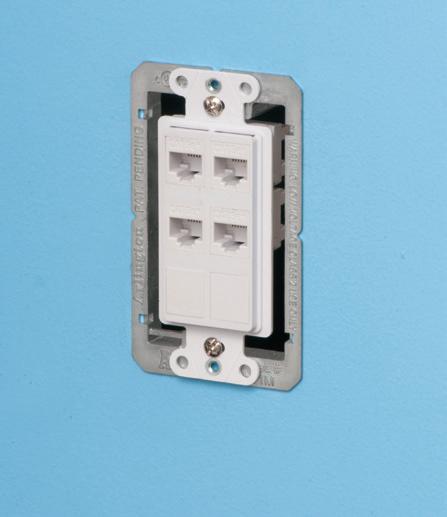
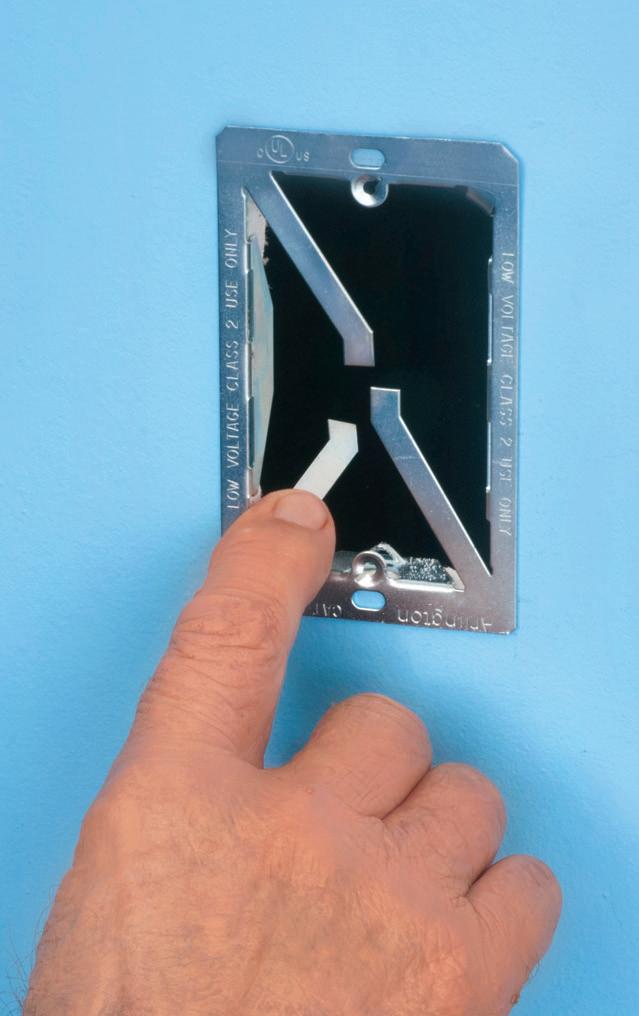
Arlington’s Low Voltage Mounting Brackets are for fast and easy cut-in installation and mounting of Class 2 communications, computer and cable TV wiring and connections.
METAL low voltage mounting brackets for EXISTING or RETROFIT construction...
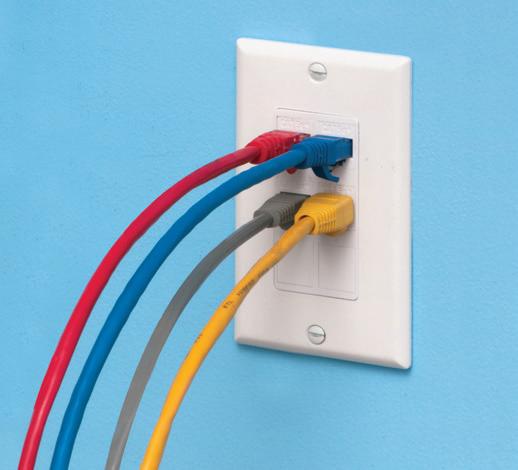


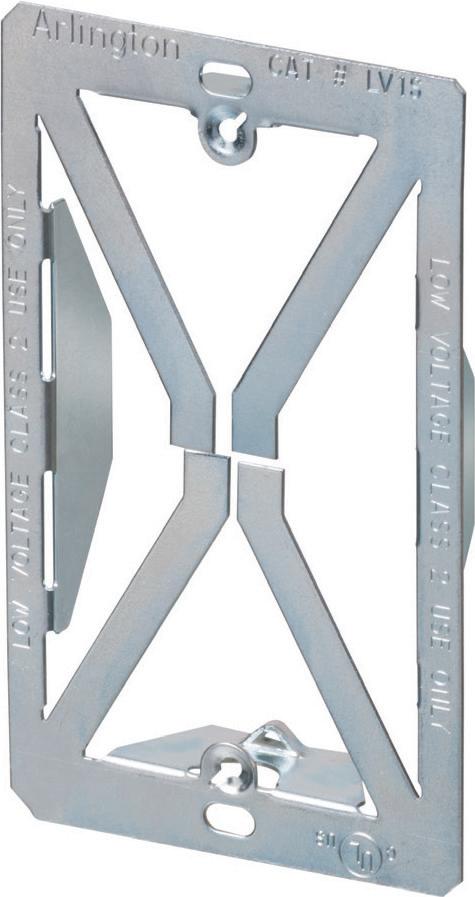
Our LV1M COMMERCIAL GRADE heavy duty ZINC mounting bracket, offers...
• Extra rigidity and stability where performance and visibility are important or critical
• Threaded holes for easy, fast device installation
• Adjustable bracket for 1/4” to 1” wall board thicknesses
The LV1S PLATED STEEL mounting bracket, with its unique X-shaped bracket design, provides excellent stability and secure installation of low voltage devices in 1/4" to 1-1/4" walls - without an electrical box.

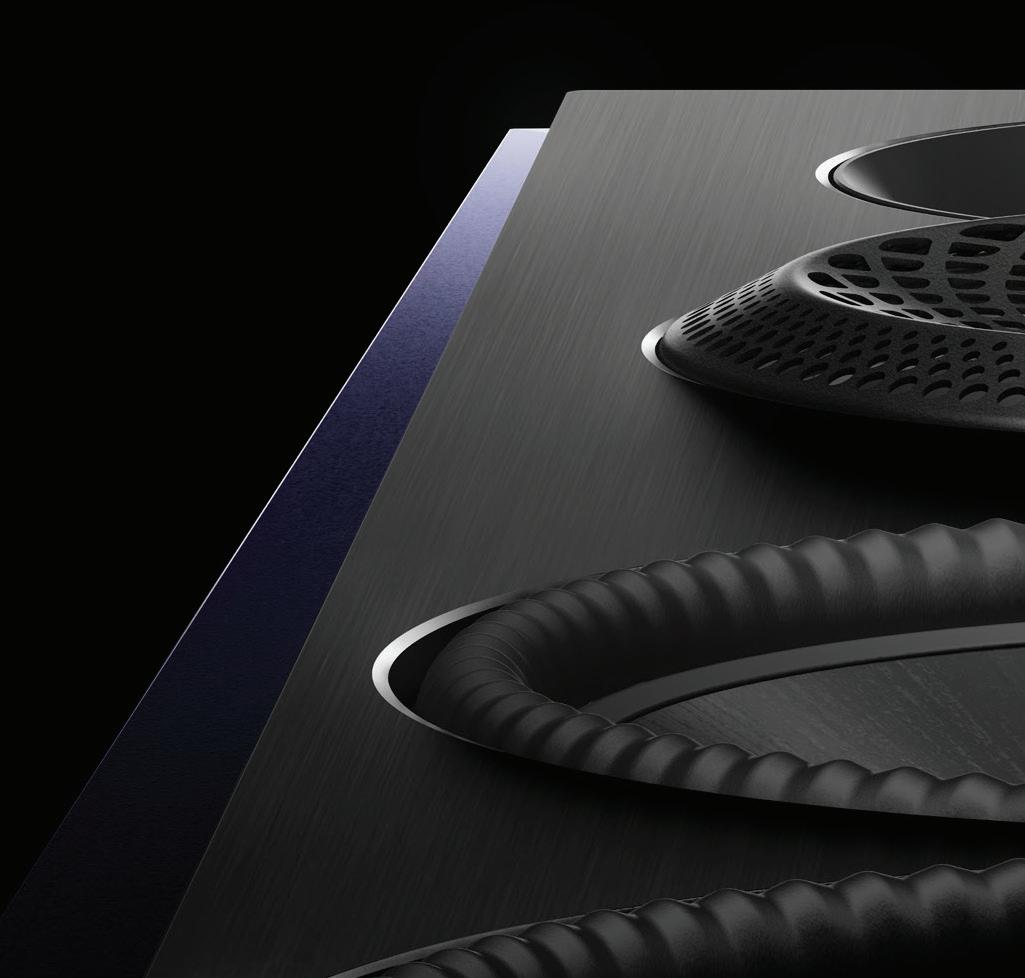
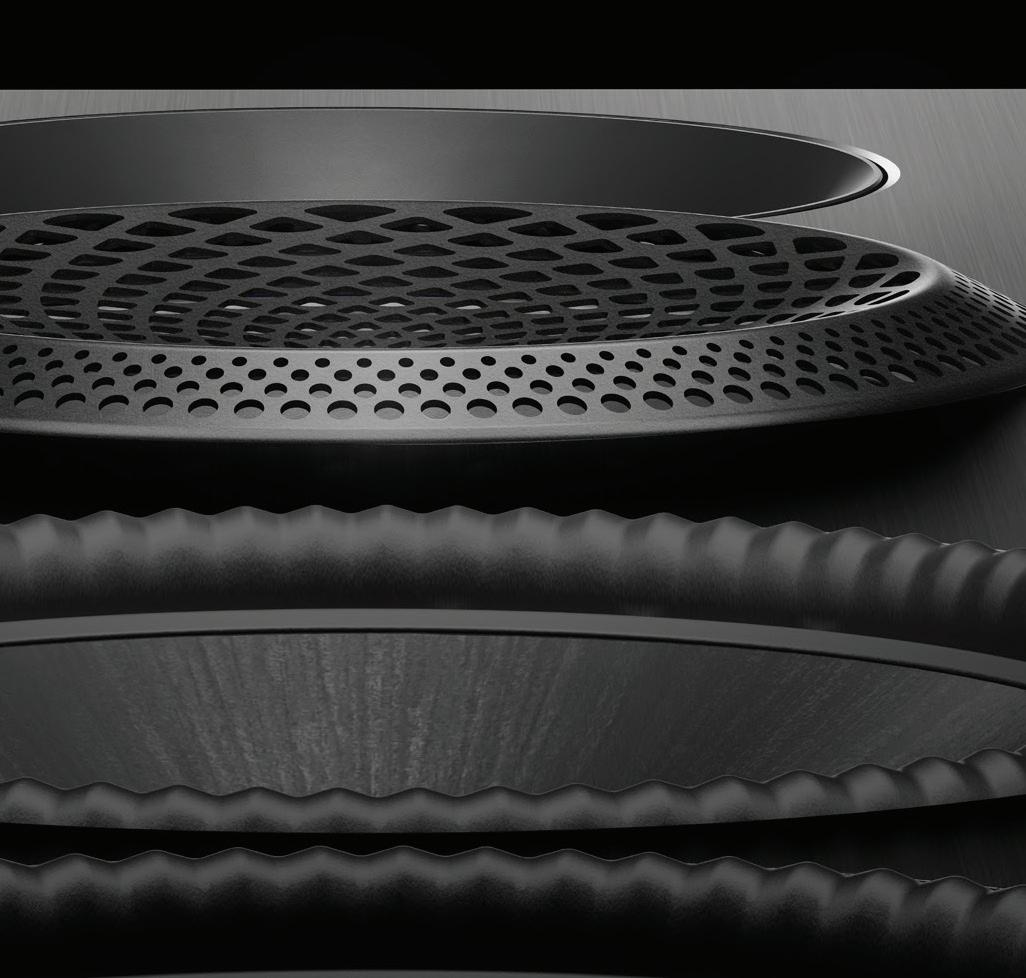
Founder 120H is no ordinary loudspeaker.

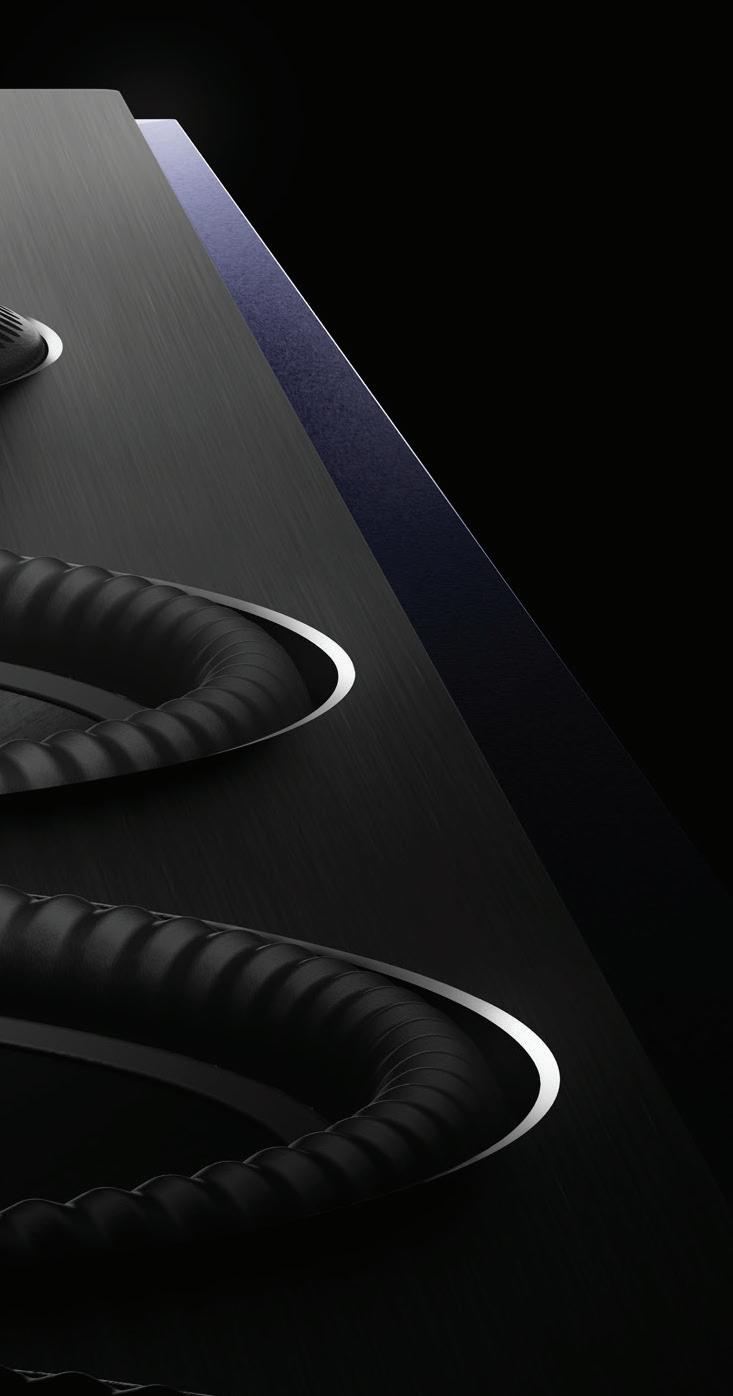

We’ve treated every part, large and small, as if it were the most crucial piece of the whole. Every component has been thoroughly researched, designed, engineered, and tested. Not only are the drivers completely new, so is their mounting hardware, the cabinet’s internal structure and shape, and even the feet. By leaving no element unaddressed, we’ve created something that is much greater than the sum of its parts.
Designed, engineered, and fully Made in Canada, by people who love great audio (just like you).