“Behold, the Lamb of God, who takes away the sin of the world!”
John 1:29
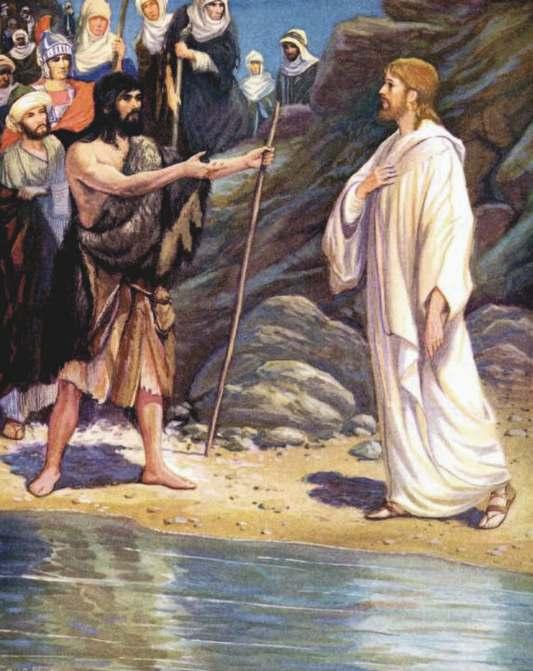
“Behold, the Lamb of God, who takes away the sin of the world!”
John 1:29
First Presbyterian Church of San Antonio 2026
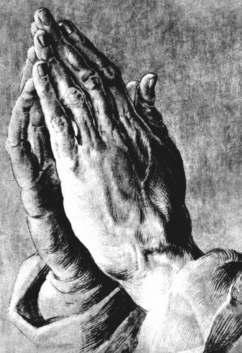
“Now Jesus was praying in a certain place, and when he finished, one of his disciples said to him, ‘Lord, teach us to pray, just as John taught his disciples.’ And he said to them, ‘When you pray, say: “Father, hallowed be your name, Your kingdom come.” …. ‘And I tell you: ask, and it will be given to you; seek, and you will find; knock, and it will be opened to you. For everyone who asks receives, and the one who seeks finds, and to the one who knocks it will be opened.’”
Luke 11: 1, 9-10
In memory of all the faithful prayer warriors of First Presbyterian Church of San Antonio, now in the presence of their risen Lord and Savior.

Dear Friends,
The weeks of Lent are given to the church as a time of prayer, reflection and meditation on God’s love for us in Jesus Christ. In past years, the Prayer Ministry Committee has compiled a written record of daily reflections by church members to inspire and aid all of us in these vital aspects of Christian life. The most recent booklet version of Lenten Reflections was prepared in 2017.
The writings in this year’s Lenten Reflections, now in digital form, are drawn from reflections offered in the 1987, 2011 and 2017 booklets. The artwork illustrations updated in 2017 remain, with all Scriptural references changed to the English Standard Version. In the interest of privacy, authors’ names are withheld since more than a few of the writers in the earlier booklets are now with God–part of that great cloud of witnesses to God’s faithfulness and love.
The content is designed to help our congregation reflect on Jesus’s sacrifice for our sins, and to lead us–individually and as the body of Christ–into a time of preparation and repentance. Then, as we come together to celebrate Easter Sunday on April 5, may we fully and joyfully acknowledge God’s gracious gift of Jesus as our risen Lord and Savior.
Our hope and prayer is that each reflection, and its associated scriptural passages and illustrations, will lead you closer to Christ who came that we might have life, and have it abundantly. As you read these words of inspiration and scripture, reflect on how God has blessed you personally, and be thankful!

Rev. Dr. Robert Fuller, Jr. Senior Pastor
Jonah 3:1-4, 10; Hebrews 12:1-14 and Luke 18:9-14
We all know the story of Jonah. In fact, even those who have never read the Bible know the story of Jonah. Stories help us to see ourselves in the story of God and ultimately lead us to the story of God making us in His image and redeeming us.
In the Jonah story, we are not presented with a hero or a strong and mighty man. Instead we are presented with someone like ourselves. God works through Jonah’s ineptness, just as He works through ours, to accomplish His purposes. Just as Israel was offered a second chance, Jonah is commanded a second time to go, and he does. Jonah can be seen as God’s wrath on the one hand, and God’s mercy on the other.
In Hebrews, we are told to strip off the weight that slows us down. That weight is sin. Because God loves us more than we can ever imagine, He yearns for us to be Christ-like. In the first verse we are told to run the race with endurance. To do that, the runner must be disciplined. He must be disciplined in his training, never give up and keep his eyes on Jesus, the perfecter of the faith who suffered on the cross for our salvation. If our earthly fathers love us enough to discipline us, how much more discipline should we welcome from the Father who created us? God’s discipline in our lives is always for good because He wants us to share in His holiness. To do this, we must set out a straight path so that our weakness will become strong. Living a holy life takes work and discipline, but the reward is eternal life with our Father.
In our Luke passage, we are told the familiar parable of the Pharisee and the tax collector. Oftentimes this story strikes a little close to home. How easy it is to think more highly of ourselves than we should. “I don't cheat, I don't sin, I don't commit adultery. I even tithe.” But woe to us who don't see ourselves as sinners like the tax collector did. We all sin and fall short. All that God asks of us is to admit it and ask for forgiveness. What father doesn't wrap his arms around his child when the child comes to him asking for forgiveness? Imagine how much more your Father in heaven will wrap His arms around you and tell you that He loves you, no matter what.
During this time of Lent, let us all remember that God uses even the inept to proclaim His Word. We are to discipline ourselves to be in the Word, to run the race with perseverance, and to bow down before Him to seek forgiveness.
THURSDAY, FEBRUARY 19
Deuteronomy 7:6–11, Titus 1:1–16 and John 1:29–34
The concept of “the elect,” being chosen by God to know and love him, is somewhat confounding. Yet through our readings today, the Holy Spirit reveals God’s own astounding truths about the mystery of election concerning God’s part and our part! God’s part in choosing his people is woven throughout the Bible. In the Old Testament, God tells the people of Israel, “For thou art an holy people unto the LORD thy God: The LORD thy God hath chosen thee to be a special people unto Himself…” And God explains why, “The LORD did not set His love upon you, nor choose you, because” … (for ANY reason) … “but because the LORD loved you.”
Truth: God chose you to love him because he loves you. Human inclination, to love God and others based upon our own personal standards and conditions, can prevent us from comprehending God’s unconditional love. Our part is to allow our spirits the time and space to conceive of God’s unconditional love. Meditate upon God’s truth: “God chose me to love Him because He loves me.” In the New Testament, Jesus clearly states, “You did not choose Me, but I chose you ….” Paul, the writer of approximately two-thirds of the New Testament, often refers to believers as God’s “elect” by using a Greek word which essentially means “chosen by God to obtain salvation through Christ.”
Truth: You are chosen by God to be set apart to obtain salvation proceeding from Christ, the living Word. In December 2010, I was hastily setting up one of my Christmas mangers. In my rush to unwrap and place each figure, I accidentally put the lamb in the manger instead of baby Jesus. Although I love Christ and have had an intimate relationship with him for a long time, there are still moments when I see Jesus for the first time. Staring at the innocent lamb in the manger, I was reminded of John’s words after seeing Jesus for the first time, “Behold the Lamb of God, who takes away the sin of the world.”
Truth: The Lamb of God, Jesus, the logos Word, takes away your sins. Our part is clear. Today, no matter how long you’ve known Jesus, ask the the Holy Spirit to help you see him for the first time. Conceive of a humanly impossible, infinite, loving and perfect being named God, who created you, loves you and chooses you to love him. Receive Jesus, God’s Son, as your Lord and Savior by asking for forgiveness for your sins in Jesus’ name. Believe God by living what you proclaim to believe.
In Christ, God has shown us how we are to live. The natural outflow of true belief in the gospel of Jesus Christ is love. Love God and his Word. Love others. Love yourself.
FRIDAY, FEBRUARY 20
Deuteronomy 7:12-16, Titus 2:1-15 and John 1:35-42
This Deuteronomy passage is one of blessing and warning. It reveals that our Lord in heaven wants to love, bless and multiply us! He wants to bring prosperity and take away all sickness! He has an all-encompassing desire for everything good for us! Then, as we read the last of the passage at this time in history, we sense a warning about people who do not believe in the Lord God. Clearly, our Lord asks us (the ordinary believer) to love Him and to obey His commandments. We have a “calling to be obedient.”
In the next scripture Paul guides Titus and us in ways to live out our faith. Forthrightly, he encourages us to “speak the things which are proper for sound doctrine.” Then Paul challenges everyone to live out godly attitudes and actions. Older men are taught to be mature in their faith, sober, reverent and temperate, and to model self-control, love and patience. Young men are exhorted to be sober minded, showing good works, self-control and, significantly, integrity, reverence and incorruptibility in speech. Older women are to be reverent in behavior and to equip younger women to love their husbands and children. Each group of people receives unique directions to show unbelieving people how our God works in hearts and minds. We have a calling to “live soberly, righteously, and godly in the present age.”
In the final scripture of today, we turn to the blessing of obedience. Andrew heard Jesus. His heart and mind were changed forever. Immediately, Andrew sought his brother Simon Peter. The blessing of Andrew taking Simon Peter to Jesus resounds throughout the ages. Peter was the disciple who answered Christ saying, “You are the Christ, the Son of the living God.” And Christ acknowledged that this revelation came from “My Father who is in heaven.” Then Jesus continued, “And I also say to you that you are Peter, and on this rock I will build my church, and the gates of Hades shall not prevail against it.” (Matthew 16:18).
Our scriptures reveal the call to obedience … the blessings of obedience … the call to warn others of sinful behavior (even as we recognize and strive to change our own sinful behavior) … and the blessing of sharing Jesus with our fellow man. As members of this congregation, we strive to make Jesus visible through obedience, words and actions—may it always be so!
SATURDAY, FEBRUARY 21
Deuteronomy 7:17–26, Titus 3:1–15 and John 1:43–51
In today’s scripture selections, we see a tapestry of God’s love woven from the fabric of both old and new covenants. In both, we see a display of God’s exhortations to His people to avoid living in a state of fear and, instead, follow His commands. He encourages us how to live in harmony with other Christians, and to follow the example of Philip and Nathanael in answering Jesus’ call.
In Deuteronomy, the Lord has told His chosen people that they will drive out large nations of people even stronger than they, but He understands their timorous nature. He instructs them on how they are to treat their vanquished foes, to not be afraid of what is to come, and to not become ensnared by their idols and beliefs. Thousands of years later, Christ has told us repeatedly to trust in him, “Do not be afraid, just believe” (Mark 5:36). The Lord reminds the Israelites of His great power and His mighty acts in bringing them out of Egypt, and promises them a future to proceed with His directed destiny, as long as they destroy all false idols completely.
In Titus, Paul is exhorting the new believers to not only subject themselves to existing civil authorities, but to be ready to do good wherever they find the chance. Paul lays down rules for harmonious living among the followers, reminding them, and now us, how we were once enslaved by all manner of despicable behavior, causing divisiveness and hatred between one another. And yet, the love and mercy of God redeemed us through Jesus our Savior, and renews us through the Holy Spirit.
In John, we read of Jesus’s command, “follow me,” when He calls Philip and Nathanael to be his disciples. This same Jesus, whose presence is woven throughout the Old Testament, was with God’s people when they were about to enter the Promised Land, and with Paul when he gave us rules for Christian living, including caution against useless controversy. Jesus is with us today, asking us to follow him.
On this fourth day of lent, are we ready to answer His call?
SUNDAY, FEBRUARY 22
Jeremiah 9:23–24, 1 Corinthians 1:18–31 and Mark 2:18–22
Today's Lenten scriptures remind us that we have done nothing worthy of boasting. On our own, we are sinners who are neither wise nor strong nor righteous. It is only through our precious Lord, Jesus the Christ, that we can be any of these things. There will soon come a time to rejoice, but Lent is a time to reflect upon our sinful nature and upon our dependence on a Savior in order to be in a right relationship with our Lord.
Jeremiah’s world was much like ours today. Our culture, like his, values and rewards strength, cunning, riches and anything that points back to us. Jeremiah was cautioning and rebuking his people to turn away from the world and look to God for wisdom. Likewise, we would be wise to heed his warnings and wisdom.
Jeremiah wanted his people to reflect on their sinful nature, just as we are called to do so during this Lenten season. We are to anticipate the coming Messiah and seek His ways, for only there are we able to find something in which we can boast! This concept is brilliantly summarized in the words of theologian Charles Spurgeon, “God’s wisdom is our direction, His knowledge our instruction, His power our protection, His justice our guarantee, His love our comfort, His mercy our solace and His immutability our trust.”
Our passage from Corinthians speaks of self-admiration, self-will and self-indulgence. Again, we are reminded of our need to turn to God and away from a culture that says “Bringing attention and glory to myself and satisfying my desires and needs are the most important things which I should seek!” On the contrary, God calls on those who are weak and foolish by human standards to be His chosen people. What joy to know that, even in our weakness, we are saved by the power of God! What joy to never forget this wonderful passage of scripture: “For the message of the cross is foolishness to those who are perishing, but to us who are being saved it is the power of God.” (1 Corinthians 1:18).
In the second chapter of Mark, Jesus does not deny that there is indeed a time to fast and to focus on our spiritual matters. But, Jesus also points out, we are wise to celebrate with great joy the time we have with Christ. Let us choose to follow His wisdom.
As we approach the Cross and the Power of God revealed in the Resurrection, let us remember that “No one ever leaves the Cross in exactly the same condition as they came to it. You must receive it or reject it. If you receive it, you become a child of God.” (Henrietta Mears, renowned Christian educator).
MONDAY, FEBRUARY 23
Deuteronomy 8:1–20, Hebrews 2:11–18 and John 2:1–12
As we meditate on our relationship with Christ, we can reflect on how Christ loves us and provides for us in ways we would never have imagined. In the Deuteronomy passage, we see God teaching the ancient Israelites to trust in and rely on His promises and power. As we go through trials in our lives, God will humble and discipline us to mold and strengthen our character while providing for our needs. The Israelites struggled in the desert, yet they were fed daily. The purpose of adversity is to keep us focused on God. He will guide us and doesn’t want us to lose sight of Him. It seems more difficult to maintain a strong relationship with God in times of prosperity than in times of hardship. God gives us freedom to choose our level of closeness with Him. We can discipline ourselves to have a quiet time with God and to give thanks.
In God’s perfect timing, we can glimpse His glory and His power in the verses in John 2 about Jesus performing His first miracle at the wedding feast. When Jesus replenished the wine supply with the very best wine, the first to notice the celebration were the servants. Are we, as followers and servants of Christ, the first to notice His grace and provision or do we focus on what we have and what we want?
The Hebrews 2 verses reveal God’s provision for us in the ultimate gift: God manifests His Son as fully human and fully divine. He rescues us from death by interceding for us, taking death onto Himself. He erases our sins, saving those with faith and giving us hope. Christ is compassionate. He understands our temptations and trials; He’s experienced them, too. He includes us as “family.”
In this season of Lent, appreciate and cling to Christ. Know that we are never alone. Christ restores and keeps us. We can rest under His wings. With faith, we can please God, drawing close to Him for comfort and guidance to face the hard things in life. As the Westminster Shorter Catechism says, we are to “glorify God and to enjoy Him forever.” With thanksgiving, we are to allow the Holy Spirit access to all parts of our lives. God will take care of us, restore us, and keep us in His hands throughout life.
“Then they said to him, ‘What must we do, to be doing the works of God?’ Jesus answered them, ‘This is work of God, that you believe in him whom he has sent.’”
John 6:28-29
“Jesus said to them, ‘I am the bread of life; whoever comes to me shall not hunger, and whoever believes in me shall never thirst. ... For this is the will of my Father, that everyone who looks on the Son and believes in him should have eternal life, and I will raise him up on the last day.’”
“… Jesus stood up and cried out, ‘If anyone thirsts, let him come to me and drink. Whoever believes in me, as the Scripture has said, “Out of his heart will flow rivers of living water.”’"
John 7:37b-38
“Again Jesus spoke to them, saying, ‘I am the light of the world. Whoever follows me will not walk in darkness, but will have the light of life.’”
John 8:12
“Jesus said to her, ‘I am the resurrection and the life. Whover believes in me, though he die, yet shall he live, and everyone who lives and believes in me shall never die. Do you believe this?’”
John 11:25-26
“And Jesus cried out and said, ‘Whoever believes in me, believes not in me but in him who sent me. And whoever sees me sees him who sent me. I have come into the world as light, so that whoever believes in me may not remain in darkness.’”
John 6:35,40 John 12:44-46
“And he asked them, ‘But who do you say that I am?’ Peter answered him, ‘You are the Christ.’”
Mark 8:29
TUESDAY, FEBRUARY 24
Deuteronomy 9:4-12, Hebrews 3:1-11 and John 2:13-22
A man of his word. How many times have we used this expression to describe someone who can be completely trusted to follow through on his promises. God can also be described with just such a phrase.
God entered into a covenant, a contract, with the people of Israel. They were to be his chosen people and he was to be their God. The only stipulation was that they were to have complete faith in him and have no other gods before him.
God kept his side of the bargain; the Israelites did not. Why did God keep his side of the bargain in light of their disloyalty? Because our God is a God of unconditional love. He loves us in spite of our sinful nature.
In Hebrews, we are reminded that just as Moses was the revered leader of his people and a servant of God, in the new covenant it is Jesus who is far superior to anyone heretofore. Just as Moses led the Jewish people out of the wilderness, Christ will lead us out of our wilderness if we allow him.
We must keep our hearts and minds open to his word, and our soul open to the Spirit. By what authority does he lead us? John teaches us of the unbridled power of God who, having given his only Son as a sacrifice for all people, also raised him from the depths of hell to remain with us throughout eternity.
Throughout recorded history, God has not changed. Can you accept his new covenant and live your life to glorify him? God has kept his side of the bargain by sacrificing his only Son. What are you willing to sacrifice to keep your end of the bargain?
May we be recommitted to God’s love during this season of Lent.
WEDNESDAY, FEBRUARY 25
Deuteronomy 9:13-21, Hebrews 3:12-19 and John 2:23-3:15
The book of Deuteronomy relates God’s special relationship with his chosen people. God had already warned Moses that the Israelites were a stubborn people. In turn, Moses routinely challenged the Israelites to remember and obey God’s commandments. But, again and again, the Israelites did not obey God. Today’s passage describes Moses’s return, down the mountain of God to the Israelites, bearing two tablets containing God’s commandments. Moses finds the Israelites deep in sin and worshiping a golden idol. It’s a familiar story that did not end well for many fleeing slavery in Egypt.
Our modern world, too, is filled with stubborn, sinful people, and there is a myriad of golden idols to worship. News media, television and motion pictures constantly parade the breakdown of moral and ethical values. As Christians, however, we believe that committing to Jesus Christ as Lord, and following in his footsteps is the eternal and lasting answer to mankind’s search for hope and meaning in the midst of this confusing chaos called life.
As believers in Jesus as the Christ of God, we find hope throughout scripture, Old Testament and New Testament alike. In the Old Testament, we find hope in the faithfulness, mercy and love of God. It’s there; do not ignore it! In today’s Hebrews passage, we encounter truths that point out the deceitfulness of sin and remind us of the need to remain steadfast and unwavering in our faith in Jesus--“the way and the truth and the life.” We are saved through the faithfulness of Jesus and, through faith in him, we grow in awareness of that peace which passes all understanding.
In the passage from John, Jesus acknowledged that man is sinful and, therefore, must be born anew. Nicodemus had difficulty grasping what that really means, but Jesus’s message is clear. To have hope for the future, and for eternal life in the presence of God, mankind must resist its sinful nature by relying on the power of the Holy Spirit which, through belief in Jesus as the Christ, dwells within each believer. Only then can we, as believers, stop being part of the human problem and become one small part of God’s solution.
Lord, strengthen my faith. Open my eyes, open my mind, open my heart that I may know you and serve you more fully, and serve those you call your own.
THURSDAY, FEBRUARY 26
Deuteronomy 9:23–10:5, Hebrews 4:1–10 and John 3:16–21
Today’s passages relate to God’s great truth—his plan for our salvation. Many of the feelings of loss in our lives may be the result of our overlooking God’s help and his guidance.
Many persons know much about Christ and the Bible, but at times don’t combine their knowledge with their faith. God encourages us to accept his gift of eternal life, a gift which we may receive immediately.
In the passage from John, Nicodemus, an elderly Pharisee and wealthy Jewish ruler, seeks out Jesus with an inquiry of faith. Jesus’s powerful words to Nicodemus are words of encouragement to us. We are responsible to choose between eternal life or the condemnation of God. To ignore this wonderful gift is to accept the darkness of sin over the light of God’s truth and goodness. If we receive God’s love by faith, he has promised that we will be delivered from perishing. Believe in him and come into the light and receive eternal life.
In Deuteronomy, Moses reminded the Israelites that they had not believed in God. Unbelief is the source of many of our sins and problems, and the Israelites of Moses’s day illustrate a problem that continues with many today.
The passage in Hebrews is a letter addressed primarily to Jewish converts who were tempted to revert to Judaism. Just like the people in Moses’s day who had turned away from the Promised Land, these converts were tempted to turn away from the promised rest in Christ. These words remind us also that our rest in the Lord will not end in death but will become an eternal rest.
All three of today’s passages emphasize that God’s purpose in sending his Son was salvation and not condemnation. At this time of Lent, we are again reminded that God’s love for us and his concern for mankind’s suffering is proven at Calvary.
FRIDAY, FEBRUARY 27
Deuteronomy 10:12-22, Hebrews 4:11-16 and John 3:22-36
The first reading from Deuteronomy reminds its readers that it is not enough to follow the rituals of our belief. God seeks our whole being, all our thoughts as well as our actions. Indeed, our lives should be a reflection of our faith in him to all around us, not just our family or the community at our church.
God reminds us that we are chosen, that he has cared for our ancestors over the many years and is worthy of our praise and our faith. He begs that we put aside our hardened hearts and stiff necks to become his dedicated servants, as we say today— 24/7.
The reading from Hebrews reaffirms God’s desire that we become obedient to his teachings. He reminds us that we are not only judged by our actions, but by the thoughts and attitudes of the heart. We cannot hide from God, neither our actions nor our thoughts. And we are accountable.
Finally, in the Gospel of John, we are reminded of the gift of grace given to us by Jesus, the Son of God. He IS able to empathize with our weaknesses. He WAS tempted in every way, just as we are. Even though he was able to resist the temptations to sin, Jesus recognized that we are not God and needed the very special gift of grace.
We can thank God that while we are accountable to him for each and every shortcoming, by acknowledging his gift of mercy and grace, our sins can be forgiven. It is one of God’s great gifts that he continues to love us, much as our parents love us, always acknowledging our sinful nature while looking forward to our seeking forgiveness.
May this time of reflection we call Lent help us to reassess our commitment (heart, mind and soul) to the will of God in our everyday life—24/7.
SATURDAY, FEBRUARY 28
Deuteronomy 11:18-28, Hebrews 5:1-10 and John 4:1-26
Near the end of their 40 years wandering in the desert, Moses set before the people of Israel a choice: blessing or curse. If they would love God, walk in all his ways and hold fast to him, God’s blessing would be theirs in abundance. The curse would come only if they disobeyed God’s commands for how they were to live and, instead, followed after other gods. To help them remain under God’s blessing, the people were to “fix these words in their hearts and minds, teach them” to their children, and talk about them openly and fully in their daily lives.
From Scripture, we know what happened when the people disobeyed. Moreover, 2 Timothy 3:16 reminds us that “All Scripture is God-breathed and is useful for teaching, rebuking, correcting and training in righteousness.” While we tend to view many Old Testament narratives from an Easter perspective, the truths in Moses’s message remains both relevant and haunting in our day and time as well. That is especially true if we are to sincerely reflect on how well we—individually and as a faith community—are “walking in his ways.” Thank God for his gracious blessing offered on our behalf in the cross of Christ.
The very familiar words of Hebrews bring comfort and assurance for all who look to Jesus as Lord and Savior. Jesus, the Son of God, our “great high priest” who calls us to “hold firmly to the faith we profess.” Jesus, whose gentle ways were unmarked by sin though “tempted in every way, just as we are.” Jesus, who “learned obedience from what he suffered … and became the source of eternal salvation for all who obey him.” Jesus, the “author and perfecter of our faith.” And so, once more, we humbly thank God for his gracious blessing offered on our behalf in the cross of Christ.
Jesus’s encounter with the Samaritan woman at the well is both familiar and full of surprises. All Scripture is like that; just when we think we have it figured out, the Spirit slips us a new insight that changes everything. The woman had understood that God’s Messiah was coming and would reveal and explain all truth when he came. Yet, as we sometimes do, she initially resisted Christ reaching out to her. In our daily struggles to gain the “waters” of worldly success, we tend to resist the “easy yoke” of Christ in favor of doing things our way. Those waters cannot satisfy; they may bring momentary happiness but not true joy.
Only the “living water” of Christ can sustain us when the storms of life threaten us. And so, like the woman at the well, we humbly reach out for that “living water” and receive God’s gracious blessing offered on our behalf in the cross of Christ and the empty tomb. Thanks be to God!
SUNDAY, MARCH 1
Jeremiah 1:1–10, 1 Corinthians 3:11–23 and Mark 3:31–4:9
God’s call and gift to Jeremiah was prophetic ministry. The first words spoken were God’s, "Before I formed you in the womb I knew you, before you were born I set you apart; I appointed you as a prophet to the nations. Do not be afraid…." Jeremiah became a faithful prophet as he brought God’s Word to Judah and surrounding nations whose leaders faced and often fostered the imbedded evils of that day: deceit, rebellion and idolatry. Whenever Jeremiah spoke God’s Word of judgment, it was at great risk. While God’s prophets were routinely persecuted, His promise that “I am with you” provided Jeremiah, as it has countless ministers of Christ and everyday Christians over the centuries, with all the assurance needed to overcome discouragement, rejection and apathy encountered in serving God. Lord, as we share God’s Word with others, help us to hold fast to Your promises
Paul’s words in 1 Corinthians explore his image of the church as a structure, with the true source of its strength being its foundation. "For no one can lay any foundation other than the one already laid which is Jesus Christ." The structure of the true church is in its people, all the believers in Christ. The sacrifice of Jesus on the cross was and remains its foundation and the source of its continuing development as a living structure. Its framework consists of believers, worshiping and serving others in ways that build community with one another as they individually develop their personal relationship with God in Christ. "Don't you know that you yourselves are God's temple and that God's Spirit dwells in your midst?" God’s Spirit is within each of us, pulling and holding us together as the “body of Christ.” Paul decries all efforts to find church unity in other than Christ. "So no more boasting about human leaders! … You are of Christ and Christ is God." Together, as God’s church, the Spirit helps us know Christ and find our true selves—created in His image.
The verses in Mark offer lessons of life through the stories and parables that Jesus shared with His followers. Jesus proclaimed that "Whoever does God's will is my brother and sister and mother." Sometimes we find ourselves without family in the city where we currently live. Or, we may be divided within our family because of differences of opinions or thoughts. Or, we find ourselves alone because our loved ones have all died. This could be through death or being the only member of a family or community who believes in Jesus Christ as Savior and Lord. In all these cases, the mighty power of Christ's love as Christian brothers and sisters sustains us by being “in Christ” and serving together. In the parable of the soils, Jesus offered sound guidance on how to be good soil in today’s broken world. Trust God and remain true to His Word. “Whoever has ears to hear, let them hear.”
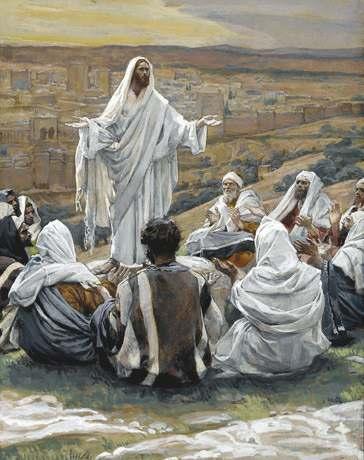
“Now Jesus was praying in a certain place, and when he finished, one of his disciples said to him, ‘Lord, teach us to pray, as John taught his disciples.’ And he said to them, ‘When you pray, say: “Father, hallowed by your name. Your kingdom come. Give us each day our daily bread, and forgive us our sins, for we ourselves forgive everyone who is indebted to us. And lead us not into temptation.”’”
Luke 11:4
Jeremiah 1:11-19, Romans 1:1-15 and John 4:27-42
We encounter three powerful images in today’s scriptures: first, the young priest Jeremiah receiving the challenge of his prophetic mission but also God’s promise of support and protection; second, the Apostle Paul introducing himself to the Christian community in Rome and declaring the Gospel; and third, our Lord Jesus Christ breaking down social barriers with the Samaritans and teaching His disciples fundamental Kingdom principles. Our Christian journey is likewise a series of beginnings—whether a new call to service that may seem greater than we can handle, joining into a new community of believers and expressing our unique gifts there, or having our lives transformed by hearing the Good News for the first time. Our lot is not to remain in our comfort zones but to venture forth where service to the Gospel calls us, even if that means letting go of the support systems that sustain and protect us. In our vulnerability we become more reliant on God’s faithful power and open to Him doing great works through us.
Jeremiah is overwhelmed by the call to prophesy a disastrous future for the people of Judah due to their continual disobedience to God. In his own strength he lacks the necessary experience and skills. God tells Jeremiah to brace himself for the task and know that he can trust in the Lord’s protection, for His grace is sufficient. Paul’s heart is set on declaring the Gospel in Rome and devoting his gifts to the Christian community there. Since that door is not yet open to him, he sends the gift of this amazing letter in which he introduces himself as being wholly devoted to preaching the Gospel of Jesus Christ. As his disciples witness Jesus open a new avenue of ministry to the Samaritan community, Jesus teaches them that serving God is a task that offers its own sustenance. While their call is never the entire job of salvation, they are called to those tasks that the season requires.
Like Jeremiah, we are never alone when we step out of our comfort zones in service of the Gospel. God will protect and sustain us. Like Paul, we are able to encourage others by our faith and, in turn, receive encouragement from them. As the disciples learned from Jesus, the burden never falls entirely on us. As we venture forth in service of the Gospel we may reap the harvest that others have sown, or we may be planting and watering seeds of faith that others will one day harvest. We are all working in concert as the Body of Christ, encouraging one another by faith and always being sustained by the Holy Spirit. We are called to service of the Gospel, and we must go forth.
TUESDAY, MARCH 3
Jeremiah 2:1–13, 29-32; Romans 1:16–25 and John 4:43–54
Today’s passages strongly illustrate the necessity of faith and trust in the Lord. They show examples of the consequences of a lack of faith or, in the case of the royal official in the passage from John, total faith and trust in God.
The passages from Jeremiah illustrate the nation of Israel turning from God after following God in the Exodus from Egypt, through the wanderings in the wilderness, and finally arriving in the Promised Land. God brought disaster upon their enemies and blessed Israel, “the firstfruits of his harvest.” Jeremiah continues on to describe the anger of God as He sees Israel turning away from Him and committing two sins: forsaking the Lord and trying to stand on their own without God. Both of these are spiritual poison.
In the same manner, the passages from Romans declare that “The righteous will live by faith” and that we are without excuse when we turn from God. When we do (as we inevitably do in our sinful nature) our hearts are darkened and we become fools and worship idols instead of the glory of God.
In contrast to the previous two passages which detail the consequences of losing faith, John tells the story of a royal official with a sick child who traveled to meet Jesus and request His healing. Jesus rebukes the gathered crowds by telling them they do not believe unless they see signs and wonders. He then proceeds to seemingly casually tell the royal official to leave, for his son will live. The official faithfully trusts in Jesus, departs and finds that his son not only is healed, but began his recovery at the very time Jesus spoke to him and said his son would live.
All these passages provide strong evidence for the wonderful gift and promise of God’s love, salvation and care for us if only we believe and trust in Him. In the first two scriptures we see examples of God’s plan for us. However, as often happens, we turn from Him in times of plenty and believe we are the creator of our good fortune.
As people with broken, sinful natures, we must always remember to turn to God—in good times and in difficult times—for He alone is the source of our salvation and all of our blessings.
WEDNESDAY, MARCH 4
Jeremiah 3:6-18, Romans 1:28-2:11 and John 5:1-18
During the reign of king Josiah and later kings, the people of Judah strayed from God’s commands and followed after other gods. They did not learn from the example of fallen Israel. Through the prophet Jeremiah, God rebuked the people of Judah because they did not repent “with all [their] heart, but only in pretense.” Like the people of Israel and Judah, we have a critical need for true, genuine repentance—a change of heart from following our own ways to following God’s ways. If we do that, our faithful God offers us a promise of restoration, just as he did for the children of Israel and Judah. God passionately wants to extend us his mercy if we will only acknowledge and confess our sin and return to him with our whole hearts.
In Romans, the apostle Paul expands upon this theme and lovingly but sternly warns us: if we fail to repent, God may give us over to a depraved mind which, in turn, may lead to all manner of sinful behavior. The message is clear: failure to repent will lead to destruction. God’s character is holy, and he cannot tolerate sin. Similarly, God’s judgment is righteous, and he will render to each person what is fitting for his or her deeds. But the good news of the gospel is that God is merciful and good;his goodness will lead us to repentance and restoration if we will only surrender to him. Like the children of Israel and Judah, we face a choice: will we do things God’s way or our way? Will we learn from the examples of Scripture and turn to God, or will we stubbornly maintain our own self-directed ways? The unmerited blessings of God begin at the moment of surrender—the priceless exchange of our worthless condition of sin for the immeasurable riches of his grace. Hallelujah!
The passage from John illustrates God’s promise of healing and restoration through the story of the disabled man at the pool of Bethesda (Greek, ‘house of kindness’). Jesus knew the man was disabled a long time; he could have healed him immediately. Instead, he simply asked the man if he wanted to be made well. Rather than respond “yes,” the man focused on the particular means of healing at hand—namely, the occasional stirring of the pool waters—and on his inability to avail himself of that means. Clearly, he did not expect Jesus to heal him. And once again, Jesus did the unexpected. Even though it was the Sabbath, Jesus told the man to “Rise, take up your bed and walk.” Jesus’s words had healed the man in the house of kindness—how fitting! Afterward, Jesus told him to sin no more, lest a worse thing should come upon him. Sin always leads to sickness of some sort (spirit, soul, body) and ultimately to destruction if we do not receive the healing power of Jesus for our sin-sick condition.
As we reflect on these truths from God’s Word, may we be drawn to his kindness, be quick to confess, and truly repent so we may receive his healing and restoration.
THURSDAY, MARCH 5
Jeremiah 4:9-10; Romans 2:12-24 and John 5:19-29
God has a plan for your life. He always is in control. He is today what He was in biblical times. He does today what He did in biblical times. He loves today like He did in biblical times. Do you see Him?
God knew you before you were conceived. He picked you to be His child, His friend and His follower. There are two sides to a relationship like this one. Are we as devoted to Him as He is to us?
Reflect for a moment on how God chose you and brought you into His flock. In many ways, we are like sheep—DUMB. So, we put our faith in a shepherd who can guide us and nurture us through life. There are some that will lead you away from God, but only one who can lead you to Him. Who is your shepherd today?
Our Lord Jesus is the one true shepherd who leads us to the Father. You can see Him working in our families and our church, in San Antonio, and in Texas and all over the world. Turn and look at Him. He works for the good of the people who love Him.
How do we love Him? With complete faith in Him, we daily surrender our hopes and dreams (our lives) to Him. Many of us know the Order of Worship, the hymns and the Apostle’s Creed, but do we have enough faith in Jesus to move mountains? Do we have the kind of faith that takes action when we don’t feel like taking action? Do we act out of faith and love for Jesus when it is easier to avoid a situation rather than face it? We need to eat and drink our Savior every day!
We are God’s own. It is a privilege to have Jesus as our shepherd, to be shown the truth and to have the opportunity to respond to His love with faith. Just outside the church doors you will find a mission field—blind shepherds leading blind sheep. We are in awe of the incredible responsibility we have as Christians: to love and honor God through our personal faith and to be witnesses of His grace.
FRIDAY, MARCH 6
Jeremiah 5:1-9, Romans 2:25-3:18 and John 5:30-47
The above passages remind us that no one is the perfect Christian, nor is anyone expected to be. We are shown the gifts that can come from faith in God, but first we must take steps to get to faith. These passages discuss some basic elements of faith and what they can mean in our lives.
Jeremiah tells us that in Jerusalem, the holiest city in Israel, there was not a single upright soul. The people were not righteous and did not seek the truth with their hearts. Jeremiah goes on to explain that God would take His wrath out on them in many ways when the time came. This should serve as a warning to us. We are not expected to be perfectly upright, but we should actively seek God through faith in Christ and His righteousness. Without that faith, we too will face God’s wrath.
Many Jews thought they could seek God and follow Him solely by adhering to their strict written code of laws. Among these laws was the symbolic rite of circumcision. In his letter to the Romans, Paul explains that we should instead let our hearts be circumcised by the Holy Spirit so that we may truly worship God in all His glory. To worship God in truth, we need the Holy Spirit as our guide and we need to seek Him for many reasons. The Holy Spirit is important to our faithfulness because, as both Paul and Jeremiah say, not one among us is truly righteous. Therefore, we need the Spirit to strengthen our faith in Christ and guide us toward God.
In the passages from John, Jesus explains that He really is the Son of God; those who seek the praise and love of God must believe in Jesus Christ as God’s Son. Jesus’s warning applies to us, too. We are to actively seek Christ and strengthen our faith in Him as our Savior. Faith in Jesus is faith in God, and that faith leads to spiritual fulfillment.
But, we must remember that none of us is perfect in the eyes of God for He sees all our flaws. It is imperative that we seek the Holy Spirit because He leads us to faith in Christ and ultimately to God the Father. Jeremiah reminds us that God’s faithfulness is guaranteed, but this doesn’t mean we should stop searching for God. The love and faith that God puts in us should encourage us to follow Him even more fervently.
SATURDAY, MARCH 7
Jeremiah 5:20-31, Romans 3:19-31 and John 7:1-13
In Jeremiah, we see an angry God. His people had listened to false teaching and prophecy, and refused to take advantage of God's amazing gift—true quality of life that offers abundant blessings of this earth and protection from the perils of our world. Then, as now, man’s sinfulness and things of this world that we incorrectly take for granted often lead us astray from God's goodness and mercy. There also seems to be a never ending group that wants us to dwell on the secular values of our time and follow a false God. In all this, God is constantly calling us to depart from our wicked ways; but, we neither hear him nor have a heart to fear his displeasure.
In Romans, Paul explains what a right relationship with God looks like and what we should strive for. Getting right with God will help us avoid the predicaments the Jews encountered in Jeremiah’s day. Yet, even today, many still believe the way to obtain God's peace and blessing is to follow his laws and thus earn our righteousness. Rather, Paul points out that our right relationship with God is a gift by his grace from faith in him, not through the law. The laws serve two purposes. First, it is simply a great way to live in harmony on the earth with our fellow man. Secondly, and more importantly, it reminds us of our sinfulness and our need of a forgiving and loving savior. Paul makes one thing clear: our relationship with God is paramount. Since we will always fall short of following the law, our failure constantly reminds us of our need of seeking that all important relationship.
Paul insists that nothing we ever do can win for us God’s forgiveness; only the immense sacrifice that Christ has accomplished for us on the cross can provide that grace. Therefore, the way to a right relationship with God lies not in a hectic, desperate and doomed attempt to win forgiveness by our performance. Ultimately, it lies in a humble, penitent acceptance of the love and the grace God offers us in Jesus Christ. In Christ, we now are ruled by the law of love and should have no fear as we strive to live in the luxury of God's love. Fear is wiped away by a daily renewing of our faith. Humbleness and desire to keep our eyes on him releases us from fear. By focusing on his teachings, we take attention off ourselves and faith enters and gives us courage.
In John, we encounter Jesus setting his brothers (and us) straight concerning his timing for overcoming the ways of the world within each of us. In all situations, we are called in faith to keep our eyes focused on Jesus and to not only follow and relax in his timing, but also defend him in the eyes of a critical, doubting world. To him be the glory.
SUNDAY, MARCH 8
Jeremiah 6:9-15, 1 Corinthians 6:12-20 and Mark 5:1-20
The Gerasene demoniac’s question is a crucial question for us as well: “What have you to do with me, Jesus?”
How do we know who we are? How do we know what life’s purpose is, or what our destiny is, until we find an answer to the miserably demented man’s question: “What have you to do with me, Jesus?”
The passages before us today can help us answer that question. Jeremiah speaks of judgment, the judgment of us that Jesus, too, renders. “They are not ashamed,” the prophet says, for “they did not know how to blush.” An awareness of the need to confess our sins and our lostness without God’s mercy and grace is an important work Jesus has to do with us.
Paul gives us a crucial word about what Jesus “has to do with us.” He writes, “Do you not know that your body is a temple of the Holy Spirit within you, which you have from God, and that you are not your own?” God made you with special care to be a home for His living Spirit, to share with people what is the handiwork of God’s Spirit: “Love, joy, peace, patience, goodness, faithfulness, gentleness and self-control.”
Freeing us from fear, anxiety and torment is another of those ways Jesus “has to do with us.” He gives us the peace of believing that there is a just God at work in an unjust world, a loving God at work in a world of hate, a forgiving God at work in a world of sin, a sure God at work in a changing world, and a healing God at work in our own anxious, fearful lives.
This judgment, this resurrection to new and abundant life, is the power of His Spirit. This healing and peace is what Jesus would “have to do with us.” Now we must ask: “What have we to do with him?”
MONDAY, MARCH 9
Jeremiah 7:1-15, Romans 4:1-12 and John 7:14-36
Jeremiah preached to the people of Judah as they entered the Temple. He proclaimed that they were straying away from God’s words, laws and promises. If God’s chosen people did not return to their faith in the one true God and repent of their sins and worldly desires, just going to the Temple would not secure their protection or give them peace.
All through the Bible, whenever God’s people cherished worldly things and not God’s ways and love, God removed His protection and their nation and people were destroyed or lost. That message remains current. We also need to turn back to our faith, repent, and rekindle our love for God and His ways.
Yet today, there are some looking for or wanting visible signs to be known as God’s people. God gave Abraham and his faithful followers a sign. He set them apart with a sea: circumcision. This, too, has lost some significance over time. Christ came to replace the external seal of circumcision with a new seal, by writing God’s love on everyone’s heart with new commandments.
If God is in your heart and you love God with all your heart, everyone will see God’s love through you. You will be a beacon of light and a new person. God’s love will give you a peace and security that transcends all earthly desires and signs. His love is greater than pure gold or precious stones. It does not rust or tarnish. God’s love is kind, patient and everlasting.
As we look forward to Easter morning, how thankful we are that God gave to us the perfect and precious gift: His Son, Jesus. “Great is Thy faithfulness, morning by morning, new mercies I see; all I have needed Thy hand has provided . . . “ proclaims that great hymn of God’s love for us.
Jesus knew that the world had evil places and people. Even when His adversaries sought to kill Him, He asked, “Why are you trying to kill me?” After 2000 plus years, it hasn’t changed. There are people still trying to destroy Him, His teachings and His church. We need to pray for these persons, and hold fast to Jesus so we can stand firm in our faith.
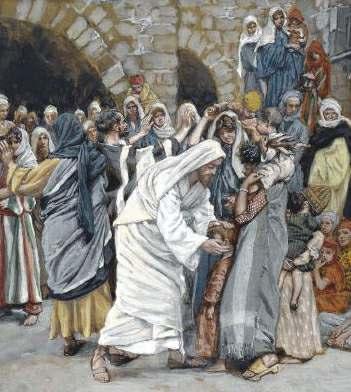
“Let the children come to me; do not hinder them, for to such belongs the kingdom of God. Truly, I say to you, whoever does not receive the kingdom of God like a child shall not enter it.”
Mark 10:14b-15
TUESDAY, MARCH 10
Jeremiah 7:21-34, Romans 4:13-25 and John 7:37-52
We read scripture to know about God. We study scripture to know God—to have a relationship with Him. The three passages we study today offer ways to deepen our relationship with Him in this Lenten season.
In the passage from Jeremiah, we are warned of the danger of failing to listen to God’s truth and not obeying His Word. God had promised the Israelites that they would be His people and He would be their God if they would obey His commands. They chose, however, to ignore His commands and not listen to the prophets that He sent to warn them. They did whatever they liked, so God rejected and abandoned them. What can we do differently to draw nearer to God? We can study scripture to know God’s truth, and then sincerely repent and obey His commands.
In the passage from Romans, we are reminded of God’s love for us. He has promised us salvation through Christ. Our righteousness does not come by our own actions, but by grace. Christ, though sinless, died for our sin. If Abraham had relied only on his own abilities, he would have failed. But Abraham had faith: he looked to God and waited, believing that God would fulfill His promises. There is a saying that if we believe in Christ’s death and resurrection, we give Christ our sins and, in return, He gives us righteousness and forgiveness. How do we respond? We study scripture to know God’s promises, then we have faith. We trust God to fulfill His promise of salvation and offer Him prayers of praise and gratitude.
In the passage from John, Jesus tells of the gift of the Holy Spirit. He promises that the gift of the Holy Spirit is available to all who believe in Him. This passage offers cautions about our attitudes and about careful interpretation of scripture. The Pharisees were prideful, self-centered and had narrow attitudes in their interpretation of scripture. This led them to incorrect conclusions. Jesus spoke of the Spirit as streams of living water flowing through us—channels of love, joy and peace. Our response should be prayers of gratitude for the provision of the Holy Spirit, and prayers that these streams of living water in us would be channels through which the blessings of love, joy and peace flow to others. An increasing reliance on the Holy Spirit will deepen our relationship with God.
WEDNESDAY, MARCH 11
Jeremiah 8:4–7, 8:18–9:6; Romans 5:1–11 and John 8:12–20
In reading today’s passages, you will see a very reassuring message in Paul’s letters and Jesus’s teachings in the Temple. In comparison, we see Jeremiah’s disillusionment with the people of Israel. Yet all of these passages have one main theme of salvation.
The people of Israel continued to turn their backs on God and worship idols, but God never let them down. Jeremiah pointed out God’s judgments for their sins and was very clear that, by surrendering to God’s will, they would escape their calamity. He also proclaimed God’s gracious promise of hope and restoration. But, the Israelites would not listen to Jeremiah. He became very distraught and could not understand the perpetual backsliding of the Israelites. It is said that self-reliance is considered a virtue. We bring ourselves to a likeness of the Israelites when we do not place our faith in God.
Paul reminded the Romans that salvation is granted and credited to us by having faith in God. This justification was given in the past with the suffering and death of Jesus. The primary fruit of the death of Christ is our being justified by His blood and reconciled by His death. Salvation cannot be earned with deeds; we are saved by faith alone.
Jesus said, “I am the light of the world.” By using the word “world,” Jesus removed the distinction between Jews and Gentiles. There are many mentions of God and the Light throughout the Bible. All who follow the Light will have everlasting life. It is our duty to follow the Light of Christ. We walk in this Light by submitting to God and following His guidance and direction. When Jesus shared this message with the Jews in the Temple, the Pharisees questioned His testimony and authority—an act which led Jesus to doubt their faith. There will be many false lights that will approach us and challenge us. Be very cautious and do not let them lead you astray.
Remember to always follow the Light of Christ. If you get off track and need to come back, He will be there for you. He is always just a prayer away. God loved us so much that He lived among us and died for our salvation. If God in Christ died for our greater sins, He also died for our lesser sins. Thus, salvation is all about God’s grace, is eternal and is there for you. Yet, it does demand our response. The response God desires is one that brings all of these verses together—faith in Him and in Jesus, the Christ of God.
THURSDAY, MARCH 12
Jeremiah 10:11–24, Romans 5:12–21 and John 8:21–32
Today’s scriptures speak to us about sin. The Greek word for sin, “hamartia,” is an archery term meaning to miss the mark. When we sin, we miss out on the intended task of having a relationship with God. So sin is our separation from God, our self-centeredness, and a trait from the original sin of Adam. However, the Good News is that Jesus died on the cross to make us right with God.
Jeremiah speaks in verbs of the Creator as He made, founded, stretched, sent and brings life. Mankind is senseless and without knowledge and likened to a goldsmith who makes worthless objects. There is a warning of the coming of a great commotion that would make the “towns of Judah” desolate. It is a warning of the consequences of being separated from God. The end of this scripture is a prayer in which Jeremiah asks to be disciplined.
And then we hear the Good News of the saving grace of Jesus! In John, we hear that if we do not follow God’s commands, as Jesus has been commanded and taught, we will “die from our sins.” We would be missing God (our mark), and headed to a dead-end street. Mankind is living by human terms and not by God’s path. Yet, the path is right in front of us to follow (hit the mark). Jesus has come to show us the way and truth of that path.
Paul’s message tells of the relationship between sin and death. Sin entered the world through one man, Adam, and that has led to death through sin, well documented in history. There are warnings of God’s wrath, our separation from His grace. But God has given us a second chance. He sacrificed His Son for our benefit, for “just as one trespass resulted in condemnation of all people, so also one righteous act resulted in justification and life for all people.”
The Old Testament documents that God wants a relationship with us. Jesus came and made that relationship very personal. God also gave us the freedom to choose. It is up to us to accept the relationship and, when we fail, to ask for forgiveness through repentance.
As you move through Lent, a season of reflection and preparation, ask God to give you courage in prayer, penance and self-denial. Have God activate your ears to listen, your eyes to study and your mobility to act. Through God’s mercy and forgiveness, you can be enlightened by the Holy Spirit to shorten wasted hours, slow down overrun tasking, reduce the fears in your life, and bring excitement to your dull moments. These are the actions that can lead you to a new creation in Jesus, bringing you vision, strength and wisdom in your days.
FRIDAY, MARCH 13
Jeremiah 11:1-8, 14-17; Romans 6:1-11 and John 8:33-47
Jeremiah barked his warnings throughout the land. Everyone seemed to hear his words, “obey the covenant, obey the covenant,” but they were deaf to his warnings. Everyone kept on doing as they saw fit, just as they had done when Israel had no king.
Since the fall in the Garden of Eden, mankind has sought to control its own destiny, to do as it sees fit, and to justify its actions in the name of righteousness. God calls it sin and his warnings to repent from it have gone unheard. And when his promised exile of Israel and Judah failed to open human ears or to remove the sinful nature, he sent Jesus into the world to free us from the bondage of sin. We call it grace.
When Jesus died on the cross, he took our sins to the grave with him. “We were therefore buried with him through baptism into death in order that, just as Christ was raised from the dead through the glory of the Father, we too may live a new life. If we have been united with him like this in his death, we will certainly also be united with him in his resurrection” (Romans 6:4-5). We call it grace.
By following our own selfish ways we became deaf to God’s word and enslaved by sin. But having been crucified with Christ, our sin has died away and we are free. We are cleansed by the blood of the Lamb and our ears are opened to the words of the Father. We can hear; and we belong to God. We call it grace.
Jesus came into the world and gave his life that we might live. Because he came and died for us, we are bathed in his blood. In his death we are dead to our sins. And in his resurrection we have risen to a new life. We call it grace.
Nothing we do will earn it; and nothing we may ever do will cause us to lose it. We call it grace.
All we must do is receive it.
SATURDAY, MARCH 14
Jeremiah 13:1-11, Romans 6:12-23 and John 8:47-59
Jeremiah’s story of the lamb cloth and burying it under a rock is an illustration. When he went back to retrieve the lamb cloth, it was damaged and useless. God said He would make Judah and the Israelites good for nothing. God said when His people turned away from Him they no longer honored His name. We need to use our possessions and care for them or they will rot and deteriorate. This story shows what happened to the people of Israel. The Israelites turned away from God; their faith rotted and deteriorated. Their pride had made them useless to God.
In the Roman’s passage, Paul said don’t let sin dominate you or you will lust. You will follow an evil path and will not be able to follow Jesus’ law. You will give in to sin rather than doing good. Without Jesus, we would be slaves to sin. We would be separated from God. We need to obey God “with all our heart, soul and mind.” As Christians, we know that Jesus paid our debt. Christ has assured us of eternal life. We need to know and show that our lives belong to God, not to sin. Thanks be to God that we will have a life after death. As we choose to turn from sin, we choose to be servants of God.
The passage from John continues that thought. Jesus said if we believe in God, we have His Word. We must follow His laws if we are to be obedient. If we honor ourselves, it means nothing. We need to honor only God.
Obedience is a Christian’s constant process. We must ask God for forgiveness when we sin. As Christians, we know that we will sin. We also know that our belief in Him will give us eternal life. Jesus is the way! Jesus is God!
Jeremiah 14:1-9, 17-22; Galatians 4:21-5:1 and Mark 8:11-21
The word of God in these scriptures proclaims God’s willingness to continually offer his grace to all who will come to him and believe in his promise of everlasting love. Beginning with God’s chosen people in the nation of Israel and continuing through New Testament readings, there is a recurring theme of disbelief in God’s covenant. Despite the people’s disbelief, God continues to offer his love: first by restoring his people and then by the salvation given through Christ Jesus.
Long ago God made his covenant with the people of Israel and promised he would be their God before all nations and never leave them. (Leviticus 26). With this decree, God placed his name on the people of Israel, entrusting them to be a symbol of the living God for all nations to see. Through their sin, the people of Israel rejected God and by doing so distanced themselves from being a representative people of God. Jeremiah acknowledges that “our sins testify against us” and prays that God would remember the great covenant he made to the people of Israel. But, their sins are too great and God turns away from them, yet not so completely as to forget his covenant.
Like the Israelites, we often fall short. But, the Spirit reminds us of how much God seeks us; he want us to trust in his provision and remember that we belong to him. In Paul’s letter to the Galatian churches, he recounts the story of Abraham’s two sons and the original promise God made to Abraham—that he and Sarah would have a son. But, they grew impatient and had a son through a slave woman. Paul uses that act of rebellion to illustrate that the people of Israel are in bondage with the old law. The new covenant is illustrated by Sarah’s son, born free and part of God’s promise. Paul urges the people of Israel to not be burdened by the yoke of slavery. Yet, they remain hesitant to move away from the law and are reluctant to receive the new covenant found in Jesus.
The people’s disbelief continues when, in the book of Mark, Jesus is asked to provide a sign from heaven that he is the Christ. Jesus proclaims that no sign will be given; he then tells his disciples to “watch out for the yeast of the Pharisees and that of Herod.” Jesus is establishing that he is the new way, but there are still doubts by many. Just as small elements of yeast greatly influences the larger piece of bread, so too does a small amount of disbelief influence people trying to hear the words of Jesus.
During this season of Lent we have time to reflect on God’s promise and the influence Christ Jesus has in our lives. Throughout the scriptures we see examples of a people who are removed from God by sin but are continually restored through a loving God whom keeps his promises made to his people. Even in times of doubt we can hold strong in our faith, knowing that the greatest promise has been fulfilled in Christ Jesus. For as Paul exclaims, ”Christ has set us free.”
MONDAY, MARCH 16
Jeremiah 16:10–21, Romans 7:1–12 and John 6:1–15
The passages for today begin with the prophet Jeremiah foretelling the destruction of the people of Israel as a result of their worshiping and serving false gods. Their memory of the Exodus had long faded and they did not follow what the Lord commanded through Moses when they were brought out of Egypt. Jeremiah was tasked by God to tell the people of Israel that they behaved more wickedly than their ancestors. The Lord declared He would send out many fishermen and hunters so they would be caught and hunted down for their sin and would not be concealed from Him. Though this was a terrible condemnation, the passage ends with hope as God promises to teach them His power and might so they will know that His name is Lord.
In the Romans passage, Paul is telling believers that the law is powerless to save sinners since the followers of the law cannot live up to a written code. Paul emphasizes that without the law we would not know what sin is. He offers an example, “you should not covet.” But sin produced every kind of coveting. For apart from the law, sin was dead. Though the commandment tells us what sin is, Paul says as believers in Christ we have died to the law that we may be raised again to bear fruit for God.
The John passage for today tells how Jesus fed the five thousand (men); the true number must have been much greater. When Jesus looked up and saw the great crowd coming toward Him, He asked Philip “Where shall we buy bread for these people.” Philip, being like most of us, thought first of where could the disciples buy such a quantity of food (he was from nearby Bethsaida) and at what cost? A boy shows up with five small barley loaves and two small fish, and the question among the disciples was “how far will this small amount of food go among so many?” There are three lessons from this act of Jesus: (1) The disciples did not pray about how to feed the five thousand; (2) The boy brought all he had, holding back nothing; and (3) When all were fed an abundant amount was left over.
How often in our own lives are we confronted with a situation when we fail to pray before pressing forward, and how often are we not giving our Lord our all. Christ wants us to live an abundant life and at the same time ensure we have much left over.
During this Lenten season let us all remember God’s commandments and never forget what Jesus Christ did for us on the cross. He desires for us to have an abundant life; we find it when we confess Him as the way, the truth and the life and our advocate with the Father.
TUESDAY, MARCH 17
Jeremiah 17:19-27, Romans 7:13-25 and John 6:16-27
Being a prophet for God, Jeremiah warns the men of Judah and the inhabitants of Jerusalem of destruction if they do not keep the Sabbath day holy. “Take care for the sake of your lives, and do not bear a burden on the Sabbath day or bring it in by the gates of Jerusalem.” They do not recognize God’s will as more important than their own desires nor do they trust that God, in his wisdom and perfect plan, would bring about the best for his children.
In Paul’s letter to the Roman’s, the law is given as a preparatory measure to educate man to see his need of a Savior. “For I do not do the good I want, but the evil I do not want is what I keep doing.” Not until we realize our helplessness in this struggle between right and wrong are we able to accept God’s laws and find relief through Jesus Christ our Lord.
John relates that after the five thousand followers are fed, Jesus’ disciples went down to a boat and crossed the sea to Capernaum. During the crossing, they observed Jesus walking on the sea and they were frightened. Jesus said, “It is I, do not be afraid.”
When the crowd sought Jesus the next day in Capernaum, Jesus told them that they sought him not because of a miraculous sign but because they sought more food. He told them, “Do not work for food that spoils, but for food that endures to eternal life which the Son of Man will give you. On him God the Father has placed his seal of approval.”
During your meditation this Lenten season, evaluate your own obedience to God in keeping the Sabbath holy and by not worshiping false idols. Are you ready to accept God’s laws and his promise for eternal life? Do you trust in his gracious care?
Most importantly, are you ready to be a spokesperson for God?
WEDNESDAY, MARCH 18
Jeremiah 18:1–11, Romans 8:1–11 and John 6:27–40
A recurring theme throughout the Bible is God’s love and desire to be in relationship with His people. Lent offers us the opportunity to reflect on the magnitude of God’s great love, Jesus’s sacrifice and the precious gift of grace. Throughout today’s passages, I am struck by our relationship with the Triune God–Father, Son and Holy Spirit. Jeremiah speaks of God the Father as our maker, ruler of heaven and earth. In John, Jesus explains His purpose as the Son whom the Father sent to do His good work. And in Romans, Paul describes the work of the Spirit of life that is in us as we are in Christ Jesus.
Today’s passage in Jeremiah is a stark reminder of the continuing inability of God’s people to keep His laws and turn from their sinful ways. Yet, it also is a testament to God’s pursuit of relationship with us. He created us in His image for this purpose; yet, through the ages, God’s people have continually turned from Him to do their own thing.
In the Jeremiah passage, God addresses the people’s blatant disregard for His sovereignty. From our vantage point we may wonder, “With all the ways that God showed His faithfulness and provision for the Israelites, how could they be so thick headed?” The reality is that, in so many ways, we are no different. We, too, attempt to be our own masters. We trust in what’s safe, what’s culturally appropriate or acceptable; in other words, we lean on our understanding rather than God’s will. And just like the people of Judah, we are weak. In fact, Jesus comments to a crowd in Capernaum that although they see Him, they do not believe! Jesus explains that indeed He is the true bread of life sent by the Father to do His work, which is to give life to the world.
Paul states that the sinful nature is hostile to God; those who live accordingly desire things of the sinful nature. As fallen people, we cannot keep the law. We disobey and stray from His good desires for us. It is only through the sacrifice of Jesus that we are saved from our sin-filled selves and set free from the law of sin. Lent provides a timely opportunity to reflect on this as we repent and seek forgiveness in Christ.
Paul also reassures us that, in Christ, we are new creations controlled by the Spirit of life and peace that lives in us. As believers, we rest in this assurance: in spite of all that appears to be “out of control” in the world, our nation and even our own lives, God IS greater. God has power over ALL of it! He is sovereign, and through His grace we are one with Christ. That’s news worth celebrating!
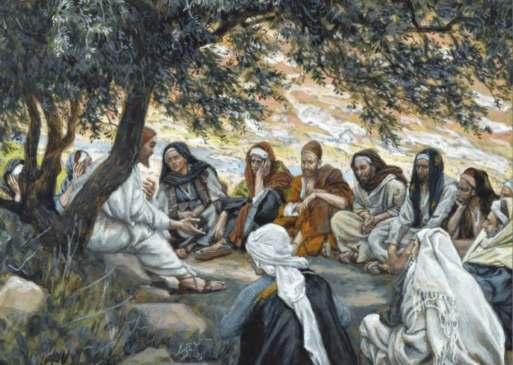
On the way to Jerusalem
“And they were on the road, going up to Jerusalem, and Jesus was walking ahead of them. And they were amazed, and those who followed were afraid. And taking the Twelve again, he began to tell them what was going to happen to him, saying, …
‘See, we are going up to Jerusalem, and the Son of Man will be delivered over to the chief priests and the scribes, and they will condemn him to death and deliver him over to the Gentiles. And they will mock him and spit on him, and flog him and kill him. And three days later he will rise.’”
Mark 10:32-34
THURSDAY, MARCH 19
Jeremiah 22:13-23, Romans 8:12-27 and John 6:41-51
In these three scriptures, you will find three devoted followers—Jeremiah, Paul and John—who minister the Word of God to us and warn us about the repercussion of sin and rebellion. However, they also tell us of the salvation of God and His mercy, and of our need to obey His Word through our faith in Christ.
From the Old Testament scriptures, Jeremiah was God’s spokesman to Judah, a region that had severely deteriorated with many people rejecting God’s Word through rebellion and sinfulness. Jeremiah was rejected by his family, neighbors, friends and practically anyone who listened to him; but, for 40 years, Jeremiah courageously and faithfully proclaimed the Word of God. His message was both a call to action and a warning, “Repent and turn to God, or He will punish.” During his time in Judah, Jeremiah ministered under Judah’s last five kings. In verses 13-23, King Josiah, a great king who was living an obedient life under God, had just died. His evil son, Jehoiakim, who succeeded King Josiah, was hardheaded and hardhearted and had been warned by God. But, Jehoiakim refused to listen since prosperity had a higher priority for him than God. The sinful nature of its people and its rulers ultimately led to the destruction of Judah. From this scripture, we learn that we must have our own personal relationship with God since we cannot inherit, but can clearly benefit from, our parent’s faith and good deeds. In addition, we also learn that we must choose between the comforts of life or a close relationship with God.
In the New Testament scriptures, John provides evidence that Jesus is the Son of God and, if we believe in Him, we shall have eternal life. Paul in Romans provides a view of the sinfulness of all mankind, shows how through Christ our sins are forgiven, and tells how as Christians we are to live our new life. In verses 41-51 of John 6, we learn that the Jewish leaders continue to reject Jesus and His claim that He came down from heaven as the Son of God. Those leaders saw Him as only a simple carpenter from Nazareth. In addition, the Jewish leaders continue to ask Jesus to prove Himself. Jesus responds by telling them, “I tell you the truth, he who believes has everlasting life. I am the living bread that came down from heaven. If anyone eats this bread, he will live forever.”
As you go through this Lenten season, reflect on how similar today’s culture is to the time when Jeremiah, Paul and John lived. The people back then were rejecting and rebelling against God’s truth. We must ask ourselves: are we doing the same today through our actions and words? As proclaimed Christians, we must live a life of faith as Christ did and stand firm against such evils while spreading the good news of His salvation.
FRIDAY, MARCH 20
Jeremiah 23:1-8, Romans 8:28-39 and John 6:52-59
“And we know that in all things God works for the good of those who love him, who have been called according to his purpose” (Romans 8:28). What a wonderful and familiar verse, and one that many have memorized along the way, maybe even in confirmation class. In this Lenten season, it is a reminder worth hearing often, and is salve to the soul that can get battered easily and often by our culture. Moreover, I long to be conformed to the image of His Son (v. 29), and to walk more and more closely in the footsteps Jesus left behind in this world—His path which guides us in how to live life in a manner pleasing to our Creator. But I find even deeper beauty in the powerful questions that then follow.
“If God is for us, who can be against us?” The answer to this question is simply profound. Our God, who sacrificed His own Son for our benefit, has completely demonstrated that He is for us; nothing else even comes close to be considered in the equation. Who will bring any charge or condemn those whom He has chosen? Simply no one, as the resurrected Christ is at the Father’s right hand actively interceding for us. Even US!
And then another question is posed, which feels even more profound and especially personal to me. Paul doesn’t ask who shall separate us from Christ. Instead he asks, “who shall separate us from the LOVE of Christ?” And the clear answer from one of the most beautiful verses in scripture? It is that assurance which fills our lives with humble gratitude, joy and an abiding faith—literally nothing will be able to separate us from the love of God that is in Christ Jesus our Lord. Paul tells us that he is absolutely convinced that neither our living or dying, angels or demons, what happens today or even tomorrow, highest of highs or lowest of lows, or even people with the greatest authority in all the earth have even the slightest chance of separating us from this incredible love—a love demonstrated by God forsaking His Son on the cross just so we can know the fullness of His love.
God is love. And when we align our lives with Jesus Christ as Lord, our deep longing for the Father’s love is not only fulfilled, but it is permanent and irrevocable. What an incredible gift! What unmerited yet incredible favor he demonstrates to us. It is indeed by grace we are saved.
SATURDAY, MARCH 21
Jeremiah 23:9-15, Romans 9:1-18 and John 6:60-71
Our Lenten Reflection begins in Jeremiah. He lived in turbulent times and wrote often of the pain in his heart from the peoples’ idol worship and their sinful ways. More importantly, he wailed at their lack of understanding of the gravity of the times in which they lived. Fearlessly, he spoke truth to power (King Zedekiah), causing himself great personal peril. He was threatened, harassed, beaten, thrown in prison, and placed under house arrest for months at a time. Yet, God was in control.
In Romans, Paul opens with the proclamation that he is NOT lying. The Spirit confirms in his heart what he is writing. He acknowledges that Israel enjoys the knowledge of adoption as sons by God. But, he says, “not all of Israel is Israel.” We, in contrast, are children of the promise through the line of Isaac. When Abraham and Sarah were very old, God made a promise that they would have a son. Through His will and providence, that came to be. When Isaac and Rebekah were to have twins, it was prophesied that “the older would serve the younger. Jacob God loved and Essau He hated.” God demonstrated that His power of election stands and was not dependent upon man. We are all here to work out His purpose. God’s election “does not depend on man’s desire or effort, but on God’s mercy.” God was in control.
In John, many disciples were falling away from Jesus as He taught what would become our communion liturgy. Jesus teaches that the only hope of life and eternity with Him in resurrection is through, “the eating of the flesh of the Son of Man and the drinking of his blood.” That is “hard teaching,” the disciples complain. Jesus says that the Spirit gives life, and the flesh means nothing in comparison. Jesus persists, “… no one can come to me unless the Father has enabled him.” Previously in the chapter, Jesus emphasizes, “No one can come to me unless the Father who sent me draws him.” In other words, God is in control.
Dear God, as we seek and yearn for the peace that passes all understanding in this Lenten season, help us to not worry about “what’s next,” but to find peace in the here and now. Trusting in your love, purpose, and providence, help us to always remember that you, O God, are in control.
SUNDAY MARCH 22
Jeremiah 23:16-32, 1 Corinthians 9:19-27 and Mark 8:31-9:1
Telling and hearing good news is always easy and fun. Hearing or speaking troubling news is never easy; it usually is told with reluctance and often sadness. Sometimes it is so difficult to be the bearer of bad news that we avoid telling it at all; or, we “sugar coat” it to make it easier. Indeed this has been true for generations!
The prophets in Jeremiah’s time did not like the news God wanted them to bring to the people. So, they didn’t. They just told the people what they wanted to hear and what made them feel good. God quickly accused them of being false prophets, and told Jeremiah that he was against them for leading his people astray.
In Paul’s letter to the Corinthians we again encounter the importance of sharing God’s news—the “Good News”—whatever the cost. We are even to become servants to others in order to bring the message of Christ to everyone. Sometimes, however, the “Good News” doesn’t sound like good news! When Jesus was telling his followers that he must suffer and eventually die, Peter did not want to hear it. It wasn’t good news to him. It was hard news, difficult news and even unfair news. Jesus quickly rebuked Peter and essentially told him, “If you want to follow me, you must let ME lead … even when it is hard.”
We must trust the bigger picture God has presented humanity in Christ, and we must be willing to travel the difficult path. Nothing is to get in the way of the message of Christ, even if means we have to deliver a difficult message. We must not be tempted to say only what our culture wants to hear. We must not only speak words of peace and prosperity, but also of suffering and judgment.
Are you willing to seek God’s approval instead of seeking human popularity and prestige? Are you willing to sacrifice your own desires to fulfill his will for your life? Will you do all you can to share the good news of the gospel? Those are the hard, but essential questions Christ asks all who would follow him. Will I—will you—respond with his grace and faith, always trusting in the Spirit to guide our words? Those who need to hear the “Good News” hope we do!
MONDAY, MARCH 23
Jeremiah 24:1–10, Romans 9:19–33 and John 9:1–17
In the season of Lent, we are given the opportunity to reflect on the Lord and what He has done for us. We can prepare our hearts through prayer, repentance of sins and studying the scriptures.
The Jeremiah passage talks about the baskets of figs. A classic contrast between good and bad, the baskets represent two groups of people. The good were the exiles from Judah who were sent to Babylon. The Lord promised to build them up, plant them and give them a heart to know Him. Those left in Judah or seeking refuge in Egypt were the poor figs. The Lord swore to ridicule and banish them, plus send famine, the plague and the sword.
Paul, in Romans, discusses the right of man to question his Creator. Doesn't the potter have power over the clay—to make one vessel for beauty and the other for menial use? He points out God has a perfect right to show His fury and power against those who are fit for destruction. But He also has the right to pour out on others the riches of His glory so that everyone can see. The Gentiles were given by God the chance to be acquitted by faith even though they had not really been seeking God. The Jews on the other hand tried hard to get it right with God by keeping the laws but never succeeded. God had warned of the Rock in the path of the Jews that many will stumble over—Jesus. Still, those who believe in Him will never be disappointed.
In John, Jesus helps a man who was born blind. The disciples asked Him if it was the man or his parents who had sinned? Jesus replied neither, ”this happened so that the power of God might be displayed in his life.“ He also said, “While I am in the world, I am the Light of the world. We must do the work of Him who sent me.” Jesus cured the man by spreading mud on his eyes and sending him to the Pool of Siloam to wash. The people couldn't believe he was the same man. And there was a deep division among the Pharisees because Jesus had performed this miracle on the Sabbath.
So this Easter celebrate our risen Lord and the miracles He has performed in your life. Let the riches of His glory shine through you and be visible to others. Hold fast to His love and the gift of His grace.
TUESDAY, MARCH 24
Jeremiah 25:8-17, Romans 10:1-13 and John 9:18-41
Lord, help me listen! As of 605 B.C., Jeremiah had served the Lord God as a faithful prophet for 23 years. He told the people and the king, “I have spoken messages to you from the Lord again and again, but you have not listened.” In Jeremiah 25, we hear directly from Almighty God, “You have not listened to My messages.” What will befall the nation and their neighbors as a result is daunting. God makes it clear what we deserve. He talks to Jeremiah about taking the “wine of My anger” to the people. How many times have I neglected God? How many times have I pushed aside the Holy Spirit? How many times have I ignored the grace of Jesus Christ? I deserve the just wrath of God.
Lord, let me learn! Paul, in Romans 10, speaks to the people of Israel just as he speaks to us today. “What I want most is for all of Israel to be saved.” He talks to us about how hard we try, but we don't know or go the right way. We try to make ourselves right with God rather than letting God make us right with Him. In verse 8, Paul offers God’s solution, also found in Deuteronomy 30:14, “God’s teaching is near you; it is in your mouth and in your heart.” Verse 10 continues, “Yes, we believe in Jesus deep in our hearts, and so we are made right with God. And we openly say that we believe in Him, and so we are saved.” Thanks be to God!
Lord, I wish to see Jesus! Romans 10:12-13, echoing Joel 2:32, confirms that “… the same Lord is the Lord of all people. And He richly blesses everyone who looks to Him for help.” Yesterday’s lesson from John 9 told of Jesus healing a man who was blind since birth. People gossiped and conjectured about whose sin caused his blindness. Jesus simply replied that this was to show what great things God can do. The religious leaders met the man and tried to understand his healing and who Jesus was. But, they could not see nor accept what was before their eyes. The leaders pursued lies to support their flawed vision: “You were born full of sin! Are you trying to teach us?” And they told the man to “get out of the synagogue and to stay out.” Jesus responded by offering them a truer view: “I came into this world so that the world could be judged. I came so that people who are blind could see. And I came so that people who think they see would become blind. … If you were really blind, you would not be guilty of sin. But you say that you see, so you are still guilty.” Lord, help others to see Jesus through my witness.
Lord, bless my witness! Heavenly Father who knows all things, sees all things, and loves us without condition, push me to listen to Your Word. Forgive me when I ignore Your teachings. Heal me from spiritual blindness and its arrogance. Remind me of the saving grace of Jesus Christ. Bless my attempts to live out Your Word and to share it truthfully and respectfully with others. Hear my prayers, Lord.
WEDNESDAY, MARCH 25
Jeremiah 25:30-38, Romans 10:14-21 and John 10:1-18
What does it take to understand? What does it take to believe? What does it take to follow?
You have to ask yourself, what didn’t they understand? In Jeremiah 25:30-38, it was prophesied that the Lord would not spare anyone that did not repent and the land would be laid to waste. For “… he will bring judgment on all mankind and put the wicked to the sword” (v. 31). Great misfortunes were spreading from nation to nation, and the leaders of these people would meet the same fate as those they have led. No one will escape His judgment. This is as relevant today as it was in Old Testament times. You only have to look at the world’s current events and ask, do we understand?
What does it take to believe? The apostle Paul’s message to the church reminds us in verse 15, “… How beautiful are the feet of those who bring the good news.” According to Romans 10:14-21, the Israelites heard the word but they did not follow it. Isaiah said they heard it (vv. 16-18). Moses said they heard it (v. 19). But the Israel Isaiah spoke to did not hear. In verse 21 he said they were a disobedient and obstinate people. Where do we belong, with those that turn a deaf ear or those that bring the good news?
What does it take to follow? So now you have to ask yourself, am I a true follower of Christ? Do I follow the Good Shepherd? Or do I follow those that profess to be the shepherd? John 10:1-18 tells us how we can be saved by following Christ. These verses give us guidance to follow throughout our lives in order to be saved. It shows us what to watch out for, so we are not led down the wrong path. Also, it tells us that Christ went out to bring others to His flock, therefore setting an example for us to follow. The good shepherd lays down his life for his flock. The one and only Good Shepherd is Christ. He gave His life for us that we would be saved.
Ask yourself: Do I understand? Do I believe? And, whom do I follow?
THURSDAY, MARCH 26
Jeremiah 26:1–16, Romans 11:1–12 and John 10:19–42
Today’s scriptures reflect recurring accounts of the people’s skepticism of God’s words and wishes for them. The constant theme in these passages reminds us that as the doubts of the people were dispelled by His messengers, their belief in Him and in Christ became real.
The Lord spoke through Jeremiah as he prophesied to the people that they amend their ways and obey the Lord their God. For their doing so, the Lord will relent of the evil He has pronounced against them. The people doubted Jeremiah’s harsh words spoken in the house of the Lord. The priests and the prophets said Jeremiah should die for his prophesy against their city and its people. Only when Jeremiah told the people to go forth with their plans to kill him, did they realize he spoke the true word of God and did not deserve the sentence of death. Are we guilty of not listening to hear the word of God?
Once again, in the book of Romans, there is doubt of God’s devotion to his people. Paul reminds the Romans of how Elijah pleaded to God against Israel, stating that they have killed the Lord’s prophets and have demolished His altars, leaving Elijah all alone. God replied that he kept seven thousand men who have not bowed to the knee of Baal but had believed His word. This is a powerful example of grace from God. How are our lives affected by the grace of God?
In the passages of John, again there was division among the Jews because of the words God delivered by John. Some called John a demon, while others noted that a demon could not open the eyes of the blind. The Jews later asked Jesus “How long will you keep us in suspense? If you are the Christ tell us plainly.” Jesus answered, “I told you and you do not believe. The works that I do in my Father’s name testify about me; but you do not believe, because you are not my sheep. My sheep listen to my voice and I know them, and they follow me. I give them eternal life, and they shall never perish; no one shall snatch them out of my hand.”
This Lenten season, may we be reminded that those who believe in Christ shall never die. Rather they will have eternal life and never perish. Our lives and world are full of challenges and roads that allow us to question our faith in Christ. Our sinful ways lead us down the wrong path all too often. May we remember that each of us is chosen by God. We are His children who have been given life by His grace. We must spread His word, to lead others to Him so they may realize the gift of eternal life.
Jeremiah 29:1, 4-14; Romans 11:13-24 and John 11:1-27
Officers of First Presbyterian Church as well as Confirmands are required to write their faith journeys. The three scripture passages that are part of today’s meditation also involve faith journeys—of the Israelites, of the Gentiles, and of Mary and Martha, sisters of Lazarus.
The passage from Jeremiah is a letter that he wrote from Jerusalem to the exiles in Babylon. The year is 597 BC and the exiles include surviving elders, the priests, the prophets and all the other people that King Nebuchadnezzar had carried into exile. Jeremiah shares a message from the Lord Almighty to the Jews. Be faithful! God instructs the Jews to settle in Babylon and to seek peace and prosperity. The Lord says that in 70 years, he will fulfill his promise and return Israel to Jerusalem for he knows the plans he has for Israel, plans to prosper the nation and not to harm them, plans filled with hope and a future. This will happen because Israel will pray and listen to God; she will seek God with heart, soul and mind, and she will again find God.
In Chapter 11 of Romans, Paul addresses the Gentiles. He tells them that they are grafted into God’s chosen people through faith in Christ’s life, death and resurrection. Paul knows that some of the Jews have rejected Jesus. He discusses both the kindness and sternness of God. He reminds the Gentiles to be faithful in their belief. In the words of John Calvin, “God is God and they are not!”
The Gospel of John, Chapter 11, focuses on Lazarus who is critically ill in Bethany. His sisters send word to Jesus who responds immediately. “This sickness will not end in death. No, it is for God’s glory.” After two more days, Jesus leaves Perea (east of the Jordan River) and travels to Bethany, ignoring previous attempts by Jews in the area to stone him. Jesus tells the apostles and the sisters that even though Lazarus has been in a tomb four days, he will rise again. Martha delivers an unequivocal statement of faith. “Yes, Lord, I believe that you are the Messiah, the Son of God, who is come into the world.”
Lent is a time of preparation. We are called to examine our own lives in light of all that God has done for his people throughout history. Do we feel like exiles: in a foreign land, weak in faith, bereft of hope and weary of waiting? Are we like the Gentiles in Rome: new Christians struggling to understand that Jesus is the Redeemer of all who believe? Are we like Martha in Bethany: knowing that Jesus is the Messiah, the Son of God, and anticipating a miracle? Prone to wander, Lord, I feel it. Prone to leave the God I love. Here's my heart, oh, take and seal it. Seal it for Thy courts above.
SATURDAY, MARCH 28
Jeremiah 31:27-34, Romans 11:25-36 and John 11:28-44
Lent is a period for Christian reflection prior to Easter: our celebration of the resurrection of Jesus Christ. Through the resurrection of Jesus (the new covenant), God also fulfilled the law (the old covenant).
The verses from Jeremiah contrast the “old” and “new” covenants. The “old” covenant of law was presented to man inscribed on a stone. Obedience of the law was man’s only way to salvation. Yet, man was incapable of following the law God had prescribed for him. In contrast, the “new” covenant of God’s grace is written on the minds and in the hearts of those who come to know Jesus as Lord and Savior. God has made it possible for every Christian to have a personal relationship with Him, through accepting Jesus as God’s Christ.
The Romans text further highlights the disobedience of man and the mercy of God. Paul discusses the mystery of God, explaining that God knew man would turn away from Him so that in the end He could send His Son to save us, all a part of His plan. There is no way man can earn salvation; it is only through God’s grace that we are saved. Paul asks, “Who has ever given to God that God should repay him?” God does not owe us our salvation, but rather has chosen to save all who repent and have faith in Jesus as God’s Christ.
In John’s gospel we find an account of Jesus raising Lazarus from the dead; that physical miracle symbolized God’s love for His people. In giving us eternal life through Jesus Christ, God fulfilled the “old” covenant. John relates how the Jews and even Lazarus’s sisters did not fully comprehend the life-giving power of Jesus. They questioned Jesus’s wisdom in not healing Lazarus, as He had the blind man. Out of love, Jesus allowed Lazarus to die so that He could physically illustrate to doubters this life-giving power.
How truly blessed are we as Christians that God has mercy on our disobedience of His law and, through our repentance and acceptance of Jesus Christ, that we can live forever with Him. In Jesus’s resurrection, God even proved it physically for us!
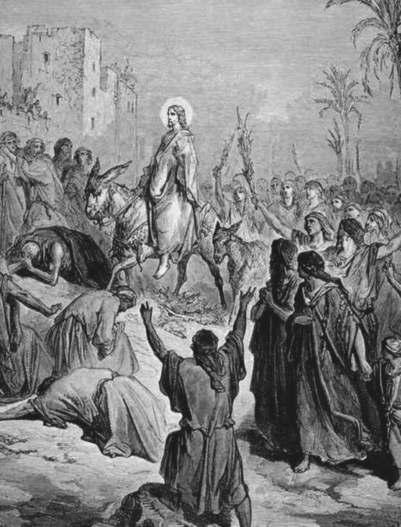
“Now when they drew near to Jerusalem and came to Bethphage, to the Mount of Olives, then Jesus sent two disciples, saying to them, ‘Go into the village in front of you, and immediately you will find a donkey tied, and a colt with her. Untie them and bring them to me. If anyone says anything to you, you shall say, “The Lord needs them,” and he will send them at once.’ This took place to fulfill what was spoken by the prophet, saying, ‘Say to the daughter of Zion, Behold, your king is coming to you, humble, and mounted on a donkey, on a colt, the foal of a beast of burden.’ … Most of the crowd spread their cloaks on the road, and others cut branches from the trees and spread them on the road. And the crowds that went before him and those that followed him were shouting, ‘Hosanna to the Son of David! Blessed is he who comes in the name of the Lord! Hosanna in the highest!’ … And he entered Jerusalem and went into the temple.”
Matthew 21:1-5, 8-9; Mark 11:11a
Zechariah 9:9–12, 1 Timothy 6:12–16 and Matthew 21:1-11
Think of a time when you were part of a very large crowd. Perhaps you attended a big college football game, or maybe you joined an enthusiastic crowd at a rousing concert. Do you remember the excitement of the crowd? Can you recall the anticipation in the air of what you and those around you were about to watch?
Jesus’s ride into Jerusalem the last week of his earthly life must have been an electric moment. Great crowds following Jesus from Galilee were now meeting crowds from Jerusalem who had heard about him and were going out to meet Him. Jesus “steadfastly set His face to go to Jerusalem” (Luke 9:51). In doing so, He intended to fulfill Old Testament prophecies about the coming Messiah. Our gospel passage from Matthew tells us that the disciples, acting upon Jesus’s instructions, obtained a donkey and laid their cloaks on the animal to prepare Jesus’s ride into the city. This was in fulfillment of Zechariah 9:9, which points to a humble king riding on a donkey to bring salvation.
As crowds went ahead of Jesus, they laid their cloaks on the road along with cut branches (symbols of honor, submission and joy). They shouted, “Hosanna to the Son of David! Blessed is the one who comes in the name of the Lord!” The original meaning of this exclamation— “Hosanna!”—was “God save us!” This is worth pondering. What did the people want to be saved from? Perhaps there were some in the crowd who had not yet had an opportunity to be healed from a physical ailment. Perhaps others needed to be saved from spiritual demons that plagued them. Probably most were looking for a conquering king who would throw off the shackles of the Romans.
Our gospel passage has a curious ending. Despite the obvious Messianic symbols of Jesus’s ride into Jerusalem, people were asking, “Who is this?” And the crowds answered, “This is the prophet Jesus, from Nazareth in Galilee.” Really? This Jesus is just a prophet from an unlikely backwater region? Had the people completely misunderstood who Jesus was?
As we celebrate this year, waving our palm branches, let us remember that there may be people around us, in our daily walk, who don’t really know who this Jesus is. Let us, in all that we do and say, make the good confession of Jesus as Messiah, King of kings and Lord of lords. It is He who came to bring salvation and peace to those who cry, “God save us!”
MONDAY, MARCH 30
Jeremiah 11:18–20, 12:1–16; Philippians 3:1–14 and John 12:9–19
If you wonder how these distinct messages from God relate to our lives today, the Lord tells us in 2 Timothy 3:16-17 that “All scripture is God-breathed and is useful for teaching, exposing our rebellion, correcting, training us to live God’s way, so that the servant of God may be thoroughly equipped for every good work.”
God inspired Jeremiah to share his humanity with us, to teach us. When Jeremiah learned about death threats against him, he turned to God for help but he also attempted to manipulate God with flattery. “But you, Lord Almighty, who judge righteously … You are always righteous, Lord.”
Next, Jeremiah asks God the same question we hear today. Why do bad people have it so good? Finally, he rests his case against God’s timing on justice with “Let me see your vengeance on them!” We also question God’s purposes and timing by demanding answers rather than quietly trusting Him. God reminds Jeremiah of man’s inability to figure out His infinite mind and sovereign control. God is loving and just and remembers His covenants, yet implements judgment. God’s mercy redirects our hearts to change, and His Spirit gives us the desire to live obediently.
In John, we learn how Jesus, with intention, presented Himself as the Messiah and the Son of God, knowing that it would lead to His death—a death preordained by God from eternity, where God would present Himself in the form of a man and be led “like a docile lamb brought to slaughter” in payment for our sins. Just as people came to know Jesus through the power evidenced by raising Lazarus from the dead, so should they be drawn to Jesus by His power in our lives.
Philippians raises the question of what qualifies you to live eternally with God. Do you have a list that resembles Paul’s? Will your infant baptism, church membership, good deeds and charitable giving be good enough? Yet when Paul, with his resume, says all of his efforts were worthless, where does that leave us? Our only option to obtain righteousness acceptable to God is through faith in Christ. Finally, because of our new life in Christ, we are encouraged to quit dwelling on our past and, instead, focus on living Christ-like lives with hope toward our eternity with God.
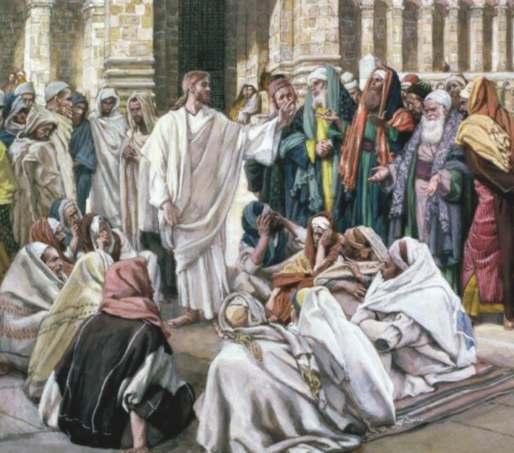
“And when he entered the temple, the chief priests and the elders of the people came up to him as he was teaching, and said, ‘By what authority are you doing these things, and who gave you this authority?’ Jesus answered them, ‘I also will ask you one question, and if you tell me the answer, then I also will tell you by what authority I do these things. The baptism of John, from where did it come? From heaven, or from man?’
And they discussed it among themselves, saying, ‘If we say, “From heaven”, he will say to us, “Why then did you not believe him?” But if we say, “From man,” we are afraid of the crowd, for they all hold that John was a prophet.’ So they answered Jesus, ‘We do not know.’ And he said to them, ‘Neither will I tell you by what authority I do these things.’”
Matthew 21:23-27
TUESDAY, MARCH 31
Jeremiah 15:10-21, Philippians 3:15-21 and John 12:20-26
How many times have you felt that you were unjustly caught in the middle of a situation? You know you’ve done the proper things and lived correctly and, best of all, felt that you lived according to the Lord’s direction. Jeremiah was regarded as a meddler by men, but he clung tenaciously to serving the Lord. Even though men might try to destroy him, the Lord would protect him. He was compared to a wall of bronze as the Lord’s protection from the king of Judah. In worshiping in our sanctuary, we can see the spiritual analogy of the bronze cross representing God’s protection in our lives.
The passage from Philippians bears out the protection of the cross. Many people live as enemies of the cross and God’s commandments. They seek only worldly pleasures and material things. When our goal is for Jesus to rule our lives, we know He is in control and someday we will be citizens of heaven with Him. As for earthly things, whatever they may be, if we seek first the kingdom of God and His righteousness, all our needs will be supplied. (Our wants may not be needs in God’s eyes.) There’s no better goal than that!
John speaks to us of the wonderful reward of following Jesus and keeping our eyes focused on Him. He, also, addresses the rejection of worldly things in doing so. We simply cannot serve two masters. He promises, “Whoever serves me must follow me, and where I am, my servant will also be. My Father will honor the one who serves me.” There cannot be a better offer or choice for us than to do so!
The chorus words of a beautiful hymn perfectly sum it up for us:
“Turn your eyes upon Jesus, Look full in His wonderful face, And the things of earth will grow strangely dim In the light of His glory and grace.”
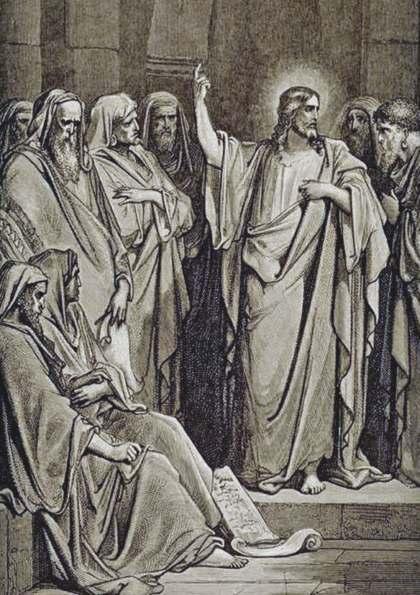
Testing Jesus
“And one of the scribes came up and heard them disputing with one another, and seeing that he answered them all well, asked him, ‘Which commandment is the most important of all?’ Jesus answered, ‘The most important is, “Hear, O Israel: The Lord our God, the Lord is one. And you shall love the Lord your God with all your heart and with all your soul and with all your mind and with all your strength.” The second is this: “You shall love your neighbor as yourself.” There is no other commandment greater than these.’”
Mark 12:28-31
WEDNESDAY APRIL 1
Jeremiah 17:5-10, 14-17; Philippians 4:1-13 and John 12:27-36
Whom do you trust and whom do you depend on to provide for you? The verses today paint a crystal clear picture about whom we do trust and whom we should trust. As human beings, we are born into sin and our hearts are unable to turn away from sin under our own power. It is through Jesus Christ and His love for us that we are able to be delivered from sin.
The people of Judah trusted in false gods, which we can translate into terms that may be more relevant today: is there anything you are putting above Jesus? There are periods of time where we all have put focus on something above our love for Jesus, whether that be money, fame, pride, etc. Jesus tells us in Jeremiah 17 that those who trust in the Lord are blessed.
We are incapable of living a life without sin, and Jesus came to earth to offer the only way for our salvation. In John 12, the verses illustrate how Jesus understood the insurmountable challenges we on earth experience, and He felt that weight on His shoulders. However, He also knew the eternal benefits and the unending love God has for His people. We must stand firm in the Lord, together arm in arm, knowing that He will provide. When we are anxious, we must remind ourselves that we are concerned about earthly needs and should turn to the Lord and be content with the provisions He will provide. Jesus died for the world, to glorify God and save us from sin.
We should rejoice in this and look to see how, through Jesus, we can lead others to “hear and see” the truth of God’s love in Christ. We are to be the beacons of light to help shine a path for others to be drawn to Jesus. We must lead by example and rejoice in the fact that Jesus came to earth to save us from Satan’s grip and death. Jesus is the Light and we must abide in Him.
Isaiah 53:3-6; John 13:1-16, 34-35; Luke 22:14-20 and Matthew 26:36-46
Maundy Thursday, also known as Holy Thursday, commemorates three major events in Jesus’s life: His washing of the disciples’ feet, the Last Supper, and His prayer in Gethsemane. Each setting is an example for His followers, as well as for us.
The word “Maundy” is derived from the Latin word for “command.” Following the washing of His disciples’ feet (John 13:1-16) which was an act of humility and service— the most menial of everyday tasks—Jesus gave them His new command, “Love one another, as I have loved you. By this shall all men know that you are my disciples” (John 13:34-35).
The institutions of the Passover and deliverance out of Egypt were symbolic and prophetic signs of a Christ to come who would, through dying, deliver us from sin and death. Therefore, the Lord’s Supper is commemorative of Christ who has already come and fulfilled this prophecy. After telling His disciples that this would be His last Passover with them, He took bread, gave thanks, broke it and gave it to them, saying, “This is my body given for you; do this in remembrance of me.” In the same way He took the cup, saying, “This is the new covenant in my blood, which is poured out for you” (Luke 22:14-20). When they had sung a hymn, they went out to the Mount of Olives.
We could never, nor could the disciples, comprehend the agony Christ suffered in Gethsemane. It was not His anticipation of His death on the cross, for Jesus already knew His purpose for coming was to die for our salvation (Isaiah 53:3-6). Rather, as the Son of Man, it was the enormous physical weight of the sins of the world He would carry on that cross. He fell with His face to the ground and prayed, “My Father, if it is possible, may this cup be taken from me. Yet not as I will, but as you will” (Matthew 26:39).
The disciples loved Jesus to the limit of their ability, even when they did not understand His purpose. In the Garden of Gethsemane, they slept as a result of their own sorrow and fatigue. At the end of three years spent in the closest relationship of their lives, they “all … forsook him and fled” (Matthew 26:56). Because of what the Son of God suffered, every human being has been provided with a way of access into the presence of God. The knowledge that Jesus, through His life and death, has loved us beyond all limits should compel us to go into the world and love others in the same way.

“Now as they were eating, Jesus took bread, and after blessing it broke it and gave it to the disciples, and said, ‘Take, eat; this is my body.’”
“And he took a cup, and when he had given thanks he gave it to them, saying, ‘Drink of it, all of you, for this is my blood of the covenant, which is poured out for many for the forgiveness of sins.’”
Matthew 26:26-28
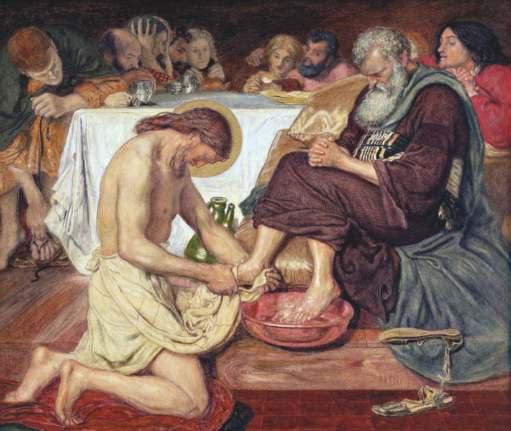
“Jesus, knowing that the Father had given all things into his hands, and that he had come from God and was going back to God, rose from the supper. He laid aside his outer garments, and taking a towel, tied it around his waist. Then he poured water into a basin and began to wash the disciples’ feet and wipe them with the towel that was wrapped around him. …
When he had washed their feet and put on his outer garments and resumed his place, he said to them, ‘Do you understand what I have done to you? . ‘You call me Teacher and Lord, and you are right, for so I am. If I then, your Lord and Teacher, have washed your feet, you also ought to wash one another's feet. For I have given you an example that you also should do just as I have done to you. Truly, truly, I say to you, a servant is not greater than his master; nor is a messenger greater than the one who sent him. If you know these things, blessed are you if you do them.’”
John 13:3-5, 12-17
“A new commandment I give to you, that you love one another: just as I have loved you, you also are to love one another. By this all people will know that you are my disciples, if you have love for one another.”
John 13:34-35
“I am praying for them. I am not praying for the world but for those whom you have given me, for they are yours. All mine are yours, and yours are mine, and I am glorified in them. … But now I am coming to you, and these things I speak in the world, that they may have my joy fulfilled in themselves. I have given them your word, and the world has hated them because they are not of the world, just as I am not of the world. I do not ask that you take them out of the world, but that you keep them from the evil one. They are not of the world, just as I am not of the world. Sanctify them in the truth; your word is truth. As you sent me into the world, so I have sent them into the world. And for their sake I consecrate myself, that they also may be sanctified in truth.”
John 17:9-10, 13-19
“I do not ask for these only, but also for those who will believe in me through their word, that they may all be one, just as you, Father, are in me, and I in you, that they also may be in us, so that the world may believe that you have sent me. The glory that you have given me I have given to them, that they may be one even as we are one, I in them and you in me, that they may become perfectly one, so that the world may know that you sent me and loved them even as you loved me. Father, I desire that they also, whom you have given me, may be with me where I am, to see my glory that you have given me because you loved me before the foundation of the world. O righteous Father, even though the world does not know you, I know you, and these know that you have sent me. I made known to them your name, and I will continue to make it known, that the love with which you have loved me may be in them, and I in them.”
John 17:20-26
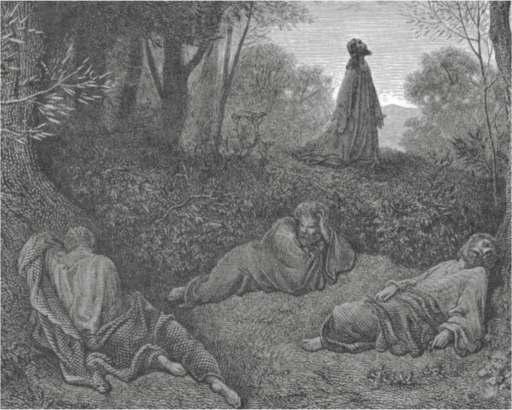
“And they went to a place called Gethsemane. And he said to his disciples, ‘Sit here while I pray.’ And he took with him Peter and James and John, and began to be greatly distressed and troubled. And he said to them, ‘My soul is very sorrowful, even to death. Remain here and watch.’
And going a little farther, he fell on the ground and prayed that, if it were possible, the hour might pass from him. And he said, ‘Abba, Father, all things are possible for you. Remove this cup from me. Yet not what I will, but what you will.’”
Mark 14:32-36
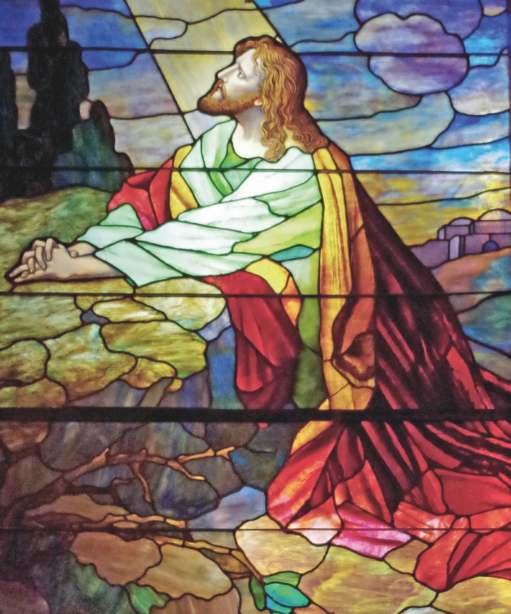
Mark 14:36
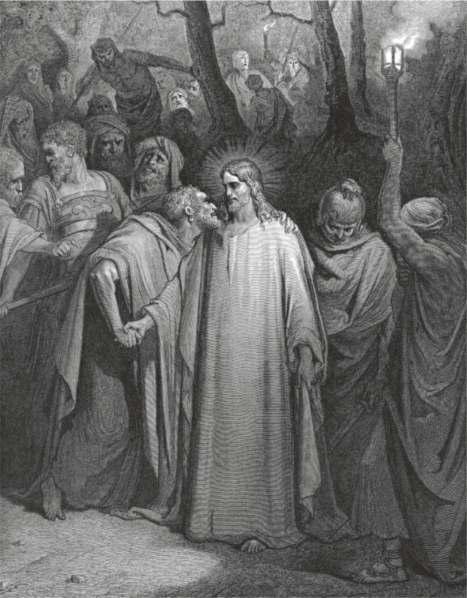
Betrayal
“And immediately, while he was still speaking, Judas came, one of the twelve, and with him a crowd with swords and clubs, from the chief priests and the scribes and the elders. Now the betrayer had given them a sign, saying, ‘The one I will kiss is the man. Seize him and lead him away under guard.’ And when he came, he went up to him at once and said, ‘Rabbi!’ And he kissed him. And they laid hands on him and seized him.”
Mark 14:43-46
Genesis 22:1-14, 1 Peter 1:10-21 and John 13:36-38
The Lord Will Provide—The Horror and the Hope of Christianity: “Then God said, ‘Take your son, your only son, whom you love—Isaac—and go to the region of Moriah. Sacrifice him there as a burnt offering on a mountain I will show you’” (Genesis 22:1-14). What kind of God would command a man to murder his only son? What kind of man would follow through on such a command? God’s command to Abraham is even more horrifying from a theological perspective. God is not asking Abraham just to kill his son. He is giving a command which is contrary to His promise to Abraham that “through Isaac your offspring will be reckoned” (Hebrews 11:17-19).
How could a just God give such a command? In ancient cultures, the family, not the individual, was paramount. The property of the family passed to the oldest son, who had the responsibility of taking care of the family. Ancient cultures understood that there is a debt of sin that every family owes to God. That debt was to be paid by the first son. It was to be paid from the firstfruits. It was paid through a sacrifice. In later times, when the angel passed over Egypt, it was the first son that died unless the blood of the lamb was placed above the door. God’s justice required an offering, a sacrifice for the sin.
God’s command to Abraham was not to murder his son, but to sacrifice him as an offering. When the boy, Isaac, asks his father “where is the lamb for a burnt offering,” Abraham answers, “God will provide for himself the lamb for a burnt offering, my son.” This was more than an evasive response. It reveals Abraham’s ultimate faith that God would somehow, in some mysterious way, yet fulfill His promise. The word “provide” in Hebrew means “see for himself.” Abraham could not “see for himself” where God’s command would lead; but, by faith, he left his home with Isaac and two servants and traveled sixty miles to Mount Moriah to offer his son as a sacrifice to God.
It was Mount Moriah where God appeared to David. It was Mount Moriah where Solomon built his temple to God. It was on a part of Mount Moriah where God provided His own Son—His only Son, Jesus Christ—as the ultimate lamb for the sacrifice of all sins. God did not allow Abraham to carry through His command to kill Isaac. He fulfilled His promise to Abraham. But on Good Friday, God did allow His own Son to be sacrificed—an act as horrific as God’s command to Abraham. On Good Friday, no one could “see for himself” God’s justice or how He would fulfill His promise. But on Good Friday, God did “provide for himself the lamb” of the offering.
The writer of Hebrews tells us that “By faith Abraham, when he was tested, offered up Isaac, and he who had received the promises was ready to offer up his only son, of whom it was said ‘Through Isaac shall your descendants be named.’” By faith, we are justified. By faith, we will be tested. But we can trust the promises of God because the Lord does provide.
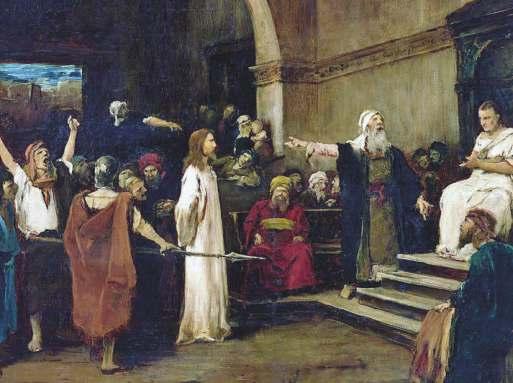
“And as soon as it was morning, the chief priests held a consultation with the elders and scribes and the whole council. And they bound Jesus and led him away and delivered him over to Pilate. And Pilate asked him, ‘Are you the King of the Jews?’ And he answered him, ‘You have said so.’ And the chief priests accused him of many things. And Pilate again asked him, ‘Have you no answer to make? See how many charges they bring against you.’ But Jesus made no further answer, so that Pilate was amazed.
Now at the feast he used to release for them one prisoner for whom they asked. … So Pilate, wishing to satisfy the crowd, released for them Barabbas, and having scourged Jesus, he delivered him to be crucified.”
Mark 15:1-6, 15
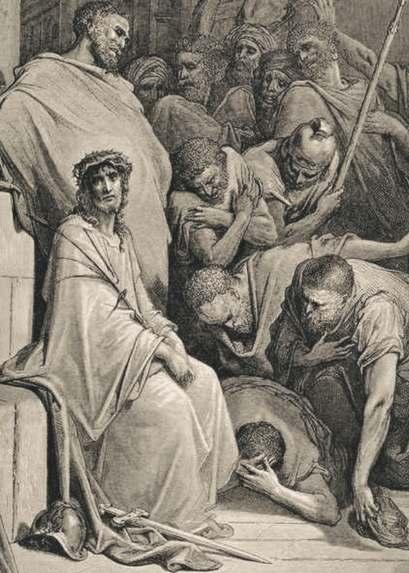
‘And the soldiers led him away inside the palace (that is, the governor’s headquarters), and they called together the whole battalion. And they clothed him in a purple cloak, and twisting together a crown of thorns, they put it on him. And they began to salute him, ‘Hail, King of the Jews!’ … And when they had mocked him, they stripped him of the purple cloak and put his own clothes on him. And they led him out to crucify him.”
Mark 15:16-18, 20
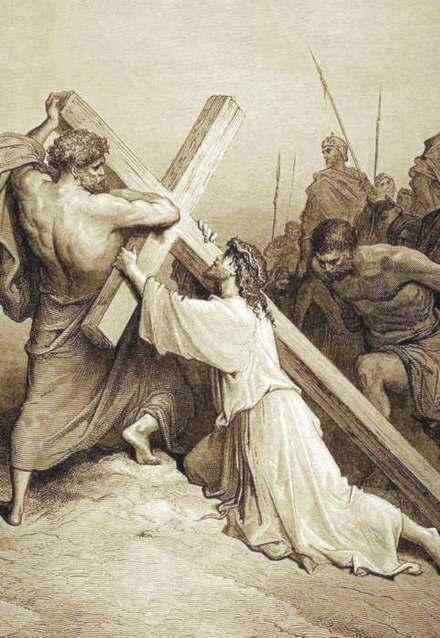
On the Way to Golgotha
And they compelled a passerby, Simon of Cyrene, who was coming in from the country, the father of Alexander and Rufus, to carry his cross.
Mark 15:21
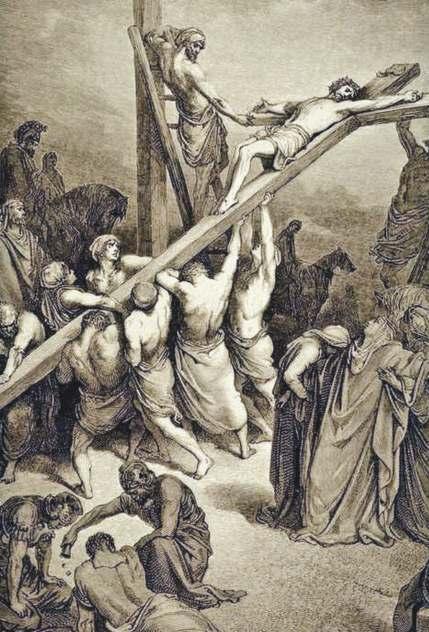
And they brought him to the place called Golgotha (which means Place of a Skull). And they offered him wine mixed with myrrh, but he did not take it. And they crucified him and divided his garments among them, casting lots for them, to decide what each should take.
Mark 15:22-24
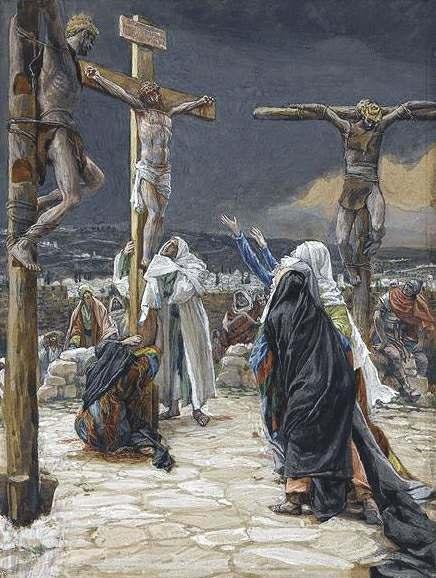
“And it was the third hour when they crucified him. And the inscription of the charge against him read, ‘The King of the Jews.’ And with him they crucified two robbers, one on his right and one on his left.”
Mark 15:25-28
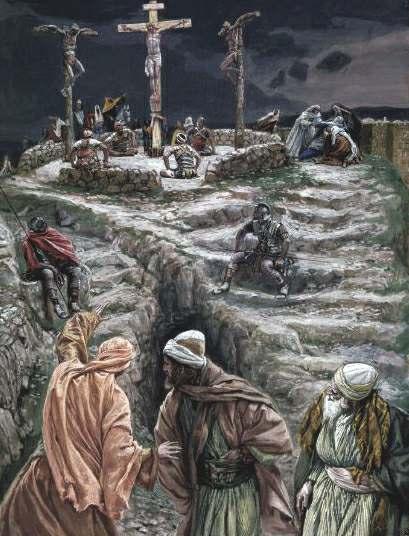
“Father, into your hands I commit my spirit.”
“And when the sixth hour had come, there was darkness over the whole land until the ninth hour. And at the ninth hour Jesus cried with a loud voice, ‘Eloi, Eloi, lema sabachthani?’ which means, ‘My God, my God, why have you forsaken me?’ And some of the bystanders hearing it said, ‘Behold, he is calling Elijah.’ … And Jesus uttered a loud cry and breathed his last. And the curtain of the temple was torn in two, from top to bottom. And when the centurion, who stood facing him, saw that in this way he breathed his last, he said, ‘Truly this man was the Son of God!’” Luke 23:46
Mark 15:33-35, 37-39
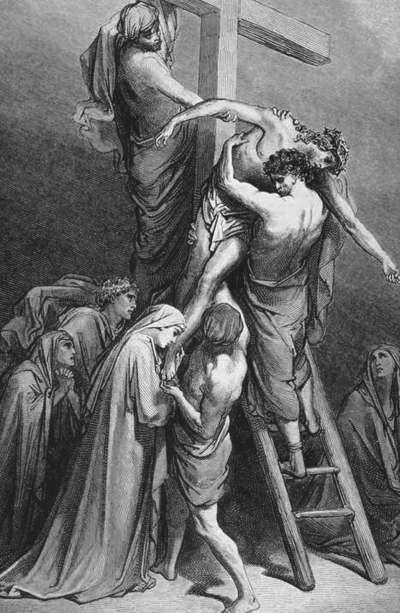
Descent from the Cross
“And when evening had come, since it was the day of Preparation, that is, the day before the Sabbath, Joseph of Arimathea, a respected member of the council, who was also himself looking for the kingdom of God, took courage and went to Pilate and asked for the body of Jesus.”
Mark 15:42-43
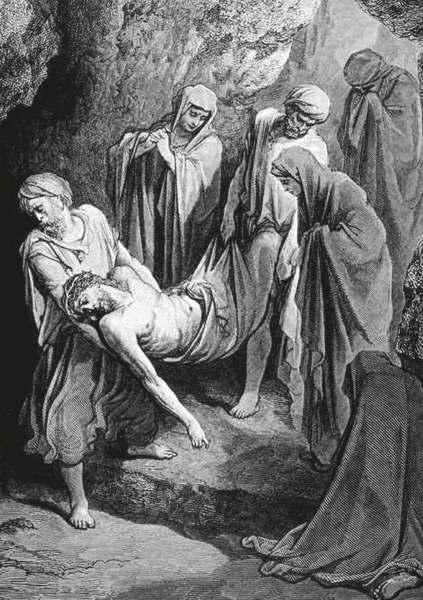
“And Joseph bought a linen shroud, and taking him down, wrapped him in the linen shroud and laid him in a tomb that had been cut out of the rock. And he rolled a stone against the entrance of the tomb. Mary Magdalene and Mary the mother of Joses saw where he was laid.
Mark 15:46-47
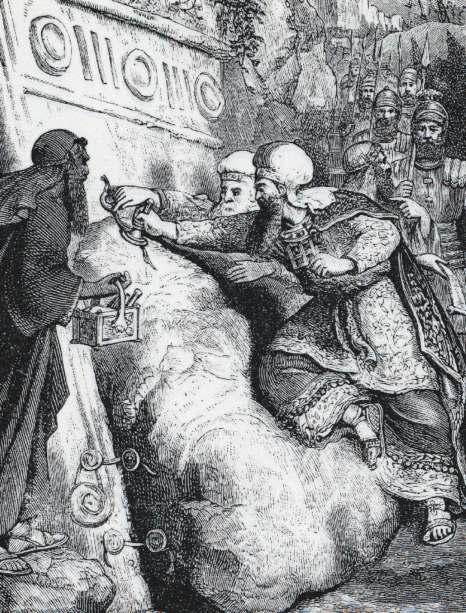
“Pilate said to them, ‘You have a guard of soldiers. Go, make it as secure as you can.’ So they went and made the tomb secure by sealing the stone and setting a guard.”
Matthew 27:65-66
HOLY SATURDAY, APRIL 4
Job 19:21-27, Hebrews 4:1-16 and Romans 8:1-11
Today’s passages are a reminder to us that the human condition never changes. Throughout history, people have experienced loneliness and feelings of separation from God and others. Job is feeling unfairly rejected by dear ones who have turned against him, longing for reconciliation with them. His only comfort comes from the knowledge that his Redeemer lives, one who is on his side to defend him before God. That assurance brings inexplicable joy to his tortured life, a joy that he wants recorded for posterity.
We may not know who Job’s Redeemer was, but clearly his desire is a foreshadowing of the One who was to come. And who is that Redeemer for us today? It is the great high priest described in Hebrews, the One who is able to sympathize with our weakness, our pain, our brokenness and our temptations—the One who encourages us to come to him to receive mercy and grace to help in our time of need. This brings up the question: what is it that enables us to come to Jesus, to sense his waiting presence, and to trust his faithful response to our incredible needs?
That answer comes to us in the Romans passage, where we find it is the very Spirit of Christ which lives in us that draws us to God’s waiting presence. Yes, we are sinful people who could never earn the right to come before God. But God put sin to death on the cross so that we no longer need to fear the condemnation we are due. When we set our minds on the things of the Spirit, life takes on new meaning. How could it not if it is the very Spirit of God which dwells in us?
The darkness of that Good Friday, followed by the glory of Easter morning, is the message of each of these lessons. Job knows that in spite of the brokenness of this life, ultimately he will see God. Hebrews promises eternal rest with God amidst the sufferings of this life. And Paul reminds us in Romans that just as God raised Jesus from death to life, God promises us new life through his Spirit.
This journey of Lent is a journey of grace, grace that “meets us where we are, but does not leave us where it found us.” Oh God, draw us closer to you during these special days and always!
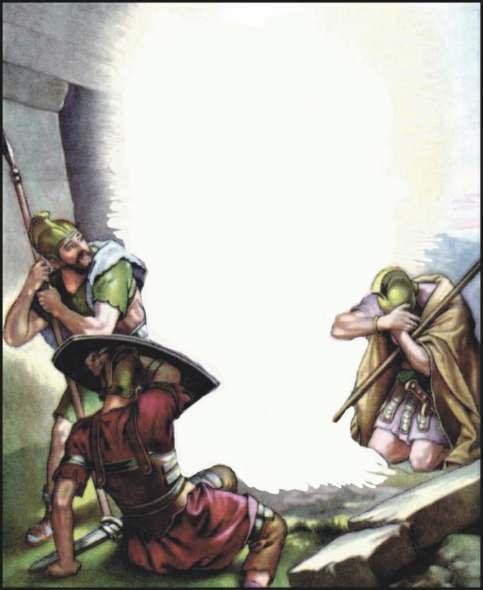
Easter Morning
“And behold, there was a great earthquake, for an angel of the Lord descended from heaven and came and rolled back the stone and sat on it. His appearance was like lightning, and his clothing white as snow. And for fear of him the guards trembled and became like dead men.”
Matthew 28:2-4
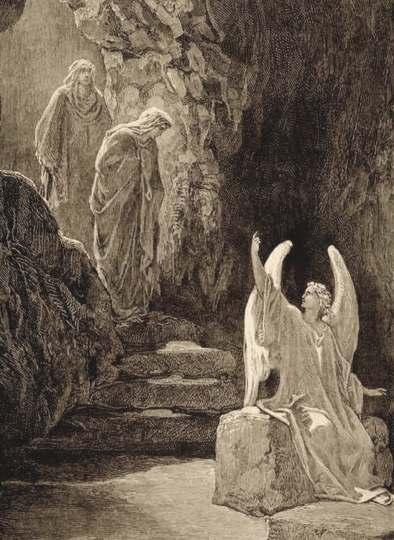
“When the Sabbath was past, Mary Magdalene, Mary the mother of James, and Salome bought spices, so that they might go and anoint him. And very early on the first day of the week, when the sun had risen, they went to the tomb. And they were saying to one another, ‘Who will roll away the stone for us from the entrance of the tomb?’ And looking up, they saw that the stone had been rolled back—it was very large.
And entering the tomb, they saw a young man sitting on the right side, dressed in a white robe, and they were alarmed. And he said to them, ‘Do not be alarmed. You seek Jesus of Nazareth, who was crucified. He has risen; he is not here. See the place where they laid him. But go, tell his disciples and Peter that he is going before you to Galilee. There you will see him, just as he told you.’”
Mark 16:1-7
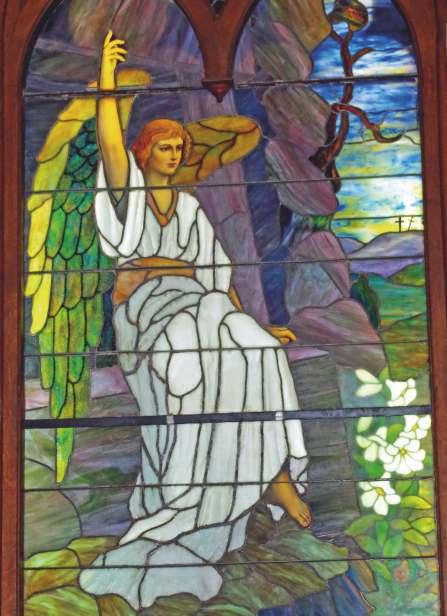
“You seek Jesus of Nazareth, who was crucified. ”
Mark 16:6
Exodus 12:1-14 and John 1:1-18
As we rise on this morning of all mornings, in our mind’s eye we can see a dewy garden in the early hours of a cool spring day. It is bordered by a sun-dappled stone cliffside that is strewn with sealed rock-cut tombs. Walking toward a freshly carved tomb are several despondent women carrying aromatic spices and ointments, ready to perform a required but depressing task. Their hopes dashed, they are astonished to find the huge sealing-stone rolled away. Two men in blindingly-white clothes appear and tell them not to be afraid, because their friend is risen. They ask the women, “Why do you seek the living among the dead?”
The angels, along with our verses this morning, remind us of the scarlet ribbon of prophecy that runs through the entire Jewish scriptures leading toward a savior of God’s design and seed, who will eventually crush the serpent’s head. The verses in Exodus describe the first Passover, which was God's planned deliverance of Israel from bondage in Egypt, where they were slaves to the Egyptians. Is it any wonder that during a subsequent Passover Festival, a firstborn male without the blemish of sin would be sacrificed by the will of “the whole assembly” to free us from our dead-end slavery to sin?
The angels were surprised that no one believed the one John called “the Lamb of God, who takes away the sin of the world,” when He told them that He would also rise again on the third day–the “sign of Jonah.” But there was no way that Jesus’s followers could have possibly understood what He had meant by rising again. No one in the history of man had ever done it before! But what a promise! What joy and hope it gives us, who gladly receive Him and rejoice that He has overcome for us the darkness of death, disease and despair.
So, as we don our own bright-colored clothes in preparation for worship this morning, let us remember not only the cost of the sacrifice, not only the great love of the Father in planning for our salvation by the sacrifice of his Son, Jesus, whose very name means “the LORD saves,” but especially remember and celebrate that the Father has saved us not only from sin, but from its wages–death–and that His Son has been our firstfruit promise of rising again to life eternal in His presence. Death has been conquered, Hallelujah! Christ is risen indeed!
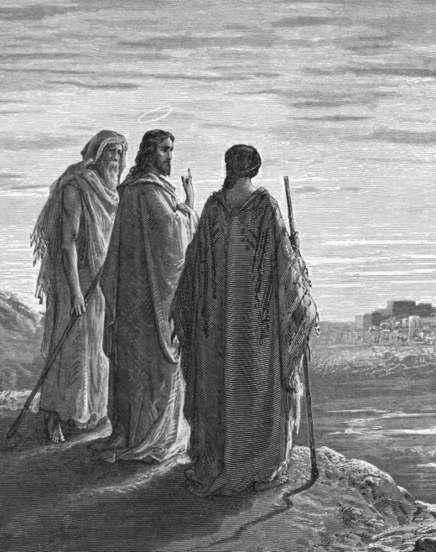
“That very day two of them were going to a village named Emmaus, about seven miles from Jerusalem, and they were talking with each other about all these things that had happened. While they were talking and discussing together, Jesus himself drew near and went with them. But their eyes were kept from recognizing him. … And he said to them, ‘O foolish ones, and slow of heart to believe all that the prophets have spoken! Was it not necessary that the Christ should suffer these things and enter into his glory?’ And beginning with Moses and all the Prophets, he interpreted to them in all the Scriptures the things concerning himself.”
Luke 24:13-16, 25-27
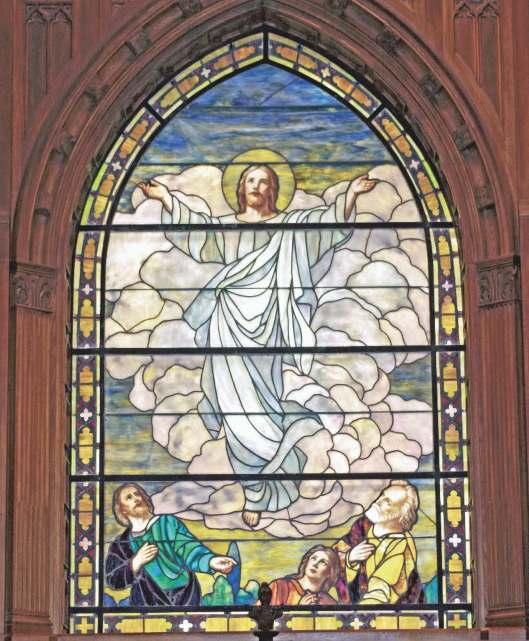
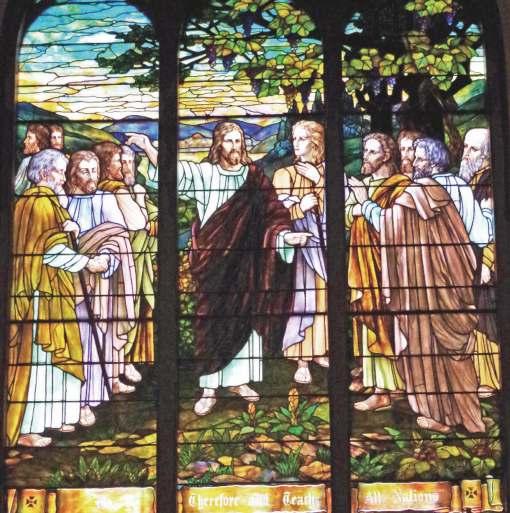
“Go therefore and make disciples of all nations!”
“And Jesus came and said to them, ‘All authority in heaven and on earth has been given to me. Go therefore and make disciples of all nations, baptizing them in the name of the Father and of the Son and of the Holy Spirit, teaching them to observe all that I have commanded you. And behold, I am with you always, to the end of the age.’”
Matthew 28:18-20
This special 2026 digital edition of was prepared by the Prayer Ministry Committee, which expresses its thanks and gratitude to all of our authors and contributors selected from church officers, teachers and members.
“And let the peace of Christ rule in your hearts, to which indeed you were called in one body. And be thankful. Let the word of Christ dwell in you richly, teaching and admonishing one another in all wisdom, singing psalms and hymns and spiritual songs, with thankfulness in your hearts to God. And whatever you do, in word or deed, do everything in the name of the Lord Jesus, giving thanks to God the Father through him.”
Colossians 3:15-17
Scriptural references for the artwork are from the English Standard Version. Scriptural references within each writing reflect the author’s preference.
Credits: Cover image (“Look, the Lamb of God!” by Milo Winter) and selected other photographic images are courtesy of Art Today, ZedCor Inc. Photographic image of the painting “Jesus washing Peter’s feet” by Ford Madox Brown is public domain, courtesy of Wikipedia. Photographic images of Gustave Dore’ artwork are also public domain and freely available. Photographic images of Christian artwork by James Tissot (shown on pages 17, 26, 36, 50, 66 and 67) are public domain (PD-US; no known copyright restrictions) and are available at Wikimedia Commons, courtesy of the Brooklyn Museum. The “Not my will … ,” “He has risen,” “Ascension” and “Teach All Nations …” images are cropped photographs of stained-glass windows in the sanctuary of First Presbyterian Church of San Antonio.
Lastly, in your prayers, please lift up all Christians around the world who face increasing persecution for no other reason than their belief and trust in Jesus Christ as Lord and Savior.