We honour and respect all Elders and Traditional Custodians of the lands on which the Botanic Gardens of Sydney and Foundation & Friends stand. We acknowledge the profound significance of the enduring connection between the First Custodians and this land, recognising their vital care and stewardship for their country and its meaning to all who cherish and share in it.
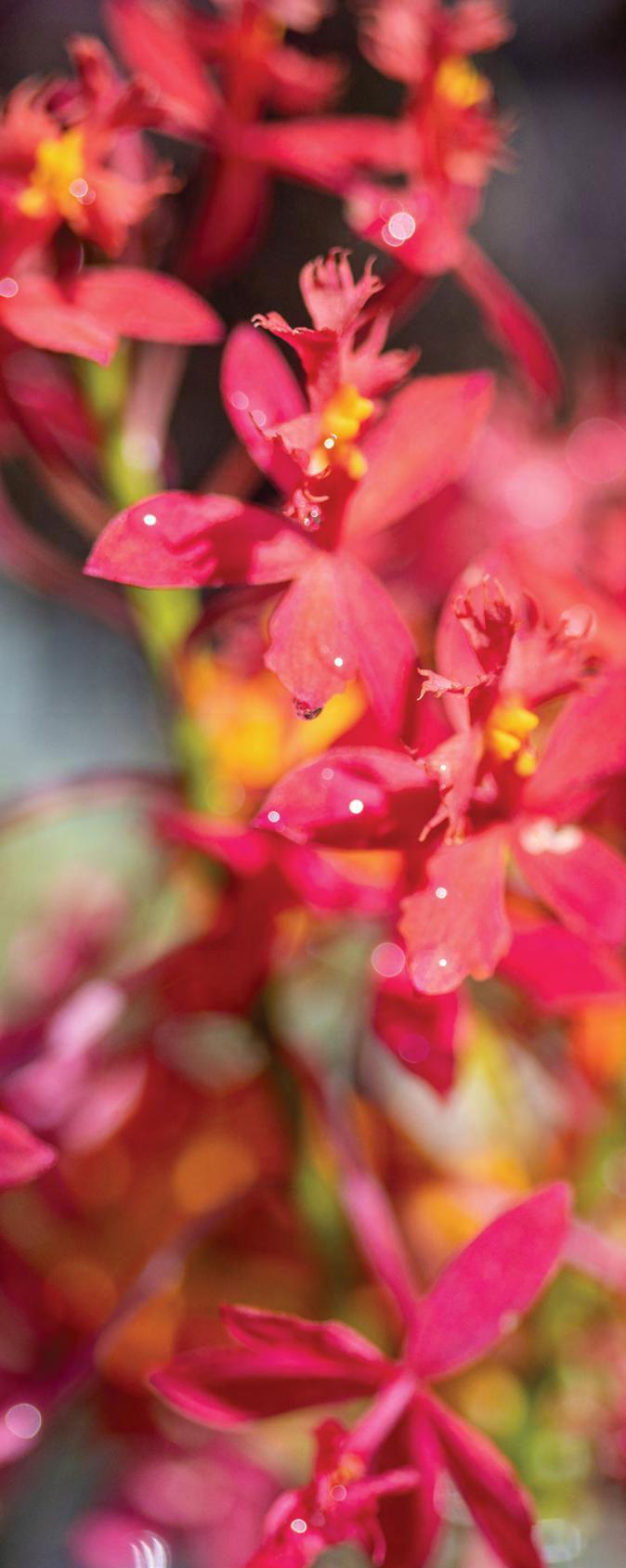
This page: Epidendrum ibaguense (Crucifix orchid)
Photo: Botanic Gardens of Sydney
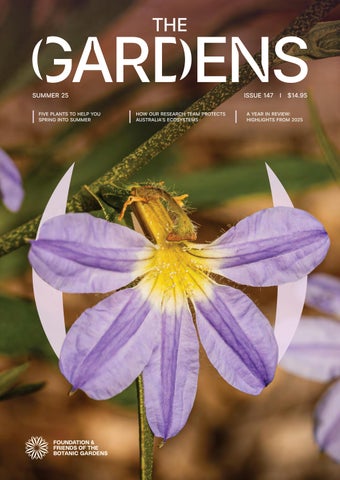
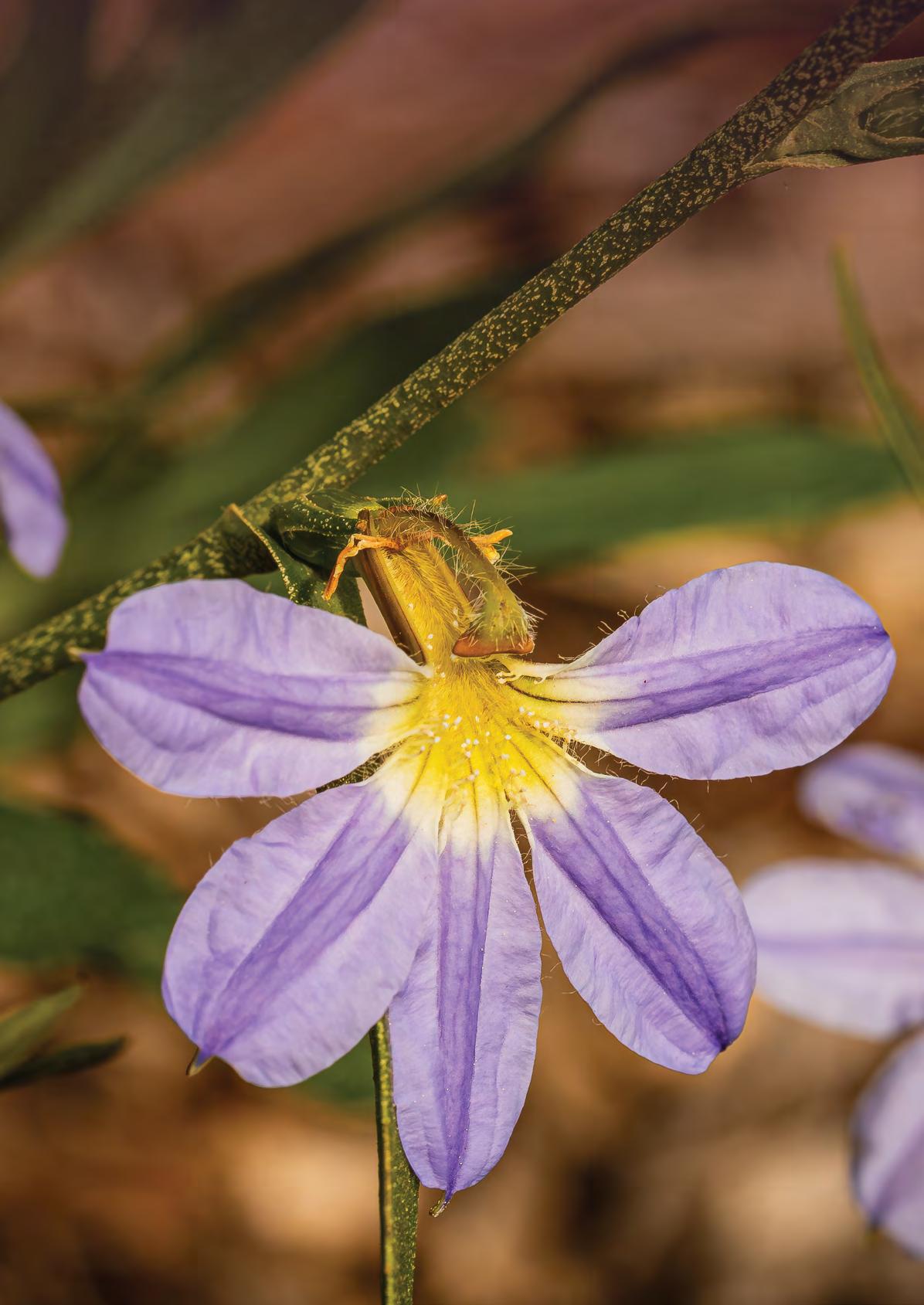
Cover: Scaevola aemula 'Purple Fanfare’
Photo: Glenn Smith
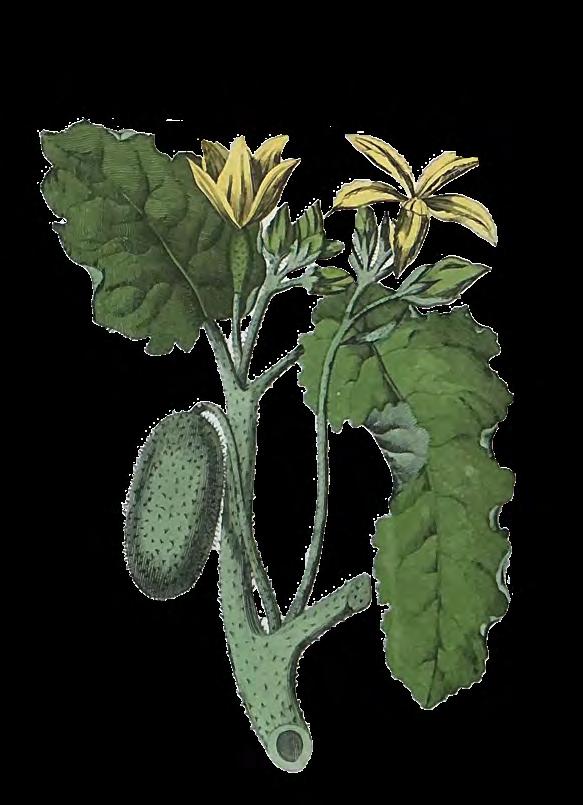
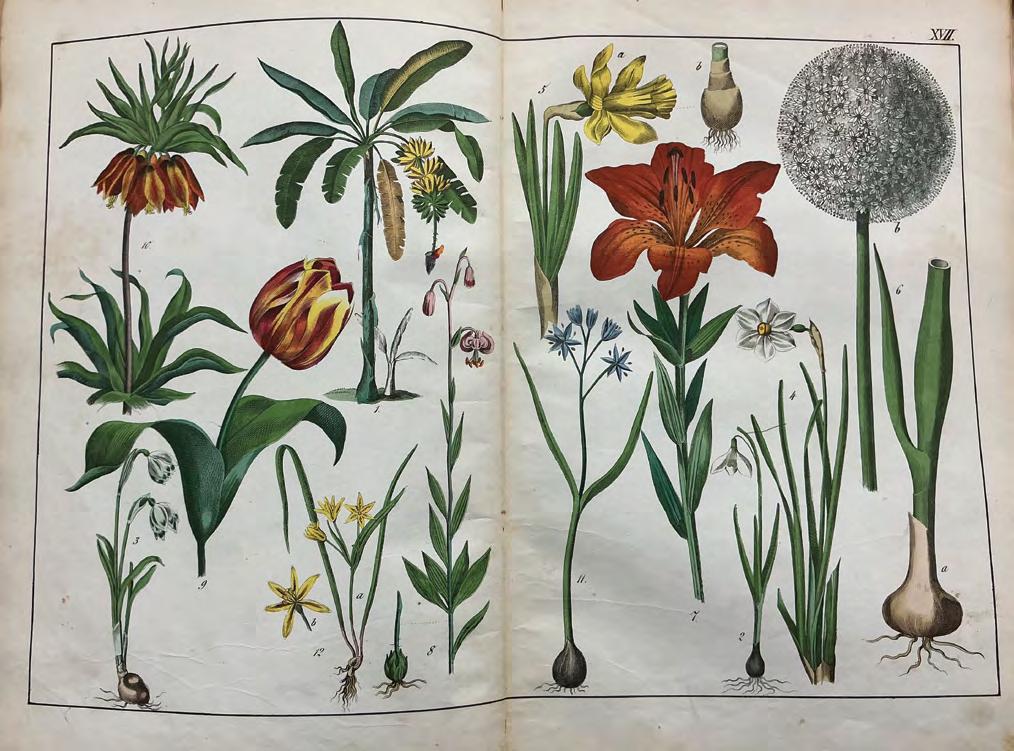
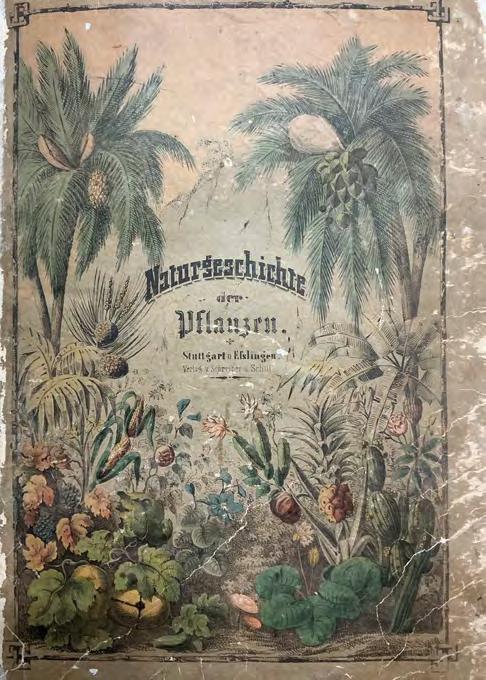
Right: Illustration from Naturgeschichte des Pflanzenreiches in Bildern by Gotthilf Heinrich von Schubert, held in the Daniel Solander Library
Summer News
Burara Ngurada opens at Mount Annan
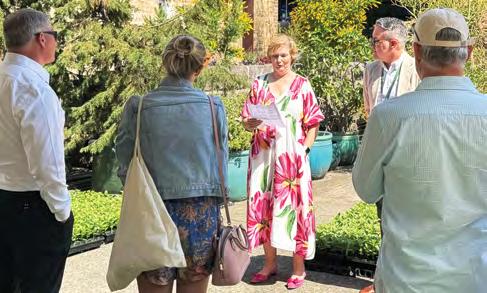
The opening of the striking Burara Ngurada (Arid Garden) at the Australian Botanic Garden, Mount Annan brought together major donors for a special celebration hosted by Simon Duffy AM, Chief Executive Botanic Gardens of Sydney on 23 September. The event highlighted the horticultural vision and creativity behind this dramatic new landscape, before guests were invited on an exclusive tour of the proposed Nature Restoration Nursery, an ambitious initiative set to strengthen native plant conservation, research and climate resilience across Australia.
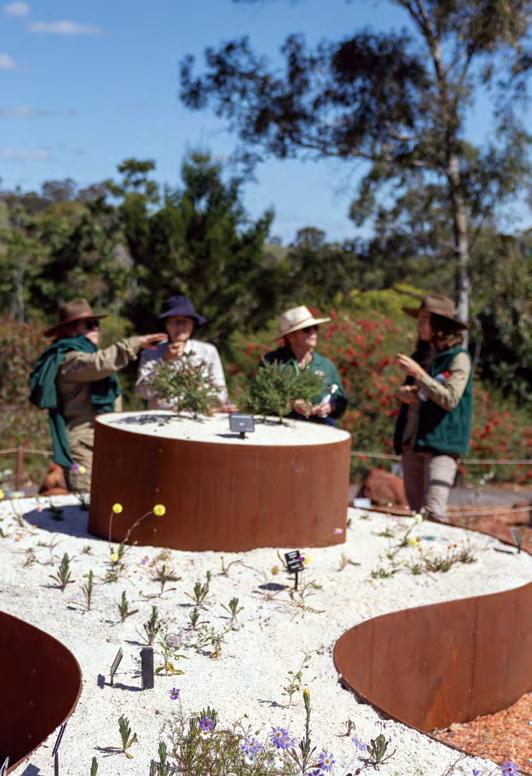
Burara Ngurada (Arid Garden) at the Australian Botanic Garden, Mount Annan
Photo: Botanic Gardens of Sydney
Celebrating Michael McKay
Michael McKay worked as a labourer at the gardens for 40 years and his love of nature lives on through the generous bequest he left after his passing, creating a lasting legacy for future generations. On 27 September, Simon Duffy AM, Chief Executive Botanic Gardens of Sydney, hosted the McKay family for morning tea and the unveiling of Michael’s plaque.
Joanne Worthing and Simon Duffy AM
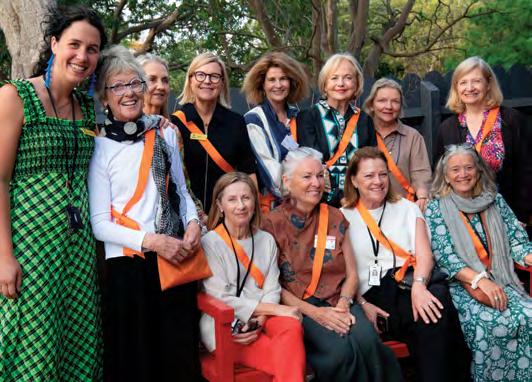
Botanical Guardians visit
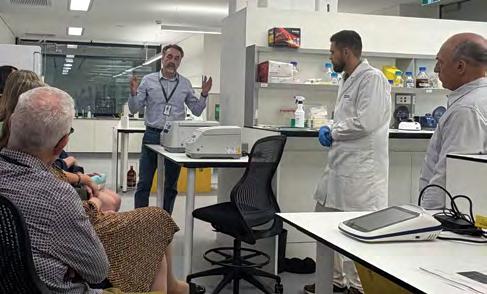
On 23 October, Botanical Guardians toured the Research Centre for Ecosystems Resilience (ReCER) with Professor Maurizio Rossetto, Head, Research Centre for Ecosystem Resilience. Guests saw the lab in action and heard how our scientists are safeguarding Australia’s unique biodiversity through cutting-edge research and collaboration.
Photo: Louise Claridge
Interested in learning how you can make a lasting impact at the Gardens? Contact foundation.friends@botanicgardens.nsw.gov.au
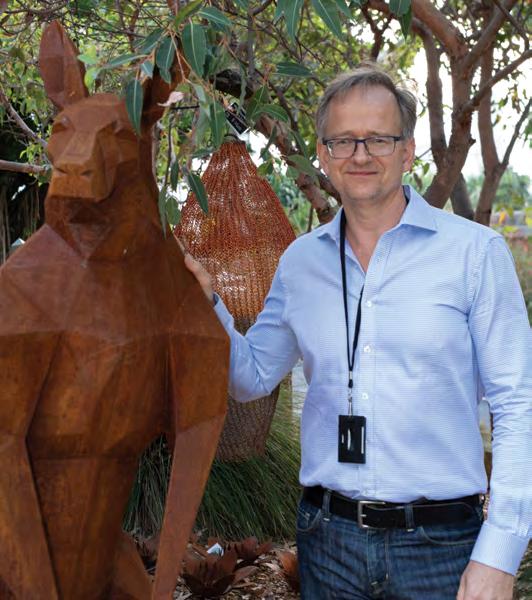
Professor Maurizio Rossetto
Photo: Alexandra Power
From the Executive Director
Summer is always a special time in the Gardens. It is a season when the landscapes are at their most vibrant, our programs are in full swing, and we are reminded of the deep pride we share in the science, conservation and horticulture taking place every day across all three Gardens. Foundation & Friends exists to support and amplify that work, and I am constantly inspired by the way our community rallies around this shared purpose.
This edition of The Gardens is particularly exciting for me because it celebrates several things that are close to my heart. I am thrilled that our scholarships have returned, now doubled in scope, providing new opportunities for people across all three Gardens, from public engagement and seasonal activation to specialist conservation research. You will also find a feature on the Research Centre for Ecosystem Resilience (ReCER) Lab and its extraordinary team, whose work is advancing our understanding of plant science and finding practical solutions to resilience in a changing climate. Our Growing Friends feature celebrates the remarkable leadership team and volunteers behind this much-loved program and offers an insider’s look at its refreshed identity.
It is also a time of transition. This will be my final magazine column as Executive Director, and as I prepare to hand the baton to new leadership in 2026, I want to share how deeply enjoyable this role has been. I arrived initially as a temporary appointment, but very quickly discovered that
Auslan-guided tour at the Gardens
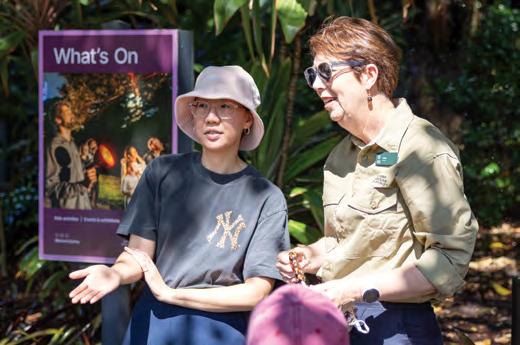
Royal Botanic Garden Sydney hosted its first-ever Auslan-guided walking tour on Friday 26 September, as part of National Week of Deaf People 2025. Delivered in partnership with Deaf Connect, the event celebrated deaf culture and highlighted the importance of Auslan in creating inclusive public spaces. The tour formed part of Deaf Connect’s nationwide Deaf Space program, designed to connect communities and recognise the diverse experiences of Deaf Australians.
this was an important and energising place where I felt I could contribute in a meaningful way. I found a team eager to collaborate and achieve ambitious goals together, and a community that welcomed me wholeheartedly. I have learned so much about the challenges and opportunities in a not-for-profit and purpose-led context, and I feel privileged to have worked alongside so many passionate and talented people.
Although my time as Executive Director is coming to an end, this will not be goodbye. I will continue to be part of this community and to champion the work of Foundation & Friends and the Botanic Gardens of Sydney in new ways. News of our incoming Executive Director, Ciara Timlin, will be shared through our digital channels, and I know she will join a strong and thriving organisation.
Thank you for making this year such a rewarding chapter. I look forward to seeing what we achieve together next.
Paul Thorley, Executive Director, Foundation & Friends
Photo: Botanic Gardens of Sydney
Artisans in the Gardens 2025
In October and November, Artisans in the Gardens filled the Royal Botanic Garden with imagination and artistry, celebrating the relationship between nature and creativity. The opening night was a sell-out and for the first time ever, Artisans in the Gardens extended to Victoria Lodge with a gift shop. Artisans in the Gardens has achieved recordbreaking results, over $344,000 of artworks, gifts, food, drinks and raffle tickets, significantly more than in recent years. Final income figures are being confirmed, with 20% of proceeds going directly to our Education Access Program, helping more children experience the wonder of the Gardens and learn about nature, science, and culture. We extend our sincere thanks to the brilliant artists, the dedicated Artisans Committee, and the 100+ passionate volunteers who contributed their time and expertise. Their collective effort ensures this signature fundraiser continues to grow and support education, conservation, and the gardens we all share.
Holiday office hours
Our last working day in the office and at Growing Friends Plant Sales will be Tuesday 23 December. The Foundation & Friends office and Growing Friends Plant Sales will be closed from Wednesday 24 December to Tuesday 6 January, reopening Wednesday 7 January
Living gifts in the city
Find the perfect plant for a festive season gift at our Living Gifts stall on Wednesday 3 and Tuesday 16 December, 7am–2pm in Martin Place, Sydney. Beautiful plants grown by our Growing Friends Plant Sales volunteers, straight from the Gardens to the city.
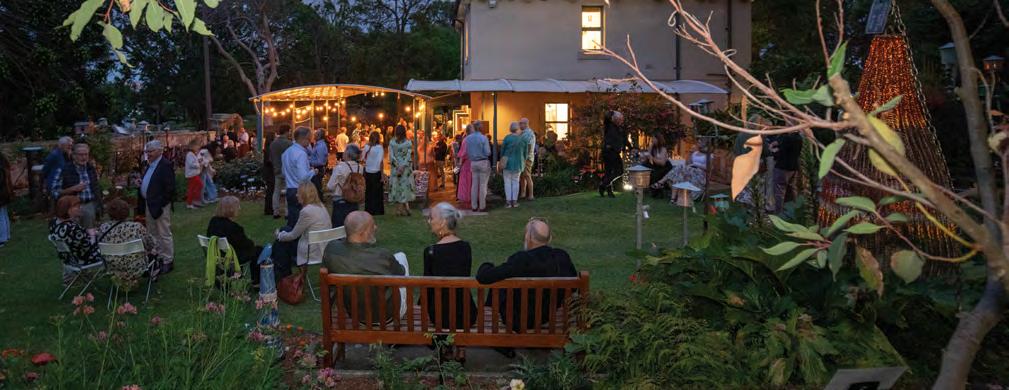
Above: Opening Night of Artisans in the Garden
Photo: Jenny Winstanley
Smile by Felicity Cavanough
Photo: Caitlin Bye
Photo: Botanic Gardens of Sydney
Celebrating growth and discovery
Since 1983, Foundation & Friends has invested in the professional and personal growth of Botanic Gardens of Sydney staff through its scholarship program. Since the formal scholarship program commenced in 2006, more than $420,000 has been awarded to support travel, research, and learning opportunities, helping horticulturists, scientists, and engagement specialists deepen their expertise and bring fresh ideas back to our three Gardens.
From mastering conservation genetics to exploring the cultural stories of plants, this year’s recipients represent the rich diversity of skills and passions across the Botanic Gardens of Sydney, showcasing a shared commitment to conservation, culture, and community.
“These scholarships are an investment in our people, their curiosity, creativity, and expertise,” says Paul Thorley, Executive Director, Foundation & Friends. “Since 1983, Foundation & Friends has supported staff through professional development initiatives, and it’s incredibly rewarding to see how these experiences translate into real impact within our Gardens and beyond.”
Empowering learning and leadership
This year, 10 scholarships have been awarded, totalling $60,000 in funding to support research, cultural exchange, and hands-on learning both in Australia and overseas. Recipients will engage with leading experts, visit partner institutions, and participate in workshops that will strengthen horticultural practice, scientific research, and community engagement.
For many, the scholarships offer more than professional development, they open pathways to cultural connection and personal transformation.
“Getting these things across the line really helps build morale and fosters a culture of curiosity and growth,” says Joel Bowmer, a horticulturist at the Blue Mountains Botanic Garden Mount Tomah. “As a First Nations man, sharing culture is not just a responsibility, it’s a sacred part of healing Country.
At Mount Annan, Sarah Dempster will explore arid plant communities in South Australia to study species diversity
and their potential for dynamic display at the Australian Botanic Garden’s new Arid Garden.
For Caroline Cristofolini, the opportunity to train at La Trobe University represents a vital step in advancing plant research and conservation genetics. “This scholarship supports my professional growth by enabling me to gain new expertise and bring these skills back to the Royal Botanic Gardens Sydney,” Caroline says.
Building knowledge and cultural connection
The breadth of this year’s projects reflects the Gardens’ evolving role as a centre for learning, research, and cultural exchange.
At Mount Tomah, Christopher Crottey’s Weaving Living Narratives project will draw on traditional and contemporary weaving techniques to create works using both native and introduced plant species. His aim is to build functional artworks, such as a woven moon gate, that celebrate resilience and symbolically connect First Nations knowledge with the Gardens’ Living Collections.
Meanwhile, Dominique Calabro and Chris Cole from Mount Annan will focus on the living collections that form the heart of our horticultural storytelling. Dominique will collaborate with colleagues at Kings Park Botanic Garden to deepen her expertise in cultivating and conserving the diverse Proteaceae family, while Chris will explore biodiversity hotspots across New South Wales to identify unique species that could enrich our future displays.
At Mount Tomah, Melanie Palmer will attend the Australasian Plant Conservation Conference, building networks to expand the Gondwana collection and strengthen conservation education programs for visitors. And in Sydney, Alyse Baume will travel to leading European institutions to refine techniques for cultivating Amorphophallus titanium, the awe-inspiring “corpse flower” that has captivated visitors and scientists alike. Finally, Juan Lucas will head to the United Kingdom for a placement focused on fern propagation and conservation, bringing back critical expertise to enhance the Botanic Gardens of Sydney’s globally significant fern collection.
Dominique Calabro WA Proteaceae Study & Living Collections
Chris Cole Enhancing the Living Collection through Field Exploration
Caroline Cristofolini Chromosome Counting for Plant Research
Christopher Crottey Weaving Living Narratives
Sarah Dempster Arid Plant Species and Annual Display
Melissa Driscoll Wintjiri Wiru Experience
Juan Lucas Fern Collection: Propagation and Care
Melanie Palmer Rainforest Conservation Education
Location
Royal Botanic Garden
Blue Mountains Botanic Garden
Australian Botanic Garden
Australian Botanic Garden
Royal Botanic Garden
Blue Mountains Botanic Garden
Australian Botanic Garden
Royal Botanic Garden
Royal Botanic Garden
Blue Mountains Botanic Garden
Clockwise from top left: Juan Lucas, Sarah Dempster, Christopher Crottey and Joel Bowmer
Photos: Botanic Gardens of Sydney
A shared love in full bloom
For more than three decades, Leonie and James Furber have nurtured their shared love of plants. Their recent donation to the new Camellia Garden at the Blue Mountains Botanic Garden reflects a lifelong passion for horticulture, connection and conservation.
When James and Leonie Furber first joined the Royal Botanic Gardens as members in 1995, it was simply out of admiration for the work being done. “We both thought the Gardens were wonderful and very important,” Leonie recalls. “Even if we didn’t visit often, we felt our membership fee was contributing something valuable.”
Their connection deepened through a shared fascination with camellias, a genus that has shaped both their personal and philanthropic journeys. “When we realised there was a need, we volunteered,” Leonie says of their decision to support the creation of the new Camellia Garden at Mount Tomah. “It’s become very special for us. We’ve watched it evolve into what will be a truly spectacular garden – a beautifully designed Camellia Garden that showcases creativity and thoughtful design.”
Their interest led them to join Camellia Ark Australia, an organisation focused on locating and conserving rare and historic cultivars within the country. “Australia can no longer import new camellias,” Leonie explains. “So what we have here now, that’s it. It’s fiercely important to preserve what remains.” James adds, “Our leader, Dr Steven Utick, recently found a very rare camellia on the South Coast that hadn’t been seen for 70 years. That’s the sort of work that keeps the passion alive.”
This year, that passion took them to Japan with Botanic Gardens staff members, including Marion Whitehead and Sophie Daniel, to attend
the International Camellia Congress, a journey the Furbers describe as “mind-blowingly incredible.” Leonie recalls, “We went to Oshima where we saw many thousands of camellias, and also observed in Nara a 500-year-old tree that was still flowering.”
The couple’s enthusiasm for the genus stretches back decades. James remembers the first camellia he ever encountered: “When my family moved to Turramurra in 1947, there was an old Camellia japonica great eastern in the garden. Since then, I’ve always been fascinated by camellias.” Leonie adds, “By the time we left our Southern Highlands garden, we had around 120 camellias, and two of the first shrubs we planted in our Sydney garden were two less common camellias named Cornelian and Drama Girl.”
The Thrushwood Garden, an evolving labour of love across four decades, became so significant that friends in the Australian Garden History Society created a detailed, scaled record of it, a gift the Furbers later turned into a beautiful commemorative book. “We didn’t ever intend to develop a garden,” Leonie laughs. “It just evolved, and it became our life.”
The Furbers say their support for the Camellia Garden at Tomah is both an act of gratitude and legacy. “This project means a lot to us. You see something grow from nothing and know it will continue for decades.”
For those considering becoming donors, Leonie’s advice is simple: “Do it. The more you contribute, the greater the reward, not just for you, but for everyone who gets to enjoy the results.” James adds, “And it’s never too early for younger people to get involved. It’s how knowledge and passion is passed on.”
As the new Camellia Garden prepares to open, the Furbers see their generosity as just one branch of a lifelong love affair with nature. “We’ve met such special people through the Gardens,” Leonie says. “They welcomed us so warmly. It’s inspiring, and it feels very good to be able to give back.”
Spring into summer
As we move from the fragrant buzz of spring into the warmth of summer, John Siemon, Director of Horticulture and Living Collections, reflects on how pollen, scent and seasonal change influence our senses and emotions, and how each of us experiences the seasons a little differently.
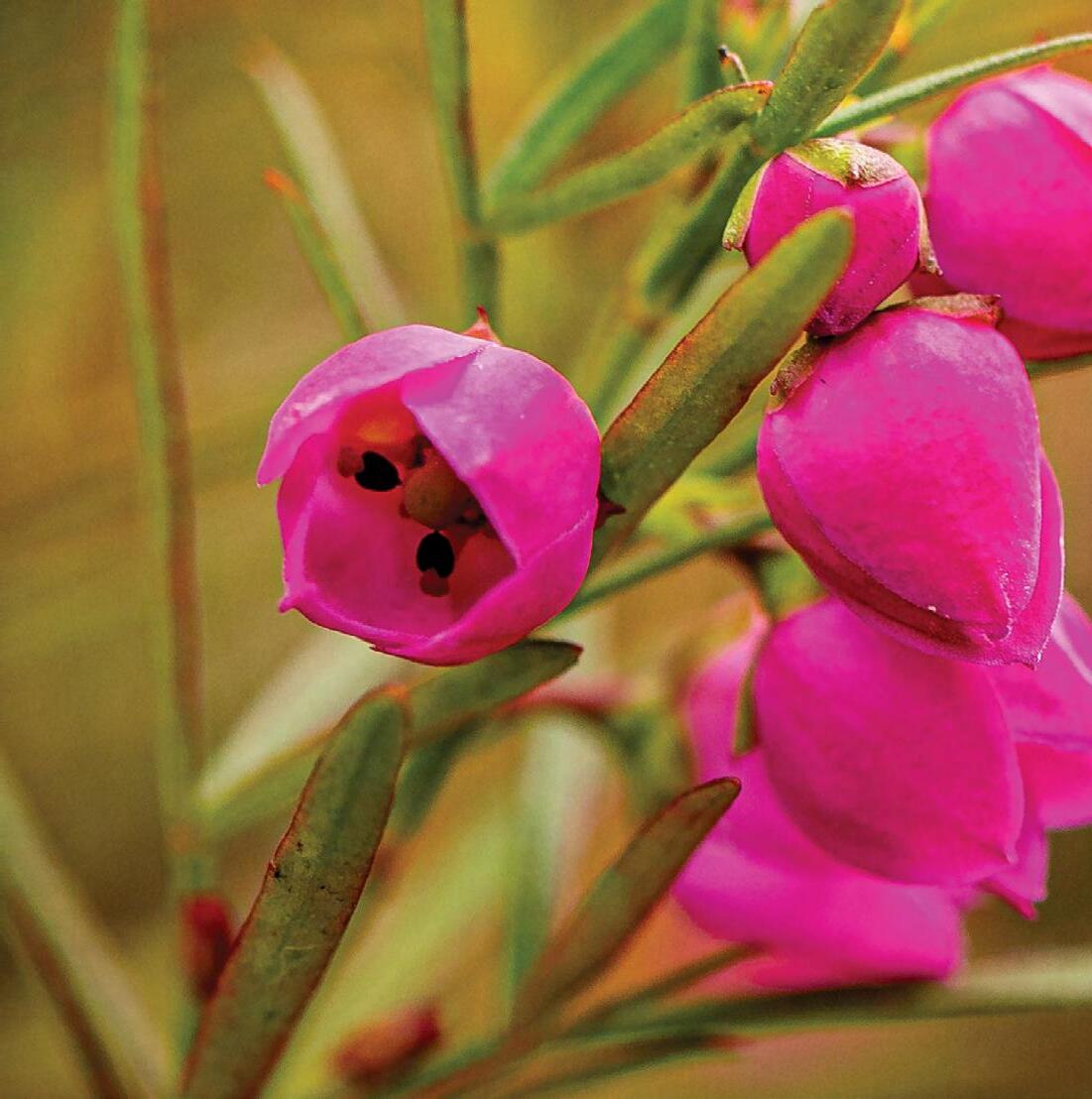
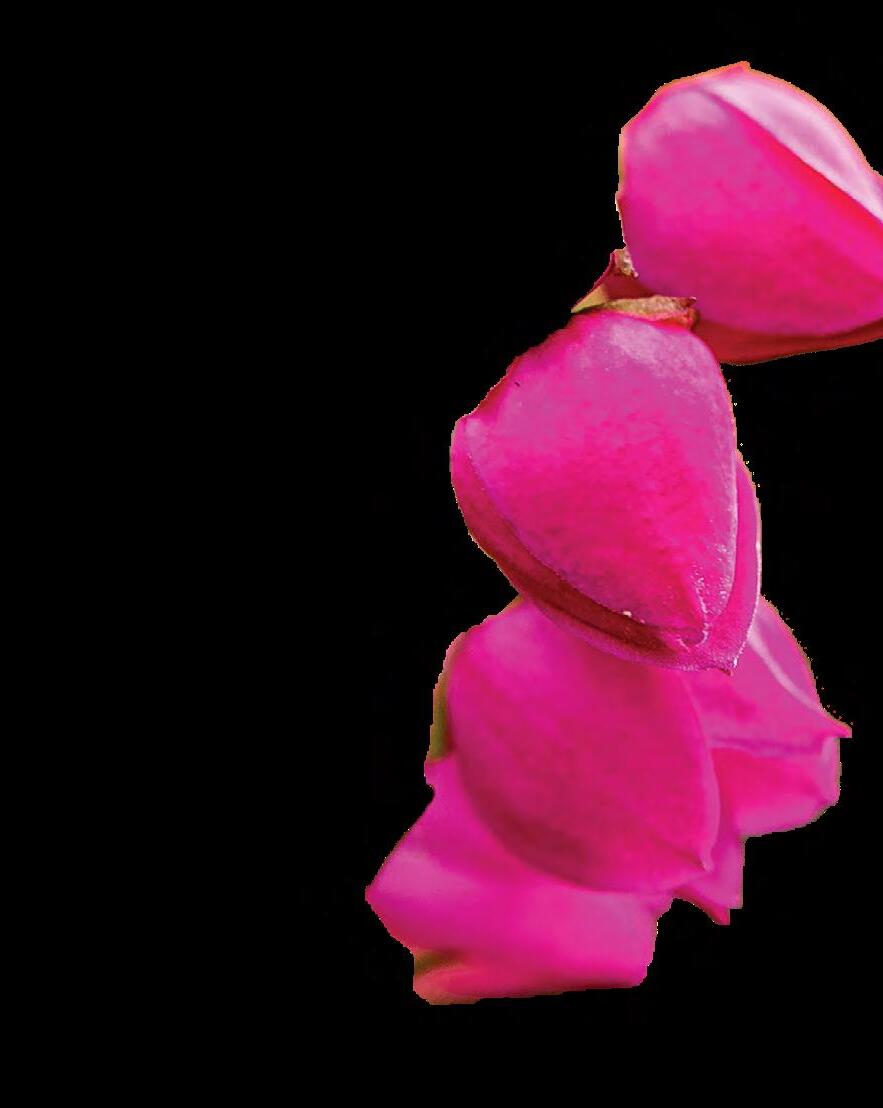
Boronia heterophylla Lipstick
Photo: Glenn Smith
We celebrate the change in seasons with characteristic traits such as rapid bursting of buds and a heady scent as blooms burst, the delight of new produce in the supermarket, or the autumnal change in the painter’s palate from vibrant green to gold, amber and red. Most people greet each seasonal change as a welcome reprieve from the last.
In my case I await spring with anticipation – a rush of green unfurling on the trees and beds of daffodils and tulips igniting gardens in a riot of colour. As a child I couldn’t wait to plant tomatoes, pick blooms, explore gardens and national parks, see the amazing diversity of flowers at the florists, and my favourite, the unmistakable smell of perfumed air.
To walk outside on a crisp spring morning is to be engulfed by sensations. The grass feels impossibly soft underfoot. Cherry and plum blossoms drift like confetti, their petals delicate and ephemeral. The air itself seems transformed – heavy with the scent of jasmine, wisteria, and citrus. For many, these scents are as much a part of spring as the sun’s warmth or the sound of returning birds. There is something primal about bringing a bunch of freshly picked flowers indoors, allowing their fragrance and colour to fill a room.
The other side of seasonal change
For all its joys, the seasonal changes our environment affords is not experienced equally by everyone. The very qualities that make the season so celebrated can be elusive for many. Human flaws, woven invisibly into our biology, can transform spring’s exuberance into a quieter, sometimes frustrating experience.
Consider colour blindness, a common but often overlooked condition. For those whose eyes cannot distinguish reds from greens, or who perceive only a limited palette, the visual feast becomes subdued. The fiery reds of poppies and the lush green of new leaves might appear as differing shades of brown or grey, robbing the world of its vivid contrasts. While many gush over the technicolour spectacle of a garden in bloom, the colour-blind onlooker must rely on shape, texture, and light – a reminder that nature’s handiwork is not always universally accessible.
Pollen, which brings about new life, can also bring sneezing, watery eyes, headaches, and fatigue. For allergy sufferers, the arrival of spring means closed windows, medication, and missing out on strolls through flower-laden gardens. Picking flowers or inhaling their fragrance can be fraught with discomfort. But before you go blaming all flowers, take note of which plants are pollinated by bees because these generally aren’t the offenders. It’s the wind-pollinated plants, mostly grasses, that cause the most grief.
Scents and sensibility
More subtle, yet perhaps more poignant, is the case of anosmia, the inability to detect scents. Some people have a genetic ‘defect’ that renders them unable to smell certain flowers entirely. As a child I recall my mother
exclaiming how wonderful violets smell. Year after year I would hear this line from her and yet I couldn’t smell a thing. It wasn’t until I’d be walking through the bush or visiting a botanic garden where similar conversations, about how wonderful boronias smell, that I realised something with my olfactory sense was off.
A quick internet search pointed out I suffered from anosmia, specifically a defective OR5A1 gene. It prevented me from experiencing the smell my mother waited for each year, but fortunately I didn’t experience an alternate pungent smell that some people experience. The phenomenon is a quiet reminder that the world of scent is not universal. Where one person might be swept away by the powdery sweetness of a violet or the spicy freshness of boronia, another will smell nothing or worse, something stinky.
Plants also profoundly affect our sense of smell through the release of volatile organic compound (VOCs). These scents can trigger emotional responses and memories, influence mood and stress levels and attract pollinators and signal ecological interactions. People turn to products containing jasmine and lavender when relaxing at a day spa or select citrus and mint when they seek invigoration. Equally human genetics can profoundly impact the enjoyment of eating. A variation in the TAS2R38 gene can make certain individuals highly sensitive to bitter compounds in plants like Brussels sprouts and kale. Or a genetic variant of the OR6A2 olfactory (smell) receptor gene results in coriander tasting like soap. Next time you try and force your kids or grandkids to eat vegetables consider they may not taste to them like they do to you.
Yet this very diversity of experience is what makes nature so profound. The change in season is a mosaic of joys and limitations, a time when the world conspires to delight us and, sometimes, gently frustrate us. It invites us to celebrate what we can perceive and to acknowledge, with humility, the ways in which our biology shapes every encounter. Whether you are swept away by the scent of flowering violets, ported back in time to a childhood memory, find your anxiety lowered or your focus improved or untouched by their perfume, the seasonal renewal offers something for every sense – and, in its way, reminds us to cherish not only what we possess, but also what we lack.
John Siemon, Director of Horticulture and Living Collections
Preserving a living library
The National Herbarium of New South Wales has digitised more than one million plant specimens, a monumental effort that preserves centuries of botanical history and opens up new opportunities for global research, conservation, and discovery.
At the National Herbarium of New South Wales, history has been meeting high technology in a project of unprecedented scale. Over the past few years, more than one million plant specimens have been carefully digitised, ensuring their long-term protection while opening them to the world through a new online portal.
The Herbarium, part of the Botanic Gardens of Sydney and housed at the Australian Botanic Garden Mount Annan, is the official repository for New South Wales’ botanical heritage. Its collections – some dating back to 1769 –include flowering plants, conifers, mosses, lichens and algae from across Australia and beyond. Each specimen tells a story of where and when it was collected, offering irreplaceable clues about the state’s natural history and how our plant communities are changing over time.
“People often think of a herbarium as a place where you put old things,” says Dr Hannah McPherson, Collections Manager at the National Herbarium. “But for us, those historic specimens are part of a much bigger picture. They let us see how plants have changed through time – where they once grew, when they flowered – and that helps us understand and manage the landscape today.”
The power of preservation
In 2019, the Herbarium embarked on the Southern Hemisphere’s first mass digitisation of a major plant collection. Netherlands-based company Picturae installed a conveyor-belt imaging system capable of photographing more than 3,000 specimens per day. Each delicate sheet was captured in high resolution, creating an exact digital replica of the physical specimen.
Before digitisation could begin, over 500,000 specimens had to be mounted by hand, a painstaking task that required training more than 250 volunteers in conservation techniques. Once imaged, data transcription followed. Specimen images were then transferred to Alembo in Suriname where label information for 400,000 specimens was captured including collector details, locations and collection dates.
Opening the vault to the world
The culmination of this five-year endeavour is the Herbarium Search Portal, launched in January 2025, a free online resource that allows anyone to view the Herbarium’s collections from anywhere in the world. The platform integrates images and data into an intuitive, searchable interface.
Researchers can now study plant diversity, identify new species or compare modern specimens with those collected centuries ago, all without physically handling the fragile originals. Writers, artists and educators are also embracing the portal, drawing inspiration from its images and stories. One discovery revealed herbarium specimens collected by renowned First Nations painter
"As biologists we know how important the collections of the National Herbarium of NSW are, but by recognising the heritage value of these priceless collections - and the importance of preserving and promoting them - we are thrilled that the National Trust of NSW has helped us emphasise their value to a wider audience."
DR CLAIRE BRANDENBURGER, DIGITAL CURATOR
Albert Namatjira in the 1930s, highlighting the collection’s cultural as well as scientific value.
Recognition and reflection
This year, the project was honoured at the National Trust Heritage Awards, receiving a Highly Commended in the Resources and Publications category and the coveted President’s Prize.
“We were thrilled,” says Dr McPherson. “People don’t always understand what a herbarium is, so to have the National Trust recognise its heritage importance was incredible. The President spoke about how this project would have lasting consequences – not just for landscape management and conservation, but for cultural heritage and Australian history.”
Digitisation has not slowed the Herbarium’s day-to-day work. Each year, around 8,000 new specimens are added to the collection, all carefully mounted, databased and imaged before being placed into the climate-controlled vaults at Mount Annan.
The next frontier is genetic. Advances in technology now allow scientists to extract high-quality DNA from preserved herbarium specimens, opening up vast new research possibilities. “It’s a bit like solving cold cases,” Dr McPherson explains. “We can look at how plant genetics have changed through time because we have these historical samples to compare with modern ones.”
The team is also exploring ways to digitise other collections – from microscope slides to 3D fruit and wood samples – continuing the momentum sparked by the success of the project. For Dr McPherson and her colleagues, the Herbarium is far more than a storehouse of dried plants, it’s a living archive of Australia’s natural world.
To search the Herbarium Portal, visit herbariumcollection.botanicgardens.org.au
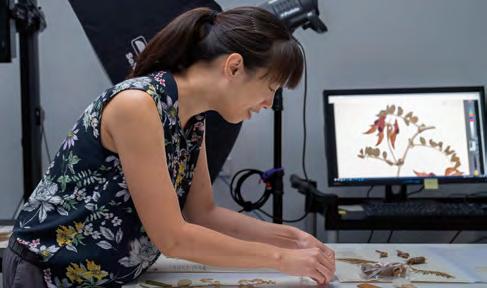
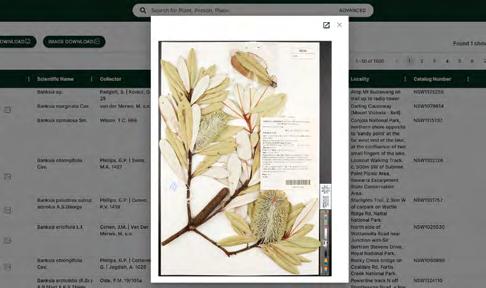
Opposite page, clockwise from left: Digital Curator Melissa Wong at the Herbarium; a digital specimen example.
Botanic Gardens of Sydney
Right: Specimens at the Herbarium
Photo: Botanic Gardens of Sydney
Photo:
Year in review 2024/25
It’s been a year of focus and fresh energy for Foundation & Friends. Together with our members, volunteers and donors, we’ve strengthened the programs that connect people to plants, refreshed our major events, and laid the groundwork for even greater impact ahead.
From the Chair
The Foundation & Friends Board began 2025 with a new Chair and a new interim Executive Director. With new leadership also at the Botanic Gardens of Sydney, we had an opportunity to start afresh. Our twin themes for the past year have been a greater focus on philanthropy and a closer working relationship with Botanic Gardens of Sydney.
The Board’s long-term aim is to significantly increase philanthropic donations to Foundation & Friends. Growing Friends Plant Sales remains our ‘jewel in the crown’, thanks to its amazing volunteers and the enthusiasm of our customers for plants propagated from the Living Collection. Our Events team put on our biggest New Years Eve party yet. Our Artisans in the Gardens and Botanica exhibitions brought lovers of art into the Gardens. Among other highlights, we also kicked off a revitalised speaker series, Meet the Head Gardener.
But the Board has also remained focused on strengthening our capacity to raise funds from donors. Over the past year, our philanthropy team has expanded and worked to build a more robust database of members and contacts. We have reconnected with long-standing supporters and collaborated closely with Simon Duffy AM, Chief Executive, Botanic Gardens of Sydney, and his team to leverage their networks. We also launched a refreshed Waratah Program for our generous regular givers and established a calendar of events to host potential major donors in the Gardens.
At our Annual General Meeting (AGM) in November, the Board proposed an increase in the number of Directors from eight to 10 to broaden our expertise and philanthropic reach. This will allow us to welcome new Directors with deep experience in philanthropy and strong connections within Sydney’s donor community.
I was delighted that we announced Ciara Timlin as our new Executive Director at the AGM. Ciara’s appointment followed a close collaboration between the Board and Simon’s team throughout the recruitment process. She brings a strong background in philanthropy and a clear mandate to work closely with both the Foundation & Friends Board and the Botanic Gardens of Sydney leadership team.
Our interim ED, Paul Thorley, leaves big shoes to fill. We are deeply grateful that he twice extended his planned tenure with us to continue guiding the organisation through an important period of growth. Paul’s leadership and commitment have made a lasting impact, and we are thrilled that he will continue to contribute as he transitions back to a volunteer role.
It has been a joy in 2025 to work in beautiful locations with great people. On behalf of the Board, thank you to our incredible staff and all our cherished volunteers.
CARL MCCAMISH, CHAIR
Photo:
Jenny Winstanley
From the Executive Director
As I reflect on the past year, I am proud of what we have achieved together and highly optimistic for what lies ahead. This year, philanthropy remained a key focus of our work, playing an essential role in enabling the Gardens' vision and future impact. One of the first major moments after stepping into the role was the rare and extraordinary blooming of the corpse flower, Putricia, at the Botanic Gardens of Sydney. It was a spectacular reminder of the power of nature to stop us in our tracks and a wonderful example of what we can achieve through collaboration with our colleagues at the Botanic Gardens of Sydney. That spirit set the tone for the year that followed.
This year, we took a step back to consider where we can have the greatest impact for our members, visitors and the Gardens, and how we can maximise our fundraising contribution to support the Gardens strategies and master plans. That meant different levels of refocus across philanthropy, events and exhibitions, Growing Friends, membership and community engagement, aligning our marketing and systems to support this. So, what did this refocus look like?
After listening to our supporters, working closely with the team and speaking with the Board, we agreed on three areas to strengthen both engagement and fundraising. The first was to maintain and continuously improve what is already working well, taking a “light hand on the tiller” approach. The second was to enhance programs that, with small innovations, could deliver short term uplift. The third was to apply more hands-on leadership where change was needed to achieve greater impact.
A steady, measured approach was taken with strong, well-performing programs such as Growing Friends, Botanica and our Talks Series, which already demonstrate strong community connection and meaningful support for the Gardens. Some enhancement was applied to programs with opportunities to refresh and enrich the experience.
Our New Year’s Eve Picnic and Artisans in the Gardens both benefited from new features and guest experience improvements.
Philanthropy was a major focus this year, and it delivered meaningful impact. Our End of Financial Year Appeal raised over $198,500, enabling us to progress the Botanic Learning Centre, a transformative project that will improve environmental education for generations to come.
This year we clarified our case for support for the Botanic Learning Centre, and raised almost $200,000 to support a business case to scope the work in detail, launched a new-look bequest program called Botanical Guardians, created a new supporter-hosted engagement series, revitalised the Waratah Program, and improved our digital giving programs.
Each of the three Gardens, the science and conservation work and the enjoyment by the community makes Botanic Gardens of Sydney such a special and unique institution.
Thank you for being such an important part of our story. With your support, we will continue to grow, evolve, and create lasting impact for our community and our environment.
PAUL THORLEY, EXECUTIVE DIRECTOR
Photo:
Caitlin Bye
Moments that brought us together
Our online community continues to grow with 10,300 followers on social media and 9,000 subscribers to our e-newsletters OUR PEOPLE SUPPORT
4,370 Members
Our growing community makes everything we do possible
361 Volunteers
Contributing to nine volunteer programs
28,165 Hours
Of volunteer time given to the Gardens
19,300 Digital Subscribers
$694,730
Of donations given to the Gardens
KEY PROJECTS FUNDED INCLUDE:
$352,900 Irrigation Central Controller
$94,924 Systemic Bryophyte research
$74,300 Marine plant research by the Research Centre for Ecosystem Resilience (ReCER) Lab
"It
is truly impressive how this large, disparate group of people manage to work year-on-year together, to raise significant funds for the good of this local treasure."
LIZ JEAVONS-FELLOWS - GROWING FRIENDS VOLUNTEER
"I
feel so lucky to have had the chance to volunteer and support the inspiring work of the Botanic Gardens. It’s been a joy to be part of this community for 14 years."
ROBIN
MCBRIDE, EVENTS AND EXHIBITION VOLUNTEER
When Nature stops us in our tracks –and those who nurture it
For the first time in 15 years, the Corpse Flower (Amorphophallus titanum) bloomed at the Royal Botanic Garden Sydney in January, drawing attention at home and globally. Nicknamed Putricia, the plant’s rare and dramatic bloom, revealed for just over 24 hours, attracted more than 27,000 visitors and raised $125,000 in donations to support the Botanic Gardens of Sydney. The feat was powered by our volunteers, with 111 people giving more than 620 hours, including 54 Foundation & Friends members and 117 hours from the Growing Friends team. Their efforts, and those of volunteers across the Gardens, were later celebrated at Government House by Her Excellency the Honourable Margaret Beazley AC KC. Putricia’s bloom showed how plants can spark awe, and how volunteers help them stop us in our tracks.
Photo: Botanic Gardens of Sydney
Putricia the Corpse Flower (Amorphophallus titanum)
Photo: Botanic Gardens of Sydney
Philanthropy
$841,500 in donations and bequests received by Foundation & Friends of the Botanic Gardens and Botanic Gardens of Sydney
Events
$677,621 from our rich event program including the record breaking New Year’s Eve picnic.
Exhibitions
Exhibition Sales: $189,217 raised in commission from art exhibitions.
Plants
Plant Sales: $280,071 in Growing Friends plant sales.
We had some incredible moments this year, from the corpse flower bloom to book launches including Plantology: The Essential Guide to Better Gardens by Tina Crawford and Lisa Ellis and Citrus: A World History by David Mabberley. Our exhibitions Artisans in the Gardens and Botanica supported the work of the Gardens through creativity, contributing $37,000 to the Education Access Program, a project that gives eligible schools free excursions to all three Botanic Gardens. Throughout the year, our workshops, walks, and member events welcomed more than 1,500 supporters, strengthening our community connections.
PHILANTHROPY: Laying the groundwork for a thriving future
Over the past year, philanthropic efforts across Foundation & Friends have focused on building strong foundations for long-term impact at the Botanic Gardens of Sydney. While significant financial uplift lies ahead, we have invested in the people and systems that will sustain future growth.
We’ve expanded our team across bequests, midtier donors, and impact reporting, so we can clearly demonstrate how contributions make a difference. These steps take time, but they set us on a sustainable path to deepen donor relationships and secure the Gardens’ future in conservation, science, and education.
This year also marked several important milestones. We launched our new bequest program, Botanical Guardians, celebrating those who choose to leave a legacy gift. We commemorated the 30th anniversary of the Wollemi Pine with an online auction that raised more than $15,000. Our End of Financial Year Appeal, focused on learning through the Botanic Learning Centre, raised nearly $200,000.
Together, these achievements reflect a conscious shift towards philanthropy that will ensure the Gardens flourish for generations to come.
Growing Friends Plant Sales is entering an exciting new chapter. With a refreshed identity, strong volunteer support, and targeted marketing, the program is rolling out its growth plan to boost year-on-year sales, enhance customer experience, and strengthen its impact supporting the Botanic Gardens of Sydney.
"The Botanic Gardens of Sydney, the first scientific institution in Australia, continues its world-leading research. In these times of changing climates this could not be more important. We take great pleasure in supporting this endeavour in a small way."
Artisans in the Gardens’ Committee members
Photo: Jenny Winstanley
Hedging our bets
For the team at the Research Centre for Ecosystem Resilience (ReCER), a request from the Blue Mountains Botanic Garden to create a hedge of the towering Nothofagus moorei, or Antarctic beech, sparked a unique collaboration between science and horticulture, writes Chantelle Doyle.
What began as a practical garden upgrade has grown into a pioneering conservation project, blending genetics, ecology, and design to safeguard one of Australia’s most ancient and vulnerable trees.
Richard Dimon is a geneticist with the Research Centre for Ecosystem Resilience (ReCER), not a landscaper or horticulturalist. So, he was surprised when a request came from Ian Allan at the Blue Mountains Botanic Garden to design a hedge of Nothofagus moorei or Antarctic beech.
“I wondered if it was a bit of a joke,” Richard says. “Antarctic beech is a cool temperate rainforest tree that can grow up to 50 metres tall. I wasn’t sure how realistic it was to use it in a hedge.”
But then Ian explained that the Garden already had a well-established hedge, planted as part of the original formal garden design in 1987, and were looking to upgrade it as part of a transition to ensure the garden grounds are a multi-purpose pleasure, conservation and research space.
“We had space at Mount Tomah to plant several new hedges as part of plans to replace cherry laurel hedges that now pose a locally significant weed risk in the Blue Mountains,” Ian says.
“Our existing Nothofagus hedge has great ornamental value, but from a conservation perspective it doesn’t achieve much because it was grown from cutting propagated clones of just two original wild seedlings collected in the Barrington Region. This means the conservation and genetic value is very low.”
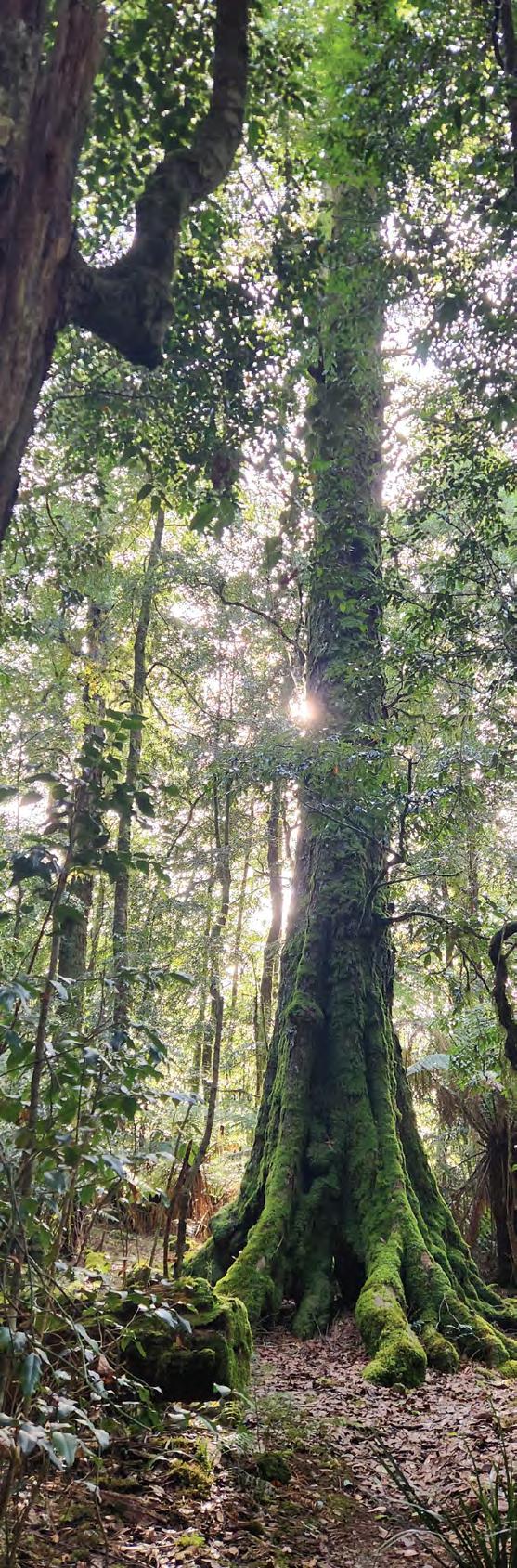
Antarctic beech forest in Barrington Tops National Park
Photo: Ian Allan
Working in harmony
Serendipitously, the Mount Tomah and ReCER teams began investigating conservation options for Nothofagus moorei at a similar time, which meant there was a chance not just to sample the wild populations but to improve genetic representation in the ex-situ (away from the wild) conservation collection. The intention of the new collection was to use the plants not just as a hedge but for research, breeding, and in the long term, reintroductions or translocations if the wild populations declined.
Nothofagus moorei is a Gondwana relict species, now restricted to the cool temperate forest from southern Queensland (Lamington Mountain ranges) to the mid north Coast of New South Wales (Barrington Tops) at altitudes from 500-1550 metres. Many of the forests containing Antarctic beech were extensively logged in the early to mid-1900s meaning that wild plants are rare, and potentially quite inbred. As an International Union for Conservation (IUCN) vulnerable species, restricted to higher altitudes and mountain tops, climate change is already a concern, particularly for populations occurring at the highest elevation which may have nowhere left to inhabit.
“It can be difficult to assess how long-lived species, like Antarctic beech, are responding to climate change,” says Professor Maurizio Rossetto, head of the ReCER team. “This species can live for hundreds of years, and when we have many old standing trees, the species can appear healthy, but in reality they are an example of living dead; populations or species which are likely to disappear despite currently existing, as there isn’t a next generation growing and then producing fruit.”
Professor Rossetto says long-lived species such as Nothofagus moorei might only recruit or produce the next generation every 50 to 100 years. This is far longer than our current monitoring lifetime. Combining genetics with surveying for multiple age classes in the wild can help researchers understand which populations are at risk of decline, as well as prioritising locations to collect material for inclusion in an ex-situ conservation collection.
From forest to lab
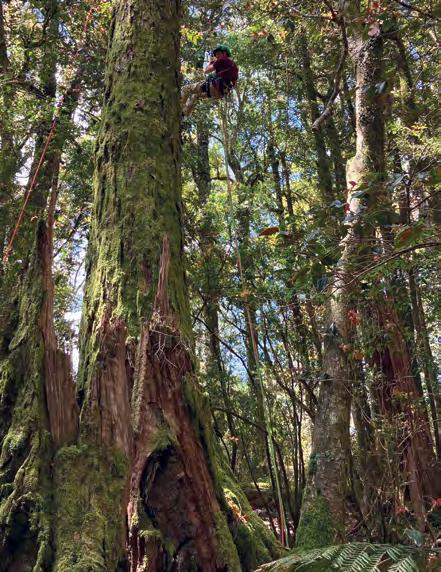
Working together, the Botanic Gardens and NSW National Parks and Wildlife Service teams undertook field surveys led by Dr Colin Bale to sample plants across the range and within localised populations of Antarctic beech. They took over 400 samples for genetic analysis, across 80 populations, spending more than 18 days in the field. Their aim was to identify which populations were possibly in decline, which were healthy, and which plants could be collected from each region to ensure that the entire genetic diversity of the species was represented.
"This species can live for hundreds of years, and when we have many old standing trees, the species can appear healthy, but in reality they are an example of living dead"
PROFESSOR MAURIZIO ROSSETTO
Bottom: Collection of leaf material for genetic analysis required specialist tree climbing skills.
Photo: Ian Allan
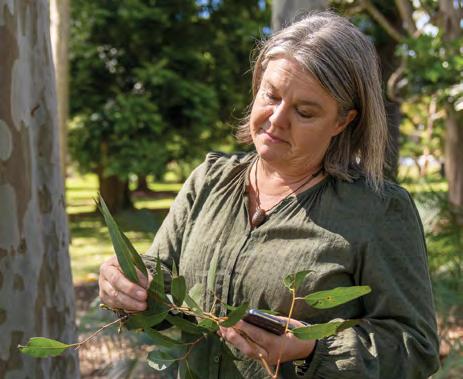
Top: Chantelle Doyle
Photo: Botanic Gardens of Sydney
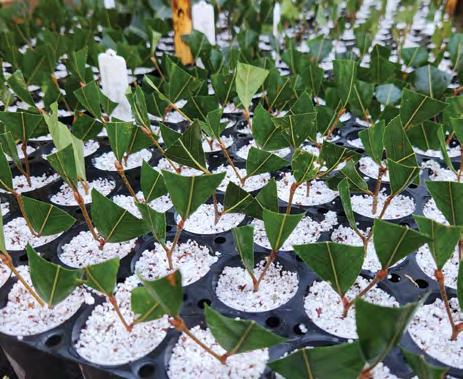
Bottom: Antarctic beech (Nothofagus moorei) cuttings, carefully chosen to maximise genetic diversity in an ex-situ insurance collection.
Like many of the ReCER projects, Richard’s analysis used Single Nucleotide Polymorphisms (SNPs) to detect differences in common alleles which signify shared ancestry or relatedness between plants.
“We found that the results broadly matched the natural geographic separation of the four main remaining regions; Border Ranges, Dorrigo Plateau, Barrington and Werrikimbe-Comboyne, but with evidence of historic mixing between them,” Richard explains. “Interestingly, we observed that the closest geographic regions are not the closest genetically, with the Border Ranges and Comboyne being more genetically similar than the geographically closer Barrington and Comboyne. All populations north of the Manning River are more closely related than populations south of the Manning River.”
Richard theorises that this discrepancy is likely a reflection of the changing climate and habitat over the millennia when the species had a much wider distribution. As the suitable habitat range has contracted to mountain-top refugia, geneflow between populations has reduced,
and the separation of the Barrington Ranges has acted as a physical barrier to pollen or seed movement. This data helps plan strategic breeding or pollinate between populations to help introduce new genotypes and, potentially, improve resilience in a changing climate.
Using an in-house developed method to select unique genotypes which represent over 90% of each region’s genetic diversity, Richard identified approximately 25 plants from each of the four main regions which should be included in the conservation hedge program at Mount Tomah. These 100 plants could then be duplicated as insurance collections across other botanic gardens and institutions.
“Receiving this very specific type of guidance about what plants to collect and from where, enables us to design a targeted collection of wild cutting material, as well as plan for alternating genotypes in the hedge,” Ian says.
Safeguarding the future
Ian led the collections of roughly 100 target plants from each of the four regions from spring 2024 to summer 2025, and will begin growing the plants, using clonal propagation. “This species actually coppices too, so growing it from cuttings is quite easy, but Richard’s guidance makes sure we don’t inadvertently collect wild clones or close relatives,” Ian says.
Cuttings are currently being propagated at the Blue Mountains Botanic Gardens, and the new hedge is planned for installation in the coming years as soon as enough material has been propagated. There are also plans to increase diversity in existing naturalistic groves that were heavily impacted by the 2019 bushfire, that burned part of the Garden’s living collection. This method is not exclusive to Antarctic beech and is actually suitable for many species.
“Contrary to expectations many rainforest species are actually suitable for hedging.” says Ian. “As a hedge these plants can be used for conservation and research purposes in small spaces without relying on the infrastructure to maintain plants in pots or the large space required to accommodate 50-metre-tall trees.”
Over the long term, this collection will also form part of a dispersed meta-collection shared across gardens in New South Wales, replicating similar models developed for the Wollemi Pine (Wollemia nobilis) and, more recently, the Dwarf Mountain Pine (Pherosphaera fitzgeraldii). This project is also contributing to a global Nothofagus conservation program.
Acknowledgments
This work could not have been achieved without the support of Dr Colin Bale, Adam Fawcett Tricia Waters, and staff of the National Parks and Wildlife Service NSW who in partnership with the Botanic Gardens of Sydney staff, have helped collect leaf and propagation material across the populations.
Photo: Ian Allan
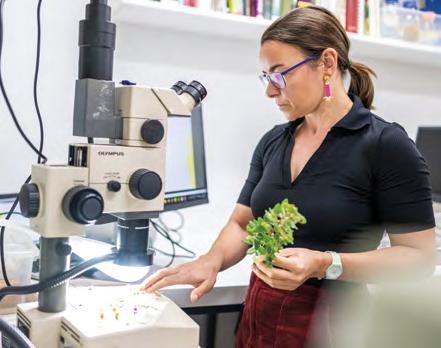
Top: Tricia Hogbin
Photo: Hannah Izzard
Meet the ReCER team
Led by Professor Maurizio Rossetto, ReCER’s passionate team uses science and innovation to protect Australia’s wild heritage for generations to come.
Tucked within the Royal Botanic Garden Sydney is a powerhouse of scientific innovation – the Research Centre for Ecosystem Resilience (ReCER). Established around four years ago, ReCER grew from the Gardens’ former Evolutionary Ecology research group to meet the urgent need for large-scale, genetics-driven conservation.
Professor Maurizio Rossetto, Head of the Research Centre for Ecosystem Resilience, who has worked at the Gardens for more than 23 years, leads the centre and has been instrumental in shaping its direction. “I’ve always been researching how DNA can inform the management of biodiversity,” he explains. “Understanding how native species are distributed and assembled helps us not only understand natural landscape processes but also support improved biodiversity management strategies.”
At its core, ReCER uses advanced genomic tools to understand and restore Australia’s unique plant communities. By studying the genetic makeup of species, the team can identify how plants adapt to changing conditions and guide restoration projects that promote resilience and diversity. “Our focus is on developing the tools that allow us to support threatened species and restoration programs directly,” says Maurizio. “We provide guidance to ensure populations are genetically viable, whether that’s helping reintroduce rare plants or advising on how to build resilience against diseases like myrtle rust.”
ReCER’s applied science is transforming how restoration and recovery are planned across New South Wales. The
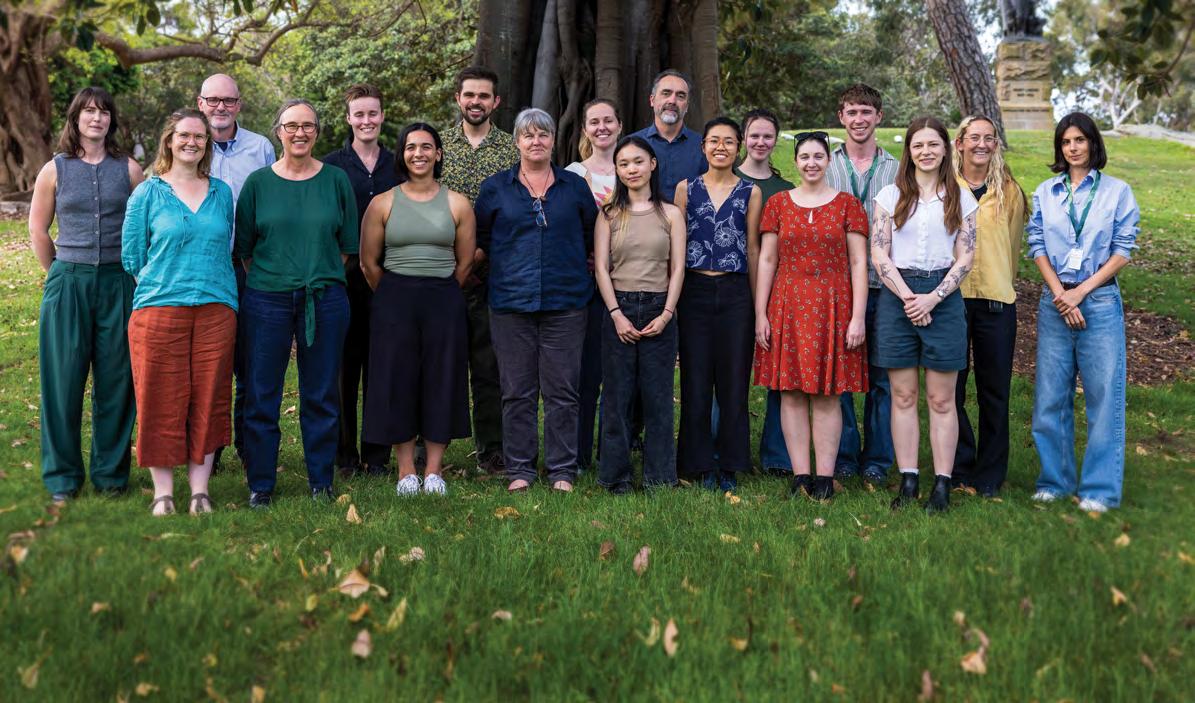
L-R back row: Monica Fahey, Jason Bragg, Katie Erickson, Richard Dimon, Caroline Cristofolini, Maurizio Rossetto, Amy Smith, Felix James, Lisa Danzey, Manuela
L:R Front row: Allison Mertin, Marlien van der Merwe, Alyssa Martino, Tricia Hogbin, Karina Guo, Samantha Yap, Edana Lord, Eilish McMaster.
team of around twenty scientists – all geneticists –collaborates with land managers, government agencies, and conservation partners to translate complex data into on-ground action. “All that we do has direct applications,” Maurizio says. “Every project is aimed at ensuring species not only survive now, but are equipped to thrive in the future.”
When Maurizio first led the research group, there were only three scientists. In just a few years, the team has grown exponentially. “There’s increased recognition for the type of work we do,” he notes. “No one else in Australia, and few internationally, operate at the scale we do.” That scale has attracted collaborations across Australia and beyond, with ReCER now partnering with other states and international research groups seeking to replicate its model of genomics-driven conservation. “We’re seeing our work being woven into new biodiversity legislation and policy development,” says Maurizio. “The more we can influence policy, the greater our impact.”
While most of ReCER’s projects are governmentfunded, community support plays an important role. Foundation & Friends of the Botanic Gardens have provided vital assistance, funding the laboratory equipment that underpins the team’s cutting-edge research. “Foundation & Friends funded all of our lab equipment,” Maurizio explains. “And through them, we’ve also had generous donors come forward to support specific projects – such as our new marine work on mangroves and salt marshes.”
Such partnerships show how philanthropy and science can come together to safeguard ecosystems for future generations.
Cascini
Photo: Hannah Izzard
A rare and poignant gem
What do a World War II prisoner-of-war camp and a 19th-century book on botany have in common? On the face of it, they couldn’t be further apart. In reality, the connection is fascinating and poignant.
The 19th-century book on botany in question is the Naturgeschichte des Pflanzenreiches in Bildern (Natural history of the plant kingdom in pictures) and is held in our Daniel Solander Library. It is the work of Gotthilf Heinrich von Schubert, a physician, theologian and naturalist from the German state of Saxony. Published in parts in 18531854, it is illustrated with 52 beautiful and vibrant folio colour plates of representative examples from the various plant, fungi and algal families.
A contemporary review of the work had this to say: “The first instruction of natural history… must be conducted according to a specific method if it is to be fruitful. In addition to a theoretical presentation of what is to be learned… it is also absolutely necessary to present specific objects pictorially for a firmer fixation in the memory and a more precise understanding of their
nature... The more carefully such illustrations are selected and the more precisely they are executed in detail, and the more effort is put into captivating the senses, the greater the success will be achieved… many things must first be made understandable and comprehensible in order to awaken their interest in details that are mostly unknown or incomprehensible to them, and to lead them to an understanding of the whole. What we have said about illustrations for teaching natural history in general applies particularly to those on the natural history of the plant kingdom. With particular satisfaction, we can recommend a work of illustration that perfectly corresponds to this… contains a numerous series of illustrations… which, as accurately and faithfully sketched as beautifully illuminated, provide an overview of the main orders and stages of development of the plant kingdom.”
Though there are about six later editions, the book in question is a very rare first edition, with only two other libraries in Australia holding a copy. However only this copy has such a curious and compelling history.
The book came into the possession of the Daniel Solander Library through the generosity of a Dutch Australian, Martin Adrian Kaub, in 1976. Kaub, a chemical engineer, had lived in the Dutch East Indies (present-day Indonesia) before the Second World War. At some point during the escalation towards war, Kaub joined the Royal Netherlands Marines or Korps Mariniers. Japanese forces invaded in December 1941 with the fiercest fighting in Java in February and March 1942, where they were overwhelmed by the larger, better-equipped Japanese forces and ultimately surrendered in March 1942.
The Dutch prisoners were interned along with other allied soldiers at the infamous Changi prisoner-of-war camp at Singapore, Kaub among them. The conditions at Changi were terrible. Systematic starvation, rampant disease, overcrowding, and brutal treatment. But there were glimmers of hope. The International Red Cross managed to send parcels of letters from families, food, clothing, medicine, books and magazines, though many were hoarded by the Camp administrators, making the distributions a rare and significant event.
The book features vibrant colour plates of plant, fungi and algal families.
"How Martin Kaub managed to keep the book intact through the awful vagaries of the camp is somewhat of a miracle. One can imagine that for Martin and his fellow prisoners, the book must have given a rare glimpse of colour and beauty in such a dark environment."
Naturgeschichte des Pflanzenreiches in Bildern by Gotthilf Heinrich von Schubert.
In the personal letter which accompanied the donation of this book the following is written: “…Mr Kaub noticed this volume which came through his hands with some books for distribution as comforts for the P.O.W. Thinking it was too valuable to be lost or destroyed in the camp conditions of the time, Mr Kaub retained the volume and managed to bring it out of the camp [at the end of the war].”
How Martin Kaub managed to keep the book intact through the awful vagaries of the camp is somewhat of a miracle. One can imagine that for Martin and his fellow prisoners, the book must have given a rare glimpse of colour and beauty in such a dark environment.
Mr Kaub survived the horrors of Changi and eventually came to settle in Katoomba, Australia with his wife Elizabeth (Betty), with whom he raised two sons. He also became involved in local conservation efforts with the Colong Committee’, a National Wilderness Society.
There, he and his wife Betty “…formed a team which poured information on both the Colong and Boyd struggles in to the Committee. Together they wrote many of the letters which helped build up the political pressure required for the successful outcome in each case.”
Even up to the age of 68, Martin Kaub was planning a trip to the Border Ranges for a fact-finding mission to help the local conservation campaign. Sadly, it was around this time that he fell fatally ill and died soon after.
We will forever be grateful to Martin Kaub in finding, protecting and donating this precious and exquisite work to the Library, not just as a work of botany but as a rare and poignant example of the juncture of science, history and culture.
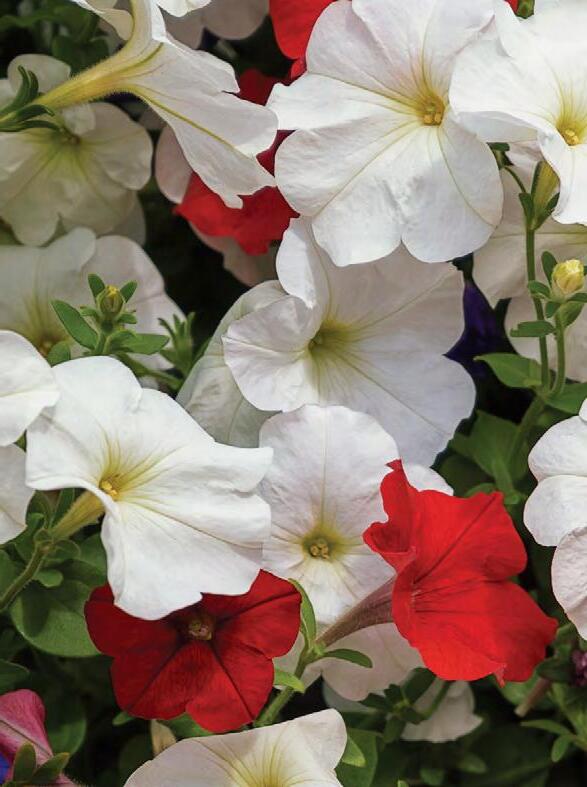
Visit the Domain entrance beds to enjoy the festive display of red and white petunias
Plants in the Gardens
Spring into summer and discover the latest seasonal stars blooming across the three Botanic Gardens.
ROYAL BOTANIC GARDEN SYDNEY
The warmer weather is upon us and there is nothing more enticing than the soft cool grass under the deep shade of a mature tree. The Royal Botanic Garden arboriculture team cares for many important and beautiful large heritage-listed shade trees that provide an escape for the weary visitor or Sydneysider taking a lunch break away from their desk. Our pin oak (Quercus palustris) on Lawn 9 near the rose garden is a popular tree to relax under on the Durban grass.
Large figs are also famous for their broad canopy and are dotted throughout the gardens. Find a tree near the harbour to soak in the views or meet a friend under your favourite tree. You may have company with many birds and wildlife also laying low during the heat of the day.
Other cool retreats can be found throughout the garden. Venture off the concrete paths and explore the informal
paths that lead you into quiet reclusive spaces inside the beds or make your way to the fernery for the calming canopy of dense plantings and running water.
Although summer brings heat, it also brings ideal growing conditions for our summer annuals. The Garden is bursting with summer colour this year with our annual displays on track to make the festive season a showstopper. The longer days and warmer weather mean our horticulturists can go to town, with our displays featuring mass plantings of zinnia, cosmos, sunflower, poppy, cornflower, alyssum and coreopsis.
In celebration of the festive season, the Domain entrance beds in Palm Grove and Robert Burns statue are featuring matching red and white spreading petunias – doing Santa proud!
DANIELLA PASQUALINI, ACTING CURATOR MANAGER, ROYAL BOTANIC GARDEN SYDNEY
Photo: Botanic Gardens of Sydney
AUSTRALIAN BOTANIC GARDEN
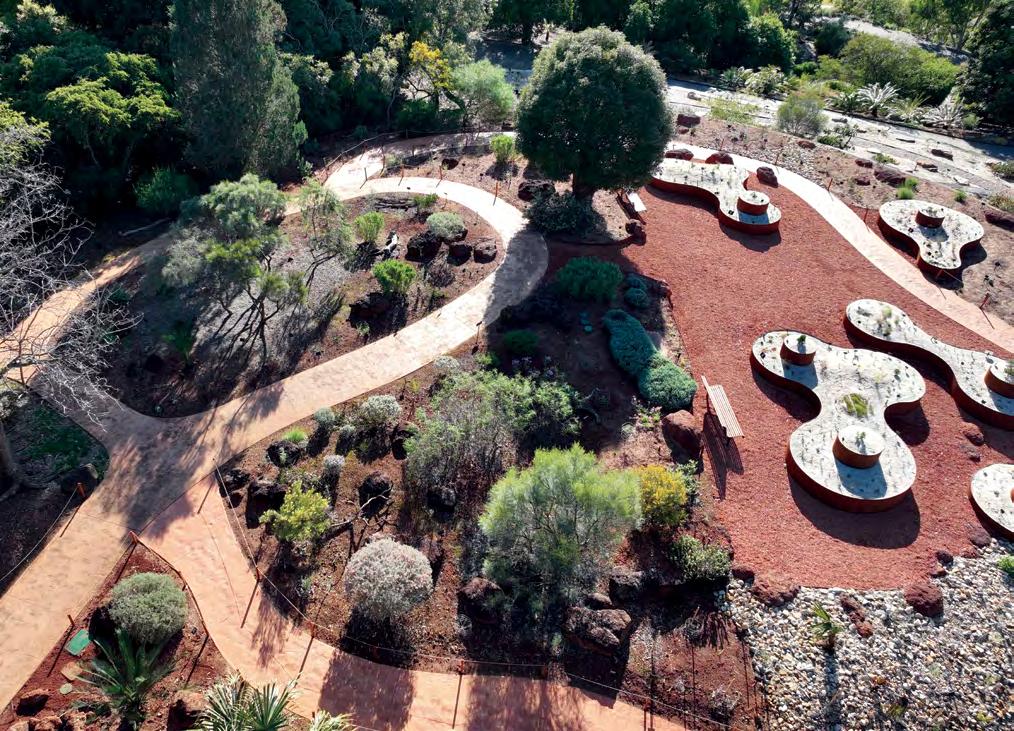
This past spring saw strong visitation to the Australian Botanic Garden Mount Annan, with vibrant displays across the site and the opening of Burara Ngurada, our Dry Country landscape (formerly known as the Arid Garden). Now that the new landscape has had time to settle, summer is a great opportunity to explore its beauty. The landscape showcases the diversity of Australia’s dryland flora and shares important cultural stories connected to Country. Just a few metres away, visitors can take respite from the heat under the shaded canopy of the rainforest in the Connections Garden. It’s a rare experience to move from an arid landscape to a rainforest in such close proximity.
Across the Garden, summer continues to bring colour and seasonal interest. While the spring paper daisies have finished, there are still botanical highlights to discover. In the conservation woodlands, summer rain may trigger a short flowering period for the critically endangered pink rice flower (Pimelea spicata), with its small white and pink blooms. More noticeable is the hickory wattle (Acacia
implexa), one of the few wattles to flower in summer, adding creamy tones to the landscape. In the curated areas, kangaroo paws are a key feature of the summer display, their unique structure and bright colours make them a reliable highlight through the warmer months.
Work is also progressing on the new entrance or meeting garden at the base of Mount Annan, located between the Sundial and Wedding Knot. This small but significant garden will complement the viewing platform currently under construction and help set the scene when visiting the summit.
The Garden remains a place for seasonal discovery, cultural connection, and quiet reflection. Whether you're exploring the conservation woodlands, enjoying the curated displays, taking a break in the shade, or visiting the Garden’s Restaurant, there’s always something to experience at Mount Annan this summer.
MICHAEL ELGEY, CURATOR MANAGER, AUSTRALIAN BOTANIC GARDEN MOUNT ANNAN
Above: The new Burara Ngurada, our Dry Country landscape (formerly known as the Arid Garden)
Photo: Botanic Gardens of Sydney
BLUE MOUNTAINS BOTANIC GARDEN
Mount Tomah, renowned for its stunning natural beauty, boasts high elevations, rich basalt soils, and a cool climate, creating an ideal habitat for camellias. These exquisite plants have captured the attention of horticulturists and garden enthusiasts alike. In recent years, dedicated curators and horticulturists have worked tirelessly to ensure that camellias are not only cultivated but celebrated throughout the Gardens.
Recognising the importance of camellias in both Australian and Asian cultures, we undertook an extensive examination of our collection. Through meticulous stocktakes, we found that many camellia varieties carried significant cultural heritage and rarity. The evaluations revealed an exciting opportunity to build a substantial collection worthy of international recognition, a vision that has guided our efforts over the past 15 years. As a result, our horticulturists have sourced some of Australasia's rarest and most unique camellia cultivars, enriching the Gardens with one of the most significant collections available.
As the collection expanded, the need for a permanent, dedicated space became apparent. With the invaluable support of generous donors, we selected a two-acre plot of land for landscaping. The previously unused site offered a north-facing aspect, dappled shade and deep volcanic soil, perfect for camellias.
While we did not aim to create a dedicated Japanese Garden, the influence of Japanese and Asian aesthetics permeates the design. Historically, camellias have deep roots in Japanese culture, prompting the team to consider this heritage in their approach. This understanding has allowed us to refine not just the collection itself but also the techniques and conservation efforts associated with camellias globally. By incorporating cultural connections into the landscape, the designers aim to convey the significance of these plants and their meanings within various cultures.
The landscape design features several key elements: retaining walls that mimic the silhouettes of the surrounding mountains, striking basalt staircases, and a series of intimate gardens, all harmoniously surrounded by camellias. Building materials such as stone were sourced from the Blue Mountains to maintain a sense of local identity. However, the team also recognised the importance of including Japanese elements to create balance and enrich the story of the Camellia's role in cultural history.
The art of Suiseki – an essential aspect of bonsai culture – finds its place within the Gardens. Suiseki, which celebrates the beauty of natural rocks, aligns with the appreciation of nature's essence. This philosophy has been incorporated into the landscape, where selected basalt rocks serve not just as structural elements but as artistic displays.
To highlight this connection to nature, two massive basalt columns, each weighing close to a ton and excavated from Mount Tomah itself, have been placed prominently within the landscape. These columns bear intricate hand-etched designs of camellia flowers, symbolising the significance of the plants in the garden's narrative.
As Stage One of the new garden came into fruition this November, it was only fitting that the opening festivities featured a traditional Japanese tea ceremony. This event beautifully highlighted the customs, culture, and artistry linked to one of the world’s most important camellias: the tea camellia. The ceremony was graciously supported by Ryoko from the Urasenke Japanese Tea School, once again bringing cultures together in the Gardens.
The cultivation of camellias at Mount Tomah is about more than just growing beautiful plants; it’s an ongoing journey of cultural appreciation, artistic expression, and environmental stewardship. By blending horticulture with meaningful design and cultural influences, the Gardens reflect a rich tapestry of history, biology, and the beauty of nature – an experience that invites all visitors to celebrate the art of camellias.
ASH FILIPOVSKI, CURATOR MANAGER, BLUE MOUNTAINS BOTANIC GARDEN
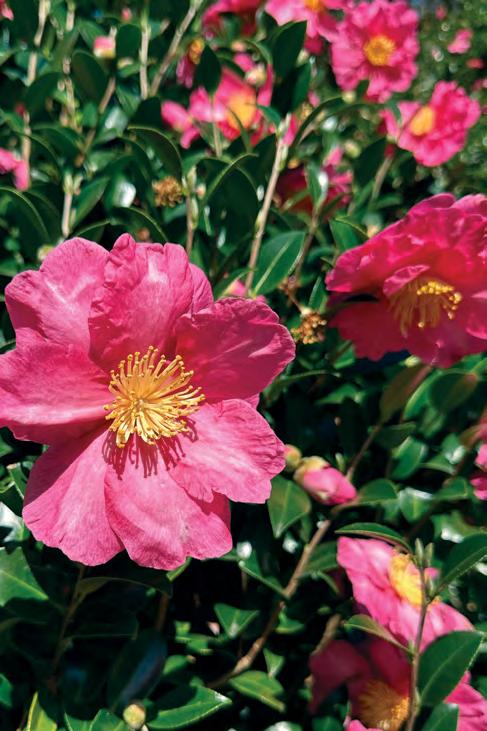
Left: Camellia sasanqua
Photo: Botanic Gardens of Sydney
Five plants for the summer garden
Summer is the season when gardens come alive, bursting with fragrance, colour and energy. Long, warm days and balmy evenings invite us outdoors, and the right plants can transform a space into a true sanctuary. From the romance of roses to the vibrancy of salvias, the perfume of stephanotis, the nostalgic beauty of hydrangeas and the charm of brachyscombes, these five plants will bring lasting joy and effortless style to your garden and are all available from Growing Friends Plants Sales.
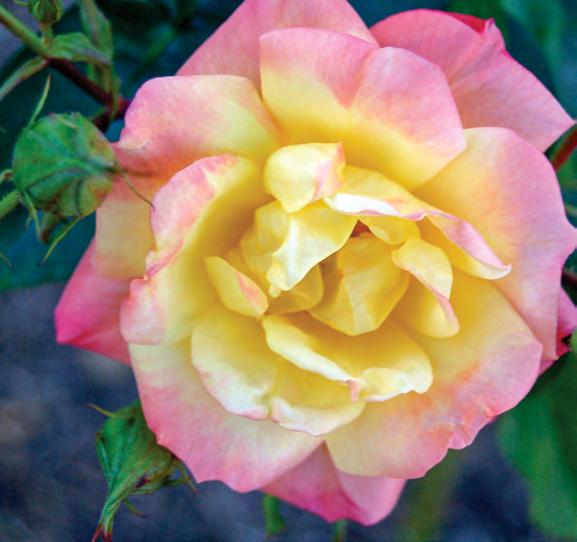
Roses
Summer roses are a feast for the senses, filling gardens with perfume and colour. From climbing over arches to softening borders or thriving in pots, their versatility makes them essential in landscapes large and small. Shrubs, climbers, and even groundcovers ensure there’s a rose for every setting. They do demand attention – pruning, dead-heading, and pest control – but their resilience and longevity make them a gardener’s greatest reward. Few plants offer such enduring elegance through the summer months.
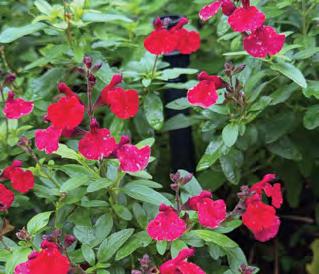
Salvias are the heartbeat of a summer garden. Their vibrant flowers, dancing in shades of blue, pink, red and purple, bring constant movement as butterflies and birds visit daily. Beloved culinary herbs also belong to this diverse family, underlining its versatility. Newer varieties such as Salvia buchananii, with vivid tones of magenta, orange and purple, add drama to beds and borders. Once established, salvias thrive in sun, tolerate drought, and need only light trimming to bloom again and again.
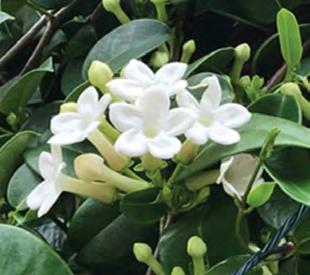
Stephanotis
With its glossy foliage and clusters of fragrant white flowers, Stephanotis floribunda (Madagascar jasmine) is the ultimate climber for summer romance. The blooms, waxy and bell-shaped, release an unforgettable scent on warm evenings and are prized for weddings and garlands. This evergreen vine can reach six metres, thriving in frost-free, tropical or subtropical climates. Give it filtered light, free-draining soil, spring feeding and a generous layer of mulch. In return, stephanotis delivers lush growth and a perfume-rich summer display.
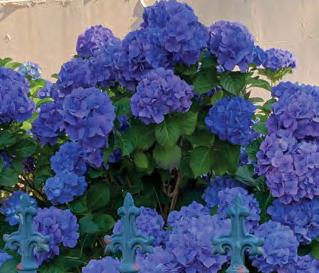
Hydrangea
Hydrangeas bring nostalgia and glamour to summer gardens with their mophead and lacecap blooms. Hydrangea macrophylla produces spectacular flowers that shift colour depending on soil pH — blue in acidic ground, pink in alkaline, while whites remain pure. Other species such as H. quercifolia, H. paniculata and H. petiolaris add further beauty, while modern hybrids have revived enthusiasm for this adaptable plant. Hydrangeas prefer morning sun, afternoon shade, and moist, well-drained soil enriched with mulch for long-lasting displays.
Brachyscombe
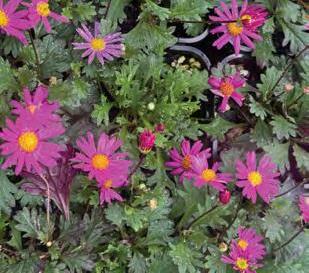
Delicate yet hardy, brachyscombes create carpets of cheerful daisies throughout summer. B. multifida and B. angustifolia are most popular, their spreading habit softening borders, spilling from pots, or filling gaps in rockeries. Flowering in blue, purple, pink and white, they provide months of easy colour in sunny or partly shaded spots. Thriving in free-draining soils and requiring minimal care, these lowmaintenance plants are perfect for modern gardens. Brachyscombes bring charm, softness and continuity to the summer landscape.
BELINDA MOON, GROWING FRIENDS PLANT SALES, SYDNEY 5 4
Salvia
Growing together
With a fresh new look and a renewed sense of purpose, Growing Friends Plant Sales continues to go from strength to strength, uniting passionate volunteers, beautiful plants and a shared love of the Gardens.
Growing Friends is a passionate team of volunteers who propagate and sell unusual and hard-to-find plants, so everyone can take home a little piece of the Botanic Gardens. Every plant sold by Growing Friends has a story, whether it’s rare, remarkable, or propagated directly from the living collection. Whether you’re a collector, a curious browser, or simply after something green with a great story, there’s always a plant for you.
Now, Growing Friends has a fresh new look to match its flourishing spirit. The new identity celebrates the group’s close connection with the Gardens and reflects its transformation from a small, enthusiastic band of growers into one of the organisation’s most successful volunteer ventures. It’s a look that feels as vibrant and welcoming as the people behind it, and a proud symbol of how far they’ve come. What began in 1998 with just 10 volunteers has blossomed into a thriving community that generates vital funds for conservation, science and education. Over the decades, the initiative has grown beyond all expectations, with more than 100 volunteers now propagating a range of native and exotic plants, including rare and endangered species.
“Growing Friends volunteers are highly respected by Gardens employees,” says Greg Lamont, Horticultural Adviser and long-time co-leader of the Wednesday team. “We run a very successful commercial nursery. Our efforts in fundraising assist in providing capital equipment like fogging systems for the orchid house, laboratory equipment for the ReCER conservation research, and scholarships for staff.”
Greg, who joined nearly 13 years ago, helped refine the group’s horticultural practices. “When I started, turnover was around $90,000. Within a few years we’d doubled that, and now it’s triple,” he says.
For Sheila Buchan, who began volunteering over a decade ago and now serves as co-leader for the Tuesday group and Administration Co-ordinator, the new identity is just one sign of how far the group has come. “During my time, Growing Friends have gone from strength to strength,” she says. “We’ve modernised our admin processes, updated sales reporting, and built a custom database so each team can track propagation, stock and sales. It means we have a much clearer idea of what sells.”
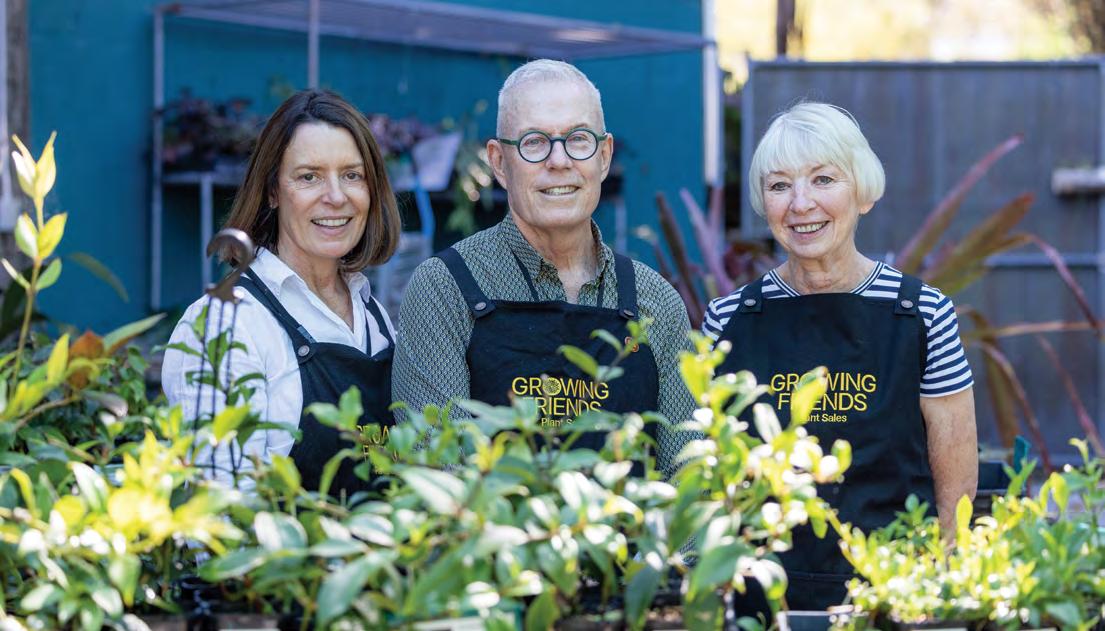
Above: (L-R) Liz Jeavons-Fellows, Greg Lamont and Sheila Buchan
Photo: Botanic Gardens of Sydney
"Gardeners are generous, curious and kind. Everyone who joins seems to understand the great gift we hold gently in our hands."
LIZ JEAVONS-FELLOWS
Sheila has been instrumental in the behind-thescenes improvements that have kept the operation running smoothly as it expanded. “We also now have Saturday and Sunday teams selling to the public,” she adds. “And we’re expanding our Lightspeed system to record sales and stock in real time – even on our phones. It will make a big difference to how we work.”
Under the guidance of Liz Jeavons-Fellows, who has been involved for the past seven years and took on the role of General Coordinator this year, Growing Friends continues to evolve and innovate. “Over the years we’ve become more organised, more professional, and much more connected to the wider Gardens,” Liz says. “We’ve improved our shop, boosted marketing and signage, and built a real sense of unity.”
That sense of purpose extends well beyond the nursery gates. “It’s wonderful that we could put funds towards the fabulous Clivia heritage collection,” Sheila says. “We’re also currently raising money for a walkway in the new Camellia Garden beds. We’re also supporting horticulturists to undertake overseas training.”
The team’s enthusiasm for plants remains infectious. “Personally, I’m very excited about the new gingers John Larsen is purchasing for the Gardens,” Sheila adds. “Our Tuesday group is propagating them from stem cuttings, and there might even be a segment on them with Clarence from Gardening Australia. ”
With projects like the Clivia collection, the Nature Restoration Nursery project at Mount Annan, and new plant ranges coming through, the future of Growing Friends is bright. “The warmer months are such a fabulous time of year,” says Liz. “Everything’s growing, changing daily. Just propagating with success and seeing the results of our labour at this time of year is terrific.”
For all three volunteers, the real joy lies in the people. “Growing Friends is very special,” says Greg. “We have close, respectful relationships and great satisfaction in growing plants and selling them to our customers.” Liz agrees: “Gardeners are generous, curious and kind. Everyone who joins seems to understand the great gift we hold gently in our hands.”
As the rebrand takes root, it symbolises more than a visual refresh – it’s a celebration of community, purpose and growth. “For anyone thinking about joining us,” says Liz, “what are you waiting for? Just do it –there’s no downside, it’s a great community.”
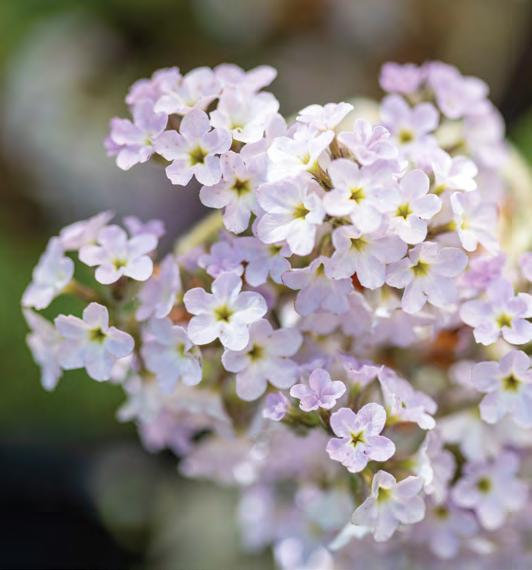
Above: Heliotrope
Photo: Botanic Gardens of Sydney
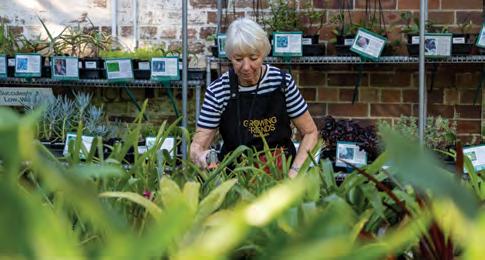
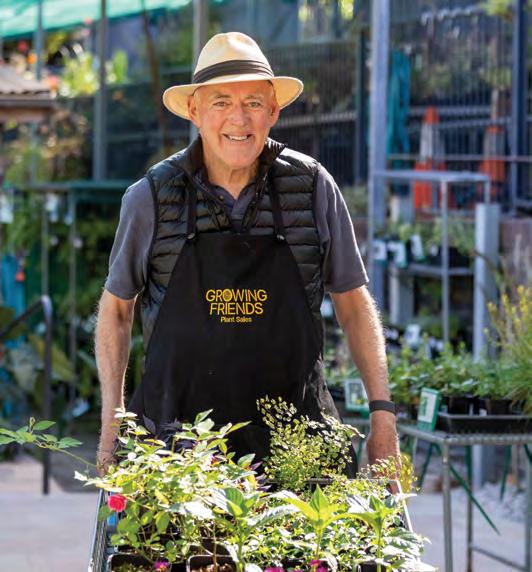
Top: Warwick Cumming, a volunteer from Tuesday crew at Growing Friends.
What’s On
Summer is here and the Botanic Gardens are the place to be! From festive workshops to fun walks and talks and special events, there’s something for nature lovers of all ages to enjoy.
For more information about our events and to book visit botanicgardens.org.au/Whats-On scan the QR code or phone 02 9231 8182
Classes and workshops
SEEDLINGS NATURE SCHOOL
Enjoy nature-based activities in the Garden
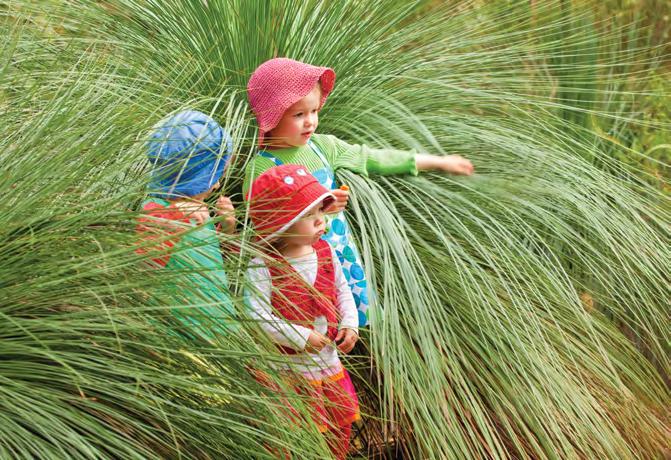
Join experienced Early Years nature educators in the Garden for play-based activities and nature experiences for you and your little one. Seedlings Nature School allows young children to explore, grow and develop in nature. Children will build, discover, play and engage their senses in the natural world. Each week’s program will be a captivating combination of nature-based activities, games and stories in the Garden.
AUSTRALIAN BOTANIC GARDEN
Every Wed from 11 February – 1 April, 9.30am – 11.30am
ROYAL BOTANIC GARDEN
Every Thurs from 12 February – 2 April, 10am – 12pm
Term pass $140, casual pass $21 per child per session
NATURE JOURNALING
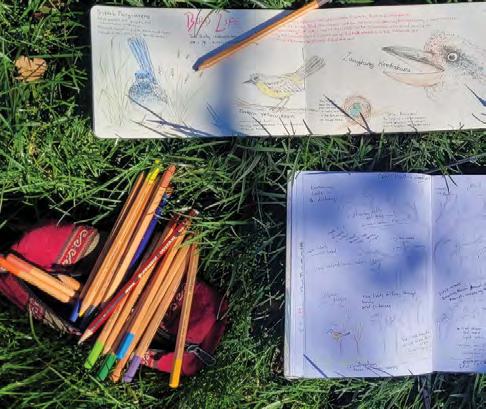
Join us for a series of interactive workshops designed to cultivate mindfulness, creativity, and profound observation. Each session will feature a distinct theme, exploring different aspects of the Botanic Garden, encouraging exploration and a greater appreciation for the surrounding environment. These classes are beginner friendly. No prior experience with drawing or journaling is required.
BLUE MOUNTAINS BOTANIC GARDEN MOUNT TOMAH Visitors Centre, Blue Mountains Botanic Garden
Sat 28 February and Sat 28 March, 10am – 12:30pm
ROYAL BOTANIC GARDEN
Rathborne Lodge, Royal Botanic Garden Sat 14 February and Sat 14 March, 10am – 12.30pm
From $98
Walks and talks
SUNSET SPOTLIGHT TOURS
Woolloomooloo Gate, Royal Botanic Garden
Mon 15 and Mon 22 December, 8pm – 9.30pm
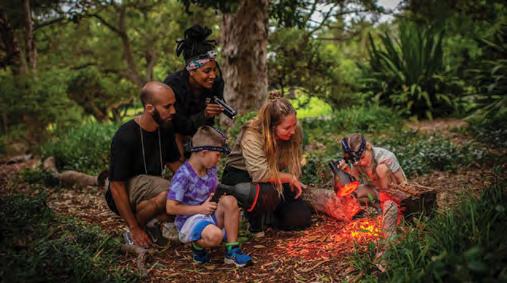
Experience the Garden and its fascinating nightlife on this adventure by torchlight. The Garden is an oasis waiting to be explored. We'll wander the garden pathways and visit biodiversity 'hotspots' such as the ponds to look for nocturnal animals – some who fly in for the night, others who are long-term residents. We'll use our senses and some tech gadgets used by our scientists to help us locate animals and plants that have special nocturnal adaptations. We may see Golden Orb spiders, Brush-tailed Possums, Microbats, Flying Foxes or Tawny Frogmouths.
Suitable for ages 8+. From $20
THROUGH THE GLASS HOUSES: ORCHID TOUR
The Calyx, Royal Botanic Garden
Sat 7 February 10am - 11.30am
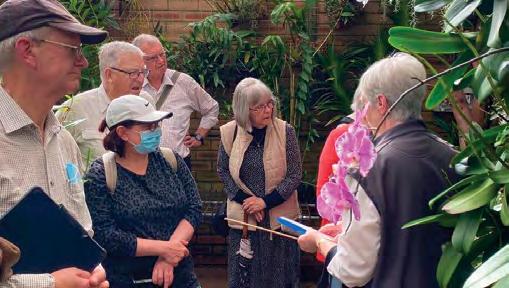
Orchids are the world’s second-largest family of flowering plants, and they have fascinated, entranced and excited people for generations with their beauty and desirability of flowers. Through a behind-the-scenes tour of the orchid glasshouses at the Royal Botanic Garden find out how these fabulous plants utilise the art of disguise and deception to attract pollinators. The tour will be given by specialist orchid volunteer Peter D’Olier and fellow orchid judge and volunteer guide, Jane D’Olier.
THE GHOSTS OF THE GARDEN PALACE TALK
Maiden Theatre, Royal Botanic Garden
Thurs 29 January 5.30pm – 7pm
Join historian and horticulturalist Paul Nicholson as we step back in time and uncover one of Sydney’s most extraordinary stories, the rise and fall of The Garden Palace. Originally built in 1879 for Sydney’s first international exhibition. The wooden masterpiece dominated the Sydney skyline. This captivating historic talk covers chaos, politics and ambition, as well as the suspicious fire that brought it all to an end just three years later. The talk will start with a glass of Taylors wine and something to nibble on.
From $40
QUEER PLANTS WALK
Royal Botanic Garden
Wed 18 and 25 February, 5.30pm – 7pm
Join horticulturalist and historian Paul Nicholson on a guided romp through the garden to learn how plants have been successfully embracing diversity for millions of years. By day and night, we will reveal the sexy, scandalous and sweet secrets of our plants and why striving to understand them, matters to us all. The event will start at the Cactus Garden with a glass of Taylors wine.
From $30
From $40
Exhibitions and special events
DREAMING OF A GREEN CHRISTMAS OUTDOOR THEATRE
Rathborne Lodge Lawn, Royal Botanic Garden Sydney Mon 22 and Tues 23 December, 1pm – 1.50pm
Get ready for a hilarious Christmas story in the Botanic Garden this December. Elfis and Elvin the Elves have been sent to Australia to make preparations for Santa’s visit, but things don’t go to plan. These two cheeky elves will have you laughing and singing as they battle the harsh Aussie environment to make sure Christmas happens. We hope you can join us in the seasonal silliness – and if you're lucky you might even get to contribute to the show!
Suitable for ages 3-10. From $19
FOUNDATION & FRIENDS NEW YEAR’S EVE PICNIC
Wed 31 December 5pm – 12.15am
Our New Year’s Eve picnic is now sold out! Thanks to everyone who has bought a ticket, we appreciate your support and look forward to seeing you there.
MEET THE HEAD GARDENER
Royal Botanic Garden Sydney
Our Meet the Head Gardener series will return in autumn. Stay tuned to our digital channels for more information.
From $55
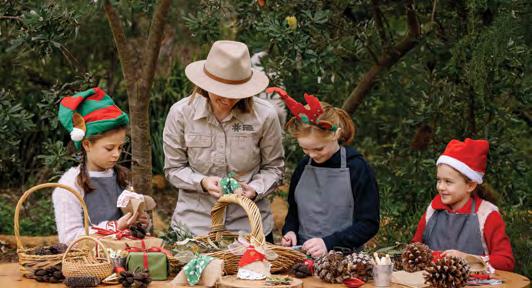
SANTA’S STUDIO
Leafy Christmas craft for families
Moore Room, Royal Botanic Garden Sydney Mon 22 and Tues 23 December, 10.30am – 12pm
Bring your little elves to the Botanic Gardens this December to create beautiful natural Christmas crafts. Join our educators to learn about the plants that make our holiday season special and take home and some gorgeous hand-made presents for family and friends.
From $19
Volunteer with the Gardens
Ignite your passion for nature and make a lasting impact
By volunteering with Foundation & Friends, you’ll play a crucial role in preserving our beautiful Gardens and raising vital funds to support important scientific and conservation work at their green heart. Your time and energy will help maintain vibrant spaces and inspire visitors of all ages.
Our nine volunteer programs include: Special events, exhibitions, Growing Friends Plant Sales, catering and more.
READY TO MAKE A DIFFERENCE?
We need your help. Join us now.
To get involved, contact Foundation & Friends on (02) 9231 8182, or visit botanicgardens.org.au
Hoop pine
A small hoop pine that was transplanted more than 30 years ago and placed next to its brother and sister Araucarias quickly caught up and is still thriving today, writes David Bidwell.
While digging their way through the Australian Rainforest bed in 1994, to install a much-needed irrigation main, the Gardens’ plumbers at the time unfortunately needed to sacrifice a few plants along the way. One of those was a little hoop pine (Araucaria cunninghamii) around 1.5 metres tall with three tiny feeder roots still intact.
The Gardens’ arborists happened to be working nearby and were keeping an eye on the plants being dug up. Sadly, some plants were unable to be salvaged, but rather than donate this particular young tree to the green waste pile, they had the crazy idea of putting it straight into the ground alongside its brother and sister Araucarias, on the lawn below Lion Gate.
With a couple of stakes and lots of TLC for the first year, the tree never missed a beat and speedily caught up to grow to a comparable size to those nearby trees of the same species, which already had a 25-metre head start when the little tree was planted.
Araucarias are a genus which are amenable to transplanting, given the right conditions and after-care, and this tree is a living example. However, this tale is not entirely typical of ideal treatment for trees before relocating.
Here are a few guidelines that will help with successful transplanting:
Carry out tree transplanting in the cooler months of the year. Autumn is good in the Sydney area, while the soil temperature is still relatively warm, and the days are shorter and cooler.
• Prepare your planting hole in advance and water the area well.
• Ensure that the tree is well watered before digging up.
• Retain as many roots as possible when lifting the tree.
• When placing the tree, ensure the top of the root crown is placed exactly at ground level before backfilling.
• Stake the tree if it is unstable, using soft tying materials to prevent damaging the bark.
• Thoroughly water the tree after backfilling and mulching.
Continue watering the tree frequently, particularly in the weeks after planting, and following dry periods.
Top left: Hoop pines in Mt Annan Photo: Glenn Smith
Top right: The hoop pine that survived a 1994 transplanting
Photo: Caitlin Bye
Fully Escorted Botanical History Study Tours
Small groups led by expert tour leaders
Spice, Trade and Botanicals on the Malabar Coast
23 Jan - 7 Feb 2026
www.jonbainestours.com/malabar
Wildflowers, Wine and History in Crete
18 – 24 April 2026
www.jonbainestours.com/crete
Botanical Histories in the Kingdom of Flowers, Yunnan
19 May – 1 June 2026
Tour leader: Professor Tim Entwisle www.jonbainestours.com/yunnan
Wildflowers, Wine and the Cape Floral Kingdom
27 Aug – 10 Sept 2026
www.jonbainestours.com/botanysa
‘Outstanding. Hugely appreciate the care that went into planning the itinerary – it was brilliant.’ Lisa Roberts, Wildflowers, Wine and History in Crete, 2025
Jon Baines Tours is a leading provider of small-group, specialist study tours. Trusted and highly experienced, JBT has run fully escorted tours and cruises around the world since 2007.
Scan the QR code to find out more or contact:
Email: info@jonbainestours.com
Call: (03) 9343 6367
www.jonbainestours.com
In Yunnan, visit Black Dragon Pool and Jade Dragon Mountain with Prof. Tim Entwisle
A beautiful street in Crete during spring
PLANT SALES ARE H T RIGHT NOW
Growing Friends Plant Sales nursery is a gardener’s haven within the Botanic Gardens — run by passionate, knowledgeable volunteers who propagate and sell plants from the Gardens’ living collection.