Masaryk University monographs
Imprisoned parenting
The impact of parental incarceration on children’s well-being and relationships

Jitka Navrátilová and Pavel Navrátil (Eds.)


MASARYK UNIVERSITY MONOGRAPHS
VOL.6
IMPRISONED PARENTING
The impact of parental incarceration on children’s well-being and relationships
Jitka Navrátilová (ed.), Pavel Navrátil (ed.), Monika Punová, Žaneta Dvořáčková, Veronika Smutná, Jiří Vander
Masaryk University Press Brno 2025
This book will be made open access within three years of publication thanks to Path to Open, a program developed in partnership between JSTOR, the American Council of Learned Societies (ACLS), the University of Michigan Press, and the University of North Carolina Press to bring about equitable access and impact for the entire scholarly community, including authors, researchers, libraries, and university presses around the world. Learn more at https://about.jstor.org/path-to-open/.
The book was supported by the “Scientia est potentia” Masaryk University fund.
The book has been reviewed by: prof. PhDr. Jana Levická, Ph.D. (University of Hradec Králové, Czech Republic) prof. PhDr. Eva Mydlíková (Trnava University, Slovak Republic)
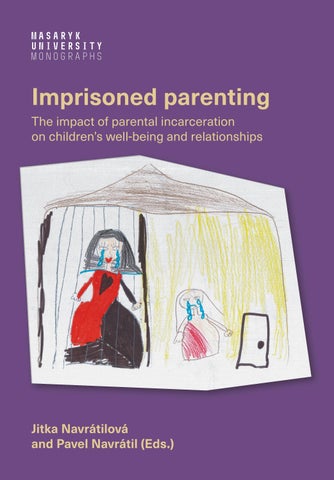
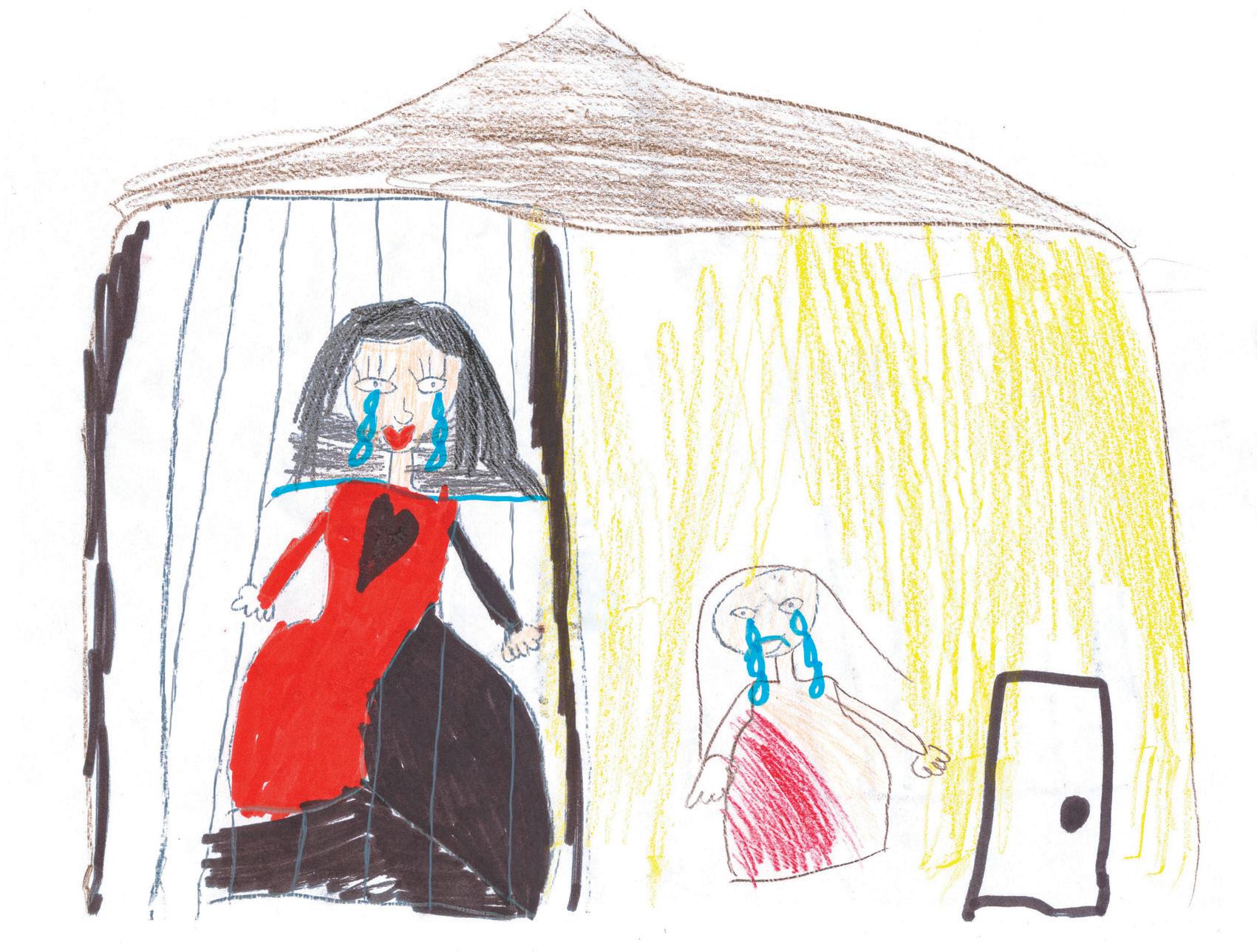
The cover image was drawn by an 8-year-old girl with an incarcerated mother.
© 2025 Masaryk University
© 2025 Text: Jitka Navrátilová (Chapters Introduction, 1, 2, 3, 10), Pavel Navrátil (Chapters 3, 5, 10), Monika Punová (Chapters 7, 8), Žaneta Dvořáčková (Chapters 8, 9), Veronika Smutná (Chapter 4), Jiří Vander (Chapter 6)
© 2025 Translation and language revision: Karel Svačina and Benjamin Vail
© 2025 Layout: Lea Novotná and Václav Mekyska (Cover)
ISBN 978-80-280-0607-5
ISBN 978-80-280-0739-3 (print)
https://doi.org/10.5817/CZ.MUNI.M280-0607-2025
Introduction
Parenting behind bars by Jitka Navrátilová
Chapter 1
Assessing the well-being of children of incarcerated parents: theoretical and methodological background by Jitka Navrátilová
Chapter 2
Childhood in the shadows of the bars: How children and adults perceive the Impact of parental incarceration by Jitka Navrátilová
Chapter 3
Parenting affected by imprisonment by Jitka Navrátilová and Pavel Navrátil
Chapter 4
The relationship between the child and the incarcerated parent by Veronika Smutná
Chapter 5
Parenting by incarcerated fathers: The case of the Czech Republic by Pavel Navrátil
Chapter 6
Trauma in children of incarcerated parents by JIří Vander
Chapter 7
Resilience of children with an imprisoned parent by Monika Punová
Chapter 8
Strategies to strengthen the resilience of children with an incarcerated parent by Monika Punová and Žaneta Dvořáčková
Chapter 9
Protection of children of incarcerated parents and their rights in theory and practice by Žaneta Dvořáčková
Chapter 10
Conclusions and Recommendations by Pavel Navrátil and Jitka Navrátilová
We dedicate this book to parents who do not give up on their parental role even behind bars, and to those who help them accomplish their parenting with patience and determination.
Introduction Parenting behind bars
by Jitka Navrátilová
Children of incarcerated parents are a group that has long been overlooked in the Czech context. Although international research has for a long time pointed to the fundamental impact of parental imprisonment on the child, in the Czech environment this issue has long been on the periphery of professional interest. Yet the issue of parenting behind bars concerns not only the convicts, but especially their children, who often bear the consequences of this situation without support and understanding. I was first confronted with the issue of children of incarcerated parents in 2019 through a worker from the Prison Fellowship International Czech Republic with a request for cooperation. Little did I know that this encounter would change my professional direction and open the door to an overlooked topic. After more than twenty years of working with families at risk, I have come to realise that children of incarcerated parents remain out of the view of professionals and the public. Yet, the incarceration of a parent represents one of the most significant threats to a child’s well-being, despite the fact that not enough attention has been paid to this circumstance. The world of these children is full of insecurity, loss and stigma. Their needs and rights often remain invisible, as does their emotional struggle with a parent’s imprisonment.
During the research project “Parenting Behind Bars”,1 when I had the opportunity to spend a lot of time with incarcerated parents, their children and other family members, I discovered a new world full of sadness, pain and childhood suffering. Despite my many years of fieldwork experience, I was very surprised at the severe impact that children of incarcerated parents face and how little professional help and support we are able to give them, despite the profound consequences of their parent’s incarceration.
However, ignorance of the number of children of incarcerated parents should not be a reason for not providing the necessary help to this particularly vulnerable group, if we as professionals could perceive their real needs. We believe that the lack of real understanding of what happens to children and their needs is often the result
1 The book is an output of the research project “Parenting Behind Bars” financially supported by TAČR ÉTA (TLO 3000199) and implemented by Masaryk University in partnership with Prison Fellowship International (PFI). The project was implemented between 2020 and 2023. This research was the first to address the conditions of children of incarcerated parents, from the perspective of the parents, the children and those who care for them.
of social workers not reflecting the context of a parent’s incarceration when assessing their life situation. As Flaquer (2014) notes, there is a strong tendency to assess the life situation of these children through the established procedures of child protection authorities. In the Czech context, however, this assessment is primarily focused on monitoring whether the child has been provided with basic needs, i.e., nutrition, upbringing, care, and housing (Navrátilová 2018). However, applying this approach to child protection makes it impossible to understand the big picture of what children of incarcerated parents experience, the risks they face in their lives, and what they need to thrive like children whose life situation is not marked by the risks associated with a parent’s incarceration. Thus, making an assessment according to established procedures may pose a great risk in the sense that, for the child of an incarcerated parent, aspects of the life situation such as the stigma associated with the parent’s conviction, the child’s fears for the incarcerated parent, loss of the parent, confusion surrounding the parent’s incarceration, shame for the crime committed by the parent, isolation from the environment etc., may not be taken into account. However, these are very important parameters in the lives of children of incarcerated parents. Without reflecting on them, not only can we not help this vulnerable group, but on the contrary, we may increase the risk of the already serious effects of incarceration on the child’s life.
The “Parenting Behind Bars” research project was a response to this inattention by professionals and the public. It showed that the departure of a parent to prison is not just a break in contact, but a fundamental interference in the parenting role and the parent-child relationship. Incarcerated parents find themselves in a situation where their parenting is subject to constraints that fundamentally affect their ability to care for their child, provide emotional support and take an active part in their child’s upbringing. As a result, parental authority is weakened and sometimes there is a complete estrangement between parent and child. Research shows that children of incarcerated parents are subject to an ambiguous loss that is different from other forms of separation, such as divorce or death. This ambiguous loss, combined with family stigma, leads to psychological, emotional, and social problems that affect their development (e.g., Eddy & Poelmann-Tynan 2019; Murray & Murray, 2010; Turney & Goodsell, 2018).
We often see that incarcerated parents wish to maintain a relationship with their children and remain part of their lives. However, many of them encounter barriers to communication due not only to actually serving the sentence in prison, but also due to systemic barriers and stigma from the environment. On the other hand, children who are able to communicate and maintain a relationship with their parent on a regular basis show less anxiety and social exclusion. Yet, the Czech environment still lacks the attention and support that would enable these children to overcome the difficulties associated with parental imprisonment and maintain a safe and supportive relationship with their parent.
Our research team decided to do its utmost to dispel this fog of inattention shrouding the children of incarcerated parents in the Czech Republic and to actively contribute to changing the situation.
We see the “Parenting Behind Bars” research as a good opportunity to reverse this unfavourable state of disinterest and neglect of the needs of this vulnerable group of children.
We realised that before we can consider and initiate any steps towards change, we first need to have a good understanding of how incarceration impacts the children of incarcerated parents and how it changes children’s lives and well-being. We have adopted a mixed-methods research design for our research, combining research strategies and methods in order to discover step-by-step the impacts of incarceration on children from the perspectives of those incarcerated, caregivers and the children themselves.
I admit that the research interviews with children were a big challenge for our research team, because on the one hand we were aware that without the voice of the child our research would not be complete, and on the other hand we knew that we would have to get this voice from relatively young children. Getting a child’s voice required us to be very sensitive and understanding of the delicate world of children’s emotions and how they experience them. We were greatly supported by the presence of our project partner, Prison Fellowship International, which aided us in creating the proper conditions for the safe and confidential environment necessary for the children participating in the research to talk about their experience of separation from their parents, or to draw or express through picture cards what would otherwise be difficult to convey because of their age.
This book is intended primarily for professionals whose work relates to child protection across various sectors. It is they who can play a key determining role in whether the well-being of children whose parents are in prison improves, or whether they continue to be left without the help they need. The “invisibility” of these children often means professionals do not perceive the specific needs of this vulnerable group and are unable to provide them with adequate support. This book therefore offers a deeper insight into the issue and helps professionals avoid mistakes that are often repeated in Czech practice: (1) neglecting the context of the parent’s incarceration when assessing the child’s situation – the child is not assessed in the broader context of the impact of incarceration; (2) not taking into account the child’s actual needs – due to the stigmatisation of incarcerated parents, the child may not receive adequate care; and (3) inadequate mediation of help and support – if professionals do not see this group of children as at risk, they cannot offer them the necessary services.
Children of incarcerated parents often come into the care of professionals only when they start to exhibit problematic behaviour such as aggression, neglect of school or self-harm. Instead of getting timely help, these children are seen through the lens of risk behaviour, which can lead to confusion between cause and effect. If a child grows up in an environment where his or her needs are not met, it is logical that various forms of psychological or social hardship will manifest themselves (Hickle, 2020). Without adequate support, these children may be at increased risk of repeating the cycle of delinquency – as international studies show, children of incarcerated parents are 6 to 8 times more likely to go to prison themselves as adults (Clear, 2007; Murray & Farrington, 2008).
So how is it possible that a child who is already facing the effects of a parent’s imprisonment is also exposed to other negative consequences resulting from the absence of help and support? One of the key problems is that there is no systematic data on these children. No records are kept in the Czech Republic to show how many children are currently affected by parental imprisonment, and most helping professionals do not come across these children in their practice simply because they are not registered as a specific risk group. When a child remains in the care of the other parent or a caregiver after a parent has gone to prison, professionals often do not see the need for intervention, even though the child may be experiencing trauma, stigma or loss of emotional security.
The aim of the book you are holding in your hands is to introduce you, on the basis of research findings, to this group of children about whom little is known and who are hardly talked about in this country.2 We seek to raise awareness of this hitherto “invisible group of children” of incarcerated parents and to open a social debate on the possibilities of structural assistance for them. The theoretical framework chosen, which combines the capability approach with attachment theory, allows for a deeper understanding of the effects of incarceration on children while providing tools to find ways to mitigate their negative impacts. The capability approach, whose roots are linked to the measurement of opportunities and freedom to achieve social rights, seems to us very appropriate in view of the fact that children of incarcerated parents are denied many rights in the Czech Republic (Navrátilová et al., 2023). Thus, this book is theoretically grounded in the capability approach, which becomes for us a methodological and interpretive starting point for understanding how parental incarceration does or does not enable children to thrive and live the life they would like to live and should live as children. We used this approach also because of its ability to integrate other theories we have used in our research, such as the attachment theory, resilience theory, and theories dealing with trauma. These theories help us better comprehend what happens to children when a parent goes to prison. In order to understand the effects of incarceration on the child in their complexity, we examined the experiences not only of the children themselves, but also of their caregivers and incarcerated parents.
In nine chapters, the book gradually opens up key themes related to the impact of imprisonment on parenting, the parent-child relationship and the well-being of Czech children of incarcerated parents. The different themes are intertwined and the reader will read some of the statements of the respondents in several places. This interweaving is due to the fact that we observe certain impacts in different contexts, in terms of different theories, in order to make our knowledge and understanding as comprehensive as possible and to be able to verify our findings from different theoretical perspectives.
2 One of the developments in this area was the establishment of the Human Rights Commissioner‘s Working Group for Children of Imprisoned Parents, whose members include organisations, institutions and individuals who seek to redress the rights and protection of children of imprisoned parents. This working group, established under the Czech Government Office, has been working since 2022.
The first chapter reflects on the multidimensional nature of the concept of child well-being and its theoretical underpinnings, paying particular attention to the capability approach as a theoretical and methodological tool for measuring the impact of parental incarceration on the child. We show the multidimensional layers of the concept of child well-being and its variability in relation to changes in the social context, as well as the variability of children’s needs. The second chapter presents childhood in the shadows of the bars, that is, how children, caring adults, and incarcerated parents perceive the impact of parental incarceration on the child. The third chapter focuses on parenting in the prison context, showing how incarcerated parenting changes over time and the limits and specificities children and their incarcerated parents face. The fourth chapter focuses on the relational dynamics between the child and the incarcerated parent and shows how the lack of communication between parents and children changes the children’s lives. The fifth chapter focuses specifically on the topic of fatherhood in Czech prisons. The sixth and seventh chapters examine the trauma and resilience of the children of incarcerated parents, respectively, and chapter eight offers appropriate support strategies. Chapter nine discusses the legislative basis for the rights of children of incarcerated parents and reflects on the current state of their protection. The final part of the book summarises recommendations for professionals and the wider society with the aim of supporting children in situations that are emotionally and socially extremely challenging for them.
The content of the book is based on the results of the research project called “Parenting Behind Bars”, which was the first effort in the Czech Republic to systematically collect data on the “invisible” group of children of incarcerated parents. Although we have not yet been able to conduct research on a representative sample, we believe that this research probe provides important insights into the impact of parental incarceration on children’s lives and well-being. The book not only presents new empirical findings from the Czech environment, but also allows for comparisons with foreign research and opens up space for a broader discussion of how different legal and social systems influence children’s experience of parental incarceration. It offers a perspective from a country where systematic support for these children has so far been lacking, and shows how the issue of parenting in prison can be embedded in a broader social and legislative framework. We believe that the book not only records the experiences of the children, but also opens up a space for finding effective helping strategies that can provide the children of incarcerated parents with the hope and support they need to live fulfilling lives.