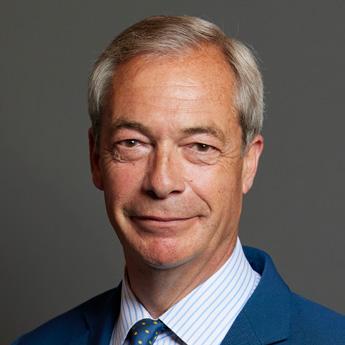
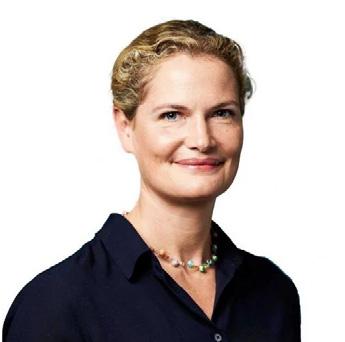
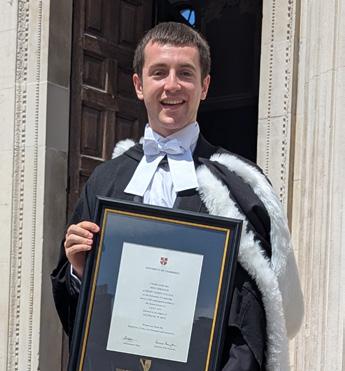
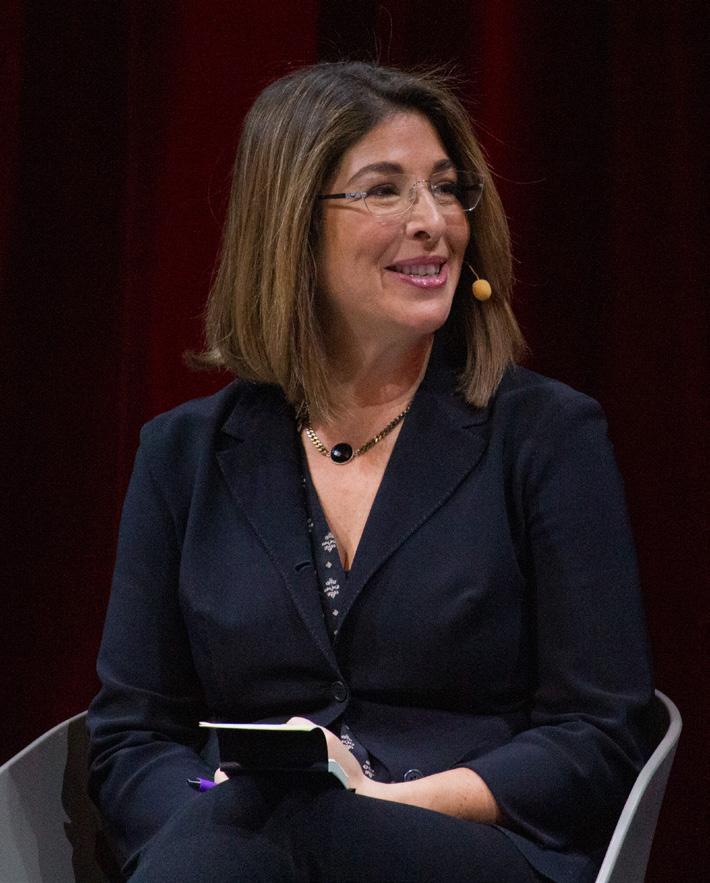
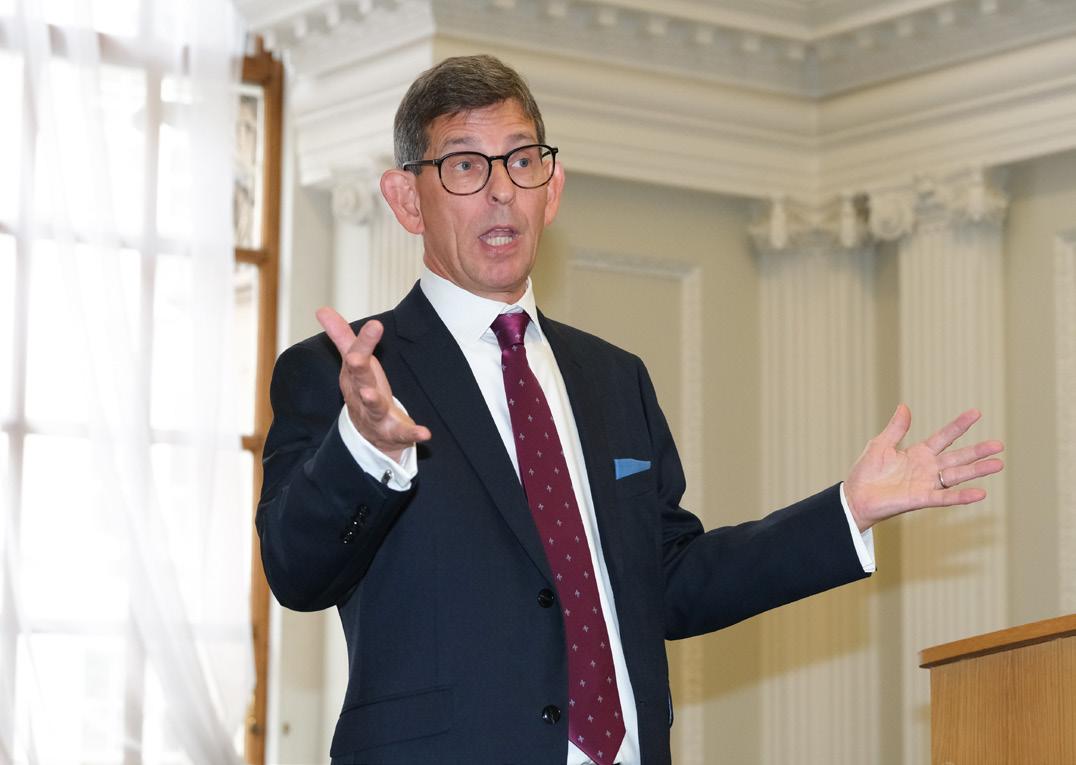
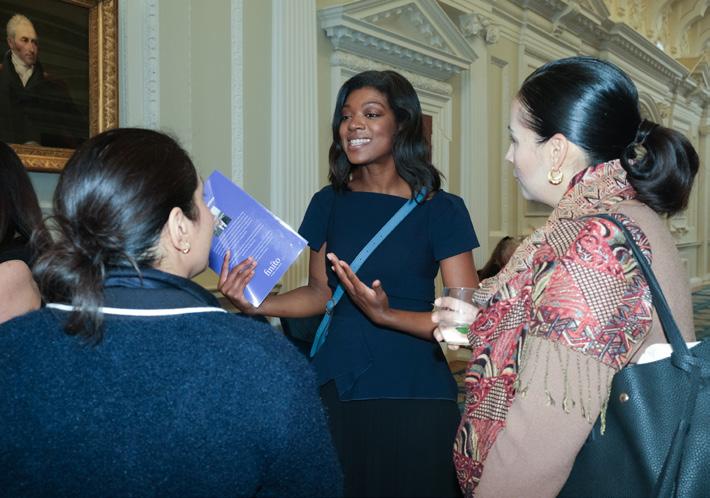
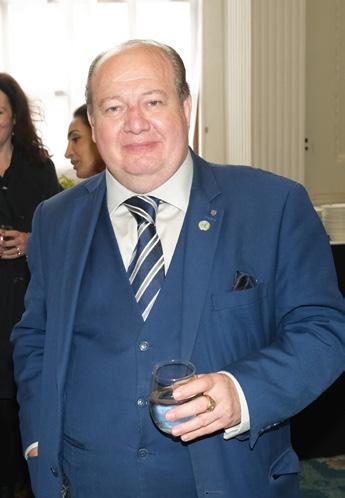
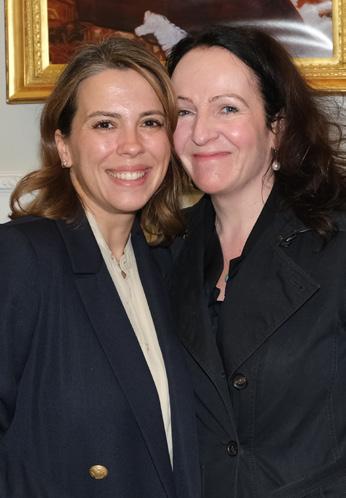
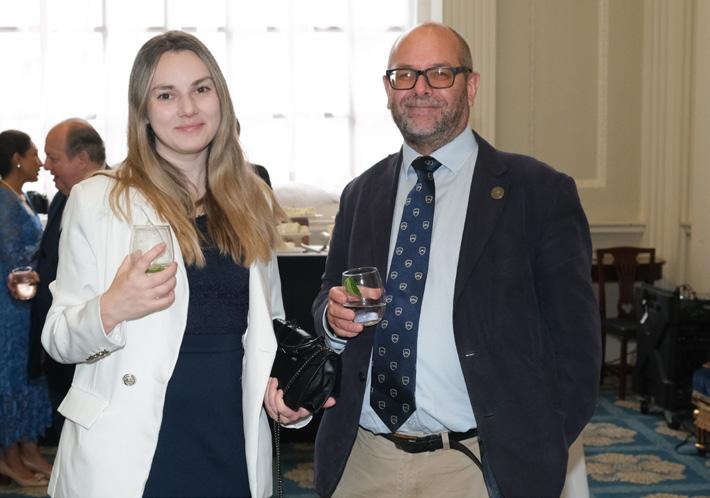
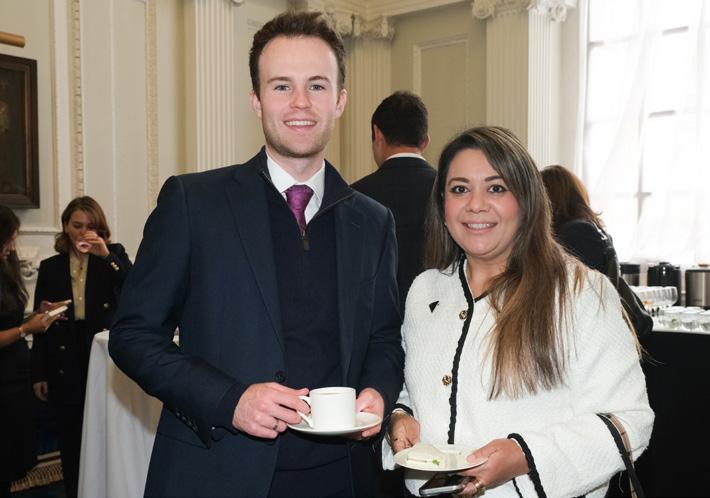
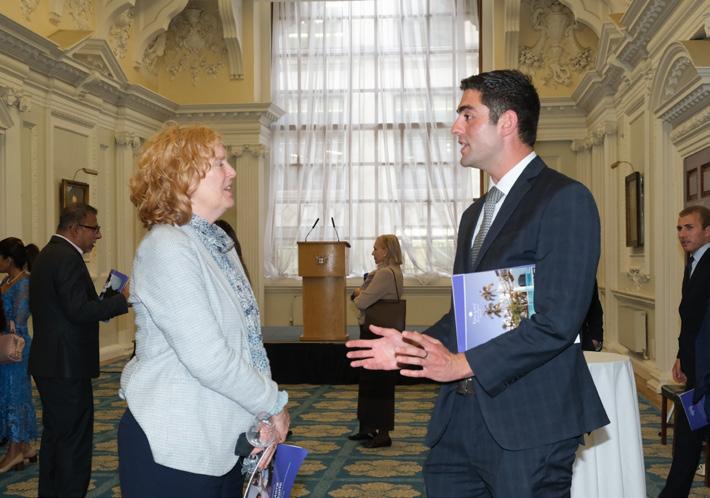
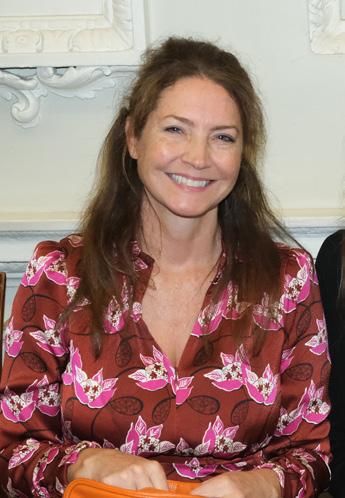
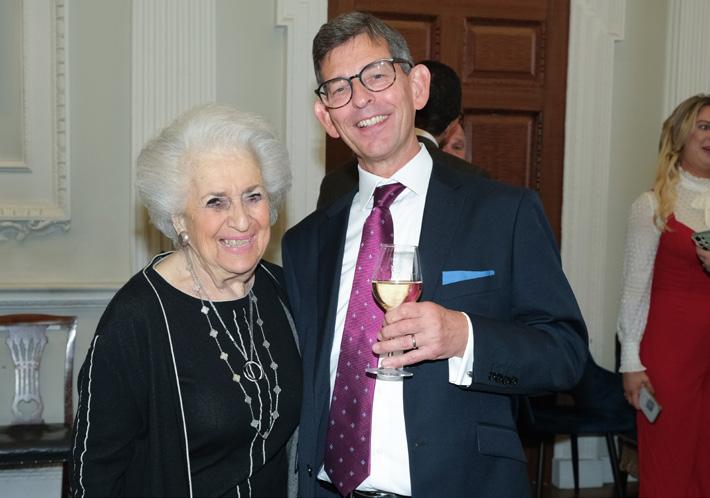
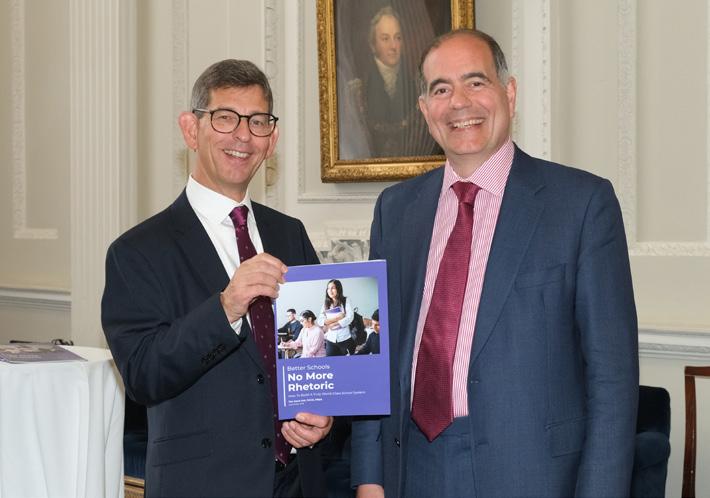
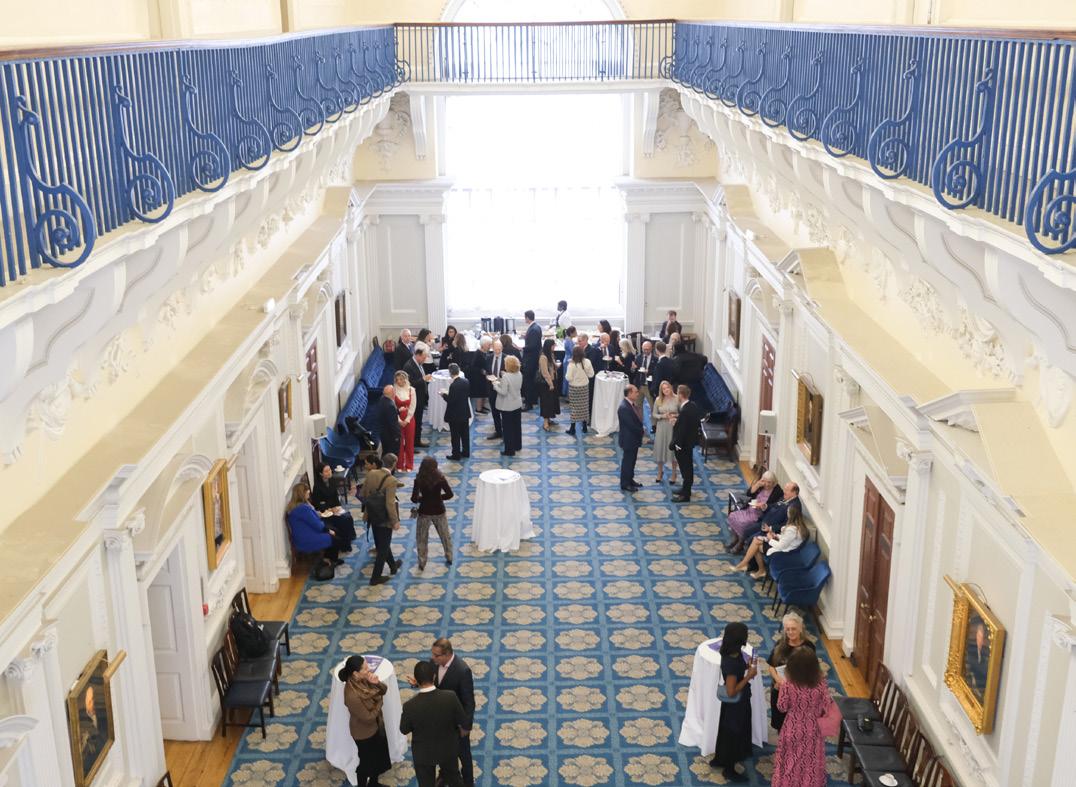
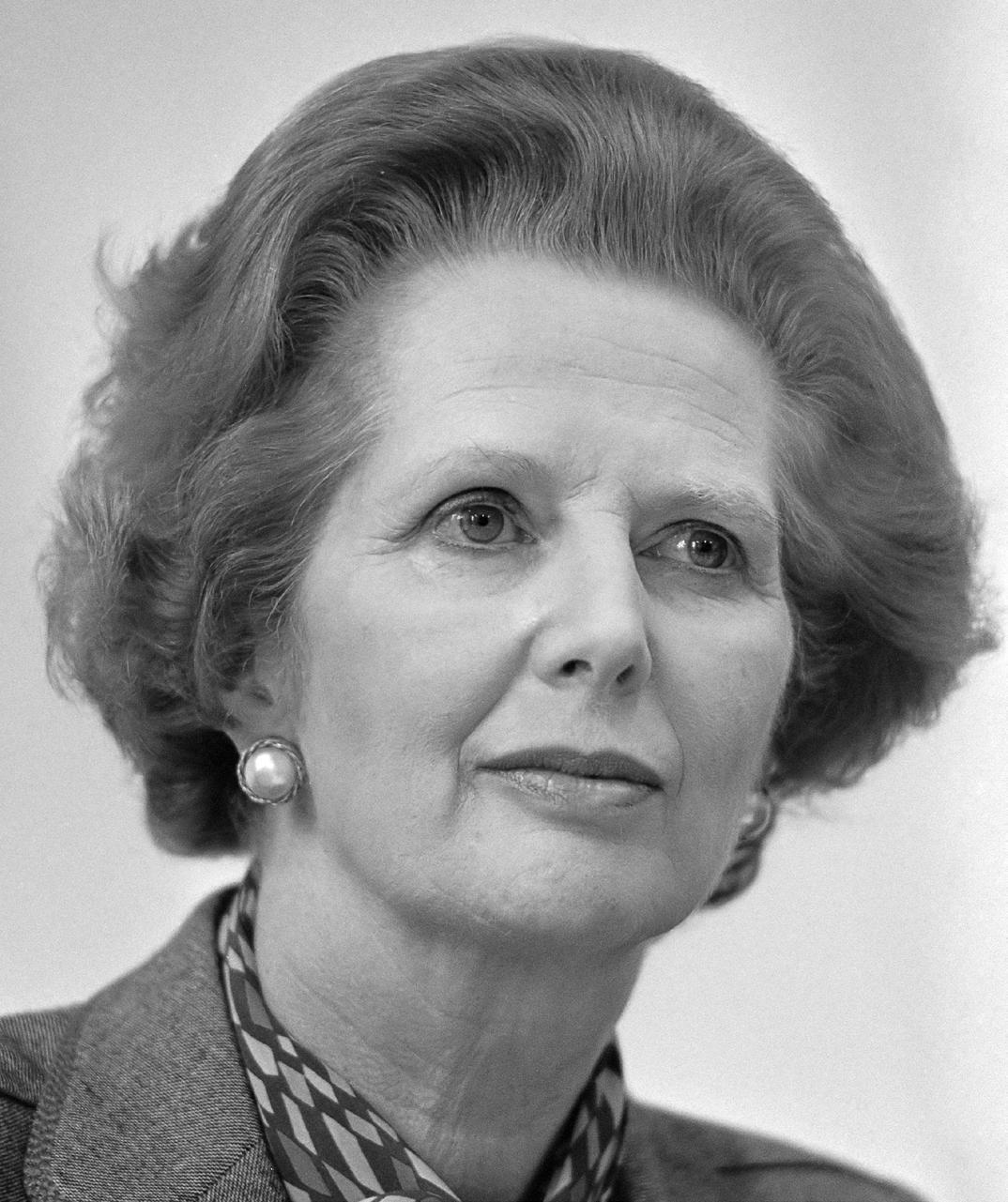
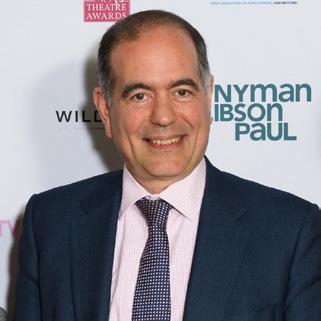
Emily Prescott, Meredith Taylor, Lord Ranger, Liz Brewer, Dr Paul Hokemeyer
Advisory Board:
Sir John Griffin (Chairman), Dame Mary Richardson, Sir Anthony Seldon, Elizabeth Diaferia, Ty Goddard, Neil Carmichael
Management:
Ronel Lehmann (Founder & CEO), Colin Hudson, Tom Pauk, Professor Robert Campbell Christopher Jackson, Julia Carrick OBE, Gaynor Goodliffe, Nick Pelekanos
Mentors:
Derek Walker, Andrew Inman, Chloë Garland, Alejandra Arteta, Angelina Giovani, Christopher Clark, Robin Rose, Sophia Petrides, Dana JamesEdwards, Iain Smith, Jeremy Cordrey, Martin Israel, Iandra Tchoudnowsky, Tim Levy, Peter Ibbetson, Claire Orlic, Judith Cocking, Sandra Hermitage, Claire Ashley, Dr Richard Davis, Sir David Lidington, Coco Stevenson, Talan Skeels-Piggins, Edward Short, David Hogan, Susan Hunt, Divyesh Kamdar, Julia Glenn, Neil Lancaster, Dr David Moffat, Jonathan Lander, Kirsty Bell, Simon Bell, Paul Brannigan, Kate King, Paul Aplin, Professor Andrew Eder, Derek Bell, Graham Turner, Matthew Thompson, Douglas Pryde, Pervin Shaikh, Adam Mitcheson, Ross Power, Caroline Roberts, Sue Harkness, Andy Tait, Mike Donoghue, Tony Mallin, Patrick Chapman, Amanda Brown, Tom Pauk, Daniel Barres, Patrick Chapman, Merrill Powell, Kate Glick, Lord Mott, Dr Susan Doering, Raghav Parkash, Marcus Day, Sheridan Mangal, Mark Thistlethwaite, Madhu Palmar, Margaret Stephens, John Cottrell, Victoria Anstey, Stephen Goldman, Patrick Timms, James Meek, Dominique Rollo, Tracey Jones, Alan Urmston, Duncan Palmer, James Slater, Charles Hamilton-Stubber, Catherine Wood, Guy Beresford, Paul Glanville, Richard Manners, Nigel Dicker Maeve Walsh, Kathie Knell, Tamsin Aston, Robert Goldsmith
Business Development: Rara Plumptre
Design and Digital: Nick Pelekanos, Phil Verney
Photography: Sam Pearce, Will Purcell, Gemma Levine
Finito and FinitoWorld are trade marks of the owner. We cannot accept responsibility for unsolicited submissions, manuscripts and photographs. All prices and details are correct at time of going to press, but subject to change. We take no responsibility for omissions or errors. Reproduction in whole or in part without the publisher’s written permission is strictly
FOUNDER’S LETTER
"It's a funny old world!" said Margaret Thatcher upon being forced to stand down in November 1990, even though she claimed to have never lost an election in her life. As we marked last month the centennial of her birth on 13th October, I reflected on her phrase as I thought about all my own Christmases which came at once earlier this year.
Firstly, the Founder of a competitor accepted an offer for us to acquire certain assets from his business. Sadly, he had lost his wife from a brain tumour at the end of last year and he himself was diagnosed with early-stage pancreatic cancer. Succession planning was forced upon him in the cruellest of ways, although thankfully, he has been recovering well. The effect on us would have been to more than double our turnover and increase the number of new candidates seeking meaningful careers. Unfortunately, when we had raised the funds from our shareholders for the transaction, he invited a greater consideration than we had originally agreed, which I was unprepared to countenance.
Secondly, in March I signed Heads of Terms to sell a stake in the business at a significant valuation and predicated on the strong belief that we have a scalable business which is destined for great growth. Since this time, we have waited for proof of investors’ funds so that our corporate lawyers can finalise
the completion documents and effect draw down.
Over the years, I have learned to be patient. Nothing happens when you expect, and everything happens when you least expect. The one thing that made me roar with laughter was the news from our IP lawyer that we had been successful in registering the competitor trademark now owned by us, even though the transaction never completed.
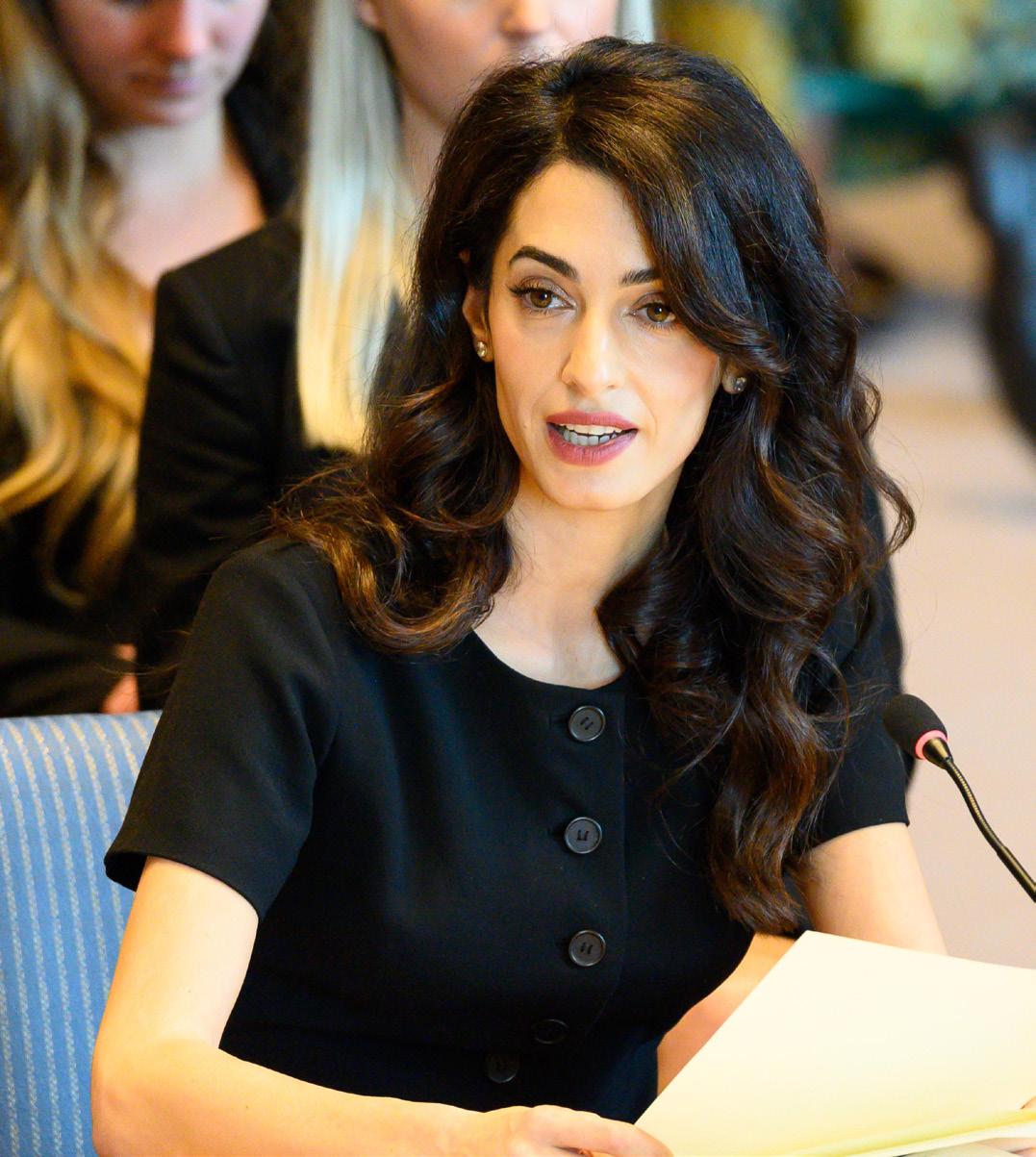
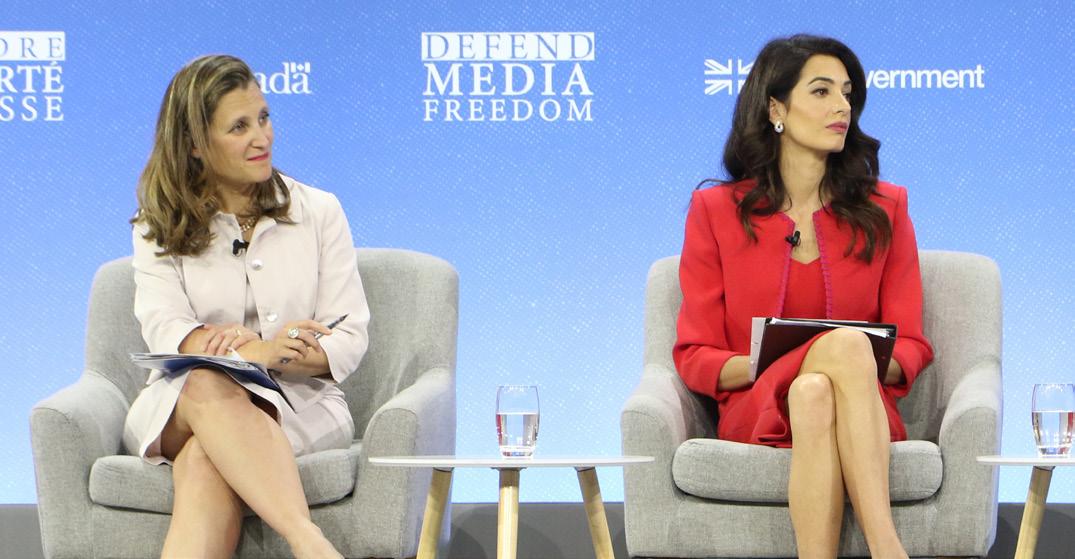
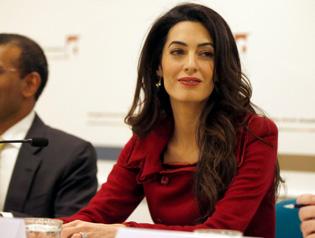
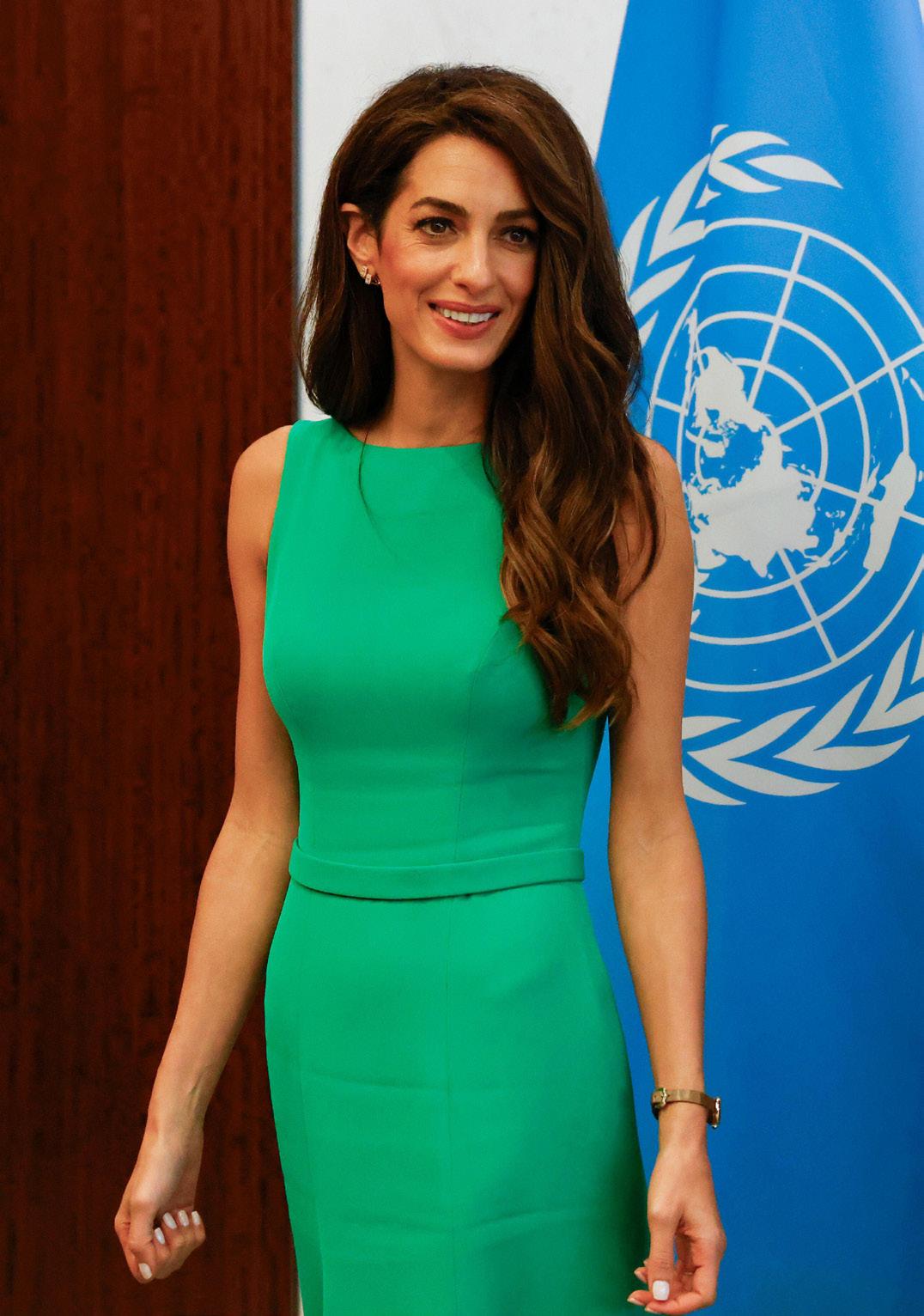
In this festive issue we celebrate Amal Clooney, a barrister specialising in international law and human rights and a Professor of Practice in International Law at Oxford University. Her contributions have been recognised by the Committee to Protect Journalists, the American Society of International Law, the Reporters Committee for Freedom of the Press, the Simon Wiesenthal Center, the United Nations, the World Economic Forum, the Kings Trust and Time Magazine. She won the Legal 500 Award in 2024 for international lawyer of the year. She is co-founder, along with her husband George, of the Clooney Foundation for Justice.
The jobs market, especially for new graduates or those seeking entry-level positions, is very tough right now. Figures from the Office for National Statistics show the UK has 39 months of declining job vacancies in the economy - not something we've ever seen before, even in the financial crisis of 2008 and 2009 or the Covid pandemic.
Tis’ the season of goodwill. We wish all our readers a Merry Christmas and a Happy, Healthy and Prosperous New Year. Peace on earth.
Grecian Artisan Wine Co. brings the soul of Greece to your glass. Our carefully curated collection celebrates the stories, craftsmanship & passion behind every bottle- from family run vineyards to small batch wineries rooted in tradition.
TRADING PLACES
Asthe festive lights blink across the London skyline, and office parties briefly distract us from the harder business of modern life, one question persists beneath the surface cheer: what kind of world of work are we entering in 2026? That question, increasingly, is shaped not just by AI or climate or war – but by trade policy. And at the heart of that lies Donald Trump’s attempt to rewrite the global economic rules.
Trump’s second presidency has been marked by an audacious trade agenda: the sweeping tariffs of 2025 are not tinkering at the edges, but a frontal assault on the architecture of globalisation. A 10 percent acrossthe-board tariff, followed by targeted increases against countries seen as ‘cheaters’ – notably China, Germany and South Korea – has signalled the end of America’s role as global freetrade cheerleader. These are not idle threats: they have been implemented by executive order, and enforced with real teeth. He has succeeded, in other words, in shifting the Overton window on trade permanently.
To give the president credit, he has never disguised what he wants. He sees trade not as a mutually beneficial exchange but as a competition – one America was, in his view, duped into losing. He has tapped into a reservoir of genuine grievance in hollowed-out towns and ex-industrial states, where promises of retraining never quite arrived, and where the “knowledge economy” feels like someone else’s gain. For these voters, Trump’s trade stance offers a kind of moral redress. The symbolism is powerful: America standing up for itself again.
Yet symbolism does not always create outcomes. For all the headlines and tariffs, the promised industrial renaissance remains uneven, and many still point out – with some justification – that Trumponomics is inherently inflationary. Some domestic manufacturing has picked up, but these jobs are neither as plentiful nor as secure as advertised. For every reopened steel mill, there are price increases across consumer goods, supply-chain delays, and jittery employers postponing hiring decisions. Apple, Amazon, and Ford all warn of margin pressure. The effects are visible not just on stock tickers, but in interview rooms: fewer internships, less appetite for apprenticeships, and a mounting nervousness about futureproofing.
More interesting still is the way the rest of the world has responded—not with panic, but adaptation. The EU has inked new trade pacts with India and Brazil. Association of Southeast Asian Nations, ASEAN has deepened integration. China is rerouting its exports through third countries. Globalisation, it turns out, is more resilient than Trump may have hoped. What has emerged is not a world deglobalised, but one in which America has less influence over the flows that matter. In trying to restore control, Trump may have accelerated the formation of trade networks that deliberately bypass the US.
And so, while the president’s strategy has succeeded in refocusing domestic attention on the costs of globalisation, it has yet to deliver a coherent framework for prosperity in its place. Protectionism, like salt, must be used sparingly. As an organising principle for a whole economy, it risks becoming sour. Worse, it breeds uncertainty, which is kryptonite
for employability. Companies that cannot plan, cannot hire. Graduates facing an incoherent labour market are not liberated by tariffs – they’re stranded by them.
For workers, the implications are both economic and psychological. Stability underpins ambition. When you don’t know whether your sector will be taxed into retreat, or if the cost of components will make your job redundant, it is harder to invest in yourself. Employers, likewise, grow cautious. The long-term training programme gets deferred. That international secondment is suddenly off the table. Human capital, once the great hope of post-industrial renewal, becomes an afterthought.
And yet, the reality is that Trump has changed the terms of debate. Both parties now speak the language of managed trade. The free-trade consensus that reigned for decades is broken, and unlikely to return in its original form. In that sense, his revolution is real.
So as we look ahead to 2026, the task is not to wish away this shift, but to respond intelligently to it. This is the Christmas message we might carry into the new year: that even as barriers rise and the rhetoric of separation grows louder, it is the open-minded, the agile, and the skilled who will prevail. For all Trump’s efforts to recast the economy in nationalist terms, the global labour market remains irrepressibly human –and it still rewards those who learn, who adjust, and who persevere.
THE SILENT SKILL
As wars grind on in Ukraine and Gaza, and new flashpoints emerge from Ethiopia to the Taiwan Strait, peace – once the lofty domain of idealists and diplomats – has come to feel less like a historical given, and more like an endangered skill. The return of war to Europe, the retreat of multilateralism, and the weaponisation of international law have exposed something uncomfortable: that peace, like employability, requires sustained effort. And we have, in many quarters, forgotten how to do it.
It is fitting, then, that Amal Clooney graces this issue’s cover. Hers is not merely a story of courtroom glamour, but one of moral tenacity: a belief that the rule of law can still be a shield for the vulnerable, even when the world’s attention span shortens. Her work on behalf of Yazidi women, victims of Russian aggression, and journalists held under bogus charges, reminds us that peace is not just the absence of bombs – it is the presence of justice.
This matters not only in the Hague, but in the workplace. Employers, too, are now caught in geopolitical crosswinds. Conflict reshapes energy markets, disrupts supply chains, and sparks refugee flows that change the labour map of entire continents. Humanitarian law is no longer something distant –it sets the conditions for prosperity. Where peace prevails, investment follows. Where it breaks down, career dreams are halted by fear, instability, or exile.
We must also broaden our definition of the peacemaker. It is the teacher keeping hope alive in a war zone; the mediator defusing local violence before it spreads; the employer willing to hire someone displaced by war. Peacebuilding is no longer a niche pursuit, but an everyday act. It is a skill – a soft one, perhaps, but no less vital than code, finance, or design.
find voice amid clamour. Both need resilience. And both, crucially, must know how to listen.
There’s a temptation, in our loudest era, to believe that force always wins. But look closer, and you’ll find that the world’s most hopeful movements – those for women’s rights, press freedom, anti-corruption – are led not by the shouters, but by the calm and well-prepared. These are not merely advocates. They are practitioners of peace.
So, as we close the year, let us reject the idea that peace is naive. Let us treat it as a capability to be developed, defended, and deployed. Like employability, it requires investment— intellectually, emotionally, politically. Amal Clooney reminds us that law can still speak louder than weapons, and that the voice of conscience, if trained and focused, can still carry across borders.
In a season of reflection, that may be the most employable skill of all.
THE GIFT OF A START
Every Christmas issue, we ask our readers to do something a little radical: to believe in potential. Not the headline-grabbing kind, but the quiet, often overlooked talent found in young people up and down the country—who lack not ability, but access.
Our Finito bursary programme exists to change that. With your support, we help young people—often from challenging backgrounds—get a foothold in the world of work. Sometimes it’s about coaching; other times, it’s interview clothes, train fares, or the quiet encouragement no algorithm can provide. We step in at
In this way, the modern peace advocate has something in common with today’s jobseeker. Both must operate across borders, navigate complexity, and exactly the point where confidence wavers and opportunity feels just out of reach.
In a year where the world has shouted louder than ever, Finito Education has continued to do what it was founded to do: listen. We’ve listened to candidates trying to navigate a complex job market, to employers searching for character as much as credentials, and to educators wondering how best to prepare the next generation for a world they barely recognise.
This magazine is many things – a platform, a provocation, a community
– but at its core, it is a statement of belief: that work is not just about money, but about dignity, purpose, and becoming the person you were meant to be.
So if you’ve found value in these pages – if something here has made you think differently or feel hopeful –please consider giving to our Christmas Bursary Appeal. It could be the moment someone else’s journey begins.
Because the greatest gift you can give isn’t advice, or insight, or even a job –it’s a start.
COLUMNS
Zadie
Nigel
Sophie
Sir
Max
THIS ISSUE
FEATURES
46
How
Naomi
Tim
The jobs of Christmas
Redesigning for a digital age
92 PERSONAL SHOPPING
Design Centre Chelsea Harbour
96 THE FLOWING FUTURE
The River Wye Lawsuit
Ronel Lehmann on seasonal giving
THE HARRODS TOUCH
An interview with Tracy Fin
Unsplash
p26 Sir Ed Davey MP
p110 Mariah Carey
Wikipedia
Alamy
Unsplash
Alamy
KIKI MCDONOUGH
THE HOUSEHOLD NAME JEWELLER ON THE CHRISTMAS RUSH
Ilovethe atmosphere in my store just off Sloane Square at Christmas time. Everybody comes in in such a positive mood, looking for special presents for loved ones or something pretty to wear.
It's always our busiest time of year, and this year, the stone of the season seems to be the fire opal. It's full of drama and colour, a deep red-orange hue that is perfect to wear this season if you are looking to make a statement.
Asthe year comes to an end, I'm reflecting on my 40th anniversary in business which has made 2025 very special. It hardly seems like 40 years ago that I sat down with a blank piece of paper and a pencil in hand contemplating my first design and wondering what on earth I had let myself in for. That period was hugely exciting, with Margaret Thatcher encouraging entrepreneurs to take risks and go for it – it felt like there was nothing that couldn’t be achieved. It has been the most wonderful, rewarding four decades since then, building an international brand, and I couldn't be more grateful to every client that has supported me along the way.
Irarely indulge in puddings, except during this one magical season. Christmas pudding has a charm I cannot resist. Once a year, its heady blend of dried fruit, spices, and rich brandy draws me in, and I’ll seize every opportunity for a helping. The moment it’s lit, blue fire dancing across its surface, feels like a comforting ritual. I savour every fragrant, boozy, sticky mouthful, and it’s always the highlight of my festivities.
Whatgovernment in their right mind would schedule a Budget as late as November 26th, as our current
one did? Like the last Budget, this one was presaged by doom-mongering talk of tax rises across the board. Everyone I know in business has been concerned in the run-up, and naturally consumer confidence is affected. This is the last thing business needed in the busy preChristmas period, which is so crucial to retail.
Iam a huge patron of the ballet and this year I am looking forward to The Nutcracker at Covent Garden. The ballet debuted in December 1892 in St. Petersburg, firmly tying it to the Christmas season. The story unfolds at a festive family gathering, with a Christmas tree at its centre, and expands into a dreamlike winter wonderland. During the opening Christmas Eve party, the Stahlbaum children excitedly await and then participate in the gift-giving moment, which always reminds me of when my children were young and used to open their presents with a sense of wonder (once at 3am).
I’ve
always been a fan of Boxing Day. As a devoted football fan, it’s usually the highlight of the festive season in terms of sport. So I’m quite disappointed that the Premier League has scrapped the traditionally packed Boxing Day calendar this year. My lifelong loyalty lies with Liverpool, and whether they’re playing on the 26th, the 27th, or whenever over the festive period, I’ll be cheering them on with my usual passion.
Wouldn't
it be wonderful if the authorities in London could make a firm New Year's resolution: no roadworks for 2026? In Sloane Square, the sound of drilling has been more familiar than anything else for the
last three years. There's no doubt it's impacted footfall for retailers across the area. Everybody in my part of town is thoroughly fed up with it, and desperate for a break.
Oneof the things I'm proudest of this year is publishing my first book, Kiki McDonough: A Life of Colour. It's a celebration of everything I have built over four decades and features over 200 of my designs. It has been great fun to put together over a couple of years. I'm not usually one for looking back, only forward, but this process meant I had to do quite a lot of the former. Over the lifetime of my business, I've negotiated two recessions, a pandemic and ten prime ministers. But what I'm most proud of is doing it all on my own – with no directors, investors or, apart from very early on, loans from the bank.
Kiki McDonough
Meet the Mentor: JAMES SLATER
THE FINITO MENTOR AND READER IN LAW AT THE UNIVERSITY OF BUCKINGHAM ON THE INS AND OUTS OF A LEGAL CAREER
You were raised across France, Spain, and the United States. How has that international upbringing influenced your understanding of legal systems and enabled you to connect with students from diverse backgrounds?
A cosmopolitan upbringing and learning two languages on top of my native English provided excellent preparation for meeting new people and engaging positively with cultures different to my own. Living in various countries and frequent travel also taught me that differences between people are often matters of style not substance, enabling me to find common ground with colleagues and students. This means I have embraced a mindset that absorbs difference to create a more nuanced understanding of my fellow humans and their ways of doing things. This extends to legal culture as well. For example, I was able to study EU law in French at L’Institut d’Etudes Europeens in Brussels successfully during the year abroad of my undergraduate degree, despite the difference between my common law background and the civilian ethos of EU law.
After training at Clifford Chance, what motivated you to transition into academia, and how does your practical legal experience inform your approach to teaching?
At the heart of any good career decision is understanding your personality and skill set. I realised that I had enjoyed school and university for a good reason: academic
inquiry and reading are my greatest passions. I also realised that I loved the art of communication. A career that reflected what I loved doing, was intellectually challenging and which suited my temperament was my path to personal fulfilment. This lesson has proven an invaluable tool in my mentoring of students over the years, as I am able to recognise the temperament and skill set of my students and guide them towards career choices that maximise their chances of success and fulfilment.
Having worked extensively with mature learners and those switching careers, what key traits have you observed that help such students flourish in pursuing legal or professional paths?
A strong work ethic, perseverance, and courage are the key traits for such students. Mature learners are juggling multiple responsibilities, including demanding full-time work and family life. Studying after a hard day’s work requires single-mindedness and fortitude. It is for this reason that mature learners have excellent work ethics and time management. The other key trait is the recognition that the skill set acquired in one career can be transferred to another, often with an element of re-imagining. For example, I have seen many police officers transfer their police experience and skills to a successful career in law, and not necessarily in criminal justice. If I was hiring, I would consider those who have studied on a part-
time distance learning or hybrid course excellent recruitment material.
What advice do you offer someone entering law “late” or switching from another field—especially in terms of leveraging life experience to succeed?
Don’t imagine that you are an impostor, or that you will have to be lucky, or that someone is hiring for unconventional reasons. The workplace belongs to the best candidate at whatever stage they enter a profession. Those entering late and from another field have enormous virtues and capacities, not least experience, wisdom and huge suite of soft skills. I always say to those who come to the profession later and from another field: ‘You deserve to feel confident and to have faith in your ability!’.
Supporting international students often requires different guidance than for domestic ones. What are the most common career-planning distinctions you help them navigate?
James Slater
Understand the jurisdiction they will return to and cater your guidance to that jurisdiction and culture. The path to qualification after an English law degree takes many different forms when students return to the various jurisdictions that share our common law legal culture: I have made it my business to understand those differences and provide support and encouragement to international students who are pursuing this path.
With an LLM from Harvard and a PhD from Birmingham, how did each academic environment shape your view on employability and professional readiness?
Harvard Law School is a highly challenging environment academically and, as Scott Turow describes so vividly in his memoir ‘One L’, it is personally very demanding and often intimidating! The Harvard JDs are incredibly motivated and hardworking, and it brings home to need for the strongest of work ethics and the highest standards of diligence and intelligence to succeed professionally in the legal profession. A PhD sets the foundations in the main for an academic career and brings home to the need for thorough research and intellectual imagination and rigour. I am constantly using the soft skills I acquired during my PhD. I was also lucky to have a supportive supervisor, who can make all the difference.
Can you share a mentoring success story—someone you guided into an unexpected but fulfilling legal or policy role?
I believe the core goal of Higher Education (HE) is to bring the most talented people together with the career that both requires and harnesses their talents. The barriers to this happening generally take
structural and cultural form. Greater and wider access to higher education has alleviated the impact of these barriers considerably. I encountered a part-time law student who lacked formal academic qualifications at secondary level for various structural and cultural reasons but proved an outstanding law student. I encouraged this person to contemplate a career in law in City law firm, providing practical and emotional support. This person qualified with a top City law firm by demonstrating single-minded determination and overcoming inhibitions created by their unconventional academic path. This success story was a powerful testament to the social mobility higher education can provide.
Where do you see the largest disconnect between what universities teach and the competencies legal employers expect—and how do you bridge that gap?
The gap should be closed but not entirely bridged: there remains a place in higher education for traditional academic inquiry. However, an exclusive focus on academic inquiry will only prepare students indirectly for the workplace. The solution is to make the rigours of academic inquiry work symbiotically with the development of workplace skills. For example, the use of authentic assessment, where academic ideas are executed in a practical way, makes academic ideas come alive through the exercise of workplace skills. Similarly, researching and referencing for the purposes of an academic essay not only deepens knowledge but also fosters the workplace skill of attention to detail, by accurate following of an academic stylesheet, and digital literacy, through the use of word processing skills and electronic databases. In turn,
the development of these workplace skills empowers students to take responsibility for their own learning, no longer merely passive recipients of knowledge but active pursuers of knowledge.
As law becomes increasingly digital and cross-border, how should young lawyers develop truly portable skills that can span jurisdictions?
To be honest technology is a learning curve for me as much as my students! However, I always encourage my students to engage with technology as much as possible. Also, universities will have to face the challenge of incorporating AI into teaching and assessment in a way that maintains academic standards and integrity and prepares students for the workplace. AI is revolutionising legal practice, enabling mundane tasks that formerly consumed significant man hours to be executed in a fraction of the time. The best lawyers will understand how to leverage this power: technology will not replace lawyers, but lawyers who understand technology will have a significant edge over those who do not.
In an age dominated by AI, surveillance debates, and global power shifts, how important is an ethical foundation in legal practice today?
More important than ever. Technology is both a tremendous opportunity but also a tremendous threat. Above all client privacy and privacy generally must be maintained. Also, we must ensure that AI remains a tool under human control. The interests and goals of the client remain paramount and must be served by AI.
COLUMNS
Literature and the individual
.org
Nigel Farage on UK Plc 21 Wikipedia .org
TO THE DOGS
The divorce law queen on her upbringing
AYESHA VARDAG
ZADIE SMITH
The Novelist
ZADIE SMITH
THE GREAT WRITER ON WHY THE DIALOGUE AROUND UNIVERSALITY HAS SHIFTED
For the past few years, I've been reading about Simone Weil with the idea of writing a novel about her – a great ethical thinker, a socialist, and, of course, a Catholic. There's an essay I return to yearly, Human Personality, in which Simone considers what a truly afflicted person might cry out in their affliction. Not someone suffering a microaggression or merely offended, but someone truly afflicted.
She notes that one possible cry is: “You have no right to do this to me.” Weil is interested in this sentence because it draws on the discourse of rights, a concept she traces to Roman property law – usus, utendi et abutendi – the right to use and abuse what is yours. That very discourse, she reminds us, was once used to defend slavery among the Romans.
But Weil is searching for a different language—one not rooted in property or entitlement. She argues that the true cry of the afflicted is: “What you are doing to me is not just.” That cry, unlike the first, is not individualistic. It is universal.
So one question worth asking is: where does that language still live? I can think of three traditional places.
The first is faith. In this space, we hold that human beings are sacred because God created them. But of course, that language is often abused. Think of someone like JD Vance, who seems to suggest that the sacredness of the human increases with their Americanness or proximity to his own identity.
The second is the language of human rights, formalised after the disaster of
the Second World War. We might ask what kind of disaster it takes for people to rediscover the human, to speak of humanity again.
The third place is literature. Here, the particular is used to express the universal. As a young reader, I spent all my time in this realm, in that belief system. You could say: “I too am Madame Bovary” or “I too am Leopold Bloom.” But for someone like me, the complication arises: I could joyfully participate in that universal, but could someone like me be the universal for someone else?
That became my project when I was twenty-three: to write novels in which people like me could be universal, too. I'm a comic novelist. I write funny books, mostly. In them, people meet across borders and build friendships. When I used to read those novels aloud, I did all the voices – I’m from a family of actors and performers. That’s how I grew up.
But 25 years later, although I still write novels about people encountering each other across lines, I no longer do the voices aloud. And why? Because the discourse around particularity and universality has changed. To do all the voices now is to risk being accused of erasing them, owning them, speaking over them. The entire literary conversation has, in many ways, been submitted to the framework of rights.
Each novel, one way or another, has become an expression of the rights of a particular group. That’s not a critique – because to get rights in a democracy, you often must first appear as a specific group. But the other language – the one
that allows for solidarity – has started to vanish.
The late Pope Francis saw this clearly. He notes how technology plays a role: it promised us a total indexing of human experience. Everything became categorised, including people. Literature, in many ways, surrendered to this system – like the indigenous people lying down when Columbus came ashore. It submitted to this taxonomy.
Yes, many extraordinary novels have emerged from this period. But now the question remains: is there still a language for the universal? I don't think it can be the language of the 19th century. There's no point resurrecting that novelistic form. That human subject is gone for most people.
So the challenge is: what kind of novel might yet speak anew? How do we find a new foundation for the human – one that avoids nostalgia, and instead creates a space for solidarity, for the universal cry: “What you are doing to me is not just”?
Zadie Smith (Wikipedia.org)
THE
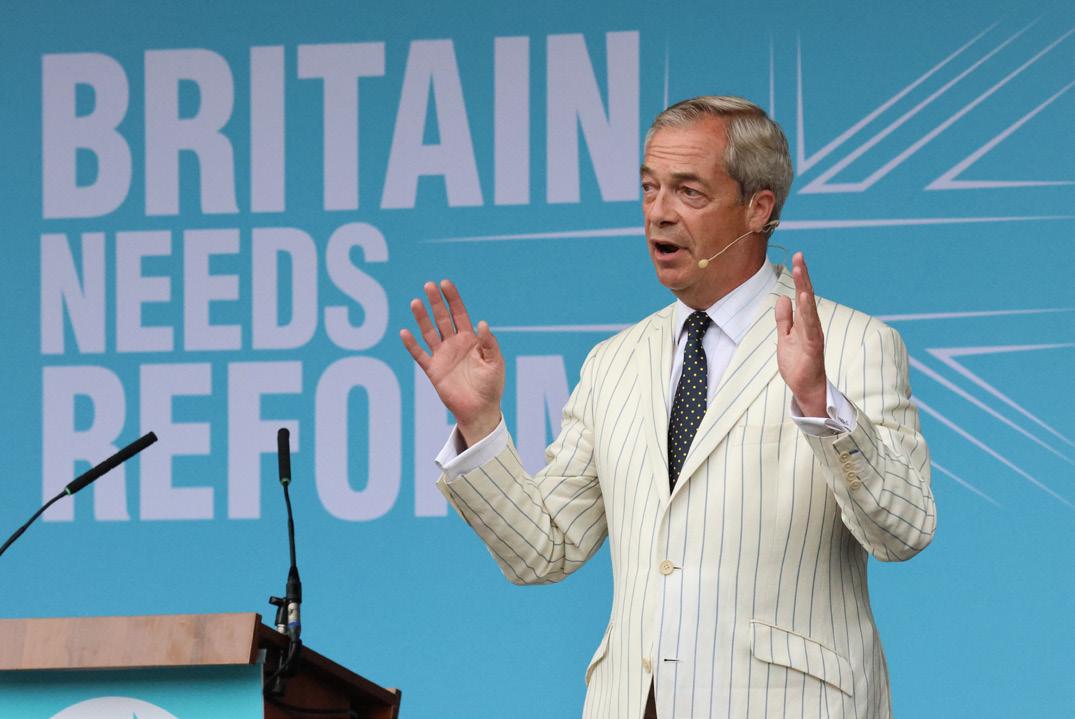
The Insurgent NIGEL FARAGE
REFORM LEADER
ISN’T GOING AWAY ANY TIME SOON.
HERE HE OUTLINES WHY BRITAIN NEEDS A MAJOR SHIFT
There’s a saying I’ve always liked: the road to hell is paved with good intentions. And right now, it feels like we’ve been walking that road barefoot for the past decade.
I didn’t plan to come back into politics. I’d done my bit. I’d stood on stages, in studios, and on the floor of the European Parliament telling unelected bureaucrats what I thought of their pet project. Brexit was done – or so we thought – and like many, I imagined a quieter life. But here we are. Why? Because this country is going to the dogs.
We have a leadership class that believes in absolutely nothing. Nothing. No conviction, no backbone, no principles beyond pleasing whatever lobby group shouts loudest on social media. And that, fundamentally, is what drove me back into the political arena.
It wasn’t ambition. It wasn’t ego. It was disgust.
We are watching the slow collapse of everything Britain has stood for – fairness, hard work, decency, responsibility. The march of the woke Left through our institutions is a cultural revolution in all but name. We’ve reached the point where a man can self-identify as a woman, commit a violent crime, and be sent to a female prison. Meanwhile, our children are being taught to hate their own country – that Britain was always evil, that the Empire was uniquely bad, and that our nation is irredeemably racist.
Rubbish. Britain is the most tolerant, open society on Earth. Always has been. We welcomed Jews fleeing Tsarist Russia,
Ugandan Asians fleeing Idi Amin, Germans and Austrians escaping the Nazis. We’ve bent over backwards to give people a better life here. But what’s the point if we don’t even believe in our own values anymore?
Take crime. You can now steal £200 worth of goods and walk away without prosecution. Law and order is crumbling. Police are more focused on pronouns than patrols. Communities are fractured. In some parts of our major cities, neighbours don’t even speak the same language – and worse, they don’t know or care about one another. It’s a collapse of culture, of cohesion. And yes, of courage. Because courage is what we desperately lack in public life. Leadership that knows what it stands for, and has the guts to say it out loud. When I look at the leaders of the main parties, I see cowards. Not statesmen. Not even managers. Just hollow shells mouthing safe words they don’t understand.
We’re being run by people who have never worked in the real world. Just look at the Labour front bench – 24 out of 25 members have never worked in private business. The one who did went bust. “Rachel from accounts,” the would-be Chancellor, wasn’t an economist. She wasn’t even from accounts. She worked in complaints. You couldn’t make it up. And meanwhile, small businesses are being bled dry. National Insurance up. Minimum wage up. Business rates through the roof. Regulations meant for multinational giants being forced onto sole traders and corner shops. No wonder the high street is dying.
I set up my first business in 1993. Not because I was clever, but because I was completely unemployable. I know what it’s like to pay your staff more than you pay yourself. I know what it’s like to stay up worrying about payroll. That’s the real economy. That’s where growth comes from – not Whitehall.
Government doesn’t create wealth. Never has, never will. Its job is to clear the way for people to succeed. That’s what built places like Hong Kong. Let people get on with it. Reward success. Encourage effort. Stop punishing those who want to do well. The more you try to engineer equality of outcome, the more you destroy equality of opportunity. We’ve forgotten how to work. We’ve bought into this nonsense of hybrid working, four-day weeks, and remote learning. It’s cobblers. Young people learn nothing sitting in their bedrooms on Zoom. Productivity is in the toilet. And no one even checks whether public sector workers are logging in, meanwhile, the taxpayers foot the bill.
Nigel Farage (Wikipedia.org)
The Sleep Scientist SOPHIE BOSTOCK
SHOULD BUSINESSES SPEND MORE TIME THINKING ABOUT THEIR EMPLOYEES’ SHUT-EYE? ALMOST CERTAINLY, ARGUES AN EXPERT
We used to think that insomnia increased with age. That as people got older, their sleep became more fragmented, more elusive. But that’s no longer the case. According to the latest NHS data, sleep problems are now striking hardest not at the end of life – but at its beginning.
“In 2023, 64.9% of young people aged 17 to 23 had a problem with sleep three or more times over the previous seven nights,” says Dr Sophie Bostock, a behavioural sleep scientist and performance coach. “The figure is even higher for young women – 74.7% - compared with 55.6% for young men. And of those with a probable mental health disorder, 91% had a sleep problem three or more times in that week.”
The numbers are alarming. But they also reflect a broader shift in the world of work and wellbeing – especially for young professionals trying to find their place in what often feels like an alwayson economy.
“I would absolutely suggest that this tendency to be always available – 24/7, bombarded by new information and able to connect with people at all times –is putting more pressure on sleep,” Bostock says. “There’s a lot at play, but the link between poor mental health and poor sleep is undeniable.”
So why do so many of us still treat sleep like a negotiable extra?
“One of the biggest misconceptions,” Bostock says, “is that people think they can adapt to short sleep. But all
the evidence suggests that what you’re really adapting to is a lower level of performance.”
She’s seen this first-hand, working with CEOs and leadership teams across sectors. “There has been a step change – people are starting to see sleep as a performance-enhancing tool. But when you’re in sleep-deprived mode, your brain is in stress mode all the time. You’re wired. And you don’t realise the impact it’s having on you – until you get a proper night’s sleep. Then you really feel the difference.”
“PEOPLE THINK THEY CAN ADAPT TO SHORT SLEEP. BUT ALL THE EVIDENCE SUGGESTS THAT WHAT YOU’RE REALLY ADAPTING TO IS A LOWER LEVEL OF PERFORMANCE.”
Her message to leaders is clear: don’t just demand more productivity from your teams –create the conditions for them to perform. The benefits of good sleep extend across every aspect of performance: “In decision-making, for example, we’ve seen studies showing that investment professionals are more prone to irrational decisions when they’re sleep-deprived. After the spring
clock change, when we lose an hour of sleep, there’s actually more turbulence in the market,” Bostock says. “When people are well rested, they’re able to take in the full context and make better judgments. When they’re tired, the brain just gets lazy.”
It’s not just decision-making that suffers. Creativity, leadership, communication – these are all impacted by sleep, or the lack of it. Bostock adds: “REM sleep – what we get more of in the early morning hours – is critical for innovative thinking. That’s when your brain makes those ‘out of the box’ connections. Miss out on that, and your creativity drops.”
For leaders, the stakes are even higher. “Sleep-deprived leaders are more prone to bullying,” Bostock notes. “They’re less patient, more authoritarian. But when they’re well rested, they show more charisma, more empathy. That links directly to communication. It’s a huge difference.”
Not all sleep deprivation is chosen. Sometimes, it’s baked into the working day –especially for younger staff.
“There’s research suggesting that early birds – people who are naturally up and alert in the morning—tend to discriminate against night owls,” says Bostock. “They expect everyone to be productive at 8 or 9am. But for many people in their late teens or early twenties, their natural chronotype is delayed. Their body clocks are two hours behind the average working adult.”
In other words, what looks like laziness
might actually be physiology. “Younger people are often much more alert later in the day – but they’re being forced to perform in the early morning, when their brains aren’t at their best.”
Changing this isn’t just about individual habits. It’s about organisational culture.
Bostock breaks it down into three areas: education, culture, and clinical support.
“I often start with education,” she says. “Even a one-hour webinar can have an impact on people’s sleep patterns. But it’s much more effective when supported by a workplace culture that values sleep.”
That starts with leadership. “What do your managers do? Are they sending emails out of hours? If so, their teams will, too. There’s research suggesting that sleep-deprived leaders create sleepdeprived teams – and those teams are less engaged.”
Even small changes can make a difference. “If you’re working late, that’s fine. But don’t send the email at midnight – schedule it to go out at 8am. And don’t expect people to check in on holiday. Some companies even delete emails sent to staff on leave.”
Respect for time zones is another underestimated issue. “So many meetings are booked without thinking about where the other person is. Asking someone to join a Zoom call at 7am or 9pm might be practical for you – but it’s a form of sleep theft for them.”
The result is a culture of chronic burnout.
For individuals, especially those in highpressure roles, boundaries are essential. “The ones who do it successfully are really strict. Aim for that 80/20 rule. What’s your norm – and what are the rare exceptions where you flex it? Because if you say, ‘I finish work at five,’ but you’re working until eight most nights, then that’s your real norm.”
If that sounds overwhelming, start small. “Just choose one day a week where you’re going to switch off at a fixed time – say 6pm –and structure your day around protecting that time. Once you can manage one day, build from there.”
It’s also about creating white space. “Don’t schedule meetings back to back from 9 to 6. Build in rest. Go, rest, go, rest. The more you practise relaxing during the day, the better you’ll sleep at night.”
One of the paradoxes of sleep is that knowing how important it is can make things worse.
“SLEEP-DEPRIVED LEADERS ARE MORE PRONE TO BULLYING. THEY’RE LESS PATIENT, MORE AUTHORITARIAN. BUT WHEN THEY’RE WELL RESTED, THEY SHOW MORE CHARISMA, MORE EMPATHY.”
“There’s more phone addiction among young people, yes – but there’s also more awareness of the importance of sleep. And that sometimes leads to sleep anxiety. People worry about not getting enough sleep, and that anxiety fuels insomnia.”
This is particularly challenging for Gen Z and Millennials, many of whom already face higher levels of anxiety and mental health conditions. “It becomes a vicious cycle: poor mental health leads to poor sleep, which then worsens mental health.”
So what’s the answer?
“It’s about education and empowerment, but also self-compassion. If you worry too much about your sleep, it’s going to get worse. So give yourself some slack. Aim for doing the right things 80% of the time, and accept that sometimes it won’t go to plan.”
Bostock’s own wake-up call came the hard way.
“SLEEP IS NOT JUST ABOUT RECOVERING FROM THE DAY – IT’S ABOUT PREPARING FOR SUCCESS.”
“I fooled myself into thinking I was functioning fine on little sleep. I used to work late until something was done. And then one day, I had a climbing accident – because I was sleep deprived.”
That moment changed everything. “I realised that if I wanted to finish something, I needed to go to sleep. Then I’d have the cognitive power to actually do it. Now, I have a sleep-first mentality. Sleep is not just about recovering from the day – it’s about preparing for success.”
Her message is simple, but powerful: “Start with sleep. Then perform. Then recover. And repeat.”
Sophie Bostock
The Opposition Leader
SIR ED DAVEY MP
THE LIBERAL DEMOCRAT LEADER ON HIS PASSION FOR THE CARE SECTOR – AND HOW TO FIX IT
WhenI speak about care, I speak not just as a politician, but as someone whose life has been shaped, repeatedly and profoundly, by the experience of caring. It’s something that touches every family in one way or another – but for too long, it’s been treated as peripheral in our politics, instead of central to how we build a fairer and more resilient society.
The reality is that we have a care system that too often fails the very people it is meant to support – whether that’s elderly people, disabled children, or the unpaid family members who hold everything together behind the scenes. And yet despite endless reviews, commissions, and promises of reform, we remain stuck.
I believe we need to move from talking about care as a cost to recognising it as an investment – not just financially, but morally and socially. That means creating a new politics of care. Not a sticking plaster. A transformation.
There’s a tendency in Westminster to silo care – to see it as a health issue, or a welfare issue, or a local government issue. But it’s all of those and more. It’s about how we work, how we age, how we live. And it needs to be integrated across everything from housing to transport to digital services.
When we talk about economic growth, for instance, we rarely acknowledge that unpaid carers contribute an estimated £193 billion to the economy every year. That’s more than the entire NHS budget. Yet many carers are forced to give up paid work because they can’t get
the support they need. It’s a loss not just of income, but of talent, experience, and independence.
There’s a moral case for change, but there’s also a compelling economic one. Investing in care doesn’t just support the vulnerable – it strengthens the labour market, reduces NHS pressure, and boosts productivity.
One of the most powerful things I’ve done as an MP is spend time with carers – especially those looking after someone with dementia. I remember a particular session with a group of carers who were simply exhausted. One woman said to me, “It’s not just the caring – it’s the fact that no one listens to you.” That stuck with me. Because the truth is, carers often know more about the person they’re looking after than any professional. But they’re left out of decisions. Their expertise is ignored. And they feel invisible.
“WE NEED TO MOVE FROM TALKING ABOUT CARE AS A COST TO RECOGNISING IT AS AN INVESTMENT – NOT JUST FINANCIALLY, BUT MORALLY AND SOCIALLY.”
That’s why we need a system that recognises family carers as partners – not
as an afterthought, not as a budget line to be managed, but as central to the success of care delivery.
I’m always struck by the impact of small interventions. In one community I visited, a local dementia group had started a simple WhatsApp chat to stay in touch. No huge funding, no formal programme – just people helping each other. It made a huge difference to isolation, to mental health, to confidence. Sometimes, the solutions aren’t about more bureaucracy. They’re about better connection.
That principle should guide how we think about reform. Yes, we need resources—but we also need to rebuild a culture of empathy, where people feel seen and supported. That means investing in digital tools that work, yes – but also in community spaces, intergenerational living, and meaningful social contact.
One of the most heartbreaking conversations I’ve had was with a father
Sir Ed Davey MP (Wikipedia)
who told me his daughter, a severely disabled teenager, had been moved from one temporary care setting to another. She didn’t have the stability she needed. And he didn’t have the information, or the power, to stop it. That is not how a decent society should treat people.
Care should be rooted in dignity. But too often, it’s rooted in delay, confusion, and crisis.
“CARERS OFTEN KNOW MORE ABOUT THE PERSON THEY’RE LOOKING AFTER THAN ANY PROFESSIONAL. BUT THEY’RE LEFT OUT OF DECISIONS. THEIR EXPERTISE IS IGNORED. AND THEY FEEL INVISIBLE.”
When care breaks down, the pressure shifts to A&E departments, to schools, to the police. And none of those services are equipped to fill the gap. So we end up spending more, not less—and getting worse outcomes along the way.
I don’t speak about care in the abstract. My own life has been profoundly shaped by it. I cared for my mother as a teenager. My wife and I now care for our disabled son. We have lived through the gaps in the system – the missed handovers, the forms that never get read, the endless follow-ups to make sure someone has done what they promised.
I’ve sat in meetings with medical professionals where my wife and I were treated as obstacles rather than partners. That mindset has to change. We don’t want special treatment. We
want recognition. We want to be part of the team. We want to know that our voices count.
There’s a philosophical aspect to all this, too. The anthropologist Marcel Mauss once wrote about the idea of the gift – not just as a transaction, but as a relationship, a moral bond. That’s how I see care. It’s not something you do out of obligation, or to tick a box. It’s something that binds us as human beings.
And yet, in our politics, we’ve lost that sense of reciprocal obligation. We treat care as a commodity to be commissioned, not a relationship to be nurtured.
I want to see a society where caring for someone isn’t treated as a burden or a career-ending decision – but as something that is honoured, supported, and made sustainable.
We need to put care at the centre of our infrastructure planning. That means designing housing with accessibility in mind. It means rethinking public transport so that disabled and elderly people can travel easily and with dignity. It means providing respite for carers so that they can keep going without breaking down.
We also need to rethink education. We need schools to be places where young carers are recognised, supported, and given flexibility. We need to train health professionals to understand the reality of life for family carers.
And employers have a role to play too. We should expect flexible work policies, paid carers’ leave, and cultures that support – not penalise – those with caring responsibilities.
We’ve spent decades patching up the symptoms of a broken system instead of addressing the causes. The result is that we lurch from crisis to crisis, always
reacting, rarely planning.
But prevention works. Early intervention works. Support that is proactive, not reactive, saves money and improves lives.
It’s time we built a system that doesn’t wait for someone to hit breaking point before offering help.
As leader of the Liberal Democrats, I’ve made care one of our central priorities. We’re calling for a new, comprehensive Carer’s Minimum Income – recognising that caring is work, and deserves to be supported. We want a legal right to respite for unpaid carers. We want to see a national care strategy that is properly funded and delivered with the same seriousness we give to the NHS.
We also believe in raising the Carer’s Allowance and ensuring that local authorities are funded to deliver care with decency and dignity. But more than any single policy, we need a cultural shift – a recognition that the way we treat the vulnerable, and those who care for them, is a measure of who we are as a country.
I know that some of this can sound bleak. But I remain hopeful. Because I’ve seen, again and again, the difference that care can make when it’s done right. I’ve seen communities step up, families persevere, and professionals go above and beyond. We just need our politics to catch up with the compassion of the people it serves.
It’s time to stop managing decline and start designing a better future – one where no one who gives care, or needs it, is left behind.
The Polymath SARAH TUCKER
THE BIOGRAPHER OF EDWARD DE BONO ON THE NEED FOR SOME CROSSOVER DISCIPLINE IN LIFE AND IN OUR CAREERS
Theidea that accountancy and art could meaningfully shake hands may sound like the setup for a bad joke, but increasingly, the punchline is changing. The meeting of linear logic and lateral genius is no longer just a novelty, it is an urgent necessity. Enter the Boardroom Bard, not a mythic figure, but a very real one, and as it happens, me, whose mission is to insert a little metaphor into margin sheets, a little poetry into performance reviews, and a great deal of sense into the nonsense of siloed thinking.
The problem is rarely talent or intelligence, it is language. When creative thinkers and corporate leaders attempt conversation, it is like two tribes meeting without a translator. Words become walls, not bridges. Jargon, a seemingly harmless shortcut, limits not just understanding but imagination. Words like 'bandwidth', 'stakeholder alignment', or 'leveraging synergies' become mental choke points, phrases designed more for signalling fluency than encouraging insight. The irony is delicious, the more jargon we use, the less we understand each other.
Edward de Bono, the father of lateral thinking, called this phenomenon 'ludecy', a term he coined to describe systems that exist solely to perpetuate themselves, a neat portmanteau of lunacy and bureaucracy. Ludecy thrives in both the arts and the corporate world, in the arts it appears in the romantic self-sabotage of starving creatives who refuse to sell out, and in commerce it is found in the obsessive chase for profit, regardless of whether the product, people or planet survive it.
I have worked in both worlds, the City, where following the money is not just a motto but a mantra, and the arts, where the very act of following money can be interpreted as treason. The city gave me spreadsheets, bottom lines and bonuses, the arts gave me metaphors, meaning and the vague hope of a grant. Somewhere between these extremes, I learned that what each side mocks in the other is often what they need most.
Creatives frequently harbour a quiet, or sometimes not-so-quiet, contempt for commercial logic. The idea of shareholder value makes them shudder. Meanwhile, many in the corporate world view artists as lovely but economically illiterate, fabulous dinner guests but unreliable business partners. Neither is entirely wrong, and both are entirely limited in that view.
When I married a City trader, my barrister offered this piece of worldly wisdom, 'He trades every day, you write books, I trade too, I know the game.' The implication was clear, beware the values mismatch, the game might be the same, but the rules are not. The marriage did not last, but the lesson did.
One of the biggest hurdles in the creativecommercial tango is the sheer difference in values. Creatives tend to prize originality, risk, and emotional resonance, while the corporate world worships efficiency, predictability, and, of course, the bottom line. This isn’t just a philosophical gap –it’s a linguistic minefield. The very same words get twisted into entirely different meanings depending on who’s saying them.
Take the word “disruptive,” for example. In marketing, it’s a badge of honour, the
promise of shaking up the status quo. In finance, it’s code for “budget risk,” swiftly followed by the phrase “let’s circle back to that.” Rory Sutherland famously reminds us that context is king; words only have power if you agree on what they mean, which explains why meetings often feel like an episode of Lost in Translation with fewer subtitles.
Here are ten everyday examples where language trips up collaboration: “Vision” for creatives means a bold, perhaps fuzzy, picture of the future; for corporates it’s a quarterly target. “Pivot” in the arts is a fluid change of direction; in business it’s an awkward excuse for a failed plan. “Engagement” in marketing is emotional connection; in HR it’s compliance with mandatory training. “Innovation” to creatives is a radical experiment; to accountants it’s an expense line that needs justifying. “Scalability” might mean artistic impact expanding; to bankers, it means doubling revenue. “Storytelling” delights artists as craft; to executives, it’s a polished sales pitch. “Brand” conjures identity and values for creatives; in commercial circles it’s “market share.” “Culture” for artists is a way of life; for corporates, a neatly crafted internal memo. “Risk” to creatives is an essential ingredient; to finance it’s a red flag. And finally, “ROI” is a creative nightmare, but to business it’s the Holy Grail. The struggle to find common ground is real, but as Rory Sutherland often argues, understanding the psychology behind these differences is the first step to bridging them. After all, if you can’t agree on what words mean, how on earth can you agree on anything else? The question remains, how do these
worlds merge, not just co-exist at awkward networking events. The answer lies in acknowledging their differences and creating new shared frameworks. Lateral thinking, as de Bono insisted, is not about being different for the sake of it, but about seeing differently to produce better results. Dave Trott, the legendary ad man, said at the launch of my de Bono biography that the revelation was not in how creativity works, but in how and why it impacts the bottom line. That, he noted, got corporate thinkers finally listening.
The best partnerships are not between those who speak the same language but those who are willing to learn each other’s dialects. It requires humility, and a shared sense that neither linear nor lateral thinking is enough on its own. The imagination needs structure to flourish, and structure needs imagination to evolve. We live in a moment when industries are collapsing and reinventing faster than we can rename them. The arts need to stop sneering at strategy, and business needs to stop fearing beauty, subtlety and metaphor. The truth is, creative minds can revitalise tired systems, and commercial minds can protect and scale brilliant ideas.
It can work. I’ve seen it work. I’ve worked with hedge funds who now start their board meetings with a poem, not because it is quaint, but because it reorients thinking. I’ve worked with artists who now understand how to protect their IP and build sustainable revenue without selling their souls. What it takes is courage, mutual curiosity, and a willingness to get lost in translation before finding fluency.
So yes, the arts and commerce can marry, but only if both parties understand the terms. Until then, I remain The Boardroom Bard, happily wandering between the gallery and the boardroom, lost in metaphor, found in balance, reminding each side that they’re not as different as they think.
TEN EXAMPLES WHERE SEEMINGLY INCOMPATIBLE INDUSTRIES FOUND COMMON GROUND:
1. Accountancy meets choreography: Ernst & Young funded a residency where dancers worked alongside auditors to develop body language workshops to improve client communication. The accountants gained empathy, the dancers gained income.
2. Banking meets visual art: Deutsche Bank’s long-standing commitment to contemporary art is not about decoration, but about creating environments that challenge conventional thinking, inspiring employees and clients alike.
3. Property development meets immersive theatre: Developers in London have collaborated with theatre groups like Punchdrunk to stage events in derelict buildings, increasing the cultural cachet and market value of the site.
4. Law meets literature: Clifford Chance hosts literary salons and creative writing workshops, training junior solicitors to think narratively, to consider motive and structure, to write with clarity and even beauty.
5. Tech meets poetry: Google’s Creative Lab has a poet-inresidence. Yes, really. And she has helped engineers consider language, nuance and the emotional resonance of their designs.
6. Architecture meets storytelling: Firms like Heatherwick Studio approach design as narrative, not
just function, engaging authors and scriptwriters early in the concept process.
7. Finance meets jazz: A Wall Street mentoring programme uses jazz improvisation to train traders in adaptive thinking and listening, rather than knee-jerk analysis.
8. Healthcare meets theatre: Medical schools now use professional actors in role-play scenarios to train doctors in empathy, ambiguity and reading between the lines.
9. AI development meets visual art: OpenAI’s DALL·E collaboration with artists allowed engineers to better understand not just aesthetics, but the ethics of creative representation.
10. Marketing meets sculpture: A soft-drinks brand commissioned a sculptor to reinterpret their bottle shape, not for packaging, but to rethink the product’s emotional impact in physical form.
Sarah Tucker is a writer and the Boardroom Bard (https://www. theboardroombard.com), known for using poetry to challenge corporate thinking and foster creativity in business. She is the author of Love Laterally, the authorised biography of Edward de Bono, the pioneer of lateral thinking and creative problem-solving.
Sarah Tucker (Wikipedia)
Question of Degree TOM PAUK
FINITO’S SENIOR MENTOR GIVES A BROAD PERSPECTIVE ON THE POSSIBILITIES OF A LEGAL CAREER
Take it from me: becoming a solicitor is one of the most rewarding professional choices you can make. It is also one of the most demanding, and the journey into the profession can feel labyrinthine. Over the years, as a mentor at Finito, I have spoken to countless students and career changers about what it really takes. The truth is, there is no single route and no single type of solicitor. Instead, there is a spectrum of opportunities — and challenges — which you need to understand before you embark on a career in law.
Solicitors are everywhere in modern society. Many work in private practice, which simply means law firms, ranging from the small high-street practice in your local town to the huge multinational players in the City of London. A majority of solicitors still fall into this category, but an increasing number are employed “inhouse,” working directly for companies, banks, charities or public bodies. Others are found in local authorities, the Government Legal Profession, the Crown Prosecution Service, law centres and NGOs. It’s worth appreciating that there isn’t a single solicitor “type” — the profession encompasses everything from a family lawyer on the high street helping a client through a divorce to a commercial lawyer structuring a multibillion-pound merger.
The variety of work reflects that spread. In smaller firms, solicitors handle everyday but vital matters: conveyancing, wills, probate, divorce, personal injury claims, consumer disputes. There are firms with a focus on human rights, housing, environmental law
and defamation, among many other specialisations. Larger firms specialise in complex, often international, matters. A commercial solicitor in a Magic Circle or US firm might be advising on corporate finance, capital markets, property development or employment law. Others work in areas like intellectual property, technology and data protection, aviation finance, shipping, or tax. Many transactions are cross-border, requiring you to work alongside colleagues in New York, Hong Kong or Frankfurt. If you enjoy fast-paced, international work, the commercial route may suit you; if your motivation is more personal — helping individuals through life’s challenges — then a high-street, regional or specialised practice might be more fitting.
“THERE IS NO SINGLE ROUTE AND NO SINGLE TYPE OF SOLICITOR. INSTEAD, THERE IS A SPECTRUM OF OPPORTUNITIES — AND CHALLENGES — WHICH YOU NEED TO UNDERSTAND BEFORE YOU EMBARK ON A CAREER IN LAW.”
Naturally, money is part of the picture. The question “How much does a solicitor earn?” is one of the most common I hear.
The answer depends on where and how you practise. Salaries in large City firms are high, often starting well above what graduates in other professions could hope to earn after several years. But there is a trade-off: longer hours, billing targets, weekend work, and high stress. Smaller firms and the public sector pay less, but may offer a healthier balance between work and personal life. You need to ask yourself what matters more — the pay cheque or the lifestyle.
The next question is usually about specialisation. If you are still at university or even beginning your training contract, you don’t need to decide yet. Large law firms typically use the “seat system,” where you spend six months in different departments before choosing your focus. This is one of the best features of the training contract: it lets you discover what you actually enjoy and where you perform best. For those drawn to international work, many firms offer overseas seats — in New York, Singapore, Brussels, Sydney or Tokyo — or secondments within the legal departments of major clients. These experiences are invaluable, broadening your skills and network.
Tom Pauk
The formal route to qualification has changed significantly in the last decade. Today, the Solicitors Regulation Authority sets out a standard pathway. Depending on your background, you may need to complete a conversion course such as the PGDL. Everyone must pass the Solicitors Qualifying Exam, a rigorous assessment that tests legal knowledge and skills. You then complete two years of qualifying work experience, often through a training contract but also possible via in-house placements or government service. During this period, you also finish the Professional Skills Course. Finally, you must meet the SRA’s character and suitability requirements. There are alternatives: solicitor apprenticeships, which blend study and work, or qualifying through CILEX, which can be attractive to those without a university degree. The key point is that there is more flexibility than there used to be — but no shortcut.
Securing a training contract at a large firm remains one of the toughest challenges. The competition is fiercer than ever, with thousands of applications for a handful of places. The process often begins in your second year of university, when firms expect applications for vacation schemes — short work placements that act as an extended interview. From there, successful candidates may be invited to assessment centres, which combine reasoning tests, group exercises, written tasks and interviews. One of the most daunting hurdles is the Watson Glaser critical reasoning test, which measures logic rather than legal knowledge. It is not a test you can bluff or “wing”; it requires weeks of practice. Law firms set deadlines for completion, and applicants who underestimate the preparation involved often fall at this stage.
Even once you have the interview, success is far from guaranteed. Law
firms want candidates who think clearly under pressure, who can analyse complex information quickly, and who communicate well. They are not testing your legal knowledge so much as your judgment, interpersonal skills and temperament. At Finito, we spend significant time preparing candidates for these assessments. We run mock interviews and case study exercises to simulate what you will face. Confidence comes from practice, and practice is what gives you the edge.
One of the biggest misconceptions I encounter is that more applications equal better chances. Some students send out dozens, even hundreds, of near-identical applications. In reality, firms are looking for quality, not quantity. Recruiters can instantly spot copy-paste answers or generic phrases such as “I am a team player” or “I thrive under pressure.” Worse still are applications that simply regurgitate information about the firm itself — “I want to work for you because you have a global presence.” These add no value. What firms want to hear is why you, specifically, are drawn to them, and how your skills and experiences demonstrate a genuine fit. That requires research, thought and above all authenticity.
At Finito, we won’t write your applications for you — that would be both unethical and ineffective. What we do is push you to refine your story, to use concrete examples of problem-solving or teamwork, and to highlight challenges you have overcome. We help you connect your personal motivations with the qualities firms are seeking. Authenticity is what shines through. As one law firm recruiter put it to me recently: “We want candidates who genuinely sound invested in us.”
Of course, applications and interviews are not the whole story. Today, your online presence matters too. Most candidates’
journeys begin with a LinkedIn profile, and many underestimate how powerful that platform can be. We guide our students in creating a profile that is professional, compelling and networkbuilding. Used well, LinkedIn can connect you with mentors, alumni and firms long before you send your first application.
And what if you are already a solicitor?
Many of the people I work with are looking to move from private practice into in-house roles, or from in-house back into firms. Others want to progress to partnership or leave law altogether, transferring their skills into business, policy or non-profit work. The skills solicitors develop — analytical thinking, negotiation, precision — are valued in many sectors. The key is to identify and present them effectively.
In the end, the journey to becoming a solicitor is not a sprint but a marathon. It requires planning, diligence, resilience and self-knowledge. Every application must be thoroughly proofread, every interview rehearsed, every firm researched. But the rewards are significant: not just in salary or status, but in the satisfaction of solving problems, protecting rights, and shaping the world around you. With the right guidance and a clear sense of purpose, it is a career within your reach.
Training contracts & vacation schemes: allaboutlaw.co.uk
Clifford Chance global virtual internship: jobs.cliffordchance.com/ gvi-global
Relatively Speaking
AYESHA VARDAG
THE FAMOUS DIVORCE LAWYER ON HER UPBRINGING
AND HOW IT AFFECTED HER CAREER CHOICES
People often ask where my drive comes from. I don’t usually talk about it, but the truth is: my family made me. Not in the way people usually mean that – legacy, inheritance, connections—but through the hunger that comes from absence, and the strength you develop when you have to build everything yourself.
My mother is an English country girl from Northumberland. She was the one who held everything together. When we were completely broke, she was the one who made sure I got the education I needed. She helped me win a bursary to a good school and instilled in me a fierce focus on achievement. She worked relentlessly to support me, with little more than grit and unconditional love. My father was a very different story. He was a senator in Pakistan. He met my mother at Oxford. Their relationship was always unconventional, their cultures and expectations worlds apart. But while he had a fascinating life on the international stage, he didn’t play much of a role in mine. He contributed nothing to my upbringing – nothing practical, nothing emotional – but still seems interested in basking in the glow of my success. It’s one of those paradoxes you just learn to live with.
Growing up mixed-race in the UK in the 70s and 80s, I never quite fitted anywhere. I was ethnically unplaceable – too foreign in one context, too British in another. The racism I experienced was subtle at times, blunt at others, and always isolating. There’s a particular psychological toll that comes with never feeling like you belong, and with
absorbing the unstated message that you are somehow “other.”
“ABSENCE CAN SHAPE YOU AS MUCH AS PRESENCE.”
That feeling of dislocation was compounded by secrecy – something I’ve come to believe does real damage in families. When things aren’t talked about – when there are unanswered questions, vanished presences, stories you’re not allowed to ask about – it leaves you filling in the blanks with anxiety. You learn to adapt, to read the
room, to second-guess. But it also leaves you emotionally ravenous. That’s where the hunger comes in.
In many ways, I think that hunger forged my career. It made me determined to prove myself, to carve out a place on my own terms. But more importantly, it made me deeply attuned to the emotional landscapes of other people’s lives. That’s why family law spoke to me. It’s not just legal work – it’s emotional archaeology. Every case involves navigating grief, betrayal, identity, and sometimes redemption. These days, I see echoes of my own story in the clients who walk through our doors. Women navigating the fallout
Ayesha Vardag (vardags.com)
of abandonment. Children caught between cultures. People seeking closure they may never get. And sometimes –sometimes – it’s about finding strength in the wreckage. That’s something I know intimately.
I’m grateful for the life I’ve built, but I’ll never pretend it came easy. It didn’t. It came through late nights, long odds, and a refusal to be defined by what was missing. My mother deserves all the credit for giving me the foundation to build on. My father? He gave me something too, though perhaps not in the way he intended. Absence can shape you as much as presence.
Families are complicated. Always have been. Always will be. But the one I’ve built at Vardags – with my team, with my clients, with the community we’ve created – is one I’m proud of. And this one, at least, I got to choose.
“FAMILY
LAW ISN’T JUST LEGAL WORK – IT’S EMOTIONAL ARCHAEOLOGY.”
When we moved into our current office space, I wanted something that would feel deeply personal, even a little theatrical. Initially, we thought: let’s go for sleek and modern, minimalist –something City firms might expect. But as the rooms came together, it all felt cold. Sterile. So I changed tack. I wanted it to feel like a beautiful period home. Somewhere clients would feel safe and welcome. Somewhere we would enjoy being.
I found antique panelling from old houses up north. But English cabinetmakers no longer seemed to have the skills to install it with the intricacy I needed. Then, almost serendipitously, I remembered our neighbour in rural Italy – a production designer who had worked on La Vita è Bella. I asked if he could
help, and he sent over his team of Italian craftsmen. They stayed in our house, and within two weeks, they’d built out the office like a film set. I was after warmth and elegance. Something timeless. It had to reflect who we are: rigorous, creative, a little bit romantic.
That’s the feel I try to bring to the whole firm – not just the decor, but the energy, the culture. I’ve never been one for clubs or cliques. I didn’t join the International Academy of Family Lawyers – not because I don’t respect it, but simply because I’m not a joiner. I’m allergic to gossip and bitchiness. It bores me. What drives me is the work. The clients. The cases. And creating a place where brilliant people can thrive.
Hiring has been one of our greatest challenges – and our greatest opportunities. Early on, we made some mistakes. We were expanding so fast, and we brought in lawyers who were stars elsewhere but didn’t align with how we think or work. Being good on paper isn’t enough. What matters to me is quality, creativity, and drive. It’s not a matter of compromise. If someone isn’t applying rigorous, original thinking to a case, I’m not interested. It’s not fair to the client – or to our team.
That’s why I’ve always stayed close to the substance of our work. When we’re overwhelmed, I take on the cases others can’t manage, shape them myself, and slowly distribute the work in a way that maintains our standards. It’s exhausting, yes, but it means the team works alongside me, absorbing how I do things. It keeps our ethos alive.
We’ve invested heavily in our graduate trainee programme, bringing in exceptional young people straight out of top universities. We pay their fees, give them real work from the start, and immerse them in how we do things. That’s where our future lies. The challenge is holding onto them when
they become targets for headhunters – offered inflated salaries with fewer demands. But what they can’t offer is this culture, this level of exposure and responsibility, this mission.
“ULTIMATELY, WHAT I’M BUILDING IS A PLACE WHERE EXCELLENCE AND INDIVIDUALITY
ARE NOT AT ODDS.”
Some people resist coming back to the office, but I’ve made it clear: we’re a fiveday-a-week, in-person firm. I’ve seen too many people struggle in isolation. Community is what gets you through tough cases, difficult clients, long hours. You need someone to laugh with, someone to share the pressure. You can’t replicate that over Zoom.
That same belief – community, expression, presence – is why I changed our dress code too. The much-publicised “cardigan memo” – where I reportedly discouraged woolly layers and suggested more elegant alternatives – has evolved. Now, elegance trumps orthodoxy. One of our partners turned up in leather trousers and apologised. I thought she looked fabulous. So now the dress code is simple: think Annabel’s or a smart London club. Elegant, expressive, respectful. You can wear a suit, or gold lamé. Just own it.
Ultimately, what I’m building is a place where excellence and individuality are not at odds. I want people who are resilient, intellectually electric, charming, and curious. I want them to care about the work and about each other. That’s the alchemy. That’s what makes Vardags different. We’re not soft or fluffy – we’re hard-driving, passionate, and deeply human. And that, I think, is our greatest strength.
Ten Thousand Hours
GEORGINA WOOD
THE FOUNDER OF STUDIO CLEMENTINE CHARTS HER FASCINATING CAREER PATH
Whatdoes it mean to reach the top? Is there even a top to begin with? Some say the sky’s the limit, others claim our only boundaries exist in our own minds. In creative industries, where human imagination collides with human collaboration, the question becomes even trickier. Is the goal to scale a mountain, plant a flag, and call yourself an expert? Or is it to keep climbing without ever really expecting a summit?
For years we’ve been told that mastery is just a matter of time — the famous idea that 10,000 hours of practice makes anyone an expert. I have to say, I believe that’s a load of gobbledygook. Experience isn’t an equation, and expertise isn’t earned on a stopwatch. In design — as in any creative pursuit — there are simply too many variables: the clients you meet, the chances you take, the mistakes you learn from, and the people who shape your path.
My own journey proves the point. As a child, I was steered toward the world of dance. From the time I could walk, my Mum had enrolled me in every ballet, tap, and modern class possible. By twelve, I was attending ArtsEd, a prestigious performing arts school, with the clear intention that I should become a dancer. The trouble was, I was shy, unable to count beats properly, and though I was talented, I knew deep down that thousands of hours of practice were never going to make me the expert she imagined. At sixteen, ArtsEd offered me a place in their musical theatre programme. Apparently, I could sing as well as dance, but school itself was a struggle for me. I left with only four GCSEs above a C, carrying a sense of inadequacy that would follow me into adulthood.
What no one saw then, except my father who quietly encouraged me, was that I loved art. I loved sketching, colour, and clothes, and I had a natural sense for space and composition. That led me to study spatial design at Bournemouth, where I discovered that I truly loved learning when it was hands-on, creative, and practical. Still, the self-doubt lingered. Presenting my work left me physically sick. Even at Middlesex University, where I studied Interior Design and spent a formative year in Copenhagen, I worked hard but carried the shadow of insecurity with me.
When I finally entered the workforce, I
quickly realised that my formal education hadn’t prepared me for the technical side of interiors. Suddenly, in a real job, I was expected to understand building control, materials, and regulations, none of which had featured heavily in my degree. My first job was designing Harvester restaurants. I hated it. But those unglamorous projects gave me the foundation to move on to slightly better work designing pubs. They were fast-paced and unforgiving, but they taught me more in a year than I’d learned in six years of study. That became the pattern of my career: learning not through pre-set hours, but through mistakes, repetition, and necessity.
Astrid Templier
Over the decades, I’ve worked through the dot-com bubble, the crash of 2008, Brexit, and the upheaval of Covid. Each chapter tested whether I had the stamina to stay in this field. I’m still here, not because I followed some formula, but because I adapted, built a network of trusted colleagues, and worked hard enough to prove myself again and again. I often said yes when others might have said no. If a client wanted me to jump, I asked how high. And while that meant long hours and burnout at times, it also meant I was learning, absorbing, and slowly gathering the courage to consider running something of my own.
Of course, I doubted myself constantly. Back in the 1980s, no one recognised dyscalculia, a learning difference that made numbers a nightmare for me. To this day, my nephews laugh at how I struggle with basic sums. That weakness haunted me as I advanced into roles where budgeting and resource management were key. At one point, as Design Director of Residential projects for a well-known studio, I was responsible for budgets and resourcing. The clients loved the work. They were happy with the service. But the numbers didn’t add up, and ultimately, I felt I had failed. It nearly broke me. Yet even then, I realised: the designs mattered, the relationships mattered, the creativity mattered. The rest could be learned, delegated, or managed differently.
Leaving full-time employment without a single client was terrifying, but it was also the beginning of Studio Clementine. At first, I consulted to make ends meet, overseeing interiors for an architectural firm on a major London hotel project. Simultaneously, I took on a shop design for free, just to have something of my own to show and gain PR for the studio. Slowly, my studio grew. Slowly, Clementine — my alter ego, my middle name, and my force of creativity — came into her own.
And yet, I don’t consider Studio Clementine the pinnacle of my career. It’s simply another chapter. Michelangelo once said, “The greatest danger for most of us is not that our aim is too high and we miss it, but that it is too low and we reach it.” That resonates deeply with me. I never want to set my sights so modestly that I stop striving. My studio gives me the freedom to reach higher — to design the kind of interiors I once only dreamt about — but it doesn’t mark the top of any mountain. It’s just a ledge on the way up, a place to pause, take in the view, and then keep climbing.
If there is one thing I would tell those just beginning their careers, it’s this: be humble. Don’t fear failure; it will be your greatest teacher. Surround yourself with people who are smarter than you, kinder than you, or better at something than you. They will stretch you. Stay curious — travel widely, ask endless questions, listen carefully, and never stop sketching ideas, even if they aren’t “practical.” Don’t let the education system define your limits; if academics aren’t your strength,
apprenticeships and hands-on work can teach you more than any exam. Protect yourself in the professional world by putting things in writing, but don’t let cynicism harden you. Keep helping others and keep being generous with your ideas.
In the end, expertise isn’t a medal to be won or a title to be claimed. It’s a journey that never ends. The 10,000-hour rule imagines that mastery is finite, that once you’ve hit a number, you’ve arrived. But the truth is, experts never stop learning. They evolve, adapt, fail, and start again. The real measure of a career isn’t the hours you’ve logged but the integrity, joy, and creativity you bring to the work each day.
As for me, my goal remains what it was from the beginning: to create interiors that are personal, imaginative, and well crafted. But more than that, my goal is to be happy doing it, to keep running my small but mighty studio with pride, and to never stop climbing — even if there is no summit waiting at the top.
Astrid Templier
TOMORROW'S LEADERS WITH THE FINITO BURSARY CANDIDATE MAX LIEBMANN
WE TALK TO THE FINITO BURSARY CANDIDATE ABOUT HIS JOURNEY ALL THE WAY TOWARDS THE HEIGHTS OF THE LEGAL PROFESSION
Congratulations on your training contract with Slaughter and May. How did it feel to receive the offer, and what was the first thing you did after finding out?
Obviously, it was a great feeling. I knew that my interview had gone well, but I wasn’t expecting anything.
The first thing I did after receiving the phone call was to call my family and friends to let them know the good news.
What was the most challenging part of the application process, and how did you overcome it?
The hardest part of the application process was the written assessment, mainly because I am incredibly slow at typing, and it seemed that Slaughter and May were expecting quite a lot in a short period of time.
I made a joke about this at the start of my interview (as well as some
Max Liebmann
other jokes), and I think this set the interview on a good footing.
Looking back, how do you think your time with Finito helped you in securing this role?
Finito ensured that I felt confident for my interview. I had a mock interview with my mentor, and Finito helped me with a mock written assessment.
Finito was also valuable for holding me to account and ensuring that I made some progress on my applications and preparations.
Finito also helped me get into the correct mindset.
Was there a particular piece of advice or support you received from your Finito mentor that stayed with you during the process?
Term time at Cambridge is relentless, and I had little time to progress with my applications and preparations without falling behind on university work. Tom Pauk appreciated this and never pressured me during term time. In one session, however, he asked me what I wanted from my degree.
“FROM THEN ON, I SPENT MORE TIME ON APPLICATIONS, AND THIS ULTIMATELY LED TO MY TRAINING CONTRACT.”
I told him that (among other things) I wanted a training contract afterwards. He then told me that I needed to put things into perspective and spend more time on applications and preparations and then catch up on university work when I had the chance. From then on, I
spent more time on applications, and this ultimately led to my training contract.
Slaughter and May is known for its unique approach to training. What excites you most about starting there?
I am excited to be working on some big deals. I have spent a lot of time learning the law, and it will be great to finally be able to put this into practice.
I think their multi-specialist approach will really suit me, since it will keep me excited and always learning new areas/ bits of law.
“I THINK THEIR MULTI-SPECIALIST APPROACH WILL REALLY SUIT ME, SINCE IT WILL KEEP ME EXCITED AND ALWAYS LEARNING.”
Have your long-term career goals shifted or evolved since we last spoke? If so, how?
Not really – I am still looking to become a solicitor and will see where that takes me (whether that be remaining a solicitor or becoming a barrister or a politician).
What advice would you give to other students or graduates hoping to follow a similar path?
Use the application process and all your interactions with a firm as a way of seeing whether the firm fits for you. For example, I particularly liked the fact that Slaughter and May had a simple two-stage process, which involved only a cover letter and an interview. This gave me the impression that Slaughter and
May truly valued my time. I was less fond of the other firms which required several application questions, psychometric tests, and multiple stages of interviews, since I did not get the impression that they valued my time.
“TRY AND LEARN FROM YOUR REJECTIONS, AND COME BACK EVEN HARDER.”
Don’t give up – it’s easy to feel disheartened when you receive rejections, but that is just part of the process. Try and learn from your rejections, and come back even harder.
Finally, what does success mean to you at this stage of your career?
It’s great to have a training contract as I leave university – I feel very privileged, since the job market (in particular for law) is very competitive.
I am very excited to be starting my SQE this September and look forward to starting at Slaughter and May in September 2026.
Max would like to thank The Stewarts Foundation for its generous support of his journey.
Those Are My Principles NAOMI KLEIN
THE LEGENDARY THINKER ON THE RISE AND RISE – AND SHEER STRANGENESS – OF PERSONAL BRANDING
It’shard to overstate the weirdness of watching an idea go from laughable to inevitable. When I published No Logo in 2000, the idea that an ordinary person could or should become a brand was something we laughed at. At the time, personal branding was mostly reserved for celebrities – Michael Jordan could be a brand, maybe Richard Branson – but for the rest of us, it sounded absurd. Who had the time, the team, the resources? What would it even mean?
But then came the iPhone. Then Facebook. Then Twitter. And suddenly, we all had ad agencies in our pockets. Social media handed us tools that had previously been the exclusive domain of corporations and marketing firms. They were “free,” we were told. But of course, nothing is ever really free. These tools began to shape us in their image. What followed was more than just a technological shift – it was the logic of the corporation entering the soul. The rigid disciplines of branding –consistency, repetition, simplicity, and emotional clarity – migrated from the domain of sneakers and soda to the terrain of selfhood. And that shift has changed not just how we present ourselves, but how we organise, how we resist, how we dream. When I look back at No Logo, it was an attempt to understand the rise of lifestyle branding and the early stages of global consumer culture. It emerged from a moment when travel was becoming eerily homogenised – when you could land in any airport in the world and hear the same song playing, buy the same
products, eat the same food. It was a warning about the creeping sameness, about the way branding flattens difference. But what I didn’t fully grasp back then was how quickly that flattening would fold inward.
Now, a generation later, we see something even more intimate: not just global homogenisation, but internal homogenisation. We are encouraged –no, expected – to distil ourselves into fixed, static icons. Like Coca-Cola or Apple, our personal brands must be
instantly legible, unchanging, digestible. We must be on-message. We must perform well.
And yet, none of this really was inevitable.
The rise of personal branding didn’t happen in a vacuum. It emerged out of economic desperation. It came on the heels of outsourcing, of mass layoffs, of the dismantling of stable employment. In the late 1990s and early 2000s, corporations restructured themselves to be leaner, more
Naomi Klein (Wikipedia.org)
flexible. They sold off physical assets, fired full-time workers, and replaced them with contractors and temp staff. The old promises – of pensions, of lifelong careers – were broken.
In this context, personal branding wasn’t just a novelty; it was a survival strategy. "Don’t worry," management consultants chirped, "you can be your own brand!"
You didn’t need a job – you just needed hustle. It was the gig economy’s founding myth: reinvention through performance. And to be clear, this wasn’t about self-expression. This was about monetisation. It was never really about authenticity. It was about survival.
“HUMANS ARE NOT BRANDS. WE GROW, WE CONTRADICT OURSELVES, WE MAKE MISTAKES.”
That’s the part that often gets left out when we talk about influencers or streamers or online creators. We frame them as self-made digital entrepreneurs, avatars of empowerment. But when I talk to my students – many of whom are actively engaged in this world—I hear a different story. They aren't building brands because they want to; they’re doing it because they feel like it’s the only viable path to stability. They’re performing not because they’re free, but because they’re afraid.
And this logic hasn’t only colonised individuals. It’s reshaped our movements.
When No Logo came out, the antiglobalisation movement was just beginning to crest. The Seattle WTO protests, the mobilisations in Genoa – these were organic eruptions against corporate rule. And because I had just written a book on anti-corporate resistance, I was suddenly thrust into
the spotlight, asked to speak for a movement I hadn’t organised, hadn’t built, and wasn’t elected to represent. It felt awkward then, and even more so now, because there were no mechanisms of accountability. I was just a person who had written a book. But the media needed a face, and I was convenient.
Today, that process is even more exaggerated. The structure of social media means that visibility becomes power. The people with the biggest followings become the presumed leaders—regardless of their organising work or their relationship to the community. A movement can be reduced to a hashtag. Organising becomes branding. And collective action begins to resemble influencer marketing. This isn’t to say that these platforms can’t be used strategically, or that visibility is inherently bad. But when our movements start to mimic the very logic they were meant to challenge, we have to pause. We have to ask: what are we replicating? What are we internalising?
Because at its core, branding is about sameness. It’s about stability. A good brand doesn’t change too much. It stays familiar, repeatable. But humans are not brands. We grow, we contradict ourselves, we make mistakes. Real solidarity – real politics – requires the space to be messy, to be wrong, to change. But when we are all busy curating and controlling our image, how much room is left for actual transformation?
What frightens me most is how totalising this logic has become. Even oppositional movements, even anticapitalist projects, can become mirrors of the system they fight. We brand ourselves against branding. We sell resistance. We trade in radical aesthetics while the underlying economic structures remain untouched.
And yet, I don’t think the answer is a retreat into nostalgia. We can’t go back to some imagined golden age of organising. But we can interrogate the terms of our engagement. We can ask harder questions about the infrastructure we rely on. We can be more conscious of the ways in which corporate logic infiltrates our thinking, our movements, our sense of self.
“WE BRAND OURSELVES AGAINST BRANDING. WE SELL RESISTANCE.”
Ultimately, Doppelganger – my most recent book – is in many ways a return to these same questions, but from a different angle. It explores what happens when identity is consumed by distortion, when we see ourselves split and refracted through the funhouse mirror of digital life. If No Logo was about the rise of branding, Doppelganger is about the psychic toll of living inside the brand.
We are, I think, in a fin de siècle moment – a time when one world is ending but the next has not yet emerged. The branding of the self, the algorithmic shaping of the public sphere, the monetisation of personality – it all feels untenable. And yet, we don’t yet know what comes next.
What I hope for, in this liminal space, is a return to a different kind of knowing. A politics that isn’t driven by spectacle, but by substance. A self that isn’t flattened for profit, but expansive in its contradictions. A movement that doesn’t seek to go viral, but to go deep.
We may not be able to un-invent the technologies that turned us all into brands. But we can reclaim our humanity from their grip. And that, I believe, begins with remembering: we are not products. We are people.
TIM CLARK LAUNCHES HIS FIFTH SCHOOL REPORT AT MANSION HOUSE
DoesEngland have a world-class school system? Sadly, the answer is a resounding “no”. The purpose of this report is not to be negative nor to apportion blame, but if we are to genuinely improve schools, we must be honest. What is the evidence? Previous ministers will applaud the most recent international comparative assessments, PISA and PIRLS. England’s PISA results, however, are barely worth the paper on which they are written: the Department for Education's own official analysis clearly admits that the sample of pupils used in England was academically brighter than the
national average, meaning that any attempt to compare England’s inflated results with those of other countries is simply worthless.
Despite this skewed, academically brighter sample, however, some of the performance data is shocking: in science, for example, England’s actual results have dropped every year (although our international ranking has improved). Interestingly, former ministers always focus on “ranking” but, crucially, there is no link between comparative ranking and real terms performance. In maths for example, our ranking has improved
over time, but our actual performance was higher in 2006. We now live in a country where less than one half of 10-year-olds feel confident in reading (it used to be more than half) – the very key to accessing the rest of the curriculum – and less than a third now actually like reading. And what of non-academic performance – are we producing resilient, ambitious, hardworking and law-abiding young adults? Almost one in five pupils is still “persistently absent” [truant] and exclusions and suspensions, especially for persistent disruptive behaviour and violence, remain at an all-time
The Rt Hon Sir Ed Davey MP
Tim Clark
Jamilia Robertson in conversation
Angelina Giovani and Johanna Mitchell
Henry Boston-Crayfourd and Keya Prasad
Elizabeth Frolova and Simon Harris
Michael Buckmaster-Brown
Sarah Coe and Ross Waterman
Sally Friend MBE and Tim Clark
Tim Clark with Ronel Lehmann
Johanna Mitchell with Anita Goyal MBE
Joanna Thomas
high. Recent DfE figures suggest that behaviour is poor in 20% of schools and very poor in 7% (pre-COVID figures were 4% and 1% respectively). None of this is evidence of a world-class school system.
So, what is the answer? More academies or a return to local authority control? More big Multi-Academy Trust (MATS) or stand-alone academies? More grammar schools or more comprehensive schools? More modern or traditional teaching methods? Raising or lowering the school starting or finishing age? All may have an impact, but in the grand scheme of things, all are largely irrelevant. The real answer is much simpler: (1) We need an adequate supply of highly trained, highly motivated, effective classroom teachers and (2) we need a school environment in which teachers, and therefore pupils, can flourish. The mantra must be to
“empower teachers to teach and pupils to learn”, ie strong discipline, strong school leadership and a curriculum that is suitable for all. Other factors such as the role of parents, early years education (as opposed to childcare) and inspection are all crucially important but get these two fundamental ingredients right and any type of school can flourish; get them wrong, and any type of school (academy or local authority, grammar or comprehensive, state or private) will fail.
So what is the problem? It is the ongoing teacher recruitment and retention crisis. Last year, over 40,000 teachers, more than 9% of the profession, quit for reasons other than retirement while, at the same time, only 50% of teacher training places were filled. This is simply unsustainable and the current government’s promise to create 6,500 new teachers is simply a drop in the ocean. (How and from where
these new teachers are to be found has not yet been explained, despite 14 years in opposition to come up with solutions.) The growing recruitment and retention problem is nothing new: it has been highlighted for almost 20 years but, despite various ineffective attempts, no government has seriously seized the issue by the roots and resolved it. This is criminal, especially as the answers are fairly obvious and relatively easy to implement, without massive expenditure on the part of the taxpayer.
The government that embraces the concept of “empowering teachers to teach and pupils to learn” and focuses on simple policies [highlighted in the report] which make it a reality, will be the government that finally gives this country a world-class school system.
View the latest report here: https://issuu. com/finitoworld/docs/better_schools_ report_-_no_more_rhetoric
The Old Ballroom
FEATURES
Deep dives into the issues that matter
Nationaal Archief
CHRISTOPHER JACKSON
Amal Clooney speaking during the United Nations Security Council meeting at United Nations headquarters in New York City. (Alamy.com)
It is the Global Conference for Media Freedom in London, July 2019. Amal Clooney approaches the podium, her presence commanding the attention of government ministers, diplomats, and journalists from around the world. When she speaks, her voice carries the weight of years spent in the world’s most challenging courtrooms.
“I am a human rights lawyer,” she begins, her tone steady but urgent, “and my work has shown me that advocacy for human rights is often a fight for the next generation. It is not just about the here and now – it is about whether the people who come after us will live in freer, safer societies, or whether we will allow those freedoms to be eroded under our watch.”
“ADVOCACY FOR HUMAN RIGHTS IS A FIGHT FOR THE NEXT GENERATION.”
Her tone sharpens as she pivots to the heart of her address. “In many countries, journalists are being jailed, harassed, or even killed for doing their jobs,” she says, scanning the room. “Without a free press, there can be no democracy, no accountability, no lasting peace. Without truth, the powerful will never be held to account, and injustice will spread – quietly, efficiently, and often irreversibly.”
The hall is silent. These are not the platitudes of a politician; they are the convictions of someone who has stood beside the accused, the exiled, and the silenced, and argued for their freedom in front of the world’s most formidable legal bodies.
At 47, Amal Clooney has argued before the International Court of Justice, challenged dictators in global tribunals,
and fought for the release of political prisoners whose names the world might otherwise never know. There’s a strong case for her being the most famous lawyer alive – though she is not famous only, or even predominantly, for being a lawyer.
Hers is a complex story about fame and substance. Tina Fey once summed up the paradox at the Golden Globes: “Amal is a human rights lawyer who worked on the Enron case, was an adviser to Kofi Annan on Syria, and served on a UN commission investigating violations of the rules of war in Gaza—so tonight her husband is getting a lifetime achievement award.” The line worked because it inverted the usual celebrity dynamic, making George the “plus-one” to his far more globally consequential spouse.
But the paradox runs deeper. Amal Clooney’s work is rooted in moral seriousness, yet she inhabits a public sphere that thrives on glamour, fashion spreads, and red carpets. The psychology of this is intricate: she must carry the weight of defending those whose lives hang in the balance while existing in an industry space that can, at times, feel shallow by comparison.
For Clooney, celebrity is both a burden and a weapon. It subjects her to a level
of superficial scrutiny that might derail a lesser figure, but it also grants her a megaphone powerful enough to influence international conversations. In her hands, fame becomes a vehicle – not an end in itself – to advance causes that dwarf the allure of any Hollywood premiere.
As she concluded that day in London, her voice softened but lost none of its force. “If we do not stand up for journalists today, we will lose the battle for truth tomorrow. And once truth is gone – when facts are drowned out by propaganda – there is no way back.”
The applause that followed was long and loud, but her expression remained steady, even solemn. Clooney is one of those people both ubiquitous and in some way mysterious. She is known of far more than she is really known. So who is she really?
Displacement and Upbringing
Let’s start with the facts. She was born Amal Alamuddin in Beirut in 1978, her earliest years were shaped by war and the disorienting experience of displacement. When she was just two, her family fled the escalating violence of the Lebanese Civil War, leaving behind their home, extended family, and the life they had built in
Amal Clooney and George Clooney, Photo by Joel C Ryan/Invision/AP, Alamy.com)
Lebanon. They resettled in Gerrards Cross, a well-heeled suburb of Buckinghamshire. Compared with the chaos they had left behind, their new life offered comfort and stability – her father, Ramzi, was an academic, and her mother, Baria, a respected political journalist. The family’s home was a far cry from the refugee experience of poverty and uncertainty that so many others endured.
In some sense it was a lucky escape. But this relative privilege did not shield Amal from the emotional reality of being uprooted. Her parents’ decision to leave was born from necessity, not choice, and Amal grew up aware that the safety and prosperity of their British home came at the cost of the loss of a homeland. Cousins recall that she adapted quickly, throwing herself into school and excelling academically, but also that she carried an early curiosity about the wider world.
Her later life in Britain alongside George Clooney, in another quiet and affluent village, echoed those early years in Gerrards Cross. There was a certain continuity: safe surroundings, a measure of privacy, and the ability to
live globally while rooted in a place that offered calm. But the through-line was not simply wealth. Her advocacy for press freedom, in particular, carries a personal dimension. Growing up as the daughter of a journalist, Amal saw firsthand both the value and vulnerability of those who pursue the truth. Her mother’s career meant she understood the courage it takes to challenge powerful narratives. When she stands before ministers and diplomats calling for the protection of reporters, she is not speaking in the abstract.
“WITHOUT A FREE PRESS, THERE CAN BE NO DEMOCRACY OR ACCOUNTABILITY.”
It’s clear that in the Alamuddin household, ideas were currency and debate was a daily ritual. Baria, Amal’s mother, was not the kind of journalist who softened her opinions to please her audience: this is fearless streetfighting journalism. Her columns took aim at corruption, sectarianism, and authoritarianism with the precision of
someone who knew the stakes were not academic – they were life and death. She wrote unflinchingly about Hezbollah’s stranglehold on Lebanon (‘should be banished from politics altogether’), the way its corruption and parallel systems bled the country dry while ordinary people went without medicine. In other essays she railed against the erosion of secular democracy in places like India, and was highly critical of the recent 2024 election under Narendra Modi.
All of this meant that, even as a child in the quiet safety of Gerrards Cross, she grew up in a home where the news was not background noise but the pulse of daily life. It was a household in which the world’s conflicts were never comfortably “elsewhere” – and where the duty to confront them was assumed, not exceptional.
Early Education
Amal attended Dr Challoner’s High School, a selective girls’ grammar school in Buckinghamshire known for its high academic standards. People we spoke to for this piece remember
Chrystia Freeland and Amal Clooney at the Global Conference for Media Freedom in London. (Wikipedia.org)
her as exceptionally bright, combining natural intelligence with a disciplined work ethic. Former classmates describe someone who excelled in the classroom but also had an instinctive ease in front of an audience – whether delivering a debate or stepping onto the stage for a school production. One recalls a play in which Amal, with just a subtle gesture, seemed to draw every eye in the hall; another notes that she had a way of asking questions that cut to the heart of the issue, even as a teenager.
“IF WE DON’T STAND UP FOR JOURNALISTS TODAY, WE’LL LOSE THE BATTLE FOR TRUTH TOMORROW.”
From there, she progressed to St Hugh’s College, Oxford, to read jurisprudence. Friends from those years tell us she was equally at home buried in case law or in lively conversation over coffee, her charm and quick wit making her a natural connector of people. Tutors recall her not just learning the law but testing it – asking how it applied to real lives, and whether it could be made better.
After Oxford, she crossed the Atlantic to New York University School of Law for her Master of Laws degree, serving as editor of the NYU Law Review. In New York, she came under the mentorship of leading figures including Judge Sonia Sotomayor (then on the U.S. Court of Appeals) and Judge Gerard Lynch, experiences that would help shape her approach to the most complex and high-stakes cases of her later career.
Her early career took her to Sullivan & Cromwell, one of New York's
most prestigious law firms. It was a rare associate position at a highly prestigious New York firm – an uncommon feat for a foreign LLM graduate. At the time, this firm was at the forefront of white-collar criminal defence, and for Clooney, it quickly became both a proving ground and a turning point. One partner there, Samuel Seymour, recalls working closely with her on the high-profile Enron and Arthur Andersen cases, including representing David Duncan, an Arthur Andersen partner and government witness in the Enron prosecutions.
After that she moved to the International Court of Justice in The Hague as a judicial assistant – an experience that would prove crucial to her understanding of how international law could be used as a tool for justice. Now, decades later, she returns to that educational foundation as a visiting professor at Columbia Law School.
Speaking there in 2019, she emphasised her belief that systemic change requires systematic monitoring: “We measure corruption by governments, but not courts.”
“WE MEASURE CORRUPTION BY GOVERNMENTS, BUT NOT COURTS.”
To understand Amal Clooney's approach to international human rights law, it's essential to understand the institution that has been her professional home for over a decade since she joined in 2010: Doughty Street Chambers. Founded in 1990, Doughty Street has established itself as one of the world's leading human rights chambers, with barristers who have appeared in landmark cases before courts around the globe.
The chambers' approach to human rights law is distinctive. Rather than
St Hugh's College Oxford Gardens (Wikipedia.org)
Alamy.com
simply representing individual clients, Doughty Street barristers see themselves as part of a broader movement to strengthen international legal frameworks and expand access to justice. This institutional philosophy has shaped Clooney's career and enabled her to take on cases that other lawyers might avoid.
Meeting George
But no matter how successful Amal was, nothing, one suspects, could prepare her for the impact of meeting her future husband. At the time, George Clooney was not simply famous – he was one of the most recognisable men on the planet, as he still is. An Oscar-winning actor, a director, a producer, and a committed humanitarian, he had been a leading man in Hollywood for decades, named “Sexiest Man Alive” twice by People magazine, and was known from Los Angeles to Lagos, from Tokyo to Turin. His face was synonymous with blockbuster films, his name shorthand for charm and wit. For years, he had been the gold standard of the global bachelor –until Amal walked into his life.
Here’s how it happened. In July 2013, she was passing through Lake Como when a mutual friend casually called: “‘I’m stopping by,’” George later recalled, “‘and can I bring my friend?’” And he simply thought, “Of course.” What felt at first like an ordinary evening – two professional lives casually converging over wine and conversation – quickly turned into something unforgettable. “The wildest thing,” George would say, “my agent called me beforehand and said, ‘I met this woman who’s coming to your house, who you’re going to marry.’”
“MY AGENT SAID, ‘I MET THIS WOMAN WHO’S COMING TO YOUR HOUSE, WHO YOU’RE GOING TO MARRY.’”
He painted the scene vividly: “The funniest thing was my mum and dad were visiting, so my parents were there, and we just talked—and we stayed up all night talking.” It wasn’t a tabloid whirlwind so much as a quiet inevitability. Those who know them say it was clear from the start that this was not going to be a passing flirtation. That night marked the beginning of a relationship that would thrust Amal into a scale of fame unlike anything she had known. Friends say she met the spotlight with characteristic strategy and grace. Invitations now came not just from legal circles and UN institutions, but to galas and premieres, where whispers followed her into every room. Yet where some might have been consumed by the glare, she turned it outward – using it to illuminate her work. Her messaging became sharper, the causes more visible. And while celebrity brought scrutiny – with a sort of wearisome predictability to her wardrobe, her speeches, her pauses – it also undeniably magnified her voice. Colleagues would later reflect that the marriage gave her an extraordinary opportunity to bring legal arguments and human rights narratives into living rooms that would never notice a law journal. But she never let glamour dilute substance: “She never allowed the glamour to overshadow her work,” an associate observes. “Instead, she made the glamour serve it.”
Perhaps Amal is the sort of person for whom a privileged life only increases
the urgency of fighting for those whose lives lie at the opposite end of the spectrum.
The Dark Reality
At the centre of her career is the importance of press freedom. The statistics she shared at the Global Conference for Media Freedom paint a stark picture of the current global landscape for press freedom. "In the last 18 months, over 100 journalists and media workers have been killed. India and Brazil, two of the world's largest democracies, have some of the highest murder rates. And the vast majority of these murders have gone unpunished."
Her words carry particular weight because they come from direct experience. "I am a witness in my legal practice to the challenges faced by journalists. I have represented journalists targeted by their governments for reporting corruption and human rights abuses from Azerbaijan to the Maldives, to Cairo."
“SHE NEVER LET GLAMOUR OVERSHADOW HER WORK – SHE MADE IT SERVE IT.”
The urgency in her voice becomes evident as she describes the broader implications: "Yet today, journalists are under attack like never before. They are dying not only while covering wars –but because they are being targeted for exposing crimes committed in war and for speaking the truth about abuses of power in peacetime."
One case that exemplifies both the challenges facing journalists and Clooney's approach to international advocacy is her work starting in 2018
George Clooney and Amal Clooney in October 2015. (Photo Jeffrey Mayer, Alamy.com)
representing Reuters journalists Wa Lone and Kyaw Soe Oo in Myanmar. She joined the case in 2018, after the two journalists had been arrested in December 2017 and charged under the Official Secrets Act. The case, as she described it at the Global Conference, revealed the extent to which authoritarian governments will go to silence critical reporting.
"Over the past year I have also spent hundreds of hours working on the defence of Reuters journalists Wa Lone and Kyaw Soe Oo, heroic young reporters imprisoned in Myanmar for allegedly violating the Official Secrets Act after they wrote an article about the execution of 10 Rohingya men by security forces."
“OVER 100 JOURNALISTS HAVE BEEN KILLED IN THE LAST 18 MONTHS, MOST WITH IMPUNITY.”
The circumstances of their arrest, as Clooney detailed, read like something from a spy thriller, except the consequences were devastatingly real: "The government's treatment of the journalists was so outrageous it is hard to believe: the phone rings one evening at the Reuters office; a police officer asks the journalists to meet at a café; when they walk into the café the officer hands them rolled-up documents; when they walk out they are arrested for espionage."
What followed revealed the true nature of the government's intentions: "When the journalists were in custody the police did not even pretend to be interested in supposedly secret documents they were carrying; they asked only about the sources for their
Rohingya report, offering to drop the charges if Reuters dropped the story," Clooney continues.
The case’s resolution highlighted both the persistence required in human rights work and the ultimate vindication that can come from sustained advocacy: "It took over a year to secure a pardon for the journalists. But on the 6th of May, they walked out of the prison gates to be reunited with their wives and baby daughters, one of whom had been born while her father was in prison. And six weeks ago they went to New York to collect a Pulitzer Prize for that Rohingya report."
It's important to note that in this instance, Clooney was part of an international team of lawyers working on the defence, collaborating with Myanmar counsel and Reuters’ inhouse legal team. While she did not work alone, she played a visible, strategic role – coordinating the legal arguments for their appeal, liaising with diplomatic channels, and using her profile to keep the case in the global spotlight.
Those close to the case describe her as combining the precision of a seasoned barrister with the instincts of a campaigner; she could pore over legal minutiae one moment and, in the next, deliver a compelling public statement that cut through the noise of international politics. Legal directories have described her as “a brilliant legal mind” and “in a league of her own at the Bar,” with advocacy that is “crystal clear in focus and highly persuasive.”
One review summed her up as “a leader on every case she is involved in, and a master strategist and compassionate advocate for the most vulnerable.” It is true of course that the legal directories always such things, but even so –nobody has ever doubted her capacity and skill.
“I’VE REPRESENTED JOURNALISTS
TARGETED FOR EXPOSING CORRUPTION AND ABUSE.”
For young lawyers, cases of this kind show the many possible entry points into human rights advocacy. Some start in corporate law before pivoting to pro bono or NGO work; others go directly into international organisations or press-freedom groups. Clooney herself has said that opportunities exist not just for barristers and solicitors, but for those skilled in research, documentation, diplomacy, and media strategy – all of which can be decisive in winning justice in politically charged cases. The lesson from Myanmar is that success can require both the patience to work within the system and the creativity to pressure it from the outside.
The Case of Maria Ressa
Clooney’s more recent work representing Filipino journalist Maria Ressa – a case she joined in 2019 – demonstrates her continued commitment to defending press freedom in increasingly challenging circumstances.
Ressa’s case exemplifies how awardwinning journalism can make practitioners targets for government persecution: “More recently I have been appointed as counsel for another award-winning journalist, Maria Ressa.” So what were the facts of that case? “Ms Ressa was CNN’s bureau chief in Jakarta and Manila before she teamed up with three other women to set up an independent news site. Their site, Rappler.com, quickly became one of the leading online news portals in
cfj.org
the Philippines, known for its hardhitting stories about human rights abuses under the administration of President Rodrigo Duterte.”
The government’s response to Ressa’s journalism reveals the lengths to which authoritarian leaders will go to silence criticism: “Last year, Ms Ressa was one of four journalists named Time Magazine’s Person of the Year for taking ‘great risks in pursuit of greater truth’. The government’s response has been to arrest her and initiate a series of civil and criminal cases that expose her to a maximum sentence of 63 years in prison.”
This case illustrates what Clooney identified as a cruel irony of contemporary human rights work: “The Maria Ressa case in the Philippines, like the Reuters case in Myanmar, exposes a cruel irony that I see time and time again in my work: journalists who expose abuses face arrest, while those who commit the abuses do so
with impunity.”
As with the Reuters case, the legal battle stretched on for years, spanning multiple charges designed to keep Ressa and Rappler under constant pressure. Amal Clooney’s role was both strategic and public – assembling an international legal team, working with press-freedom organisations, and keeping the case in the headlines through high-profile advocacy at the UN and in media interviews.
“THOSE WHO EXPOSE ABUSES FACE ARREST; THOSE WHO COMMIT THEM GO FREE.”
In January 2023, the first major breakthrough came: the Philippine Court of Appeals acquitted Ressa and Rappler of tax evasion charges,
eliminating the possibility of a lengthy prison sentence in that case. Later that year, in September 2023, another court dismissed the final remaining tax case, marking a decisive legal victory. While some politically motivated cases –most notably a cyber-libel conviction – remain under appeal, the collapse of the tax cases was widely seen as a vindication of Ressa’s defence and a rebuke to the government’s campaign against her.
Ressa herself credited her legal team and the global coalition supporting her for helping to secure those wins, saying the rulings sent “a message not just to the Philippines but to the world that journalists will not be silenced.” It is also fair to say that Amal’s marriage to George Clooney and the name recognition it brings have played a role in building the kind of visible, international coalition that can sway outcomes in cases like this. Her profile meant the Ressa case could
AMAL CLOONEY: EDUCATION
1978
Born in Beirut, Lebanon; family fled war to settle in Gerrards Cross, Buckinghamshire, when she is two.
1980s–1990s
Attends Dr Challoner’s High School; excelling academically, developed passion for debate, politics, and human rights issues.
1996–2000
2000–2001
Earns LLM at NYU; editor of NYU Law Review; mentored by Sonia Sotomayor and Gerard Lynch.
Oxford. Studies Jurisprudence at St Hugh’s College, Oxford; exploring law’s real-world impact alongside academic excellence.
leap from legal filings into frontpage headlines, drawing attention from world leaders, diplomats, and celebrities who might otherwise never engage with press-freedom issues. Colleagues note that she has been careful to use that spotlight deliberately – ensuring that when the cameras turn toward her, they illuminate her clients’ stories first. In this way, the “Clooney” name has become not a distraction from her work, but a force multiplier for it.
The Clooney Foundation for Justice
Amal’s work in Myanmar and the Philippines showed what could be achieved when a single case is fought with persistence and global attention. But for Clooney, those high-profile cases were also reminders of the limits of a case-by-case approach. For every journalist whose name reached the headlines, there were countless others tried and silenced without ever making the news.
It was in part to address that imbalance that she and her husband George established the Clooney Foundation for Justice in 2016. From the outset, it was positioned not as a vanity project but as a serious, strategic organisation aimed at tackling systemic human rights abuses. The foundation’s approach combines legal intervention, strategic litigation, and public advocacy, with an emphasis on sustainable, structural change rather than one-off victories. One of its most ambitious undertakings
Green Line, Beirut, 1982 (Wikipedia.org)
(Wikipedia.org)
EDUCATION & CAREER TIMELINE
2004–2005
ICJ -judicial assistant at the International Court of Justice, deepening expertise in public international law and diplomacy.
2001–2004
Sullivan & CromwellAssociate in New York, working on Enron and Arthur Andersen cases while pursuing pro bono human rights work.
2010
Doughty Street Chambers - Joins leading human rights set, specialising in international law, political prisoners, and press freedom cases worldwide.
Visiting Professor at Columbia Law; recipient of honorary degrees from American University of Beirut and School of Oriental and African Studies for human rights work.
is TrialWatch, a programme that sends trained monitors – often local lawyers or NGO partners – to courtrooms around the world to document proceedings that may violate international fair-trial standards. These monitors file detailed reports which are then reviewed by expert legal panels. The findings are used both to challenge unjust convictions and to build a database identifying patterns of abuse.
Some cases are small in scale but emblematic of wider failings. In
Zambia, TrialWatch monitored the prosecution of opposition leader Hakainde Hichilema on charges of treason after a traffic incident involving the presidential motorcade. Observers found serious breaches of due process, and international attention helped ensure the charges were dropped. In Cameroon, TrialWatch documented the trial of journalist Samuel Wazizi, who was arrested for reporting on separatist unrest. Wazizi died in military custody, and the monitoring reports became part of the evidence used by press-freedom
The foundation also runs a Waging Justice for Women initiative, which supports strategic litigation to reform discriminatory laws – ranging from child marriage statutes to laws that make it harder to prosecute genderbased violence. In Malawi, for example, 2015–Present
groups to demand accountability from the government. In Egypt, TrialWatch reported on mass terrorism trials where hundreds of defendants were convicted on identical charges in proceedings that fell far short of international standards.
(Alamy)
(Alamy)
(Alamy)
the foundation’s legal support has been part of successful challenges to laws enabling child marriage, leading to stronger statutory protections for girls.
Education is another pillar: the foundation funds scholarships, training workshops, and mentorship for young lawyers in regions where human rights expertise is scarce. In partnership with universities and local bar associations, these programmes aim to create a pipeline of advocates who can sustain reform long after international attention has moved on.
The impact has been tangible, but not without criticism. Some observers have noted that high-profile cases backed by the foundation tend to attract disproportionate resources compared to less-publicised abuses. Others question whether the Clooney name, while undeniably useful in drawing attention, risks overshadowing the work of local activists. Amal has responded by emphasising that the foundation’s model is built on partnerships with grassroots organisations, and that visibility is a tool, not a goal in itself.
In its short lifespan, the Clooney Foundation for Justice has built a track record that is unusually robust for a celebrity-founded organisation – combining star power with the kind of rigorous, technical human rights work more often associated with longestablished NGOs. In this sense, the arc from Myanmar to Manila to the global monitoring of TrialWatch is not a change in mission but a widening of scope: from defending individuals to confronting the systems that threaten them.
Building a Career of Impact
For young professionals aspiring to build careers that combine excellence with impact, Amal Clooney’s journey offers a model of purpose-driven
success. Her path demonstrates that making a difference on a global stage doesn’t come from charisma alone, but from a deep and deliberate investment in competence, culture, and courage.
Equally critical to Clooney’s impact is her global fluency. Her career has been international in every sense, requiring her to operate across legal systems, languages, and cultures. Fluent in English, French, and Arabic, and trained in both common law and civil law traditions, Clooney exemplifies the kind of multicultural and multilingual competence increasingly required in today’s interconnected world. Her ability to move fluidly between jurisdictions and cultures has not only expanded her reach but enhanced her credibility in diverse contexts.
Another hallmark of Clooney’s success is her strategic networking. Throughout her career, she has cultivated relationships with professionals who share her values – barristers, activists, journalists, academics, and political leaders – creating a broad and deep support system for her work. These alliances have not been accidental; they have been carefully built to enable collaboration on complex, global issues that no one can tackle alone.
Clooney has also shown a willingness to take calculated risks. Many of the cases that defined her career involved uncertain outcomes and significant professional jeopardy. But they were also morally urgent. Perhaps most notably, Clooney has demonstrated how to use platforms wisely. In an age where media visibility is often conflated with vanity, she has used her profile with uncommon discipline. She doesn’t chase the spotlight for its own sake. Instead, she leverages attention to spotlight others: the victims, the forgotten, the vulnerable. In doing so, she offers a masterclass in how
professionals – even those outside the legal field – can harness visibility not for ego, but for impact:
Clooney explains: "With authoritarianism, isolationism and nationalism gaining ground, the relevance of international institutions and respect for international norms are seriously in question. I believe it is this crisis of the international rule of law that makes this initiative compelling. It is compelling not because the international system works; but because it is broken."
“THE INTERNATIONAL SYSTEM ISN’T COMPELLING BECAUSE IT WORKS – IT’S COMPELLING BECAUSE IT’S BROKEN.”
So what does she advocate as the way forward for young people: "So we need to think outside the box. We need groups of like-minded states that will move forward on one issue, even if they are paralysed on others. That is why I am supporting this campaign, and I look forward to working with many of you here to see what we can achieve."
Amal Clooney’s legacy is still being written, but its outlines are already clear: a career that has advanced international justice, strengthened legal frameworks for protecting human rights, and inspired a new generation of advocates to take up the work. In a world where justice often seems elusive and progress uncertain, she has demonstrated that committed individuals can make a difference – one case, one client, one victory for justice at a time.
Amal Clooney at the United Nations Headquarters (Photo by John Angelillo/UPI Credit: UPI/Alamy Live News)
LONG READ PEACE IN OUR TIME: WHY WE CHOOSE WARAND HOW WE MIGHT FINALLY CHOOSE PEACE
IRIS SPARK
As Christmas 2025 approaches, we are once again surrounded by rituals and words that invoke peace. We sing carols about goodwill to all men, we light candles that symbolise hope, we gather in family groups to celebrate traditions that at their best speak of reconciliation.
And yet, beyond the rituals, the reality is one of violence and fracture. Wars burn in Ukraine and Gaza, political violence has risen sharply across multiple continents, and global military spending has surged past $2.7 trillion – more than triple the cost of eliminating extreme poverty worldwide. Few phrases therefore feel as loaded with irony as “peace in our time.”
When Neville Chamberlain returned from Munich in 1938, clutching his agreement with Hitler, he announced those words with conviction. Within a year Europe was devouring itself in its most devastating war. Chamberlain’s confidence was recast as naivety, his name became shorthand for appeasement, and the very phrase that had been intended as reassurance was immortalised as a warning.
The paradox Chamberlain illustrates endures. Humanity proclaims its longing for peace, but it appears to need war. The reason is not simply geopolitical calculation but something far deeper: conflict seems woven into the psychological and cultural fabric of our species. At the same time, there are moments when conflict is not merely self-generated but thrust upon us by the existence of genuine aggression. The task of our age is to hold both truths in tension: that war is our addiction, but that sometimes resistance is necessary. Only by acknowledging both can we face the still-open question: is peace ever truly possible, or are we condemned to repeat the cycle endlessly until necessity forces us to change?
History’s Repetitions
The history of human civilisation gives little reassurance. From the very beginning, war was not presented as a deviation from the human story but as its most dramatic enactment. Homer’s Iliad is not a warning against violence but an epic celebrating it. The heroes of Troy are remembered not for diplomacy or compromise but for feats of valour and cunning. Achilles roars that he will “fight until the gods themselves fall silent,” a line that reverberates across centuries as both boast and curse. Centuries later, Thucydides records Pericles’ Funeral Oration, in which the Athenian statesman consoles the bereaved by declaring, “The whole earth is the tomb of famous men,” as though death in battle itself guaranteed immortality. Julius Caesar, in his laconic report to the Senate – “Veni, vidi, vici,” I came, I saw, I conquered – stripped war down to its essence, reducing slaughter to a slogan and turning conquest into a form of autobiography. Napoleon Bonaparte, redrawing Europe with fire and blood, declared, “Glory is fleeting, but obscurity is forever,” ensuring that war would remain the favoured means of self-advertisement for ambitious leaders.
From the Middle Ages through modernity, the cycle never broke – and there were the casualties to prove it.
The Hundred Years’ War dragged on through generations, conflict becoming less a series of battles than a way of life. The Thirty Years’ War, nominally fought over religion, consumed central Europe, killing a third of its population, and only ended when exhaustion forced compromise. The American Civil War revealed the paradox of a republic that proclaimed liberty but slaughtered itself over slavery, with Abraham Lincoln’s Second Inaugural Address noting grimly that “every drop of blood drawn with the lash shall be paid by another drawn with
the sword.” World War I, trumpeted as “the war to end all wars,” left millions in the trenches, where industrial killing became routine. Simone Weil, reflecting on it later, called it “the most prodigious bloodletting in history.” And it did not end war but taught nations how to mechanise it more efficiently. World War II was more devastating still, culminating in Hiroshima and Nagasaki, where a single weapon could incinerate a city in seconds. The Cold War institutionalised conflict itself, ensuring a state of permanent rivalry through proxy wars fought in Korea, Vietnam, Afghanistan, Angola, and beyond.
War as a State of Mind
The persistence of war cannot be explained by strategy alone. It meets psychological needs. War provides identity: we know who “we” are by knowing who “they” are. It provides belonging: nothing bonds a community like the presence of a common foe. It provides clarity: moral lines harden, choices simplify. And it provides narrative: heroes, martyrs, victories, defeats, all stitched into national memory. Winston Churchill is not voted over and over again our most revered Briton because of what he achieved in peacetime.
If we look to why all this might be, psychology provides some useful answers. Sigmund Freud, in Civilization and Its Discontents, argued that aggression is not a deviation but a permanent part of the human psyche, always seeking expression. He is not the only thinker to have observed a certain inevitability about war. Thomas Hobbes in Leviathan imagined a state of nature in which life was “solitary, poor, nasty, brutish, and short,” with only the Leviathan of sovereign power to restrain it. Rousseau countered that
war is not innate but the product of corrupted institutions – but this doesn’t get us very far since it seems likely that those institutions are merely a reflection of innate tendencies.
“WAR IS NOT AN EXCEPTION; IT IS THE BACKGROUND HUM OF HUMAN AFFAIRS.”
Into the 20th century, war has continued to seem a necessary part of life. The greatest war philosopher of them all, Clausewitz described war as “the continuation of politics by other means,” making it the most brutal expression of ordinary rivalry. Hannah Arendt, watching the twentieth century’s eruptions, warned that the glorification of violence as a shortcut to political results was itself a temptation humanity never outgrows. These voices, diverse though they are, converge on a sober recognition: conflict is not merely
accidental to the human condition but a constant temptation.
Our own century, now about to enter its second quarter, has given us no reprieve. The campaigns in Afghanistan and Iraq stretched across decades, their aims shifting, their outcomes ambiguous, their human costs staggering. Syria’s civil war remains unresolved, displacing millions and drawing in multiple powers. Russia’s invasion of Ukraine in 2022 reintroduced industrial slaughter to Europe, with cities reduced to rubble and frontlines recalling the frozen stalemates of the past. Gaza has again descended into cycles of rocket fire and reprisal, with civilians paying the price. Across the Sahel, armed groups exploit weak states. Ethiopia has convulsed in civil war, Sudan has fractured, and the South China Sea bristles with militarisation. Taiwan lives under constant threat. War is not an exception; it is the background hum of human affairs.
Back To The Trenches
Yet there has also for a while been an increasing sense that this isn’t how it should be. World War I deserves more attention, for it marked the moment when the romantic myths of combat collided with industrial modernity. Soldiers went to the front singing of glory, but the reality was mud, gas, and machine guns. The “lost generation” returned traumatized, and yet even the horror of the trenches could be reinterpreted as sacrifice. Siegfried Sassoon and Wilfred Owen tried to capture the pity of war in verse, but politicians erected cenotaphs and monuments that transmuted the carnage into a story of endurance and honour. “Dulce et decorum est pro patria mori” –the old lie, as Owen called it – survived even Verdun and the Somme. War had proved its resilience as a source of meaning – and yet people still read Wilfred Owen. It is the beginning of a kind of hopeful counter-narrative – that perhaps it needn’t be this way.
As the 20th century unfolded, not all responses to violence were fatalistic. Mahatma Gandhi developed satyagraha, “truth-force,” the discipline of nonviolent resistance that proved remarkably successful. Martin Luther King Jr., inspired by Gandhi and by Jesus, spoke of the “beloved community,” in which justice and reconciliation would coexist. Desmond Tutu, presiding over South Africa’s Truth and Reconciliation Commission, declared that “there is no future without forgiveness.” Nelson Mandela, after 27 years in prison, emerged not to wage revenge but to pursue reconciliation, showing that even after generations of oppression it was possible to choose peace. These figures proved that conflict is not inevitable, that spiritual discipline can channel aggression toward transformation.
Of course, you could say that their stories are remembered partly because they are exceptions – and yet they are remembered.
The lesson, then, is complex. Humans do appear drawn to war psychologically, finding identity and belonging in conflict. But some enemies are real, and refusing to recognise them leads to disaster. Chamberlain misjudged Hitler; Churchill, and, after some persuading, FDR, saw the matter more clearly. The challenge is not choosing between psychology and morality but learning how to distinguish between the conflicts we invent and the conflicts we must fight. Without that distinction, we oscillate between cynicism and self-righteousness. With it, we may at least begin to imagine the conditions of peace.
Machines Of War
If the persistence of war can be explained partly by psychology and
partly by the existence of real enemies, it is also shaped by economics. Put bluntly, war has always paid. The empires of antiquity enriched themselves through plunder and tribute. Colonialism cloaked conquest in the rhetoric of civilisation while extracting wealth from conquered lands. The industrial age made war an economic system in its own right, employing millions in factories and supply chains. In our own time, Dwight Eisenhower warned of the “military-industrial complex,” an ecosystem of defence industries, political patrons, and military establishments whose profitability depends on permanent readiness. That ecosystem has not shrunk; it has metastasised. Global military expenditure now
exceeds $2.7 trillion annually, with entire communities and economies built around bases, contractors and research. The costs of peace are diffuse and invisible, but the profits of war are concentrated and immediate.
And yet the arithmetic is an illusion. The Institute for Economics and Peace estimates that the global economic impact of violence in 2023 was $19.1 trillion, equivalent to more than 13 percent of world GDP. This includes not only direct military spending but also the broader effects of refugee flows, destroyed infrastructure, lost investment, and psychological trauma. The resources devoted to sustaining militaries could eradicate extreme poverty, fund universal education, and provide clean water and
Dwight D. Eisenhower (Wikipedia.org)
sanitation. And still we persist. We persist because defence spending feels like insurance, even when it creates the very insecurity it claims to prevent. We persist because it generates jobs in districts, dividends in portfolios, research funding in universities. In short, we persist because the incentives are stacked in favour of conflict.
“Peace requires more than treaties — it demands transformation.”
Religion once provided a counterweight. The world’s great traditions have all insisted that peace is more than the absence of war – it is the cultivation of justice, compassion, reconciliation. The Dhammapada declares: “Hatred is never appeased by hatred in this world. By
non-hatred alone is hatred appeased.”
The Bhagavad Gita wrestles with the tension between duty and detachment, with Krishna advising Arjuna to act without hatred or greed: “Be free from attachment, and be ever engaged in the performance of your duty without any desire for reward.” Jesus taught in the Sermon on the Mount, “Blessed are the peacemakers, for they shall be called the children of God,” and commanded forgiveness “seventy times seven” times. The Hebrew prophets envisioned swords beaten into plowshares, and shalom as wholeness, not mere truce. The Qur’an counsels: “And if they incline to peace, then incline to it also and trust in Allah,” while the Prophet Muhammad reminded his followers: “The strong
man is not the one who can overpower others, but the one who controls himself when angry.”
“PEACE
REQUIRES MORE
THAN
TREATIES — IT DEMANDS TRANSFORMATION.”
These traditions recognise that peace is not simply a political arrangement but a transformation of the heart.
From Gandhi to Martin Luther King, to Nelson Mandela and many others, all of these examples reveal that peace requires inner change. And yet, in much of the modern world, religion no longer functions as an inhabited moral framework. Matthew Arnold once described Christianity as “a beautiful but lifeless relic.” In Europe, weekly church attendance has dropped into the single digits; in America, it has fallen from 42 percent in the 1990s to around 30 percent today. Without daily discipline, the moral muscles these traditions tried to cultivate have atrophied. Their teachings remain inscribed in texts and monuments, but rarely in practice.
The vacuum is filled by nationalism, ideology, and economics. Nationalism offers belonging. Ideology offers certainty. Economics offers material reward. The result is a world where the restraining voice of religion has weakened and the accelerants of conflict have intensified. Niall Ferguson has argued that wars are rarely fought for ideals alone but are sustained because they redistribute resources, create industrial demand, and consolidate power. The correlation between defence budgets and campaign donations, between arms sales and foreign policy, is evidence enough.
Nelson Mandela (Wikipedia.org)
PeaceTech
Technology complicates the picture further. The digital age has given us unprecedented connectivity and equally unprecedented fragmentation. Social media platforms allow individuals to connect across the globe, but they also amplify conspiracy theories, disinformation, and hate speech. The same networks that could foster dialogue have become accelerants of division.
At the same time, technology provides tools for conflict prevention that no previous generation possessed. Artificial intelligence can sift through vast data sets to identify emerging risks. Satellite imagery can detect troop movements, refugee flows, and environmental stress. Social media monitoring can pick up spikes in hate speech that precede violence.
Already, initiatives like the Sentinel Project’s Hatebase platform monitor inflammatory language across multiple languages to identify potential flashpoints. Anadyr Horizon has built
AI “digital twins” to simulate leaders’ responses to geopolitical moves. Estonia’s SensusQ develops systems to integrate battlefield intelligence and disinformation analysis in real time. Meanwhile, Munich-based Helsing builds AI-enabled defence systems, while the African Union is weaving machine-learning early warning systems into its conflict prevention architecture. The UN itself has begun integrating predictive analytics into its crisis response. The sector known as “PeaceTech” is now a multi-billiondollar industry, producing both startups and institutional projects.
This convergence of moral urgency and technological innovation is creating career pathways that did not exist a decade ago. The sector needs data scientists who can build predictive models, policy analysts who understand both conflict dynamics and machine learning, software engineers comfortable working with NGOs and governments, and crisis-intervention specialists who can translate algorithmic
insights into diplomatic action. The work spans venture-backed startups, international organisations like the UN, defence contractors, and civil society organisations. For graduates torn between idealism and pragmatism, between tech careers and humanitarian work, PeaceTech represents a rare synthesis. It is a field where coding, policy, ethics, and human empathy intersect.
The promise is genuine: early warning systems can buy time for diplomacy, verification tools can make agreements credible, translation software can dissolve barriers, blockchain ledgers can secure compliance. Former diplomat David Landsman, reflecting on the importance of language learning, tells us that “languages are an excellent way to understand quite how differently it’s possible to think.” Nelson Mandela observed that “if you talk to a man in a language he understands, that goes to his head. If you talk to him in his language, that goes to his heart.” Technology can expand this possibility
Carol M. Highsmith, photographer. Barber Shop located in Ninth Ward, New Orleans, Louisiana, damaged by Hurricane Katrina in 2005. April 13, 2006. Carol M. Highsmith Archive. Library of Congress Prints & Photographs Division.
exponentially. But it cannot supply the will. Prediction without action is voyeurism. Tools without institutions capable of acting on them are wasted.
Climate Contingency
Which brings us to climate change, perhaps the most decisive factor in humanity’s future relationship with peace. Climate disruption makes cooperation not a choice but a necessity. Rising seas will not respect borders. Droughts will drive migration across boundaries. Extreme weather will destroy infrastructure indiscriminately. No nation can solve these challenges alone. The Syrian civil war, analysts note, was preceded by drought that displaced rural populations and heightened urban unrest. Similar patterns are emerging elsewhere: environmental stress interacts with political grievance, turning scarcity into violence. But climate disruption also offers the possibility of shared purpose. If we can frame the struggle against climate breakdown as an “us
versus them” narrative—with the adversary being not another people but the destabilisation of planetary systems—we may redirect our appetite for conflict toward cooperation.
The economic incentives are powerful. Transitioning from fossil fuels to renewable energy could reshape geopolitics by reducing reliance on concentrated resources. Oil and gas have fuelled wars for generations, but solar and wind are diffuse, widely distributed. Critical minerals like lithium and rare earths will present their own challenges, but cooperative frameworks could manage them better than the cutthroat competition of the past. The Ukraine minerals deal, struck by the Trump administration earlier this year, controversial though it has been, offers a glimpse of how economic interests can be aligned with reconstruction and sustainability rather than conquest. Regional power grids, cross-border water management, cooperative disaster response – all these things can foster interdependence that makes conflict
more costly and peace more rewarding. And this, too, has employability implications: climate adaptation will require engineers, policy experts, negotiators and sustainability officers working across borders.
A Species Back At School
But since none of this is straightforward, or even widely known, education will be the hinge. Today’s youth are the first generation raised in a world of global digital networks. They can speak to peers across continents in real time. They can collaborate on projects across borders. They are already leading on climate and justice. But traditional education systems often reinforce nationalist narratives, competitive models, and zero-sum definitions of success. Military history is taught more often than peacebuilding. Competition is emphasised more than cooperation. If we are serious about peace, education must change. It must cultivate global citizenship, collaborative problem-solving, long-term thinking. It
Unsplash.com
must equip young people to find meaning not only in rivalry but in cooperation. Language education could play a central role. Landsman’s observation about languages teaching us “how differently it is possible to think” is not trivial; it is a curriculum for empathy. Mandela’s reminder about speaking to the heart in someone else’s tongue captures why. If we could foster empathy through education as intentionally as we foster competitiveness, we might shift the cultural balance. But schools cannot do it alone. Young people learn most from adult example. If adults continue to choose war, children will conclude that war is the natural state of humanity. If adults model cooperation, the next generation may begin to believe another world is possible. When it comes to the question of employability, the question becomes: what skills will tomorrow’s peacebuilders need? Cross-cultural literacy, systems thinking, negotiation, empathy, climate literacy and the ability to integrate technology into humanitarian contexts. These are the attributes employers in this emerging sector will prize.
“PEACE IN OUR TIME WILL NOT BE DELIVERED BY WISHFUL THINKING, BUT BY SKILLED HUMAN BEINGS WILLING TO MAKE CAREERS OUT OF COOPERATION.”
Institutions must adapt as well. The United Nations was built to prevent another world war, not to govern artificial intelligence, climate change or economic inequality. Peace in our time would require new institutions
designed around cooperation: global governance mechanisms for climate and technology, legal systems with real enforcement capacity, economic structures that reward collaboration over rivalry, exchange programs that build cultural understanding. The European Union represents one successful experiment, as atrophied as it may sometimes appear today, institutionalising peace among states that had fought each other for centuries. Yet even it is under pressure from nationalist movements that prefer conflict to cooperation. For graduates looking toward careers, this means opportunity not only in traditional diplomatic channels but in new institutional spaces: climate finance bodies, transnational NGOs, peace verification agencies, AI governance boards.
In the end, the challenge is spiritual as much as political. Stephen Cottrell, Archbishop of York, tell me that the most important thing he does each day is to say his prayers: “That is the foundation and heart of my day.” Baroness Ashton describes diplomacy as “both an art and a science, requiring patience, pragmatism, and, above all, an unwavering commitment to peace.” Both testify that peace requires discipline and intentionality, a daily practice as much as a policy. Perhaps peace demands what might be called spiritual maturity: the
ability to find meaning in cooperation rather than destruction, to draw identity from creation rather than opposition.
Christmas reminds us of this possibility. The Christ child in the manger, vulnerable and small, represents not triumph but transformation. “Blessed are the peacemakers,” said Jesus, “for they shall be called the children of God.” Chamberlain’s “peace in our time” became a byword for folly because it was built on illusion. But peace in our time could yet be realised if it is built on courage, judgment and transformation. If we learn to distinguish between enemies we invent and enemies we must resist, if we redirect our hunger for meaning toward cooperation, if we construct institutions that reward peace as much as war, then perhaps the phrase will finally be redeemed.
The choice is ours. We have the tools, we have the warnings, we have the precedents. The question is whether we have the wisdom – and whether we can train and inspire the next generation of professionals capable of turning that wisdom into practice. Peace in our time will not be delivered by wishful thinking but by skilled human beings, willing to make careers out of cooperation rather than conflict.
Unsplash.com
THE IRON LADY AT 100 WHERE NEXT FOR BRITAIN'S FRACTURED RIGHT?
CHRISTOPHER JACKSON
My grandfather died just before Christmas 2013 and so I often find myself thinking of him at this time of year. A gentle soul, who would probably wish to erase this reference to himself if he could, nobody ever thought of him as iron-like, and yet he springs to mind as I consider the ghost of Margaret Thatcher, who would have been a hundred on October 13th 2025. The reason is this: my grandfather had an interesting legal career and became president of the Westminster Law Society. One evening in the 1980s, the society was hosting Margaret Thatcher, who came along the reception line of waiting lawyers, as prime ministers do on these occasions. She was about to vote on an important bill – my grandfather couldn't remember which –but it was a sticky issue and she wasn't quite sure how to vote. What struck him was that she asked him, there in the line, what she should do. It seemed humble, but also as not at all what he would have expected of her, given her media image. On another occasion, he was at Chequers and, as the evening drew to a close, the assembled company was told to head off upstairs to bed as the Prime Minister needed to work. He remembered forgetting his glasses and coming back downstairs to find her curled up asleep on the sofa – not quite the three-hours-a-night PM we're told about today, but a more human one. More human than we sometimes imagine perhaps – but undoubtedly still one of the very few who one feels was really up to the job of PM. Sir Anthony Seldon famously called the prime ministership The Impossible Office –but it never seemed quite so impossible
to Margaret Thatcher – or at least not until the very end. Even then, the dismay she plainly felt at her departure seemed to have something to do with not wanting to leave the one job which she felt matched her capacities. But my grandfather’s memories, sketchy though they were, show that Thatcher was often different to know
than her image suggested. The same could be said of many political figures – Dominic Cummings, for instance, comes across as far more thoughtful and strategic in person than his scowling public persona might suggest. But Thatcher's towering legacy casts both an inspiring and troubling shadow over Britain's conservative movement today. The woman who transformed
Britain in the 1980s left a blueprint that shaped Conservative thinking for decades, yet that blueprint now lies in tatters, torn apart by Brexit, economic mismanagement, and the rise of populist challengers who claim her mantle while, in some cases, arguably abandoning her principles.
“MORE HUMAN THAN WE SOMETIMES IMAGINE PERHAPS –BUT UNDOUBTEDLY STILL ONE OF THE VERY FEW WHO ONE FEELS WAS REALLY UP TO THE JOB OF PRIME MINISTER.”
Two female prime ministers and seven male prime ministers have come since her tearful exit from Downing Street. What a strange procession they can sometimes seem. One sometimes wonders what she would have thought of Prime Minister May and Prime Minister Truss.
The Thatcher Template
Why was her premiership so important? Some of it can be told in statistics. Even there, before we even get to her symbolism and style, Thatcher's impact on British political and economic life cannot be overstated. Let’s start with the economic statistics. Her governments created 2.8 million jobs between 19831990, fundamentally reshaping the UK's economic landscape from heavy industry to services. She spearheaded the privatisation of state-owned industries, from British Telecom to British Gas, transforming the UK into a predominantly private-sector economy. By the time she left office in 1990,
around 50 major state-owned industries had been privatised, collectively worth billions of pounds. This move not only revolutionised the economy but also established a new class of shareholders and consumers, further cementing the nation's financial future.
Thatcher championed entrepreneurship with an almost evangelical fervour, declaring that "there is no such thing as society" while simultaneously creating conditions where individual ambition could flourish. Her policies transformed Britain into Europe's financial capital, attracting global talent and creating lucrative career paths in banking, finance, and professional services. This development alone was democratising. It was Sir Martin Amis who, in his memoir Experience (2000), observes that it was the nail in the coffin for the old boys’ network: "Whatever else she did, Margaret Thatcher helped weaken all that. Mrs. Thatcher, with her Cecils, with her Normans, with her Keiths."
She also pursued aggressive tax cuts, reducing the top rate of income tax from 83% to 60%, and then to 40%, which encouraged both foreign investment and domestic entrepreneurship. In addition, her controversial but transformative policies on housing – allowing council tenants to buy their homes under the "Right to Buy" scheme – empowered millions of people to become homeowners, a key shift in Britain’s social fabric.
Her foreign policy, while often overshadowed by domestic issues, also left a lasting impact. Thatcher’s resolute stance during the Falklands War in 1982 helped restore Britain's global reputation and reaffirmed her reputation for political courage and determination. Her relationship with Ronald Reagan strengthened the West’s resolve during the Cold War, and her role in promoting the European single market reshaped the contours of European integration. It was said that she would go into the Reagan White House and tell him what
she thought – and then tell him what he thought. Nobody has done that since, or at the moment seems likely to again. It was perhaps the inverse of Starmer’s fawning relationship with President Trump.
Those who worked with her recall not just her legendary work ethic –despite my grandfather's anecdote, she genuinely was capable of surviving on remarkably little sleep as any reader of Charles Moore’s great trilogy of biographies on her will know – but also her unexpected moments of vulnerability and kindness to staff. She could be funny, self-deprecating, and surprisingly willing to listen to advice from unexpected quarters. These human touches made her formidable political persona all the more effective.
“HER
POLICIES
TRANSFORMED BRITAIN INTO EUROPE’S FINANCIAL CAPITAL, ATTRACTING
GLOBAL TALENT AND CREATING LUCRATIVE CAREER PATHS IN BANKING, FINANCE, AND PROFESSIONAL SERVICES.”
For all the human qualities that made Thatcher an iconic figure, her impact on the Conservative Party and the wider political landscape was not just personal – it was profoundly institutional. Successive leaders of the Conservative Party, whether in power or in opposition, have had to grapple with her legacy, navigating its complexities and contradictions while trying to carve out their own political identities. Some
admired her, others sought to distance themselves, yet all have been shaped by the framework she created. Tony Blair, for instance, recognised her economic reforms and, while ideologically opposed to much of what she represented, acknowledged her role in transforming Britain. Gordon Brown, despite their many disagreements, invited her to 10 Downing Street when she was still alive, demonstrating a respect for her place in British history. The Iron Chancellor eventually had to tip his hat to the Iron Lady.
David Cameron, though often characterised as a moderniser, sought to channel Thatcher’s ethos in his Big Society project, blending freemarket ideas with an appeal to social responsibility. Theresa May, too, found herself within Thatcher’s shadow, wrestling with questions of national identity and the country’s place in the world post-Brexit: it can sometimes seem as though Thatcher’s own complicated relationship with Europe rippled out somehow to become the Party’s predicament.
Boris Johnson’s administration invoked Thatcher's spirit in the rhetoric of “levelling up,” even as his policies often diverged from hers. In fact, the common complaint from the Brexiteers that the UK no longer makes things, can be seen as a sort of direct rebuke to
Thatcher’s legacy – even if it was made in a Thatcherite tone of voice. Liz Truss, in her brief tenure, took a more direct approach to Thatcherism, promising to reignite the economic dynamism she championed, only to face a turbulent end to her premiership.
These figures, in their own ways, continued to grapple with Thatcher’s influence. Yet, as the Conservative Party moved further away from her core tenets, the stark challenge for her successors became clear: how to reconcile her vision with the changing political, economic, and social landscape of modern Britain.
The Sunak Paradox
Rishi Sunak's thumping defeat in July 2024's election – ending 14 years of Conservative-led rule – represents more than a typical change of government. It marked the failure of technocratic competence to address deeper structural problems. Despite his Goldman Sachs credentials and hedge fund experience, Sunak could never solve the party's central contradiction: how to be simultaneously pro-business and pro-Brexit, globally competitive yet domestically protected.
His approach was hampered by an essentially transactional nature that worked well in financial services
but proved inadequate for the retail politics required to maintain an electoral coalition. He made some simple slips. I remember at the time how upset his backbenchers were about him being photographed next to Lord Cameron: Sunak looked both literally and figuratively smaller than his more confident predecessor. One told me: “About 70 per cent of the job is foreign affairs and Rishi left that largely to Cameron. He then proceeded to micromanage the other 30 per cent going down as far as junior ministerial level on matters he should have left alone.”
“RISHI SUNAK COULD NEVER SOLVE THE PARTY’S CENTRAL CONTRADICTION: HOW TO BE SIMULTANEOUSLY PRO-BUSINESS AND PRO-BREXIT, GLOBALLY COMPETITIVE YET DOMESTICALLY PROTECTED.”
But this was to some extent style, and nobody really doubted that Sunak was up to what Richard Nixon called ‘the work’. The problem was that under Sunak, the Conservatives failed to articulate how modern Britain could create the kind of secure, well-paid jobs that had sustained their electoral appeal since Thatcher. He also balked at the idea of tax cuts, as did his Chancellor, the otherwise competent Sir Jeremy Hunt. Once at a Finito breakfast, I floated the idea of abolishing stamp duty or council tax as a way to change the narrative, and he dismissed this as bribery of the electorate. I remember
Rishi Sunak (Wikipedia.org)
thinking how many of the electorate wouldn’t mind being bribed if it meant they could afford their household bills.
In acting like this, Sunak and Hunt were, though they would likely resist the label, anti-Thatcherite while also professing to espouse her legacy.
Sunak’s super-deduction on capital allowances—a key pro-business measure—was mysteriously allowed to expire in March 2023. This reluctance to embrace traditional Conservative economics left the party without its most potent electoral weapon and abandoned the field to more radical alternatives. It was a gift to Nigel Farage who has never really looked back.
Fractured Movement
Kemi Badenoch's historic election as the first Black woman to lead a major British political party in November 2024 therefore came with an impossible inheritance. As Business Secretary she had presided over very few memorable developments. Even today, despite a
year as leader, she is mainly known for one anti-woke speech in the House of Commons. This might have its upsides, but her problem is that Farage can – and does – make those too – and he knows better than she does how to speak to the solar plexus.
Badenoch was tasked with leading a right-wing movement while reuniting a divided and weakened party that had been emphatically removed from power. As “a self-proclaimed enemy of wokeness” who “has suggested that maternity pay in the U.K. is “excessive,’” she represents a harder edge than her predecessors. Yet her background as a software engineer offers potential appeal to the knowledge economy workers the Conservatives desperately need to win back.
The thing is it’s not really working. Labour is highly unpopular since it has done what it always does and snookered itself into tax rises which people can’t afford, but the Conservatives haven’t been forgiven yet for the Truss debacle
and the perception of malaise under Sunak – and in any case Farage has easily outflanked her. Rumours persist also about her personal style, especially with her immediate team. Andrew Pierce, at a recent Finito breakfast, said she had managed to be rude to a major political donor and The Sunday Times – and he was talking about that previous week. I wonder if this is a misunderstanding about Thatcher: the recent Steve Coogan drama Brian and Maggie shows how skilled Thatcher was at precisely the relationships which Badenoch seems to deem beneath her.
Still, she has her good points. When she was a minister under Sunak, Badenoch displayed the kind of optimism that Conservative politics demands, arguing that “we're doing better than Germany, which hasn't left the EU.” She insisted that "we need to not just prove them wrong but to communicate what we're doing," recognising that the party's fundamental challenge was one of messaging and narrative. But with Reform UK now breathing down the
Donald Trump with Nigel Farage at a White House meeting on 2 March to discuss the merits of a no-deal Brexit. Photograph: Tia Dufour/The White House/PA
Conservatives' necks, such messaging may prove insufficient.
Farage's Ascendancy
However, surely the most striking development in British politics has been the meteoric rise of Reform UK under Nigel Farage. In the 2024 general election, Reform UK secured more than 4 million votes—14.3 percent of the total votes cast—winning five seats in the process. More remarkably, recent polling suggests that if a general election were held tomorrow, 25 percent of British voters would choose Reform UK, potentially making them the largest party. Reform UK has even claimed to have overtaken the Conservatives to become the UK's second-largest party, behind Labour, in terms of size. Today when people talk of Nigel Farage as the next PM, nobody’s joking – and this is the case even though he doesn’t have an economic policy.
“FARAGE’S RISE REPRESENTS THE FINAL STAGE IN A WIDER CONSERVATIVE RECKONING, AS THE PARTY CONFRONTS ITS THATCHERITE LEGACY WHILE NAVIGATING AN INCREASINGLY FRACTIOUS POLITICAL ENVIRONMENT.”
Does he need one? As with Trump in 2016 in the US, it may be that he needs only the implications of his tone to succeed. Farage’s success represents a fundamental challenge to the traditional
Conservative electoral strategy. While Thatcher’s Conservatives attracted aspirational workers with promises of home ownership, social mobility, and the expansion of free-market principles, Reform appeals to a different constituency: those who feel left behind by globalisation. Farage’s policies blend his longstanding political stances –such as advocating for strong borders and curbing immigration –with ideas reminiscent of US President Donald Trump’s administration. Farage tells us: “The most important thing we need to focus on is restoring the values that made Britain great—values of hard work, family and prosperity.”
This shift presents a particularly acute problem for Conservative messaging. The traditional Conservative base –comprising small business owners, skilled tradespeople, and middle management – now increasingly views immigration not as an economic necessity but as direct competition for jobs and housing. Farage’s pledge to “dramatically reduce immigration while investing in British workers” resonates deeply with voters who feel sidelined by the government's complex and inconsistent approach to labour market policies. “Government itself doesn’t promote growth,” Farage explains. “What government does best is clear away the barriers to allow individuals to get on with it, make money, and succeed.” His vision calls for a dramatic overhaul of government regulations, advocating for deregulation to spur entrepreneurship and remove bureaucratic obstacles.
Farage’s populist rhetoric taps into the frustrations felt by many Britons who believe their nation’s prosperity has been compromised by globalism. “We’ve let foreign companies take over our industries, we’ve allowed unchecked immigration to drive down wages, and we’ve allowed our communities to disintegrate,” Farage explains. “It’s time to take back control, not just over our borders, but over our future.”
Farage’s rise poses a direct challenge to the Conservative Party, especially as the country faces issues that echo Thatcher’s own era of economic discontent. Much like in the 1980s, Britain now finds itself at a crossroads, with questions about national identity, economic strategy, and the role of government in supporting entrepreneurship at the forefront of political discourse.
This challenge is especially evident with Sir Keir Starmer, who finds himself unable to address the deep divides within his own party and between the party and the electorate. Despite his virtues, Sir Keir Starmer’s leadership has failed to resolve the contradictions at the heart of Britain. “The truth is, we’re being led by people who believe in nothing,” Farage continues. “We need a fresh start, a leadership that understands the real problems people face, not one that gets lost in the minutiae of policy.” Farage’s growing influence underscores a shift in the political landscape, one that requires a different approach to addressing Britain’s economic and cultural challenges – one that taps into the populist energy that Thatcher harnessed so effectively during her time in office, but with a sharper focus on identity borders, and the protection of national interests. For many, Farage’s rise represents the final stage in a wider Conservative reckoning, as the party confronts its Thatcherite legacy while navigating an increasingly fractious and uncertain political environment.
The Blair Shadow
The Conservative Party's current crisis has deeper roots than Brexit or recent leadership failures. Tony Blair's New Labour project didn't just defeat the Conservatives electorally in 1997 – it stole their ideological clothes. By embracing business-friendly policies, financial services expansion and aspirational messaging, Blair made the Conservatives redundant for a generation of voters.
Starmer hasn’t necessarily repeated this: his tax rises are enough to show that. But it did mean in 2024 that by seeming to be close to Blair – and therefore at one remove, Thatcher – he was able to convince swathes of the country that he wasn’t a frightening notion as PM. In a way this meant that he wouldn’t do precisely what he has done: exponentially raise taxes. This, too, plays directly into Farage’s hands.
One suspects too that if Boris Johnson were still around it would play into his. Johnson tells us: “Today you have got an absolutely appalling situation – a classic situation engendered entirely by this Labour government – in which the bond markets are starting to demand ever higher yields on British gilts because they can see no clear economic plan from the Labour government."
Michael Gove, reflecting on this challenge during his time in government, explains that: "Sometimes the preoccupation of the detail of a policy and the willingness to trade this or that statistic in order to prove that things are working means that people’s eyes glaze over because politics is ultimately a crusade." The party had become, in his words, "administrators and not evangelists." You could say the same of Labour today.
Is it possible then that Blair’s appropriation of Thatcherism left the Conservatives somehow without substance? That they didn’t know what they stood for anymore – other than being in power.
This turns out to be a difficult question to answer. Gove and President Obama, who uses a similar argument to explain the decline of the Democrats in the US, seem to argue in effect that politics is so boring that you lose popularity by being good at it. The argument runs that the detail leaves people cold, and that it’s essentially a thankless business where nobody realises the scale of what you’ve secretly achieved.
But it’s only partially true – and when
the argument is being made by people who have been in government for a long while it can feel even less convincing. That’s partly why it’s critiqued from both sides. In the US, the Bernie Sanders lobby will say Obama wasn’t left-wing enough; in the UK, Farage will say Gove wasn’t right wing enough. Francis Fukuyama would say we’re at the end of history. Obama and Gove would sort of agree insofar as they’d say the problems are difficult and likely to continue to be so, and that ideology won’t get you far.
But there are two main examples running in the opposite direction.
One is Trump. The other is Thatcher. Both seem to be examples of energetic political action where things really seem to happen whether one agrees with them or not. Going back into history we’d have to add FDR, Alexander Hamilton, Robert Peel and William Pitt as examples of leaders who really did change things.
This was what made Blair’s borrowing of Thatcher so significant: it meant that a consensus was arrived at between the two main parties, and that seemed to work for a while. But when the consensus wasn’t felt anymore, it began to atrophy until it became sclerotic
Tony Blair (Wikipedia.org)
and then it spread into the whole of society. There was no real energy behind Thatcherism, but the memory of her example meant her ghost was continually invoked as if her prime ministership still held all the answers.
In reality, the world had moved on, as it always does. This theft was so complete that even during the Cameron years, the Conservatives struggled to differentiate themselves meaningfully from Blairite centrism. The employment implications were profound. Blair's Labour attracted the university-educated professionals who had been natural Conservative voters, while also maintaining workingclass support through public sector expansion. But something bigger was on the way – and that was Europe.
Fault Line
Brexit represents both Thatcher's greatest vindication and her legacy's greatest contradiction. Her Euroscepticism provided intellectual cover for leaving the EU, but her
commitment to free markets and global trade made the protectionist reality of Brexit almost impossible to reconcile with Conservative principles.
James Cleverly, when serving as Foreign Secretary, embodied this contradiction perfectly. He championed Britain's "openness" as the first pillar of economic policy, boasting of the UK's "particular strength in financial services" while simultaneously defending a Brexit that had made international trade more difficult. His travels to 53 countries in 12 months represented a frantic attempt to rebuild relationships that European Union membership had previously made automatic.
There was always something likeable about Cleverly and there is always the sense that he would have made a better leader in some ways than Badenoch. But the reality is he would likely have lost with the membership against either Badenoch or Jenrick had he made it to the final two. Though Thatcher could be kind in person, as I mentioned earlier,
there is that Thatcherite note which simply must be sounded today and which Cleverly may have been too nice to convey. This is another aspect of the Thatcher legacy: everybody lives in a sort of simplified shadow.
I remember when writing the Europe sections of my biography on Theresa May being shocked to read in Charles Moore’s biography that Thatcher had signed the Single European Act without even reading it properly. It struck me as uncharacteristic then, and still does. In a way we are all living in the aftermath of that omission on her part.
The employment consequences of this contradiction have been severe. British businesses face increased regulatory burden, skilled worker shortages, and reduced access to European markets. Meanwhile, the promised "Brexit dividend" of increased sovereignty has delivered little tangible benefit to workers whose jobs depend on international trade.
This is why Britain's conservative
Nigel Farage addressing Reform UK rally at Trago Mills, Devon (Wikipedia.org)
movement faces a fundamental employment paradox. The economy needs high-skilled immigration to fill critical roles in healthcare, technology, and finance. Yet their voting base increasingly opposes immigration of any kind. Similarly, the knowledge economy that drives growth in London and the South East operates on principles – diversity, globalisation, cultural liberalism – that contradict much of conservative messaging.
At a 2024 Finito event just before the general election, the then transport minister Guy Opperman, reflecting on his time in government, recognised this challenge acutely. As Opperman noted, “we have got a million job vacancies in this country and we have also got millions of people on benefits.” The skills gap remains acute. Britain needs millions of workers trained in green technologies, digital skills and advanced manufacturing. Yet the Conservative approach to education – focused on traditional subjects and market-based reforms – struggled to deliver the technical education required for modern employment.
Boris Johnson, looking back on his time in office, sees this challenge in characteristically grand terms. His "levelling up" agenda was explicitly designed to "unleash the potential of every human being in Britain," recognising that "the concentration of wealth, power, talent, productivity is overwhelmingly still in the London and the south east." But the practical delivery of this vision foundered on the same contradictions that bedevil British conservatism today.
Michael Gove's perspective on these challenges offers perhaps the clearest articulation of what modern conservatism should become. Speaking about his colleague Lee Rowley, Gove emphasised that effective conservative politics requires "a bias in favour of liberty" combined with being "extremely careful with every penny of public
money" and always asking "how can we make the market work better." This wasn't just about economics – it was about "giving people more control over their lives."
Gove recognised that after 13 years in government, the party needed to move beyond administrative competence to something more inspiring. Politicians, he tells us, must "have an idea of the country that they want to lead and the need to have a vision of how individuals can flourish in it."
This vision extended to practical policy areas like housing, where Gove championed the importance of place and beauty in development. Drawing on examples like Poundbury – "houses in Poundbury fetch more on the open market than houses in Dorchester itself" – he argued for development that created "something which is attractive as a destination and aspirational."
It is that word ‘aspirational’ which really brings Thatcher’s ghost into the room. It is hard to imagine in the mouth of Macmillan, Churchill or Baldwin or any of the other great Conservative prime ministers. The fact that the word ‘aspirational’ comes in in such a rote and expected way, while meeting no naysayers in the room, is a subtle measure of her achievement. For better or worse, she is utterly a part of the way everyone sees things.
Reform's Jobs Policies
As 2025 has gone, it would be avoidant to pretend nothing has changed. Reform UK – once a political footnote, now a growing presence – is no longer simply a repository for Brexit nostalgia or protest votes. With five MPs and a regional mayor under its belt, the party is becoming a more durable part of the conversation. And as it stakes out its identity, a central question emerges: what does Reform UK actually offer the country in terms of work, jobs, and employability?
At first glance, the answer appears simple. Reform’s policies centre on the idea that work should be encouraged, rewarded and protected. That means tax cuts – big ones. The party proposes raising the income tax threshold to £20,000, which would lift many low earners out of tax altogether, and reducing corporation tax to 15 per cent, a stark drop from the current 25 per cent. In this, Reform pitches itself as the friend of both the small business owner and the self-employed contractor, particularly with its call to scrap IR35 rules that have long frustrated freelance workers.
There is a philosophical clarity here, however blunt its expression: a belief that the state should do less, tax less, and step back so that enterprise can step forward. For Richard Tice and Nigel Farage prosperity is something unleashed with the sort of dramatic strokes of the pen we saw in Donald Trump’s first 100 days. As Farage recently put it: “Britain is groaning under the weight of over-regulation and punitive taxation. Let’s give people their freedom back.”
It might not seem so effective if the Conservatives didn’t currently seem so hesitant and directionless. Since replacing Rishi Sunak, Kemi Badenoch has struggled to define a clear platform or steady the ship.
Where Badenoch’s Conservatives have dithered, Reform has made its pitch boldly. On welfare, the party proposes a four-month limit on unemployment benefits. Miss two job offers, and support is withdrawn. This is a sharper, more disciplinarian system than that currently in place, reflecting a clear moral judgement: that work is not just economically necessary but socially virtuous. Critics, however, worry that it risks punishing people who fall between the cracks – those with caring responsibilities, patchy mental health, or who live in regions where decent jobs are simply hard to find.
The Institute for Fiscal Studies has cast doubt on whether these policies are financially viable. According to their analysis, the cost of Reform’s tax cuts would be so significant that public spending elsewhere would need to be slashed – by as much as £50 billion, the IFS estimates. In practice, that would likely mean cuts to services on which many workers rely: transport, childcare, training schemes, and the very Jobcentres that would be enforcing these stricter rules.
And yet, in one area, Reform may be onto something that deserves closer attention: vocational training. The party has voiced strong support for apprenticeships, promising tax incentives for companies who take them on. It has also emphasised the importance of re-skilling workers aged 16 to 34, particularly in trades and technical roles. In a country where the university route has dominated and too many young people leave education unprepared for the job market, this feels like a constructive intervention. This might be said to evoke Thatcher’s own interest in the polytechnics and her backing of the Technical and Vocational Education Initiative (TVEI).
Here again, the contrast with the Conservatives is instructive. While previous governments have introduced schemes like T-Levels and pledged more funding for further education, progress has been slow and often underfunded. Under Badenoch, the Conservatives can sometimes seem as though they have stalled altogether. Reform’s framing is clearer: the country needs skills – not just degrees – and work should be rooted in training that has purpose.
The Trouble with Nigel
Still, clarity of intent does not equal clarity of delivery: there remain serious doubts as to whether Farage could function as a Prime Minister. His appetite for policy detail is not great to
put it mildly, and scaling from five MPs to the hundreds needed for government is a huge challenge, especially in the UK system: we do not, or so we thought, do Emmanuel Macron in this country.
The most trenchant critique I’ve heard of Reform UK comes from Dominic Cummings who tells me: “On the one hand, Nigel says the right things. He’s long been consistent on borders and energy. On the other hand, Reform is not a serious political party. It’s a limited company in which Farage is the sole shareholder. There’s no structure. No candidates. No strategy. It’s not a party, it’s a protest vehicle. Can it help topple the establishment? Probably. Can it run a government? No.”
Even those who like Nigel Farage will tell you privately that he has no interest whatsoever in policy detail. One insider reports Farage as saying: “How many times do I have to tell you? I’m not a details man!” when pressed on his jobs agenda.
“HOW MANY TIMES DO I HAVE TO TELL YOU? I’M NOT A DETAILS MAN!”
For a party without a full costed plan, without the machinery of Whitehall behind it, and without the moderating structures of a large political operation, questions remain about how Reform would implement any of this. And beyond policy lies the deeper cultural question: do people want the state to do less, or do they want it to do better? Reform is betting on the former. Its rise reflects a broader impatience with managed decline and cautious governance. Voters sense that work isn’t working – for them, their children, or their communities. Pay has stagnated, insecurity has grown, and for too many, effort no longer leads to reward. In that climate, a party promising simple solutions – lower taxes, less red tape,
more jobs – has its appeal. Of course simplification always carries risk. Real economies are not ideological constructs; they are messy, interdependent systems. You can cut taxes and still shrink the workforce if you also cut childcare. You can tighten welfare, but people need realistic paths into work. And you can praise apprenticeships, but without proper funding and employer engagement, few will follow.
In the end, Reform UK has done something important: it has placed work at the centre of political debate. It may not yet have the answers – though at the moment all it needs is Farage’s presence to make in-roads. But it has asked a question that resonates more deeply than many would like to admit— what has happened to the promise of work, and who, if anyone, is prepared to rebuild it?
Three Possible Paths
So what will happen? British conservatism is currently at a crossroads, with three potential futures emerging. The first path involves a ConservativeReform merger, either formal or informal, which could unite the right under a populist, nationalist platform. The one to watch here is Robert Jenrick.
This would mark a departure from much of Thatcher's economic liberalism, embracing instead protectionist policies aimed at appealing to working-class voters. The focus on employment would centre around reviving manufacturing, enforcing stricter immigration controls, and improving public sector efficiency. It might have a Thatcherite tone of voice but it would represent a sharp shift, similar to Trump’s dramatic reinvention of the Republican Party in the US.
The second potential future is a Liberal Conservative restoration. In this scenario, the Conservatives double down on Thatcherite economics, fully embracing globalisation, high-
skilled immigration and market-based solutions. While this approach would likely lead to electoral defeat in the short term, the goal would be to build a coalition of educated urban professionals and business owners. Employment messaging would emphasise entrepreneurship, innovation, and global competitiveness. At the moment, the main obstacle to this is Farage’s success, and the sense that the country needs something radically different to what it has had for the last 30 years.
The third path, perhaps the most likely, is one of managed decline. In this scenario, the Conservatives find themselves stuck between these alternatives, losing votes to Reform while failing to win back liberal professionals from Labour and the Liberal Democrats. This path would lead to the party’s long-term irrelevance, with the Conservatives shrinking into a rump that represents rural England, while Reform rises to become the main opposition. All the momentum seems to be heading in that direction. The only thing at the moment likely to arrest that course is the emergence of a highly charismatic leader following Badenoch
in the Conservative Party. Scanning the limited pool of talent among the small number of remaining Conservative MPs this seems more unlikely than ever.
Thatcher’s Ghost
As Margaret Thatcher would have reached her centenary this October, the human touches that those who knew her remember—her willingness to seek advice from unexpected quarters, her moments of vulnerability, her humour— remind us that effective leadership requires both vision and humanity. Her political heirs today possess neither in sufficient measure.
The party she led to three election victories has become a byword for economic incompetence and political chaos. The free-market principles she championed are blamed for inequality and social fragmentation. The aspirational society she envisioned has given way to one where many feel locked out of prosperity.
Perhaps most telling is Gove's observation that the party now suffers from the perception that its leaders are merely "administrators and not
evangelists," lacking the crusading spirit that politics demands. The employment implications of this crisis extend far beyond politics. Britain needs a functioning conservative movement that can articulate how market economics, individual opportunity and collective prosperity can coexist in the modern world. Whether Badenoch can succeed where Sunak failed, or whether the future belongs to Farage's populist alternative, will determine not just the fate of British conservatism but the career prospects of millions of workers whose livelihoods depend on getting this choice right. The Iron Lady's centenary thus becomes not just a moment for historical reflection but an urgent reminder of what British conservatism has lost – and what it must recover if it hopes to remain relevant in the decades ahead.
The woman who once asked a stranger in a receiving line for advice on how to vote might have recognised that genuine leadership requires both confidence and humility, vision and pragmatism. Today's conservative leaders would do well to remember both sides of her complex legacy.
10 Downing Street (Wikipedia.org)
THE SECRET ECONOMY OF KINDNESS A CHRISTMAS REFLECTION
RONEL LEHMANN
Unsplash.com
As the year draws to a close and we gather with loved ones around cheerful tables, there's an unspoken magic in the air – not just in fairy lights and festive songs, but in the quiet acts of giving that ripple far beyond the moment. At Christmas, generosity often comes into sharper focus. Yet the stories behind that generosity – the reasons people give, the hidden impact of kindness – deserve a closer look.
In the year just gone, the Finito Bursary Scheme has revealed something profound about how generosity moves through society: it builds futures. Our scheme, designed to help young people from less advantaged backgrounds gain mentorship and job opportunities, is a case study in how compassion, when intelligently applied, becomes a lever of economic empowerment.
As former Minister for Skills Robert Halfon has said, what matters most is
"the ladder of opportunity." He spoke not just as a policymaker but as a human being who believes in transformation through support. That ladder isn’t built from public funds alone; it is formed by the outstretched hands of donors, mentors, and quiet supporters — people like you.
We often think of giving as charity, but it is much more. According to research from Indiana University’s Lilly Family School of Philanthropy, charitable giving in the UK contributes an estimated £20 billion to the economy each year. This is not a side note – it’s an economic engine, quietly turning over, helping to reduce inequality and drive productivity. When you support someone's education or help them into work, you don't just change one life; you shift the trajectory of an entire community.
“IT WAS AS IF I WAS BEING SEEN FOR THE FIRST TIME.”
The Finito report is filled with stories that make this point tangible. Leah Houston, a mentee from Northern Ireland, put it best: “It was as if I was being seen for the first time.” Her words cut to the core of what giving does – it confers visibility, agency, and belief. In economic terms, it translates into capability and confidence – two undervalued assets in any economy.
Another bursary recipient, Yassen Ahmad, captured this transformation when he said: “Finito mentoring has meant a lot more than just becoming employable… it has also helped me grow and develop beyond the confines of my limited perception of the world.” His journey – from financial struggle to
a career in software engineering – was made possible by a simple act: someone choosing to care.
“FINITO MENTORING HAS MEANT A LOT MORE THAN JUST BECOMING EMPLOYABLE… IT HAS ALSO HELPED ME GROW AND DEVELOP BEYOND THE CONFINES OF MY LIMITED PERCEPTION OF THE WORLD.”
And care multiplies. Research from Oxford University has shown that early intervention in the form of mentoring and education increases future income by as much as 20 per cent. More importantly, it reduces the social costs of unemployment, mental health challenges, and disengagement. The cost of not giving is, quite literally, poverty.
The reasons people give are many and varied. Some are repaying their own debt of gratitude, others are paying forward a kindness they once received. As one Finito
donor told us: “All it took was one brief telephone call and I felt compelled to help. I did not wish for anything in return.” In that sentence lies the heart of Christmas: giving without expectation.
This instinct isn’t just moral—it’s vital. Economist Mariana Mazzucato has written persuasively about the “entrepreneurial state,” but there is another actor in her thesis we too often overlook: the entrepreneurial citizen. These are the people who invest in others, not for return, but for regeneration. They are, in essence, angel investors in the human spirit.
We must also note the unexpected benefits to the givers themselves. One Finito mentor, a senior executive,
remarked: “The social and welfare challenges I faced in mentoring stretched me. It made me better.” This echoes a growing body of psychological evidence showing that giving increases happiness, reduces stress, and even extends lifespan. Kindness, then, is not just emotional currency – it is societal infrastructure. It connects aspiration to opportunity. It transforms isolation into inclusion. It breaks the cycle of poverty and replaces it with one of progress.
As we reflect this Christmas, I am reminded of Tolkien’s Bilbo Baggins, who said, “It’s a dangerous business… stepping out your door.” Indeed it is. I happen to know, because he keeps telling me, that Tolkein is Robert Halfon’s favourite author. And Robert would agree that when we step out not just with caution, but with compassion – when we build ladders for others – we start a journey that redefines our society.
In the pages of our forthcoming report, and in every mentee we support, we find proof that kindness is not just a virtue – it is a policy. It is a strategy. It is an economy in its own right.
And at this time of year, perhaps more than ever, it is also a reason for hope.
Ronel Lehmann is the Founder and CEO of Finito Education.
Leah Houston
Yaseen Ahmed
THE HARRODS TOUCH
AN INTERVIEW WITH TRACY FINN, HEAD OF HARRODS CORPORATE SERVICE
You’ve seen the world of corporate gifting evolve significantly over your time at Harrods. What’s been the most surprising shift in how companies now choose to express appreciation?
Over the years, the most remarkable transformation has been how much more considered and personal corporate gifting has become. As the boundaries between work and life have evolved, so too has the nature of gifting - it’s no longer purely transactional or tradition-bound. Companies now seek to merge the corporate world with that of lifestyle - curating gifts influenced by wellbeing, creativity and experiencefrom indulgent pampering moments to contemporary design, fashion, technology and wellness.
“TODAY, CORPORATE GIFTING IS ABOUT RESONANCE, CONNECTION AND CREATING MOMENTS THAT ARE BOTH MEMORABLE AND MEANINGFUL.”
Today, corporate gifting is about resonance, connection and creating moments that are both memorable and meaningful. A thoughtful gift can strengthen a business relationship, reward loyalty, or celebrate a milestone in a way that feels timeless and personal. Our
clients place immense trust in Harrods Corporate Service to execute their gifting with the discretion, creativity and polish that define our brand. Whether marking a global milestone, honouring long service or celebrating a retirement, we strive to make the experience the best it can be.
Our dedicated Account Managers are at the heart of this service, offering expert knowledge, exclusive access to limited editions and pre-launches, and the ability to tailor each request down to every single detail. It’s a constant evolution and a privilege to create gifts that have meaning and leave a lasting impression with the recipient.
Harrods is a unique institution. What is it that particularly differentiates your corporate gifting from other brands in the space?
At Harrods, we are the curators of the extraordinary. Our heritage, authority and unrivalled access across every aspect of luxury - from fine food and fragrance to couture, beauty, watches and design - give us a global perspective few can match. We bring together the finest craftsmanship, artistry and innovation, ensuring that every gift tells a story of taste, integrity and imagination. We act as trusted experts and guides, helping our clients make inspired choices that are thoughtful, distinctive and
beautifully executed. Every detail - from our signature wrapping to the level of service, is done with thoughtfulness and care.
“AT HARRODS, WE ARE THE CURATORS OF THE EXTRAORDINARY.”
Harrods is also a stage, a living performance that celebrates the wonder of discovery. The same theatricality and magic that defines our Knightsbridge store infuses the experience of our corporate service.
Our difference lies in the depth of our offering. We’re lucky to have the experience of over 175 years in luxury
retail, and this heritage means we’re constantly reimagining what gifting can be. Today, that means embracing innovation, personalisation and sustainability because true luxury must also be responsible.
In your experience, what role does thoughtful gifting play in strengthening professional relationships – and can it still stand out in an increasingly digital and remote world of work?
In a world where so many interactions now happen through a screen, the power of a tangible gesture has never been greater. A well-chosen gift can bridge physical distance, creating a moment of connection that feels human and even heartfelt.
“IN A WORLD WHERE SO MANY INTERACTIONS NOW HAPPEN THROUGH A SCREEN, THE POWER OF A TANGIBLE GESTURE HAS NEVER BEEN GREATER.”
For remote and hybrid teams, these gestures are touchpoints of belongingreminders that they are seen, valued and part of something meaningful. When done with sincerity and imagination, gifting becomes a language of
appreciation that transcends formality and resonates on a deeply personal level.
You’ve spoken before about how your team supports PAs and EAs, especially during busy seasons. What have you learned about how professionals thrive under pressure – and how do you see your work empowering them?
PAs and EAs are the unsung heroes of corporate life — multitasking at extraordinary pace, orchestrating countless details and always striving for perfection. At Harrods Corporate Service, our role is to make their lives easier, to be the steady hand behind the scenes that ensures everything unfolds flawlessly.
By curating bespoke gifting programmes that are reflective of each company’s brand and values, we give them the confidence to deliver with pride. When they present Harrods to their teams or clients, they know every element - from concept to wrapping -
will exceed expectations. In doing so, we hope we help them to shine.
Looking ahead, how do you see Harrods Corporate Service adapting to meet the demands of the next generation of clients and employees – especially Gen Z professionals who often prioritise personalisation, ethics and experience over traditional luxury?
The next generation of professionals approach luxury through a new lens - one that prizes authenticity, sustainability and experience. For Gen Z, luxury is not defined by excess but by meaning. They seek personalisation, craftsmanship and ethical provenance; they value brands that share their principles and purpose.
We’re seeing a growing interest in quiet luxury - gifts that celebrate simplicity, skill and longevity. Whether it’s a beautifully crafted Moleskine for journaling, a piece of timeless travel design or an experiential Harrods
moment such as dining, wellbeing or discovery, the focus is on thoughtfulness and integrity.
“FOR GEN Z, LUXURY IS NOT DEFINED BY EXCESS BUT BY MEANING.”
Our sustainability commitments ensure we are leading responsibly — from responsible sourcing and circular design to empowering our people and communities. As Michael Ward, our Managing Director, says, “True luxury must not only be beautiful and timeless but responsible and sustainable.”
For us, this evolution isn’t a departure from what Harrods stands for but a continuation of it. We’ve always believed that anything is possible; now, we’re ensuring that everything we do is purposeful, too.
THE CHRISTMAS JOB RUSH WHEN BRITAIN GOES SEASONAL
A LOOK AT HOW THE FESTIVE SEASON TRANSFORMS
THE UK JOBS MARKET, FOR BETTER AND WORSE
Christmas is coming, and with it arrives the annual ritual of seasonal employment that reveals more about Britain's economic health than most government statistics. While families argue over who's cooking the turkey, employers across the country are making their own festive calculations: how many temporary workers do they need to survive the December rush?
The numbers tell an interesting story. In 2024, on job site Adzuna alone, around 23,000 Christmas jobs were advertised across retail, hospitality, trade and construction – a modest recovery to pre-pandemic levels, though employers remain notably cautious about hiring. It's a careful dance between meeting seasonal demand and avoiding the commitments that come with permanent staff.
The Hospitality Surge
"Joining us during this busy time is a fantastic opportunity to meet great people and acquire skills that will stay with you long after the festive season," says a Sainsbury's spokesperson, announcing their recruitment of 20,000 Christmas workers. It's the kind of corporate optimism that seasonal workers either embrace or learn to translate.
The statistics are compelling. The British Hospitality Association projects a 30 per cent surge in staffing demand during the festive season, particularly for waitstaff, baristas, kitchen hands and event support roles. For many establishments, it's make-or-break time. Christmas bookings are up 9-30 per cent for major pub
chains like Young's and Greene King, according to the FT, but the same venues are bracing for higher costs and potential closures.
“THE
FESTIVE RUSH
MAY CUSHION THE BLOW, BUT STRUCTURAL FRAGILITY REMAINS.”
"The festive rush may cushion the blow, but structural fragility remains," notes industry analysis. It’s a melancholy thought, and unfortunately backed up by the data. About 1,200 pubs could shut next year, making this Christmas season potentially their last hurrah.
What's particularly revealing is that around 23 per cent of seasonal workers earn permanent job offers based on performance, according to Institute for Employment Studies data. That means
the majority return to the job hunt come January, having gained experience but not necessarily security.
The Regional Reality Check
The contrast between different parts of the UK is stark. While London postings overall dropped about 20 per cent yearon-year in areas like Birmingham and inner-city London, flagship locations like Bond Street still see concentrated demand. Holiday window launches and VIP events create short-term hiring spurts even as the broader market contracts.
Meanwhile, in Cornwall – where tourism supports about one in five jobs and overall economic output remains well below the national average – the Christmas surge plays a vital role in communities otherwise starved of yearround opportunity. Here, seasonal work at attractions, accommodation and food producers isn't just extra income; it's economic lifeline.
“FOR REGIONS WITH LIMITED YEAR-ROUND OPPORTUNITY, THE CHRISTMAS RUSH REMAINS LIFEBLOOD. IT'S THE DIFFERENCE BETWEEN COMMUNITIES SURVIVING THE WINTER OR NOT.”
A tourism industry insider explains: “For regions with limited year-round opportunity, the Christmas rush remains lifeblood. It's the difference between communities surviving the winter or not.”
The Job Seeker's Perspective
Despite postings lagging behind
demand, job seeker interest in Christmas roles remains remarkably strong. Indeed data shows searches for holiday jobs rising as a share of all job searches –from 0.7 per cent, up 24 per cent on the previous year – suggesting many are turning to seasonal work amid cost-ofliving pressures.
“People are more interested than ever in seasonal work,” notes Indeed's analysis, “as demand for those roles returns to pre-pandemic norms.” It’s a polite way of saying that when regular employment feels increasingly precarious, temporary work starts looking like a sensible option.
The broader context is sobering: UK vacancies fell 7.2 per cent in Q2 2025 and are down 16.5 per cent year-onyear, according to Office for National Statistics data. The ratio of unemployed people per vacancy has risen from 2.0 to 2.3, indicating a looser labour market overall. In this environment, seasonal work becomes more competitive and more necessary.
The Legislative Challenge
Enter Labour's Employment Rights Bill, which promises holiday pay, sick pay, and unfair dismissal protections from day one—even for zero-hours workers. It's legislation designed to protect workers, but critics warn it could make hiring temporary, flexible staff more burdensome.
“PEOPLE ARE MORE INTERESTED THAN EVER IN SEASONAL WORK.”
Of course there’s a real danger here: that the new legislation could rule out zero-hours seasonal roles altogether. Employers are likely to worry about legal complexity beyond Christmas peaks –and many may shrink from hiring. Many businesses will take the view that due to the nature of temporary work, conflicts can arise between employers and their employees. The new legislation adds
another layer of complexity for businesses already operating on thin margins.
The Logistics Boom
One clear winner in the seasonal employment stakes is logistics. With over 104,000 job postings in November alone – a 2 per cent month-on-month rise – delivery and warehouse roles remain vital as online orders spike. These positions offer something that traditional retail often can't: predictable hours and less customer interaction.
In fact, it could be argued that the growth in e-commerce means logistics roles are becoming the backbone of seasonal employment. While high street retail struggles, warehouses and delivery services are expanding rapidly.
But strip away the corporate cheerleading and government statistics, and the picture becomes clearer. Seasonal employment in 2025 Britain is serving multiple functions: it's a pressure valve for unemployment,
a survival mechanism for struggling businesses, and a reflection of an economy that's learned to manage uncertainty by making flexibility the default.
For workers, it offers something between opportunity and exploitation. Students and those needing extra income can find short-term earnings and potentially useful experience. But for those hoping seasonal work might lead somewhere permanent, the odds aren't encouraging.
Christmas jobs can offer you a chance to try something new, but realistic expectations are essential. It's advice that could apply to much of modern employment.
Looking Ahead
As 2025 progresses, seasonal employment remains what economists diplomatically call "a double-edged sword." It provides necessary income and experience for many, while highlighting the underlying fragility of much full-time employment.
The smart money suggests that those who succeed – whether job seekers or employers – will be those who use seasonal hiring strategically rather than desperately. For individuals, that might mean treating Christmas work as skills development rather than just income. For businesses, it could mean using seasonal roles as genuine trial periods for permanent positions.
But the broader lesson is harder to ignore: in a job market where flexibility has become code for insecurity, seasonal work isn't just about Christmas anymore. It's becoming a permanent feature of how Britain works.
Whether that's liberating flexibility or structured precarity probably depends on which side of the employment equation you're on. But either way, come January, most of us will be back where we started, just with a bit more experience navigating uncertainty.
THE CAREERS THAT COME ALIVE AT CHRISTMAS
Each year, as December approaches, something extraordinary happens in the world of work. While many sectors wind down or shift focus, others suddenly find themselves at the very centre of the season. The Christmas period is not only a time of celebration and reflection – it’s also a time of intense labour, logistical coordination, and emotional impact across a surprising range of professions.
From the frontline of retail to the intimacy of family care, Christmas reorders the rhythms of employment. Some jobs become more visible, more
demanding, or more meaningful than at any other point in the year. In these roles, the festive period isn't a break – it’s showtime.
Here are 10 careers that truly come alive at Christmas:
1. Retail Managers & Sales Assistants
The Christmas period is make-orbreak for retailers, and staffing levels rise sharply to meet demand. Seasonal employment in retail typically grows by 15–20 per cent in the last quarter of the year, with over 300,000 temporary holiday roles created across the UK.
A recent survey found that 75 per cent of businesses are concerned about recruiting enough festive staff, and 65 per cent plan to hire more than last Christmas. As one HR analyst put it: “Three-quarters of businesses are concerned about finding enough extra staff for Christmas.”
2. Delivery Drivers & Logistics Workers
E-commerce and postal demand skyrocket in December. Major companies like Royal Mail, Amazon, and Yodel collectively hire tens of thousands
of seasonal delivery staff to keep up.
Job postings for delivery drivers often rise by over 100% between October and November. As one industry observer put it: “Delivery driver role postings rose 101 per cent between October and November,” highlighting how urgent the need becomes during peak season.
3. Hospitality & Event Staff
Hotels, restaurants, bars, and events all fill up fast during the holiday period. In the run-up to Christmas, hospitality job postings typically exceed 90,000 roles in a single month.
One recruiter notes: “Hospitality and catering roles posted over 93,000 vacancies in November alone,” showing how the industry depends on seasonal reinforcements to serve Christmas parties and New Year’s crowds.
4. Musicians & Choir Performers
Christmas concerts, carol services, and festive performances are in full swing throughout December. Musicians often report this as one of the most lucrative and emotionally rewarding periods of the year.
A volunteer for a Christmas Day charity service summed up the ethos well: “We can underestimate how valuable giving our time is.” Whether performing professionally or in a community setting, music becomes essential to the atmosphere of the season.
5. Clergy & Religious Leaders
For religious leaders, Christmas is not a holiday – it’s their high season. Midnight Masses, nativity plays, community vigils, and increased pastoral support mean round-the-clock work.
As one chaplain noted during a Christmas Day outreach event: “We
expect over 800 people to call for support on the day itself,” a clear sign of the emotional intensity and responsibility the season brings.
6. Visual Merchandisers & Set Designers
Christmas windows, immersive grotto scenes, and festive décor call for creative flair – and fast hands. Temporary roles like “Christmas Tree Decorator” or “Grotto Designer” often pay between £12 and £18 per hour.
The festive experience economy depends on eye-catching visuals. One retailer noted that roles such as “Reindeer Handler and Christmas Tree Decorator become available exclusively in December,” showing how creativity meets commerce in this short, busy season.
7. Toy Designers & Product Developers
While product development is a yearround job, December is when everything goes live. Toy retailers and manufacturers often need last-minute promotional staff, testers, and packagers to meet final demand.
Retailers have been known to pay seasonal staff up to £480 a week for fulltime roles, especially in high-demand sectors like toys, books, and electronics.
8. Actors & Pantomime Performers
Christmas pantomimes and seasonal shows are a beloved tradition, and they bring with them a surge in performance roles. From actors and dancers to set builders and backstage crews, the entire ecosystem springs to life in December.
With nightly performances and full houses, many freelance performers depend on this season to make a large portion of their annual income.
9. Charity Workers, Fundraisers & Volunteers
Christmas is the most generous time of the year – but also the time when need is highest. Fundraising peaks in December, and food banks, shelters, and helplines see record usage.
Volunteer rates go up by 50 per cent during the festive period, yet some charities report a 35 per cent increase in demand compared to other seasons. One organiser put it simply: “Volunteer needs increase by 35 percent as winter arrives.”
10. Santa Claus Actors & Grotto Teams
Few roles say “Christmas” like donning the red suit. Professional Santas, elves, and support staff are hired by shopping centres, attractions, and private events across the country.
These are short-term, immersive jobs that come with real emotional weight for children and families. One casting agency noted: “Roles like Santa, Reindeer Handler, or Grotto Host appear exclusively for the December run,” showing how this niche industry becomes vital during the holidays.
So what does this all tell us?
That work doesn't stop for Christmas – in many ways, it starts to mean more. These roles show how the festive season is powered by a wide variety of people working behind the scenes, in full view, or deep in service. For some, it’s about commerce. For others, it’s about compassion. For many, it’s about connection.
At Christmas, the labour force doesn’t just deliver products and services – it delivers joy, memory, and meaning. And that’s work worth celebrating.
REDESIGNING BRITISH EDUCATION FOR A DIGITAL AGE
BY MARTIN HOSZOWSKI
Technology is advancing faster than education can adapt. While policymakers in Westminster debate curriculum hours and grading scales, a quiet digital revolution is reshaping Europe’s classrooms. From Helsinki to Tallinn, schools across the continent are building systems fit for the century we live in: digitally fluent, inclusive, and adaptable.
The question is not whether Britain can match these reforms, but whether it dares to do so.
A system at a crossroads
Picture a secondary school in northern England. The connection flickers, the cloud tools buffer, and the Year 10 teacher, who spent the weekend preparing an interactive lesson, reverts
to a printed worksheet. The problem isn’t a lack of enthusiasm; it’s a lack of infrastructure.
For years, ‘Digital Britain’ promised to deliver a ‘Universal Service’ - broadband access for everyone, everywhere. Yet, by late 2023, Ofcom reported that gigabitcapable networks reached most UK premises, but real-world performance remained uneven. Median broadband speeds of approximately 85 Mbps still lagged behind those of key European peers such as the Netherlands (approximately 178 Mbps), Portugal (approximately 150 Mbps) and Poland (approximately 133 Mbps). When classrooms depend on fragile connections, innovation becomes a risk, not an opportunity.
If we fix education with the same delivery model that left our broadband
patchy and inconsistent, not much will change.
'WE HAVE A 21ST-CENTURY AMBITION CONSTRAINED BY 20TH-CENTURY INFRASTRUCTURE
AND A 19THCENTURY
OBSESSION WITH TERMINAL EXAMS.'
The gravity of assessment
Every British headteacher understands
Photo by stockcake.com
the phrase 'assessment gravity', the unseen pull of GCSEs that shapes every decision in the system.
Timetables, curriculum choices, and even well-being policies orbit around a handful of high-stakes papers taken at sixteen. It is a model that rewards discipline but punishes risk.
Across Europe, the centre of gravity is shifting.
In Ireland, the Junior Cycle Profile of Achievement complements final exams with Classroom-Based Assessments and an Assessment Task worth 10 per cent of the exam grade (in subjects such as history), which recognises progress over time as well as exam performance.
In Portugal, university application scores typically combine national exam results with overall school grades, often in a 50:50 ratio, rewarding both consistency and exam success.
In Estonia, teacher autonomy is closely tied to national trust, as digital portfolios, moderated projects, and cross-disciplinary tasks have become integral to the mainstream educational approach.
None of these systems is perfect, but all distribute risk more fairly. They measure learning as a journey, not an event.
Inclusion by design, not adjustment
A system’s quality is revealed by how it treats its most vulnerable learners. Britain’s Equality Act rightly protects students with disabilities through 'reasonable adjustments'. Yet it remains that reactive support arrives only when requested.
Across the European Union, the principle is different.
The European Accessibility Act (Directive 2019/882), which comes fully into force in June 2025, sets
binding accessibility requirements for many digital products and services, including e-books and learning platforms. Through public-sector procurement standards, such as EN 301 549, it also applies to the learning platforms used in schools. Captioning, contrast tools, and screen-reader compatibility become defaults rather than add-ons.
This isn’t bureaucracy; it’s strategy. A captioned video helps a deaf student, a child learning English, and a pupil revising on a noisy bus. Universal design improves the experience for everyone.
'THE PHILOSOPHICAL GAP IS CLEAR: REASONABLE ADJUSTMENTS TREAT INCLUSION AS A COMPLIANCE TASK;
Freepik
Technology, trust and the pace of change
The UK has the ambition to be an edtech superpower, but ambition without delivery is noise.
Estonia offers a counterpoint: a nation that treats connectivity as public infrastructure, incorporates digital literacy into teacher training and remains steadfast in its long-term plan. Its latest ‘AI Leap’ programme trains educators to use adaptive learning tools, not fear them.
Europe’s strategic advantage is also financial - coordinated, multi-year investments, such as the European Social Fund+, create stable environments for innovation. This stability enables schools, governments, and technology partners to collaborate towards shared outcomes rather than focusing on short-term funding cycles.
In Poland, for example, the government’s long-term digital-competence strategy spans the entire education system, from early years to adult learning. By combining EU frameworks with national reform, countries such as Poland and Lithuania are showing how smaller systems can move quickly and decisively.
Contrast that with the British pattern of short pilots followed by headlines and retreat - bursts of innovation that rarely survive beyond the news cycle.
Our challenge is not capacity but continuity. True transformation doesn’t come from another round of strategies; it comes from setting clear service standards and meeting them relentlessly, just as we once built railways, telephones and the NHS.
What needs to change
If we want classrooms that match our rhetoric, reform must move from declarations to disciplined experimentation. Major reforms make
headlines, but small, well-designed pilots change systems. Another review or ministerial plan will not decide the future of British education; it will be built by schools trusted to test, adapt, and share what works.
Change should begin where it is safest to innovate within Educational Zones - regional clusters of primary and secondary schools supported to trial flexible timetables, blended assessment, and digital-first teaching without fear of punitive inspection. Evidence from pilot regions in Finland, Portugal, and Scotland indicates that autonomy, when combined with accountability, fosters sustained improvement in pupil outcomes and staff confidence.
Yet freedom must be matched by reliability. Connectivity should be treated as essential infrastructure, not an optional upgrade. Every school should have a measurable digital baseline with symmetrical upload and download speeds, low latency, rapid repair times, and transparent service reporting. According to Ofcom (2023) and the Department for Education’s Technology in Schools Survey (2022-23), over half of UK primary school leaders and nearly half of secondary leaders cite unreliable Wi-Fi or broadband as a significant barrier to digital learning. When connections fail, continuity of learning is disrupted, and innovation stalls before it can begin.
Assessment, too, requires recalibration. GCSEs should remain rigorous but not monolithic. A modest share of marks, perhaps 10 to 15 per cent, could reward moderated project work or sustained enquiry, similar to Ireland’s Junior Cycle and aspects of Portugal’s continuous assessment. This would recognise the skills modern workplaces value most: collaboration, research, creativity, and critical thinking.
Teachers must also be given the
time to adapt and grow. A national entitlement of around 30 hours per year for professional development in digital pedagogy and inclusive practice, similar to the CPD frameworks in Estonia and the Netherlands, would have a greater impact on long-term capacity than another short-term initiative. Investment in teachers is the single most effective investment in reform.
Across much of Europe, targeted public funding tied to measurable outcomes has helped drive educational innovation while maintaining a focus on equity and social justice. Where policy, funding, and purpose are aligned from Brussels’ strategic frameworks to national initiatives in Finland and Poland, progress tends to be steady and sustainable. It is a model of strategic patience that Britain could study with interest, particularly as the UK no longer benefits from EU structural funds that once co-financed digital infrastructure and skills projects in schools.
Procurement must also evolve. Schools should not adopt technology because it is new, but because it demonstrably improves accessibility, interoperability and learning outcomes. Public spending should drive the adoption of open standards and inclusive design, rather than vendor lock-in or fleeting trends. Ultimately, inclusion must become a structural, not situational, reality. The often-overlooked sectors, including SEND provision, alternative education, small rural schools, and hospital-home learners, require ring-fenced funding for compliant devices, reliable connectivity, and accessible digital content. When those at the margins are fully included, the entire system benefits.
None of this is radical; it is pragmatic. But sustained pragmatism, applied consistently, is what turns ambition into progress.
Leadership that delivers
Change in education rarely begins with policy papers. It starts when people build, test, and prove what works, one lesson, one teacher, one connected classroom at a time. Progress comes from doing the small things brilliantly: maintaining consistent connectivity, providing fair assessments and designing solutions that include everyone.
Britain already has the ingenuity, the teachers and the will. What it needs now is the discipline to turn vision into measurable outcomes. But ingenuity alone will not solve the challenge ahead. We cannot grow teachers on trees, and even if we could, adding more people to a system running on outdated tools would not solve the problem. A hospital cannot deliver twenty-first-century care with Victorian-era equipment; education, too, needs modern tools, data, and applications that enable teachers to perform at their full potential. True progress lies in giving educators the tools, training and confidence to work with intelligent systems, not against them. In an era shaped by generative AI, knowledge alone is no longer enough; the essential skill is discernment - the ability
to distinguish fact from fabrication and truth from noise.
At 21C, we have seen what’s possible when innovation and inclusion align. Working with schools and governments across the UK and Europe to turn these principles into practice, our work, from adaptive teaching tools to fully localised, SEND-ready content, is founded on a single belief: that technology should not divide education, but democratise it.
It’s often said that some things will never change. But they can when we decide to change the work, not just the language.
The next chapter of British education will be written not in strategy papers, but in classrooms where technology empowers rather than distracts; where reliable internet access and equal opportunity mean every pupil can participate.
Our challenge isn’t that young people misuse technology, but that we fear it - and, in doing so, fail to teach it. Too often, we try to ban what we don’t understand, as though the answer to the future were to turn off the light because electricity can be dangerous. But progress has never come from fear. The task before us is to teach wisdom, not avoidance: to guide young people in using technology
creatively, critically, and responsibly.
For me, that starts with reflection. I’ve learned that meaningful change in education begins when leaders continue to learn, a belief reinforced by my work and ongoing study through initiatives such as ‘Teaching with Purpose’, powered by Harvard Business Impact. Growth, after all, is the first act of leadership.
That is what a digital-first nation looks like: one that treats technology not as a threat to control, but as a language to master.
‘WHEN EDUCATION STOPS BEING AN ARGUMENT AND STARTS BEING A STRATEGY - THE RESULTS CAN BE ASTONISHING.’
It’s time to move from potential to purpose - and this time, to mean it.
Martin Hoszowski is the CEO of 21C, a UK-based company that develops AIpowered teaching and learning platforms for schools in the UK and Europe. Learn more at www.21c.digital.
Unsplash
THE ART OF SOURCING FINE CHINA AND GLASS AT DESIGN CENTRE, CHELSEA HARBOUR
Design Centre, Chelsea is home to 130+ showrooms and more than 600 international brands. It is the largest of its kind in Europe; a destination synonymous with luxury interiors and creative excellence. At it's heart lies a hidden gem that is quietly transforming the way we shop for tableware: Source at Personal Shopping. Situated on the second floor of Design Centre East, this dedicated suite is a curated haven for china, glass, silverware, linens and decorative
ceramics, offering a bespoke experience that blends heritage craftsmanship with contemporary flair.
With over 40 exceptional brands represented, Source at Personal Shopping is a celebration of artistry and refinement. From the delicate porcelain of Raynaud and the timeless elegance of Meissen to the bold modernity of Richard Brendon and the whimsical charm of Jo Deakin, the collection spans centuries of design tradition and innovation. Glassware from Lalique, Cumbria Crystal, and
Moser sparkles alongside silverware by Buccellati and Sambonet, while linens from Gayle Warwick and Loretta Caponi add a tactile layer of luxury to any setting. What sets Source apart is not just the breadth of its offering, but the personalised service that accompanies it. The complimentary Personal Shopping service is tailored to both seasoned designers and enthusiastic homemakers, providing expert guidance through the myriad of choices available. Whether you're sourcing for a grand dining room
Vista Alegre, Amazonia, Vista Lifestyle
Cristallerie Montbronn
or selecting a gift with a personal touch, the team is on hand to help you navigate styles, colours, and finishes with ease.
Personalisation is a cornerstone of the experience. Clients can select trims, colours and even commission bespoke pieces that reflect their interiors and tastes. This is particularly appealing for those seeking to create a cohesive look across their home or to mark a special occasion with something truly unique. The service also caters to professional designers working on residential or hospitality projects, offering insider access to rare finds and emerging talent.
During the Design Centre’s seasonal interiors shows - London Design Week (March), and Focus on Design (September) - visitors were invited to take part in the much-loved Fantasy Dinner Party Design Masterclasses. These immersive sessions offered a rare opportunity to learn from renowned designers such as Studio Vero and Victoria Davar of Maison Artefact. In one memorable session, legendary interior designer and tastemaker Alidad shared his top tips on how to throw the dinner party of his dreams. Drawing on his celebrated work, he demonstrated stylish ways to dress the table by layering china and glassware, and revealed the secret ingredients to hosting a night to remember.
Beyond tableware, Source at Personal Shopping offers a comprehensive design concierge service. Whether you're looking to narrow down options from over 130 + showrooms and 600 brands, or need help sourcing fabrics, furniture, lighting or accessories, the expert team is ready to assist. From designer sourcing to bespoke commissions, the service is designed to save time, simplify decision-making and elevate every interior project with confidence and flair.
To explore the collections or book a consultation, visit dcch.co.uk/personal-shopping.
JL Coquet, Song Ocre, Lifestyle
Vista Alegre, Amazonia, Lifestyle
THE FLOWING FUTURE
WHAT THE RIVER WYE LAWSUIT MEANS FOR YOUNG PEOPLE AND THE GREEN ECONOMY
The River Wye has long been a symbol of natural beauty – a place of peace, leisure, and the good life. Now, it has become a symbol of something else: a reckoning. With nearly 4,000 people joining the UK’s largest-ever environmental lawsuit against poultry processors and a water utility, the story is no longer just about pollution. It’s about the kind of economy the next generation will inherit, and the skills they’ll need to fix it.
A Generational Crisis
Environmental degradation is no longer a remote concern for young people. It is shaping the job market they are entering. According to the UK Office for National Statistics (ONS), the low-carbon and
renewable energy economy supported 247,000 full-time equivalent jobs in 2023. But the UK Climate Change Committee has said that to reach net zero by 2050, that number must triple by 2035.
“FROM ENGINEERING TO FINANCE, LAW TO LOGISTICS, NEARLY EVERY INDUSTRY IS BEING RESHAPED BY SUSTAINABILITY GOALS AND REGULATORY PRESSURE.”
Meanwhile, traditional rural sectors face mounting pressure. In the Wye Valley,
the poultry industry employs around 1,500 people, while tourism contributes over £200 million annually across Herefordshire and Monmouthshire. But Cardiff University found that pollution in the Wye has already reduced regional tourism income by £73 million since 2018, with further losses predicted if ecological degradation continues.
Across the UK, water pollution alone is estimated to cost the economy over £1.3 billion a year through lost biodiversity, agricultural productivity, and tourism. For local businesses and workers, the risks are real — and growing.
A New Kind of Employability
This case signals a clear shift: environmental literacy is now a core skill. From engineering to finance, law to
The River Wye (Alamy)
logistics, nearly every industry is being reshaped by sustainability goals and regulatory pressure.
“WHEN RIVERS ARE POISONED, THAT ISN’T JUST AN ECOLOGICAL TRAGEDY — IT’S AN EMPLOYABILITY CRISIS.”
According to LinkedIn’s 2025 Green Jobs Report, the number of UK job postings requiring environmental skills grew 23 percent faster than the overall labour market last year. Roles in sustainability consulting, environmental law, waste reduction, biodiversity monitoring, and green finance are all seeing steady demand.
It’s not just about working in the green economy — it’s about greening the economy we already have.
Lessons for Employers and Educators
The River Wye lawsuit also reveals the fragility of trust in corporate and institutional stewardship. The case brings together not only individual claimants but entire communities — from guest house owners to outdoor education leaders — who rely on a functioning natural environment.
In Herefordshire alone, outdoor recreation supports over 6,000 jobs. Meanwhile, across the UK, the natural environment is estimated to underpin one in 10 jobs, either directly or indirectly. When rivers are poisoned, that isn’t just an ecological tragedy — it’s an employability crisis.
This is where training and education must step in. Only 19 percent of employers currently feel their workforce is “very well equipped” to respond to the demands of a
green transition, according to a 2024 CBI survey. Bridging that gap means creating pathways for young people into fields like environmental engineering, agroecology, data-driven pollution analysis, and sustainable agriculture.
Toward a Skills Revolution
Government policy is starting to shift. The Department for Education’s 2024 Sustainability and Climate Change Strategy calls for green skills to be embedded in all post-16 pathways by 2027. However, delivery remains uneven, particularly in rural areas.
Apprenticeships and work placements in environmental and conservation sectors remain undersubscribed. In England in 2023, fewer than 4,000 young people started apprenticeships in land, agriculture or environmental industries — compared to over 100,000 in business administration and retail. That imbalance will need to be addressed if the workforce is to meet future needs.
A Moral and Practical Awakening
Ultimately, the River Wye case is about more than water quality. It is about what kind of economy we want to build — and who we expect to do the building.
For young people starting out, the challenge is not just to find jobs, but to shape industries. Environmental and ethical responsibility will be a standard expectation for employers in the coming years — not a niche priority.
The good news is that this shift opens up new kinds of work. Whether it’s restoring ecosystems, developing sustainable packaging, rethinking farming methods, or enforcing environmental law, the green transition offers the chance for meaningful employment at every level — from vocational careers to research roles.
The bad news is that we’ve waited too long to make this mainstream.
If there is a lesson from the Wye, it is this: short-term growth without environmental governance is not only destructive — it is unsustainable in the most literal, economic sense.
“A GREEN ECONOMY IS NO LONGER AN ASPIRATION. IT IS AN IMPERATIVE.”
A green economy is no longer an aspiration. It is an imperative. And for the next generation, the future of work will be defined by whether we treat cases like this as isolated tragedies — or a turning point.
Freepik
Meningitis Now
Saving lives & rebuilding futures
Meningitis Now saves lives and rebuilds futures by funding research, raising awareness and providing support for people whose lives have been changed by meningitis. Meningitis can affect anyone, but babies and young adults are particularly at risk.
We’ve been leading this fight for 40 years and we’re proud of the difference we’ve made. But we know the battle isn’t over yet. Every day, we estimate 22 people in the UK contract meningitis. For us, that’s 22 too many.
Will you help us continue to save lives, rebuild futures and keep going until the fight against meningitis is won?
Ways you can help
• Make a donation
• Volunteer
• Take on a fundraising challenge
• Choose us as your Charity of the Year
• Learn the signs & symptoms
For any business considering a charity to partner with, we would certainly recommend a conversation with Meningitis Now to find out more about the valuable work they do and the difference they make.
Caroline
Sparks, co-founder of Turtle Tots
Hi, I’m Laura – Corporate Fundraising Manager here at Meningitis Now. If you’d like to find out more about how you can make a real difference in the fight against meningitis, we’d love to hear from you. Call me on 01453 768000 or email LauraW@meningitisnow.org.
CULTURE
The lighter side of employability
132 | ICE KINGDOM: Careers in the snow
Alamy
IN THE HIGHEST What’s the best Christmas song?
IT’S A WONDERFUL LIFE Capra’s masterpiece
How Charles Dickens invented Christmas 122 Wikipedia.org
SCROOGENESS
MARIAH
Alamy
CATHEDRALS AT CHRISTMAS
WHAT THE GREAT BUILDINGS SAY ABOUT WORK, REST AND TIME ITSELF
BY GEORGE ACHEBE
Inour current moment, there is an increasing suspicion that meaningful work isn't really possible at all. If we ask why this might be, we can alight on management consultancy and productivity culture as explanations –but only partially. It is no coincidence that at the same time that work has become increasingly atomised and measured, we have lost our capacity to imagine labour that transcends the immediate, the profitable, the trackable.
Yet every December, something remarkable happens. Cities across Britain and Europe experience a quiet alchemy as cathedrals – those ancient monuments to impossible ambition – step gently into the limelight. Whether you're in Durham or Ely, Salisbury or St Paul's, the Christmas season belongs to these old buildings. But more than just a seasonal backdrop, cathedrals offer a devastating critique of contemporary work culture, one that becomes particularly acute when contrasted with our modern Christmas frenzy of deliverables and deadlines. This is the paradox of the cathedral at Christmas: they feel timeless, but they're really time machines. They were built over lifetimes, by labourers who knew they'd never see the finished product. Yet at Christmas, cathedrals host some of the most time-sensitive events in the calendar. Midnight Mass. Nine Lessons and Carols. The final descent into the Gregorian crescendo of Christmas morning. It's in this collision of eternity
and the now that cathedrals whisper to us something profoundly subversive about the work we do –and how pitifully little of it we truly finish.
Patient Capital
Take Ely Cathedral, known as the "Ship of the Fens." Its octagonal lantern tower – a masterpiece of medieval engineering that modern architects still struggle to comprehend – was begun in 1322 after the collapse of the original Norman tower. The men who started this project would have been dead for decades before the first light filtered through its completed windows. This was labour offered upwards, not outcomes measured downwards.
One might legitimately ask: what kind of economic system produces such monuments? The answer is troubling for anyone wedded to quarterly reporting cycles. Cathedral construction operated on what we might call "sacred time" – a temporal framework that made patience not just a virtue but a fundamental requirement. The stained glass in York Minster took generations to complete, with techniques passed from master to apprentice across lifespans. Durham's revolutionary ribbed vaulting was experimental architecture conducted at geological pace.
And here's the thing – they're still standing. Not as museum pieces, but as functioning buildings that continue
Paul Joyce, Banana Study
to serve their original purpose seven centuries later. Compare this to the average office building, designed for obsolescence within 30 years, and you begin to see the critique embedded in every Gothic arch.
Within the world of project management, cathedral construction represents something close to heresy. Modern business culture has taught us that time is money, that delay is waste, that everything must be optimised for speed and efficiency. But cathedral builders understood something we've forgotten: that the most enduring work is often the slowest work, and that true craftsmanship requires submission to rhythms that transcend human impatience.
The Visionary Paradox
But here we encounter something troubling for our narrative of collective, transgenerational labour: the uncomfortable reality of individual genius. Consider Abbot Suger of SaintDenis, whose revolutionary architectural vision in the 1140s essentially invented Gothic architecture and changed the trajectory of European building for centuries. Suger wasn't a master mason or an engineer. He was an administrator, a politician, even – by some accounts – a social climber who had risen from peasant origins to become one of the most powerful men in France. Yet his personal aesthetic obsession with
light –what he called "the wonderful and uninterrupted light" – transformed how an entire civilisation thought about sacred space. His innovations at Saint-Denis, just outside Paris, created the template that would be copied at Chartres, at Notre-Dame, at virtually every great Gothic cathedral that followed.
This presents a paradox that modern management theory struggles to accommodate. On one hand, cathedral construction embodies everything we've celebrated about collective work: multigenerational collaboration, shared purpose, labour that transcends individual contribution. On the other hand, the Gothic revolution began with one man's intensely personal vision of what divine light should look like when filtered through stone and glass. Suger's own writings reveal someone who was simultaneously mystical and pragmatic, a monk who understood both spiritual transcendence and political power. He wrote extensively about his architectural innovations, describing them not as practical solutions but as theological arguments made in stone: "The dull mind rises to truth through that which is material." His vision was deeply individual, even idiosyncratic – yet
it required thousands of craftsmen across centuries to realise.
What makes Suger's story particularly unsettling for contemporary work culture is how it refuses our usual categories. We're comfortable with individual genius in creative industries, and we're comfortable with collective labour in manufacturing. But Suger represents something more complex: visionary leadership that acknowledges its own dependence on collaborative implementation, personal inspiration that can only be realised through communal effort spanning generations.
Perhaps this is what we've lost in our atomised work culture: not just the capacity for collective labour, but the ability to hold individual vision and collaborative realisation in productive tension. Suger couldn't have built SaintDenis alone – but without his particular obsession with light, the Gothic cathedral as we know it might never have existed.
The Liturgy of Labour
Work and rest weren't always in mortal combat. In cathedral culture, particularly during Advent and Christmas, rest wasn't absence from work – it was a different kind of work entirely. The monks who
built and staffed these cathedrals were far from idle. Their days were governed by the Divine Office, a regimented series of prayers and chants from matins to compline that would make a modern productivity guru weep with envy. But their Christmas celebrations –sometimes spanning 12 days or more – represented what the medievals called jubilatio, meaning to shout with joy. At Winchester Cathedral, one of the largest in Europe, the medieval Christmas included elaborate liturgies, communal feasts and musical traditions that continue to this day. As historian Eamon Duffy observes, "In the medieval imagination, Christmas was a time when the boundaries between heaven and earth blurred – and work became worship."
“THE MOST ENDURING WORK IS OFTEN THE SLOWEST WORK, AND TRUE CRAFTSMANSHIP REQUIRES SUBMISSION TO RHYTHMS THAT TRANSCEND HUMAN IMPATIENCE.”
Salisbury Cathedral (Unsplash.com)
This is a concept almost impossible to square with the inbox-zero mentality that defines December 2025. We've created a culture where Christmas becomes another project to manage, another deadline to meet, another performance to optimise. The cathedral offers a different model: work as devotion, labour as liturgy, rest as active participation in something larger than individual productivity.
Creative Collaboration
We often think of Christmas as a time to step away from work – but cathedrals remind us that some kinds of work only happen in December, and that this seasonal labour reveals truths about collaboration that modern management theory can barely comprehend.
Just ask the vergers at St Paul's Cathedral, who must transform a space designed for contemplation into a venue capable of hosting dozens of carol services for thousands of worshippers. Or consider the organists at Wells Cathedral, who spend months rehearsing intricate settings of Vaughan Williams and Britten, their work invisible until that moment when voice and stone unite in perfect acoustics. Or the stonemasons at Lincoln Cathedral, still doing essential restoration work every winter, 950 years after construction began – their labour a continuation of conversations begun by medieval craftsmen whose names we'll never know.
"The work never really stops," says one Lincoln archivist. "You're not preserving a monument – you're participating in a living building." This is project management as medieval theology: work that transcends individual contribution, labour that serves purposes larger than personal advancement.
At Christ Church Cathedral in Oxford – one of my favourite buildings – the
location serves the remarkable dual function of college chapel and diocesan seat, so seasonal labour becomes particularly visible. Porters polish marble floors that have been walked by eight centuries of worshippers. Choristers rehearse descants in acoustics designed by architects who understood something
about sound that we're still discovering. Gardeners tend rose beds in December fog, their work invisible to Christmas congregations but essential to the cathedral's year-round beauty. There are no performance reviews, no KPIs, no productivity metrics. Yet somehow, miraculously, it works.
Cross-Functional Teams
In our current business culture, specialisation has become synonymous with expertise. You're a data analyst, or a UX designer, or a product manager. We've created professional identities so narrow that cross-departmental collaboration requires dedicated
facilitation and carefully managed stakeholder alignment sessions. But cathedrals resist this logic entirely. They are places where disciplines don't just converge – they become indistinguishable. Architecture serves theology, which serves music, which serves community, which serves the
ineffable. To enter a cathedral is to walk into a space where collaboration isn't a methodology implemented through Slack channels and stand-up meetings – it's the fundamental condition of existence.
This becomes most evident at Salisbury Cathedral, home to Britain's tallest spire and one of the most audacious
Christ Church Cathedral, Oxford (unsplash.com)
engineering projects of the medieval period. The original builders, working without computer modelling or stress analysis, simply filled the foundations with hundreds of tons of stone and gravel, hoping it would absorb the enormous vertical load. It worked – just –and the spire still stands, though it leans
slightly and requires constant monitoring through digital laser surveys and a fulltime team of craftspeople whose skills bridge medieval stonework and modern conservation science.
The spire becomes, in this sense, a perfect metaphor for contemporary work: elegant and inspiring above ground, but
stable only because of unglamorous, persistent, collaborative labour that most people never see.
Liturgical Rebellion
In our age of managed Christmas experiences – corporate holiday parties
with carefully calibrated diversity and inclusion messaging, retail seasons that begin in October, family gatherings choreographed around travel logistics and dietary restrictions – cathedrals offer something genuinely radical: Christmas as it was meant to be experienced. Not as a deadline to be met or a project
to be managed, but as an interruption. A pause in ordinary time that creates space for wonder, for reflection, for the kind of rest that isn't just absence from work but presence to mystery.
Cathedrals are the original slow architecture, and they offer a devastating critique of everything we think we
know about work, time, and value. At Christmas, when this critique becomes most pointed, they help us remember that not all labour must be measured in productivity metrics, and not all rest must be earned through exhaustion.
“CATHEDRALS ARE THE ORIGINAL SLOW ARCHITECTURE, AND THEY OFFER A DEVASTATING CRITIQUE OF EVERYTHING WE THINK WE KNOW ABOUT WORK, TIME, AND VALUE.”
Most subversively of all, they suggest that the ultimate rebellion against contemporary work culture might not be finding better work-life balance or more flexible schedules, but rediscovering work that serves purposes beyond the self –work organized around what we might call sacred rather than secular time.
This December, as we rush to close out another year of managed outcomes and optimised deliverables, the cathedrals stand as monuments to a different possibility: that good work takes time, that beautiful work requires collaboration across generations, and that the most enduring work of all might be the kind that no one person ever finishes, but that somehow, miraculously, gets completed anyway.
Perhaps that's the real Christmas miracle – not that these impossible buildings were ever completed, but that they continue to teach us, century after century, what work looks like when it serves something larger than ourselves.
Notre-Dame de Paris (unsplash.com)
CHRISTMAS PLAYLIST
WHAT HOLIDAY SONGS REALLY SAY ABOUT WORK AND REST
Alamy
Mariah Carey (Alamy)
Every December, the same musical workforce clocks in for duty. Bing Crosby's "White Christmas" has sold over 50 million copies worldwide, making it not just the best-selling Christmas single but the best-selling single of all time.
Mariah Carey's "All I Want for Christmas Is You" hit one billion Spotify streams, while Wham!'s "Last Christmas" achieved the same milestone. These aren't just songs—they're annual revenue generators, artistic temp workers who show up reliably each winter to perform the same emotional labour.
Of course, it can sometimes be a little difficult to get excited about the same songs – especially as one hits middle age. And yet there is a sort of justice about the calendar whereby each year as 1st December rolls round I am ready to hear the Pogues again, ready for Noddy Holder’s gigantic shout of ‘It’s Christmas’ and prepared also to consider again the Band Aid single.
Over the years, I’ve begun to sense something a little more interesting beneath the clutch of favourites which make up our Christmas music playlist. Beneath the sleigh bells and seasonal sentiment lies something more complex: a catalogue of attitudes toward work, rest, and the promise of temporary escape from ordinary life. Christmas songs, it turns out, are workplace psychology disguised as holiday cheer.
The Economics of Nostalgia
The numbers tell a fascinating story about artistic longevity versus contemporary relevance. According to Nielsen data, just 35% of holiday songs played on radio in 2016 were recorded before 1990, suggesting that despite our attachment to "classics," the Christmas music economy is more dynamic than commonly believed. Yet the biggest earners remain songs that traffic in very specific fantasies about leisure and abundance.
"White Christmas" represents perhaps the ultimate work-avoidance anthem. Irving Berlin's creation doesn't just dream of a white Christmas – it dreams of escape from wherever the singer currently finds themselves. The Christmases the singer used to know seem to predate all the little plans we make – to relocate real life in a realm before, and therefore beyond, ambition, at a time when the thought of being sidetracked by such things as mortgages and return on investment was plain absurd.
The song was written in Beverly Hills and first performed by Bing Crosby in the film "Holiday Inn," establishing a template that would endure: Christmas music as aspirational geography, promising a future which somehow contains the best bits of the past. Paul Simon called it the perfect song, and it’s difficult to disagree with that: its melody
feels sweet and elegiac but it also comes off an edgy chromatic scale – the syllables of the word Christmas are on the chord F sharp and G. But it never loses its casual looping smoothness and its ability to convince you that there might be the day when you open your curtains and everything you’d hoped for suddenly turns out to be the case.
The song's enduring appeal might be that it captures something essential about modern work: the feeling of being displaced, of longing for a "home" that exists more in memory than geography. For Berlin, a Russian Jewish immigrant, and for millions of listeners since, Christmas becomes shorthand for belonging somewhere you're not currently stuck.
Santa As Employer
No analysis of Christmas work themes
Bing Crosby (Wikipedia.org)
would be complete without examining the holiday's most prominent employer. Santa Claus represents the ultimate seasonal business model: a massive global operation that employs elves year-round for a single night's delivery schedule. It's either inspiring entrepreneurship or a logistical nightmare, depending on your perspective.
“THESE AREN'T JUST SONGS—THEY'RE ANNUAL REVENUE GENERATORS, ARTISTIC TEMP WORKERS WHO SHOW UP RELIABLY EACH WINTER TO PERFORM THE SAME
EMOTIONAL LABOUR.”
At the risk of sounding suddenly like The Guardian, the traditional Santa narrative could be said to gloss over some uncomfortable workplace realities. The elves work for no apparent wages, living in company housing in conditions that would violate numerous employment laws. Santa himself operates as the kind of CEO who maintains personal oversight of every operation while somehow also serving as the primary delivery driver – a model that sounds suspiciously like modern gig economy thinking. He is a little like Jeff Bezos in his early Amazon days, only with much more hair.
Understandably, the songs about Santa generally avoid these labour questions, instead focusing on his magical efficiency. But they reveal our ambivalence about work itself: we celebrate Santa's operation precisely because it appears to function without the friction, politics and inequality that characterise most actual workplaces. He's the boss who never downsizes,
never relocates operations overseas, and somehow maintains employee loyalty despite offering no career advancement opportunities.
The Mariah Carey Industrial Complex
Carey's "All I Want for Christmas Is You" recently reached 1 billion streams, making it not just a song but a financial ecosystem. It’s one of those songs whose melody sounds unrecognisable if you try to sing it yourself – it depends entirely on vocal acrobatics which it is definitely not a good idea to attempt by oneself at a piano.
What's particularly interesting about Carey's Christmas dominance is how the song functions as both labour and leisure. For Carey, it's become her most reliable income source – a single recording that generates millions annually with no additional effort required.
For listeners, the song promises the opposite: freedom from want, the reduction of desire to its simplest form. The title itself is anti-materialist, anti-
commercial, positioning love as the alternative to the consumer frenzy that Christmas has become. Yet this anticommercial message has generated more commercial success than almost any other Christmas song. Carey has found a way not to have to work again – while seeming to tout the message that love is all she wants.
The irony would be perfect if it weren't so common. Modern Christmas music often protests against commercialisation while participating enthusiastically in it. The songs that make the most money are frequently the ones that claim money doesn't matter – a contradiction that feels very contemporary. It’s also, for the unlucky majority who haven’t had a Christmas hit, who find we must somehow set aside a grand or so, while humming the tunes of multimillionaires for whom that’s a paltry amount of money. On the other hand, we don’t really mind because someone has to write the songs, and it would be mad to suppose there’d be no reward for doing so.
Alamy
The Work-Life Balance Crisis
Christmas songs reveal a particular anxiety about leisure that speaks to modern workplace culture. Many classic holiday songs aren't really about Christmas – they're about the promise of time off. "Silver Bells" celebrates city Christmas specifically because it represents a break from urban work routine. "Let It Snow" isn't about winter weather—it's about having an excuse to stay home from whatever you're supposed to be doing.
“CHRISTMAS
MUSIC AS ASPIRATIONAL GEOGRAPHY, PROMISING A FUTURE WHICH SOMEHOW CONTAINS THE BEST BITS OF THE PAST.”
This theme has intensified in recent decades as work-life boundaries have blurred. Contemporary Christmas songs increasingly focus on the difficulty of achieving the domestic harmony that older Christmas music took for granted. The challenge isn't just finding time for family – it's finding mental space for the kind of presence that Christmas is supposed to represent.
"Last Christmas" by Wham! exemplifies this shift. Rather than promising seasonal joy, it's explicitly about romantic and emotional labour that extends across calendar years. The song acknowledges that Christmas doesn't actually pause normal life – it just provides a backdrop for the same relationships, disappointments, and complications that exist all year. It's Christmas realism disguised as Christmas pop – and it made of George Michael a sort of modern patron saint of Christmas before he even died on Christmas Day –his solitude an image of real poignancy.
top 25 and 19 in the top 50 on recent Billboard Hot 100 charts, representing a fascinating example of seasonal productivity. These songs perform virtually no labour for 11 months of the year, then generate massive engagement and revenue in December – the ultimate example of seasonal employment.
For the music industry, Christmas songs represent the perfect product: content that audiences reliably consume annually with minimal marketing required. It's the artistic equivalent of subscription revenue, providing predictable income that subsidises riskier creative investments throughout the year.
But this reliability creates its own pressures. Musicians face the challenge of creating "new Christmas classics" that can compete with songs that have had decades to embed themselves in cultural memory. As economist Jadrian Wooten notes, this raises the question: "Why aren't musicians churning out new holiday tunes each year?" The answer reveals something about both artistic economics and cultural attachment:
breaking into the Christmas rotation requires not just a good song but a song that can compete with decades of nostalgic association. It’s difficult to think of a real Christmas classic over the past decade or so: perhaps those who could deliver it – one thinks of McCartney, or Elton John – have already more or less done it and so don’t need to do so again.
The Global Workplace Christmas
Social media analysis shows that "Last Christmas" remains popular even in markets like Czech Republic, suggesting that Christmas music has become part of a global emotional economy. Research data supports this widespread appeal: 32 percent of Americans say that listening to Christmas music is "great," with just eight percent calling Christmas songs "terrible". However, studies reveal regional variations in tolerance, with 17% of US shoppers and 25% of British shoppers "actively" disliking Christmas music when played in retail environments.
The Productivity Paradox
Holiday songs dominate streaming charts each December, with 13 in the
Alamy
These songs cross cultural and linguistic boundaries, creating shared seasonal experiences for workers worldwide. The psychological impact is measurable: workplace music research shows that 73% of warehouse workers were more productive when there was background music playing, and 65% of businesses thought music made them more productive. Yet Christmas music specifically can have the opposite effect when overplayed, with studies indicating that hearing Christmas songs too many times increases stress, and retail research finding that shoppers reported being over 20% less likely to shop at stores when Christmas music was playing. But this globalisation reveals some interesting contradictions. Christmas music spreads workplace culture more effectively than workplace rights. Harvard Business Review research highlights how cultural differences and divergent expectations around workplace norms can be sources of friction for multinational companies, while employment law experts note that different cultures have unique expectations around work-life balance, management styles and career paths. The same companies that maintain different employment standards in different countries will play the same Christmas playlist in all their locations, creating the illusion of shared values while maintaining very different employment practices.
This disparity is particularly stark when considering global engagement metrics. Global employee engagement fell to 21% in 2024, with lost productivity costing the global economy $438 billion, yet companies continue investing in uniform cultural symbols like seasonal music rather than addressing fundamental workplace inequality across their international operations. Employment law specialists observe that HR teams must navigate varying compensation, benefits, tax rates, and labour regulations, which may conflict with corporate policies, creating a system where the soundtrack remains consistent while the substance of worker experience varies dramatically by geography.
The January Problem
Perhaps the most telling aspect of Christmas music is what happens when it stops. The same songs that generate billions of streams in December become virtually unlistenable in January – not because they're bad songs, but because they've served their emotional function and now represent obligation rather than pleasure.
“CHRISTMAS SONGS ENDURE BECAUSE THEY OFFER WHAT MOST WORKPLACE CULTURE CANNOT: THE PROMISE OF TIME WHEN DIFFERENT VALUES MIGHT APPLY, WHEN EFFICIENCY AND PRODUCTIVITY TAKE SECOND PLACE TO CONNECTION AND CELEBRATION.”
This seasonal cycle mirrors many workplace dynamics: the intense engagement followed by equally intense disengagement, the way activities that generate genuine enthusiasm can become oppressive through repetition and requirement. Christmas music embodies the modern work challenge of maintaining authentic engagement with activities that have been systematised and commercialised.
Not all Christmas music accepts its assigned emotional labour gracefully. Songs like "Fairytale of New York" by The Pogues or "Christmas Time Is Here" by Vince Guaraldi offer different models: Christmas music that acknowledges complexity, disappointment, and the gap between seasonal aspiration and daily reality. The Pogues song is by far the
greatest – and I’ll never forget the joy of Shane McGowan’s funeral and the sense that it’s the only song to transcend the season: it’s still a great song in July. These songs suggest alternative approaches to both holiday celebration and work culture: the possibility of engagement that doesn't require false enthusiasm, community that accommodates disagreement, and seasonal observance that doesn't demand uniform emotional response.
Christmas songs endure because they offer what most workplace culture cannot: the promise of time when different values might apply, when efficiency and productivity take second place to connection and celebration. Music experts note what makes holiday hits timeless often relates to their ability to capture universal experiences of longing, belonging, and temporary escape from routine obligations. In a world where work increasingly colonises personal time and mental space, Christmas music provides a sanctioned break – even if that break has become another form of work.
The real insight might be that Christmas songs succeed not despite their contradictions but because of them. They acknowledge what most workplace culture cannot: that the promise of balance between employment and leisure, obligation and joy, individual success and community belonging, remains mostly unfulfilled. They don't resolve these tensions – they just provide a seasonal soundtrack for living with them.
In the end, Christmas music functions like the holidays themselves: a systematic break from systematic thinking, a commercialised protest against commercialisation, a collective agreement to temporarily prioritise values that we struggle to maintain year-round. Whether that makes it the ultimate workplace perk or the ultimate workplace manipulation probably depends on which side of the playlist you're on.
George Michael (Alamy)
THE WONDERFUL LIFE PARADOX
WHY CAPRA'S CHRISTMAS MASTERPIECE REMAINS OUR GREATEST CAREER COUNSELLOR
BY CHRISTOPHER JACKSON
Afriend of mine has a ritual every Christmas Eve. As the rest of the family wrap last-minute presents and fuss over turkey preparations, he is for some reason permitted to disappear into the living room with a glass of something warming and settles into his armchair for what he calls "the Bailey appointment." For two hours and 11 minutes, he becomes completely unavailable, absorbed in Frank Capra's 1946 masterpiece "It's a Wonderful Life." When pressed about this seemingly selfish Christmas Eve abandonment, he will simply say, "This is the film – the one that makes the year make sense."
Years on since I first heard about this appointment, I vaguely imagine I keep to something like that ritual but I’m not sure I’m a tidy enough person to make it a definitely annual thing: let’s say instead that it’s part of my yearly Christmas reference point.
“THIS IS THE FILM – THE ONE THAT MAKES THE YEAR MAKE SENSE.”
Besides, I have to understand what he means. George Bailey's journey from small-town dreams to suicidal despair to profound awakening isn't just cinema – it's the most sophisticated meditation on career, purpose, and the meaning of success ever committed to film. In an age where LinkedIn influencers peddle hollow optimism and career coaches promise six-figure transformations, Capra's 78-year-old film remains our most honest and useful guide to navigating the gap between ambition and reality, between what we thought we wanted and what we actually built.
Critical Consensus
The film's enduring power isn't mere nostalgia. In 2008, the American Film Institute acknowledged It's a Wonderful Life as the third-best film in the fantasy
genre, although I think it’s probably in many respects a far more realistic film than most people understand. Meanwhile Channel 4 airs the film to British viewers annually on Christmas Eve, treating it less as entertainment than as seasonal sacrament. Critics continue to marvel at how "Jimmy Stewart's central performance has lost absolutely none of its magic" nearly 80 years after its release. Interestingly, a dip into the archives shows that the film's reputation wasn't always secure. Film critic Manny Farber, writing in The New Republic in 1947, complained that "To make his points, [Capra] always takes an easy, simple approach" – a critique that misses the sophisticated psychological territory the film actually explores. What Farber saw as simplicity, modern audiences recognise as surgical precision in dissecting the anatomy of middle-class disappointment and the subtle violence of unfulfilled dreams. It’s a reminder perhaps that for a certain kind of film critic, no film is quite good enough because nothing can quite fill the gap of not having made a film oneself.
Empire magazine captures something essential when it describes the film as "the kind of experience movies were invented for" – not because it offers easy answers, but because it asks the questions that matter most: What constitutes a successful life? How do we measure our impact on the world? And what happens when the gap between our dreams and our reality becomes unbearably wide?
The Bailey Trajectory
George Bailey's professional journey reads like a case study in how careers actually develop, as opposed to how career guidance suggests they should. At 18, he's full of plans: college, travel, architecture, building magnificent structures that will change the world. "I'm gonna do big things," he declares with the confidence that only comes from never having tried to do anything significant.
But life, as it tends to do, intervenes. His father's death chains him to the family's
Bailey Building & Loan – not through coercion, but through the more subtle pressure of responsibility and the needs of others. Each compromise feels reasonable in isolation: staying to help his brother Harry through college, postponing his own education, marrying Mary, taking over the business to prevent the rapacious Mr. Potter from swallowing the town whole.
“GEORGE BAILEY'S PROFESSIONAL JOURNEY READS LIKE A CASE STUDY IN HOW CAREERS ACTUALLY DEVELOP, AS OPPOSED TO HOW CAREER GUIDANCE SUGGESTS THEY SHOULD.”
By middle age, George has become something he never intended: a smalltown savings and loan manager, married with children, living in a drafty old house, perpetually worried about money. From the outside, his trajectory looks like failure – a series of dreams deferred until they became dreams abandoned. Yet Capra's genius lies in revealing how this "failure" actually represents something more complex and ultimately more valuable.
The Potter Problem
The film's lasting relevance lies partly in its prophetic understanding of how unchecked capitalism can hollow out communities. Mr. Potter, wonderfully played by Lionel Barrymore as a plutocrat who views human misery as investment opportunity, represents everything George could become if he prioritised personal wealth over social responsibility. Potter's wealth is real – his success measurable in dollars and property holdings. But his prosperity depends on others' failure, his profits extracted from community desperation. The film suggests
that some forms of success are actually sophisticated forms of parasitism, creating wealth by concentrating rather than generating it.
George's Building & Loan, by contrast, operates on what we might now call stakeholder capitalism – serving community needs while generating modest profits. His "failure" to accumulate significant personal wealth reflects his success at creating distributed prosperity. When his depositors face foreclosure, George uses his honeymoon money to keep them afloat. When they need decent housing, he develops Bailey Park, trading potential profit for social impact. This tension between individual advancement and collective welfare runs through every career decision we make. The contemporary gig economy, with its promise of entrepreneurial freedom and its reality of economic precarity, represents the Potter model scaled to encompass
entire industries. George Bailey's approach – building institutions that serve broader purposes while providing personal meaning – offers an alternative framework that feels increasingly relevant.
The Clarence Intervention
The film's supernatural element –Clarence the angel showing George what Bedford Falls would look like without him – functions as the ultimate thought experiment in professional impact assessment. Stripped of sentiment, this becomes a rigorous exercise in understanding how individual careers connect to broader social outcomes. Without George, Bedford Falls becomes Pottersville – a town of rentals, nightclubs, and economic desperation. The Building & Loan never existed, so working families never achieved homeownership. Harry Bailey drowned as a child because George wasn't there to save him, meaning Harry couldn't later save a transport ship during
the war. Violet Bick, without George's loan and encouragement, turned to prostitution. Mr. Gower, the pharmacist, went to prison for accidentally poisoning a child because young George wasn't there to prevent the mistake.
This isn't sentimental fantasy – it's sophisticated systems thinking applied to career evaluation. As one contemporary critic notes, the film shows "how a person can forget all of the good in their life in a moment of despair", but more than that, it demonstrates how we systematically undervalue the indirect effects of our work and choices.
Modern career advice focuses obsessively on personal brand, individual achievement, and measurable outcomes. But most meaningful work operates through what economists call positive externalities – benefits that ripple outward beyond immediate transactions. George Bailey's career generated enormous positive
George Bailey (James Stewart), Mary Bailey (Donna Reed), and their youngest daughter Zuzu (Karolyn Grimes) (Wikipedia)
externalities: stable housing for working families, preserved community character, economic opportunity for local businesses, and countless small interventions that prevented larger disasters.
The Measurement Problem
Clarence's final message to George – "No man is a failure who has friends" –initially sounds like greeting card philosophy. But examined more closely, it reveals sophisticated thinking about how to evaluate professional and personal success.
“GEORGE'S 'NET WORTH' IN TRADITIONAL TERMS WAS MINIMAL, BUT HIS ACTUAL IMPACT –MEASURED THROUGH RELATIONSHIPS, COMMUNITY STABILITY AND LIVES IMPROVED – WAS ENORMOUS.”
Friendship, in the film's terms, represents something more than social connection – it's evidence of trust, reciprocity and value creation that transcends monetary exchange. When George faces financial ruin, his friends' spontaneous fundraising isn't charity – it's return on decades of investment in social capital. George's "net worth" in traditional terms was minimal, but his actual impact – measured through relationships, community stability, and lives improved – was enormous. This alternative success metric feels particularly relevant in an economy where traditional career paths have fragmented. The gig economy promises entrepreneurial freedom but often delivers economic insecurity. Corporate employment offers stability but frequently at the cost of meaningful impact. Public sector work provides purpose but typically with significant financial sacrifice.
George Bailey's model suggests a different approach: optimising for positive impact while maintaining financial sustainability, building social capital alongside human capital, and measuring success through contribution to others' flourishing rather than personal accumulation.
The Christmas Eve Crisis
The film's central crisis – George's suicidal despair on Christmas Eve – emerges not from external failure but from the gap between aspiration and reality. By conventional measures, George has achieved considerable success: stable marriage, healthy children, respected position in the community and the satisfaction of having helped hundreds of families achieve homeownership.
Yet his despair is genuine and profound. The dreams of travel, architecture and grand achievement haven't disappeared – they've simply been postponed so long they've become sources of daily pain. Every morning brings fresh awareness of paths not taken, opportunities missed, and ambitions abandoned for the sake of others' needs.
This psychological territory – the suffocation that can come from success achieved through self-sacrifice –remains remarkably under-explored in contemporary career discourse. We celebrate entrepreneurs who build unicorns and executives who climb corporate hierarchies, but we rarely examine the emotional costs of careers built around service to others, or the particular loneliness that comes from being indispensable to many while feeling invisible to yourself.
George's crisis isn't ultimately about money or status – it's about meaning and agency. He has spent decades responding to others' needs while his own desires atrophied. The Building & Loan succeeded, but George Bailey the individual dreamer has been slowly disappearing behind George Bailey the community servant.
Purpose Versus Prosperity
Today's knowledge workers face a version of George's dilemma scaled across entire industries. The most socially valuable work – teaching, social work, journalism, not-for-profit management, public service – typically offers personal satisfaction at the cost of financial security. The most financially rewarding work – finance, consulting, technology, law – often requires compromising social impact for personal advancement.
This isn't accidental. Market mechanisms systematically undervalue work that generates broad social benefits while over-rewarding activities that concentrate wealth. A hedge fund manager who extracts value from companies can earn more in a year than a teacher makes in a lifetime, despite the teacher's much greater contribution to human flourishing.
The film suggests that this trade-off isn't inevitable – that it's possible to build careers that generate both personal satisfaction and broader social value. But doing so requires rejecting the conventional success metrics that dominate career guidance and social media. It means optimising for impact over income, relationships over recognition, and community welfare over individual advancement.
The Pottersville Alternative
The film's vision of Pottersville –Bedford Falls transformed by unchecked greed – offers a prophetic glimpse of what happens when communities lose institutions dedicated to broad-based prosperity. Pottersville has nightlife, neon signs and commercial energy, but it lacks the social infrastructure that makes places liveable: affordable housing, local ownership and institutions that serve residents rather than extract from them. It isn’t really all that dissimilar to contemporary London. In fact most contemporary cities increasingly resemble Pottersville more than Bedford Falls. Venture capital has replaced community
banking, private equity has hollowed out local businesses, and housing has become an investment vehicle rather than a social good. The result is places that generate significant wealth while failing to provide the social stability that makes communities functional.
George Bailey's approach – building institutions that serve long-term community needs while generating modest profits – offers an alternative model that's finding new expression in benefit corporations, community land trusts, and cooperative enterprises. These models prioritise stakeholder value over shareholder value, seeking to build sustainable prosperity rather than extract maximum short-term returns.
The Performance of Ordinariness
Perhaps the film's most radical argument is that ordinary lives, properly understood, aren't ordinary at all. George Bailey appears to live a small life – same town, same job, same routine for decades. But Clarence's intervention reveals the extraordinary complexity hidden within apparent simplicity.
Each seemingly minor interaction –lending money to Violet, preventing Mr. Gower's mistake, saving Harry from drowning – creates cascading effects that ripple across decades and continents. George's ordinariness is actually a performance of deep social engagement, a daily choice to prioritise others' welfare over personal ambition.
“THE WONDERFUL LIFE, IN CAPRA'S TERMS, ISN'T THE LIFE THAT ACHIEVES THE MOST BY CONVENTIONAL METRICS – IT'S THE LIFE THAT CONTRIBUTES MOST TO OTHERS' FLOURISHING WHILE MAINTAINING PERSONAL INTEGRITY AND FINDING DAILY SATISFACTION IN WORK THAT MATTERS.”
The Bailey Building & Loan operates on principles that seem almost quaint by contemporary standards: local ownership, community accountability, modest profits and long-term relationship building. Yet these principles generate remarkable results: stable housing for working families, economic development that serves residents rather than extracting from them, and social capital that sustains the community through multiple crises.
George Bailey's real innovation wasn't financial – it was social. He created technology for community building that operated through personal relationships, local knowledge and long-term thinking. The Building & Loan succeeded because George understood his neighbours' needs, circumstances and capabilities in ways that distant capital markets never could. LinkedIn culture promotes constant self-optimisation, personal branding, and network expansion as keys to career success. But George Bailey's career trajectory suggests different priorities: deep local
Frank Capra (Wikipedia)
engagement, consistent service delivery and relationship building that prioritises others' success alongside your own.
This isn't anti-ambition – it's sophisticated thinking about how professional advancement actually works over decades rather than quarters. George's influence in Bedford Falls grew not through selfpromotion but through demonstrated competence and genuine care for others' welfare. His "network" consisted of people he had actually helped, creating loyalty based on performance rather than positioning.
The film suggests that sustainable career success requires what we might call "relational capital" – the trust, goodwill, and mutual obligation that develop through repeated positive interactions over time. This capital can't be manufactured through networking events or social media engagement; it emerges only through consistent delivery of value to others.
A Wonderful Framework
Clarence's gift to George – and Capra's gift to audiences – is a framework for evaluating life satisfaction that transcends conventional success metrics. Instead of measuring achievement through wealth accumulation, status advancement, or individual recognition, the film proposes evaluating impact through relationships, community contribution and positive influence on others' opportunities.
This framework offers practical guidance for career decision-making: when choosing between opportunities, consider not just personal advancement but broader social impact. When evaluating professional satisfaction, measure not just individual achievement but contribution to others' success. When planning long-term career development, prioritise building capabilities that serve community needs alongside personal goals.
Applied consistently, this framework might lead to different career choices than pure self-interest would suggest: choosing teaching over finance, staying local rather
than following opportunities elsewhere, building institutions rather than extracting from them, prioritising relationships over recognition.
Integration Versus Sacrifice
So what really happens to George? He undergoes an internal transformation. George doesn't receive external vindication for his choices; instead, he achieves internal reconciliation between his sacrificed dreams and his actual achievements. The money donated by his friends matters less than his recognition that his life has been meaningful despite – or perhaps because of – its apparent limitations.
This integration represents sophisticated thinking about how to manage the gap between ambition and reality that characterises most careers. Rather than perpetually mourning paths not taken, George learns to appreciate the path actually travelled. Rather than measuring his life against external standards of success, he develops internal metrics based on contribution and relationships.
It was John Updike who wrote in his slightly ornate way: “Actuality is a running impoverishment of possibility.” What he meant was that at the age of two, it’s possible to be so many things: it’s just about doable, say, to be born in London and by 50 to be President of Egypt. At 35, if you haven’t moved to Egypt that won’t happen. But lots of things will – and these are things we tend to forget. This psychological work – learning to value what you've built rather than lamenting what you've missed – represents perhaps the most important career skill rarely taught in business schools or career development programs. Most professionals spend decades building competence and achievements while simultaneously harbouring disappointment about alternatives foregone.
Enduring Gift
As one contemporary viewer notes, "George Bailey is a version of myself"
– recognition that Capra's character represents not just 1940s small-town America but the universal experience of navigating between personal dreams and social responsibilities, individual ambition and collective welfare.
The film endures because it addresses questions that remain central to professional life. How do we measure career success when market mechanisms systematically undervalue socially beneficial work? How do we build lives that generate both personal satisfaction and community benefit? How do we integrate our individual dreams with our responsibilities to others?
George Bailey's life offers no easy answers, but it provides a framework for thinking about these questions that feels increasingly relevant as traditional career paths fragment and economic inequality widens.
The wonderful life, in Capra's terms, isn't the life that achieves the most by conventional metrics – it's the life that contributes most to others' flourishing while maintaining personal integrity and finding daily satisfaction in work that matters. In an age of LinkedIn optimisation and personal branding, this might be the most radical career advice of all: that success might be measured not by what you accumulate but by what you enable others to achieve, not by how high you climb but by how many people you lift along the way.
Every Christmas Eve, as my friend understood, we need Clarence's reminder that our impact on the world is larger and more complex than we imagine, that apparent failure might actually represent profound success, and that the most wonderful lives are often the ones that look most ordinary from the outside. In a world increasingly dominated by Potter's values, George Bailey's example remains our most sophisticated guide to building careers that matter – not just to ourselves, but to the communities we have the open opportunity to serve.
THE DICKENS PARADOX
HOW THE PATRON SAINT OF CHRISTMAS CREATED MODERN WORKPLACE GUILT
Portrait of Dickens, c. 1850, National Library of Wales (Wikipedia)
Every December, Charles Dickens haunts the modern workplace: he is Scrooge, and he is Marley, he is Tiny Tim and he is Bob Cratchit. Like Shakespeare, our greatest novelist has all bases cover. His A Christmas Carol, published in 1843, didn't just give us a seasonal story – it created the template for every corporate social responsibility initiative, every workplace wellness program, and every CEO's year-end message about "values-driven leadership." Dickens essentially invented the idea that capitalism could have a conscience, that businesses could transform overnight, and that moral awakening could solve systemic economic problems.
Of course, Christmas can sometimes seem to unfold quickly and we don’t always have time to observe the uncomfortable truth that Dickens, literature's patron saint of Christmas compassion, was himself a deeply problematic figure of personal contradictions.
The Dickens Industrial Complex
Dickens didn't just write A Christmas Carol – he performed it. For decades, he toured Britain and America giving dramatic readings that earned him enormous fees while promoting the story's message of social responsibility. The irony was palpable: Britain's most famous advocate for the working poor had become a one-man entertainment corporation, charging premium prices to deliver moral instruction to middle-class audiences.
Simon Callow, who has performed Dickens' work for decades, understands this dynamic intimately. In his Christmas Carol performances, Callow notes that "the narrator of Christmas
Carol in our version is a conjurer and that makes sense" – acknowledging the theatrical manipulation inherent in Dickens' moral storytelling. The author wasn't just writing about transformation; he was engineering it as a consumable experience.
"DICKENS CREATED WHAT WE MIGHT NOW RECOGNISE AS THE FIRST 'IMPACT BRAND' – USING SOCIAL
CONSCIENCE AS A MARKETING STRATEGY
WHILE BUILDING PERSONAL WEALTH THROUGH THE COMMODIFICATION OF COMPASSION."
This contradiction runs deeper than simple hypocrisy. Dickens created what we might now recognise as the first "impact brand" – using social conscience as a marketing strategy while building personal wealth through the commodification of compassion. It is sometimes said that his Christmas readings were theatrical spectacles that allowed affluent audiences to experience moral catharsis without requiring actual behavioural change.
I think this view is somewhat hard on Dickens – and we must remember tends to be promulgated by people who didn’t, and couldn’t, write David Copperfield. Especially it underestimates the real impact reading his story can have on the reader: Scrooge really is awful at the beginning, and he really has changed by the end – and so might we. The fact that Dickens didn’t is a pity, as we shall see, but it doesn’t let us off the hook when it
comes to learning from his great work.
A Christmas Carol's publishing history has an interesting financial history. Dickens expected the book to earn him £1,000 but received only £230 –proving that stories about workplace transformation face market realities. His response wasn't to question the system but to tour more aggressively, turning Scrooge's redemption into a product that could be consumed repeatedly without losing its emotional impact. He was helped in this by being a superb actor and entertainer. Callow tells me: “Dickens was using music hall gags, basically stuff from the variety stage, which he transmuted into something so life enhancing and generous.”
The Domestic Dictator
That generosity is something we must hold to ourselves, while we consider with another part of our brain that it wasn’t so present at home. While Dickens portrayed Scrooge's transformation from workplace tyrant to compassionate employer as a moral ideal, his own approach to managing domestic staff reflected the hierarchical norms of Victorian society. He expected punctuality, formality, and dedication from his servants—standards common for the time. Though their working conditions were demanding and their pay modest, they enabled the stable home environment that allowed Dickens to write passionately about social justice. This contrast invites reflection on the complexities and contradictions between personal practice and public advocacy in historical figures.
More troubling, perhaps, was Dickens’s treatment of his wife, Catherine. Over time, he appears to have increasingly side-lined her within their domestic life, culminating in their separation in 1858. In the aftermath, Dickens used his
considerable public influence to shape the narrative, portraying Catherine in ways that damaged her reputation –suggesting she was emotionally unstable and unfit as a mother. He retained custody of their children and maintained a close connection with Ellen Ternan, a much younger actress, whose presence near his home raised questions about the nature of their relationship. While Dickens wrote movingly about love, redemption, and empathy, his private actions in this case suggest – to the put the matter somewhat mildly – a more complex and contradictory emotional landscape.
Claire Tomalin’s ground-breaking biography The Invisible Woman revealed
the extent of Dickens's deception regarding his relationship with the young actress Ellen Ternan. Tomalin uncovers how Dickens, in protecting his own reputation, systematically erased Ternan from the public record. “This is the story of someone who –almost – wasn’t there; who vanished into thin air,” Tomalin has said. Ternan, she explains, “played a central part in the life of Charles Dickens at a time when he was perhaps the best-known man in Britain,” yet her presence was deliberately concealed. Tomalin argues that Dickens went to great lengths to maintain secrecy, even destroying correspondence and distancing himself from people who might compromise the
illusion of respectability. In her words, “he had everything to lose by being found out.” The biography tells, with empathy and forensic care, the story that Dickens himself “would never have cared, or indeed dared, to write” – not just a tale of love and secrecy, but of the social and moral pressures that allowed one of Victorian England’s most powerful voices to silence another’s completely.
“THIS WAS INDEED DICKENS’S GENIUS: TO REMOVE HIS PRIVATE CONCERNS INTO A LARGER SYMBOLIC WORLD SO THAT THEY BECAME THE VERY IMAGE OF HIS OWN TIME.”
Dickens’s personal papers suggest a man who valued order and influence in his domestic life, sometimes exercising a firm hand over his children's correspondence, education, and social circles. While such behaviour may seem heavy-handed today, it reflected both the norms of Victorian patriarchy and Dickens's own restless energy and sense of responsibility. The same man who created Bob Cratchit as a symbol of patient dignity under oppressive management could, in his private life, adopt a managerial role that others experienced as overbearing. Yet this tension between control and compassion, authority and empathy, fed directly into his art. As Peter Ackroyd observes in his biography, “This was indeed Dickens’s genius: to remove his private concerns into a larger symbolic world so that they became the very image of his own time” – transforming his personal anxieties and contradictions into stories that spoke to the social realities of an entire age.
Catherine Dickens c. 1847 by Daniel Maclise (Wikipedia)
The Charity Performance
Dickens’s philanthropic work was driven by a sincere desire to alleviate suffering, particularly among the poor and marginalised, but it was also deeply intertwined with his sense of self and public identity. His involvement in projects like Urania Cottage showed real commitment – he helped write the rules, selected residents, and envisioned it as a place of moral restoration. At the same time, Dickens’s public readings for charity, often emotionally charged and heavily promoted, reinforced his reputation as the conscience of Victorian England. As Tomalin notes, these performances allowed him to present an “ideal self” to the world. While the money raised was often modest in comparison to the scale of poverty, the events functioned as much as moral spectacle as they did relief work. In this way, Dickens helped pioneer a model of philanthropy that served both public good and personal brand – an approach not unfamiliar in today’s world of media-savvy humanitarianism.
The Impossible Standard
The lasting influence of A Christmas Carol lies not in a flaw, but in a paradox: its central message of transformation is both emotionally profound and socially idealistic. Scrooge’s overnight conversion – brought about by memory, fear, regret, and hope – is not meant as a literal model for structural reform, but as a moral parable. Dickens presents the possibility that a single awakened conscience can radically change not only a man’s life but the lives of everyone around him.
The power of the story lies in how complete that transformation feels. At the start, Scrooge is described as “a squeezing, wrenching, grasping,
scraping, clutching, covetous old sinner,” one who keeps himself locked away from the world and warmth of others. But by the end, he is “as good a friend, as good a master, and as good a man as the good old city ever knew.” This is not just a moral U-turn – it’s a resurrection. Scrooge emerges from his long night of the soul with a new vision of what matters: “I am not the man I was,” he says. “I will not be the man I must have been.”
This is the kind of change that, Dickens suggests, truly transforms the world – not through policy or protest, but through the beating of a human heart
newly awakened to compassion. When Scrooge asks the Ghost of Christmas Yet to Come, “Assure me that I yet may change these shadows you have shown me,” he is articulating the central hope of the story: that it is never too late to begin again.
While it’s true that modern institutions have sometimes adopted the language of transformation without committing to deeper change, it would be unfair to fault Dickens for that. He wasn’t writing a manual for corporate responsibility; he was giving voice to the longing for redemption. As Tomalin observes, Dickens “could not cure the world’s ills,
Reproduced from a c.1870s photographer frontispiece to Charles Dicken's A Christmas Carol (Wikipedia)
but he could make people feel them more sharply.” That feeling – of empathy, fear, love, and joy – is what gives A Christmas Carol its enduring force. Ultimately, Dickens proposes that the only thing that can truly change a person’s world is the person themselves. Scrooge’s transformation is so powerful precisely because it arises from within. “Spirit!” he cries near the end, “hear me! I am not the man I was. I will honour Christmas in my heart, and try to keep it all the year.” The promise is not that society will change overnight – but that the human soul, given the right vision, can.
The Seasonal Solution
Dickens' decision to set his story of personal and workplace transformation at Christmas was no accident – it was deeply intentional. The season, in Victorian culture and beyond, represents a time when ordinary hierarchies are softened by goodwill, when generosity is both expected and permitted. Within this temporary suspension of strict economic roles, Scrooge is able to offer Bob Cratchit a turkey and a raise—not as a systemic overhaul, but as a heartfelt gesture of personal redemption. This seasonal framing has echoed through time, shaping the modern tradition of Christmas in the workplace – holiday bonuses, parties, and small tokens of appreciation that offer a momentary sense of warmth without shifting the underlying structure of employer-employee power. Dickens did not invent this logic, but he gave it emotional clarity and enduring symbolism.
Contemporary workplace culture has extended this logic year-round, in the form of “employee appreciation days,” wellness initiatives and recognition campaigns. These well-meaning
programs often echo the emotional pattern of A Christmas Carol — using sentiment and symbolic kindness to humanise work, while leaving deeper issues like pay equity, job security and autonomy largely untouched.
This raises important questions about one of Dickens' most compelling characters: Bob Cratchit. Cratchit is not merely a victim; he is a moral anchor of the story. His dignity, gratitude and deep love for his family are portrayed as heroic. He does not resist or protest his conditions, but instead finds meaning within them. For Dickens, this was a powerful moral statement: that goodness can survive hardship, and that the human spirit can remain generous even under strain.
“IN A CHRISTMAS CAROL, HE OFFERED A VISION OF PERSONAL MORAL GROWTH RATHER THAN COLLECTIVE SOCIAL REVOLUTION.”
And yet, Cratchit’s silence and loyalty have come to define the ideal of the “good worker” – one who remains cheerful, loyal, and hardworking regardless of conditions. It’s a portrait that modern culture has sometimes taken literally, encouraging resilience and positivity while overlooking the structural causes of workplace stress. This is not necessarily a flaw in Dickens’ writing, but a reflection of how his work has been interpreted.
The literary establishment has long debated these tensions in Dickens’s vision. Simon Callow praises his “sense of social justice” and “comic genius,” while acknowledging his occasional blind spots. Virginia Woolf found
him “too sentimental,” yet even she recognised the extraordinary vitality of his characters. Dickens was not a theorist of class or labour, but a dramatist of the human heart, and in A Christmas Carol, he offered a vision of personal moral growth rather than collective social revolution.
“KINDNESS MATTERS, EVEN IF IT
MUST ONE DAY BE JOINED BY JUSTICE.”
Still, the story’s influence endures, shaping both how we see work and how we express care within systems that don’t always reciprocate. Cratchit’s patience, Scrooge’s transformation, and the warmth of the Christmas table continue to inspire—reminding us that kindness matters, even if it must one day be joined by justice.
Beyond the Carol
Understanding Dickens not as a flawless moral authority but as a profoundly human and often contradictory figure may be one of the most meaningful ways to honour his legacy. His personal struggles – with money, power, family, and reputation – don’t undermine the social vision in his work. Rather, they reflect the very tensions he was trying to navigate: how to live ethically within systems that reward selfishness, hierarchy, and exploitation.
The enduring lesson of A Christmas Carol isn’t that workplaces can be transformed overnight through sheer goodwill. It’s that the gap between our values and our behaviours is real and persistent – and that closing that gap, even partially, demands continual effort, reflection, and imagination. Scrooge’s transformation, while dramatic, is not a blueprint but a fable. It reminds us of what is possible, not what is typical.
In this sense, modern readers might find more strength in Dickens’s contradictions than in idealising his moral clarity. He used his writing to elevate conscience, and at times that also enhanced his reputation – but that tension isn’t evidence of hypocrisy. It’s evidence of a person wrestling with the same dilemmas we face now: how to work with integrity in systems that often reward its absence.
Rather than viewing Dickens as the patron saint of holiday generosity, we might instead recognise him as someone whose imperfections make
his vision more powerful, not less. His own life bore the marks of compromise, ambition, and emotional complexity –but also of compassion, empathy and a lifelong effort to awaken those qualities in others.
Perhaps the real ghost haunting modern workplaces is not the fantasy of Scrooge’s overnight redemption, but the unresolved tension Dickens himself lived with: the gap between moral aspiration and practical reality. That tension remains deeply relevant in a world where many still hope to align their values with their labour.
The Christmas spirit Dickens helped shape continues to enchant because it holds out the promise that goodwill, generosity and redemption are always possible. That hope matters. But so does the harder truth – that these things are not easy, not guaranteed, and not solved by sentiment alone. Acknowledging that truth doesn’t diminish Dickens – it deepens our understanding of both his legacy and our ongoing task: to imagine, and to build, lives and workplaces that serve human dignity not just for one day a year, but all the year.
Dickens at his desk, 1858 (Wikipedia)
BOOK REVIEWS
UPLIFTING BOOKS FOR CHALLENGING TIMES
SMARTPHONE NATION
BY DR. KAITLYN REGEHR
In our current moment, there is an increasing suspicion that genuine human connection isn't really that popular a pursuit at all. If we ask why this might be, we can alight on smartphones and social media as explanations – but only partially. It is no coincidence that at the same time that face-to-face conversation has declined, many of us are in thrall to the notion that constant connectivity equals progress.
Dr. Kaitlyn Regehr's "Smartphone Nation: Why We're All Addicted to Our Screens and What You and Your Family Can Do About It" arrives as a timely intervention against this orthodoxy. As one of the UK's leading experts on digital literacy, Regehr positions herself as "The Digital Nutritionist" – a moniker that might make some wince, but which accurately captures her practical approach to what has become a genuinely serious problem. One might legitimately question
whether we need another book telling us that smartphones are problematic. After all, most of us already know this. But Regehr's achievement is to move beyond the usual handwringing about screen time to offer something rarer: genuinely practical advice for families struggling with digital boundaries. She understands what's difficult – not just identifying the problem, but actually living differently in a world where opting out entirely isn't realistic.
"REGEHR'S ACHIEVEMENT IS TO MOVE BEYOND THE USUAL HANDWRINGING ABOUT SCREEN TIME TO
OFFER SOMETHING RARER: GENUINELY PRACTICAL ADVICE FOR FAMILIES
STRUGGLING WITH DIGITAL BOUNDARIES."
Within the world of self-help books, the hardest genre of all may well be digital wellness. The main reason for this is that you're writing for an audience largely made up of people who are simultaneously aware of the problems technology creates and utterly dependent on it. They're a tough crowd. In addition to this, you have to work within severe constraints – you cannot simply advocate for digital monasticism, nor can you pretend that concerns about smartphone addiction are overblown.
Regehr's central thesis revolves around helping readers "set thoughtful, sustainable boundaries and reshape your family's relationship with devices." This is refreshingly free of the apocalyptic rhetoric that characterises much writing about technology. Rather than positioning herself as a digital Cassandra, she offers what she calls "invaluable advice on how to build a healthier, safer and less all-consuming relationship with our smartphones."
"SHE OFFERS WHAT SHE CALLS 'INVALUABLE ADVICE ON HOW TO BUILD A HEALTHIER, SAFER AND LESS ALL-CONSUMING RELATIONSHIP WITH OUR SMARTPHONES."
The book has been described as suitable "for readers of The Anxious Generation who want to know what to do next" –and this positioning tells us something important about Regehr's approach. Where Jonathan Haidt diagnoses the problem, she attempts to provide solutions. This is admirable, though it comes with risks. Solutions tend to be less intellectually satisfying than diagnoses, and more prone to seeming obvious or simplistic.
Indeed, the book faces some notable criticisms along these lines. One reader described it as "essentially a fluffed up article," noting it "coming in hot at 160 pages in massive font and double spacing." This is a damning assessment, suggesting that while the content may
be valuable, the presentation feels insubstantial for readers expecting serious engagement with complex issues.
But perhaps this criticism misses the point. Sometimes what we need isn't more analysis but clearer action. The pervasive nature of smartphone use and its impact on family dynamics, mental health, and personal productivity makes practical guidance genuinely valuable – even if, or perhaps especially if, that guidance can be absorbed quickly and implemented immediately.
What is good about Regehr's conception is that it reminds us not to approach digital wellness with the same all-or-nothing thinking that characterises our relationship with technology itself. She knows that smartphones are here to stay, but she also knows that our current patterns of use are often compulsive rather than intentional. The book promises to help readers "keep the advantages of the internet whilst identifying often hidden dangers and stepping away when you're over-reliant."
This balanced perspective may frustrate readers looking for more radical critiques of digital capitalism or deeper philosophical engagement with questions of attention and distraction. But there's wisdom in Regehr's moderation. For most families, the goal isn't to smash their phones but to use them more thoughtfully.
Naturally, we mustn't go too far. Regehr isn't offering profound insights into the nature of human attention or the political economy of surveillance capitalism. But the practical help she provides may be far better than what we're all too often faced with in digital criticism today: brilliant analysis coupled with complete impracticality. Sometimes the most useful book is the one that actually helps you live a little differently tomorrow. IS
THE ADHD RESET
BY CLAIRE MICHALSKI
In our current moment, there is an increasing suspicion that neurodivergence isn't really that accepted a condition at all. If we ask why this might be, we can alight on outdated educational systems and workplace cultures as explanations – but only partially. It is no coincidence that at the same time that ADHD diagnoses have increased, many of us are in thrall to the notion that there is something essentially wrong with minds that work differently.
Claire Michalski's "The ADHD Reset: Shift Your Mindset. Find Clarity. Unlock Your Magic" arrives as a counterargument to this pathologising orthodoxy. As an ADHD coach, Michalski "shows you how to reset your mindset and approach to living with ADHD" with the provocative central question: "What if what you need to succeed and manifest your goals is what you have been trying to overcome—your ADHD?"
Here then we have another book promising to transform limitation into liberation. It is fair to note that the selfhelp industrial complex has been mining this territory for decades. But Michalski's achievement is to move beyond the usual platitudes about embracing difference to offer something rarer: a systematic
approach to understanding ADHD as a different way of processing the world rather than a deficit to be managed.
Michalski's approach centres on helping readers "accept the disowned parts of yourself through shadow work, reframing techniques, mindset shifts, and selflove." This therapeutic language might make some readers wince – there's something distinctly Californian about promising to help people "find their unique magic" – but it reflects a genuine attempt to address the shame that often accompanies ADHD diagnosis.
The book promises "dozens of practical tools and strategies" delivered through "coaching, interactive journal practices, and a step-by-step approach." This is refreshingly concrete compared to much neurodivergence literature, which tends toward either dry clinical analysis or inspirational memoir. Michalski seems to understand that what many people want is not more theory about ADHD but actual techniques for living with it more successfully.
"MICHALSKI'S ACHIEVEMENT IS TO MOVE BEYOND THE USUAL PLATITUDES ABOUT EMBRACING DIFFERENCE TO OFFER SOMETHING RARER: A SYSTEMATIC APPROACH TO UNDERSTANDING ADHD AS A DIFFERENT WAY OF PROCESSING THE WORLD RATHER THAN A DEFICIT TO BE MANAGED."
This is not a book for people who have spent decades managing their ADHD, but rather for those still coming to terms with their diagnosis and looking for a framework to understand their experiences differently. A central aspect of Michalski's conception is to remind us that the medical model of ADHD, while useful for securing accommodations and treatment, can inadvertently pathologise ways of thinking that have their own strengths. Her promise to help readers "live your dream life with ADHD—not in spite of it" represents a fundamental shift from deficit-based thinking to what we might call neurodivergent pride.
But there are risks inherent in this approach. The emphasis on "shadow work" and "manifesting goals" locates the book uncomfortably close to the wellness industrial complex, with its tendency to individualise problems that often have structural dimensions. ADHD brains may indeed have unique strengths, but they're still operating in educational and professional systems designed for neurotypical processing patterns.
"MICHALSKI SEEMS TO UNDERSTAND THAT WHAT MANY PEOPLE WANT IS NOT MORE THEORY ABOUT ADHD BUT ACTUAL TECHNIQUES FOR LIVING WITH IT MORE SUCCESSFULLY."
The book's strength lies precisely in its practical focus. The combination of "interactive journal practices" and "step-by-step approach" suggests that Michalski understands that ADHD brains often need structured, engaging formats rather than purely theoretical
exposition. If the techniques work – if they genuinely help people develop better self-understanding and coping strategies – then the slightly breathless wellness language may be a price worth paying.
"THE PRACTICAL HELP SHE PROVIDES MAY BE FAR BETTER THAN WHAT WE'RE ALL TOO OFTEN FACED WITH IN ADHD LITERATURE TODAY."
The book's promise to "transform living with ADHD from limiting to liberating" may frustrate readers looking for more nuanced engagement with the genuine challenges that neurodivergence presents. But there's something to be said for books that prioritise hope over complexity, particularly for readers who may have spent years internalising negative messages about their cognitive differences.
Michalski isn't offering profound insights into the neuroscience of attention or the politics of psychiatric diagnosis. But the practical help she provides may be far better than what we're all too often faced with in ADHD literature today: either clinical detachment that treats the condition as pure pathology, or inspirational messaging that ignores real difficulties. Sometimes the most useful book is the one that helps you think about your brain a little more kindly tomorrow. GA
Christmas, London
By Lucy Wright
As lights radiate the street, It all tends to depend On what the year becameHow we greet this end. For some, brightness is sadness: All they didn’t quite do.
For others, it’s simply more bliss. Drinkers raise their cups, Songs thread through the squareEliciting vague reactions, Split by the quiet factions: The lucky, the not-so.
Some always deem life a doddle: Pop stars with their singles, Tech giants with valuations. Others must intermingle, Faces quietly brave About the harder facts.
They too watch the year’s last hours. And yet, perhaps they feel itIn their vulnerable heartsThat life is, on balance, good. That someone, somewhere, Is always being born.
One who might, one day, Change things By what they give away.
MILANO CORTINA 2026 AND THE MYSTICAL THEATRE OF WINTER
IRIS SPARK
I’mbeginning to get quite excited. There is something fundamentally different about the Winter Olympics that sets them apart from their summer siblings –something almost mystical in how they unfold against landscapes of ice and snow, where athletes become temporary gods dancing on the edge of the possible. While Summer Games celebrate human achievement in controlled environments, Winter Olympics thrust competitors into an
ancient dialogue with the elements themselves, where victory and defeat are measured not just against other humans, but against the raw forces of nature.
As we approach Milano Cortina 2026, scheduled to unfold from February 6-22 across the stunning Alpine amphitheatre of Northern Italy, we stand witness to more than mere sport. Roughly 2,900 of the top winter athletes on the planet will compete for 114 sets of the most
prestigious medals in sports, but beneath the statistics lies something more primal: the human impulse to master ice, snow, and mountain – elements that have both nurtured and threatened our species since we first gazed upward at snow-capped peaks.
The Winter Games possess an almost shamanic quality, transforming ordinary mortals into figures of myth. Consider how Eddie the Eagle became not just a ski jumper, but a folk hero precisely
Alamy
because he dared to leap into the void despite his obvious limitations. Or how Torvill and Dean transcended sport entirely, becoming vessels for something approaching the sacred through their perfect communion with ice and music.
Elemental Theatre
Perhaps the Winter Olympics can even bear some light philosophising. Ice represents stillness and clarity. It invites you to explore deeper truths within yourself and connect with nature, spiritual traditions tell us, and perhaps this explains why Winter Olympic moments lodge so deeply in our collective memory. There's something about the crystalline perfection of a figure skating routine, the balletic grace of a ski jumper suspended against mountain backdrop, or the raw courage of a luge rider hurtling down an ice track at 90 mph that speaks to something older than sport.
"WINTER OLYMPICS THRUST COMPETITORS INTO AN ANCIENT DIALOGUE WITH THE ELEMENTS THEMSELVES, WHERE VICTORY AND DEFEAT ARE MEASURED NOT JUST AGAINST OTHER HUMANS, BUT AGAINST THE RAW FORCES OF NATURE."
Really the Winter Olympics, appropriately perhaps for our vexed species, open up onto the question of survival. Ice has long been associated with resilience and purity in many spiritual belief systems. Its ability to
melt and transform represents the impermanence of life and the importance of adaptability in the face of adversity. This transformation becomes literal in winter sport, where athletes must constantly adapt to changing snow conditions, shifting winds, and the capricious moods of mountain weather.
The Summer Olympics, for all their grandeur, seem by comparison to unfold in human-built arenas where conditions can be controlled, temperatures regulated, and variables minimised. Winter Olympics, by contrast, are staged in nature's own amphitheatre, where wind can destroy a ski jumper's perfect takeoff, where a sudden snow squall can transform a downhill course, where ice conditions change by the hour. Athletes become meteorologists, philosophers of snow density, and students of mountain moods.
Mountain Mystics
Perhaps no addition to the 2026 program better captures this elemental quality than ski mountaineering – or "SkiMo" as practitioners call it – which will make its Olympic debut in the very mountains where the sport was born. Ski mountaineering was part of the programme of the Lausanne 2020 Winter Youth Olympics and will be part of the programme at the Milano Cortina 2026 Winter Olympics. Italy is one of the leading nations in this sport, with several international wins in major competitions over the last 10 years.
It is, like all these new sports, is splendidly odd and it is often curious to be invited to imagine the dedication people have had towards the sport before an Olympic performance was even an option. The sprint discipline is comprised of three distinct phases: running uphill from the start with skis on an athlete's back, attaching them, and then navigating technical terrain that would challenge even experienced mountaineers.
It might be viewed as a sort of conversation with the mountain itself. As it turns out, ski mountaineering has a vast history in the Alps of northern Italy, so it's fitting that the sport will make its Olympic debut in Milano and Cortina. The athletes who will compete in these events are descendants of Alpine guides and mountain mystics who first learned to read snow like scripture, to understand avalanche danger like a native language, to move through vertical terrain with the fluid grace of water finding its way downhill.
There will be two types of ski mountaineering races at Milano Cortina 2026 – sprint events for men and women, as well as a mixed team relay. Sprint races can be thought of as having four sections to them, three on the ascent and one on the descent, with transition zones between them. But describing SkiMo in purely technical terms misses its deeper significance: this is the Olympics returning to its roots in human struggle against natural forces.
The Eagle's Courage
Michael "Eddie the Eagle" Edwards understood something profound about the Winter Olympics that many miss: they're not really about winning, but about the audacity to attempt. His story resonates not because he succeeded in conventional terms—he finished dead last in both his events at Calgary 1988 – but because he embodied something essential about the winter sport spirit: the willingness to hurl yourself into the void and trust that courage, preparation, and a kind of faithful recklessness will see you through.
Edwards's journey to Calgary was archetypal in its structure: the unlikely hero, the impossible quest, the moment of truth on the mountain – and the delightful comedy of failure taken lightly. Ice creates frozen landscapes that show elemental energies, and Eddie's ski jumps became something like performance
art, a middle-class plasterer from Cheltenham transforming himself into a humorous deity of flight, if only for the few seconds between takeoff and landing. His legacy isn't really about ski jumping technique or athletic achievement. It's about the democratic possibility that Winter Olympics represent: that anyone, regardless of background or natural talent, can enter into this ancient dialogue with ice and mountain and discover something about themselves that conventional life never reveals. Eddie's jumps were acts of faith as much as sport, leaps into literal and metaphorical voids that remind us why humans first looked at snow-covered hills and thought, "I wonder if I could slide down that."
Eddie the Eagle feels also a reminder of something mild about the British: our winters aren’t all that harsh, our mountains not that high, our snow not all that deep. But since at least Chaucer we’ve been laughing at ourselves – and Eddie the Eagle is a reminder we still do.
The Alchemy of Perfection
If Eddie the Eagle represented the democratic accessibility of winter sport dreams, Jayne Torvill and Christopher Dean embodied its aristocratic potential – not in terms of class or privilege, but in the sense of what becomes possible when human beings dedicate themselves completely to mastering an elemental art form.
Their 1984 Sarajevo performance to Ravel's "Boléro" remains perhaps the most transcendent moment in Olympic history precisely because it achieved something beyond sport: the complete fusion of human intention with natural element. Ice became their medium in the way stone becomes a sculptor's, and their movements across its surface created something that felt less like athletic performance than like witnessing the physical laws of the universe bend themselves to human will and artistic vision.
Unsplash.com
The perfect 6.0 scores they received from all nine judges weren't really about technical skating – they were acknowledgments that something had occurred that transcended the normal categories of evaluation. Each glistening ice formation whispers stories of nature's harmony, reminding us of the delicate balance that sustains life, and Torvill and Dean had somehow joined that conversation, adding their own whispers to ice's ancient vocabulary.
Their partnership illustrates another dimension of Winter Olympics that distinguishes them from summer competition: the profound interdependence required to succeed in environments where individual error can mean collective failure. Ice dancing demands not just technical mastery, but a kind of telepathic unity that allows two separate beings to move as one across a surface that offers no forgiveness for mistimed steps or misread intentions.
The Numbers Behind the Magic
The statistical reality of Milano Cortina 2026 tells its own story about human ambition and the democratic reach of Olympic dreams. The Games will feature 16 disciplines across eight sports, unfolding across venues that stretch from Milan’s architectural elegance to Cortina’s dramatic Alpine landscapes –sites that reflect not just geographical diversity, but humanity’s evolving relationship with snow, ice, and mountains.
Behind every number – every hundredthof-a-second victory, every technical score, every medal table – lies a personal journey of obsession, grit, and precision. These are athletes who rise before dawn to train on frozen lakes, who study snowpack and wind patterns with the analytical sharpness of scientists, and who spend years chasing the perfect edge, arc, or landing. Their sacrifices and discipline defy the superficial glamour of medals, revealing a deeper story about the human condition in extreme conditions.
Historically, the Winter Olympics have been dominated by countries where winter itself is a way of life. Norway sits at the top of the all-time medal table with over 400 medals, including 148 golds – an astonishing number for a country of just over five million people. The United States and Germany follow closely, each excelling in different disciplines: the U.S. in snowboarding, alpine skiing and speed skating; Germany in luge, bobsleigh and biathlon. This numerical supremacy reflects not just climate, but also deeply embedded cultural investments in winter sport, infrastructure and talent development.
"ATHLETES
BECOME TEMPORARY GODS DANCING ON THE EDGE
OF THE POSSIBLE."
On an individual level, names like Marit Bjørgen and Ole Einar Bjørndalen represent the absolute pinnacle of winter achievement. Bjørgen, the Norwegian cross-country skier, is the most decorated Winter Olympian of all time with 15 medals – eight of them gold. Her compatriot Bjørndalen, known as the King of Biathlon, amassed 13 medals over a two-decade career, combining endurance, marksmanship, and icy calm under pressure. In speed skating, Dutch athlete Ireen Wüst has etched her name into history with 13 medals, becoming the most decorated speed skater ever and winning golds in five different Olympics – a feat unmatched in any sport, winter or summer.
Yet the magic of the Games does not reside only in dominance, but in surprise. Few will forget Australia’s Steven Bradbury gliding into gold in the 2002 short track speed skating final after all his rivals crashed spectacularly just metres from the finish. His improbable win became a symbol of persistence and being ready when fortune strikes. Similarly, 15-year-old Tara Lipinski’s
figure skating triumph in 1998 captivated a global audience, her youthful elegance and competitive nerve redefining what was thought possible at such a young age. The economic and geographic realities of winter sport create unique barriers – snow, altitude, and costly equipment are not available to everyone. Yet the Games continue to produce stories that challenge those constraints, proving that the Winter Olympics are as much about ingenuity and resilience as they are about wealth or geography. As the Olympic torch prepares to move to Italy, Milano Cortina 2026 promises to build on that legacy, combining architectural grandeur with Alpine purity, and welcoming a new generation of athletes who have shaped their lives around mastering the frozen elements.
In the end, the numbers are only half the story. The rest is written in sweat, snow, silence and the singular pursuit of greatness.
The Technology of Transcendence
Modern winter sport represents a remarkable fusion of ancient human impulse and precision engineering. The skis that now carry SkiMo athletes up the jagged Alpine faces are built using aerospace-grade carbon fibre and nano-reinforced polymers – materials and design innovations that would seem almost supernatural to the Norwegian farmers who first lashed pine planks to their feet to cross frozen fields. In figure skating, ice surfaces are maintained to thermal tolerances within 0.1°C, regulated by advanced refrigeration systems from companies like Trane Technologies and Engo Ice Arena Equipment, ensuring conditions more stable than any natural lake could offer. On that synthetic clarity, skaters launch into rotations that push the boundaries of human balance and motion.
Yet despite this dazzling technological scaffolding, the Winter Olympics remain rooted in something fundamentally human: the raw capacity for balance, nerve, and moment-to-moment adaptation. A luge rider may ride a sled designed by TobogganTech, which uses computational fluid dynamics to shave milliseconds from a run, but what ultimately matters is the rider’s proprioception—their ability to feel shifts in texture and tilt through ice and steel. The aerodynamic ski suits worn by jumpers, designed by companies like Craft Sportswear and Descente, offer optimal drag coefficients, but they are powerless without the athlete's willingness to leap into space with nothing but air beneath them and conviction within.
This precarious equilibrium between high technology and primal instinct creates what might be called the technological sublime – moments where material
Alamy
science, biomechanics, psychology, and artistry converge into something greater than the sum of their parts. When Yuzuru Hanyu landed a nearly flawless quadruple loop, he was not merely executing a move; he was navigating a complex choreography of angular momentum, muscle memory and ice friction, assisted invisibly by Jackson Ultima blades and Edea skates, whose microstructure is optimised for torque absorption and rotational stability.
"OUR TASK IS TO DISAPPEAR. IF AN ATHLETE THINKS ABOUT THEIR EQUIPMENT WHILE COMPETING, WE’VE FAILED."
The companies behind these feats represent a quiet but powerful ecosystem. Fischer Sports, a leader in cross-country and alpine ski manufacturing, employs over 1,500 people globally, exporting to more than 60 countries, and has partnerships with over 80 Olympic athletes. CEO Franz Föttinger described their role succinctly: “Our task is to disappear. If an athlete thinks about their equipment while competing, we’ve failed.” Similarly, Burton, long dominant in snowboarding tech, has invested heavily in AI-powered design tools to tailor boards to individual athlete biomechanics – a collaboration that helped Shaun White and others maintain competitive advantage across multiple Games.
Even arena technology reflects this arms race. Engo, an Italian firm specialising in ice maintenance systems, now builds smart resurfacers that adapt blade pressure based on humidity and usage patterns – part of a broader industry shift toward climate-conscious infrastructure. According to their managing director, “Perfect ice is not a surface. It’s an algorithm.”
Unsplash.com
Meanwhile, Descente – with its roots in Osaka and its innovation centre in the Alps – reported over $700 million USD in revenue in 2024, driven largely by Olympic partnerships. Its CEO, Shunsuke Nakatake, put it best: “We’re not just making uniforms. We’re engineering confidence under pressure.”
In Milano Cortina 2026, these innovations will once again act as silent partners to the human drama. Cameras will capture the arcs, spirals and descents—but not the microengineered carbon lattices in a ski boot, nor the predictive friction models coded into bobsleigh runners. What the world will see is the moment of transcendence: a twist, a landing, a clean carve through powder. What it won’t see is the extraordinary web of companies, engineers, scientists and designers whose work underpins that fleeting magic. Because in the end, what winter sport
reveals is not just how far human beings can push their bodies — but how far we can push the materials, machines, and minds that carry us into air, down mountains and across ice.
The Lessons of Ice and Stone
What do these winter stories teach us about ourselves and our place in the world? First, they remind us that some of life's most profound experiences come from accepting rather than avoiding risk. Eddie the Eagle's ski jumps and Torvill and Dean's perfect synchronisation both required complete commitment to uncertainty, the willingness to enter situations where failure was not just possible but likely.
Second, they illustrate the unique satisfactions that come from developing mastery over natural elements rather than artificial environments. The athlete
Alamy
who learns to read snow conditions, to understand how wind affects trajectory, to feel ice texture through their equipment, develops a kind of literacy in the natural world that has become increasingly rare in modern life.
Third, Winter Olympics demonstrate that some achievements can only emerge from long-term dedication to practices that offer no guarantee of external reward. The thousands of hours of training required to compete at Olympic level in winter sports often take place in conditions of solitude, cold and discomfort that would drive most people indoors. Yet athletes continue because the process itself – the gradual development of intimate relationship with ice and mountain – provides satisfactions that transcend any external validation.
Fire on Ice
As Milano Cortina 2026 approaches, we
prepare to witness another chapter in humanity's ongoing conversation with winter. The athletes who will compete carry forward traditions that stretch back to the first humans who looked at snowy slopes and icy surfaces and saw not obstacles but opportunities – chances to discover what becomes possible when human ingenuity meets natural challenge.
The stories we'll witness in Milano Cortina – new Eddie Edwards finding courage to attempt the impossible, new Torvill and Dean partnerships discovering perfect synchronisation, SkiMo pioneers writing the first chapters of their sport's Olympic story – will remind us that winter offers unique lessons about resilience, adaptation, and the rewards that come to those willing to embrace rather than avoid challenge.
In watching these Games, we don't just witness sport – we see reflected our own capacity for growth through adversity, our ability to find grace under pressure,
our potential for transcendence through the patient development of skill applied to natural challenges. The flame that will burn in Milan and Cortina will illuminate not just Olympic competition, but the endless human capacity for transformation through dialogue with the elemental forces that shaped our world and continue to shape our souls.
The Winter Olympics remain humanity's most beautiful argument for the value of difficulty voluntarily embraced, of skills developed not for practical necessity but for the pure satisfaction of mastery, of dreams pursued not because they're easy or profitable but because they call to something essential in human nature. As Milano Cortina 2026 unfolds across Italy's winter landscape, it will offer yet another opportunity to witness what becomes possible when humans decide to dance with mountains, to find their own poetry in ice, and to discover what lies beyond the edge of the possible.
Alamy
A MEDITATION ON SLOW TRAVEL, LIFE, AND THE OCCASIONAL WINDOW EXIT
SARAH TUCKER ON WEST SWEDEN, BETWEEN LAKES AND LAGOM
Over recent weeks, I found myself somewhat reluctantly enchanted by West Sweden, a place where time seems to ambush you by moving slower than expected, and where patience is less a virtue and more a necessity. Driving there, as someone uninitiated in the labyrinthine Swedish road laws, quickly becomes a test of humility. Speed limits feel like polite suggestions from the universe, mostly set to keep your heart rate in check rather than your engine revving. I quickly learned that surrendering to lagom, a concept roughly translated
as ‘just right,’ but really a state of existential balance, is the only way to survive, or better yet, thrive.
This region doesn’t so much invite you to slow down as it quietly forces you to reconsider your entire relationship with urgency. The forests stretch on in patient indifference to your schedule; lakes sparkle with the smug serenity of creatures who have nowhere to be. Cows and horses wander like casual philosophers, reminding you that it’s entirely possible to spend your day grazing and still feel accomplished.
I met Linnea from Catxalot, a seaweed foraging guide who traded a librarian’s desk for salty shores and the occasional unexpected kelp salad. Her story is an elegant defiance of the corporate grind – proof that sometimes the best career pivot is to embrace the wild, briny unknown. She radiates the kind of calm that makes you question if your own ambitions have gotten a bit... hectic. Then there were Elisabeth and Katarina, two sisters who swapped the suffocating comfort of corporate life for the transparent walls of a glasshouse
Unsplash.com
Borås, Sweden (Unsplash)
retreat nestled in pine forests. Sleeping beneath the stars, in a house you can see right through, was oddly humbling, until I realised my clumsy fumbling with the door meant my only escape route was through a window. Here’s a travel tip: inventing a hotel where the only entrance is via windows would be a booming niche market.
“THIS REGION DOESN’T SO MUCH INVITE YOU TO SLOW DOWN AS QUIETLY FORCES YOU TO RECONSIDER YOUR ENTIRE RELATIONSHIP WITH URGENCY.”
Borås caught me off guard. The city is less “quiet Swedish town” and more “open-air art gallery on a creative sugar rush.” Street art appears in places you wouldn’t expect, on riverbanks, on walls, balanced precariously on stacks of chairs. This is art that demands you think sideways, to tilt your head and question perspective. The Borås Konstmuseum was running an exhibition on lines, loops and layers, clever metaphors for sustainability, time and the dizzying overlap of ideas. It’s the kind of place that makes you wonder whether your life has been an endless series of repetitive patterns begging for disruption.
And then there’s fika, the twice-daily, officially mandated coffee break. This isn’t just an excuse to snack on cake; it’s a ritualised rebellion against the tyranny of productivity. In West Sweden, you don’t just drink coffee, you declare your allegiance to presence, community, and the delicate art of doing very little very well.
The region is peppered with reminders that creativity and tradition can coexist in joyful tension. At Ekelund’s linen mill, ancient threads are woven with modern flair. In Limmared’s Glasets Hus, molten glass is shaped with a precision that borders on the mystical. Gunnebo Estate’s gardens show how nature flourishes when humans mind their step, and Lydde Gård guesthouse charms with the curious personality of lawnmowers that probably have more free time than you.
West Sweden is a place designed for travellers who don’t want their journey to end. It asks, quite audaciously, for you to reconsider your assumptions about speed, success, and satisfaction. It invites you to find joy in the unexpected, a riverbank miniature sculpture, a forgotten art piece under a bench, or the simple pleasure
of a perfect cup of coffee shared with strangers who are suddenly friends.
If travel teaches anything, it’s that the unexpected is inevitable and often delightful. And if you find yourself needing to exit your hotel room via a window, take it as a metaphor: sometimes, you have to break the pattern to truly arrive.
In a world hell-bent on faster, further, better, West Sweden whispers a radical alternative: slow down, think deeply, laugh quietly at your mistakes, and savour the art of simply being.
Direct flights to Gothenburg from the UK start at £43 one way with British Airways and £44.90 with Norwegian.
More information at westsweden.com and visitsweden.com
Borås, Sweden (Unsplash)
THE GREAT CHRISTMAS GROCERY WARS
There's something magnificently British about the way our supermarkets approach Christmas. While other nations might focus on the spiritual or familial aspects of the season, we've turned it into a gladiatorial contest between retail
giants, each determined to out-discount the other until someone cries uncle – or runs out of carrots to sell at 8p.
Christmas 2024 proved to be the most deliciously vicious grocery war in recent memory. Sales performance reached a record high of £14.6bn in the three
weeks to Christmas as retailers slashed prices and ramped up promotional activity to woo shoppers. This wasn't just commerce; this was theatre with shopping trolleys.
The clear winner of this festive bloodbath was Tesco, which managed something
remarkable: increasing grocery sales by 6.8% year-on-year over December and growing its market share to 28.5%. More tellingly, more than 18 million customers bought Tesco's Finest range, driving a 16.7% sales increase, resulting from a net switching from premium retailers. In other words, Tesco didn't just win the bargain hunters—they convinced middle-class shoppers to abandon Waitrose for their posher offerings. That's not just victory; it's colonisation.
"THIS WASN'T JUST COMMERCE; THIS WAS THEATRE WITH SHOPPING TROLLEYS."
But the real story wasn't in market share percentages – though Tesco achieved its highest market share since December 2017 – it was in the spectacular race to the bottom that characterised the season. Supermarkets took the cheap veg battle to a new low of 8p last Christmas. This for vegetables that presumably cost more than that to transport from farm to shelf.
The promotional madness reached genuinely absurd levels. Spending on deals now makes up 28.6% of all sales, and more than a quarter of all fast-moving consumer goods sales were purchased on promotion over Christmas, as the UK grocery sector hit its highest level of promotions for three years. We've reached the point where buying something at full price feels like a moral failing.
Tesco's strategy was particularly cunning: price cuts on nearly 2,700 products helped attract shoppers, offering a full Christmas dinner for just £2.09 per person. This is either remarkable value or a sign that we've completely lost our collective minds about what food should cost.
The German discounters continued their relentless march through British
shopping habits. Lidl was the fastest growing retailer with a bricks and mortar presence for the 15th period in a row, continuing this run into a second year. Meanwhile, Ocado topped the growth table, boosting its sales by 9.5%, proving that even in a cost-of-living crisis, there are enough people willing to pay premium prices for the privilege of not having to enter an actual shop.
What made Christmas 2024 particularly fascinating was the way it exposed the strange psychology of British shopping. Despite all the hand-wringing about household budgets, consumers seemed positively eager to spend. Record numbers hit the shops as supermarkets experienced their busiest Christmas since 2019, suggesting that either the cost-of-living crisis isn't quite as crippling as we've been told, or that Christmas shopping represents such a fundamental part of British identity that we'll do it regardless of economic circumstances.
"TESCO DIDN'T JUST WIN THE BARGAIN HUNTERS—THEY CONVINCED MIDDLECLASS SHOPPERS TO ABANDON WAITROSE FOR THEIR POSHER OFFERINGS. THAT'S NOT JUST VICTORY; IT'S COLONISATION."
The industry analysts tried to make sense of it all with their usual mixture of jargon and genuine insight. One noted that a successful peak for 2024 hinged on achieving a delicate balance: driving value-led activity to attract costconscious shoppers, whilst safeguarding profit margins. This is consultant-
speak for "sell everything cheaply but somehow still make money," which is roughly as feasible as it sounds.
Perhaps the most telling detail came from Tesco's post-Christmas analysis: their boss described January as "intensely competitive" as consumers "tightened" their belts after the festive splurge. So we moved from a Christmas of reckless abundance to a January of enforced austerity, mediated entirely by supermarket pricing strategies. There's something almost medieval about this cycle of feast and famine, except instead of depending on harvest cycles, we're dependent on whether Sainsbury's decides to match Tesco's deal on Brussels sprouts.
"WE'VE REACHED THE POINT WHERE BUYING SOMETHING AT FULL PRICE FEELS LIKE A MORAL FAILING."
Perhaps in the end the real winner in all this wasn't any particular supermarket – it was the British consumer, who managed to extract remarkable value from retailers engaged in what can only be described as mutually assured destruction through discounting. Eight pence vegetables and £2.09 Christmas dinners represent a kind of economic madness that benefits everyone except, presumably, the supermarkets' shareholders and the poor farmers growing eight-penny carrots.
As we head into Christmas 2025, one wonders whether this level of promotional warfare is sustainable. But knowing the British grocery sector, they'll probably find a way to make this Christmas even more magnificently, absurdly competitive. After all, we've turned Christmas shopping into a contact sport—and frankly, we wouldn't have it any other way.
NEXT ISSUE
p12 Gordon Brown
Sabrina Dhowre Elba
CLASS DISMISSED RUFUS NORRIS
THE FORMER DIRECTOR OF THE NATIONAL THEATRE ON HIS TIME IN CHARGE –AND THE PECULIAR RELATIONSHIP BETWEEN CRITIC AND ACTOR
WHAT WAS IT LIKE TO FINISH YOUR TENURE AT THE NATIONAL THEATRE?
It was strangely poetic, looking back. I remember that final day so clearly — walking out of the building knowing it was the end of a chapter I’d been living for a decade. It wasn’t sadness exactly, more a mix of gratitude and disbelief that it was all done.
WHAT WOULD YOU SAY NOW TO THE PEOPLE YOU WORKED WITH ALONG THE WAY?
Thank you. To the teams onstage and backstage, to the audiences, to everyone who made the place what it was — I was lucky to be part of it. There were cheers, there were doubts, but there was always passion. That’s what kept it alive.
WHAT’S IT REALLY LIKE BEING AT THE MERCY OF THEATRE CRITICS?
It’s a dance. Artists and critics — we’re stuck with each other, in the best possible way. We put the work out there, they respond. If it connects, that’s wonderful. If it doesn’t, you still have to respect the engagement.
AND WHAT’S THE ONE THING YOU HOPED AUDIENCES FELT?
Not awe or admiration so much — those are nice, but they’re not the heart of it. It’s vulnerability. That flicker of hope in the middle of fear. That’s what moves people.
DID BAD REVIEWS EVER WOUND YOU?
Of course. Vulnerability works both ways. I’ve had a show called “a crime against theatre” and “brilliantly imaginative” — the same show, in fact. You can guess which one I preferred.
DO THE BAD ONES STAY WITH YOU?
Yes, some word for word. It’s odd, but I think it shows a kind of respect — critics think hard about what they write, just as we think hard about what we make. It’s an ongoing conversation, even when it’s uncomfortable.
SO YOU NEVER FELT BITTER?
(Laughs) No. There’s always a bit of thunder in the relationship, but the goal is the same: keeping theatre alive, relevant, ambitious.
WHY DO THE CRITICS’ CIRCLE THEATRE AWARDS MATTER?
Because they come from people who see more theatre than anyone else and aren’t swayed by politics or PR. It’s about recognising craft, dedication and achievement. That matters.
IS THERE A REVIEW YOU’LL NEVER QUITE FORGIVE?
One from my acting days in the 90s — I was described as “a charmless…” something-or-other. I’ll let time do the rest of the healing.
AND NOW, SIX MONTHS ON FROM LEAVING THE JOB?
I’ve had time to let it settle. Whether the critics lifted us up or gave us a hard knock, I’m grateful for the conversation. That back-and-forth is part of what keeps theatre vital.
Rufus Norris was speaking at the Critic’s Circle Theatre Awards, for which Finito Education is a sponsor
The Smart Solution for GCSE Maths Success and Personalised Education
Empower your school community with innovative digital tools that support teachers, engage students, and help every learner reach their potential - an essential solution in today’s world, where technology complements teaching, not replaces it.
The Art of the Superyacht Experience
Tailored escapes, exceptional service and exquisite detail.