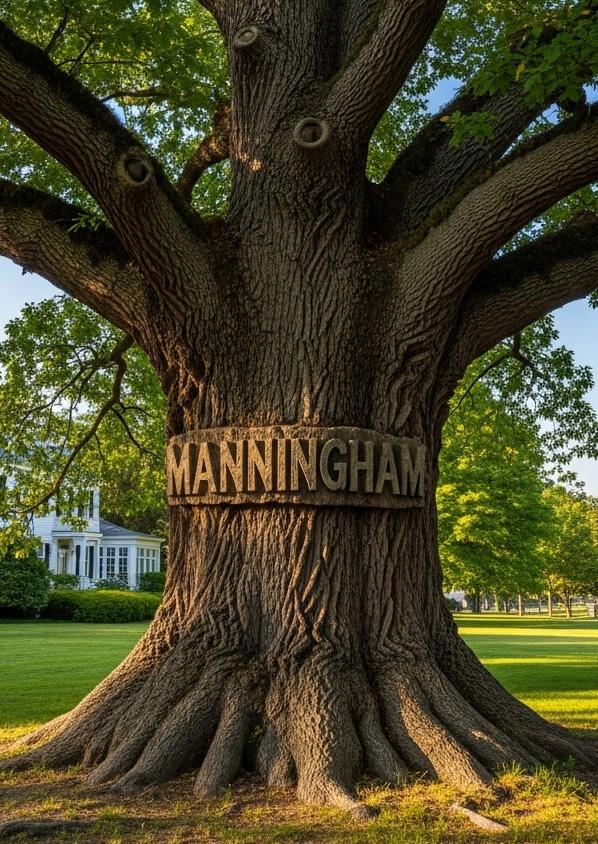


We are looking for business owners who like to join the
Manningham Network Group and Community Paper.
• Accounting Services
• Acupuncture
• Architect
• Architectural Interior Design
• Attorney- Family
• Auctions- Real Estate
• Bookkeeper
• Bowen Therapy
• Builder- Commercial
• Business Coach
• Business Equipment Financing
• Business Insurance
• Cabinets
• Caterer
• Graphic Designer
• Plasterer
• Chinese Medicine
• Chiropractor
• Creative Director
• Commercial Mortgage
• Computer Repair
• Computer Web Design
• Concrete


• Copywriting/Copy Editing
• Counselor/ Psychotherapist
• Dentist
• Digital Media
• Electrical Operations
• Electrician
• Finance Bookeeper
• Financial Planner
• Fitness Trainer
• Flooring
• Pilates
• Garage Doors
• General Insurance
• Health & Wellness Coach
• Homeopathy
• Lactation Consultant
• Lawn Care
• Lawyer
• Life Coach
• Loans
• Marketing
• Massage Therapist
• Meditation/Yoga













• Mortgage Broker
• Naturopathic Medicine
• Nutrition
• Osteopathy
• Painter
• Personal Trainer
• Photographer
• Plumber
• Podiatrist
• Printer
• Project Management
• Psychologist
• Real Estate Rentals
• Real Estate Sales
• Reiki
• Residential Cleaning
• Residential Mortgage
• Security
• Signs
• Solar
• Solicitor
• Travel Agent
• Website Developer
• Wedding Planner













By Warren Strybosch
The Find Manningham is a community paper that aims to support all things Manningham. We want to provide a place where all Not-For-Profits (NFP), schools, sporting groups and other like organisations can share their news in one place. For instance, submitting up-andcoming events in the Find Manningham for Free.
We do not proclaim to be another newspaper and we will not be aiming to compete with other news outlets. You can obtain your news from other sources. We feel you get enough of this already. We will keep our news topics to a minimum and only provide what we feel is most relevant topics to you each month.
We invite local council and the current council members to participate by submitting information each month so as to keep us informed of any changes that may be of relevance to us, their local constituents.

EDITORIAL ENQUIRES: Warren Strybosch | 1300 88 38 30 warren@findnetwork.com.au
PUBLISHER: Issuu Pty Ltd

We will also try and showcase different organisations throughout the year so you, the reader, can learn more about what is on offer in your local area.
To help support the paper, we invite local business owners to sponsor the paper and in return we will provide exclusive advertising and opportunities to submit articles about their businesses. As a community we encourage you to support these businesses/columnists. Without their support, we would not be able to provide this community paper to you.
Lastly, we want to ask you, the local community, to support the fundraising initiatives that we will be developing

and rolling out over the coming years. Our aim is to help as many NFP and other like organisations to raise much needed funds to help them to keep operating. Our fundraising initiatives will never simply ask for money from you. We will also aim to provide something of worth to you before you part with your hard-earned money. The first initiative is the Find Cards and Find Coupons – similar to the Entertainment Book but cheaper and more localised. Any NFP and similar organisations e.g., schools, sporting clubs, can participate.
Follow us on facebook (https://www. facebook.com/findmanningham) so you keep up to date with what we are doing.
We value your support,
The Find Manningham Team.
POSTAL ADDRESS: 248 Wonga Road, Warranwood VIC 3134
ADVERTISING AND ACCOUNTS: editor@findmanningham.com.au
GENERAL ENQUIRIES: 1300 88 38 30
EMAIL SUPPORT: support@manningham.com.au
WEBSITE: www.findmanningham.com.au
The Find Manningham was established in 2019 and is owned by the Find Foundation, a Not-For-Profit organisation with a core focus of helping other Not-ForProfits, schools, clubs and other similar organisations in the local community - to bring everyone together in one place and to support each other. We provide the above organisations FREE advertising in the community paper to promote themselves as well as to make the community more aware of the services these organisations can offer. The Find Manningham has a strong editorial focus and is supported via local grants and financed predominantly by local business owners.
The City of Manningham is a local government area in Victoria, Australia in the north-eastern suburbs of Melbourne. Manningham had a population of approximately 125,508 as at the 2018 Report which includes 27,500 business and close to 45,355 households. The Doncaster and Templestowe Council administered the area until December 15, 1994.
The Find Manningham acknowledge the Traditional Owners of the lands where Manningham now stands, the Wurundjeri people of the Kulin nation, and pays respect to their Elders - past, present and emerging - and acknowledges the important role Aboriginal and Torres Strait Islander people continue to play within our community.
Readers are advised that the Find Manningham accepts no responsibility for financial, health or other claims published in advertising or in articles written in this newspaper. All comments are of a general nature and do not take into account your personal financial situation, health and/or wellbeing. We recommend you seek professional advice before acting on anything written herein.

By Joe Lam
As February arrives, Melbourne is ready to burst into colour, culture, and celebration for the 2026 Chinese Lunar New Year. The city comes alive, from 17 to 20 February, with lively lion dances, festive markets, and cultural performances. Locals and visitors alike will have the perfect opportunity to connect, celebrate, and embrace the diversity that makes Melbourne unique.
The centre of Melbourne’s Lunar New Year celebrations is Chinatown along Little Bourke Street. Organisers, including the City of Melbourne, local cultural groups, and community volunteers, work hard to bring this annual event to life. Visitors can enjoy dragon and lion dances, live music, lantern displays, and family-friendly workshops that immerse everyone in Chinese traditions.
These celebrations have a significant impact. They draw thousands of people from across Victoria and beyond, boosting local businesses, promoting cultural understanding, and creating a joyful atmosphere that reflects Melbourne’s multicultural spirit. Families, tourists, and locals come together to experience the excitement and warmth of the Lunar New Year.
With streets in and around Chinatown often closed to traffic during the main events, including Little Bourke Street, Swanston Street near Chinatown, and nearby laneways, visitors should
plan accordingly. Public transport is highly recommended. Flinders Street Station, Melbourne Central, and Flagstaff train stations provide easy access. Pedestrian access to most areas remains open, and event signage helps guide visitors safely.
For those staying in the city to enjoy the festivities, CBD hotels near Flinders Lane or the Docklands offer easy access to Chinatown, cultural landmarks, and family-friendly attractions.
Melbourne is known for its food, and the Lunar New Year period is no exception. Chinatown restaurants serve festive specials alongside traditional favourites. Nearby laneways feature cafés, dumpling houses, and Asian fusion eateries that are perfect for family gatherings or a special night out. For a casual bite, Queen Victoria Market and the surrounding streets have food stalls and pop-ups celebrating the season.
The 2026 Chinese Lunar New Year in Melbourne is more than a cultural festival; it’s a celebration of community, diversity, and togetherness. Whether you’re watching a dragon dance, sampling delicious food, or wandering through lantern-lit streets, the event offers a chance to connect, reflect, and look forward to a year filled with energy and opportunity.
Here’s to a joyful, prosperous Year of the Horse; may it bring happiness, growth, and shared celebration to every corner of Melbourne!


By Warren Strybosch
What the ATO are targeting and how to avoid them.
Over 25 years ago, I got into financial planning because someone was promoting a scheme in the area where I lived. The scheme was closed down but unfortunately for many investors that damage had already been done. The result was that many people lost their money and their homes, and some couples ended up divorcing over the whole affair. Everyone involved went through a very stressful time, and I believe some of them still experience trauma or residual stress today.
From that day on, I made it my mission to be proactive in helping ATO and ASIC whenever I identified someone who was committing fraud, running a scheme or simply just flagrantly breaking the law.
With changes in the law, accountants and financial planners are required to basically ‘dob’ in someone whom they suspect of breaching the law or their respective code of conduct. Unfortunately, this has not stopped people from continuing to find ways to take advantage of others.
People have previously questioned why I bother. My response is that everyone should be bothered because we all should be actively trying to protect consumers, especially when it comes to dealing with people’s money.
I won't ignore a promoter's actions if I think they're exploiting people, even if it means losing friends or family over it simply because they do not or do not want to understand.
In November 2025, the ATO issued repeated warnings about "tax and super schemes" being promoted by advisers, accountants, solicitors, mortgage brokers, and other intermediaries ranging from mass-market advertisements to boutique arrangements tailored for wealthy individuals or companies. These schemes often promise significant tax savings, such as reducing taxable income, increasing deductions or offsets, inflating refunds, or even allowing early access to superannuation benefits.
These schemes often rely on complex or contrived financial or legal structures, designed not to reflect genuine economic activity but to distort how funds flow — purely for tax benefit.
The ATO’s position is clear: such arrangements are risky, often unlawful, and subject to cancellation, penalties, and even criminal prosecution.
Below we outline in more detail how such schemes tend to operate, with a focus on the ESIC context, why the ATO is cracking down, and what taxpayers or advisers should do to avoid falling foul.
What ATO Is Targeting for 2026:
1.Artificial “Tax-Avoidance” and “Super-Access” Schemes
Schemes that claim to provide benefits may be promoted.
• Reduce a participant’s taxable income;
• Increase deductions against income;
• Inflate offsets or refunds;
• Provide early or unlawful access to superannuation benefits;
• Completely avoid tax or other obligations.
Such schemes might use complex transactions or unusual fund flows to create a semblance of legitimacy when, economically, nothing substantial has changed.
Often these schemes are aggressively marketed via online ads, social media, or promotions by advisers guaranteeing “big tax savings” with apparently little risk.
2. Abusive Use of the ESIC / Early-Stage Investor Tax Offset Regime
One of the specifically flagged areas is misuse of the ESIC/early-stage investor tax offset regime. The Early Stage Investor Tax Offset was introduced to encourage genuine investment in early-stage, innovative companies. Under this regime, investors who purchase new shares in a qualifying ESIC may — if all conditions are met — access:
• A non-refundable carry-forward tax offset equal to 20% of the amount invested (subject to caps).
• Special capital gains tax (CGT) treatment: capital gains on qualifying shares held between 12 months and up to 10 years may be disregarded; conversely, capital losses may also be disregarded under certain conditions.
That’s a legitimate scheme — but what the ATO is targeting are artificial or circular financing arrangements structured solely to claim those tax benefits — with little or no genuine economic risk or business substance behind them.
A typical abusive structure might involve:
1. An adviser or intermediary promoting a start-up (allegedly an ESIC) to potential investors.
2. The investor subscribing for shares — often funded by a loan or financing facility, with only a nominal deposit paid.
3. Immediately after share issue, the funds are placed under control of the financier or intermediary (not genuinely used by the start-up for innovation or business growth).
4. The investor claims the 20% tax offset, lowers their tax liability, and receives a refund. The refund (or part of it) is used to repay the financing.
5. The start-up may execute a share buy-back or other disposal so that the investor retains little or no real economic interest — yet enjoys the tax benefit with minimal actual risk.
In effect, the investor incurs nearly no real economic cost or risk, yet claims substantial tax benefits. The ATO considers such arrangements to be artificial, exploitative, and a misuse of the ESIC regime.
Because the law governing general anti-avoidance (Part IVA of the Income Tax Assessment Act) applies, the ATO is revoking benefits in such cases, disallowing the tax offset and deductions, and potentially denying CGT relief.
The ATO has declared that participation in, or promotion of, unlawful tax schemes is not a victimless act. Both participants and promoters are liable:
• For the reversal of tax benefits (offsets, deductions, CGT relief).
• For hefty penalties — often ranging from 10% to 90% of the tax avoided, plus interest.
• In serious cases, potential criminal charges and prosecution (particularly for promoters).
The ATO also emphasises that these schemes mislead taxpayers and erode the integrity and fairness of the tax system.
They warn that “honest folk” — not necessarily sophisticated investors — are being drawn in by misleading promises.
Given Australia’s increasing focus on treating financial crime and tax avoidance seriously (including through joint taskforces), the risk to participants is not just financial, but reputational and legal.
As a professional in accounting and financial advice (as you are), you play a critical role in helping clients avoid pitfalls. Here are practical recommendations:
• Be skeptical of offers that sound “too good to be true”: Low-risk, high-return, guaranteed tax savings — especially if offered by promoters or intermediaries — should trigger red flags.
• Perform proper due diligence: If advise clients to invest in a purported ESIC, confirm the company meets all the ESIC qualifying criteria immediately after share issue (earlystage test + either the 100-point innovation test or principles-based test).
• Ask for a ruling or documentation where there is doubt: Where eligibility is unclear (especially under principles-based innovation test), encourage clients or the company to request a private binding ruling from the ATO.
• Avoid circular financing or loanback structures: Warn clients that financing arrangements where the subscription money is not genuinely at risk — but is controlled or returned via buy-backs — may be treated as artificial by ATO and can lead to cancellation of benefits under Part IVA.
• Keep thorough records: If the investment is genuine, it is essential to maintain documentation that supports the company’s innovation credentials, business plan, commercialisation strategy, and actual use of funds.
• Seek independent, credible advice: If you're unsure about a scheme or structure, get advice from a reputable tax professional or adviser — ideally not the party promoting the scheme.
• Err on the side of caution: If something seems ambiguous or
borderline, consider declining participation or requesting a ruling/ clarification first.
The ATO encourages taxpayers and advisers to act proactively if they suspect an unlawful scheme. You can:
• Submit a tip-off form on the ATO website.
• Phone the ATO’s confidential “tip-off” hotline on 1800 060 062.
• If you believe you’ve inadvertently become involved in a scheme, contact the ATO immediately — voluntary disclosure may reduce penalties and limit consequences.
As a professional adviser, if a client approaches with a suspicious scheme — particularly around ESIC or other aggressive tax strategies — your ethical and regulatory responsibility may well be to advise them to steer clear, or report it if warranted.
The tax-incentive regimes administered by the ATO — such as the ESIC earlystage investor offsets — were introduced with genuine policy goals: to encourage investment in innovation, support entrepreneurship, and share risks and rewards fairly.
However, where these regimes are manipulated via artificial, circular or contrived arrangements — seeking tax benefits without any real economic substance — they become abuse. The ATO has signaled it is watching, investigating, and willing to apply antiavoidance provisions, revoke illicit benefits, and penalise both promoters and participants.
For advisers and practitioners in the accounting or financial advice community — including you — there is an essential role in educating, screening, advising, and where necessary, sounding the alarm. Ethical professional conduct, due diligence, and caution are crucial.
Ultimately, long-term integrity of the tax system and investor trust outweigh the lure of short-term scheme-driven gains. If you believe you have been caught up in sheme, please either call the ATO tip-off line or ring your accountant or financial advisor to discuss the matter with them.
You can read more about the ATO’s report on tax schemes here.

By JODIE MOORE
How they differ, how to reconcile them, and best practice in Xero
When business owners move money in and out of their business, confusion often arises around Drawings, Owner Contributions, and Owner’s Equity.
In accounting software like Xero, understanding the difference between these concepts is essential for clean reconciliations, accurate reports, and stress-free BAS and year-end work.
This article explains:
• What each term actually means
• How to reconcile them correctly
• Best practice for keeping things tidy and audit-ready
1. What is Owner’s Equity?
Owner’s Equity is the overall value of the owner’s interest in the business.
In simple terms:
Owner’s Equity = Assets – Liabilities
It is not a transaction account you usually post to day-to-day.
Instead, it is a section of the Balance Sheet that includes things like:
• Capital introduced
• Retained profits or losses
• Drawings taken by the owner
Key point:
Owner’s Equity is the result, not the process.
2. What are Owner Contributions (Capital Introduced)?
Owner Contributions (also called Capital Introduced) are amounts the owner puts into the business for business use.
Examples:
• Owner transfers personal cash into the business bank account
• Owner pays a business expense from their personal account
• Initial funds used to start the business
These transactions increase Owner’s Equity.
How Owner Contributions should be recorded
Best practice:
• Allocate these transactions to an Equity account such as:
º “Owner Contributions”
º “Capital Introduced”
º “Shareholder Funds” (for companies)
Common mistake:
Coding owner contributions to “Other Income” — this inflates profit and causes tax issues.
3. What are Drawings?
Drawings are amounts the owner takes out of the business for personal use.
Examples:
• Owner transfers money from the business bank account to their personal account
• Owner pays a personal expense using the business debit card
These transactions reduce Owner’s Equity.
How Drawings should be recorded
Best practice:
• Allocate to a dedicated Drawings account under Equity
• Keep drawings separate from business expenses
Important:
Drawings are not tax-deductible expenses.
4. How these accounts work together
Think of it like a running balance:
• Owner Contributions ---> increase equity
• Business profit ---> increases equity
• Drawings ---> decrease equity
All three ultimately roll up into Owner’s Equity on the Balance Sheet.
You usually won’t reconcile directly to “Owner’s Equity” — instead, you reconcile to:
• Owner Contributions
• Drawings
• (Sometimes) Share Capital or Loan Accounts
5. Sole traders vs companies (important distinction)
Sole Traders
• Drawings are common and expected
• Owner does not receive wages
• Profit belongs to the owner regardless of drawings
Companies
• Owners are usually paid via:
º Wages
º Dividends
º Loans (Director’s Loan Account)
In companies:
• Drawings should generally be avoided
• Use a Director’s Loan Account instead
6. Best practice for clean records
Reconcile regularly
Leaving drawings unreconciled leads to:
• Messy year-end adjustments
• Confusion about how much the owner has taken
Talk to your accountant early
Especially if:
• The business is growing
• There are frequent owner transactions
• You’re moving from sole trader to company
7. Why this matters
Incorrect treatment of drawings and contributions can lead to:
• Overstated profit
• Incorrect tax reporting
• Confusing equity balances
• Extra accounting fees at year-end
Getting it right keeps:
• Your Balance Sheet accurate
• Your accountant happy
• Your stress levels low
• Owner Contributions = money in ---->. Equity
• Drawings = money out ---> Equity
• Owner’s Equity = the net result on the Balance Sheet
Treat owner transactions as equity movements, not income or expenses, and your reconciliations will stay clean, compliant, and easy to understand.

By Craig Anderson
Running a small to medium enterprise inevitably comes with unexpected challenges. While some risks are unavoidable, others are far more predictable, and preventable. Defamation is one such risk that often arises from well-intentioned but poorly framed conversations with clients.
Promoting your business by highlighting your strengths is perfectly acceptable. However, problems can arise when those conversations turn into commentary about a competitor’s shortcomings. For example, it may be reasonable to say, “To the best of my knowledge, they don’t offer that service,” if it is factually correct. On the other hand, statements such as “They wouldn’t have the capability to help you,” or worse, “They wouldn’t know how to do that,” can quickly expose your business to allegations of defamation.
As a business owner, one effective way to manage this risk is to guide staff with clear, natural-sounding responses that keep the focus on your own offering. Phrases such as “We provide a full suite of services” or “We offer a complete turnkey solution” allow your team to communicate value without referencing competitors at all.
If clients ask for direct comparisons, staff can respond with statements like,
“We focus on delivering the best service we can for the price,” and avoid commenting on how others operate.
This approach protects your business while keeping conversations professional and positive.
Criticising another business, intentionally or not, can open the door to a defamation claim. Without appropriate insurance, defending such a claim or settling a civil action could come directly out of your business’s pocket.
Professional Indemnity Insurance can provide important protection, provided the defamation was not deliberate. For example, a typical policy wording may include:
We agree to pay to or on behalf of the insured all loss and defence costs arising from any claim for civil liability for defamationcommittedintheconductof the policyholder’s professional business, provided that the insured did not intend to defame.
Emphasis is given to the intent behind the communications which can be hard to characterise, so staff need clear guidelines to avoid such situations.
If your business provides advice for a fee, Professional Indemnity Insurance is essential. However, policies vary significantly depending on the profession.
A policy designed for an accountant may not suit an engineer, consultant, or other specialist business.
Working with an insurance broker can remove the guesswork. A broker can help identify the right policy for your specific risks and give you the confidence to operate your business effectively and securely.
There’s no better time than now to review whether your current insurance is still right for your business.
For a health check of your business insurance, contact Small Business Insurance Brokers via email at sales@ smallbusinessinsurancebrokers.com.au.
Any advice in this article has been prepared without taking into account your objectives, financial situation or needs. Before acting on the information above, you should consider its appropriateness having regard to your objectives, financial situation and needs


By Erryn Langley Financial Planner
For many Australians, retirement is one of the biggest financial transitions of their lives. It’s exciting, but it can also feel overwhelming.
As a financial planner, I hear a lot of the same questions from clients who are approaching this important milestone. Here are the four most common questions asked, and why the answers matter when helping to shape successful and stress free retirement.
1. “How much do I actually need to retire comfortably?” This is by far the number one question. Most people want to retire with confidence, not guesswork.
There’s no universal figure, because your lifestyle, health, spending habits, and retirement goals are unique to you. However, the Association of Superannuation Funds of Australia (ASFA) provides a helpful benchmark each year. Their "Comfortable Retirement Standard" outlines the amount needed for a modest versus comfortable lifestyle.
More information can be found on their website https://www.superannuation.asn.au/consumers/retirementstandard/
As a general guide:
• Singles and couples wanting a more comfortable lifestyle typically aim for higher super balances, while those with simpler lifestyles may need less.
• Your spending also tends to change throughout retirement, often higher in early active years, lower in mid retirement, and potentially higher again with increased medical needs as you age.
A personalised retirement plan can turn this question from guesswork into clarity.
2. “When can I afford to retire? or Can I stop working yet?”
Determining your retirement date depends on several factors:
• Your superannuation balance and how long it is likely to last
• Access to government benefits such as the Age Pension, including means testing rules
• Whether you plan to fully retire or ease into retirement with part time work
• Market conditions and investment risk
• Your debt position, especially mortgages
• Your expected lifestyle and spending needs
Many Australians discover they can retire earlier than they thought, while others may benefit from working a little longer to strengthen their super and reduce longevity risk. A tailored projection gives clarity and confidence.
3. “How do I structure my income in retirement?”
Retirement is no longer about simply ‘living off your super’. It’s about designing an income strategy that provides stability, flexibility, and tax efficiency.
Australians commonly ask:
• Should I use an Account-Based Pension, a lifetime annuity, or a mix?
• How much can I withdraw without running out of money?
• What happens to my income during market downturns?
A well designed strategy will usually blend different income sources, such as super pensions, a lifetime income stream such as an annuity, savings, and potentially the Age Pension. To ensure your money lasts as long as you do.
4. “Will I be eligible for the Age Pension, and how does it interact with my super?”
Many Australians are surprised to learn that even with a healthy level of superannuation, they may still qualify for a full or part Age Pension at some point, currently the eligibility age is 67.
As a financial adviser I often help clients understand and ultimately apply for Age Pension when they reach eligibility. Common queries include:
• “Am I eligible under the assets and income tests?”
• “If I’m not eligible now, might I qualify later?”
• “How does my spouse’s income or super affect this?”
• “Will drawing down my super increase my Age Pension entitlement?”
• “Should I restructure assets to improve my position?”
The Age Pension is a cornerstone of retirement income planning in Australia and understanding how it complements your super can unlock opportunities to extend the life of your retirement savings.
Preparing for retirement is not just about numbers, it’s about designing a lifestyle that feels secure, enjoyable, and aligned with your values. The earlier you start planning, the more options and flexibility you have.
A financial planner can help you:
• Clarify your retirement goals
• Model different retirement plans
• Build a suitable retirement income strategy
• Navigate superannuation rules and tax considerations
• Maximise potential Age Pension entitlements
Whether retirement is five years away or just around the corner, a personalised plan can give you peace of mind and confidence for the road ahead. We welcome speaking to new clients to discuss their retirement planning needs.

T:1300 557 144 Email: erryn@cherrywealth.com.au
Website: www.cherrywealth.com.au
Office Address: Suite 4 / 4 - 6 Croydon Road, Croydon 3136
Postal Address: PO
By ETHAN STRYBOSCH
In the everyday hustle of running a not-for-profit, it’s easy to look back and think, “We should’ve….” — should’ve had clearer messaging, should’ve reached more volunteers online, should’ve had stronger donor engagement. In Victoria and beyond, many foundations and charities have poured passion into their causes, only to struggle with limited budgets, fragmented communication channels, or outdated digital approaches. Those frustrations are very real — but 2026 brings a fresh wave of tools and trends that can help NFPs work smarter, not harder.
Let’s take a quick look at how digital marketing challenges of the past — such as low engagement, weak donor targeting, and unclear online impact — can be transformed this year through purpose - driven digital strategies. Then we’ll explore the top trends shaping the future of digital engagement for not-for-profits.
Turning Old Challenges into New Opportunities
Traditionally, many not-for-profits relied on print newsletters, events, or basic social posts to connect with supporters. These efforts often lacked data insights, and it was tough to track who was actually engaging or why donations fluctuated. But now:
• Data is no longer just for big businesses. With affordable analytics and simple dashboards, small teams can now understand supporter behaviour and tailor outreach.
• Storytelling can be more dynamic. Short videos and community-led content let real voices — beneficiaries, volunteers, supporters — share impact in compelling ways.
• Automation isn’t intimidating; it’s a way to do more with less, nurturing relationships without burning out your team.
Now let’s dive into the key digital trends that NFPs should consider in 2026.
1. Short-Form Video and Storytelling (Low Cost, High Impact)
Short, emotional videos on TikTok, Instagram Reels, and YouTube Shorts are exploding in popularity and
engagement. These 15–60 second clips can showcase impact stories, volunteer moments, or donation journeys in a way that text alone simply can’t.
Benefits for NFPs:
• Boosts awareness with minimal production costs
• Makes complex missions relatable and human
• Encourages sharing and organic reach
Financial Responsibility: Use free editing tools (like CapCut), and prioritise authenticity over polished production — this keeps costs low while maximising engagement.
2. Predictive Analytics & Donor Targeting (Smarter Fundraising)
AI-powered predictive analytics lets you look ahead at donor behaviour — who is likely to give again, who needs a tailored ask, and when people are most receptive.
Benefits for NFPs:
• Better targeting increases donation ROI
• Supports personalised campaigns that feel meaningful
• Helps you allocate time and funds where they count
Financial Responsibility: Though analytics tools can cost money, start with simpler CRM systems or donor platforms with built-in analytics to avoid overspending on complex systems upfront.
3. Privacy-First Data Strategy (Trust Builds Support)
By 2026, digital privacy will be non-negotiable — audiences want transparency about how their data is used and protected.
Benefits for NFPs:
• Strengthens supporter trust and loyalty
• Reduces risk of data misuse or compliance issues
• Encourages people to share information willingly when they feel valued
Financial Responsibility: Invest in privacy- aware tools and clear consent practices. It may have upfront costs, but it avoids expensive legal or reputational issues down the line.
4. AI-Enhanced Content & Automation (Efficiency With Heart)
AI tools can help NFPs generate content ideas, personalise emails, and automate social posting — freeing time for mission-focused work.
Benefits for NFPs: Reduces writing and scheduling workload
• Improves the relevance of messages for different supporter segments
• Helps maintain consistent communication without expanding staff
Financial Responsibility: Choose tools that fit your budget and strategy. Avoid over- automation — the personal touch still matters most to supporters.
5. Community-First Engagement (Belonging Over Broadcast)
Audiences today want connection, not broadcasts. Shifting toward community groups (Facebook Groups, newsletters, Instagram DMs) encourages two -way dialogue and deeper loyalty.
Benefits for NFPs:
• Encourages repeat engagement from volunteers and donors
• Builds peer-to -peer advocacy and storytelling
• Creates micro - communities of passionate supporters
Financial Responsibility:
Community building is low- cost but high- attention — plan regular content and volunteer moderators to sustain energy.
Victoria’s not-for-profits are spearheading incredible change — and digital marketing doesn’t have to be a barrier. Think of these trends as tools in your advocate’s toolkit: not flashy gimmicks, but bridges to deeper connections, smarter fundraising, and greater impact. Start small, experiment boldly, and always lead with your mission.
Your story deserves to be seen. Your supporters deserve to be heard. And 2026 is the year your digital strategy brings it all together.



EV Strengthening Communities has launched a new service called the Virtual Volunteer Navigation Hub. The Virtual Volunteer Navigation Hub is a service available for anyone who is interested in finding volunteer opportunities in their local area according to their interests or needs. Prospective volunteers will submit a registration form on our website or via QR codes on postcards and flyers.
We have trained volunteer assessors who will meet with prospective volunteers online via Microsoft Teams or at our office in Ringwood to discuss the volunteer opportunities that are available locally. These volunteer opportunities would be referred to these volunteers to apply independently or with our support if requested. We also provide support in completing our registration form on our website if requested.
Feel free to send in a registration form on our website www.ev.org.au and select “I want to volunteer” OR scan the provided QR code to direct you straight to the registration form if you are interested in getting support in finding volunteer opportunities.

Who is Outdoors Victoria?
Outdoors Victoria is the peak body for outdoor education and active outdoor recreation in the state and advocates for and supports moreVictorians to get active outdoors.
We support the outdoor communities of Victoria through our three objectives…
• Supporting a thriving Outdoors Sector
• Advocating for every Victorian to be active in the outdoors
• Building a strong and sustainable peak outdoor body to best support our community
We are a non-profit supported by the State Government, including Sport and Recreation Victoria, Department of Education, Parks Victoria and DEECA.
What do we do?
Find the world of outdoor recreation activities in Victoria
As the umbrella peak body for the outdoors sector, Outdoors Victoria is committed to advocating for and supporting sustainable outdoor education and recreation in nature across the State. Whether you’re interested in bushwalking, mountain biking, paddling, climbing, camping or something new, our website connects you with Victoria’s peak bodies for each activity.
Through these organisations, you can learn more, attend Come and Try sessions, meet like-minded people and join local clubs. Activities are listed alphabetically, making it easy to explore what’s available near you.
Discover the world of outdoor recreation in Victoria at: https://www.outdoorsvictoria.org.au/get-activeoutdoors/
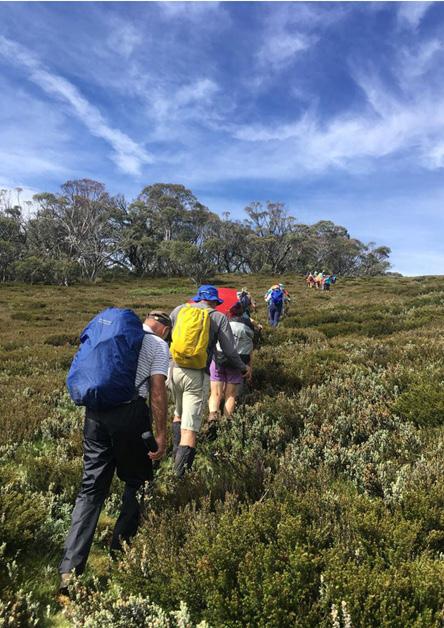
The outdoors is more than a place — it’s a career pathway filled with purpose, adventure and impact. From leading camps and guiding journeys to designing programs, managing parks, supporting communities and protecting natural environments, the outdoor sector offers diverse opportunities to turn passion into profession.
Outdoors Victoria helps people explore these pathways by connecting them with:
• TAFE courses and University degrees
• Registered Training Organisations (RTOs)
• Careers in the Outdoors videos showing a day in the life of professionals
• Types of Jobs in the Outdoors across outdoor education, recreation, conservation and community development.
• Available jobs in the outdoors we share listings of outdoor jobs and volunteering opportunities across Victoria and beyond, plus links to other national and international outdoor job boards.
Whether you’re starting out, changing careers or looking to grow in the sector, Outdoors Victoria provides practical tools and inspiration to help you take the next step.
Explore more at: https://www.outdoorsvictoria.org.au/careers-in-the-outdoors/
For personalised advice, contact: careerscoordinator@outdoorsvictoria.org.au
Discover our forests
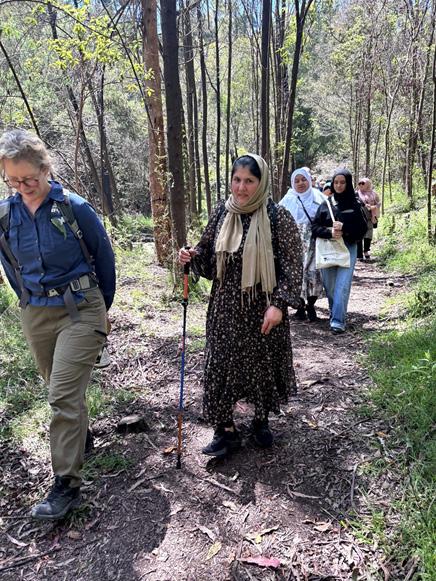
Discover Our Forests is an exciting initiative helping more Victorians explore State Forests and participate in outdoor activities. Supported by the Victorian Government and delivered in partnership with the Department of Energy, Environment and Climate Action (DEECA), the program encourages community connection through nature-based experiences.
Community groups are invited to take part in a free, supported full day of adventure activities, including hiking, mountain biking, bush skills and orienteering. The program supports wellbeing, confidence and social connection in outdoor settings.
We are particularly seeking to involve community groups that support:
• People from multicultural backgrounds
• Migrants and refugees
• People with disabilities
• People with mental health challenges
• Older adults (65+)
• Women’s groups
If your organisation is interested, contact us at info@outdoorsvictoria.org.au
The Active in Nature program supports young people aged 13–25 across Victoria to explore the outdoors, improve their wellbeing and build a stronger connection to nature through engaging experiences in our incredible parks.
Community Group Leaders are invited to express interest in free,
facilitated full-day adventure activities, delivered in parks from November 2024 to April 2026. Activities are designed to increase confidence, belonging and enjoyment in outdoor environments, particularly for young people from marginalised backgrounds.
Find out more and express your interest at: www.activeinnature.org.au
Park IT
Do you remember walking or riding to school as a child? Over the past 40 years, children’s active travel has dropped from around 75% to just 25%, and some estimates suggest it may now be closer to 15%.

Park IT is a walk-to-school initiative for Victorian primary schools, supported by local government and Sport and Recreation Victoria. It helps car-dependent families shift behaviour by creating new drop-off and pick-up points within 1km of school gates, paired with child-friendly pathways codesigned with students.
The program supports healthier habits, safer streets and stronger community connections — one walk at a time.
Find out more here: https://www.outdoorsvictoria.org.au/ projects/park-it/

Through advocacy, education, programs and partnerships, Outdoors Victoria continues to strengthen the sector and ensure more Victorians can safely, confidently and meaningfully connect with the outdoors.

In addition to getting active programs and career pathways, Outdoors Victoria plays a leadership role across the State by:
• Delivering professional development for outdoor education teachers and outdoor recreation practitioners.
• Advocating to the government on behalf of the outdoors sector
• Working with the Department of Education on safety guidelines
• Connecting nationally through the Outdoor Council of Australia
• Creating Outdoor Learning toolkits for generalist teachers
• Running our annual Outdoors Victoria Conference
• Developing a set of resources from safety and risk management to disability and inclusion in the outdoors.

For more information, please visit our website www. outdoorsvictoria.org.au
Contact details
Phone: +61 0437 452 456
Email: info@outdoorsvictoria.org.au Visiting us
Outdoor Activity Hub, Westerfolds Park, Fitzsimmons Lane, Templestowe, 3106

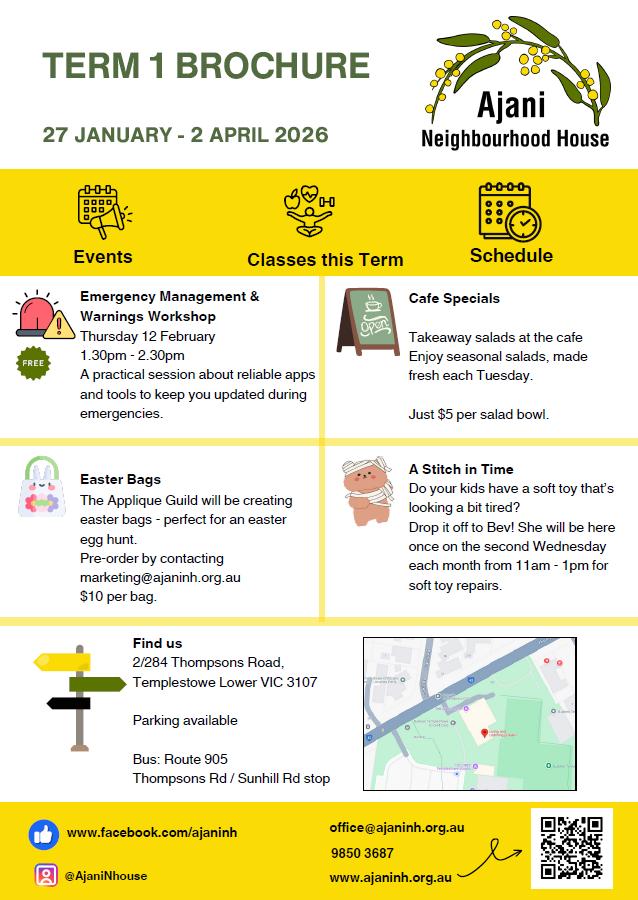

There’s something special simmering in the Ajani kitchen in 2026, with a delicious lineup of cooking classes designed to bring people together through food, stories and shared skills.
The term kicks off with Mediterranean Summer Cooking, welcoming back our much-loved nonnas. With their trademark warmth and wisdom, they’ll share a menu of fresh, seasonal recipes inspired by Mediterranean summers — perfect for keeping cool while making the most of vibrant flavours and simple techniques.
In March, we’re excited to introduce Cook with Teta, led by Lebanese cooking extraordinaire Ekbal. In this hands-on demonstration, Ekbal will guide participants through simple yet flavour-packed Middle Eastern recipes, offering tips, traditions and plenty of inspiration for home cooks of all levels.
Rounding out the month, on 31 March, join us for a relaxed and Practical Dumpling Workshop. This easy how-to session will show you how to make dumplings you can confidently whip up at home — perfect for weeknight dinners or sharing with family and friends.
Whether you’re keen to learn new skills, revisit familiar flavours or simply enjoy cooking alongside others, Ajani’s cooking classes are a joyful celebration of food, culture and community.


Manningham residents Ben Street and Christobel Elliott are debuting their multi-sensory exhibition Before words, there were rainbows – A cosmic light and sound journey through the beyond at the Manningham Art Gallery from Wednesday 4 February to Saturday 2 May 2026.
In this immersive multi-sensory exhibition, visitors will be transported into a surreal, shifting world, where the lines between human, animal, time and nature dissolve.
Manningham Mayor, Councillor Jim Grivas, said the exhibition is a fantastic opportunity to experience the works of local residents.
“We have so many talented artists right here in Manningham, and we are thrilled local residents like Ben and Christobel can share their artistic vision with the community,” Cr Grivas said.
The exhibition features a 4 to 5-minute looped projection where Ben’s colourful artwork, animated by artist Sue Wegener and supported by the projection art team at illuminart Stories in Light, is brought to life through colour, movement and scale while Christobel’s electronic music fills the room – inviting
people into a world somewhere between sleeping and waking.
Through a large-scale projection, a spatial soundscape, and mindful meditative activities, visitors are invited to sit back and be transported to another world somewhere between sleep and waking, inviting a moment of stillness or inward exploration. “Viewers can piece the story together from various clues and there may be different ways to interpret it. I wanted to create a calming environment that transports visitors into a zen-like state” said Ben Street.
“Sound is one of our universal languages because it bypasses cognition and evokes emotion and memory, making it a powerful storytelling tool,” said Christobel Elliott.
“I wanted the soundscape to feel dreamy and atmospheric, while pulsating sounds maintained a grounded momentum throughout,” Christobel said.
To see Before words, there were rainbows and experience Ben and Christobel’s work in person, visit the Manningham Art Gallery, MC Square, 687 Doncaster Road, Doncaster. For more details, visit manningham.vic.gov.au/Rainbows

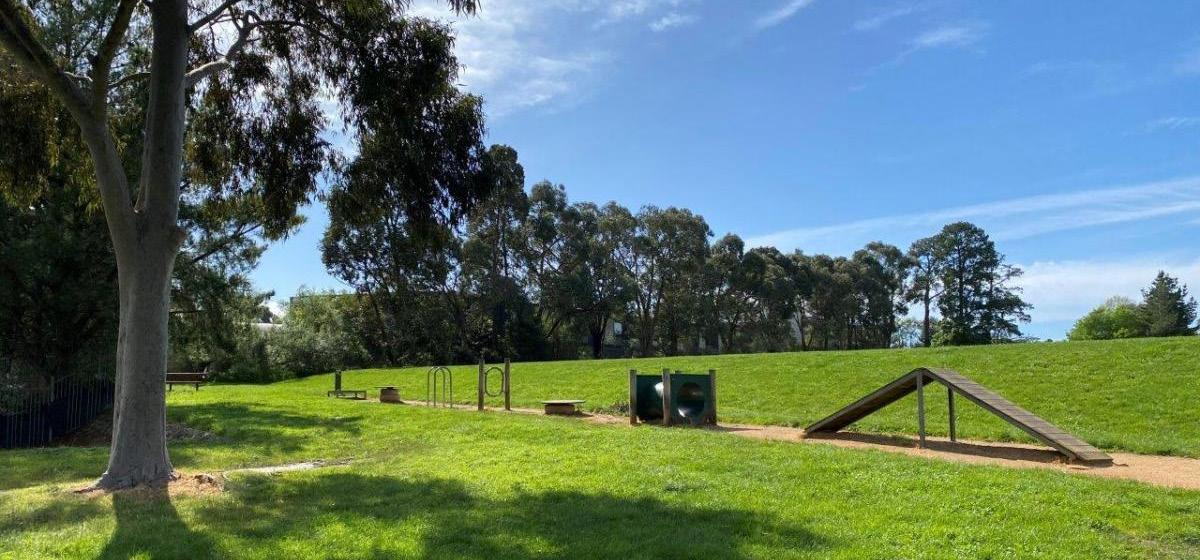
Manningham dog lovers can look forward to a more enjoyable and accessible experience at Aranga Reserve, with the final design for the refreshed dog park now complete.
Manningham Mayor, Councillor Jim Grivas, said the upgrades are a great example of how community feedback is helping shape local open spaces.
“We’ve listened carefully to what our community told us about how they use Aranga Reserve,” Cr Grivas said.
“The final design improves the park’s layout and amenities while also considering safe and responsible pet ownership. This makes it a better experience for everyone, including our four-legged residents.”
Incorporating feedback from the community and Friends of Manningham Dogs and Cats (FOMDAC), the final design includes several exciting new features, such as:
• refurbished agility equipment and a new gravel-surface agility course with seating
• new side-by-side entrances for access to both the small dog and main dog areas (off Aranga Crescent)
• a new shelter and paved seating area
• two entry points to the main dog area: one from Eastway Avenue with a new maintenance gate, and another from Aranga Crescent
• the gradual replacement of older pine trees with indigenous species
• new lighting along the path from the carpark off Aranga Cresent to Eastway Avenue.
Council has responded to community concerns about dogs not being kept under effective control in and around the dog
park, incidents of aggressive behaviour and uncollected dog waste.
To help address these issues, Council will include the following additions as part of the planned upgrade:
• dog-on-lead decals along key paths to encourage responsible behaviour
• updated signage outlining expectations for all visitors
• planting on the playground’s north side to create a buffer between the playground and the fenced dog park.
“FOMDAC has been an important partner in helping us develop the concept plan for the grant application and promote positive dog behaviour and awareness across the reserve,” Cr Grivas said.
“It’s been great to work together on creating a space that’s both fun and respectful for all park users.
” Construction is set to begin in early 2026, subject to weather and contractor availability.
“We’re excited to see this project move into the next stage,” Cr Grivas said.
“Aranga Reserve is a valued space, and these improvements will make it even more welcoming for the whole community.”
The Aranga Reserve dog park upgrade is supported by the Victorian Government through the New and Upgraded Dog Parks program.
For more information and to view the final design, visit yoursay. manningham.vic.gov.au/aranga-dog-park-upgrade