University of Southern California, School of Architecture // May 2025
- Master of Architecture
University of Minnesota - Twin Cities, College of Design // May 2023
- Bachelor of Science in Architecture
HMC Architects, Computational Designer // September 2025 - Present
- Design Technology
- Created and developed tools to automate portions of the architectural project delivery process including complex geometric modeling, documentation, and interoperability between software. Tools were developed using Rhino, Grasshopper, Python, Revit, Dynamo, Orkestra, and various plugins. Tools were optimized and debugged using VS Code and agentic AI models.
- Responsible for assisting staff with technical issues related to design software such as Rhino, Revit, Enscape, and Orkestra. Assistance with these issues required a technical understanding of each software and a level of proficiency with each beyond a functional level.
- Independently developed a functional mockup of a web platform that would host all documentation of the company’s automation tools library, project delivery resources, and technology training resources. This web platform was developed in Framer and approved by company leadership for further development.
- Significantly improved the documentation of the of the company’s existing automation tool library by establishing a digital record in Excel and adding in-depth descriptions, instructions, demonstrative videos, and search tags for over 150 tools.
- Visited company office locations to train staff on automation tools directly, improving awareness and education of available tools, and improving project efficiency.
- Initiated an effort with the company communications team to create a weekly tool showcase to improve company awareness of available tools and increase tool usage.
DLR
Group, Intern // May 2024 - April 2025 (1 yr.)
- Justice & Civic // (1 yr.)
- Worked in Pre-Design, Schematic Design, and Design Development phases to deliver correctional facilities through the creation and development of area analysis plans, circulation diagrams, interior and exterior renderings, floor plans, site plans, section drawings, detail drawings, reflected ceiling plans, and digital models.
- Used grasshopper to conduct area analysis, test circulation efficiency, and streamline the digital modeling process for several projects.
- Led an internal presentation to introduce parametric and generative design tools to the Los Angeles Justice & Civic team.
- Documented projects through 3D printing and model photography.
- Attended site visits for internal marketing photography.
- Attended client coordination meetings and assisted in the presentation of design options.
JLG
Architects, Intern // June 2022 - July 2023 (1 yr, 2 mo.)
- Sport // (3 mo.)
- Assisted in project design and delivery of collegiate-level sports facilities. Responsibilities included the development of preliminary floor plans, site plans, sections, and massings in both the Pre-Design and Schematic Design phases. Deliverables were created using Revit, Rhino, and/or Bluebeam.
- Developed proprietary tools in Grasshopper for building facade and site context generation, as well as streamlined modeling for the purpose of creating conceptual renderings.
- Conducted C-value studies using Revit.
- Attended site visits and conducted field photography and measurements.
- Design Technology // (9 mo.)
- Created market-quality renderings for projects in each of the firm’s eight sectors. Renders were shown to clients and used in promotional materials.
- Developed proprietary tools for custom object asset creation using Grasshopper. These tools were used during the rendering process to allow for rapid iteration and future use.
- Delivered a firm-wide presentation to 100+ employees regarding the use of computational tools in the architectural design process.
- Led effort to develop onboarding activities in Enscape3D for 15+ new employees and returning junior staff.
- Created and organized an asset library for the firm’s existing collection of material textures and CAD models.
- Developed basemaps using Mapbox and ArcGIS to be used in proprietary client-facing software tools intended for monitoring project performance.
- Used Enscape3D and Kuula to create virtual tours of company projects
- Healthcare // (2 mo.)
- Worked in Pre-Design, Schematic Design, and Design Development phases to deliver small to large scale clinical projects through the creation and develop ment of area analysis plans, circulation diagrams, interior and exterior renderings, floor plans, site plans, section drawings, detail drawings, reflected ceiling plans, and digital models.
Rhino3D, Grasshopper, Digital Fabrication, 3D Printing, V-Ray, Enscape, VS Code, Python for Grasshopper, C# for Grasshopper, Hand Modeling, Hand Drafting, Midjourney, Firefly, Runway, Woodworking, Lasercutting, Adobe Suite, Microsoft Office, Bluebeam, Revit, AutoCAD, SketchUp, Mapbox, ArcGIS, Kuula, Jira, Miro, Forma.
UMN, College of Design
- Dean’s List: Fall 2019, Spring 2020, Fall 2020, Fall 2021, Spring 2022, Fall 2022, Fall 2023
- Project entered by professor into school archive for outstanding work, 2023 (Rain Refuge) USC, School of Architecture
- Barbara G Laurie Student Design Competition, 2023: 3rd Place, 2023 (Growing Forward)
- Project featured on noma.net and NOMA National Instagram, 2024 (Growing Forward)
- Project featured on USC School of Architecture website, 2024 (From Waste to Wilderness)
- USC Merit Scholarship recipient
A Collapsing Environment 01
Material Science - 3D Printing - Product Design
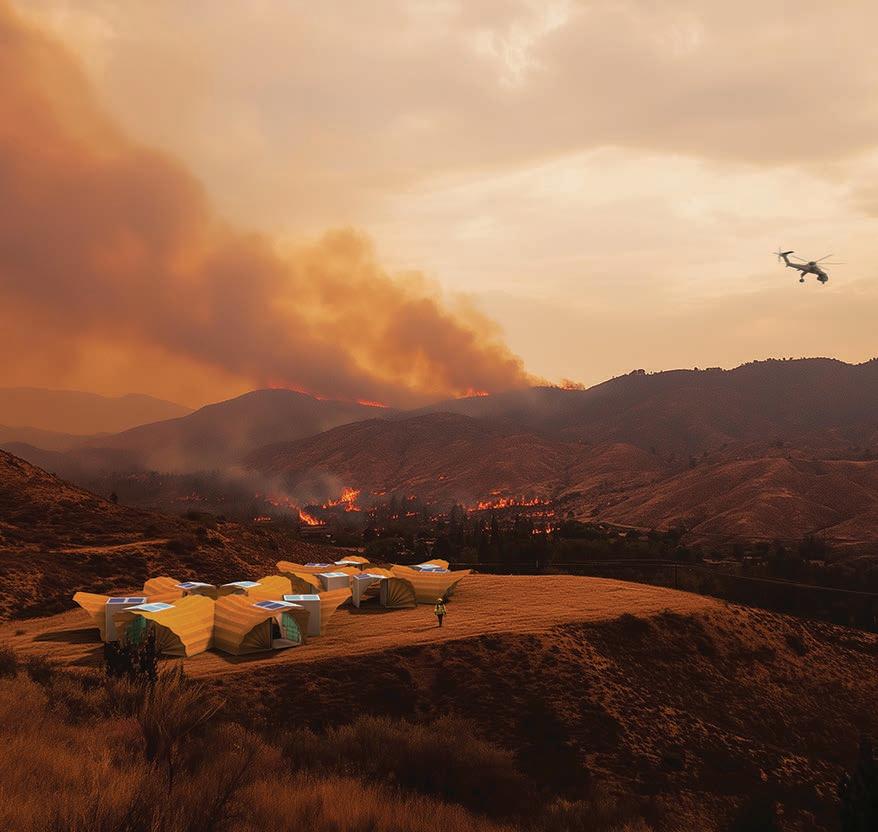
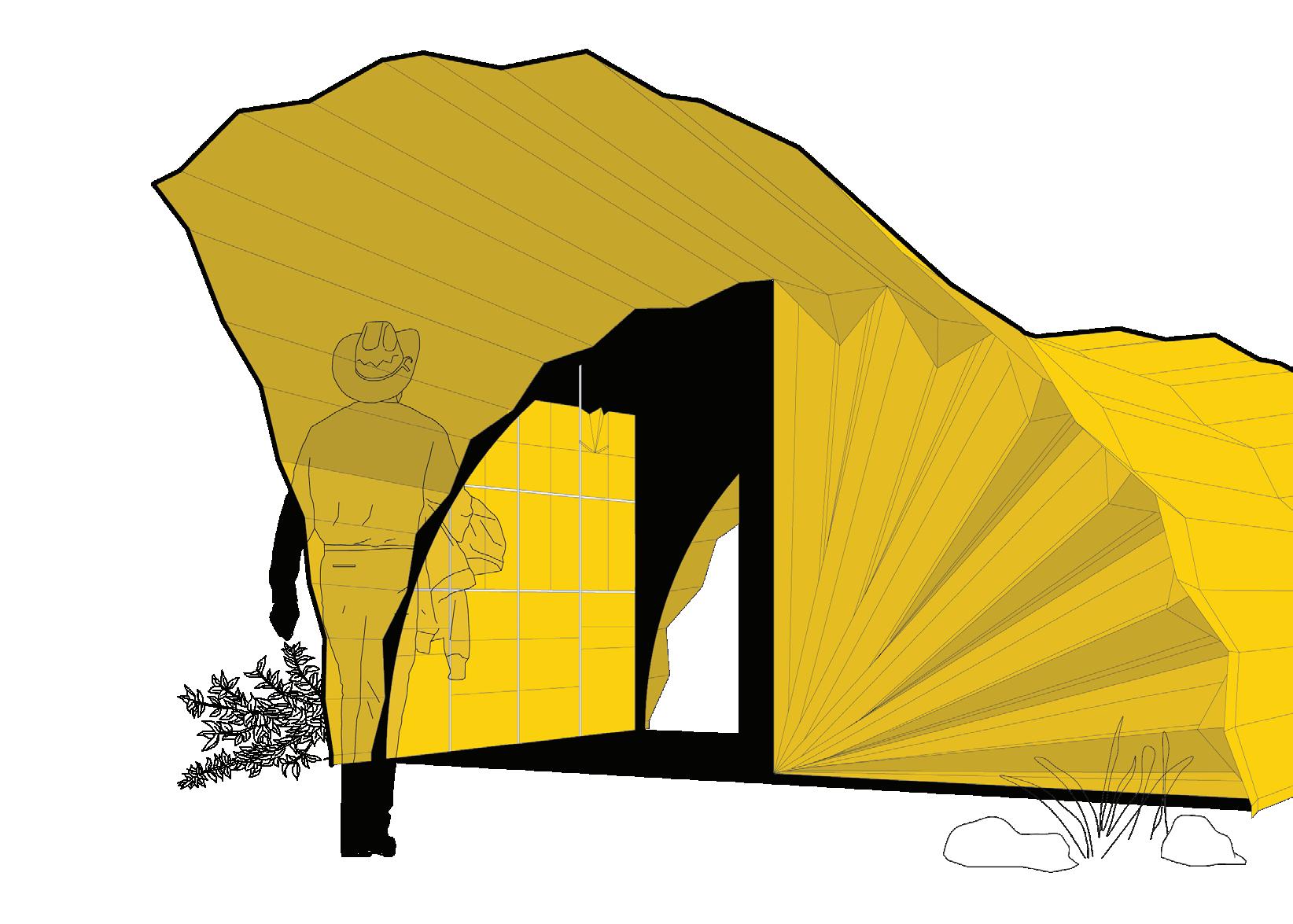
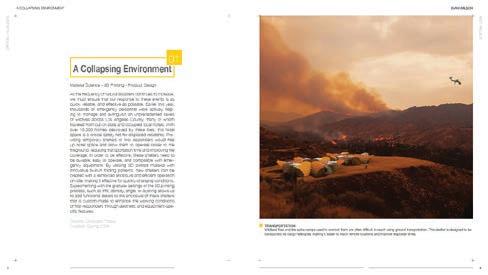
As the frequency of natural disasters continues to increase, we must ensure that our response to these events is as quick, reliable, and effective as possible. Earlier this year, thousands of emergency personnel were actively helping to manage and extinguish an unprecedented series of wildfires across Los Angeles County, many of whom traveled from out-of-state and occupied local hotels. With over 10,000 homes destroyed by these fires, this hotel space is a critical safety net for displaced residents. Providing temporary shelters to first responders would free up hotel space and allow them to operate closer to the fireground, reducing transportation time and improving fire coverage. In order to be effective, these shelters need to be durable, easy to operate, and compatible with emergency equipment. By utilizing 3D printed material with innovative built-in folding patterns, new shelters can be created with a reinforced enclosure and efficient operation on-site, making it effective for quickly changing conditions. Experimenting with the granular settings of the 3D printing process, such as infill, density, angle, or layering allows us to add functional details to the enclosure of these shelters that is custom-made to enhance the working conditions of first-responders through aesthetic and equipment-specific features.
Course: Graduate Thesis Created: Spring 2025
TRANSPORTATION
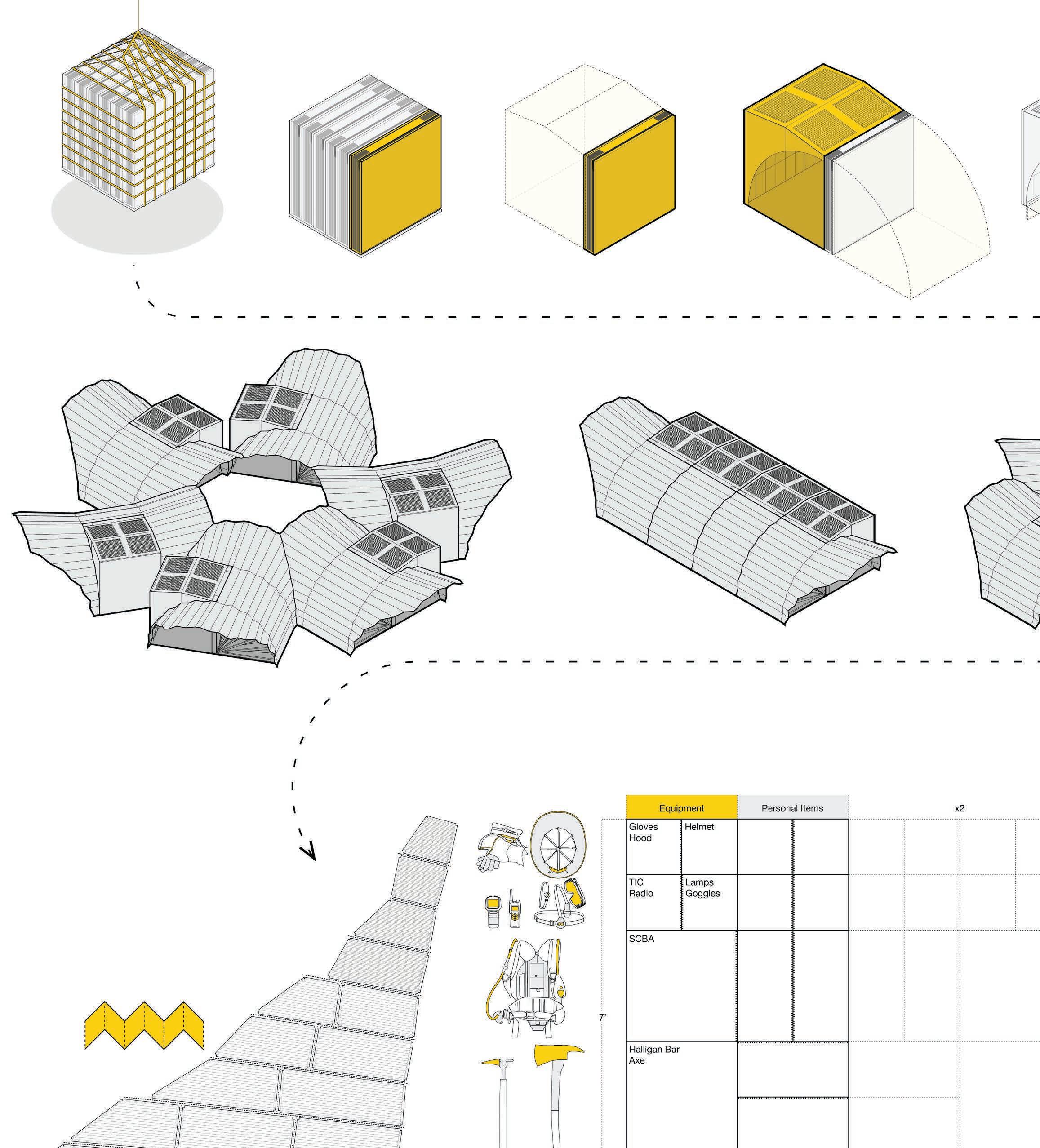
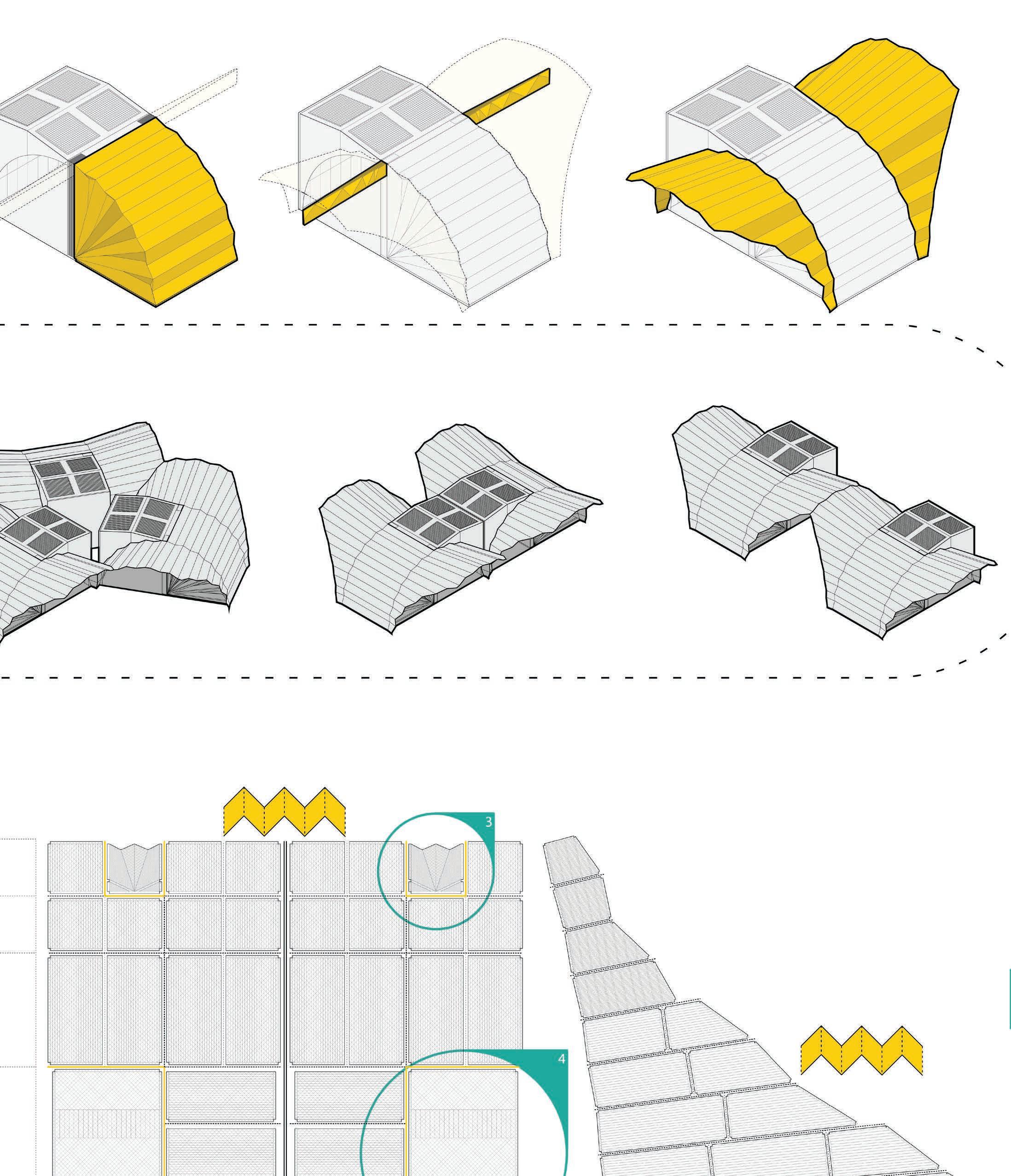
Wildland fires and the spike camps used to combat them are often difficult to reach using ground transportation. This shelter is designed to be transported via cargo helicopter, making it easier to reach remote locations and improve response times.
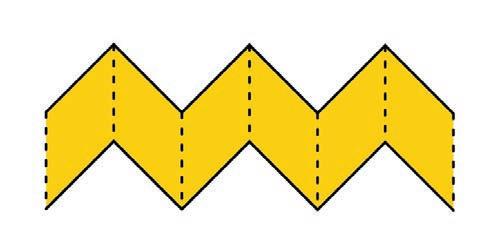
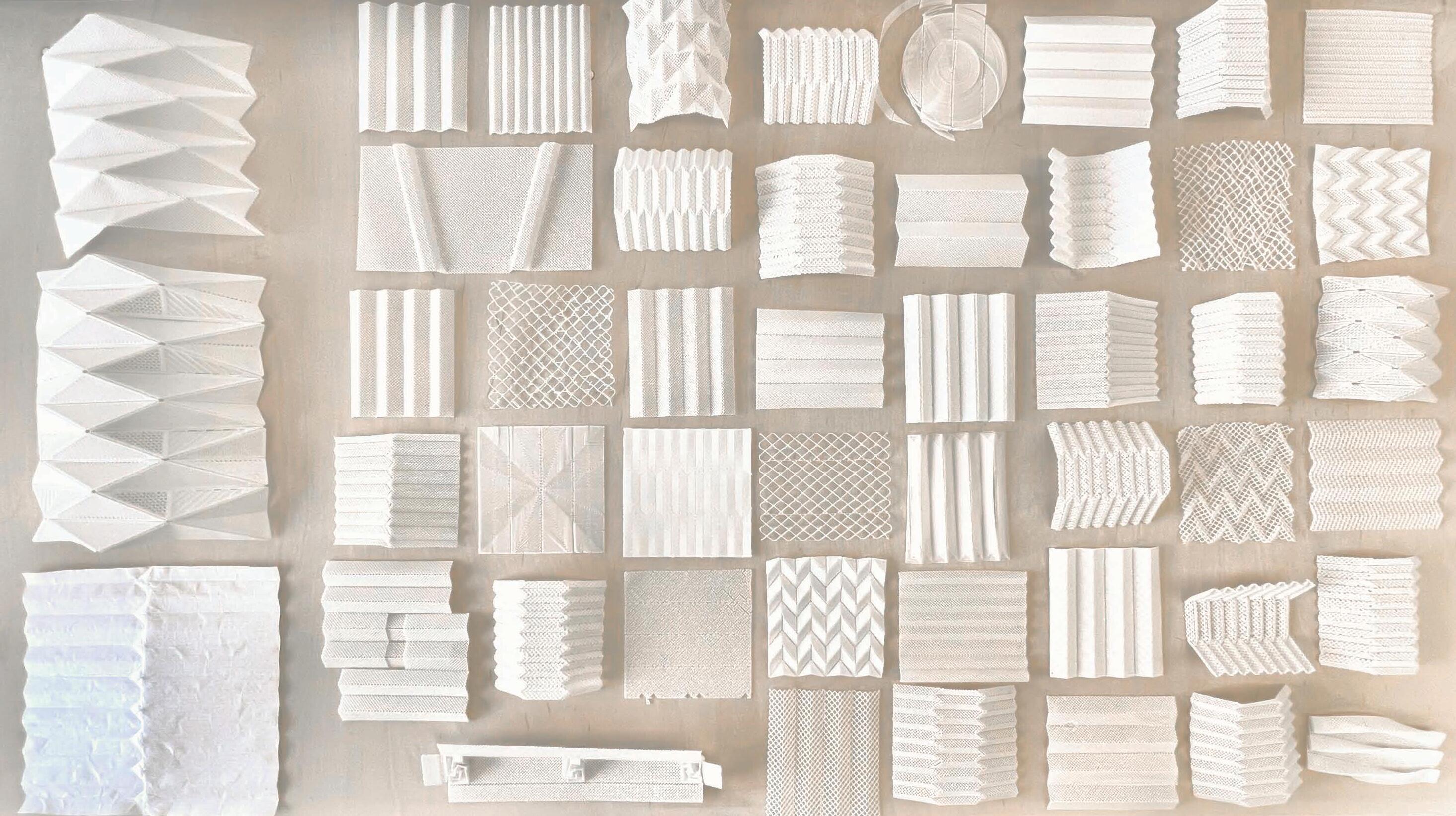
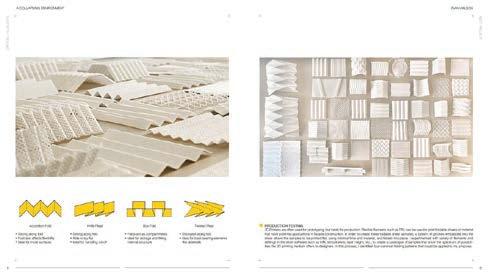
Accordion Fold
• Strong along fold
• Fold size affects flexibility
• Ideal for most surfaces
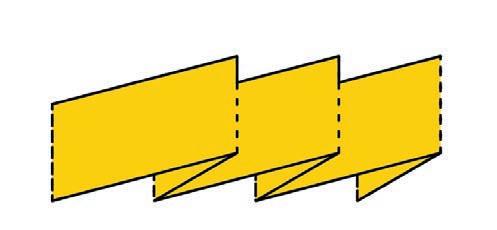
Knife Pleat
• Strong along fold
• Able to lay flat
• Ideal for handling runoff
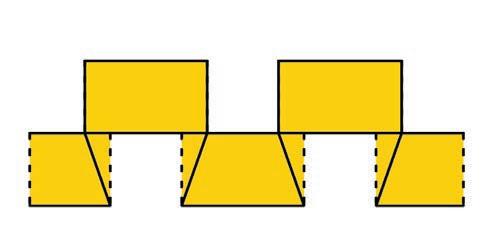
Box Fold
• Folds act as compartments
• Ideal for storage and fitting internal structure
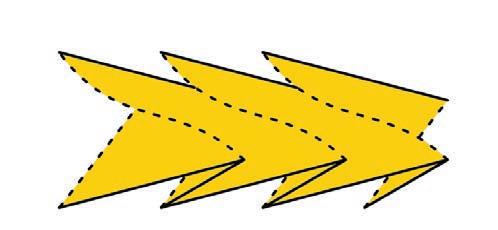
Pleat
• Strongest along fold
• Ideal for load-bearing elements like sidewalls
Twisted
PRODUCTION TESTING
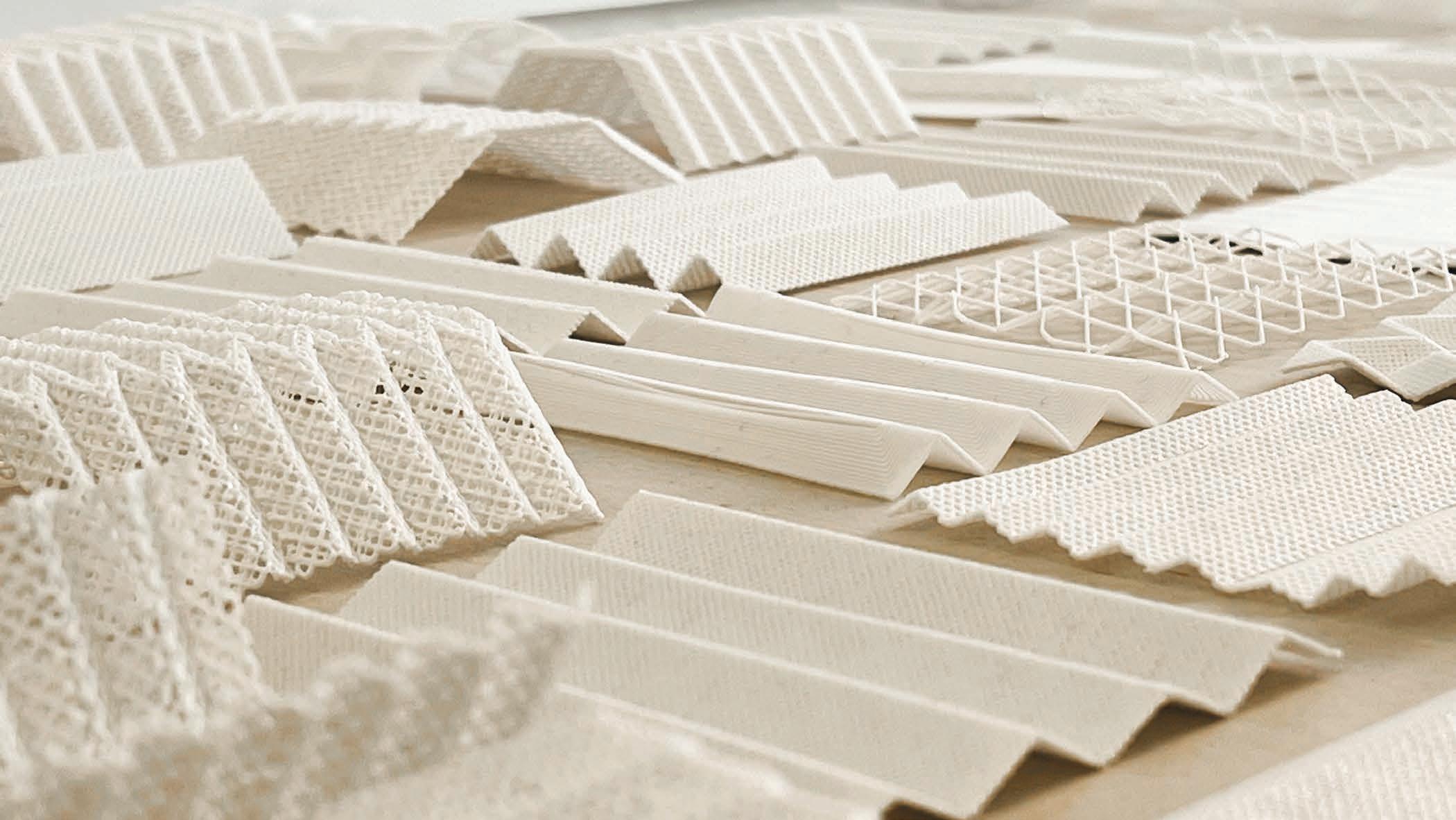
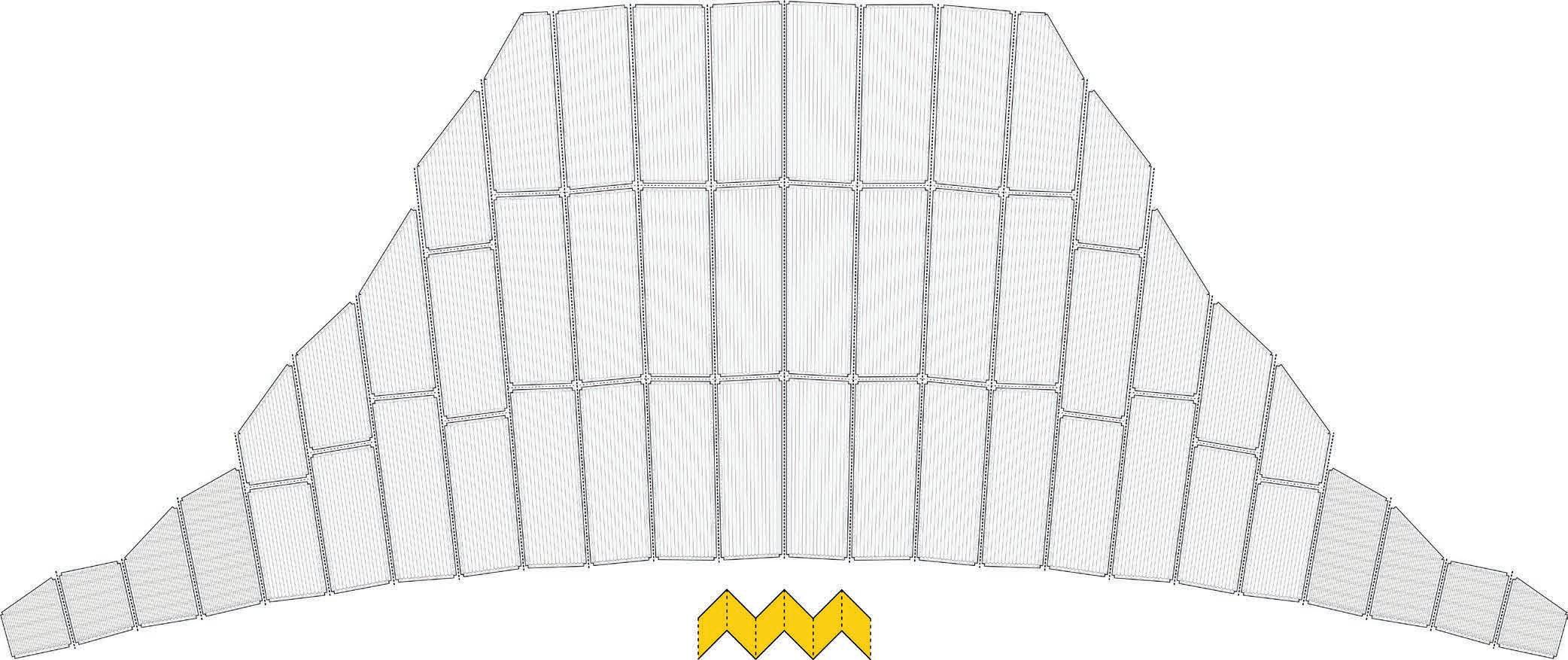
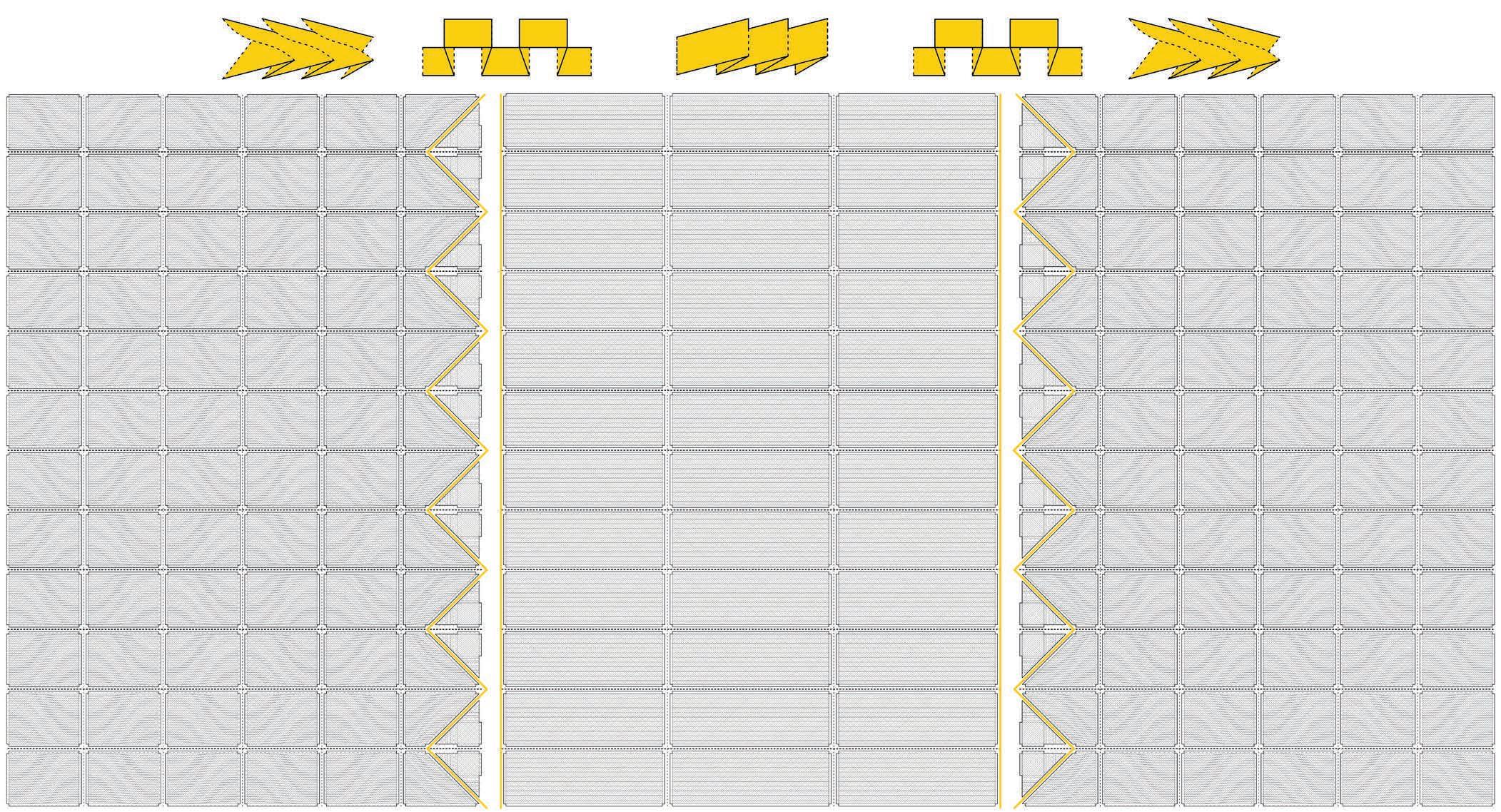
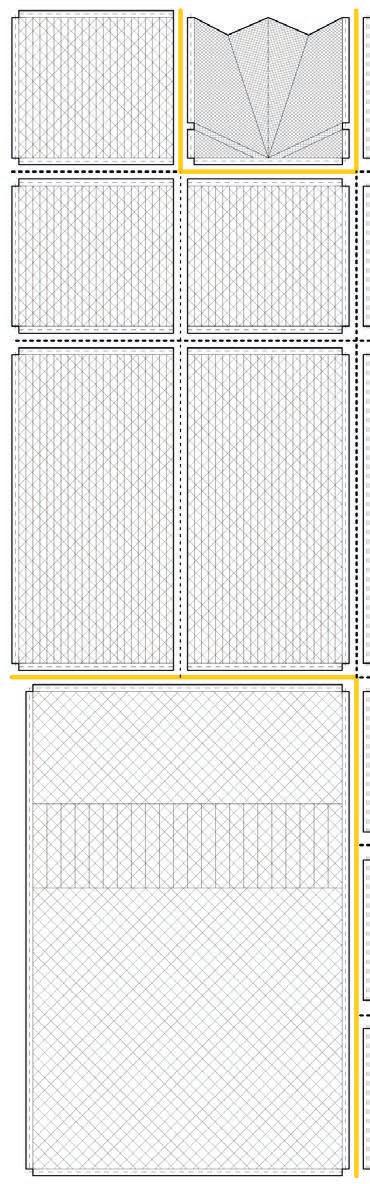
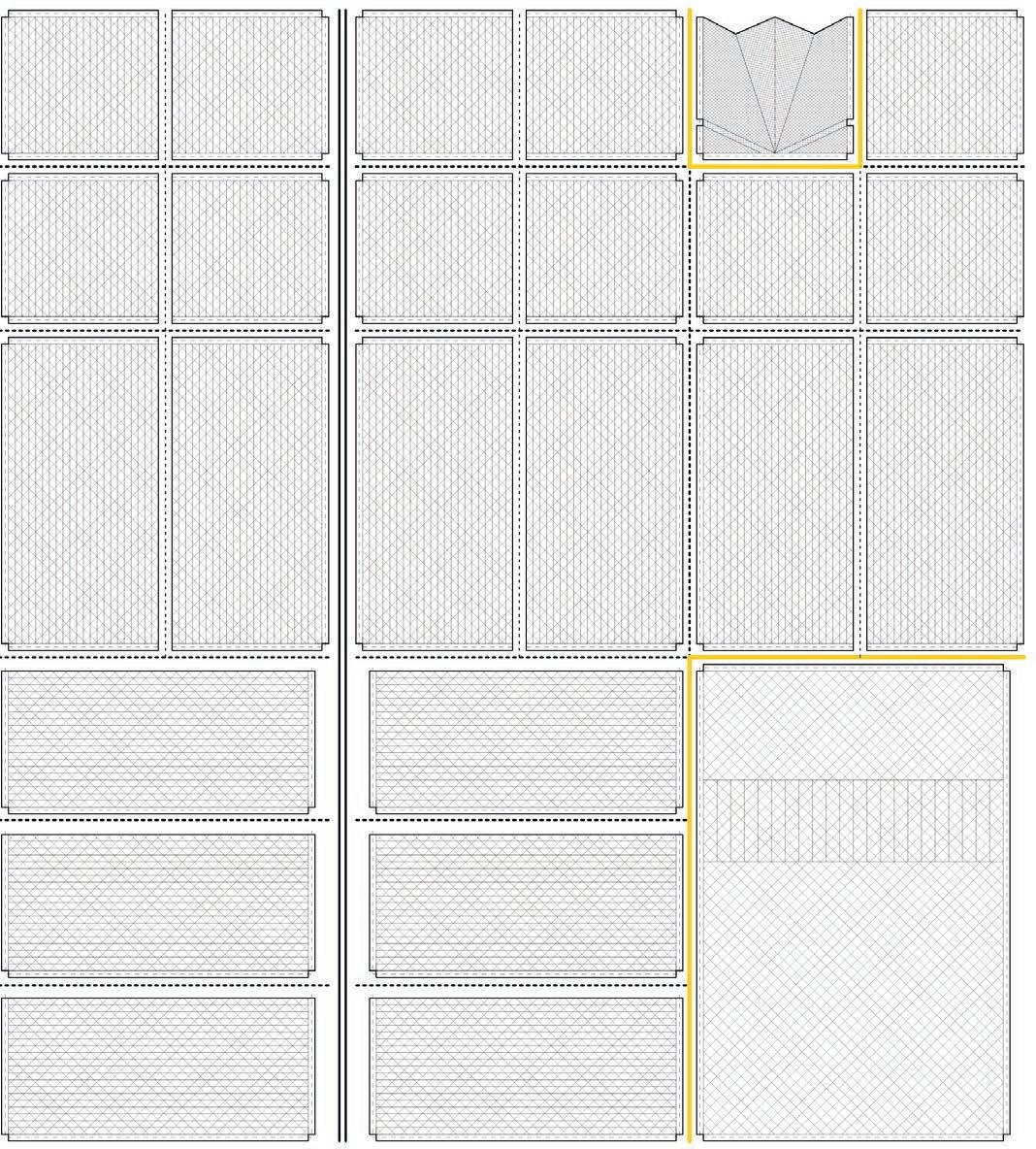
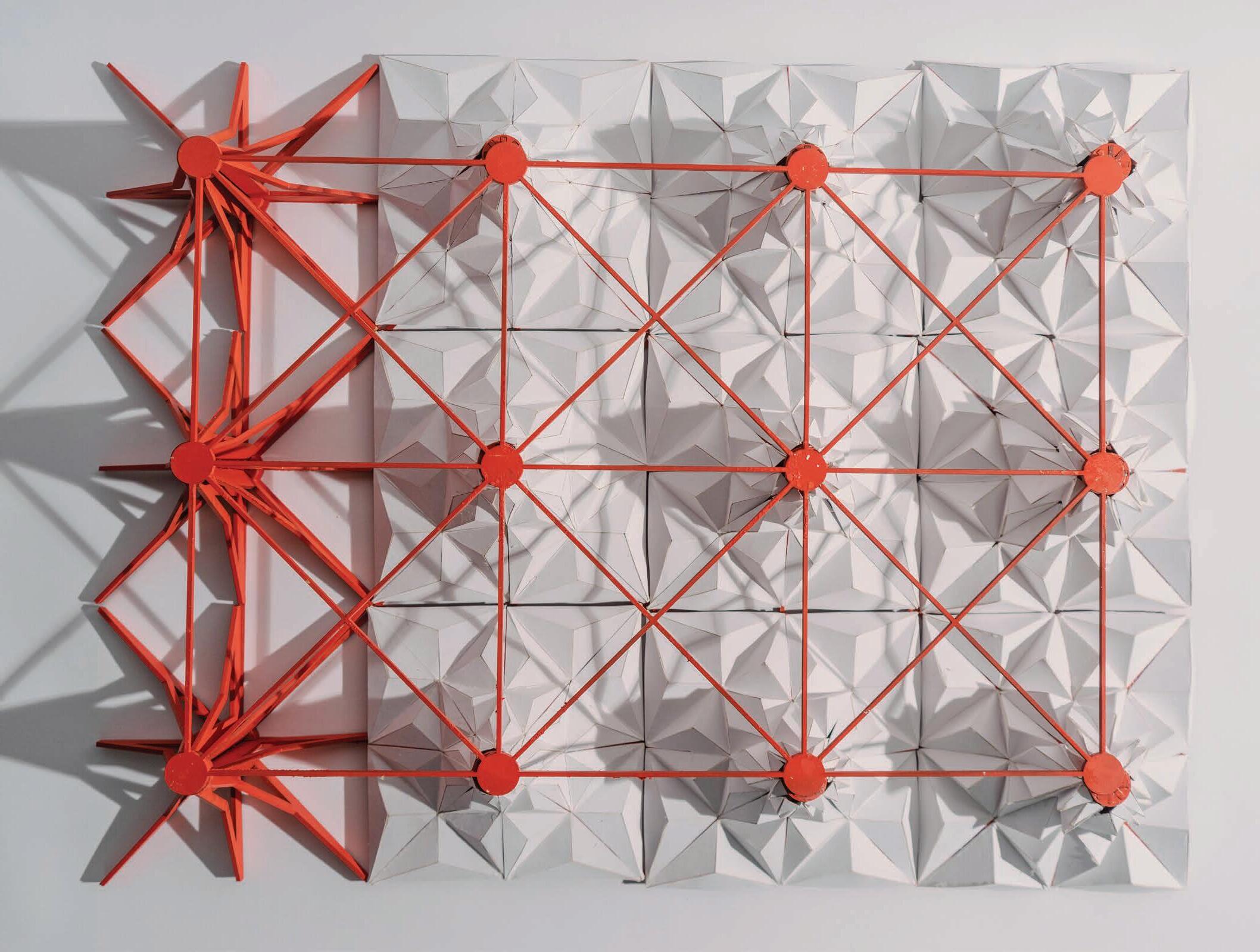
3D Printers are often used for prototyping, but rarely for production. Flexible filaments such as TPU can be used to print foldable sheets of material that have potential applications in facade construction. In order to create these foldable sheet samples, a system of grooves embedded into the sheet allows the samples to be printed flat, using minimal time and material, and folded into place. I experimented with variety of filaments and settings in the slicer software such as infill, temperature, layer height, etc., to create a catalogue of samples that show the spectrum of possibilities the 3D printing medium offers to designers. In this process, I identified four common folding patterns that could be applied to my proposal.
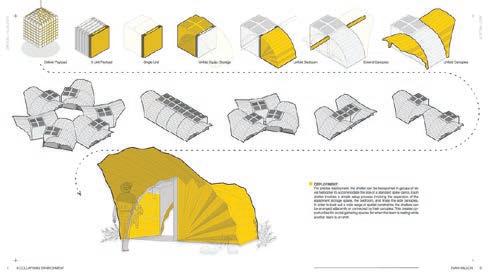
DEPLOYMENT
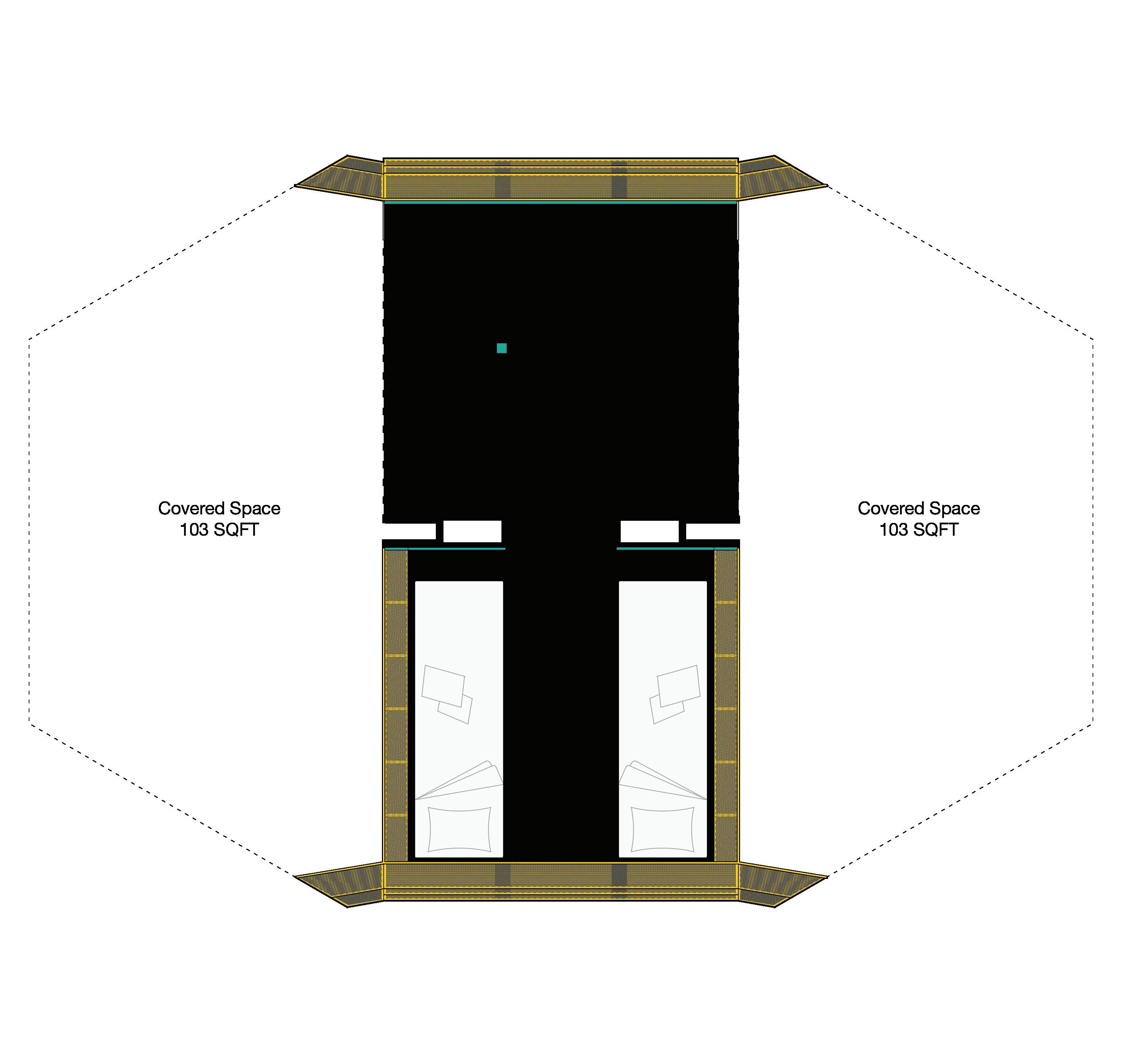
For precise deployment, the shelter can be transported in groups of six via helicopter to accommodate the size of a standard spike camp. Each shelter involves a simple setup process involving the expansion of the equipment storage space, the bedroom, and finally the side canopies.
In order to best suit a wide range of spatial constraints, the shelters can be arranged adjacently or connected by their canopies. This creates opportunities for social gathering spaces for when the team is resting while another team is on-shift.
Unfold Bedroom
Extend Canopies
Unfold Canopies
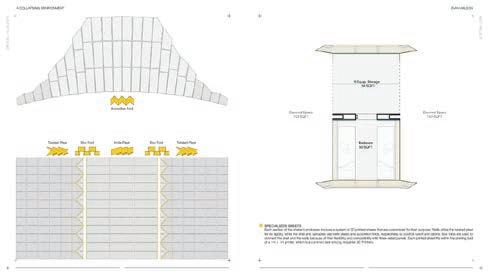
Box Fold
Twisted Pleat
Knife Pleat
Box Fold
Twisted Pleat
Accordion Fold
SPECIALIZED SHEETS
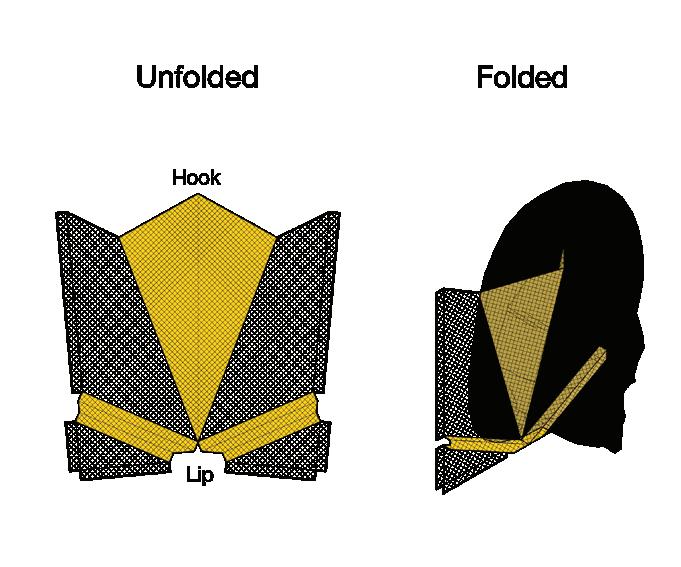
Each section of the shelter’s enclosure involves a system of 3D printed sheets that are customized for their purpose; Walls utilize the twisted pleat for its rigidity, while the shell and canopies use knife pleats and accordion folds, respectively, to controll runoff and debris. Box folds are used to connect the shell and the walls because of their flexibility and compatibility with three-sided panels. Each printed sheet fits within the printing bed of a 1m x 1m printer, which is a common size among industrial 3D Printers.
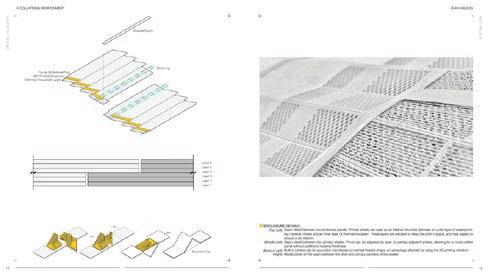
ENCLOSURE DETAILS
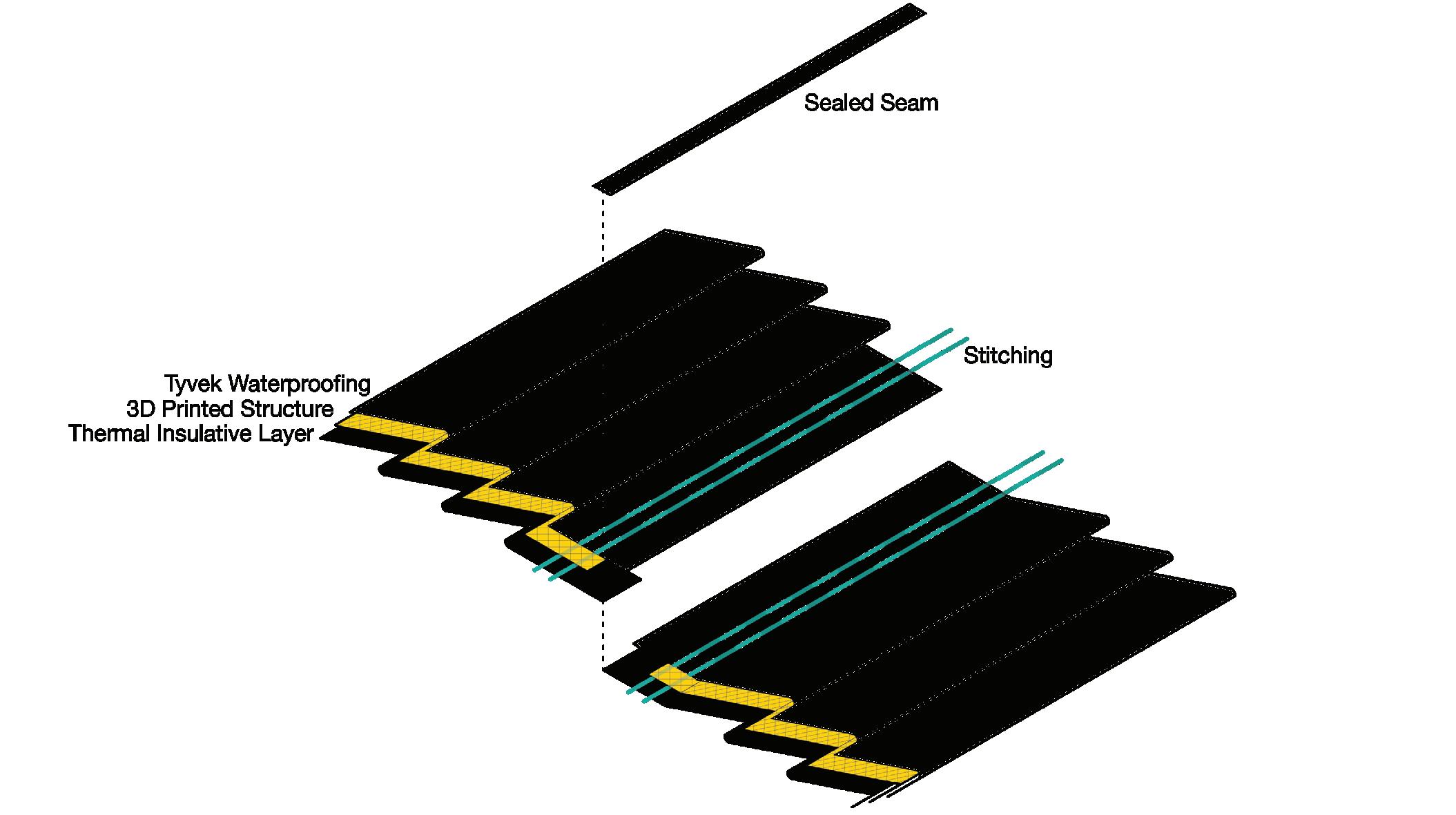
Seam detail between two enclosure panels. Printed sheets are used as an internal structure between an outer layer of waterproofing material (Tyvek) and an inner layer of thermal insulation. These layers are stitched to keep the print in place, and heat sealed to ensure a dry interior.
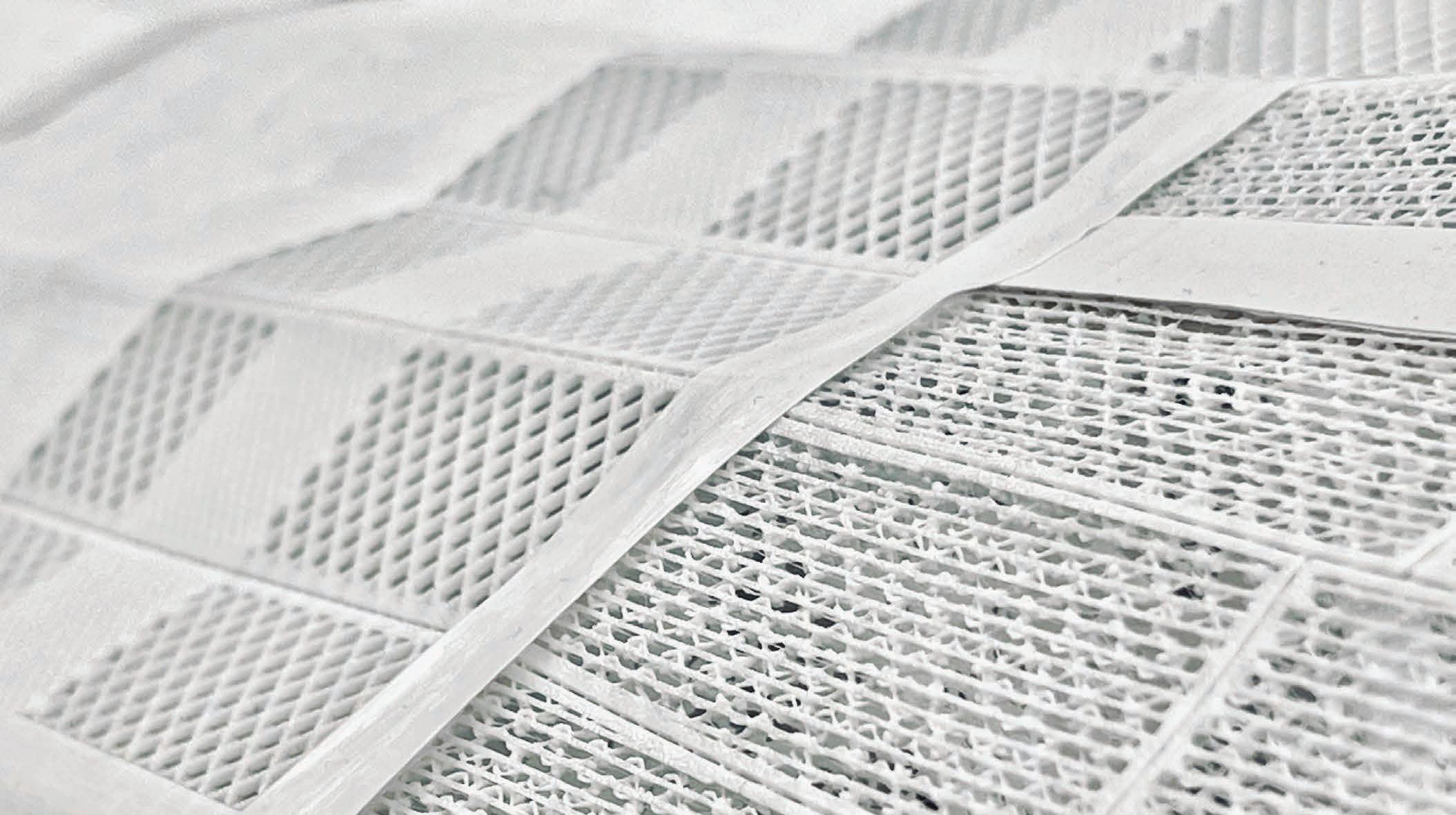
Seam detail between two printed sheets. Prints can be adjusted by layer to overlap adjacent sheets, allowing for a more unified panel without additional material thickness.
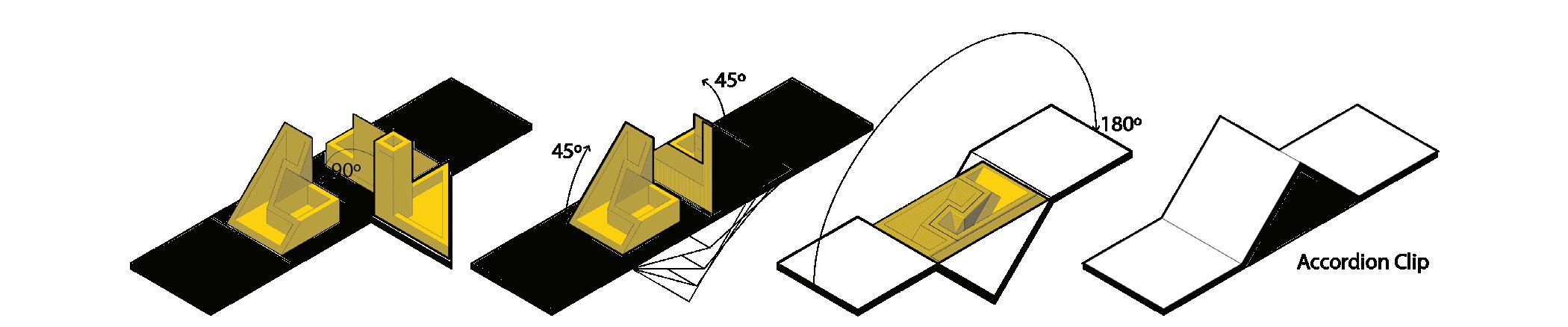
Built-in printed clip for accordion fold sheets to maintain folded shape, an advantage afforded by using the 3D printing medium. Model photo of the seam between the shell and canopy sections of the shelter.
(Top Left) (Middle Left) (Bottom Left) (Right)
EQUIPMENT
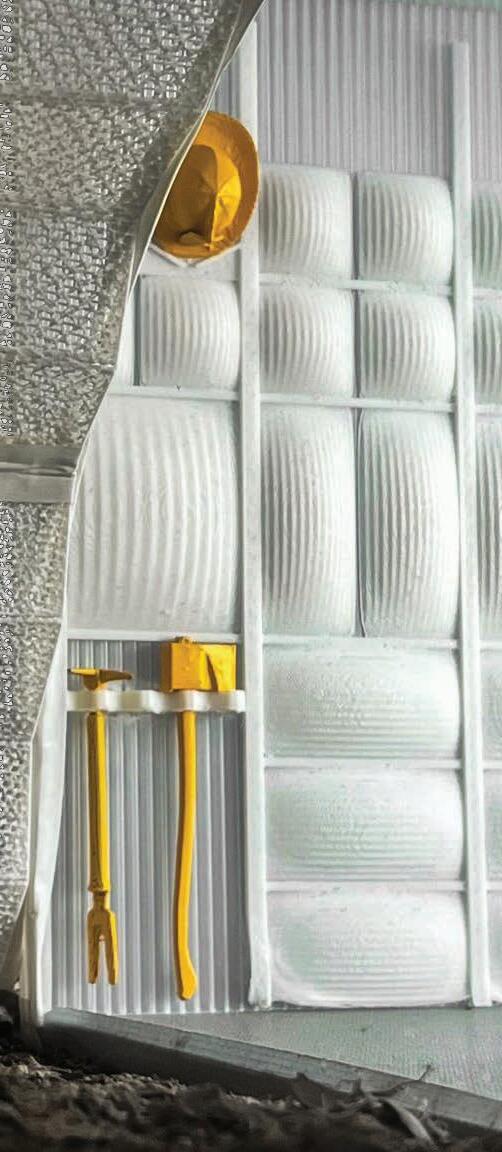
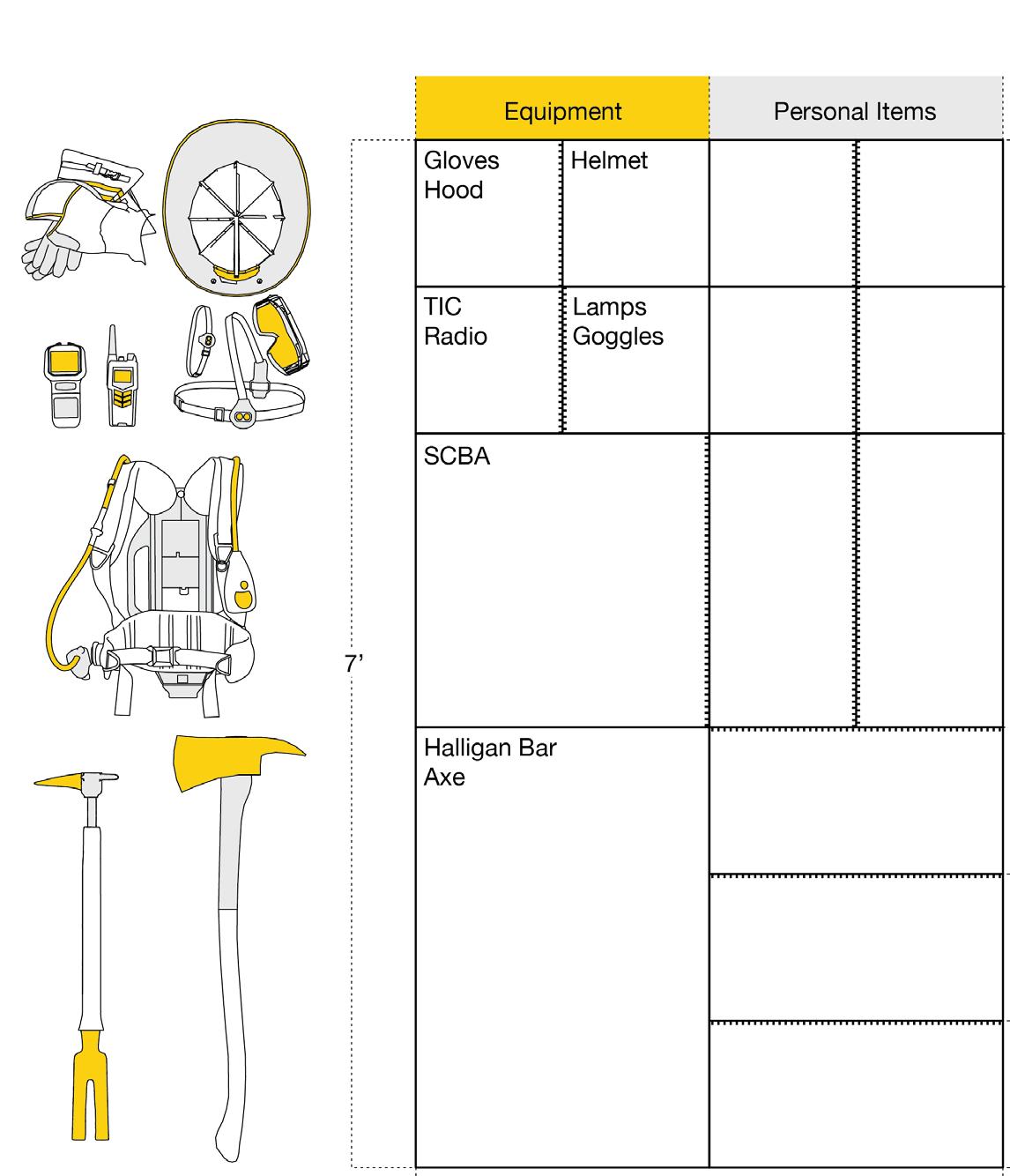
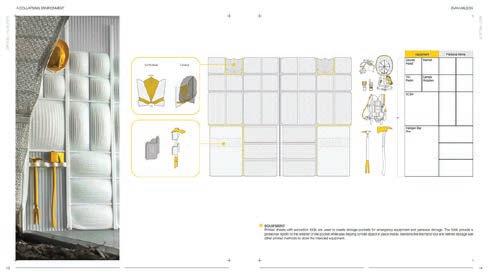
Printed sheets with accordion folds are used to create storage pockets for emergency equipment and personal storage. The folds provide a protective rigidity to the exterior of the pocket while also helping to hold object in place inside. Sections like the hand tool and helmet storage use other printed methods to store the intended equipment.
SCALE MODEL
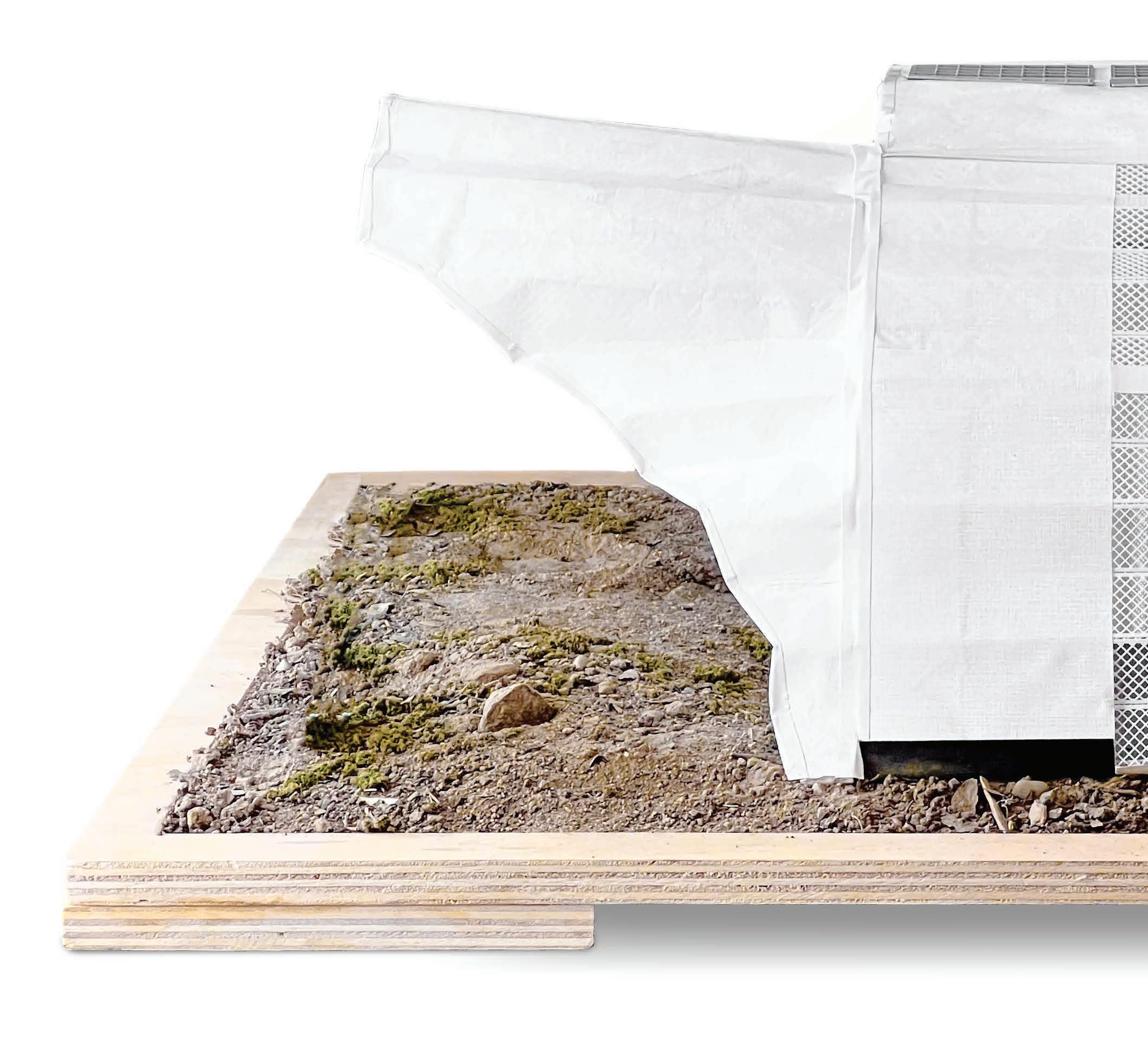
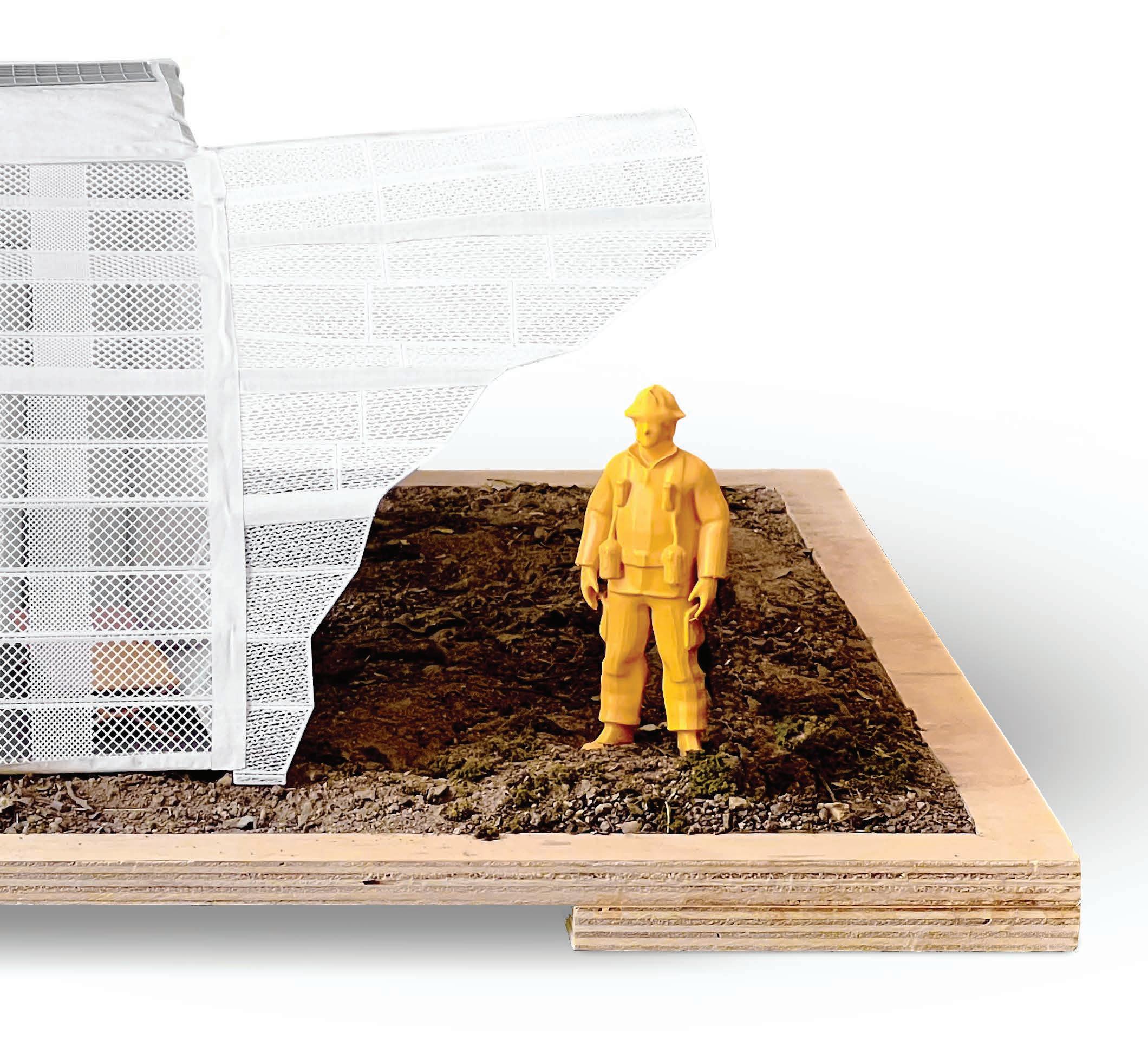
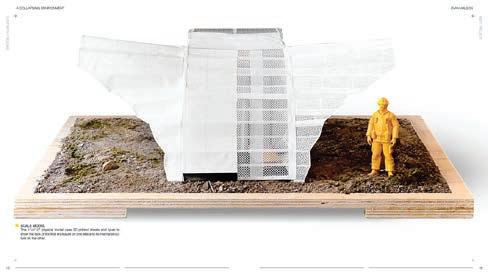
This 1”=1’-0” physical model uses 3D printed sheets and tyvek to show the look of the final enclosure on one side and its internal structure on the other.
Terracotta Fabric
Parametric Design - Facade Design - Diagramming
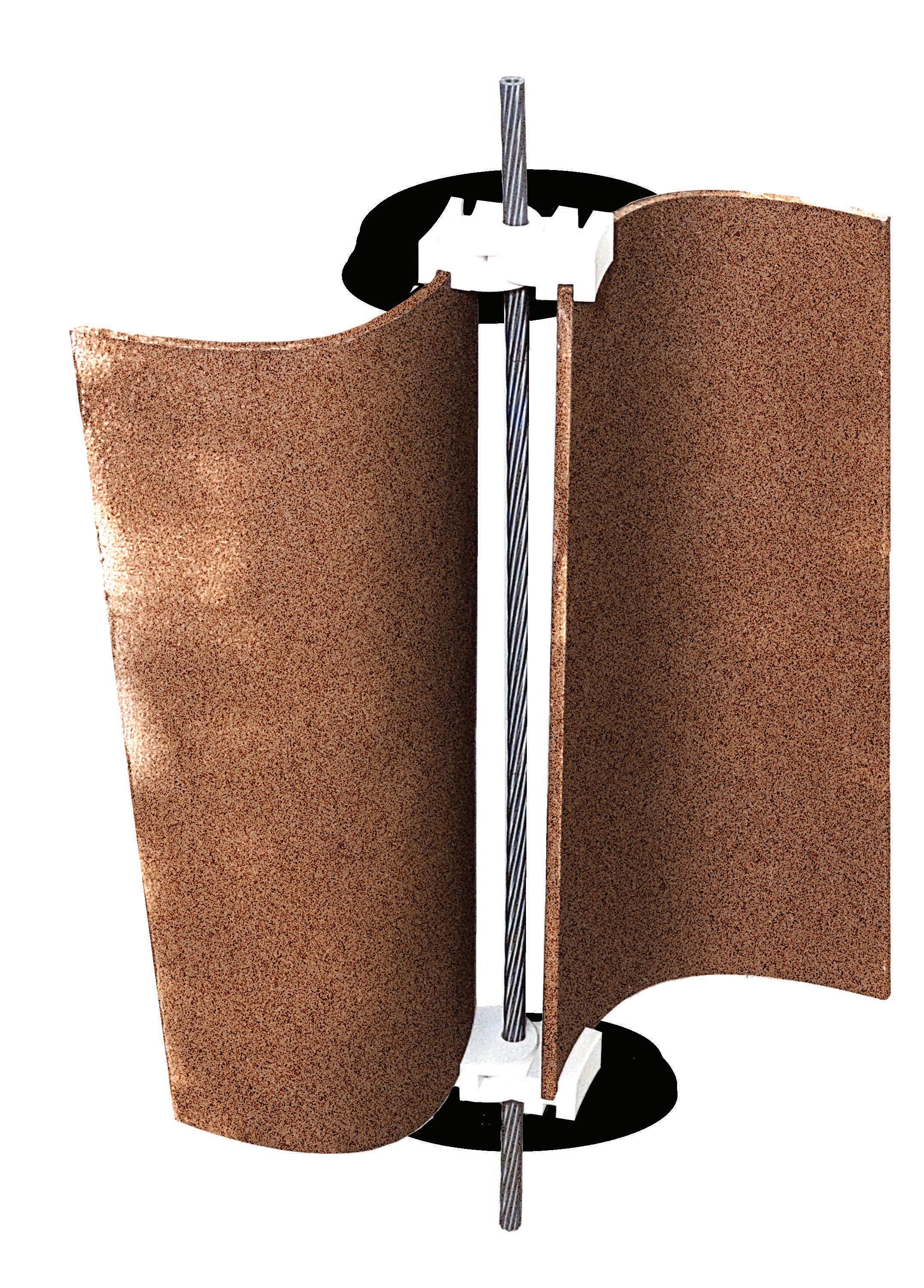
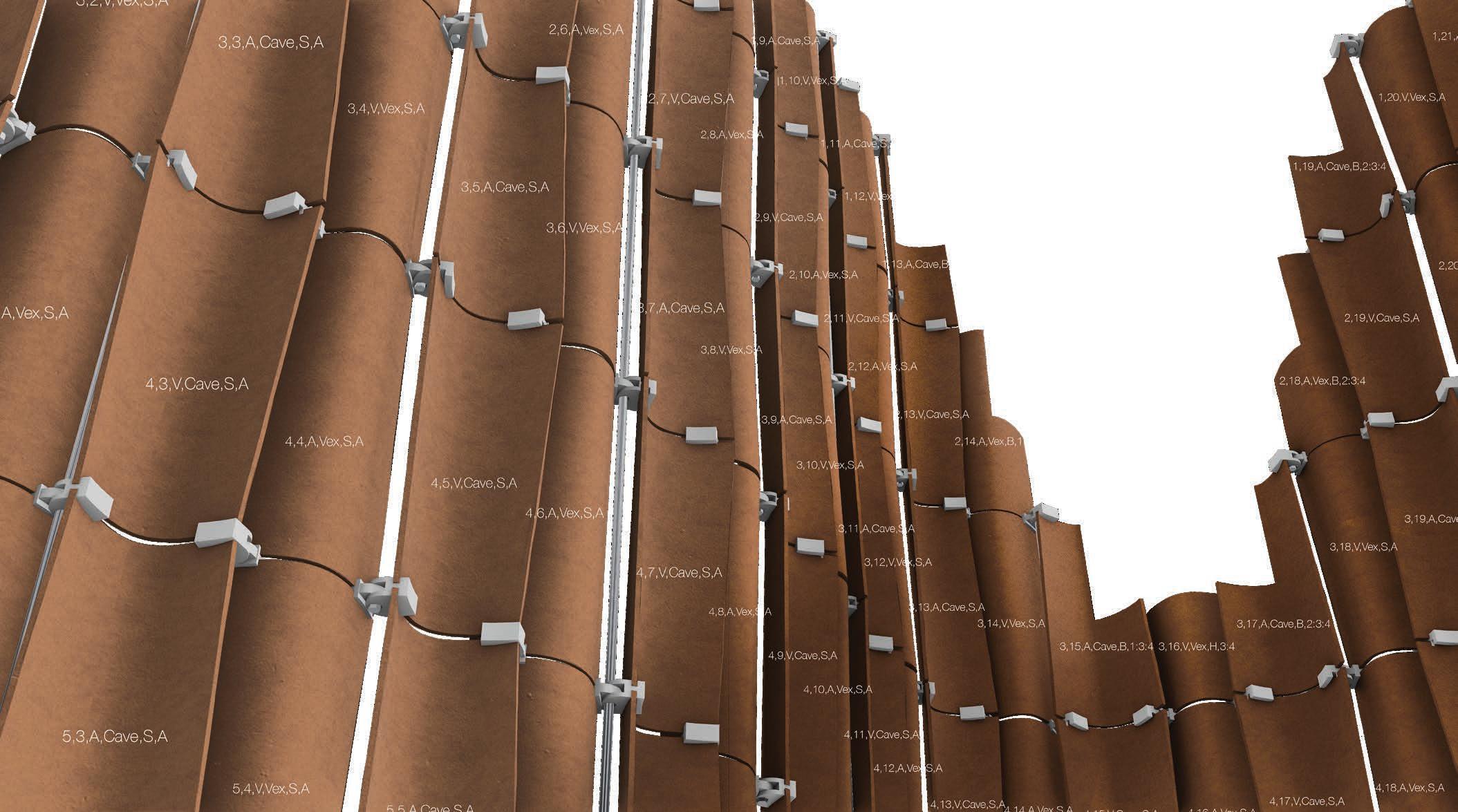
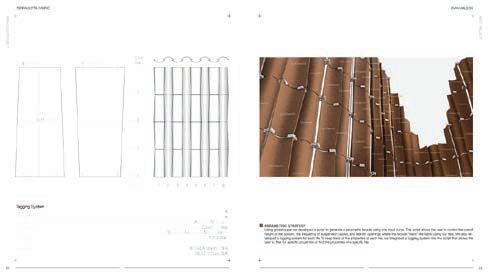
The terracotta facade, composed of refurbished tiles interwoven with 3D-printed connectors, challenges the boundary between rigidity and fluidity. Terracotta, inherently dense and brittle, here assumes the visual softness of woven fabric displaying a contradiction made possible through the deliberate use of flexible joints and tensile cables. The connectors do not simply serve a functional role but assert a formal identity, articulating the weave while highlighting the tension between structure and ornament.The imperfections of connectors and subtle misalignments are embraced, introducing an authenticity that evokes natural movement. Where fabric suggests softness, here terracotta mimics it through assembly, not material transformation.
We considered the traditional missionary style construction of Southern California’s past and sought to repurpose its components to represent the rich multi-cultural fabric the area has today. With the use of reclaimed ceramic roof-tiles, this facade presents a new identity for SoCal in a way that is sustainable and acknowledges its history.
Collaborators: Xin Chen, Tannya Lokwani
Course: Parametric Design
Created: Spring 2025
CONNECTION STRATEGY
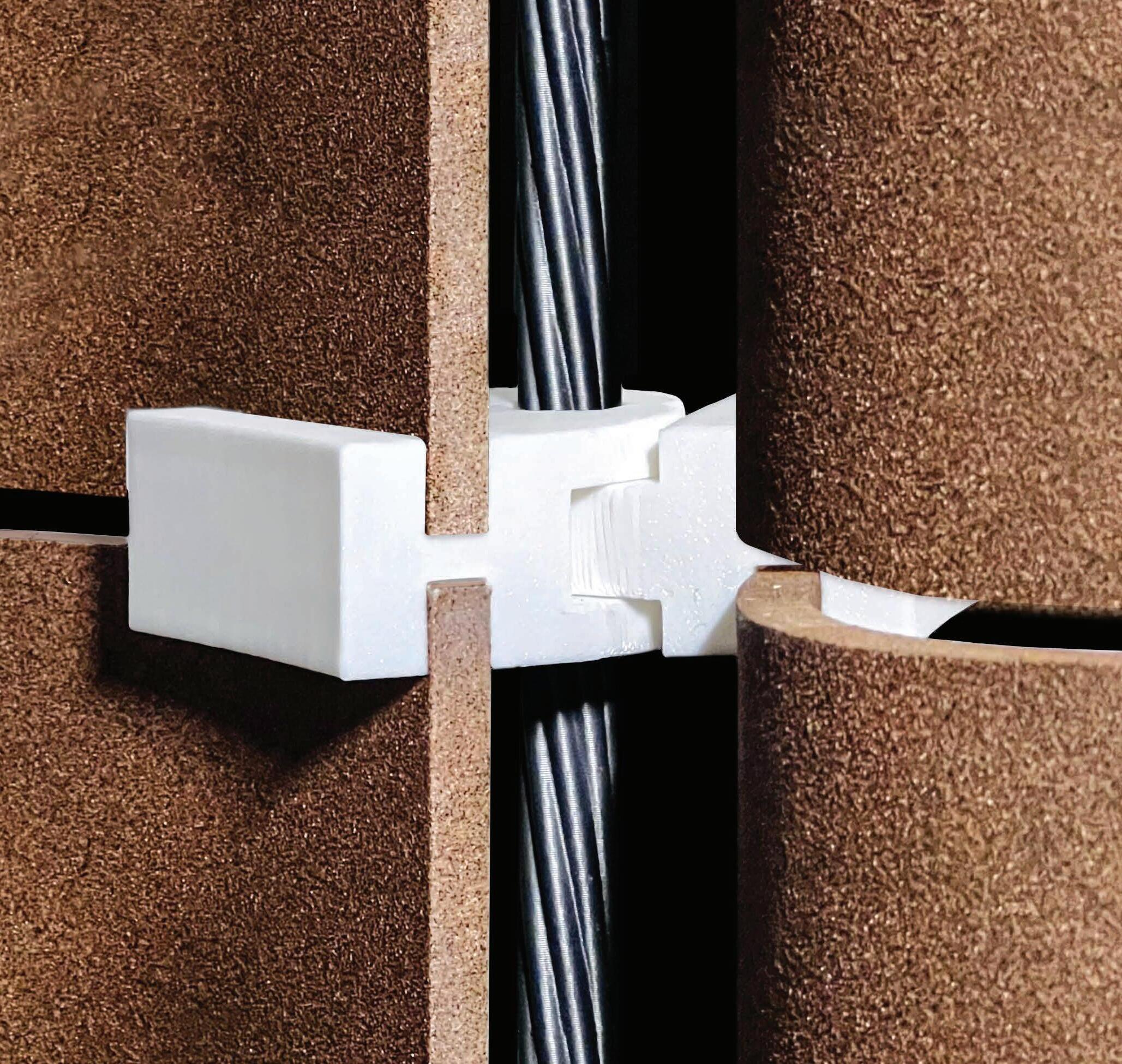
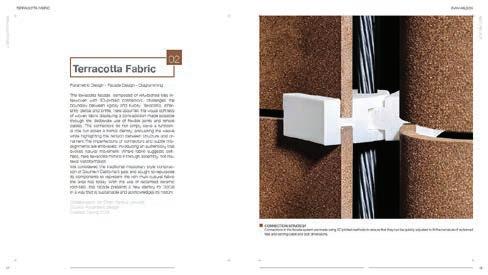
Connections in the facade system are made using 3D printed methods to ensure that they can be quickly adjusted to fit the curvature of reclaimed tiles and varying cable and bolt dimensions.
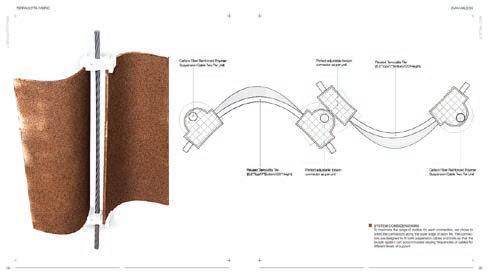
Carbon Fiber Reinforced Polymer Suspension Cable Two Per Unit
Carbon Fiber Reinforced Polymer Suspension Cable Two Per Unit
SYSTEM CONSIDERATIONS
To maximize the range of motion for each connection, we chose to orient the connectors along the outer edge of each tile. The connectors are designed to fit both suspension cables and bolts so that the facade system can accommodate varying frequencies of cables for different levels of support.
Tagging System
PARAMETRIC STRATEGY
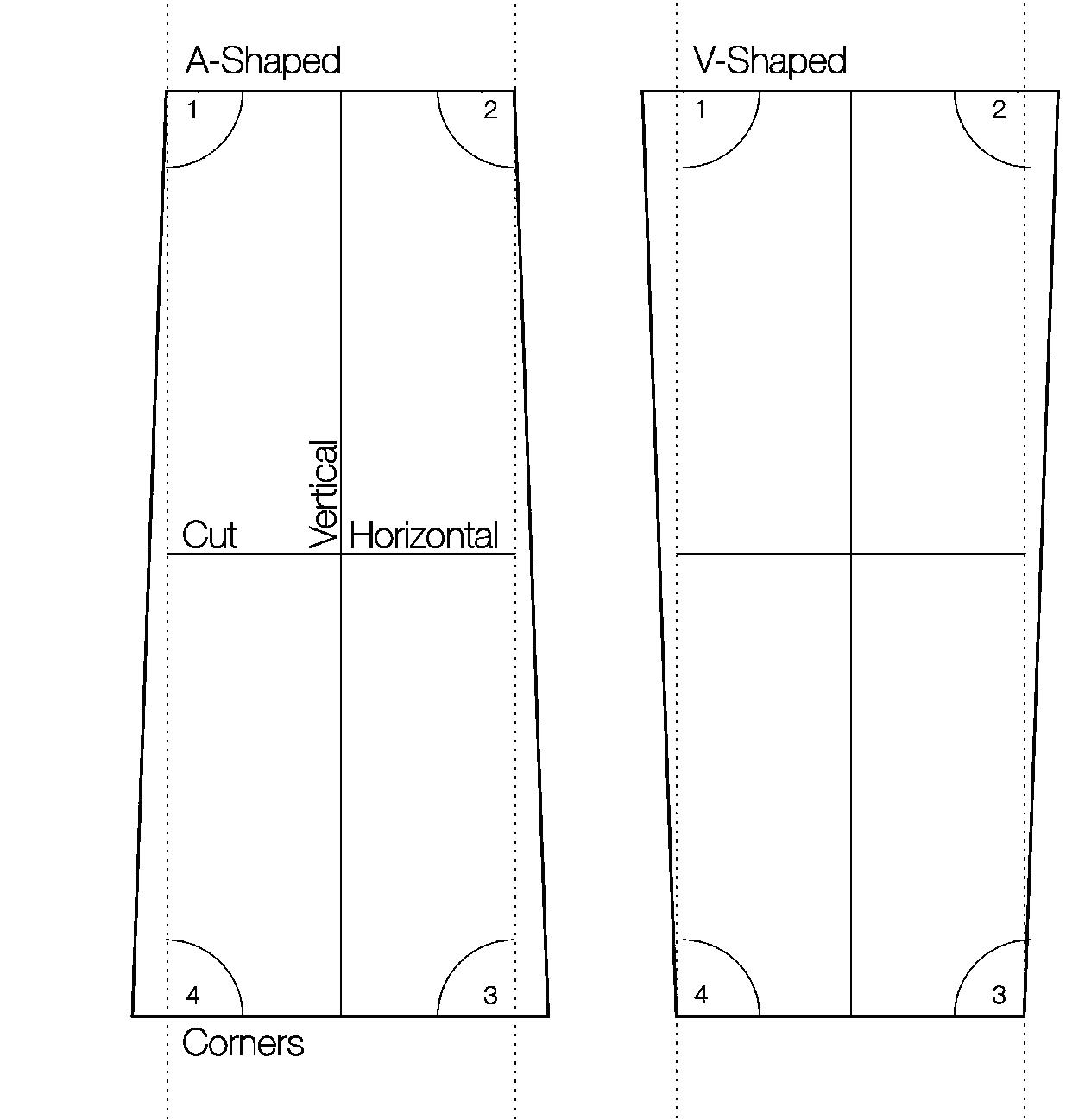
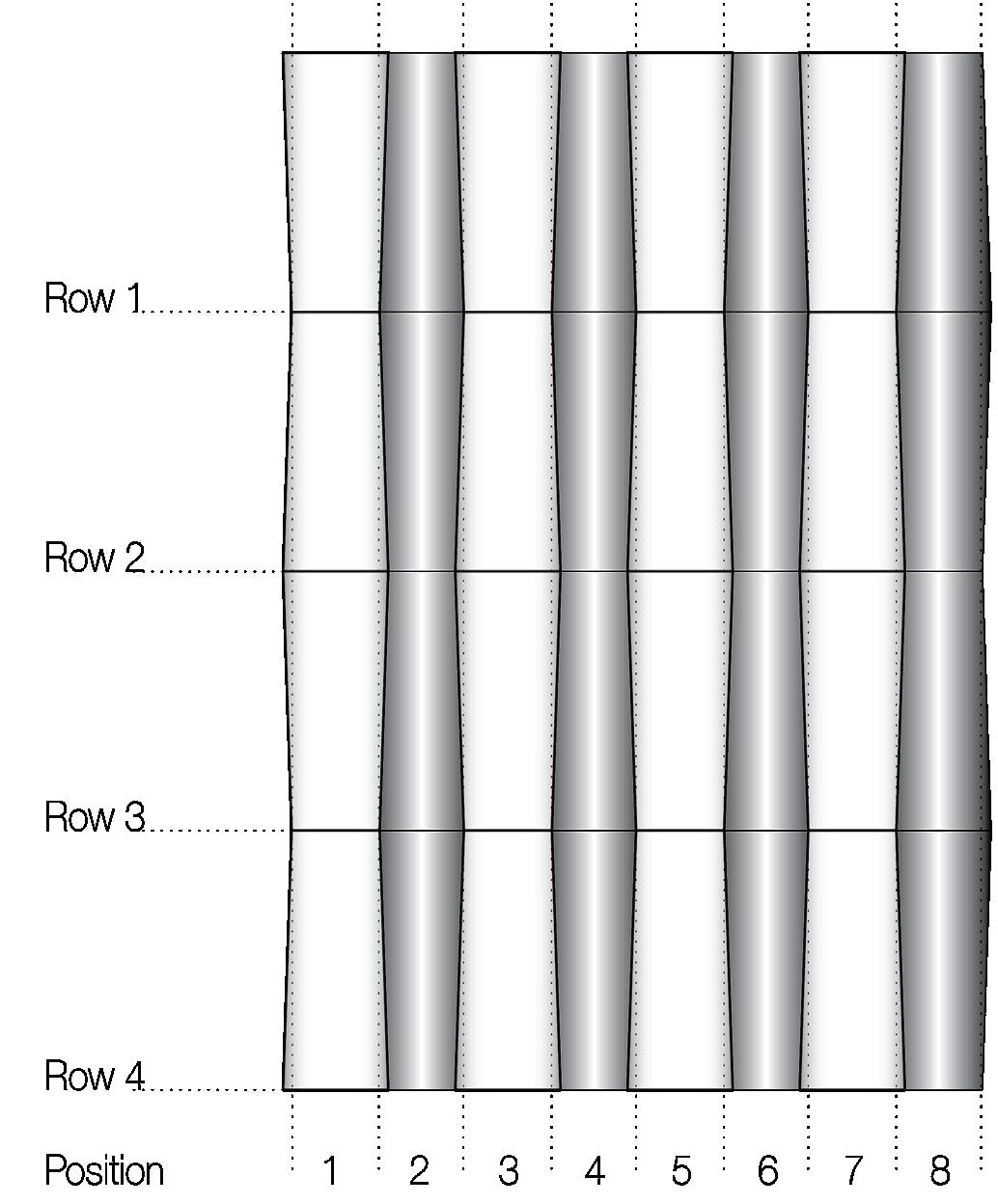
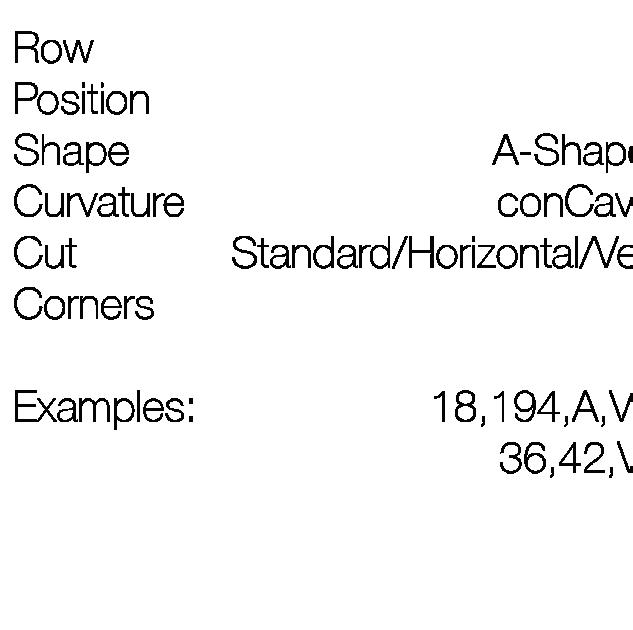
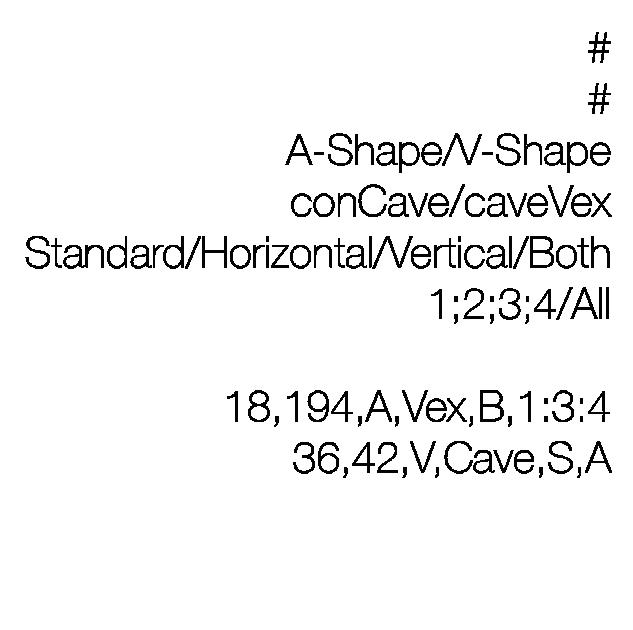
Using grasshopper we developed a script to generate a parametric facade using one input curve. This script allows the user to control the overall height of the system, the frequency of suspension cables, and identify openings where the facade “tears” like fabric using cut tiles. We also developed a tagging system for each tile To keep track of the properties of each tile, we integrated a tagging system into the script that allows the user to filter for specific properties or find the properties of a specific tile.
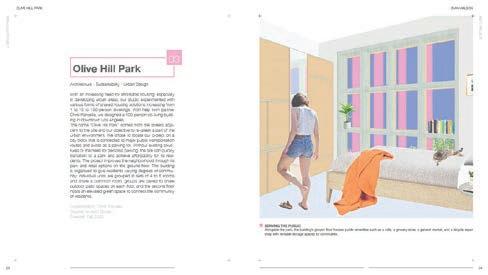
Olive Hill Park
Architecture - Sustainability - Urban Design
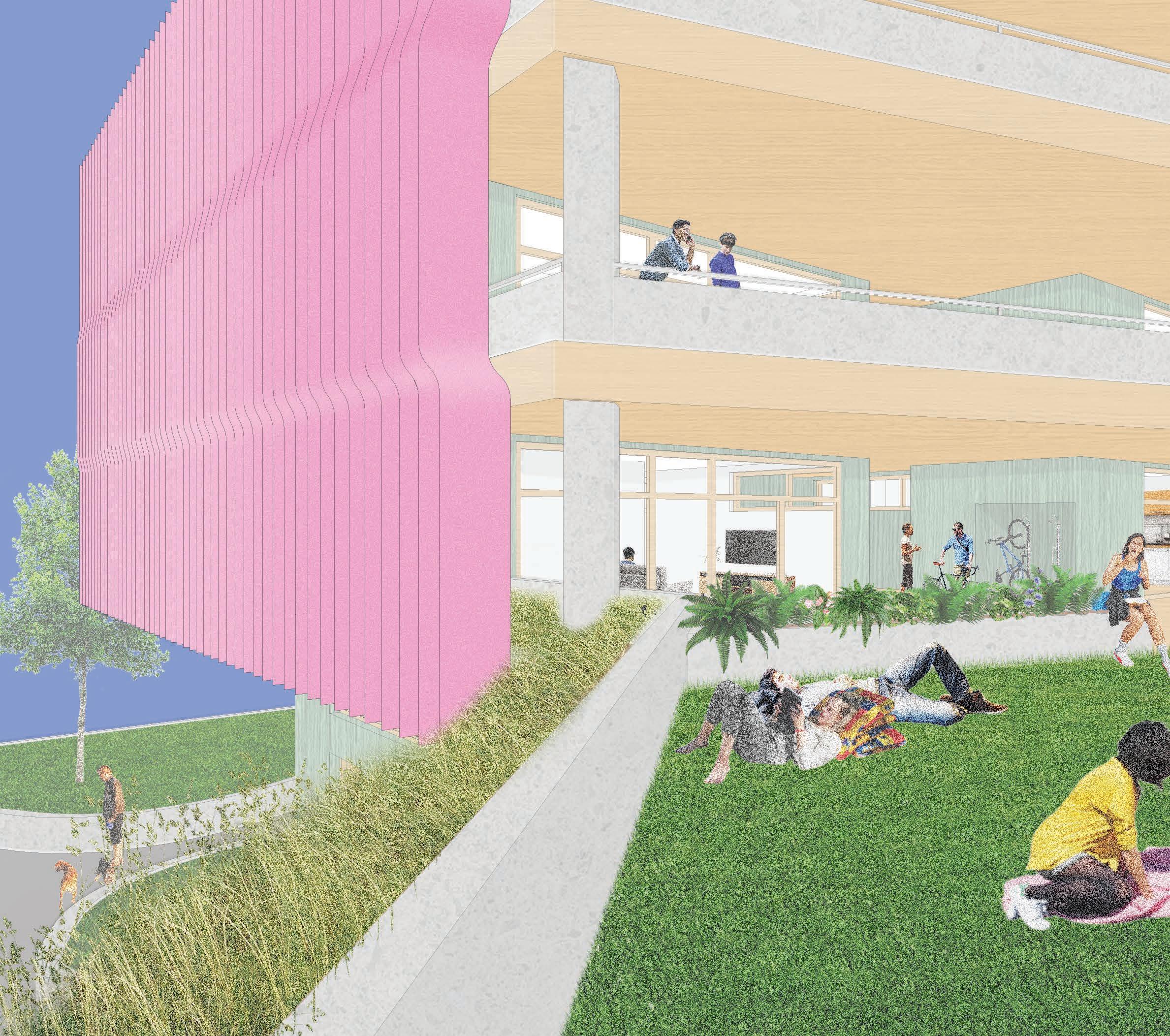
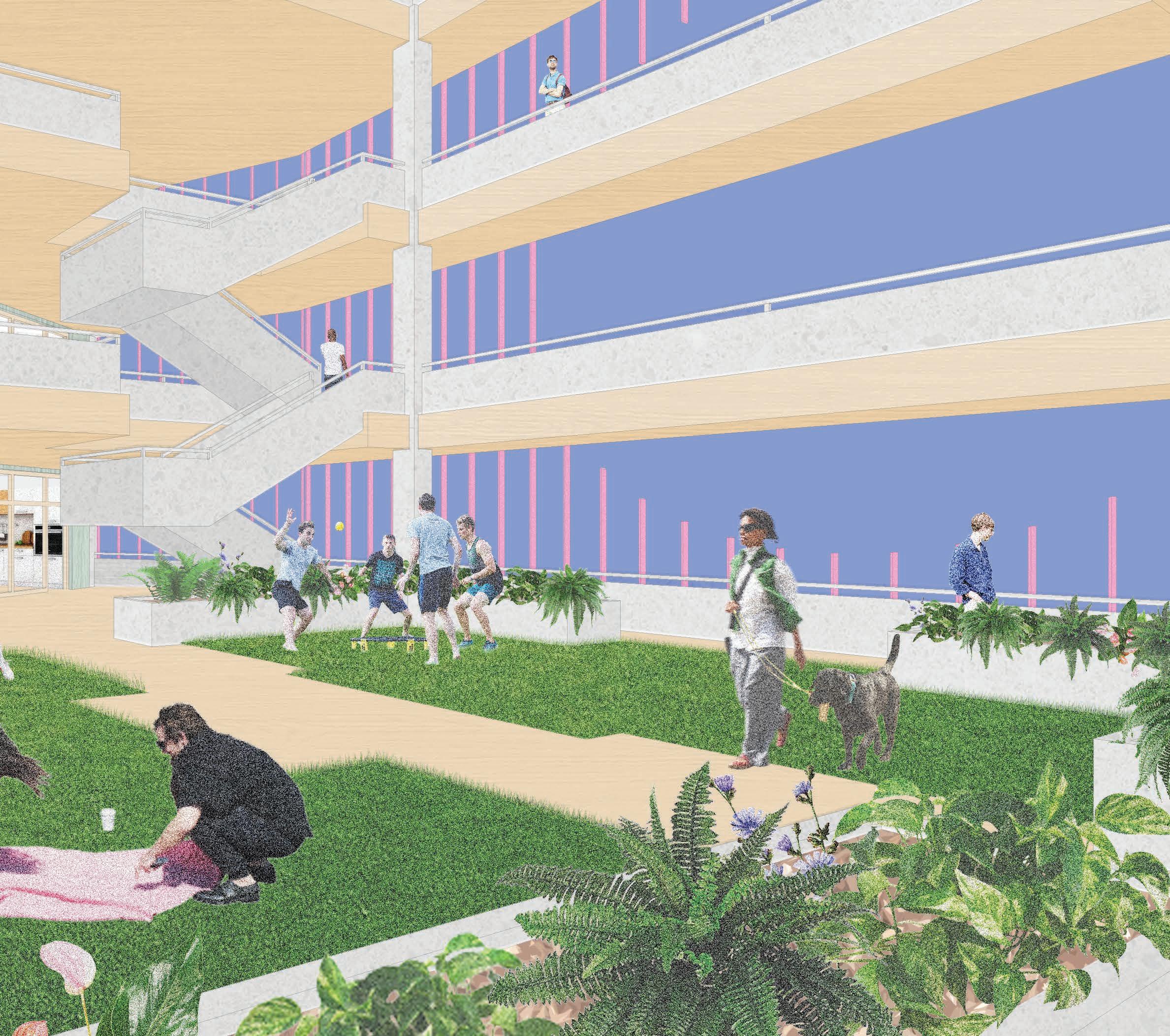
With an increasing need for affordable housing, especially in developing urban areas, our studio experimented with various forms of shared housing solutions increasing from 1 to 10 to 100-person dwellings. With help from partner Chris Panzella, we designed a 100-person co-living building in downtown Los Angeles.
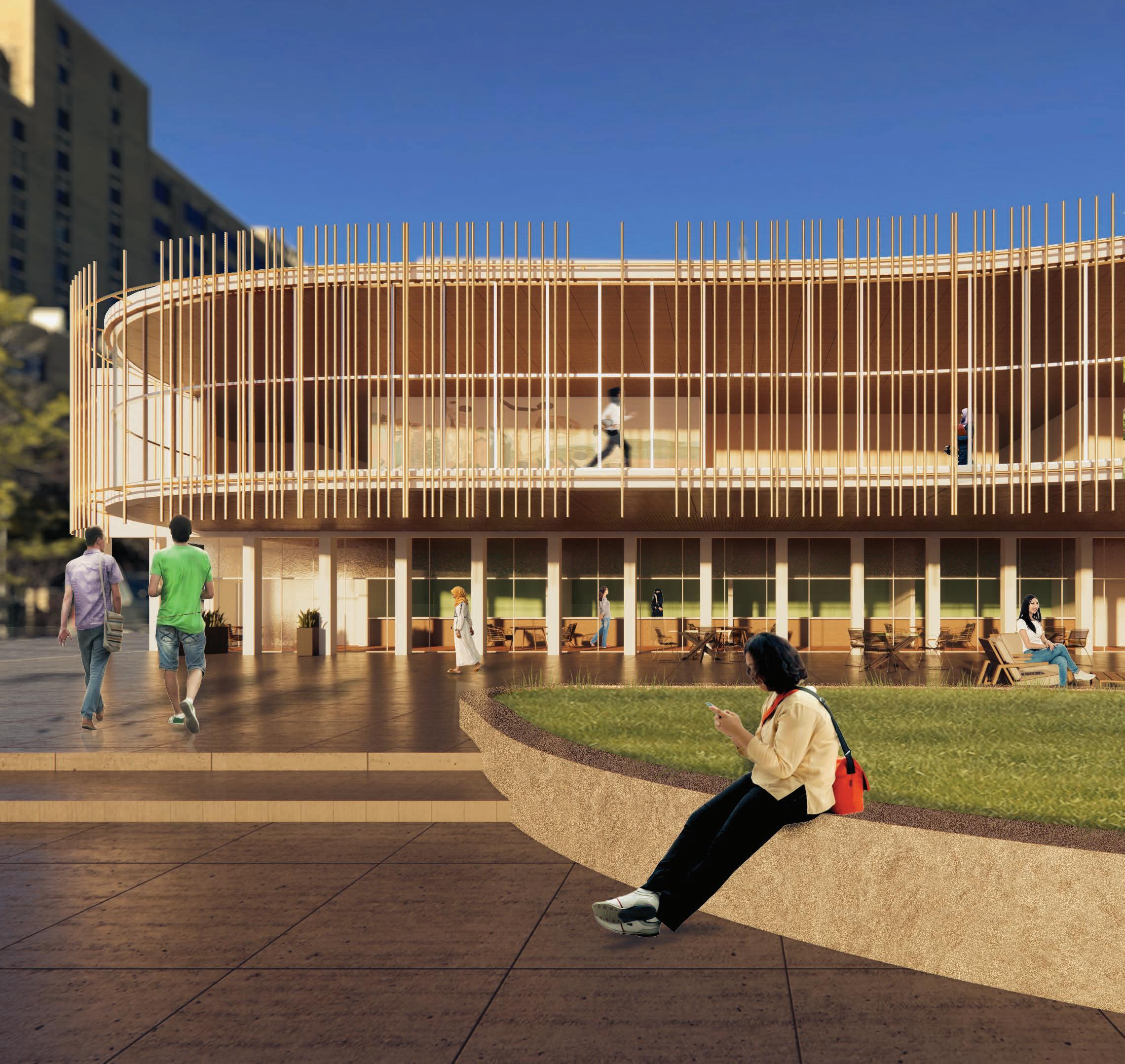
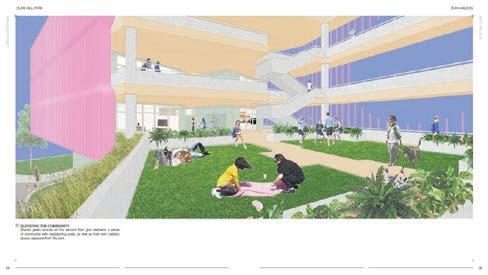
The name “Olive Hill Park” comes from the streets adjacent to the site and our objective to re-green a part of the urban environment. We chose to locate our project on a city block that is connected to major public transportation routes and exists as a parking lot. Without existing structures or the need for personal parking, the site can quickly transition to a park and achieve affordability for its residents. The project improves the neighborhood through its park and retail options on the ground floor. The building is organized to give residents varying degrees of community: individual units are grouped in sets of 4 to 5 rooms and share a common room, groups are paired to share outdoor patio spaces on each floor, and the second floor hosts an elevated green space to connect the community of residents.
Collaborators: Chris Panzella
Course: M.Arch Studio 1
Created: Fall 2023
SERVING THE PUBLIC
Alongside the park, the building’s ground floor houses public amenities such as a cafe, a grocery store, a general market, and a bicycle repair shop with rentable storage spaces for commuters.
OPTIMIZED LIVING
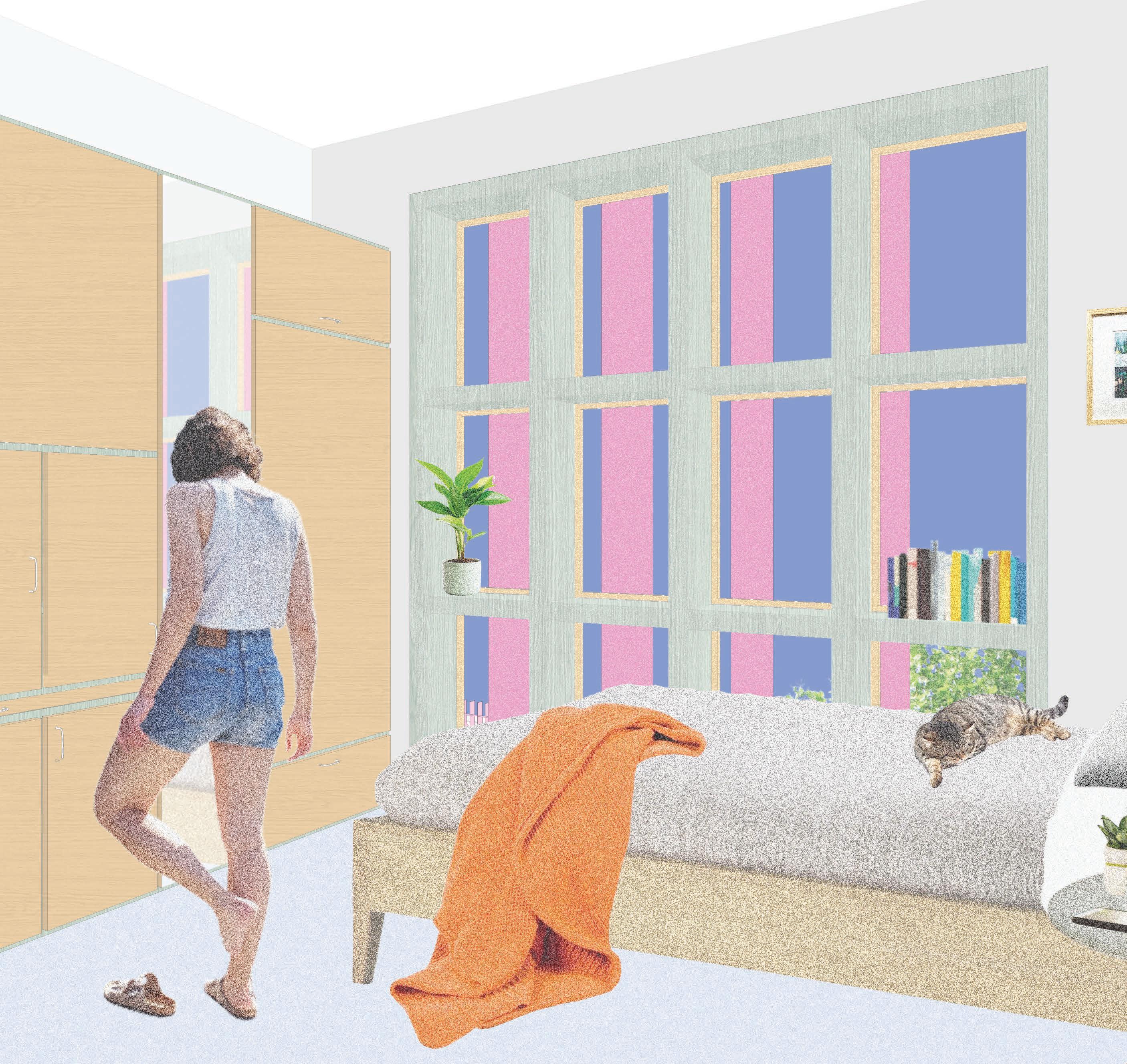
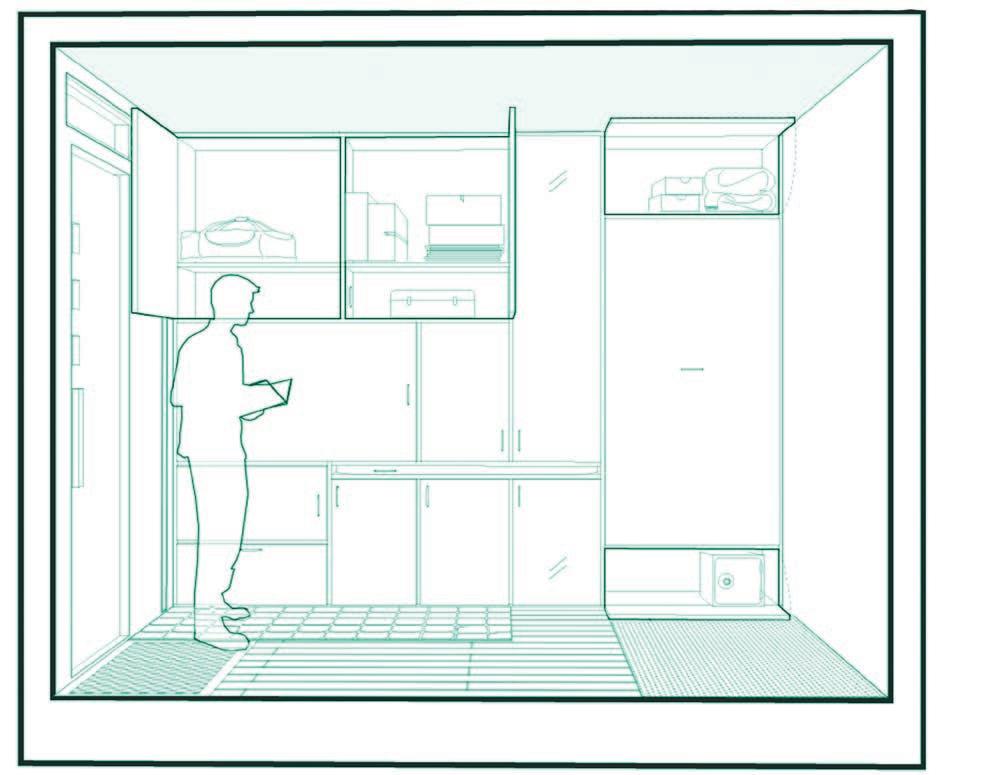
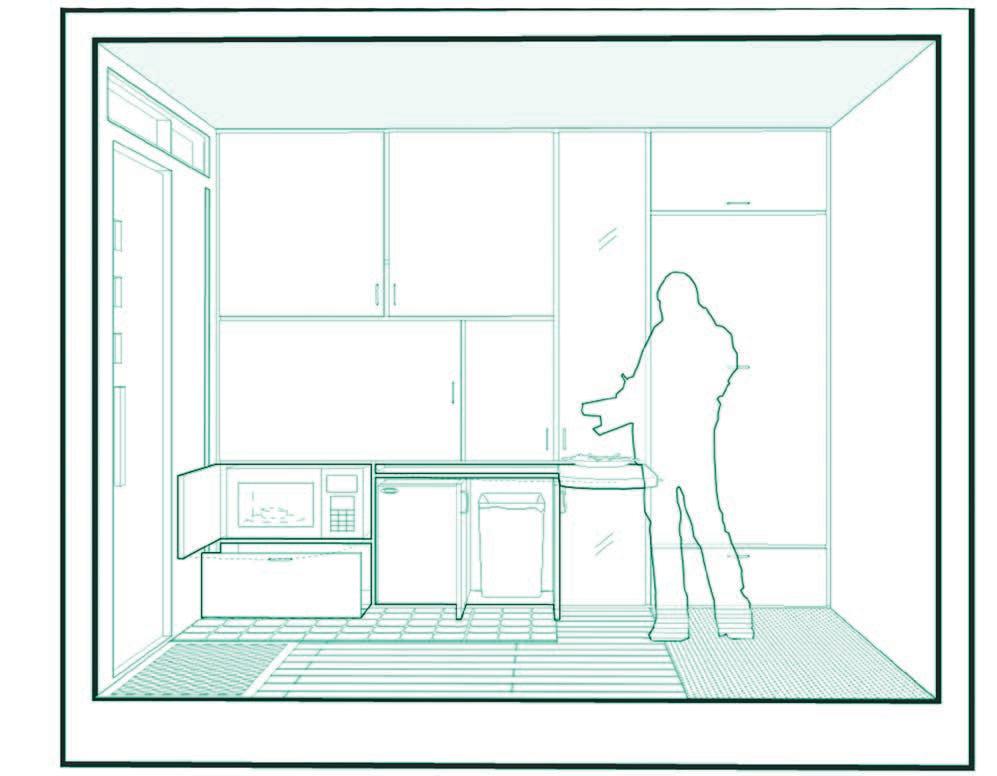
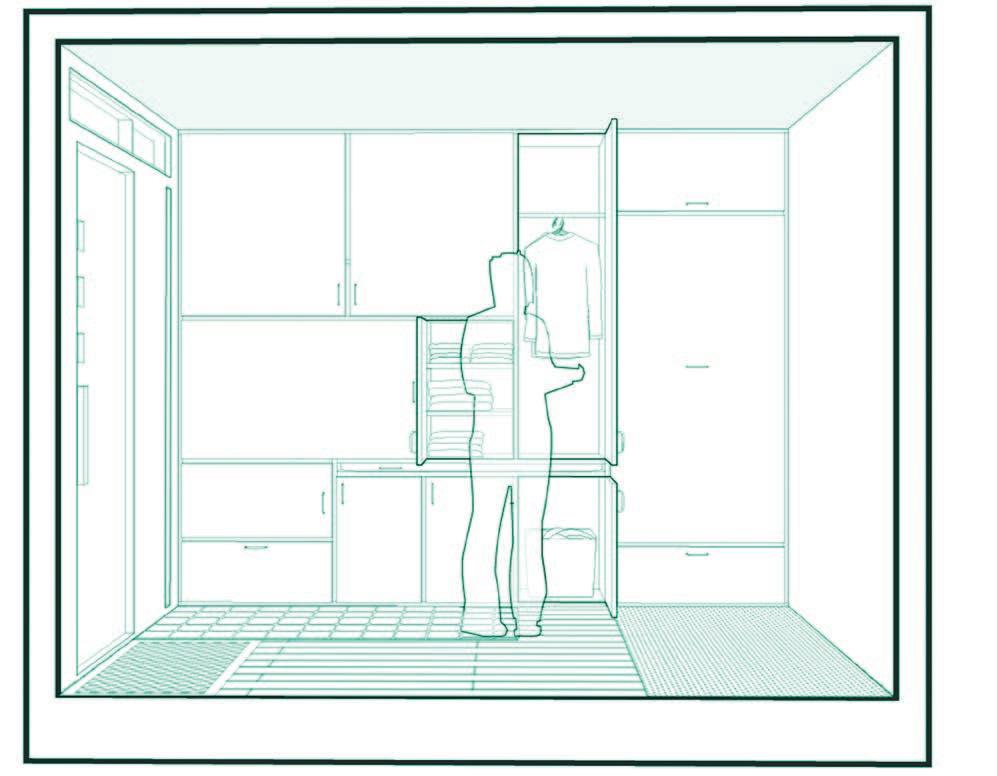
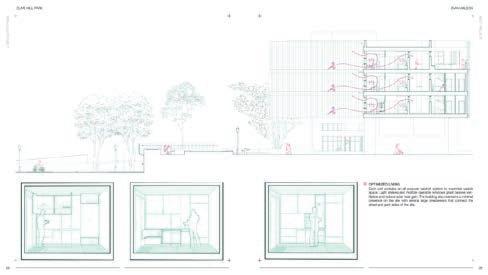
Each unit contains an all-purpose cabinet system to maximize usable space. Light shelves and multiple operable windows grant passive ventilation and reduce solar heat gain. The building also maintains a minimal presence on the site with several large breezeways that connect the street and park sides of the site.
BENDING THE RULES
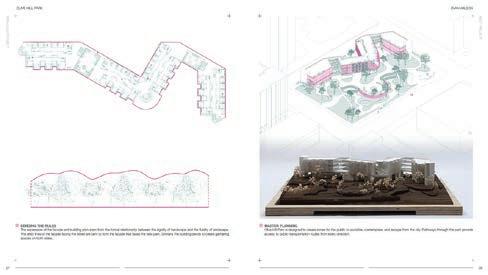
The expression of the facade and building plan stem from the formal relationship between the rigidity of hardscape and the fluidity of landscape. The strict lines of the facade facing the street are bent to form the facade that faces the new park. Similarly the building bends to create gathering spaces on both sides.
MASTER PLANNING
Olive Hill Park is designed to create zones for the public to socialize, contemplate, and escape from the city. Pathways through the park provide access to public transportation routes from every direction.
ELEVATING THE COMMUNITY
Shared green spaces on the second floor give residents a sense of community with neighboring pods, as well as their own outdoor space, separate from the park.
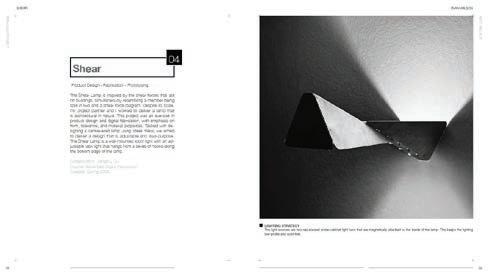
Shear
Product Design - Fabrication - Prototyping
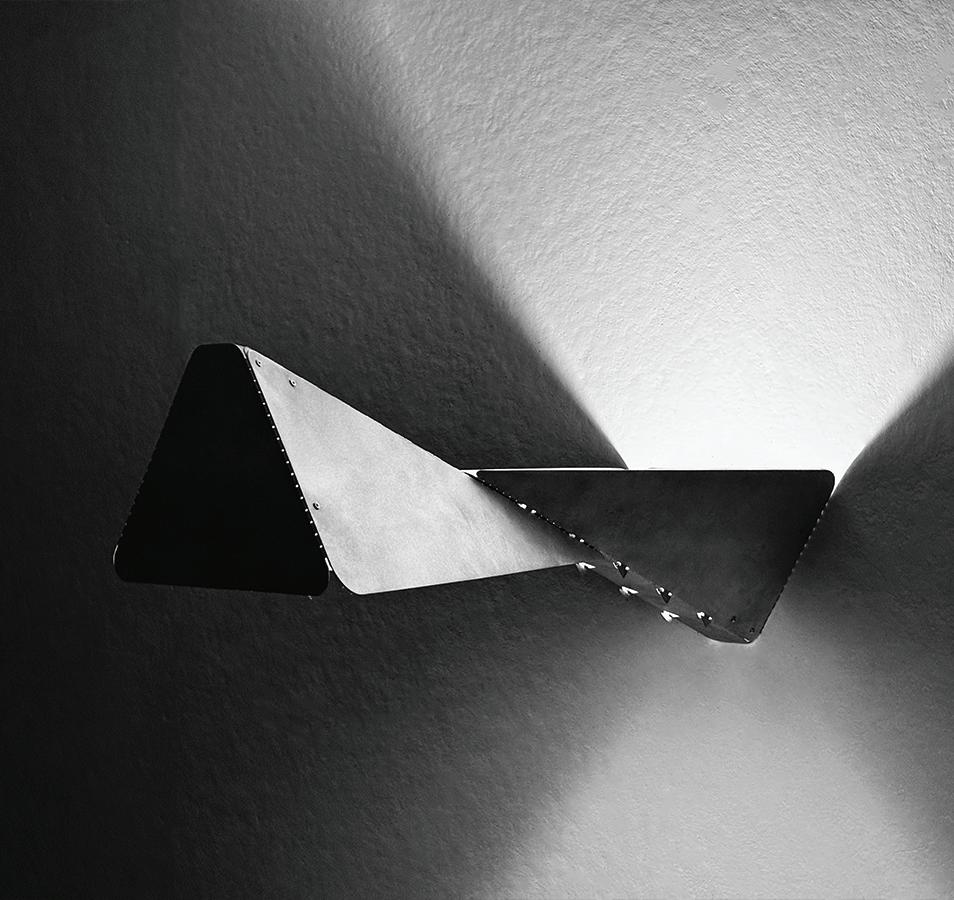
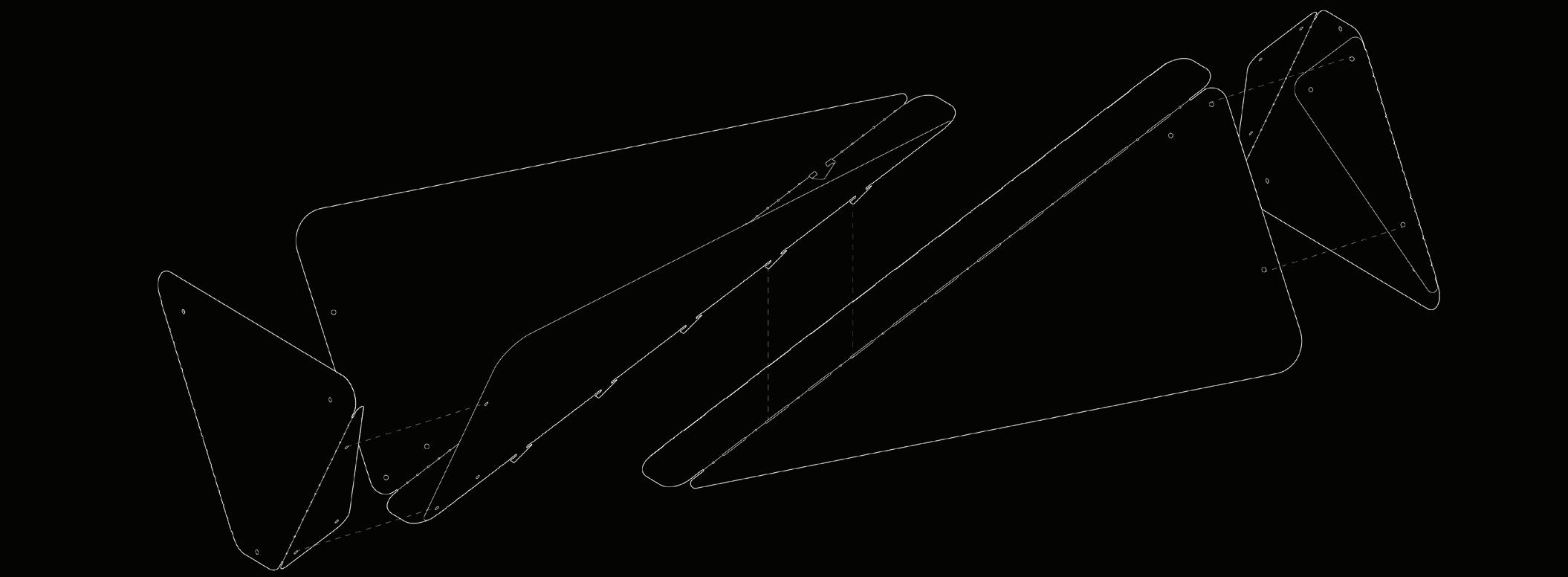
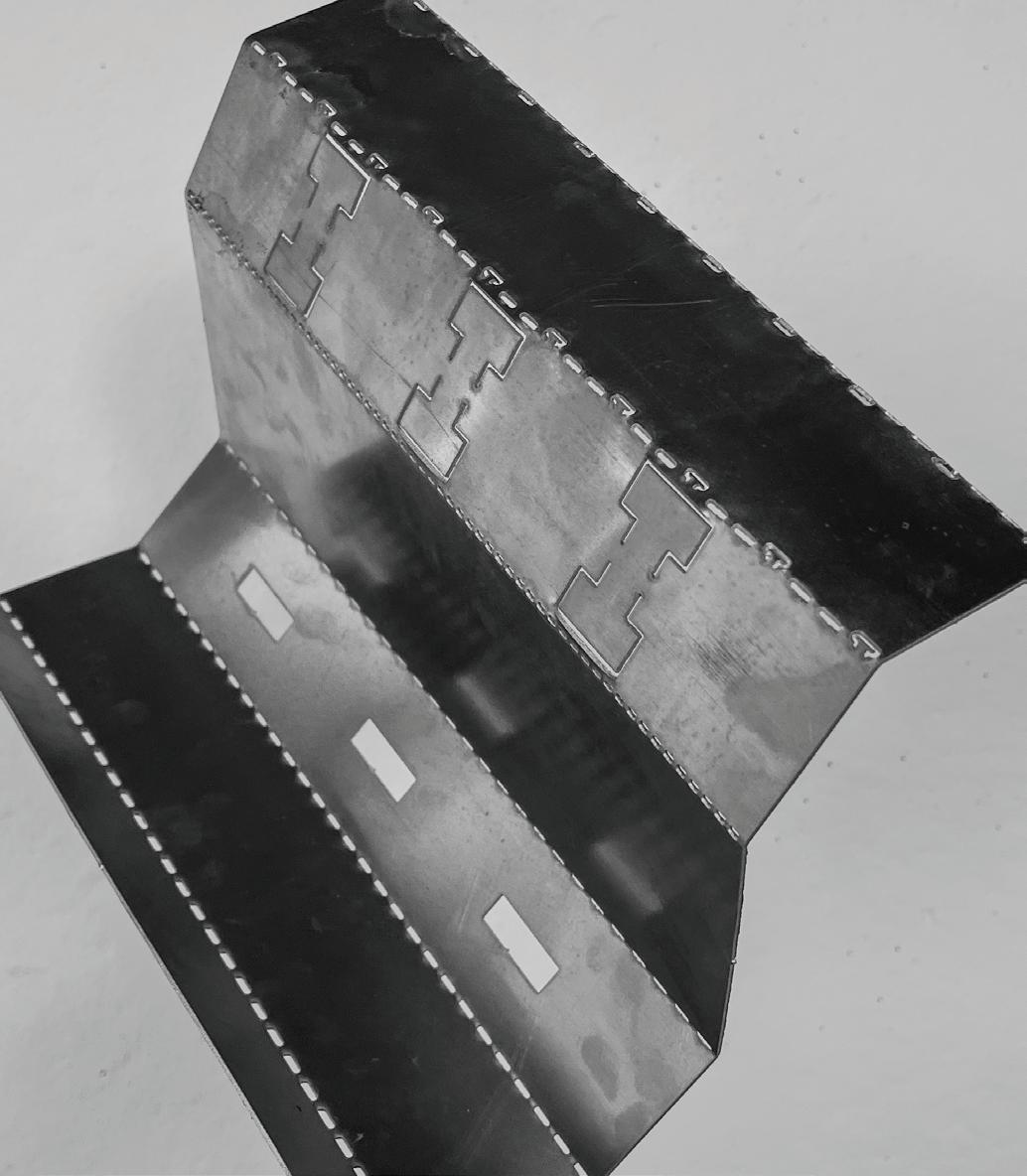
The Shear Lamp is inspired by the shear forces that act on buildings, simultaneously resembling a member being split in two and a shear force diagram. Despite its scale, my project partner and I worked to deliver a lamp that is architectural in nature. This project was an exercise in product design and digital fabrication, with emphasis on form, tolerance, and material properties. Tasked with designing a cantilevered lamp using sheet metal, we aimed to deliver a design that is adjustable and dual-purpose. The Shear Lamp is a wall-mounted room light with an adjustable task light that hangs from a series of hooks along the bottom edge of the lamp.
Collaborators: Jianghui Qu
Course: Advanced Digital Fabrication
Created: Spring 2025
LIGHTING STRATEGY
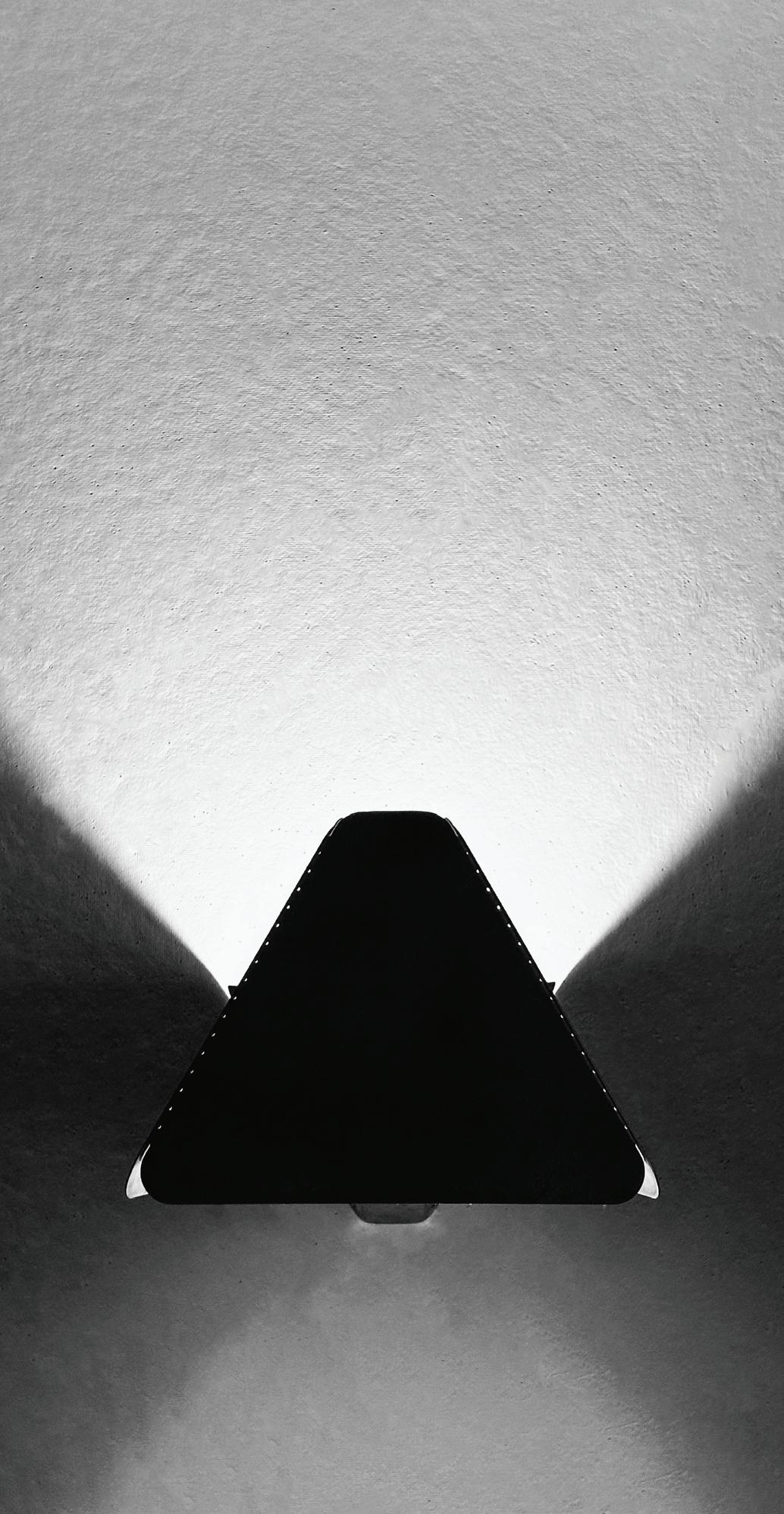
The light sources are two repurposed under-cabinet light bars that are magnetically attached to the inside of the lamp. This keeps the lighting low-profile and cord-free.
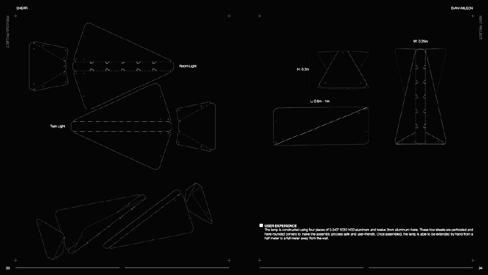
Task Light
Room Light
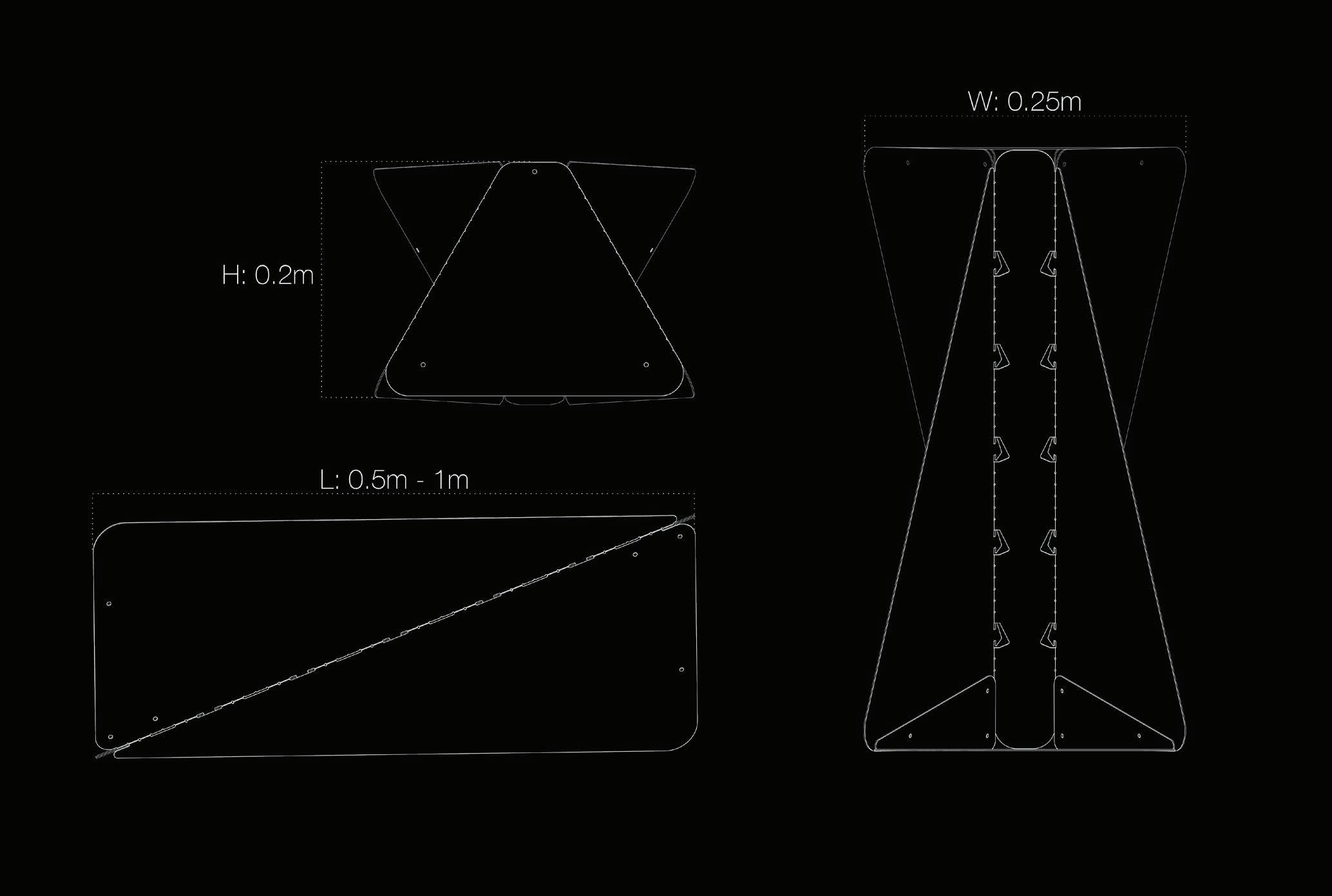
W: 0.25m
H: 0.2m
L: 0.5m - 1m
USER EXPERIENCE
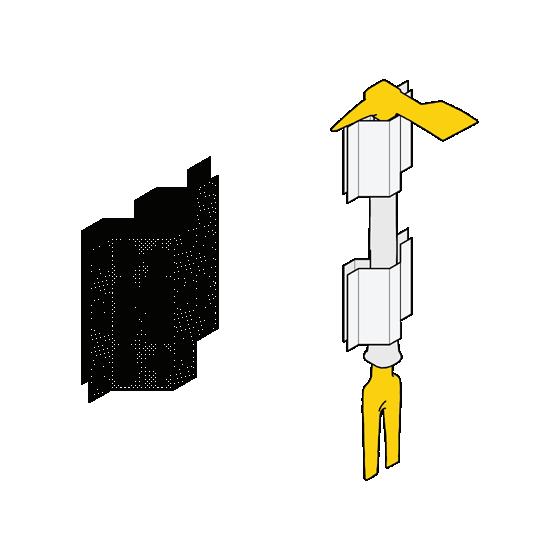
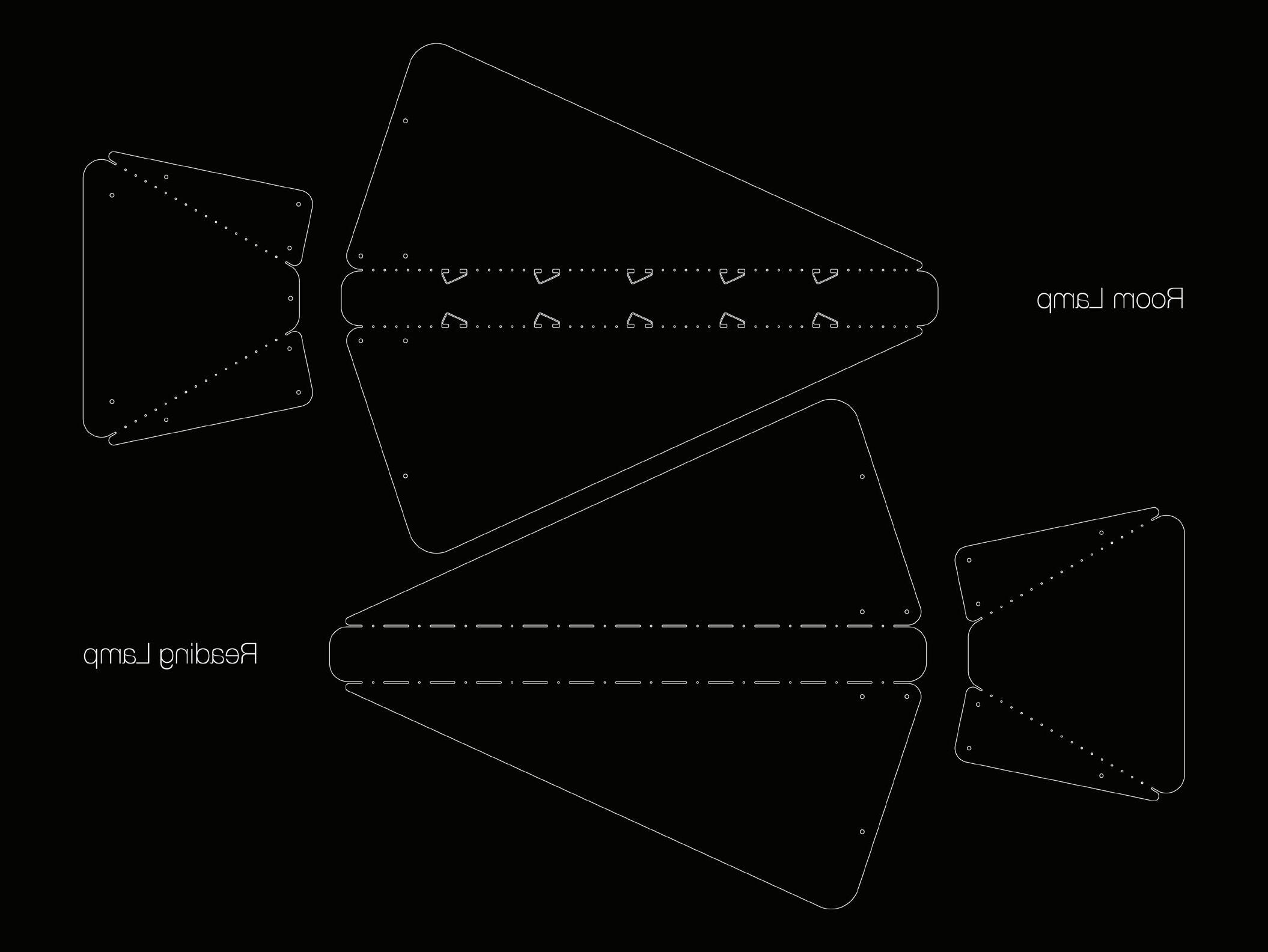
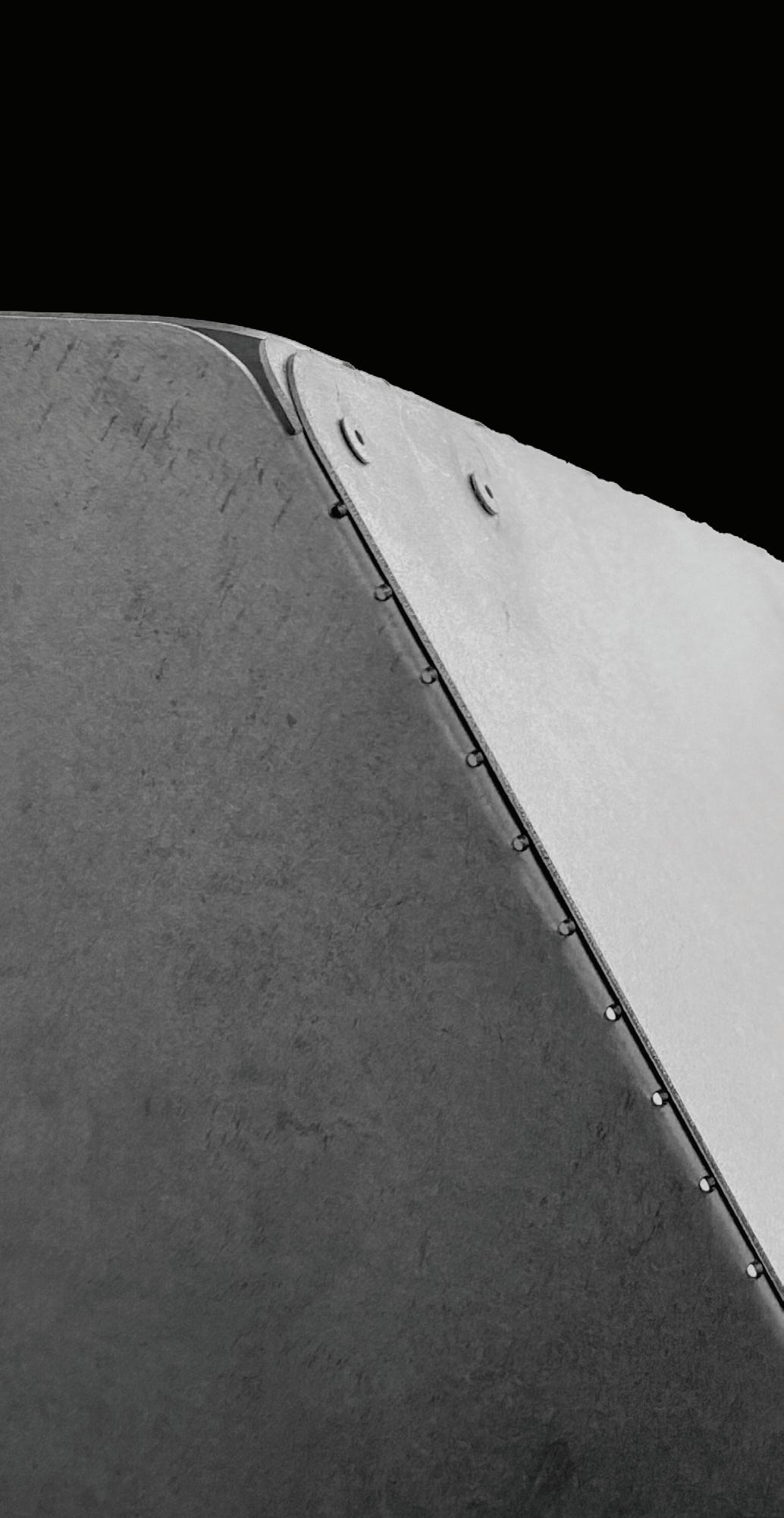
The lamp is constructed using four pieces of 0.040” 5052 H32 aluminum and twelve 3mm aluminum rivets. These four sheets are perforated and have rounded corners to make the assembly process safe and user-friendly. Once assembled, the lamp is able to be extended by hand from a half meter to a full meter away from the wall.
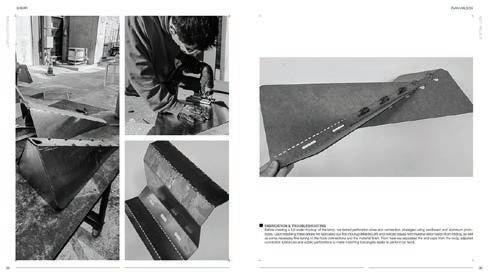
FABRICATION & TROUBLESHOOTING
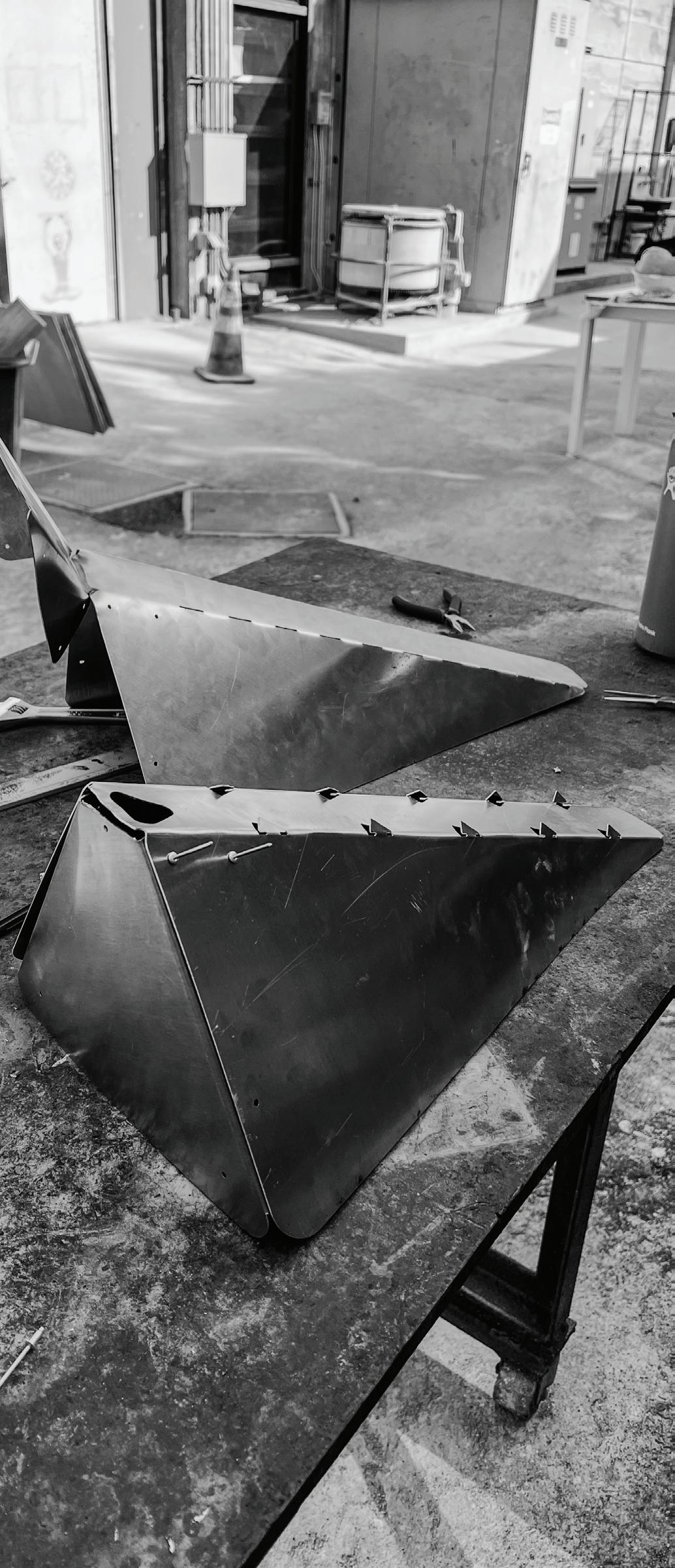
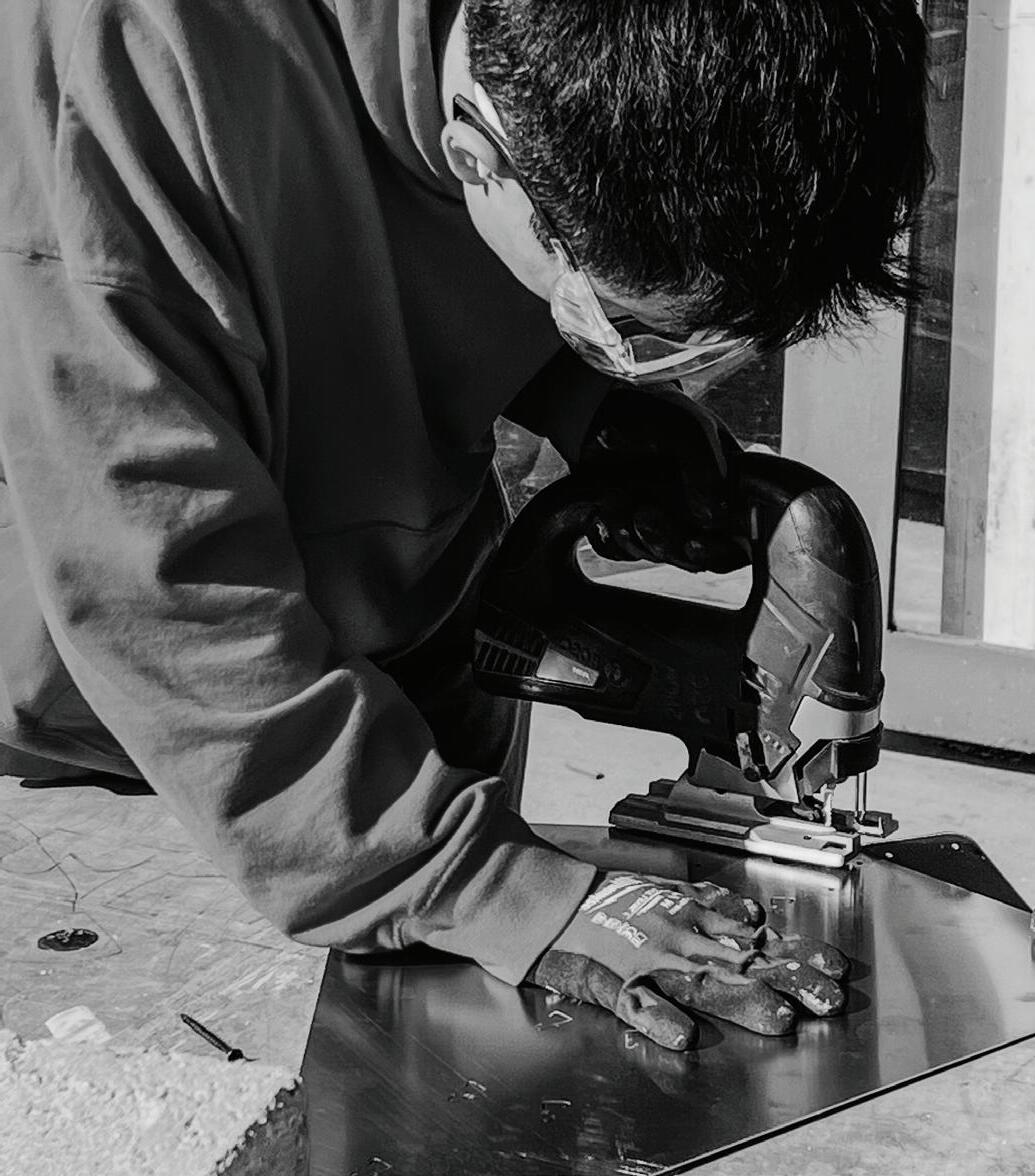
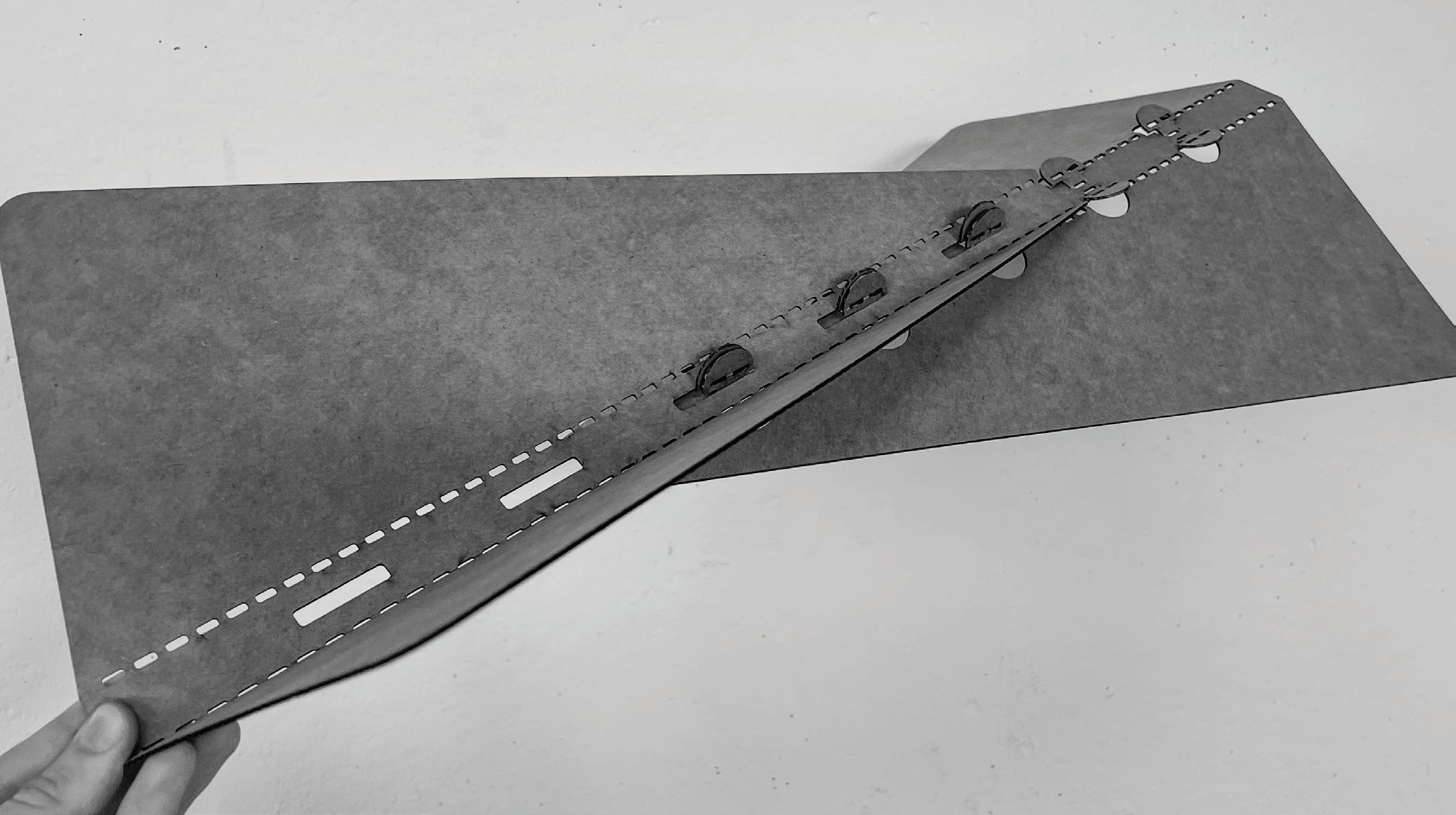
Before creating a full-scale mockup of the lamp, we tested perforation sizes and connection strategies using cardboard and aluminum prototypes. Upon resolving these details we fabricated our first mockup (Middle Left) and noticed issues with material deformation from folding, as well as some necessary fine-tuning to the hook connections and the material finish. From here we separated the end caps from the body, adjusted connection tolerances and added perforations to make matching fold angles easier to perform by hand.
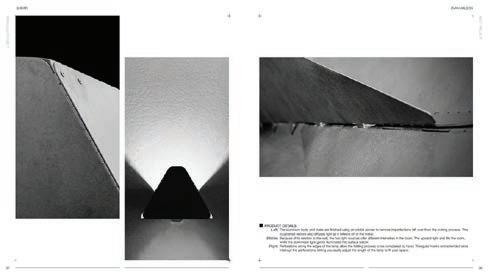
The aluminum body and rivets are finished using an orbital sander to remove imperfections left over from the cutting process. This roughened texture also diffuses light as it reflects off of the metal.
Because of its relation to the wall, the two light sources offer different intensities in the room. The upward light and fills the room, while the downward light gently illuminates the surface below.
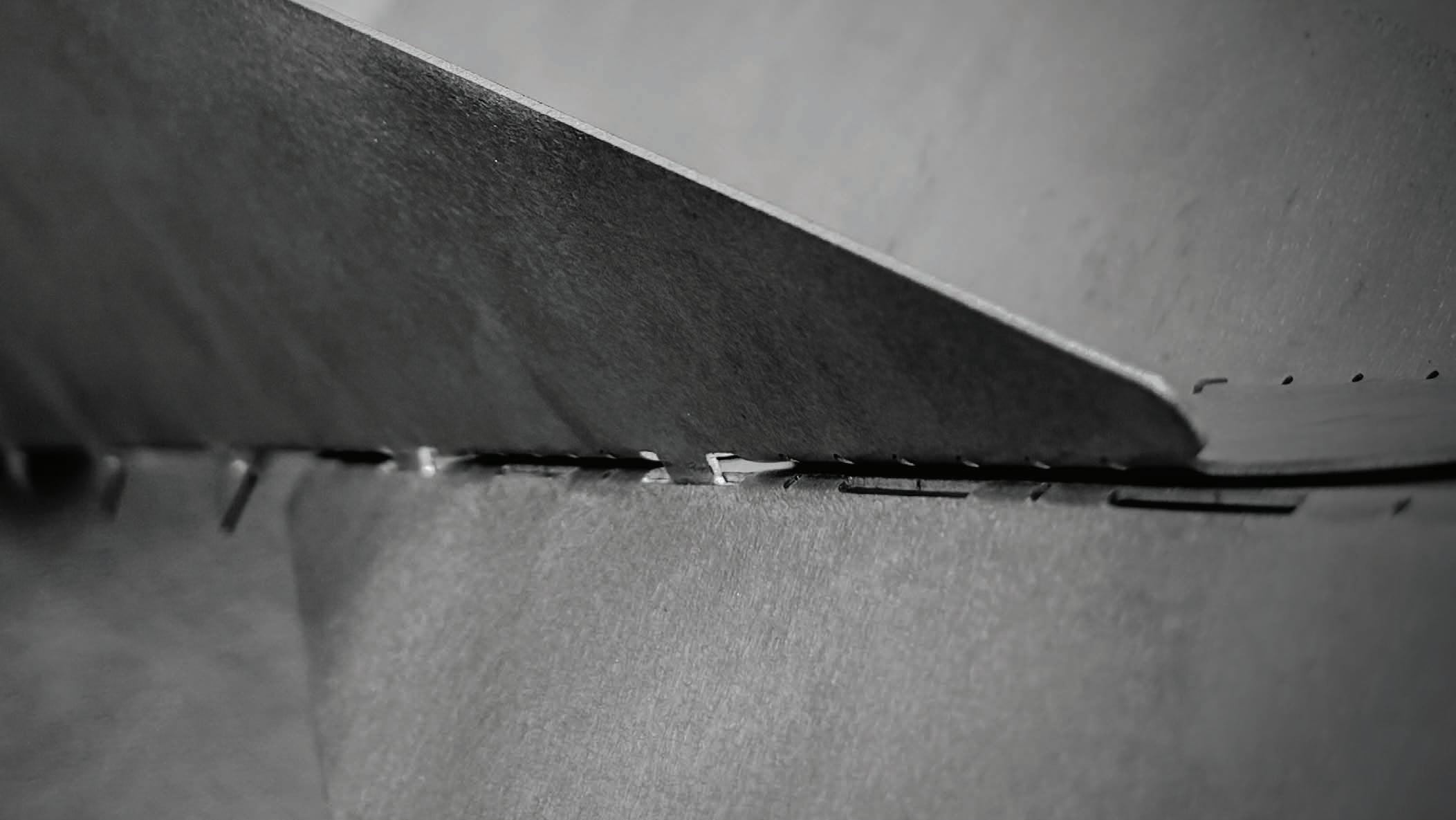
Perforations along the edges of the lamp allow the folding process to be completed by hand. Triangular hooks and extended slots interrupt the perforations, letting you easily adjust the length of the lamp to fit your space.
(Left)
(Middle)
(Right) PRODUCT DETAILS
Rain Refuge
Parametric Design - Fabrication - Collaboration
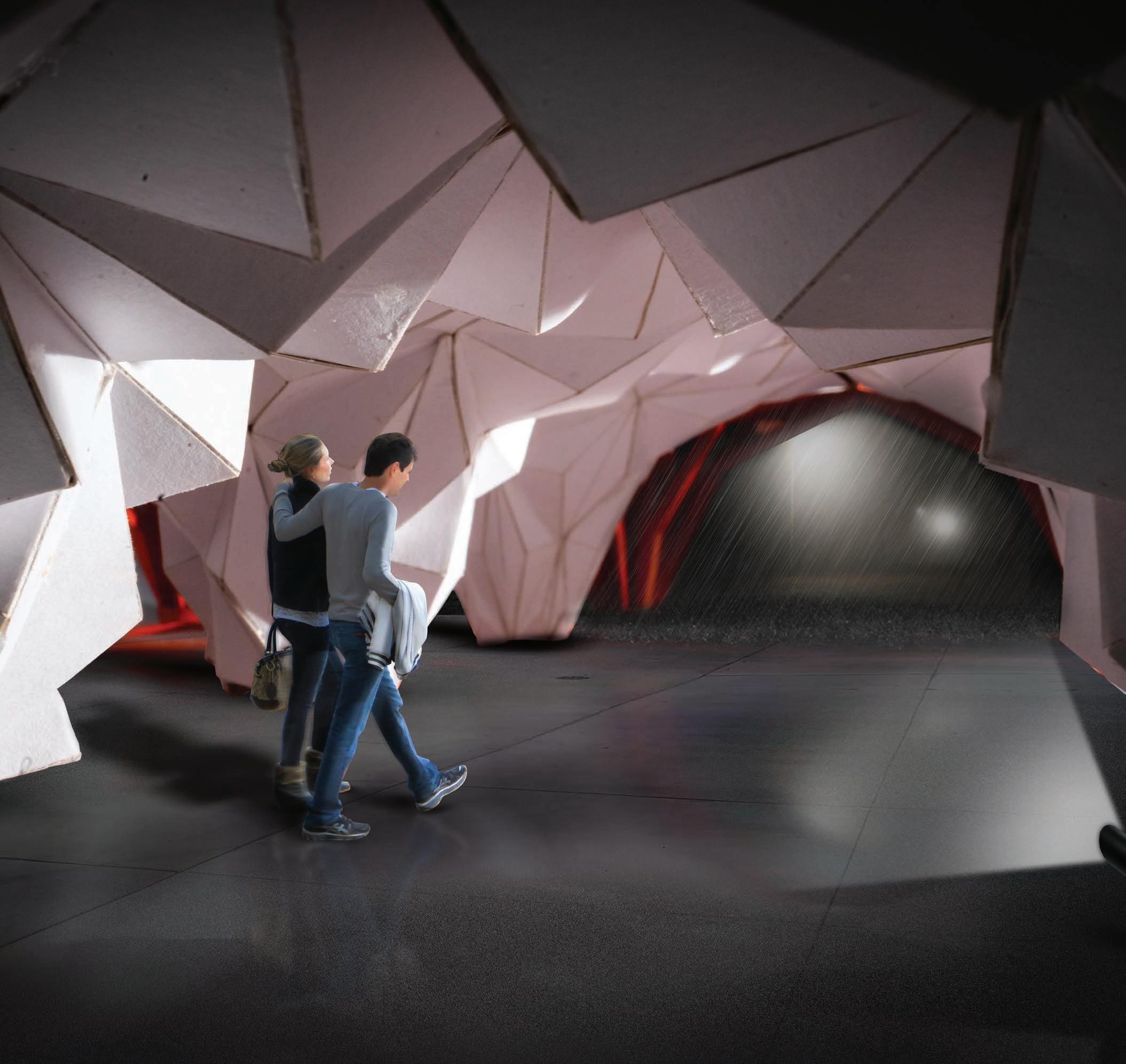
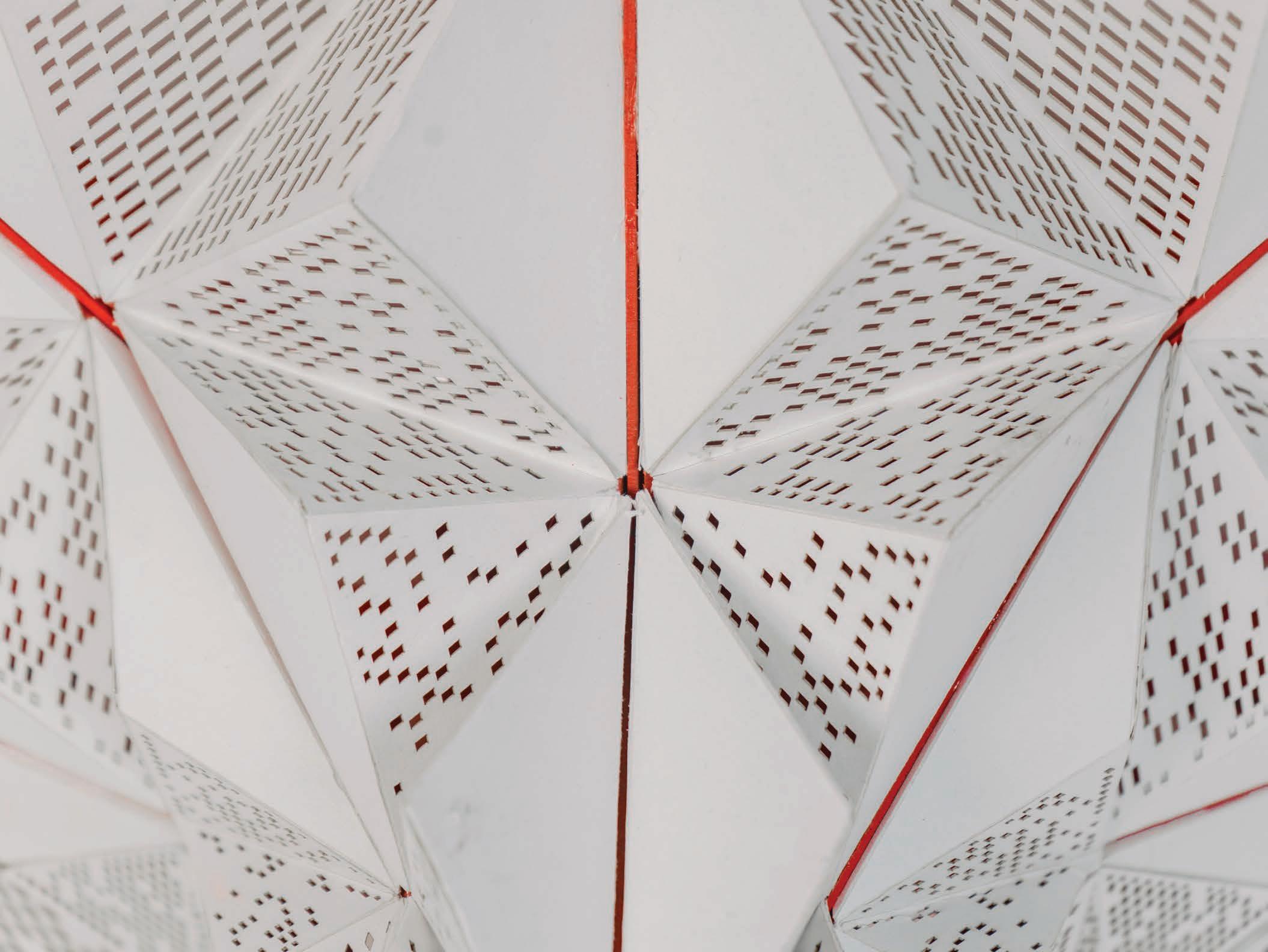
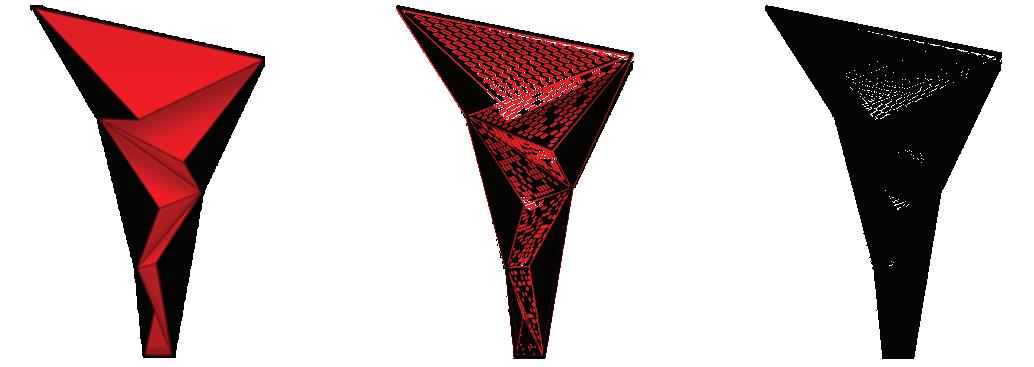
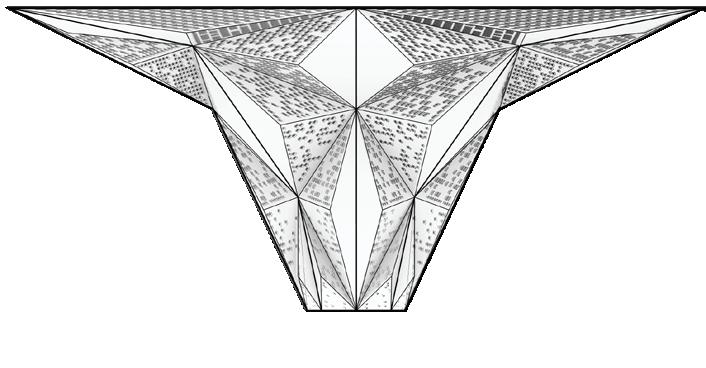
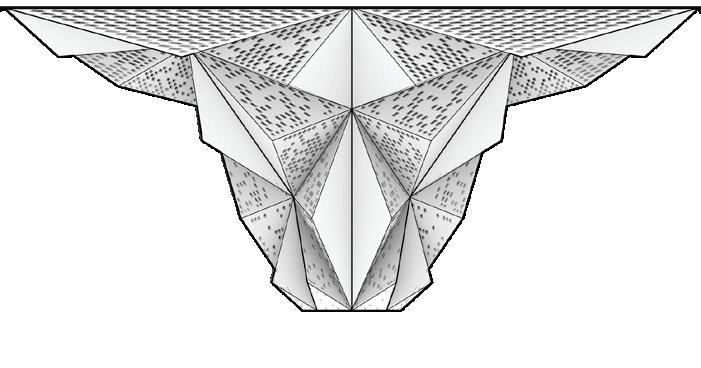
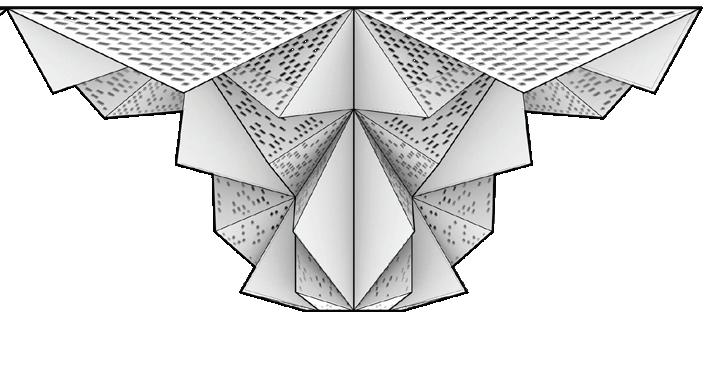
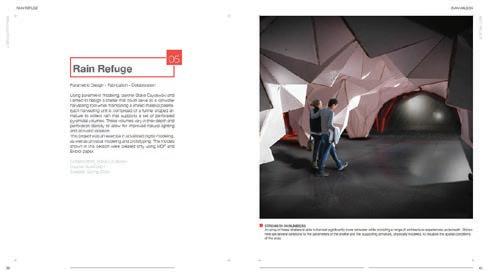
Using parametric modeling, partner Blake Czyzewski and I aimed to design a shelter that could serve as a rainwater harvesting tool while maintaining a limited material palette. Each harvesting unit is comprised of a funnel shaped armature to collect rain that supports a set of perforated pyramidal volumes. These volumes vary in their depth and perforation density to allow for improved natural lighting and acoustic isolation.
This project was an exercise in advanced digital modeling, as well as physical modeling and prototyping. The models shown in this section were created only using MDF and Bristol paper.
Collaborators: Blake Czyzewski
Course: AutoCAD I
Created: Spring 2023
STRENGTH IN NUMBERS
An array of these shelters is able to harvest significantly more rainwater while providing a range of architectural experiences underneath. Shown here are several variations to the parameters of the shelter and the supporting armature, physically modeled, to visualize the spatial conditions of the array.
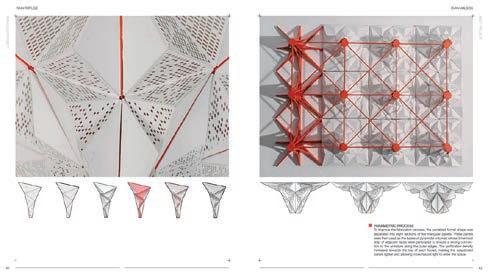
PARAMETRIC PROCESS
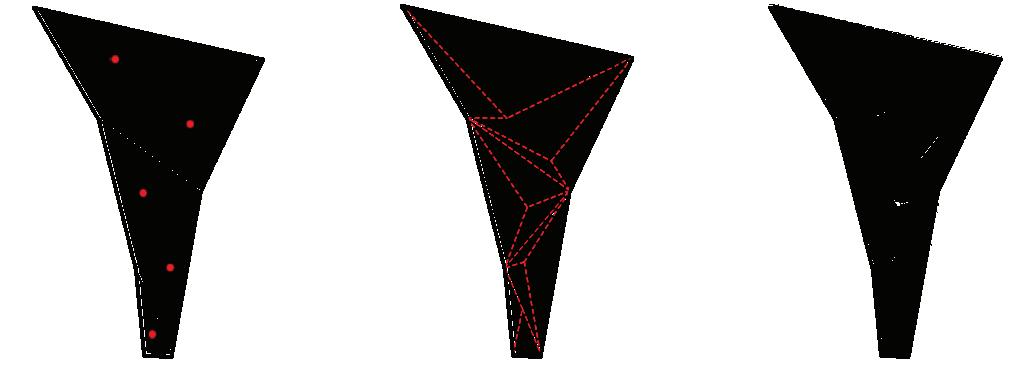
To improve the fabrication process, the panelized funnel shape was separated into eight sections of five triangular panels. These panels were then used as the bases of pyramidal volumes whose innermost strip of adjacent faces were perforated to ensure a strong connection to the armature along the outer edges. The perforation density increases towards the top of each funnel, making the suspended panels lighter and allowing more natural light to enter the space.
C# Rendering Filter 06
C# Scripting - Optimization - Interoperability
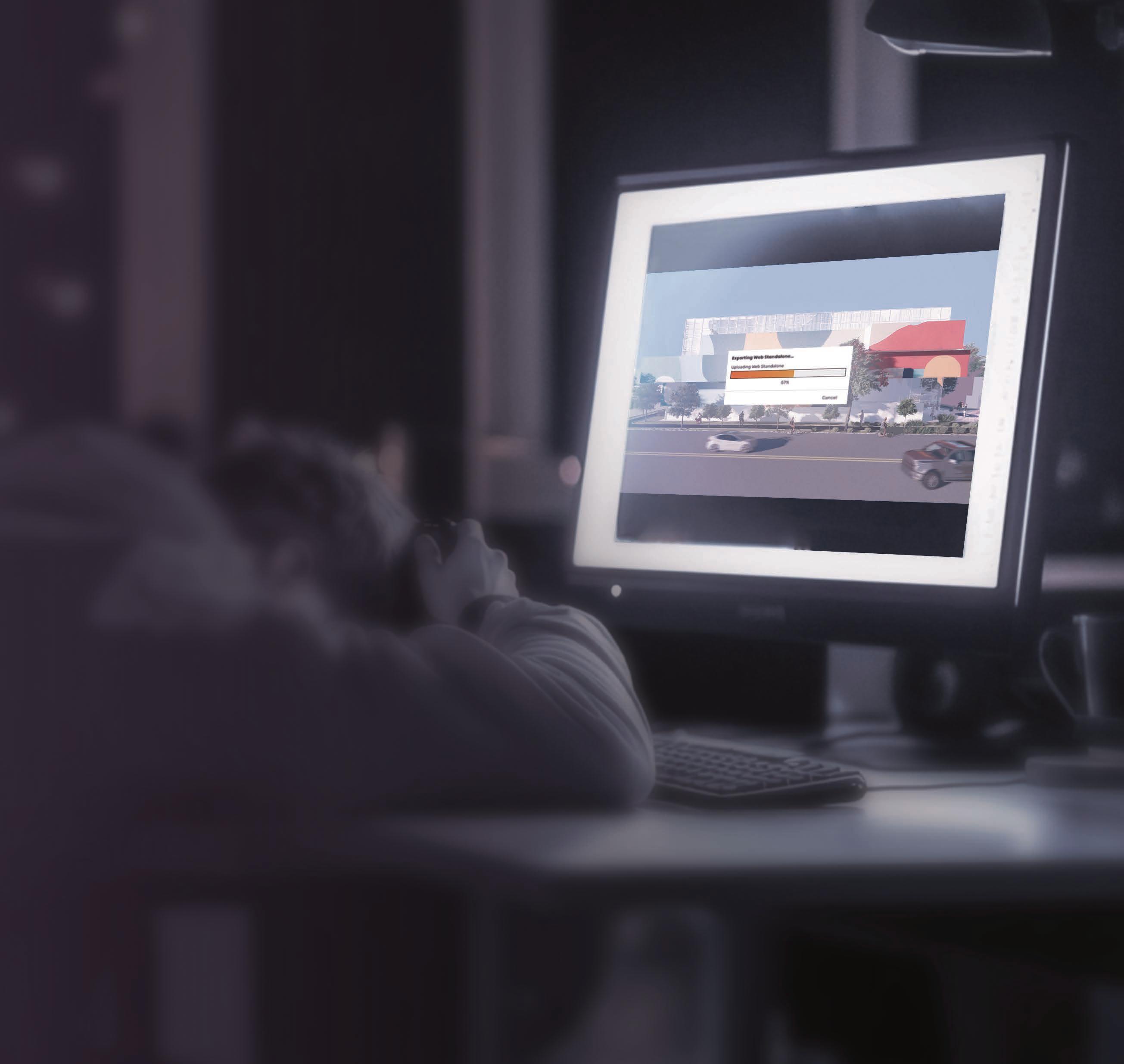
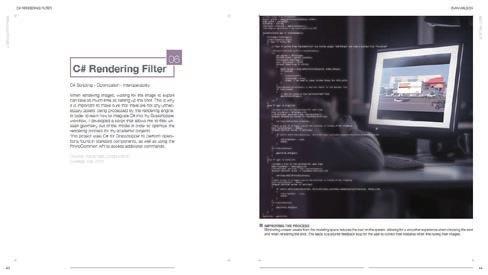
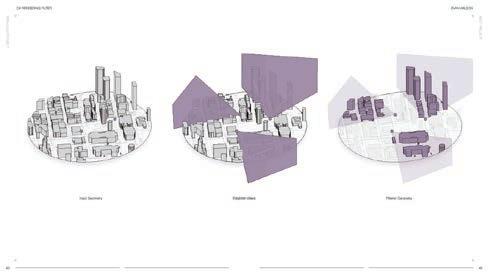
When rendering images, waiting for the image to export can take as much time as setting up the shot. This is why it is important to make sure that there are not any unnecessary assets being processed by the rendering engine. In order to learn how to integrate C# into my Grasshopper workflow, I developed a script that allows me to filter unseen geometry out of the model in order to optimize the rendering process for my academic projects. This project uses C# for Grasshopper to perform operations found in standard components, as well as using the RhinoCommon API to access additional commands.
Course: Advanced Computation
Created: Fall 2023
// Join breps from “ViewBrep” Brep[] solids = Brep.JoinBreps(ViewBrep, 0.001); Brep solid = solids[0]; SolidBrep = solids; List<bool> isInside = new List<bool>(); List<object> geoInside = new List<object>();//fix
foreach(object geo in InputGeometry)
{ Print(geo.ToString()); //Test Geometry Inputs if (geo is Point)//fix
{ // Test if points from “RandomPoints” are inside output “SolidBrep” and return boolean list “isInside” //foreach (Point3d point in InputGeometry) //{ var pointt = (Point)geo; Point3d point = pointt.Location; Print(point.ToString()); bool isIncluded = false; foreach (Brep brep in solids) { bool inside = brep.IsPointInside(point, 0.001,false); if (inside) { Print(“test”); isIncluded = true; break; // No need to check further Breps for this point } } isInside.Add(isIncluded); // Add the result to the boolean list if (isIncluded)
{ // Add the point to the “pointsInside” list geoInside.Add(geo);
} //}
} else if (geo is Brep)//fix
{ //Create a list of the vertices for each brep Brep inputBrep = (Brep)geo;//fix
List<Point3d> vertices = new List<Point3d>(); foreach (BrepVertex vertex in inputBrep.Vertices)
{ vertices.Add(vertex.Location);
} //Test to see if at least one of the vertices is inside of the ViewBrep bool isInsideCheck = false; foreach (Point3d vertex in vertices)
{ if (solid.IsPointInside(vertex, Rhino.RhinoDoc.ActiveDoc.ModelAbsoluteTolerance,false))//fix
{ isInsideCheck = true; break;
} } if (isInsideCheck)
{ geoInside.Add(geo);
} } else if (geo is Mesh)//fix
{ //Create a list of the vertices for each brep Mesh inputMesh = (Mesh)geo;//fix
List<Point3d> vertices = new List<Point3d>(); foreach (Point3f vertex in inputMesh.Vertices)//fix
{ vertices.Add((Point3d)vertex);
} //Test to see if at least one of the vertices is inside of the ViewBrep bool isInsideCheck = false; foreach (Point3d vertex in vertices)
{ if (solid.IsPointInside(vertex, Rhino.RhinoDoc.ActiveDoc.ModelAbsoluteTolerance, false))//fix { isInsideCheck = true; break;
} } if (isInsideCheck)
{ geoInside.Add(geo);
} }
} GeoInside = geoInside;
IMPROVING THE PROCESS
Eliminating unseen assets from the modeling space reduces the load on the system, allowing for a smoother experience when choosing the shot and when rendering the shot. This leads to a shorter feedback loop for the user to correct their mistakes when fine-tuning their images.
Input Geometry Establish
Filtered Geometry
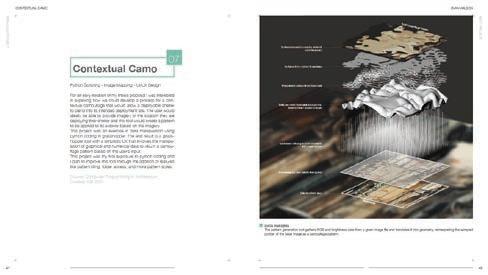
Contextual Camo
Python Scripting - Image Mapping - UI/UX Design
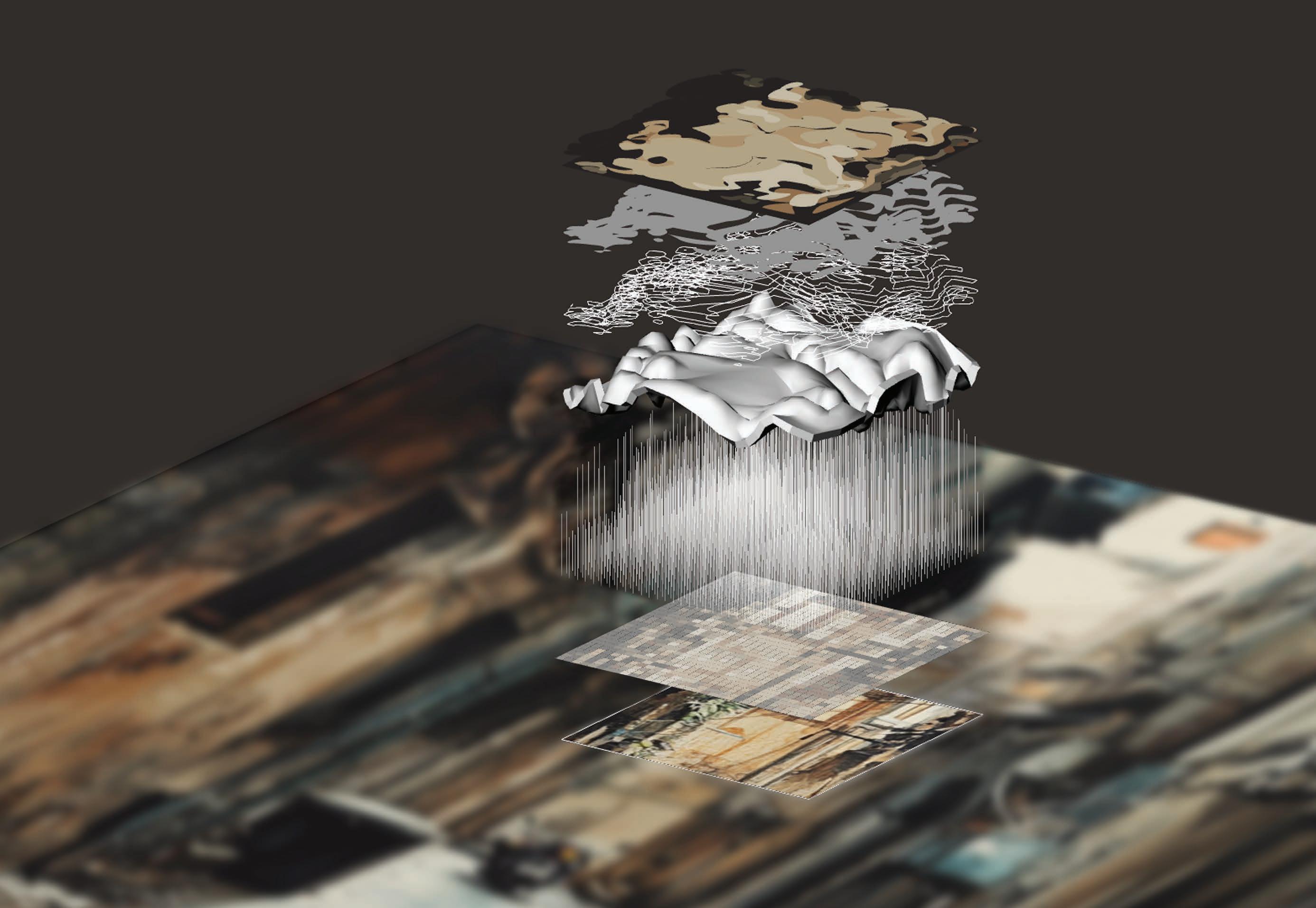
For an early iteration of my thesis proposal I was interested in exploring how we could develop a process for a contextual camouflage that would allow a deployable shelter to blend into its intended deployment site. The user would ideally be able to provide imagery of the location they are deploying their shelter and this tool would create a pattern to be applied to its exterior based on the imagery. This project was an exercise in data manipulation using python coding in grasshopper. The end result is a grasshopper tool with a simplistic UX that involves the manipulation of graphical and numerical data to return a camouflage pattern based on the user’s input.
This project was my first exposure to python coding and I plan to improve this tool through the addition of features like pattern tiling, folder access, and more pattern styles.
Course: Computer Programming in Architecture
Created: Fall 2024
Surfaces moved in z-axis by order of color frequency
Surfaces from contour boundaries
Interpolated contour lines from mesh
Delauney mesh from luminance points; offset to return closed contours
Luminance values per color translated into z-axis vectors
Downsampled color palette from points
Selection from .jpeg
image camouflage
Final Camou age Pattern
Base Image
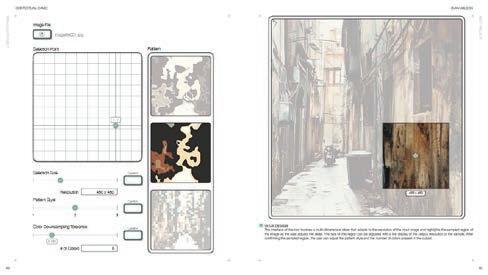
Image File
Selection Point
UI/UX DESIGN
The interface of this tool involves a multi-dimensional slider that adapts to the resolution of the input image and highlights the sampled region of the image as the user adjusts the slider. The size of this region can be adjusted with a live display of the output resolution of the sample. After confirming the sampled region, the user can adjust the pattern style and the number of colors present in the output.
450 x 450
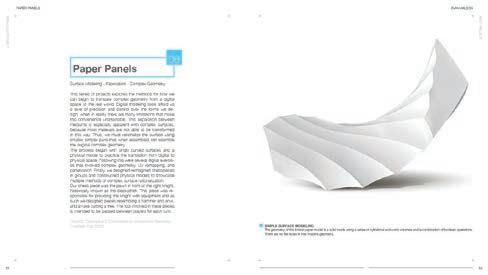
Paper Panels
Surface Modeling - Fabrication - Complex Geometry
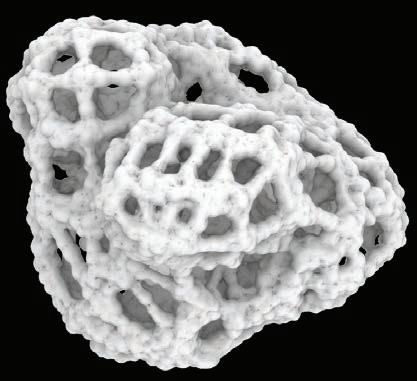
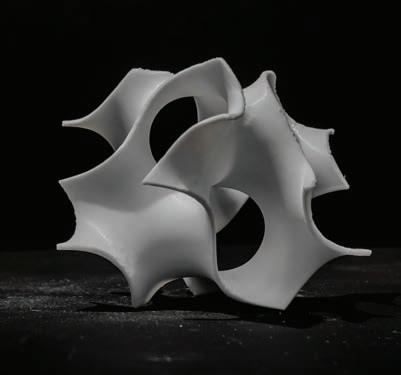
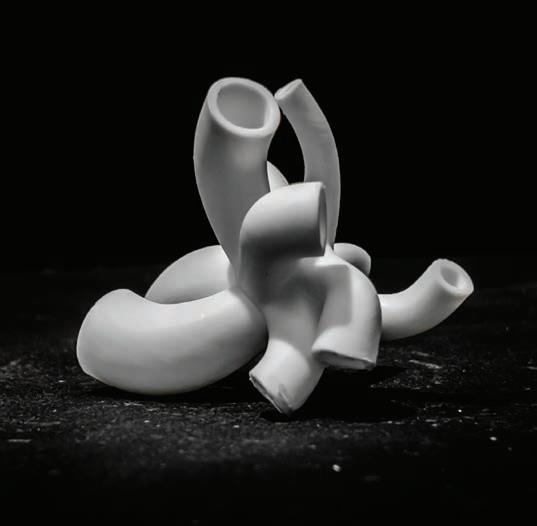
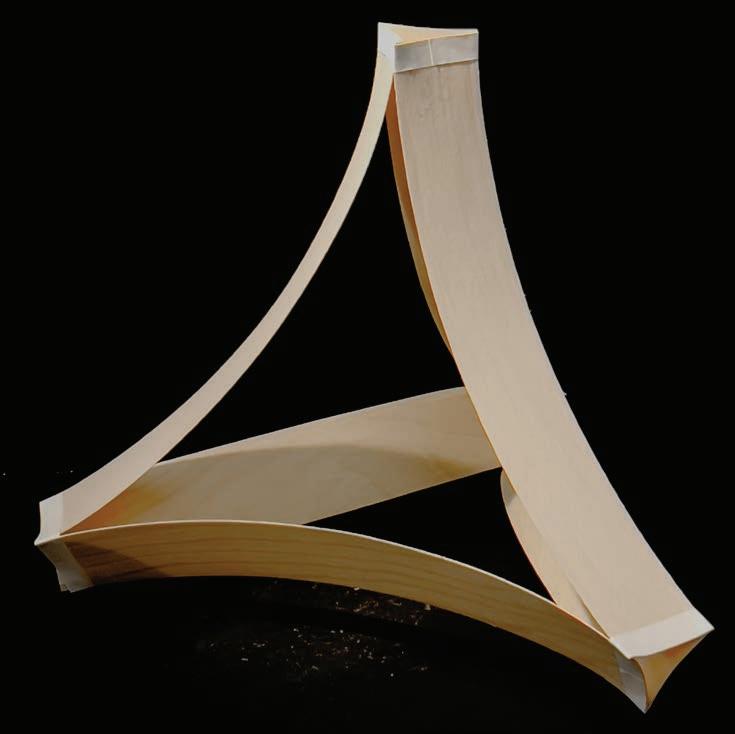
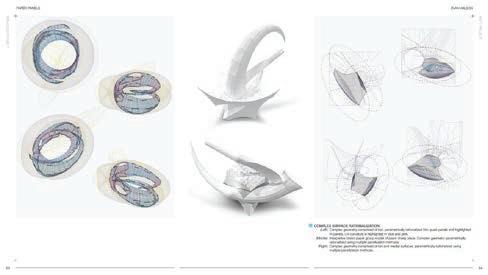
This series of projects explores the methods for how we can begin to translate complex geometry from a digital space to the real world. Digital modeling tools afford us a level of precision and control over the forms we design, when in reality there are many limitations that make this convenience unattainable. This separation between mediums is especially apparent with complex surfaces, because most materials are not able to be transformed in this way. Thus, we must rationalize the surface using smaller, simpler parts that, when assembled, still resemble the original complex geometry.
The process began with singly curved surfaces and a physical model to practice the translation from digital to physical space. Following this were several digital exercises that involved complex geometry, UV remapping, and panelization. Finally, we designed reimagined chesspieces in groups and constructed physical models to showcase multiple methods of complex surface rationalization.
Our chess piece was the pawn in front of the right knight, historically known as the blacksmith. This piece was responsible for providing the knight with equipment and as such we designed pieces resembling a hammer and anvil, and an axe cutting a tree. The tool involved in these pieces is intended to be passed between players for each turn.
The geometry of this bristol paper model is a solid made using a series of cylindrical and conic volumes and a combination of boolean operations. There are no flat faces in this model’s geometry.
COMPLEX SURFACE RATIONALIZATION
Complex geometry comprised of tori, parametrically rationalized into quad-panels and highlighted tri-panels. UV curvature is highlighted in blue and pink.
Interpretive bristol paper group model of pawn chess piece. Complex geometry parametrically rationalized using multiple panelization methods.
Complex geometry comprised of tori and medial surfaces, parametrically rationalized using multiple panelization methods.
(Left) (Middle) (Right)
From Waste to Wilderness
to Wilderness
Parametric Design - Material Science - Sustainability
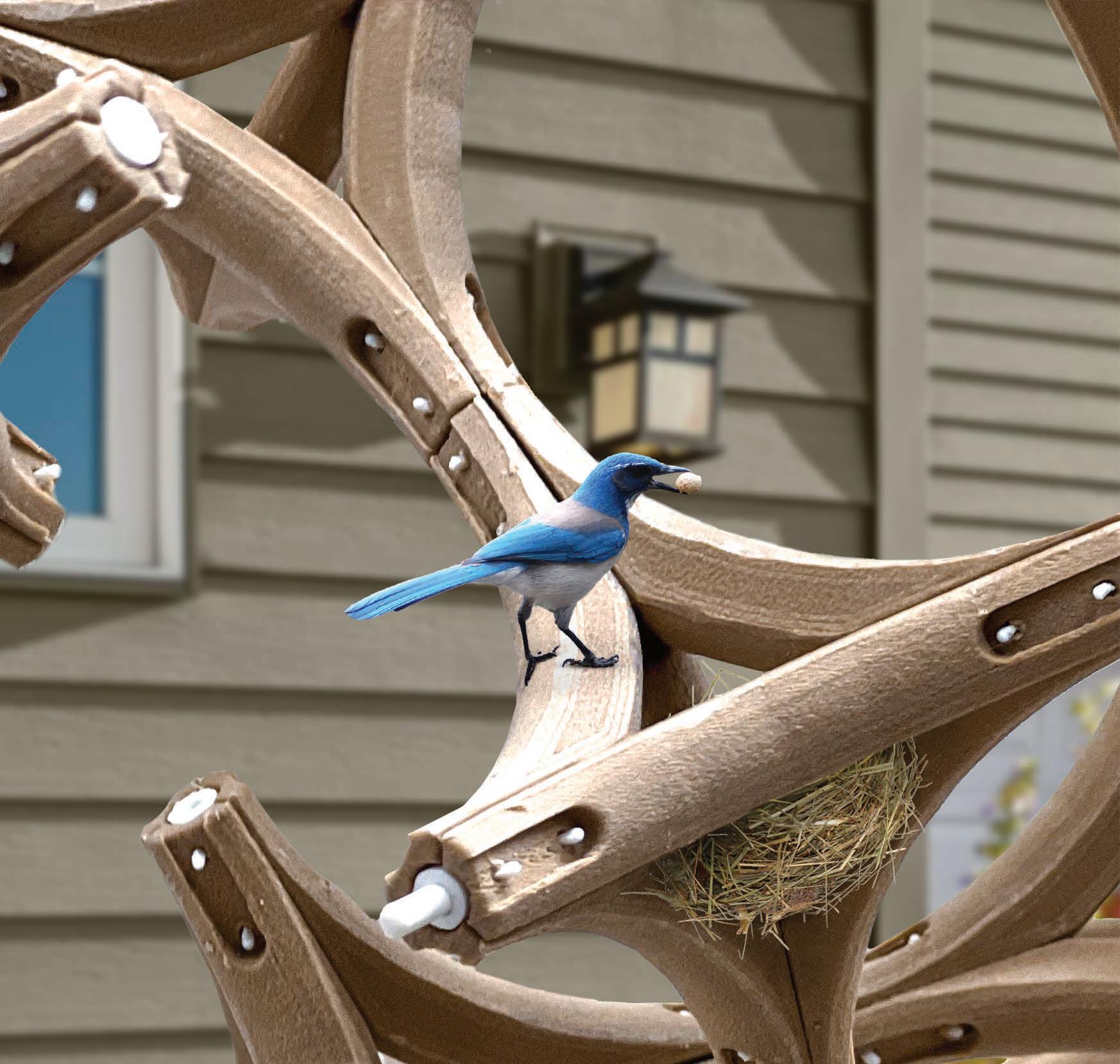
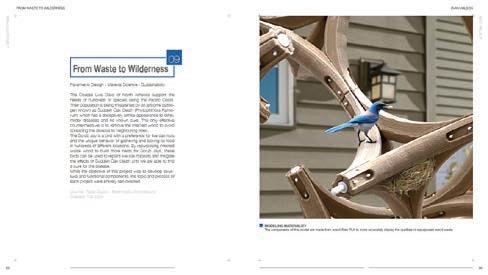
The Coastal Live Oaks of North America support the needs of hundreds of species along the Pacific Coast. Their population is being threatened by an airborne pathogen known as Sudden Oak Death (Phytophthora Ramorum) which has a deceptively similar appearance to other, milder diseases and no known cure. The only effective countermeasure is to remove the infected wood to avoid spreading the disease to neighboring trees.
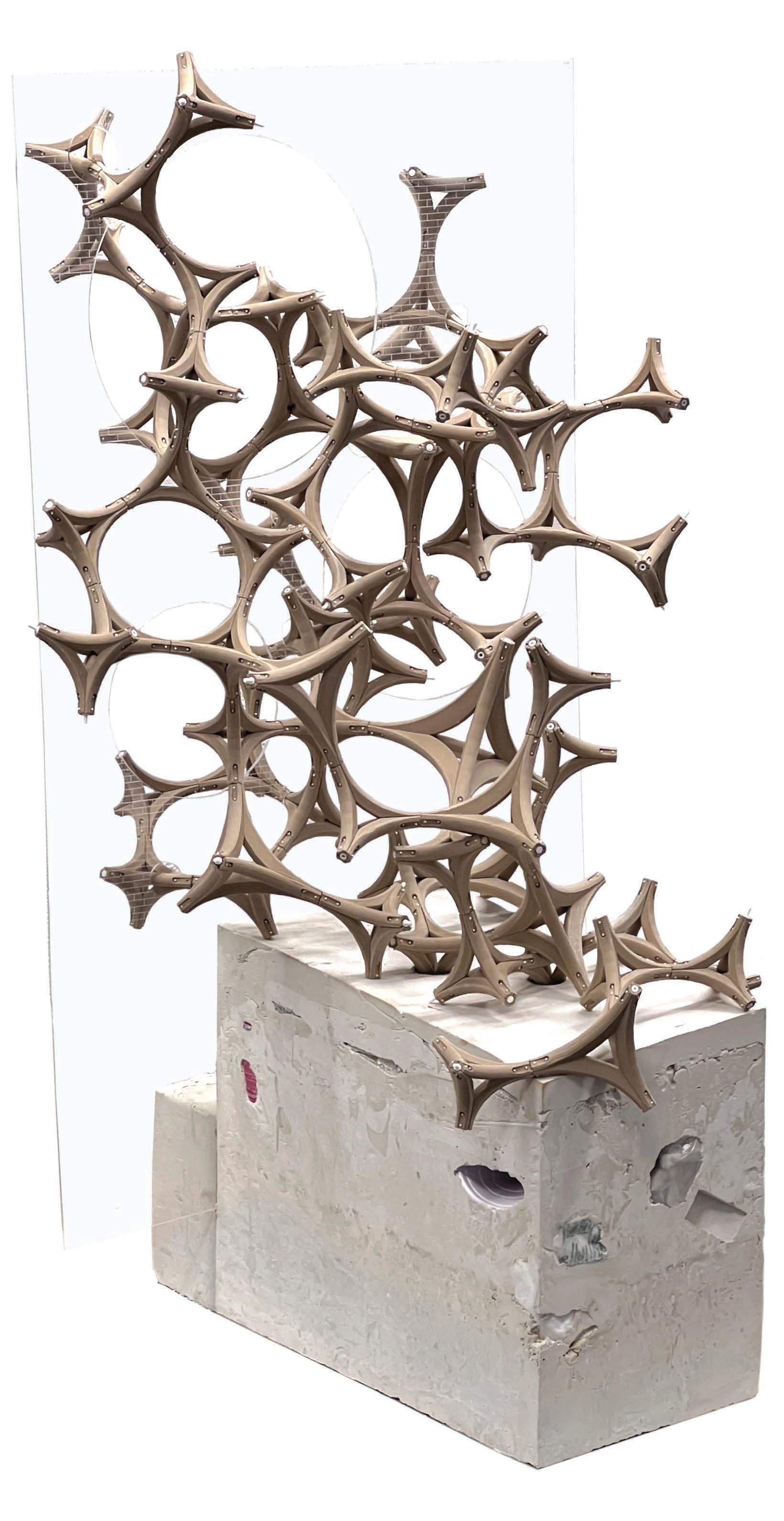
The Scrub Jay is a bird with a preference for live oak nuts and the unique behavior of gathering and storing its food in hundreds of different locations. By repurposing infected waste wood to build more nests for Scrub Jays, these birds can be used to replant live oak habitats and mitigate the effects of Sudden Oak Death until we are able to find a cure for the disease.
While the objective of this project was to develop structural and functional components, the topic and process of each project were entirely self-directed.
Course: Topic Studio - Biomimetic Architecture
Created: Fall 2024
MODELING MATERIALITY
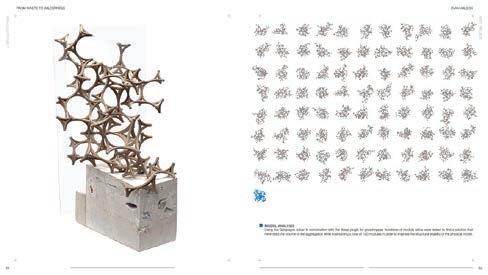
The components of this model are made from wood-fiber PLA to more accurately display the qualities of repurposed wood waste.
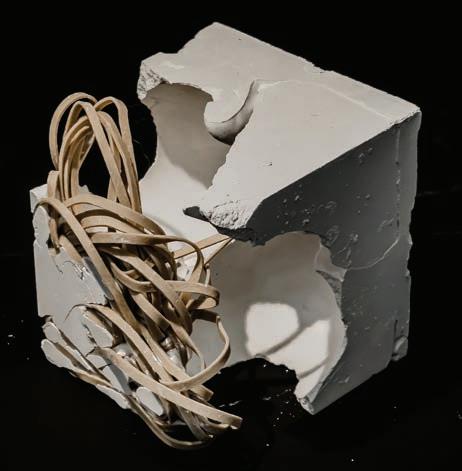
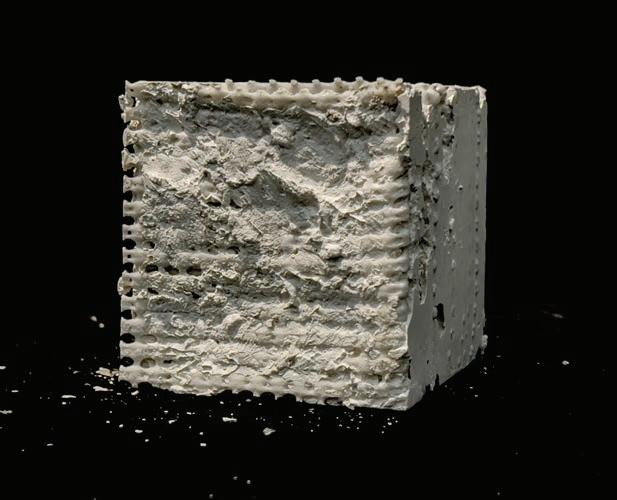
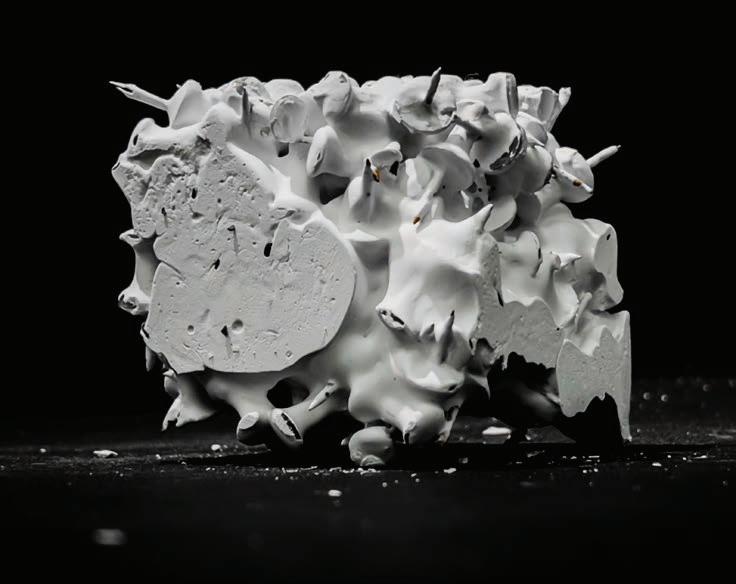
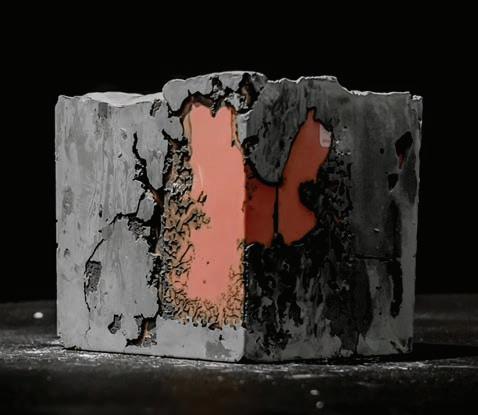
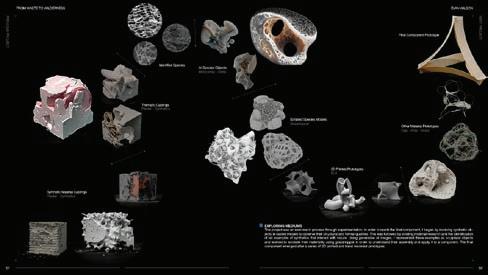
Thematic Castings Plaster - Synthetics
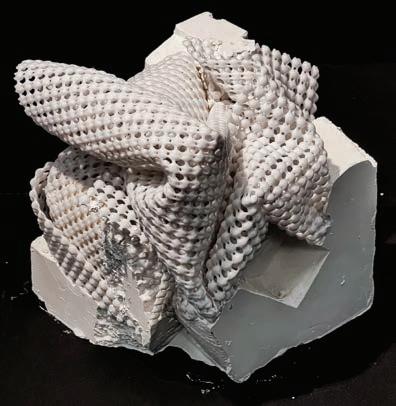
Synthetic Material Castings
Plaster - Synthetics
Identified Species AI Species Objects
Midjourney - Firefly
Scripted Species Models
EXPLORING MEDIUMS
Final Component Prototype
Other Material Prototypes Clay - Wire - Wood
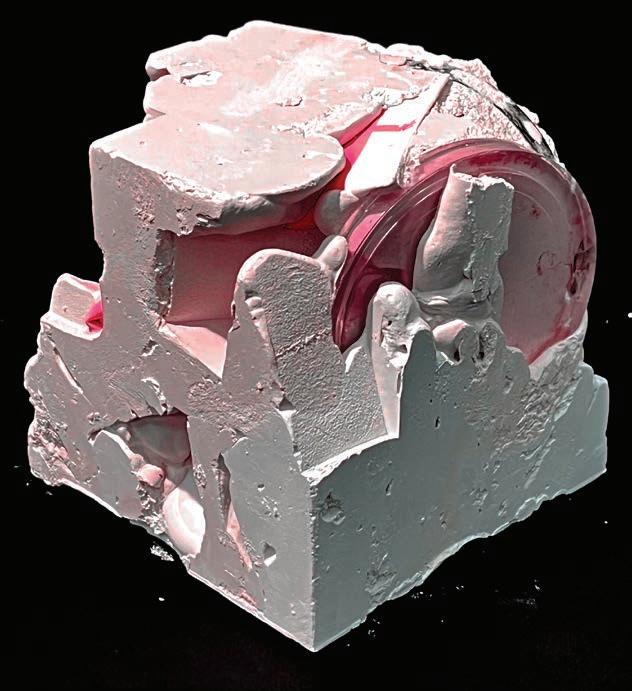
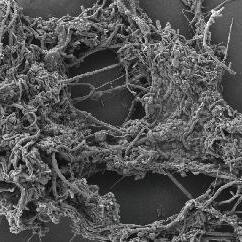
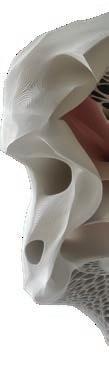
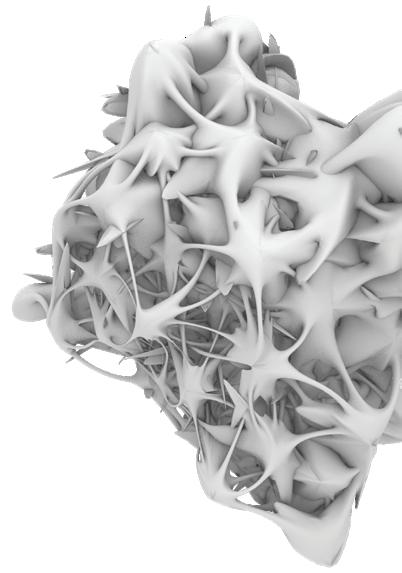
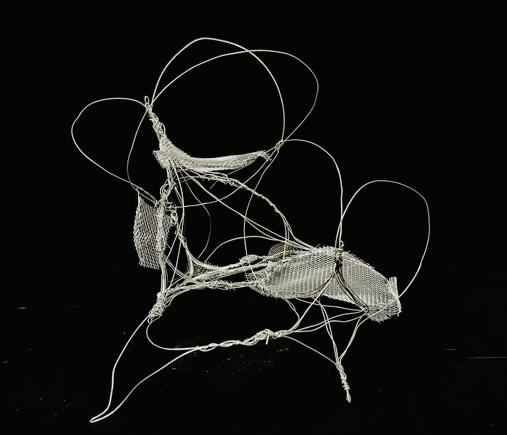
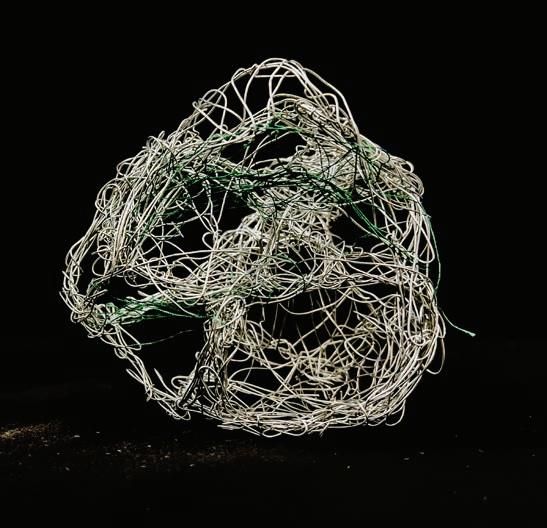
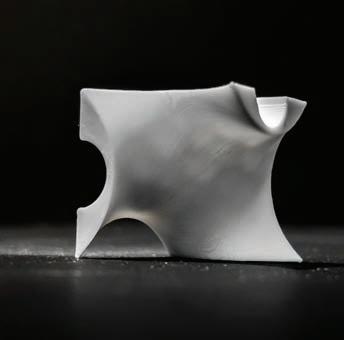
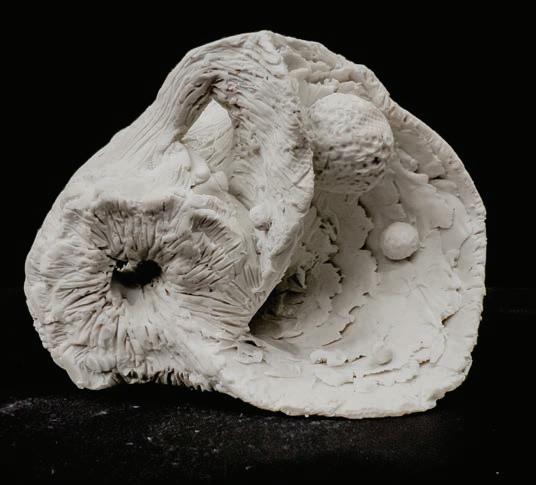
This project was an exercise in process through experimentation. In order to reach the final component, I began by involving synthetic objects in casted models to observe their structural and formal qualities. This was followed by existing material research and the identification of six examples of synthetics that interact with nature. Using generative AI images, I represented these examples as sculptural objects and worked to recreate their materiality using grasshopper in order to understand their assembly and apply it to a component. The final component emerged after a series of 3D printed and hand modeled prototypes.
Grasshopper
3D Printed Prototypes PLA
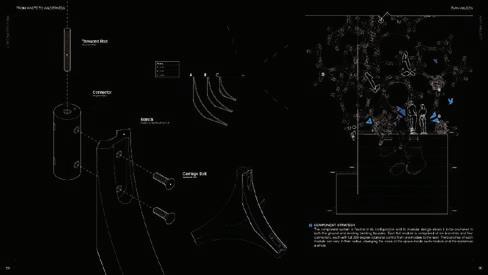
Carriage Bolt
COMPONENT STRATEGY
The component system is flexible in its configuration and its modular design allows it to be anchored in both the ground and existing building facades. Each full module is comprised of six branches and four connectors, each with full 360 degree rotational control from one module to the next. The branches of each module can vary in their radius, changing the scale of the space inside each module and the system as a whole.
MODEL ANALYSIS
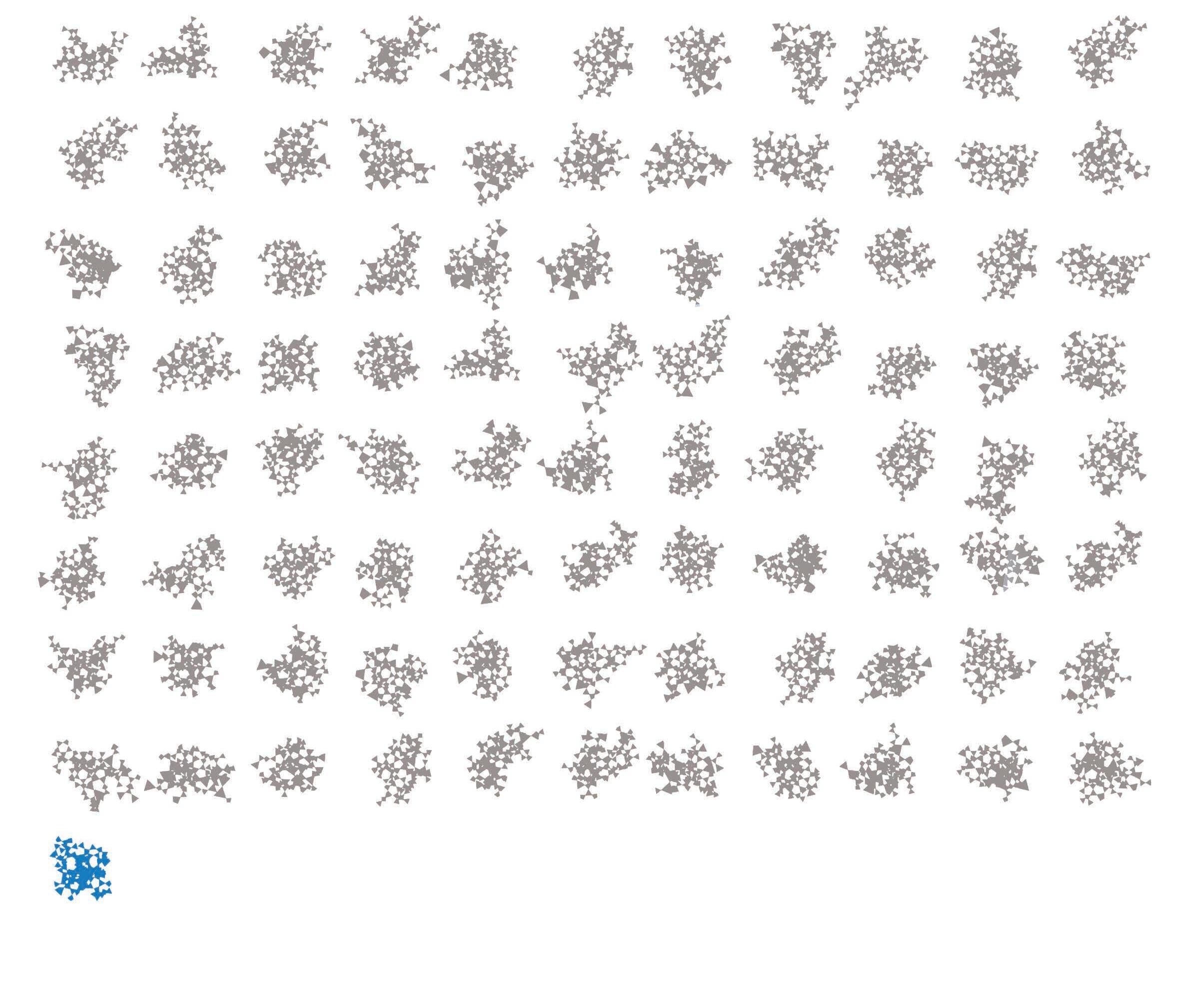
Using the Galapagos solver in combination with the Wasp plugin for grasshopper, hundreds of module ratios were tested to find a solution that minimized the volume of the aggregation while maintaining a total of 100 modules in order to improve the structural stability of the physical model.
Stepping Stone
Cultural Sensitivity - Data Visualization - Rendering
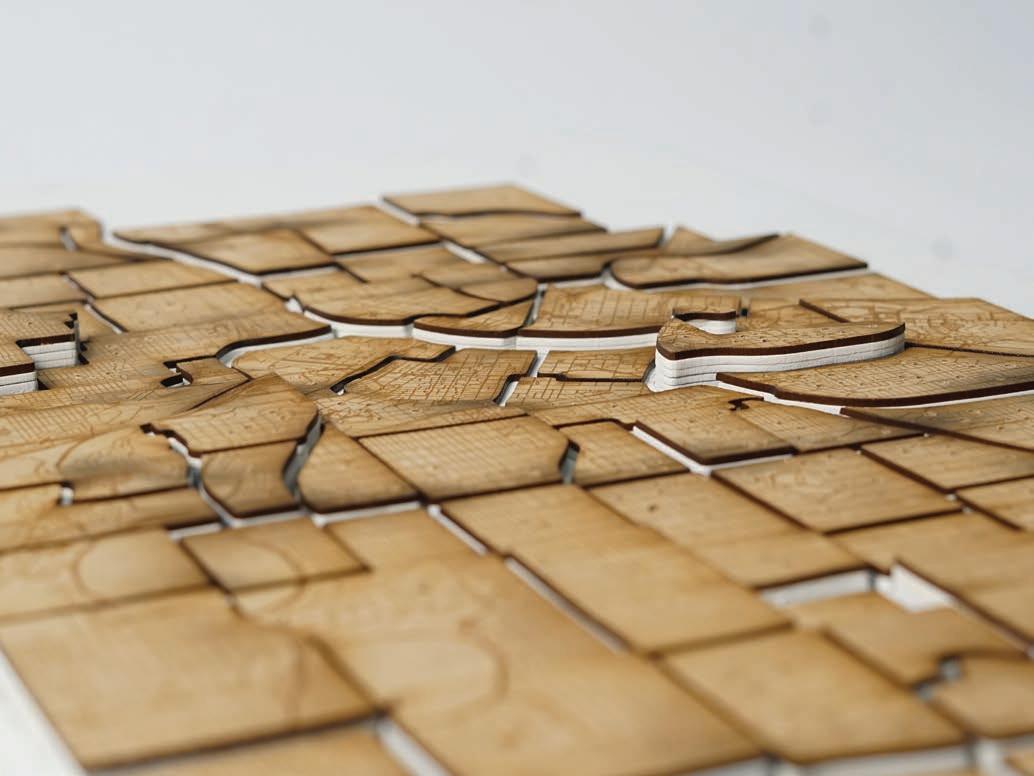
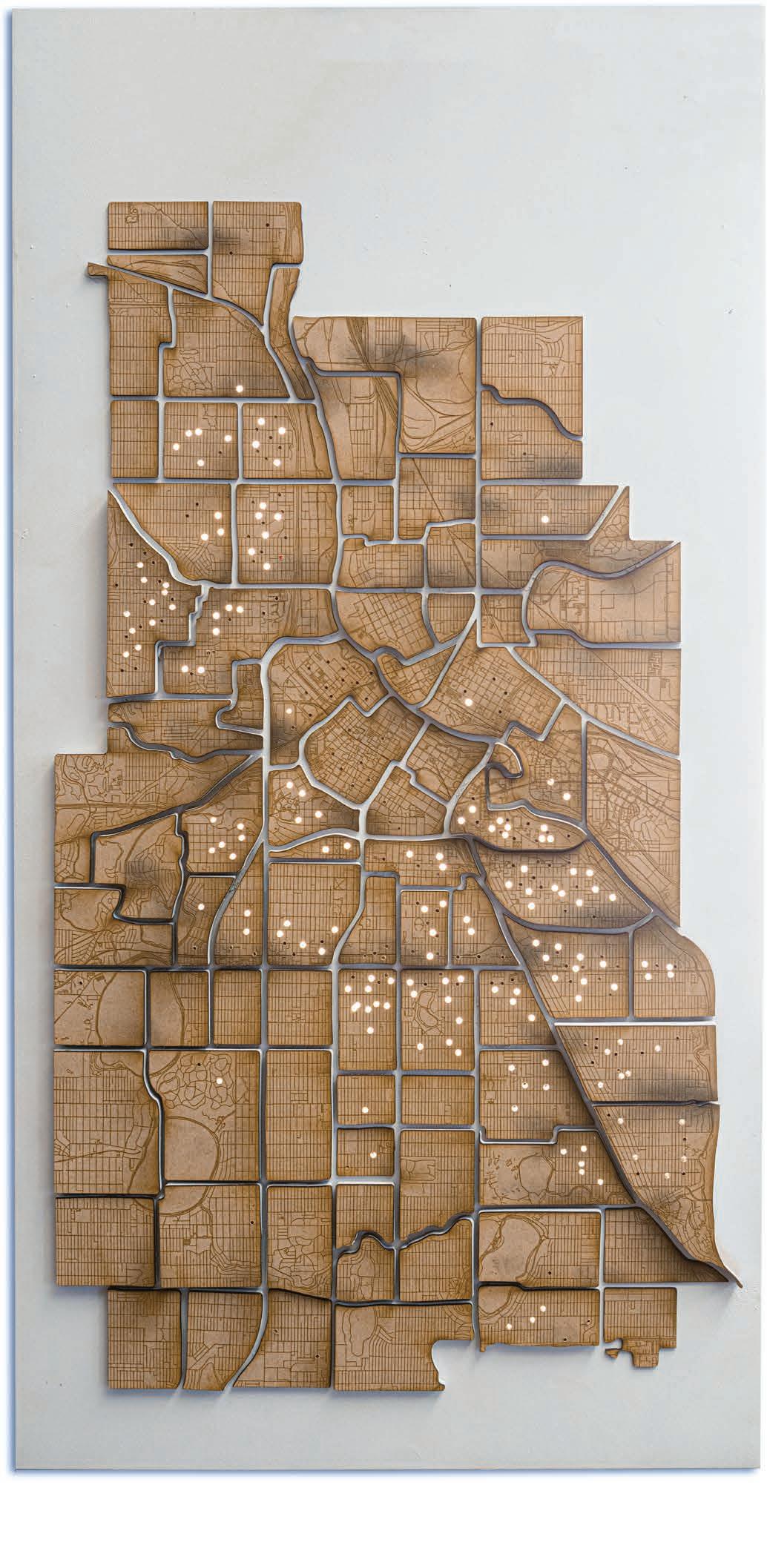
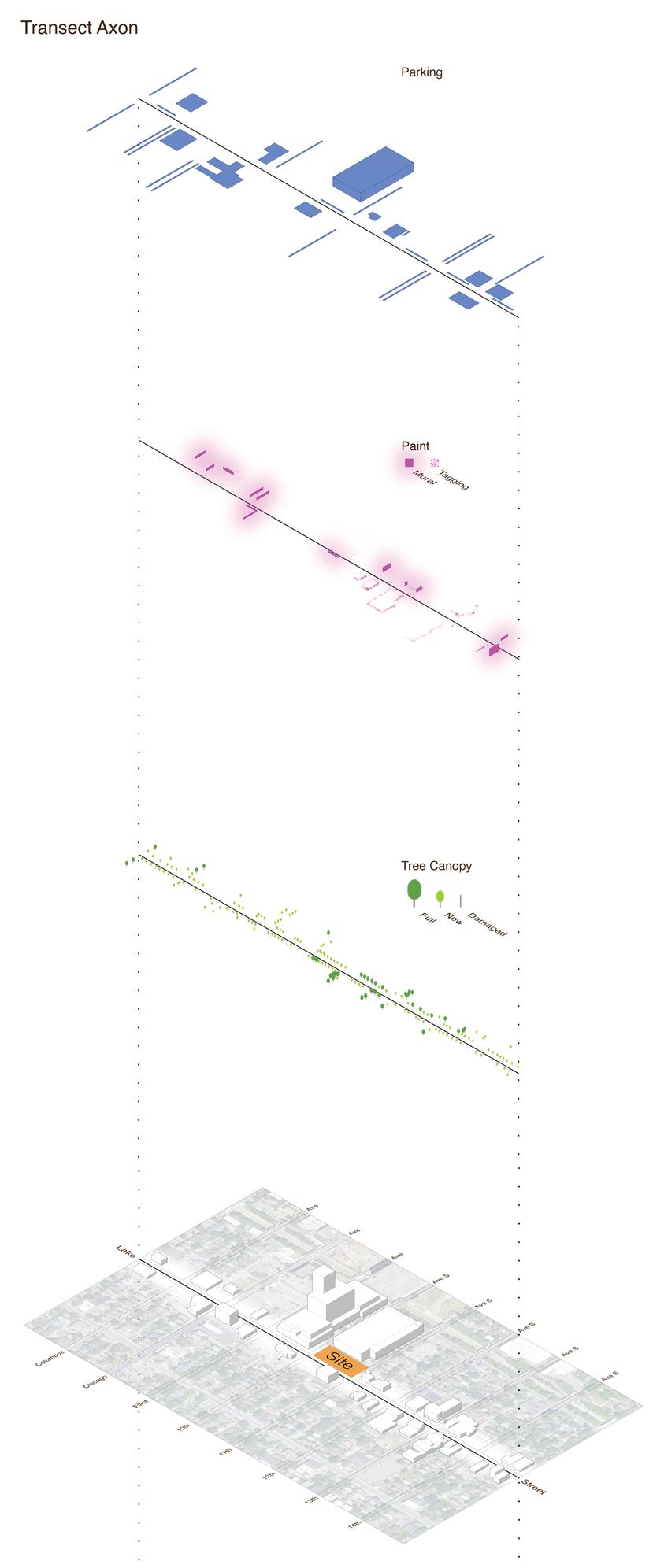
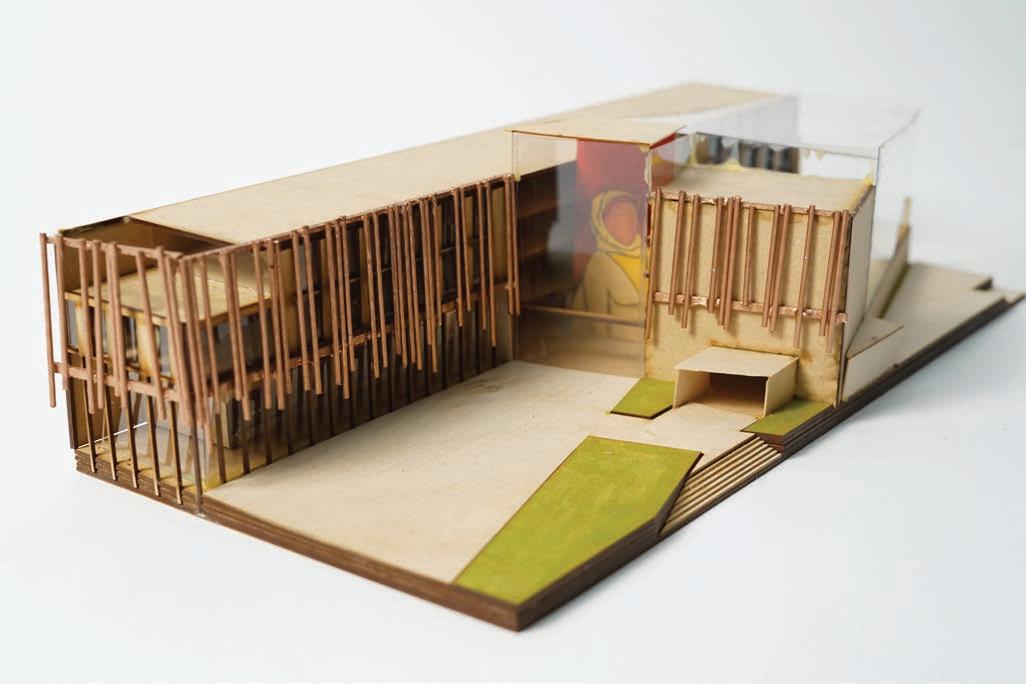
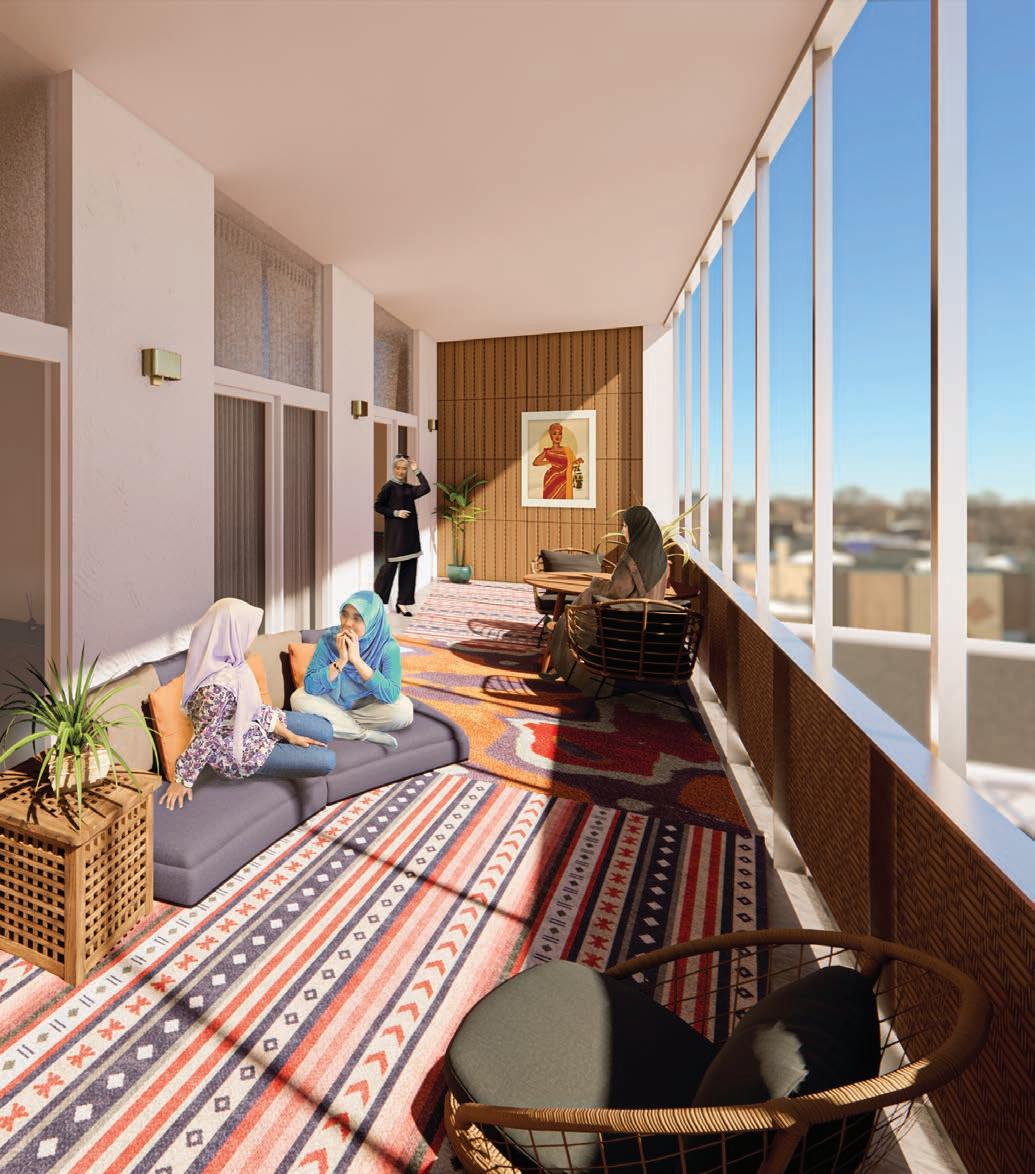
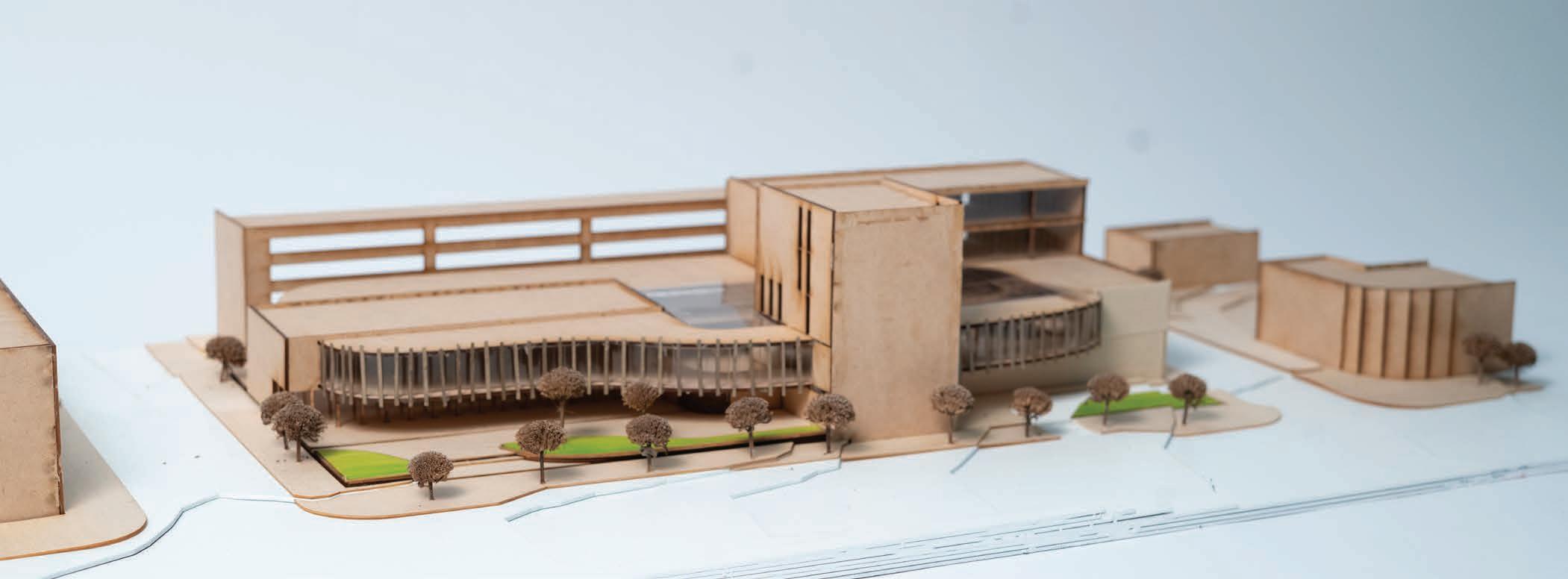
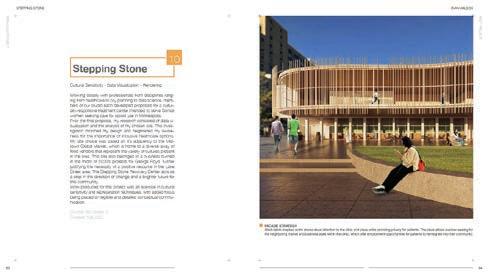
Working closely with professionals from disciplines ranging from healthcare to city planning to data science, members of our studio each developed proposals for a culturally-responsive treatment center intended to serve Somali women seeking care for opioid use in Minneapolis. Prior the final proposal, my research consisted of data visualization and the analysis of my chosen site. This investigation informed my design and heightened my awareness for the importance of inclusive healthcare options. My site choice was based on it’s adjacency to the Midtown Global Market, which is home to a diverse array of food vendors that represent the variety of cultures present in the area. This site also belonged to a business burned in the midst of 2020’s protests for George Floyd, further justifying the necessity of a positive resource in the Lake Street area. The Stepping Stone Recovery Center acts as a step in the direction of change and a brighter future for this community.
Work produced for this project was an exercise in cultural sensitivity and represetation techniques, with added focus being placed on legibile and detailed conceptual communication.
Course: BS Studio V
Created: Fall 2022
FACADE STRATEGY
Alindi-fabric-inspired scrim draws visual attention to the clinic and plaza while providing privacy for patients. The plaza allows outdoor seating for the neighboring market and business stalls within the clinic, which offer employment opportunities for patients to reintegrate into their community.
DATA VISUALIZATION
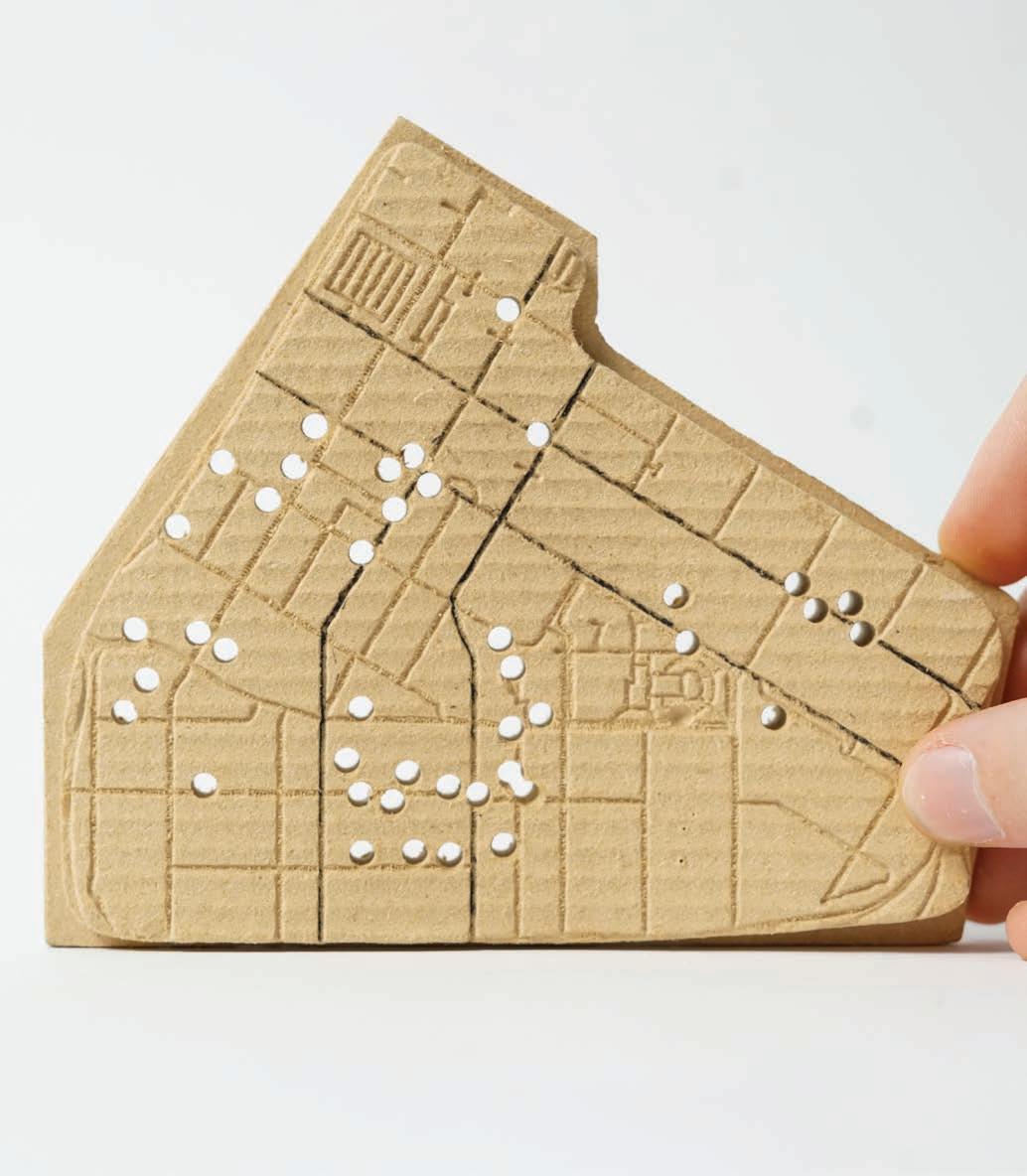
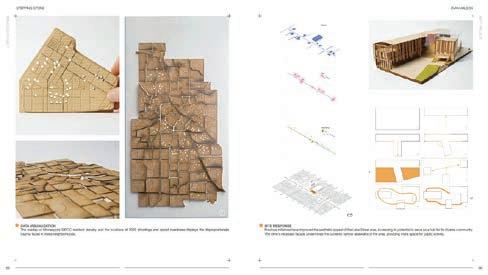
The overlap of Minneapolis BIPOC resident density, and the locations of 2022 shootings and opioid overdoses displays the disproportionate trauma faced in these neighborhoods.
SITE RESPONSE
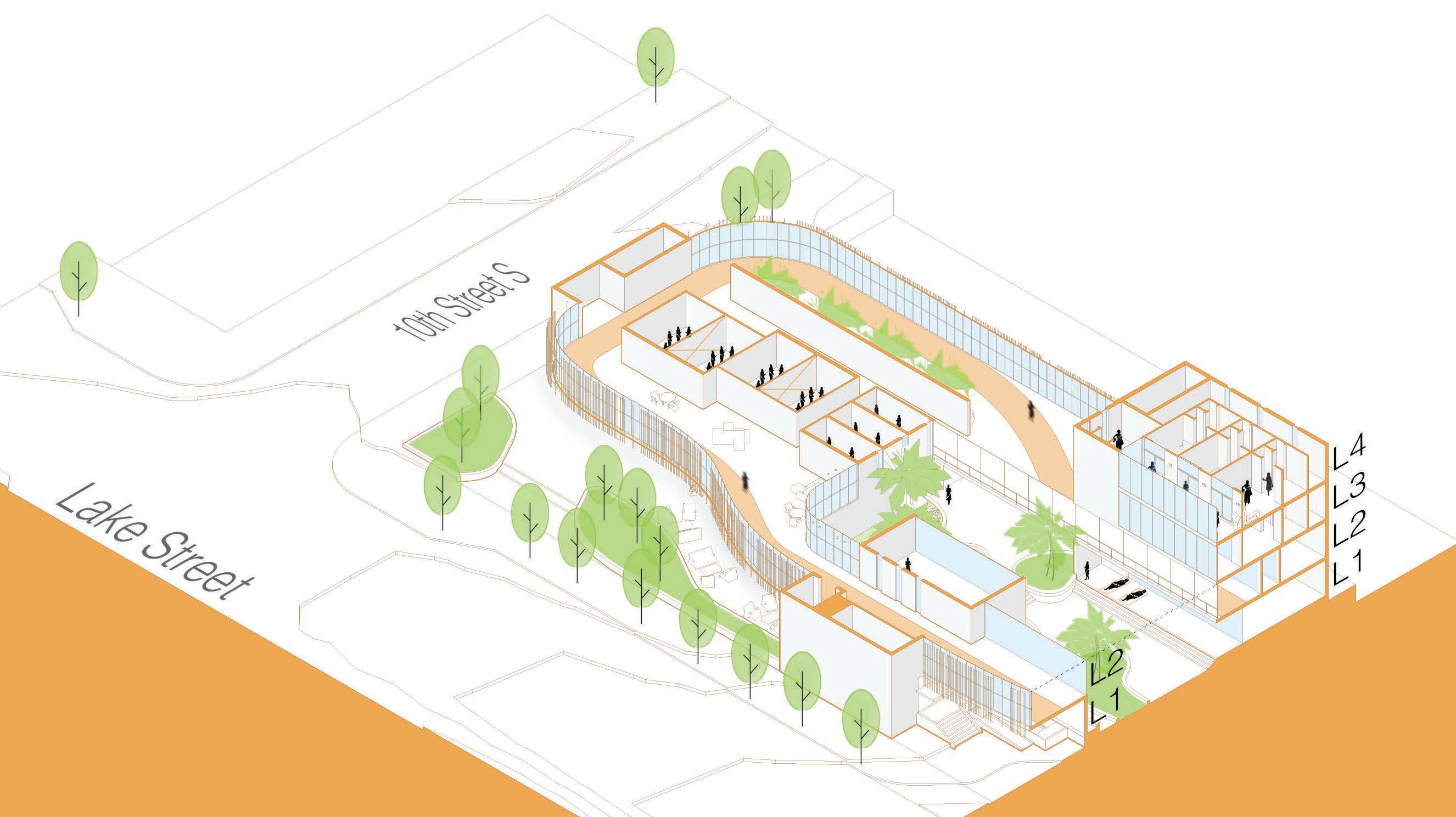
Previous initiatives have improved the aesthetic appeal of the Lake Street area, increasing its potential to serve as a hub for its diverse community. The clinic’s recessed facade undermines the currently narrow sidewalks of the area, providing more space for public activity.
BELONGING
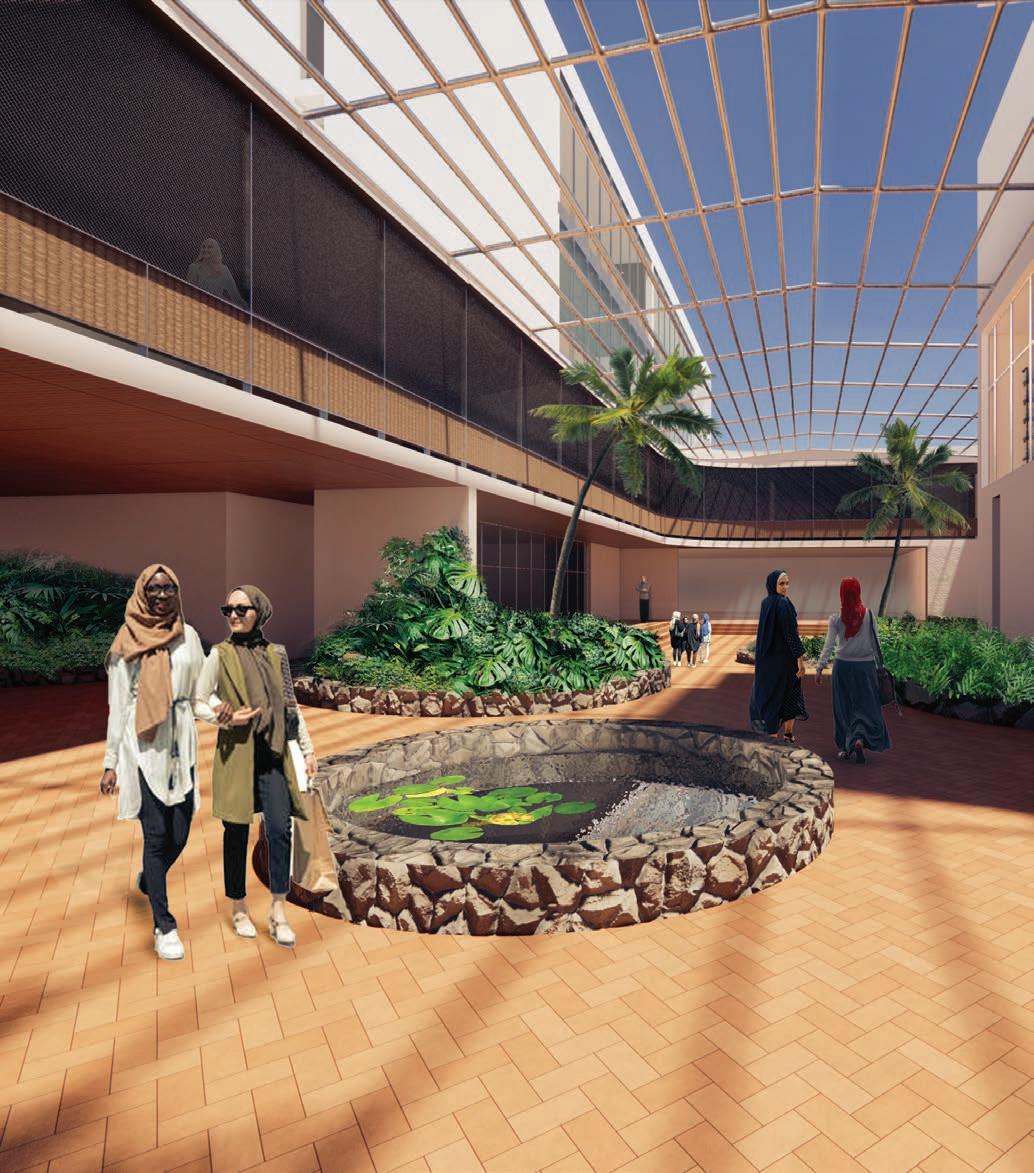
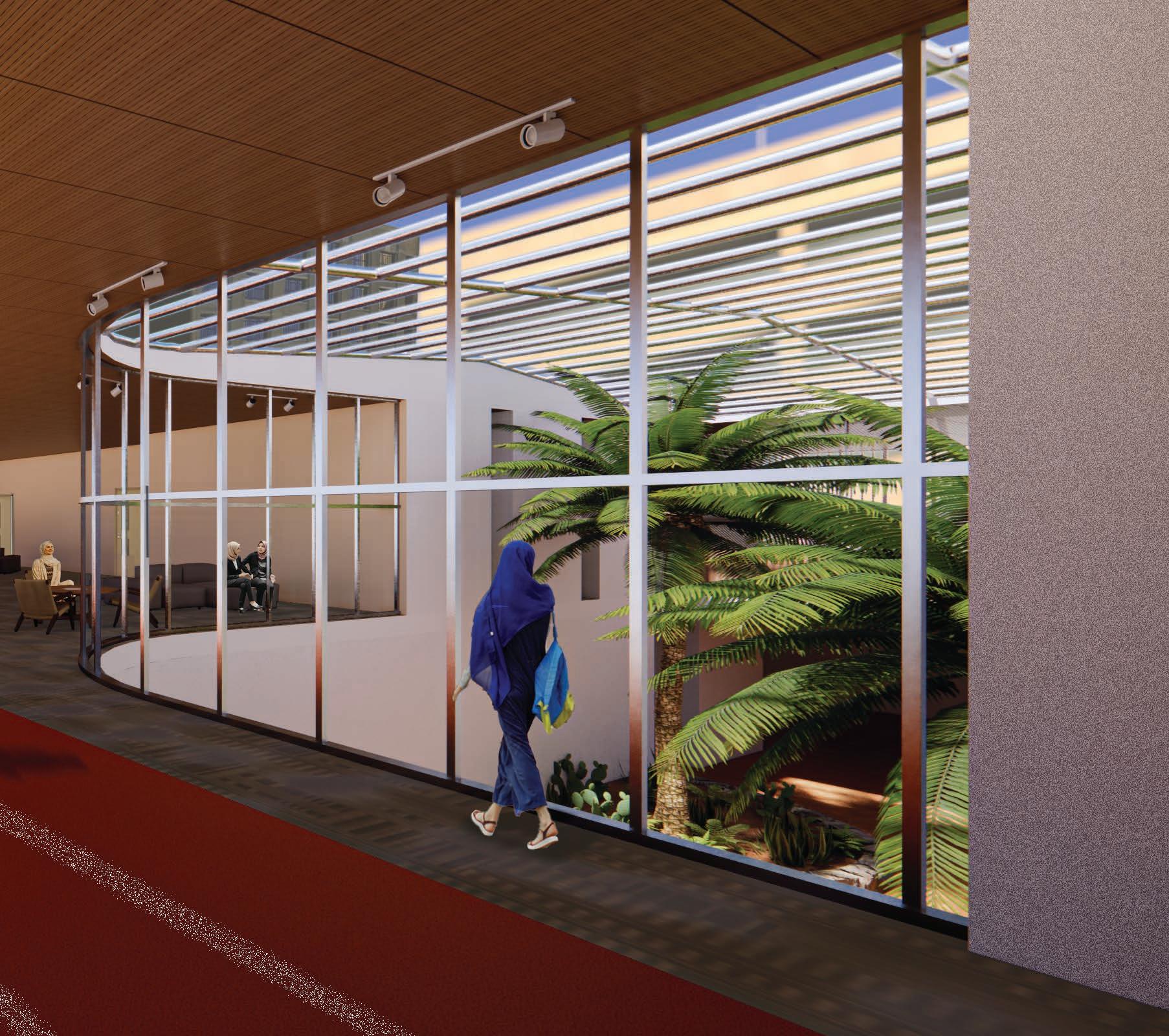
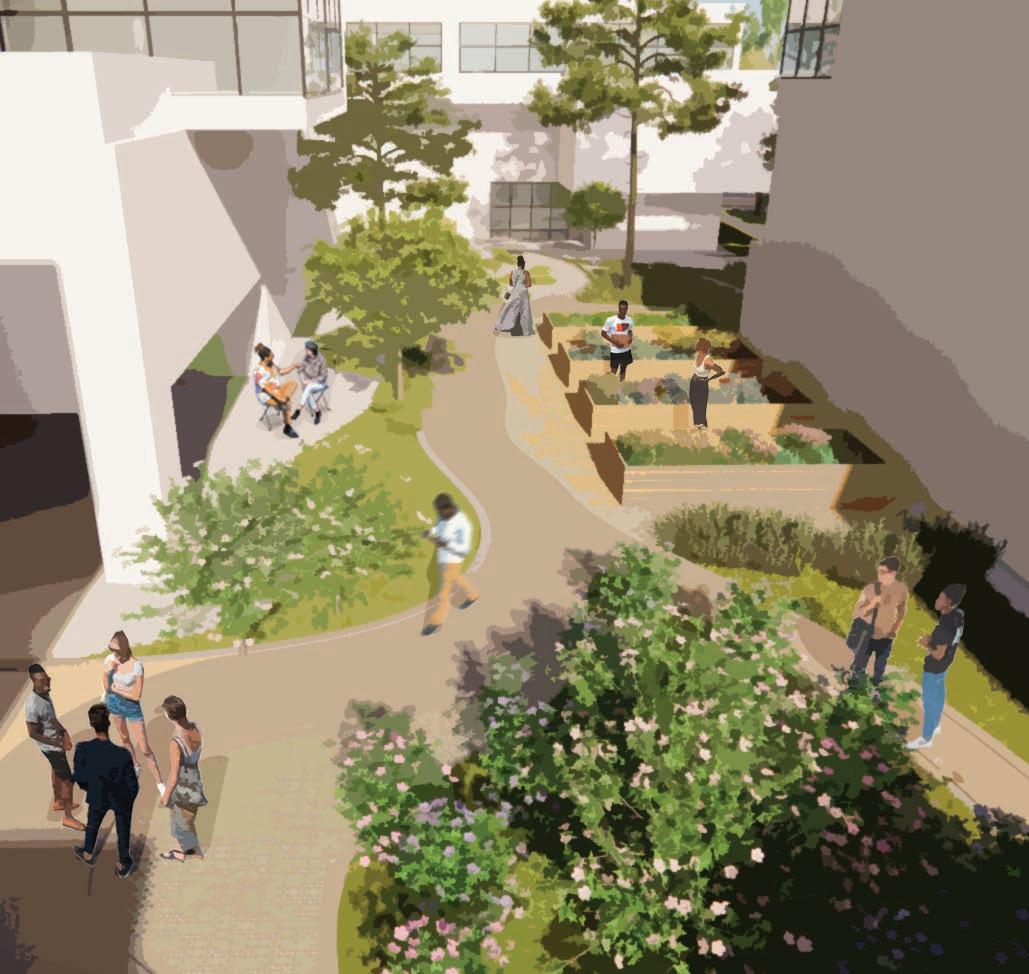
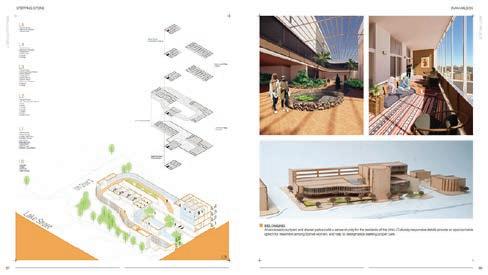
An enclosed courtyard and shared patios build a sense of unity for the residents of the clinic. Culturally responsive details provide an approachable option for treatment among Somali women, and help to destigmatize seeking proper care.
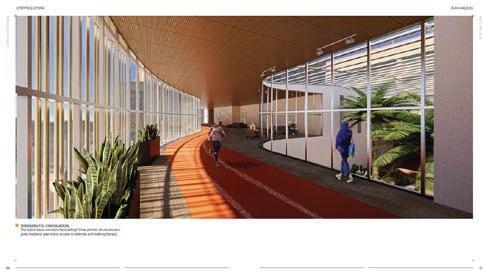
THERAPEUTIC CIRCULATION
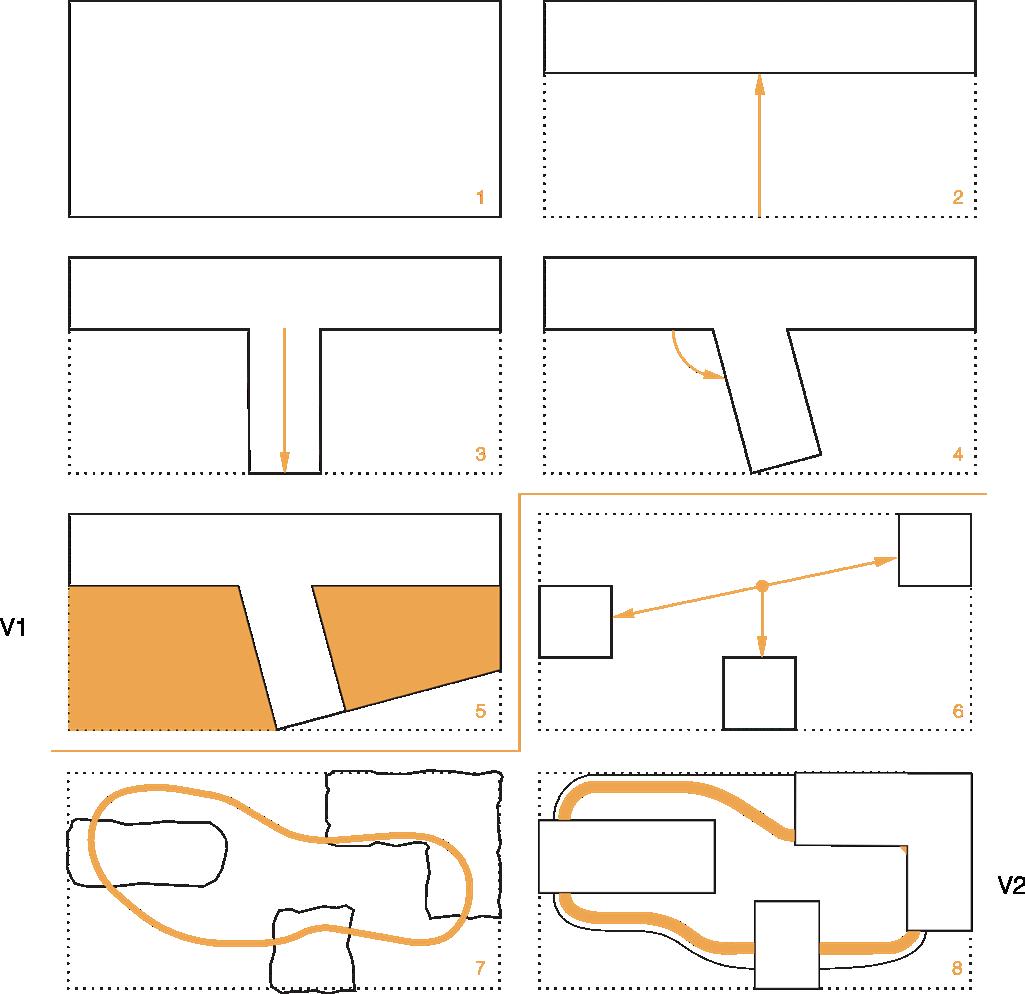
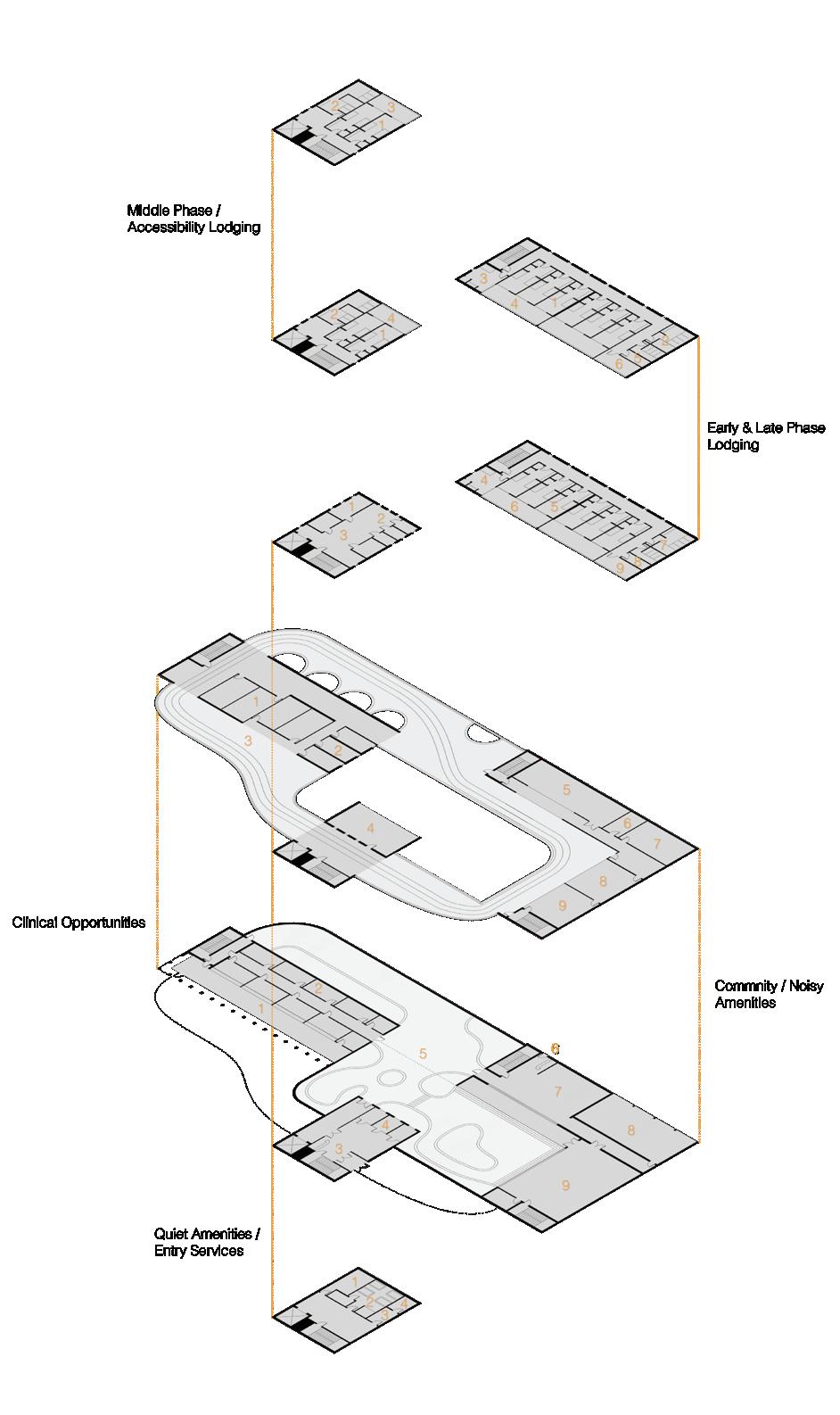
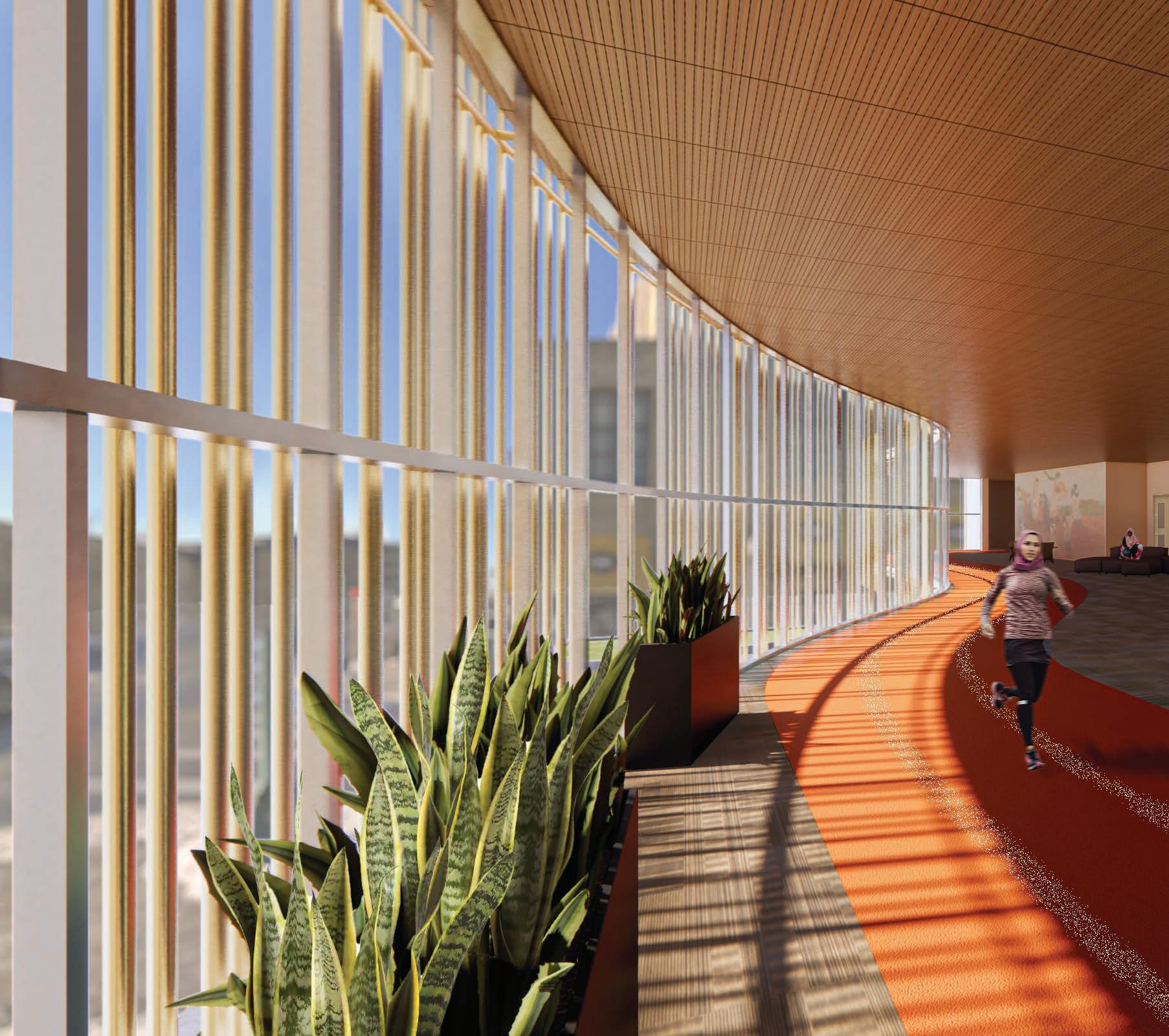
The indoor track connects the building’s three primary structures and gives residents year-round access to exercise and walking therapy.
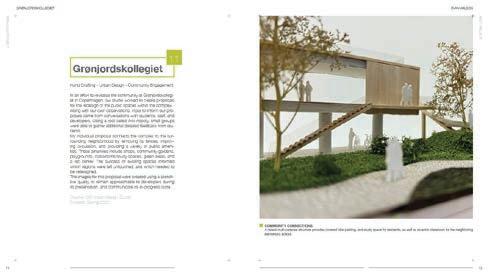
Grønjordskollegiet
Hand Drafting - Urban Design - Community Engagement
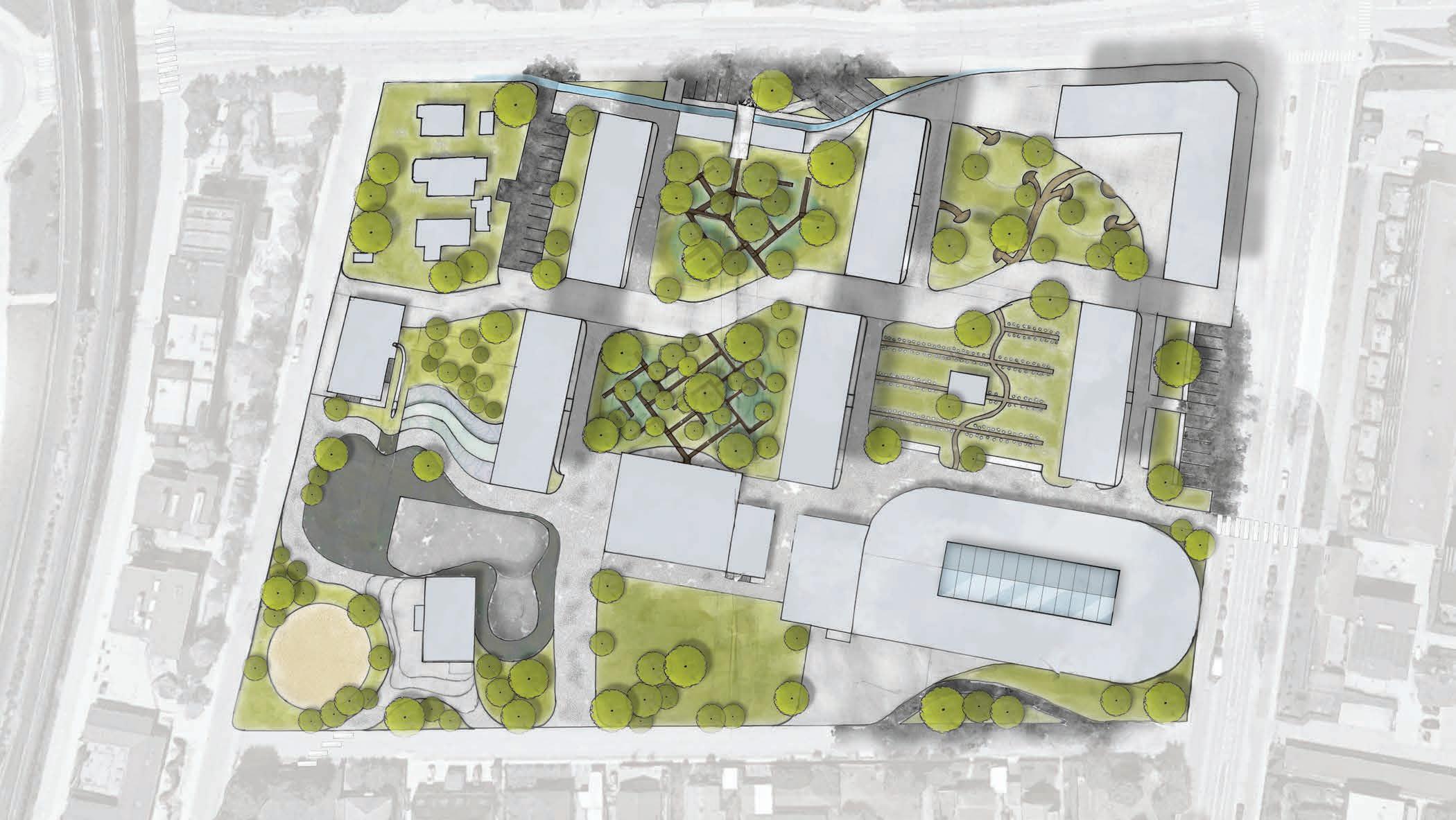
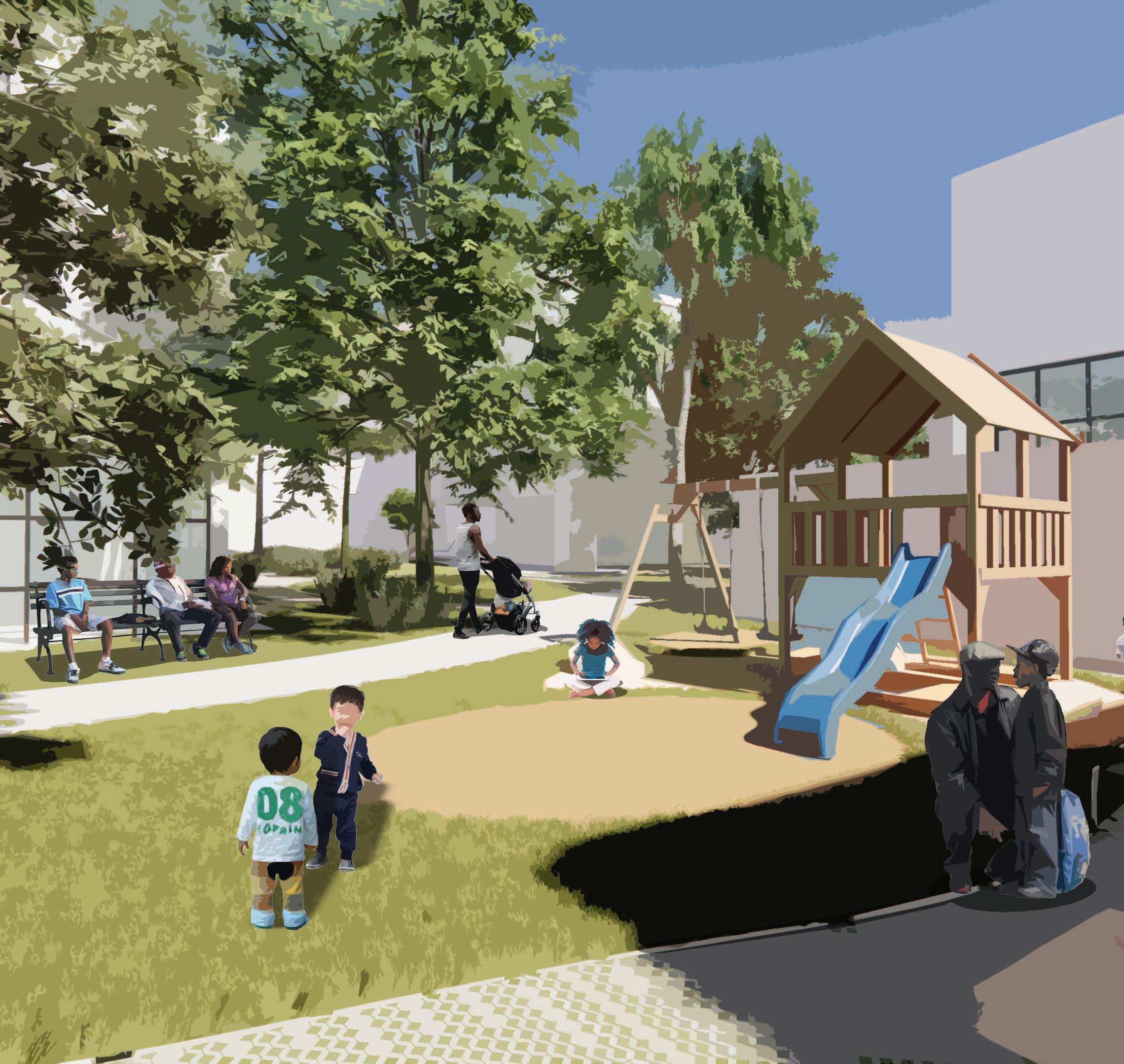
In an effort to revitalize the community at Grønjordskollegiet in Copenhagen, our studio worked to create proposals for the redesign of the public spaces within the complex. Along with our own observations, input to inform our proposals came from conversations with students, staff, and developers. Using a tool called Arki-nopoly, small groups were able to gather additional detailed feedback from students.
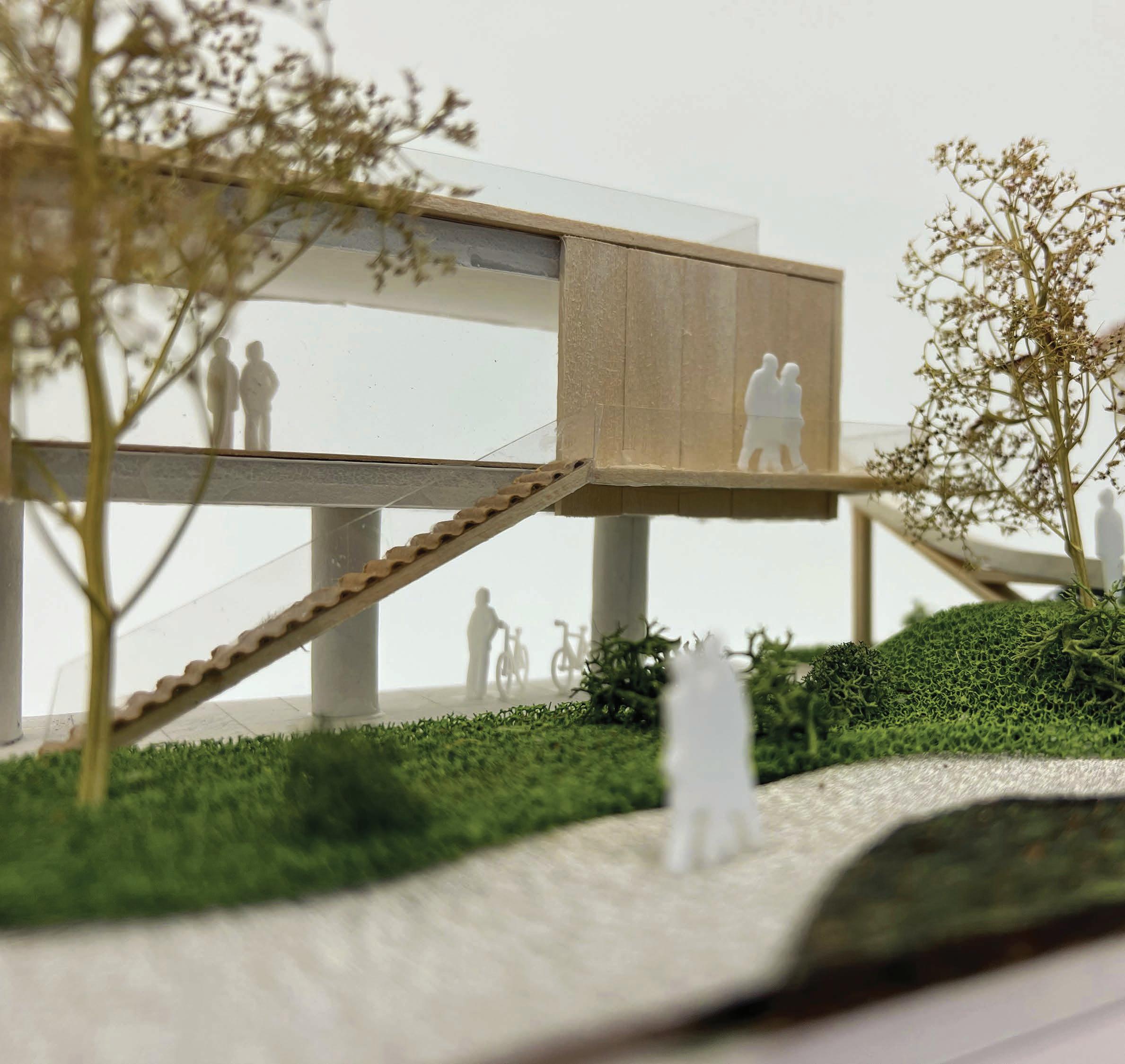
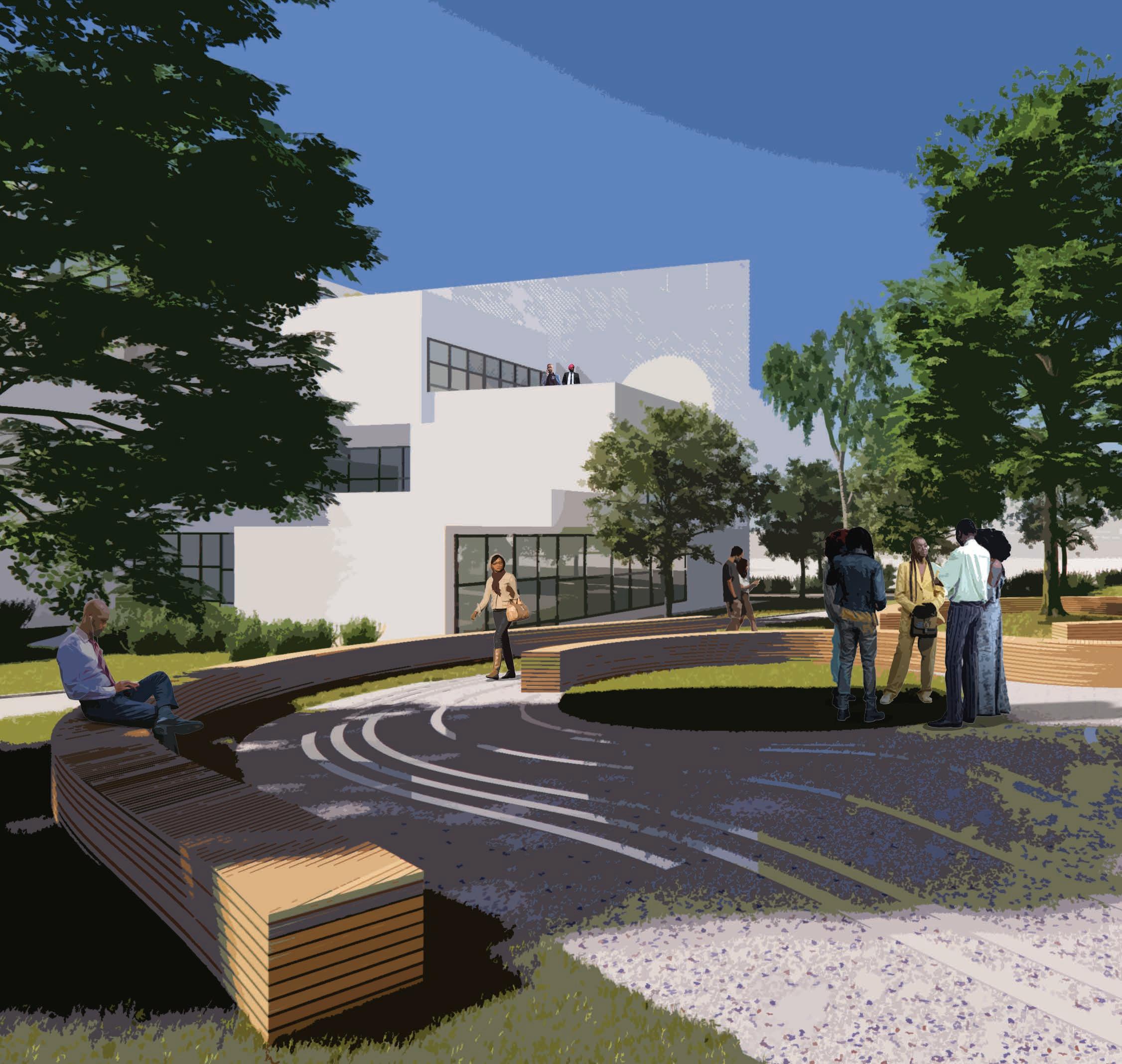
My individual proposal connects the complex to the surrounding neighborhood by removing its fences, improving circulation, and providing a variety of public amenities. These amenities include shops, community gardens, playgrounds, classrooms/study spaces, green areas, and a rec center. The success of existing spaces informed which regions were left untouched, and which needed to be redesigned.
The images for this proposal were created using a sketchlike quality to remain approachable to developers during its presentation, and communicate its in-progress state.
Course: DIS Urban Design Studio
Created: Spring 2022
COMMUNITY CONNECTIONS
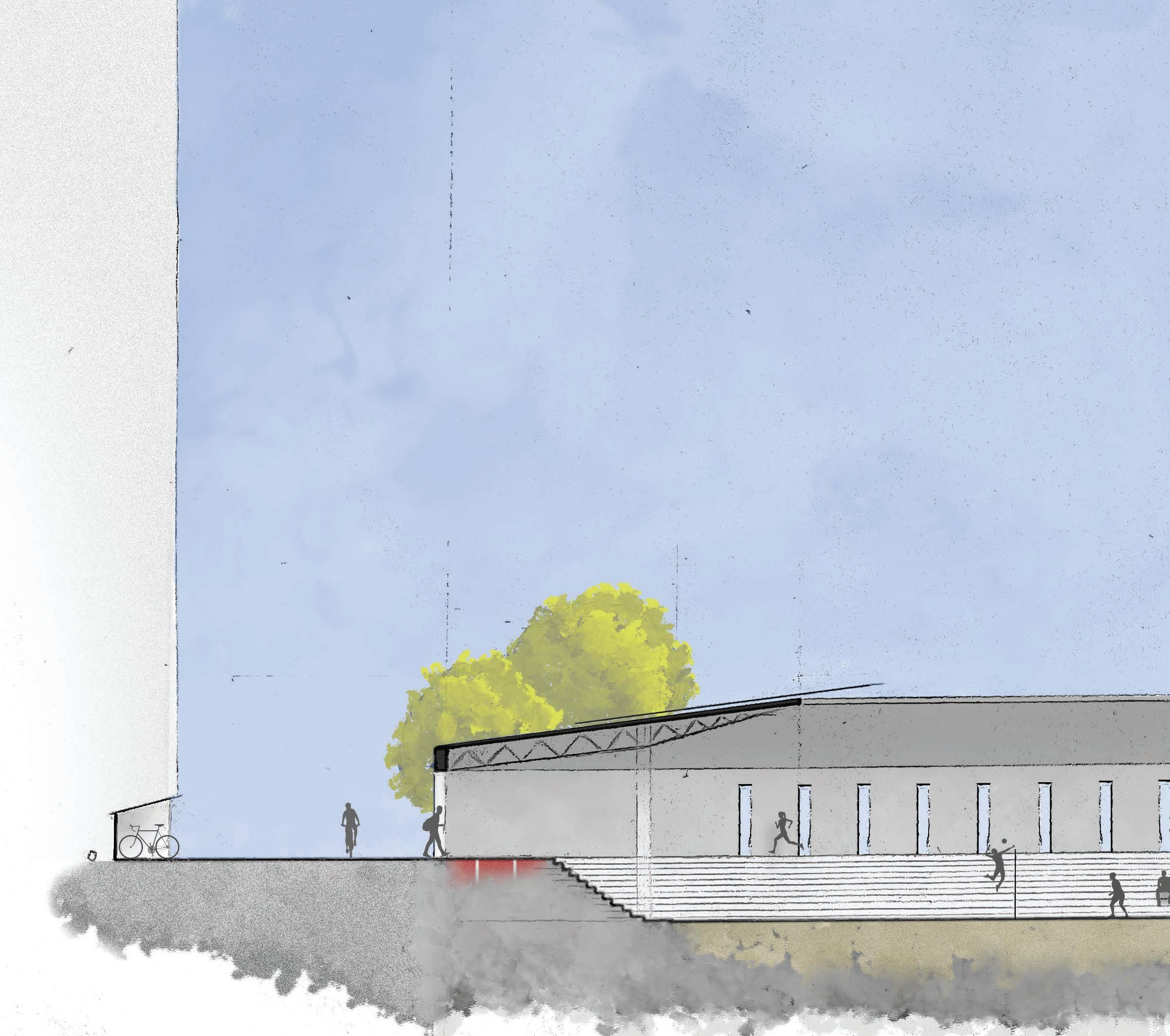
A raised multi-purpose structure provides covered bike parking, and study space for residents, as well as an extra classroom for the neighboring elementary school.
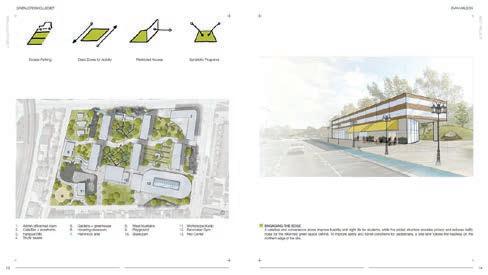
1. Admin office/mail room
2. Cafe/Bar + storefronts
3. Hangout hills 4. Study swales
5. Gardens + greenhouse
6. Hovering classroom 7. Hammock area
8. Wave fountains 9. Playground 10. Skate park 11. Workshops/studio
Renovated Gym
Rec-Center
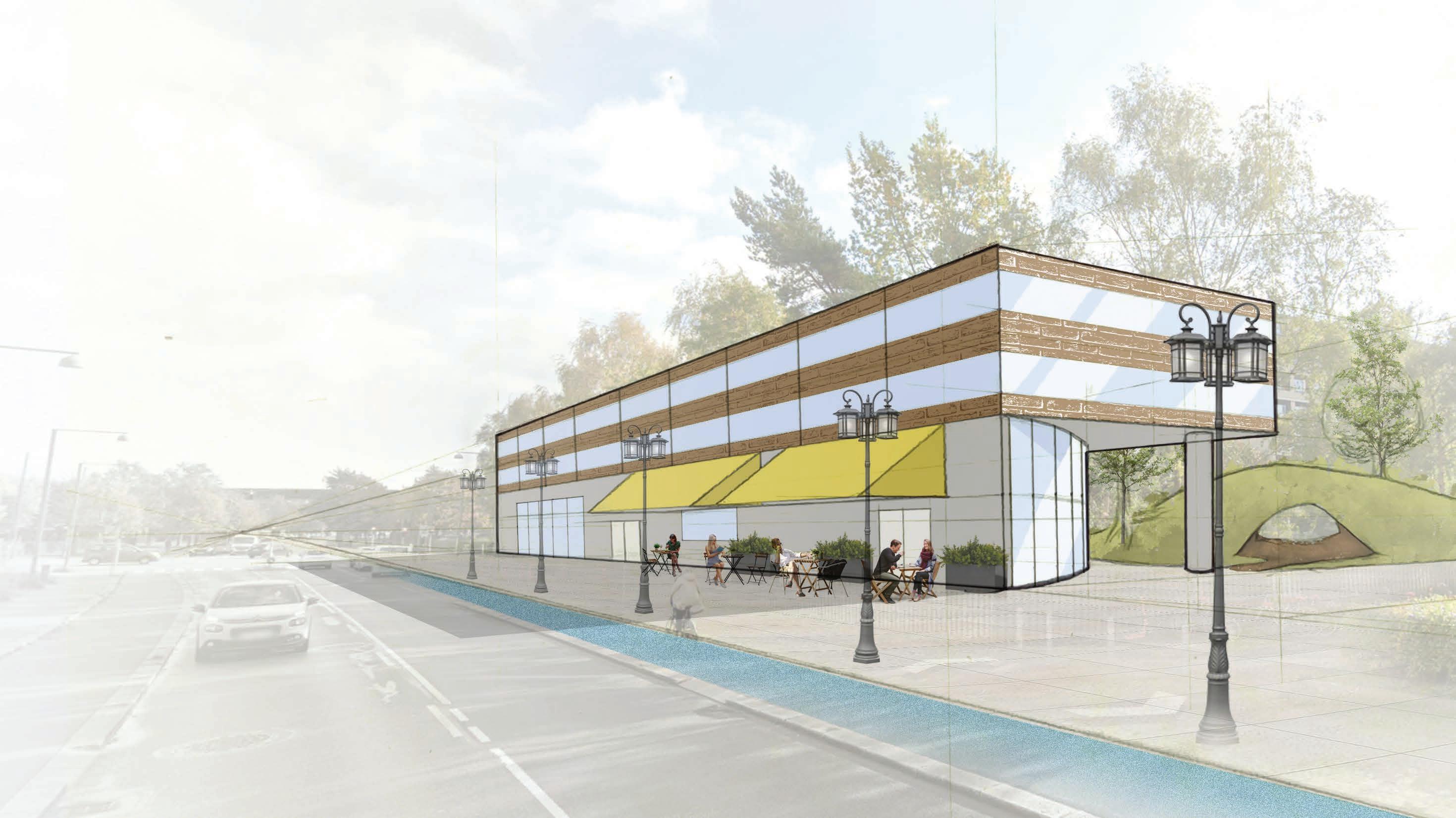
ENGAGING THE EDGE
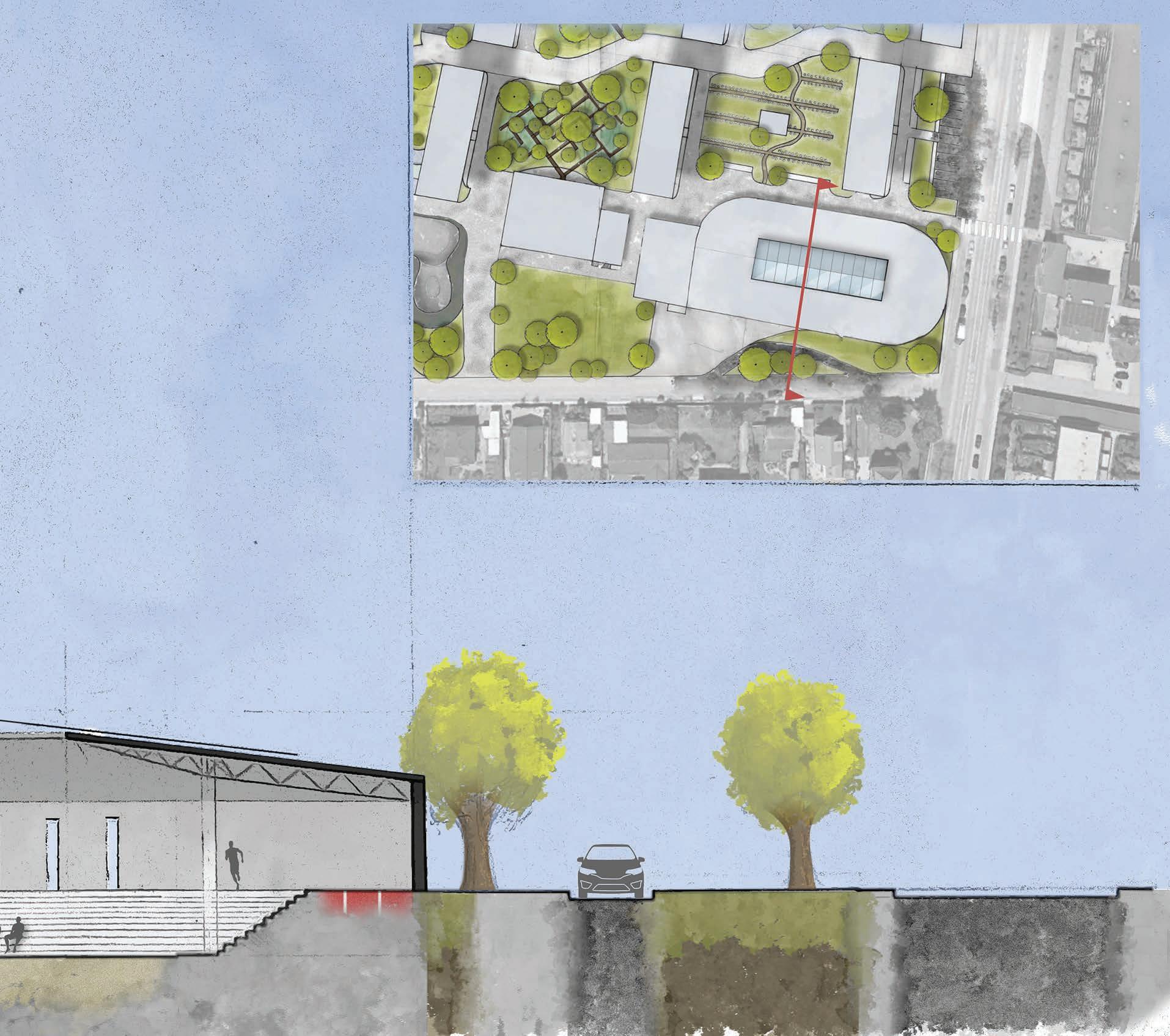
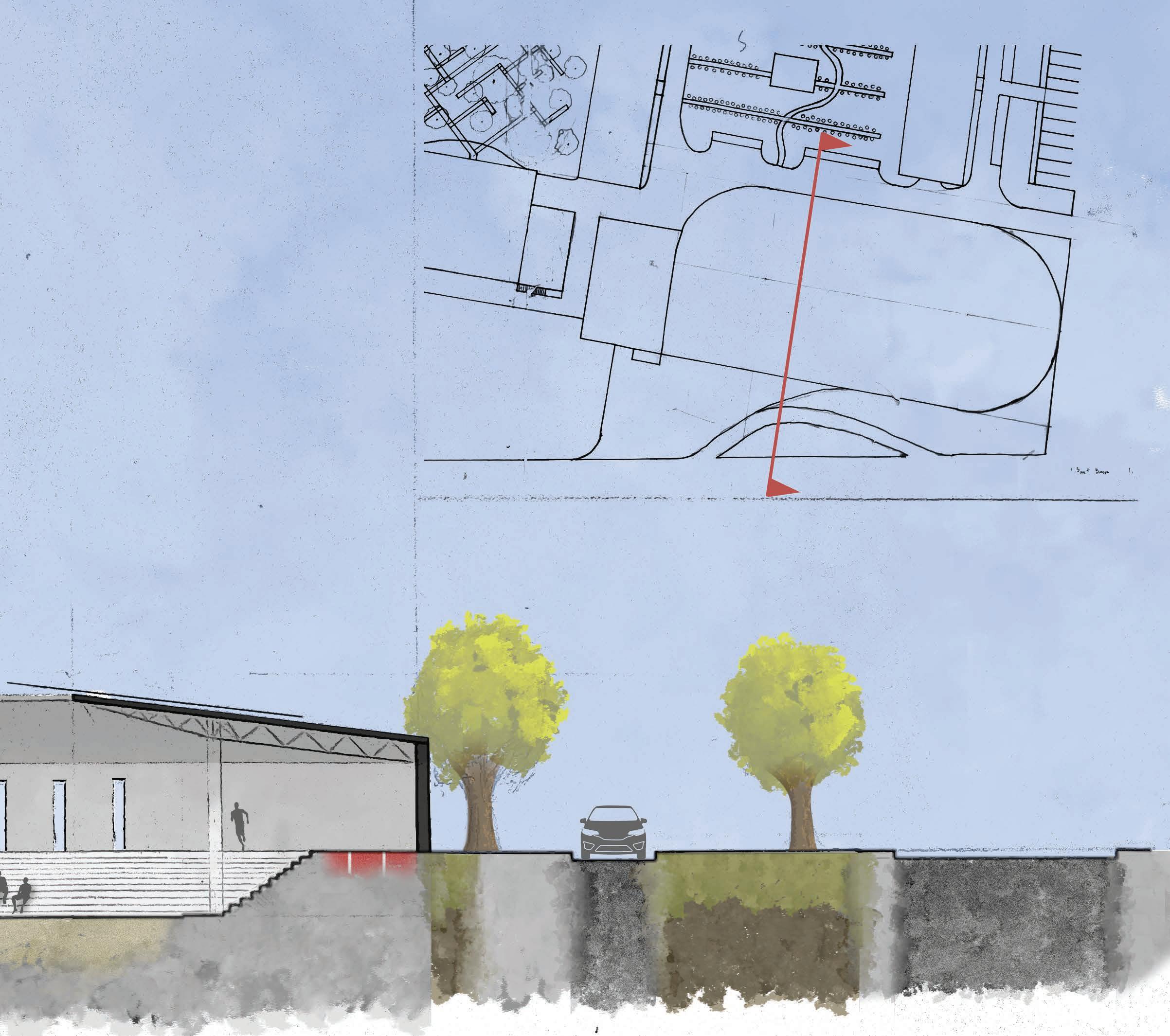
A cafe/bar and convenience stores improve livability and night life for students, while the added structure provides privacy and reduces traffic noise for the reformed green space behind. To improve safety and transit conditions for pedestrians, a bike lane follows the roadway on the northern edge of the site.
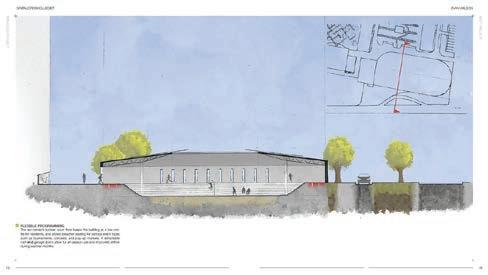
FLEXIBLE PROGRAMMING
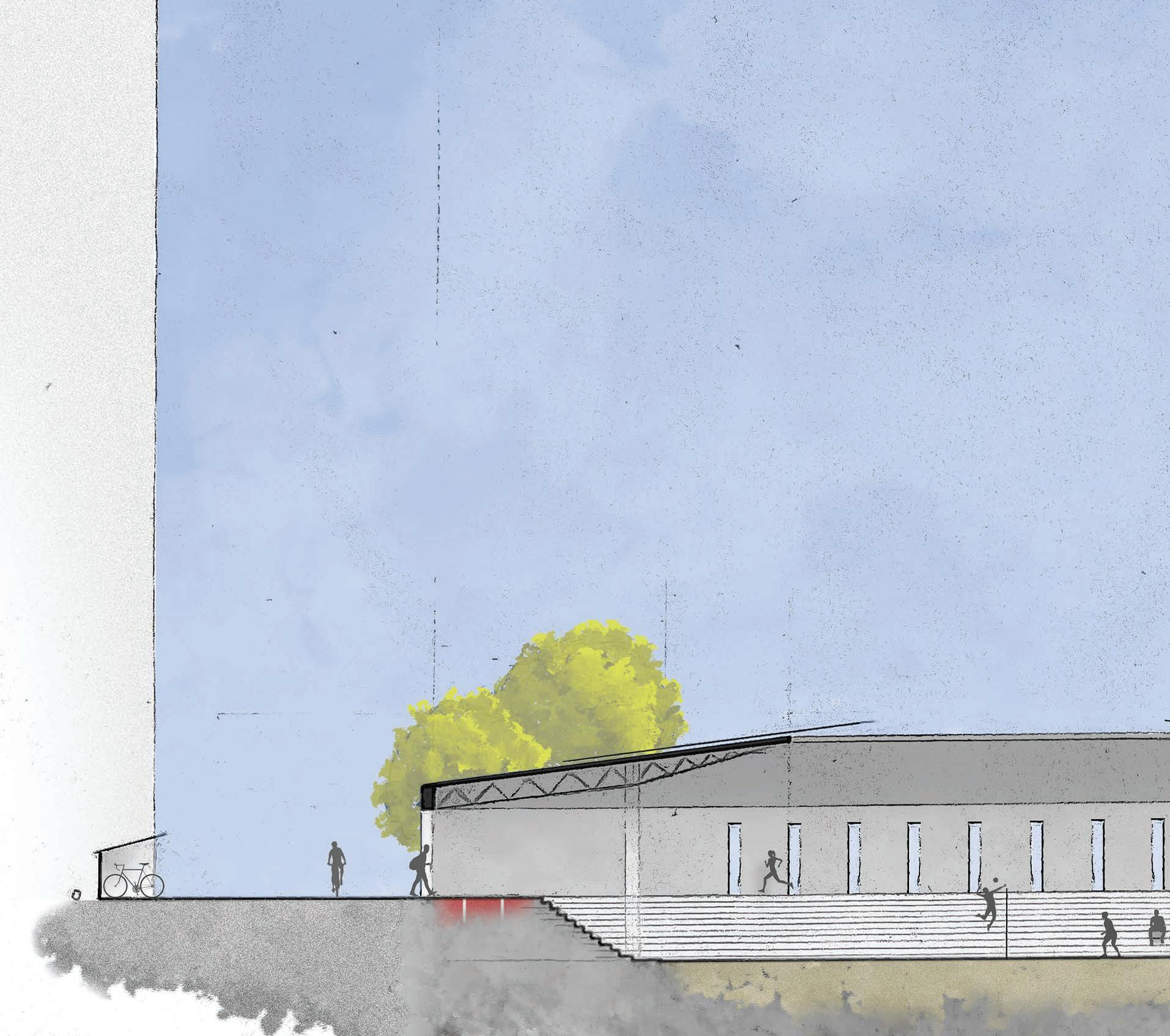
The rec-center’s sunken court floor keeps the building at a low profile for residents, and allows bleacher seating for various event types such as tournaments, concerts, and pop-up markets. A retractable roof and garage doors allow for all-season use and improved airflow during warmer months.
Growing Forward
Facade Design - Rendering - Collaboration
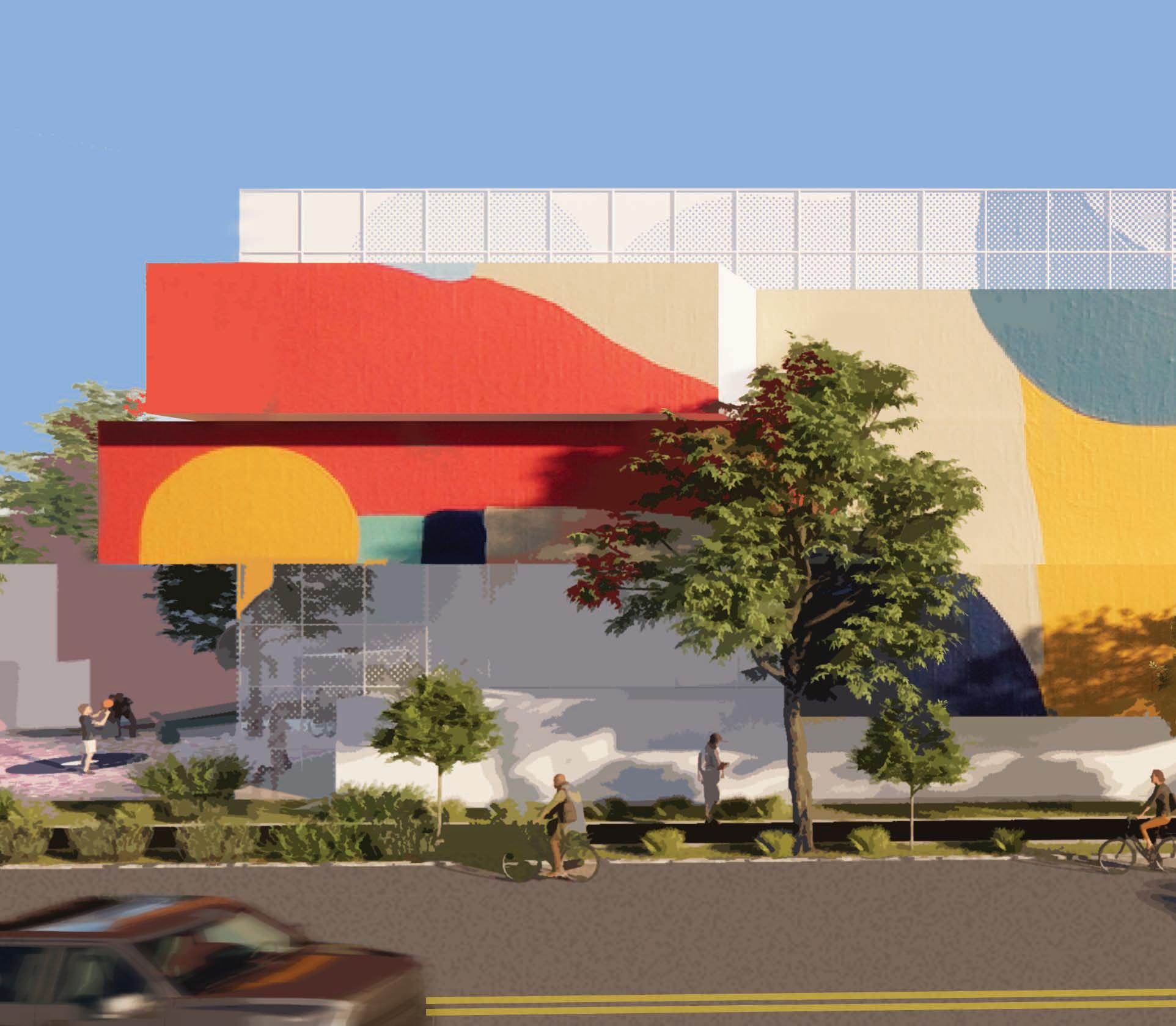
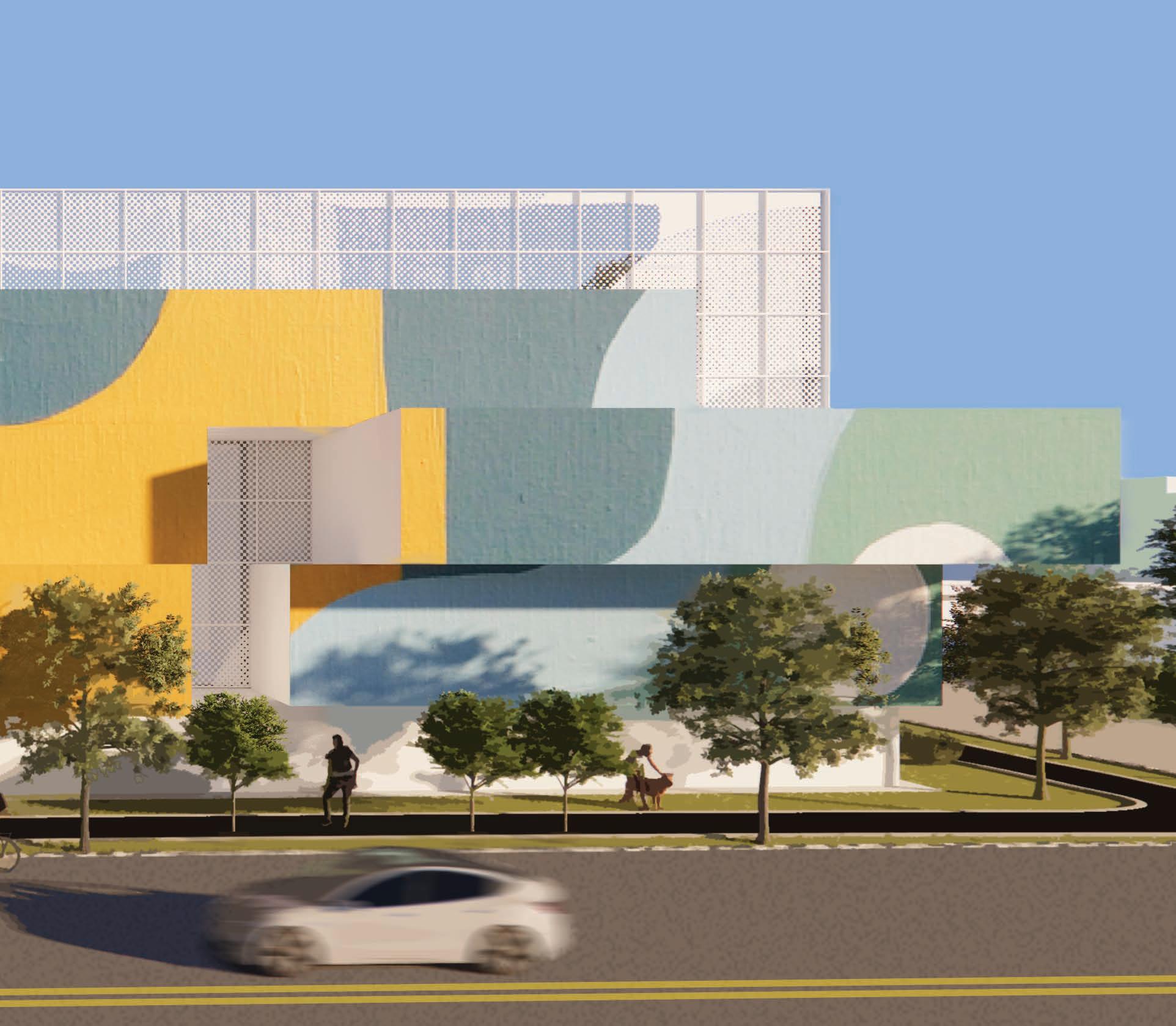
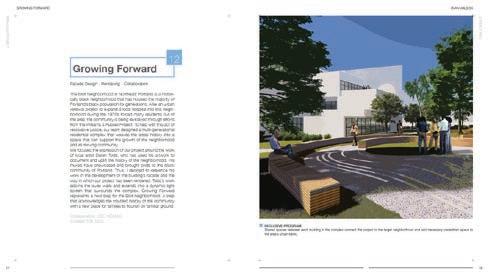
The Eliot Neighborhood in Northeast Portland is a historically black neighborhood that has housed the majority of Portland’s black population for generations. After an urban renewal project to expand a local hospital into this neighborhood during the 1970s forced many residents out of the area, the community is being revitalized through efforts from the Williams & Russell Project. To help with this act of restorative justice, our team designed a multi-generational residential complex that weaves the areas history into a space that can support the growth of the neighborhood and its thriving community.
We focused the expression of our project around the work of local artist Daren Todd, who has used his artwork to document and uplift the history of the neighborhood. His murals have showcased and brought pride to the black community of Portland. Thus, I decided to reference his work in the development of the building’s facade and the way in which our project has been rendered. Todd’s work adorns the outer walls and extends into a dynamic light screen that surrounds the complex. Growing Forward represents a next step for the Eliot neighborhood; A step that acknowledges the troubled history of the community with a new place for families to flourish on familiar ground.
Collaborators: USC NOMAS
Created: Fall 2023
INCLUSIVE PROGRAM
Shared spaces between each building in the complex connect the project to the larger neighborhood and add necessary pedestrian space to the area’s urban fabric.
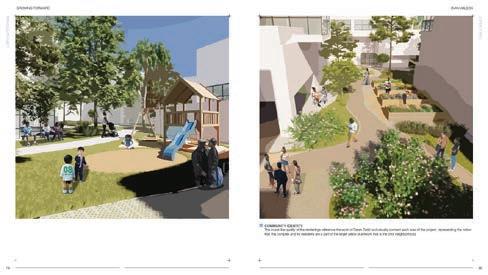
COMMUNITY IDENTITY
The mural-like quality of the renderings reference the work of Daren Todd and visually connect each area of the project, representing the notion that this complex and its residents are a part of the larger piece of artwork that is the Eliot neighborhood.
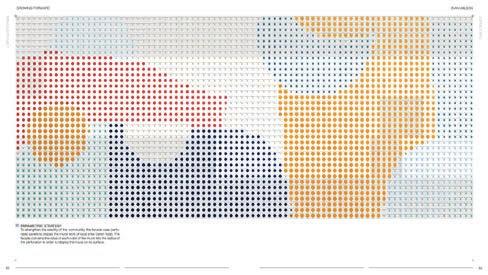
PARAMETRIC STRATEGY
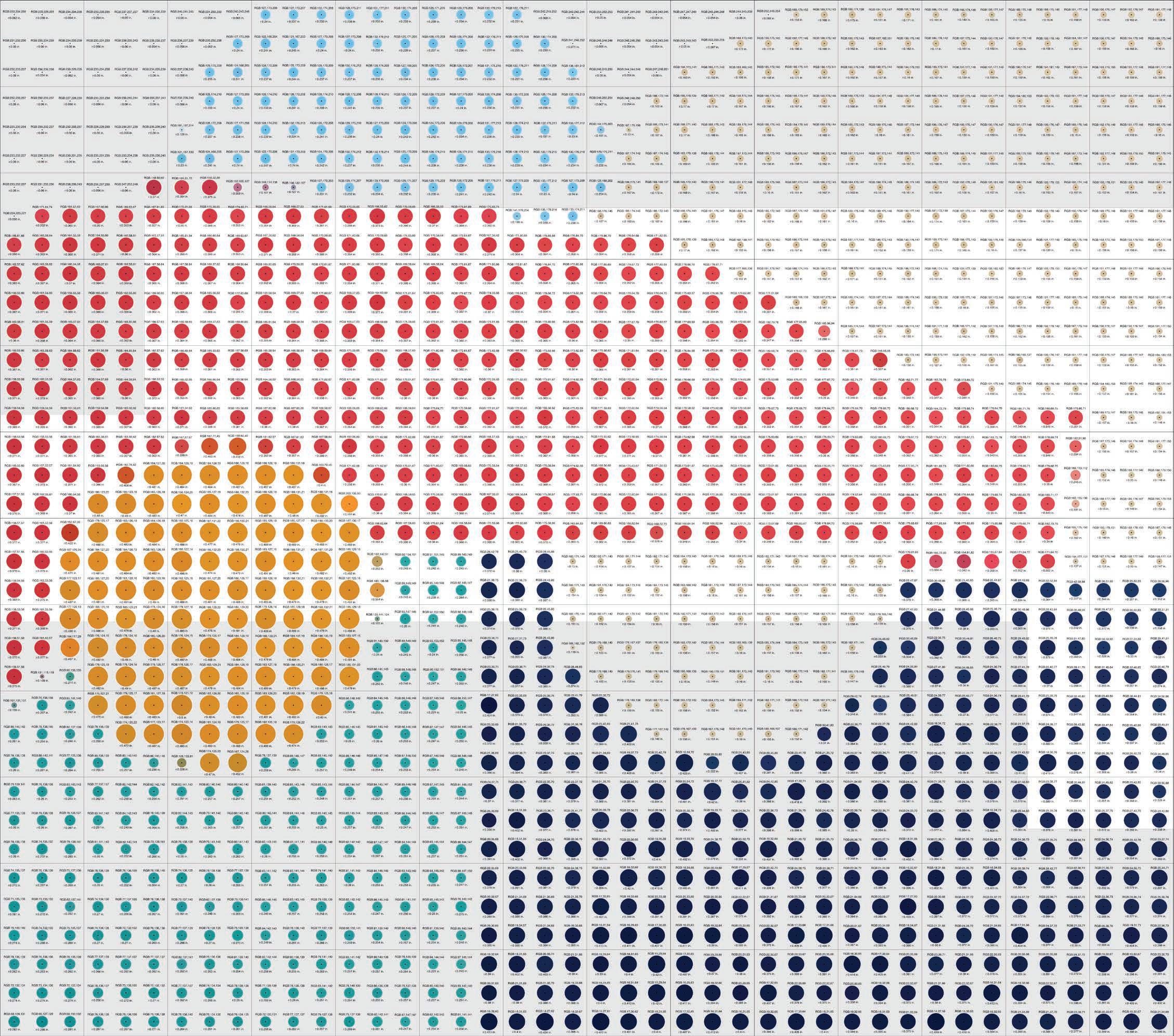
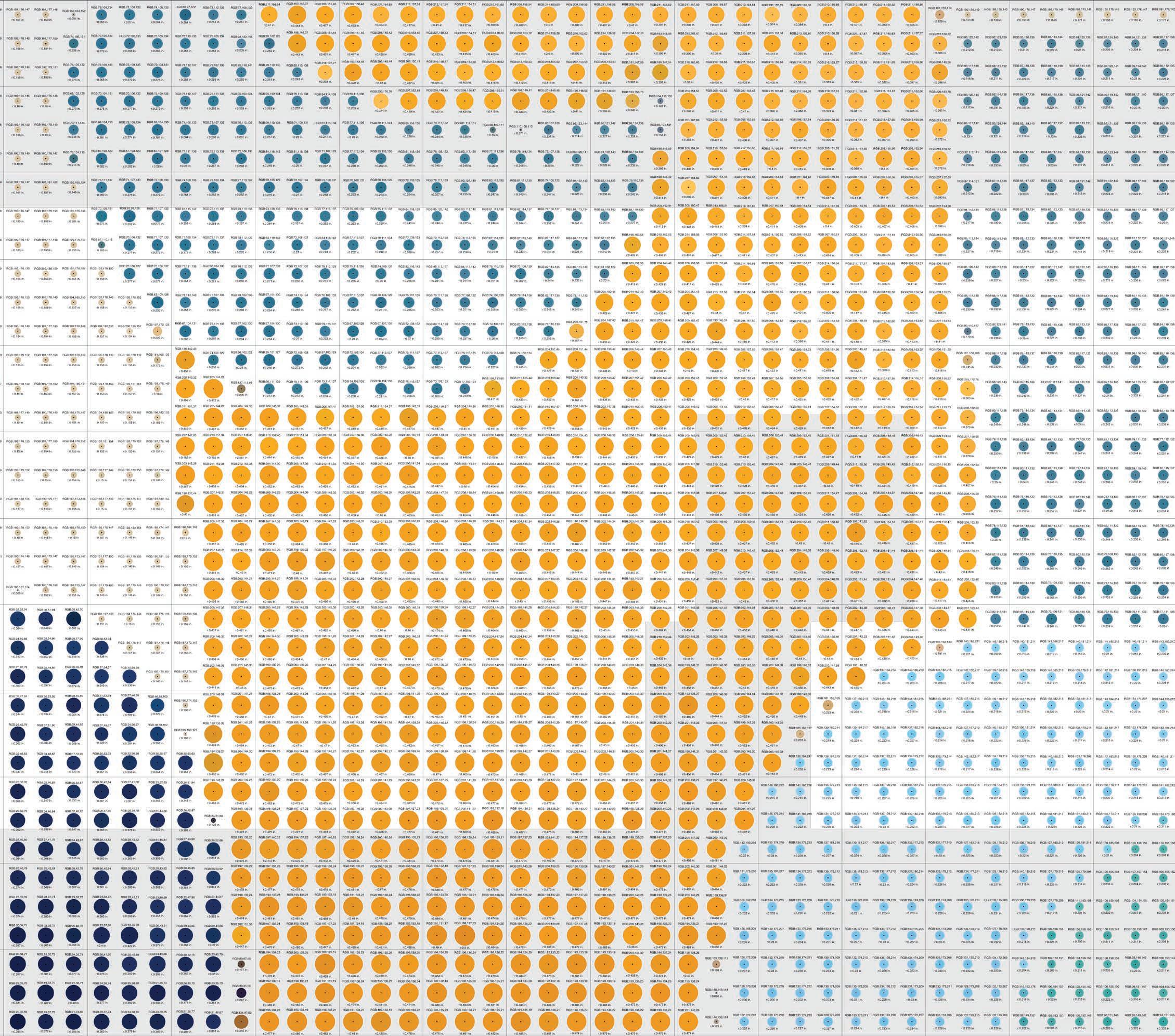
To strengthen the identity of the community, the facade uses perforated panels to display the mural work of local artist Daren Todd. The facade converts the value of each color of the mural into the radius of the perforation in order to display the mural on its surface.
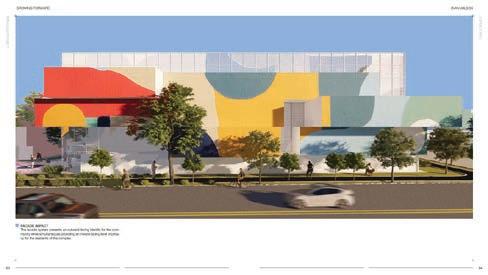
FACADE IMPACT
The facade system presents an outward-facing identity for the community while simultaneously providing an inward-facing level of privacy for the residents of the complex.
Page
Page
Page 49-50: Tool UI/UX design
51: Paper Panels project description
52: Bristol paper model photo Page 53-54: Geometry construction diagrams and bristol paper chess piece model photos. Page 55: From Waste to Wilderness project description
56: Model photo rendering
Page 65: Data visualization models
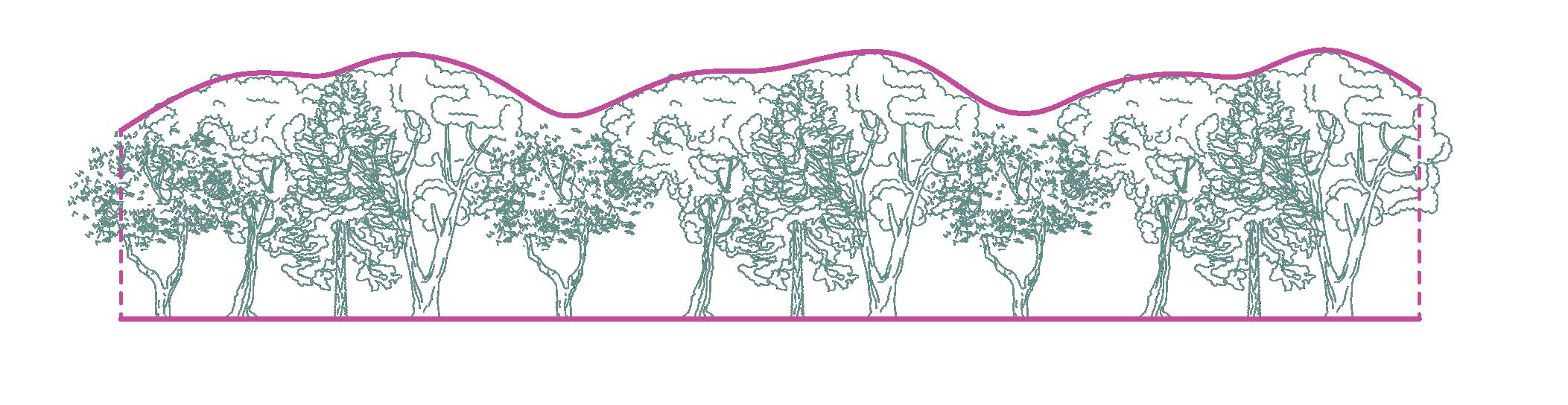
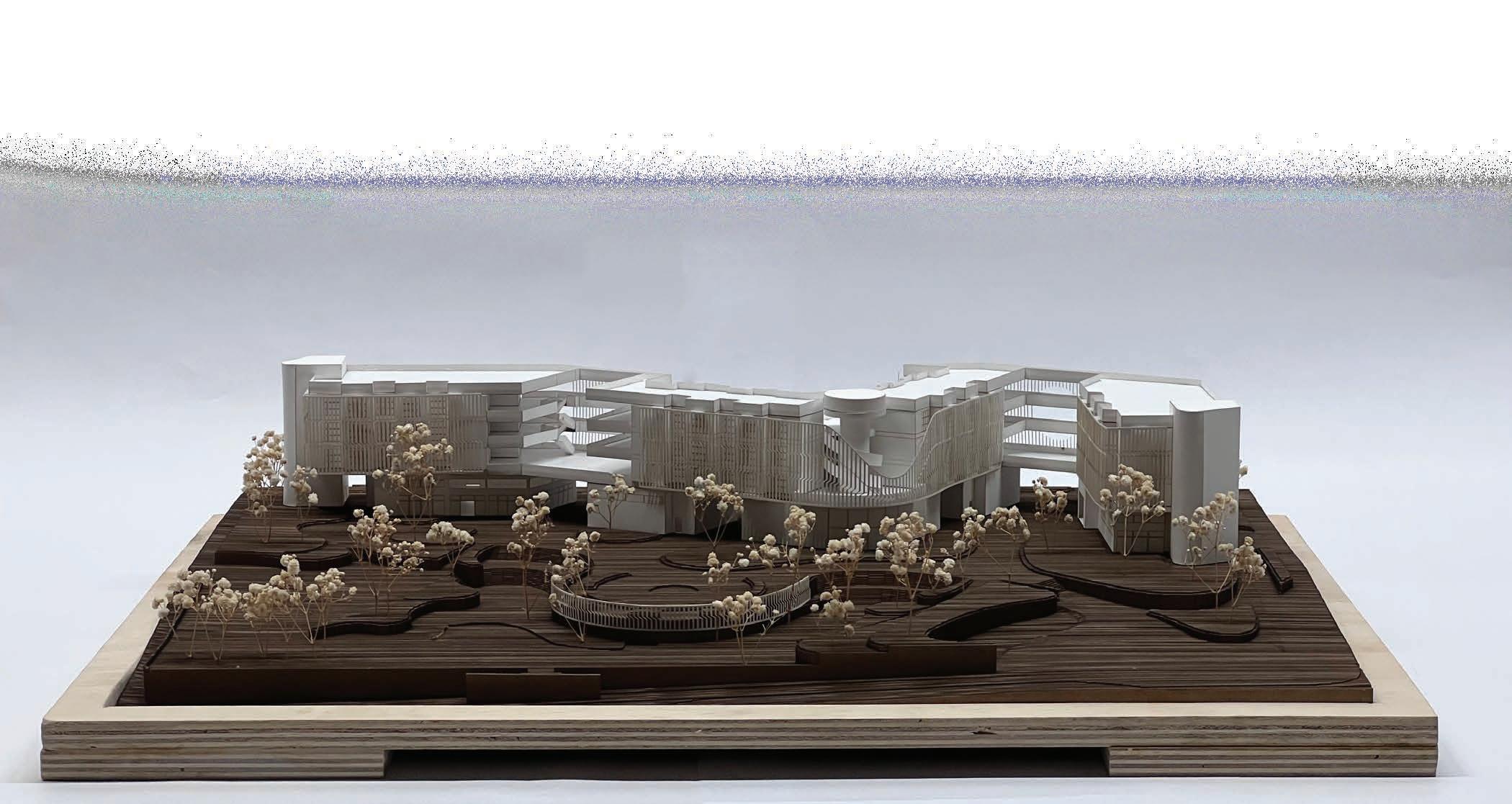
66: Site transect, process model photo, and parti diagram