University of Southern California, School of Architecture // May 2025
- Master of Architecture
- Relevant Courses: Advanced Digital Fabrication, Descriptive & Computational Architectural Geometry, Comprehensive Design Studio, Topic Studio: Biomimetic Architecture, Graduate Thesis, M.Arch Studio I
University of Minnesota - Twin Cities, College of Design // May 2023
- Bachelor of Science in Architecture
- Relevant Courses: AutoCAD I, Design in the Digital Age
USC School of Architecture, Laser Lab Attendant // January 2024 - May 2024 (5 mo.)
- Experienced with the use and maintenance of laser cutters and 3D printers.
- Responsible for student project supervision and upkeep of the lab space.
USC School of Architecture, Woodshop Attendant // January 2024 - May 2024 (5 mo.)
- Experienced with the use and maintenance of woodworking tools such as: Table saw, Radial arm saw, Band saw, Jig saw, Chop saw, Sander, and Drill Press.
- Responsible for student project supervision and upkeep of the woodshop space.
DLR Group, Intern // May 2024 - April 2025 (1 yr.)
- Justice & Civic // (1 yr.)
- Documented projects through 3D printing and model photography.
- Used Rhino/Grasshopper to conduct area analysis, test circulation efficiency, and streamline the digital modeling process for several projects.
- Worked in Pre-Design, Schematic Design, and Design Development phases to deliver correctional facilities through the creation and development of area analysis plans, circulation diagrams, interior and exterior renderings, floor plans, site plans, section drawings, detail drawings, reflected ceiling plans, and digital models.
- Led an internal presentation to introduce parametric and generative design tools to the Los Angeles Justice & Civic team.
- Attended client coordination meetings and assisted in the presentation of design options.
JLG Architects, Intern // June 2022 - July 2023 (1 yr, 2 mo.)
- Sport // (3 mo.)
- Assisted in project design and delivery of collegiate-level sports facilities. Responsibilities included the development of preliminary floor plans, site plans, sections, and massings in both the Pre-Design and Schematic Design phases. Deliverables were created using Revit, Rhino, and/or Bluebeam.
- Developed proprietary tools in Grasshopper for building facade and site context generation, as well as streamlined modeling for the purpose of creating conceptual renderings.
- Attended site visits and conducted field photography and measurements.
- Design Technology // (9 mo.)
- Created and organized an asset library for the firm’s existing collection of material textures and CAD models.
- Developed basemaps using Mapbox and ArcGIS to be used in proprietary client-facing software tools intended for monitoring project performance.
- Led effort to develop onboarding activities in Enscape3D for 15+ new employees and returning junior staff.
- Created market-quality renderings for projects in each of the firm’s eight sectors. Renders were shown to clients and used in promotional materials.
- Developed proprietary tools for custom object asset creation using Grasshopper. These tools were used during the rendering process to allow for rapid iteration and future use.
- Delivered a firm-wide presentation to 100+ employees regarding the use of computational tools in the architectural design process.
- Healthcare // (2 mo.)
- Worked in Pre-Design, Schematic Design, and Design Development phases to deliver small to large scale clinical projects through the creation and develop ment of area analysis plans, circulation diagrams, interior and exterior renderings, floor plans, site plans, section drawings, detail drawings, reflected ceiling plans, and digital models.
USC NOMAS, Member // August 2023 - May 2025 (2 yr.)
- Participated in the Barbara G. Laurie Student Design Competition. Responsible for the facade design, rendering, and titling of the project.
- Placed 3rd of 39 participating universities
- Featured by NOMA National
Rhino 3D, Grasshopper, Digital Fabrication, 3D Printing, Mac User, Woodworking, Laser Cutting, Hand Modeling, Hand Drafting, AutoCAD, Revit, SketchUp, Bluebeam, Adobe Suite, Python and C# for Grasshopper, V-Ray, Enscape, Microsoft Office, Mapbox, ArcGIS, Kuula.
UMN, College of Design
- Dean’s List: Fall 2019, Spring 2020, Fall 2020, Fall 2021, Spring 2022, Fall 2022, Fall 2023
- Project entered by professor into school archive for outstanding work, 2023 (Rain Refuge)
USC, School of Architecture
- Barbara G Laurie Student Design Competition, 2023: 3rd Place, 2023 (Growing Forward)
- Project featured on noma.net and NOMA National Instagram, 2024 (Growing Forward)
- Project featured on USC School of Architecture website, 2024 (From Waste to Wilderness)
- USC Merit Scholarship recipient
A Collapsing Environment
Course: Graduate Thesis
Created: Spring 2025
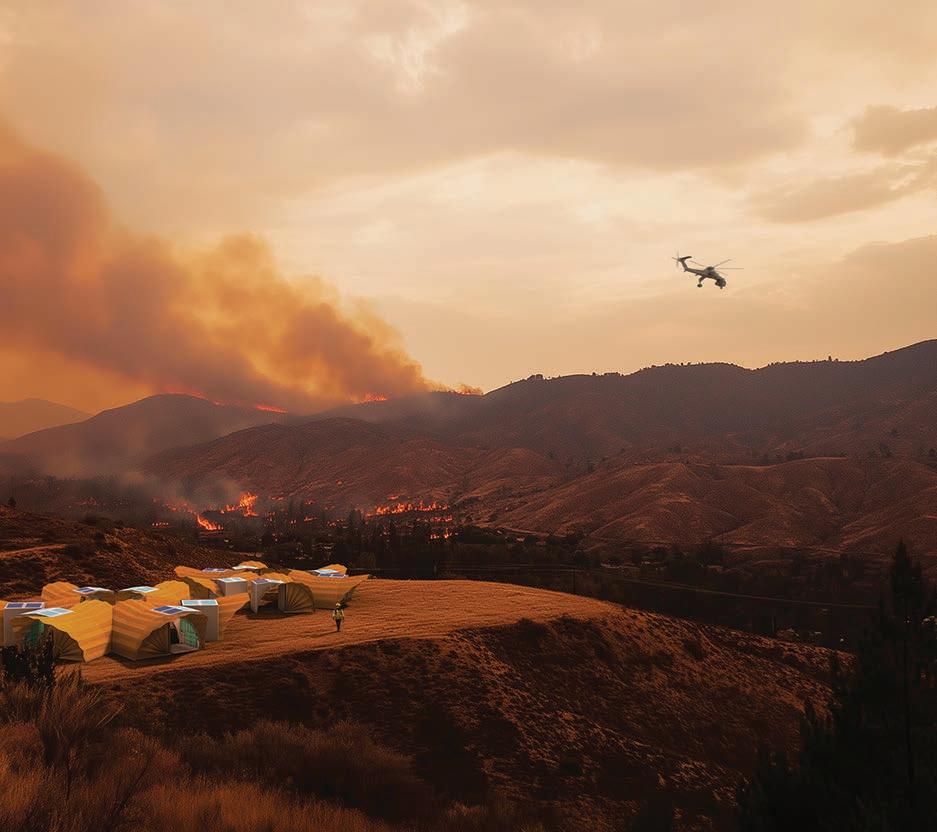
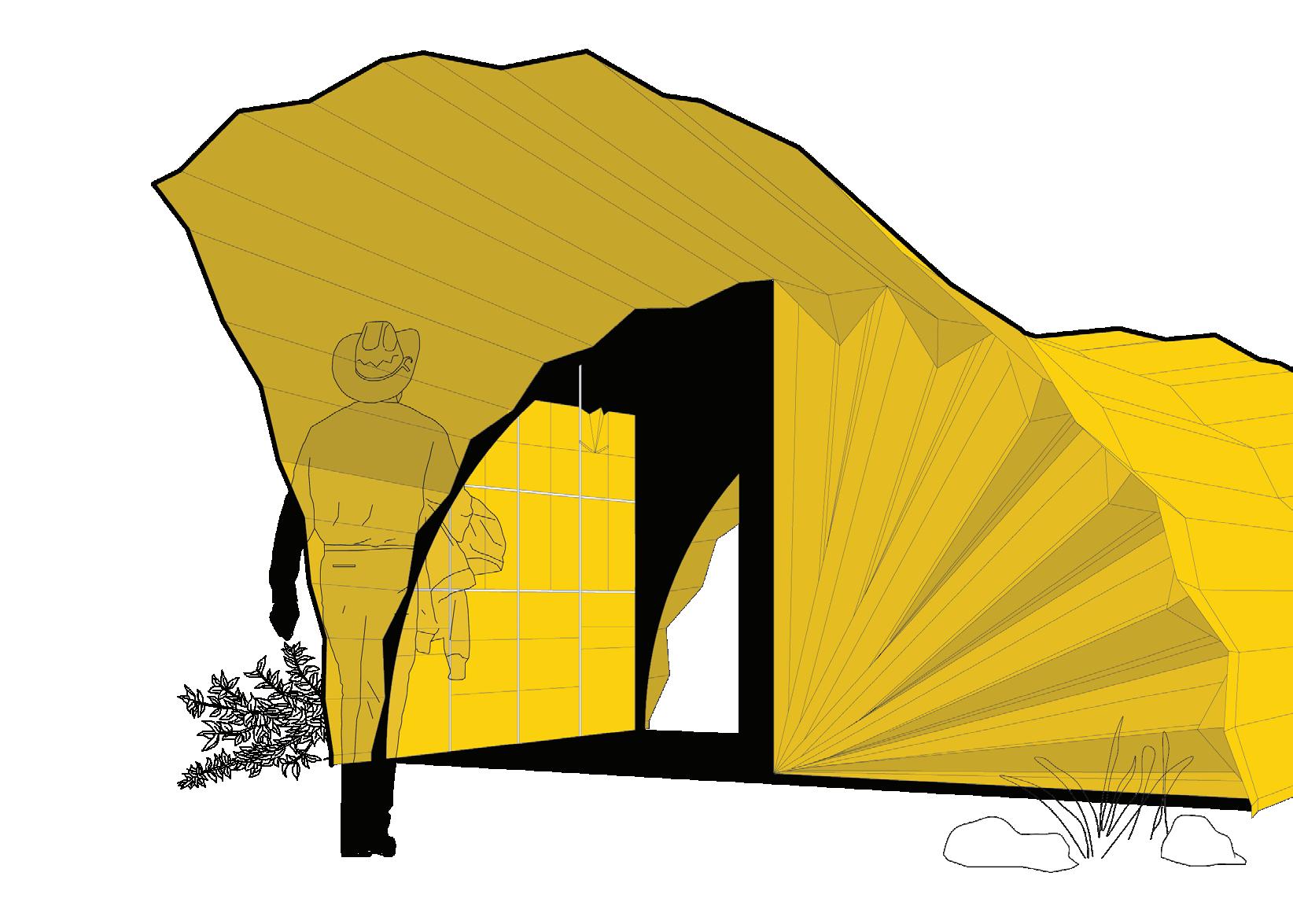
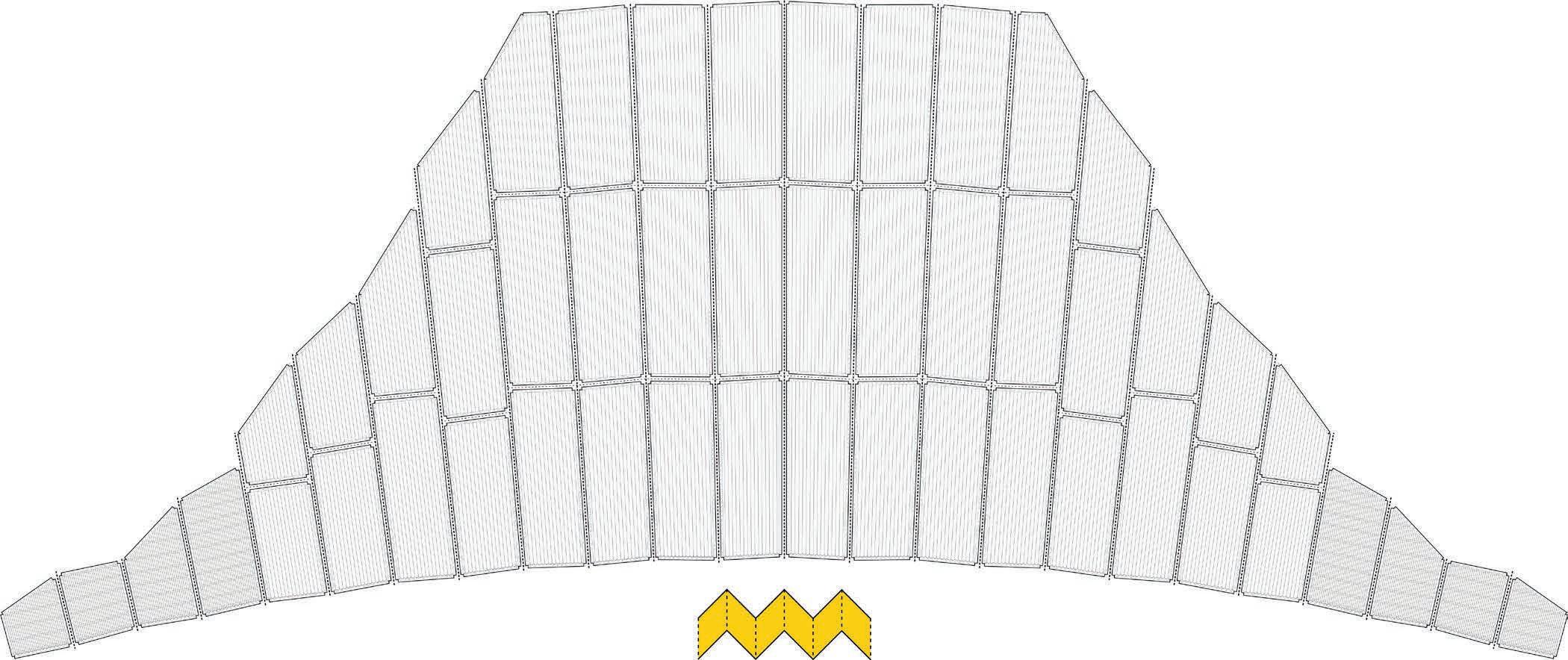
As the frequency of natural disasters continues to increase, we must ensure that our response to these events is as quick, reliable, and effective as possible. Earlier this year, thousands of emergency personnel were actively helping to manage and extinguish an unprecedented series of wildfires across Los Angeles County, many of whom traveled from out-of-state and occupied local hotels. With over 10,000 homes destroyed by these fires, this hotel space is a critical safety net for displaced residents. Providing temporary shelters to first responders would free up hotel space and allow them to operate closer to the fireground, reducing transportation time and improving fire coverage. In order to be effective, these shelters need to be durable, easy to operate, and compatible with emergency equipment. By utilizing 3D printed material with innovative built-in folding patterns, new shelters can be created with a reinforced enclosure and efficient operation on-site, making it effective for quickly changing conditions.
Experimenting with the granular settings of the 3D printing process, such as infill, density, angle, or layering allows us to add functional details to the enclosure of these shelters that is custom-made to enhance the working conditions of first-responders through aesthetic and equipment-specific features.
Transportation
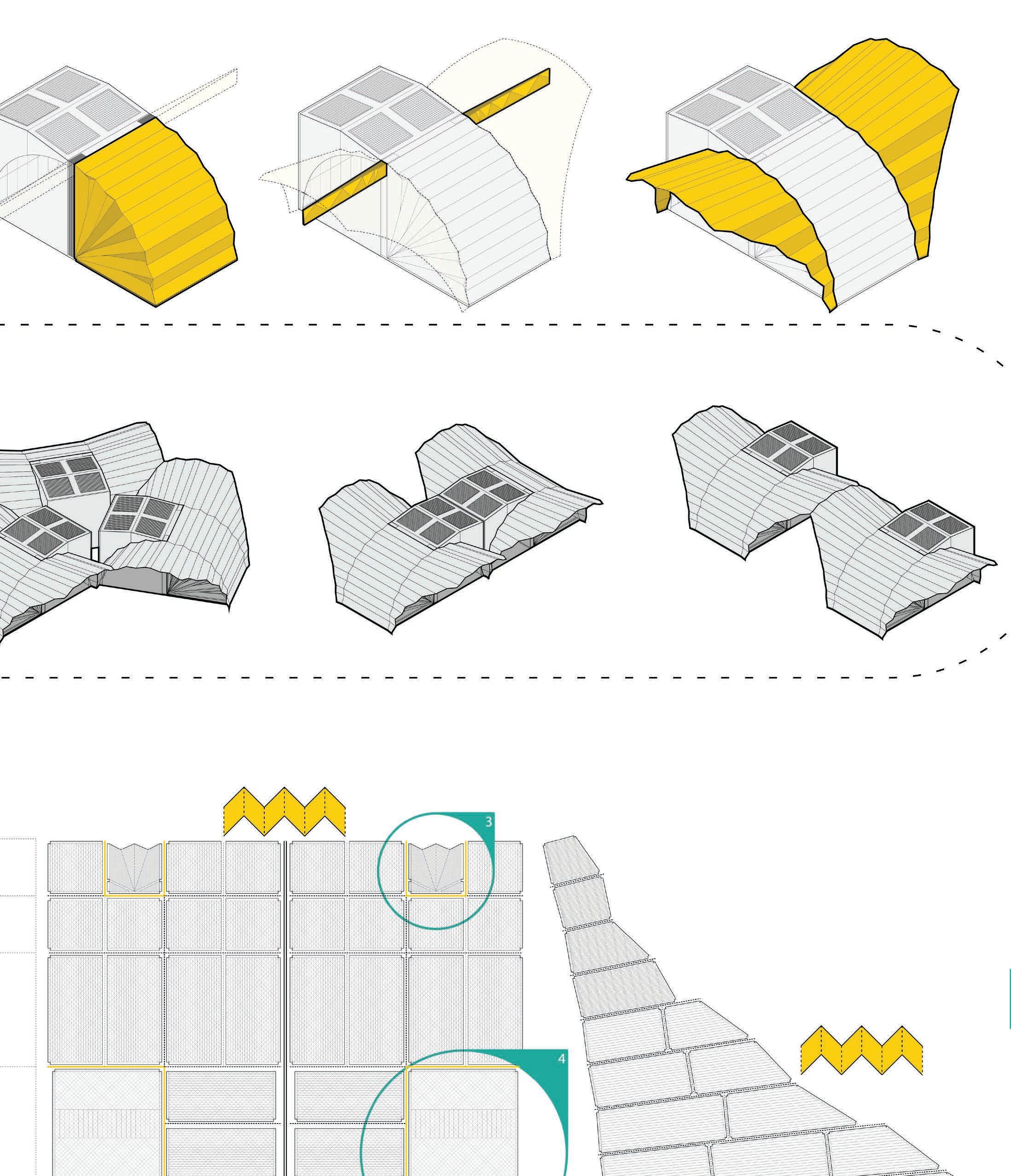
Wildland fires and the spike camps used to combat them are often difficult to reach using ground transportation. This shelter is designed to be transported via cargo helicopter, making it easier to reach remote locations and improve response times.
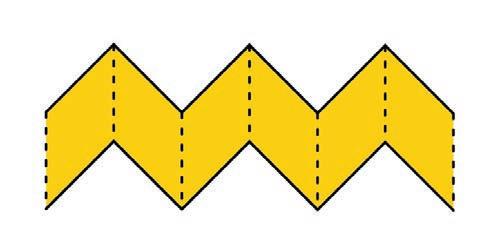
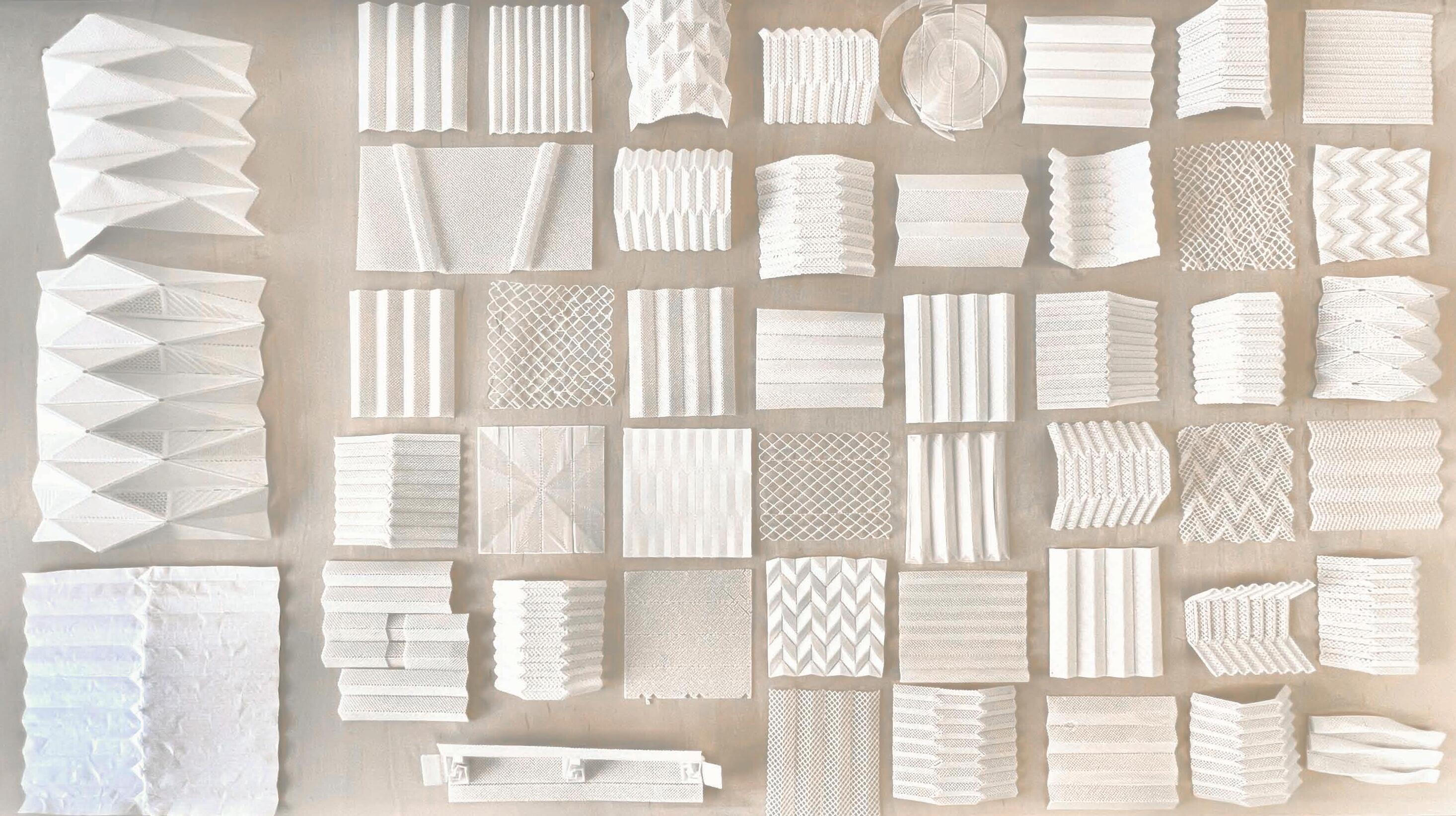
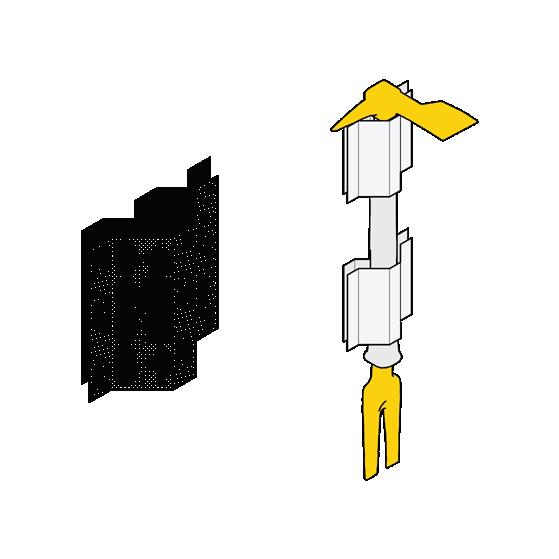
Accordion Fold
• Strong along fold
• Fold size affects flexibility
• Ideal for most surfaces
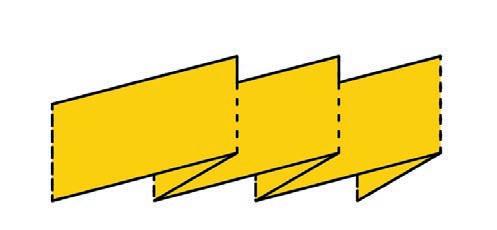
Knife Pleat
• Strong along fold
• Able to lay flat
• Ideal for handling runoff
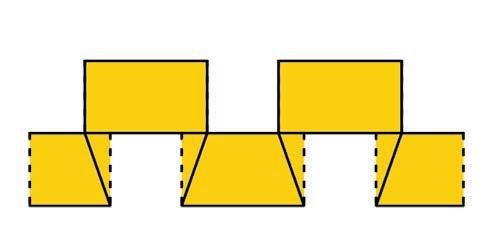
Box Fold
• Folds act as compartments
• Ideal for storage and fitting internal structure
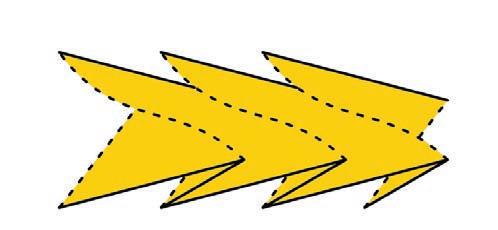
Pleat
• Strongest along fold
• Ideal for load-bearing elements like sidewalls
Twisted
Production Testing
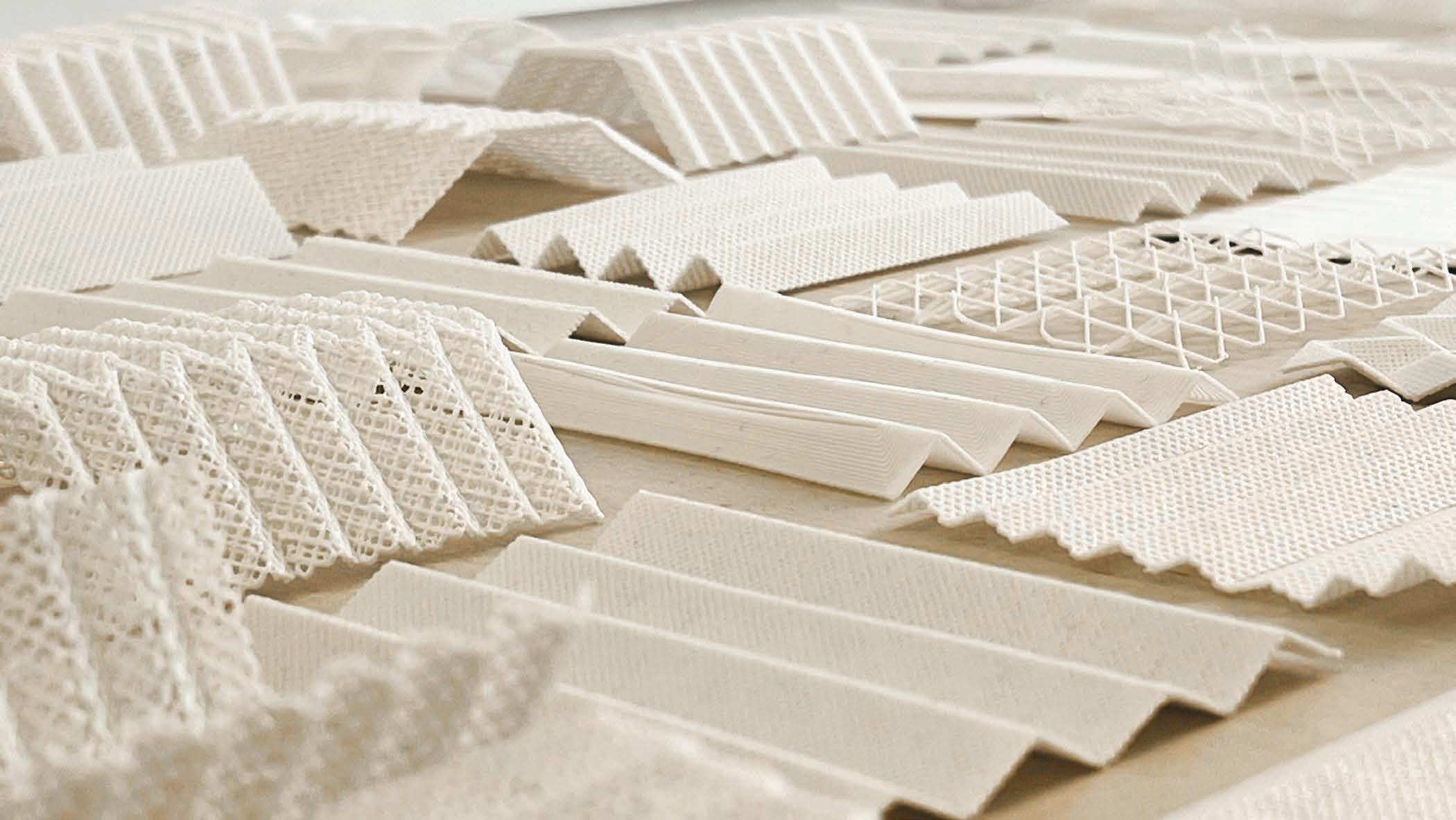
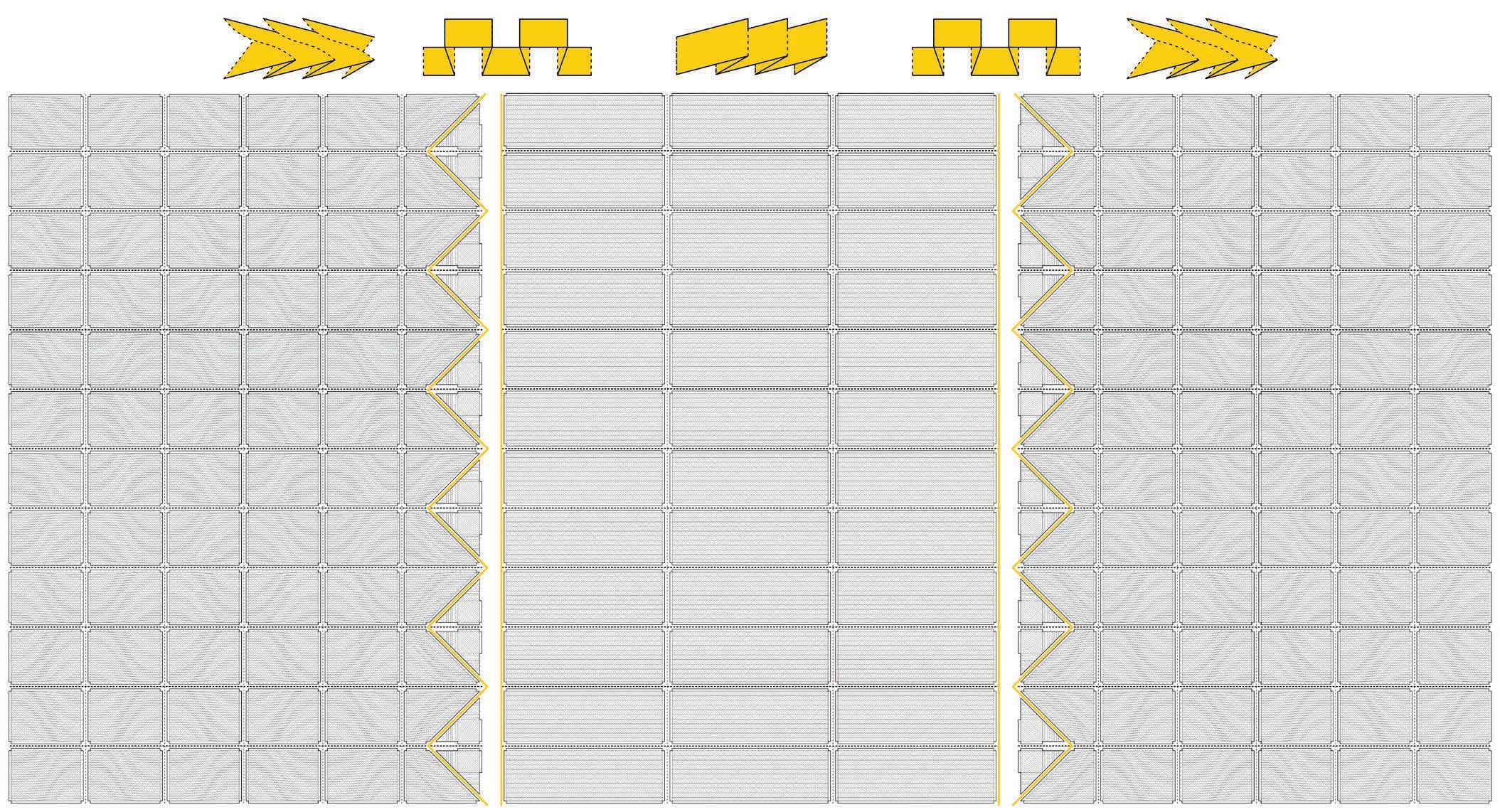
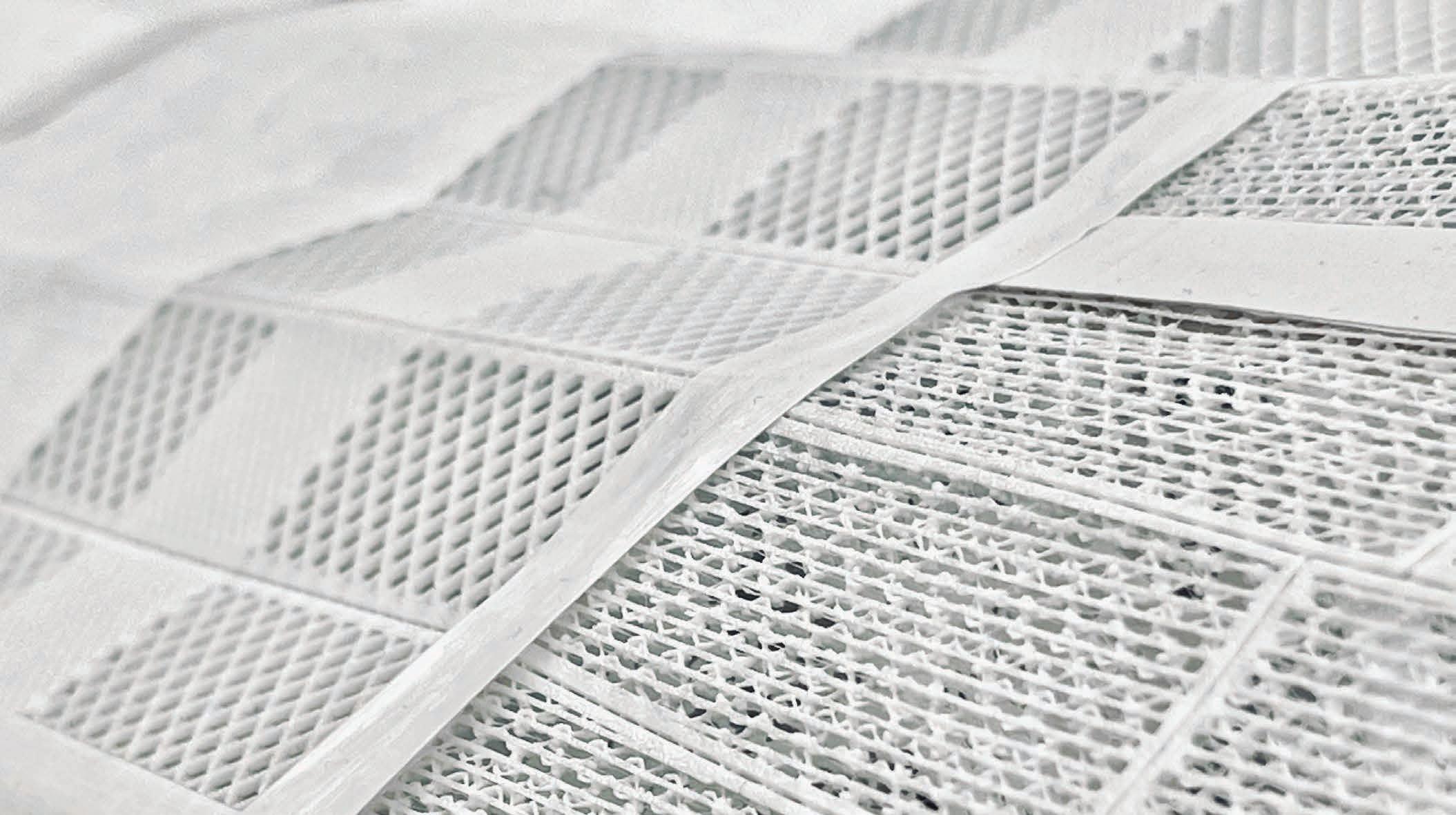
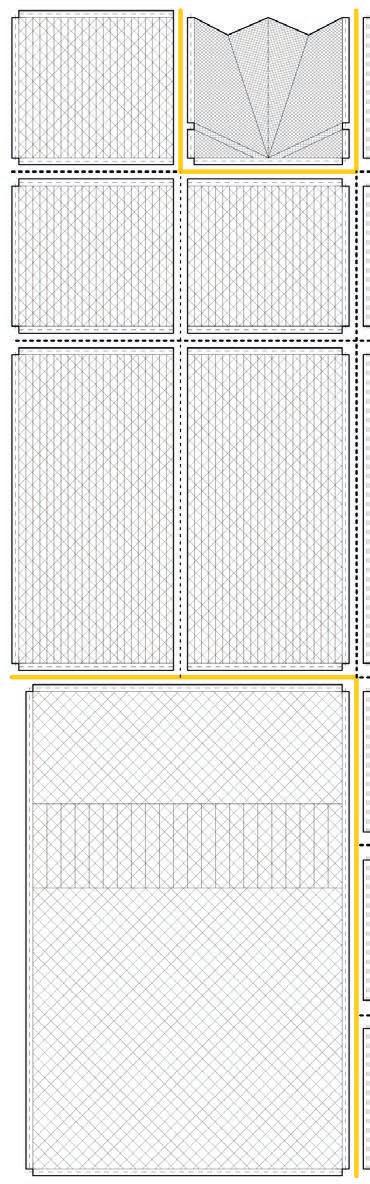
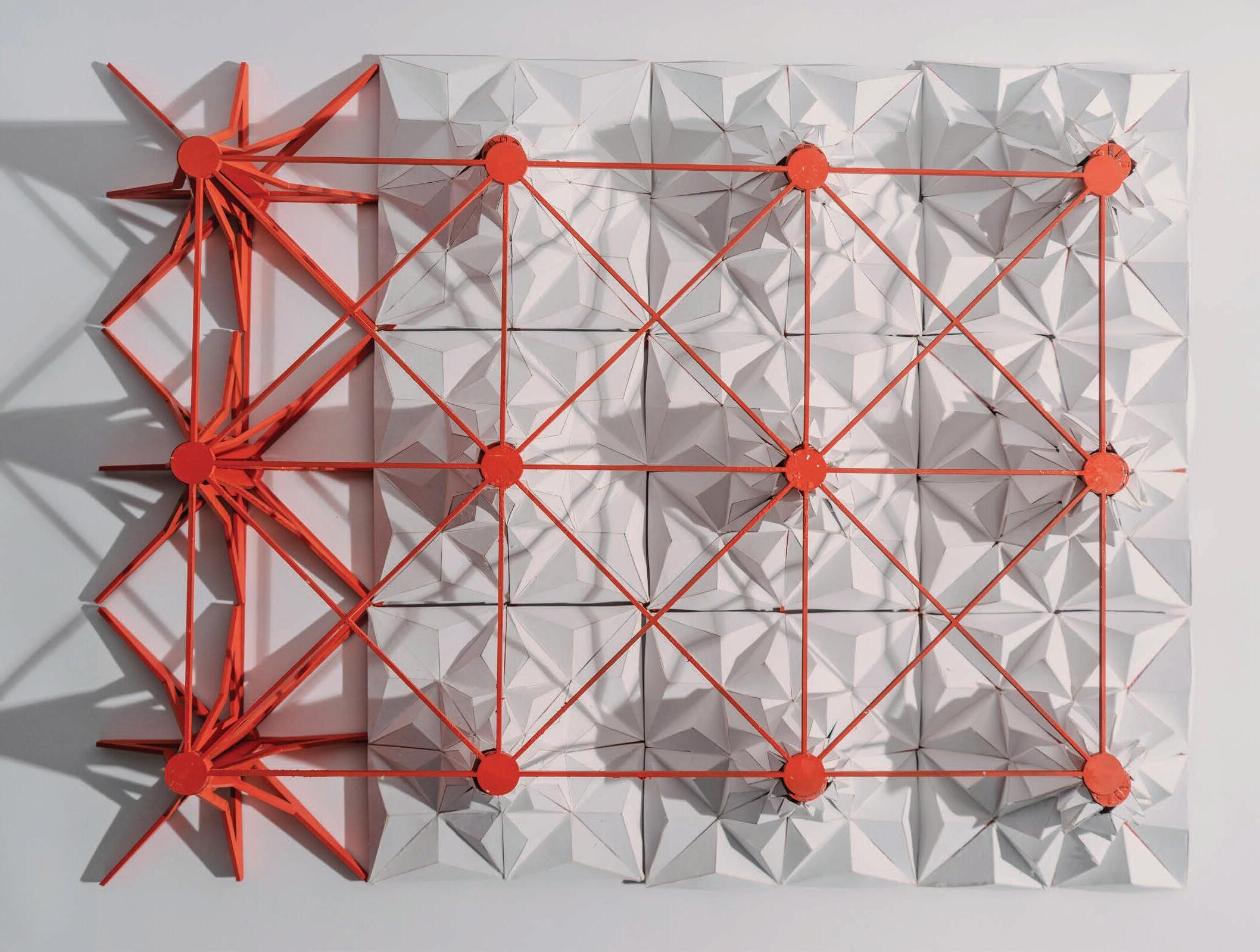
3D Printers are often used for prototyping, but rarely for production. Flexible filaments such as TPU can be used to print foldable sheets of material that have potential applications in facade construction. In order to create these foldable sheet samples, a system of grooves embedded into the sheet allows the samples to be printed flat, using minimal time and material, and folded into place. I experimented with variety of filaments and settings in the slicer software such as infill, temperature, layer height, etc., to create a catalogue of samples that show the spectrum of possibilities the 3D printing medium offers to designers. In this process, I identified four common folding patterns that could be applied to my proposal.
Deployment
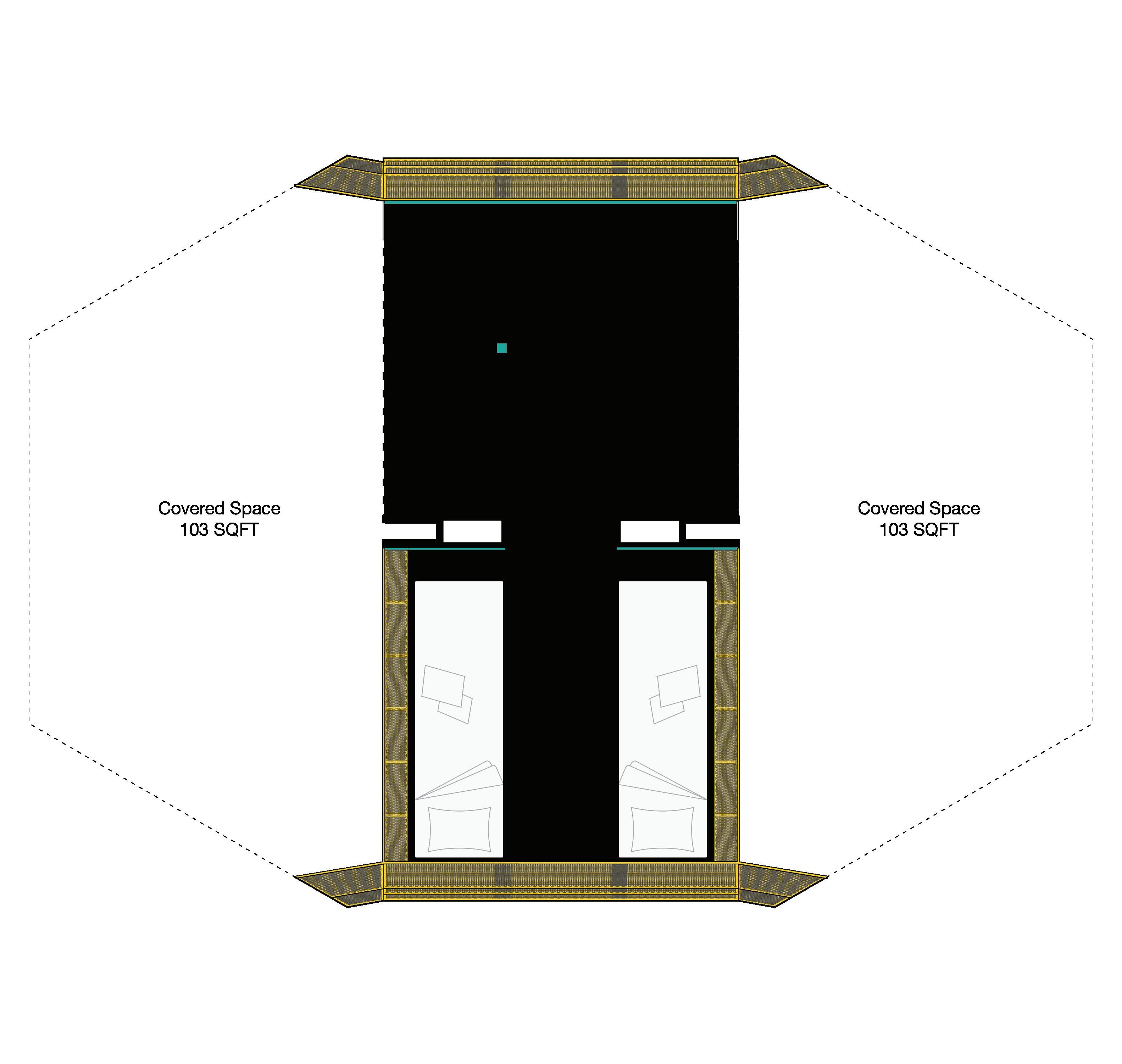
For precise deployment, the shelter can be transported in groups of six via helicopter to accommodate the size of a standard spike camp. Each shelter involves a simple setup process involving the expansion of the equipment storage space, the bedroom, and finally the side canopies. In order to best suit a wide range of spatial constraints, the shelters can be arranged adjacently or connected by their canopies. This creates opportunities for social gathering spaces for when the team is resting while another team is on-shift.
Specialized Sheets
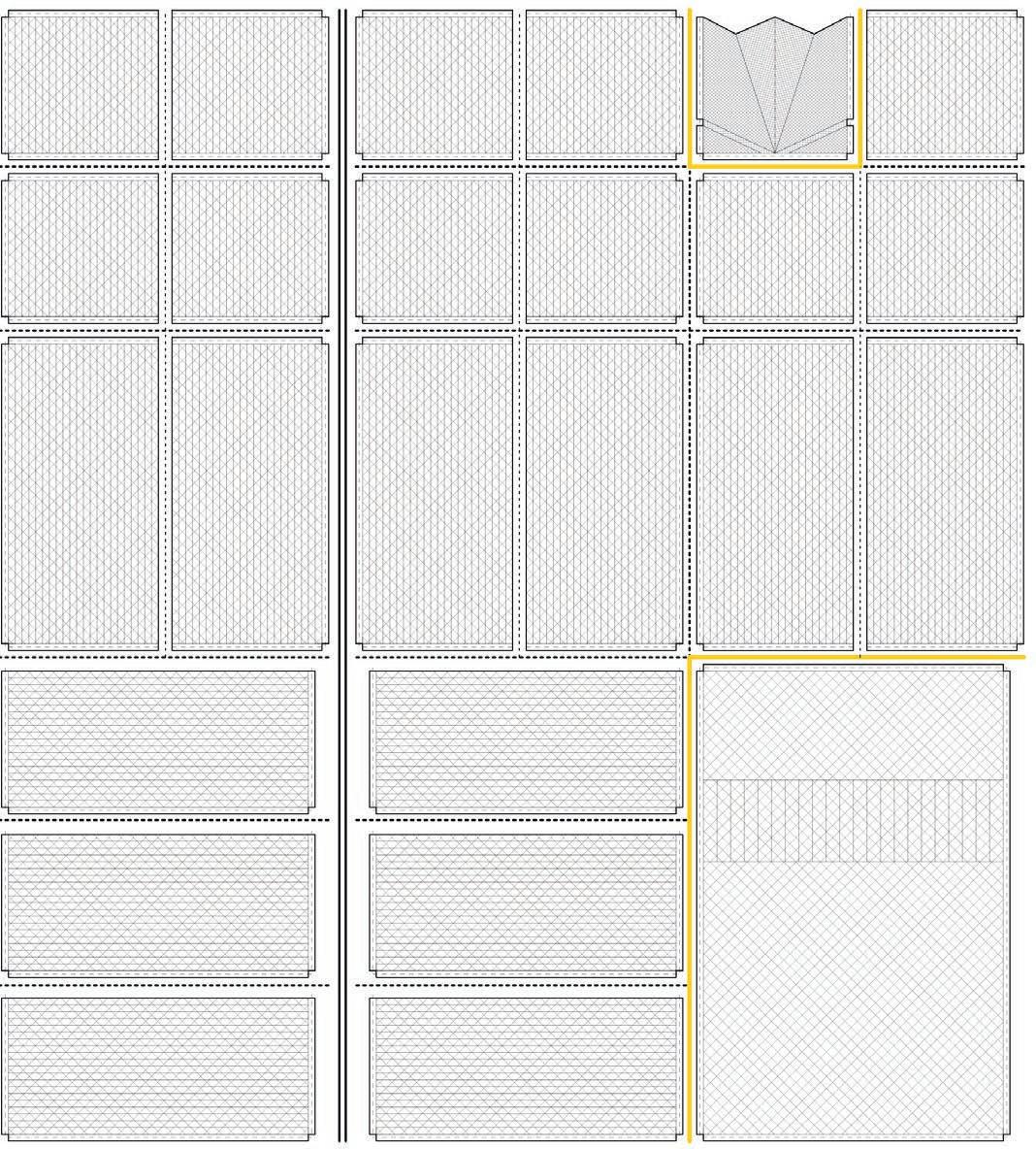
Each section of the shelter’s enclosure involves a system of 3D printed sheets that are customized for their purpose; Walls utilize the twisted pleat for its rigidity, while the shell and canopies use knife pleats and accordion folds, respectively, to controll runoff and debris. Box folds are used to connect the shell and the walls because of their flexibility and compatibility with three-sided panels. Each printed sheet fits within the printing bed of a 1m x 1m printer, which is a common size among industrial 3D Printers.
Enclosure Details
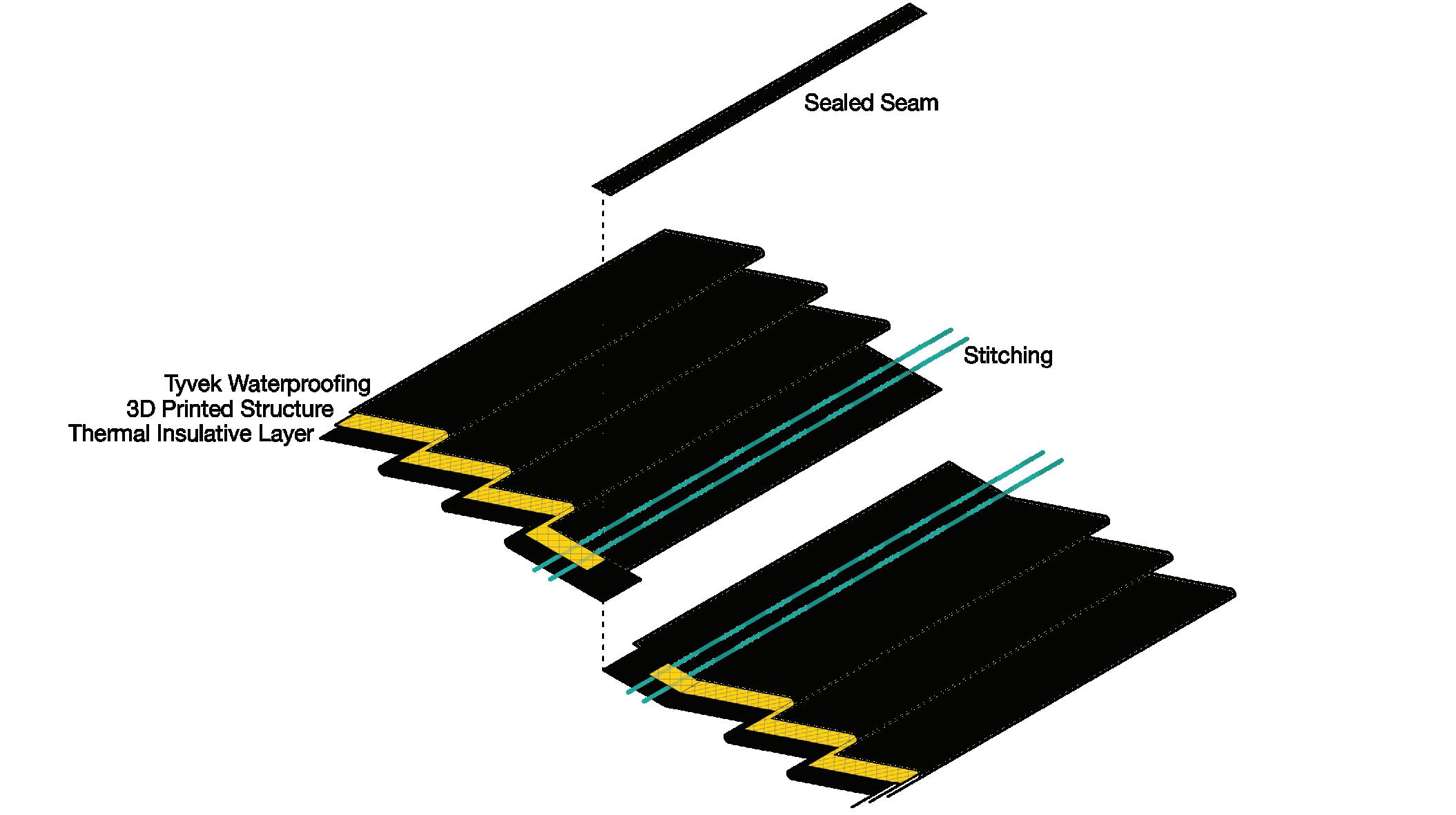
(Top Left) Seam detail between two enclosure panels. Printed sheets are used as an internal structure between an outer layer of waterproofing material (Tyvek) and an inner layer of thermal insulation. These layers are stitched to keep the print in place, and heat sealed to ensure a dry interior.
(Middle Left) Seam detail between two printed sheets. Prints can be adjusted by layer to overlap adjacent sheets, allowing for a more unified panel without additional material thickness.
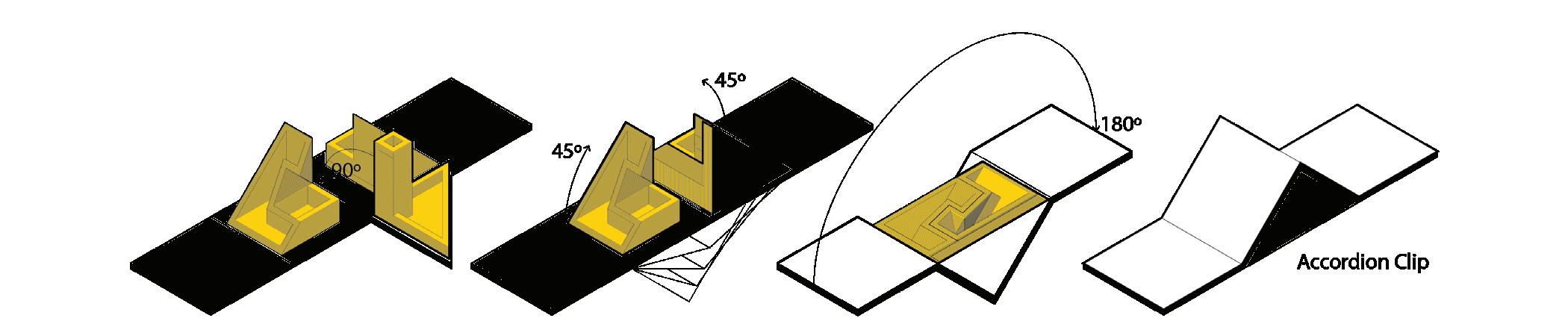
(Bottom Left) Built-in printed clip for accordion fold sheets to maintain folded shape, an advantage afforded by using the 3D printing medium.
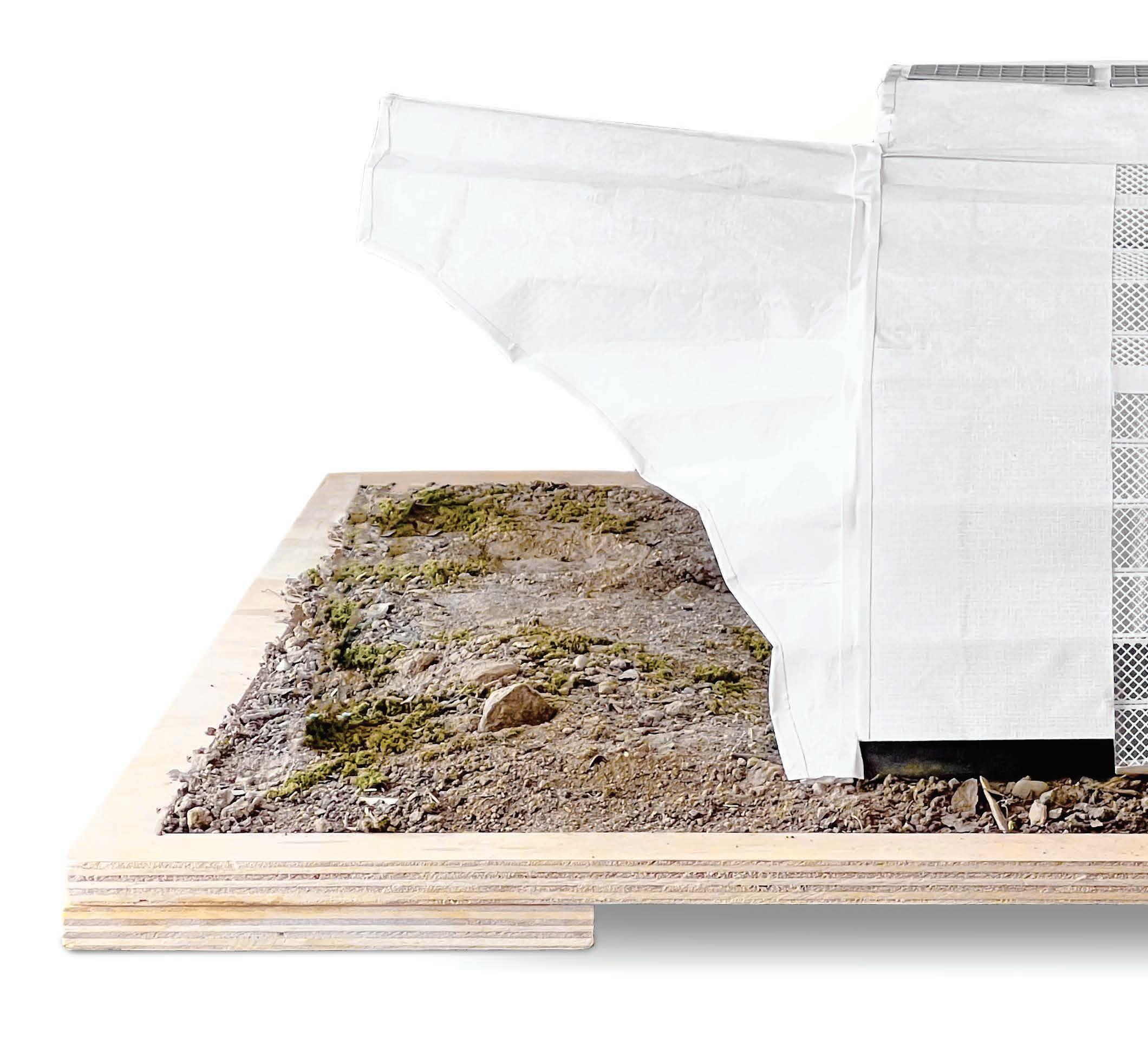
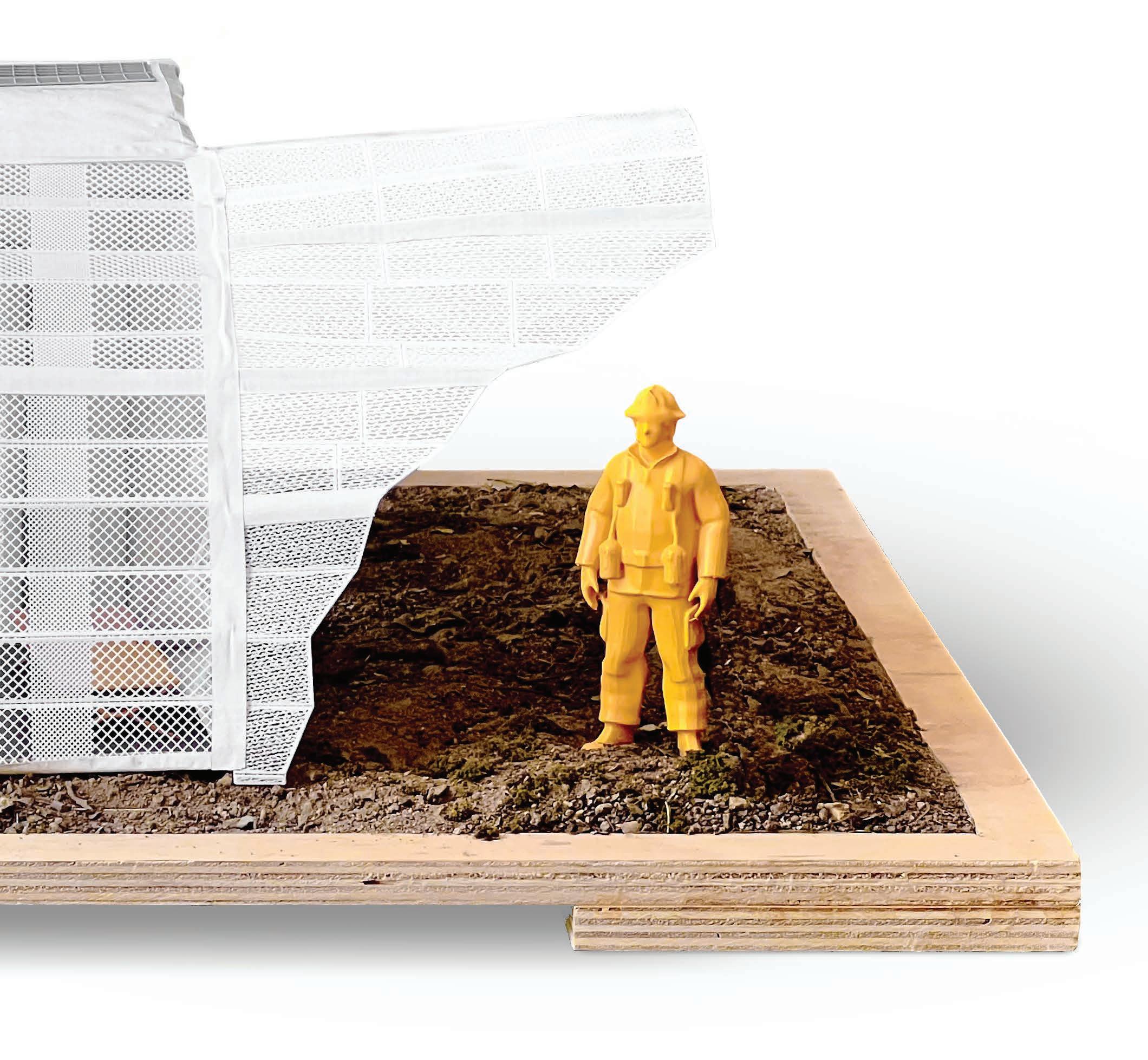
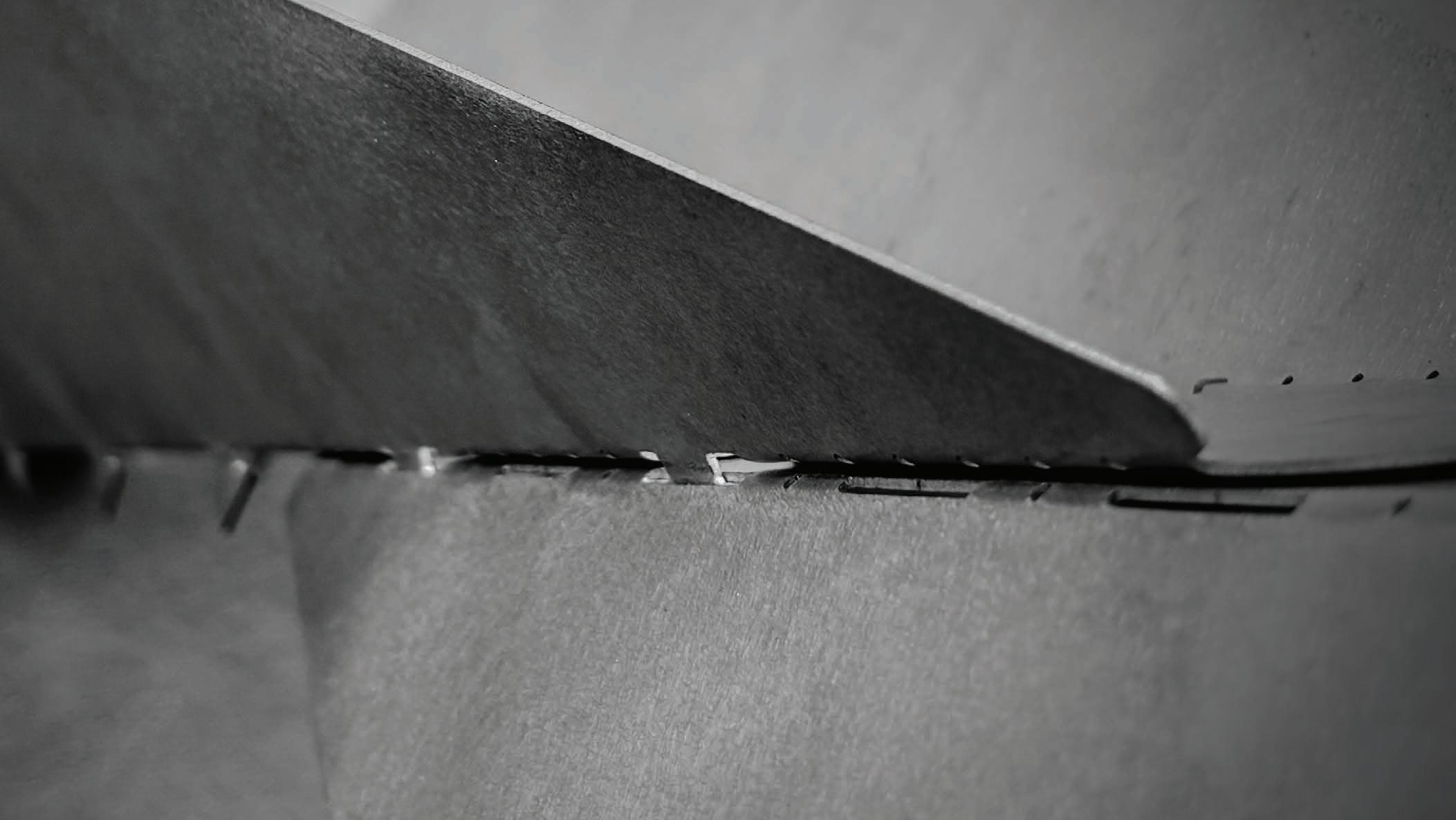
(Right) Model photo of the seam between the shell and canopy sections of the shelter.
Equipment
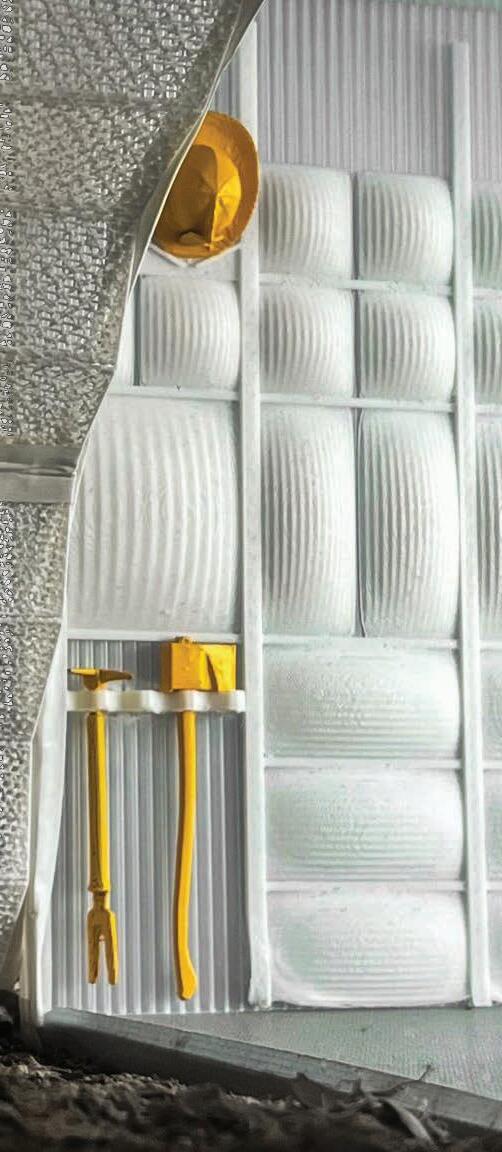
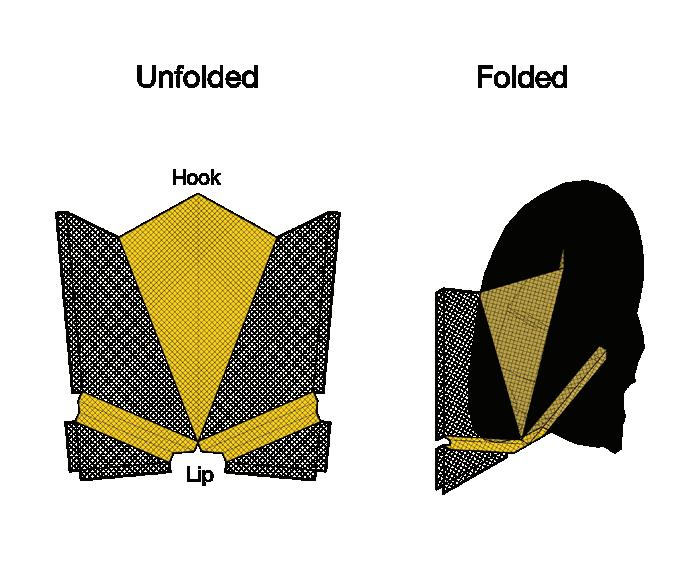
Printed sheets with accordion folds are used to create storage pockets for emergency equipment and personal storage. The folds provide a protective rigidity to the exterior of the pocket while also helping to hold object in place inside. Sections like the hand tool and helmet storage use other printed methods to store the intended equipment.
Scale Model
This 1”=1’-0” physical model uses 3D printed sheets and tyvek to show the look of the final enclosure on one side and its internal structure on the other.
Corita Kent Foundation
Course: Comprehensive Studio
Created: Spring 2024
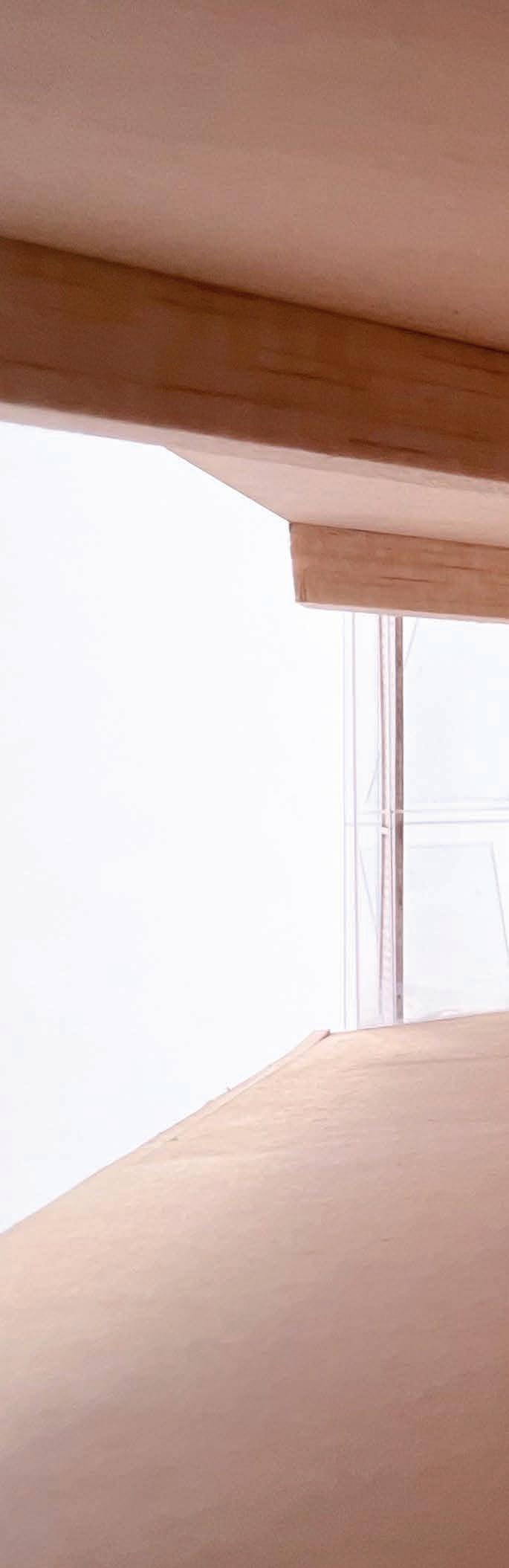
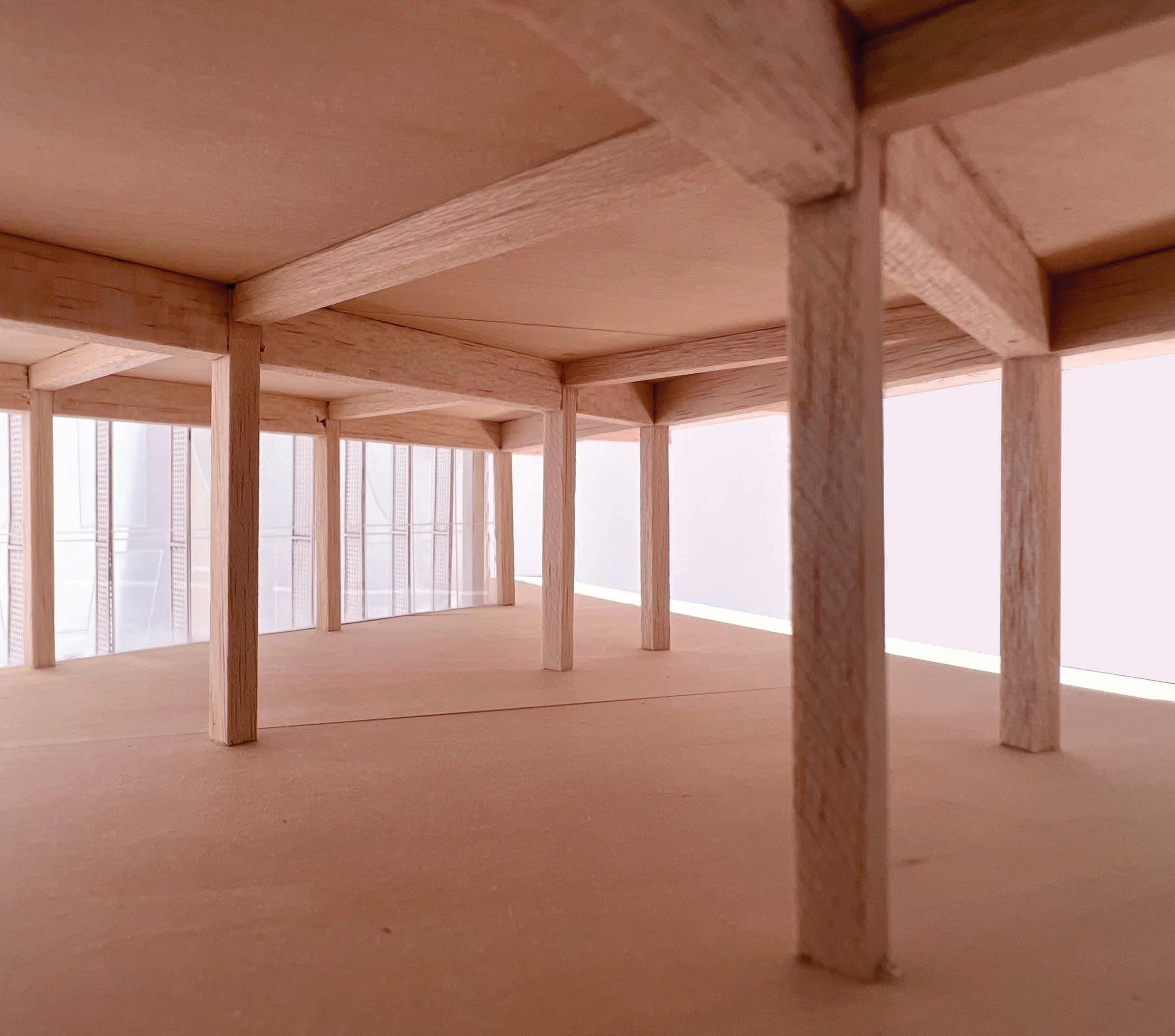
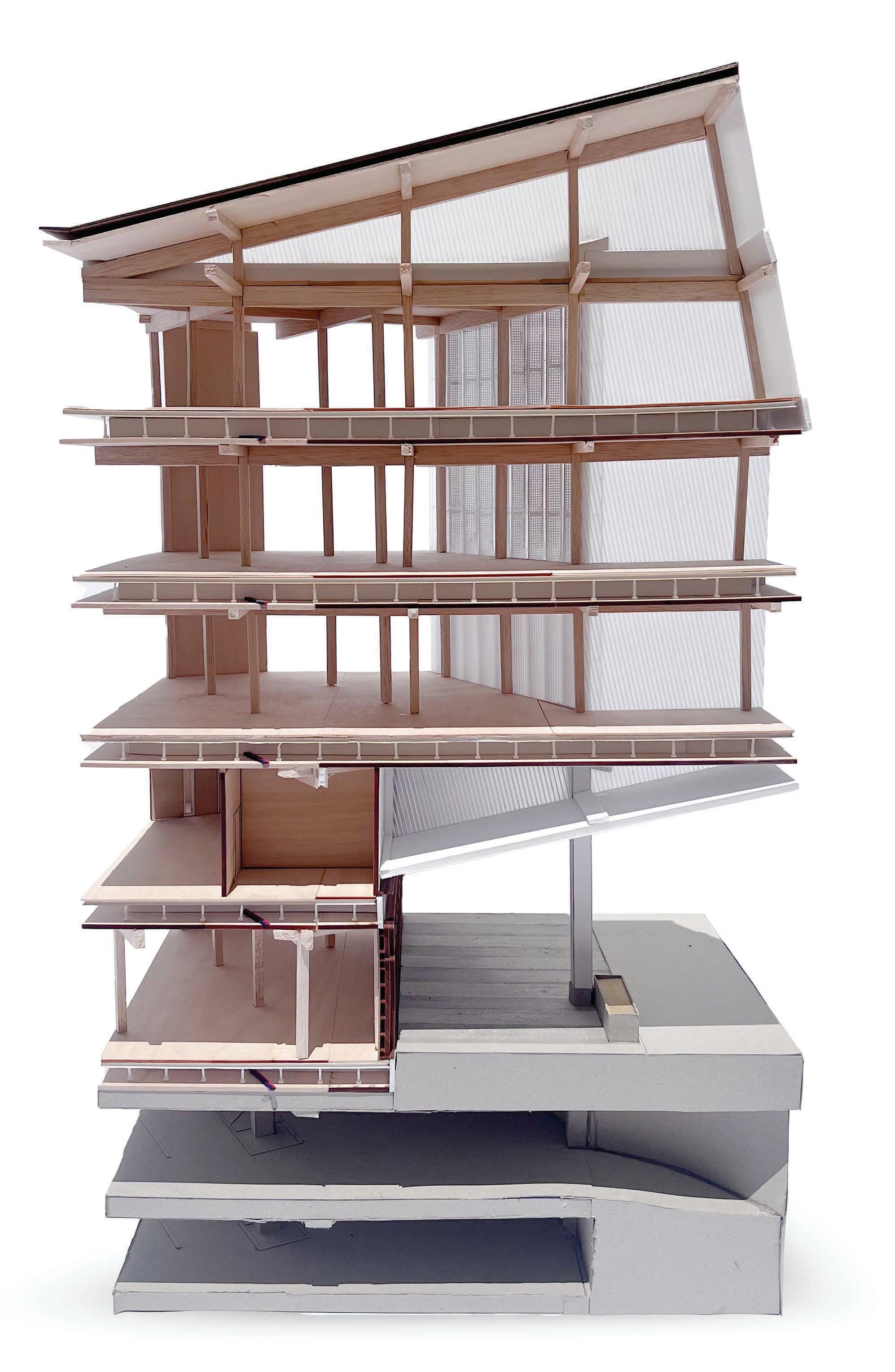
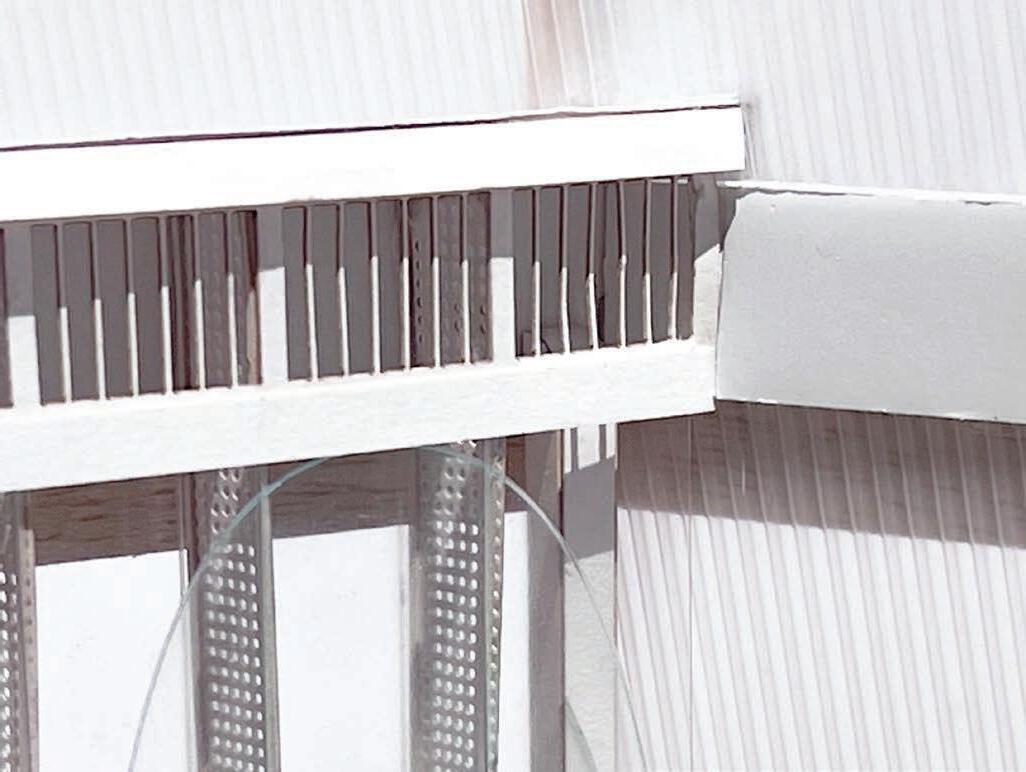
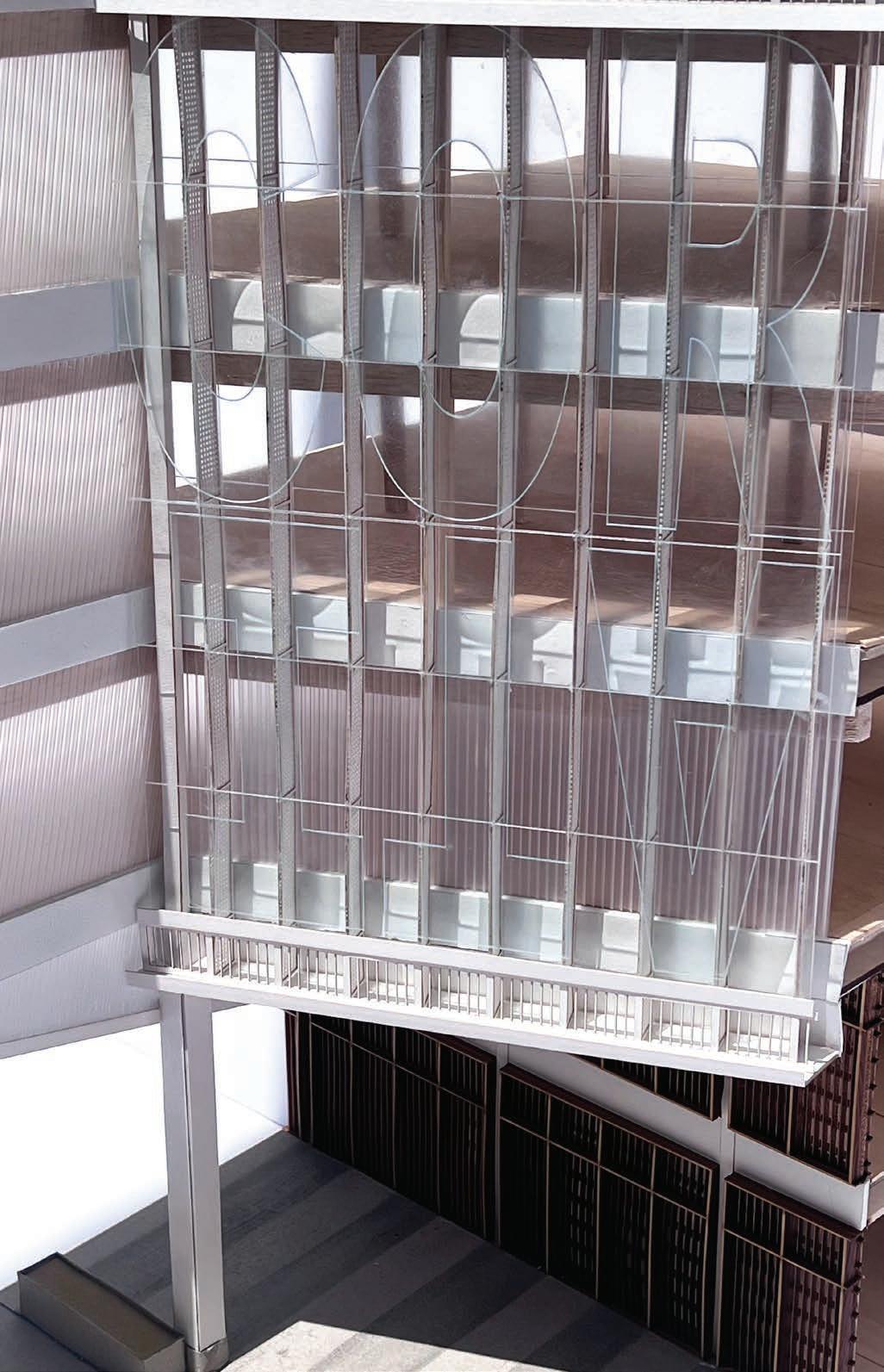
The Corita Kent Foundation is a proposal for a mass timber museum dedicated to the art and life of local Los Angeles screenprinting artist Corita Kent. The final model for this course displays a 1/4” = 1’ scale chunk of my proposal. Corita Kent’s style was unique in its use of color and overlapping media. In reference to her technique, the museum involves two structural grids that intersect at an unusual angle to create a dynamic interior experience. The use of timber construction is not only sustainable, but it also assists in creating a gallery space that is distinctly approachable and avoids the formality of a white-walled space.
Model Materiality
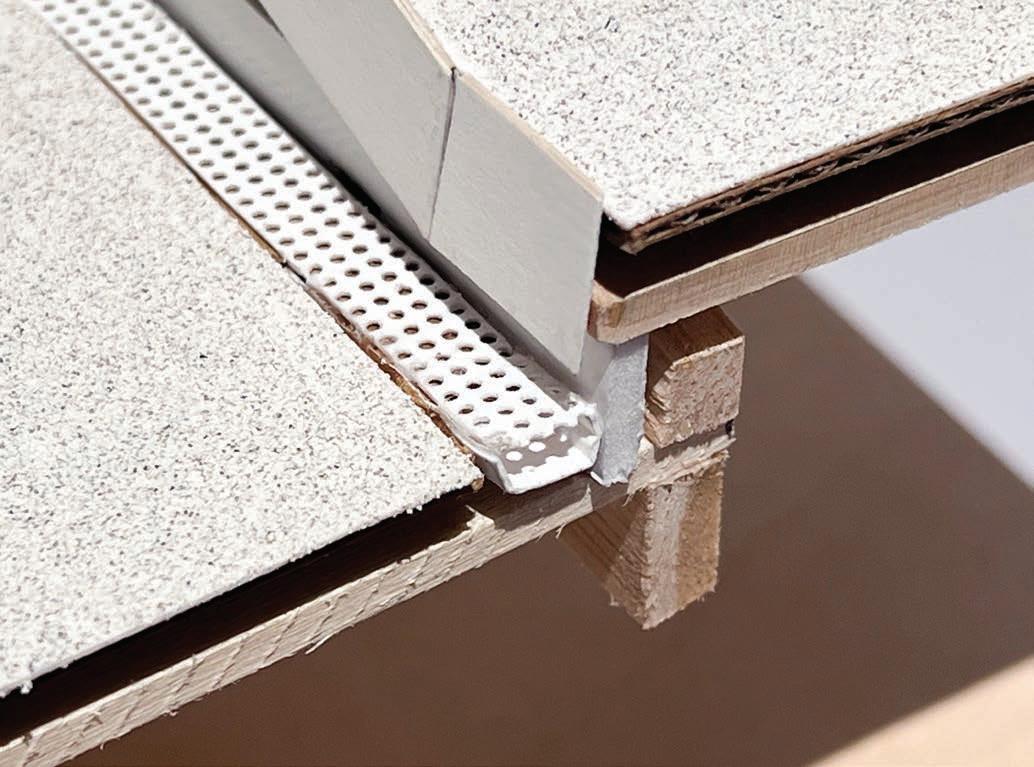
This chunk model involved the use of bass wood, balsa wood, foamcore, acrylic, corrugated plastic, PLA, bristol paper, cardboard, cardstock, and textured paint. These materials were chosen for their structural and textural properties to ensure a close visual similarity to their real-world counterparts. A primary consideration was the scale of the texture of each material, and whether it mimicked the scale of the texture of the material it was representing.
Modeling Details
Prior to the modeling process the building proposal and certain key features of its design were resolved in the digital model. A challenge when modeling at this scale is keeping the dimension and thickness of each material consistent with the digital model, despite not working with the same materials as the constructed building would have.
From Waste to Wilderness
Course: Topic Studio - Biomimetic Architecture
Created: Fall 2024
The Coastal Live Oaks of North America support the needs of hundreds of species along the Pacific Coast. Their population is being threatened by an airborne pathogen known as Sudden Oak Death (Phytophthora Ramorum) which has a deceptively similar appearance to other, milder diseases and no known cure. The only effective countermeasure is to remove the infected wood to avoid spreading the disease to neighboring trees.
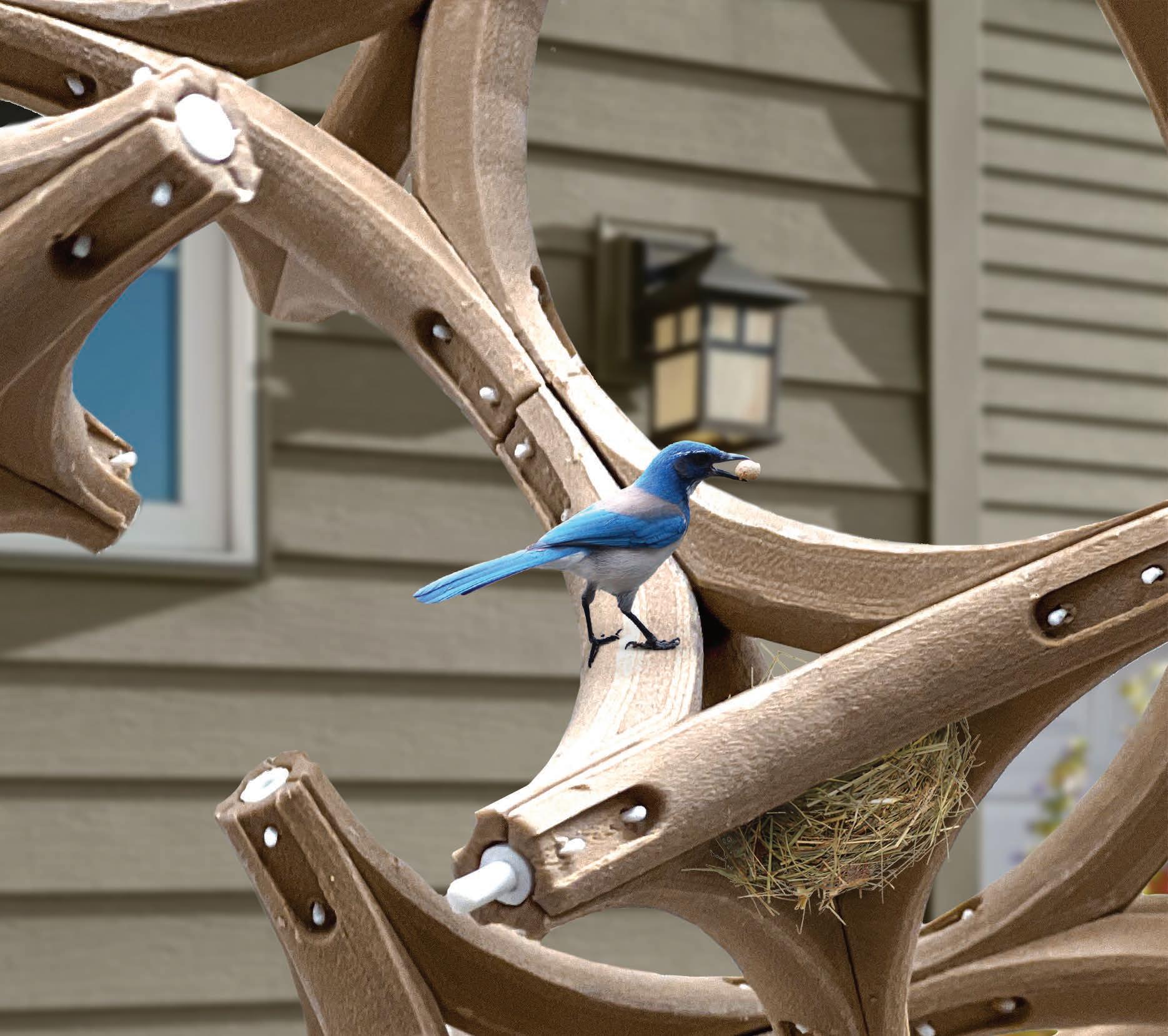
The Scrub Jay is a bird with a preference for live oak nuts and the unique behavior of gathering and storing its food in hundreds of different locations. By repurposing infected waste wood to build more nests for Scrub Jays, these birds can be used to replant live oak habitats and mitigate the effects of Sudden Oak Death until we are able to find a cure for the disease. While the objective of this project was to develop structural and functional components, the topic and process of each project were entirely self-directed.
Modeling Materiality
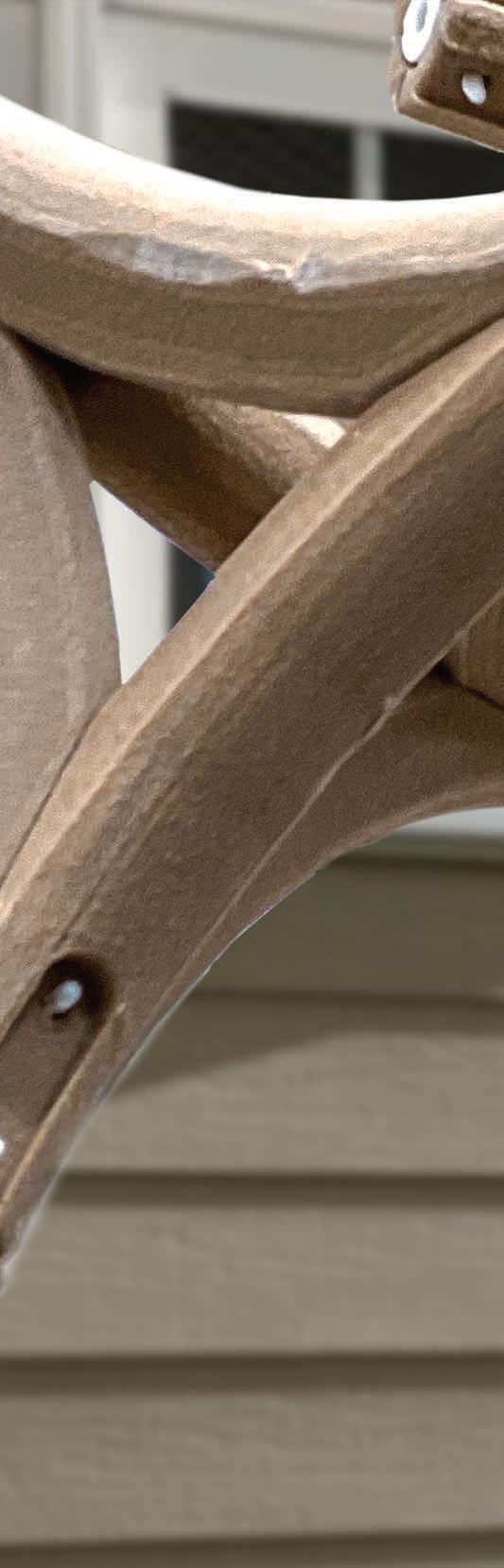
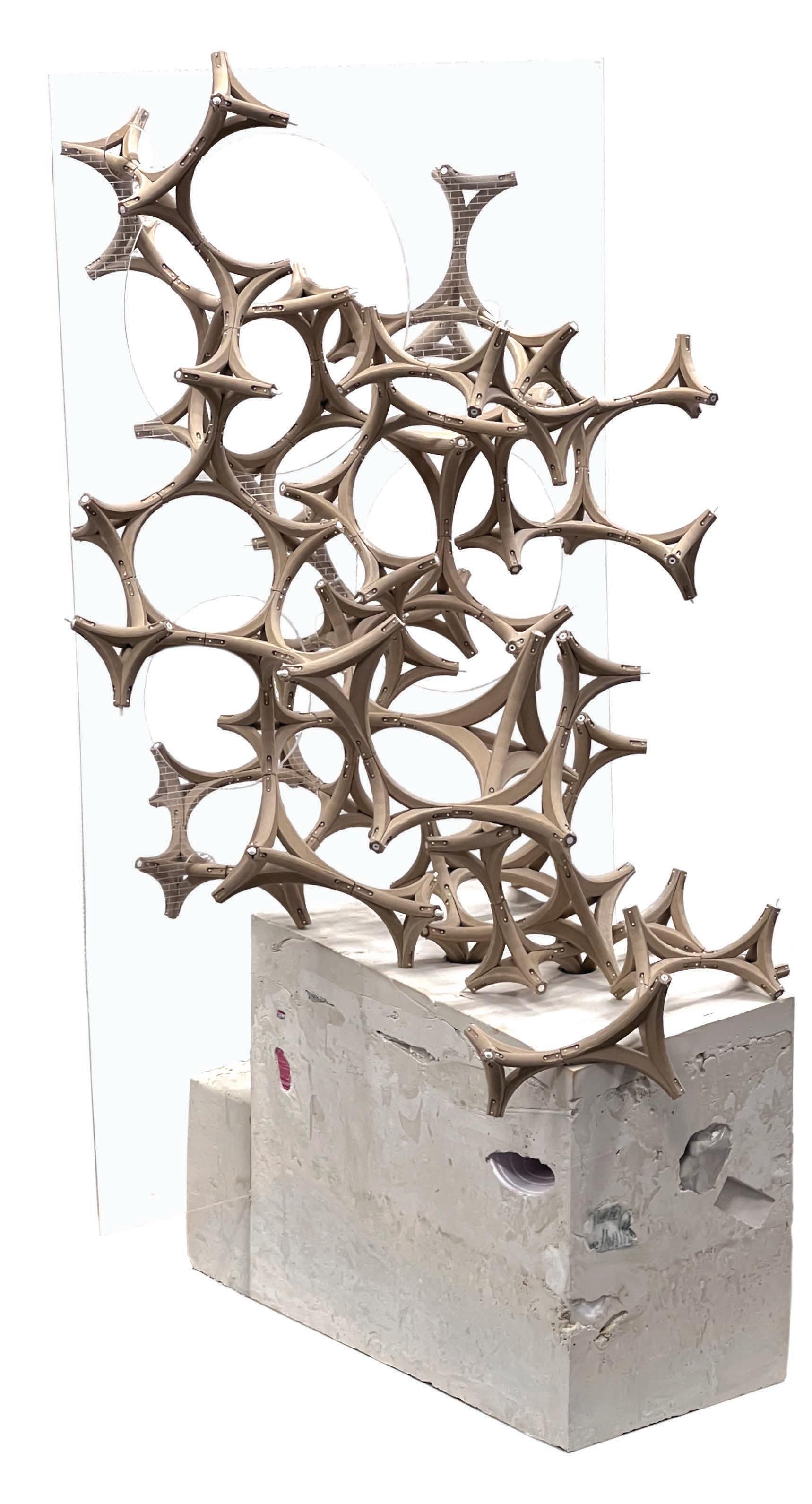
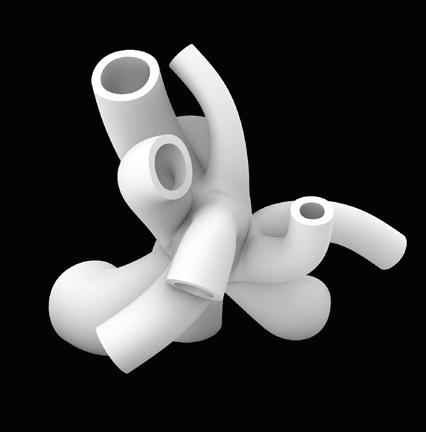
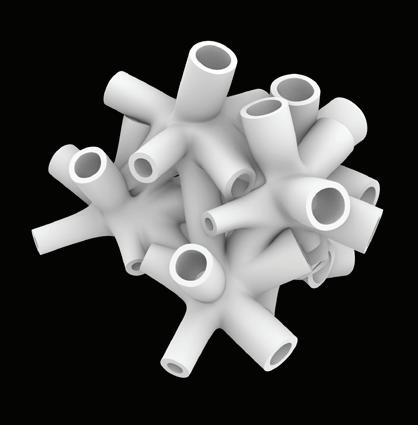
The components of this model are made from wood-fiber PLA to more accurately display the qualities of repurposed wood waste.
Carriage Bolt
Component Strategy
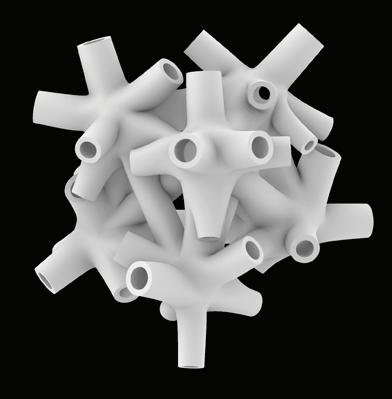
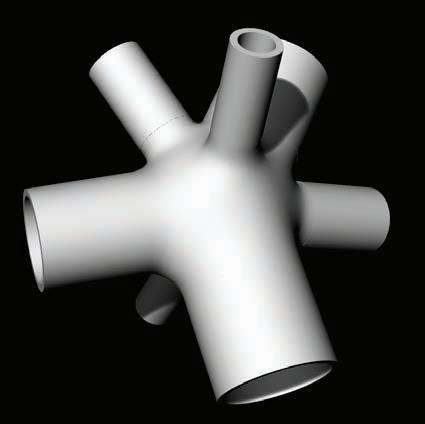
The component system is flexible in its configuration and its modular design allows it to be anchored in both the ground and existing building facades. Each full module is comprised of six branches and four connectors, each with full 360 degree rotational control from one module to the next. The branches of each module can vary in their radius, changing the scale of the space inside each module and the system as a whole.
Model Analysis
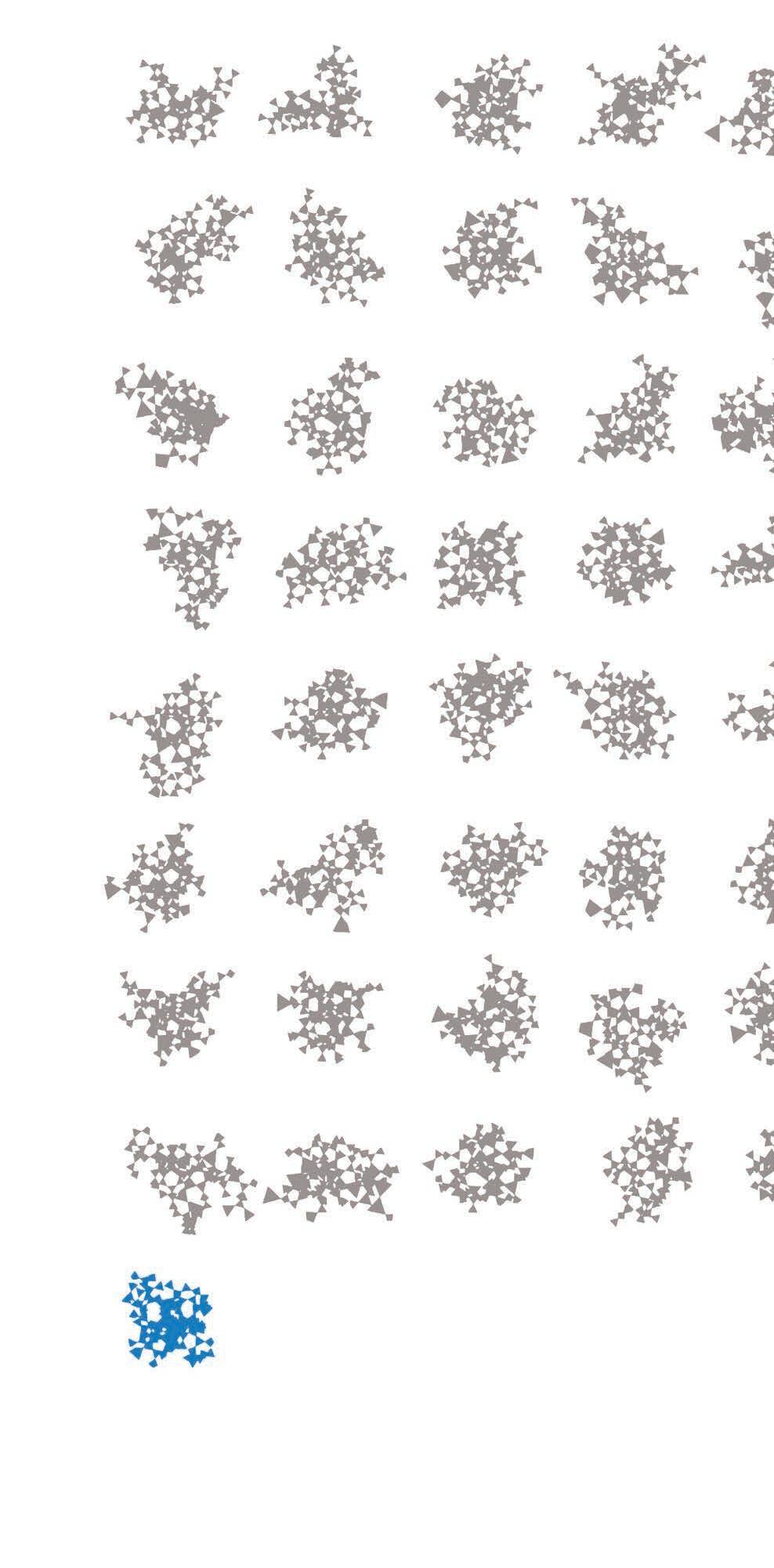
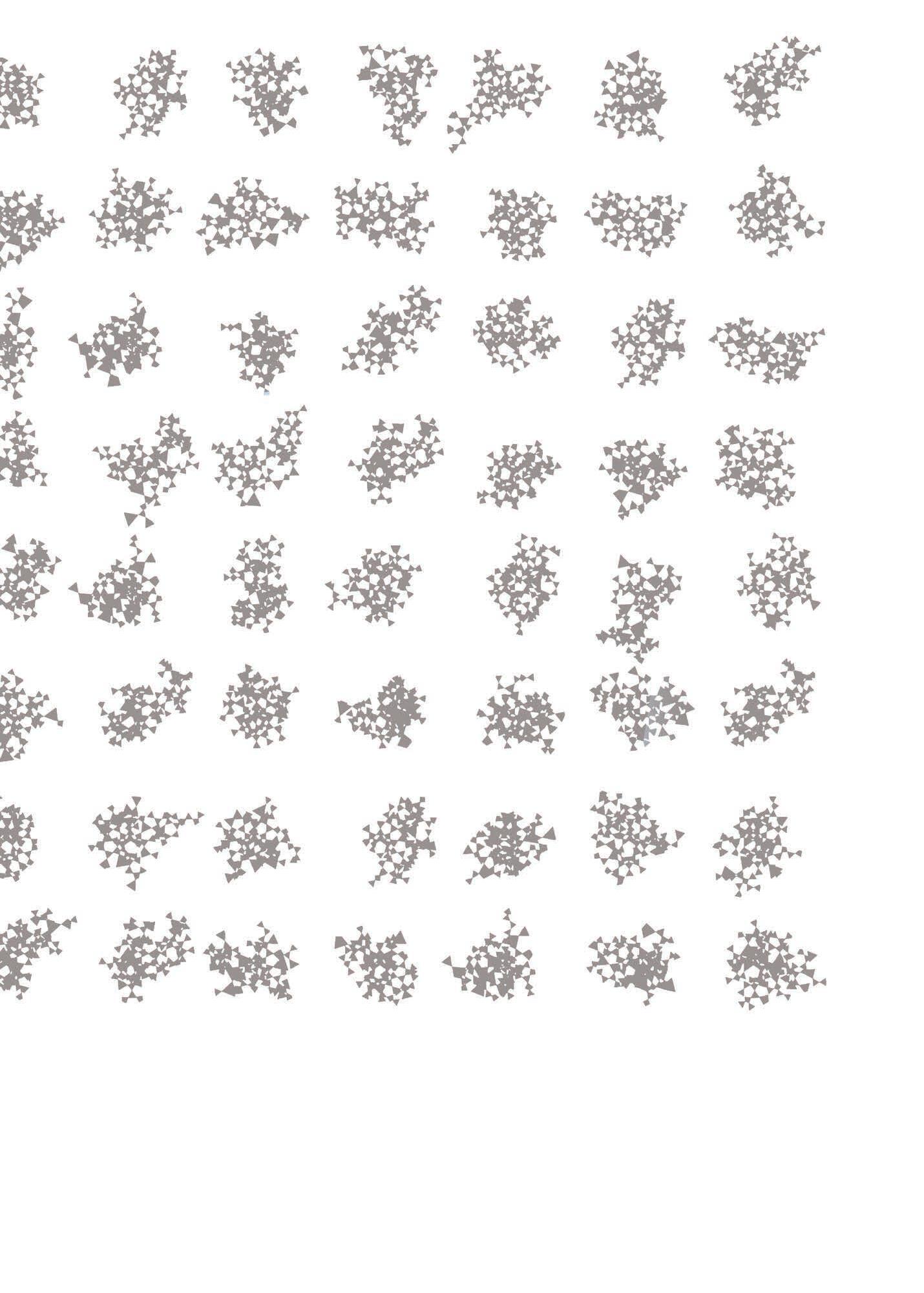
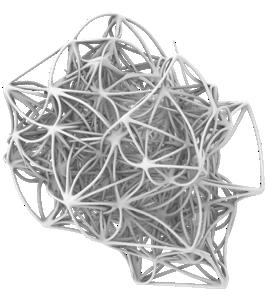
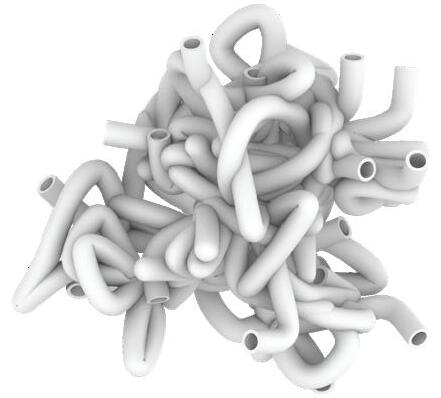
Using the Galapagos solver in combination with the Wasp plugin for grasshopper, hundreds of module ratios were tested to find a solution that minimized the volume of the aggregation while maintaining a total of 100 modules in order to improve the structural stability of the physical model.
Exploring Mediums
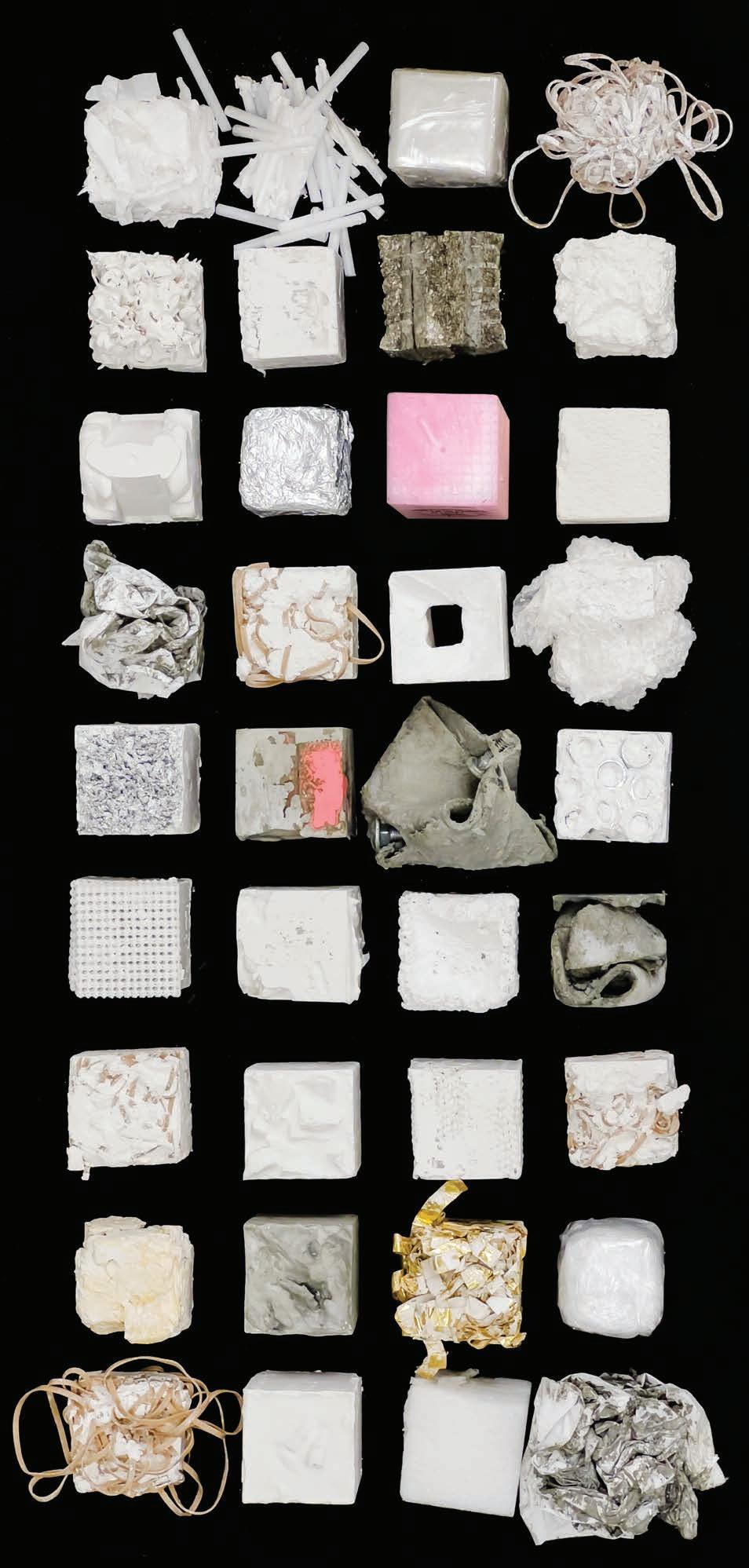
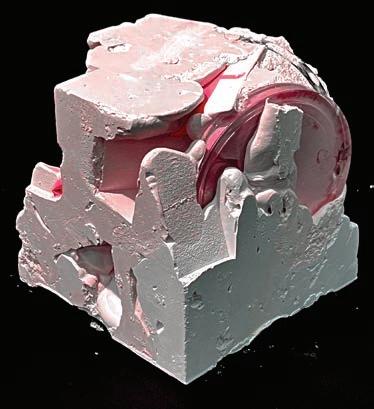
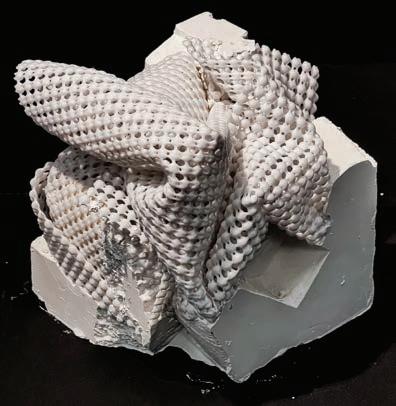
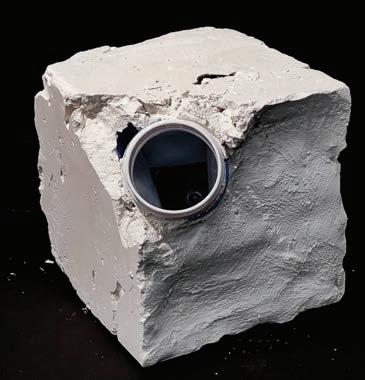
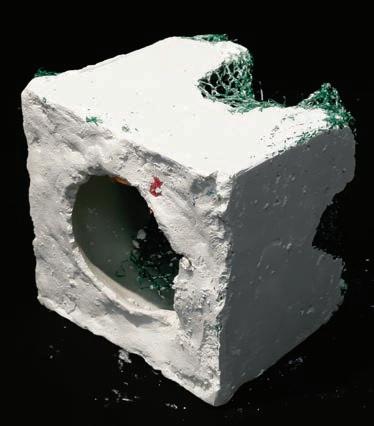
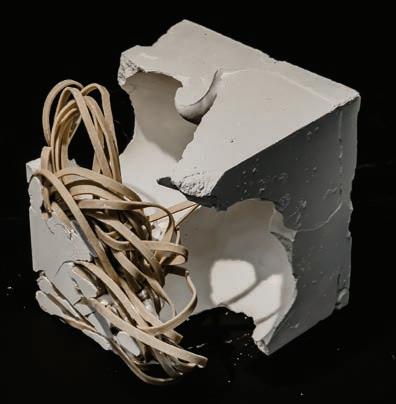
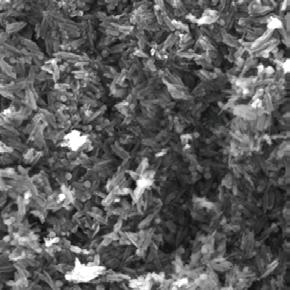
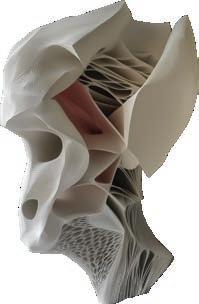
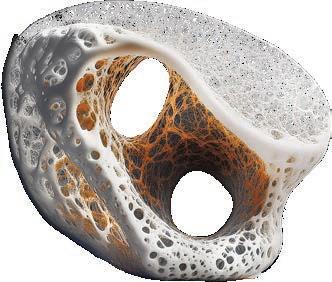
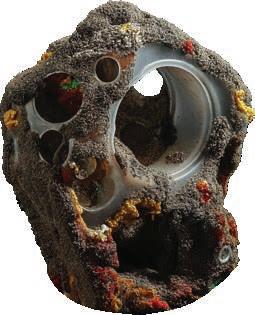
This project was an exercise in process through experimentation. In order to reach the final component, I began by involving synthetic objects in casted models to observe their structural and formal qualities. This was followed by existing material research and the identification of six examples of synthetics that interact with nature. Using generative AI images, I represented these examples as sculptural objects and worked to recreate their materiality using grasshopper in order to understand their assembly and apply it to a component.
Shear Lamp
Collaborators: Jianghui Qu
Course: Advanced Digital Fabrication
Created: Spring 2025
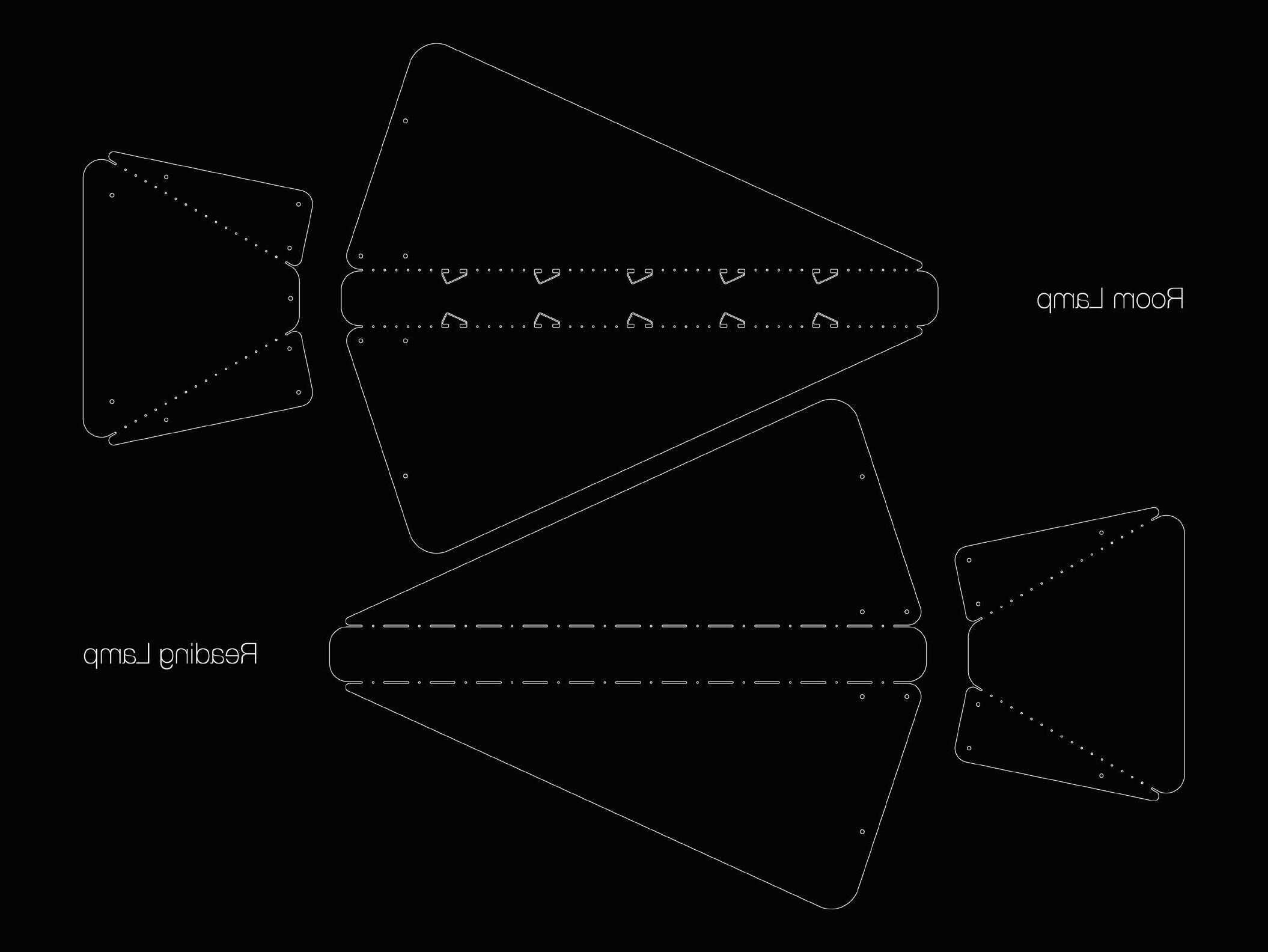
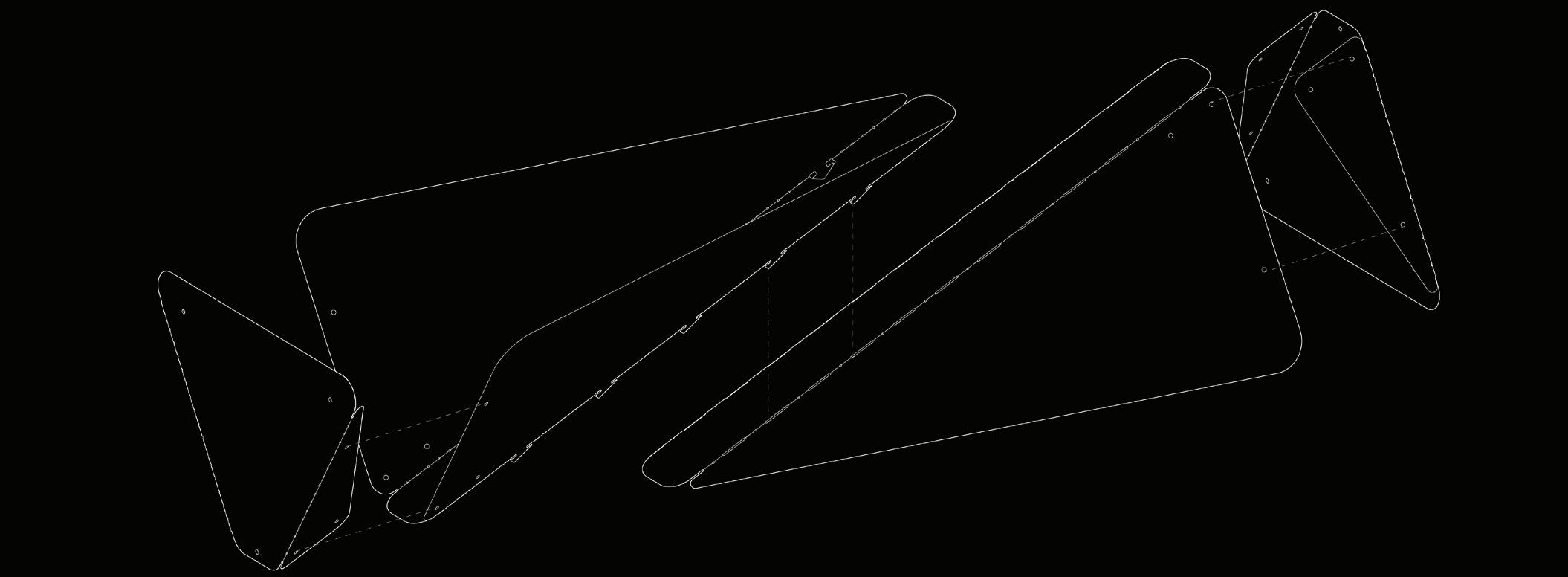
The Shear Lamp is inspired by the shear forces that act on buildings, simultaneously resembling a member being split in two and a shear force diagram. Despite its scale, my project partner and I worked to deliver a lamp that is architectural in nature. This project was an exercise in product design and digital fabrication, with emphasis on form, tolerance, and material properties. Tasked with designing a cantilevered lamp using sheet metal, we aimed to deliver a design that is adjustable and dual-purpose. The Shear Lamp is a wall-mounted room light with an adjustable task light that hangs from a series of hooks along the bottom edge of the lamp.
Lighting Strategy
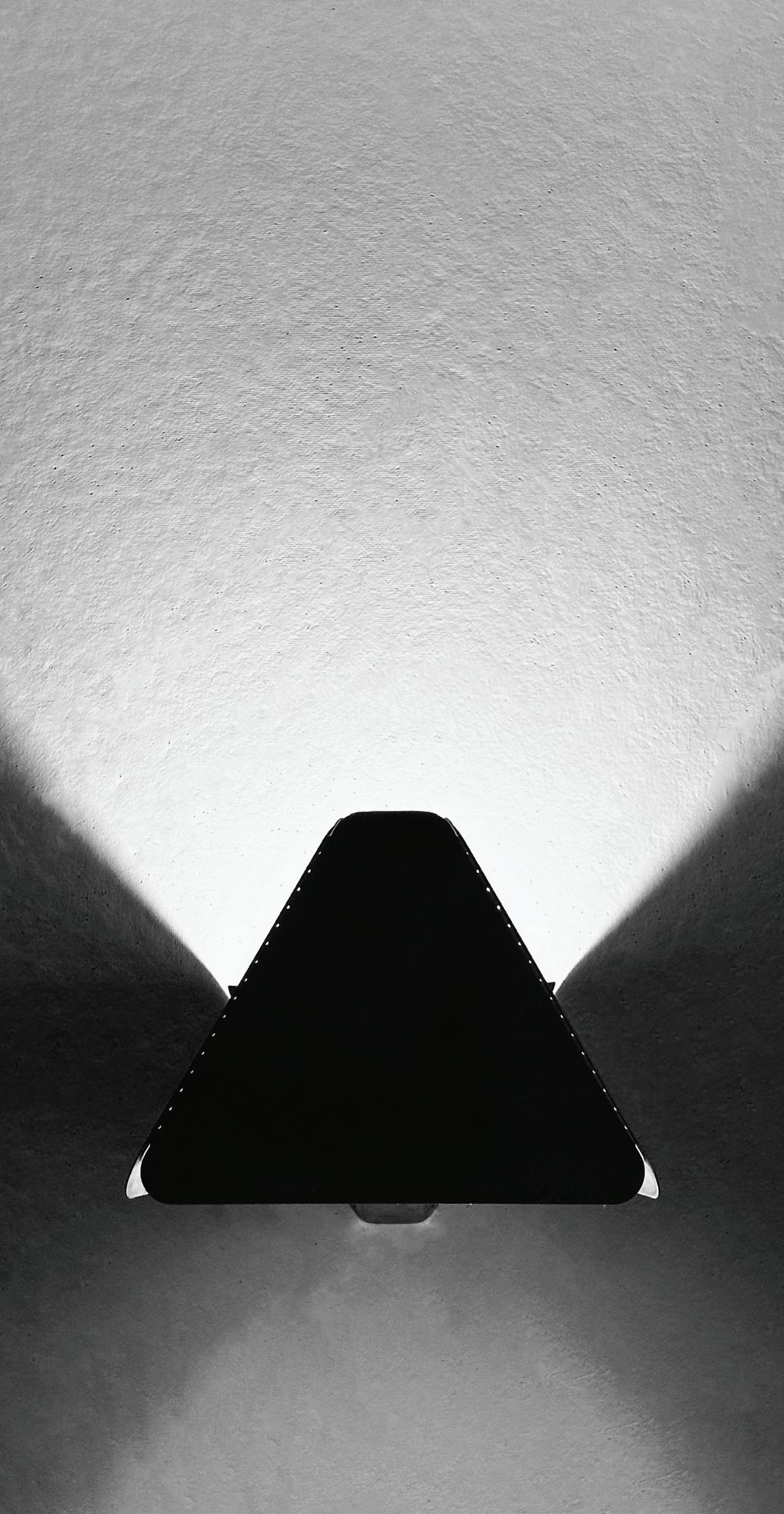
The light sources are two repurposed under-cabinet light bars that are magnetically attached to the inside of the lamp. This keeps the lighting low-profile and cord-free.
Task Light
Room Light
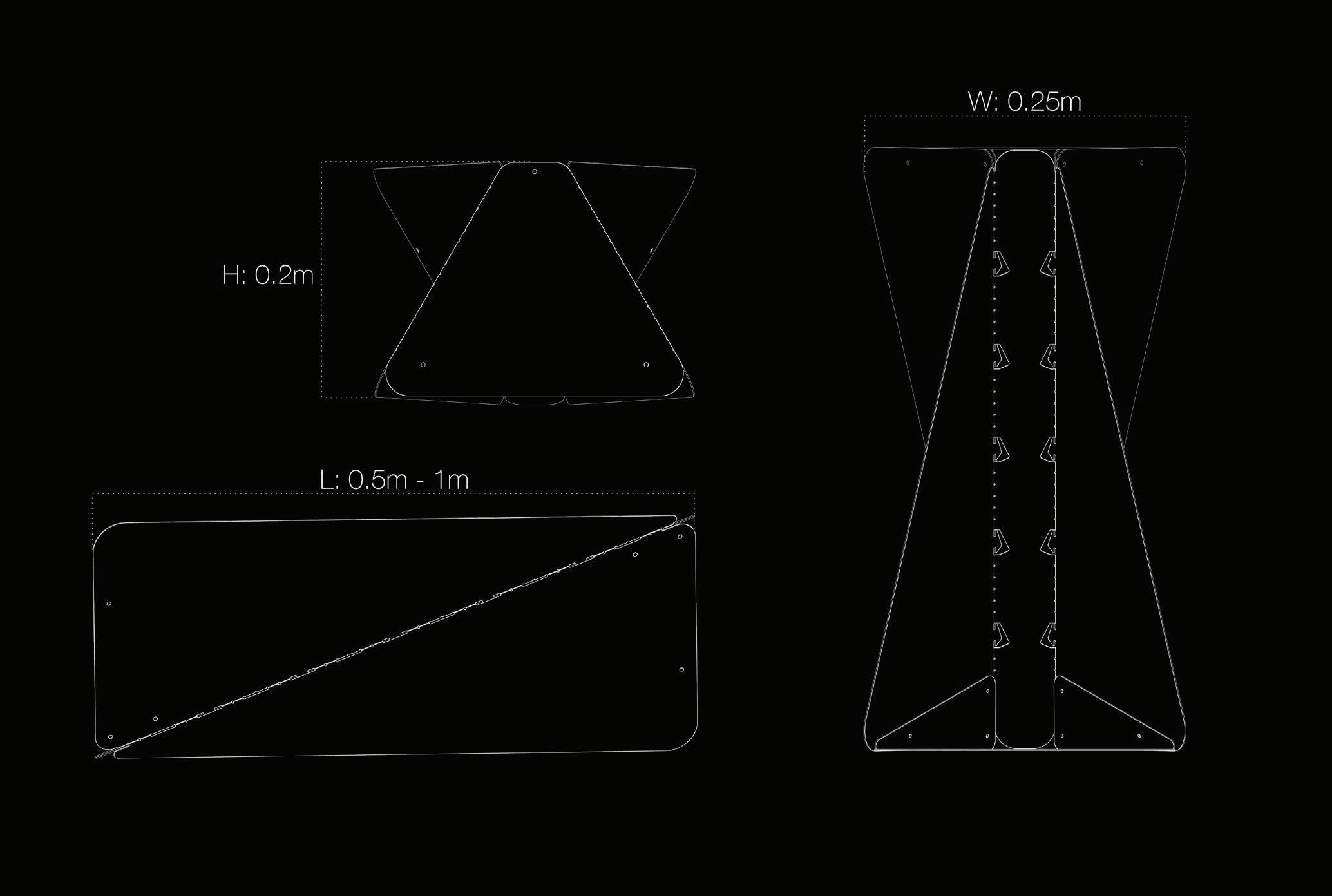
W: 0.25m
H: 0.2m
L: 0.5m - 1m
User Experience
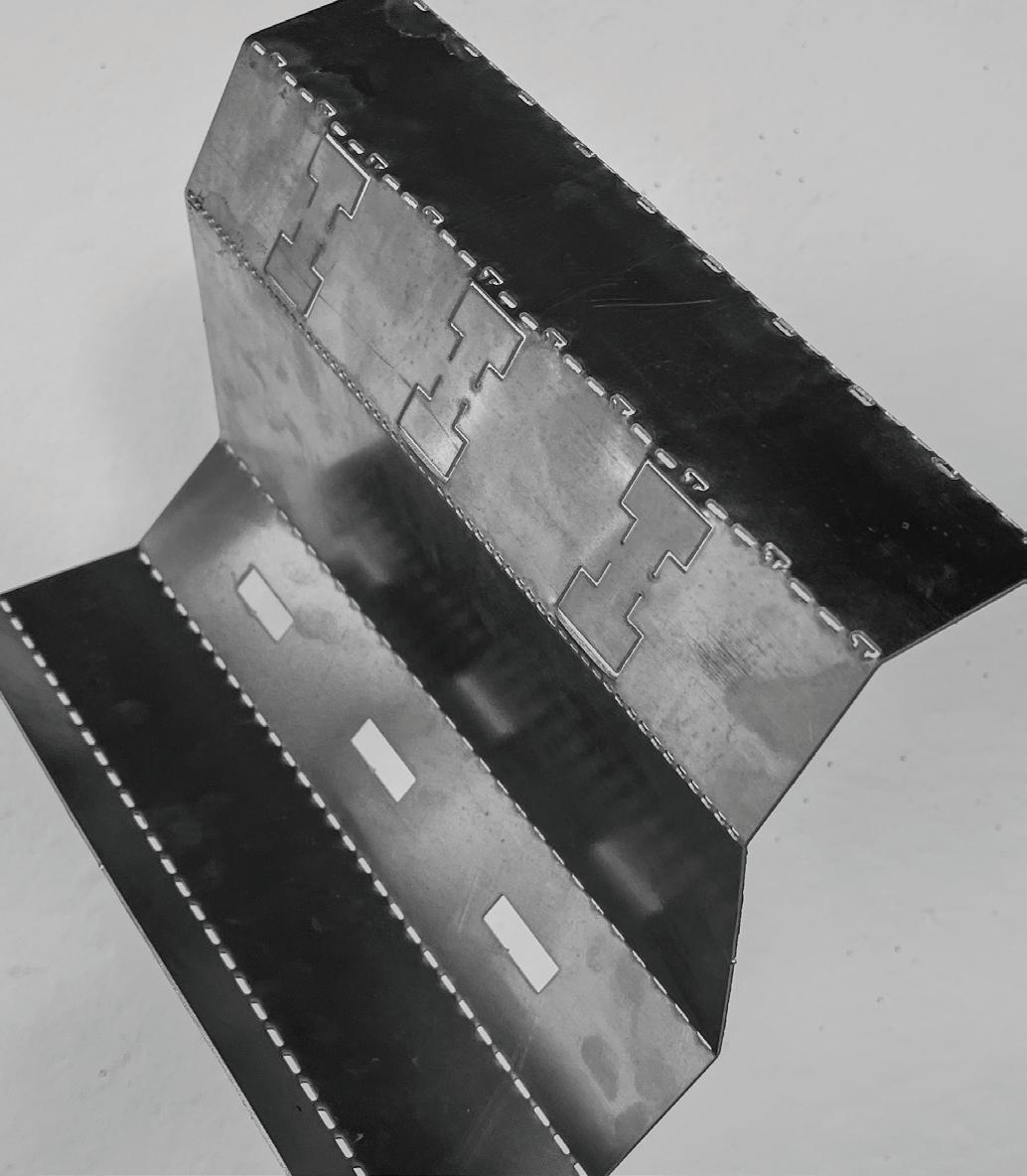
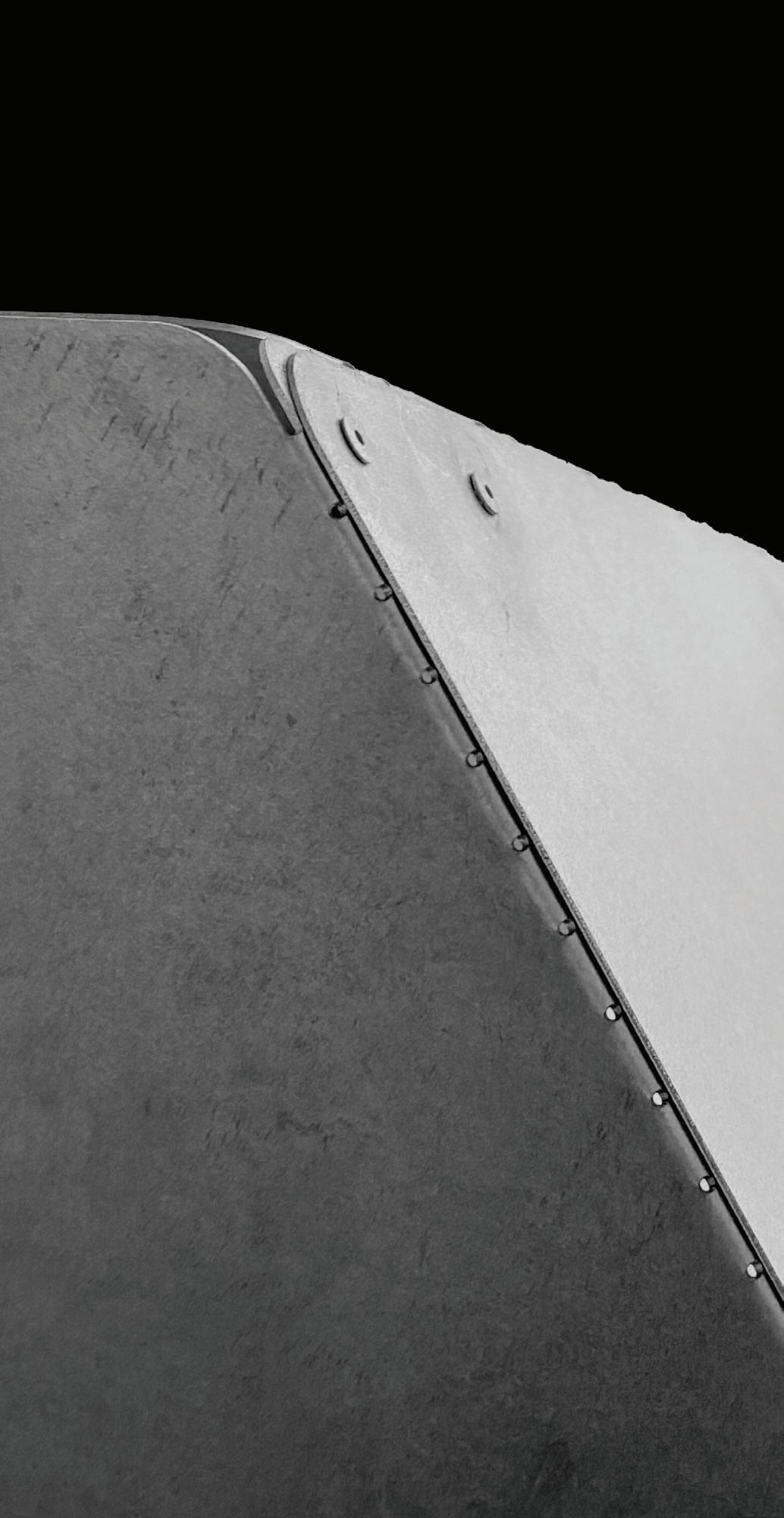
The lamp is constructed using four pieces of 0.040” 5052 H32 aluminum and twelve 3mm aluminum rivets. These four sheets are perforated and have rounded corners to make the assembly process safe and user-friendly. Once assembled, the lamp is able to be extended by hand from a half meter to a full meter away from the wall.
Fabrication and Troubleshooting
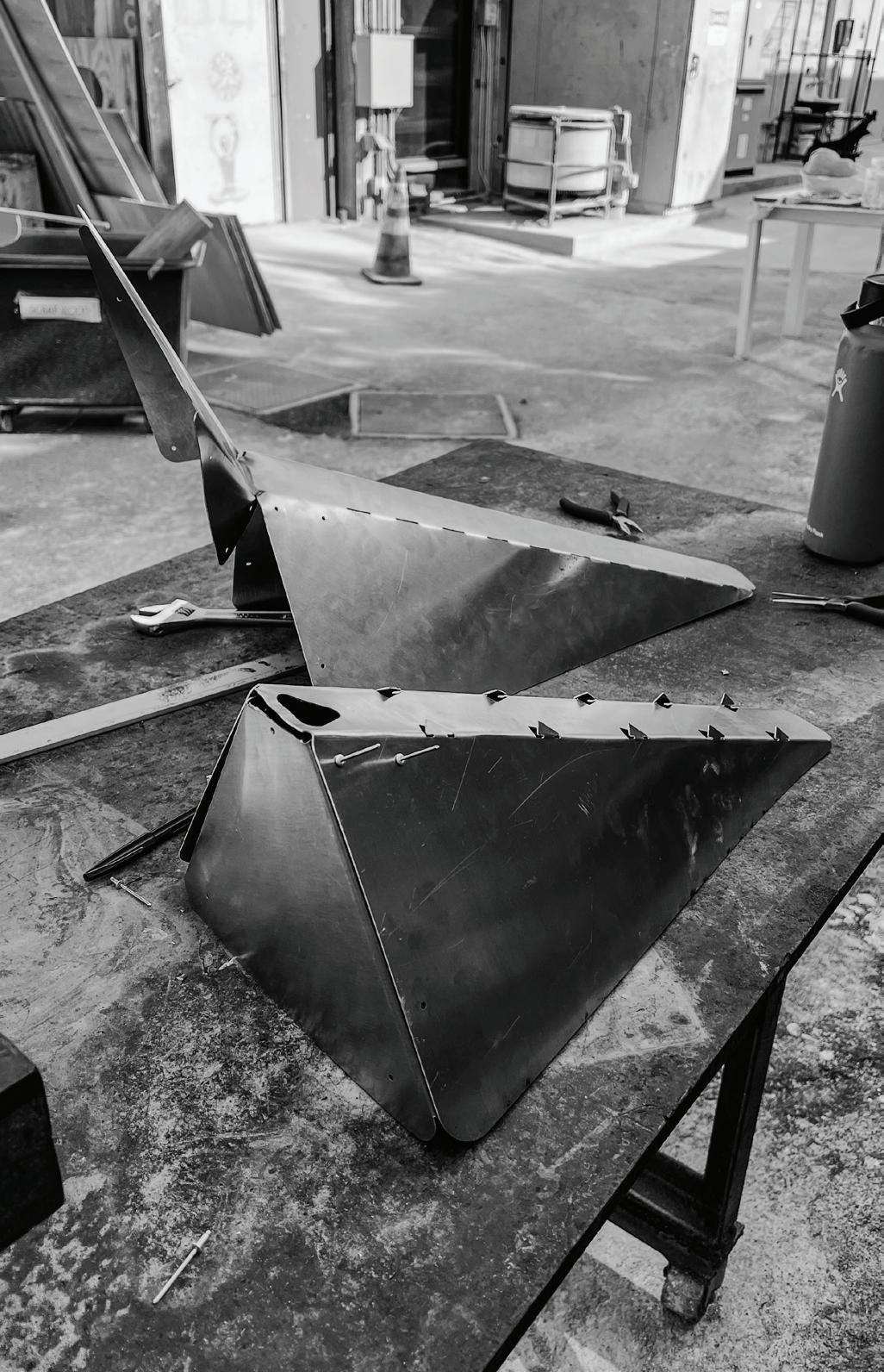
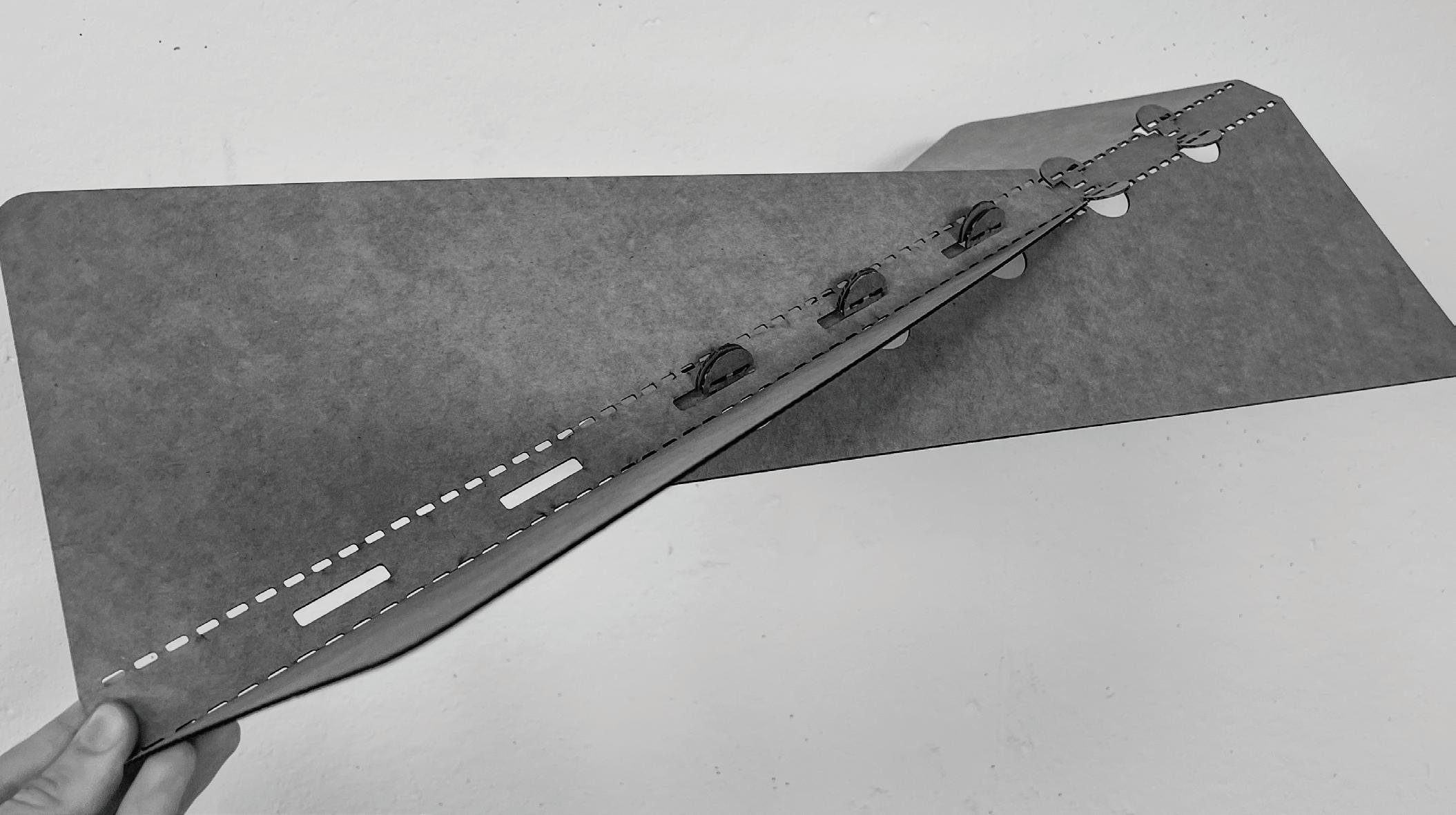
Before creating a full-scale mockup of the lamp, we tested perforation sizes and connection strategies using cardboard and aluminum prototypes. Upon resolving these details we fabricated our first mockup (Middle Left) and noticed issues with material deformation from folding, as well as some necessary fine-tuning to the hook connections and the material finish. From here we separated the end caps from the body, adjusted connection tolerances and added perforations to make matching fold angles easier to perform by hand.
Details
(Left) The aluminum body and rivets are finished using an orbital sander to remove imperfections left over from the cutting process. This roughened texture also diffuses light as it reflects off of the metal.
(Middle) Because of its relation to the wall, the two light sources offer different intensities in the room. The upward light and fills the room, while the downward light gently illuminates the surface below. (Right) Perforations along the edges of the lamp allow the folding process to be completed by hand. Triangular hooks and extended slots interrupt the perforations, letting you easily adjust the length of the lamp to fit your space
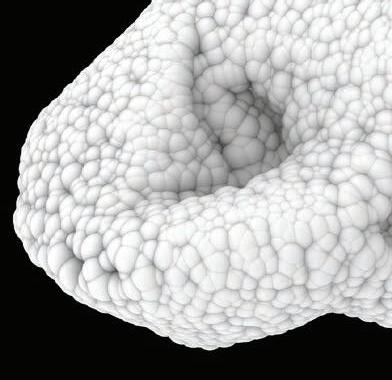
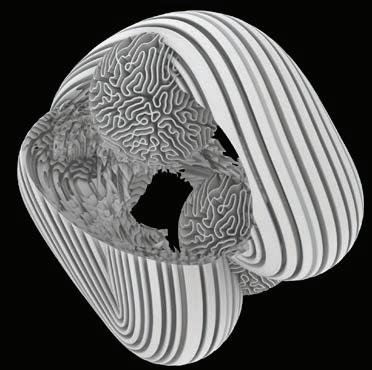
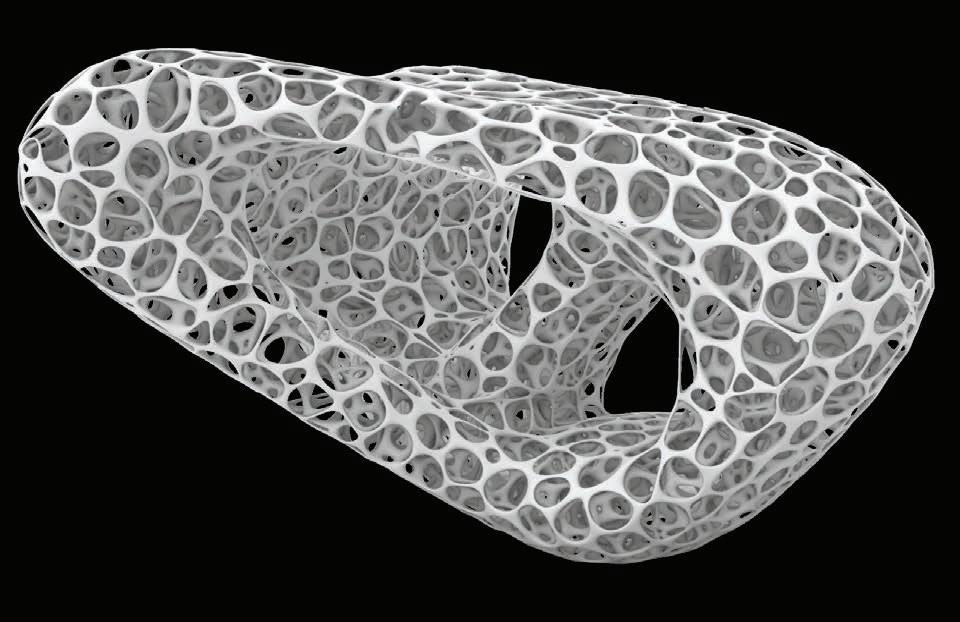
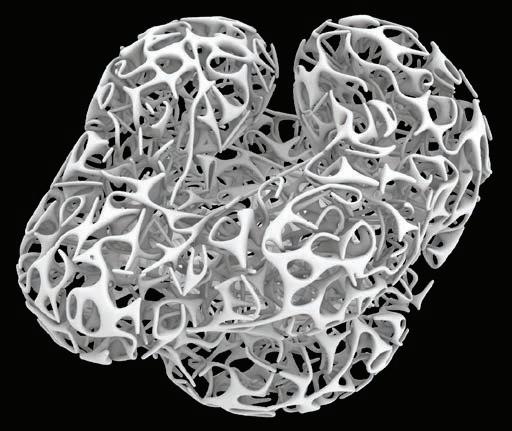
This series of projects explores the methods for how we can begin to translate complex geometry from a digital space to the real world. Digital modeling tools afford us a level of precision and control over the forms we design, when in reality there are many limitations that make this convenience unattainable. This separation between mediums is especially apparent with complex surfaces, because most materials are not able to be transformed in this way. Thus, we must rationalize the surface using smaller, simpler parts that, when assembled, still resemble the original complex geometry.
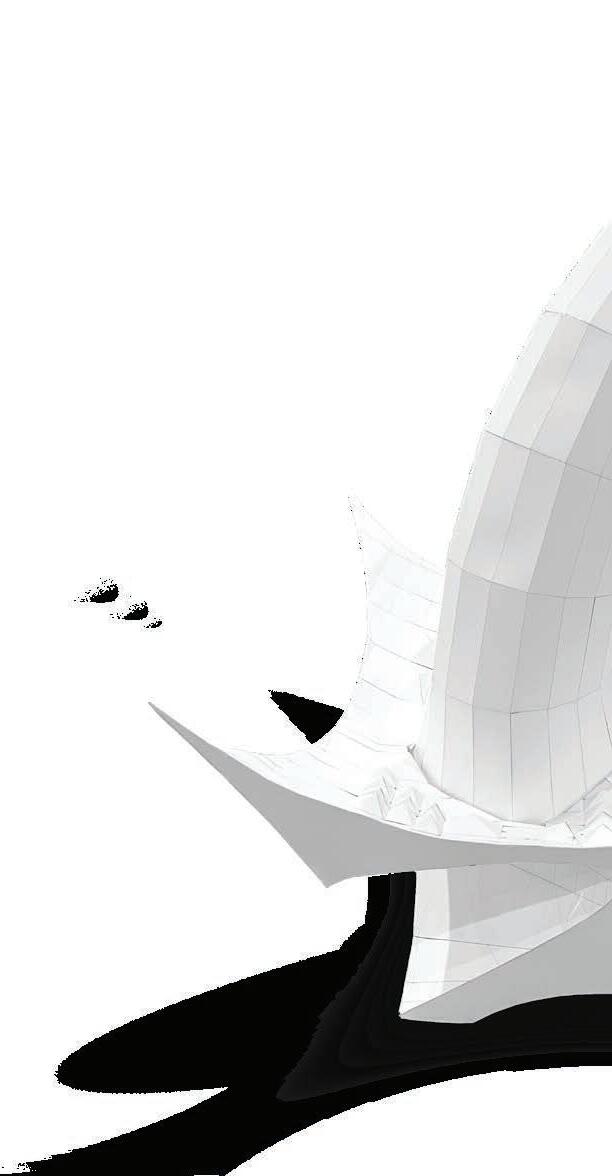
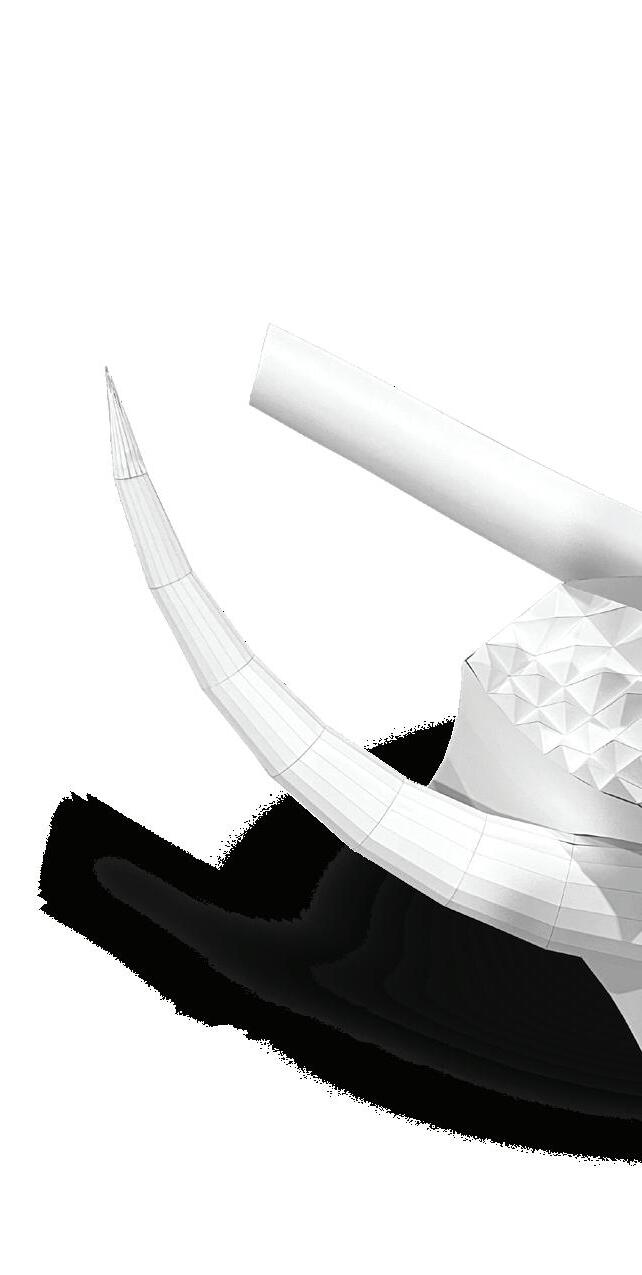
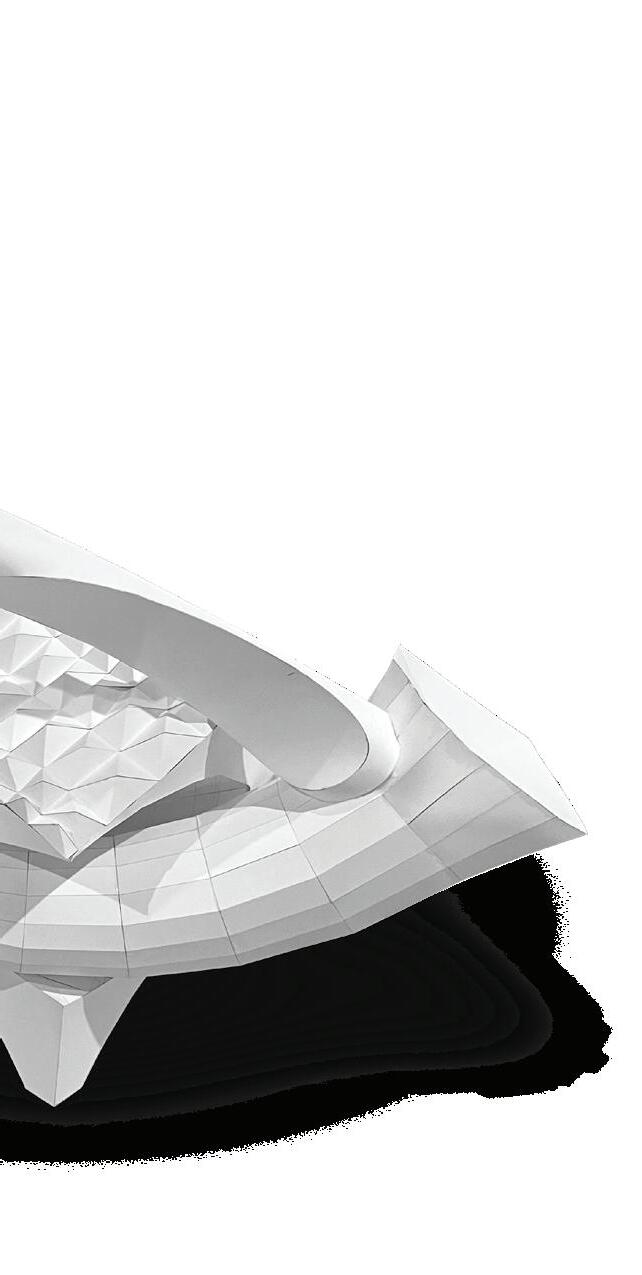
The process began with singly curved surfaces and a physical model to practice the translation from digital to physical space. Following this were several digital exercises that involved complex geometry, UV remapping, and panelization. Finally, we designed reimagined chesspieces in groups and constructed physical models to showcase multiple methods of complex surface rationalization. Our chess piece was the pawn in front of the right knight, historically known as the blacksmith. This piece was responsible for providing the knight with equipment and as such we designed pieces resembling a hammer and anvil, and an axe cutting a tree. The tool involved in these pieces is intended to be passed between players for each turn.
Simple Surface Modeling
The geometry of this bristol paper model is a solid made using a series of cylindrical and conic volumes and a combination of boolean operations. There are no flat faces in this model’s geometry.
Complex Surface Rationalization
(Left) Complex geometry comprised of tori, parametrically rationalized into quad-panels and highlighted tri-panels. UV curvature is highlighted in blue and pink.
(Middle) Interpretive bristol paper group model of pawn chess piece. Complex geometry parametrically rationalized using multiple panelization methods.
(Right) Complex geometry comprised of tori and medial surfaces, parametrically rationalized using multiple panelization methods.
Rain Refuge
Collaborators: Blake Czyzewski Course: AutoCAD I
Created: Spring 2023
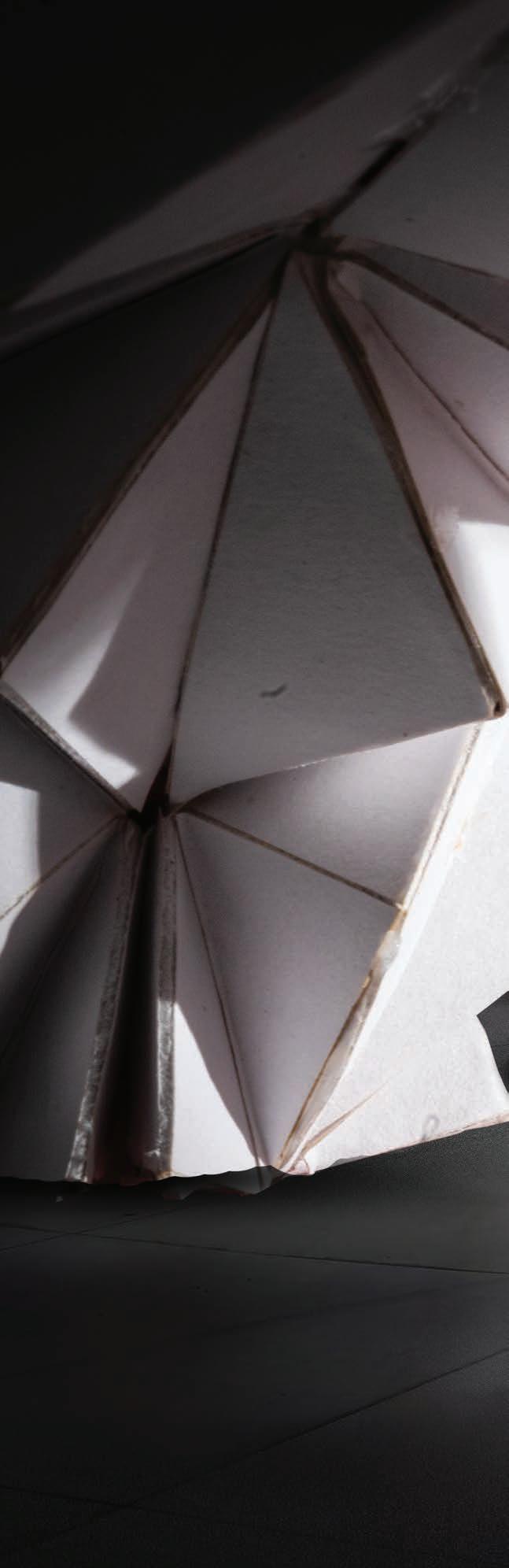
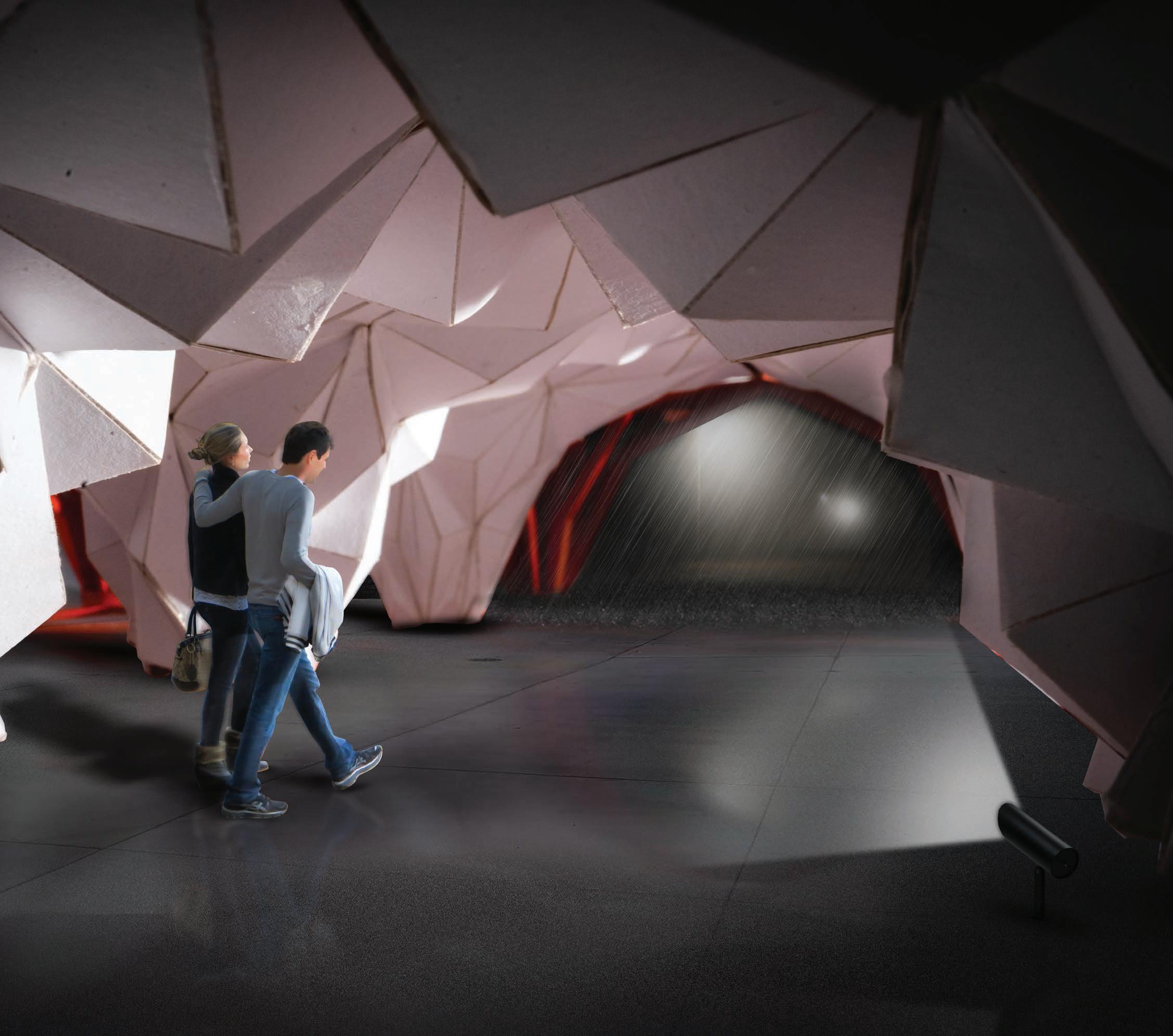
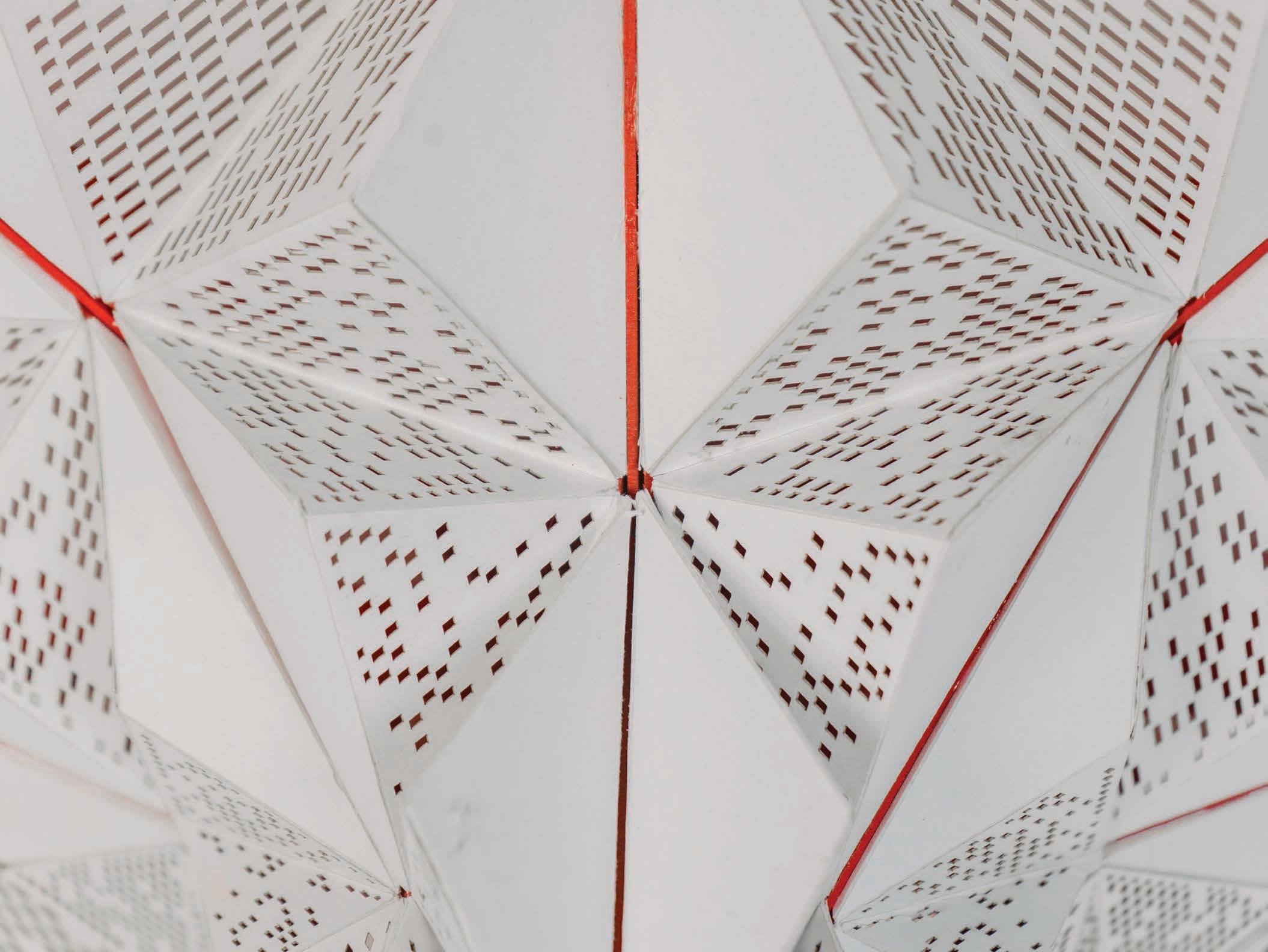
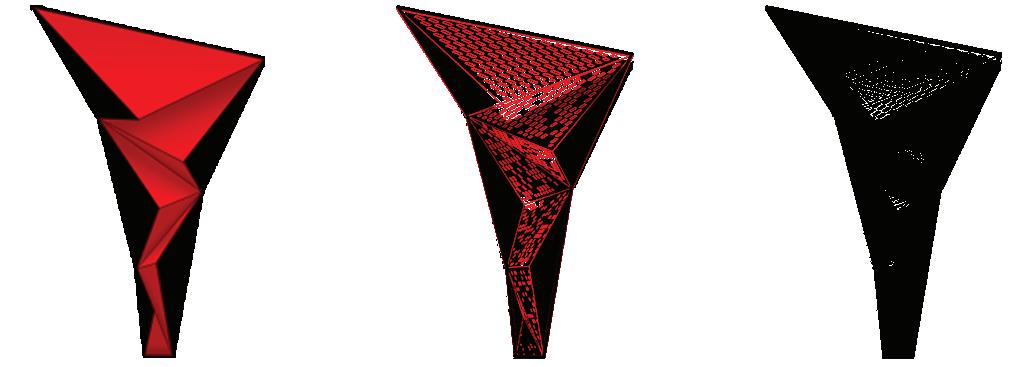
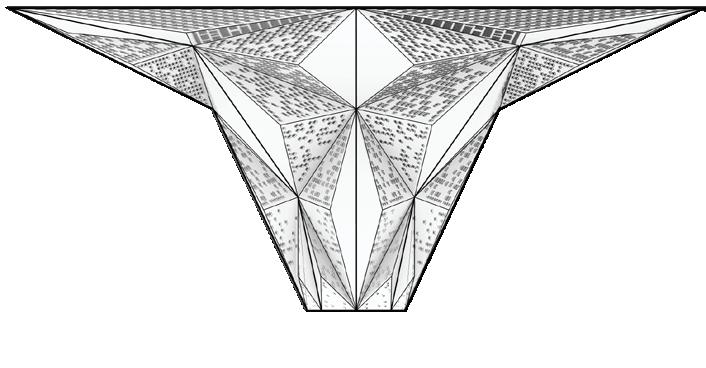
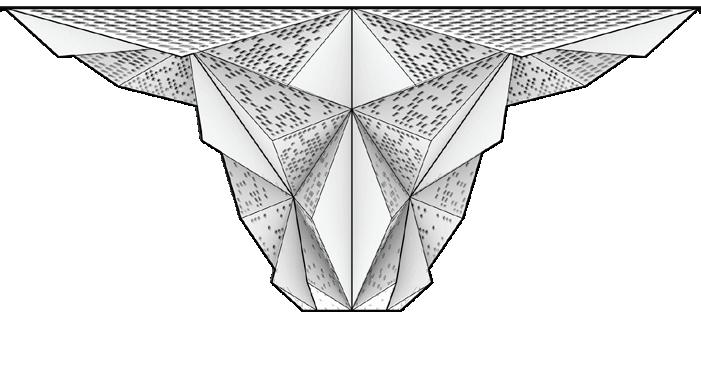
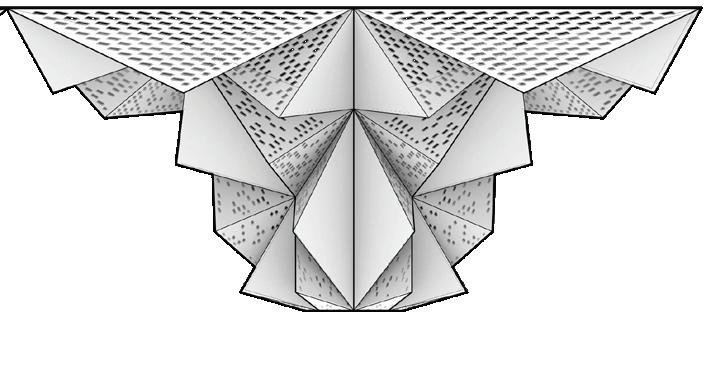
Using parametric modeling, partner Blake Czyzewski and I aimed to design a shelter that could serve as a rainwater harvesting tool while maintaining a limited material palette. Each harvesting unit is comprised of a funnel shaped armature to collect rain that supports a set of perforated pyramidal volumes. These volumes vary in their depth and perforation density to allow for improved natural lighting and acoustic isolation.
This project was an exercise in advanced digital modeling, as well as physical modeling and prototyping. The models shown in this section were created only using MDF and Bristol paper.
Strength in Numbers
An array of these shelters is able to harvest significantly more rainwater while providing a range of architectural experiences underneath. Shown here are several variations to the parameters of the shelter and the supporting armature, physically modeled, to visualize the spatial conditions of the array.
Parametric Process
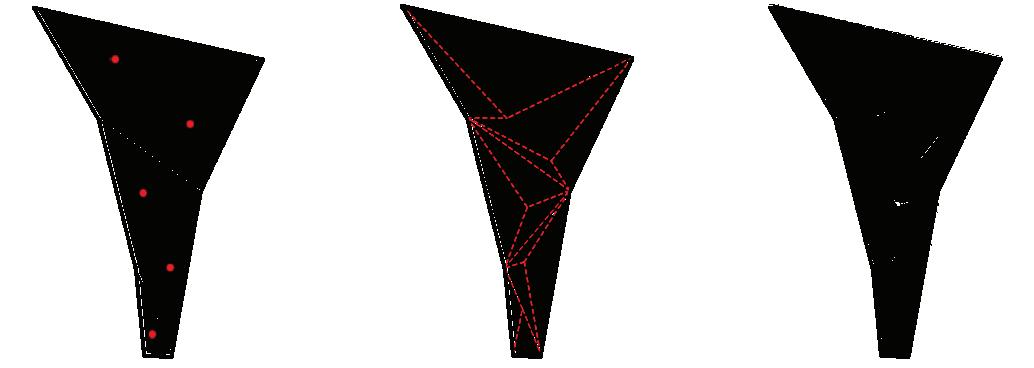
To improve the fabrication process, the panelized funnel shape was separated into eight sections of five triangular panels. These panels were then used as the bases of pyramidal volumes whose innermost strip of adjacent faces were perforated to ensure a strong connection to the armature along the outer edges. The perforation density increases towards the top of each funnel, making the suspended panels lighter and allowing more natural light to enter the space.
Olive Hill Park
Collaborators: Chris Panzella
Course: M.Arch Studio 1
Created: Fall 2023
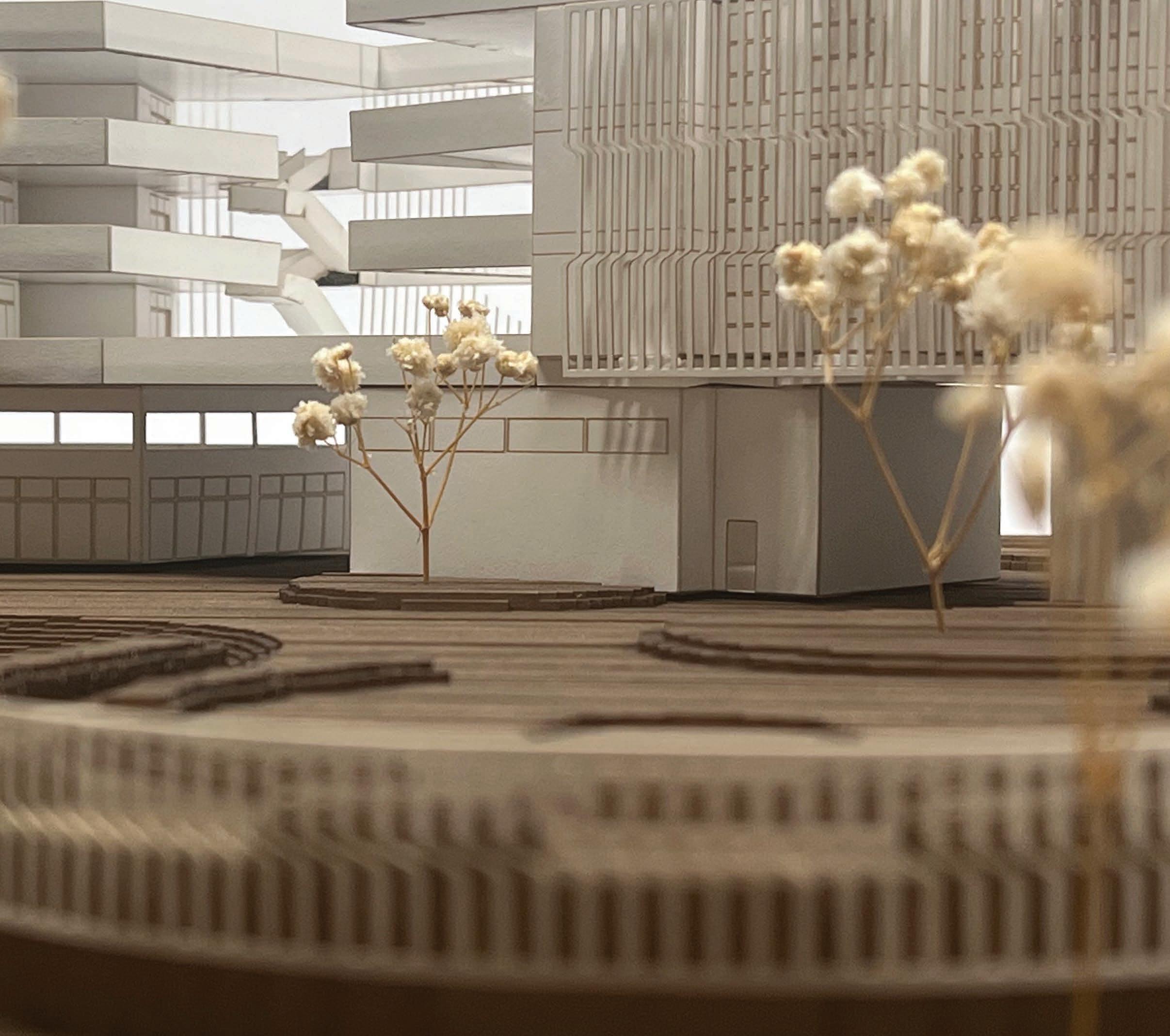
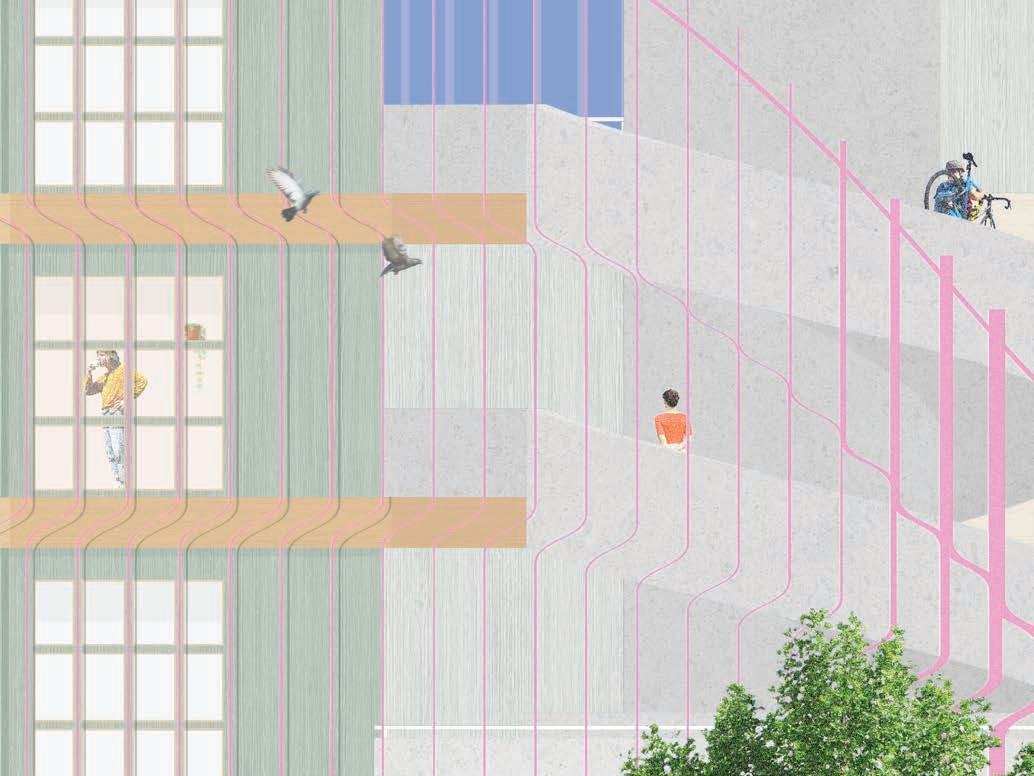
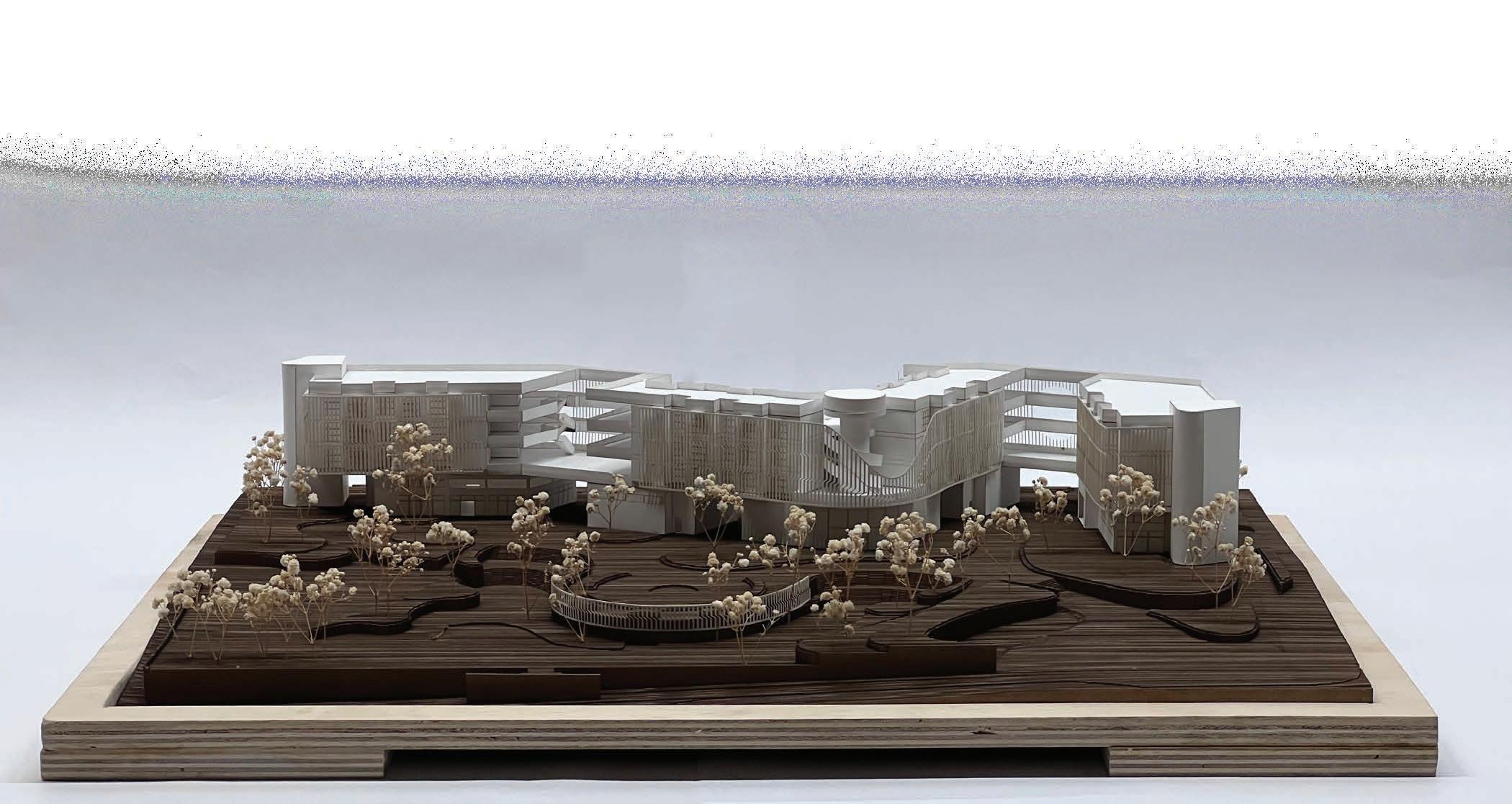
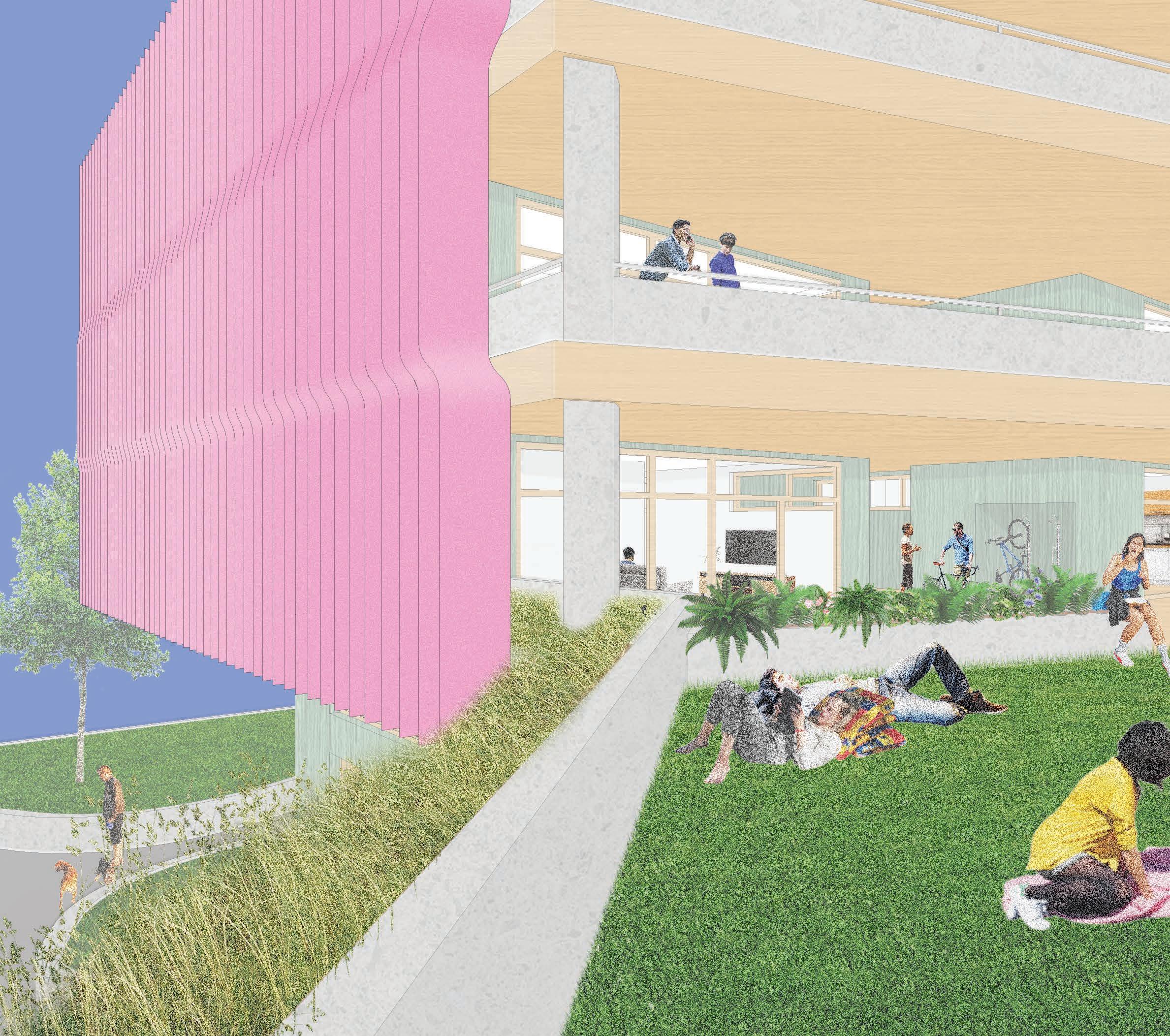
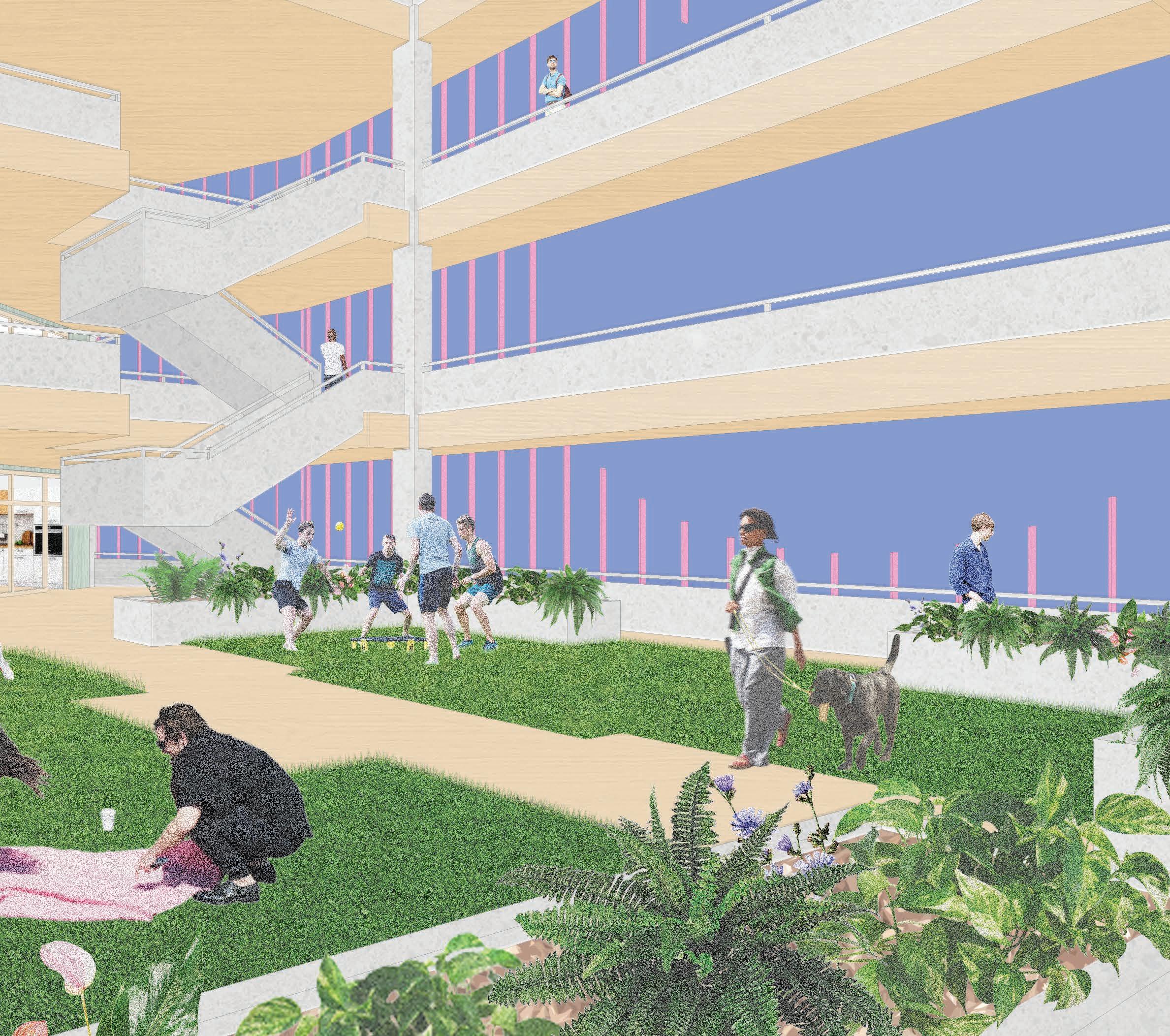
With an increasing need for affordable housing, especially in developing urban areas, our studio experimented with various forms of shared housing solutions increasing from 1 to 10 to 100-person dwellings. With help from partner Chris Panzella, we designed a 100-person co-living building in downtown Los Angeles. The name “Olive Hill Park” comes from the streets adjacent to the site and our objective to re-green a part of the urban environment. We chose to locate our project on a city block that is connected to major public transportation routes and exists as a parking lot. Without existing structures or the need for personal parking, the site can quickly transition to a park and achieve affordability for its residents. The project improves the neighborhood through its park and retail options on the ground floor. The building is organized to give residents varying degrees of community: individual units are grouped in sets of 4 to 5 rooms and share a common room, groups are paired to share outdoor patio spaces on each floor, and the second floor hosts an elevated green space to connect the community of residents.
Serving the Public
Alongside the park, the building’s ground floor houses public amenities such as a cafe, a grocery store, a general market, and a bicycle repair shop with rentable storage spaces for commuters.
Bending the Rules
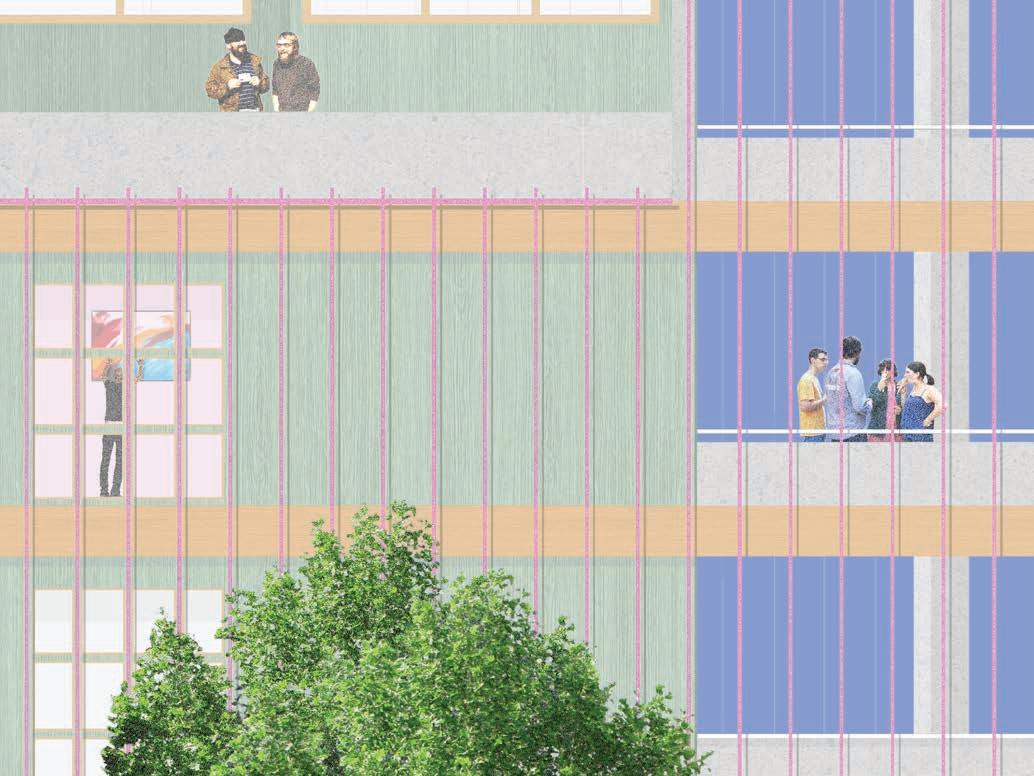
The expression of the facade and building plan stem from the formal relationship between the rigidity of hardscape and the fluidity of landscape. The strict lines of the facade facing the street are bent to form the facade that faces the new park. Similarly the building bends to create gathering spaces on both sides.
Master Planning
Olive Hill Park is designed to create zones for the public to socialize, contemplate, and escape from the city. Pathways through the park provide access to public transportation routes from every direction.
Housing Strategy
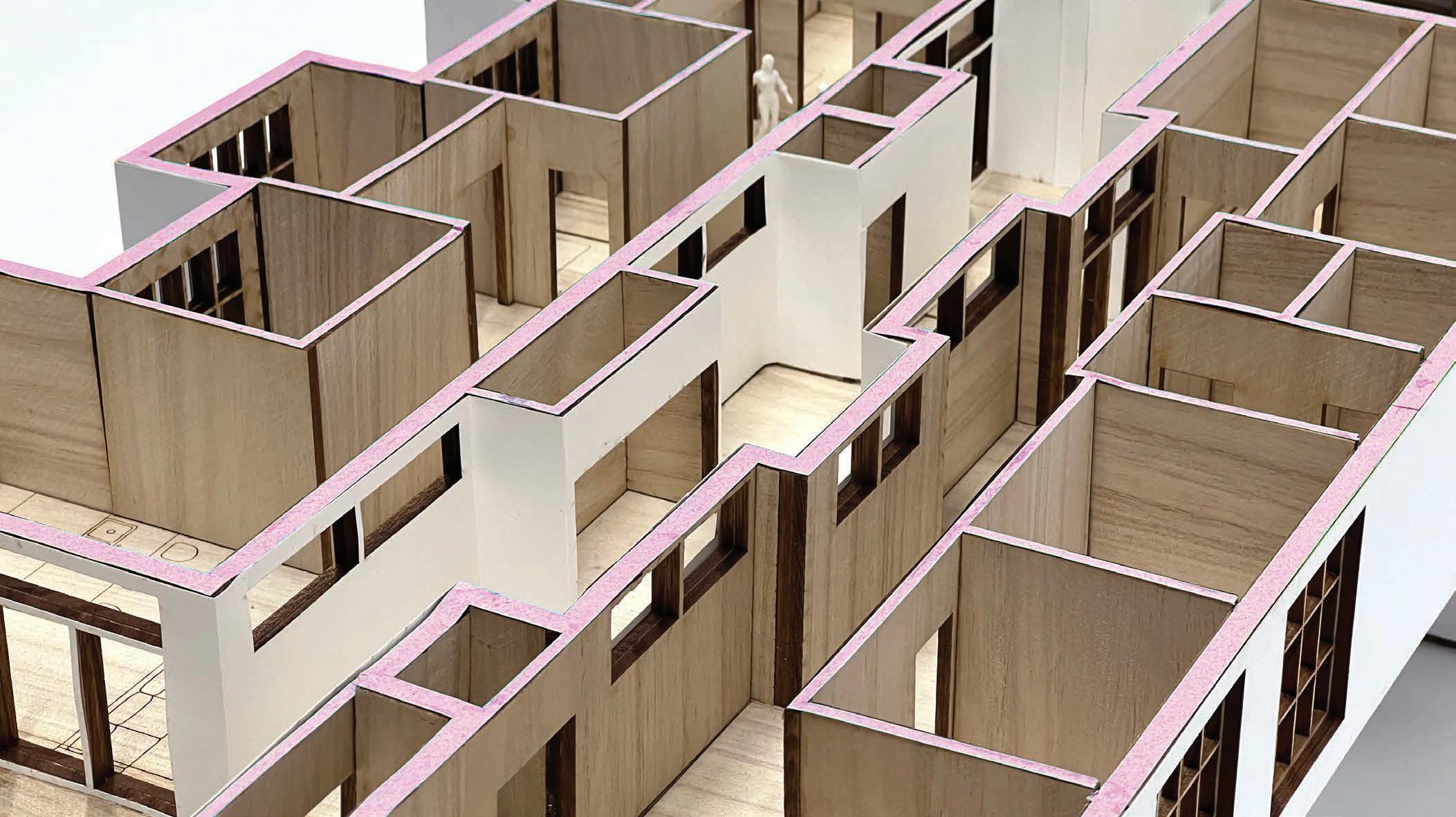
A staggered floor plan creates alcoves for bicycle storage and helps to shade units on the South-facing park side of the building without adding unnecessary shade to the North-facing street side.
Optimized Living
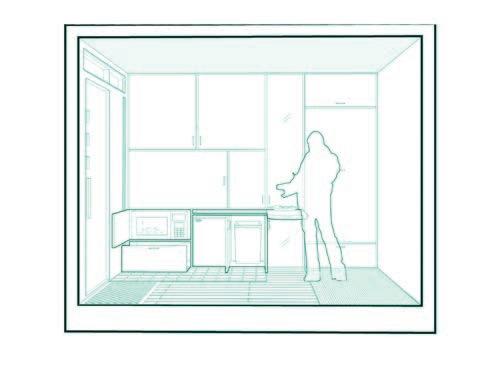
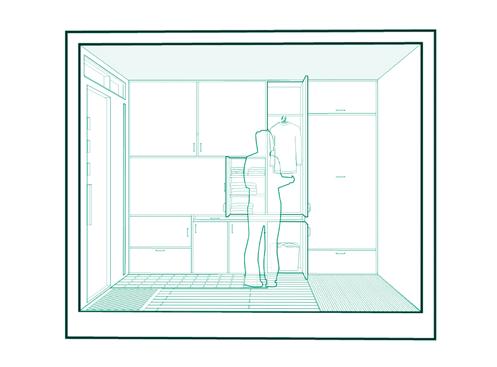
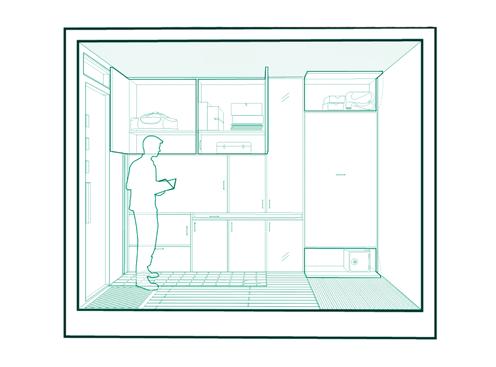
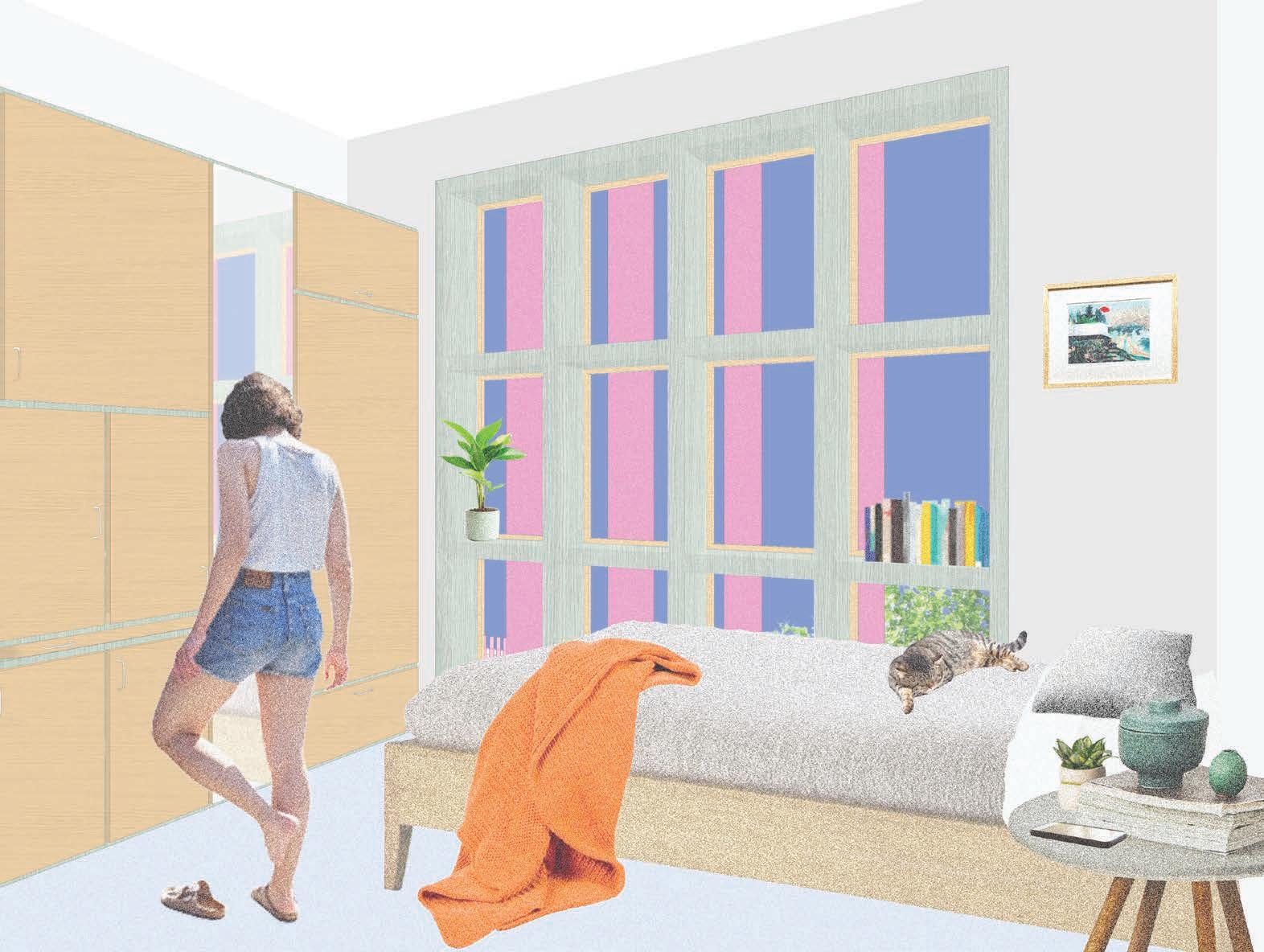
Each unit contains an all-purpose cabinet system to maximize usable space. Light shelves and multiple operable windows grant passive ventilation and reduce solar heat gain. The building also maintains a minimal presence on the site with several large breezeways that connect the street and park sides of the site.
Elevating the Community
Shared green spaces on the second floor give residents a sense of community with neighboring pods, as well as their own outdoor space, separate from the park.