DES IGN STU DIO 3A 2nd December 2022 Year 3 Trimester 1 @00583058 THE FRAGMENTED CITY
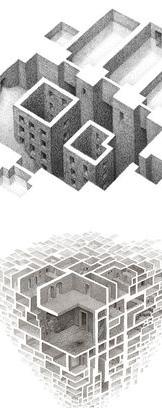
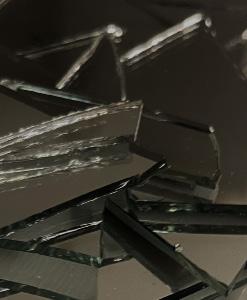
The notions of Perception and interpretations in architecture allow humanity to make sense of the world and the urban setting we live in. The wonderful and fascinating thing about perception is the way in which it can be obscured, blurred, shattered or flipped upside down, leaving nothing but a fragmented idea of what the city truly is. It creates invisible borders between what we can see, what we cant see and what we think we might see- what we perceive. When studying a city, once can look at spatial im plications and their impact on our vision, and ultimately our interpretation of the space around us. Our ideas of the urban fab ric can be altered by elements such as light, reflections & refractions, colour, sound, touch and even smell. The organisation of space within urban context could be likened to that of the fluidity and vibrancy of paint on a canvas. The forgiving nature of the medium and the spectrum of possible colours, tones and shades allow for a greater depth on a 2D plane. Just like the do in a city, forms of varying textures overlap and intersect one another, creating a third dimension to what appears to be a flat surface.
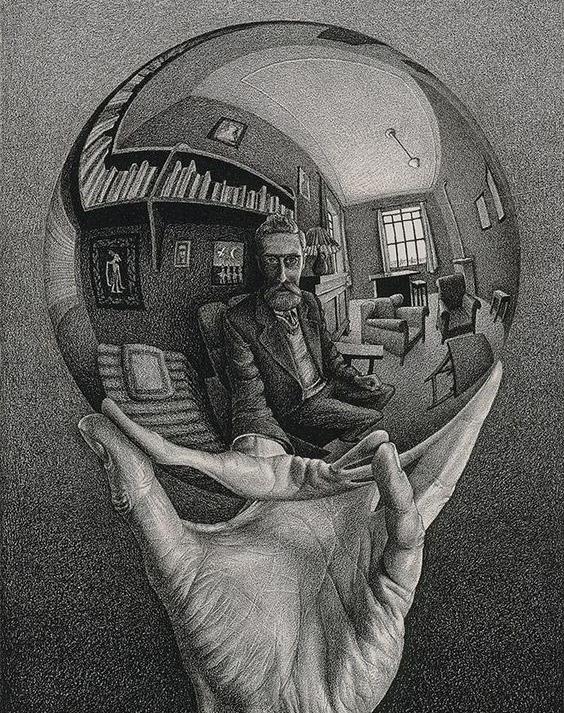
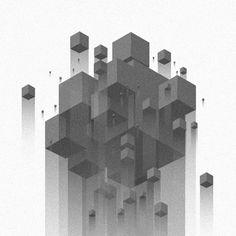
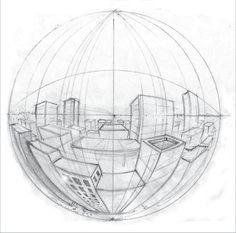
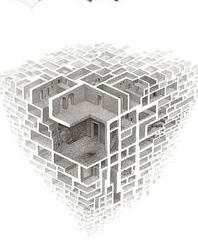
The first factor of the design process included exploring the ways in which geometry in forms can be divided up into segments (or fragments). These two artefacts show how different blocks of solid matter (a cube and a sphere) can be manipulated and transformed through complex geometry, whilst remaining a single piece of solid matter. It also shows how in architecture, we can create views that indeed, al ready exist, by warping what is already there.
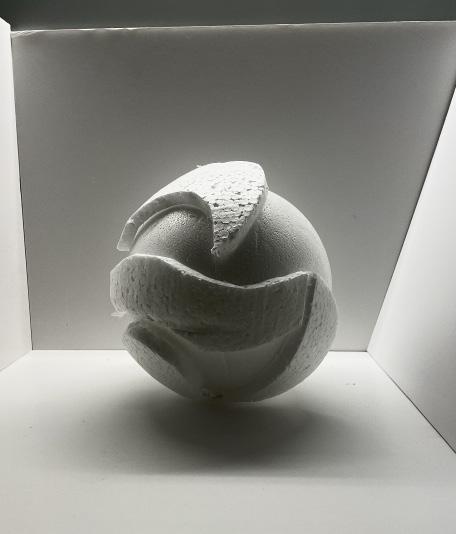
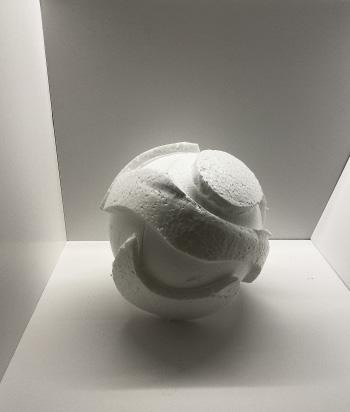
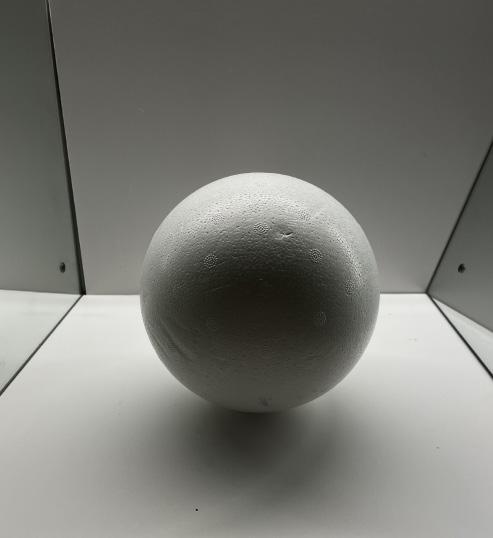
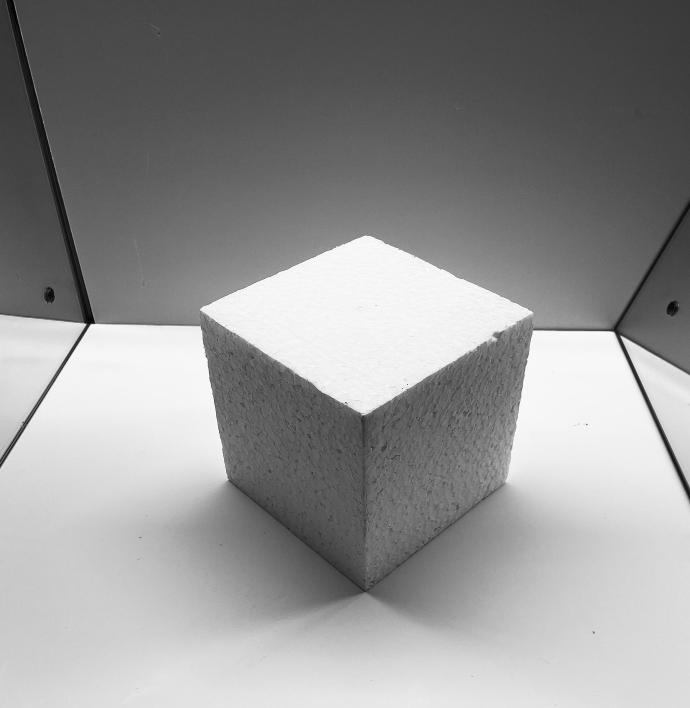
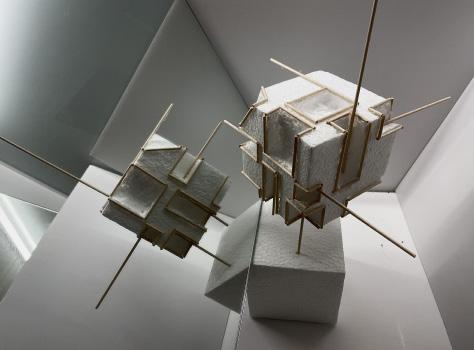
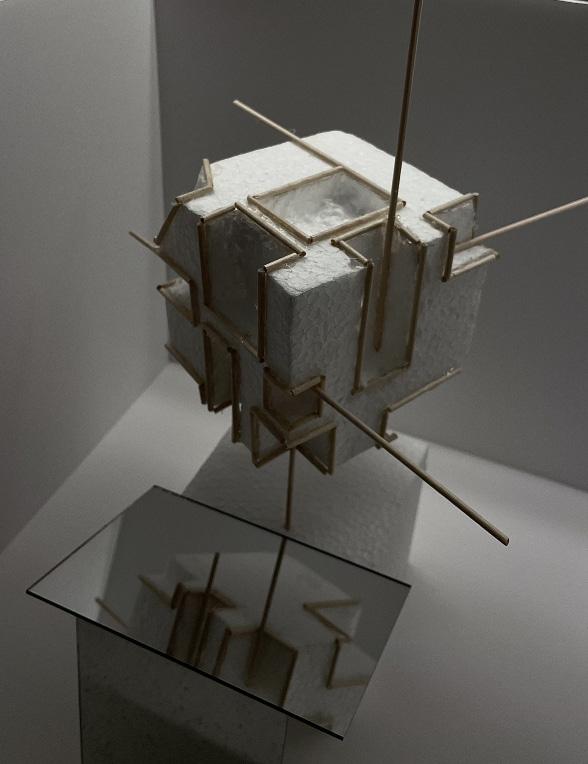
This relates to the idea of the fragmented city through the sense of ‘formation and reaction’. Formation creates, as seen with the forma tion of the city, whilst reaction de-constructs, as seen with the way people move about the city and its boundaries, restrictions and voids. Reaction fragments the parts and pieces that allow architecture to happen. This suggests looking to design solutions in the city that are not buildings as such, but things that work with space to improve the context in which archi tecture and the urban environment can thrive.
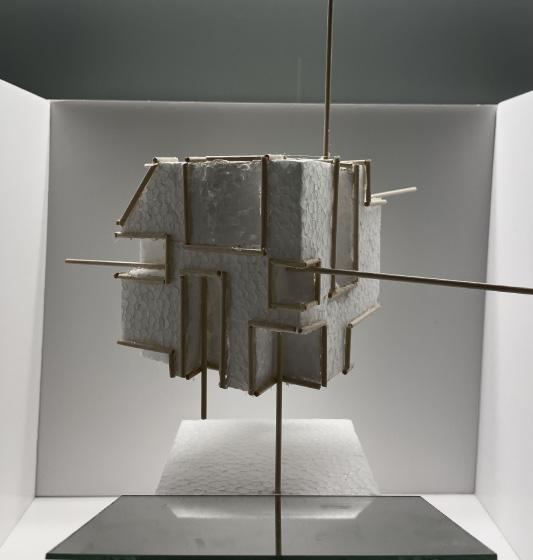
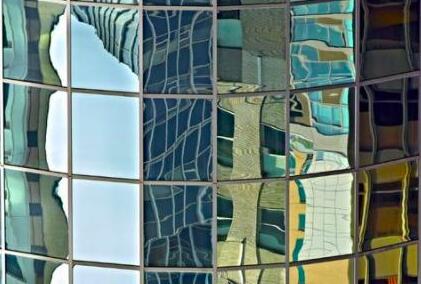
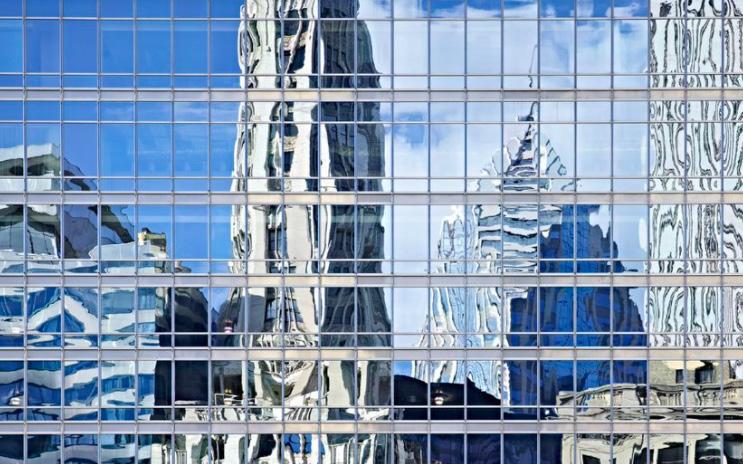
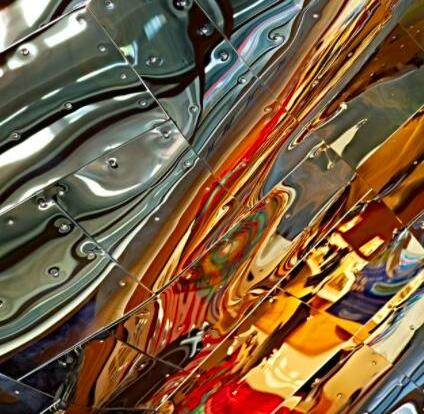
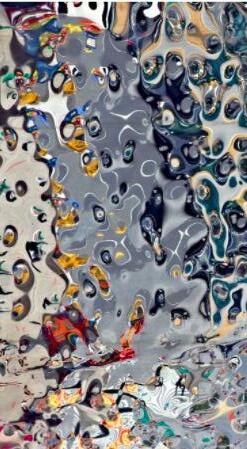
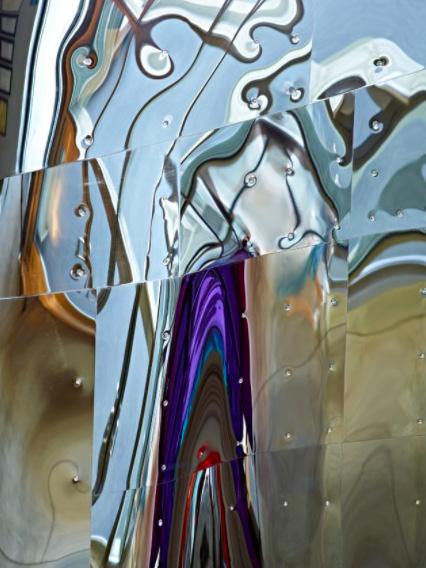
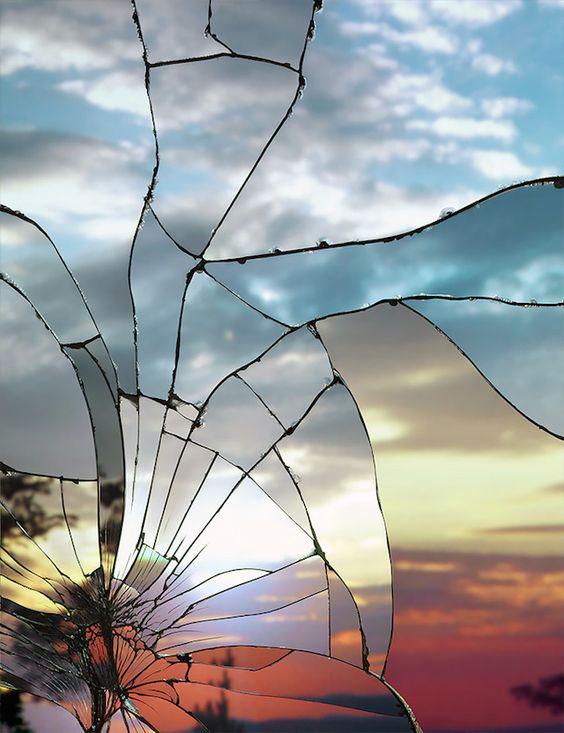
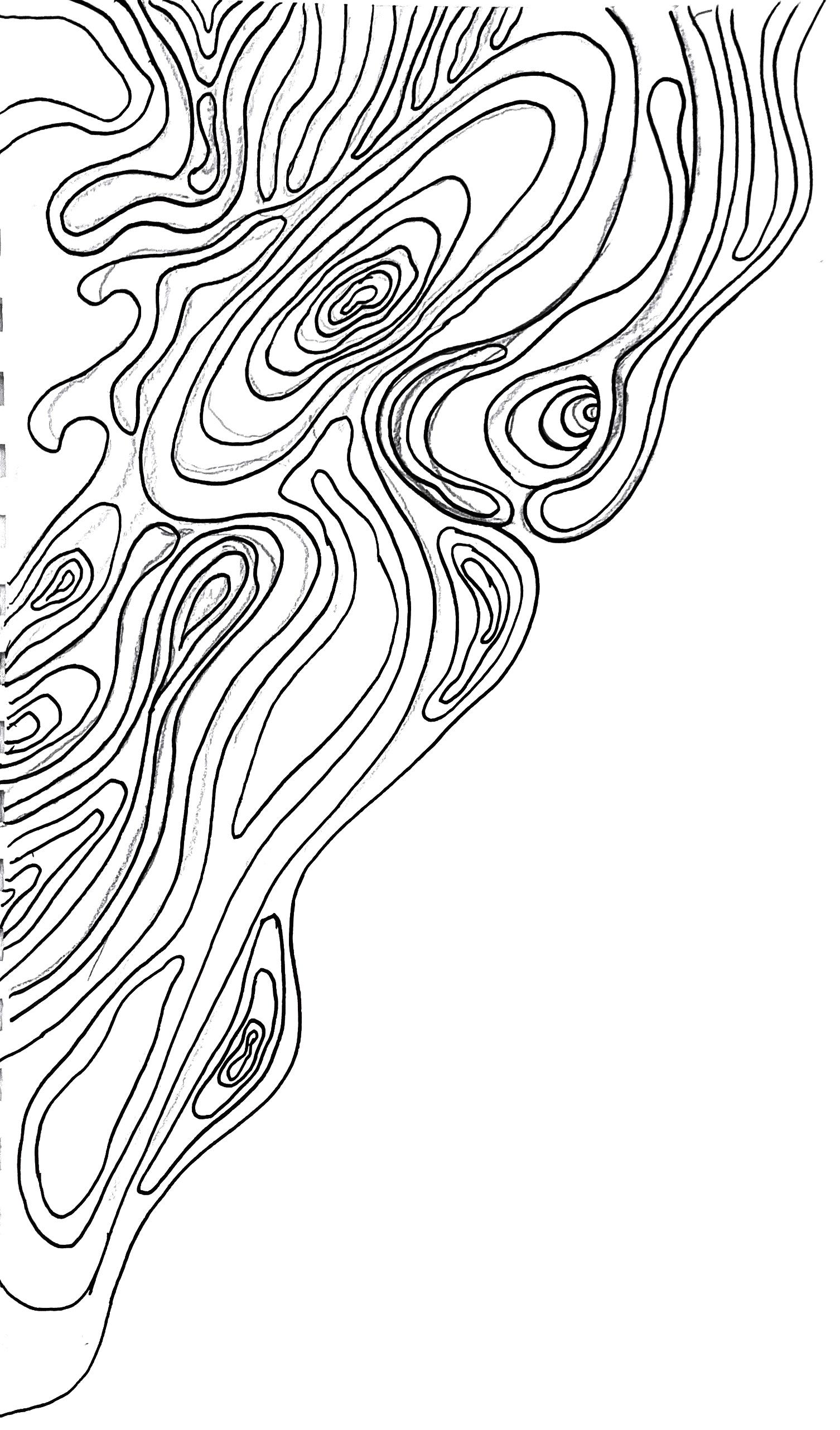
Cities and metropolitan areas are now highly frag mented in the sense of disconnected areas of ur ban fabric being broken up by swatches of vacant land. This project intends to look at healing these crack-like wounds throughout the city of Manches ter and reconnecting the divided sections of the city that have been divided by recently developed, massive lines of infrastructure. It could even be suggested that the attempt to connect at a large scale (such as large regeneration projects of pub lic transport etc), creates disconnection at a com munity level.
From above, railway networks, tram lines and inner city roads resemble wounds and tears through the urban tissue. Mild interventions (such as murals, art installations and community gardens) will be explored in an attempt to re-stitch the city.
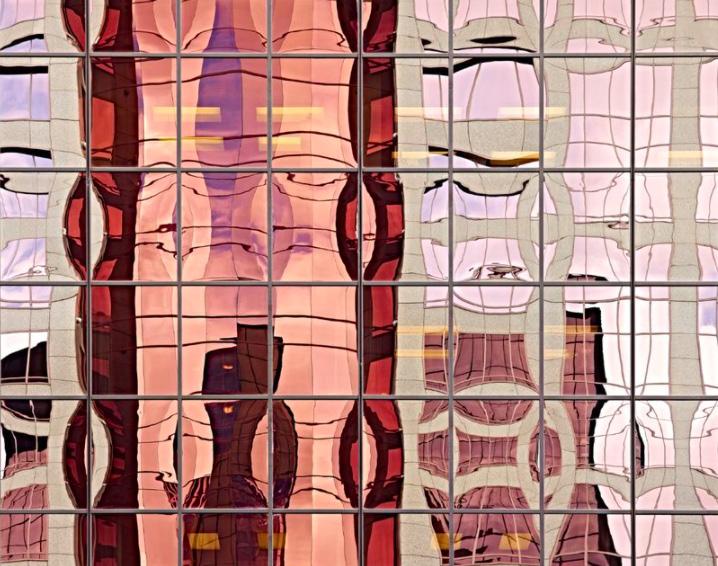
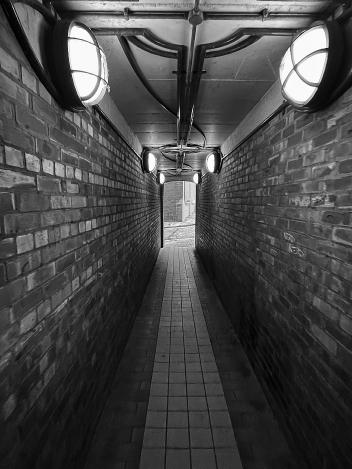
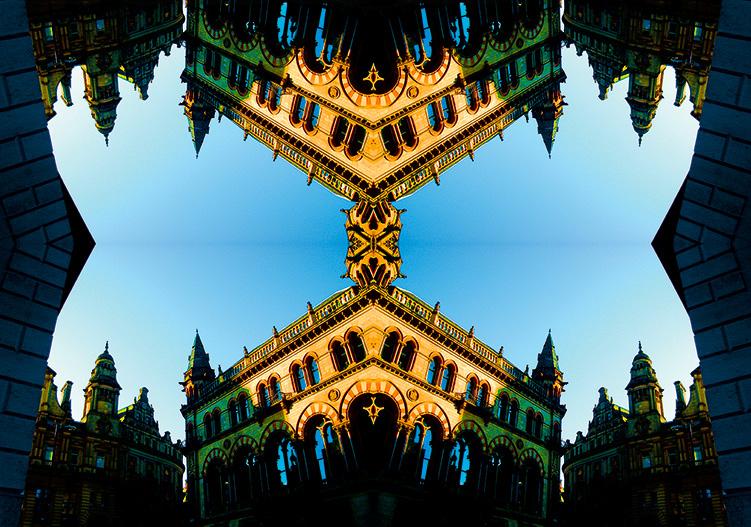
Above are some photographs that represent the distortion in perception of the urban fabric within Manchester City Crossing (where Whitworth Street cross es over Oxford Street). They show the ways in which interpretation can be obscured, flipping the images upside down and focusing on the slightly warped reflections of buildings in the canal. The photographs in the middle shows the notion of transparency in the city which constantly endures the fast-pace movement of pedestrians, cars and public transport, whereas the two on the end explore the motif of abandoned and vacant voids within the city.
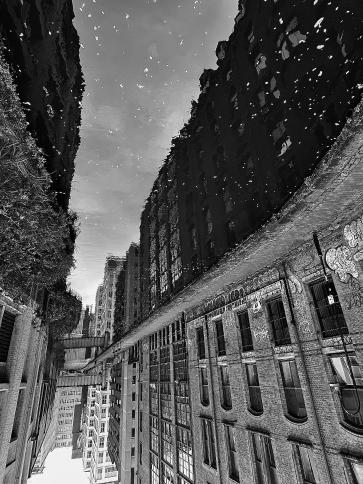
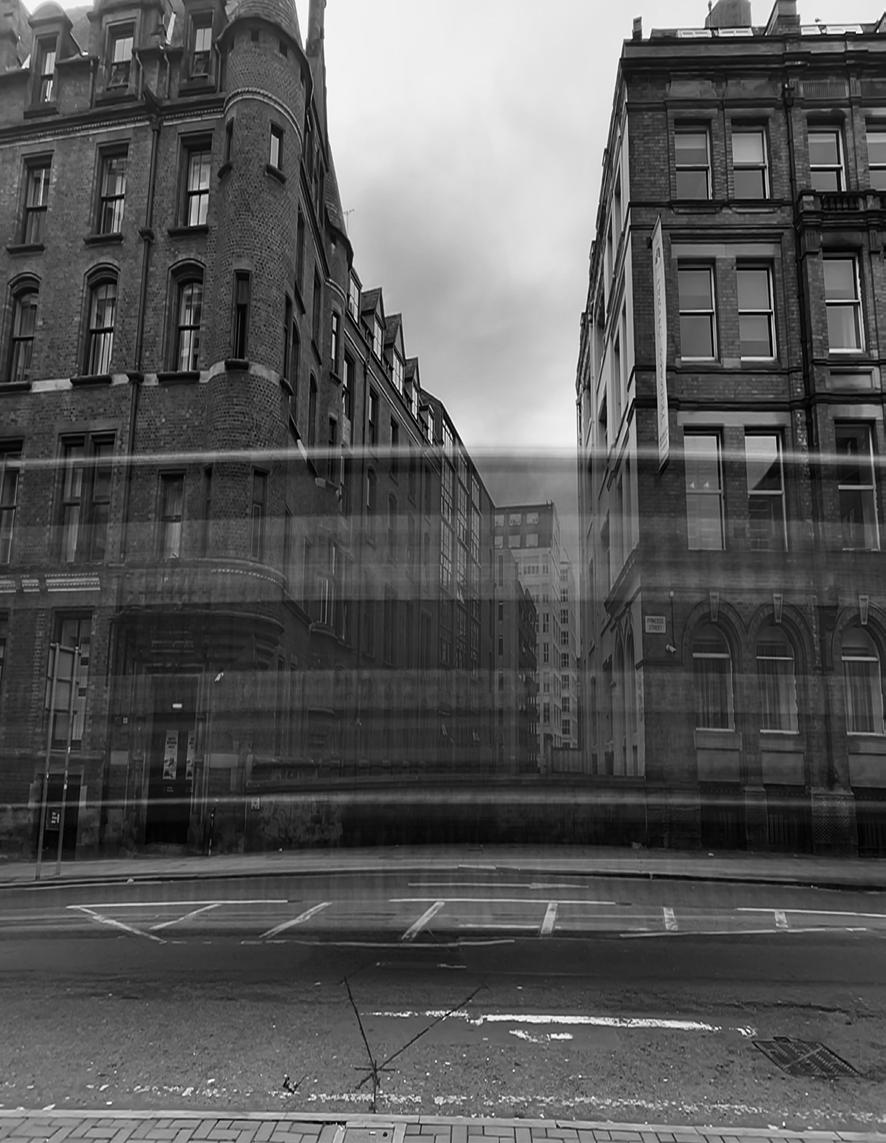
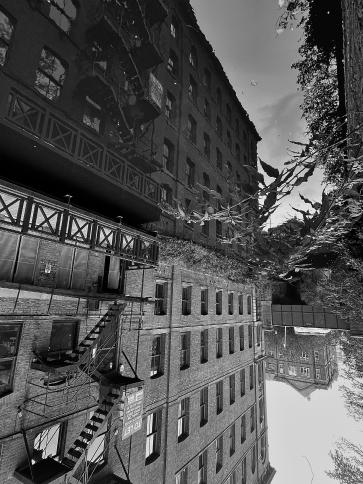
The first concept to be explored with in this project is the idea that mirrors and smashed glass can be likened to the fragmented pieces of current Manchester. When these pieces are placed together, they create distorted views that alter our perception of the city as a whole. In order to re-vitalise and regenerate the city as a whole, these broken pieces should be placed back together with care and cau tion, a nod towards the conservation of the heritage-rich context of Manchester. Factors such as public health, sustaina ble practice and new technologies can be presented as the glue that can hold the city together, with architecture at the heart to inform the urban fabric and users how to use, operate, perceive and act within the city.
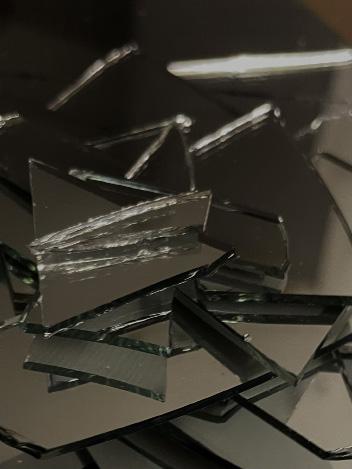
The first exercise that was undertaken in order to expand this motif, was to smash a glass mirror myself. It was interesting to see how a, once, solid and linear piece of matter could be split, divided and fragmented into shapes of all forms and sizes- no two quite the same. It was also discovered that it was almost impossible to fix these pieces back together the way they once were, instead something new had to be cre ated of these puzzle pieces. This relates to the project of curating the urban city as it shows how the fragments within Manchester may not be fixed to how they once were, but instead they can be re-used and regenerated to create something new.
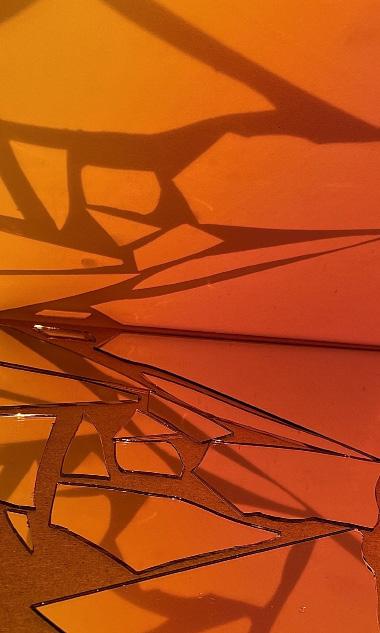
The task at hand was then to create something beautiful from the broken shards of glass. After attempting to arrange them sat in my kitchen, I noticed how the light from outside was reflecting off the mirrored pieces and onto my ceiling, casting an interest ing veil of patterns throughout- almost like that of a butterflies wing. After experiment ing with different modes of artificial light, it became clear that the art of shadows and reflections of light will also be utilised throughout my project as they are evidently able to break up space, without any physical boundary being imposed.
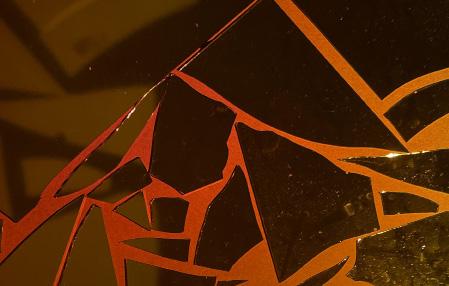
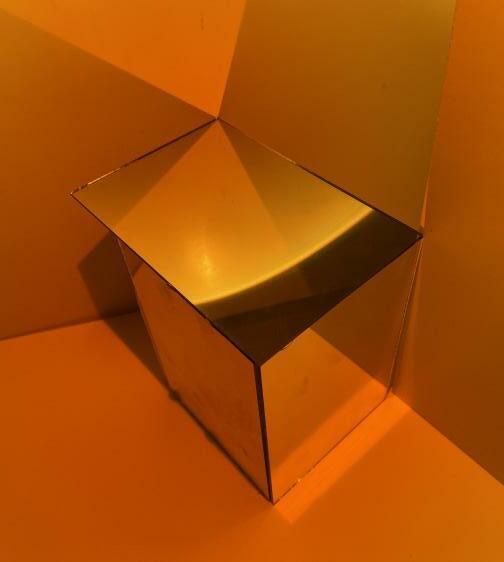
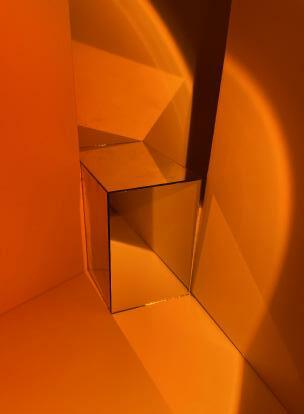
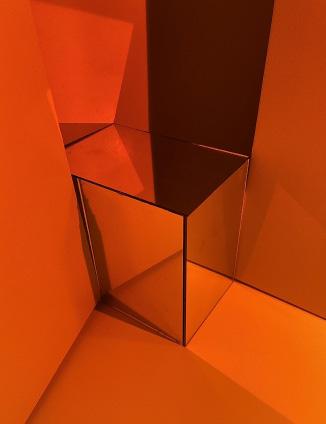

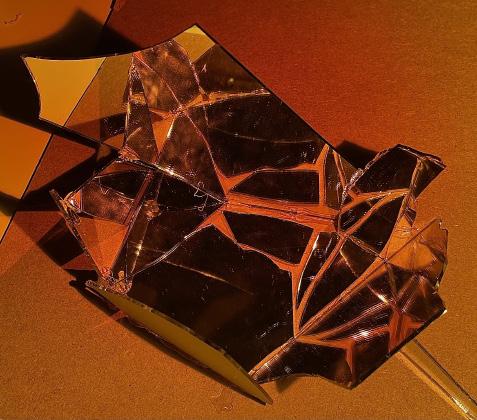
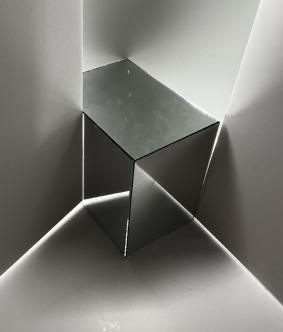
Artefact 3 shows how the pieces of broken glass could be fixed together in ways that resemble a structure. Artefact 4 moves away from the broken shards and uses smoother, linear pieces of mirror to create a void-like structure which almost seems to be an invisible box due to the reflections of light.
This could be a way of creating a private space in the city (almost invisi ble), yet connect ing it to the outside world by offering reflections from the urban context. A way of balancing the inside and the out.
Consider ways to establish key connections in the city- from trans port, to inside & outside, to con nection on a community level.





Run down/abandoned areas in the city should be key areas of interest when redeveloping.
Ensuring the city is developed sustainably and factors such as zero-carbon design are prioritised.
Ensuring the city is developed sustainably and fac tors such as zero-carbon design are prioritised.
Development planning and herit age conservation must be closely followed.

Re-creating the city in order to make it a united place of community and diversity- a place for everyone.
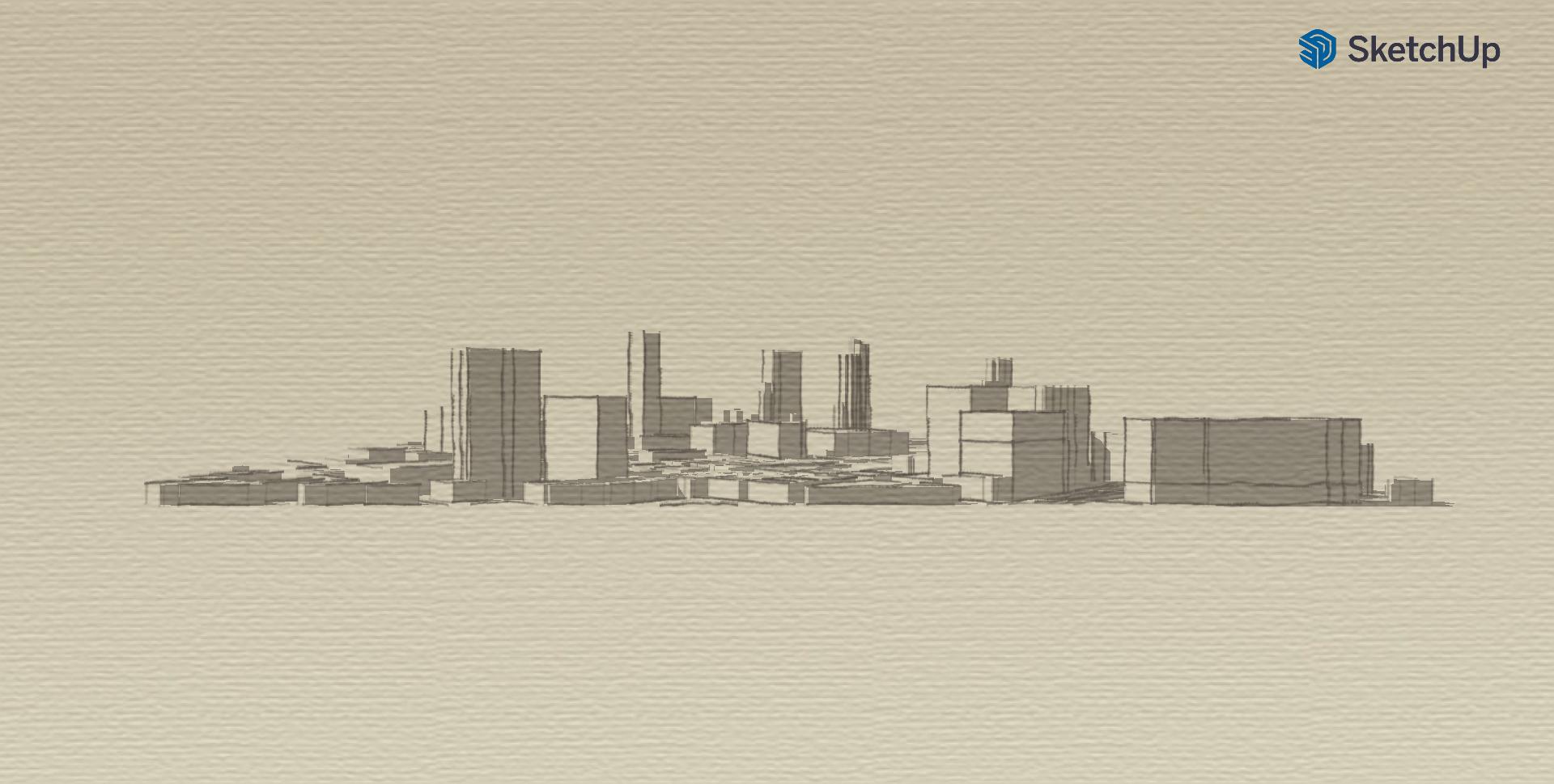
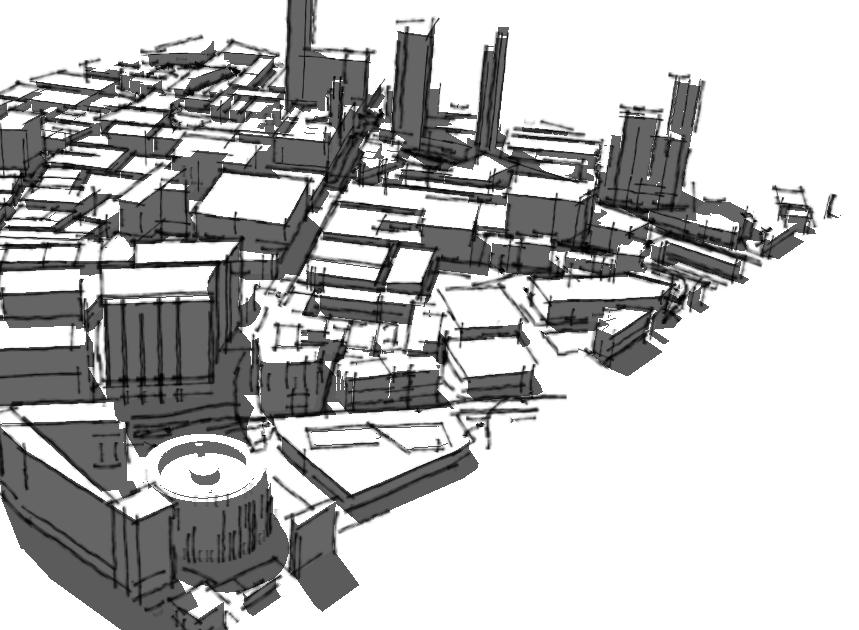
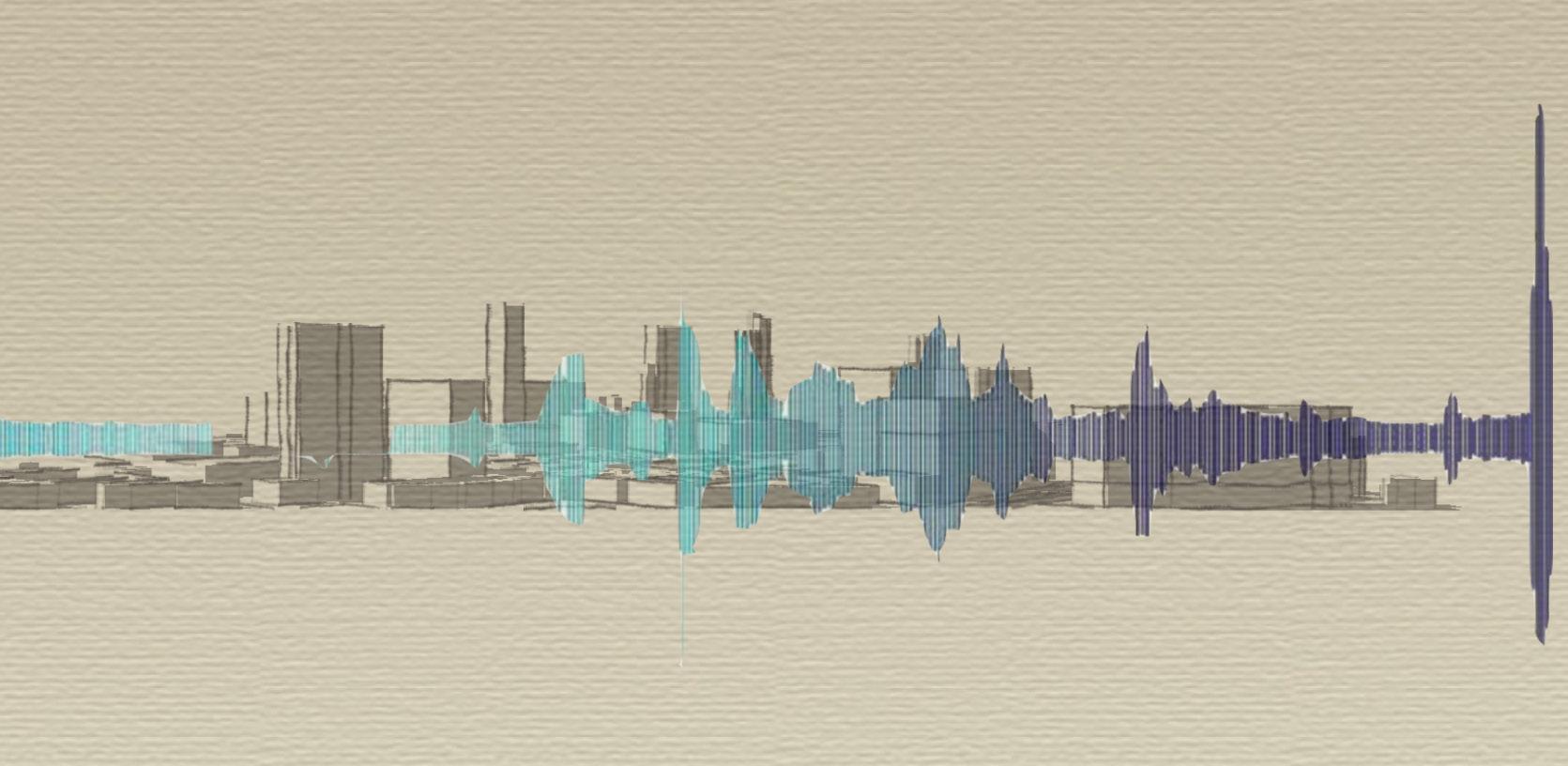
Above is a study of the skyline of the site. I have recorded the sound of myself smash ing a mirror and placed it over the top to represent the fragmented city.
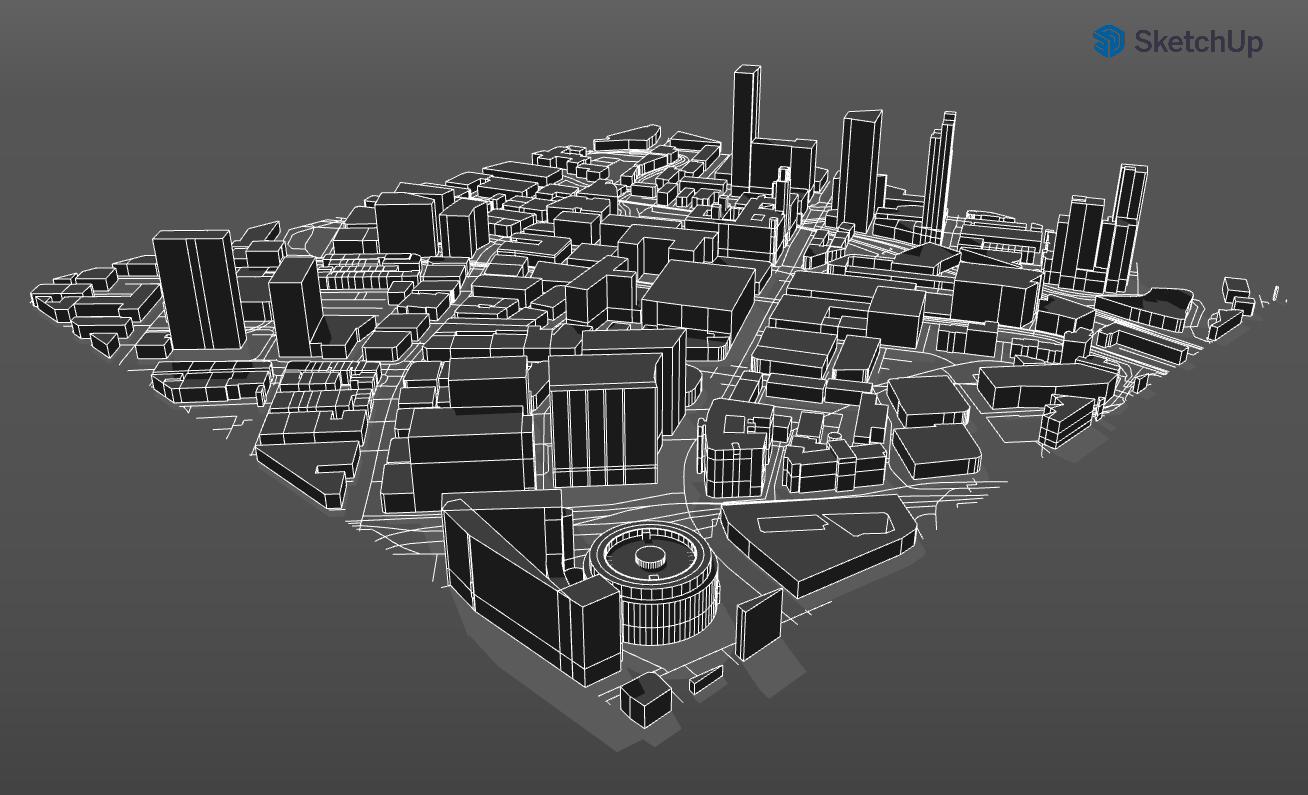
Proposed site: St Peter’s Square.
The significance of this site is the regeneration project currently being undertaken on Manchester town Hall- this is the perfect spot to begin my own project.
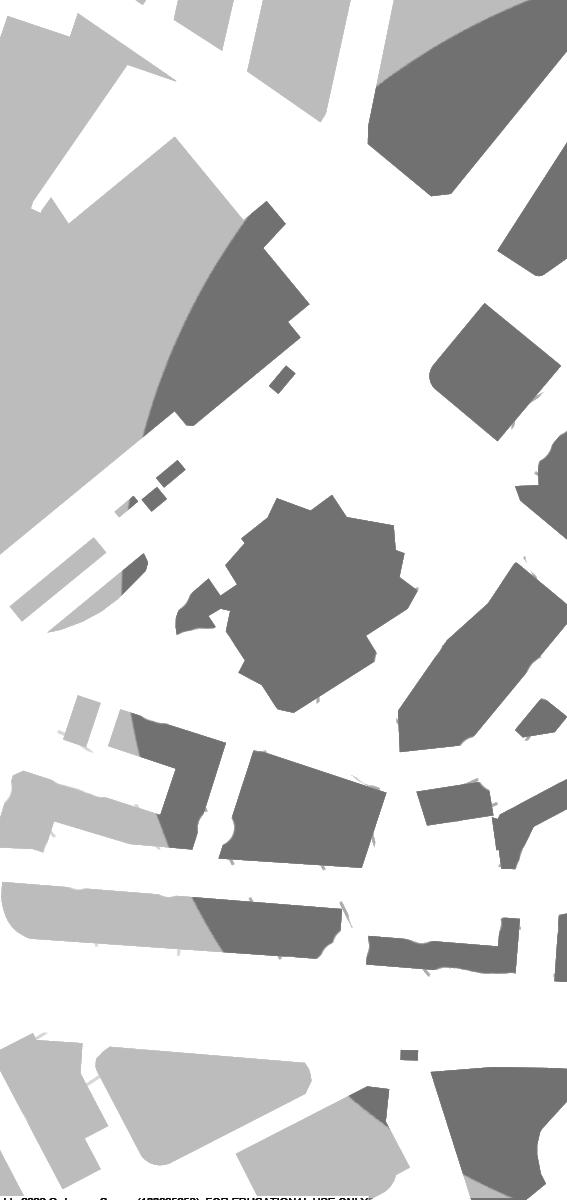
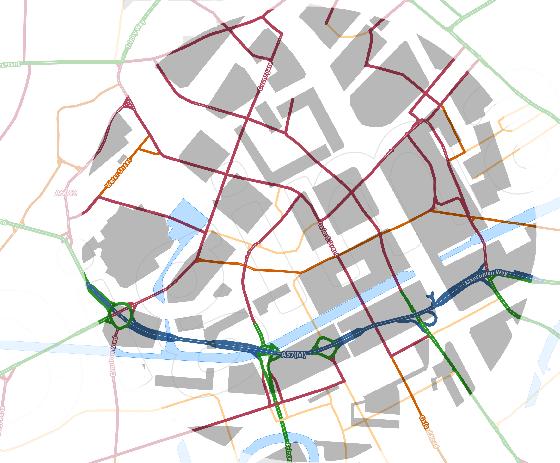
The Image to the right shows the main transport routes throughout the site, which could be utilised later on in the pro ject when looking at a proposed re-generation project. This is because they will be crucial in re-connecting and re-stitching the city back together. The traf fic is also mapped here, blue being the busiest roads and yellow the quietest.
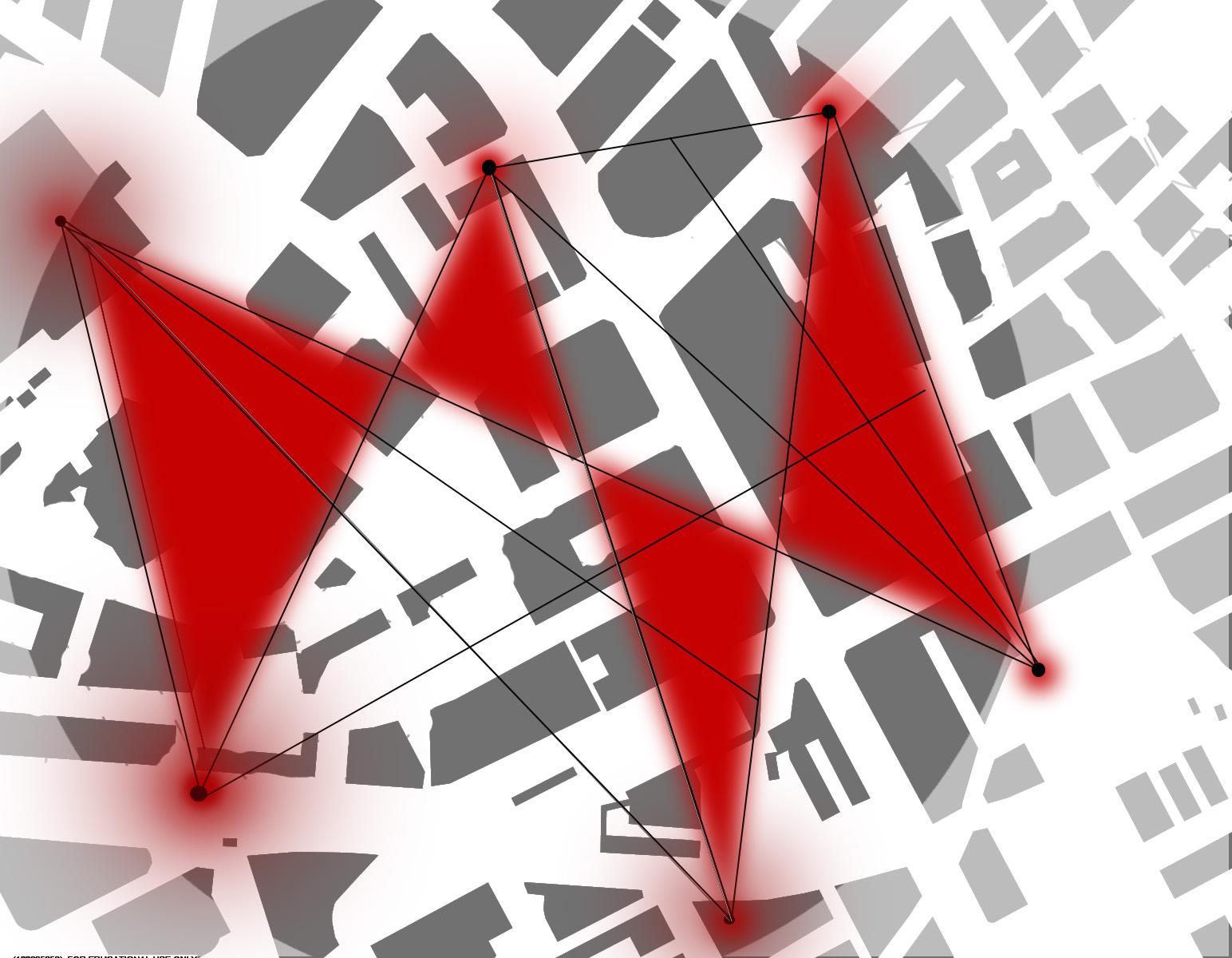
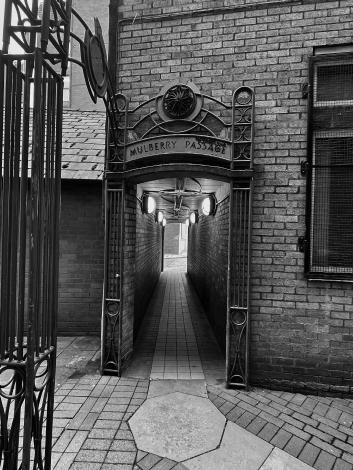
When looking at the site of Manchester city crossing, one of the key aspects and issues of the city that was encountered was the areas of deprivation and interest. These were iden tified by walking around the city and looking for ‘forgotten voids’ or dis-regarded urban settlements that perhaps could benefit from reuse and regeneration. This links with the ear lier concept of utilising the fragmented pieces throughout the city by connecting them back together, instead of dis posing of them and creating brand new settlements. One of the main areas of interest was the Mulberry Passage (as shown below). Although this tunnel-like passageway was indeed still structurally sound and in good function, the area in which it is situated was somewhat run-down and took away from it’s beauty. It is areas like this that I intend to piece back together and re-work back into the city.
Artefact 5 is an exploration of the motif of connections and re-stitching of the city. It is inspired by the site map, it’s roads, canals and linking the areas of deprivation across the site. It is also a nod to the earlier idea of how forms can be split up into many different shapes and size, whilst still keeping their original structure (that being a circle in this case).
It was also interesting to experiment with the light and shadows that this form creates. The sharp, linear geometric shapes created by the string juxtapose the round and smooth shell imposed by the metal ring.
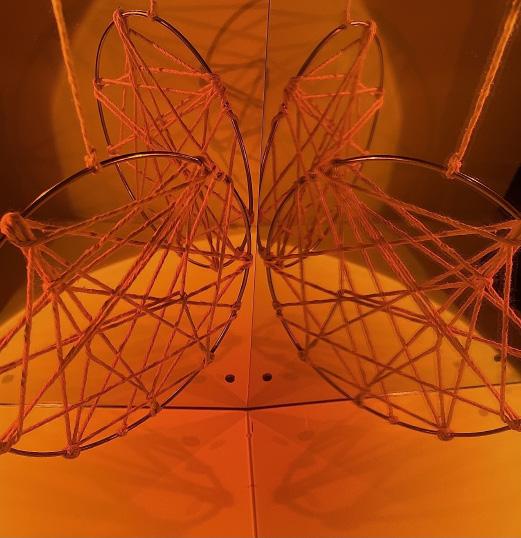
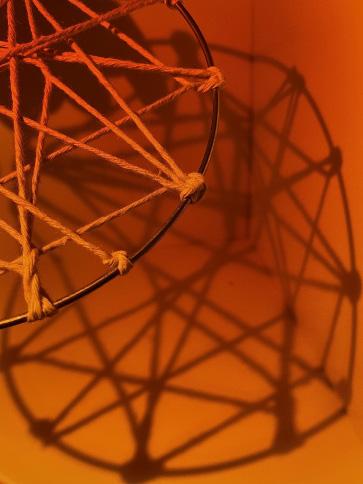
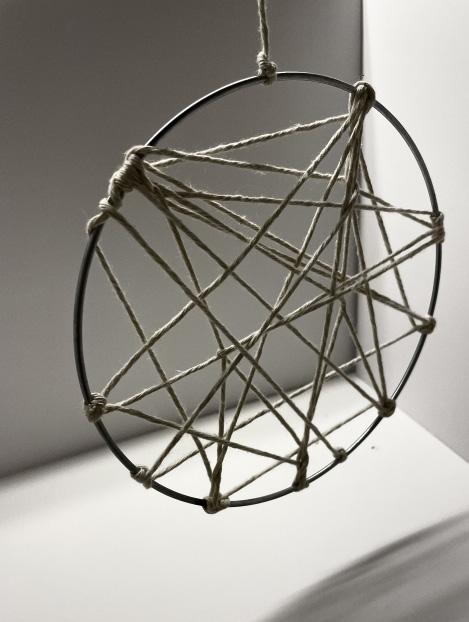
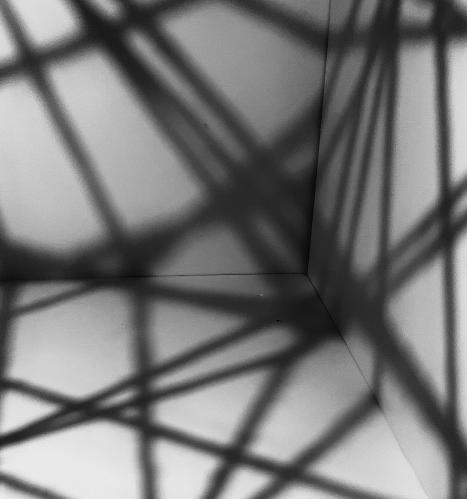
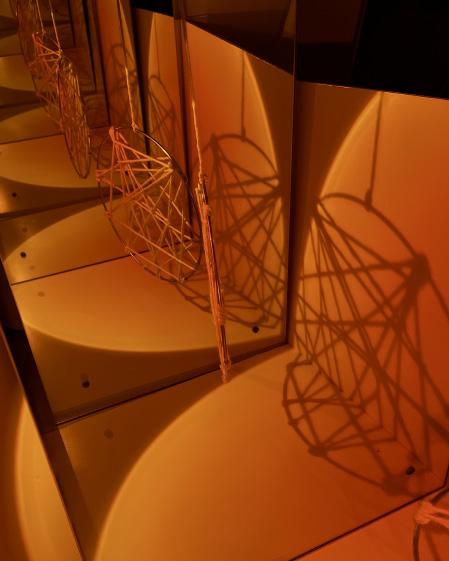
The artefact is photographed in a case of mirrors. This creates a kaleidoscopic set of views that will later influence my design, altering perception and the senses.
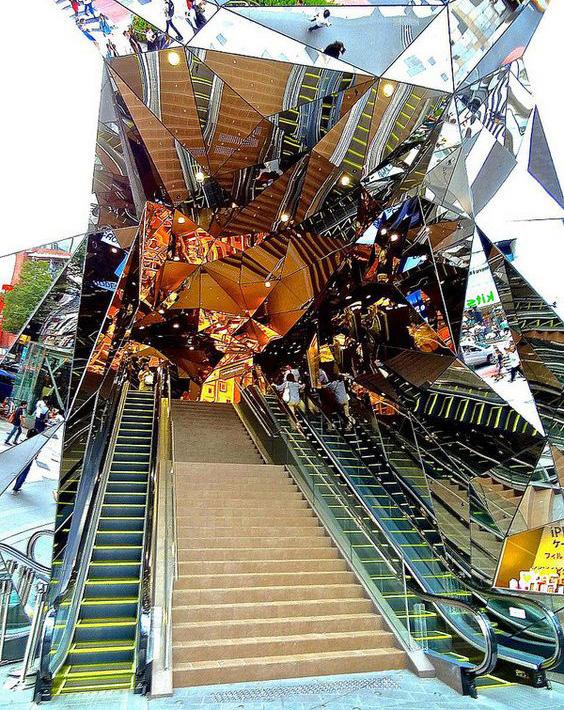
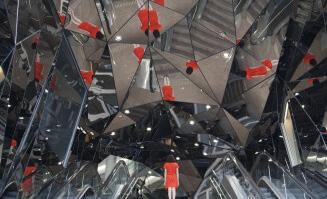
Omotesando, an avenue lined with the flagship stores of international fashion brands, is one of Japan’s foremost fashion streets. Memory of the site’s past has been maintained in the entrance tube leading visitors to upper floors. The tube is a great mirrored space, its mirrors recalling the mirror wall cladding of the Central Apartments, which once occupied the site. To see fashionably costumed people reflected repetitively in the mirrors, like colorful objects in a kaleidoscope, is dazzling in effect. A special sense of excitement evocative of the fash ion world is produced, and the ride on the escalator becomes a rich experience. Attracted by the mirrored reflections of people passing through the intersection, one peers into the tube. On riding up the escalator, a great atrium appears with tree-filtered light spilling down from a skylight in the ceiling. Thus begins a shopping experience true in character to Omotesando.
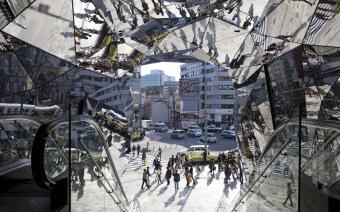
The external wall cladding is a composition of polygons that gives the wall a different appearance depending on how light strikes it. Aluminium polygonal panels were attached, using rotatable met al fittings designed to absorb seismic movement. The pressed-aluminum panels protrude in shape, with the peak of the protrusion off-Centre. During its attachment, each panel was rotated 120 de grees to produce a composition of off-centre polygons having three different orientations.
Scenery reflected in the entrance tube, which opens on the intersection, changes with the sea son and time of day, and the tube presents a new appearance with each visit. To enable fine an gle adjustment of the triangular mirror panels during their attachment, round pipes are employed as backing along the panel joints, and the panels attached to the pipes using hinges. Unavoidably, the mirror panels will appear to leap out at one, but this assembly method enabled us to free them from geometric rigidity and form a spatial device that softly encloses people passing within.
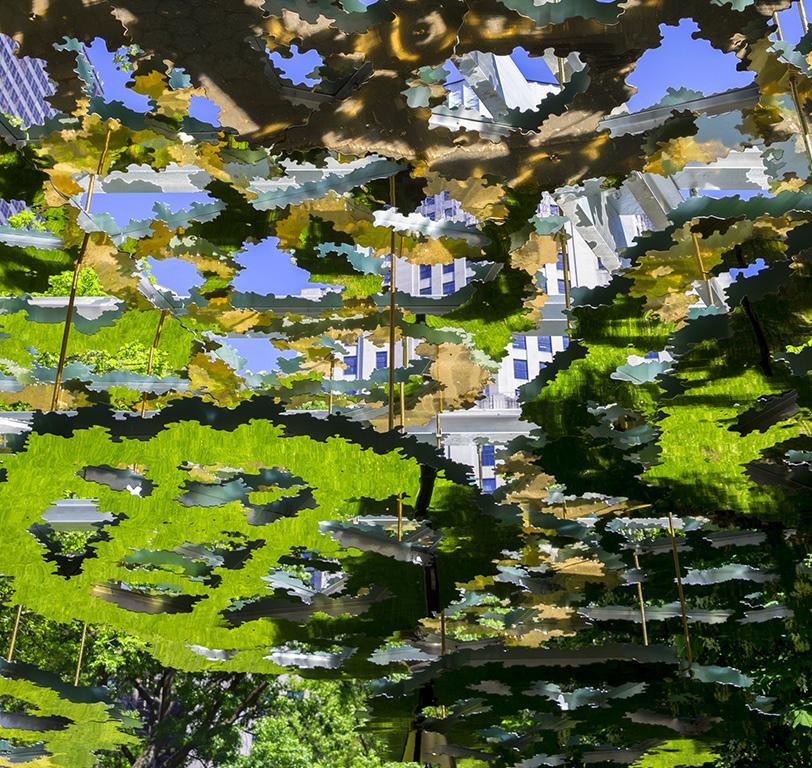
‘My concept was to invert the traditional notion of outdoor sculpture by addressing all of the active walkways of the park rather than setting down a sculp tural element in the park’s centre’, fernández describes. ‘By hovering over the park in a horizontal band, fata morgana becomes a ghost-like, sculptural, luminous mirage that both distorts the landscape and radiates golden light.’
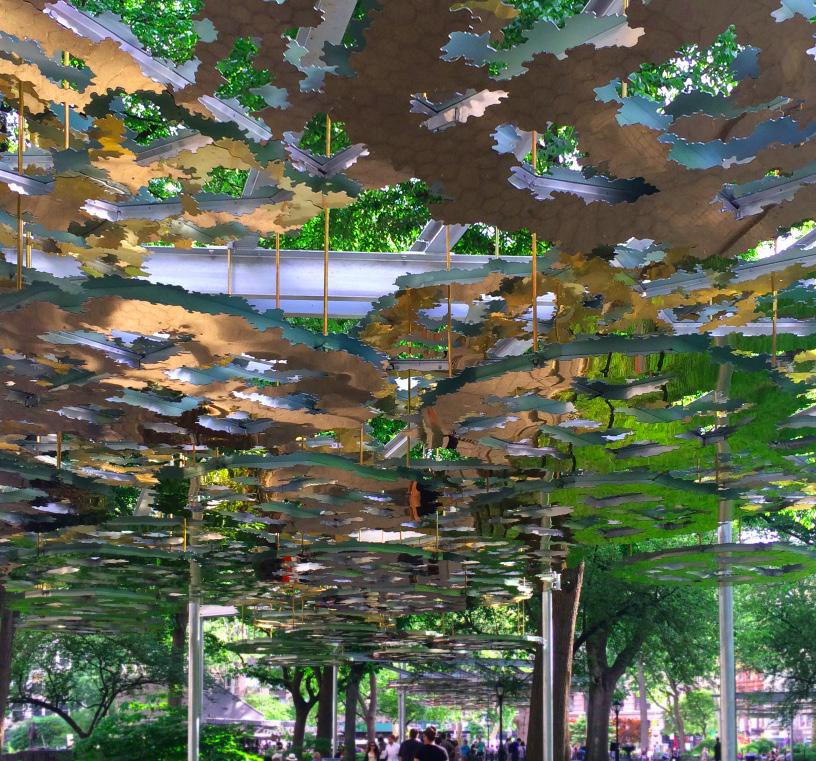
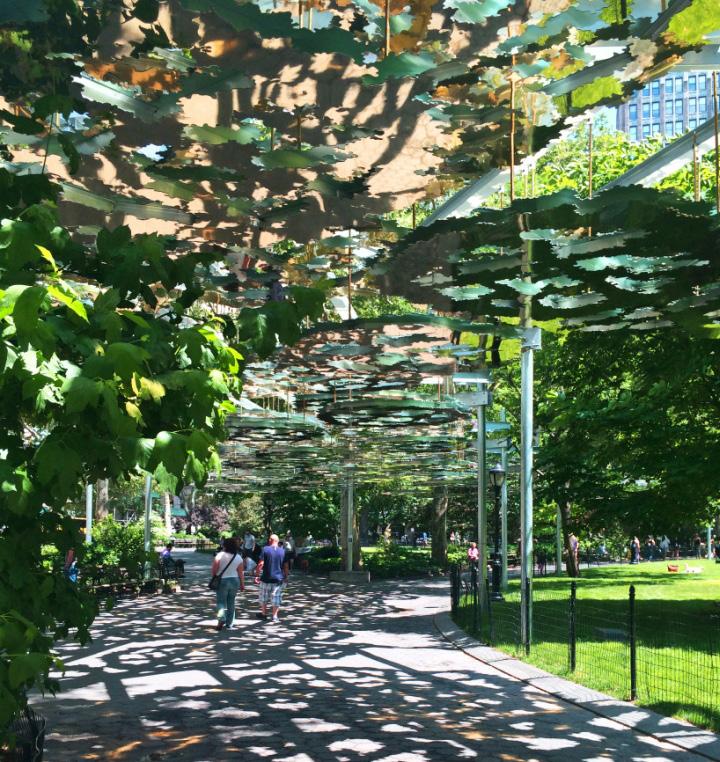
‘Fata morgana’ is an optical phenomenon that forms across the horizon line, distorting objects in the distance — boats, islands, and the coastline — such that they become completely unrecognizable to the human eye. The 500-foot-long sculpture comprising mirror-polished discs that create kaleidoscopic canopies above the park’s central pathways and recreational areas. Alluding to this rare occurrence, fernández’s sculpture introduces a visual, shimmering element to the park that engages visitors in a dynamic experience and warps the landscape surrounding them.
“The city involves not just relations of people with one an other, and withenvironment in some generic sense of spa tiality or natural resources. Peoplelive in a world of object; the city can be thought of as a forest of artifacts.”
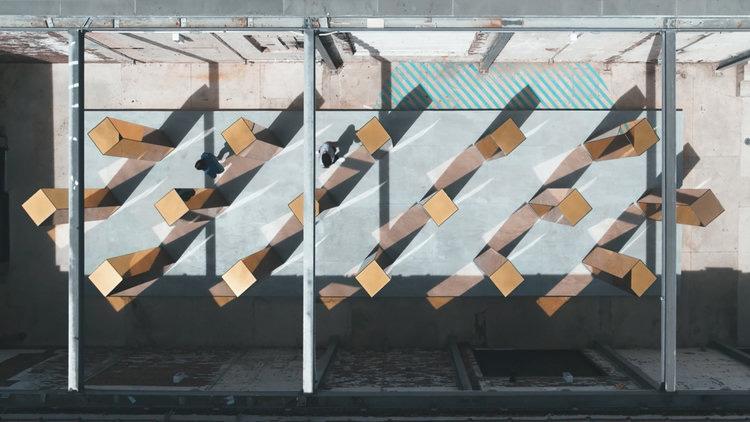
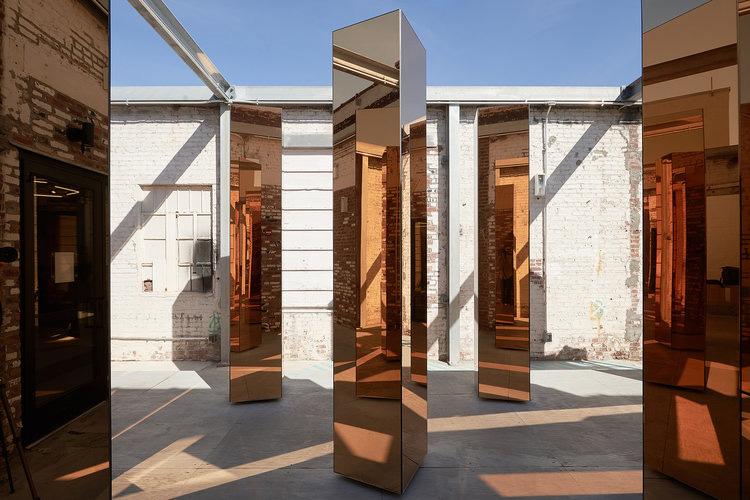
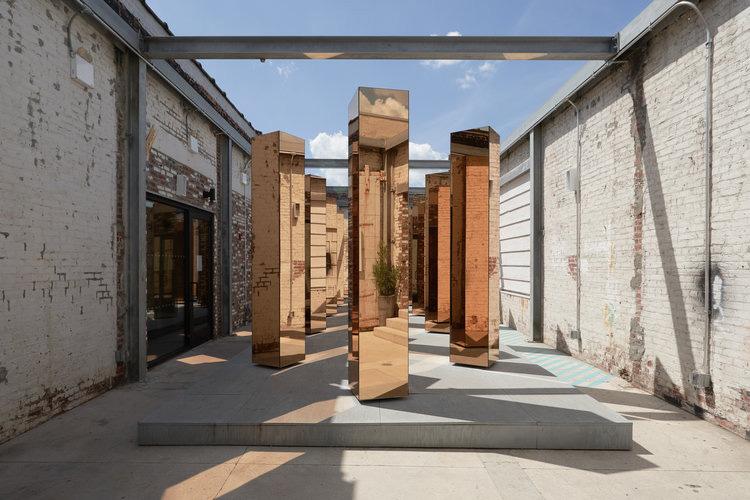
Harvey Molotch, Objects and the cityThe Spirit of the City, developed in New York by A/D/O Architects, is a manifestation of the exploration between the ‘individual’ and the ‘mass’. It contrasts organic nature with the static built environment of an urban context, just as seen in Manchester City Centre. The concept of the installation is to navigate in a city where there is constant movement, yet juxtaposing this flowing and ever-evolving behaviour with imposing, rectilinear urban typology. This creates a playful and pleasurable, yet disorientating and overwhelming series of events within New York. The mirrored columns are configured as a linear grid within the city, equally spaced and of precise widths and heights. The columns rotate over a 24 hour cycle, mimicking that of an average New-yorker’s lifestyle. This creates a dynamic composition of movement, reflections, light & shadows that express moods fluctuating between dormant and hectic- ordered and chaotic.
The formation of the installation is reminiscent of columns throughout the urban landscape, ordering the fabric and holding it together. This is an interesting motif to consider when devel oping my design proposal as it is a tangible way of representing the concept of piecing back together the urban fragments and ensuring they are securely fixed throughout the landscape.
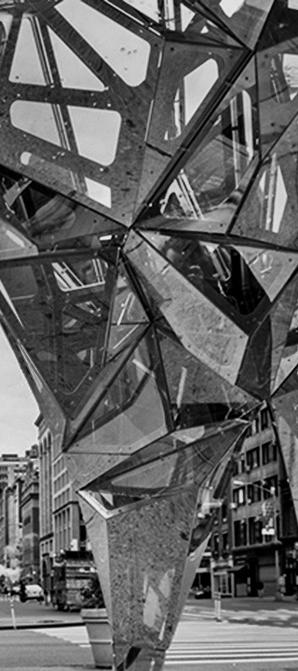
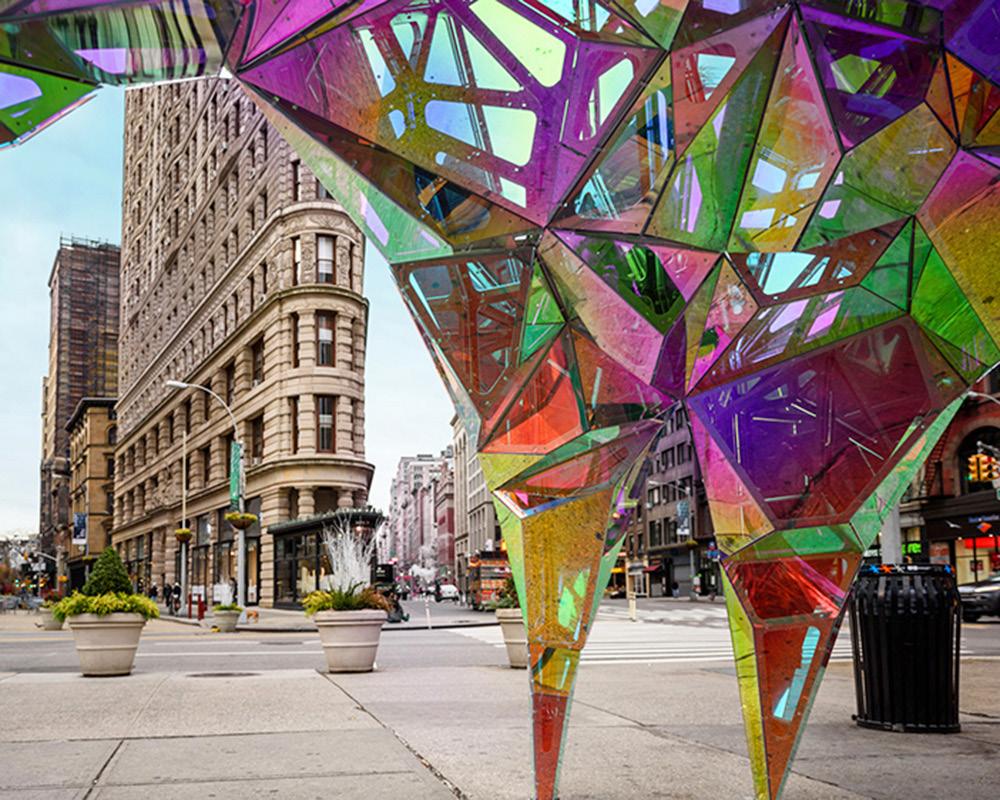
The NOVA Pavilion, also located in New York, was designed by SOFTLAB Architects and resembles a foreign object that has almost landed gracefully upon its urban surroundings. This aluminium pavilion reflects and reveals kaleidoscopic views of the surrounding cityscape, offering glimpses of the ever-shifting landscape of neighbouring towers and bustling pedestrian traffic through a series of scopes. It is described as a vibrantly coloured gazebo which allows the public to gaze at the atmosphere outside by peering through a set of angular apertures, each framing the environment in geometric and abstract perspec tives. The scopes, each pointing at different directions, form different shapes at street level, but resemble a seven-pointed star from above.
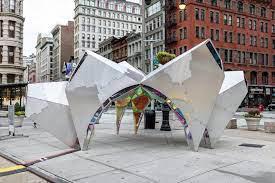
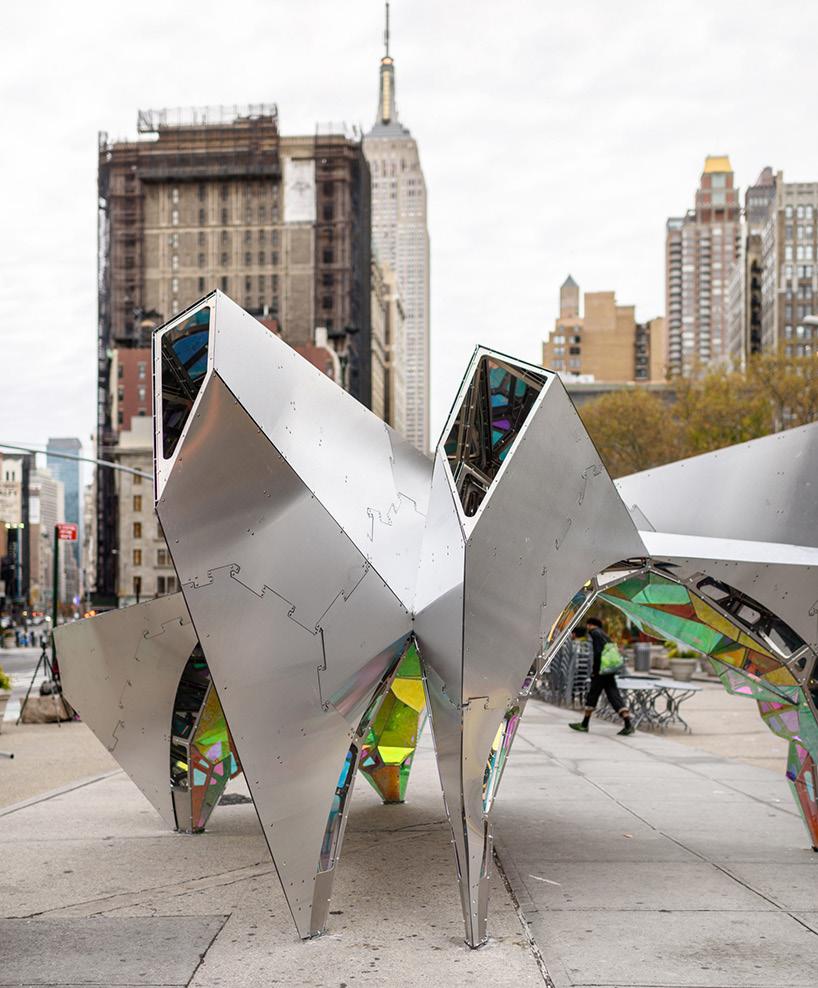
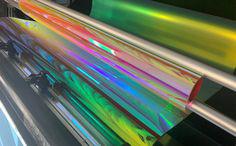
The interior of the structure is Acrylic laminated with 3m Dichroic film (colour shifting film), which changes saturation and reflectivity depending on the angle of the scope. The exterior of the structure is a lightweight aluminium shell and gains its strength from the shell-like form. The 2D panels attach together to form 3D model, joined to create a structurally stable dome in the middle (each scope is an arch). The pavillion remixes urban context in unusual and un expected ways, for example at night it reflects moving vehicles, passing pedestrians and the glow from adjacent buildings with an ever-changing dynamic.
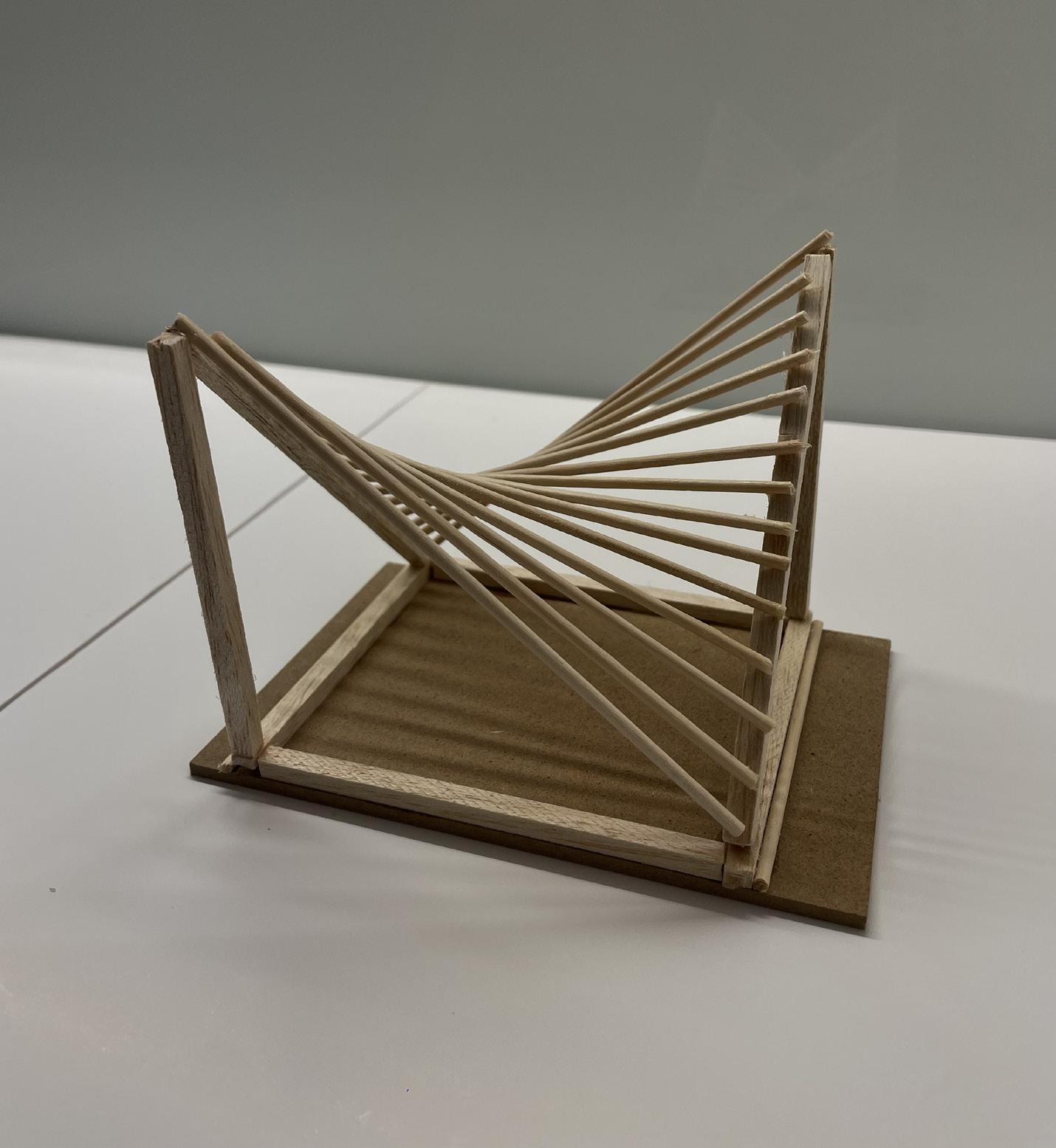
When beginning the design process, it was important to understand the different urban possibilities that architecture can afford, considering the user as forms in an ecology of objects, perceptions, agencies, materials and constructions. In order to shift the way we use and operate the city, forms must be explored that perhaps are not the ‘typical’ city building, including bridges, tunnels, pavilions, follys and other city elements that work together to mend the fragmented city.
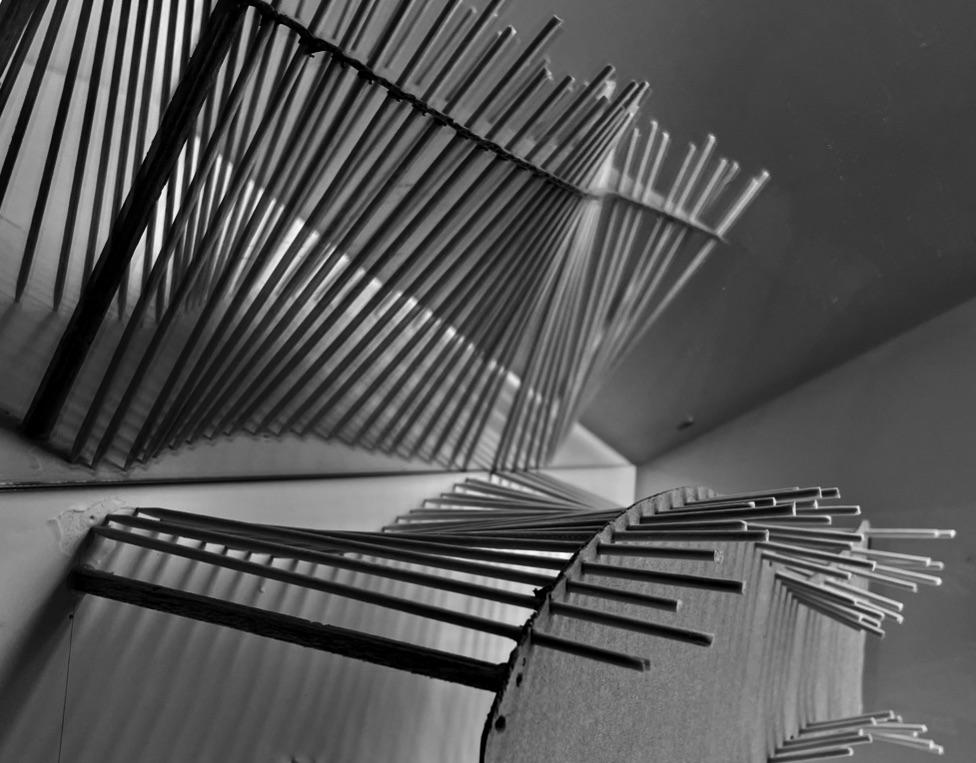
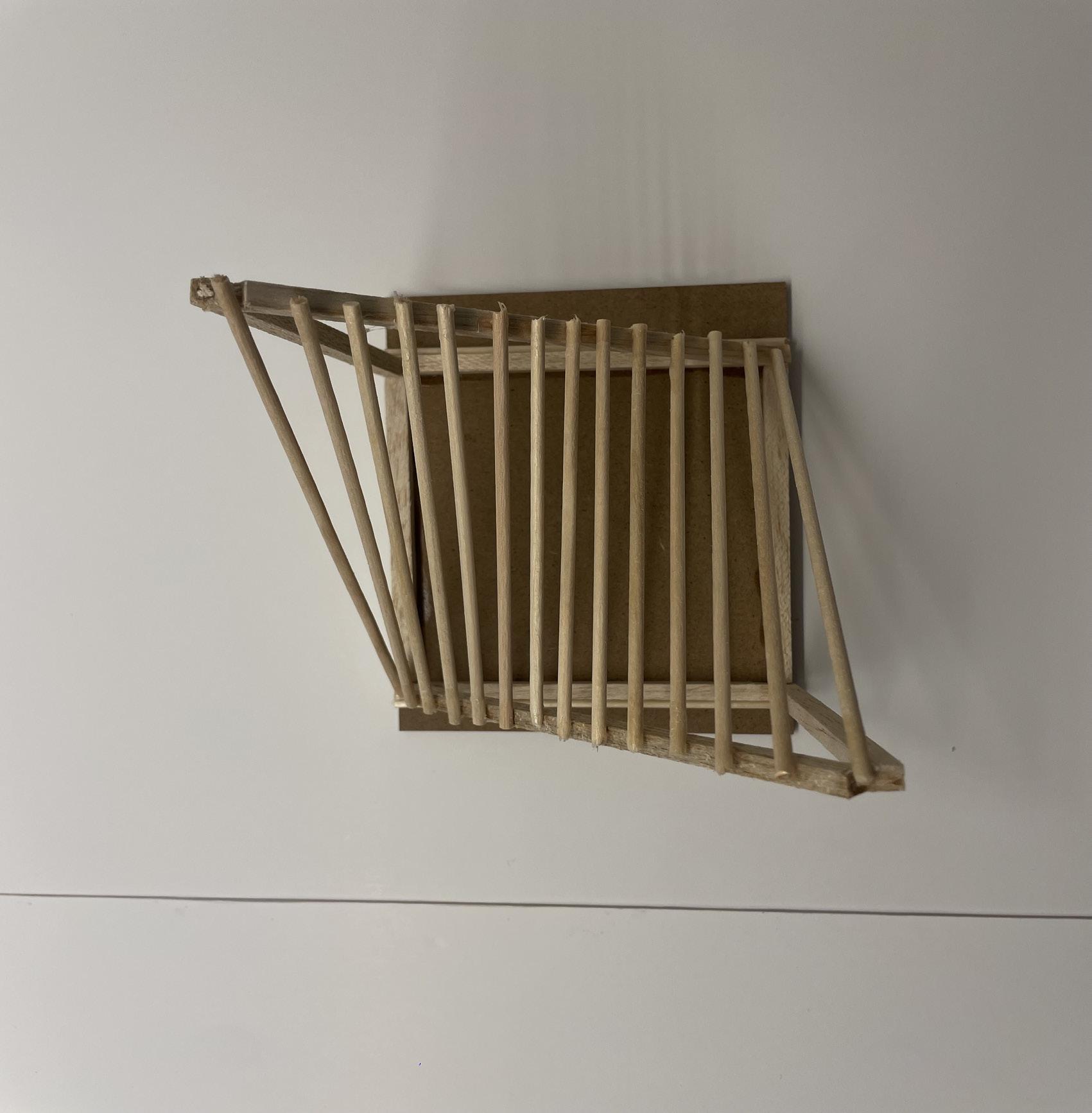
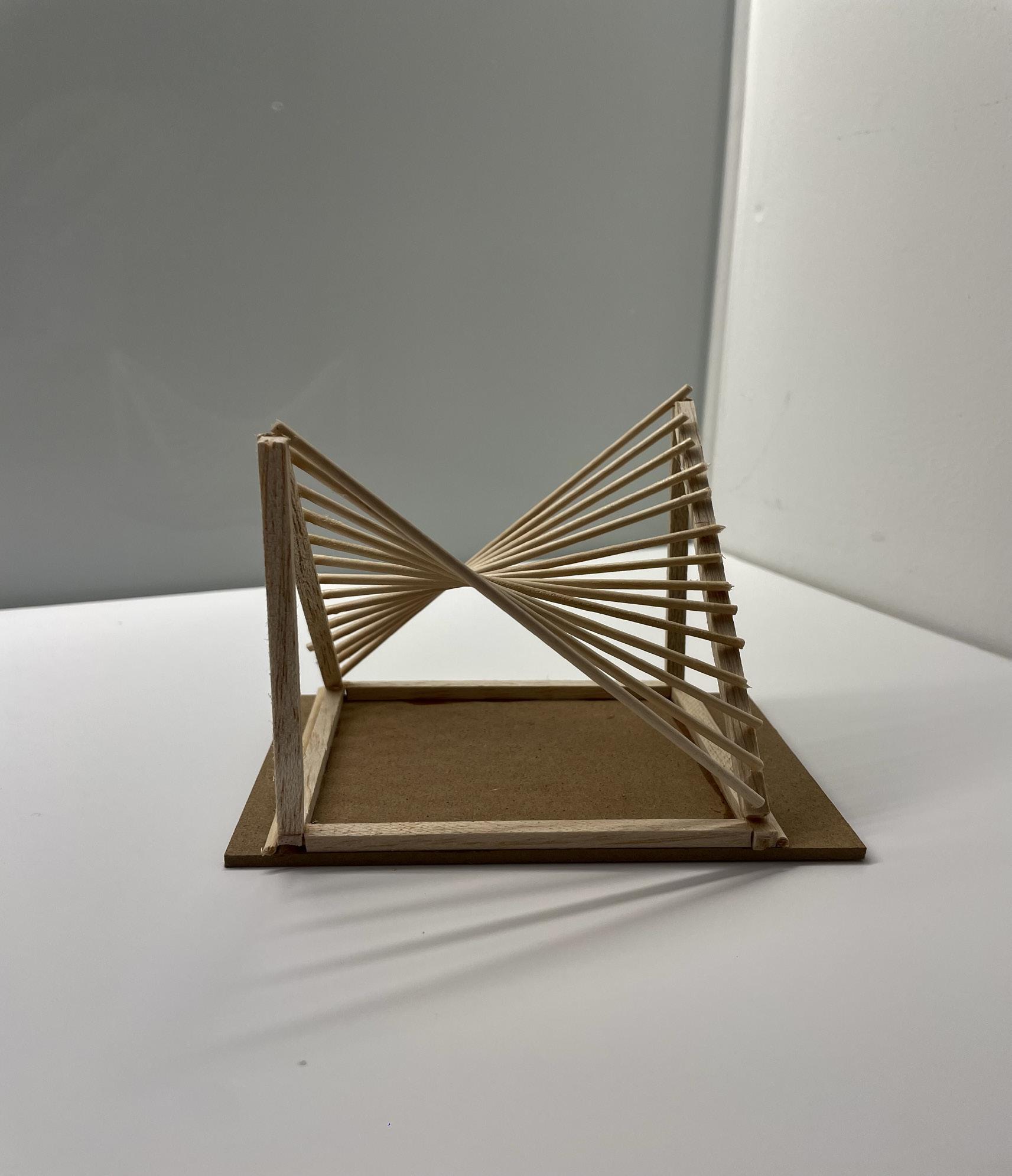
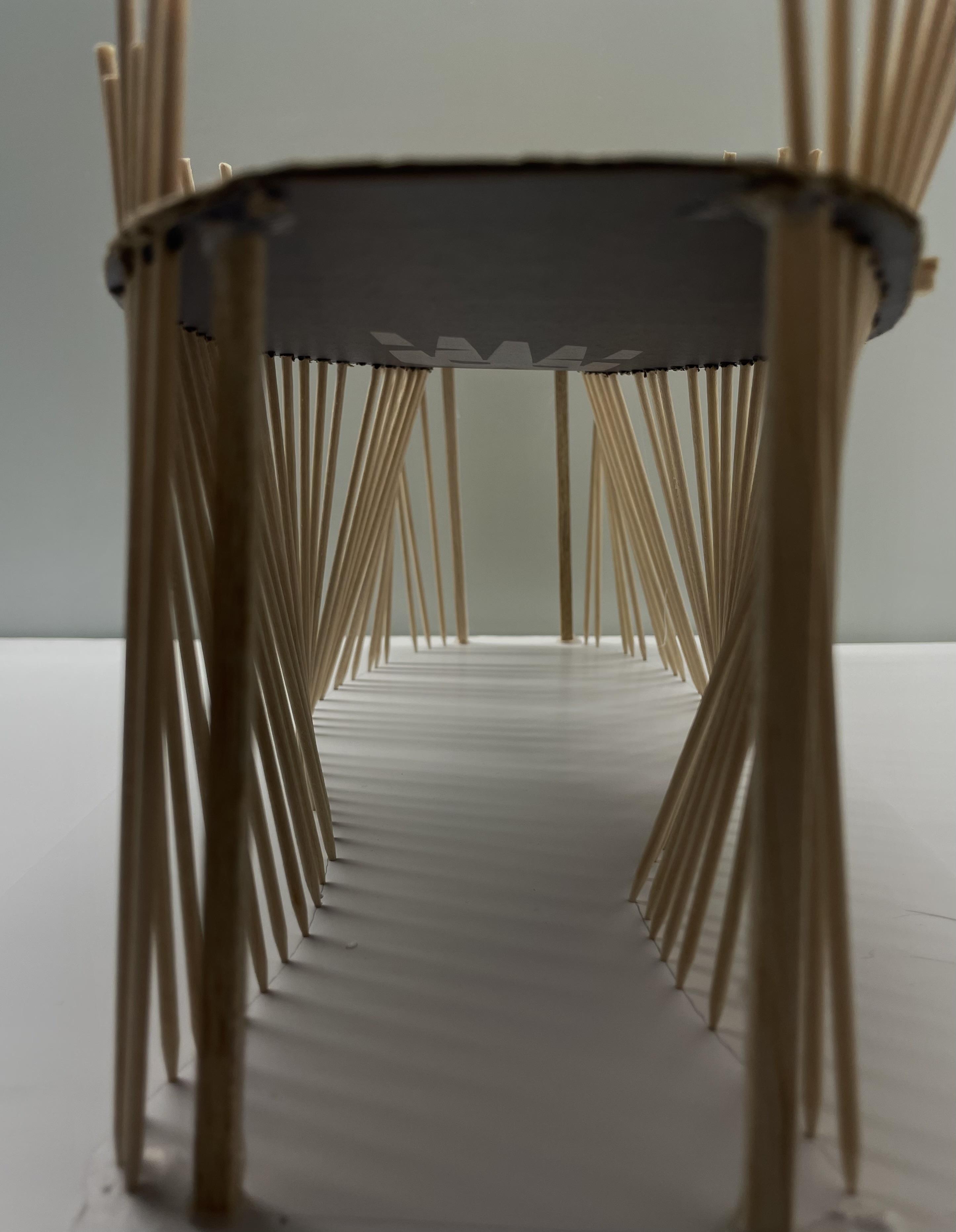
Iteration 1 explores how straight lines can be placed do it appears that they are curved- of course they are not, it is just a bend in perception depending on which angle you look at it. the lines will also reflect shadows onto the floor nicely, suggesting barriers between space without using physical boundaries imposed on the city, perfect for a small pavillion or tunnel-like structure.
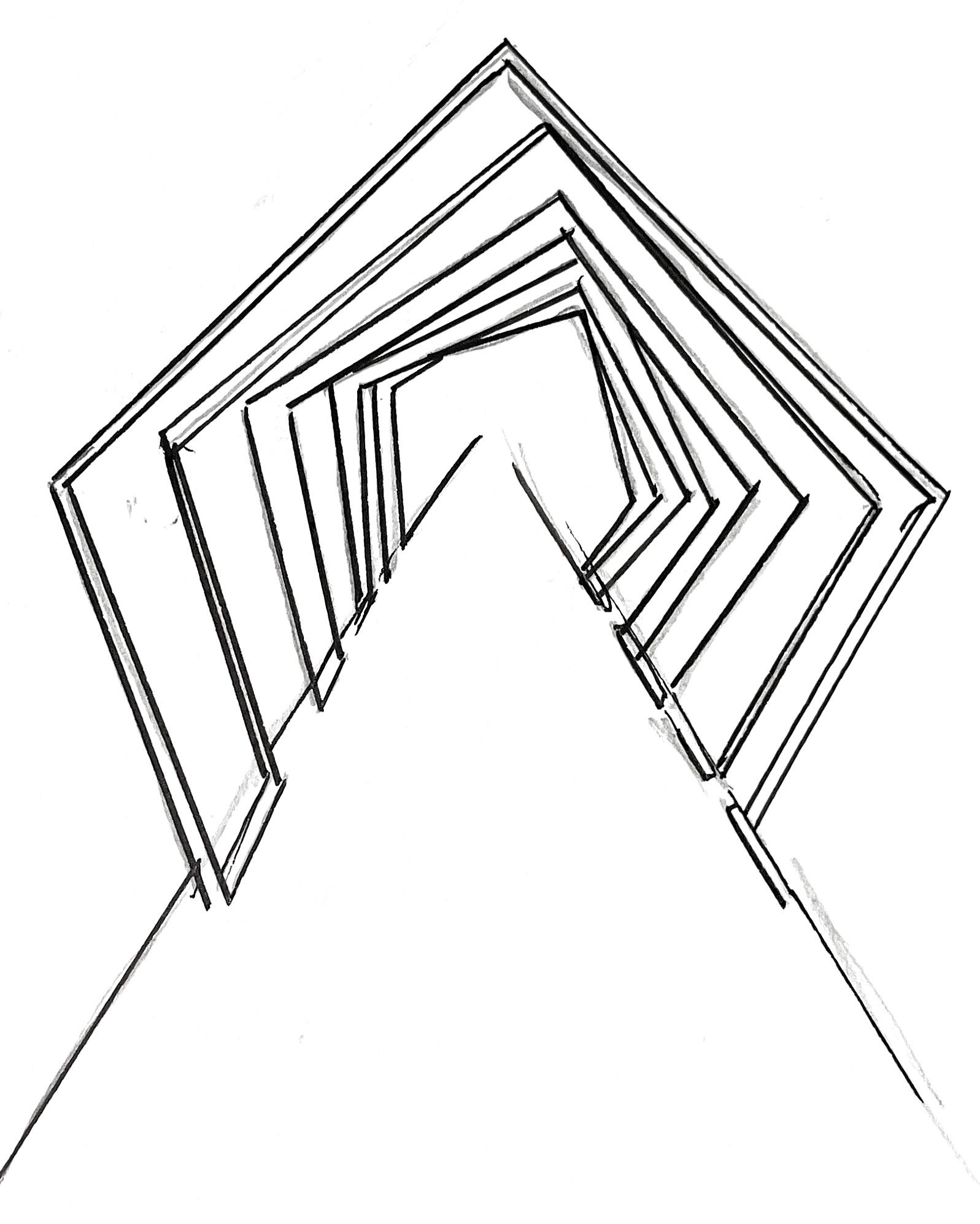
As the process developed, I began to explore the significance of tun nels within the urban fabric. They were originally built to house the pipes that brought fresh water to cities, provided a access rout for mining ores, became a key element in modes of transport and passageways throughout the city. Tunnels are also beneficial for the sus tainable re-development of the urban environment as they redirect traffic and congestion form a city centre, reduc ing air pollution in residential areas and decreases landscape damage due to major roads passing through open spaces.
Perhaps the likes of tunnel design could not only improve the city in a lit eral sense, but also a symbolic notion. It could be the ‘tunnel vision’ that the urban landscape needs in order to fo cus on piecing back together the frag mented city and connecting elements back to their origins.
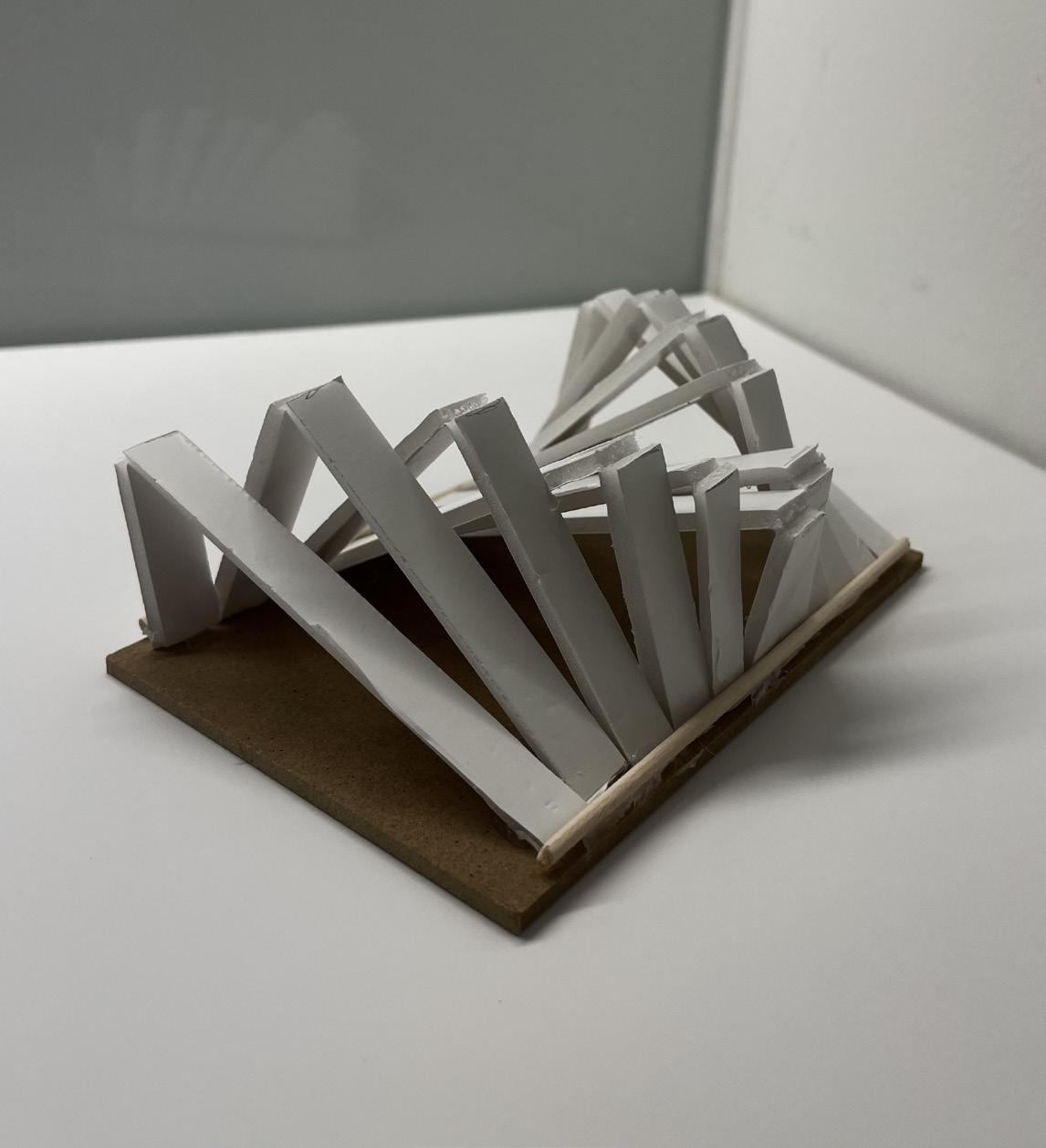
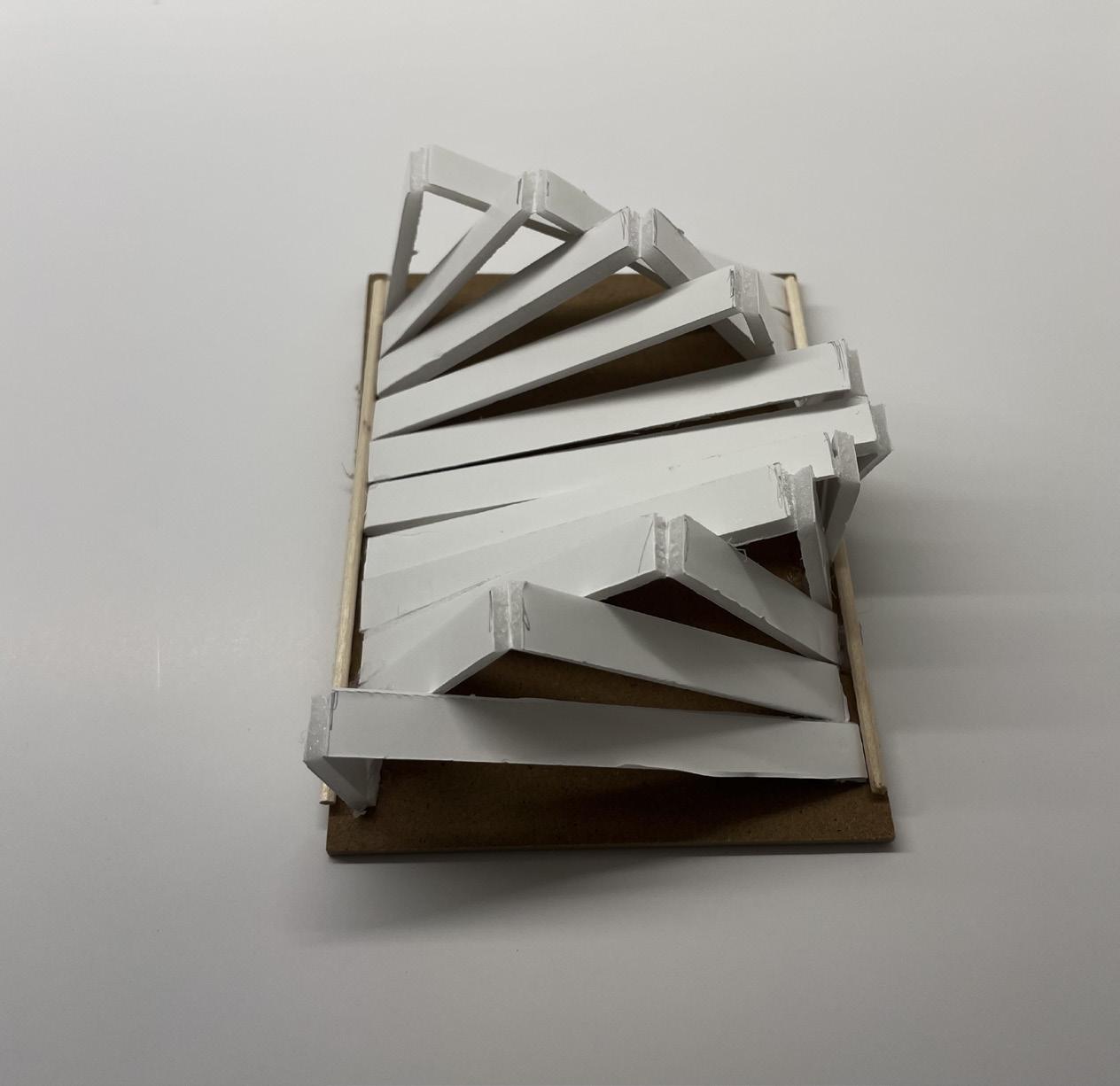



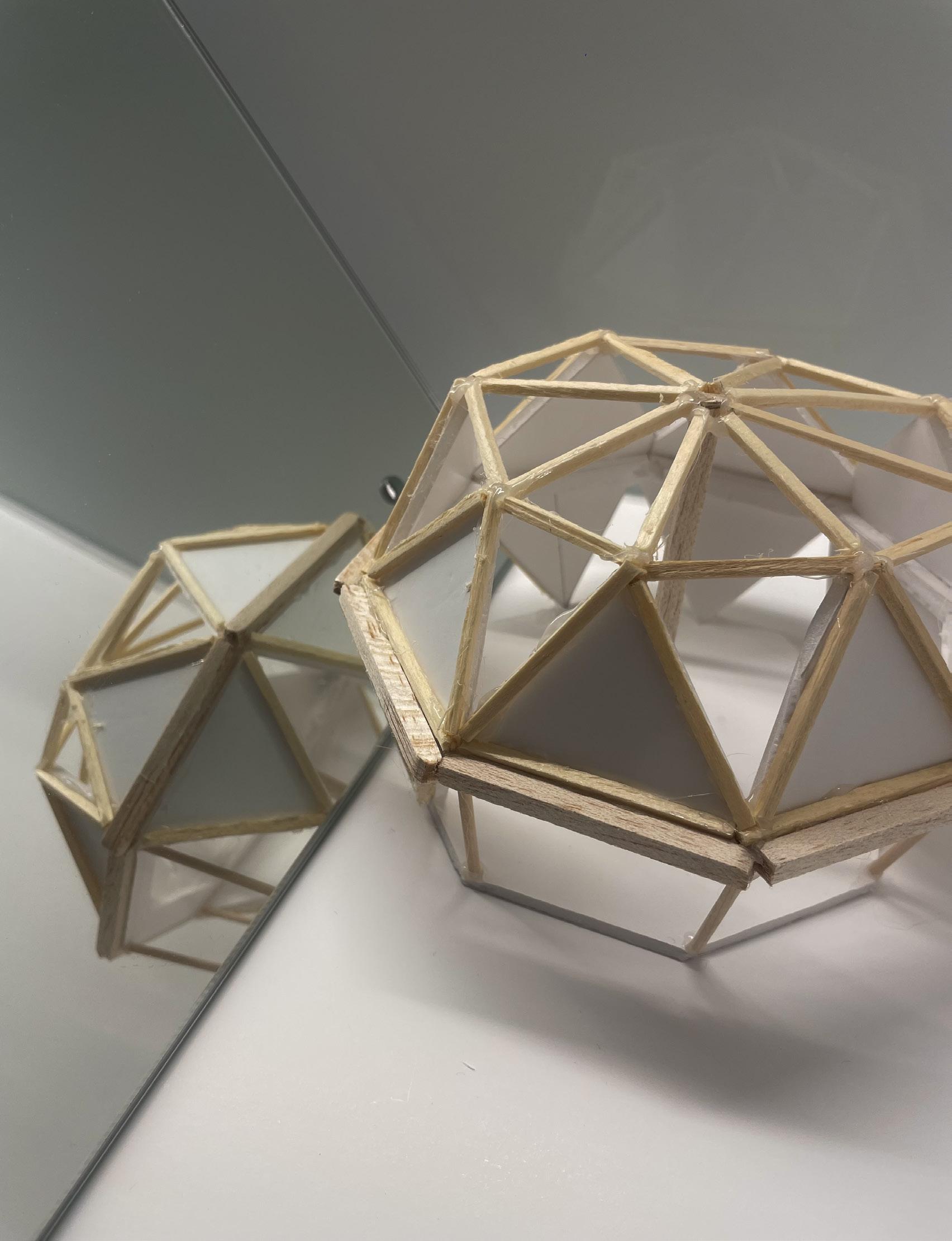
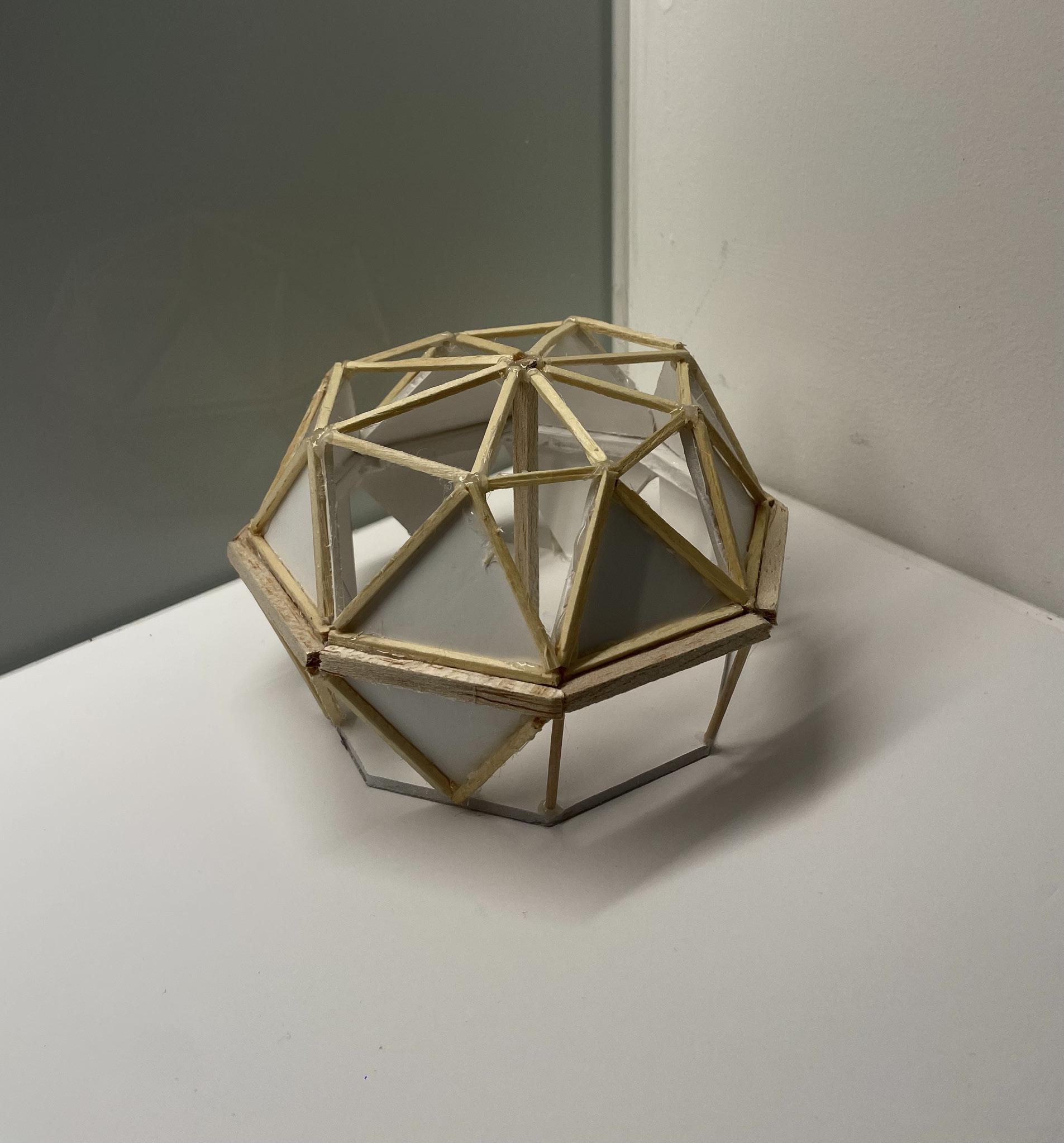
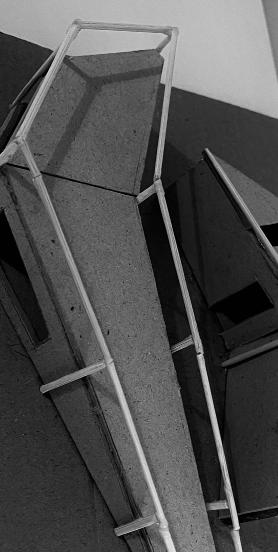
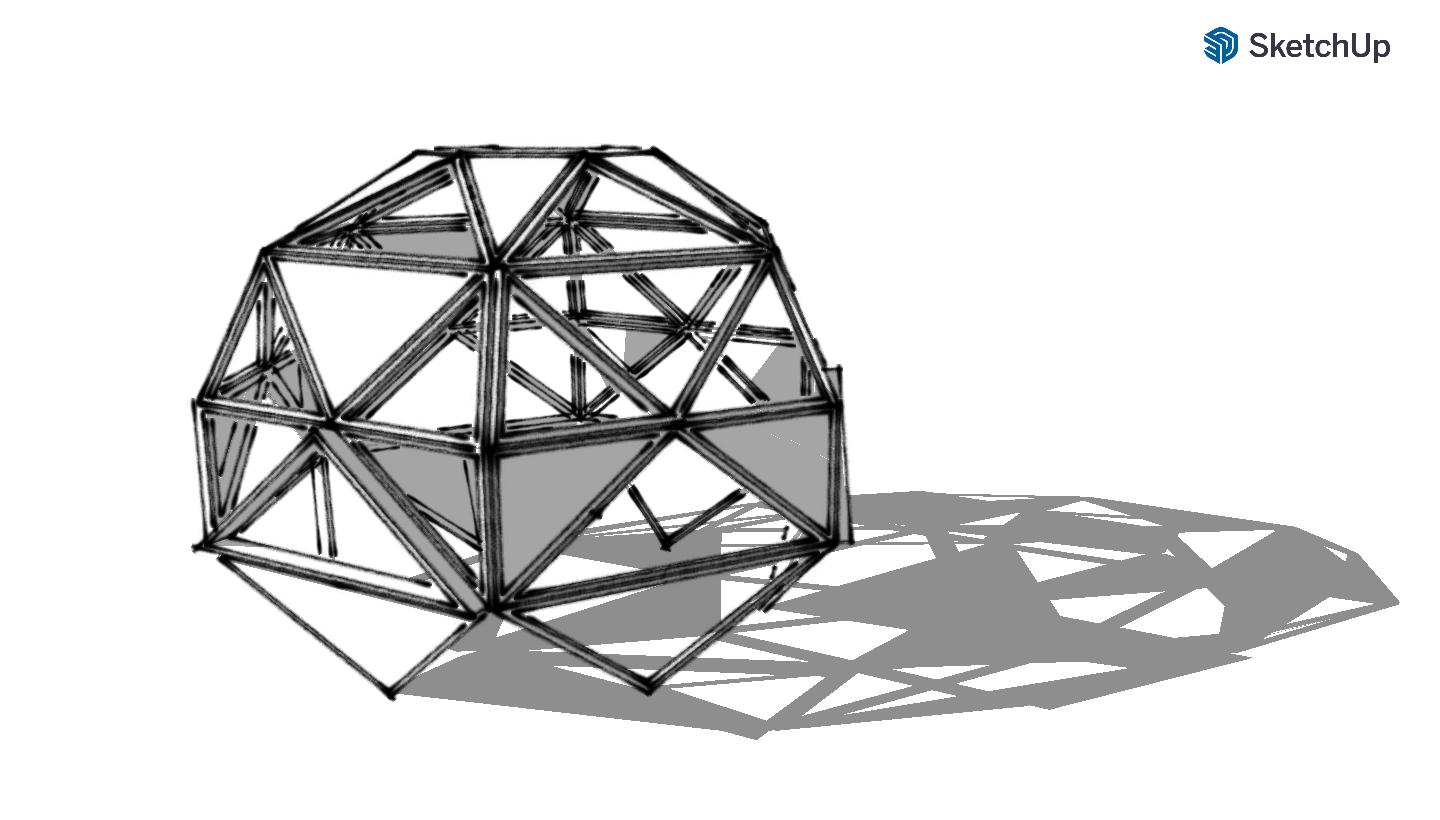
Iteration 3 moves away from the form of the tunnel and explores a more pavilion like structure inspired by SOFTLAB’s kaleidoscopic NOVA pavilion. Different ways of piecing together a structural frame was un dertakes, similar to that of the earlier broken shards of glass. I have de veloped a shell like exterior of linear, geometric triangle that work together to produce something that appears more flowing and curved to the hu man eye- almost as if it could move throughout the city itself.
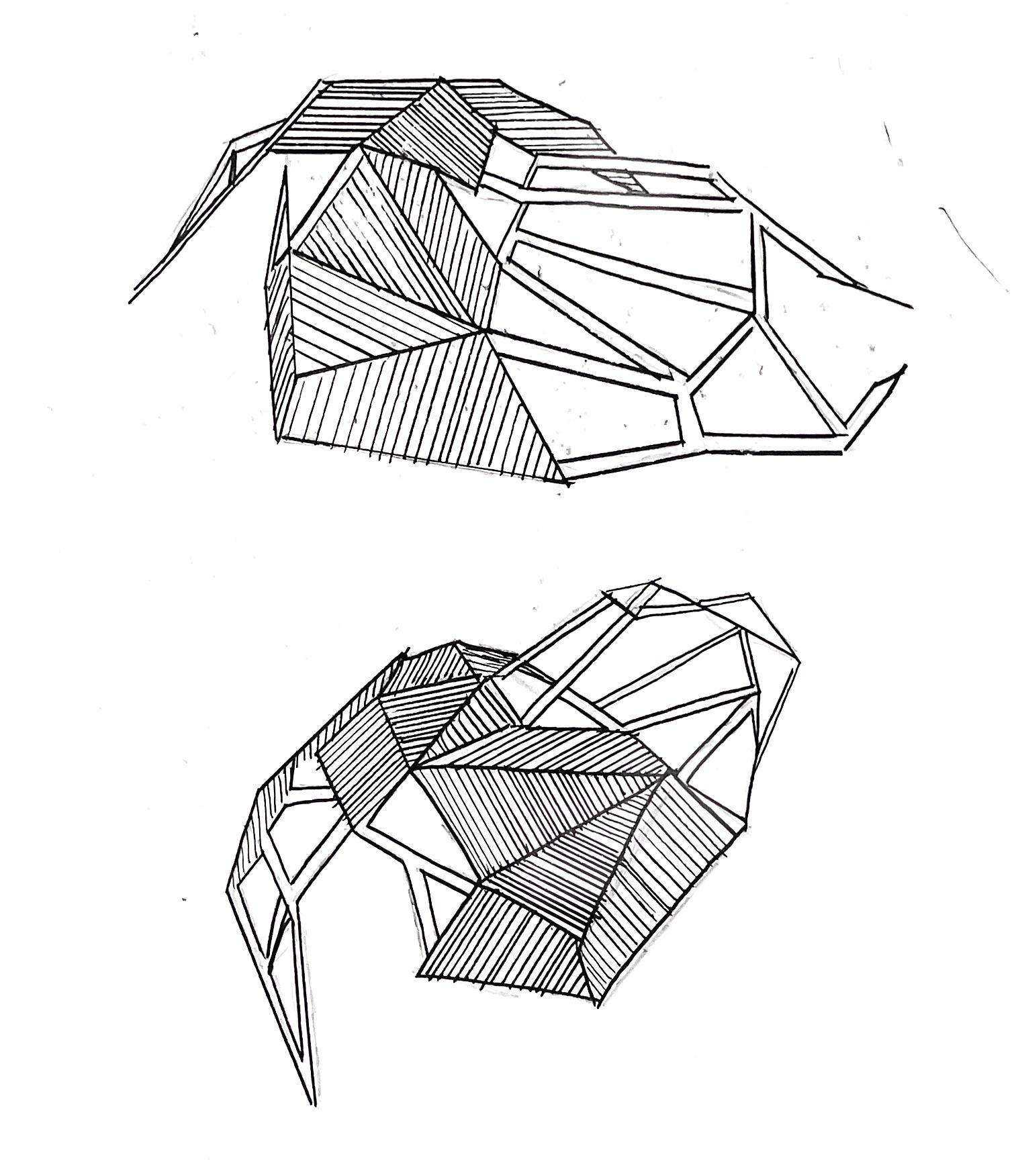
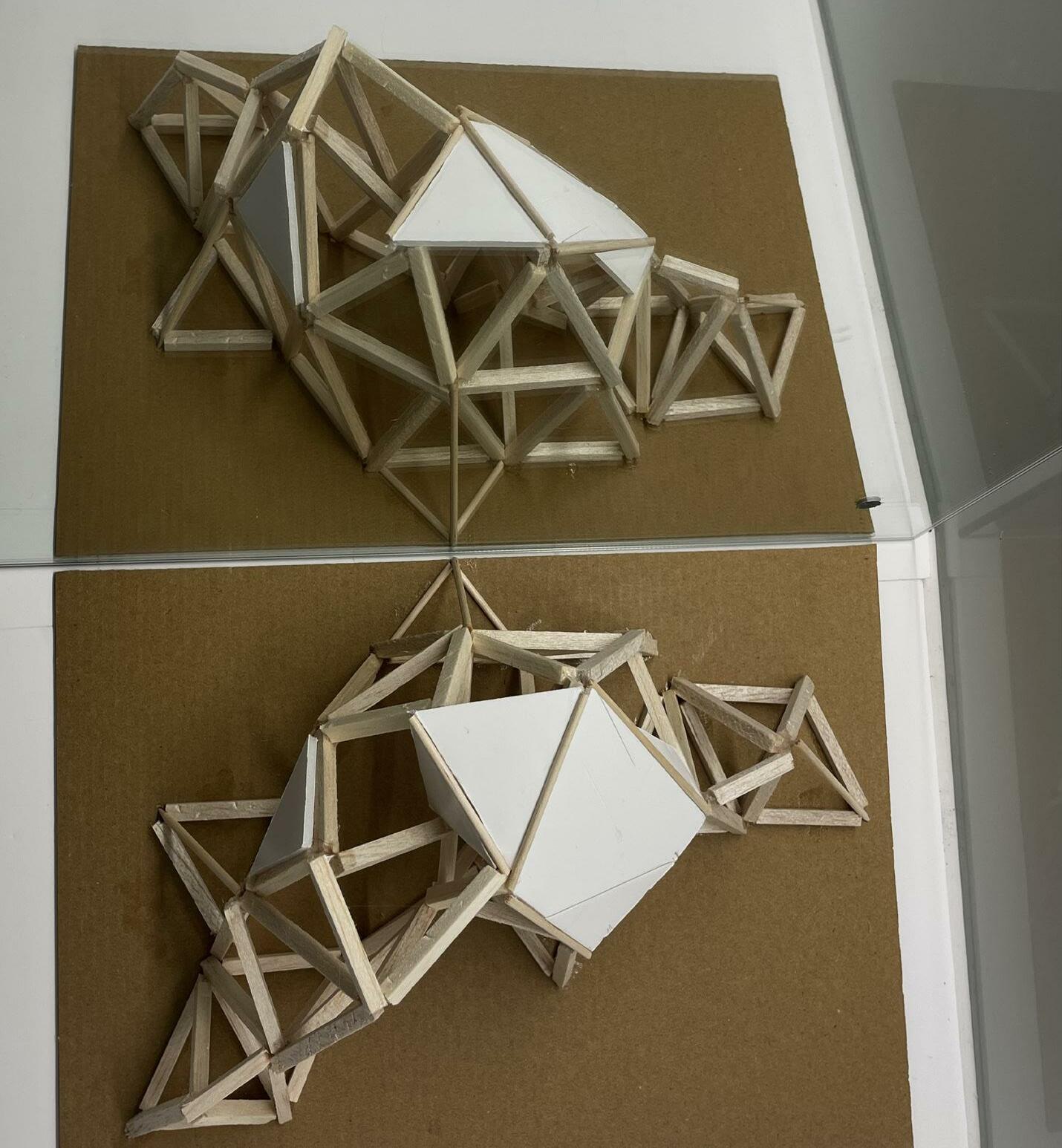
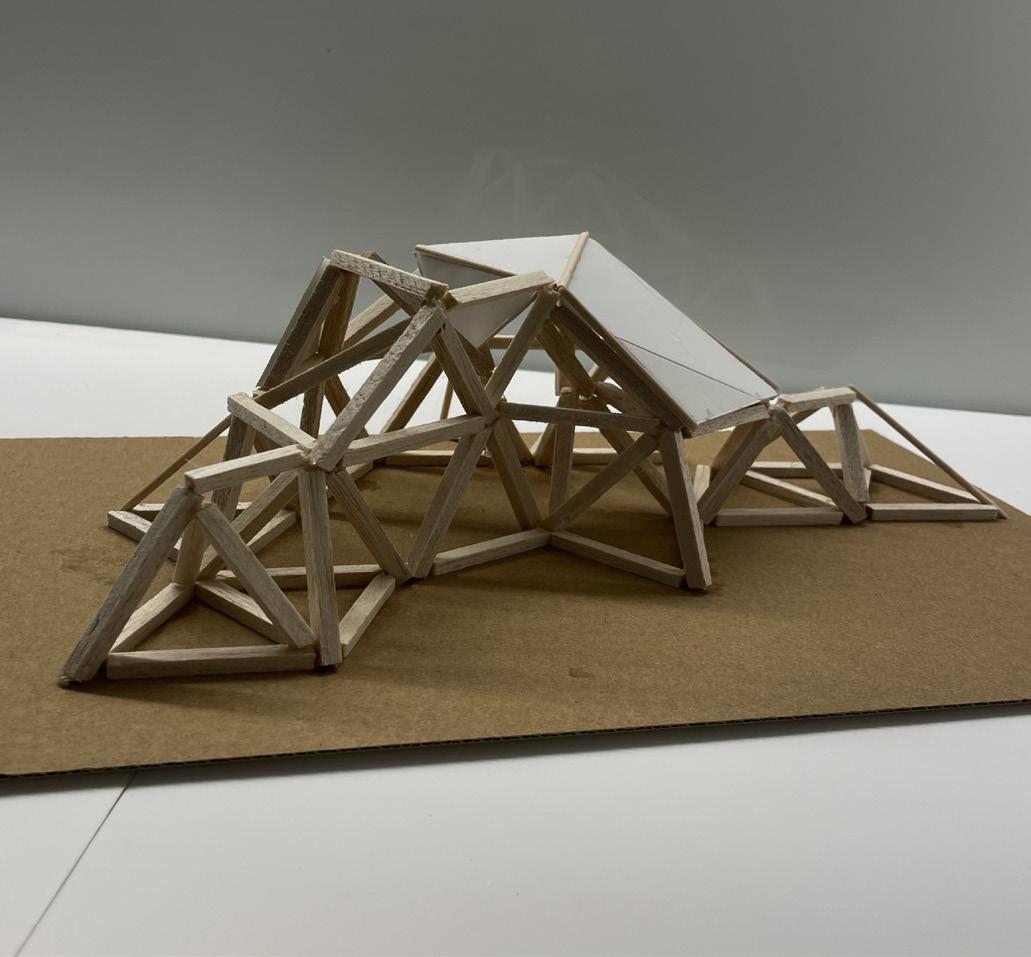
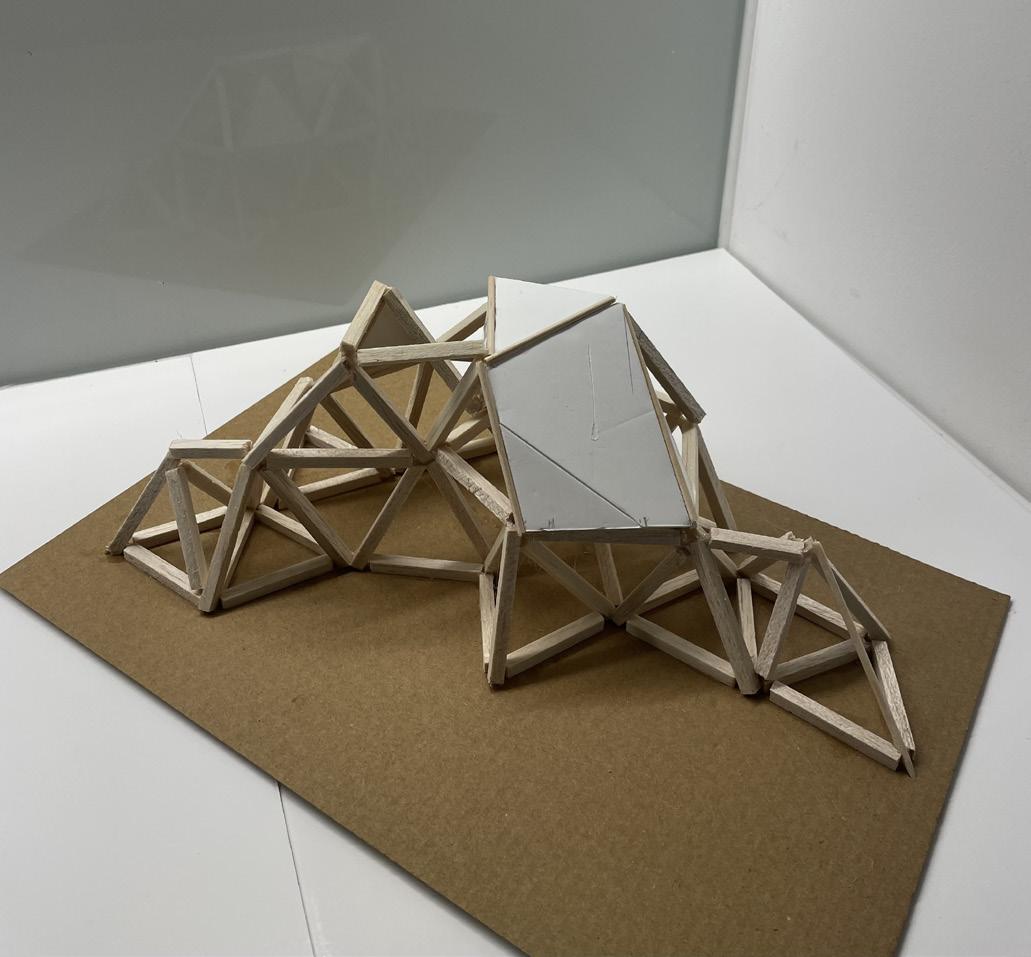
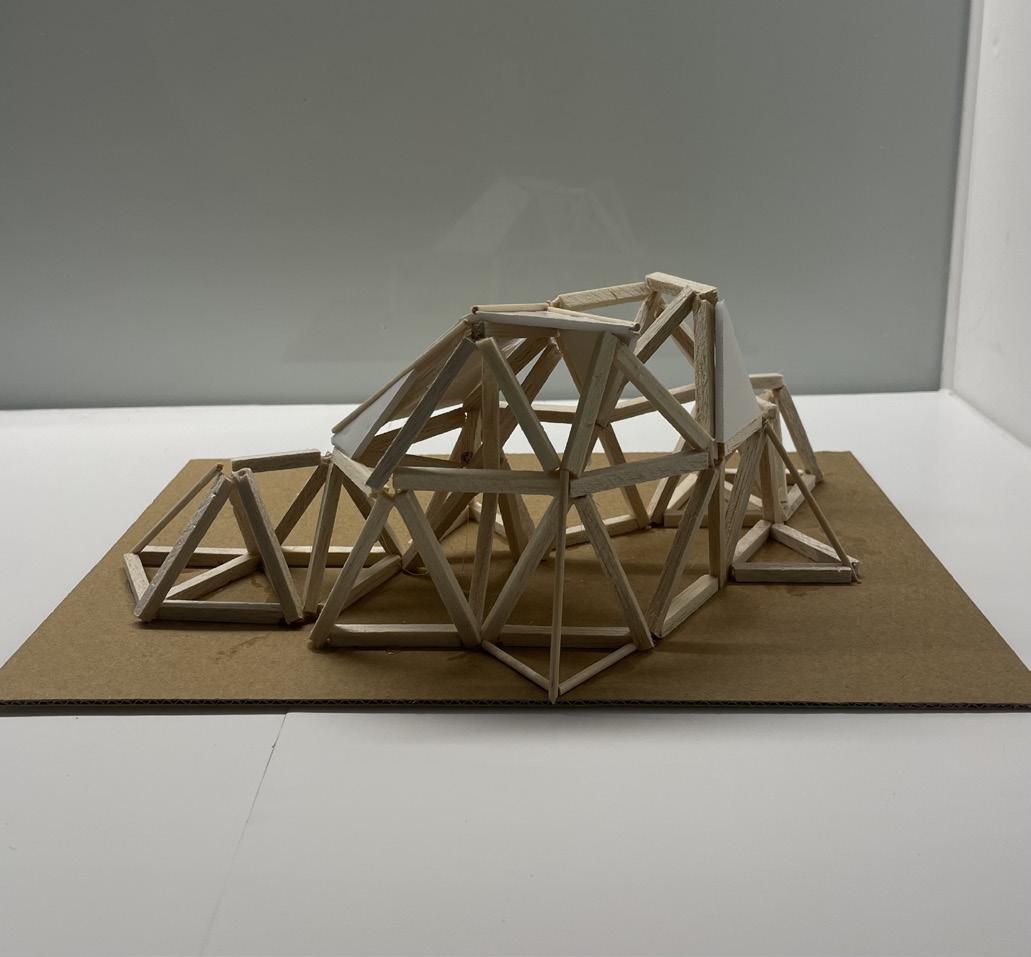
Iteration 3 has been photographed using a mirror to explore the ways in which it can be reflected off itself, distorted, warped and present new patterns across the page (as shown below).

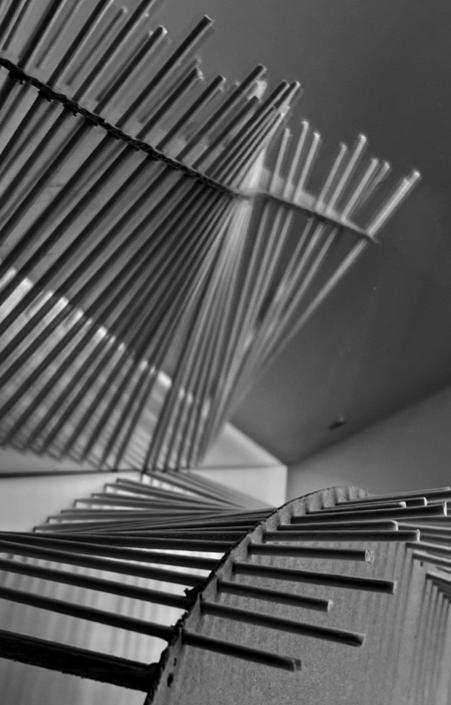
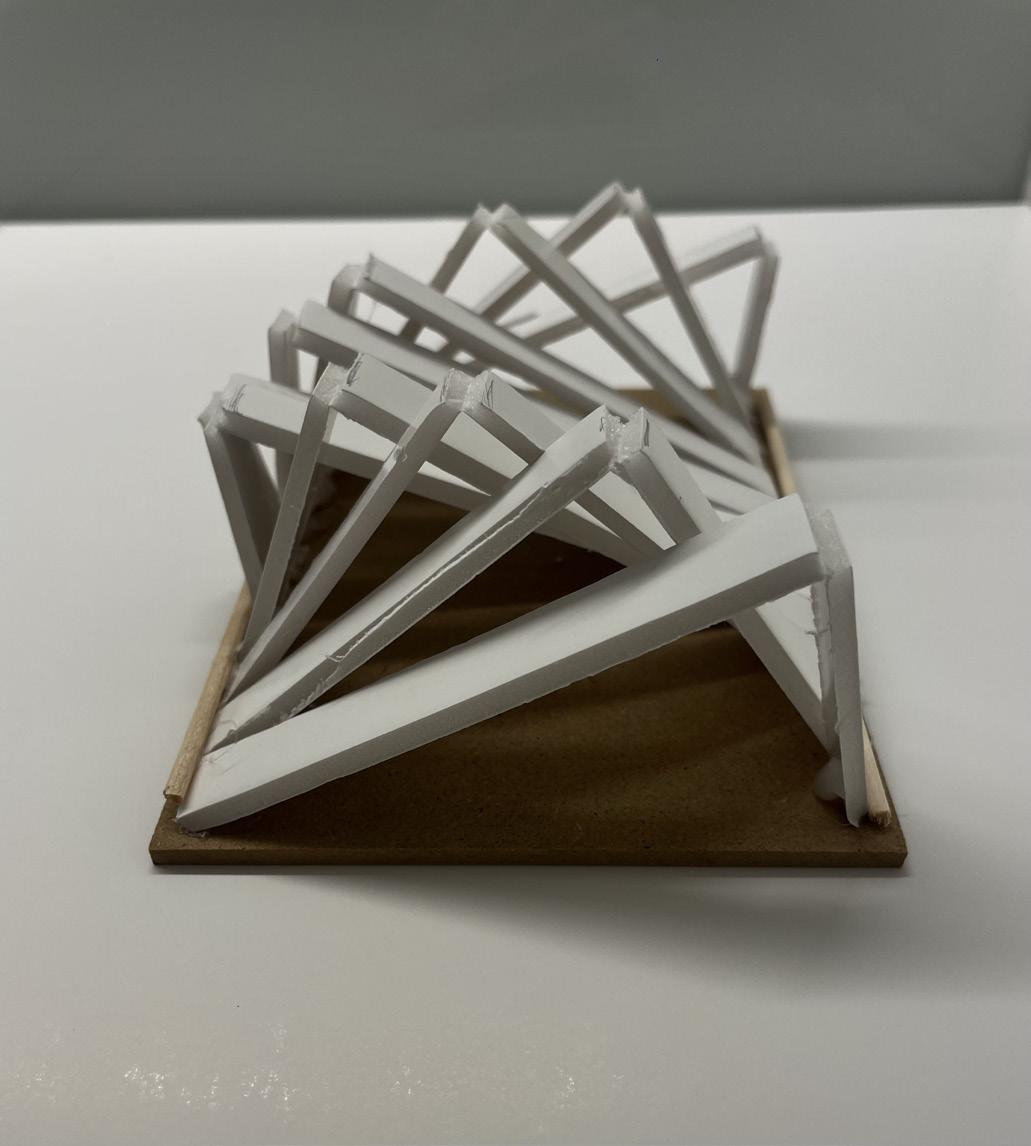
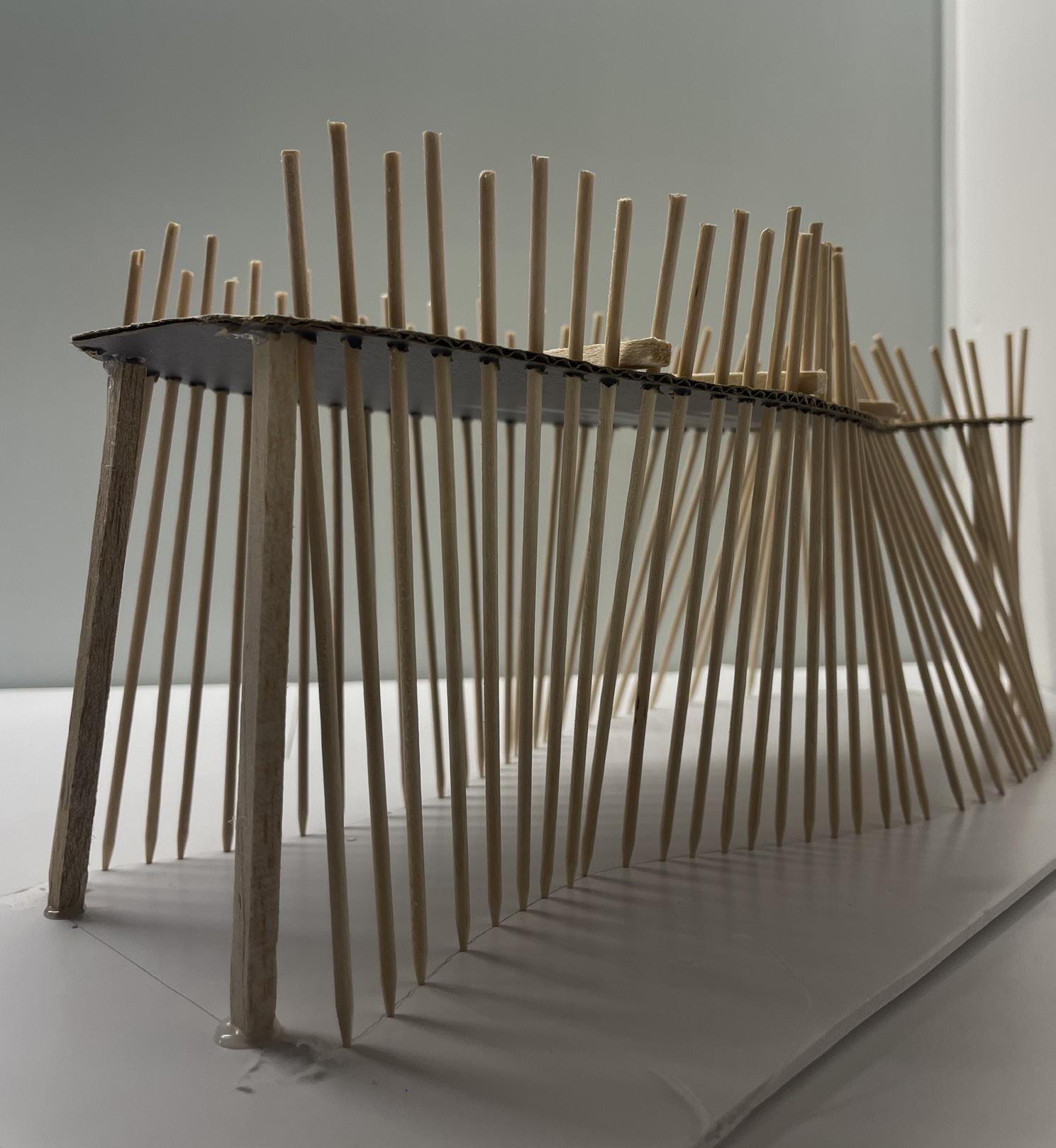
I then proceeded to discover different ways to create a curved structure through the likes of linear elements. Iteration 4 is a passageway using long, straight ele ments at different angles in order to crate a waved effect that could be imposed into the city. This is a mixture between the two ideas of tunnel and pavilion, as it is not quite a tunnel with differentiating physical boundary.
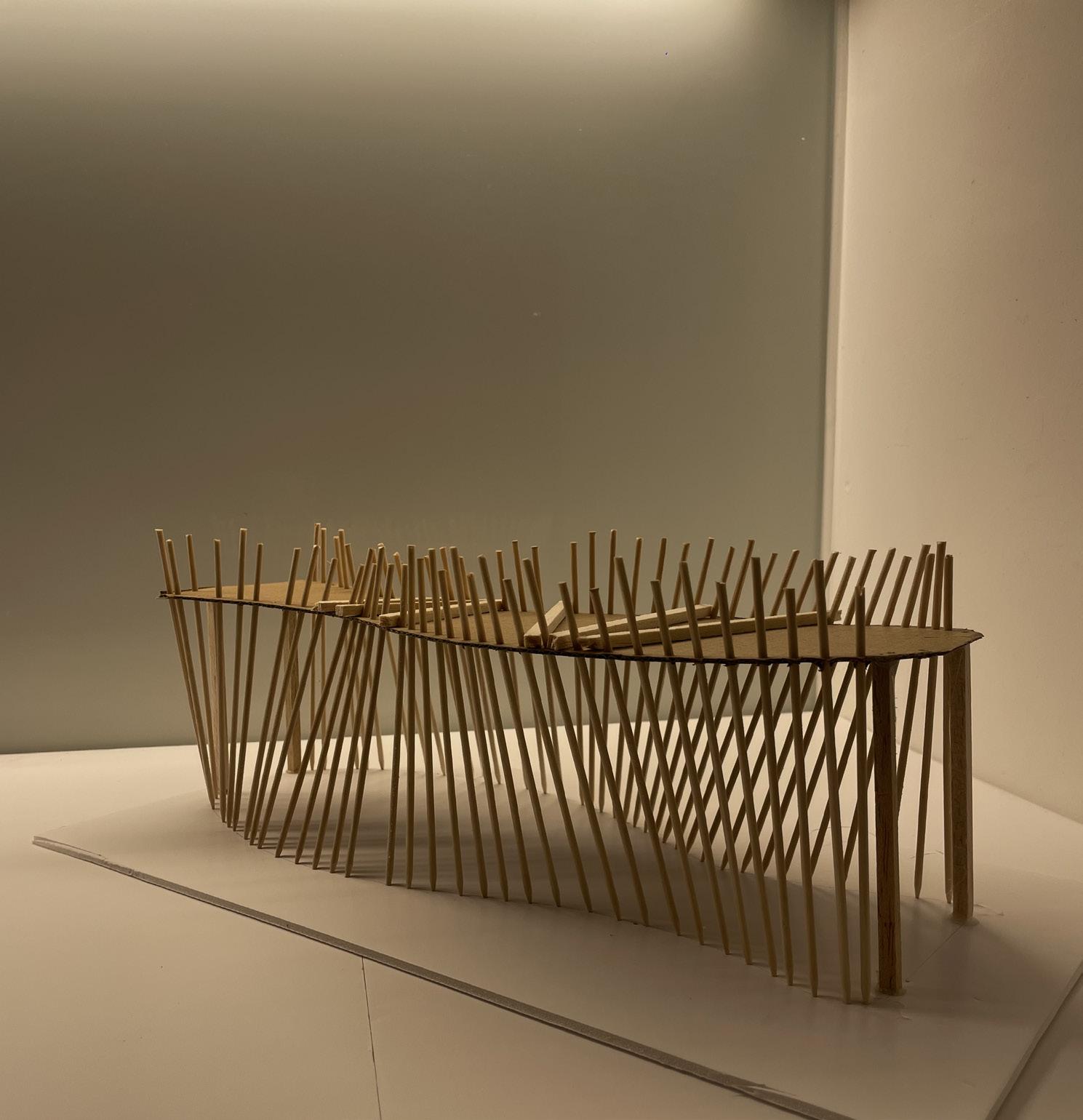
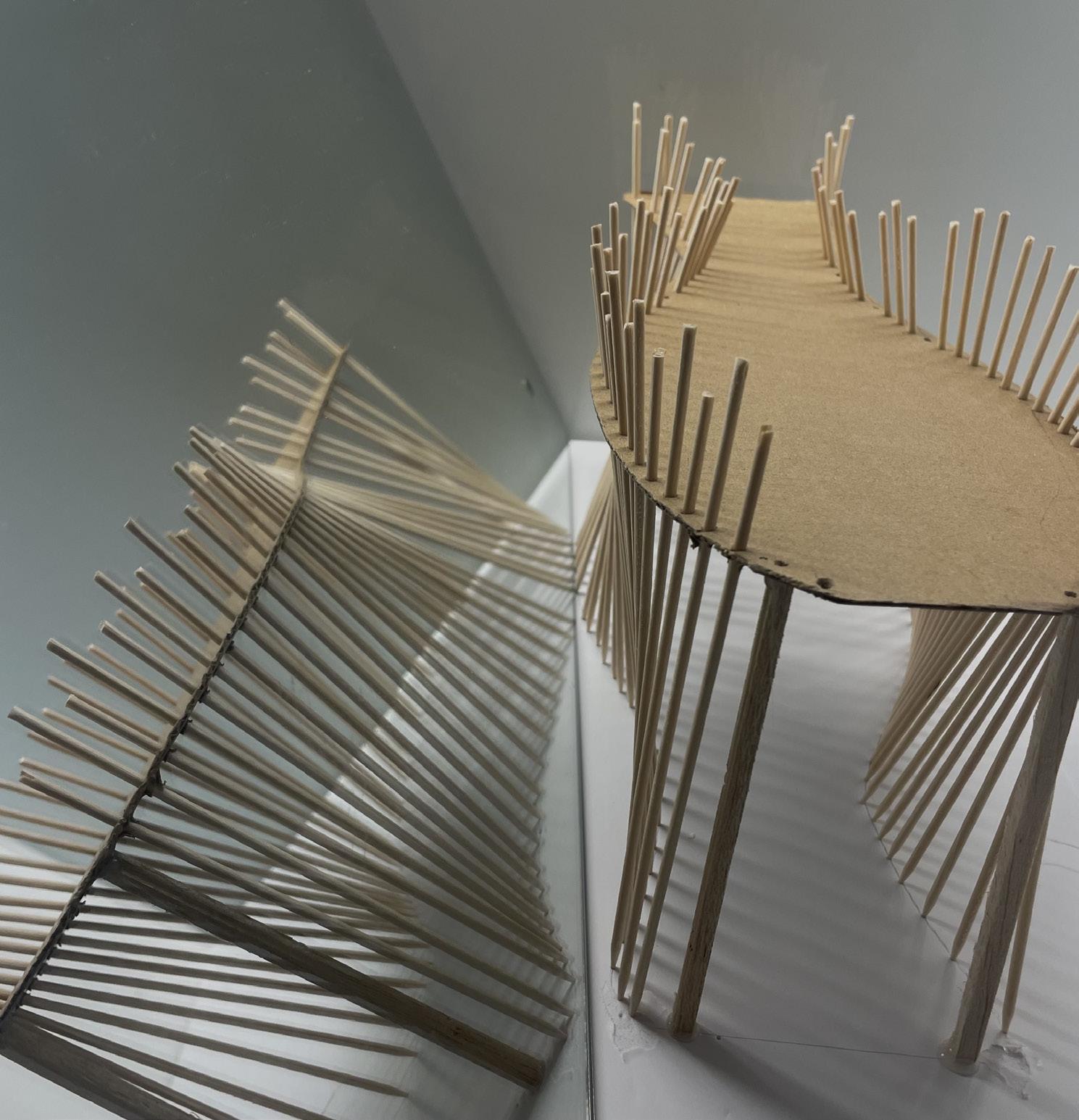
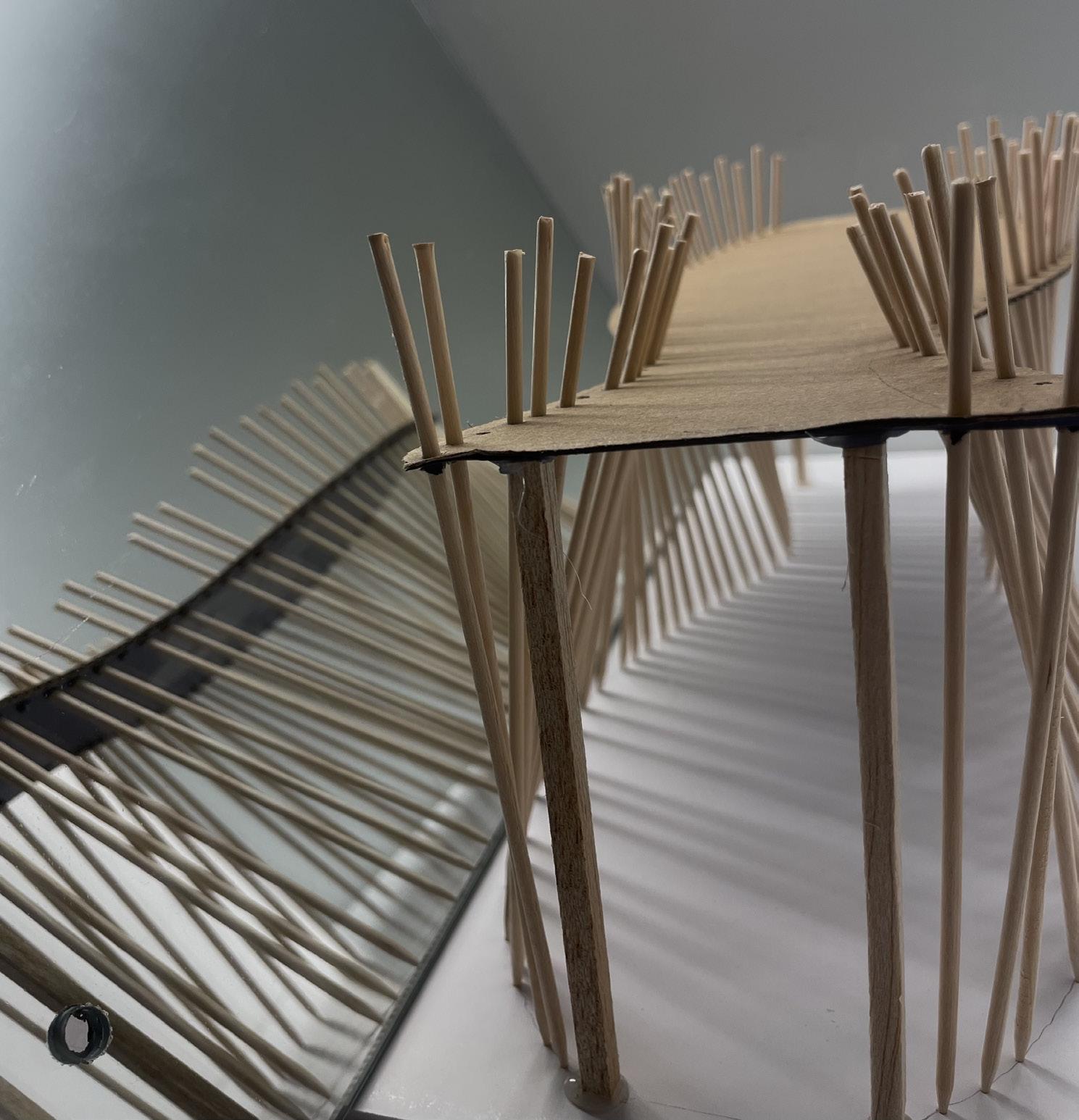
This iteration is inspired more by the mad ison square installation in New York, offer ing a more organic take on re-designing the urban fabric of Manchester. Although this could quietly nod to the ideas of sus tainable regeneration within the city, using low carbon fabric and reflecting the natural world through a piece of architecture, this form may be perhaps a little too adventur ous to impose into the heritage-rich city.
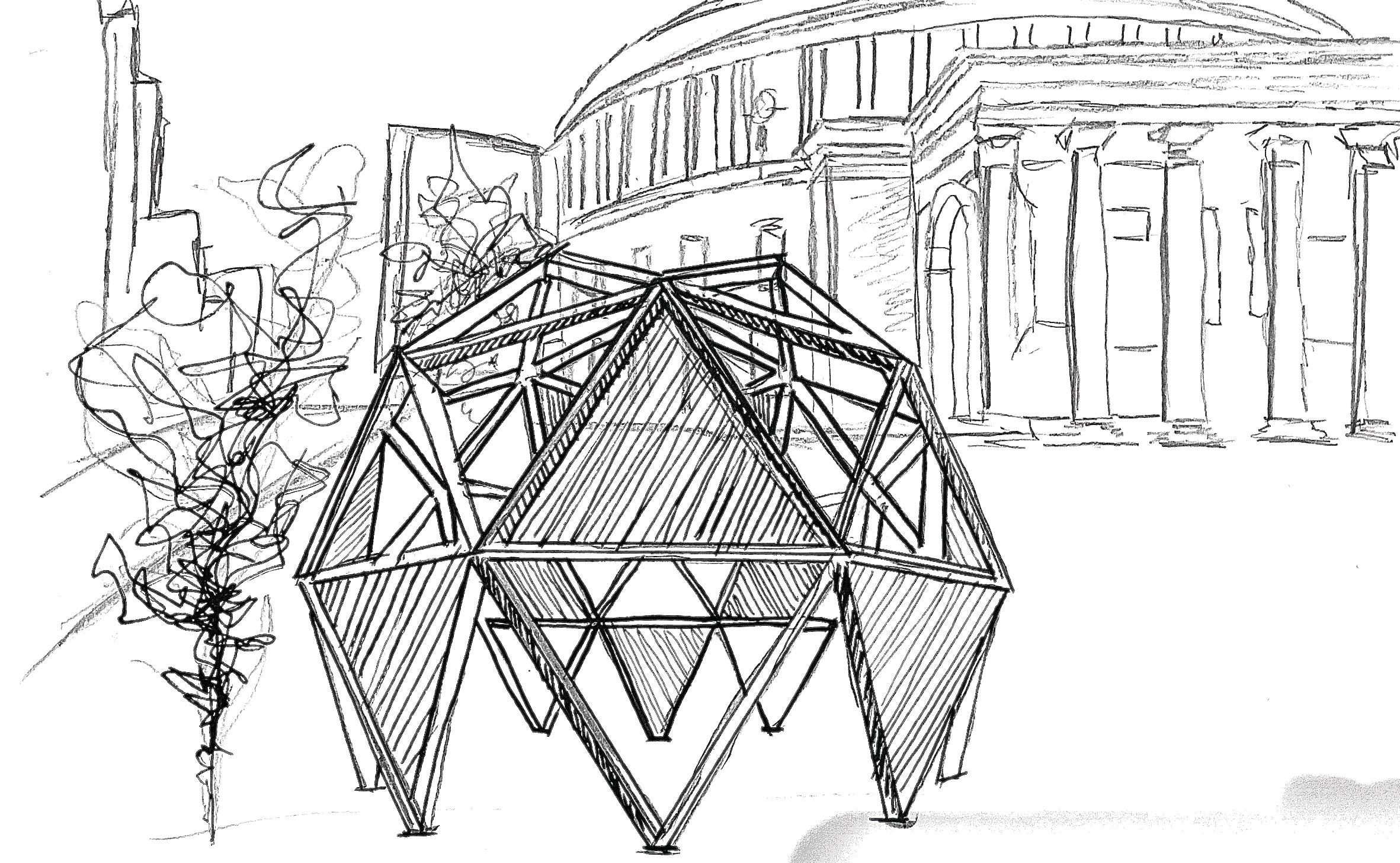
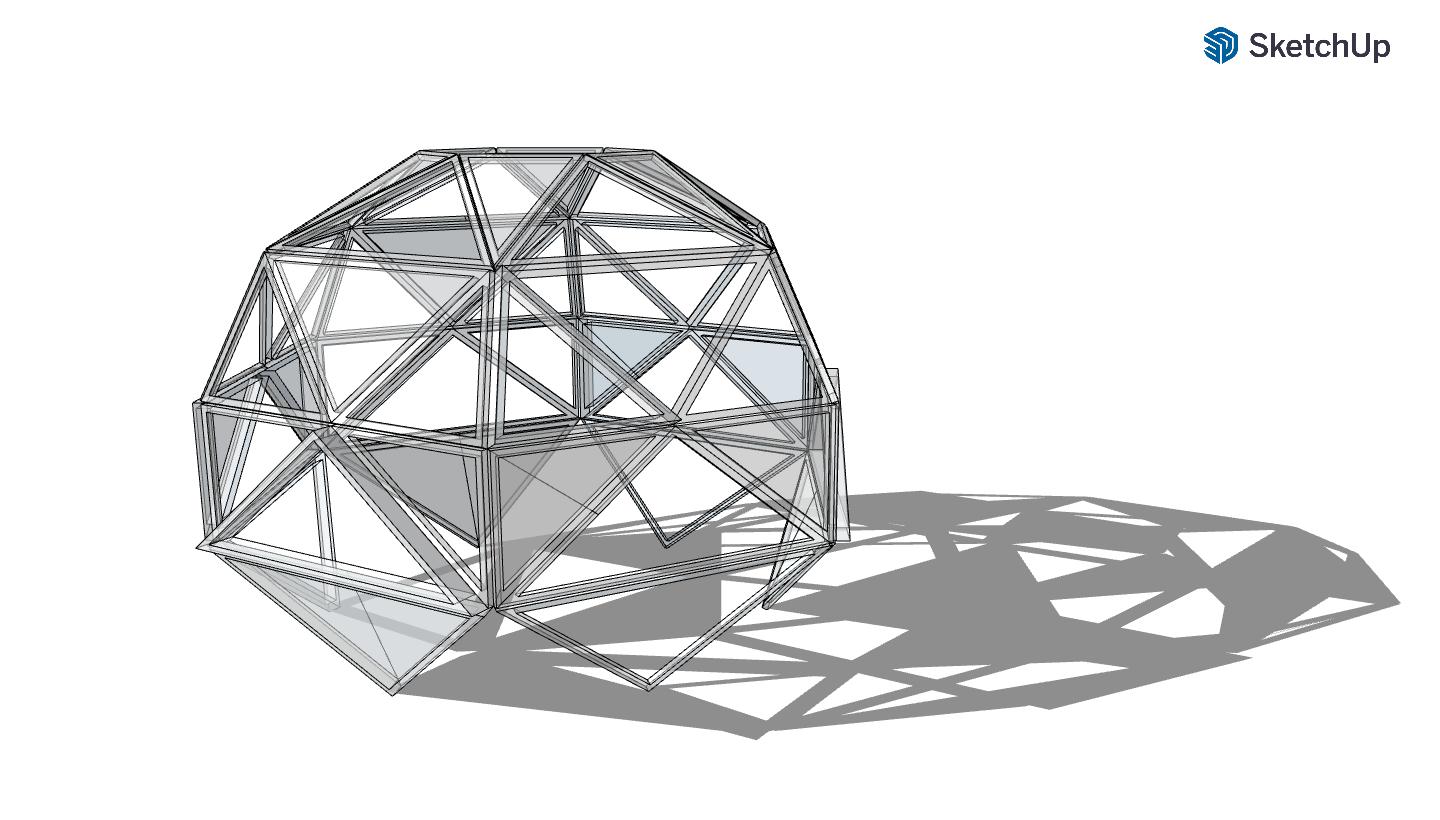
Although the form is accumulated from geometric, triangle shapes, together they work simultaneously to create an almost spherical ball of matter. Some of the triangles will remain completely open, connecting the structure to the outside fabric, sounds and smells of the bustling city. However, some will be glazed and some will be mirrored in order to reflect light, create shadows, warp the surrounding views and even reflect sound coming from the inside of the structure. The shadows as shown to the right aid in creating spatial boundaries and breaking up interior space, without imposing any further physical barriers, walls or obstacles.
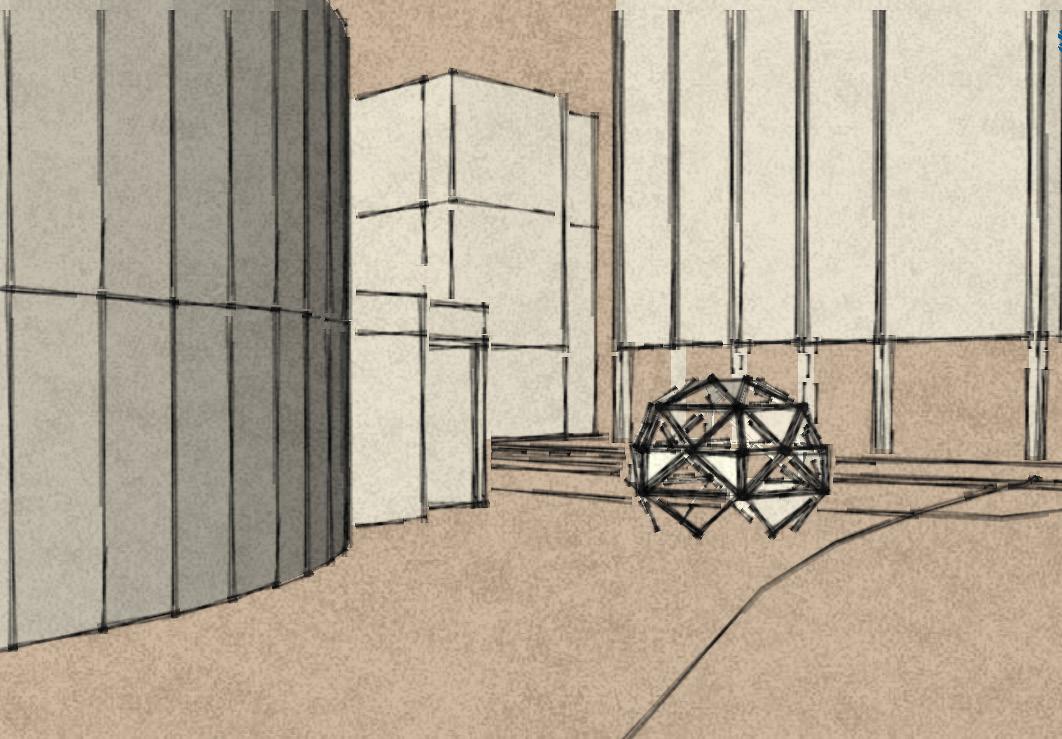
After considering all previous iterations, I have created a design proposal that combines the motif of a pavilion in the city, a tunnel like structure that offers a route through St peters square and a viewing hub which presents kae lidoscopic-like views of the neighbouring urban fabric. I have used the notion of a linear, geometric shell in order to create a canopy that will gracefully land upon the city centre.




The roof plan of the structure is reminiscent of the idea of a kaleidoscopic image, with perfect symmetry and interesting geometric form from above. The study below represents the next step of my project brief- to duplicate these structures, or similar tunnel like forms, and place them around the city cen tre, especially within the areas of deprivation.
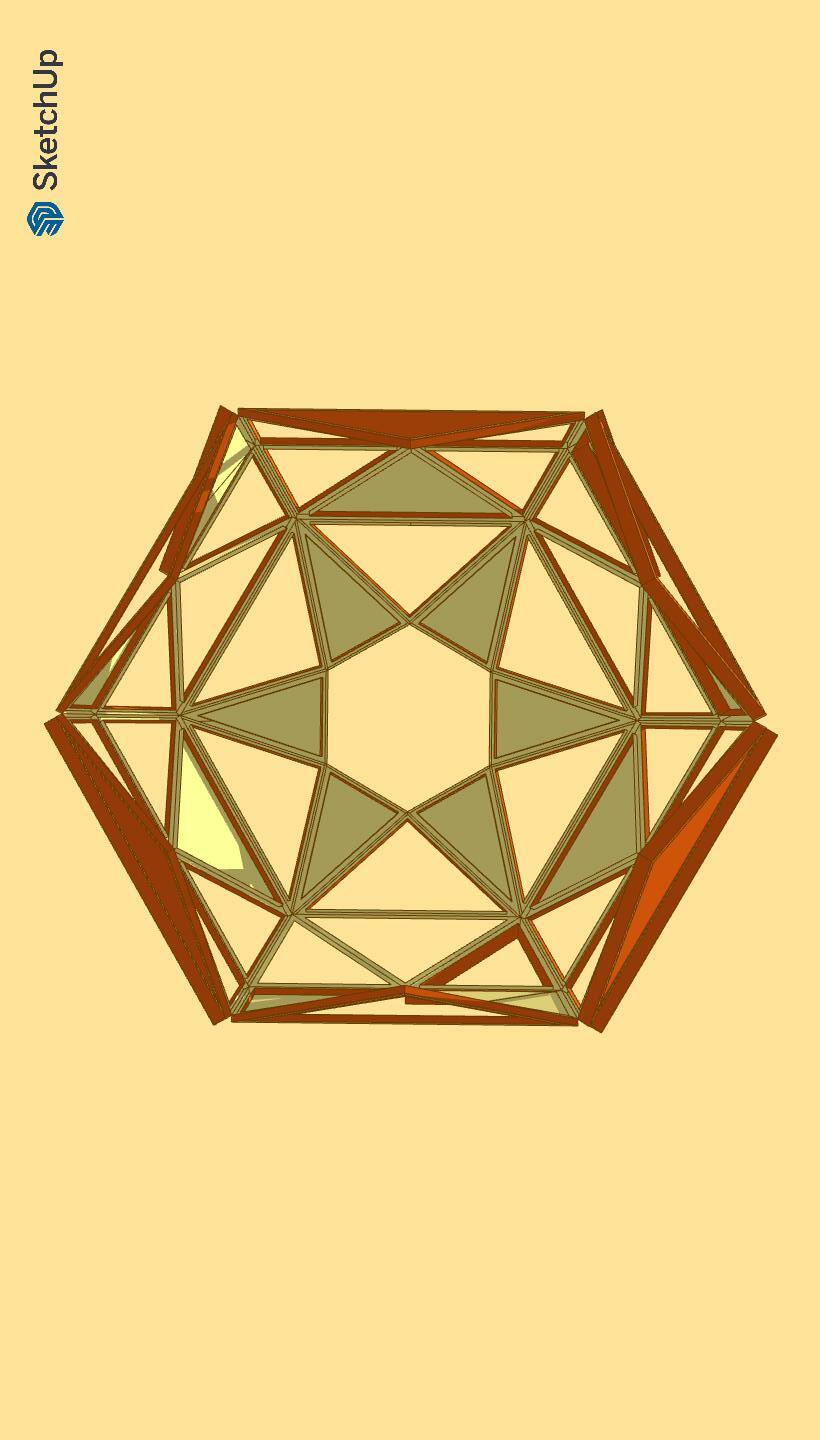
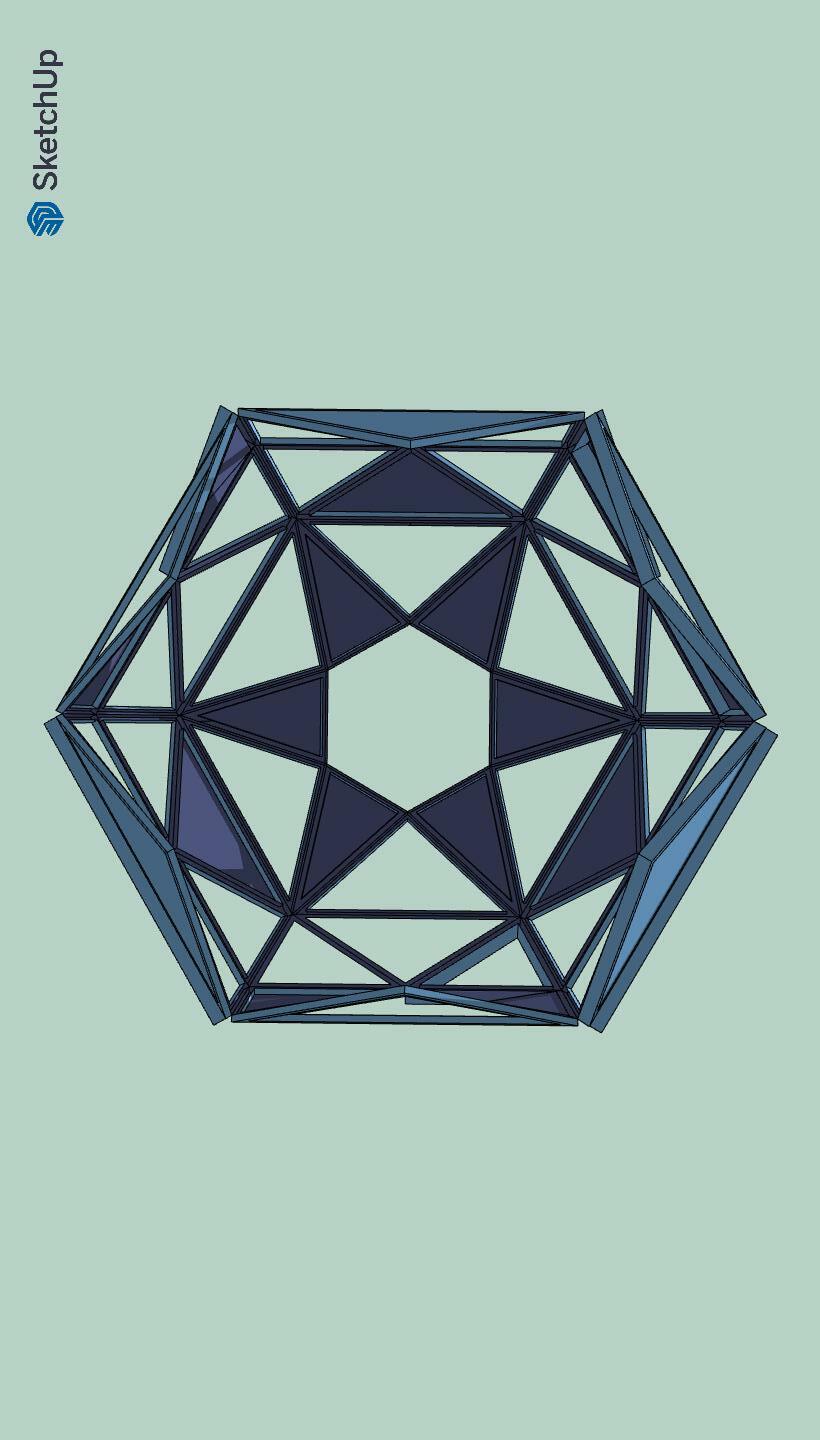
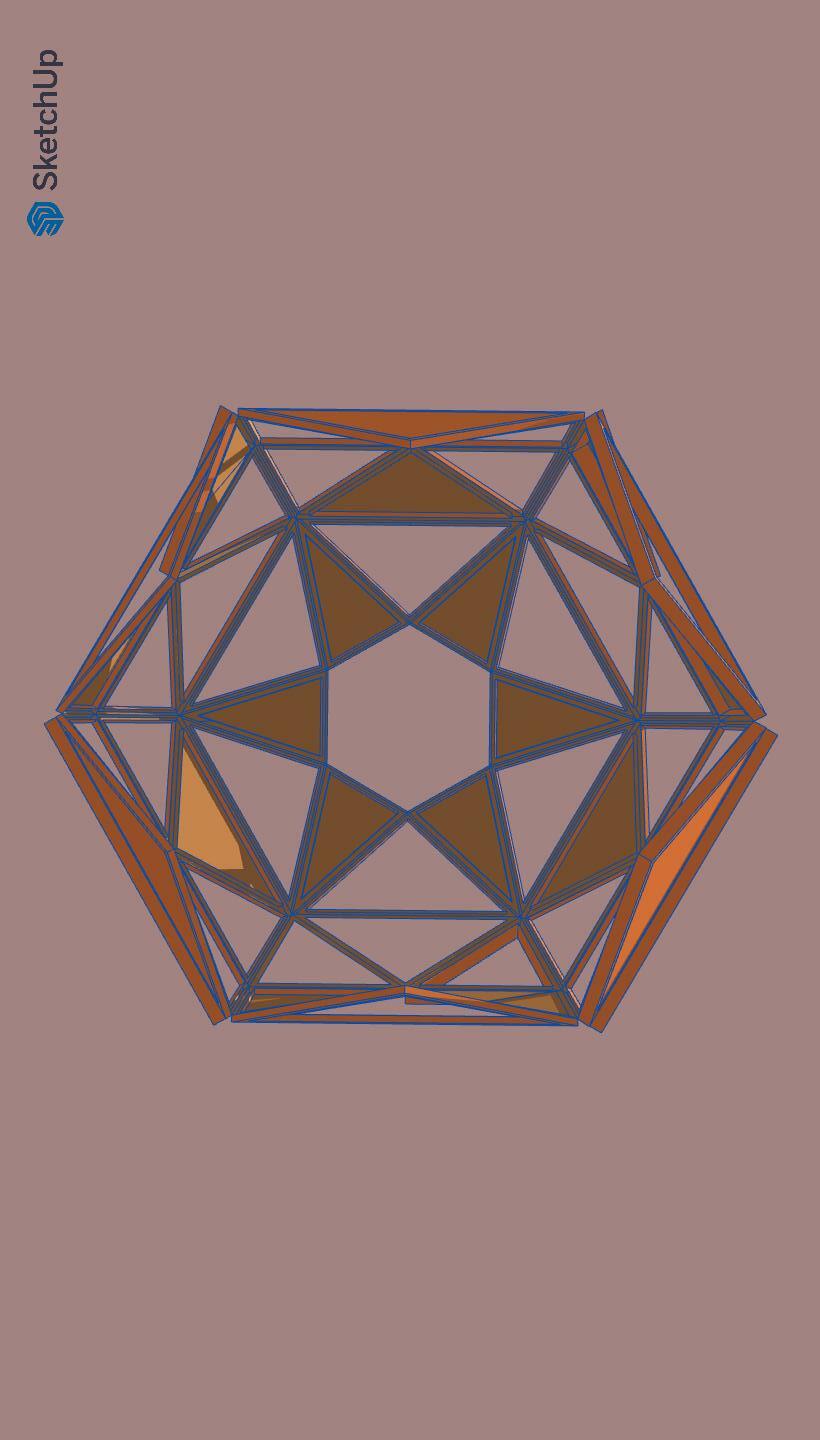
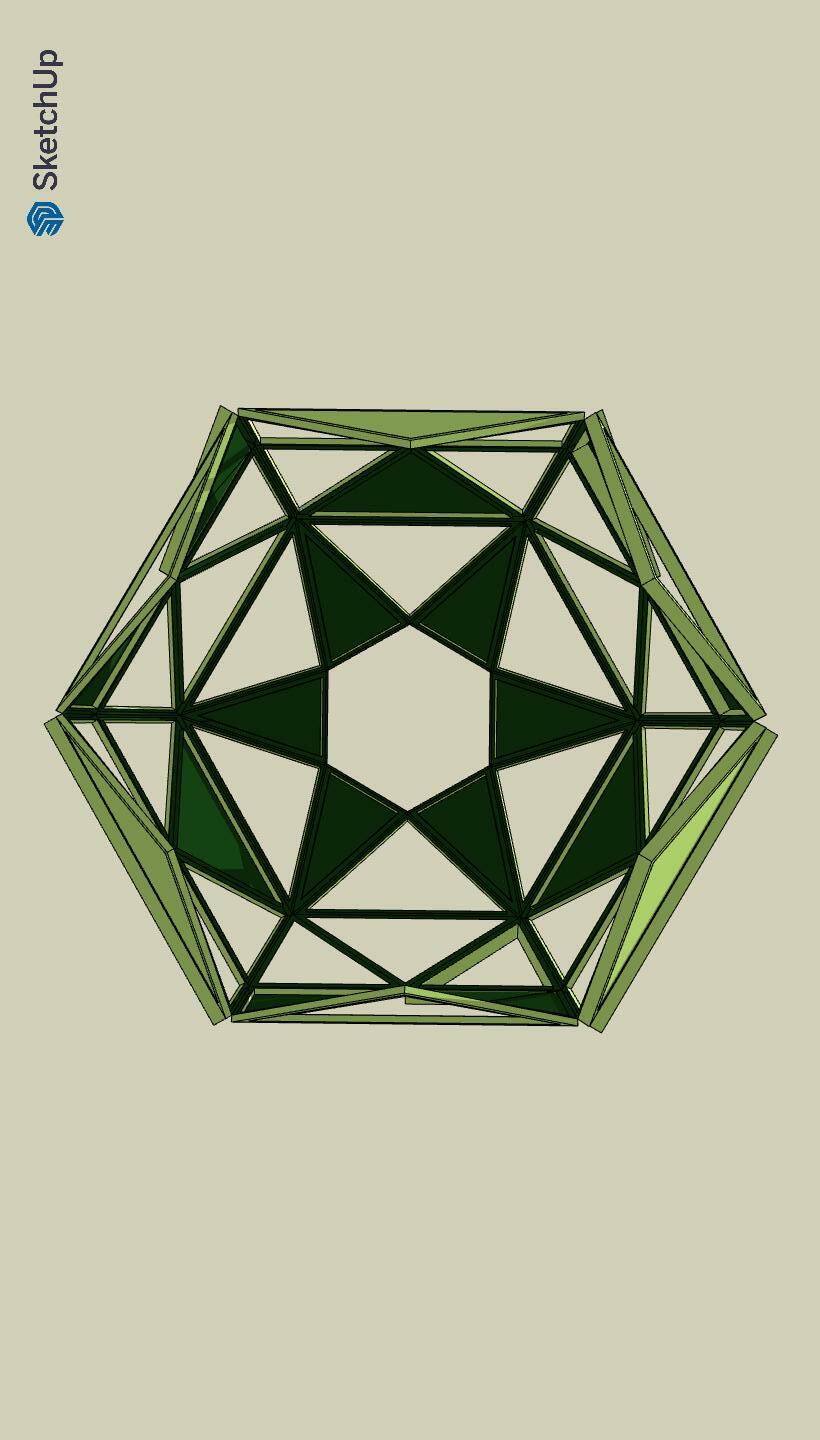
The glazed panels of the structure will, like the NOVA Pavilion in New York, be coated in diachoric film. This will add a sense of depth the views of Manchester and keep them dynamic and ever-changing with the busy city.
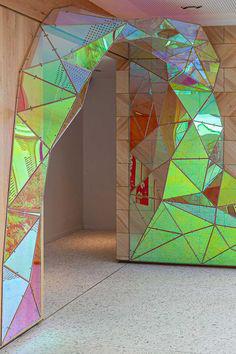
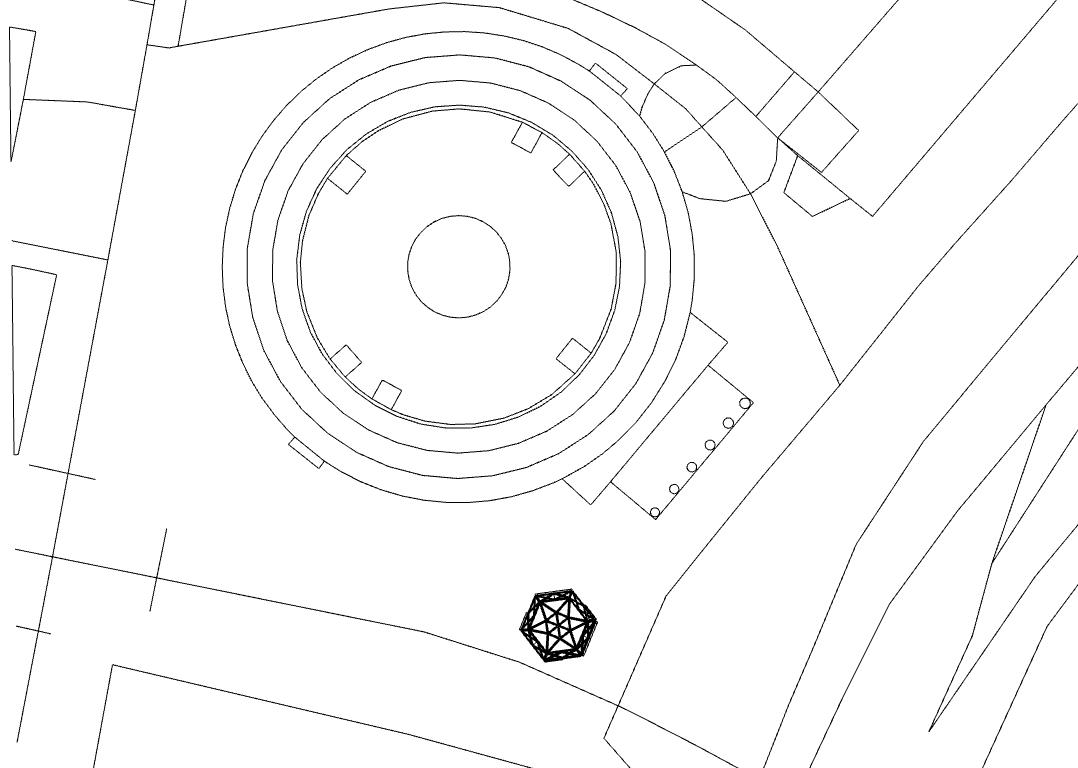
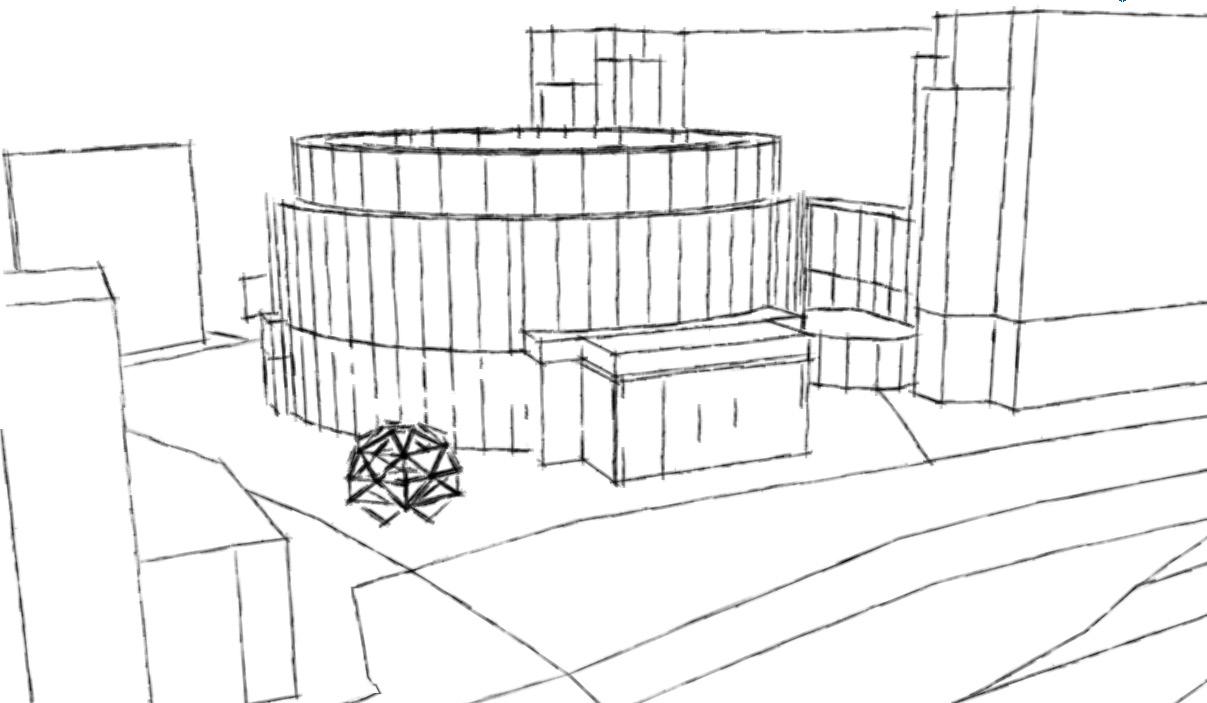
Standing at 4m high and 6m wide, When Placed on the site of St Peter’s Square, just in front of the existing City Library, the pro posed pavilion remains sympathetic to it’s heritage-rich surroundings by quietly com plementing the circular shape of the library. The transparency of the open panels and the reflection from the glazed triangles keep it lightweight and almost invisible within it’s ur ban context. This aids in piecing together the likes of the fragmented parts of Manchester by reflecting and refracting the off each other, yet does not take away from what is already there- instead it utilises it to it’s full potential.