
Dissertation submitted to Avani Institute of Design in partial fulfillment of the requirements for the award of the Bachelor of Architecture degree By Emad
Ahamed(VGAREBC013) under the guidance of Ar. Satyajeet Kumar Sinha

Avani Institute of Design 2021-22 © Avani Institute of Design


I, Emad Ahamed, hereby declare that this dissertation titled “ Is the future of farming indoors? Exploring a sustainablesolution to food insecurity ” is carried out by me at the Avani Institute of Design, Thamarassery. The work is original and has not been submitted elsewhere in whole or in part for the award of any degree/diploma at this or any other Institution / University. Emad Ahamed
Date: 09/03/2022



Thisistocertifythatthedissertationtitled“ Isthefutureoffarming indoors? Exploringasustainablesolutiontofoodinsecurity ”issubmittedby EmadAhamed inpartialfulfillmentoftherequirementsfortheawardofthe degreeof BachelorsofArchitecture,atAVANIInstituteofDesign, ThamarasseryaffiliatedtotheUniversityofCalicut.Theworkiscomprehensive, complete, and is deemed fit for final evaluation.
Ar. Satyajeet Kumar Sinha Assistant Professor
Abstract:
Withagrowinghumanpopulation,thereisagrowingneedforsustainablepractices, especiallywithinagriculture.Asthepopulationincreases,sodoesthenumberof resourcesusedtoprovideforit.Ourcitiesneedtobecomepartofouragricultural system.
Inrecentdecadesithasbecomeincreasinglyclearthatthewayweliveandeatisabig threattoourhealthandthehealthofourecosystem.Meanwhile,ourgrowing disconnectiontofoodhastransformedoururbanareas.Nolongerconstrainedby farmland,citieshavegrownindefinitely.Theyhaveswallowedupagriculturallandand coveredthelastconnectionpeoplehadwiththesoilthatoncefedthem.Andwiththe adventofhigh-riseliving,wearemoredistantthaneverfromthenaturalenvironment. Climatechangeisforcingustorethinkourwayoflifeandtoreconnectagricultureback intooururbanfabric.Aswenowliveinaglobalpandemic,itiscriticalthatwereallylook at how we feed our families healthy food within the city.
Forrealchangetohappen,achanginginthesystemandachangeinmindsetare needed.Connectingourselvestonature,especiallythroughasustainablebuilt environment,allowsustopayattentiontotheneedsofourobjectivereality,whichthen helpsustosolvetheproblemsofourtime.Itoobelievethatthequalityofthe countryside can influence the cities of the future, where people will feel more alive. Wearefinallywitnessingtheadventofagame-changingconcept:theverticalfarm. Consideraworldwhereeachtownhasitsownlocalfoodsource,farmedinthemost eco-friendlymannerpossible,andwherenodropofwaterortraceoflightiswasted.In thispaper,wewillexplorethefutureoffoodproduction,whichwillbe technology-enabled, geographically dispersed, and environmentally sustainable.
Keywords:
Bioarchitecture,AgroUrbanPlanning,Agritecture,sustainableagriculture,urban farming, cyber agriculture, recreational zones, environment-independent agriculture
Abstract Table Of Contents
List Of Figures
Chapter 1: Introduction
1.1 Research Questions
1.2 Aim
1.3 Objectives
1.4 Need Of The Study
1.5 Scope Of Study
1.6 Limitation
1.7 Methodology
1.8 Methods of Data Collection
1.9 Expected Outcome
1.10 Research Goals
Chapter 2: Literature Review
2.1 Context
2.2 Urban Farming 2.3 Evolution Of Urban Farming 2.4 Types Of Urban Farming
2.5 Overview Of Urban Farming
2.6 Urban Farming Around The World
2.7 Future Of Farming Maybe Up?
2.8 Various Methods Of Vertical Farming
2.8.1 Hydroponics
2.8.2 Aeroponics
2.8.3 Aquaponics
2.8.4 Greenhouse
2.9 Current Trends
2.10 Comparative Analysis Of Various Methods
3.1 Best Practice Case Study (Literature)
3.1.1 Farmhouse
3.1.2 Regen Village,Almere, Netherlands
3.2 Innovative Practice Case Study (Live)
3.2.1 Dubai Expo 2020
4.1 Future Of Farming & Food Production
Bibliography
Fig 1.1: Methodology Chart 11
Fig 1.2: Research Goals Illustration 12
Fig 2.1: Impact of rising food prices (2012) 21
Fig 2.2: Global Market Insights 22
Fig 2.3: Functioning of Hydroponics system 24
Fig 2.4: Aeroponic Farming 25
Fig 2.5: Functioning of Aquaponic System 25
Fig 2.6: Greenhouse 26
Fig 3.1: Farmhouse 30
Fig 3.2: Farmhouse and their interior farming environment 31
Fig 3.3: Prefabricated A-Frame Housing Modules 32
Fig 3.4: Growth of these Housing Modules 32
Fig 3.5: Mini Market in the building 33
Fig 3.6: Regen Village, Netherlands 34
Fig 3.7: Regen Village, Program 36
Fig 3.8: Regen Village, Zoning 37
Fig 3.9: Housing typologies 38
Fig 3.10: Regen system 39
Fig 3.11: Regen Village, perspective view 39
Fig 3.12: Types of farming methods 41
Fig 3.13: Vertical farming units 41
Fig 3.14: Author Exploring Sustainability Pavilion 42
Fig 3.15: Pavilions of Netherlands and Singapore 43
Fig 3.16: Exploring Mission Possible Zone at OpportunityPavilion 44
●How can we feed the growing population in cities?
●Is the future of farming indoors in our cities?
●What are the various types of urban farming practices?
●Can urban farmers and architects incorporate agriculture into our city biome?
●Can vertical farming be a solution to urban food supply challenges faced during a crisis? How do theysolve some of the world's biggestenvironmental problems along the way?
Theoverallaimoftheresearchprojectistoanalyzethepossibilityofadapting vertical farminginanurbancontexttotackleoneofthealarmingconcernsofourtime;food security.Theresearchfurtherlooksintotheprospectofbringingbackthequalityof countrysideintoourcities,therebymakingusself-sufficientandsustainableinthe advent of a crisis and retaining local sustainability.
The objective of this paper is:
●To learn and analyze various types of modern urban farming methods.
●Tolearntheprinciples,practices,challenges,andopportunitiesofthesedifferent methods.
●To understand the requirements of food by an individual in an urban city.
●To analyze the scope and limitations of these practices.
●To explore the possibilities of vertical(indoor) farming in urban areas.
Thechallengeagriculturefacesoverthelastdecadeistofeedagrowing,increasingly urbanpopulationwhiledramaticallydecreasingitsecologicalfootprint.Inthefuture,the barissetevenhigher:agricultureshouldhelptackleclimatechangebyreducingits environmentalfootprintandactivelybuildingbiodiversitythrougharegenerative approach.Verticalfarmingistheurbanfarmingofcropsinsideacityorurbancenter building,whereinthefloorsaredesignedtoaccommodatecertaincrops.Thesespaces willactasfuturefarmlandsandtheycanbebuiltbynationswithlittleornoarableland, transforming nations that are currently unable to farm into top food producers.
ToanalyzetheneedandrequirementsofdesigningUrbanfarmingpractices.Italso helpsincreatingastronglocalcommunitythatcaresaboutitssurroundingsandcreates anewurbanandhuman-friendlyspaceinenvironmentaleducation.Thestudycould triggerupcomingdesigncriteriainwhichfarmingbecomesapartofthedailylifeof peopleinanurbancontext.Itwillhelptopromotecommunitylivinginresidential neighborhoods,especiallyapartments.Thiscouldfosteragenerationthatismore concernedwithwaystoattainfoodandalleviatetheproblemsofmalnutritioninurban populations.Apartfromfoodsources,thesezonescouldhelpbringthequalityofthe countrysidebackintoourcities wherepeoplecouldfeelmorealive,thereby reconnecting them back with nature.
ThescopeofthestudyislimitedtounderstandingthegeneralconceptofUrbanfarming intheGlobalandIndiancontext.Itfocusesonvariousinnovativefarmingpractices acrosstheglobe.Itmainlyservesasaresearchguideforthosewhowouldliketo pursue further in this field of interest.
ThispaperexaminesthescopeofprovidingUrbanfarmlandthatdirectlyandindirectly improvesthequalityoflifeinthecityconnectingthemtoamoresustainableand stabilized city biome. Afocusedcasestudyonanexperimentalresearchdesignwasemployed,usingvarious availableresourcematerialsonvirtualmedia.Also,carewastakenusingaqualitative approachwithmultiplesourcesofdatatoincreaserigorandreliability.Alivecasestudy ofafewselectedpavilionsfromDubaiExpo2020thatpromotessustainablefarming practices is also included.
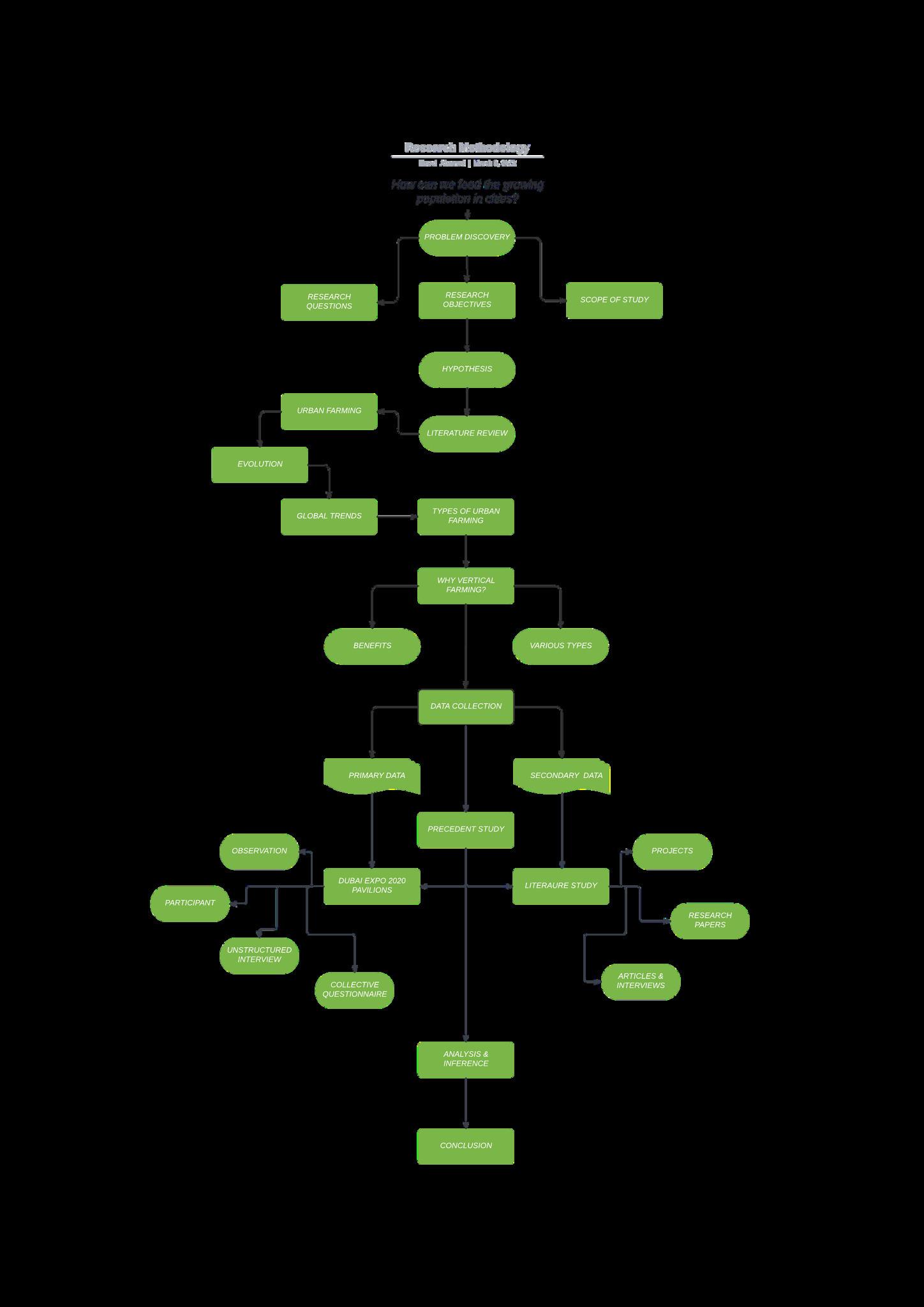
Theresearchisdonethroughprecedentstudiesanddatacollectioninaneffortto achieveinnovativeurbanfarmingpracticesthatencouragepeopletoliveahealthyand activesociallife.Itnotonlyfocusesonprovidingasolutiontourbanfoodsupply challengesbutalsohelpsincreatingasafehavenfromthebusyworldofcitiesby providing them with a glimpse of nature. Data collection is done in two stages:
Theresearchaimstoinvestigatethesignificanceofgreenarchitecture,aswellashow toincludefarmingmethodstoproduceahealthyatmosphereandlivingspace;keeping peopleconnectedtonature.Italsotriestocomprehendthevariousarchitectural solutionsthatcanaidinthecreationofasocialcommunitythatallowsindividualsto communicate and connect with one another.
Intheeraofrapidclimatechange,progressiveenvironmentaldegradation,andrelated lossofagriculturalland,foodhasbecomeamajorsourceofconcernforanincreasing numberofthepopulation.Theworldpopulationcouldbetoobigtofeeditselfby2050. Bythenourplanetcouldrunoutoffoodifglobalfoodsystemsarenottransformed. Sinceourplanetisfinite,andasthepopulationgrows,howcanwefeedtheworld without taking up more space?
In2015,morethanhalfoftheworldandnearlythree-quartersofthepopulationlivedin citiesandlargeagglomerations.In2050,theproportionofthepopulationlivinginurban areasaroundtheworldwillbemorethan66%accordingtotheUNforecast.Asthe worldbecomesmoreurban,fooddemandwillbedrivenprimarilybycitydwellers,with fewer rural farmers producing food on less land and with less water. (UN DESA, 2014)
“Urban centers should strive to become food producers, and not just consumers”
_Paul Teng1
Furthermore,thepresenceofpovertyisexpectedtoshiftfromruraltourbanareas. Citiesandperi-urbanareasmayandmustplayalargerroleinfoodsecurity.However, todothis,supportiveenablerssuchasnewagriculturalapproachesandtechnologies, newthinkingandpoliciesbylegislators,politicians,andconsumerswillingtoaccept newfoodvarietiesandunusualfoodproductionmethodsarerequired.Withtheglobal fooddemand,itishightimetoaskwhatandwhereelsecanbetappedtoproducethe amount of food required.
Urbanagriculture,urbanfarming,orurbangardeningisthepracticeofcultivating, processing,anddistributingfoodinoraroundurbanareas.Urbanagriculturecanalso involveanimalhusbandry,aquaculture,agroforestry,urbanbeekeeping,and horticulture.Theseactivitiesoccurinperi-urbanareasaswellwhichmayhavedifferent characteristics.
Inthemoderndays,theurbanizationprocesshasraisedaquestiononthesustainable developmentandgrowthoftheurbanpopulation.UFhasbeenclaimedtocontributeto urbanwasterecycling,efficientwateruseandenergyconservation,reductioninair pollutionandsoilerosion,urbanbeautification,climatechangeadaptationand
1 "CO12142 | FOOD SECURITY: Cities as part of the solutionand not ...." Accessed March 10, 2022. https://www.rsis.edu.sg/rsis-publication/nts/1804-food-security-cities-as-part/
resilience,disasterprevention,andecologicalandsocialurbansustainability.Therefore, UFcontributestothesustainabilityofcitiesinvariousways—socially,economically,and environmentally. (Dane, 2020)
Life a miracle in the universe appeared around 4 billion years ago, and we humans only 2,00,000yearsago.Yetwehavesucceededindisruptingthebalancethatisso essentialtolife(Bertrand,2009).Theengineoflifeislinkage,everythingislinkedand nothing is self-sufficient.
Theinventionofagriculturetooklessthan10,000yearsago.Agriculturewasourgreat revolution.Itgavebirthtosurplusesandgavebirthtocities&civilizations.Theneedfor wanderingforfoodended,asgrainswerecultivatedonlands.Thetechniquesof producingdifferentvarietiesofgrains&adaptingthemtodifferentsoiltypesgavethe advantage.Agricultureisstilltheworld’smostwidespreadoccupation,halfof humankindtiltthesoil.Over3quartersofthemarebyhand(Bertrand,2009). Agricultureislikeatraditionhandeddownfromgenerationtogeneration,insweat,graft & toil. Because for humanity it is a prerequisite for survival.
Theinventionofcoal,oil&gasfreedhumansfromthetoilontheland.Withoil,began theeraofhumans,whobreakfreefromtheshacklesoftime&in50yearstheearthhas beenmoreradicallychanged,thanallpreviousgenerationsofhumanity(Bertrand, 2009).Todayoverhalfoftheworld’s7billioninhabitantsliveincities.Inthelast60 years,theearth’spopulationhasalmosttripled,andover2billionpeoplehavemovedto cities.Hence,modernurbanfarmingallowsfoodproductionfacilitiestobebuiltcloseto populationcentersratherthaninruralareas.Sewingvegetablesandfruitinstacked plantersinundergroundcomplexes,ontopofbuildings,oreveninhigh-risefacilities, means food production can expand upwards rather than outwards.
Eachurbanagricultureprojectarisesinresponsetotheparticularneedsand opportunitiesofagivencommunity,organization,orsite.Notwogrowingspacesare alike—theymaybemaintainedbyvolunteersorpaidstaff,havebudgetsofacouple hundredorhundredsofthousandsofdollars,andbeaffiliatedwithoneofadozen differententitiesthatcontroltheland.Asbothtechnologyandthepushforsustainability continuetodevelop,manyurbanagriculturalideashavesurfaced.Herearesomeofthe most popular and innovative ones:
Itistheprocessofthecultivationoffoodonone'sownland.Itscropismostly dividedamongfriends,family,andneighborsbecauseitusuallyresultsina surplus.Foodcanbestoredandpreservedaswell.Backyardgardensbenefit communitiessinceneighborscanshareeachother'sbackyardsandusevaried farming methods, resulting in higher returns.
Thisentailsmakinguseofthelimitedspaceavailabletoundertakeagriculture withoutincurringsignificantcosts.Forexample,anurbanpersonmayeasily createakeyholegardentoconcealaparkingplaceinthestreet.Thismakesuse oflandthatwouldotherwisehavegonetowasteandinsteadcreatesanactivity that may be done for pleasure or to produce more food.
Thisisthelandscapingofstreetsforvariouspurposes,suchascommunity gardens,whicharemaintainedbytheresidentsoftheneighborhood.Theynot onlybeautifythestreetsbutalsopurifytheair,resultinginacleanenvironment. Becausetheyareprimarilypositionedalongthestreet,theyhavetheadded benefit of minimizing urban stormwater runoff.
Itreferstothepracticeofgrowinggardensamidanurbanforest.Forest gardeningisaccomplishedbygrowingvariouscrops,vegetables,andfruitsin urbanareas.Foreststypicallygenerateanenvironmentthatisbeneficialforcrop development,andasaresult,theyaidintheprotectionofforestsandcanmake deforestationanonfactorinurbancontexts.Forestgardeningcanalsobepartof afforestationactivities,whichencouragetheplantingoftreesinurbanareasasa step toward combating global warming.
Itentailsthepracticeofagricultureingreenhousesinresidential,commercial, andcommunityurbanenvironments.Dependingonthecropsplanted,they requirealargeamountofareatoputup.Greenhousesallowfarmerstogrow cropsallyearbecausetheyprovideacontrolledenvironmentinwhichthecrops can be subjected to specific conditions essential for growth.
Eventhoughurbanareashavelimitedspace,itdoesn’tmeanthatagriculture cannotbepracticed.Thisiswhererooftopspacecomesinhandy,asitcaneasily beusedtogrowvegetables,fruits,andherbs.Thebenefitofrooftopgardensis thattheycanhelptoreduceurbanheatislandswhilealsoenhancingairquality. Asidefromthis,rooftopgardenscanbeusedtoenhancetheappearanceof recreational facilities.
Thedevelopmentofvegetationorfoodcropsontheoutsideorinsideofawallis referredtoasagreenwall.Ittakesuplessspacebecausethemechanism utilizedhelpstodeliverappropriatewatertothefoodanditmakesuseofsoil found on the walls. It is an effective means of decreasing stormwater runoff.
AbitlikeagreenhousewithBluetooth,aVerticalFarmisanairtightroom, shippingcontainer,orbuilding,whichgrowscropsunderelectriclights.Rowsof fruitandvegetablesarestackedverticallyinsteadofinonelayer,astheartificial lightsreachallofthecrops.Farmersregulatetheamountoflight,water,and temperature.Verticalfarmsareparticularlybeneficialincitieswherefresh producemustbecarriedinfromthecountryside,coveringkilometersbeforeit reaches the consumer's plate.
Thisisthepracticeofrearinganimalsforfoodinurbansettings.Anurbandweller canchoosealocationsuitableforkeepingdifferenttypesofanimalsorfocuson specificanimalssuchaspoultries,goats,rabbits,orsheep.Somecitieslimitthe number of animals one can keep and also the type of animals that can be kept.
Thiscomprisesbreedingaquaticanimalssuchasfishinurbanlocations.It entailscapturingstormwaterfromwithinthecityandthenestablishinga self-sustainingrecirculatingsystemintanksorartificialfishponds.Itisa cost-effective method of crop production as well as a protein source.
Theprimarypurposeofurbanfarmingistoprovidefoodtothepeoplewholiveinthese townsandcities,makingaccesstofoodmoreconvenientforpeopleandlowering carbon footprint in long-distance transportation.
Whenitcomestomeetingpeople'srequirements,urbanagriculturehasdemonstrateda highpotential;itnotonlyprovidesuswithfoodbutalsosecuresuswithasustainable distributionandproductionsystemthatiscontinuouslysupplyingjobsandemployment to the people.
Asidefromthat,UrbanFarmingbenefitsthecity'secosystemandgeneralbeautyby providing much-needed greenery in a bustling metropolitan city full of buildings.
Urbanagriculturehelpsincommunityparticipationandstrengtheningcommunity ties,aspeoplefromthecommunityuniteforacommoncausewhichisthe promotionofurbanagricultureinthatregionalongwiththecontinued maintenanceofthatlandtomakeitmorebeautifulfornewcomers.This contributestoasenseofcamaraderieandcommitmentinsidethecommunity, which is crucial, especially during times of crisis.
Urbanagriculturepromotesthegrowthofnewbusinesses,whichnotonly generatesincomeforsmallbusinessownersbutalsohelpstoofferjobsforthose inneed,henceloweringunemployment.Thishelpstogrowasmallbusinessby providingthemsustainedincomes.Thelocalgovernmenthelpstoraiserevenues byhelpinginrunningoperations.Theeconomicvalueofthelandisalso increased.Thesefactorshelptoreducethecostincurredtomaintaintheland andpreventdamagebypeoplewhoillegallydumpwasteandvandalize properties.
Continuedinteractionsconcerningurbanagriculturehelptocreateand strengthenbondsandpeoplefromdifferentages,gender,andracial backgroundsgettosharesignificantinformationregardingthecrops,animals, poultry,vegetables,andfruits.Culturalpracticescanalsobesharedwithinthe communities to optimize urban farming practices.
Urbanagriculture,likeallformsofagriculture,helpstoensurethatthereisa constantprovisionoffoodwithgoodnutritionalvalue.Sincealltheproducts
deliveredtothemarketmeetsmeetthecriteriaofgoodnutritionalvaluesanddue toconcisetransportationdistancebetweenthesiteofgrowthandthemarket;the deteriorationofthenutrientandthedeclineinqualityoftheproductisminimized. Urbanagriculturealsopromotestheproductionoforganicfertilizersonsite insteadofdependingonsyntheticfertilizers.Thishelpsinreducingexposureof variousharmfulchemicaltoxinstothecommunityandtothecityasawhole, whichisinterconnectedthroughoutintheformofwatersupplyandventilation systems.
Urbanagriculturecontributestoanincreaseindemandforlocallycultivated productswhilealsoloweringthepriceofimportingfoodfromotherlocations, whichincurstransportationcosts.Itensuresthatthefoodavailableishealthyand fresh,providingtheconsumerwithmoreoptionsduringthepurchase.Italso reducesthedependencyonprocessedfoodswhicharepotentiallyunhealthyand canleadtoavarietyofailmentssuchasobesity,diabetes,andhypertension. Becauseurbanagriculturegenerateshealthfulfood,itcontributestoincreased life expectancy and a healthier lifestyle.
Byparticipatingintaskssuchaspoultryfarming,animalhusbandry,and beekeeping,youcandevelopimportantskillsthatcanbeappliedinthefutureto findotherjobsandsourcesofincome.Thereisvastknowledgeavailablein urbanagricultureaboutfoodsystems,theirgrowth,andhowtosustaingrowth undervariousconditions.Thisknowledgecanbeemployedindifferentcontexts to generate new inventive ideas or improve on pre-existing ones.
Urbanfarmingcontributessignificantlytoloweringthesecarbonfootprintsby loweringtheregion'soverallcarbonemissionsduetoshorterfoodtransportation distances.Theplantationaidsincarbonstoragebyactingasasinkforcarbon, whichisthenusedtocreateoxygenandlessentheimpactofpollutionacrossthe city. These effects are more strongly mitigated by urban forests.
Therearesomechallengesconcerningurbanfarmingpracticesandpotentialproblems with its impact if it is not carried out properly:
Mostmaincitiesincountriesareverylargeanddenselyinhabited,withpeople residingacrossthecity,andmoreandmorecommercialprojectsmustbe
developedtosupplyhomesforthecity'srisingpopulation.Thiscausesmajor problems because there is no more room to build.
Itiswellrecognizedthaturbanagricultureconvertslandintoaproductivesector, buttheseareasarenotalwaysexploitedfortheintendedpurpose.Farmersmay buyortakeoverlandandputitasideforvariousprojects,themajorityofwhich are profitable.
Accordingtothegovernment,thelandsetasideforurbanagriculturemaynotbe aneconomicallyorenvironmentallyefficientuseoftheproperty.Landrentis perhapsthemostdifficultbarriertoovercomeinurbanagriculturebecausethe governmentdoesnotpayenoughattentiontoregulatingandencouraging farming.
Thecropsbeinggrownmaybecomehighlysusceptibletodamagebyvarious birdsandpests.Theseultimatelyreducethecropproductionbythelandand mayevenbeledtothespoilingoftheentirefieldofthecrop.Thisisamajor concernsinceurbanfarmersarealreadyoperatingonasmallbudget,andifthis happens, it might give them considerable financial problems.
Overuseofthecity'spublicwatersupplyforfarmingcanresultinwater shortages,whichcanbesevereindenselypopulatedareas.Somelocalities have attempted to address this issue by using treated effluent for irrigation.
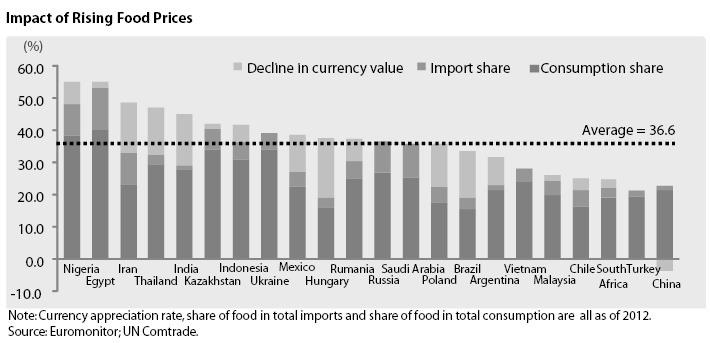
Agriculturalfoodproductionandwatermanagementarebecomingmoreglobalissues thataresparkingdebateonavarietyoffronts.Significantdegradationoflandandwater resources,especiallyaquiferdepletion,hasbeenseeninrecentdecades,andthe implicationsofglobalwarmingonagriculture,aswellastheeffectsofagricultureon global warming, are still not fully understood. Thereasonsforthegrowthinfoodcrisesarenumerous,andthecountriesmost affected are generally developing and underdeveloped countries.
Fig 2.1: Impact of rising food prices (2012)
Source: UN World Food Programme
Themajordistinguishingaspectofurbanandperi-urbanagriculturefromrural agricultureisthatitisintegratedintotheurbaneconomicandecologicalsystem.Urban agricultureisapartoftheurbanecologyanditsresources,withwhichitinteracts.Such relationsincludetheuseofurbanresidentsaslaborersandtheuseofcommonurban resources(suchasorganicwasteascompostandurbanwastewaterforirrigation), directlinkswithurbanconsumers,directimpactsonurbanecology(bothpositiveand negative),competingforlandwithotherurbanfunctions,beinginfluencedbyurban policies and plans, and so on.(SciDev.Net, 2020)
Theseedsofanagriculturalrevolutionaresproutingincitiesaroundtheworld,a movementthatfollowersbelievewillrevolutionizethewayurbanitesreceivetheir products while also addressing some of the world's most pressing environmental issues. Themostpopularandprominentpracticeisverticalfarming.Itisfocusedonasimple principle: ratherthandrivingfoodfromfieldsintocities,growitasclosetohomeas possible—in urban greenhouses that stretch upward rather than outward.
Verticalfarminginvolvesplantingcropsinstackarrangementupwardstoreducethe agriculturalfootprintontheland.VerticalfarmsemploytheprinciplesofControlled EnvironmentAgriculture(CEA)toimproveplantgrowthandSoillessfarmingtechniques suchasAquaponics,Hydroponics,andAeroponicstoperformfarmingwithouttheuse of land. Green walls can also be adapted to be used in this method. (Soomro,2022)
Traditionalfarmingneedsalotofspacetotendlivestockandfertilesoiltogroweither foodcropsorfeedforlivestock.Typically,thisentailsdestroyingforestsorothernatural habitats,buttheadventofverticalfarmingallowsformuchlessspacetobeusedand provides an imaginative method to feed more people quickly. (Discovery, 2020)
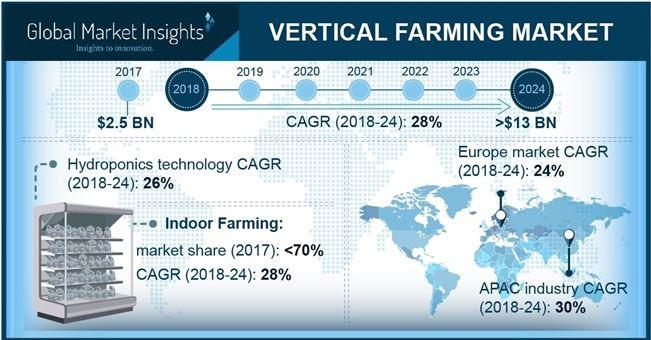
Fig 2.2: Global Market Insights
Source: Marketers Media
Lookingfurther,proponentssayverticalfarmingcouldbringevenbiggerandmore sweepingchanges.Farmingindoorscouldreducetheuseofpesticidesandherbicides, whichpollutetheenvironmentinagriculturalrunoff.Preservingorreclaimingmore naturalecosystemslikeforestscouldhelpslowclimatechange.Andthemorefoodwe produceindoors,thelesssusceptiblewearetoenvironmentalcrisesthatdisruptcrops andsendpricesskyrocketing,likethedroughtthatdevastatedthisyear'sU.S.corn crop.
DicksonDespommier,amicrobiologyprofessoratColumbiaUniversitywhodeveloped theideaofverticalfarmingwithstudentsin1999,thinksverticalfarmingwillbecome moreandmoreattractiveasclimatechangedrivesupthecostofconventionalfarming andtechnologicaladvancesmakegreenhousefarmingcheaper.Infact,hehopesthe world will be able to produce half of its food in vertical farms in 50 years.
Then"asignificantportionoffarmlandcouldbeabandoned,"hesays."Ecosystem functionswouldrapidlyimprove,andtherateofglobalwarmingwouldslowdown." (Fletcher,2012)
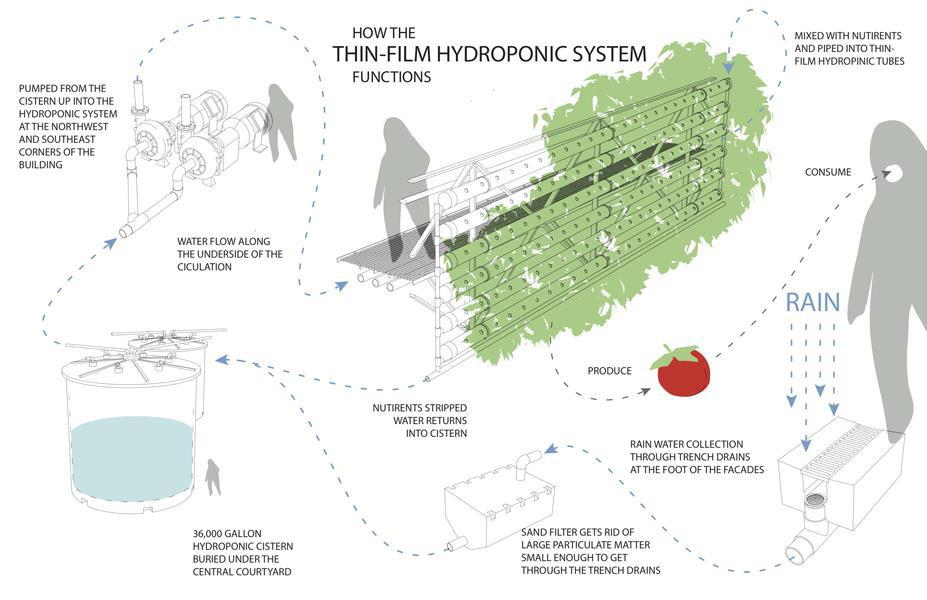
Itisthepredominantgrowingsystemusedinverticalfarms,involvinggrowingplantsin nutrientsolutionsthataredevoidofsoil.Theplantrootsaresubmergedinanutrient solution,whichisfrequentlyexaminedandcirculatedtoensurethatthecorrectchemical composition is maintained. (Birkby J, 2016.)
Hydroponicsincitiesisnotanovelconcept.Foralongtime,theHangingGardensof BabylonandtheFloatingGardensofAztecadornedthetowns.Inaddition,fruitsand vegetablesweregrowninthoseplaces.Nowadays,urbanhydroponicsisusedfor physicalandpsychologicalrelaxationinmoderncities.Italsoplaysanimportantpartin themanagementoftheurbanenvironment.Itraiseshumidityanddecreases temperaturesinaridplaces.Italsoabsorbsdustandcontaminatedairthroughthe foliageoftheplants.ItcontributestoareductioninoverallCO2emissions,hence mitigating global warming to some extent.
Sincecityspaceislimited,hydroponicsgardensaretypicallybuiltvertically.Apartfrom providinganimmediateimprovementinenvironmentalquality,verticalfarmsontopof traditionalbuildingsactaslargeheatsinks,radiatingheatandraisingambientair temperature;hydroponicsystemsthermoregulatebuildingsbytrappingheatinthe winterandcoolingtheminthesummer.Growingplantsoninteriorwallscanalsohelpto improveindoorairquality.Thetwomaintypesofhydroponicsaresolutioncultureand medium culture.
Source: Google Images
ThisinnovativeindoorgrowingtechniquewasfirstdevelopedbytheNational AeronauticsandSpaceAdministration(NASA).Inthe1990s,NASAstartedfinding efficientwaystogrowplantsinspaceandcoinedtheterm“aeroponics.”Aeroponic systemsarestillinagrowingphaseintheverticalfarmingworld,howevergaining interestgradually.Itisanefficientplant-growingsysteminverticalfarms,usingupto 90%lesswaterthanotherefficienthydroponicsystems.Plantsgrowninthese aeroponicsystemstakeupmoremineralsandvitamins,makingtheplantshealthierand more nutritious. (Birkby J, 2016.)
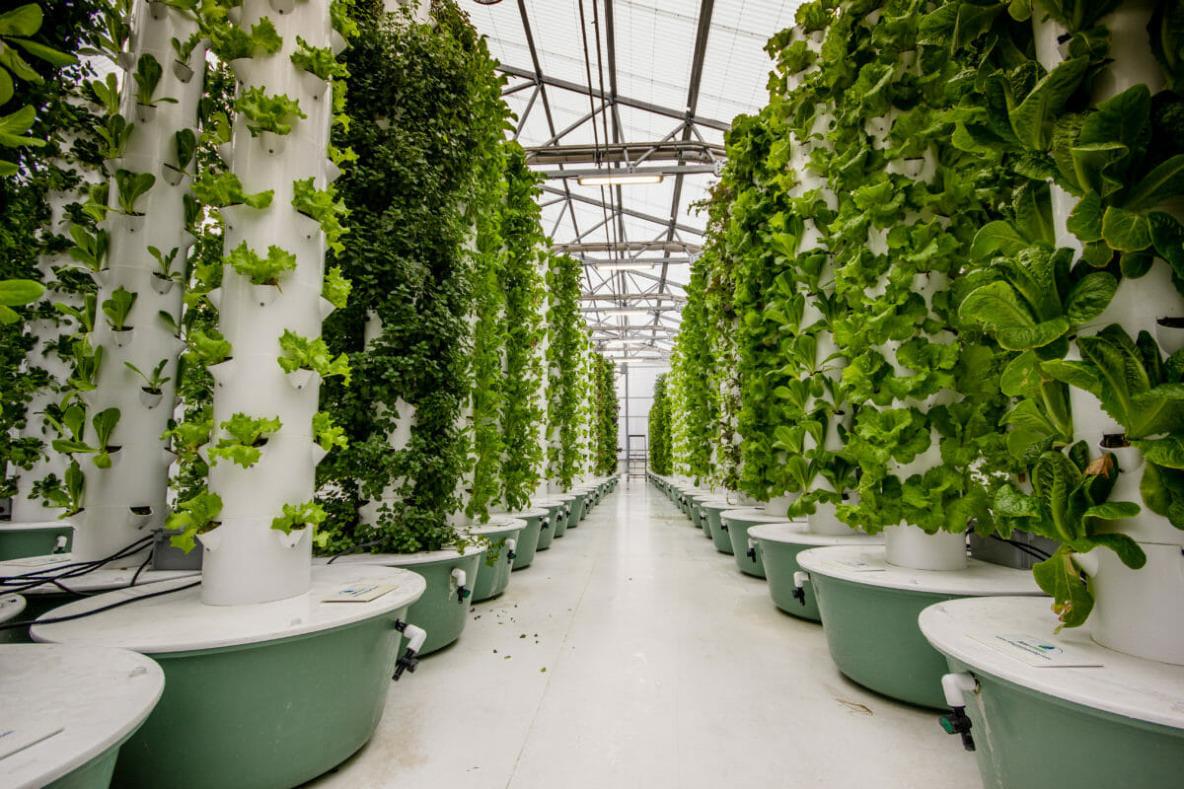
Intropicallyhotandhumidclimates,itisdifficulttogrowtemperatevegetableslike lettuce.GeoffWilson,anagriculturaljournalistandAustralia’srepresentativeofagroup of16nationalorganizationsforaninternationalGreenRoofsorganization,hasreported inanarticlethatanewaeroponicsystemthatoriginatedinSingaporecanprovidea solutiontothisdifficulty.Traditionalaeroponicmethodsinvolvedacoldnutrientmixture that used to be sprayed onto the plant roots, thereby lowering the temperature causing
Source: Google Images
wiltingandultimatelydeathoftheplant.Butthistypeofcoolingisexpensive,evenfor richcitieslikeSingapore.Toovercomethislimitation,intheyear2004,GregoryChow, lecturerattheNgeeAnnPolytechnicofSingaporeinventedtheairdynaponics—amuch lesscostlywayofmaintaininglowroot-zonetemperaturesforcommerciallysuccessful aeroponics.Thissystemgavepositiveoutcomes.Researchersstatedthatthenutrients infusedwithoxygen“energized”theentirerootsystemandimprovedtheplant'stop biomass.
AirdynaponicsusesthecoolingmethodsoftheVenturinozzleeffectinanair-powered operationthatlowersthetemperatureofthenutrientmixtureandsuppliesairfromthe dissolvedoxygen.InSingapore,thismethodisusedtoproducevaluablegreenslike butterhead lettuce, Batavia lettuce, and Romaine lettuce for moneymaking purposes
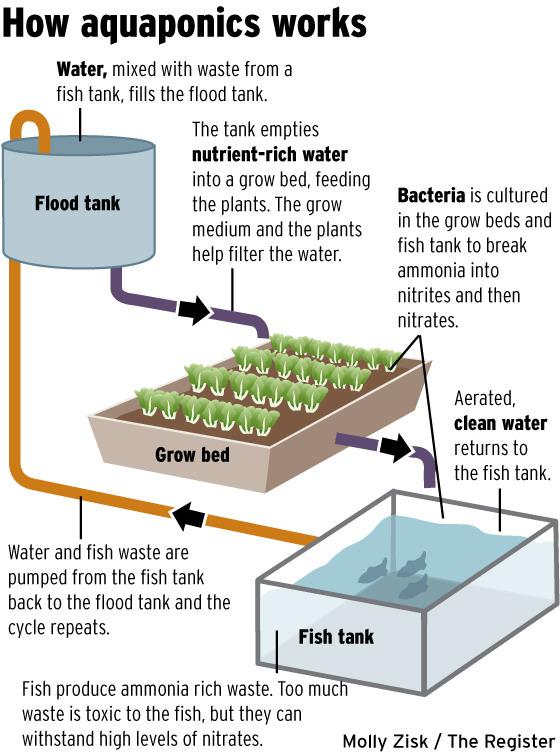
Thehydroponicsystemistakenonestepforwardbyanothersystemcalledaquaponics whichcombinesplantsandfishinthesameecosystem.Thenutrient-richwastes producedbytheindoor-grownfishserveasafeedsourcefortheplantspresentinthe verticalfarm.Ontheotherhand,theplantfiltersandpurifiesthewastewaterwhichis then recycled into the fish tanks
Innormalaquaculture,excretionsfromtheanimalsbeingraisedcanaccumulateinthe water,increasingtoxicity.Inanaquaponicsystem,waterfromanaquaculturesystemis fedtoahydroponicsystemwheretheby-productsarebrokendownbynitrogen-fixing bacteriaintonitratesandnitrites,whichareutilizedbytheplantsasnutrients.Thewater is then recirculated back to the aquaculture system.
Aquaponicsconsistsoftwomainparts,the aquaculturepartforraisingaquaticanimalsandthe hydroponicspartforgrowingplants.Aquaticeffluents, resultingfromuneatenfeedorraisinganimalslikefish, accumulateinwaterduetotheclosed-system recirculation of most aquaculture systems.
Theeffluent-richwaterbecomestoxictotheaquatic animalinhighconcentrationsbuttheseeffluentsare nutrientsessentialforplantgrowth.Althoughconsisting primarilyofthesetwoparts,aquaponicssystemsare usuallygroupedintoseveralcomponentsor subsystemsresponsiblefortheeffectiveremovalof solidwastes,foraddingbasestoneutralizeacids,or for maintaining water oxygenation.
Fig 2.5: Functioning of Aquaponic System
Source: Google Images
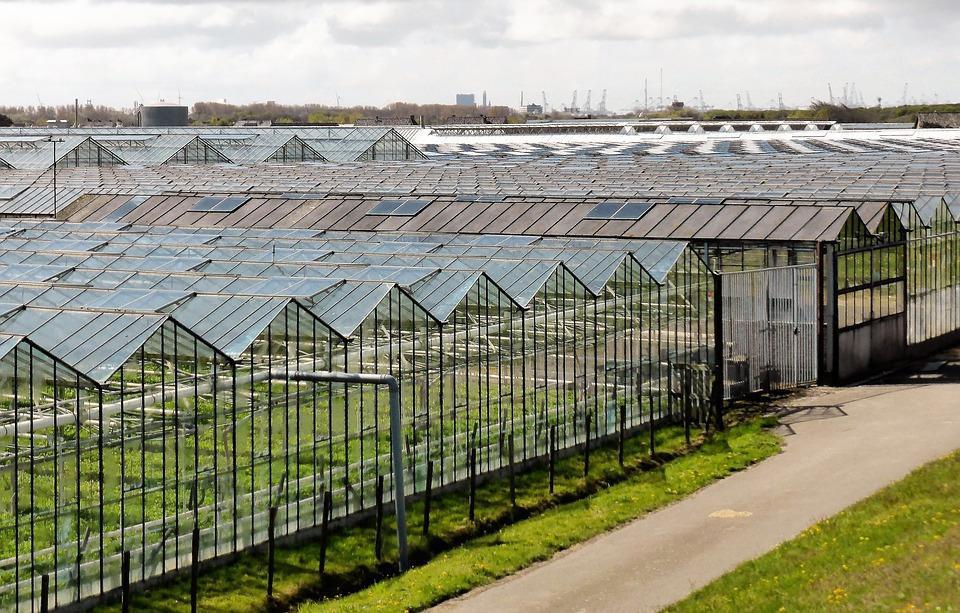
Apolyhouse(alsoknownasapolytunnel,hoopgreenhouseorhoophouse,orhigh tunnel)isatunnelmadeofpolyethylene,usuallysemicircular,square,orelongatedin shape. The interior heats up because incoming solar radiation from thesunwarmsplants,soil,andotherthingsinsidethebuilding,fasterthanheatcan escapethestructure.Airwarmedbytheheatfromhotinteriorsurfacesisretainedinthe buildingbytheroofandwall.Temperature,humidity,andventilationcanbecontrolled by equipment fixed in the poly house.
Fig 2.6: Greenhouse Source: Civilengineering.Org
Greenhousecanbeusedtoprovideahighertemperatureand/orhumiditythanthat whichisavailableintheenvironmentbutcanalsoprotectcropsfromintenseheat, brightsunlight,strongwinds,hailstones,andcoldwaves.Thisallowsfruitsand vegetablestobegrownattimesusuallyconsideredoff-season.Everyfactorinfluencing acropcanbecontrolledinapolyhouse.Greenhousesareoftenusedinfloricultureand nurseries as the economic value of flowers can justify their expense.
Manypeopleconsideredverticalfarmingtobepurelytheoreticalafewyearsago. Today,thepracticehasgrownintoahugeglobalindustrywithacurrentmarketvalueof a little under €13.4 billion (or $15 billion) per year. (Square Roots, 2022)
Oneofthebiggestreasonsverticalfarmingisnowfeasibleisduetotheadvancement ofsensors,smartenergysystems,andothertechnologiesthatmakegrowingmore efficient.Justlikethemanypeopleusingsmartdevicesandautomationtomaketheir homesmoreconvenient,verticalfarmsaretypicallyautomatedtocontrollight, temperature,andwateruse.Theyallowfarmerstooptimizetheconditionsrequiredfor growing to produce the food that consumers want most at the store. Thesenext-tierstructureshelprealizethefullpotentialofseedgenetics,usingdata,AI, andmachinelearningtobolsterefficiencies,saveresources,andreducethecostof growing crops vertically. (Purcell, 2022)
AhostofverticalfarmsareupandrunningintheU.S.andoverseas,andothersare underconstruction.SomearesupportedbyNGOsthatstrivetopromoteenvironmental causesorlocalemploymentgrowth.Otherswillbefor-profitcompaniesdesignedto addressthedemandforlocalproduce.Some,suchasoneinSouthKorea,are supportedbygovernmentssearchingtoexplorewaystoimprovedomesticfood security.Sofar,verticalfarmshaveonlyproducedalimitedamountoffood.Advocates arestillworkingonnewbuildingdesignsandgrowthtechniquestoimprovethe efficiency of indoor food cultivation.
3.1 BEST PRACTICE CASE STUDY (LITERATURE)
Fig 3.1: Farmhouse
Source: Studio Precht
Location: Urban Context
Design Firm: Precht Studio Project Status: Concept Proposal
Itisaninspiringtimberskyscraperconceptthataimstotackleboththehousingand foodcrisesinonemodularstructure.Thefarmhouseprojectusesauniquetriangular structuremadefromCLTpanelstocreateamodularpyramid-likeskyscraperthat meshesurbanverticalfarmingwithmodularhousing.Thestrongconnectionwithnature is designed to relieve residents and onlookers of the mental claustrophobia of the city.
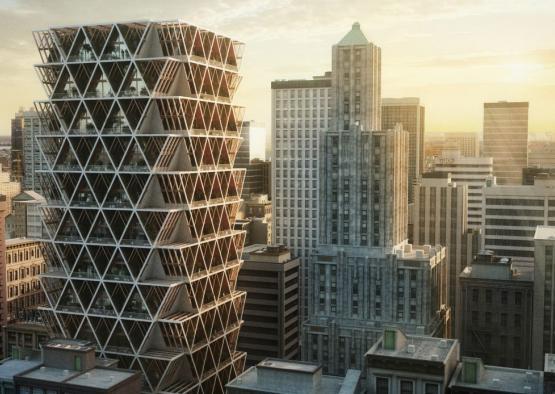
ThefoundationoftheFarmhouseistoencouragecitizenstogrowfoodlocally,butit also continues this ecological aspect with its architecture. TheFarmhouseexteriorisstrikinginanurbanenvironment.Themodularskyscraper cantakeonvariousheights,andstillpresentsasarectilinearenvelope,thoughthe triangular modules inside create a patterned facade.
TheideaofTheFarmhousewastocelebratenatureandplantsasmuchaspossible. Forthisreason,amongothers,cross-laminatedtimberwaschosenastheprimary buildingmaterial,beingadirectderivativeoftrees.CLTfeaturestimberboardslayered in varying grain directions, to create a large and extremely sturdy panel.
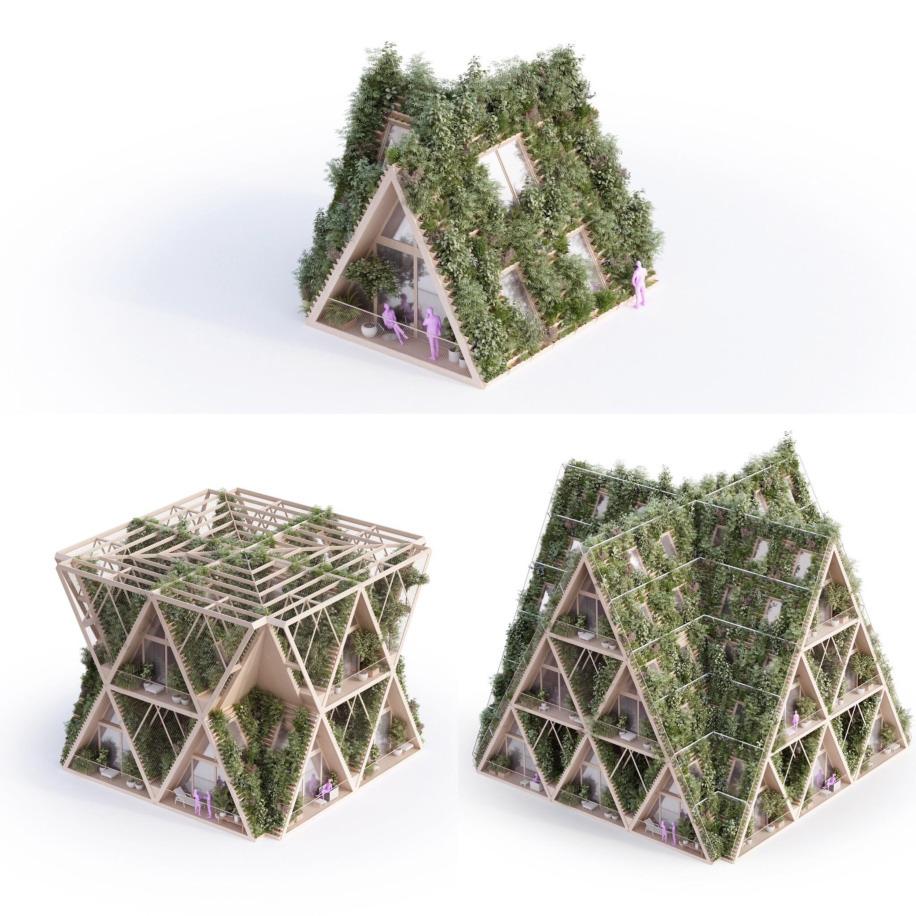
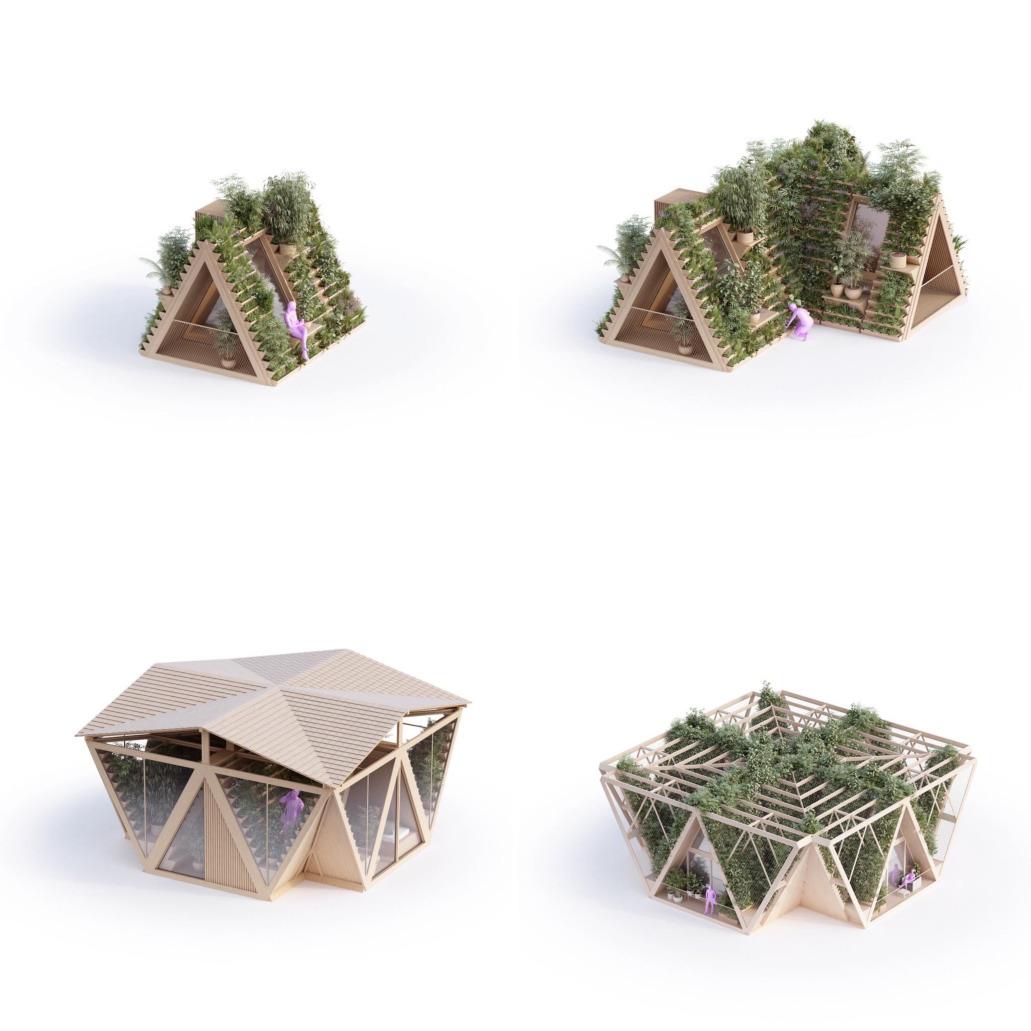
TheFarmhouseconsistsofafullymodularbuildingsystem,whichisprefabricated offsiteandflat-packeddeliveredbytrucks.Prefabricationofamodularbuildingkit shortensthetimeforconstructionanditseffectonthesurrounding.Thebuildingsystem isbasedonthestructuralclarityoftraditionalA-Framehousesandconnectstoadiagrid thatrunstheloadsthroughthebuilding.Eachwalloftheframeexistsof3layers.An insidelayerwithfinishes,electricity,andpipes,amiddlelayerwithstructureand insulation, and an outside layer with gardening elements and water supply.
Forsingle-familystructures,thissystemgivesatooltohomeownerstodesigntheirown place,basedontheneedsandthedemandsoflivingandfarming.Structuraland gardeningelements,wastemanagementunits,watertreatment,hydroponics,andsolar systemscanbeselectedfromacatalogofmodulesandofferscertainflexibilityfor various layouts.(Precht, 2019)
Thehands-onapproachoftheDIYmovementplayedabigroleinthedesign.Notonly forthegardeningpartofthebuildingbutalsoforitsconstruction.Thismethodallows ownerstoselfconstructtheirtinyhousesbasedontheirchosenlayout.Architecturethat is home-built with food that is home-grown.
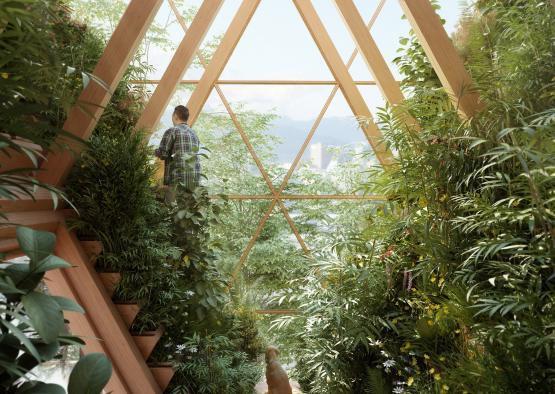
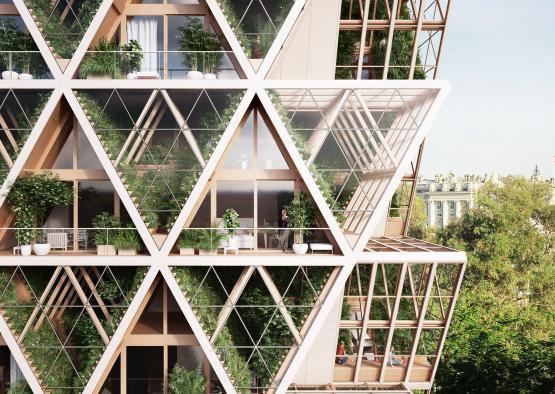 Fig 3.2: Farmhouse and their interior farming environment Source: Studio Precht
Fig 3.3: Prefabricated A-Frame Housing Modules
Source: Studio Precht
Fig 3.4: Growth of these Housing Modules
Source: Studio Precht
Withthedominationofthe‘InternationalStyle’withconcreteframesandcurtainwalls, ourbuildingsbecamemostlyunanimousanduninspiring.Itmadeourcitieslookalike disregardingcultureorclimate.Citiesarefilledwithivorytowers,thatjustconsumefrom theenvironmentwithoutgivinganythingback.Theyareanislandandtheirconnection withthesurroundingstopsatthedoorman.Duetopopulationgrowthandthevast expansionofoururbanareas,wealsopushednatureoutsideandbecamedistantfrom it. (Woodsolutions, 2022)
Asanarchitect,herecomesaprominentroletoplay;tocreatebuildingsthatappealto allsenses:Buildingsthataremadewithhapticmaterialsthatyouwanttotouchandlook at.Buildingsyoucanlistentobecausebirdsandbeeswillbeapartoftheirecosystem. Buildingswiththescentofvegetablesandherbs.Andbuildingsthatyoucanpartlyeat, because they support food production.
The Farmhouse is an example of a structure that contributes to our ecosystem. It lives, breathes, and grows, and it is not an island in the city, but an integral part of the larger community.
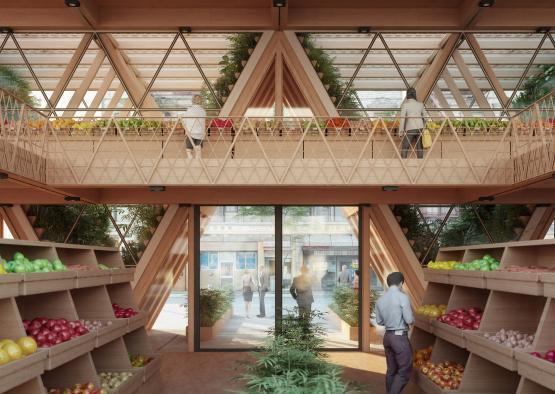 Fig 3.5: Mini Market in the building Source: Studio Precht
Fig 3.6: Regen Village, Netherlands Source: EFFEKT
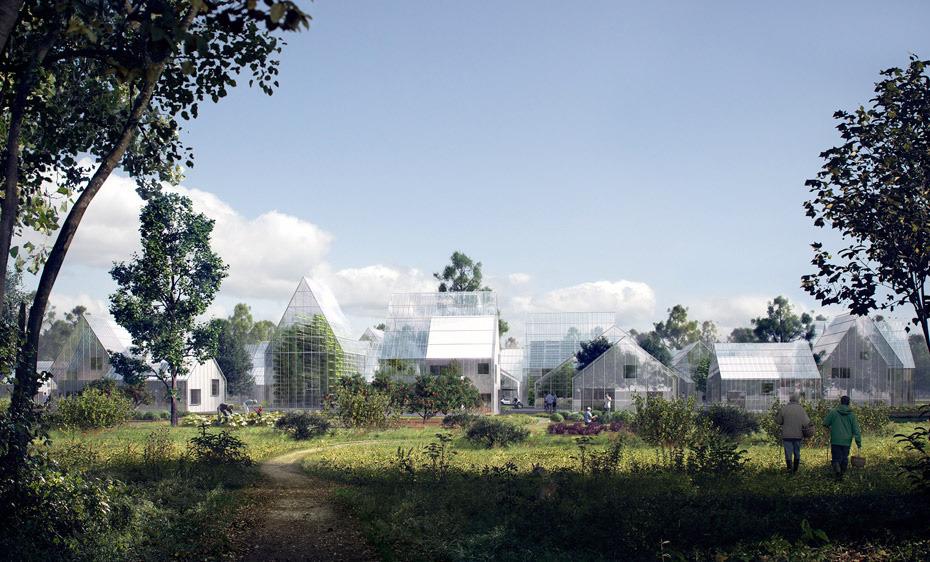
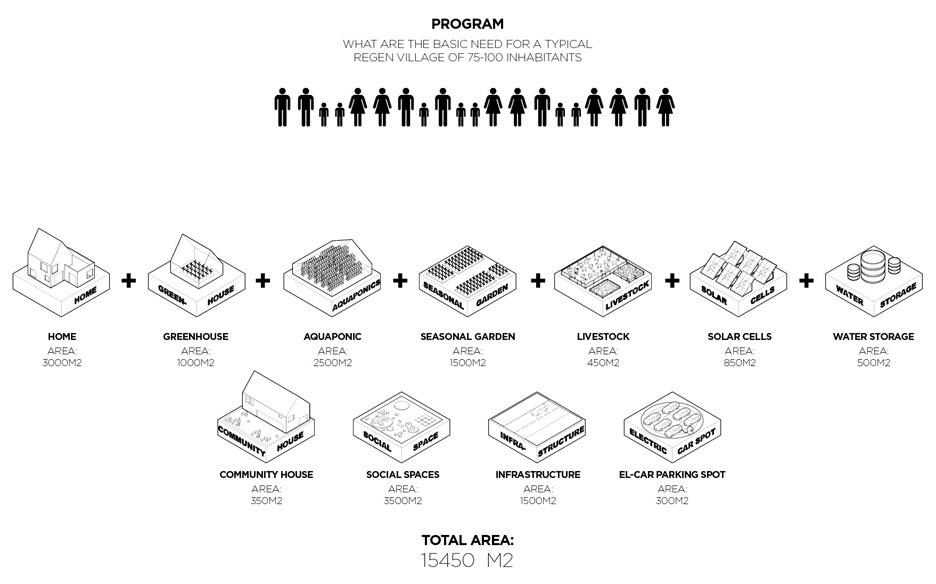
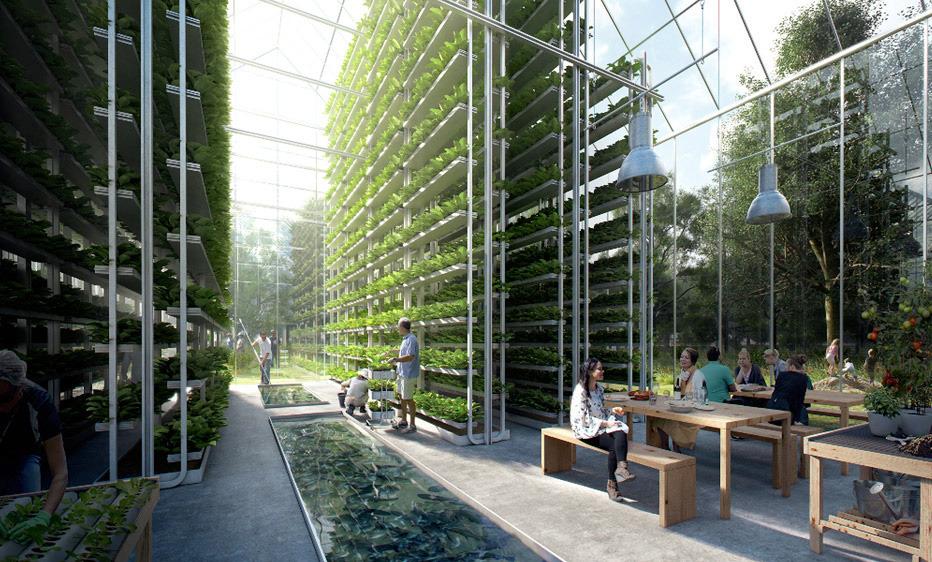
Theprojectaimsincreatingself-sufficientandresilientcommunitiesusingsustainable farmingthatcanbeinstalledinandaroundthehousingunits.Italsoaimstoimprovethe qualityoflifeforthecommunitybyencouragingtheresidentstosociallyengageand participateinfarming.Theprojectincludescommunityspaceslikepublicdiningareas, playgrounds,andlearningcenters.Thefoodproductionwillbedonebyverticalfarming methodslikehydroponics,aquaponics,andaeroponics.Theenergyisobtainedfrom solarpanelsandbiogaswillbegeneratedfromlocalwasteandthewaterwillbe recycledandreused.Thevillageappliestechnologythatconnectsvarious interconnectedsystemsfromenergytostormwatermanagementprovidingcleanwater, food, and energy for the community. (Frearson, 2016)
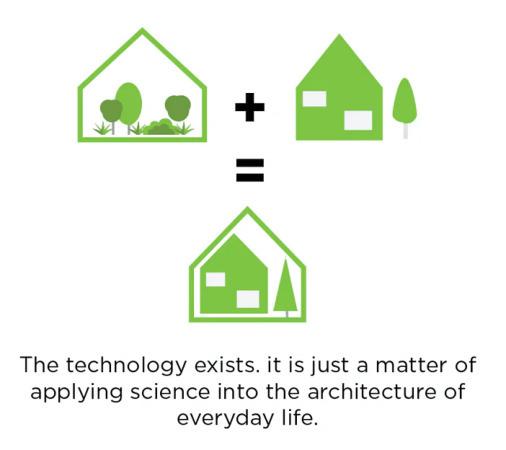
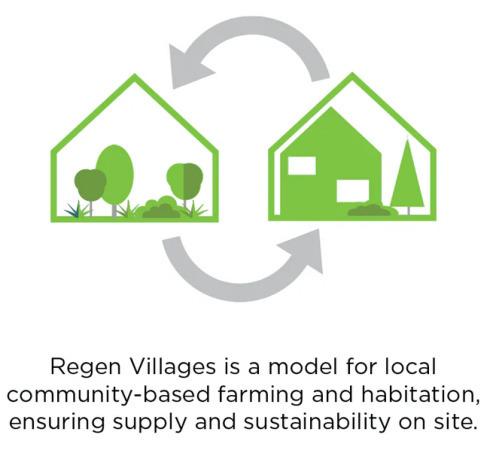
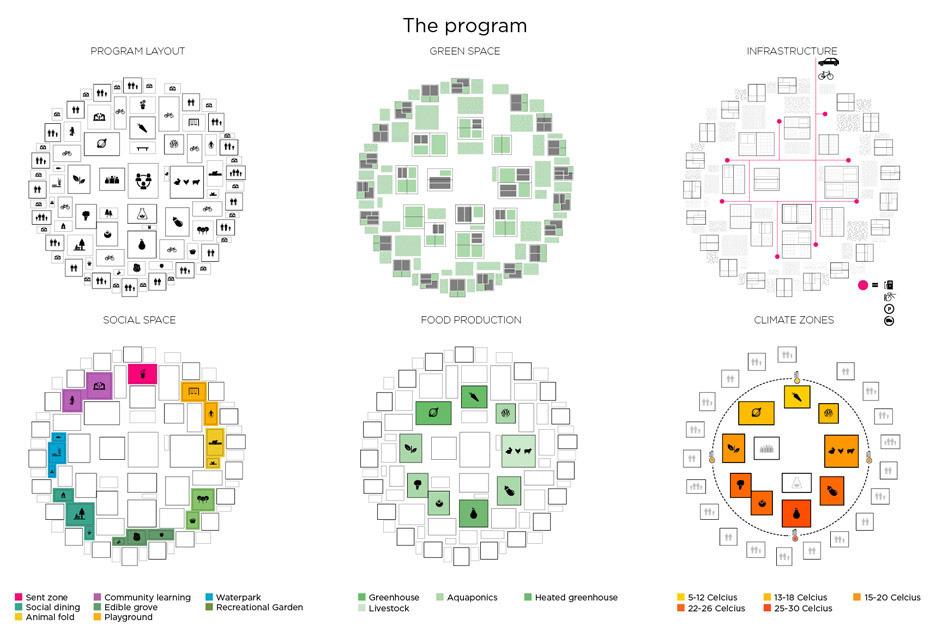
Thedesignlayoutoftheprojectconsistsof25housingunitsarrangedintheoutskirtsof acircularmodel.Thefarmingandfoodproductionfacilitiesareaddedinthecenterof thevillageandthesocialplacesareaddedinbetweenthehousingunitsandthe farmingfacilitiescreatingaconnectionbetweenthem.Thisencouragestheresidentsto takepartinactivitiesandimprovessocialengagement.Theprogramincludespublic spaceslikepublicdiningareas,playgrounds,waterparks,gardens,andlearning centers.Theyintegratedvarioustypesofverticalfarmingforfoodproduction.(Frearson, 2016)
Fig 3.7: Regen Village, Program Source: EFFEKT
Site Plan
Fig 3.8: Regen Village, Zoning Source: EFFEKT
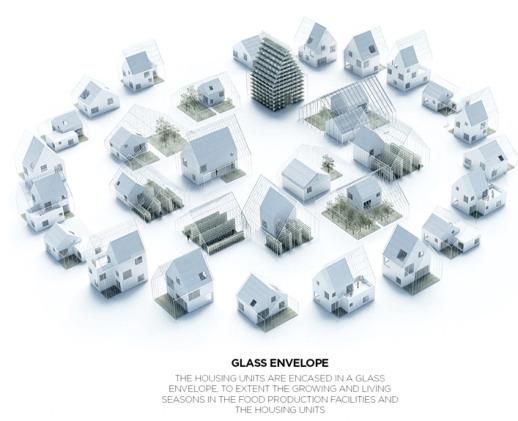
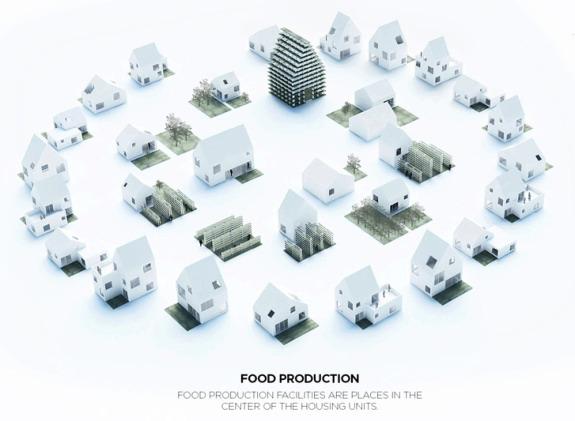
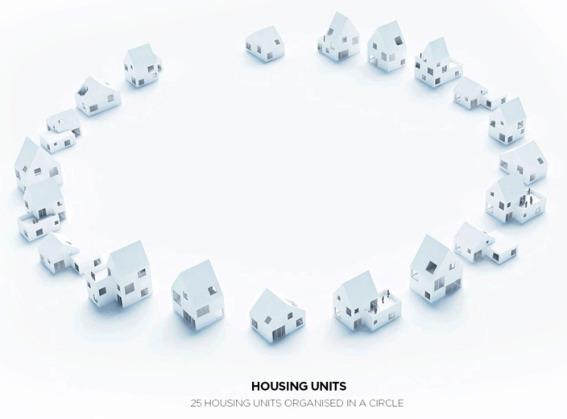
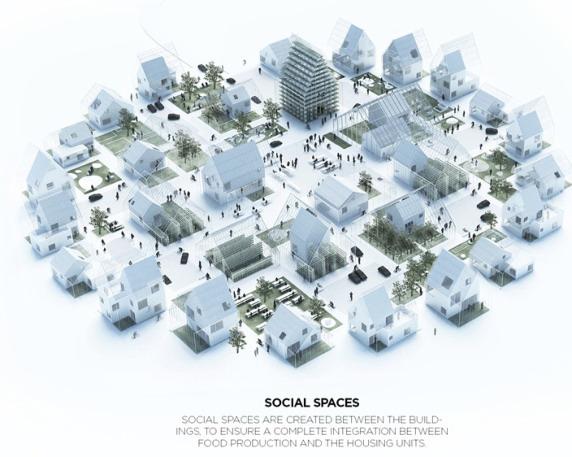
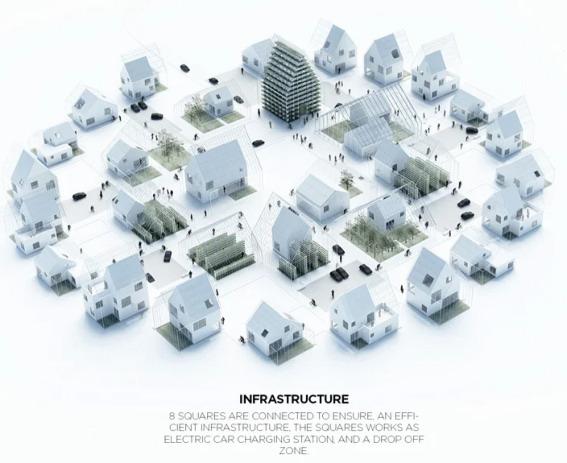
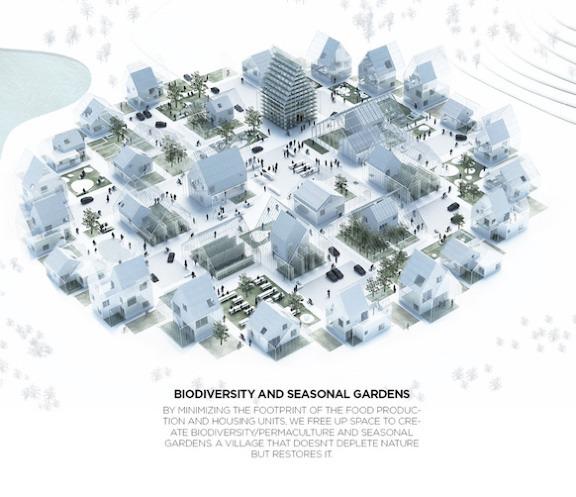
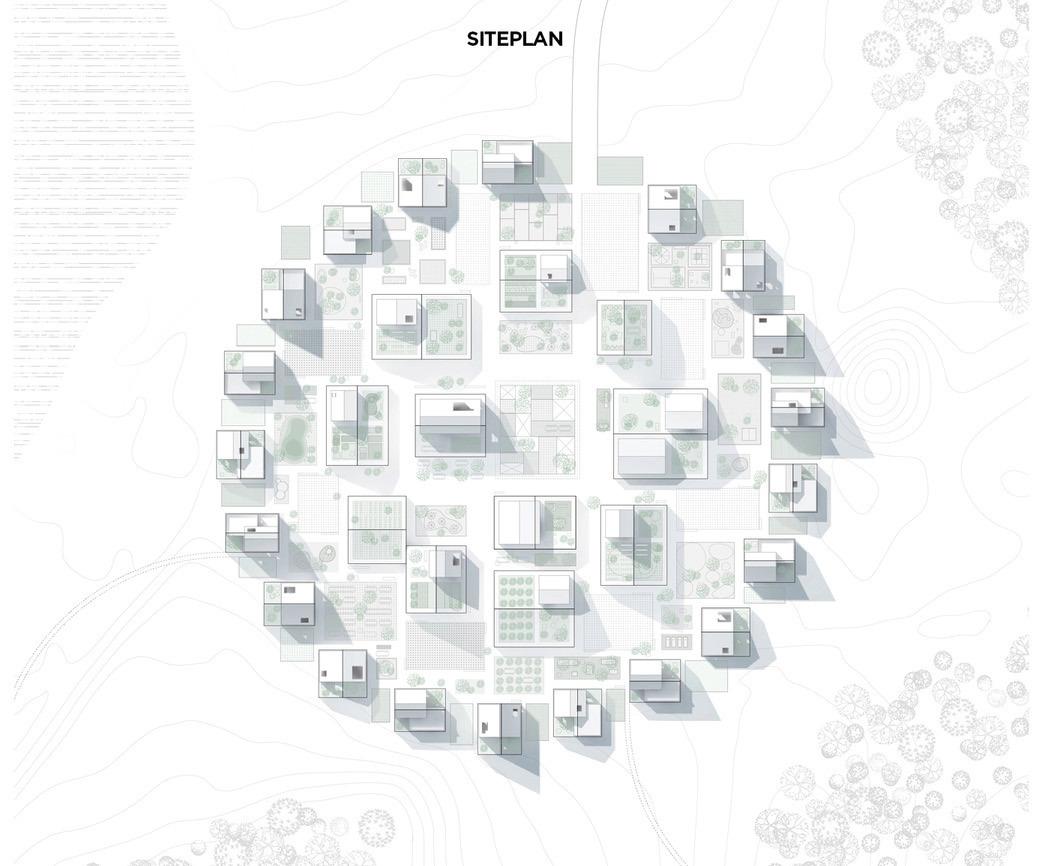
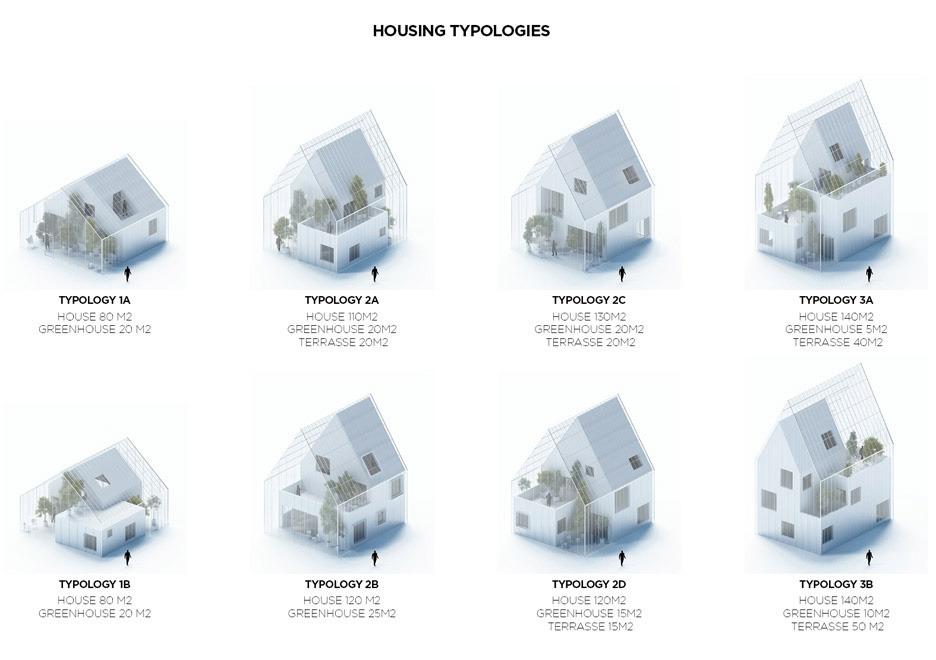
Fig 3.9: Housing typologies Source: EFFEKT
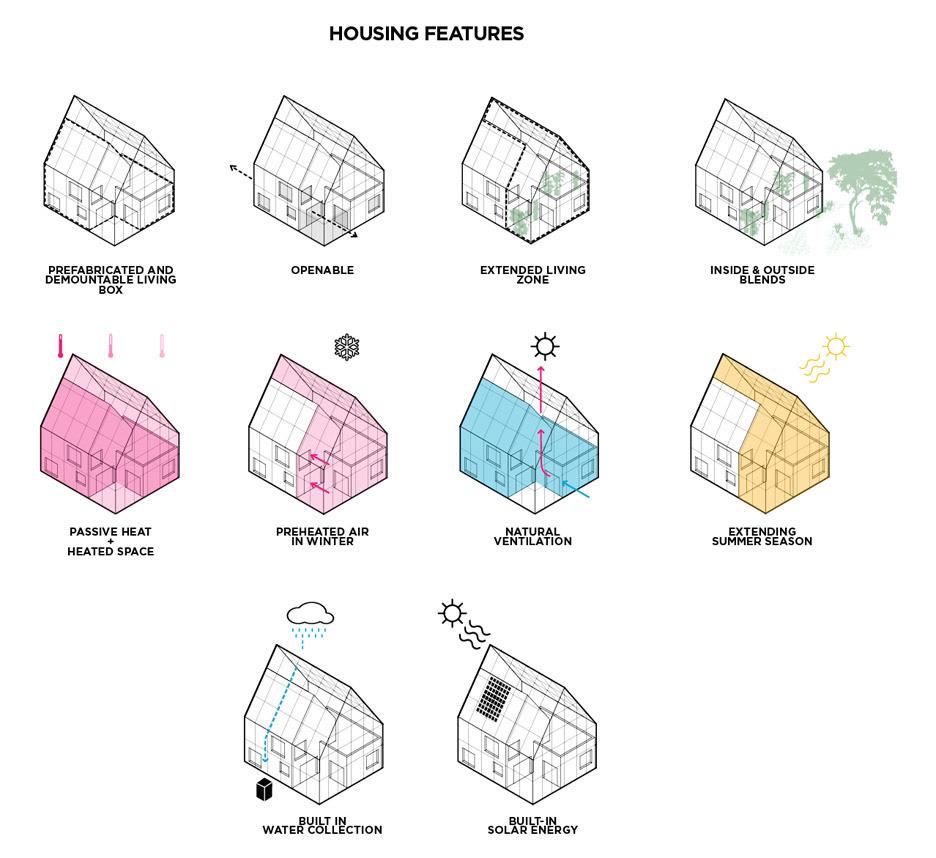
Thedomesticwastefromtheresidentialsisseparatedintodifferentcategoriesandis recycledandreusedforvariouspurposes.Thecompostfromthewastemanagementis usedasafoodsourceforthelivestockandsoldierflies.Thesoldierfliesarefedtothe fishinthefishfarm.Thebio-wastethatcannotbecombustedisusedinthebiogas facility. (Frearson, 2016)
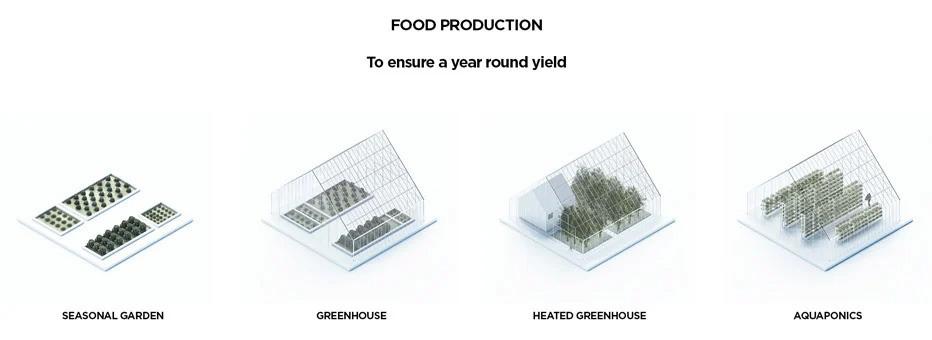
Thewastefromthelivestockisusedasfertilizersfortheseasonalgardens.Thefish fecesareusedasfertilizersforverticalfarmingintheaquaponicsfarm.TheReGen villagehasdifferenttypesoffarmingmethods.Theyproducefoodfromseasonal gardens,greenhouses,heatedgreenhouses,andaquaponics.Themaintypeoffarming is aquaponic farming. This method uses the waste from the fish farm. (Frearson, 2016)
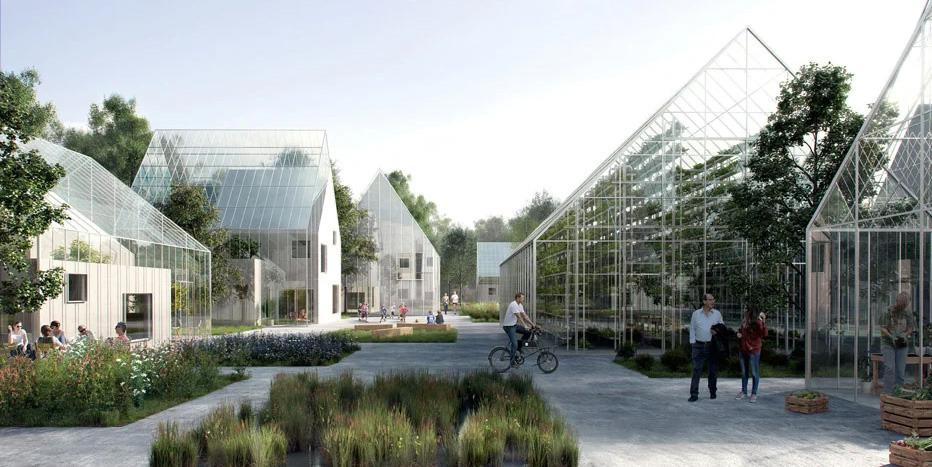
Fig 3.10: Regen system Source: EFFEKT
Fig 3.11: Regen Village, perspective view
Source: EFFEKT
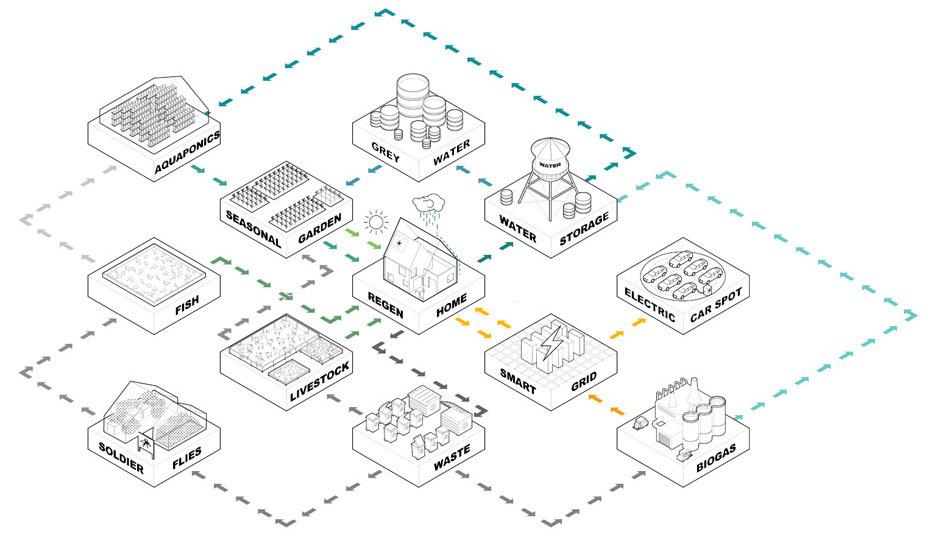
Inconclusion,ReGenshowshowefficientlytheydesignedasustainablecommunitythat providessafeandsecurehousingunitsaswellaspublicspacesthatintegratesfarming. Theprojectnotonlyintegratedfarmingbutalsovarioussustainablemethodstoreduce and recycle.
Thevillageencouragespeopletotakepartinfarmingactivitiesthatonlyhelpthemto stayconnectedtonaturebutalsohelpintheproductionoffood.Thiscreatesahealthy living environment where people are socially connected to each other.
Fig 3.12: Types of farming methods
Source: EFFEKT
Fig 3.13: Vertical farming units
Source: EFFEKT
3.2 INNOVATIVE PRACTICE CASE STUDY (LIVE)
InthecourseofmyarchitecturalinternshipinUAE,IhadtheopportunitytoattendDubai Expo2020alongwithmyfamily.Followingareafewofmyopinionsandobservations from my visit.
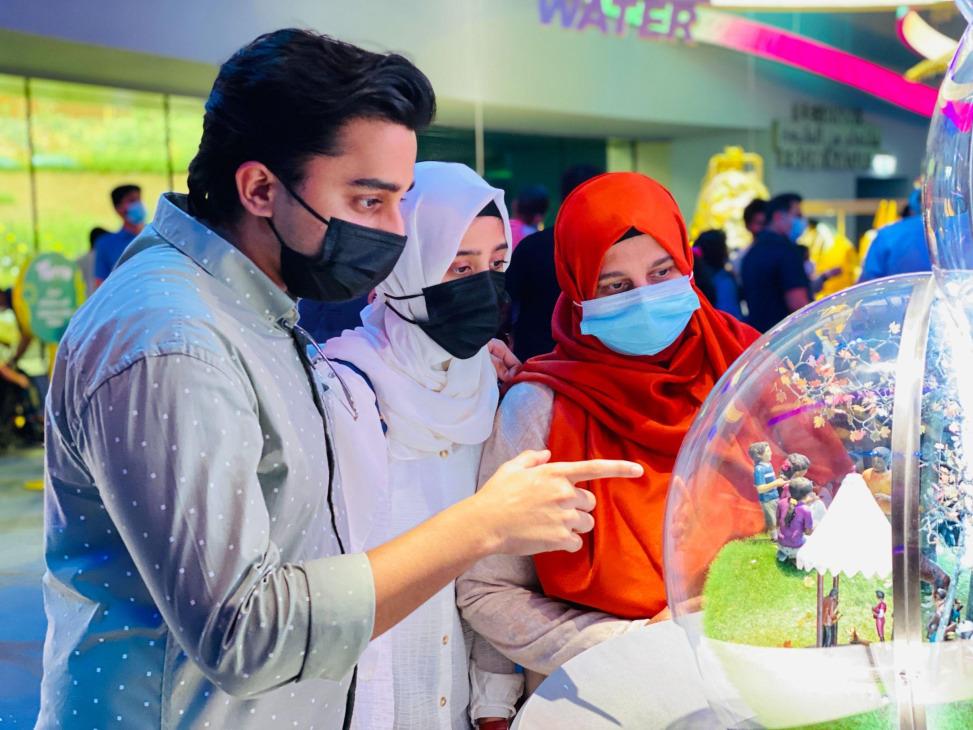
AgricultureisoneofthemostnoteworthyprioritiesinExpo2020Dubai.Theemphasis onsustainablefarmingisn'tsurprising,especiallyataworld'sfair.Inspiteofthis,the extremeclimaticconditionsoftheUnitedArabEmirates(andtheMiddleEastperse) are driving a sincere and urgent push for innovation in agriculture.
Currently,90%oftheUAE'sfoodisimported,mainlybecauseofitsdesertclimate.Due tothisheavyrelianceonforeignsources,supplychainsweredisruptedandpriceswent updramaticallyduringthecoronaviruspandemic.UAEofficialshopetoraisedomestic foodproductionby30%to40%by2020byinvestingheavilyinlocalagricultureand livestock—developing skills such as growing rice and raising dairy cows in arid climates. FoodisthereforearecurrentthemethroughouttheDubaiExpo,wherenotable advancesinagriculturalscienceareondisplaybothinlocalexhibitsaswellasinthe pavilions of other countries. (Brownell, 2022)
Fig 3.14: Author Exploring Sustainability PavilionAnumberofresearch-orientedinstallationsshedlightontheUAE'sagricultural ambitions.Oneexhibition,"FarmingReimaginedfortheDesert,"featuresworkbySmart Acres,acompanythatbuildsindoorhydroponicfarms.Thecompanyclaimstoproduce pesticide-freeleafygreensusingatenthofthelandand90%lesswaterthantraditional farming and is now growing from 11 tons to 155 tons per year.
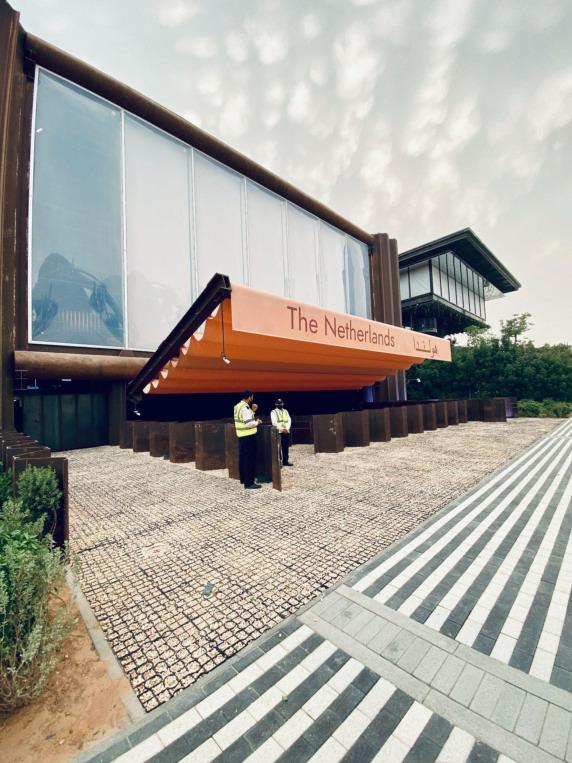
Verticalfarmingisalsohighlightedinothernationalpavilions,includingthoseof Finland andtheNetherlands,bothofwhichhaveconsiderablymorefavorableclimatesfor traditionalagricultureyetseebenefitsinthemethod.Theseinitiativesreflectanew globalemphasison"agritecture"—theadvancementofverticalfarmingandurban agriculture.
Fig 3.15: Pavilions of Netherlands and Singapore
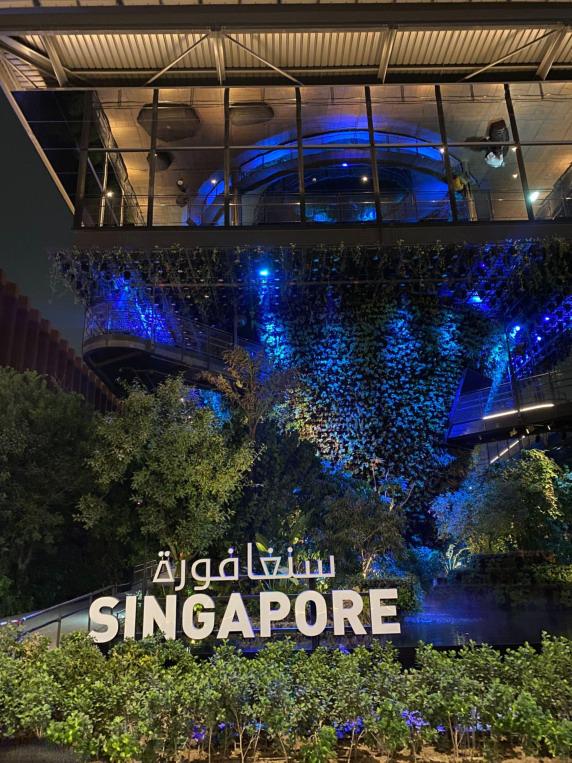
Source: Author
Anotherpavilionthatcapturedmyattentionwasthe Netherlands.Itfeaturesenclosed water,energy,andafoodsystemthatisself-sufficienttoahighdegree.Theywereable to bring out a quest in the minds of the visitors.
Visitingthe SingaporePavilion isjustlikevisitingtheGardenCityofSingapore.The pavilionisnaturallyadornedwithplants,trees,andshrubs.Duringmyvisit,Iheardone oftheSingaporePavilionstaffmemberscallitanoasisinthedesertsinceit demonstrateshowarchitectureandnaturecancoexist."Thepavilionshowshow buildingscanbedesignedtobeenvironmentallyresponsibleandsustainable,achieving net-zero energy consumption and water consumption."
Whilevisiting OpportunityPavilion inOpportunityDistrict,Iwasabletoparticipateina MissionPossibleexperienceaimedatmeetingtheSustainableDevelopmentGoalsof theUnitedNations.ItfeaturestheworkofUAEMinistryofClimateChangeand Environmentengineer MaryamAl-Junaibi,whoadvocatessustainableagricultureusing available resources.
Fig 3.16: Exploring Mission Possible Zone at Opportunity Pavilion
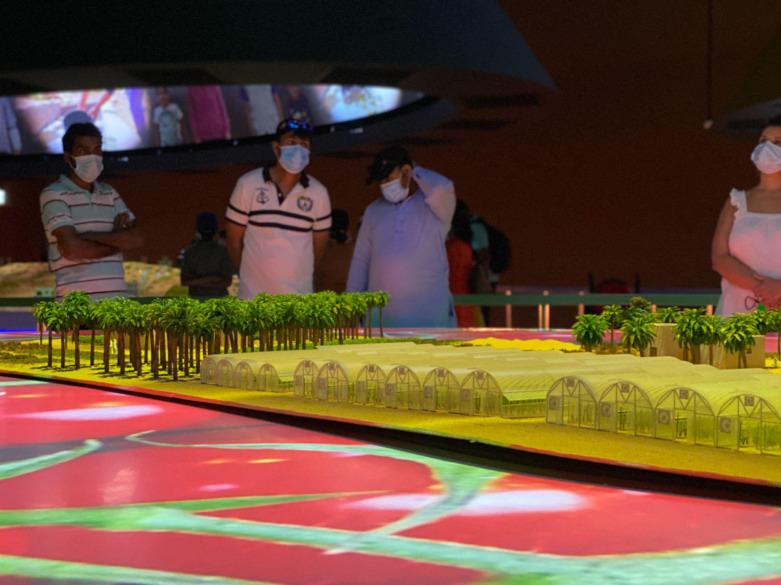
Source: Author
ItalsoshowcasestheworksofanumberofexpertsandscholarsincludingMansour Al-Mansoori,anexpertindatepalmcultivation;FadelNasserAl-Saadi,anexpertin localhoneyproduction;andGermanAline,anexpertindesert-friendlyplants.
ThroughouttheExpo,MissionPossibleemphasizedthepositiveandresourceful messageofsustainablefoodproduction,eveninthemostextremeandunlikely circumstances.
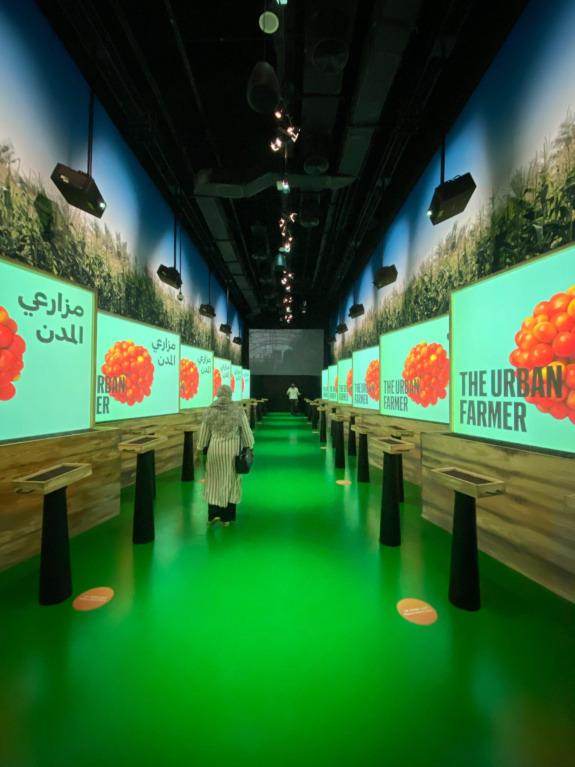
Withanincreasingnumberofpeoplelivingincities,theinternationalcommunitymust assessurbanfoodsecurityandtheroleofurbanagricultureinitsownright,whilealso acknowledgingtheirfundamentalconnectionwiththebroaderfoodsecuritydebateand the global food supply chain.
Mindsetchangesandsupportivepoliciesarecriticaltocatalyzingalarge-scale, meaningfuleffortinthisdirection.Policyimplementation,suchastheestablishmentof urbanagriculturalextensionservice,willgoalongwaytowardinstillingconfidencein would-benewurbanfarmersandhouseholdsinterestedingrowingvegetablestocover aportionoftheirneeds.Tomakeurbanfarmingareality,thoughtleadersareneededto lendcredibility,substance,andmomentumtoarisingmovementbygathering, analyzing, sharing, and creating new urban farming information.
Asinnovativewaysandunderstandingsofhowtofeedever-increasingurban populationsemerge,nationsacrosstheworldwillcontinuetoadaptandgrowin response,movingawayfromtheidyllicandnaturalandtowardtheartificial,industrial, and controlled.
Thewayweenvisionourbuildingsplaysavitalroleinafruitfulchange.Theprojects discussedabovearesomeoftheinspiringtakesonthiscause.Anotherfineexampleis oftheNetherlandswhichusesarchitecturetofeedtheworld.TheNetherlandsmightbe asmallcountry,butit'sthesecond-largestexporterofagricultureintheworld,afterthe UnitedStates.Thisarchitecturaltransformationofthecitiesandcountrysidewill continue to accelerate, as urban population growth places more demands upon it. Asthearchitecturalprofessiongrappleswiththefastpaceoftechnology,which continuestotransformthedesignandconstructionprocess,architectsmayincreasingly becalledtoreimaginenewwaysofshapingefficient,contextual,integratedstructures for the future of agriculture.
By2050,theworldwillbehometo10billionpeople,upfrom7.8billiontoday.Theresult willbeaneedforgreateragriculturalyields,usinglesswater,lessenergy,andless land.ThecountriesliketheNetherlandsandtheworksofarchitectslikeChrisPrecht offeronenarrativeofhowarchitecturaltypologieswillcometomanifesttheshifting relationshipsbetweencitiesandcountryside,aswellastherelationshipbetweenfood and urbanism.
●Resources(MDPI).2021.“UrbanVerticalFarmingasanExampleof Nature-BasedSolutionsSupportingaHealthySocietyLivingintheUrban Environment.” 18.
● IgorPryadko.2018.“GreenArchitectureasaMeansofSustainableUrban Development: Russian and International Experience.” 9.
●Specht,Kathrin&Siebert,Rosemarie&Opitz,Ina&Freisinger,Ulf&Sawicka, Magdalena&Werner,Armin&Thomaier,Susanne&Henckel,Dietrich&Walk, Heike&Dierich,Axel.(2014).Urbanagricultureofthefuture:Anoverviewof sustainabilityaspectsoffoodproductioninandonbuildings.Agricultureand Human Values. 31. 10.1007/s10460-013-9448-4.
●EmirFikretogluHuseynova.2011.“Planningofsustainablecitiesinviewof green architecture.” no. Procedia Engineering, 9.
●Oberč,B.P.&ArroyoSchnell,A.(2020).Approachestosustainableagriculture. Exploringthepathwaystowardsthefutureoffarming.Brussels,Belgium:IUCN EURO.
● Soomro,Ahsen.“UrbanAgriculture;Types,ProsAndCons|Environment Buddy.”UrbanAgriculture;Types,ProsandCons|EnvironmentBuddy. www.environmentbuddy.com, April 9, 2020.
●Frearson,A.(2016,May20).EFFEKTdesignsReGenVillagesthatcould produce all their own food and energy. Retrieved from dezeen:
● “VerticalFarming:RaisingAgriculture’sPotentialAndLoweringItsEnvironmental Impact|LatestScienceNewsAndArticles|Discovery.”Discovery. www.discovery.com, February 27, 2020.
● “AnIntroductionToUrbanFarming,Types,Ideas,AndBenefits.”Agriculture Goods. agriculturegoods.com, August 17, 2020.
●"CO12142 | FOOD SECURITY: Cities as part of the solution and not ...." Accessed March 10, 2022.
●“Urban Agriculture — the Future of Farming.” n.d. Asia & Pacific. Accessed March 9, 2022.
● Fletcher, Owen. “Why the Future of Farming May Be in Cities - WSJ.” WSJ. www.wsj.com, September 15, 2012.
● BROWNELL, BLAINE . “Agricultural Dreaming at the Dubai Expo.” www.architectmagazine.com. Accessed March 10, 2022.
● Precht, Chris . “The Farmhouse.” The Farmhouse. www.precht.at. Accessed March 10, 2022.
● The Farmhouse | WoodSolutions. “The Farmhouse | WoodSolutions.” www.woodsolutions.com.au. Accessed March 10, 2022.