Un Periódico Diferente / A Different Kind of Newspaper
o Difer spape
o Difer spape
Fotos Cortesía de 7 Arts Latino Foundation
Foto del Mes /Photo of the Month
Remembering our December 2004 Edition
Latinx Journalism Matters
Support Publishers of Color
The impact of COVID-19 has been especially devastating for communities of color. Now, more than ever, independent, local journalism needs your support.
El Sol Latino is your local Latinx-owned, independent news source that brings to the front lines diverse Latino voices, perspectives,
contents
2 Foto del Mes /Photo of the Month Remembering our December 2004 Edition
3 Portada / Front Page 2nd Springfield Latino Book Fair
4 The Real Reason Conservatives are Furious about Bad Bunny’s Forthcoming Super Bowl Performance
5 Mellon Foundation and the Flamboyan Arts Fund Announce the 2025 Letras Boricuas Fellows
6 Opinión / Opinion
Eleven Months of Loathsome Project 2025
8 Season of Gratitude for the Champions of Springfield
9 Literatura/ Literature Vida de Perro
11 Libros / Books Alborada
12 Si me Comprendieras
13 Salud / Health
Tapestry Health Recognized as a Key Community Partner in a Brown University-Led Study on Drug Use and Harm Reduction
14 Deportes / Sports Paola Soto Burgos, Boricua Volleyball Player, to Receive National Scholarship
15 Springfield OTSL Banquet 2025
Editor Manuel Frau Ramos manuelfrau@gmail.com 413-320-3826
Assistant Editor Ingrid Estrany-Frau
Art Director Tennessee Media Design
Business Address El Sol Latino P.O Box 572 Amherst, MA 01004-0572
Editorial Policy
El Sol Latino acepta colaboraciones tanto en español como en inglés. Nos comprometemos a examinarlas, pero no necesariamente a publicarlas. Nos reservamos el derecho de editar los textos y hacer correcciones por razones de espacio y/o estilo. Las colaboraciones pueden ser enviadas a nuestra dirección postal o a través de correo electrónico a: info@elsollatino.net.
El Sol Latino welcomes submissions in either English or Spanish. We consider and review all submissions but reserve the right to not publish them. We reserve the right to edit texts and make corrections for reasons of space and/or style. Submissions may be sent to our postal address or via electronic mail to: info@elsollatino.net.
El Sol Latino is published monthly by Coquí Media Group.
El Sol Latino es publicado mensualmente por Coquí Media Group, P.O Box 572, Amherst, MA 01004-0572.
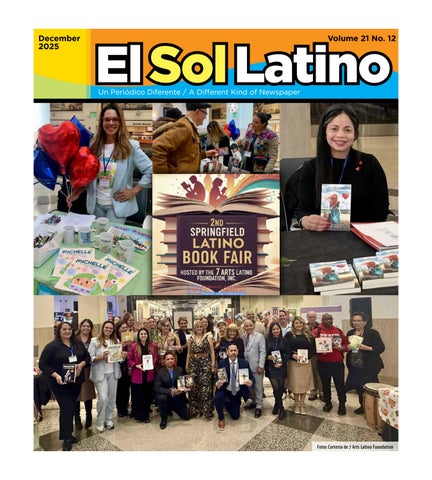
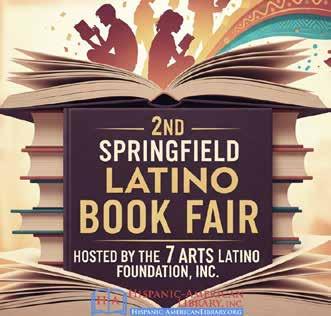
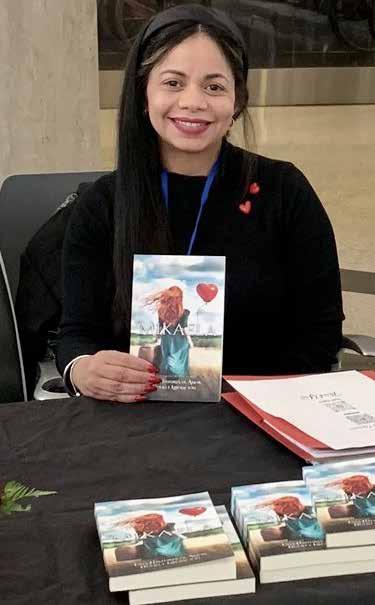
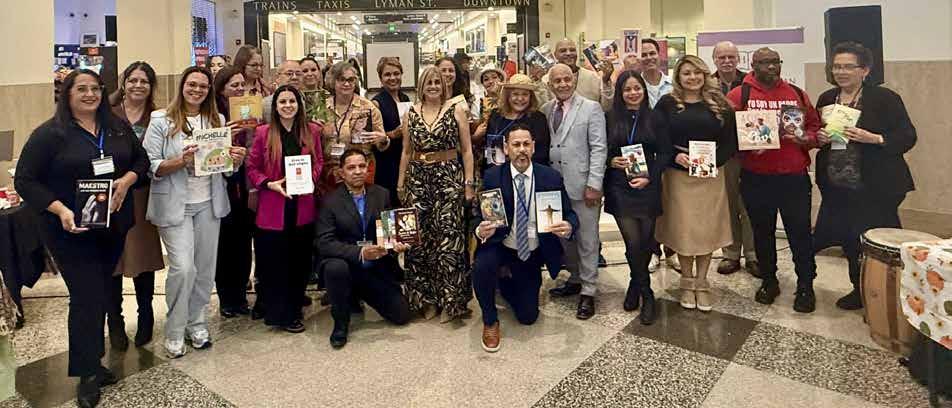
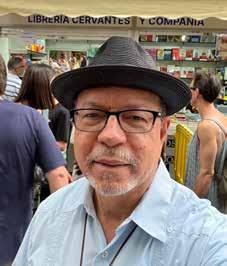
2nd Springfield Latino Book Fair
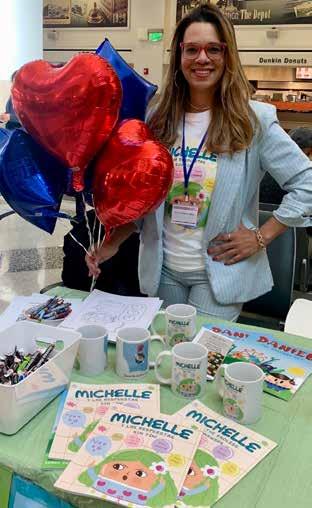
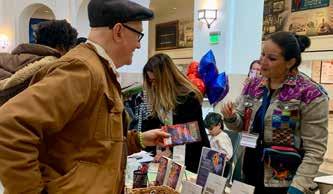
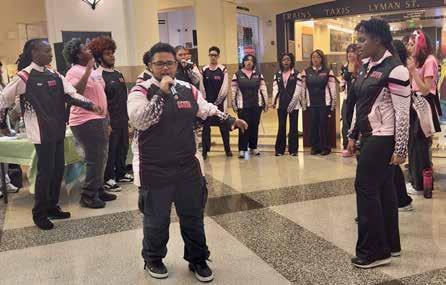
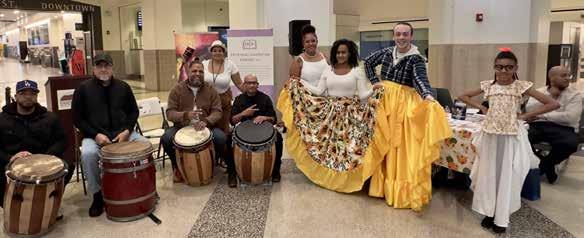
The 7 Arts Latino Foundation hosted its 2nd annual Springfield Latino Book Fair at Union Station on November 15, 2025, highlighting the importance of the emerging Latino literature in western Massachusetts. The inaugural Latino Book Fair was held on February 2024 at the City Library Mason Square Branch.
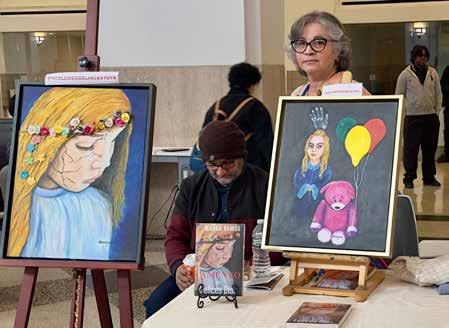
The event aimed to celebrate and promote the rich literary contributions of regional Latino authors and artists. It also provided a platform for local authors and artists to showcase their work, and engage with the community.
This year, the book fair featured participation from around 24 authors, a significant increase from last year’s 10. The participating authors this year came from the Mid-Atlantic and New England regions. This book fair has become an event with regional appeal and influence beyond its local origins. It has become one of the signature events of the 7 Arts Latino Foundation, Inc., founded by Jorge David Martínez, current President and Executive Director.
The array of authors who live in the area originally come from Paraguay, República Dominicana, Puerto Rico, México, and Ecuador. Also, the authors born in New Jersey are of Puerto Rican descent.
Wanda Ramos
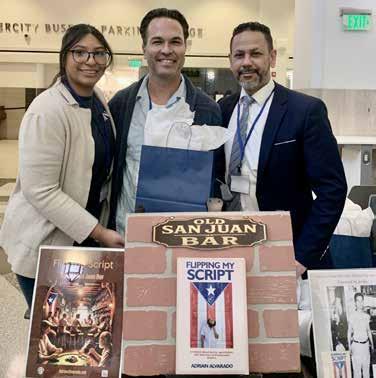
Marlen Reynoso, Adrián Alvarado, and Jorge David Martínez
MA State Representative Carlos González, Wanda Torres, and Adrián Alvarado
“Revolution”, elite vocal group at the Springfield Conservatory of the Arts, under the direction of Marcos Carreras
Brendaliz Cepeda and Bomba de Aquí
The Real Reason Conservatives are Furious about Bad Bunny’s Forthcoming Super Bowl Performance
by EDIBERTO ROMÁ and DR. ERNESTO SAGÁS
This article was originally published in The Conversation | October 16, 2025
Soon after the NFL’s announcement that Puerto Rican rapper Bad Bunny would headline the Super Bowl halftime show, conservative media outlets and Trump administration officials went on the attack.
Homeland Security head Kristi Noem promised that U.S. Immigration and Customs Enforcement “would be all over the Super Bowl.”
President Donald Trump called the selection “absolutely ridiculous.” Right-wing commentator Benny Johnson bemoaned the fact that the rapper has “no songs in English.” Bad Bunny, conservative pundit Tomi Lahren complained, is “Not an American artist.”
Bad Bunny – born Benito A. Martínez Ocasio – is a superstar, one of the top-streaming artists in the world. And because he is Puerto Rican, he’s a U.S. citizen, too.
To be sure, Bad Bunny checks many boxes that irk conservatives. He endorsed Kamala Harris for president in 2024. There’s his genderbending wardrobe. He has slammed the Trump administration’s antiimmigration policies. He has declined to tour on the U.S. mainland, fearing that some of his fans could be targeted and deported by ICE. And his explicit lyrics – most of which are in Spanish – would make even the most ardent free speech warrior cringe.
And yet, as experts on issues of national identity and U.S. immigration policies, we think Lahren’s and Johnson’s insults get at the heart of why the rapper has created such a firestorm on the right. The spectacle of a Spanish-speaking rapper performing during the mostwatched sporting event on American TV is a direct rebuke of the Trump administration’s efforts to paper over the country’s diversity.
The Puerto Rican colony
Bad Bunny was born in 1994 in Puerto Rico, an unincorporated U.S. territory that the country acquired after the 1898 Spanish-American War. It is home to 3.2 million U.S. citizens by birth. If it were a state, it would be the 30th largest by population, according to the 2020 U.S. Census.
But Puerto Rico is not a state; it is a colony from a bygone era of U.S. overseas imperial expansion. Puerto Ricans do not have voting representatives in Congress, and they do not get to help elect the president of the United States. They are also divided over the island’s future. Large pluralities seek either U.S. statehood or an enhanced form of the current commonwealth status, while a smaller minority vie for independence.
But one thing is clear to all Puerto Ricans: They’re from a nonsovereign land, with a clearly defined Latin American culture –one of the oldest in the Americas. Puerto Rico may belong to the U.S. – and many Puerto Ricans embrace that special relationship – but the island itself does not sound or feel like the U.S.
The over 5.8 million Puerto Ricans that reside in the 50 states further complicate that picture. While legally they are U.S. citizens, mainstream Americans often don’t see Puerto Ricans that way. In fact, a 2017 poll found that only 54% of Americans knew that Puerto Ricans were U.S. citizens.
The alien-citizen paradox
Puerto Ricans exist in what we describe as the “alien-citizen paradox”: They are U.S. citizens, but only those residing in the mainland enjoy all the rights of citizenship.
A recent congressional report stated that U.S. citizenship for Puerto Ricans “is not equal, permanent, irrevocable citizenship protected by the 14th Amendment … and Congress retains the right to determine the disposition of the territory.” Any U.S. citizen that moves to Puerto Rico no longer possesses the full rights of U.S. citizens of the mainland.
Bad Bunny’s selection for the Super Bowl halftime show illustrates this paradox. In addition to criticisms from public figures, there were widespread calls among MAGA influencers to deport the rapper
This is but one way Puerto Ricans, as well as other Latino citizens, are reminded of their status as “others.”
ICE apprehensions of people merely appearing to be an immigrant –a tactic that was recently given the blessing of the Supreme Court – is an example of their alienlike status.
And the bulk of the ICE raids have occurred in predominantly Latino communities in Los Angeles, Chicago and New York. This has forced many Latino communities to cancel Hispanic Heritage Month celebrations.
Bad Bunny’s global reach
The xenophobic fervor against Bad Bunny has led political leaders like House Speaker Mike Johnson to call for a more suitable figure for the Super Bowl, such as country music artist Lee Greenwood. Referring to Bad Bunny, Johnson said “it sounds like he’s not someone who appeals to a broader audience.”
But the facts counter that claim. The Puerto Rican artist sits atop the global music charts. He has over 80 million monthly Spotify listeners. And he has sold nearly five times more albums than Greenwood. That global appeal has impressed the NFL, which hopes to host as many as eight international games next season. Additionally, Latinos represent the league’s fastest-growing fan base, and Mexico is its largest international market, with a reported 39.5 million fans.
The Bad Bunny Super Bowl saga may actually become an important political moment. Conservatives, in their efforts to highlight Bad Bunny’s “otherness” – despite the United States being the secondlargest Spanish-speaking country in the world – may have unwittingly educated America on the U.S. citizenship of Puerto Ricans.
In the meantime, Puerto Ricans and the rest of the U.S. Latino community continue to wonder when they’ll be accepted as social equals.
EDIBERTO ROMÁN holds a J.D. from the University of Wisconsin. He is a nationallyacclaimed scholar and award-winning educator with broad teaching interests and an extensive scholarship portfolio. From 1995 to 2002, he was Associate Professor and then Professor of law at St. Thomas University School of Law. In 2003, he joined the FIU College of Law as a founding faculty member. DR. ERNESTO SAGÁS is Professor of Ethnic Studies at Colorado State University. He has a Ph.D. in political science from University of Florida with a concentration in Latin American studies. Dr. Sagás is the author of Race and Politics in the Dominican Republic, as well as articles on race and politics, democracy and authoritarianism, immigration policies, and other topics.
Mellon Foundation and the Flamboyan Arts Fund
Announce the 2025 Letras Boricuas Fellows
New
York, NY |
MELLON FOUNDATION
| November 18, 2025
The Mellon Foundation and the Flamboyan Foundation’s Arts Fund announced today the fourth cohort of Letras Boricuas Fellows, comprising twenty-four Puerto Rican writers — on the archipelago and across the U.S. diaspora — whose works span a diverse range of literary genres and styles. Fellows will be awarded unrestricted grants of $25,000 each to support their literary practice and provided opportunities to connect and learn across cohorts.
Established in 2021 as a collaborative effort between the two foundations, the fellowship aims to elevate and amplify the voices of Puerto Rican writers while bolstering the archipelago’s culturally rich, yet historically underfunded, literary tradition and cultural ecosystem. Since its inception, Letras Boricuas has awarded a total of more than $2 million in funding to eighty-four writers, across literary genres, geographies, and career stages, with the intention of fostering creativity, opening professional opportunities, and convening an intergenerational community of Boricua writers.
“Being a Letras Boricuas Fellow has had an immense impact on my work this year. First, I’ve been able to dedicate more time to writing — my new fiction project is almost finished — thanks to some financial breathing room,” said Ana Teresa Toro, 2024 Letras Boricuas fellow. “Likewise, having the opportunity to save toward a personal goal that benefits my son has been an emotional relief, allowing me to concentrate on writing. On the other hand, connecting with other voices I hadn’t known before has enriched me both as a reader and as a Puerto Rican. It’s an honor for which I am truly grateful.”
“At Flamboyan, we listen and learn from our creative community. Expanding Letras Boricuas allows us to support more writers with the freedom to create. Together with Mellon, we’re proving that when we invest in artists, Puerto Rican creativity—and the identity that unites us—flourish,” said Carlos Rodríguez, Executive Director of the Flamboyan Foundation
“Mellon is honored to expand our support for these innovative voices at work in Puerto Rican literature today,” said Elizabeth Alexander, President of the Mellon Foundation. “This fourth cohort of Letras Boricuas Fellows welcomes writers, translators, anthologists, and performers from across the diaspora, and celebrates their multidisciplinary creativity. We are pleased to continue growing this remarkable community of literary artists amid our sustained commitment to Puerto Rican culture as a whole.”
The 2025 Letras Boricuas Fellowship cohort embodies the creative pulse of Puerto Rican literature. This new cohort showcases the breadth and brilliance of Boricua voices — including fiction, poetry, creative nonfiction, spoken word, and playwriting — and represents thirteen cities across Puerto Rico and the U.S. diaspora. Together, these writers honor and expand Puerto Rico’s literary legacy, demonstrating the strength, imagination, and cultural pride that continue to define the Puerto Rican artistic spirit.
Fellows were chosen through a two-step nomination and selection process by Committee members, including experienced writers and literary experts Sofía Irene Cardona, Vanessa Droz, Sergio Gutiérrez Negrón, Jorge Merced, and Urayoán Noel. Given the high level of
interest, this year’s cohort has expanded from twenty to twenty-four fellows.
The Letras Boricuas Fellowship is part of the Mellon Foundation’s continued commitment to sustaining and enriching Puerto Rico’s vibrant cultural, knowledge, and memory ecosystems. To date, Mellon’s commitment to this effort totals over $120 million.
The 2025 Letras Boricuas Fellows are:
CREATIVE NON-FICTION
• Lucas Rivera
• Luis Trelles FICTION
• Gabriel Carle
• Juan Carlos Quiñones
• Ernesto Quiñonez
• Lilliam Rivera PLAYWRITING
• Karina Curet
• Teresa Hernández
• Tere Martínez
• Joel Perez
POETRY
• Ivelisse Álvarez
• Alejandro Álvarez Nieves
• Nicole Cecilia Delgado
• Gegman Lee
• Raina J. León
• Tony Medina
• Ana Portnoy Brimmer
• Katerina I. Ramos-Jordán
• Juanmanuel González-Ríos
• Ángel Antonio Ruiz Laboy
SPOKEN WORD
• Hermes Ayala
• Mobéy Lola Irizarry
• melissa orsini
• Jesús-Papoleto Meléndez
To learn more about the 2025 Letras Boricuas fellows and their work please visit https://flamboyanfoundation.org/letras-boricuas-fellows/.
The Flamboyan Arts Fund is a partnership between the Flamboyan Foundation, Lin-Manuel Miranda, his family, and the Broadway musical HAMILTON to preserve, amplify, and sustain the arts in Puerto Rico. Launched in 2018 in response to Hurricane Maria’s devastation, the Flamboyan Arts Fund has preserved key artistic entities, invigorated new cultural initiatives, and elevated the voices and work of artisans across the island. Since its creation, the Fund has disbursed more than $15 million to over 100 organizations and 900 artists. The Flamboyan Arts Fund supports all facets of the arts community, including music, theater, visual arts, dance, literature, and youth arts education, to ensure that the arts and culture continue to flourish during Puerto Rico’s rebuilding efforts.
The Andrew W. Mellon Foundation is the nation’s largest supporter of the arts and humanities. Since 1969, the Foundation has been guided by its core belief that the humanities and arts are essential to human understanding. The Foundation believes that the arts and humanities are where we express our complex humanity, and that everyone deserves the beauty and empowerment that can be found there. Through our grants, we seek to build just communities enriched by meaning and guided by critical thinking, where ideas and imagination can thrive. Learn more at mellon.org.
Eleven Months of Loathsome Project 2025
MIGUEL L. ARCE and JOSÉ P. ARCE
PROJECT 2025 is the agenda outlined in the Heritage Foundation’s Project 2025 policy guide. It is a policy wish list of the political rightwing in America and the blueprint currently being implemented at the national level. It is a comprehensive market driven plan which expands executive power. Public interest does not enter into consideration of important and necessary decisions in its plan.
Project 2025, a 922-page blueprint, contains 735 detailed policy proposals to implement across 20 federal agencies (CBS News as cited in Fulcrum, November 1, 2025). It contains thirty chapters and thousands of footnotes. Its playbook has over 300 contributors, and not surprisingly, some of the most prominent supporters have scored prestigious roles in the executive branch (NBC News, March 12, 2025). Santa Clara University Library provides a complete text to all 30 Project 2025 chapters as preserved by the Wayback Machine at the Internet Archive. Another resource that provides a visualization of Project 2025 implementation of the 400+ objectives (plus descriptions of each) can be found at /u/rusticgorilla and /u/ mollynaquafina. The execution of Project 2025 contains significant changes across all areas of government.
The Project 2025 Tracker, another critical internet resource, aims to provide objective monitoring of what Project 2025 proposes without advocating for or against specific policies. The “Tracker” indicates that the goal is to increase transparency and public awareness of policy changes. Project 2025 Tracker provides different perspectives. Its Web site encourages, as do the authors of this opinion piece, readers to research multiple sources and form their own opinions.
Supporters of Project 2025 claim that it:
• provides clear, actionable plans for efficient governance
• restores traditional conservative principles and values
• reduces bureaucratic inefficiency and government overreach
• strengthens executive authority to implement unified policies.
Critics warn that Project 2025:
• threatens democratic institutions, and checks and balances
• politicizes the civil service and law enforcement
• imposes extreme social policies that limit individual rights
• risks undermining essential government programs and protections.
Critics argue that Project 2025’s emphasis on deregulation and private-sector involvement primarily advances the interests of corporations and industries, rather than the broader public good, likely allowing companies to prioritize profits over public well-being. As a consequence, critics and activists assert that a strong defense and prioritization of public interests is a necessary and essential response to the plan’s proposals.
Ambiguity
Deliberate deception is instrumental to achieving what the proponents of Project 2025 have set forth as outcomes. They assert social problems are caused by a web of large federal agencies; this complexity provides the executive branch significant opportunities to impact policy changes. Once new policies are established in this labyrinthine maze of agencies, it becomes difficult for any subsequent policy adjustments. Moreover, ambiguity is central to gathering and uniting support from different quarters that benefit negotiations for those in power. However, although ambiguity is advantageous for the proponents, it becomes evident in the early
stages that it is contrary to public interest. (A complete discussion about causes of problems can be found in Deborah Stone’s, Policy Paradox: The Art of Political Decision Making.)
Three illustrations of conflicts
It would be impossible in this short opinion piece to illustrate all the inevitable sources of discord between the market and public interest. Three brief examples illustrate how Project 2025 consolidates power to increasingly fewer individuals. Currently, there are multiple law suits in court on a wide variety of issues. Lest we forget, Project 2025 contains 735 detailed policy proposals across 20 federal agencies (CBS News as cited in Fulcrum, November 1, 2025). Three examples of the discord inherent in the choices are the following: 1. allocation of funds for 100,000 ICE detention beds; 2. laying off thousands of federal employees; 3. dismantling of provisions for life saving programs.
1. Allocation of funds for ICE Detention Facilities
According to the Brennan Center for Justice (July 3, 2025), legislation increases funds for the U.S. Immigration and Customs and Enforcement (ICE) expansion approximately to double immigrant detentions’ capacity. The increase funding will make possible the purchase of about 56,000 detention beds or potentially more than 100,000. Most troubling is that public interest erodes when there has been an outright defiance by the administration about congressional oversight of the executive branch. In essence, the resistance curtails immigration detention oversight, which up to this point has been to ensure the humane conditions of confinement.
The law gives ICE $45 billion to expand its already sprawling detention system over the next four-years (CBS, July 10, 2025). The ICE detention system, the largest detention system in the world, will double its capacity to detain more than 100,000 people this year (Detention Watch Network, August 15, 2025). How, then, is the public interest protected by the government when the private prison firms expand and the influx of money does not include oversight of the conditions at ICE facilities?
2. Governmental “efficiency”
Project 2025 proposes cutting federal spending by firing a million federal workers (American Federation of Government Employees [AFGE], July 15, 2025). AFGE states the impact would be the dismantling of agencies as witnessed at United States Agency for International Development, where windows have been shuttered. For those who remain, their lives are miserable. Federal workers’ pay and benefits are being gutted. Union rights of 50,000 nonpartisan federal employees are being taken away. Discrimination is being normalized. Private agencies are taking control of the Department of Education, Department of Justice, and the Center for Disease Control and Prevention, amongst others. How is the public interest served when federal agencies receive drastic cuts in funding, while at the same time the evisceration of the federal government is taking place? Is the pursuit of governmental efficiency primarily achieved through cuts to federal agencies that support disadvantage people and communities? We do not think so; rather, we believe it is the deliberate suppression of the public good.
3. Social welfare programs are shredded
The U.S. Department for Health and Human Service (HHS) activities
continued on next page
Eleven Months of Loathsome Project 2025
continued from page 6
personally impact the lives of more Americans than do those of any other federal agency. Three such agencies include: Medicaid, Head Start, the Supplemental Nutrition Assistance Program, the national school and lunch programs amongst others. Project 2025 cites fraud and waste in safety net programs and calls for eliminating or reducing basic benefits for low-income individuals and families.
As of March 2024, more than 82 million Americans were enrolled in Medicaid. Project 2025 calls for Medicaid’s federal funding to be converted from its current model — the federal government paying a fixed percentage of states’ Medicare costs — to a model in which the federal government pays a block grant (or fixed amount) to each state, regardless of their specific costs (NerdWallet.com. in SEGATE, 2024). Additionally, proposed work requirements for recipients do not consider a wide variety of intersecting life challenges.
The conservative plan calls for the elimination of Head Start, a program that funds education, health, and social services programs for low-income children under five years old. Project 2025 also seeks to incentivize at-home child care. The goal is the following, “instead of providing universal day care, funding goes to parents either to offset the cost of staying home with a child or to pay for familial, inhome childcare” (FactCheck.org, A Guide to Project 2025, Kiely, D’Angelo, & Farley, September 10, 2024). The effectiveness of inhome child care compared to universal child care is a complex issue influenced by multiple factors. For instance, in-home child care may not provide the same level of structure or quality.
The conservative plan also calls for tightening work requirements for the Supplemental Nutrition Assistance Program. Over 41 million Americans receive this benefit (Pew Research Center, November 14, 2025). As we all know, food stamps was a victim of the recent government shut down. Further, it would also create new eligibility requirements which would also reduce the number of students served by the national school breakfast and lunch programs — which were heartlessly described in the Project 2025 book as “inefficient, wasteful” programs. Clearly thoughtful concern was not directed to the many needy people who rely on the federal aid. As an illustration, SNAP provides funding for meals for 30 million in approximately 94,000 schools nationwide. Despite all the good it does it is being dismantled by a conservative faction of the Republican Party (United States Department of Agriculture, July 24, 2025).
How is the public interest served when this effective federal agency is ripped apart at the expense of so many to benefit so few, i.e., that benefits so many disadvantaged people to benefit so few wealthy and privileged individuals.
Project 2025 represents the market at the expense of the public good Project 2025 risks undermining essential government programs and protections. It imposes extreme social policies that limit individual rights. Further, it is designed to establish policies that would not be passed by the Congress. A flurry of law suits is being heard by the judicial branch about the wholesale violation of the congressional role. The system is being tested (perhaps, attacked) which is outside of political norms of the United States. Public interest advocates are encircled and assailed through the horrific situation being created that are under human control. In contrast to the attack on American liberties and rights that is going on, HHS has updated its website
to state clearly that it is dedicated to serving “all Americans from conception to natural death, including those individuals and families who face…economic and social well-being challenges” (Roger Severino, n.d.).
Given the huge numbers of individuals who are impacted negatively, Project 2025’s intentional negative, life altering results, cannot be perceived as an accident. The problem can be defined by the understanding that a group of individuals, not so secretly, intended the effects and results of these actions. The Project 2025 document holds individuals responsible for their problems (e.g. poverty).
Supporters hold that the problem is so complete only large-scale institutional policy changes can alter the causal dynamics. The dominant market groups discriminate to maintain economic, political and social advantages. Project 2025 is based on the misguided principles of Social Darwinism. Social Darwinism was applied to society and adapted to laissez-faire economics: “survival of the fittest”. They believe the poor must be allowed to die. They must not be subsidized: otherwise, they would overrun society and bring down the overall level of civilization. In other words, “don’t take it personally but you need to die.”
It is in the many B-rated movies that we have heard the above sentiment echoed. It rings hollow in the movies but expressed in real life it is uncaring, dangerous, and self-serving. After looking into the hungry eyes of a child and hearing the lamentations of the suffering, it is impossible for a compassionate person to turn an indifferent eye to the tears of pain.
If one believes that huge segments of society should be left to suffer agonizing death, then that person, those people are not fully human in the best traditions of what being human is in civilized society. Witnessing the acute suffering of others evokes a universal moral response; a truly compassionate individual cannot remain indifferent. If segregated segments of society are callously abandoned to despair and death, it challenges meaningful definitions of humanity, suggesting that a lack of empathy fundamentally erodes one’s connection to the shared human experience.
We continue the resistance
Robert Reich urges all of us to continue “... organizing, mobilizing, phoning and writing our members of Congress, demonstrating, boycotting, protecting the vulnerable, winning state and local elections, winning next year’s midterm elections.” We agree and encourage his attitude of maintaining the course forward.
The authors of this opinion editorial assert that hope without action dissipates, action without a moral compass is useless, and likely destructive. Let us look to the future and discern what our words and involvement mean for our children and the many disadvantaged people who cry out. Genuine claims for a brighter and kinder world are inherently inclusive. We will never plan to exclude certain people because they do not look like us, dress like us, talk like us; neither do they attend our churches, nor are they present at our parties. Cannot we share a cup of coffee with those outsiders? Should we not share our stories with them and listen to theirs? Cannot we plan together? Must we not dream together as a community? Our resounding response is yes, we can share, plan, act, and dream together ... yes, we must and will.
Season of Gratitude for the Champions of Springfield
by Dr. SONIA E. DINNALL
Superintendent of Springfield Public Schools
The holidays invite us to reflect not only on what we have, but on who we have. Springfield is rich with people who believe in students. As I reflect, I am brought back once again to the words of the late educator Rita Pierson: “Every child deserves a champion - an adult who will never give up on them. Who understands the power of connection and insists that they become the best that they can possibly be.”
One of the greatest honors of this role is the opportunity to visit classrooms across the city. In doing so, I have been privy to hundreds of moments that often happen quietly, behind the scenes. Authentic moments that illustrate care and belief, the underpinnings of teaching and learning in our classrooms.
But our faculty and staff are not alone. Springfield is rich with people who believe in students - from nonprofits that mentor and tutor, to local businesses that create opportunities, to faith leaders who open their doors to support families. Together, we are working toward our district priorities in ways that expand what is possible for students.
During this season of Light, my prayer is that we carry this spirit into the new year. Let us remain united in our purpose to educate, empower, and believe in every student who walks through our doors. From my family to yours, I send warm wishes for peace, joy, and meaningful connection this holiday season.
Temporada de agradecimiento para los campeones de Springfield
Las fiestas nos invitan a reflexionar no solo sobre lo que tenemos, sino también sobre a quiénes tenemos. Springfield es rica en personas que creen en los estudiantes. Al reflexionar, vuelvo una vez más a las palabras de la difunta educadora Rita Pierson: “Todos los niños merecen un campeón, un adulto que nunca se rinda con ellos. Que comprenda el poder de la conexión e insista en que se conviertan en lo mejor que puedan ser”.
Uno de los mayores honores de este cargo es la oportunidad de visitar las aulas de toda la ciudad. Al hacerlo, he sido testigo de cientos de momentos que a menudo ocurren en silencio, entre bastidores. Momentos auténticos que ilustran el cuidado y la confianza, los pilares de la enseñanza y el aprendizaje en nuestras aulas.
Pero nuestro profesorado y nuestro personal no están solos. Springfield cuenta con muchas personas que creen en los estudiantes, desde organizaciones sin ánimo de lucro que ofrecen orientación y tutoría, hasta empresas locales que crean oportunidades, pasando por líderes religiosos que abren sus puertas para apoyar a las familias. Juntos, trabajamos para alcanzar las prioridades de nuestro distrito de manera que se amplíen las posibilidades de los estudiantes.
Durante esta temporada de Luz, mi deseo es que llevemos este espíritu al nuevo año. Mantengámonos unidos en nuestro propósito de educar, empoderar y creer en cada estudiante que cruza nuestras puertas.De parte de mi familia a la suya, les envío mis mejores deseos de paz, alegría y conexiones significativas en estas fiestas.
Dr. SONIA E. DINNALL, Springfield Public Schools
Literatura / Literature
Vida de Perro
por JOSÉ EDGARDO CRUZ FIGUEROA
Mi gran objetivo en la vida es vivir como un perro. Salir a pasear una vez al día, comer, cagar, mear y dormir. Nada menos y nada más. Cada vez que dan las tres de la tarde y me aturde la modorra, anhelo acurrucarme en un rincón y tomar una siesta. En vez de tomarme un café solo, o sea, por mi cuenta, rodeado de silencios, pensando en lo que voy a hacer durante el resto del día, lo que deseo más que nada es entregarme por completo al sueño sin objetivo alguno, sin pensar en nada ni en nadie y sin preocuparme al saber que me dejo llevar por el instinto a expensas de la razón.
Por desgracia, estoy muy lejos de cumplir mi objetivo de forma permanente. Por el contrario, vivo en un estado de agobio que no cesa. No duermo bien. Me pesa hacerme el mismo desayuno cada mañana, salir de la casa cuando no hace sol y cunde el frío, llegar a la oficina vacía a esperar a que llegue la hora de dar mis clases, almorzar lo mismo hoy que ayer, para después luchar con la modorra de las tres de la tarde, manteniendo a raya el sueño hasta las once de la noche.
A las once me visto de gala. Mi dueño me pasa la mano y me habla como si fuera un niño. Cuando meneo el rabo, me pregunta si quiero comida o agua o que si quiero ir al baño. Cuando le pego el hocico a la puerta de cristal que da al patio, la abre y me deja salir. Hace un poco de frío. Cuando paso frente a la lámpara exterior, el sensor de movimiento hace que se prenda. Me quedo pasmado por la iluminación sorpresiva, pero solo por un momento. Después de dar una vuelta hociqueando la grama, hago mis necesidades. En la oscuridad se me agudiza el olfato. Si alguien hace un ruido se me paran las orejas y me pongo en vela hasta estar seguro de que el sonido no es presagio de malas intenciones. Las pupilas se me dilatan. Una vez confirmo que no hay nadie merodeando a mi alrededor me relajo, alzo una de mis patas traseras y me pongo a mear. Luego revuelvo la tierra para cubrir la humedad. Una vez completada esa faena, doy dos o tres vueltas más, olfateo de nuevo el terreno y subo las escaleras que me regresan a la casa. Si es necesario doy un par de ladridos. Así le llamo la atención a mi dueño para que me abra la puerta. Él piensa que soy feliz, que vivo conforme con mi destino. No se imagina que quisiera ser otro. Pienso que en algún lugar del mundo ese otro se divierte más que yo. Es lo que creo que le pasa a mi dueño cuando sale. No tengo idea de lo que es trabajar así que lo visualizo pasando un buen rato, sin molestias ni preocupaciones.
A mí me gustaría usar ropa durante el invierno, viajar a Puerto Rico, caminar descalzo por la playa. Escuchar el ruido de las olas en la mañana sería bello. Pero no. Mi vida de perro es estrecha. Mi dueño la ansía y no puedo decirle be careful what you wish for, porque mi lenguaje no tiene ese vocabulario. Su deseo me parece raro pues él sabe que mi vida es estrecha. Pero puede ser que piense que cuando no está me la paso vacilando, aprovechando su ausencia para jugar hasta el cansancio, para dar vueltas tratando de morderme el rabo y luego treparme en los muebles o en la cama. Una vez me cogió in flagrante delicto, confirmando así su sospecha. La foto que me tomó lo demuestra. Pero eso es pasado. Los perros perros son; algunos son hasta
románticos. El mio no. Travieso sí; también juguetón. En el patio, sanguinario. Esperen a que les diga lo que hizo con un conejito despistado. Ahora lo miro con ternura y le pregunto qué quiere con el mismo tono con que se le hacen monerías a un bebé. Recuerdo sus correteos por el patio y soy feliz. Es un estado pasajero. Por la mañana de nuevo me consume la ansiedad. El desayuno me llena el estómago pero no me ayuda a olvidar o al menos a poner en suspenso las demandas de mi cotidianidad. En la oficina hago todo lo posible por prolongar el preludio a la ejecución de mis tareas. Me quito el abrigo si es invierno, intercambio nimiedades con mis colegas si es primavera o verano. Hago comentarios inocuos sobre el estado del tiempo. Digo que preferiría estar en la playa. Me echo a reir por dentro pues no sé nadar.
Decir que prefiero la playa y el sol candente es lo que se espera de mí. Me adapto al estereotipo. En realidad la playa no me interesa. Y si voy no me meto en el agua pues si una ola me arrebata los espejuelos no veo nada. Esto lo pienso mientras miro el reloj. Me preparo un café cuando hay suministros en la máquina y cuando no hay o cuando la máquina está super sucia o dañada, me alegro pues pierdo más tiempo yendo a la cafetería. Al final del día de trabajo, llego a la casa renovado. Soy al revés de los cristianos. Al final del día debería estar exhausto como todos a quienes conozco. Yo no. Salir del trabajo me alegra y me da energía. Después de las once otra vez vivo la experiencia que quisiera fuera la norma de mi existencia. Mi dueño me abre la puerta que da al patio y salgo embalao. Salto de la plataforma hacia la grama en pos de las gallinas o los gatos que anden merodeando por el terreno tratando de usurpar mi territorio. A las gallinas solo les doy un susto pero a los gatos quiero arrancarles la cabeza. Huyen con tanta velocidad que siempre me quedo con las ganas. Si por casualidad veo a un conejo quiero cogerlo por el cuello y comérmelo, sacudiendo su cuerpo con cada mordisco. Una vez disfruté de ese placer con un conejo recién nacido pues no se alejó lo suficientemente rápido. Trató de escapar pero no pudo. Después de sacudirlo varias veces me lo tragué completito. continued on next page
Si no hay animales en el patio simplemente hago un recorrido por el perímetro. Con mi olfato busco el punto adecuado para hacer la necesidad que se me antoje en ese instante. Miro las abejas que pululan en el jardín y las envidio. Ellas pican y se van. Yo estoy confinado por verjas y portones. No estoy encarcelado pero mi vida se siente como una cadena perpetua. Por ser simbólica la bola de hierro con cadena atada a mi pata derecha no es menos pesada. Trato de poner esa idea de lado enfocándome en los colores de las flores del jardín y en el rojo intenso de las hojas del árbol de arce japonés que reside en una esquina del patio.
En la noche es difícil apreciar los colores de las flores y el de las hojas del arce japonés. Si la luna está llena se pueden ver un poco mejor pero si el cielo está nublado no veo nada. En la oscuridad los olores se agigantan. Eso ayuda pero no es suficiente. A veces tropiezo con la valla que circunda el jardín pues no huele a nada. Lo que sí reluce a todas horas, con luz o sin ella, es el rótulo que mi dueño enganchó en la verja, al lado del jardín: Welcome Birds, Bees, Butterflies (and immigrants).
¿Para qué quiere ser como yo? Según yo lo veo, su vida es de lo mejor: trabajo asegurado de por vida, horario flexible, beneficios, buena casa, buen carro, una mujer que lo acompaña en las buenas y las malas, hijos buenos e inteligentes. Aun así, le entiendo. Lo bueno a veces es malo precisamente porque es bueno. Y si se pone mejor se daña. Hombre, si yo mismo me canso de mi rutina y cuando me aburro quisiera ser otro. Aun así, no hay salida. Milan Kundera se equivocó cuando dijo que la vida está en otra parte porque la vida es rutina y la rutina está en todas partes. En la casa, pienso con pesar en lo que me espera. Regresar a la oficina, siempre lista para tragarme en su Amazonas de cubículos, intercambiar nimiedades con colegas, pretender que me gusta la playa, soñar despierto hasta las cinco de la tarde. Ayer me inventé una excusa para no ir al trabajo. Llamé a la secretaria y mientras le
decía que estaba enfermo, tosí directo en el auricular para que me creyera. Cuando regresé a los dos días me preguntó que si me sentía mejor. Ya se me había olvidado lo que le había dicho así que la pregunta me sorprendió. Me recuperé al instante y le dije que sí, gracias, y tosí un par de veces.
Me fuí a la cafetería. Decidí llegar a través del patio. Estaba repleta de estudiantes. Le miré el culo a varias muchachas sintiéndome culpable. Por suerte nadie puede impugnar mis deseos. Al dar las cinco de la tarde ansié que fueran las once de la noche, mi momento álgido. A esa hora llega el cambio y me alegro. Lo veo frente a mí como si estuviera fuera de mí, en la forma amarillenta de otro personaje. Se me acerca con los ojos iluminados, implorando mi atención. Lo acaricio antes de que salga de la casa.
Con el pasar del tiempo mi paso ha perdido un poco su brio. Los otros días una de mis patas me falló. Al resbalar me di contra el piso. Me levanté rápido pero con un poco de esfuerzo. Estaba exhausto cuando me tiré en una de mis camas. Tengo tres, pero a veces por capricho me acuesto en la alfombrita de limpiarse los pies. Mi dueño no entiende mi comportamiento. Quisiera decirle que a veces lo familiar me repele, que la comodidad de mis tres camas me aburre y la aspereza de la alfombra me excita.
Él nota que mi caminar es distinto. Me dice que me estoy poniendo viejo. Respondo con un gruñido. Ahora doy la impresión de que me tambaleo. Mis reflejos se han apaciguado. Cuando llega el cartero a veces ladro y a veces no. Mi dueño me mira como si estuviera frente a un espejo: se pasa la mano por la cabeza añorando el afro que tenía cuando vivía en Puerto Rico y me dice que quisiera vivir una vida de perro. Yo no digo nada pero si pudiera arqueaba la cejas o viraba los ojos hacia arriba para que entendiera que su deseo es ridículo. No porque sea tonto que quiera vivir como yo sino porque no veo cómo podría hacerlo.
No puedo decirle que comprendo su ansia, que me identifico con él. Me consuela saber que no soy el único que vive con ganas de ser otro. Que otro vive como yo con el deseo de escapar de lo que parece ser inevitable. No sabe que el cambio es una encerrona pues supone una nueva rutina, una nueva escena que ya tiene su libreto. Lo que dice no cambia con el pasar del tiempo. ¿Quién pone en esas páginas las palabras que rigen nuestra existencia? ¿Cómo nos libramos de lo que el destino nos depara? No lo sé. Solo me consta que vivimos en espera. Él a que lleguen las once de la noche y yo a que sean las cinco de la tarde y viceversa.
Mi dueño ansía ser yo pero yo no ansío ser mi dueño. A las cinco él termina su trabajo y a las once vive su anhelo. Lamento que el trueque sea temporero. Que a fin de cuentas sea una rutina más. Él no sabe lo que pienso. Desconoce mi aspiración. No entiende mi lenguaje; de hecho, lo malinterpreta. No sabe que cuando ladro, además de pedirle que me abra la puerta, le digo que quisiera estar en el Caribe, en la playa, rodeado de viento y palmeras, mirando las perras pasar. Él no se entera. Sé que en la oficina se aburre, que mira el reloj constantemente esperando el final de la jornada de trabajo. Por eso quiero ser otro que no sea él. Eso no se lo diría para evitar ofenderlo. Cuando me repite que quisiera vivir una vida de
continued on next page
Vida de Perro continued from page 9
Libros / Books
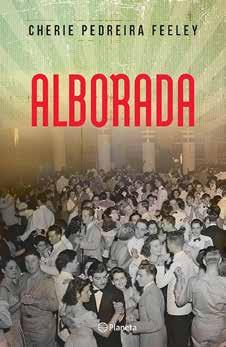
Alborada por CHERIE PEDREIRA FEELEY
CUIDAD DE MÉXICO, MX | Editorial PLANETA | Septiembre 9, 2025 | 448 páginas
SINOPSIS
Desde la invasión norteamericana hasta los albores de una nueva identidad política, una saga familiar de tradición y cambio, en donde lo único que perdura es el amor.
El año 1898 despunta con una España en el ocaso de su imperio. En Puerto Rico, la más pequeña de sus colonias, la expansión norteamericana avanza con rapidez vertiginosa y a su paso se desvanecen las esperanzas de una solución simple. Sin ser consultada por perdedor o ganador, la isla pasa de ser colonia española a territorio estadounidense. A partir de la amistad entre dos soldados del ejército de Estados Unidos cuyos destinos se entrelazan con el de Puerto Rico, se despliega lahistoria de la familia Ramos, que, aunque se aferra todavía a su herencia española, comienza a forjar lazos con los norteamericanos. Con cada nueva generación, los Ramos luchan por conservar su lugar en una sociedad que evoluciona rápidamente. Sus amores y tragedias, sus triunfos y sus pérdidas reflejan el anhelo de un pueblo que intenta definir su propio destino. Alboradaes una novela histórica basada en hechos reales, pero es, sobre todo, una historia del amor a la familia y a la identidad de un pueblo.
ENGLISH DESCRIPTION
From the U.S. invasion to the dawn of a new political identity, a family saga of tradition and change, where love is the only thing that endures. The year 1898 marks the twilight of Spain’s empire. In Puerto Rico, its smallest colony, American expansion moves at a dizzying pace, and hopes for a simple solution fade away. Without being consulted by victor or vanquished, the island shifts from Spanish colony to U.S. territory. Through the friendship of two U.S. Army soldiers whose fates become entwined with Puerto Rico’s, the story of the Ramos
Vida de Perro continued from page 10
perro no puedo advertirle que el verde de la grama al otro lado de la verja no es más intenso.
Las horas pasan y a las once me pongo peludo y amarillento. Ladro, primero bajito y después más duro. Salgo, ausculto la grama, olfateo las plantas y el terreno. No hay gallinas, ni gatos, ni conejos. En el jardín no hay abejas. Picaron y se fueron. Levanto la pata trasera. Quisiera oler las flores pero son silvestres y no tienen aroma. Como no hay luna llena tampoco las veo. Recuerdo trozos de un poema: “La atmósfera no es un perfume...” “Un niño dijo, ¿Qué es la yerba? Dándomela con manos llenas. ¿Cómo le contesto? Yo tampoco sé lo que es...” Doy otra vuelta y regreso a la casa.
Adentro tomo agua y me miro en el espejo. Me paso la mano por la barba deseando que fuese tan espesa como cuando su color era negro. Miro al perro con recelo preguntándome si se ha pasado el día trepado en los muebles. Mañana estaré ansioso y preocupado. Pensar en el regreso a la oficina me pone en un estado de nervios. Por el momento me consuela que, aunque solo brevemente, he
family unfolds. Though they cling to their Spanish heritage, they begin forging ties with the Americans. With each new generation, the Ramos family fights to preserve their place in a rapidly evolving society. Their loves and tragedies, triumphs and losses reflect the yearning of a people striving to define their own destiny.
Alborada is a historical novel based on real events, but above all, a story about love—for family and for a people’s identity.
SOBRE la AUTORA ANNETTE “CHERIE” PEDREIRA FEELEY
es una exdiplomática estadounidense oriunda de San Juan, Puerto Rico. Durante sus 26 años en el servicio exterior de los EE. UU. Cherie estuvo asignada en varios países de Latinoamérica, adquiriendo un profundo conocimiento del hemisferio occidental. Bicultural y bilingüe, y casada con un colega diplomático estadounidense, crio a sus dos hijos en la República Dominicana, Colombia, México y Panamá. Feeley es licenciada en Historia rusa por la Universidad de Georgetown y egresada de la Escuela Eisenhower de Seguridad Nacional y Estrategia de Recursos de la Universidad de Defensa Nacional. Su concentración académica de posgrado le permitió matizar sobre los temas geopolíticos y militares estratégCherie Pedreira Feeley es una escritora puertorriqueña y exfuncionaria del Servicio Exterior de los Estados Unidos. Graduada de la Universidad de Georgetown. Alborada es su novela debut.
podido vivir una vida de perro. Quiero prolongar ese ratito, hacerlo permanente. Si lo lograra, ¿al poco tiempo me sentiría insatisfecho? Mi perro parece sonreir. Tiro uno de sus juguetes al otro extremo de la sala y sale corriendo a buscarlo. Con los dientes atravesando el cuello del muñeco, me lo devuelve.
JOSÉ EDGARDO CRUZ
FIGUEROA (cruzjose5319@ gmail.com) es natural de San Juan y criado en El Fanguito y Barrio Obrero en Santurce, Puerto Rico. Es profesor emérito de ciencias políticas en la Universidad del Estado de Nueva York en Albany
JOSÉ EDGARDO CRUZ ‰FIGUEROA
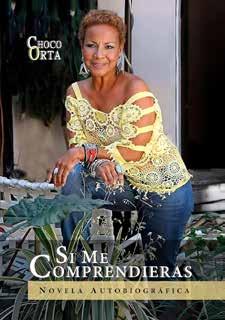
Si me Comprendieras
Novela Autobiográfica / Kindle Edition
por CHOCA ORTA • Diciembre19, 2024 | 200 páginas
SINOPSIS
VIRGEN MILAGROS ORTA
Choco Orta es su nombre artístico, pero me gusta llamarla por su nombre de pila. Siempre recuerdo la primera vez que la vi cerca de la calle Delbrey, en Santurce, lugar donde residían mis familiares; allí escuché lo que en PR llamamos un “rumbón”: congas, palmadas y una voz cantando. Por mi inquietud musical seguí el sonido y encontré un grupo de jóvenes, entre ellos una fémina tocando tambor. Me quedé escuchando y mirando la facilidad con que la joven tocaba y cantaba.
Digamos que desde ese momento me convertí en su admirador. Ella era la segunda mujer que veía tocando las congas (la primera fue la recién fallecida Sonia López) solo que “Choco” cantaba.
Unos años después la vi en su destacada participación en la obra musical puertorriqueña “La Verdadera Historia de Pedro Navaja” en su personaje de “Piola” donde hacía un solo de baile espectacular. Entonces pensé: “Ah, esa es la conguera que canta, además actúa y baila”.
Me consta que su desarrollo artístico ha sido duro, pero lo ha hecho con valentía por la confianza de saber que es una gran artista.
Preparada, educada y consciente de que lo único que se le haría fácil en su carrera era cantar, tocar e improvisar; lo demás tendría
que trabajarlo muy duro, y lo ha logrado. Más allá de sus logros artísticos pienso que labrarse un lugar en un medio tan competitivo y por qué no decirlo, machista, es su mayor éxito.
SOBRE la AUTORA
VIRGEN MILAGROS ORTA RODRÍGUEZ, cantante, actriz, percusionista y escritora puertorriqueña conocida como “La Reina del Sabor”. Nacida en Santurce, inició su carrera artística en la década de 1980, participando en teatro y televisión antes de establecerse como una destacada figura de la salsa a nivel internacional. Su trayectoria incluye grabaciones, actuaciones en escenarios importantes y reconocimientos como su inclusión en el Salón de la Fama de la Música en Puerto Rico en 2024
RESEÑAS
“Si me comprendieras” es un recuento de datos que narran cómo la vida va moldeando el carácter de las personas, y cómo sus decisiones y valentía pueden cambiar para bien su destino. En este libro el lector encontrará información personal y profesional que nos hará entender la personalidad y el trabajo artístico de una mujer trabajadora, impetuosa, perfeccionista, a veces complicada, a veces difícil de carácter, orgullosa, pero sensible, sincera, talentosa y mucho más. Choco Orta -para mí Virgen Milagros- es una mezcla de talento, determinación, coraje, sensibilidad, carácter, ritmo, sabor y orgullo.—Gilberto Santa Rosa
Esta obra nos ayuda a conocer de manera interseccional aspectos significativos y puntuales de la infancia de Choco Orta, para así comprender y descubrir a la mujer, cantante, negra y lesbiana, quien puso la voz de las mujeres en el género salsa para abrir caminos a todas nosotras, lo que la llevó al triunfo. ¡Talento, tesón y perseverancia! —Dra. Marie Ramos Rosado
Latinx Journalism Matters
Support Publishers of Color
The impact of COVID-19 has been especially devastating for communities of color. Now, more than ever, independent, local journalism needs your support. El Sol Latino is your local Latinx-owned, independent news source that brings to the front lines diverse Latino voices, perspectives, news and stories.
SUPPORT EL SOL LATINO
Tapestry Health Recognized as a Key Community Partner in a Brown University-Led Study on Drug Use and Harm Reduction
Springfield, MA | TAPESTRY HEALTH | November 10, 2025 —
Tapestry Health, Western Massachusetts’ leading provider of harm reduction, sexual and reproductive health, and WIC services, has been named a key community partner in a new $12 million, five-year research initiative led by Brown University and funded by the National Institute on Drug Abuse (NIDA). The multi-state study will analyze trends in drug use and barriers to care across Massachusetts, Rhode Island, and Vermont, with the goal of strengthening access to treatment, prevention, and support for people who use drugs.
The project brings together researchers from Brown University, the University of California San Diego, the University of Vermont, and community partners across New England. It seeks to understand how new and existing programs can reduce overdose deaths and transmission of HIV and hepatitis C, while improving overall wellbeing among people who use drugs.
Mavis Nimoh, the CEO of Tapestry Health, comments, “at a time when evidence-based harm reduction is under scrutiny and communities are confronting the human toll of overdose, HIV, and hepatitis C, this study could not come at a more critical moment.
Tapestry Health is proud to join Brown University and our regional partners in this groundbreaking initiative that centers the health, dignity, and lived and living experience of people who use drugs. For over 50 years, Tapestry has stood at the intersection of compassion and science, providing syringe access, overdose prevention, HIV and
hepatitis C testing, and holistic care across Western Massachusetts.
Our participation in this project reinforces what we know to be true: harm reduction saves lives, connects people to care, and is one of the most effective public health strategies of our time. But it also affirms that the voices and data from our communities in Western Massachusetts, often overlooked in statewide and national policy discussions, deserve to inform the future of prevention and treatment strategies.
This moment demands that we act not with fear, but with fidelity to what works. Across the country, federal harm reduction strategies face risk from funding uncertainty to ideological resistance, even as evidence continues to show their profound impact on saving lives. Through this collaboration, we have an opportunity to not only strengthen programs locally and nationally, but to also show unequivocally, that harm reduction is healthcare.”
Led by Brown University’s School of Public Health, the study will recruit 1,200 participants from Massachusetts, Rhode Island, and Vermont, and follow them for up to five years. Researchers will examine drug use trends, barriers to HIV and HCV care, the impact of overdose prevention initiatives, and how conditions such as mental health and chronic disease influence well-being
Tapestry Health will serve as a primary community partner in Western Massachusetts, helping connect researchers with participants and providing insight into regional needs, challenges, and opportunities.
Deportes / Sports
Paola Soto Burgos, Boricua Volleyball Player, to Receive National Scholarship
by MANUEL FRAU-RAMOS
The American Volleyball Coaches Association (AVCA) announced its 2025 scholarship recipients on Friday, November 7. Among these scholarships is the Student-Athlete Demonstrator Scholarship, which will bring 36 collegiate volleyball players to the AVCA Convention in Kansas City, Missouri, from December 17 to 21, 2025. Soto Burgos will represent the East Region and the Northeast-10 Conference at the AVCA Convention.
Among the recipients is Paola Soto Burgos, a graduate student and standout volleyball player from American International College (AIC). She has been awarded the 2025 AVCA Student-Athlete Demonstrator Scholarship. This national award recognizes collegiate players who demonstrate exceptional skill, leadership, and commitment to the sport beyond competition.
The scholarship covers the costs of event registration and hotel accommodations, providing student-athletes interested in pursuing a coaching career the opportunity to attend educational seminars, network with coaches at all levels, and develop both personally and professionally. The recipients will also participate in on-court sessions featuring drills and live play, allowing AVCA members to share ideas and test the effects of potential rule adjustments in real time with high-caliber players.
“Receiving the AVCA Demonstrator Scholarship is a dream come true,” said Soto Burgos. “It’s more than just an opportunity to attend the convention; it’s a celebration of hard work, passion, and
resilience. Being recognized among student-athletes from all divisions across the country and representing the East Region and the NE10 reminds me why I fell in love with this sport in the first place. Volleyball has given me so much, and this experience allows me to give back while continuing to learn and grow.”
Soto Burgos is the first student-athlete from the Northeast-10 Conference to earn this honor since the program’s founding in 2021. She is also the second student-athlete coached by AIC Head Women’s Volleyball Coach Eli Irizarry to receive the award; Irizarry previously guided 2024 recipient Jasmine Brundage at Daemen University.
One of the most decorated athletes in AIC volleyball history, Soto Burgos is a two-time AVCA All-American, a three-time NE10 Champion, and the 2022 NE10 Tournament MVP. In 2024, she and her sister, AIC student Victoria Soto Burgos, made conference history as the first siblings to both earn NE10 Tournament MVP honors.
Beyond athletics, Soto Burgos has distinguished herself as a student leader and community advocate. She serves as President of AIC’s Student-Athlete Advisory Committee, leading initiatives such as the team’s annual breast cancer awareness walk and involvement with Team IMPACT, which connects collegiate teams with children facing serious illnesses.
Her compassion extends to her own nonprofit, the Comfort Hearts Foundation, which provides heart-shaped support pillows to breast cancer patients to aid in recovery after surgery.
Soto Burgos, born in Coamo, Puerto Rico, graduated from Colegio Sagrado Corazón de Jesús, where she was a four-year member of the volleyball team coached by Wipi Trujillo. She has received multiple postseason MVP awards, including the Regional Championship MVP in 2017. Soto Burgos also competed in track and field, softball, and basketball. She earned a bachelor’s degree in biology from AIC in 2024, and a master’s degree in science in 2025. Currently, she is pursuing a second master’s degree in education.
PAOLA SOTO BURGOS
Deportes / Sports
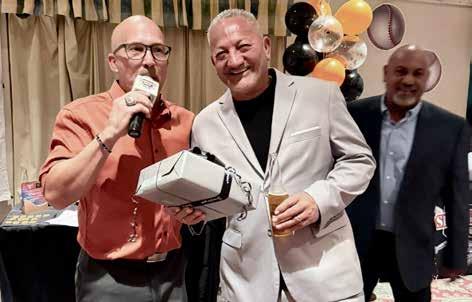
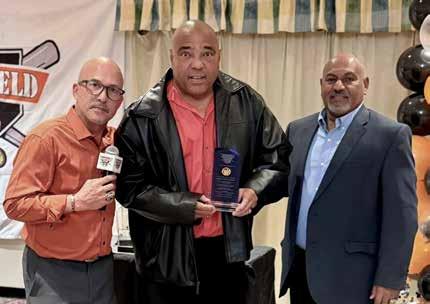
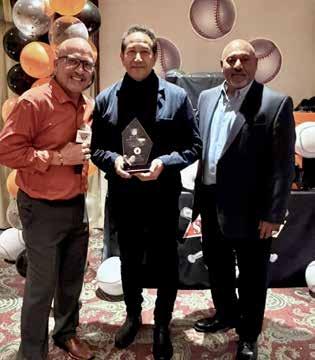
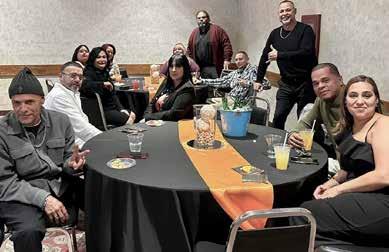
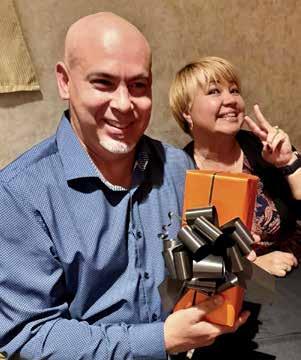
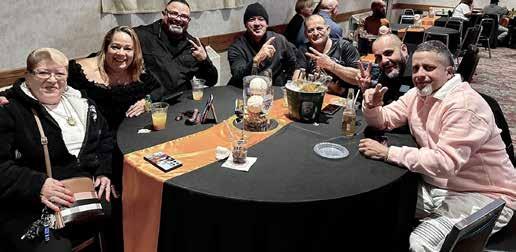
Springfield OTSL Banquet 2025
15 de noviembre de 2025
Fotos cortesía de Springfield OTSL. Roberto Fontánez – Presidente y José Santos – Vicepresidente