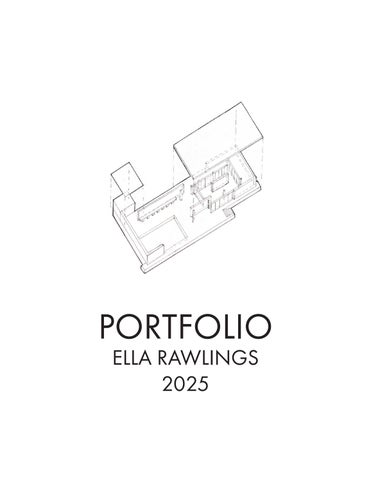
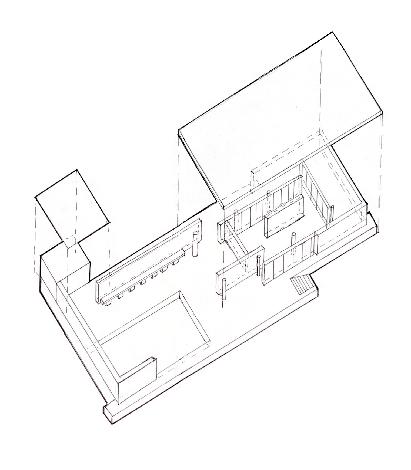
PORTFOLIO ELLA RAWLINGS 2025
FALL 24
OTIUM
THE HIDDEN ROOM NORTH O COLLECTIVE
FALL 24
SPRING 24
pg 32-35 pg 36-45
01 ICE SILO: POINT CLOUD RESEARCH
In collaboration with: Teia Killian, Jenda Simonsen, & Callahan Weeks
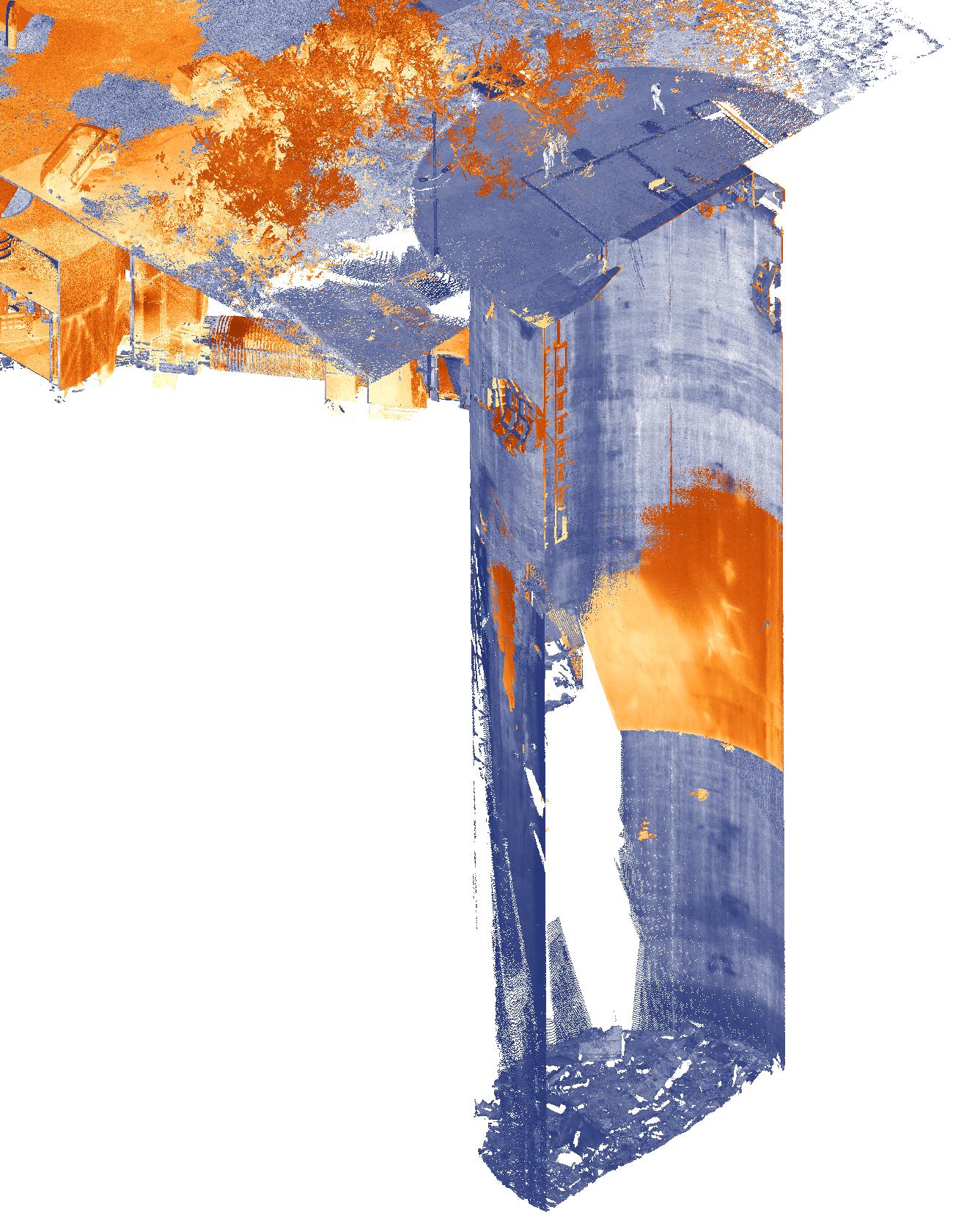
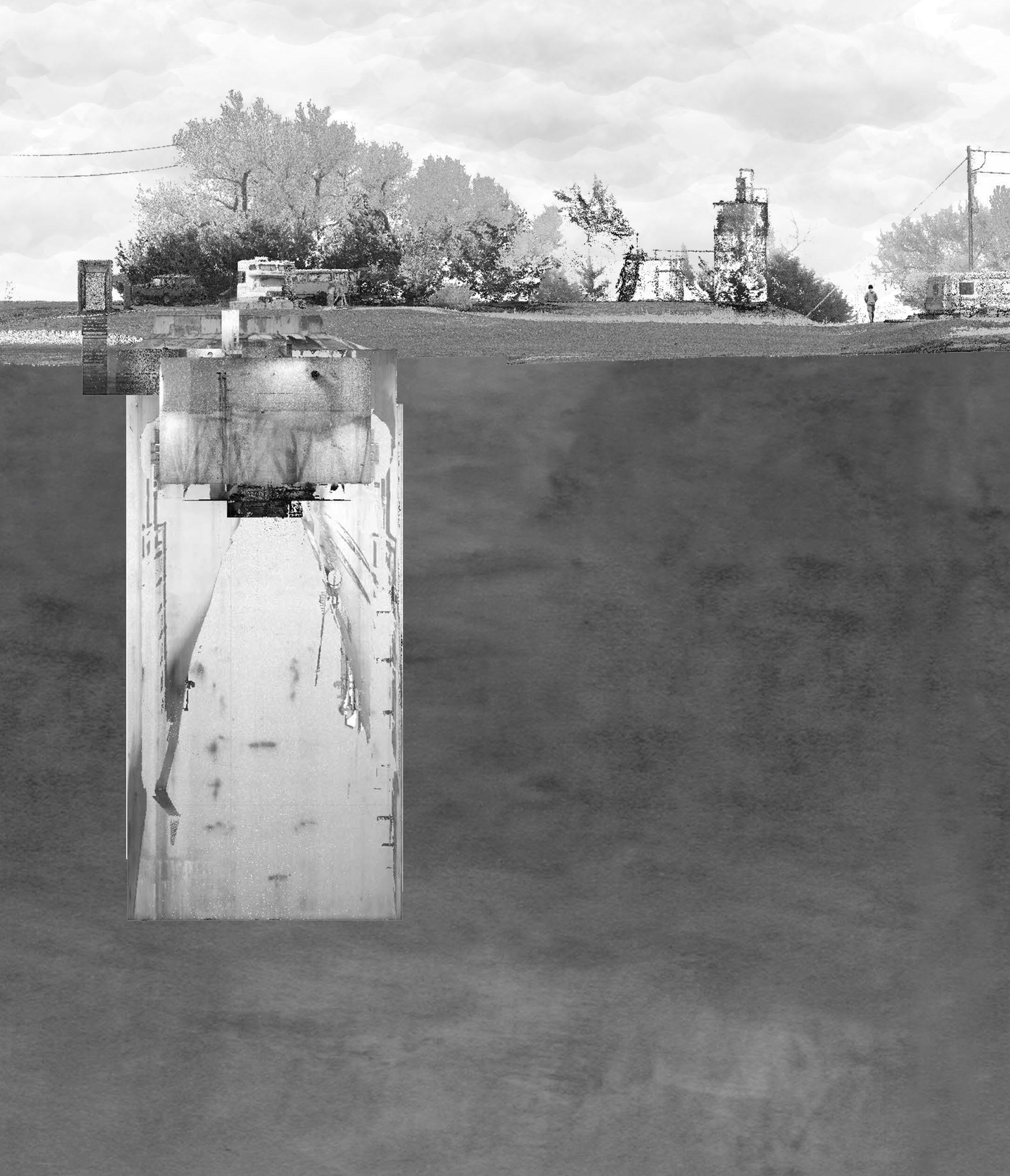
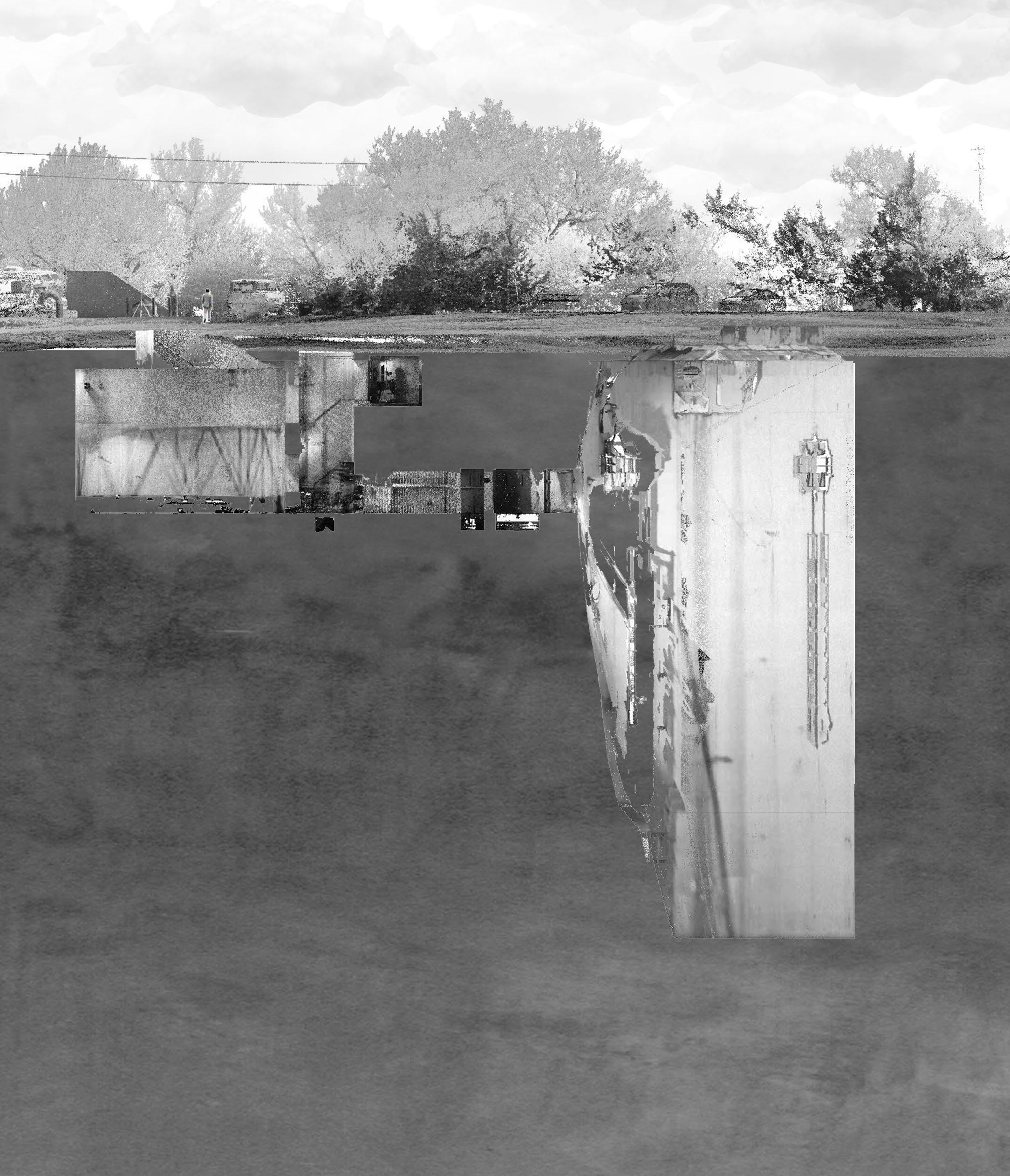
This collaborative project began with the research and analysis of Cold-War era Atlas-F missile silos around the country. The silos were used to store and launch the missiles. They have since been decommisioned and most still sit abandoned. Lidar scans were created in order to accurately document and analyze the silos. A small portable machine is used to collect points which create a 3D model. The machine sends out lasers that reflect off surfaces to communicate where objects are relative to the scanner. Through a series of linked scans, the scanner places points in space to make a comprehensive point cloud model. The drawings are made from point cloud models drawn from missile silo sites. Base images were derived from the point cloud models, allowing us to produce accurate drawings and conduct in depth analysis by comparison.

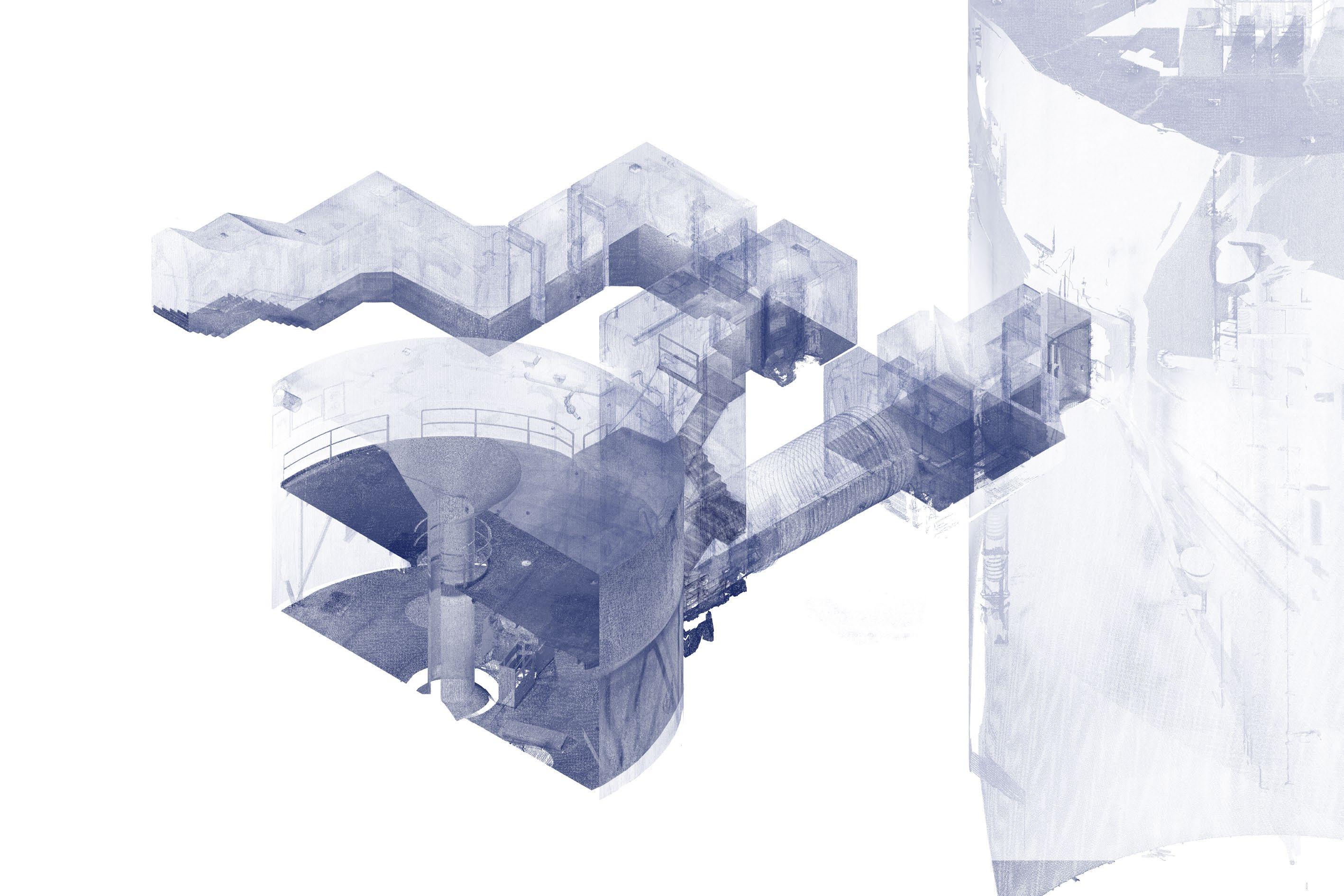
LEFT: SECTION ISOMETRIC OF MISSILE SILO IN WILSON, KS
FALL 2023
DESIGN PROPOSAL: BRIDGING THE GAP
*WINNER OF SARA NEW YORK DESIGN AWARD
In Collaboration
With: Jenda Simonsen, Lauren Wilwerding & Callahan Weeks
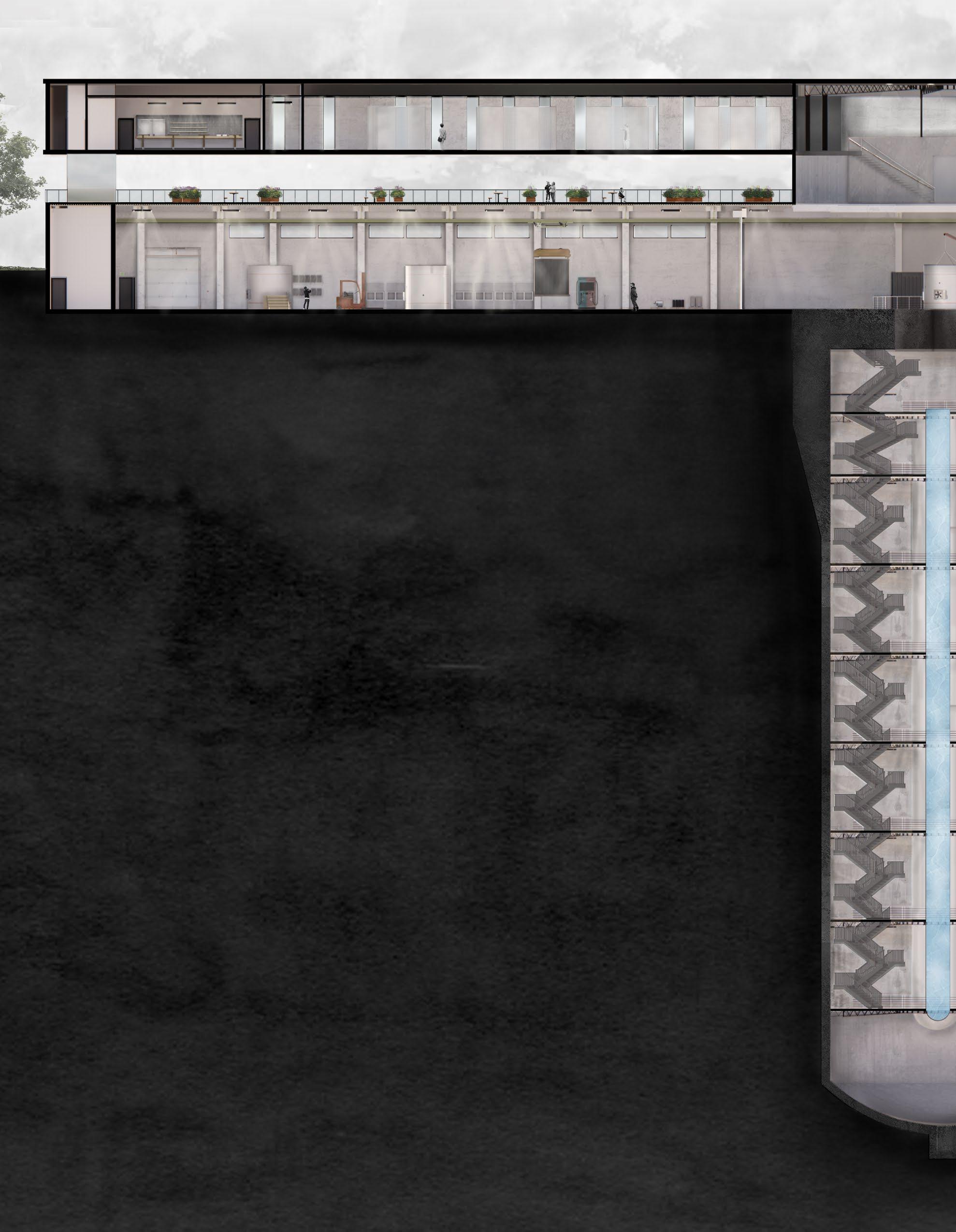
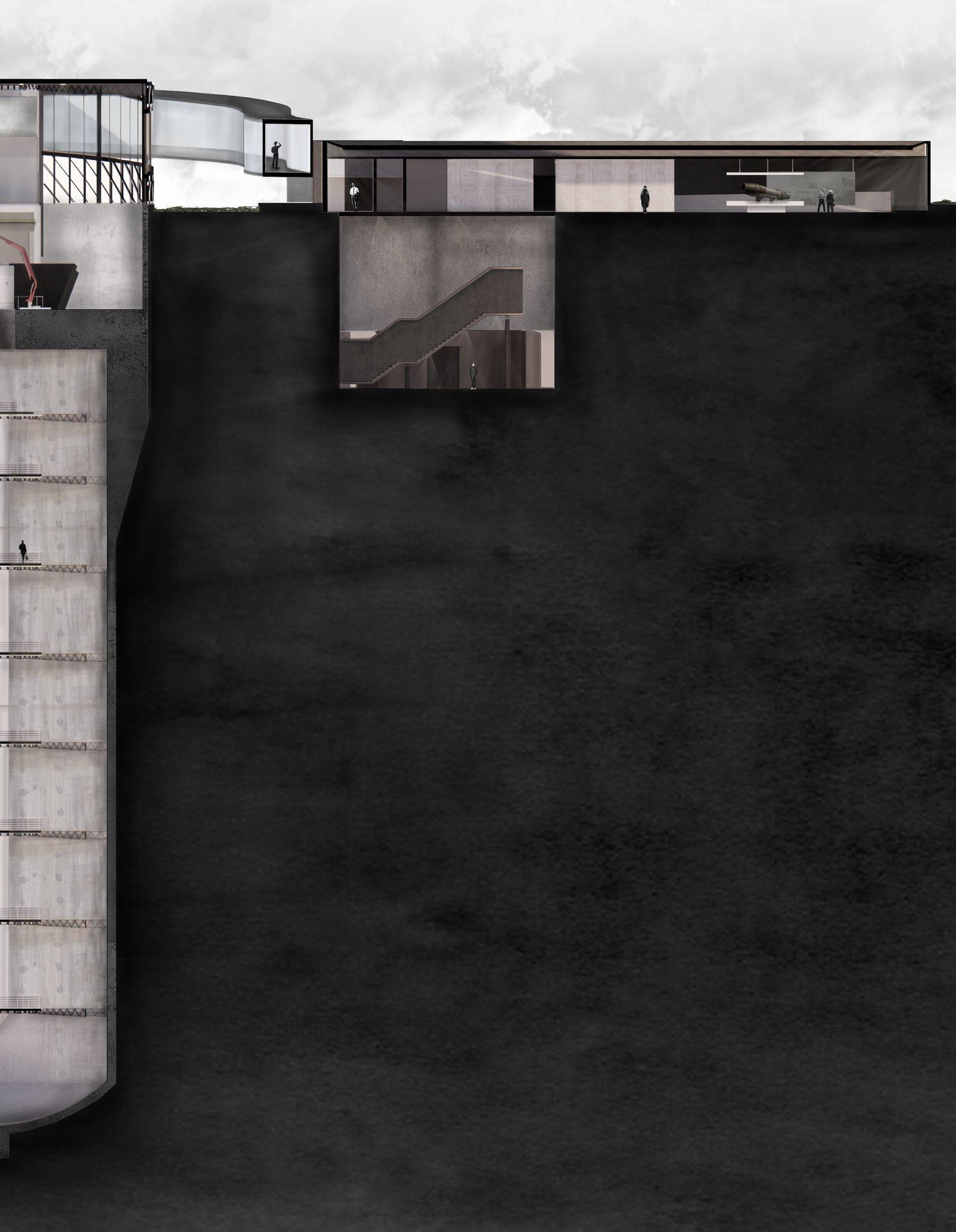
The site is proposed to become both an ice-drilling facility and cold war museum. When considering the design for this space, our team continuously revisited the idea of the passage of time, both in terms of the site’s historical significance and its contemporary relevance. originally, this site served as an Atlas-F missile silo, tasked with harboring and controlling a nuclear weapon that had profound historical implications at the time. After the decommissioning of this program, the site remained dormant for many years. The development of a new purpose for this space takes the principles of historic preservation and adaptive reuse to a new level.
Transforming this missile silo into an instrument for positive global impact propels us into the future and demonstrates our capacity to rectify past mistakes. The proposed ice drilling facility on this site promises invaluable research that can address one of our most pressing concerns: the ongoing environmental crisis. Nevertheless, this proposal doesn’t solely look ahead; it also pays homage to the past by featuring an exhibition that recounts the history of the site and displays the significance of the Cold War era. The connection between these two elements reinforces how the past informs the future and displays the role of the individual in this process.
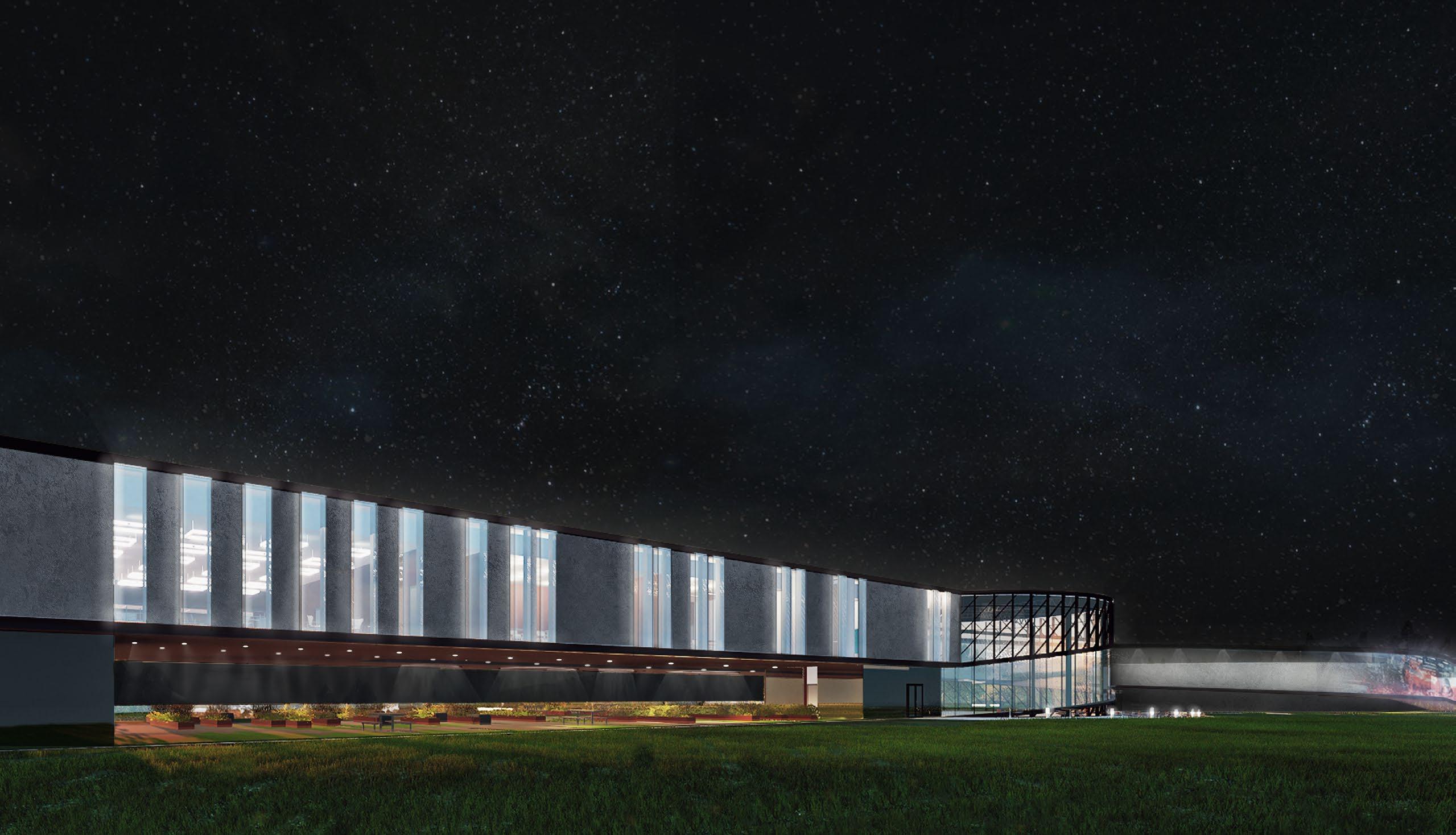
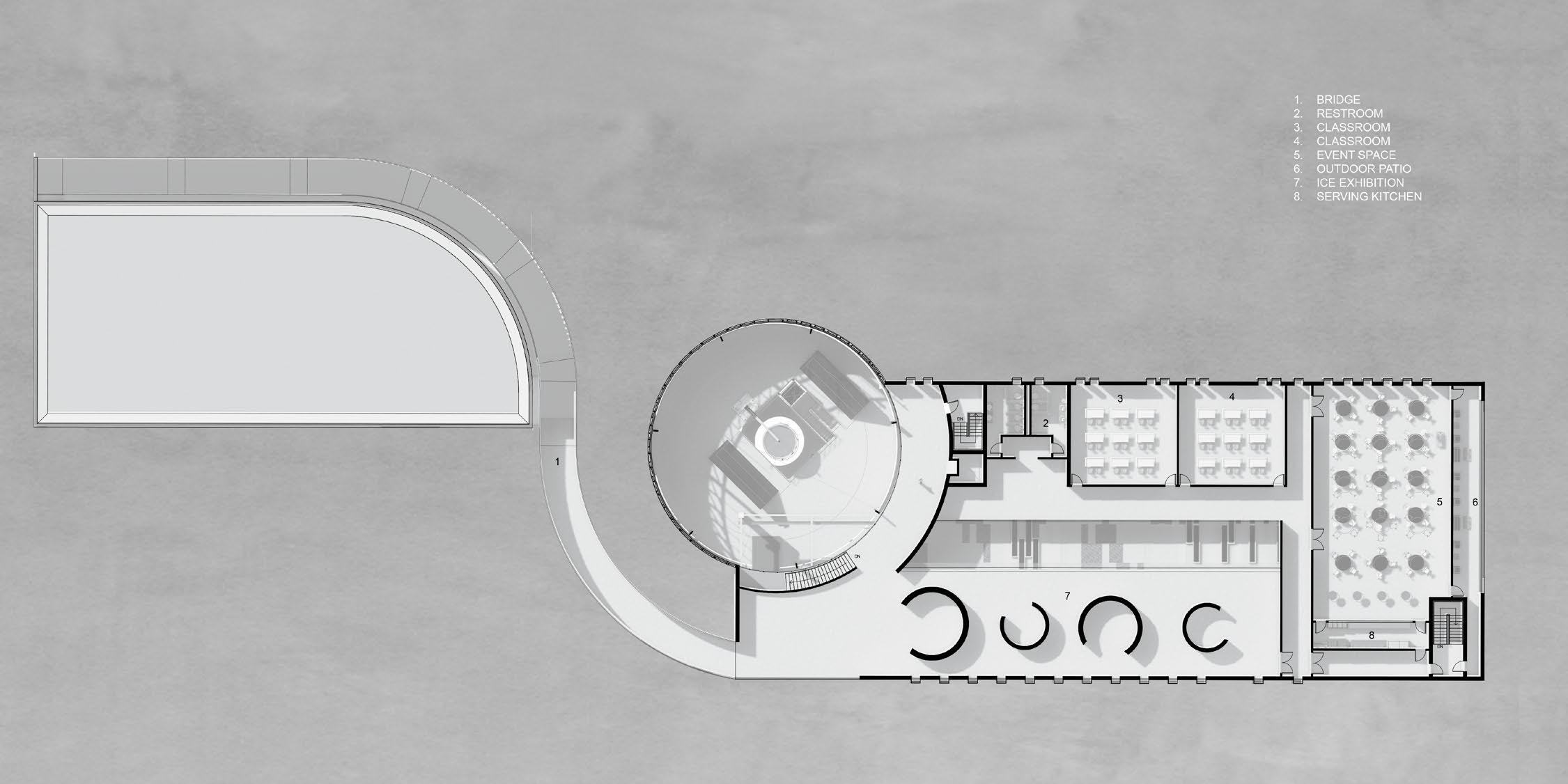
The organization of the building creates two seperate volumes with a bridge between them. This allows for public facility. These spaces include the workshop and offices. The public spaces would be used by the visitors to the guides them towards the future, showing the ice drilling facilities and the impact that it will have on the environment.
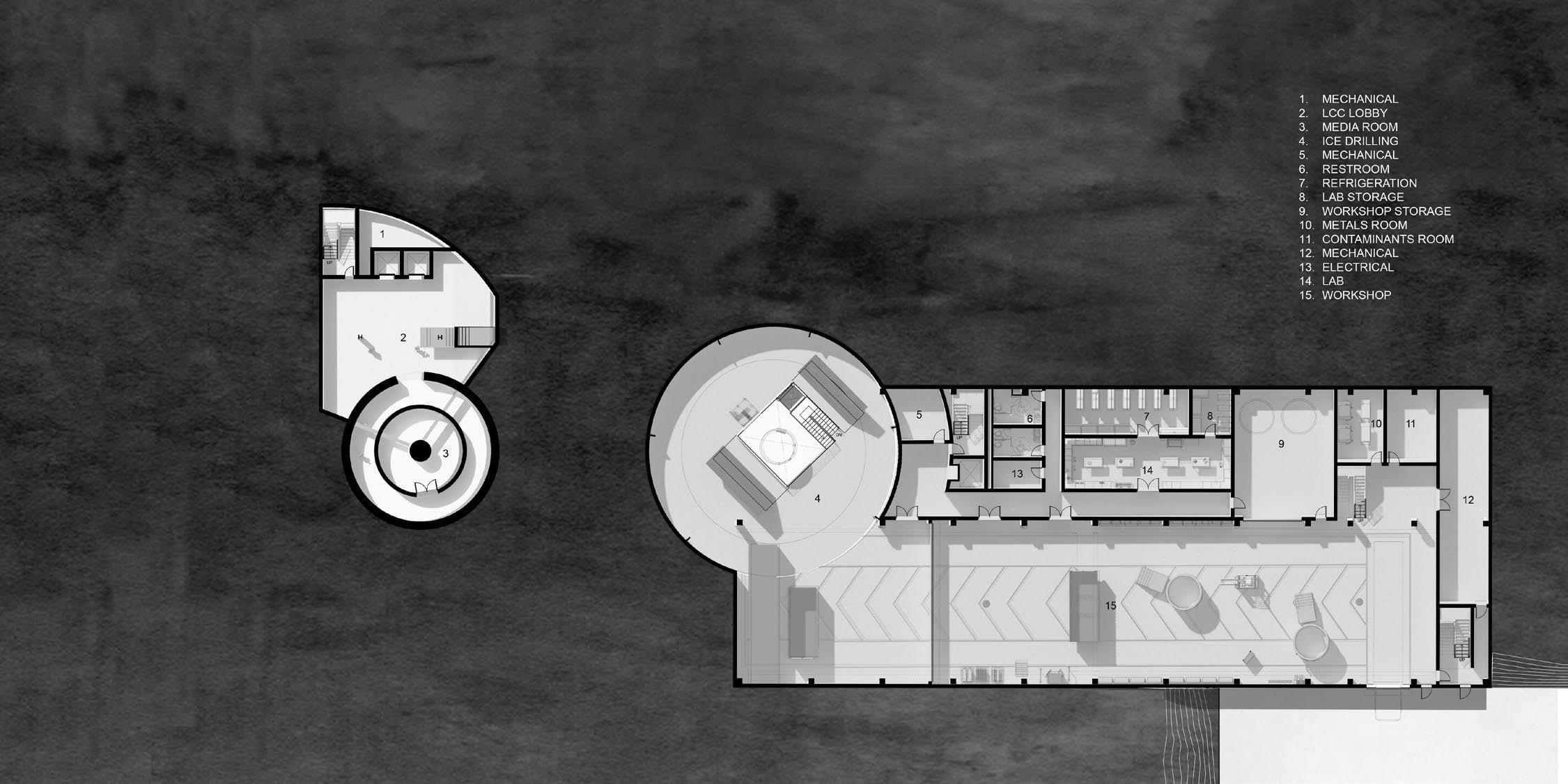
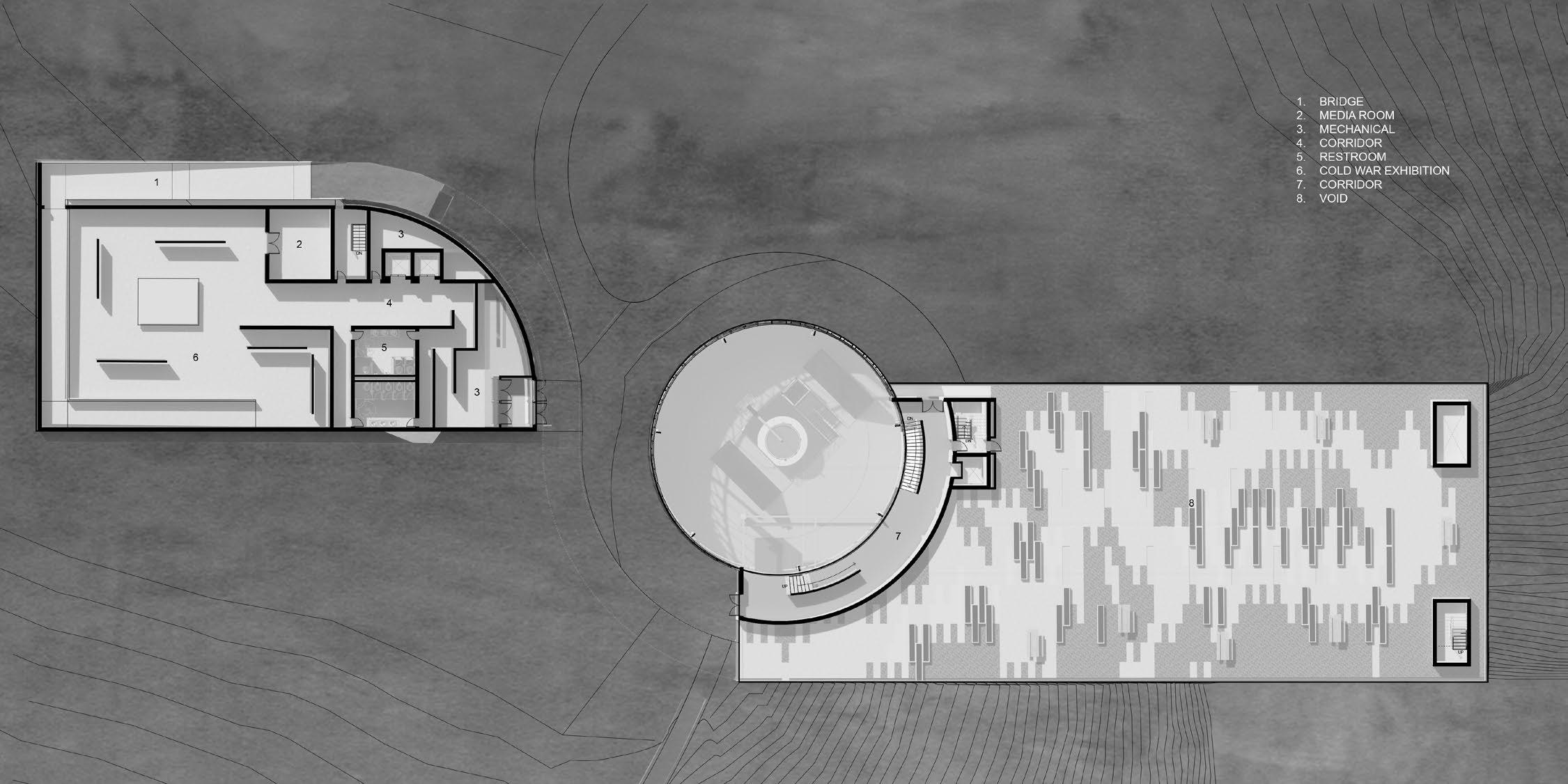
public and private spaces, with the private spaces being used by the ice drilling workers and other members of the museum and facility, who would be taken along a path that displays the historic significance of the space and environment.
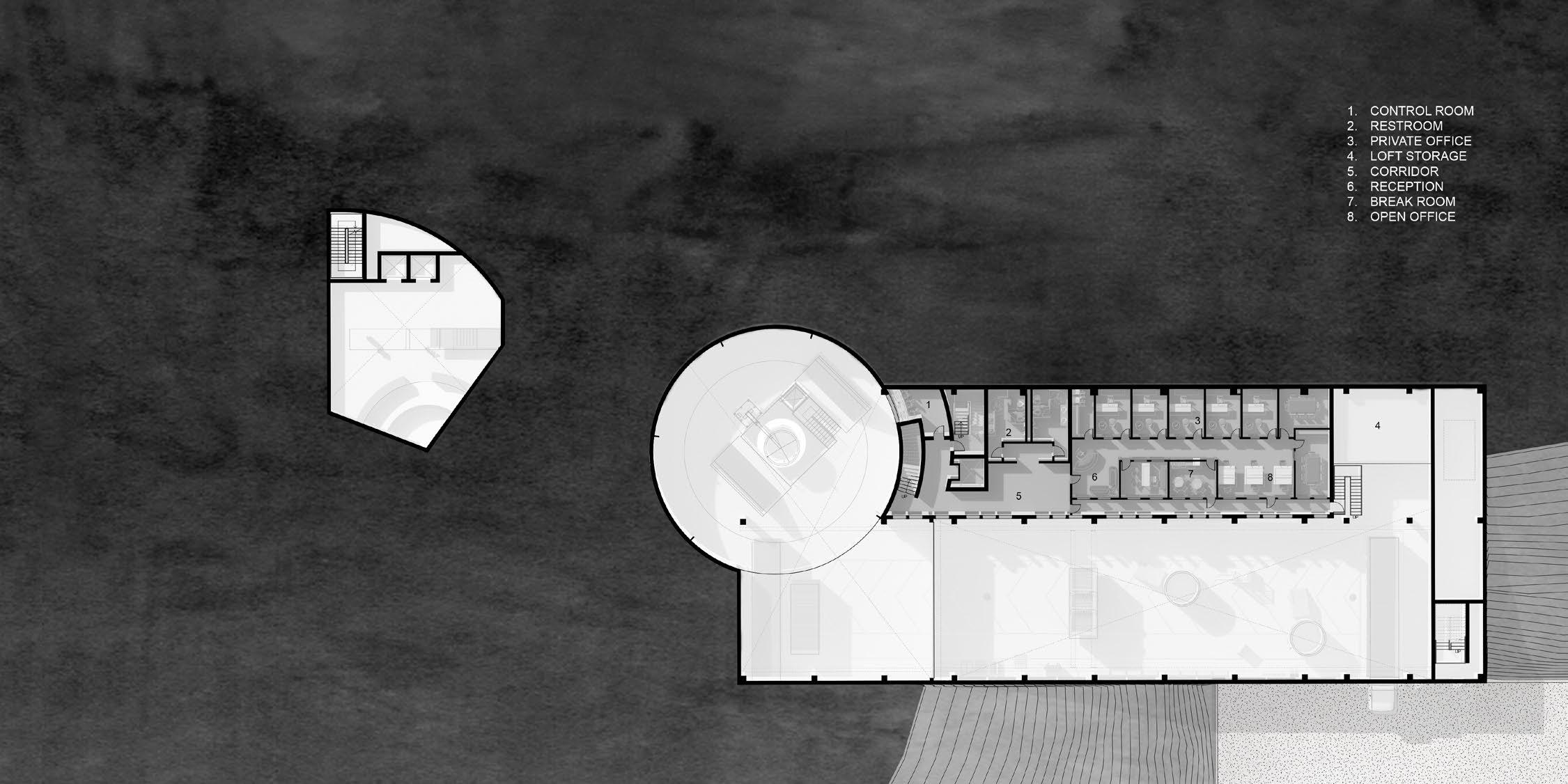
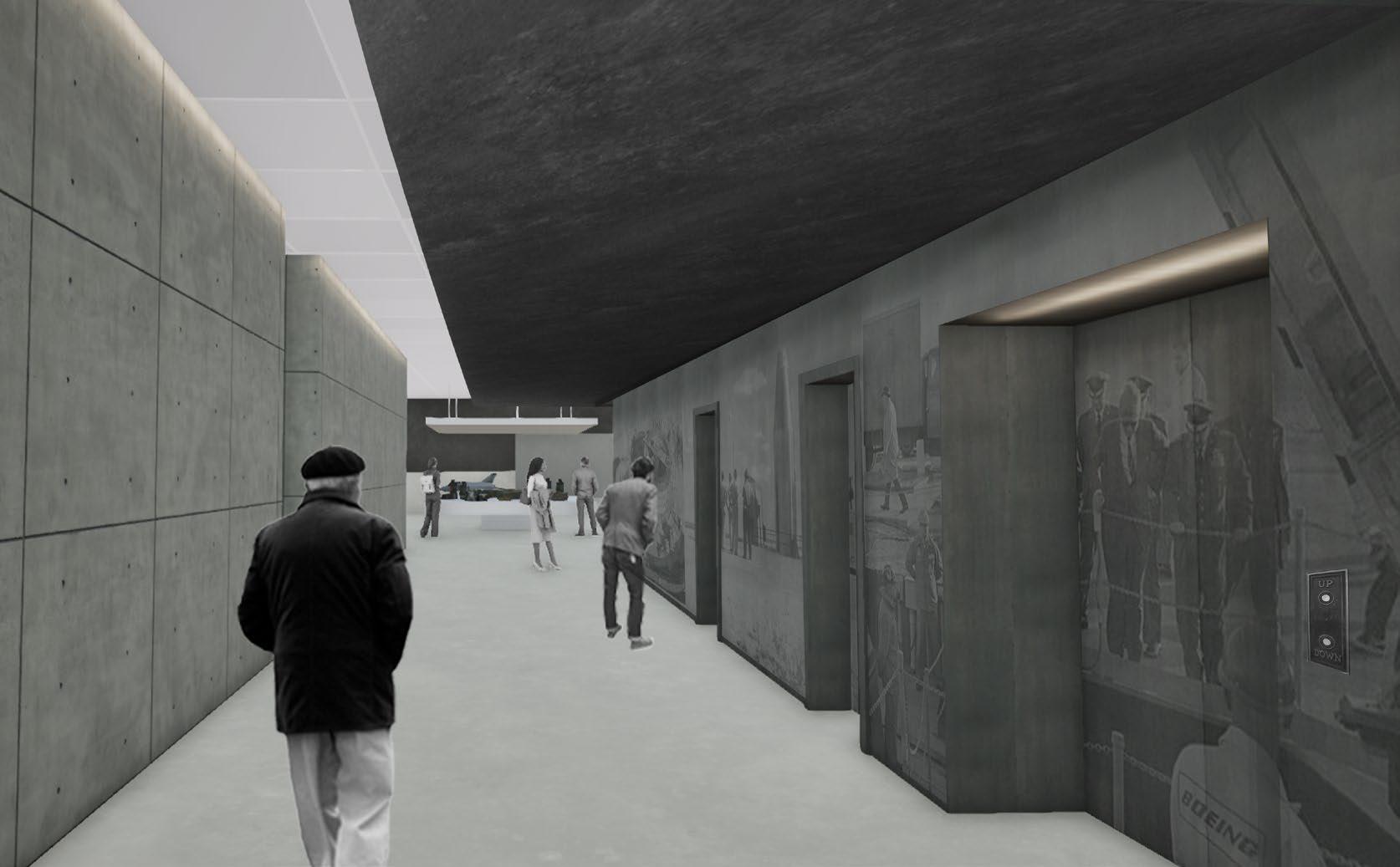
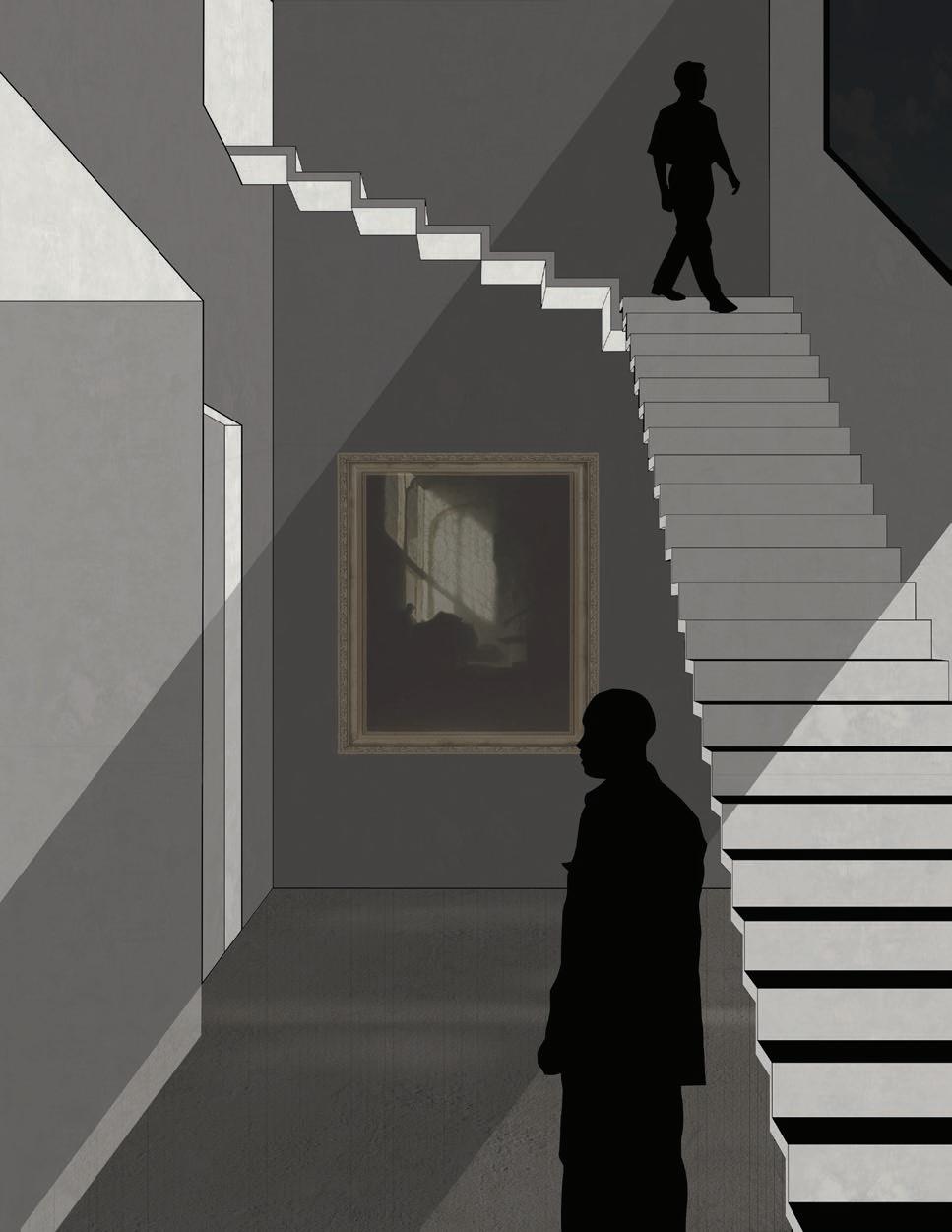
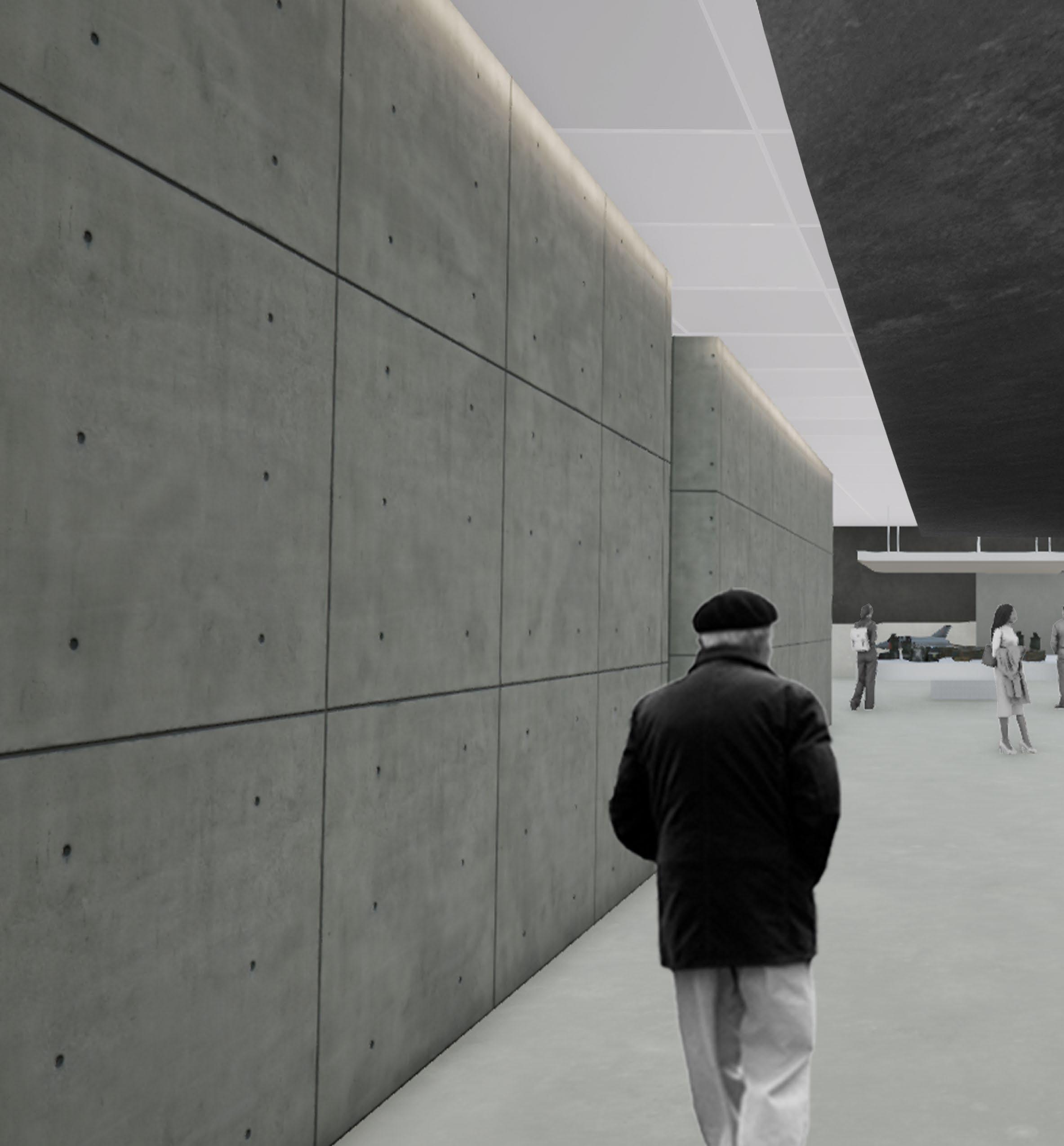
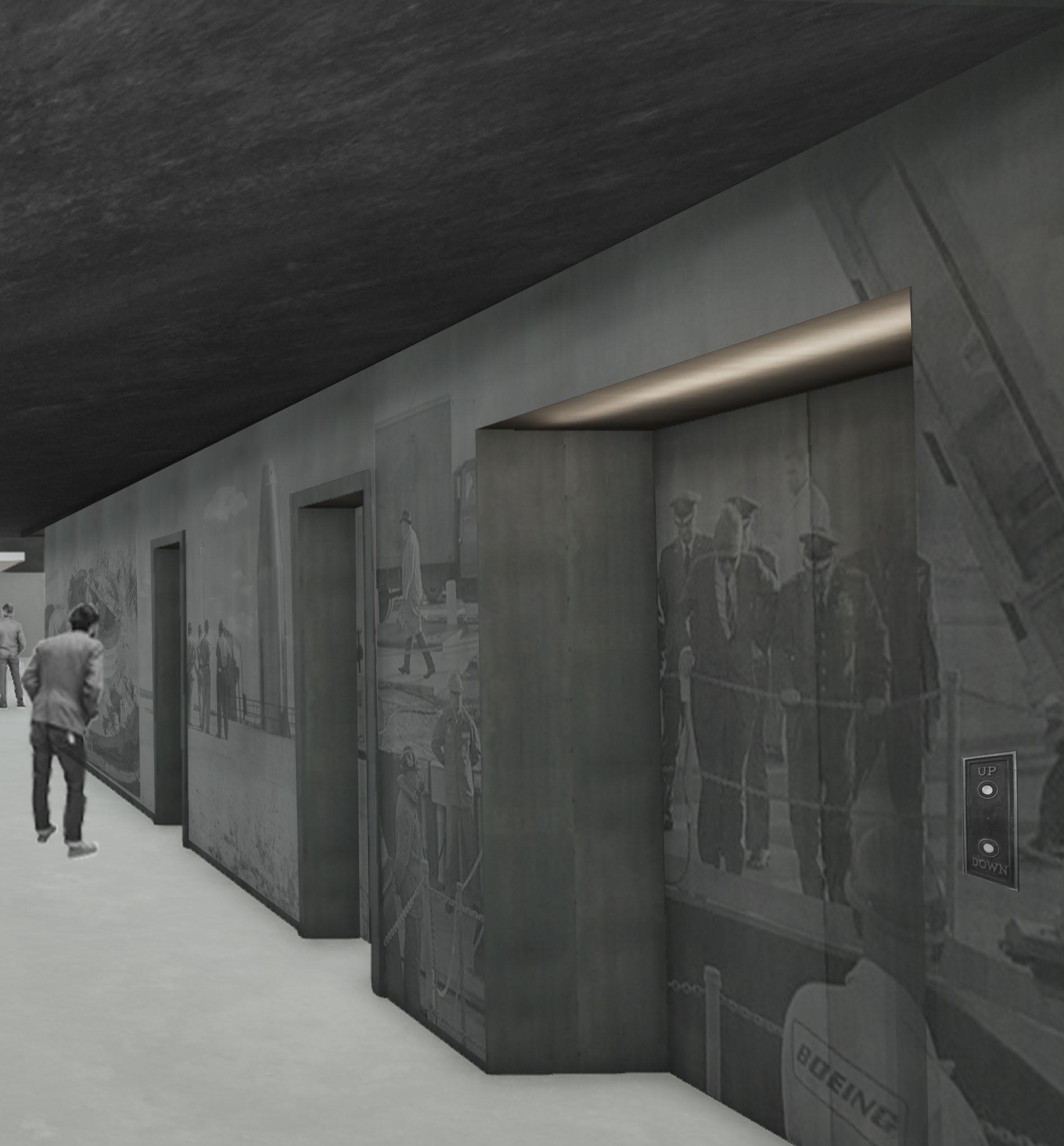
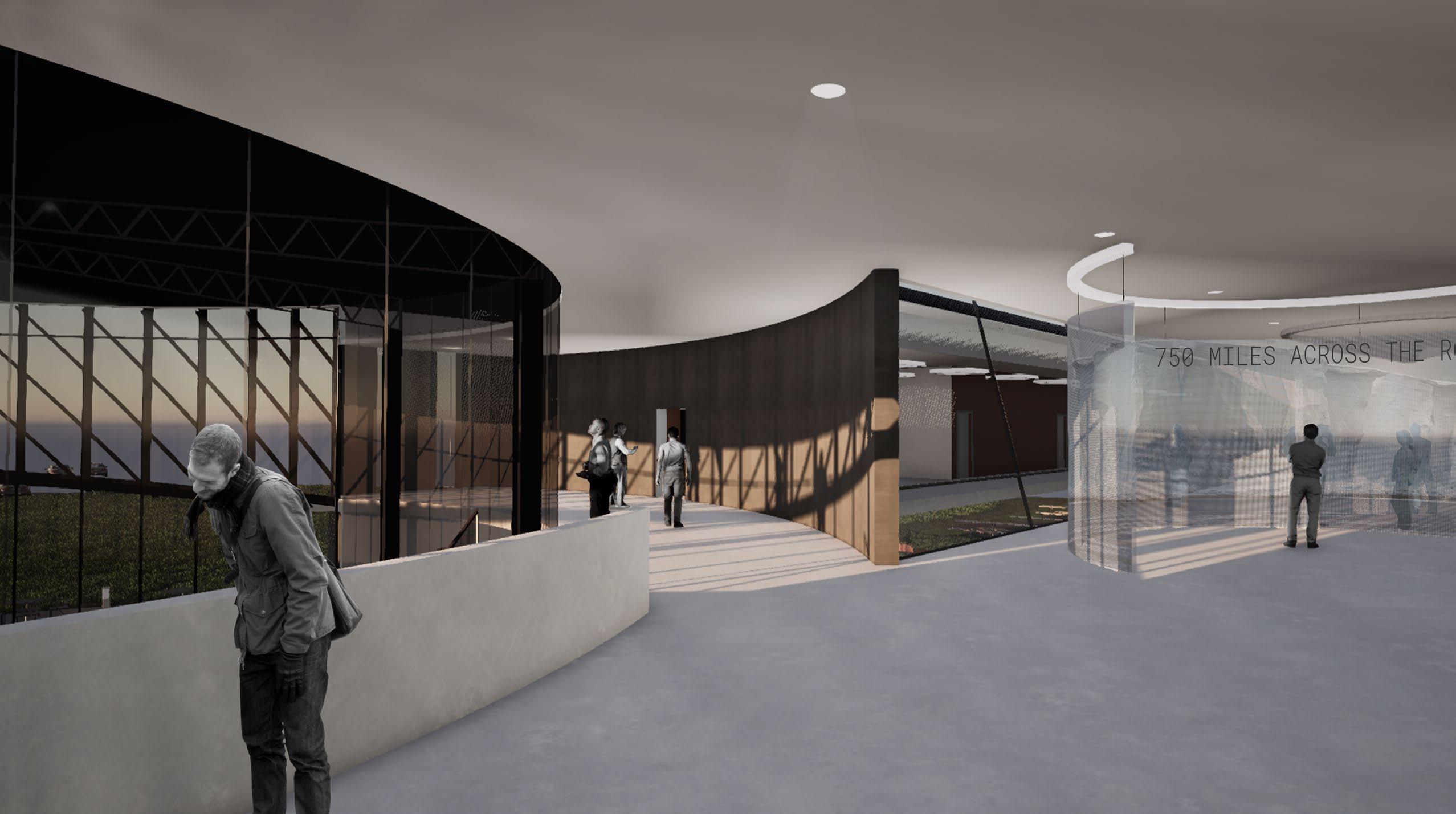
The Cold War exhibition leads the user along a path that explains the history of the site, and gives them an opportunity to go down into the existing missile silo launch control center. The use of volume encourages circulation and allows for visuals of all the displays throughout the space. Materiality is darker and monochromatic in this space, as the history being shown was at a darker, more serious point in history,
The ice drilling facility, shown on the following page, lets in more light and has lighter materials to represent the importance of the future emerging from the past. The user follows the bridge that gives them a glimpse down into the drilling area before leading into the ice drilling exhibition space.

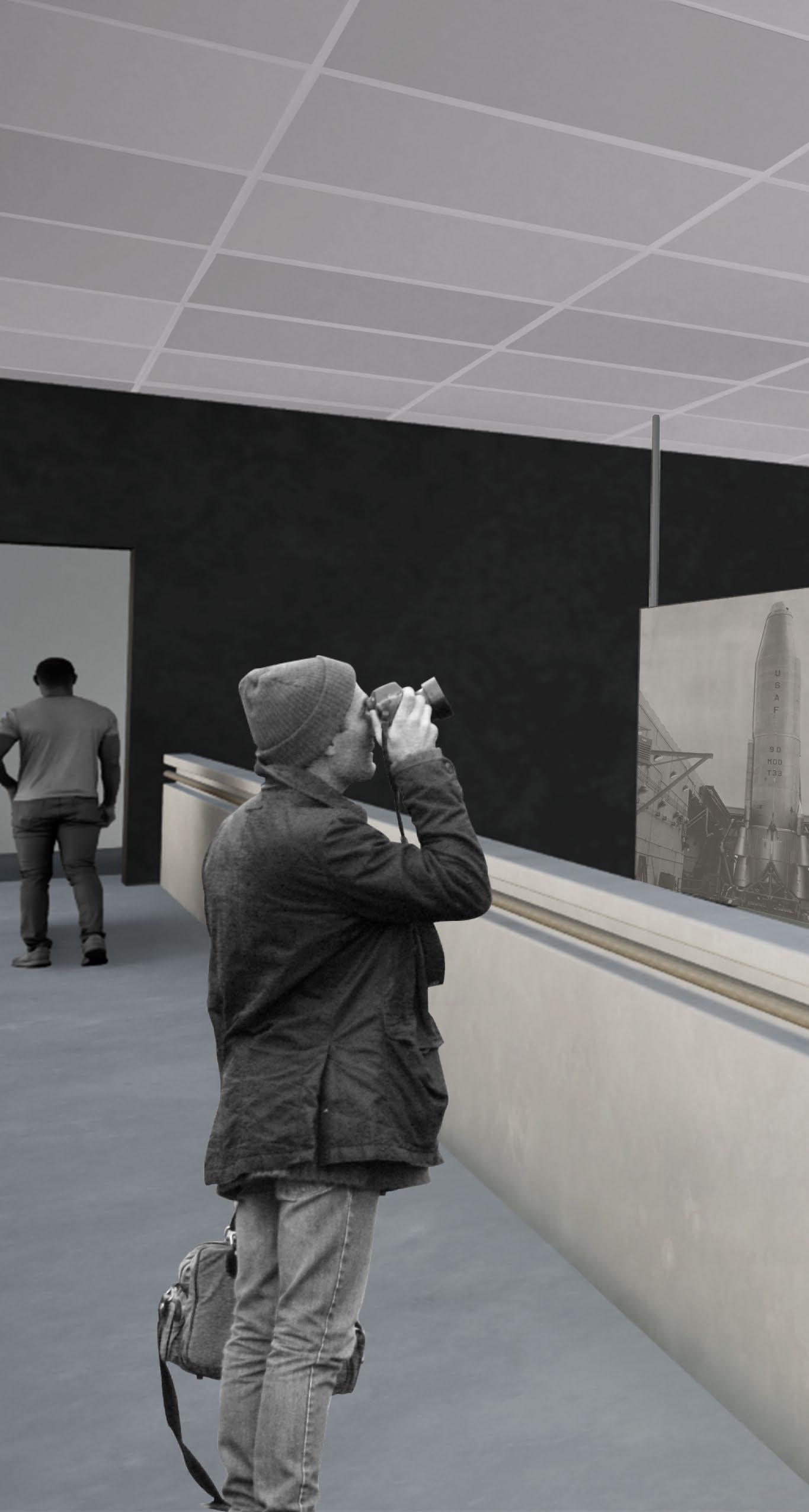
SCAN FOR VIDEO RENDER OF LAUNCH CONTROL CENTER EXHIBITION SPACE
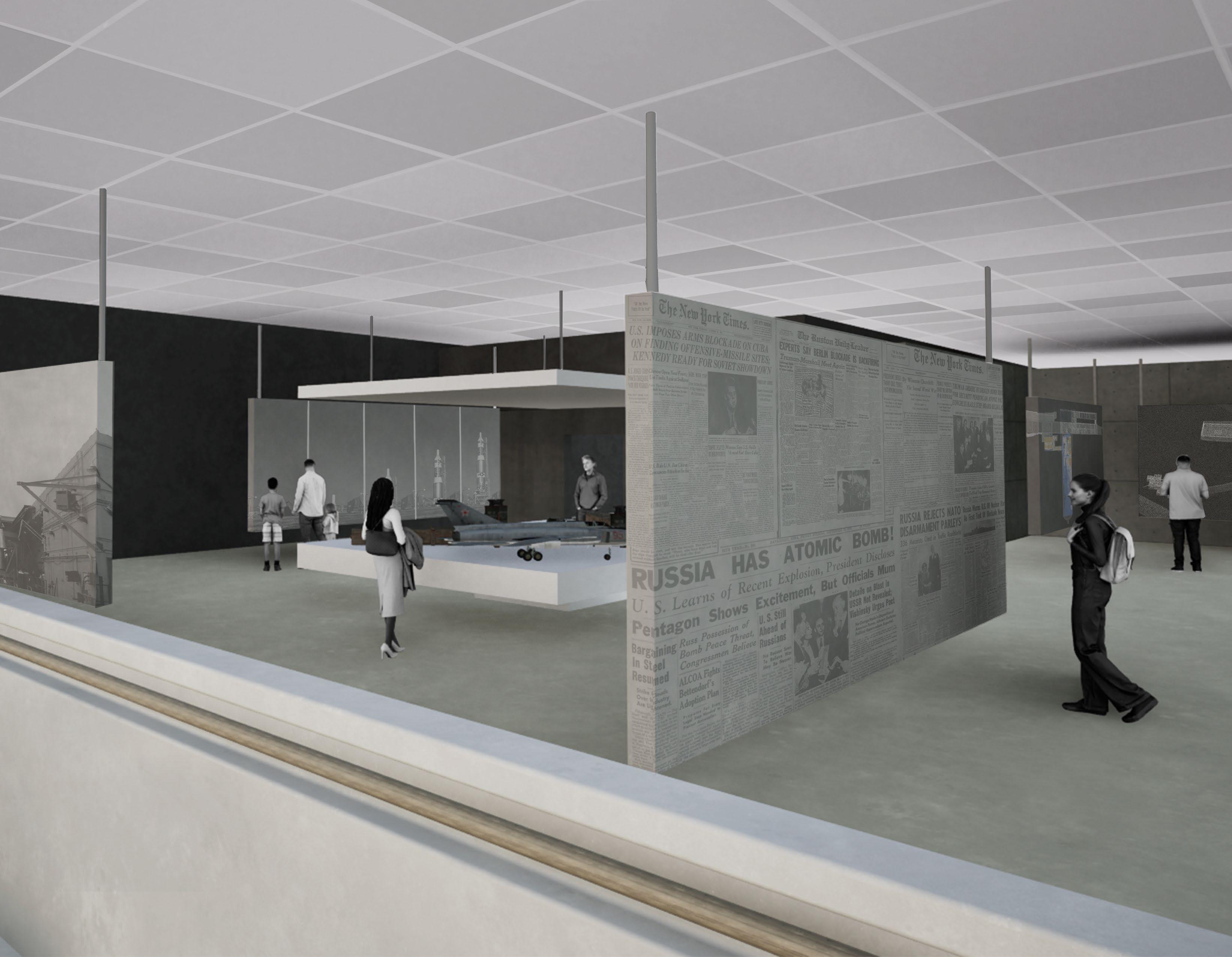
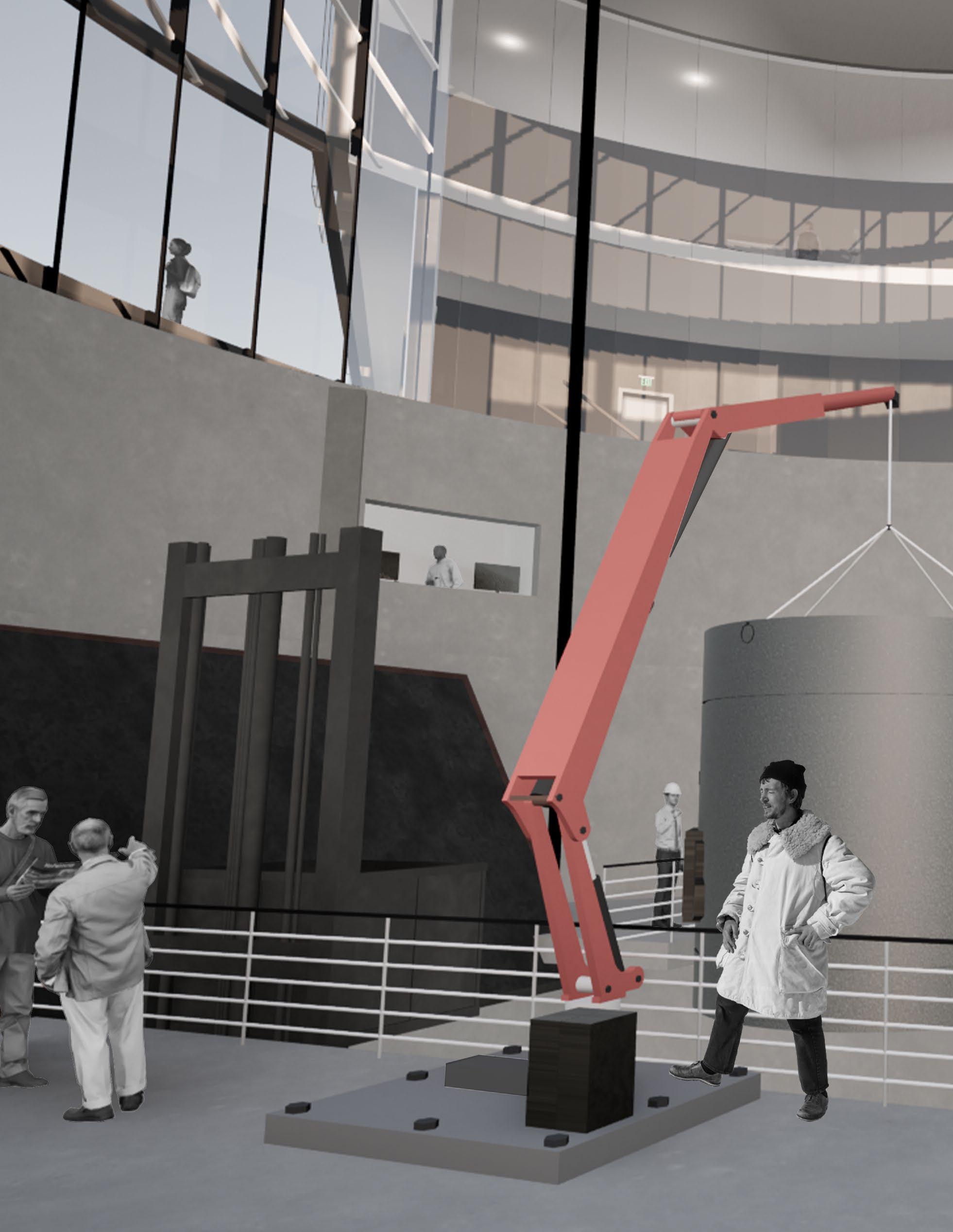
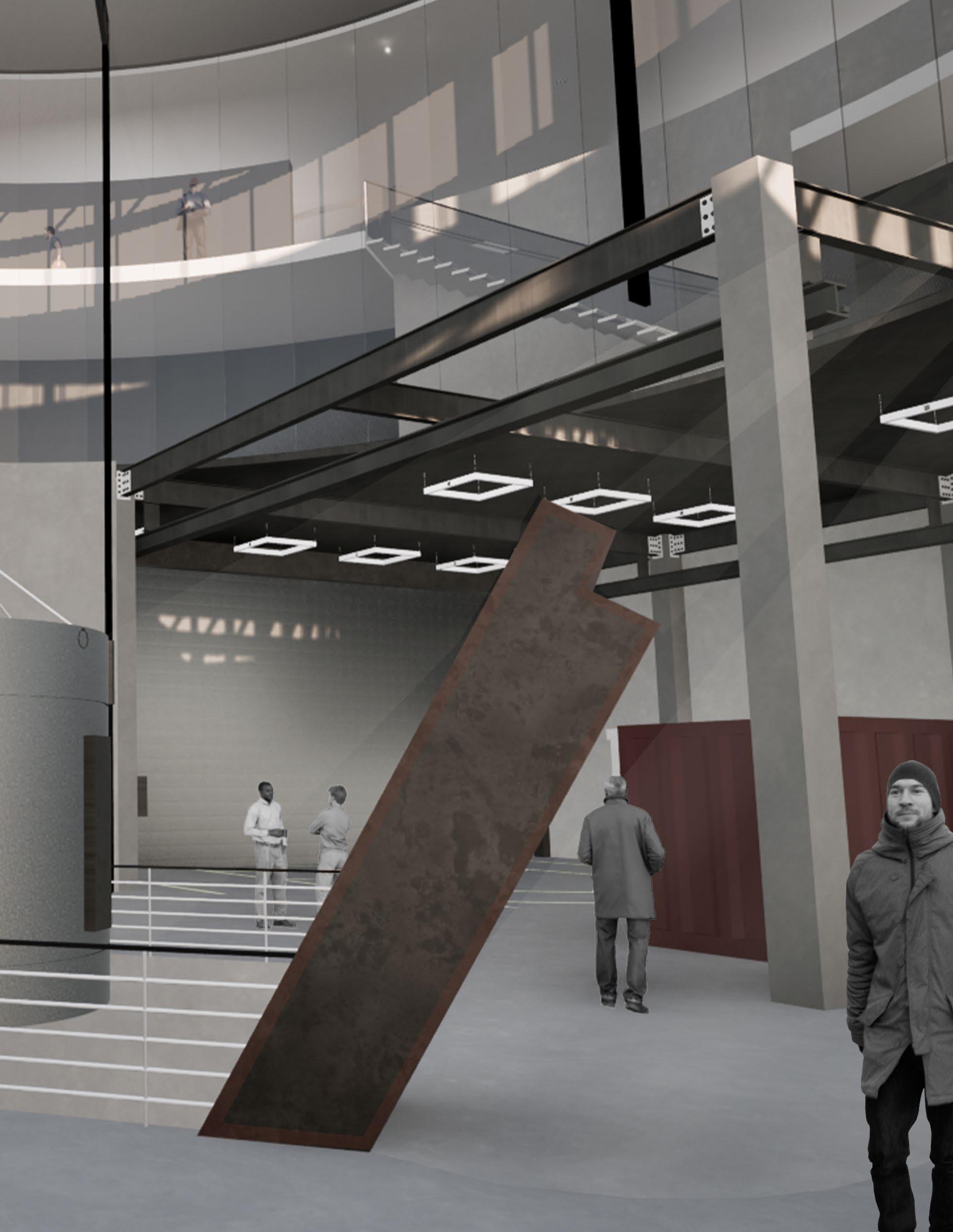
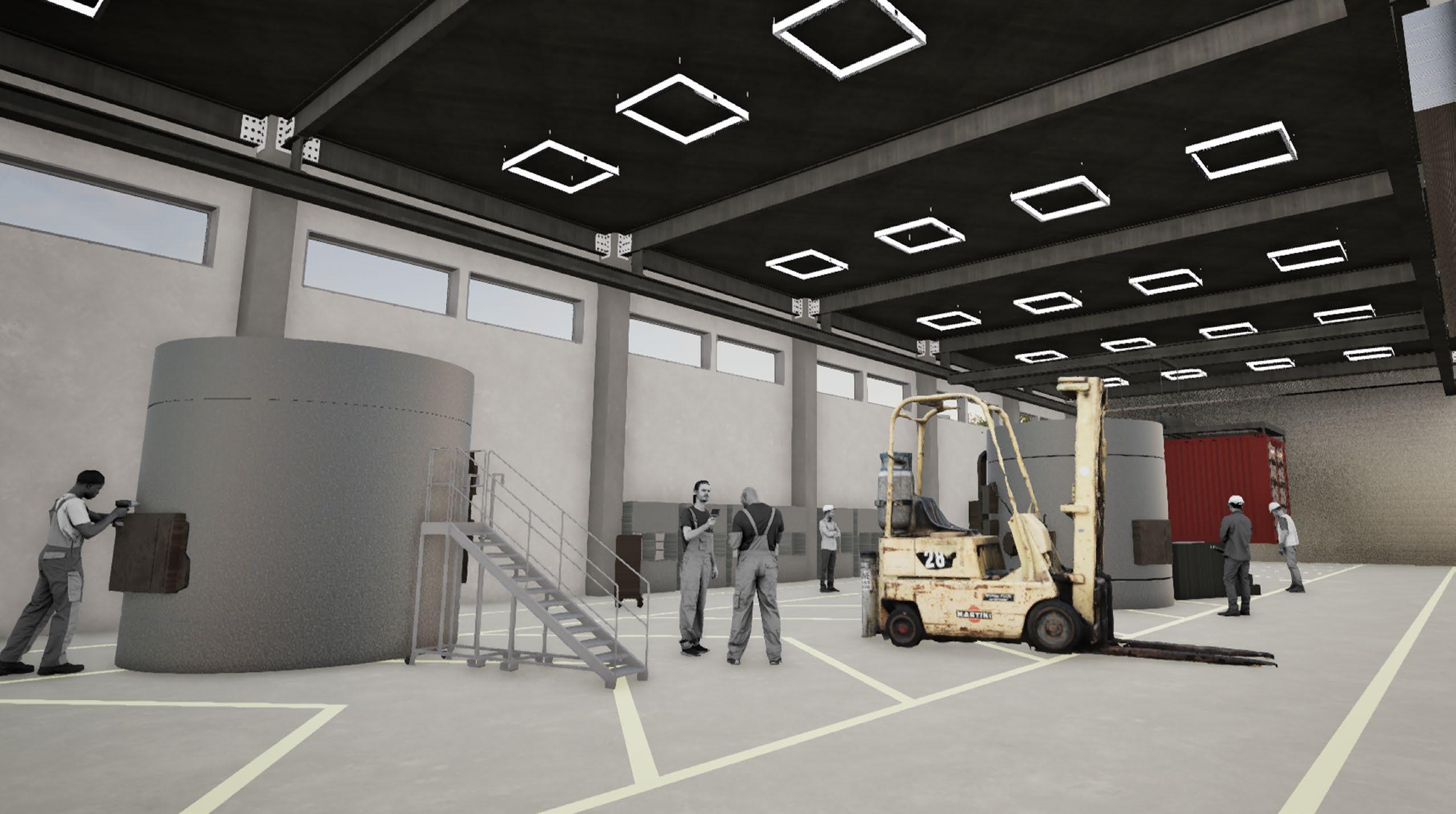
ABOVE: RENDER OF ICE DRILLING WORKSHOP
BELOW: RENDER OF ICE DRILLING EXHIBITION

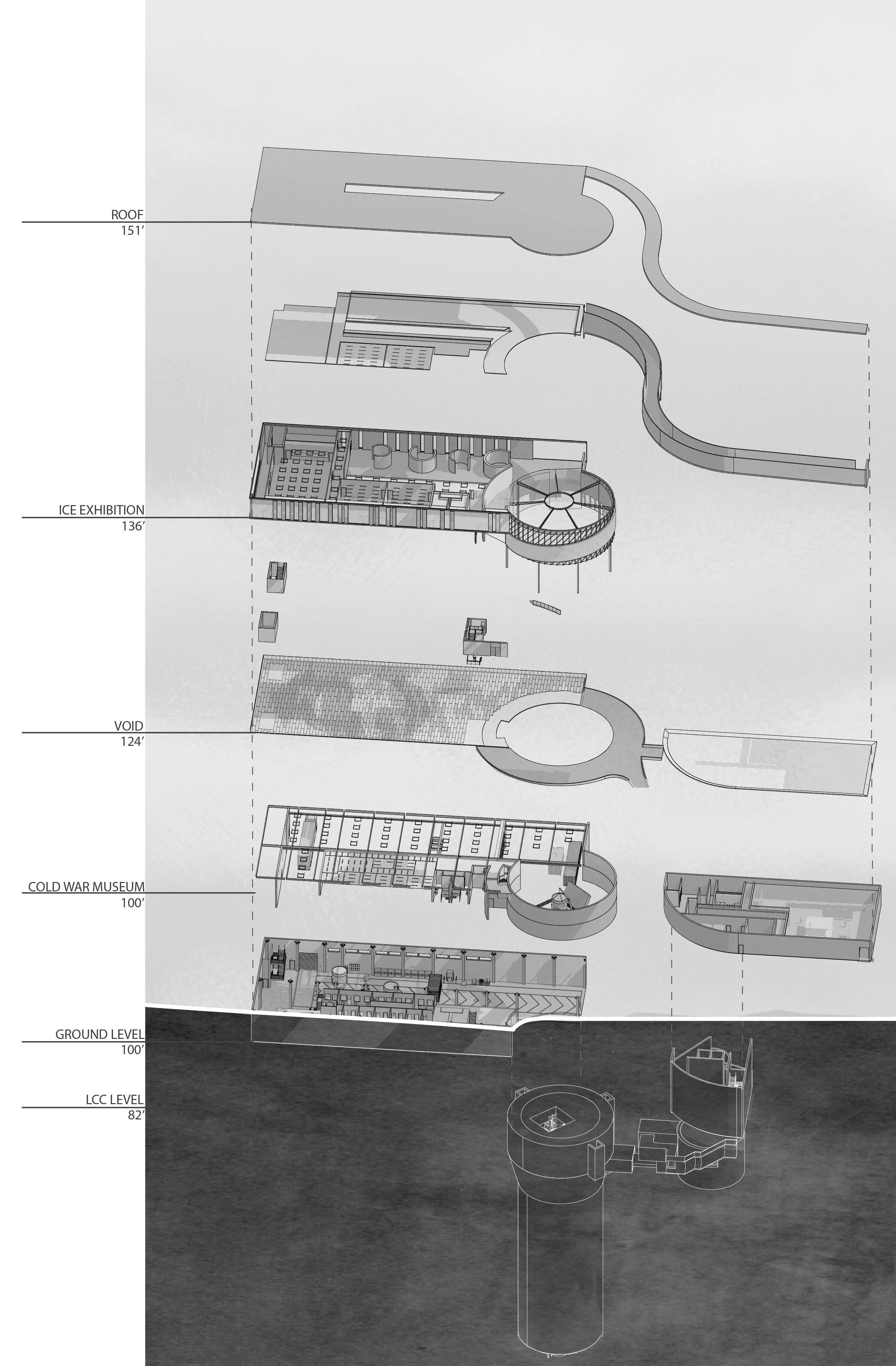
EXPLODED AXONOMETRIC SHOWING FLOOR PLANS AND CIRCULATION
02 OTIUM
OTIUM: “PRODUCTIVE IDLENESS”
“TRAVERSING THERMAL EXTREMES WITH OTHERS HAS A POSITIVE SOCIAL BONDING EFFECT.”
“RELAXATION? FEEDING THE SOUL? THE BATHHOUSE AS A SOCIAL SPACE? THESE IDEAS WERE LOST.”
“TO BATHE IS TO FALL INTO STEP WITH YOUR BIOLOGICAL RHYTHMS. IN & OUT BREATHING, SPEED OF BLOOD COURSING THROUGH YOUR VEINS, THE SLOWNESS OF TIREDNESS...”
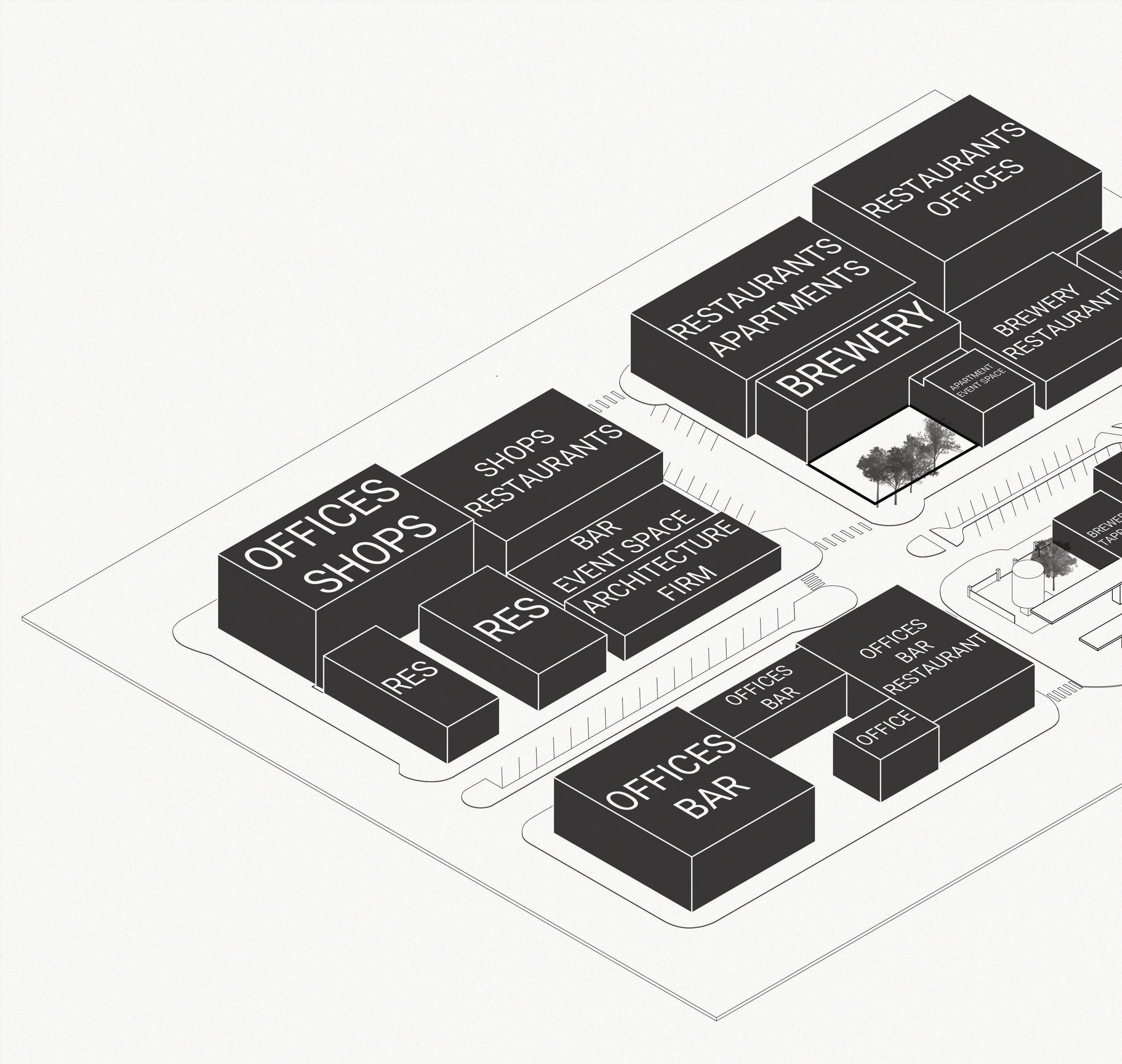
PROGRAM DIAGRAM OF HAYMARKET IN LINCOLN, NE
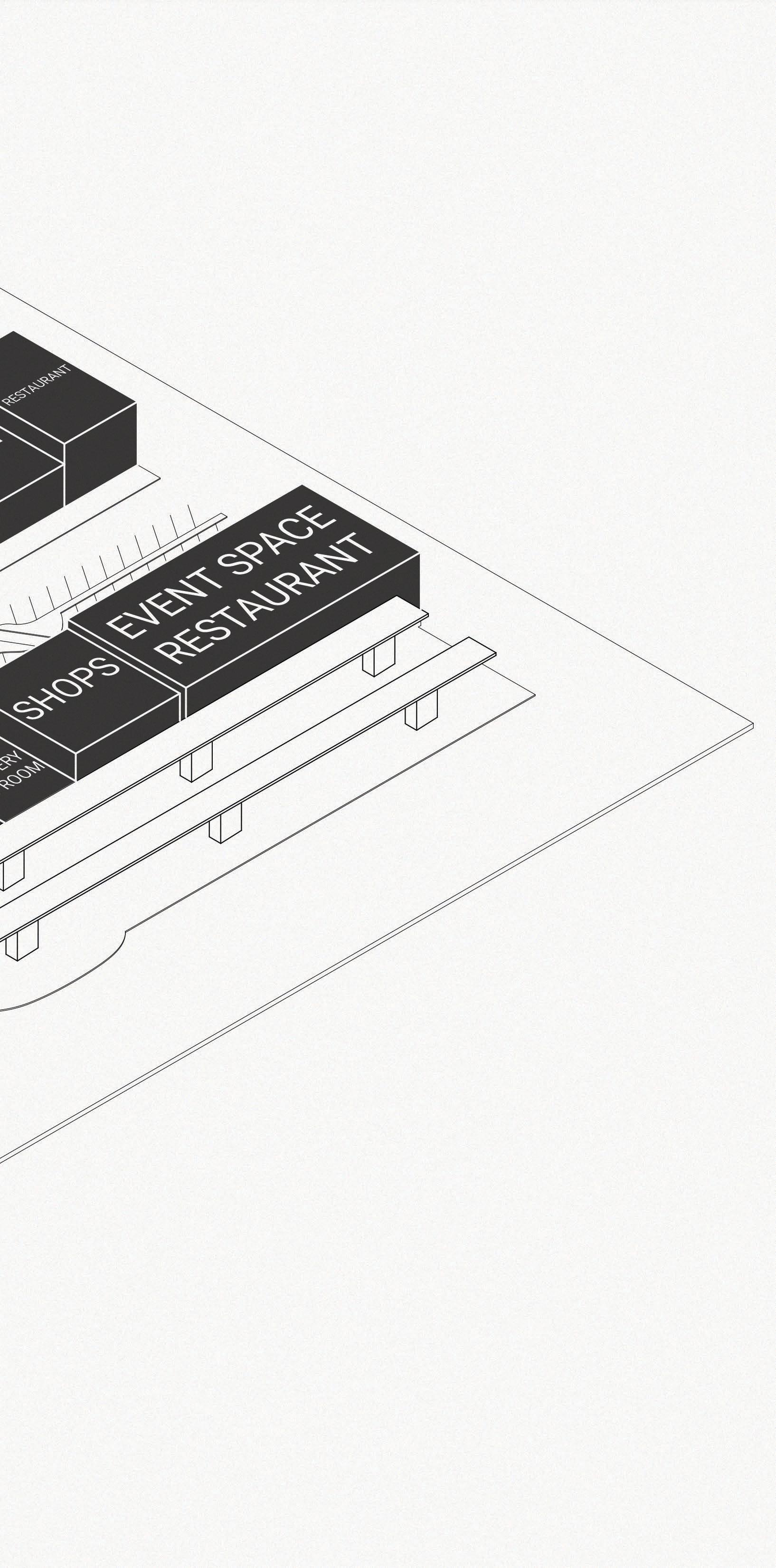
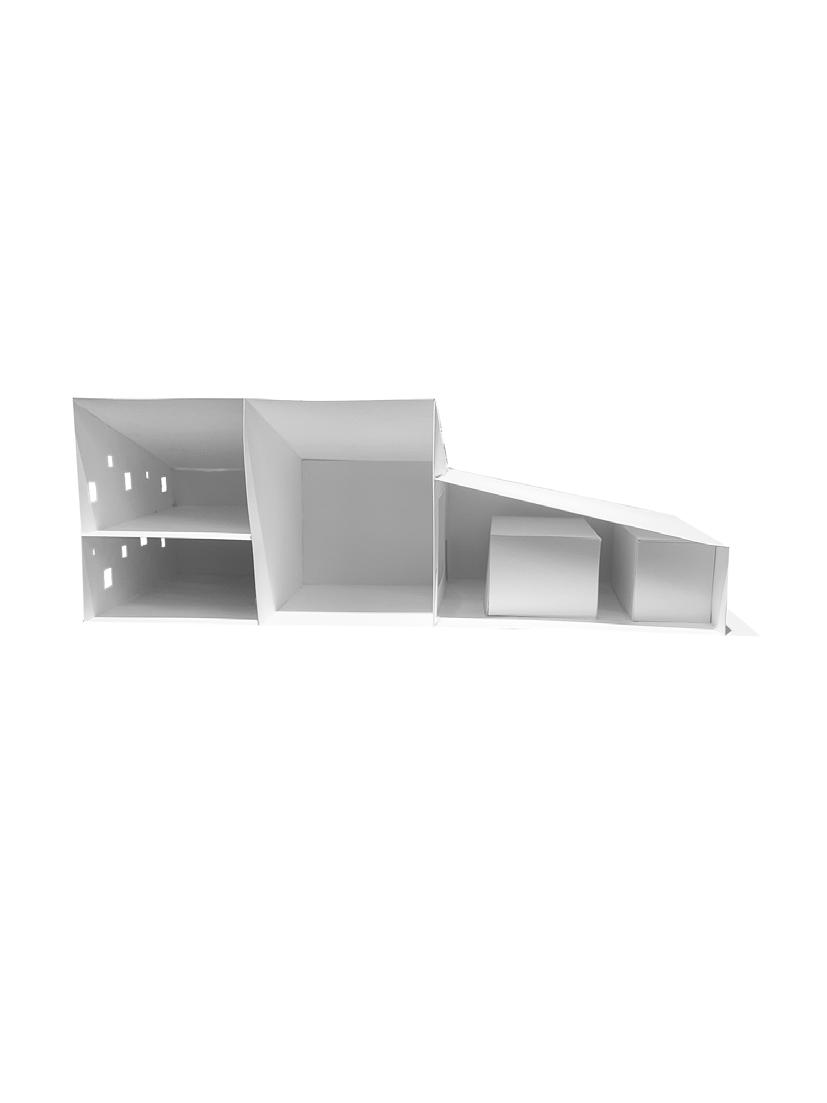
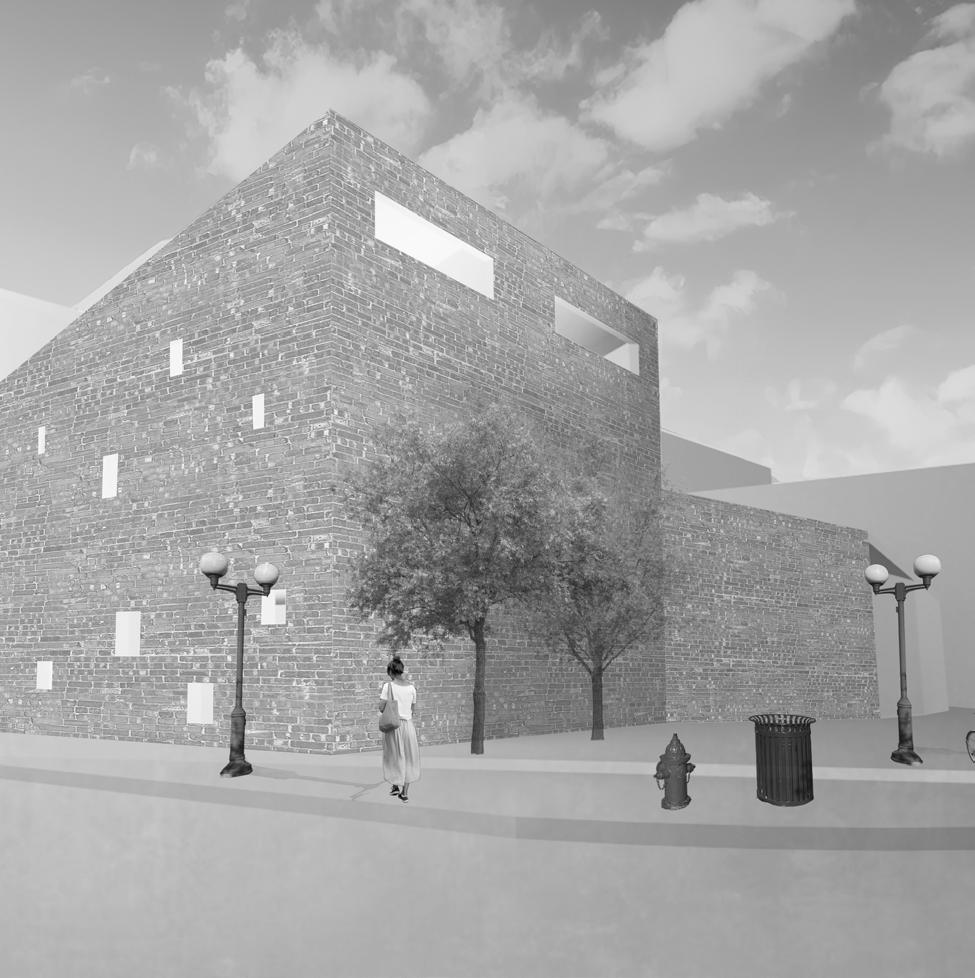
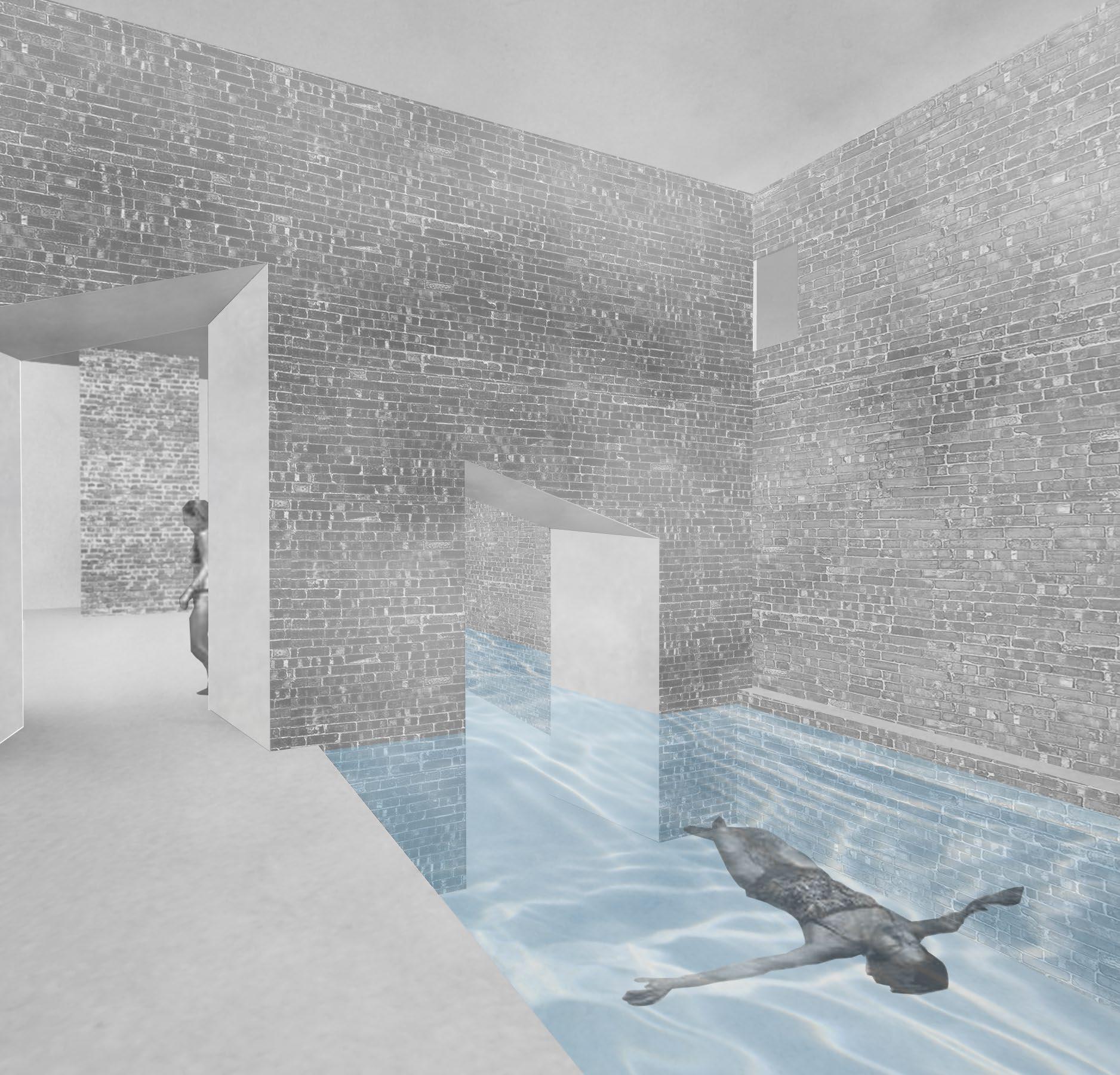
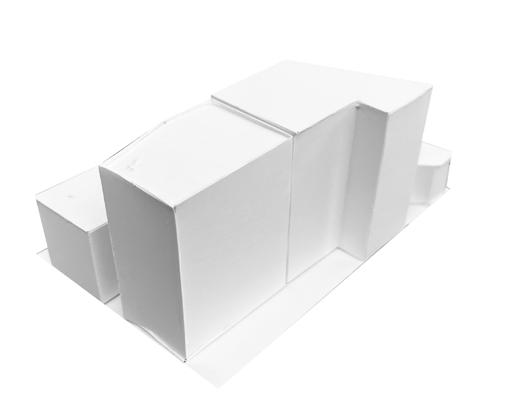
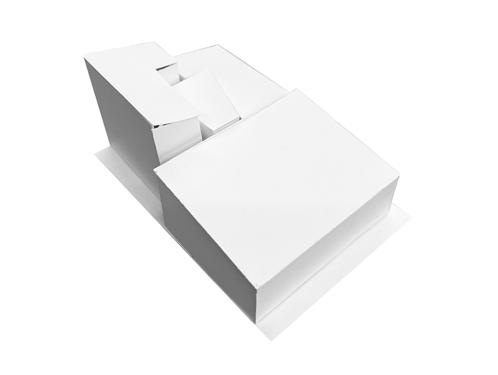
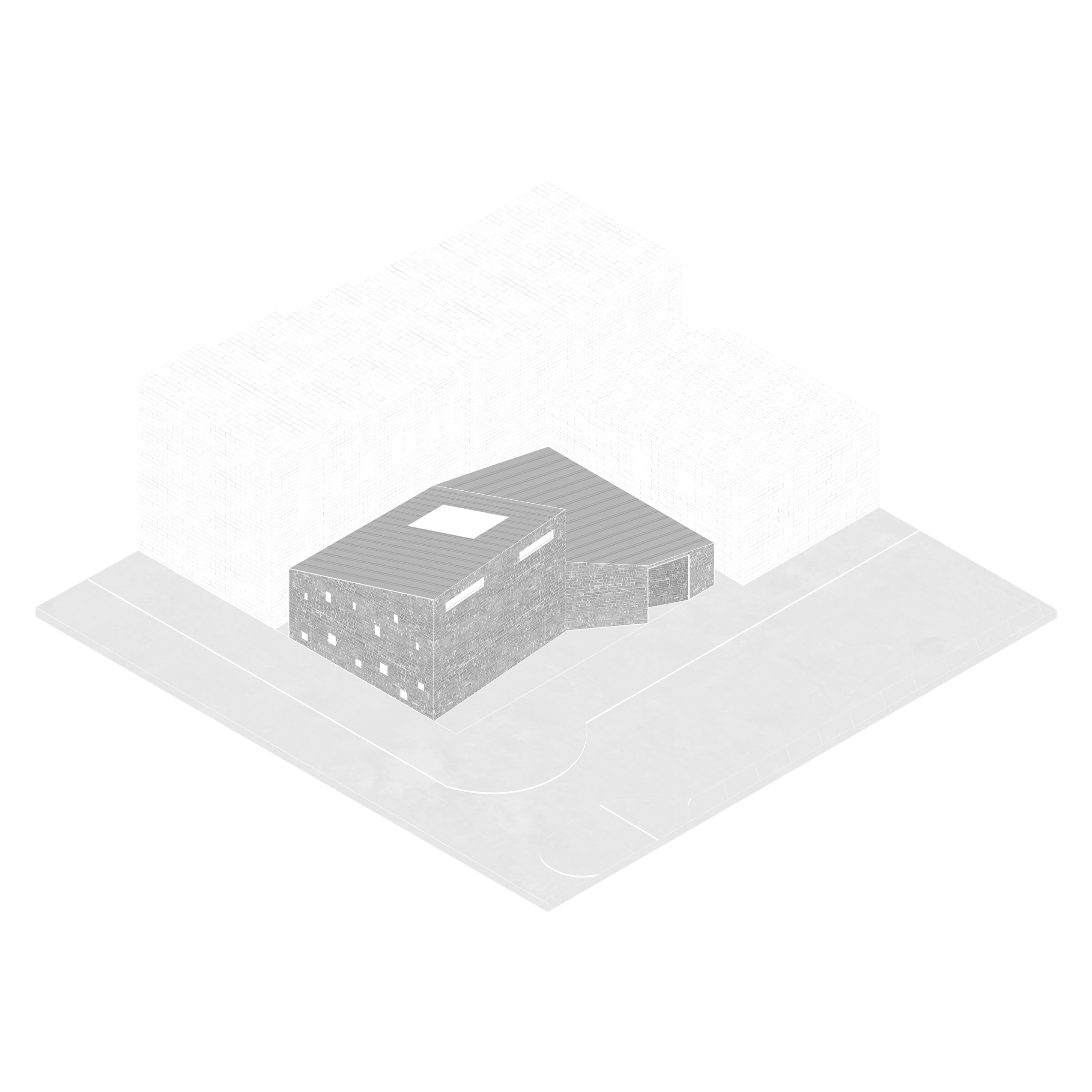
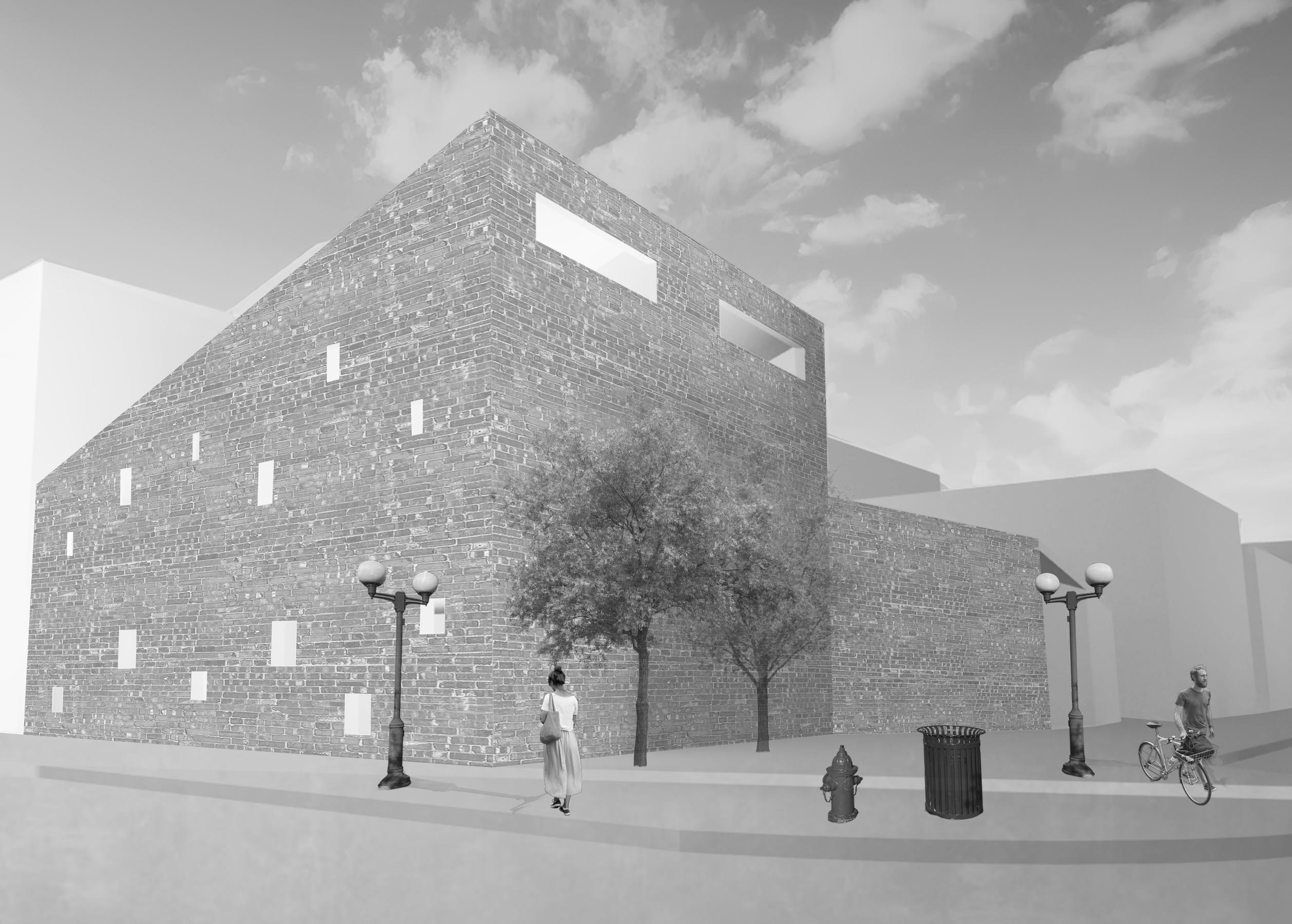
This six week project is located in the Haymarket district of Lincoln, Nebraska, and would act as a modern day public bathhouse. This site sits on the corner of 7th and Q st, and has an interesting context surrounding it. Ideas of views greatly influenced the final design. The design is also influenced by the circulation around the site. This can be a very busy area at times, which may not be the best context for a point of relaxation. To combat this, combined with the keeping of the small patch of green space that is existing currently, the portion of massing at the corner is at its highest point to allow for privacy, and the entry point funnels users into the experience.
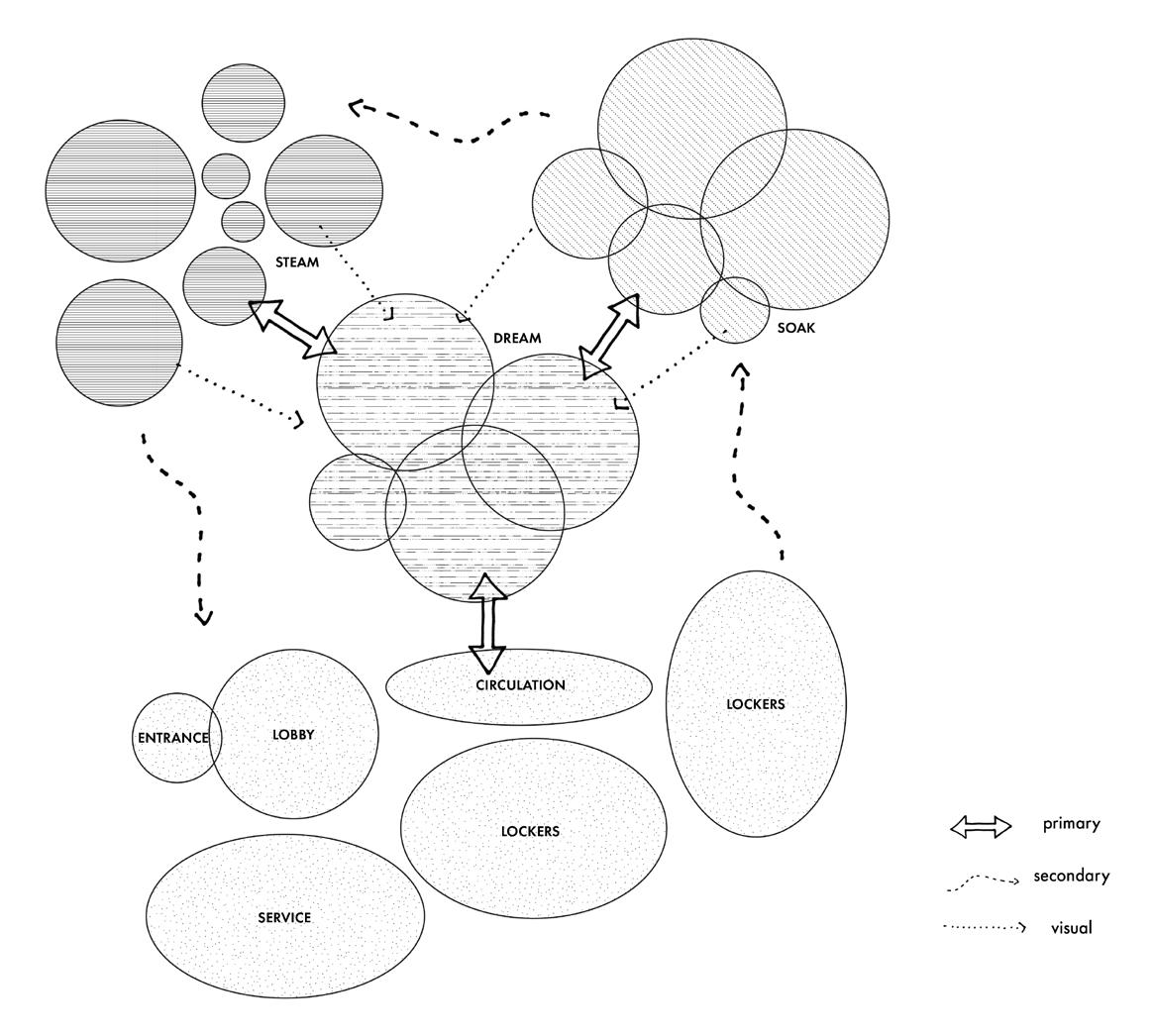
The iterations of this project all had this idea in common of a central community space that will eventually act as the dream space, as well as tension between program spaces. This space encourages this sense of community that has been lost with bathing and strives to embrace this idea of productive idleness through its volumes and thresholds. We all need more relaxation in our lives, and this bathhouse would be a step towards that.
FIRST FLOOR PLAN
1/16”=1’
SECOND FLOOR PLAN
1/16”=1’

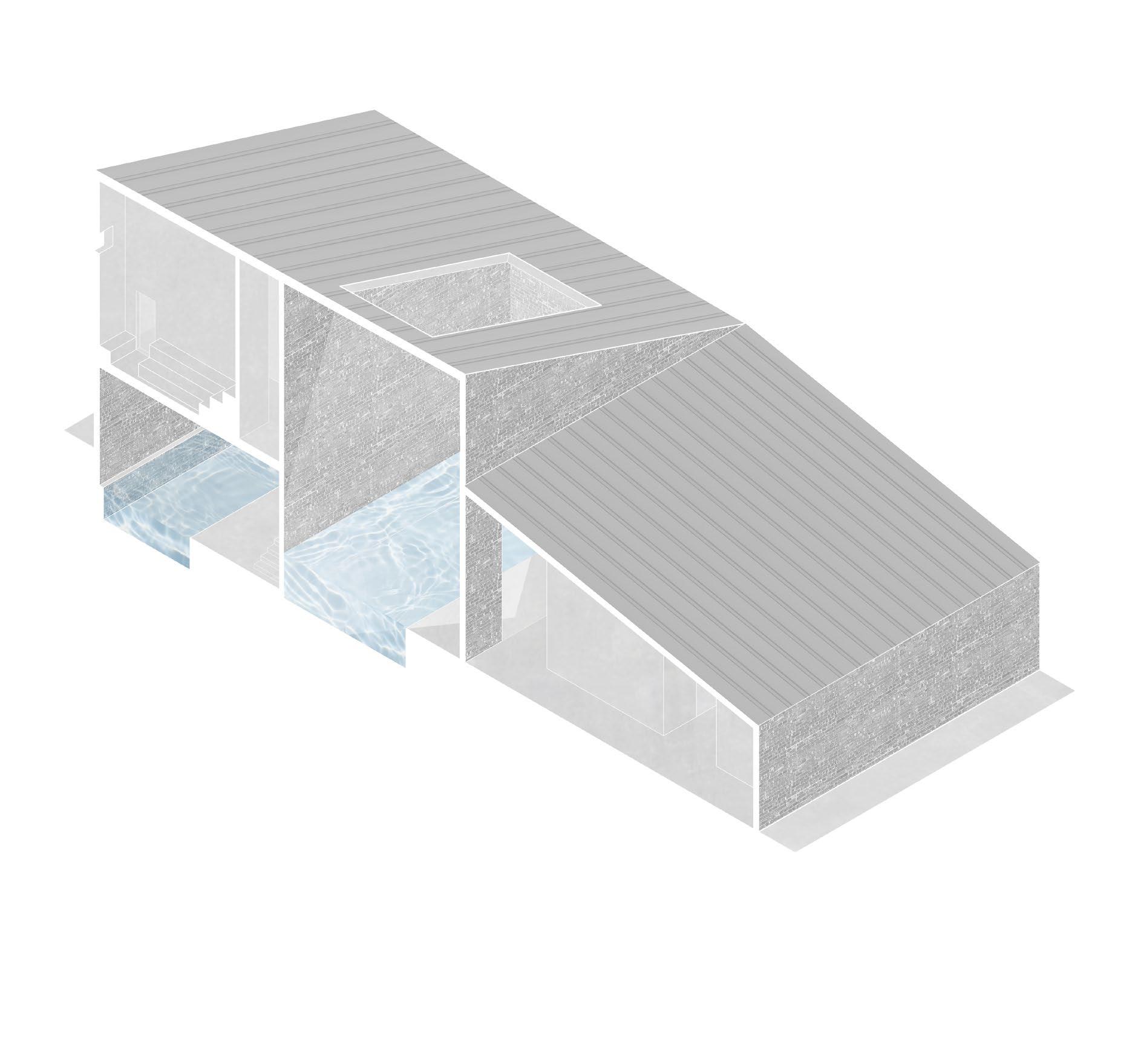
AXONOMETRIC WITH SITE CONTEXT 1/32”=1’
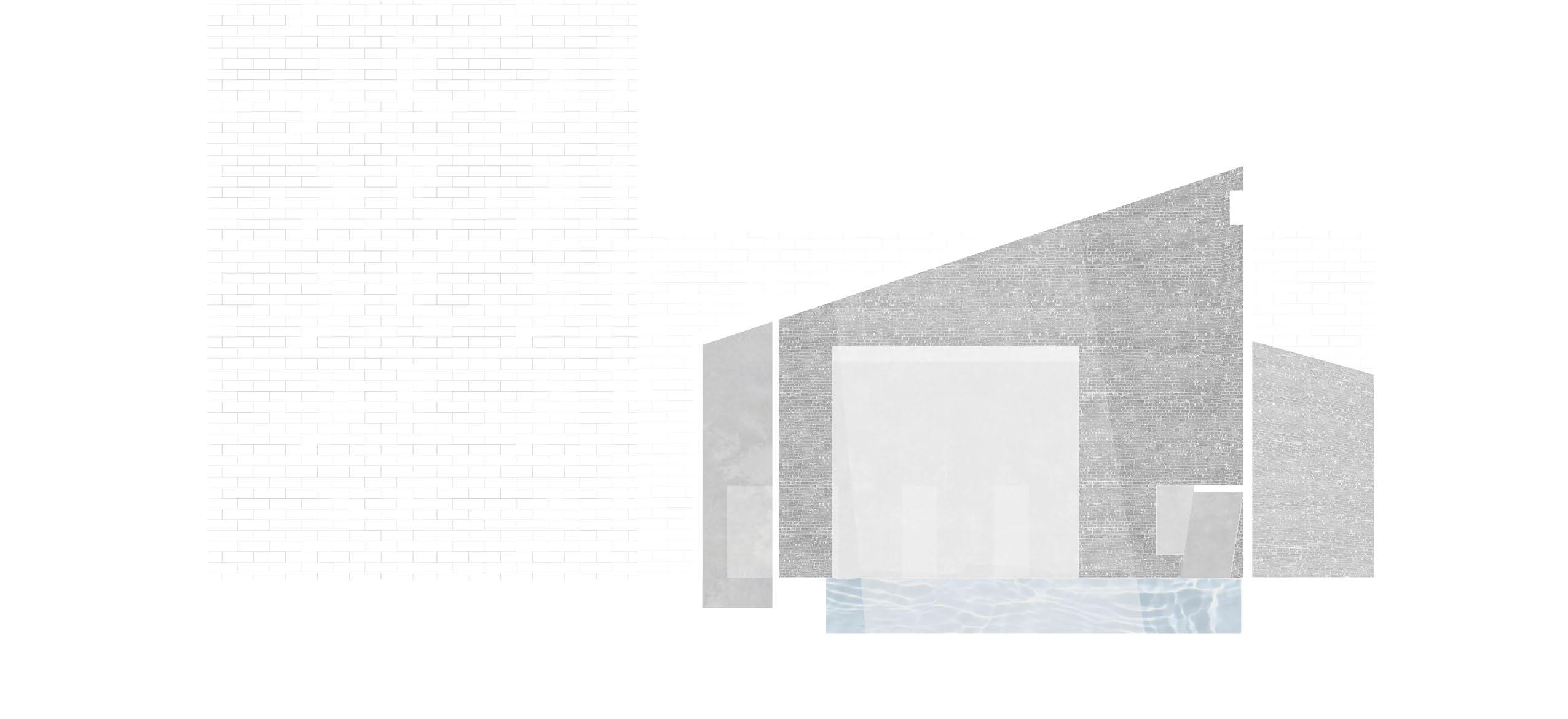
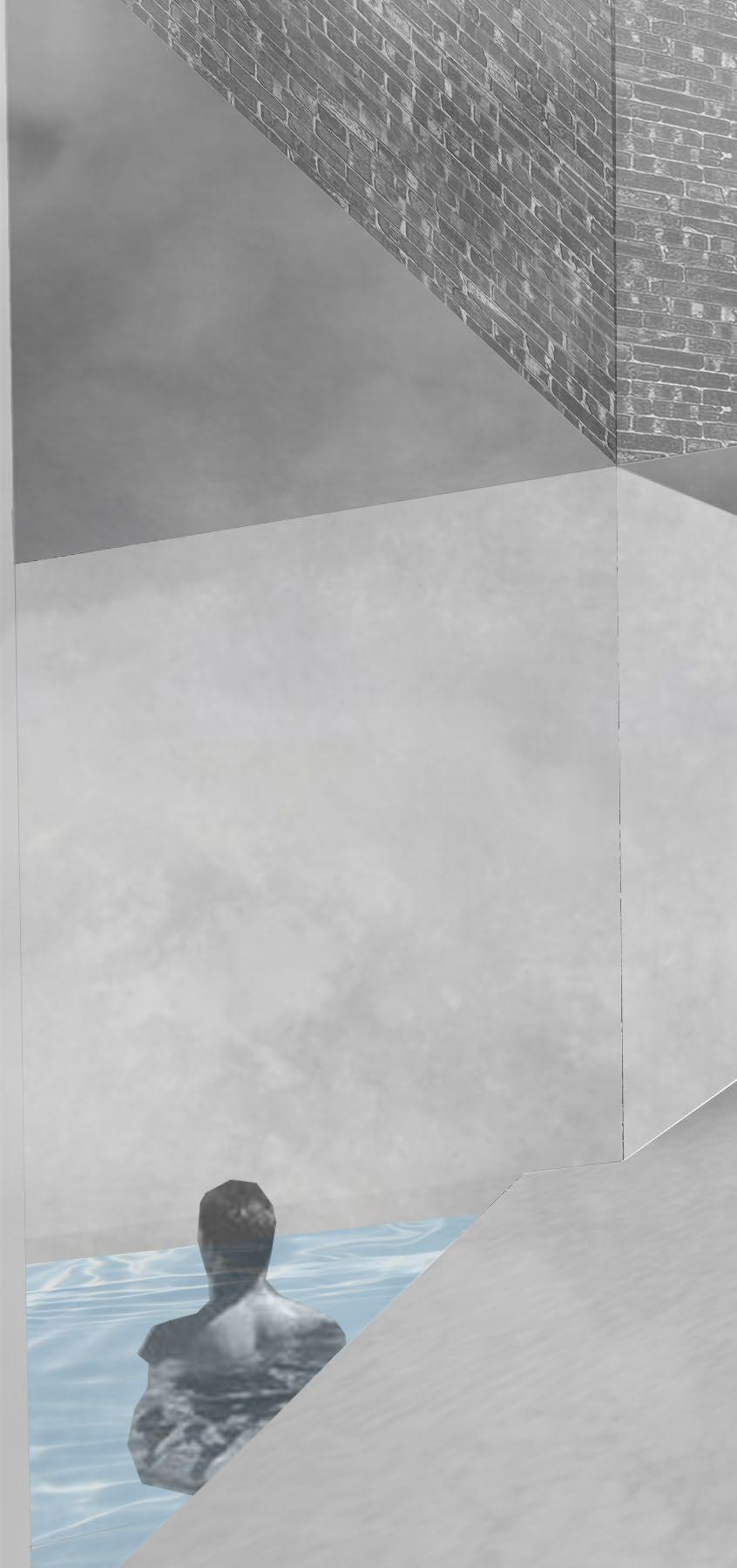
The project is divided into 3 experiences-soak, steam, and dream. From research and context, this project has the soak space acting as a slow, healing area; the steam space being a blurred area with private enclosed volumes, and the dream space being a place of community and togetherness while embracing relaxation.
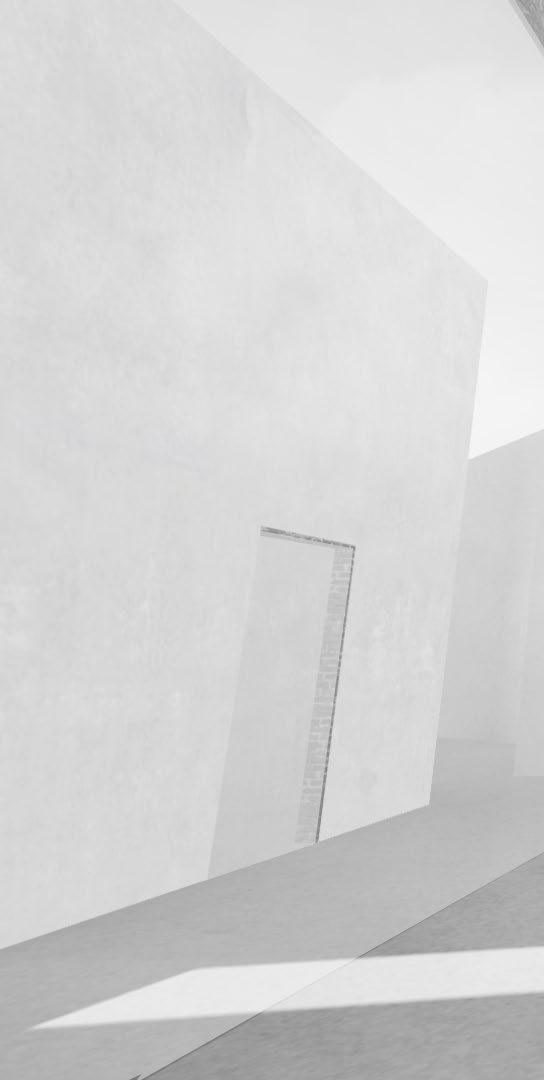
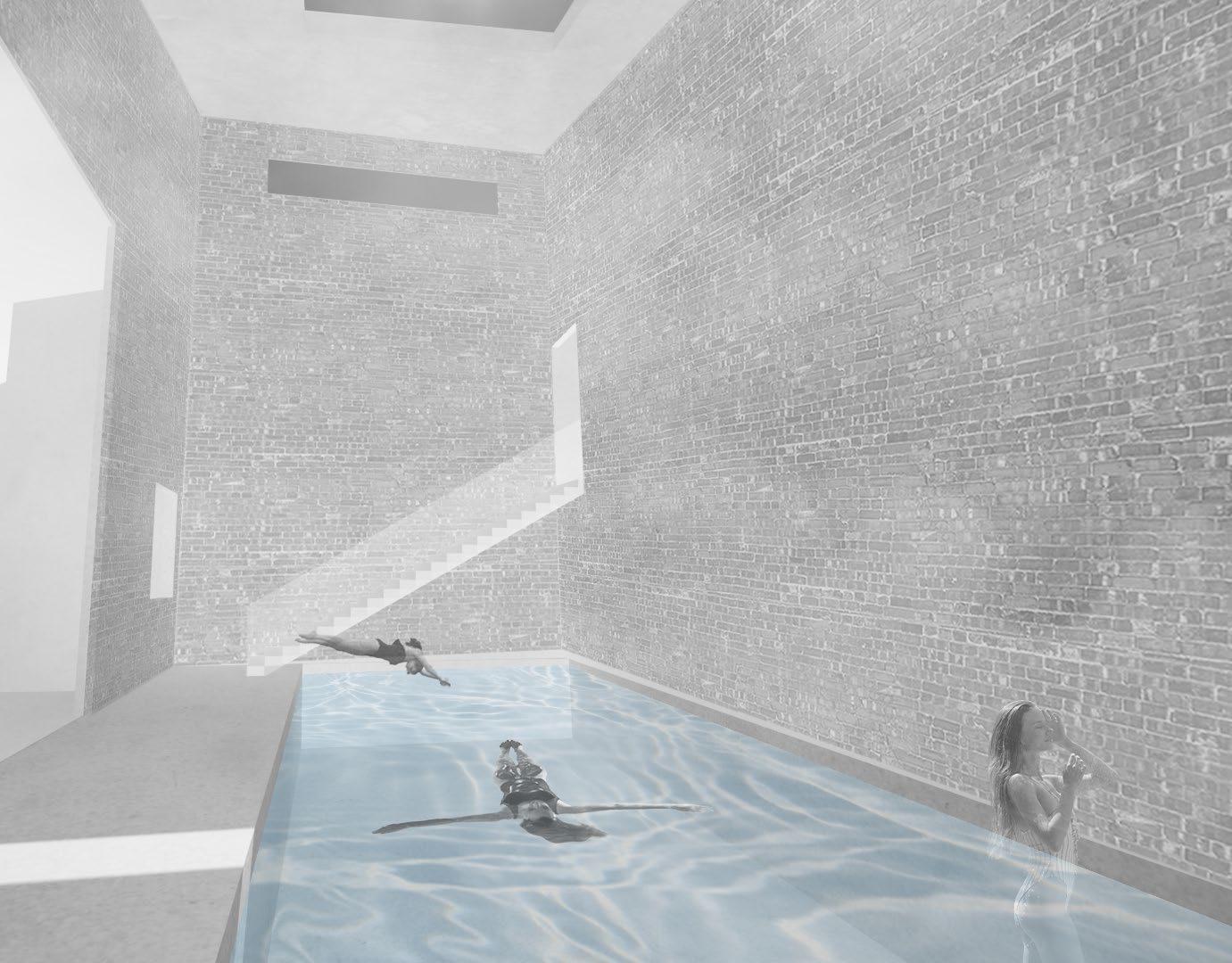
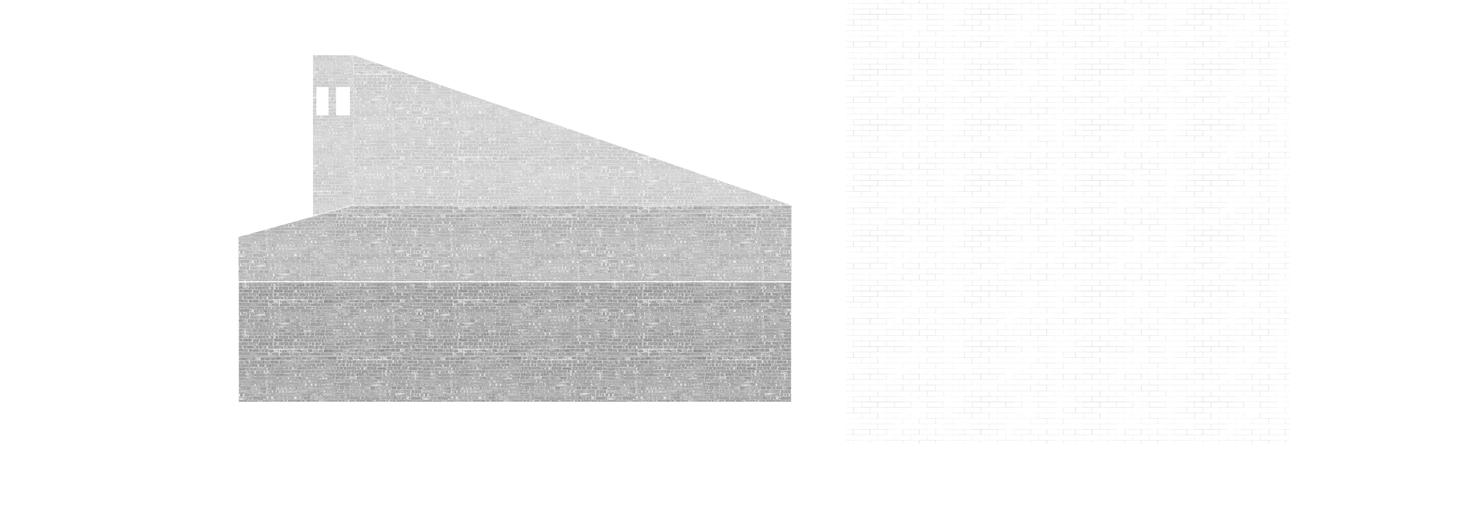
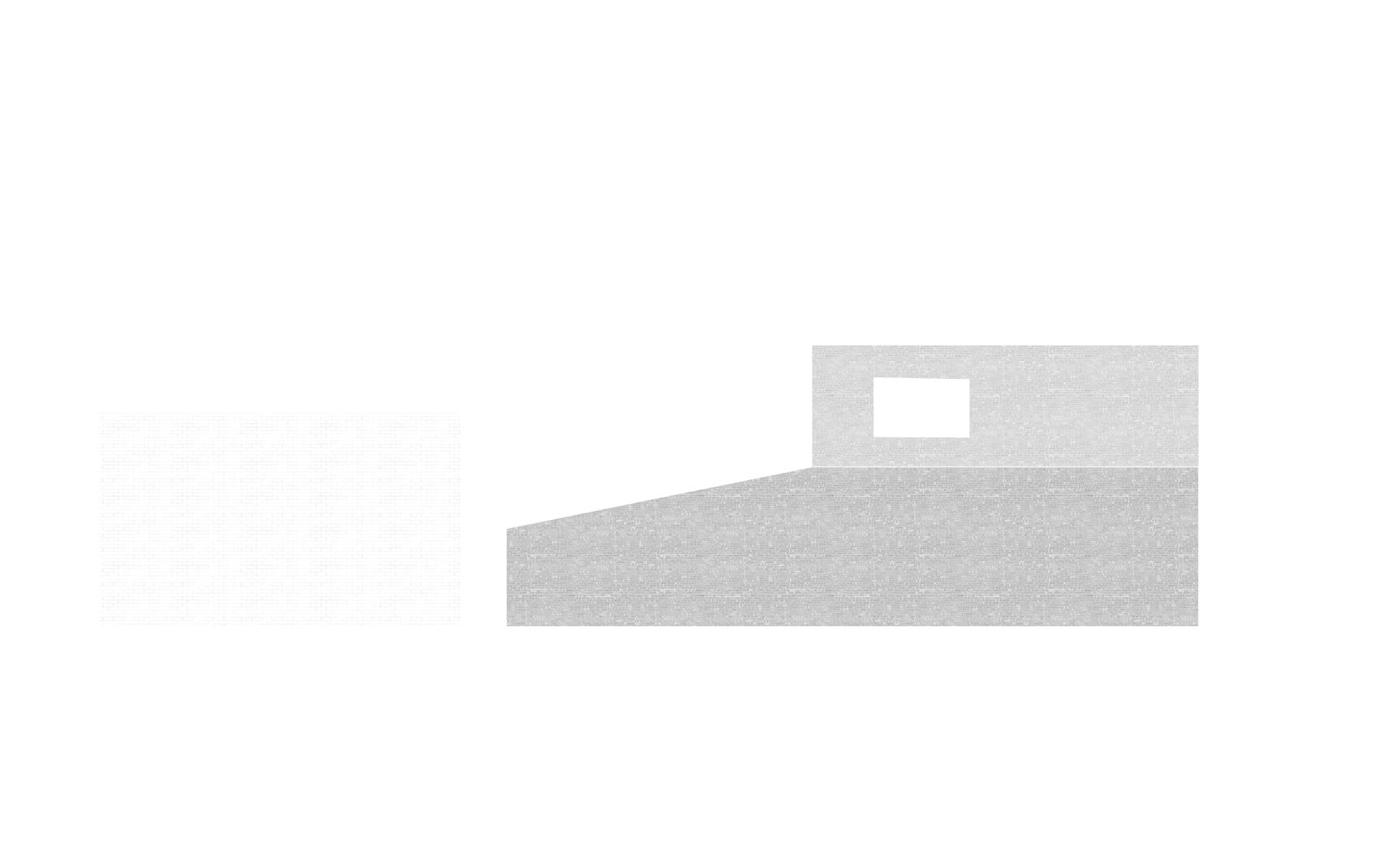
RENDER OF DREAM SPACE
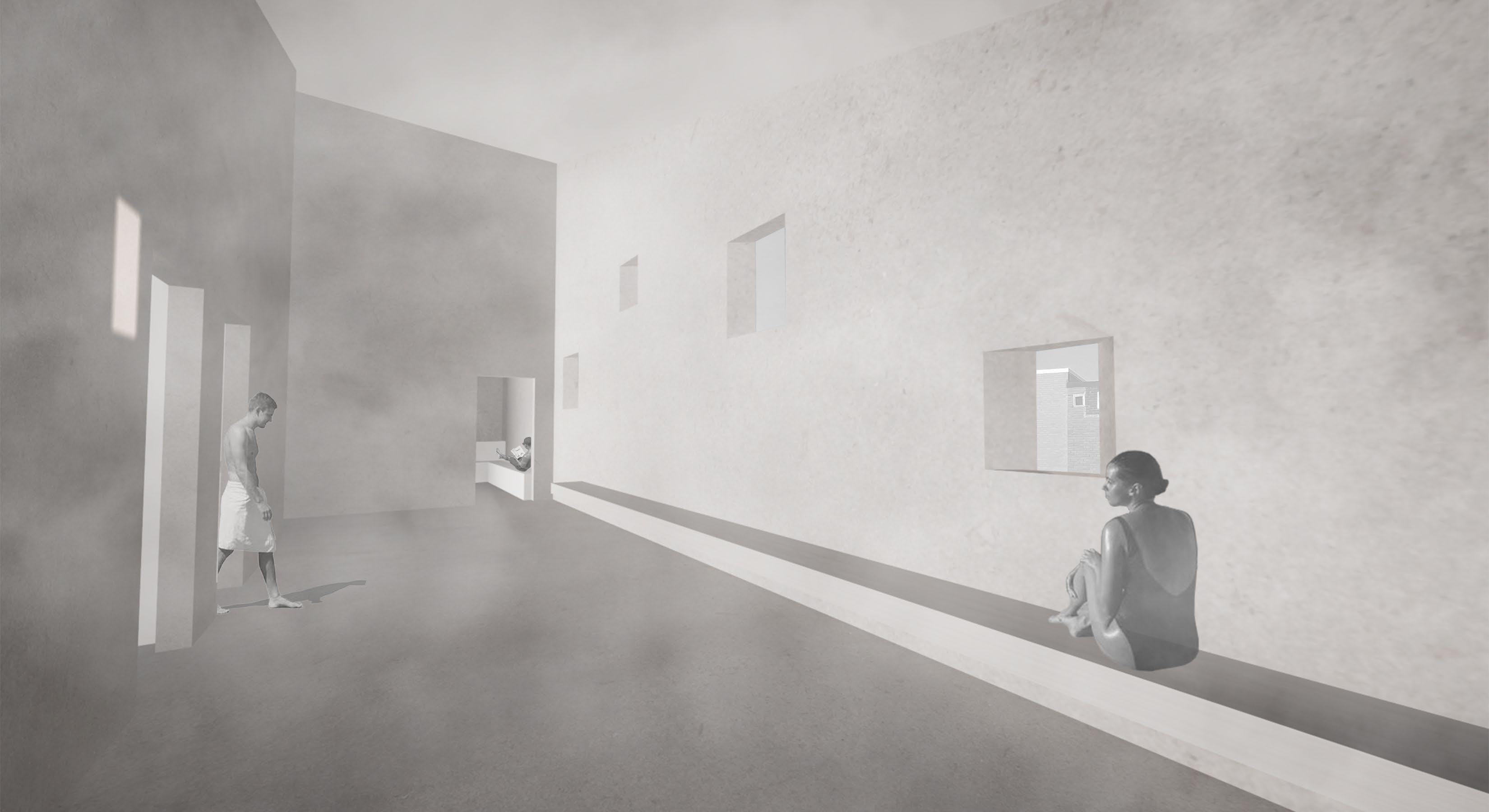
ABOVE: RENDER OF STEAM SPACE
BELOW: EXTERIOR RENDER
03 THE HIDDEN ROOM
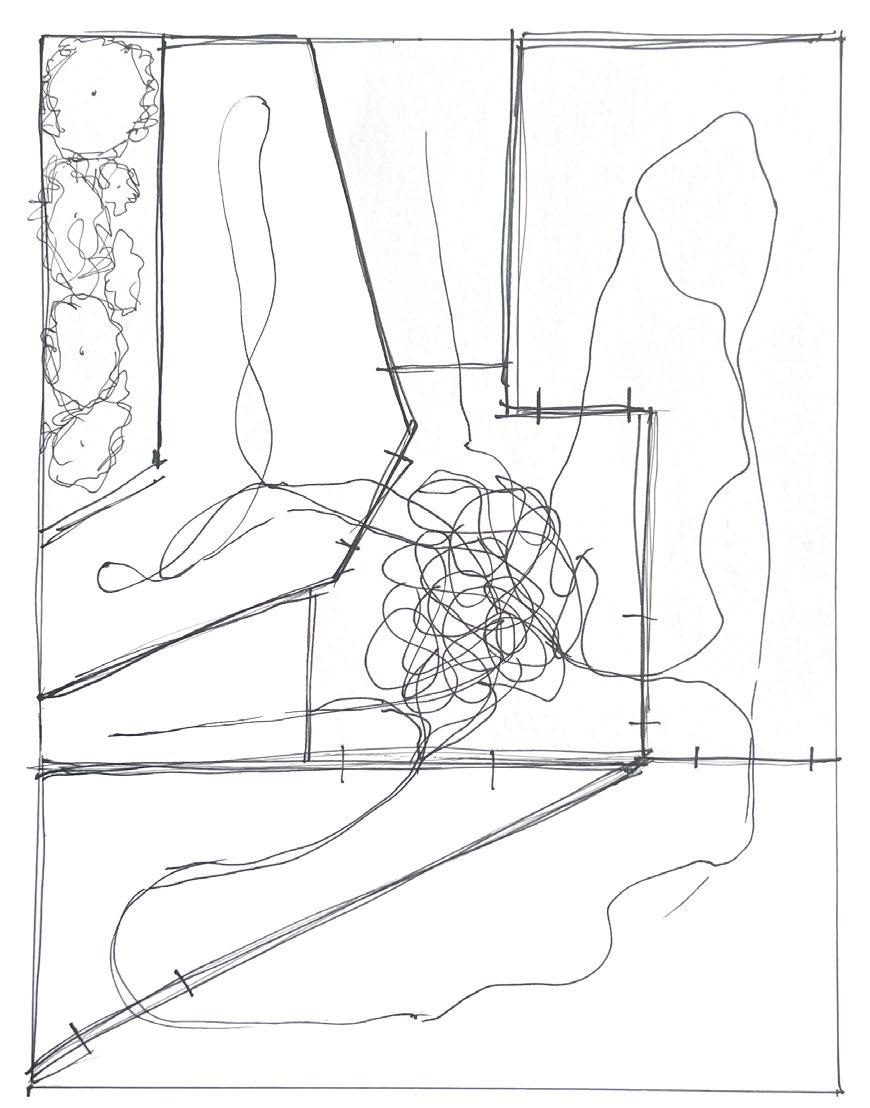
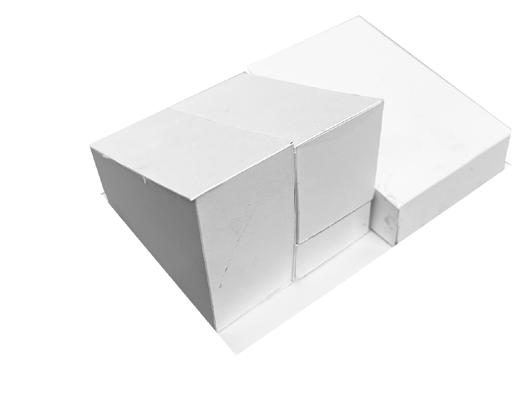
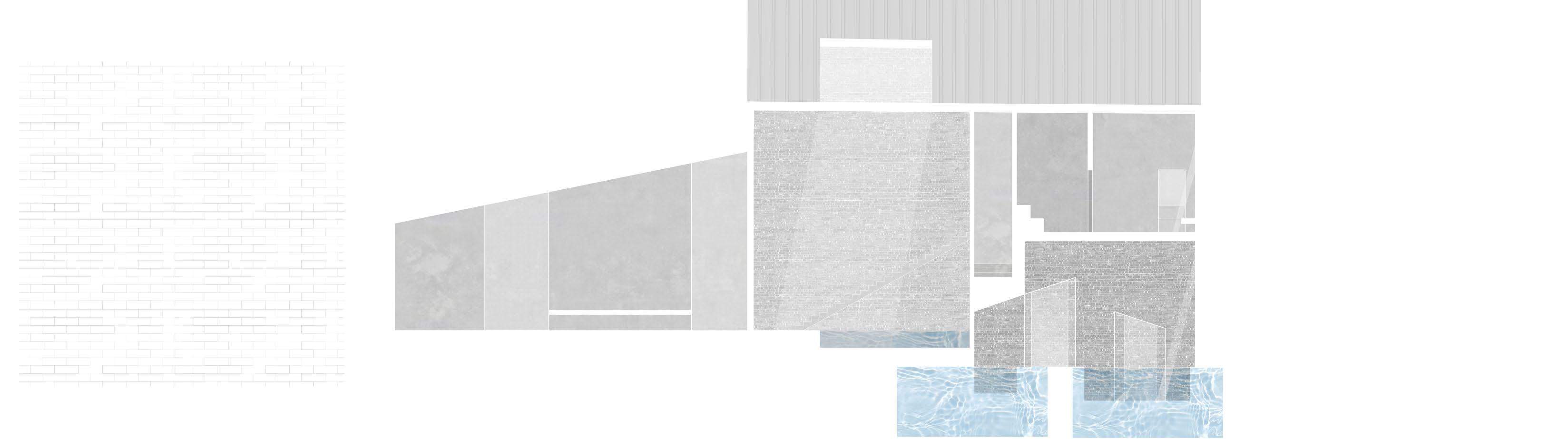
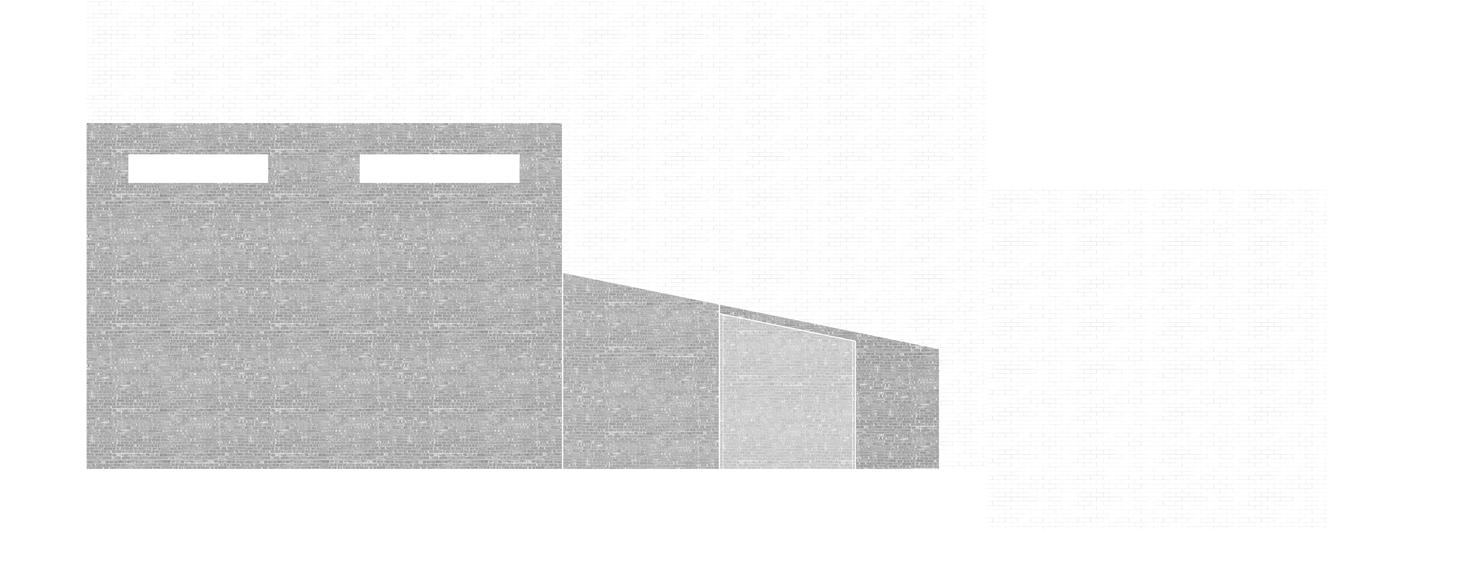
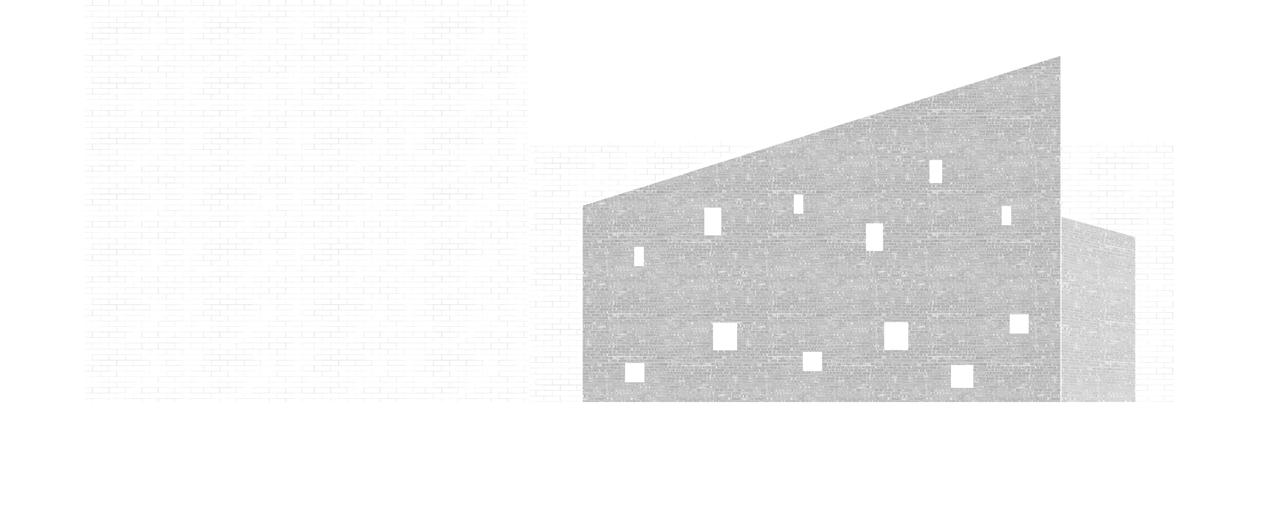
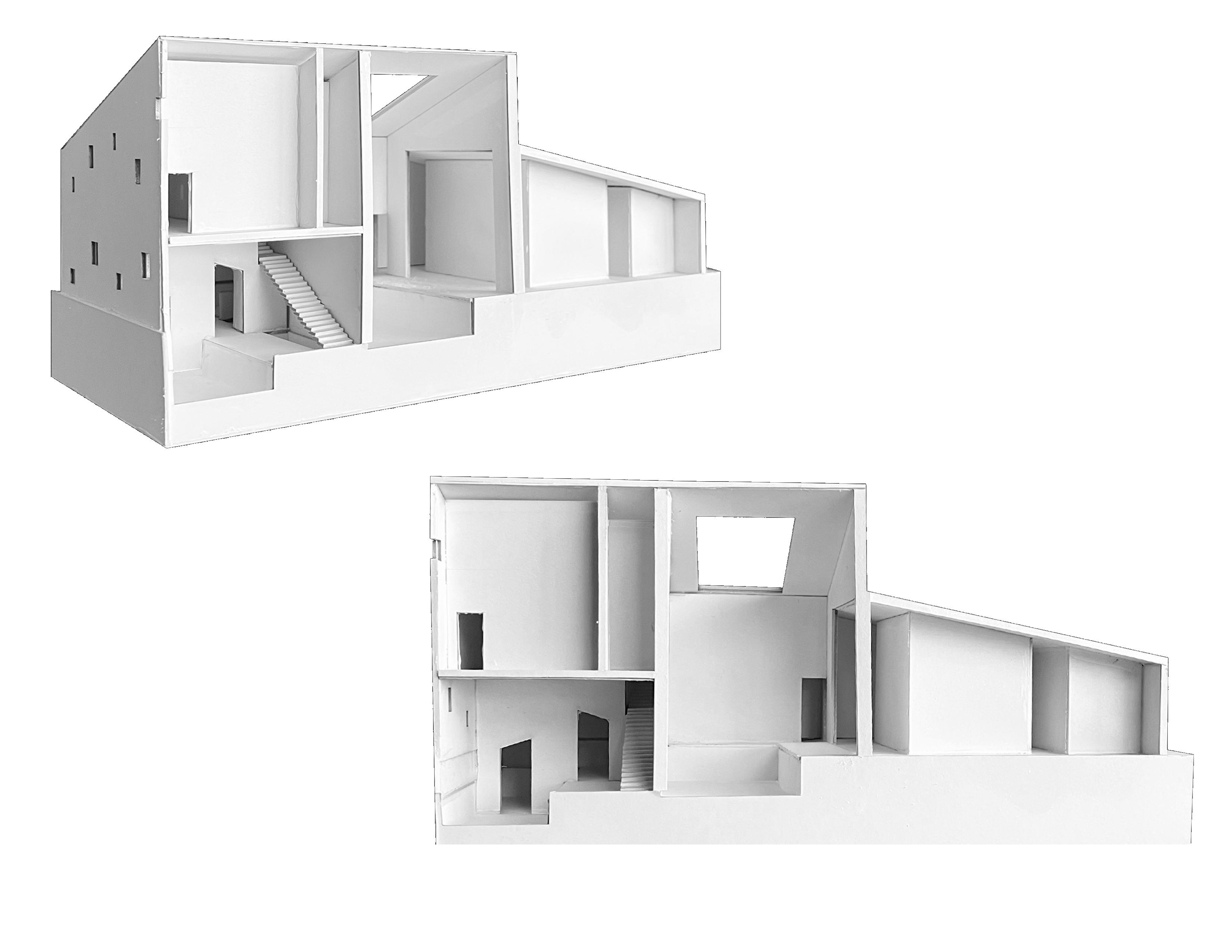
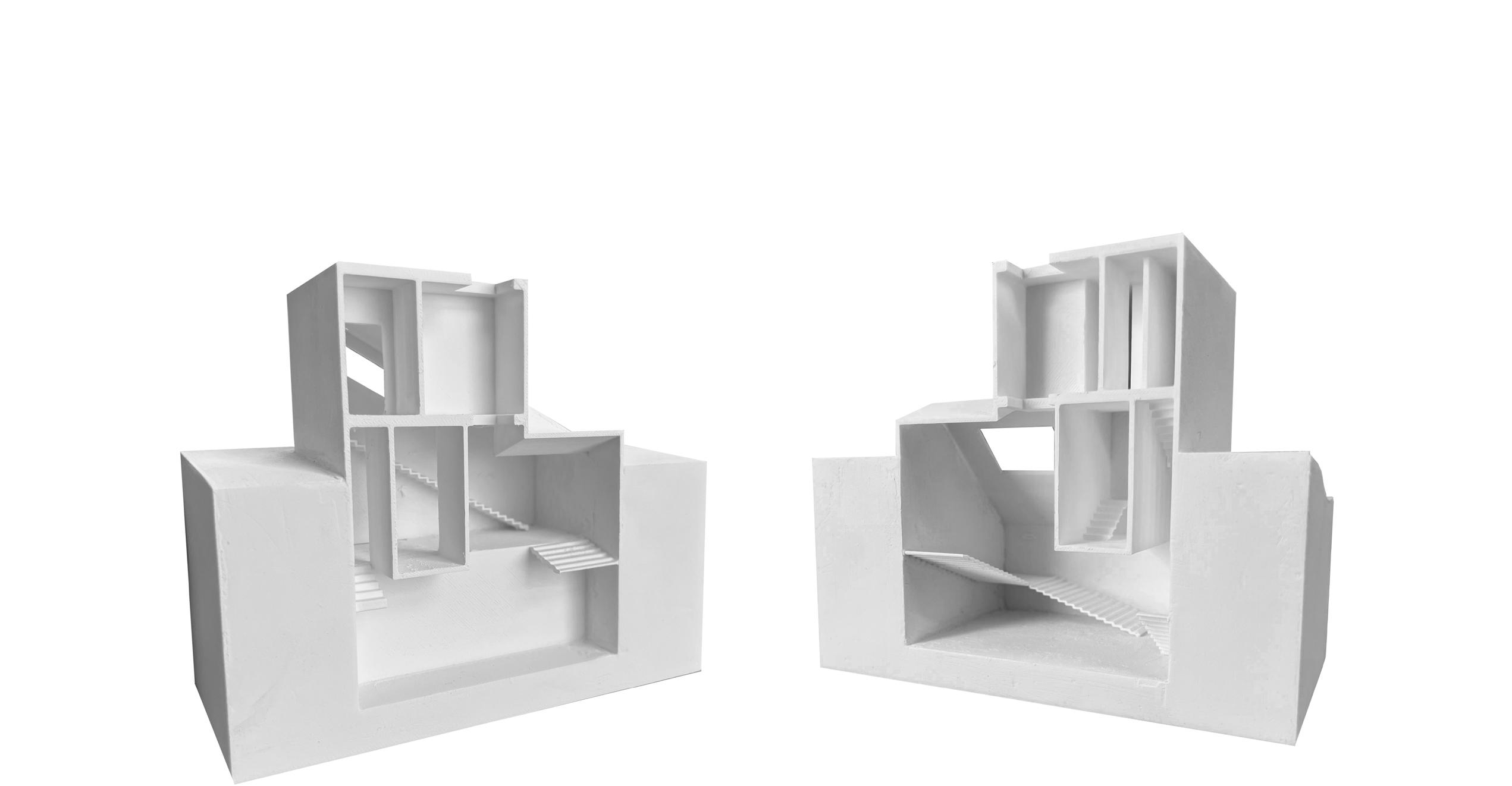
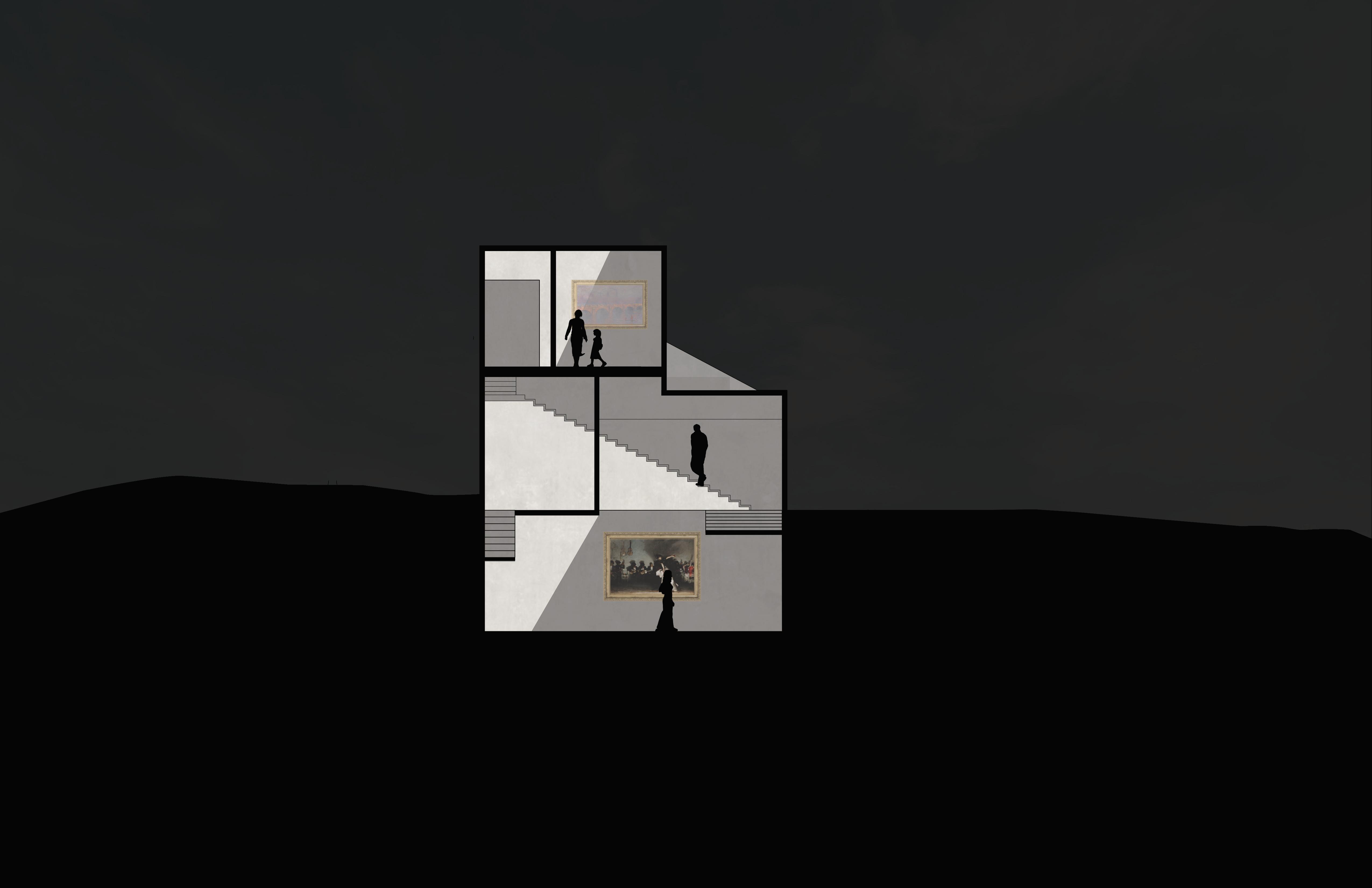
This five week project involves designing a group of five rooms, one of which seems to be hidden from the other four. The program requires providing a means of access to the hidden room while controlling the degree to which the room becomes vulnerable to disclosure. The concept for this stems from Frank Lloyd Wright’s pinwheel as well as an idea of unfolding to create the hidden room. Elements vary in levels of openness and light, and the smaller , less obvious path takes you to the hidden room. The project went through hundreds of hand drawn iterations before moving to the final digital product.
SOUTHEAST ISOMETRIC 1/16”=1’
NORTHEAST ISOMETRIC
1/16”=1’
04 NORTH OMAHA COLLECTIVE
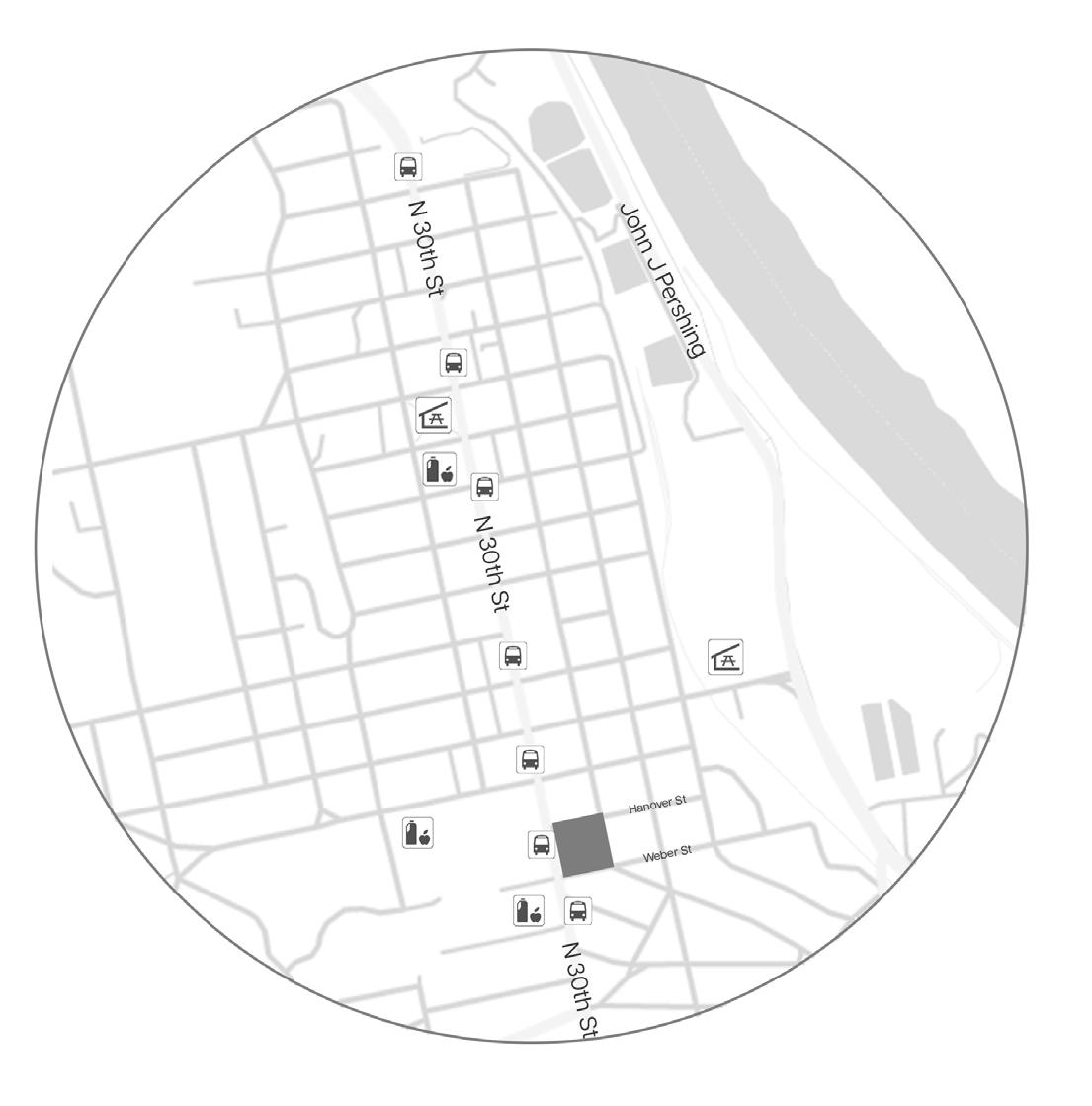
The project is a conceptual interior design/tenant finish out in an existing building(s) in North Omaha for a collection of nonprofits with similar missions to promote and advance the arts, culture, and well-being of residents of the surrounding historically black community. With a focus on celebrating BIPOC voices, the three organizations envision the space as a collective asset for the community to celebrate their art, history, and culture while providing spaces that are safe, diverse, and inclusive supporting creative and athletic activities.
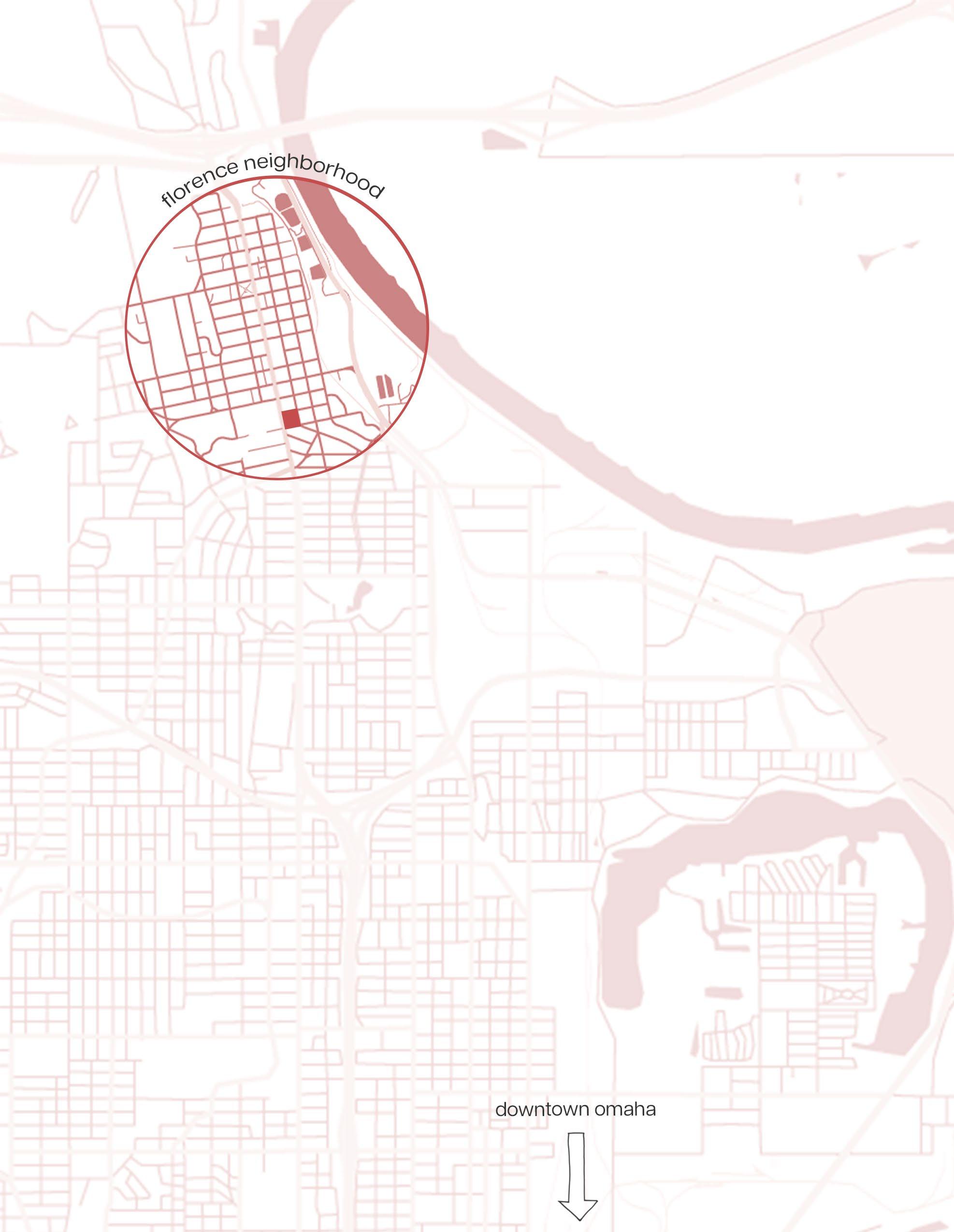
FLORENCE NEIGHBORHOOD IN NORTH OMAHA
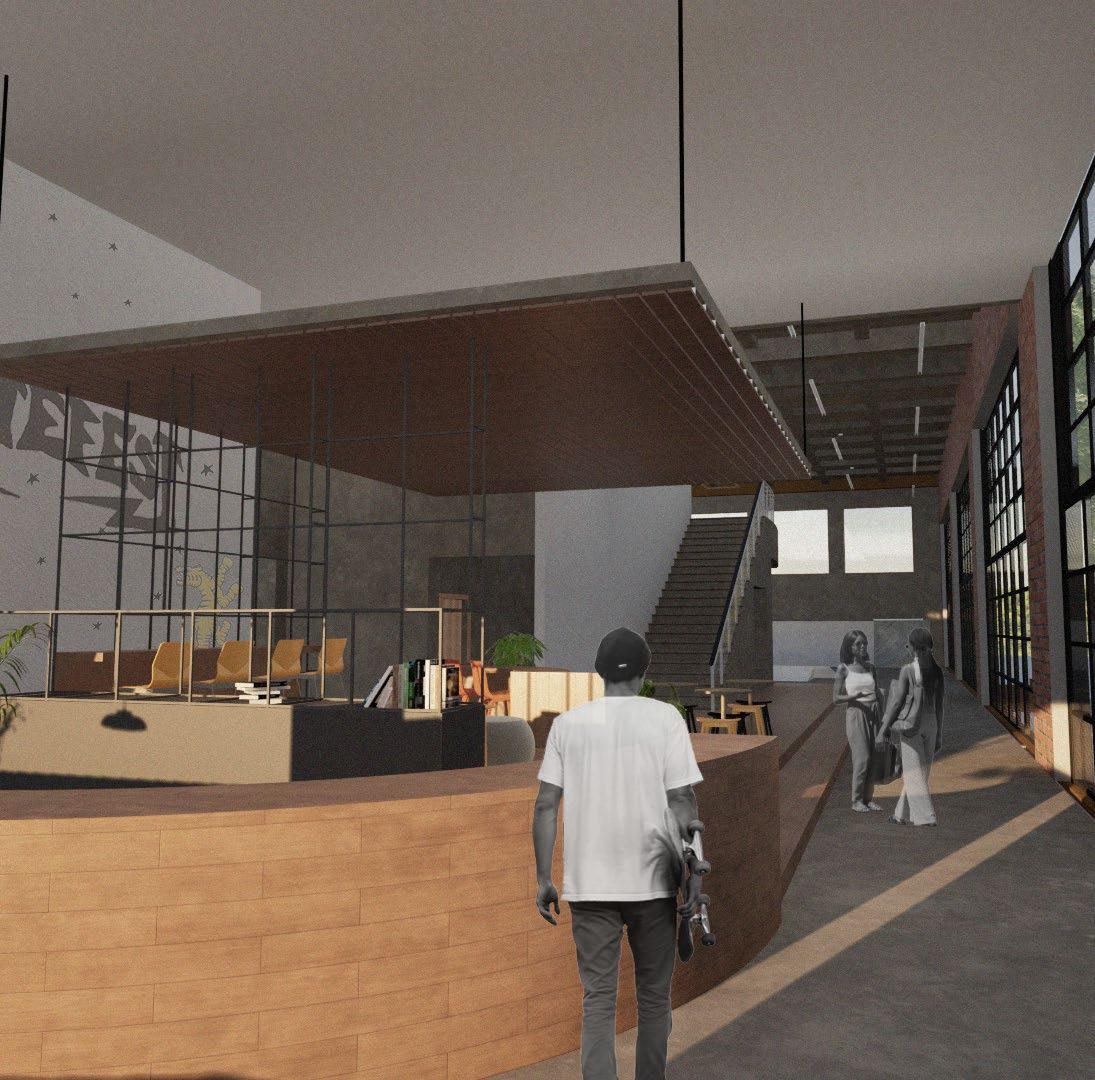
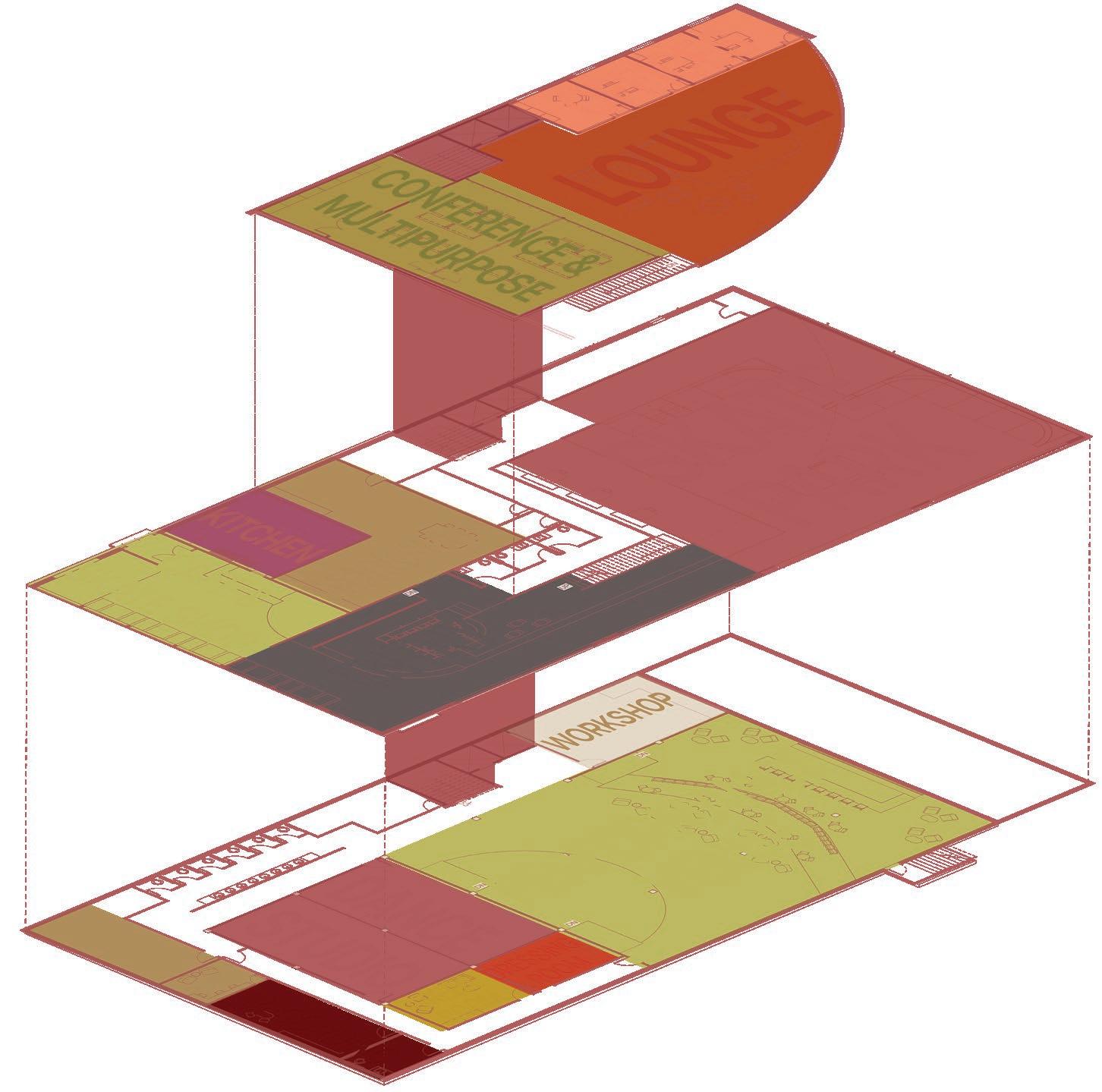
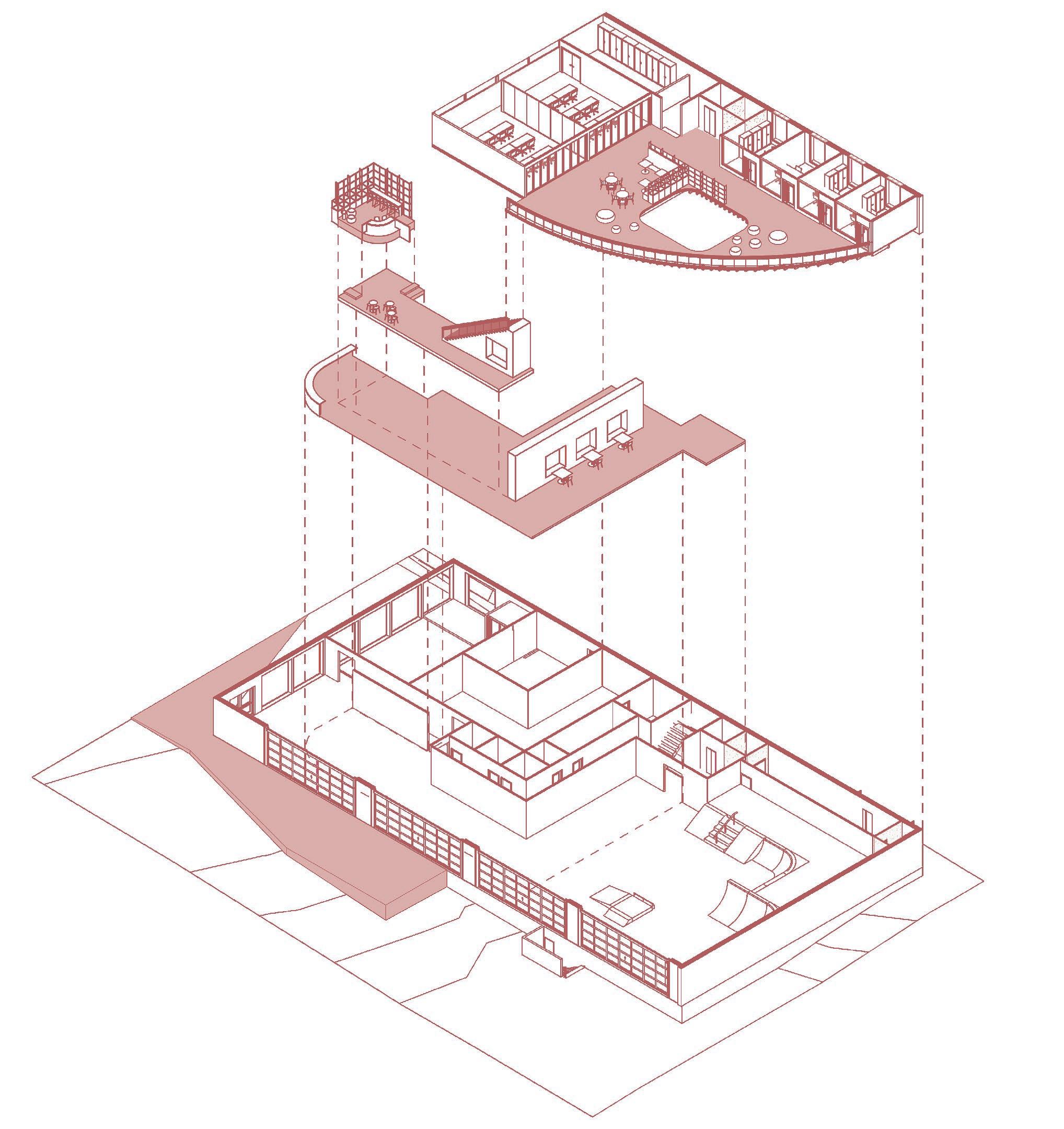
The main level of the building has many opportunities for visual connection to the exterior, which allows for a closer connection to the surrounding community. The program expands outwards on the main level versus folding inwards on the lower level. The programs are placed in their respective areas to encourage ease of use of the space and to allow for easy circulation and volumetric differences. The spaces interact vertically as well by giving views from the mezzanine to the skate park, and having a circulation core that carries from the lowest level to the mezzanine. The programs become more private as they move away from either the entrance or the circulation core.
LEFT: SITE MAP OF OMAHA WITH FLORENCE NEIGHBORHOOD HIGHLIGHTED
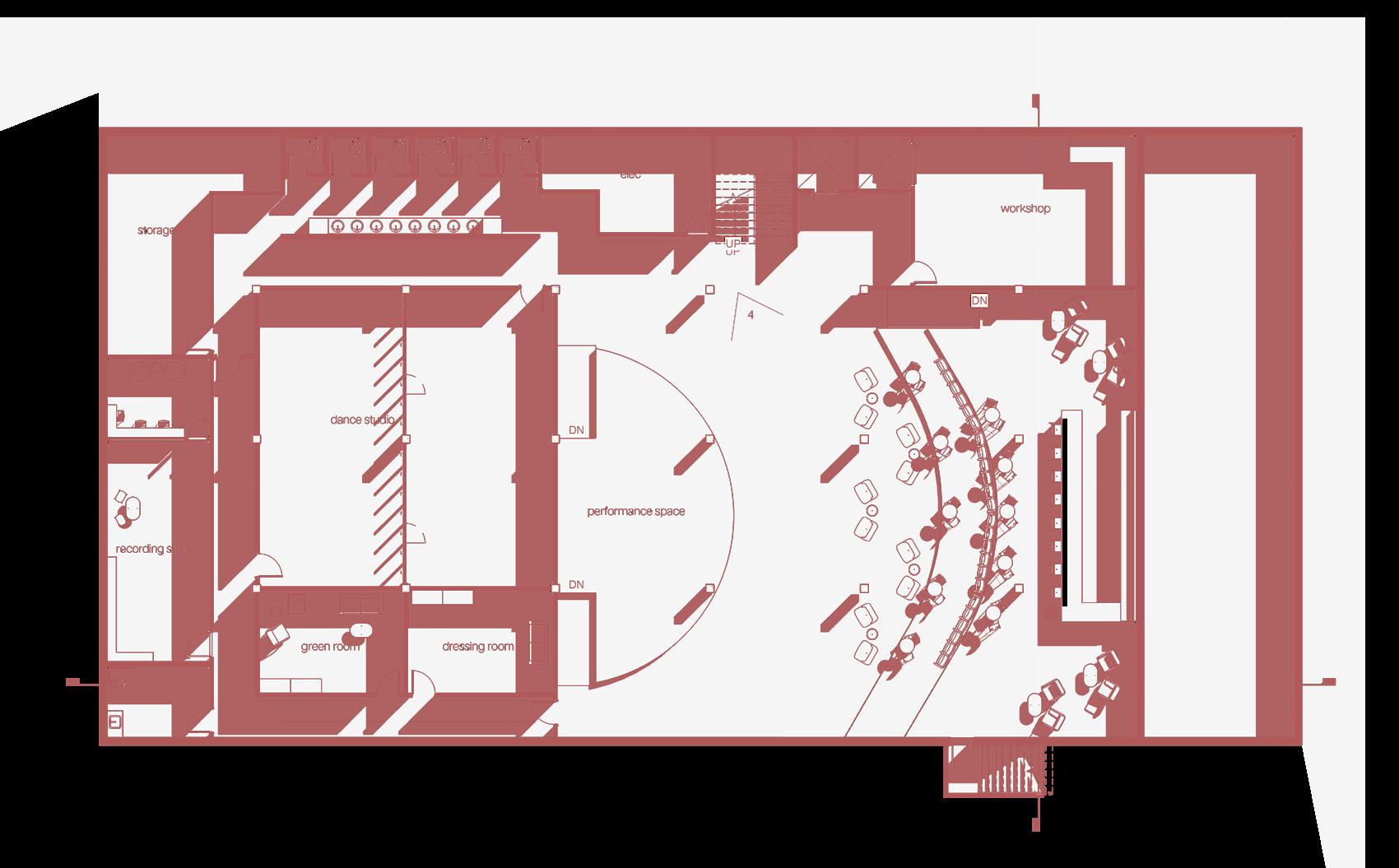
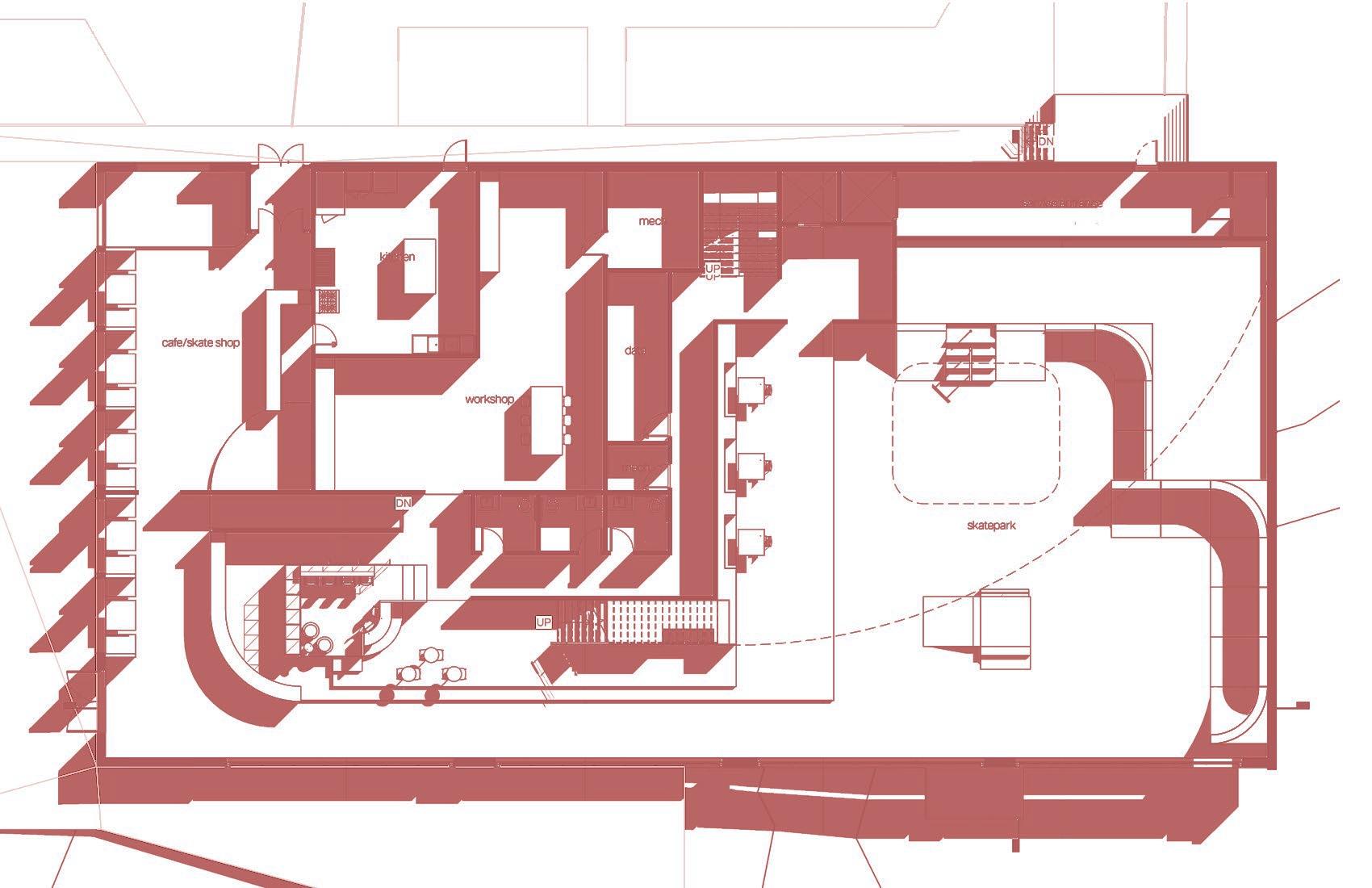
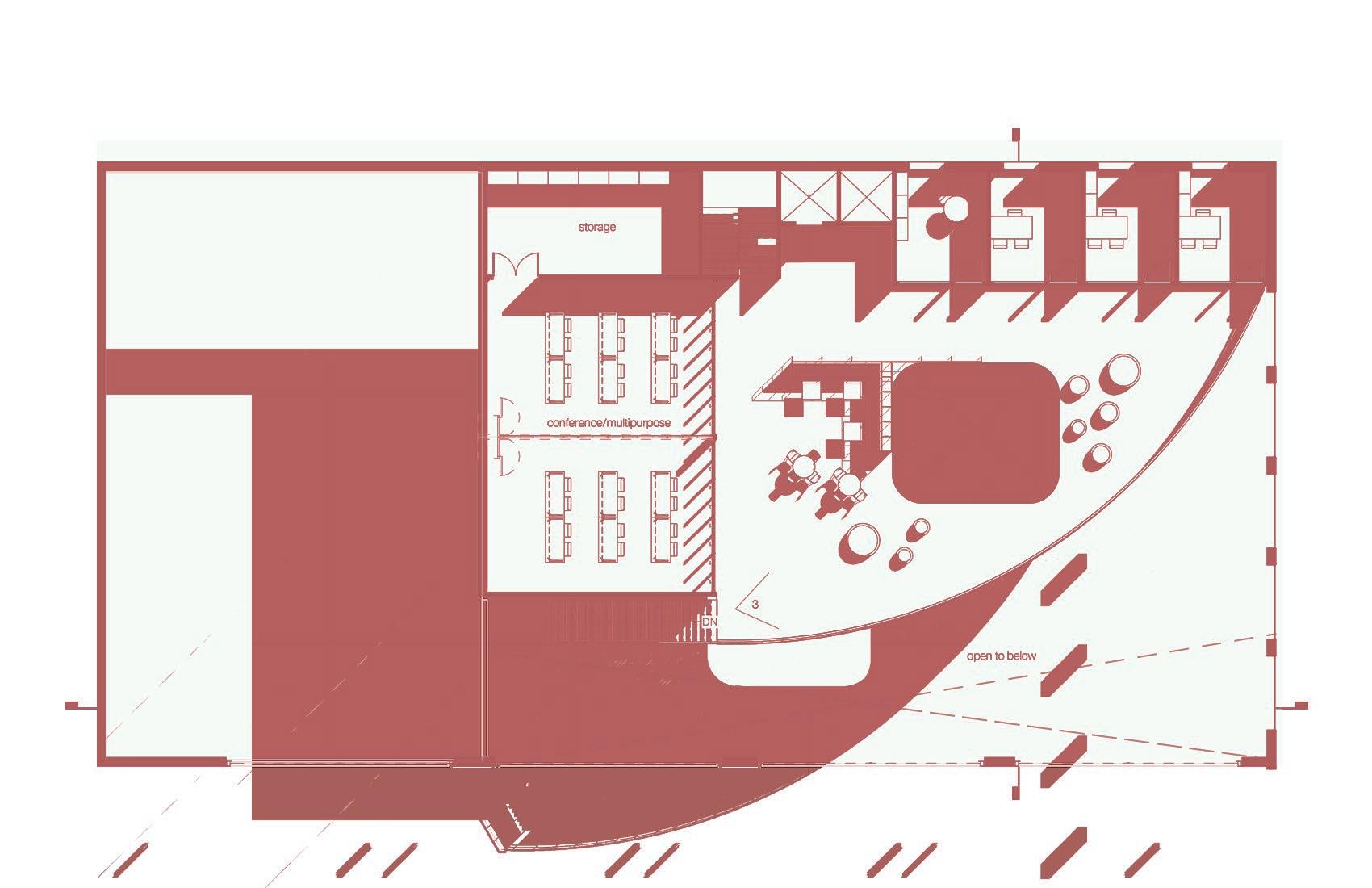
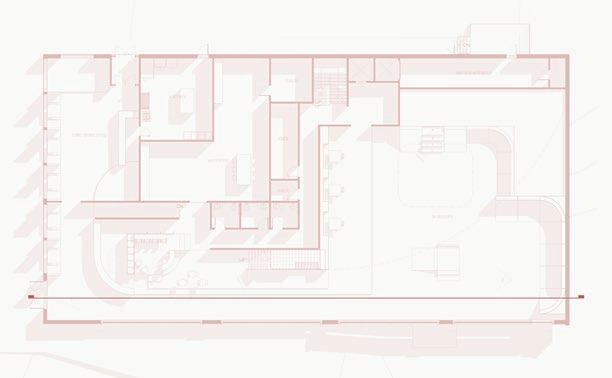
FROM TOP TO BOTTOM: BASEMENT, MAIN LEVEL, & MEZZANINE FLOOR PLANS
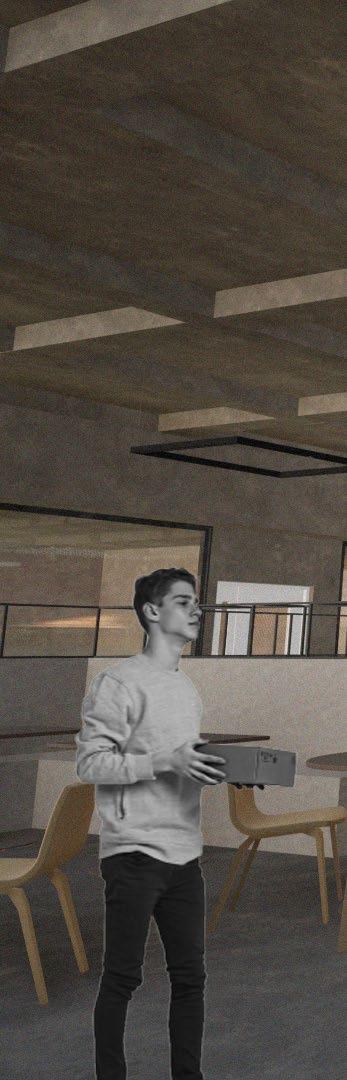
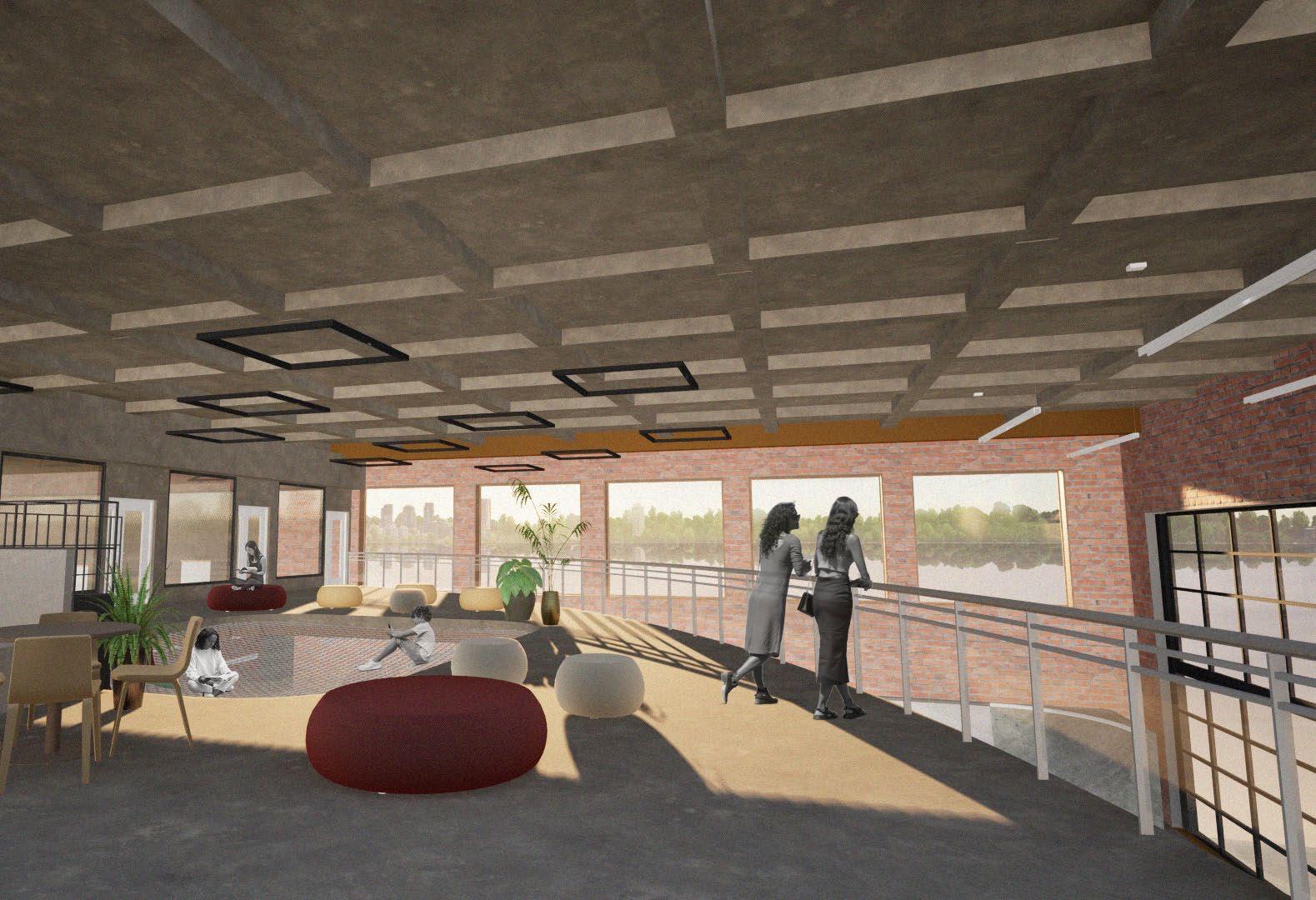
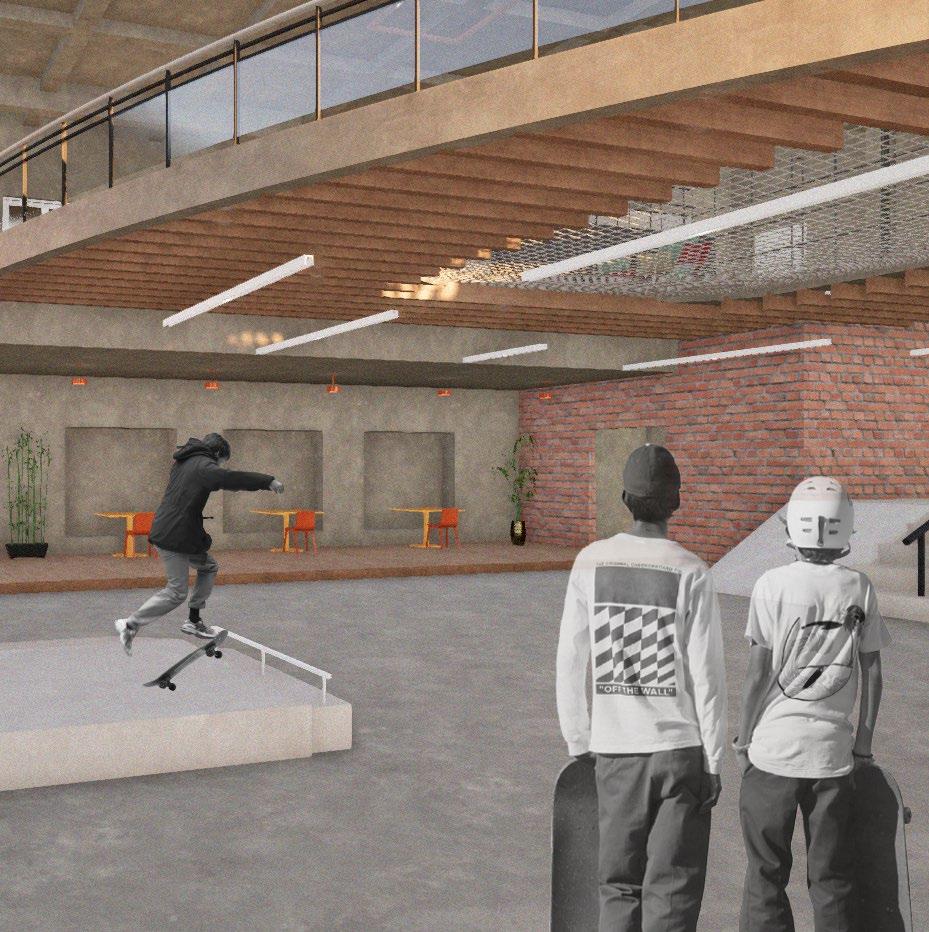
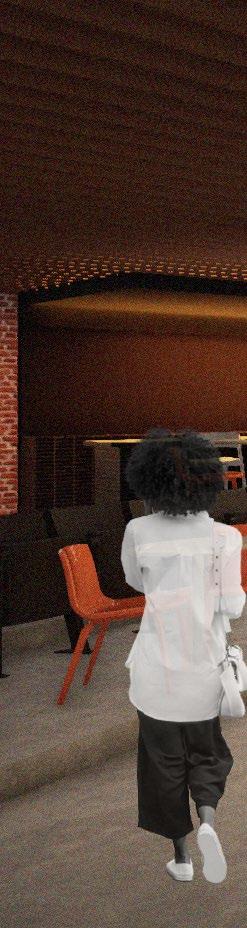
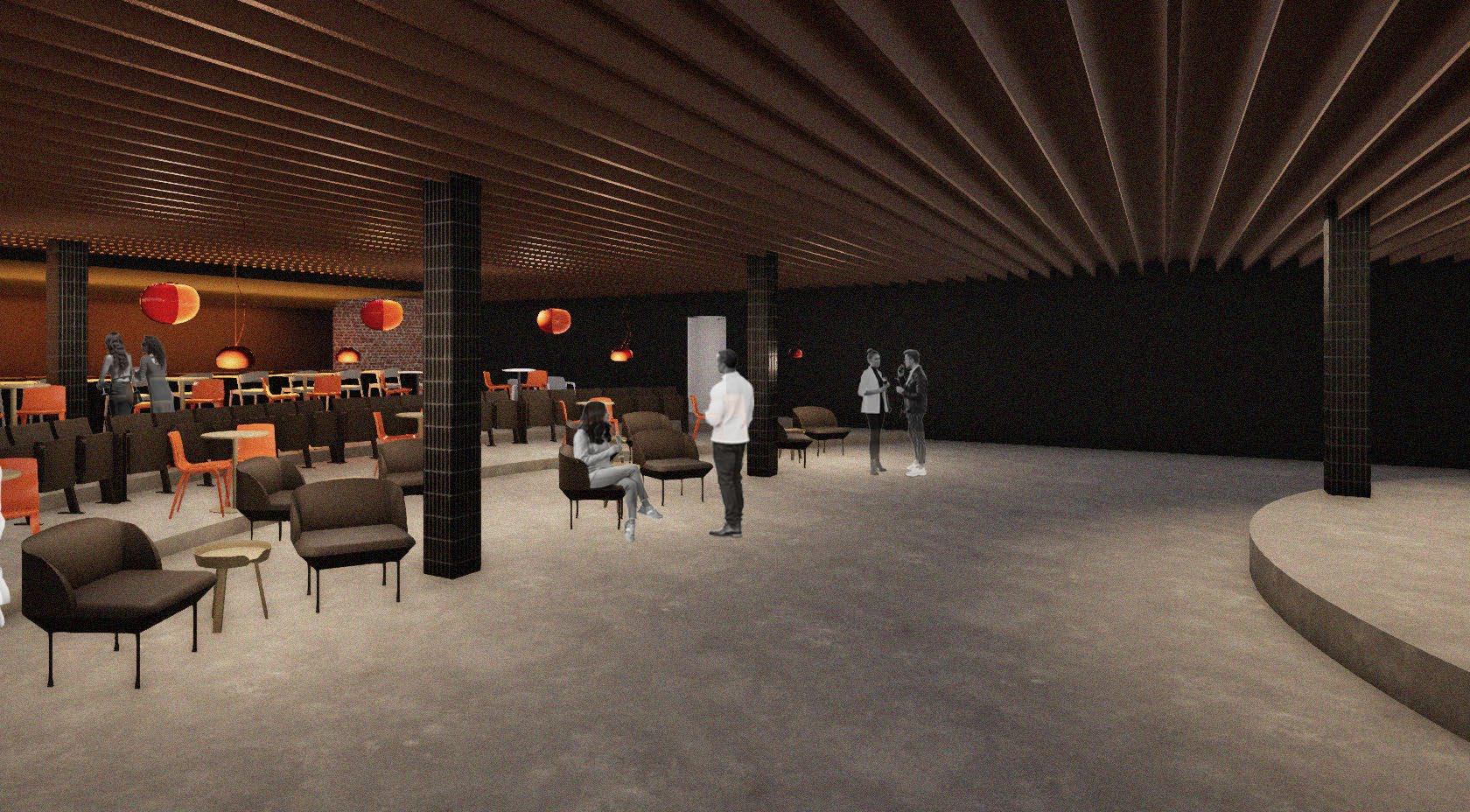
There are a variety of programs that exist in the space, so it is essential to determine which need to have certain adjacencies. There are multiple entrances, with circulation allowing for the main entrance to be used for all of the spaces. The upstairs area includes the skate related areas, cafe and food service, workshop and mezzanine areas, and opportunity for event space. There are many opportunities for community members to work, watch skaters, and meet with others. The lower level includes the performace and arts space, which has a recording studio, bar, and lounge space. This space has a seperate entrance for after-hours performances, and is seen on a render on the following page.
RENDER OF MEZZANINE
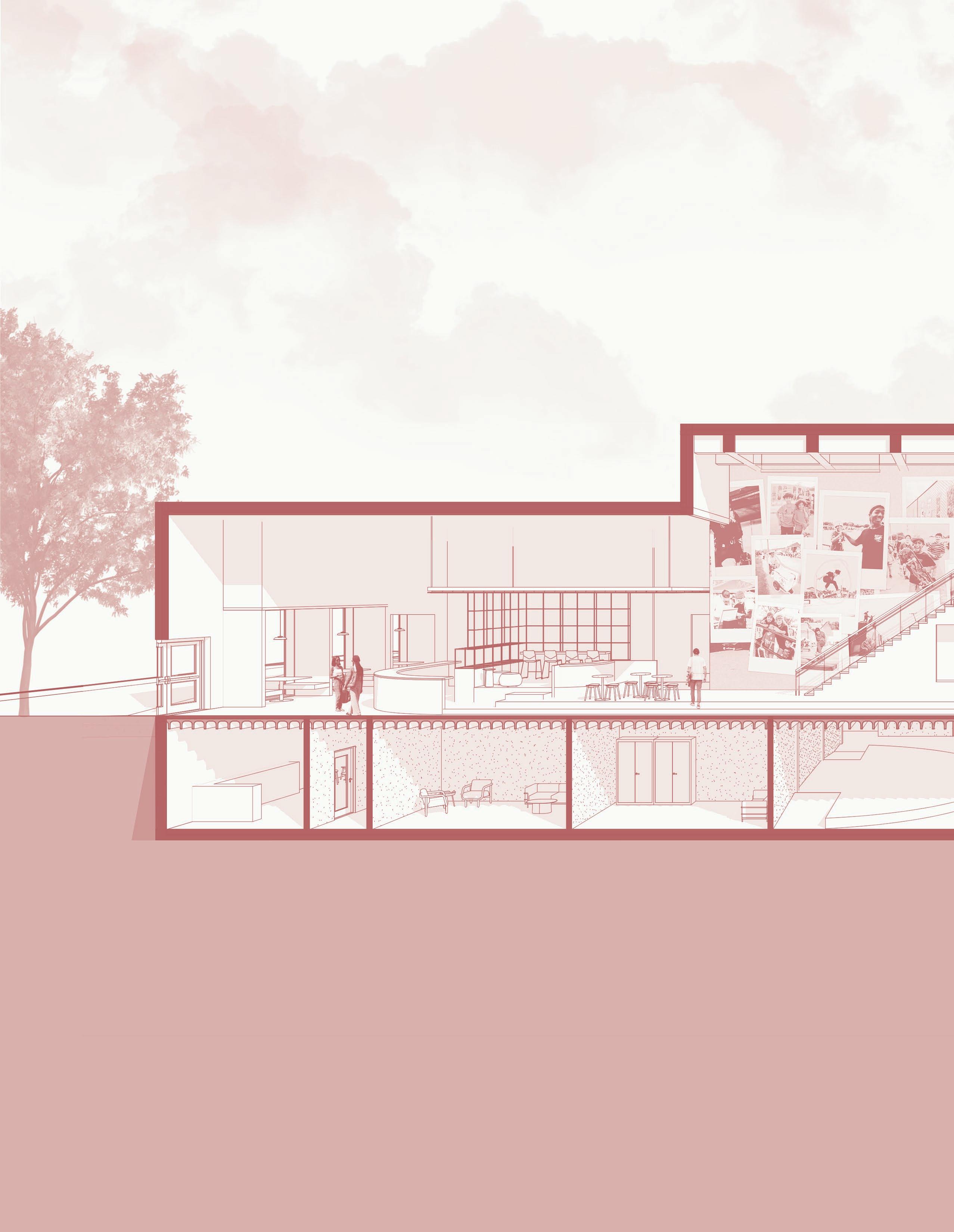
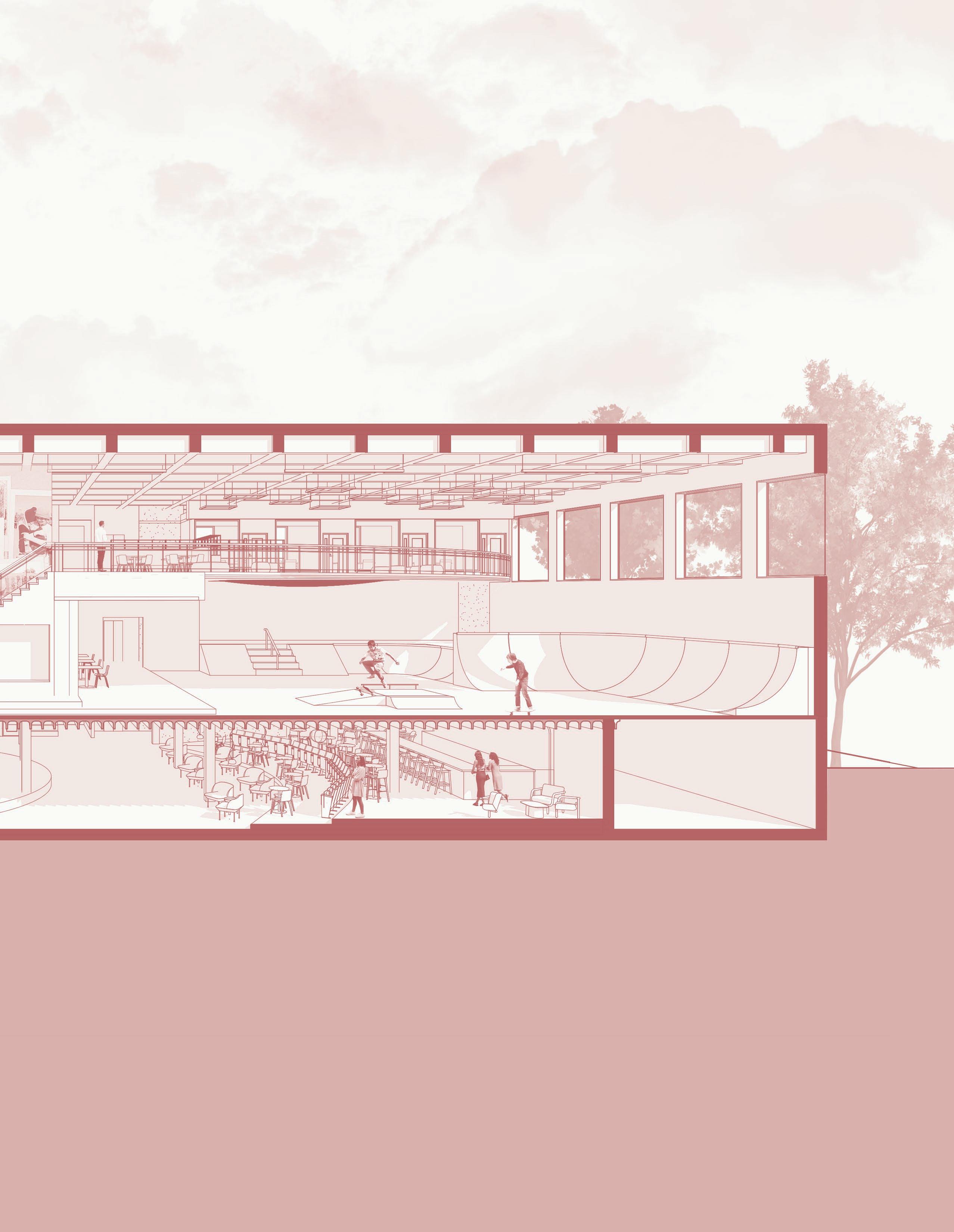
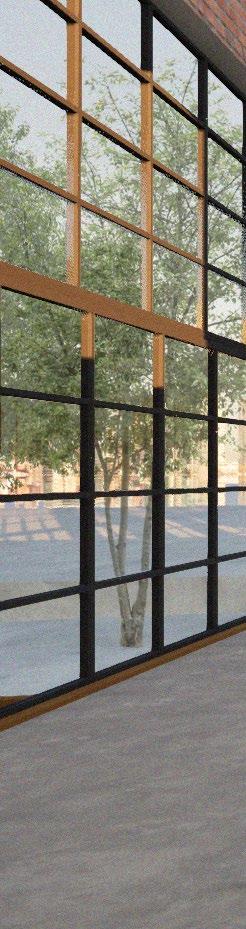
Horizontal planes interact and are differentiated with materials. Vertical planes intersect horizontal planes and use volumetric differences such as inset seating to differentiate. Focus is on the interaction between the volumes both on exterior and interior. The connection creates lines of sight and is intentional for look and feel of different spaces. The cafe has a smaller volume than the skate area to feel more closed off and comfortable.
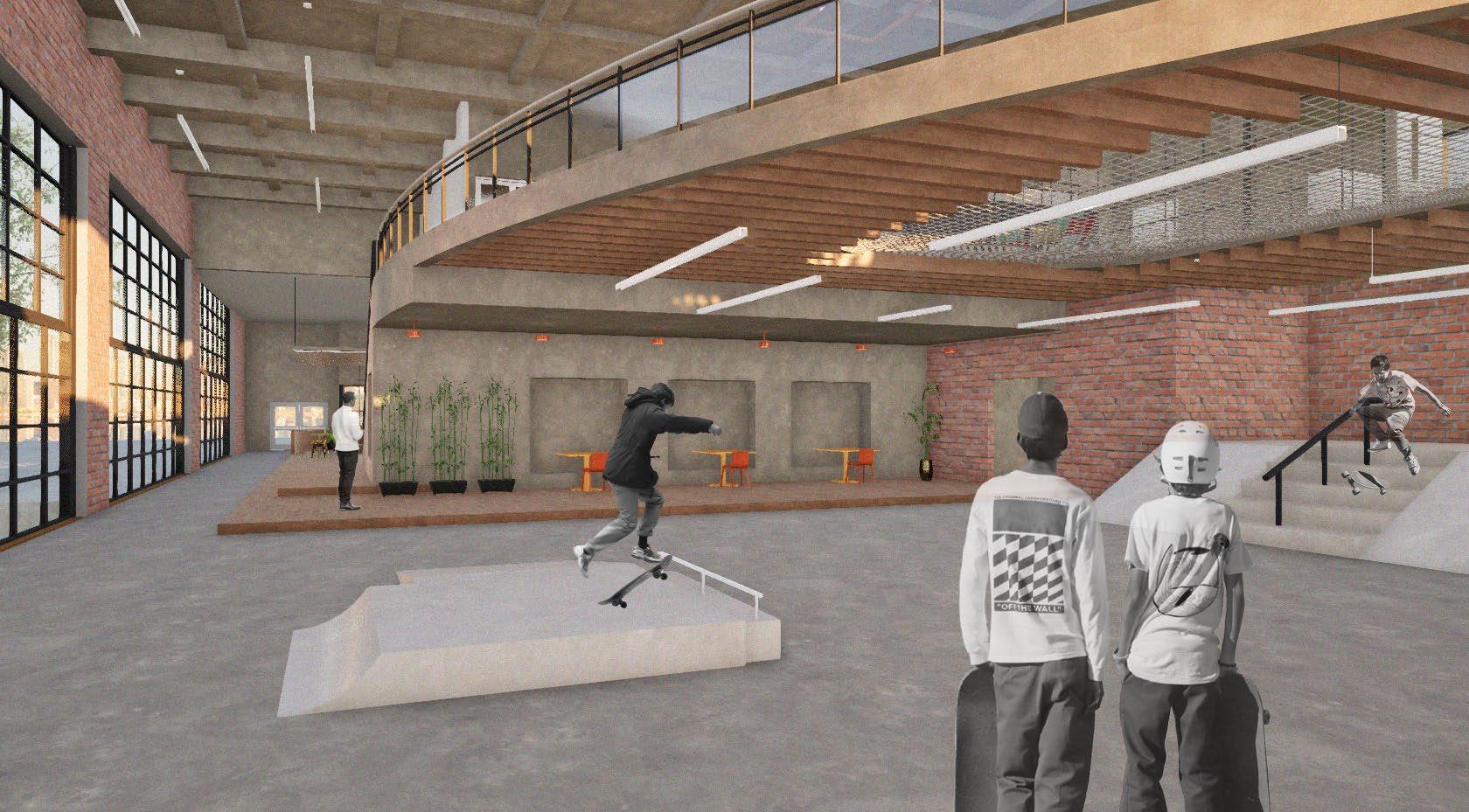
ABOVE: RENDER OF SKATEPARK
RENDER OF PERFORMANCE
ELLA RAWLINGS
CONTACT
402-817-9368
ellarawlings13@gmail.com
LinkedIn: www.linkedin.com/in/ellarawlings
Portfolio: https://issuu.com/ellarawlings/docs/ portfolio_2025_ella_rawlings_pages
EDUCATION
UNIVERSITY OF NEBRASKA-LINCOLN
Lincoln, Nebraska
Masters of Architecture 2024-current
UNIVERSITY OF NEBRASKA-LINCOLN
Lincoln, Nebraska
Bachelors of Interior Design
2019-2024
PIUS X HIGH SCHOOL
Lincoln, Nebraska
2015-2019
SKILLS
adobe suite: photoshop, illustrator, indesign revit
twinmotion sketchup enscape rhino
REFERENCES
NATE BICAK professor bicak@unl.edu
BRIAN KELLY professor bkelly2@unl.edu
TAMARA SLOAN employer tamara@millcoffee.com
ABOUT WORK EXPERIENCE
Hello! My name is Ella Rawlings, and I am a 5th year architecture student at the University of Nebraska-Lincoln. I completed my undergraduate degree in interior design in spring of 2024, with minors in math and architectural studies.
UNIVERSITY OF NEBRASKA-LINCOLN
Lincoln, Nebraska
August 2024-current
• Graduate TA for second year interior design studio
• Facilitated in-class discussions with studio section, created assignments, and graded projects.
HUDL
Lincoln, Nebraska
May 2024-August 2024
• Workplace design intern
• Worked on projects at Hudl’s headquarters in Lincoln to better the current office design
• Summarized potential offices after touring and worked on budget sheets and space planning
RDG PLANNING AND DESIGN
Omaha, Nebraska
May 2023-August 2023
• Interior design intern
• Created finish plans and detail specifications
• Worked in material library creating palettes and contacting reps for brands
THE MILL
Lincoln, Nebraska
2020-2024
• Work as a barista and bartender
• Hold a leadership role as a store lead, in charge of keeping track of retail items and creating displays
• Assisted in layout of new store design in Omaha, NE
• Worked in warehouse seasonally, packaging and delivering orders