PRO ARB




2025/JANUARY 2026 • VOLUME 12 • ISSUE 06
This ‘Winter Kit Special’ issue is structured around two core themes: navigating the festive season and operating safely during demanding winter conditions. The first explores arboriculture-themed gifts, with a curated selection for colleagues, friends and family featured on page 39. The second addresses essential cold-weather safety, providing a dedicated guide to the most effective personal protective equipment for professionals facing colder temperatures and limited daylight on page 32.
Beyond seasonal preparations, this edition offers substantial insights for business development and risk management. Awardwinning entrepreneur George Trott details his career journey and provides elementary advice for start-up founders on page 15. Complementing this, the commercial
perspectives of leading manufacturers are examined: Husqvarna’s leadership analyses the manufacturing market and future product priorities on page 46, followed by Axel Hildebrand of Aspen Fuel outlining the strategic place of alkylate petrol in the arboriculture sector on page 49.
Further expert analysis focuses on business protection and safety standards. For practical business safeguards, commercial security expert Graeme Dow advises on theft prevention on page 52, and consultant Katie Shanahan addresses the essential fundamentals of data protection for business owners on page 54. Concurrently, Lantra’s latest campaign to prevent unnecessary chainsaw injuries and the profession’s role in sectoral advocacy are detailed on page 12, while Simon Richmond of the National Tree Safety Group outlines best practices


for advising duty holders on tree risk and inspection protocols on page 26.
Profiles of several industry legends also provide depth and inspiration in this issue. Page 28 contains an extensive conversation with Daniel Ball, the pioneering founder of MediArb. Additionally, renowned tree law expert Sarah Dodd explores a decisive recent case concerning Tree Preservation Orders in Wales on page 22.
Finally, the issue closes by celebrating professional excellence through the Arb in Action competition, in association with Outwear. Submissions for the next competition are now open at proarbeditor@ eljays44.com

EdwardALL ENQUIRIES
Tel: 01903 777 570
Eljays44 Ltd
BizSpace, Courtwick Lane, Littlehampton, West Sussex, BN17 7TL
EDITORIAL
Deputy editor –Edward Brown edward.brown@eljays44.com proarbeditor@eljays44.com
Content director –Nina Mason
nina.mason@eljays44.com
Senior subeditor –Katrina Roy katrina.roy@eljays44.com
ADVERTISING
Commercial director – Luke Chaplin
luke.chaplin@eljays44.com
Tel: 01903 777 582
Sales executive – Ollie Finch
ollie.finch@eljays44.com
Tel: 01903 777 579
MARKETING
Marketing executive – Kiri Shaw
kiri.shaw@eljays44.com
Tel: 01903 959 408
PRODUCTION
Senior designer – Kara Thomas
Designer – Louise Klose
Printed by Stephens and George Ltd
Published by ©Eljays44 Ltd
CIRCULATION
Subscription enquiries – Ollie Finch
Pro Arb is published six times per year by Eljays44 Ltd. The 2025 subscription price is £50. Subscription records are maintained at Eljays44 Ltd, BizSpace, Courtwick Lane, Littlehampton, West Sussex, BN17 7TL, UK. Articles and information contained in this publication are the copyright of Eljays44 Ltd and may not be reproduced in any form without the written permission of the publishers. The publishers cannot accept responsibility for loss of, or damage to, uncommissioned photographs or manuscripts.
ollie.finch@eljays44.com MANAGEMENT
Managing director – Jamie Wilkinson
jamie.wilkinson@eljays44.com
Divisional director – David Griffiths
david.griffiths@eljays44.com
FOLLOW US ONLINE proarbmagazine.com
Follow us on X @ProArbmagazine
Like us on Facebook Proarbmagazine

Connect to our LinkedIn group Pro Arb UK
For careers in arboriculture and horticulture go to: horticulturecareers.co.uk
If you would like to send us press releases to post online, please email: content@eljays44.com

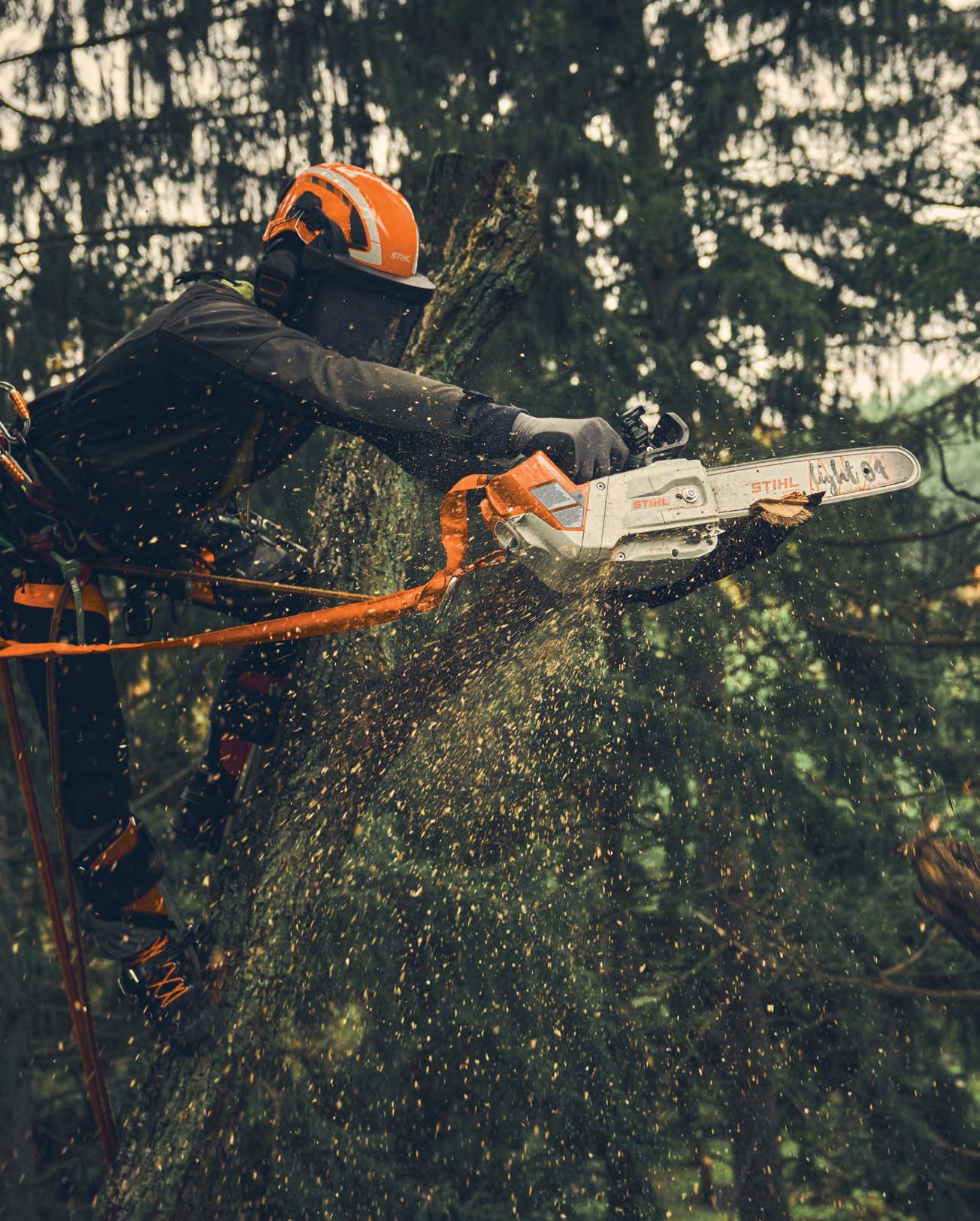

Take on all tree care tasks, from light pruning to removal, with the latest range of professional-grade, high performance tools from STIHL.
With nearly 100 years of engineering expertise, you can rely on STIHL to always have a strong partner at your side.
Legendary performance and quality since 1926.
DISCOVER MORE AT STIHL.CO.UK





Latest
The Tree Council champion community tree planting
Lantra’s new
Award-winning entrepreneur gives his startup pointers
Tree officer Michael Johnson argues for professional school engagement
Tree expert Sarah Dodd tells the story of a recent Crown Court trial
Simon Richmond explains the work of the National Tree Safety Group
Dan Ball of MediArb, on changing the safety culture of tree surgery
A lateral flow test for tree diseases
The research and development pipeline
GIFT GUIDE 2025
A selection of stocking stuffers and essential kit for the festive season
PPE FROM HEAD TO TOE
Outwear provides an overview of PPE
ECHO’s latest top-handle chainsaw
HUSQVARNA’S MARKET OUTLOOK
Innovations and visions for the future THE CASE FOR ALKYLATE FUEL
Aspen Fuel on the benefits of cleaner power
A security expert’s urgent warning NAVIGATING OUT OF THE
A clear roadmap to compliance and secure data management
How to professionally approach it
Winter
A ROUNDUP OF ALL THE LATEST ARBORICULTURE NEWS FROM AROUND THE UK. FOR MORE STORIES VISIT PROARBMAGAZINE.COM

A record eight young people have begun forestry careers through the Royal Forestry Society’s (RFS) Forestry Roots programme, an initiative tackling UK skills shortages. The scheme provides a year of paid work experience and training.
The 2025 cohort, aged 18-30, was selected from 270 applicants –a 40% increase on the previous year, signalling growing interest. The RFS reports since its 2018 inception, 93% of programme starters have progressed into roles or further training.
“Growing up, forestry and arboriculture didn’t feel like a place for me,” says trainee Jesse Atkinson, highlighting a barrier the programme aims to overcome. Apprentice Samuel Birch remarks, “I’m eager to gain hands-on experience and learn directly from professionals.” His colleague, Jack Priestly, adds, “I hope this traineeship will help me learn more about caring for woodlands.” At Harewood Estate, Leah Winstanley notes, “I am glad the RFS is making [forestry] more accessible to those who cannot afford training courses.” The programme is funded by The ALA Green Charitable Trust, with support from employer partners and the Forestry Commission.
Forestry England has launched a new range of protective workwear designed specifically for women, developed with manufacturer Arbortec. The initiative addresses a longstanding industry issue where personal protective equipment has been designed for a male physique, often compromising safety and comfort for female workers.
The range was developed using extensive testing and direct feedback from female forest workers. This is particularly relevant for the organisation, where 44% of the workforce are women.
In October, the initial launch includes two versions of fitted women’s chainsaw trousers and new work jackets, with a mid-range trouser model to follow. Chief
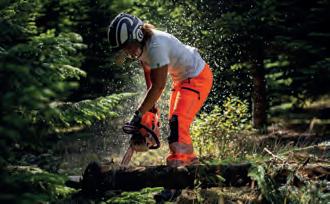
executive Mike Seddon says: “Our female staff working in the nation’s forests bring their professionalism and passion to work every day. I’m proud Forestry England could take the lead… removing barriers to them progressing and fulfilling their potential.”
Designs for chainsaw gloves and boots are being finalised to expand the collection in the coming months.
COUNCIL USES AI TO IDENTIFY THOUSANDS OF DISEASED ASH TREES FOR REMOVAL
Leeds City Council is removing 2,000 ash trees identified as safety risks due to ash dieback. The fungal disease weakens trees, making them brittle and likely to collapse, particularly near highways.

The council employed AI technology to identify the high-risk trees, with teams verifying their condition on the ground.
An online map also allows the public to check trees near roadways. Councillor Mohammed Rafique remarks: “Ash dieback disease is unfortunately estimated to kill up to 80% to 90% of all ash trees in the UK. In Leeds, our teams have worked hard to identify thousands of trees near to highways that are currently in need of felling.”
The council plans to plant five new trees for each one removed from its land.
In October, the Forestry Commission has launched a new grant to help woodland owners protect spruce trees from the eight-toothed spruce bark beetle. The Spruce Site Assessment grant provides £2,000 to support landowners in evaluating risks and planning tree removal before potential infestations.

Officials warn that Ips typographus poses a severe threat, risking nearly 60% of Britain’s conifer woodlands, a resource valued at £2.9bn for its social, economic and environmental benefits. Its impact extends beyond individual trees, potentially reducing biodiversity and compromising carbon storage.
The Commission is implementing a proactive management programme to prevent the beetle, which is arriving via natural dispersal from continental
Europe, from establishing itself. This new assessment grant is a key component of that strategy, with 65 agreements available on a first-come, first-served basis.
Later in 2025, an enhanced spruce felling grant also launched, offering funding of up to 80% of felling costs to address what the Commission identifies as a key barrier: the high cost of preventative action.
Vegetation Management Services (VMS), a Northamptonshire-based landscaping company, has announced that it has expanded its operations to launch a nationwide arboriculture consultancy service.
Launched in September, the new division will offer tree surveys, Arboricultural Impact Assessments, and advice on Tree Preservation Orders, alongside
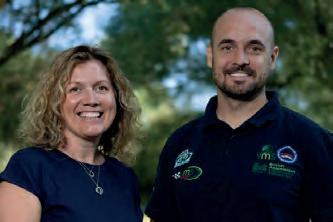
emergency tree safety reports and management plans.
The company says the move reinforces its commitment to safety-led and environmentally responsible practices. Helen Mallett, training department manager, comments on the expansion: “This service complements our existing delivery arm, ensuring seamless integration between consultancy and operations, with quality, compliance, and biodiversity at the heart of everything we do.”
Heading the service is Mathew Graham, who steps into the role of lead consultant. On his appointment, Graham says: “With 20 years’ experience in surveying and consultancy, I’m really looking forward to using my skills to offer our clients the best quality work, at the best standards that’s best for them and the tree itself.”
Beechwood Trees and Landscapes has won the Arboriculture Company award at the Pro Landscaper Sustainability & Biodiversity Awards. The ceremony was held on 7 October at the annual FutureScape expo event.
The awards, in association with Hortus Loci Landscapes, recognise companies fostering a more sustainable future within the landscaping and arboriculture sectors. Beechwood triumphed, with G Trott Tree Consultancy and Helmrig also shortlisted.
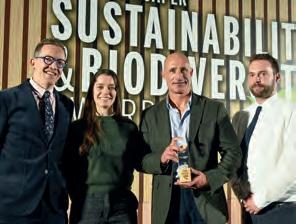
Judges commended Beechwood for its detailed carbon reduction roadmap, which targets net-zero operations by 2030. This strategy includes fleet electrification, circular green waste systems and climate-resilient procurement. For 2026, the company aims to deliver over 30,000 hours of arboricultural operations using battery-powered machinery.
Managing director Simon Rotheram, says: “At Beechwood, our culture is built around people, developing our team, supporting wellbeing and fostering a sense of pride in everything we do. This recognition is a reflection of the collective effort across the business and the values we live by every day.”
A new report warns that the UK’s net zero targets are threatened by a shortfall in domestic tree production. The government’s strategy requires planting 40,000ha of trees annually by 2030.
The ‘Strong Roots’ report, from a coalition including the Woodland Trust and the National Trust, states that meeting these ambitious planting targets requires strategic support for British nurseries to reduce reliance on imports and improve biosecurity.
Rebecca Gosling, lead policy advocate at the Woodland Trust, says: “All three British governments have ambitious annual targets to increase tree cover. England’s Environmental Improvement Plan sets a legally binding goal of expanding tree cover from 14.5% to 16.5% by 2050. This level of tree planting, which is vital

in the fight against climate change, simply won’t be possible unless there is coordinated support for the British tree production industry.
“Support is especially critical to maintain and boost British production of rootstock and standard trees. We want to see the government address this with an action plan for British tree production.”
Key recommendations include establishing a GB Tree Procurement Unit and creating a dedicated action plan to boost domestic growth.
Stihl has opened its first dedicated battery-production facility in Oradea, Romania, representing a €125m investment.

The manufacturer reports that the move is driven by rapid growth, with over a quarter of the manufacturer’s global products now battery-powered. Stihl aims to increase
this share to approximately 80% by 2035.The 47k-square-metre plant is designed for sustainability, powered by its own photovoltaic and geothermal systems and featuring green roofs and hundreds of newly planted trees.
Dr Nikolas Stihl, chairman of the Advisory and Supervisory Board, comments: “The new plant in Oradea expands our global network and strengthens Stihl’s position in the fast-growing battery segment.”
The site has 135 people, with staffing expected to grow to 700 by 2028.
Timberwolf, part of the Alamo Group, has finalised the asset purchase of the brand and intellectual property of GreenMech, the UK wood chipper manufacturer.
The acquisition, which includes GreenMech GmbH and GreenMech SAS, will see these entities become Timberwolf’s European sales and technical support hubs. The move is part of Timberwolf’s strategy to become a leader in the European forestry and tree care sector.
Chris Perry, Timberwolf’s managing director, comments: “Although competitors for many years, Timberwolf and GreenMech have been built on similar values. This purchase will strengthen Timberwolf not only from a product perspective, but also our sales channels as we welcome colleagues into the business from the UK, France and Germany.”
To ensure ongoing supply, GreenMech products will continue to be manufactured at their facility in Alcester.
Forestry England has initiated a new framework identifying 30 tree species resilient to climate change, pests and diseases. The ‘tree species for the future’ list, tailored to six regional districts, is designed to guide long-term planting.
Dr Eleanor Tew, Forestry England head of forest planning, notes, “Planting the right tree species is critical, and our tree species for the future list gives our foresters evidence-led guidance to do this.”
“By reducing reliance on a few species, and planning strategically for likely future conditions, the nation’s forests will continue delivering value for society, nature and the domestic timber industry.”
FOR THE LATEST NEWS FROM PRO ARB, SCAN THE QR CODE

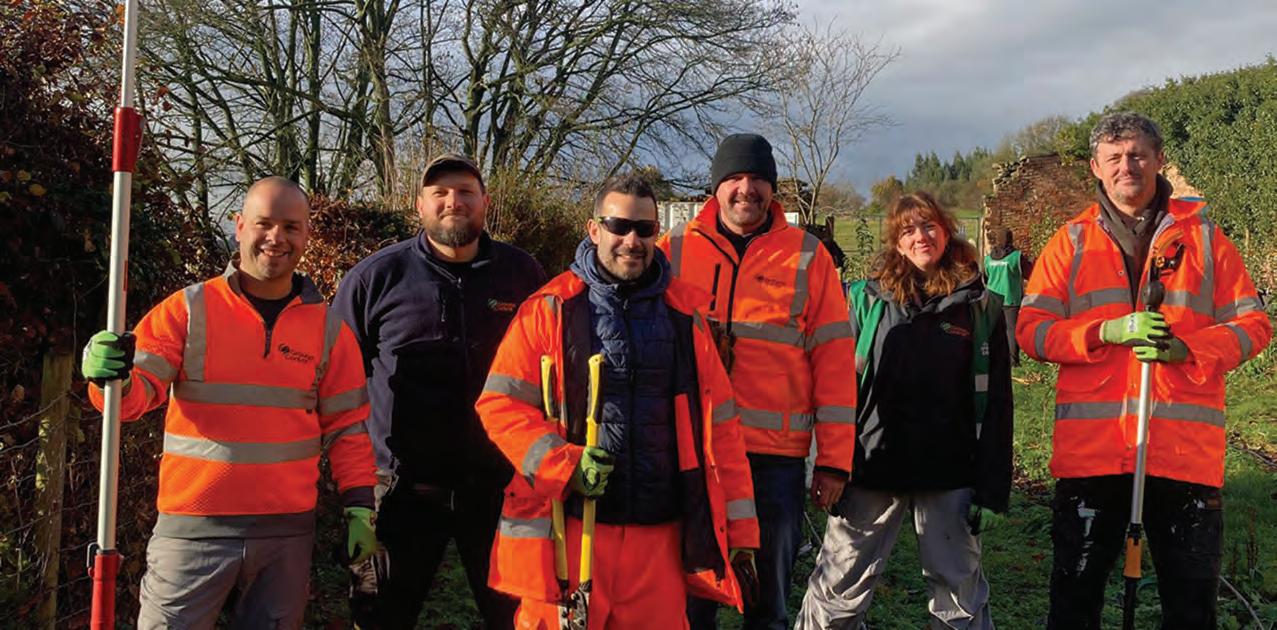

MARKING ITS HALF A CENTURY MILESTONE, NATIONAL TREE WEEK 2025 CHAMPIONED A DUAL MISSION: TO ESTABLISH MORE TREES WHILE PROTECTING OUR EXISTING CANOPY FOR A GREENER FUTURE
Touted as the UK’s largest annual tree celebration, National Tree Week, observed its 50th anniversary from 22-30 November. For The Tree Council, the event represents a critical nexus of community engagement, environmental education and professional expertise, all aimed at addressing the complex challenges of climate change, disease and biodiversity loss.
Following a year of reminders of the damage and losses to Britain’s natural heritage, including the Enfield oak and the Sycamore Gap tree sentencing, The Tree Council reports that National Tree Week carried a renewed sense of urgency. The 2025 campaign, therefore, championed a dual mission: to establish more trees while ensuring the protection of those we already have, encapsulated in its theme, ‘A Future Filled with Trees’.
“We’re delighted to celebrate our 50th National Tree Week, which provides a fantastic opportunity for all of us to come together for the love of trees,” says Sara Lom, CEO of the charity, at this year’s campaign launch. “Trees have faced so many challenges over the past 50 years, from Dutch elm disease to ash dieback, from development pressures to water shortage,
but we’ve never needed trees more. They help us – and now we need to help them back - and by getting involved this planting season, you’ll be part of growing a greener, tree-filled future for everyone.”
TREES HAVE FACED SO MANY CHALLENGES OVER THE PAST 50 YEARS, FROM DUTCH ELM DISEASE TO ASH DIEBACK, FROM DEVELOPMENT PRESSURES TO WATER SHORTAGE
The Tree Council was founded in response to the Dutch elm disease pandemic in the 1970s. “The government brought us into being to respond to that loss of canopy cover, that loss of trees,” clarifies Ian Turner, senior manager for technical knowledge and data at the Tree Council, in an interview with Pro Arb Magazine. “National Tree Week is the culmination of the year, where we’re able to communicate with the public our aims, why trees are important
and why we need the right trees in the right places. The end of November is also the best time to do it, because it marks the beginning of the planting season.”
Renewed resonance for this public engagement emerged from a human pandemic, Covid-19. Turner argues that lockdowns fundamentally shifted public awareness toward local spaces. “It made many people very aware of what their local environment is like,” he notes, connecting this heightened awareness directly to the value of trees. He positions trees as a catalyst for rebuilding the community bonds frayed by isolation, suggesting they are a unifying force. “Trees can become a force that crystallises a rebuilding process for people and communities, and Tree Week encapsulates that.”
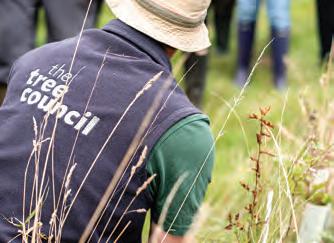
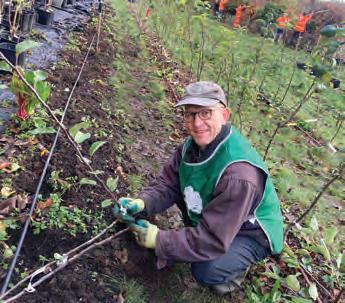
The Tree Council’s strategy for fostering this connection is multi-pronged. At the heart of their community work is the national network of volunteer Tree Wardens, whom Turner describes as “very passionate about trees,” who impart knowledge and drive planting in their local areas. Alongside this grassroots force, the organisation produces formal guidance on threats like ash dieback and runs the Young Tree Champions programme for schools to combat what Turner calls a “denaturing of our society” and growing “eco-anxiety” in young people. For this landmark milestone, the charity is celebrating with a host of new public resources. Its official National Tree Week webpage features an interactive map to help people find local planting opportunities, events, talks and tours. For those unable to join planting, a pack of ‘Tree Party’ materials are available for download. Furthermore, the charity is distributing printed activity booklets, posters and treethemed reading lists to over 350 libraries across Great Britain to create colourful displays in these community hubs.
A central tenet of The Tree Council’s philosophy is ‘the right tree in the right place for the right reason.’ This becomes increasingly complex in the face of a changing climate. When asked how planting strategies will need to adapt over the end of this century, Turner acknowledged it as a “very hot topic.” He highlights valuable external research
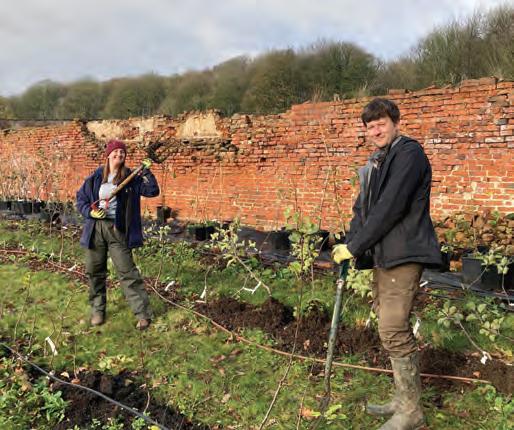
but explains The Tree Council’s unique position. “The work that researchers are doing on species adaption to climate change is valuable, and The Tree Council is adding to this by undertaking field research on young tree survival and the causes of mortality in newly planted trees.” While other organisations may focus on production forestry, The Tree Council’s remit is broader. “We focus on trees outside woods; trees where the majority of people live – in villages, towns and cities throughout the country. It’s a very complex topic, to start talking about specific tree species and their likely survival, because there are so many different local factors to consider when planting trees, from hot polluted urban streets, wet and dry environments, to rural hedges criss-crossing farmland.”
Ensuring tree equity – that planting efforts reach nature-deprived communities — is another vital and complex aspect of the charity’s work. Turner describes a targeted approach using maps that combine indices of deprivation with canopy cover data. But, he emphasised that identifying need is only the first step. “You can’t just barge into a community and say – ‘you will have trees’. You’ve got to talk to people about what matters to their communities and how trees can play a part. This can encourage them
to go on their own tree planting journey, which is a win for everybody.”
This is where Turner sees an indispensable role for arboricultural professionals.
“Professionals absolutely have a key role here, to help decide what the right tree is in the right place for the right reason,” he states.
As a result, he argues for a greater public valuation of this expertise to encourage the next generation into the profession. Professional input is also key to improving tree survival rates, a major focus for Turner’s monitoring work. Moving beyond a culture of pure numbers, he advocates for a “longer term vision” that includes aftercare. “Successful planting is where the majority of trees have survived and are providing the benefits that they were intended to provide in the longer term.”
As National Tree Week turns 50, the message from The Tree Council is clear. It is a celebration, but also a call to action. Growing a healthier, more resilient and equitable tree canopy for the next half-century requires not just planting, but a collaborative effort – uniting passionate communities with the skilled professionals who understand the trees they plant.
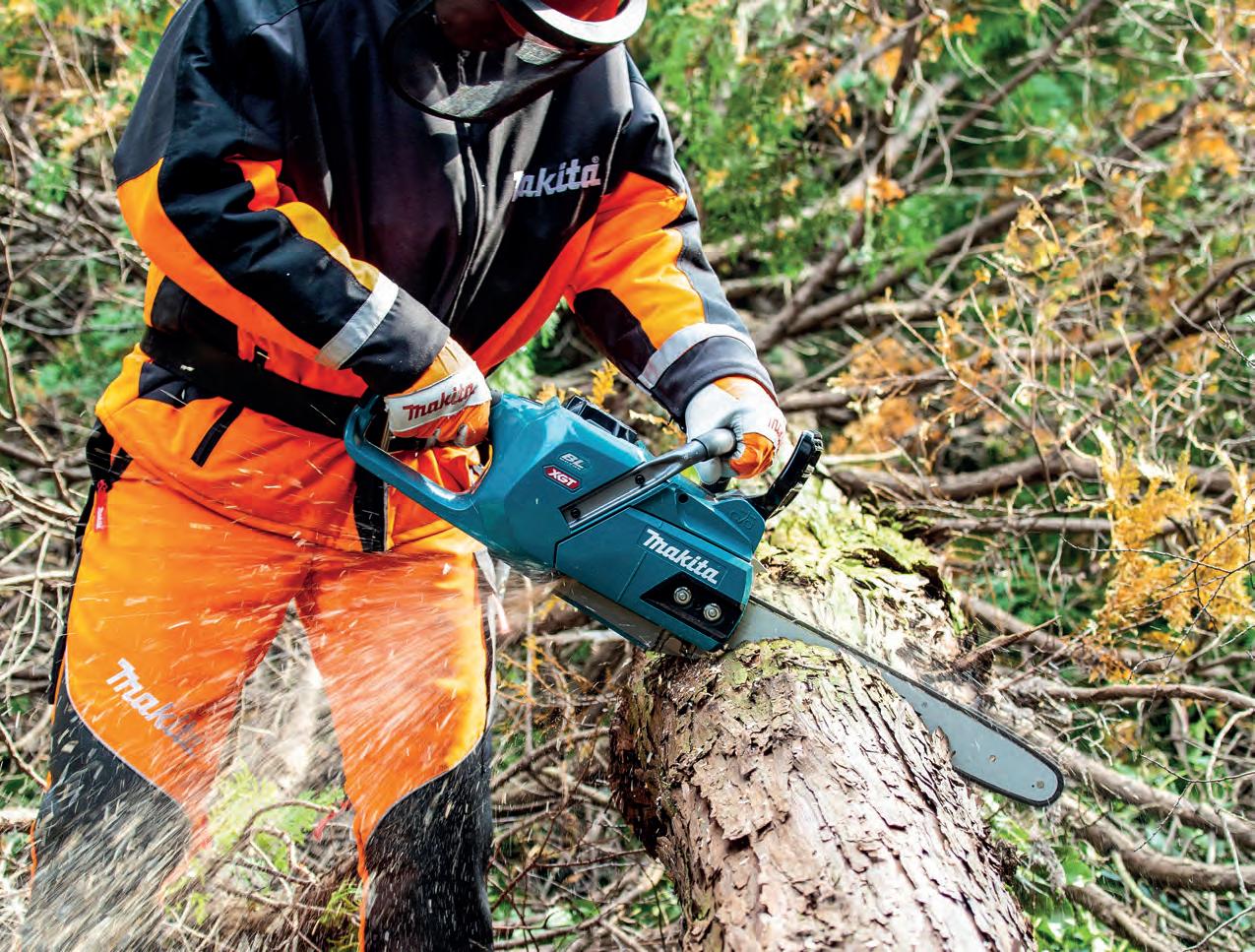
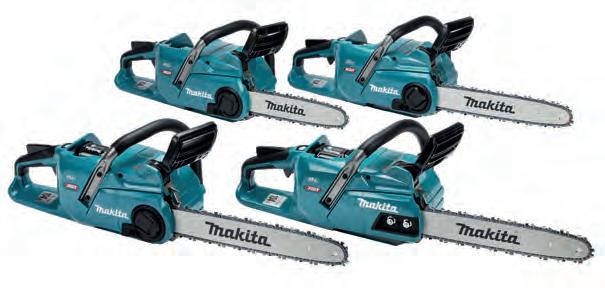
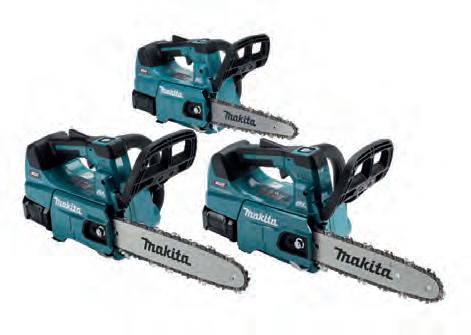
In October, Lantra, a UK skills body for the land-based and environmental sector, announced a major new campaign, ‘Respect the Chainsaw,’ to combat the alarming number of serious and fatal accidents involving the powerful tool. The initiative aims to fundamentally change public perception, promote mandatory training and prevent needless injuries by educating both the public and professionals that chainsaws are potentially lethal power tools, not just another piece of garden equipment.
A Three-Phase Strategy:
From public education to policy change The campaign was officially unveiled to the media at the Royal Botanic Gardens, Kew, by Mandy Maynard, Lantra’s head of industry partnerships for forestry and arboriculture, and Clegg Bamber, the head of communications. They outlined a stark reality often misunderstood by the public.
“Since being in my role,” Maynard begins, “it’s been very clear to me that there’s three major points that people
T he campaign was formed against a backdrop of worrying statistics, which starkly illustrate the consequences of the tool’s growing accessibility. While the absence of published sales data obscures the exact market size, compelling evidence from public health statistics fills the gap. A Lantra Freedom of Information request reveals that 3,144 people attended accident and emergency departments in England, Wales and Scotland due to chainsaw-related injuries in the last decade. This clear and worsening trend, with a marked increase in incidents since 2020, strongly indicates a substantial and rapid rise in chainsaw ownership and use by the public, a development linked to their common sale as ‘middle aisle specials’ in low-cost supermarkets, online and at DIY stores.

don’t understand: that chainsaws are not a piece of garden equipment; trees get damaged by untrained people thinking that they can just deal with it; and chainsaws in the wrong hands also cause serious injury, and sometimes fatally.” Echoing the campaign’s critical safety message, Bamber says: “We know that chainsaws can cause life-changing injuries within a split second. Sadly, these injuries can sometimes be fatal. Our message to all people who operate a chainsaw today, or in the future, is that chainsaws are dangerous machines, training on how to use them is essential, and PPE is non-negotiable.”
Its first strategic phase involves Lantra working with distributors to affix QR codes directly onto chainsaws. These codes will direct purchasers to tailored training and safety resources at the point of sale. The second phase saw the release of a hard-hitting public-facing film
on YouTube. Led by a qualified arborist, James Bingham, the film begins with light-hearted humour. Still, it progressively adopts a more serious tone to underscore the dangers of kickback and the vital role of protective clothing. The third and final phase will focus on garnering support from policymakers, the Health and Safety
CURRENTLY, ANYONE CAN BUY A CHAINSAW WITHOUT BEING QUESTIONED – WHICH IS UNACCEPTABLE. IT LEADS TO ACCIDENTS, UNDERMINES PROFESSIONAL ARBORISTS, AND ULTIMATELY HARMS THE TREES
Executive, and the Department for Work and Pensions to codify the campaign’s goals into law.
The central aim of the campaign is to redefine the chainsaw in the public’s mind from a commonplace garden tool to a specialised piece of equipment that demands formal training. Lantra reports that this recalibration is urgently needed to counter a retail environment that often diminishes the tool’s inherent dangers.
“Some of the distributors that we visited, chainsaws were grouped with strimmers and leaf blowers,” notes Bamber. He explains that this trivialisation is occasionally compounded by manufacturers making misleading claims, such as advertising a chainsaw as having “no kickback,” a potentially lethal phenomenon that can never be fully eliminated.
Championing a Profession: Ending the ‘free-for-all’ and banishing the ‘just’ Mandy Maynard further emphasises the life-saving importance of proper attire. “Training and protective equipment are important when handling a chainsaw. PPE can mean the difference between a close call and a catastrophic injury. It’s not an add-on but a necessity.”
Furthermore, Maynard argues that the current normalisation of chainsaw use creates a dangerous free-forall that devalues a skilled profession. “Currently, anyone can buy a chainsaw without being questioned – which is unacceptable,” she states, pointing to the cascading consequences. “It leads to accidents, undermines professional arborists, and ultimately harms the trees.”
She adds that the current system is fundamentally unjust to professionals, as qualified arborists undergo extensive training, only to be undercut by amateurs who bypass essential practices. Consequently, another core goal of Lantra’s campaign is to champion the industry itself. Maynard is urging a shift in sectoral mindset:
“There are two words I’d like to see banned. The first is ‘yet.’ The other is ‘just’ in the sentence ‘I’m just an arborist.’ Please remove ‘just.’ You are an arborist –be proud of it.”
With the “Respect the Chainsaw” campaign, Lantra and its industry partners hope to spark a vital

Lantra’s campaign has garnered crucial industry support, notably from the charity Perennial, which provides welfare services for everyone in horticulture. The charity has described the initiative as “essential,” citing its first-hand experience with the consequences of accidents.
Helen Waddington, director of services at Perennial, states:
“Lantra’s chainsaw campaign is essential. Sadly, we have supported a number of Arb’s after accidents, some life changing. Lantra recognised that some working in the industry may not always have the financial capacity to pay for the chainsaw training, and that’s when Perennial may well be able to assist.”
To that end, the charity offers a wide range of free and confidential support, including potential financial aid for career-essential training. This provides a vital pathway for self-employed individuals and others to gain qualifications safely, underpinning the campaign’s goals with practical assistance.
national conversation. The ultimate vision is to transform the chainsaw from an unassuming tool picked up with the weekly shop, into a piece of professional equipment that the public understands must be handled with skill, respect and the proper training.
For more information, visit: perennial.org.uk/ways-we-help/yourcareer/horticultural-training-andqualifications


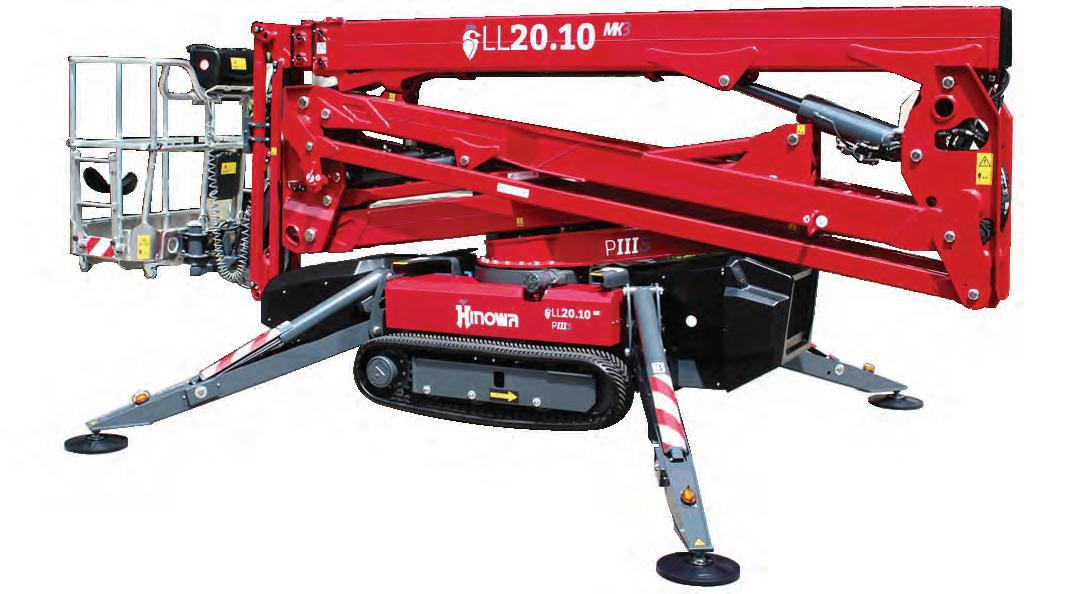
Trusted by arborists, tree surgeons, and forestry professionals across the UK, the Hinowa 20.10 delivers safe, stable, and versatile access for tree work, with 20.1m reach, 9.7m outreach, and proven all-terrain performance.
Trusted by arborists, tree surgeons, and forestry professionals across the UK, the Hinowa 20.10 delivers safe, stable, and versatile access for tree work, with 20.1m reach, 9.7m outreach, and proven all-terrain performance.
KEY FEATURES
20.1m working height & 9.7m outreach
230kg basket capacity – two person capacity
KEY FEATURES
20.1m working height & 9.7m outreach
Compact width: 0.79–0.98m – pass through narrow access with ease; basket easily removable for even tighter access
230kg basket capacity – two person capacity
Flexible power options – bi-energy or full electric options
manufacturer-backed warranty
UK stock available for fast turnaround
Compact width: 0.79–0.98m – pass through narrow access with ease; basket easily removable for even tighter access
Auto-levelling outriggers – fast, safe set-up in all conditions
Flexible power options – bi-energy or full electric options
Auto-levelling outriggers – fast, safe set-up in all conditions
“WE
AWARD-WINNING YOUNG ENTREPRENEUR GEORGE TROTT ON PIONEERING DIGITAL TOOLS AND HIS ADVICE FOR LAUNCHING A SUCCESSFUL STARTUP

In the world of arboriculture, where techniques that have stood the test of time and the whir of the latest machinery intersect, George Trott has forged a distinctly modern career. From a 2020 Pro Landscaper 30 Under 30 award to founding his own firm and winning a 2025 Prestige Business Award for Best Arboricultural Consultancy, his trajectory defines what a rising star looks like in the industry.
Sitting down with Pro Arb Magazine, he reflects on his non-linear career journey, rapidly evolving from hands-on landscaping and tree surgery to analytical consultancy, and details his recent efforts in digital application development.
From Woods to Wood Turning: The seeds of a career Trott’s initial attraction to the industry was, by his own admission, not born of a lifelong obsession with trees, but rather a gradual awareness. He recalls playing in the woods as a child and his grandfather’s skill in wood turning, but the conscious spark ignited later. “It wasn’t until later on, I remember sheltering under a redwood, and thinking for the first time, ‘this is a cool living thing.’ I don’t remember ever paying much attention before that,” he says.
Forget just “being the boss.” At the start, you are everything. “Your job is not to be the boss or own the business. It is actually to be the director of finance, the head of IT and even the social media manager,” Trott details. Prepare for this multifaceted role before you launch. “Having my website, master documents, and accountancy software ready before I started meant that from the first inquiry to the first invoice, I could respond quickly and professionally with minimal stress. Once you start, you won’t have the time you think to work on those things.”
A chance encounter at a holiday park began Trott’s real journey into arboriculture. “One day, a group of tree surgeons arrived on site and, as I’m sure many 20-year-olds do, I saw them swinging around in trees with chainsaws and thought, I need to be doing that!” This inspiration led him to Tony Benger Landscaping, where he formally learned the landscaping and tree surgery trades, building the foundation that would ultimately steer him into arb consultancy. The pivot to consultancy
stemmed from intellectual curiosity. While working on grounds maintenance, he found himself following instructions from arboricultural reports without understanding the reasoning behind them. “I never understood why we were doing things,” he remembers. “The consultant would just send the report, and we’d get given part of the report on site to work from. I wanted to understand why we’re doing the job in this way.” He likens the relationship between an arborist and a consultant to that between a surgeon and a diagnostician. The desire to diagnose, to understand the ‘why,’ propelled him into the world of consultancy, where he has now firmly established his own firm. Nevertheless, his foundation in practical arboriculture directly informs a vital part of his consultancy work: balancing preservation with modern arboricultural needs. A prime example was a recent site featuring an avenue of ageing lime trees rumoured to have sheltered King Charles II during the English Civil War. “It’s a property with incredible history,” Trott explains. “This massive avenue was the original entrance, but the trees are now in decline. The challenge is determining their future.” This situation highlights the long-term perspective inherent to the profession. When considering the lifespan of such historic trees, Trott notes, “Lime trees can live, if it’s just a single tree, for probably many hundreds of years – maybe even a thousand years at a real push. But if you manage them as a coppice, then you’re talking thousands of years.”
This intersection of history, biology and practical management is where Trott has built his career. Reflecting on his journey, he considers himself “very lucky” to have found an industry he is passionate about. However, he is quick to correct any impression that his success was mere chance. “Luck is often a bit of a downplayed word,” he asserts. “When people say, ‘Oh, I feel really lucky to be where I am,’ I think, ‘Well, no, you’ve worked extremely hard to get there,’ it didn’t happen by chance. It has been a plan you have had to work hard towards.”
The Digital Arborist:
Building tools for a greener future
What truly distinguishes Trott’s recent trajectory is his foray into digital tool development, a natural extension of his problem-solving mindset. He has independently created two web-based applications designed to democratise tree knowledge and foster a deeper public connection with the natural world.
First is a free tool named ‘Right Tree, Right Place,’ which addresses a fundamental issue in urban forestry. “A lot of issues with managing mature or older trees, especially in the urban environment, seem to come about because they’re the wrong tree in the wrong location,” Trott expounds. Addressing the problem of determining the right tree for a local area, the app allows users to input site-specific data – available space, soil type, drainage and planting
IT’S A TOOL I’VE PUT OUT INTO THE WORLD BECAUSE I THINK IT COULD PROBABLY SOLVE 90% OF PEOPLE’S INQUIRIES ABOUT TREE PLANTING
objectives – and uses artificial intelligence to generate a list of suitable tree species, complete with links to nurseries. “It’s a tool I’ve put out into the world,” he says, “because I think it could probably solve 90% of people’s inquiries about tree planting.” The reception from fellow consultants has been positive, with many suggesting future features, a list Trott is already compiling.
His second project, ‘My Tree Diary,’ is more personal and community-focused. It aims to highlight the value of everyday trees that might otherwise be overlooked. “People seem to value the biggest trees or the oldest trees,” Trott observes. “But I don’t think a lot of people quite realise the value of the everyday tree on your street, particularly people that live in areas of low canopy cover; they might only see one tree on their journey to and from school, but
those trees might mean a lot to them.”


The app allows users to map and record trees that are special to them, uploading photos and notes to create a public journal. On one hand, a free account allows users to log three trees, and on the other, a low-cost subscription account enables users to generate PDF journals tracking a tree’s changes over time. “I’m hoping it leads to a bit of a movement,” Trott says of his ambition for the app, which is in its final testing phases. “So, eventually users can create walks to go see all these special trees that you may not ordinarily think of as important.”
A philosophy of curiosity and humility
Trott’s drive to continuously learn and build has not gone unnoticed. This year and the early years of his career have seen him recognised with multiple awards, a success he attributes to a competitive spirit and a relentless desire
he admits. “If it’s a way to improve, even if there’s a massive challenge to do that improvement, rather than me seeing it as an issue, my mindset is, ‘Yeah, let’s do this.’”
EVEN IF YOU DON’T FEEL READY, THAT’S A SIGN THAT YOU ARE READY. BECAUSE IF YOU’RE DRIVEN, YOU’RE MOTIVATED, YOU CAN DO IT
for improvement. “I just like entering things because I like the competition,”
This drive has carried him through the daunting leap from employee to business owner. While he acknowledges the fear, he believes that constant contemplation of the move is a sign of readiness. “When you’re in that frame of mind, where you’re constantly thinking about the next stage, even if you don’t feel ready, that’s a sign that you are ready. Because if you’re driven, you’re motivated, you can do it.”
His advice to other young professionals considering a similar path is to gain thorough experience first, particularly in management roles, to make the
Resist the urge to invest heavily in impressive equipment from day one. Trott learned this after an underused stump grinder sat “depreciating, costing money.” His advice? “Value is the keyword. Is this purchase going to add value to the business? If the answer is no, then there’s a high likelihood you don’t need it, you just want it.” He champions starting lean, noting that “a good name, reputation and work ethic go further than kit does in the early days.”
Invest slowly and wisely as revenue comes in, not before.
In a competitive industry, your reputation is your most valuable asset, and it is built on reliability. Trott’s distilled advice for success is to “Build a reputation on trust.” He elaborates that this intangible quality often outweighs even price in a client’s decision-making process. “If people trust you, they will keep coming back,” he affirms. This is because, at its heart, service is about relationships. “People buy you, not the product.” Cultivating this trust through consistent, quality work and integrity is what transforms a new venture into a lasting, respected enterprise.
transition feel like “business as usual, but with a different name.” He also stresses the importance of recognising one’s limitations, especially in areas like accounting. “The important skill is to learn that you don’t need to do everything,” he remarks. “Even if you have to pay someone to do something, that could work out cheaper than trying to do it yourself. Also, you could have been doing something more worthwhile, such as a higher-value work elsewhere.”

Underpinning all of Trott’s work is a profound sense of humility in the face of nature’s complexity. He offers a poignant piece of wisdom for anyone in the field: “Trees will always make a liar out of
you.” He elaborates: “You could be in the industry for sixty years and look at a tree and go, ‘Yeah, I see nothing wrong with that.’ And then it falls over the moment you leave. We don’t know everything about trees. But the more I’ve learned, the more I think – I have so much more I want to learn. It’s really humbling.”

IF YOU GO TO IN-PERSON ARB EVENTS, IT’S REALLY OPEN. EVERYONE WANTS TO TALK, BECAUSE YOU’RE ALL PROFESSIONALS
Looking at the arboricultural industry as a whole, Trott sees a sector in a state of paradoxical health. On one hand, there is an abundance of work, driven by crises like ash dieback and government housing targets. On the other hand, this boom may be creating unsustainable competition. “There should be work everywhere,” he states. But he has noticed a surge in new businesses, particularly in tree surgery, leading to undercutting. “There’s always someone who’s significantly cheaper, who
seems to just sort of go around picking all the stuff up.” He expresses a similar concern in consultancy, where he has occasionally been outbid by significantly cheaper operators, prompting questions about their qualifications and insurance. He notes that while training is now very accessible, “it doesn’t make them a good arborist. Just means they’ve done the course.” Despite these market pressures, Trott remains overwhelmingly positive about the industry’s culture. He describes it as exceptionally welcoming and open, a stark contrast to the sometimes-fractious debates seen on social media. “If you go to in-person arb events, it’s really open. Everyone wants to talk, because you’re all professionals,” he notes. “There aren’t really any gatekeepers. Everyone feels like they want to say, ‘yeah, just come in. We’ll help you’.”
For George Trott, the future is a map of unexplored branches. He has no fixed destination, only a drive to keep building, learning and overcoming the next challenge. Whether diagnosing an ancient lime tree, coding a new AI tool or mapping someone’s favourite street tree, his career is a testament to an evolving profession where chainsaws and algorithms can coexist, all in the drive to understand and preserve nature.
Embrace the challenge before you feel ready. “Sometimes you just have to say yes and then work like hell to learn how to achieve or perform the job,” Trott says, reflecting on his own start. This requires accepting that mistakes are part of the process. “It is going to go wrong. It just is. So just accept that early.” His ultimate philosophy is to “be an oak, not a willow,” prioritising slow, sustainable growth over rapid, fragile expansion. Trott’s final, most important tip? “Just don’t be scared of failure, just go for it. You’ll never regret trying something.”

Earlier this year, Miles Richardson of the University of Derby published a study using computer modelling to measure the British public’s historic relationship with nature. By analysing data on urbanisation, local wildlife loss and a decline in parents passing on nature engagement to their children, the model tracked a growing disconnect over the last 220 years. The research demonstrated a 60% decrease in nature-related themes in books since 1800 and evidenced a steady reduction of children’s access to green spaces. In his conclusion, Richardson

warns that this trend will only accelerate in younger generations as the natural world vanishes from increasingly builtup neighbourhoods, unless effective interventions are implemented.
WE’RE PLANTING TREES, BUT UNLESS WE INFLUENCE THE NEXT GENERATION AND MAKE SURE THAT THEY VALUE THOSE TREES, THEN THEIR FUTURE IS NOT GUARANTEED
MICHAEL JOHNSON
It is precisely this need for early intervention that motivates the work of professionals like Michael Johnson, a tree officer for education at Islington Council. For Johnson, reversing the slide toward nature’s extinction in children’s lives requires an intentional focus on the environment nearly every child frequents: their school. His work is predicated on the idea that schools represent the most effective and equitable avenue for rebuilding a foundational relationship with the natural world. In

this endeavour, Johnson sees arborists as a critical link, uniquely equipped with the ecological expertise and regular access to school stakeholders to champion a green transition from within.
Safeguarding the future forests by educating the next generation Johnson’s path to arboriculture was unconventional. A self-described “career changer,” he left a disempowering officebased role for a more proactive, hands-on career working with trees. After retraining at Capel Manor College, Johnson joined Islington’s tree service in 2016. School inspections were initially a routine part of his duties, but their significance changed when he was first invited to speak directly to primary school-aged students. The encounter proved formative. “I left the
class on a bit of a high,” Johnson comments. “The children all had very positive pro-nature attitudes.” In particular, he was struck by the pointed contrast between the pupils’ grasp of natural concepts and the frequent unfamiliarity he encountered among adults. “I often encountered adults who don’t seem to have the faintest clue about how a tree works, and yet these primary school children seem to have a better understanding,” he notes.
This initial success solidified his belief in the value of such engagements, which he sees as offering both an immediate, personally rewarding experience and a vital, long-term industry-wide impact. “In the classroom, you feel like you have touched a lot of lives in a short space of time,” he observes, contrasting the children’s enthusiastic reception with the more fraught dynamic of home visits. Aside from showcasing professionals in arboriculture to future generations, Johnson adds that this work is also an investment in the future of urban forests themselves. “We’re planting trees, but unless we influence the next generation and make sure that they value those trees, then their future is not guaranteed,” he argues, positioning this school outreach as the ultimate safeguard for the endurance of urban forests.
Beyond engaging students, Johnson contends that schoolyards can themselves demonstrate the critical environmental benefits of green spaces. However, realising this potential first requires convincing the school’s “gatekeepers” – i.e., headteachers and site managers. The stakes of this persuasion are illustrated for him by a stark contrast between two local Islington schools. One, Pooles Park Primary School, is a thriving green oasis. “The school has the largest amount of biodiversity in terms of trees and shrubs in the whole borough,” Johnson notes, a legacy of past funding and, crucially, a naturepositive headteacher. The other, his own old primary school, presents an opposite
landscape, a sea of “black tarmac.”
Johnson describes it as a “west-facing playground, so in the summer the morning heat floods right back up in time for lunchtime,” turning pupils into “barbecued sausages.” This dichotomy underscores his core challenge: shifting perspectives.
BY BRINGING IN THE HORTICULTURE EDUCATOR, THE SCHOOL ARE ACTUALLY LEVERAGING A GREATER VALUE RESOURCE, AND THE COMMUNITY VOLUNTEERING RESOURCE OFF THE BACK OF THAT
MICHAEL JOHNSON
Consequently, Johnson is critical of the standard arboricultural quotation usually provided to schools, which typically lists only tree-related problems and associated costs. “If someone’s already hostile, indifferent or fearful of trees on their land,

then this form of report is just another reason to get rid of them,” he claims. His solution is a more comprehensive report that systematically reframes trees as assets. To that end, he has developed a detailed ecosystem services appendix that quantifies benefits ranging from biodiversity and climate regulation to improved air quality and mitigation of urban heat. However, Johnson acknowledges that abstract
valuations have limitations. Instead, he advises focusing on practical context, showing schools how their tree canopy compares to borough targets and how it directly mitigates local issues such as playground overheating or flooding. The goal is a gradual change in perception. As he explains, “Little by little to help shift the mindset.”
The success of Pooles Park Primary School, Johnson expands, is not just about planting; it is about a sustainable, ecological and economic model. The school employs a horticultural educator who works with students and, importantly, leverages an “army of volunteers” to work on grounds upkeep. Johnson clarifies the economics: “By bringing in the horticulture educator, the school are actually leveraging a greater value resource, and the community volunteering resource off the back of that.” This translates into real financial savings for the school because of the green space’s weathermitigation benefits, making it economically, as well as ecologically, sustainable.
Johnson’s ambitions reach beyond his borough. As chair of the London Tree Officers Association’s Community Engagement Working Party, he aims to develop national guidance for tree professionals. “Our focus is on community engagement in the broadest sense,” he explains, with activities like tree walks and public events. Additionally, he participates in the National Education Nature Park program, which empowers children to positively impact their future and that of nature while providing educators with resources to integrate climate and nature into their teaching.
Regarding schools, his mission is clear. It is a professional imperative born from data and driven by on-the-ground experience. Johnson’s work demonstrates that the path to reversing the extinction of experience does not always require grand, sweeping policy changes. Sometimes, it is forged in the daily, deliberate work of an arborist walking into a school, report in hand, ready to change minds and plant the seeds for a greener, more connected future.


A £116K CASE OVER A FELLED TREE EXPOSED A MAJOR LEGAL FLAW. SARAH DODD , THE LAWYER WHO SECURED THE LANDMARK RULING, DETAILS THE BATTLE THAT SHAPED WELSH TREE LAW
n a trial that exposed a critical flaw in Welsh environmental law and pitted a homeowner against a local authority, a Newport woman was ordered to pay £116k after illegally felling a protected lime tree. The proceedings, which culminated in a 2025 Crown Court judgment, became a landmark test case for tree preservation orders (TPOs) across Wales, with implications far beyond a single suburban garden.
Leaf no trace: Investigating the case of the butchered and missing limes
The story begins not with a dramatic felling, but with a discovery in a Newport grassland. An ecologist from Newport City Council, routinely working in a protected ecological area, noticed large, freshly cut branches from a mature tree that had been discarded nearby. Looking up towards a row of properties, she saw the likely source: a “very poorly reduced lime tree,” according to CEO of Tree Law and lawyer, Sarah Dodd, who represented the council. This observation triggered an immediate inspection by the council’s tree team. They confirmed the poor state of the one visible lime tree, Dodd recollects. But the investigation took
AQThe tree is causing subsidence damage to a property. What level of evidence is needed to get permission for works or removal?
Successfully arguing for the removal of a TPO-protected tree due to subsidence requires a robust, evidence-led case. The burden of proof is high. You must submit a comprehensive package that definitively links the tree to the structural damage. This includes arboricultural evidence and root identification, supported by geotechnical and structural reports. Crucially, you must provide monitoring data demonstrating a direct correlation between root activity and building movement. A drainage investigation is also essential to rule out other causes. Finally, the application must explore alternative repairs and include a professional engineering observation on the collective technical evidence.
a more serious turn when a team member uncovered another detail: the property should have had two protected lime trees. Where the second tree should have stood was only a tiny sapling.
Consulting satellite imagery, the council pieced together a timeline. The two mature trees, both protected by a TPO established in 2002 when the houses were built, were present in 2010. Though by 2013, one was gone. The homeowner, whom Dodd describes as an “intelligent woman,” had over the years made six separate planning applications to the council, including previous applications to have the tree removed, citing issues such as shade, bird droppings and leaves. All were refused, yet permission for some pruning had been granted.
As the legal proceeding got underway, the defendant stated reason for the removal shifted during the proceedings. Initially, she claimed the tree was a fire risk. The property overlooking the grassland area, which was prone to occasional summer wildfires, and as a result the defendant argued she feared a fire could jump the fence, ignite the tree and spread to her house, which she
told the court was concerning due to her family’s safety.
In response, the council’s prosecution team took this statement seriously enough to seek a specialised report.
“We found an expert called Professor Claire Belcher,” Dodd says. “She’s based
PROFESSOR BELCHER ESTABLISHED THAT LIME TREES ARE FIRE RETARDANT AND ARE ROUTINELY PLANTED AS A FIRE BREAK. SO, THE FELLED TREE WOULD HAVE PROTECTED THE HOUSE RATHER THAN BEING A RISK
in Exeter University and is a specialist in wildland fires.” The expert’s findings were damning for the defence. “Professor Belcher established that lime trees are fire retardant and are routinely planted as a fire break. So, the felled tree would
have protected the house rather than being a risk.” When the defendants also commissioned their own fire expert, he ironically corroborated Professor Belcher’s report. The defence then pivoted, arguing that even if the tree was not an actual risk, the homeowner’s perception of danger made her actions reasonable.
Nonetheless, the longer case went on the gravity of its outcome escalated and it became about more than one or two protected limes tree. This is because the defendant raised two further arguments that significantly intensified the legal stakes and costs for Newport City Council. First, she claimed the TPO itself was invalid. Dodd explains the potentially catastrophic consequence of this: “If the TPO was drafted, made and approved in the same way that every other TPO in Newport, there was a real risk that if the court found ‘yes, it is invalid’, then immediately every single TPO across Newport would also be on shaky ground. There would have been carnage.” The second, more profound challenge was to the very fabric of Welsh tree law.
AQCan I carry out ‘emergency’ work without an application? What qualifies as a genuine emergency?
Yes, it is possible to carry out work to a protected tree without a formal application in a genuine emergency. However, the criteria are strict. In England, under Regulation 14, the five-day notice to the Local Planning Authority (LPA) can be bypassed only when the works are “so immediately necessary” that any delay would unacceptably increase the risk of serious harm. This typically applies to a tree in imminent danger of collapse. If time allows, you must provide a five-day notice, including evidence to justify the urgency, as this will be crucial if the LPA challenges your decision. It is important to note that the legal threshold differs in Wales, where the rules are broader. There, the test includes a “real and present hazard,” which does not necessarily require the tree to be in imminent danger of failure. In all cases, documenting the condition of the tree with photographs and reports is essential to defend your actions.
The legislation in Wales, an older version of the law used in England due to devolution, does not explicitly state that a landowner can be prosecuted for “causing or permitting” illegal tree work – only the person who physically does the deed. As a result, the defendant contended that as she did not cut down the tree herself, she could not be guilty. Dodd remarks that the identity of the tree surgeon remains unknown, as the defendant would not reveal it. Although, “You’re not going to get a reputable tree surgeon that’s willing to fell a TPO protected tree,” Dodd reflects.
Across Wales, local authorities were unaware of this potential legal loophole. If successful, the judgement would have made it nearly impossible to hold property owners accountable for the destruction of protected trees on their land. Nevertheless, in what Dodd recalls as a “scathing judgment,” both those defences were rejected by the court. On the issue of “causing or permitting,” the judge determined that it was “a nonsense” to suggest the concept wasn’t implicit in the spirit of the law. The defendant was, therefore, found guilty.
AQIn August, at the sentencing, the judge was bound by the maximum fine at the time the offense was committed – £20k – and as a result imposed a £16k fine. She also ordered the defendant to pay £100k
FOR UK ENVIRONMENTAL LAW, IT WAS A RESOUNDING AFFIRMATION THAT THE SPIRIT OF THE LAW –HOLDING INDIVIDUALS RESPONSIBLE FOR THE DESTRUCTION OF PROTECTED NATURE ON THEIR PROPERTY –WOULD BE UPHELD
towards the council’s legal costs, which were high due to the need for specialist reports and a King’s Counsel barrister to counter the far-reaching legal challenges. A key factor in the sentencing being a property valuation report, which Dodd stresses was a bit of “a gamble.” The report
concluding that removing the tree, which had blocked a prized view over protected land, had increased the property’s value by between £50k and £100k. The judge settled on the lower figure of £50k as the financial gain.
Reflecting on the case’s significance, Dodd emphasises the burden and isolation felt by councils in such complex prosecutions. “It’s quite lonely for local authorities. The verdict, consequently, provided a crucial precedent and a sense of solidarity for Welsh councils.” For the homeowner, the price of a scenic unimpeded view was a criminal record and a six-figure financial penalty. For UK environmental law, it was a resounding affirmation that the spirit of the law – holding individuals responsible for the destruction of protected nature on their property – would be upheld, even where the letter of the law had a perceived gap.
Dodd welcomes a planned legislative update in the Senedd to explicitly include “causing or permitting,” which will codify what the Crown Court judge has already firmly established.
For more information, visit: newport.gov.uk
What is the legal liability for the tree surgeon if we carry out unauthorised work on a TPO’d tree?
The tree surgeon who performs unauthorised work on a tree protected by a TPO faces significant legal liability. Fundamentally, they share equal criminal responsibility with the client who instructed them.
The law does not view the tree surgeon as merely following orders. Both parties –the person who physically carries out the work and the person who “causes or permits” it –can be prosecuted for the same offence. This means a tree surgeon can be subject to the same substantial fines as the property owner. Therefore, it is a critical professional duty to verify the status of any tree and ensure all necessary permissions are in place before commencing work. Relying on a client’s assurance is a substantial and potentially costly risk.

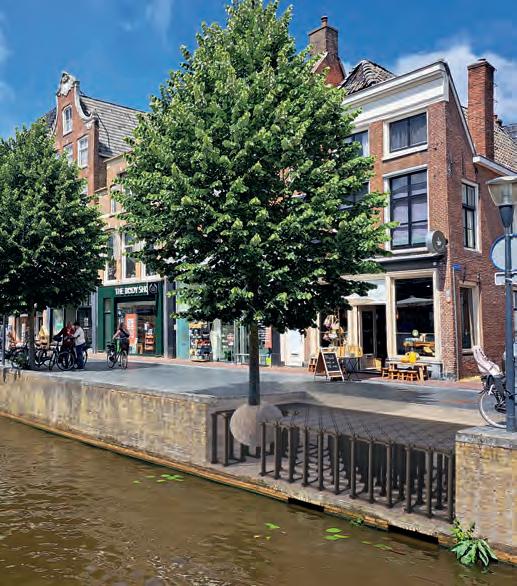
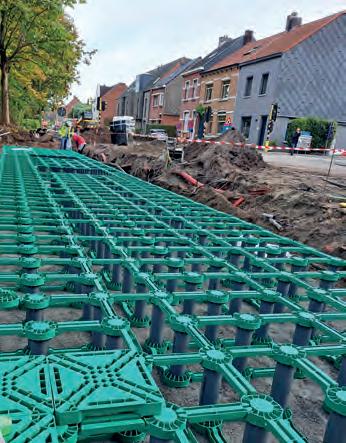
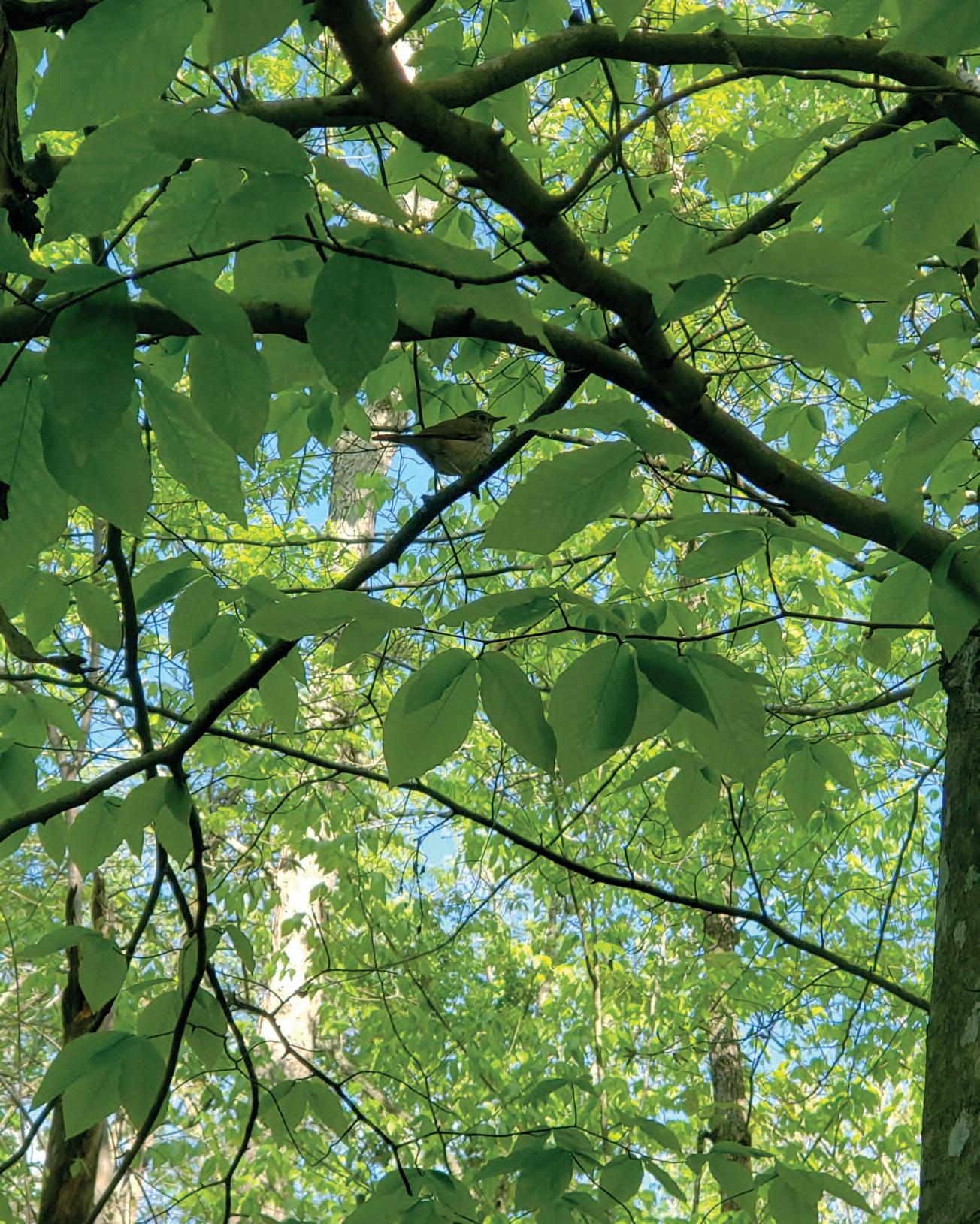
NAVIGATE THE TENSION BETWEEN TREE BENEFITS AND RISK WITH THE NTSG’S COMMON-SENSE FRAMEWORK. LEARN HOW TO ADVISE DUTY HOLDERS AND IMPLEMENT A PROPORTIONAL INSPECTION SYSTEM

In the public interface of arboriculture, a fundamental tension exists between the multiple environmental benefits trees provide and the hypothetical risks they can pose to people and property. For landowners, from private homeowners to local authorities, navigating this landscape of liability and preservation has often been fraught with confusion. It was to address this very challenge that the National Tree Safety Group (NTSG) was formed, creating a framework that has become the benchmark for balanced tree risk management across the UK.
Simon Richmond, senior technical adviser at the Arboricultural Association and a key figure in the NTSG, describes the group’s
origins. “The NTSG was formed in 2007 after a period of discussions amongst various stakeholder groups and individuals who were concerned about the amount of trees
THEY’RE ORGANIC STRUCTURES, AND THEREFORE THEY’RE NOT ENGINEERED. THERE’S NO ABSOLUTE WAY OF KNOWING WHETHER ANY PARTICULAR TREE IS SAFE OR UNSAFE AT A SPECIFIC POINT IN TIME
being felled needlessly,” he says. This period of consternation was largely triggered by a handful of court cases following fatalities from falling trees, prosecuting duty
holders – the landowners where accidents happened. “In response to those cases, other landowners became anxious and there was a lot of unnecessary felling because people were concerned about the potential of litigation,” Richmond notes.
Published in 2011, the first edition of the guidance, aimed at duty holders rather than arborists, was “well received,” and over the years, it was used in numerous court cases as “a generally accepted good practice guidance.” In 2024, a second edition was published, refining the principles based on new legal precedents, the arrival of new pests and diseases like ash dieback and a significant growth in the evidence base for the benefits of trees. “The other area that has really evolved since the first edition is the amount of knowledge, research and evidence on what benefits trees provide to society,” Richmond states. “There’s a huge amount of work that’s been done and
papers published evidencing what benefits trees provide in all forms of local ecosystems.”
Five principles of balanced management
Richmond explains that the NTSG guidance is built upon five core principles. The first, as he outlined above, is recognising why trees are important to our rural and urban environments and to society as a whole. The second acknowledges their living nature: “They’re organic structures, and therefore they’re not engineered. There’s no absolute way of knowing whether any particular tree is safe or unsafe at a specific point in time. Every tree is going to fail sooner or later. Every single tree that is out there, sooner or later it will come down, slowly or suddenly –we just cannot be certain when.”
This leads to the third principle, which Richmond details: “The overall risk of a tree causing death, injury or damage is extremely low – there is approximately an annual 1 in 15 million chance of being killed by a falling tree. Of course, in reality, some trees are observably more likely to fail causing damage than others, and the systems for management that we already have in place contribute considerably to maintaining this very low annual average. The fourth principle delves into understanding this complex probability of a tree causing harm, set against the clear legal duties of landowners under acts like the Occupiers’ Liability Act and the Health and Safety at Work Act. The final principle brings it all together: “taking into account all of those things, we need to have a balanced and common-sense approach, a proportionate approach to managing tree risk safety.”
Overall, the essential tenet of the NTSG guidance is the rejection of a one-size-fits-all inspection regime. Instead, it promotes a system of “zoning,” where land is categorised based on the usage, or occupancy, beneath the trees. “If the tree is in a very remote area where access is limited, it doesn’t matter if it’s likely to fail, it can fail with impunity,”
Richmond makes clear. Conversely, areas with high public footfall or valuable property require more focused attention.
A graduated approach to inspections is used in those areas to ensure that trees are as safe as possible. This starts with “informal” checks by passers-by or staff, then “driveby” and “walk-over” inspections, and
THE ARBORIST’S JOB IS TO MAKE PEOPLE AWARE OF A LANDOWNER’S LEGAL DUTY AND TO PRESENT ANY TREE RISK IN A BALANCED WAY
finally to detailed inspections by qualified arborists, which may involve climbing or diagnostic equipment. Nevertheless, this graduated approach leads to questions of inspection frequency. Richmond confirms there is no simple answer to that question. “Assessment frequency will be set as part of the strategy for the trees that you have and where they are in relation to the occupancy.” This could range from oneyear cycles for trees in high-occupancy zones with conditions like ash dieback,
to three or even five-year cycles for loweroccupancy areas.
Within this framework, the role of the arborist is multifaceted. They are not just tree surgeons and surveyors but also advisors and educators for landowners. Richmond acknowledges the spectrum of opinion amongst both clients and arborists, stressing the duty of a competent professional to provide accurate and balanced guidance.
“The arborist’s job is to make people aware of a landowner’s legal duty and to present any tree risk in a balanced way.”
Still, when discussing risk with clients, Richmond puts the statistics into perspective. Over the last 28 years, an average of 4.7 people per year have died from tree-failure incidents. “Each one of those deaths is obviously an absolute tragedy. Though, to put it in perspective, around 4.5 people are killed every day in road traffic accidents.”
The goal of the NTSG is not the impossible task of eliminating all risk, but of fostering a prudent, evidence-based approach. As Richmond concludes, if a landowner has a robust system in place and takes appropriate actions as set out in the guidance, using competent professional arboriculturists where necessary, “then even if a tree fails and somebody’s killed, they can demonstrate that they have carried out their duty as a prudent landowner or, in the case of a professional who has inspected the tree, the duty to apply the standard of the ordinarily skilled tree inspector.” In the balance between preserving tree canopy and ensuring public safety, the NTSG attempts to capture the common-sense context of risk.
DANIEL BALL’S COMPANY MEDIARB IS ON A MISSION TO TRANSFORM ARBORICULTURE’S SAFETY CULTURE WITH PROACTIVE TRAINING AND “NO EXCUSE” TRAUMA KITS, TURNING REACTIVE PANIC INTO DRILLED-IN RESPONSE
Amoment of complacency – the kickback from a single, one-handed chainsaw cut – is all it takes to change a life. When a serious injury occurs, a ticking clock starts. A contest between trained discipline and internal chaos determines the outcome. Against the flood of adrenaline and a pounding heart, the only effective responses to an injury to yourself or a colleague are drilled-in emergency protocols and a first-aid kit that is seconds, not minutes, away.
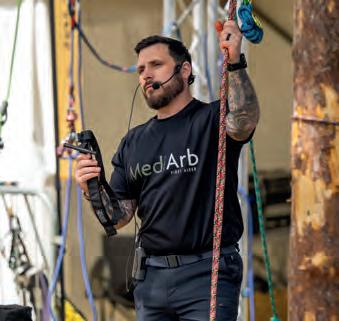
For Daniel Ball, founder of MediArb, this scenario is not hypothetical. It is the driving force behind his mission to be a part of
ONLY
TO AN INJURY TO YOURSELF OR A COLLEAGUE ARE DRILLED-IN EMERGENCY PROTOCOLS AND A FIRSTAID KIT THAT IS SECONDS, NOT MINUTES, AWAY
shaping the safety culture of the industry. His company provides specialised trauma first-aid kits and training designed for the unique dangers of tree surgery. Ball’s critical perspective on arb first aid was honed over 11 years in the armed forces and tested by the daily realities of tree surgery workforces. MediArb itself was born from a nearmiss accident – a pivotal moment that
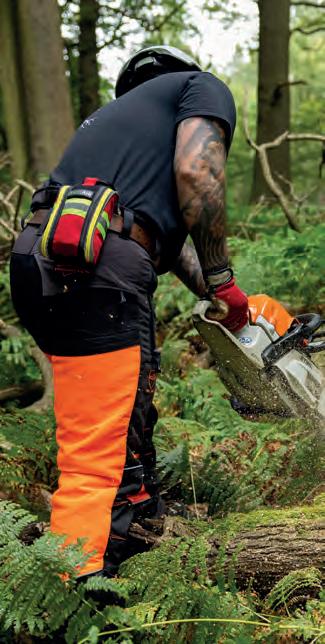
exposed the critical gap in arb safety the company now exists to fill. Recalling an incident from years ago, when he was managing multiple teams for an arb business, Ball says: “We were getting a lot of near misses and then the accident happened.” In that incident, a worker made contact with a chainsaw on his arm. “Lucky enough, he missed anything
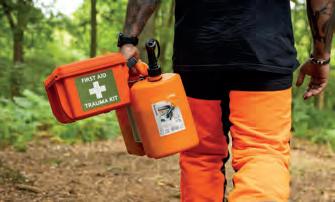
major,” he comments. “But that accident could have easily been worse, to the point where, if the guys didn’t have a clue how to deal with it, the outcome could have been deadly.”
The near miss forced a reflection on safety protocols. Ball’s response was two-pronged. His immediate step was to

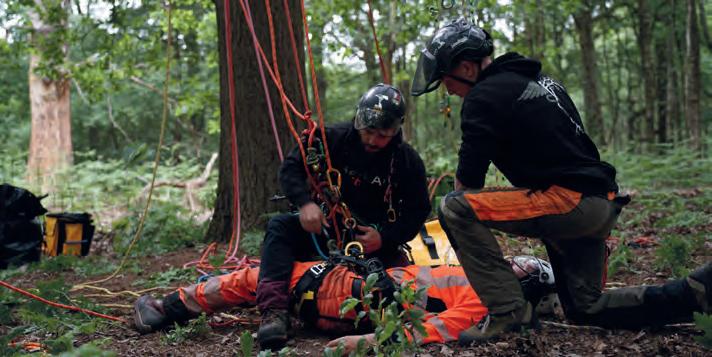
leverage his military experience, developing specialised first-aid kits for his teams. In turn, the demand from subcontractors for these kits soon turned this internal solution into a commercial venture: MediArb. His second long-term consideration focused on the root cause of arb accidents.
Ball concludes that one of the primary threats can be traced back not to a lack or misuse of protective gear, but to workplace environments where risky habits too often become causally embedded.
I DON’T WANT FIRST AID TRAINING TO BE PERCEIVED AS A TICK BOX EXERCISE. I WANT THE FIRST AID KIT TO BE A FUNDAMENTAL ASPECT OF THE JOB
“The majority of climbers out there can all get complacent with what they do,” he states. “The old classic is one-hand cutting, it happens across the industry. Despite always being taught that two hands on a saw is the working position. Unfortunately, across the industry, the one-handed habit has been adopted, even I’ve been guilty of it.”
A direct consequence of the normalisation of bad practice is a startling rate of workplace injuries. Ball sees evidence of this firsthand; he frequently conducts informal surveys during his MediArb’s first-aid courses, which consistently return alarming results. “It really doesn’t matter how long they’ve been in the industry,” he says, “everyone I’ve come across has either heard of an accident or they’ve had an accident themselves.” He illustrates this point with an example of one of the most severe chainsaw injuries: kickback to areas of high lethality, like the neck and face. “I’m probably counting now approximately 12 people I’ve met around the UK that have experienced kickback with a chainsaw to the face,” he continues
One of MediArb’s offered courses is the Level 3 Emergency First Aid at Work and Forestry qualification, which equips individuals with the specialised skills needed to manage medical emergencies in forestry and agricultural settings. This course supplements standard first aid training by addressing industry-specific risks, as outlined in the Forestry Commission First Aid Policy 2015. It covers catastrophic bleeding control using tourniquets and haemostatic agents, managing crush injuries and treating environmental conditions like hypothermia and Lyme disease. With a focus on remote emergency response where professional help may be delayed, the course combines practical and theoretical assessments to ensure participants can provide effective, life-saving care in high-risk outdoor environments.
– a stark reminder of the types of chainsaw injuries that can be both life-altering and often fatal.
Ball explains that his approach with MediArb is to directly challenge the arboriculture industry’s reactive stance on serious incidents. Instead of establishing refresher training only after an accident occurs, he advocates for a stable foundation of ongoing education, a philosophy heavily
influenced by his background as a military team medic, where consistent reinforcement of safety and procedure is paramount. The military standard introduces a different level of intensity and repetition to first aid, designed to overcome the “freeze, fight or flight” response during a traumatic event.
“When we’re dealing with life-threatening injuries, your actions are more important than anything happening in that moment,” Ball remarks. “That’s why I use that phrase, ‘doing something is better than nothing.’ Hopefully, with the refreshing training, when an accident does happen, any professional on the jobsite can just get the best outcome out of it.”
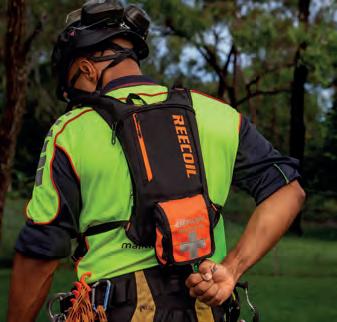
WITH THIS FIRST AID KIT, BY PULLING AT IT ONE-HANDED, YOU CAN RETRIEVE AND DEPLOY WHAT YOU NEED TO STOP THE BLEED SOLELY WITH THE WORKING ARM
Nevertheless, he is candid about the psychological barriers to emergency responses, acknowledging that even with training, freezing is a possibility. “The one thing I can’t give people is answers as to how they’re going to react in any situation. Although I would say that is exactly why building confidence in first aid is key,” he adds. This focus on building confidence through routine learning has led him to question the industry-standard three-year
first-aid requalification cycle. “Why do we wait three years to refresh in first aid?” he argues, pointing out that while three years is the Health and Safety Executive guideline, the regulations further recommend more frequent training for high-risk industries. He anticipates the pushback: “Company owners might just say, ‘Well, it’s only recommended, not mandated.’ However, I would respond to them with the one thing I wouldn’t want your employees to lose is their ability to help someone because of a lack of training.”
The “no excuse” kit
Likewise, to Ball’s stance on training, MediArb’s products are built on the principle that health and safety cannot be reduced to a box-ticking exercise. Its trauma kits are engineered for the distinct challenges of tree surgery work, particularly for a climber operating alone at height. Ball explains the critical design feature of one of the kits: “For instance, the Recoil Deploy Trauma Kits are designed to be opened one-handed.” He points out its necessity with a scenario where a climber has severed the tendons in their arm. “In that situation, you will lose the use of the injured arm. So, with this first aid kit, by pulling at it one-handed, you can retrieve and deploy what you need to stop the bleed solely with the working arm.”
Perhaps more critical than the kit’s design is Ball’s mission to revolutionise where it is stored. His flagship product is what he calls a “no excuse box,” engineered to withstand any site condition and stand out as a core piece of equipment. “I don’t want our first aid kits to be stuffed in under the truck, like what some teams have done for decades,” he says. Ball insists that crews treat the firstaid kit as non-negotiable, on-site gear, as indispensable as the fuel can and climbing ropes. “Is it difficult to grab that extra little box and just take it out on site with you? There should be no excuse.”
This approach is already saving lives. In one serious case, which is still under investigation, Ball confirms that “the MediArb personal trauma kit saved the injured person’s life.” In another incident, he received a photo of his kit in use after a ground worker cut his leg with a chainsaw. The
The MediArb Emergency First Aid Trauma Boxes are BS8599-compliant kits enhanced with militarygrade components for treating severe injuries like major lacerations and burns. Designed for high-risk sectors like forestry and tree surgery, the rugged, IP67-rated cases are waterproof and shock-resistant for use in extreme environments.

Key inclusions are a CAT Gen7 Tourniquet, Celox haemostatic agents for rapid bleeding control, and emergency trauma bandages. The kits are built for quick emergency response in remote locations and are typically deployed as a team or vehicle kit to ensure preparedness for on-site medical emergencies.

crew successfully applied a tourniquet and controlled the bleeding on site. “It’s working,” Ball notes, with palpable relief. “As I’ve said, I don’t want first aid training to be perceived as a tick box exercise. I want the first aid kit to be a fundamental aspect of the job.”
MediArb is doubling down on its mission with an investment in a new dedicated training centre, featuring classrooms for first aid, as well as chainsaw and climbing instruction. “The key thing for us is to continue educating the sector. That’s one of our main goals – to keep on doing what we’re doing, and to talk about the type of injuries that are happening in the industry to try to address risk.” His goal is to foster a cultural shift where safety is not seen as a cost, but as a core component – where the first-aid kit is as essential as the chainsaw itself.

For Paul Hicks, marketing and product manager at Stihl GB, the drive for advanced winter PPE is not merely about materials, but about safeguarding performance.
“When trying to keep warm and stay comfortable, energy and concentration levels dip, which makes for slower reaction times,” he says. “In high-risk environments, such lapses can have serious consequences.” This critical insight positions high-performance workwear not as a luxury but as an important component of risk management, designed to maintain physical and cognitive sharpness throughout the day.
The foundation of this protection is intelligent temperature regulation enabled by sophisticated materials science. Hicks points to modern layering systems as a prime example. “Today’s modern multi-layered garments, for example, offer thermal efficiency without adding excess weight, enabling

users to keep protected from the elements whilst moving freely,” he explains. This is a crucial development,
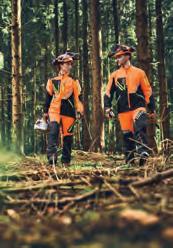
as bulky, restrictive clothing can itself induce fatigue, creating a distinct safety hazard. Complementing this is advanced moisture management. Hicks highlights the synergy of “wick linings combined with breathable outer layers,” a combination that allows internal moisture to evaporate without letting external cold air penetrate. This system is adaptable through features like ventilation zips, which give workers direct control over the microclimate, allowing them to release excess heat during strenuous tasks like climbing and retain it during static periods.
This principle of dynamic support is intrinsically linked to mobility. “Mobility reduces strain and fatigue and helps maintain efficiency,” notes Hicks. He advises professionals to seek out PPE constructed from flexible fabrics with ergonomic patterning, emphasising that “well-fitted clothing with multidirectional stretching characteristics works with the body to allow for climbing and reaching.” This freedom of movement is vital, not only for productivity but for preventing the

muscular strains and imbalances that can lead to accidents.
Addressing the profound hazard of reduced visibility requires a strategic approach beyond simple reflectivity.

Hicks advises that “Strategically placed, brightly coloured garments should contrast with the environment to enhance visual recognition, even at a distance, in low light.” He stresses that “reflective strips should be intentionally placed along moving joints,” such as ankles and knees, to create a dynamic, easily identifiable silhouette.
These principles are embodied in Stihl’s ADVANCE PPE range. Hicks points to the ShellTEC Jacket and ADVANCE FlexTEC trousers as responses to these challenges. “These latest additions combine durable materials, ergonomic designs and high-visibility details to ensure users stay safe and comfortable in all conditions.” The trousers incorporate features such as tick protection and thorn-resistant fabrics without compromising the four-way stretch and kidney protection required for a full, demanding day in the field.
AS WINTER SETS IN, OUTDOOR PROFESSIONALS FACE HEIGHTENED RISKS. PRO ARB EXAMINES THE ADVANCED PPE FROM LEADING BRANDS DESIGNED TO ENSURE SAFETY AND MAINTAIN PRODUCTIVITY
Winter conditions pose a challenge to outdoor worker safety, where standard personal protective equipment can fail under the stress of cold, wet and dimly lit environments. The consequences are driving innovation – the focus is now on developing integrated systems that provide dynamic thermoregulation, maintain mobility and ensure conspicuity. Here, we explore offerings that integrate winter adaptability with essential protective standards.

Husqvarna’s approach to winter workwear is built on two interconnected pillars: preserving dexterity and actively managing the garment’s internal climate. Jonathan Snowball, head of the professional UK business unit at Husqvarna, frames the issue with practical clarity, highlighting an often-overlooked safety feature. “In the cold conditions, keeping warm isn’t just about comfort, it’s about keeping blood circulating to maintain muscle movement,” he elucidates. “When working with machinery such as chainsaws and hedge trimmers, maintaining dexterity is key for accurate and safe usage of machinery.” This underscores a vital point: cold, stiff hands are not merely uncomfortable; they represent a direct and significant compromise to operational safety.
The brand’s specialised hand protection offers two distinct solutions. For
general winter duties, the Functional Winter Gloves serve as a robust barrier.
Snowball details that they feature a “water-repellent membrane, Thinsulate and microfleece lining for warmth and dryness,” and are equipped with pragmatic touches like a touch screen-compatible index knuckle and a reinforced thumb patch. For highprecision tasks where grip is paramount, the Functional Grip Winter Gloves offer a “tight-fitting, latexcoated” solution that ensures maximum control without sacrificing warmth provided by their lining.
Snowball points to the Technical Vent Rain Jacket as a prime example of core protection, describing it as a “durable, water-repellent and breathable polyester jacket with extra reinforcement, laminate and taped seams.”


As a certified Class 3 high-visibility garment meeting the weather protection standard EN343, it is designed to be dependable.
For Louis Defraiteur, export manager at Solidur, navigating winter PPE begins with understanding official certifications. He clarifies that standardised cold resistance is not universal. “The GAT02 gloves are certified to EN ISO 511, but tested only for contact cold,”


Defraiteur states.
For footwear, the CI (Cold Insulation) mark under EN ISO 20345 guarantees the outsole provides effective insulation on surfaces as cold as -17°C. He also highlights waterproofing’s importance, noting that “footwear certified WR can also be considered suitable for cold and wet conditions, as the WR marking guarantees the shoe is 100% waterproof.”

Beyond certified items, Solidur offers a layering system. The WODA and WODARE Softshell jackets make versatile midlayers for active days. For heavy rain, the H2O range provides a robust, breathable and waterproof outer shield.
Defraiteur underscores the fundamentals of the base layer, recommending COB fleece and thermal underwear to maintain optimal body temperature. This foundation wicks moisture from the skin, preventing the initial chill that can lead to heat loss on long workdays.


The first thousand hours are critical for a Vermeer wood chipper’s long-term reliability and value. The manufacturer has established a structured, cumulative maintenance schedule for this break-in period. Each service interval builds upon the last, forming a comprehensive preventative routine designed to prevent premature wear and avoid costly operational downtime.
• Foundation: Daily and weekly checks Every five hours or daily, operators should lubricate key bearings and clean the engine area. Every 10 hours, a more thorough check includes inspecting fluid levels and testing critical safety items like brake systems.
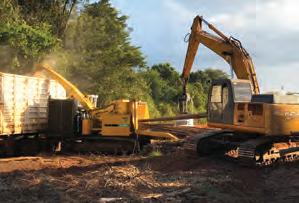
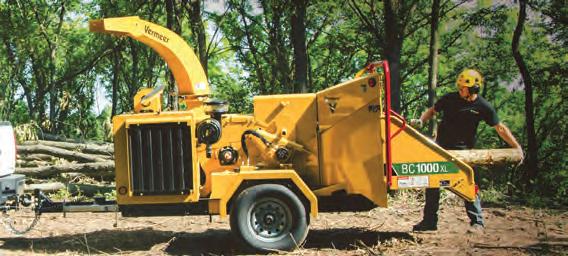
A VERMEER REPRESENTATIVE OUTLINES THE KEY SERVICE INTERVALS THAT MAXIMISE YOUR WOOD CHIPPER’S VALUE AND LIFESPAN
• First major milestones: 50 to 100 hours At 50 hours, maintenance expands to include the first engine service and a focus on the cutting system, notably checking and adjusting the cutter drum drive belt. The 100-hour interval mandates a detailed inspection of the machine’s frame, mounting hardware, and safety feature functionality.
• Gearing up: 250 to 1,000 hours Services become more comprehensive. The 250-hour mark requires another engine service and fuel filter replacement. At 500 hours, the hydraulic fluid filter must be changed and the chassis serviced.
The 1,000-hour service is a major overhaul, involving procedures like
replacing air filters, changing hydraulic fluid, and inspecting key wear components such as the cutter drum drive belt for potential replacement.
• Initial setup for new machines Separate from the hour-based schedule, new chippers require initial checks – including verifying lug nut torque and drive belt tension – to ensure correct setup from the first hour.
Adhering to this phased schedule is presented as a direct investment, helping to prevent any premature wear as well as avoiding costly downtime throughout the machine’s lifespan.
The BC1000XL Brush Chipper incorporates safety features such as a patented bottom feed stop bar and a multi-position upper control bar to halt operations from several points. It also utilises systems like clutchless PTO engagement and SmartFeed technology to protect its own driveline and prevent engine stall. Available with 49 or 74 hp Deutz engines, it processes material through a 12x17.5-inch opening and offers an extended warranty on drum components. The WC2500TX Whole Tree Chipper airs a 600 hp engine with a compact tracked chassis for mobility in confined terrain. It employs SmartCrush technology for difficult material and a variable-speed infeed system. Operators control major functions remotely via a dedicated ACS system, prioritising both safety and high throughput. VERMEER BC1000XL BRUSH
FÖRST’S
For businesses in tree care and landscaping, selecting the right wood chipper involves looking beyond the initial price tag to the long-term operating cost model. According to Hennessy, the choice between tracked and wheeled models is a fundamental first decision with distinct financial implications.
“Wheeled chippers are straightforward; you tow them behind a vehicle and maintain them like any other roadgoing plant,” he says. “That means keeping on top of tyres, brakes and hitch components, but there is no separate trailer to buy or look after.”

In contrast, Hennessy notes, “Tracked machines are different. They need to be transported on a trailer, so you have the initial outlay and the ongoing trailer maintenance to factor in. On top of that, there is track wear, which depends entirely on the surfaces you operate on.”
His concluding advice is clear: “Choose the
format that suits the majority of your work, and you will keep costs predictable rather than reactive.”
Beyond the chassis, Hennessy highlights fuel type as a critical component for consideration. “Start with fuel type. In the six-inch range, diesel uses less fuel, but the petrol machines deliver more throughput per hour. Depending on the work, the extra productivity per litre often outweighs the higher consumption.”
He also urges buyers to consider the servicing implications of machine size.
“Also consider the servicing cost difference between six-inch and eight-inch machines. Bigger components, bearings, belts and blades inevitably cost more to maintain, more machine usually means more spend.”
Ultimately, Hennessy explains that achieving a target hourly operating cost is the core of Först’s consultative approach. “Först helps customers hit their operating cost targets by matching the right machine to the work they do,” he states. “By understanding the customer’s workflow, material type and utilisation, we can recommend the machine that delivers value for money, not just the lowest upfront cost. Our aim is always to help operators get more done with less fuel, less downtime and less wear, which is where real savings come from.”
FÖRST’S CADET 6 AND TR6P

The Cadet 6 is positioned as an accessible, transportable option. Its sub-750kg weight allows towing on a standard car licence, while its design incorporates GRP panels to reduce mass without compromising durability, according to the company. It shares the chipping chamber of the larger ST6P but uses a 23hp petrol engine. User-focused features include simplified touchbutton controls and a variablespeed feed roller.
For greater mobility on-site, the tracked TR6P is built around a 40-hp Vanguard engine and incorporates the company’s FörstGrip feed system and an open-top flywheel intended to handle wet material. An ‘AutoIntelligence’ control system and variable-width tracks are incorporated into the model to enhance reliability and agility in confined spaces.

FÖRST TR6P
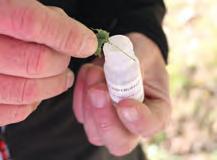
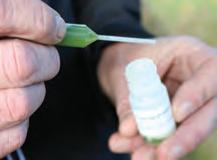
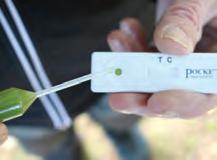

In recent decades, the serial arrival of imported pests and diseases, such as oak processionary moth and ash dieback, have made protective biosecurity measures a salient issue for institutions and professionals working to safeguard Britain’s trees and plants. While strains of the Phytophthora fungus have been here for over a century, identifying them has traditionally required a lengthy, lab-based process. Today, that paradigm is shifting, thanks to a novel application of an unforgettably familiar technology: the lateral flow test.
A FAMILIAR AND RAPID TECHNOLOGY
• Pocket Diagnostic leverages the same technology which was used during the Covid-19 pandemic. “We’re all familiar now with lateral flow technology since Covid. This application uses exactly the same technology,” says Wade. “Instead of testing for human antibodies, the test is detecting Phytophthora infection.” He adds that this familiarity makes it easy to use, providing a definitive result directly in the field in about 10 minutes.
COST-EFFECTIVE AND ACCESSIBLE

• This early detection transforms disease management from reactive to proactive, says Wade. Instead of waiting for visible decline, professionals can test suspicious trees and implement management strategies, like improving drainage or isolating plants, on the same day. This is crucial for containing outbreaks, especially with a fast-spreading, waterborne disease like Phytophthora.
• Speed is nothing without accuracy, and here the test excels. Its sensitivity is able to detect infections at a very early stage. “Research data has established that as long as your sample is 0.4% infected, it will trigger a positive result. And that’s impressive, because it’s way before we’re going to see any physical signs of decline in the tree,” says Wade. This is backed by exceptional reliability, with Wade noting an independent study which showed a “96% correlation” with lab samples containing Phytophthora.
BROAD-SPECTRUM DETECTION
• By delivering results in minutes for a fraction of the cost, the test significantly expands access to plant pathogen detection. It replaces the need for lab culturing, a traditional method that Wade remarks could take “10 to 14 days” to return results. That laboratory process is also usually “between 10 to 15 times more expensive,” the lateral flow test being available through Sorbus for £9.50. This price and performance differential makes the tool viable for a wide range of applications, from nursery stock biosecurity to consultancy individual tree surveys. For more information, visit: sorbus-intl.co.uk
• A key consideration is the test’s effectiveness across the hundreds of known Phytophthora strains. While formal validation covers fourteen widespread strains, field data suggests broader detection capabilities. According to Wade, “We’re finding that this test is actually picking up the underlying DNA of Phytophthora for pretty much all strains,” and it has even successfully identified new, unvalidated strains in practice.
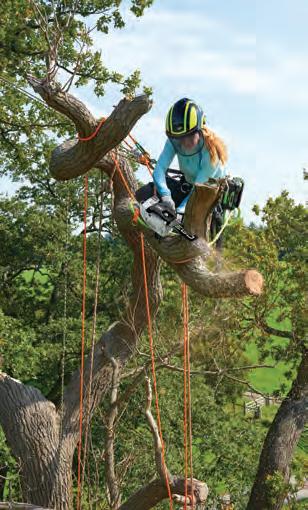
What was once a niche alternative is now a serious contender; battery powered industrial machinery is progressively challenging the long-held dominance of petrol-powered tools. At the forefront of the technological development is the manufacturer EGO Power+. In an interview with Pro Arb, Joerg Bauerle, product manager at EGO, outlines the company’s horizons as we go into the new year, revealing a focused effort to conquer the final frontiers of power, weight and intelligent design in the chainsaw market.
The Twin Pillars: Power parity and user-centric design
When asked about the primary focus of Research and Development for EGO’s chainsaw range, Bauerle’s response is
Designed for professional arborists, this 30cm top-handle chainsaw is built for all-day use. A key safety feature is its dual-action chain brake, which incorporates both a mechanical and an electronic system to help mitigate the risk of injury. The supplied kit includes a 4.0Ah battery, providing a runtime of up to 186 cuts per charge. A rapid charger is also included, capable of recharging the battery in approximately 30 minutes. Technical specifications include a chain speed of 20 metres per second, a 6-tooth sprocket, 45 drive links and an automatic oiling system. It retails at £599 on the EGO Power+ website.
clear. “The number one focus is to achieve performance parity with petrol models in all categories,” he states. He acknowledges that while battery saws can already outperform their petrol counterparts in raw power, a key challenge remains. “There is still some development needed to match the power to weight ratio of high-end forestry saws.”
This pursuit of a better power-to-weight ratio is intrinsically linked to the second core focus: user safety and ergonomics. Bauerle highlights the inherent advantages of battery technology, noting that they “already reduced or eliminated risks such as vibration, noise and toxic fumes compared to petrolpowered tools.” However, he sees this not as an end point, but a foundation. “There is still potential to make them even safer and more ergonomic.”

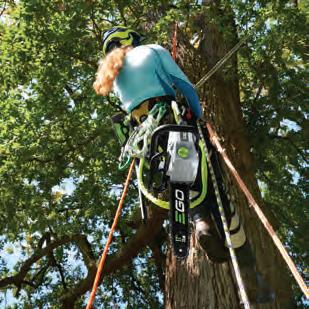
Underpinning both of these goals is the rapid evolution of battery technology. Bauerle points to crossindustry innovation as a key enabler. “A key enabler for both power and ergonomics will be the significant advancement in battery technology driven by the automotive industry,” he expounds. “We are already benefitting from the next stage in battery technology here with the introduction of the ‘tabless cells’, which are coming soon to market.” This trickle-down effect from the automotive sector promises lighter, more powerful and more efficient energy sources for professional-grade tools.
A “customer first” philosophy
These technical ambitions are guided by a singular business ethos. “The core philosophy across the whole EGO business is: ‘Customer First’,” Bauerle emphasises. This principle translates into a granular approach to product development. The team examines specific user segments, from arborists to forestry workers, and drills down into their precise applications, from light pruning to clearing. “Based on this research we will then decide what our focus should be,” he says. “Just looking at chainsaws it would almost certainly be power to weight ratio and ergonomics that will be a guiding principle for the coming years.”
Looking five years down the line, Bauerle identifies the ‘holy grail’ his team is actively chasing. “The biggest challenge currently is certainly the power to weight ratio of larger ground saws,” he
confirms. He elaborates on the historical trade-off, where high power required heavy batteries, but expresses confidence that this barrier is crumbling. “This has already significantly improved with our tabless cell technology and will almost certainly see major advancements.”
Intelligent tools and a sustainable legacy The shift to battery power inherently unlocks a new dimension of functionality: smart features. Unlike their petrol forebears, battery tools are, by design, data-rich. “They naturally have a larger data flow and require processors, which makes them predestined to be smart and become even smarter going forward,” Bauerle notes. EGO is already leveraging this with its EGO Connect system, which offers smart features and fleet management for professional users. On the horizon, Bauerle sees “predictive maintenance” as a key development to improve cost of ownership and enhance sustainability.
A focus on sustainability extends to the product’s entire lifecycle, consequently EGO is consciously designing its products for a circular economy. The cornerstone of this strategy is a unique sales and service model. “We are very proud to be the only reputable chainsaw manufacturer that is exclusively available through servicing dealers,” Bauerle maintains. This choice directly influences design. “All our chainsaws are developed with design
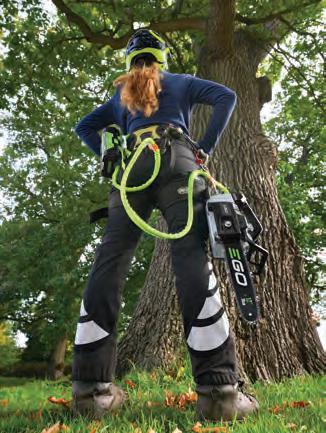
This holster is designed to securely integrate with a professional arborist’s safety belt and harness. It features a dedicated safety strap that wraps around the user’s belt for added security. The system is engineered to hold a 4.0Ah battery, noted for its optimal power-toweight ratio for demanding use. The holster offers a quick plug-in connection for EGO Power+ PRO X tools and is compatible with any EGO ARC Lithium™ battery; an ADB1000 adapter is required for other EGO tools. The unit, with a fixed carrying handle, weighs 1.1kg without a battery. It retails at £84.99 on the EGO Power+ website.

for service in mind and we have a full offering of spare parts that is guaranteed for at least 10 years after the model has last been marketed.” This approach aims to maximise the tool’s life, minimise the cost of ownership for the customer and significantly reduce waste.
For Bauerle and EGO, the trajectory is evident. “Chainsaws are the next frontier for battery technology,” he asserts, drawing a parallel to other garden tools where battery power has already become dominant. With a strategy built on closing the performance gap, enhancing user safety through innovation and embedding a commitment to longevity, EGO Power+ is actively shaping the future of the chainsaw itself.
For more information, visit: egopowerplus.co.uk
A battery-operated toy blower is designed to allow children to mimic yard work. The toy features a blower tube with three length adjustments and the option to remove it completely. Its controls, including a start/ stop switch, a safety switch, and a bar, are modelled on the operation of professional-grade power tools. The unit measures 61.5 x 16 x 10 cm and includes a battery and charging cable.


CEuk AXE MUG (600ML)
Price: £47.39
GINGKO LEAF TWO-TONE SILVER EARRINGS
From the Mexican Collection, this pair of statement earrings contrasts 925 silver with gold-coloured bronze. The design aims to reflect the leaf’s association with resilience and endurance.
Price: £24.99
The CEuk Axe Mug is a 600ml enamel mug designed for outdoor use. It is rugged and lightweight, with a capacity suited to holding hot beverages. The product is marketed toward camping and adventure activities. Price: £19.99
Price: £59.99 at Outdoor Professional Products STIHL TOY LEAF BLOWER
WHETHER YOU’RE SHOPPING FOR A FESTIVE SURPRISE OR A CAREER-UPGRADING ESSENTIAL, OUR CURATED LIST CAN HELP YOU FIND THE PERFECT PRESENT FOR ANY TREE PROFESSIONAL

HUSQVARNA THROWLINE CUBE
A 40x40 cm throwline organiser, which folds to a 20x40 cm triangle for transport. The cube design aims to prevent line entanglement and contamination, incorporating interior weight pockets, a hook-and-loop retrieval strap and a four-way stretch base to reduce seam stress.
Price: £64.99
CEuk WATERPROOF GEAR BAG (90L)
The CEuk Waterproof Gear Bag is a 90-litre hybrid duffel-rucksack that incorporates padded straps, grab handles, a large main compartment, and an internal mesh pocket.


Designed for professional use, the STEIN DEFENDER MAX
Chainsaw Boot meets Class 2 (24 m/s) chainsaw protection and the EN ISO 20345:2012 S3 safety standard. The design integrates protective features with an emphasis on durability for demanding conditions such as arboriculture, forestry and other outdoor trades. Price: £310.80 at Fletcher Stewart

CEuk 10-IN-1 FOR HIM MULTI-TOOL – WOOD
CEuk’s ‘10-in-1 For Him Multi-Tool – Wood’ is a compact accessory that incorporates ten functions into a single unit. Its design is intended for a range of applications, from general everyday tasks to outdoor use, and is sized for portability.
Price: £13.00
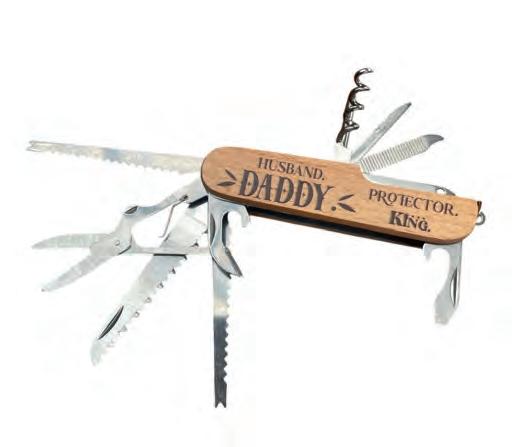
This battery-operated toy chainsaw produces sound and has a rotating chain mechanism, along with a plastic helmet and a pair of gloves. The necessary batteries for the toy are included. Price: £31.99
Capture the essence of a powerful Stihl chainsaw in a miniaturised, keyring format. Pressing a button will emit a realistic chainsaw sound. At 10 cm long and complete with batteries, it’s the perfect ready-to-give novelty gift.
Price: £5.29
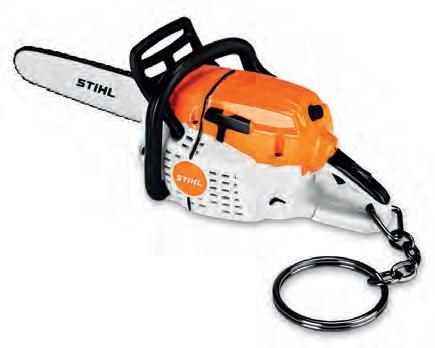
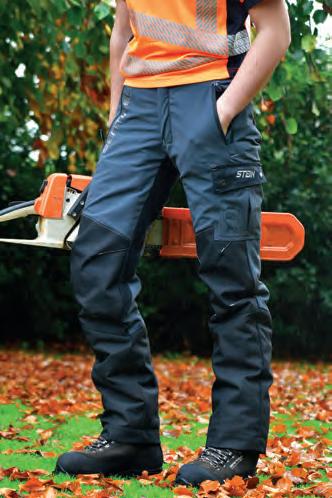
The SENTINEL trousers are certified to EN ISO 11393-2:2019 (Class A, 20 m/s) and incorporate a multidirectional stretch fabric for mobility.
Key areas, such as the pre-formed knees and greave, are reinforced with ArmortexKFM, a heavy-duty, waterproof material.
Design features include a roomy leg for air circulation, an elasticated inner-hem lace hook, and reinforced stitching for durability in professional environments.
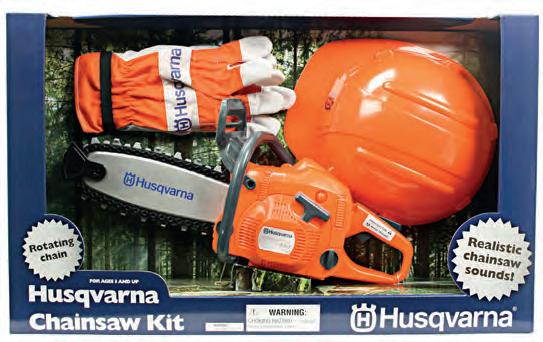

ANDREW HUNTER
Outwear, the exclusive distributer for Protos, Pfanner, Crispi and Woolpower in the UK and Ireland, details how a full kit from the brands it represents can provide complete safety for the coming year.
Andrew Hunter, managing director of Outwear, says: “We created Outwear with the aim of equipping the professional outdoor worker and outdoor enthusiast with premium quality personal protective equipment (PPE) and clothing. We work with exclusive brands who don’t sacrifice on quality, comfort and safety. Outwear is the Home of Elite Brands and you can trust us to source the very best products for your challenging requirements.”
The Protos Integral Arborist helmet is engineered for the demanding safety requirements of arboriculture and chainsaw work at height. Certified to EN12492, the helmet integrates a Maclip chin strap and a Koroyd crash absorber for superior impact protection.
A key feature is the patented neck cradle, which secures the helmet and helps protect against skull base fractures. With 20 adjustment points, it offers a custom, one-time fit for head sizes from 54cm to 62cm (52cm – 64cm with additional fit accessories). Worker comfort is addressed through KlimaAir absorption pads that wick away perspiration and an adjustable crown ventilation slider for climate control.
The design provides an unobstructed visor view and all-round protection from impacts. It also includes integrated hearing protection rated at SNR 26dB. For further customisation, a unique modular system allows the addition of safety glasses and other accessories, tailoring the equipment to specific job-site needs.
WOOLPOWER CREWNECK LITE: UPPER BODY PROTECTION FROM COLD WEATHER
The Crewneck LITE is designed for comfort during active use. Its lengthwise seams are set further back, and it utilises raglan sleeves to minimise friction from backpack straps. A longer back hem helps prevent coverage gaps.
Constructed from Woolpower LITE, this is the brand’s thinnest 1.1-rib knit. Despite a higher wool content, the tighter weave creates a cooler fabric ideal for use as a base layer for those who are working. The 80% Merino wool and 20% Polyamide blend help regulate body temperature and is designed to be worn directly against the skin.

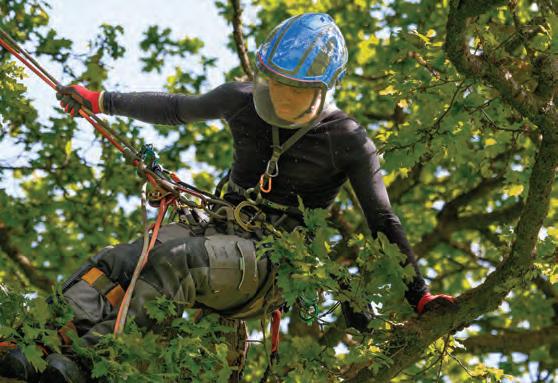
Advanced Bluetooth technology in the Protos BT-COM system enables uninterrupted intercom communication among up to four operators simultaneously. This wireless capsule integrates directly into the existing ear defender bracket on a Protos helmet, requiring no wiring, drilling, or clamps for a clean, secure installation.
The unit features a single multifunction button and two volume controls, enabling easy one-finger operation. Its cablefree design minimises the risk of snagging, enhancing both comfort and safety for the user. Each unit offers a substantial operating range of up to 300m in clear conditions and provides up to 12 hours of battery life. Recharging is handled via a USB charging bracket, achieving a full charge in approximately 1.5 hours. Additionally, the system supports dual connectivity, allowing each user to maintain a Bluetooth connection to a mobile phone alongside the intercom. This allows for handsfree phone calls and conference calling, facilitated by an electret microphone that filters out background noise by up to 20 dB for clear voice transmission while still allowing ambient sounds for situational awareness.
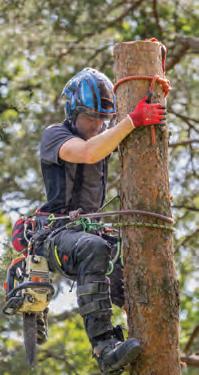
The Pfanner Ventilation Type-C Chainsaw Trousers, known for their durability in demanding environments, combine lightweight construction with strategically placed KlimaAIR mesh ventilation for enhanced airflow. The design utilises a robust, tear-resistant Gladiator fabric on the front panels, while the back incorporates StretchAIR material for superior flexibility and breathability. Pre-shaped knee reinforcements provide targeted protection where it is most needed. These trousers feature Dyneema for chainsaw protection (Class 1, 20 m/s) and high-grade Avertic Pro cut-protection fibre, meeting EN 381-5 standards. Reflective Paspol stripes increase visibility, making them suited for forestry and arboricultural work.
PROTOS SB 1–4 SAFETY GLASSES

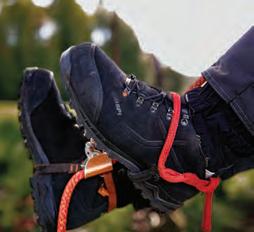
In 2020, Crispi launched its first dedicated chainsaw protection boot, developed for the forestry and arboriculture sectors. Weighing approximately 930 grams, the Class 2-certified boot prioritises lightweight design without compromising safety or support. The boot incorporates premium materials, including water-repellent leather, a Gore-Tex lining for waterproofing, and Vibram Megagrip soles for traction. A key feature is Crispi’s proprietary Thermo Wire Technology, a structural system integrated into the upper that provides ankle support, stability, and protection while contributing to the low overall weight. Additional safety elements include a protective aluminium toecap.

Designed for professionals requiring high dexterity and safety, the Pfanner StretchFlex Fine Grip gloves feature a snug, ergonomic fit. This StretchFlex technology allows the gloves to move naturally with the hand, providing precise control for delicate tasks and secure handling of tools or small components. Featuring a nitrile foam grip and reinforced areas for durability, the gloves also offer Contact Heat Protection rated for 100°C for 15 seconds. The breathable, flexible nylon construction is built for all-day comfort, helping to reduce hand fatigue during prolonged use. Available in a comprehensive size range from XXS to XXL, the gloves are suitable for a wide range of hand sizes.
Launched in 2025, the Protos Safety Glasses SB 1–4 is designed for professionals in construction, arboriculture, and forestry. The glasses are engineered to meet the new EN ISO 16321 safety standard, which mandates enhanced protection for head form fit and impact resistance. Principle characteristics include an expanded protection area, an ergonomic nose bridge and multiple lens tint options. The glasses attach directly to a helmet headband and retract when not in use.
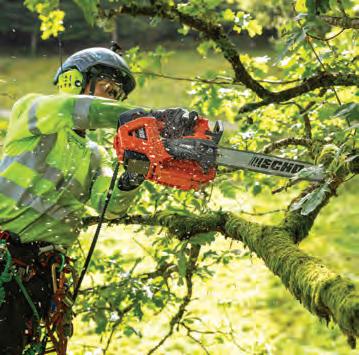
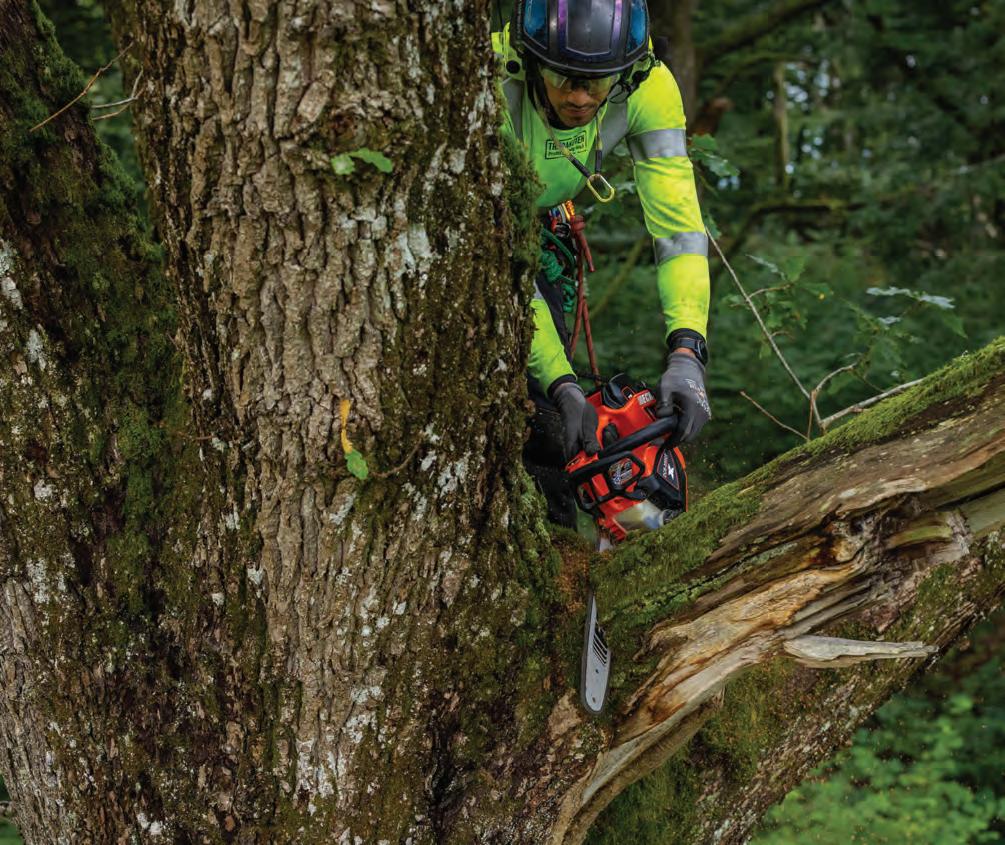
WITH A 50-MINUTE RUNTIME, ECHO’S NEW DCS-3500T BATTERY CHAINSAW OFFERS ENHANCED SAFETY FEATURES AND A FOCUS ON BALANCE, MEETING PROFESSIONAL DEMANDS
The tool operates on a 56V max system. Its rated power output is 0.98 kW with the LBP-56V125 battery and 1.81 kW with the LBP-56V250 battery. The dry weight is 2.2kg, and the chain oil tank has a capacity of 240 mL. It is configured for a .325-inch pitch saw chain and a 0.043-inch gauge guide bar, with an applicable bar length of 35cm (14 inches). The estimated runtime is 25 minutes with the LBP-56V125 battery and 51 minutes with the LBP-56V250 battery.
ECHO’s latest battery-powered chainsaw entry is the DCS-3500T, a 56V top-handle designed not just to compete with, but to outperform its petrol counterparts in specific aerial applications.
According to Neil Turner, sales director for UK and Ireland importer of ECHO, FGM Claymore, the European market is still firmly set on a mix of petrol and battery-powered equipment.
“As a company, we are still investing in petrol and two-stroke, and we are still growing within those markets. The erosion of petrol by battery is actually a lot slower than we probably predicted five years ago or even three years ago.” This dual-track investment strategy
has positioned ECHO to capitalise on industry shifts. While bolstering its professional petrol range up to its largest 73cc model, the manufacturer is also significantly expanding its 56V professional battery line. “In the last six months, the range has increased

A saw designed for the canopy
He continues to comment that the DCS-3500T is aimed at the professional climber. It sits above the lighter DCS2500T in the range, a model renowned for lighter pruning work. Turner describes the drive for this new model as coming directly from the industry. “A lot of professionals who are stronger and able to hold a bigger saw were asking
for a more powerful, longer-running saw,” he says. The DCS-3500T answers this with a 35cm (14”) bar and the ability to use a larger 252Wh (5.0Ah) battery, which substantially extends runtime – a convenient factor when working at height.
“The runtime on it has really made a difference,” Turner states. “Our other top handle, you can only put the twoand-a-half-amp-hour battery on it. This one, you can run the five amp, so they get double the runtime. That’s enabling them to have about 50 minutes of cutting, which is a huge amount of time.”
For a climber, safety and one-handed operability are paramount.
your other hand to engage the carabiner to take the saw out, with this saw all you need to do is a one-handed, quick twist and it comes straight out.”
Another key safety innovation is the two-step, single-finger throttle lockout. Turner stresses why this is crucial for a battery saw: “The problem with a lot of these electric saws is there’s an ‘on’ button on top. So, if you catch that trigger, that’s going to spin.” The new system requires the user to depress a palm switch on top and then flick a forward switch with the index finger before the trigger can be engaged. “As a result, it means you can’t just simply knock the button and cause the user real harm,” he adds.
ECHO claims its X-Series battery products are engineered to match their petrol equivalents. “They won’t release an X-class 56-volt battery product unless it’s in line with the petrol equipment,” Turner affirms. “Consequently, what you’re getting is as good as a comparable petrol equivalent from the ECHO range – it is remarkably punchy this saw.”
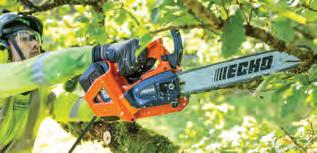
A focus on ergonomics and durability matches this performance. When asked what distinguishes the DCS-3500T, Turner immediately points to “balance.” “Balance is key. With ECHO, they really do make sure that using their machines is as pleasurable as possible. The weight of the DCS-3500T is very light for the power output.”
Key user-focused features include a two-step throttle lockout safety system and a patented QuickDraw hook for one-handed operation. The design incorporates a diagonal handle with a lanyard hook, a dropprevention nut and a side-access chain tensioner. A translucent oil tank with a flip-lever cap allows for easy fluid level checks. From a technical perspective, the saw includes a torque control system intended to reduce stalling, a top-access adjustable oil pump and a sprocket guard designed to minimise chip clogging. An air inlet filter is fitted to prevent debris from entering the motor and electronics.
the climber, with “less exhaust fumes, and they’re not at risk of burning their legs.” This focus on practical usability extends to the company’s approach to its battery platform, ensuring new batteries remain compatible with older tools to reduce waste and protect customer investment.
The Final Pitch: Reliability and relationship For Turner, the main selling points of the DCS-3500T are clear: “Output, ease of use, balance, comfort, warranty and competitiveness, pricewise.” ECHO offers a two-year professional warranty and a fiveyear domestic warranty, backing a product he touts as renowned for its reliability.
The DCS-3500T incorporates several features addressing this. Turner highlights a “QuickDraw” hook, which he elaborates on: “Whereas before with a lot of saws, you have to use
and practical drivers
In terms of the battery potential in this model, Turner underscores several key advantages. “It means they can work on jobs earlier in the day without upsetting local communities through noise,” he remarks, noting the significant benefit of quieter operation. He also pointed to the improved working environment for
For ECHO and its UK importer, the strategy is not about forcing a rapid transition from petrol to battery, but about providing professionals with purpose-built, reliable tools for the task at hand. The DCS-3500T represents this philosophy perfectly, a battery saw designed not just to exist in a professional toolkit, but to become the go-to tool for the most demanding aerial work.












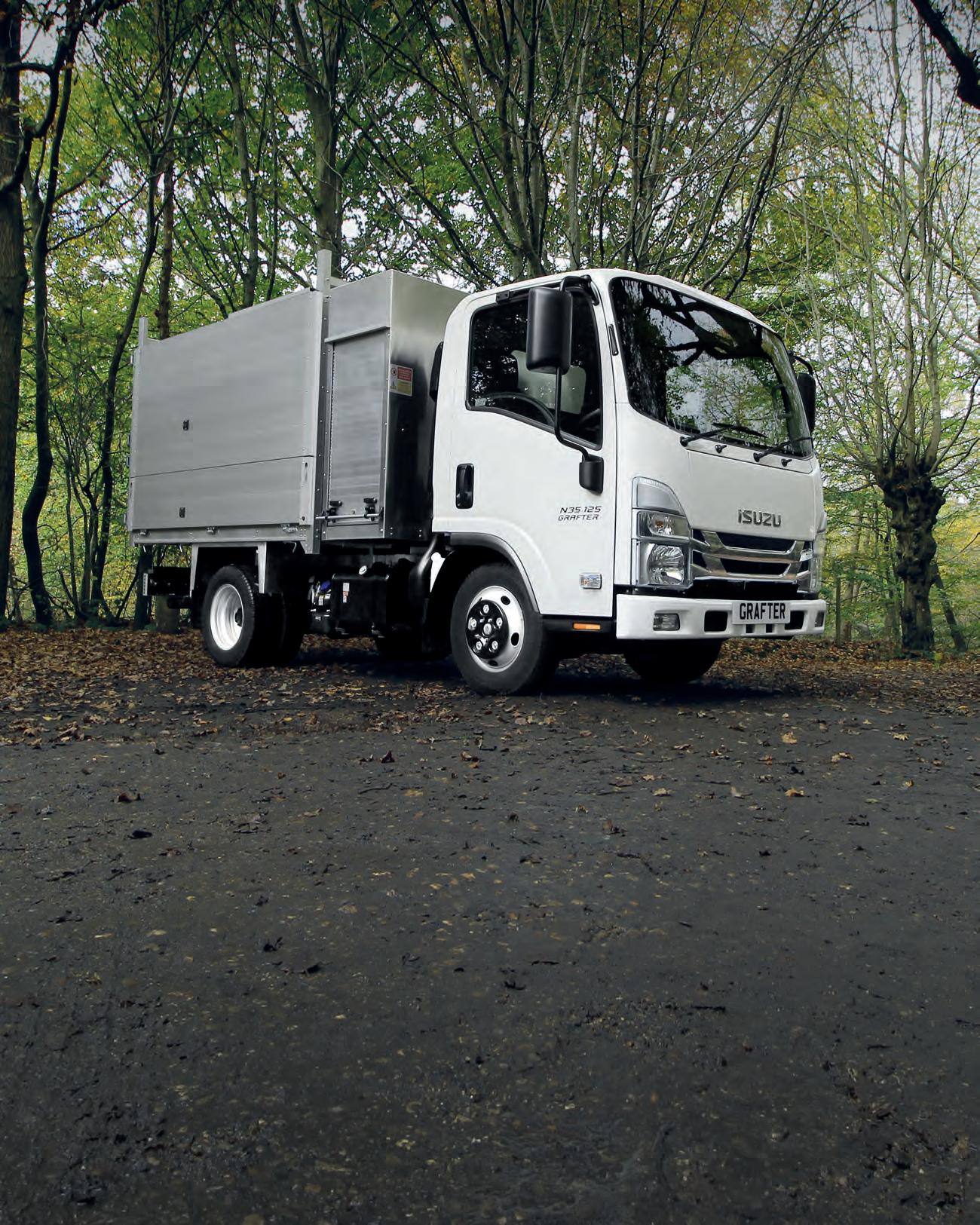


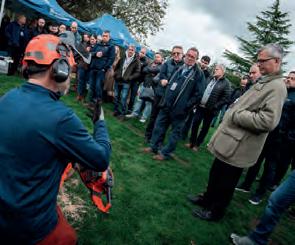
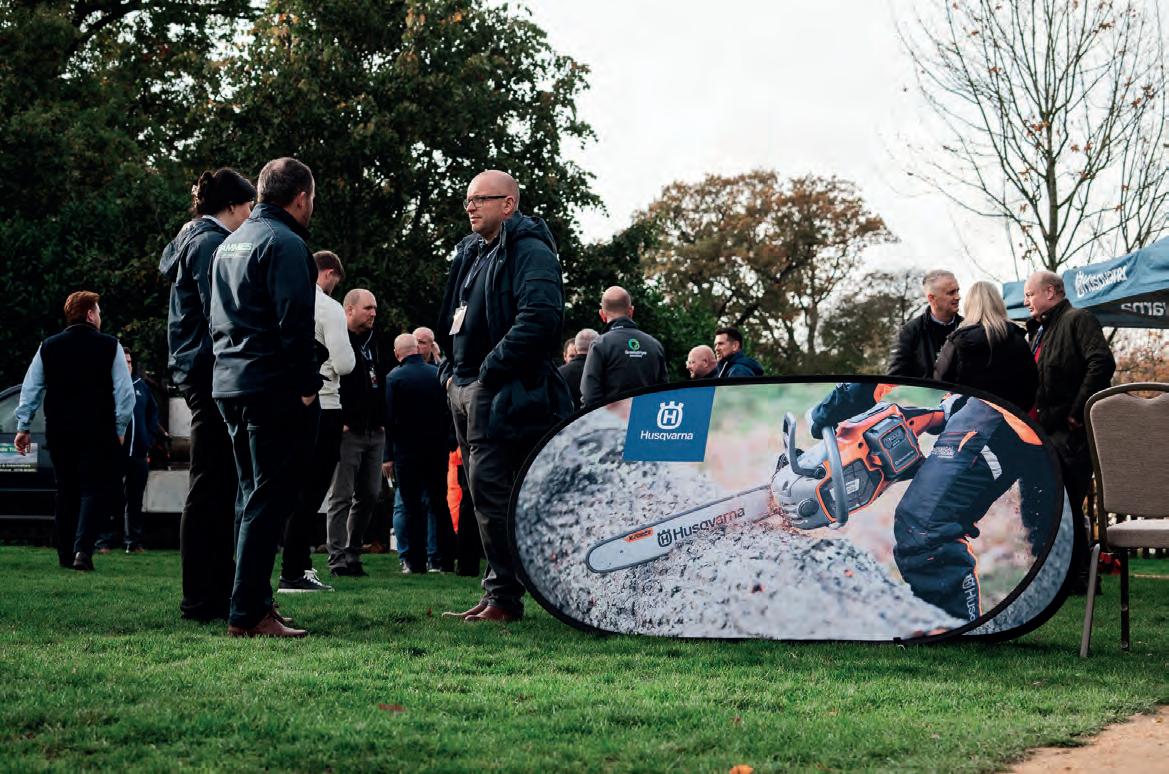
In an era of technological transformation, a critical question defines product development: petrol or battery power? For Husqvarna, the answer is both. Jonathan Snowball, head of business unit professional UK, states the company’s strategic direction is a commitment to a dual-path future, where each power source is optimised for its unique role in the professional landscape.
“At Husqvarna, we are focused on developing excellent battery solutions,
Addressing the projected market share between the two technologies by 2030, Snowball offered a pragmatic outlook, suggesting that petrol will likely AT HUSQVARNA’S 2025 DEALERS CONFERENCE , AN EXECUTIVE REVEALED THE COMPANY’S DUAL-TRACK STRATEGY, WHILE PRODUCT SPECIALISTS ALSO SHOWCASED THE MANUFACTURER’S RANGE OF PROFESSIONAL CHAINSAWS
trying to change what’s out there in the field and the perception of the capabilities of the technology,” he outlines. Nevertheless, he was quick to underscore that this does not come at the expense of the continued development of petrol machinery. “We continue to develop petrol machinery. Regarding the researching and development of new two stroke petrol technology, it’s all about trying to make it more efficient on fuel, lower emissions and reduction in
vibration levels.” Snowball pointing to the recent launch of the 564 XP fuel injection chainsaw as a prime example of this ongoing development, calling it “that next step in petrol performance, where we’re now looking at how we really get the most out of that traditional two stroke machinery.”

remain dominant in the most demanding professional sectors. He explains that the operational realities for users like forest loggers, who work far from power sources and are limited by what they can carry, make battery runtime a tough nut to crack.
“Although the performance might become comparable between petrol and battery,
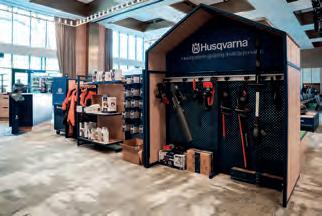
the run time is still at a clear disparity, and professionals cannot usually take multiple batteries to a job,” he notes.
In contrast, Snowball identified other sectors, such as estate management or municipal work, where operators remain closer to their vehicles or sources of power, as ideal environments for battery technology to thrive. This segmentation is further influenced by regional differences.
“It’s much more advanced in Europe with battery technology,” Snowball observes, highlighting the Netherlands as an early adopter, particularly in municipal applications. He linked this acceleration to political and regulatory pressures on local authorities to reduce CO2 emissions.
Snowball’s conversation with Pro Arb also turned to the competitive landscape, with him acknowledging the increasing presence of Chinese manufacturers in the European market. While they compete on catalogue specifications and price, he believes Husqvarna’s advantage lies in its deep understanding of professional use.
“The catalogue figures might say, it’s got this power, and it weighs this much. But how does that feel in an operator’s hands that’s using it all day, every day, in demanding conditions? That’s where we feel we’ve got a real advantage.”
Ultimately, Husqvarna’s strategy is not about choosing one technology over the other, but about advancing both in parallel, guided by user-centric design and the distinct demands of professional applications across different regions and sectors.
The Quiet Revolution: Husqvarna on the evolving world of chainsaws
The chainsaw, a staple of both forestry and tree surgery for over a century, is in the midst of a significant transformation. The familiar roar of the two-stroke petrol engine is increasingly being joined by the near-silent hum of battery-powered motors. For industry professionals and home users alike, the choice of power source is no longer a simple one.
Robert Trott, a tree professional specialist at Husqvarna, provides a unique vantage point on this shift. “The past two years we’ve brought out a new generation of saws,” Trott remarks,
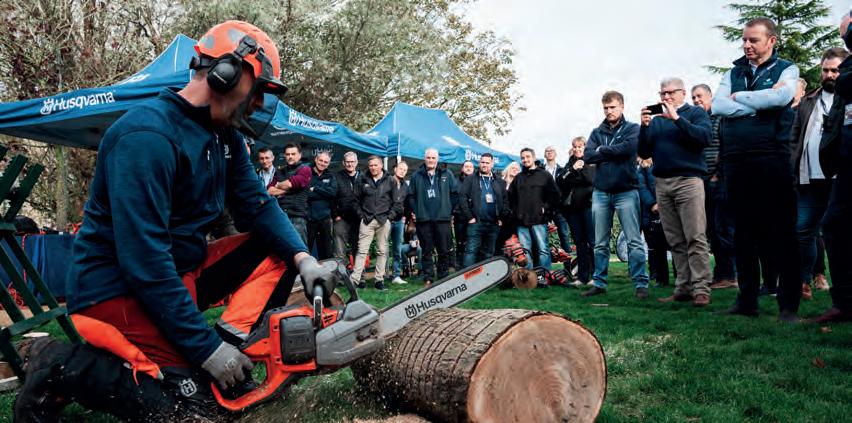
For product end-of-life, Snowball comments that Husqvarna has established a battery recycling scheme. “Husqvarna is partnered with the European Recycling Platform; this is handled through our Husqvarna-approved dealer network. Essentially, take your old batteries to your local Husqvarna dealer, and we will pick them up from there.”
On sustainable manufacturing, the company’s ‘Sustainovate’ programme
Snowball describes as “our drive and commitment to drive transformation in the industry.”
The initiative has yielded sizable results: “In 2024, Husqvarna Group cut absolute CO2 emissions by over 50% from 2015 levels, while sales rose by 34% percent, demonstrating sustainable growth.”
Looking toward the end of the decade, the strategy is twofold. For product development, he mentions that: “Husqvarna is committed to advancing decarbonisation by offering appropriate tools and solutions tailored to industry needs. The development of our battery-powered machinery portfolio remains ongoing, with the objective of achieving performance parity with petrolpowered equipment across all power categories.”
This is complemented by digital innovation: “It’s not solely about machinery; Husqvarna Fleet Services offers a comprehensive digital platform for managing your fleet of equipment. This solution provides valuable data insights into how machinery is utilised, enabling customers to make informed decisions regarding operational efficiency based on real-time analytics.”
highlighting the rapid innovation in the sector. He points to a specific model as a game-changer: the battery-powered top-handle saw, a tool designed for arborists working aloft in trees.
“The 542i has been a massive, popular machine. It’s the first battery machine with a clutch,” he explains. For the uninitiated, this is a critical development. “Beforehand, machines used to have a spur-sprocket, so it used to rattle. They didn’t quite have that boggingdown capacity a petrol one had.
Bogging down just meant that as soon as it got to its limitation, petrol could still give a little bit of extra power on the clutch. So now we’ve got a battery machine which does exactly that.”
This technological leap has led Trott to a personal conclusion for his specialised work. “From Husqvarna’s position, they will be creating a petrol version of its chainsaws into the future. But when it comes to top handle and anything in the tree, battery is my go-to. Because I say it’s got all the perks and benefits of petrol, but none of the negatives.”
However, he is quick to temper any suggestion that this signals the end of petrol power. “It’s very irresponsible as a manufacturer, as an operator, to turn around and say we can completely eradicate two-stroke from our fleet. It’s still got a massive place within the industry.” He insists the best practice approach is symbiotic, not replacement.
Following this, Trott goes on to talk about one of Husqvarna’s most
significant recent releases: a new series of professional-grade saws that he says exemplifies the company’s dual-track approach. One is a high-capacity battery model, the other a petrol saw featuring innovative fuel injection.
“It’s one of the biggest,” Trott says, gesturing to the 564 XP fuel-injected model. He describes it as a collaborative
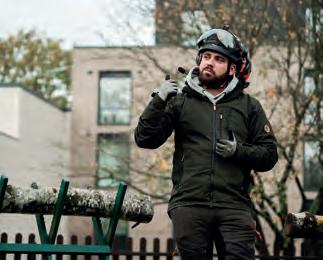
machine that combines the best attributes of several categories. “This feels like you’re holding a 50cc machine – it’s got the weight of a 60cc machine and the output of a 70.” Adding that for professionals who need three different saws for a single job the 564 XP is able to get the job done.
His colleague, Tim Bendle, a forestry specialist and Husqvarna ambassador, chimes in on the broader benefits of battery technology. For the user, “it’s the simplicity, there is less maintenance.”
He highlights the ergonomic advantage: “Very often, how well a chainsaw is rated is how the thing is to start or not start.”
A battery saw eliminates that struggle
A professional battery chainsaw offering the response of a petrol saw. Its key advantage is the ability to instantly restart mid-cut, giving you full control and uninterrupted momentum for demanding, precise tasks. Optimised for robust performance, it uses the X-CUT SP33G chain for fast, efficient cutting. This unique instant restart and cutting control is enabled by a clutch, delivering petrol-saw performance with all the benefits of a battery.

with a simple push of a button. Noise reduction is another major factor, a benefit for both professionals working in residential areas and homeowners. “I’m sure you all know how irritating it is on a weekend when you’ve got a next-door strimmer who won’t shut up all weekend with their petrol machine,” Bendle notes, “whereas with a battery machine it’s obviously not quite as bad.”
The team also addresses a widespread belief in the arb industry: that the instant torque of battery chainsaws makes them more dangerous. Trott is dismissive of the claim. “It is an urban myth,” he says, explaining that technical specifications can be misinterpreted. “It’s the output of initial speed at 110%. But as a cutting speed, exactly the same.” He firmly believes safety lies in practice, not just protective gear. “If you do hit yourself, you’ve made the mistake long before the accident. PPE is the last resort.”
As the industry navigates this period of intense change, the message from Husqvarna is one of pragmatic evolution. The future is not a wholesale switch, but a landscape where petrol and battery machines will continue to work side-by-side, each chosen for the specific demands of the job, the user and the environment. The roar may be softening, but the cut is more powerful and precise than ever.
For more information, visit: husqvarna.com/uk
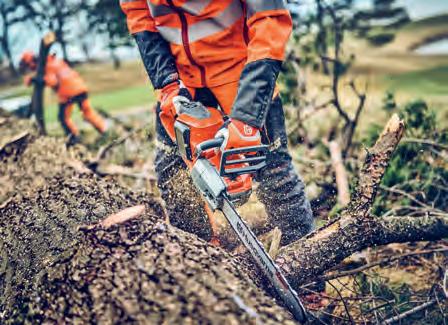

AS BATTERY POWER DOMINATES HEADLINES, ASPEN FUEL MAKES THE CASE FOR A CLEANER PETROL ALTERNATIVE, PUTTING OPERATOR HEALTH AND MACHINE RELIABILITY AT THE FOREFRONT OF THE SAFETY CONVERSATION
In the rapidly evolving landscape of arb machinery, the conversation is often dominated by the ever-more practical and effective batterypowered equipment. But as the industry moves through this transition, a persistent voice argues for a more immediate, often overlooked solution for the machines that still rely on combustion: cleaner burning alkylate fuel.

Axel Hildebrand, business development manager at the Anglo-American Oil Company – the UK distributor for Aspen Fuel – believes that in the industry’s rush towards new technology, it often overlooks a key solution: optimising the fuels that power a significant portion of their fleets. For Hildebrand, that solution is Aspen Fuel, an alkylate petrol for small engines that is significantly cleaner, ethanol-free and longer-lasting than regular pump fuel and is available in two variations: Aspen 2 for two-stroke engines and Aspen 4 for four-stroke engines.
Aspen is an alkylate fuel, a synthetically refined petrol designed for significantly lower emissions. Unlike standard petrol, which contains hundreds of components, including harmful substances such as benzene (a carcinogen), aromatics and olefins, alkylate fuels are composed of a much simpler, cleaner formulation. Consequently, the primary benefit for operators is a drastic reduction in exposure to toxic fumes. Short-term, this minimises irritation to the eyes, lungs and nervous system, reducing headaches and dizziness. Long-term, it substantially lowers the risk of chronic respiratory conditions, nerve damage and cancers associated with the hazardous hydrocarbons present in conventional petrol.
The Core Mission: Operator health first The primary case for Aspen, according to Hildebrand, is not environmental, but one of health. “The product’s origins lie in 1980s Sweden, where forestry
professionals were identified to be suffering from high rates of cancer,” he explains. “The work was intense, the machinery less sophisticated and the fuel was far more toxic. There was a growing realisation that worker health was being severely compromised. The founder of Aspen looked at this and thought, ‘What if we change the fuel?’ When they did, the improvement was so immediate. It became an obvious necessity.”
This decisive moment, however, never was replicated in the UK. Hildebrand notes that while legislation like the EU rules on carcinogenic substances (adopted by the Health and Safety Executive) exists, it hasn’t been explicitly enforced for the green sector. “In the UK, we’ve not had a similar moment to Sweden, it’s all been very much up to individual users to take the evidence and risks on board and make that decision for themselves.”
Education and perception
Without a regulatory push or highprofile legal cases, Aspen’s strategy relies heavily on education and
awareness of individual professionals and businesses. As a result, Hildebrand and his team have been working with training providers to embed brand knowledge at a formative level. The ultimate goal of this educational outreach, he says, is to create a groundswell of demand from operators themselves. “We’ve been working with organisations like Lantra to ensure that operators are trained on the benefits of alkylate from the start of their career. Then, when those workers get a job at a firm that isn’t using Aspen, they ask, ‘Why aren’t we using this?’” he explains. “That internal pressure is crucial. When no employee is asking for it, a manager has no incentive to seek out alternative ways of doing things.”
The price perception vs the total cost Hildebrand identifies one barrier above all others in take up of the product: a clash between long-term welfare and short-term cost. “The health benefits of alkylate fuels are preventative, while the financial cost is immediate,” he says. “Because the harm – like a chronic cough or long-term illness – manifests years later, it’s almost never linked back to the specific employer or their choice of fuel,” he adds. “Usually, a major concern is the fear of a higher price tag.”
THE FINANCIAL COST IS IMMEDIATE
Nevertheless, he argues that businesses frequently miscalculate both the price of Aspen and their actual fuel consumption for handheld equipment, falling prey to a cognitive bias. “You always remember the weeks you filled a lot of jerrycans, but you forget the weeks you didn’t,” he remarks. Although, when factoring in bulk discounts, he contends the real-world
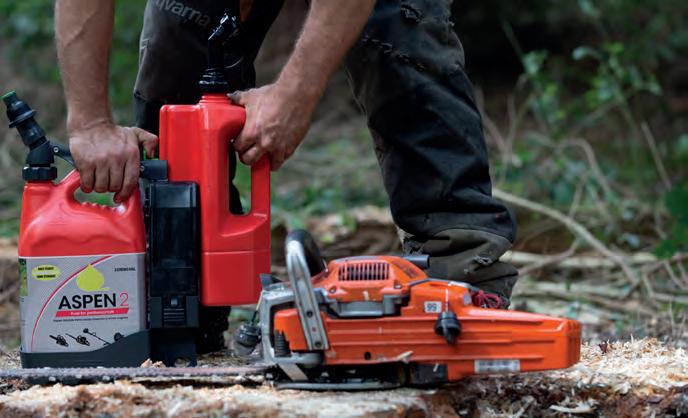
cost is negligible. “Overall, it breaks down to less than a pound a day per operator to protect both your staff and your machinery, it becomes a no-brainer.”
Additionally, he also points to hidden costs in their current fuel habits, such as the time wasted driving to and from petrol stations. “That’s 10 minutes with three people. That’s half an hour. The cost of wasted time is way more than the cost of fuel for the day.”
“Machinery reliability is also greatly increased and the problems associated with forgetting to add 2-stroke oil completely goes away. This benefit alone is often enough for Aspen to work out economically a better choice, especially when the cost of replacing a pot and piston can be upwards of £400 for many machines”
The Battery-Powered Transition: A complementary force?
Hildebrand frames Aspen’s role not as a competitor to electrification, but as its essential complement. He believes petrol will dominate high-power applications for the foreseeable future, and the rise of battery power may even benefit Aspen. As operators become accustomed to the clean operation of electric tools, the fumes and irritants from traditional petrol equipment become less acceptable, creating a new demand for cleaner combustion fuels.
On the other hand, he also cautions against an uncritical embrace of electric power, pointing to its total cost of ownership and unresolved sustainability issues. “The industry is led by manufacturers over-promising,” he says, highlighting the “wild-west” of battery recycling, fire risks and the financial burden of large upfront investments in charging systems that depreciate regardless of workflow.
Betting on a mixed energy use future Looking ahead, Hildebrand predicts steady, organic growth, following a pattern established in Europe where awareness leads to adoption and, ultimately, regulation. He sees a long runway: “Uptake will only grow until the day petrol machinery disappears, and that’s not happening while petrol stations still exist.” Ultimately, he believes the product is its own best advocate. “Once people try it, they rarely go back,” he says, pointing to consistent growth. For the team at Aspen Fuel, the drive behind the product is to place the undeniable benefits of operator health and equipment care at the centre of conversations on the future of industrial machinery.
For more information, visit: aspenfuel.co.uk
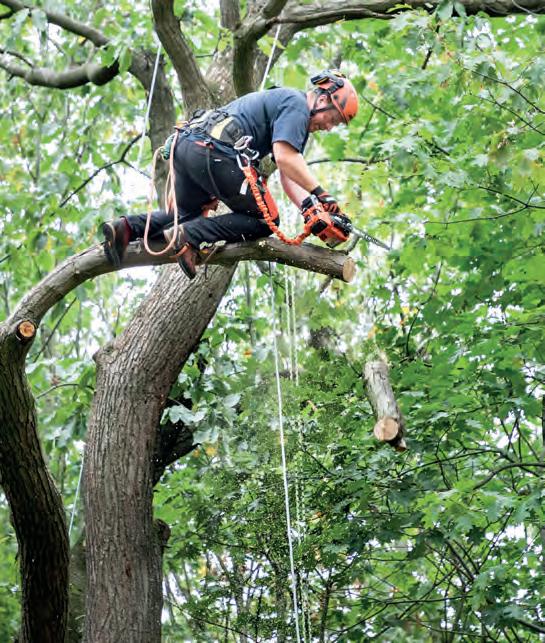


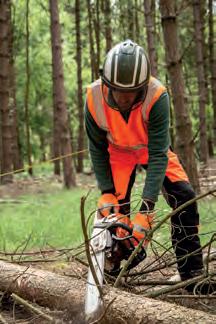
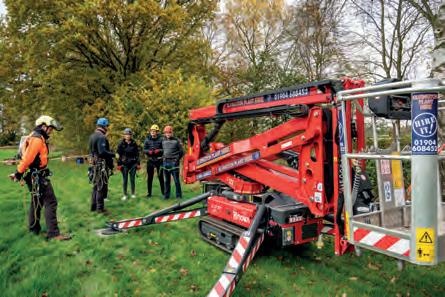



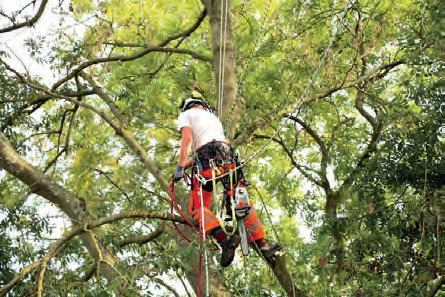




GRAEME DOW
ISECURITY EXPERT GRAEME DOW REVEALS THAT THE GREATEST THREAT TO BUSINESSES OFTEN COMES FROM WITHIN; DEMANDING AN APPROACH THAT BALANCES TRUST WITH COVERT DETECTION
n the world of commercial security, the experts indicate that the greatest threats are most likely not unknown shadowy figures scaling fences under cover of darkness but can sometimes be the trusted employees who already have access to the keys. According to Graeme Dow, director at SafeGuard Security Consultants and an experienced forensic security expert, businesses commonly make critical mistakes in their security protocols, leaving them vulnerable to sophisticated and internally facilitated crime.
Dow’s work provides a unique perspective on the security landscape.
“My work primarily has covered burglary, fire and some armed robbery,” he states.
“At SafeGuard we have also worked for Trading Standards to root out rogue alarm companies, and I also work for BBC Watchdog on the same topic.” In 2015, he also assisted the Metropolitan Police as an expert in the Hatton Garden Safe
Deposit burglary, in addition to working as an expert witness in 2012 for Weston-Super-Mare Pier in their £32m successful case against a UK alarm company.
Solving security blank spots
When it comes to the most common security oversights by businesses, Dow identifies two primary areas. “One of them is in housekeeping. The keys are simply made easily available,” he explains, citing warehousing as a significant example.
A LOT OF INTRUSIONS INDICATE THAT THE PERPETRATORS KNOW WHERE THE FIELDS OF DETECTION ARE
“I’ve got a number of cases at the moment where intruders break in and the keys for the vehicles are accessible in an insecure location, so the intruders can make use of the forklift trucks to move stuff out. Additionally, they are also often able to steal the trucks that are waiting there to be loaded as well.”
An ally to this, he notes, is unsecured gatehouses containing the keys and fobs for electric gates.
“The other area that I think is so important,” Dow continues, “is always an assumption that you’ve got sufficient security to deter, when the most probable reality is the intruders will have some level of inside knowledge.” He references his work on the infamous Hatton Garden heist as a rare exception to the rule, where police believed the gang operated without external intelligence. “But having said that,” he adds, “there appears to have been sufficient knowledge in that case to knock out a telephone line which facilitated the successful robbery.”
Establishing whether there has been inside knowledge of a robbery is a recurring theme in Dow’s casework. When asked about the profile of those committing theft in commercial properties, he is unequivocal. He points to investigations where intruders went
straight to specific goods. “They would only know that if somebody working inside the building, most likely inside the warehouse, told them exactly where it’s been stacked the day before.”
BUSINESSES REALLY NEED SOMEONE WHO IS A DEDICATED SECURITY MANAGER WHO DEVOLVES VERY LITTLE INFORMATION ON THE SYSTEMS IN PLACE
This presents a difficult dilemma for business owners: how to mitigate the risk without fostering a culture of paranoia. Dow offers a clear solution: covert security. “As a business owner you need covert detection, which is going to pick them up even when the robbers think they’ve got the big picture of the site’s security,” he advises. “A lot of intrusions indicate that the perpetrators know where the fields of detection are, as a result they break in where the fields of detection are limited.” For a commercial property, a robust system would begin with CCTV linked to a remote monitoring centre, ensuring a live operator can verify any activity. “As a fundamental there has to be remote signalling,” Dow stresses. From there, businesses need camouflaged detection. “For example,
with the BBC when they’re filming for Watchdog, they could have radio cameras that look like a bunny rabbit,” he says, illustrating that covert devices in a commercial property can be as simple as a detector hidden within a seemingly innocuous cardboard box on a shelf. Perhaps the most challenging revelation, Dow calls attention to, is that serious, systematic crime often originates from the top. “For serious crime, a lot of the time it comes from the senior management,” he reveals. Dow recounts an incident at a chocolate manufacturer where a manager discovered a senior colleague was secretly shipping out entire pallets of chocolate. “Businesses really need someone who is a dedicated security manager who discloses very little information on the systems in place,” he recommends, highlighting the need for a separate, confidential line of reporting. Nonetheless, Dow emphasises that aside from intricate covert security, the first principles of nuts-and-bolts physical security remain an under-appreciated backstop. “Never forget about physical security, for instance, a decent padlock. If you have to pay £50 for one instead of £20, then it will be so much more difficult to defeat.”
The ultimate measure of any security system, however, is the response it triggers. Dow is adamant that “a security system is only as good as the response that it generates.” He refers again to the Hatton Garden heist as a catastrophic failure in this area, where a keyholder’s delayed
and inadequate response allowed the burglars to operate for days. “In that case, the quality of the response, or lack of it, enabled them to have four days inside the vault.” This principle extends beyond merely theft of property but to insurance, where a keyholder’s negligence can jeopardise a claim. Dow cites a case where a keyholder failed to attend a fire alarm for an hour, resulting in half a million pounds in damage. “If the keyholder doesn’t attend, then what’s the point of having any sort of alarm system? ”
A SECURITY SYSTEM IS ONLY AS GOOD AS THE RESPONSE THAT IT GENERATES
For business leaders, Dow’s advice is a sobering call to reassess their security from the inside out. His final thought offers a simple but powerful indicator of potential risk: “If you want to know who your most likely insider is, look to see who is more often the last out at night or the first in.” In the relentless battle to protect commercial assets, the message is clear: trust, while essential, must be balanced with rigorous, intelligent and often covert, security measures. The most significant vulnerability may already be inside the building.

n the years since the General Data Protection Regulation (GDPR) came into force, many small and mediumsized businesses have been left navigating a landscape of compliance that often feels disconnected from their day-to-day operations. The initial fear of massive fines has, for some, given way to a more dangerous sense of complacency.
Katie Shanahan, founder of consultancy ‘Your Cyber Coach’, has spent the last eight years specialising in data protection and cyber security. She observed this shift in outlook first-hand having first engaged with GDPR when it came into law.

“I started with data protection as an addition to my day job – one more hat to wear,” Shanahan recalls. “The initial approach was simply to roll out training and create a privacy notice, with the underlying hope that ‘that should be fine, right?’ The prevailing message was fear-based: ‘you’ll face massive fines if you don’t comply.’ But since those large-scale fines haven’t materialised for most, many businesses are now questioning whether they need to bother with data protection at all.”
It is this gap between fear and practical understanding that Shanahan, drawing on her background in small businesses and startups, aims to bridge. “I wanted to speak to those people who haven’t been given support,” she explains. “Organisations see this as completely separate from their daily work. My role is to show them how data protection fits into their operations and give them practical, pragmatic steps to manage it.”
The common misconceptions
According to Shanahan, a primary misunderstanding that prevents proactive data protection is treating a privacy notice as a silver bullet.
“There’s a widespread myth that having a privacy notice means you’re done,” she says. “The issue is these are often borrowed templates that don’t reflect the organisation’s actual practices. When something goes wrong, they have no systems in place to back up what the notice claims.”
Another frequent refrain is, “We’re only small, so do we even need to be thinking about this?”. Shanahan argues that this mindset overlooks the operational benefits of good data hygiene, framing it as more than just a compliance exercise. “A lot of this is about effective business operations,” she states. “If a business doesn’t understand the data that it has, what it’s keeping, the data that it’s processing, the organisation is probably not going to use it very effectively or keep it safe”.
The third confusion lies in the very definition of personal data. Many business owners believe they do not handle it, but Shanahan clarifies that it encompasses any information that can identify an individual, directly or indirectly. This includes work email addresses, customer contact details, supplier information and employee records.
The real-world risks: More than just fines While the spectre of regulatory action remains, Shanahan outlines a broader spectrum of risks that can have a more immediate impact on a business. “One of the things from an operational side is unnecessary costs,” she comments. “If you’re keeping data for the sake of just keeping data, you’re paying too much
for actually holding on to all of that stuff yourself.” The more data you hold, the more is at risk of being breached either accidentally or by criminals.
Customer dissatisfaction is another significant risk. “If customers feel like there are issues around who has the access to the data about them there can be real frustrations.” Furthermore, a lack of robust data protection practices can be a barrier to growth, as larger corporate or public sector clients increasingly require proof that their partners can protect data securely.
THE MORE DATA YOU HOLD, THE MORE IS AT RISK OF BEING BREACHED EITHER ACCIDENTALLY OR BY CRIMINALS
A practical framework for protection For businesses unsure where to begin, Shanahan recommends a structured approach. “Start by ‘protecting what matters’ – understanding your business operations: what you do, who you engage with, and what you process,” she describes. This first step involves creating a “Record of Processing Activities” – a mandatory document that logs what data is collected, why, how long it’s kept, and its
protection measures. This record enables the next stage: “setting expectations” with stakeholders like employees and subcontractors through contracts and training. “A privacy notice should only be created once you have the foundations in place – it’s simply articulating your practices externally,” Shanahan advises. The final step is embedding the practices, so data protection moves from a oneoff exercise into the daily operations of the organisation. From managing client communication to occupational health data of employees, this becomes a standard practice.
Altogether, this pragmatic process will transform data protection from a legal abstraction into a logical business operation.
The competitive advantage of caring Ultimately, Shanahan positions solid data protection not as a burdensome obligation, but as a potential business enabler. “It can also help from
In the UK, all organisations that process personal data are in scope for the UK GDPR and the Data Protection Act 2018. These laws require anyone processing personal data to adhere to ‘data protection principles’. In brief, information must be processed fairly, lawfully and transparently for specified purposes. It should be limited to what is necessary, kept accurate and up-to-date and retained for no longer than needed. It must be handled securely to protect against unauthorised access, loss or damage and organisations must be able to demonstrate regulatory compliance.
a competitive advantage perspective, if you can demonstrate to people that you actually fully protect customer data,” she notes. “Particularly if organisations want to win a bigger corporate or public sector contracts. Those new prospective sign-ups will ask, ‘Show me that you’ve got proper procedures in place.’”
In an era of frequent cyber-attacks and data breaches, proving you are a trustworthy custodian of information is becoming a key differentiator. By building from the ground up, businesses can not only ensure compliance but also gain peace of mind, operational efficiency and a tangible edge in the marketplace.
“It can give you peace of mind as a business owner,” Shanahan concludes, “knowing that you’ve done what is necessary to protect yourself and your customers correctly.”

STRUGGLING
hen an employee confides in their manager that they are struggling with substance misuse, the initial response is vital. John Palmer, an advisor at Acas, an organisation which provides free and impartial workplace advice, details that the manager’s immediate priority should be to “listen without judgment and thank the employee for their trust.”
JOHN PALMER
“They should arrange a private follow-up meeting as soon as possible and signpost to appropriate support services immediately,” Palmer recommends. This initial step allows the manager time to consult company policies and seek expert advice. In this sensitive first conversation, Palmer warns against several common pitfalls. Managers must avoid “reacting with surprise or judgment,” “making promises about outcomes they can’t guarantee,” “failing to maintain confidentiality” or “trying to diagnose the problem themselves rather than facilitating access to professional support.”
Fostering a culture of safety and discretion
Creating an environment where employees feel safe to come forward requires deliberate effort from leadership. Palmer suggests that communication should “normalise seeking help whilst respecting privacy.”
This involves regularly promoting available support services and training managers in supportive conversations.
“Effective approaches include leaders sharing their own commitment to wellbeing without requiring personal disclosure,” he says, emphasising that the goal is to help employees without pressuring them to share
private details. “Creating psychological safety through effective systems and workplace culture is key here. No employee should feel pressured to share their personal stories.”
To build this safety, Palmer recommends concrete steps: “implementing confidential self-referral routes to support services that bypass line management,” comprehensive manager training and ensuring disciplinary procedures “clearly distinguish between seeking help, which is supported, and conduct issues, which are addressed separately.”
Structuring a successful return to work
When an employee is ready to return to work after treatment,
a comprehensive plan is vital. Palmer outlines that a return-to-work agreement should include a phased return schedule if needed, temporary adjustments, clear arrangements for ongoing treatment and a named support contact. It should also establish “agreement on confidentiality and who in the organisation needs to know what,” alongside regular wellbeing check-ins.
“Crucially, the agreement should focus on support and successful return,” he remarks, noting that employers should “listen to what the employee and any medical advice tells them they need”.
Navigating relapse and maintaining balance Should a relapse occur, Palmer notes it is “a recognised part of recovery for many people.” The response must balance support with responsibility. “The employee shouldn’t be disciplined for the relapse itself. However, if there are conduct or performance issues that affect others, those need addressing through normal procedures.” He stresses that employers must “be clear about boundaries when conduct affects safety or others’ wellbeing and address those issues fairly and consistently.” Palmer concluded that managers themselves also need support in navigating these challenging situations.
For more information: acas.org.uk







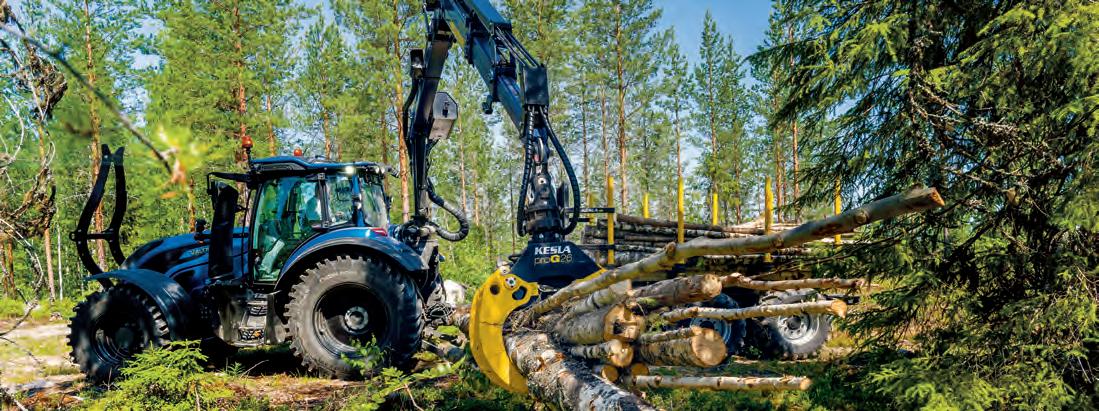

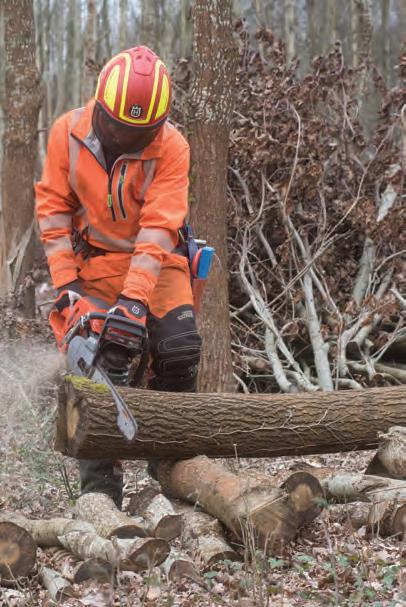
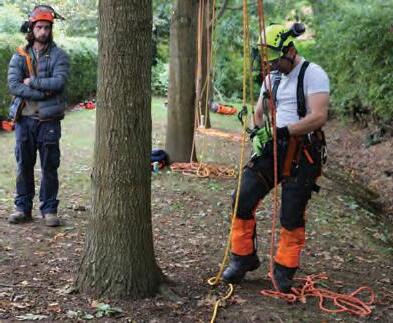
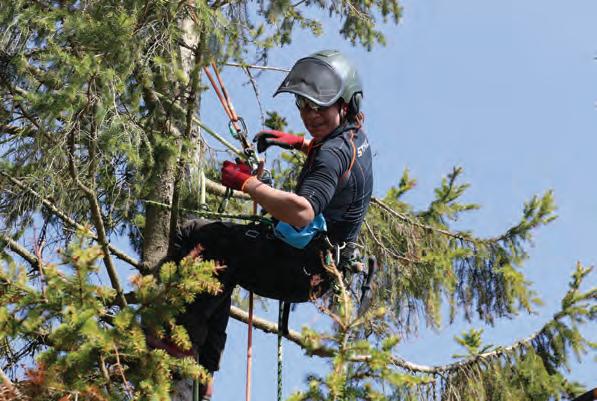

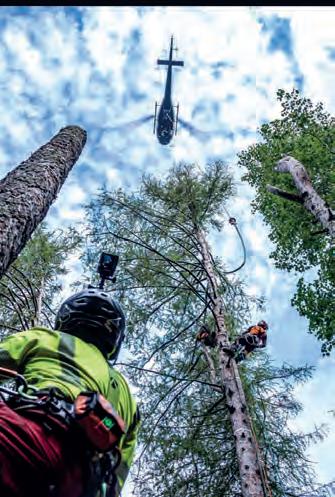
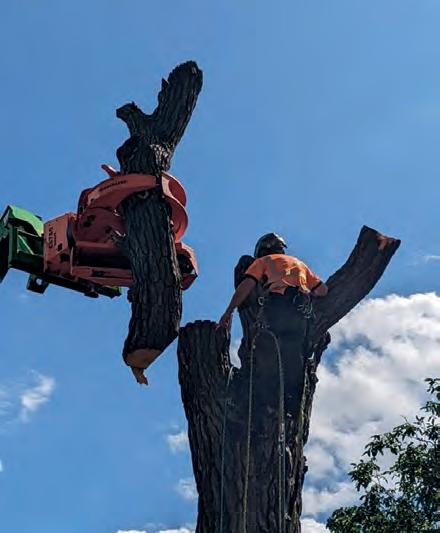
Outwear, the exclusive distributor of Woolpower, Protos, Crispi and Pfanner, has selected a winner for this issue’s Arb in Action photo contest. The competition, which ran for two months, invited tree surgeons nationwide to submit photos of themselves and their teams at work. Every magazine issue, the winning entry will receive an exclusive prize package from Outwear and all participants will have their photos published across Pro Arb’s social media.
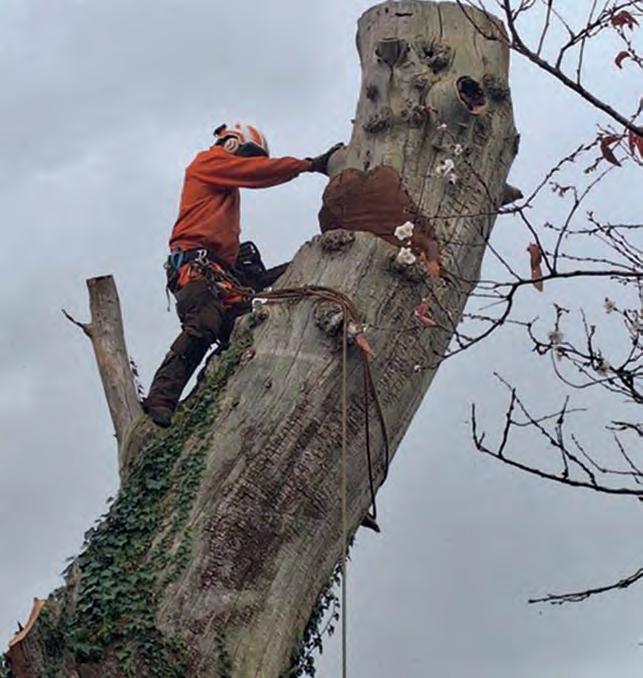
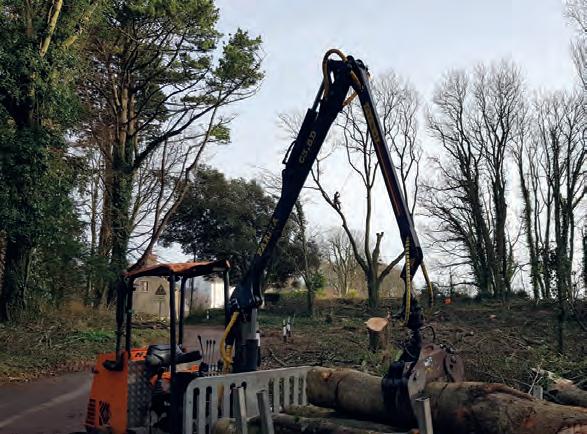
• HOW TO TAKE PART IN THE FEBRUARY/MARCH COMPETITION You can email a single image or a number of images (high-resolution) to: proarbeditor@eljays44.com
• TELL US WHO YOU ARE
Please supply your name and that of your business – if you are a subcontractor, tell us who you are working for.
• TELL US WHAT YOU WERE DOING Provide us with a few details of the job and the kit used.


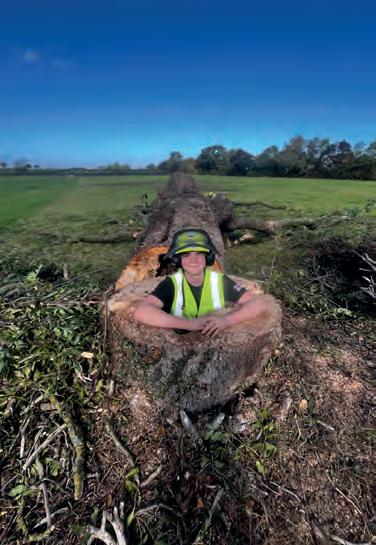

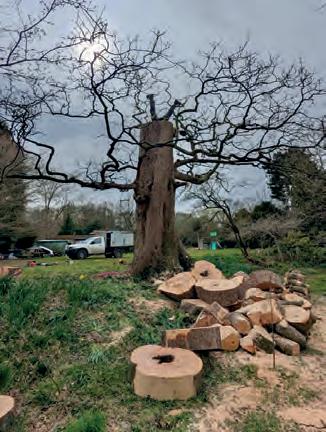
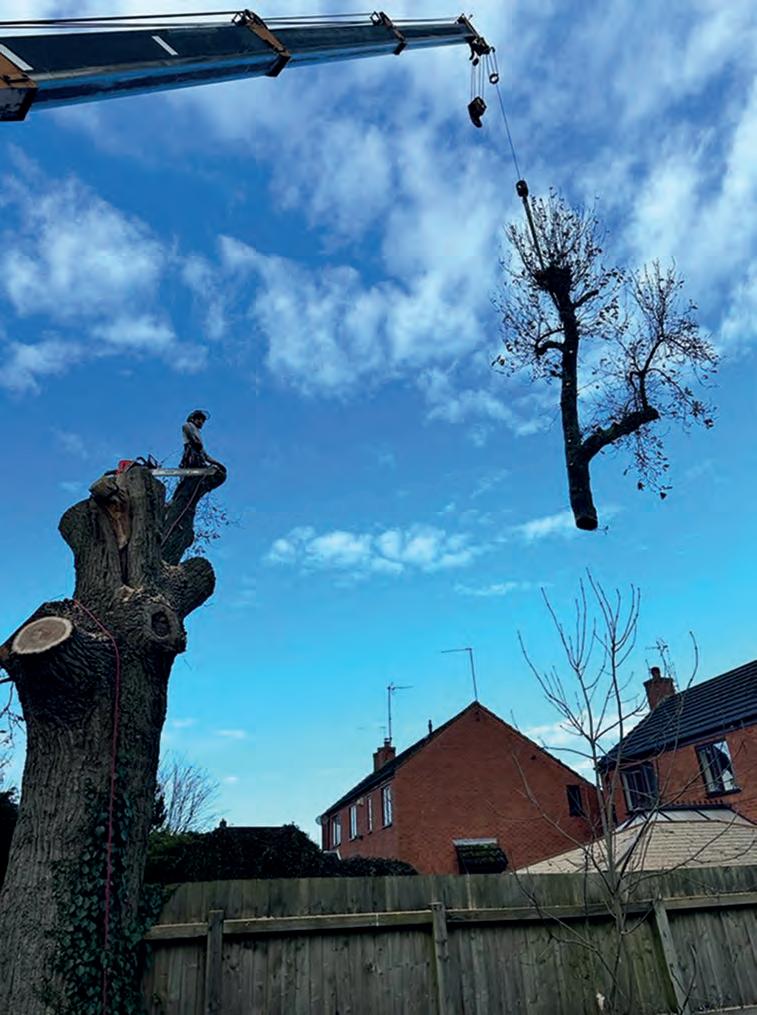
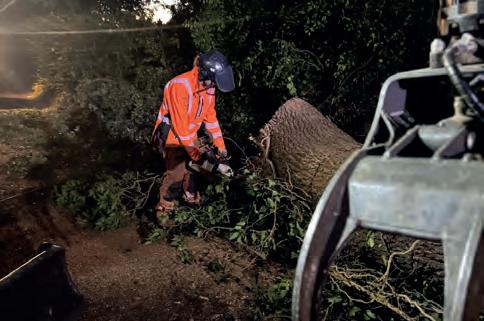
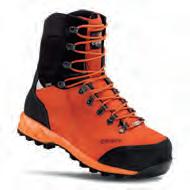




The world’s first Husqvarna chainsaw with fuel injection

It’s an immediate feeling. The power and acceleration. The speed. Husqvarna 564 XP® is your shortcut to the pure joy of cutting. Innovation at its very best. With Husqvarna Fuel Injection technology, you get to enjoy instant acceleration and power delivery, all wrapped up in a tight, slim package. The power of a 70cc Husqvarna saw with the size of a Husqvarna 50cc saw. A groundbreaking landmark that will make you feel unstoppable. An instant winner. Feel it, try it, run it. Go. Experience your new instant favourite at your Husqvarna dealer or read more at husqvarna.com/uk/chainsaws/564xp-fuel-inject/