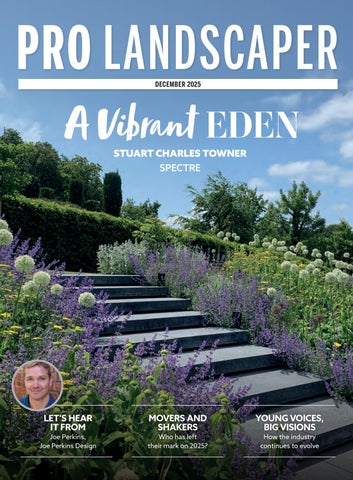
EDEN A Vibrant
STUART CHARLES TOWNER
SPECTRE
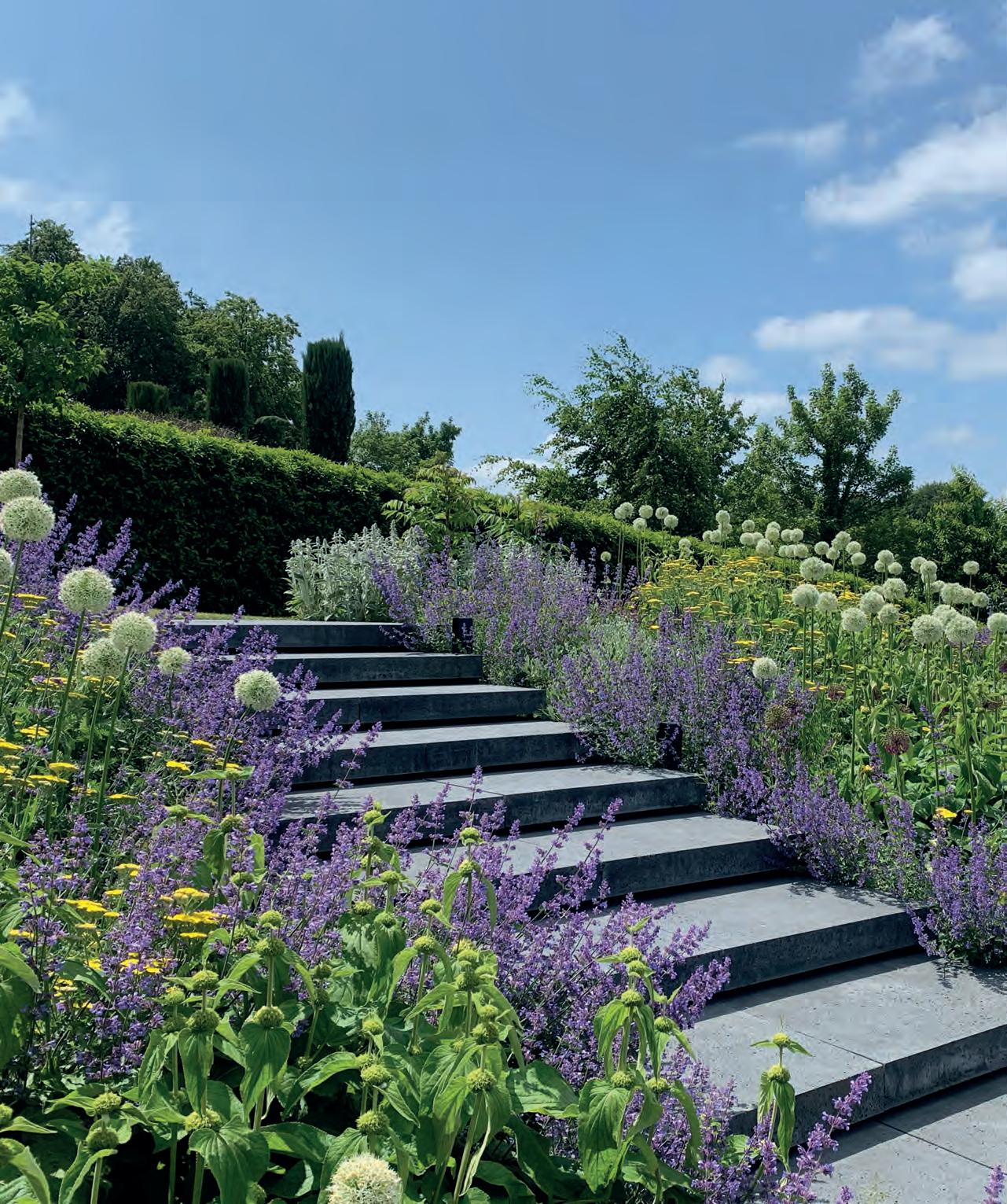

LET’S HEAR IT FROM Joe Perkins, Joe Perkins Design
MOVERS AND SHAKERS
Who has left their mark on 2025?
YOUNG VOICES, BIG VISIONS
How the industry continues to evolve


CONTACT
Eljays44 Ltd, BizSpace, Courtwick Lane, Littlehampton, West Sussex, BN17 7TL
Tel: 01903 777 570
EDITORIAL
Deputy editor – Bethany Vann bethany.vann@eljays44.com
Tel: 01903 959 394
Editorial assistant – Holly Chapman holly.chapman@eljays44.com Tel: 01903 959 407
Senior subeditor – Katrina Roy katrina.roy@eljays44.com Tel: 01903 777 570
Senior designer – Kara Thomas kara.thomas@eljays44.com
ADVERTISING
Sales executive – Ollie Finch ollie.finch@eljays44.com Tel: 01903 777 579
MANAGEMENT
Managing director – Jamie Wilkinson jamie.wilkinson@eljays44.com Tel: 01903 777 589
Divisional director – David Griffiths david.griffiths@eljays44.com Tel: 01903 777 570
Content director – Nina Mason nina.mason@eljays44.com Tel: 01903 959 393
Commercial director – Luke Chaplin luke.chaplin@eljays44.com Tel: 01903 777 582
MARKETING & CIRCULATION
Marketing executive – Kiri Shaw kiri.shaw@eljays44.com Tel: 01903 959 408
Subscription enquiries – Ollie Finch ollie.finch@eljays44.com Tel: 01903 777 579
Printed by Stephens and George Ltd
Published by ©Eljays44 Ltd – Connecting Horticulture. Pro Landscaper’s content is available for licensing overseas. Contact jamie.wilkinson@eljays44.com
Pro Landscaper is published 12 times per year by Eljays44 Ltd. The 2026 subscription price is £128. Subscription records are maintained at Eljays44 Ltd, BizSpace, Courtwick Lane, Littlehampton, West Sussex, BN17 7TL, UK. Articles and information contained in this publication are the copyright of Eljays44 Ltd and may not be reproduced in any form without the written permission of the publishers. The publishers cannot accept responsibility for loss of, or damage to, uncommissioned photographs or manuscripts.
Whilst every effort has been made to maintain the integrity of our advertisers, we accept no responsibility for any problem, complaints, or subsequent litigation arising from readers’ responses to advertisements in the magazine. We also wish to emphasise that views expressed by editorial contributors are not necessarily those of the publishers. Reproduction of any part of this magazine is strictly forbidden.
Pro Landscaper is proud to be an Accredited Supplier member of BALI
Pro Landscaper is proud to be an associate member of the APL
Welcome

December is without a doubt my favourite month – not just because it’s my birthday month, or because it’s Christmas, though both make it a top contender. It’s the approaching turn of the year that puts December top of the list.
Whilst we can all make changes at any point in the year, there is something definite about an end-of-year refresh
– whether it’s starting a new chapter better than the last, or it’s closing the door on a challenging 12 months.
This year has been a busy one for us at Pro Landscaper, but all those efforts have been wholly worthwhile for the results (p.8).
I’m excited for what 2026 will bring us, both as a brand and as a team – we're all looking forward to the months ahead.
2026 is shaping up to be a good one – filled with change and opportunity. In the first few months alone, we’ll be holding our prestigious Pro Landscaper Business Awards in London; entries for which are now open.
Then looking ahead to FutureScape in October, we'll be heading to a new location – Farnborough International Exhibition & Conference Centre, where we’ll continue to bring you the best and latest the industry has to offer.
But as we celebrate in the successes of this year (p.16) and look ahead to the next, it’s worth remembering that the festive season can be a difficult time for many – it’s arguably more important in December to check in with loved ones, and to utilise your local support networks where you can.
From everyone here at Pro Landscaper, we wish you all the best for this festive season, and we look forward to seeing you all again in the new year!
Bethany
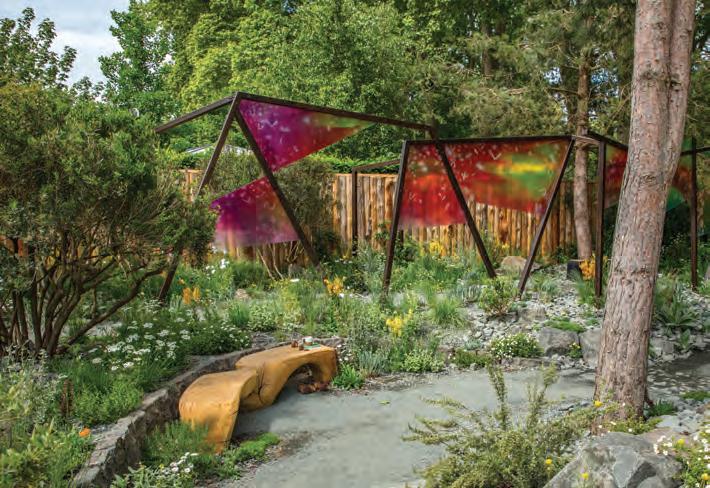
BUSINESS
16
Blooming Success
From growing their teams to winning major projects, companies across the industry reflect on their successes of year
29
Let’s Hear It From...Joe Perkins
Blending construction know-how with ecological insight – Joe Perkins shares his approach to purpose-driven landscape design
38
In Conversation with Ben Hennessy Först’s head of brand shares the vision behind the company’s move into the landscaping industry with its latest product launch
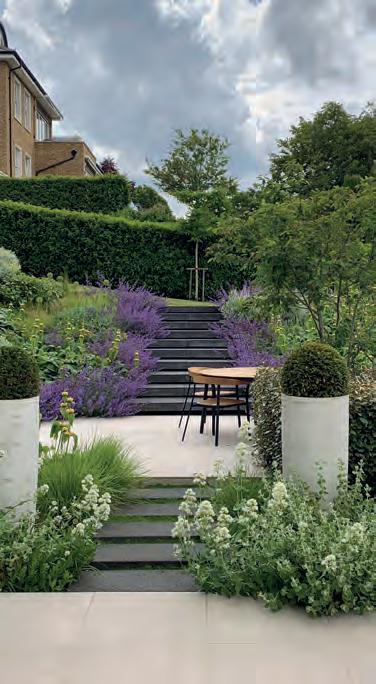
33 A Vibrant Eden
Traverse the rolling fields of Winchester in this triple APL Awardwinning garden by Stuart Charles Towner
41
Timeless Elegance
See how Chiltern Garden Design transformed this former stable block into a family space infused with timeless elegance
47 A Tea Party’s Tribute
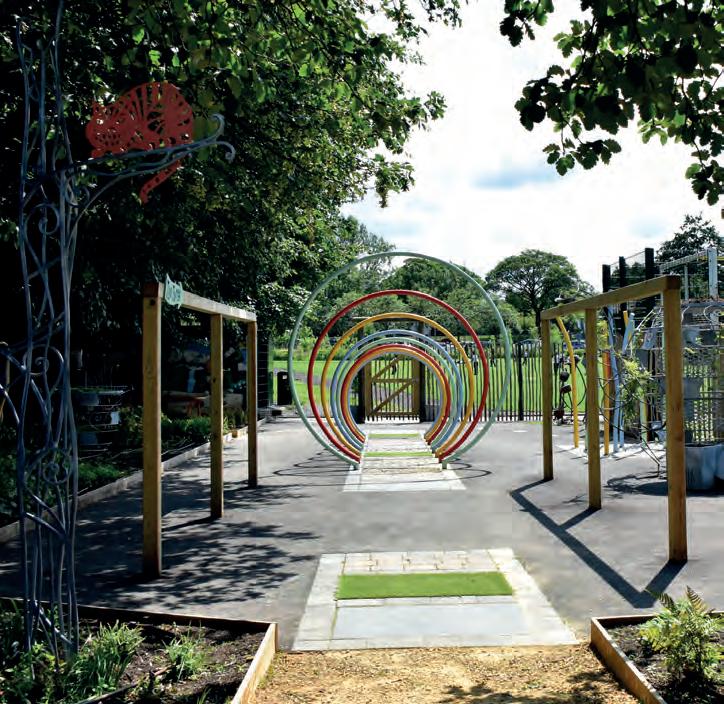
Jump down the rabbit hole and immerse yourself in Wonderland with this sensory playground by DK Garden Design
2025 News Roundup
Look back on some of the biggest news stories of the year – from anniversaries and launches to major investments
21
Looking Drought-full
As rainfall quantity drops and temperatures rise, England faces another year in fear of drought – are we prepared?
55 Keeping It Reel
In a digital world where things are constantly evolving and content is a revolving door; how do you stand out?
18
Movers and Shakers of the Year
From winning awards to climbing the career ladder – see who’s leaving their mark on 2025
62
Pursuit of Excellence
Hear from the team that brought the APL's The Pursuit of Excellence Garden to life at this year’s BBC Gardeners’ World Autumn Fair
74
Ten Minutes with Becky Pullinger
The head of land use planning at the Wildlife Trusts explores how the Planning and Infrastructure Bill can benefit both nature and developers
ALSO IN THIS ISSUE
25
Race to the Bottom Part 2
A fence around standards would stop the cowboys from roaming free across the market, says Gareth Wilson
27
Digital Drawing Board
John Wood returns this month with his advice on using Morpholio Board – the ideal moodboard and presentation creator
69
Race to Replant
As the climate continues to shift and we find new ways to tackle our evolving ecosystems, Lewis Normand considers what we should be planting in preparation

RHS CROWNS DUMFRIES HOUSE ESTATE PARTNER GARDEN OF THE YEAR 2025
ROUNDUP Industry Updates
CAMDEN CELEBRATES NEW CREATIVE
STREETSCAPE
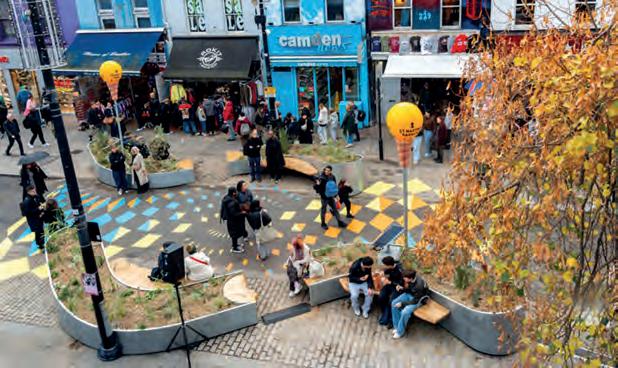
Camden High Street has opened a new civic square hosting new planting, inclusive seating, artwork and sustainable materials.
The installation of SubSTRATUM won the Square Camden High Street Design Competition, a partnership between the London Festival of Architecture (LFA) and the London Borough of Camden.
Entered as a collaboration between public realm improvers Edgy Collective
and planting design specialist LINDA, the streetscape will be open to the public until autumn 2026. Featuring biodiverse planting, illuminated buoy sculptures and recycled materials, the design will contribute to the trial pedestrianisation of the area as a temporary public realm improvement, with the potential to contribute towards a future permanent scheme. londonfestivalofarchitecture.org
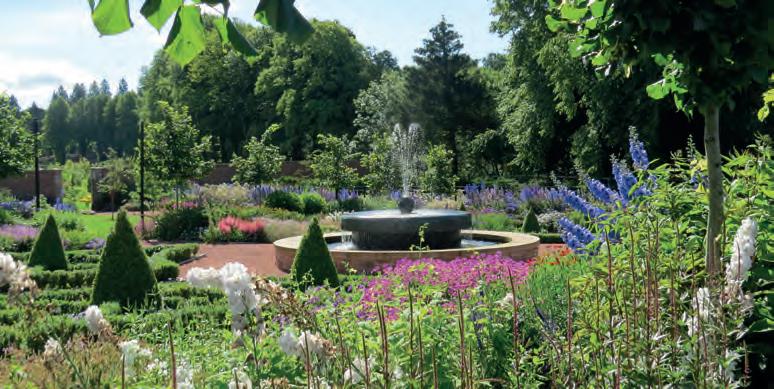
In a nationwide vote organised by the Royal Horticultural Society (RHS), Dumfries House Estate in Ayrshire, Scotland, has been crowned RHS Partner Garden of the Year 2025.
Both RHS members and the public were asked to vote for the garden that brought them the most joy during the visit within this annual competition.
Praised for its beauty, tranquillity and inclusive spirit, Dumfries House Estate also reveals that this is its first award for the garden. rhs.org.uk
FORM PLANTS TAKES OVER JACKSONS NURSERY
Surrey-based nursery Form Plants has announced it has taken over wholesale plant nursery Jacksons of Chobham.
Form Plants has retained existing Jackson staff since taking over all operations on 1 November 2025.
Jamie Butterworth, Form Plants managing director says, “we are incredibly excited to be doubling Form’s footprint, and to be able to supply our customers with homegrown perennials as part of our offering”.
With two sites now six miles apart, Form Plats’ Row Town showroom and specimen nursery will continue showcasing trees and topiary, whilst the Chobham site will specialise in perennials grown sustainability and peat-free. formplants.com

©Nathan
Piccio
NATION IN FAVOUR OF NATURE-INTEGRATED DEVELOPMENTS, FINDS REPORT

New data released this week shows that a majority of Britons support politicians who advocate for nature-integrated developments.
The All Under One Roof report carried out by More in Common for the RSPB reveals that two-thirds (67%) of
SUSTAINABILITY DEMAND WEAKENS, FINDS RICS REPORT
Anew report from the Royal Institution of Chartered Surveyors (RICS) reveals a slowdown in the global demand for sustainable buildings due to a lack of strong policy interventions and skills development. The report is based on input from more than 3,500 real estate and construction professionals across 36 countries. The RICS 2025 Sustainability Report also finds that despite the continued need for green and resilient real estate, demand growth has notably weakened, particularly across the Americas, but also across Europe and Asia-Pacific. Initial high costs and uncertainty about returns remain the biggest deterrents to investment, finds the research, even while investors continue to value green certifications and climate-resilient assets. rics.org
Keep up to date with the @ProLandscaper team over on Instagram!


British people think politicians are ‘out of touch’ with their nature values.
While 43% say they are more likely to vote for a party that prioritises nature conservation, compared to the 10% who say they’re likely to vote for one prioritising housebuilding.
Results also showed that over 70% of the public think more positively of politicians who advocate for natureintegrated developments. rspb.org.uk
SALFORD £1.3BN SUSTAINABLE DEVELOPMENT PLAN RECEIVES GREEN LIGHT

Salford City Council has approved plans for the £1.3bn Regent Park development in Salford set to deliver a new green and sustainable neighbourhood. Consisting of 10 buildings, the mixed-use masterplan by Matt Brook Architects will deliver the new urban quarter in two phases. Permission has been secured by Henley Investment Management.
The approved plans will retain retail space and transform 130,000ft2 at Regent Retail Park, into a new retail, residential and community neighbourhood. salford.gov.uk

During a trip to Barcelona, the team joined Husqvarna for its 11th Living City Event studying sustainability and biodiversity.
Online exclusives
Head to prolandscapermagazine.com
WHERE IS THE OUTDOOR LIVING MARKET HEADED?

As the world of outdoor living continues to grow, Pro Landscaper asks five market leaders where they see it going in the next five years.


RUNNING SHORT: HOW TO CLOSE THE SKILLS GAP
Brian Hawtin and Marcellus Baz discuss the importance of an inclusive and accessible industry to attract and maintain young people from all backgrounds.

Q&A WITH SAM GRAYSON AND JAKE CATLING FROM HYPHAE LEARNING

The pair behind Hyphae Learning talk about their relationship, the nuts and bolts of Hyphae and why landscapers need to be using it.

DEEP LUNCH
Perennial’s Dig Deep Fundraising Lunch will be at The Cumberland in London, celebrating those who help in horticulture by raising money for the charity.

Cardinal Place in Victoria, London.
PERENNIAL DIG
A TOUR OF CARDINAL PLACE
During BD landscape architects' autumn social, the team were taken on a tour of the firm’s recent completed public realm project;
HUSQVARNA LIVING CITY EVENT IN BARCELONA
©Henley Investment Management
COMMUNITY Highlights
FIRST ISSUE OF PRO LANDSCAPER INTERNATIONAL LAUNCHES

The debut issue of Pro Landscaper International was published in April 2025, taking the brand to a global audience. Projects from across five continents are featured throughout the publication, all of which were nominated for the FutureScape Global Awards which took place in Riyadh, Saudi Arabia from 28-29 April. Since, Pro Landscaper International has seen two more issues for autumn and winter.
2025
SWINGING VICTORY AT THE PRO LANDSCAPER AND FUTURESCAPE GOLF CHALLENGE
Pro Landscaper and FutureScape hosted its Golf Challenge 2025 at Goodwood Estate on Thursday 12 June with Wildflower Turf driving it home and picking up first place. The day was a great opportunity for industry professionals to network over a shared love for golf and a healthy dose of friendly competition.



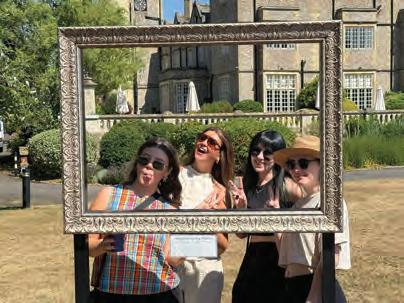

It’s been a busy year for the Pro Landscaper team, from international trips to award launches, take a look at our highlights of the year
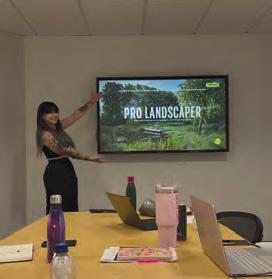
PRO LANDSCAPER HOSTS AN EDITORIAL WORKSHOPPING DAY
Full of big ideas and exciting plans, Pro Landscaper’s editorial day consisted of workshops, reflections and predictions. From the website to the magazine, the team discussed how Pro Landscaper can continue to grow in line with the industry.

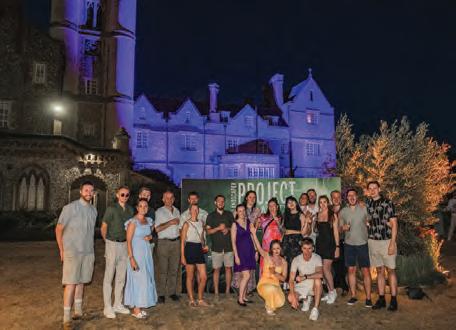


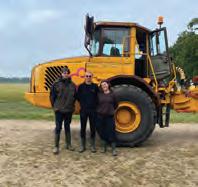
PRO LANDSCAPER ON TOUR HITS THE ROAD AGAIN WITH BOOM AND BONHEUR
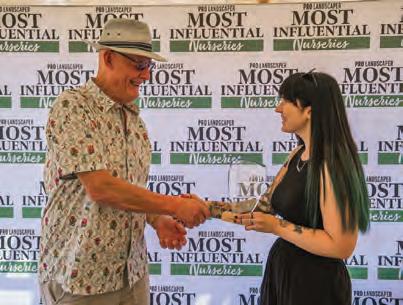
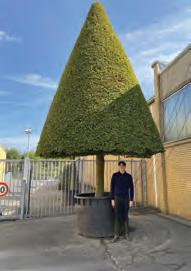
In September, Pro Landscaper hosted its second trip on tour, this time with Boom & Bonheur for a behind the scenes journey across its tree nurseries in Germany and The Netherlands. A cohort of select landscapes and garden designers accompanied the team to learn about the nursery’s 1,500 varieties of trees, its machinery and its background.
INSIDE THE GREEN ROOM GOES LIVE WITH PRO LANDSCAPER’S CONTENT DIRECTOR

Content director Nina Mason joined Marc Lane and Justin Himpson on Inside The Green Room’s Instagram live in September. Discussing all things landscaping awards, Mason explained how entering your company into landscaping awards is more than just a trophy – it can be pivotal for your brand and team.
THE TEAM VISITS RHS SHOWS ACROSS THE COUNTRY
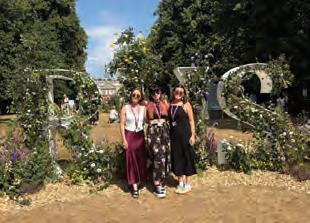
As another year of Royal Horticultural Society (RHS) shows passes, the Pro Landscaper team joined hundreds of keen garden lovers across the country on some of the biggest horticultural stages. From RHS Chelsea Flower Show in May, to RHS Malvern Spring Festival earlier the same month, to RHS Hampton Court Garden Festival in June and RHS Flower Show Wentworth Woodhouse later in July, 2025 we saw a wide range of original designs. From feature gardens to borders, each show celebrated its designers and landscapers after months of hard work.
THE TEAM JOINS INDUSTRY MEMBERS FOR HUSQVARNA’S 11TH LIVING CITY EVENT
On 16-17 October, Husqvarna hosted its 11th Living City Event, this year inviting clients and collaborators from across Europe to the green Spanish city of Barcelona. From sangrias to tapas, Husqvarna had more than just Spanish cuisine to keep the guests happy. Under the autumn sun, 120 guests from 23 countries gathered at La Lltja de Mar, a 14th century building fit with a courtyard readying to hear from inspirational voices across the industry. Highlights included speeches from Liverpool Football Club on its sustainability achievements, a dive into Barcelona’s nature plan and Husqvarna’s new product launches.


PRO LANDSCAPER CELEBRATES ONE ANOTHER AT BOTTOMLESS BRUNCH

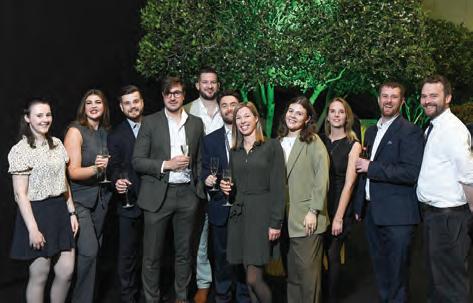
On a sunny Friday afternoon in August, the Pro Landscaper team swapped meetings for mimosas alongside a delicious brunch in Arundel. From editorial and sales, to design and marketing, the team gathered for some time off in celebration of the year’s achievements.
USE OF EMERGENCY PESTICIDE DENIED FOR FIRST TIME IN FIVE YEARS
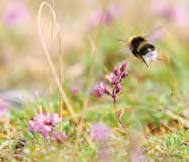
The government denied an emergency application for the use of a pesticide known to be toxic to bees. A ban on the use of neonicotinoid pesticide for sugar beet in England has been in place since 2018, but for the last five years the government has approved its emergency usage.
JANUARY
News roundup
NEW DIRECTOR OF HORTICULTURE JOINS EDEN PROJECT FROM RHS
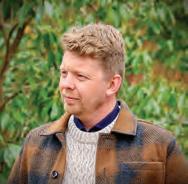
The Eden Project has appointed Peter Jones as the new director of horticulture to lead its 50-strong team. He joins from the Royal Horticultural Society, where he worked for the last 19 years.

MARSHALLS ANNOUNCES NEW MANAGING DIRECTOR FOR LANDSCAPING DIVISION
Nick Platt has been announced as the new managing director for landscaping at Marshalls in a series of senior leadership appointments for the division and at group level. Platt was previously sales and marketing director at Baxi, and before that he held roles at Haier Europe and Buy It Direct.
FEBRUARY
UK LAUNCHES NEW NATIONAL BIODIVERSITY STRATEGY AND ACTION PLAN
The UK outlines its commitment to protect nature by publishing its National Biodiversity Strategy & Action Plan (NBSAP) revealing how the nation will be taking a collaborative approach to achieve its global targets set out in the UN COP15 biodiversity framework.

THE ASSOCIATION OF PROFESSIONAL LANDSCAPERS CELEBRATES 30 YEARS

This year the Association of Professional Landscapers (APL) celebrates its 30th anniversary, marking three decades of recognition and accreditation since being founded in 1995 by independent gardens consultant Alan Sargent.
ENGLAND TO GET FIRST NEW NATIONAL FOREST IN 30 YEARS
England’s first national forest in three decades will see 20 million trees planted across the Western region. The new 2.5k hectare Western Forest will be planted across Bristol, Wiltshire, Gloucestershire and Somerset over the coming decades.

GOVERNMENT PROPOSES PEATLAND BURNING BAN
MARCH
In an effort to protect England’s natural capital, the government has put forward a proposal to ban heather burning on peatlands in the uplands. Known for their ability to capture and store carbon, peatlands are also home to some of the richest habitats of insect species in the country.
AIDAN BELL JOINS IDVERDE UK AS NEW CEO

idverde UK appoints Aidan Bell as its new CEO, taking over from Terry Woodhouse in May. With leadership experience in building services, facilities management and outsourcing, Bell most recently acted as chief operating officer at ISS Facilities Services.
APRIL
M SQUARED MOVES TO STRENGTHEN GROWTH PLANS WITH LATEST INVESTMENT
M Squared completes seven figure acquisition of Glasgow based repair and maintenance specialist, EBS Construction. This latest investment represents an “important development” in M Squareds’ “in-house capabilities”, says founder and managing director Kerr McEwan.

2025
NEW CEO TO JOIN LANTRA THIS SUMMER
Nick Juba has been appointed as Lantra’s new CEO following the retirement of Marcus Potter. Dr David Llewellyn, chair of the board of trustees, says Potter has “made an enormous contribution” to the awarding body for land-based industries and its partners over the last decade.

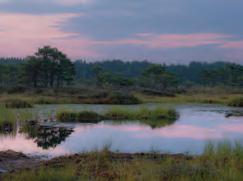
From fresh introductions to waving goodbye, it’s clear this year has seen its fair share of change. Let’s take a trip down memory lane with some of 2025’s milestone moments
WRIGHT LANDSCAPES ACQUIRES URBAN LANDSCAPE DESIGN
RHS CHELSEA FLOWER SHOW 2025: GOLD MEDALS ANNOUNCED
RHS Chelsea Flower Show returns this year with 14 Gold medals across all categories. Twelve Silver-gilt medals were awarded, with three Silver medals and one Bronze.

MAY
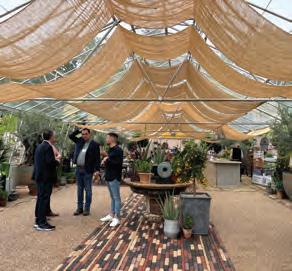
LANDFORM CONSULTANTS LAUNCH THE GLASSHOUSE COLLECTIVE
JUNE
LANDSCAPE INSTITUTE
DEVELOPS NEW CORPORATE STRATEGY AND ANNOUNCES NEXT PRESIDENT
The Landscape Institute (LI) has launched Connecting People, Place and Nature: Corporate Strategy 2025-30, a new five-year corporate strategy focused on supporting landscaping professionals to deliver value for people, place and nature.
Additionally. Bradford Metropolitan District Council’s Saira Ali, who leads the Landscape Design and Conservation team, will be the new president-elect from 1 July.

Wright Landscapes has announced its acquisition of Chester based company, Urban Landscape Design. The two companies worked together at this year’s RHS Chelsea Flower Show to bring designer Tom Bannister’s The British Red Cross ‘Here for Humanity’ Garden to life.


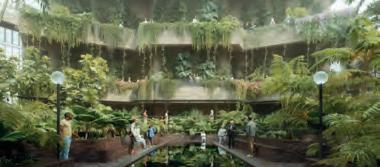
NEW DESIGNS UNVEILED FOR THE BARBICAN RENEWAL
The Barbican Centre has unveiled new images of how some of its iconic areas might look once the first phase of its transformation project is complete. The historic building will see its Conservatory, Lakeside and Foyers undergo a complete overhaul as part of the Barbican Renewal programme.
FOSTER + PARTNERS WINS QUEEN ELIZABETH MEMORIAL DESIGN COMPETITION
Foster + Partners’ winning design for the national memorial to Queen Elizabeth II will be situated in St James’ Park featuring a Prince Philip gate, new gardens and a translucent bridge inspired by the shape of the late Queen’s wedding tiara.

URBAN&CIVIC ACQUIRES TODDS NURSERY
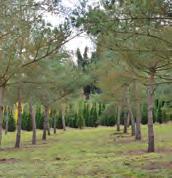
Developers of large-scale strategic sites, Urban&Civic has completed the acquisition of family-run tree supplier, Todds Nursery Limited to bring tree cultivation in-houseand improve control over species and stock resilience to advance the company’s sustainability goals.
Landform Consultants launches its new Glasshouse Collective in Chobham with set pieces many will recognise from the main stage at the RHS Chelsea Flower Show. The collection is designed to showcase curated outdoor living products in an open outdoor space, featuring products from the likes of David Harber and Boom & Bonheur.
©RHS/Ollie Dixon
©Kin Creatives for Allies and Morrison and Asif Khan Studio
©Foster + Partners
UK BIOSECURITY TO GET MULTI-MILLION BOOST WITH NEW DISEASE PREVENTION CENTRE
Laing O’Rourke has been awarded two contracts with the Department for Environment, Food & Rural Affairs (DEFRA) to deliver two new Science Hub buildings. Totalling an estimated value of over £900m, the new hubs are part of the wider National Biosecurity Centre at Weybridge programme.

JULY
2025 News roundup
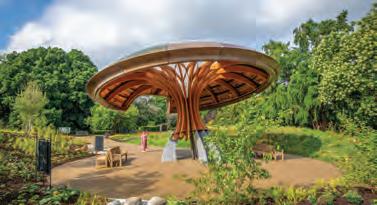
NEW CARBON GARDEN OPENS AT KEW
The new Carbon Garden at the Royal Botanic Gardens (RBG), Kew officially opened to the public in London; raising awareness of the role carbon plays in sustaining life on Earth, as well as bringing to attention the scale of the climate crisis.

TYLER GRANGE CELEBRATES 15TH BIRTHDAY
B Corporation Tyler Grange celebrated its 15th anniversary at its Summer Solstice party last month. The environmental consultancy invited clients and collaborators for a day of Q&A discussions, food and music.

EVERGREEN SECURES
PLANTLIFE PARTNERSHIP FOR BIODIVERSITY BOOST
Ground Control’s Evergreen Fund has secured Conservation Covenant (ConCov) approval with wildlife charity Plantlife acting as the responsible body for the sale of biodiversity net gain (BNG) unit sales at Wildfell Habitat Bank in Essex.
BELOVED PLANTSMAN JOHN HILLIER PASSES AWAY
Hillier Nurseries and Garden Centres announced the passing of the eldest son of Sir Harold Hillier John Hillier at the age of 90.
AUGUST
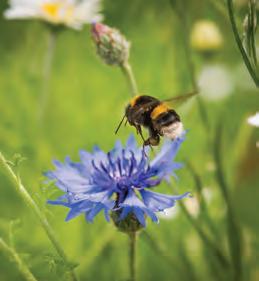
EDEN PROJECT CELEBRATES 25 YEARS OF TACKLING BIODIVERSITY LOSS
The Eden Project’s National Wildflower Centre (NWC) launched a UK-wide photo competition in partnership with the Canary Wharf Group to commemorate its 25th anniversary.
GOVERNMENT AMENDS PLANNING AND INFRASTRUCTURE BILL TO SAFEGUARD NATURE
The UK government has tabled amendments to add nature safeguards to Part 3 of the Planning and Infrastructure Bill informed by Office for Environmental Protection recommendations, including strengthening legal tests that Environmental Delivery Plans (EDPs) will have to pass.
SARAH EBERLE “EXCITED” TO END CHELSEA RETIREMENT NEXT YEAR
The most decorated designer at the RHS Chelsea Flower Show is coming out of her show garden retirement to celebrate the centenary of the Campaign to Protect Rural England (CPRE). Sarah Eberle last took to the show ground in 2022, winning her 20th Gold medal for the MEDITE SMARTPLY Building the Future Garden

PM APPOINTS EMMA
REYNOLDS AS NEW ENVIRONMENTAL SECRETARY
Amidst the cabinet reshuffle, prime minister Sir Keir Starmer appoints Emma Reynolds as the new secretary of state for the department of environment food and rural affairs (Defra).
SEPTEMBER
GLOBAL LANDSCAPE ARCHITECT
KONGJIAN YU TRAGICALLY PASSES AWAY
Landscape architect Kongjian Yu tragically passed away in a plane crash that occurred late on Tuesday in Brazil, says Brazilian authorities. He was a global champion of the ‘sponge cities’ concept and advocate for addressing the effects of climate change.


GROUND
CONTROL JOINS UNIVERSAL STUDIOS INVESTMENT PROJECT
Ground Control has announced that its highways infrastructure team will be joining the Universal Studios UK investment project for a vegetation management contract on the £5bn scheme.
LAWSONS WELCOMES
NEW CEO
Timber, building, fencing and landscaping merchant, Lawsons Group has appointed Allun Pittingale as its new chief executive officer (CEO). He joins Lawsons after five years acting as chief operating officer at Independent Builders Merchant Group (IBMG).
RHS WISLEY OPENS NEW GREEN SKILLS GARDEN
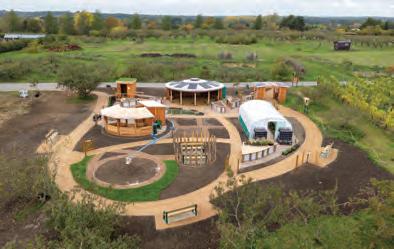
The Greener Skills Garden officially opens at RHS Wisley, Woking. Designed by Dave Green as a living classroom, the garden aims to encourage sustainable green skill learning.
BIODIVERSITY PLANS TO BECOME MANDATORY UNDER NEW SCOTTISH LAW
In a move that is being called a ‘big step forward’, a new Scottish law is set to see biodiversity improvement plans mandatory for large landowners. Under the Land Reform Bill, owners of landholdings over 1,000 hectares will need to show how they are boosting biodiversity, as well as adapting to climate breakdown across their sites.


ELMTREE REBRANDS TO FIT LANDSCAPING GROWTH
Elmtree Garden Contractors announces that after 55 years, it has transformed into Elmtree Landscapes, marking a new chapter for the company.
NOVEMBER
OCTOBER
INDUSTRY ASSOCIATIONS COLLABORATE TO UTILISE PAVING STANDARD
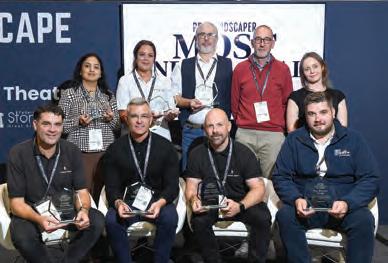
The British Association of Landscape Institutes, the Landscape Institute, the Association of Professional Landscapers and the Society of Garden + Landscape Designers mark the collaborative efforts to utilise the paving British Standard across the industry at FutureScape.

Scan to check out more news on the Pro Landscaper website:

©Barrett Doherty, The Cultural Landscape Foundation










Blooming
SUCCESS
THE OUTDOOR ROOM
“The Outdoor Room has had quite a momentous year. Not only have we just celebrated our 30th anniversary with a party including close industry friends and family, we also launched our brand-new website, showcasing all of the great work our teams have done this year and in the past.
“We are looking forward to attending the BALI National Awards in a couple of weeks' time where we will pick up a Principal Award for the “Domestic Projects Over £750K” category and of course the most amazing results at this year’s Chelsea Flower Show – Best Small Show Garden, Best Construction, and a Gold medal for the Addleshaw Goddard garden –PLUS a Gold medal and Best Construction for the Avanade sponsored Large Show Garden! Amazing!”
Mark Britton, The Outdoor Room

The industry takes a celebratory look back at the last 12 months , sharing their biggest successes of the year

RACHEL PLATT GARDEN DESIGN
“This year has been a defining one for me as a designer. Being asked to design the RHS “Teenage Dirt Park” garden at Wentworth Woodhouse for the RHS’s newest show was a true career milestone, celebrating youth, nature and playful rebellion.
“A major highlight was receiving the final photography from Julie Skelton for my natural swimming pool project in collaboration with Silva Landscapes and Ellicar Natural Pools. I was also thrilled to complete a significant project in Beaconsfield with Gadsden Gardens, bringing a refined, structural landscape to life. It was also super fun being part of a panel at this year's FutureScape.”
Rachel Platt, Rachel Platt Garden Design



“2025 has been a year of steady growth and continued confidence for Blakedown Landscapes, supported by a strong pipeline of public and heritage projects. We were appointed Principal Contractor by The Royal Parks for the new garden in The Regent’s Park to commemorate the life of Queen Elizabeth II, and for the £7m Canterbury Story Gardens project within the Connected Canterbury Levelling Up Fund initiative.
“Other highlights include the Horniman Museum and Gardens, the first Greener Skills Garden at RHS Garden Wisley, two national BALI Awards, shortlisting in Pro Landscaper’s Biodiversity and Sustainability Awards, and Andy Harris’s promotion to contracts director to strengthen our leadership structure.” Chris Wellbelove, Blakedown Landscapes
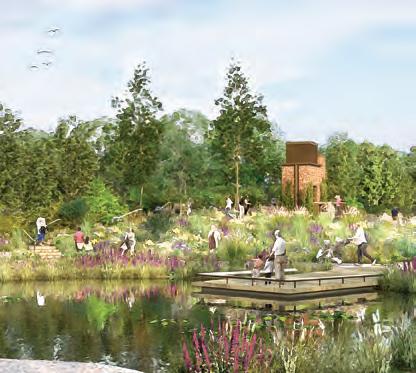
Chris Wellbelove
BLAKEDOWN LANDSCAPES
Rachel Platt
Mark Britton
©HTA Design media release
©Sam McQueen
©Alister Thorpe Photography Ltd
©Sam
McQueen
“2025 has been a truly special year. A standout moment was creating the Gold medal winning London Square Chelsea Pensioners Garden at the RHS Chelsea Flower Show – and then in the months following the show, seeing it come to life again at the Royal Hospital Chelsea, where it was enjoyed by the Pensioners throughout the rest of the summer. The enthusiasm and appreciation for the project made it an extremely special project to be part of.

“In the autumn, the Greener Skills Garden opened at RHS Wisley, signalling a new approach to involvement in horticulture careers and sparking fresh excitement around planet-friendly gardening. Throughout the year, I’ve focused on designing uplifting, biodiverse spaces that boost wellbeing and connect people with nature and with several new projects already taking shape for 2026 – I can’t wait for what's next.”
Dave Green, Dave Green Gardens

“2025 has been a year of growth and evolution. The studio has expanded its talented team; welcoming new members whose creativity and expertise bring fresh energy to every project.

“Improved systems and streamlined operations have strengthened client communication, ensuring an efficient and personal experience from concept to completion. Beyond professional achievements, one of our team celebrated a precious milestone – the arrival of a new baby.
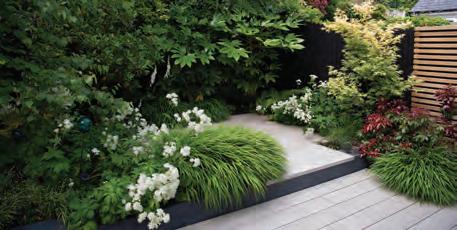
“Looking ahead, we remain dedicated to creating inspiring outdoor spaces that connect people with nature, to continually evolve and raise our own bar, continually developing our approach to raise standards across design, delivery, and client care.”
Karen McClure, Karen McClure Garden Design
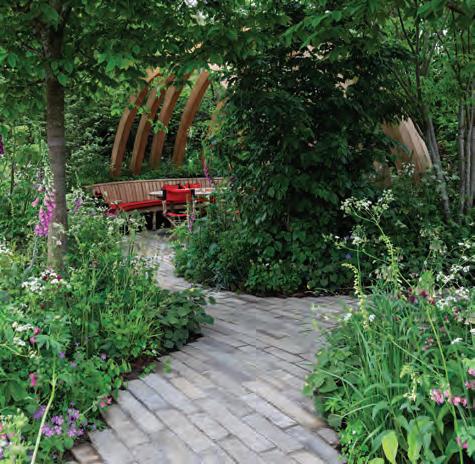
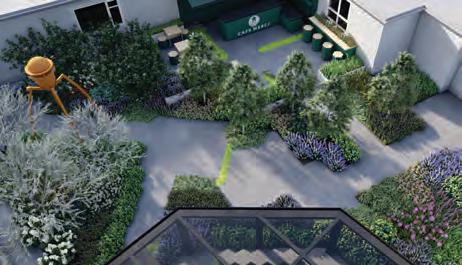
“I stepped back from designing gardens for television and, took a brief hiatus from show gardens this year and swapped that for speaking at RHS Hampton Court Palace Garden Festival, hosting the APL Awards alongside the legendary Phil Tremayne – that has to be up there, right?
“Follow that on with winning an award for the Australian Veterans garden with the APLD (USA) and then, my school garden design wins the Europe Heat for Conceptual Project at the Pro Landscaper International Awards. Not bad at all and never a dull moment in this beautiful industry with the very best by my side always. Let’s see what 2026 has in store!”

Peter Donegan, Peter Donegan Garden Design & Landscaping
Dave Green
Peter Donegan
DAVE GREEN GARDENS
KAREN M c CLURE GARDEN DESIGN
PETER DONEGAN GARDEN DESIGN & LANDSCAPING
Karen McClure
©Peter Donegan Garden Design &
©Paul Wilkinson Photography Ltd
©Karen McClure Garden Design

JAMES ALDRIDGE SAIRA ALI
JAMES ALDRIDGE LANDSCAPE + GARDEN DESIGN

Back in May, garden designer and horticulturist, James Aldrige was appointed garden design diploma course leader at the London College of Garden Design. After graduating with a degree in horticulture, Aldridge has gone on to work for The Prince of Wales at Highgrove before setting up his own garden design practice, covering projects across the UK and beyond. Now, with 16 years of teaching experience at the college under his belt, he steps into his new role to train up the next generation.
AIDAN BELL
iDVERDE UK
Career changer Aidan Bell stepped into his new role as CEO at idverde UK this year, marking a new chapter rooted in people, purpose, and the power of green careers. When speaking to Pro Landscaper in August, he emphasised the importance of championing green career benefits to bridge the skills gap. He looks to leverage idverde’s long standing heritage as a way to secure its continuing presence in the industry.

ALAN WILLIAMS
LANDFORM CONSULTANTS
One of the driving forces behind the Glasshouse Collective, Alan Williams worked closely with Mark Gregory to create the business to business purposed space. The hub showcases reclaimed objects from previous projects – many of which visitors will recognise from past Chelsea shows, while facilitating partnerships between key supplies, organisations and companies. The idea is to host exclusive gatherings for clients to visit, network and explore a range of products.

BRADFORD METROPOLITAN DISTRICT COUNCIL

During the summer, Saira Ali was voted onto the Landscape Institute (LI) board as the new president-elect. Set to take over from current president Carolin Göhler next July, Ali comes in with a priority to ensure LI members are empowered, celebrated and heard. Since the news came out, Ali has been involved in several award ceremonies as a judge, including the Europe Heat of the Pro Landscaper International Awards and Pro Landscaper’s Sustainability & Biodiversity Awards, in association with Hortus Loci Landscapes.
MOVERS & SHAKERS
year
Who is leaving their mark on 2025 ?
LUKE COLEMAN GARDENS
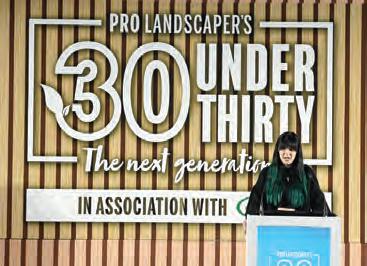
A year of awards for Luke Coleman; he was awarded with both a Gold medal and Best Construction at RHS Wentworth Woodhouse for his debut Drakkar’s Drift garden. Coleman then scooped the RHS Young Designer of the Year, an accolade tailored for young contractors under 30 years old. Coleman also picked up a Pro Landscaper 30 Under 30: The Next Generation, in association with Green-tech, award which he collected during FutureScape in October alongside this year’s cohort, including younger brother Joe Coleman.

THE CHILDREN’S GARDENING COACH

Formerly the Skinny Jean Gardener, Lee Connelly rebranded this year as The Children’s Gardening Coach – a fitting move given his growing impact. In May, he visited 15 schools during National Children’s Gardening Week, aiming to get 10,000 children gardening. Next year he’ll launch a new partnership with his brother, Dale, starting with a return to Japan to redevelop a theme park attraction they previously worked on. He will also debut a new live show, The Magic of Gardening, in 2026.
LEE CONNELLY
LUKE COLEMAN
SARAH EBERLE

Coming out of show retirement, Sarah Eberle announced in October that she would be returning to RHS Chelsea Flower Show next year to celebrate the centenary of the Campaign to Protect Rural England (CPRE). Earlier this year, Eberle won the SGD’s Garden of the Year Award in February – later rebranded to the SGLD. Her Anglo-Japanese Strolling Garden in Oxfordshire scooped both the Large Residential Garden Award and the Planting Design Award before collected the ultimate prize of the night.
EMMA
An asset to Ground Control, Emma Hindle’s passion for nature is clear. Now business development director for landscape, design, energy and biodiversity net gain, she has quickly progressed, moving from manager to director in May, with her role recently refocused on landscaping and design. She also works closely with Ground Control’s Evergreen Fund, which dedicates 5% of annual net profits to environmental initiatives. Hindle spoke at this year’s FutureScape on a panel of former 30 Under 30 winners, discussing her career, the industry and future predictions.

JOE PERKINS

Owner and founder of Joe Perkins Design, Joe Perkins received an SGLD Fellowship in October. As one of six recipients, Perkins was celebrated in recognition of his contribution to the profession and to the wider landscape and horticultural industry. Perkins also picked up a Gold medal for his The King’s Trust Garden: Seeding Success Garden at the RHS Chelsea Flower Show. Perkins has also designed the Garden for the Future at Sheffield Park and Garden in East Sussex as a means to observe how new and old species respond together in their new environment.
LUCY FISHER
idverde's operations director, Lucy Fisher, champions sustainability across her career, and understands the importance of nurturing emerging talent within the industry. Whilst chatting to Pro Landscaper for its Green Issue in March, Fisher explains: “I see myself as an advocate for integrating sustainability into idverde's day-to-day operations.” In recognition of her efforts, Fisher was voted Sustainability Leader at Pro Landscaper’s Sustainability & Biodiversity Awards in October.
BEN WALKER CHLOË WEBSTER

An expansion as part of Walker Landscape & Design, Ben Walker’s outdoor living part of the business has continued to grow since its founding in 2022. Most recently, Walker has opened a Millboard Experience Centre at his showroom in Cheshire; the second of its kind. He also partnered with Roostr Kitchens in becoming the UK’s only distributor this year.. During this year's FutureScape event, Walker also launched the Walker Collective. An outdoor living community, Walker has created a space that is free for professionals with access to advice, events and training sessions.
JAMIE BUTTERWORTH

From TV hosting to publishing a book – not to mention creating a show garden – it's been a busy year for Jamie Butterworth. In May, he joined Monty Don to bring the RHS and BBC Radio 2 Dog Garden to life at Chelsea, marking Don’s debut at the show. Those that tuned into the BBC’s coverage will have also seen Butterworth as he guided viewers through other gardens as a first-time presenter for the show. In September, he added author to his repertoire with the launch of his new book, What Grows Together: Fail-safe Plant Combinations for Every Garden.

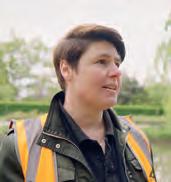
At 29-years-old, Chloë has shifted her career and is already seeing success as a garden designer. Once upon a time, she worked in film, but with a passion for the planet and sustainability, she moved over to horticulture. Webster achieved the BALI Chalk Fund Top Student of the Year in October, during the same month she also picked up a Pro Landscaper 30 Under 30: The Next Generation Award. Very much a rising star, Webster is also working on the Eden Project: Bring Me Sunshine RHS Chelsea Flower Show Garden for 2026 with Harry Holding Studio.

Wright Landscapes introduced W Outdoor Living as a means of expanding its expertise into the growing sector of exterior kitchens, canopies and wellness spaces. Based at Pickmere Nursery, Holly Youde leads the new development as director. Youde says the growth comes as “outdoor living spaces have gained significantly greater importance, intertwining with a growing focus on wellbeing and mental health.” A speaker at FutureScape, Youde shared her advice as well as predictions for the next few years alongside other names in the outdoor living market.
JOE PERKINS DESIGN
WALKER LANDSCAPE & DESIGN
HARRY
HOLLY YOUDE
HINDLE
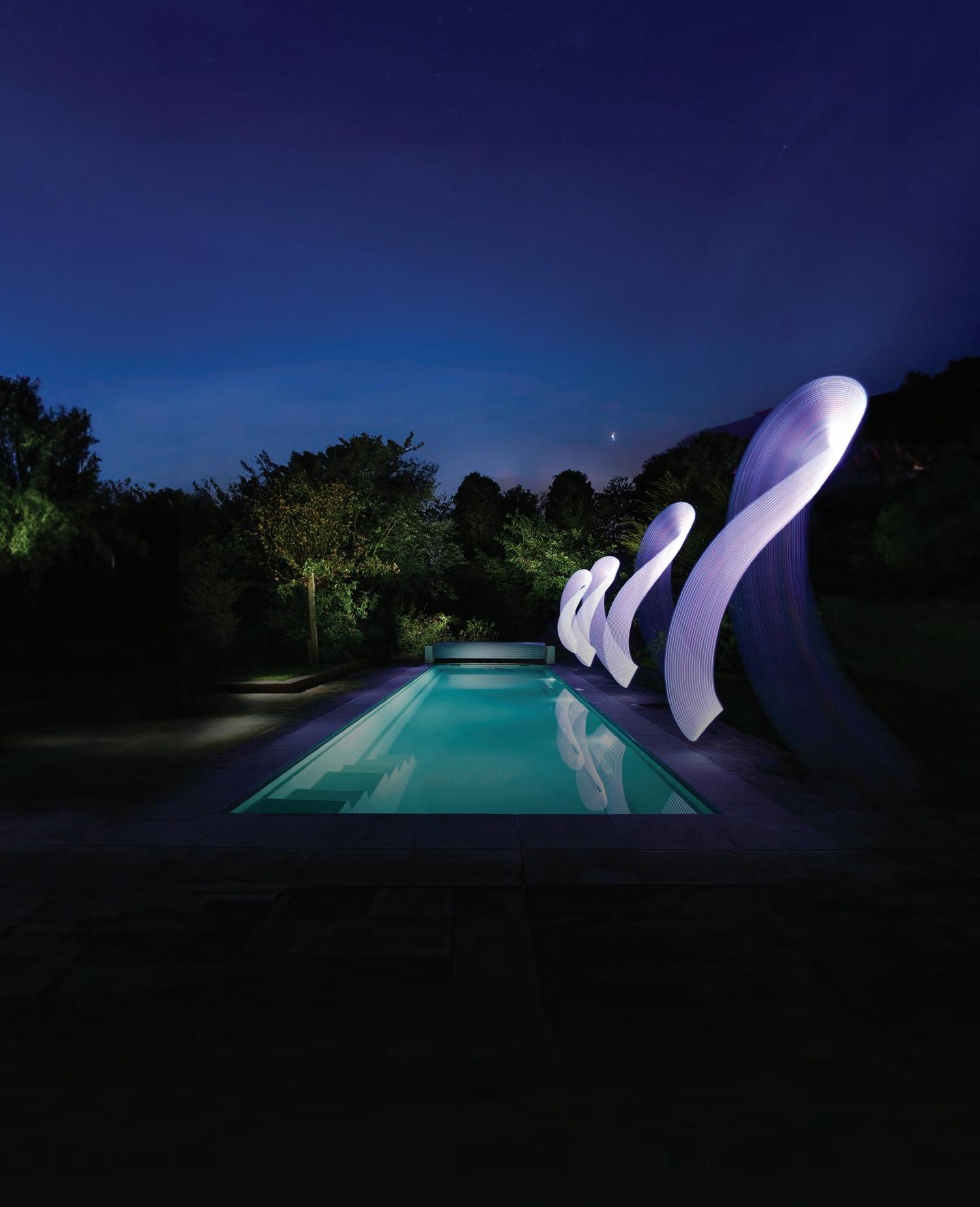

After a drop in rainfall and a spike in temperature, England faces another year in fear of drought alongside climate change concerns
DROUGHT-FULLooking
WORDS: HOLLY CHAPMAN
After a record dry spring, a continued run of heatwaves and dry weather throughout the summer, England fears an increase in drought concerns if current water levels fail to recover by next spring. It makes you question, how prepared is the country in terms of monitoring and reporting drought risk? On top of this, the effects of climate change could potentially influence the frequency and type of severity of future droughts.
Explored by the House of Lords Environment and Climate Change Committee, drought preparedness in England is the focus of the committee’s newest inquiry. “With the risk of drought increasing, it is a crucial time to take stock of the evidence on future drought risk, the government’s drought response processes, and evaluate the plans to mitigate the impacts of drought in the future,” explains Baroness Sheehan, the committee chair.
Drought can be defined across three main types; agricultural drought, environmental drought and water supply drought. Whilst
Types of drought
AGRICULTURAL DROUGHT
When there isn’t enough rainfall and moisture in soils to support crop production or farming practices such as spray irrigation.
ENVIRONMENTAL DROUGHT
When a lack of rainfall has a detrimental impact on the environment and ecology.
WATER SUPPLY DROUGHT
When a lack of rainfall leads to concerns from water companies about supplies for their customers.
they may occur separately or together, the Environment Agency (EA) monitors various indicators, such as rainfall, river flows and groundwater levels, before deciding the level of drought the country is in.
With the risk of drought increasing, it is a crucial time to take stock of the evidence on future drought risk
Baroness Sheehan, committee chair, House of Lords Environment and Climate Change Committee
The most notable droughts suffered in England include 1989-92, 1995-96 and more recently 2018, 2022 and 2025. In August of this year, the National Drought Group declared a “nationally significant water shortfall” in England. Additionally, this past summer was the hottest since records began in 1884, with four
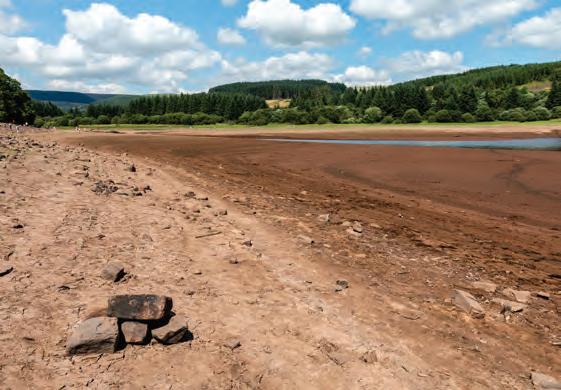
heatwaves and the country seeing below average rainfall eight out of ten months of the year so far.
Professor Jason Lowe, head of climate services at the Met Office says “our climate models show we can expect an increase in drought in the UK,” adding:
“One study that I personally was involved in looked at two degrees of global warming and found roughly an 86% increase in droughts like that in 2010. It also looked at a higher scenario of four degrees of warming and found an approximately 150% increase.”
Due to recent weather patterns, most of England will experience a drought with widespread impacts felt by consumers, farmers, businesses and nature “unless we get sustained rainfall through the winter” warns director of water at the EA, Helen Wakeham.
Water usage
In general, the UK is arguably defined as a wet country. Moreover, the country is at a high level of household demand within the public water system, according to Baroness Brown of Cambridge, chair of the Adaptation Committee: “We are still at a high level of household demand, at about 140 litres per person, per day. Very little has happened to reduce that.”
When addressing leakages in the water system, Richard Millar, head of adaptation within the Climate Change Committee recommends using water more efficiently in the home. Most of the UK’s homes use drinking-quality water to flush the toilet and have showers.
“It is still not that prevalent for people to really be able to understand how they are using water in their homes, what makes a difference, and therefore appropriately to modify their behaviour to both save themselves money off their bills and help with how we use water overall.”
impacts on rivers, ponds and wet areas, she highlights “our terrestrial habitats, our coastal habitats, and some of the areas that we're most concerned about in terms of vulnerability to know all about are things like peatlands drying out because they're incredibly important carbon stores”.
We must improve the resilience of the natural environment by making it more diverse and well connected
Kathryn Brown, director of climate change, The Wildlife Trusts
Valuable habitats, particularly peatlands and chalk streams, are being lost due to drought. Brown says in order to reduce the severity of the environmental impact of drought, “we must improve the resilience of the natural environment by making it more diverse and well connected”. For example,
Stages of drought
PROLONGED DRY WEATHER
Characterised by a period of dry weather that is impacting on river flows, groundwater levels and water levels in lakes and reservoirs.
DROUGHT
Characterised by further deterioration to the environment and impacting agriculture, people and businesses.
SEVERE DROUGHT
Our climate models show we can expect an increase in drought in the UK
In a bid to reduce water usage and improve the UK’s resilience to drought, Baroness Brown pleas: “We need much better engagement with the public on how we use water, because 60% to 80% of the deficit needs to be addressed by using less and sorting out leaks. It does need the public to be really engaged”.
Professor Jason Lowe, head of climate services at the Met Office
With the rolling out of water smart meters, the committee hopes to reduce the per-person water consumption rates.
Drought on the environment
The EA and water companies have a responsibility to prepare for drought in the UK. Combining policy, planning, investment and public engagement, there has been notable progress in creating plans to manage water demand and supply, improving monitoring networks and investing in new reservoirs for the first time in decades.
Kathryn Brown, director of climate change at The Wildlife Trusts explains that whilst immediate drought concerns lead to
Resulting in extensive, lasting effects on the environment, farming, people, communities, and the economy. The lack of water leads to serious water shortages and widespread impacts across sectors. It’s when the lack of water begins to disrupt daily life and the environment in major ways.
RECOVERING FROM DROUGHT
Drought impacts reducing and returning towards normal ranges for the time of year.


managing water by rewetting peatlands or managing land to hold more water by slowing down rivers.
Within the urban environment, Yetunde Abdul, director of industry transformation at the UK Green Building Council mentions overheating and what we call the ‘urban heat island effect’.
As vegetation cools down the urban temperatures, a lack thereof would cause temperatures to rise. Delivering naturebased solutions, such as green roofs and green walls, would mitigate this concern, as well as the potential damage to infrastructure caused by high temperatures, such as cracked buildings and roads.
The impact of climate change
How to be water smart in the garden
• Install a water butt
• Swap hoses for a watering can
• Disconnect hoses to avoid leakage
• Re-use grey water
Unfortunately, the implementation of plans by government bodies and other companies could be seen as too slow compared
to the rate of which we’re seeing the effects of climate change impact our ecosystems and weather conditions.
In recognition of several uncertainties about the implications of climate change on the severity and frequency of drought, Lowe has “high confidence” in the fact that temperatures will rise, just as the hydrological cycle will become more intense. Whilst he predicts warmer summers and wetter winters, this in turn increases levels of evaporation.
In combination, this model could lead to stronger drought conditions in the future. By next May, the committee plans to publish the next climate change risk assessment as part of its advice to the government.
It perhaps feels odd to hope for a wetter winter, but as explained by the Climate Change Committee and the EA; it is necessary to improve the ground’s conditions ahead of next spring.
AS K THE EXPERTS With Claire Belderbos
What should designers and contractors look out for during a site visit that could impact a project's budget?
When visiting a new site, there are many factors that designers and contractors need to be aware of that could impact a project’s budget:
Health and safety is a priority when visiting a new site. As part of CDM (Client Design Management), designers and contractors need to assess any potential risks. One example; falls are a common risk on site that could occur during the build, once the build is complete, or during future maintenance. A fall can be mitigated through the installation of temporary or permanent barriers. All these considerations could have an impact on budget.
make a difference to the project budget. The project could take longer and therefore more costly if access into the garden is restricted in any way, such as narrow walkways or up and down lots of steps.
If the landscaping of the garden coincides with other trades on site, such as the main contractor, the project could take longer and will thus impact budget. Different trades all need space to work, and each one will be working towards their own deadlines.
It is important to note the journey from curb side into the garden
Access can be particularly challenging in urban up areas. It is good to be aware if the garden is located on a red route or if there is a bus lane that could make deliveries and waste removal difficult.
It is important to note the journey from curb side into the garden. If the access is only via the house with no side access, this could restrict the size of machinery available to use, so the work could take longer to carry out if done by hand and therefore cost more.
Alternatively, if the client is willing to use a crane to transport materials over the house into the garden, this will be more effective and not restrict size of trees installed but will
Environmental factors such as Root Protection Zones could result in a more costly design if proximity to trees needs to be taken into account. In addition, initial exploratory work may be required prior to the start of the build to ascertain if roots are present in the area to be excavated.
This is particularly important where there are TPOs and in conservation areas. Other environmental considerations that could impact budget include, nesting birds, extreme damp areas where more extensive drainage needs to be provisioned and proximity to water courses.
Keep an eye out for signs of previous structures, such as foundations of old sheds or buildings. These are likely to require additional excavation work that will add to the project cost. If these are later discovered during the build and were impossible to foresee prior to
The panel

RACHEL BAILEY
Rachel Bailey runs an award-winning SGLD registered design practice creating immersive, plant-filled gardens that enrich lives, support biodiversity, benefit the environment, and draw on her biology and permaculture expertise.

CHRIS WELLBELOVE
As managing director of Blakedown Landscapes, an awardwinning landscape and civil engineering specialist, Chris Wellbelove leads the company’s strategic direction, centred on quality, collaboration and long-term value.

CLAIRE BELDERBOS
Claire Belderbos runs Belderbos Landscapes with her husband, Ed. The London-based design and build company became employee owned after celebrating its 20-year anniversary last year.
work starting, this could be an additional cost to be communicated to the client. Noise restrictions: Working hours could be restricted if the site is adjacent to neighbours that are more sensitive to construction noise, such as schools and/ or nursing homes. If the project takes longer due to restricted working hours, this may have a bearing on the landscaping cost.
This highlights just a few considerations that could impact a project’s budget – you may think of more. It is a team effort between the designer and landscaper to ensure all factors are considered prior to starting on site and to ensure the project success.
Race
TO THE BOTTOM PART 2
By putting a fence around standards, the industry could stop cowboys from roaming free across the market, says Gareth Wilson
Following on from last month's article regarding race to the bottom landscapers, I decided to share my thoughts on how I see a landscaping future if there were regulations.
As mentioned previously, this article is more for the landscapers in the middle who get caught in price wars, competing with contractors who cut corners.
Firstly, I view regulation in a similar manner to that in Australia, which places some accountability on clients to conduct their own due diligence, ensuring that the contractors they employ are qualified, certified, and competent. A FENSA-type arrangement would mean that clients would have void insurance and could have problems selling their properties, should they choose a non-certified contractor, and issues arise.
A higher barrier to entry at the landscaping level will deter TikTok landscapertype influencers
We all know there would be a massive backlash from many; however, those contractors that consistently do good work, don’t cut corners, and constantly look to adapt to new and better practices, will find the transition a walk in the park and won’t bat an eyelid.
A higher barrier to entry at the landscaping level will deter TikTok landscapertype influencers and chancers looking to make a quick buck, thereby encouraging only dedicated individuals to enter the trade.
Once we get all contractors on a more level playing field, with fewer cowboys – I say fewer, as we all know you will never eradicate them all –this will mean there will be far less price competition, with the race to the bottom brigade far less prevalent. Contractors will be able to charge a fairer price and not be in position where clients will barter them down in cost, therefore stabilising costs.
We all know that for many, work is scarce at the moment, with a budget looming, the after-effects of Brexit still being felt, and the dreaded winter
now upon us. However, with less competition in the market, I see good contractors being booked well in advance. I also see clients not able to apply the same pressures regarding start dates, with the threat of going elsewhere should inclement weather or standard hold-ups on projects cause delays.
The industry will get better recognition, which is precisely what it deserves, as being a landscaper in 2025 is not a simple task. In short:
Im proving
THE INDUSTRY
• Stabilised prices
• Fewer cowboys
• Better industry reputation
• Stronger demand and more work available with less competition
• Clearer standards
• More professional recognition
• More time building high-quality projects
To finish on a positive note, I've been asked to get involved in several very exciting RHS show gardens next year, up and down the country, so watch this space.

GARETH
WILSON
Gareth Wilson is a leading paving installation expert in the UK. He has won 14 RHS Gold medals and five Best in Show & six Best Construction Awards, and he is a member of multiple professional bodies. He provides technical advice to large companies, and he mentors and trains contractors and garden designers in landscape construction and on show garden logistics. He also provides on-site training, expert witness reports and mediation services. He is a B/507 modular paving committee member, BS7533:102 panellist, and an industry awards judge.
gkwilsonlandscaping.co.uk paving.site
Welcome to this monthly column, where I share practical, iPad-based digital workflows, tools, and drawing techniques to help make your landscaping and design work easier, faster, and more efficient – whether you’re out on site or back at the desk.
Morpholio Board is the ideal mood board creation platform for iPad and forms part of the Morpholio family developed by the same architects behind Morpholio Trace. For garden designers and landscape professionals, it’s the perfect adjunct to Trace – particularly when it comes to client presentation and visual storytelling.
DRAWING BOARD Digital
John Wood on Morpholio Board –the ideal mood board and presentation document creator for iPad
boards remarkably fast and seamless.
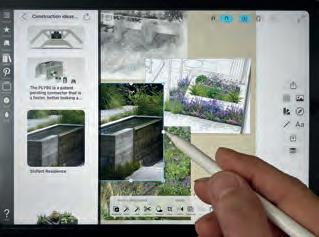
MORPHOLIO BOARD HAS A REMARKABLE FEATURE OF INTEGRATING PINTEREST INTO ITS SYSTEM, ALLOWING US TO DRAG AND DROP DIRECTLY FROM OUR PINTEREST COLLECTIONS
At its simplest, think of Morpholio Board as a far more sophisticated version of PowerPoint. It allows you to arrange, annotate, and present visual material fluidly, but with far greater control over layout, image quality, and interactivity.
Crucially, it supports the creation of personalised image libraries, all housed within the app, so you can build a bespoke collection of plants, materials, and products that reflect your own design language.
One of its most impressive features is its direct integration with Pinterest. Many of us curate Pinterest boards for inspiration or client reference, and Morpholio Board allows you to access your personal Pinterest account directly within its interface.
You can simply drag and drop images straight into your working document without ever leaving the page. This makes the process of assembling presentation
When preparing visual material, the background removal tool is another significant time-saver. It performs exceptionally well at isolating objects from photographs, letting you cleanly cut out features such as furniture, pots, or plants to compose clear, professional-looking visuals.
The creation of your own plant graphic library – demonstrated in the accompanying video – is as simple as drag and drop.
Morpholio Board also includes preset templates for social media. Anyone who’s had an Instagram story cropped awkwardly will appreciate this: images created within Morpholio Board can be perfectly sized for social formats, ensuring nothing essential is lost when posting online.
Text entry is equally well thought out. You can add captions, notes, or titles directly onto your board, and because the app supports voice to text dictation, it frees us from the need to type.
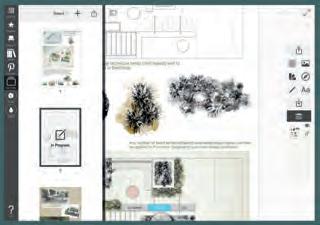
MULTIPLE PAGE DOCUMENTS CAN BE CREATED AND CONVERTED DIRECTLY TO PDFS MAKING THIS THE GO-TO TOOL FOR PRESENTATION DOCUMENT CREATION
Perhaps most powerfully, Morpholio Board can generate multi-page PDFs, meaning you can create entire presentation documents directly on your iPad. These can be exported,
emailed to clients, or sent to print without ever leaving the device.
The result is a fast, mobile, and highly professional workflow that frees you from the desk without the slightest compromise to quality. Although Morpholio Board was originally aimed at architects and interior designers, it can be easily customised for landscape use. With your own image libraries and a little organisation, it becomes an excellent environment for creating presentation-ready layouts, mood boards, and client documents – all with the same polish and speed that Morpholio Trace users will already know well.

ALTHOUGH AT FIRST GLANCE MORPHOLIO BOARD MIGHT APPEAR BETTER SUITED TO INTERIOR DESIGN, IT'S A VERY QUICK AND EASY PROCESS TO CREATE ONE'S OWN PLANTING LIBRARIES WHICH LIVE PERMANENTLY WITHIN THE SYSTEM, MAKING IT ENTIRELY BESPOKE TO ONE'S OWN NEEDS
Scan the QR code to watch this month’s accompanying tutorial video


John Wood runs Create Visual, a CPD training platform for garden and landscape professionals, specialising in digital drawing and 3D modelling workflows using iPad-based tools. He delivers training both independently and for the Society of Garden and Landscape Designers, and also offers a professional visualisation service for designers and landscape architects, transforming 2D plans and sketches into 3D renders and photorealistic fly-throughs. Drawing on over two decades of experience in garden design, he helps professionals work more creatively, efficiently, and with confidence in their presentations. create-visual.co.uk
JOHN WOOD
Established 1864
Established 1864
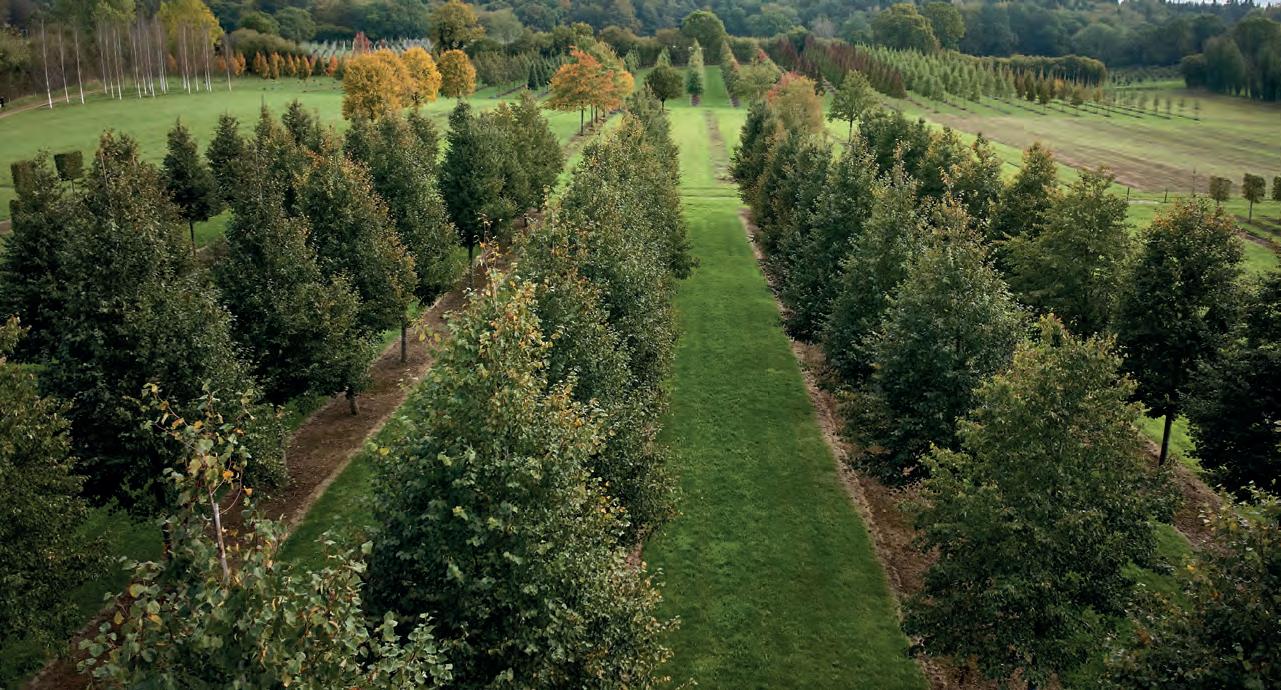
Discover World Class Trees
Discover World Class Trees
Expertly grown on 700-acres of pristine Hillier land in Hampshire, this is sustainable tree production as it should be.
Expertly grown on 700-acres of pristine Hillier land in Hampshire, this is sustainable tree production as it should be.
Hillier Trees: Growing for England since 1864
Hillier Trees: Growing for England since 1864
Please contact trees@hillier.co.uk



trees.hillier.co.uk
Please contact trees@hillier.co.uk
01794 368 733
trees.hillier.co.uk
Download The Hillier Tree Guide
01794 368 733
Download The Hillier Tree Guide
Your guide to our range of trees. Showing their form and size over 15, 25 and 50 years, plus helpful information on suggested usage for a variety of projects and locations.
Scan this QR code to download your copy today!
Your guide to our range of trees. Showing their form and size over 15, 25 and 50 years, plus helpful information on suggested usage for a variety of projects and locations.


Scan this QR code to download your copy today!
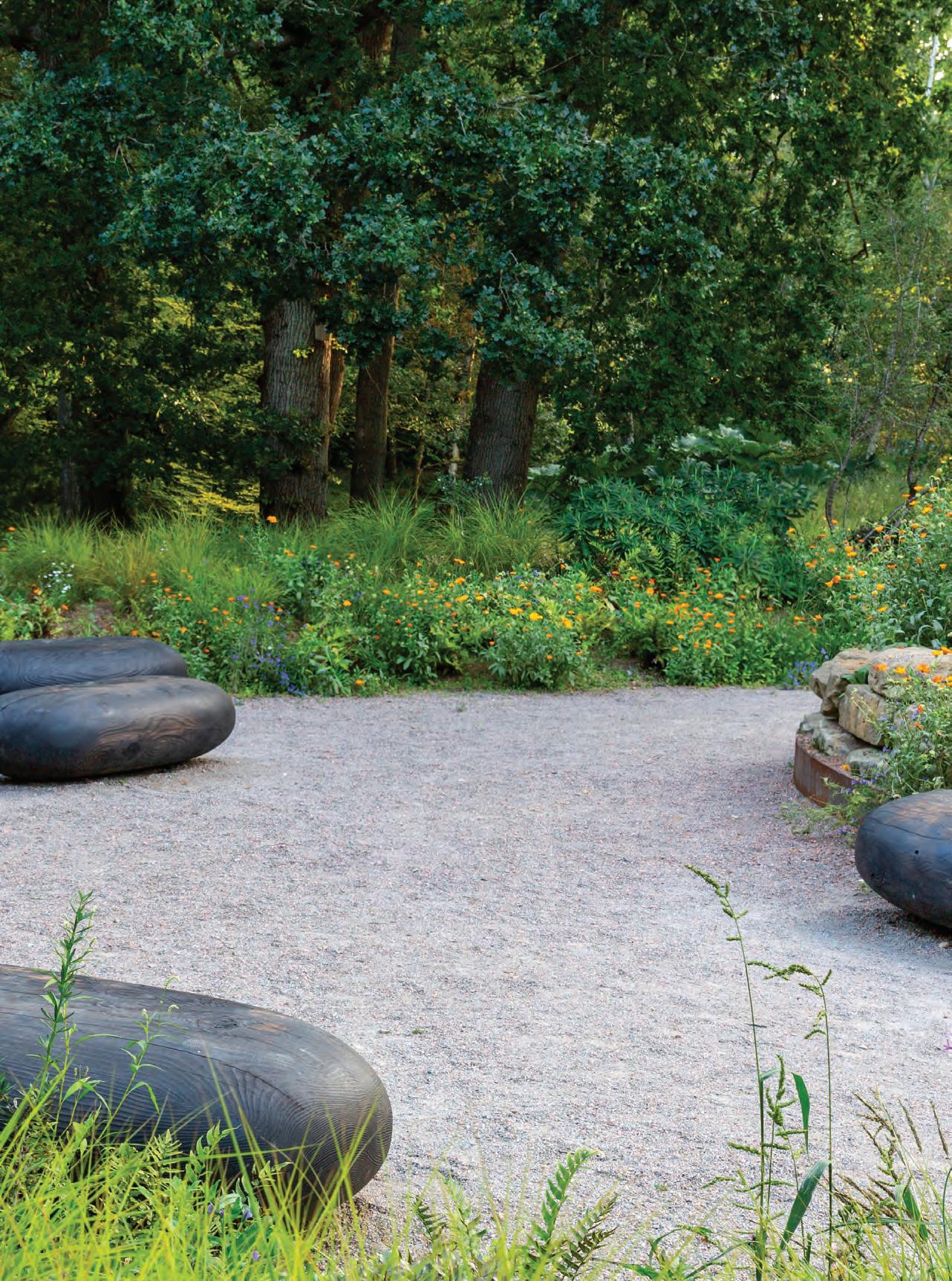
“THAT IS THE DRIVER FOR ME IN TERMS OF WHY I WANT TO FURTHER MY SKILLS IN PLANTING DESIGN, BECAUSE I SEE IT AS OUR OPPORTUNITY TO MAKE A
DIFFERENCE”
In the face of a changing climate, Joe Perkins shares his approach to resilient landscape design
WORDS: BETHANY VANN
From winning Gold at this year’s Chelsea with a garden inspired by the pioneering potential of plants, to unveiling a new public landscape rooted in horticultural innovation for the future, designer Joe Perkins has spent the year immersed in ecological adaption – experimenting with purpose-driven plant palettes and encouraging people to rethink their relationship with the living world. Today, Perkins is recognised for his work creating nature enriched spaces that look to promote the restorative effects of the outside environment, often focusing on the ecological functions of plants and their place in our ecosystem.
Those practical skills are something that have stayed with me through the rest of my career
And though his journey into the industry – working as a maintenance gardener and learning about construction seem like worlds apart from his niche now, for Perkins it all makes sense.“I liked making things, and in retrospect arranging spaces but in a very practical way," says Perkins as he reflects on his decision to go back to school and retrain at the Oxford College of Garden

Design.“Those practical skills are something that have stayed with me through the rest of my career, and that ability to understand how things are constructed and to be able to talk to people on the same level has been a real strength for me. It wasn't something that I'd necessarily planned, but it has worked out really well that way.”
In 2004 he joined the ranks of Hillier Landscapes, where he met and worked with then design director, Sarah Eberle: “I worked as a designer with Sarah for four years, and that really was my big education into planting and planting design – she's a fantastic plants woman – and also my introduction into Chelsea.”
[Going back to landscape architecture] really opened my eyes to how you can specialise within the world of design
At the 2007 RHS Chelsea Flower Show, Perkins worked with Eberle to create the 600 Days with Bradstone garden – more commonly referred to as the Mars Garden – inspired by the prospect of human settlement on the Red Planet. The project earned a Gold medal and the coveted Best in Show award, marking Perkins’ first Gold win but far from his last.
After a period of working independently, the 2009 financial crisis saw Perkins, as he describes it,“ultimately running out of work.” During that time, he connected with David Dodd, founder of The Outdoor Room, who initially brought him on for a six-month project – one that evolved into a decade-long role as the company’s manager.
But if working full-time and having three kids under the age of five wasn’t enough to manage, Perkins went back to school a third time to earn his Master's in landscape architecture – the decision to do so, he says is attributed to two main reasons: “Being able to work in Europe because having a degree in landscape architecture is a more recognised qualification, not necessarily that it should be over garden
design, but it just is. And being able to design gardens or spaces for more than one person –[going back to landscape architecture] really opened my eyes to how you can specialise within the world of design.” Bringing his construction work and planting experience together full circle.
Since founding his own practice – Joe Perkins Design – in 2018, Perkins has gone on to establish himself within the world of ecological design, specialising in creating forward-thinking gardens and landscapes that respond to the architecture and local landscape in a way that looks to connect people with the space.
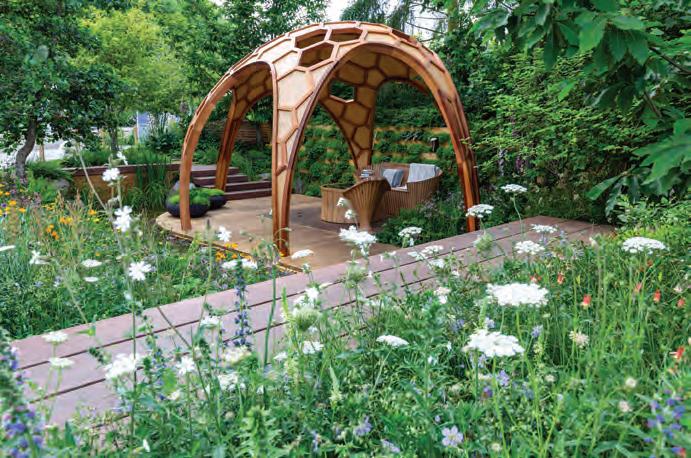
A year after launching the practice, Perkins debuted at RHS Chelsea with The Facebook Garden: Beyond the Screen, and was awarded a Gold medal, Best in Category and Best Construction. In 2022, he returned to Chelsea on Main Avenue with the The Meta Garden: Growing the Future, built by The Landscaping Consultants. This was designed to emphasise the connection between plants and fungi in woodland ecosystems, showcasing nature-based solutions such as tree, plant and forest management as a way to tackle climate change.
The naturalistic garden went on to earn Perkins another Gold medal. It was later relocated to The National Forest, as part of the Queen’s Green Canopy tree-planting campaign for the Platinum Jubilee.
“The Meta Garden was 100% without concrete. It was one of the first gardens that was built with no cement, and so [relocating it] was easy, because it became a modular build, and it was so quick to disassemble and then obviously reassemble.”
When creating the garden, Perkins says he drew on his construction background, as he does with many of his projects: “From a sustainability point of view, having a really good understanding of construction and materials allows you to then make choices about what materials you use and how you use them [...] And from a planting point of view, the planting design for me now is my main area of interest, because I see it as an opportunity for designers.”
PLANTING for success
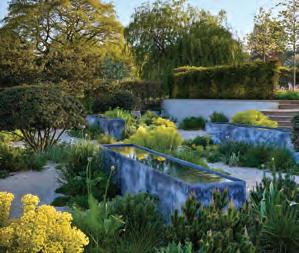
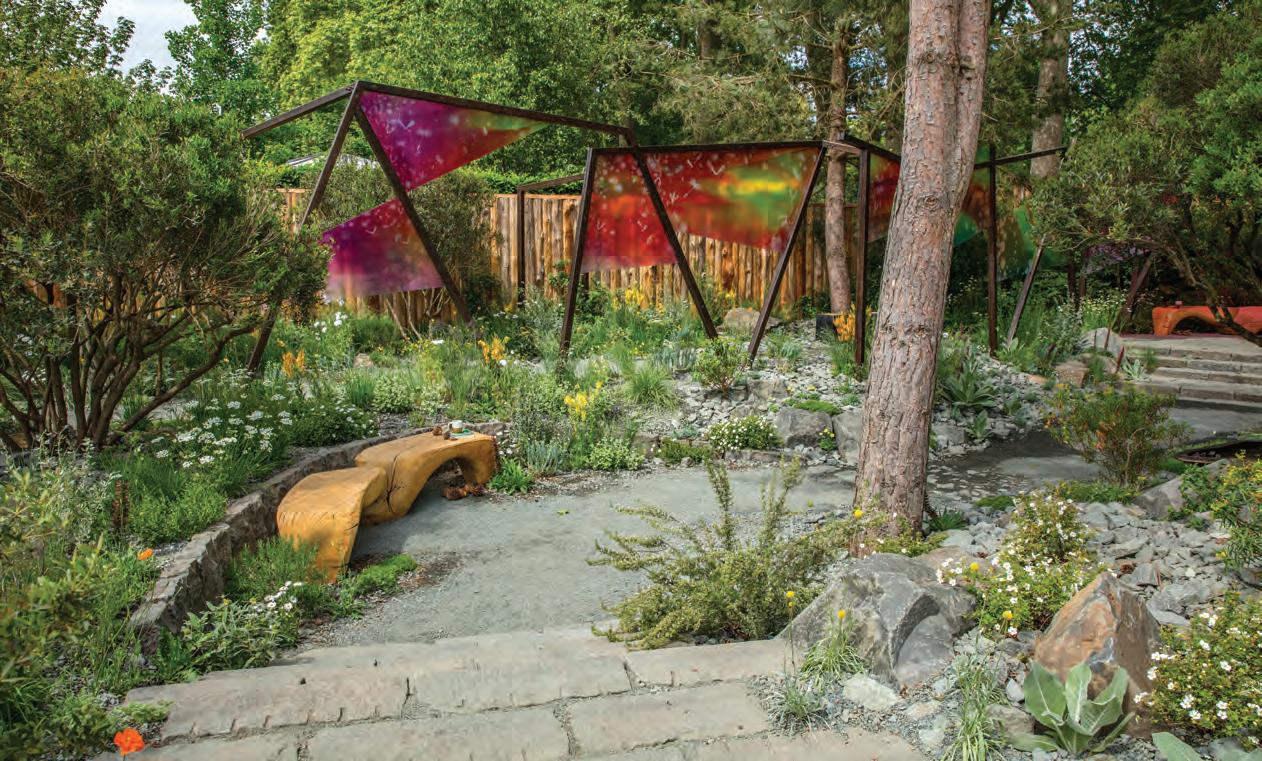
Perkins also won Gold at this year’s Chelsea show for his garden, The King’s Trust Garden: Seeding Success – also built by The Landscaping Consultants – inspired by pioneer plants, as well as the need for climate adaption and resilience.
Perkin’s garden – one of the largest on Main Avenue – took inspiration from hostile landscapes where plants have evolved over time to develop strategies to grow and set seed successfully.
Referring to the relatively new push to get land-based professionals – be they landscapers, designers or landscape architects – involved earlier on in the development process, will help tackle the effects of climate change and create lasting spaces that leverage nature-based solutions.
“We've got a real opportunity now to be able to have authority from the point of view of adding value for projects in terms of plant choices, climate resilience, air quality, flood mitigation – all of those things that we are all talking about. That's our opportunity as designers and as landscape professionals
generally to add specialist value to projects.” Adding that for the first time that in the 20 years he’s been in the industry, people are now looking deeper into what horticulture has to offer – opposed to only being seen as aesthetic dressing around the edges.
“That is the driver for me in terms of why I want to further my skills in planting design, because I see it as our opportunity to make a difference.” But that’s not to say Perkins doesn’t also enjoy the challenge of planting design – “you will never learn everything there is to know about plants, of course – it's an ongoing challenge [...] The whole concept of planting design generally, has evolved so quickly in the last 20 years [...] to now being something that is much more structurally integrated into our environment.”
The whole concept of planting design generally, has evolved so quickly in the last 20 years
Horticulture has arguably risen in recognition in recent years – not just as Perkins notes, outside the realm of aesthetics, but as the country and the rest of the world continue to feel the rising effects of climate change –from droughts and floods, to extreme weather events – more attention is being paid to the benefits nature and green infrastructure can bring.
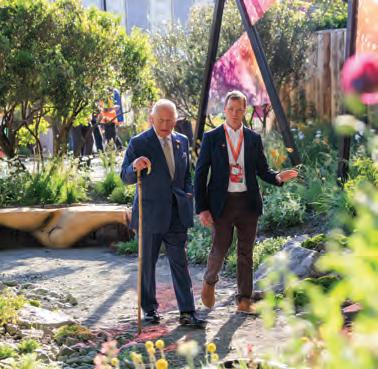
“It's lovely to be able to – not in a patronising way – educate people outside of our profession that what we do has real value. It also helps to explain to people how much skill is needed to work in the field that we work in, because it's probably one of the broadest professional fields [...] We're dealing with living material, we're dealing with construction, we're dealing with environment pressures, and we're dealing with time.”
With that education comes the expectations, as Perkins explains: “It’s really important to set expectations for people and say, you know, we are experimenting in this field.” As our ecosystems shift, we’re seeing
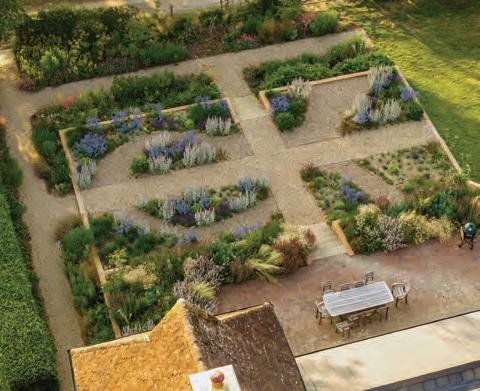
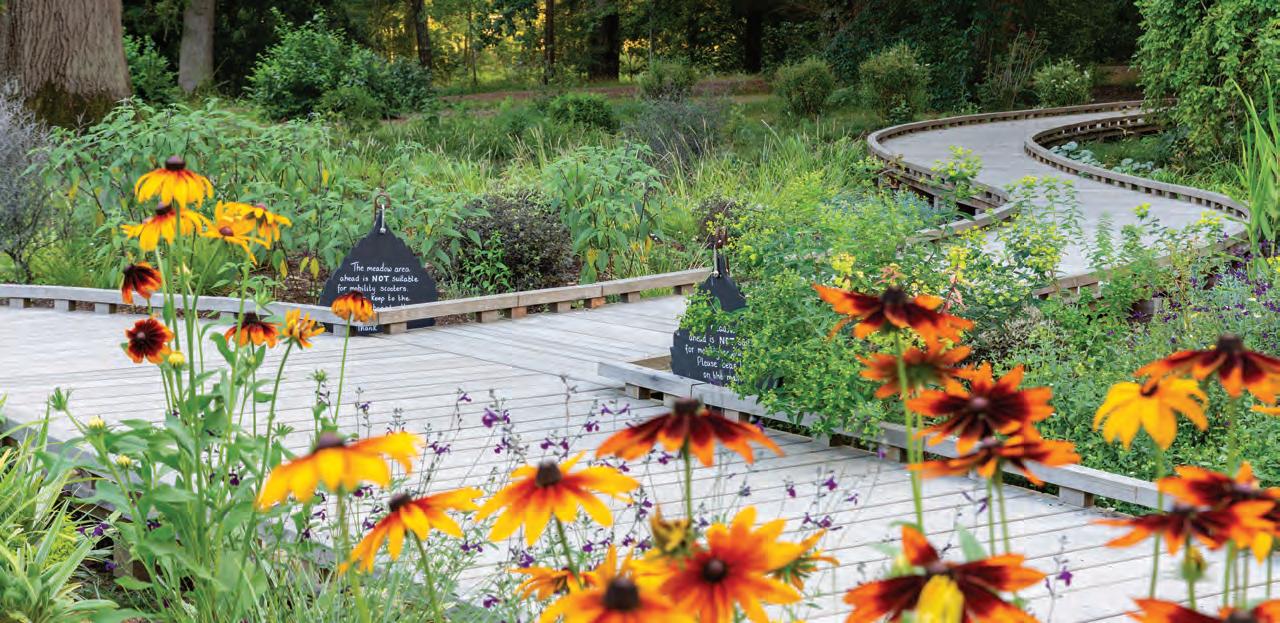
1 Gravel garden area of Sussex garden ©Will Scott
2 The Meta Garden, RHS Chelsea ©Natalia Perkins
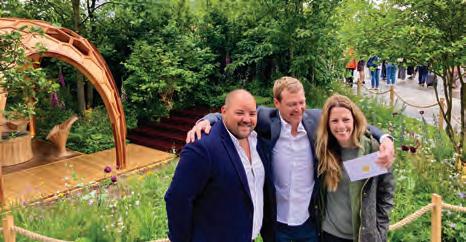
3 Gold medal for the Meta Garden, 2022
4 The King’s Trust Garden: Seeding Success ©Clive Nichols
5 With King Charles at RHS Chelsea Flower Show 2025 ©Oliver Dixon
OF THE PLANTS Fellowship
Q AQuestion: How do you feel after being recognised by the SGLD with a Fellowship this year?
Perkins: Really honoured. Because I know having worked in the industry for a long time, and to be recognised alongside some of those people is amazing.
But also having seen the growth of the SGLD, or SGD as it was, over the last 25 years, and what they contribute to the industry, and the amount of knowledge they push out for all of us, and the way they support us, to then be recognised by them is really lovely.
harsher weather conditions and, in some areas, conditions are fluctuating at such a pace that knowing what to plant and where has become a popular topic of discussion: “None of us are saying that we've got all the answers. There are a lot of people, particularly in Germany and the Netherlands, who have been doing this work for a lot longer than we have been in the UK, but in many ways, we're catching up with it.”
When speaking with Perkins, it would be remiss not to discuss one of his latest projects; the Garden for the Future at Sheffield Park and Garden was unveiled earlier this year, marking the Grade-I listed National Trust site’s first ‘major’ land-based regeneration in over 70 years.
With the purpose of influencing future design adaptions in the surrounding 120-acre garden, which has resided in the Trust’s care since 1954, data from the garden will be tracked over the coming years to observe how new and old species respond together in their new environment.
It's lovely to be able to –not in a patronising way – educate people outside of our profession that what we do has real value
Earlier this year, Perkins also announced another collaboration, this time with the Commonwealth War Graves Commission (CWGC), to redevelop the Medjez-El-Bab war cemetery in Tunisia into a climate resilient, biodiverse and sustainable driven space.
“We're going to be monitoring the ecological value of introducing, for example, southern hemisphere plants into a specific area. And what that does for, I would say, probably more generalist pollinators.”
Experimental data will also be collected to determine which species are doing well, which will feed into what is planted in the future, with what Perkins calls “appropriate risk” in regard to species' lifespan and their level of tolerance. The data will also feed into the research being conducted up and down the UK, which is exploring how the fluctuation in our weather conditions and seasons is impacting future planting choices, and what will survive decades down the road.
“I think one of the nice things about it is that, then you end up collaborating with all kinds of other disciplines. And that idea of cross collaboration is such a strength for [the industry].”
Check out Garden for the Future at the National Trust’s Sheffield Park and Garden in Pro Landscaper’s Winter 2025 Public Spaces Special

The project – which is the inaugural site in the CWGC’s pioneer sites initiative – represents a shift in adapting cemeteries to climate challenges while upholding their memory and remaining sensitive to their important heritage.
As part of the project – which Perkins calls an honour and a privilege – over 75% of the site’s existing turf will be replaced with drought-tolerant planting, as well as the gravel pathways which will be replaced with high-maintenance grass between the headstones – olive and almond trees will also be planted as a symbol of peace and regional identity.
Perkins’ work continues to bring together the practical skills, planting knowledge and collaborative approach he has championed throughout his career. As the industry continues to respond to environmental pressures, his focus remains on understanding how landscapes can adapt to changing conditions and what role planting design can play in that process, safeguarding our natural environment for the years to come.
6 Garden for the Future at Sheffield Park and Garden ©Natalia Perkins
EDEN A Vibrant
STUART CHARLES TOWNER SPECTRE
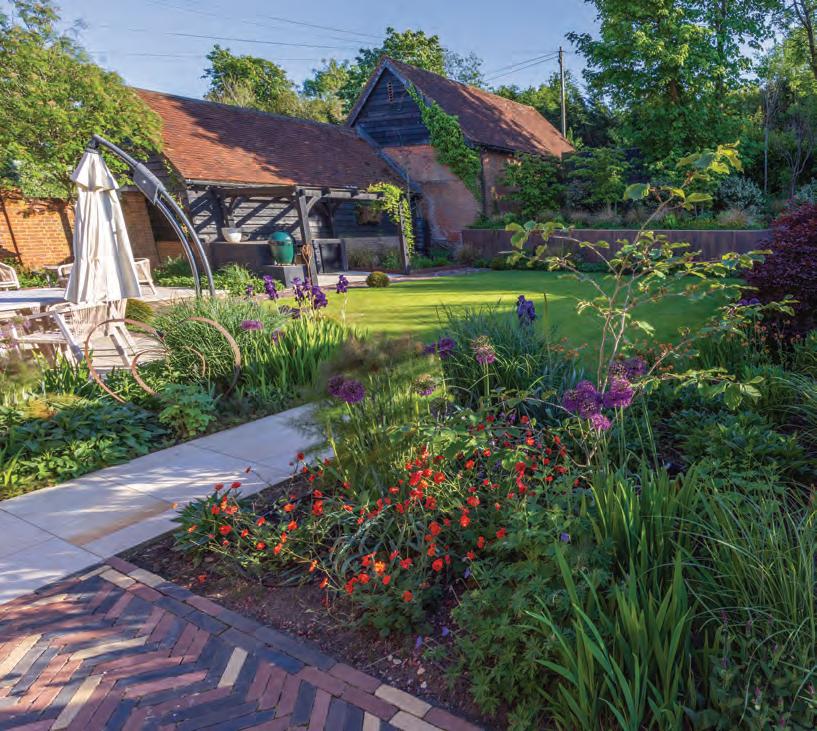
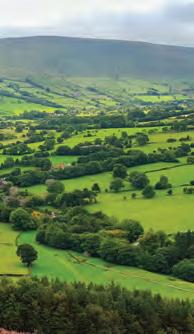
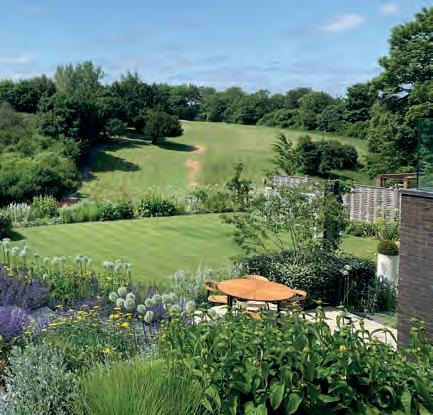
Ablank canvas, laid mainly to grass with a steep patch of poorly planted foliage – made up for by the sweeping views of the rolling fields of Winchester Golf Course. That is what designer Stuart Charles Towner began with, before transforming this residential garden into an award-winning, family-friendly and vibrant space. Towner was entrusted with preserving the picturesque views of the surrounding landscape, while introducing structure that unifies the various areas of the garden and balances the prominence of the large bank by giving equal emphasis to all parts of the space.
PROJECT DETAILS
£65,000-£80,000
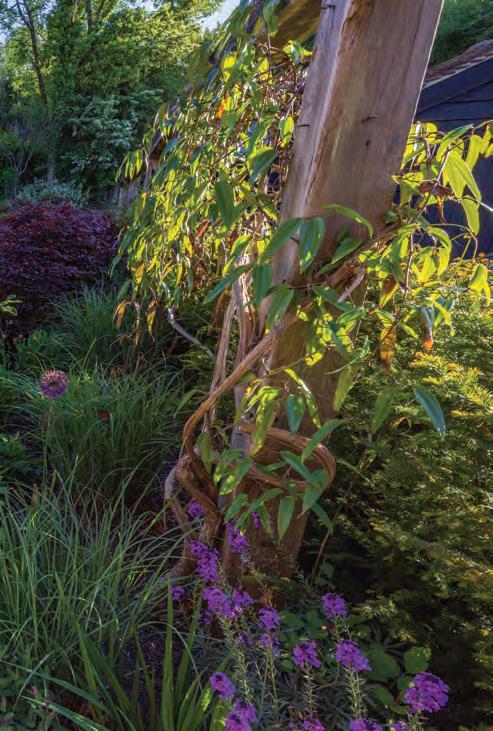
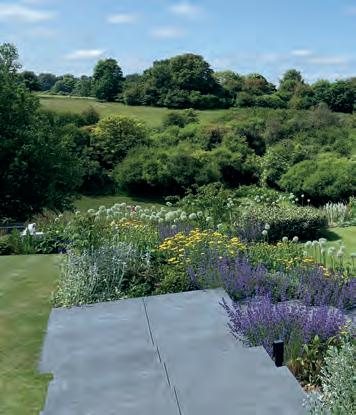
By introducing a wider variety of plants, Towner was able to create a soft landscaping scheme across the garden’s multiple levels that brought structural depth to the space, while still softening the boundary lines of the garden and increasing the site’s biodiversity.
“The bold structural feature plants and blocks of clipped topiary form the backbone of the garden”, says Towner, “giving much needed height, shade and textural contrast to an overlaid planting scheme that is softer, grass and shrub based, echoing the wider landscape, helping to bring the wider landscape into the garden.
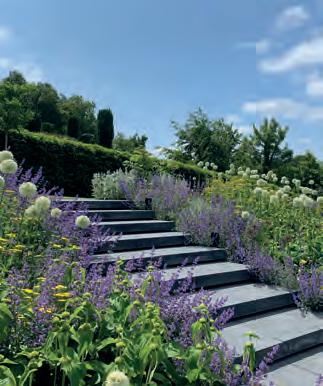
The garden’s palette now offers pops of purple, yellow and white hues amongst a lush sea of greenery that frame the different zones.

PLANTING
• Rhus typhina
• Amelanchier lamarckii
• Digitalis ferruginea
• Sesleria autumnalis
• Phlomis russeliana
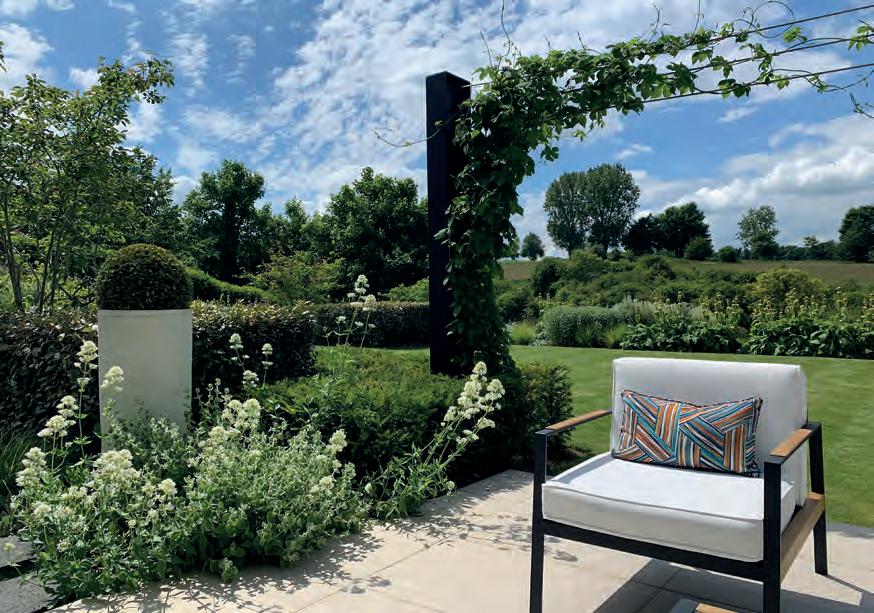
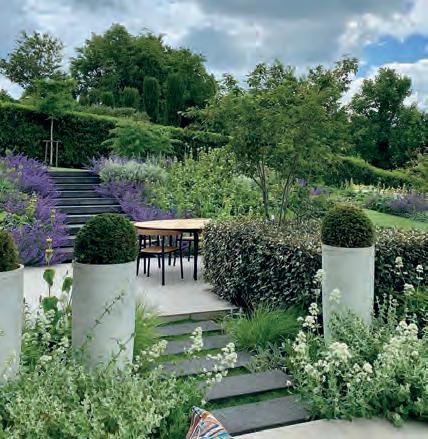
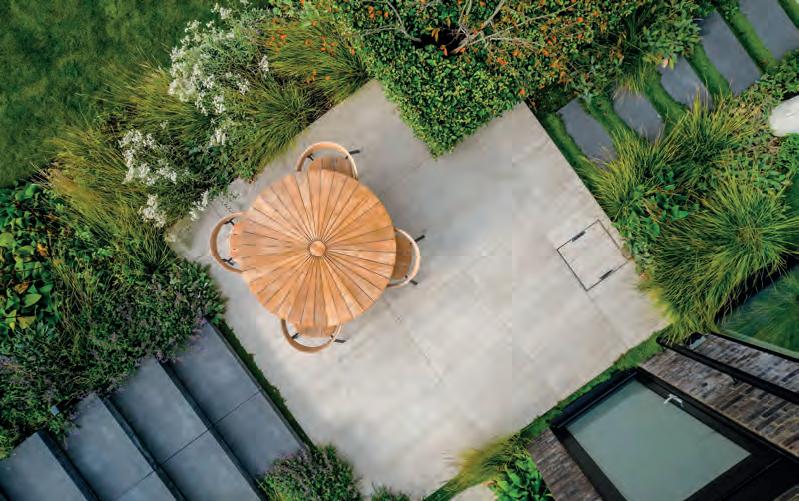
One such space is the main entertaining space off the back of the kitchen terrace, which was raised to bring it in line with the internal floor and create a seamless flow from inside to outside, and reduce the need for excavation and export of soil off-site.
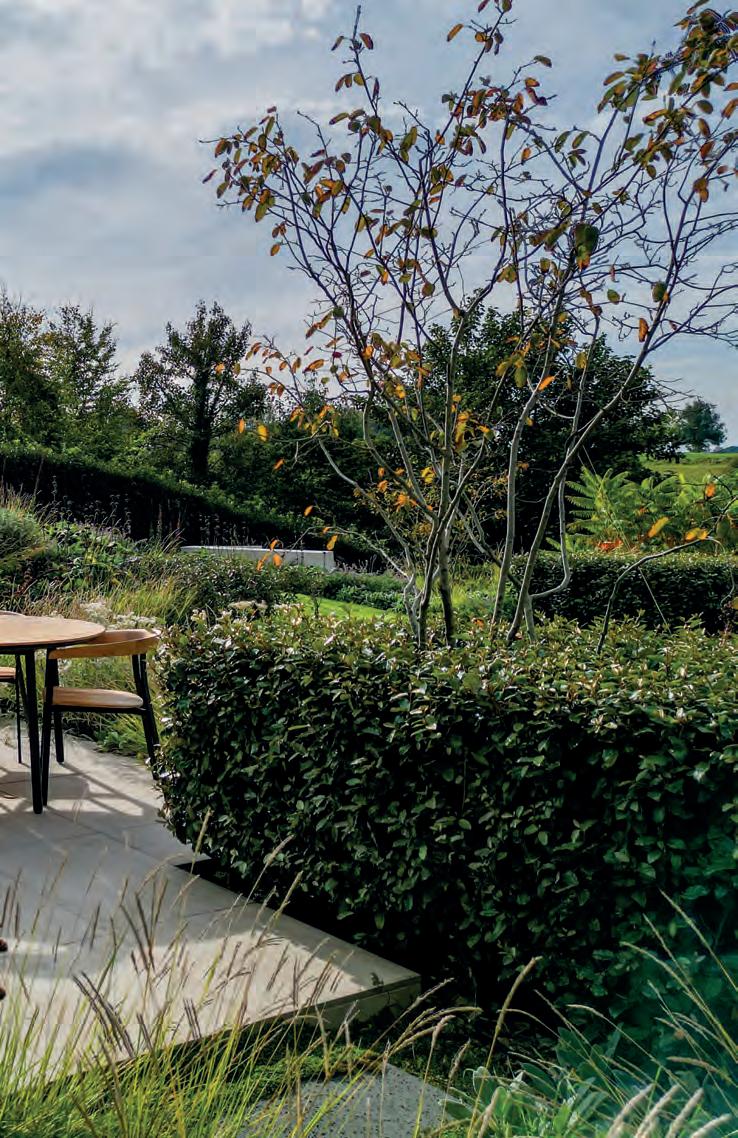
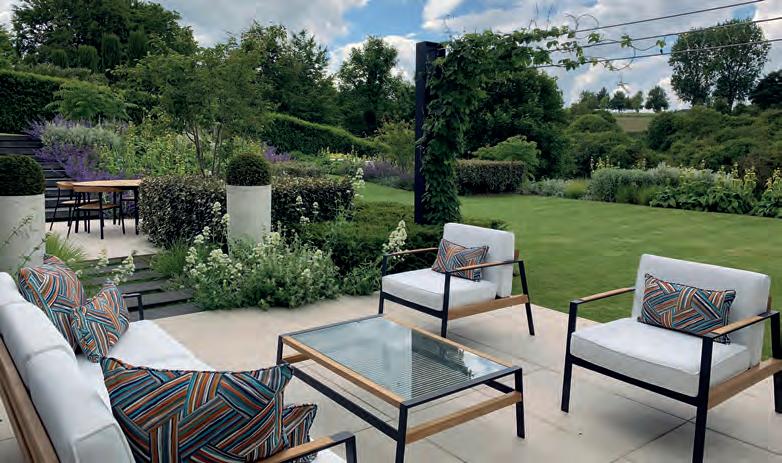
Gently framed by industrial steel beams adorned with climbing plants, the terrace has been designed to create a sense of enclosure and privacy and is equipped with light wood and slick black metal toned outdoor seating, tying the pieces together with the planting palette and wire framing.
Off to one side, a smaller, more intimate space has been added, created in part with the connecting pathway and grants access to the side gate. The secondary terrace houses
a matching dining area, framed by lower lined planting that gives way to the wider view.
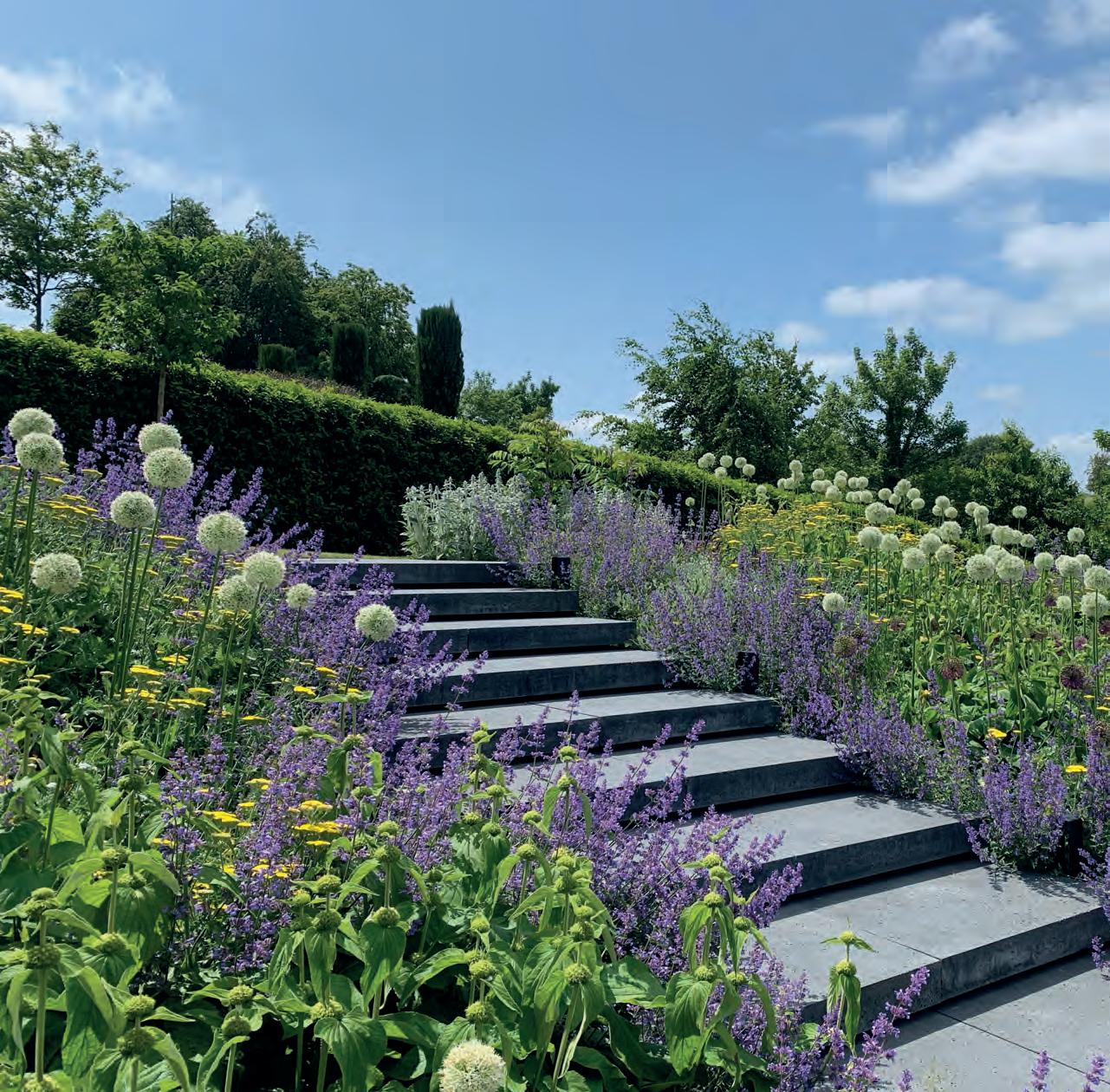
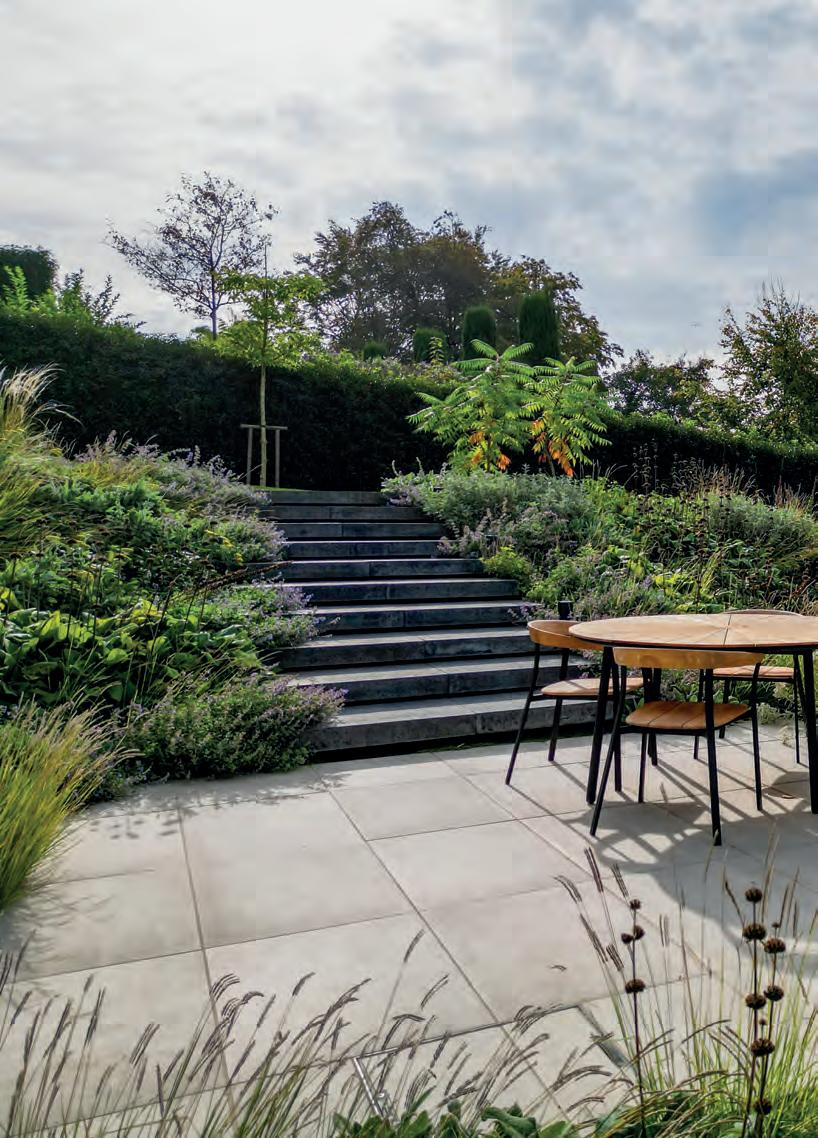
Descending from the side terrace are a set of new feature steps – framed again by hues of purple and white – that grant year-round access to the side gate, as well as helping to soften the gradient of the nearby bank and break it up.
1 Looking across the feature steps
2 Achillea moonshine & Salvia x sylvestris ‘Mainacht'
3 Dining terrace looking west across the steps
4 Framed views from the main terrace
5 View of garden and borrowed landscape
6 Pots, planting and stepping stones
7 Ariel view of the dining terrace and steps
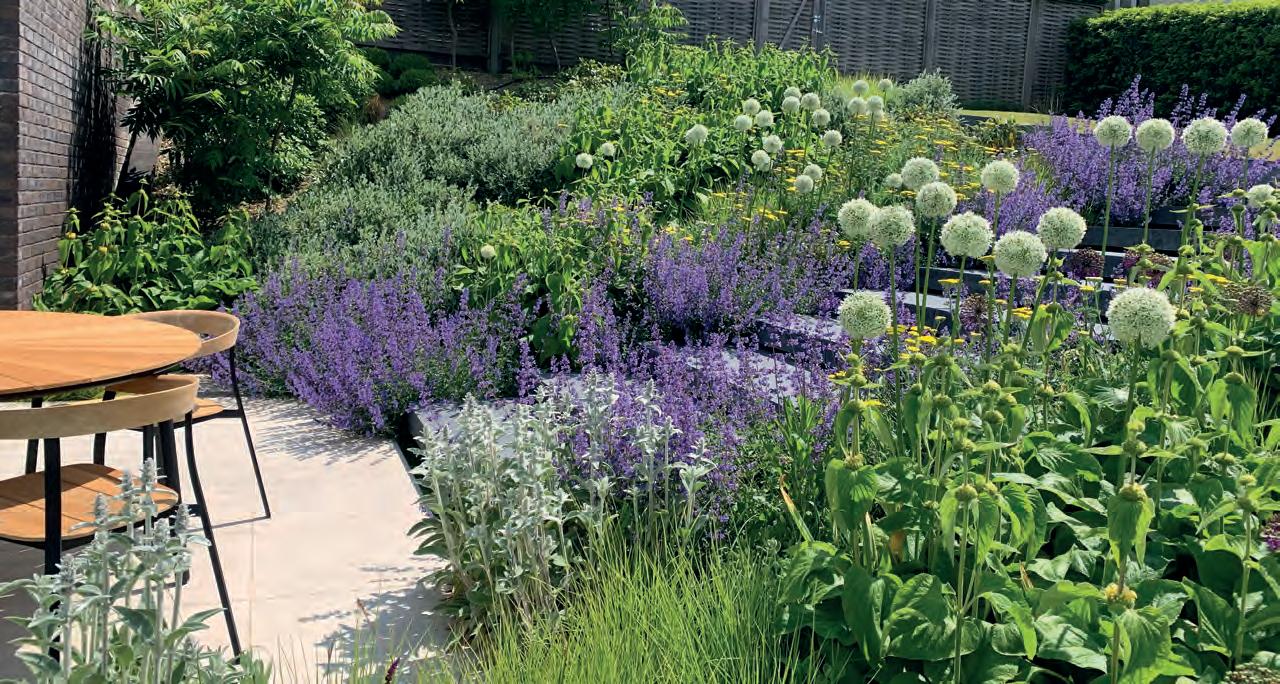
The large level lawn has been retained as a space for the client’s children to play and enjoy outdoor activities. Its open character provides a visual counterpoint to the more densely planted garden beds surrounding it, ensuring both functionality and balance within the overall design.
Tucked away at the rear of the garden, secluded by planting and only accessible via a bark mulch path, is a quiet, cosy corner for the clients to enjoy. Adding to the serenity is
convenient in-built seating and additional space given over for a fire pit.
From a blank canvas, this award-winning garden is now alive with harmonious colours and comforting character, offering flexible entertaining spaces for the whole family to enjoy.
8 Feature steps surrounded by planting
9 Main terrace looking west across the garden Photographs ©Stuart Charles Towner
ABOUT
Stuart Charles Towner MSGLD is a freelance multi-award-winning garden designer and consultant living in the UK. His designs are a meeting point of the old and the new, using traditional materials with a contemporary and modern eye for the creation of spaces that sit in perfect harmony with their surroundings. stuartcharlestowner.co.uk
REFERENCES
Contractor Landscapes 4 Living landscapes4living.co.uk
Porcelain paving London Stone londonstone.co.uk
Steps Schellevis schellevis.nl
Plants
Provender Nurseries provendernurseries.co.uk

Bespoke British Made Outdoor Kitchens
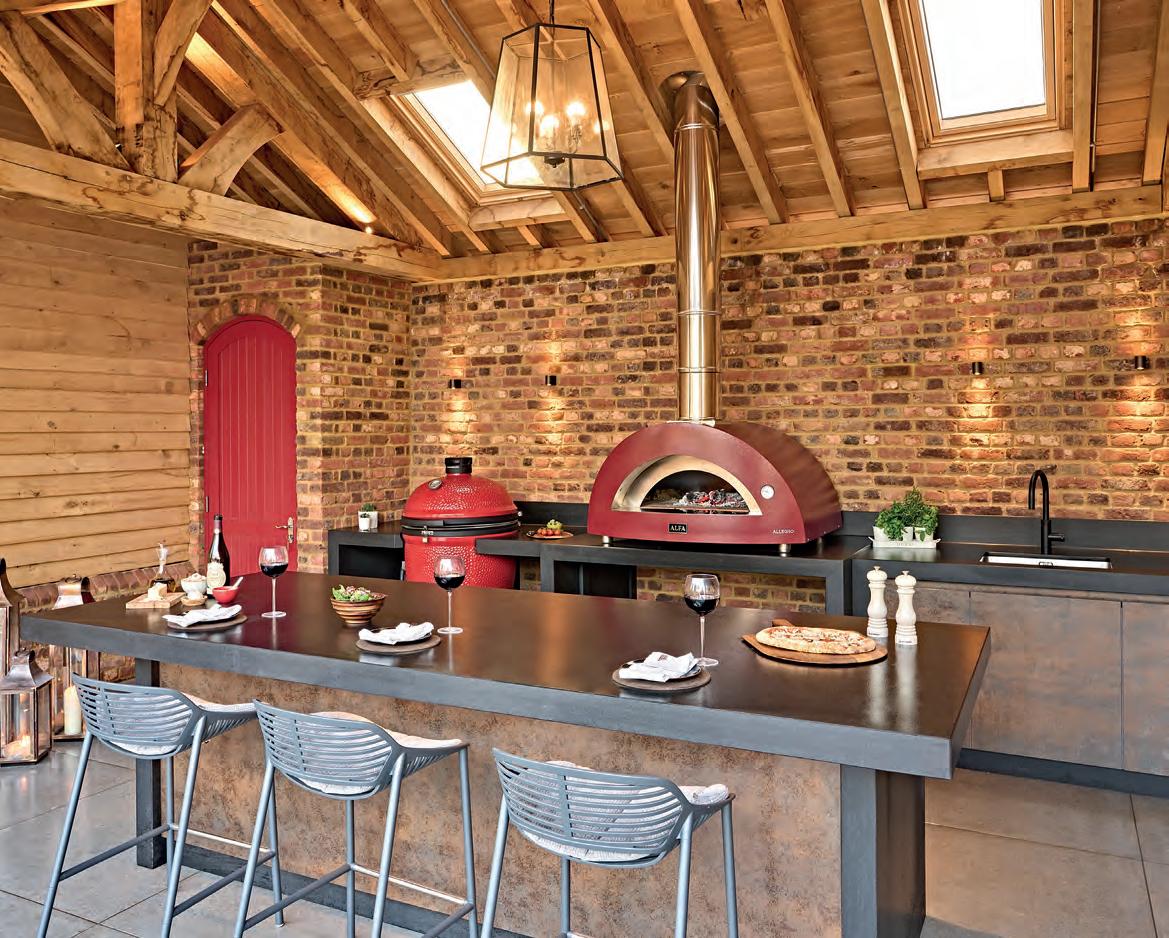
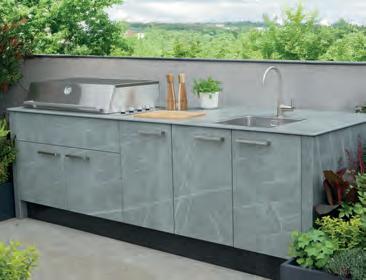


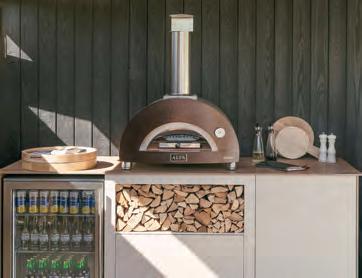
KönigOutdoor is a British manufacturer of premium outdoor kitchen cabinetry, crafted to the highest specification. Using sintered stone for its external surfaces, each kitchen offers a sleek, high-end finish with exceptional durability.
Every KönigOutdoor kitchen is made to order, with comprehensive, turnkey support available for you and your client, from initial design consultation through to installation and aftercare.



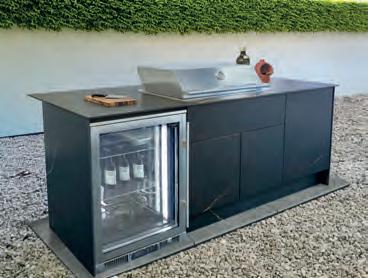

Kitchen design by Stevens Design & Build
In conversation with...
FÖRST BEN HENNESSY
With a solid reputation already rooted in the arboriculture sector, Först’s head of brand shares the vision behind its latest launch


Can you tell us a bit about Först and what your role entails?
Först builds professional woodchippers used by arborists, landscapers and grounds teams across the UK, Europe and North America. We design and build everything in Hampshire and now supply machines into more than 25 countries.
The brand has grown quickly – it started in a barn with a small team who wanted to build a better chipper for professionals. That mindset is still the backbone of the company today, with performance, reliability and a very hands-on customer approach at the centre of what we do.
My role focuses on the brand and the full customer experience. That includes how we present ourselves, how we communicate and how we bring people closer to the company so they can see what we’re about.
It’s about making sure every interaction feels consistent, considered and positive, and about getting it right for the customer from the first conversation through to how the machine performs on site.
Rather than push an arborist machine into the space, we wanted to build something around their needs. That’s why the Cadet 6 exists
Först has built a strong reputation in the arboriculture industry. What led to the decision to expand your focus to include landscaping as well?
Landscapers have been asking for this for a long time. We’ve seen more crossover between the two sectors, with landscapers handling larger volumes of green waste and looking for a dependable machine that isn’t oversized for their workload.
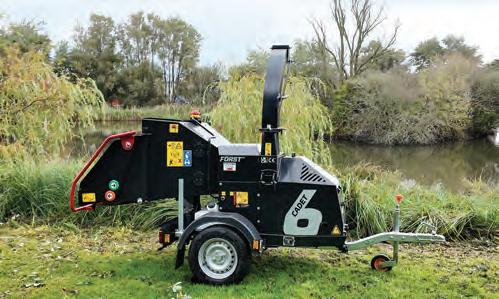
Rather than push an arborist machine into the space, we wanted to build something around their needs. That’s why the Cadet 6 exists. It’s the first machine we’ve designed specifically for landscapers, taking everything we know about performance and reliability and shaping it for a different working pattern.
With Först introducing its first machine developed specifically for landscapers, the Cadet 6, can you share more about this? The Cadet 6 uses the same chipping chamber as our ST6P, one of the best-selling six-inch machines in the arb world, but packages it in a lighter, more efficient build tailored for landscapers. It delivers proven performance with a smaller engine and lower running costs,

and it’s built to handle the materials landscapers actually face. Traditional chippers often struggle with green or tangly waste like conifer, which clogs chambers or wraps around feed rollers. The Cadet 6 avoids all of that, using our open-top Först flywheel to clear wet material without blocking and the FörstGrip feed roller system to pull in everything from vine and blackthorn to full six-inch timber.
What sets the Cadet 6 apart in the market?
It’s purpose-built, not repurposed. Landscapers often end up choosing between an underpowered shredder or a full arborist chipper that’s more than they need. The Cadet 6 sits right in the middle. It handles everything from wet hedge trimmings to larger timber up to six inches.
Because it’s built with our usual approach – strong construction, easy access for maintenance and simple controls – it feels like a proper professional tool rather than a compromise.
What insights have fed into the creation of the Cadet 6?
A mix of customer feedback and wider market behaviour. Landscapers told us they needed a machine that could deal with varied material without clogging, didn’t require constant use to justify the investment and wasn’t intimidating in terms of size or engine.

FÖRST
We also saw a shift in the industry towards handling waste more efficiently on site. Those insights shaped everything, from the shared ST6P chipping chamber to the smaller engine choice and the focus on easy servicing.
Can we expect more moves into the landscaping industry from Först, and if so, can you share any teasers?
Yes, absolutely. The Cadet 6 is our first step, not a one-off. We already have a tracked version about to hit the production line which will be available next year. This will suit teams working on uneven ground or sites where access is tight.
Beyond that, we’re developing a broader product range that will serve both landscapers and arborists, focusing on the kind of practical, durable kit that makes a real difference on site. We can’t share specifics just yet, but the goal is clear – bring the same level of performance and reliability we’re known for in arb into a wider set of applications.
Is there anything else you would like to share?
Landscapers deserve purposebuilt equipment, not hand-medowns from other sectors
Only that landscapers deserve purpose-built equipment, not hand-me-downs from other sectors. The Cadet 6 is designed to make their work easier, quicker and more professional, and we’re excited to support an industry that’s growing fast and doing brilliant work.

THE NEW TRACKED VERSION OF THE CADET 6
CADET 6 LAUNCH EVENT




At Boom & Bonheur, every season brings beauty, but autumn reveals the true character of our collection. Strong, mature plants and distinctive trees show their rich colors and unique forms. Transplanted every four years. Quality from root to tip. Get in touch and be surprised by the wide range of our nursery.
Boom & Bonheur – because trees give life and bring happiness! Boom

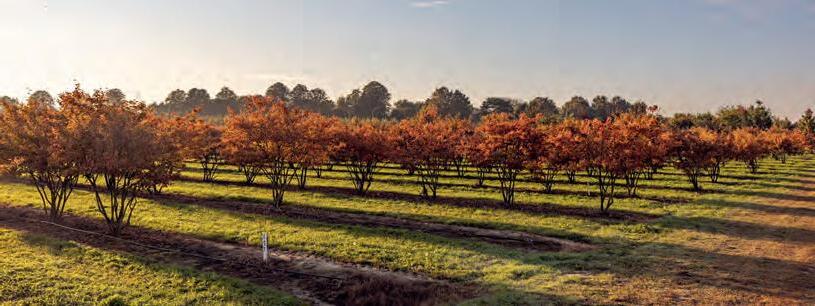

PROJECT DETAILS
Project value
£140k
Build time
5 months
Size of project 1,000m2 Awards
APL Awards
2026 Designer
Over £75k Finalist
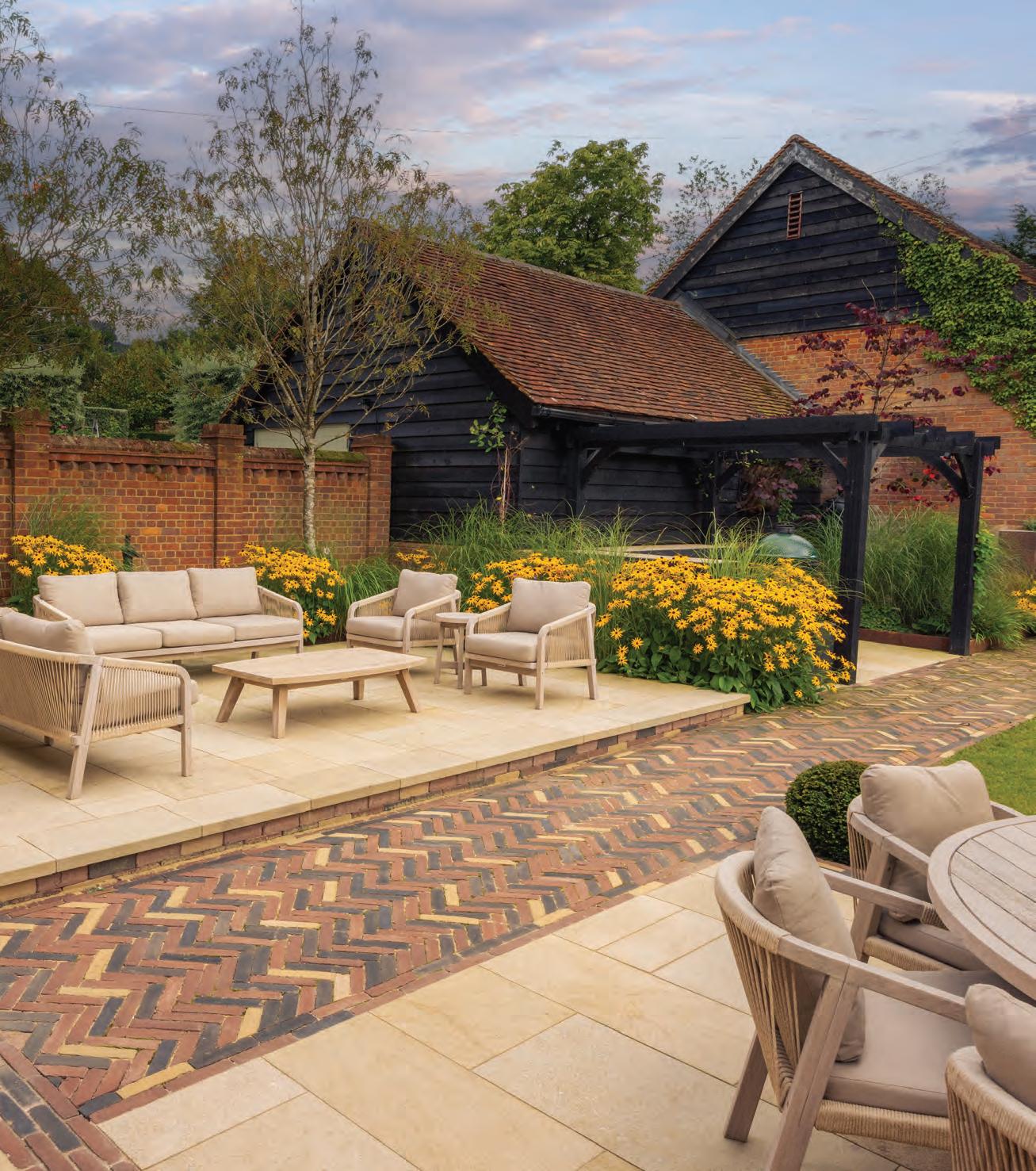
Timeless ELEGANCE
CHILTERN GARDEN DESIGN
STABLE HOUSE
Overlooking the picturesque rolling landscape of the Chiltern Hills sits Stable House, a former stable block that had been lovingly remodelled on the inside to make it into a beautiful family home. However, the outside space was untouched and falling short of its potential. The architect who was brought in to design a new garden building – intended for use as a golf simulation room – recommended Chiltern Garden Design, who eagerly took on the challenge of breathing new life into the front and rear garden spaces. Mindful of the house’s history and setting, Chiltern Garden Design proposed a total redesign to transform the spaces whilst keeping a sense of heritage.
The existing front garden, was unusually the main garden space, and the clients were keen to use it for entertaining. Yet it was far from living up to the standards of the stylish interior when
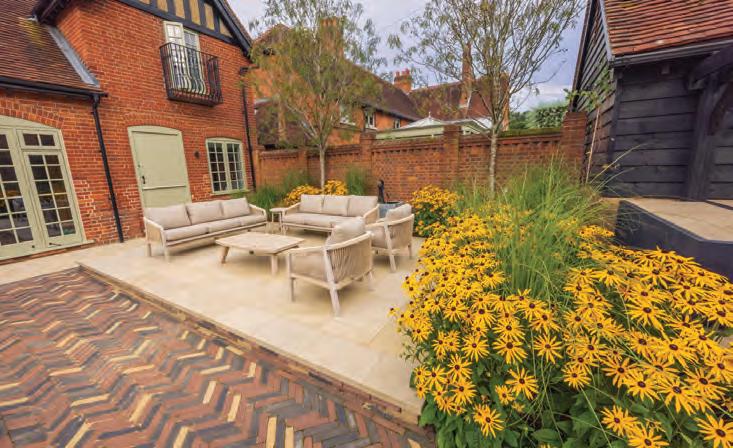
designer Sam Proctor first visited. It comprised a mossy lawn, a scrappy sloping bank, and a low box hedge which wrapped around the dining area, preventing access onto the lawn, unless the owners and their visitors were willing to jump over it.
The shallow rear garden, enclosed with fencing, was an awkward shape. It housed an unused seating area set across a patchy lawn, and formed the main view from the kitchen and dining room windows. But as Proctor notes, there was “so much untapped potential waiting to be realised.”
Her design involved the excavation of the existing bank, opening up space for a larger,
DESIGNER FEEDBACK
“This was the first time that Chiltern Garden Design and Castle Landscapes collaborated on a landscaping project. The teams really worked well together, gelling to such an extent that we have gone on to collaborate on four more major project installations designed by us, with more in the works, not to mention working together successfully to build our design at the Chelsea Flower Show in 2024.”
Sam
Proctor,
Founder of Chiltern Garden Design
more expansive lawn, more commensurate with the house’s prestigious façade. The new retaining wall, faced with vintage Corten-effect cladding, has gradually faded into the landscape as planting soften its edges from both above and below. A trio of feature multistem Cornus kousa var chinensis trees draw the eye to the far end of the garden from the French doors of the living room and the dining terrace, with seasonal interest in spring and autumn in particular from long lasting blossom –actually bracts – and vivid autumn colour.
A new planting scheme was designed to enhance the entertaining spaces, create a warm welcome by the front door, and add vibrancy in the front garden. A range of perennials in vibrant
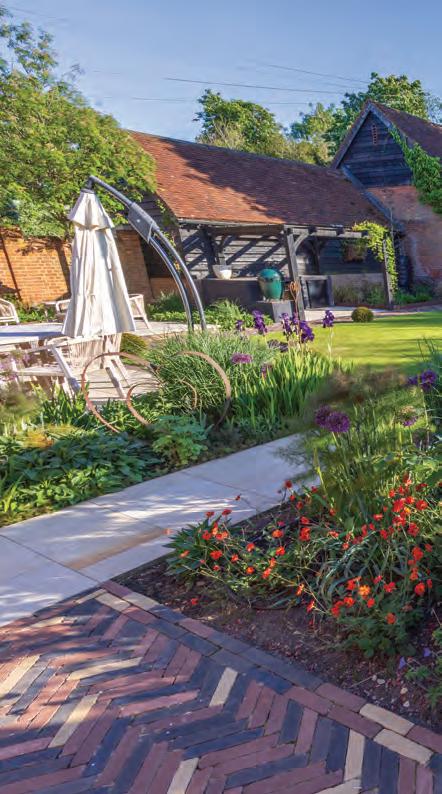
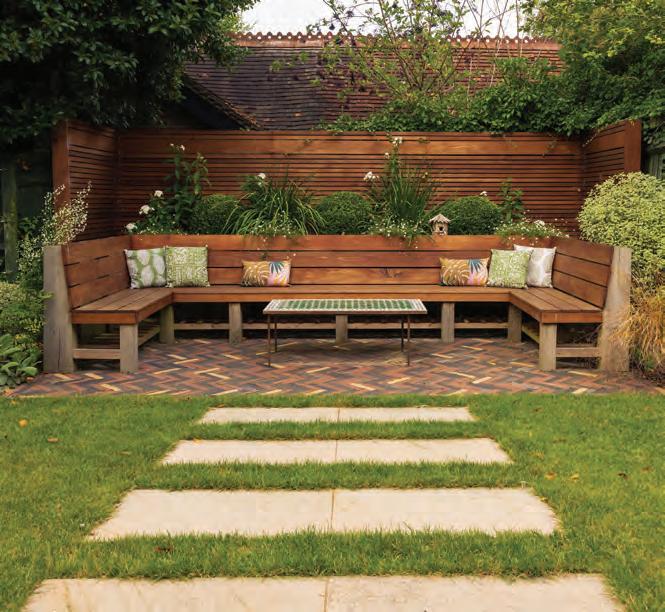

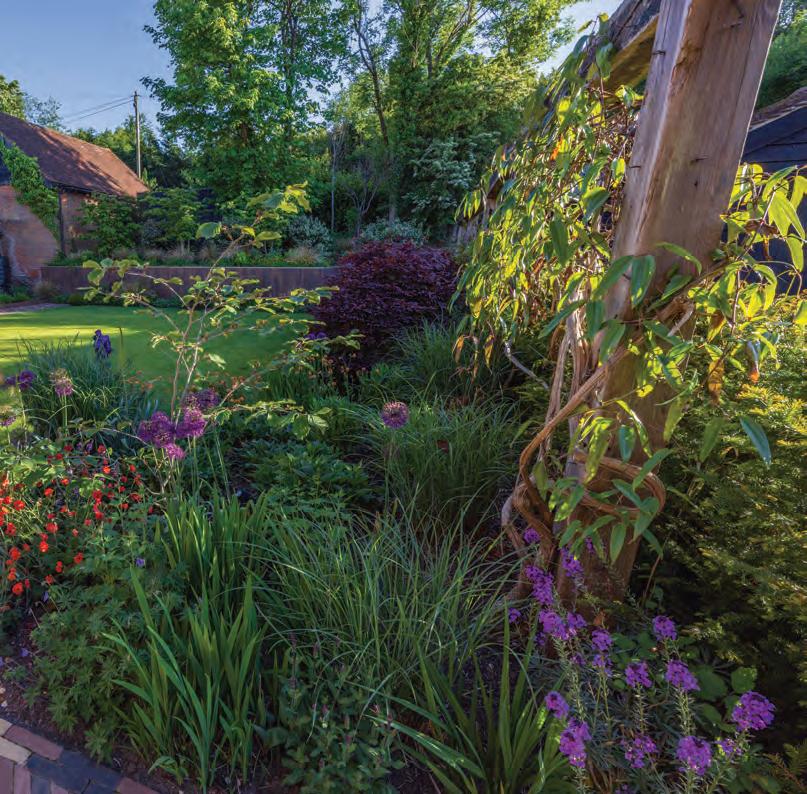
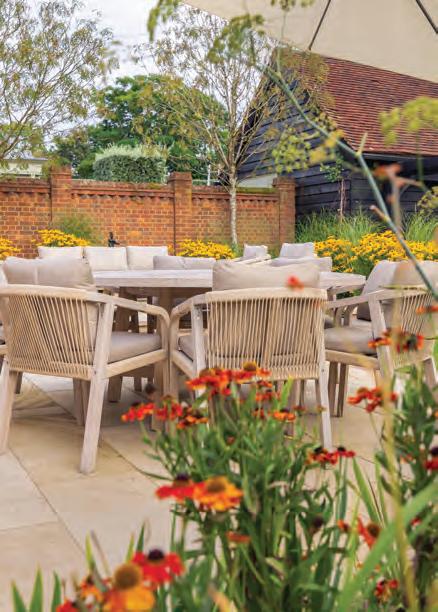
shades of yellow, orange, purple and red mix with ornamental grasses and shrubs to create a zingy combination adding energy to the space. In contrast, the rear garden’s planting scheme was designed to feel more intimate, calming and sensual, with whites, silvers and soft pinks as the main elements of the colour scheme, with plenty of scent and seasonality.
As the front garden would be hosting the outdoor dining and main lounging spaces, as well as the main lawn and outdoor kitchen, privacy was a key consideration. This was achieved through establishing new yew hedging, and additional established climbers including Trachelospermum jasminoides to run the length of the existing planting rail, keeping the garden’s sense of history, whilst screening views to the lane and the driveway. A trio of plum-coloured Acer palmatum set the stage dramatically along the west side of the garden, offset by looser naturalistic planting in fiery shades of yellow, orange, red and purple, softened by grasses. Further planting beds set into the hardscape enhance the main seating areas, creating an elegant contrast between smooth paving and loose, colourful planting.
PLANTING
• Cornus kousa var. chinensis
• Acer palmatum 'Atropurpureum'
• Geum ‘Totally Tangerine’
• Rudbeckia ‘Goldsturm’
• Helenium ‘Sahin’s Early Flowerer’
• Oenothera lindheimeri ‘Whirling Butterflies’
• Paeonia lactiflora ‘Duchesse de Nemours’
• Hydrangea paniculate ‘Limelight’
• Phlx paniculate ‘David’
• Thalictrum ‘Splendide White’
CLIENT FEEDBACK
“Both our gardens were bland, nondescript and had no character. Sam very quickly offered us designs with everything and more than we asked for. The exact detail involved in the numerous drawings and the entire process thereafter ensured that the contractor (who Sam sourced for us) has given us the highest standard of workmanship. The plants and trees are stunning, we have a garden in bloom, and every week another pop of colour appears!”
Approaching the front door, there’s a moment of anticipation and intrigue as you pass between sections of tall yew hedge, before the garden opens up to you, with the path to the front door sweetened in winter with the scent of Hamamelis Elegant sawn paving edged in clay pavers work to establish different zones – from the dining and lounging spaces, to the newly installed bespoke outdoor kitchen nestled under the pergola, with a herringbone path leading the eye down the garden.
Just in front of the new garden building sits a small decking area, acting as an additional seating area offering views back towards the house. Though entirely modern, its composite deck material blends effortlessly with the beams of the planting rail – an original feature that Proctor was keen to retain.
1 Clay paver herringbone path
2 Lounging space in lush vibrant planting
3 Spring planting sparkles in reds and purples
4 Stepping stones to built-in bench at the rear
5 Heleniums and fennel soften the outdoor dining area in summer
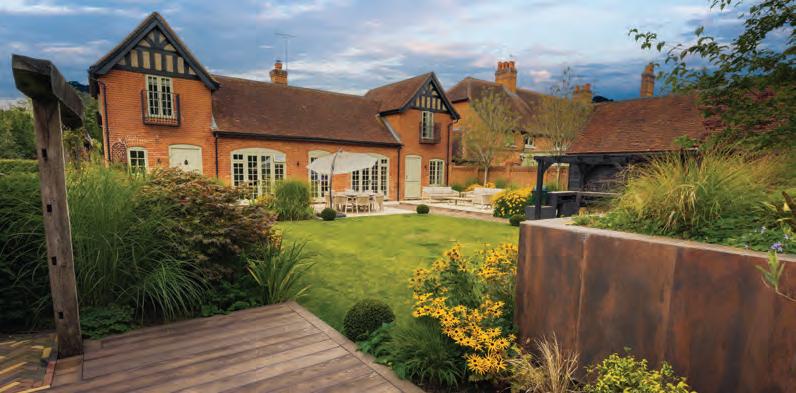
The enlarged formal lawn is edged with topiary yew cushions, connecting it to the property's historic character while bold borders of vibrant perennials and grasses bring it up to date.
Whilst the works were already underway, the client asked for a last-minute addition to be considered – they had bought an old zinc tank and asked if the team could create a water feature using it. Proctor selected a Victorian style water pump for circulation, and now the feature adds a further sensory dimension, setting the stage for relaxation and entertainment.
The new back garden arrangement is intended to be a private space for family use, as well as to create attractive views from the kitchen and dining room windows, drawing the owners outside to enjoy it.
To help the rear fences "disappear", they were painted green, then adorned with a variety of scented climbers. The planting palette was limited to whites ageing to soft pinks, with green and silvery green foliage to create a calming, restful scheme with a classically elegant atmosphere. Gone is the bleak and featureless seating area boxed in by blank fences, replaced instead by a bespoke built in-bench and classic western red cedar horizontal screening.
Proctor intentionally included a tall timber planter set immediately behind the bench, so that the direct view from the dining room window is softened with a range of evergreen and white seasonal planting, off-setting the hard materials of the paving, timber bench seat and slatted screening.
Many of the existing plants were retained, with
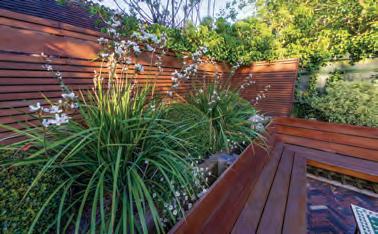
some remaining in their original positions, while others were relocated to tie in with the new species established. The whole garden has also been equipped with both lighting and irrigation systems, ensuring the owners can enjoy the garden year-round and after dusk, while also minimising maintenance.
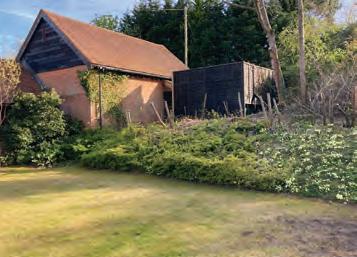
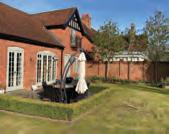
This former bland and featureless space has now been transformed into a pair of contrasting vibrant and tranquil gardens, complementing the classic style of the interiors. The gardens entice you into them for relaxation and entertainment all year round, giving the owners quality outdoor spaces that reflect the site's history and echo the beauty of its surroundings.
REFERENCES
Contractor
Castle Landscapes castlelandscapesltd.co.uk
Thorpe sawn
English sandstone
Allgreen allgreen.uk
Clay pavers bespoke mix
Vande Moortel vandemoortel.co.uk
Supplied by Country Supplies countrysupplies.uk
Enhanced grain antique oak composite decking Millboard millboard.com
Vintage steel premium design clad London Stone londonstone.co.uk
Pergola Dunster House dunsterhouse.co.uk
Cora rope dining and lounging furniture Kettler kettler.co.uk
Lighting Landscapeplus landscapeplus.com
Trees Barcham barcham.co.uk
Deepdale Trees deepdale-trees.co.uk
Chiltern Garden Design was founded by Sam Proctor MSGLD MAPL, working in and around the Chiltern Hills. Proctor created her first show garden, The Water Saving Garden, at RHS Chelsea 2024, whose relocation to the Iver Environment Centre won the Best Community Garden Award at the Pro Landscaper Project Awards 2025. chilterngardendesign.com
Plants
Creepers Nursery
creepersnursery.co.uk
Robin Tacchi
Plants
robintacchiplants.com
BEFORE
Both images ©Chiltern Garden Design
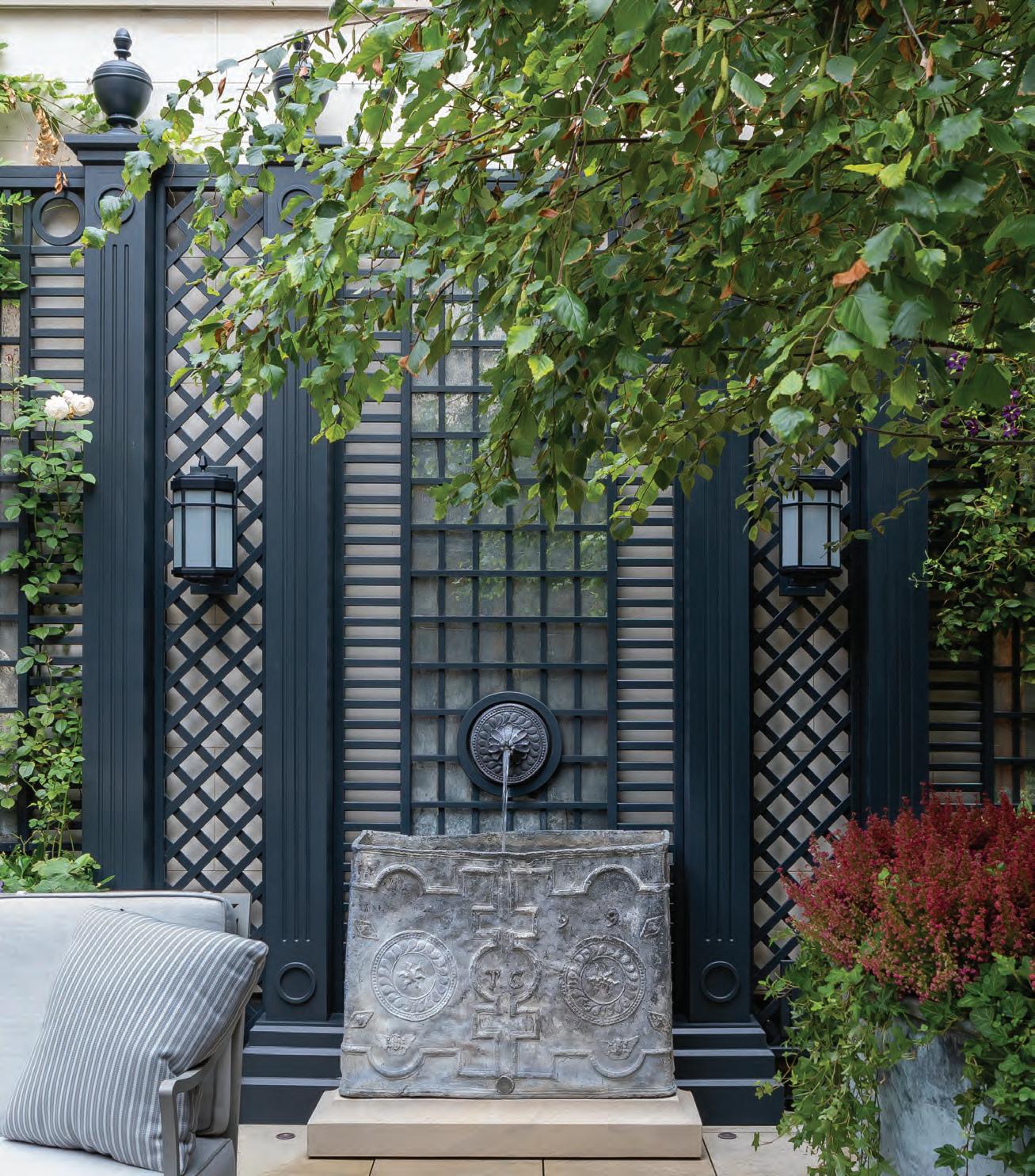

TRIBUTE A Tea Party’s
DK GARDEN DESIGN
WONDERLAND GARDEN
Tasked with transforming a neglected corner of the playground once used as a ball court, David Keegan was introduced to Broadfield Primary School in Rochdale after completing a sensory garden nearby with the local council. In similar spirit, Keegan was asked to create a sensory garden that combines play with education, sustainability and enjoyment. And with that, he jumped into the rabbit hole. In memory of the school’s late art teacher, who had a soft spot for all things Lewis Caroll’s Alice in Wonderland, the garden was designed to be a direct tribute to the literary classic. Donning the Mad Hatter’s top hat, the Cheshire Cat and enlarged Queen of Hearts playing cards, the space provides a sensory-rich space for children to explore.
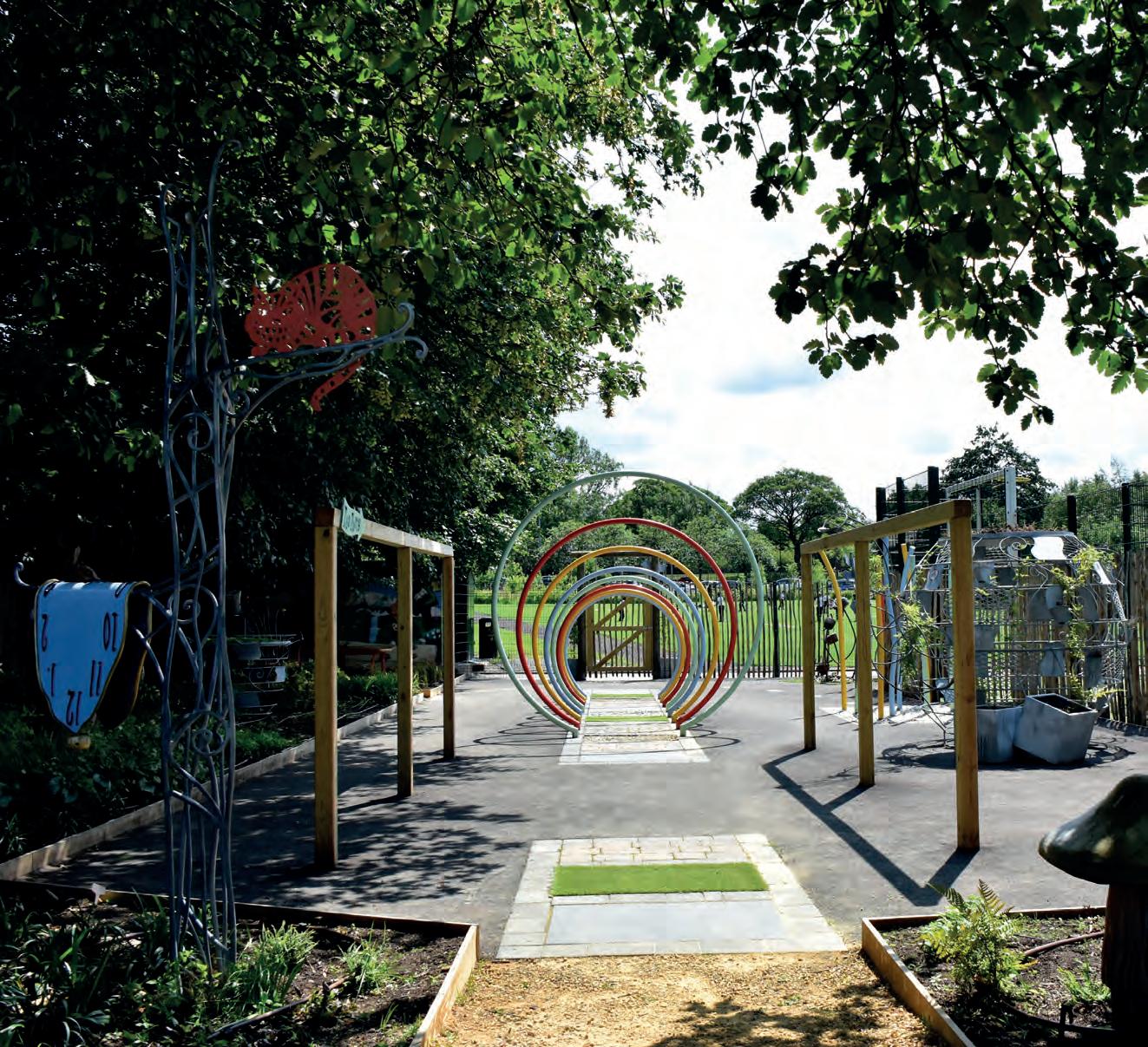
PROJECT DETAILS
1 month – 6 weeks
PLANTING
–HERBS
• Allium schoenoprasum
• Origanum vulgare ‘Aureum’
• Rosmarinus officinalis
• Salvia officinalis
• Thymus pulegiodes ‘Aureus’
Intentionally oversized, the exaggerated playful features evoke a “sense of awe and fantasy central to the inspiration,” explains Keegan. Created in collaboration ith an artisan blacksmith, David Freedman, the bespoke steel elements were manufactured according to the design concepts. In the same breath, chainsaw sculpturer Mick Burns carved the wooden toadstools and iconic white rabbit, bringing Keegan’s vision to life.
“The most important thing for me was to remember what it’s like to be a child with
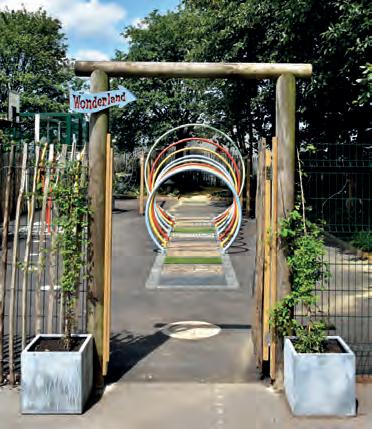
a sense of wonder and adventure,” says Keegan in reflection of the Wonderland’s design process. Appealing to the ‘curious and curiouser’ world, the oversized top hat could be fit for a Queen with an extraordinarily large head; or a sensory-rich space for a small child. Over time as the garden becomes more established, its climbers will grow to cover the entire metal structure, creating a fantastical hideaway for children to immerse themselves in.
The most important thing for me was to remember what it’s like to be a child with a sense of wonder and adventure
Much like the rabbit hole, the garden provides endless opportunities. Navigated by winding pathways, children can find a graffiti mural of Alice and the Mad Hatter having tea, fit with their very own table. Created by The Mural Artists, the mural transforms an existing shed into a vibrant centrepiece.
Boasting an educative backlight, the garden also features an adjoining allotment intended to encourage interactive planting to give children and staff an opportunity to see the journey from seed to plant. Planted with herbs
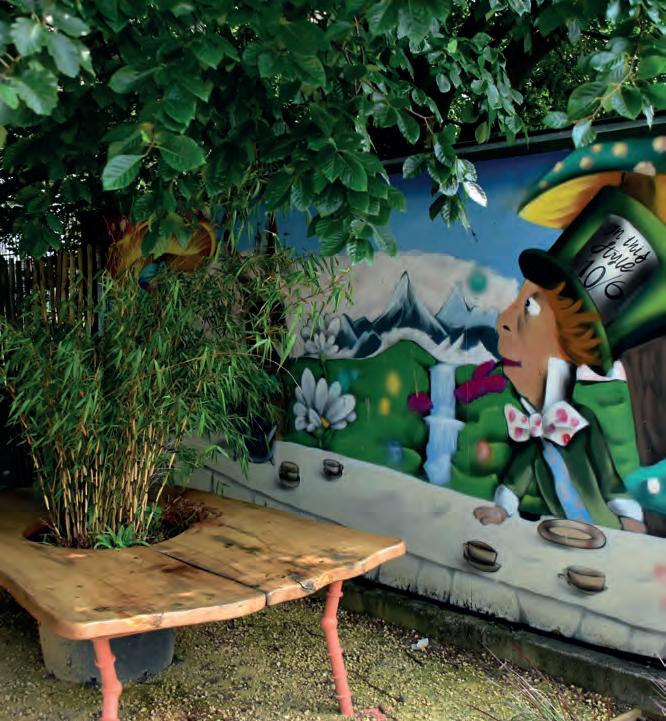
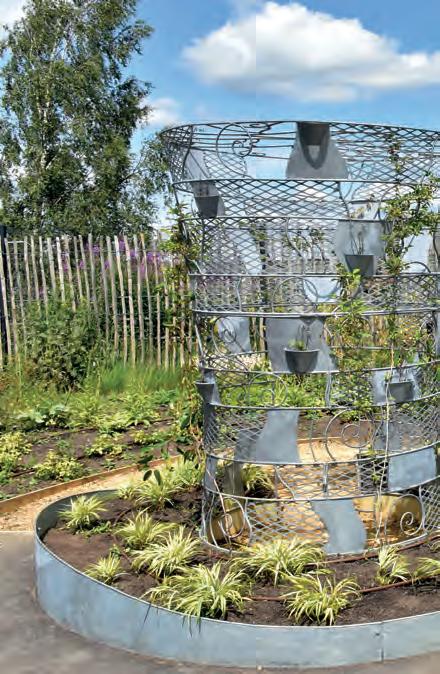



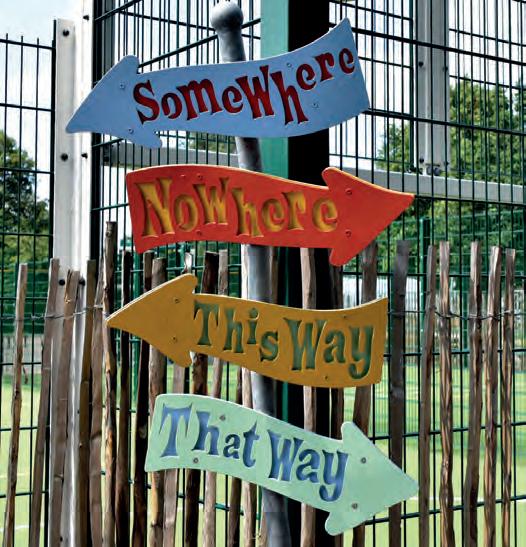
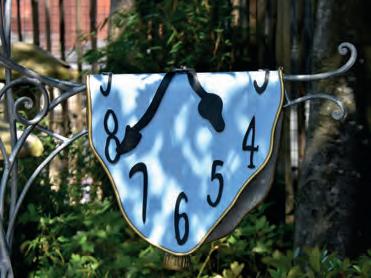


CLIENT FEEDBACK
“We approached David to design us a very special sensory garden following the passing of one of our teachers who taught art across our school. We wanted a space for the children where they could notice, wonder and create, which were three words she would always encourage the children to use in their art lessons with her. We chose the theme of Alice in Wonderland because this encapsulates the space where she taught her art lessons – a Wonderland which provides children with endless possibilities and encouraged their imaginations to run free. Now our garden provides a space where her legacy continues to thrive and the children have a very special garden where they all love spending their time with a White Rabbit, a Cheshire Cat and all the other things you would hope to find in Wonderland.”
Mrs R Dardis, headteacher at Broadfield Primary Academy
PLANTING –GRASSES
• Carex flava
• Carex morowii
‘Variegata’
• Fargesia
‘Red Dragon’
• Hakonechloa
marca ‘Aureola’
• Imperata cylindrica
‘Red Baron’
such as Allium schoenoprasum (chives), Origanum vulgare ‘Aureum’ (golden oregano) and Rosmarinus officinalis (rosemary).
With Rochdale’s 19th century town hall and original clock tower as a backdrop, Keegan has softened the security fencing with chestnut palling, framing the external landscape. Surrounded by raised beds planted with shrubs and perennials, the garden also features wildflowers as a means of increasing the local biodiversity.
1 Sensory Trumpet Tunnel with sensory pathway
2 Gate, sugar cube planters with Clematis montana
3 Top hat with climbers and kids' entry arch
4 Shed with Alice mural and table with duck legs
5 White Rabbit chainsaw carving by Mick Burns
6 Now which way should I go?
7 Time just melts away when you’re in the garden
8 This way to the tea party
9 CNC playing cards in galvanised steel
This is an opportunity to create something magical with an interactive element where children can enjoy the learning process
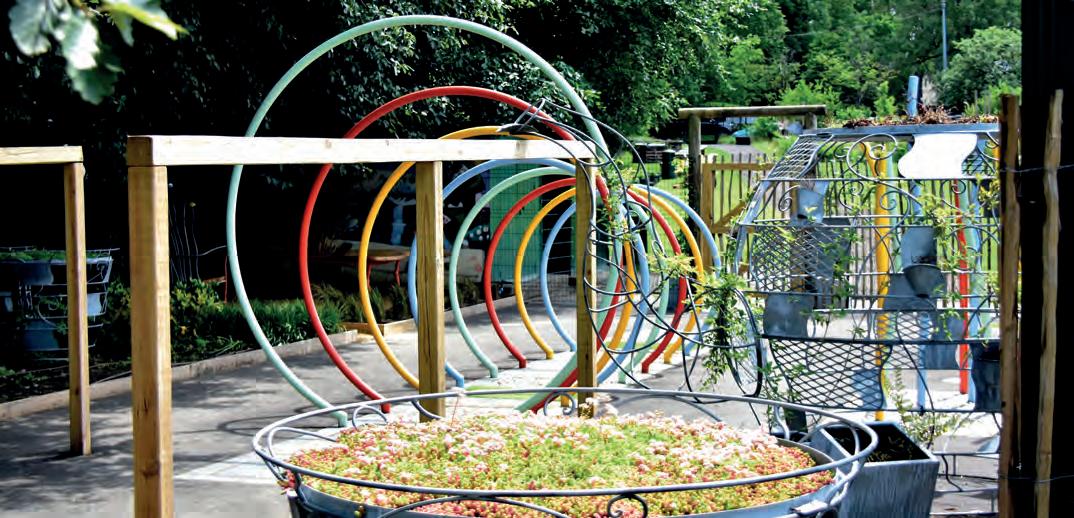
When building of the garden commenced in the summer holidays last year, a challenge arose, as Keegan explains:
“When Garden360 were doing the prep work for the planting, they discovered that the existing soil wasn’t very good.” To overcome this, the team had
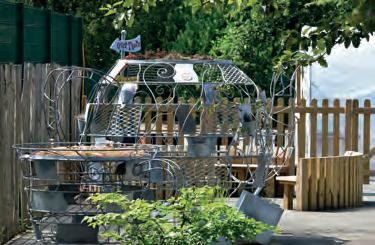
to dig the soil out and replace it with enrichment, as well as conducting air spading on existing trees.
Adorned with a circular seating area, the space has been designed to facilitate outdoor classes, activities and reading groups surrounded by Alice and her friends. “I wanted to combine play with education using the magic of Alice in Wonderland,” Keegan adds.
PLANTING – PERENNIALS
• Epimedium ‘Amber Queen’PBR
• Lamium maculatum ‘White Nancy’
• Heuchera ‘Paris’
• Brunnera macrophylla ‘Jack Frost’
• Pachycandra terminalis ‘Green Sheen’
“This is an opportunity to create something magical with an interactive element where children can enjoy the learning process.” When creating the ‘trumpet tunnel’, Keegan envisioned a barefoot-friendly space that provides a tactile, playful experience. Another ‘fantastically’ large feature, the tunnel has been built as a sensory element for children to wander through as it narrows near the end.
From rainwater butts, timed irrigation and reclaimed cooper kettles, the garden hosts a sustainable quality. Forming a water feature, solar panels connect the kettles with collected rainwater – just another aspect of sensory exploration.
Designed by David Keegan to evoke exploration with whimsical elements, the central focus of the garden stands to honour the school’s late art teacher. Already a host to playtime and classwork, this ‘muchier’ garden gives children a chance to explore the wonders of nature.
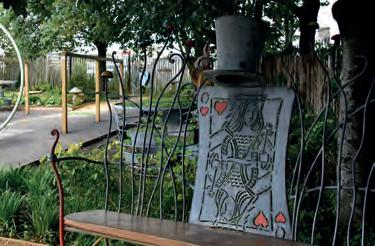
10 Teacup to foreground planted up with sedums
11 Teapot and sugar cube planters with reading circle
12 Seat with fixed top hat, perfect for selfies Photographs ©David Keegan
REFERENCES
Landscaping Ant Landscaping
Plants Garden360 UK mygarden360.com
Metalwork
David Freedman davidfreedman sculpture.com
Toadstools and White Rabbit Mick Burns chainsawsculpture.co.uk
Mural
The Mural Artists themuralartists.com
ABOUT
David Keegan is an international, national and regional award-winning garden and landscaping designer. His design philosophy centres on a naturalistic planting style. Keegan’s garden projects re located around the UK, in Manchester, Chesire, Derbyshire, Lancashire and the north-west of England. dkgardendesign.co.uk


Shaping Spaces
Unless you live on a sprawling country estate, fences are an integral part of most garden projects. They provide security, structure, privacy and enclosure. They can also frame a view, add texture as well as crucial structure and character.
We’re finding that clients are becoming more switched on to boundary treatments, less interested in closed board fences, and more what they can do to soften and integrate their boundaries into a wider design.
Fencing is a functional element in our designers’ toolkit. Fences can screen unsightly borrowed views, create much needed privacy and even create a barrier from wind, road
noise or an area of shade. Using fences to create zoning can work nicely in a larger garden, and can create opportunities to design with interesting materials, reclaimed timber, sheet metal or woven natural timbers.
In rural settings, fences can be designed to manage livestock – in our locality, the majority of gardens in the New Forest National Park are designed to be donkey- and pony-proof, while in a kitchen garden, we might design a fence to protect planting from deer, rabbits and other vermin.
A beautiful fencing detail, when executed perfectly, can be as beautiful as a piece of

Matt Evans explores the design language of boundaries and fences
internal joinery, providing the backdrop for an outdoor dining experience, seating or spa area – maximising space in proximity to a boundary.
Fencing can be so much more than feather edge, post and arris rail, with stylistic decisions and materials considered very much based on the intended use of space and surrounding landscape.
Most clients immediately think of timber fencing when discussing boundaries, but how about considering estate fencing, chestnut pale or something completely bespoke and designed to complement the architecture and style of the house using a local material or style.
We should be responsible for ensuring clients don’t underestimate allocating a portion of their budget to boundaries
When building fences and working on boundaries, there are usually conversations to have with neighbouring properties or parties. As designers, we have a duty of care to guide clients through any planning considerations around height and extent of fencing. Typically, clients will need to seek planning permission if the fence is due to be over 2m in height, or 1m along a pavement or footpath, or if a building is listed or has had its permitted development rights removed.
As responsible contractors, we should always look to engage with neighbours when setting

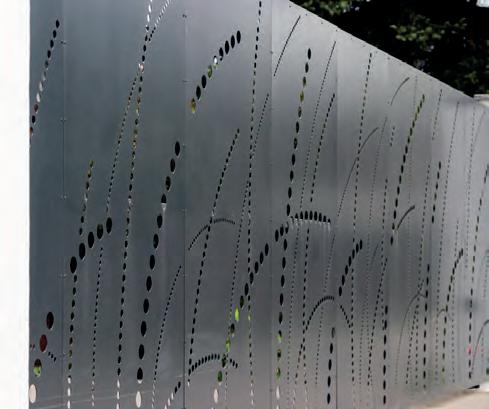
out new boundaries and working across boundary lines; they may have specific elements which groundwork might disrupt, pets to consider the security of, or children who might go wandering if a boundary isn’t left secure.
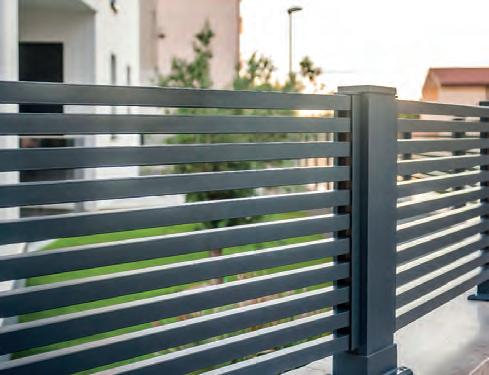
re-painting annually which can be costly and time consuming.
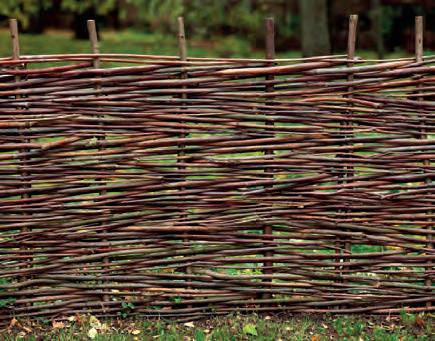
If a client opts for a typical wooden fence or worse due to budgetary constraints wants to retain an old one that’s unsightly, then not making a feature of it is often top of our design brief. There are many ways to do this, with one of the most effective always being to paint it so that it softens into the background and provides a neutral backdrop for planting.
Consider if this needs permission from neighbours and is suitable given the light conditions – nothing worse than a painted fence that turns green with mildew due to lack of light and damp, this will need
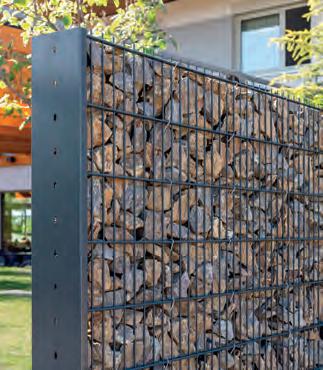
Sometimes a fence isn’t actually needed. On occasion, removing a fence entirely – particularly when it obscures a view or aspect otherwise hidden – can open a space up and give the feeling that a garden boundary extends further than it actually does in reality.
Using hedging rather than fencing – when appropriate – can create a sense of cohesion beyond the boundary, and most hedges can be laid seasonally meaning they can be as effective for livestock control and boundary marking as a fence if space and security aren’t as much of a consideration.
Designing fences and boundaries walks the tightrope between balancing functionality and aesthetic
Fences can hugely influence visual flow in a garden, and height and sight line should be considered so they positively influence spatial perception. Breaking the height of a fence with soft planting and stepping trees alongside a fence will help avoid the ‘prison yard’ feeling of tall boundaries and being ‘penned in’.
As with most elements within garden design, designing fences and boundaries walks the tightrope between balancing functionality and aesthetic. The challenge is as always, to think outside the box and look beyond the boundary for inspiration.
Hedges are a superb way of improving biodiversity in our gardens, increasing wildlife habitat, nesting opportunities for birds and cover for ground dwelling animals and insects.
Fencing is a skilled task, and the cost of materials is as we all know at a premium. So, as designers, we should be responsible for ensuring clients don’t underestimate allocating a portion of their budget to boundaries in order to deliver. As a shared asset with neighbours, you shouldn’t cut corners, and they should always be constructed professionally.

MATT EVANS
Matt Evans is the managing director and design lead at The Garden Room Living and Landscape Studio, based in Poole, Dorset. The Garden Room is a young, creative design studio founded by partners in life and design, Matt and his wife Elle Evans. Located just a stone’s throw from the shores of Poole Harbour and the Jurassic Coast in Dorset, they operate across Dorset, London and the south of England offering garden design, project management and planting as well as specialist aftercare. thegardenroomstudio.com

Shaping the Landscape
Your Partner in Blue Green Infrastructure
Sustainable landscapes demand a solutions-led approach to climate resilience and require integrated Blue Green Infrastructure (BGI) that performs. Our expert team helps translate policy into practical, buildable designs. From rain gardens to green roofs, we’ll help you:
> Navigate BNG requirements
> Integrate SuDS seamlessly into green infrastructure
>Specify with confidence using proven, compliant systems
>Access CPDs, case studies, and tailored support from day one
REEL Kee ping it
From authenticity to virality – what is the key to turning your social media following into future clients ?
WORDS: BETHANY VANN
With over five billion active users worldwide in 2024 – a number that is projected to grow –social media usage is recorded as being one of the most popular online activities globally. It is no surprise then that businesses have long been capitalising on platforms like LinkedIn, Instagram and more recently TikTok to promote their services. But as anyone who uses social media regularly will tell you, it is a realm of constant evolution – something that was trending when you were having dinner on Friday evening will be lost to the ether come Monday morning in the office. This continual revolving door of content has arguably only gained momentum since the rise of short-form video content – made popular by the likes of Instagram and TikTok. Emerging as a powerful tool for brands to deliver engaging narratives directly to their customers, when wielded correctly.
It's very much a tool to generate a good quality lead, but the most important element is a pipeline to filter that lead
Andy Stedman, managing director, Andy Stedman Design
“It’s about understanding
that social isn’t just about showing off your work off”, says Andy Stedman, managing director of Andy Stedman Design. “It's very much a tool to generate a good quality lead, but the most important element is a pipeline to filter that lead with the least amount of friction for them to become a client or book an inquiry with you.”
Stedman raises an excellent point – social media is defined by its engagement opportunities. Companies today have the opportunity to engage with their audiences and potential clients directly; garnering leads almost instantly.
Brothers Ethan and Jake Thorne, the founders of Green Genie Landscapes – which has achieved viral prominence since its founding in 2020, with over one million Instagram followers – note a complete shift in dynamic to how leads come through.
“They already know us. They're trusting us before we’re even through the door [...] It feels like we're a few steps down the line – it's become more personal”, says the duo. Highlighting the gravitas that social media can have in building your brand – the projects you’re posting are in essence adverts, and you’re building rapport with people, getting them to engage with you, follow your page, or become a lead.
That work, as Els Tisserand, founder of Tisserand English Gardens shares, can also come in the form of potential business partnerships: “We work for designers, so what a great way to link up with designers. They can see what we're about – they buy into us. [Social media] has really helped us generate new leads with new designer all across the UK.”
Going viral
From future clients to potential partnerships, companies are vying for the attention of their audiences, and in a short-form world where the next video is only a swipe away, virality is arguably the desirable goal for most posts.
“There seems to be no actual reason behind going viral other than consistently showing the best of what you have to offer”, share the Genie brothers: “Have your own style, stick to what you know and what everyone knows about you, and then virality tends to come.”
Chasing virality has been said to be a poor strategy for long-term success because it has the potential to draw in the wrong audience who don’t stick around, making that engagement statistic your marketing team shares a little less impressive.
Tisserand adds that he’s experienced a spike in follows off the back of viral videos before, but some of those new followers will eventually drop off because your ‘niche’ as Tisserand puts it, isn’t for them – “The small growth is a better growth […] A decent 50k followers will give you more leads than, say 2m.”
Taking the authentic approach
Going viral isn’t the only route companies can go down – though it arguably helps – there are other ways to grow your business, be that steadily or quickly, and that is through authenticity and consistency, as Tisserand shares: “It sounds cliché, but find what makes your business ‘you’ and what you love, and translate that onto video.”
There seems to be no actual reason behind going viral other than consistently showing the best of what you have to offer
Ethan and Jake Thorne, founders of Green Genie Landscapes
But that said, virality can be used to identify potential leads, as Stedman explains: “I listened to a podcast recently, and they were saying, just look at going viral as the top of a funnel, then use the rest of everything else to qualify them as a client. It’s a numbers game, the more eyes you've got on the content, more omnipresence, and ultimately the more clients you'll get out the bottom of that funnel.”
Going on to recognise that this approach is likely what attributed to the growth of his own social media following: “Authenticity and just day to day videos of the real life as a landscaper. People nowadays are fed so much social media –we all do it in the evening, scrolling our feeds, and what stands out the most to me is people being authentic.”
We are now in an age where CEOs and the people behind brands often have more social media engagement, and in some cases, more followers than their company’s official brand accounts. This movement is likely driven by the fact people tend to trust and connect with other people more – an active
Quick Wins f or
BOOSTING ENGAGEMENT
• Post content at optimal times
• Collaborate with industry peers on posts
• Reply to comments and engage with followers
• Maintain a consistent schedule
• Prioritise quality over quantity
and authentic presence can make the company seem more transparent and accessible.
Research from 2024 conducted by Edelman showed that 71% of consumers are more likely to buy from a company if its CEO is active on social media, while research from Brunswick in 2022 revealed a further 82% of employees said they would research a CEO’s online presence when considering whether to join a company – highlighting another potential boon to be had from social media.
Taking that authentic approach is likely going to mean getting in front of the camera, or at the very least doing the voice over for a video –which can often be one of the biggest hurdles stopping people from posting content.
Tisserand, who is known for doing daily vlog style reels on Instagram, says that while he gets positive feedback on the videos it’s not something that comes naturally: “Sometimes I have bloopers and we look back on them and they’re funny. But I think the way to do it, if you're going to do stories or talk to the camera, is just [record] it, post it, and don't think about it after.”
different links [...] You want them to either book a call with you or fill an inquiry form out.
That's all you need.”
Some potential clients may opt for direct messaging you on social media if another form of communication isn’t readily available or visible to them, which Tisserand warns can lead to a backlog or even getting caught up in ‘fake’ leads: “You don't want to be scrolling through your DMS to see if you're going to have work. It’s not a professional approach to be replying to people at nine o'clock on your sofa saying, ‘yeah, we'll pop around tomorrow.’ There needs to be a process in place.”
Bringing it home
It sounds cliché, but find what makes your business ‘you’ and what you love, and translate that onto video
Els Tisserand, founder, Tisserand English Gardens
The Genie brothers add that they’re still getting used to being in front of the camera, but it’s a process that they’re continually learning from: “It might take 10 takes. It might take 20 takes [...] And you might not be the biggest fan of that video of yourself, how you sound, how you come across, but you start to learn it doesn't really matter. You just need to just get it out there.”
Converting clicks into clients
Getting likes and followers off the back of a post is the first step, then comes converting that engagement into clients, which Stedman says is by facilitating a path with the least resistance: “However you have your inquiries, that also needs to be an easy step, otherwise, what's the point of putting all that effort in in the first place?” He goes on to say that having your email or website URL in your social media bio is the quickest win – “Link trees are old school. You don't want that confusion of 20
Content has been taken from the Social Success: Converting
In a landscape defined by constant movement, the businesses thriving on social media today are more often the ones that treat it less as a loudspeaker and more as a living network. From viral spikes to steady, meaningful growth, each post becomes part of a larger system that not only attracts attention but filters it into real opportunity.
And as the platforms continue to evolve, one thing is likely to remain unchanged: those willing to show up with purpose, personality and a frictionless path forward will keep turning clicks into conversations – and conversations into clients.
NEW VENUE
FREE AND EASY PARKING
GREEN, SUSTAINABLE VENUE
BETTER NETWORKING SPACES
EASIER BUILD AND BREAKDOWN LOGISTICS
OUTDOOR AREAS FOR MACHINERY AND DEMOS MORE ROOM FOR BIGGER STANDS



Emma Hindle
BUSINESS DEVELOPMENT MANAGER, GROUND CONTROL

What are your thoughts on the skills gap and labour shortages?
How do you think we could attract talent to the industry?
We need to recognise that if we are in positions of apprenticeships or graduates, that we've got a wealth of experience above us that is just about to retire. So, if you do get put in positions such as those, I would just encourage you to learn and sponge and just absorb as much as possible.
Where do you think the industry stands now, in terms of being sustainable?
We have two sites, the Wildfell and Devana sites in Essex and Cambridge. In a way, that is low maintenance creation whilst giving back to nature. We bought the sites with the intent to provide nature recovery. Since the biodiversity net gain (BNG) legislation came in last year, we thought that we've got something here with our BNG units to sell. That aside, what it's going to give back from a sustainable approach –biodiversity including in that – is just going to be massive. If we think about five years, 50 is going to be crazy.
How do you think the industry will look in five years, and what is one thing you would like to see change in that time?
We're seeing a lot more commercial clients that have had a manicured lawn for how many years, but now that mindset is changing
A much bigger drive for nature-based solutions and nature practices. I think the way that we maintain landscapes now is probably going to change as well. We're seeing a lot more commercial clients that have had a manicured lawn for how many years, but now that mindset is changing and we’re thinking, ‘well, actually, what if we had the grass at this height and then we've got a more established hedgerow there?’ It might not look as pretty, but it's going to do the world for nature.
Young Voices,
Are there any technologies or tools that you’re looking to use?
How are they beneficial?
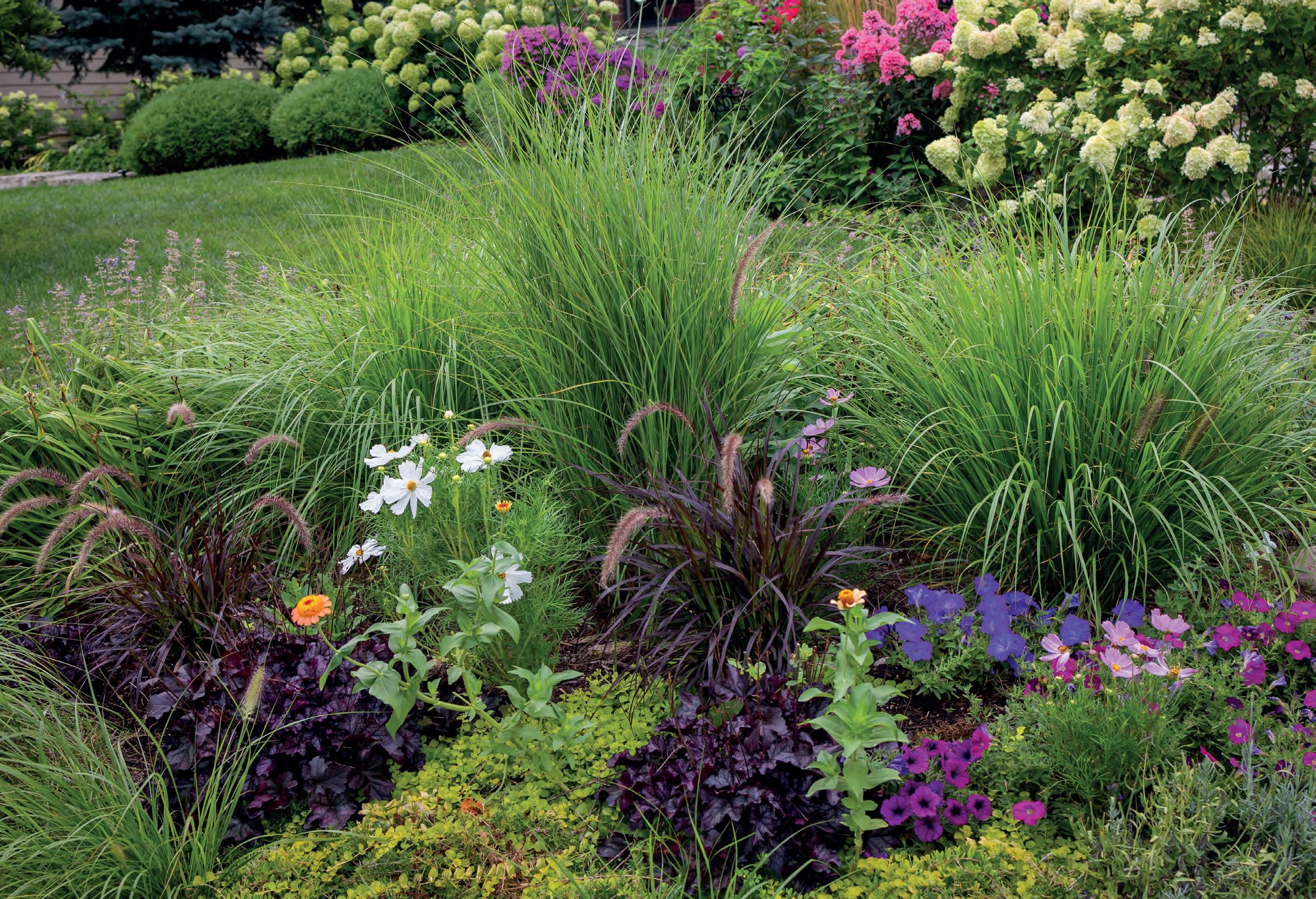
FOUNDER,
RACHEL PLATT GARDEN DESIGN
What’s exciting you about the industry right now?
We’re being more experimental with different materials which is exciting. You see it a lot at the shows as well, where potentially there's the budget, rather than having a private residential client to experiment with that. Hopefully some of those ideas will go into the normal marketplace for private residential.
The AI discussion. I have noticed there is a movement from clients that have messaged me saying they've asked an AI software what bulbs they should have in their front lawn. When they come back to me, I can see that the software is not quite there yet. AI hasn't accounted for the aspect, because the client hasn't put the aspect in there, or it hasn't accounted for the soil. I think it'll be interesting to see what happens when that develops and becomes more intelligent than it is now.
How do you think the industry will look in five years, and what is one thing you would like to see change in that time?
I'd like to see more women have more confidence in this industry, specifically in the physical side of landscaping
I'd like to see more women have more confidence in this industry, specifically in the physical side of landscaping. I'd really like to see them have the confidence to go out and do more independent working shows and put themselves out there. It's even a generational thing as well, for example young people are recognising this space as an industry. Over the next five years, there will definitely be new faces around.
Rachel Platt
Emma Hindle
Rachel Platt
Anna Mcloughlin CRAFTSMAN LANDSCAPER, LANDFORM CONSULTANTS

Anna Mcloughlin
Has your view of the industry changed since you first started your career?
I originally started my career in Ireland, and we don't have trade shows or this sense of community at all. I'm moving over to England now, which is fantastic. Everyone is so nice, so helpful, and so quick to help you and want to see you achieve; which I really appreciate.
We talk about a skills gap and labour shortages – what are your thoughts on this, and how do you think we could attract talent to the industry?
Education is one of the main issues of landscaping which isn't talked about. I was never told about the career at school. We need to integrate it into schools and encourage it.
What challenges did you face starting your career?
doing it for years, so you're scared to get in the way or slow people down. Then you quickly realise that the way to improve is to get stuck in and ask as many questions as possible. That's how you will grow and learn in this career.
I was never told about the career at school. We need to integrate it into schools and encourage it
I think one of the main challenges of me coming into this career was probably my confidence. When you go into the landscaping, a lot of people have been
BIG VISIONS
Taylor Gee
FOUNDER AND DIRECTOR, DESIGN ONLY GARDENS

Taylor Gee
What’s exciting you about the industry right now?
The current trends in garden design and how things are morphing a little bit away from what was popular when I first entered the industry. When I first entered the
industry, a lot of the materials were very muted and grey. The trends that are evolving seem to be opening more opportunities for horticulture. It also means that we're bringing in more materials that are brighter and warmer.
Are there any evolving technologies or tools you’re using to make your work easier or more efficient?
How do you think the industry will look in five years, and what is one thing you would like to see change in that time? It would be great to see more females coming into the industry, and more young people in general. That’s something we need to work on, and hopefully, in the next five years or so, we can achieve it.
A group of Pro Landscaper 30 Under 30: The Next Generation alumni give their thoughts on the evolving industry
WORDS: HOLLY CHAPMAN
integrating rendering software into the process, it led us down a tunnel which changed our whole process.
The trends that are evolving seem to be opening more opportunities for horticulture
Technology is the life blood of our business. I’d like to highlight the importance of how 3D visuals have enabled us to give our clients a design process. When we started
How do you think the industry will look in five years, and what would you like to see change in that time? I want to see people showcasing more 3D visuals to their customers, because whilst that's obviously what we sell, I do feel strongly about this. Already, there has definitely been a shift over the last couple of years.
A Collaborative
The Team
Garden design
Paul Newman, Designscape designscape.uk
Planting design
Sarah Plested, Bramley Apple Design bramleyappledesign.co.uk
Contractors
• Stuart Reid, Landscapes By Design landscapesbydesign.co.uk
• Daryl Gannon, Daryl Gannon Landscapes @darylgannonlandscapes
• Peter Kedge, P.R.Kedge Landscapes
• Kris Donnelly, Haldon Construction haldonconstruction.co.uk
• Paul Baker, Holland Landscapes hollandscapes.co.uk
• Tarquin Ellington, TKE Landscapes tkelandscaping.co.uk


THear from the team behind the APL’s award-winning 30th anniversary garden
PURSUIT
his year the Association of Professional Landscapers (APL) celebrates its 30th anniversary, marking three decades of recognition, accreditation and community engagement. Founded by Alan Sargent in 1995 as a way to give a voice to the industry and provide a column of mutual support for landscape contractors, who often work in isolation: “We work alone and very often get so insular and I felt there was a need for us to get together to support each other,” says Sargent as he reflected on the milestone back in February.
As part of the celebrations, a team of landscapers and designers came together to create The Pursuit of Excellence Garden, showcased at this year’s BBC Gardeners’ World Autumn Fair.
The wildlife-friendly space – which was awarded the Best Showcase Garden and a Platinum award – embodies the collaborative nature of which the Association was founded on, as well as demonstrating the value of professional design and construction. Now, the team behind the project are sharing their experience building the award-winning garden.
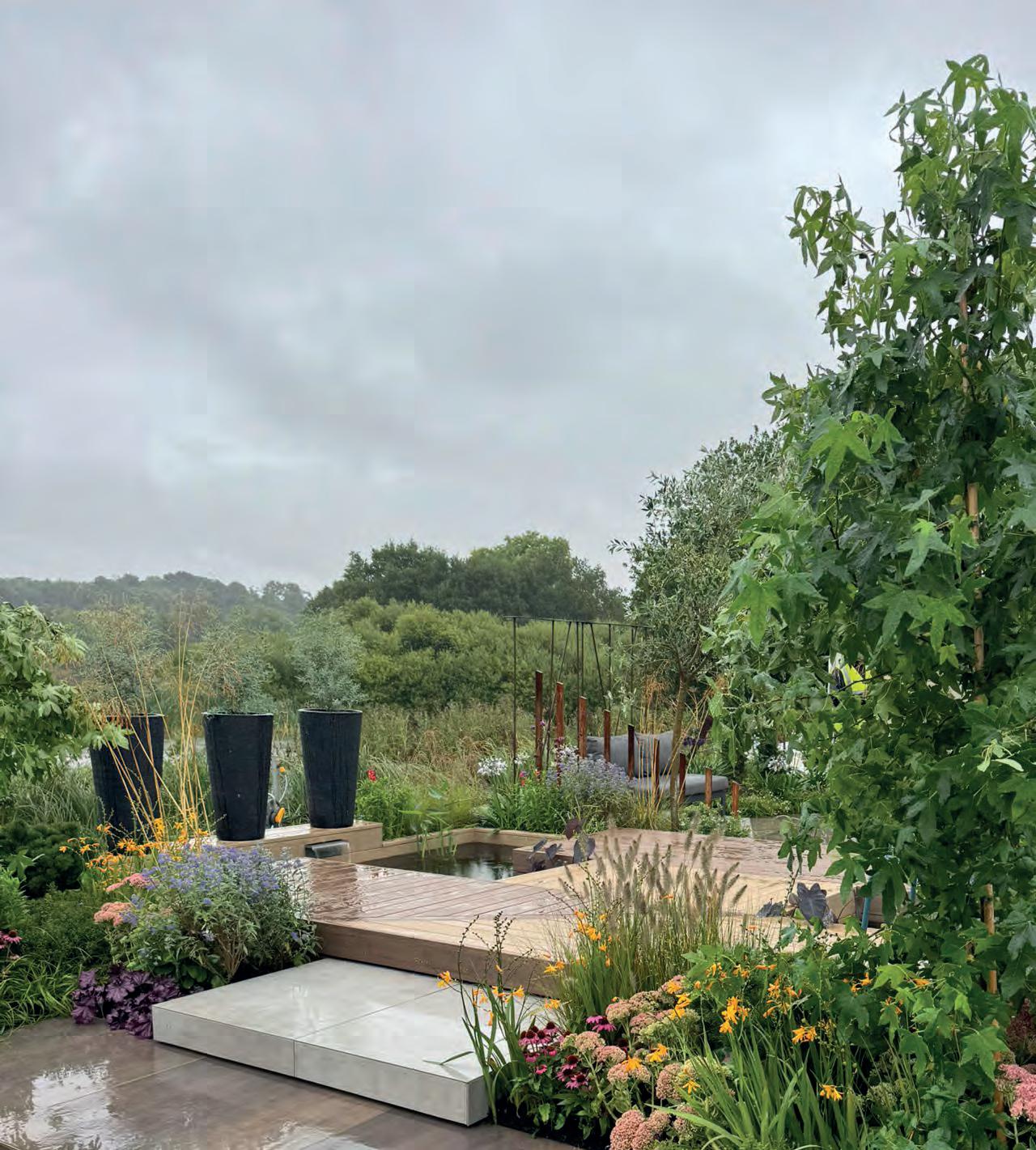
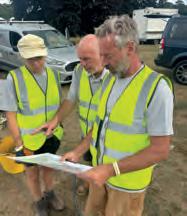
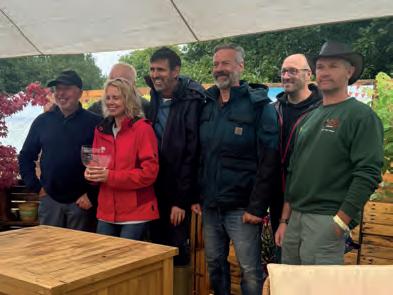
The Landscapes By Design team and I were winners for the 2024 APL skills garden build and were asked to take part again this year to uphold our title. Unfortunately, not enough entries were received so this particular challenge could not take place.
Phil Tremayne, the APL general manager was then left with a gap to fill so it was suggested by Stuart that we create a show garden to celebrate the APL’s 30th anniversary.

Having worked within the landscape industry for many years, Stuart and I have some great connections and are fortunate enough to know some of the industries finest and knowledgeable professionals, so we enlisted a team of our colleagues to undertake this challenge in just three days.
I was set with the task of designing the 10x6m space that was to showcase the skills and detailed craftsmanship that APL members are known and highly regarded for. The design encompassed multi levels with paving and decked platforms, a water feature with a bridge, beautifully detailed timber screening and paving angles cut to match this detail along with lush, planted areas to enclose the garden space.
Our main build team – six of us, myself included, with additional help from a supplier and planting design by Sarah – had just three days to create this amazing award-winning garden to showcase our skills in design and construction with attention to detail showing that even under pressure to perform to a tight deadline superb results are achievable when you work with APL accredited companies.
Once my design was set out, team members tackled individual components of the build – each pair working on different stages to bring the garden to life with the fabulous result of a Platinum award and best in show garden. A great team effort by all involved and a thoroughly enjoyable end to the summer season.”
Paul Newman, Designscape
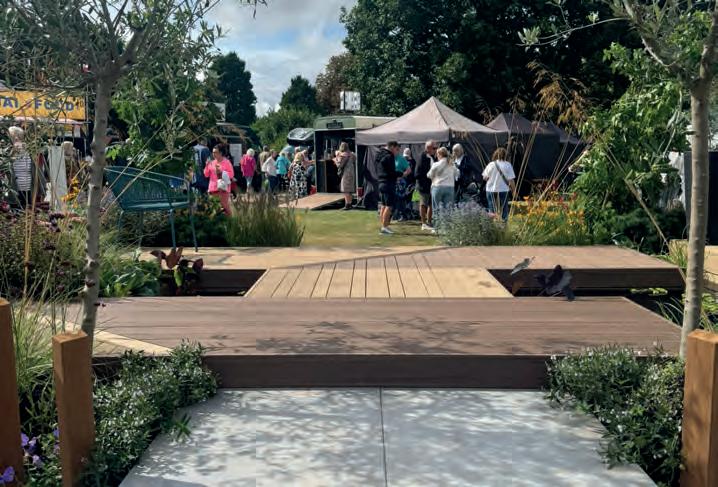
Bramley Apple Garden Design were responsible for designing the planting scheme for the garden. We created areas of lush planting under the trees and more drought tolerant plants around the seating area for a more Mediterranean feel. Setting out of the plants was carried out as the beds were prepared and then it was all-hands-on-deck backfilling with soil. We just made it before the heavens opened! The planting worked very well, and the visitors really engaged with the garden, being able to walk through and interact with the plants
Sarah Plested, Bramley Apple Garden Design

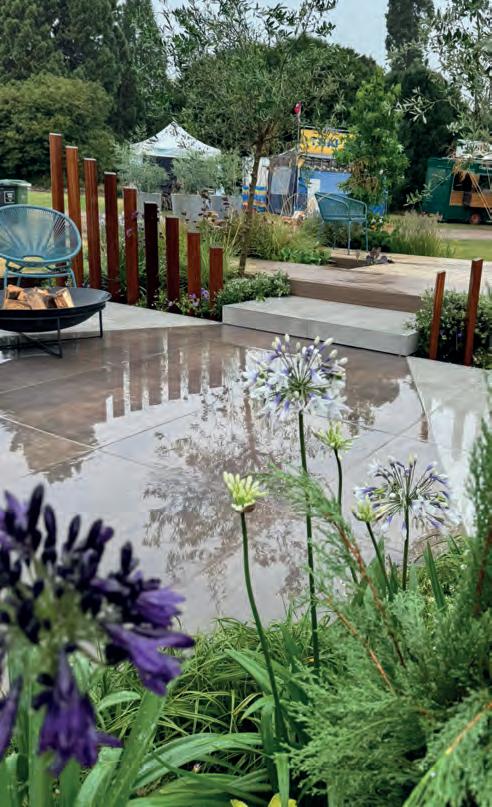
Phil Tremayne called saying that there was an issue with getting landscapers to compete at the BBC Gardeners' World Autum Fair this year due to work commitments. Quinn and I came up with the idea to form a super group of experienced landscapers and designers to build a show garden for the 30th anniversary of the APL. Paul Newman from Designscape took the reins for the design and Sarah Plested Bramley Apple Design took the soft landscaping. The team then built the garden in just three days – and what a three days it was! We had red hot sun and biblical rain to contend with.

Our team excelled as expected. We have all known each other for a long time via the APL, but never worked together, so this was the unknown. The skill and work ethic really shone through, and we built the garden to a standard that the RHS judges gave a Platinum award – only the second in the APL’s 30 years.
We all thoroughly enjoyed the build and working as a team was brilliant.
Thank you Phil and the APL for letting us do this fantastic build, it has been one to remember!
Stuart Reid, Landscapes By Design

I’ve worked in landscaping and garden design for nearly 40 years, and I had previous experience building my own show garden at Hampton Court in 2005. I knew from that experience just how demanding a show build can be – tight schedules, unpredictable weather, and the inevitable last-minute adjustments. So, when Stuart mentioned we’d have just three days to complete the entire garden, I thought, ‘This could be a challenge –especially if the weather turns against us!’
Fortunately, the build team consisted of longtime friends who also happen to be highly skilled professionals. That camaraderie made a huge difference. Everyone had clear roles, so the workflow was smooth and efficient.
My main responsibility was laying the porcelain paving and constructing the steps, complete with mitred porcelain fascia for a crisp, detailed finish. It’s a time-consuming and precision-driven task, but one that’s second nature after years in the trade.
Once that phase was complete, it was all handson deck. I helped wherever needed – decking installation, positioning the water feature, and adding the smaller design details that bring everything together.
The atmosphere throughout was fantastic. There was plenty of banter and good humour, but beneath it all, a shared professionalism and determination to deliver on time. The days were long, but the teamwork made them rewarding
We managed to finish the build quite literally just in time – minutes before the heavens opened and torrential rain set in. At least the plants were happy!
Projects like this remind you why we do what we do: the creativity, the craftsmanship, and the shared sense of achievement when everything finally comes together.
Daryl Gannon MCIHort, Daryl Gannon Landscapes
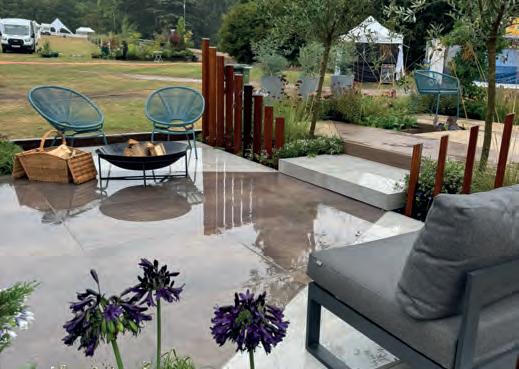
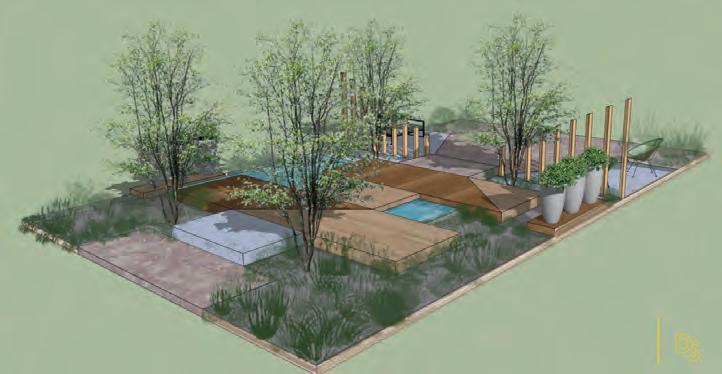

It was an awesome experience to be part of the build team for the APL, The Pursuit of Excellence awardwinning garden! My role in the project started with the pre-build sections and framing out the garden. Then I mostly worked on the paving and the timber feature – not forgetting the tunes; the most important job on site! Once it came to the closing hours, it was an all hands-on deck situation and a beautiful collection of pros building a great space! Like a perfectly in sync orchestra armed with trowels, drills and a passion for excellence, we brought together something special. Setting out and bringing the drawings to life was a big highlight for me – it’s always an amazing process! At this point in my career and my business, I'll always have a lot to learn, and this experience working with friends and experts only opens my eyes more and provides more knowledge, priceless know-how – that’s perfect.
Kris Donnelly, Haldon Construction

I have been involved in many show garden builds over the years and have worked closely with the BBCGWL team for over 10 years. We were due to host the landscapes skills competition, but due to work commitments, this exciting head-tohead had to be postponed. So, I called Quin at TKE and asked if he would be interested in teaming up with Stu from Landscapes by Design and build an APL 30th anniversary celebration garden. The answer was 'yes', but then developed into a super group. My main role in the build was coordination, managing six landscapers and two designers was pretty easy compared to some I’ve done. This group were amazingly professional and talented, and in three days built a garden that not only picked up all the awards but also educated and inspired the visitors and even made it to BBC news. The APL is all about collaboration and this was another fine example of this fabulous community at work.
Phil Tremayne, APL
I have to admit, I was sceptical of how this build would go – two designers and six landscapers that hadn’t worked together and all run their own businesses, sounded like a recipe for disaster! But it went amazingly well, everyone mucked in, no egos – just a collaborative effort to build the best garden we could. Decisions were taken quickly and acted upon with enthusiasm. Paul's design came together rapidly but with a fantastic level of skill and fine detail; Sarah’s planting scheme was a well-executed race against the clock that meant all hands had to help with the final flourish. It was good to be near the stand during the show and hear so many positive comments from the public, the judges and other exhibitors.
Tarquin Ellington, TKE Landscapes

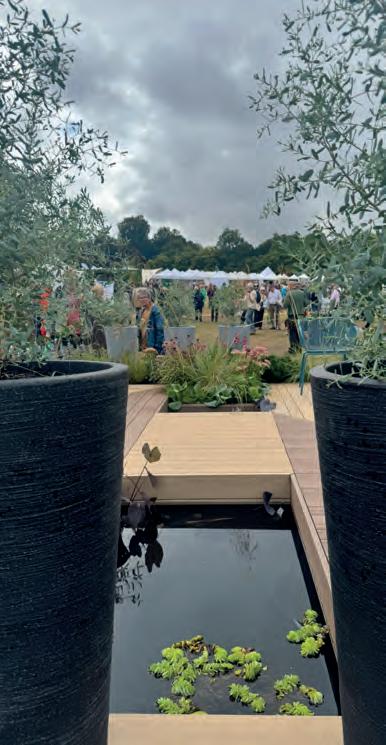
The landscapers who built this show garden have been friends for many years. We have always wanted to build a garden together and when the opportunity arose, we could not wait to get started.

Time was very limited in planning this garden. Most show gardens have up to a year to plan, we didn’t even have six weeks. The design came together quickly, and we got on with planning the build of the garden.
When on site, we assigned an element of the build to each person, my main role was to build the water feature and pond along with Peter Kedge. Being a team of highly experienced landscapers and business owners made us extremely efficient. We worked around each other very well and as a team who had been working with each other for 20 years.
Time was tight though, we only had three days to build this 60m² garden. We completed the garden at the very last minute to a very high standard. We are all immensely proud of our achievement and to finish it off, we were awarded a Platinum award by the judges.
Paul Baker, Holland Landscapes
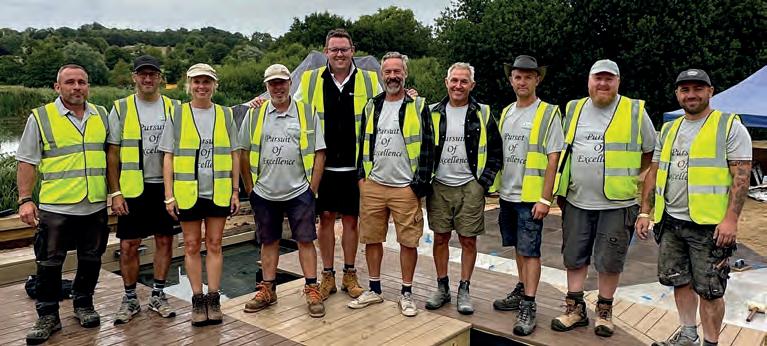
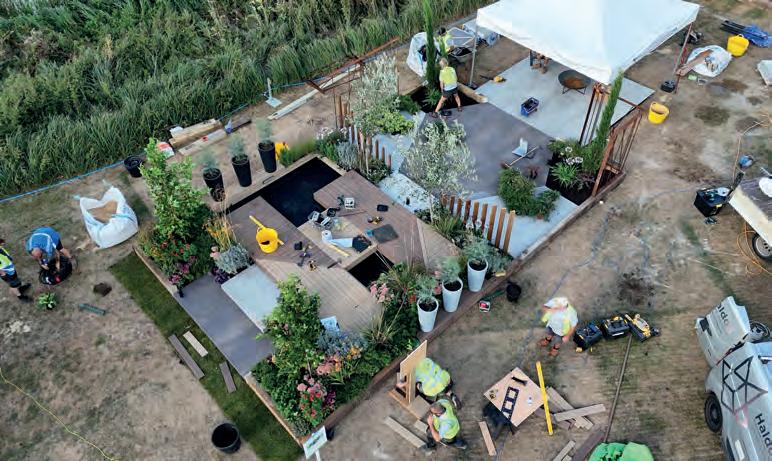
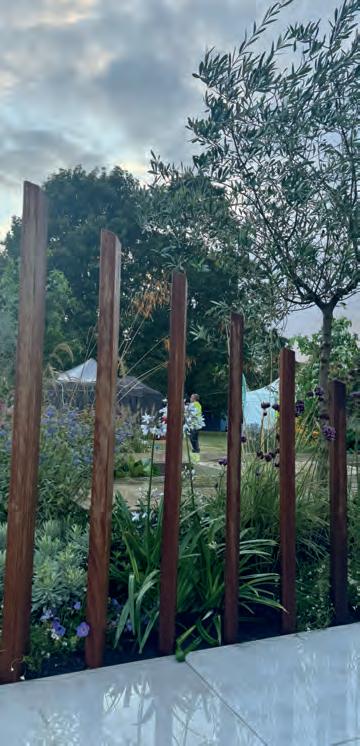
The whole project was immense fun, from the initial phone call to the last day onsite!
To be asked to be involved in a project that not only is a show garden but one to celebrate 30 years of the APL, was a privilege, and to me there was no hesitation in getting involved.

I've had the pleasure of knowing most of the other team members for many years and we have often discussed collaborating on a project. This was the perfect opportunity to make it happen and with such a fantastic design from Paul. There was something to test everyone considering the timescale in which we had to build it in.
To have such great support with the project from the beginning, from not just the team but the sponsors too, was fantastic.
Overall, the garden name is what is at the heart of the APL, trying to improve the landscape industry in all aspects of the business, to make it the best it can be. I think the result was more than any of us could have hoped for. I am proud to have been involved and look forward to more collaborations with the team.
Peter Kedge, P.R.Kedge Landscapes
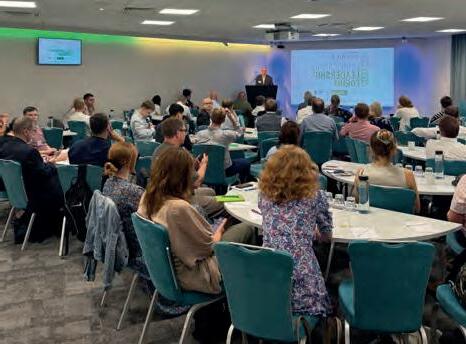

LONDON 25 FEBRUARY 2026
DELIVERING THE AMBITION
EARLY BIRD – BOOK BEFORE 20TH DECEMBER AND SAVE £100
Landscaping the Housebuilding Revolution
“Build baby build” is the UK Government’s commitment in delivering 1.5 million homes in the next 5 years and integral part of the “Plan for Change” at the heart of the growth plan. With developments expected across brownfield, the grey belt and planning reform set out to support this a huge opportunity beckons for the landscaping sector.
Landscape must be at the heart of the placemaking ambition that is being set out, if the vision is to be realised and what is created has the societal benefit intended.
So how can the sector get ahead and understand how it can support this ambition and those within it position themselves to take advantage of the opportunity?
EVENT PURPOSE
Landscaping the Housebuilding Revolution conference will provide the insight and space to bring together key stakeholders for transparent conversations and connections. With so much opportunity beckoning it will bring together developers/ house builders, contractors, planners, architects, landscape architects, associations and other key bodies. The conference will set out approaches needed so the sector can deliver the green spaces needed that will be at the heart of the housebuilding and placemaking revolution.

TO BOOK YOUR TICKET CONTACT
PROGRAMME HIGHLIGHTS
Understanding the revolution
• Policy and planning – how is the revolution being enabled?
• What developers want?
Realising the long-term value of the sector – nailing the business opportunity
• Setting yourself up to win work from developers
• Looking beyond delivery – enabling the longer-term opportunities
Landscaping contractors, architects, designers, investors, developers or industry consultants
SCAN ME

KINGS Comeback
Timeless in design and resilient in nature, Humaira Ikram is back to advocate for the return of the Conifer
As Christmas approaches, I’ve been thinking about the trees we bring indoors – those resin-scented evergreens that fill our homes with warmth and nostalgia. If we love them so much inside, why did conifers fall from favour outdoors?
For many, they still evoke the overgrown front gardens and shabby rockeries of the 1970s – dense, dark and difficult to maintain. Yet, like all fashions, conifers are quietly returning. And it’s not only Pinus mugo ‘Mops’ that deserve renewed attention (though it remains a gem).
In today’s smaller, curated gardens, where texture, scale and year-round structure truly matter, conifers are finding their rightful place once again.
We are rediscovering what these evergreens can offer beyond hedges and boundaries. Their architectural silhouettes, tactile foliage, and subtle palette of greens, blues and even golds can bring calm and cohesion to planting schemes that might otherwise rely too heavily on perennials.
It’s time to welcome conifers back – not as relics of another era, but as timeless, climateresilient allies for the gardens of the future
Conifers are among the most ancient of plant lineages, originating from habitats as varied as Taiwan’s cloud forests (Chamaecyparis obtusa), the dry slopes of the Rockies (Pinus ponderosa), and the snow-clad ridges of Japan (Abies veitchii). Understanding these origins helps us to place them well. Dwarf pines from alpine regions love free-draining, gritty soils, while forest-edge species such as Thuja and Chamaecyparis prefer richer, moistureretentive ground. Following the “right plant, right place” principle keeps them healthy and looking good.
Linnaeus’s naming system provides clarity, but it can strip away the poetry of local names. Take Chamaecyparis pisifera ‘Boulevard’, a silvery-blue conifer that can reach eight metres. In Japan it’s known as Sawara – a sacred cypress whose fragrant timber was used to build temples and shrines. Understanding such cultural and ecological histories can add meaning and new purpose to how we design with these trees today.

WHICH CONIFERS MERIT A PLACE IN MODERN SCHEMES?
• Pinus mugo ‘Mops’ – From the limestone slopes of Central Europe’s Alps and Carpathians. A slow-growing, cheerful dwarf pine, tolerant of poor soils and alpine conditions. Pair with grasses, thymes and sedums for a mountain-meadow feel.
• Abies koreana ‘Kohouts Ice Breaker’ – Native to the cool, misty mountains of Korea. Its silvered needles and upright cones shine amid mosses, ferns and woodland perennials in dappled light.
• Thuja occidentalis ‘Danica’ – From the wet lowlands and lake margins of North America, this neat, spherical conifer thrives in moist, fertile soil. You could combine with hostas, astrantias or shade-tolerant groundcovers (if you don’t have an issue with molluscs).
• Chamaecyparis obtusa ‘Nana Gracilis’ – Hailing from the humid mountain forests of Japan, it’s ideal for cloud pruning and suits calm, layered plantings with maples, azaleas and ferns.
• Pinus banksiana ‘Schoodic’ – A coastal pine from Canada and the northern US, thriving on sandy, acidic soils. Perfect among heathers, blueberries and native grasses.
• Taxus baccata – Our native yew, found from chalk downs to shaded woodlands. Use dwarf forms such as ‘Repandens’ to lend gravitas beside hellebores, ferns and spring bulbs.
The difference today lies in context. Rather than dense monocultures or sombre borders, conifers can be used as punctuation points, sculptural anchors as well as enduring companions within layered, living plant communities. After decades of perennial-driven planting, their structure and longevity are more necessary than ever.
Perhaps it’s time to welcome conifers back – not as relics of another era, but as timeless, climate-resilient allies for the gardens of the future.

HUMAIRA IKRAM
Humaira Ikram is a professional garden designer with over 10 years’ experience at Studio Ikram. She runs the Garden Design Diploma at the KLC School of Design, advises RHS Hyde Hall, and serves as a judge and panel member for the RHS. She is co-curator of thehub.earth and an award-winning broadcaster who has contributed to BBC Radio 4’s Gardeners’ Question Time and various gardening publications. studioikram.com thehub.earth

Geoweb® Tree Root Protection
PRODUCT INFORMATION
• Geoweb is the original Geocell co-invented in the 1970’s by Presto Geosystems.
• Geoweb TRP was the first Geocell used and approved for tree root protection applications in the world.
• Patented Atra Key connectors. Fastest, safest, most cost-effective connection mechanism.
• Project specific design available.
• Geoweb is available from 75mm to 300mm depth.
GET EXPERT ADVICE, SPEAK TO GREENFIX TODAY
Greenfix are pleased to offer a CPD approved Guide to Tree Root Protection seminar which can either be hosted online or in person.
To book a CPD contact us on the details below.
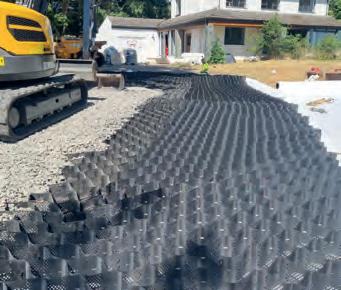
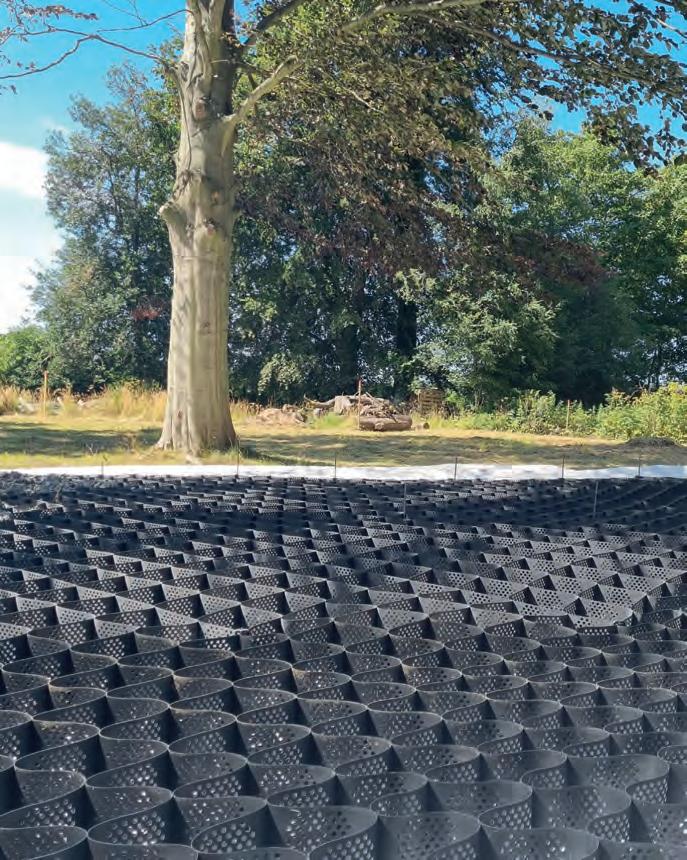

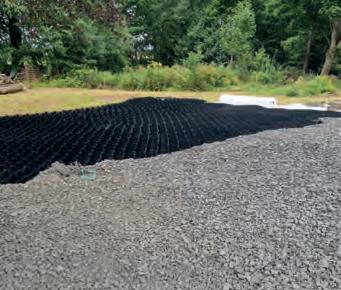
GEOWEB CASE STUDY
• Geoweb TRP 200mm deep system, New ECO Dwelling, Liff, Angus.
• Temporary use for demolition, construction traffic and 60 ton crane loadings.
• Fully designed the Greenfix engineering team.
• Clean free draining infill to allow percolation of water and maintain aeration.
• After the building work the Geoweb was recycled, and the stone infill re-used on other areas of the site.
Greenfix is the leading designer and supplier of soil stabilisation and erosion control systems in the UK.
Race to REPLANT
From the coming decades, to the far off future, Lewis Normand considers what we should be planting in the face of a changing climate
I’m going to take you back to FutureScape and to the panel discussion that I hosted this year. My panel was made up of design professionals and expert growers; with our discussion being how to select plants that can survive in a changing climate.
I was delighted to be joined by designer and author Darryl Moore, Matthew and Josh from the design partnership Butler & Parker, and urban greening specialist Alexander Fitzgerald of Scotscapes. These plant users were joined by managing director of Greenwood Plants, Melanie Asker and managing director of Provender Nurseries, Richard McKenna.
It was, as always, a great pleasure to speak with these industry experts and this subject is one that all plant users should be focused on, given the patterns we are already seeing in climate and weather.
I think it is important to acknowledge one thing before moving forward with thoughts on how best to futureproof planting selections: We do not know how our weather patterns and overall climate will change, we only know that it is changing and can model for the increase in these changes.
We do not know how our weather patterns and overall climate will change, we only know that it is changing and can model for the increase in these changes
There are a great many possibilities and only a fool would deny that we are already seeing climate change impact on our lives.
My panel discussed both how to address climate change in planting and how to work with your nursery to ensure that they are producing plants suitable for your needs. It must be considered that if the UK needs huge volumes of a particular tree species available to incorporate into planting across the country in 20 years time, growers need to start producing them now to have available stock.
And here is where the great difficulty lies, with nobody entirely sure of what will be needed and what will survive. Modelling our weather patterns has made for interesting reading and the older concept of global warming may be a workable concept, but it distracts us from other important metrics like rainfall.
Most indicators are suggesting the UK is heading towards hotter and drier summers, but with cool, wet winters. There are very few plants that tolerate these extremes of moisture.
Trees must be considered against a changing climate as they are our long-term planting solutions. It is entirely possible for you to see a tree in the UK planted while King Henry the VIII’s was ruling the country,
although, somewhat ironically, he is known to have deforested huge areas for building warships.
In fact, there is a Yew tree (Taxus baccata) near my home in Perthshire that is at least 2,000 years old, and possibly as much as 5,000 years, such is the comparatively smaller climate changes experienced over that time.
The idea of planting a tree to last 100 years now seems to be a challenging one, with little confidence in the timings of rainfall, extremes of heat and strength of winds hitting them regularly. Perhaps with our increased tree planting initiatives to benefit carbon capture and offset emissions, we should only be thinking of them surviving 50 years or so before most need to be replaced for a more suitable alternative? I say most, because nature has a habit of finding a way to survive and we may well already have some of the solutions here at home.
Darryl Moore advocated for plantings that included a mixture of locally native plants, combined with non-natives, which particularly resonated with me. This shouldn’t be such a radical concept, but because in the UK we have near unlimited selections of colourful non-native plants that grow well here, we very often overlook native plants –including tree species – in our planting schemes.
He quite rightly pointed out that many of our native species have been in the UK since before the last Ice Age and have survived in temperatures higher and much lower than today. It is this adaptability that makes them special to the UK, and something we should look to continue to work with, not least of all to support the other plant and animal species dependant on
native species for food and habitat.
I see our future planting as an evolving process, likely with a variety of species that come and go, unable to adapt to change quickly enough.
As someone living in Scotland, I see our climate becoming the preserve of the UK’s historic temperateness and think that Southern England in particular will become the trial ground for species adaptation and planting rethinking most rapidly.
There is much more work to be done on this and thankfully, there are lots of trials internationally, but above all, let’s not forget our native flora in ornamental planting schemes as well as in rewilding and landscape projects, and it is important that designers and specifiers work with our growers to determine future need.
We may be planting for just 50 years into the future, but growers need to start now to have stock for these plantings and the next generation of tree and shrub species
We may be planting for just 50 years into the future, but growers need to start now to have stock for these plantings and the next generation of tree and shrub species.

LEWIS NORMAND
Lewis Normand has worked in a wide variety of roles within horticulture over a 20-year career. He has lectured on garden design and horticulture, and designed gardens in the UK, Europe and the Middle East. Since 2011, he has focused on nursery sales, now working as sales manager at Bernhard’s Nurseries, and has helped to launch a number of new plants into the UK plant market. He is a specialist supplier to show gardens, supplying more than 100 gardens at major shows.
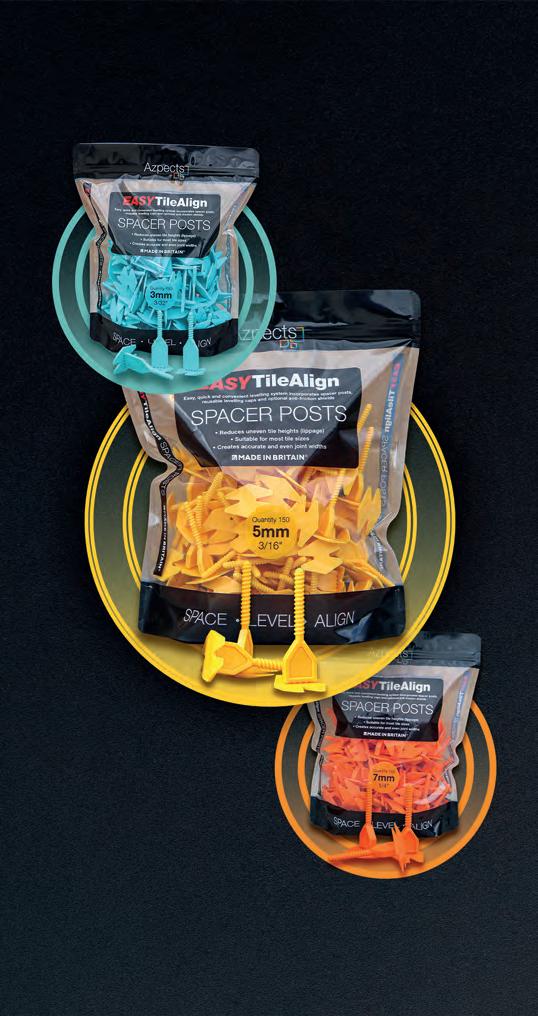

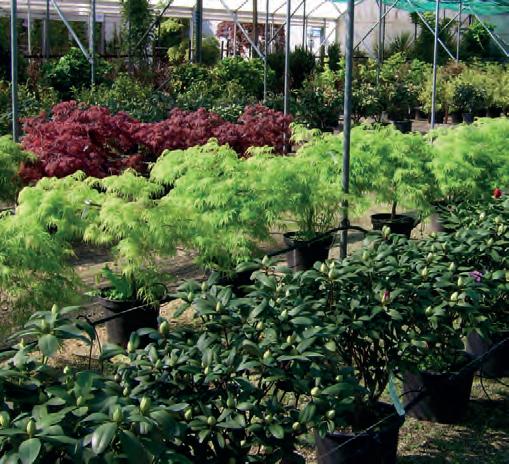
We’ll help you select your plants.
We’ll source and deliver your order.
We offer planting and installation options. We’ll support you with our warranty and our follow-up care.
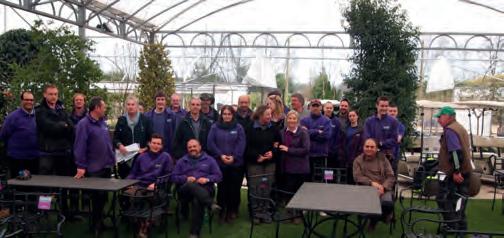
“Tendercare has been one of our key suppliers for nearly 15 years, providing an exceptional range of over-sized and unique material for many of our projects. Across the nursery the team are knowledgable, friendly and a pleasure to work with.”
- Will Allerton, Director, Allerton Landscape Design
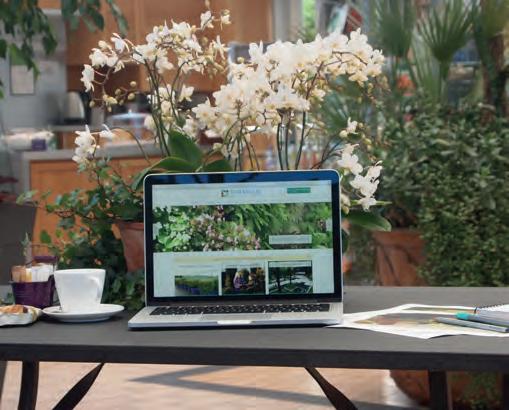

Beyon d
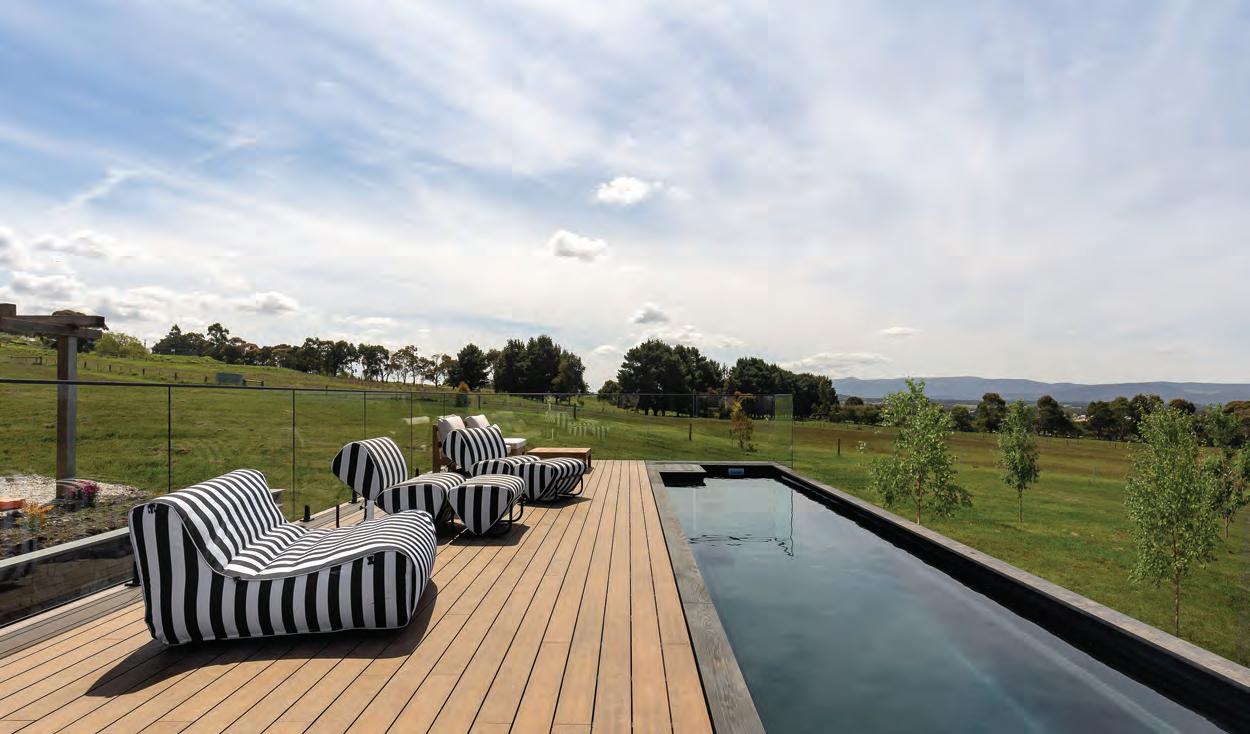
Despite advances in subframe technology, the UK decking market remains heavily reliant on treated timber. In 2010, more than 80% of new decks in the US were built on timber frames; by 2022, that figure had dropped to around 71%. In the UK, by contrast, alternative framing materials still represent less than 10% of installations.
The structural and environmental limits of timber Pressure-treated pine has a realistic service life of 10–15 years in outdoor applications. Even when protected with membranes or tapes, timber remains vulnerable to moisture ingress, fungal decay and dimensional instability. Timber subframes must also have good ventilation so gaps of 6-7mm are required on all installations to avoid premature rotting. Once deterioration sets in, strength and stiffness decline rapidly, and because of the preservatives used in treatment, rotten timber cannot be recycled – it must be sent to landfill or incinerated.
While timber is often labelled a “renewable” material, each pine tree requires 25–35 years to reach maturity – more than twice the lifespan
F.H.Brundle’s Trevor Wines on why it’s time to move beyond timber deck frames
TIMBER
In the UK, alternative framing materials still represent less than 10% of installations
of the deck frame it produces. From a sustainability and lifecycle cost standpoint, this is a poor return. This is why deck installers, particularly in the US, are migrating to materials like steel and aluminium.
Aluminium: Engineering the next generation of deck frames
Modern aluminium systems, such as Outdure® QwickBuild®, provide a structural solution that eliminates the key weaknesses of timber.
• Structural performance: Extruded 6063
T6 aluminium, for instance, offers excellent strength-to-weight ratio, with joist spans exceeding 4m reducing material use by up to 40%.
• Dimensional stability: Aluminium remains true and level – unaffected by expansion, contraction, or warping.
• Durability: The material is powder coated, corrosion-resistant, non-combustible and impervious to biological decay, ensuring decades of service life with minimal maintenance.
• Circular sustainability: For example Outdure® joists are extruded in the UK from at least 63% recycled content aluminium and are fully recyclable at end-of-life without loss of performance.
The false economy of treated timber
While a treated timber subframe can appear up to 60–70% cheaper at installation, its shorter lifespan negates this advantage.
Over a 30- to 40-year period, a deck may require three or four timber frame replacements, compared to a single aluminium structure that continues to perform throughout. Whole-life costing and sustainability assessments increasingly recognise this disparity.
Design flexibility and future adaptability
An aluminium subframe creates a modular platform capable of supporting multiple surface materials – from composite decking to porcelain tiles – without structural modification. This adaptability aligns with evolving design trends and enables future resurfacing with minimal waste.
In conclusion, the US decking market has already recognised that treated timber represents a short-term solution with long-term costs. Aluminium framing delivers superior structural integrity, sustainability, and lifecycle value. As the UK industry looks to modernise its approach to outdoor structures, the shift away from timber isn’t just desirable –it’s inevitable.

Trevor Wines has worked in the decking and recycled plastics industries for over thirty years. He now leads the team specialising in decking and deck framing at F.H.Brundle.
Key advantages include:

For all your golf, sportsturf and landscape irrigation needs. Buy online at www.lws.uk.com

Creating Inspiring Streetscenes
CIS Street Furniture offer a diverse range of street furniture which will complement any location.
As a result of the built environment compaction can inhibit or prevent natural root growth of trees. CIS SUDs compliant resin bound tree grilles are a great way of enhancing the sustainability of your project for future generations. Find out more at our website below.
Tel: 01483 203388 www.cis-streetfurniture.co.uk



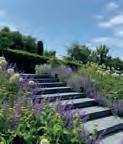













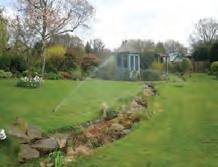






A complete sub-structure, paving or decking and terrace planter & seating system for rooftop spaces. Wallbarn’s high performance Class A fire-rated sub-structure and Bespoke Metal Planters’ solutions creates the perfect one-stop shop for hard & soft landscaping projects. Tel: 020 8916 2222 www.wallbarn.com
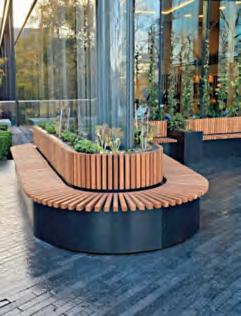

Ten minutes with BECKY PULLINGER
Head of land use planning at The Wildlife Trusts explains how the Planning and Infrastructure Bill could be favourable for both nature and developers
What has The Wildlife Trusts done for the protection of nature in regard to the Planning and Infrastructure Bill?
The planning and infrastructure Bill was first published back in March, so we started by analysing what the bill would mean. It was clear that nature was under threat in part of the bill under Part 3. This significantly lacked the safeguards needed to make sure nature was protected as part of a new process on how developments assess and then address their environmental impacts.
There is a real risk that the new approach could be applied to environmental issues where it just simply won't work for wildlife. It could lead to the loss of key wildlife habitats
Alongside other environmental experts, we identified key ways in which the bill could be improved. We worked with many MPs to raise concerns and ask the government to try and get changes to the bill which made sure it didn't weaken the protection of nature.
When the government was slow to react to concerns; The Wildlife Trusts launched a campaign and thousands of supporters joined us in raising our concerns to the government. That work led to a series of changes that the government themselves proposed in the summer, which led to some improvements to the bill being made. However, there are still key gaps. We, alongside people from the Office for

Environmental Protection, agree that whilst the early changes have improved legislative protections for nature, they still weaken environmental laws, and obviously that's not good for wildlife. Therefore, we've still been working to improve the bill as it goes through its parliamentary process.
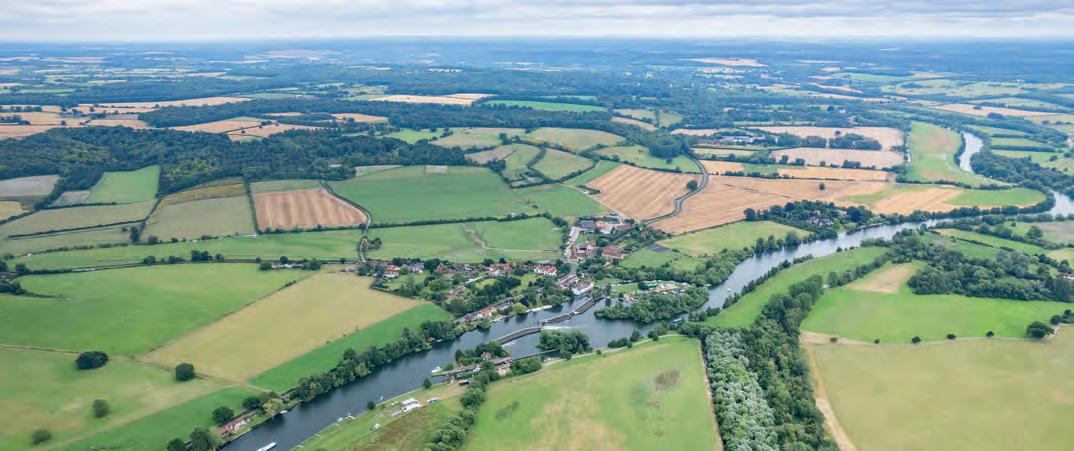
What is and why is Amendment 130/40 important?
The new process being set up means that, instead of each individual development project carrying out its own surveys to understand its environmental impacts on legally protected wildlife and habitats — and then addressing those impacts to avoid harming them — the assessment would now be carried out across the whole area.
Development can impact nature in a whole variety of ways, for example pollution or the loss of wildlife habitats.
This new process can work for some of these impacts like water pollution where the impact can be felt across an area. But, when it relates to loss of wildlife habitats or the destruction of species, we know that it won't

work for wildlife and won't deliver the overall improvement for nature that the bill sets out to do.
Amendment 130, as it was known in the House of Lords, or Amendment 40, as it was known when debated by MPs, restricts the types of environmental impact to which this new approach can be applied, limiting it to cases where it is known to work for both wildlife and developers.
What are the potential effects on nature if
where it just simply won't work for wildlife. It could lead to the loss of key wildlife habitats and the destruction or decimation of important populations of wildlife potentially without us even knowing that that they're there, such as the hazel dormouse or bats.
This would all happen without appropriate compensation or mitigations being in place to minimise or address those impacts at all.

What would the passing of Amendment 130 mean for planners and developers?
The key issues that we see house builders identify as a challenge generally relate to nutrient pollution and water supply.
The amendment allows this new, area-based approach to be used for those types of impacts. Addressing things like nutrient pollution home-by-home doesn’t deliver the same results. In these cases, dealing with impacts across an area is more effective and is likely to work better for both developers and nature than a case-by-case system.
Providing the clarity on how this new approach can apply to those really important issues where it will work for wildlife, but also for development
Amendment 130 isn't passed?
There is a real risk that the new approach could be applied to environmental issues
Providing the clarity on how this new approach can apply to those really important issues where it will work for wildlife, but also for development, can really help developers know what to expect in the years ahead and understand what they will need to do in order to get planning permission.
What else are you hoping to see from the Planning and Infrastructure Bill?
The other key area that we were really pleased to see the House of Lords vote to dd to the bill a few weeks ago was improved protections for chalk streams.
Unfortunately, a bit like the Amendment 130, MPs voted to remove that protection again from the bill. It's estimated that England has 85% of the world's chalk streams, and as they're hotspots for wildlife, it's important that we protect them from development.
We’re still pushing for protections, for chalk streams to be included in the planning and infrastructure bill.
Disclaimer: The Planning and Infrastructure Bill is subject to change depending on how MPs and members of the House of Lords vote.

The Cadet 6 chews through conifer, hedge and all the awkward green waste without blocking up, delivering arborist-level performance in a machine built for landscapers.

Experience more at forstglobal.com