


INCLUDES FINANCIAL REPORT


2002


2022 Size:

Aerial view of the Brisbane Markets in 2002 (top) and 2022 (bottom).




INCLUDES FINANCIAL REPORT
2002
2022 Size:
Our mission is to provide infrastructure and services to facilitate the marketing and distribution of fresh food, flowers and other ancillary products.
2022 is a year that shall not be forgotten. It is the year when Brisbane Markets Limited (BML) celebrates 20 years of ownership and growth of the Brisbane Markets site. It is the year where we faced a post-health pandemic environment and when the resilience of the markets community was put to the test after a natural disaster. While challenges abound, at every step of the way we have proven that we are up to the task.
Despite the trials we have faced, BML has continued to achieve the robust results that have been the hallmark of the past 20 years.
In the 2022 financial year, BML achieved an underlying profit before tax of $19.13 million, reflecting growth of 1.48% when compared to the previous year.
At 30 June 2022, our total assets had grown by 19.72% to $506.97 million, our net asset position was $267.13 million, and our net assets per share was $4.90.
Significant progress has been made on the Building H1 development and the continued expansion of South Gate West (SGW) to ensure the future growth of and continued investment in the Brisbane Markets site and its infrastructure, to facilitate the marketing and distribution of fresh produce, in line with our company mission and our collective ambition to invest in Australia’s central market system.
It is a privilege to be leading the company during our milestone year, with 20 years of responsible stewardship and growth since BML purchased the Brisbane Markets site from the state government in September 2002.
The history of Queensland’s central fruit and vegetable market extends back over 150 years to its humble beginnings on the riverfront at Market, Charlotte and Eagle Streets in 1868.
After years of poor patronage, the original market closed in 1881 and was replaced in 1885 by the purpose-built Municipal
Market in Roma Street, tucked beside the rail line and handy to the wharf area in the heart of the city.
However, by 1906, a group of unhappy Roma Street traders had created a rival market in Turbot Street, known as the Brisbane Fruit and Produce Exchange Ltd. Over the years, the two markets operated in competition and their proximity created a city market precinct.
As the city grew, so did congestion, and in 1964 the city market precinct was moved. Owned by the Queensland Government, the new central market in Rocklea comprised five buildings and a trading area covering just 14 hectares within a larger 50-hectare site.
In the late 1990s, there was growing disquiet at the lack of collaboration and consultation between landlord and tenants, coupled with low priority given to security, maintenance and the site’s operations, prompting Brisbane Markets wholesalers, supported by the industry, to lobby to buy the Brisbane Markets.
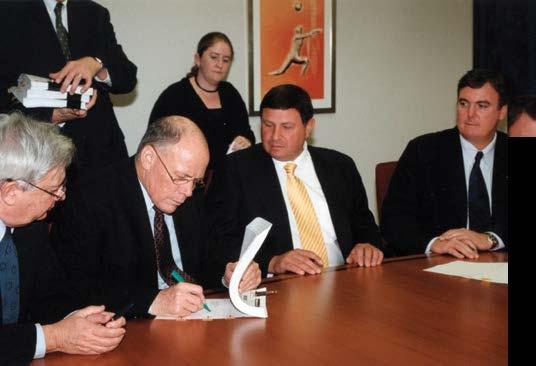
The state government announced the sale of the site by public tender in mid-2001. After a fierce, four-stage bidding process, Landacq Limited, a public company comprising 150 predominantly industry-based shareholders, was the successful bidder, buying the then 72-hectare site in September 2002 for $73.85 million. The company subsequently changed its name to Brisbane Markets Limited.
Since that monumental purchase, the Brisbane Markets site has expanded to 77 hectares and BML has invested over $220 million in capital expenditure to upgrade and develop the site. In 2002, the site’s total assets were worth $77 million. Today, that figure is $507 million.
The past 20 years of ownership of Brisbane Markets shows that by working together we can build a dynamic industry, promote the importance of eating fresh fruit and vegetables to consumers in Queensland and beyond, and face the challenges of the future.
The same camaraderie and teamwork that buoyed the markets community during BML’s bid for the landmark site was on display in February and March 2022, when the resilience of the Brisbane Markets community was put to the test as flood waters inundated the site after a period of intense rainfall.
BML's disaster preparedness allowed for the removal and decommissioning of key infrastructure likely to be impacted before flood waters rose.
Once the site became accessible on the afternoon of Tuesday, 1 March, the majority of wholesalers worked around the clock to ensure buyers had access to fresh produce and commenced trading from the Central Trading Area (CTA) some 17 hours later.
Other areas of the site were more significantly impacted by the flood. These were progressively cleaned, and individual businesses recommenced operating from their premises as power and services were reinstated.
BML worked very closely with a small number of service providers and volunteer groups as part of our flood recovery efforts, including Crisp Power and Control, SBP Australia, Eaton Services Group, SUEZ, Origin Energy, Advance Groups, Rapid Relief Team, Rural Fire Brigade and the Australian Defence Force.
Along with staff members, these organisations assisted BML and our tenants to clear almost 4,000 t of flood waste from the Brisbane Markets site, clean all impacted surfaces and reconnect essential services and infrastructure.
By the end of March 2022, power supply was reconnected to all buildings, a process significantly expedited by BML’s prior flood mitigation project to raise electrical substations above flood levels. By the end of May, a site-wide audit was undertaken of all main building and tenancy distribution boards with final repairs completed by mid-September 2022.
The BML Board and senior management wholeheartedly thank and appreciate the hundreds of volunteers, service providers, tenants and staff members who banded together to clean and repair the site to ensure that we could continue to supply Queenslanders with fresh fruit and vegetables.
Despite the challenges of the flood event and the health pandemic, BML has achieved a strong financial outcome and solid growth over the 2022 financial year and, indeed, the 20 years that preceded it.
Our achievements and resilience are testament to the strength and experience of industry-based ownership of the Brisbane Markets.
The results are also a reflection of the ongoing hard work, prudent decision-making and sound investment strategies implemented by the BML Board and senior management team, who are all well equipped to make the most of Brisbane Markets’ considerable opportunities into the future.
BML reported a very positive result for the year and has maintained the operating profit at a consistent level to last year, despite recent impacts of natural disasters.
The conditions of the property market have resulted in a significant increase in the value of the Brisbane Markets property, and a similar result at Perth Markets, where BML owned 41.73% of the company. The underlying operating profit before tax of $19.13 million represents growth of 1.48% on the prior year.
The company recognised an increase in the property value for Brisbane Markets of $42.85 million as outlined in the financial report, and Perth Markets Group Limited (PMGL) has continued to make a solid contribution again this year. A summary of the financial performance for the 2022 year is summarised below.
BML achieved further improvements in its balance sheet position in the 2022 year, with total asset growth of 19.72% and net asset growth of 29.64%, when compared to the prior year.
The reported group revenue for the year was $122.31 million, however underlying revenue was relatively unchanged at $46.32 million for the year, as summarised below:
The reported group expenditure increased to $33.92 million for the year, and underlying expenditure remains slightly lower than the prior year as summarised below.
BML continues to own 41.73% of PMGL.
The performance of PMGL continued to be strong, resulting in a positive result included within the financial report. The summary of the result after removing the one-off impacts is provided below.
BML has been subject to further site operations and property related costs during the 2022 financial year, in particular further increases in insurance premiums and waste disposal costs. General repairs and maintenance costs were lower than the prior year due to the significant focus on flood recovery works in the second half of the year. Expenditure continues to be reviewed by the company ongoing to ensure that we can deliver the required returns to shareholders.
The major asset of the group is the Brisbane Markets properties located at Rocklea, which were independently valued at $425 million at 30 June 2022, and the statement of financial position reflects this fair value. The full detail relating to the properties is included at Note 6 to the financial report.
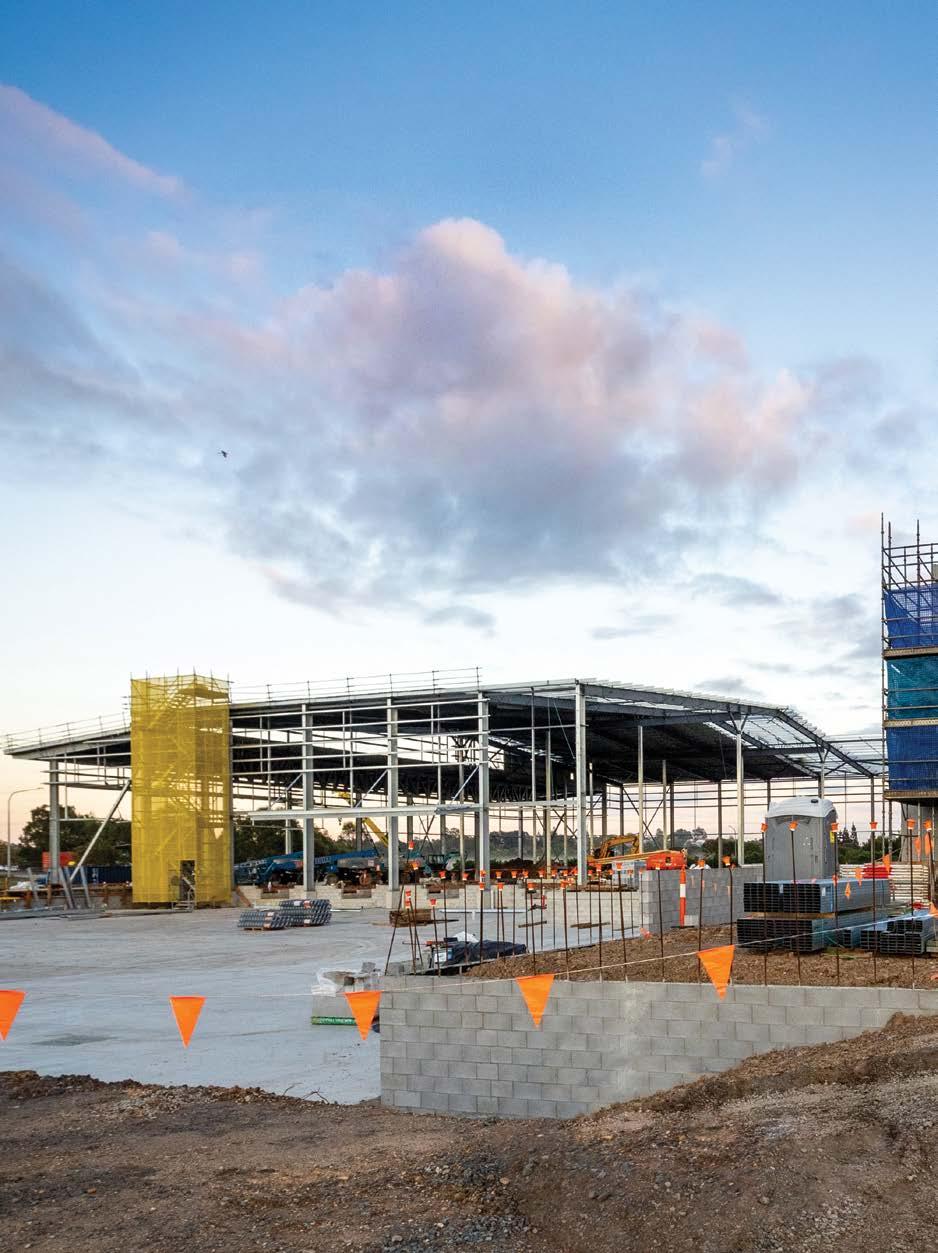
BML’s flagship project for 2022 is the new, sustainably designed Building H1 development.
This $23.2 million, 5,667 m² warehouse is being constructed at SGW, in close consultation with tenant, Green Endeavour, the parent entity of existing Brisbane Markets tenants, Fruitlink and Suncoast Fresh.
After some delays to construction due to inclement weather, Building H1 is progressing well. Bulk earth and piling works are complete, as is the installation of underground services, the hardstand and ground level offices. Approximately 30% of the concrete hardstand was in place at 30 June 2022.
Practical completion is expected early in 2023. Once complete, the warehouse and distribution facility will have six small commercial vehicle docks, five docks with dock levellers for large commercial vehicles, a finger dock and two forklift ramps.
It will also feature eight cold rooms, supported by a main staging and packing area with varying temperatures, a freezer room, approximately 381 pallet spaces, and two heavy produce rooms, along with an administration hub accommodated in a two-level office wing.
Conceptual designs, development applications and bulk earth works for a new 321-space parking facility in SGW were completed over the 2022 financial year. The car park is designed to provide more accessible parking for Building H1 and provides contingency for future developments in the SGW precinct.
The parking facility tender process is now complete, and the construction phase is expected to reach completion in early 2023.
A new pedestrian access ramp was installed in SGW, linking CP2 with the elevated building platform, the western half of which is the site of the Building H1 development with a future development site to the east. The PWD-compliant pedestrian ramp will provide tenant staff access to CP2, Sherwood Road and the adjacent Commercial Centre.
Planning is underway for several future warehouse developments in SGW, in line with our master plan, with a view to progressing these projects over the coming years.
Elsewhere at the Brisbane Markets site, work is progressing to modify existing buildings to better suit tenant business operations.
The development application, tender process and signed agreement with existing tenant, Alfred E Chave Pty Ltd, have been finalised for a 577 m² extension to Building N and the detailed design process is now underway. The project will extend the existing 1,516 m² warehouse to an estimated gross lettable area of 2,093 m².
During the 2022 financial year, Building M1 was divided into two tenancies and new 10-year leases signed by the existing and new tenants. The project, which progressed over August and September 2021, involved the construction of an intertenancy PIR panel wall with concrete kickers, along with all associated works to split the relevant base building services, including electrical circuits, lighting and fire services.
The 4,704 m² purpose-built warehouse, constructed in October 2011, was originally designed to accommodate two tenants prior to being constructed as a sole occupancy tenancy in accordance with variations to the building plans as requested and approved by the then tenant, Fresh Produce Group of Australia Pty Ltd (FPG).
Unit M1-01 is now a wholly contained tenancy, leased to FPG, with seven dock levellers, a finger dock and a forklift ramp, together with cold rooms and office accommodation on two levels. Unit M1-02, leased by existing tenant Fresh Selections Pty Ltd, features three dock levellers, a forklift ramp and cold rooms, with office accommodation also on two levels.
5
172,146 m² (including
148,144 m² (excluding land leases)
5.63
5.56
In the 2022 financial year, we continued our strategic investments in PMGL and South Australian Produce Market Limited. This investment in other central markets continues to reap benefits, with the increased property valuation contributing to the overall value of BML’s investment of PMGL, as outlined in the financial report.
In April 2022, BML announced its intentions to increase its shares in PMGL from 41.7% to 51%.
BML also works collaboratively with Central Market chambers and wholesalers through our participation in the Hort Connections trade show and our continued investment in the A better choice! national retail program.
In February 2022, the Saturday Fresh Market relocated to the Covered Unloading Area (CUA) within the Brisbane Produce Market. The move facilitates future growth and warehouse developments in the SGW precinct, including the new Building H1 development.
The all-weather venue has been praised by customers and stallholders alike, and since relocating, an average of over 4,400 people attended the Saturday Fresh Market each week.
The Saturday Fresh Market utilises a number of digital marketing channels to communicate with the local and wider Brisbane community. Over the course of the 2022 financial year, these channels reached almost five million people.
The Sunday Discovery Market was retired after attempts to find a suitable alternative venue were unsuccessful.
A focus on parking management within the Northern Industrial Precinct continued in the 2022 financial year, utilising a mobile licence plate recognition camera mounted to the BML security van.
The system allows for the education of repeat offenders and has reduced congestion, increased parking compliance and allowed buyers to access adequate parking options around the CTA and Fresh Centre during peak trading hours.
24,551,501 shares held in Perth Markets Group Limited
98,500 shares held in South Australian Produce Market Limited
261,295 attendees for the year
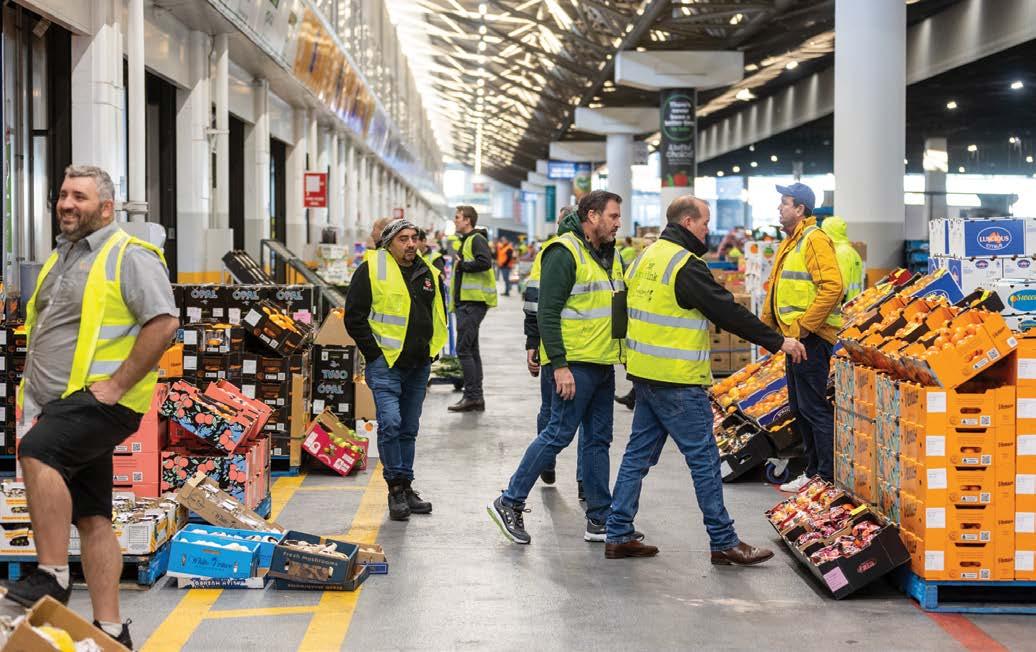

BML hosted the Brisbane Produce Market Gala Dinner in conjunction with Brismark in July 2021. The event celebrates Queensland’s fresh produce supply industry and was attended by approximately 500 wholesalers, service providers, government representatives and industry organisations.
The popular Brisbane Produce Market Forklift Operator of the Year event ran over September and October and the Brisbane Produce Market Mango Auction was held on Thursday, 16 September. Originally planned as a live event, after a period of uncertainty regarding local COVID-19 restrictions, the decision was made to hold the Mango Auction as an online auction.
For the second year in a row, the national fresh produce industry conference Hort Connections was held in Brisbane in June 2022, and BML staff played a leading role in hosting over 100 growers, industry representatives and delegates from Australia’s other central markets on a tour of the Brisbane Produce Market as part of the conference. BML was also well represented at the conference tradeshow under the banner of Australia’s Fresh Produce Markets - the collaboration between the Central Markets Association of Australia and Fresh Markets Australia.
In October 2021, BML hosted the first Future Fields summit in this site’s CTA. Some 60 delegates attended the summit in person, including representatives from several Brisbane Markets wholesaling businesses, and over 70 people attended online.
Our Memoranda of Understanding with grower organisations and the Bulls Masters continue to promote the Brisbane Markets to regional growing communities. In February 2022, BML arranged a Bulls Masters-hosted barbecue for Bundaberg Fruit and Vegetable Growers as part of our corporate partnerships with both organisations.
In February and March 2022, during and after the flood event at the Brisbane Markets, BML managed a large volume of media requests for comment and footage, resulting in national and local coverage. The overarching messaging to media was for consumers to support growers and the fresh produce supply chain by continuing to purchase fruit and vegetables from independent retailers.
BML also continued to promote the Brisbane Flower Market to florists and event planners in South East Queensland, as well as consumers in the local area.
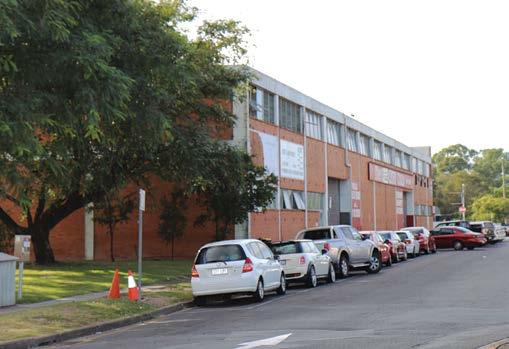
BML executed wholesale and retail focused advertising campaigns for Valentine's and Mother's Days, promoting online orders and deliveries to combat potential COVID-19 impacts and associated supply chain issues. Coverage of the Brisbane Flower Market featured on local TV news, radio and print media in conjunction with these major trading days.
The BML Portal app and Site Service Centre Online web resource continue to work hand-in-hand to ensure markets users can easily find relevant information while on the go with quick access to forms, maps, frequently asked questions and how-to guides. The combination of dedicated web page and mobile app allows for contactless access to important Brisbane Markets information, reducing the face-to-face contact and administrative resources for in-person and phone enquiries.
A new version of the BML Portal app was released in November 2021, complete with updated user interface allowing users to apply for photography, site tours and selling floor promotions, along with requests for maintenance assistance. Registered users can access tenant contact information, bulletins and markets news.
Over the course of the 2022 financial year, Site Service Centre Online was viewed almost 12,500 times and continually updated to create a one-stop-shop for markets users.
Bulletins remain the main vehicle for disseminating important operational, maintenance, safety and administrative information that impacts the operation of tenant businesses. Fresh News is used to communicate newsworthy items to markets users, including updates on developments and maintenance projects, details of leasing opportunities, event participation and promotion, health and other operational messaging.
Fresh Source magazine is distributed throughout Australia to industry organisations, governments at all levels, media outlets, growers, sponsors and the Brisbane Markets community. This respected industry publication provides an overview of the news impacting the fresh produce supply chain, showcasing the diverse people and topics that are of importance to Australia’s horticulture industry.
154,041
514,977 web page views
12,489
Site Service Centre Online unique page views
7,805 News Portal users
19,748
301,437
11,896
614,761
33,013 website users
97,992
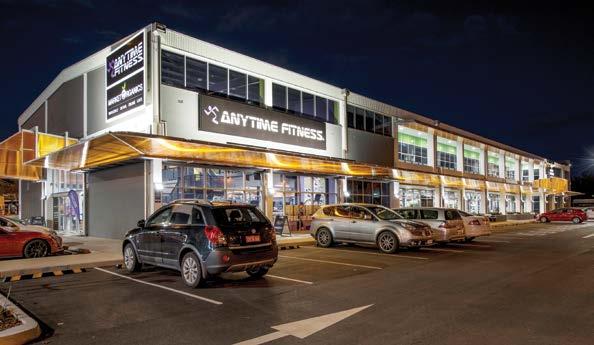
While early in the financial year COVID-19 continued to cause disruptions to our ongoing maintenance schedule through staff shortages, supply chain disruptions and lockdowns, the latter part of the financial year saw a focus on flood recovery works for our maintenance team.
An ongoing project is underway to extend BML’s network of inground services to support the new Building H1 warehouse and to future-proof for further development.
These works complement the independent South Gate sewer network, completed in the 2021 financial year, by extending and upgrading underground sewer, water, electricity, and copper and fibre communications networks into the SGW Precinct.
BML is also progressing a high voltage (HV) master plan to oversee an HV network to support future development of SGW. The project will involve upgraded HV underground cabling, the introduction of a new substation, and completing the HV link between the existing substations at Buildings E1 and H1.
The roadways at Brisbane Markets are put through heavy use, resulting in wear and tear over time. For the safety of markets users and the integrity of the fresh produce that is transported around this site, our ongoing asphalt resurfacing works are an important aspect of BML’s scheduled maintenance program.
The 2022 financial year saw a focus on resurfacing and repair works to roads servicing the South Gate Precinct, including Martin Taylor Drive.
Line marking controls were also upgraded across the site to reflect BML’s standards and comply with Department of Transport and Main Roads specifications for line marking and pavement works, improving traffic flow and driver safety by
highlighting exclusion zones, forklift work areas, give way directions and parking spaces.
Over the 2022 financial year, several aging public amenities were upgraded, including removal of asbestos containing material where present.
Mechanical ventilation units were installed in the CUA roof to reduce heat load build during the summer months, and works to retrofit and repair lighting in the CUA under warranty commenced and are expected to be completed early in the 2023 financial year. As part of the scheduled maintenance program, columns and bases in the CUA were painted quarterly, and facias, bollards and Armco barriers were painted as required.
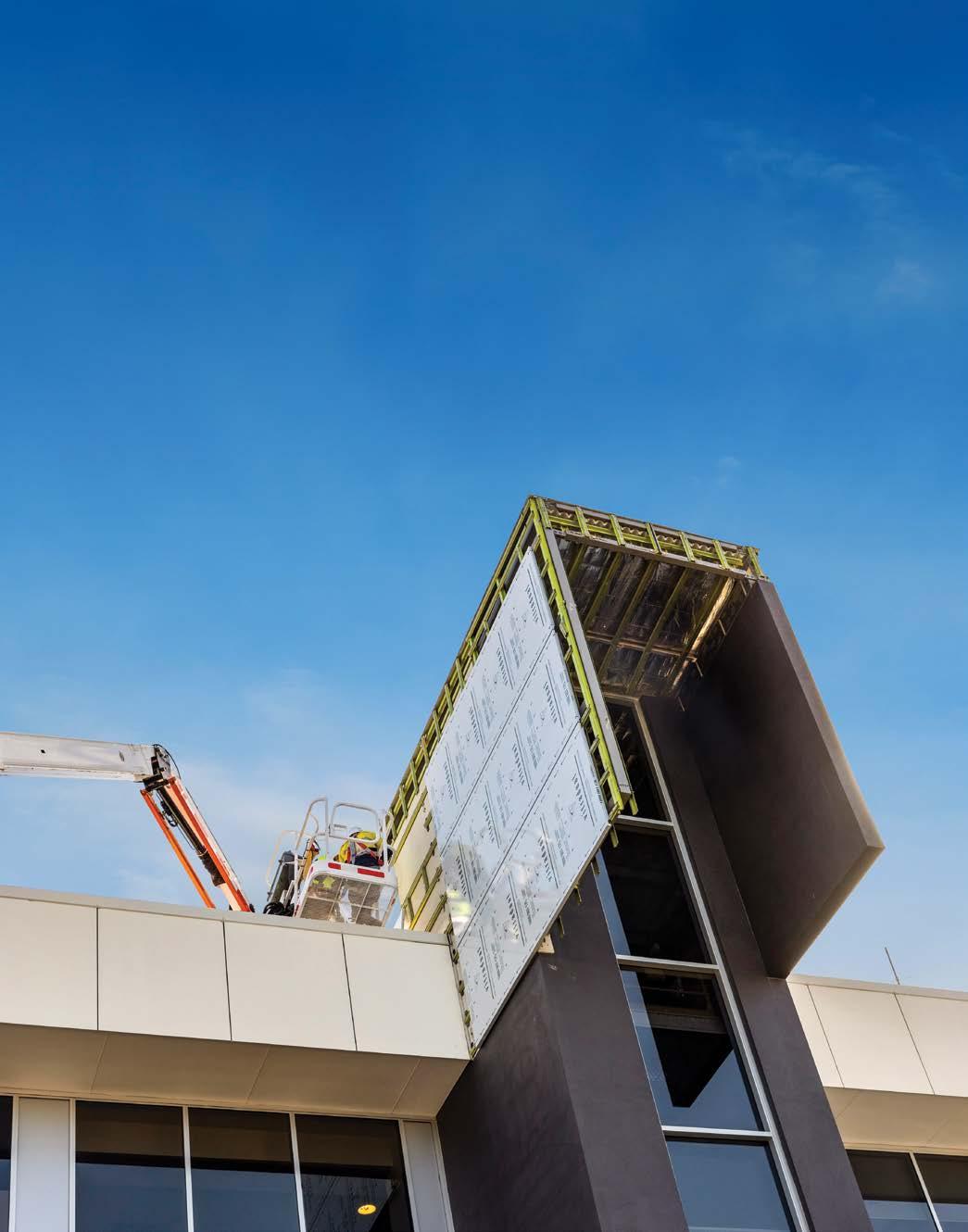
In October 2021, BML installed new cladding and signage on the Fresh Centre. The works were prompted by the reclassification of the aluminium composite material cladding previously used on three sections of the building to flammable. In total, 98 m² of cladding was removed from the Fresh Centre and replaced with new Vitradual panels. The existing building signage was also upgraded.
To provide a consistent approach to pest management across the Brisbane Markets, BML developed and, from July 2021, implemented site-wide minimum standards for pest control in common areas on site in conjunction with contracted pest management service provider, Flick Anticimex.
The latest stage of BML’s roof access upgrade project is underway, with roof access point changes to multiple buildings designed to support safe access for tenants, BML and external service providers for maintenance and servicing requirements.
Electrical infrastructure Fire detection
28 substations
448 electricity meters
40 building main boards
504 tenancy distribution boards
355 hose reels
771 fire extinguishers
363 fire hydrants
40 fire indicator panels
Maintenance Hydraulics infrastructure
1,695 maintenance jobs raised
1,625 maintenance jobs completed
162 dock levellers maintained
23 boom gates
62,853 kilolitres of water consumed
256 water meters
125 backflow prevention devices
15 sewerage pump stations
45 public toilet blocks
Pest management
1,476 bait stations

Brisbane Markets is an operating industrial facility and, as such, safety is a core principle of our people and culture strategic priority, as are the shared values and dedication of the BML Board, management and staff.
The Site Safety Program is a joint initiative between BML and Brismark and has received strong support from tenants and forklift operators alike. A key component of the program is random drug and alcohol testing of forklift operators who hold a BML Forklift Operator Permit.
Since testing started in October 2020, over 640 tests have been undertaken with only two confirmed positive results. After pausing as scheduled in December 2021, and for an unscheduled period after the 2022 floods, random drug and alcohol testing recommenced in May 2022 and, over the 2022 financial year, 481 tests were undertaken with one confirmed positive result.
BML also worked collaboratively with Brismark to mark Safety Month in October 2021. BML presented a selection of safety workshops, covering topics such as forklift safety, drug and alcohol testing process, service provider safety and chain of responsibility, and sponsored Brismark’s Safety Star Award which recognised markets users who had found an innovative solution to a WHS risk on site.
Safety Month culminated in the Brisbane Produce Market Forklift Operator of the Year event, which is another opportunity to reinforce a culture of safety, this time through encouragement and reward.
During the 2021 Gala Dinner, awards were presented by The Hon. Mark Furner, Minister for Agricultural Industry Development and Fisheries, to 17 members of the markets community for 40 years of dedicated service to the Brisbane Markets.
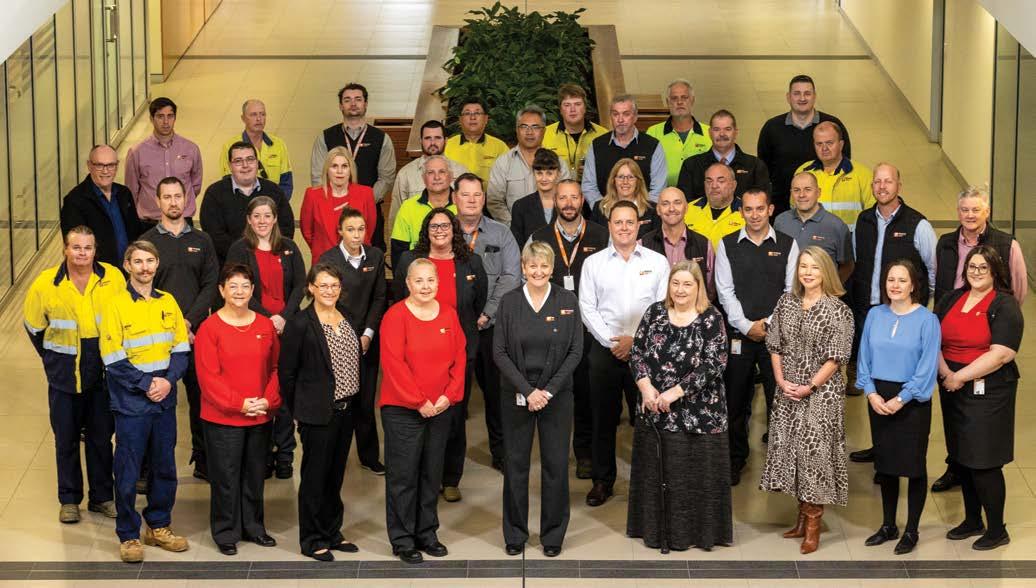
BML’s team values continue to guide the actions and attitude of staff members, focusing on our commitment to customer focus, teamwork, accountability, integrity and proactivity. These team values govern decision-making processes, preferred behaviours and expected team performance in a way that promotes a positive organisational culture that meets the expectations of BML’s Board and senior management.
As Queensland moved to a ‘new normal’ approach to the COVID-19 health pandemic, BML worked in conjunction with Queensland Health and the Department of Agriculture and Fisheries (DAF) to arrange access to fast track vaccinations through state-run centres and pop-up vaccination clinics at Brisbane Markets.
Access controls were increased in the lead-up to borders opening and focused messaging on mask wearing in line with state government guidelines, and guidance to tenants to assist in limiting outbreaks within businesses was prominent. Additional cleaning of high-touch common areas continued, with 995 hours of sanitising cleaning completed across the 2022 financial year.
BML continued to reduce face-to-face contact for frontline staff members with the provision of online inductions, the Site Service Centre Online and BML Portal app.
1,030
forklift operator permits
365 registered forklifts
7,570 access cards issued
386 tenant commercial vehicles
810 registered buyers
5,126 online safety inductions
481 drug and alcohol tests undertaken
All new developments on site undergo environmental management planning to minimise their impact on the local environment. Sustainability was a key criterion for the tenant in the design planning of Building H1.
Just some of the many sustainability features of the build include tilt concrete panels, slabs and walls making use of fly ash material, which is a by-product of power generation that offers environmental benefit through the re-use of waste materials; low toxicity and low volatile organic compounds emission paint throughout the interior of the building; recycled and carbon neutral flooring; and bio-soluble and recycled roof insulation material.
The purpose-built development includes a one-touch warehousing system with eight temperature zones to provide optimum temperatures for specific products, thereby reducing power consumption.
In addition, the roof top terrace will feature raised garden beds growing edible plants and the entry to the building will include a green wall of edible garnishes that can be grown in an indoor environment.
Brisbane Markets is located in a fire ant biosecurity zone and as such BML staff members are trained by the DAF to locate and identify fire ant nests on site. When located, nest areas are marked and reported to DAF for treatment to reduce the spread of this invasive species.
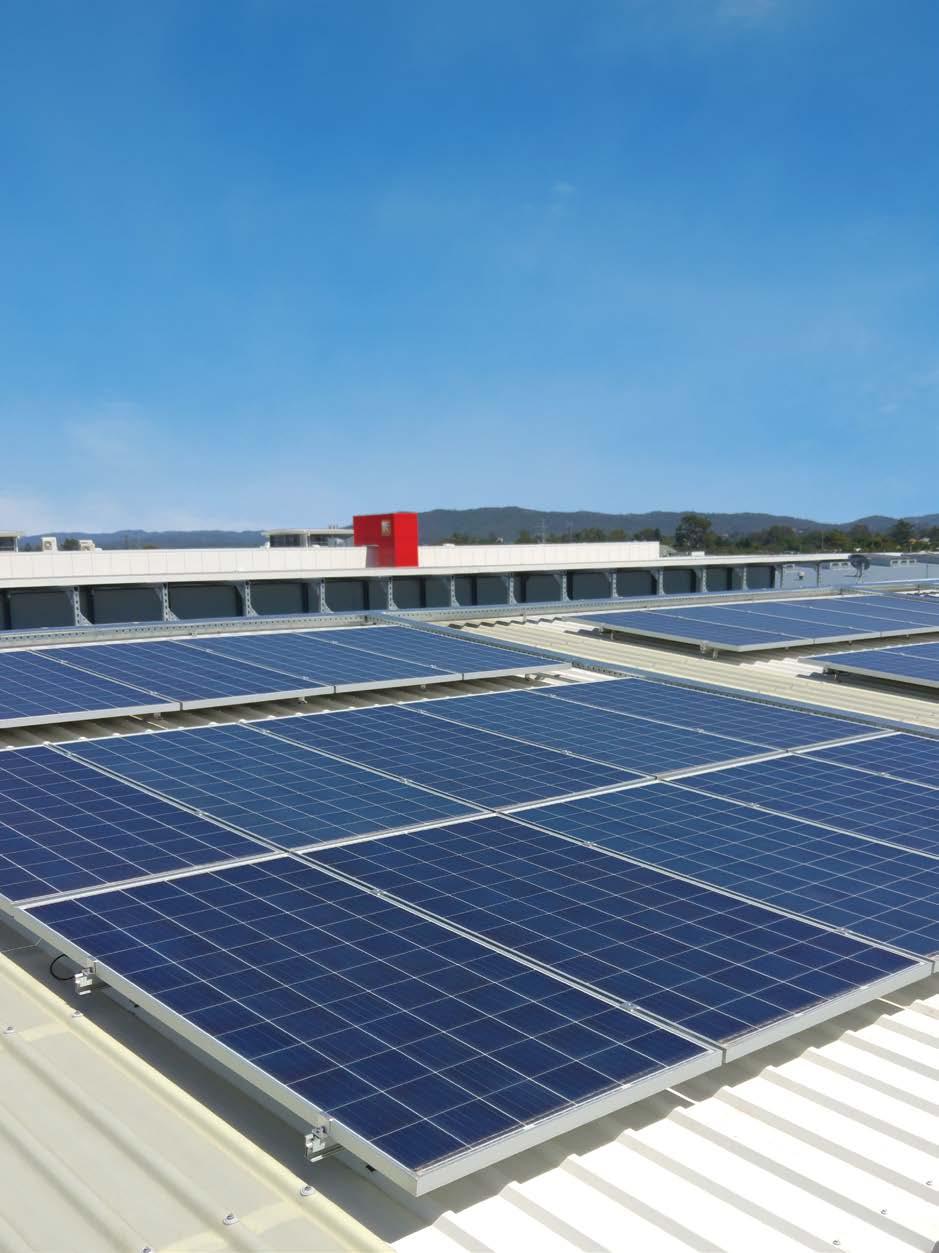
To improve sustainability and reduce electricity costs, solar energy has been utilised as a renewable energy resource at Brisbane Markets since the first pilot solar panel project was launched in 2015.
The 15,603 solar panels installed on 19 buildings across this site generated 5.55 GWh of power during the 2022 financial year, which is over 11% of this site’s electricity usage. This is the equivalent of powering more than 1,100 households for a year.
Our investment in solar energy infrastructure over the past six years exceeds $8 million and our annual return on this investment exceeds $1 million, reflecting savings in electricity purchase costs and large-scale generated certificate credits.
Hand-in-hand with our sustainability goals, BML is conscious of the responsibility we have to the local social environment both through waste management and in our proximity to the Oxley Creek catchment. BML has continued its support of the Oxley Creek Catchment Association, which protects and enhances the
natural environment and resources of the catchment.
During the 2022 financial year, over 410,000 kg of non-food waste (excluding waste generated from the flood event), such as pine pallets and scrap metal, was diverted from landfill, recycled and converted into useable products.
Through our partnership with Foodbank Queensland (FBQ), in which BML promotes awareness of FBQ services to wholesalers, including addressing food insecurity and rescuing fresh produce that would otherwise be dumped, over 700,000 kg of fresh produce was also diverted from landfill and used to feed those in need.
Further afield, BML provides funding to support growing regions throughout Queensland, which we do through Memoranda of Understanding with the Bowen Gumlu Growers Association and Bundaberg Fruit and Vegetable Growers, and sponsorship of the Granite Belt Growers Association’s inaugural Gala Dinner in July 2021.
These grassroots membership organisations provide advocacy, research and workforce development services for growers in their regions.
BML also continued its sponsorship of the Bulls Masters Youth Cup, held in Bundaberg in December 2021. The Bulls Masters take cricket to regional areas and promote our shared values of a healthy lifestyle through regular activity and the consumption of fresh fruit and vegetables.
In September 2021 the Brisbane Produce Market Mango Auction raised $27,444 for Redkite, a charity that assists families of children undergoing treatment for cancer. Since 2002, the Mango Auction has raised over $1 million in donations for nominated charities.
In June, our staff members participated in the Push Up Challenge, raising over $7,000 to promote awareness of mental health issues and aid suicide prevention initiatives.
BML contributed almost $160,000 in charitable donations and other sponsorships during the 2022 financial year, including: Morgans’ Big Dry Friday, a nondenominational day of support for rural Australia held annually; The Lady Musgrave Trust, providing practical solutions for women and children facing homelessness and domestic violence; the Mt Gravatt Bowls Club; the MacGregor Netball Club; and, in conjunction with Brismark, sponsored the Brisbane Produce Market Charity Golf Day in support of Diabetes Australia.
then now
15,603 solar panels
5.55 GWh of electricity produced
11.62% of Brisbane Markets’ electricity usage >1,100 yearly household power equivalent
414.92 t

706.71 t

5 gross pollutant traps
1,693.44 t

152.10 t

103.78 t
*Note: these figures do not include waste that is generated and removed by individual tenants. These figures also do not include waste that was generated during the flood recovery process.




Your Directors present their report on the consolidated entity consisting of Brisbane Markets Limited (BML) and the entities it controlled at the end of, or during, the year ended 30 June 2022.
The following persons were Directors of BML during the year or at the date of this report:
• Anthony Kelly
• Peter Tighe
• Bruce Hatcher
• Stuart Lummis
• Nicole Radice (appointed 10 November 2021)
• Noel Greenhalgh
• Stephen Edwards (appointed 10 November 2021)
• Andrew Young
• Anthony Joseph (retired 10 November 2021)
• Evonne Collier (resigned 8 October 2021)
During the year, the principal continuing activities of the consolidated entity consisted of:
• facilitating the efficient and effective operation and growth of the Brisbane Markets site;
• providing infrastructure and services to facilitate the marketing and distribution of fresh produce, together with flowers and other ancillary products, to domestic and international customers; and
• preserving and promoting the role of the central market for the benefit of industry stakeholders and consumers.
There were no significant changes in the nature of the activities of the consolidated entity during the financial year.
The net profit after income tax of the consolidated entity for the year ended 30 June 2022 was $62.393 million (12 months to 30 June 2021: $18.448 million).
Underlying net operating profit (Non-IFRS measure, unaudited)
The underlying net operating profit before income tax was $19.134 million for the 2022 financial year, compared to $18.855 million for the 2021 year.
The underlying company performance has been very pleasing given the circumstances that existed during the year. The information below provides additional detailed explanation of the consolidated entity operating performance by making adjustments for items relating to fair value movements, flood impacts and income tax adjustments. The Directors’ view is that presentation of the information in this format provides an
accurate representation of the underlying performance that would not otherwise be available.
The net profit after income tax includes the following:
1. The impact of the Brisbane Markets property valuation fair value movement in the current year was an increase of $42.849 million before tax (increase of $18.105 million for the 2021 year).
2. The consolidated entity is making good progress with its flood recovery efforts. Future flood reinstatement works of a capital nature of $6.53 million will be incurred in the 2023 year, and have been reflected as future expenditure on investment property in the valuation undertaken at 30 June 2022. Expenditure of $2.90 million for flood reinstatement works was capitalised to investment property prior to 30 June 2022 and the insurance proceeds have been approved, and are receivable. The impact of the flood event as disclosed above was a $9.402 million contribution to profit, which at this stage is expected to cover the reinstatement costs incurred to date, and in the future, as noted above.
3. The contribution from Perth Markets Group Limited (PMGL) and investments for the current year was a profit of $19.241 million as disclosed in the financial report (profit of $3.289 million for the 2021 year). A significant component of the reported profit of PMGL has resulted from an increase in the property valuation of the Perth Markets site. The table below provides a reconciliation to information contained in the financial report.
At reporting date, BML's drawn down funding facility was hedged under five long-term interest rate swaps to the extent of 46.54%. Hedging is a requirement of the funding facility provided by the company’s banker.
In support of our mission to provide infrastructure to facilitate the distribution of fresh produce, foundations were laid for the expansion of South Gate West (SGW) at Brisbane Markets, through the progression of works to implement and support future development and growth in that precinct.
Progress has been made in the construction of the new $23.2 million, 5,667 m² warehouse, Building H1, purpose-built and sustainably designed for tenant Green Endeavour, the parent entity of existing Brisbane Markets tenants, Fruitlink and Suncoast Fresh. Practical completion is expected early in 2023.
Conceptual designs, development applications and bulk earth works were completed for a new 320-space parking facility to facilitate tenant parking for Building H1 and future developments.
In-ground services, including sewer, water, electricity and communications networks, have been extended and upgraded with the networks designed and engineered to support all future developments in SGW, and the project will continue to progress alongside these developments.
A new pedestrian access ramp has been constructed in SGW, linking CP2 with the raised building platform which houses the Building H1 development and future development sites. The pedestrian ramp will provide future tenant access to CP2, Sherwood Road and the adjacent Commercial Centre.
The Saturday Fresh Market was relocated to the Covered Unloading Area of the Brisbane Produce Market to facilitate the expansion of the SGW precinct; however, the Sunday Discovery Market was retired after attempts to find a suitable alternative venue were unsuccessful.
New extractor fans were installed in the Covered Unloading Area roof to increase airflow in the summer months for both the Brisbane Produce Market and the Saturday Fresh Market.
Building M1 was divided into two tenancies, a new garage was built, and new 10-year leases signed by the existing and new tenants. The project involved the construction of an intertenancy PIR panel wall with concrete kickers along with all associated works to split the relevant base building services including electrical circuits, lighting, and fire services.
The Brisbane Markets site was inundated by floodwater in February 2022. The recovery effort progressed swiftly, with the site operational within 17 hours, and most rectification works to be completed by year's end.
On top of flood recovery works, our scheduled maintenance of the site continued with ongoing painting, asphalt and linemarking works, along with the upgrading of aging amenities, with the refurbishment of public toilets in Buildings L, V and Y as well as scheduled painting works in Buildings B, C and D.
Site-wide minimum standards for pest control for common areas on site were implemented and bird netting was installed under awnings west of Building A and north of Building D.
Drug and alcohol testing continued as part of our Site Safety Program, with an additional 481 tests undertaken in the 2022 financial year and only one confirmed positive test result.
During the 2022 financial year, over 700,000 kg of fresh produce from Brisbane Markets was donated to Foodbank Queensland as part of our partnership to provide support to this valuable organisation and promote awareness of their services to address food insecurity and to rescue fresh produce destined for landfill.
Our annual event, the 2022 Brisbane Produce Market Mango Auction, facilitated the donation of $27,444 for Redkite with the event reaching the milestone of having raised $1 million for charity since 2002.
The Brisbane Markets site has seen an increase on the already exceptional occupancy rates for tenancies at this site, with industrial occupancy sitting at 100% and overall site occupancy of 98.57% at 30 June 2022.
The land and buildings at the Brisbane Markets site were valued by Charter Keck Cramer Pty Ltd at a value of $425.000 million as at 30 June 2022, and the financial accounts of the consolidated entity reflect the fair value of this asset.
The consolidated entity remains in a very sound financial position, with total assets of $506.974 million, and net assets of $267.126 million at 30 June 2022, representing $4.90 per share.
Dividends paid to shareholders during the year were as follows: Final dividend of 8.25 cents per fully paid share on 20 October 2021, fully franked at 30%. $4,496,250 Interim dividend of 8.75 cents per fully paid share on 23 March 2022, fully franked at 30%. $4,768,750
Total dividends paid during 2021/22 financial year $9,265,000 Total dividends paid during 2020/21 financial year $8,856,250
There were no significant changes in the state of affairs of the consolidated entity during the financial year.
Insurance proceeds of $10 million, which were a receivable at year end, have been received in full by the company.
There are no significant events that have occurred subsequent to the end of the financial year that have not been disclosed in this report.
Information in relation to the likely developments of the consolidated entity include:
• The BML Board continues to review its strategic priorities on a regular basis, which includes an ongoing focus being given to the operation and development of the existing Brisbane Markets site.
• The consolidated entity will continue to progress opportunities across the Brisbane Markets site as they arise.
The consolidated entity is not subject to any significant environmental regulation.
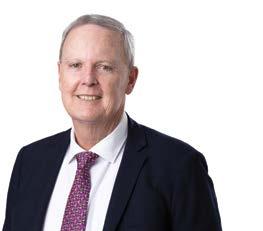
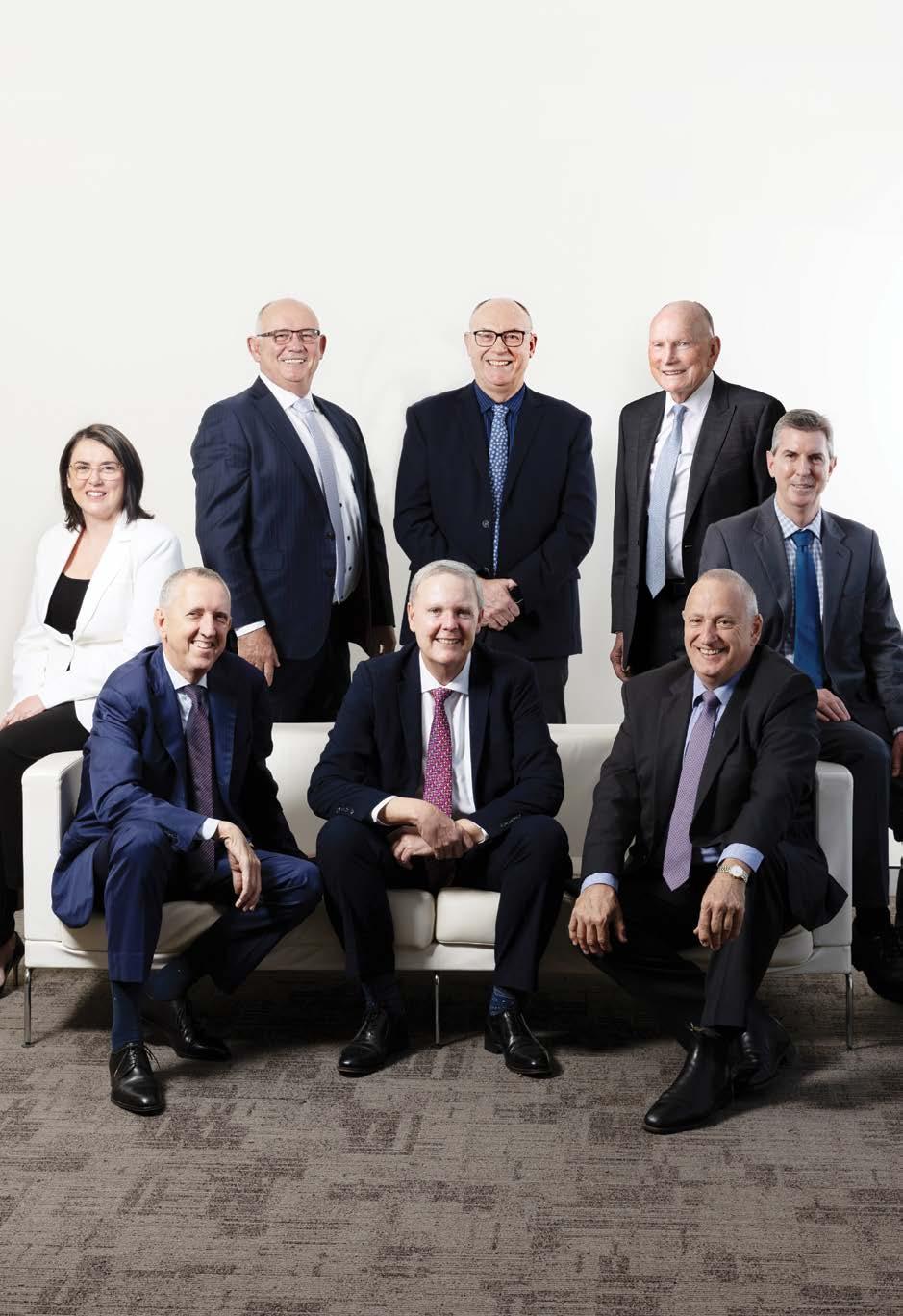
Anthony’s career portfolio of directorships includes Brismark (President), Brisbane Markets Limited, Gladstone Ports Corporation, Carter and Spencer Group, Brisbane Lions AFL Football Club (Chairman), Lindsay Australia and Horticulture Innovation Australia Limited, chairing the International Trade Advisory Panel and International Market Access Assessment Panel.
Anthony graduated with a Bachelor of Laws (UQ), and worked in the legal profession as Judge’s Associate and Solicitor. More recently, Anthony’s business experience has extended into his co-ownership of the emerging Veracity Technology in the IT industry.
Anthony has been a Non-Executive Director of Brisbane Markets Limited since 2002.
Special responsibilities
• Chair Member of:
– People, Remuneration and Culture Committee (Chair)
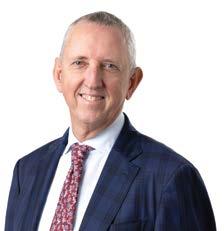
Deputy Chair
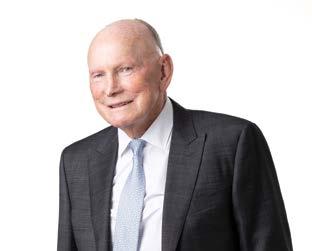
Peter has been a Non-Executive Director of Brisbane Markets Limited since 1999. His family has a long history in the Brisbane Markets and Peter is a second-generation member with 45 years’ experience in fruit and vegetable wholesaling. He is currently a consultant for Global Fresh Australia and New Zealand.
Peter was a Director of Brismark from 1988-2021, and is also a Director of a number of private companies. Peter is also the Managing Director of Magic Bloodstock Racing, a thoroughbred horse racing and breeding business.
Peter is a member of the Australian Institute of Company Directors.
Special responsibilities
• Deputy Chair
• Member of:
– Legal and Compliance Committee
– Strategy and Investment Committee
– People, Remuneration and Culture Committee
Bruce has been a Non-Executive Director of Brisbane Markets Limited since November 2012. Bruce has extensive experience in chartered accounting covering many industry sectors, and consults to and serves on the boards of several private and/or family-owned businesses.
Bruce is currently the Chairman of Queensland Rugby League. Formerly, Bruce was the Chair of BDO Queensland, Managing Partner of Horwath Brisbane, Chairman of Horwath Australia, and the Deputy Chairman and Director of 20 years of the Queensland Academy of Sport. Bruce is a regular speaker at industry conferences and professional development seminars nationally and has written many articles on a wide range of family business issues.
Bruce has a Bachelor of Commerce, is a Fellow Chartered Accountant and a Fellow of the Australian Institute of Company Directors. Bruce is also an Adjunct Professor at the Australian Centre for Family Business, Bond University.
Special responsibilities
• Director
Member of:
– Finance and Audit Committee (Chair)
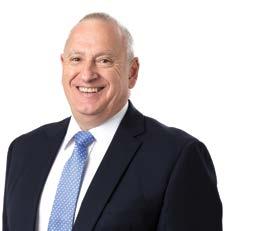
Stuart Lummis
BEc,
DipConstMan, GradDipAcc, FAICD, FFin
Stuart brings many years of experience as a senior executive in the property sector, specifically within ASX-listed groups, government agencies and not-for-profit organisations. Stuart has extensive expertise in the management and development of complex property portfolios through his role as the Head of Corporate Property for Yourtown and previously as the Director of Building, Planning Facilities and Property with the Roman Catholic Archdiocese of Brisbane.
Stuart is Non-Executive Director on the board of several organisations, including Bolton Clarke (formerly RSL Care RDNS), Deaf Services Queensland, Nazareth Care Australasia, National Trust of Queensland, Sisters of St Joseph Stewardship Council and Property Advisory Panel and the Heritage Council of Queensland. Additionally, he is a member of the Property Council of Queensland, sitting on the Social Infrastructure Committee and Chairing the National Trust of Queensland Heritage and Advocacy Committee.
Stuart has a Bachelor of Economics, Post Graduate Diploma in Applied Finance and Investment, Diploma in Project and Construction Management, and is also a Fellow of the Australian Institute of Company Directors.
Special responsibilities
• Director
• Member of:
– Finance and Audit Committee
– Legal and Compliance Committee
– Strategy and Investment Committee (Chair)
– People, Remuneration and Culture Committee

Nicole Radice LLB, BCom, FIML, MAICD
Nicole is a Partner in the Corporate Advisory and Governance practice of HopgoodGanim Lawyers and has worked at the firm for more than 24 years. Throughout her career she has built a highly successful corporate law practice advising public and private companies on corporate structuring, due diligence and corporate governance, capital raisings and mergers and acquisitions. Nicole’s experience includes advising ASX-listed organisations, midcap companies, international firms and overseas entities seeking to expand into the Australian market.
In 2019, she was recognised as a Leading Commercial Lawyer – Queensland in Doyle’s Guide and was most recently named in the 2022 edition of Best Lawyers in Australia for corporate law and corporate/governance practice. Nicole is on the board of The Gregory Terrace Foundation and the Royal Brisbane and Women’s Hospital Foundation (RBWHF).
Nicole holds both a Bachelor of Commerce and a Bachelor of Law (Honours) and was admitted to the Supreme Court of Queensland and the High Court of Australia in 1999. She is a member of the Australian Institute of Company Directors and is a Fellow of the Australian Institute of Management.
Special responsibilities
• Director
• Member of:
– Finance and Audit Committee
– Legal and Compliance Committee (Chair)
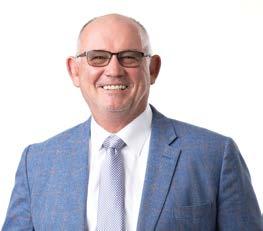
Noel has comprehensive knowledge of the fruit and vegetable industry, having been Managing Director of RW Pascoe, a leading Brisbane Markets fruit and vegetable wholesaling business since 1989. During this time he has been involved with all aspects of running this successful business.
Noel is a Director of Smart Berries Pty Ltd, one of the larger berry producing companies in Australia and New Zealand. He has also been a Director of Brismark since 2000.
Noel is a member of the Australian Institute of Company Directors.
Special responsibilities
• Director
• Member of:
– Strategy and Investment Committee
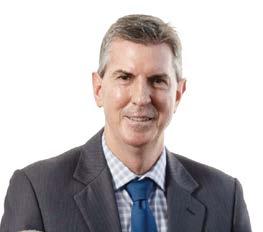
Stephen Edwards LLB, MAICD
Stephen brings 25 years’ experience to the Board and a deep understanding of the wholesaling sector of the fresh produce industry. He has broad commercial experience and business acumen with a detailed understanding of board and corporate governance, succession planning and expertise in a range of compliance matters including quality assurance, food safety and work health and safety. As Managing Director of Murray Bros, Stephen has overseen the growth of the company which is now one of the largest wholesalers in the Brisbane Markets involved in both the domestic and export markets and in servicing all sectors of the industry.
Stephen’s industry knowledge is supported by a broad understanding of the law and legal issues with a special focus on the history and issues surrounding the Horticulture Code of Conduct both practically and through Government lobbying. He has been a Director of Brismark since 2004 and has held the role of Deputy Chair since 2018. Stephen is also a past Director of Fresh Markets Australia, a national organisation representing the interests of fruit and vegetable wholesalers.
Stephen holds Bachelor of Laws from the University of Queensland and has been admitted to both the Supreme Court of Queensland and the High Court of Australia
Special responsibilities
• Director
Member of:
– Legal and Compliance Committee – Finance and Audit Committee
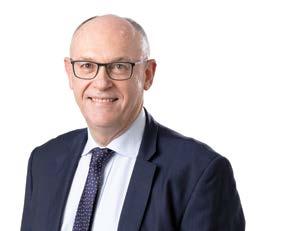
Andrew Young GDipCorpMgmt, BCom, BAgrSc (Hons), FCPA, MAICD
Executive Director
Andrew has a history of employment at a senior management level with extensive experience in policy and strategy formulation, service development, industry representation and market operation and development. His experience in the fresh produce industry includes engaging with relevant stakeholders at a State and Federal level and addressing national issues through his roles with BML, Brismark and Fresh Markets Australia. He has had an active involvement in addressing issues impacting on the wholesaling sector of the fresh produce industry and has conducted research on central markets in Australia and parts of Asia, Europe and the USA.
Andrew played a leading role as part of the project team responsible for what became the successful bid to purchase the Brisbane Markets site in 2002 and as CEO, coordinated the seamless transition of ownership of the Brisbane Markets site to BML.
He has maintained a focus on the upgrading and development of the Brisbane Markets site and the strategies contributing to the ongoing growth and success of the company.
Andrew is a Non-Executive Director of Perth Markets Group Limited having been appointed in 2015 ahead of the acquisition of the Markets in 2016, and an Executive Director of Fresh Markets Australia.
Andrew holds a Bachelor of Commerce, a Bachelor of Agricultural Science with Honours, a Diploma of Corporate Management, is a Certified Chief Executive Officer, is a member of the Australian Institute of Company Directors and is a Fellow Certified Practising Accountant.
Special responsibilities
• Managing Director and CEO
• Member of:
– Finance and Audit Committee
– Legal and Compliance Committee
– People, Remuneration and Culture Committee
– Strategy and Investment Committee
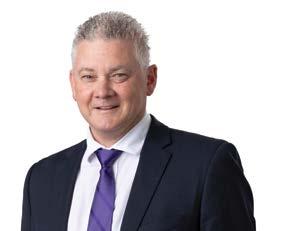
Murray Stewart B.Bus, CA, FGIA, C.Dec
Murray is a Chartered Accountant and Chartered Secretary with significant experience in senior finance roles across a number of industries including retail, manufacturing, franchising, property and freight service industries. Murray’s strengths are in the areas of financial management, accounting, commercial management, dispute resolution, legal interpretation, strategic and operational business, governance, risk, compliance, and company secretarial duties.
Murray has strong financial acumen and an ability to understand key risks and opportunities, and to see how a business can position itself strategically for changes in the external business environment. Murray has worked for Brisbane Markets Limited since 2014 and manages finance, contract management, and human resources functions of the organisation in addition to overseeing the Brisbane MarketPlace operation.
Murray holds a Bachelor of Business (Accounting), is a Chartered Accountant, and is a Fellow of the Governance Institute of Australia.
Special responsibilities
CFO and Company Secretary
Note: Peter Tighe, Noel Greenhalgh and Stephen Edwards are principals of companies that are also shareholder members of The Queensland Chamber of Fruit and Vegetable Industries Co-operative Limited, which is a substantial shareholder of BML. Shareholders of The Queensland Chamber of Fruit and Vegetable Industries Co-operative Limited hold one share in the Chamber, with a nominal value of $20.
The number of meetings of the company's Board of Directors and of each Board Committee held during the year ended 30 June 2022, and the number of meetings attended by each Director were:
1 A Joseph and A Kelly attended various Committee meetings during the year, in their capacity as Chair of the Board.
The Board Committees and the membership of those Committees as at 30 June 2022 is:
Finance and Audit Committee:
Bruce Hatcher (Chair)
Stuart Lummis
Nicole Radice
Stephen Edwards
Andrew Young
Legal and Compliance Committee:
Nicole Radice (Chair)
Peter Tighe
Stuart Lummis
Stephen Edwards
Andrew Young
People, Remuneration and Culture Committee: (committee composition changed in November 2021)
Anthony Kelly (Chair)
Peter Tighe
Stuart Lummis
Andrew Young
Strategy and Investment Committee:
Stuart Lummis (Chair)
Peter Tighe
Noel Greenhalgh
Andrew Young
No options over unissued shares or interests in the company or a controlled entity were granted during or since the end of the financial year and there were no options outstanding at the date of this report.
No person has applied to the Court under Section 237 of the Corporations Act 2001 for leave to bring proceedings on behalf of the company, or to intervene in any proceedings to which the company is a party for the purpose of taking responsibility on behalf of the company for all or any part of those proceedings.
During the financial year, BML paid a premium in respect of a contract insuring directors, secretaries and executive officers of the company and its controlled entities against a liability incurred as director, secretary or executive officer to the extent permitted by the Corporations Act 2001. The contract of insurance prohibits disclosure of the nature of the liability and the amount of the premium.
The company has not otherwise, during or since the end of the financial year, except to the extent permitted by law, indemnified or agreed to indemnify an officer or auditor of the company or any of its controlled entities against a liability incurred as such an officer or auditor.
Section 307C of the Corporations Act 2001 requires the company's auditors, BDO Audit Pty Ltd, to provide the Directors with a written Independence Declaration in relation to their audit of the financial report ended 30 June 2022. The Auditor's Independence Declaration is attached and forms part of this Directors’ Report.
Details of the amounts paid or payable to the auditor for nonaudit services provided during the financial year:
The consolidated entity satisfies the requirements of ASIC Corporations (Rounding in Financial/Directors’ Reports) Instrument 2016/191 issued by the Australian Securities and Investments Commission relating to “rounding off” of amounts in the Directors’ Report and the financial statements to the nearest thousand dollars. Amounts have been rounded off in the Directors’ Report and financial statements in accordance with that ASIC Instrument.
This report is made in accordance with a resolution of the Directors.
The Directors are satisfied that the provision of non-audit services during the financial year, by the auditor (or by another person or firm on the auditor's behalf), is compatible with the general standard of independence for auditors imposed by the Corporations Act 2001.
The Directors are of the opinion that the services as disclosed above do not compromise the external auditor's independence requirements of the Corporations Act 2001 for the following reasons:
• all non-audit services have been reviewed and approved to ensure that they do not impact the integrity and objectivity of the auditor; and
• none of the services undermine the general principles relating to auditor independence as set out in APES 110 Code of Ethics for Professional Accountants issued by the Accounting Professional and Ethical Standards Board, including reviewing or auditing the auditor's own work, acting in a management or decision-making capacity for the company, acting as advocate for the company or jointly sharing economic risks and rewards.
7 September 2022 at Brisbane
Tel: +61 7 3237 5999
Fax: +61 7 3221 9227 www.bdo.com.au

Tel: +61 7 3237 5999
Fax: +61 7 3221 9227
www.bdo.com.au
Level 10, 12 Creek Street
Level 10, 12 Creek Street
Brisbane QLD 4000 GPO Box 457 Brisbane QLD 4001 Australia
1.
DECLARATION OF INDEPENDENCE BY D P WRIGHT TO THE DIRECTORS OF BRISBANE MARKETS LIMITED
As lead auditor of Brisbane Markets Limited for the year ended 30 June 2022, I declare that, to the best of my knowledge and belief, there have been:
1. No contraventions of the auditor independence requirements of the Corporations Act 2001 in relation to the audit; and
2. No contraventions of any applicable code of professional conduct in relation to the audit.
This declaration is in respect of Brisbane Markets Limited and the entities it controlled during the year.
D P Wright Director
BDO Audit Pty Ltd
D P Wright Director
Brisbane, 07 September 2022
BDO Audit Pty Ltd
Brisbane, 07 September 2022
For the year ended 30 June 2022
For the year ended 30 June 2022
The above statement of changes in equity should be read in conjunction with the accompanying notes.
For the year ended 30 June 2022
The above statement of cash flows should be read in conjunction with the accompanying notes.
Brisbane Markets Limited (BML) is an unlisted public company limited by shares, incorporated and domiciled in Australia.
(a) Basis of preparation
These general purpose financial statements have been prepared in accordance with Australian Accounting Standards and Interpretations issued by the Australian Accounting Standards Board (‘AASB’) and the Corporations Act 2001, as appropriate for for-profit oriented entities. These financial statements also comply with International Financial Reporting Standards as issued by the International Accounting Standards Board (‘IASB’). The general purpose financial report of the consolidated entity for the year ended 30 June 2022 was authorised for issue in accordance with a resolution of the Directors on 7 September 2022.
Historical cost convention
The financial statements have been prepared under the historical cost convention, except for, share investments, investment properties, and derivative financial instruments.
Unless otherwise stated the financial statements are presented in Australian dollars rounded to the nearest thousand dollars ($’000), in accordance with ASIC Corporations (Rounding in Financial / Directors’ Reports) Instrument 2016/191, which is the functional and presentational currency of the consolidated entity.
(b) Revenue recognition
Rental revenue
Rental revenue from investment properties is recognised on a straight-line basis over the lease term. Revenue not received at the reporting date is reflected in the statement of financial position as a receivable or if paid in advance, as rent in advance (unearned income). Lease incentives granted are considered an integral part of the total rental revenue and are recognised as a reduction in rental income over the term of the lease, on a straight-line basis. Contingent rentals are recognised as income in the periods in which they are earned. Where a lease modification occurs for leases held as a lessor, the revised rental payable is recognised on a straight-line basis over the lease term.
Revenue from contracts with customers
Revenue from contracts with customers is derived from utility services provided to tenants, entry and parking fees, marketing fees and miscellaneous recharges, and is recognised as income in the periods in which services are provided. Revenue not received at the reporting date is reflected in the statement of financial position as a receivable.
Classification and measurement of revenue from contracts with customers
Revenue from contracts with customers is recognised over time if:
• the customer simultaneously receives and consumes the benefits as the entity performs; the customer controls the asset as the entity creates or enhances it; or
• the seller’s performance does not create an asset for which the seller has an alternative use and there is a right to payment for performance to date.
Where the above criteria is not met, revenue is recognised at a point in time.
The table below summarises the revenue earned by the consolidated entity and the appropriate recognition method applied.
The consolidated entity recovers the outgoings associated with general property expenses, site maintenance, and operation, from lessees in accordance with specific clauses within lease agreements. These are invoiced monthly based on an annual estimate. The consideration is due 14 days from invoice date. At year end a true up of recoveries cost is completed and any shortfall or excess is billed or refunded to the customer.
The consolidated entity earns revenue from specific services provided to the lessee. These services are on charged to lessees in accordance with specific clauses within the lease agreements. Revenue from provision of LPG sales, electricity sales, and water charges is recognised as the services are provided. The lessee is invoiced on a monthly basis, where applicable. Consideration is due 14 days from invoice date, and 25 days from invoice date for electricity invoices.
Entry fees and parking
The consolidated entity earns revenue from car parking charges and market entry fees. These fees are either charged to a lessee or buyer account monthly, or collected as an entry fees paid. Where invoiced, the consideration is due 14 days from invoice date. Other fees are payable on the day of entry.
Assets and liabilities are presented in the statement of financial position based on current and non-current classification.
An asset is classified as current when: it is either expected to be realised or intended to be sold or consumed in normal operating cycle; it is held primarily for the purpose of trading; it is expected to be realised within 12 months after the reporting period; or the asset is cash or cash equivalent unless restricted from being exchanged or used to settle a liability for at least 12 months after the reporting period. All other assets are classified as non-current.
A liability is classified as current when: it is either expected to be settled in normal operating cycle; it is held primarily for the purpose of trading; it is due to be settled within 12 months after the reporting period; or there is no unconditional right to defer the settlement of the liability for at least 12 months after the reporting period. All other liabilities are classified as non-current.
Deferred tax assets and liabilities are always classified as non-current.
The consolidated entity has adopted all of the new, revised or amending Accounting Standards and Interpretations issued by the AASB that are mandatory for the current reporting period. The adoption of these Accounting Standards and Interpretations did not have any significant impact on the financial performance or position of the consolidated entity.
The preparation of financial statements requires management to make judgments, estimates and assumptions that affect the application of accounting policies and the reported amounts of assets, liabilities, income and expenses. Actual results may differ from these estimates. Estimates and underlying assumptions are reviewed on an ongoing basis. Revisions to accounting estimates are recognised in the period in which the estimate is revised and in future periods affected. Information about significant areas of estimation, uncertainty and critical judgments in applying accounting policies that have the most significant effect on the amounts recognised in the financial statements are discussed in the relevant notes below:
• Note 5 - Provision for impairment of receivables;
• Note 6 - Estimates of fair value of investment properties;
• Note 8 - Estimation of useful lives of assets;
• Note 13 and 14 - Tax liability and income tax expense; and
• Note 16 - Estimates of fair value of interest rate derivatives.
An insurance claim was made by the company in relation to material damage costs and business interruption losses, incurred as a result of the February 2022 flood event that impacted the Brisbane Markets. The reinstatement cost assessments undertaken determined that the company would exceed the sub-limit of liability within the insurance policies held, and the insurers of the company approved a payment up to the full value of the policy sub-limit of $15 million, based on the claim information supplied. The insurance proceeds received and receivable at year end are included as revenue.
4. Other current assets
5. Trade and other receivables
Accounting policy
Trade receivables
Trade and other receivables are held for collection of contractual cash flows where those cash flows represent solely payments of principal and interest, and are measured at amortised cost. Interest income from these financial assets is included in finance income using the effective interest rate method. Any gain or loss arising on derecognition is recognised directly in profit or loss. Impairment losses are presented as separate line item.
Impairment
The consolidated entity assesses on a forward-looking basis, the expected credit loss associated with its debt instruments carried at amortised cost.
For trade receivables the consolidated entity applies the simplified approach permitted by AASB 9, which requires expected lifetime losses to be recognised from initial recognition of the trade receivables. Management has determined that assessment of expected credit loss associated with trade receivables is immaterial.
Provision for impairment of trade receivables
The estimated credit loss calculation requires a degree of estimation and judgement. The level of estimated credit loss is assessed by taking into account the recent revenue billings, the aging of trade receivables, historical collection rates and specific knowledge of the individual debtor financial position.
(a) Reconciliation
Reconciliations of the carrying amount of investment properties at the beginning and end of the current and previous periods:
Freehold land, buildings and improvements – 250 Sherwood Road, 320 Sherwood Road and 385 Sherwood Road, Rocklea
*During March 2021, the consolidated entity amalgamated the two lots and all property held is now reported as a single investment property asset.
(b) Amounts recognised in profit or loss for investment property:
(c) Assets pledged as security
Refer to Note 15 for details of investment properties pledged as security.
(d) Leases as a lessor
Investment properties are generally leased to tenants on long-term operating leases with rentals payable monthly. Minimum lease payments receivable under the non-cancellable operating leases of investment property not recognised in the financial statements are as follows:
(e) An independent valuation of investment properties as at 30 June 2022 was carried out by a qualified valuer with relevant experience in the type of property being valued (Ross Farwell – API No 66781 and QVRB No. 3250, and Michael McClifty – API No 65714 and QVRB No 2024, from Charter Keck Cramer Pty Ltd). In assessing the value of the investment property, the independent valuer has considered discounted cash flows, capitalisation of net market income methods and direct comparison. Refer to Note 18 for further discussion of fair value measurement of investment properties.
Investment properties
Investment properties are properties held either to earn rental income, for capital appreciation or for both. Investment properties are initially measured at cost and are subsequently measured at fair value. As part of the process of determining the fair value of all property, an external independent valuer, having appropriate recognised professional qualifications and recent experience in the location and category of property being valued, values the Brisbane Markets property annually.
Property under construction held for future use as investment property is also carried at fair value unless fair value cannot yet be reliably determined. If fair value cannot yet be reliably determined, the property will be accounted for at cost until either the fair value can be reliably determined or when construction is complete.
Changes to fair values of investment properties are recognised in the profit or loss in the period in which they occur.
Estimates of fair value of investment properties
The consolidated entity has investment property with a carrying amount of $425 million (30 June 2021: $372 million) representing estimated fair value at reporting date. The investment property represents a significant portion of the total assets of the consolidated entity. The fair value adopted for the investment property is based on an independent external valuation of investment property at 30 June 2022. In assessing the value of the investment property, the independent valuers have considered discounted cash flows, capitalisation of net market income methods and direct comparison. Refer to Note 18 for further details on significant inputs used in determining fair value of the investment properties.
BML (the parent) holds a 41.73% interest in Perth Markets Group Limited (PMGL) (2021: 41.73%). This investment is measured in accordance with the equity method of accounting.
The principal place of business of PMGL is Canning Vale, Perth, Western Australia. BML has been issued with 24,551,501 ordinary shares in the company.
The investment in PMGL is a strategic investment for the company to diversify the income streams and grow shareholder value.
The carrying amount recorded in the consolidated entity accounts at 30 June 2022, is $56.492 million (2021: $37.638 million).
The table below includes summarised financial information of PMGL.
receivable from associates at year end
Commitments and contingent liabilities in respect of the associate
The consolidated entity is not liable for any contractual commitments arising from its interests in the associate if and when they arise. There are no material contingent liabilities disclosed by the associate.
Significant restrictions
There are no restrictions on the ability of PMGL to transfer funds to the consolidated entity in the form of cash dividends or loans.
Investment in an associate
An associate is an entity over which the consolidated entity has significant influence. Significant influence is the power to participate in the financial and operating policy decisions of the entity but is not control or joint control of these policies. Investments in associates are accounted for in the consolidated financial statements by applying the equity method of accounting, whereby the investment is initially recognised at cost (including transaction costs) and adjusted thereafter for the post-acquisition change in the consolidated entity’s share of net assets in the associate. In addition, the consolidated entity’s share of the profit or loss is included in the consolidated entity’s profit or loss.
The carrying amount of the investment includes, when applicable, goodwill relating to the associate. Any discount on acquisition, whereby the consolidated entity’s share of the net fair value of the associate exceeds the cost of the investment, is recognised in the profit or loss in the period in which the investment is acquired.
Profits and losses resulting from transactions between the consolidated entity and the associate are eliminated to the extent of the consolidated entity’s interest in the associate.
Reconciliations of the carrying amount of property, plant and equipment at the beginning and end of the current and previous periods: Plant and equipment
Refer to Note 14 for property, plant and equipment pledged as security.
Property, plant and equipment
Property, plant and equipment not classified as investment properties are measured on the cost basis and therefore carried at cost less accumulated depreciation and any accumulated impairment. Cost includes expenditure that is directly attributable to the acquisition of the items.
Depreciation
Depreciation of property, plant and equipment is calculated on a straight-line basis over their estimated useful lives commencing from the time the asset is held ready for use. The useful lives for plant and equipment is 3 to 25 years.
Carrying amount
The carrying amount of property, plant and equipment (cost less accumulated depreciation and impairment losses) is reviewed annually by Directors to ensure it is not in excess of the recoverable amount from those assets. A formal assessment of recoverable amount is made when impairment indicators are present. The recoverable amount is assessed on the basis of the expected net cash flows that will be received from the asset’s employment and subsequent disposal. The expected net cash flows have been discounted to their present values in determining recoverable amounts.
An asset’s carrying amount is written down immediately to its recoverable amount if the asset’s carrying amount is greater than its estimated recoverable amount.
Gains and losses on disposals are determined by comparing proceeds with the carrying amount. These gains and losses are recognised in profit or loss in the period in which they arise.
Estimation of useful lives of assets
The consolidated entity determines the estimated useful lives and related depreciation and amortisation charges for its property, plant and equipment. The useful lives could change significantly as a result of technical innovations or some other event. The depreciation and amortisation charge will increase where the useful lives are less than previously estimated lives, or technically obsolete or non-strategic assets that have been abandoned or sold will be written off or written down.
The consolidated entity holds 98,500 shares in South Australian Produce Market Limited, which are assessed as having a value of $26.00 per share at reporting date.
Financial assets
Investments at fair value through profit or loss are carried in the statement of financial position at fair value with net changes in fair value recognised in the profit or loss.
There were no additions to the right of use assets during the year.
The consolidated entity leases office equipment under agreements of less than five years.
Trade and other payables represent liabilities for goods and services provided to the consolidated entity prior to the year end and which are unpaid at the end of the reporting period. These amounts are unsecured and typically have 14 to 60 day payment terms.
Refer to Note 17 for further information on financial instruments.
The
The balance comprises temporary differences attributable
Movements:
Accounting policy
Income tax
The income tax expense for the year comprises current income tax expense and deferred tax expense.
Current income tax expense charged to profit or loss is the tax payable on taxable income for the current period. Current tax liabilities are therefore measured at the amounts expected to be paid to the relevant taxation authority using tax rates (and tax laws) that have been enacted or substantively enacted by the end of the reporting period.
Deferred income tax expense reflects movements in deferred tax asset and deferred tax liability balances during the year as well as unused tax losses.
Current and deferred income tax expense is charged or credited outside profit or loss when the tax relates to items that are recognised outside profit or loss or arising from a business combination. Except for business combinations, no deferred income tax is recognised from the initial recognition of an asset or liability where there is no effect on accounting or taxable profit or loss.
Deferred tax assets and liabilities are calculated at the tax rates that are expected to apply to the period when the asset is realised or the liability is settled and their measurement also reflects the manner in which management expects to recover or settle the carrying amount of the related asset or liability. With respect to non-depreciable items of property, plant and equipment measured at fair value and items of investment property measured at fair value, the related deferred tax liability or deferred tax asset is measured on the basis that the carrying amount of the asset will be recovered entirely through sale.
When an investment property that is depreciable is held by the entity in a business model whose objective is to consume substantially all of the economic benefits embodied in the property through use over time (rather than through sale), the related deferred tax liability or deferred tax asset is measured on the basis that the carrying amount of such property will be recovered entirely through use.
Deferred tax assets relating to temporary differences and unused tax losses are recognised only to the extent that it is probable that future taxable profit will be available against which the benefits of the deferred tax asset can be utilised.
Where temporary differences exist in relation to investments in subsidiaries, branches, associates and joint ventures, deferred tax assets and liabilities are not recognised where the timing of the reversal of the temporary difference can be controlled and it is not probable that the reversal will occur in the foreseeable future.
Current tax assets and liabilities are offset where a legally enforceable right of set-off exists and it is intended that net settlement or simultaneous realisation and settlement of the respective asset and liability will occur. Deferred tax assets and liabilities are offset where: (i) a legally enforceable right of set-off exists; and (ii) the deferred tax assets and liabilities relate to income taxes levied by the same taxation authority on either the same taxable entity or different taxable entities, where it is intended that net settlement or simultaneous realisation and settlement of the respective asset and liability will occur in future periods in which significant amounts of deferred tax assets or liabilities are expected to be recovered or settled.
(a) The prima facie tax on profit differs from the income tax expense as follows:
(b) The components of tax expense comprise:
Deferred income tax/(revenue) expense included in income tax expense comprises:
The above amounts represent the balance of the franking account as at the end of the financial year adjusted for: (i) franking credits that will arise from payment of the amount of the provision for income tax; (ii) franking debits that will arise from the payment of dividends recognised as a liability at the reporting date; and (iii) franking credits that will arise from the receipt of dividends recognised as receivables at the reporting date.
Income tax expense
The income tax expense or benefit for the period is the tax payable on that period's taxable income based on the applicable income tax rate adjusted by changes in deferred tax assets and liabilities.
The consolidated entity is subject to income taxes in the jurisdictions in which it operates. Significant judgement is required in determining the provision for income tax. There are many transactions and calculations undertaken during the ordinary course of business for which the ultimate tax determination is uncertain. The consolidated entity recognises liabilities for anticipated tax audit issues based on the consolidated entity's current understanding of the tax law. Where the final tax outcome of these matters is different from the carrying amounts, such differences will impact the current and deferred tax provisions in the period in which such determination is made. There were no uncertainties that required significant judgement during the year.
Terms and conditions relating to the above loan:
(i) The debt facility with Westpac Banking Corporation was extended and increased in June 2022, and has a limit of $200 million, and an expiry date of 31 July 2025. Bank loans are under a facility with a fixed term which expires on 31 July 2025. Interest rate risks associated with the liabilities are managed with interest rate swap arrangements. As at 30 June 2022, the company had drawn $154.693 million of this $200 million facility.
(ii) Loans are secured by a first registered mortgage over all current and future real property at the Brisbane Markets site and a general security interest over the assets and undertakings of the company. The carrying amount of current real property as detailed in the valuation at 30 June 2022, is $425 million.
(iii) Under the terms of the loan facility, there is a requirement to report financial undertakings to Westpac on a six monthly basis. These financial undertakings include:
a) The outstanding amount under the facility cannot exceed 60% of the aggregate market value of the Brisbane Markets property,
b) The ratio of operating EBIT to interest expense for the preceding 12 months is not less than 2.25:1.00,
c) The tangible net worth (being the total tangible assets less total liabilities) must not be less than 85% of the tangible net worth for the previous financial year.
(iv) In addition, there are obligations on BML to ensure that the following requirements are met throughout the term:
a) at all times during the term, BML must maintain hedge agreements to hedge the floating interest rate exposure of at least 20% of the outstanding amount under the facility,
b) The distributions made in any financial year must not exceed the lesser of a return of 10% on shareholders equity, or 100% of the operating net profit after tax (excluding the impact of property valuation movements and unrealised share of profits from associates or movement in investments).
The consolidated entity has complied with all terms and conditions of the loan facility during the reporting period.
Financial liabilities
Non-derivative financial liabilities (excluding financial guarantees) are subsequently measured at amortised cost using the effective interest rate method.
Borrowing costs
Borrowing costs incurred for the construction of a qualifying asset are capitalised during the period of time that it is required to complete and prepare the asset for its intended use or sale. Other borrowing costs are expensed when incurred.
Interest rate swap contracts - refer to Note 17 for the company's credit risk and hedging policy. In respect of the interest rate swap contracts, the fixed interest rates range between 0.36% above and 5.18% above (2021: 2.15% above and 6.97% above) and the variable rates range between 0.29% below and 1.54% below (2021: 0.04% above and 0.06% above) the 30 day and 90 day bank bill rates, which at balance date were 1.15% and 1.82% respectively (2021: 0.02% and 0.3%). The quarterly contracts require settlement of net interest receivable or payable every 90 days. The monthly contracts require settlement of net interest receivable or payable every 30 days. The contracts are settled on a net basis.
Swaps currently in place cover approximately 46.54% (2021: 46.8%) of the variable loan principal outstanding and are timed to expire as each loan repayment falls due.
During the year ended 30 June 2022, no ineffective portion (2021: nil) has been recognised and transferred to the profit or loss. Refer to Note 18 for further details on fair value measurement.
Derivatives
The consolidated entity uses derivative financial instruments such as interest rate swaps to hedge its risk associated with interest rate fluctuations. Such derivatives are stated at fair value. The fair value of interest rate swap contracts is determined by reference to market values for similar instruments.
For derivatives that do not qualify for hedge accounting, any gains or losses arising from changes in fair value are taken directly to net profit or loss for the year.
For derivatives that qualify for hedge accounting, the method for recognising gains and losses on changes in fair value depends on whether the derivative is classified as a fair value hedge or a cash flow hedge. Derivatives are classified as fair value hedges when they hedge the exposure to changes in the fair value of a recognised asset or liability and as cash flow hedges when they hedge exposure to variability in cash flows that are attributable to either a particular risk associated with a recognised asset or liability or to a forecast transaction.
The consolidated entity has no fair value hedges as at reporting date.
The consolidated entity documents at inception of the hedge the relationship between the hedging instruments (derivatives) and the hedged items, as well as the risk management objective and strategy for undertaking the hedge transaction. The consolidated entity also documents, both at inception of the hedge and on an ongoing basis whether the derivatives that are used in the hedging transactions have been, and will continue to be, highly effective in offsetting changes in fair values or cash flows of hedged items.
The effective portion of changes in the fair value of derivatives that are designated and qualify as cash flow hedges is recognised in other comprehensive income in the hedging reserve. The gain or loss relating to the ineffective portion is recognised immediately in profit or loss.
Amounts accumulated in other comprehensive income are recognised in profit or loss as a reclassification adjustment in periods when the hedged item affects profit or loss. The gain or loss relating to the effective portion of interest rate swaps hedging variable rate borrowings is recognised in profit or loss as finance costs.
Hedge accounting is discontinued when the hedging instrument expires, or is sold, terminated or exercised, or no longer qualifies for hedge accounting. At that point in time, any cumulative gains or losses on the hedging instrument recognised in other comprehensive income is kept in other comprehensive income until the forecast transaction occurs. If the forecast transaction is no longer expected to occur, the cumulative gain or loss recognised in other comprehensive income is recognised in profit or loss for the year as a reclassification adjustment.
Estimates of fair value of interest rate derivatives
The fair value of interest rate derivatives has been determined using a pricing model based on discounted cash flow analysis and incorporating assumptions supported by market data at reporting date, including market expectation of future interest rates and discount rates and taking into account estimates prepared by external counterparties.
(a) General objectives, policies and processes
In common with all other businesses, the consolidated entity is exposed to risks that arise from its use of financial instruments. This note describes the consolidated entity’s objectives, policies and processes for managing those risks and the methods used to measure them. Further quantitative information in respect of these risks is presented throughout these financial statements.
There have been no substantive changes in the consolidated entity’s exposure to financial instrument risks, its objectives, policies and processes for managing those risks or the methods used to measure them from previous periods unless otherwise stated in this note.
The Board has overall responsibility for the determination of the consolidated entity’s risk management objectives and policies and, whilst retaining ultimate responsibility for them, it has delegated the authority for designing and operating processes that ensure the effective implementation of the objectives and policies to management. The consolidated entity’s risk management policies and objectives are therefore designed to minimise the potential impacts of these risks on the results of the consolidated entity where such impacts may be material. The consolidated entity generally uses derivative financial instruments such as interest rate swap contracts to hedge these risks. The Board receives monthly reports from management through which it reviews the effectiveness of the processes put in place and the appropriateness of the objectives and policies it sets.
The overall objective of the Board is to set polices that seek to reduce risk as far as possible without unduly affecting the consolidated entity’s competitiveness and flexibility. Further details regarding these policies are set out below.
(b) Credit risk exposure
The objective of the consolidated entity is to minimise risk of loss from credit risk exposure.
Credit risk arises principally from cash at bank and trade and other receivables. Credit risk from receivables is measured using historical information to analyse if there is expected credit losses in the future.
The maximum credit risk exposure of financial assets at the reporting date is the carrying amount of these assets as indicated in the statement of financial position. Provision has been raised in the accounts using the expected credit loss model.
Credit risk in respect of trade debtors is managed by requiring payment within 14 days of the date of invoice, with the trade debtor providing a bank guarantee or cash security in most cases when entering into a lease. Any credit loss incurred is settled from the security held.
Credit risk represents the risk of counter party default. The credit risk on financial assets of the consolidated entity which have been recognised in the statement of financial position is generally the carrying amount, net of any provisions for impairment. Credit risk is managed through the establishment of credit limits with guarantees and other forms of security obtained where required. Limits are determined after taking into account the debtor's financial position, past experience and other factors. Compliance with credit limits is regularly monitored by management.
Hedging policy
The company uses derivative financial instruments (interest rate swaps) to reduce the exposure to market risks arising from changes in interest rates. The consolidated entity does not enter into derivative contracts for the purposes of trading. Hedging decisions are made based on the consolidated entity’s interest rate risk position. Hedging for the purpose of this policy means a transaction which reduces the calculated interest rate risk on the overall portfolio of interest bearing assets and liabilities using one or more of the interest rate risk measures of value at risk, sensitivity or accrued simulation.
(c) Liquidity risk
Liquidity risk is the risk that the consolidated entity will not be able to meet its financial obligations as they fall due. The objective of managing liquidity risk is to ensure, as far as possible, that it will always have sufficient liquidity to meet its liabilities when they fall due, under both normal and stressed circumstances.
Liquidity risk is measured using liquidity ratios such as working capital. The consolidated entity manages this risk through the following mechanisms:
(i) preparing forward looking cash flow analysis in relation to operational, investing and financing activities;
(ii) monitoring undrawn credit facilities;
(iii) maintaining a reputable credit profile; and
(iv) managing credit risk related to financial assets.
The tables below reflect an undiscounted contractual maturity analysis for financial liabilities. Bank funding amounts have been deducted in the analysis as management does not consider there is any reasonable risk that the bank will terminate such facilities. The bank does however maintain the right to terminate such facilities in the event of a breach of financial undertakings.
1 Note: Bank funding facility has a renewal date of 31 July 2025. Payment of these amounts will not physically occur with the loan balance flowing forward to the new negotiated facility. The Directors are not aware of any reason as to why the funding facility will not be renewed or refinanced in the future.
² Note: 46.54% (2021: 46.8%) of loans are hedged therefore the actual outflow will be more.
Interest risk management
Interest rate risks are caused by fluctuations in interest rates which, in turn, are due to market factors.
Interest rate sensitivity
The consolidated entity’s main interest rate risk arises from cash and cash equivalents, and borrowings. The following table demonstrates the sensitivity to a possible change in interest rates on cash and cash equivalents, and borrowings by 1%.
The sensitivity is completed on the basis that all other variables held constant, reflecting the impact on the consolidated entity’s profit or loss before taxes and other comprehensive income. This sensitivity analysis on the interest rate swap has been prepared on the basis that the swaps are fully effective at year end and reflect an undiscounted analysis.
Market risk is the risk that changes in market prices, such as foreign exchange rates, interest rates and equity prices will affect the consolidated entity's income or the value of its holdings of financial instruments.
As borrowings subject to an interest rate swap are effectively at a fixed interest rate, there is no material exposure to any market risks including interest rate risk.
The following assets and liabilities are recognised and measured at fair value on a recurring basis:
• share investment;
• investment properties; and
• derivatives.
There are no assets or liabilities which are measured at fair value on a non-recurring basis. The carrying values of financial assets and financial liabilities approximate their fair values due to their short term nature, and variable interest rate on borrowings approximates market value.
All assets and liabilities for which fair value is measured or disclosed are categorised according to the fair value hierarchy as follows.
Level 1: Quoted prices (unadjusted) in active markets for identical assets or liabilities that the consolidated entity can access at the measurement date.
Level 2: Inputs other than quoted prices included within Level 1 that are observable for the asset or liability, either directly or indirectly.
Level 3: Inputs for the assets or liability that are not based on observable market data (unobservable inputs).
Recognised fair value measurements
The following table sets out the consolidated entity’s assets and liabilities that are measured and recognised at fair value in the financial statements.
There were no transfers during the year between Level 1 and Level 2 for recurring fair value measurements.
The consolidated entity’s policy is to recognise transfers into and out of the different fair value hierarchy levels at the date the event or change in circumstances that caused the transfer occurred.
Valuation techniques used to derive Level 2 and Level 3 fair values recognised in the financial statements
The following table sets out the valuation techniques used to measure fair value within Level 2, including a description of the significant inputs used.
Description
Share investment
Derivatives - interest rate swaps
Valuation approach and inputs used
Market value of share trades in the period leading up to the reporting date.
Present value of the estimated future cash flows based on observable yield curves.
The following table sets out the valuation techniques used to measure fair value within Level 3, including details of the significant unobservable inputs used and the relationship between unobservable inputs and fair value. When undertaking the valuation work the valuer has considered the financial impact of the 2022 flood event on the consolidated entity when undertaking the works, and all relevant impacts have been included in the valuation. There have been no other substantive changes to the valuation methodology adopted for the reporting period.
Description Valuation approaches Unobservable inputs
Investment properties Capitalisation approach based on current market net income generated by the property capitalised at an appropriate market yield to establish the property’s current market value fully leased.
Investment properties Income approach based on estimated rental value of the property. Discount rates and terminal yields, are estimated by an external valuer or management based on comparable transactions and industry data.
Investment properties Market approach based on prices and other relevant information generated by market transactions involving identical or comparable (i.e. similar) assets or a group of assets.
Range of inputs Relationship between unobservable inputs and fair value
Capitalisation rate 5.50% to 20.00% for the differing income streams, with an adopted blended yield of 6.01%.
Discount rate 7.00%
Terminal yield 6.25%
The dollar rate per square metre per annum of lettable area achieved by comparable assets sold in the current market.
$2,700 to $2,900 per square metre per annum of lettable area.
There were no significant inter-relationships between unobservable inputs that materially affect fair values.
Reconciliation of Level 3 fair value movements
The following table sets out the movements in Level 3 fair values for recurring measurements.
The higher the capitalisation rate, the lower the fair value.
The higher the discount rate and terminal yield, the lower the fair value.
The higher the dollar rate per square metre per annum of lettable area, the higher the fair value
Valuation processes for Level 3 fair values
Management regularly reviews the Level 3 valuations of investment properties and reports the results of these reviews to the Finance and Audit Committee and to the Board. Valuations are fully reviewed every six months to ensure that they are current for the half-year and annual financial statements with the consolidated entity engaging an external, independent and qualified valuer to determine the fair value of the consolidated entity’s investment properties at the end of every annual reporting period. All valuations, including external valuations, are reviewed and approved by the Finance and Audit Committee before submission to the Board.
Highest and best use
The current use of the investment properties equates to their highest and best use.
Fair value
Fair value is the price that would be received to sell an asset or paid to transfer a liability in an orderly transaction between independent, knowledgeable and willing market participants at the measurement date. It is based on the presumption that the transaction takes place either in the principal market for the asset or liability or, in the absence of a principal market, in the most advantageous market. The principal or most advantageous market must be accessible to, or by, the consolidated entity.
Fair value is measured using the assumptions that market participants would use when pricing the asset or liability, assuming that market participants act in their best economic interest.
The fair value measurement of a non-financial asset takes into account the market participant's ability to generate economic benefits by using the asset at its highest and best use or by selling it to another market participant that would use the asset at its highest and best use.
In measuring fair value, the consolidated entity uses valuation techniques that maximise the use of observable inputs and minimise the use of unobservable inputs.
The consolidated entity’s policy is to recognise transfers into and out of the different fair value hierarchy levels at the date the event or change in circumstances that caused the transfer occurred.
Issued and paid up capital
Movements in share capital
Ordinary shares
Terms and conditions of contributed equity
Ordinary
Ordinary shares have the right to receive dividends as declared and, in the event of winding up the company, to participate in the proceeds from the sale of all surplus assets in proportion to the number of, and amounts paid up on, shares held. Ordinary shares entitle their holder to one vote, either in person or by proxy, at a meeting of the company.
Industry shares
The holder of the industry shares shall be entitled to appoint Industry Directors to the Board according to the number of industry shares held, shall be entitled to receive notice of, and attend meetings of the company and to speak on any matter relating to industry shares, but not vote in respect of those shares. The holder of industry shares has no right to participate in the capital or profits of the company, whether on winding up, by way of distribution of capital or otherwise.
The company may not pass any resolution without the affirmative vote of the majority of holders of industry shares.
Contributed equity
Ordinary shares are classified as equity. Costs directly attributable to the issue of new shares or options are shown as a deduction from the equity proceeds, net of any income tax benefit. Costs directly attributable to the issue of new shares or options associated with the acquisition of a business are included as part of the purchase consideration.
Capital management
The consolidated entity manages its capital to ensure that entities in the consolidated entity will be able to continue as a going concern while maximising the return to stakeholders through optimisation of the debt and equity balance. The capital structure of the consolidated entity consists of debt which includes the borrowings disclosed in Note 15, cash and cash equivalents and equity attributable to equity holders of the parent, comprising issued capital, reserves and retained profits as disclosed in Notes 19 and 21, and the statement of changes in equity.
There are no externally imposed capital requirements, other than the requirement to comply with bank covenants. Management effectively manages the consolidated entity's capital by assessing the consolidated entity's financial risks and adjusting its capital structure in response to changes in these risks and in the market. These responses include the management of debt levels, distributions to shareholders and share issues.
the
Dividends paid during the year are fully franked at the tax rate of 30 cents in the dollar. The franking account balance at 30 June 2022 is disclosed at Note 14(b).
Dividends are recognised when declared during the financial year and no longer at the discretion of the company.
The individual financial statements for the parent entity, show the following aggregate amounts:
The operating profit of the parent entity after income tax for the year ended 30 June 2022 was $62.377 million which included a net revaluation increment after tax of $29.995 million. The net revaluation increment is a non-operating unrealised contribution to the result and as such is not included for purposes of calculating cash flow or dividends.
Guarantees
No guarantees have been entered into by the parent entity in relation to debts of its subsidiaries. Commitments
At 30 June 2022, the parent entity had no material capital or other expenditure commitments other than as disclosed.
Contractual operating commitments – service contract
Estimated major expenditure of the parent entity contracted for at reporting date, but not provided for is as follows:
Contingent assets/liabilities
As at 30 June 2022, the consolidated entity had no significant contingent assets or liabilities.
policy
Principles of consolidation
The consolidated financial statements incorporate the assets, liabilities and results of BML (‘company’ or ‘parent entity’) and the subsidiaries as at 30 June 2022. BML and its subsidiaries together are referred to in these financial statements as the ‘consolidated entity’.
Subsidiaries are those entities over which the consolidated entity has control. The consolidated entity controls an entity when the consolidated entity is exposed to, or has the rights to, variable returns from its involvement with the entity and has the ability to affect those returns through its power to direct the activities of the entity. Subsidiaries are fully consolidated from the date on which control is transferred to the consolidated entity. They are de-consolidated from the date that control ceases. A list of the subsidiaries is provided in Note 22.
Intercompany transactions, balances and unrealised gains on transactions between entities in the consolidated entity are eliminated. Unrealised losses are also eliminated unless the transaction provides evidence of the impairment of the asset transferred. Accounting policies of subsidiaries have been changed where necessary to ensure consistency with the policies adopted by the consolidated entity.
24. Commitments
At 30 June 2022, the consolidated entity had no material capital or other expenditure commitments other than as disclosed.
Contractual operating commitments – service contract
Estimated major expenditure contracted for at reporting date, but not provided for is as follows:
25. Contingent assets and liabilities
As at 30 June 2022, the consolidated entity had no significant contingent assets or liabilities.
26. Events after the reporting period
Insurance proceeds of $10 million, which were a receivable at year end, have been received in full by the company.
There are no significant events that have occurred subsequent to the end of the financial year that have not been disclosed in this report.
27. Statement of cash flows
(a) Reconciliation of cash
For the purposes of the statement of cash flows, cash includes cash on hand and in banks and investments where the term of these investments is less than three months. Cash at the end of the reporting period as shown in the statement of cash flows is reconciled to the related items in the statement of financial position as follows:
(b) Reconciliation of cash flows from operating activities with profit for the year
(c) Reconciliation of cash flows from financing activities for the year
Consolidated entity - 2022
Consolidated entity - 2021
*Fair value movement in interest rate swap
Accounting policy
Cash and cash equivalents
Cash and cash equivalents include cash on hand and at banks, deposits held at call with financial institutions and, where applicable, bank overdrafts. Bank overdrafts are reported within borrowings in current liabilities on the statement of financial position.
Key management personnel compensation
Note: Key management personnel includes Non-Executive Board members. The aggregate compensation made to Directors and other members of key management personnel of the consolidated entity during the year is as set out below:
Transactions with related parties
A Director, Andrew Young, holds the position of Chief Executive Officer of The Queensland Chamber of Fruit and Vegetable Industries Co-operative Limited. Noel Greenhalgh and Stephen Edwards were members of the Board of The Queensland Chamber of Fruit and Vegetable Industries Co-operative Limited for the full year. Peter Tighe was a member of the Board of The Queensland Chamber of Fruit and Vegetable Industries Co-operative Limited until 20 October 2021. In accordance with Clause 37.1 of the Constitution of BML, The Queensland Chamber of Fruit and Vegetable Industries Co-operative Limited as the holder of the four industry shares appoints up to four Directors to the Board of BML. The Directors appointed are Bruce Hatcher, Stuart Lummis, Nicole Radice and Stephen Edwards.
The Queensland Chamber of Fruit and Vegetable Industries Co-operative Limited lease premises and acquire other services from BML. BML utilises a number of the services provided by The Queensland Chamber of Fruit and Vegetable Industries Co-operative Limited, and provide a contribution to their retailer marketing programs.
A Director, Andrew Young, is also a Director of The Australian Chamber of Fruit and Vegetable Industries Limited, which lease premises from BML.
Anthony Joseph was a director until 10 November 2021, and is also a Director of Alfred E Chave Pty Ltd and BMCSAD Pty Ltd, which lease premises from BML.
A Director, Noel Greenhalgh, is also a Director of R W Pascoe Pty Ltd and Protettore Pty Ltd which lease premises from BML.
A Director, Peter Tighe, is employed as a consultant to Global Fresh Australia Pty Ltd, which lease premises from BML. Global Fresh Australia Pty Ltd have also entered into a Hire Purchase arrangement with BML for cold room racking which is ongoing.
A Director, Anthony Kelly, was also a Director of Lindsay Australia Limited until 5 November 2021, which is a related entity of a Lindsay Fresh Logistics Pty Ltd, which lease premises from BML.
Nicole Radice was appointed as a Director on 10 November 2021, and is an equity partner in Hopgood Ganim Lawyers, who provide legal services to BML.
Stephen Edwards was appointed as a Director on 10 November 2021, and is also a Director of Atkinson Produce Pty Ltd, which lease premises from BML.
BML receives payments from its associate PMGL for Board member remuneration, and business travel expenditure.
All transactions and leases with related parties are based on normal commercial terms and conditions which are no more favourable than those which it is reasonable to expect would be applied if the transaction was at arm's length.
Aggregate amount of the above transactions with related parties:
There were no loans to or from related parties at the current or previous reporting date.
During the year the following amounts were paid/payable to the auditor of the parent entity and its related practices:
In the Directors’ opinion:
• the attached financial statements and notes thereto comply with the Corporations Act 2001, the Accounting Standards, the Corporations Regulations 2001 and other mandatory professional reporting requirements;
• the attached financial statements and notes thereto comply with International Financial Reporting Standards as issued by the International Accounting Standards Board as described in Note 1 to the financial statements;
• the attached financial statements and notes thereto give a true and fair view of the consolidated entity’s financial position as at 30 June 2022 and of its performance for the financial year ended on that date; and
• there are reasonable grounds to believe that Brisbane Markets Limited will be able to pay its debts as and when they become due and payable.
Signed in accordance with a resolution of Directors made pursuant to section 295(5)(a) of the Corporations Act 2001.
On behalf of the Directors
A Kelly Chair A Young Director
7 September 2022 at Brisbane
To the members of Brisbane Markets Limited
To the members of Brisbane Markets Limited
Report on the Audit of the Financial Report Opinion
We have audited the financial report of Brisbane Markets Limited (the Company) and its subsidiaries (the Group), which comprises the consolidated statement of financial position as at 30 June 2022, the consolidated statement of profit or loss and other comprehensive income, the consolidated statement of changes in equity and the consolidated statement of cash flows for the year then ended, and notes to the financial report, including a summary of significant accounting policies and the directors’ declaration.
We have audited the financial report of Brisbane Markets Limited (the Company) and its subsidiaries (the Group), which comprises the consolidated statement of financial position as at 30 June 2022, the consolidated statement of profit or loss and other comprehensive income, the consolidated statement of changes in equity and the consolidated statement of cash flows for the year then ended, and notes to the financial report, including a summary of significant accounting policies and the directors’ declaration.
In our opinion the accompanying financial repo rt of Brisbane Markets Limited, is in accordance with the Corporations Act 2001, including:
In our opinion the accompanying financial repo rt of Brisbane Markets Limited, is in accordance with the Corporations Act 2001, including:
(i) Giving a true and fair view of the Group’s financial position as at 30 June 2022 and of its financial performance for the year ended on that date; and
(i) Giving a true and fair view of the Group’s financial position as at 30 June 2022 and of its financial performance for the year ended on that date; and
(ii) Complying with Australian Accounting Standards and the Corporations Regulations 2001 Basis for opinion
(ii) Complying with Australian Accounting Standards and the Corporations Regulations 2001 . Basis for opinion
We conducted our audit in accordance with Australian Auditing Standards. Our responsibili ties under those standards are further described in the Auditor’s responsibilities for the audit of the Financial Report section of our report. We are independent of the Group in accordance with the Corporations Act 2001 and the ethical requirements of th e Accounting Professional and Ethical Standards Board’s APES 110 Code of Ethics for Professional Accountants (including Independence Standards) (the Code) that are relevant to our audit of the financial report in Australia. We have also fulfilled our othe r ethical responsibilities in accordance with the Code.
We conducted our audit in accordance with Australian Auditing Standards. Our responsibili ties under those standards are further described in the Auditor’s responsibilities for the audit of the Financial Report section of our report We are independent of the Group in accordance with the Corporations Act 2001 and the ethical requirements of th e Accounting Professional and Ethical Standards Board’s APES 110 Code of Ethics for Professional Accountants (including Independence Standards) (the Code) that are relevant to our audit of the financial report in Australia. We have also fulfilled our othe r ethical responsibilities in accordance with the Code.
We confirm that the independence declaration required by the Corporations Act 2001 , which has been given to the directors of the Company, would be in the same terms if given to the directors as at the time of this auditor’s report.
We confirm that the independence declaration required by the Corporations Act 2001 , which has been given to the directors of the Company, would be in the same terms if given to the directors as at the time of this auditor’s report.
We believe that the audit evidence we have obtained is sufficient and appropriate to provide a basis for our opinion.
We believe that the audit evidence we have obtained is sufficient and appropriate to provide a basis for our opinion.
Other information
The directors are responsible for the other information. The other information obtained at the date of this auditor’s report is information included in the Director’s report, but does not include the financial report and our auditor’s report thereon.
The directors are responsible for the other information. The other information obtained at the date of this auditor’s report is information included in the Director’s report, but does not include the financial report and our auditor’s report thereon.
Our opinion on the financial report does not cover the other information and accordingly we do not express any form of assurance conclusion thereon.
Our opinion on the financial report does not cover the other information and accordingly we do not express any form of assurance conclusion thereon.
In connection with our audit of the financial report, our responsibility is to read the other information and, in doing so, consider whether the other information is materially inconsistent with the financial report or our knowledge obtained in the audit, or otherwise appears to be materially misstated.
In connection with our audit of the financial report, our responsibility is to read the other information and, in doing so, consider whether the other information is materially inconsistent with the financial report or our knowledge obtained in the audit, or otherwise appears to be materially misstated.
If, based on the work we have performed on the other informa tion obtained prior to the date of this auditor’s report, we conclude that there is a material misstatement of this other information, we are required to report that fact. We have nothing to report in this regard.
If, based on the work we have performed on the other informa tion obtained prior to the date of this auditor’s report, we conclude that there is a material misstatement of this other information, we are required to report that fact. We have nothing to report in this regard.
The directors of the Company are responsible for the preparation of the financial report that gives a true and fair view in accordance with Australian Accounting Standards and the Corporations Act 2001 and for such internal control as th e directors determine is necessary to enable the preparation of the financial report that gives a true and fair view and is free from material misstatement, whether due to fraud or error.
The directors of the Company are responsible for the preparation of the financial report that gives a true and fair view in accordance with Australian Accounting Standards and the Corporations Act 2001 and for such internal control as th e directors determine is necessary to enable the preparation of the financial report that gives a true and fair view and is free from material misstatement, whether due to fraud or error.
In preparing the financial report, the directors are responsible for assessing the ability of the group to continue as a going concern, disclosing, as applicable, matters related to going concern and using the going concern basis of accounting unless the directors either intend to liquidate the Group or to cease operations, or has no realistic alternative but to do so.
In preparing the financial report, the directors are responsible for assessing the ability of the group to continue as a going concern, disclosing, as applicable, matters related to going concern and using the going concern basis of accounting unless the directors either intend to liquidate the Group or to cease operations, or has no realistic alternative but to do so.
Auditor’s responsibilities for the audit of the Financial Report
responsibilities for the
Our objectives are to obtain reasonable assurance about whether the financial report as a whole is free from material misstatement, whether due to fraud or error, and to issue an auditor’s report that includes our opinion. Reasonable assurance is a high level of assurance, but is not a guarantee that an audit conducted in accordance with the Australian Auditing Standards will always detect a material misstatement when it exists. Misstatements can arise from fraud or error and are considered material if, individually or in the aggregate, they could reasonably be expected to influence the economic decisions of users taken on the basis of this financial report.
Our objectives are to obtain reasonable assurance about whether the financial report as a whole is free from material misstatement, whether due to fraud or error, and to issue an auditor’s report that includes our opinion. Reasonable assurance is a high level of assurance, but is not a guarantee that an audit conducted in accordance with the Australian Auditing Standards will always detect a material misstatement when it exists. Misstatements can arise from fraud or error and are considered material if, individually or in the aggregate, they could reasonably be expected to influence the economic decisions of users taken on the basis of this financial report.
A further description of our responsibilities for the audit of the financial report is located at the Auditing and Assurance Standards Board website ( http://www.auasb.gov.au/Home.aspx ) at: http://www.auasb.gov.au/auditors_responsibilities/ar3.pdf
This description forms part of our auditor’s report.
A further description of our responsibilities for the audit of the financial report is located at the Auditing and Assurance Standards Board website ( http://www.auasb.gov.au/Home.aspx ) at: http://www.auasb.gov.au/auditors_responsibilities/ar3.pdf
This description forms part of our auditor’s report.
D P Wright Director
D P Wright Director
Brisbane, 08 September 2022
Brisbane, 08 September 2022
The Board of Directors is responsible on behalf of the shareholders for the overall corporate governance of the company, including direction and oversight of the company's business and affairs.
The Board comprises eight Directors including seven NonExecutive Directors, being Anthony Kelly, Peter Tighe, Bruce Hatcher, Stuart Lummis, Nicole Radice, Noel Greenhalgh and Stephen Edwards. The other Director is the Managing Director and Chief Executive Officer, Andrew Young.
The constitution states that the number of Directors should be determined by the company, but be not less than three and no more than eight at any time.
The Board of Directors is responsible for corporate governance matters. It has established principles under which the Board and management operate to ensure that business is carried out in the best interests of shareholders and other stakeholders, with proper sharing of responsibilities between Directors and management.
The Board is responsible for adopting business plans, investment strategies, corporate policies, budgets and the approval of longer-term strategic plans for the company, delegating management of the business and the implementation of Board strategies and plans to the Managing Director and Chief Executive Officer.
The Board also reviews and, if appropriate, approves major capital expenditure, acquisitions and funding issues. It has the responsibilities of overseeing the audit and compliance functions.
The Board must meet at least six times per year and will hold as many additional meetings as the operations of the company may require. Board meetings are scheduled at the commencement of each calendar year to ensure as many Directors as possible are able to be present at meetings.
The performance of all Directors, the Board as a whole and the Managing Director and Chief Executive Officer is to be reviewed at least annually in accordance with the company's corporate governance guidelines.
Each Director has the right to seek independent professional advice at the company's cost, subject to the approval of the Chair.
To assist in the execution of the Board's corporate governance responsibilities, the Board has established four committees with a Non-Executive Director as Chair of each.
The key matters which will be dealt with by the Finance and Audit Committee include the review of:
• the appointment and continuation of external auditors;
• the adequacy of existing external audit arrangements, with particular emphasis on the scope and quality of the audit;
• all areas of significant capital risk and the arrangements in place to contain those risks to acceptable levels;
• the effectiveness of management information or other systems of internal control;
• the application of accounting standards and policies to the company; and
• the financial statements of the company with both management and external auditors.
The Finance and Audit Committee comprises five Directors, being Bruce Hatcher (Chair), Stuart Lummis, Nicole Radice, Stephen Edwards and the Managing Director and Chief Executive Officer, Andrew Young. The Chair has a standing invitation to attend any or all meetings of Board Committees.
The key areas of responsibilities for the Legal and Compliance Committee include:
• monitoring legal and procedural issues to ensure the company is complying with all regulatory requirements;
• broadly understanding the risks that may impact on company performance; and
• advising the Board regarding potential conflicts of interest and related policy matters.
The Legal and Compliance Committee comprises five Directors, being Nicole Radice (Chair), Peter Tighe, Stuart Lummis, Stephen Edwards and the Managing Director and Chief Executive Officer, Andrew Young. The Chair has a standing invitation to attend any or all meetings of Board Committees.
The key areas dealt with by the People, Remuneration and Culture Committee include:
• reviewing the remuneration policies and practices for the company by taking into account market conditions and comparable market rates to attract, retain and motivate Directors, Executives and employees of the highest calibre and quality; and
• instilling a culture of acting lawfully, ethically and responsibly, in accordance with the company values.
The People, Remuneration and Culture Committee comprises four Directors, being Anthony Kelly (Chair), Peter Tighe, Stuart Lummis and the Managing Director and Chief Executive Officer, Andrew Young.
The key areas dealt with by the Strategy and Investment Committee include:
reviewing the organisations investment and expansion strategy in accordance with the BML Strategic Plan and agreed risk appetite; and
• considering potential acquisitions, expansion opportunities and other strategic investments against BML's growth and risk appetite.
The Strategy and Investment Committee comprises four Directors, being Stuart Lummis (Chair), Peter Tighe, Noel Greenhalgh and the Managing Director and Chief Executive Officer, Andrew Young. The Chair has a standing invitation to attend any or all meetings of Board Committees.
The company recognises the need for Directors and employees to observe the highest standards of behaviour and business ethics when engaging in corporate activity.
All Directors and employees are expected to act in accordance with the law and with the highest standards of propriety.
Link Market Services
Level 21
10 Eagle Street
Brisbane QLD 4000
Email: registrars@linkmarketservices.com.au
Website: www.linkmarketservices.com.au
Shareholder inquiries: 1300 554 474
BDO Audit Pty Ltd
Level 10
12 Creek Street
Brisbane QLD 4000
HopgoodGanim Lawyers
Level 8 Waterfront Place
1 Eagle Street
Brisbane QLD 4000
Managing Director and CEO
Andrew Young
Chief Financial Officer and Company Secretary
Murray Stewart
Chief Operating Officer
Tricia Williams
Corporate Services Manager
Joady Raph
Technology and Network Manager
Luke Williams
Special Projects Manager
Jessie Field
Retail Markets Manager
Adam Nikodem
As an unlisted public company, shares in BML are not traded on the Australian Stock Exchange or any other share trading exchange system. BML does, however, maintain a register of parties interested in buying shares in the company and offers guidance in the process.
If a shareholder wants to sell shares in the company they can do so by private treaty where they have identified a buyer, or alternatively advise BML and provide information which will be circulated to all parties who have registered an interest in buying shares. The individuals concerned can then negotiate a price and progress the sale.
If a sale is finalised, BML’s share registry, Link Market Services, must be sent a copy of the original transfer form and share certificate so that the change of ownership can be recorded on the company’s share register.
Parties interested in buying or selling shares in BML, or who need any information in this regard, may register their interest by emailing shares@brisbanemarkets.com.au or visit the shareholder/investor section of our website www.brisbanemarkets.com.au