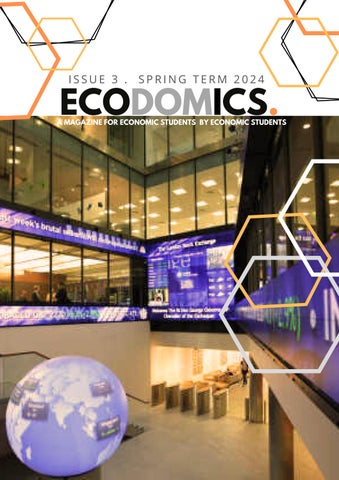
A MAGAZINE FOR ECONOMIC STUDENTS BY ECONOMIC STUDENTS
I S S U E 3 . S P R I N G T E R M 2 0 2 4
UK Economic Roundup 2023: Want to learn about the UK’s economic journey last year ?
World Economic Roundup 2023: Learn about key events in the 2023's economic climate on a global scale
Policies for the Future: Insight into the upcoming general election and what each party has planned for the UK
UK Economic Inequality:
Find out more about the levels on inequality in the UK currently
Chaebols and South Korea:
Discover more about the history of the South Korean economy and ‘Chaebols’
Debate Question:
Melissa’s Ursachi’s take on ‘Is equality of outcome better than equality of opportunity?’
Economist of the Month:
This term we recognised Vanus James and his views and influences on the economies of small island developing states
Next Steps:
Lectures, talks and programmes to dive deeper into the world of economics
Economic Indicators:
Recent economic data from numerous countries
33
55
77
99
112 2
5
115
116 6
117 7
118 8
CONTENTS: CONT CONTENTS CONTENTS: ONTENTS: TS: ENTS:CONTENTS:
CONTENTS:
CONTENTS:CONTENTS:CO
ECONOMIC ROUNDUP
UK ECONOMIC ROUNDUP 2023
JANUARY
Economic Recovery Gains Momentum
The year kicked off with the economy showing signs of recovery from the disaster caused by COVID-19 and Brexit. The country experienced an 0.3% uptick in GDP from a 0 5% fall in Dec 2022 driven by increased consumer spending, a rebound in manufacturing, and a boost in international trade.
FEBRUARY
Inflation Concerns Rise in February, inflation falling by 0.5% in Jan. Rising prices for goods global supply chain disruptions and increased prompted discussions about potential monet
MARCH
Green Investment Surge in March, the UK gov ambitious green investment plan aimed at ta and encouraging sustainable economic grow large investments in renewable energy, infras technology, showing a commitment to buildin
APRIL
Housing Market Reforms in April, the housing as the government introduced reforms to add and low supply. These reforms included incen developers, changes in planning regulations, first-time homebuyers aiming to balance affo pushing for a healthy real estate market
MAY
Trade Deals and Global Partnerships in May, the government secured key trade deals and strengthened global partnerships This contributed to increasing market access for British businesses and enhancing the country's position in the global economy. The successful negotiations were seen as crucial steps in establishing the UK as an independent trading nation which is a big step post-Brexit
JUNE
Technology and Innovation Push in June, the government announced a strategy to boost investment in research and development Initiatives aimed at supporting emerging technology, promoting innovation, and increasing the skillset of the workforce were revealed, positioning the UK as a leader in the Fourth Industrial Revolution.
UK
2023 OMIC ROUNDUP 2023 UK ECONOMIC ROUND OUNDUP 2023 UK ECONOMIC UK E
OUNDUP 2023UK ECONOMIC ROUND OMIC ROUNDUP 2023UK ECONOMIC
ECONOMIC ROUNDUP 2023
ROUNDUP 2023 UK
JULY
Digital Currency Exploration in July, the Bank of England declared its intention to explore the implementation of a digital currency through the initiation of pilot programs. This move marked a significant step in the evolution of the monetary landscape and investigating the potential benefits of a central bank digital currency (CBDC).
AUGUST
Education and Skills Development
on education and skills development to prepare pting demands of a rapidly changing economy. nitiatives to enhance vocational training, and bridge the skills gap in critical industries. more adaptable and skilled workforce.
eptember saw the end of a run of 14 straight s after new data showed inflation is now ations. The bank had been hiking rates 2021 in an effort to rein in inflation. In ded to maintain an interest rate of 5 25%
in October, global supply chain issues my causing a fall in the monthly GDP of 0.5%. ced measures to enhance supply chain estments in logistics infrastructure, supplier misation of distribution networks.
NHS Investments amid ongoing global health challenges, November saw increased investments in the healthcare sector (finally). After large NHS strikes in October, the government pledged additional funding for the NHS, allowing expansion of its infrastructure, medical research, and staff wages. However, junior doctors are not content with the 9% increase they were offered.
DECEMBER
A Year Review 2023 was a year of rebounding for the UK after COVID and Brexit flooded the country with issues and as negative as the media often is, slowly but steadily the economy is recovering, inflation is being controlled, interest rates should drop, and real incomes should rise 2023 ended with a GDP increase of 0.7% which is 0.4% more than what was expected. Even with a cost-of-living crisis, Consumer Prices Index (CPI) only rose by 4.0% indicating the government and the Bank of England did well in their efforts to improve the economy this year.
-Austin Kiboma
UK
UK ECONOMIC
E
WORLD ECONOMIC ROUNDUP
ROUNDUP 2023
WORLD ECONOM
WORLD ECONOMIC ROUNDUP 2023 WORLD ECONOMIC ROUNDUP 2023
JANUARY
Food Shortages in January, the United Nations' Food and Agriculture Organization ecord high amid ongoing concerns of erial costs such as fertiliser and oil.

ng Month
ary, The FTSE 100 Index, the index used for the 100 biggest aches a record daily value of 7,906 58 points, and the record gain on 15th February ending its trading day at the value of ts. The last time the record was broken before this was May 2018. CH
al in March, the US government put the $84 billion, Chinese y, TikTok on trial threatening to ban the app due to security s over Chinese parent company ByteDance TikTok has over 150 S users which is almost half the population and the country with users
Lervenes in Major Deal in April, Microsoft tried to acquire on Blizzard, owner of hit games like Call of Duty, Overwatch, ndy Crush, for £55bn. The UK's Competition and Markets ty intervened saying that the acquisition deal will leave with less choice, higher prices and reduce innovation Over t months, the deal was adapted, and the deal went through in
ersial Coronation on 6th May, King Charles was coronated; eremony was very controversial due to the high cost It was ave cost £100 mil of taxpayers’ money which amid a costthe flurry of worker strikes, and economic crisis, it is ether this is the right decision economically
e Fiscal Responsibility Act of 2023 to prevent reviously set at $31 4 trillion but the signing of this Act increases it to $34 trillion. This is the 79th time the US has increased its debt ceiling since 1960
MIC
2023
2023WORLD ECONOM
WORLD ECONOMIC ROUNDUP 2023 WORLD ECONOMIC ROUNDUP 2023
JULY
The Twitter Killer
In July, Instagram’s Threads was introduced, nicknamed the Twitter Killer, gaining 120 million users within a week of release and became th f t t t h illi users However, less than 10% of active Instagra average time spent on the app after opening week Threads arguably the
The World Bank halts new lending to Uganda in response t Homosexuality Act bill This was approved months previou received backlash for using its influence to control Ugand not sanctioning countries in the Middle East with ha against the LGBTQ+ c
SEPTEMB
The Climate Ple
Over 200 major companies pledged to net zero emissions by 2 This comes after the UN recently described the environmental c as a "code red for humanity", along with 2023 being the ho year ever recorded The companies involved have more th million employees across 26 industries in 21 count
OCT Ga
On 7 Oct, the war between Israel and Hamas was reignited affecting of civilians in the area especially those trapped in Gaza The war is e to have caused an increase in oil prices, as well as other conflic region, leading to higher energy prices It has also led to a large lo thought to be at around 30,000 as well as straining international increasing the likelihood of other wars in the near future, which will i lead to reductions in globa
In November, Argentina elected a new president, Javier M taking responsibility for South America’s 2nd larg exterminate inflation which was at 140% and the currency in the last 5 years. His plan is to replace the Argentin
After UAE, admitted to using COP28 to negotiate more oil deals, the 198 nations in attendance are targeting, but not forced, to reach net zero carbon emissions by 2050 However, scientists believe this is not the pace needed to combat climate change This was the most controversial COP so far.
DECEMBER COP 28
MIC
2023WORLD ECONOMIC ROUNDUP -Austin Kiboma
ROUNDUP
FUTURE
FOR THE FUTURE
POLICIES FOR THE FUTURE POLICIES FOR THE FUTURE POLICIES FOR THE FUTURE POLICIES FOR THE F POLICIES F
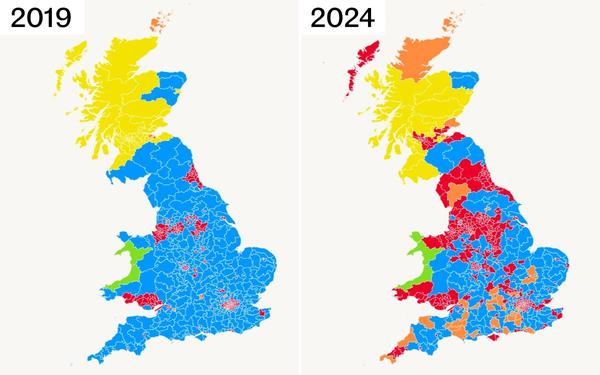
What policies are being put forward by competing parties for the next general election?
Rishi Sunak has said that the next general election is due to take place in the second half of 2024. Many Y2 St Dom’s students will be eligible to vote for the first time This article aims to make students more aware of the some of the key economic policies being offered by the major UK political parties, and perhaps help inform that first voting decision.
The Conservative Party have been in power since 2010 but YouGov predict (as of January 2024) a 120-seat Labour majority. Although the UK inflation rate has more than halved (from 11% to 4%), the country is now in recession, with weak/little growth characterising the UK economy for the last 15 years. This, combined with the cost-of-living crisis has led to many feeling less confident about the future
A party’s economic policy is a large contributing factor as to who one might consider voting for. The ongoing campaign is currently set to be Labour’s most successful once since 1997 People might consider voting for Labour due to the current frustrations, such as those who real incomes are falling as their pay is not rising at the same rate as inflation, or those who see their levies characterised by lower standards of living.
Labour Party (Red):
The Labour Party has said that they plan on enforcing a fiscal policy where government spending is managed effectively This aims to provide greater economic stability for the UK and increase in confidence, or ‘animal spirits’, for businesses wishing to invest. Labour’s Manifesto include strengthening public finances by building more houses, roads, windfarms and factories, and getting the NHS ‘back on its feet’ by paying doctors and nurses overtime to work weekends/evenings to reduce the backlog of waiting lists as well as a Dentistry Rescue Plan where an additional 700,000 appointments are provided each year Additionally, police controls in town centres will be tightened to tackle gangs and violence, and more specialist teaching will be introduced to break down ‘barriers to opportunity’. To increase home ownership, which has fallen in the last decade, and help first-time buyers onto the property ladder, Labour has pledged to build 1 5 million homes once it’s in power It also states that ‘outdated’ planning laws will be reformed, to reduce the restrictions on building ‘vital homes and infrastructure’. There are hopes that this will create more jobs in the construction industry, as well as increase total GDP. The phrase ‘levelling up ’ is heavily used, emphasising the need for sustainable economic stability, as well as cheaper bills and more home ownership.
HE
S
POLICIES FOR THE FUTURE POLICIES FOR THE FUTURE S FOR THE FUTURE
FUTUREPOLICIES FOR THE FUTURE POLICIES FOR THE F POLICIES
Conservative Party (Blue):
The dominant and current party in power, the Conservatives, aim to spend £1 billion in creating more affordable childcare, including during the school holidays, which may encourage more parents to go back into the workforce knowing that their children are receiving better quality and more flexible childcare arrangements They also aim to increase NHS funding, which includes building 40 new hospitals in the next 10 years and employing 50,000 more nurses. The other ideas in the manifesto include maintaining income tax, National Insurance and VAT rates, as well as implementing an Australian-style points-based system to control immigration There is also a wish to improve the skills and quality of the younger workforce, particularly by extending the roll-out of apprenticeships.
Liberal Democrats (Yellow):
Other parties include the Liberal Democrats, whose policies generally emphasise social welfare spending. They aim to invest in infrastructure and innovation so more sustainable jobs can be created. They also aim to tackle the climate emergency by generating 80% of energy by renewables, help citizens with the cost-of-living crisis by giving zero-hour contract workers a 20% pay rise, as well as enforcing tougher borrowing rules and higher tax rates to help fund spending commitments. Higher business tax rates would pay for an increase in free childcare and extension of free school meals.
Green Party (Green):
The Green Party believes in " an economy that works for all". It wishes to implement steps to eliminate poverty with social policies, such as increasing the minimum wage to £15 an hour The party also suggests moves towards a four-day working week. It hopes that this would boost productivity as people may be incentivised to work harder, knowing that they get an extra day off. They also want to raise corporation tax to generate more government revenue and ensure large corporations do not become too powerful, although this may discourage potential foreign investors from investing in the UK The party wants to end subsidies for fossil fuels and replace them with subsidies for renewable sources such as wind, solar power, and tidal power, which are more environmentally friendly hence being sustainable in the long-term.
- Jasmin Malik
HE
HE UK’S ECONOMIC INEQUALITY THE UK’S ECONOMIC INEQ
UK’S ECONOMIC INEQUALITY UK’S ECONOMIC INEQUALITY NEQUALITY
The United Kingdom is one of the wealthiest countries in the world, due to having an economy worth around $3 trillion, which is the 6th largest in the world. However, the UK has one of the worst income inequalities in the developed world This means that there is a large income gap between the richest 10% and the poorest 10%. There is also a North-South divide in England, as the North is generally poorer than the South, which can be shown through a lower average income (North – £25k, South –£30k).
Inequality is often measured using the Gini Coefficient which can be applied to income or net wealth on a scale of 0, where everyone has equal wealth/income, to 1, one person holds all wealth/income. When the Gini Coefficient is used to measure wealth, as the graph below shows, the UK is similar to other developed countries with a Credit Suisse score in 2022 of 71 However, when it comes to income, the UK is struggling with a score of 0.36, which is higher that the EU average of 0.3 with only 3 EU nations having a worse score (Bulgaria, Latvia, Lithuania).
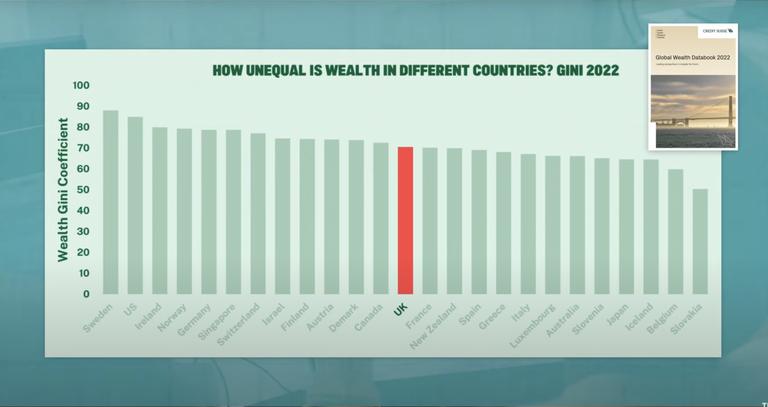
Is there really a large inequality?
However, some would argue that the measurement of wealth is more important than income as before considering housing costs, according to the Institute of Fiscal Studies, median household income in London is around 14% higher than the UK average; measured after, it’s only one per cent higher. This shows that although, there are income benefits to living in London and the South of the country, the housing cost that comes with it is astronomical This could be because of the better quality of life experienced in the south as there are more job opportunities, better education and healthcare, as well as highly developed transport network.
Not all southerners experience this better standard of living as inequality is far higher within London than in any other part of the UK, this is shown through Camden’s 41% poverty rate, compared to Richmond at 11%. Measured after housing costs, 28% of Londoners live in poverty, compared with 22% across the UK.
THE U
THE UK
HE UK’S ECONOMIC INEQUALITY
THE UK’S ECONOMIC INEQ
UK’S ECONOMIC INEQUALITY
UK’S ECONOMIC INEQUALITY
On the other hand, there are other benefits to Southern life, such as the superior health benefits In the London borough of Richmond-upon-Thames, healthy life expectancy is 71.9 years. This was 18.6 years longer than the same measure in Blackpool.
What is the cause of inequality?
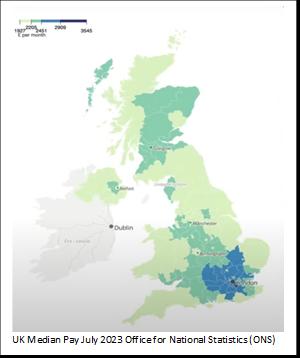
The problem comes from the fact that London and surrounding areas, in the Southeast of the country, hold most of the income as shown by the median pay in the picture below from ONS. This is due to the economic history of the country: The midlands and Northern economy were built on industrial work such as coal mining, shipyards, and steel. However, after the world wars these businesses were making losses as the countries the UK previously sold to, developed the technology to produce for themselves Further, due to the UK’s high labour costs and tax rates, as well as the lack of comparative advantage in these areas, it became cheaper for these goods to be imported from countries like USA and Australia. This caused structural unemployment in the North and the Midlands.

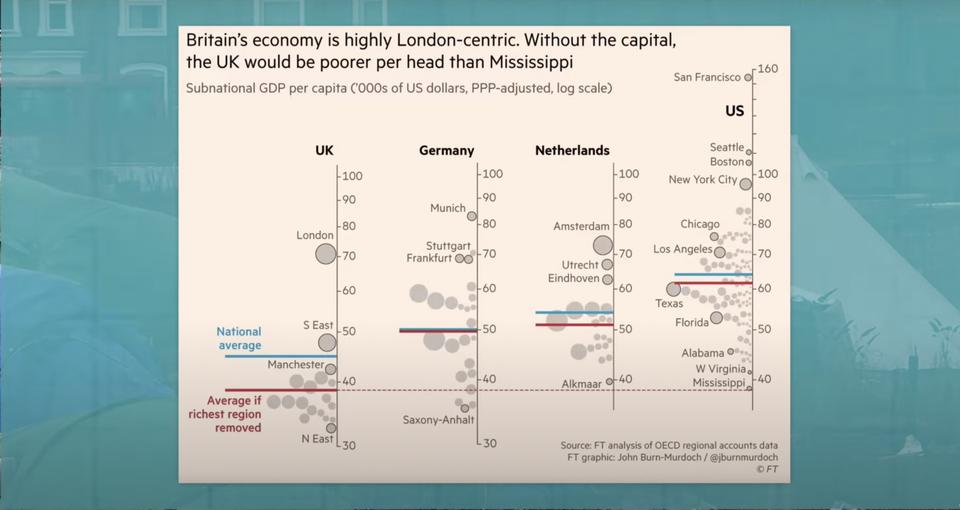
On the other hand, the Southern prosperity is due to the provision of high-quality services, specifically financial services, as well as more developed travel, like TFL, that improves geographical mobility. If London was removed from the UK statistics, GDP per capita would drop from around $45,000 to $39,000. This can be compared to the same scenario in other developed countries like Germany (from $51,000 to $50,000). Not only is the economic inequality harmful to national happiness, but it reduces growth, as output is not being maximised in certain areas of the country
NEQUALITY
THE U THE UK
UK’S ECONOMIC INEQUALITY
THE UK’S ECONOMIC INEQ UK’S ECONOMIC INEQUALITY
What are the possible solutions to this problem?
A possible solution is an increase in government spending on education and training in the North. This would encourage foreign investors to relocate to the North (currently half of all FDI goes to London and southeast England), as the land is cheaper, as well as a highly skilled workforce This could increase the UK’s output, as well as make a start on closing the income gap between the North and South. Coupling this with investment into better Northern transport, could allow the North to be more prosperous, as there would be increases in efficiency and productivity
However, some may question if it is even possible for the UK to quickly fix this issue. It took Germany 30 years to address its inequality problem and over $2 trillion, which the UK government does not have: with the country already in crippling debt, larger problems ahead such as dealing with the effects of Brexit, COVID and inflation as well as the looming threat of wars However, the gap between the North and South of the UK is smaller than the gap between the West and East of Germany so less government spending would be required to create a greater balance.
The government also announced a review of the rules for deciding which public investments go ahead, with the intention of increasing the share going to areas outside of London and the southeast of England but many policies have been proposed and passed to tackle this issue with none being effective so can we really be sure that these reforms will be any different?
HE UK’S ECONOMIC INEQUALITY
THE U THE UK NEQUALITY -Austin Kiboma
CHAEBOLS AND SOUTH KOREA CHAEBOLS AND SOUTH KOREA OUTH KOERA TH KOREACHAEBOLS AND SOUTH KO CHAEBOLS AND SOUTH CHAE
What are Chaebols, how did they come about and are they good for the South Korean economy?
What are Chaebols?
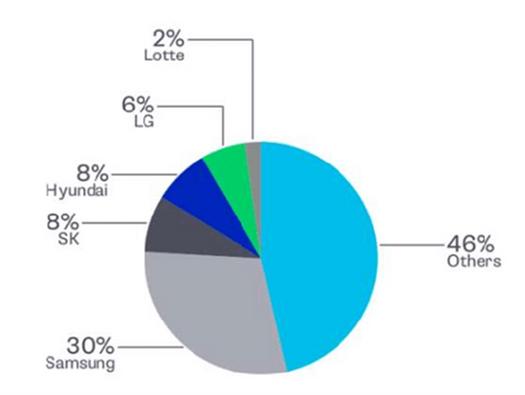
In Korean, “Chaebol” translates to wealth/rich family and is used to describe large family-owned conglomerates in South Korea. These wealthy families gain their income through the ownership of highly influential businesses in South Korea, such as Samsung Group, Hyundai, LG and SK group. These 4 companies account for 51% of South Korea’s Chaebols incomes In 2021, the top 10 chaebols dominated the South Korean economy, accounting for 60%, 18.3% of which was solely Samsung Group.
The History and Significance Behind Chaebols:
After the Korean War, Chaebols initially began to emerge. These companies, particularly Samsung which was founded by Lee Byung-Chul in 1938 as a trading company, began to diversify their companies into different sectors such as shipbuilding and electronics, as they saw the value of diversification. Diversification allows a company to expand and benefit from financial economies of scale, as the movement into multiple sectors makes them more attractive to investors as they are seen as more stable. This allows them to bargain lower rates of interest, hence decreasing costs. This along with well thought out investments and South Korea’s export-led economy, caused South Korea to see rapid economic growth. The Post-war era saw an increase in investment into research and development at Samsung Group in the electronic industry, allowing for “ground-breaking advancements in consumer electronics” and enabling South Korea to dominate in such sectors and be at the forefront. During this time, Hyundai also diversified its company. These companies changed South Korea’s landscape from its agrarian beginnings, into an industrialised economy centred on manufacturing and technology Furthermore, their focus on innovation has helped to establish a strong global presence for South Korea, attracting higher levels of foreign direct investment. This has improved South Korea’s economic development by boosting wages and living standards. Therefore, some say that the reason why South Korea is now a highly developed economy is due to the Chaebols.
KOERACHAEBOLS AND
CHAEBOLS AND SOUTH KOREA CHAEBOLS AND SOUTH KOREACHAE
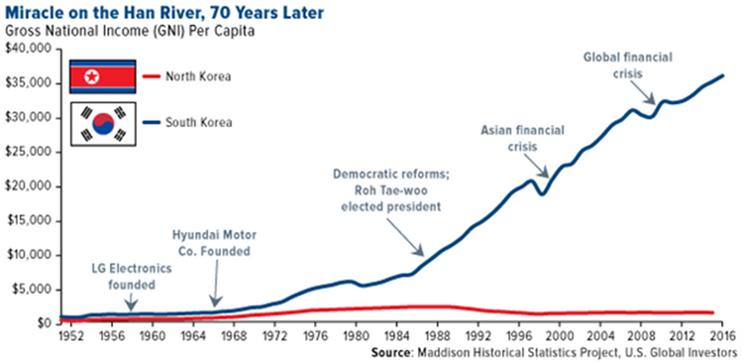
Negative Impacts of Chaebols:
While Chaebols have significantly contributed to South Korea’s transformation into a highly developed economy, we must also consider the detrimental impacts they have on the South Korean economy.
The strong ties between Chaebols and the government have created a culture of corruption, bribery, embezzlement, and tax evasion. It has become a norm for politicians to seek financial support from Chaebols during campaigns and return with political favours, such as awarding them contracts for infrastructure projects. Due to their close connections with the South Korean government, Chaebols tend to not be held accountable when violating laws and regulations. In some cases where they are prosecuted, the Chaebol’s sentence is reduced to a less severe one, as was the case with Samsung’s former chairman, who evaded his taxes in 2008, where his three-year sentence was reduced to five years of probation, which is often a common practice with Chaebols’ mishaps It has also meant that Chaebols have been able to breach labour laws regarding health and safety in the workplace. To make matters worse, ordinary people do not have the finances to afford the best lawyers to sue and ensure that the Chaebols face consequences
Chaebols also tend to have monopsonist power in their industry which means that they are the only buyer for suppliers. An example of this is Hyundai Motors who hold a share of more than half of domestically manufactured car sales at 52.5%. By having monopsonist power, Chaebols such as Hyundai Motors may engage in profit squeezing with their suppliers by demanding low prices for parts and components. If these suppliers do not accept the demands of the Chaebols, they risk losing their largest buyer. These suppliers, who are small and medium-sized enterprises (SMEs), are now forced into selling their goods at a lower price, causing them to generate lower profits Without enough retained profits, it can be difficult for small businesses to finance investment in innovation.
UTH KOREACHAEBOLS AND SOUTH KO OUTH
SOUTH
OUTH KOERACHAEBOLS AND SOUTH CHAEBOLS AND SOUTH KOREA CHAEBOLS AND SOUTH KOREACHAE
Lack of innovation may hinder the overall international competitiveness and growth of South Korea’s automotive industry as foreign consumers demand better-quality, cheaper substitutes made by other countries such as Germany and Japan. Profit squeezing has also meant that it is hard for SMEs to offer high wages for their employees, causing wages at SMEs to be 63% of that at a Chaebol This significant wage gap is a severe issue in South Korea as 43% of South Korean workers are employed at SMEs, contributing to its worsening income inequality.
Are there any solutions?
Due to the major part, they play in the South Korean economy, it is difficult for the government to impose restrictions on the Chaebols, as they fear they will move production somewhere else and decrease investment in South Korea. This in turn would create a decrease in the economic development of South Korea, as over 10% of people would lose their jobs, causing their real income to fall and income inequality to rise. However, some possible solutions suggested by economists are tougher antitrust laws and a ban on all cross-shareholding among subsidiaries. We discussed that the South Korean government could pass a law that protects small businesses from acquisitions for several years or increase spending on enterprise zones and subsidies to encourage innovation. Although, these are unlikely to work in practice, due to the power Chaebols have on the government.
Glossary:
Conglomerates: a large corporation that is composed of many different companies operating in diverse industries These conglomerates are typically formed through mergers and acquisitions, allowing the parent company to diversify its business operations and reduce overall business risk.
Diversification: The process of shifting an economy away from a single income source toward multiple sources from a growing range of sectors and markets.
Profit Squeezing: When a firm’s profit margins have decreased or is decreasing either because the firm’s revenue is decreasing or because its costs are rising, and it is unable to raise prices
Antitrust laws: also known as competition laws, are developed by governments to protect consumers from predatory business practices and ensure fair competition in an open-market economy
Cross-shareholding: where a publicly traded company owns stock in another publicly traded company.
Subsidiaries: companies that are owned or controlled by another company, which is known as the parent company or holding company. Typically, the parent company controls more than 50% of the subsidiary’s stock, giving it the majority control
UTH KOREACHAEBOLS AND SOUTH KO
- Swasti Yogi and Tanika Simon-Thomas
QUESTION: DEBA DEBATE QUESTION: STION:DEBATE QUESTION:
DEBATE QUESTION: DEBATE QUESTION: DEBATE QU DEBATE QUESTIO
Is equality of outcome better than equality of opportunity?
Equality of outcome considers that individuals have different circumstances, therefore resources must be allocated in an attempt to reach an equal outcome. Equality of opportunity means everybody, regardless of their background, is considered and can apply for any role and position by proving their suitability and their merit.
Equality of outcome is usually based on identity, as in an individual’s gender, race, and ethnicity, rather than their individuality. This means that other factors that contribute to disadvantages, such as living far from an area of employment or lacking funds for travel or accommodation will become overlooked Individual perspectives and values cause a division of preferences between equality of outcome or equality of opportunity Some argue for prioritizing equal opportunities in order to ensure fairness, while others emphasize the importance of equal outcomes to address systematical and structural inequalities.
Therefore, the question remains, should we treat everyone as if they ran the same race rather than rewarding hard workers and risk takers for their efforts?
Those in support of equality of opportunity argue that anything less will lead to discrimination and intensify the very issues it seeks to resolve It can be argued that people are more motivated to give their best when they know that they will only be assessed on their diligence and skill. While equality of opportunity is crucial in achieving a fair society, it often falls short in addressing systematical and structural inequalities.
On the other hand, equality of outcome aims to grant the chance for individuals to achieve the same goal. This would ensure that everyone is able to obtain a similar standard of living in order to achieve a fair and just society. While equality of outcome would be virtuous, it would undermine individual effort and merit, which would result in an unmotivated society.
On the contrary, equality of opportunity encourages competition and innovation, creating a society where success is earned through hard work and talent. It's essential to address root causes and uplift those at a disadvantage, rather than enforcing an artificial equilibrium of outcomes
Yet seeking equality of outcome does not mean ignoring personal success. It is about tackling obstacles that prevent certain individuals from being able to take advantage of these possibilities. By tackling systematic inequalities, we develop an equal environment where individuals can contribute according to their ability guaranteeing that success is not limited to a small group of people
To end, I am going to leave you with three questions to think about Which one of equality of opportunity or equality of outcome allow for a better, more equal society? Is it better to have an inclusive society where everyone thrives, or a society where fairness is ensured? Is there a definite amount of equality of outcome and equality of opportunity, which would be best for society?
- Melissa Ursachi
ECONOMIST OF THE MONTH: ECONOMIST OF THE MONTH: ECONOMIST OF THE ECONOMIST OF THE MONT
MONTH: ECONOM
Welcome to the Economist of the term section! Here, we look into economists from a range of backgrounds that we may not have heard of before:
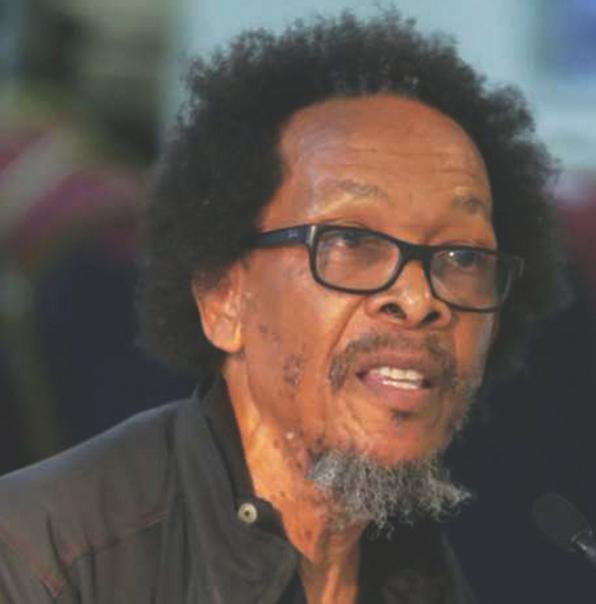
This term’s economist of the month is Vanus James, a well-known economist, who currently works at the University of Technology in Jamaica. James has contributed to the understanding of development economics with a focus on the Caribbean Further, he has worked extensively on issues related to economic policy, the economics of cultures and sustainable development His work has been influential in understanding the economic challenges and development strategies pertinent to small island developing states Below are three development strategies, suggested in his collaboration with Rosalea Hamilton on “Determining the Optimal Firm Size” in 2021 The goal of the paper was to use standard economic variables to explain what the optimal size of a profit-maximising firm in a free market would be, thus he believed the key to securing development in Jamaica would be to grow firms to an ideal size
Firstly, They concluded that in markets where there are many buyers and sellers, it’s thought that these firms have to keep the prices low, which would cause them to make low amounts of profit Their theory suggests looking for ways to focus on cutting costs by improving productivity to still get high profits
Secondly, they closely analysed the Lewis Model, which suggested that the key to promoting development, depends on the conditions of the skills of the labour and the store of capital If you don't develop labour alongside greater investment in capital, there will be limited impacts on productivity.
Thirdly, they stated that the perfect firm size cannot be indeterminate if there is inflexible export capacity This is when what a country is producing does not meet the global demand. Therefore they need to focus on catering to global export markets.
HONORABLE MENTION:
Ishac Diwan is a “prominent Lebanese economist”, who has conducted extensive research on a wide range of topics related to the Middle East and North Africa (MENA) region. Some areas he has explored include the high levels of youth unemployment in the MENA region, as well as the role of state institutions in economic development His work is often inter-disciplinary, joining together economics, political science and sociology to provide a comprehensive understanding of the challenges and the opportunities facing the region
Expand your vocabulary:
‘Creative destruction’
A concept, developed by Joseph Schumpeter, to explain economic innovation. Old inefficient companies must go out of business to release capital and workers so they can be used in new, more innovative ways.
T OF THE MONTH: - Tanika Simon-Thomas
HE
XT STEPS: STEPS:NEXT STEPS: NEXT STEPS: NEXT STEPS: NEXT STEPS: NEXT STEPS NEXT NEXT STEPS:N
NEXT STEPS: NEXT STEPS:
There's something for everyone , whether you want to learn more about the myriad of policies our government has been utilising or even how artificial intelligence is involved in economics:
TALKS:
Inflationary lessons: A new era for central banks
Thursday 21st March, 6:30pm - 8:00pm
Gustav tuck lecture theatre, the Wilkins building, Gower Street, London, WC1E 6AE
UCL Policy Lab brings together a leading group of experts to analyse the recent period of high inflation and discuss what we’ve learned about forecasting, central bank strategy and the political and social implications of a changing monetary policy environment
The road to freedom: economics and the good society
Tuesday 30th April, 6:30pm - 8:00pm
In Person and Online Event: LSE
Professor Joseph E Stiglitz, an American new Keynesian economist who defined monopolistic competition and helped create a branch of microeconomics called Information Economics, talks about his new book on the relationship between capitalism and freedom
PROGRAMMES:
Future Thought Leaders’ Programme, Institute of Economic Affairs
This week-long programme for sixth formers is a way to get experience discussing economic ideas and concepts beyond the exam curriculum
Open to anyone, to apply you need to send your CV and a cover letter (details on the website)
Applications for the July intake close on the Friday 29th March
Eton Summer University Preparation Courses
Courses will run for 3-5 days between, Monday 1 July – Friday 12 July 2024, 9:00am-4:00pm daily
A series of non-residential subject-based courses for Year 12 students who attend UK state schools These courses vary in length, between three to five days, and previous university-style courses run by the College.
Application Deadline is Monday 18th March
essay competitions:
John Locke Institute:
no greater than 2000 words, for students 18 and under
A Choice of many different subjects including Economics, where the 3 options of questions are: “What is the optimal global population?”, “Accurate news reporting is a public good. Does it follow that news agencies should be funded from taxation?” and “Do successful business people benefit others when making their money, when spending it, both, or neither?”
Registration opens: 1st April 2024, Registration deadline: 31st May 2024
Minds Underground:
1000 - 1500 word essay, Aimed at Year 12
3 Choices of essays: “”Why did God create economists? To make weather forecasters look good.” What do you think of this joke? Is there any truth to it? Do you agree or disagree with its implications?, “Can Brexit help the UK economy?” and “Should governments tax unhealthy foods?”
Application deadline: 3rd April 2024
INDICATORS:
ECONOMIC INDICATORS: ECONOMIC INDICATORS:
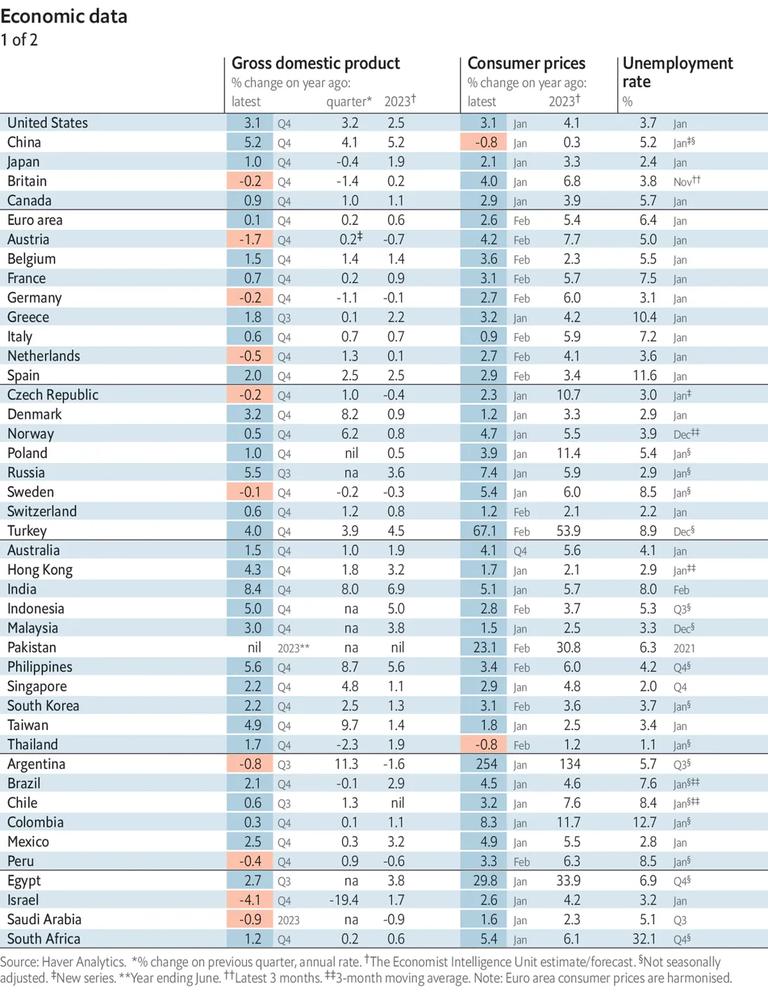
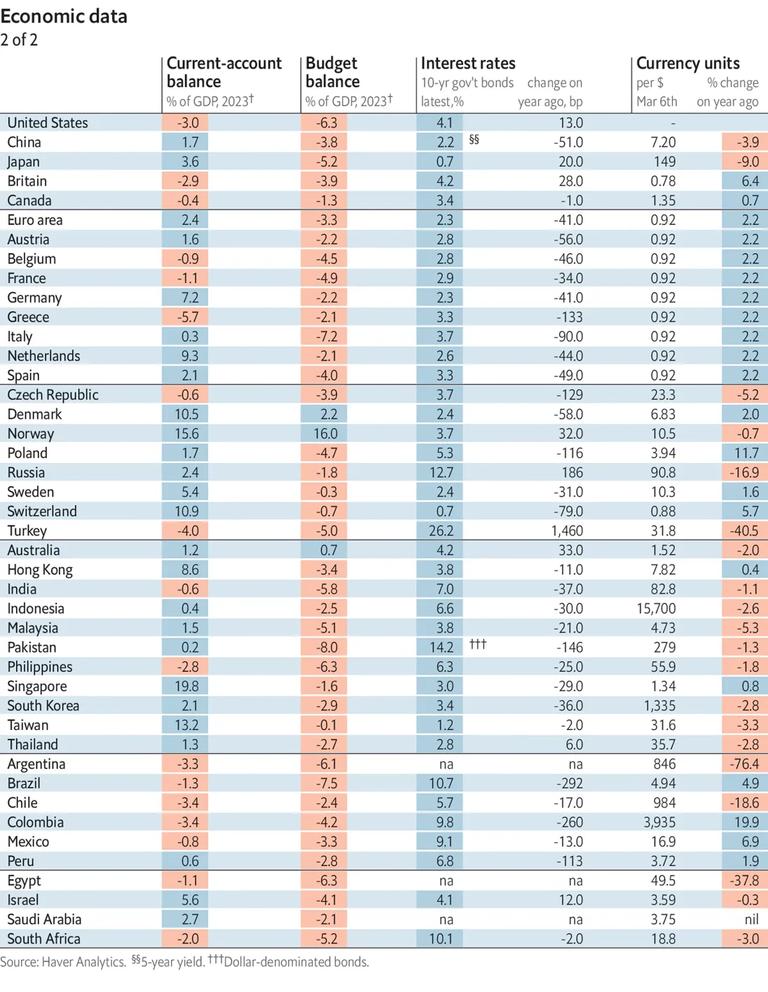
Did you know that key economic data is updated and published each week by The Economist magazine, go to the LLC and pick up the colleges copy and check it out:
MIC
NDICATORSECONOMIC INDICATORS
ECONOMIC INDICAT ECONOMIC
MIC INDICATORS:ECONOMIC INDICAT
ECONOMIC INDICATORS: ECONOMIC INDICATORS: ECONOMIC
NDICATORSECONOMIC INDICATORS
Edited by: Edited by:
Mahi Kapadia Mahi Kapadia
Tanika Simon-Thomas Tanika Simon-Thomas For Information on how to be apart of the next edition, read details in the email