‘We Just Want to Live’
The Transgender Community Under Trump
By Amanda Velasco
Can UCLA Carry the Paralympic Torch?
By Julian Dohi
Debugging the Job Search Algorithm
By Eghosa Otokiti

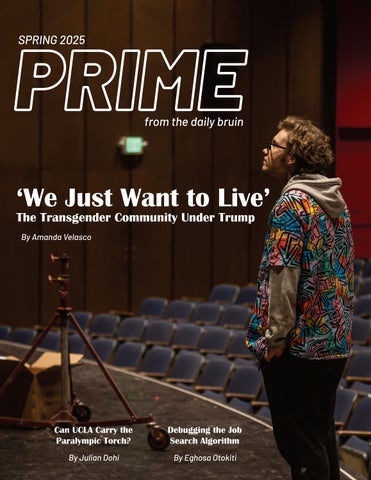
By Amanda Velasco
Can UCLA Carry the Paralympic Torch?
By Julian Dohi
Debugging the Job Search Algorithm
By Eghosa Otokiti
Dear reader,
For UCLA students, spring quarter is the culmination of a year of hard work. Between research showcases, year-end celebrations and internship offers, rightful recognition for accomplishments is seemingly around every corner. For graduating students, that excitement is only amplified as they walk across the stage toward their futures.
I am one such senior – and this is my final magazine. In my first quarter at UCLA, I joined the Daily Bruin specifically to write for PRIME. In my final quarter, I am fortunate enough to spend my final weeks preparing this very special spring edition – the longest magazine PRIME has produced since the pandemic.
These 64 pages are filled with 13 amazing stories, many of which come from fellow soon-to-be graduates reflecting on their time at UCLA. Looking back on her applications, Aisosa Onaghise explores traumadumping culture in college admissions. Reflecting on her time in the Bearing Witness program, Rachel Rothschild explores how Holocaust remembrance is evolving on campus and beyond. And a year after the police sweep of UCLA’s Palestine Solidarity Encampment, Anna Dai-Liu explores the mental health consequences for student journalists who report on violence.
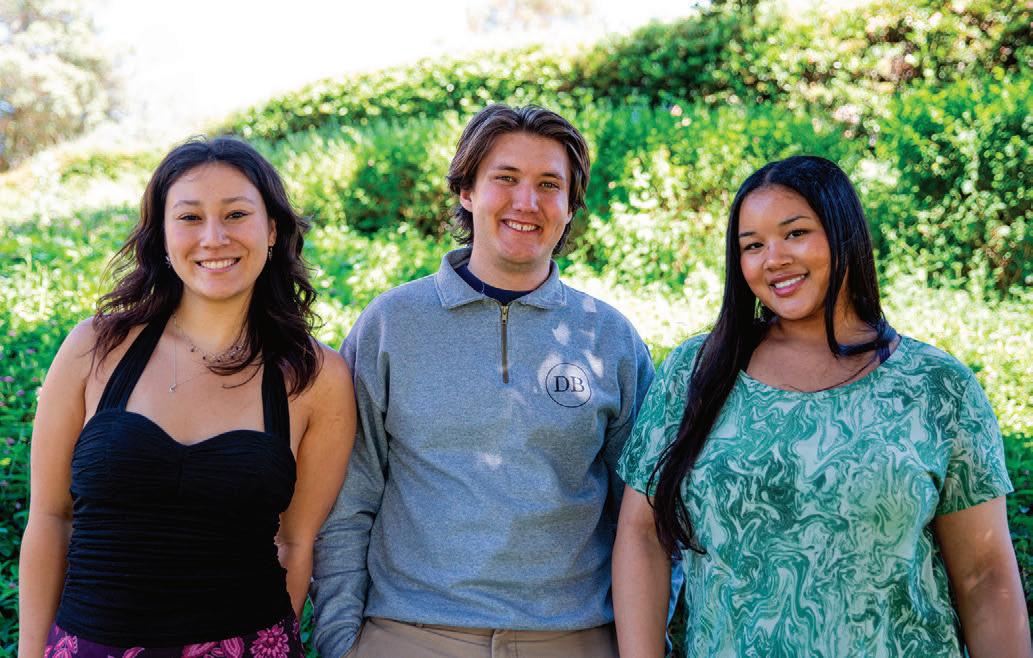
PRIME’s writers define the magazine, and this issue is a celebration of their hard work this quarter and beyond. But none of this would be possible without Alicia Carhee and Isabel Rubin-Saika, the dream team content editor and art director duo that made every single page possible. This magazine is nothing without them – our writers could not have asked for better mentors, collaborators and friends this year. This is our final magazine, and they deserve nothing less than this extraordinary issue as their farewell.
So read on for stories about students who stream, Los Angeles’ murals and UCLA’s Paralympic Village preparedness. Thank you for picking up PRIME magazine – we hope you enjoy it!
Isabel Rubin-Saika PRIMEart director
Martin Sevcik PRIME director
Alicia Carhee PRIMEcontent editor
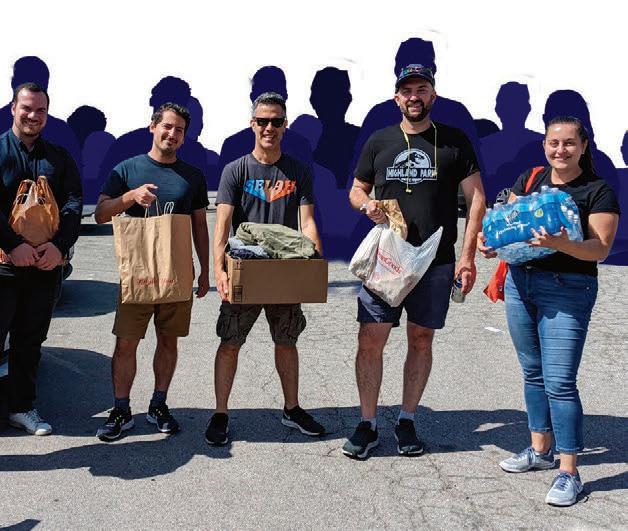
Collectives Over Capitalism: The Impact of LA’s Mutual Aid
written
by
LAYTH HANDOUSH
‘We Just Want to Live’: The Transgender Community Under Trump
written
by
AMANDA VELASCO
The Future of UCLA’s Wastewater
written
by
TULIN CHANG MALTEPE
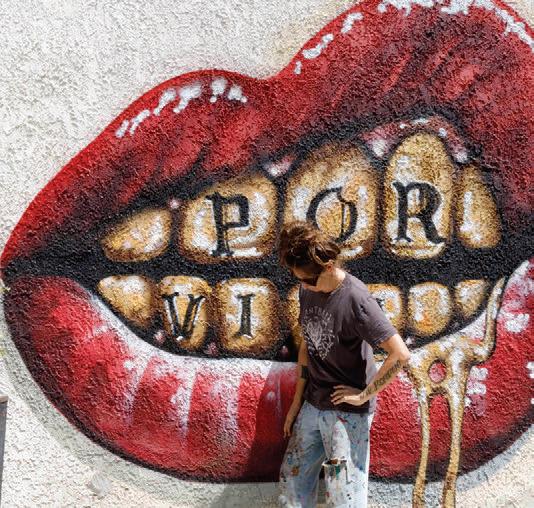
A City of Murals
written
by MYKA
FROMM
Can UCLA Carry the Paralympic Torch?
written
by
JULIAN DOHI
Violence, Trauma, Burnout: What Student Journalists Learned From the Encampments
written by ANNA DAI-LIU





Oversharing the College Dream written by AISOSA ONAGHISE
From the College Dorm written by PACO BACALSKI
Eileen Strempel’s Swan Song written by REID SPERISEN
Art of Game-Making

HOFFMAN
LOPEZ
written by LAYTH HANDOUSH
courtesy of
photo illustrations by AVA





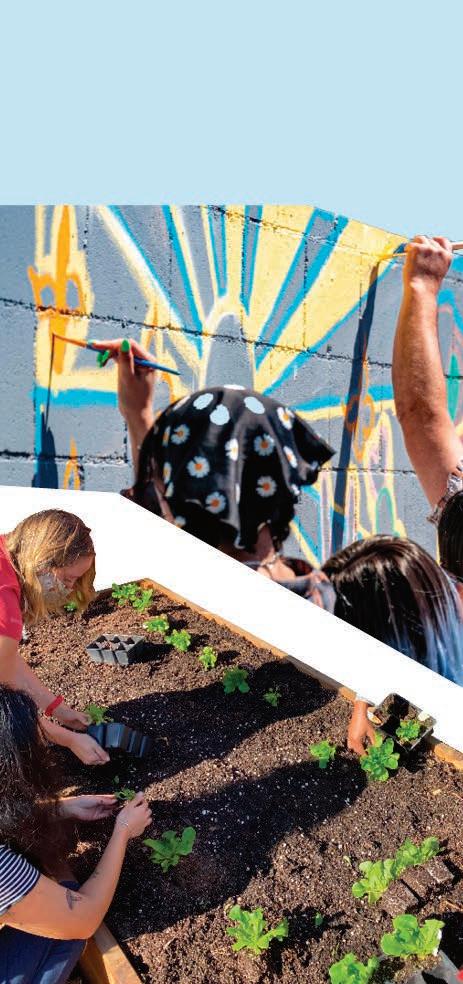









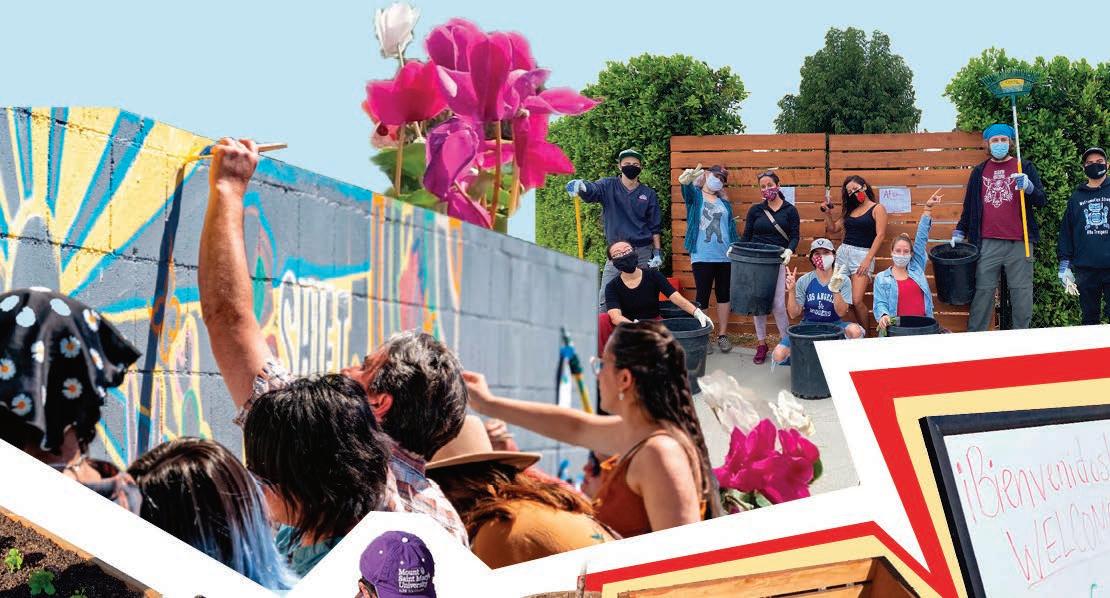







The Los Angeles County fires left many residents with nothing but each other. Fortunately, people power is a force to be reckoned with.
When government initiatives were unequipped to contain the fires raging across the county in January, community mutual aid became the people’s champion.
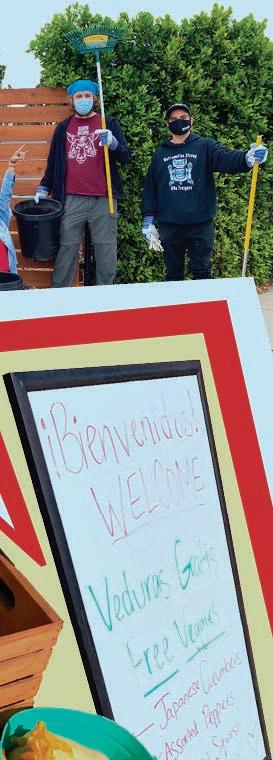
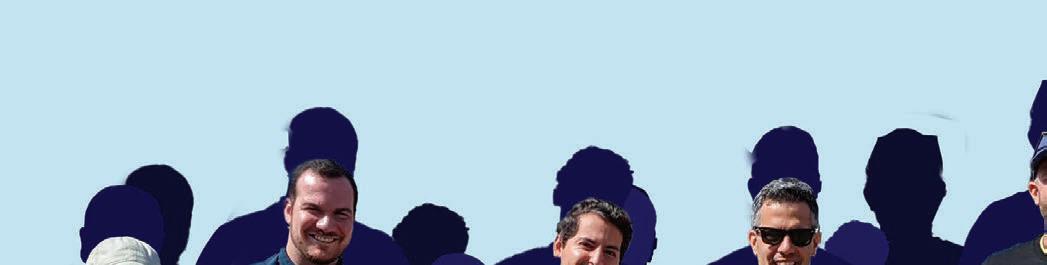
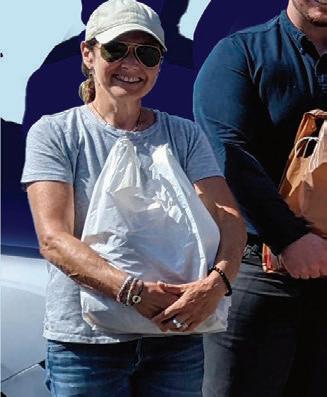
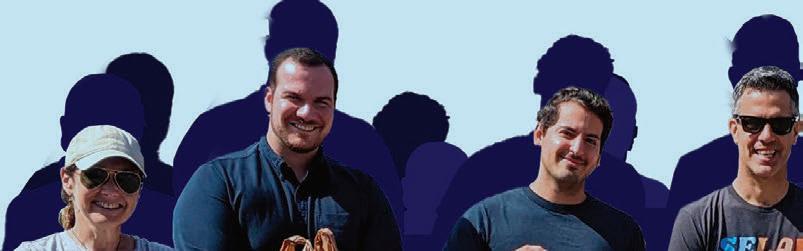
Groups such as Westwood Mutual Aid and SELAH Neighborhood Homeless Coalition rallied to supply affected community members with provisions to carry on – not just food and clothing but spaces to rest, mourn and combat the alienation together.
“We had so many people who reached out because they wanted to immediately help,” said Maebe Pudlo, the operations manager for SELAH. “The silver lining of a tragedy is people want to come together and help.”
Organizations like these, started by and for community members, have sustained LA neighborhoods for decades – working year-round to help those in need when the administration falls short.
As LA holds the largest unsheltered population of any city in the United States, residents have developed a robust mutual aid network to support often-overlooked communities. Founded in response to larger community crises and discriminatory government practices, these groups inform their actions with firsthand experience, tailoring resources to locals’ immediate needs. By offering free critical services to community members – unhoused or otherwise – they combat LA’s high living costs and insufficient government resources.
The Mutual Aid LA Network is made up of over 100 grassroots organizations across Southern California, addressing community needs such as food, clothing and political advocacy. They are typically independently funded, not for profit and operate primarily on a volunteer basis.
Many of these mutual aid services go beyond material supplies. Concerned for homeless populations in and around Silver Lake, a neighborhood in LA, SELAH grew from a small band of neighbors in 2017 to an organization of over 600 volunteers today, Pudlo said. In addition to distributing food and hygiene products, it advocates for fair housing laws and holds educational workshops to teach volunteers how to best support their unhoused neighbors.
Pudlo said SELAH serves as an educational tool for the community, empowering its members to apply their work to their everyday lives and their own neighborhoods.
“People have become so desensitized to seeing abject poverty on our streets that it’s easy to forget that that’s a human being,” Pudlo said. “You should be offended at the circumstances in our society that allow that to happen.”
While SELAH assists those who are housing insecure, its mission is to change the discriminatory narrative around people experiencing homelessness – making its work resonate with all members of the community.
These inclusive efforts are a trademark of mutual aid groups. While they are often made synonymous with charity organizations, mutual aid is more accurately a practice of reciprocity, said UCLA doctoral student in
sociology Sam Lutzker. It disrupts the unilateral movement of charity that goes from higher-income to lower-income individuals, instead emphasizing the importance of sharing resources between all people.
“Mutual aid is survival for poor populations, especially, but also for middle class folks,” Lutzker said. “The classic example of going to borrow flour or sugar from your neighbor.”
With this understanding, the practice of mutual aid can be traced throughout the history of communal living. It represents a legitimate, alternative approach to modern capitalism, predating the genesis of LA’s high rent costs and No. 1 cause of homelessness in the city, said Theo Henderson, the host of iHeartRadio’s “We the Unhoused” podcast. For more than 70,000 people in LA County who can’t make ends meet, mutual aid has become critical for survival.
Henderson learned the importance of community-based assistance firsthand after eight years of living in various degrees of houselessness. Unable to continue work as a teacher because of a medical emergency, Henderson couch surfed, stayed in shelters and slept on neighborhood streets – all while pursuing unsustainable government aid such as Section 8 housing, which places applicants on a sometimes 10-year-long waiting list for rent assistance.
“It’s a very difficult thing when people say there are services out there,” Henderson said. “Yes, there are, but you have to understand houselessness is not one person where you can go and get these services, and magically, things are going to be fixed.”
Misinterpreting government aid as easily obtainable to those without shelter, many homeowners become desensitized to the inequity that comes with living on the streets, Lutzker said. Henderson added that the Supreme Court’s ruling in City of Grants Pass, Oregon v. Johnson – which allowed cities to prohibit public camping – and local laws across Southern California criminalize the existence of people experiencing homelessness and reinforce the apathy that permeates society’s view of them.
“If you can dehumanize an individual, you can then criminalize them,” Henderson said.
Indifference toward people experiencing homelessness – or any marginalized group – by the larger population allows the government to impose harmful practices on said groups. This is

evident in what Lutzker refers to as the government’s “sweep” approach to homelessness. These large-scale evictions of homeless camps act as an aesthetic BandAid, Lutzker said, removing unhoused communities from view under the guise of dismantling the systemic barriers that prevent them from accessing long-term assistance.
Lutzker added that within the current capitalist framework, equitable and humanitarian solutions by mutual aid groups are often dismissed by the government, whose work is more influenced by voters in higher tax brackets.
“It can be adversarial to what the state does, because the state is – yes, sometimes concerned with care – but also concerned with all these other things, including displacing and dispossessing poor unhoused people, because it becomes a problem for them, for their favorite constituents,” Lutzker said.
empowering them to pursue sustainability in other aspects of their lives.
“It’s a place to enrich and fulfill your values and your needs socially as well – not just your basic needs,” Jaschke said.

While government agencies provide some tangible needs to their communities, such as temporary shelters and food stamps, mutual aids such as SELAH believe that building strong community bonds is just as important. It is in this way that these groups facilitate holistic support for their communities and support their mental and emotional well-being, Pudlo said.
Shift Our Ways Collective follows this model of service in addressing the nutritional needs of LA County residents. The Arleta, California-based mutual aid prides itself on “eco hubs,” where local families can harvest two pounds of free produce per week directly from stem and soil. Madison Jaschke, co-founder and executive director of SOW, said that in an urban food desert where high-quality meals are largely unaffordable, the mutual aid gives its community greater access to green space and fresh foods, as well as


Through SOW’s Youth & Community Harvest Internship, teens and young adults are encouraged to apply their career skills to sustainability projects that foster the collective’s growth. Jaschke shared that these projects take endless forms – from making solar-powered produce refrigerators to programming educational events for urban planners – and their creators exercise their own innovation for positive community change.
Lutzker said it is this type of creative problem solving that characterizes the work of mutual aid groups and should garner interest by government bodies. These ideas are motivated by a desire for comprehensive social betterment rather than the desires of specific interest groups.
“They have some of those really radical anarcho-socialist ideas – not just big-state socialism but also other ideas of care that I think are intriguing, worth discussing, worth also bringing into the halls of power,” Lutzker said.
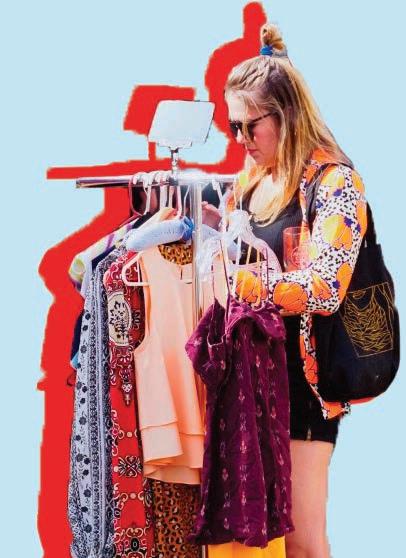
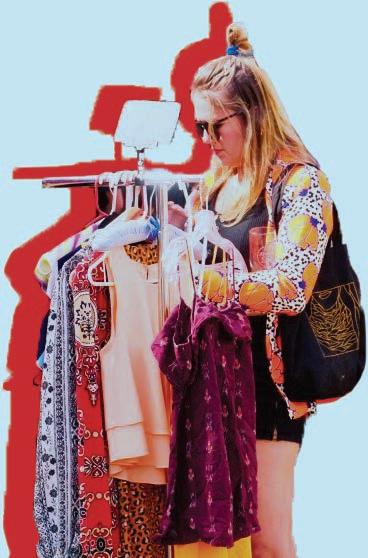
Nicole Macias and Enriquetta Navarro, the respective cofounder and co-director of Radical Clothes Swap, said they believe mutual aids are necessary for diluting capitalism’s potent control of people’s livelihoods. By holding free clothing swap meets across LA, Radical Clothes Swap helps offset levels of material overproduction by large fashion manufacturers – in turn supporting a circular economy that is environmentally sustainable.
‘‘‘‘ If you can DEHUMANIZE an individual, you can then CRIMINALIZE them.
With the rate of global material production tripling over the last 50 years, according to the United Nations Environment Programme, Macias said it’s not only unnecessary for manufacturers to continue making and selling clothes but detrimental to the health of our natural world.
“We’re literally killing the planet with all of these things that we’re consuming on the daily,” Macias said.
Navarro said Radical Clothes Swap decentralizes modern consumer culture and educates people about the ways in which overconsumption causes harm to the environment and each other. Lutzker said the coexistence of overproduction and poverty
is a direct outcome of a capitalist society; the hazardous abundance produced is only accessible to those able to pay the highest price.
Though industries and elected officials hold the whips that spur overproduction into rampancy, Navarro said that in order for the work of Radical Clothes Swap to be commonplace, mutual aids must be backed by government policy.
“It cannot just be our responsibility to combat this,” Navarro said. “There has to be something bigger that’s happening.”
The issue isn’t a lack of government programs. The 1980 Superfund Act was an attempt to clean up toxic waste sites across the country, and LA Mayor Karen Bass’ Inside Safe program was designed to provide people experiencing homelessness with indoor living facilities. The problem is that programs like these fail to provide sustainable solutions for impacted groups and often cite budget deficits as a considerable reason for this.
However, whether or not the relevant government departments are in need of cost-cutting measures is up for debate. Westwood Neighborhood Council President Lisa Chapman said LA County has billions of budget dollars that, rather than being put toward productive welfare initiatives, are primarily used to cushion the salaries of those involved with the current ineffectual programs.
“All of those entities, they are so bureaucratic in themselves that when you take an astounding problem like this, they don’t deal with it well,” Chapman said.
She added that lawmakers must push for legislation that holds the current bureaucracy accountable for how it spends its budgets. Though its influences on capitalism are severe, Lutzker recognized that a complete overhaul of government operations isn’t necessary to meet people’s needs. Rather, he advocated for greater government regulations and an increase in welfare assistance.
“Capitalism also doesn’t have to look this bad,” Lutzker said. “There are different ways to rein in some of the worst
products of that system. The U.S. is just not doing it.”
While the efforts of mutual aids and the government can appear adversarial, there is wide acknowledgement that they must all work together to correct the missteps taken toward marginalized communities. Lutzker and Chapman argue that, in proper cooperation, it is the responsibility of mutual aids to challenge government practices and for the government to inform its legislation with community perspectives in mind.
Chapman said comprehensive services – not piecemeal fixes for individual issues – would better the chance of providing people with sustainable care, rather than temporary fixes that ultimately leave their situations unchanged.
“It seems like this vicious cycle that we just can’t get out of, and it’s because we don’t have the resources set up so that we can succeed,” she said.
As the federal administration continues along a divisive course – with limited progress on these issues at the local level and looming threats against marginalized communities and the environment at the national level –mutual aids such as SOW and Radical Clothes Swap believe their work is more important than ever. Their work goes beyond meeting the needs of their neighbors, stretching to unite communities in demanding more collaboration between them and the government.
By weaving mutual aid practices into everyday life, a new cycle can replace that which is outdated and commonplace – one where capitalistic pursuits are made secondary to community knowledge and reciprocity.
“Doing something good for the community, showing up and then inspiring others to also do that,” Jaschke said. “Because who’s going to do the work if it’s not us?”
































written by AMANDA VELASCO
photographed by SELIN FILIZ AND RUBY GALBRAITH
designed by LINDSEY MURTO
Editor’s note: This article contains discussions of suicide that may be disturbing to some readers.
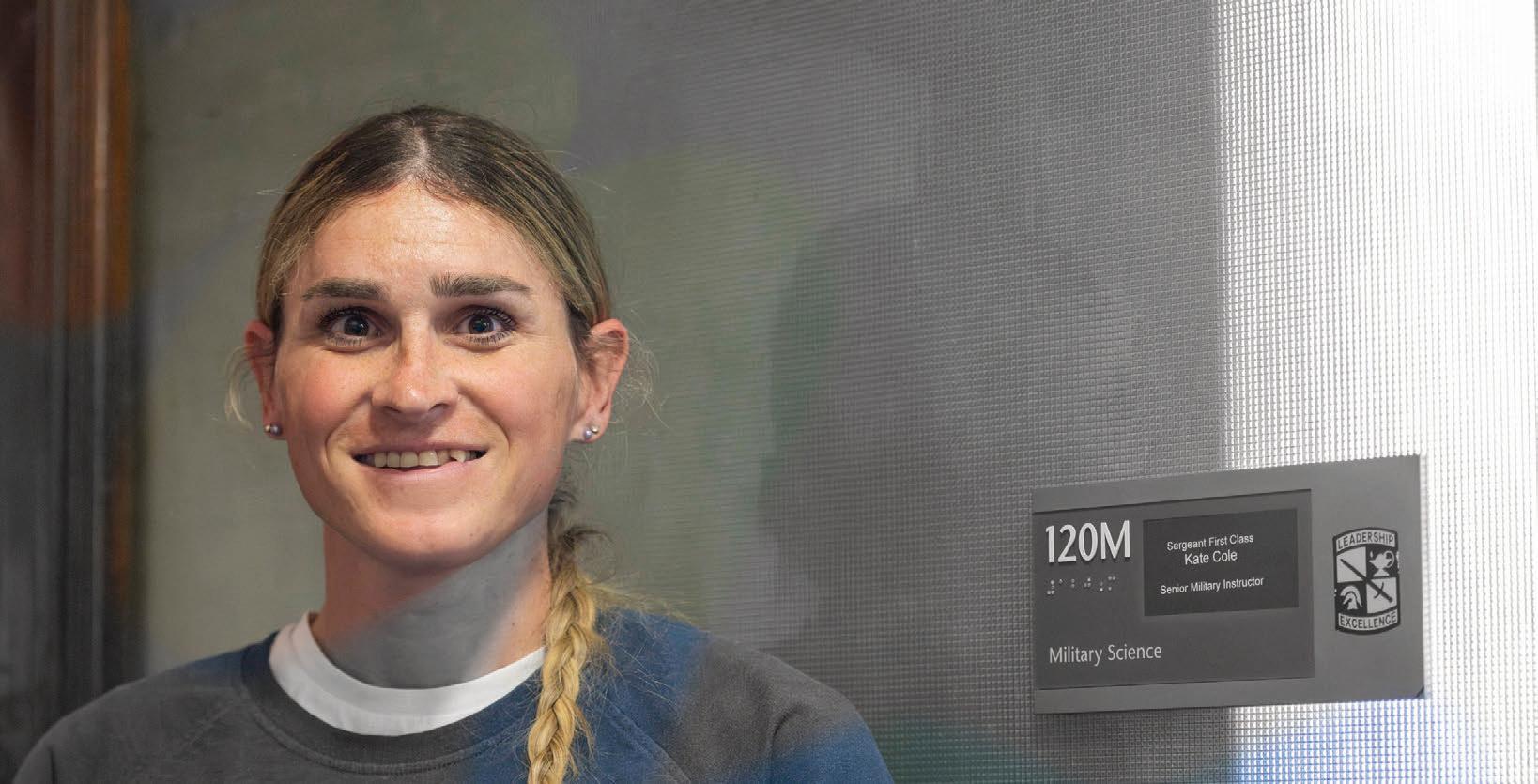
Sgt. 1st Class Kate Cole rarely says no to service. Her list of deployments is seemingly endless.
She enlisted at 17 years old, spent one year in Afghanistan as a designated marksman and later served several rotations in the Baltic states during the 2014 Russian annexation of Crimea. Cole was also stationed in Colorado and Germany, later going to Korea for a 12-month deployment where she led 36 soldiers as a platoon sergeant.
Seventeen years later, Cole works as a UCLA Army ROTC military science instructor from an office in the Student Activities Center – guiding students to become skilled leaders.
To her students, she is a model for service. But to the Trump administration, she’s a target.
Eight years into Cole’s service, she came out as a transgender woman, receiving nothing but support from fellow soldiers. Yet her identity came under scrutiny when President Donald Trump signed executive orders attempting to bar her and other transgender personnel from service.
“I just want to continue to do my job that I’ve been doing
for 17 years,” she said. “That’s all I’m asking for, and that’s all most people are asking for. We just want to continue to do our job.”
Transgender individuals make up less than 1% of adults in the United States. But as legislation shifts at the national level, transgender members of the UCLA community fear erasure and the long-term repercussions Trump’s executive orders might bring. With medical care, careers and safety at risk, they are determined to continue living their lives.
Trump has attempted to roll back transgender people’s rights in his second term through several executive orders, some of which include a ban on openly transgender service members and moves to limit transgender people’s access to health care and federal documentation. Implementing anti-transgender legislation is also a priority to a currently Republican-controlled Congress.
Will Tentindo – a staff attorney at the Williams Institute at the UCLA School of Law – said the executive orders may have limited impacts on federal law because of additional rulemaking procedures, constitutional nondiscrimination laws and potential lawsuits from advocacy organizations.
But even just the threat of legislation can dehumanize transgender people and push some into hiding.
“Some of the impacts are going to be felt immediately, but others might take a while to go into place,” Tentindo said.
Just eight days into his second term, Trump issued an executive order to revoke federal funding for gender-affirming care for people under 19. If implemented, the order would impact people covered by statefunded insurance plans,

while directing federal agencies to cut research and education funding of federally funded medical institutions that provide genderaffirming care. Some medical providers have already halted care before they were legally required to.
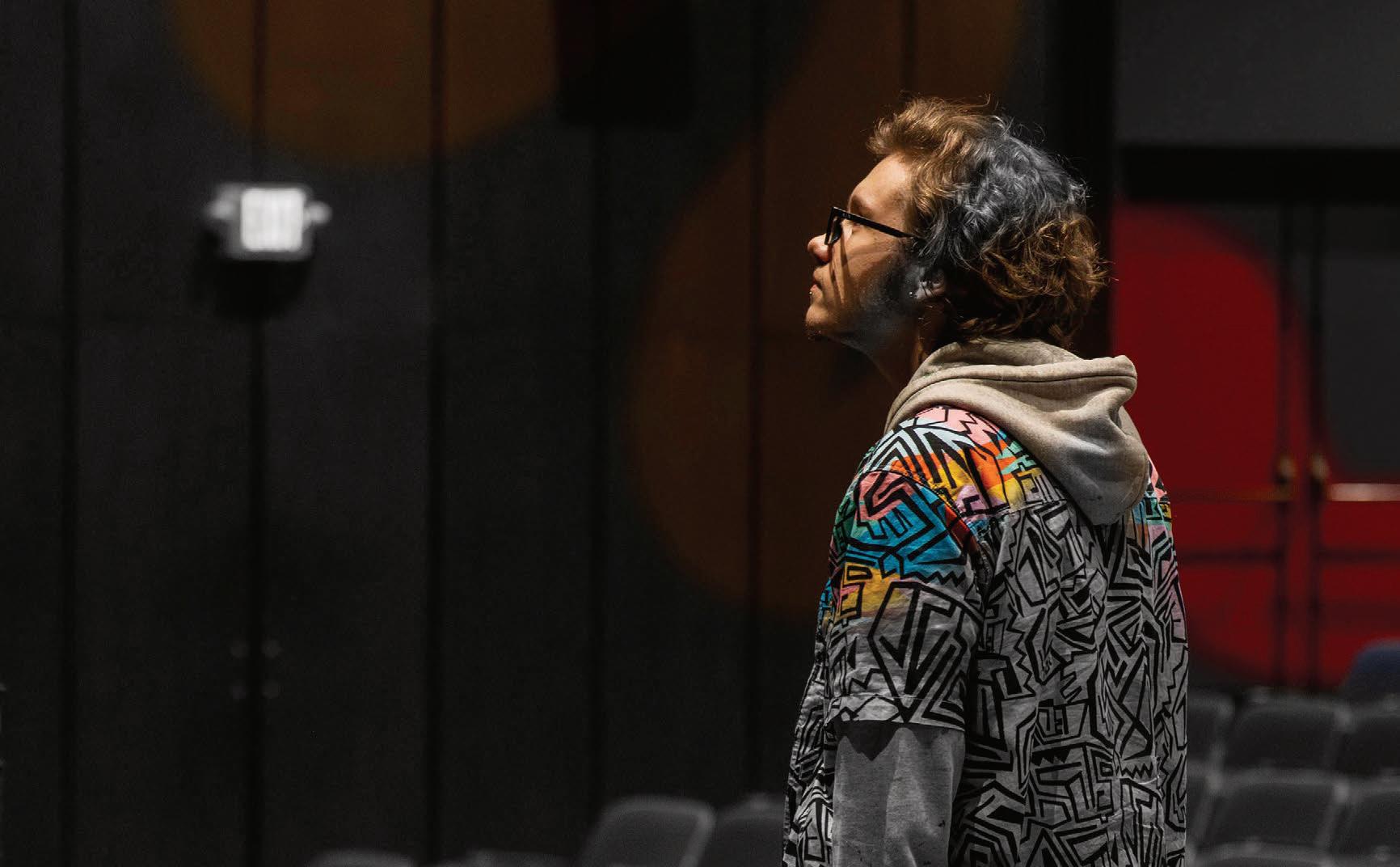
For people such as fourth-year theater student Tyler Neufeld, gender-affirming care is lifesaving and essential to mental health.
Experiencing gender dysphoria, Neufeld had suicidal
“Some of the impacts are going to be felt immediately, but others might take a while to go into place.”
thoughts and attempted suicide at 8 years old. He was pulled out of public school and enrolled into a Christian homeschool program, limiting his interactions with friends until he returned to public school in his junior year. For two years, his parents refrained from calling him any name at all. Since he began attending UCLA, his family has come to terms with his identity.
“I was trying to ignore my dysphoria for as long as I could – and as much as I could – just to survive until age 18,” Neufeld said.
Once he came to college, Neufeld gained the newfound freedom to be himself. After accessing UCLA’s genderaffirming care services through the UC Student Health Insurance Plan scholarship, his mental health improved, and his life changed for the better, he said.
But that autonomy might be taken away. He questioned if transgender people will have the same opportunities and degree of visibility in politics and health care as everyone else.
“Health care should be a basic human right, and trans health care
is health care,” Neufeld said.
Michael Hunter, a lecturer in LGBTQ studies and urban studies, said the vilification of gender-affirming care in conservative media contributes to widespread misconceptions that doctors perform unsafe surgeries on minors.
However, decades of research by organizations such as the World Professional Association for Transgender Health and the Endocrine Society support the treatment and describe it as a process guided by patient and guardian consent. Empirical evidence indicates gender-affirming care results in lower rates of suicidal tendencies among transgender people – with leading medical groups such as the American Medical Association, American College of Obstetricians and Gynecologists, and American Academy of Pediatrics opposing government interference in doctor-patient relationships, including gender-affirming care.
The issue of transgender access to health care reflects a larger question of medical autonomy that affects all human beings, Hunter added.
“The threat to policing trans bodies is a threat to policing all of our bodies,” he said.
Neufeld added that criminalizing gender-affirming services will not stop the practice. Another student, a fourth-year STEM student who was granted anonymity due to fear of retaliation, said that in the wake of these orders, people wasted no time stockpiling medical supplies and creating backup plans to move to other countries more accepting of transgender people.
For Tentindo, he believes the gender-affirming care executive order will not have an immediate effect across California health care providers but may be visible down the line. The executive orders do not override all state protections – such as California Senate Bill 923, which aims
“Health care should be a basic human right, and trans health care is health care.”
to increase access to gender-affirming care services in California.
“The Trump executive order can only go so far,” he said. “However, the Trump administration has already tried to revoke funding from certain community health care centers that provide care for transgender people.”
Tentindo added that the national impact of antitransgender legislation will depend on the outcomes of the Supreme Court case United States v. Skrmetti, a lawsuit challenging Tennessee’s ban on gender-affirming care for people under 19.
Although Bruins may still be able to access care at UCLA and in California, they may not have those same protections elsewhere.
The fourth-year STEM student, a transgender man, knows this firsthand. As an aspiring paleontologist, he travels to the Midwest for fieldwork, living the life he always dreamed of as a “dinosaur kid.” Now, he is researching how climate affects the ecology of the California coast. Throughout his lab work, he earned the opportunity to choose official names for undefined specimens in the fossil record and assign them to species.
But as he travels across the country for field visits, fear for his safety hangs over his head.
“If I have an accident on a field site, will I be able to be treated by a doctor because my gender marker on my medical records doesn’t match my lived gender?” the fourth-year asked.
He added that he is afraid of being assaulted while traveling to a field site, such as stopping to use a gas station bathroom. This fear reflects broader trends, according to a 2021 study by the Williams Institute. Transgender people are over four times more likely to experience rape, sexual assault, and aggravated or simple assault than cisgender people. The data comes from results of the 2017 and 2018 National Crime Victimization Survey.
“We’re just people at the end of the day, you know,” the fourth-year student said. “We’re not big, scary monsters like how the government is trying to paint us. We’re just trying to live life.”
The student prepared to update all his documents to reflect his gender. But one day before his appointments,
Trump issued an executive order directing the departments of State and Homeland Security and the Office of Personnel Management to ensure government-issued identification documents – including passports, visas and global entry cards – reflect a person’s sex assigned at birth. This order is in line with the directive to redefine sex as a biological difference between men and women.
Tentindo said if people apply to get a gender marker different from their sex assigned at birth, the request would be denied – subsequently exposing transgender people to an increased risk of discrimination. He added that mismatched documents put transgender people at risk for increased security screenings when trying to cross the border into a different country – making them vulnerable to invasive questioning.
The executive order feels like much more than just a denial of his existence as a transgender man, the fourthyear student said.
“It basically outs us to federal workers who see our documentation, and it lets people be open bigots to us because they know who we are,” he added.
The fourth-year said he is tired of being afraid. Sylvan Oswald is, too.
Oswald, the head of playwriting at the UCLA School of Theater, Film and Television, will see his sex assigned at birth on his passport, ID and global entry card upon their renewal for the first time in 14 years, he said.
Now, he has to think twice at every turn. He will be anxious when flying to see his partner, who lives outside California. He will fear the simple task of driving his car across the country, just because it means crossing states with anti-transgender policies, he said.
“It just returns me to a time when I didn’t pass as well as I do now, and I was much more nervous all the time,” he said.
The order has already limited transgender people’s access to professional opportunities. The fourth-year sought to attend a professional conference hosted by the Geological Society of America – a milestone significant

We’re not big, scary monsters like how the government is trying to paint us. We’re just trying to live life to his graduate school applications. However, the student said he opted not to attend the conference because he feared traveling to states with anti-transgender legislation.
While the fourth-year is restricted in his ability to pursue his passions, other transgender community members fear the orders could have large impacts on their careers.
When Cole retires, she plans to become a climbing guide in Colorado. But today, the question is no longer “when” –it’s “if.”
Military service members are eligible for retirement benefits after 20 years, and Cole is just three years away.
However, with Trump’s executive order barring openly transgender service members from the army, her career might be put to an end, she said.
Despite the uncertainty, Cole remains deeply committed to her work. Her favorite part about serving the army is being able to teach ROTC students at UCLA, she said. Students often consult her on “con-ops,” or a concept of operation slide, and Cole would spend hours talking through their products, labs and field training.
“I just want to make good leaders,” she said. “I want these cadets to be awesome officers whenever they commission.”
This same passion in service stemmed from her peers in the military. For half of her life, she spent 18 to 24 hours a day with her troop members on holidays and in combat zones. In every new deployment in a faraway country or state, Cole started over with her fellow soldiers. The army is her “forever family,” she said.
A love for her found family is the reason why Cole, alongside five other transgender service members, is suing the Trump administration for its transgender military ban. The National Center for Lesbian Rights and GLBTQ Legal Advocates & Defenders filed the lawsuit just one day after the executive order was announced – the order based on troop “readiness” and “integrity.” While officials at the Defense Department say there are 4,240 active duty personnel diagnosed with gender dysphoria, some transgender rights activists say there are as many as 15,500 transgender individuals in active service – all at risk of being pulled from the armed forces for a single aspect of their identity.
“Right now, there are trans people who are deployed to combat zones,” she said. “There are trans people who are working in hospitals. There are trans people who are lawyers, and we’re all on active duty, and we all just want to continue to serve.”
As Cole fights for her career through legal means, other transgender community members are reclaiming their rights in their own ways.
As a kid, Neufeld naturally turned to art to find solace. He often made backyard productions, performed jukebox musicals with Vacation Bible School
CDs and wrote original songs from piano compositions. Now, in his last year of college, he is harnessing scenic design and playwriting to make a statement. Since entering UCLA, Neufeld has been featured in the Los Angeles Times for transforming a Courtside dorm into an immersive escape room with recycled cardboard and blankets.
His latest production to premiere at the Hollywood Fringe Festival is “Escape! The Great Specific Garbage Catch.” Through interactive puzzles and themes of climate activism, it aims to make people think twice about the waste they produce, he said. Neufeld also delves into traditional theater, as he produced a comedic play to raise awareness on everyday issues transgender people face. With an increasing amount of attacks against transgender people, he said the comedic play aims to bring more joy within the LGBTQ+ community. He wanted to show them they aren’t alone, he said.
“Creating art about something is just a way to try to bring a little bit more peace and connectedness to the world,” Neufeld said.
Despite Trump’s executive orders limiting rights and access for transgender people, these UCLA community members continue with their work and daily lives.
Neufeld is focused on making interactive art that sparks social change, and the STEM double-major is on track to pursue graduate school. While Cole’s lawsuit is still underway, she continues to hold onto her plan to retire in Colorado.
For Oswald, he described his role as a professor creating a bigger impact than his gender identity. In higher education institutions, students need to see that every kind of person is represented – because his students are every kind of person too, he said.
As a guest speaker in a lecture on “High Winds” – a play he wrote inspired by his experiences with insomnia, gender transition and moving to LA – he recalled a tearful student telling him he was the first trangender adult they had ever met.
“They need to see that I’m here,” Oswald said. “I’m doing it. This is happening. I’m living life. I’m fine and well adjusted and mature – and they will be, too.”











Cranks, clangs and beeps echo off the walls of buildings covered in multicolored, winding pipes. In the distance, Pacific waves crash against the shore as palm trees frame the background of this otherwise industrial landscape. The faint odor of sewage comes and goes with the wind.


written by TULIN CHANG MALTEPE
designed by ISABEL RUBIN-SAIKA

Hyperion Water Reclamation Plant sits just next to the Pacific Ocean, right along the Santa Monica Bay. As the largest plant in Los Angeles’ wastewater system, it handles nearly 100 billion gallons of wastewater every year – including all of UCLA’s sewage. This volume includes sewage from LA as well as 29 other cities that send wastewater to Hyperion, where it is treated and sent back into the ocean.
But in the next 10 years, instead of being sent back into the ocean, that wastewater will be recycled and used throughout LA. As the city plans to make massive changes to its sewage infrastructure, Hyperion’s role in wastewater recycling will only grow.



To meet this need, the LA Department of Water and Power and LA Sanitation & Environment have initiated a project called Pure Water LA, which aims to prepare LA for a more sustainable and self-reliant future by helping the city reach its goal of recycling 100% of Hyperion’s wastewater by 2035 and increase local water sources. As the largest wastewater treatment plant in LA, the project will lean on Hyperion to make this large-scale reclamation feasible.

These changes raise questions – such as: Who bears the brunt of industrial expansion and waste processing infrastructure? The program’s effects will be felt across the city, helping determine the future of UCLA’s wastewater programs and potentially creating new environmental considerations for the plant’s neighboring community in El Segundo. With Hyperion’s presence in a historically white enclave, its environmental hazards do not fit squarely into typical environmental justice narratives and reveal a hidden history of LA.
Currently, Southern California heavily relies on water imported from the Colorado River and the northern and eastern Sierra Nevada for its drinking water supply, bringing 1.5 billion gallons of water into the region every day. However, as climate change dries up external water sources, LA is considering other collection solutions, such as increasing the amount of wastewater treated and recycled locally. If properly filtered, the wastewater can be used in almost every way groundwater can.
Eric Hoek, a professor in the UCLA Department of Civil and Environmental Engineering and a member of Pure Water LA’s technical advisory board, said Hyperion plans to expand its current wastewater treatment to include infrastructure that supports indirect potable reuse – or the process of making wastewater drinkable. Currently, Hyperion has a small advanced water purification facility that can produce 1.5 million gallons of recycled water daily.

Sanjay Mohanty, an associate professor of civil and environmental engineering at UCLA, said recycling wastewater for broader use would require building new processing facilities such as reverse osmosis infrastructure. Reverse osmosis is a process that removes all pollutants, including sewage particulates, from water through high-pressure straining.
“They do it so that they can take all that water and inject it back in the ground – so that that water becomes available for the LA community,” Mohanty said.
Mohanty said the existing process of sending wastewater into the ocean is wasteful. He instead believes treatment facilities such as Hyperion should recycle wastewater to be used for a wide range of purposes, such as drinking











“





















water.
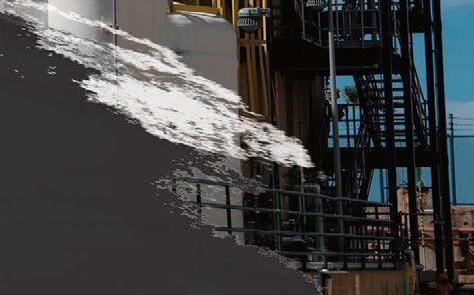



Through Hyperion’s advanced water purification facility, it has slowly begun recycling wastewater using these technologies. Wastewater treated using reverse osmosis and other purifying measures only accounts for less than 1% of Hyperion’s daily sewage output. By expanding this capacity, Hyperion may be able to accommodate LA’s wastewater recycling goals.


But progress toward that expansion is still in its early stages.

They can take all that water and inject it back in the ground – so that that water becomes available for the LA community.

“Hyperion hasn’t done any of this yet, but this is all in the works,” Hoek said. “This is over the next 10 to 20 years. They’re going to be implementing in different phases.”
As that transition occurs, UCLA’s wastewater will add to Hyperion’s increased recycling load – but the university may soon pursue a recycling plant of its own, Hoek said.
One of the primary reasons UCLA has considered building its own wastewater recycling plant comes down to infrastructure: There are currently no pipes that can carry Hyperion’s recycled wastewater back to campus.
In turn, this facility would primarily recycle wastewater to cool down UCLA’s power plant. Since the UC Office of the President mandated a 36% reduction of drinking water usage per campus by 2025, Hoek said the only way to reach that goal would be by reducing the amount



of water used for the power plant, such as by using recycled wastewater from the dorms. Another benefit of a new recycling plant would be that the facility could house a research laboratory used to test new wastewater treatment technologies and run training programs.
Despite positive feedback on the project over the last 10 years, executing the plan has been challenging.
“LADWP and Sanitation have always supported this project. They’ve always thought it was a great idea, and they want the research facility there and all that,” Hoek said. “They’ve been really wonderful in support – but there has been a movement of, ‘Well, who’s going to own it? Who’s going to pay for it? Who’s going to operate it?’”
Another reason for the delay, Hoek added, is the Pure Water LA initiative, which includes building pipes that send recycled wastewater throughout the city –potentially making a UCLA-specific plant unnecessary.
While the city plans to expand its wastewater recycling efforts, the impact on the surrounding community remains to be seen. If UCLA does continue to rely on Hyperion, it will become one small contributor to this impact.


The El Segundo neighborhood sits directly east of

the Hyperion treatment plant. When things go wrong – such as sewage spills and sludge overflows – it is the community that bears the brunt of the environmental fallout. In 2021, Hyperion unintentionally discharged millions of gallons of untreated sewage into the Pacific Ocean, releasing high levels of hydrogen sulfide into the air. Residents felt the effects immediately, with waves of odor pollution sweeping through the community. While the treatment facility has worked to address the spill and reduce odor levels, pockets of El Segundo still reported persistent odors three years later.

country, housing policies in the 1930s segregated people of color – particularly Black Americans – to neighborhoods the government deemed less than desirable – areas often exposed to environmental hazards such as pollution. Through redlining, people of color were systematically denied access to better-quality housing, including housing away from hazardous waste sites and other heavy polluters such as oil wells – which has had lasting effects.
While there are oil and gas wells across the county, the majority of toxic release inventory sites are in neighborhoods with predominantly Black and Latino residents, such as Huntington Park, Bell Gardens and Compton. According to the U.S. Environmental Protection Agency, these sites can release toxic chemicals into the air, water or land.
But El Segundo does not fit squarely with these trends. Of the more than 17,000 residents in El Segundo, almost 70% of them identify as white, according to 2021 U.S. Census Bureau estimates. Black people make up less than 5% of the population.
Besides Hyperion, El Segundo is surrounded by potential polluters. North of El Segundo is LAX, where particulate matter from aircraft exhaust heavily pollutes neighborhoods within 10 miles of the airport. South of El Segundo is a Chevron oil refinery, which was named by a 2023 study as the worst emitter of several water pollutants among United States refineries. The eastern side of the city borders Interstate 405 – which, because of rampant vehicle traffic, is a source of pollution from vehicle exhaust.




“In LA, marginalization and the presence of environmental harm are linked. Across the

























Since before Sanitation & Environment and the Department of Water and Power even existed, El Segundo has been a dumping ground. The 200 acres Hyperion currently sits on were initially purchased by the City of LA in 1892 to create the city’s first outfall sewer. Shortly after, workers for what was then known as the Standard Oil Company of California began settling in the city of El Segundo. In 1950, the sewer transformed into a secondary treatment facility, which it still is today.
Because of El Segundo’s close proximity to a sewage waste facility, it would have fit the requirements to be a redlined district. Instead, it only got a yellow grade.





















It was white-owned companies looking out for white workers and ensuring they were going to – oftentimes explicitly – only hire white men.










Daniel Cumming – an environmental history postdoctoral fellow at Queens College, City University of New York – said this could be attributed to El Segundo’s historic racial demographics. Much like the rest of the LA Basin, Chevron had racially selective hiring practices.

“Oftentimes, it was white-owned companies looking out for white workers and ensuring they were going to – oftentimes explicitly – only hire white men,” Cumming said. “That’s not to say that Black workers were not also being hired, but … the opportunity was incredibly scarce. It (oil) was almost an entirely white industry.”



Despite this history of segregation, El Segundo stands in contrast to a common pattern across the country of marginalized communities, not white neighborhoods, tending to be surrounded by environmental hazards. Hyperion has since implemented technologies and practices to limit the impact of wastewater processing on the surrounding community – with multiple contingency plans for heavier sewage flows and any system failures. Besides crisis management, it works to limit the impact of day-to-day operations on El Segundo with odor prevention methods. Even the plant itself does







































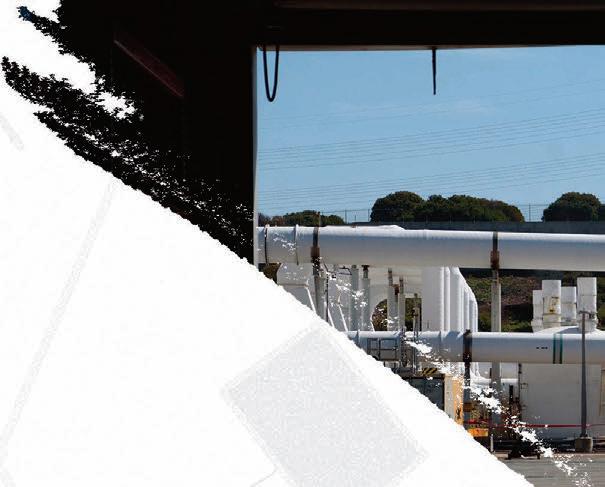






not have an incredibly strong sewage smell.
Not every community impacted by treatment plants has these benefits, however.
Shakira Hobbs, an assistant professor of civil and environmental engineering at UC Irvine, said her family in Dundalk, Maryland, does not benefit from extensive odor management infrastructure – which causes the community to persistently smell like sewage.


It’s surrounded by waste factories. It’s not a great place to live, environmentally.


“We always know when we’re in Dundalk because of the smell,” Hobbs said. “It smells awful, especially during the summer.”
According to Hyperion’s website, direct community input has led to operational changes. At nearly every treatment point, large white pipes capture foul air, which is then treated in biotrickling filters using microorganisms and carbon polishers to remove pollutants and odors.

These technologies are expensive, with Hyperion’s biotrickling filter infrastructure costing over $21 million to build. As a result, a community’s access to this technology is often dependent on its members’ economic and political power. Hobbs said a community like Dundalk, which is a relatively low-income area, does not have the same odor management technology as El Segundo.
“One of the big questions I’ve always had when I was there is, ‘Why are the houses here so expensive?’” Taylor said. “That’s really something that’s always blown my mind. And it’s surrounded by waste factories. It’s not a great place to live, environmentally.”



In the four years that Taylor and her family lived in El Segundo, she said she saw its housing prices rise dramatically. Between February 2020 and February 2024, the median sale price of houses in El Segundo jumped from $1.1 million to $1.65 million, according to Redfin. Taylor said she believes the city’s largely white demographic may factor into the high cost of housing.
Comparatively, Hawthorne – which is directly east of El Segundo – typically has a median home sale price less than $1 million, according to Redfin, despite being further from environmental hazards. The city is predominantly Black and Latino.
“I don’t believe that technology exists in Dundalk. Dundalk is known to be a smelly town,” Hobbs said. “Maybe that’s where economics or socioeconomics may be playing a role in that (Hyperion’s) infrastructure and preventing how big of a plume that smell may be.”
In this way, Hyperion’s proactive approach to the community differs from other waste-impacted communities across the country and LA.
Despite being so close to many environmental hazards, El Segundo’s property values remain higher than those of some other surrounding communities. In addition to the city having a high-ranking school district and being right on the coast, it is possible that efforts by Hyperion and other facilities to mitigate risk keep prices high.
Tanya Taylor, the founder and executive director of the arts education program Black in Mayberry and a previous resident of El Segundo, said she always marveled at how expensive the city was despite its close proximity to environmental harms.


“I’m certain that if it (El Segundo) had been a predominantly Black, Latino, (or) Asian community, the house prices would never have reached that high – not with those issues that it’s surrounded by,” Taylor said.
From the ground at Hyperion, El Segundo is nowhere in sight. Tucked behind a low hill, the city sits just beyond the 144-acre treatment plant. The machinery clanks on, and the freeway hums without pause – and beyond the ridge, people go about their lives, sharing space with LA’s largest wastewater facility. Though the city may be out of view, the plant’s environmental impacts still linger with the wind.
As Hyperion prepares to expand operations to meet LA’s growing water recycling goals, its impact on the surrounding community may increase as well. The shift from sprawling clarifier pools to advanced treatment systems marks a turning point – one that will likely demand greater investment in odor management and community-first planning. And if UCLA plans to go through with building a treatment plant, it’ll have to consider how to invest in both the infrastructure and the neighborhoods that stand beside it.








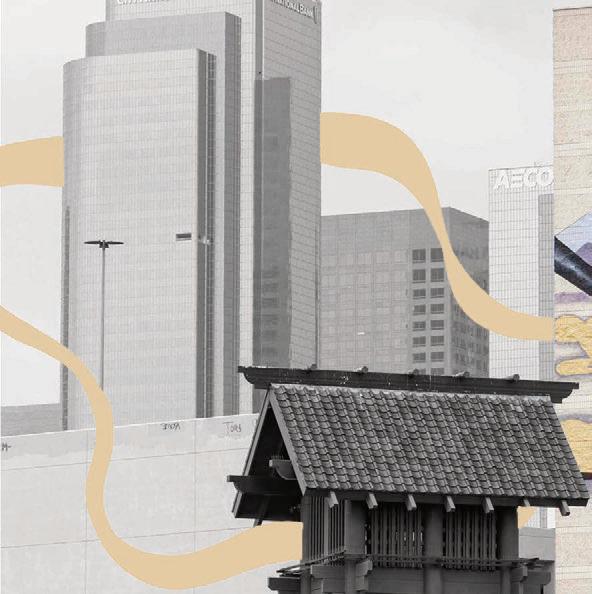













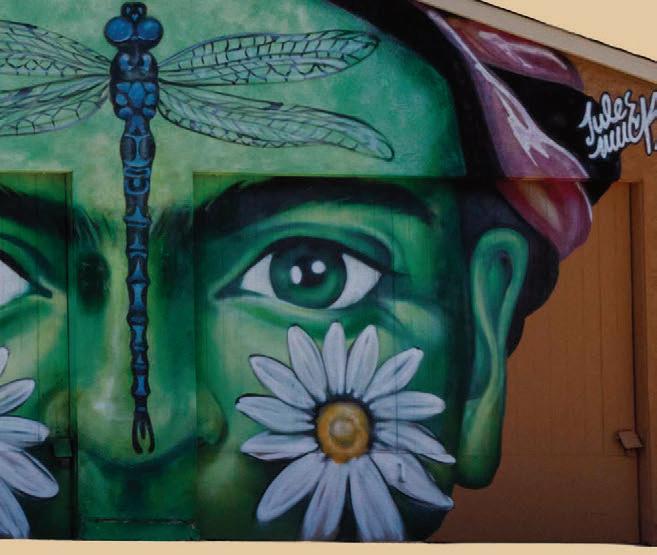
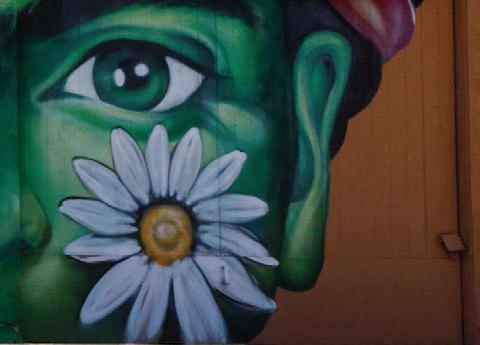
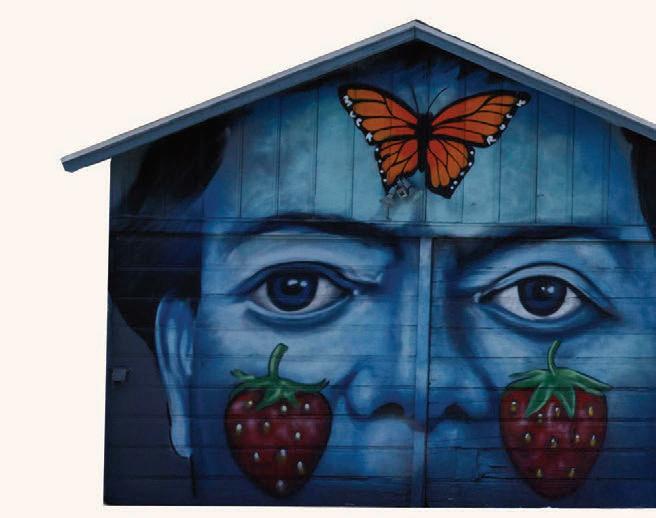
TVenice. Just off the main road, a quiet, shaded street offers some reprieve. A shiplap fence stands mightily with two spraypainted rabbits sprawled across it. Next to the rabbits, in the same bright white spray paint, a thought bubble reads, “Muck Rock.”
he April sun shines down on an afternoon in



neighborhood, where dozens of her murals cover everything from storefronts to garages to back-alley walls.
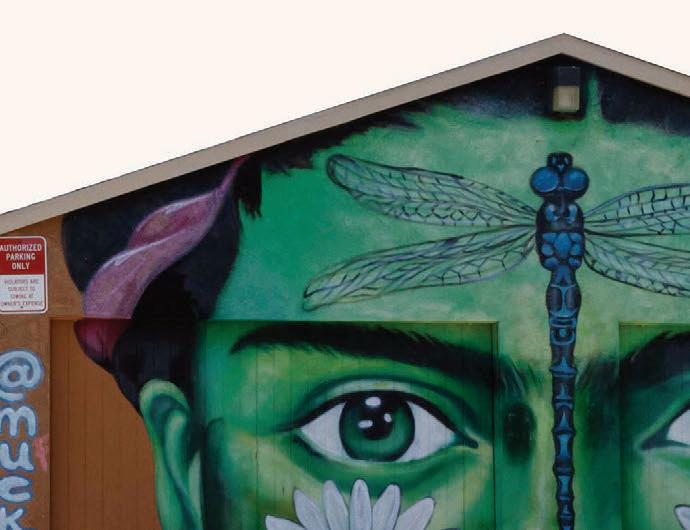
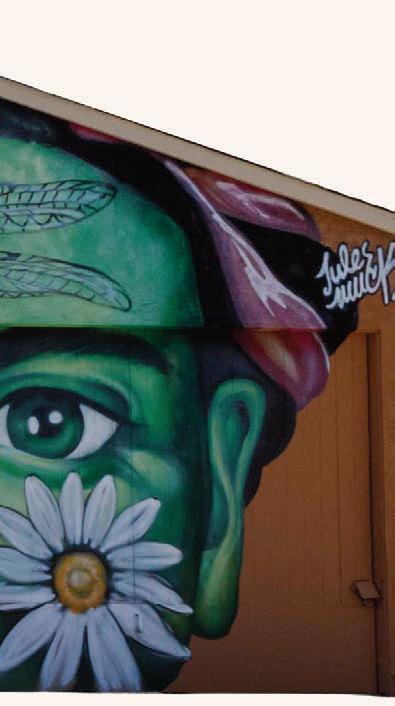
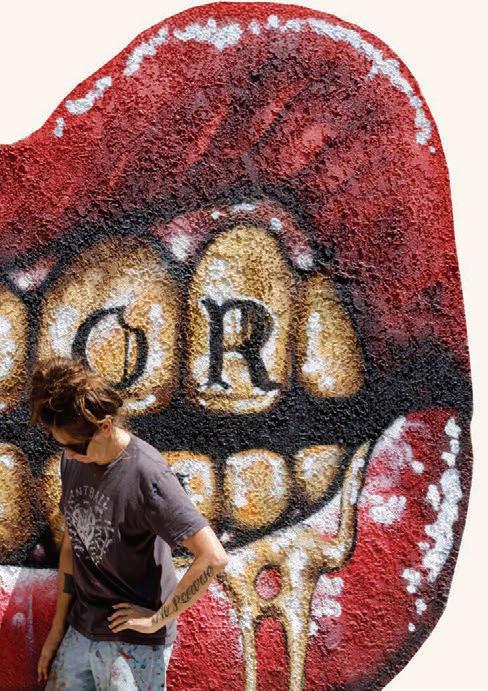
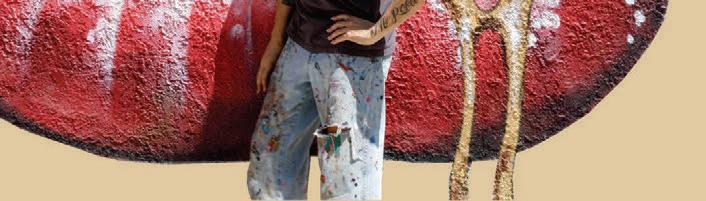
This is the home studio belonging to Jules Muck, a muralist known as Muckrock. Her sister and a droopy-eyed bloodhound met me at the gate as Muck trailed behind a few steps, the paint stains on her worn jeans illuminated in the sun. The studio itself takes up about half of the house – a large
room with bright windows, a




A mural is public art, so it’s always a collaboration between me and the environment that I’m in.

“ ”





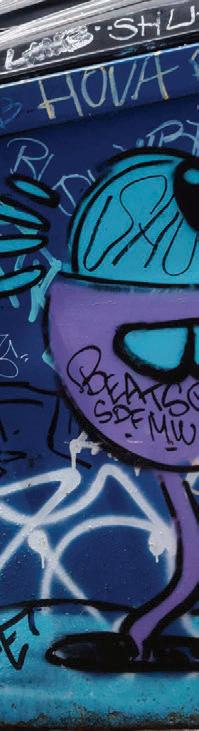
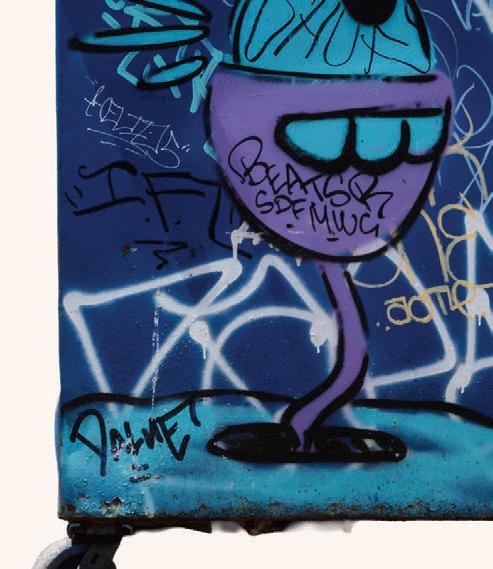
“I will do everything and anything for Venice,” Muck said. Muck is far from the only person creating these artistic forms of community expression in LA. Countless professional and amateur artists apply their unique sense of style to the city’s public areas. To these artists and communities, a mural is so much more than paint on a wall – it is a form of storytelling between an artist and the viewer.



vaulted ceiling and bright, eccentric paintings lining the walls – but the building otherwise disguises itself amongst the rest of the residential
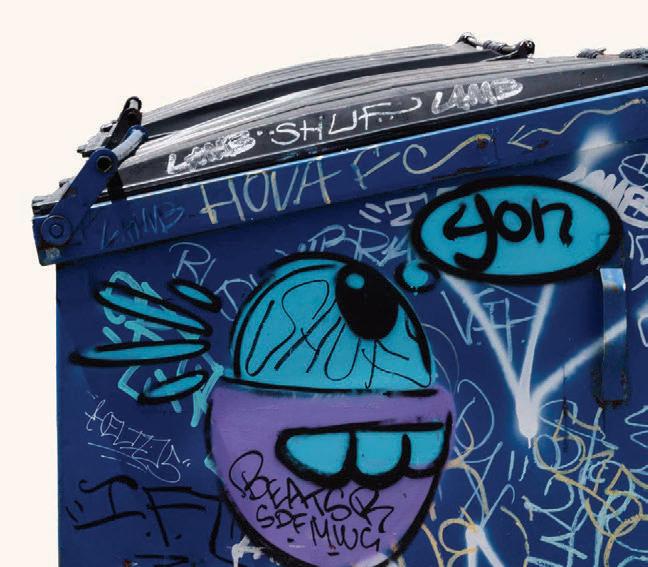
As Muck escorted me through the space, I recognized on her canvases many of the same motifs that appear in her street art throughout Los Angeles – cigarettes, body parts, cartoon characters and fantasy-like distortions of humans. These images have begun to define

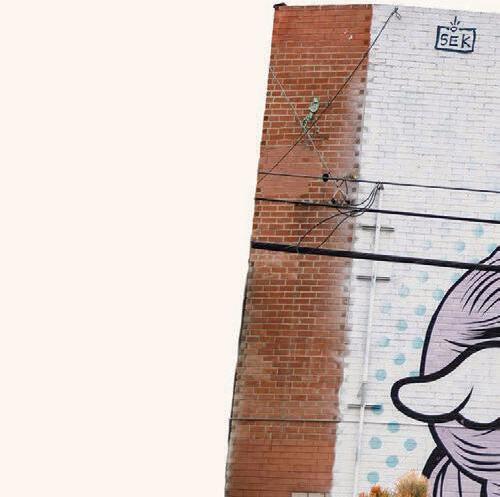









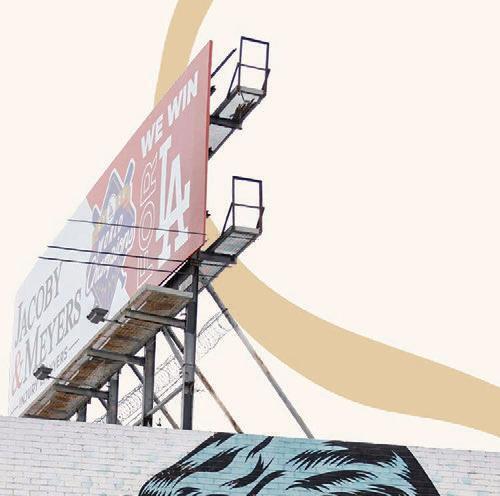

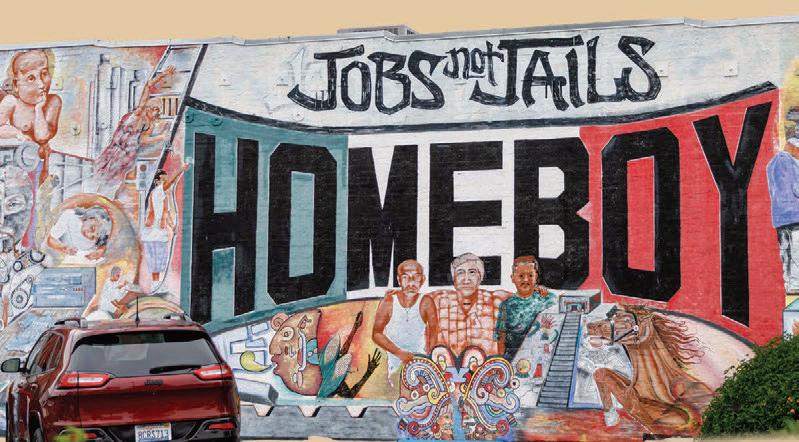
Thought of as the oldest form of human-made visual art, murals can serve a variety of purposes: advertising, beautifying a space, conveying a political message or celebrating a moment in history. LA’s murals have, for decades, conveyed the struggles of equal rights movements, particularly the Chicano Movement of the 1960s, and told the stories of major contemporary events such as the 1984 LA Olympics. These art pieces have been tools






of advocacy, commentary and self-expression.
“A mural is public art, so it’s always a collaboration between me and the environment that I’m in,” Muck











Despite a robust history of mural culture, LA has not always promoted artistic freedom on its streets. In an effort to limit the number of obtrusive advertisements dominating walls across the region, the city voted in 2002 to ban all new murals. Even with consistent protests from art activists, the ban stayed in place until 2013, becoming an 11-year-long period coined the “dark ages.”
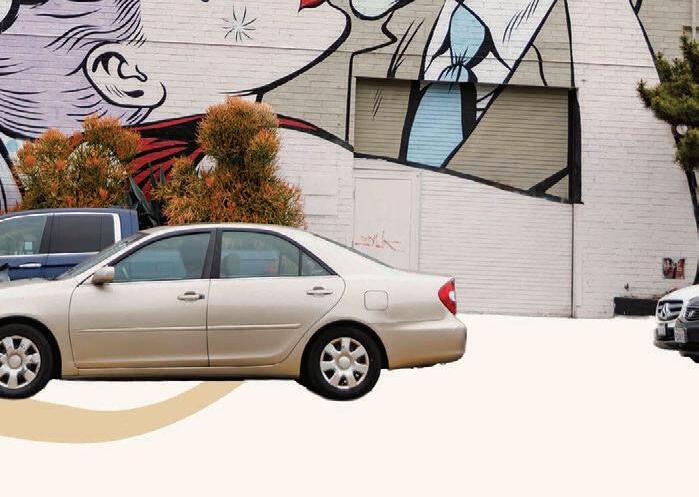








This era can still be felt from the ban’s irreversible damage. Out of the 2,500 murals throughout LA when the ban took effect, the city had painted over several hundred by the end of the moratorium. Since the LA City Council lifted the ban, however, street artists have been resurrected in full force, now allowed to flourish their artwork in a way they had not since the start of the new millennium.
“By really dealing with the
connect with their community through the piece they create.
“Hopefully there is some sort of thought toward how that piece, if it is a community mural, is in direct conversation or reflection with the community that will be right outside of its doors,” Persaud said.
A community might not be just a neighborhood or a group of people. One common site for a mural is a school campus, including UCLA.

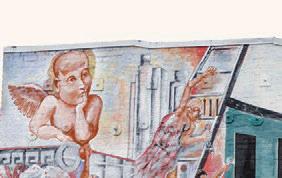






language around public artwork in the city of LA, that moratorium eventually ended,” said Davida Persaud, a lecturer in the UCLA Department of World Arts and Cultures/Dance. “We’re in this kind of exciting moment in Los Angeles right now where we’re seeing the production of more murals.”
A community mural does more than just beautify a space: It speaks for the people, whether it reflects those who live nearby or those represented within the art itself. Persaud, who is also the chief operating officer of sustainable art materials company MuralColors, said community muralism means the community is actively engaged in creating the artwork, not just consuming it.
“The role of murals is to communicate directly with the community outside of the usual spaces like a gallery or a museum, and it takes art directly into the community,” said Douglas Miles, a San Carlos Apache-Akimel O’odham artist and activist. “It’s so community driven, and its impact is more immediate.”
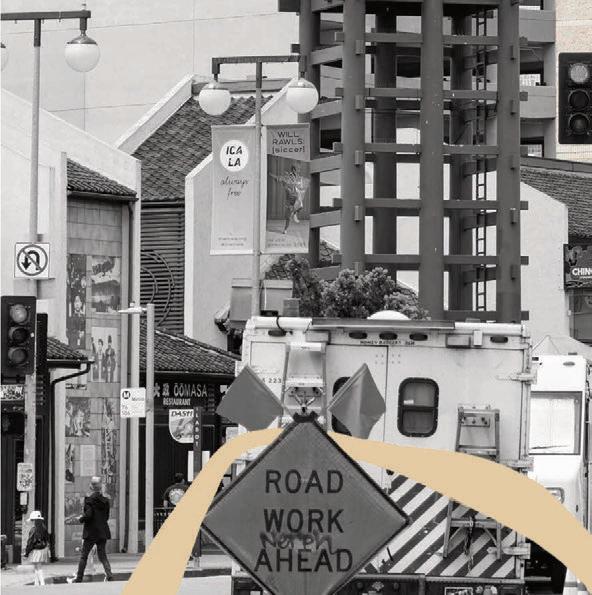
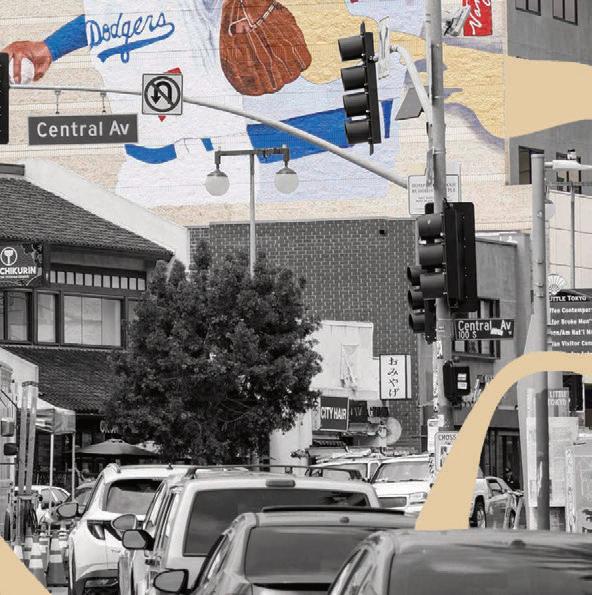
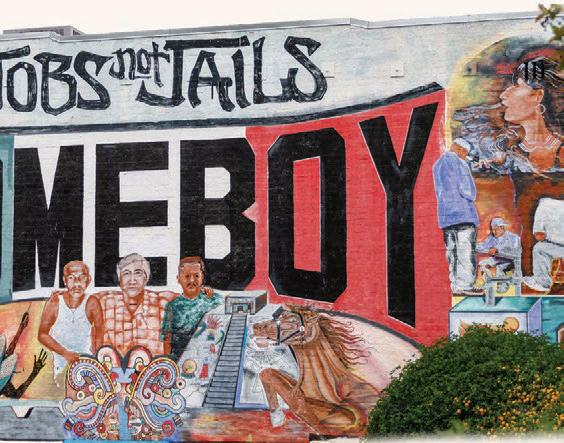
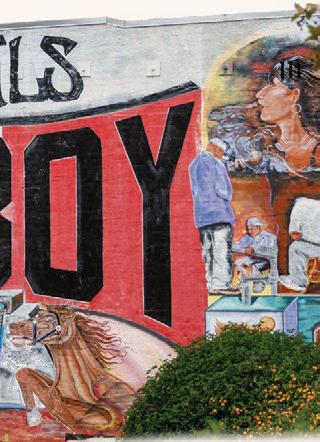
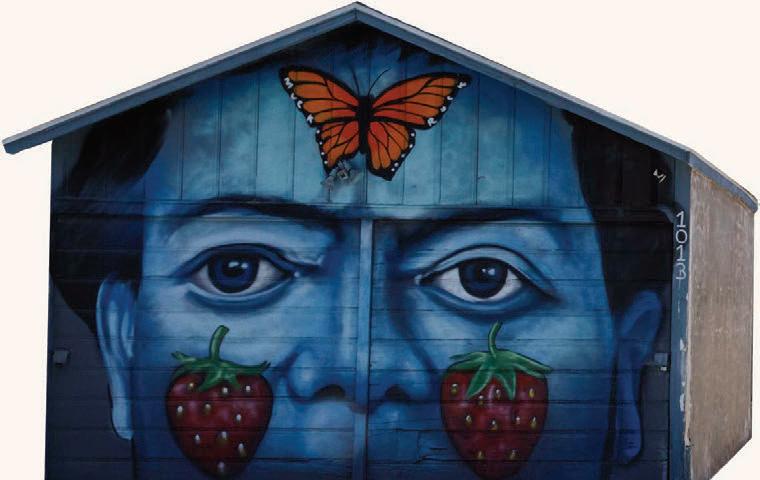
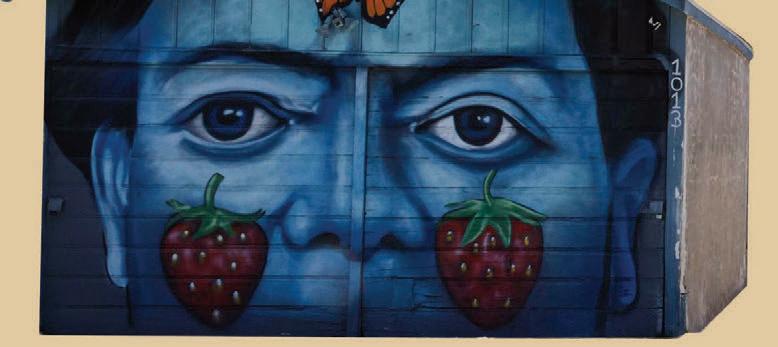
On a drive through Little Tokyo, I see a mural of Shohei Ohtani standing prominently against the city skyline, a depiction of the star Dodgers player gazing upward after a hit. As I weave through the alleyways in Echo Park, I see colors bursting off of murals on every block. The quiet streets of Boyle Heights celebrate Mexican American culture on their walls, many of the murals chipping and fading with age. In North Hollywood, I stroll down the half-mile-long Great Wall of LA, taking in the city’s political and cultural history captured in the expansive work – everything from prehistoric California landscapes to the birth of rock and roll. Each of these small communities creates the fabric of the vast, diverse landscape of LA’s culture.
But regardless of the content of the artwork, Persaud explained, most community muralists have one goal: to
The Black Bruin Resource Center sits nestled into a back hallway of Kerckhoff Hall’s first floor, offering programs, guidance and a space for Black and African diasporic members of the UCLA community. When you walk in, your eye is immediately drawn to a mural spanning the entire back wall. The image depicts Black historical figures – smiling, singing, engaged in sports – positioned around a table in conversation with one another.
In 2021, UCLA opened a contest for anyone to submit a design for the mural focused on the theme of Black history at UCLA.
After talking through ideas with her family, UCLA alumnus Maia Hadaway, then a student, designed “A Seat at the Table,” an 18-by-7-foot mural that celebrated both current and







The role of murals is to communicate directly with the community outside of the usual spaces like a gallery or a museum.
historical figures with accomplishments in science, athletics, the arts and various other fields. One of Hadaway’s priorities was to emphasize that the present is part of a living history and that today’s generation has the opportunity to shape it. She described people’s tendency to separate themselves from the past’s significant figures without recognizing their own potential to make an impact.
“It’s so hard to fathom someone of our age doing something that MLK did,” she said. “No, he was at that place before, too. And I just wanted to instill that drive in people now, and especially for a college setting where people are growing, people are transitioning into adulthood.”
Much of her feedback since creating the mural has been positive, but several UCLA students reached out to her indicating their frustration that she did not include them in the mural. For Hadaway, a community mural represents so much more than just the specific individuals portrayed on the wall.
“My whole thing was that this whole mural was to incorporate you,” she said. “It was for you to see yourself in it. And I think that’s something I’m actually working on now in my art practice – to show people that, again, you can relate to someone who does not look just like you.”
This idea of building
connection through art in academic spaces extends beyond universities. Miles has painted murals at several K-12 schools in his Apache community in Arizona. These murals create lasting legacies for students, shaping how they see themselves and their community.
“It’s very rare when we see this type of Apache representation in this kind of art,” Miles recalled a student saying after he completed a mural at their school.
Similarly, even though Persaud’s classes do not focus exclusively on murals, she often shares examples of murals in her lectures. She noted how impactful it is for students – even those outside of the arts – to resonate with a work of public art, especially when the artwork responds to the world around them or traces back to a collective experience.
Despite that desire for personal connection, Persaud noted that this connection does not require directly seeing oneself represented in the mural.
“Even artworks that are really, really specific to a unique lived experience can still have this appeal to students from diverse backgrounds because it’s beginning to pull upon a real, relatable human experience or a struggle that we’ve seen across communities,” Persaud said.
Even though physical community is a central aspect of many murals, artists often move between cities or travel internationally to create new public art. Muck, for example, has commissioned murals across the United States, as well as in parts of Mexico, Europe and Asia. And although Miles paints primarily within his Apache community, he too has journeyed up to LA to








collaborate with other muralists and make his mark on a new place.
But no matter where Miles is, his community is always top of mind.
“I’m just going to paint an Apache character and write Apache on it as … a nod to history,’” he said.
An artist’s motivation to create a mural, however, might not always be centered around artistic expression or representing a community. Often, it’s financial.





Hadaway said the primary reason she will choose to paint a mural instead of a traditional canvas painting is if a company reaches out to her directly and provides her a commission. But because of its large number of aspiring artists, LA is not always the most










lucrative space for muralists.
“In LA, I mean, it’s not a great place to make money as an artist because there’s so many freaking artists,” Muck said. “If you don’t have a name, they don’t know that you’re charging money because you can do better.”
Otherwise, Hadaway tends to produce more of her works on canvas, due in part to the unique finished feel of paintings.
Sometimes these mediums overlap. The mural project she is currently working on for a reparations-focused organization in Chicago consists of three large paintings that will be hung side by side.
Hadaway described this as the best of both worlds for her art style –she can create on a larger scale while still capturing the feeling of her paintings.
While making a living as a









muralist is not always easily attainable, the LA art scene offers a unique environment for such a diversity of artists to gain inspiration from each other and from their surroundings.
It’s not a great place to make money as an artist because there’s so many freaking artists. “
Hadaway discussed how much LA-specific pride is clear in Angeleno artists. Ultimately, these murals capture something underlying about the human experience – something that bridges beyond one neighborhood, one city or one group of people. Art can resonate with us no matter our backgrounds and, as a result, broaden existing communities.
“I really do commend LA for making this space, making this community feel special,” she said. “Their pride is beautiful.”
written by JULIAN DOHI
designed by FELICIA KELLER
photographed by ANNA DAI-LIU
illustrated by ISABEL RUBIN-SAIKA
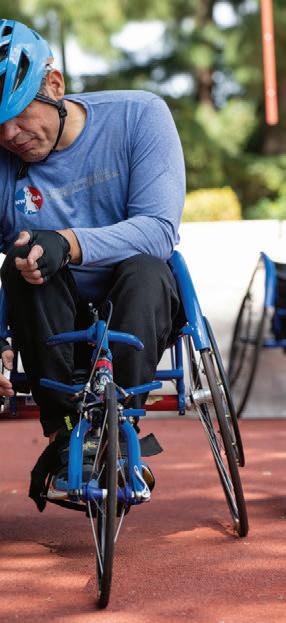
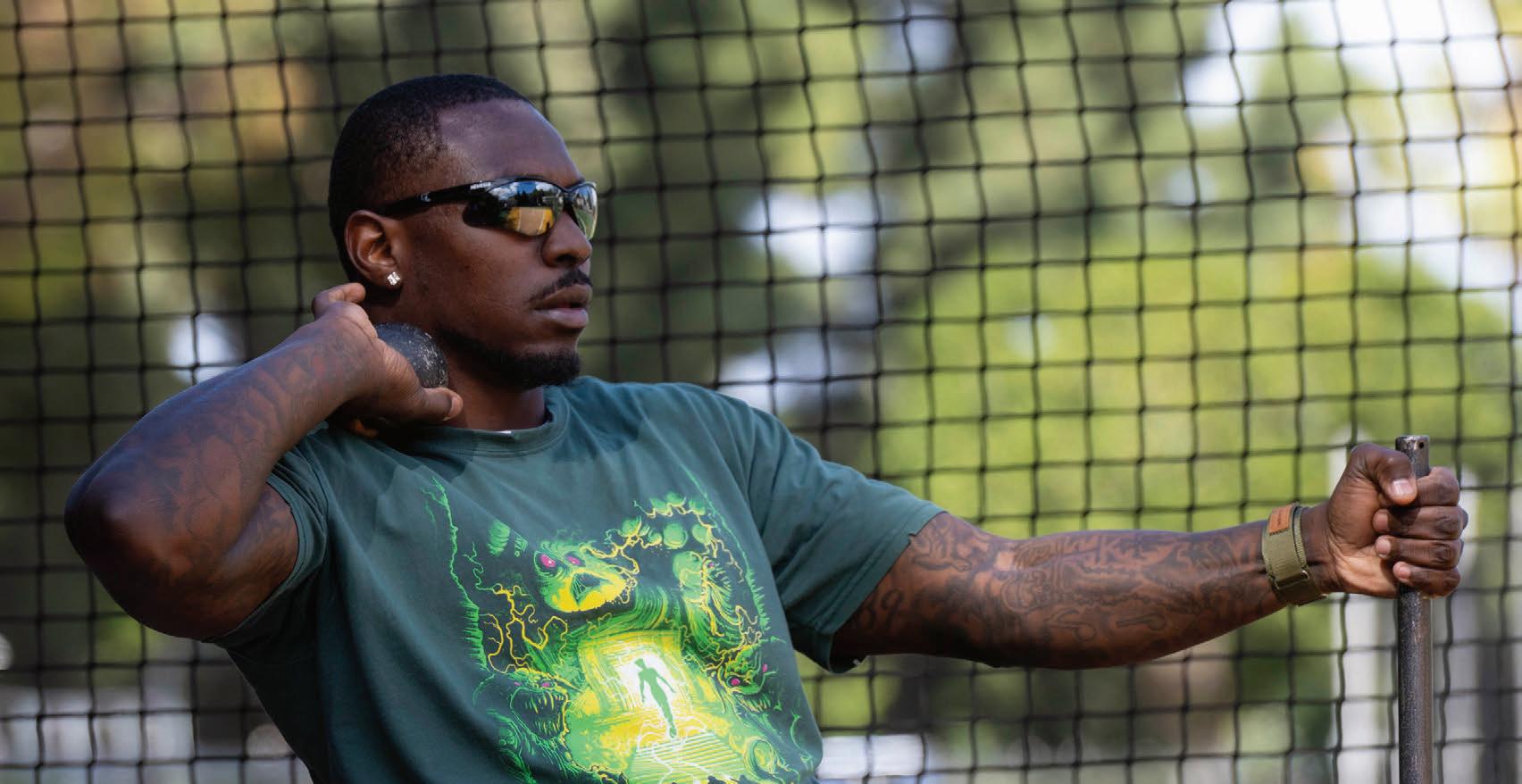
Allen Daniels Jr. leveraged the holding bar, twisted his torso and pushed his arm forward, propelling the cast iron ball into the air. It landed on the soft turf of the field. A young volunteer ran after it and called out the distance. Daniels, sitting on the throwing frame – a tall metal seat strapped to the ground –nodded and stretched his arm. He was still warming up.
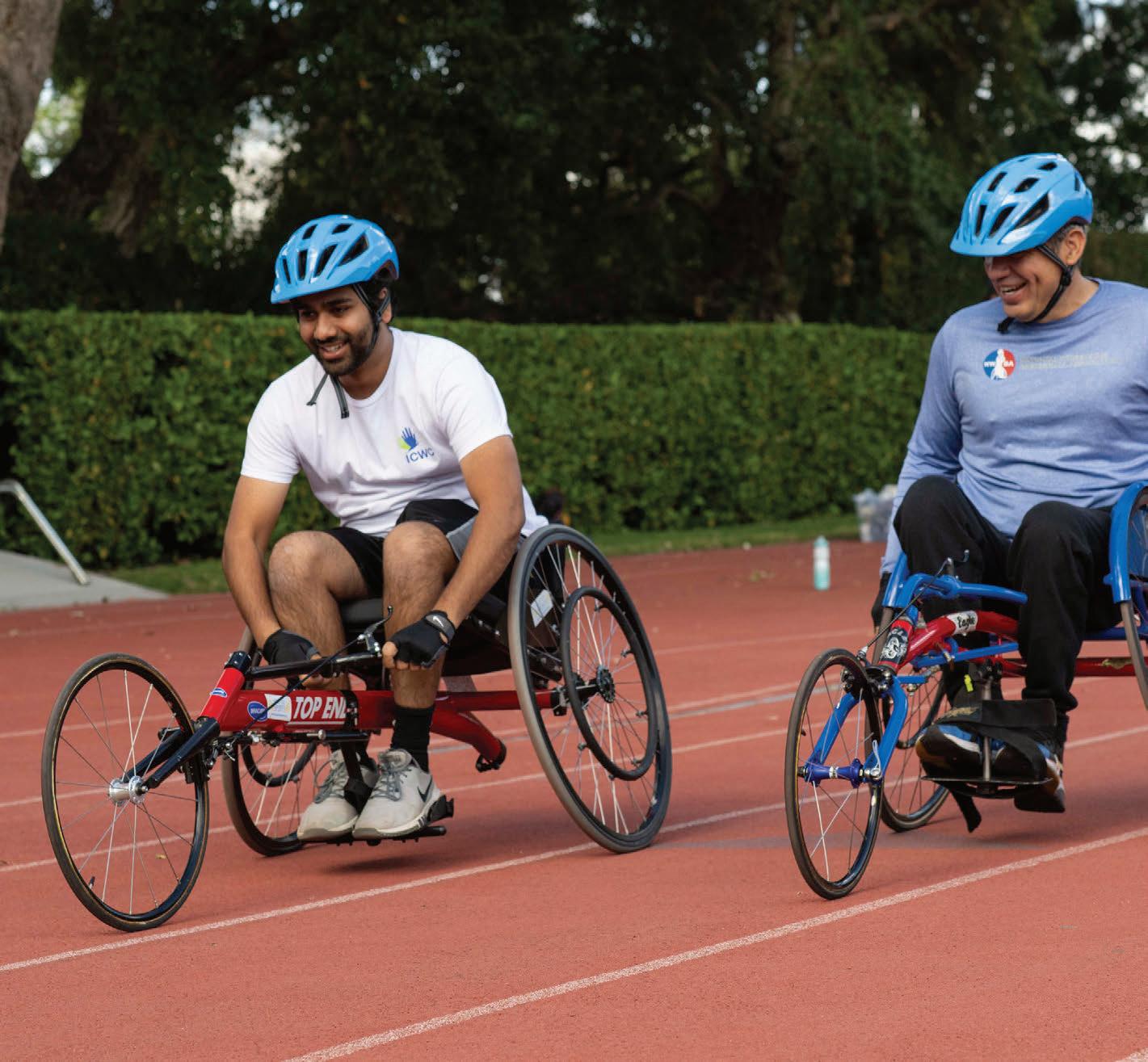
On this chilly March afternoon, Daniels was competing at a track meet held by Angel City Sports, an adaptive sports nonprofit, on Harvard-Westlake Upper School’s campus. On the track next to Daniels’ shot-put zone zipped three wheelchair racers. Their hands alternated between thrusting their wheels forward and adjusting the compensator, which helps them turn and propel at the same time. Coaches pumped the tires of a few bright blue racing wheelchairs, while a handful of volunteers carried around water bottles and rubber javelins.
Angel City Sports intersperses smaller events such as
these with larger competitions and fairs across Los Angeles to promote adaptive sports, athletic activities modified to accommodate people with disabilities. The organization hopes to expand access to adaptive sport opportunities and equipment to Angelenos, which is something the city has historically lacked. Their work is more important than ever because in three years, LA will become the center of the para-athletic world.
With the 2028 Paralympic Games coming to LA, para-athletes, activists and officials are rushing to meet the moment. UCLA, which will host the Paralympic Village and accommodate thousands of athletes with varying mobility and visual disabilities, often struggles to support the needs of its disabled student community. Three years out from the opening ceremony, LA’s accessibility and adaptive sports landscape reveals not just what to expect in 2028 but also how prepared our city and campus really are to support athletes and communities with disabilities.
LA has previously hosted the 1984 Olympic Games, during
which UCLA hosted the Olympic Village, but 2028 will be the first time both the city and the school host Paralympians. The 1984 Paralympics were split between New York City and Stoke Mandeville in the United Kingdom.
LA may now be hosting the 2028 Paralympics, but 10 years ago, Team USA said it had given up looking for Paralympic talent in Southern California, said Clayton Frech, Angel City Sports’ CEO and a UCLA alumnus.
He said one of main obstacles to providing adaptive athletic infrastructure in LA is a lack of public awareness. It is hard to convince many corporations, big donors and foundations – the major sources of funding for many nonprofits – that adaptive sports are a worthwhile pursuit, he said. Additionally, he said schools, parks and recreation programs, and other organizations such as the YMCA or the Boys and Girls Club of America generally don’t do this work at scale.
Much of
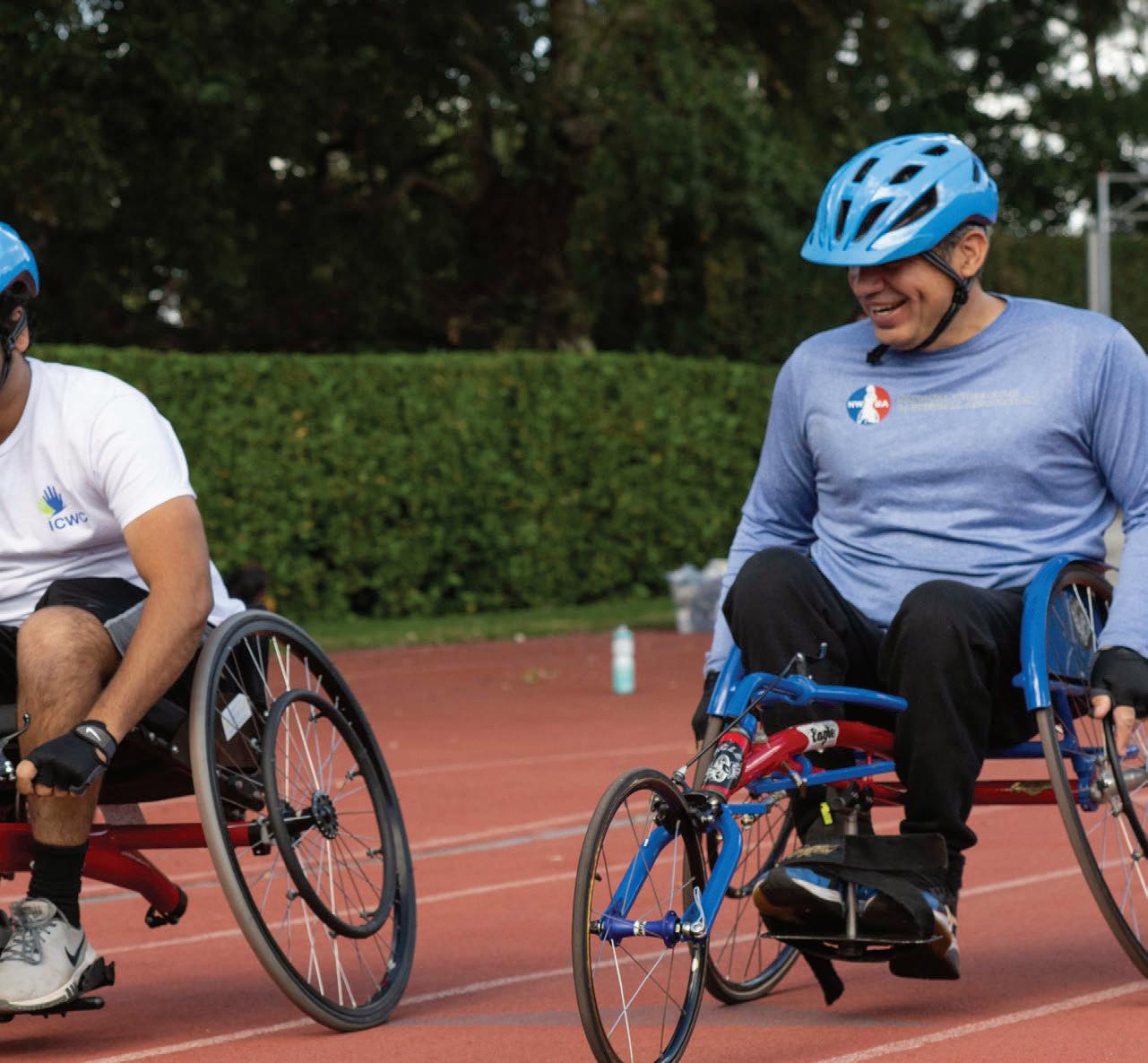
the work is left to small regional nonprofits, said Frech, which is particularly challenging in LA.
“This is one of the best talent pipelines in the world for professional sports,” Frech said. “And yet we’re in the dark ages when it comes to Paralympics.”
Alvin Malave, the program manager for Angel City Sports, said it is a little frustrating that building adaptive sports infrastructure can be so slow in a city with so many resources.
As I spoke with Malave over Zoom, he was driv- ing around a car loaded with adaptive athletic equipment to prepare for the Abilities Expo 2025 – an adaptive sports expo. He occasionally stopped to direct others where to unload their equipment.
“The work that we do is truly life-changing work,” Malave said. “We give kids and adults and veterans a space where they could come and con- nect with their peers and have all this social emotional learning – along with moving and doing exercise and getting fit and living a more active, healthy life.”
that in the past decade, awareness and programs for adaptive athletics have increased – particularly because of social media and the internet – but more work needs to be done.
In 2015, he co-organized the first Angel City Games, held at UCLA, to meet the significant demand for adaptive sports in LA. Now, Angel City Sports facilitates more than 25 sports and 250 clinics per year, according to its website. It has a loaner program to connect people with equipment and three annual competitive games.
But people still have to drive multiple hours on weekends to go to adaptive athletics events, Frech said.
“We’ve got this incredible need. No one’s filling it, except for nonprofits,” Frech said. “The business model of the nonprofits is a real challenge, and so what we have is really inconsistent quality and quantity of programming around the country.”
In the past decade, organizations such as Angel City Sports and Triumph Foundation, which specializes in assisting people with spinal cord injuries or disorders, have improved the landscape of adaptive athletics in Southern California. A $160 million investment from the LA Organizing Committee for the Olympic and Paralympic Games 2028 and the International Olympic Committee led to the creation of the PlayLA Youth & Adaptive Youth Sports Program, which aims to increase sport accessibility ahead of the 2028 Games. The city is no longer the “black hole for Paralympic sport” it was 10 years ago, Frech said.
“We’re in the dark ages when it comes to Paralympics.”
Despite over one in five adults living with a disability in California, Frech said adaptive athletics programs are uncommon and limited in scope across the state. Malave said
As LA’s adaptive athletics organizations expand their reach, concerns have emerged over whether the city has the infrastructure to support the 2028 Paralympics. Many of the buildings in LA are compliant with the Americans with Disabilities Act, but that just means they have the bare minimum accommodations, said Celina Shirazipour, a research consultant with Invictus Games and an assistant professor at the David Gef- fen School of Medicine. She said many facilities in LA and on UCLA’s campus may be unable to accommodate the thousands of visitors the Olympics and Paralympics will bring – even if they are technically compliant.
That influx of visitors may impact other aspects of the city’s infrastructure. Christopher Ikonomou, UCLA alumnus
and disability rights activist, expressed concerns about the capacities of LA’s metro ahead of the influx of visitors over the summer, even though bus ramps and elevators of LA’s metro were generally accessible in his personal experience.
Although LA has not announced the construction of any new facilities for the Olympic and Paralympic competitions, it has received nearly $900 million in federal funding to increase subway and bus transportation throughout the city. One such improvement is a metro line connecting UCLA to downtown, which is expected to be completed by 2027. LA has stated it is aiming to add 2,700 buses to its fleet for the 2028 Games.
“We have an opportunity to be a huge success. We also have an opportunity to be a bit of an embarrassment.”
Many of the training facilities at UCLA are topographically far below where the Paralympians would be living, Malave said. It is very difficult for a wheelchair user to go up the Hill, he said, even if they’re a trained athlete. He and Ikonomou said there is a particularly steep section of Bruin Walk that is circumvented by the elevator by the tennis courts. Ikonomou said it was frequently broken.
With this spotlight and attention on LA for the upcoming games, there is the potential to demonstrate strong support for athletes with disabilities.
“We have an opportunity to be a huge success. We also have an opportunity to be a bit of an embarrassment,” said Sam Silverman, the interim track coach for Angel City Sports.
Those concerns extend to UCLA’s campus. UCLA announced in 2016 that it will host the Paralympic and Olympic villages, essentially providing housing and facilities for all the athletes and any care partners. There is, however, concern about the accessibility of UCLA’s campus among those familiar with the school.
Frech shared he did not anticipate his son Ezra, a Paralympic gold medalist who competes in track and field, would explore much of Westwood or the campus if he competed in the 2028 Paralympics because of the valuable energy it expends to navigate UCLA’s steep terrain.
“That is not an easy campus to get around,” Frech said.
“Their ability to be on a podium or to medal is fractions and fractions of a second, ... where every little ounce of energy is important. I think this campus is actually going to be a real challenge.”
A recent Daily Bruin investigation found that a majority of elevators on the Hill have expired permits, and elevators are frequently out of order. Jennifer Miyaki, a coordinator for the Disabled Student Union who will graduate with her BA and MA in linguistics, said out-of-service elevators are a regular problem.
“I know that the Kerckhoff one is going to go under maintenance. Kerckhoff only has one elevator,” Miyaki said. “They (the administration) had said you can email us if you need accommodations, but I’m thinking, ‘Well, what accommodations could you provide?’”
Ikonomou described UCLA’s campus as notoriously inaccessible. It was not the first time the word “notorious” had come up in my interviews.
Other, more administrative, issues came up. Ikonomou said that when he went to UCLA, the BruinAccess vans were unreliable, and the drivers were not properly trained to support students with disabilities. Another Daily Bruin investigation found that the Bruin Access vans were frequently delayed and unreliable.
Two sources alleged that the UCLA administration has violated the ADA on multiple occasions. In 2021, several student organizations performed a 16-day sit-in at Murphy Hall in the longest continuous protest action since the pandemic and demanded changes such as the hiring of an ADA compliance officer. In April, two students filed a lawsuit alleging that UCLA had violated the ADA through inaccessible campus navigation and incomplete staff training.
Miyaki said it is hard to connect with disability specialists because they are so overworked. There are 11 disability specialists on the staff registry at the Center for Accessible Education, serving approximately 4,000 students with disabilities – with sometimes as few as three specialists on staff during the
past three years, according to a Daily Bruin investigation.
Despite these reservations and concerns for UCLA’s readiness, the arrival of the Paralympics could change the status quo. The money and public pressure the Olympics and Paralympics bring to LA and UCLA could fund the changes that disability activists have been fighting for, Ikonomou said, expressing disappointment that it might take until 2028.
“UCLA talks a lot about being No. 1,” Ikonomou said. “How about we become No. 1 in accessibility for students and letting people excel because we’re giving them all that they need to succeed?”
and the U.S. – what the disabled community can do, Frech said. He said it is important to spread awareness for the Paralympics because 90% of Paralympic tickets are bought by locals.
“They compete in silence with nobody in the stands all year long. Let’s give them one moment where we actually pack the stands and show up for them,” Frech said.
“Let’s give them one moment where we actually pack the stands and show up for them.”
Additionally, many people are excited about UCLA hosting the Paralympic village because of its welcoming community and state-of-the-art athletic facilities, Frech said. UCLA’s Adaptive Recreation Program is a valuable resource for students interested in adaptive sports, Malave said, offering programs like wheelchair basketball. The program partners with other organizations in LA, such as Angel City Sports and the Triumph Foundation.
The 2028 Paralympics could also increase the public’s awareness of adaptive sports and disability activism. Frech said
At the Angel City Sports track meet, Mayra Lopez watched as her 12-yearold son dashed around the track in a racing wheelchair. She said he enjoys Angel City events and keeps asking her when the next one is.
Malave was right behind him, shouting words of encouragement.
Silverman doesn’t get many days off, but when they do, they said they spend them with Angel City Sports. She said working with Angel City was the ideal intersection of her health care career and her love of sports – all while doing fulfilling community work.
“This is my life and my work-life balance,” Silverman said. “I recommend to anyone and everyone – if you’re needing some time to build your faith in humanity, if you want to get out in the community, if you want to volunteer – this is a great opportunity.”
the U.S. is behind other countries when it comes to understanding the event, and he hopes hosting will help it catch up. The broadcast of the 2012 London Paralympics marked a shift in people’s awareness of para-athletics, Shirazipour said. Since then, the U.S. viewership gap between the Olympics and Paralympics has shrunk, all while participation in the Paralympics has grown.
The 2028 Paralympics is a big chance to show the world –
Daniels, the shot put thrower, said he hopes to compete in the 2028 Paralympics. Until then, he said he was going to stay involved with Angel City Sports for the foreseeable future because it was the closest adaptive athletics organization to him.
He said goodbye and headed toward his car. He was facing an hour-and-a-half drive home. But he said it was worth it – and he’s going to keep coming back.
“I’m motivated to work out, meet other people, hear their stories, get the conversations, converse with other people that are in similar situations,” Daniels said. “It’s definitely a blessing.”
E







ditor’s note: This article includes a mention of a rape threat.
Iget asked every once in a while, by peers or supervisors or curious reporters new to the Daily Bruin, what spring 2024 was like. The answer is: There isn’t much I can remember at all.
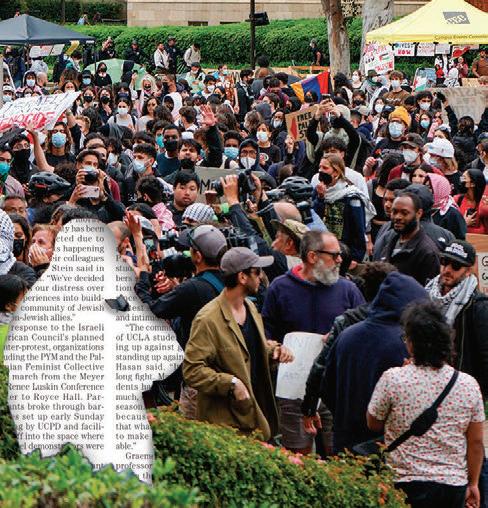
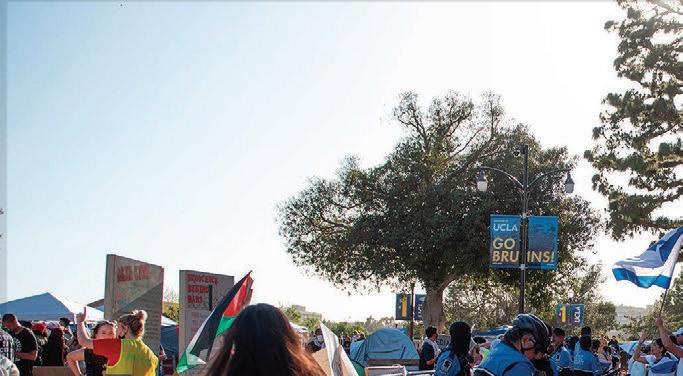
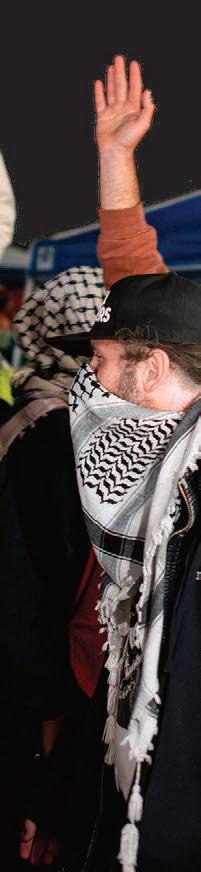
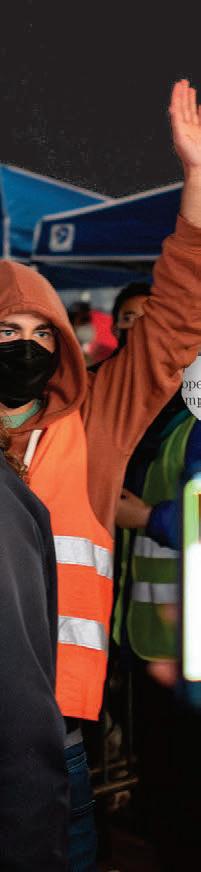
Spring, this year, is the end of my career at The Bruin –and full-time journalism, for now. But just over one year ago was the weeklong Palestine solidarity encampment at UCLA. I remember the encampment in concepts: a 24-hour watch and constantly following rallies with press pass and camera in tow; hearing people yell obscenities and chase my coworkers around. I remember April 30, 2024 – fireworks, tear gas and colleagues assaulted. And May 1 to 2, 2024 – law enforcement officers with less-thanlethal munitions and hundreds of people arrested.
I am a student journalist. I reported on all of these things – even in the moments I could barely breathe –in articles whose details I memorized by heart, down to the exact times at which police arrived or ambulances
left. That was the responsibility I had then and the responsibility I still carry now.
Since then, I have never talked in any real public-facing manner about what happened in those seven days. It seems like an irony in a profession where the job is to keep a record. We run to tell the stories of others but never our own. We cover others’ trauma – but we were there, too.
I am not the first student journalist to experience something traumatic, and I most likely will not be the last. I am also certainly not the only person – between protesters, security and more – who witnessed violence those nights.
But I came to realize, through speaking to other student journalists who covered pro-Palestine encampments across the nation, that almost none of us got to talk about it. We didn’t – and still don’t – have formal spaces to talk through those experiences that range from sun poisoning to burnout and even arrest. Some of us have difficulties
covering protests or hard news at all, while others found more meaning in their work. But all of us are irrevocably different people because of it in ways that we lack the space to acknowledge.
At the end of the day, we were students thrown into the same protests national outlets sent their most seasoned journalists to.
“This isn’t our full-time job. Nor should it be, I think, expected to be. But I did find myself prioritizing this coverage over classwork and probably health,” said Sam Parker, former managing editor at the Daily Wildcat at the University of Arizona. “In the moment, it feels like this is the most important thing. And I’m proud of the coverage we did, and I’m glad I was there for it – and I don’t regret it.”
ones who could report these stories. After an attempted encampment at the University of Southern California on April 24, 2024, that resulted in 93 arrests, the campus was closed to visitors, said Nicholas Corral, an associate managing editor and then-assistant news editor at the Daily Trojan. That meant only reporters from the university’s two student media outlets – one of which was the Daily Trojan – could report what was going on inside the gates, Corral said.
“In the moment, it feels like this is the most important thing. And I’m proud of the coverage we did, and I’m glad I was there for it – and I don’t regret it”
All the student journalists I spoke to shared that mindset – that covering the encampments was some of the most important work they could ever do. Many journalists pursue the career out of a sense of moral obligation, said Lea Didion, a psychologist who is part of the Journalist Trauma Support Network.
For some, the obligation came from the desire to counter a common narrative. Taylor Parise, an alumnus of Santa Monica College who reported at its newspaper, the Corsair, covered the police sweep of the Palestine solidarity encampment at UCLA from the inside – her first time ever covering a major protest. Parise said she wanted to combat misconceptions from mass media outlets that were primarily covering the events from outside the barricades.
Particularly as a then-editor in chief, Mercy Sosa – a rising seventh-year journalism student of California State University, Sacramento –said she felt she had the responsibility to keep going with coverage, despite the pressure of final exams looming.
These obligations, however, had their physical and mental drawbacks.
“When we’re caught up in one of the most important events on campus’s history, it’s hard to take that in when you’ve never done that before and evaluate your mental health,” said Andrew Miller, a managing editor last spring at the Indiana Daily Student at Indiana University Bloomington.

At other schools, student journalists were the only



This intense work and stress across days and sometimes months – in Miller’s case, 100 days – led to issues of newsroom burnout. Burnout occurs when the body’s resources are depleted, which can lead to mental consequences such as fatigue and poor concentration but also physical effects including chronic tension and pain, Didion said.
Significant protest activity took place during Miller’s finals week, but the rising fourth-year history and
















journalism student at IU Bloomington recalled putting a 30-page paper on the back burner for reporting shifts through the night. Daily Trojan reporters – who were also taking finals throughout the height of the protests – had trouble limiting themselves to assigned shifts and schedules, often showing up unscheduled because they wanted to help, said Corral, a rising third-year journalism student at USC. For then-news editor Parker, being the main reporter covering the protests meant she was on alert for a full month – adrenaline so high that it made it difficult to fall asleep.

But burnout is one thing; trauma is another. Witnessing violence – even without directly experiencing physical harm – can lead to trauma, Didion said. Therapist Heather Herz, another member of the Journalist Trauma Support Network, added that journalists, who may be unaware of what a situation might bring, often do not have a choice in witnessing it.
Ninety-five percent of last year’s pro-Palestine encampments did not involve any protester violence, according to a report from Princeton University’s Bridging Divides Initiative. But violence on the part of police did occur. Law enforcement was involved in around 260 demonstrations and detained more than 3,000 people, employing less-than-lethal force in at least 24 schools –including UCLA – and allegedly deploying snipers at five, according to the same report.
However, such “less-than-lethal” force, which according to the United States Department of Justice can include batons and tasers, has far from negligible effects – and can potentially be lethal if improperly deployed, medical experts said.
Journalists – by virtue of being there – also had to contend with violence, even if they were not the intended targets. Parker, though not hit, faced police indiscriminately firing tear gas and rubber bullets. Dilan Gohill, the Stanford Daily’s then-student activism beat reporter, was arrested and zip-tied alongside a dozen pro-Palestine protesters who blockaded themselves in the university president’s office.
Parker, who is also a recent graduate of the University of Arizona, said she had never seen so many police before. Officers told all press members they could be arrested if they crossed a boundary, but Parker said she felt compelled to report from as close as she could – meaning
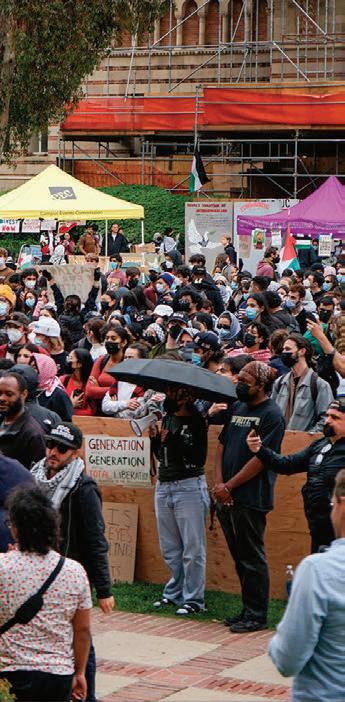

“When we’re caught up in one of the most important events on campus’s history, it’s hard to take that in when you’ve never done that before and evaluate your mental health”
her team had to decide if it was willing to risk arrest.
Parise’s team decided it was.
“We had established we wanted to stay until the very end,” Parise said. “And it was terrifying.”
In the immediate aftermath, Parise recalled much of it was about getting the work done and the article out. After the work was done, the exhaustion kicked in.
I remember sleeping for no more than three hours after the police sweep. One of my fellow editors was asleep for almost a full day. But it went significantly further than that for Gohill. After spending 15 hours in jail without food or water while being harassed and threatened with rape, he learned he had been temporarily banned from campus. He said he was unable to return to his dorm and had all of his belongings from that day confiscated.
Much of those first two weeks after the arrest are absent in his memory, he said. His best friend from home had come to visit but had arrived the day of his arrest, and when they went out to lunch later on, Gohill – a secondyear undeclared student at Stanford who describes himself as normally very lively – said he was “a shell of a person.”
“It’s (the arrest) at the forefront of your mind, always,” he said. “I was constantly thinking about it. I was constantly associating things with it.”
The question of mental health eventually came up in
the Daily Bruin, too. We had a session with a professional from UCLA Counseling and Psychological Services, but though they tried, I left the hour feeling even more lost.
And after that, there was nothing – no meetings, no talk. In the worst moments, I wondered if it was something unique to our paper or some internal fault. But all of the student journalists I interviewed said they never had formal spaces to collectively process. Some had meetings about what they learned professionally, while for others it came up in the occasional one-on-one conversation – but never as a full staff. Sosa said an ideal space would include someone more experienced in journalists’ mental health to guide the conversation; Corral and Gohill both said they eventually sought out professional help.
But journalists can be resistant or unaccustomed to the idea of therapy – being asked questions instead of asking them, Herz said. Young people, additionally, are accustomed to the idea of having to just deal with things, she added.
constantly associating things with it.”
of noise led me to almost black out. Parker said she felt overwhelmed while covering a campaign rally for thencandidate Donald Trump. Corral chose to take a total break from news coverage, shifting to copy editing instead.
The question of mental health eventually came up in the Daily Bruin, too. We had a session with a professional from UCLA Counseling and Psychological Services, but though they tried, I left the hour feeling even more lost.
“It was just too much, too serious,” Corral said. “I wanted something more processed.”
“By telling stories about ourselves, we recognize the issues that are widespread in journalism”
Another obstacle to asking for help might be a culture of perceived shame around having trauma, Didion said. She added that even people who mean well might make comments that minimize others’ experiences.
“It could either be directly like, ‘Why aren’t you over this yet?’ Or, ‘So and so also reported on this, and they seem fine,’ or, ‘Oh yeah, I got through that, and I didn’t need meds,’” Didion said. “(The) ‘pull yourself up by your bootstraps’ sort of mentality that is so rampant in this culture just causes most people to feel ashamed and isolated and small.”
While Corral didn’t feel there was necessarily a stigma in his newsroom against talking, he said there was the attitude that there was no need to go through details. Particularly in a smaller newsroom, Sosa said, reporters had conversations about coverage but never about the emotional aspects of what they had seen.
Not everyone has a safe enough space to talk, Didion acknowledged, but she added that not talking can have long-term effects on emotional, memory and physiological systems.
“Something might happen, and someone has a difficult time. And it persists, or it gets worse,” Herz said. “Those are the folks who really need it to be addressed.”
I may not be qualified to evaluate if issues persisted for me or not, but I know I am certainly not the person I was a year ago. Neither is the Daily Bruin newsroom the same newsroom. Miller, who was most recently the Indiana Daily Student’s news editor, said he feels the staff at his paper has grown closer because of those shared experiences. I think I’d say the same, too.
All of us are also different journalists. I spent months not looking at any other outlets’ coverage of protests, and the first time I covered another one myself, the sheer level
And after that, there was nothing – no meetings, no talk. In the worst moments, I wondered if it was something unique to our paper or some internal fault. But all of the student journalists I interviewed said they never had formal spaces to collectively process. Some had meetings about what they learned professionally, while for others it came up in the occasional one-on-one conversation – but never as a full staff. Sosa said an ideal space would include someone more experienced in journalists’ mental health to guide the conversation; Corral and Gohill both said they eventually sought out professional help.
Parise, on the other hand – who is now a rising sixth-year journalism student at CSU Northridge and a reporter at its newspaper, the Daily Sundial – said she became significantly more interested in understanding campus climates and covering protests. She and her team, despite now all being at different institutions, send each other tips about upcoming protests. While they have talked about their experiences at UCLA she conceded that they don’t often talk about the emotional aspects of it.
“It’s possible I don’t need to process it, and it’s possible that I never will process it,” Parise said. “What it did for me, as I look back on it, and I’m like – now I feel a lot more confident that I’m capable of anything.”
But journalists can be resistant or unaccustomed to the idea of therapy –being asked questions instead of asking them, Herz said. Young people, additionally, are accustomed to the idea of having to just deal with things, she added.
Both Didion and Herz said they use specific forms of therapy – such as eye movement desensitization and reprocessing – to help journalists work through these memories. Didion also said she encourages people to improve preemptive mental health breaks by fully unplugging.
Another obstacle to asking for help might be a culture of perceived shame around having trauma, Didion said. She added that even people who mean well might make comments that minimize others’ experiences.
“It could either be directly like, ‘Why aren’t you over this yet?’ Or, ‘So and so also reported on this, and they seem fine,’ or, ‘Oh yeah, I got through that, and I didn’t need meds,’” Didion said. “(The) ‘pull yourself up by your bootstraps’ sort of mentality that is so rampant in this culture ... causes most people to feel ashamed and isolated and small.”
But some of these issues of burnout and mental health, she added, are institutional ones. Didion said people in positions of power must talk about the help they received and how it benefited them to create a culture where mental health care is normalized.
I embarked on this story in an attempt to open those kinds of conversations. People have certainly tried to report on student journalists already – Parise, who was interviewed by the Los Angeles Times, said it was initially uncomfortable to tell her own story instead of someone else’s. Gohill, who is now the Stanford Daily’s campus life desk editor, also found it difficult to suddenly be in the public eye.
While Corral didn’t feel there was necessarily a stigma in his newsroom against talking, he said there was the attitude that there was no need to go through details. Particularly in a smaller newsroom, Sosa said, reporters had conversations about coverage but never about the emotional aspects of what they had seen.
Not everyone has a safe enough space to talk, Didion acknowledged, but she added that not talking can have long-term effects on emotional, memory and physiological systems.
But perhaps, Corral said, journalists have a responsibility to advocate for themselves in the ways they know how: telling stories.
“Something might happen, and someone has a difficult time. And it persists, or it gets worse,” Herz said. “Those are the folks who really need it to be addressed.”
“By telling stories about ourselves, we recognize the issues that are widespread in journalism,” Corral said. “Having a reporter who’s able to talk about what they saw in a somewhat emotional sense can have a meaningful impact on what people understand about the situation.”
I may not be qualified to evaluate if issues persisted for me or not, but I know I am certainly not the person I was a year ago. Neither is the Daily Bruin newsroom the same
Story or no story, there are things we have learned – whether that is to keep a go bag or

to be more aware of our surroundings. We know to write phone numbers on reporters’ arms in the event of arrest. We’ve bought press vests and gas masks to prepare for the worst.
If there’s anything I have learned, it’s – as Parker noted – that we, too, are allowed to have emotions about the very emotional things we cover.
“The onus of all of this coverage – and these major world events – does not rest on the shoulders of one student journalist,” she said. “You are allowed to take a break, and the world will not suffer because you chose to.”
I don’t think I ever took a proper break. I began this story being told by some people that I should write it and others that I shouldn’t. I thought I was ready – and then I opened images of the protests, and I began to cry.
Perhaps I haven’t processed much, if any, of it. But talking to each other, even through the confined box of a 45-minute Zoom meeting, might have been the start. We say part of our job is to comfort the afflicted, and sometimes, that’s
ourselves. That work starts before the byline – and most importantly, beyond it.
To recognize that is a matter, then, of institutional change. To the next student journalists: We are taught to hold power to account. I hope we can begin from the inside.
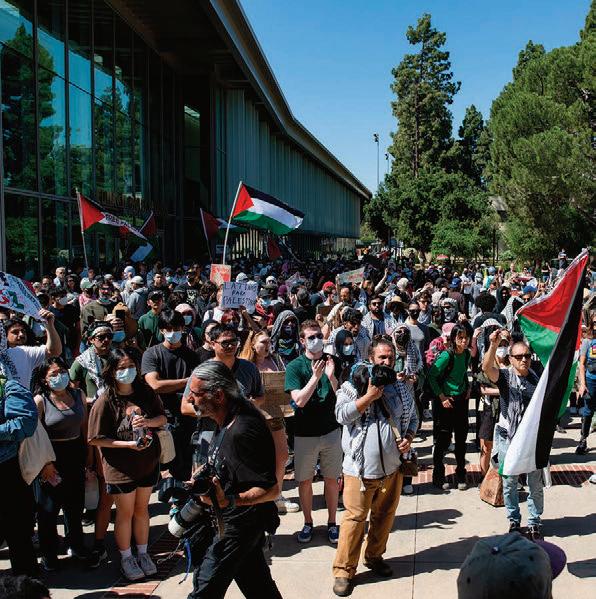
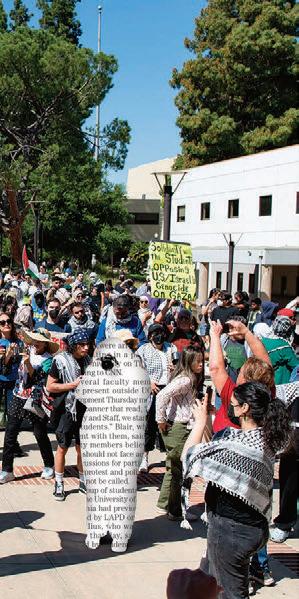
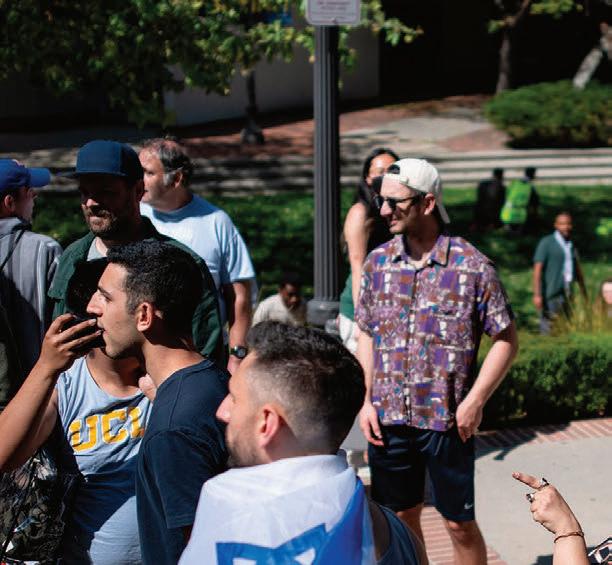
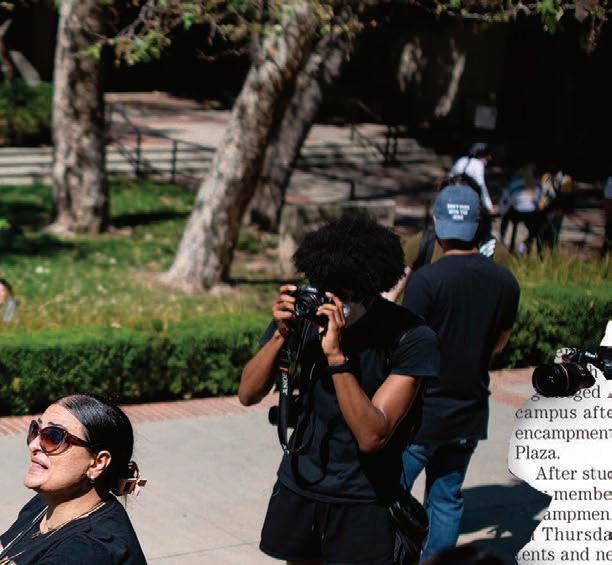


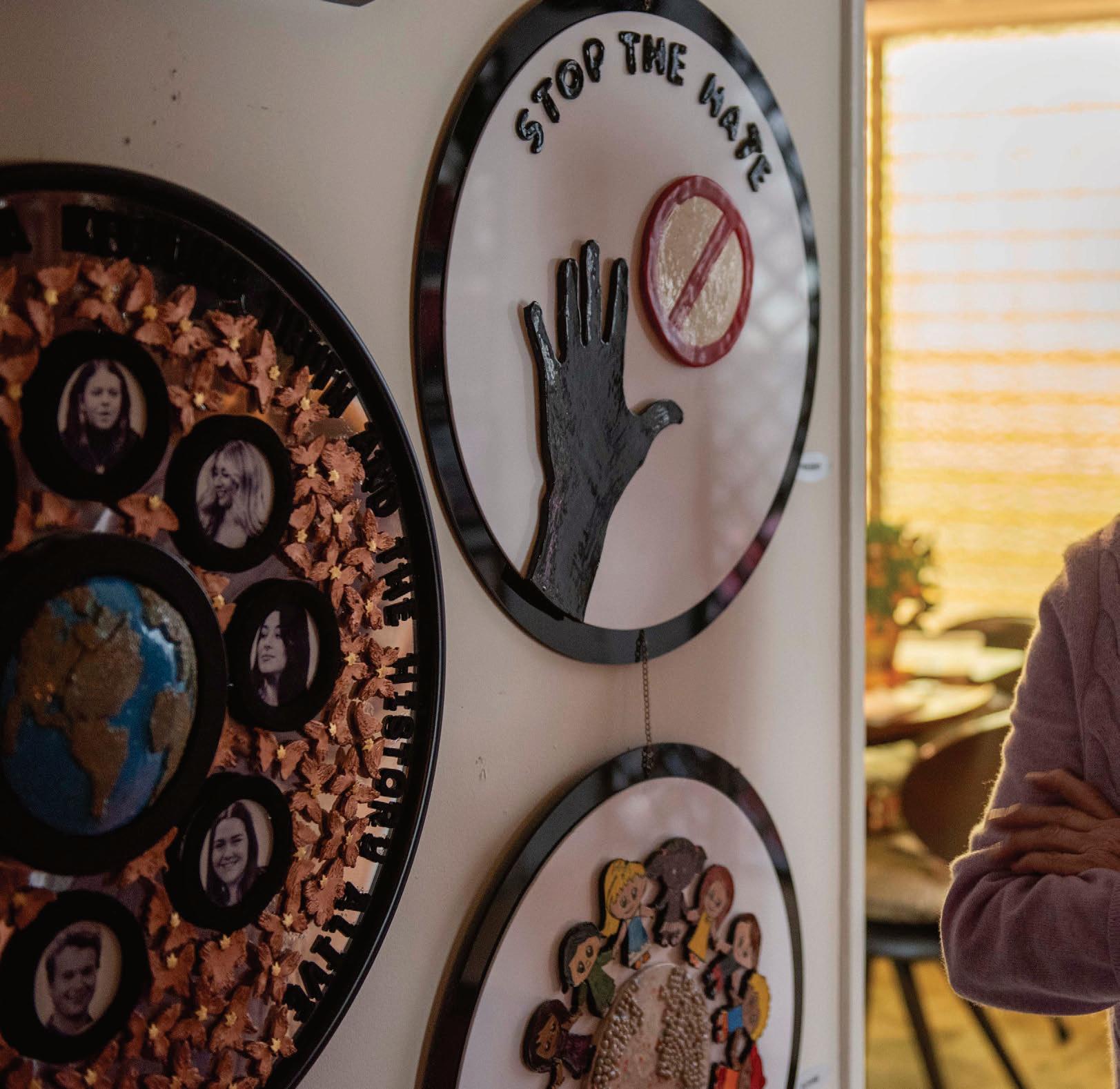
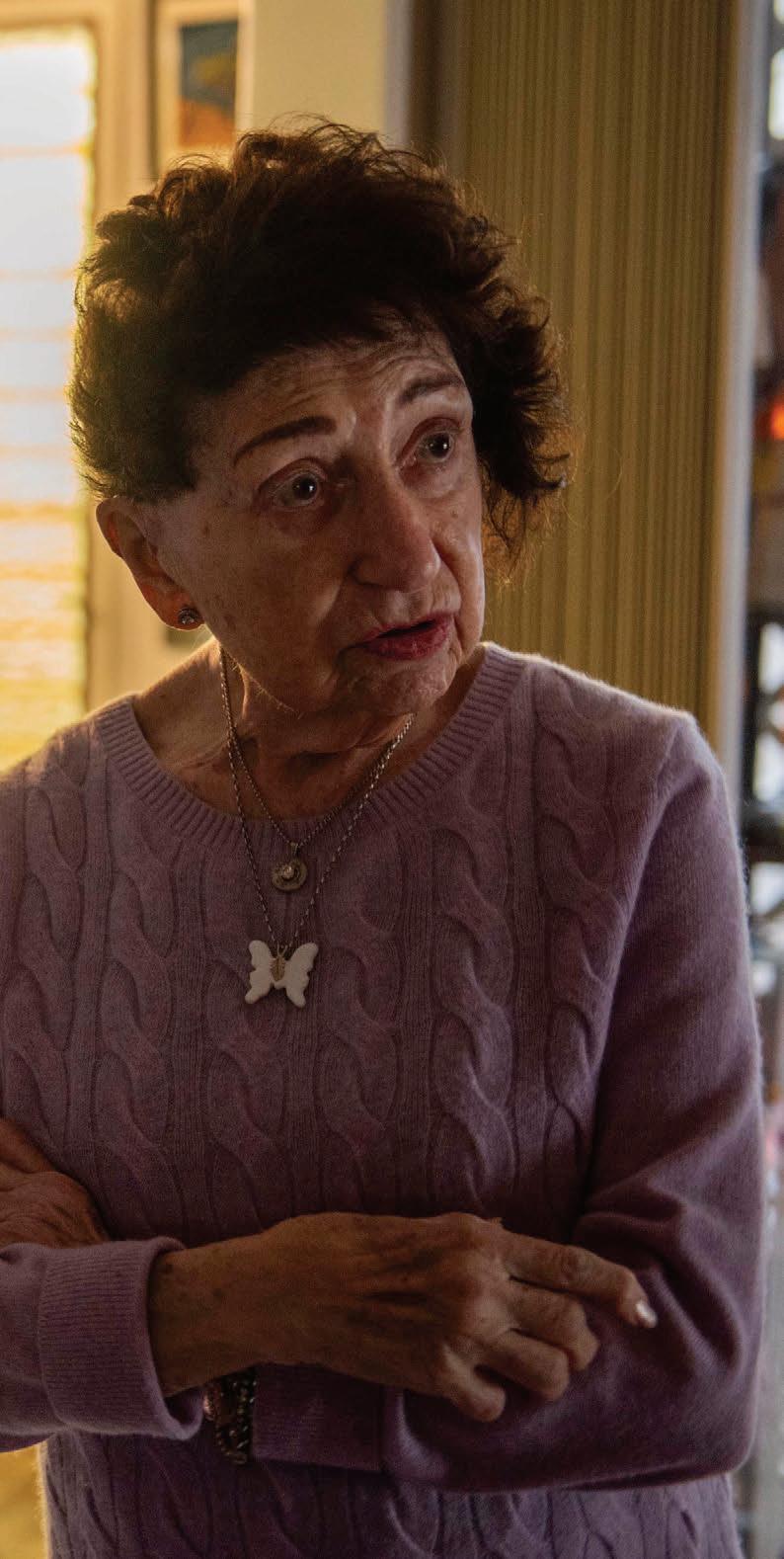
“The truth doesn’t change.
Harry Davids brought a hefty binder to each of our meetings. He would pull out documents one by one, such as pictures of his mother, his mother’s home and his family’s department store in Amsterdam. He also shared photos of apartments and towns across the Netherlands where he hid from 1942 until the end of World War II – separated from his birth family and housed by the Dutch Resistance.
Davids described how a neighbor, suspicious that Davids’ host family was part of the Dutch Resistance, allegedly alerted the Schutzstaffel, or SS, the elite guard of the Nazi regime. When the SS arrived to investigate the family, they interrogated every apartment resident and took everyone away. But the family’s niece happened to be visiting that day – meaning there was not enough room in their car. She was left behind –along with Davids – and told to stay put.
Members of the Dutch Resistance, a network dedicated to rescuing Jewish children, witnessed the investigation and rescued Davids – tying up the niece and instructing her to tell the SS that someone had overpowered her. Davids was moved to Dokkum, a town in northern Friesland, where another family cared for him from the brink of deathly illness.
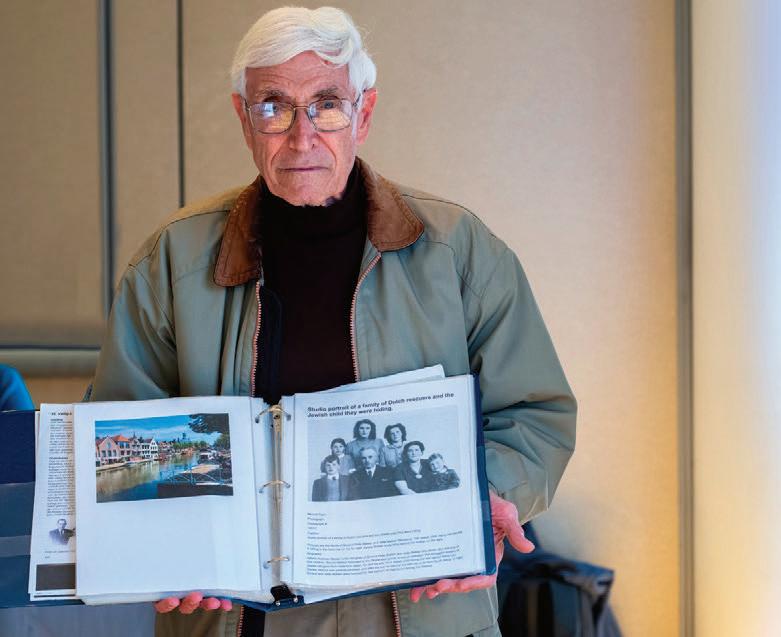
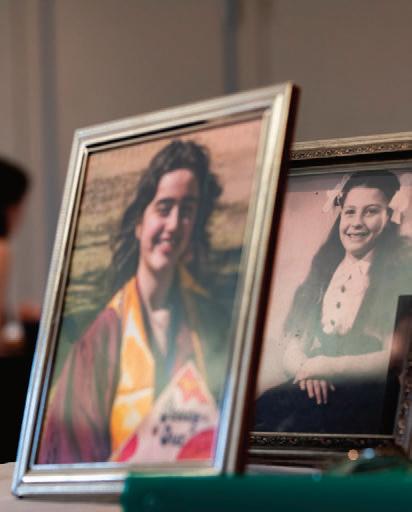
Born in 1942, Davids was only 2 months old when he was separated from his parents and taken to live with his first hiding family. He has pieced this history together through documents and now shares his story with students like me. Sitting across the table from Davids, looking him in the eye, and hearing his every stutter and inflection while recounting how he was saved was an experience I will never forget.
When I first joined Bearing Witness two years ago, I expected to hear stories set in the past. I did not expect to hear how survivors continue to face denial and a widespread lack of awareness about the Holocaust to this day.
“There’s a lot of denial, and I think we have to counteract to that,” said Lya Frank, a Holocaust survivor. “There are still a few survivors, and we’re the only ones that can now tell them what personally happened to us.”
Since 2007, Bearing Witness has invited Holocaust survivors to Hillel at UCLA every winter quarter to engage in conversation with students. The organization encourages intergenerational dialogue and the preservation of survivors’ testimonies. As the Holocaust becomes more distant and the last generation of survivors ages, some have turned to new technologies and methods to meet an urgent need to preserve their memories.
“There are still a few survivors, and we’re the only ones that can now tell them what personally happened to us.”

Participants can join Bearing Witness either by signing up through the self-titled organization or the UCLA course German 19: “Eyewitness Testimony of Holocaust Survivors.” In the course, students meet with Holocaust survivors every other week, with alternate weeks offering learning opportunities related to Holocaust education such as guest speakers, discussions about memory and history and a trip to the Holocaust Museum LA.

Todd Presner, a professor and chair of the Department of European Languages and Transcultural Studies at UCLA, has been involved in the Bearing Witness program for the past 15 years. He created the Fiat Lux course around the existing Bearing Witness program, believing it would be a valuable opportunity for students to engage with Holocaust survivors and an opportunity for students studying the Holocaust to receive additional guidance and historical context.
The class offers 20 spots for students, connecting mainly first-years with a handful of Holocaust survivors.
“Some of your first-year classes are going to be large lectures. This is anything but that,” Presner said. “This is the most small, intimate experience you could imagine, right? Sitting around a table, talking to a survivor over lunch.”
On my first day of the program last year, I stepped into the spacious third-floor room at Hillel, filled with tables and lively conversation, and nervously scanned the room looking for my assigned Holocaust survivor. When I sat down, Carol immediately introduced herself to me and began asking questions to get to know our group of five students. Her warmth immediately put me at ease, and our group began learning from her even before our first session officially started.
Although the Holocaust may at times feel general and even abstract, it becomes more concrete when speaking to individual survivors, Presner said.
At the same time, there’s a kind of reassurance that students care to listen to what the survivors have to say –reassurance that history will not be forgotten.

“For survivors, I think that’s really something that maybe brings a certain amount of peace to something that’s just profoundly a deeply, deeply traumatizing event that they’ve had to live their entire life with,” Presner said.
Just as students look forward to developing meaningful relationships with the survivors, the survivors look forward to getting to know the students throughout the program. For the survivors, their legacy often rests in how their stories and memories about the history of the Holocaust will go forward when they’re no longer here to “bear witness.”
Frank is one of the handful of Holocaust survivors currently in Bearing Witness. She said she joined because she was interested in the opportunity to share her experiences with UCLA students, who can then share it with their family and friends.
“We get all kinds of questions, depending on what they (students) hear and what they think and what they feel. For the students, I hope they listen,” Frank said. “Some of them even make notes, and I hope they share what they’ve heard.”
Gabriella Karin, a Holocaust survivor from Czechoslovakia, noted how the program’s unique structure – how students meet with Holocaust survivors multiple times –allows participants to build deeper connections.
“It’s a small group, and the students are really interested,” Karin said. “When I am speaking in the museum, I am speaking an hour, people ask questions, I give answers, and I don’t see them anymore. During Bearing Witness, I see them every two weeks, four times. So it’s different – you get much closer to people.”
By centering the voices of survivors, Bearing Witness aims to make a vast historical tragedy more tangible.
The Holocaust impacted tens of millions of people affected by displacement from many different countries. And yet, in Bearing Witness, this story is told by a single individual, Presner said.
Bearing Witness’ board members similarly explained how this program personalizes the often detached way students learn about the Holocaust. Instead of learning about the Holocaust through textbooks, the Bearing Witness program allows students to interact face-to-face with Holocaust survivors.
“What the Nazis wanted to do was actually remove the humanity out of the Jewish people,” said Rafaela Levy, a fourth-year economics student and the current president of Bearing Witness. “And I think this program, in a way, puts some of the humanity back into the stories.”
For Sophia Toubian, an information studies doctoral student and graduate student researcher on the AI and Cultural Heritage Research Team, attending a Bearing Witness event at Hillel allowed her to reconnect to her Jewish heritage by engaging with survivors. Having grown up hearing about the Holocaust so frequently, Toubian said that she began to feel desensitized to her ancestors and their history.
Listening to Holocaust survivors share their stories faceto-face, rather than through watching a video or reading an article, reminded her of the people behind the historical events she had learned about.
“Your parents talk about something in a very historicized way, as opposed to really paying attention to the fact that it’s real people, ... human beings who exist outside of this lens of ‘Holocaust survivor,’” Toubian said.
Liza Shlimovich, a fourth-year political science student, felt a similar connection to her personal background. She said the reason she knows her family’s history is because of stories from her grandfather.
“The way that these stories are kept alive is by word of mouth and by telling your family, and your family tells their friends,” Shlimovich said. “I recognize the importance of survivor testimony and sharing it with others and keeping these stories alive.”
In-person testimony is just one form Holocaust testimony can take, with some survivors choosing to document their experiences through art.
In Karin’s home, every hallway, wall and shelf is filled with the sculptures that she has made since retirement, many of which are handcrafted in the backyard artist’s studio built by her husband. Butterflies, Karin’s favorite symbol, appear throughout her art, representing a journey of transformation and hope for the future.
When I arrived for the interview, she gave us an hourlong tour of her home, which she said houses the largest personal collection of sculptures about the Holocaust in the world. She thoughtfully described the meaning and personal experiences behind each piece. One piece, displayed in the hallway leading to her bedroom, shows a face crying four large tears. Within each tear, Karin illustrates a different part of her experience during the Holocaust. In one tear, Karin is hiding among the nuns in a covenant. In another, an SS officer is pulling her by the hair before she is saved by her uncle.
At first, she simply wanted to document the past. But after witnessing the rise of Holocaust denial – especially learning about the London trial over the book “Denying the Holocaust: The Growing Assault on Truth and Memory” – the
focus of her art changed.
“I find it’s important to tell the truth, and then you always say the same thing. The truth doesn’t change,” Karin said.
Some survivors have faced Holocaust denial in their everyday lives. When Carol Roth was walking on the beach with her husband, she saw a blimp that said, “The Holocaust never happened.” Roth, a Holocaust survivor from Belgium, was on the verge of tears recalling this moment, questioning how anyone could deny something that she, and millions of other people, experienced.
According to a 2024 study by the Conference on Jewish Material Claims Against Germany, an estimated 38,400 Holocaust survivors live in the United States, representing approximately 16% of the global Holocaust survivor population. As time passes, there will be fewer and fewer survivors, and the current form of Bearing Witness will soon not be available to future generations.
With the future of testimony at a turning point, Bearing Witness and other Holocaust remembrance organizations are embracing new approaches to preservation and education.
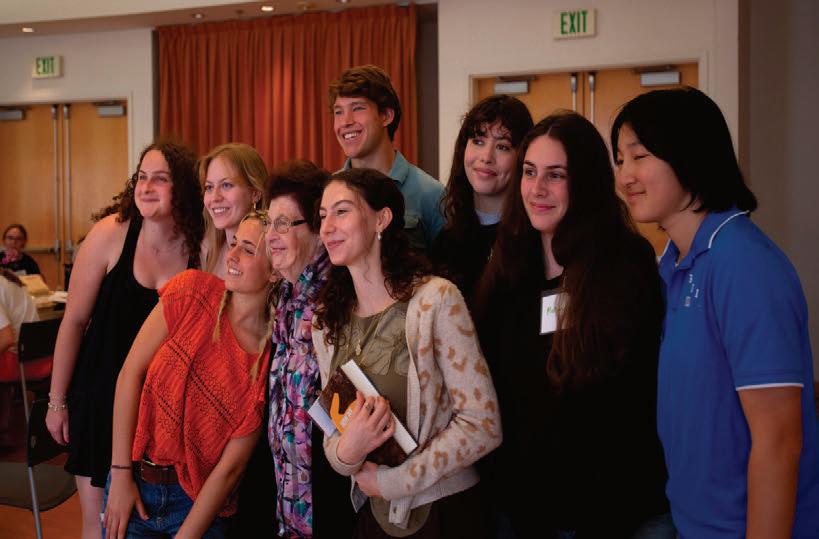
Presner is the director of the UCLA Holocaust Research Lab, which is currently examining data from the U.S. Holocaust Memorial Museum to identify the most common questions people ask that direct them to the museum’s online encyclopedia. It then looks at how the encyclopedia’s answers compare to answers from artificial intelligence models such as ChatGPT, looking for discrepancies in areas such as accuracy and readability.
For Presner, this approach raises ethical questions, as the technology can fabricate new answers to fill in missing information. There are now multiple AI technologies that source publicly available information to allow people to “speak” to a historical figure, including Anne Frank. He questions whether it has already gone too far by allowing AI to extrapolate answers from a set of training data, such as a set of Holocaust testimonies, or to make up new answers entirely.
“What kind of histories are OK to fabulate a little bit, and what kind of histories do we need to keep intact?” Toubian said.
Even with these advanced technological capabilities, the experience of communicating with a digital representation of a survivor pales in comparison to the personal connections you build in Bearing Witness, said Hesed Finkelman, a first-year cognitive science student.
“When you’re viewing something through a screen, you don’t feel that same emotion, and you don’t feel that same connection that you would with a real-life survivor sitting in front of you,” Finkelman said. “When I did Bearing Witness,
“I think this program, in a way, puts some of the humanity back into the stories.”
it was moving being able to sit in front of the survivor and have them talk to you and just see their mannerisms. ... You see them as a whole person.”
In this increasingly digital paradigm, the Bearing Witness board remains committed to providing access to in-person survivor testimonies.
During the reflection sessions this year, the program invited children and grandchildren of Holocaust survivors to share about their families’ experiences during the Holocaust and their personal experiences growing up as the descendants of survivors. The children and grandchildren also discussed the trauma and PTSD they carry, passed on from their relatives.
“I was so touched by how deeply connected the grandchildren were to their grandparents’ Holocaust survivor testimonies,” said Shlimovich. “As heartbreaking as it is, we have very few years left with them, and once they do eventually pass away, we have their children and grandchildren to honor their stories.”
Others have turned to technology to preserve Holocaust testimony. One initiative, called Dimensions in Testimony, records a Holocaust survivor answering as many as 2,000 questions in a studio with over 100 cameras to create an interactive, holographic-like reproduction. When the hologram is displayed, the device uses a machine learning algorithm to play appropriate clips in response to user questions.
“It makes the testimonies accessible in new ways,” Presner said. “Having them locked away in an archive is never a good thing. You want to make them accessible and used in new settings, for students, for the general public and sometimes through possibly AI-driven tools.”
The leaders of Bearing Witness also pride themselves on the program’s ability to unite many different aspects of campus. This past year, over 22% of attendees in Bearing Witness were non-Jewish. The program also received an increased number of students who applied to be on the leadership board for next school year.
“It shows the sense of urgency. The program is ... shifting,” Levy said. “I read all the applications, and a lot of them said, ‘I want to give back. I want others to have the experience that I had.’”
I felt that same urgency after going through the program. Since most of the Holocaust survivors alive today were young children or babies during the Holocaust, each passing year brings the world closer to losing firsthand testimonies. As we witness the last generation of Holocaust survivors, the preservation of memory becomes even more important.
Through Bearing Witness, I learned not only about the survivor’s experiences during the Holocaust but also about their life today and the wisdom they carry forward. Week after week, I was inspired by their bravery, resilience after unimaginable loss and commitment to peace.
Levy explained how once a student learns of the survivor’s experiences during the Holocaust, it is now the student’s responsibility to continue sharing their story.
“I think it’s really our duty,” Levy said. “It’s also a gift.”








Editor’s note: This article contains mentions of eating disorders that may be upsetting for some readers.
“Describe the most significant challenge you have faced and the steps you have taken to overcome this challenge. How has this challenge affected your academic achievement?”

I sat at my desk, pensively staring at the large white space below the UC personal insight question on my computer screen.
Thoughts crammed and collided in my mind. The question, alongside the application’s other three prompts, felt like the deciding factor to my admission or rejection to my top schools. Rather than being greeted with answers, I found myself being confronted with more questions: What challenges in my life helped shape me? What constitutes a challenge in my life? Is “trauma” a challenge? Do I even have trauma to talk about?
Being a transfer student, I have undergone the college application process twice. The personal insight questions stayed mostly the same – aside from one transfer-specific prompt – and so did my challenge to break through the noise of thousands of applicants like me. I needed to stand out with a unique, personalized story.
But as I look back and compare my two application

experiences, I question why I jumped to discussing trauma in my freshman application as a way to get into my applied schools. Maybe it was because I was younger or less mature –or perhaps I believed overcoming a difficult experience would prove how deserving I was of admission.
Regardless of the answer, the recent social discourse around “trauma-dumping,” specifically in the context of college admissions, suggests the feelings and thoughts I had when working on my applications were more common than I expected.
The strategy of discussing trauma in college applications – particularly oversharing it – has garnered increasing attention as students seek new methods of boosting their admission chances. From speaking with students and professionals, I found that trauma-dumping, despite its recent social prominence, may limit academic and personal growth opportunities rather than expand them.
The act of trauma-dumping is commonly understood as oversharing difficult or traumatic experiences to a listener without regarding how the information may affect them. The term rose to prominence in 2021 and has since been used to describe exchanges between friends, romantic partners, co-workers – even strangers. However, it has evolved to become a seemingly viable approach for college applications.

Lauren Ng, an assistant professor of psychology at UCLA, said the word “trauma” has undergone various redefinitions and interpretations away from its traditional meaning. The

“If I don’t disclose certain information, I might be doing myself a disservice.”
American Psychiatric Association’s definition of trauma, she said, emphasizes the experience of threats or injury to an individual that they may have felt or witnessed personally. The definition, however, excludes nuanced experiences of high stress that can be traumatic for individuals facing them, she added.
Though trauma is unique and varied among individuals, Ng said it is more common for people to conceal their experiences than to share them.
“It’s far more common for someone to withhold information ... than it is the reverse, where someone shares maybe too much or shares in an inappropriate way,” Ng said. “I think that can be a tension between what the person feels comfortable with and maybe their beliefs that, ‘If I don’t disclose certain information, I might be doing myself a disservice.’”
At the same time, colleges and universities are becoming more competitive – a trend kickstarted by the COVID-19 pandemic during the 2020-2021 application cycle. According to Forbes, the Common Application, used by over 1,000 schools, reported a 7% increase in college applications this January compared to the same time last year. While the UC system saw a 1% decrease in first-year applicants during the 2025-2026 application cycle, the number of transfer applicants jumped by nearly 2%.
With more applicants, students are pursuing different approaches to be noticed – and that often means turning to deep, personal experiences. Tina Yong, a recent graduate of the University of British Columbia, said she felt expected to share her hardships when initially applying to universities. Because of that expectation, she did not consider other life experiences for her essay and instead defaulted to talking about her personal trauma.
The idea of writing about a traumatic experience for a chance at university admittance, Yong added, was echoed in online websites and admission experts she found as she applied.
“I definitely relied a lot on what I thought other people were writing their college essays about. ... I noted that a lot of them had been writing about their stories as immigrants, as well as other difficult experiences they had in their lives,” Yong said. “The overwhelming advice was to use whatever difficult experience I might have had and make that a centerpiece of my personal statement in order to create
interest and to prove that I was a worthy candidate for the university.”
Vick Garcia, a counseling intern at Orange Coast College, said social media is a source of pressure to overshare in application essays. However, he emphasized that essays are only one part of the application, with other factors also considered.
“People frame, ‘This is the essay that got me into Harvard,’ and not really recognizing that there’s, of course, other components,” he said. “Although the essay is a huge thing –is something, sometimes, that is very memorable for us – it’s
not the all-take-all.”
Alan Tai, a fourth-year student from Monta Vista High School and rising first-year student at Northwestern University, said he and his peers felt they were at a disadvantage if they did not talk about their hardships in their application essays. He believes that as more universities remove their requirements for standardized tests and letters of recommendation, there is increased importance to the essay and pressure on students to make it as impactful as it can be. Oftentimes, that means students turn to sharing difficult experiences to reach application readers as fast and provocatively as possible.
The essay prompts themselves can also induce pressure onto prospective students, said Yvette Martínez-Vu, a graduate school coach and consultant at her company Grad School Femtoring. College applicants, she added, often feel obligated to share information about themselves that they may not be ready to relay or fully consent to revealing.
Applicants also feel they must prove how they have surpassed their hardships, which can be harmful to their understanding of their values and experiences.
She finds that asking about challenges can cause students to feel their stories are not enough if they do not
follow a “rags to riches” trope – especially applicants from underrepresented communities.
“There’s this common trope that comes up, especially for first-gen students, ... to share something about my background that proves that I came from the bottom, and now I’m going to the top.” Martínez-Vu said. “Those are some of the factors that make students feel pressured to, again, overshare information that they absolutely don’t even have to share.”
The pressure to stand out can sometimes lead to inauthenticity in applicants’ essays. Yong said she felt her story of how she immigrated to Canada from China
became transactional after repeated use. The constant repackaging to make her story palatable and sellable diluted the authenticity of her experience – despite it being true. By clinging to her hardship narrative, she delayed her process of self-discovery while at university.
Like Yong, fourth-year psychology student Emi Sakai said she tried to portray herself in her application as capable and persevering after initially writing a response to a UC personal insight question on her eating disorder. However, she ultimately decided not to use the story, concerned it would distort how readers perceived her and undermine her progress in recovery.
Sakai added that peers would ask for her help to create a “sob story” for their applications to gain enough pity for admission into their desired schools. While some application essays may feel artificial to provoke pity, Sakai sympathizes with applicants who feel pressured to overshare and frame a personal struggle to justify their hard work in high school – like she initially did.
“All those pressures – I guess societal pressures – would induce one to overshare because they’re willing to pull any strings to get into the schools,” Sakai said. “And so I do feel bad, in a way, for people who have that pressure of having to get in through oversharing – but I think it’s a very real thing that’s happening and will continue to happen as college gets harder and harder to get into.”
Many applicants who overshare traumatic experiences believe – as I once did – that it increases their chances of college admission. But Eileen Swoboda, managing director and college admissions consultant at her company ThinkYes | College Admissions Consulting, said dumping trauma into application essays actually hurts and hinders college acceptance and admittance ambitions.
Swoboda emphasized that college admission officers seek students who can become a positive, strong member of the community and take advantage of the academic, professional and social opportunities that they offer. She advised that if admission officers believe applicants have not processed the hardships they discuss in their essays, they will not choose those students for admission.
Dorothy Chin, a research psychologist at the Wyatt Center at UCLA, said another consequence of trauma-dumping in college applications is the applicant retraumatizing themselves through their written words. Feeling obligated to relay hardships and, consequently, oversharing such information can make it difficult to reconcile with their traumatic experiences and inhibit an applicant’s personal

“They’re willing to pull any strings to get into the schools.”
growth.
“When you’re doing that, it’s not really an authentic telling, in a way, of your experience in order to achieve some reconciliation with it or growth – a personal growth from it. But it’s for a different purpose,” she said. “It could retraumatize the person by telling it over and over again without, maybe, delving into the authentic experience of it.”
Recent changes around diversity in colleges and universities are influencing students’ decisions to potentially overshare in applications. Programs and policies under diversity, equity and inclusion have been denounced as discriminatory practices by the Trump administration and Republican politicians. And in 2023, the Supreme Court ruled against the use of race as a factor in college admissions, ending racebased affirmative action in higher education institutions across the country.
Garcia said threats to DEI and the dismantling of affirmative action may fuel fear among prospective students around admission and whether sharing difficult hardships on applications remains possible. He believes that applicants from underrepresented communities may hesitate to share their experiences to avoid speculation that their background was the reason they were accepted.
she submitted one about arising challenges from being an older sister and belonging to an immigrant family. Those experiences, she said, better reflected her values and growth as an individual than the trauma she went through in the past.
Sakai added that she would have regretted submitting an essay about her eating disorder and would always wonder if that story was the reason she got accepted into UCLA.
“The essays are really

“I decided to ... go for something that I’m still working on, so that I have space to grow,” she said. “I’m really actually happy for myself that, reading it back, I didn’t write about that (the eating disorder) because I can still resonate with who she was two years ago, and I like that I can see how my mindset and perspective has changed since I submitted it.”
For Tai, he said applying to universities during these recent conversations around diversity had a substantial impact on his essays.
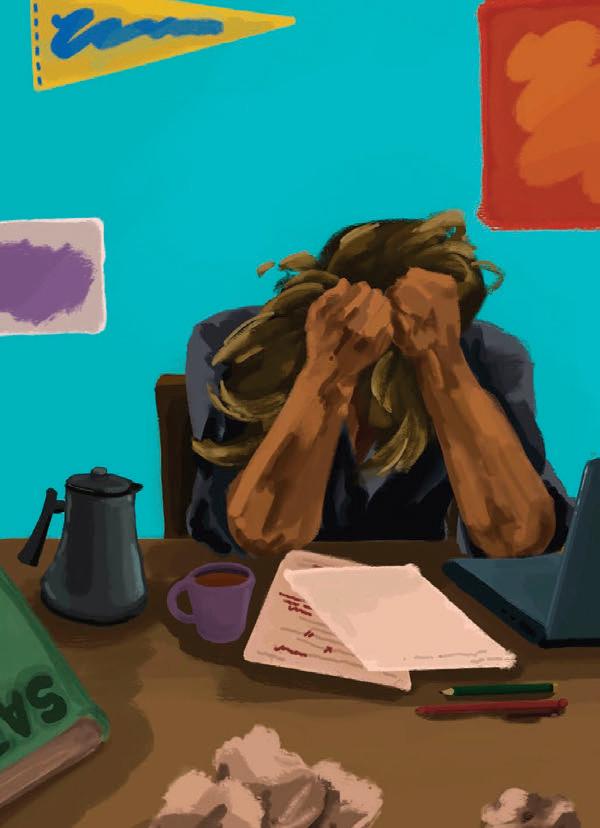
“I come from a very privileged background, living in the Bay Area as an Asian male. Diversity isn’t the first thing that came to my mind when I’m thinking about myself as an applicant, but when writing those essays, it’s something that was really important for me to convey,” Tai said. “The essays are really where you get to show how you stand out and how you’re a diverse applicant.”
From college competitiveness to shifts on diversity, trauma-dumping may seem like the default answer in application essays. However, nontraumatic topics and experiences are worth exploring, Sakai said. Instead of her UC personal insight draft discussing her eating disorder,
As I spoke with application advisors and professionals, they advised students to only share what they are comfortable with telling – and others knowing about them. Swoboda suggests that relaying traumatic experiences should provide context to an applicant’s story – not serve as the overall narrative – and be limited to a small portion of the essay. Garcia advised that students should consider writing about topics that they do not initially believe are worthy as they may find there is merit to those particular stories.
Without knowing it, I had applied the principle discussed in my conversations –focusing on stories that showed reflection and growth – when writing my transfer application. I was willing and proud to share my story of rediscovery after switching majors from biology to English, as it reflected my new interests and the person I was becoming.
Most students will never know what part of their application became the deciding factor for their admission or rejection. But for others like Sakai, it’s enough knowing that the steps and experiences behind their applications are representations of who they are.
“I feel that trauma is not what makes up one person. It could be a part of it, but you’re not necessarily your trauma,” Sakai said.
written and designed by PACO BACALSKI
For most college students, playing video games is a way to relax after a day of hard work.
But when Cory Poon came back to his apartment in Levering Terrace and sat down at his computer, his job was just getting started.
From 2020 to 2024, the fourth-year cognitive science student was perhaps better known as the Twitch streamer Reversah. Primarily streaming himself playing the first-person shooter “Valorant,” Poon amassed a fanbase of 20,000 followers – placing him in the upper echelons of creators on the platform.
As Reversah, Poon lived a life alien to most UCLA students. He posted daily across numerous platforms such as Twitch, YouTube and TikTok. He participated in a contest with a $1 million prize. He stayed at a Beverly Hills mansion and networked with some of the biggest names in streaming – people with hundreds of thousands, if not millions, of followers. He had managers and sold

illustrated by HELEN JUWON PARK
merchandise. He even took a gap year between his sophomore and junior years to focus on his career.
“Because classes were all online, I was like, ‘I really want a college experience. Let’s just take college back up later,’” Poon said. “During this time period, I really took time to develop my channel and my personality online.”
Poon’s experiences as a student streamer may be uncommon, but the fact that he was a streamer is not. There are more than 7 million active streamers on Twitch – several UCLA students among them. Whether they stream out of passion or a desire for money or fame streaming demands undiluted time and attention like no other form of content creation, making it all the more challenging for busy college students.
Twitch, the most popular streaming platform, is perhaps best described as an amalgamation of YouTube and broadcast TV. It’s a social platform centered on independent creators recording themselves doing any
number of online or in-person activities. But the twist is that it’s all 100% live. There are no flashy cuts, no corrected errors – just pure, uncut footage. Like other social media platforms, most people who use Twitch don’t make it big – but a select few manage to do so.
Founded in 2011, Twitch has since grown into one of the largest websites on the internet. It provides ample tools for its more than 200 million monthly users to interact with their favorite personalities, including the chat – a live group text between the streamer and their viewers –and donations in the form of various currencies such as bits and subscriptions.
The service’s most explosive growth occurred in 2020 during the pandemic because of people seeking companionship during quarantine, said Rachel Kowert, a visiting researcher at the University of Cambridge who studies digital games.
“This sense of loneliness decreased more when they were watching Twitch versus watching YouTube,” Kowert said. “There was something different about that dynamic.”
This was certainly the case for Poon, who started his channel in July 2020. Inspired by the popular streamer Tiffae, he said he wanted to create a safe space free from the misogyny and homophobia present in the “Valorant”













community.
Twitch’s gimmick of watching individuals live on air is indicative of young people’s changing media consumption habits, said Emory Daniel, an associate professor in the department of communication at Appalachian State University. It enables creators to become increasingly specialized in the content they create, he added.

“We’re becoming more and more niche in terms of our interest areas,” Daniel said. “It’s these kinds of things that make a channel extremely specific, and we get to invite them to our worlds, and we get to be a part of that.”
On a platform all about niche interests, video games dominate the list. Twitch’s live-viewing format dovetails neatly with how audiences have historically engaged with gaming, said Mark Johnson, a senior lecturer in digital cultures at the University of Sydney.
“Viewing has always been a huge part of games, whether it’s viewing a sibling or friend at home playing a single-
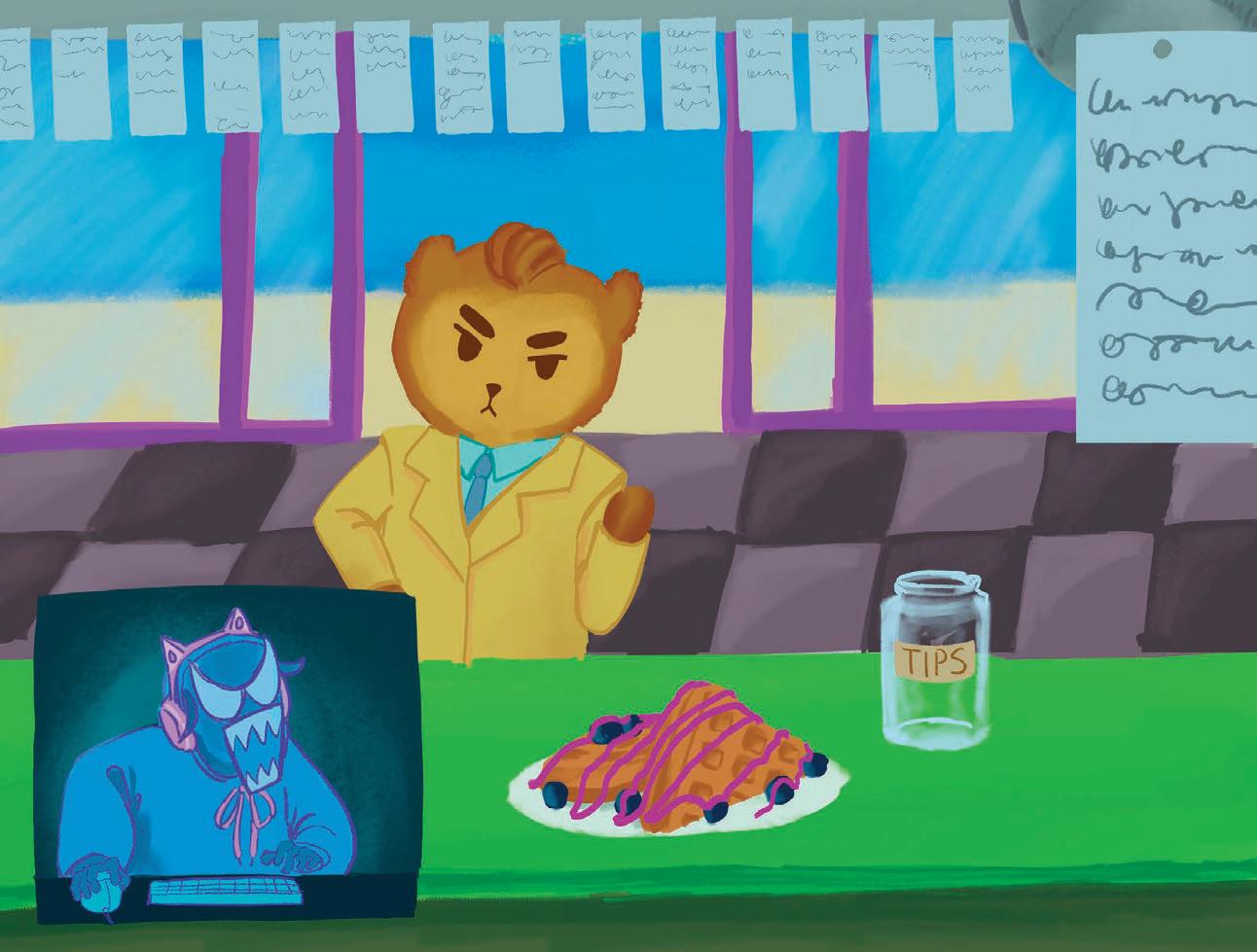


player game or back in the ‘80s and ‘90s watching people in arcades,” said Johnson, the author of a book about Twitch. “It’s easy to overlook that because Twitch is so big now.”
However, Twitch is far from a gaming-exclusive platform. One of the most popular genres on the site, with more than 30 million followers, is “Just Chatting,” which ranges from hanging out with friends to talking politics. Numerous smaller categories exist on Twitch, too – from animals to art to ASMR.



Kevin Nguyen’s work fits into these alternative categories. On his channel sugiednd, the third-year student – juggling majors in business economics, mathematics of computation, and statistics and data science – streams his sessions playing Dungeons & Dragons: still gaming but of a decidedly different kind.

this way inspired him to take his game sessions and production values to the next level.
“Going into my next campaign, I wanted to do something I’m proud of, that I can look back (on),” Nguyen said. “I can even share to my friends and family when I get older.”
Nguyen is not the only UCLA student whose Twitch recordings double as an archive. For fourthyear economics student Ashley Tsao, playing them back is the whole point.
Tsao, who is also a former Daily Bruin Podcasts contributor, serves as the coach and manager for UCLA esports’ varsity and junior varsity “Rocket League” teams. In addition to her responsibilities handling the teams’ communications, advertising and scheduling, Tsao uses her channel to stream any and all official matches they play. The purpose of this, she said, is so her players can look back at prior games and improve their skills. This enables the teams to learn from their mistakes and formulate new strategies, she added.
As the coach of two teams, Tsao must maintain an active presence on her channel – streaming up to five times a week. The demands of such regular streaming in terms of both spent time and spent labor can be difficult to balance as a college student.
Tsao said that while she, a fourth-year, is able to handle the workload, she has to be careful not to overwork her players, many of whom are younger



D&D is a tabletop game fundamentally focused on storytelling. It allows players to collaboratively explore a custom world and plot over several sessions spanning hours each. But for Nguyen, who has played D&D for more than half a decade, this has always been a process tinged with disappointment – once a story has run its course, there’s no way to access it again. Unwritten, it fades into memory. Enter Twitch.
As part of his online friend group’s latest campaign, “Eclipse,” Nguyen uses Twitch to record every session played. Afterward, he uploads the recordings in their entirety – the VODs, in Twitch parlance – to YouTube, where they will remain preserved for posterity. Nguyen said streaming in


“ Sorry, I need to go home and play video games.”



than her.

Other student streamers, however, are not as lucky.



For Nguyen, balancing his D&D streams with his three majors –and not to mention his social life – is a monumental task. He drafts a new schedule every week, planning out the 15 hours he spends on D&D like a part-time job. In order to maintain his story’s long-term momentum, he finds time to stream once a week, even if he has upcoming midterms or if he’s vacationing with his family.



In such environments, he has gone to extreme lengths to ensure he has time to play.

“Sometimes I stream in the bathroom,” Nguyen said. “That’s happened before.”
Streaming, not studying, is his top priority when scheduling, he said. Still, he said, it’s worth it for his campaign and his channel.
Space presents another challenge for student streamers – many have roommates whose own schedules may conflict with the demands of regular


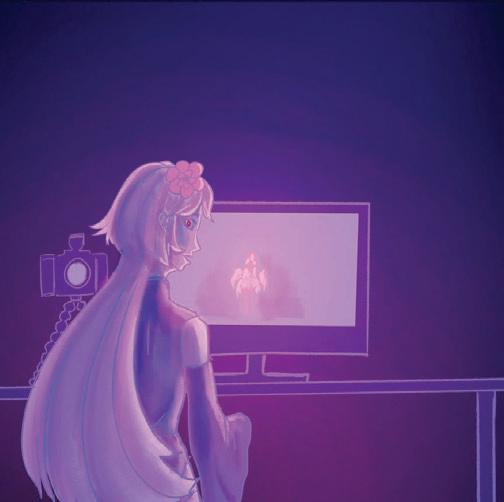


streaming. Nguyen said he and his roommates have reached an understanding regarding his D&D sessions: He lets them know in advance when he’ll be playing, and in return, they’re willing to leave the room until he finishes around 1 a.m.
For Poon, his roommates proved to be less accommodating of his schedule – streaming five days a week, four hours each day.
“Having roommates while streaming was one of the hardest things to do,” Poon said. “Obviously, staying up to edit long videos wasn’t really something that they really liked.”
Poon eventually decided to move into a solo studio apartment, but streaming created other issues for him that weren’t as easily solved.
After Poon returned from his streaming-focused gap year, his social life suffered, and he found himself without the time to participate in clubs or school activities. In essence, he was missing out on the college experience he had come back to UCLA for.
“After classes, my friends were like, ‘Oh, do you want to go to a coffee shop?’ or, ‘Do you want to go and study with me?’” Poon said. “I would have to tell them, ‘Sorry, I need to go home and play video games.’”
Ultimately, Poon chose to retire from Twitch in March 2024, choosing to dedicate himself to his remaining time at UCLA.
Still, he said, being a student enabled him to connect more easily with members of his audience, approximately 80% of whom were between the ages of 13 and 24 and thus could relate to his academic experiences. This sense of community and relatability is one of the cornerstones underlying Twitch’s enduring popularity, researchers said.
“A successful livestreamer appears to be both a celebrity and a friend,” Johnson said. “That combo is very exciting because we don’t tend to get to be friends with celebrities in general.”
By and large, a close relationship between a streamer and their community tends to be positive, Daniel said. However, this degree of interaction can be a double-edged
sword, Poon added. He said he tried to cultivate an authentic connection to his audience, making his name and face public. But to prioritize his safety, he had to keep aspects of his personal life private, which proved to be emotionally taxing.

He added that he has had weird interactions with viewers that made him uncomfortable.

One term that often comes up in association with Twitch is “parasocial relationship” – a one-sided connection between a person and someone who cannot reciprocate their affection, such as a celebrity or a fictional character. However, it’s also a fraught term when it comes to Twitch scholarship, Johnson said. Some researchers, such as Daniel, argue that they are ubiquitous regardless of genre or how popular a given streamer is.
“It doesn’t matter if you have three people in your chat or 300 – you are going to have a person that has this connection with you,” Daniel said.
And as that connection builds, so too does the potential for profit. On Twitch, viewer donations often come in exchange for perks on the channel, and consequently, increased status within the community. On Poon’s channel, for instance, viewers could pay a subscription to watch his broadcasts ad-free, access exclusive cosmetics and join a private, subscriber-only chat. For a select few, this can be a very lucrative endeavor – receiving donations up to hundreds of dollars at a time.
But despite the stories of college students using streaming to pay for their education, this is only a small part of the story.
Tsao and Nguyen do not engage with Twitch’s monetary
It’s not hard to see why that’s more appealing than working in fast food or doing a 9-to-5 in the office.” “
system at all. Even for Poon, with his tens of thousands of followers, Twitch’s systems alone barely made a dent. The majority of his income from streaming came from sponsorships and merchandise, he said.
Despite his popularity, he would not have been able to make it his full-time job, he added.
“When I was streaming, I was a top .01% streamer –which seems high,” Poon said. “But in order for you to ... call it your career, I think you needed to be a top .0001% streamer.”
Tsao added that while streaming may be profitable for those who partner with resource-rich esports companies, independent streamers are forced to spend their own money buying expensive equipment and specialized software – with no guaranteed return.
Still, Johnson said he understands why some people might pursue Twitch as a career anyway, as it gives them the opportunity to spend their time doing something they enjoy.
“It’s not hard to see the appeal of working on Twitch, of streaming games or streaming some other stuff as your job,” Johnson said. “It’s not hard to see why that’s more appealing than working in fast food or doing a 9-to-5 in the office.”
This enjoyment is precisely why students choose to stream on Twitch. Tsao is passionate about “Rocket League”; Nguyen loves D&D; Poon cares about making a difference in the “Valorant” community. They make sacrifices, big and small, all for the sake of what they’re passionate about.
Poon added that although he no longer is a member of the streaming world, he doesn’t regret his time on Twitch, and it was ultimately a positive influence in his life.
“It was a really fun experience, and I think it’s taught me a lot about the world besides what academia offers,” he said. “It has been beneficial, ... even though it may not be a big part of me right now.”
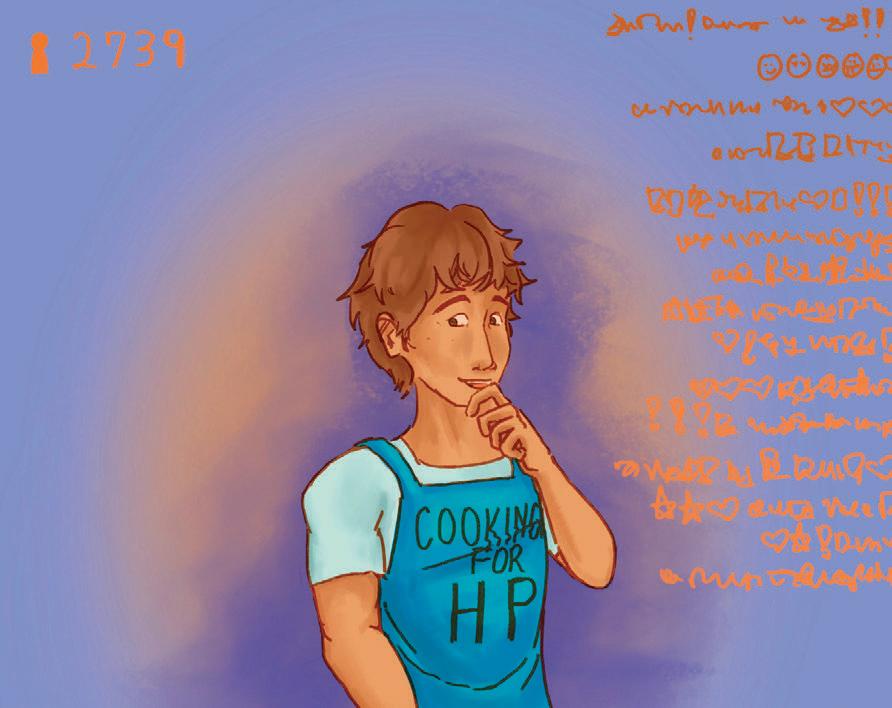





















written by REID SPERISEN
photographed by LEYDI CRIS COBO CORDON
designed by MIA TAVARES





From her corner office in the Schoenberg Music Building, Eileen Strempel can see the trees lining Charles E. Young Drive as students amble on the sidewalk. This is the view Strempel has had for the past six years as the inaugural dean of UCLA Herb Alpert School of Music.
When asked about how she feels about leaving UCLA, she does not respond. She breaks eye contact to look out the window, readjusting her scarf as she does so. The conversation shifts to a different question, as if talking about her departure as a Bruin will cause too much pain.
eStrempel will take on a new position at the University of San Diego starting July 1. Her time at the helm of UCLA’s music program has seen the fundraising of more than $50 million, the creation of the music industry major and a focus upon embracing diversity and strengthening community and support for faculty and students. A lifelong academic and musician, Strempel is both reflecting on her time as inaugural dean and looking ahead to her next chapter as vice president of academic affairs and provost at USD.
Strempel seems relaxed for a Monday morning at 11 a.m. An educational professional of her stature could be reasonably expected to be busy, stressed or in a neverending rush of meetings. But for several hourslong







interviews, Strempel is calm and unhurried, practically verging on languid in pace as she thoughtfully speaks about her life and career.
As her voice lilts melodically and she expressively sweeps her hands across the table in front of her, she talks with an earnest attentiveness – as if this conversation with a student journalist is the most important one she has had all quarter.
“I’ve always just tried to build from the beauty,” Strempel said. “That’s really been my motto.”

yWhen she arrived at UCLA in 2019 to become the inaugural dean of the School of Music, Strempel said it was thrilling to be able to build a school of music in Los Angeles because of the city’s position as the music capital of the world. She saw an opportunity to create a home for music that was fully with the times without trying to replicate what was being done at other universities.

Although UCLA had had esteemed music programs for decades, there was a limited foundation for a centralized School of Music when Strempel became a Bruin, she said.
“When I arrived, there was no mission, there was no vision, there were no core values, there was no strategic plan, there was no board, there weren’t even monthly budget reports,” Strempel said. “You’re not stepping into a role where ‘We’ve always done it this way,’ but instead






entirely the exact opposite. This is for an entrepreneurial person to come in and really help to build something. And so I just had a really clear vision of what the School, of what we all could collectively be.”
Once a team was on board with the ideas and the shared plan, Strempel said it was possible to begin tackling large endeavors such as connecting global communities, increasing fundraising and creating new courses. Strempel said her mission as dean largely focused on increasing diversity of students and course offerings – an aim pursued by capitalizing on the existing strength of the Department of Ethnomusicology, expanding programs for global music and global jazz and launching a music industry program in the music industry’s capital.
and

Tiffany Naiman, who has been the director of undergraduate programs in music industry since 2021, said Strempel’s initiative to create an advisory board for the School of Music provided more learning and career resources for students and increased fundraising opportunities. The formation of such a coalition –which includes record executives and awardwinning musicians – was impressive considering Strempel’s background in opera, rather than the contemporary music industry.

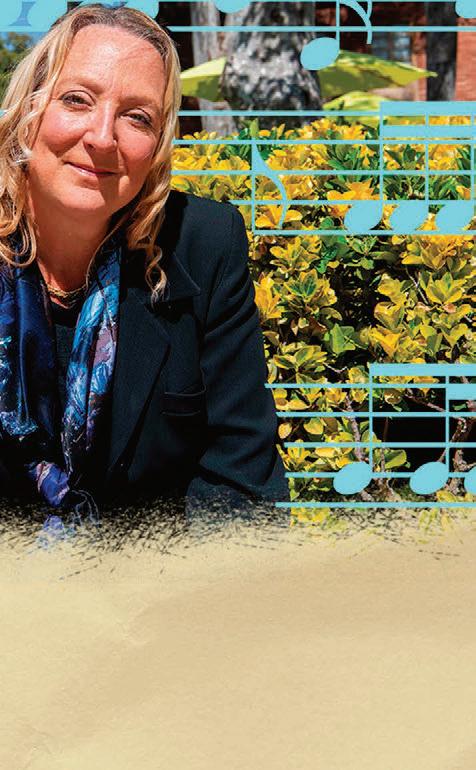
“I just was speechless and captivated, and I forgot all about the school closing,” Strempel said. “I was actually excited to go into school to talk to my chorus teacher, Barbara Tagg, and I told her I wanted to learn how to do that. I wanted to be an opera singer when I grew up – and I was seven.”





I just had a really clear vision of what the School, of what we all could collectively be.
This focus on the music industry continued with the establishment of the UCLA Berry Gordy Music Industry Center in 2024, which increased the school’s careercentered course offerings. Naiman said this job-oriented outlook on curriculum largely stems from Strempel, who sought to help launch students to successful careers after graduation.

“She’s a ‘get it done’ person,” Naiman said. “It’s the great balance of no-nonsense and kindness put together, which ... I think is very rare.”
But before she was on her path to becoming the dean of the School of Music – and even before she became a student of the arts – Strempel was a child whose dreams of singing had not yet taken root.
Strempel said the music in her Syracuse, New York, childhood home represented a blend of country, Western and blues music from her father and church choir and symphonic pop songs from her mother. Some of her earliest memories with music came from listening to the radio waiting to hear if her school had been shut down for a snow day. Strempel’s eyes mischievously light up recalling the gleeful eagerness she experienced while wishing for her classes to be canceled.
On one of those days, Strempel said she remembers hearing a recording of French opera singer Mady Mesplé and being struck by the coloratura soprano’s voice.
For her public school teacher to legitimize her interests and support her ambition was




transformative, Strempel said. Her first voice lesson was at 8 a.m. on a Saturday morning, and she has been taking vocal lessons ever since. At 15, she was named a Presidential Scholar in the Arts by former President Ronald Reagan and later pursued a bachelor’s degree as a first-generation college student at the University of Rochester’s Eastman School of Music.


Strempel’s vocal talents then took her to opera houses across the globe. In 1993, she performed as Violetta in the Bolshoi Opera’s production of “La Traviata” as the sole non-Russian in the Moscow opera house’s cast. She took on Gilda in “Rigoletto” and the titular role in “Lucia di Lammermoor” as her career took her to places such as Milan and St. Louis.
Despite the thrill of being a regularly performing musician, Strempel said it was exhausting to live out of a suitcase and travel on the road constantly. Her days typically involved at least six hours of vocal rehearsals, which necessitated memorizing music for current productions and future performances months in advance. At one point, Strempel went five months without seeing her husband. She realized she wanted to have more stability than the lifestyle opera singing could offer her.


At 28, Strempel returned to higher education to finish her doctorate at Indiana University’s Jacobs School of Music. As she was writing her dissertation on a female

French composer, she realized she wanted to study music by American female composers of all backgrounds –and that she could find her voice through the educational process.
nStrempel said she does not regret leaving opera behind and transitioning to academia. Devoting 17 years in several different roles at Syracuse University, she was able to find her interest in the administrative side of an academic institution as she advanced from assistant professor to assistant vice president.
The time also allowed her to have a rooted place to raise her two sons, Strempel said. Being a mother is the greatest joy of her life, and she speaks to her sons every day. She said motherhood has given her more compassion and empathy, as she thinks of every student she interacts with as someone’s child for whom she is responsible for helping grow and be successful.

Working at UCLA presented Strempel with the opportunity to execute a vision to the developing program.




She was exactly the right leader for one of the darkest time periods in the university.

Judith Smith, moved departments from the humanities and the School of Arts and Architecture to bring them into the newly created School of Music. Smith brought a host of contributions and serendipitous cross-department connections in her two years of leadership, and it was Strempel’s job to take these foundations to the next level. She said Smith built a house with a concrete floor, but it was her responsibility to bring in flooring, windows and furniture.






Although Strempel is the inaugural dean of the School of Music, she is not the founding dean. She said her predecessor, neuroscientist


hAnd in less than a year, a profound challenge of her tenure would arrive.
Judith Finell, an adjunct professor of musicology and music industry who began teaching at UCLA in 2018, said she was impressed by Strempel’s leadership during the COVID-19 pandemic. In a period when the department felt hopeless, the dean brought strength and consistent positivity. Finell said Strempel was courageous in her approach to prioritizing student and staff safety by modifying practice rooms and increasing ventilation in rehearsal spaces to reduce the risk of disease transmission.
Finell added that Strempel’s innovation and openminded approach to other ideas and solutions helped her weather the pandemic and simultaneously improve the School of Music.
e“She would always have this upbeat tone to her voice – regardless of how dark a day – and yet show tremendous empathy to those who had had losses or challenges or tremendous stress,” Finell said. “She was exactly the right leader for one of the darkest time periods in the university.”

Jan Berry Baker, a professor and vice chair of the Department of Music, has seen similar leadership in Strempel. She joined UCLA in 2020 as the 12th female saxophone professor in the nation. Since 2023, Baker has also been the special assistant to the dean for faculty mentoring, a role she said Strempel created for the


purpose of providing junior faculty and assistant professors with guidance for the tenure process as a professor in the arts.

Baker said Strempel has been supportive and involved with both faculty and student activities.
“It’s definitely always great to have people in positions of leadership actually come to the events that faculty are putting on and the events that students are putting on,” Baker said. “Eileen always has a smile on her face and is always delighted to share in the joy of the successes of others.”
eIn spite of her successes, Strempel said the time she recalls receiving criticism in the immediate aftermath of George Floyd’s murder in 2020, when many students shared feelings of hurt as they processed their grief.


by being affordable and accessible for all Americans. In particular, she said she hopes the School of Music can increase its support for transfer students and firstgeneration college students and eventually become tuition-free.
Strempel said she hopes her successor – announced in April to be Michael Beckerman, a musicologist and professor at New York University – can carry forward the positive trajectory of the School of Music to become the No. 1 program in the nation. She said UCLA’s programs have the correct ingredients with the quality of the students, faculty and city to get there and have been able to evolve from nonexistence six years ago to now being one of the top programs in the country.
After a very long conversation, Strempel is ready to revisit the topic of her leaving UCLA.


Eileen always has a smile on her face and is always delighted to share in the joy of the successes of others.



She said that at the time, the School of Music was falling short of its promise to be equitable for all students. In response, Strempel said changes included the creation of a sanctuary space, curricular changes throughout the School of Music and the establishment of an anti-racism and antidiscrimination task force.
Part of that work toward equity involves making education more accessible. More than $50 million was raised during the past six years, and student enrollment grew by 65%. But Strempel still said she regrets not being able to raise more money for students. However, she wants higher education to be more fair and equitable

Strempel said she has tried her best in her role, but her legacy and how she is remembered ought to be decided by other people. She feels humbled and grateful for her time at UCLA and the experiences she has had with artists, intellectuals and the next generation of musical talent.
Strempel is excited for her next career opportunity and to continue her mission to foster equitable student success in higher education but is sad to leave behind the friends made as a Bruin. Given Strempel refused to name individual people whom she will miss, it is evident that she has built a home at UCLA.

n“We as educators have a sacred goal,” Strempel said. “I’m grateful for every opportunity that I’ve had to be able to help think about or bring to life student success. And it can just be on the individual level. ... It can be whomever walks through your door, just keeping that clear focus. It’s been such a joy.”





























For most of his life, Sagan Yee didn’t know video games could be art.
But in 2013, at an energetic game party in Toronto, Yee encountered a strange accessory: a handmade arcade machine fashioned as a backpack. The backpack soon drew a crowd of gamers who took turns playing on the old-fashioned arcade-style controls. As Yee played games on the back of Eddo Stern, the director of UCLA’s Game Lab, who had flown in from Los Angeles for the party, he learned that those games weren’t vintage arcade titles but rather created by students under the guidance of Stern.
Years later, when Yee was searching for Master of Fine Arts programs after the pandemic, he recalled Stern and his bizarre arcade backpack. After hopping on a call with Stern and researching the Game Lab online, Yee applied for UCLA’s Design | Media Arts MFA program as his top choice. To him, no other program encapsulated the indie game scene so authentically.






written by DAVIS HOFFMAN AND GWEN LOPEZ


From computer science students pushing the technical limits of game engines to English faculty experimenting with interactive narrative mediums, video game development at UCLA is as amorphous as it is robust – even without a formal game development program. Student game developers have found communities and collaborators across a variety of organizations, highlighting the interdisciplinary nature of game development by bringing together the fields of art, coding, writing and sound design.
Now a second-year design media arts graduate student, Yee’s workspace sits across from the same arcade backpack that introduced them to the MFA program at UCLA. The backpack is one of many colorful decorations in the Game Lab; it sits alongside a wall of event promotion posters, floor-to-ceiling shelves of books and copies of games, and remnants of massive installation pieces strapped to the ceiling.
While Yee is primarily an artist, part of the joy of making games is that the industry does not constrain its
artists to one particular medium but rather allows for creative expression across different mediums under the umbrella of interactivity.
“A lot of folks are coming around to the realization that games are the art of systems. That’s what makes them unique,” Yee said. “All of those things interact with each other in ways that you did not predict.”
Miller Klitsner, a UCLA alumnus and adjunct instructor of virtual


arts program, I get to make the argument for poetry as a valuable art form for understanding our place in the world, for better understanding technology and as another device to help my students develop artistic practices in games and otherwise.”
Fourth-year English student Brent Tuverson said Snelson introduced him to the academic culture behind games, and his support has encouraged Tuverson to pursue an

A lot of folks are coming around to the realization that games are the art of systems. That’s what makes them unique.
and augmented real ity at the ArtCenter College of Design, said the process of game-making is influenced by various disciplines, culminating in the unique experience of exploring each field individually.

“Games are the medium of all art forms merging into one, like animation, cinematography, interaction design – which is also an amalgam of things – drawing, music,” Klitsner said.
For Klitsner, game development is also a balancing act of dreaming up imaginative concepts and fine-tuning the mechanics to turn these ideas into reality. For example, he has worked on a variety of games that explore the interactivity behind sound and music. Klitsner said the result is similar to the trajectory of a song: The more impactful moments of the game come across as sonically intense. Sound design also provides the player with a more tangible form of feedback than the visual interface, he added.
Other professors examine games through a literary lens. Down the street from the Broad Art Center in his Kaplan Hall office, Assistant Professor of English and de- sign media arts Daniel Scott Snelson bridges the world of video games with creative writing. Drawing from his background in experimental writing and art, Snelson and his students study video games using critical lenses such as race, gender and class.
For Snelson, the divide between disciplines can become siloed, so integrating his two fields of study has become a priority for his teaching.
“In the English department, I have to make a case for games as valuable media to study or to use as creative material,” Snelson said. “And in the design media


thesis that analyzes the capitalistic influences behind job simulator games. Tuverson said the experimental nature of Snelson’s courses have encouraged him to think critically about games as if they were a piece of literature.
As a poet, Tuverson applies his interest in game studies to his own creative work.

“When one makes a poem in a game or makes a word game that is interactive, there is this sense of embodiment within the work itself,” Tuverson said.
“I connect more with gameplay that creates poetic meaning.”

Although Tuverson doesn’t develop video games, he has worked on the creation of his own tabletop roleplaying games such as “Scorched Earth,” a trivia-based adventure made in response to a book about an end of the world caused by the internet, he said. Tuverson’s poetry engages in media conversation in a


similar way. For instance, one of Tuverson’s past poems examined the world of “Super Mario Bros.” in a postcolonial style, which Tuverson said allowed him to live in that world more completely – a level of depth that is only possible for him through games.
But game development doesn’t have to be academic, nor does it have to be experimental.
As a recent graduate from Sheridan College’s undergraduate classical animation program, Yee assumed he’d be going into the animation industry – until he stumbled into Toronto’s indie game art scene. Under the guidance of video game not-for-profit Hand Eye Society’s sixweek game development workshop, Yee created their first game despite having no prior coding experience: an adventure game in which players control an Icarus who must build a jetpack instead of wax wings — replete with hand-drawn illustrations by Yee himself.
lations or performance were the only acceptable methods of bringing games to her MFA at UCLA.



This was a new idea for Yee, who began to see video games – and by extension, animation – as an emerging
Instead, they found the Game Lab welcomed video games as an equally critical medium. As a Game Lab resident, Lan said they were able to receive critique on the development of their visu- al novel-styled role playing game “DisplaceMen,” a passion project several years in the making that was a finalist for the 2025 Independent Games Festival’s Best Student Game – the game was outcom- peted by fellow UCLA student Vinny Roca for the top prize.
However, the Game Lab is not the only home for experimentation on UCLA’s campus. In addition to teaching, Snelson and his colleagues have worked to create the Text/Tech Lab. The departmental initiative not only offers high-tech resources to facilitate game-making such as design computers but also serves as a collaborative space for game-minded students and faculty as well.
Other clubs on campus, such as the Association for Computing Machinery, provide students of all skill levels the opportunity to develop games of their own. While ACM’s game-oriented branch, Studio, remains part of a computer science organization, board members represent the many mediums involved in game development such as art, writing and sound, said third-year cognitive science student and former co-president Joanna Liu.
“ACM Studio specializes in game development, and our mission is basically to make sure that any aspect of game development is accessible for all students on campus,” Liu said. “It’s under a CS club like ACM, but we really try to also emphasize the other parts of game development, so this includes art, writing, music, sound and more. What we try to do is not only expose the field to more people but also try to develop people’s skills in the field.”
Like many of the students they hope for their club to attract, Liu and last quarter’s Studio workshop chair Aubrey Clark were drawn to ACM Studio out of their own

In the fine arts sphere, there was a lot of looking down on games for a long time.
art form rather than a commercial product in the world of industry.
“In the fine arts sphere, there was a lot of looking down on games for a long time,” Yee said. “But I think those barriers are starting to blend together a lot more than they used to.”
Xiner Lan, a design media arts graduate student and current Game Lab resident, considered a career in painting after graduating with a Bachelor of Fine Arts from Rhode Island School of Design. Lan assumed instal-
longtime passion for video games. Clark, who is a fourthyear linguistics and computer science student, said their love for video games began when they were young with the discovery of Adobe flash player games on their family computer. Now, inspired by their love of exploration games such as “Outer Wilds” and bolstered by their programming background, Clark has developed games of their own.
Currently, Clark’s team is developing “Psychosis,” a first-person shooter game set in a world that normalized
hiring hitmen online. The project has allowed Clark to collaborate with his peers to create a thought-provoking project while continuing his childhood passion.
The project has also provided a space for the convergence of the many mediums involved in game design, Clark said. Although they concede responsibilities on facets such as graphics and sound, Clark remains involved in the gameplay side of the project, they said.
“I think having collaborators makes that easier …


writing and programming as the rest of her team – some working on the game outside of UCLA – contributed to the project’s art. Lan added that everyone on the team switched roles every six months to encourage a more equal distribution of work.
Yee, who is more accustomed to developing games in a game jam environment, said the process of creating a game is very different from the media arts process, which re-
If you’ve never touched a game before or game development before, you can learn how to make a game.
because the bouncing off ideas and the peer pressure — collaborating is definitely very important for making games,” Clark said. “In fact, a lot of the time for gameplay specifically, a big theme is that you need to test your game. You cannot do it alone.”
Throughout the academic year, ACM Studio hosts development workshops and game jams —marathon-style game development events — catered to students of all technical skill levels. Clark said game jams serve as a way to make game development more accessible for students who lack prior experience.
Led by student experts, Liu said the game jams teach participants crucial skills in the development process, such as how to navigate game engines, camera work and character design.
“If you’ve never touched a game before or game development before, you can learn how to make a game,” Clark said.
Like Clark, those developing a game seldom do it alone. Lan said the Game Lab provides a space where students can retain creative freedom in their projects while still working together. That space supported the development of “DisplaceMen,” where Lan managed most of the game’s
quires more isolation. Yee’s experience with making indie games is very spectacle-focused, with many of his projects meant to be played in short bursts surrounded by a crowd of people, he said.

Regardless of how the game is produced, Tuverson said games, like poetry, are about connecting with other people – whether that’s emotionally or intellectually.
“Art should be communal,” Tuverson said. “I think that’s wrong to say video games are meant for only the individual.” Whether they be created in solitude or alongside others, found ubiquitously across all spheres of game development at UCLA is the hope to push the boundaries of expression through this multifaceted practice. Students and faculty alike often find that game development is more than just a means to an end – but also an answer.
For Snelson, the answer is one that looks to the future.
“These can be dark times, and I find games are a place where I both find peace and comfort or distraction, but spaces where new imaginaries for a different kind of future and a different kind of present can emerge,” Snelson said. “I’m interested in games as ways to open our imaginaries toward a better world, a more just world, maybe a stranger world, maybe one that’s guided by a different set of rules.”
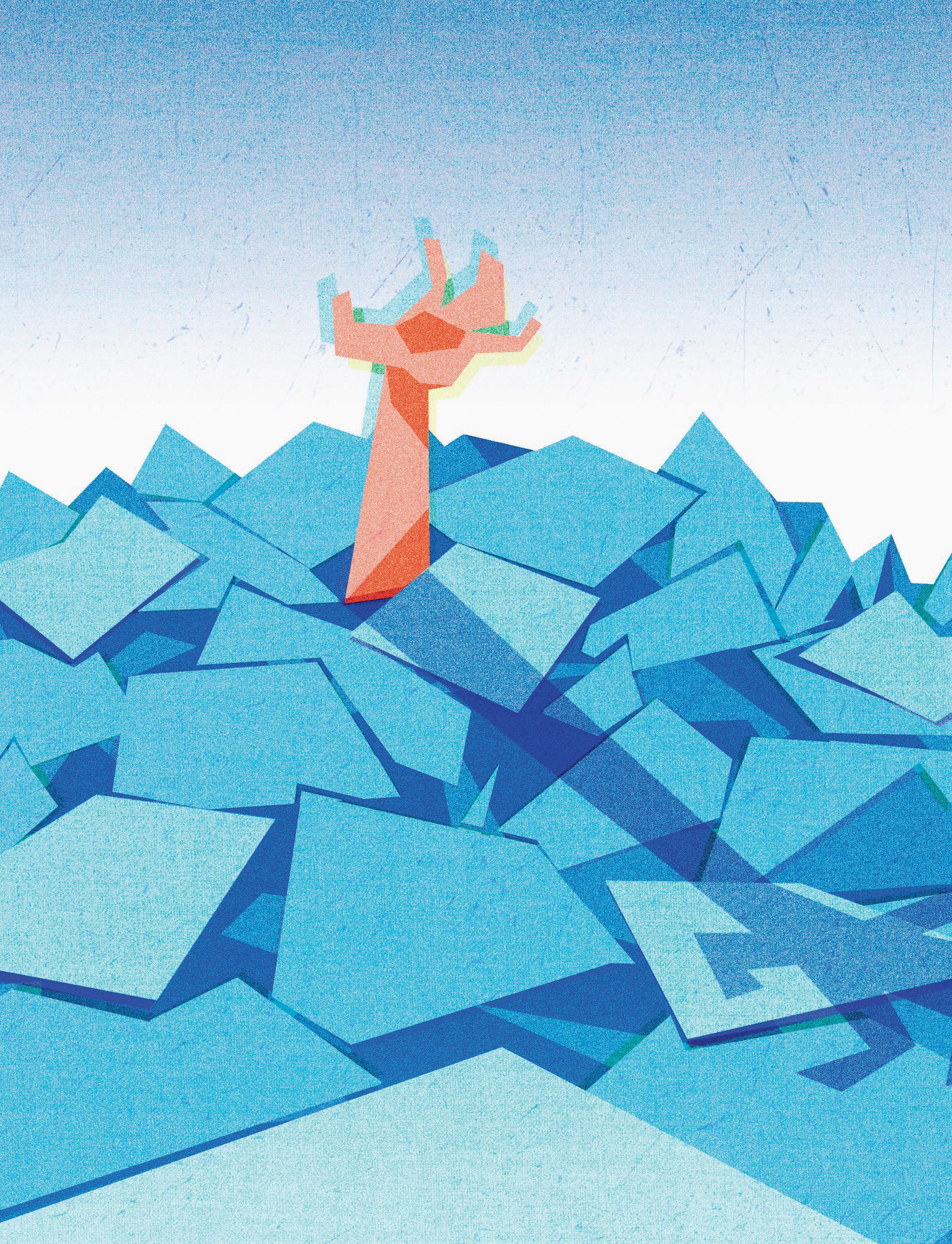
written by EGHOSA OTOKITI
There are a lot of things Serena Kim knows. She knows how to write an algorithm, how to construct software and how to make a website. She also knows 600 is the typical number of job applications most students send to companies – only to get a single offer back.
For Kim, a second-year linguistics and computer science student, this rejection was something she had to learn over the course of her time at UCLA. She said many computer science students feel like they’re not good enough after being turned down hundreds of times. If she, and students like her, knew that getting job opportunities was more of a numbers game than about her individual worth as an engineer, she and other students would feel more confident in themselves.
Still, the job market’s dark cloud hangs over many computer science students’ heads. They see it as competitive, random, saturated, ridiculous.
“It’s a grind,” Kim said.
With an increasingly saturated job market, computer science students are finding it more difficult to secure jobs or internships. Students and professors at UCLA are trying to adapt to this changing, unstable environment. Whether it’s an inward reflection on how to improve course structure or outward changes in where and how to look for jobs, the UCLA computer science community is trying to find a way to weather this storm together.
After much of the world went online during the pandemic, tech companies hired and expanded wildly. Everyone needed computers, organizations needed video call services, and people shopped online. But as the harshest days of the pandemic receded, the online economy slowed – leading to the shedding of jobs. With a limited number of jobs and increasing numbers of students enthralled by the computer science dream, the situation has become one of saturation.
In short – too few jobs, too many people.
Notes
market was tanking.
“Since then, these situations have improved. It does, anecdotally, seem to be like we’re at a slightly better spot than we were before,” he said. “It definitely does still feel extremely competitive. There’s tons of people applying for a lot of these jobs, and it’s a very rigorous interviewing process.”
Some students, such as Li, said they wished courses were more practical to better equip students with tangible skills needed for the industry. Instead of learning those skills in the classroom, they instead find themselves learning them at the job site.
“I know the UCLA CS program – it’s really theoretical,” she said. “So if the school can help us in terms of more practical things, … it will be helpful.”
The faculty of the department are aware of this criticism. Todd Millstein, chair of the computer science department, said the curriculum seeks a balancing act between courses focused on fundamentals and courses that teach modern workplace skills.
“Trying to get that balance right is something that we’re often playing with and getting feedback from our students and from alumni, etc., to try to figure out how we can best prepare students for their careers,” he said. “The

“It’s definitely a lot more saturated and a lot harder to get a job nowadays.”

In this new paradigm, Peter Nguyen, a third-year computer science student, said getting a job in the industry is often about random chance. He has heard of computer science students sending out thousands of applications to jobs just to get a few callbacks. Because of this desolate market, over the course of his sophomore year, he sent around 600 job applications.
“I do think about how it’s definitely a lot more saturated and a lot harder to get a job nowadays,” Nguyen said. Iris Li, a first-year linguistics and computer science student, has also heard about the market’s growing competitiveness through the years. She added that people in the job market have to have more experience, at least compared to a few years ago.
Fourth-year computer science student Jackson Steele said that during his first year at UCLA, it felt as though the job
technologies that a lot of people are using right now didn’t even exist five years ago.”
Millstein said the criticism was fair in the sense that practical skills are needed, but he said fundamentals are still the main focus of the program. Many new technologies at their core have the same basic principles that govern their operation, limits and tradeoffs.
These are the principles Millstein said the department is trying to teach students.
“We are preparing you for an internship this summer,” he said. “But in addition to that, we’re also preparing you for the next 40 years of your career.”
Not every professor is as diplomatic to criticism of being too theoretical.
Paul Eggert, a teaching professor and vice chair of industrial relations in the computer science department, said that even as one of the least theoretical department members, he broadly doesn’t agree with the critique.
Eggert, who said he’s a big fan of practical skills, is true to his word. One of the classes he teaches, Computer Science 35L: “Software Construction,” is seen as very applicable to the job market by students such as Kim and Steele.
Eggert also helps run the UCLA Computer Science Affiliates Program, which links companies to students, and he has
entered the field in a more unconventional way. She didn’t start coding until a seminar in her undergraduate program where she worked on a solar-powered jacket.
“That’s really where I saw how many different directions you can go with computer science, and how could I make it intersect with the other interests I had?” Gabriel said.
“Especially starting out, when you don’t have any relevant experience, it can be really hard.”


spent years in the industry, even co-founding a startup.
However, he did say that course requirements may include too many outside-of-department courses, such as the full year of physics required for the major.
“Change sometimes happens slowly – it used to be you had to take a course in chemistry to get a CS degree,” Eggert said. “I expect us to make further changes.”
Students’ reactions to this approach to education vary.
Nguyen said there is value in exploring and exposing students to a variety of topics, practical or otherwise. For example, he wouldn’t have found his niche interests in computer science without taking courses for the major, including some others view as nonpractical.
Steele said he felt well-served by aspects of the major – particularly how the classes have given him good design practices, analytical problem-solving skills and a theoretical understanding.
But even with these strong academic fundamentals, Steele feels it can still be difficult to get a foothold in the industry.
“The tech job market is rough. Especially starting out, when you don’t have any relevant experience, it can be really hard to get that first experience,” Steele said.
But what happens after you get the first experience?
For some students, such as Steele, return offers can eliminate the need to delve as deeply into the job market in later years of school.
“The way it tends to go is once you get that first internship – that first shot – you can pretty reliably get a return offer,” he said.
Now, Steele is excitedly heading to work for Google after he finishes the year.
Saadia Gabriel, an assistant professor of computer science,
Now, Gabriel conducts research on how artificial intelligence can be used to detect hate speech, securing her a partnership with Microsoft and a Forbes 30 Under 30 award in the process.
Others stumble into jobs in unusual places. Over the summer, Nguyen contributed






to a coding project on GitHub, a site where everyday people post their coding products or projects for anyone to use as open-source software. One day, a company was so impressed that he was offered an internship.
While Nguyen wouldn’t say his experience is a guide, he did say learning to work with existing code is an important skill.
“There’s very much a skill of finding how you still contribute meaningfully to massive code bases that weren’t written by you,” Nguyen said. “And that’s largely what getting involved in the open-source community helped me with.”
When Eggert was an undergraduate at Rice University, there was no computer science major. When he went to graduate school at UCLA for computer science in 1975, the job market was not very good. But when he graduated in the 1980s, the job market was plentiful.
To Eggert, this cycle happens over and over again – such as during the dot-com bubble.
“If you graduate at the right time, the market’s great –other times, not so good,” he said.
Additionally, professors encourage students to redefine what the tech industry is, just because so many things use technology and software.
“Tech means more than just the big five, six companies that get a lot of attention, and they get a lot of attention – rightly so – because they are very important and influential,” Millstein said. “But there’s so much more to the tech industry.”
From the student side of things, Steele said he thinks it would be helpful if students were exposed to pathways outside traditional computer science ones. Gabriel added that students with internships should make connections with as many people as they can and to do side projects.
“You either want to come out of it with a paper, or you want to come out of it with really strong connections with the people that you were working with,” she said.
For some students such as Kim, that connection can come from on-campus organizations. When Kim needed help with her resumes, her fellow club members aided her. When she needed mentorship, alumni supported her. And when she was on the hunt for another internship, an outside organization helped her achieve that goal.
While the tech world may be competitive, it’s also filled with people who want students to succeed at UCLA or otherwise. Professors who want to teach fundamentals that will support a decades-long career. Organizations


But not everyone sees reasons to despair over the job market.
In fact, despite the negative press, occupations related to computer science are projected to grow over the next decade –including a projected 26% growth in computer and information research scientists from 2023 to 2033, according to the United States Bureau of Labor Statistics.
Eggert said the notion of a job shortage may be about the industry’s skewed historical metrics.

“If you’re used to a white-hot market, then an ordinary market doesn’t look very good.”
“People got used to and heard stories about people graduating with a bachelor’s and getting internships at Google or Amazon,” Eggert said. “If you’re used to a white-hot market, then an ordinary market doesn’t look very good.”
For Eggert, the past also offers reasons why not to worry.
that connect students with prospective employers. Clubs that give students community and invaluable skills and experience.
Kim said that at UCLA, students have these tools – and more – to have a gateway into the job market.
“Reach out to those resources because they are there for a reason,” Kim said. “You don’t have to go through this journey alone.

written by LYAH FITZPATRICK
photographs courtesy of LYAH FITZPATRICK, GREG GRETHER AND ETHAN KAHN
designed by KARINA ARONSON

Journal Entry: 1/22, 6:20 p.m. Pillcopata, n Peru
“My name is Lyah Fitzpatrick and I am spending a month in the Peruvian Amazon to research wildlife.”
–Sweat pouring down my back. Biting insects buzzing at my face. Sloshing through bogs, step by step, in waterlogged boots. Navigating the Peruvian Amazon rainforest was no typical study abroad adventure. It was a quarter of intensive scientific research in one of the most undisturbed environments on this planet. Temperatures pushing 90 degrees, drenching exposed skin in deet, shaking snakes and spiders off tent flaps.


I would not trade my experience for the world. Quarters of field research, offered by the Ecology and Evolutionary Biology department, give students a taste – a full bite, in fact – of life as a full-time biologist. By




executing the entire scientific method while battling forces of nature, students develop skills that cannot be found in the classroom. However, this program faces funding challenges on both a university and national level, as the general practice of scientific discovery comes under threat.
The Field Biology, Marine Biology and Field Marine Biology Quarters at UCLA are research-intensive capstone programs, where students spend a quarter in the field studying natural environments. Students design original experiments in groups, collecting and analyzing data to include in a professional-grade research paper.

These programs have existed since the 1970s, said Dan Blumstein, a professor of ecology and evolutionary biology. Options range from local, Los Angelesbased sites to international locations – most recently, a Spring 2024 MBQ exploring the reefs of Moorea, French Polynesia, and a Winter 2025 FBQ amid the rainforests of Manú National Park,
I would not trade my experience for the world. “
Peru.
cannot acquire in a traditional lecture format, said Paul Barber, EEB professor and curriculum committee chair, in an emailed statement. Rather than sitting in a classroom, students are following the scientific process: from question generation and hypothesis testing to field collection, writing and analysis.
Chris Sayers, a doctoral student researching the impact of gold mining on bird communities in the Amazon rainforest, was one of two teaching assistants on the Winter 2025 Peru FBQ. He said students have learning styles that may not be satisfied in classrooms, and the field quarters provide a more direct, hands-on learning experience.
“It can’t be field ecology or biology without actually getting in the field,” Sayers said. “That’s something that a lot of lecture-based courses do not offer.”

“We’ve gone all over the place with all sorts of students, and they are remarkably transformative,” Blumstein said. “These are things that in many cases take students ... that are amazing consumers of knowledge and make them producers of knowledge.”
For some of the international quarters, students are on campus preparing for two and a half weeks, off campus for three to four weeks, then back on campus for the rest of the quarter formulating their research papers. Blumstein has been teaching FBQs and MBQs every other year since 2001. He said each set of professors teaches the field quarter slightly differently in terms of mentorship and research goals.
My FBQ professor Greg Grether and lecturer Rachel Chock organized us into groups to focus on a singular, shared research project. Despite proving impressive troves of knowledge – and good company – they were less assertive advisors, letting us formulate project design with little interjection.
“I didn’t expect it to be quite so hands-off, but I also found it super rewarding in the end, because it really is your own (research) that you’re doing out there,” said Emma Gobbell, a UCLA alumnus who attended the Winter 2023 FBQ trip to Peru with Grether. The program aims to equip students with skills they
Perhaps what makes the learning experience so profound for students is the opportunity to conduct research in a pristine habitat.
–
Journal Entry: 1/23, 5:33 p.m. Limonal Ranger Station, Peru
“I can’t even begin to describe the environment. Lush, rich, stirring foliage crowd the banks. Rain clouds drift through the treetops. Insects hum and birds flit through the sky. On one shore bathroom break, I squelched through mud that swallowed my feet. There were capybara tracks!”
–


I, along with my groupmates Caressa Wong and Sylvia Zhang, chose to study nocturnal orb-weaving spiders. We dragged ourselves out of our tents at 3:10 a.m. each morning to traverse the trails and measure spiderwebs before they disappeared at dawn. Critters of all kinds –frogs,











spiders, insects, birds, snakes and more – darted across our path. Plants grew from every possible nook or cranny.
Cocha Cashu, the biological station we stayed at in Peru, was hundreds of miles from the nearest urban center. After a series of plane flights, we spent a full day busing over the Andes while battling altitude sickness, followed by two days boating down rivers. Here and there, we would pass by indigenous communities and villages. But the nearest, fully equipped hospital was days of travel away.
Most of Earth’s biodiversity is found in the tropics – right where our field station was located. On the boats, each one of us had our binoculars on hand, ready to scope any signs of wildlife in the trees. Yelps of “monkey!”, “parrot!” and, one time, “sloth!” punctuated the drone of the motor.
“You can just tell you’re completely in the middle of the jungle, and you’re covered by these beautiful tall trees,” Gobbell said. “Every step you take, you can just see a different wildlife species.”
Blumstein said traveling abroad is essential to studying tropical ecology. Environmentally harmful phenomena such as algal blooms, frequent storming, crown of thorn starfish epidemics and reef-damaging heat may be less evident locally. It is one thing to review these topics in class, eyes flitting across photographs on a projector screen. But it is another to observe them in person, interacting with the environment and unearthing dynamics through research.
Fourth-year ecology, behavior and evolution student Ethan Kahn attended the Spring 2024 MBQ at Moorea, French Polynesia, spending hours each day snorkeling among coral or tromping through mud. His group studied the distribution of snails and clams based on water quality, and it later investigated invasion history of spotted mangroves throughout the last century.
“I couldn’t study corals in the California intertidal because we don’t really have the same kind of reef forming corals here,” Khan said. “There’s a bunch of organisms and biological interactions, which I couldn’t study without visiting someplace like Moorea.”
But these research programs are not only an academic opportunity to investigate important ecosystems – they are a chance for students to seriously consider career options.
–
Journal Entry: 2/4, 8:10 a.m. Cocha Cashu Biological Station
“Dr. Grether hit me out of nowhere, with my toothbrush in hand, toothpaste mistakenly swallowed in surprise. ‘What do you plan to do with your life?’ he asks. We get into a really great chat about natural history & science museums, and I am invigorated! Inspired, even.”
–
Executing a professional-grade field project gives students a glimpse of a career in scientific research –directly confronting a slough of setbacks, problem solving, malfunctions and design innovation.
Some, like Kahn, leave the FBQ with a solidified interest in research. Others, however, find the field may not be their calling – clean rooms and thermostats beckon.
Gobbell’s experience at Cocha Cashu nudged her away
It can’t be field ecology or biology without actually getting in the field. “
from a life of field research, but it confirmed her passion in the environmental field. She got close with the professors and made great connections, both of which inspired her to continue working in the environmental and conservation field.
“This is just kind of a once-in-alifetime experience that not everyone gets to do,” Gobbell said. “It’s totally worth it, even if you know that you don’t necessarily want to go into research.”


One of my classmates on the trip had already applied to various PhD programs in ecology. Another two classmates were on a pre-veterinary track. While I learned that research may not be my own preferred path, spending time in the Amazon Basin solidified my passion for the life sciences.



It also reminded me of my love for human interaction. While I greatly enjoyed the company of my cohort, I missed bustling farmers markets, the murmur of students in Kerckhoff Plaza and the liveliness of spontaneous interaction. As I discussed my interests with classmates and both of my professors, the notion of a career in science communication bubbled to the surface. My FBQ experience inspired me to forge a brand new career path – one that tugs at my passions and tickles my enthusiasm. However, perhaps above all, the field biology course taught me resilience.
–
Journal Entry: 1/28, 8:55 a.m. Cocha Cashu Biological Station
“Oh, my. Cocha Cashu has been a rollercoaster of emotions. ... Arduous physical labor under intensely hot and humid conditions marked our arrival! ... A mouthful of flies in the morning? Got it. Pouring, soaking rain filling my wellies on the trails? Sure. 3 wasp stings on my neck, face, and ear? Why not.”
–
Conducting diligent research in a remote, sometimes






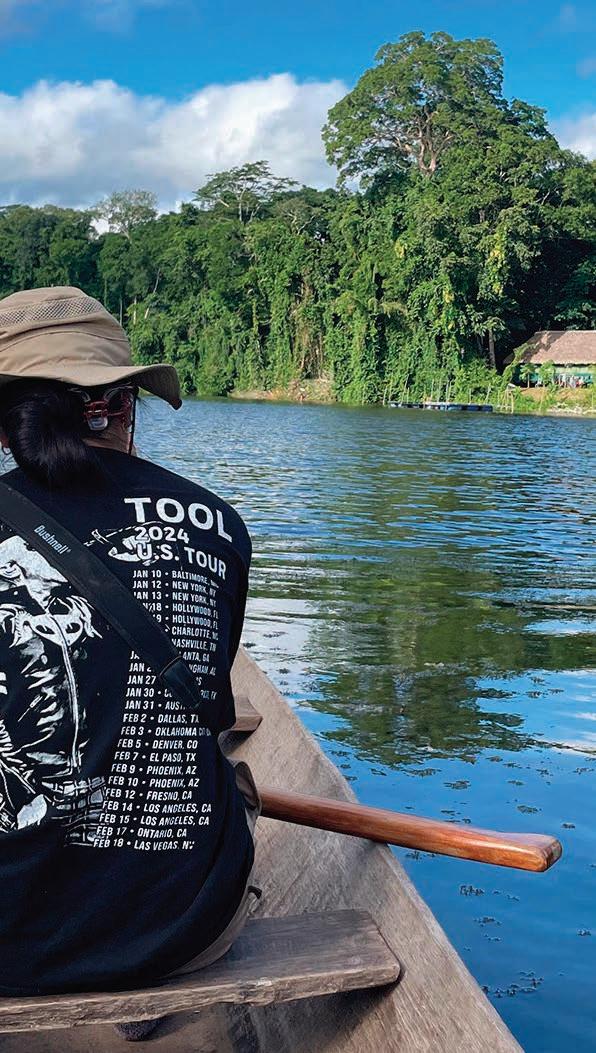




trying to cross a river to sample new types of forest, a group had to wade through chest-high water, navigating spiky bamboo and bullet ants.
Sayers said he and the teaching staff were impressed by the strength and capability of the students. Blumstein, too, said he and Fong are often humbled by the resilience of their students.
“You can take a bunch of Angelenos ... and stick them in one of the most rugged environments on Earth,” Sayers said. “Temperatures pushing 90 degrees Fahrenheit every day, above 90% humidity, biting insects, risk of tropical illness, ... and they can come out with nearly publishable research,” Sayers said.




Not only was the physical environment a challenge, but research comes with a whole host of frustrating trial and error. Sylvia, Caressa and I used 12 different lanterns for our experiment to study the impacts of artificial light at night on spiders. Every single one of them broke. But we persisted, managing to gather enough measurements for a usable dataset.
Through difficulty comes growth. Kahn warns that the field environment has the potential to be harsh but urges the immersement is worth it.

overwhelmingly biodiverse environment was no easy task. On one occasion during the winter 2025 Peru trip, the team had to lug hundreds of pounds of equipment a few football lengths distance through sticky mud, sand flies and beneath a scorching sun. In another instance, when
“You learn so much about how the natural world works,” Kahn said. “It’s just a really incredible experience.”
But the experience is not cheap. To help cover airfare, transportation, lodging, food and other research costs, the student contribution for Peru 2025 amounted to over $2,000. EEB department funds subsidize the cost, and students may be considered for financial aid or scholarships. However, especially with in-house grants from the university drying up, Blumstein said the trips need more funding.
Through a trickle-down effect, federal defunding of academic research may indirectly impact scientific programs like the FBQ, MBQ and FMBQ. Sayers said, especially in this political climate, it is especially important to ensure the financial stability of these programs.
“Without academic research, there’s little truth we could garner about the world,” Sayers said. “Science is essentially the closest we can get to ‘the truth’ by standardizing experiments and observations.”
When formulating their projects, students are often interested in investigating the influence of humans on natural systems, Blumstein said. Gobbell, for example,
Without academic research, there’s little truth we could garner about the world.
studied the response of pheasantlike tinamous to anthropogenic noise. My project investigated the effect of different colored artificial light on spider web building behavior.
Blumstein said that, by investigating human impact on ecosystems, researchers can help identify and remove stressors to aid survival in a rapidly urbanizing world. Earth is tumbling toward massive species loss, with human impacts implicated in these population declines, he added. Sayers added that without research, misinformation may persist.
“We’re under threat in many ways right now with a national dialogue that is weaponizing universities, with a national dialogue that is not purposefully recognizing the good that comes out of universities in general and higher education in specific,” Blumstein said. “That’s a problem.”
Blumstein said that there is an unfortunate, unmet demand for FBQ, MBQ and FMBQ participation. The teaching capacity is too limited to open the opportunity to all students. But the experiences are life changing, Sayers said.
“You are quite literally making a scientist by allowing them to pursue that. So I think it’s totally worth the investment from an academic university budgeting standpoint,” Sayers said.
I found my time at Cocha Cashu invaluable. Among the spiders, the trees and even the barrage of mosquitoes, I have never learned so much in such a succinct period of time.
–
Journal Entry: 2/12, 9:58 p.m. Cocha Cashu Biological Station
“Cocha Cashu has taught me adjustment. Resilience. Flexibility & adaptation. Resourcefulness. Perseverance, diligence. Communication! The power of friendship and conversation. Our role within the tapestry of life and ecology.”
–
I returned to LA with hours of storytelling material, a much deeper understanding of nature and a newfound appreciation for the flushable toilet. I still miss the choir of insects and birds in the morning, and my vision drowning in green foliage. I miss piping ají sauce onto plates of steaming rice and beans, and laughing as one of my classmates inevitably stepped in a puddle of leaking rainwater.
If an underclassmen were to approach me for advice, I’d heavily encourage them to apply for the program. There are some things you can only really learn by doing.
“I would say it’s transformational for everyone,” Blumstein said. “They’ve loved the experience, they thought it was way too much work, but they’ve learned so much, and they continue to put into it.”




Martin Sevcik [PRIME director]
Alicia Carhee [PRIME content editor]
Isabel Rubin-Saika [PRIME art director]
Amanda Velasco, Layth Handoush, Tulin Chang Maltepe, Myka Fromm, Julian Dohi, Anna Dai-Liu, Rachel Rothschild, Aisosa Onaghise, Paco Bacalski, Reid Sperisen, Davis Hoffman, Gwendolyn Lopez, Eghosa Otokiti, Lyah Fitzpatrick [writers]
Zimo Li [photo editor]
Michael Gallagher, Darlene Sanzon, Aidan Sun [assistant photo editors]
Selin Filiz, Ruby Galbraith, Max Zhang, Myka Fromm, Anna Dai-Liu, Nicolas Greamo, Zimo Li, Brandon Morquecho, Leydi Cris Cobo Cordon [photographers]
Helen Juwon Park [illustrations director]
Helen Juwon Park, Zimo Li, Jelani Kawaichi, Joanne Lee [illustrators]
Lindsey Murto [design director]
Shrey Chaganlal, Tyler Cho, Crystal Tompkins [assistant design directors]
Lindsey Murto, Tyler Cho, Isabel Rubin-Saika, Vienna Vipond, Felicia Keller, Rachel Yokota, Millie Walker, Ava Johnson, Paco Bacalski, Mia Tavares, Katie Azuma, Martin Sevcik, Karina Aronson [designers]
Nicole Augusta and Paco Bacalski [copy chiefs]
Rori Anderson, Anna Dai-Liu, Lucine Ekizian, Jeannie Kim, Wendy Mapaye, Aisosa Onaghise, Barnett Salle-Widelock, Bettina Wu [slot editors]
Ed Nawrocki, Donny Rimer, Sakshi Thoutireddy, Tyler Tran [online editors]
Richard Yang [PRIME website creator]
Iman Baber, Matthew Beymer, Sanjana Chadive, Tulin Chang Maltepe, Layth Handoush, Davis Hoffman, Gwendolyn Lopez, Julianne Le, Sam Mulick, Katy Nicholas, Rachel Rothschild [PRIME staff]
Dylan Tzung, Julian Dohi, Jacqueline Jacobo, Katarina Baumgart, Eghosa Otokiti, Amanda Velasco, Andrew Wang, Danielle Workman, Sasha Zimet [PRIME contributors]
Lex Wang [editor in chief]
Sanjana Chadive [managing editor]
Mia Tavares [digital managing editor]
Jeremy Wildman [business manager]
Abigail Goldman [editorial advisor]
The Daily Bruin (ISSN 1080-5060) is published and copyrighted by the ASUCLA Communications Board. All rights are reserved. Reprinting of any material in this publication without the written permission of the Communications Board is strictly prohibited. The ASUCLA Communications Board fully supports the University of California’s policy on non-discrimination. The student media reserve the right to reject or modify advertising whose content discriminates on the basis of ancestry, color, national origin, race, religion, disability, age, sex or sexual orientation. The ASUCLA Communications Board has a media grievance procedure for resolving complaints against any of its publications. For a copy of the complete procedure, contact the publications office at 118 Kerckhoff Hall. All inserts that are printed in the Daily Bruin are independently paid publications and do not reflect the views of the Editorial Board or the staff.
To request a reprint of any photo appearing in the Daily Bruin, contact the photo desk at 310-825-2828 or email photo@dailybruin.com.