Scotland’s Oldest Agricultural Cooperative Trading Together, Growing Together, Since 1903

Scotland’s Oldest Agricultural Cooperative Trading Together, Growing Together, Since 1903

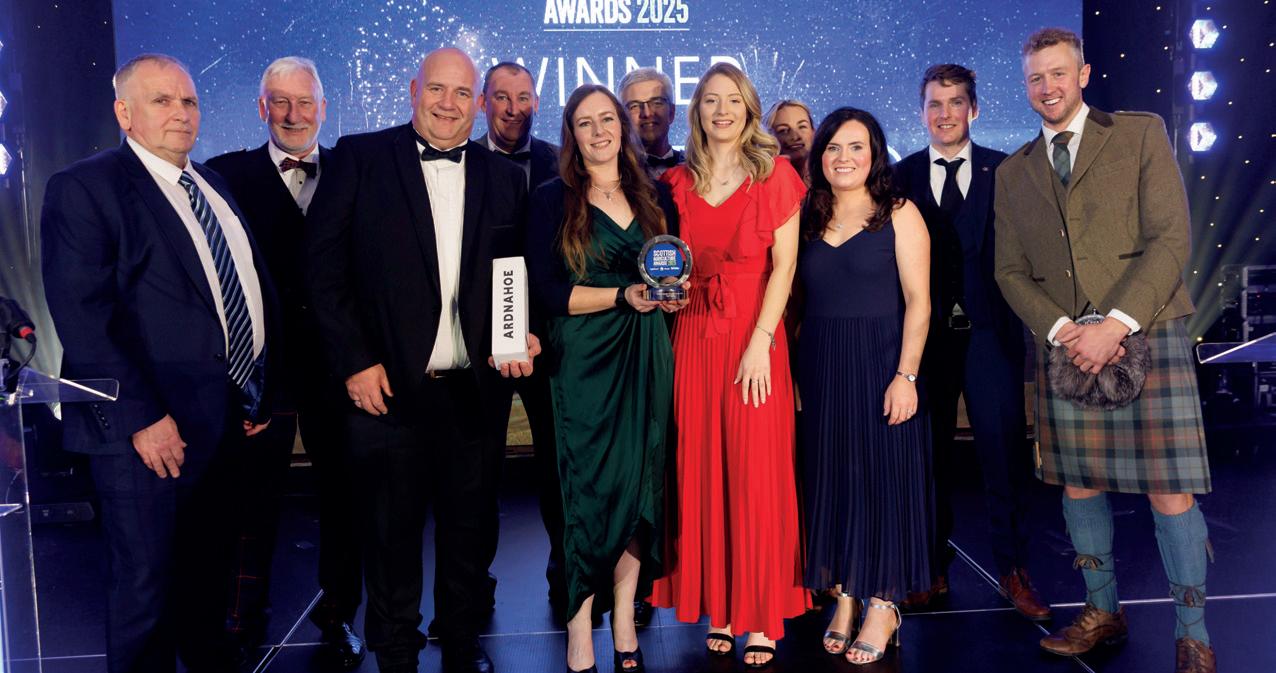
Tarff Valley was pleased to have won the ‘Animal Health Provider of the Year’ award at the Scottish Agriculture Awards in Glasgow on 23rd October! This incredible achievement is a true reflection of the hard work and dedication of our Registered Animal Health Advisers, whose commitment has made this success possible.








Tarff Valley Ltd is pleased to announce the appointment of Ian Houston as its new Chief Executive Officer. Ian succeeds Rod Sanderson, who announced his intention to retire earlier this year.

EDITOR Megan Williams
INFU Scotland, Rural Centre, West Mains
Ingliston, Edinburgh EH28 8LT
NFU Scotland, Rural Centre, West Mains Ingliston, Edinburgh EH28 8LT
Tel: 0131 472 4000 www.nfus.org.uk nfuscotland @NFUStweets
Tel: 0131 472 4000 www.nfus.org.uk nfuscotland @NFUStweets
t’s funny to think back to more than a century ago when, in a crowded room in Glasgow one October evening, farmers and crofters from across Scotland gathered to vote unanimously in favour of the creation of NFU Scotland. Momentum had gathered in the months before, where, from Highland shows to auction markets, conversations were calling for a unified approach to tackling the challenges that lay ahead.
Many years later, and as we draw to the end of 2025, much has changed. For one, membership is no longer 25 pence, but many things remain unchanged too, or perhaps evolved, and some feel greater than ever – the future, the climate. Yet one thing does endure, and that is the strength of a collective voice. The power of over 9,000 people standing together for a fair and sustainable future for Scottish agriculture. It’s a spirit we’ve seen throughout the year, from IHT rallies to summer shows and, most recently, at our Autumn Conference, AgriScot, AGMs and the Future Support Roadshows. This edition of the Leader, focusing on people, celebrates that same strength.
Editor
Diana McGowan editor@nfus.org.uk
Editor Diana McGowan editor@nfus.org.uk
Managing Editor
Craig Gibson
Managing Editor Craig Gibson
In my short time here, I’ve been inspired by the passion and care that run through Scottish agriculture. Each edition I edit reminds me what a privilege it is to share the stories of our NFUS community. That’s why this December/January edition shines a light on the people who make the industry what it is - those at its heart, those stepping into it, and those shaping its future.
Design & Production
Ryan Swinney
Design & Production Ryan Swinney
Advertising Sales
As we look back on 2025, we meet 12 remarkable individuals who have defined the resilience and innovation of Scottish agriculture on page 16. From unsung heroes to forward thinkers, we are proud to celebrate each person and thank them for their contribution to the industry.
Clare Stebbing clare@connect communications.co.uk
Tel: 0131 561 0024
On page 35, you’ll also find a powerful feature on Farmstrong’s work to break the silence around menopause – and the women who are sharing their stories to challenge stigma and changing the conversation. We also hear from Ben McClymont on page 49, Chair of the NFUS Next Generation Committee, on why he’s challenging the description of Scotland’s tenanted sector as being in “managed decline” – arguing that it has been, and still can be, one of the greatest assets for bringing new talent and fresh energy into the industry.
Advertising Sales Clare Stebbing clare@connect communications.co.uk Tel: 0131 561 0024
Published on behalf of NFU Scotland by Connect Publications (Scotland) Ltd. Studio 2001, Mile End, 12 Seedhill Road, Paisley PA1 1JS
From the policy updates on page 26 to the regional reports on page 36, there’s a lot to dig your teeth into in the lulls that come with the festive period. And I hope, as your reading, you too are reminded of that same commitment and optimism which drove the creation of the Union, and continues to shape a stronger future for Scottish agriculture – rooted in solidarity, dedication, and shared purpose.
Thank you for your continued support, and Merry Christmas.
Editor Megan Williams editor@nfus.org.uk
Design & Production
Mark Shreeve mark.shreeve@micropress.co.uk
Andrew Hirst andrew.hirst@micropress.co.uk
Advertising Sales
Danny Lewis 01502 725862 danny.lewis@micropress.co.uk
Published on behalf of NFU Scotland by Connect Publications (Scotland) Ltd. Studio 2001, Mile End, 12 Seedhill Road, Paisley PA1 1JS
number to contactus@nfus.org.uk
NFU Scotland Rural Centre, West Mains Ingliston, Edinburgh EH28 8LT 0131 472 4000 www.nfus.org.uk
Lawrence Kenny 01502 725860 lawrence.kenny@micropress.co.uk Published on behalf of NFU Scotland by
HHpositive thought/ silent commitment? Possibly too
realise that positive thought/ silent commitment? Possibly too
In this month’s magazine, our two features cover inspiring stories and highlight just how rewarding delivering on such thoughts can be both for the individual involved and others who may benefit along
In this month’s magazine, our two features cover inspiring stories and highlight just how rewarding delivering on such thoughts can be both for the individual involved and others who may benefit along
We’re only a few weeks away from the Royal Highland Show. Over the course of four days, thousands will flock to the show to compete, judge, exhibit, organise, educate and socialise. We’ll see the best of the best and relish the atmosphere. Among the highlights and away from the main show ring, this year will see the welcome return of the Golden Shears Sheep Shearing and Woolhandling World Championships. Taking place at the MacRobert Theatre, the 2023 Worlds will see more than 30 countries compete for the prestigious title and it promises to be an action packed showcase of the art, skill and techniques required to be a world champion. Perhaps a less well known event taking place at this year’s Highland is the final qualifying round of the 2023 Britain’s Fittest Farmer competition. Taking part in this event for the first time is Kyla Graham from Kirkcudbrightshire. Kyla first spotted the event at the Show last year and while watching it thought ‘I’m up for that’. Kyla knew however she couldn’t
We’re only a few weeks away from the Royal Highland Show. Over the course of four days, thousands will flock to the show to compete, judge, exhibit, organise, educate and socialise. We’ll see the best of the best and relish the atmosphere. Among the highlights and away from the main show ring, this year will see the welcome return of the Golden Shears Sheep Shearing and Woolhandling World Championships. Taking place at the MacRobert Theatre, the 2023 Worlds will see more than 30 countries compete for the prestigious title and it promises to be an action packed showcase of the art, skill and techniques required to be a world champion. Perhaps a less well known event taking place at this year’s Highland is the final qualifying round of the 2023 Britain’s Fittest Farmer competition. Taking part in this event for the first time is Kyla Graham from Kirkcudbrightshire. Kyla first spotted the event at the Show last year and while watching it thought ‘I’m up for that’. Kyla knew however she couldn’t just enter there and then. Like any
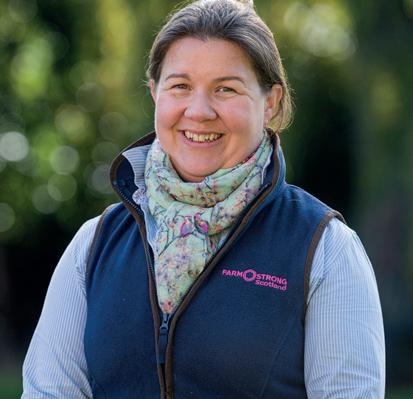
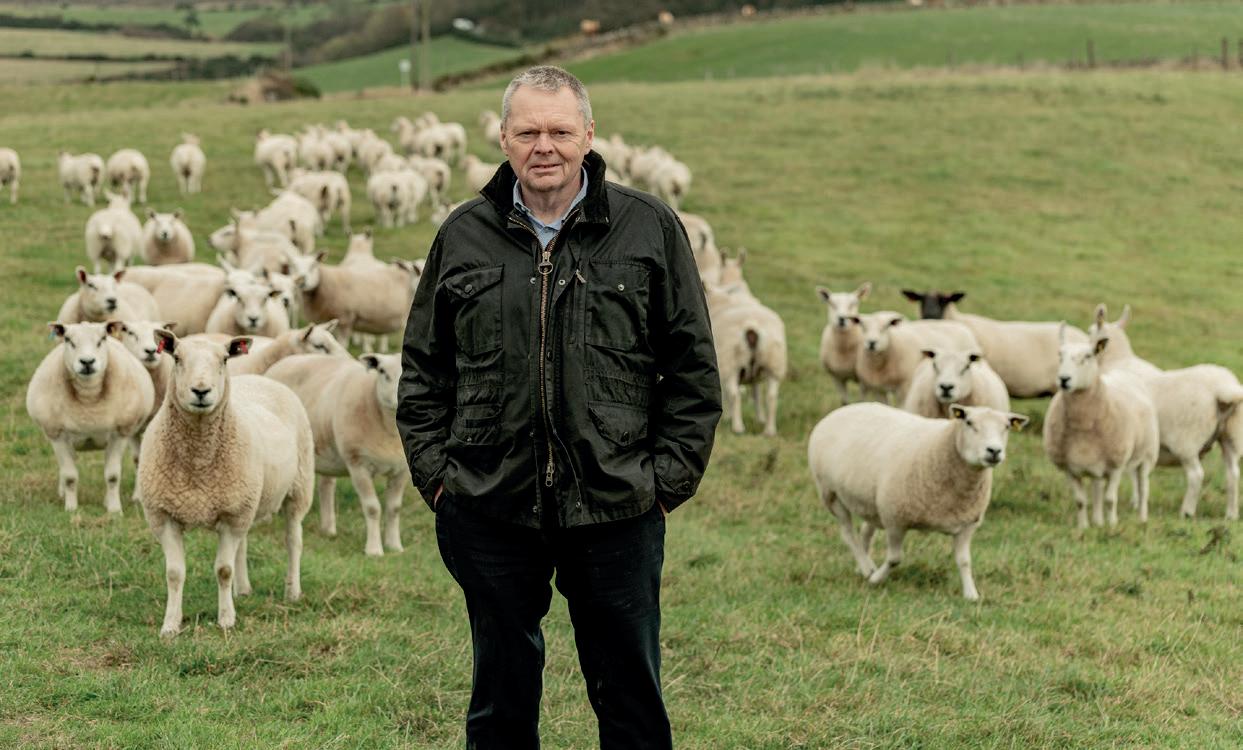

Andrew Connon President
It has been a hectic year in agricultural politics, and there is still much to play for. The aftershocks of the Westminster Budget on 30 October 2024 continue, particularly regarding the planned changes to Inheritance Tax (IHT), Business Property Relief (BPR) and Agricultural Property Relief (APR) – the number one concern for our members over the past 14 months.
As I write, the 2025 Westminster Budget looms on 26 November. While I hope for a shift in thinking on BPR/APR, my gut feeling is that the Treasury will remain firm. The run-up to Christmas will therefore be busy as we seek amendments in the Finance Bill. The stakes remain high: on 21 November, we delivered letters to all 37 Scottish Labour MPs detailing our deep concerns, and on 3 December we will visit Westminster to press our key demands - engaging directly with politicians and joining forces with the other Unions to ensure a united voice.
Looking ahead to the Scottish Budget on 13 January, our key ask remains an increased, ring-fenced, multi-annual budget for our industry. Year-to-year funding simply will not work for farming and crofting, where long-term planning is essential. We made this clear at our Autumn Conference
to the Cabinet Secretary and again at AgriScot to Minister Fairlie.
The Future Farming Investment Scheme (FFIS) has undoubtedly caused much debate. NFUS successfully secured an uplift of 52 per cent to £21.4 million, reflecting huge demand. While welcomed, concerns emerged following the announcement of successful recipients on 31 October. We immediately highlighted our concerns to the government – sending a letter querying how the allocation process was undertaken and asking for a meeting. What we do know right now is that lessons need to be learned by government as regards the delivery process for the next round in 2026.
Fairness in the supply chain remains a key strategy, particularly given volatility this year. Arable farmers, especially those growing malting barley, have faced a bruising year, with little optimism for 2026, and some have already made alternative cropping choices. Maltsters have been under pressure, with job losses and a plant closure confirmed, with the demand for malt dramatically declining by distillers over the past eight months.
Similar pressures affect milk, potatoes, and pigs, highlighting how delicate the balance is across our industry. This makes our now-regular conversations with processors and end users essential.
Our ShelfWatch campaign continues to open doors with all major retailers with visits to the headquarters of ASDA and Morrisons in early December. Discussions covered the ShelfWatch initiative, sourcing, promotion, branding, pricing, labelling, supply-and-
demand, regulation, imports, and more.
In early November, I spoke at a Global Food Security Conference in Edinburgh. Amongst other things, I highlighted that a population of 9.7 billion by 2050 will need food - and food needs farmers. I emphasised the importance of allowing Scottish farmers and crofters to use our resources to produce food here, rather than downsizing our industry, importing food, and offshoring emissions.
On the 6 November the Cabinet Secretary for Net Zero and Climate Change, Gillian Martin MSP, unveiled the new draft Climate Change Plan to 2040. She acknowledged that farmers and crofters are part of the solution and must be brought along, not burdened; that reducing livestock in Scotland would only increase imports and not cut emissions; and that farming is part of the fabric of Scotland and critical to our economy. These are welcome statements influenced by your NFUS.
Looking back, 2025 has been a mixed year, with fortunes varying across sectors. Politics and extreme weather have added pressures. Looking ahead, we have much to tackle in 2026: the Scottish Budget on 13 January, ongoing lobbying on IHT/ BPR, shaping future agricultural policy, contributing to a multitude of consultations and Bills, and publishing our manifesto for the Scottish Election in May.
Finally, as the festive season approaches, I wish you all a peaceful Christmas and a healthy, happy and prosperous 2026. Thank you for all of your support this year.

HOLP – ROTOP ATTACHMENT SCOTTISH DISTRUBUTOR
– ROTOP ATTACHMENT SCOTTISH DISTRUBUTOR
HOLP – ROTOP ATTACHMENT SCOTTISH DISTRUBUTOR





Distribution, Sales, Hire Fleet, Service, Spares, Training Wheeled dumpers, tracked dumpers, excavators, telehandlers, special machinery
Distribution, Sales, Hire Fleet, Service, Spares, Training Wheeled dumpers, tracked dumpers, excavators, telehandlers, special machinery
Distribution, Sales, Hire Fleet, Service, Spares, Training Wheeled dumpers, tracked dumpers, excavators, telehandlers, special machinery
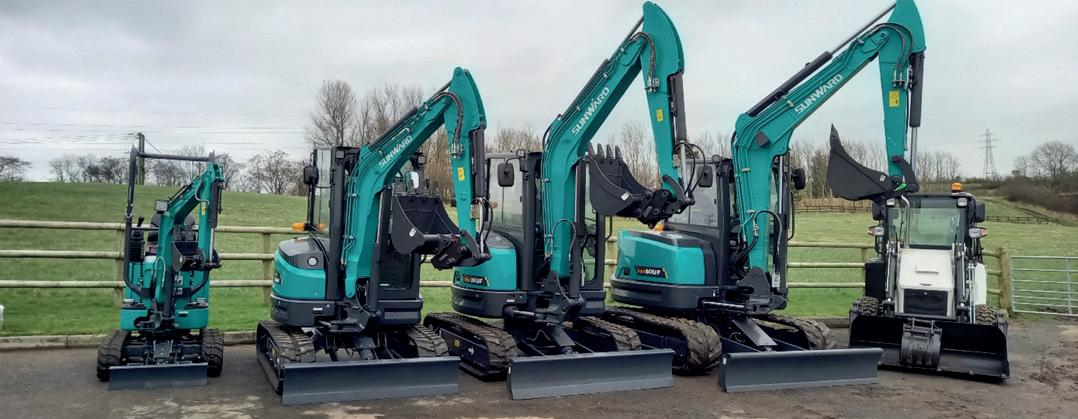
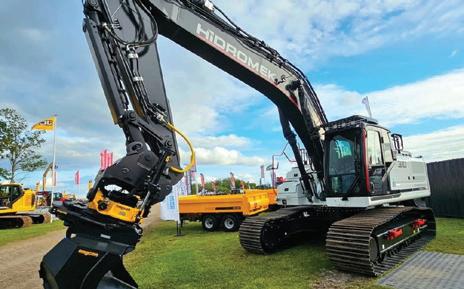
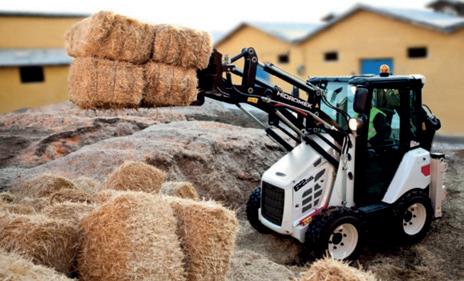
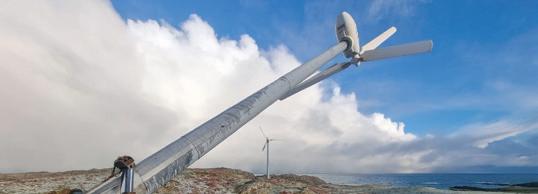
Kattrak International Ltd is proud to be an official Scottish dealer & distributor for Sunward, Hidromek and Holp Rototop Attachments
Kattrak International Ltd is proud to be an official Scottish dealer & distributor for Sunward, Hidromek and Holp Rototop Attachments
Kattrak International Ltd is proud to be an official Scottish dealer & distributor for Sunward, Hidromek and Holp Rototop Attachments
Kattrak offers a broad range of wheeled & tracked dumpers as well as other machinery for hire at competitive rates
Kattrak offers a broad range of wheeled & tracked dumpers as well as other machinery for hire at competitive rates
Kattrak offers a broad range of wheeled & tracked dumpers as well as other machinery for hire at competitive rates


Distribution, Sales, Hire Fleet, Service, Spares, Training Wheeled dumpers, tracked dumpers, excavators, telehandlers, special machinery
Kattrak International Ltd is proud to be an official Scottish dealer & distributor for Sunward, Hidromek and Holp Rototop Attachments
Kattrak offers a broad range of wheeled & tracked dumpers as well as other machinery for hire at competitive rates
Ardoch Farm, Old Glasgow Road, Kilwinning, KA13 7QJ Telephone: 01294 557835, fax: 01294 554095
Ardoch Farm, Old Glasgow Road, Kilwinning, KA13 7QJ Telephone: 01294 557835, fax: 01294 554095
Ardoch Farm, Old Glasgow Road, Kilwinning, KA13 7QJ Telephone: 01294 557835, fax: 01294 554095 E-mail: sales@kattrak.com or info@kattrak.com
E-mail: sales@kattrak.com or info@kattrak.com
E-mail: sales@kattrak.com or info@kattrak.com

Ardoch Farm, Old Glasgow Road, Kilwinning, KA13 7QJ
Telephone: 01294 557835, fax: 01294 554095
E-mail: sales@kattrak.com or info@kattrak.com



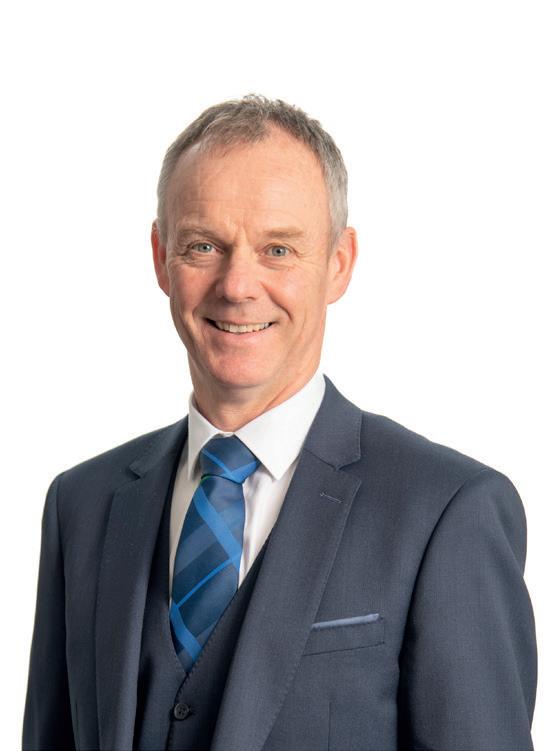

ORobert Neill Vice President

ODuncan Macalister Vice President
ne of the most important lessons that I have learned as VP is the power of teamwork within the Union. We all know that NFUS’ main mission is to promote profitable and sustainable farming. We achieve this through our members feeding issues into branches, monitors, regional boards policy committees, regional and policy staff and the board. This is what I call the NFUS team, or family.
As an individual within the team, it is almost impossible to do your job alone - and why would you want to? Our strength lies in working together. I learnt as a young man that if you work with folk, folk will work with you, or, in other words, there is no I in team. It is important also to voice your opinion and to hear both sides of the argument but, at the same time, we work on the principle that we agree to disagree. Debate is positive and it’s important to air ideas. I am a great believer that if you have a hundred ideas and only one is good one, we will get ahead.
ne of my highlights during the last month was attending the Scottish National Premier Meat Exhibition Winter Fair and Prize Giving at ABP, Bridge of Allan. Seeing the carcasses all lined up in the chills and graded this was beneficial and hopefully we can relate this to grading and selecting our own cattle. This is a must for any beef and lamb finisher.
AgriScot was yet again a great event where the industry came together for a day at Ingliston. This event has evolved over the last few years and there really is something for everyone. Not being Chairman this year meant there was much less pressure on me, but I would like to congratulate Gilmour Lawrie and the team that worked behind the scenes to make this event happen.
We hosted Lothian and Borders Region for an open day to look at cattle handing facilities – and we also had our software provider Farm Matters, Datamars and Tepari on hand to answer any queries about the equipment we are using. With over 50 people in attendance it was an incredibly worthwhile day.
The Future Farming Investment Sheme seems to have brought much disappointment, with many feeling the money has not ended up going to the target applicants that the scheme was intended to benefit. We must get to the bottom of what has happened and ensure lessons from this round are taken forward into future opportunities. We must not, however, forget that there has still been a boost of £21.4 million into the agriculture sector.
As the year draws to a close, it’s worth reflecting on another busy and challenging year for farming and crofting. Despite frustrations, there is strong momentum and enthusiasm across the industry to invest in productivity, sustainability, and resilience. Finally, I would like to thank all our members, partners, and supporters for their continued hard work and engagement throughout the year. Your input, commitment, and passion make all the difference.
It is also important that we have debates, heated or otherwise, behind closed doors and, like all good families, when we speak to government, we speak with one voice. With one voice, we will have the greatest impact.
It is vital that as members you have your say - feed your thoughts and issues in whichever way you feel comfortable: pick up the phone, send an email or compose a text. We’ve been working this year to smooth this process – so you’ll now find one contact number (0131 472 4000) and one email (contactus@nfus. org.uk) to get hold of us on. Please never assume that somebody else will speak for you. We will never tire of hearing your point of view it is what makes the Union work, and you will then feel part of the team.
Thank you for all you have contributed to our industry this year.
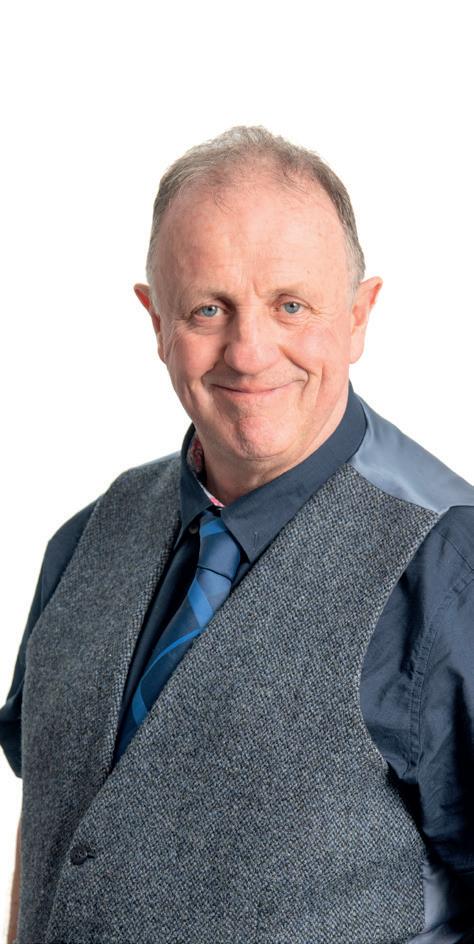


s I look back on my first full year as Chief Executive, one thing stands out above all else – the strength of this Union lies in its people. From our members in every corner of the country to our regional teams, office staff and Board of Directors, NFU Scotland is powered by dedicated individuals working tirelessly for a shared cause: securing a profitable and sustainable future for Scottish agriculture.
That shared sense of purpose is what defines us. Whether it’s a crofter on the west coast adapting to extreme weather, a dairy farmer in Ayrshire investing in new technology, or one of our policy officers making the case for fair treatment in Holyrood or Westminster – every contribution adds up to something powerful. It’s the collective strength of our people that enables NFU Scotland to be an organisation that not only represents farmers and crofters, but actively shapes the future of our industry.
The past twelve months have been a period of real delivery and direction. We’ve built on a strong foundation, translating ambition into action through the clear framework of our Business Strategy 2024–2027. That strategy sets out the path ahead – how we will strengthen the Union, increase our influence, and ensure that Scotland’s farmers and crofters have the confidence, clarity and support they need to thrive in a changing world.
It also gives us a way to measure success – not just by the number of meetings we attend or policies we influence, but by the tangible outcomes we deliver for members: better representation, stronger relationships, improved communication, and a more effective, resilient organisation.
Everything we do is now anchored around six core priorities:
Putting members at the heart of every decision, strengthening engagement and ensuring the Union remains relevant and accessible to every farmer and crofter in Scotland.
Using evidence-based advocacy to shape legislation, funding and regulation in ways that deliver profitability, fairness and sustainability.
Investing in our staff, group secretaries and elected representatives to create a culture that is values-driven, collaborative and high-performing.
Each of these priorities is interconnected and essential. Together, they define how NFU Scotland operates today and how we will lead tomorrow. Over the course of this report, you will see evidence of how these priorities are being turned into action –how we’ve modernised the organisation, strengthened our voice, and continued to deliver results for our members in one of the most challenging, but opportunityfilled, periods in Scottish agriculture’s history.
Our mission remains simple but vital: to support our members and positively influence the operating environment for Scotland’s farmers and crofters. As we move forward, that mission will guide every decision we make and every
The past twelve months have been a period of real delivery and direction. We’ve built on a strong foundation, translating ambition into action through the clear framework of our Business Strategy 2024–2027.
Ensuring the organisation remains secure, efficient and able to direct maximum resources to member representation and services.
Modernising our structures so that decisions are transparent, accountable and effective.
Telling our story with clarity and confidence, demonstrating the value of Scottish agriculture to policymakers, consumers and the wider public.
partnership we build, ensuring that NFU Scotland continues to be the trusted, influential and forward-looking voice that our industry deserves.
I would like to take this opportunity to wish you a very Merry Christmas and a Happy New Year, and to thank you for your continued support of the Union.
John Davidson, CEO






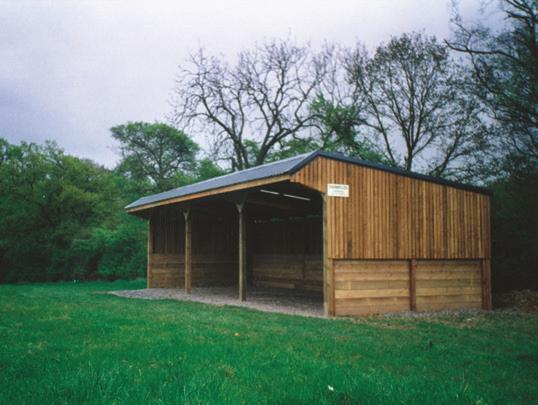
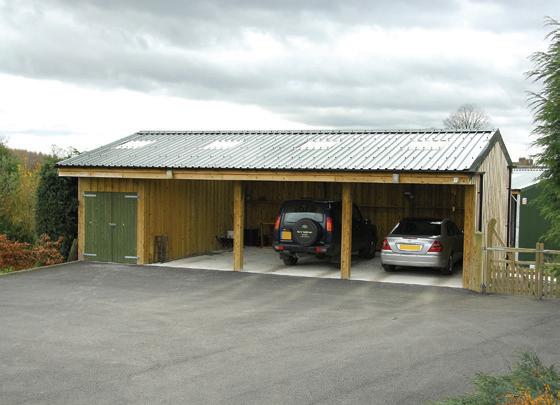
Natural products from renewable sources. Caring for the environment.
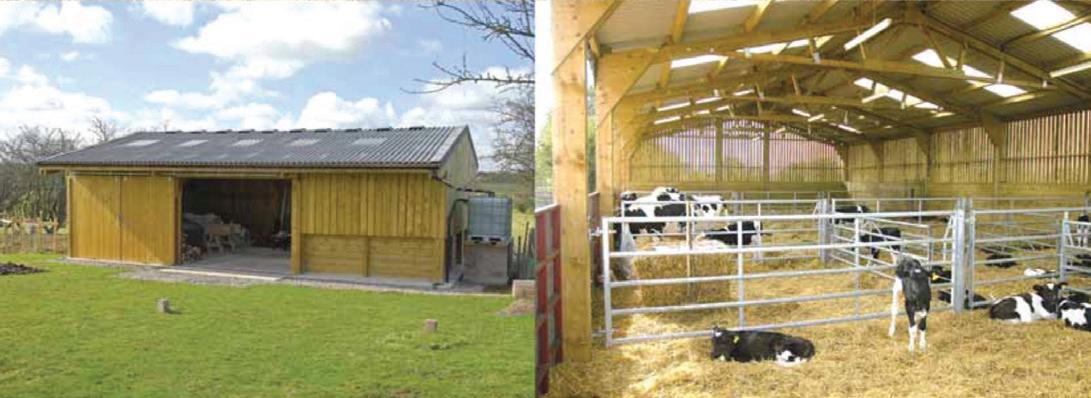
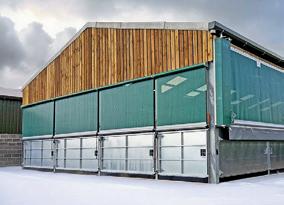
EXAMPLE (TOP LEFT) as shown £7,500 + VAT
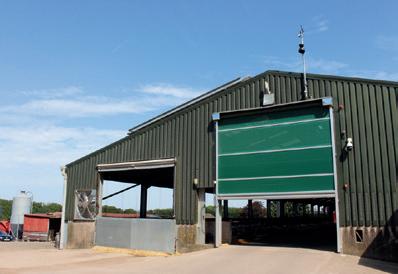
3 BAY MONOPITCH
45ft x 17ft x 10ft 6in eaves £9,000 incl VAT + many other options available, please see our website. Prices correct as of December 2025
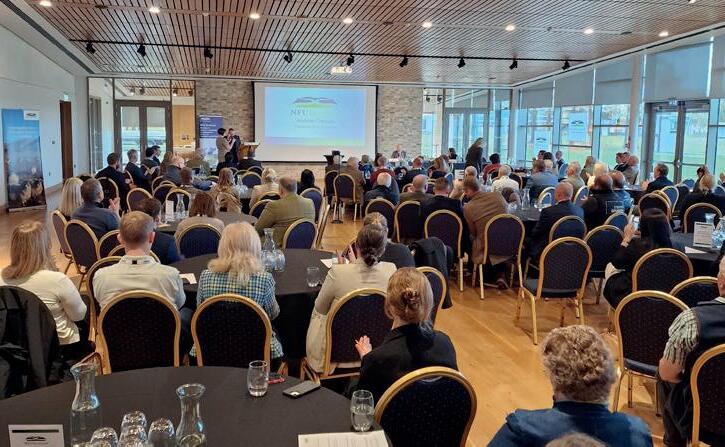
From precision livestock monitoring to data-driven dairy systems and climate-resilient crops, NFU Scotland’s Autumn Conference 2025 showcased how science and innovation is already transforming farming – and what lies ahead.
In October, the Royal Highland Centre at Ingliston became a hub of forwardthinking as NFU Scotland members, researchers, policymakers and technology pioneers gathered under the banner of “Science & Innovation.” With Scottish agriculture navigating shifting markets, climate challenges and tightening margins, the message was clear: innovation isn’t experimental – it’s the key to a sustainable and profitable industry.
A Tradition of Progress
Innovation has always driven farming, from the first tools that turned the soil, to the machinery that revolutionised food production. Today, a new wave of progress is powered by science, data and digital technology, with Scottish farmers and crofters, once again, leading the charge.
Opening the conference, President Andrew Connon reminded delegates that while the challenges are real, the industry’s ability to adapt together remains one of its greatest strengths.
“I’ve always believed that when farmers and crofters come together, we get results. The next few years will be pivotal. Theres a lot to get through and a profitable future for Scottish agriculture is our clear goal. But with clarity of purpose, strong leadership, a united front, and working as a team, there is no doubt in my mind that Scottish agriculture will not just endure, it will thrive.”
A highlight of the day was the “Innovation in Practice” panel, chaired by Fraser Graham (SAYFC). Panelists Sion Williams (Bowhill Estate), Jilly Duncan Grant (Herd Advance) and Dr Mike Christian (Digital
Dairy Chain) explored how farm-level technologies are turning research into real-world results. Discussions ranged from smartphone livestock monitoring and data analytics for animal health, to the farreaching benefits of connected farming.
Agri-tech entrepreneur Jilly Duncan Grant, co-founder and CEO of Herd Advance, shared how her company’s flagship technology, Stockman, enables real-time cattle monitoring – tracking weight, water intake and body temperature as animals drink. “This system allows farmers to detect changes in performance and health early,” she explained. “It supports faster decisions, helps optimise performance and improves herd wellbeing.”
Dr Mike Christian, vet and innovation broker with SRUC’s Digital Dairy Chain, described how digital integration is reshaping livestock management. One example is the Pneumonitor: a sensor that tracks calf-shed conditions to prevent pneumonia. Mounted at calf height, it measures temperature, humidity and air quality, sending alerts when conditions become risky.
Beyond this, the Digital Dairy Chain is creating a digital twin of the farm –combining data from animal health, feed, fertility and weather, and using AI and machine learning to automate video analysis in cattle sheds.
The afternoon turned its focus to crops, with Professor Tim George from the James Hutton Institute sharing research on future-proofing one of Scotland’s most valuable assets – barley.
Through the International Barley Hub, scientists are developing varieties that can thrive in a changing climate. Long-term modelling suggests drought frequency could double by 2050 in parts of Scotland. The team’s work focuses on breeding barley suited to regenerative systems and lower input use, while enhancing soil-microbe relationships for greater nutrient efficiency.
Innovation also means smarter administration. Tom Porter, a young farmer from Carnoustie, unveiled AgriAudit –a mobile app designed to streamline compliance and assurance schemes. By centralising requirements from multiple certification bodies, the platform allows farmers to upload documents once and automatically apply them across schemes. “Farmers spend too much time buried in forms and folders,” Tom said. “AgriAudit gives them that time back.”
Adding to the day’s optimism, the Scottish Government announced an additional £7.4 million, taking total funding for the Future Farming Investment Scheme (FFIS) to £21.4 million. The record demand for FFIS support highlights farmers’ growing appetite for innovation – and government backing for it. Delegates left with a clear message: investment in innovation isn’t optional; it’s fundamental to futureproofing Scottish agriculture.
The Autumn Conference also marked an important milestone for the Union, with the launch of NFU Scotland’s new Policy Strategy. Introduced by Director of Policy Jonnie Hall, the strategy outlines how the organisation will champion a profitable, sustainable and resilient future for Scottish agriculture in the years ahead. It brings together the key priorities for farming and crofting – from future support and farming production systems, to fairness in the supply chain, land and species management and climate change. You can read it at https://www. nfus.org.uk/policy/policy-strategy.aspx or scan the QR code.

From sensors in sheds to smarter software and climate-resilient crops, the discussions had at the Autumn Conference shared a common goal: making Scottish farming and crofting more strategic, sustainable and rewarding.
As President Andrew Connon concluded: “Scotland’s farmers and crofters continue to show the grit, professionalism and adaptability that make me proud to be part of this industry – and proud to stand here as NFU Scotland President.”

Words from
Jonnie Hall Deputy CEO/Director of Policy
In my view, this is one of the most challenging and important times for Scottish agriculture in a generation.
As Director of Policy at NFU Scotland, my job, and that of our whole policy team, is to represent a sector that is extraordinarily diverse
Our farms and crofts vary so much by size, type and location, all of which reflects our agricultural landscape – which has been shaped as much by history and culture as by topography, soils and climate. And that’s before I get started on the influence of decades and decades of agricultural policy and fluctuating market forces.
is, public finances are tighter than ever. There is simply not enough money in the system to meet every expectation in full.
My task is all about positioning Scottish agriculture as the means to meet the Scottish Governent’s goals – so that it puts farmers and crofters front and centre. But my task is equally about positioning Scottish Government as the means to meet farmers and crofters’ goals. The two are mutually dependent on each other.
I engage many of our members, in all sorts of contexts, and they’re all different and with different opinions. But that only goes to underline the constant that there is no ‘one size fits all’ solution for Scottish agriculture.
I sometimes wonder what it would be like to work for a single-issue, single-minded organisation. But never with any envy.
The diversity of Scottish agriculture, and the views of our members, is both its greatest strength and its biggest policy challenge. And experience tells me that what Scottish agriculture may want isn’t necessarily what it needs. I have little or no skin in the game. I don’t farm. But that also works to my advantage in that I can see things from many perspectives without any inherent bias. And I’m no different to others in that I can’t be wrong and I may not be right, because it’s my opinion. What is fact, however, is that everything I do and say is done in the very best interests of our members, NFU Scotland, and for the wider benefit of farming and crofting across Scotland.
None of that’s easy to say, but
I sometimes wonder what it would be like to work for a single-issue, single-minded organisation. But never with any envy
From crofting on the west coast to the large arable business in the east, from extensive hill livestock units to intensive grassland dairy units, from soft fruit and vegetable growers to pig and poultry producers – every member of NFU Scotland shares a deep commitment to producing high-quality food, managing the land, and sustaining our rural communities. But how we achieve those shared outcomes, and how policy can best support them, often looks very different –we all have different perspectives.
At the same time, the Scottish Government faces its own competing pressures – from climate targets to biodiversity restoration, from rural depopulation to fiscal constraint. These are legitimate and serious priorities. The truth
sometimes it needs to be said.
We must also be candid about other things. An obvious issue to me is that Scotland’s future agricultural budget will not stretch to everything that everyone wants. That reality makes prioritisation absolutely crucial.
So, one responsibility we all have is ensuring the public money invested in Scottish agriculture is spent to best effect. To me, that means targeting support to active and productive farming and crofting that clearly delivers for the quartet of policy objectives – namely highquality food, climate ambitions, nature enhancement, and rural communities.
Breaking it down for my wee pea brain, that means making sure payments go to those who are genuinely farming, crofting
and managing the land. It follows that we need to ensure the environmental conditions attached to future support are practical, deliverable, and properly rewarded. A smooth transition from current schemes to the new fully operational four-tiered support framework is also non-negotiable.
The challenges are both real and enduring, but so is my determination
My job also means having honest conversations - with our members, with policy makers, with decision takers (politicians), and with a host of stakeholders - about what can be effectively achieved, given the diversity of Scottish agriculture, the range of policy objectives it has been tasked to deliver, and with the limited funds available.
The Scottish Government’s objectives – on food, climate, biodiversity, and thriving rural communities – align closely with our own vision for a profitable and sustainable future for Scottish agriculture. Where we differ is usually on emphasis or priority, or how best to deliver those outcomes effectively and fairly.
My job is not simply to criticise government, but to influence it constructively. That’s where our engagement matters most. We will always hold ministers, and their officials, to account. But we will also work with them to develop and implement the means and measures to deliver intended outcomes which also work for, and in the best interests of, all active farmers and crofters.
In truth, delivering a profitable and sustainable future for Scottish agriculture is a shared responsibility. It requires commitment from many and all. I will continue to do all I can to bridge all the different interests. But to be clear, I will only do so to ensure that Scottish policy reflects the real-world needs of those who produce our food, manage our land, and sustain our communities –i.e. our members.
We must always make our influence count. While that influence is often very difficult to measure, I know it makes a very significant difference. A difference that really matters for every farmer and crofter in Scotland - whether members or not. The challenges are both real and enduring, but so is my determination.








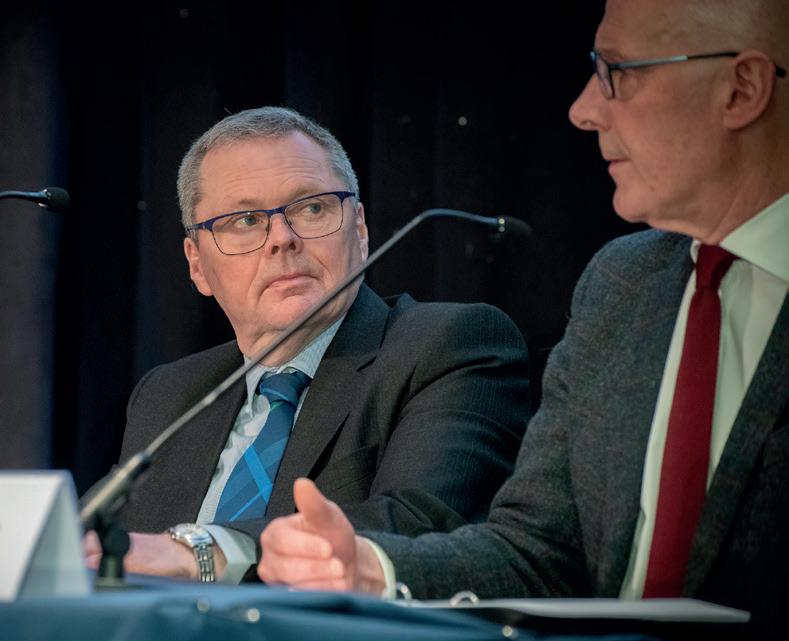
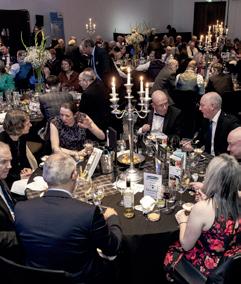
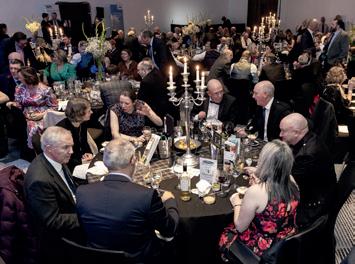
NFU Scotland’s National Conference, AGM and Gala Dinner is taking place at the Radisson Blu Hotel in Glasgow city centre on Thursday 5 and Friday 6 February 2026 for what promises to be two jam packed days filled with insightful discussions, networking opportunities, entertainment and the best locally sourced food Scotland has to offer.
CONFERENCE DAY 1
10.00am to 4.30pm
NFU Scotland offers a variety of helplines and services to provide expert guidance for our members. Below is a list of the free support available to you:
Agriculture Vehicle & Transportation Helpline
20 minutes of free advice on all vehicle-related issues, available from the date of joining.
Call Jamie on 07733 136 424
Email contactus@nfus.org.uk
Legal & Tenancy Issues Helpline
20 minutes of free legal advice from Gillespie MacAndrew, available from the date of joining.
Call 0131 271 8585
Email contactus@nfus.org.uk
Tax Helpline
Excellent line-up of speakers covering many of the biggest issues facing you and our industry.
Drinks reception 6.00 to 7.00pm
Sponsored by Diageo
NFU Scotland Gala Dinner
7.00 to 11.30pm
We are working hard to design an excellent menu, using the finest produce our Scottish food and drink industry has to offer.
CONFERENCE DAY 2
9.00am to 12.30pm
The conference continues with keynote speeches from Scottish and UK government speakers. SAVE THE DATE
Whether you’re a farmer, crofter, family, SAYFC, professional member or an industry professional simply interested in taking part, this event is perfect for anyone looking to stay informed and connected within the agricultural community. Book your place now by visiting our webpage https://www.nfus. org.uk/about-nfus/agm-2026.aspx or by scanning the QR code.
As we get closer to the conference date, we will be releasing more information relating to other confirmed speakers, panel sessions, sponsors and the programme schedule. In the meantime, please save the date so you don’t miss out on this exciting opportunity to engage with fellow members and learn from industry experts. We look forward to seeing you there!
20 minutes of free advice from Johnston Carmichael, available from the date of joining.
Call 0800 023 2368
Email contactus@nfus.org.uk
Scottish Dairy Hub
Free access to information and support for dairy farmers, available from the date of joining.
Call 0345 475 5110 or 0750 076 6083
Email info@scottishdairyhub.org.uk or contactus@nfus.org.uk
Davidson & Robertson Utilities & Infrastructure Helpline
15-minute free consultation on land access, damage, and compensation issues, available from the date of joining.
Call 0131 609 9717
Email contactus@nfus.org.uk
Greenburn HR & Employment Law Helpline
30 minutes of free advice from Greenburn HR, available from the date of joining. 0131 557 5742
Email contactus@nfus.org.uk

Scottish Land Matching Service (SLMS)
Free service connecting you with farming and crofting opportunities. Call 07741 902648
Email slms@nfus.org.uk
For more information on any of these services, please contact us at: 0131 472 4000
contactus@nfus.org.uk

Servicing:
Repairs:
Hydraulic:
Diagnostics:
Sprayer
Air



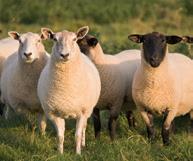
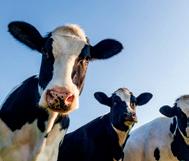
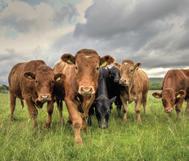
We pride ourselves on being available to you and your animals 24 hours a day.
Our experienced team of large animal vets are driven to provide a high standard of service and maintain a sympathetic approach to your animal’s care, whilst offering the best value for money.



We pride ourselves on being available to you and your animals 24 hours a day.
We pride ourselves on being available to you and your animals 24 hours a day.
Our experienced team of large animal vets are driven to provide a high standard of service and maintain a sympathetic approach to your animal’s care, whilst offering the best value for money.
• 24-hour ambulatory emergency service.
• Bull fertility and semen testing.
• Herd Health Planning and productivity services
Our experienced team of large animal vets are driven to provide a high standard of service and maintain a sympathetic approach to your animal’s care, whilst offering the best value for money.
• Scanning and synchronisation work.
• 24-hour ambulatory emergency service.
• Bull fertility and semen testing.
• Routine dairy visits, including InterHerd.
• Competitively priced drugs.
• Herd Health Planning and productivity services
• Routine dairy visits, including InterHerd.
• Competitively priced drugs. Farm services:
• Scanning and synchronisation work.
•
•
•
•
• Competitively priced drugs. Farm services:
InterHerd.
Words by Megan Williams
In my short time working here, I’ve been in awe of the people I’ve met – their passion, determination, and the care that runs through Scottish agriculture. Each month, as I sit down to edit an edition, I am struck by what an honour it is to share the stories of the NFU community. It’s one of the many reasons I wanted to focus this
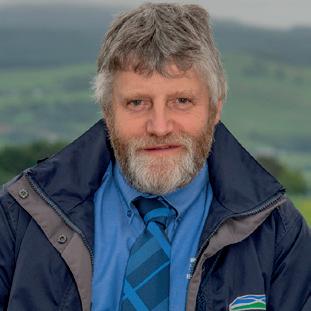
January marked the end of Martin Kennedy’s remarkable 15-year journey within NFU Scotland. Since joining the Less Favoured Area Committee in 2009, serving as East Central representative, becoming Vice-President in 2017 and President in 2021, Martin has dedicated his career to championing Scotland’s farmers and crofters. His presidency coincided with complex policy challenges, extreme weather pressures, and rising global uncertainty around food security. Yet his optimism never dimmed. “I absolutely believe that what we do, not only as producers of worldrenowned food and drink, but as the original caretakers of our land, means we have a very bright future ahead,” he said.
Martin’s work extended far beyond policy. He championed agricultural education, supported environmental initiatives, and advocated for high welfare and cropping standards. His legacy is measured not only in the progress made, but in the inspiration he has passed to the next generation – shaping Scottish agriculture’s future.

edition on the people who make agriculture what it is – those at the heart of it, those emerging into it, and those shaping its future. Twelve months, twelve remarkable people.
Join us as we journey through 2025, month by month, meeting the movers and shakers who’ve made this year one to celebrate
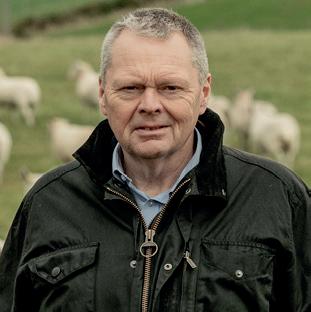
February welcomed Andrew Connon as President of NFU Scotland after four years as Vice President. His leadership is already defined by vision, determination, and a firm commitment to securing a profitable, sustainable future for Scottish farming. Working with Vice Presidents Duncan Macalister and Robert Neill, Andrew has represented farmers at Holyrood, Westminster, and across Europe; engaging on agricultural support, trade, climate targets, environmental regulation, and inheritance tax reform.
“Without people, without relationship building, without engagement, we’ve got nothing,” he says. Andrew’s approach reflects his belief that Scottish agriculture succeeds through collaboration. He champions intergenerational knowledge sharing, helping ensure the industry remains resilient, adaptable, and forward-looking. His presidency marks a renewed focus on strong relationships, strategic thinking, and creating the policy and market conditions farmers and crofters need to thrive in an increasingly complex and demanding environment.
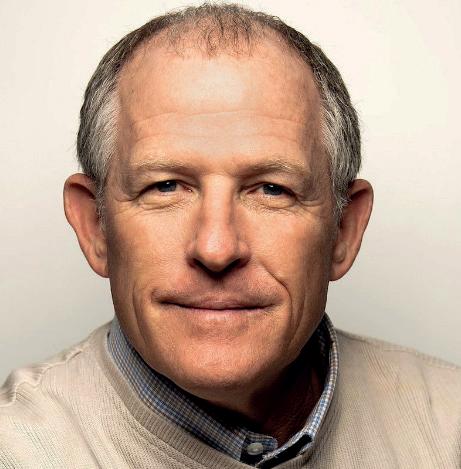
March saw the launch of the UK’s first agricultural communications courses at Scotland’s Rural College (SRUC), led by Dr Jeff Miller – a tenured professor of agricultural communications at the University of Arkansas. “Agricultural communications courses have been established in the United States for years, and I think there’s a growing need for the discipline to be introduced in the UK,” he said. Dr Miller believes strengthening the agriculture industry begins with better storytelling about its economic importance, environmental commitment, and the realities of producing food.
His vision is to develop a generation of skilled communicators who can connect farms with communities, schools, and policymakers. By equipping students with practical communication skills, the programme bridges the gap between farmers and the public, ensuring the sector’s challenges, achievements, and innovations are understood. Ultimately, the goal is to give Scottish agriculture a stronger, more confident voice in national conversations.


Since launching The Sheep Game in 2019, Cammy Wilson has become one of Scottish agriculture’s most relatable voices, using humour and honesty to bring rural life to global audiences.
After 12 years as a Glasgow police officer, Cammy returned to farming in Ayrshire following his father’s death, starting with just four sheep. Today, Cammy and his partner Lizzy, with children Jock, Angus, and Bonnie, run 1,500 breeding ewes.
What began as short online clips filmed during lambing and shearing has evolved into a digital phenomenon, with almost 400,000 subscribers and more than 180 million views. Cammy’s storytelling captures the realities of rural life –the highs, the pressures, and the deep connection to livestock – while educating viewers in an accessible, entertaining way. His growing community shows the power of authentic voices in helping the public understand and appreciate farming, bridging a gap between agriculture and modern audiences.
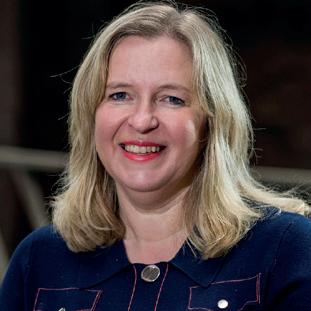
Caroline Millar has become a leading force in Scotland’s agritourism movement, demonstrating how farms can diversify and thrive. Based in Angus, she and her husband Ross operate The Hideaway Experience, a five-star agritourism destination alongside their family farm producing Scotch beef, lamb, and malting barley. As Chair of Scottish Agritourism, Caroline has guided the sector through rapid growth, championing sustainability, innovation, and visitor engagement. Under her leadership, Scotland will host the World Agritourism Conference in June 2026 – a milestone that places Scottish farms on the global stage. Caroline also plays a pivotal role in supporting the next generation, encouraging farmers to adopt digital marketing, diversify their offerings, and tell authentic stories of rural life. Her work strengthens the sector’s resilience, ensuring agritourism becomes a meaningful contributor to sustainable farm incomes and vibrant rural communities across Scotland.
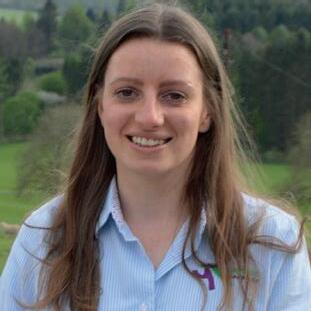
In May, aged just 29, Jillian Kennedy began her first month as National Chair of the Scottish Association of Young Farmers Clubs (SAYFC). Her leadership comes at a pivotal moment as she drives the £1 million Big Build campaign to replace the National Hub at Ingliston. Jillian has made clear that progressing the project is a top priority, while also connecting with clubs across Scotland. “I’m looking forward to getting stuck into the Big Build and getting out to see what clubs and members are doing –they’re the reason we do all this,” she said.
Involved in SAYFC since age 14, Jillian balances leadership with a career as a Forest Manager and competitive Highland dancer. Her energy, focus, and determination make her a dynamic ambassador for young farmers, championing opportunity, community, and the future of the organisation.








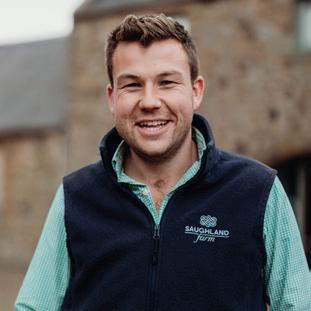
In July 2025, Ben McClymont, Chair of NFU Scotland’s Next Generation Committee, led NFUS into new territory as it became an associate member of the European Council of Young Farmers (CEJA). This strategic move ensured young Scots had a presence in European discussions shaping agriculture’s future.
Through the British Agriculture Bureau (BAB), NFUS Next Generation Committee engaged directly with European policymakers, sharing ideas on challenges facing young farmers – from access to land and finance to inclusion in shaping support frameworks. “Young farmers and crofters are the future of our industry, and we must give them a seat at the decision table,” he said. Ben’s leadership strengthens NFUS’s commitment to empowering the next generation, fostering collaboration, knowledge exchange, and policies that secure a resilient future for Scottish agriculture.
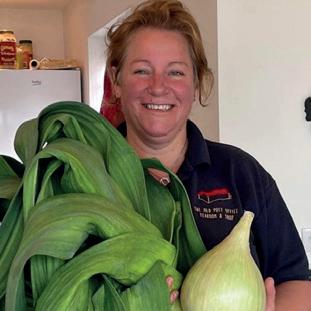
In August, we highlighted Flora Corbett of Lochbuie, Mull, for her long-standing dedication to local food production. As chairwoman of the Mull Slaughterhouse, Flora has spent 15 years ensuring smallscale farmers and deer stalkers can process meat locally, sustainably, and humanely. “The slaughterhouse is at the heart of keeping local food production alive,” she says.
At Lochbuie, the Corbett family produce wild venison from native deer and Scotch lamb, sold directly from the farm and through local outlets – most notably Flora’s Old Post Office honesty shop, stocked with local meats, cheeses, eggs, gifts, and knitwear. Flora also helped establish the Mull & Iona Food Trail, promoting island produce and supporting local businesses. Her
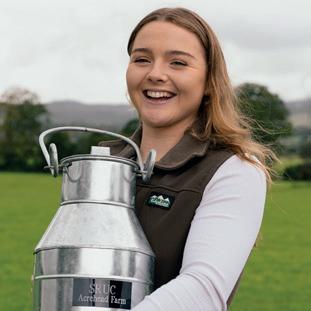
In September, at just 23, Jordan Duddy from Carlisle became the newest contract dairy farmer at SRUC’s Acrehead Farm near Dumfries. Selected from a highly competitive process, Jordan now manages day-to-day operations at the Scottish Rural College’s research farm, gaining invaluable experience while driving innovation. She is introducing autumn block-calving and smaller, grazing-efficient breeds to boost sustainability and efficiency. Jordan’s appointment reflects a broader industry focus on creating opportunities for ambitious young farmers without inherited land. By providing access, support, and a development pathway, Acrehead Farm enables new entrants to shape the sector. Jordan’s
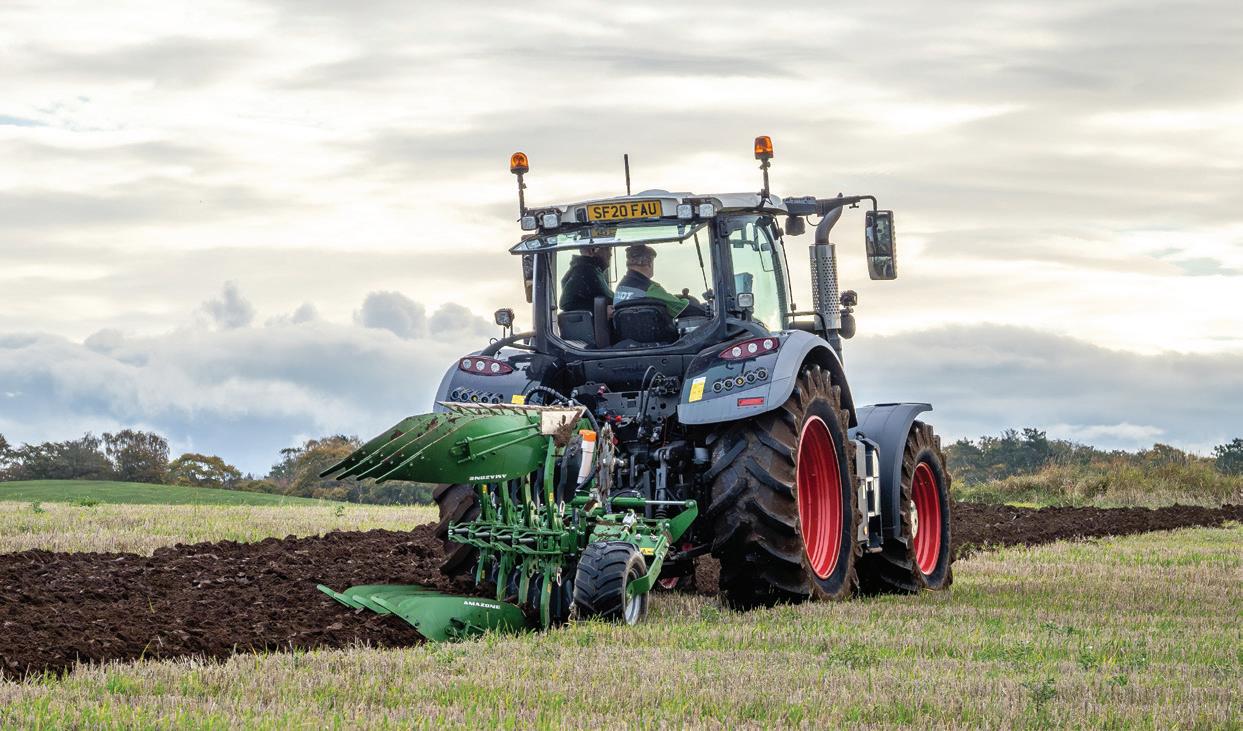
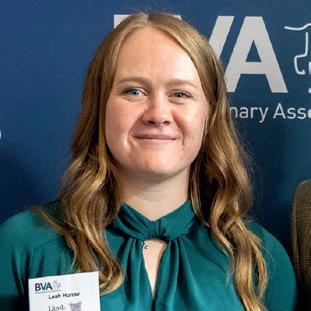
In October, Dr Leah Hunter, a mixedpractice vet from Orkney, received the 2025 BVA Young Vet of the Year Award for her exceptional dedication, compassion, and professionalism.
After graduating from the University of Edinburgh in 2021, Leah joined Flett and Carmichael Veterinary Surgeons, where she is known for always going the extra mile – whether in the clinic or across Orkney’s windswept landscapes.
Leah has a particular interest in small-animal dentistry, regenerative farming, and sustainability in practice.
“I truly do love the work that I do, island vetting is unique, and I’m grateful to help make a difference,” she says.
Beyond her practice work, Leah volunteers extensively: she is a trustee of the Orkney Nature Festival, a BDMLR marine mammal medic, and a Scottish Marine Animal Stranding Scheme volunteer. Her commitment often extends late into stormy nights, responding to stranded wildlife across challenging terrain.
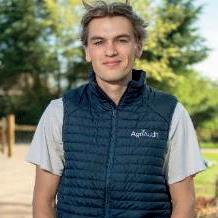
In November, we recognised Tom Porter, Managing Director of AgriAudit, whose innovative leadership reflects the future direction of Scottish agriculture. AgriAudit centralises more than 35 UK assurance schemes, simplifying compliance and reducing paperwork so farmers can focus on what matters - productivity, sustainability, and profitability.
Tom’s work bridges traditional farming expertise with modern technology, helping farms become more efficient and resilient. Speaking at the NFU Scotland Autumn Conference, he highlighted the importance of digital transformation amid regulatory complexity, climate pressures, and market volatility. His approach reduces stress for farmers, improves business performance, and supports new entrants navigating increasingly complex requirements. Tom’s leadership is helping shape a smarter, more integrated future for Scottish agriculture.
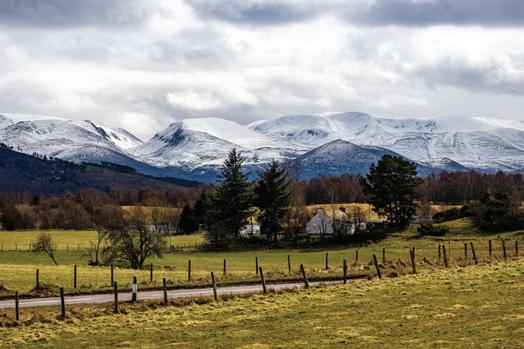
As 2025 draws to a close, we’ve reflected on twelve remarkable individuals shaping Scottish agriculture. From policy advocates to innovators, storytellers, educators, and young leaders, each has inspired and challenged us. But while their stories stand out, they represent only part of the picture.
Because it’s all of you – the farmers, crofters, businesses, and supporters – who make Scottish agriculture what it is. Every day, your dedication brings food to our tables, cares for our land, and sustains rural communities. The optimism of Martin Kennedy, the vision of Andrew Connon, the creativity of Cammy Wilson, and the innovation of Tom Porter reflect the strength of the wider community. This year has shown the power of connection, knowledgesharing, and mutual support.
Thank you for everything you do. From all of us at The Scottish Farming Leader, we wish you a peaceful Christmas and a prosperous new year.
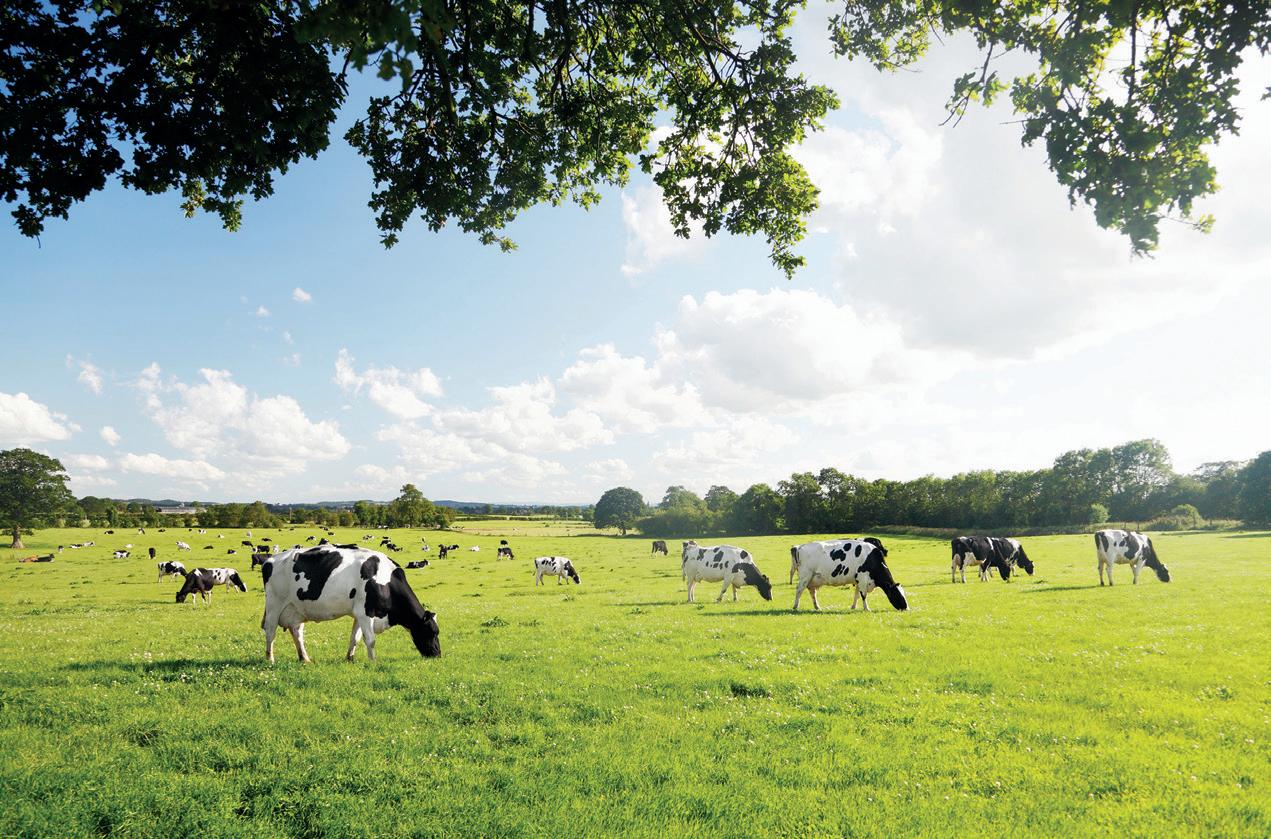
You’ve spent years building your farming business. Now it’s time to make sure your legacy, family and farm are protected for the future. For many families, the farm is more than just land and buildings, it’s a legacy built on generations of hard work and dedication. Planning how to hand it down is one of the most important, and often emotional, decisions a farming family will face.
Mutual hails the work of FareShare, who are supported by Southern England Farms
WWhile many people look forward to traditional festive fare at this time of year, others are unable to afford the most basic food for themselves, their families.
If you feel ill-prepared to tackle this topic, you’re not alone. In a 2025 study of 1,667 farmers for NFU Mutual*, 17.6% told us they still don’t have a formal succession plan in place, even though they think it’s important to have one, while another 12.7% of farmers do have one, but they haven’t reviewed it recently.
Learn how to make your money work best for you with advice from NFU Mutual on investing wisely and understanding your allowances
hile many people look forward to traditional festive fare at this time of year, others are unable to afford even the most basic food for themselves, and their families.
KThe cost-of-living crisis – and rising cost of even basic foods – has made it even more difficult for many people to put a meal on the table this year. In fact, more than 13 million people in the UK face food insecurity, according to FareShare, the UK’s biggest charity fighting hunger and food waste.
eeping all of your money in cash savings accounts may seem like a safe option. But you may miss out on the potential to grow your money, particularly if interest rates don’t keep up with inflation. Now could be a good time to reconsider how and where to keep your money, and understanding your allowances can be helpful.
With proposed changes to Inheritance Tax (IHT) from April 2026, now, more than ever, is the time to review your plans. An enforced succession plan through bereavement, fall-out between family members, or a sudden change in personal or financial circumstances is unlikely to be as cost effective or successful as one that is planned out well in advance and with everyone’s agreement.
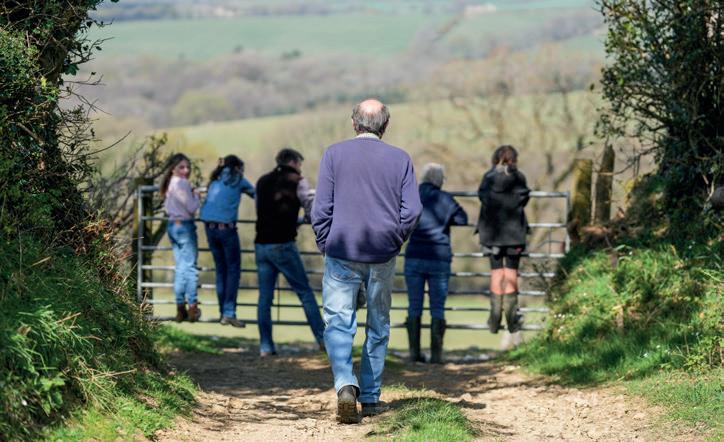
The current tax year ends on 5 April 2024. Here are some things for you to consider:
Top up your pension
At the same time, every year, more than three million tonnes of good-to-eat, surplus food goes to waste on UK farms. That’s enough for seven billion meals, according to FareShare, which takes good-to-eat surplus food from across the food industry, sorts it and passes it onto a network of nearly 8,500 charities and community groups across the UK.
Talk to an NFU Mutual Financial Adviser. Together we’ll review your financial situation and help you to understand your options.
Investing for Children
Farm succession involves complex legal and financial considerations, including Inheritance Tax, agricultural property relief and business property relief. Consulting with an NFU Mutual Financial Adviser can help you to navigate some of these issues and avoid expensive mistakes.
To learn more about NFU Mutual and our community support initiatives, visit www. nfumutual.co.uk/ fightfoodpoverty/or scan the below QR code with a smart phone
To learn more about NFU Mutual and our community support initiatives, visit www. nfumutual.co.uk/ fightfoodpoverty/or scan the below QR code with a smart phone
arrangements in place. That may include making financial provision for those children who do not wish to be involved in the business.
There are a wide range of investment options that can be used as part of the family’s succession plan.
when you make the gift. Inheritance tax planning is not regulated by the Financial Conduct Authority.
Heat stress can have a major impact on farm businesses but you can protect dairy cattle.
Wcost-of-living crisis – and rising basic foods – has made it more difficult for many people a meal on the table this year. In more than 13 million people in the face food insecurity, according the UK’s biggest charity hunger and food waste. the same time, every year, more three million tonnes of good-to-eat, surplus food goes to waste on UK farms. enough for seven billion meals, to FareShare, which takes good-to-eat surplus food from across the industry, sorts it and passes it onto a network of nearly 8,500 charities and community groups across the UK. 2022-2023, the charity redistributed 54,000 tonnes of food: enough to make 128m meals, or four meals every second.
The best time to start is when everyone is healthy and able to participate in open, honest discussions.
In 2022-2023, the charity redistributed 54,000 tonnes of food: enough to make 128m meals, or four meals every second.
Reduced milk yields from cows.
ith climate change driving hotter and more extreme weather, it’s no wonder that research conducted by NFU Mutual shows that heat stress in cattle is becoming a bigger consideration for farmers.
You can invest up to £2,880 per child each tax year into a pension and HMRC will top this up with a further £720 to give a total of £3,600. This is a long-term investment, designed to give children a head start.
As farmers know all too well, this surplus food will often end up getting ploughed back into the ground, used for animal feed or sent to landfill.
As farmers know all too well, this surplus food will often end up getting ploughed back into the ground, used for animal feed or sent to landfill.
She adds:
Capital Gains Tax
NFU Mutual offer guides and seminars to help families understand their options and make informed decisions.
• Reduced farm income, putting pressure on fine margins and profitability.
Provide suitable access to water troughs, ensuring they are in good working order.
Here’s how to approach farm succession with confidence and care.
Build an ISA nest egg
But what is heat stress and why is it a problem?
NFU Mutual, we see it as part of our to make positive impacts on the welfare of those working and living in rural communities in the UK, and we are aware of the growing impact of poverty in rural communities.
At NFU Mutual, we see it as part of our role to make positive impacts on the welfare of those working and living in rural communities in the UK, and we are only too aware of the growing impact of food poverty in rural communities.
Putting money into a pension is one of the most tax-efficient ways to invest for the long term. The government helps you invest – for every £80 you pay into your pension, HMRC currently pays an extra £20 tax relief making your actual contribution worth £100. In a pension, any growth is free from UK Income Tax and Capital Gains Tax. There are however rules on the amount you can contribute to your pension each year and still receive tax relief.
Pensions and Income Tax
This is why our NFU Mutual Charitable Trust – which exists to promote and charities working in agriculture, rural development and insurance – is to support FareShare’s fight against poverty. Since 2021, the NFU Mutual Charitable Trust has donated a total of £250,000 to the charity.
This is why our NFU Mutual Charitable Trust – which exists to promote and support charities working in agriculture, rural development and insurance – is proud to support FareShare’s fight against food poverty. Since 2021, the NFU Mutual Charitable Trust has donated a total of £250,000 to the charity.
Heat stress occurs when cows retain more heat than they can release, affecting both indoor and outdoor herds. The cause is due to a rise in environmental temperatures and humidity and an increase in the cow’s heat production associated with increasing milk yields. To monitor heat stress levels, the industry uses the Temperature Humidity Index (THI) which indicates how severe the condition could be and suggests that action needs to be taken.
You can invest up to £20,000 this tax year in an ISA, building up a nest egg free of UK Income tax and Capital Gains tax.
But the Surplus with Purpose scheme avoids thousands of tonnes of surplus fresh fruit and vegetables, meat and dairy products being wasted. Even cupboard items, and chilled and frozen foods, find a new home as part of the scheme.
But the Surplus with Purpose scheme avoids thousands of tonnes of surplus fresh fruit and vegetables, meat and dairy products being wasted. Even cupboard items, and chilled and frozen foods, find a new home as part of the scheme.
• Health-related issues such as increased risk of disease, lameness and reduced fertility. There is also evidence to suggest that it affects the unborn calf and their subsequent performance.
Farm succession isn’t just about handing over ownership and stepping away. It can mean transferring day-to-day management while retaining ownership until later. The key is to reflect on your goals. Do you hope to keep your farm in the family? Do you have children who don’t want to be part of the farm’s future? Are you open to selling? What role do you want to play as you start to hand the farm over? Will you stay involved for a while, or step away completely?
The same tax benefits are available with Junior ISAs, which you can use to build up a pot of money for a child – they’ll be able to access that when they’re 18 years old.
Furthermore, farmers tell us they’re not always aware of the extent of the financial losses they’re suffering from heat stress in cattle.
Once you’ve agreed on a path forward, put everything in writing. To ensure a smooth farm handover, agree a plan, seek expert advice, put it into action, and review it regularly. Make sure all owners have valid wills and, where needed, a Shareholder or Partnership agreement, as this helps ensure ownership passes to the right people at the right time.
Things you should know:
The maximum Junior ISA contribution is £9,000 in the 2023/4 tax year.
Putting money aside for children can also help reduce your potential Inheritance Tax bill.
Key actions you can take
One grower making the most of the opportunity presented by the scheme is Southern England Farms, based in Hayle, West Cornwall. The business works over 6,500 acres and is a key supplier to several major UK retailers, including a number of supermarkets, of Cornish-grown courgettes, cauliflower, broccoli, spring greens, sweetheart and savoy cabbage.
One grower making the most of the opportunity presented by the scheme is Southern England Farms, based in Hayle, West Cornwall. The business works over 6,500 acres and is a key supplier to several major UK retailers, including a number of supermarkets, of Cornish-grown courgettes, cauliflower, broccoli, spring greens, sweetheart and savoy cabbage.
NFU Mutual’s philosophy is simple; we listen to what you want and use our expertise to recommend what you need. We get to know you, we listen to your objectives, in terms of handing down the farm and your personal financial goals, and we recommend a tailored financial plan just for you, to help you achieve what you want for your family and any successors in your farming business.
She adds: “The scheme with FareShare is a brilliant way of ensuring excess produce is redistributed to those who really need it. It is so very rewarding when we find out how many meals our surplus veg has gone on to make. It is great that NFU Mutual has embraced the scheme so wholeheartedly and supports their customers who wish to participate in ‘Surplus with Purpose’ too.”
• When buffer feeding adding suitable feed additives to maintain rumen health and ensure peak nutrition.
Those selling or gifting shares, or property other than their main home, will see the amount of tax-free gain they can enjoy fall from £6,000 to £3,000 from April 2024.
• The tax benefits of pensions and ISAs depends on individual circumstances and may change in the future.
“The scheme with FareShare is a brilliant way of ensuring excess produce is redistributed to those who really need it. It is so very rewarding when we find out how many meals our surplus veg has gone on to make. It is great that NFU Mutual has embraced the scheme so wholeheartedly and supports their customers who wish to participate in ‘Surplus with Purpose’ too.”
• The value of your pension and investment funds can go down and you may get back less than you invested.
Please remember that the value of investments can rise or fall and you may get back less than you invested.
• Implementing ‘Siesta’ Management where appropriate – this technique involves cows grazing directly after milking and then being ‘housed’ at around 10am, with buffer feed available to them. Cows are then sent back out to graze after afternoon milking to graze until dusk. Adjusting milking times to coincide with the cooler periods of the day.
How farms are donating their surplus for good Farms and rural businesses throughout the UK are also doing their bit to help. They can participate through FareShare’s Surplus with Purpose scheme, which helps businesses to cover the extra costs of redistributing their unsold food to people who need it most.
farms are donating their for good Farms and rural businesses throughout the are also doing their bit to help. They can participate through FareShare’s with Purpose scheme, which businesses to cover the extra costs redistributing their unsold food to who need it most.
In recent years industry studies have highlighted the condition and the impact it can have on farm businesses. It’s generally acknowledged that heat stress can result in:
Once you reach 55 (57 from 2028), you can take money from your pension as you wish. The first 25% will normally be tax-free, any amount over and above is added to your other income and taxed. So withdrawing lump sums from your pension could push you into a higher Income Tax bracket. Spreading withdrawals over a number of tax years could help reduce the impact of any tax liabilities. There’s also a limit on the annual pension contributions you and your employer can make if you’ve already taken a taxable withdrawal from your pension. This could mean you miss out on valuable employer pension contributions in addition to your own.
Our latest research has found that just over four in ten (41%) say that heat stress is a priority risk for their business while 70% are yet to take further steps to reduce the risk. *
It’s wise to take a long-term view on inheritance planning, so that your heirs don’t pay more tax than they need to.
Co-owner Jane Richards, along with her 400-plus pickers, works with FareShare to ensure any excess vegetables never go to waste. Since 2019, they have donated 396 tonnes of excess produce to the charity.
Don’t forget Inheritance Tax planning
Co-owner Jane Richards, along with her 400-plus pickers, works with FareShare to ensure any excess vegetables never go to waste. Since 2019, they have donated 396 tonnes of excess produce to the charity.
Understanding your own needs, as well as those of the next generation, is important when formulating your plan.
NFU Mutual can help with your farm handover personal financial plan. By finding out about your unique personal circumstances and financial aspirations, as well as answering any of your questions, we can help to create the right financial plan for your needs.
• Installing shade and fans in holding yards.
We at NFU Mutual applaud Jane and all the team at Southern England Farms for their outstanding efforts in supporting the work FareShare does to alleviate food poverty in our communities.
We at NFU Mutual applaud Jane and all the team at Southern England Farms for their outstanding efforts in supporting the work FareShare does to alleviate food poverty in our communities.
To find out more on how we can help you plan your financial future, contact your local agency office or visit nfumutual.co.uk/ financial-services
We’re proud to support FareShare –and we praise all farms and rural businesses who participate in the Surplus with Purpose scheme.
We’re proud to support FareShare –and we praise all farms and rural businesses who participate in the Surplus with Purpose scheme.
• Implementing a tree planting programme at the boundaries of grazing paddocks to provide suitable levels of shade within the grazing environment.
Jane says: “No farmer ever wants to see their produce go to waste. But sometimes circumstances mean there is a surplus that will often go into the waste trailer or simply become compost.”
One way of doing this is to make gifts to your loved ones, taking advantage of the annual £3,000 gift allowance, or the ‘gifts out of normal expenditure’ exemption. Larger gifts can also be exempt from Inheritance Tax as long as you live more than seven years from
Jane says: “No farmer ever wants to see their produce go to waste. But sometimes circumstances mean there is a surplus that will often go into the waste trailer or simply become compost.”
Should you suspect heat stress with your dairy cattle this summer, Dr Tom Chamberlain** highlights some of the key actions that you can undertake to reduce heat stress whilst cows are grazing:
Your farm handover plan will almost certainly mean checking that you have right pension, investment and protection
For more information about FareShare’s Surplus with Purpose scheme, and how you can participate, visit www. fareshare.org
NFU Mutual Financial Advisers advise on NFU Mutual products and selected products from specialist providers. When you contact us, we’ll explain the advice services we offer and the charges.

To find out more visit nfumutual.co.uk/ heatstress or contact your local agency office.
To find out more about NFU Mutual insurance or financial services, speak to your local NFU Mutual agency office or visit nfumutual.co.uk/tax-allowances NFU Mutual Financial Advisers advise on NFU Mutual products and selected products from specialist providers. When you get in touch, they’ll explain the advice service and charges.
For more information about FareShare’s Surplus with Purpose scheme, and how you can participate, visit www. fareshare.org
*NFU Mutual Voice of the Farmer research, June 2025
*Source: NFU Mutual Research with Dairy Farms and Dairies, August 2021 **Source: Dr Tom Chamberlain & Lallemand Animal Nutrition, November 2022
NFU Mutual Select Investments Limited (No 08049488). A member of the NFU Mutual Group of Companies. Registered in England. Registered Office: Tiddington Road, Stratford-uponAvon, Warwickshire, CV37 7BJ. Authorised and regulated by the Financial Conduct Authority.


•

•
•
•
•


•
•





















Our award-winning family-run business has been operating in Cornhill for over 80 years. Situated in Banffshire, Scotland, we’re the main Honda Franchise dealer in the area.
We hold a large stock of new and used cars and have many other makes and models in addition to the Honda range.
At Ewens we’ve invested in various diagnostic platforms and equipment allowing us to work, service and repair different makes of cars, vans and 4×4’s.









Beatrice Morrice Head of External Affairs

Al Walker Political Affairs Advisor
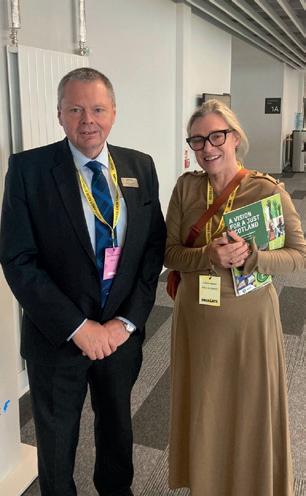
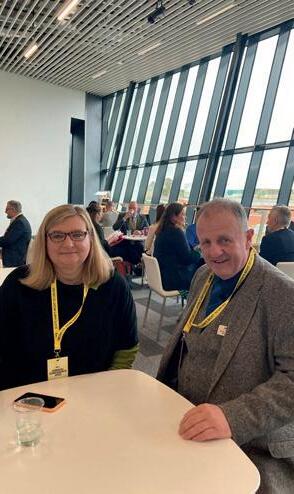
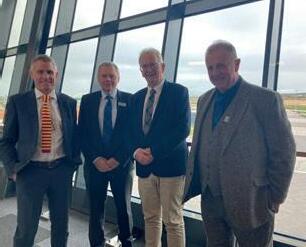
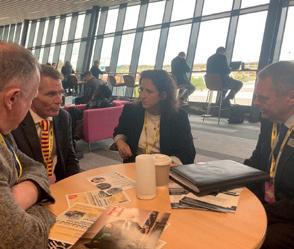
NFU Scotland attended the SNP Conference in Aberdeen recently. President Andrew Connon, Vice President Duncan Macalister, and Deputy CEO & Director of Policy Jonnie Hall, engaged with a number of MSPs and MPs, including Cabinet Secretary for Rural Affairs, Land Reform and Islands, Mairi Gougeon MSP.
A key moment of the day was our packedout fringe event, chaired by Andrew Connon, with Minister for Agriculture and Connectivity Jim Fairlie MSP and Jonnie Hall as speakers. Discussions covered a range of vital topics, including how we encourage the next generation into farming, the shape of future support, and the essential role farmers and crofters play in sustaining rural communities. We’re grateful to everyone who contributed to the conversation. Events like this are a powerful reminder of the importance of our collective voice in shaping the future of farming and crofting in Scotland.
In advance of the UK Autumn Budget, NFU Scotland submitted a detailed paper to the Treasury and Scotland Office setting out our key priorities for the UK Government to consider when making decisions which will impact farmers and crofters for the year ahead. One of our key asks was a fairer approach to the Inheritance Tax reform that avoids the breaking up of family farms, something we have been calling for since October last year. We also highlighted issues around increasing Annual Investment Allowance for low carbon farm infrastructure projects, the impact of the increase in National Insurance contributions, and reduced duty on red diesel among other things. We worked to ensure that this budget doesn’t negatively impact those who positively shape our industry on the ground by producing food, enhancing biodiversity, mitigating climate change emissions, and supporting people with jobs in the rural communities. The submissions section of our website at nfus.org.uk
Below


Inheritance Tax (IHT) continues to place an unfair burden on families, businesses and rural communities. Rising land values and outdated thresholds mean more and more farming families are being drawn into the tax net, often with serious implications for the future of their businesses and the next generation.
At NFUS we believe the system must be reformed to be fairer, clearer, and supportive of long-term investment in food production, jobs, and the environment. We encourage those who haven’t already to take part in our letter writing campaign by downloading our drafted letter to sign and send to your MP to add your voice to the campaign. The more who speak up and explain the implications of the proposed IHT changes, the better. You can access the draft letter here https:// www.nfus.org.uk/policy/campaigns/ inheritance-tax-iht.aspx or by scanning the QR code. Join us in calling on government to act now.

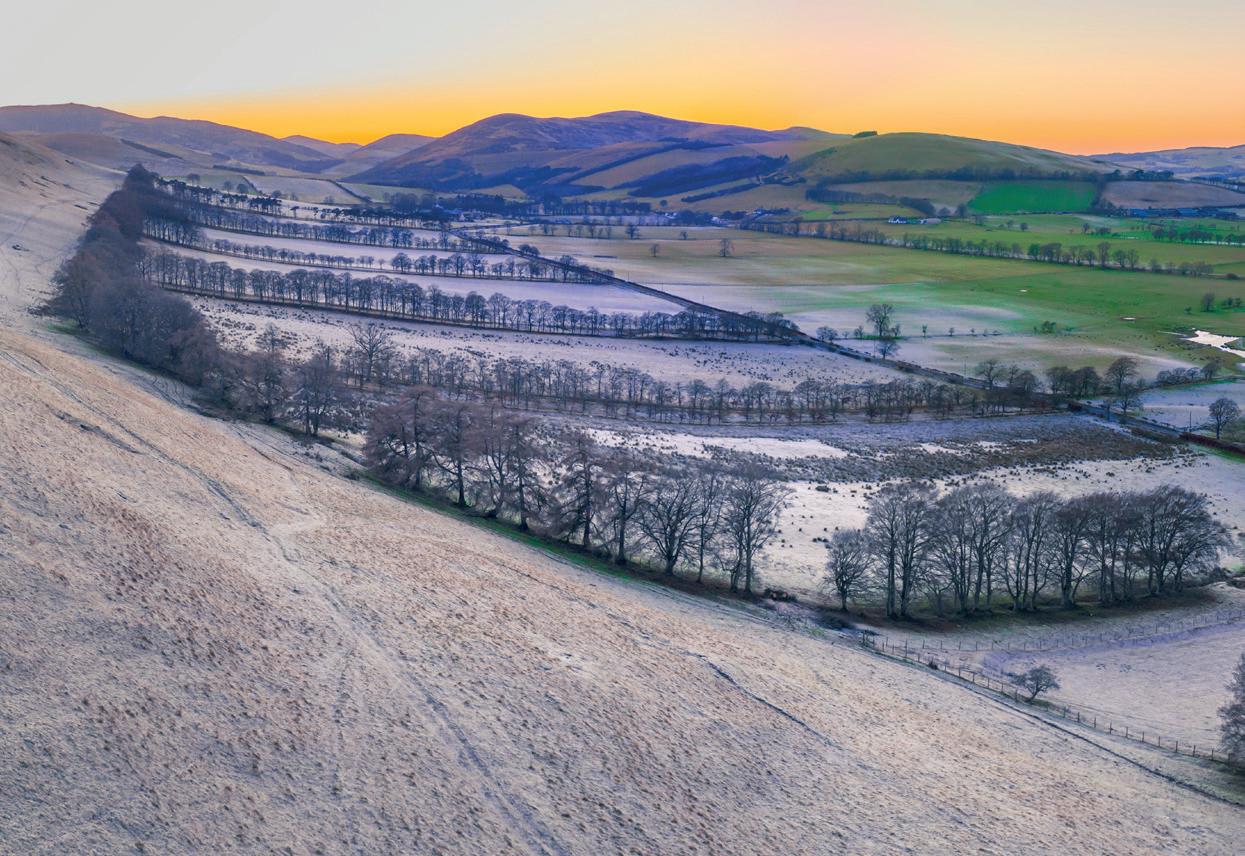
Our Proposals for a Fair, Practical Support System to Keep Farmers and Crofters at the Forefront of Scotland’s Future – Change That Works
AJonnie Hall Deputy CEO/Director of Policy
s with every aspect and detail of future support, NFU Scotland has been deeply engaged in this process – not only to influence the design of future support, but to ensure that Scotland’s farmers and crofters remain at the heart of delivering the nation’s food, climate, nature, and rural community ambitions.
It should be no surprise that we and the Scottish Government share similar thinking on the new support framework – after all, we proposed the four-tier framework to support farmers and crofters back in 2018. And we agree on much of the purpose and intention of future support. To drive the changes we now want and need, we must work closely with the Scottish
Government. However, our emphases can, and do, differ. As far as we’re concerned, there can be no sustainability without profitability. High-quality food production and the viability of farming and crofting must be seen as the foundations of climate and nature outcomes – not their competitors.
As far as we’re concerned, there can be no sustainability without profitability.
We fully agree with the Scottish Government on the need for a four-tier structure for future direct support – designed to reward good practice, drive improvement, and recognise the public value that active farming and crofting brings.
But while the Scottish Government’s model focuses on policy outcomes –climate, nature, and a just transition – our proposals, especially on the delivery of direct support in Tiers 1 and 2, are all about ‘enabled outcomes’. We’re focused on the critical goal that only a profitable, resilient agricultural sector can deliver the economic, environmental, and social benefits Scotland needs.
Our model is built on a simple but powerful premise: economic, environmental, and social goals must be pursued together.
The experience of the past decade –
volatile markets, more extreme weather, political ambitions, and future support uncertainty – has shown how fragile the link can be between government policy aspiration and farming and crofting realities
Our proposals aim to rebalance that equation. We want to anchor high-quality food production at the centre of the support system, while still delivering clear environmental and community outcomes. Tier 1 Base direct support provides stability for active farmers and crofters, while Tier 2 Enhanced direct support rewards climate and biodiversity gains within active farming systems. It’s not about resisting change – it’s about building a system that supports transition through strength, not decline. It’s not about resisting change
Our proposed structure reflects what members consistently tell us matters most: fairness, simplicity, and the recognition of the real value of active farming and crofting.
We propose a much clearer and stronger definition of who qualifies for direct support, re-defining the ‘active farmer’ principle to ensure payments go to those genuinely farming, crofting, managing land, and bearing production
and economic risk. This would help rebuild public confidence in the system while protecting the integrity of the direct support budget.
We’re also advocating for frontloaded payments which would provide higher rates on the first tranche of eligible hectares, targeting smaller and medium-sized farms, new entrants, and family farms. This would also undermine any proposals for arbitrary and blunt capping of payments but ensure a fairer distribution of support, helping sustain a diverse farming base and our next generation of farmers and crofters. Smaller holdings and crofts should not face the same administrative burdens as larger enterprises. Our proposals would simplify compliance and Whole Farm Plan requirements for smaller producers, ensuring they do not face disproportionate costs that could easily force some out of the support system – yet, so often, these units are vital to rural communities and nature.
For sectors like suckler beef and hill sheep, less favoured areas and coupled support remain vital. These elements must be permanent, targeted, and linked to actions, measures, and management – not treated as transitional relics. Less favoured areas and coupled support has been a lifeline for Scotland’s upland and island communities.
By making them a structural part of Tier 2 Enhanced support, linked to grazing management and remoteness factors, they can reward efficiency while sustaining production and activity in remote and fragile areas that would otherwise struggle.
We must recognise biodiversity and climate goals, but they can only be met through practical, production-compatible actions by farmers and crofters. We propose integrating biodiversity options directly into Tier 2, replacing rigid Greening rules with flexible, farm-led approaches that deliver measurable benefits without undermining production or productivity.
Our proposals aren’t about resisting change – they are about ensuring change works. The coming decade will demand higher standards, lower emissions, and continued world-class food production. To achieve all three, the support system must invest in farmers and crofters as partners, not merely as deliverers of policy outcomes.
Our proposals for future direct support also give the Scottish Government and the people of Scotland a better return on investment: stable food supply and food security; sustained rural employment and community cohesion; achievable, credible climate and nature outcomes, etc. The list goes on.
Scotland’s farmers and crofters are ready to lead the transition to a more sustainable and resilient food system, but they need a framework that reflects the realities of farming in Scotland, the diversity of agricultural profiles, and the financial pressures facing businesses.
NFU Scotland’s proposals offer that path – a balanced, fair, and practical structure that keeps farmers and crofters at the centre of Scotland’s vision for climate, nature, and rural vitality.
The message we’ll continue taking to government is simple but powerful – public goods are delivered by active farmers and crofters.

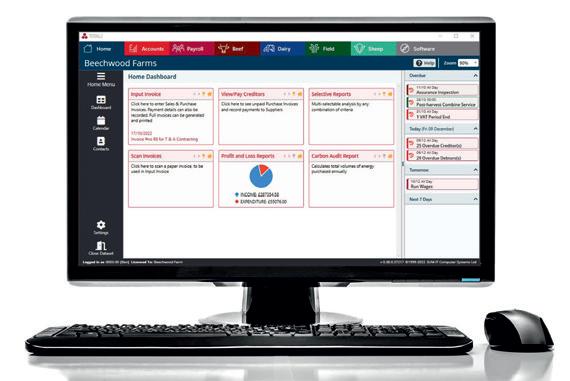
TOTAL2 Farm Accounts software makes easy work of doing your VAT whilst building a powerful range of farm-business specific management reports that analyse the performance of each of your enterprises – think diversification performance reports at the touch of a button.
Budget Cashflows can be generated for whoever requires them and regular comparison with actual figures keeps you on track. Bank reconciliation can be manual or automatic, depending on your preference. Then at the end of the year you can send your data direct to your accountant who receives an auditor version of TOTAL2 from SUM-IT free of charge.
All of this backed up by the friendliest Support team in Thame, Oxfordshire, available twelve hours a day plus six hours on Saturdays.
With initial purchase prices (excl. VAT) starting from £ 495.00 including 3 months Gold Level Support, and then on-going Support from £ 79.00 per annum, it doesn’t take long to show great savings when compared to generic accounting software on monthly subscriptions, and it’s designed specifically for farmers!
Our hybrid software provides complete flexibility for all situations:
Not an issue, just run the TOTAL2 data locally on your PC
Run in the Cloud and multiple authorised operators can then have access to real-time TOTAL2 data, with permissions set by YOU
Just choose which level suits your requirements –Starter (Cashbook) or Standard (Full Accounts) And decide whether to run it LOCALLY on your PC or in the CLOUD for access from multiple machines


Lucy McGillivray Policy Manager
The Antimicrobial Usage Pilot Programme is being run by SAOS (Scottish Agricultural Organisation Society), ScotEID, QMS, and Farmvet Systems, with veterinary practices using specialist software to analyse antimicrobial usage data on farms. This approach enables vets to have more informed conversations with farmers and produce detailed AMU reports. With industry backing, the model could be scaled nationally to strengthen monitoring and support targeted antimicrobial use. At a panel session in November at AgriScot, our Vice President, Robert Neill, explained why the Union is proud to support this project.
NFUS fully supports this project; as an industry we need to be proactive in promoting why we need to be able to collate data on AMU. It is clear that this isn’t about regulating AMU, but rather about providing farmers with the key data, in the form of a report of their AMU, so more informed decisions can be made.
It also means we will be able to have a database of information that will be farmerowned, just as ScotEID operates now. Tackling anti-microbial resistance (AMR) is not just about safeguarding antibiotics, it’s also vital for ensuring animal welfare and long-term farm productivity.
A fundamental element of this approach is supporting a conversation between the farmer and their vet.
The Scottish pilot echoes the approach taken by WLBP (Welsh Lamb and Beef Producers) in Wales. It works by setting up vet practices with VetImpress software (owned by Farmvet Systems). This software organises and makes sense of the data (an automated version of the Nottingham Calculator: https://ahdb.org. uk/amu-calculator) that each practice holds in relation to farming clients and
their antimicrobial usage.
Following a conversation with their farming client, the vet can then use the AMU Calculator to allocate this data (with the support of ScotEID or manually if need be) to the appropriate number of animals and assign it to either the beef herd or sheep flock – or both depending on usage. An AMU report for the farm including a mg/ kg usage figure can then be produced.
A fundamental element of this approach is supporting a conversation between the farmer and their vet. With twelve vet practices signed up so far, it’s great progress, and it would be promising to see as many vets willing to sign up as possible.
This project is key in ensuring we don’t fall behind more than we already are in terms of AMU, as at the moment we can certainly do more. Through this project, it means industry can work towards evidencing low antibiotic usage, help further differentiate our red meat sector, reduce risk of barriers to accessing markets in Europe and beyond in the future. And most importantly, we will be able to take ownership, have access to and understand our own AMU usage. We urge Scottish Government to continue to financially back this project to ensure our industry can improve our recording of AMU.

Bob Carruth Policy Manager
The review that will lead to version six of the Red Tractor Dairy Farm Assurance Standards is now underway, with a timeline that would see new standards come into play in early 2027.
Red Tractor Dairy operates in England, Wales, Scotland and Northern Ireland, and covers approximately 98 per cent of the milk produced in the UK. The dairy scheme is unique as the assurance is typically managed by milk purchasers.
In July 2025, Red Tractor had a total of 10,197 dairy memberships, of which around 750 are Scottish dairy farmers.
NFU Scotland remains supportive of farm assurance. Red Tractor, now in its
25th year, enjoys strong public confidence combined with broad support from major UK retailers and food brands. The logo appears on almost £18bn of UK food & drink.
Despite its strengths, however, the Red Tractor dairy assessment has increasingly drawn criticism from farmers due to the complexity of audits, a heavy bureaucratic burden, and the stress associated with compliance.
NFU Scotland fully supported the recent independent farm assurance review, and the key recommendations that highlight the need for on-farm audits to be simplified and duplication removed with farmers having a greater say in standards development.
In that regard, NFU Scotland has representation on the Red Tractor Dairy Sector Board; the Dairy Sector Standards Technical Assessment Committee and a representative from Red Tractor will attend

NFU Scotland’s online milk committee in early December to discuss standards development and the timetable.
A recommendation from the recent farm assurance standards review was for greater collaboration between farm assurance schemes across the UK.
For Scotland, Red Tractor is investigating the option to restructure the livestock and dairy schemes with Quality Meat Scotland’s Beef and Sheep standards being the baseline, and dairy standards as a bolt on. This would allow dairy-specific standards to evolve independently.
The new QMS beef and sheep standards were launched in October. According to QMS, there has been a 15 per cent reduction in the standards through streamlining and removing duplication. NFU Scotland will be pushing for similar streamlining and simplification of the dairy standards.










































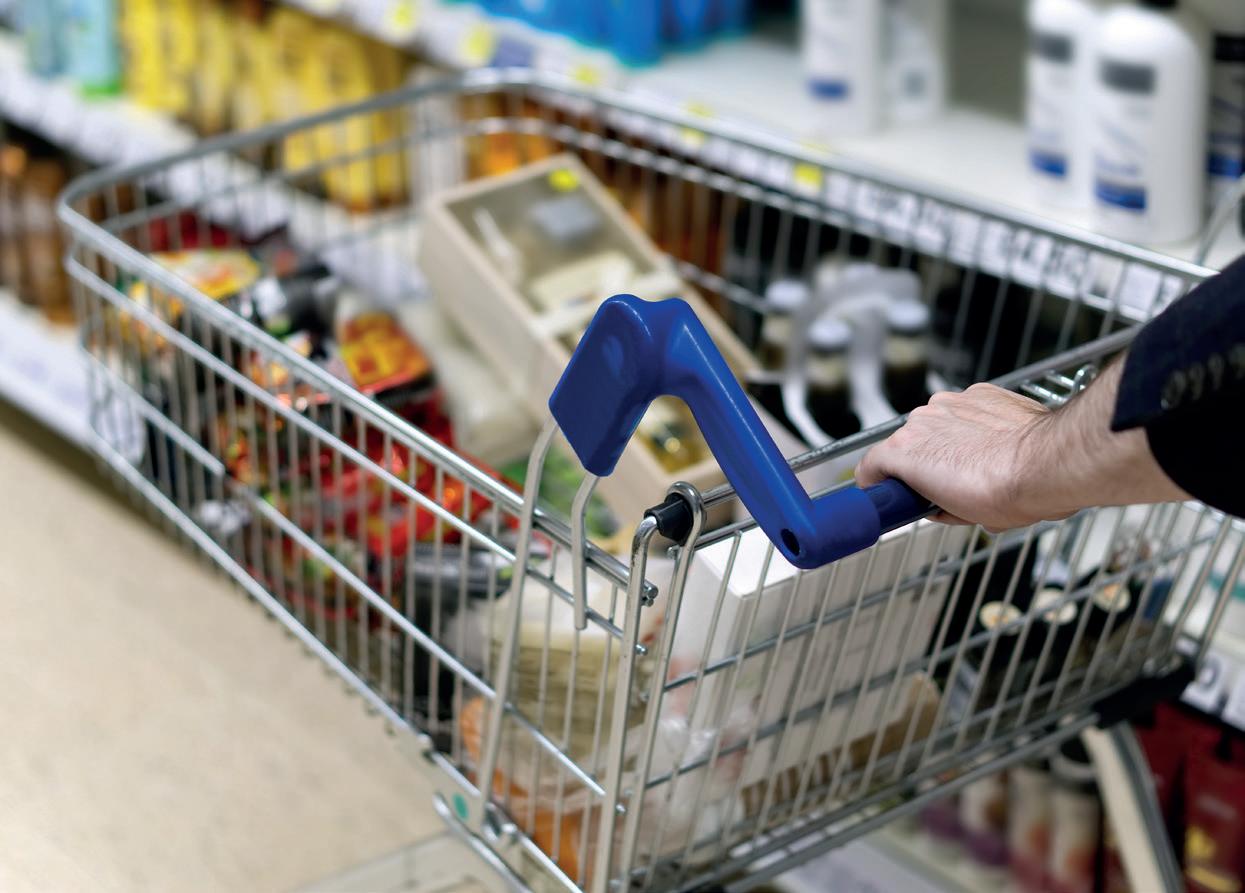

OLisa Hislop Policy Manager
ver the course of the year, as we dedicate more time and resource to supply chain workstreams, I’ve spent a lot of time building relationships across all areas of the food and drink supply chain. This has been incredibly varied and hugely insightful as many, if not all, stakeholders have a similar or shared vision for the future which hinges on a resilient and successful agricultural sector.
We further developed existing relationships with the major retailers through more regular meetings across the year. While the hook for conversation is our ShelfWatch project, the majority of the conversation focuses on the collective challenges facing the supply chain. Whether it is processing capacity,
or the weather challenges for vegetable production, or the future of our livestock sector, our message has been clear: we firmly believe a collaborative approach from farm to fork is required to bolster primary producer confidence and pay dividends for the whole supply chain.
We have built new relationships with stakeholders beyond the farm gate, who work in the wider food system space, particularly those in public procurement. Last month, we jointly hosted a roundtable with Public Sector Catering Alliance to understand the challenges facing public procurement specialists, and identify where there are opportunities for a collaborative approach to realise our potential to deliver more Scottish produce into our schools, hospitals and other public sector spaces.
It almost goes without saying that we have engaged at length politically on
the supply chain issues, either through Ministers, politicians or officials. While our core message has been adopting a Scottish First policy to procurement, we have proactively engaged on issues such as labelling, as well as research on diet and the importance of fresh local produce. While implementing the Fair Dealing Obligations, which aim to ensure fairness across all commodity supply chains, we are actively engaging with the Agricultural Supply Chain Adjudicator (ASCA). This collaboration allows us to learn from the rollout of the Milk and Pig Fair Dealings and understand how it will extend to the egg and fresh produce sectors, and eventually to combinable crops and red meat.
This remains a priority area for us, and one where there is still much to learn. There is significant potential to expand our network and, in turn, strengthen our influence in this space in the year ahead.

David Michie Senior Policy Manager
The Scottish Government have committed to paying 70% of the agricultural support budget as direct payments to farmers and crofters. This is a big win for NFU Scotland. Government have also committed 50% of agricultural support payments to benefit climate and nature in future. But if 70% of payments are to support active farming, and 50% are for environmental benefit, then how do they square this circle and make the sums add up?
The answer is enhanced greening, with area payments for practices that benefit climate and nature. Arable farmers have been doing this since 2015. Livestock farmers with mainly short-term grass leys have just started this year. It is likely that farmers with mainly permanent grass will be doing this in 2028. By then, there will be some changes. Greening will likely go from a requirement for direct payments (‘super crosscompliance’) to a voluntary option. If you don’t like it, don’t do it! But you won’t get the greening payment, which is currently worth about £75 /ha (for land that isn’t rough grazing). Of course, to get your direct payments you will still have to be cross-compliant.
Government are betting that the
uptake of Tier 2 will be high enough to ensure they meet their 50% support payments for climate and nature target. This puts pressure on them to make the measures practical and worth taking up by businesses. Practicality is something we continue to push for.
This evolution is much better than revolution, which is what has happened in England. The changes in England benefited some environmentally minded large-scale units, but mainly disadvantaged the majority of farm businesses who haven’t been able to get funding under the new system, while having their direct payments slashed. We don’t want to see this in Scotland, and we are working hard on your behalf to prevent this from happening.
Penny Middleton Policy Manager
Scotland remains Officially TB Free (OTF) and whilst we do see breakdowns, occasionally quite significant ones, we remain comfortably within parameters to claim that OFT status. Although we do see ‘hotspots’ or regions where breakdowns are more likely, genotyping of those outbreaks doesn’t indicate any evidence of a wildlife reservoir. Instead, they are indicative of higher cattle numbers in those areas, and more cattle moves from outside Scotland.
Managing disease in cattle is hard, but in wildlife it is even more difficult, especially with sensitivity around badger culling. If one thing is clear about BTB, it is vital we keep it out of Scotland and out of our wildlife through biosecurity.
The TB Hub, https://tbhub.co.uk/, has a lot of useful information on bTB. It includes advice around protecting your herd through careful cattle sourcing, herd
The TB Hub is an excellent source of information on steps keepers can take to minimise cattle and badger contact, including case studies.
biosecurity measures and minimising contact with wildlife.
The hub includes an online mapping tool, ibTB (https://ibtb.co.uk) that displays ongoing and resolved TB breakdowns in England and Wales over the past 10 years. Buyers can use ibTB to make informed decisions when purchasing cattle to

minimise the risk of bringing bTB onto their holding. Half of breakdowns in the low-risk area of England are due to the purchase of undetected infected cattle, so responsible sourcing is crucial.
However, minimising the risk of introduction of disease onto farms is only one side of the coin. What about preventing onward spread? Should we also be considering what steps we could be taking to help prevent widespread infection establishing in our wildlife?
The TB Hub is an excellent source of information on steps keepers can take to minimise cattle and badger contact, including case studies. It may be worth keepers thinking about small changes they can make to help minimise contact with wildlife such as badgers, especially where those small changes could bring other biosecurity benefits.


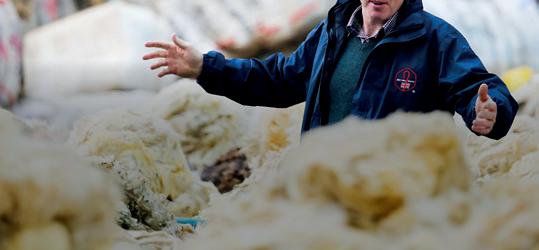
7



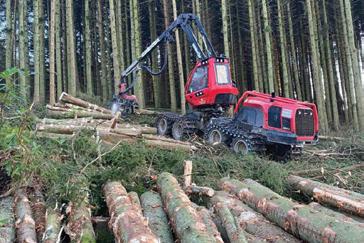
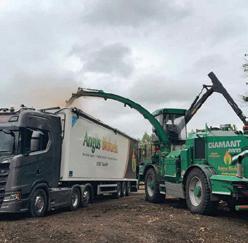
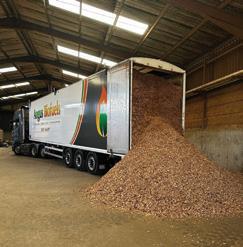



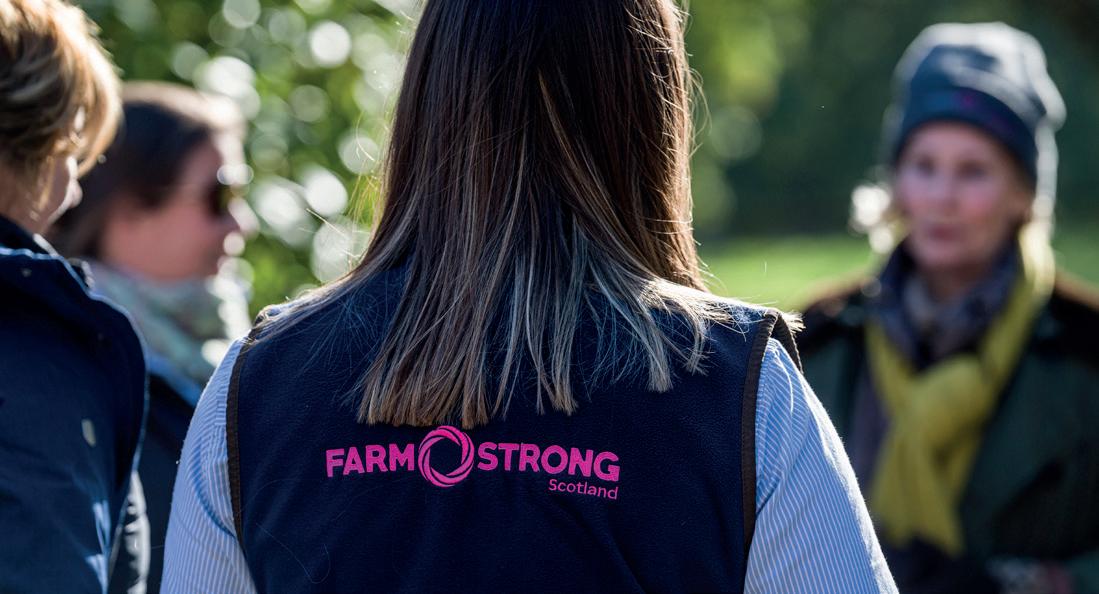
Alix Ritchie Farmstrong Scotland Director
conversations about menopause.
Rural women are sharing their stories, challenging taboos, and reshaping the way farming talks about menopause.
For generations, farming communities have been built on resilience, hard work, and stoicism. But behind that strength, many have faced life-changing challenges in silence – none more so than the menopause.
Across Scotland, more than a third of the agricultural workforce is female, and every woman will experience menopause in her lifetime. Yet for too long, it has been an unspoken subject. On farms and crofts where work never stops, women often push through symptoms like fatigue, anxiety, sleeplessness, and brain fog, all while managing livestock, families, and businesses.
Now, that silence is breaking.
This autumn, at Guardswell Farm in Perthshire, farmers, crofters, and rural professionals gathered for a special Blether Together Live event dedicated to honest
The evening formed part of Farmstrong’s Menopause Awareness campaign, developed to create a safe space for rural women to talk openly about menopause, share experiences, and access practical support – a topic that is often overlooked in agricultural communities.
Broadcast journalist Sarah Stephen chaired the conversation, joined by Dr Hannah Went, a psychologist specialising in women’s health, and Caroline Millar, farmer, businesswoman, and Scottish Agritourism lead. Together, we explored both the science and the lived experience – from the physical and emotional realities of menopause to the need for greater understanding within rural life. Caroline spoke candidly about her own journey through perimenopause while running a busy farming enterprise: “It’s not just the physical side – it’s how it affects your confidence, your focus, and your energy. Talking about it openly is the first step to managing it well.” For many in the audience, it was the first time they’d heard menopause discussed so freely in a farming setting.
The campaign provides practical support and guidance through a comprehensive menopause guide developed with Dr Heather Currie MBE, one of Scotland’s leading gynaecologists; a nutrition resource from Dr Laura Wyness and retired nurse Sheila Ogilvie; and a podcast series featuring farmers Sally Crowe (Caithness) and Lesley Mitchell (Scottish Borders) sharing their personal stories.
Across the country, women like Christine Cameron from Killin have begun speaking openly about how menopause affects life and work on the farm – from managing livestock to coping with changing energy levels. Their stories reveal a common thread: honesty brings understanding, and understanding brings change.
Rural women have always been the backbone of Scottish agriculture – working long hours, juggling responsibilities, and rarely putting themselves first. Recognising menopause as part of that reality isn’t a weakness; it’s an act of strength.
As Farmstrong’s Menopause Awareness campaign continues, the message is clear: menopause is not a private struggle to be endured alone, but a shared experience that deserves compassion, conversation, and care.
At Guardswell Farm, laughter mingled with reflection. There were moments of emotion, and a strong sense of connection and understanding. At last, this vital conversation about menopause is happening where it matters most – within the agricultural community.
Menopause may be inevitable, but silence about it no longer has to be.
For more information and resources, visit the Farmstrong Wellbeing Hub: www.farmstrongscotland.org.uk/ wellbeing-hub
TREGIONAL MANAGER Kate Maitland
07919 001 23 kate.maitland@nfus.org.uk
he recent West Fife and Kinross branch meeting took them to Taylors Crisps. In 2009, the long-established farming business spotted a gap in the market for good Scottish crisps. Mackie’s from Aberdeenshire were also looking to branch into crisps, which led to the two families shaking hands, marrying the Mackie’s of Scotland brand with Taylors Crisps, and bringing Mackie’s Crisps to life.
Their range has grown since the late noughties, with popcorn being added in
2015 and lentil waves in 2019. In 2022, they worked closely with the Mackie’s on a buy-out deal so they could take on full responsibility of the snacks brand, while Mackie’s could focus on their award-
Director of Taylors Crisps, for the fantastic tour and insight into the business.
Finally, Merry Christmas to you all. I am wishing you all a very happy one and I hope that it’s an opportunity to down tools and spend some well-earned time with family and friends. It’s also the time of year when branch AGMs are undertaken, and positions are to be filled. If you wish to become more involved in the Union, please do attend and find out more. The regional AGM will take place
Merry Christmas to you all. I am wishing you all a very happy one and I hope that it’s an opportunity to down tools and spend some well-earned time with family and friends.
winning ice cream and chocolate. The Taylors name and branding has now been rolled out across the entire product range to reflect the family’s ownership. Many thanks must go to James Taylor, Managing
in early January, and we have several vacancies on National Committees. Please do get in touch should you wish to take a more active role – whether it’s regional or national.
Lorna Paterson
07786 860 453
lorna.paterson@nfus.org.uk
ational Recruitment Week
provided a great opportunity for conversations with potential new members. Massive support came from Regional Chair Kevin, who rearranged his post-harvest holidays to ensure he was out recruiting. Kevin helped secure many appointments and successful meetings. Thank you also to our Group Secretaries, individual members, and the Presidential Team for their support, and to the many new members who joined to back our industry.
In other news, Vice President Duncan McAlister joined Gordon McKilligan to
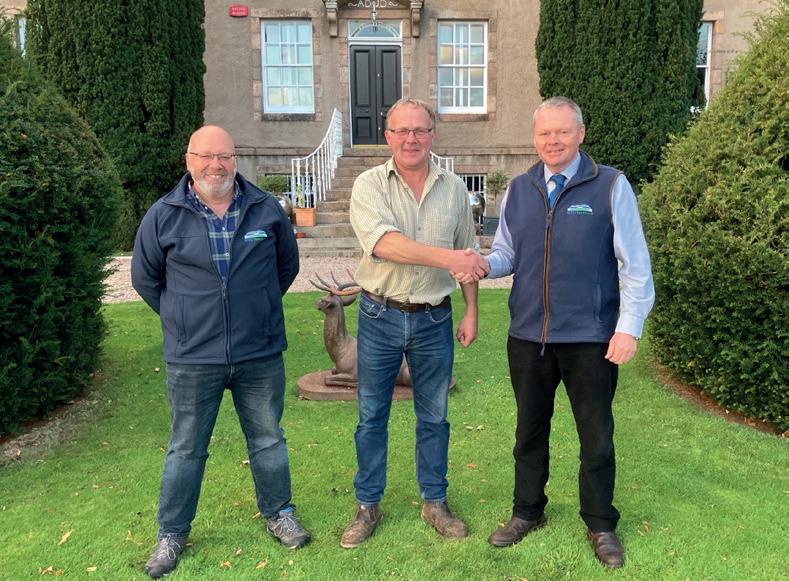
meet Alison Watt at Birkenburn, Keith, to hear about pylon concerns and hear more about the Irish wayleave framework and legislative situation and see where lessons can be learned.
Kevin and I attended the 6th European Rural Parliament (ERP), hosted in Scotland for the first time. Most events were Inverurie-based, with some workshops providing travel opportunities to themed events around Stonehaven, Pitmedden, Portsoy, Huntly, and Tarland. Kevin and Banffshire Branch Vice Chair Phil Strathdee managed to catch up with George Burgess on the final day. Kevin
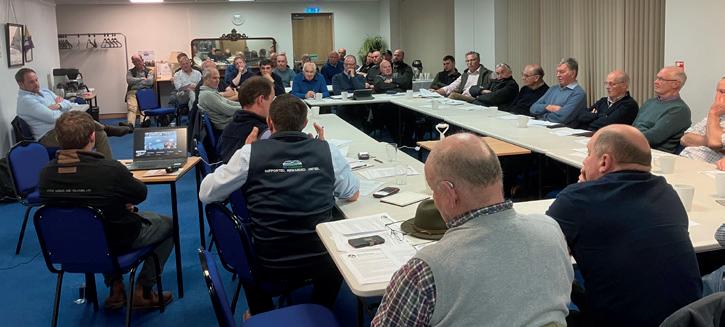
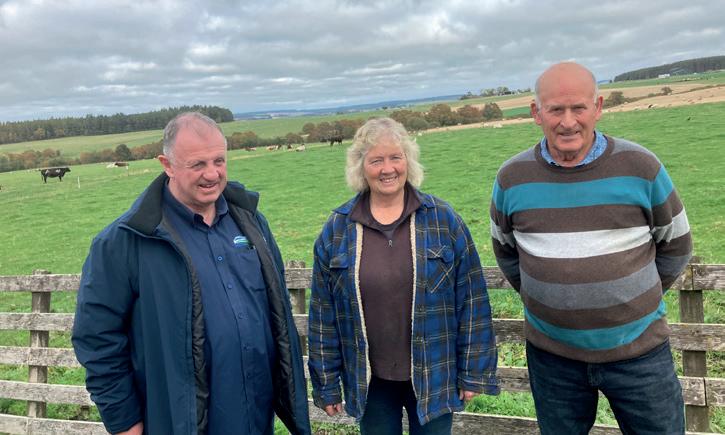
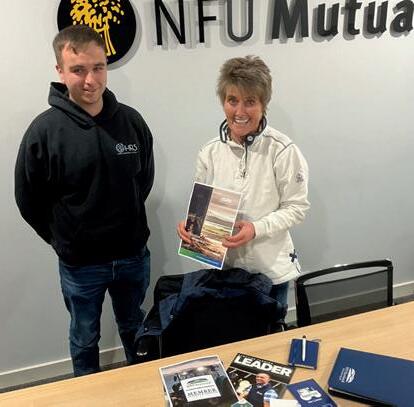
and I also had the great privilege of meeting Tom Jones, a member of the ERP steering group and past Vice President of the Farmers’ Union of Wales.
Several successful monitor meetings were held here, including our Regional Board, Combinable Crops, LFA, and Livestock groups, as well as a Livestock Health Scotland “Clipfitter” meeting with Nigel Miller and Brian Eadie. Brian also joined our Membership team to help support NFUS and the industry.
I attended the Scottish Land Commission meeting at the James Hutton Institute’s new Hub, where Chair Mike Russell engaged with the audience to hear key concerns regarding Land Reform proposals. Local members Clive Philips, Stewart Johnston, and Keith Whyte from Aberdeenshire Council, along with highly supportive councillors, made great efforts to present a commonsense approach.

ARGYLL & ISLANDS
REGIONAL MANAGER Lucy Sumsion 07787 434 104 lucy.sumsion@nfus.org.uk
Argyll & the Islands Regional Board Chair, Sybil MacPherson, and Regional Manager, Lucy Sumsion, visited Tiree at the end of October. We
met with members on the island who are continuing to deal with significant impacts caused by the increasing numbers of geese. Members told us about the damage being done to summer silage and arable crops, as well as grazing impacts on grassland areas during the winter. We attended a meeting of the Local Goose Group to discuss what needs to be done to reduce the Greylag goose population on the island and to review the Barnacle Goose Management Scheme.
In the evening, we met more members at a well-attended local branch
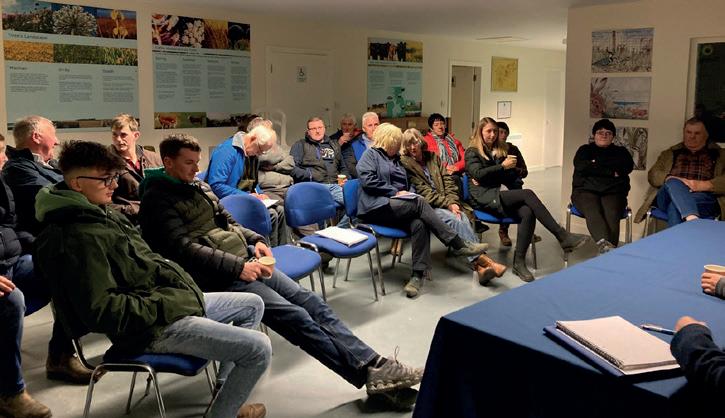
meeting. Members discussed doing some corralling of geese next year and increasing their shooting effort to reduce the Greylag goose numbers. We saw plenty of geese while we were on the island, but we also saw the wider biodiversity benefits that active crofting and farming can deliver, with large flocks of lapwings and curlews, along with some fine livestock and a stunning sunrise! NFUS will continue to support the crofters and farmers on both Tiree and Islay as we work with NatureScot and the Scottish Government to deliver the longawaited Goose Policy Delivery Plan.
• Do you know someone who is an NFU Scotland member who has significantly given their time and effort to the work of the Union in the Argyll and the Islands region?
• Or do you know someone who has made a considerable contribution to agriculture in the area?
Nominations are now being sought for the 2026 winner of the Argyll & the Islands Stalwart Award. The award will be presented at the Regional Board AGM, held on 16 January 2025 at The Gather, Campbeltown Road, Tarbert. If you would like to nominate someone for the award, please contact your local Branch Secretary or Lucy Sumsion.
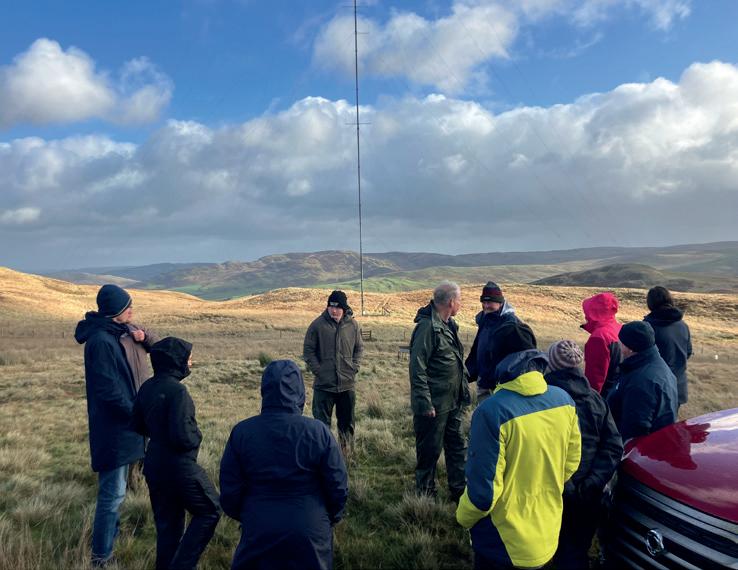
LOTHIAN AND BORDERS

EREGIONAL MANAGER
Lindsay Brown
07780 441 750 lindsay.brown@nfus.org.uk
ast Lothian members came together at Ballencrieff Farm to meet with Douglas Alexander MP, Secretary of State for Scotland, Paul McLennan MSP, and Martin Whitfield MSPs. There was some in-depth discussion on how Scottish and UK government policy is affecting local farming businesses, which are so
important to the rural economy. Thanks to the Playfair family for hosting.
At Ruletownhead Farm, John Lamont MP and Rachael Hamilton MSP joined us to discuss the frustrations across Border farms. It is important that Government policy is developed to support, and not hinder, a bright future for farming. Thanks to the Douglas family for hosting.
Following a request by Scottish Government staff to get involved with the creation of the Tier 3 /4 funding, we took them down the Ettrick Valley to Crosslee Farm. On a day when every sort of weather came through, we got the group into the pickups and bumped all the way up to the top of the hill to take in the view
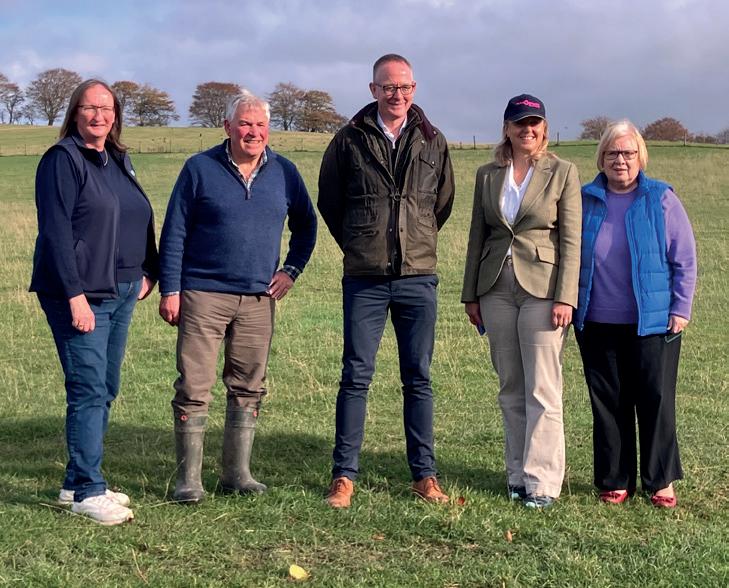
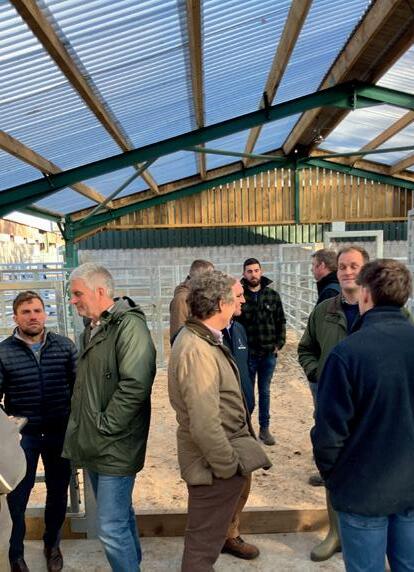
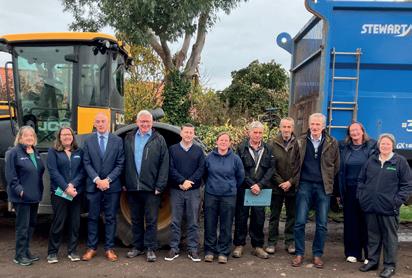
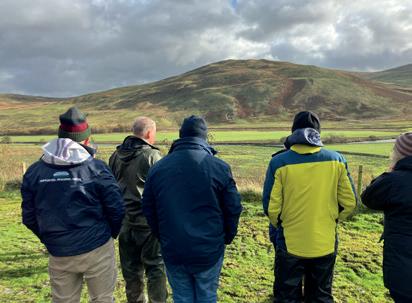
and show what well-managed hill ground delivers for the environment and wildlife, allowing a comparison with a blanket forest. Hopefully, getting out on farm will have a positive impact on their ideas for future agricultural policy. Thanks to the Davidson family for hosting.
We also held a livestock meeting at Upper Nisbet Farm. Lucy McGillivray and Penny Middleton provided livestock and animal health updates. We were there to see the completely redesigned, bespoke cattle handling shed, which improved speed, efficiency, and reduced stress for both animals and staff. Using the latest technology for data recording, it futureproofs the farm, making cattle handling safer and quicker. A few cattle were sent through the shed to demonstrate how easy it was to work. Thanks to Robert Neill and family for hosting.
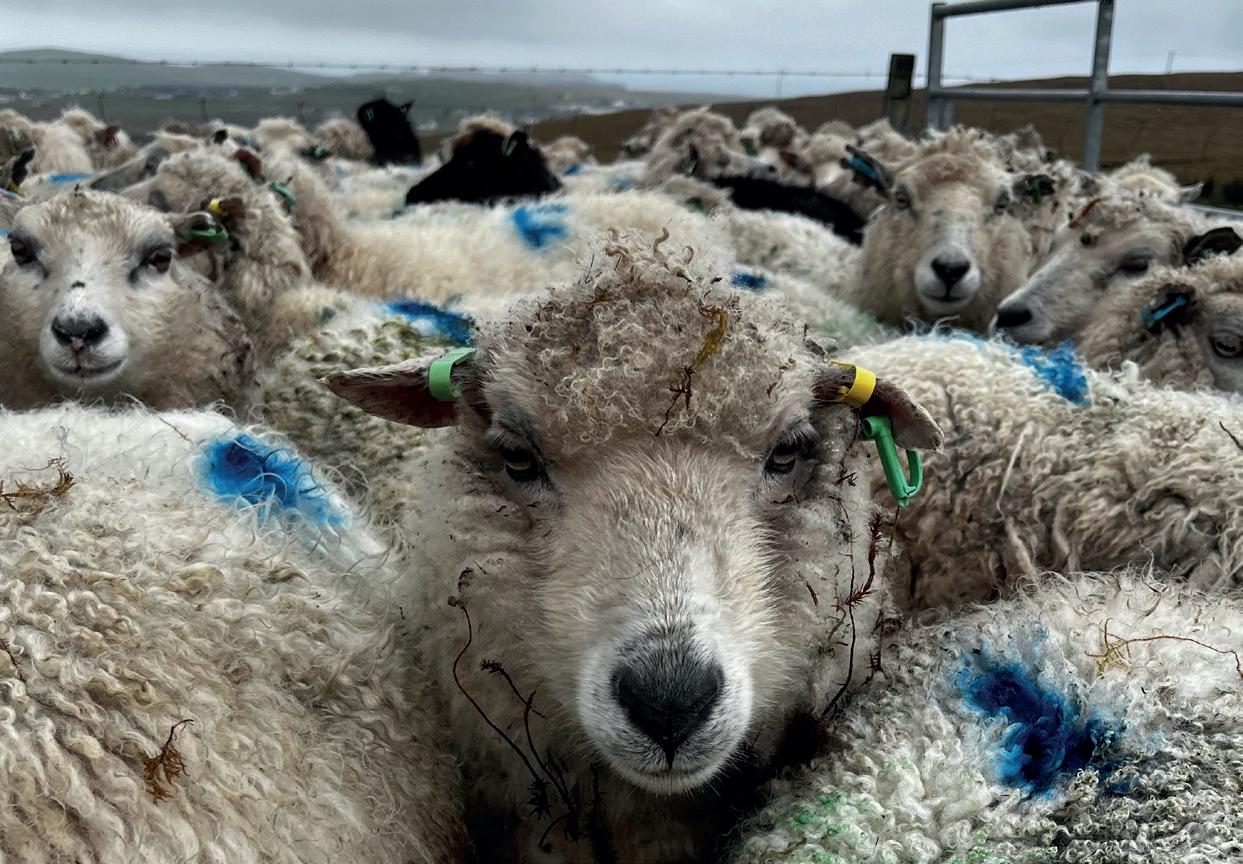
SHETLAND
RREGIONAL POLICY ADVISOR
Lee Smith
07554 741 030
lee.smith@nfus.org.uk
inging lambs has been done for years, it’s cost effective and provides farmers and crofters with the tools to uphold animal welfare. However, The Animal Welfare Committee (AWC) believe castration and tail docking using rings causes welfare issues, including immediate and ongoing pain. AWC have recommended the Government amend current legislation by 2028. NFUS held a castration consultation at the back end of last year to get the views from farmers and crofters, with a healthy response coming back.
The thought of change has caused a stir in Shetland; a lot of members are happy with current practice and not keen to change this. Two alternatives
are The Numnuts system which delivers anaesthetic whilst applying a standard rubber ring and the ClipFitter system, which applies a clip, generating the necessary closing force to produce the effect of anaesthesia.
The Farm Advisory Service (FAS) held a ClipFitting event back in April and again more recently, curiosity got the better of me; I wanted to find out more. The event was well attended at the Mouat’s croft in the Southend of Shetland, guest speakers included Osla Jamwell-Fraser, SAC Consulting, Brian Eadie, the founder of ClipFitter, and Laurence Martin, a farmer who has used this system for four years. Attending were farmers and crofters who have been using the system and ones who have never used it before. There was a lot of discussion about the pros and cons to using ClipFitter, some crofters having positive results and others having mixed results.
Seeing ClipFitter being used on lambs of 10 weeks (ClipFitter can be used on lambs up to 12 weeks) there was no pain, the clip was applied around the scrotum and the lamb
released back into the pen where they proceeded to act normally. The tails had been previously done using the ClipFitter system weeks earlier. Discussion alluded to fitting the clips
on tails being a little more tricky, and generally fitting the clips is more time consuming. It is more costly than rings but there did not seem to be any pain after fitting. If you are interested, and would like to find out more, contact Osla at SAC Consulting.
Unit 7 Meadows Industrial Estate, Oldmeldrum, AB51 0GN
Tel: (01651) 873083 Mob: 07967 992454
Email: sandy@murrayduguid.co.uk
• Grass Seed Mixtures
• Fodder Crops
• Conservation Mixtures
• Root Crops
• Organics
• Amenity Mixtures
• Cereals & Oil Seeds
• Green Manure Mixtures
• Cover Crops
SALES REPRESENTATIVES:
Graeme Christie: Mob 07974961749
Ian F Moir: Mob 07721517974
Blended, packed and distributed from our Oldmeldrum store since 1982















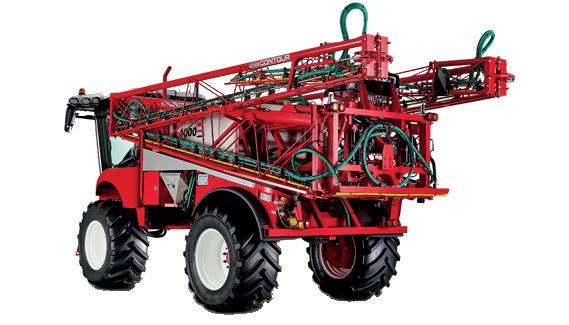
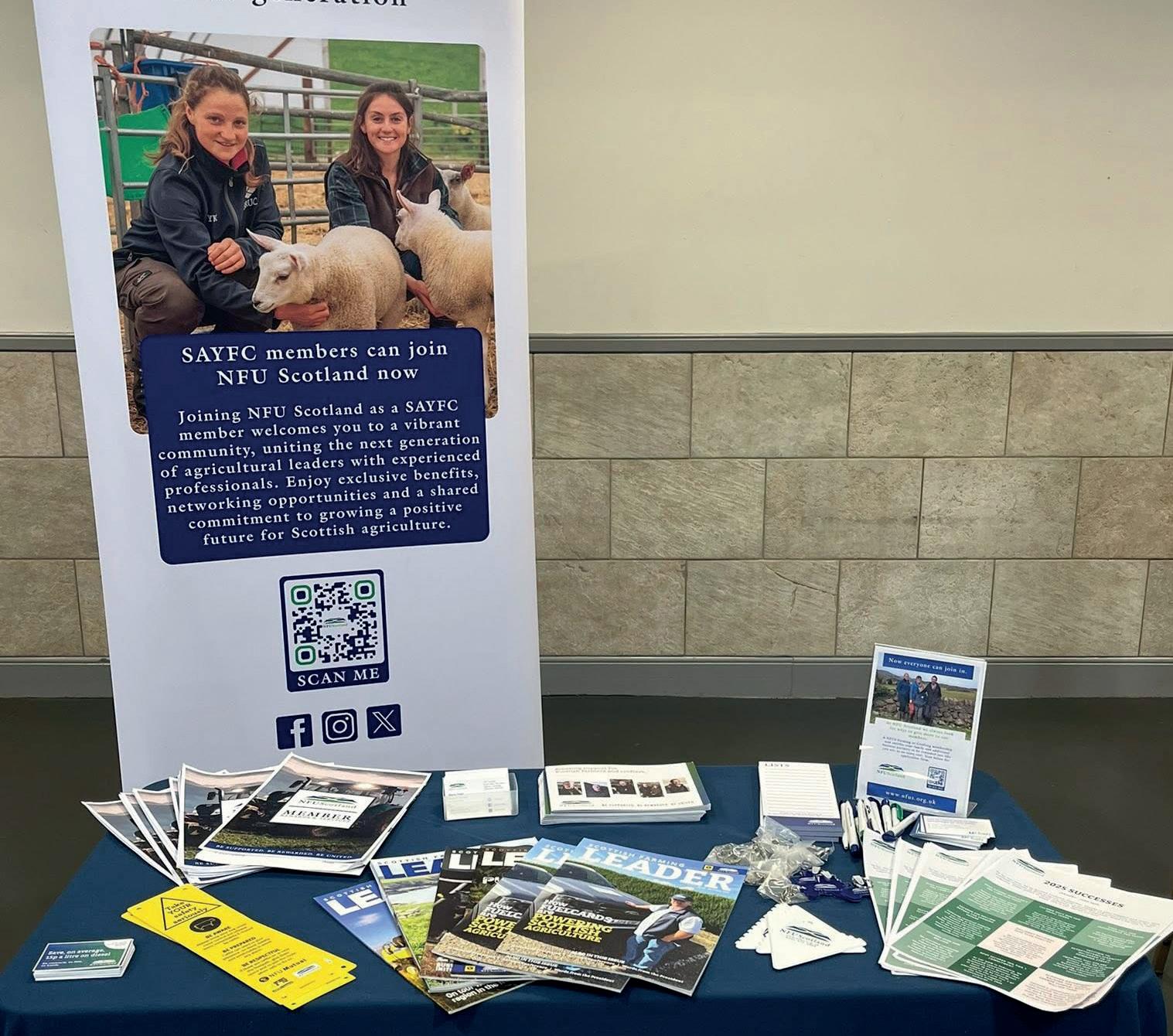
FORTH & CLYDE

RREGIONAL MANAGER
Sheena Foster
07789 796 582
sheena.foster@nfus.org.uk
ecent months have seen an uplift in NFUS activity, complimenting National Recruitment Day. Commenting on some of the activity, Group Secretary Mark McBrearty said: “All insurance customers have been contacted to highlight the benefits of NFUS membership and inspire others to join. We have had many new enquiries and five new members signing up thanks to the efforts of our dedicated branch chairs.” He went on to add: “A successful evening hosted by Kelvin Branch Chair, William Montgomery, brought members
and non-members together in a relaxed, open setting to discuss what NFUS can do for them. We had valuable conversations about our wider member benefits, especially our exclusive NFUS Member fuel card deal with UK Fuels, with attendees already referring others to join.” David Scott-Park, Dumbarton and Kilpatrick Branch chair, has also been fantastic in promoting the benefits of NFUS and referring people to explore further opportunities.
Our members recognise the challenge of running a membership organisation covering all types and scales of farm businesses. These recent successes show the power of teamwork and genuine connection and how working together can really grow our reach and thrive. We are looking forward to seeing the outcomes from the research into our professional membership, so we can better work with our wider supply chain partners to support
All insurance customers have been contacted to highlight the benefits of NFUS membership and inspire others to join.
the industry we all work in. These events, plus others such as a market day with Regional Vice Chair Rona Nicolson, and attending LiveScot with NFUS colleagues from Ayrshire and Dumfries & Galloway, have been great opportunities for our members – past, present, and future – to connect, discuss, share ideas, and celebrate success. Wishing you all a very happy Christmas.
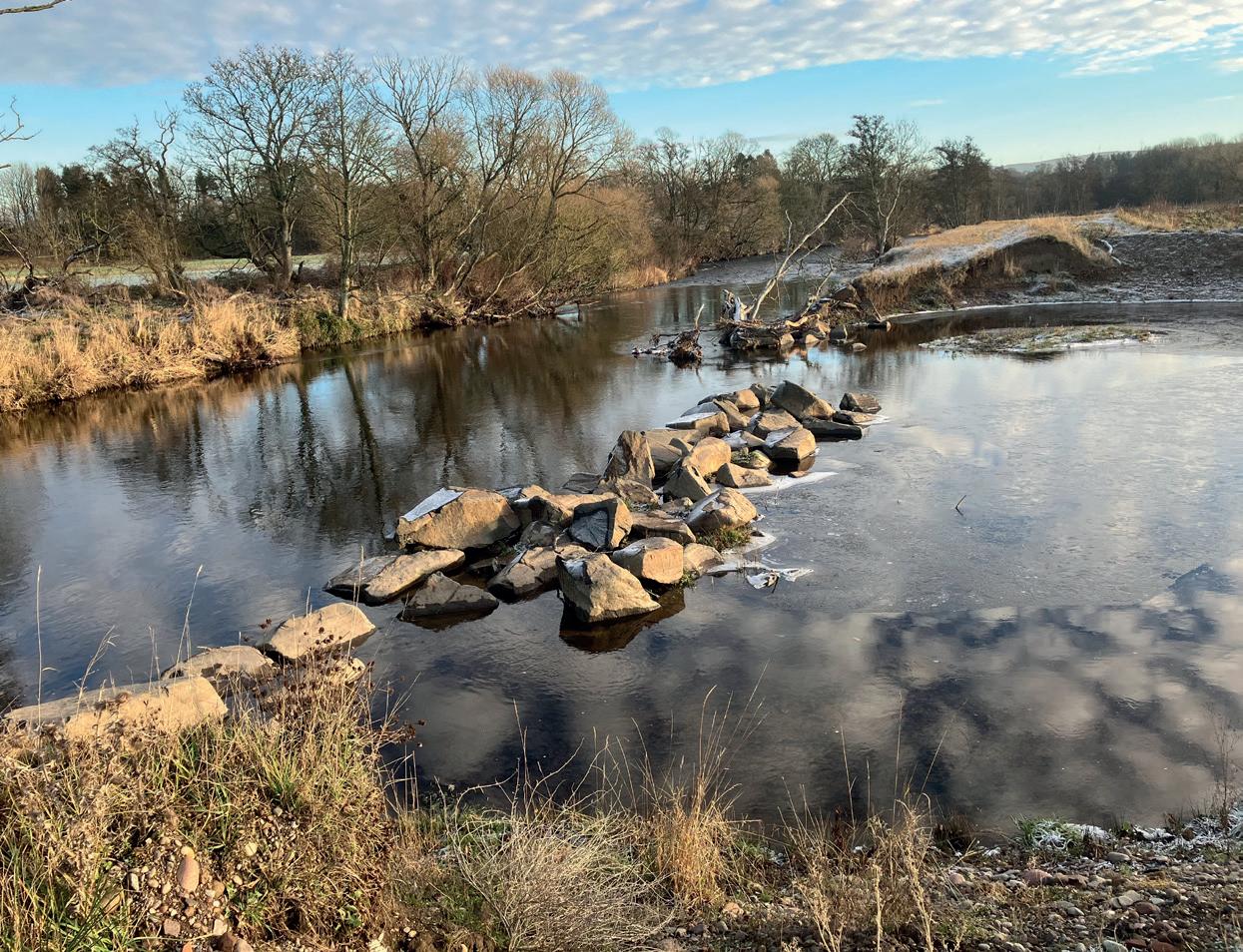
AREGIONAL MANAGER Ian Wilson
07775 915 988 ian.wilson@nfus.org.uk
s I write this, all the chat surrounds the recent Future Farming Investment Scheme (FFIS) letters to all that applied either saying yes or no to the applications. For many, the letters have brought more confusion than clarity, and there are claims that there has been little pattern to who and what has been funded. Many questions are being asked as to how successful applicants have been selected. Initial feedback from members has focused around perceived inconsistencies in how applications have been assessed and the low success rate among the Ministerial Priority Groups. Hopefully by the time you read this Scot Gov will have given more details on how their internal
processes worked.
From a Highland perspective, it feels like we have had more than our share of unsuccessful applications with many that appear to tick the right “priority boxes” failing to get a grant offer, with
resilience – somehow the positive of £21.4 million coming into the sector has left many disappointed too.
Having recently seen the release of beavers into Glen Affric we are now again being notified of the intention for releases
Hopefully by the time you read this Scot Gov will have given more details on how their internal processes worked
new entrants, young farmers, small claimants, tenants, on Islands being left disillusioned and disheartened.
While getting this previously removed ring fenced funding back to farming and crofting businesses is definitely a positive, and we remain encouraged by the clear and growing appetite across the industry to invest in sustainability, productivity and
into the River Ness and Loch Ness. If you are farming or crofting in that area it is essential you get involved so that you can fully understand the likely impacts. And if you have concerns, raise them, as enough pressure may help showcase the full picture. As always get in touch with myself if you have any issues needing taken forward through NFU Scotland.
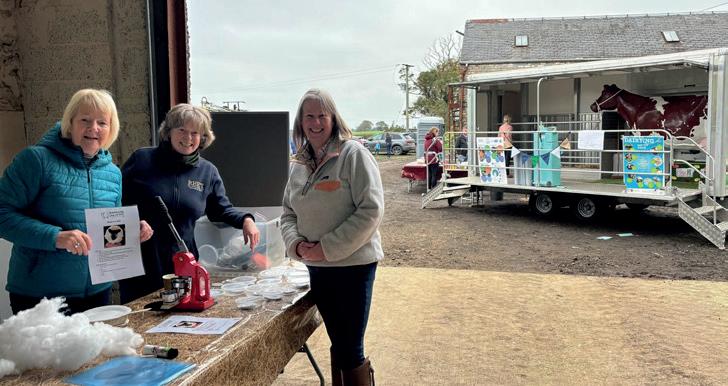
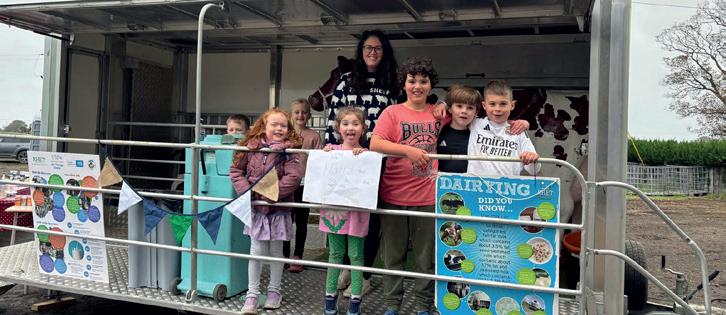

REGIONAL MANAGER Holly Fitsimmons
07775 838 926
holly.fitzsimmons@nfus.org.uk
Nurturing the next generation is arguably the most important job and, much like farming, it requires a lot of time, patience, and consistency – but the rewards are unmatched. Our family day was a great opportunity to meet different members who otherwise might find it difficult to join in some of our meetings and to give people the excuse to get off the farm and socialise without worrying about a babysitter.
Thank you to our fantastic hosts, Andrew and Mary Welsh; Jane, Wendy, and Jan from RHET Ayrshire and Arran; Jen and Scott for providing the delicious Dexter burgers; and, to top it all off, May brought some tasty Wester Highgate Farmhouse Ice Cream.
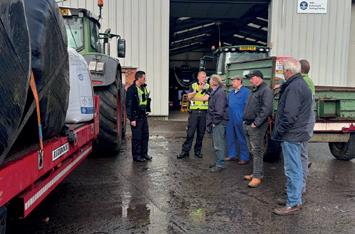

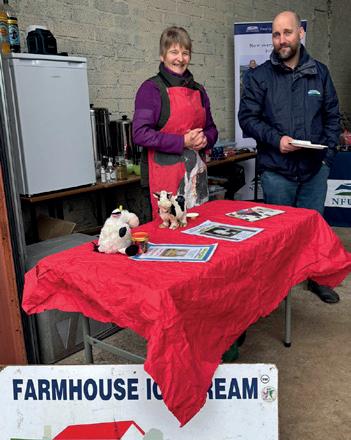
Group Secretaries Andrew and Linda of Cumnock & Failford and South Ayrshire recently held a Vehicle Licensing event at Tom French and Son’s yard, which offered a refresh on the dos and don’ts around agricultural vehicle loads and legislation, with support from Police Scotland and NFU Scotland’s Jamie Smart.
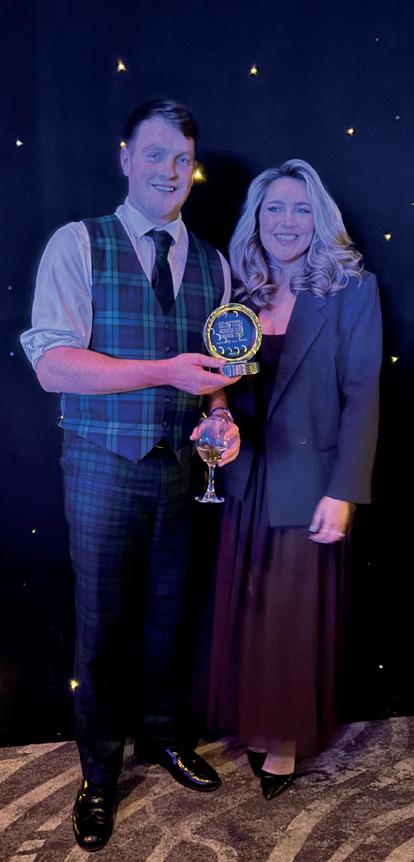
It was a real treat to join the team at the Scottish Agricultural Awards this year and a great opportunity to celebrate the fantastic people helping drive our industry forward. It was great to see so many Ayrshire folks up for awards. A particular well done to John Laird on winning Agricultural Contractor of the Year, Stuart and Jen Allan who won Machinery Dealer of the Year, and Thomas Murdoch who won our Farming’s Future Award (pictured above).
Contractor of the Year:
John D. Laird Agricultural Contractor W & J Mair
Young Farmer of the Year: Scott Limond, Ayr YFC
Machinery Dealer of the Year:
S & J Allan Agricultural Engineers
Farming for the Future Award: Thomas Murdoch of Lochwood Farm and Sunny Side Up Ltd
Dairy Farm of the Year: Grougar Mains Farm
Sheep Farm of the Year: Mid Brockloch Farm
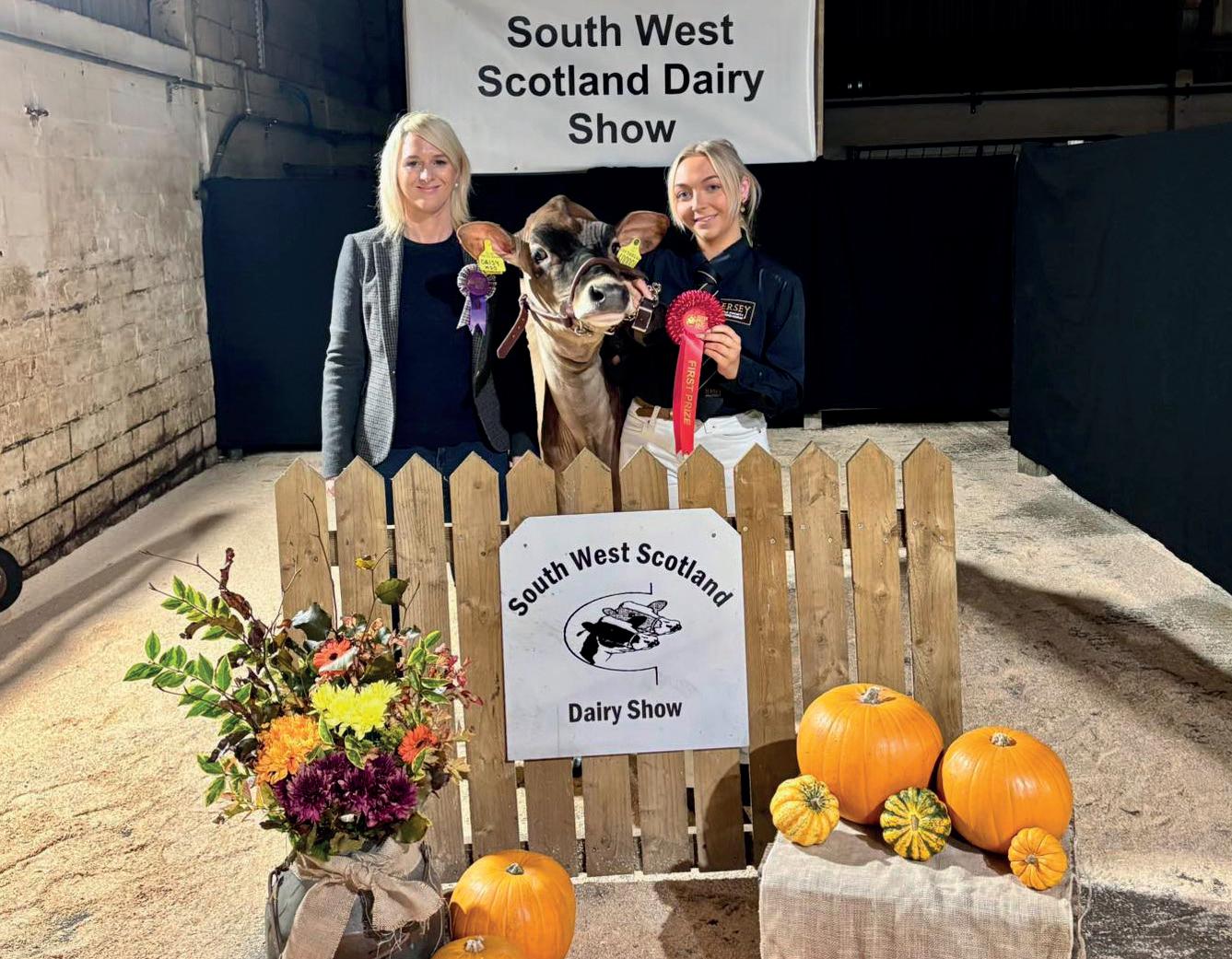
DUMFRIES & GALLOWAY
REGIONAL MANAGER Mhairi Dawson
07718 425 053 mhairi.dawson@nfus.org.uk
Iam delighted to say NFUS is an official supporter of Wallace Hall Academy’s new higher qualification, the Young Agri Leader. We will work closely to support teachers Aileen Marchant and Neil Miller, and to help develop the course going forward. Hopefully, in time, we’ll see many schools throughout the region embracing agriculture in their curriculum. You’ll hear more from Aileen, Neil, and the students in future editions of the Leader. We’re also hosting a Next Generation event for all the family next spring following the journey to a career in agriculture.
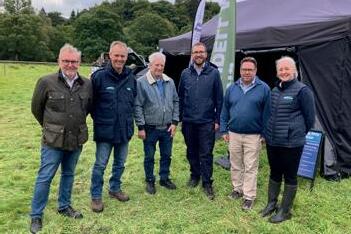
We finished off show season at Langholm Show with VP Robert Neill where we met some of our local politicians and discussed the serious impact significant land use change is having on the local community. We have also sponsored the South West Scotland Dairy Show and the SRUC Barony Winter Show which the agriculture students run. Well done to all exhibitors for the work you have put in and to our group secretaries Michael, Sally, Innes, and Louise for their support throughout the whole show season.
Rory and Gregor Christie hosted a meeting to highlight the change of UK Government policy, which has stopped skilled migrant labour entering the country to work throughout the agricultural supply chain. Several members there gave evidence on their experiences in the difficulty in employing local staff and how skilled migrant labour has allowed business development. NFUS has since taken that evidence to the Migration Advisory Committee (MAC) and will work with NFU England to lobby on this matter.
Our regional AGM for Dumfries and Galloway will be held on Thursday 15 January 2026 in Castle Douglas. Following the AGM, we will have a panel meeting and I hope to see lots of you there.
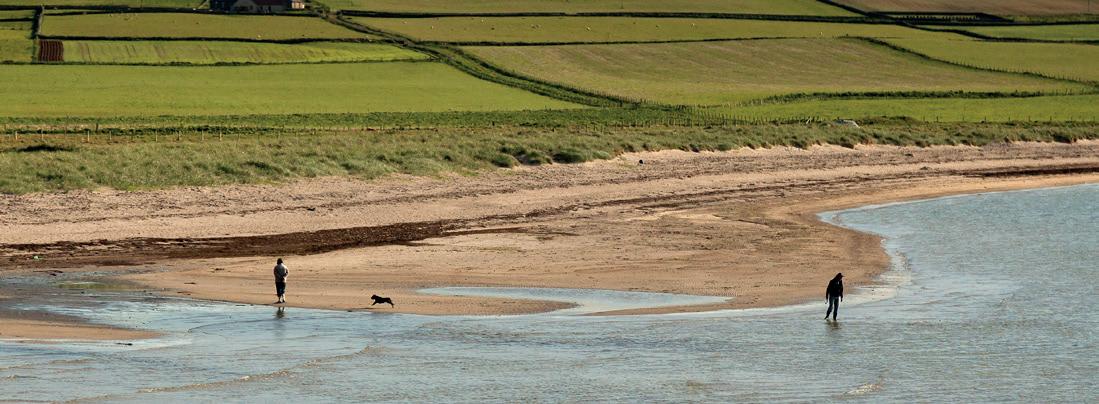
ORKNEY
TREGIONAL POLICY ADVISOR John Laughton
01856 872 048 john_laughton@nfus.org.uk
he Orkney farming community has suffered this year with the tragic and sad loss of loved ones,
those in their time of need. Christmas, for a lot of people, is a joyous time of year filled with fun and laughter. But for many, especially those who have suffered loss, it is a very difficult time of year.
For those that do struggle at this time of year, help is at hand and there is no need to suffer alone. This could simply be reaching out to a family member, a friend, a neighbour or popping in past the NFUS office in Kirkwall for a blether or seeking more expert help from the likes of RSABI and Farmstrong. There is always someone to speak to. It is OK not to be OK. We have a duty to look out for one another. It can be a soul-destroying and lonely industry
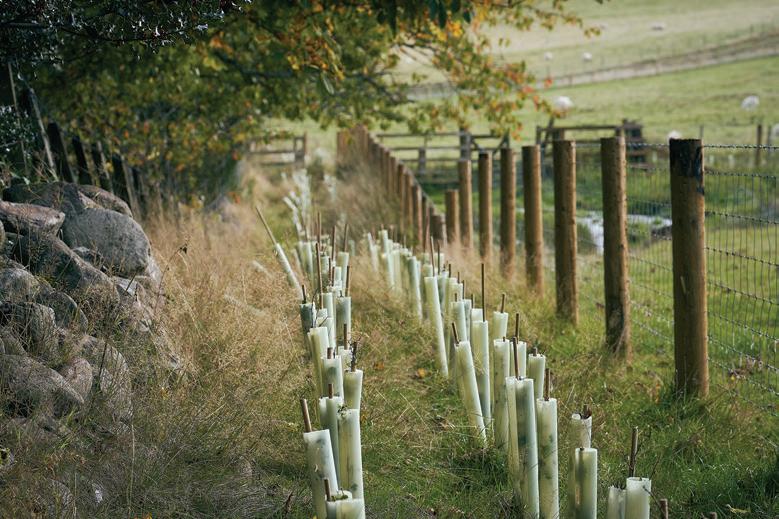

so keep an eye out for a neighbour or a friend you haven’t seen for a while and pop by for a yarn.
As we head towards 2026, I would encourage all to escape the farm boundary in the New Year and attend NFUS meetings, OADS events, technical events and social events. It is good to socialise and also sometimes a relief when you discover that other farmers have the same worries, concerns and anxieties that you do – and that you are not alone. And to also highlight the positives too. We have a tremendous industry with great people that should be there to support one another through good and bad times.
Planting native-species hedgerows creates habitats for pollinators and birds while also helping capture carbon. A condition of BN11 is to prevent livestock and grazing animals from damaging the tech tree shelters and planting sundries protect new hedging plants from wildlife, shield against herbicide spray drift, and create ideal growing conditions for faster establishment. Ask
Everything you need to protect your investment and future-proof your land.



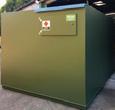








REDUCED PRICES
SINGLE PHASE, 3.5HP, 1800PSI, 11LPM.. £2,800
SINGLE PHASE, 5HP, 2200PSI, 14LPM..... £3,025
THREE PHASE, 7.5HP, 2700PSI, 25LPM... £2,950
THREE PHASE, 10HP, 3000PSI, 18LPM.... £3,300
PETROL, 16HP, 3625PSI, 25 LPM ..............£6,075
COMMERCIALMETAL BUNDEDFUEL TANKS STANDARDSPECIFICATIONS
•3mmBritishsteel
•230 volt /60litreper min pump
•6m deliveryhose
•Water &particulate filter
•Mechanical flowmetre
•Autoshutoffnozzle
•Contentsgauge
•Deadlockwith 2keys
•LiftingEyes
•Steel box sectionacrossthe base forforkliftaccess andtoraisethe tankfromthe floor
•Paintedgreenasstandard(Anti -corrosionpaint)
•BS799,OFST200 & SSAFOcompliant
•Pressure can beregulatedfrom maxto500PSI COMMERCIALMETALBUNDEDFUEL
WATERPRESSURE WASHERSSTANDARD SPECIFICATIONS
a cold pressurewasher






FWords by
Ben McClymont Chair of the NFUS Next Generation Committee
arming’s future depends on opportunity, and for many in my generation, that opportunity starts with access to land.
I’ve heard people describe Scotland’s tenanted sector as being in “managed decline.” What a depressing phrase for something that should be full of potential. The tenanted sector has been, and still could be, one of the greatest assets we have for bringing new talent and fresh energy into farming. For those of us who don’t come from landowning families, tenancies are often the only route into the industry. A vital springboard to build a business, a future, and a life on the land.
As Chair of NFU Scotland’s Next Generation Committee, I’ve had the privilege of working closely with the Union’s committees on the Land Reform Bill. It’s been a real eye-opener, and at times, a real worry. We’ve had some strong discussions about what the Scottish Government is proposing for agricultural tenancies, particularly around resumption and potential changes to both secure and modern (2003 Act) tenancies. Our main concern is simple: we must not undermine confidence in letting land.
Yes, there may be areas where change is needed for older, secure tenancies. But when it comes to modern
tenancies, our message has been clear: leave them alone. These arrangements were introduced to bring flexibility and confidence back into the system. If government starts “tinkering” now, that confidence will evaporate, and with it, opportunities for new entrants.
If you were a landowner, would you offer a tenancy knowing the rules might change again in a few years? Probably not. And that’s exactly the problem. We risk legislating in a way that makes access to land even harder, at a time when it’s already one of the biggest barriers facing
So the question for me is this: how do we turn decline into opportunity?
It starts with confidence, from both sides. We need people who own land to believe they’re on firm ground if they decide to let it out. We need tenants to trust that they can build a business without fear of sudden policy changes. And we need open, honest communication and good professional advice to make those relationships work.
The Tenant Farming Commissioner plays a crucial role here too, providing a safety net and building trust between
Our main concern is simple: we must not undermine confidence in letting
my generation.
Historically, big estates were the main providers of tenancies, and in my area, many still are. But looking ahead, I think the opportunities of the future are just as likely to come from family farms, people who are stepping back, or whose children have chosen a different path. For them to feel comfortable letting out land, they need confidence that the system is stable and that government has their back, not a policy that makes things riskier or less attractive.
tenants and landlords. But beyond that, we need policy that enables letting, not discourages it. Policy that incentivises landowners to provide opportunities for the next generation, not push them away.
Because at the end of the day, this isn’t just about ownership or tenancy, it’s about the future of Scottish farming. It’s about ensuring that our generation has a fair shot at producing sustainable, profitable food for the country we love.
And that’s something worth fighting for.