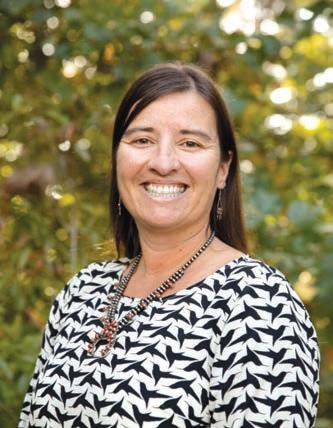
Heading into her final session in Salem, State Senator Suzanne Weber is ready to tackle several important issues, including transient lodging tax reform and the state’s education funding formula.
Weber, who is ineligible to run for reelection following a 2023 walkout, told the Headlight Herald in a recent interview that she would probably stay involved in public life in some way because of her passion and exhorted others to become similarly engaged.
“I get involved in these things because I’m interested and I care and I wish there were more people that would get involved in you might say the entry level,” Weber said. “Learn what’s going on in your city, school boards and water boards, find out, because otherwise things happen to you rather than you knowing and being able to influence anything that happens.”
With a short five weeks on the legislative calendar this year, each legislator is restricted to sponsoring two bills.
One of Weber’s bills will be a renewal of a push she and State Representative Cyrus Javadi led last year to amend the state’s restrictions on spending for transient lodging tax (TLT) dollars. Currently, jurisdictions are required to spend 70% of those revenues on tourism marketing or tourist-related facilities, a percentage that matching bills by Javadi and Weber seek to reduce to 40%.
Weber said that the current requirements leave counties like Tillamook and Clatsop that see high numbers of summer visitors underfunded to deal with the impacts those visitors have on law enforcement and first responders, citing a statistic that 34% of Clatsop County’s jail roster in the summer months is made up of people from outside the county.
“I need that transient lodging tax fixed so that our local municipalities that are charging that can be able to use it more openly for more of the issues that tourism brings to the area,” Weber said.
Last year’s push to amend the TLT fizzled in a senate committee due to political infighting among Democrats, and Weber said that her and Javadi’s tandem efforts this year were aimed at preventing such an issue from recurring. Weber said that Senate President Rob Wagner has been less involved on the issue this year than last, but that she hoped to reengage him at an upcoming meeting and that she felt the support from the League of Oregon Cities and Association of Oregon Counties would help the effort be successful this year.
Weber’s other bill seeks to remove barriers to the construction of replacement dwellings after fires or other disasters destroy
City hall and police station projects progress
WILL CHAPPELL Gazette Editor
Construction at Cannon Beach’s new city hall and police station is well underway, and work at the police station at the city’s south
end is about a month ahead of schedule.
That keeps the new city hall on pace for a July 2026 opening, while the police department may be able to open ahead of the projected June 2026 date, though it
will depend on the delivery of items like furniture for the building.
At the police station, as of mid-January, doors and frames were being installed on the building’s interior while its HVAC system was being
charged. Outside, the facility’s six-inch water line and fire hydrants were being stalled, its carport was being framed and fencing was going in.
PIERCE BAUGH V for the Gazette
On a quiet stretch of South Spruce Street, the Cannon Beach History Center & Museum is preparing for a season that leans as much into community as it does history.
“We’re always trying to do lots of events, if we can, without breaking our back,” says Liz Scott, the museum’s executive director. “We want the museum to be more than just a place to explore history — we want it to be a gathering space where the community can come together and visit, share ideas and create.”
That idea of the museum as a place to linger, not just pass through, is showing up in both its spring lecture series and a new weekly program aimed at giving locals a space of their own.
A place to work, think — or just sit for a while
Beginning March 19, the museum will launch “Wednesday Workspace,” opening its John Williams Classroom every Wednesday from 11 a.m. to 4 p.m. as a free, open community space.
Scott describes it as something deliberately simple: a room where people can bring a laptop, a notebook, an art project — or nothing at all — and spend a few hours working quietly or talking with whoever else happens to stop in. Wi-Fi will be available, no registration is required, and donations are accepted to support the museum’s operations.
It’s part of what Scott sees as the museum’s role beyond exhibits and display cases — a place where people can cross paths, share ideas and feel comfortable staying awhile.
Fire, shipwrecks and forgotten stories
The museum’s spring schedule also brings back its lecture series, which will run from late winter into early summer and feature a mix of historians, nonprofit leaders and local experts.
One of the newest additions is a partnership with the Cannon Beach Fire Department, which will host recurring talks focused on major disasters in history, paired with practical fire prevention and community outreach.
The fire marshal previously spoke at the museum about the Great Chicago Fire, and the next presentation will turn closer to home, focusing on the Great Fire of 1922 in Astoria, a blaze that reshaped much of the lower Columbia River region. Scott said the talk is expected in late Feb-
ruary, with the final date still being confirmed to avoid conflicts with other community events.
In March, Cameron La Follette, executive director of the Oregon Place Alliance, will visit the museum to talk about Broughton Baths, a long-gone health spa near Pacific City that operated in the early 1900s. Once known for its mineral waters and curative reputation, the site drew visitors from across the region seeking everything from rest to recovery.
On April 16, Zachary Stocks, director of Oregon Black Pioneers, will speak about York, the enslaved man who traveled with the Lewis and Clark expedition. Stocks, a former park ranger at Fort Clatsop, has spent years sharing Oregon’s Black history and the stories that often sit just outside the margins of traditional
WILL CHAPPELL
As the legislative session gets rolling this week, State Representative Cyrus Javadi will seek to pass transient lodging tax reform and advance a ballot measure to open Oregon’s primary elections to the ballot.
Javadi said that while he believes the former reform might have to wait until next year’s long session, he is bullish that his and State Senator Suzanne Weber’s joint push to allow jurisdictions freer use of transient lodging tax (TLT) dollars will be successful.
“One thing I’ve learned over the last couple of terms is that there can always be last minute hurdles and some of those are not recoverable,” Javadi said. “What happened last time when that bill went to the senate committee and it was in there, it couldn’t come out, not even the senate president could reach in and move it and so we wanted to have a backup just in case something fishy happens at the end.” Javadi’s push to amend the split that currently requires jurisdictions spend 70% of TLT, paid on overnight stays, on tourism marketing or facilities kicked off last year and was nearly successful, passing the house before stalling out in a senate committee amid political infighting. This year, Javadi and Weber are bringing matching bills before their chambers, seeking to reduce the funds required to be spent on tourism-related expenses to 40%, allowing counties tourism to use the remaining money for whatever they chose.
While the bill faced stiff opposition from the Oregon Restaurant and Lodging Association in last year’s session, Javadi said that he feels the group has been less opposed this year and that fellow lawmakers continue to support the change to give localities more flexibility in a challenging fiscal climate. “Right now, I feel like the temperature is everybody’s struggling across the board and giving more local controls and flexibility for local governments to solve their needs is a winning story, winning argument,” Javadi said.
For his second sponsored bill, Javadi is bringing forward a proposal to put a ballot measure before voters to change Oregon’s primary elections from closed to open. Javadi is working with Open Elections, a group led by former Representative Charlie Conrad, and supported by former Governor Ted Kulongowski and former State Senator Betsy Johnson, on the proposal, which would give major parties the opportunity to opt out and pay for their own primary elections. Javadi explained that he felt the current system fails to give adequate input to the half of Oregonians who are registered
The council chamber at the new city hall will offer views towards Haystack Rock.
Move ins begin at Alder Creek Commons
WILL CHAPPELL Gazette Editor
Following a $2.5-million renovation, the former Nehalem Bay House assisted living facility has reopened as Alder Creek Commons, with 24 affordable apartments for residents 55 and over.
Daryn Murphy, the project’s lead developer from North Development Group, recently gave the Headlight Herald a tour of the newly updated facility, which had welcomed one resident and received another dozen plus applications.
Alder Creek Commons is located on the west side of Nehalem, near Bayside Gardens, and was originally built in 1997 as a 34-room, assisted-living facility. It operated under that model until 2022, when economic pressures forced its closure and it fell into the ownership of CareOregon.
For several years, CareOregon officials searched for a partner to reopen the fa-
cility, but following three or four efforts that fell through, they reached out to Murphy, who has worked with the organization before, about renovating the facility. Murphy, who had also led development at the nearby Bayside Commons apartment complex, agreed to become involved and secured a Local Innovation and Fast Track zero-interest loan from the state government for $4.3 million and a grant from CareOregon for $500,000.
Those funds allowed Murphy to purchase the building and begin renovations to convert the building from an assisted-care to independent-living facility. That entailed reducing the number of units from 34 to 24 to allow room for kitchenettes to be expanded into kitchens, as well as a complete upgrade to all interior and exterior finishes, including siding, roofing, flooring and wall painting. With the renovation complete, the building now
has six studio, 16 one-bedroom and two two-bedroom apartments, as well as a community room and communal laundry room. The apartments are open to those 55 years of age or older and earning less than 50% of the area’s median income, and rents will be $731 for the studios, $783 for the one-bedroom apartments and $940 for the two-bedroom apartments.
Each bedroom features an accessible shower and full kitchen, and residents will have access to a storage locker in the building.
Murphy said that an internal courtyard in the building could also be used for a communal garden once drier weather arrives, if residents desire.
Murphy said Cascade Management is managing the property and that most prospective clients were probably in contact with somebody at CareOregon or another social services organization that could help them navigate the applica -
tion process, but that if they weren’t, they should reach out to the property man -
As of mid-January,
Short Session
From Page A1
with neither political party, as many districts do not have competitive general elections, making one of the primaries a de facto general election. Under the new system proposed by Javadi’s bill, all voters would receive a primary ballot and select their top candidate, with the top two vote winners advancing to the November general election, regardless party affiliation.
In addition to involving all voters in meaningful elections, Javadi said that he also believed the move would encourage politicians to take less extreme positions. “I think what it does for the candidates is you have to moderate a little bit,” Javadi said. “You’re not just playing to your base, everybody can vote.”
Javadi acknowledged that the proposal was likely to meet with pushback from the parties and that it might be necessary to form a working group to further explore the issue before returning to it in 2027’s long session.
Aside from his bills, the major issue on Javadi’s radar for this session is the states budget situation, especially as it relates to healthcare
as Oregon grapples with substantial changes to federal funding for Medicaid. Javadi, a dentist by trade, said that his practice had previously seen Medicaid patients, losing around $20 per patient to provide what they felt was an important service, but that at the beginning of the year, a 30% cut to their reimbursements had forced them to stop.
A similar situation is playing out at medical clinics across the state, and Javadi explained that the decreased reimbursements are coming while the federal government is asking the state to take on an expanded administrative role at considerable cost. Those two changes are also being exacerbated by a recent increase in reimbursement rates for behavioral health providers in Oregon to encourage them to see Medicaid patients, which has been successful, requiring a larger share of funding.
“We have to find more money to pay for that so we can meet the standards so we can continue to provide Medicaid budgets and SNAP benefits,” Javadi said. “So, all that’s coming in 2027, that’s when the rate impact will hit, so the next two to six years are going to be crazy for healthcare and welfare services in general as we try to figure out where we’re going to find all of the money to meet those needs, because
they don’t go away.” Javadi said that he felt the most expedient option to address the issue would be decoupling Oregon’s definition of adjusted gross income from the federal definition to increase tax revenues. Javadi explained that only five states use the federal definition and that it leaves the state’s revenues vulnerable to changes like the policies removing tax on tips and overtime wages that occurred this year.
While he said that he would favor keeping tips tax free for those with lower incomes, suggesting starting to phase out the benefit for those making over $75,000 annually instead of the federal government’s $150,000 bar, Javadi said that making the change would give Oregon more stability in budgeting.
“It makes you wonder structurally, from a good governance point of view, when you’re trying to think of how do we make it so our state is sound, predictable, structurally secure, you look at something like that connect and you say, well, let’s just disconnect, then we have more control over it and we’re not whipsawed between administrations,” Javadi said.
Javadi said that he will also be supporting legislation to place a referendum on last year’s gas tax increase on May’s ballot rather than November’s because he believes the issue should be resolved as quickly as possible to secure funding for the Oregon Department of Transportation.
Finally, Javadi said that he expects he and other Democrats will try to pass legislation to ensure that Immigrations and Customs Enforcement agents operating in the state follow state laws requiring police not to wear masks and provide support for those negatively impacted by their operations.
“We want the public to trust them,” Javadi said. “We want to make sure that people who are not acting in the best interest of the public that they serve can be held accountable and that they can’t sidestep the laws.” J
ager.
one person had moved into the building and Murphy said that around 15 more applications had been received.
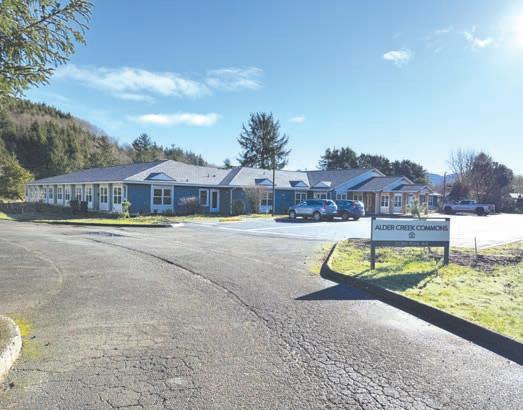
Alder Creek Commons’s renovation included new roofing and siding, as well as updated landscaping and the addition of parking spots.
The kitchen in one of the one-bedroom apartments at Alder Creek Commons.
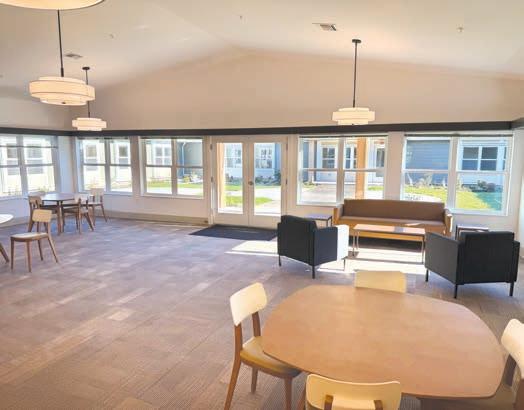
The common room in the new building will be open for residents to have events and feature artwork from local artists.
after a constituent in rural Multnomah County lost their home in a fire in August 2023, and was told by the county that the original permits for their home had been lost, which would require them to go through a full permitting process that would take up to two and a half years. Weber said that with support from her office, the issue had been resolved, but that it had shown the need for reform.
Weber’s bill would require local governments to approve the replacement of a dwelling if the former dwelling on the property met a list of requirements, including having electricity, plumbing and heating, and if property taxes were paid on the dwelling for more than ten years, even if permits for the prior dwelling are missing.
By dint of her membership on the education appropriations committee, Weber has also been involved in an ongoing reevaluation of the quality education model used since 1999 to determine the proper level of funding for Oregon schools. Weber said that she and other committee members are looking at what is included
in the model and plan to bring a bill updating the requirements for the model to the full legislature before the end of session.
“We get the reports and they say we’re not spending enough money. Do we do anything about it? No, we accept the report,” Weber said. “Okay, so maybe we ought to look at what’s required and a little bit better picture of what we can do to fully fund education.”
Weber will also seek $225,000 in funding for the Nehalem Bay Food Pantry and $155,000 for a traffic signal outside the fire station at the intersection of Highways 26 and 47 in the annual capital construction bill and participate in task forces focused on drinking water and hunger. Looking ahead, Weber, who walked out of the 2023 legislative session in protest against a bill aiming to protect reproductive rights and gender affirming care, rendering her ineligible to run for reelection, said that she is still mulling her options, including running for office in Tillamook where she was previously mayor, andwing at all my options,” Weber said. “I haven’t made any decisions yet. I’m still wishing that I could have continued for another term, but that isn’t in the cards. I find this work very challenging and I’ll have a lot of time on my hands.”
City Hall
and Police Station
From Page A1
Merkley focuses on Trump in Tillamook town hall
WILL CHAPPELL Gazette Editor
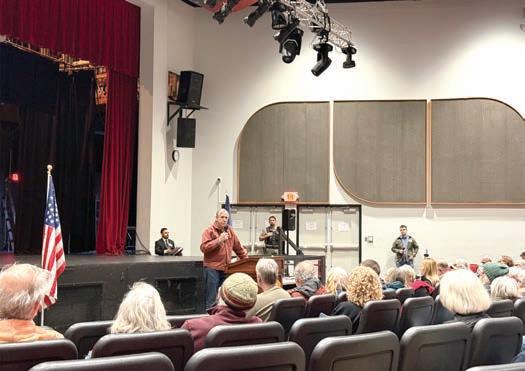
United States Senator Jeff Merkley largely focused on his resistance to the Trump administration’s policies and actions at a town hall at Tillamook High School on January 17.
Merkley voiced strong opposition to the recent military operation removing Venezuelan President Nicolas Maduro to the United States and discussed a list he recently compiled of ten strategies used in recent decades to undermine democracy as a basis to continue his fight to prevent Trump from doing the same in America.
“We know that we have to fiercely hold our elected leaders accountable, all of us, even me,” Merkley said, “but maybe you’re making me think about what else I can do, because when I go to town halls and people say, ‘Jeff Merkley, you haven’t done enough.’ I’m thinking, what else can I do?”
At the town hall, Tillamook County Commissioner Paul Fournier introduced Merkley, who presented a flag flown over the United States Capitol to members of the Nehalem Bay Health District’s board of directors in recognition of their recently completed pharmacy and clinic project.
Merkley then addressed the crowd, sounding the alarm about the dwindling Social Security Trust Fund, which is set to reach a zero balance within seven years, causing a cut of 25% to social security payments. Merkley said that he was using his role on the budget committee to agitate for a solution ahead of the problem becoming an emergency for millions of retirees.
“Why do we have to wait until the last second when there’s a crisis and it’s harder
to fix it,” Merkley asked rhetorically. “Let’s actually do something before we reach kind of a cliff and show that we can actually govern in this United States of America.”
Constituents then began asking question of Merkley, with most focused on disagreements with the administration.
In response to a question about the release of the Epstein files, as required by a December 2025 bill, Merkley said that he would do what he could to make court orders compelling the justice department to follow the law stick.
On the subject of Venezuela, Merkley took the president to task for taking the action not in support of democracy, but to secure control of the country’s oil reserves. Merkley said the move represented a return to a longtime U.S. foreign policy of supporting dictators as long as they allowed American companies access to their resources, engendering anti-American sentiment around the world.
“It’s undermining our reputation for promoting democracy,” Merkley said. “Our damage to the alliances is hurting us in terms of not just intangibles like respect but tangible stuff like people being willing to work with us on trade agreements and we’re not having any principles that help us go forward in an orderly world and prosper, so I think it’s a massive mistake.”
Asked about damage to Hangar B at the Port of Tillamook Bay, Merkley said that completing a study of repairs needed to fix the structure should be the priority and mentioned Federal Emergency Management Agency money as a potential funding source. When asked about how the Democratic Party could appeal to voters on the core
issues Merkley has identified as key to American families, healthcare, housing, jobs and education, Merkley said that he didn’t like to make his town halls partisan but instead to focus on his positions. On that front, Merkley called attention to the fact that President Donald Trump in recent weeks has adopted two of his ideas for increasing affordability, prescription drug control prices and barring hedge funds from owning single-family homes, citing it as evidence that he was still in touch with issues that resonated on both sides of the aisle.
More generally, Merkley said that his view of the current system was that the wealthy had too much influence through dark money donations and were able to induce legislators to craft new laws that made them wealthier, a dynamic that needed to be reversed. “If we want to make this country work better, it can’t be a families-lose-billionaires-win version of the world,” Merkley said. “It has to be families thrive; billionaires pay their fair share.”
Responding to a question about how concerned citizens could take action to protect democracy, Merkley pointed to a pamphlet that his staff had handed out to town hall attendees titled “Ring the Alarm Bells: The Ten Rules of Trump’s Authoritarian Playbook.” Merkley said that he had researched democracies from around the world that had failed in recent decades, saying that armed coups had receded from prominence, replaced by a slow drift to authoritarianism and that he had studied the commonalities from those situations to compile the list.
The list includes items like pack the government with loyalists, disregard due process, silence free speech and steal congress’ power
of the purse, and culminated with rigging the next election, which Merkley accused Trump of working to do.
“The president’s rigging the next election,” Merkley said. “He’s doing this national voter database so it can be purged before the next election, you’ll show up and you won’t be able to vote.”
Merkley praised the Oregon Secretary of State and Attorney General for fighting to protect the state’s ability to conduct vote-by-mail elec-
tions. Merkley said that everyone deserved the option to vote by mail and that “saving our election system has got to be a top priority when we have a congress that is under different leadership.”
Finally, in response to a question from a college student about affordability of classes, Merkley said that he believed the United States had the financial resources to make college debt free for all students and that he would continue to advocate for that policy.
“If other developed nations can afford to do that, we can afford to do that,” Merkley said. “We can’t afford to do it if we’re spending on wars like Afghanistan and Iraq, we can’t afford to do it if we’re doing tax bills that give $30 billion to the richest Americans, we can’t afford to do it if we’re spending $40 billion to help out some right-wing ruler in Argentina. We’ve got to focus on the fundamentals so we can deliver for the next generation.”
Cannon Beach’s new city hall will sit on the same Gower Street site as the old building.
Death Notice
Correction re: Year in review
Events
Cannon Beach
ure who launched a local arts and education program in 1969 known as “Haystack ’69.”
Name: Samuel Tallman
Date of Birth: January 18, 1957
Date of Death: January 15, 2026
Place of Death: Seaside, OR
An article in last month’s Gazette reviewing the year in Cannon Beach incorrectly stated that a ballot measure seeking to restrict city spending passed in May 2025, when in fact it failed by nine votes.
From Page A1
accounts. In May, the museum will welcome back historian Robert Bailey for a May 14 talk on the USS Shark, the 1846 shipwreck tied to the origin of Cannon Beach’s name. Scott says presentations on the Shark have been relatively rare, and she expects strong interest from both locals and visitors. The lecture series will continue into early summer with a June 6 book talk by author Steve Forrester, whose work focuses on Oregon political figure Richard Neuberger. The event is part of a regional book tour and is expected to draw readers from across the coast.
Honoring a local legacy
Alongside the lectures, the museum is preparing a new Women’s History Month exhibit set to open in March, centered on Sue Gordon, a community fig -
The exhibit is being developed with Gordon’s daughter, Laurie, and will highlight Gordon’s broader work in education and community programs. Scott says the project reflects the museum’s ongoing effort to bring forward stories that haven’t always been fully represented in its permanent displays.
Tea, books and Earth Day ideas
Outside the regular lecture series, the museum will host a ticketed tea and book launch on May 9 at 11 a.m. with historical novelist Jane Kirkpatrick, whose latest book is part of a series about Mary Griest See, a well-known Cannon Beach mail carrier. Proceeds from the event will support museum programming.
Looking ahead to April, Scott says the museum is also exploring events tied to Cannon Beach’s “12 Days of Earth Day.” Possibilities include a talk with the Wildlife Center of the North Coast, a facilitated community conversation through Oregon Humanities, and a hands-on workshop where visitors can make reusable beeswax wraps as an eco-friendly alternative to plastic wrap. For Scott, all of it — from lectures to open workspaces — comes back to the same idea: making the museum a place people feel connected to, not just informed by.
Final dates, ticket information and event details will be announced by the Cannon Beach History Center & Museum as they are confirmed.
Museum address: Cannon Beach History Center & Museum, 1387 S. Spruce St.
Gov. Tina Kotek picks Nevada state forester as first woman to lead Oregon Forestry Department
Kacey KC would be the first permanent, female leader of the Oregon Department of Forestry in its 115year history
ALEX BAUMHARDT
Oregon Capital Chronicle
After a year-long search, Gov. Tina Kotek has chosen Nevada’s state forester to take the helm of the Oregon Department of Forestry.
Kacey KC would be the first woman to permanently hold the director’s position in the 115-yearold agency’s history.
The Oregon State Senate would need to confirm her appointment during the upcoming legislative session before she could take office on March 1.
KC, from Nevada, most recently spent eight years as Nevada’s State Forester Firewarden and three years as president of the National Association of State Foresters.
“Kacey KC brings tenacity and a get-it-done
style to her management approach and knows how to build strong partnerships across all levels of government to tackle complex challenges,” Kotek said in a statement.
It’s also the first time Kotek has had the authority to choose the state forester, rather than leaving the decision to the governor-appointed Board of Forestry, following the passage of Senate Bill 1051 during the summer. Leading up to the change in hiring authority in 2025, the Oregon Department of Forestry had been roiled by controversies in 2024, including going to the Legislature for emergency money to cover its wildfire season bills, executive investigations and firings over workplace misconduct, as reported by The Oregonian/OregonLive. Former director Cal Mukumoto resigned early last year at the urging of Kotek and the agency has been run by interim director Kate Skinner, who was previously lead forester in the Tillamook district. The Oregon state for-
AT THE LIBRARY
Reading Challenge, Avian Families & Oregon History
By PHYLLIS BERNT Library Volunteer
The month of February is short on days, but long on events and activities at the Cannon Beach Library (131 N Hemlock). Readers can read for chocolate and ice cream. Young patrons can make Valentines after learning about bird families. Patrons can explore Oregon history with the Cannon Beach Reads Book Club and the NW Author Speakers Series.
Patrons have until February 23 to complete the Winter Reading Challenge. The Challenge is open to everyone, residents and visitors. To participate, readers complete a playing card that they can pick up at the library or download from the library website (www. cannonbeachlibrary.org).
Playing cards include squares specifying types of books or activities, for example reading a book by an Oregon author or playing a board game. Squares are crossed off as a book is read or an activity is completed. Once all squares are crossed off, readers are eligible for the grand prize: a $10 coupon to the Chocolate Cafe and a scoop from Suzy Scroops. Young patrons will welcome Portland author and wildlife photographer Fern Wexler at 1 p.m. on Saturday, February 7. Wexler will read from their book “Families of a Feather.”
“Familiies of a Feather” is a richly illustrated picture book that celebrates and shares the diversity of family structures by exploring a variety of bird families and the many ways birds care for and raise their young. The book includes a short field guide.
Wexler is a dedicated naturalist and birdwatcher, with a passion for helping children experience nature. Wexler, who was awarded the 2020 Audubon Youth Leadership Award, volunteers at the Bird Alliance of Oregon.
After Wexler’s presentation, children are encouraged to stay for a Valentine’s crafting activity to make their own special Valentine’s Day cards. This activity is
ester reports to the governor and the forestry board, and oversees the management and protection of 745,000 acres of forestland owned by the state of Oregon, as well as wildfire protection for 16 million acres of forestland in the state. All of this requires negotiating the desires of environmentalists, logging companies, tribes and private property owners.
They also oversee a biennial budget of more than $570 million and roughly 1,400 employees.
KC holds a bachelor’s degree in forestry from the University of Montana and is an alumna of the Peace Corps, where she volunteered for two years on community forestry projects in Nepal. Afterward, she returned to her home state to work for the Nevada Division of Forestry, then spent 10 years working on wildfire fuels reduction programs at the Nevada Department of Conservation and Natural Resources, including as program manager of the state’s Sagebrush Ecosystem Program.
best for children 0 to 8 years of age, but all ages–including parents, grandparents and older siblings–are welcome to listen and craft.
Participants in the Cannon Beach Reads Book Club will explore Oregon history when they meet at 5 p.m. Wednesday, February 18, to discuss “To Build a Ship,” by Oregon author and artist Don Berry.
This will be a hybrid meeting, with participants able to take part in person at the library, or virtually (contact book club coordinator Joe Bernt bernt@ohio.edu for the Zoom link).
“To Build a Ship” is a historical novel about a small group of settlers in Tillamook Bay in the early 1850’s. The mountains and impenetrable forests of the region mean the ocean is their only link to the rest of the world, and they rely on vessels entering Tillamook Bay for trade. So, when the settlers learn that the only captain willing to enter their treacherous harbor has died, they realize they are stranded. The settlers decide their best option is to build their own schooner.
At first all goes well, but tensions among the settlers develop as they deal with the challenges of this complex undertaking. There is a death, with a resulting murder trial; and there is mounting friction with the
She returned to the forestry division as a deputy administrator of wildfire management in 2015, and in 2018 Nevada’s gover-
Indigenous inhabitants of the area.
“To Build a Ship” is the final novel in Don Berry’s trilogy about Oregon settlers; the other books are “Trask” and “Moontrap,” which was nominated for the National Book Award. Prior to writing the trilogy, Berry published science fiction stories in various magazines. He, along with poets Lew Welch, Philip Whalen, and Gary Snyder, with whom he shared an interest in Eastern religion, were known as the West Coast Beats. Berry was an early adopter of the internet as a publishing medium. He posted stories, essays and anecdotes on his website, ‘Berryworks.’
Corey Le will lead the discussion on February 18. Coffee and cookies will be provided at the library. New members are always welcome.
The NW Author Speakers Series will welcome journalist and editor Stephen Forrester at 2 p.m., Saturday, February 21. Forrester will discuss his recent biography, “Richard Neuberger: Oregon Politics and the Making of a US Senator.”
Patrons can enjoy Forrester’s talk in-person at the library or virtually through the library website. Forrester, in this extensively researched, skillfully written biography, describes Neuberger as a man “who was in many
nor appointed her as state forester firewarden.
In 2021, she was appointed by Congress to a national Wildland Fire Mit -
ways ahead of his time and who made such a difference to Oregon and the nation.”
Forrester’s assessment of Neuberger is right on target. Richard Neuberger was the second Jewish person to be elected to the US Senate after passage of the 17th Amendment required US Senators to be elected by popular vote instead of appointed by state legislatures. He was also the first Democrat to be sent to the US Senate from Oregon in 40 years. His election marked the beginning of Oregon’s transition from conservative and reliably Republican, to the Blue State it is today. Prior to his election to the Senate in 1954, Neuberger had been active in state politics, serving in both the Oregon House and State Senate. He was also a journalist from an early age, writing for the Oregonian as a teenager and for The New York Times while still in college. A prolific freelance writer, Neuberger published six books and over 700 articles in his too-short lifetime.
Neuberger was an outspoken liberal who supported workers’ rights and civil rights. He was an early conservationist who fought for the creation of the Oregon Dunes National Recreational Area. Neuberger’s Senate career was cut short in 1960, nine months before the end of his six-year term, when
igation and Management Commission to update the nation’s wildfire protection systems, and in 2023 her peers elected her president of the National Association of State Foresters.
“I am extremely excited for the opportunity to join the Oregon Department of Forestry team,” KC said in a statement. “While I am not from Oregon, my experience at both the national and state level equips me to deepen key relationships while leading and supporting the strong work and mission of the Department.”
https://oregoncapitalchronicle.com/2026/01/22/ gov-tina-kotek-picks-nevada-state-forester-as-firstwoman-to-lead-oregon-forestry-department/ Oregon Capital Chronicle is part of States Newsroom, a network of news bureaus supported by grants and a coalition of donors as a 501c(3) public charity. Oregon Capital Chronicle maintains editorial independence. Contact Editor Lynne Terry for questions: info@oregoncapitalchronicle.com.
he died of a cerebral hemorrhage at 47. His wife, and political ally, Maurine Brown Neuberger, was elected to his Senate seat in 1960. Despite his contributions to Oregon and his activities on the national stage, Richard Neuberger has been virtually forgotten, an oversight Stephen Forrester hopes to fix with this biography, which he has researched and written over the past 40 years. Forrester seems especially qualified to write about Neuberger. Neuberger was a family friend, whom Forrester greatly admired. Forrester had some knowledge of the U.S. Senate, having been a Senate page for Senator Maurine Neuberger and a Washington correspondent. And he is a long-time journalist.
Stephen Forrester worked in the newspaper business for over 50 years, 33 of those years as editor and publisher of The Daily Astorian. After attending Portland State, Forrester worked for the Sellwood Bee. In 1974, he and four colleagues started Willamette Week, for which he was the managing editor. In 1978, he took over A. Robert Smith’s bureau and became a Washington correspondent until coming back to Oregon as editor, and then publisher, of the Daily Astorian.
Council discusses food pantry relocation
WILL CHAPPELL
Gazette
With its current home in the Cannon Beach Elementary School’s gymnasium unfit for continuing use due to a bad roof, the Cannon Beach Community Food Pantry board’s chair discussed solutions to the problem with the city’s council at a work session on January 13. Councilors also discussed supporting the addition of new lifeguard chairs to the city’s beach using transient lodging funds and the policy for the city to acquire new artwork using the same funding.
The food pantry issue came before the council after the pantry’s current home, always intended as a temporary solution, was determined to have a failing, unfixable roof that is leading to water intrusion. The pantry’s board chair said that the group could set up in the school’s classroom building on a temporary basis and continue 95% of their operations, though the suitability of water and electricity for pantry operations was unclear. The board chair said that the pantry hoped to gain approval
for this course of action while they work on a permanent solution, as close to the Necus property as possible. Jennifer Beattie from the Oregon Health Authority, which supports the pantry, chimed in and said that the pantry could continue operations at the school without seeking a new permit. Beattie also said that the electricity in the schoolhouse building had been working when the pantry first moved to the site, but that they would need to reevaluate it to determine if it could support the necessary refrigeration.
Beattie also said that there were two interior vehicle bays at the school, each around 1,800 square feet, that would serve as good replacements for the pantry’s current 1,905-square-foot home, and that the pantry could be operating from one of them in several months. Councilors agreed to the temporary move and to support work towards a long-term solution.
Council also discussed a policy to guide the city’s acquisition of artwork for public places, with a Tourism and Arts Commission Member Thom Allison. Allison said that the committee did not currently have a formal arts
policy but that they wanted to focus on supporting artists from Tillamook and Clatsop County and that the committee should be the group putting together proposals for pieces of art for council.
Allison said that once the committee had worked with council to identify a location for a piece of art and scope, they would get word out to the art community about the desired work and gather public feedback to help select a piece.
Councilor Gary Hayes asked about the timeframes and budgets for the work,
while mentioning that the city had spaces at both the new city hall and police station, as well as the Cannon Beach Elementary project. Allison said that the commission would need a location to guide the solicitation process for new art and suggested that it would work with the city council on that.
Hayes followed up with a question about who would initiate the art acquisition process and the city’s attorney suggested that all requests for public art installation go through the tourism and arts commission. Council also discussed their intention to approve an award of $60,000 to help the
(Photo courtesy of Gov. Tina Kotek’s Office) Kacey KC.
Wyden calls for ICE guardrails at Tillamook town hall
WILL CHAPPELL Gazette Editor
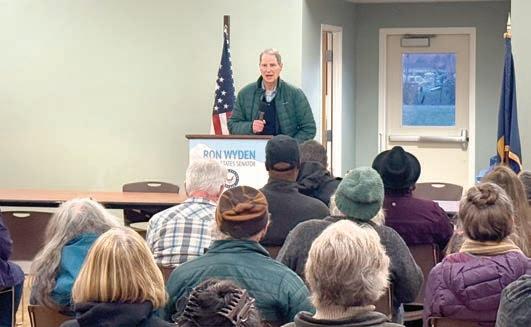
In his 1,144th town hall at the Port of Tillamook Bay’s officer’s mess hall on January 22, Senator Ron Wyden focused on his opposition to the policies and actions of the administration of President Donald Trump in response to concerned constituents.
Wyden touted a recent success in securing mental healthcare funding against proposed cuts the week before the meeting and argued that by forcefully pushing back, he and other Democrats could make a difference.
“I know that a lot of people are furious about what’s going on in Washington D.C.,” Wyden said. “At the same time, I want people to know that when we do fight, when we do push back, we’re able to get things done.”
After being introduced by State Representative Cyrus Javadi, Wyden started the town hall by discussing a fight the previous week over $2 billion in funding for mental health care, which Republicans were trying to rescind. Wyden said that he had made a stink about the issue in the media, eventually leading Trump to pull his support for the proposal, leaving the funding secure.
The first constituent at the town hall asked Wyden about
how he would support people providing care for their aging parents, and Wyden said that he favored taxes on billionaires to provide monetary support.
“The billionaires are going to start paying some taxes, rather than going for years on end paying nothing because of a loophole, so we can get some kind of money for caregivers,” Wyden said.
In response to a question about what democrats were doing to push back against the Trump administration, Wyden took a strong stand against Immigration and Customs Enforcement (ICE), saying that the agency needed to change its enforcement tactics and that he would not vote for further funding for it without guardrails addressing concerns.
“We’ve got another date coming up in terms of the budget to make some decisions and I’ll be damned if I’m going to let more money go to ICE with the lawlessness we’ve been seeing” Wyden said. “We’ve got to take off the masks. We’ve got to end the profiling.”
Two questioners asked Wyden about the potential for federal support for repairs to Hangar B at the Port of Tillamook Bay, which was damaged in a December windstorm, and Wyden pledged to help explore the possibility of federal funding.
In response to a question about stopping Trump from lying, Wyden said that he thought the appropriate response was to keep on calling out the lies. “The way we beat him is to embarrass him,” Wyden said.
On the subject of fighting the broader conservative agenda, Wyden said that he felt focusing on reproductive healthcare would be a winning strategy for Democrats and that he was doing so in his position on the senate finance committee. “I have said at every health meeting, you’re not going to turn back the clock on reproductive health, and
we can win that fight,” Wyden said, “and that will be the best one to counter what you’re talking about.”
Asked whether he believed Trump’s support was fraying among rural voters, Wyden said that he felt Trump’s aggressive foreign policy had created doubts and that Democrats should seek to take advantage by pushing on issues of healthcare and communications.
Wyden said that he would favor expanding the supreme court to help return judicial independence, which he said has “gone out the window.” He said that he opposed term
limits, saying that the bureaucracy “loves the idea of having people who are inexperienced come in and tackle somebody who’s been there, healthcare, utilities and stuff, for a long period of time.” When a student asked about the affordability of higher education, Wyden pointed to legislation he has sponsored to go after “crooked” loan servicers.
Wyden also expressed concern over the recent bid by Oracle, controlled by Trump ally Larry Ellison, and other firms to buy Tik Tok, which he said matched a concerning trend of Trump allies buying up
media firms. In response to a constituent concerned about Robert F. Kennedy Jr.’s push against vaccinations, Wyden said the health and human services secretary had lied to him at his confirmation hearings and that it was now important to work to give parents accurate information about vaccines. “We’ve got to do everything we can, make changes in congress and do everything we can to mobilize providers in communities, so that right now, when parents are trying to figure out what to do and what it all means, I think we’ve got to get facts in front of them,” Wyden said. Wyden also highlighted his push for stronger banking regulations, especially more follow up on suspicious activity reports for large transactions, in response to the Jeffery Epstein saga and reiterated his unwillingness to vote for further funding for ICE without significant changes at the agency.
In conclusion, Wyden thanked the crowd for attending and said that he was “digging in like never before” for the fight against Trump. “This is not going to be a walk in the park,” Wyden said, “but I want you to know I can’t think of any group of people I’d rather be in this fight with than the people of Tillamook.”
NBHD celebrates artists and donors
STAFF REPORT
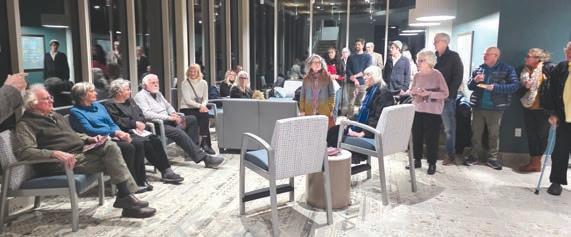
Supporters of the Nehalem Bay Health District gathered for a reception recognizing artists and donors who contributed art to the district’s new health center and pharmacy in wheeler. The Heart of the Community artist and donor reflection recognized the important role that art plays in a healthcare setting and brought artists, donors, staff and board members together.
Nehalem Bay Health District’s (NBHD) new pharmacy and clinic opened in Wheeler last fall and has since seen dozens of works donated by regional artists, estates and community members. There are sculptures, photographs, paintings, textiles and other mixed media pieces displayed throughout the public spaces across the facility. The signature piece and namesake of the reception is a Carrara
marble sculpture named The Heart of the Community, symbolizing the spirit, care and lifeblood of the new health clinic, which was donated by artist M.J. Anderson and served as a catalyst for the broader art initiative at the building. Staff from both the dental and medical clinics in the new building said that patients often remarked on the beauty of the art and that it helped to bring joy to chaotic days for them.
Senator Ron Wyden at the January 22 Tillamook town hall.
PHOTO COURTESY NEHALEM BAY HEALTH DISTRICT
Donors, artists, staff and board members socialized during the reception.