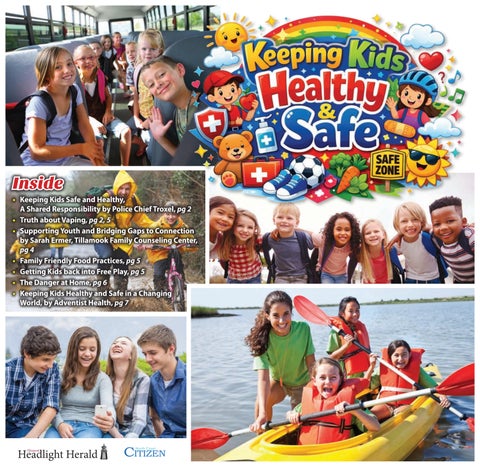
• Keeping Kids Safe and Healthy, A Shared Responsibility by Police Chief Troxel, pg 2
• Truth about Vaping, pg 2, 5
• Supporting Youth and Bridging Gaps to Connection by Sarah Ermer, Tillamook Family Counseling Center, pg 4
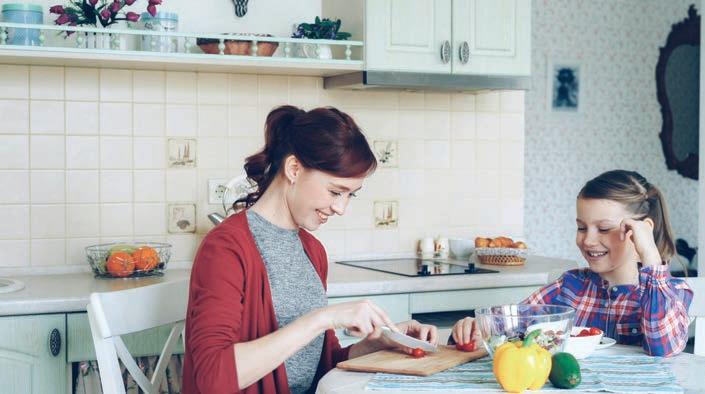
• Family Friendly Food Practices, pg 5
• Getting Kids back into Free Play, pg 5
• The Danger at Home, pg 6
• Keeping Kids Healthy and Safe in a Changing World, by Adventist Health, pg 7
Keeping Our Kids Safe and Healthy: A Shared Responsibility
By Chief Nick Troxel Tillamook Police Department
One of the greatest responsibilities we share as a community is keeping our children safe and healthy. Whether you are a parent, grandparent, or caregiver, the role you play in a child’s life matters more than you may realize. From physical safety to emotional well-being and online awareness, protecting kids requires attention, communication, and teamwork.
First and foremost, children thrive when they feel safe, supported, and heard. Take time to talk with them regularly. Talk about school, friendships, worries, and interests. These conversations help build trust and make it more likely a child will speak up if something doesn’t feel right. Encourage healthy routines, including good nutrition, physical activity, adequate sleep, and limits on screen time. These basics go a long way in supporting both physical and mental health.
Online safety is an increasingly important part of child well-being. Many kids spend hours each day on phones, tablets, and gaming systems, often interacting with people you may never meet. Talk openly about appropriate online
behavior, privacy settings, and the dangers of sharing personal information. Remind children that not everyone online is who they claim to be and that they should never feel pressured to share photos, messages, or secrets. Sending or receiving of sexually explicit images, videos, or messages is known as “sexting”. While many parents may not realize how common this behavior can be among youth, research shows that younger adolescents who engage in sexting may be at increased risk for emotional challenges such as anxiety or depression, as well as other risky behaviors.
It is also important for parents and guardians to understand that sharing sexually explicit images, especially of minors, can have serious legal consequences and longlasting impacts if the content is shared beyond its original recipient. In some situations, images are used to pressure or manipulate a young person into sending additional material, a form of exploitation known as “sextortion.” Open, ageappropriate conversations and ongoing guidance can help young people understand risks, set boundaries, and seek help if they feel uncomfortable or threatened. If something online makes
a child uncomfortable, they should know they can come to a trusted adult immediately, without fear of punishment. It is also important for adults to know the signs that a child may need help. Sudden changes in behavior, mood, sleep patterns, or school performance can all be indicators that something is wrong. Trust your instincts. If you see or hear something that raises concern, it is always better to speak up.
Many professionals in our community are mandatory reporters, meaning they are legally required to report suspected child abuse or
neglect. This includes law enforcement, school staff, healthcare providers, and child welfare workers. However, you do not have to be a mandatory reporter to make a report. Anyone can contact your local law enforcement, a local school, or Child Welfare if they are worried about a child’s safety. Reporting is about protecting children, not placing blame.
Keeping kids safe is not the job of one family or one agency, it’s a community effort. By staying informed, staying involved, and looking out for one another, we can help ensure every child in Tillamook County grows up safe, healthy, and supported.
The Truth About Vaping
Health professionals are expressing alarm about the rise in vaping among adolescents.
Initially marketed as a less harmful alternative to traditional cigarettes, vaping has been shown to pose significant risks – not least of which is the potential for nicotine addiction. Yet experts have reported a surge in vaping among young people.
A substantial portion of high school students have experimented with vaping. It could be as many as one in five, according to a study from the Centers for Disease Control. Nicotinefree pod liquids and refills are available, but they aren’t as easy to find. Perhaps
4 • Keeping Kids Healthy and Safe 2026
Supporting Youth and Bridging Gaps to Connection
By Sarah Ermer MPH, CHES and Maria Bateman, CADC-R, CSWA, MPH Tillamook Family Counseling Center
How do we connect with each other in a world that increasingly demands our time, attention, and resources?
As technology creeps into our day-to-day lives, it often feels like it is replacing some of our traditional ways of relating to and supporting one another. For many families, especially multigenerational households, this shift can feel especially pronounced. Young people today often build connections and relationships in ways that look very different than they did even a generation ago. A 2024 survey from the Pew Research Center found that nearly half of teens report being
online almost constantly. While these online networks do offer an important opportunity for connection and belonging, they cannot be the only place that young people feel known and supported. In-person relationships still matter deeply, and caring adults play a powerful role in helping young people build and sustain them.
Parents aren’t the only ones parenting. According to the 2023 Census, about 22% of grandparents in Tillamook County who live in the same household as their grandchildren under 18 are their grandchildren’s primary caregivers. Grandparents stepping into this role bring deep love, patience, and life experience, but they may also be navigating systems, technology, and social pressures that didn’t exist when they
We’re here to help keep your home and office clutter-free!
raised their own children. The good news is that you don’t have to be a tech expert to support the young people in your life.
So, how do we support the young people that we love in friendships when they say that their friends are all online? How do we recognize signs of social isolation?
Regardless of whether your child is an in-person social butterfly, part of an online gaming community, or a mixture between an IRL and online friendship cultivator, one of the easiest ways to connect with your child to find out how their relationships are going is to ask them about how their friends are doing. Pre-teens and teens are naturally concerned with the well-being of their friends. They might feel personally rejected if adults in their lives reject their friendships, so try not to use language that can be interpreted as judgmental if you are concerned about the health of your child’s relationship at first. Ask openended questions about how their friends are doing to invite supportive conversation. You may get short responses, or no response, but the message that you are sending is that you are a safe person to talk to if your child feels overwhelmed, concerned, or unsure about how to handle a complicated friendship scenario. If you are concerned with the safety of where and with whom your child is spending time, then form relationships with your
children’s friends’ parents. You don’t have to be best friends with the parents or caregivers of your child’s best friend; however, modeling kindness and respect for them and checking in with them about your kids’ whereabouts and expectations shows that you share a common concern for your children’s well-being and can be a great way to support your children’s pro-social behaviors.
Look for non-verbal signs that your child is feeling socially isolated:
• Withdrawal from previously enjoyed activities, hobbies, or clubs
• Avoidance of social situations (school events, community activities)
• Decrease in initiative (they stop asking for permission to plan activities, or they lose interest in personal projects that used to involve friend collaboration)
Also, understand that not all technology use is bad, but not all technology use is equal. It’s unlikely that your concern will convince a teenager to stop media use entirely, and that’s okay. When used to communicate with others, technology can help adolescents feel more connected to their peers and build stronger relationships with their caregivers. However, short-form videos, like TikTok and Instagram Reels, may be more likely to cause an increase in stress and anxiety as well as decreased
attention. Adolescents may also encounter simulated gambling online, whether in virtual casinos, loot boxes in video games, or sports betting. Early exposure to gambling puts youth at a higher risk of experiencing gambling addiction later in life, creating more reason to be aware of what platforms they are engaging with.
Positive experiences and connections help protect our mental health and overall well-being.
There is no way to avoid the challenges and stressors that life brings. Fortunately, we can help adolescents flourish not only by removing harmful influences from their lives, but by ensuring they are given opportunities for positive experiences. Research shows that certain positive childhood experiences (PCEs) help buffer stress and build resilience over time. These include feeling able to talk to your family about your feelings, knowing your family will stand by you during difficult moments, enjoying participation in community traditions, and having at least two non-parent adults who take a genuine interest in you. So, while you monitor their media consumption to protect them from harmful influences, also create space to listen to what is bothering them and engage them with their community. Invest in youth-friendly spaces and show an interest in getting to know their friends and their friends’ parents. This will also
KEEPING KIDS HEALTHY AND SAFE 2026
Publication of the Tillamook Headlight Herald and Country Media. Inc. 1906 Second Street, Tillamook, OR 97141 • tillamookheadlightherald.com
Chief Executive/Operations: Joe Warren • Editor: Will Chappell
To advertise contact Katherine Mace at headlightads@countrymedia.net or call 503-842-7535
help you verify where they are and know who they are with. And when it comes to having conversations about drugs and alcohol, normalizing the topic by having regular, shorter conversations is more effective than one big talk.
Your behaviors and attitudes set the example.
Even when it feels like they aren’t listening or paying attention, adolescents are constantly observing and absorbing how adults move through the world. Caregivers are a child’s first and best teacher, and what you do matters. Let them catch you being kind and speaking positively of others. Show them that forgiveness is more important than holding grudges, and that having respectful relationships with the wider community strengthens us, even if we aren’t best friends with everyone. Take time for self-care and try to avoid drinking or using other substances in front of them. And when you’re around them, minimize how much time you spend on your phone. Even if you’re reading the news or messaging a friend, it all looks like screen time. If you can, try bringing print media back into your home. The library is an excellent place to find books, magazines, and newspapers that can help you cut back on how much you rely on your phone for information. Ultimately, supporting youth and adolescents isn’t about having all the right answers. Staying present, curious, and connected adds up. By modeling healthy relationships, being engaged with their lives online and off, and showing them that they are not alone, you are building the foundation for health and resilience.
Gobble up these family friendly food practices Getting kids back into free play
Despite being pint-sized people, children can have some very big personalities and opinions. Parents know that kids have strong feelings on everything from the clothes they wear to the foods they eat.
Although not all children are inherently picky eaters, most go through phases of picky eating during their childhood development, particularly when they are toddlers. The UCSF Benioff Children’s Hospitals also says some children naturally are more sensitive to certain tastes, smells and textures, which could make certain foods less desirable to youngsters. Others may mimic their parents’ picky food tendencies. A child who has strong aversions to trying new foods can make it hard to plan meals, especially ones that include nutritious fare.
Getting kids to eat more healthy foods and be excited about them could take some time and effort. Parents can try some of these strategies to change kids’ perceptions about healthy eating.
TAKE THE LEAD
Parents can model healthy heating behavior every time they sit down to a meal. Research suggests parents’ eating behaviors significantly influence their children’s food preferences and dietary habits. Given their influence, adults should choose healthy foods often enough so that the process becomes habit for the entire household.
MAKE IT A TEAM EFFORT
Children may refuse foods because it gives them a modicum of control in a world where adults seem to be making all the decisions. When children are included in meal planning
Vaping
Continued from Page A2
unsurprisingly, research shows that those who vape are substantially more likely to transition to cigarette smoking in the future. That’s why adolescents need accurate information regarding the potential hazards of vaping.
and shopping, they are more likely to eat foods that are healthy. While the bulk of foods should be healthy ones, a few treats or special ingredients can be thrown in every so often.
RESPECT EATING QUIRKS
One child may only eat broccoli if it is dunked in ketchup. Another might only embrace a turkey sandwich if it is cut into triangles. Parents should pick their battles regarding food. Parents should go with the flow if kids are eating right, even if their choices are a little unorthodox.
MAKE IT A GAME
Incorporate some fun into meals by encouraging children to come up with funny names for their foods, however ridiculous they may be. Make competitions of healthy eating by seeing who can eat the most vegetables during the week and earn a prize. Kids likely will respond better to these positive choices rather than ultimatums about foods they “have” to eat. Healthy eating may not come easily to all children, especially if they are picky eaters. Some patience and flexibility on the part of parents can help kids become more excited about healthy food choices.
One of the endearing components of the Netflix series “Stranger Things,” which reached its conclusion at the close of 2025, is how the show harkened viewers back to the unencumbered days of being a kid in the 1980s — that is, until those kids had to fight for their survival against otherworldly foes. Demogorgons and mind flayers aside, the Hawkins kids would hop on their bikes and traverse their town, or engage their imaginations during game play in a wood-paneled basement. Baby Boomers, Generation Xers and even Millennials can likely recall youthful days when they had plenty of free time on their hands to pursue various adventures.
Fast forward to 2026, and today’s children lead much more structured lives. With the rise of “helicopter parenting” and “tiger parenting,” children find themselves continuously engaged with academics, structured sports teams, music lessons, and choreographed play dates, largely initiated by the adults in their lives. “Free play,” defined as child-initiated, unstructured activity, has largely been phased out.
LACK OF AWARENESS
When vaping, nicotine is rapidly absorbed through the lung’s blood vessels, reaching the brain in approximately 10 seconds. This stimulates the dopamine system, reinforcing behavior perceived as beneficial. A vicious cycle then begins. Young people are often unaware of the risks, but
so are their parents. A survey of parents of middle and high school students by the Partnership to End Addiction found that 40 percent were unconcerned about their child’s potential use of vape products. But the effects of nicotine is actually more pronounced among those under the age of 25, since their brains are still developing.
The American Academy of Pediatrics and the Centers for Disease Control and Prevention suggest that free play is not simply a break from learning, but the “primary vehicle through which children develop the brain architecture necessary for adult success.” Free play should be encouraged and not lambasted. Here’s a look at how free play is imperative for healthy kids.
• Improves executive functioning: Research published in The Journal of Pediatrics says children who have more time for unstructured play have better self-regulation and executive function. These elements can predict academic success better than IQ, say health experts.
• Greater brain development: Researchers at Baylor College of Medicine have found that children who don’t play much develop brains 20 to 30 percent
ASSOCIATED DANGERS
Adolescents tend to underestimate the risk of developing an addiction to nicotine. When they eventually try to quit, it’s much more difficult because the adolescent brain has a heightened sensitivity to rewards. Beyond nicotine addiction, vaping can adversely affect lung health, contributing to respiratory
issues and other health complications. Since vaping is often outlawed or against school policy, students may put their academic future at risk by engaging in the activity.
PROACTIVE MEASURES
Parents need to educate themselves about the facts surrounding vaping, then have calm and open
smaller than is normal for their age.
• Stress reduction: In their clinical report, “The Power of Play,” the AAP suggests that when play and safe, stable, nurturing relationships are missing in a child’s life, stress hormones can elevate to harmful levels. Play is so essential to kids that the AAP suggests pediatricians recommend more of it at each child well visit.
• Promotes conflict resolution: Children who engage in free play learn on their own how to keep the game going through compromise, rather than relying on a parent or referee. Free play is an important component of a child’s well-being, and one that is not stressed nearly as much as it should be for good health and future success. Kids can enjoy self-directed play that is nature-based and unplugged from digital distractions.
discussions about the topic. Try to understand the reasons behind a child’s potential use, while clearly communicating expectations. Consider role-playing scenarios to help them resist peer pressure. Model healthy behaviors around them. Avoid the temptation to lecture, scold, or punish children. Instead, approach this in the same manner you would with any other health concern.
6 • Keeping Kids Healthy and Safe 2026
KEEPING KIDS SAFE | PRESCRIPTION DRUGS
The Danger at Home
Parents tend to worry about alcohol and marijuana, but prescription drug abuse ranks third among those age 14 and younger.
The Danger at Home
Parents tend to worry about alcohol and marijuana, but prescription drug abuse ranks third among those age 14 and younger.
Kids don’t have to go far to get them. These drugs, which include anti-depressants, stimulants, opioids and other potent prescriptions, can often be found inside the bathroom medicine cabinet.
Kids don’t have to go far to get them. These drugs, which include anti-depressants, stimulants, opioids and other potent prescriptions, can often be found inside the bathroom medicine cabinet.
UNDERSTANDING THE PROBLEM
UNDERSTANDING THE PROBLEM
When a healthcare provider prescribes medication, they consider various factors, including the patient’s height, weight, past medical history and metabolic rate of the drug. But when a drug is misused, these critical precautions are unknown or disregarded. Drug misuse is defined as taking medicine prescribed to someone else, even if the medical issue is similar. It’s also a term for when drugs are used in a manner inconsistent with usage recommendations, as when someone crushes pills for snorting.
When a healthcare provider prescribes medication, they consider various factors, including the patient’s height, weight, past medical history and metabolic rate of the drug. But when a drug is misused, these critical precautions are unknown or disregarded. Drug misuse is defined as taking medicine prescribed to someone else, even if the medical issue is similar. It’s also a term for when drugs are used in a manner inconsistent with usage recommendations, as when someone crushes pills for snorting.
People abuse prescription medication when they intentionally ingest it to achieve intoxication rather than to address a health condition, and when any drug is combined with other substances or alcohol.
People abuse prescription medication when they intentionally ingest it to achieve intoxication rather than to address a health condition,
CONCERNS ABOUT SIDE EFFECTS
Advertisements for medications are required to include an extensive list of any potential side effects. While some of these effects might merely cause discomfort, others can be severe and some even result in death. For instance, opioids such as oxycodone can cause gastrointestinal distress and constipation but also
CONCERNS ABOUT SIDE EFFECTS
Advertisements for medications are required to include an extensive list of any potential side effects. While some of these effects might merely cause discomfort, others can be severe and some even result in death. For instance,
more serious respiratory issues that can be fatal. Stimulants like Adderall may induce feelings of paranoia, rapid heart rate and overheating. Similarly, depressants such as barbiturates can lead to excessive sedation and shallow breathing. There’s a very real risk that you could stop breathing, particularly when combined with alcohol.
more serious respiratory issues that can be fatal. Stimulants like Adderall may induce feelings of paranoia, rapid heart rate and overheating. Similarly, depressants such as barbiturates can lead to excessive sedation and shallow breathing. There’s a very real risk that you could stop
TAKE SAFETY PRECAUTIONS
Today, prescription drug misuse accounts for more than half of the annual overdose fatalities in the United States, with opioids making up a significant portion of the cases. The National Family Partnership, though best known for hosting Red Ribbon Week, also spearheads the Lock Your Meds campaign.
TAKE SAFETY PRECAUTIONS
Today, prescription drug misuse accounts for more than half of the annual overdose fatalities in the United States, with opioids making up a significant portion of the cases. The National Family Partnership, though best
This initiative aims to foster conversations between adults and children regarding the dangers of prescription drug misuse. The NFP encourages adults to conduct a careful inventory of their medications and then secure their medicine cabinets. You can find valuable guidance on the safe disposal of prescription drugs on their website, www.lockyourmeds.org.
This initiative aims to conversations between and children regarding dangers of prescription misuse. The NFP encourages adults to conduct a careful inventory of their medications and then secure their cine cabinets. You can valuable guidance on
Keeping Kids Healthy and Safe in a Changing World
Adventist Health
Tillamook
Keeping children healthy and safe has always been a shared responsibility between families, schools, healthcare providers, and the wider community. What has changed is the world children are growing up in. Today’s parents are managing far more than scraped knees and seasonal colds. Children are navigating digital spaces, shifting food systems, evolving infectious diseases, and growing levels of stress at younger ages.
Health and safety are no longer just about avoiding illness or injury. They form the foundation for how children learn, manage emotions, and build resilience. When that foundation is strong, children are better equipped to thrive at school, at home, and in their communities.
At the most basic level, physical health still matters deeply. Vaccination remains one of the clearest examples of how individual choices protect both personal and community well-being.
Childhood vaccines prevent serious illnesses during critical stages of growth and brain development. When children avoid diseases like measles, whooping cough, or influenza, their bodies are not forced to divert energy away from sleep, emotional regulation, and learning. Immunization also protects babies and medically vulnerable children who cannot yet be vaccinated, reinforcing the idea that health is a shared responsibility.
Nutrition plays a similarly important role,
though its impact is often overlooked. What children eat affects far more than their height and weight.
A balanced diet supports attention, mood stability, and long-term mental health. Diets built around iron-rich and whole foods — fruits, vegetables, enriched whole grains, healthy fats, and protein — help keep energy levels steady and support brain function. Diets high in ultra-processed foods and added sugars, on the other hand, are increasingly linked to sleep problems, behavioral challenges, and health issues that can follow children into adulthood. Equally important is how children learn to eat. Shared meals, predictable routines, and positive role modeling help children build a healthy relationship with food. These everyday moments offer more than nutrition; they create a sense of safety and connection that
supports emotional wellbeing. Mealtimes are also one of the most powerful opportunities for language development, as children benefit from hearing rich conversation, new vocabulary, and open-ended questions. Talking through the day, describing food and experiences, and inviting children into conversation strengthens communication skills that support learning, emotional regulation, and long-term success.
Sleep is another pillar of health that is often sacrificed in busy family schedules. Chronic sleep deprivation in children is linked to anxiety, irritability, difficulty focusing, and increased risk-taking behaviors in adolescence. Sleep is not simply downtime. It is when the brain processes learning, regulates emotions, and strengthens the immune system. Consistent bedtimes and reasonable limits on evening screen
use can make a noticeable difference. In many families, improving sleep resolves challenges that might otherwise be mistaken for behavior or motivation problems.
Safety today extends beyond helmets, car seats, and seatbelts, though those remain essential. The digital environment now plays a major role in childhood, bringing both opportunity and risk. Excessive screen time, unfiltered online content, and early exposure to social media can affect attention, self-esteem, and emotional regulation. Developmentally appropriate boundaries are not about restriction for its own sake. They are about protecting a child’s still-developing brain. Children benefit most when adults guide technology use thoughtfully and protect time for conversation, reading and shared experiences that build language and connection.
mood, focus, and stress regulation. Free play is especially important. When children run, climb, and explore within safe boundaries, they learn problem-solving, confidence, and how to assess risk. Thoughtful supervision encourages independence, while too much restriction can unintentionally limit growth.
Mental and emotional health must also be treated as core parts of keeping children safe. Anxiety, depression, and behavioral challenges are appearing earlier and more frequently, often linked to chronic stress, social isolation, and pressure to perform. Children need environments where emotions are acknowledged rather than dismissed.
Teaching children to recognize feelings, understand body signals, and practice coping skills builds resilience far more effectively than punishment or shame. Supportive adults — parents, teachers, coaches, and healthcare providers — play a critical role in helping children feel seen and supported.
Physical activity remains one of the most effective and most underused tools for supporting children’s health. Movement improves not only physical strength and coordination, but also
None of this happens in isolation. Children thrive when families are supported by strong communities. In places like Tillamook County, access to preventive healthcare, safe outdoor spaces, nutritious food, and reliable information makes a real difference in children’s outcomes. When communities invest in school meals, vaccination access, family leave, and mental health services, those investments show up in healthier, more resilient children.
Keeping kids healthy and safe is not about doing everything perfectly. It is about creating conditions where children can grow, make mistakes, recover, and develop trust in their bodies and the adults around them. Vaccines, nutrition, sleep, movement, emotional support, and safe environments all work together. When these foundations are strong, children gain more than protection from illness or injury. They gain the capacity for curiosity, resilience, and connection. In that sense, supporting children’s health is not only a medical concern. It is one of the most meaningful long-term investments a community can make.